Hi everyone
I’m currently planning my trip to China for next August.
I’m starting from scratch, so I’m counting on your advice and firsthand experiences!
For now, I only know that I’ll arrive in China via Beijing, Shanghai, or Hong Kong and leave 15 days later from another one of these three cities.
In between, I’d love to explore a mountainous and natural region in the countryside.
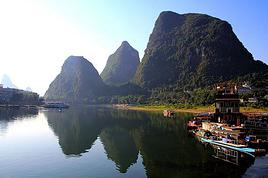
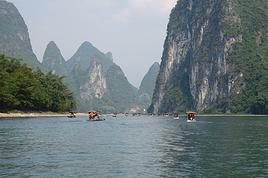
The Guilin area really appeals to me with its spectacular landscapes.
I still have tons of questions:
- What can you do during this often humid season?
- Is it better to go through a local agency or organize everything yourself?
- What itineraries would you recommend?
Anyway, everything’s still up in the air, and I can’t wait to read your opinions, suggestions, and great tips to help me build this trip!
Bonjour à tous,
Je commence à élaborer un programme pour un séjour de 15 jours en avril prochain dans les provinces du Guizhou et du Guangxi. A ce jour, nous sommes 3 participants... Nous arrivons à l'aéroport de Guiyang le 4 avril et repartons de Guilin le 18 avril.
Le 4 avril, c’est la fête de Qingming « le jour des balayages des tombes ». Question : Pensez vous que nous allons rencontrer des difficultés à trouver un bus ou taxi, de l’aéroport à notre hébergement à Guiyang ?
Hébergement à Guiyang : Rien n’est réservé à ce jour. Sachant, que nous allons favoriser pendant ce séjour des hébergements « Bien et pas trop cher », et que nous tenterons d’effectuer nos déplacements en transport en commun. Auriez-vous une adresse sympa et pratique d’accès à nous conseiller ?
A partir de Guiyang, l’objectif initial était de se diriger vers l’Est pour rejoindre tranquillement Guilin.
Mais, selon ma documentation, parmi les immanquables du Guizhou, figure les chutes de Huangguoshu. Mais, cela nous éloigne latéralement de notre trajectoire…
Quelles sont vos impressions sur les chutes de Huangguoshu ?
Dans la positive, il semble possible de faire l'aller retour dans la journée au départ du Guiyang… Avez-vous une méthode pratique à nous conseiller, avec une idée de coût de revient ?
Est-il possible de se procurer en amont un plan détaillé du site afin d’étudier un itinéraire pédestre à effectuer sur place ?
Voila, toute mes questions à ce jour.
Je vous remercie par avance de l’attention que vous allez porter à mon message.
Geneviève
Je commence à élaborer un programme pour un séjour de 15 jours en avril prochain dans les provinces du Guizhou et du Guangxi. A ce jour, nous sommes 3 participants... Nous arrivons à l'aéroport de Guiyang le 4 avril et repartons de Guilin le 18 avril.
Le 4 avril, c’est la fête de Qingming « le jour des balayages des tombes ». Question : Pensez vous que nous allons rencontrer des difficultés à trouver un bus ou taxi, de l’aéroport à notre hébergement à Guiyang ?
Hébergement à Guiyang : Rien n’est réservé à ce jour. Sachant, que nous allons favoriser pendant ce séjour des hébergements « Bien et pas trop cher », et que nous tenterons d’effectuer nos déplacements en transport en commun. Auriez-vous une adresse sympa et pratique d’accès à nous conseiller ?
A partir de Guiyang, l’objectif initial était de se diriger vers l’Est pour rejoindre tranquillement Guilin.
Mais, selon ma documentation, parmi les immanquables du Guizhou, figure les chutes de Huangguoshu. Mais, cela nous éloigne latéralement de notre trajectoire…
Quelles sont vos impressions sur les chutes de Huangguoshu ?
Dans la positive, il semble possible de faire l'aller retour dans la journée au départ du Guiyang… Avez-vous une méthode pratique à nous conseiller, avec une idée de coût de revient ?
Est-il possible de se procurer en amont un plan détaillé du site afin d’étudier un itinéraire pédestre à effectuer sur place ?
Voila, toute mes questions à ce jour.
Je vous remercie par avance de l’attention que vous allez porter à mon message.
Geneviève
Bonjour,
mon 4ème voyage en Chine... Cette fois, je n'ai que 12 jours à Pâques, contraintes de vacances universitaires oblige.
Je me disai : et pourquoi pas un petit trip au Yunnan : vol direct pour Kunming, visite de Dali et ed Lijiang et la foret de pierre de Shilin. C'est mi avril cette année.
Qu'en pensez-vous ? Des suggestions, toujours les bienvenues ?
PS : je retrouve des têtes connues après tant d'années, salut à tous !
mon 4ème voyage en Chine... Cette fois, je n'ai que 12 jours à Pâques, contraintes de vacances universitaires oblige.
Je me disai : et pourquoi pas un petit trip au Yunnan : vol direct pour Kunming, visite de Dali et ed Lijiang et la foret de pierre de Shilin. C'est mi avril cette année.
Qu'en pensez-vous ? Des suggestions, toujours les bienvenues ?
PS : je retrouve des têtes connues après tant d'années, salut à tous !
Bonjour à tous,
Je me permets d'écrire sur le forum car j'ai pour projet de partir eux voire trois semaines en Chine l'été prochain. J'aimerai savoir en fonction de vos expériences respectives quel parcours peut être intéressant à faire ? (Pékin, Changhai, Hong Kong...?)
Je suis ouverte à toute proposition : grande ville et petite ville d'escale...
Merci de votre retour :)
Je me permets d'écrire sur le forum car j'ai pour projet de partir eux voire trois semaines en Chine l'été prochain. J'aimerai savoir en fonction de vos expériences respectives quel parcours peut être intéressant à faire ? (Pékin, Changhai, Hong Kong...?)
Je suis ouverte à toute proposition : grande ville et petite ville d'escale...
Merci de votre retour :)
Bonjour à vous connaisseurs de ce pays/continent,
Nous commençons à préparer notre voyage de cet été ou pour la première fois nous irons en Chine.
Nos objectifs de ce premier voyage de 30 jours (visa max)
Culture Nature et animaux (oiseaux+++ et mammifères++) Paysages "Minorités" Bouddhisme et marches du Tibet Cuisine
Pas prioritaire sur ce voyage :
Mégapoles très hauts lieux touristiques (Beijing, grande muraille, Xi' an) Grand nord, Tibet...
Donc nous nous dirigeons naturellement vers
Yunnan Sichuan Guizhou Guangxi
Mais là... que privilégier ?
Merci de nous donner vos coups de cœurs.
Yann et Anne PS: nous avons l'habitude de voyager, les trajets longs et pas forcement confortables ne nous font pas (trop) peur.
Culture Nature et animaux (oiseaux+++ et mammifères++) Paysages "Minorités" Bouddhisme et marches du Tibet Cuisine
Pas prioritaire sur ce voyage :
Mégapoles très hauts lieux touristiques (Beijing, grande muraille, Xi' an) Grand nord, Tibet...
Donc nous nous dirigeons naturellement vers
Yunnan Sichuan Guizhou Guangxi
Mais là... que privilégier ?
Merci de nous donner vos coups de cœurs.
Yann et Anne PS: nous avons l'habitude de voyager, les trajets longs et pas forcement confortables ne nous font pas (trop) peur.
Hi there,
I’m planning a route through China from Hong Kong to Chengdu.
Here’s the draft:
Hong Kong + Macau (4 nights) Shenzhen (1 night) Guangzhou (2 nights) Yangshuo (3 nights) Sanjiang (1 night) Longji Rice Terraces (1 night) Guilin then head north (1 night) Zhangjiajie (3 nights) Chongqing (1 night) Chengdu (2 nights)
I’d love your thoughts. Can I cut nights from some spots and add them elsewhere?
Quick note—I’ve got a lot of travel experience and I’m pretty fast and efficient (early riser, etc.). So I usually pack in more than the average traveler...
Thanks for your help!
I’m planning a route through China from Hong Kong to Chengdu.
Here’s the draft:
Hong Kong + Macau (4 nights) Shenzhen (1 night) Guangzhou (2 nights) Yangshuo (3 nights) Sanjiang (1 night) Longji Rice Terraces (1 night) Guilin then head north (1 night) Zhangjiajie (3 nights) Chongqing (1 night) Chengdu (2 nights)
I’d love your thoughts. Can I cut nights from some spots and add them elsewhere?
Quick note—I’ve got a lot of travel experience and I’m pretty fast and efficient (early riser, etc.). So I usually pack in more than the average traveler...
Thanks for your help!
Bonjour à toutes et tous,
Voilà, avec ma petite famille nous avons décidé de nous arrêter lors de notre road trip un mois en chine au mois de juin 2020. J'ai déjà pas mal fais de recherche sur cette destination et j'aimerais avoir votre avis afin de ne pas "trop" me tromper 😛. Je sais que malheureusement, certaines régions que nous avons choisis ne sont pas au top niveau météo du mois de juin. Néanmoins je me dis qu'on devrais quand même pouvoir visiter et que ça ne va pas trop être cata.
Hong-KongHong-KongGuangxi - GuilinRivière Li - YängshuoRivière Li - YängshuoRivière Li - YängshuoRizière en terrasses de LongjiRizière en terrasses de LongjiSichuan : ChengdûSichuan : ChengdûGrand Bouddha de Lè ShânGrand Bouddha de Lè ShânParc national de HuanglongParc national de HuanglongFleuve Yangzi (barrages des 3 gorges)Grottes bouddiques de Dazu ?Xi'An et l'armée des soldats de terre cuiteXi'An et l'armée des soldats de terre cuiteshanghaïshanghaïshanghaïPékin (Beijin)Pékin (Beijin)Pékin (Beijin)Pékin (Beijin)La grande Muraille - Jïnshändling j'ai mis en couleurs les diverses régions (pour m'en sortir avec les noms 😄) Il nous reste encore 2 jours de libre que nous pouvons insérer où bon nous semble.. La suite du voyage nous emmènera en Mongolie. Nous avions pensé prendre le transibérien pour nous rendre à Oulan-Bator. Qu'en pensez-vous ?
J'ai hâte d'avoir vos avis, suggestions et autres.
Merci beaucoup !
Voilà, avec ma petite famille nous avons décidé de nous arrêter lors de notre road trip un mois en chine au mois de juin 2020. J'ai déjà pas mal fais de recherche sur cette destination et j'aimerais avoir votre avis afin de ne pas "trop" me tromper 😛. Je sais que malheureusement, certaines régions que nous avons choisis ne sont pas au top niveau météo du mois de juin. Néanmoins je me dis qu'on devrais quand même pouvoir visiter et que ça ne va pas trop être cata.
Hong-KongHong-KongGuangxi - GuilinRivière Li - YängshuoRivière Li - YängshuoRivière Li - YängshuoRizière en terrasses de LongjiRizière en terrasses de LongjiSichuan : ChengdûSichuan : ChengdûGrand Bouddha de Lè ShânGrand Bouddha de Lè ShânParc national de HuanglongParc national de HuanglongFleuve Yangzi (barrages des 3 gorges)Grottes bouddiques de Dazu ?Xi'An et l'armée des soldats de terre cuiteXi'An et l'armée des soldats de terre cuiteshanghaïshanghaïshanghaïPékin (Beijin)Pékin (Beijin)Pékin (Beijin)Pékin (Beijin)La grande Muraille - Jïnshändling j'ai mis en couleurs les diverses régions (pour m'en sortir avec les noms 😄) Il nous reste encore 2 jours de libre que nous pouvons insérer où bon nous semble.. La suite du voyage nous emmènera en Mongolie. Nous avions pensé prendre le transibérien pour nous rendre à Oulan-Bator. Qu'en pensez-vous ?
J'ai hâte d'avoir vos avis, suggestions et autres.
Merci beaucoup !
Bonjour,
Nous projetons un séjour dans le Yunnan en février prochain. Les guides et les blogs que nous avons pu lire suggèrent plus ou moins toujours les mêmes itinéraires, tous bons plans ou tuyaux qui nous permettraient de voir autre chose, seraient les bienvenus !
Nous avons cependant quelques questions précises:
- La région de Baoshan et ses environs ( Tengchong, Luxi, Ruili etc ..) vu le détour, vaut-elle le déplacement ?
- Comment est la route entre Jinghong et Baoshan ? Je précise que nous disposons d'un véhicule. Peut-on trouver des endroits où dormir car la distance est importante ?
- Nous aimerions suivre la vallée de la Nu river, mais apparemment c'est un cul de sac si l'on remonte jusqu'à Bingzhonghuo ... alors à quel niveau pourrat-on trouver une route pour rejoindre Lijiang et éviter une aller-retour / perte de temps ?
Voilà, c'est tout pour le moment ;-)
Merci beaucoup pour tous renseignements, itinéraires ( nous avons à peu près un mois pour visiter le Yunnan), endroits inconnus des touristes etc ... Bonne journée à tous.
Nous projetons un séjour dans le Yunnan en février prochain. Les guides et les blogs que nous avons pu lire suggèrent plus ou moins toujours les mêmes itinéraires, tous bons plans ou tuyaux qui nous permettraient de voir autre chose, seraient les bienvenus !
Nous avons cependant quelques questions précises:
- La région de Baoshan et ses environs ( Tengchong, Luxi, Ruili etc ..) vu le détour, vaut-elle le déplacement ?
- Comment est la route entre Jinghong et Baoshan ? Je précise que nous disposons d'un véhicule. Peut-on trouver des endroits où dormir car la distance est importante ?
- Nous aimerions suivre la vallée de la Nu river, mais apparemment c'est un cul de sac si l'on remonte jusqu'à Bingzhonghuo ... alors à quel niveau pourrat-on trouver une route pour rejoindre Lijiang et éviter une aller-retour / perte de temps ?
Voilà, c'est tout pour le moment ;-)
Merci beaucoup pour tous renseignements, itinéraires ( nous avons à peu près un mois pour visiter le Yunnan), endroits inconnus des touristes etc ... Bonne journée à tous.
Hello forum,
Did any of you feel the same things we did in China?
We spent a good twenty days there in August. First, we traveled solo around Chengdu, then joined an organized tour for 12 days (Beijing, Pingyao, Xi'an, Guilin, Xingping, Yangshuo, Shanghai, Wuzhen) and extended our stay by 4 extra days to visit Zhangjiajie.
The landscapes were stunning, and we have unforgettable memories... but we were really disappointed by the following points:
- The food: way too spicy. Lacking in flavor, not much taste. I’m speaking "in general" because we did enjoy some good steamed dumplings, smoked pork, and other dumplings... But compared to Thailand, Cambodia, or India, Chinese cuisine didn’t impress us at all.
- The behavior of the Chinese: disrespectful, rushed, agitated. You constantly have to fight—people push, crowd, and overwhelm you... At the entrance to the Terracotta Army (and other sites), it’s a human tidal wave... and I mean that literally. We were carried by the crowd without even touching the ground. It was like a situation where you have one bowl of rice and 20,000 starving people diving for it...
You’re at a ticket counter, and they cut in front of you. You’re in line for boarding, suitcase ready to go on the conveyor belt, and someone shows up out of nowhere to put THEIR suitcase down... even though they have a flight ticket with THEIR seat number and won’t be leaving before you!!!! You’re getting on the bus, and someone shoves past you just so they don’t end up behind you.
It’s like these people only think about themselves. I didn’t see a single person let someone else go first or even ask—it’s as if politeness and respect are completely foreign to them.
It’s honestly exhausting and draining...
- Communication: In every other country we’ve visited, whether in Asia or Europe, we always manage—with English, a few words of Italian, French, or Spanish. In China, I’ll be blunt: if you don’t speak Chinese, you’re screwed. And yet, a pair of kids around ten or twelve years old asked us in English where we were from :)
- Understanding: Here’s the rule. Even if the person you’re talking to speaks a little English and says they understand you... make sure they *really* do, because 9 times out of 10, they don’t. Out of pride or just cluelessness, they’ll give you a big smile and nod, but in reality, they didn’t get what you were saying.
Several times with our group, in the evening at a restaurant, if we hadn’t been helped by someone at another table who spoke a little English, we’d still be there. The classic example: the waiter brings one menu (for 10 people at the table), and we’re all trying to explain that we need 4 or more menus. Five minutes later, he’s still staring at us with that same blank smile...
In 3* or 4* hotels, you go to the front desk for a hot water or AC issue. Three or four staff members just stand there beaming at you. You try to explain with photos or a translator, but in the end, you leave with the problem unresolved.
They don’t speak—they shout... on buses, in hotels...
We were also surprised to find that self-service laundromats were almost nonexistent. We got scammed once at a hotel with an astronomical bill!
As for flights, we flew Air China on the way there and Austrian Airlines on the way back—no comparison. Air China had zero service and food that was "baby food" quality. Austrian Airlines had multiple services, a decent meal, and smiling flight attendants.
I don’t know if any of you had the same experience in this country, but I’m definitely not eager to go back. Whereas if someone offered me India, Thailand, or Vietnam tomorrow, I’d be there in a heartbeat!!!
Did any of you feel the same things we did in China?
We spent a good twenty days there in August. First, we traveled solo around Chengdu, then joined an organized tour for 12 days (Beijing, Pingyao, Xi'an, Guilin, Xingping, Yangshuo, Shanghai, Wuzhen) and extended our stay by 4 extra days to visit Zhangjiajie.
The landscapes were stunning, and we have unforgettable memories... but we were really disappointed by the following points:
- The food: way too spicy. Lacking in flavor, not much taste. I’m speaking "in general" because we did enjoy some good steamed dumplings, smoked pork, and other dumplings... But compared to Thailand, Cambodia, or India, Chinese cuisine didn’t impress us at all.
- The behavior of the Chinese: disrespectful, rushed, agitated. You constantly have to fight—people push, crowd, and overwhelm you... At the entrance to the Terracotta Army (and other sites), it’s a human tidal wave... and I mean that literally. We were carried by the crowd without even touching the ground. It was like a situation where you have one bowl of rice and 20,000 starving people diving for it...
You’re at a ticket counter, and they cut in front of you. You’re in line for boarding, suitcase ready to go on the conveyor belt, and someone shows up out of nowhere to put THEIR suitcase down... even though they have a flight ticket with THEIR seat number and won’t be leaving before you!!!! You’re getting on the bus, and someone shoves past you just so they don’t end up behind you.
It’s like these people only think about themselves. I didn’t see a single person let someone else go first or even ask—it’s as if politeness and respect are completely foreign to them.
It’s honestly exhausting and draining...
- Communication: In every other country we’ve visited, whether in Asia or Europe, we always manage—with English, a few words of Italian, French, or Spanish. In China, I’ll be blunt: if you don’t speak Chinese, you’re screwed. And yet, a pair of kids around ten or twelve years old asked us in English where we were from :)
- Understanding: Here’s the rule. Even if the person you’re talking to speaks a little English and says they understand you... make sure they *really* do, because 9 times out of 10, they don’t. Out of pride or just cluelessness, they’ll give you a big smile and nod, but in reality, they didn’t get what you were saying.
Several times with our group, in the evening at a restaurant, if we hadn’t been helped by someone at another table who spoke a little English, we’d still be there. The classic example: the waiter brings one menu (for 10 people at the table), and we’re all trying to explain that we need 4 or more menus. Five minutes later, he’s still staring at us with that same blank smile...
In 3* or 4* hotels, you go to the front desk for a hot water or AC issue. Three or four staff members just stand there beaming at you. You try to explain with photos or a translator, but in the end, you leave with the problem unresolved.
They don’t speak—they shout... on buses, in hotels...
We were also surprised to find that self-service laundromats were almost nonexistent. We got scammed once at a hotel with an astronomical bill!
As for flights, we flew Air China on the way there and Austrian Airlines on the way back—no comparison. Air China had zero service and food that was "baby food" quality. Austrian Airlines had multiple services, a decent meal, and smiling flight attendants.
I don’t know if any of you had the same experience in this country, but I’m definitely not eager to go back. Whereas if someone offered me India, Thailand, or Vietnam tomorrow, I’d be there in a heartbeat!!!
Bonjour.
En préparation de mon séjour à Hong Kong en avril, je suis actuellement sur le site Chungking Mansions. Ce site liste des dizaines de guesthouses dans cinq blocs sur Nathan Road, mais seules une ou deux indiquent une grille tarifaire. Par ailleurs il semble qu'un seul propriétaire possède plusieurs enseignes dans la même zone.
Sur le site on voit une photo d'une réception d'hôtel. Cet accueil est-il ouvert tous les jours, dans quelle tranche horaire ? Est-ce qu'il gère toutes les guesthouses listées sur le site ?
Puis-je arriver sans réservation, trouver cette réception ouverte et demander à voir les chambres disponibles ?
Merci.
En préparation de mon séjour à Hong Kong en avril, je suis actuellement sur le site Chungking Mansions. Ce site liste des dizaines de guesthouses dans cinq blocs sur Nathan Road, mais seules une ou deux indiquent une grille tarifaire. Par ailleurs il semble qu'un seul propriétaire possède plusieurs enseignes dans la même zone.
Sur le site on voit une photo d'une réception d'hôtel. Cet accueil est-il ouvert tous les jours, dans quelle tranche horaire ? Est-ce qu'il gère toutes les guesthouses listées sur le site ?
Puis-je arriver sans réservation, trouver cette réception ouverte et demander à voir les chambres disponibles ?
Merci.
Bonjour.
J'envisage de passer au moins cinq jours pleins à Hong Kong en avril, après mon séjour en Thaïlande.
J'ai commencé à regarder les grands sites de réservation pour avoir une idée des prix, mais je sais que ces sites présentent comme des fausses promotions ce qui est en fait un prix habituel. De plus, certains hébergement basiques ne sont peut-être pas listés sur ces sites.
Dans les quartiers populaires de la partie continentale, en avril, est-il réaliste d'espérer 22 € maxi pour : - chambre individuelle (lit individuel ou double) ; - une fenêtre (même si elle donne sur un mur à trois mètres) ; - salle de bain et toilettes privatives ; - ventilo suffisant ; - wi-fi dans la chambre.
À cette saison, dans ces quartiers, vais-je trouver facilement dans ces prix ? je n'aime pas trop réserver à l'avance.
Merci.
J'envisage de passer au moins cinq jours pleins à Hong Kong en avril, après mon séjour en Thaïlande.
J'ai commencé à regarder les grands sites de réservation pour avoir une idée des prix, mais je sais que ces sites présentent comme des fausses promotions ce qui est en fait un prix habituel. De plus, certains hébergement basiques ne sont peut-être pas listés sur ces sites.
Dans les quartiers populaires de la partie continentale, en avril, est-il réaliste d'espérer 22 € maxi pour : - chambre individuelle (lit individuel ou double) ; - une fenêtre (même si elle donne sur un mur à trois mètres) ; - salle de bain et toilettes privatives ; - ventilo suffisant ; - wi-fi dans la chambre.
À cette saison, dans ces quartiers, vais-je trouver facilement dans ces prix ? je n'aime pas trop réserver à l'avance.
Merci.
Bonjour
je passerai 4 jours à Hong Kong en octobre.
Je souhaiterai savoir dans quel quartier résider pour faciliter les visites et les déplacements.
Je souhaite également avoir des renseignements sur les différent intérêts touristiques pour un séjour de 4 jours.
Merci pour vos réponses
Bonjour à tous,
Nous visiterons le Yunnan pendant presque 3 semaines en juillet 2020 avec nos 2 enfants (qui auront alors 3 et 7 ans).
Nous avons l'habitude de voyager en indépendant sans nécessairement réserver nos transports et hébergements à l'avance, afin de garder plus de flexibité dans le voyage (rester plus longtemps à un endroit si cela nous plait vraiment ou pour attendre un jour de beau temps, ou au contraire partir plus vite si finalement le lieu ne nous plait pas tant que ca !). L'année dernière en Thailande, nous réservions nos hotels sur Booking/Agoda quelques jours avant de changer de ville, voire la veille et n'avons eu aucun problème. Je lis partout qu'au mois de juillet, le Yunnan est pris d'assaut par les touristes (chinois essentiellement). J'imagine donc qu'il est plus prudent de réserver à l'avance ses billets de train et ses chambres d'hôtel mais est-ce vraiment indispensable ? Si oui, combien de temps à l'avance faut-il s'y prendre ?
Si certains d'entre-vous ont déjà tenté l'experience à cette saison, je suis preneuse de vos infos ! Avec les enfants, on devient plus soucieux et on a pas envie de se retrouver dans des plans galères ou qui nous fassent exploser le budget ;-)
Merci par avance Céline
Nous visiterons le Yunnan pendant presque 3 semaines en juillet 2020 avec nos 2 enfants (qui auront alors 3 et 7 ans).
Nous avons l'habitude de voyager en indépendant sans nécessairement réserver nos transports et hébergements à l'avance, afin de garder plus de flexibité dans le voyage (rester plus longtemps à un endroit si cela nous plait vraiment ou pour attendre un jour de beau temps, ou au contraire partir plus vite si finalement le lieu ne nous plait pas tant que ca !). L'année dernière en Thailande, nous réservions nos hotels sur Booking/Agoda quelques jours avant de changer de ville, voire la veille et n'avons eu aucun problème. Je lis partout qu'au mois de juillet, le Yunnan est pris d'assaut par les touristes (chinois essentiellement). J'imagine donc qu'il est plus prudent de réserver à l'avance ses billets de train et ses chambres d'hôtel mais est-ce vraiment indispensable ? Si oui, combien de temps à l'avance faut-il s'y prendre ?
Si certains d'entre-vous ont déjà tenté l'experience à cette saison, je suis preneuse de vos infos ! Avec les enfants, on devient plus soucieux et on a pas envie de se retrouver dans des plans galères ou qui nous fassent exploser le budget ;-)
Merci par avance Céline
Bonjour, je pars avec un collègue en Chine pour le mois de mars notre itinéraire ça serai Pékin et Shanghai et la muraille de chine à visiter on aimerai savoir par où commencer les distances les différents transports train avion et bus interne le prix les hébergements et le prix du visa cordialement.
bonjour,
Je suis actuellement à Yabouli, à 3 heures de train de Harbin, et je voudrai descendre par train tranquillement vers Pekin.
Alors peut être sauriez vous me conseiller de superbes endroits à visiter et faire des haltes ainsi que les combines si vous avez des plans transports, hébergements pour se rendre dans les lieux, sortis de ma descente du train.
J'espère vivement vous lire.
Bonjour
je réfléchis pour un séjour en Chine. Ce serait une première dans ce pays aussi je voudrais avoir des avis sur les meilleurs moyens de se déplacer train ou voiture mais également sur les hébergements, faut il réserver à l'avance ou trouve t'on partout un petit hôtel ou guesthouse ?
Partant en août il me semble qu'il y a beaucoup de monde dans le Yunnan aussi je voudrai aller dans la région de Liuyuan, Dunhuang, Zhangye Xiahe et redescendre sur XI'an. Puis Pékin et Pingyao.
Merci de vos avis
Bon je suis à Chengdu et je suis sérieusement en train de me motiver à rejoindre le Yunan en passant par le plateau tibétain. (Kangding, Tagong, Litang, Shangri la). Alors c'est l'hiver, le froid tout ça ... Du coup si y'en à qui connaissent ce coin qui savent comment ça peut être en cette saison niveau pratiquabilité des routes, les hébergements et tout.. Ou si c'est vraiment juste une idée stupide !
(désolé je n'ai pas de question très précise en fait je crois que je cherche surtout à me rassurer !)
Hi there,
I’m planning a trip to China.
Which sites do you use to book accommodation—specifically for apartments? Thanks for your tips!
Bonjour
Nous prévoyons de partir en Chine vers de 20 aout 2019 - en couple - 2 mois de voyage
Dans les 70 ans et en forme aimons découverte des minorités, randonnées, paysages époustouflants, hors des sentiers battus pas les touristes et rencontres avec les habitants et les bons petits plats chinois !
Cela parait introuvable avec les TO reconnus !!!!
Hôtels de luxes à proscrire - simplicité - propreté - confort requis
Aimerions trouver celui ou celle ayant fait ce voyage pouvant nous aider dans nos destinations et capable de répondre à notre curiosité
A l'avance MERCI
Olla
Qui peux m aider? En septembre je pars pour l'Asie.Est il preferable de faire la Chine puis l Inde, ou l inverse.
Merci beaucoup :)
Qui peux m aider? En septembre je pars pour l'Asie.Est il preferable de faire la Chine puis l Inde, ou l inverse.
Merci beaucoup :)
Bonjour,
Qelles solutions pour faire le trajet Chengdu/Kunming.
Avec mes remerciements Ludi
Avec mes remerciements Ludi
Bonjour, Est il possible de dormir dans un monastère dans le Yunnan ou le Sichuan.
Si oui, lequel ? Merci
Je suis en train de préparer mon circuit dans le Yunnan pour début septembre:
Arrivée à Kunming
Kunming
Lijiang par train de nuit
Shaxi ????
Dali
Yuanyang
Jianshui ????
Retour à Kunming.
Je ne peux pas tout faire et souhaite rester au moins 2 nuits à chaque endroit sauf train de
nuit.
Que faut-il priviligier : Shaxi ou Jianshui?
Y a t-il un train ou bus qui fait directement Dali - Yuanyang?
Quel est le climat début septembre?
Je prends toutes les bonnes idées.
A bientôt de vous lire.
Bonjour,
Je dois faire escale 21 heures à pekin et j'aimerais sortir pour aller voir la cité interdite. Je me cherche donc une place où passer la nuit. Je sais sais pas dans quel quartier chercher pour de pas trop perdre de temps et être près des transports en commun. Quelqu'un a un endroit à recommander?
Merci!
Merci!
Bonjour à tous les baroudeurs qui connaissent bien la Chine,
Nous partons en Chine au Sichuan cet été sac au dos pour 4 semaines. Nous souhaitons visiter les sites de LUOBIAO au sud-est du Sichuan pour voir les cercueils suspendus des BO. Qui pourrait nous donner des informations pour arriver à Luabiao depuis Chengdu ou Yibin? Auriez-vous des tuyaux à nous donner sur le site, et les hébergements sur place ....
D'autre part notre circuit n'est pas encore décidé mais nous arrivons et repartons de CHENGDU. Nous voudrions visiter Zigong, Luobiao, Leshan , Emeil Shan, Tagong puis aller chez les Kham vers Ganzi et Manigango. Si nous avons assez de temps nous aimerions nous rendre dans le nord à Songpan, le parc de Huanglong et Jiuzhaigou. Que pensez-vous de cet itinéraire ? Est-ce possible en 4 semaines? Y a-t-il des sites qui ne valent pas le détour? Nous sommes en attente de vos réponses pertinentes :))
Merci d'avance et à bientôt
Nous partons en Chine au Sichuan cet été sac au dos pour 4 semaines. Nous souhaitons visiter les sites de LUOBIAO au sud-est du Sichuan pour voir les cercueils suspendus des BO. Qui pourrait nous donner des informations pour arriver à Luabiao depuis Chengdu ou Yibin? Auriez-vous des tuyaux à nous donner sur le site, et les hébergements sur place ....
D'autre part notre circuit n'est pas encore décidé mais nous arrivons et repartons de CHENGDU. Nous voudrions visiter Zigong, Luobiao, Leshan , Emeil Shan, Tagong puis aller chez les Kham vers Ganzi et Manigango. Si nous avons assez de temps nous aimerions nous rendre dans le nord à Songpan, le parc de Huanglong et Jiuzhaigou. Que pensez-vous de cet itinéraire ? Est-ce possible en 4 semaines? Y a-t-il des sites qui ne valent pas le détour? Nous sommes en attente de vos réponses pertinentes :))
Merci d'avance et à bientôt
Hi everyone,
This trip report covers a journey along the Silk Road in China (see detailed description below) undertaken in October 2025. The goal isn’t to recount the trip but to provide information that might help those who want to take a similar journey. Much of the information is valid for any trip to China.
Who we are: a retired couple, aged 63 and 65 (age gives discounts on entry to various sites and museums in China, which is why I won’t list prices here—I don’t know them, but you can easily find them online). We’re used to traveling independently. We speak English, which is the only foreign language spoken in China, though by very few people. I speak and read a little Chinese, which helped, but you can easily get by without it (without any English at all, I think it would be more difficult).
Period: We arrived just after "Golden Week," when all of China is on vacation, and after the summer, when schools are out, so we encountered very few tourists (99.99% of whom were Chinese). Our experience with booking visits in advance (which we didn’t need to do) isn’t representative for those who want to travel in the summer! The October-November period was perfect for our trip—it wasn’t too hot or too cold (one day of snow on the Tibetan Plateau), though it was only a few degrees on the Tibetan part, with altitudes between 2,000 and 3,000 meters. The trees were beautifully colored.
General remarks: Everyone we dealt with was very kind and perfectly honest. If you order a meal without really understanding what to do and the person modifies your order, trust them—the result is what you need. If a taxi driver signals that they’ll wait for you to finish your visit and pick you up afterward, trust them. It means there aren’t many taxis where you are, and it’ll be more convenient. For prices at street vendors, we always found the right ballpark, and sometimes they even added a little extra to please us. A taxi driver treated us to lunch, and an employee drove us back to the hotel after a visit because there were no taxis. If you struggle to buy a ticket online because there’s no counter, someone will come to help. People even spontaneously ask if everything’s okay and if you need anything.
Everywhere we went was very clean, including restrooms (trains, stations, hotels, museums, tourist sites) and streets. The old stereotypes about this no longer apply.
The trip can be challenging for those who have difficulty walking. The distances to cover on foot in stations, to access sites, and within the sites themselves can sometimes be really long.
We used the Lonely Planet guide in English (published at the end of August 2025) a little for preparation, but mostly relied on the internet.
Before leaving: No visa is needed for French citizens for stays under 30 days. You get a stamp on your passport upon arrival and departure, and the formalities themselves are very quick in both directions (excluding any potential queues). Just a photo and fingerprints upon arrival, and welcome to China’s facial recognition system.
Money: All your payments (see below) will go through your Visa card—there will be hundreds, including many payments of 20 cents to a few euros. So, you need an international option that allows unlimited card transactions. Since cash is rarely needed, the allowed number of ATM withdrawals can be low. We made 3 withdrawals totaling 800 € for a month and could have managed with just 2. The exchange rate charged on our Visa card was 12 € for 100 RMB (yuan).
Install the following apps on your smartphone before leaving (otherwise, you’ll only have access to the Chinese versions, if available): - Alipay, which is used to pay everywhere in China (details below). You need to link it to your credit card, then provide proof of identity by uploading a passport photo and completing a facial recognition session. Alipay gives access to Didi (China’s Uber), public transport (metro/bus), and can also translate phrases. - WeChat (Weixin in Chinese, pronounced *weishin*), which is also used for payments but also replaces WhatsApp. Unfortunately, to activate your account, you need someone who already has WeChat to sponsor you (preferably a Chinese person). We asked someone at our first accommodations to do this—no problem. By sharing your WeChat number with accommodations, they can send you messages that are automatically translated, and you can communicate with people thanks to the translation (translation to French is very poor; it’s much better in English, but unfortunately, WeChat detects your phone’s language). Alipay and WeChat are accepted almost everywhere, but some places only accept WeChat. - Amap, the international version of Baidu Maps, which replaces Google Maps (not at all up-to-date in China). The English names of hotels often have little to do with the Chinese names except for a phonetic resemblance. To find them on Amap, it’s best to copy the Chinese name found on your Trip reservation under "show address in Chinese." - A VPN. We had CyberGhost, which didn’t work, but according to other travelers, NordVPN and Windscribe do. Without a VPN, you can’t access Google services, on WhatsApp you can send and receive text but not photos, and you can’t send or receive emails on Gmail addresses. We managed without a VPN by using Firefox as a browser and Bing as a search engine. - Trip, for booking trains and accommodations, and buying some tickets. It’s the equivalent of Booking for accommodations, but Booking has very few listings in China, while Trip has hundreds in every city. Most hotels and trains are exchangeable and refundable until the day before, with no or minimal fees.
You don’t need contactless (NFC) payment on your phone. Either you scan a barcode and enter the amount to pay, or you display a barcode, and they scan it with a scanner, and the amount is deducted directly.
Upon arrival: - Buy a Chinese SIM card: 100 RMB for 300 GB of data and several hours of talk time (we didn’t use it). Set the Chinese number as a reference on Alipay, WeChat, and Amap. - Find someone to sponsor you on WeChat.
Transportation: - **Plane**: China Eastern, Paris-Canton then Canton-Urumqi on the way out, and Xian-Canton then Canton-Paris on the way back. International flights were smooth, but the schedules for the two domestic flights were changed. It was fine on the way out because we had some leeway, but on the way back, we were notified the morning of that our flight was canceled and replaced with one that didn’t allow for the connection. We called and changed to an earlier flight (I think we were lucky to find available seats). - **Train**: Most long distances were covered by high-speed trains (called D or G in China) at 240 or 300 km/h. Second class is perfect—just as comfortable and clean as our TGVs. The only advantage of first class is the wider seats for larger people, but the downside is that seats are often booked in advance and thus less available. You can book trains long in advance on Trip, but they only go on sale in China 15 days before departure, so that’s when you’ll know if you have a ticket. Initially, we booked first class, but there were no seats available on the day, so we ended up booking everything in second class, which was perfect. There’s no paper ticket—if you’ve bought one, you go to the station, show your passport, and enter. You do the same to access the platform 15 minutes before the train, and that’s it. Our train was canceled twice, but no problem—we went to the ticket counter, got a refund, and were offered a replacement. It didn’t delay us by more than an hour (maybe it would be harder in peak season). For prices, check Trip.com, but it’s significantly cheaper than in France. - **Bus**: We took the bus between Xining and Tongren, Tongren to Xiahe, and Hezuo to Lanzhou—about 3 hours each time for 200 km, 6 € per person, and departures were right on time. - **Taxi**: For trips between the station and hotel, or hotel and visits. If you take a Didi via the Alipay app, you activate your location, enter your destination, and it offers several taxis. You accept, and you get the car’s license plate and its real-time position on the map. When you get in, the driver often asks for the last four digits of your phone number to confirm. Otherwise, you go to the taxi stand outside the station. The price per kilometer is around 20 cents, so for a 30 km trip from the station to the hotel, you’ll pay about 6 €. We never tried to save more by taking local buses, but since the metro in Xian costs 25 cents per trip, it’s probably in the same ballpark. Amap provides public transport routes like Google Maps. - **Driver**: We hired a taxi/driver for the day several times for sightseeing. Prices ranged from 350 to 1,000 RMB (the most expensive was arranged through the Sofitel Xining concierge) for trips ranging from a few hours to a full day, sometimes covering over 300 km (see the detailed trip description).
Accommodations: All booked in advance on Trip, but several were changed during the trip. Off-season, there were no issues. We mostly stayed in upscale places, but in China, that means 50 to 60 € per night in the most central or convenient neighborhood. Note: Almost all hotels have a 5/5 rating on Trip, but it seems the Chinese avoid giving lower ratings to be polite. So, you have to read the comments to realize that in France, we might have given a 2 or 3!
Food: At the table, you’re served hot water or a hot infusion, presumably made with purified water. We never got sick from drinking it, but don’t drink tap water. Purified or mineral water is easy to find.
In restaurants, you can manage by pointing to the dish you want from another diner, on the wall where there are photos, or on the menu with pictures. The food in the region isn’t often spicy, and people usually ask or signal before adding the red spicy sauce, so you should be able to handle it if you don’t like chili at all.
The "fake old quarters" in several cities are great places to find all kinds of restaurants (see detailed trip below).
Like Google Maps, Amap can show you nearby restaurants.
Shopping: For dried fruits, buy them in Turfan—you won’t find the same variety and quality even in Xian. Generally, if you like something, buy it. If you wait, you might not find it outside the region where you are.
In Xian, there’s a "Tea City" where you can find all kinds of tea (from cheap to very expensive).
The trip in more detail: I won’t dwell on the beauty or interest of the sites here since that’s a matter of personal taste. However, I will do so for lesser-known places to give an idea to those who might be interested.
For many sites, there are shuttles (sometimes not included in the ticket price but costing around 1 €) that take you to the interesting spots. We always took them—it saves you from walking past countless shops or along uninteresting paths.
- **Urumqi**: We spent only one night there, arriving in the middle of the afternoon and leaving the next morning. We stayed at the Dana Hotel in the bazaar. Given the size of the city, it’s a good option because I don’t think there are many other interesting places. The bazaar is brand new and not at all "typical" (Turfan’s bazaar is infinitely more interesting), but the dining area is very nice.
- **Turfan**: Stayed at the New Dap Hostel, which was great. The neighborhood is nice, not far from the city, and easy to find food. The museum is closed until 2026 (Amap provides museum hours and closures). We took a day trip (for the two of us) with a driver to the Bezeklik Caves, Flaming Mountains, the abandoned city of Gaochang, the Tuyuk Village Museum, and the Emin Minaret for 500 RMB from 9 AM to 8 PM (arranged by the hostel). The landscape during the excursion was quite fabulous. We also visited the Karez Museum and the abandoned city of Jiaohe on our own the next day. At this time of year, the sun sets around 6 PM, and there’s often haze after 5 PM, so for Jiaohe, for example, which takes about 3 hours to visit, it’s best to be there by 1 or 2 PM at the latest.
The Dahua Market area is perfect for dried fruits (including the famous grapes), and you can eat there among locals in their traditional costumes. Next to it, there are buildings full of shops selling made-in-China items—it kept us busy for a good half-day, if not more.
- **Dunhuang**: Stayed in a guesthouse near the dunes—the city center isn’t far but seems quite artificial. Visited the dunes, with a ticket valid for 3 days. Lots of Chinese tourists—very typical and interesting from an ethnological perspective 😊. We got up early one morning to climb the highest dune, just beyond the one everyone goes to. It’s a bit long and tiring, but the view is worth it. Visited the Mogao Caves, buying the ticket on-site (no chance in season without booking in advance). We met two other French people and got a French-speaking guide (by pretending not to understand English). It was really worth it—a group of 4 instead of 20, and they took their time (2 hours) for the visit. We took a day trip to the Yulin Caves (2.5 hours by road and 160 km one way) with a driver for 350 RMB. We liked it a lot, but if the Mogao Caves are enough for you, it’s not very different.
- **Jiayuguan**: Stayed in a city-center hotel. Visited the Wei and Jin tombs (actually just one)—that’s where we were told the taxi should wait to take us back to the city. We went down into a crypt with lots of decorated bricks from the 3rd century. We really liked it, but it’s not as spectacular as the fort if you’re not a fan. Visited the Jiayuguan Fort and, with the same ticket, climbed a small section of the Great Wall 10 km away. Plan at least 3 good hours for all this—there’s plenty to see.
- **Zhangye**: Stayed at The Silk Road Travelers Hostel, rustic but very nice and organizes excursions. Visited the Danxia (colored mountains)—just as spectacular as the photos. You can easily spend 3 hours there, so plan to finish before sunset to avoid the haze (you can always stay longer for the sunset if the weather’s nice). The next day, visited the Mati Si Temple in the cliff. The 10,000 Buddha Caves are under renovation, but the setting and the main temple are well worth the visit (the paths through the cliff tunnels must be hellish in peak season). You can probably organize these two excursions yourself by asking any taxi driver. Also visited the Giant Buddha Temple in the city center—really worth it.
- **Xining**: Stayed in a city-center hotel. Visited the Tibetan Medicine Museum to see the world’s largest thangka (1 km long), made over 40 years by renowned artists. It’s absolutely magnificent, on par with the virtuosity (but over 1 km) of the thangkas painted by famous artists in Xiahe (see below). Hired a female taxi driver for the day to visit Kumbum Monastery (Ta’er Si in Chinese) and the Danxia area in Guide, 50 km beyond the monastery. It’s less spectacular than Zhangye’s Danxia, but we really liked it (including the journey’s landscape). The next day, visited the old Ming-era Qutan Monastery—no visitors, with beautiful murals (half under renovation). Accessible by train to Haidong or Ledu, then a taxi. Xining’s mosque is of no interest, but there’s a pedestrian street with food stalls nearby that’s very nice.
- **Tongren**: Stayed near the main monastery. Visited Longwu Monastery (several hours), with lots of nice shops along the street leading to it. Then visited Wutun Monastery, which is less lively but beautiful and close to thangka workshops. You can go in and watch the painters at work. For a thangka made by a renowned artist, count about a year of work for 1 m² and around 10,000 €.
- **Xiahe**: Stayed in a city-center hotel. Visited Labrang Monastery—very nice but not as much as Tongren’s because many halls were closed. I think it’s better to go in season and take an English-guided tour (but it’s still worth the trip, even off-season).
- **Langmusi**: Took a taxi, but you can also take a bus (though very early in the morning and longer). Particularly beautiful for us because we woke up to bright sunshine and 5 cm of snow everywhere. Visited the two temples (really nice) and did the classic hike in the gorges starting at the Fairy Cave. For those interested, we continued along the canyon path, and after the meadow where marmots are clearly visible in summer, we climbed toward a pass on the left at 3,800 meters. The view of Langmusi and, above all, the vast grasslands and distant mountains was fabulous (3 hours round trip from the temple). You could probably reach the 4,000-meter summit by continuing up the valley instead of turning left, but according to guides, it’s better to count 7 hours round trip (no technical difficulty). You can leave Langmusi by bus, but off-season, you first have to take a taxi to a stop outside the city and wait for the bus. We didn’t try and took a taxi to Hezuo instead.
Note on this region: A high-speed train is under construction from Xining to Langmusi and beyond (never seen such an impressive construction site!). When it’s operational (in one or two years, I think), access to the area will be revolutionized, and perhaps some of the charm will be lost.
- **Hezuo**: Stopped on the way from Langmusi to Lanzhou. Visited the Milarepa Pagoda, entirely destroyed during the Cultural Revolution and since rebuilt. We liked it since we were passing through, but it doesn’t necessarily justify a long detour.
- **Lanzhou**: Reached by one of the many buses from Hezuo. Stayed in the "fake old quarter," which is extremely pleasant, especially in the evening with restaurants, groups of Chinese women dancing to loud music, etc. Visited Bingling Si with a driver, 120 km away—the landscape and site are absolutely magnificent, with no one around at our time of year. Visited the Gansu Museum (where the famous Flying Horse is, but it’s a replica). We bought the ticket on entry, but in season, you probably need to book in advance.
- **Yinchuan**: Stayed in the city center. A city we discovered by chance in the Lonely Planet—worth it if you have time. On the way, we stopped for a few hours in Zhongwei, where there’s an incredible Taoist temple (I’ll let you be surprised). Visited the Western Xia tombs—we took the short option, which visits Tomb 3. We think the others are similar but less impressive. The surrounding landscape and site are quite spectacular. Visited the film sets (really fun if you like Chinese movies), the short but interesting Ningxia Museum, and finally the modern art museum. The architecture is avant-garde, and there are some beautiful works (we like it, but it’s far from the center—hire a driver who waits, or you might have to wait for an employee to offer a ride back).
- **Tianshui**: Stayed in the suburbs, but you should find a hotel near the "fake old quarter" between the Fu Xi Temples and the Taoist temple—it’s a very nice area, and the two temples (especially the Taoist one) are within walking distance. Visited the Maijishan Caves—the ticket includes the shuttle to get there. Took a taxi from Lanzhou for about 10 € in 45 minutes. We found these caves fabulous.
- **Xi’an**: Stayed 500 meters from the Bell Tower at Hantang Inn—very convenient. We’d been before, so we didn’t revisit the Terracotta Army. The calligraphy district is worth it, as is the Muslim Quarter, though it’s very touristy. The area indicated on the Lonely Planet’s walking tour near the old fruit and vegetable market isn’t very interesting. To buy tea, you can go to the Northwest International Tea City, with dozens of shops. We chose one at random, tasted, and bought various teas. There’s everything from cheap to extremely expensive, but you can find reasonable prices even in seemingly luxurious shops. Along the street north of this area, there are large stores with tons of Chinese goods selling dishes, wedding items, etc. We spent hours there. In the city center, there are only malls with more or less international brands.
- **Longmen Grottoes**: Visited as a round trip by high-speed train from Xian—1 hour 15 minutes to Longmen’s high-speed train station, and the site entrance is 15 minutes by taxi.
We didn’t go to Mount Hua Shan, but there’s a high-speed train station nearby, and there were people on the train who were clearly going there. So, you can probably do this excursion in a day from Xian as well.
Conclusion: We hope this report makes you want to go or helps you if you’re already planning to. If you have questions that you can’t find the answer to by searching properly online and we can answer, don’t hesitate.
This trip report covers a journey along the Silk Road in China (see detailed description below) undertaken in October 2025. The goal isn’t to recount the trip but to provide information that might help those who want to take a similar journey. Much of the information is valid for any trip to China.
Who we are: a retired couple, aged 63 and 65 (age gives discounts on entry to various sites and museums in China, which is why I won’t list prices here—I don’t know them, but you can easily find them online). We’re used to traveling independently. We speak English, which is the only foreign language spoken in China, though by very few people. I speak and read a little Chinese, which helped, but you can easily get by without it (without any English at all, I think it would be more difficult).
Period: We arrived just after "Golden Week," when all of China is on vacation, and after the summer, when schools are out, so we encountered very few tourists (99.99% of whom were Chinese). Our experience with booking visits in advance (which we didn’t need to do) isn’t representative for those who want to travel in the summer! The October-November period was perfect for our trip—it wasn’t too hot or too cold (one day of snow on the Tibetan Plateau), though it was only a few degrees on the Tibetan part, with altitudes between 2,000 and 3,000 meters. The trees were beautifully colored.
General remarks: Everyone we dealt with was very kind and perfectly honest. If you order a meal without really understanding what to do and the person modifies your order, trust them—the result is what you need. If a taxi driver signals that they’ll wait for you to finish your visit and pick you up afterward, trust them. It means there aren’t many taxis where you are, and it’ll be more convenient. For prices at street vendors, we always found the right ballpark, and sometimes they even added a little extra to please us. A taxi driver treated us to lunch, and an employee drove us back to the hotel after a visit because there were no taxis. If you struggle to buy a ticket online because there’s no counter, someone will come to help. People even spontaneously ask if everything’s okay and if you need anything.
Everywhere we went was very clean, including restrooms (trains, stations, hotels, museums, tourist sites) and streets. The old stereotypes about this no longer apply.
The trip can be challenging for those who have difficulty walking. The distances to cover on foot in stations, to access sites, and within the sites themselves can sometimes be really long.
We used the Lonely Planet guide in English (published at the end of August 2025) a little for preparation, but mostly relied on the internet.
Before leaving: No visa is needed for French citizens for stays under 30 days. You get a stamp on your passport upon arrival and departure, and the formalities themselves are very quick in both directions (excluding any potential queues). Just a photo and fingerprints upon arrival, and welcome to China’s facial recognition system.
Money: All your payments (see below) will go through your Visa card—there will be hundreds, including many payments of 20 cents to a few euros. So, you need an international option that allows unlimited card transactions. Since cash is rarely needed, the allowed number of ATM withdrawals can be low. We made 3 withdrawals totaling 800 € for a month and could have managed with just 2. The exchange rate charged on our Visa card was 12 € for 100 RMB (yuan).
Install the following apps on your smartphone before leaving (otherwise, you’ll only have access to the Chinese versions, if available): - Alipay, which is used to pay everywhere in China (details below). You need to link it to your credit card, then provide proof of identity by uploading a passport photo and completing a facial recognition session. Alipay gives access to Didi (China’s Uber), public transport (metro/bus), and can also translate phrases. - WeChat (Weixin in Chinese, pronounced *weishin*), which is also used for payments but also replaces WhatsApp. Unfortunately, to activate your account, you need someone who already has WeChat to sponsor you (preferably a Chinese person). We asked someone at our first accommodations to do this—no problem. By sharing your WeChat number with accommodations, they can send you messages that are automatically translated, and you can communicate with people thanks to the translation (translation to French is very poor; it’s much better in English, but unfortunately, WeChat detects your phone’s language). Alipay and WeChat are accepted almost everywhere, but some places only accept WeChat. - Amap, the international version of Baidu Maps, which replaces Google Maps (not at all up-to-date in China). The English names of hotels often have little to do with the Chinese names except for a phonetic resemblance. To find them on Amap, it’s best to copy the Chinese name found on your Trip reservation under "show address in Chinese." - A VPN. We had CyberGhost, which didn’t work, but according to other travelers, NordVPN and Windscribe do. Without a VPN, you can’t access Google services, on WhatsApp you can send and receive text but not photos, and you can’t send or receive emails on Gmail addresses. We managed without a VPN by using Firefox as a browser and Bing as a search engine. - Trip, for booking trains and accommodations, and buying some tickets. It’s the equivalent of Booking for accommodations, but Booking has very few listings in China, while Trip has hundreds in every city. Most hotels and trains are exchangeable and refundable until the day before, with no or minimal fees.
You don’t need contactless (NFC) payment on your phone. Either you scan a barcode and enter the amount to pay, or you display a barcode, and they scan it with a scanner, and the amount is deducted directly.
Upon arrival: - Buy a Chinese SIM card: 100 RMB for 300 GB of data and several hours of talk time (we didn’t use it). Set the Chinese number as a reference on Alipay, WeChat, and Amap. - Find someone to sponsor you on WeChat.
Transportation: - **Plane**: China Eastern, Paris-Canton then Canton-Urumqi on the way out, and Xian-Canton then Canton-Paris on the way back. International flights were smooth, but the schedules for the two domestic flights were changed. It was fine on the way out because we had some leeway, but on the way back, we were notified the morning of that our flight was canceled and replaced with one that didn’t allow for the connection. We called and changed to an earlier flight (I think we were lucky to find available seats). - **Train**: Most long distances were covered by high-speed trains (called D or G in China) at 240 or 300 km/h. Second class is perfect—just as comfortable and clean as our TGVs. The only advantage of first class is the wider seats for larger people, but the downside is that seats are often booked in advance and thus less available. You can book trains long in advance on Trip, but they only go on sale in China 15 days before departure, so that’s when you’ll know if you have a ticket. Initially, we booked first class, but there were no seats available on the day, so we ended up booking everything in second class, which was perfect. There’s no paper ticket—if you’ve bought one, you go to the station, show your passport, and enter. You do the same to access the platform 15 minutes before the train, and that’s it. Our train was canceled twice, but no problem—we went to the ticket counter, got a refund, and were offered a replacement. It didn’t delay us by more than an hour (maybe it would be harder in peak season). For prices, check Trip.com, but it’s significantly cheaper than in France. - **Bus**: We took the bus between Xining and Tongren, Tongren to Xiahe, and Hezuo to Lanzhou—about 3 hours each time for 200 km, 6 € per person, and departures were right on time. - **Taxi**: For trips between the station and hotel, or hotel and visits. If you take a Didi via the Alipay app, you activate your location, enter your destination, and it offers several taxis. You accept, and you get the car’s license plate and its real-time position on the map. When you get in, the driver often asks for the last four digits of your phone number to confirm. Otherwise, you go to the taxi stand outside the station. The price per kilometer is around 20 cents, so for a 30 km trip from the station to the hotel, you’ll pay about 6 €. We never tried to save more by taking local buses, but since the metro in Xian costs 25 cents per trip, it’s probably in the same ballpark. Amap provides public transport routes like Google Maps. - **Driver**: We hired a taxi/driver for the day several times for sightseeing. Prices ranged from 350 to 1,000 RMB (the most expensive was arranged through the Sofitel Xining concierge) for trips ranging from a few hours to a full day, sometimes covering over 300 km (see the detailed trip description).
Accommodations: All booked in advance on Trip, but several were changed during the trip. Off-season, there were no issues. We mostly stayed in upscale places, but in China, that means 50 to 60 € per night in the most central or convenient neighborhood. Note: Almost all hotels have a 5/5 rating on Trip, but it seems the Chinese avoid giving lower ratings to be polite. So, you have to read the comments to realize that in France, we might have given a 2 or 3!
Food: At the table, you’re served hot water or a hot infusion, presumably made with purified water. We never got sick from drinking it, but don’t drink tap water. Purified or mineral water is easy to find.
In restaurants, you can manage by pointing to the dish you want from another diner, on the wall where there are photos, or on the menu with pictures. The food in the region isn’t often spicy, and people usually ask or signal before adding the red spicy sauce, so you should be able to handle it if you don’t like chili at all.
The "fake old quarters" in several cities are great places to find all kinds of restaurants (see detailed trip below).
Like Google Maps, Amap can show you nearby restaurants.
Shopping: For dried fruits, buy them in Turfan—you won’t find the same variety and quality even in Xian. Generally, if you like something, buy it. If you wait, you might not find it outside the region where you are.
In Xian, there’s a "Tea City" where you can find all kinds of tea (from cheap to very expensive).
The trip in more detail: I won’t dwell on the beauty or interest of the sites here since that’s a matter of personal taste. However, I will do so for lesser-known places to give an idea to those who might be interested.
For many sites, there are shuttles (sometimes not included in the ticket price but costing around 1 €) that take you to the interesting spots. We always took them—it saves you from walking past countless shops or along uninteresting paths.
- **Urumqi**: We spent only one night there, arriving in the middle of the afternoon and leaving the next morning. We stayed at the Dana Hotel in the bazaar. Given the size of the city, it’s a good option because I don’t think there are many other interesting places. The bazaar is brand new and not at all "typical" (Turfan’s bazaar is infinitely more interesting), but the dining area is very nice.
- **Turfan**: Stayed at the New Dap Hostel, which was great. The neighborhood is nice, not far from the city, and easy to find food. The museum is closed until 2026 (Amap provides museum hours and closures). We took a day trip (for the two of us) with a driver to the Bezeklik Caves, Flaming Mountains, the abandoned city of Gaochang, the Tuyuk Village Museum, and the Emin Minaret for 500 RMB from 9 AM to 8 PM (arranged by the hostel). The landscape during the excursion was quite fabulous. We also visited the Karez Museum and the abandoned city of Jiaohe on our own the next day. At this time of year, the sun sets around 6 PM, and there’s often haze after 5 PM, so for Jiaohe, for example, which takes about 3 hours to visit, it’s best to be there by 1 or 2 PM at the latest.
The Dahua Market area is perfect for dried fruits (including the famous grapes), and you can eat there among locals in their traditional costumes. Next to it, there are buildings full of shops selling made-in-China items—it kept us busy for a good half-day, if not more.
- **Dunhuang**: Stayed in a guesthouse near the dunes—the city center isn’t far but seems quite artificial. Visited the dunes, with a ticket valid for 3 days. Lots of Chinese tourists—very typical and interesting from an ethnological perspective 😊. We got up early one morning to climb the highest dune, just beyond the one everyone goes to. It’s a bit long and tiring, but the view is worth it. Visited the Mogao Caves, buying the ticket on-site (no chance in season without booking in advance). We met two other French people and got a French-speaking guide (by pretending not to understand English). It was really worth it—a group of 4 instead of 20, and they took their time (2 hours) for the visit. We took a day trip to the Yulin Caves (2.5 hours by road and 160 km one way) with a driver for 350 RMB. We liked it a lot, but if the Mogao Caves are enough for you, it’s not very different.
- **Jiayuguan**: Stayed in a city-center hotel. Visited the Wei and Jin tombs (actually just one)—that’s where we were told the taxi should wait to take us back to the city. We went down into a crypt with lots of decorated bricks from the 3rd century. We really liked it, but it’s not as spectacular as the fort if you’re not a fan. Visited the Jiayuguan Fort and, with the same ticket, climbed a small section of the Great Wall 10 km away. Plan at least 3 good hours for all this—there’s plenty to see.
- **Zhangye**: Stayed at The Silk Road Travelers Hostel, rustic but very nice and organizes excursions. Visited the Danxia (colored mountains)—just as spectacular as the photos. You can easily spend 3 hours there, so plan to finish before sunset to avoid the haze (you can always stay longer for the sunset if the weather’s nice). The next day, visited the Mati Si Temple in the cliff. The 10,000 Buddha Caves are under renovation, but the setting and the main temple are well worth the visit (the paths through the cliff tunnels must be hellish in peak season). You can probably organize these two excursions yourself by asking any taxi driver. Also visited the Giant Buddha Temple in the city center—really worth it.
- **Xining**: Stayed in a city-center hotel. Visited the Tibetan Medicine Museum to see the world’s largest thangka (1 km long), made over 40 years by renowned artists. It’s absolutely magnificent, on par with the virtuosity (but over 1 km) of the thangkas painted by famous artists in Xiahe (see below). Hired a female taxi driver for the day to visit Kumbum Monastery (Ta’er Si in Chinese) and the Danxia area in Guide, 50 km beyond the monastery. It’s less spectacular than Zhangye’s Danxia, but we really liked it (including the journey’s landscape). The next day, visited the old Ming-era Qutan Monastery—no visitors, with beautiful murals (half under renovation). Accessible by train to Haidong or Ledu, then a taxi. Xining’s mosque is of no interest, but there’s a pedestrian street with food stalls nearby that’s very nice.
- **Tongren**: Stayed near the main monastery. Visited Longwu Monastery (several hours), with lots of nice shops along the street leading to it. Then visited Wutun Monastery, which is less lively but beautiful and close to thangka workshops. You can go in and watch the painters at work. For a thangka made by a renowned artist, count about a year of work for 1 m² and around 10,000 €.
- **Xiahe**: Stayed in a city-center hotel. Visited Labrang Monastery—very nice but not as much as Tongren’s because many halls were closed. I think it’s better to go in season and take an English-guided tour (but it’s still worth the trip, even off-season).
- **Langmusi**: Took a taxi, but you can also take a bus (though very early in the morning and longer). Particularly beautiful for us because we woke up to bright sunshine and 5 cm of snow everywhere. Visited the two temples (really nice) and did the classic hike in the gorges starting at the Fairy Cave. For those interested, we continued along the canyon path, and after the meadow where marmots are clearly visible in summer, we climbed toward a pass on the left at 3,800 meters. The view of Langmusi and, above all, the vast grasslands and distant mountains was fabulous (3 hours round trip from the temple). You could probably reach the 4,000-meter summit by continuing up the valley instead of turning left, but according to guides, it’s better to count 7 hours round trip (no technical difficulty). You can leave Langmusi by bus, but off-season, you first have to take a taxi to a stop outside the city and wait for the bus. We didn’t try and took a taxi to Hezuo instead.
Note on this region: A high-speed train is under construction from Xining to Langmusi and beyond (never seen such an impressive construction site!). When it’s operational (in one or two years, I think), access to the area will be revolutionized, and perhaps some of the charm will be lost.
- **Hezuo**: Stopped on the way from Langmusi to Lanzhou. Visited the Milarepa Pagoda, entirely destroyed during the Cultural Revolution and since rebuilt. We liked it since we were passing through, but it doesn’t necessarily justify a long detour.
- **Lanzhou**: Reached by one of the many buses from Hezuo. Stayed in the "fake old quarter," which is extremely pleasant, especially in the evening with restaurants, groups of Chinese women dancing to loud music, etc. Visited Bingling Si with a driver, 120 km away—the landscape and site are absolutely magnificent, with no one around at our time of year. Visited the Gansu Museum (where the famous Flying Horse is, but it’s a replica). We bought the ticket on entry, but in season, you probably need to book in advance.
- **Yinchuan**: Stayed in the city center. A city we discovered by chance in the Lonely Planet—worth it if you have time. On the way, we stopped for a few hours in Zhongwei, where there’s an incredible Taoist temple (I’ll let you be surprised). Visited the Western Xia tombs—we took the short option, which visits Tomb 3. We think the others are similar but less impressive. The surrounding landscape and site are quite spectacular. Visited the film sets (really fun if you like Chinese movies), the short but interesting Ningxia Museum, and finally the modern art museum. The architecture is avant-garde, and there are some beautiful works (we like it, but it’s far from the center—hire a driver who waits, or you might have to wait for an employee to offer a ride back).
- **Tianshui**: Stayed in the suburbs, but you should find a hotel near the "fake old quarter" between the Fu Xi Temples and the Taoist temple—it’s a very nice area, and the two temples (especially the Taoist one) are within walking distance. Visited the Maijishan Caves—the ticket includes the shuttle to get there. Took a taxi from Lanzhou for about 10 € in 45 minutes. We found these caves fabulous.
- **Xi’an**: Stayed 500 meters from the Bell Tower at Hantang Inn—very convenient. We’d been before, so we didn’t revisit the Terracotta Army. The calligraphy district is worth it, as is the Muslim Quarter, though it’s very touristy. The area indicated on the Lonely Planet’s walking tour near the old fruit and vegetable market isn’t very interesting. To buy tea, you can go to the Northwest International Tea City, with dozens of shops. We chose one at random, tasted, and bought various teas. There’s everything from cheap to extremely expensive, but you can find reasonable prices even in seemingly luxurious shops. Along the street north of this area, there are large stores with tons of Chinese goods selling dishes, wedding items, etc. We spent hours there. In the city center, there are only malls with more or less international brands.
- **Longmen Grottoes**: Visited as a round trip by high-speed train from Xian—1 hour 15 minutes to Longmen’s high-speed train station, and the site entrance is 15 minutes by taxi.
We didn’t go to Mount Hua Shan, but there’s a high-speed train station nearby, and there were people on the train who were clearly going there. So, you can probably do this excursion in a day from Xian as well.
Conclusion: We hope this report makes you want to go or helps you if you’re already planning to. If you have questions that you can’t find the answer to by searching properly online and we can answer, don’t hesitate.
We just spent three weeks in Yunnan.
I’ve started writing up a travel journal about the trip.
Hi there,
I’m planning a backpacking trip to China at the end of April, and I’ve got two key questions.
1. Money: where to exchange it?
My usual approach is to carry cash for the whole trip, so the question is: where can I get a decent rate? Airport, exchange bureau, bank, hotel, or jewelry store? The answer varies a lot depending on the country. What’s the best option for China? Extra detail: I might arrive on a Saturday.
2. Booking hotels day-by-day: how to do it?
Until 2022, I’d just show up at places I’d spotted and negotiate. Now, I bring a smartphone and use Booking or Agoda, but these sites now require an OTP sent by email to log in, and I won’t have access to my ProtonMail account in China (even with a VPN, it’s uncertain).
Can anyone tell me how to handle this? Worst case, by setting up a dedicated email account that works in China—but with which provider? Or maybe using a different booking platform?
Thanks.
Bonjour à tous,
L'an passé, j'ai fait le classique Péking- Datong - Pingyao - Xian - Zhangjiajie - Fenghuang - Guilin - Yangshuo- Shenzhen - Hong Kong en 3 semaines et on n'a pas top couru.
Cette année, j'y serai 1 mois avec mon amoureuse (c'est sa première fois en Chine). On va atterrir à Shanghai pour revenir par Pékin (visiter la ville et voir le Mur).
Nous allons passer 1 semaine dans la région de Shanghai (Suzhou, Hangzhou, île de Putuoshan), puis aller vers Huangshang (Montagne jaune), Hongcun.. mais après je pensais aller vers Guilin et Yangshuo car j'ai bien aimé cette région. Sur le chemin pour s'y rendre, y-a-t-il des endroits où je devrais m'arrêter ? Si je continue vers l'ouest où devrais-je aller ? Je ne sais pas encore si je vais revenir par un vol intérieur pour mon retour vers Pékin.
Toutes vos suggestions sont appréciées, elles m'ont été utiles l'an passé.
A+
L'an passé, j'ai fait le classique Péking- Datong - Pingyao - Xian - Zhangjiajie - Fenghuang - Guilin - Yangshuo- Shenzhen - Hong Kong en 3 semaines et on n'a pas top couru.
Cette année, j'y serai 1 mois avec mon amoureuse (c'est sa première fois en Chine). On va atterrir à Shanghai pour revenir par Pékin (visiter la ville et voir le Mur).
Nous allons passer 1 semaine dans la région de Shanghai (Suzhou, Hangzhou, île de Putuoshan), puis aller vers Huangshang (Montagne jaune), Hongcun.. mais après je pensais aller vers Guilin et Yangshuo car j'ai bien aimé cette région. Sur le chemin pour s'y rendre, y-a-t-il des endroits où je devrais m'arrêter ? Si je continue vers l'ouest où devrais-je aller ? Je ne sais pas encore si je vais revenir par un vol intérieur pour mon retour vers Pékin.
Toutes vos suggestions sont appréciées, elles m'ont été utiles l'an passé.
A+
Bonjour à tous,
Je me questionnais quant au budget quotidien en 2017 pour un voyage en solo en Chine. L'idée serait de partir en septembre/octobre 3 semaines, seule donc.
Pour le moment, aucune idée d'où je vais aller, il faut d'abord que je vois si financièrement, ça passe!
Cela dépendra des endroits bien entendu, mais grosso modo, pour ceux qui y sont allés récemment, quel était votre budget quotidien?
Et sinon, combien coûte: - chambre en dortoir? - chambre double/sans SDB en GH? - restau de rue? - restau sans être assise sur une chaise en plastique sur le trottoir? - équivalent motobike/rickshaw (ça existe?)/ course taxi ? - bouteille d'eau/ soft drinks?
Auriez-vous des exemples de coût de transport?
Merci beaucoup :-)
Belle journée à tous!
Je me questionnais quant au budget quotidien en 2017 pour un voyage en solo en Chine. L'idée serait de partir en septembre/octobre 3 semaines, seule donc.
Pour le moment, aucune idée d'où je vais aller, il faut d'abord que je vois si financièrement, ça passe!
Cela dépendra des endroits bien entendu, mais grosso modo, pour ceux qui y sont allés récemment, quel était votre budget quotidien?
Et sinon, combien coûte: - chambre en dortoir? - chambre double/sans SDB en GH? - restau de rue? - restau sans être assise sur une chaise en plastique sur le trottoir? - équivalent motobike/rickshaw (ça existe?)/ course taxi ? - bouteille d'eau/ soft drinks?
Auriez-vous des exemples de coût de transport?
Merci beaucoup :-)
Belle journée à tous!