Bonjour à tous,
De retour de trois mois de voyage en vélo en Chine, dans les provinces du Yunnan et du Sishuan, j'apporte ici des informations pratiques que j'aurais aimé trouver avant de partir.
Je vous livre sans ordre particulier ma propre expérience qui ne cherche à porter ombrage à personne, mais qui lève le voile sur des mécanismes introuvables ici ni ailleurs depuis notre réseau internet occidental.
* EN chine les cartes routières sont réservées à l'armée et la police. Les cartes vendues en occident n'ont qu'un intérêt informatif superficiel compte tenu des échelles de représentation.
* Les applications classiquement utilisées pour s'orienter telles que MAPS ME ne sont ni complètes ni à jour et de surcroit "accrochent " mal les balises chinoises. A cela s'ajoute les transcriptions très approximatives des noms de villes et des villages. L'outil le plus utiles que j'ai pu trouver sur ce chapitre est l'application OsmAnd qui présente l’avantage d'indiquer les noms en mandarin standard. C'est bien plus confortable pour demander son chemin.
* L'ensemble du réseau routier que j'ai emprunté est en travaux comme la plupart des villes d'ailleurs. Les anciennes routes sont pas ou peu entretenues et de nouvelles routes existent qui ne sont pas référencées sur GPS. De nombreux petits villages et hameaux n'apparaissent également pas sur les GPS. Mon meilleur allié a été un compas magnétique, la lecture des reliefs et le bon sens.
* N'ayez pas plus confiance sur les dénivelées calculés au préalable à la maison, ils seront faux en pratique (pas simple pour un déplacement en vélo chargé)
* N'oubliez surtout pas de prendre une carte SIM chinoise à votre descente de l'avion. En effet, hors de l'aéroport vous ne pourrez obtenir cet outil indispensable qu'en vous rendant dans un commissariat de police pour vous faire délivrer un numéro d'identification. Bien sûr ce sera à l'issu d'un interrogatoire en règle.
* Le logiciel indispensable pour la Chine est WECHAT. Cette messagerie outre les échanges textes audio et vidéo offre également un outil de positionnement géographique et un outil de paiement par code IRQ. Tous les chinois l'utilisent.
* Le réseau internet Chinois peut être qualifié de réseau Intranet. AUtrement dit vous ne pouvez ni y entrer depuis l'extérieur, ni en sortir pour aller sur vos applications favorites.
* L'utilisation d'un VPN est une solution technique à ce travers mais qui est loin d'être satisfaisante, même avec un logiciel payant. Le débit est quasi nul et les autorités chinoises traquent en permanence ces logiciels qui régulièrement se déconnectent.
* Il est inutile d'emporter avec vous des devises étrangères telles que Dollars américains ou Euros en espérant pouvoir les changer en cas de souci. Les banques chinoises n’achètent pas de devises.
* Vous ne pourrez pas plus compter sur le secours des services de Western Union en cas de souci. Malgré les discours rassurants de cet organisme, aucune banque ne vous remettra des Yuan. AU mieux elle acceptera de les verser sur un compte bancaire ... chinois..
* Les cartes de crédits de type MASTERCARD ne fonctionnent que dans les automates de type CRS . Les automates ATM ou UNION PAY nécessitent des codes Pin à six digit.
*Vous ne pourrez retirer des devises que dans les banques nationales telles que ACB ( AGricultura Bank of China). Parfois vos retraits seront limités par la banque chinoise elle même.
* Les services de la poste sont assez bien répartis, mais seules les bureaux des grandes villes procèdent à des envois internationaux. Pour envoyer un colis il est inutile de chercher un carton et des accessoires d'emballage. La poste chinoise démontera méticuleusement toutes les protections que vous aurez pris soin de rassembler autour de vos trésors. Elle vous vendra le carton, seul autorisé par le service d'expédition chinois. Cela permet également au passage de vérifier dans le moindre détail ce que vous envoyez. Les objets fragiles tels que la porcelaine peuvent être refusés sur la simple volonté de l'agent qui vous a pris en charge.
* Pour réduire les coûts d'expédition vous pouvez optez pour un envoi de type surface. Le colis arrivera au bout de deux mois pleins. Soyez patient.
* C'est à peu près le même délai que prend une simple lettre pour arriver dans la boite aux lettres de vos proches. A ce sujet préférez l'achat des enveloppes et des timbres à la poste elle même cela vous fera gagner du temps et de l'énergie sur la recherche d'une enveloppe.
* De nombreux hôtels refusent les clients étrangers. Par contre les palaces vous déroulent le tapis rouge pour des prix voisins de l'occident mais une qualité de service très souvent perfectible.
* Certains musées sont tout aussi fermés à nos yeux.
* Attendez vous, en tant qu'occidental, à être très souvent contrôlé aux chekpoints policiers d'entrée des villes et villages.
* Vous ne pourrez quasiment pas compter sur vos compétences en Anglais utilisables uniquement dans les très grosses villes et à l'aéroport. Un rudiment de chinois paraît incontournable pour se débrouiller en autonomie.
* Toutes les gares routières d'une même ville n'ont pas les mêmes destinations. Certaines villes sont accessibles en bus, d'autres en train.
* Votre passeport vous sera réclamé pour l'achat d'un billet de bus, de train ou une chambre d'hôtel.
* Dans la période de mars à juin, sur des altitudes entre 3 et 4000 mètres j'ai connu la pluie deux jours sur trois.... Pas top pour les photos, ni les feux de camps. Équipez vous en conséquence.
* Même si l'industrie chinoise inonde nos pays de productions High-tech vous trouverez difficilement de tels produits mis à part de la téléphonie. Prévoyez vos cartes mémoires, chargeurs, accumulateurs, piles et accessoires en conséquence.
* Pour que chacun trouve les réponses à ses propres question pratiques je vous invite à télécharger le logiciel WECHAT sur votre téléphone et à rechercher la communauté des expatriés français de la région où vous vous rendez. Les informations seront précises et concrètes.
* A titre d’anecdote j'ai connu dans ce voyage, des hôtels sans douche, ou sans lavabo, ou sans W-C, ou sans chauffage, ou sans couverture, ou sans électricité, ou sans rideaux, ou sans serrure, ou sans WI-FI, ou sans robinet sur le lavabo, ou sans poire de douche, ou avec des heures d'entrée imposées, ou avec des savonnettes et des rouleaux de papiers toilettes payants ...
Mais aucun d'eux n'a jamais été gratuit...
Heureusement pour moi, j'ai bivouaquer très souvent dans un confort spartiate mais sans surprise...
Etant d'un naturel combatif et surtout positif, j'ajouterai que, comme dans tous voyages, j'ai pu faire de fabuleuses rencontres humaines qui à elles seules méritent de retourner explorer ce fantastique pays...
Bon voyage
Hi there,
We’re planning a trip to China this autumn, and I just read that we won’t be able to use WhatsApp to stay in touch with people outside the country. What do you think would be the best alternative? Thanks!
Nous sommes 2 séniors...
A notre arrivée en Chine, avant de visiter Shanghai nous voulons passer 3 jours dans une petite ville tranquille avec tout de même des choses à visiter ou faire. J'ai vu les villes Suzhou, Zhouzhuang, Xitang, ou Wuzhen Quelle ville choisir? Quelqu'un connaît un autre endroit? Merci de votre aide
A notre arrivée en Chine, avant de visiter Shanghai nous voulons passer 3 jours dans une petite ville tranquille avec tout de même des choses à visiter ou faire. J'ai vu les villes Suzhou, Zhouzhuang, Xitang, ou Wuzhen Quelle ville choisir? Quelqu'un connaît un autre endroit? Merci de votre aide
We’re a retired French couple.
We’ve just spent 4 weeks in China:
- 1. Exploring Yunnan in a group (12 people); a journey that took us from the Vietnamese border in the south to the edges of Tibet in the north.
- 2. A private trip to Guizhou with just a driver.
We’re absolutely delighted with what we discovered: a modern country with excellent infrastructure (especially the low level of urban pollution thanks to the high number of electric vehicles, the absence of diesel, and no noisy motorbikes in these two less industrialized provinces), friendly Chinese people who were always ready to help us when we had difficulties or questions, and a rich natural and cultural heritage.
The language barrier remains the biggest challenge, despite instant translation tools.
For both trips, we booked through the agency CIELCHINE, which we highly recommend.
The value for money is unbeatable.
The services were luxurious, especially for us since we usually travel alone on a tight budget for accommodation and food.
The agency’s staff were perfectly competent and, what’s more, warm and welcoming.
For Yunnan, our guide SEBASTIEN, who was experienced and knowledgeable, won everyone over.
In Guizhou, our driver HUANG was professionally flawless and guided us through villages he knows well. Friendly and full of humor, he’d spontaneously talk to people he met, which made us be treated with much more kindness and allowed us to exchange a few basic words.
As you can see, I haven’t ticked anything negative—not because I’m hiding anything or have any ulterior motive, but because I’m completely satisfied and the experience even exceeded all my expectations.
Bonjour à toutes et à tous!
Je suis Alexandra, presque 30 ans, et dans quelques mois je m'apprête à partir en Inde et au Népal, et l'envie de faire un tour au Sichuan pour avoir un aperçu du Tibet me trotte de plus en plus dans la tête. Je ne suis jamais allée en Chine, je n'ai aucune idée du budget, de la facilité de prendre les transports, etc. Je pensais prendre un vol Delhi/Chengdu, et ensuite aller vers l'ouest. Je voyage avec un budget plutôt petit, est-ce qu'il est facile de trouver des guesthouses à petit prix, et sans réservation dans les campagnes chinoises, et de se rendre d'un village à l'autre en bus? J'aimerais aller voir Tagong, faire quelques randonnées... n'est-ce pas dangereux pour une femme seule? Je vous remercie par avance, et vous souhaite une belle journée!
Alexandra
Je suis Alexandra, presque 30 ans, et dans quelques mois je m'apprête à partir en Inde et au Népal, et l'envie de faire un tour au Sichuan pour avoir un aperçu du Tibet me trotte de plus en plus dans la tête. Je ne suis jamais allée en Chine, je n'ai aucune idée du budget, de la facilité de prendre les transports, etc. Je pensais prendre un vol Delhi/Chengdu, et ensuite aller vers l'ouest. Je voyage avec un budget plutôt petit, est-ce qu'il est facile de trouver des guesthouses à petit prix, et sans réservation dans les campagnes chinoises, et de se rendre d'un village à l'autre en bus? J'aimerais aller voir Tagong, faire quelques randonnées... n'est-ce pas dangereux pour une femme seule? Je vous remercie par avance, et vous souhaite une belle journée!
Alexandra
Hello forum,
Did any of you feel the same things we did in China?
We spent a good twenty days there in August. First, we traveled solo around Chengdu, then joined an organized tour for 12 days (Beijing, Pingyao, Xi'an, Guilin, Xingping, Yangshuo, Shanghai, Wuzhen) and extended our stay by 4 extra days to visit Zhangjiajie.
The landscapes were stunning, and we have unforgettable memories... but we were really disappointed by the following points:
- The food: way too spicy. Lacking in flavor, not much taste. I’m speaking "in general" because we did enjoy some good steamed dumplings, smoked pork, and other dumplings... But compared to Thailand, Cambodia, or India, Chinese cuisine didn’t impress us at all.
- The behavior of the Chinese: disrespectful, rushed, agitated. You constantly have to fight—people push, crowd, and overwhelm you... At the entrance to the Terracotta Army (and other sites), it’s a human tidal wave... and I mean that literally. We were carried by the crowd without even touching the ground. It was like a situation where you have one bowl of rice and 20,000 starving people diving for it...
You’re at a ticket counter, and they cut in front of you. You’re in line for boarding, suitcase ready to go on the conveyor belt, and someone shows up out of nowhere to put THEIR suitcase down... even though they have a flight ticket with THEIR seat number and won’t be leaving before you!!!! You’re getting on the bus, and someone shoves past you just so they don’t end up behind you.
It’s like these people only think about themselves. I didn’t see a single person let someone else go first or even ask—it’s as if politeness and respect are completely foreign to them.
It’s honestly exhausting and draining...
- Communication: In every other country we’ve visited, whether in Asia or Europe, we always manage—with English, a few words of Italian, French, or Spanish. In China, I’ll be blunt: if you don’t speak Chinese, you’re screwed. And yet, a pair of kids around ten or twelve years old asked us in English where we were from :)
- Understanding: Here’s the rule. Even if the person you’re talking to speaks a little English and says they understand you... make sure they *really* do, because 9 times out of 10, they don’t. Out of pride or just cluelessness, they’ll give you a big smile and nod, but in reality, they didn’t get what you were saying.
Several times with our group, in the evening at a restaurant, if we hadn’t been helped by someone at another table who spoke a little English, we’d still be there. The classic example: the waiter brings one menu (for 10 people at the table), and we’re all trying to explain that we need 4 or more menus. Five minutes later, he’s still staring at us with that same blank smile...
In 3* or 4* hotels, you go to the front desk for a hot water or AC issue. Three or four staff members just stand there beaming at you. You try to explain with photos or a translator, but in the end, you leave with the problem unresolved.
They don’t speak—they shout... on buses, in hotels...
We were also surprised to find that self-service laundromats were almost nonexistent. We got scammed once at a hotel with an astronomical bill!
As for flights, we flew Air China on the way there and Austrian Airlines on the way back—no comparison. Air China had zero service and food that was "baby food" quality. Austrian Airlines had multiple services, a decent meal, and smiling flight attendants.
I don’t know if any of you had the same experience in this country, but I’m definitely not eager to go back. Whereas if someone offered me India, Thailand, or Vietnam tomorrow, I’d be there in a heartbeat!!!
Did any of you feel the same things we did in China?
We spent a good twenty days there in August. First, we traveled solo around Chengdu, then joined an organized tour for 12 days (Beijing, Pingyao, Xi'an, Guilin, Xingping, Yangshuo, Shanghai, Wuzhen) and extended our stay by 4 extra days to visit Zhangjiajie.
The landscapes were stunning, and we have unforgettable memories... but we were really disappointed by the following points:
- The food: way too spicy. Lacking in flavor, not much taste. I’m speaking "in general" because we did enjoy some good steamed dumplings, smoked pork, and other dumplings... But compared to Thailand, Cambodia, or India, Chinese cuisine didn’t impress us at all.
- The behavior of the Chinese: disrespectful, rushed, agitated. You constantly have to fight—people push, crowd, and overwhelm you... At the entrance to the Terracotta Army (and other sites), it’s a human tidal wave... and I mean that literally. We were carried by the crowd without even touching the ground. It was like a situation where you have one bowl of rice and 20,000 starving people diving for it...
You’re at a ticket counter, and they cut in front of you. You’re in line for boarding, suitcase ready to go on the conveyor belt, and someone shows up out of nowhere to put THEIR suitcase down... even though they have a flight ticket with THEIR seat number and won’t be leaving before you!!!! You’re getting on the bus, and someone shoves past you just so they don’t end up behind you.
It’s like these people only think about themselves. I didn’t see a single person let someone else go first or even ask—it’s as if politeness and respect are completely foreign to them.
It’s honestly exhausting and draining...
- Communication: In every other country we’ve visited, whether in Asia or Europe, we always manage—with English, a few words of Italian, French, or Spanish. In China, I’ll be blunt: if you don’t speak Chinese, you’re screwed. And yet, a pair of kids around ten or twelve years old asked us in English where we were from :)
- Understanding: Here’s the rule. Even if the person you’re talking to speaks a little English and says they understand you... make sure they *really* do, because 9 times out of 10, they don’t. Out of pride or just cluelessness, they’ll give you a big smile and nod, but in reality, they didn’t get what you were saying.
Several times with our group, in the evening at a restaurant, if we hadn’t been helped by someone at another table who spoke a little English, we’d still be there. The classic example: the waiter brings one menu (for 10 people at the table), and we’re all trying to explain that we need 4 or more menus. Five minutes later, he’s still staring at us with that same blank smile...
In 3* or 4* hotels, you go to the front desk for a hot water or AC issue. Three or four staff members just stand there beaming at you. You try to explain with photos or a translator, but in the end, you leave with the problem unresolved.
They don’t speak—they shout... on buses, in hotels...
We were also surprised to find that self-service laundromats were almost nonexistent. We got scammed once at a hotel with an astronomical bill!
As for flights, we flew Air China on the way there and Austrian Airlines on the way back—no comparison. Air China had zero service and food that was "baby food" quality. Austrian Airlines had multiple services, a decent meal, and smiling flight attendants.
I don’t know if any of you had the same experience in this country, but I’m definitely not eager to go back. Whereas if someone offered me India, Thailand, or Vietnam tomorrow, I’d be there in a heartbeat!!!
Bonjour,
Je vais passer du temps en Chine et je voudrais continuer à utliser les réseaux sociaux et autres.
Aurai-je besoin d'un proxy? Lequel?
Merciiiiiii.
Bonjour,
Je souhaiterais tout savoir pour pouvoir téléphoner de Chine en France. Mon voyage sera en groupe avec un programme précis, donc je n'aurai pas l'occasion d'aller acheter une carte SIM locale. La personne à qui je dois téléphoner a un fixe et un portable sans réseau internet pour l'instant.
Mes questions sont les suivantes : 1) Tous les téléphones français fonctionnent-ils forcément en Chine ?
2) Pour éviter les surcoûts, je souhaiterais téléphoner en wifi. Mais pour l'instant toutes les applications que je connais nécessite que la personne ait aussi internet. On m' a parlé de wechat, mais on ne peut pas téléphoner de wechat sur un fixe, si ?
3) Sinon, si je parviens à trouver une recharge internet pour le portable de la personne que je dois contacter et que je lui installe Wechat, pourrais-je lui téléphoner sans frais à partir du réseau wifi gratuit de mon hôtel ?
4) Je n'ai aucune idée de la recharge internet sans engagement que je dois prendre pour la personne. Combien de Méga faut-il pour une heure de conversation téléphonique wechat par exemple ?
5) Le réseau wifi des hôtels à Pékin est-il bon en général ?
Je souhaiterais tout savoir pour pouvoir téléphoner de Chine en France. Mon voyage sera en groupe avec un programme précis, donc je n'aurai pas l'occasion d'aller acheter une carte SIM locale. La personne à qui je dois téléphoner a un fixe et un portable sans réseau internet pour l'instant.
Mes questions sont les suivantes : 1) Tous les téléphones français fonctionnent-ils forcément en Chine ?
2) Pour éviter les surcoûts, je souhaiterais téléphoner en wifi. Mais pour l'instant toutes les applications que je connais nécessite que la personne ait aussi internet. On m' a parlé de wechat, mais on ne peut pas téléphoner de wechat sur un fixe, si ?
3) Sinon, si je parviens à trouver une recharge internet pour le portable de la personne que je dois contacter et que je lui installe Wechat, pourrais-je lui téléphoner sans frais à partir du réseau wifi gratuit de mon hôtel ?
4) Je n'ai aucune idée de la recharge internet sans engagement que je dois prendre pour la personne. Combien de Méga faut-il pour une heure de conversation téléphonique wechat par exemple ?
5) Le réseau wifi des hôtels à Pékin est-il bon en général ?
Bonjour,
Nous aimerions savoir si il est possible de voyager et surtout de circuler en Chine en utilisant les transports en commun. J'ai peur que tout soit uniquement écrit en chinois, de plus je crois que peu de gens parlent anglais. Nous partirions ma femme et moi, de 6 semaines à 3 mois, selon les choses à voir et les difficultés de circuler. Nous avons l'habitude de réserver des petits hôtels, au fur et à mesure du voyage, avec mon smartphone (sim enlevé), trouve t'on facilement de la Wi-Fi ?
Merci d'avance,
Philippe Corbin
Je pars en Chine dans le Guizhou dans 4 semaines et je veux demander un pass de 2 heures à Orange
Ma question est la suivante : je possédais un vieux portable QUADRIBANDE avec lequel je pouvais téléphoner du monde entier en m'inscrivant au service monde de l'opérateur. Je viens d'acheter un SAMSUNG mais avec ce nouveau téléphone, QUADRIBANDE est-il automatiquement installé afin que je puisse continuer à téléphoner du monde comme auparavant ou dois-je carrément poser la question à une boutique ORANGE ?
Merci d'avance.
Y t'il 1 lounge pas trop cher à L'aéroport Capital International de Pékin ?
Combien ?
Faut-il réserver ?
Comment trouver un Mot de Passe Wifi à L'aéroport Capital International de Pékin ? $
Cordialement FerDex
Cordialement FerDex
Bonjour, avant de partir j'ai eu la chance de consulter de nombreux forums et blogs de voyage. Cela m'a aidé à préparer mon voyage.
Alors à mon tour d'aider les futurs voyageurs et aussi répondre à certaines questions auxquelles je n'ai jamais trouvé de réponse avant de partir.
* * * * *
Mon voyage s'est déroulé en solo sur 3 semaines, en organisation libre.
L'essentiel des journées étaient de la randonnée urbaine, l'appareil photo en bandoulière.
* * * * *
Visite de 6 villes et déplacements en train ou avion.
* * * * *
Dates : du 23 mars au 13 avril 2019
* * * * *
*Shanghai : 3 jours / Grande, moderne et historique à la fois.
*Suzhou : 1 jour / Historique avec ses jardins. / Industriel en périphérie, Logitech y fabrique la majorité de ses souris d'ordinateur.
*Hangzhou : 2 jours / Coup de coeur. Ville touristique pour les chinois, peu pour les occidentaux. Lac superbe et surtout plantation de thé LongJing à la sortie de la ville. J'ai adoré. Je ne boirai plus jamais le thé comme avant.
*Linfen : 2 jours / Ville lambda sur la carte, pas un touriste en vue. Intéressante pour son aspect vierge de tourisme. Encore que, il y a des choses à voir en ville et aussi dans les environs. J'ai apprécié d'y être allé.
*Pingyao : 2 jours / Ultra touristique dans la rue centrale. Surtout lors d'un jour férié. Plus typique dès que l'on s'éloigne du centre.
*Pékin : 3 jours / Connue et classique. Historique et touristique. C'était bien pour voir le centre historique et être proche de la grande muraille. Sinon beaucoup trop de touristes pour moi.
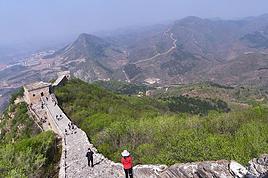
*Grande muraille : 1 jour / J'ai hésité à y aller, mais ce fût finalement un bonheur à Mutianyu sans trop de monde un jour de semaine
*Transferts : 5 jours en Chine
* * * * *
*Avion : aller-retour avec Emirates via Dubaï, dont une escale d'une journée complète à l'aller : donc visite de la ville en bonus. J'ai adoré.
* * * * *
*Visa : soyez patient et méthodique. Il est demandé une tonne de justificatifs. Je me suis déplacé au consulat, ils ne m'ont toutefois pas demandé les justificatifs de travail et salaire. Je n'ai pas compris. Sinon, ils demandent les adresses d'hébergement et impérativement une adresse d'hôtel, et rien d'autres (Sauf si vous allez chez un ami). J'avais réservé sur Booking.com des hôtels (Annulable gratuitement), puis une fois le visa en poche j'ai tout annulé. * * * * * *Trains : réseau dense et pratique. Réservation indispensable 2 à 3 jours minimum sur certaines lignes à certaines dates. Voir plusieurs semaines avant. Pour ma part j'ai réservé avec satisfaction sur TRIP.COM. Fonctionnement simple et pratique. Une taxe est prélevée par billet, mais ils réservent pour vous. Ensuite avec un code vous retirez votre billet au guichet "réservation en ligne" d'une gare. Si vous réservez votre billet très tôt, TRIP.COM le réservera dès que les réservations seront ouvertes et possibles auprès de la "SNCF" chinoise (Les réservations sont ouvertes quelques semaines avant le départ du train). * * * * * *Avion : en Chine, j'ai fait un trajet en avion. Réservation avec TRIP.COM également. Il y a eu un changement d'horaires. TRIP.COM m'a contacté pour être sûr que j'avais bien eu l'information et voir si cela me convenait. Je conseille cet intermédiaire. * * * * * *Arrivé à Shanghai à l'aéroport : Bien préparer le petit « papier d'entrée » avant le contrôle aux frontières et impérativement noter dessus une adresse d'hôtel où vous loger dès le premier soir. Je logeais en Airbnb, cela à bloquer le contrôleur, il a fallu négocier. Je pense qu'une adresse au hasard d'un hôtel lui ferait « plaisir » et vous laisserai passer. J'ai eu le droit aussi au contrôle de santé aléatoire avec un embout dans la bouche et un appareil qui m'a désigné comme "sain". Youpi ! Ensuite récupérer votre valise. Avec mon retard, la mienne avait été mise de côté dans un des bureaux de réclamation devant les tapis. Faire du change de suite pour prendre le métro ou le Maglev+métro. J'espérai utiliser ma carte bleue, juste en rêve ... Pour ma part change 10 € contre 50 Y au black auprès d'un membre du personnel (Taux pas terrible). Maglev = 50 Y+ métro = 2 à 4 Y suivant la destination. Payable en billets ou pièces. Pas de gros billets, si besoin allez voir le personnel présent dans les stations de métro pour changer les billets. * * * * * *Argent Utilisé 2 fois un distributeur : taux classique et taxe de 5 € de ma banque. Soit 100€ = 700 Y Sinon 2 changes de billets en d'euro dans une banque : 100€ = 730Y. Pas de taxe. Mais dossier à remplir, passeport à présenter et attente, prévoir 30 minutes. * * * * * *Applications téléphone : Cartographie GPS : OSMand et MAPS.ME, chacune à ses avantages. Mais les deux permettent de télécharger les cartes et les utiliser hors connexion internet. MAPS.ME permet aussi de faire des itinéraires hors connexion, j'adore. Google Maps : connais pas. C'est quoi ? En Chine cela ne fonctionne pas et la carte est décalée de la réalité ! Je vous invite à comparer la carte de base avec la photo satellite en Chine, vous verrez ! Télécharger des cartes Google Maps hors connexion est impossible. Comme par hasard ... Aussi méfiez-vous des applications et sites qui utilisent les cartes Google Maps, cela ne fonctionne pas ou mal. Exemples : Airbnb, Flightradar24, ... * * * * * Internet : technologie très présente en Chine. WIFI possible dans les lieux publics ... avec un numéro de téléphone chinois en général. Le moteur de recherche américain BING fonctionne. * * * * * *Internet libre : dans tes rêves seulement. L'utilisation d'une application VPN permet de se connecter librement. J'ai utilisé des VPN gratuit Android. Ceux utilisés : SECURE VPN, THUNDER VPN, MELON VPN, TURBO VPN. Ils fonctionnent tous plus ou moins bien suivant le moment. Les déconnections sont fréquentes. Mais ils sont gratuits. Est-ce qu'un VPN payant (NORD VPN, EXPRESS VPN? ...) ferait mieux ? Je n'ai pas testé.
Sinon il est possible d'utiliser librement WECHAT (Qui remplace WhatsApp, Twitter, Facebook, Instagram, Carte de paiement Visa ou Mastercard. Et qui permet même d'avoir du papier WC dans certaines toilettes publiques !) Wechat le grand fait-tout... avec ses limites tout de même. Perso je l'ai utilisé pour des "Skype" avec la famille. Wechat avec Alipay sont deux applications qui permettent de payer quasiment partout (Même un paysan qui vends des pommes de terre sur le marché) et remplacent nos cartes bleues. Il est possible d'y connecter une carte de paiement, mais il me semble qu'ils n'acceptent que les cartes chinoises. Je n’ai pas essayé.
Sinon payer avec des billets de banque, fonctionne très bien partout ! * * * * * *Circulation dans les villes : caméra de vidéo-surveillance et contrôle des bagages aux rayons X partout. N'oubliez pas votre passeport dans votre chambre.
* * * * *
*Visa : soyez patient et méthodique. Il est demandé une tonne de justificatifs. Je me suis déplacé au consulat, ils ne m'ont toutefois pas demandé les justificatifs de travail et salaire. Je n'ai pas compris. Sinon, ils demandent les adresses d'hébergement et impérativement une adresse d'hôtel, et rien d'autres (Sauf si vous allez chez un ami). J'avais réservé sur Booking.com des hôtels (Annulable gratuitement), puis une fois le visa en poche j'ai tout annulé. * * * * * *Trains : réseau dense et pratique. Réservation indispensable 2 à 3 jours minimum sur certaines lignes à certaines dates. Voir plusieurs semaines avant. Pour ma part j'ai réservé avec satisfaction sur TRIP.COM. Fonctionnement simple et pratique. Une taxe est prélevée par billet, mais ils réservent pour vous. Ensuite avec un code vous retirez votre billet au guichet "réservation en ligne" d'une gare. Si vous réservez votre billet très tôt, TRIP.COM le réservera dès que les réservations seront ouvertes et possibles auprès de la "SNCF" chinoise (Les réservations sont ouvertes quelques semaines avant le départ du train). * * * * * *Avion : en Chine, j'ai fait un trajet en avion. Réservation avec TRIP.COM également. Il y a eu un changement d'horaires. TRIP.COM m'a contacté pour être sûr que j'avais bien eu l'information et voir si cela me convenait. Je conseille cet intermédiaire. * * * * * *Arrivé à Shanghai à l'aéroport : Bien préparer le petit « papier d'entrée » avant le contrôle aux frontières et impérativement noter dessus une adresse d'hôtel où vous loger dès le premier soir. Je logeais en Airbnb, cela à bloquer le contrôleur, il a fallu négocier. Je pense qu'une adresse au hasard d'un hôtel lui ferait « plaisir » et vous laisserai passer. J'ai eu le droit aussi au contrôle de santé aléatoire avec un embout dans la bouche et un appareil qui m'a désigné comme "sain". Youpi ! Ensuite récupérer votre valise. Avec mon retard, la mienne avait été mise de côté dans un des bureaux de réclamation devant les tapis. Faire du change de suite pour prendre le métro ou le Maglev+métro. J'espérai utiliser ma carte bleue, juste en rêve ... Pour ma part change 10 € contre 50 Y au black auprès d'un membre du personnel (Taux pas terrible). Maglev = 50 Y+ métro = 2 à 4 Y suivant la destination. Payable en billets ou pièces. Pas de gros billets, si besoin allez voir le personnel présent dans les stations de métro pour changer les billets. * * * * * *Argent Utilisé 2 fois un distributeur : taux classique et taxe de 5 € de ma banque. Soit 100€ = 700 Y Sinon 2 changes de billets en d'euro dans une banque : 100€ = 730Y. Pas de taxe. Mais dossier à remplir, passeport à présenter et attente, prévoir 30 minutes. * * * * * *Applications téléphone : Cartographie GPS : OSMand et MAPS.ME, chacune à ses avantages. Mais les deux permettent de télécharger les cartes et les utiliser hors connexion internet. MAPS.ME permet aussi de faire des itinéraires hors connexion, j'adore. Google Maps : connais pas. C'est quoi ? En Chine cela ne fonctionne pas et la carte est décalée de la réalité ! Je vous invite à comparer la carte de base avec la photo satellite en Chine, vous verrez ! Télécharger des cartes Google Maps hors connexion est impossible. Comme par hasard ... Aussi méfiez-vous des applications et sites qui utilisent les cartes Google Maps, cela ne fonctionne pas ou mal. Exemples : Airbnb, Flightradar24, ... * * * * * Internet : technologie très présente en Chine. WIFI possible dans les lieux publics ... avec un numéro de téléphone chinois en général. Le moteur de recherche américain BING fonctionne. * * * * * *Internet libre : dans tes rêves seulement. L'utilisation d'une application VPN permet de se connecter librement. J'ai utilisé des VPN gratuit Android. Ceux utilisés : SECURE VPN, THUNDER VPN, MELON VPN, TURBO VPN. Ils fonctionnent tous plus ou moins bien suivant le moment. Les déconnections sont fréquentes. Mais ils sont gratuits. Est-ce qu'un VPN payant (NORD VPN, EXPRESS VPN? ...) ferait mieux ? Je n'ai pas testé.
Sinon il est possible d'utiliser librement WECHAT (Qui remplace WhatsApp, Twitter, Facebook, Instagram, Carte de paiement Visa ou Mastercard. Et qui permet même d'avoir du papier WC dans certaines toilettes publiques !) Wechat le grand fait-tout... avec ses limites tout de même. Perso je l'ai utilisé pour des "Skype" avec la famille. Wechat avec Alipay sont deux applications qui permettent de payer quasiment partout (Même un paysan qui vends des pommes de terre sur le marché) et remplacent nos cartes bleues. Il est possible d'y connecter une carte de paiement, mais il me semble qu'ils n'acceptent que les cartes chinoises. Je n’ai pas essayé.
Sinon payer avec des billets de banque, fonctionne très bien partout ! * * * * * *Circulation dans les villes : caméra de vidéo-surveillance et contrôle des bagages aux rayons X partout. N'oubliez pas votre passeport dans votre chambre.
Bonjour!
Je me rends avec ma petite famille (deux adultes et un enfant de deux ans et de demi) en Thaïlande l'été prochain et notre parcours Montréal-Bangkok comporte une escale à Beijing.
J'ai toujours été intéressée par cette capitale et j'aimerais bien couper la route au retour, alors je pense faire allonger notre escale pour passer cinq nuits à Beijing.
Ce serait notre seul arrêt en Chine, pays où nous ne sommes jamais allés.
J'ai entendu beaucoup de choses sur la barrière de la langue, entre autres choses susceptibles de rendre très difficile un premier voyage dans ce pays. Est-ce aussi le cas dans la capitale?
Je m'adresse donc à vous, qui connaissez bien la région. L'aéroport de Beijing, le trajet vers le centre-ville sans se perdre, trois repas par jour au restaurant, les trajets en métro, visiter les classiques: la grande muraille, la cité interdite, le palais, la place Tian'anmen... Est-ce que ça s'annonce très difficile? Nous sommes habitués à l'Asie du Sud-Est et avons aussi voyagé à Hong Kong, ce que nous avons trouvé très facile. Nous sommes prêts pour un plus grand coefficient de difficulté, mais avec le petit, nous ne voulons pas non plus que ces cinq jours deviennent uniquement casse-tête et frustrations.
Merci pour vos conseils!
Je me rends avec ma petite famille (deux adultes et un enfant de deux ans et de demi) en Thaïlande l'été prochain et notre parcours Montréal-Bangkok comporte une escale à Beijing.
J'ai toujours été intéressée par cette capitale et j'aimerais bien couper la route au retour, alors je pense faire allonger notre escale pour passer cinq nuits à Beijing.
Ce serait notre seul arrêt en Chine, pays où nous ne sommes jamais allés.
J'ai entendu beaucoup de choses sur la barrière de la langue, entre autres choses susceptibles de rendre très difficile un premier voyage dans ce pays. Est-ce aussi le cas dans la capitale?
Je m'adresse donc à vous, qui connaissez bien la région. L'aéroport de Beijing, le trajet vers le centre-ville sans se perdre, trois repas par jour au restaurant, les trajets en métro, visiter les classiques: la grande muraille, la cité interdite, le palais, la place Tian'anmen... Est-ce que ça s'annonce très difficile? Nous sommes habitués à l'Asie du Sud-Est et avons aussi voyagé à Hong Kong, ce que nous avons trouvé très facile. Nous sommes prêts pour un plus grand coefficient de difficulté, mais avec le petit, nous ne voulons pas non plus que ces cinq jours deviennent uniquement casse-tête et frustrations.
Merci pour vos conseils!
bonjour ,
ça y est j'ai RV avec Shaolei pour prendre ma première leçon de Mandarin: en faite on va faire connaissance.
Je pars en juillet-aout 2018 sur 30 jours (à cause du visa sinon cela pourrait être 40 ou 50 jours)
avec un ami.
Mon but principal est de rencontrer les gens dans leur quotidien et plus particulièrement les ehtnies du sud ( Mao-Dong), car je pense qu'il ont su garder des valeurs ( accueil, solidarité) que la facilité de notre vie occidentale nous a fait oublié.
Je sais que l'échange avec les mots sera difficile voire impossible mais je pense aussi que tous ne passe pas par les mots ( il y a la musique, les sons, les odeurs, les émotions qui sont universels).
Par contre, je veux apprendre le minimun pour le premier pas qui est à mon avis le plus important et apprendre le minimum à faire pour ne pas blesser les gens que je vais rencontrer.
Mais là, je viens aussi vous faire part de mon désarroi pour que cela ne coûte pas trop cher.
J'ai demandé 1 devis à une agence de voyage car je n'ai pas forcément envie de me prendre la tête pour gagner 100€ mais si c'est pour en gagner 1000 là c'est autre chose.
Voilà mon programme ( pour 15 juillet-15 aout 2018 environ):
vol Montpellier-Pékin
visite cité interdite-grande muraille
nuit à Pékin
transfert en train vers Xi'an pour voir le mausolée de l'empereur Qin avec guide parlant français
nuit à Xi'an
transfert vers Guiyang
nuit à Guiyang
Et c'est là que ça commence vraiment pour moi, il nous restera au moins 20 jours pour partir à pied et en utilisant les transports locaux avec pour unique objectif de rencontrer les gens hors des sentiers touristiques.
vol retour Guiyang_Montpellier
Pour l'agence , pensez vous qu'elle peut me fournir cela pour 1000€.
Pensez vous possible de l'obtenir pour ce budget là.
Merci de vos réponses
Dominique
Bonjour,
On m'a dit que certains sites (Facebook, Twitter, ect.) n'étaient pas aussi facilement accessibles en Chine qu'en Occident. Je pars en Chine dans 12 jours. Dois-je me procurer un VPN? Si oui, avez-vous des suggestions?
Merci,
François
On m'a dit que certains sites (Facebook, Twitter, ect.) n'étaient pas aussi facilement accessibles en Chine qu'en Occident. Je pars en Chine dans 12 jours. Dois-je me procurer un VPN? Si oui, avez-vous des suggestions?
Merci,
François
Hi everyone,
This trip report covers a journey along the Silk Road in China (see detailed description below) undertaken in October 2025. The goal isn’t to recount the trip but to provide information that might help those who want to take a similar journey. Much of the information is valid for any trip to China.
Who we are: a retired couple, aged 63 and 65 (age gives discounts on entry to various sites and museums in China, which is why I won’t list prices here—I don’t know them, but you can easily find them online). We’re used to traveling independently. We speak English, which is the only foreign language spoken in China, though by very few people. I speak and read a little Chinese, which helped, but you can easily get by without it (without any English at all, I think it would be more difficult).
Period: We arrived just after "Golden Week," when all of China is on vacation, and after the summer, when schools are out, so we encountered very few tourists (99.99% of whom were Chinese). Our experience with booking visits in advance (which we didn’t need to do) isn’t representative for those who want to travel in the summer! The October-November period was perfect for our trip—it wasn’t too hot or too cold (one day of snow on the Tibetan Plateau), though it was only a few degrees on the Tibetan part, with altitudes between 2,000 and 3,000 meters. The trees were beautifully colored.
General remarks: Everyone we dealt with was very kind and perfectly honest. If you order a meal without really understanding what to do and the person modifies your order, trust them—the result is what you need. If a taxi driver signals that they’ll wait for you to finish your visit and pick you up afterward, trust them. It means there aren’t many taxis where you are, and it’ll be more convenient. For prices at street vendors, we always found the right ballpark, and sometimes they even added a little extra to please us. A taxi driver treated us to lunch, and an employee drove us back to the hotel after a visit because there were no taxis. If you struggle to buy a ticket online because there’s no counter, someone will come to help. People even spontaneously ask if everything’s okay and if you need anything.
Everywhere we went was very clean, including restrooms (trains, stations, hotels, museums, tourist sites) and streets. The old stereotypes about this no longer apply.
The trip can be challenging for those who have difficulty walking. The distances to cover on foot in stations, to access sites, and within the sites themselves can sometimes be really long.
We used the Lonely Planet guide in English (published at the end of August 2025) a little for preparation, but mostly relied on the internet.
Before leaving: No visa is needed for French citizens for stays under 30 days. You get a stamp on your passport upon arrival and departure, and the formalities themselves are very quick in both directions (excluding any potential queues). Just a photo and fingerprints upon arrival, and welcome to China’s facial recognition system.
Money: All your payments (see below) will go through your Visa card—there will be hundreds, including many payments of 20 cents to a few euros. So, you need an international option that allows unlimited card transactions. Since cash is rarely needed, the allowed number of ATM withdrawals can be low. We made 3 withdrawals totaling 800 € for a month and could have managed with just 2. The exchange rate charged on our Visa card was 12 € for 100 RMB (yuan).
Install the following apps on your smartphone before leaving (otherwise, you’ll only have access to the Chinese versions, if available): - Alipay, which is used to pay everywhere in China (details below). You need to link it to your credit card, then provide proof of identity by uploading a passport photo and completing a facial recognition session. Alipay gives access to Didi (China’s Uber), public transport (metro/bus), and can also translate phrases. - WeChat (Weixin in Chinese, pronounced *weishin*), which is also used for payments but also replaces WhatsApp. Unfortunately, to activate your account, you need someone who already has WeChat to sponsor you (preferably a Chinese person). We asked someone at our first accommodations to do this—no problem. By sharing your WeChat number with accommodations, they can send you messages that are automatically translated, and you can communicate with people thanks to the translation (translation to French is very poor; it’s much better in English, but unfortunately, WeChat detects your phone’s language). Alipay and WeChat are accepted almost everywhere, but some places only accept WeChat. - Amap, the international version of Baidu Maps, which replaces Google Maps (not at all up-to-date in China). The English names of hotels often have little to do with the Chinese names except for a phonetic resemblance. To find them on Amap, it’s best to copy the Chinese name found on your Trip reservation under "show address in Chinese." - A VPN. We had CyberGhost, which didn’t work, but according to other travelers, NordVPN and Windscribe do. Without a VPN, you can’t access Google services, on WhatsApp you can send and receive text but not photos, and you can’t send or receive emails on Gmail addresses. We managed without a VPN by using Firefox as a browser and Bing as a search engine. - Trip, for booking trains and accommodations, and buying some tickets. It’s the equivalent of Booking for accommodations, but Booking has very few listings in China, while Trip has hundreds in every city. Most hotels and trains are exchangeable and refundable until the day before, with no or minimal fees.
You don’t need contactless (NFC) payment on your phone. Either you scan a barcode and enter the amount to pay, or you display a barcode, and they scan it with a scanner, and the amount is deducted directly.
Upon arrival: - Buy a Chinese SIM card: 100 RMB for 300 GB of data and several hours of talk time (we didn’t use it). Set the Chinese number as a reference on Alipay, WeChat, and Amap. - Find someone to sponsor you on WeChat.
Transportation: - **Plane**: China Eastern, Paris-Canton then Canton-Urumqi on the way out, and Xian-Canton then Canton-Paris on the way back. International flights were smooth, but the schedules for the two domestic flights were changed. It was fine on the way out because we had some leeway, but on the way back, we were notified the morning of that our flight was canceled and replaced with one that didn’t allow for the connection. We called and changed to an earlier flight (I think we were lucky to find available seats). - **Train**: Most long distances were covered by high-speed trains (called D or G in China) at 240 or 300 km/h. Second class is perfect—just as comfortable and clean as our TGVs. The only advantage of first class is the wider seats for larger people, but the downside is that seats are often booked in advance and thus less available. You can book trains long in advance on Trip, but they only go on sale in China 15 days before departure, so that’s when you’ll know if you have a ticket. Initially, we booked first class, but there were no seats available on the day, so we ended up booking everything in second class, which was perfect. There’s no paper ticket—if you’ve bought one, you go to the station, show your passport, and enter. You do the same to access the platform 15 minutes before the train, and that’s it. Our train was canceled twice, but no problem—we went to the ticket counter, got a refund, and were offered a replacement. It didn’t delay us by more than an hour (maybe it would be harder in peak season). For prices, check Trip.com, but it’s significantly cheaper than in France. - **Bus**: We took the bus between Xining and Tongren, Tongren to Xiahe, and Hezuo to Lanzhou—about 3 hours each time for 200 km, 6 € per person, and departures were right on time. - **Taxi**: For trips between the station and hotel, or hotel and visits. If you take a Didi via the Alipay app, you activate your location, enter your destination, and it offers several taxis. You accept, and you get the car’s license plate and its real-time position on the map. When you get in, the driver often asks for the last four digits of your phone number to confirm. Otherwise, you go to the taxi stand outside the station. The price per kilometer is around 20 cents, so for a 30 km trip from the station to the hotel, you’ll pay about 6 €. We never tried to save more by taking local buses, but since the metro in Xian costs 25 cents per trip, it’s probably in the same ballpark. Amap provides public transport routes like Google Maps. - **Driver**: We hired a taxi/driver for the day several times for sightseeing. Prices ranged from 350 to 1,000 RMB (the most expensive was arranged through the Sofitel Xining concierge) for trips ranging from a few hours to a full day, sometimes covering over 300 km (see the detailed trip description).
Accommodations: All booked in advance on Trip, but several were changed during the trip. Off-season, there were no issues. We mostly stayed in upscale places, but in China, that means 50 to 60 € per night in the most central or convenient neighborhood. Note: Almost all hotels have a 5/5 rating on Trip, but it seems the Chinese avoid giving lower ratings to be polite. So, you have to read the comments to realize that in France, we might have given a 2 or 3!
Food: At the table, you’re served hot water or a hot infusion, presumably made with purified water. We never got sick from drinking it, but don’t drink tap water. Purified or mineral water is easy to find.
In restaurants, you can manage by pointing to the dish you want from another diner, on the wall where there are photos, or on the menu with pictures. The food in the region isn’t often spicy, and people usually ask or signal before adding the red spicy sauce, so you should be able to handle it if you don’t like chili at all.
The "fake old quarters" in several cities are great places to find all kinds of restaurants (see detailed trip below).
Like Google Maps, Amap can show you nearby restaurants.
Shopping: For dried fruits, buy them in Turfan—you won’t find the same variety and quality even in Xian. Generally, if you like something, buy it. If you wait, you might not find it outside the region where you are.
In Xian, there’s a "Tea City" where you can find all kinds of tea (from cheap to very expensive).
The trip in more detail: I won’t dwell on the beauty or interest of the sites here since that’s a matter of personal taste. However, I will do so for lesser-known places to give an idea to those who might be interested.
For many sites, there are shuttles (sometimes not included in the ticket price but costing around 1 €) that take you to the interesting spots. We always took them—it saves you from walking past countless shops or along uninteresting paths.
- **Urumqi**: We spent only one night there, arriving in the middle of the afternoon and leaving the next morning. We stayed at the Dana Hotel in the bazaar. Given the size of the city, it’s a good option because I don’t think there are many other interesting places. The bazaar is brand new and not at all "typical" (Turfan’s bazaar is infinitely more interesting), but the dining area is very nice.
- **Turfan**: Stayed at the New Dap Hostel, which was great. The neighborhood is nice, not far from the city, and easy to find food. The museum is closed until 2026 (Amap provides museum hours and closures). We took a day trip (for the two of us) with a driver to the Bezeklik Caves, Flaming Mountains, the abandoned city of Gaochang, the Tuyuk Village Museum, and the Emin Minaret for 500 RMB from 9 AM to 8 PM (arranged by the hostel). The landscape during the excursion was quite fabulous. We also visited the Karez Museum and the abandoned city of Jiaohe on our own the next day. At this time of year, the sun sets around 6 PM, and there’s often haze after 5 PM, so for Jiaohe, for example, which takes about 3 hours to visit, it’s best to be there by 1 or 2 PM at the latest.
The Dahua Market area is perfect for dried fruits (including the famous grapes), and you can eat there among locals in their traditional costumes. Next to it, there are buildings full of shops selling made-in-China items—it kept us busy for a good half-day, if not more.
- **Dunhuang**: Stayed in a guesthouse near the dunes—the city center isn’t far but seems quite artificial. Visited the dunes, with a ticket valid for 3 days. Lots of Chinese tourists—very typical and interesting from an ethnological perspective 😊. We got up early one morning to climb the highest dune, just beyond the one everyone goes to. It’s a bit long and tiring, but the view is worth it. Visited the Mogao Caves, buying the ticket on-site (no chance in season without booking in advance). We met two other French people and got a French-speaking guide (by pretending not to understand English). It was really worth it—a group of 4 instead of 20, and they took their time (2 hours) for the visit. We took a day trip to the Yulin Caves (2.5 hours by road and 160 km one way) with a driver for 350 RMB. We liked it a lot, but if the Mogao Caves are enough for you, it’s not very different.
- **Jiayuguan**: Stayed in a city-center hotel. Visited the Wei and Jin tombs (actually just one)—that’s where we were told the taxi should wait to take us back to the city. We went down into a crypt with lots of decorated bricks from the 3rd century. We really liked it, but it’s not as spectacular as the fort if you’re not a fan. Visited the Jiayuguan Fort and, with the same ticket, climbed a small section of the Great Wall 10 km away. Plan at least 3 good hours for all this—there’s plenty to see.
- **Zhangye**: Stayed at The Silk Road Travelers Hostel, rustic but very nice and organizes excursions. Visited the Danxia (colored mountains)—just as spectacular as the photos. You can easily spend 3 hours there, so plan to finish before sunset to avoid the haze (you can always stay longer for the sunset if the weather’s nice). The next day, visited the Mati Si Temple in the cliff. The 10,000 Buddha Caves are under renovation, but the setting and the main temple are well worth the visit (the paths through the cliff tunnels must be hellish in peak season). You can probably organize these two excursions yourself by asking any taxi driver. Also visited the Giant Buddha Temple in the city center—really worth it.
- **Xining**: Stayed in a city-center hotel. Visited the Tibetan Medicine Museum to see the world’s largest thangka (1 km long), made over 40 years by renowned artists. It’s absolutely magnificent, on par with the virtuosity (but over 1 km) of the thangkas painted by famous artists in Xiahe (see below). Hired a female taxi driver for the day to visit Kumbum Monastery (Ta’er Si in Chinese) and the Danxia area in Guide, 50 km beyond the monastery. It’s less spectacular than Zhangye’s Danxia, but we really liked it (including the journey’s landscape). The next day, visited the old Ming-era Qutan Monastery—no visitors, with beautiful murals (half under renovation). Accessible by train to Haidong or Ledu, then a taxi. Xining’s mosque is of no interest, but there’s a pedestrian street with food stalls nearby that’s very nice.
- **Tongren**: Stayed near the main monastery. Visited Longwu Monastery (several hours), with lots of nice shops along the street leading to it. Then visited Wutun Monastery, which is less lively but beautiful and close to thangka workshops. You can go in and watch the painters at work. For a thangka made by a renowned artist, count about a year of work for 1 m² and around 10,000 €.
- **Xiahe**: Stayed in a city-center hotel. Visited Labrang Monastery—very nice but not as much as Tongren’s because many halls were closed. I think it’s better to go in season and take an English-guided tour (but it’s still worth the trip, even off-season).
- **Langmusi**: Took a taxi, but you can also take a bus (though very early in the morning and longer). Particularly beautiful for us because we woke up to bright sunshine and 5 cm of snow everywhere. Visited the two temples (really nice) and did the classic hike in the gorges starting at the Fairy Cave. For those interested, we continued along the canyon path, and after the meadow where marmots are clearly visible in summer, we climbed toward a pass on the left at 3,800 meters. The view of Langmusi and, above all, the vast grasslands and distant mountains was fabulous (3 hours round trip from the temple). You could probably reach the 4,000-meter summit by continuing up the valley instead of turning left, but according to guides, it’s better to count 7 hours round trip (no technical difficulty). You can leave Langmusi by bus, but off-season, you first have to take a taxi to a stop outside the city and wait for the bus. We didn’t try and took a taxi to Hezuo instead.
Note on this region: A high-speed train is under construction from Xining to Langmusi and beyond (never seen such an impressive construction site!). When it’s operational (in one or two years, I think), access to the area will be revolutionized, and perhaps some of the charm will be lost.
- **Hezuo**: Stopped on the way from Langmusi to Lanzhou. Visited the Milarepa Pagoda, entirely destroyed during the Cultural Revolution and since rebuilt. We liked it since we were passing through, but it doesn’t necessarily justify a long detour.
- **Lanzhou**: Reached by one of the many buses from Hezuo. Stayed in the "fake old quarter," which is extremely pleasant, especially in the evening with restaurants, groups of Chinese women dancing to loud music, etc. Visited Bingling Si with a driver, 120 km away—the landscape and site are absolutely magnificent, with no one around at our time of year. Visited the Gansu Museum (where the famous Flying Horse is, but it’s a replica). We bought the ticket on entry, but in season, you probably need to book in advance.
- **Yinchuan**: Stayed in the city center. A city we discovered by chance in the Lonely Planet—worth it if you have time. On the way, we stopped for a few hours in Zhongwei, where there’s an incredible Taoist temple (I’ll let you be surprised). Visited the Western Xia tombs—we took the short option, which visits Tomb 3. We think the others are similar but less impressive. The surrounding landscape and site are quite spectacular. Visited the film sets (really fun if you like Chinese movies), the short but interesting Ningxia Museum, and finally the modern art museum. The architecture is avant-garde, and there are some beautiful works (we like it, but it’s far from the center—hire a driver who waits, or you might have to wait for an employee to offer a ride back).
- **Tianshui**: Stayed in the suburbs, but you should find a hotel near the "fake old quarter" between the Fu Xi Temples and the Taoist temple—it’s a very nice area, and the two temples (especially the Taoist one) are within walking distance. Visited the Maijishan Caves—the ticket includes the shuttle to get there. Took a taxi from Lanzhou for about 10 € in 45 minutes. We found these caves fabulous.
- **Xi’an**: Stayed 500 meters from the Bell Tower at Hantang Inn—very convenient. We’d been before, so we didn’t revisit the Terracotta Army. The calligraphy district is worth it, as is the Muslim Quarter, though it’s very touristy. The area indicated on the Lonely Planet’s walking tour near the old fruit and vegetable market isn’t very interesting. To buy tea, you can go to the Northwest International Tea City, with dozens of shops. We chose one at random, tasted, and bought various teas. There’s everything from cheap to extremely expensive, but you can find reasonable prices even in seemingly luxurious shops. Along the street north of this area, there are large stores with tons of Chinese goods selling dishes, wedding items, etc. We spent hours there. In the city center, there are only malls with more or less international brands.
- **Longmen Grottoes**: Visited as a round trip by high-speed train from Xian—1 hour 15 minutes to Longmen’s high-speed train station, and the site entrance is 15 minutes by taxi.
We didn’t go to Mount Hua Shan, but there’s a high-speed train station nearby, and there were people on the train who were clearly going there. So, you can probably do this excursion in a day from Xian as well.
Conclusion: We hope this report makes you want to go or helps you if you’re already planning to. If you have questions that you can’t find the answer to by searching properly online and we can answer, don’t hesitate.
This trip report covers a journey along the Silk Road in China (see detailed description below) undertaken in October 2025. The goal isn’t to recount the trip but to provide information that might help those who want to take a similar journey. Much of the information is valid for any trip to China.
Who we are: a retired couple, aged 63 and 65 (age gives discounts on entry to various sites and museums in China, which is why I won’t list prices here—I don’t know them, but you can easily find them online). We’re used to traveling independently. We speak English, which is the only foreign language spoken in China, though by very few people. I speak and read a little Chinese, which helped, but you can easily get by without it (without any English at all, I think it would be more difficult).
Period: We arrived just after "Golden Week," when all of China is on vacation, and after the summer, when schools are out, so we encountered very few tourists (99.99% of whom were Chinese). Our experience with booking visits in advance (which we didn’t need to do) isn’t representative for those who want to travel in the summer! The October-November period was perfect for our trip—it wasn’t too hot or too cold (one day of snow on the Tibetan Plateau), though it was only a few degrees on the Tibetan part, with altitudes between 2,000 and 3,000 meters. The trees were beautifully colored.
General remarks: Everyone we dealt with was very kind and perfectly honest. If you order a meal without really understanding what to do and the person modifies your order, trust them—the result is what you need. If a taxi driver signals that they’ll wait for you to finish your visit and pick you up afterward, trust them. It means there aren’t many taxis where you are, and it’ll be more convenient. For prices at street vendors, we always found the right ballpark, and sometimes they even added a little extra to please us. A taxi driver treated us to lunch, and an employee drove us back to the hotel after a visit because there were no taxis. If you struggle to buy a ticket online because there’s no counter, someone will come to help. People even spontaneously ask if everything’s okay and if you need anything.
Everywhere we went was very clean, including restrooms (trains, stations, hotels, museums, tourist sites) and streets. The old stereotypes about this no longer apply.
The trip can be challenging for those who have difficulty walking. The distances to cover on foot in stations, to access sites, and within the sites themselves can sometimes be really long.
We used the Lonely Planet guide in English (published at the end of August 2025) a little for preparation, but mostly relied on the internet.
Before leaving: No visa is needed for French citizens for stays under 30 days. You get a stamp on your passport upon arrival and departure, and the formalities themselves are very quick in both directions (excluding any potential queues). Just a photo and fingerprints upon arrival, and welcome to China’s facial recognition system.
Money: All your payments (see below) will go through your Visa card—there will be hundreds, including many payments of 20 cents to a few euros. So, you need an international option that allows unlimited card transactions. Since cash is rarely needed, the allowed number of ATM withdrawals can be low. We made 3 withdrawals totaling 800 € for a month and could have managed with just 2. The exchange rate charged on our Visa card was 12 € for 100 RMB (yuan).
Install the following apps on your smartphone before leaving (otherwise, you’ll only have access to the Chinese versions, if available): - Alipay, which is used to pay everywhere in China (details below). You need to link it to your credit card, then provide proof of identity by uploading a passport photo and completing a facial recognition session. Alipay gives access to Didi (China’s Uber), public transport (metro/bus), and can also translate phrases. - WeChat (Weixin in Chinese, pronounced *weishin*), which is also used for payments but also replaces WhatsApp. Unfortunately, to activate your account, you need someone who already has WeChat to sponsor you (preferably a Chinese person). We asked someone at our first accommodations to do this—no problem. By sharing your WeChat number with accommodations, they can send you messages that are automatically translated, and you can communicate with people thanks to the translation (translation to French is very poor; it’s much better in English, but unfortunately, WeChat detects your phone’s language). Alipay and WeChat are accepted almost everywhere, but some places only accept WeChat. - Amap, the international version of Baidu Maps, which replaces Google Maps (not at all up-to-date in China). The English names of hotels often have little to do with the Chinese names except for a phonetic resemblance. To find them on Amap, it’s best to copy the Chinese name found on your Trip reservation under "show address in Chinese." - A VPN. We had CyberGhost, which didn’t work, but according to other travelers, NordVPN and Windscribe do. Without a VPN, you can’t access Google services, on WhatsApp you can send and receive text but not photos, and you can’t send or receive emails on Gmail addresses. We managed without a VPN by using Firefox as a browser and Bing as a search engine. - Trip, for booking trains and accommodations, and buying some tickets. It’s the equivalent of Booking for accommodations, but Booking has very few listings in China, while Trip has hundreds in every city. Most hotels and trains are exchangeable and refundable until the day before, with no or minimal fees.
You don’t need contactless (NFC) payment on your phone. Either you scan a barcode and enter the amount to pay, or you display a barcode, and they scan it with a scanner, and the amount is deducted directly.
Upon arrival: - Buy a Chinese SIM card: 100 RMB for 300 GB of data and several hours of talk time (we didn’t use it). Set the Chinese number as a reference on Alipay, WeChat, and Amap. - Find someone to sponsor you on WeChat.
Transportation: - **Plane**: China Eastern, Paris-Canton then Canton-Urumqi on the way out, and Xian-Canton then Canton-Paris on the way back. International flights were smooth, but the schedules for the two domestic flights were changed. It was fine on the way out because we had some leeway, but on the way back, we were notified the morning of that our flight was canceled and replaced with one that didn’t allow for the connection. We called and changed to an earlier flight (I think we were lucky to find available seats). - **Train**: Most long distances were covered by high-speed trains (called D or G in China) at 240 or 300 km/h. Second class is perfect—just as comfortable and clean as our TGVs. The only advantage of first class is the wider seats for larger people, but the downside is that seats are often booked in advance and thus less available. You can book trains long in advance on Trip, but they only go on sale in China 15 days before departure, so that’s when you’ll know if you have a ticket. Initially, we booked first class, but there were no seats available on the day, so we ended up booking everything in second class, which was perfect. There’s no paper ticket—if you’ve bought one, you go to the station, show your passport, and enter. You do the same to access the platform 15 minutes before the train, and that’s it. Our train was canceled twice, but no problem—we went to the ticket counter, got a refund, and were offered a replacement. It didn’t delay us by more than an hour (maybe it would be harder in peak season). For prices, check Trip.com, but it’s significantly cheaper than in France. - **Bus**: We took the bus between Xining and Tongren, Tongren to Xiahe, and Hezuo to Lanzhou—about 3 hours each time for 200 km, 6 € per person, and departures were right on time. - **Taxi**: For trips between the station and hotel, or hotel and visits. If you take a Didi via the Alipay app, you activate your location, enter your destination, and it offers several taxis. You accept, and you get the car’s license plate and its real-time position on the map. When you get in, the driver often asks for the last four digits of your phone number to confirm. Otherwise, you go to the taxi stand outside the station. The price per kilometer is around 20 cents, so for a 30 km trip from the station to the hotel, you’ll pay about 6 €. We never tried to save more by taking local buses, but since the metro in Xian costs 25 cents per trip, it’s probably in the same ballpark. Amap provides public transport routes like Google Maps. - **Driver**: We hired a taxi/driver for the day several times for sightseeing. Prices ranged from 350 to 1,000 RMB (the most expensive was arranged through the Sofitel Xining concierge) for trips ranging from a few hours to a full day, sometimes covering over 300 km (see the detailed trip description).
Accommodations: All booked in advance on Trip, but several were changed during the trip. Off-season, there were no issues. We mostly stayed in upscale places, but in China, that means 50 to 60 € per night in the most central or convenient neighborhood. Note: Almost all hotels have a 5/5 rating on Trip, but it seems the Chinese avoid giving lower ratings to be polite. So, you have to read the comments to realize that in France, we might have given a 2 or 3!
Food: At the table, you’re served hot water or a hot infusion, presumably made with purified water. We never got sick from drinking it, but don’t drink tap water. Purified or mineral water is easy to find.
In restaurants, you can manage by pointing to the dish you want from another diner, on the wall where there are photos, or on the menu with pictures. The food in the region isn’t often spicy, and people usually ask or signal before adding the red spicy sauce, so you should be able to handle it if you don’t like chili at all.
The "fake old quarters" in several cities are great places to find all kinds of restaurants (see detailed trip below).
Like Google Maps, Amap can show you nearby restaurants.
Shopping: For dried fruits, buy them in Turfan—you won’t find the same variety and quality even in Xian. Generally, if you like something, buy it. If you wait, you might not find it outside the region where you are.
In Xian, there’s a "Tea City" where you can find all kinds of tea (from cheap to very expensive).
The trip in more detail: I won’t dwell on the beauty or interest of the sites here since that’s a matter of personal taste. However, I will do so for lesser-known places to give an idea to those who might be interested.
For many sites, there are shuttles (sometimes not included in the ticket price but costing around 1 €) that take you to the interesting spots. We always took them—it saves you from walking past countless shops or along uninteresting paths.
- **Urumqi**: We spent only one night there, arriving in the middle of the afternoon and leaving the next morning. We stayed at the Dana Hotel in the bazaar. Given the size of the city, it’s a good option because I don’t think there are many other interesting places. The bazaar is brand new and not at all "typical" (Turfan’s bazaar is infinitely more interesting), but the dining area is very nice.
- **Turfan**: Stayed at the New Dap Hostel, which was great. The neighborhood is nice, not far from the city, and easy to find food. The museum is closed until 2026 (Amap provides museum hours and closures). We took a day trip (for the two of us) with a driver to the Bezeklik Caves, Flaming Mountains, the abandoned city of Gaochang, the Tuyuk Village Museum, and the Emin Minaret for 500 RMB from 9 AM to 8 PM (arranged by the hostel). The landscape during the excursion was quite fabulous. We also visited the Karez Museum and the abandoned city of Jiaohe on our own the next day. At this time of year, the sun sets around 6 PM, and there’s often haze after 5 PM, so for Jiaohe, for example, which takes about 3 hours to visit, it’s best to be there by 1 or 2 PM at the latest.
The Dahua Market area is perfect for dried fruits (including the famous grapes), and you can eat there among locals in their traditional costumes. Next to it, there are buildings full of shops selling made-in-China items—it kept us busy for a good half-day, if not more.
- **Dunhuang**: Stayed in a guesthouse near the dunes—the city center isn’t far but seems quite artificial. Visited the dunes, with a ticket valid for 3 days. Lots of Chinese tourists—very typical and interesting from an ethnological perspective 😊. We got up early one morning to climb the highest dune, just beyond the one everyone goes to. It’s a bit long and tiring, but the view is worth it. Visited the Mogao Caves, buying the ticket on-site (no chance in season without booking in advance). We met two other French people and got a French-speaking guide (by pretending not to understand English). It was really worth it—a group of 4 instead of 20, and they took their time (2 hours) for the visit. We took a day trip to the Yulin Caves (2.5 hours by road and 160 km one way) with a driver for 350 RMB. We liked it a lot, but if the Mogao Caves are enough for you, it’s not very different.
- **Jiayuguan**: Stayed in a city-center hotel. Visited the Wei and Jin tombs (actually just one)—that’s where we were told the taxi should wait to take us back to the city. We went down into a crypt with lots of decorated bricks from the 3rd century. We really liked it, but it’s not as spectacular as the fort if you’re not a fan. Visited the Jiayuguan Fort and, with the same ticket, climbed a small section of the Great Wall 10 km away. Plan at least 3 good hours for all this—there’s plenty to see.
- **Zhangye**: Stayed at The Silk Road Travelers Hostel, rustic but very nice and organizes excursions. Visited the Danxia (colored mountains)—just as spectacular as the photos. You can easily spend 3 hours there, so plan to finish before sunset to avoid the haze (you can always stay longer for the sunset if the weather’s nice). The next day, visited the Mati Si Temple in the cliff. The 10,000 Buddha Caves are under renovation, but the setting and the main temple are well worth the visit (the paths through the cliff tunnels must be hellish in peak season). You can probably organize these two excursions yourself by asking any taxi driver. Also visited the Giant Buddha Temple in the city center—really worth it.
- **Xining**: Stayed in a city-center hotel. Visited the Tibetan Medicine Museum to see the world’s largest thangka (1 km long), made over 40 years by renowned artists. It’s absolutely magnificent, on par with the virtuosity (but over 1 km) of the thangkas painted by famous artists in Xiahe (see below). Hired a female taxi driver for the day to visit Kumbum Monastery (Ta’er Si in Chinese) and the Danxia area in Guide, 50 km beyond the monastery. It’s less spectacular than Zhangye’s Danxia, but we really liked it (including the journey’s landscape). The next day, visited the old Ming-era Qutan Monastery—no visitors, with beautiful murals (half under renovation). Accessible by train to Haidong or Ledu, then a taxi. Xining’s mosque is of no interest, but there’s a pedestrian street with food stalls nearby that’s very nice.
- **Tongren**: Stayed near the main monastery. Visited Longwu Monastery (several hours), with lots of nice shops along the street leading to it. Then visited Wutun Monastery, which is less lively but beautiful and close to thangka workshops. You can go in and watch the painters at work. For a thangka made by a renowned artist, count about a year of work for 1 m² and around 10,000 €.
- **Xiahe**: Stayed in a city-center hotel. Visited Labrang Monastery—very nice but not as much as Tongren’s because many halls were closed. I think it’s better to go in season and take an English-guided tour (but it’s still worth the trip, even off-season).
- **Langmusi**: Took a taxi, but you can also take a bus (though very early in the morning and longer). Particularly beautiful for us because we woke up to bright sunshine and 5 cm of snow everywhere. Visited the two temples (really nice) and did the classic hike in the gorges starting at the Fairy Cave. For those interested, we continued along the canyon path, and after the meadow where marmots are clearly visible in summer, we climbed toward a pass on the left at 3,800 meters. The view of Langmusi and, above all, the vast grasslands and distant mountains was fabulous (3 hours round trip from the temple). You could probably reach the 4,000-meter summit by continuing up the valley instead of turning left, but according to guides, it’s better to count 7 hours round trip (no technical difficulty). You can leave Langmusi by bus, but off-season, you first have to take a taxi to a stop outside the city and wait for the bus. We didn’t try and took a taxi to Hezuo instead.
Note on this region: A high-speed train is under construction from Xining to Langmusi and beyond (never seen such an impressive construction site!). When it’s operational (in one or two years, I think), access to the area will be revolutionized, and perhaps some of the charm will be lost.
- **Hezuo**: Stopped on the way from Langmusi to Lanzhou. Visited the Milarepa Pagoda, entirely destroyed during the Cultural Revolution and since rebuilt. We liked it since we were passing through, but it doesn’t necessarily justify a long detour.
- **Lanzhou**: Reached by one of the many buses from Hezuo. Stayed in the "fake old quarter," which is extremely pleasant, especially in the evening with restaurants, groups of Chinese women dancing to loud music, etc. Visited Bingling Si with a driver, 120 km away—the landscape and site are absolutely magnificent, with no one around at our time of year. Visited the Gansu Museum (where the famous Flying Horse is, but it’s a replica). We bought the ticket on entry, but in season, you probably need to book in advance.
- **Yinchuan**: Stayed in the city center. A city we discovered by chance in the Lonely Planet—worth it if you have time. On the way, we stopped for a few hours in Zhongwei, where there’s an incredible Taoist temple (I’ll let you be surprised). Visited the Western Xia tombs—we took the short option, which visits Tomb 3. We think the others are similar but less impressive. The surrounding landscape and site are quite spectacular. Visited the film sets (really fun if you like Chinese movies), the short but interesting Ningxia Museum, and finally the modern art museum. The architecture is avant-garde, and there are some beautiful works (we like it, but it’s far from the center—hire a driver who waits, or you might have to wait for an employee to offer a ride back).
- **Tianshui**: Stayed in the suburbs, but you should find a hotel near the "fake old quarter" between the Fu Xi Temples and the Taoist temple—it’s a very nice area, and the two temples (especially the Taoist one) are within walking distance. Visited the Maijishan Caves—the ticket includes the shuttle to get there. Took a taxi from Lanzhou for about 10 € in 45 minutes. We found these caves fabulous.
- **Xi’an**: Stayed 500 meters from the Bell Tower at Hantang Inn—very convenient. We’d been before, so we didn’t revisit the Terracotta Army. The calligraphy district is worth it, as is the Muslim Quarter, though it’s very touristy. The area indicated on the Lonely Planet’s walking tour near the old fruit and vegetable market isn’t very interesting. To buy tea, you can go to the Northwest International Tea City, with dozens of shops. We chose one at random, tasted, and bought various teas. There’s everything from cheap to extremely expensive, but you can find reasonable prices even in seemingly luxurious shops. Along the street north of this area, there are large stores with tons of Chinese goods selling dishes, wedding items, etc. We spent hours there. In the city center, there are only malls with more or less international brands.
- **Longmen Grottoes**: Visited as a round trip by high-speed train from Xian—1 hour 15 minutes to Longmen’s high-speed train station, and the site entrance is 15 minutes by taxi.
We didn’t go to Mount Hua Shan, but there’s a high-speed train station nearby, and there were people on the train who were clearly going there. So, you can probably do this excursion in a day from Xian as well.
Conclusion: We hope this report makes you want to go or helps you if you’re already planning to. If you have questions that you can’t find the answer to by searching properly online and we can answer, don’t hesitate.
Bonjour,
comme deja dit dans un précédent message, après une longue période d'inactivité Chinoise, décision est prise de repartir la bas, pour voir.... voir le changement, voir la différence, voir les gens, et aussi...montrer au "plus jeune" comment ca se passe avant qu'il ne soit trop tard.
Du coup, pour joindre l'utile a l'agréable, et alors que nous n'avons que 11 jours sur place, j'ai imaginé une région que je ne connais pas encore, et pour maximiser le temps, aimerait bien avoir quelques informations récentes sur (en particulier) les transports sur place !
Donc, je résume vite fait: le projet est de partir de Pekin , de continuer sur (au début c'était Chengde, mais j'ai peur de perdre du temps pour rejoindre l'étape suivante de Datong pour laquelle il faut visiblement repasser par Pekin) Datong, de faire une pause de 3 jours environ en ciblant peut etre aussi 1 journée autour de "Watushan" avant de descendre sur Pingyao puis Xian puis retour par Shanghai d'ou nous devons prendre l'avion.
Mes questions:
- sait-on jamais.... auriez vous fait un trajet Chengde a Datong sans repasser par Pekin ? - existe t'il un train rapide (ou de nuit) entre Datong et Pingyao ? (apparament pas de ce que j'ai pu rapidement regardé) et faut il absolument faire un stop a TAIYUAN - combien de temps entre Datong et Wutashan environ ? - la question "bidon" mais c'est pas grave.... je sais qu'il pleut pas mal dans la région en été mais est ce comme en asie du sud, bcp de pluie puis soleil ou plutot de longues journées tristes et grises ...?
Du coup, pour joindre l'utile a l'agréable, et alors que nous n'avons que 11 jours sur place, j'ai imaginé une région que je ne connais pas encore, et pour maximiser le temps, aimerait bien avoir quelques informations récentes sur (en particulier) les transports sur place !
Donc, je résume vite fait: le projet est de partir de Pekin , de continuer sur (au début c'était Chengde, mais j'ai peur de perdre du temps pour rejoindre l'étape suivante de Datong pour laquelle il faut visiblement repasser par Pekin) Datong, de faire une pause de 3 jours environ en ciblant peut etre aussi 1 journée autour de "Watushan" avant de descendre sur Pingyao puis Xian puis retour par Shanghai d'ou nous devons prendre l'avion.
Mes questions:
- sait-on jamais.... auriez vous fait un trajet Chengde a Datong sans repasser par Pekin ? - existe t'il un train rapide (ou de nuit) entre Datong et Pingyao ? (apparament pas de ce que j'ai pu rapidement regardé) et faut il absolument faire un stop a TAIYUAN - combien de temps entre Datong et Wutashan environ ? - la question "bidon" mais c'est pas grave.... je sais qu'il pleut pas mal dans la région en été mais est ce comme en asie du sud, bcp de pluie puis soleil ou plutot de longues journées tristes et grises ...?
Bonjour à toutes et à tous,
Je suis nouvelle ici. Je vais bientôt arriver à Hanoï au Vietnam et je demanderai un visa pour la Chine là-bas. On m'a dit que je pourrais obtenir 45 jours 🙂, mais j'aimerais ensuite prolonger en Chine. Vous savez si c'est facile et de combien de jours je pourrais bénéficier alors ?
Pour mon itinéraire, je souhaite visiter une Chine avec peu de touristes (occidentaux ou Chinois) et je suis plutôt nature et petites villes. Et comme je suis italienne, j'aime surtout le soleil 😎.Pour la fin de mon voyage, je compte rejoindre la Mongolie par voie de terre. Est-ce que vous auriez des idées de trajet(s) entre Hanoï et Beijing ou Erenhot ?
Merci d'avance mes (nouveaux) amis !
Albinia
Je suis nouvelle ici. Je vais bientôt arriver à Hanoï au Vietnam et je demanderai un visa pour la Chine là-bas. On m'a dit que je pourrais obtenir 45 jours 🙂, mais j'aimerais ensuite prolonger en Chine. Vous savez si c'est facile et de combien de jours je pourrais bénéficier alors ?
Pour mon itinéraire, je souhaite visiter une Chine avec peu de touristes (occidentaux ou Chinois) et je suis plutôt nature et petites villes. Et comme je suis italienne, j'aime surtout le soleil 😎.Pour la fin de mon voyage, je compte rejoindre la Mongolie par voie de terre. Est-ce que vous auriez des idées de trajet(s) entre Hanoï et Beijing ou Erenhot ?
Merci d'avance mes (nouveaux) amis !
Albinia
Bonjour, je prévois un voyage en individuel d'environ 15 jours en Chine en septembre, pour faire le circuit Pékin Pingyao Xi'an Guilin Yangshuo et Shangaï. J'aime bien le concept voyage en liberté proposé par certaines agences avec uniquement les transferts systematiques et chauffeurs et guides en option, sachant que je suis pas mal indépendant et que j'apprécie de flâner tranquillement quitte à louper un incontournable. En gros c'est surtout l'organisation logistique qui m'importe avec reservation hôtels incluses, car dans un pays où je ne connais pas la langue et n'ayant pas un bon sens de l'orientation, je veux pouvoir profiter au mieux des 2 semaines.
Là ou je rencontre un problème c'est le montant des circuits en individuel qui est pratiquement multiplié par deux chaque fois que je questionne une agence, en grande partie sous prétexte que la chambre prévue pour 2 me sera réservée à moi seul. Alors que lorsque je consulte les prix des mêmes hôtels il m'apparait que la chambre pour moi seul m'est largement accessible au niveau tarif. Bref on connait tous ça, c'est la punition du voyageur célibataire.
Ma question est : peut on envisager une formule où à chaque étape je prends quelqu'un pour les transferts et éventuellement pour certaines visites,
en organisant moi même le voyage?
Ou est ce complètement irréaliste ?
Ou avez vous des suggestions?
Merci
Hi everyone
I’m currently planning my trip to China for next August.
I’m starting from scratch, so I’m counting on your advice and firsthand experiences!
For now, I only know that I’ll arrive in China via Beijing, Shanghai, or Hong Kong and leave 15 days later from another one of these three cities.
In between, I’d love to explore a mountainous and natural region in the countryside.
The Guilin area really appeals to me with its spectacular landscapes.
I still have tons of questions:
- What can you do during this often humid season?
- Is it better to go through a local agency or organize everything yourself?
- What itineraries would you recommend?
Anyway, everything’s still up in the air, and I can’t wait to read your opinions, suggestions, and great tips to help me build this trip!
Bonjour à tous,
Nous partons en Chine 4 semaines à 2 en individuel (avec nos téléphones portables et chacun notre ordi) J'oubliais on est « vieux » enfin « plus si jeunes » et pas doués en informatique. Mais on ne ne sait plus très bien comment faire « sans » !!! Plus grave encore nos adresse mails sont sur gmail.com Quelques questions qui paraîtront sans doute stupides à ceux qui « savent »
Coté Téléphone 1) Que dois-je faire : Acheter des cartes SIM chinoises et les glisser à la place des notres dans nos téléphones «smartphones ». J'imagine que j'aurais un nouveau numéro que je pourrais appeler mais que je ne serais plus joignable de France 2) Utiliser (ou acheter) un « vieux téléphone pas cher (un qui ne fait que téléphoner… ) et mettre dedans une puce chinoise Le cas échéant est-ce que je peux si besoin me servir de mon smartphone avec ma puce française pour appeler la France 3) SI je veux téléphoner en france ou recevoir des appels de France utiliser est-ce que SKYPE fonctionne en Chine ? mais dans ce cas est-ce que cela peut se faire à partir de mon compte gmail ou dois-je ouvrir un nouveau compte. Si c'est compliqué y-a-t-il une alternative à Skype (on m'a parlé de « WeChat » qui connaît et qu'en penser ???
Coté internet -Est-ce que je peux ou non continuer à utiliser mon adresse @gmail ? Ou dois-je m'ouvrir un nouveau compte.. mais dans ce cas je peux émettre mais pas recevoir ce que je reçevrais u jour le jour dans ma boite mail Si gmail est plus ou moins bloqué, d'autres fournisseurs d'accès type (@free.fr, @orange.fr, ou autre, ..) fonctionnent-ils sans problème. E si oui lesquels ?
On m'a dit que je pouvais garder mon adresse @gmail à la condition de passer par un « VPN ». Kesako ? Cela fonctionne comment ? Comment s'y « inscrire »
Coté "Outils" Y-a-t-il des alternatives chinoise (mais en français ou à défaut anglais) à « Google map » et « Google traduction » dont je me sert par habitude. Dernière question:Y-a-t-il des traducteurs pratiques du Français vers le Chinois en Idéogramme ou en « pinyin »… ou l'inverse !!!! Merci de m’éclairer un peu. Comme vous le voyez j'en ai bien besoin
On m'a dit que je pouvais garder mon adresse @gmail à la condition de passer par un « VPN ». Kesako ? Cela fonctionne comment ? Comment s'y « inscrire »
Coté "Outils" Y-a-t-il des alternatives chinoise (mais en français ou à défaut anglais) à « Google map » et « Google traduction » dont je me sert par habitude. Dernière question:Y-a-t-il des traducteurs pratiques du Français vers le Chinois en Idéogramme ou en « pinyin »… ou l'inverse !!!! Merci de m’éclairer un peu. Comme vous le voyez j'en ai bien besoin
petit sondage :
où avez vous passé le nouvel an chinois?
vos impressions?
le détour par le vietnam juste à ces dates vaut il le coup? (faut il caler des dates de voyages en fonction de cette fête?)
merci
anne
Je lis qu'une fois en Chine on ne peut plus avoir acces aux reseaux sociaux sans VPN, quels conseils me donnez vous?
Merci
Does anyone know if you can access Google, etc. in China with this plan and avoid needing to use a VPN?
Bonjour,
Prochainement en voyage en chine, je souhaite avoir des infos sur l'utilisation du téléphone en chine. beaucoup d'infos mais ??
Préférer achat un téléphone avec un carte sim ?
Prendre un pass de son opérateur (orange pour moi)
Whatsapp ?? Que penser de l'utilisation de expressvpn ?
Merci à tous
Whatsapp ?? Que penser de l'utilisation de expressvpn ?
Merci à tous
bonjour
devant séjourner a hong kong et chine (shanghai) pendant 20 j , quelles sont les meilleures solutions pour avoir internet et telephone par carte sim ou autre
merci pour vos éclairages
devant séjourner a hong kong et chine (shanghai) pendant 20 j , quelles sont les meilleures solutions pour avoir internet et telephone par carte sim ou autre
merci pour vos éclairages
Retour sur la visite de Hangzhou à 1h de train de Shanghai.
Je recommande une journée complète. Je vous propose le tour que nous avons fait si vous aimez la marche. (Attention, cela reste de la marche citadine, avec une heure de marche nature) Ça nous a pris 9h. En approfondissant le temple, on peut passer à un 9h-19h.
Il vous faut une carte large de la ville qui va jusqu'au temple Lingyin et les montagnes proches. Nous en avons eu une dans un hôtel à Shanghai, tout en Chinois. Les panneaux et noms de rue sur place vous aideront.
Départ de notre hôtel au Nord Est du lac, à 5min de la rive. Marche vers l'ouest par le nord, sur la Bai Causeway, visite rapide du musée gratuit des sceaux, sortie par le pont Xilling. Puis direction le temple Lingyin. Je dirai 30min pour y aller depuis la fin du lac. Vous avez un trottoir ombragé tout le long. Le temple est à faire. Puis marche plein sud (par une petite route quasiment dans l'enceinte du parc du temple) sur un ou deux kilomètres jusqu'à un sentier dans la montagne qui monte en sud sud est jusqu'à un sommet à 800m je crois (ces repères c'est pour lire sur la carte). C'est une bonne montée, d'une heure je pense. Elle pique un peu mais n'est pas trop longue. Le sentier se trouvera avec une lecture fine de la carte. Il se reconnait car passé une bâtisse, on arrive avec un vrai sentier en terre, assez étroit avec un cour d'eau sur la gauche. Au bout de 5-10min vous aurez un policier en carton qui vous dira à votre passage de belles choses en chinois. Vous serez théoriquement seul sur le chemin. Pas d'indication. Arrivé en haut, des propositions de sentiers seront faites pour rejoindre notamment le village du Thé du puits du dragon (le sol est dallé). Le panorama est top et une randonnée plus longue entre les sommets au sud semble largement envisageable et chouette. Si vous allez au village, vous y serez en trente minute. On cherchera à vous faire acheter du thé frais en vous faisant goûter plusieurs sortes. Thé un peu cher (10€ les 100g, sans connaître la qualité du thé) mais l'expérience est sympa. Vous redescendez l'unique route qui mène au lac, en passant sur les sentiers latéraux qui vous montre le village, simple, historique. (Pour info, à un croisement vous aurez une grosse route qui passe dans un tunnel sous la montagne sur votre droite; vous continuez tout droit). Vous arrivez au sud ouest du lac par un mini étang intérieur et partez au Sud pour faire l'Est du lac. Soit vous remontez par la grande Su Causeway plein nord... Et repasserez ensuite par votre chemin du matin.. Soit vous faites le Sud et l'Est en vous reprochant le plus possible des berges, notamment vers la grande pagode du sud. Votre balade continuera sur la rive Est en sortant de la route pour vraiment longer le lac. Si vous y êtes en fin de journée, superbe lumière lors des passages sur les petits ponts de bois. La ville s'éclaire peu à peu, les gens sortent. Pas mal de restau. Et vous revenez à votre point de départ au nord est. Ce tour nous a bcp plus. C'est une longue marche facile, agrémentée d'une ou deux visites. Le tour en bateau sur le lac n'a pas été fait.
Si ça peut être utile...
Cf une photo de la carte qu'on avait, et une autre avec l'itinéraire suivi
Départ de notre hôtel au Nord Est du lac, à 5min de la rive. Marche vers l'ouest par le nord, sur la Bai Causeway, visite rapide du musée gratuit des sceaux, sortie par le pont Xilling. Puis direction le temple Lingyin. Je dirai 30min pour y aller depuis la fin du lac. Vous avez un trottoir ombragé tout le long. Le temple est à faire. Puis marche plein sud (par une petite route quasiment dans l'enceinte du parc du temple) sur un ou deux kilomètres jusqu'à un sentier dans la montagne qui monte en sud sud est jusqu'à un sommet à 800m je crois (ces repères c'est pour lire sur la carte). C'est une bonne montée, d'une heure je pense. Elle pique un peu mais n'est pas trop longue. Le sentier se trouvera avec une lecture fine de la carte. Il se reconnait car passé une bâtisse, on arrive avec un vrai sentier en terre, assez étroit avec un cour d'eau sur la gauche. Au bout de 5-10min vous aurez un policier en carton qui vous dira à votre passage de belles choses en chinois. Vous serez théoriquement seul sur le chemin. Pas d'indication. Arrivé en haut, des propositions de sentiers seront faites pour rejoindre notamment le village du Thé du puits du dragon (le sol est dallé). Le panorama est top et une randonnée plus longue entre les sommets au sud semble largement envisageable et chouette. Si vous allez au village, vous y serez en trente minute. On cherchera à vous faire acheter du thé frais en vous faisant goûter plusieurs sortes. Thé un peu cher (10€ les 100g, sans connaître la qualité du thé) mais l'expérience est sympa. Vous redescendez l'unique route qui mène au lac, en passant sur les sentiers latéraux qui vous montre le village, simple, historique. (Pour info, à un croisement vous aurez une grosse route qui passe dans un tunnel sous la montagne sur votre droite; vous continuez tout droit). Vous arrivez au sud ouest du lac par un mini étang intérieur et partez au Sud pour faire l'Est du lac. Soit vous remontez par la grande Su Causeway plein nord... Et repasserez ensuite par votre chemin du matin.. Soit vous faites le Sud et l'Est en vous reprochant le plus possible des berges, notamment vers la grande pagode du sud. Votre balade continuera sur la rive Est en sortant de la route pour vraiment longer le lac. Si vous y êtes en fin de journée, superbe lumière lors des passages sur les petits ponts de bois. La ville s'éclaire peu à peu, les gens sortent. Pas mal de restau. Et vous revenez à votre point de départ au nord est. Ce tour nous a bcp plus. C'est une longue marche facile, agrémentée d'une ou deux visites. Le tour en bateau sur le lac n'a pas été fait.
Si ça peut être utile...
Cf une photo de la carte qu'on avait, et une autre avec l'itinéraire suivi
Bonjour, je m'en vais en Chine pendant un mois dans quelques jours. Je n'y suis jamais allé et je voudrais savoir environ combien je devrais m"emmener en Yuans pour m'acheter des souvenirs et autres une fois là-bas? On parle d'un voyage touristique normal, je ne suis pas collectionneur, ni à la recherche de pièces antiques. Merci
Bonjour,
Je suis entrain d'élaborer mon séjour en Chine et je compte m'arrêter 4 jours dans la région de Guilin-Yangshuo.
A travers la lecture de plusieurs forums je constate que la région vaut le détour et de nombreux spots sont à voir. Je constate aussi que les "packages" proposées par les agences de voyage sont prohibitifs...du coup je privilégie une visite de la région par mes propres moyens.
Quelqu'un peut-il me renseigner sur le coût d'une location de voiture avec chauffeur pour la journée ? J'ai lu qu'il y avait aussi un réseau de bus qui dessert beaucoup d'endroits mais je souhaite ne pas trop perdre de temps dans les transports.
Merci à tous