Je souhaite acheter une voiture en Grèce pour faire le trajet Grèce > France, puis revendre la voiture en France. Mes recherches étaient très positives (pas de taxe ni problèmes douaniers, etc.) du fait que la Grèce fait partie de l'UE.
Mais je bute sur les plaques d'immatriculation. D'après ce que j'ai compris, une fois la voiture achetée en Grèce, les plaques sont retirées. Je dois en trouver des temporaires, mais ces plaques temporaires ne sont pas forcément reconnues à l'étranger. J'ai lu que les plaques temporaires allemandes ne l'étaient pas pour sûr, mais pas d'info pour les plaques grecques.
Bref, je sèche un peu car très peu d'information à ce sujet sur internet. Je jette une bouteille à la mer en espérant que l'un de vous a déjà fait cette procédure ? Ou si vous en savez plus sur ce système de plaques temporaires, etc.
Pour acheter une voiture en Grèce il faut une carte de résident permanent et un numéro de taxe aux impots.
Ensuite pour les plaques je n'ai jamais entendu parlé des plaques non permanentes.
sans vouloir te décourager à mon avis ça va etre difficile d'acheter une voiture. De plus, sauf si bien sur tu achètes une voiture d'occasion, les voitures neuves sont beaucoup plus chères à l'achat qu'en France, donc cela n'a pas vraiment d'intérêt.
Mais je bute sur les plaques d'immatriculation. D'après ce que j'ai compris, une fois la voiture achetée en Grèce, les plaques sont retirées. Je dois en trouver des temporaires, mais ces plaques temporaires ne sont pas forcément reconnues à l'étranger. J'ai lu que les plaques temporaires allemandes ne l'étaient pas pour sûr, mais pas d'info pour les plaques grecques.
La plaque d'immat n'est pas le probleme, mais seulement la partie "visible" de celui-ci:
Vous voulez acheter un vehicule en Grece et revenir en France avec. Exact ?
Pour acheter un vehicule il FAUT etre resident Grec au moins 6 mois, puis solliciter une ADIA PARAMONIS (un droit d'achat) pour cela il faut fournir :
-un numero AFMI (votre n° de resident)
- une copie de passport
- une attestation de domicile
Avec tout cela cap sur un cabinet d'avocat qui ficele le doissier (moyennant un petit quelque chose) et qui l'envoie aux autorités (= bureau de police que vous avez choisi)
Une fois le papier en main (ne pas oublié le reçu de la police) vous pouvez acheter l'objet de vos reves....et c'est la que cela se complique !
1 /vous achetez NEUF : c'est sot car plus cher qu'en France (sauf produit exotique)
2/ vous achetez seconde main. Vous etes bon en mecanique ? cela va vous servir car le marche de l'occasion Grecque peut-etre "surprenant" mais il y a des gens honnetes aussi !
De preference achetez dans un garage. C'est plus sur, notamment sur le kilometrage annoncé et surtout vous avez en main une facture. Bien sur comme vous avez informé le vendeur de votre intention de quitter le pays avec le vehicule, celui-ci vous le vends "hors taxes" (ne riez pas et essayez de faire la meme chose en france sur LBC, vous verrez si c'est simple) moyennant la certitude de votre sortie du pays
Et donc votre dossier de demande d'exportation etant enregistré (celui qui permets au vendeur de recuperer les taxes locales) vous allez avoir une belle plaque a caracter vert sur fond blanc ET UNE DATE genre 08/17, qui est la date limite de sortie du territoire
Si vous avez fait tout cela, le reste est une formalité (je ne parle pas du voyage retour) c'est a dire le depot EN FRANCE d'un dossier d'importation, comprenant une visite a l'UTAC (ex mines) qui s'assure de la conformité de votre engin aux lois francaises. Ah oui j'ai oublié de vous dire que si, par souci d'economie votre choix hellene portait sur un vehicule non homologué en france (voitures russes ou chinoises, ou ex-allemagne de l'est, par exemple) vous ne pourrez JAMAIS obtenir votre francisation (sauf homologation a titre isolé, mais on ne parle pas d'une Rolls ou autre merveille de ce genre) et donc bien sur JAMAIS la revendre
Tenez moi au courant cela m'interesse !
Et si vous trouvez une plaque Grecque "par terre" cela m'interesse aussi
Bonne journée
Yves
Par ailleurs, je m'étonne quand même : la Grèce est dans l'UE, au moins autant que le Royaume-Uni, et la Bretagne abonde de véhicules "so british" et très exotiques, en conduite à droite, qui sont très légalement immatriculés en France ; il y a des Trabant aussi en plaques F, homologuées en Allemagne, elle le sont de facto en France, il me semble, non ?
Michel
Mais je bute sur les plaques d'immatriculation. D'après ce que j'ai compris, une fois la voiture achetée en Grèce, les plaques sont retirées. Je dois en trouver des temporaires, mais ces plaques temporaires ne sont pas forcément reconnues à l'étranger. J'ai lu que les plaques temporaires allemandes ne l'étaient pas pour sûr, mais pas d'info pour les plaques grecques.
La plaque d'immat n'est pas le probleme, mais seulement la partie "visible" de celui-ci:
Vous voulez acheter un vehicule en Grece et revenir en France avec. Exact ?
Pour acheter un vehicule il FAUT etre resident Grec au moins 6 mois, puis solliciter une ADIA PARAMONIS (un droit d'achat) pour cela il faut fournir :
-un numero AFMI (votre n° de resident)
- une copie de passport
- une attestation de domicile
Avec tout cela cap sur un cabinet d'avocat qui ficele le doissier (moyennant un petit quelque chose) et qui l'envoie aux autorités (= bureau de police que vous avez choisi)
Une fois le papier en main (ne pas oublié le reçu de la police) vous pouvez acheter l'objet de vos reves....et c'est la que cela se complique !
1 /vous achetez NEUF : c'est sot car plus cher qu'en France (sauf produit exotique)
2/ vous achetez seconde main. Vous etes bon en mecanique ? cela va vous servir car le marche de l'occasion Grecque peut-etre "surprenant" mais il y a des gens honnetes aussi !
De preference achetez dans un garage. C'est plus sur, notamment sur le kilometrage annoncé et surtout vous avez en main une facture. Bien sur comme vous avez informé le vendeur de votre intention de quitter le pays avec le vehicule, celui-ci vous le vends "hors taxes" (ne riez pas et essayez de faire la meme chose en france sur LBC, vous verrez si c'est simple) moyennant la certitude de votre sortie du pays
Et donc votre dossier de demande d'exportation etant enregistré (celui qui permets au vendeur de recuperer les taxes locales) vous allez avoir une belle plaque a caracter vert sur fond blanc ET UNE DATE genre 08/17, qui est la date limite de sortie du territoire
Si vous avez fait tout cela, le reste est une formalité (je ne parle pas du voyage retour) c'est a dire le depot EN FRANCE d'un dossier d'importation, comprenant une visite a l'UTAC (ex mines) qui s'assure de la conformité de votre engin aux lois francaises. Ah oui j'ai oublié de vous dire que si, par souci d'economie votre choix hellene portait sur un vehicule non homologué en france (voitures russes ou chinoises, ou ex-allemagne de l'est, par exemple) vous ne pourrez JAMAIS obtenir votre francisation (sauf homologation a titre isolé, mais on ne parle pas d'une Rolls ou autre merveille de ce genre) et donc bien sur JAMAIS la revendre
Tenez moi au courant cela m'interesse !
Et si vous trouvez une plaque Grecque "par terre" cela m'interesse aussi
Bonne journée
Yves
Avant toute chose, je precise que dans ma reponse , je voulais ecriere que le dossier d'homologation Francaise sera suivie par la DRIRE (ex-mines) sur instruction de l'UTAC
cela etant precisé, ma reponse n'est pas rude mais il me semble que face a un probleme d'EXPORT/IMPORT de vehicule se preoccuper de la seule plaque est une erreur qui denote une certaine ....naiveté ! je reponds ainsi pour eviter le miel des reponses fausses.
Bien sur il est possible d'importer et homologuer en France des vehicules incongrus , mais tout depends comment et pourquoi !
Si vous avez vecu 5 ans a PEKIN (c'est un exemple) et que vous ramenez votre DONGFENG en france , vous pourrez probablement obtenir une homologation A TITRE ISOLE, ce qui est moins sur si vous la possedez depuis 15 jours et que votre intention de la revendre est clairement formulée !
Et c'est vrai aussi pour au moins une TATRA 603, qui vit sa vie en France, desormais !
Il y a partout en france des ressortissants etrangers (GB mais aussi D ou NL, ou plus recemment BG ou RO) qui depose un dossier de Francisation, et qui sont exaucés. Le probleme de AlexVF76 me semble autre.
Je ne sais pas si tout est faux dans ce que tu dis ou juste sur les points que je connais mais...
Bien sur comme vous avez informé le vendeur de votre intention de quitter le pays avec le vehicule, celui-ci vous le vends "hors taxes" (ne riez pas et essayez de faire la meme chose en france sur LBC, vous verrez si c'est simple) moyennant la certitude de votre sortie du pays
Il n'y a pas de TVA sur une voiture d'occasion...
Si vous avez fait tout cela, le reste est une formalité (je ne parle pas du voyage retour) c'est a dire le depot EN FRANCE d'un dossier d'importation, comprenant une visite a l'UTAC (ex mines) qui s'assure de la conformité de votre engin aux lois francaises.
S'il s'agit d'une voiture qui a été homologuée relativement récemment (depuis que la Grèce fait partie de l'UE en gros), il n'y a pas besoin de passer la voiture à l'UTAC, elle bénéficie d'emblée d'une homologation européenne.
Ah oui j'ai oublié de vous dire que si, par souci d'economie votre choix hellene portait sur un vehicule non homologué en france (voitures russes ou chinoises, ou ex-allemagne de l'est, par exemple) vous ne pourrez JAMAIS obtenir votre francisation (sauf homologation a titre isolé, mais on ne parle pas d'une Rolls ou autre merveille de ce genre) et donc bien sur JAMAIS la revendre
Dans ce cas, en effet, il faut passer par l'UTAC mais il est en réalité assez simple, quoique parfois fastidieux, d'homologuer une voiture à titre isolé qui n'a pas bénéficié d'une homologation européenne. Il "suffit" de monter un dossier et de faire passer des tests à la DRIRE pour qu'elle reçoive sa propre fiche d'homologation. Chose indispensable toutefois : que cette voiture dispose de l'équivalent d'une carte grise avec une première date de mise en circulation.
De nombreuses voitures venues des Etats-Unis sont immatriculées chaque année en France.
Le plus problématique sera une voiture dont le modèle a déjà reçu une homologation européenne mais dont le modèle précisément vient d'un autre continent. Il faudra alors la remettre partiellement aux normes (pneus, éclairages et parfois d'autres détails comme les échappements...).
C'est bien de donner toutes ces infos sur la douane et l'UTAC ou je ne sais quoi.
Mais déjà il faudrait que la personne arrive à acheter à la voiture ce qui est loin d'être gagné puisqu'il faut une carte de résident pour acheter un véhicule.
Sans compter que les véhicules d'occasion ou non sont assez chers en Grèce, plus qu'en France. Je ne vois donc pas trop l'intérêt.
Mais déjà il faudrait que la personne arrive à acheter à la voiture ce qui est loin d'être gagné puisqu'il faut une carte de résident pour acheter un véhicule.
Ha bon, au sein de l'UE, tu es sûr ? Ce serait le seul pays qui impose cela. Depuis la France, tu peux consulter des petites annonces de voitures vendues sur l'ensemble de l'Europe et les acheter sans problème. Je ne vois pas pourquoi ce ne serait pas pareil avec la Grèce, mais bon, il y a peut-être un régime d'exception pour ce pays...
Sans compter que les véhicules d'occasion ou non sont assez chers en Grèce, plus qu'en France. Je ne vois donc pas trop l'intérêt.
Oui je suis certaine :) je vis en Grèce et je l'ai expérimenté pour l'achat de TOUS mes véhicules (1 voiture, une moto et un scooter)
Sans la carte de résident, impossible d'acheter un véhicule.
La carte est également demandée lors de l'établissement d'un contrat de travail, quand on va passer son permis de conduire et j'en passe.
Oui, mais la Grèce est dans l'UE, quand même...
Je trouve moi aussi ça très étonnant ; contraire à tout ce que je vois ici ou là.
Michel
Oui je suis certaine :) je vis en Grèce et je l'ai expérimenté pour l'achat de TOUS mes véhicules (1 voiture, une moto et un scooter)
Sans la carte de résident, impossible d'acheter un véhicule.
La carte est également demandée lors de l'établissement d'un contrat de travail, quand on va passer son permis de conduire et j'en passe.
Je suis d'accord avec vous, mais c'est la réalité.
Et puis chaque pays de l'UE peut conserver un droit de regard et demander les papiers qu'il souhaite pour telle ou telle démarche.
C'est ce qu'on m'a répondu à la police quand j'ai soulevé la question.
Oui, je suis très surpris de cette entorse à l'esprit de l'Europe.
Je suis d'accord avec vous, mais c'est la réalité.
Et puis chaque pays de l'UE peut conserver un droit de regard et demander les papiers qu'il souhaite pour telle ou telle démarche.
C'est ce qu'on m'a répondu à la police quand j'ai soulevé la question.
Ce n'est pas malheureusement pas la seule entorse. Il y en a beaucoup d'autres, en Grèce comme ailleurs. C'est quand on vit à l'étranger qu'on s'en rend compte.
Oui oui ça aussi je l'ai produit à la police quand on m'a fait ch**r (pas d'autres mots désolée) pour une carte de séjour. Mais ils n'ont rien voulu entendre. J'en avais besoin dans l'immédiat, pas le temps de me tourner vers le médiateur européen.
Merci a Elenitsa d'ecrire et confirmer que tout ce que j'ecris n'est pas sot !
Pour la TVA sur un vehicule d'occasion, comme je preconisais d'acheter VIA un garage, il y a une TVA, meme en occasion, a recuperer
Pour l'homologation, j'ai ecris que ce ne serait pas , trop, difficile si le vehicule vous appartient depuis un temps certain. dans le cas d'un achat suivi d'une revente (ce qui semble etre le desir d'Alex VF76) il sera considere comme un pro, mais un pro connait son sujet, et presente un vehicule en BON etat au controle
Mais je pense que plutot que me critiquer il serait bon de donner des infos PRECISES a Alex pour l'aider dans sa demarche
Bonsoir. La discussion date de 3 ans mais le sujet est toujours d'actualité. Avez vous pu ramener votre voiture de Grèce ?
Je voulais préciser que s'il s'agit d'un véhicule ancien de plus de 30 ans, même si c'est un modèle qui n'avait jamais été vendu sur le marché français, qu'il y a possibilité de faire un dossier en France à la FFVE pour pouvoir ensuite demander une carte grise collection. Ça évite le passage aux ex mines et plein d'autres tracas. Par contre il faut avoir les papiers grecs d'origine du véhicule dont l'équivalent carte grise et que les numeros de châssis soient bien présents.
😕Bonjour,
Je souhaite acheter une voiture en Grèce pour faire le trajet Grèce > France, puis revendre la voiture en France. Mes recherches étaient très positives (pas de taxe ni problèmes douaniers, etc.) du fait que la Grèce fait partie de l'UE.
Mais je bute sur les plaques d'immatriculation. D'après ce que j'ai compris, une fois la voiture achetée en Grèce, les plaques sont retirées. Je dois en trouver des temporaires, mais ces plaques temporaires ne sont pas forcément reconnues à l'étranger. J'ai lu que les plaques temporaires allemandes ne l'étaient pas pour sûr, mais pas d'info pour les plaques grecques.
Bref, je sèche un peu car très peu d'information à ce sujet sur internet. Je jette une bouteille à la mer en espérant que l'un de vous a déjà fait cette procédure ? Ou si vous en savez plus sur ce système de plaques temporaires, etc.
Nous sommes toujours en GRECE, encore une semaine à ATHENES puis 10 jours dans le PENOPOLESE avant de reve, nir en FRANCE en 3 jours avec notre voiture. Lors…
Comment acheter des billets d'entrée pour la visite du Parthénon à Athènes.Sur Google je ne trouve que des sites qui proposent des visites guidées mais jamais…
Nous partons en croisiere sur le MSC Fantasia dans deux semaines. Comme il sera impossible d acheter des cigarettes a bord ou en duty free dans les ports,…
Hello,
I’m looking for a snowy destination in Europe that’s accessible by car from Lille, not too expensive, and family-friendly. We have two kids aged 4 and almost 9. We don’t ski—we just want to soak up the Christmas vibe, go on short walks, and sled right outside our rental.
We’d considered Slovakia (the Tatras—but that’s 15 hours by car) or the Czech Republic (closer—Jizera Mountains, Korenov). We’re also hoping for some sightseeing (castles, monuments) and that festive Christmas atmosphere.
Do you think the Czech Republic would work for us for a week?
Thanks,
Hi there,
We're heading to Crete at the end of September, staying in a hotel near Agios Nikolaos—Zeus Premium Mirabello Bay.
Has anyone stayed there before, or at least in that area?
What are the possible outings?
Are there buses to get around easily?
Is the weather still pleasant then?
Thanks for your feedback!
Hi there, the island of Limnos (or Lemnos) looks like a great spot for a September trip: not too many tourists at that time, plenty of hiking opportunities, beaches, villages, etc. That said, guidebooks mention an airbase on the island, with some sources saying there are more or less frequent aircraft flyovers. For those who’ve been there—how’s the situation with this? Lots of air traffic or noise issues?
Thanks in advance
I'm currently planning a trip to Cyprus for late October. I have a few questions:
- I plan to visit Nicosia, Paphos, and Ayia Napa. What do you recommend in Ayia Napa?
- Is it easy to get around by bus from one city to another? Or do you have any private drivers to recommend?
- Do you have any hotels to recommend?
Any tips or advice is welcome!
Thanks in advance
Hi! I'm torn between these two destinations. If we go to Crete, we'll probably head to the Chania region and the south, which seems wilder. With 10 days and a car, it should work out. If we choose Sardinia, we haven't figured out the exact area yet. We love hiking, swimming, and eating well. We have 10 days at the end of September and prefer to avoid crowds this year. In May, we went to Menorca and really enjoyed it—great hikes, beautiful beaches, good food, and not too many cars.
Hi,
I'm looking for a private transfer from Istanbul Airport to the historic center of Sirkeci. Does anyone know a company? I've found a few:
GetYourGuide,
Istanbultour24.fr (more interesting because they offer round-trip transfers at a lower price).
If you've used any of these services, I'd love to hear your feedback.
Thanks in advance!
Hi,
I'm looking for info on the Pristina–Skopje bus route.
Can you leave from the main bus station in Pristina?
I’ve also heard about a bus station near the theater...
If anyone has details, I’d love to hear them—thanks!!!!
We want to book our tickets to visit the Acropolis site and the associated museum. For these reservations, we need to specify entry time slots.
For the Acropolis alone: the first slot is at 8:30 AM.
For the museum: 10 AM? 11 AM?
We like to wander around, so here’s our question: if we haven’t finished exploring the site after 1.5 hours, is it possible to go back in after leaving the museum?
We’ll be buying tickets from the official websites—audio guides are mentioned. Any feedback on those? On sites like Get Your Guide, the prices are much higher with the audio guide included, but does that mean better quality?
Hello,
We're heading to Istanbul from October 7th to 12th. I’d love to do a dinner cruise on the Bosphorus on a more intimate boat (no show) with a private table and alcohol (wine, since it’s a birthday dinner). Could anyone recommend a reliable company (I’m not looking for a private yacht either) that organizes this kind of evening?
Thanks in advance,
Hi, I’d like to buy a ticket to go to Terezín from Prague using the Pid Litacka app, but I don’t know which zone to get the ticket for. Thanks for your help! 😊
Hi there,
After booking an Airbnb last January for this summer’s vacation in Sarajevo... My "host" canceled our reservation without any reason—this has never happened to me before.
Of course, now it’s impossible to find a place to stay at a "normal" price in Sarajevo with parking...
So we’re falling back on the capital of the Republika Srpska, Banja Luka, which had already crossed my mind before I booked Sarajevo.
I already have quite a few ideas in mind, without having dug too deep into the region yet.
But if anyone has already been there and has suggestions? Even for restaurants—I’m all ears!
And even if it’s not right next door, I’m planning to spend a day in Sarajevo!
Hi, I’m going to Turkey for 3 weeks. I’ve heard that you can’t book through Booking.com once you’re there and that everything has to be reserved in advance. Is it true that Booking.com doesn’t work in Turkey? Thanks to anyone who’s already been or is there—if it’s true, how do you handle bookings?
I’d love to get your opinions and advice on a destination.
It’s actually for my 19-year-old son who wants to go to Greece with his cousin, who’s the same age.
They’re looking at leaving on October 24th for 7 to 10 days.
For their trip, they want gorgeous beaches where they can swim, beautiful typical villages and historic cities, stunning landscapes, but also lively spots for their nights out. In short, they’re not just going there to laze around—they want to make the most of it...
But here’s the thing: will the weather be too iffy at that time, especially for swimming?
Also, would Crete be the best choice for what they’re looking for?
Then, a travel agent suggested Tenerife instead because of the weather at that time of year—he said the climate there is the same all year round. But will they find landscapes and beaches as beautiful as in Crete?
Hi there,
Our first trip to Greece as a couple. We're planning to spend 7 days in Greece from August 30th to September 5th. We'll reserve 2 days for Athens at the end of the trip. For the remaining 5 days, we want to visit an island—any recommendations? Thanks for your tips and details, we really appreciate it.
Hi,
What tips can you give me for dealing with a car rental scam attempt in Lithuania?
In our case, it’s the Avis-Budget agency in Vilnius trying to scam us.
We rented a car at Vilnius Airport for 2 weeks on July 28, 2019, to return it in Tallinn on August 11.
We brought it back on August 11 at the airport, in perfect condition, and with a full tank at the gas station right by Tallinn Airport.
On the parking lot, the receptionist’s booth was closed. So we had to leave the car in the lot and go to the counter inside the airport. The person at the counter told us their colleague had gone for lunch!
But they refused to come out and do the inspection with us because they were alone at the counter.
They told us we could leave and that everything was fine!!!!
Two days later, we got an email from Avis-Budget with two invoices saying the car was damaged—scratched on both sides—and charging us for a full tank of gas. That’s two bills totaling 800 €!!!! Coincidentally, the deposit was 900 €!
It’s clear this isn’t over!!
Have any of you been through the same nightmare? How did you handle it?
Thanks in advance!
I’m spending 2 weeks in Crete in September and will need a rental car.
I usually go with Europcar, but comparing their offer to what Aegean Rentals has, I see Europcar is charging no less than 400 € more for the same car and similar insurance!
I’d love to hear if others have experience with Aegean Rentals, and if so, whether it was a good one?
Hi,
We’re heading to Greece in early October and will be staying in Kineta, north of the Saronic Gulf, and renting a car.
Is it feasible to visit Acrocorinth, Mycenae, Nafplio, and Epidaurus in a single day?
Thanks for your recommendations!
Hi there!
I’m sharing our itinerary for May/June 2027—23 days. This is our first time in Greece, so we’re starting with the must-see spots. We’re planning another trip later to explore the north, Thessaloniki, Macedonia, and some islands.
- Athens, 4 nights
- Corinth area, 2 nights (Heraion of Perachora, Canal, Acrocorinth)
- Nafplio, 3 nights (Mycenae, Epidaurus, Methana peninsula)
- Gefira, 2 nights (Monemvasia)
- Areopoli, 2 nights (Mani). Maybe add an extra night and stay on the peninsula??? Based on my calculations, the Mani loop is about 100 km—doable in a day, but it’d be a quick trip.
- Sparta or Pikoulianika, 2 nights (Mystras)
- Dimitsana, 2 nights (Lousios Gorge, monasteries)
- Olympia, 2 nights (via Lagkadia?)
- Delphi or Arachova, 3 nights (via the west coast, Galaxidi bridge) (Delphi, Hosios Loukas Monastery)
- And back to Athens.
This is just a rough draft for now. We’re planning to stay in hotels or book through Booking.com. What do you think? Thanks for your feedback and suggestions!
Over the past twenty-five years, I’ve traveled the roads between France and Moldova a good ten times, sometimes via Central Europe, other times via the Balkans.
It was while traveling like this—what I call "hitting the road the slow way"—that I realized something simple: our neighbors' neighbors are very clearly our neighbors too. And that’s not insignificant.
After a break of a few years, I’m planning to hit the road again in September, this time heading to Kosovo, crossing through Bosnia-Herzegovina and Montenegro.
Having gotten a bit older, I’ve no intention of rushing—no need to speed ahead of the music! 😄
I’d rather take my time.
I’m not looking to see everything, but to soak in the atmosphere of the places, always leaving room for the unexpected and for encounters.
I’m especially drawn to culturally immersive, authentic, and welcoming regions: lively villages, backroads, preserved landscapes, markets, local festivals, traditions that are still very much alive... and, why not, a few offbeat, forgotten, or slightly secret spots.
If any of you know Bosnia-Herzegovina, Montenegro, or Kosovo a little, I’d love to hear your suggestions for itineraries, stops, backroads, homestays, village festivals, or local contacts, for example.
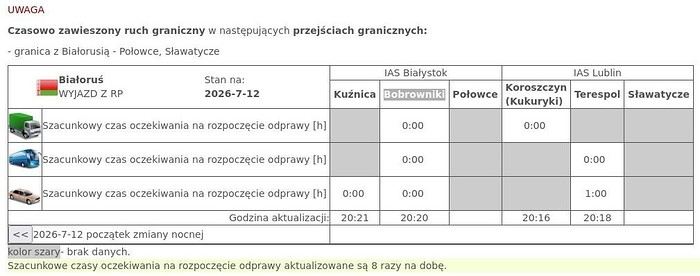
Planning to return to Belarus in mid-August, I just realized that since last September, Poland has reopened several border crossing points, and for buses, this means connections like Białystok-Grodno.
Several bus company routes, like on infobus.eu, take between 3 and 4 hours.
Trains from Warsaw to Białystok take about 1.5 to 2 hours.
This has the advantage of allowing comfortable train journeys with minimal time spent on a bus.
Also, the Terespol-Brest border might have shorter queues if you still prefer a Warsaw-Brest bus.
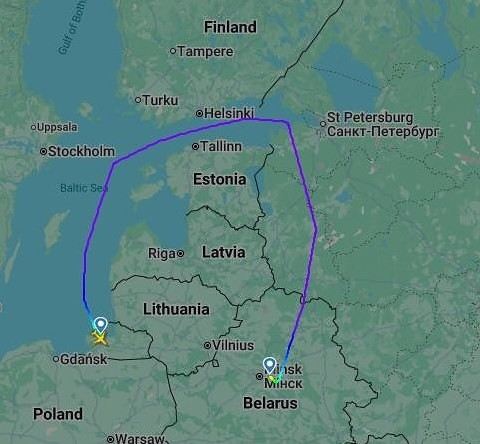
Note that another route to Minsk, if you have a paper Russian or Belarusian visa, is the Kaliningrad-Minsk train. It’s long—around ten or eleven hours—but you can lie down and sleep. An option if you fly into Gdańsk and then take a short bus to Kaliningrad.
There are also Belavia flights from Minsk to Kaliningrad, but they’re expensive. The route is scenic:
In any case, this adds a few more options compared to what’s been available over the last four years.
Hi there.
I’d like to know what the daily budget is for Greece in December. I’ll be landing in Athens and staying there for a week, then heading to some other islands—I don’t have a set itinerary yet. Also, I’ve heard that in December, or early January, the temperature is around 11–16°C. Is that accurate?
Finally, does anyone have a good recommendation for a cheap but clean hotel near the tourist sites? I don’t need a TV or any other extras. Also, is Greece gay-friendly?
I’d like to know the opening hours of physical stores between Germany and Austria, and between Austria and Slovenia, that sell the PAPER STICKER toll vignettes that still exist for 2026—non-digital ones. I don’t think they’re open 24/7, and I can’t find the info anywhere.
Thanks
Hi there,
We’re planning a 3-week trip in late September with our camper van to explore Bulgaria and Romania.
What routes would you recommend, starting from the South?
Is there an option to take a ferry in Italy, and is it worth it?
Thanks for all your tips!😊
Hi there, we’re a young couple and we’d love to go to the Blue Eye (Syri i Kalter) between today (26/06/26) and tomorrow (27/06/26).
Is anyone heading there and could give us a ride? We’re super friendly!
Thanks so much!
We're back. It's still a bit tough to get precise info, so here's a quick trip report!
A good starting point is Shkoder, a really pleasant city. You can easily explore Shkoder itself in a day or two.
Two accessible spots: Valbona and Theth.
In both cases, local travel agencies in Shkoder or online offer round-trip or one-way access packages. Super handy, especially for Valbona.
Valbona and Theth are both very steep! There aren’t many easy hikes for less sporty folks (like me!).
Valbona: The highlight is the amazing 2.5-hour boat ride across Lake Koman. There are day trips from Shkoder, but you’ll only get a short tour of the lake. The best option is to do the full crossing—so spend a night in Valbona (or two if you want to hike in the valley) and return.
Theth is deeply nestled in the mountains. The village at the end of the valley, which is a dead end, has lots of hotels, but they’re pricey. Other hostels are scattered along the mountainside road, but it’s a steep climb down to the village or to the start of the two easy hikes (waterfalls and the Blue Eye). For us, it was a one-hour descent (and ascent!). It’s fine if you have a car; otherwise, keep an eye out for a taxi (cheap) or try hitchhiking—it works really well.
Access from Shkoder to Theth is through an agency. The road is in great condition, and you can also rent a car for 2-3 days in Shkoder. If we did it again, that’s the option we’d choose.
We didn’t do the trek and returned to Shkoder each time. I can’t speak to its difficulty, but we were there in late May, and even experienced hikers had given up because of heavy rain and snow.
Hope this helps! It’s a stunning region you shouldn’t miss.
We’re a Canadian couple, both 77, and we’re already planning our vacation for fall 2027.
Timeframe: mid-September to mid-October... dates are flexible, and we might stay even longer.
Initially, I had planned this itinerary:
Athens (3), Naxos (4), Paros (4), Santorini (4), then a flight to Istanbul (7–10 days!!). This would let us maximize our flights and experience another culture.
That’s a lot of ferries, though... I’ve already cut out Milos.
Our second option would be to stay 2 x 15 days on two different islands, but I’d still keep Istanbul as our next destination... or maybe 30 days on one island that offers the chance to take day trips to other islands where the ferry ride is no more than 2 to 2.5 hours. For example, Naxos to Paros only takes 30 minutes. We could return the same evening or stay overnight.
Naxos seems like the best option!!!
For Istanbul, of course we want to do a day cruise on the Bosphorus and see Hagia Sophia. If we stay 6–7 days, what would be the other main attractions? Are there any points of interest we can reach by local bus?
Hi there!
We bought our tickets to Greece at the end of November 2025, and let’s just say the geopolitical climate has really taken a turn since then with the war started by the United States against Iran. Not to mention all the other conflicts happening around the world 😕... Anyway!
Our flight from Montreal is on May 1st, and I was wondering how things are currently being experienced in Greece.
We were planning to rent a car and had already booked accommodations on three Cyclades islands!!
The oil shortage is also worrying us...
If you could share some insights on this, that would be great!