Hi there,
Here’s a first draft for a 14-night itinerary during the Christmas break with two teens. We’re especially fond of hiking (nothing too extreme, though), which is why we’re drawn to the south.
- Marrakech (2 nights)
- Aït Ben Haddou (1 night)
- Dadès (3 nights, though we’re thinking of doing a day trip to the Todra Gorge on one of those days)
- M'hamid (1 night)
- Erg Chigaga (1 night)
- 4 nights to slot in
- Marrakech (2 nights)
Okay, I realize this involves a lot of driving, and we’re still debating the return route since we’d like to avoid the Tichka Pass in January, but going through Taroudant seems like it would add *a lot* of time. 😕
If you’ve got other suggestions for an itinerary with great hikes, I’m all ears!
Also, the 4 nights total in MRK isn’t really our preference, but since we’re arriving/departing super early from overseas, we’d like to be a bit rested before the long flight.
Another question:
For hikes (aside from the desert one), is it better to have a guide with us, or are the trails well-marked?
Thanks for your help!
Ongoing discussions
Ongoing discussions posted in the forum sections, sorted by latest message.
Showing 31–60 of 377 discussions.
Hi everyone, I’m preparing for a one-month trip in October. I’m traveling solo and would love to explore the countryside, but I’m also wondering if there are any themed urban hikes or walks. In Japan, I did some themed city tours, especially by bike.
Thanks for any tips you can share!
Marie
Hello Voyage Forum members.
For my wife’s birthday and her 64th year, I’d love to plan a two-week road trip with her—using our own car—preferably avoiding overly touristy spots, so off the beaten path where possible. That said, we wouldn’t mind stopping at must-see places along the way. The trip would cover Emilia-Romagna and/or Tuscany if combining both regions is doable in that timeframe, with the option for some hikes during the period. We’re looking at late November 2026. I’d prioritize the most authentic accommodations, ideally with breakfast included, without exceeding 100 € per night if that’s possible. So, stays like private rooms in hostels or homestays would be perfect.
Based on these details, I’d really appreciate any recent tips or insights from Voyage Forum members to help me plan this surprise anniversary trip.
Hi there,
I need to plan a trip to mainland France for the first time with my family (my partner and our two kids, aged 16 and 5). We arrive at Paris Orly on the evening of JANUARY 12th and leave on January 30th.
Do you have any city recommendations to visit during this period, or hotels you’d suggest?
We’ll be traveling by train and would like to spend at least 4 nights in each city.
Thanks in advance for your tips!
Delphine
Hi everyone,
We’re planning 40 days in Uruguay and Argentina in February and March, trying to avoid as much rain as possible.
We’re thinking of starting in Buenos Aires, then heading to Bariloche, and from there flying to Córdoba, Mendoza, or Salta. Maybe by bus or renting a car to explore each region.
Do you have any suggestions or tips for us? We love picturesque, historic cities and landscapes. As seasoned travelers, we’re used to planning our trips ourselves.
Thanks in advance!
I left my heart’s country eight days ago and returned to my adopted one—or was it the other way around? Scotland-Morvan, Morvan-Scotland, I’m not quite sure anymore.
After a quarter without dragging my slippers around here, even though I’d loudly declared I had no interest left in this site, here I am again!
My imagination never stays fallow for long. Just enough time for my inner land to rest. It gets overgrown with fresh nettles, the kind you can pick without getting stung. Then, it’s time to till the fragrant earth and let the story grow.
I hesitated over where to set this story. Maybe the Highlands, maybe the Hebrides, maybe the Orkney Islands, maybe the Shetland Islands. All of Scotland is myth—easy to embroider. But in the end, no. I’d almost be too afraid to bare my soul.
The story will take place at home. Simple, practical.
1)
This morning, I was up well before dawn, feeling a bit grumpy, but nothing a bowl of coffee won’t fix. I love my bowl, and no one dares take it. It’s porcelain, edged with intertwined blue flowers. On the bottom, it says "Revol." The factory has existed long before the Revolution. It was my great-grandmother’s bowl. She drank roasted barley from it during the war, then her Leroux chicory.
Last year, a little guy dropped it. My bowl broke into three pieces. A black anger vibrated deep inside me. The little boy was so upset, on the verge of tears. How could I scold him!
I picked up the three pieces and took Little Boy in my arms. His hair smelled of the light, sweet sweat of toddlers. A gentle hug that healed—his budding sorrow and my anger—everything vanished, and time carried on.
Today, my bowl is even prettier. Man fixed it using the traditional kintsugi technique, except he didn’t use gold powder or lacquer but superglue, and he delicately painted the cracks with woad blue. And my bowl is even more beautiful now.
I’m lingering, I can tell—it’s just that a story wraps itself in life, and life can’t be told in the snap of a finger. Life is long. Like in architecture, you start with a rough sketch, called a "sous-cul" (the initial pencil drawing), then you make a tracing, which is the work itself, the one you later carefully roll up in a wooden tube. Life is like that: you erase, you start over, you use the nub of the pencil until it’s tiny, but you keep going—dreaming, loving.
"Living is a full-time occupation, a unique adventure. Always a surprise and a wonder, which sometimes turns into astonishment. And, from time to time, happiness."*
Alright, enough digressing—this introduction is definitely too long. Tomorrow, I’ll get to the heart of the matter. (I hate that expression; it feels like I’m cutting into someone’s skin.)
*Jean d’Ormesson
2)
After a quarter without dragging my slippers around here, even though I’d loudly declared I had no interest left in this site, here I am again!
My imagination never stays fallow for long. Just enough time for my inner land to rest. It gets overgrown with fresh nettles, the kind you can pick without getting stung. Then, it’s time to till the fragrant earth and let the story grow.
I hesitated over where to set this story. Maybe the Highlands, maybe the Hebrides, maybe the Orkney Islands, maybe the Shetland Islands. All of Scotland is myth—easy to embroider. But in the end, no. I’d almost be too afraid to bare my soul.
The story will take place at home. Simple, practical.
1)
This morning, I was up well before dawn, feeling a bit grumpy, but nothing a bowl of coffee won’t fix. I love my bowl, and no one dares take it. It’s porcelain, edged with intertwined blue flowers. On the bottom, it says "Revol." The factory has existed long before the Revolution. It was my great-grandmother’s bowl. She drank roasted barley from it during the war, then her Leroux chicory.
Last year, a little guy dropped it. My bowl broke into three pieces. A black anger vibrated deep inside me. The little boy was so upset, on the verge of tears. How could I scold him!
I picked up the three pieces and took Little Boy in my arms. His hair smelled of the light, sweet sweat of toddlers. A gentle hug that healed—his budding sorrow and my anger—everything vanished, and time carried on.
Today, my bowl is even prettier. Man fixed it using the traditional kintsugi technique, except he didn’t use gold powder or lacquer but superglue, and he delicately painted the cracks with woad blue. And my bowl is even more beautiful now.
I’m lingering, I can tell—it’s just that a story wraps itself in life, and life can’t be told in the snap of a finger. Life is long. Like in architecture, you start with a rough sketch, called a "sous-cul" (the initial pencil drawing), then you make a tracing, which is the work itself, the one you later carefully roll up in a wooden tube. Life is like that: you erase, you start over, you use the nub of the pencil until it’s tiny, but you keep going—dreaming, loving.
"Living is a full-time occupation, a unique adventure. Always a surprise and a wonder, which sometimes turns into astonishment. And, from time to time, happiness."*
Alright, enough digressing—this introduction is definitely too long. Tomorrow, I’ll get to the heart of the matter. (I hate that expression; it feels like I’m cutting into someone’s skin.)
*Jean d’Ormesson
2)
I'm probably going to spend a week in Naples, but I'd love to hear your thoughts! I've heard that the city is quite dangerous and crime-ridden? I've also heard that "Neapolitans" aren't very welcoming and have a bad temper?
Is this true or just rumors?😊
Here we go with this second travel journal dedicated to the American West! It’s a must when you love it! 😊
We had left off in the charming town of Bisbee, which once thrived thanks to its copper mines. Today, mining is a thing of the past, and the town seems a bit sleepy.
Unfortunately, I didn’t dig deep enough on-site to answer all the questions my observations raised. Guess I’ll have to *dig* into the subject a bit more... no pun intended! 😊
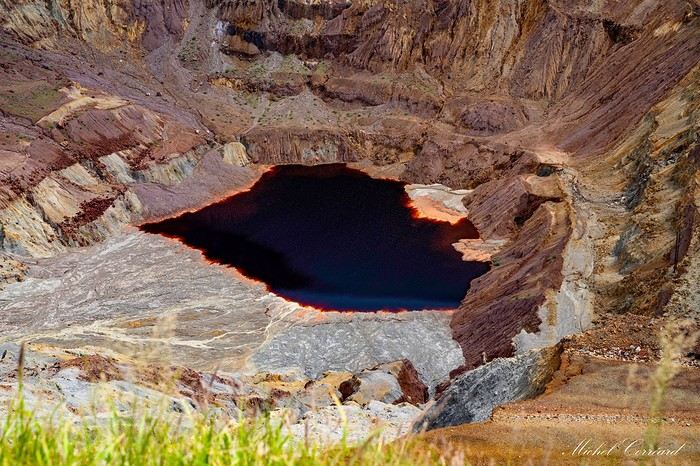
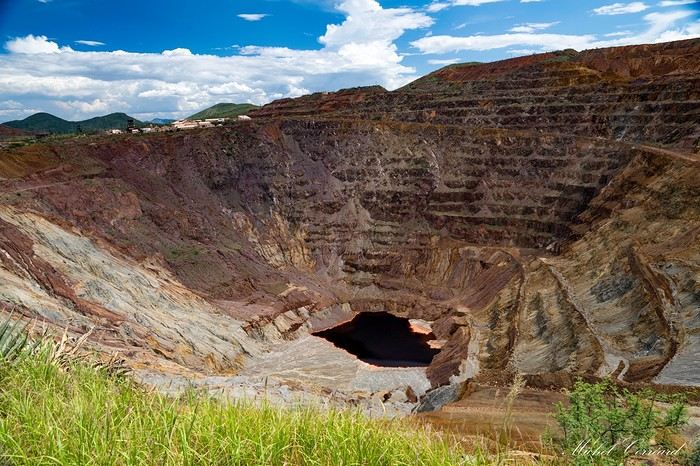
Let’s hop back in the car and head a little further south to check out the esplanade that offers a view—if you can call it that—of the impressive open-pit mine. Then, it’s off to the Lowell neighborhood.
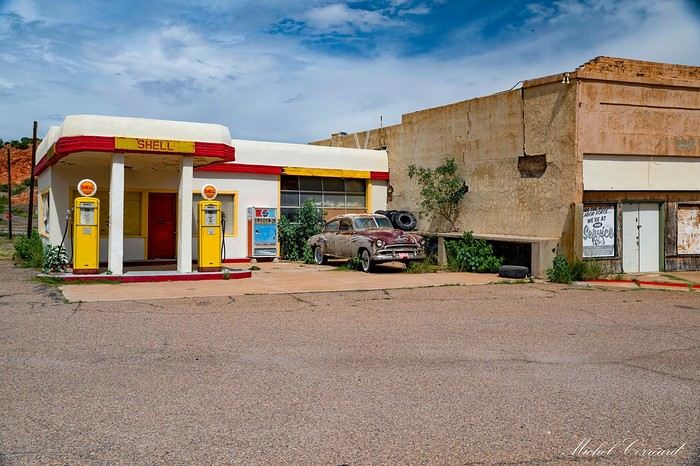
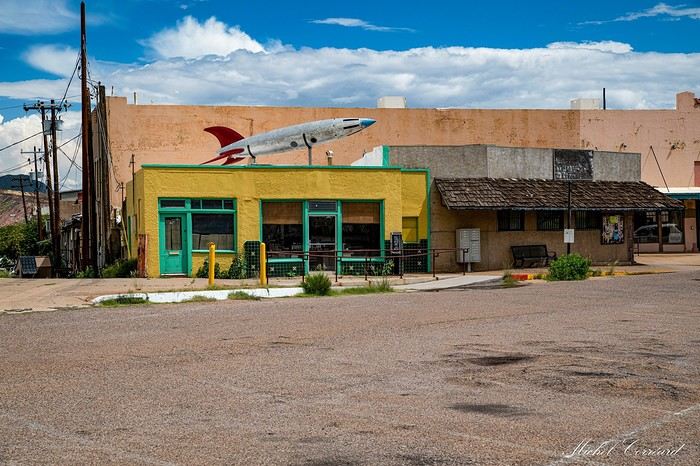
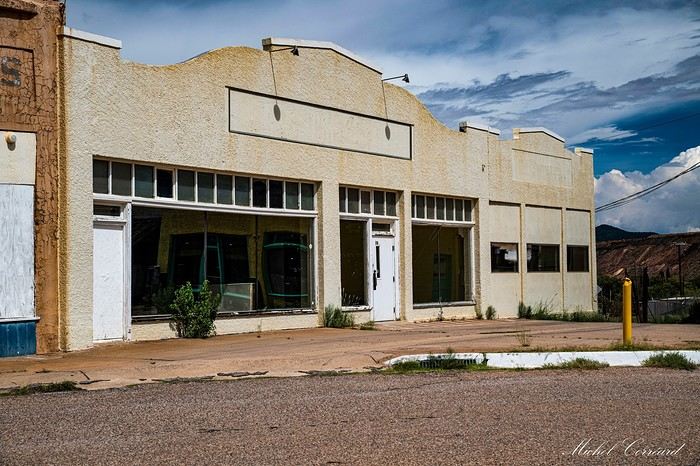
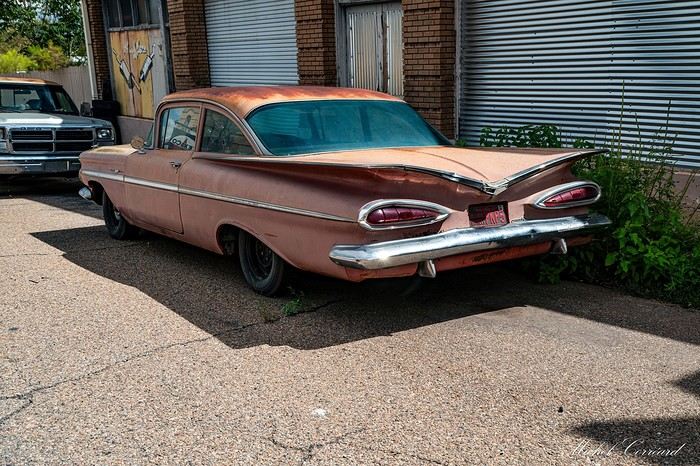
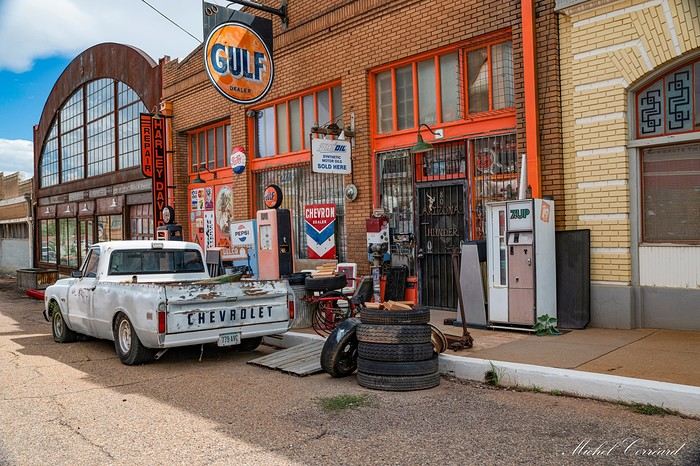
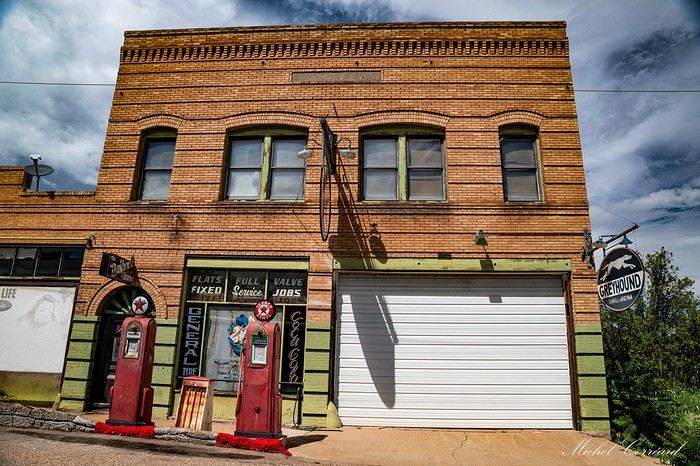
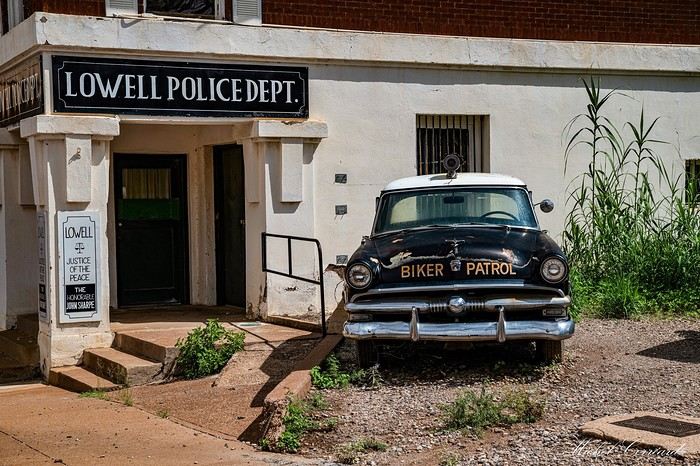
Preserved almost exactly as it was, this area must’ve been bustling in its heyday. The vintage cars are still around, storefronts and signs look like they’re straight out of another era, and the whole place has a pretty amazing vibe. You’d almost think you were on Route 66!
Here, we’re not just discovering an old neighborhood—it’s a little slice of American history. And, a detail that’s great for my physical health: the area isn’t too spread out. Lucky me! 😊
I won’t post too many photos here since I think I can turn them into a future photo exhibit. Between these and some shots from Route 66, I should have more than enough material! So, let’s keep a few under wraps... to preserve the surprise. 😊
We had left off in the charming town of Bisbee, which once thrived thanks to its copper mines. Today, mining is a thing of the past, and the town seems a bit sleepy.
Unfortunately, I didn’t dig deep enough on-site to answer all the questions my observations raised. Guess I’ll have to *dig* into the subject a bit more... no pun intended! 😊
Let’s hop back in the car and head a little further south to check out the esplanade that offers a view—if you can call it that—of the impressive open-pit mine. Then, it’s off to the Lowell neighborhood.
Preserved almost exactly as it was, this area must’ve been bustling in its heyday. The vintage cars are still around, storefronts and signs look like they’re straight out of another era, and the whole place has a pretty amazing vibe. You’d almost think you were on Route 66!
Here, we’re not just discovering an old neighborhood—it’s a little slice of American history. And, a detail that’s great for my physical health: the area isn’t too spread out. Lucky me! 😊
I won’t post too many photos here since I think I can turn them into a future photo exhibit. Between these and some shots from Route 66, I should have more than enough material! So, let’s keep a few under wraps... to preserve the surprise. 😊
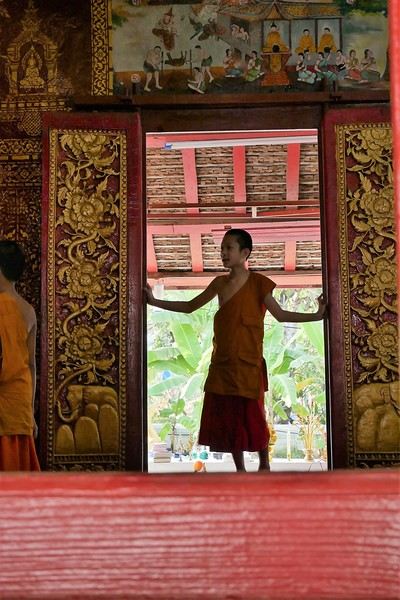 Come along, I'm taking you to this country where it's so nice to wander and slow down...
This trip was in 2023, but when I wanted to write my travel journal, VF was still closed to contributions... So, now that I've just finished my Japan travel journal here, I figured it was high time to honor this destination we came back from so enchanted. Disclaimer 1: This is a written travel journal. There’ll be text! Too much, for some! Disclaimer 2: This is an illustrated travel journal. There’ll be photos! Too many, for some!
I have to say, every time I try to discipline myself, to keep it shorter, to include fewer photos... I end up adding more. It feels like my dear Aunt Nicole, who exhausted us with her slide-show evenings in the 70s/80s, decided to take her revenge. The upside for you, readers, is that you can slip away anytime without offending Aunt Nicole. I won’t even notice!
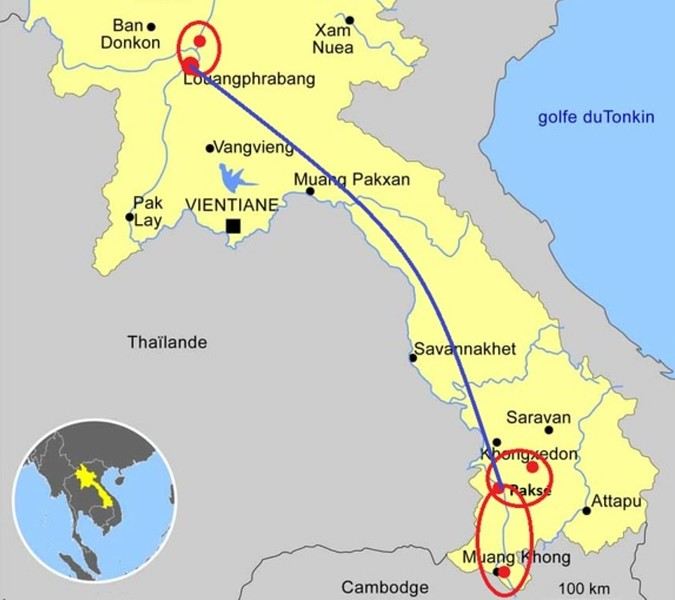
Anyway, since I love maps, here’s one to give you an idea of where I’m taking you. As you can see, we only saw a tiny part of Laos (the areas circled in red); we only had 3 weeks for ourselves (my husband’s newly retired, I still work), and we prefer taking our time over rushing around like crazy.
In broad strokes, it was very classic:
First, we “settled in” at Luang Prabang (8 days), because we wanted and needed to. From there, we took three days to venture a little further north—not far in kilometers, but as we know, distances aren’t just about km! Then we flew south to Paksé, letting ourselves drift down to the 4,000 Islands while stopping by the pre-Angkorian archaeological sites. We wrapped up with the Bolaven Plateau.
A few practical notes: We arrived via Bangkok, then took a Bangkok-Luang Prabang flight, having picked up our luggage in Bangkok to check it in for Luang Prabang. No issues—the Bangkok airport, which many of you know, is very well organized. We got our visas on arrival in Luang Prabang. Quick, but to be fair, we were on a “small” plane, and the big flights had arrived earlier, so we weren’t too crowded in line! At the end of our trip, we didn’t fly out of Paksé but from the nearby airport in Thailand, Ubon Ratchathani (a 2.5-hour drive from Paksé), then Bangkok and Paris. You’ll notice we skipped Vientiane to stay longer in Luang Prabang. That said, there’s now a high-speed train between Vientiane and Luang Prabang—good to know—and soon the (Chinese) train will go all the way to Bangkok and even Kuala Lumpur!
With that intro out of the way, let’s dive into the heart of the matter. To be continued: Slowing down the pace... in Luang Prabang
Hi,
Which bank is the best in Mindelo and Porto Novo for exchanging euros into local currency?
Should I exchange cash or use my bank card?
Is it accepted in restaurants?
Thanks
Hello,
I know there are plenty of discussions on VF about the Poon Hill trek, but most seem outdated and/or don’t provide info specific to February. That’s why I’m bringing this topic back up.
Here’s my plan: - Spending about two weeks in Nepal in the first half of February. - Maybe extending by a few days to a week if needed. - Heading to Pokhara—first time for my partner, second for me (I was there in September/October 1982!). - Doing a relatively easy 4- to 5-day trek. We’re not exactly spring chickens anymore (though we’re in pretty good shape for our age). - We don’t want to go above 3,000–3,500 meters, deal with difficult sections if there’s too much snow, or face daytime temperatures below 10°C. No problem if it drops to 0–5°C at night since we’ll be sheltered somewhere.
So, I’m wondering if the Mardi Himal trek might be too demanding for us, and if we’d be better off sticking with Poon Hill. What do the experts think?
I know there are plenty of discussions on VF about the Poon Hill trek, but most seem outdated and/or don’t provide info specific to February. That’s why I’m bringing this topic back up.
Here’s my plan: - Spending about two weeks in Nepal in the first half of February. - Maybe extending by a few days to a week if needed. - Heading to Pokhara—first time for my partner, second for me (I was there in September/October 1982!). - Doing a relatively easy 4- to 5-day trek. We’re not exactly spring chickens anymore (though we’re in pretty good shape for our age). - We don’t want to go above 3,000–3,500 meters, deal with difficult sections if there’s too much snow, or face daytime temperatures below 10°C. No problem if it drops to 0–5°C at night since we’ll be sheltered somewhere.
So, I’m wondering if the Mardi Himal trek might be too demanding for us, and if we’d be better off sticking with Poon Hill. What do the experts think?
Hello fellow travelers,
I’m starting to plan a trip to Tanzania + Zanzibar in August 2027 for 2 to 3 weeks with my partner.
I’ve never been there before and I’d love some advice, especially for Tanzania where we’re planning to do several safaris in the North.
Specifically:
Do you recommend using a travel agency to organize the trip, or are guidebooks and internet recommendations enough? If you’ve used a local agency (rather than one in France), which one? Would you recommend hiring a guide for the entire stay in Tanzania, or is it better to travel independently except in the parks where I’ve read that guides are mandatory? If you’ve used a local agency (rather than one in France), which one and at what price? Have you had any bad surprises (hidden fees, inexperienced guide, poor vehicle condition)?
Looking forward to reading your tips! 🙂 Thanks in advance
I’m starting to plan a trip to Tanzania + Zanzibar in August 2027 for 2 to 3 weeks with my partner.
I’ve never been there before and I’d love some advice, especially for Tanzania where we’re planning to do several safaris in the North.
Specifically:
Do you recommend using a travel agency to organize the trip, or are guidebooks and internet recommendations enough? If you’ve used a local agency (rather than one in France), which one? Would you recommend hiring a guide for the entire stay in Tanzania, or is it better to travel independently except in the parks where I’ve read that guides are mandatory? If you’ve used a local agency (rather than one in France), which one and at what price? Have you had any bad surprises (hidden fees, inexperienced guide, poor vehicle condition)?
Looking forward to reading your tips! 🙂 Thanks in advance
Hi,
Our trip is planned for 20 days in Japan next April. We have a free subscription that would allow us to use 35 GB (I’m a bit confused), but we also need to be able to make phone calls with a French couple traveling with us for a few days, and that seems impossible due to cost... Any solutions for using GPS while keeping those 35 GB? Used to traveling in Southeast Asia, we usually rely on local SIM cards. Is it easy to do the same in Japan?
Thanks for your help!
Best,
Tialou
Hello,
I’m looking for advice from seasoned travelers about a roughly one-month trip to Japan. From late October to late November 2026.
We often travel in Southeast Asia but have never been to Japan. Based on what I’ve read, I’d love to hear your thoughts on:
- Is traveling day-to-day, without booking hotels or trains in advance, possible in Japan? (I’ve read many travel journals and blogs that say everything was booked way in advance… but that’s not how we usually travel.)
- Will the Japan Rail Pass be worth it for us? (According to an old simulator, I’m looking at around 400 € for trains compared to 570 € for the JRP.)
Here’s our rough itinerary (which may change):
- Arrival Osaka: 3 nights with Nara - Hiroshima and Miyajima Island: 3 nights - Kurashiki or Naoshima: 2 nights - Himeji: 1 night - Kyoto: 4 nights - Kanazawa: 2 nights - Takayama and Shirakawa-go: 3 nights - Around Mount Fuji: 3 nights - Tokyo with Nikko: 6 nights (no theme parks) Departure from Tokyo
Thanks for sharing your thoughts! :)
I’m looking for advice from seasoned travelers about a roughly one-month trip to Japan. From late October to late November 2026.
We often travel in Southeast Asia but have never been to Japan. Based on what I’ve read, I’d love to hear your thoughts on:
- Is traveling day-to-day, without booking hotels or trains in advance, possible in Japan? (I’ve read many travel journals and blogs that say everything was booked way in advance… but that’s not how we usually travel.)
- Will the Japan Rail Pass be worth it for us? (According to an old simulator, I’m looking at around 400 € for trains compared to 570 € for the JRP.)
Here’s our rough itinerary (which may change):
- Arrival Osaka: 3 nights with Nara - Hiroshima and Miyajima Island: 3 nights - Kurashiki or Naoshima: 2 nights - Himeji: 1 night - Kyoto: 4 nights - Kanazawa: 2 nights - Takayama and Shirakawa-go: 3 nights - Around Mount Fuji: 3 nights - Tokyo with Nikko: 6 nights (no theme parks) Departure from Tokyo
Thanks for sharing your thoughts! :)
During the 60s and 70s, thousands of travelers hit the road to India. Some were backpackers or hippies, but not all. In this collective anthology featuring around twenty contributors (including GeorgesOz), you’ll also find truth-seekers, a couple who went on their honeymoon to get married in Bengal... and "crazy" folks who set off on VéloSolex bikes...
Worth noting: all contributors donated their royalties to support the Céline Hegron clinic in a poor neighborhood of Varanasi.
Worth noting: all contributors donated their royalties to support the Céline Hegron clinic in a poor neighborhood of Varanasi.
I love islands...
I love islands. So it’s no surprise that the Azores have been catching my eye for a few years now. The first time I suggested them to my dear partner back in 2021, he preferred the Lofoten Islands—an excellent choice, as it turned out, since we got to visit them with hardly any crowds. But for various reasons, the opportunity didn’t come up again in the following years. Until last year, that is. But by then, we’d left it too late—too late for the Azores, I mean—and the choice of accommodations on Flores and São Jorge was extremely limited. We decided to skip it without even looking at car rentals. So this year, we booked our flights, lodgings, and cars well in advance (between December of last year and early this year).
The Azores consist of nine islands, so you have to make choices. I quickly ruled out São Miguel, which deserves a week all to itself: from reading various blogs, some travelers seemed disappointed after visiting the other islands, even feeling it lacked the charm unique to the Azores. True or not, that was reason enough to leave it out.
In the end, we wanted to go to Flores for its lush nature (and because it’s reputed to be the most breathtaking), to São Jorge for its rural/nature vibe, and to Terceira for its cultural side and its *impérios* (more on that later). With the time we had, we could add another island without rushing. We like to take our time and wander a bit. Generally, whether it’s a viewpoint or a hike, we always spend more time than everyone else. Pico won out over Faial thanks to its wine culture. And of course, there’s Corvo, which is usually visited as a day trip from Flores. I thought it’d be nice to spend the night there to experience the atmosphere once most tourists had left. I hesitated between one or two nights and ultimately went with two (so we wouldn’t be rushed by the boat schedule). It was an excellent decision.
Here’s how it all panned out:
August 25: departure for Terceira via Lisbon at 7:40 AM; August 25–29: Terceira; August 29: flight to Corvo. It was supposed to take half a day, and we were meant to arrive in the early afternoon, but between schedule changes and delays, it ended up taking almost the whole day; August 29–31: Corvo; August 31: boat to Flores around 8:30 AM; August 31–September 5: Flores; September 5: flight to Faial in the early afternoon (originally scheduled for the morning, but the times changed)—visit to Horta; September 6: boat to São Jorge around 9:00 AM; September 6–11: São Jorge; September 11: boat to Pico at 11:15 AM; September 11–16: Pico; September 16: flight to Paris via Lisbon from Pico around 10:30 AM.
We had to juggle a bit to optimize the prices of our flight tickets from Paris and the inter-island travel.
I love islands. So it’s no surprise that the Azores have been catching my eye for a few years now. The first time I suggested them to my dear partner back in 2021, he preferred the Lofoten Islands—an excellent choice, as it turned out, since we got to visit them with hardly any crowds. But for various reasons, the opportunity didn’t come up again in the following years. Until last year, that is. But by then, we’d left it too late—too late for the Azores, I mean—and the choice of accommodations on Flores and São Jorge was extremely limited. We decided to skip it without even looking at car rentals. So this year, we booked our flights, lodgings, and cars well in advance (between December of last year and early this year).
The Azores consist of nine islands, so you have to make choices. I quickly ruled out São Miguel, which deserves a week all to itself: from reading various blogs, some travelers seemed disappointed after visiting the other islands, even feeling it lacked the charm unique to the Azores. True or not, that was reason enough to leave it out.
In the end, we wanted to go to Flores for its lush nature (and because it’s reputed to be the most breathtaking), to São Jorge for its rural/nature vibe, and to Terceira for its cultural side and its *impérios* (more on that later). With the time we had, we could add another island without rushing. We like to take our time and wander a bit. Generally, whether it’s a viewpoint or a hike, we always spend more time than everyone else. Pico won out over Faial thanks to its wine culture. And of course, there’s Corvo, which is usually visited as a day trip from Flores. I thought it’d be nice to spend the night there to experience the atmosphere once most tourists had left. I hesitated between one or two nights and ultimately went with two (so we wouldn’t be rushed by the boat schedule). It was an excellent decision.
Here’s how it all panned out:
August 25: departure for Terceira via Lisbon at 7:40 AM; August 25–29: Terceira; August 29: flight to Corvo. It was supposed to take half a day, and we were meant to arrive in the early afternoon, but between schedule changes and delays, it ended up taking almost the whole day; August 29–31: Corvo; August 31: boat to Flores around 8:30 AM; August 31–September 5: Flores; September 5: flight to Faial in the early afternoon (originally scheduled for the morning, but the times changed)—visit to Horta; September 6: boat to São Jorge around 9:00 AM; September 6–11: São Jorge; September 11: boat to Pico at 11:15 AM; September 11–16: Pico; September 16: flight to Paris via Lisbon from Pico around 10:30 AM.
We had to juggle a bit to optimize the prices of our flight tickets from Paris and the inter-island travel.
Thirty years ago, I traveled to Zanzibar (Tanzania) with my children. Since I’ve since started a new family, I took the opportunity of a trip to Kenya to bring my new family along: my wife, who’s Kenyan, and my 10-year-old daughter.
Zanzibar has really changed in 30 years.
It’s become the island of taxes.
It all starts upon arrival: I think it’s the only country in the world, besides the visa, where Zanzibar insurance (and no other) is mandatory—it costs 40 €. If you didn’t purchase it before arriving, good luck getting it: the IT systems are unreliable. With a bit of luck, it’ll take at least an hour to process! And of course, this insurance is useless—if you get sick, it’s recommended to use your home country’s insurance because if you use Zanzibar’s, your national insurance won’t cover you anymore.
I wanted to show my daughter the red colobus monkey, which is endemic to Zanzibar. I paid for a tour that was supposed to be all-inclusive. First, we visited a spice farm, where a farm guide took charge of us—meaning commissions were involved, of course! The tour was very good and informative, though. When we arrived at Jenzhi Park (the colobus park), the guide told us he "forgot" there was an entrance fee (50$).
Aware of the system, I decided to book an Ocean Blue tour through the Zanzibar Tourism Office. After two hours of driving, we stopped at a beach—and were left there. No boat was ready to take us. Since my wife speaks Swahili (the language in Zanzibar), after an hour, a captain with his own boat agreed to take us along with his family.
Another attempt. The main attraction in Zanzibar (besides the city) is Changuu, the Prison Island. You have to take a motorboat and pay the captain, which is normal.
But in Zanzibar, to even get on a boat, you first have to pay a tax! Once we arrived at the island, it started all over again! Thirty years ago, access was free, and the entire island (about 1 km²) was open. Today, there’s a small office, and you have to pay a hefty fee to enter. But enter where? A paved path leads to about 15% of the island—the rest is off-limits. In total, I paid 100 € for my wife, daughter, and myself just to visit a tiny portion of the island! Avoid this!
For the rest of our stay, we stayed at a 5-star hotel with golf, horseback riding, tennis courts, evening concerts, etc.—undeniably high-level comfort. One last thing: if you want to rent a car, it’s affordable and useful for exploring the island’s diverse landscapes, but there are speed cameras at every corner on the main roads. The fine is supposedly 100 $, and it’s hard not to get one!
I told you: Zanzibar, the land of taxes. I used to think my country, Belgium, was the tax champion—I’ve found something even better!
Hi everyone! 🙂
My partner would love to discover Quebec, while I’ve already been there over 15 years ago (Quebec City, Tadoussac, the Fjords, Lac Saint-Jean).
This time, of course, we’d want to do something different.
Quebec City would still be a must for my partner in this plan.
With the tight budget we have right now🤪, we’re thinking of spending several days in Quebec City, then maybe renting bikes to explore the surrounding areas—aside from Montmorency Falls, what other nice spots are worth visiting? I remember there being tons of bike paths.
After that, we’d rent a car (for a few days to visit the parks) and use trains or buses for the rest of the trip. From what I recall, cars aren’t super fuel-efficient there.
Since we’ve never seen Niagara Falls, I’d like to include it in this itinerary.
For a roughly 15-day trip in September, I was thinking of a multi-destination flight: France-Quebec / Toronto-France, so it’d look something like this:
Quebec City: 5 days (including arrival day)
Pick up the car
La Mauricie National Park (or others?) 1 day
Mont-Tremblant 1 day
Montreal 4 days
Drop off the car in Montreal
By train/bus
Toronto 2 days
By train/bus
Buffalo-Niagara Falls 1 day
Toronto 1 day (return to France)
I was planning one night at Niagara Falls—is that enough, or is a single day sufficient?
If our finances don’t stretch that far, we’d shorten the trip from Montreal (so long, Niagara🙁), adding extra nights between Quebec City and Montreal.
Anyway, thanks in advance for all your great tips!
Hi there,
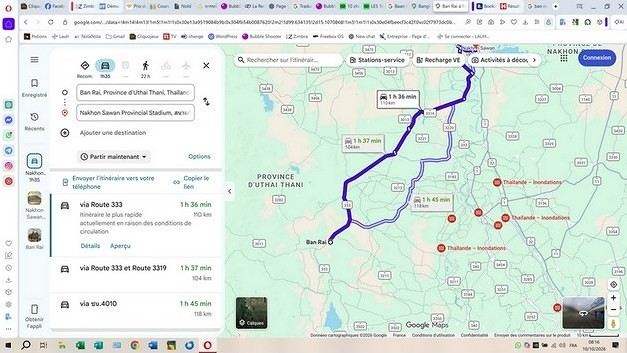
After a stay in Hua Hin and before another in Chiang Mai, I’d like to break up the trip from Bangkok to Chiang Mai into several stops. I’ve found bus and train routes on Maps, but I’m stuck on the connection between Ban Rai / Uthai Thani and then Nakhon Sawan (bus for the latter).
Does anyone have any idea where I could find info, maybe via Route 333?
I know my question isn’t super general or exciting, but if you can help, thanks!
Hello everyone,
We’re 49 years old, love beautiful landscapes, meeting locals, discovering local food and traditions, and we avoid overly touristy places. We enjoy hiking, cycling, running, and diving.
This is our first time in Thailand (my husband knows Bangkok). We arrive on Friday, November 13th in Bangkok (city visit) and return on Friday, November 27th. We’re considering heading south (possibly toward Krabi) from the 14th to the 18th to enjoy the beautiful beaches, go diving, and see Khao Sok... Then back to Bangkok and on to Kanchanaburi to see the Sai Yok Noi waterfalls, followed by a bike visit to Ayutthaya. From there, we’d take an overnight train to the north: Chiang Mai, Chiang Rai, and the Lantern Festival from November 21st to 25th. On the 26th, we’d take a flight from Chiang Mai to Bangkok (city visit), and on the 27th, we have our flight back to France.
Does this itinerary seem too packed? Should we remove some things to avoid feeling rushed and fully enjoy the trip? Do you recommend anything other than Krabi?
Thanks for your help
We’re 49 years old, love beautiful landscapes, meeting locals, discovering local food and traditions, and we avoid overly touristy places. We enjoy hiking, cycling, running, and diving.
This is our first time in Thailand (my husband knows Bangkok). We arrive on Friday, November 13th in Bangkok (city visit) and return on Friday, November 27th. We’re considering heading south (possibly toward Krabi) from the 14th to the 18th to enjoy the beautiful beaches, go diving, and see Khao Sok... Then back to Bangkok and on to Kanchanaburi to see the Sai Yok Noi waterfalls, followed by a bike visit to Ayutthaya. From there, we’d take an overnight train to the north: Chiang Mai, Chiang Rai, and the Lantern Festival from November 21st to 25th. On the 26th, we’d take a flight from Chiang Mai to Bangkok (city visit), and on the 27th, we have our flight back to France.
Does this itinerary seem too packed? Should we remove some things to avoid feeling rushed and fully enjoy the trip? Do you recommend anything other than Krabi?
Thanks for your help
Some impressions and info after two weeks in Grande Comore and Anjouan. Trip mid-2024.
First and foremost, the Comorians are absolutely lovely. I don’t usually like generalizing, but I honestly don’t know what else to say beyond what struck me most: kindness everywhere, great friendliness, curiosity—basically, every interaction was super pleasant, whether at the hotel, in the street, or in shops.
On the less positive side (because it needs to be mentioned), I was also struck by the overwhelming amount of waste along the coastline (and elsewhere, especially roadsides and riverbanks) in pretty shocking quantities. Of course, it improves once you get away from populated areas, but it was still a bit of a shock.
That said, underwater—even at sites where the shore was littered with plastic—the corals are stunning, snorkeling is fantastic, the seabeds are truly beautiful, and there’s a great diversity of fish.
The islands and landscapes are gorgeous, especially Anjouan’s interior and highlands. I can’t say much about Mohéli since I didn’t go, but I only heard glowing reviews.
In Moroni and Mutsamudu, the medinas are really charming, far from the tourist crowds of Stone Town, for example. Winding alleys, old buildings, stairs, and twists and turns—I spent hours just wandering and getting lost. Really nice.
In Moroni, I stayed at the Retaj. It was good, with great service, an evening buffet, and a pretty extensive menu. There’s a beautiful ocean view and a small volcanic beach at the end of the grounds. I snorkeled there, and it’s lovely (though, being close to the city, there were bags and wrappers on the rocks). Around 100 € per night if I remember correctly—not the cheapest, but not the most expensive either (prices in the Comoros are generally quite high). I also stayed at the Jardin de la Paix, closer to the city center. Also very good. The rooms were spotless. Fewer meal options, mostly chalkboard specials, and sometimes very long waits. On the plus side, there’s a large tree-filled inner courtyard, but no ocean view or small beach. From memory, it was cheaper, but I’m not 100% sure.
Among the few travelers and tourists, many were heading to Itsandra Beach Hotel at the entrance to the city when coming from the airport. It’s in a much higher price range. I only went there for the hotel’s beach, Petite Itsandra, because the snorkeling is amazing.
In Anjouan, I only stayed at the Hôtel des Îles in Mutsamudu. The owner is very welcoming and super nice. There’s a lovely terrace with an ocean view, where you can watch the boats coming and going in the morning and evening. Peaceful and really pretty. You can also see the huge fruit bats up close since some like to hang out in the tree across from the terrace. It’s easy to walk to the medina, the coast, or even the market and port—everything’s close by.
For meals, I mostly ate at hotels, but also tried some evening street food stands. In hotels or restaurants, expect to pay around 10 to 15 €. Oh, and one thing: in the evenings when the fishermen return to Moroni, there’s *tons* of tuna. So it’s on the menu pretty much everywhere. But either because of the type of tuna or the preparation, the tuna steaks are dry and honestly not great. Nowhere I tried was an exception. The only non-hotel restaurant I remember is New Select, in the courtyard out back where you could order skewers of different kinds while religious chants played in a relaxed but respectful atmosphere. You could also order a shisha. Really nice and not too expensive.
As for activities, like I said, I mostly walked around the cities—markets, medinas, ports, and the seafront. Chatted with people I met along the way. Did some snorkeling, especially at Itsandra Beach Hotel, but didn’t get the chance to go to Itsandra Beach (which is public). Did a bit of hiking in the countryside, especially in Anjouan—just wandering random paths, so I can’t really give much detail on that.
I can’t say anything about climbing Mount Karthala, the Prophet’s Hole, etc. I would’ve liked to spend some time in Domoni (Anjouan), but didn’t get the chance.
A few roads have been recently redone and are in great condition, but a lot are still in really bad shape, which makes travel times longer. The inland roads often offer stunning views of dramatic landscapes with the ocean and sometimes lagoons in the background.
To get from one island to another, you can take a plane or a boat. Local airlines aren’t very reassuring—technical issues are common. It’s also possible to arrange flights with Precision Air (from Tanzania). From experience, it’s better. I didn’t take the boat, but I’m considering it for next time.
In short, these are islands to discover where tourism is still in its early stages. Great encounters and a beautiful experience
First and foremost, the Comorians are absolutely lovely. I don’t usually like generalizing, but I honestly don’t know what else to say beyond what struck me most: kindness everywhere, great friendliness, curiosity—basically, every interaction was super pleasant, whether at the hotel, in the street, or in shops.
On the less positive side (because it needs to be mentioned), I was also struck by the overwhelming amount of waste along the coastline (and elsewhere, especially roadsides and riverbanks) in pretty shocking quantities. Of course, it improves once you get away from populated areas, but it was still a bit of a shock.
That said, underwater—even at sites where the shore was littered with plastic—the corals are stunning, snorkeling is fantastic, the seabeds are truly beautiful, and there’s a great diversity of fish.
The islands and landscapes are gorgeous, especially Anjouan’s interior and highlands. I can’t say much about Mohéli since I didn’t go, but I only heard glowing reviews.
In Moroni and Mutsamudu, the medinas are really charming, far from the tourist crowds of Stone Town, for example. Winding alleys, old buildings, stairs, and twists and turns—I spent hours just wandering and getting lost. Really nice.
In Moroni, I stayed at the Retaj. It was good, with great service, an evening buffet, and a pretty extensive menu. There’s a beautiful ocean view and a small volcanic beach at the end of the grounds. I snorkeled there, and it’s lovely (though, being close to the city, there were bags and wrappers on the rocks). Around 100 € per night if I remember correctly—not the cheapest, but not the most expensive either (prices in the Comoros are generally quite high). I also stayed at the Jardin de la Paix, closer to the city center. Also very good. The rooms were spotless. Fewer meal options, mostly chalkboard specials, and sometimes very long waits. On the plus side, there’s a large tree-filled inner courtyard, but no ocean view or small beach. From memory, it was cheaper, but I’m not 100% sure.
Among the few travelers and tourists, many were heading to Itsandra Beach Hotel at the entrance to the city when coming from the airport. It’s in a much higher price range. I only went there for the hotel’s beach, Petite Itsandra, because the snorkeling is amazing.
In Anjouan, I only stayed at the Hôtel des Îles in Mutsamudu. The owner is very welcoming and super nice. There’s a lovely terrace with an ocean view, where you can watch the boats coming and going in the morning and evening. Peaceful and really pretty. You can also see the huge fruit bats up close since some like to hang out in the tree across from the terrace. It’s easy to walk to the medina, the coast, or even the market and port—everything’s close by.
For meals, I mostly ate at hotels, but also tried some evening street food stands. In hotels or restaurants, expect to pay around 10 to 15 €. Oh, and one thing: in the evenings when the fishermen return to Moroni, there’s *tons* of tuna. So it’s on the menu pretty much everywhere. But either because of the type of tuna or the preparation, the tuna steaks are dry and honestly not great. Nowhere I tried was an exception. The only non-hotel restaurant I remember is New Select, in the courtyard out back where you could order skewers of different kinds while religious chants played in a relaxed but respectful atmosphere. You could also order a shisha. Really nice and not too expensive.
As for activities, like I said, I mostly walked around the cities—markets, medinas, ports, and the seafront. Chatted with people I met along the way. Did some snorkeling, especially at Itsandra Beach Hotel, but didn’t get the chance to go to Itsandra Beach (which is public). Did a bit of hiking in the countryside, especially in Anjouan—just wandering random paths, so I can’t really give much detail on that.
I can’t say anything about climbing Mount Karthala, the Prophet’s Hole, etc. I would’ve liked to spend some time in Domoni (Anjouan), but didn’t get the chance.
A few roads have been recently redone and are in great condition, but a lot are still in really bad shape, which makes travel times longer. The inland roads often offer stunning views of dramatic landscapes with the ocean and sometimes lagoons in the background.
To get from one island to another, you can take a plane or a boat. Local airlines aren’t very reassuring—technical issues are common. It’s also possible to arrange flights with Precision Air (from Tanzania). From experience, it’s better. I didn’t take the boat, but I’m considering it for next time.
In short, these are islands to discover where tourism is still in its early stages. Great encounters and a beautiful experience
Hello, my husband and I will be in Egypt this coming November. Cairo seems more challenging to explore without a guide, and we’ll be there for 3 full days. Would anyone have the name of a guide?
Thanks!
Hi there! 🙂
We’re heading to Sri Lanka for 23 days in January 2027—there are four of us—and we’ll wrap up the trip with 5 days in Mumbai. Our itinerary is coming together, but what do you think? (We can’t change the dates since our flights are already booked.)
We still have one night to slot in, and I’ve tentatively planned it in Tangalle, though it was a bit random. Would it make more sense to place it at a different stop? Or is there an intermediate stop I might be missing?
I’ve got accommodations sorted everywhere except Mumbai—it’s a nightmare (either way too expensive or really dodgy). By default, we’ve spotted the Residency Hotel Fort, but 70 € a night (with a discount) for a hotel that doesn’t offer anything special in India?!
Thanks so much for your help!
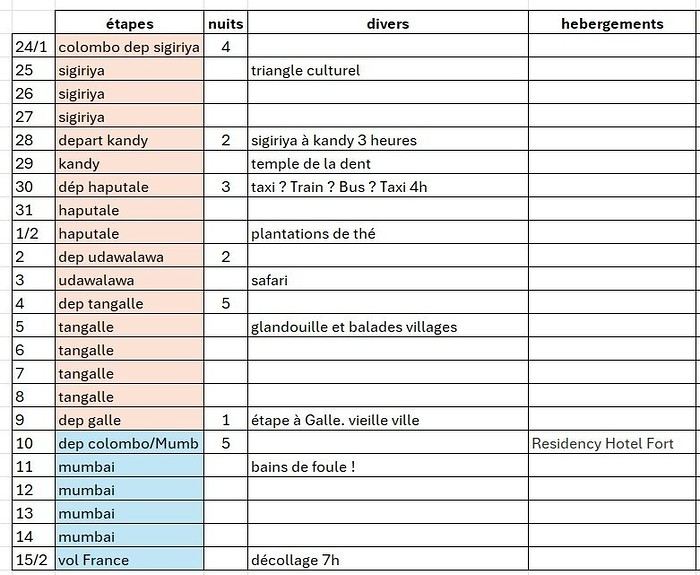
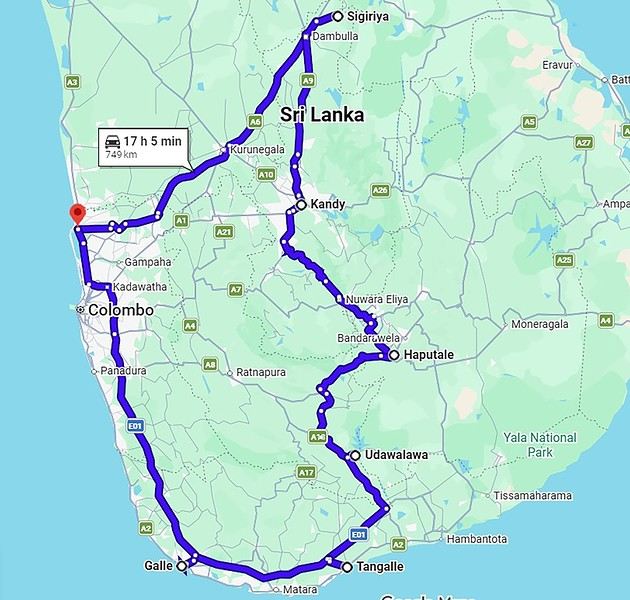
We’re heading to Sri Lanka for 23 days in January 2027—there are four of us—and we’ll wrap up the trip with 5 days in Mumbai. Our itinerary is coming together, but what do you think? (We can’t change the dates since our flights are already booked.)
We still have one night to slot in, and I’ve tentatively planned it in Tangalle, though it was a bit random. Would it make more sense to place it at a different stop? Or is there an intermediate stop I might be missing?
I’ve got accommodations sorted everywhere except Mumbai—it’s a nightmare (either way too expensive or really dodgy). By default, we’ve spotted the Residency Hotel Fort, but 70 € a night (with a discount) for a hotel that doesn’t offer anything special in India?!
Thanks so much for your help!
Well, I still feel a bit lonely about this destination—no requests for info, no travel journals, or trip reports since I last posted over a year ago. A little disheartening.
That said, I did cross paths with slightly more tourists this time. Not a ton, but enough to notice compared to my last stay. Beyond that, not much has changed—the people are just as lovely, and every interaction, whether at the market, in the medinas, in town, or in the countryside, was positive. It was so pleasant; my "alert meter" stayed at zero the whole time (which is pretty different from some other places I visit now and then). The roads outside the cities remain dangerous, and the accident rate seems high. Best to drive during the day and take it easy (on some rough stretches, you don’t really have a choice anyway). The scattered plastic and metal waste hasn’t magically disappeared, and it’s still pretty discouraging to see the most beautiful beaches surrounded by empty bottles, straws, diapers, and rusted carcasses of an old Xantia or a skeletal Espace. When it’s not on the beach itself (since those are cleaned), it’s just a few meters away. Usually, there’s not much in the water or close to shore—the seabeds are gorgeous, with coral and a wide variety of scaly friends... But stepping back onto the hardened lava, you dodge a chip bag or a shriveled battery. Such a paradox. Honestly, it’s like this almost everywhere except on hotel beaches or those far from human settlements. But otherwise, in places like Chomoni, Bouni, Itsandra, Moya, and Domoni (on Anjouan), Nioumachoua (on Mohéli, and even on the nearby islets), it’s hard to ignore. And it unfortunately tarnishes the beauty of these otherwise stunning spots.
That said, you can still find secluded micro-bays, protected and remote, where this isn’t an issue. And where there are hotels—like in Petite Itsandra in Moroni, in front of Laka Lodge in Nioumachoua, Trou du Prophète, or even Chomoni (though the surrounding areas are so littered...)—the beaches are cleaned, so...
So why go? Why still love it despite all this? Well, first, the Comorians themselves—that’s already essential and probably the main reason. Then there’s the breathtaking topography: the imposing Karthala, the dizzying peaks and cliffs of Anjouan, vast ravines, a tortured geology covered in lush nature, and Mohéli, much more serene and gentle, blanketed in spice plants and trees with names that make you dream, like an open-air spice market. The flora across the islands—the fields, trees, scents: clove trees, cinnamon trees, lychee, mango, cardamom, nutmeg, vanilla, coconut palms, banana trees, coffee plants, cocoa... A profusion of green dotted with red, white, and yellow berries and flowers... The seabeds are stunning in many places, and there are some beautiful beaches/oceanfront spots, especially near Trou du Prophète (but not only there). The history and culture—between traditional festivals, but especially the medinas with their staircases, covered passages, palaces, and mosques that create Escher-like constructions. I love wandering through them for hours, stumbling upon an unlikely shop, a more or less philosophical saying like "pain is a warning," "a promise is a debt," or the less original "little by little, the bird makes its nest." A grocery store, women negotiating freshly caught fish (usually tuna, immediately cut and ready to sell), kids playing, old men playing checkers, a call to prayer... In Moroni, Mutsamudu, and Domoni, I spent most of my "urban" time.
If anyone’s interested—though given the hype about Comoros on the forum, I doubt it—but if you need info on accommodation across the three islands, some restaurants, or sites to visit, don’t hesitate to ask.
This message is another message in a bottle (one more, if I dare...) for the Comoros destination.
That said, I did cross paths with slightly more tourists this time. Not a ton, but enough to notice compared to my last stay. Beyond that, not much has changed—the people are just as lovely, and every interaction, whether at the market, in the medinas, in town, or in the countryside, was positive. It was so pleasant; my "alert meter" stayed at zero the whole time (which is pretty different from some other places I visit now and then). The roads outside the cities remain dangerous, and the accident rate seems high. Best to drive during the day and take it easy (on some rough stretches, you don’t really have a choice anyway). The scattered plastic and metal waste hasn’t magically disappeared, and it’s still pretty discouraging to see the most beautiful beaches surrounded by empty bottles, straws, diapers, and rusted carcasses of an old Xantia or a skeletal Espace. When it’s not on the beach itself (since those are cleaned), it’s just a few meters away. Usually, there’s not much in the water or close to shore—the seabeds are gorgeous, with coral and a wide variety of scaly friends... But stepping back onto the hardened lava, you dodge a chip bag or a shriveled battery. Such a paradox. Honestly, it’s like this almost everywhere except on hotel beaches or those far from human settlements. But otherwise, in places like Chomoni, Bouni, Itsandra, Moya, and Domoni (on Anjouan), Nioumachoua (on Mohéli, and even on the nearby islets), it’s hard to ignore. And it unfortunately tarnishes the beauty of these otherwise stunning spots.
That said, you can still find secluded micro-bays, protected and remote, where this isn’t an issue. And where there are hotels—like in Petite Itsandra in Moroni, in front of Laka Lodge in Nioumachoua, Trou du Prophète, or even Chomoni (though the surrounding areas are so littered...)—the beaches are cleaned, so...
So why go? Why still love it despite all this? Well, first, the Comorians themselves—that’s already essential and probably the main reason. Then there’s the breathtaking topography: the imposing Karthala, the dizzying peaks and cliffs of Anjouan, vast ravines, a tortured geology covered in lush nature, and Mohéli, much more serene and gentle, blanketed in spice plants and trees with names that make you dream, like an open-air spice market. The flora across the islands—the fields, trees, scents: clove trees, cinnamon trees, lychee, mango, cardamom, nutmeg, vanilla, coconut palms, banana trees, coffee plants, cocoa... A profusion of green dotted with red, white, and yellow berries and flowers... The seabeds are stunning in many places, and there are some beautiful beaches/oceanfront spots, especially near Trou du Prophète (but not only there). The history and culture—between traditional festivals, but especially the medinas with their staircases, covered passages, palaces, and mosques that create Escher-like constructions. I love wandering through them for hours, stumbling upon an unlikely shop, a more or less philosophical saying like "pain is a warning," "a promise is a debt," or the less original "little by little, the bird makes its nest." A grocery store, women negotiating freshly caught fish (usually tuna, immediately cut and ready to sell), kids playing, old men playing checkers, a call to prayer... In Moroni, Mutsamudu, and Domoni, I spent most of my "urban" time.
If anyone’s interested—though given the hype about Comoros on the forum, I doubt it—but if you need info on accommodation across the three islands, some restaurants, or sites to visit, don’t hesitate to ask.
This message is another message in a bottle (one more, if I dare...) for the Comoros destination.
Hi there, I'm looking for a friendly person who knows about the capabilities of donkeys/mules and horses for long-term, round-the-clock travel.
(I already do this, but with a donkey that's far from indestructible)
I struggle to assess the potential of some equines, so I'd like someone at least somewhat competent in this area whom I can contact from time to time to share photos of animals I'm considering buying.
I'm not in France, I don't plan to return, and I often come across charlatans who'd sell their animals to anyone for a few good bills... But that's not my case—I'm primarily looking for a female donkey or a mule (my sweetheart isn’t a big fan of horses), and as a last resort, a mare strong and enduring enough to carry me in the mountains, meaning a constant load of about 80kg: - Me: 60/65kg - Saddle: 2/4kg - 8/10L of water - A rope: 800g
Based on what I've read online and advice from people, I understand the load should represent a maximum of 15/20% of the animal's weight or at least 1.40m at the withers? Mules would be ideal for me, but they sell out VERY quickly, so I never get a chance to find one... (I always leave a safety margin with the equines I meet to ensure their spine doesn’t get damaged over time)
Anyway, advice won’t be much help because I don’t want to make this decision ALONE when buying this female, to ensure I choose a relatively indestructible creature.
I’ve been visiting long and short ears for a year now, but I still haven’t found the right fit out of concern for her, which is why someone who stays in my contacts to help me make the final decision would be more than welcome :)
Thanks for your attention, hope to hear from you soon!
I struggle to assess the potential of some equines, so I'd like someone at least somewhat competent in this area whom I can contact from time to time to share photos of animals I'm considering buying.
I'm not in France, I don't plan to return, and I often come across charlatans who'd sell their animals to anyone for a few good bills... But that's not my case—I'm primarily looking for a female donkey or a mule (my sweetheart isn’t a big fan of horses), and as a last resort, a mare strong and enduring enough to carry me in the mountains, meaning a constant load of about 80kg: - Me: 60/65kg - Saddle: 2/4kg - 8/10L of water - A rope: 800g
Based on what I've read online and advice from people, I understand the load should represent a maximum of 15/20% of the animal's weight or at least 1.40m at the withers? Mules would be ideal for me, but they sell out VERY quickly, so I never get a chance to find one... (I always leave a safety margin with the equines I meet to ensure their spine doesn’t get damaged over time)
Anyway, advice won’t be much help because I don’t want to make this decision ALONE when buying this female, to ensure I choose a relatively indestructible creature.
I’ve been visiting long and short ears for a year now, but I still haven’t found the right fit out of concern for her, which is why someone who stays in my contacts to help me make the final decision would be more than welcome :)
Thanks for your attention, hope to hear from you soon!
December 13 - Day 1
"How about a Christmas market this year, huh? A little romantic weekend getaway... - Yes! That’d be cool! Strasbourg? Colmar? - Feels a bit déjà vu, doesn’t it? Plus, slim chance of snow there... And I’d love something a bit more exotic with a touch of originality..."
"Okay, Google, give me the list of the five most beautiful Christmas markets in Europe. - In fifth place, the Christmas market in Vilnius, the capital of Lithuania. - Save your breath! Lithuania, here we come!"
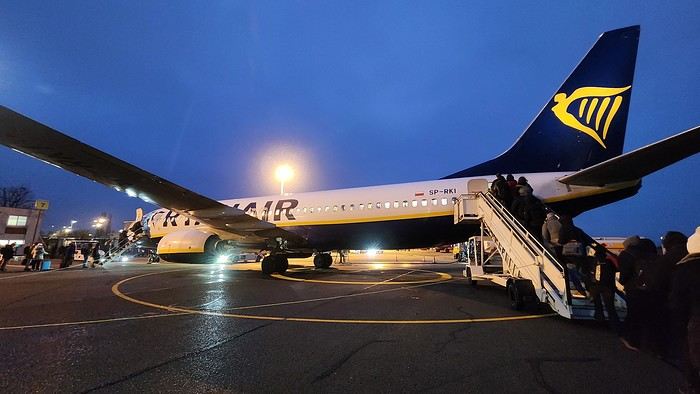
We wanted cold, and cold is exactly what we got the moment we set foot in this new, unknown land. As for landscapes, forests and lakes stretch as far as the eye can see across this vast plain, its vegetation scorched by the frost of a winter that’s clearly already well underway here.
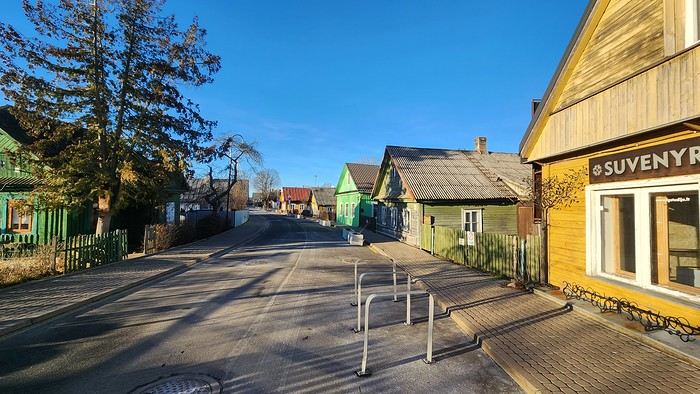
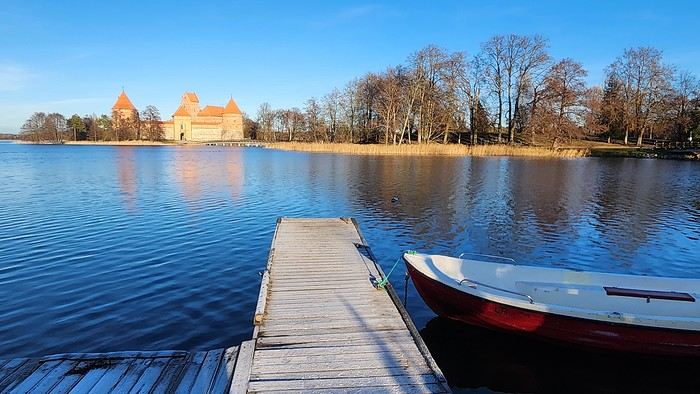
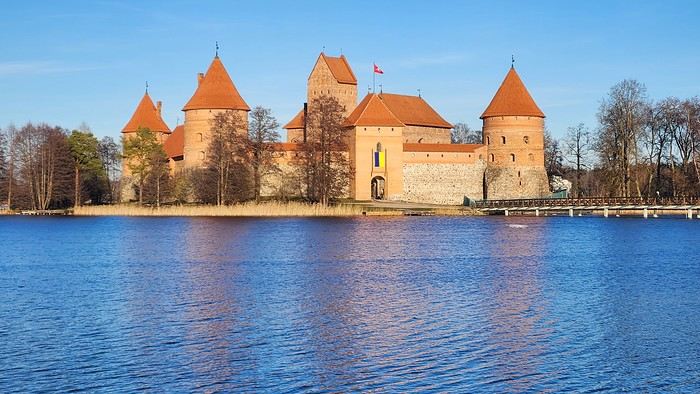
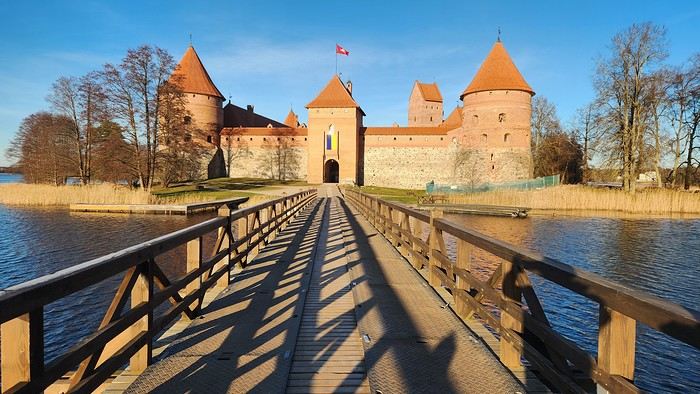
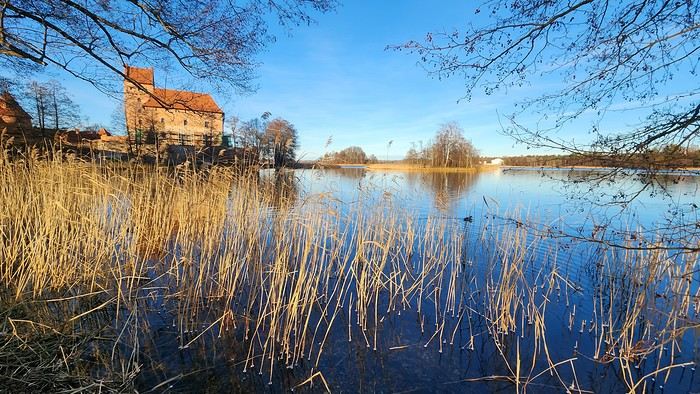
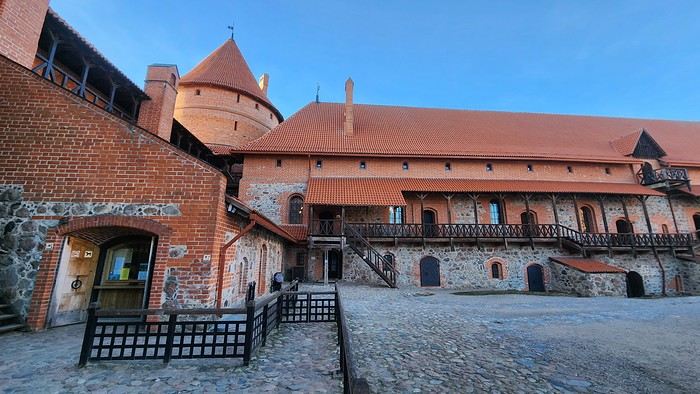
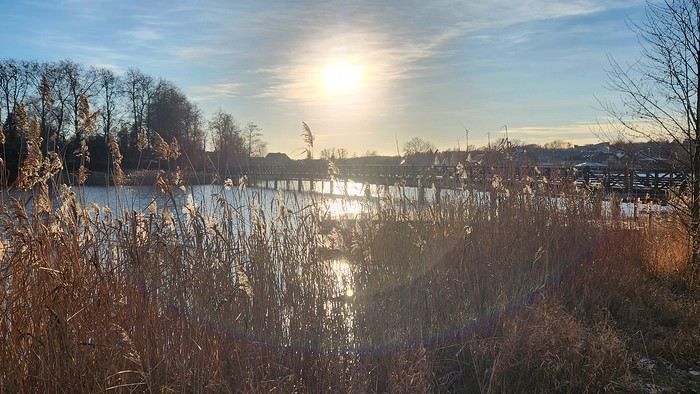
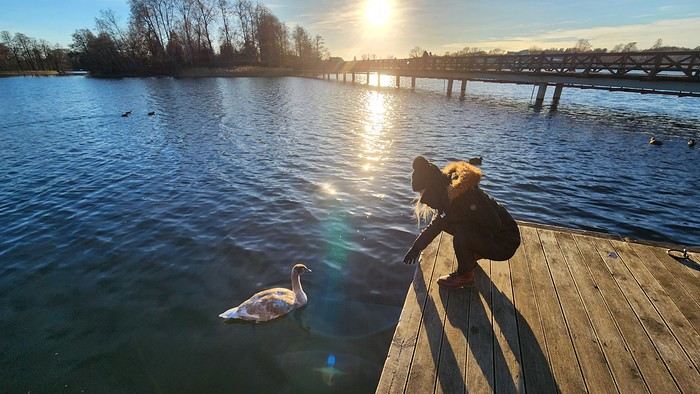
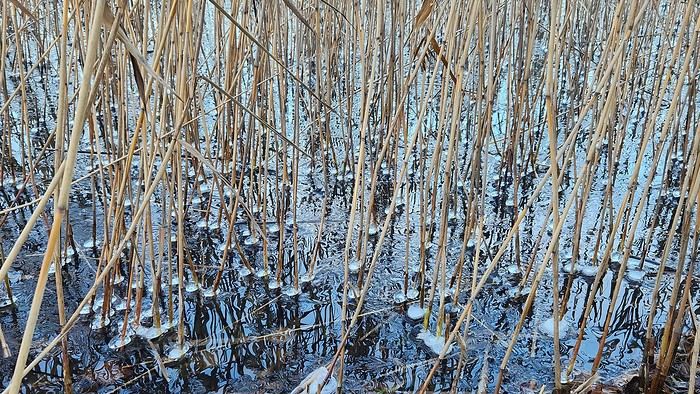
Lakes, in fact, set the scene for our first visit to Trakai Castle, whose brick-red towers and walls rise proudly against the azure sky of our first day. Lakes, because this castle was built on an island and is only accessible on foot via a series of walkways spanning half-frozen lake offshoots. I couldn’t have picked a better spot to build my castle! Translation: We’re totally sold! Proof is we spend two hours hiking around the area, alternating between forests, reeds, and cozy houses tastefully decorated for Christmas.
"How about a Christmas market this year, huh? A little romantic weekend getaway... - Yes! That’d be cool! Strasbourg? Colmar? - Feels a bit déjà vu, doesn’t it? Plus, slim chance of snow there... And I’d love something a bit more exotic with a touch of originality..."
"Okay, Google, give me the list of the five most beautiful Christmas markets in Europe. - In fifth place, the Christmas market in Vilnius, the capital of Lithuania. - Save your breath! Lithuania, here we come!"
We wanted cold, and cold is exactly what we got the moment we set foot in this new, unknown land. As for landscapes, forests and lakes stretch as far as the eye can see across this vast plain, its vegetation scorched by the frost of a winter that’s clearly already well underway here.
Lakes, in fact, set the scene for our first visit to Trakai Castle, whose brick-red towers and walls rise proudly against the azure sky of our first day. Lakes, because this castle was built on an island and is only accessible on foot via a series of walkways spanning half-frozen lake offshoots. I couldn’t have picked a better spot to build my castle! Translation: We’re totally sold! Proof is we spend two hours hiking around the area, alternating between forests, reeds, and cozy houses tastefully decorated for Christmas.
Namaste!
Here I am live from Delhi, past midnight, at least 30 degrees....
I wanted to post the start of this France travel journal but couldn’t find the time, so here it is live!
Off we go for a third trip, but this time for double the duration—6 weeks with the goal of discovering Ladakh and Spiti, starting with a detour to Varanasi to meet up with Babeli and her family.
Phir milenge for the rest of the adventures...
Phir milenge for the rest of the adventures...
April 5 - Day 1
After as many weeks as I have fingers on my right hand, we're hitting the road again, fully recovered from our pharaonic adventure. Back in France to drop off our daughters (sorry, girls!), this time it's just the two of us, ready to be welcomed by a new destination. They say it offers one of the richest cultural heritages in the world for those willing to put in the effort. It's the land of the ancient Silk Road, where we'll follow a journey steeped in history and discoveries straight out of *One Thousand and One Nights*. A former Soviet bloc region independent only since 1991, we'll be walking in the footsteps of Genghis Khan, Tamerlane, Alexander the Great, Marco Polo...
Another fun fact about this country: it's strictly forbidden to import porn on your phone. True story. The same goes for painkillers! Unless it's about sodomy—though the two don’t seem connected, that’s just how it is. Don’t ask me why! Anyway, I’m getting off track. Here’s the big question: Where do you think we’ve just landed?... To give you a hint, the locals are known for being incredibly welcoming. No sooner said than done—our first taxi driver, proud to transport French travelers, refused to let us pay for the ride. Great vibes for these two weeks ahead. So, any guesses? Uzbekistan!!!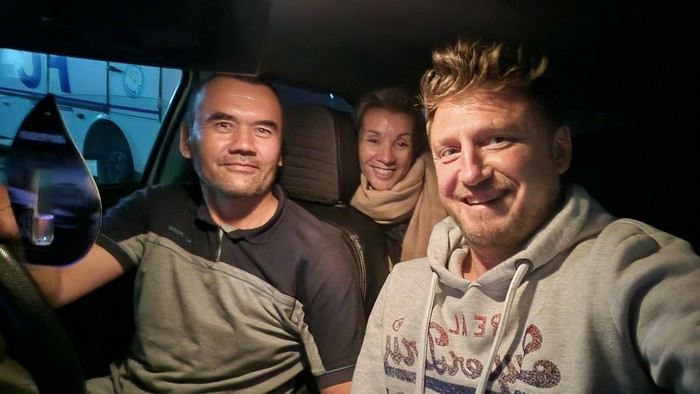
After as many weeks as I have fingers on my right hand, we're hitting the road again, fully recovered from our pharaonic adventure. Back in France to drop off our daughters (sorry, girls!), this time it's just the two of us, ready to be welcomed by a new destination. They say it offers one of the richest cultural heritages in the world for those willing to put in the effort. It's the land of the ancient Silk Road, where we'll follow a journey steeped in history and discoveries straight out of *One Thousand and One Nights*. A former Soviet bloc region independent only since 1991, we'll be walking in the footsteps of Genghis Khan, Tamerlane, Alexander the Great, Marco Polo...
Another fun fact about this country: it's strictly forbidden to import porn on your phone. True story. The same goes for painkillers! Unless it's about sodomy—though the two don’t seem connected, that’s just how it is. Don’t ask me why! Anyway, I’m getting off track. Here’s the big question: Where do you think we’ve just landed?... To give you a hint, the locals are known for being incredibly welcoming. No sooner said than done—our first taxi driver, proud to transport French travelers, refused to let us pay for the ride. Great vibes for these two weeks ahead. So, any guesses? Uzbekistan!!!
Hi everyone, I was wondering—I’m planning to go to Brazil on December 25th (until around mid-February) and land in São Paulo or Rio (since those are the only two southern destinations you can fly into from Europe). I’d maybe like to start in the south of the country—is it worth going there? If so, where should I begin: Florianópolis, Porto Alegre, or somewhere else before heading north?
Okay, I saw Iguaçu Falls in January 2024, so I’m skipping that stop during my trip. What route would you recommend to see the best destinations? I’m skipping the Amazon because of the rain—I only want to stay in dry, sunny regions.
Thanks! !
Okay, I saw Iguaçu Falls in January 2024, so I’m skipping that stop during my trip. What route would you recommend to see the best destinations? I’m skipping the Amazon because of the rain—I only want to stay in dry, sunny regions.
Thanks! !
Hi everyone, I stumbled upon this article about Bali, which has finally decided to take action against "influencers" and expel them from the island. A special brigade has even been created to stop them. Details in the article below.
https://www.franceinfo.fr/replay-radio/l-il-de-constance/bali-n-en-peut-plus-des-influenceurs-l-ile-declare-la-guerre-aux-createurs-de-contenu_8144909.html
So, I’ll answer my own question—I won’t beat around the bush: I can’t stand influencers anymore. It’s just another layer on top of the eco-conscious/hipster crowd. Now we’ve got influencers added to the mix. Because beyond skyrocketing prices and paradise spots ruined in just a few years, the real result is the homogenization of all tourist spots. They demand their little cafés serving vegan, Instagram-worthy food, their coworking spaces, their vegan Instagram shops, etc.
In short, to me, these people are a cancer in tourism. They act like they’re above the rules, especially when it comes to taking photos, think they’re all-powerful, and on top of that, I don’t think they contribute anything to the local economy… Besides matcha tea, paddleboarding, and vegan food, all they do is make videos.
Sure, I’m not saying some influencers don’t stand out, but 99% of them are just doing completely useless stuff…
https://www.franceinfo.fr/replay-radio/l-il-de-constance/bali-n-en-peut-plus-des-influenceurs-l-ile-declare-la-guerre-aux-createurs-de-contenu_8144909.html
So, I’ll answer my own question—I won’t beat around the bush: I can’t stand influencers anymore. It’s just another layer on top of the eco-conscious/hipster crowd. Now we’ve got influencers added to the mix. Because beyond skyrocketing prices and paradise spots ruined in just a few years, the real result is the homogenization of all tourist spots. They demand their little cafés serving vegan, Instagram-worthy food, their coworking spaces, their vegan Instagram shops, etc.
In short, to me, these people are a cancer in tourism. They act like they’re above the rules, especially when it comes to taking photos, think they’re all-powerful, and on top of that, I don’t think they contribute anything to the local economy… Besides matcha tea, paddleboarding, and vegan food, all they do is make videos.
Sure, I’m not saying some influencers don’t stand out, but 99% of them are just doing completely useless stuff…
Recommended for you
 Argentine and Chilean Patagonia from El Calafate to Ushuaia
 Turkey 2026: Riviera, Antalya, and Cappadocia
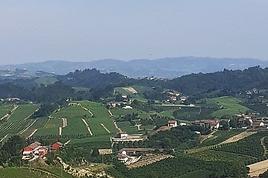 Page by Page on the Assisi Way – 1,200 km on Foot
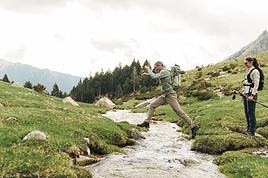 How to nail your trek in wet climates: which pants keep you truly dry?
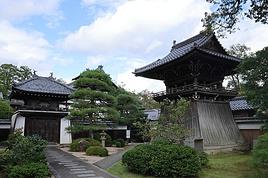 Densha Otaku - Lesser-Known Regions
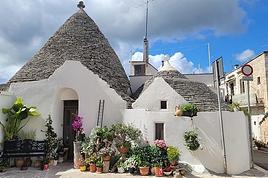 Two weeks under the Puglia sun
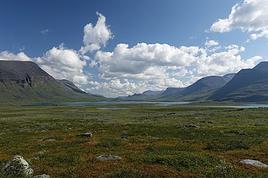 Back to Swedish Lapland: Trekking the Kungsleden and Crossing Sarek
 The Pearl of Africa - July-August 2026