Discovering Assam and Nagaland 2025
FR

Translated into English.

YA Yan55 Veteran ·
How can you recharge your phone if there’s no electricity? Is there a generator in the hotel? That must’ve been pretty rough, that never-ending mass—good call taking the chance to catch a quick nap!!! 🙂😉 The people in Nagaland seem really Catholic. The waitress from the Varkala restaurant I told you about showed me photos of her region on her phone: nothing but churches! I thought that was so funny!!!
Anne Mes récits de voyages : www.unendroitoualler.fr
AL Aleph240758 Veteran ·
How can you recharge your phone if there’s no electricity? Is there a generator at the hotel?

Yeah, there was a generator at the homestay.

The people in Nagaland seem to be very Catholic. They used to be animist and became Baptist after the British passed through, and religion is very important, just like everywhere else in India. Assam is Hindu, Nagaland Baptist, Meghalaya Catholic, and I noticed differences in their way of life, their food, and the welcome—it’s amazing in all three states. You’ll see the rest soon. Have a great day
Qui a l'habitude de voyager sait qu'il vient toujours un moment où il faut partir... Paulo Coelho
MA Marien33 Veteran ·
I’m not chiming in anymore, but I’ve picked up reading again. All this is so surprising...
Je rencontrai sur mon chemin tant de difficultés Qu’elles furent toutes surmontées MIRZA GHALIB poète urdu (1796 -1869) https://www.telling-india-pictures.com https://youpic.com/marien
HE Herodotos Regular ·
Hi Marie Jo,

I’m joining in on the praise coming your way— This travel journal is one of a kind. It’s going to be a landmark! 🙂
https://www.myatlas.com/Herodote
AL Aleph240758 Veteran ·
"This travel journal is unprecedented. It’ll be a landmark!" Oh, that’s for sure—unprecedented is an understatement! 😏 I’ll keep going then 😎😉
Qui a l'habitude de voyager sait qu'il vient toujours un moment où il faut partir... Paulo Coelho
AL Aleph240758 Veteran ·
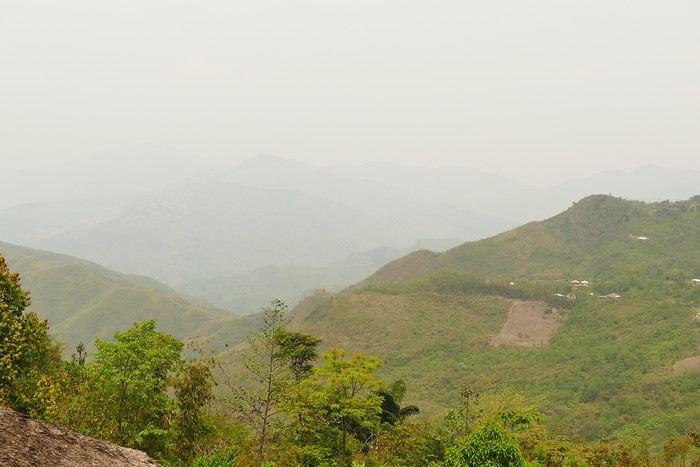
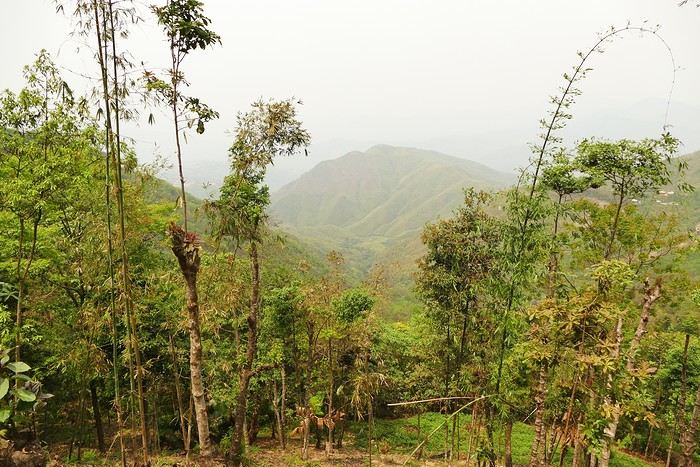
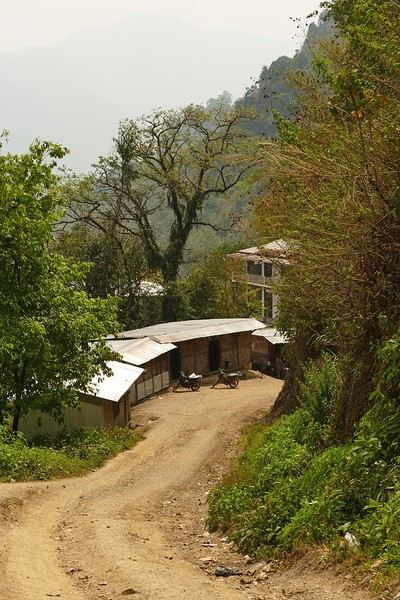
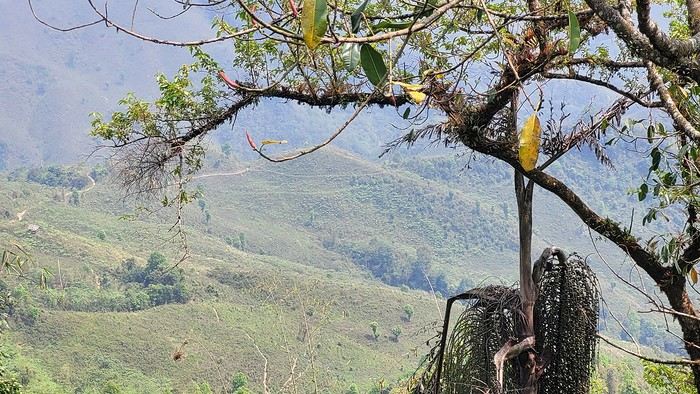
Monday, April 7th The guide arrives at 8:30 AM with the driver. We start by going to the police station to register me—it’s free here, though I had to pay a small fee to enter the village of Kohima. From there, we try to book my ticket to Mokokchung. On Wednesday morning, there’s only one sumo, and it’s already full. I’m really annoyed, but what can I do? It’s fully booked. I’m thinking about leaving on Thursday instead, keeping in mind that I’m expected in Naharkatia on April 12th. We take the road to Longwa, and along the way, the guide shares his Wi-Fi, which lets me send updates back to France. I take the chance to message Nirupam, who confirms he’s expecting me at his place on the 12th. I have to cancel my entire stay in Mokokchung—it’s too complicated—as well as one night in Sivasagar. I’m figuring out what to do from April 9th to 12th. The simplest option would be to stay an extra day in Mon and then head to Dibrugarh. On April 10th, the guide and taxi are available, but the rate is pretty steep. I’ll need to think it over before making a final decision. The road to Longwa looks more like a rough track than a winding road. The sky is still hazy, but the mountainous landscapes are stunning and different from those around Kohima.


We’re getting closer to the border with Myanmar, and I’m excited. I would’ve loved to visit that country—it was on my "countries to visit in retirement" list.

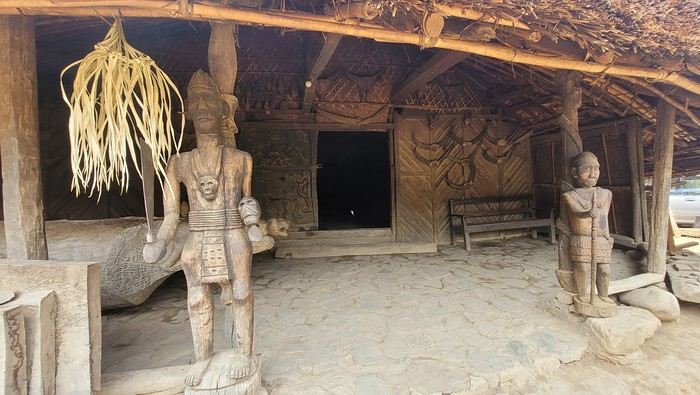
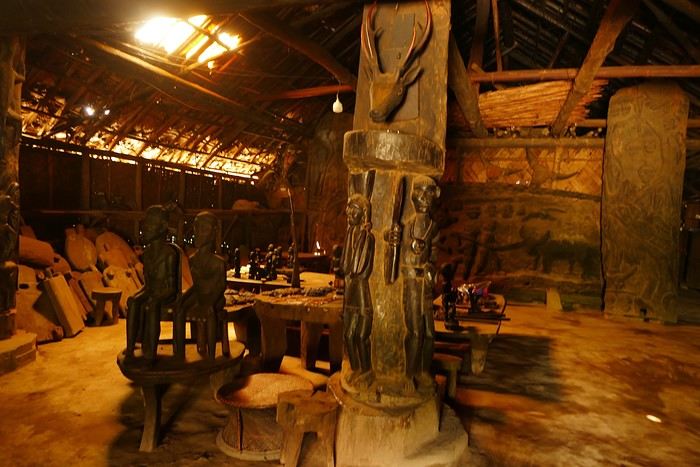
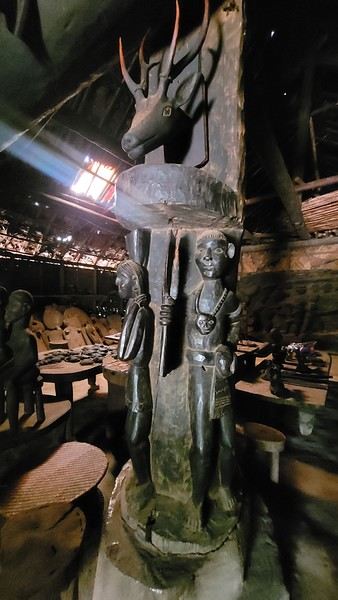
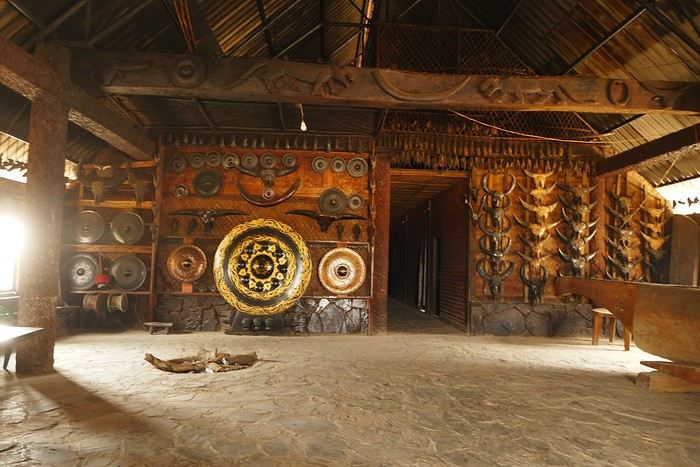
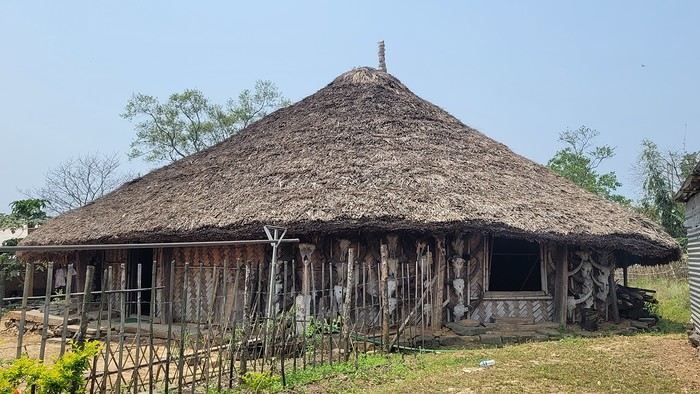
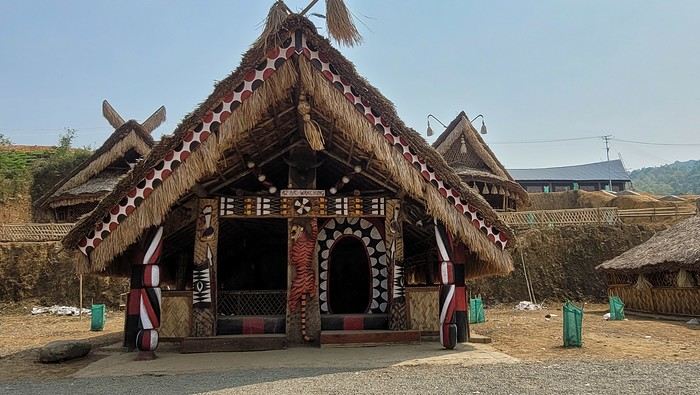
We stop to visit an old morung. Right at the entrance, the decorations and wooden carvings are amazing.


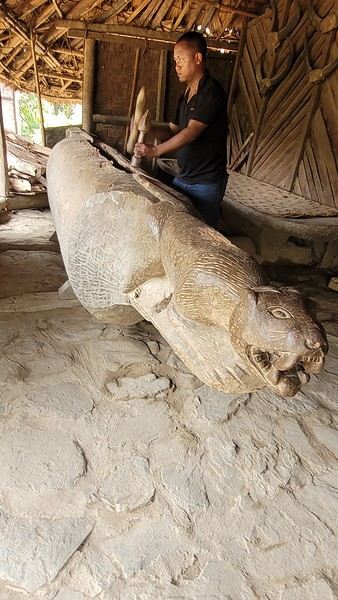
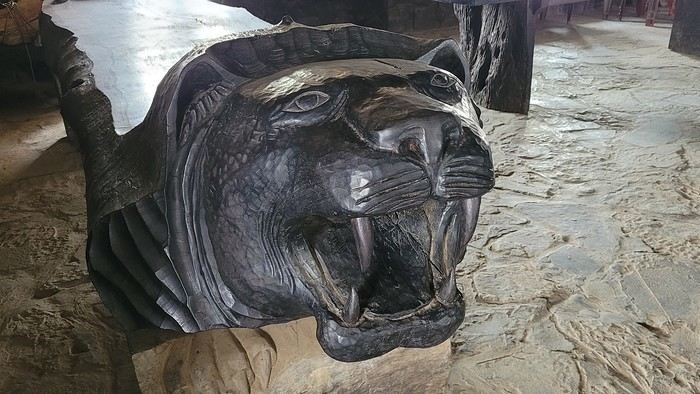
A beautifully carved wooden drum with a tiger’s head is under the shelter.


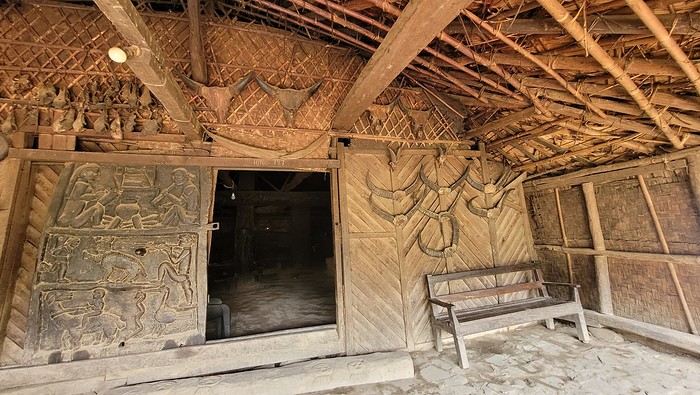
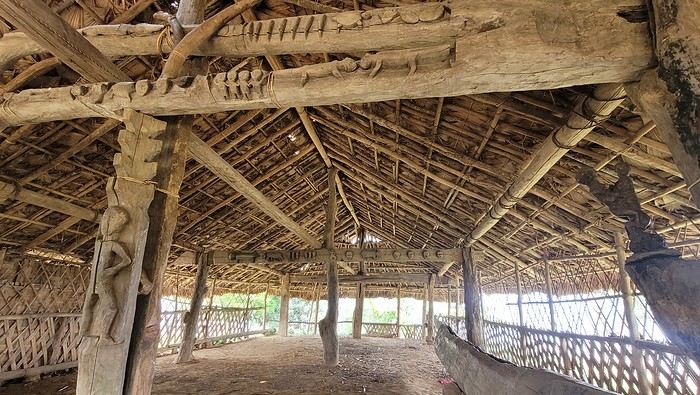
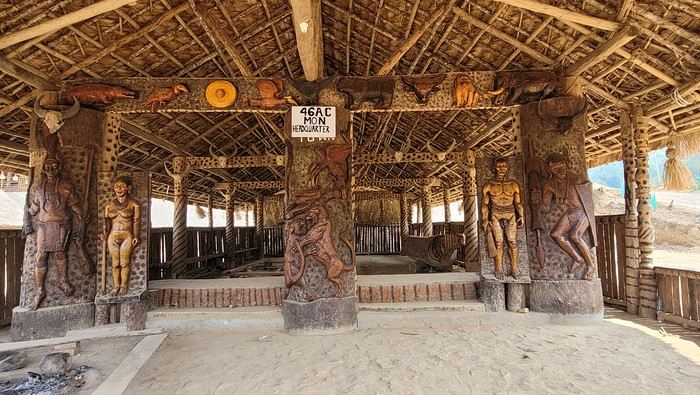
Inside, it takes me a moment to adjust to the dim light. The beams are carved, and animal heads are hung on them.


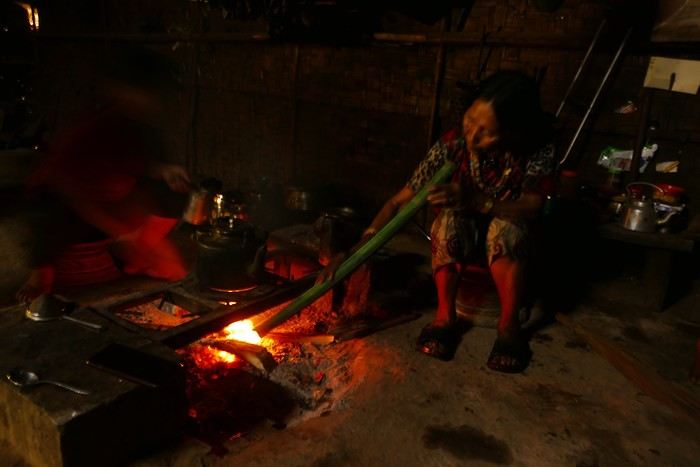
People are gathered around the fire, which the woman stokes by blowing through a bamboo tube.


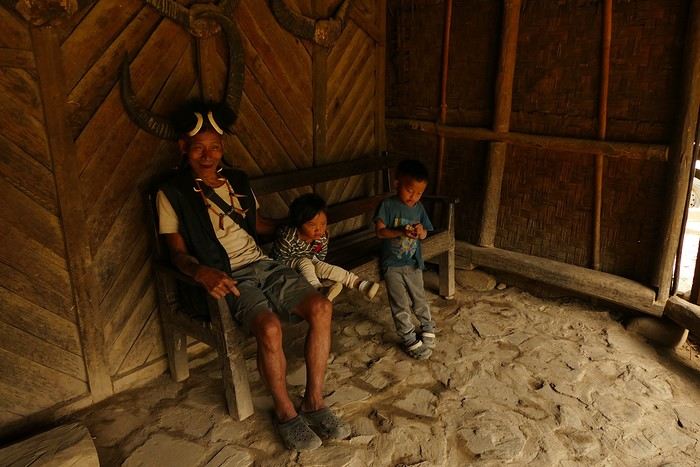
At the exit, a man is taking care of his grandchildren.


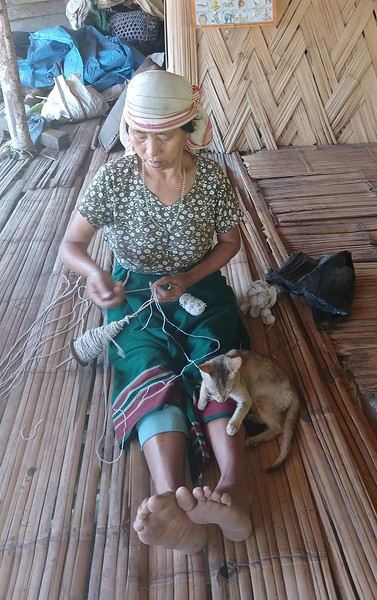
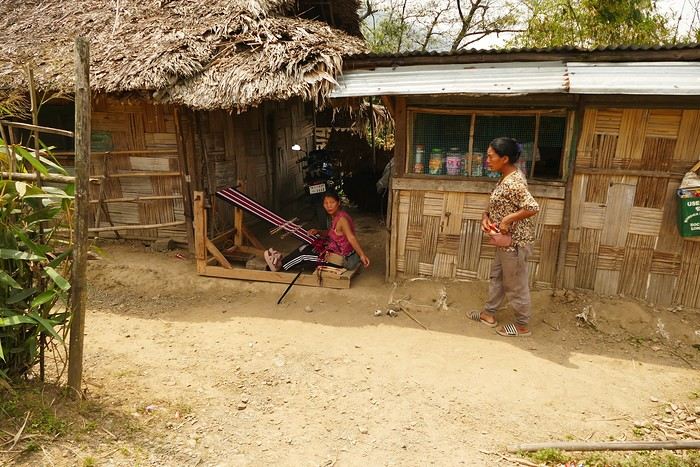
At the village entrance, we get out of the car. A woman is weaving in front of her house.


We take a path that runs along the forest.

Qui a l'habitude de voyager sait qu'il vient toujours un moment où il faut partir... Paulo Coelho
DJ Djalma Globetrotter ·
Hello,

We’re getting close to the border with Myanmar, and I’m so excited. I would’ve loved to visit that country, which was on my “countries to visit in retirement” list.

The Naga people live on both sides of this border. This part of Myanmar (Nagaland) had attracted me a few years ago. The India-Myanmar border was permeable back then. Now, at my age, it’s too late...

Before you go, I suggest reading about Patrice Franceschi’s incredible adventure with the Naga people in Myanmar, just beyond this India/Myanmar border:

https://www.babelio.com/livres/Franceschi-Avant-la-derniere-ligne-droite/373596/critiques
https://www.youtube.com/watch?v=-XCOyB7WStI https://www.youtube.com/watch?v=g2eI67iCbKY
AL Aleph240758 Veteran ·
"Before you go, I suggest reading Patrice Franceschi’s wild adventure with the Naga people in Myanmar, just beyond the India/Myanmar border.

Thanks, I’ll check it out—a wild adventure sounds right up my alley! I don’t think I’ll make it there, unfortunately.
Qui a l'habitude de voyager sait qu'il vient toujours un moment où il faut partir... Paulo Coelho
MA Marien33 Veteran ·
Thanks, I’ll check out *A Rollicking Adventure*—that sounds right up my alley!

Well, same here, so I clicked the link but there’s nothing except book reviews...
Je rencontrai sur mon chemin tant de difficultés Qu’elles furent toutes surmontées MIRZA GHALIB poète urdu (1796 -1869) https://www.telling-india-pictures.com https://youpic.com/marien
DJ Djalma Globetrotter ·
This was just to share the book reference: *Before the Final Stretch*, where you can find this adventure in Myanmar along with others in different countries...
https://www.youtube.com/watch?v=-XCOyB7WStI https://www.youtube.com/watch?v=g2eI67iCbKY
AL Aleph240758 Veteran ·
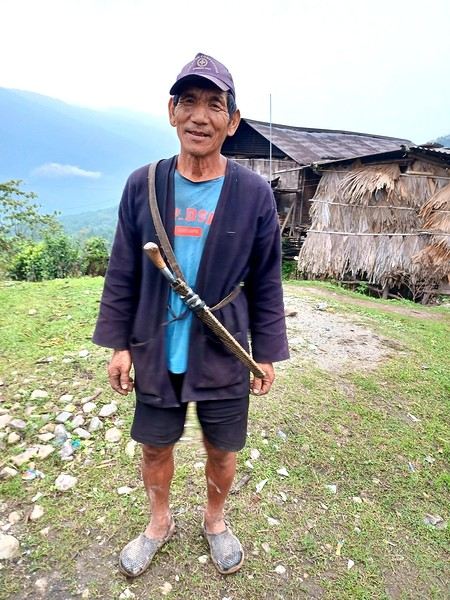
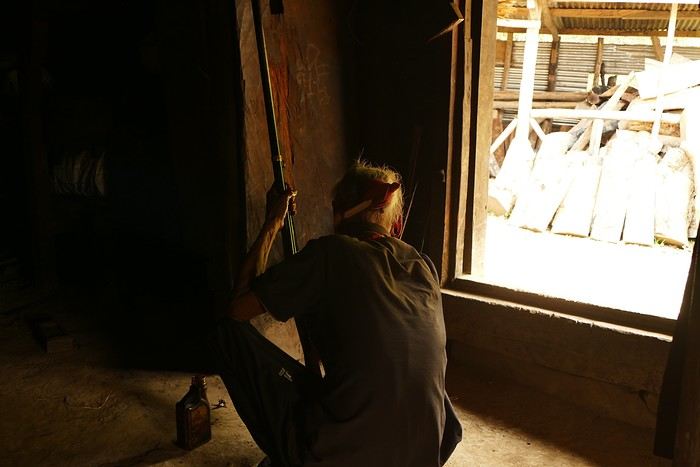
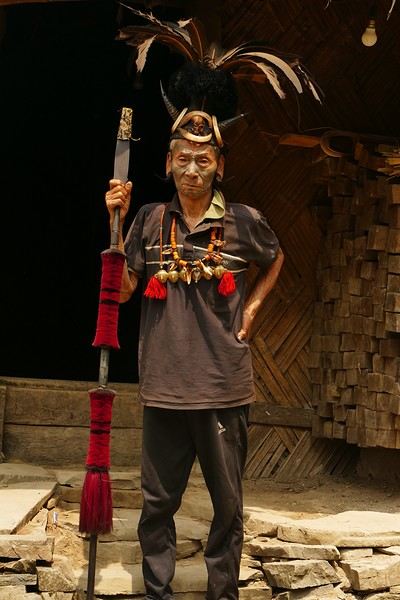
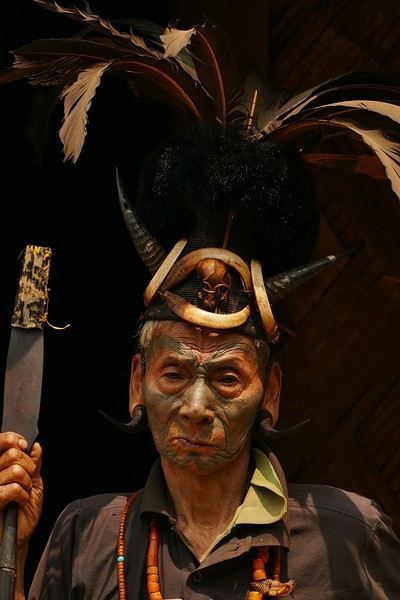
we arrive at a very traditional house. At the entrance, a man with his entire face tattooed is cleaning one of his rifles.


He belongs to the Konyak tribe—warriors and headhunters. Several rifles hang on the wall along with his "traditional hat," a cone-shaped headdress made of bones and feathers. He wears his traditional necklace, and in his earlobes, he has goat horns as earrings. For the photo, he also takes a hunting spear. The guide warns me that I have to pay him 100 rs to take his picture. I don’t think I’ll come back here, so I agree to pay. A few souvenir photos, and we head back up to the village.


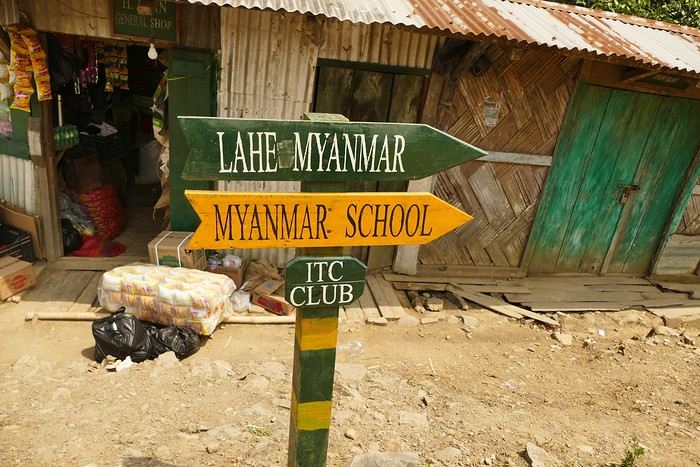
The army is present throughout the village. We look for the chief, to whom I show my passport—he photographs it along with the permit to visit Nagaland. A sign points toward Myanmar, and the border is just a few steps away.


The chief lets me take about ten steps but keeps an eye on me with a submachine gun in hand. I snap a few shots and thank him, and in return, we take some selfies.


We drive a little farther to the home of the king of Longwa, called the Angh—one of the last kings in India, who still rules his kingdom.


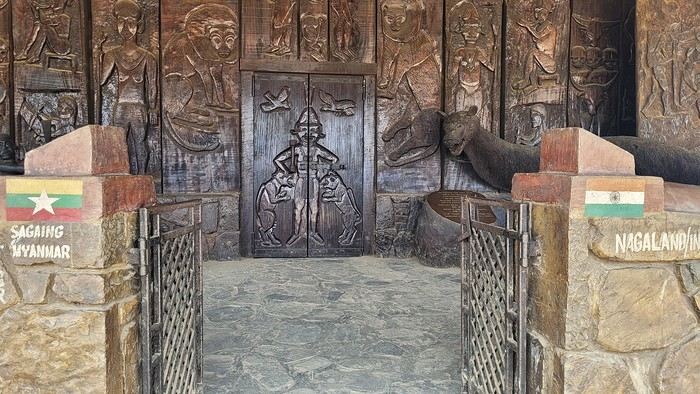
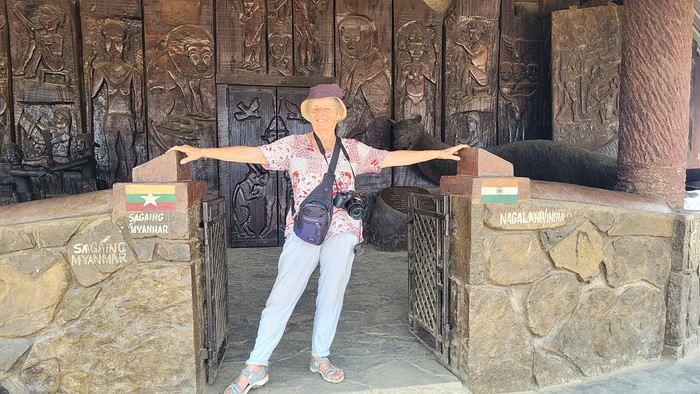
This house is unique—half is in India, and the other half is in Myanmar.


The bedrooms are in India, while the kitchen and other rooms are in Myanmar, so the residents have dual citizenship. Two women are at the entrance—one Indian, the other Burmese—and they sell beaded bracelets and wooden statues that you can only find here. I pick one to keep as a souvenir of this exceptional day.

Qui a l'habitude de voyager sait qu'il vient toujours un moment où il faut partir... Paulo Coelho
AL Aleph240758 Veteran ·
Before entering the house, I observe all the trophies displayed on the facade.


The wooden drum has a beautiful tiger head.

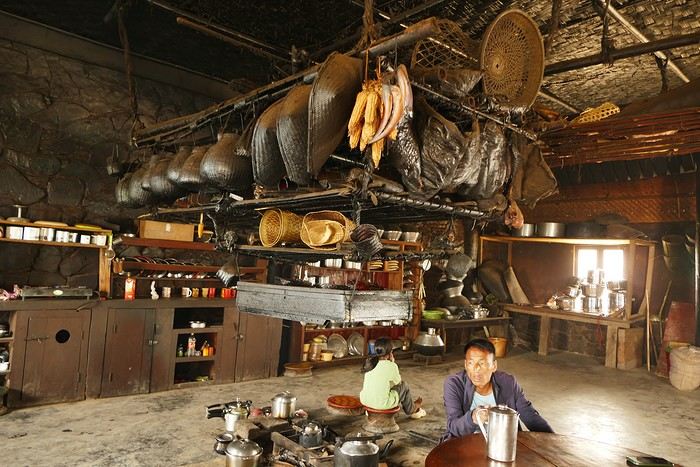
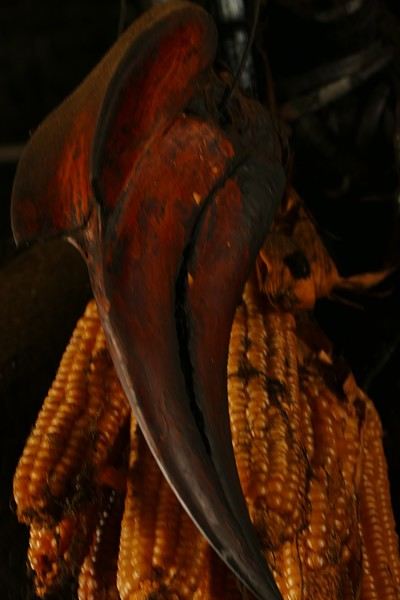
We visit the interior of the house, which is also very dark. Photos of the king are displayed on the walls—he poses with various personalities, like the King of England. In the middle of the main room, there’s a fireplace, and above it hang baskets that have blackened over time, as well as hornbill beaks.


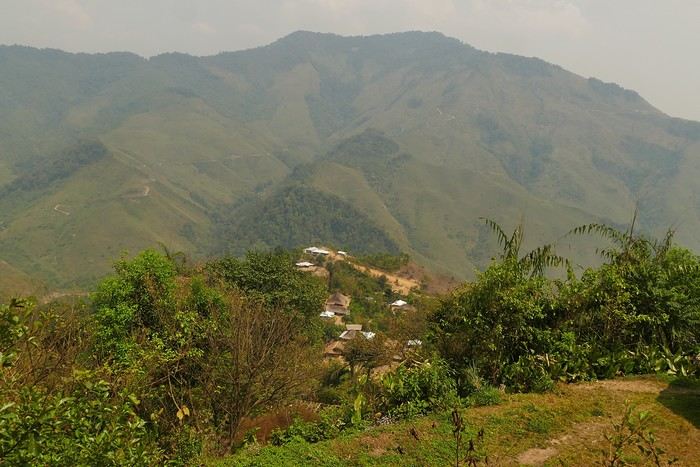
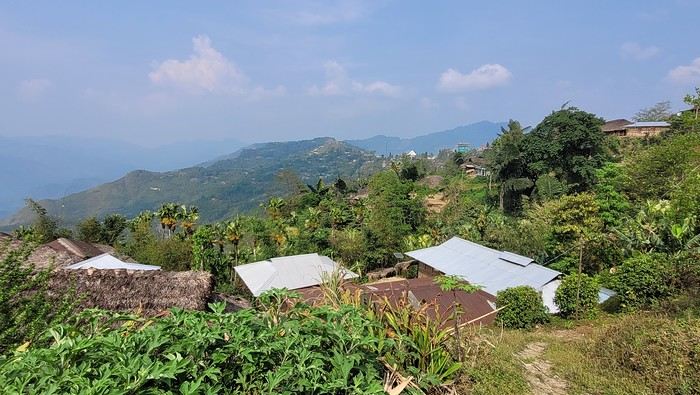
The landscapes toward Myanmar are stunning—no one’s watching me here, so I can get closer.

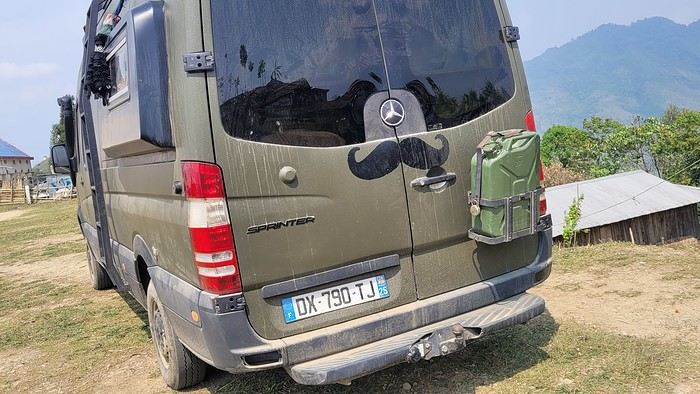
We return to the village for lunch at a small eatery. We take a little stroll around to admire the beautiful scenery and pass by a French camper van. What are they doing here? Mystery, mystery—I didn’t run into them, what a shame.


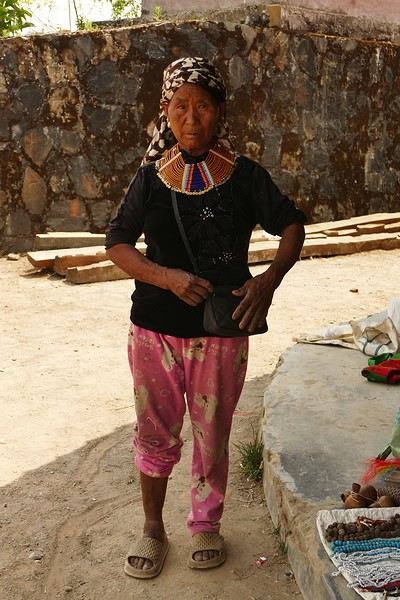
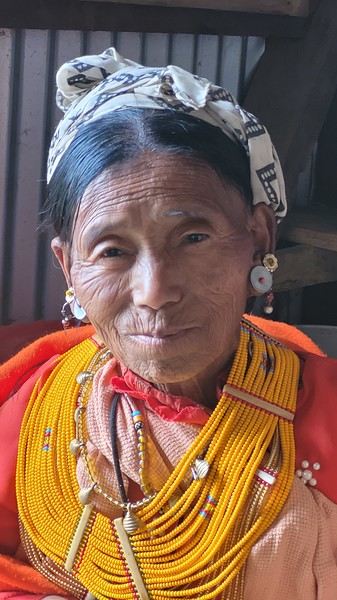
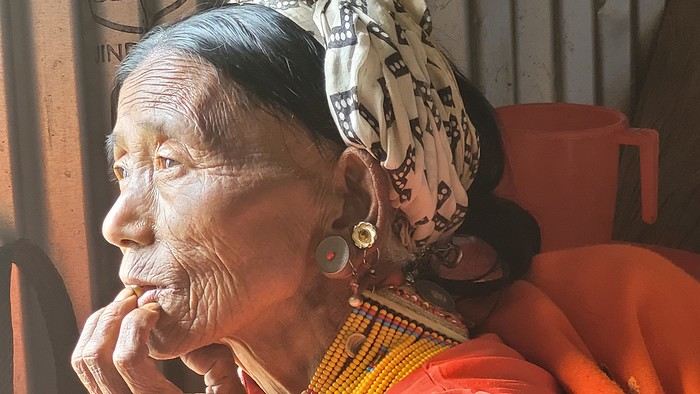
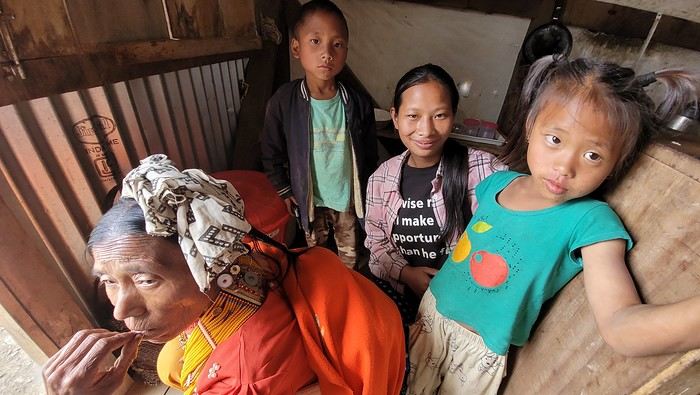
In the eatery, an elderly woman sits in a corner, carrying a baby on her back in a blanket turned into a makeshift backpack.

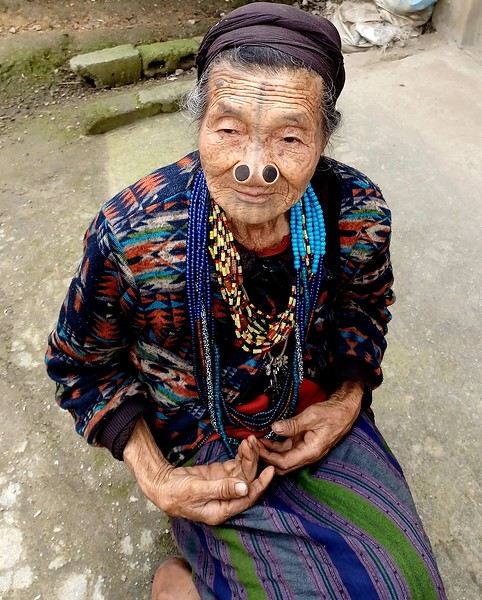
She’s beautiful, this woman, with her lovely jewelry.


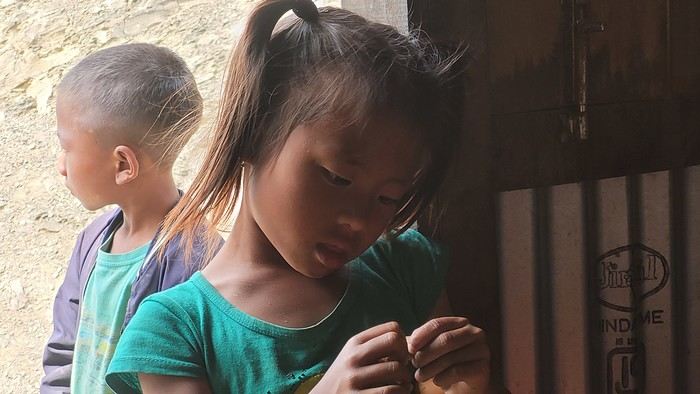
Two children watch us eat our chapatis—the guide and I will share some with them.

Before leaving, one last photo.

Qui a l'habitude de voyager sait qu'il vient toujours un moment où il faut partir... Paulo Coelho
AL Aleph240758 Veteran ·
We’re taking a little walk through the village


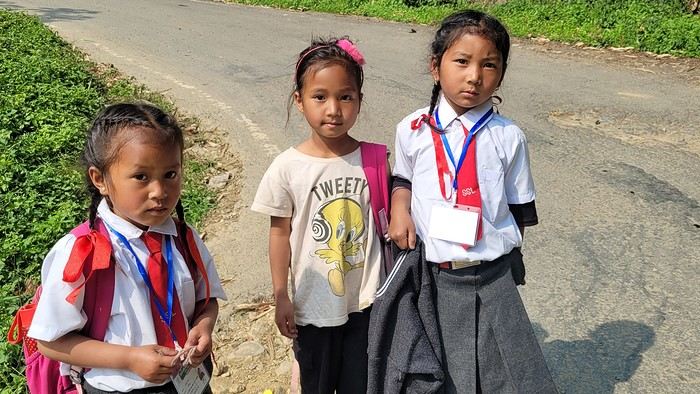
and we come across kids heading home from school.

We hit the road again for Mon. The guide suggests changing tomorrow’s plan. We were supposed to go to Hongphoi, the village of the tattooed warrior men, but since photos have become too commercialized, he doesn’t want to take me there. Instead, he proposes visiting three other villages. Back at the house, the electricity is back on, but the Wi-Fi isn’t working. Near the church, I spotted a Vishal shop where I’ll do a bit of shopping. When I get back, the electricity is playing hide and seek again.
Qui a l'habitude de voyager sait qu'il vient toujours un moment où il faut partir... Paulo Coelho
MA Marien33 Veteran ·
I tried to see your camera model, but I couldn’t figure it out... Are you shooting in Auto mode?
Je rencontrai sur mon chemin tant de difficultés Qu’elles furent toutes surmontées MIRZA GHALIB poète urdu (1796 -1869) https://www.telling-india-pictures.com https://youpic.com/marien
MA Marien33 Veteran ·


I really love these two photos, but I prefer the second one
Je rencontrai sur mon chemin tant de difficultés Qu’elles furent toutes surmontées MIRZA GHALIB poète urdu (1796 -1869) https://www.telling-india-pictures.com https://youpic.com/marien
AL Aleph240758 Veteran ·
I take photos either with my smartphone or with my camera—often with both. I also really like the profile picture of the lady.
Qui a l'habitude de voyager sait qu'il vient toujours un moment où il faut partir... Paulo Coelho
MA Marien33 Veteran ·
This is hands down your most fascinating trip. I admire you and I’m a little jealous! I couldn’t do a trip like this anymore—just don’t have the energy...
Je rencontrai sur mon chemin tant de difficultés Qu’elles furent toutes surmontées MIRZA GHALIB poète urdu (1796 -1869) https://www.telling-india-pictures.com https://youpic.com/marien
MA Marien33 Veteran ·
I take photos either with my smartphone or with my camera, often with both. I also like the lady’s profile photo.

but you’re not answering my questions 😏
Je rencontrai sur mon chemin tant de difficultés Qu’elles furent toutes surmontées MIRZA GHALIB poète urdu (1796 -1869) https://www.telling-india-pictures.com https://youpic.com/marien
AL Aleph240758 Veteran ·
Tuesday, April 8th. After breakfast, I ask for the Wi-Fi again—I think the router is disconnected; it’s just not possible that it’s not working here. Akai probably doesn’t have permission to go upstairs where the router is. The son of the house is around, so I take the chance to ask him, but he doesn’t seem inclined to check. I head back to my room grumbling. Five minutes later, Akai arrives with a big smile—Wi-Fi is working, and the power is on battery, so the router was unplugged.

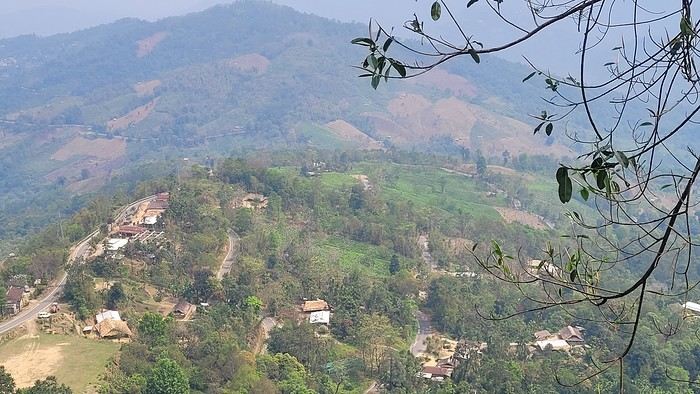
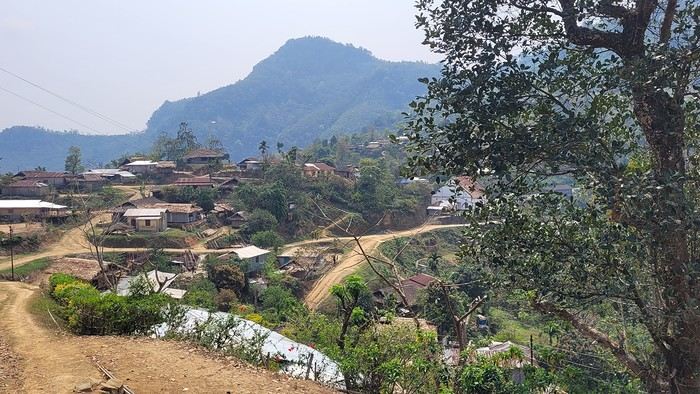
The guide arrives at 9 AM, and we set off to visit the village of Phuktong. We stroll along small paths that let us cross through the village. The viewpoints are always beautiful.


We continue on the road to the village of Sheanghah and finish with a morung.


The woodwork inside is really well done—my dad would’ve loved to see this. A little moment of nostalgia thinking about him. The timber used is either teak or sal, both known for their durability. The pillars serve as decorative elements with various patterns.


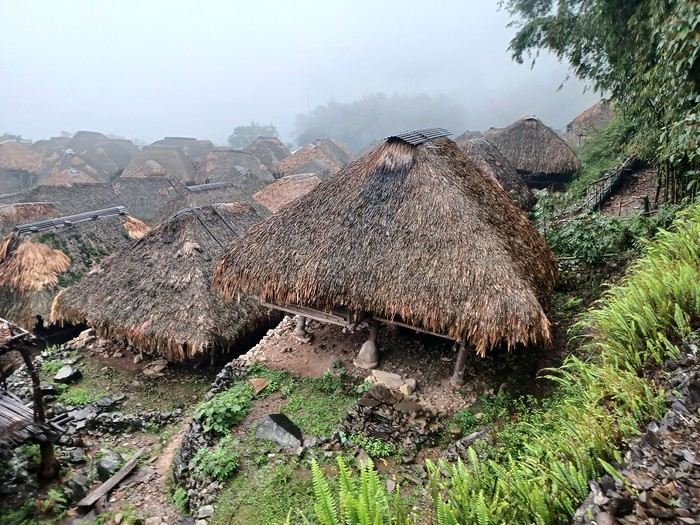
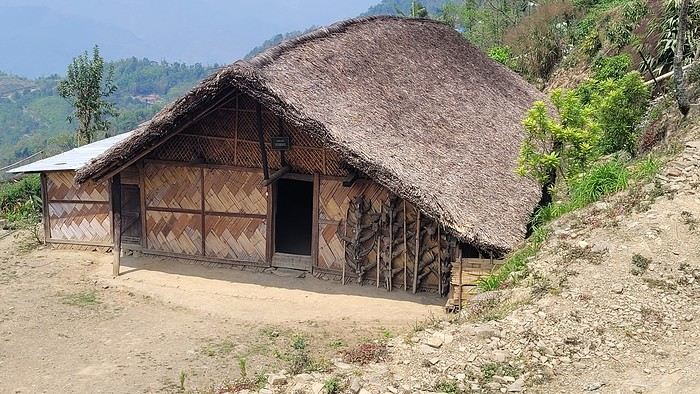
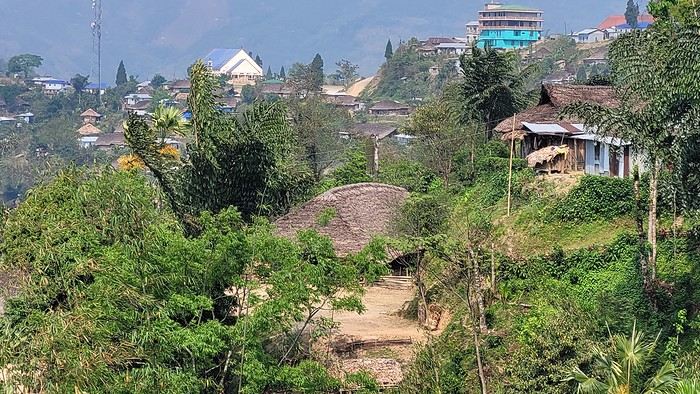
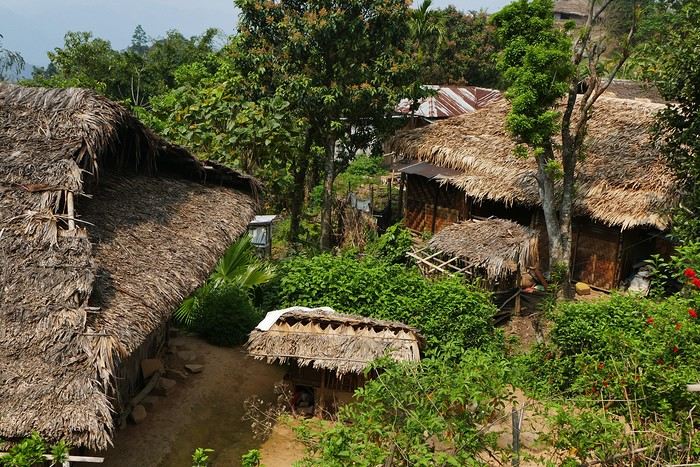
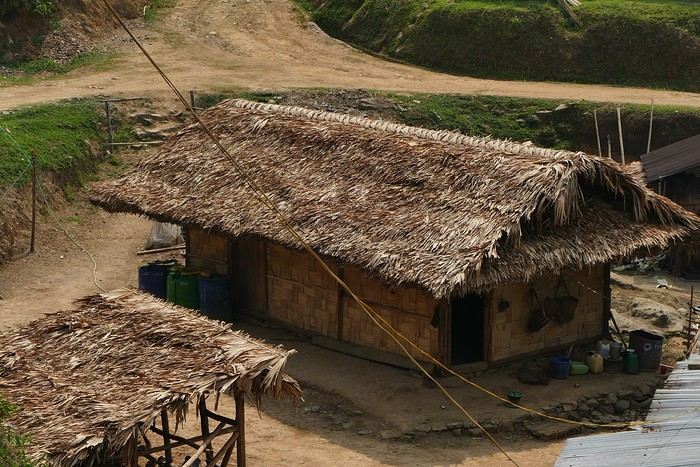
We pass by these bamboo houses with thatched roofs made from woven palm leaves.


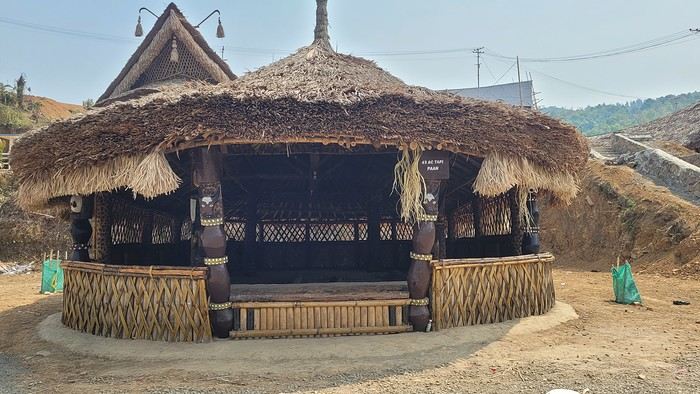
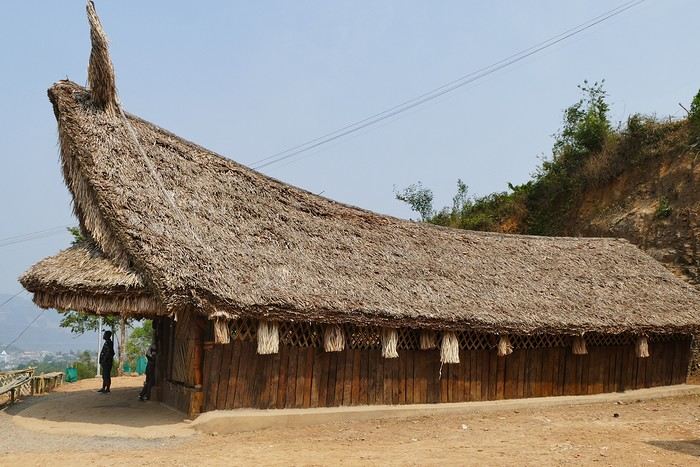
We return to Mon for lunch at a small restaurant in the village. In the afternoon, we’ll visit the morungs at the site where the festival took place. They’re really beautiful, with different shapes than those in Khonoma.


We head back to the homestay early, where I’ll spend my last evening. I’ve decided—I’m leaving Mon for Dibrugarh tomorrow morning, and I don’t need to book a sumo. I do need to reserve a hotel on Booking.com for 3 nights.

As I leave Nagaland, I realize the unique moments I’ve experienced over the past few days. Nagaland, in my opinion—just my feeling—is a very poor state, especially the Dimapur region and the villages in the mountains. Dimapur is a city that threw me off a bit when I arrived on a Sunday, when everything was closed—it felt like a dead, dusty town with little traffic. I didn’t feel like I was in India. I won’t go on about the market where I thought I was hallucinating. I mentioned it to my friend Raja, who didn’t want to warn me and was waiting for my reaction—he had a good laugh listening to me.

In Mon, the vibe is different. It’s a village, and arriving during the festival made the atmosphere livelier and more joyful with all the activity. I was really surprised to see mostly big, recent cars driving around to get to the celebration.

As soon as you enter Nagaland, the state of the roads is terrible—the difference between Assam and Nagaland is striking.

The villages around Mon are also very poor, with many bamboo houses. Not all children go to school, and electricity isn’t always available. The food isn’t very varied—lots of rice and potatoes—but they eat meat, like chicken and pork they raise themselves, as well as river fish of all sizes. I received a warm welcome in Dimapur, Kohima, and Mon, but it’s a very unique state with unusual customs.

I don’t know if I’ll come back, but if the opportunity arises, it’ll be to Mon during the festival, and I’ll take the chance to go to Mokokchung.
Qui a l'habitude de voyager sait qu'il vient toujours un moment où il faut partir... Paulo Coelho
MA Max68 Globetrotter ·
Hi Marie Jo

What an incredible trip—so out of the ordinary! Thanks for sharing it with us 🙂 This region, with all its traditions and costumes, is absolutely fascinating 🙂
https://apprentisvoyageurs.com
AL Aleph240758 Veteran ·
Hi Jean François, Yes, it’s a very different trip from the previous ones—very nature-focused and really interesting with the festivals! Another one’s coming up 🤗🥳. There are also some really interesting festivals in Arunachal Pradesh, but getting the permit is more complicated 😅😬🤪—though don’t lose hope! 🥳
Qui a l'habitude de voyager sait qu'il vient toujours un moment où il faut partir... Paulo Coelho
YA Yan55 Veteran ·
What a truly amazing discovery this part of India is—so different and underrated! I think it really reminds me of the Mindat region in Myanmar, where we went in 2017. Thanks for this captivating story! !
Anne Mes récits de voyages : www.unendroitoualler.fr
YA Yan55 Veteran ·
And that camper van!!! French! Really amazing... Too bad you didn't meet the passengers!
Anne Mes récits de voyages : www.unendroitoualler.fr
AL Aleph240758 Veteran ·
Wednesday, April 9th The sumo (shared taxi) leaves at 6:30 AM, and I need to leave the house at 6:00 with Akai, who’s walking me to the sumo. Last night, he told me he wakes up every day at 5:00 AM and goes to bed at 9:00 PM. This morning, I don’t hear anything outside—nothing’s moving. I take a peek, and everything’s closed. I try to make a little noise near his place. He jumps up, rushes to the kitchen to check the clock, and apologizes for oversleeping. Poor guy, he seems so upset. He’s just so kind. He quickly runs up to my room to grab my heavy bag. I insist on helping carry it, but he won’t let me at first. We take a narrow path that leads straight to the main street near the agency where the sumo is. He carries my bag on his shoulder and walks fast—I stay close behind. When we arrive, I give him some money, but he’s embarrassed and doesn’t want to take it. I insist, and he thanks me with a big smile. This man is truly kind and helpful.

I get my ticket, and my bag is already on the roof of the sumo, which is filling up quickly. I switch vehicles in Sonari. The sumo is about to leave and drops me off in Manran, where I change again for Dibrugarh. In Dibrugarh, the rickshaw driver knows the neighborhood where I booked the Dibrugarh Tea Residency hotel, and I arrive at noon. The area is lively—it’s nice to see people and activity around.

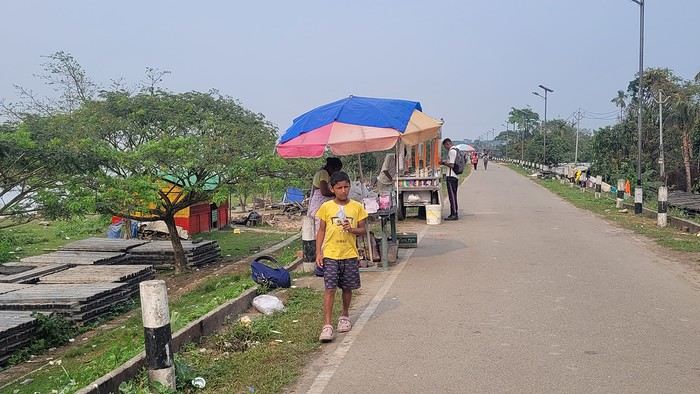
I go for a walk on foot to the Brahmaputra. A promenade lets you follow along the river.


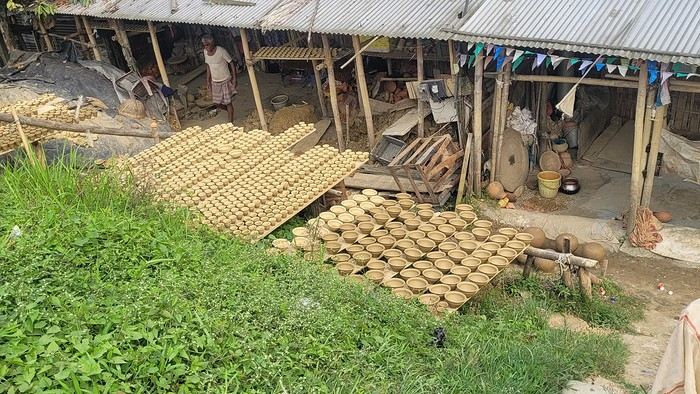
I pass by the potters’ corner. They’re drying pots along the promenade. They work with clay they collect from the Brahmaputra’s banks.


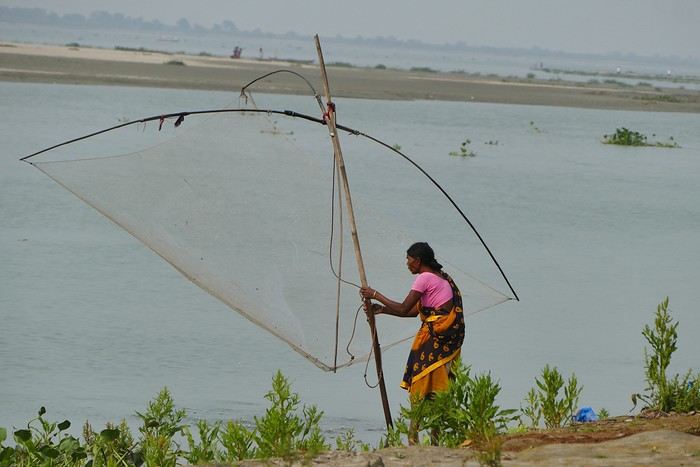
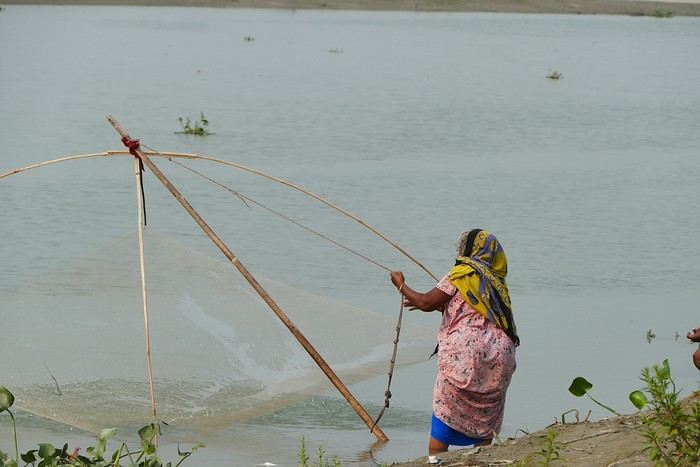
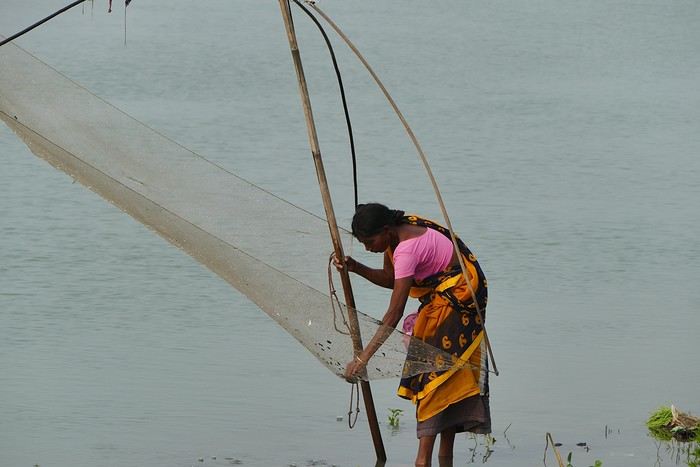
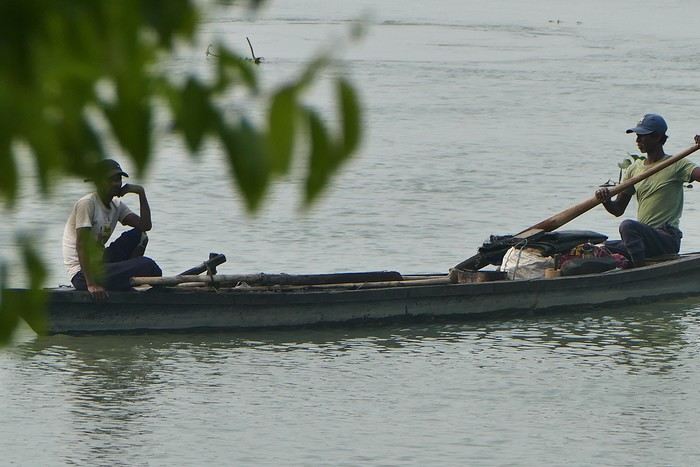
Further along, women are fishing on the banks, and two men in a boat are coming back to shore.


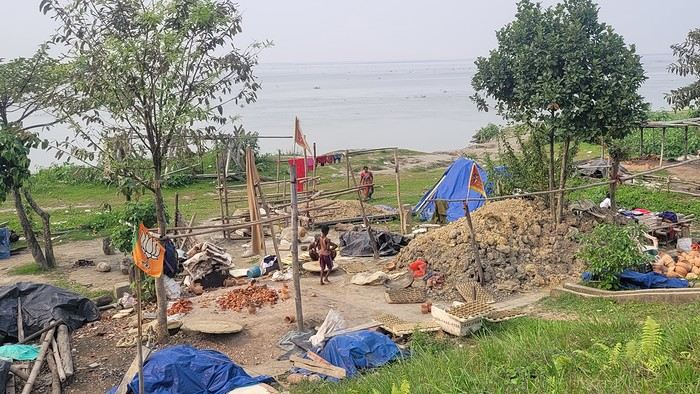
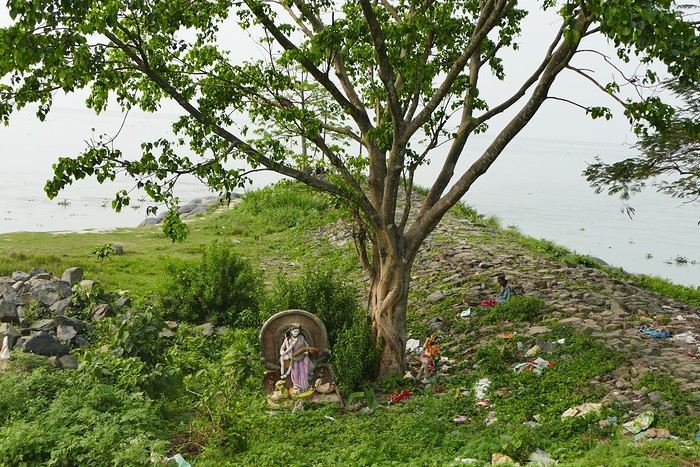
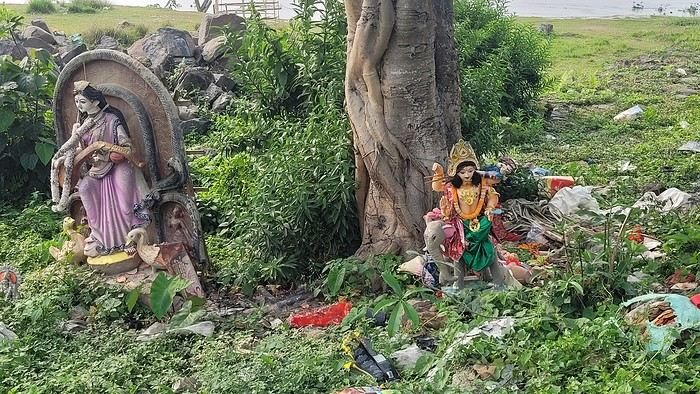
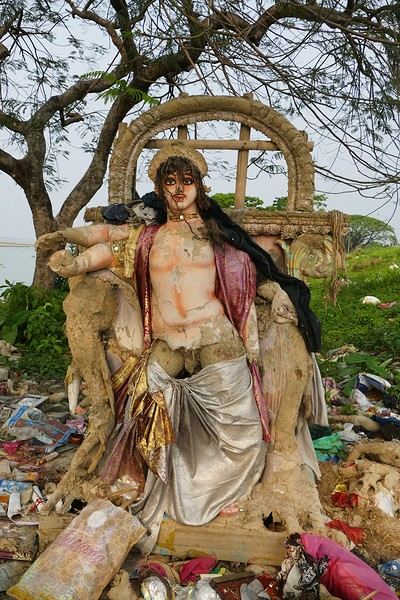
All along the Brahmaputra, they honor Durga, Kali, and other goddesses twice a year. For the occasion, they make colorful clay statues of Durga’s different representations and present offerings. Placed on the banks, the sculptures will be submerged during the monsoon floods—except for those placed higher up, which slowly decompose over time.


I continue along the promenade and reach the dhobi wallahs’ (laundry workers’) quarter, then the carpenters’ area. All along, there are little shops—this place is really lively. I head back to the hotel, taking a quicker route through the middle of the residential area. I have dinner at a nice restaurant that also serves pastries.
Qui a l'habitude de voyager sait qu'il vient toujours un moment où il faut partir... Paulo Coelho
AL Aleph240758 Veteran ·
Thursday, April 10 Last night, it was really hot in the room, so I turned on the AC—the split unit is right above the bed. I read for a while and start feeling occasional drops of water on my head. The drops get heavier, and my pillow is soaked. I call the receptionist, who comes to check the problem and calls a maintenance agent. It’s 11 PM, and he arrives quickly. The hotel is fully booked, so I can’t change rooms. The agent climbs onto the bed frame, removes the filters, and fixes the issue—I stop getting dripped on.

After breakfast in my room, I have to switch rooms. I pack my bag again, and the staff will move it once a room frees up in the morning.

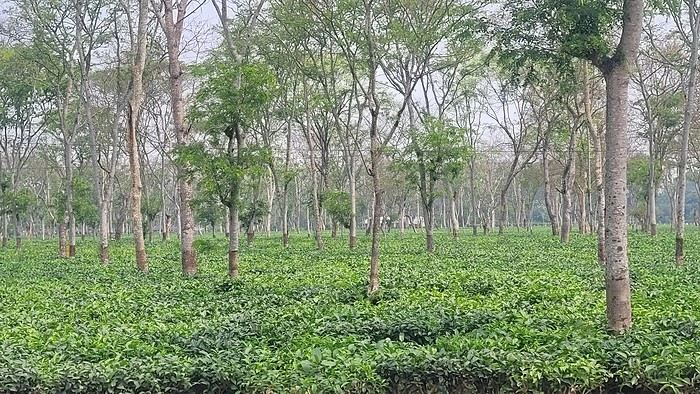
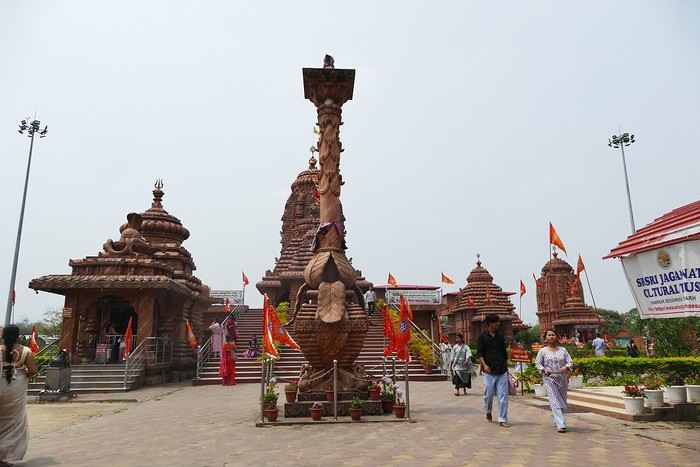
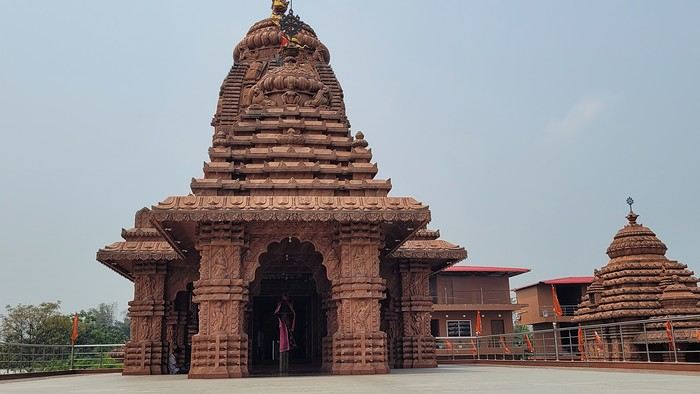
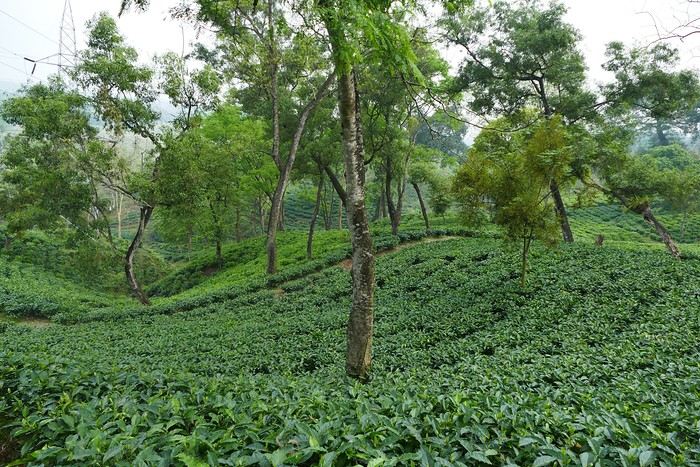
This morning, I planned to visit the Radha Krishna temple. I take a rickshaw at the end of the street, and it takes me to the Jagannath temple. We cross the city, and soon we’re in the middle of tea plantations—I never get tired of how beautiful they are.

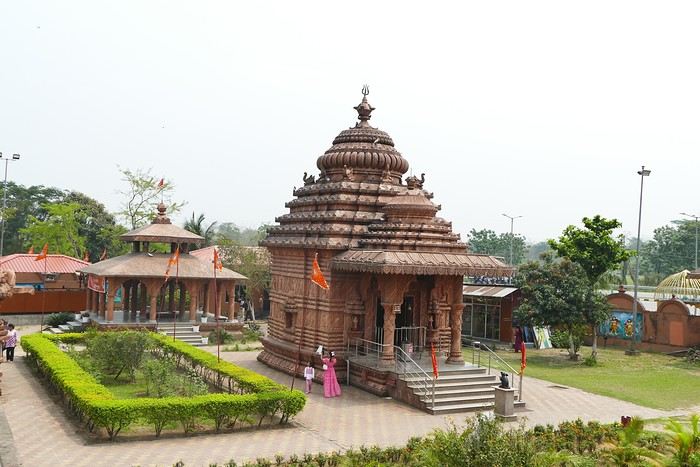
This 18th-century temple is a replica of the one in Puri. It has a three-tiered pyramidal structure called a Vimana.


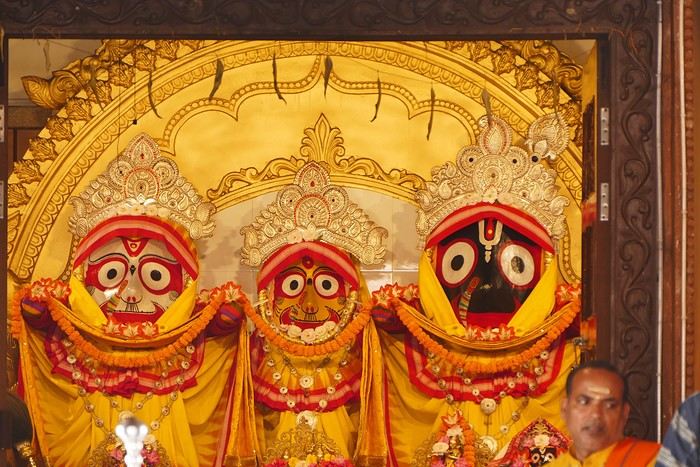
The sanctuary houses the deity Jagannath, his brother Balabhadra, and his sister Subhadra.


The complex includes several small temples and well-kept gardens. It’s a peaceful, calm place—perfect for a stroll or just relaxing.

I exchange a few selfies with several Indian tourist families.


On the way out, I ask the driver to take me to a tea factory. We backtrack and arrive at large warehouses. In the back, I spot some people and approach to ask if I can visit. I don’t have permission, so the tour isn’t possible. The driver drops me off where I’d taken the rickshaw that morning, and I continue on foot toward the Brahmaputra. I pass through the area reserved for dhobi wallahs.

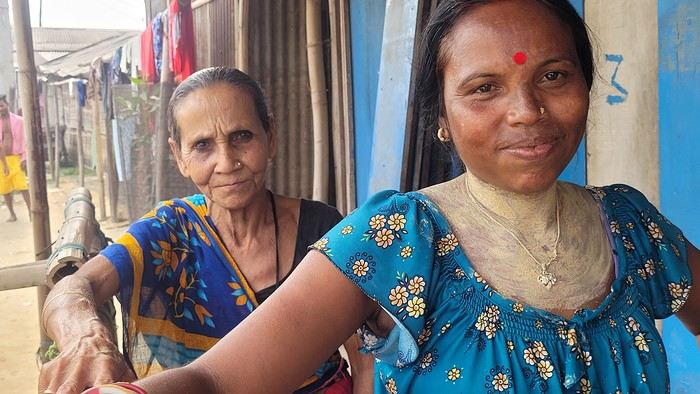
I stop to take photos with the women in the small shops. They’re proud and amused to see themselves in pictures, and one after another, they pose.


One of them is protecting her skin with what I assume is turmeric paste. In Asia, women protect their faces, but here it’s their décolletage—and this is the first time I’ve seen that.

Qui a l'habitude de voyager sait qu'il vient toujours un moment où il faut partir... Paulo Coelho
AL Aleph240758 Veteran ·
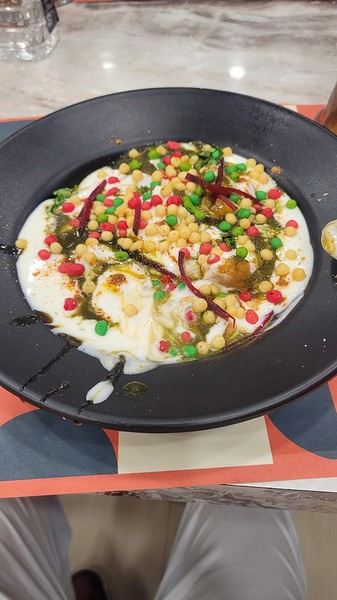
Before heading back, I stop at a restaurant—I don’t know the name of what I’m eating, but it’s fresh, lightly spiced, and slightly sweet, and really good.

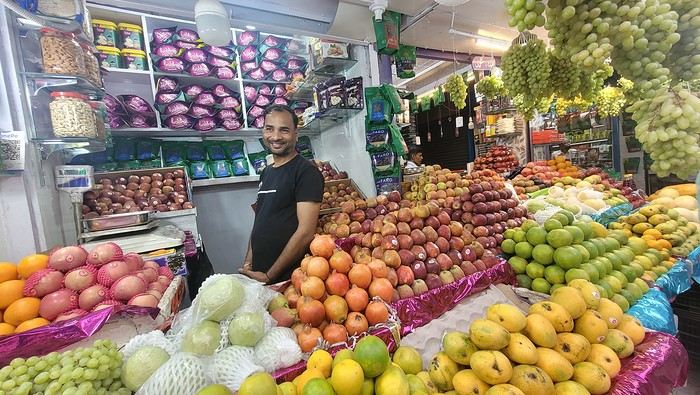
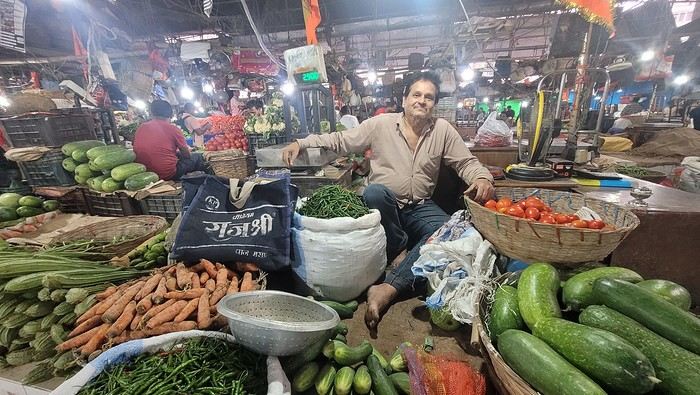
I return to the hotel, where a very friendly young woman is at the reception. She naturally asks where I’m from, my age, if I’m traveling alone—it always amazes them to see a woman traveling solo, especially from France. It leaves them dreaming. I quickly settle into my room and head back out to explore the neighborhood. I find a small market with fruits, vegetables, and fish at Thana Chariali, just 500 meters from the hotel.


It’s so well presented that everything looks tempting.


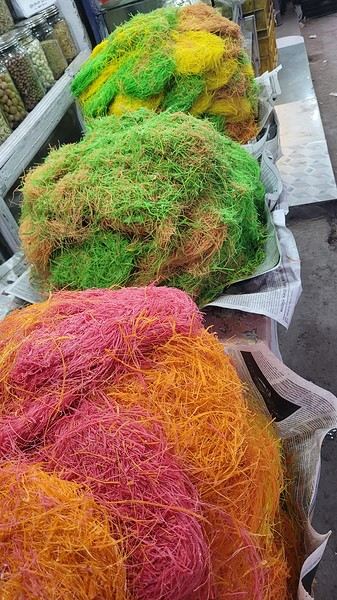
I’d never seen colored vermicelli before—are they flavored based on the color?


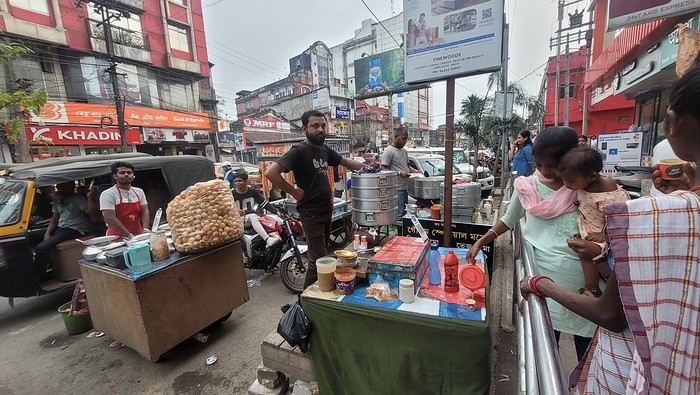
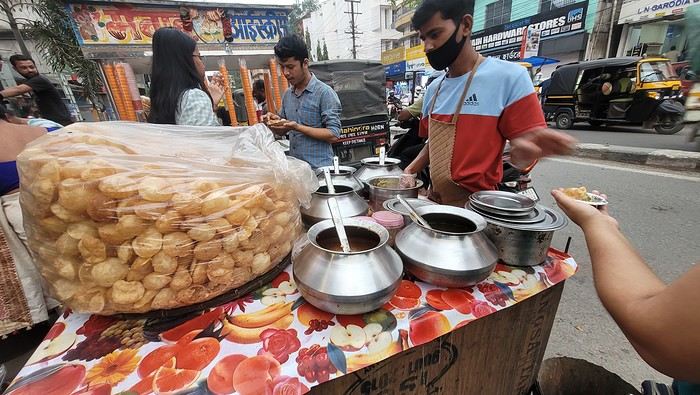
And of course, the street food.


I go back to the hotel to wait for mealtime. Just as I’m about to leave, a huge storm hits with rain and hail, lasting at least half an hour.
Qui a l'habitude de voyager sait qu'il vient toujours un moment où il faut partir... Paulo Coelho
AL Aleph240758 Veteran ·
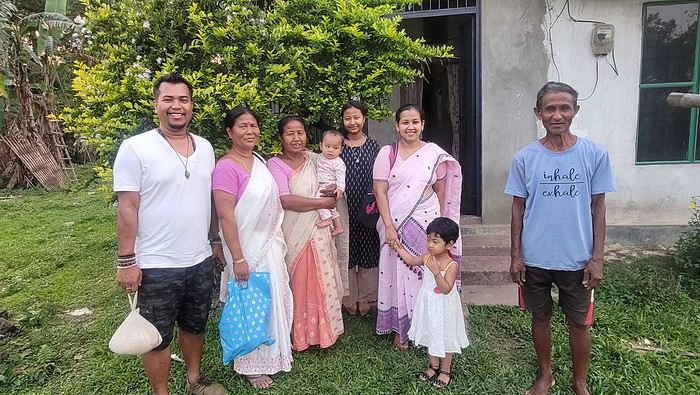
Friday, November 11 Nirupam messages me—he wants to come pick me up this afternoon. He and his family are excited to meet me. He wakes me up with his insistence; he doesn’t want me to take a bus to Naharkatia. I wasn’t supposed to go to his place until tomorrow, but since I’m in Dibrugarh, he wants me to come today. What a story—we don’t even know each other. Nirupam is a watercolor artist, world-renowned. Michèle gave me tips for this trip and put me in touch with him. She’s also a watercolor artist near Bordeaux, and I don’t know her either. He insists on picking me up because I’m his guest, and he feels responsible for me. Still, it’s over 3 hours of driving for him to get to Dibrugarh. I spend the morning running a few errands. Bihu festival is approaching, so I head to the bakery to buy some baklavas to give to the family. Nirupam arrives later than planned because of heavy traffic. He’s a bit tired and has another 3-hour drive—what a crazy day. I told him I’m no princess, and at my age, I never will be, but there’s no point arguing—it’s decided, so I’ll go along with it. He lives with his parents, is married, and has two kids: a 3-year-old daughter and a 7-month-old son. His wife is an English teacher, and his father is also a teacher. He comes to France every year to lead watercolor workshops in cities that host biennales. He knows Brittany, Bordeaux, and Montauban well and will be in Brioude starting July 10. When I arrive at his place, his family welcomes me warmly, as if we’ve known each other forever. I give them the gifts I brought from France, along with the baklavas. I have dinner with Nirupam, but his parents and wife will eat later after we’re done. The menu: chicken, rice, and well-cooked vegetables—it’s delicious. I’ll never get used to this tradition of not sharing meals all together, but that’s just how it is here in India. I head up to my room after the meal.

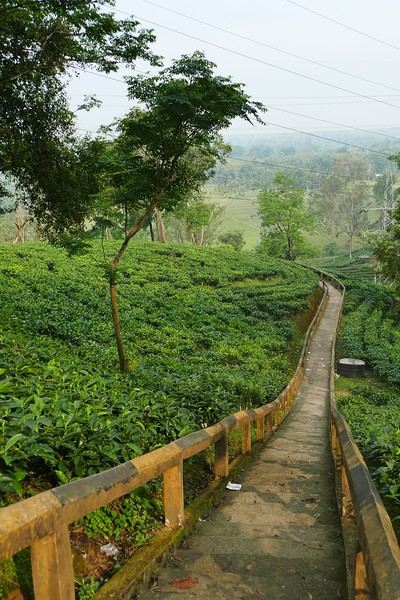
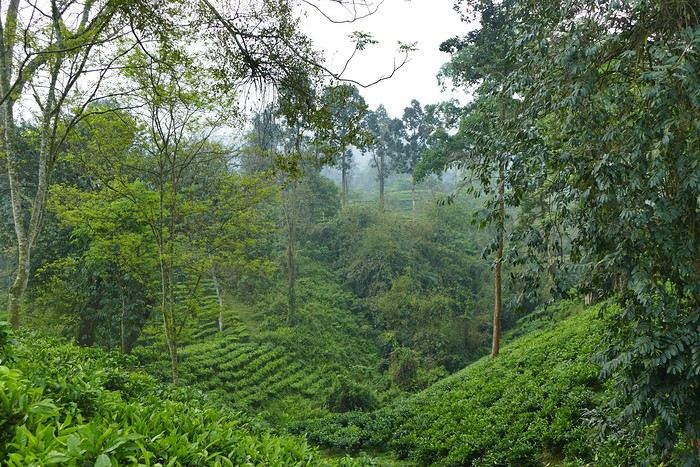
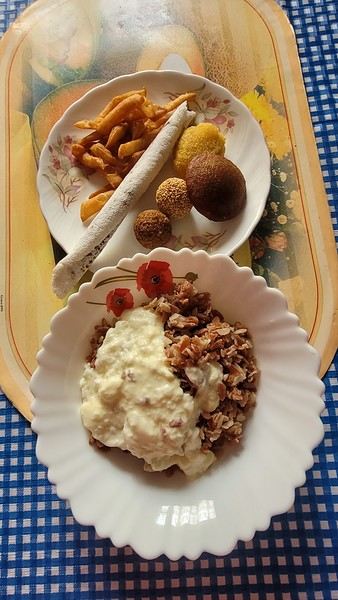
Saturday, April 12 It’s 5 a.m., and I hear noise—doors opening and some activity outside. Should I get up already? It’s early, so I wait until 6 a.m. to go downstairs. We have our first breakfast: tea and a few biscuits, including one shaped like a cigarette, made from rice, which you find during the Bihu period—Assam’s New Year, the arrival of spring, and the start of harvest season. Nirupam takes me to visit a tea garden. It’s a hilly, beautiful, and peaceful place—no one else is around at this hour.


We walk up the steps


and arrive at a platform with stunning views and a temple.

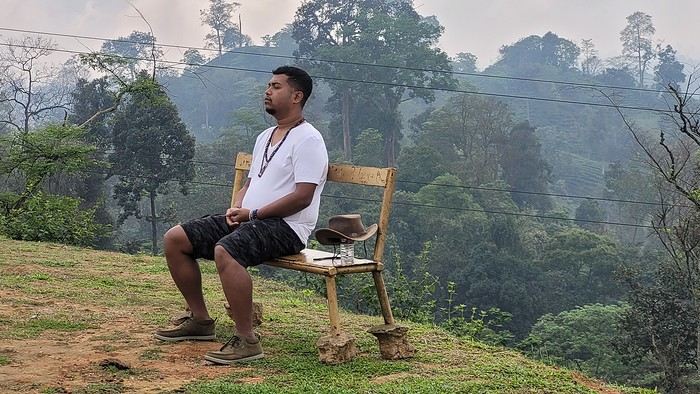
Benches are set up all around, and it’s a lovely spot to relax. This calm and beautiful place is perfect for meditation, so we sit separately for a little while.


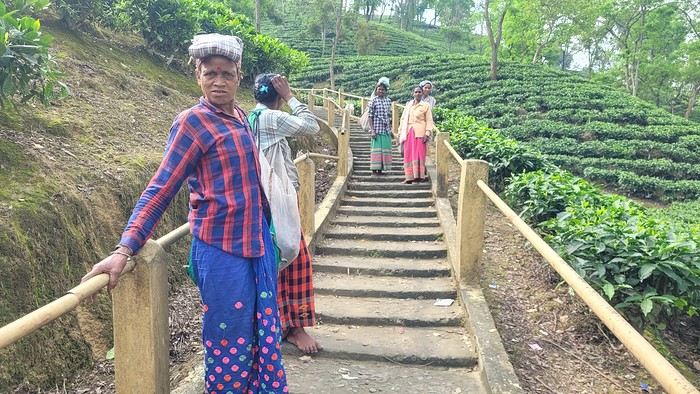
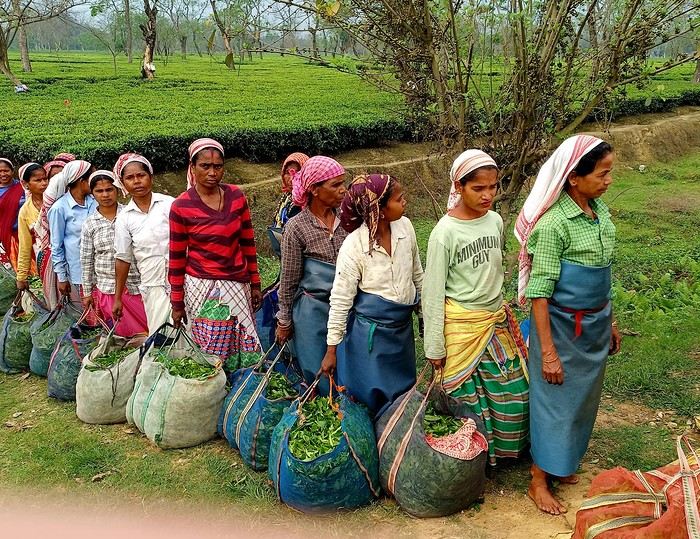
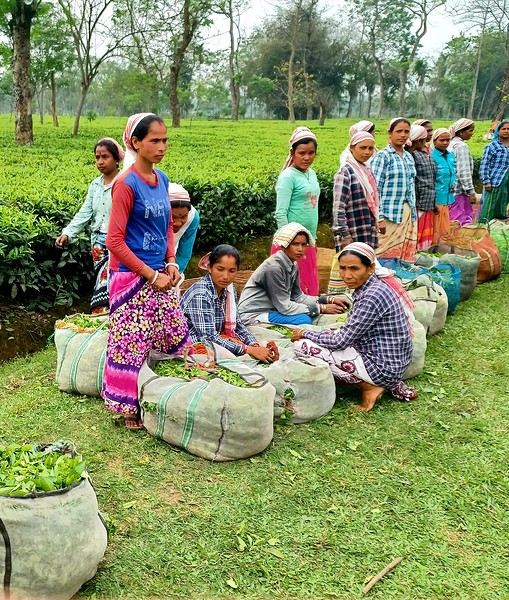
On the way back, we pass the tea pickers arriving one after another.


We return home, where a second, heartier breakfast is waiting: chapatis, dal, vegetables, and tea. I didn’t think I’d be able to eat like this at 9 a.m., but it’s good and goes down easily. After that, a 1-hour break—I’m not used to such a relaxed pace. Today, there’s a celebration at the school where Nirupam’s wife works, and the students are dancing. We’re going to watch.


Qui a l'habitude de voyager sait qu'il vient toujours un moment où il faut partir... Paulo Coelho
MA Marien33 Veteran ·
Friday 11 Nov

Actually, I don’t know where you’re writing from, but the weather here is November weather. Maybe that explains your slip-up?😉

Nirupam sent me a message—he wants to pick me up this afternoon. He and his family are excited to meet me. He’s been bothering me since I woke up, insisting I don’t take a bus to Naharkatia. I wasn’t supposed to go to his place until tomorrow, but since I’m in Dibrugarh, he wants me to come today. What a story—we don’t even know each other! Nirupam is a watercolorist, world-renowned. Michèle gave me tips for this trip and put me in touch with him. She’s also a watercolorist near Bordeaux, and I don’t know her either. He insists on picking me up because I’m his guest, and he has to take care of me. Still, it’s over 3 hours of driving to get to Dibrugarh. I spend the morning running a few errands. Bihu festival is coming up, so I head to the bakery to buy some baklavas to give to the family. Nirupam will arrive later than planned because of heavy traffic. He’s a bit tired and has another 3-hour drive—what madness! I told him I’m no princess, and at my age, I never will be, but there’s no point arguing—it’s decided, and I have to go along with it. He lives with his parents, is married, and has two kids—a 3-year-old daughter and a 7-month-old son. His wife is an English teacher, and his father is also a teacher. He comes to France every year to run watercolor workshops in cities that host biennales. He knows Brittany, Bordeaux, Montauban well… and will be in Brioude starting July 10. When I arrive at his place, his family welcomes me warmly, as if we’ve known each other forever. I give them the gifts I brought from France, along with the baklavas. I head up to my room after the meal.

I love this vivid description. I feel like I’m right there. I’ve experienced this kind of situation with Indians so many times.

there’s no point arguing—it’s decided, and I have to go along with it.

Exactly.

I have dinner with Nirupam, but his parents and wife will eat later after we’re done. The menu: chicken, rice, and well-cooked vegetables—it’s delicious. I’ll never get used to this tradition of not sharing meals all together, but that’s just how it is here in India.

I hate this habit too. Even when you’re really close. I only know one family where we always eat together, with joy and warmth.
Je rencontrai sur mon chemin tant de difficultés Qu’elles furent toutes surmontées MIRZA GHALIB poète urdu (1796 -1869) https://www.telling-india-pictures.com https://youpic.com/marien
AL Aleph240758 Veteran ·
Saturday, April 12th (continued)

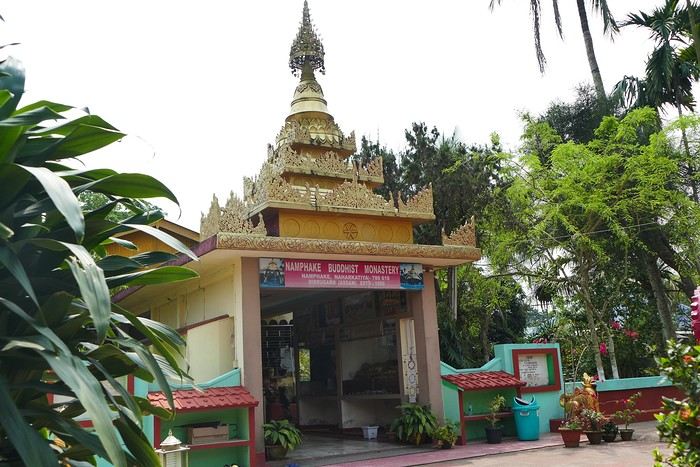
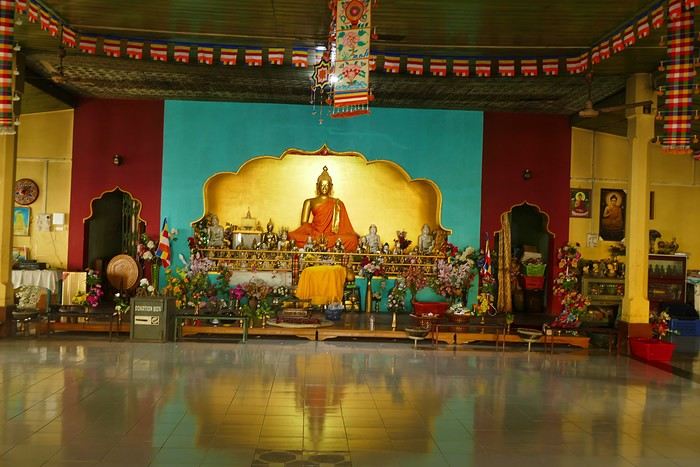
We continue our visits to the Namphaké Buddhist monastery, the only one in Assam. The Buddhism practiced here is Theravada, the same as in Southeast Asia and Sri Lanka. The monastery is therefore very different from Tibetan monasteries.


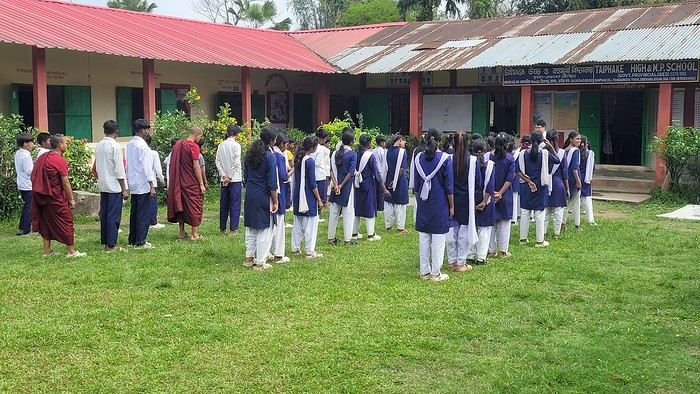
We carry on to the village school, where the children are playing in the courtyard, and the headmaster shows me around the premises. Kids from neighboring villages walk here, often trekking for 2 hours to arrive. Before resuming classes, all the students line up in single file under the watchful eye of the headmaster and sing the national anthem.


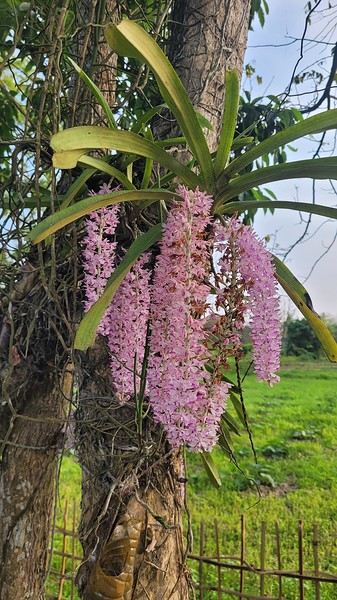
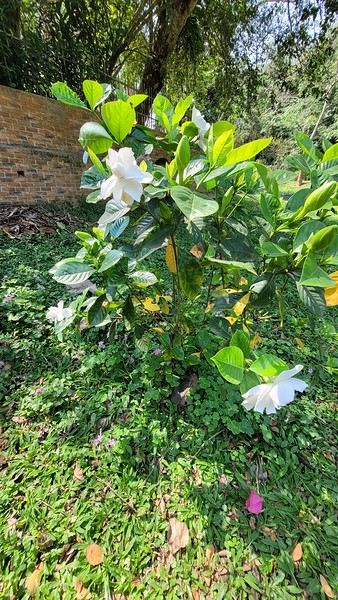
We return home where lunch is waiting for us. In the late afternoon, we set off with his mom, his wife, and the kids to another village to visit the mom’s sister. The garden is in full bloom—orchids, gardenias, hibiscus...


A unique lemon tree with green, elongated fruit.


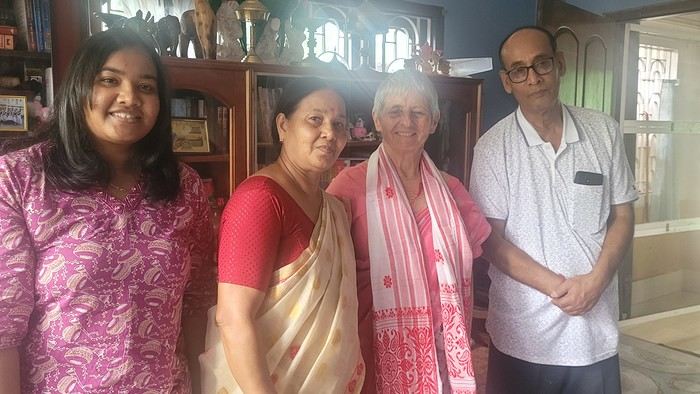
We visit the neighbor, who also has a beautiful, flower-filled garden. Near the house, I see a loom where a *gamosa* is being woven. (A white cloth bordered in red with woven patterns at the ends. It’s used as a scarf, on the head, or to cover a prayer altar. It’s also a symbol of hospitality, friendship, and respect.) We have tea with biscuits in the family, and the mom’s sister gives me my first *gamosa*.


Before dinner, Nirupam invites me to meditate with him. We have dinner, and at the end of the meal, I receive a gift from Nirupam’s mom and wife—a saree that I’m supposed to wear on November 15th, Bihu day. Before heading to bed, Nirupam tells me we’ll leave at 5 AM tomorrow for more visits. Wow, that’s really early, but okay, I’ll be ready.
Qui a l'habitude de voyager sait qu'il vient toujours un moment où il faut partir... Paulo Coelho
CH Chris70 Regular ·
Good evening Marie Jo,

Thanks for sharing this. I don’t comment often, but I read you carefully. Assam will likely be my next destination—it seems so peaceful and green. Maybe not in February, though. Lovely encounters. And those gorgeous pink orchids—I’ve never seen such abundance (probably too early in February... this year in Gorumara in the Dooars, north of West Bengal, there were only leaves clinging to the trees). I can’t wait to read about the day that starts at 5 AM! I know night falls quickly there and you have to go to bed early, but a 5 AM departure is still pretty special...
AL Aleph240758 Veteran ·
Sunday, April 13th. I’m on time, which isn’t the case for Nirupam. As usual, we all have our first sweet breakfast together. His parents join us, and together we wait for the driver, who still hasn’t taken his shower. We set off to visit the Charaideo Maidams. We’ve got a good three-hour drive ahead, though it’s quite close to Sonari and Sivasagar. Before arriving, we stop for a heartier breakfast—puri with dhal for me. They’re surprised by my choice, exchange glances, and laugh. I don’t understand why. Nirupam tells me his mom didn’t dare make puris for me, thinking I wouldn’t like them. His parents order the same as me, while Nirupam goes for a masala dosa.

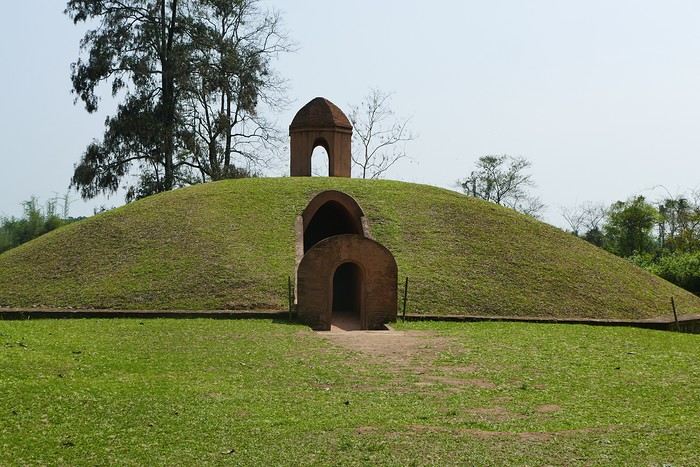
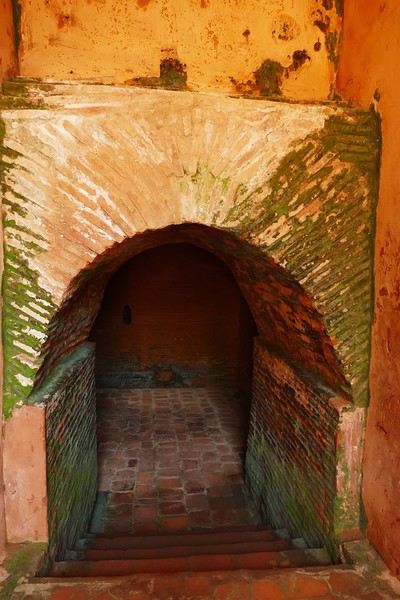
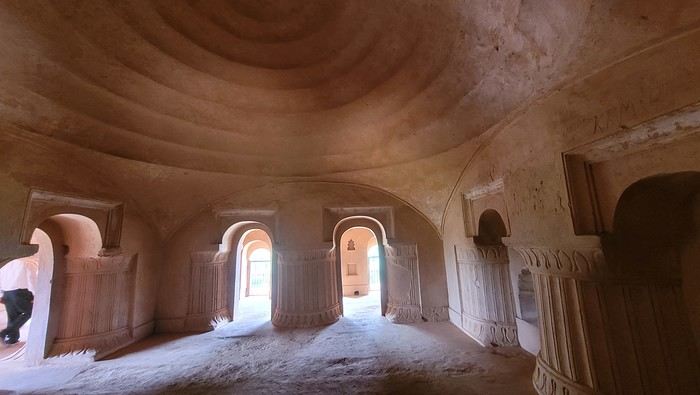
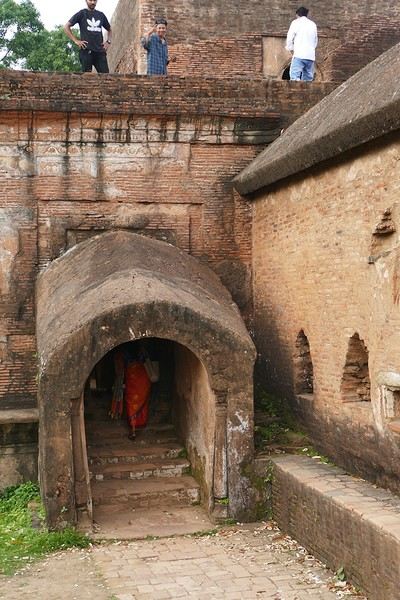
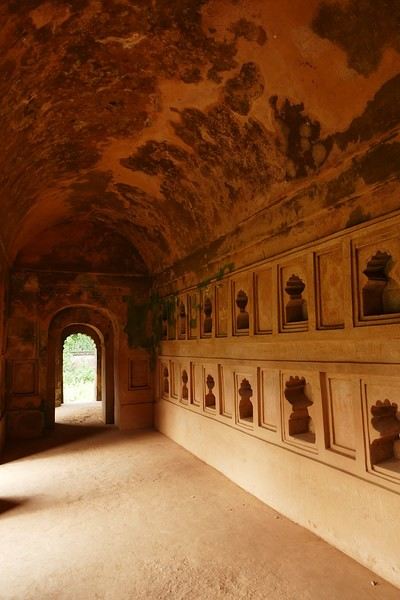
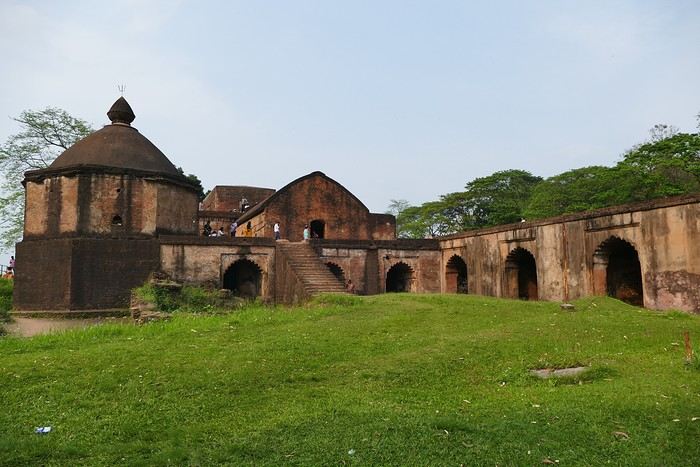
The maidams are burial sites for the Ahom kings and queens, dating back 700 years. The exterior of a maidam consists of a vault, a hemispherical earthen mound covering the chamber, varying in size from a modest hillock to a 20-meter-high butte depending on the power, status, and resources of the buried individual, a brick structure for offerings, an octagonal enclosure wall at the base of the mound, and a vaulted entrance on the west side. Smaller maidams didn’t always have all these elements.

We’re the first visitors. We pass under the vault leading into the antechamber. This place inspires Nirupam, and we do a short meditation before the Indian tourists arrive.


It’s possible to walk around the tumuli. You need to visit the museum to get explanations about these unique maidams.

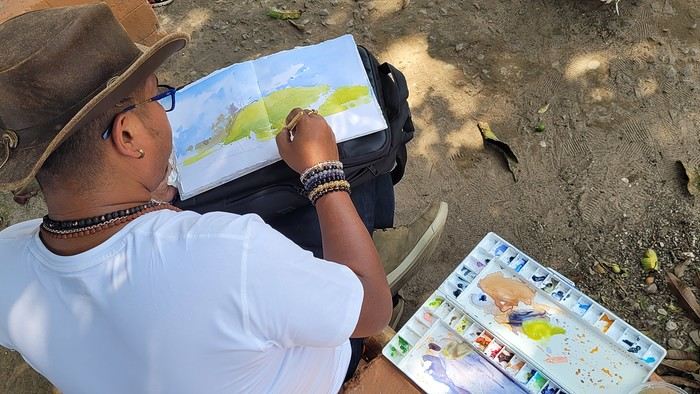
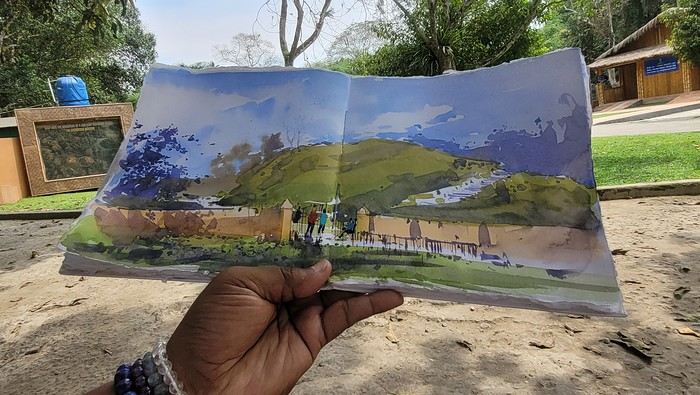
At the end of the visit, Nirupam takes out his watercolor journal, settles in the shade, and sketches the entrance of the site. I watch him work—it looks like child’s play, his brushstrokes are so precise and quick. The result is stunning.


We hit the road again for Naharkatia and stop for lunch—a thali they found too spicy, but it was fine for me!!! Back home, and for dinner, I just ask for vegetables. I’m not hungry—I’m not used to having so many meals. It’s a change from the meals in Nagaland.
Qui a l'habitude de voyager sait qu'il vient toujours un moment où il faut partir... Paulo Coelho
AL Aleph240758 Veteran ·
Hi Christine,

"you have to go to bed really early" No, not at all—the dinner in the evening was after meditation, so between 9 and 10 PM!

In February, it’ll be green, but I’m not sure if you’ll see many flowers. There won’t be any festivals, though I think there are some in Arunachal Pradesh, but you’ll need a permit.
Qui a l'habitude de voyager sait qu'il vient toujours un moment où il faut partir... Paulo Coelho
TH Thlaspi ·
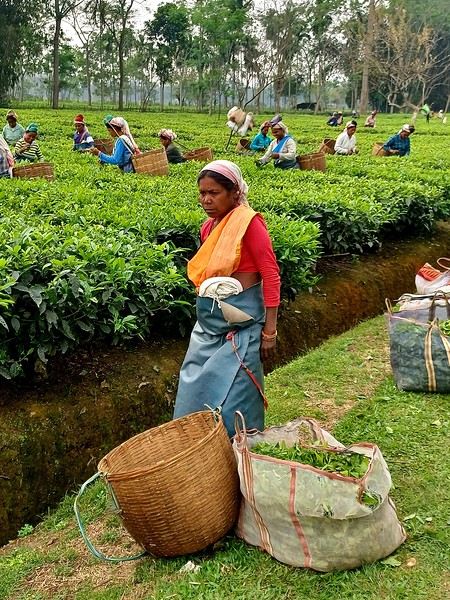
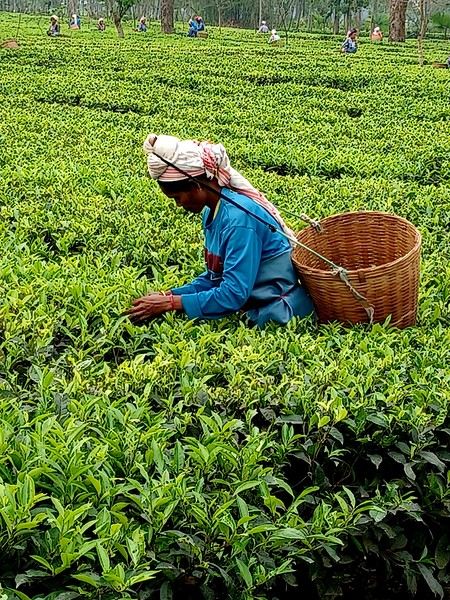
Hi there, The Jagganath Temple in Dibrugarh is a rather modest replica—a very contemporary one (2014) of a 12th-century structure. It’s popular with families looking for selfie opportunities. The city, a gateway to the two neighboring states, owes its reputation to its proximity to the beautiful tea fields that cover a large part of the region.

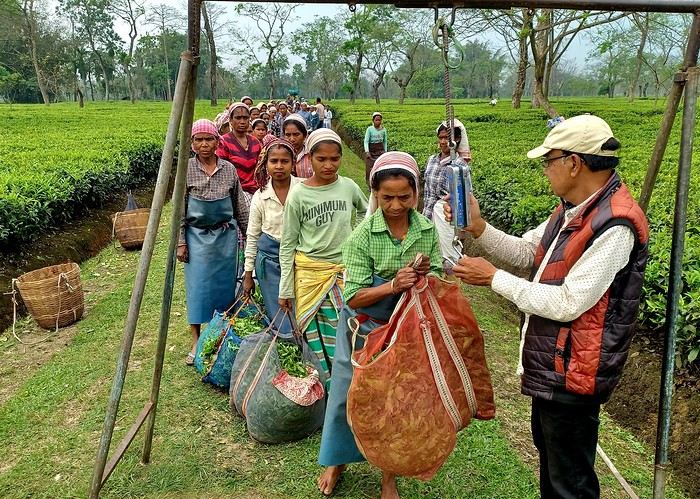
Photos taken during the weighing process—women wear protective aprons.

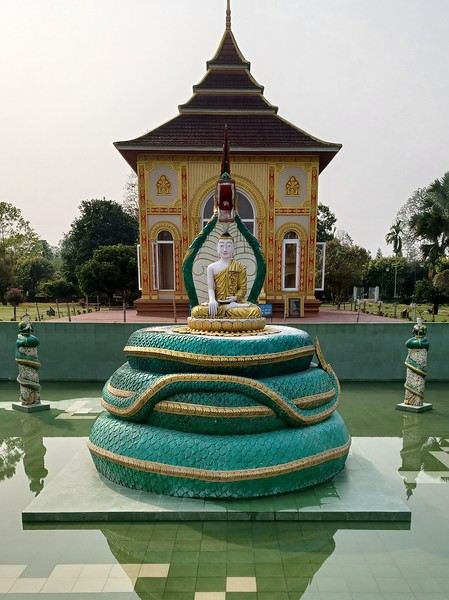
It’s also close to an unexpected side of the country: the Namsai district, home to a large community of Burmese and Thai origin.


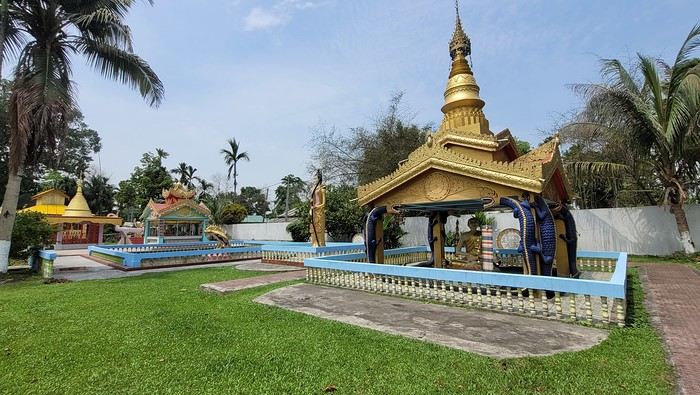
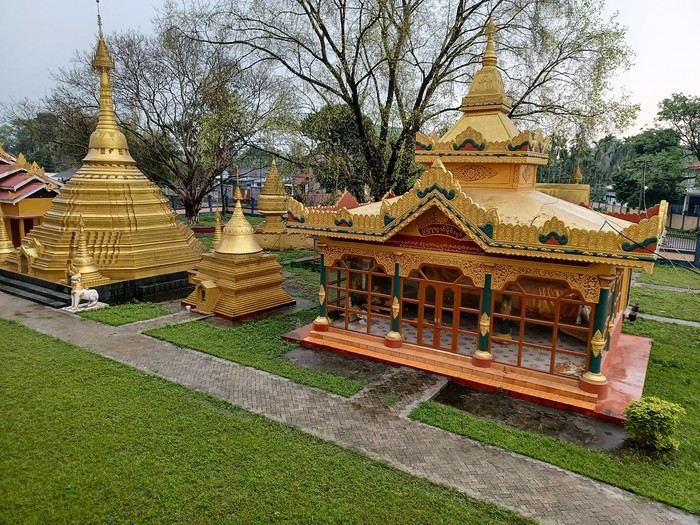
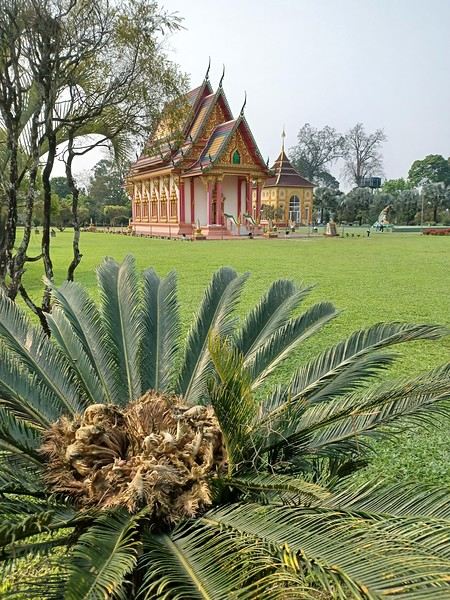
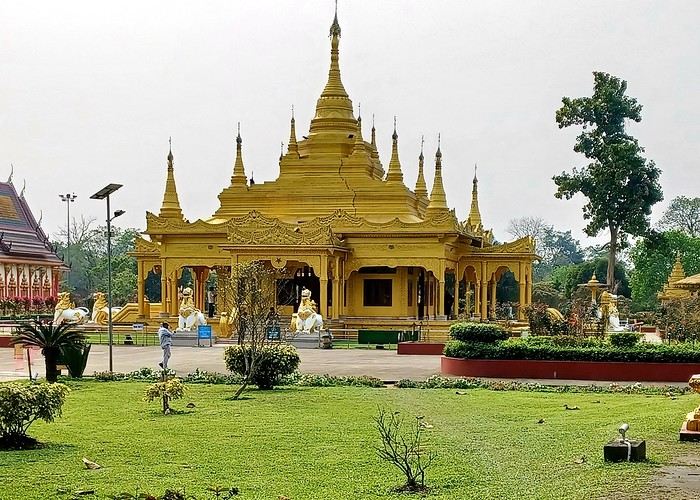
And the iconic Golden Pagoda, funded by a politician in 2010—the land was provided by the state.

A lesser-known side of a country that never stops revealing surprises.
AL Aleph240758 Veteran ·
Hi Pierre, Thanks for your input and those great photos.

"Namsai province" I’m not familiar with Arunachal Pradesh—could you share your experience about this state? It’s not possible to go there alone, right? You need at least two people to get the permit—is that correct? If so, I won’t be able to go. What’s the best time to visit to avoid cold weather and too much rain?

Thanks
Qui a l'habitude de voyager sait qu'il vient toujours un moment où il faut partir... Paulo Coelho
AL Aleph240758 Veteran ·
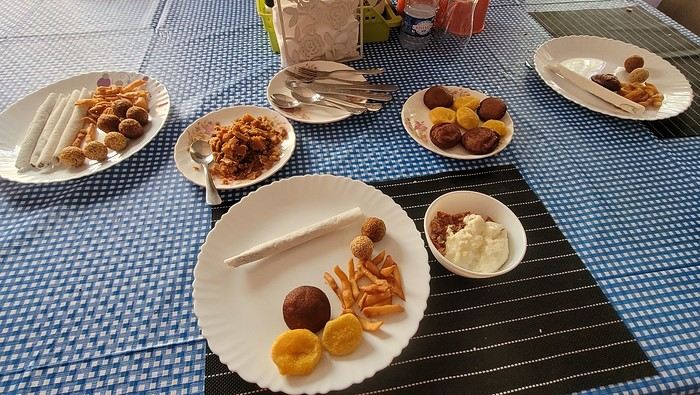
Monday, April 14 Today we’re celebrating Bihu, the Assamese New Year. This New Year is also celebrated in several states across India—Punjab, Tamil Nadu, Karnataka, and Kerala. Today we exchange gifts, though I didn’t wait for the day to give mine—I handed them out when I arrived. Nirupam’s father gives me a gamosa, the second one of the trip. Breakfast this morning is all sweet, with several different Bihu specialties: pithas, of course, jolpan made from various types of rice, yogurt, jaggery, and coconut noiX. The preparation takes a long time with multiple steps, and it’s sooo good. There are also laru—coconut-based balls—and black sesame balls. It’s all a treat.


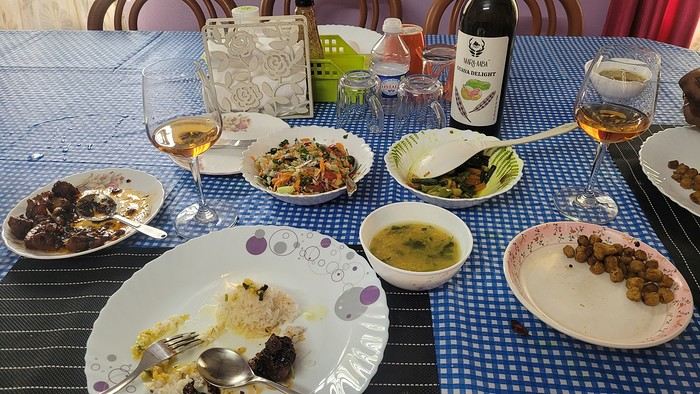
Nirupam, his daughter Elena, and I head out for a walk in his neighborhood. He’s happy to show the neighbors he’s hosting a guest of “great importance”—haha!! On the way back home, we go shopping to celebrate Bihu. He doesn’t want to take his car; he insists on going by autorickshaw so I can see more of local life—and, more importantly, so people can see *me* better. I can’t believe what I’m hearing, and I play along, waving to the crowd like a queen. We visit a small jewelry shop to buy the traditional necklace women wear for the festival, along with bangles. I have to insist on paying for them myself. Nirupam picks out a ring for himself, which I buy for him—we laugh because it only costs 2 €. I’m feeling very generous today!!! We return for lunch: pork, rice, and vegetables, paired with guava wine. I didn’t know that existed! It has a unique taste, but it’s not bad.

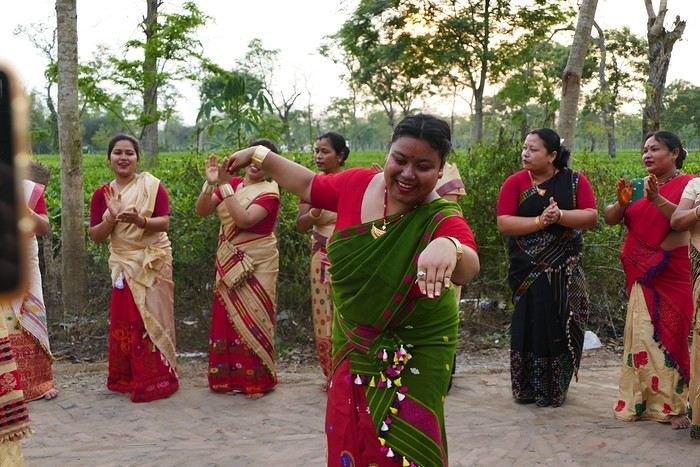
In the afternoon, Nirupam, his wife Ghritachi, and I head back to the village—this time by car—to do more shopping. We buy sarees, a blouse, and a petticoat for the star I am here. On the way back, it’s time for tea and sweets. Oh boy, I’d become diabetic fast if I lived here! In the evening, a group of women comes to dance in front of the house, going door-to-door. They stay with us for a while, and I’m invited to join them. I can’t show you the video, but friends have joked that I should open a dance school—thankfully, we don’t have the space!!!


After the performance, we give them a little money and take some photos. Later, we go for another walk, this time with Putoli, Nirupam’s mom. Tonight, I repack my bag—my stay with this wonderful family is coming to an end.
Qui a l'habitude de voyager sait qu'il vient toujours un moment où il faut partir... Paulo Coelho
AL Aleph240758 Veteran ·
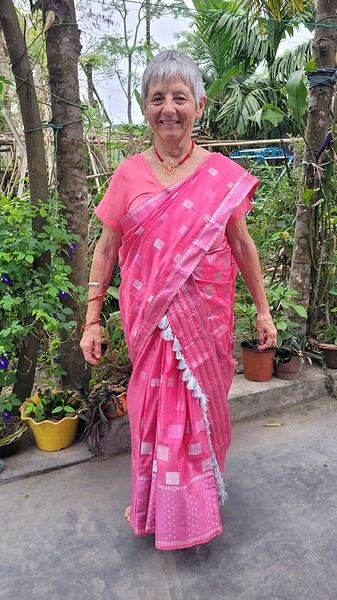
Tuesday, April 15th. This morning, the big day to wear the saree finally arrived. It’s not exactly a saree because this outfit consists of a bustier, a plain first petticoat covered by a second one printed to match the saree. The two women dress me, pinning safety pins all over—it’s safer because I move a lot and I’m not used to wearing so much fabric. The final result is stunning; the outfit looks great on me, but only for a day. You’d have to be used to wearing this every day, and it gets really hot with all those layers. The saree doesn’t have a petticoat, so I guess it’s more comfortable that way.


We take lots of photos and share plenty of hugs with the family.

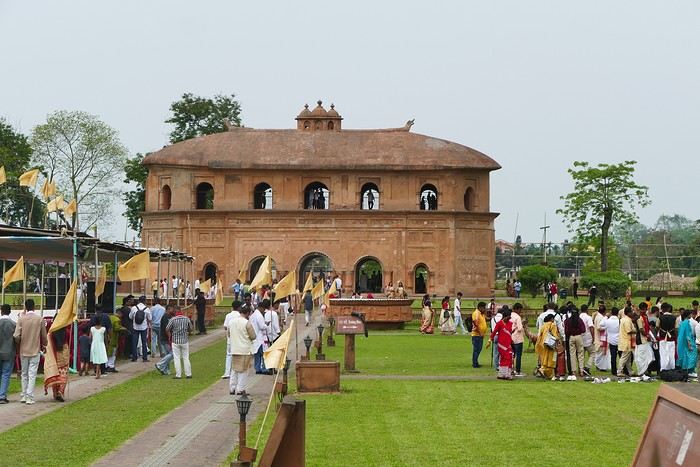
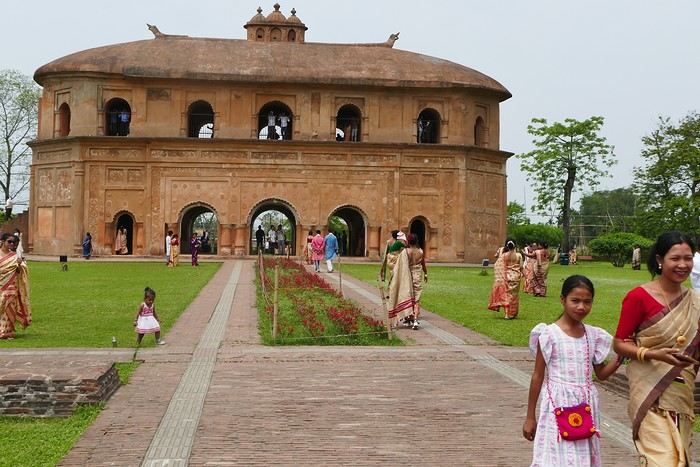
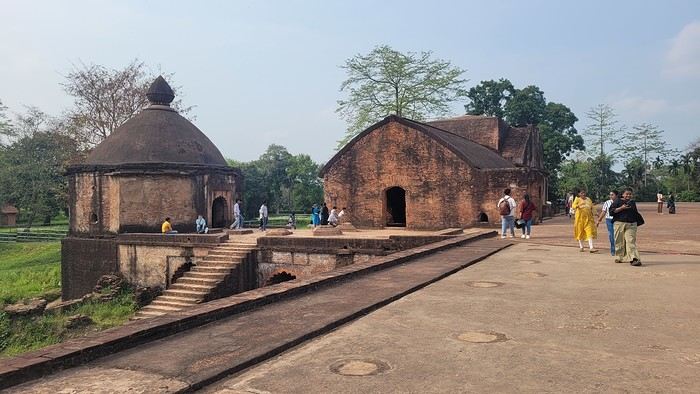
- With Nirupam and Ghritachi, we head to Sivasagar for the Bihu festival. On the way, we stop for breakfast—just tea for me. Ghritachi is from Sivasagar, and we go to her parents’ house. When we arrive, we have another sweet breakfast. I’m starting to get used to it. Nirupam and I head to the festival while Ghritachi stays with her parents and her sister. Sivasagar was once known as Rangpur and was the capital of the Ahom kingdom. We go to RamGarh, and when we arrive, there aren’t many people around. The building has two floors, and the roof is shaped like a long boat. It used to be a royal sports pavilion where Ahom kings and nobles watched games like buffalo fights.


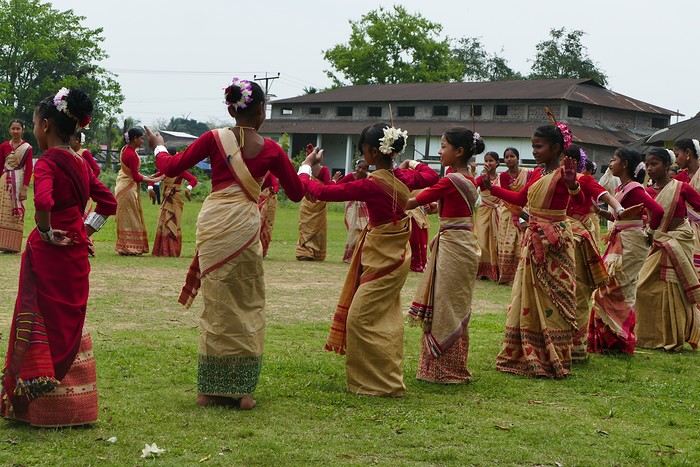
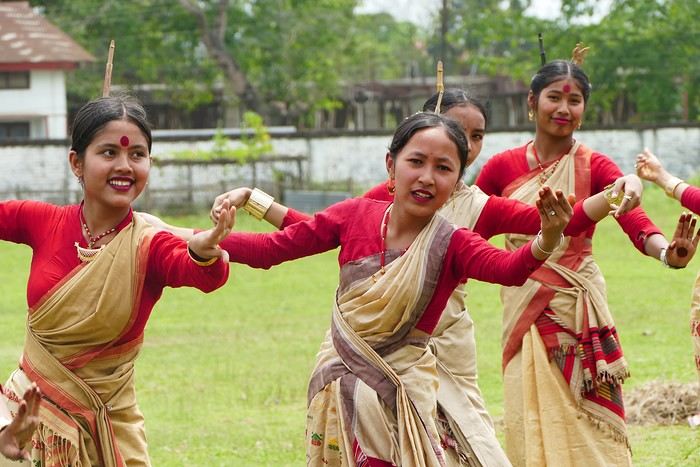
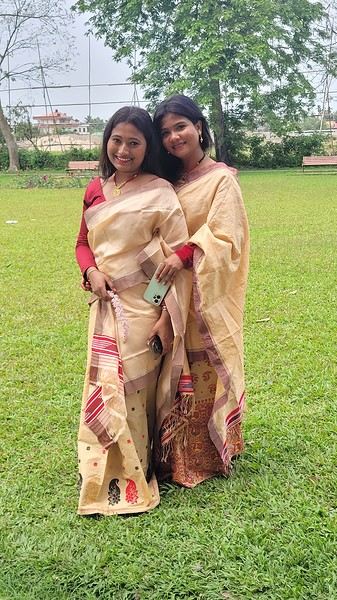
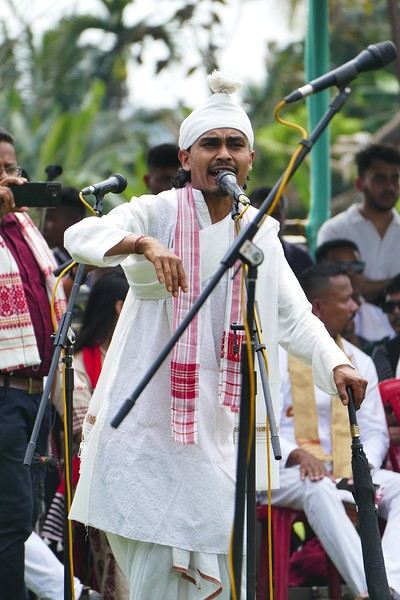
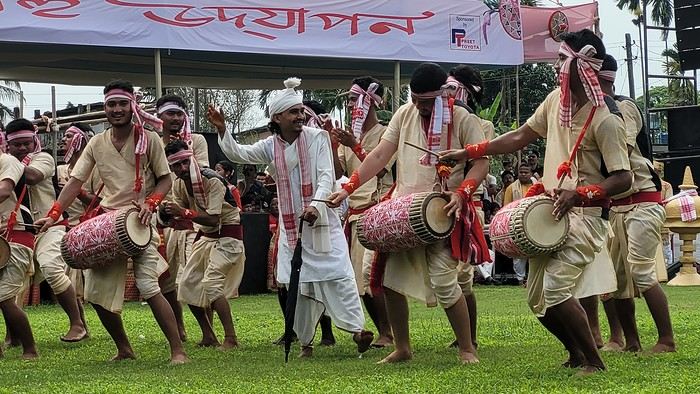
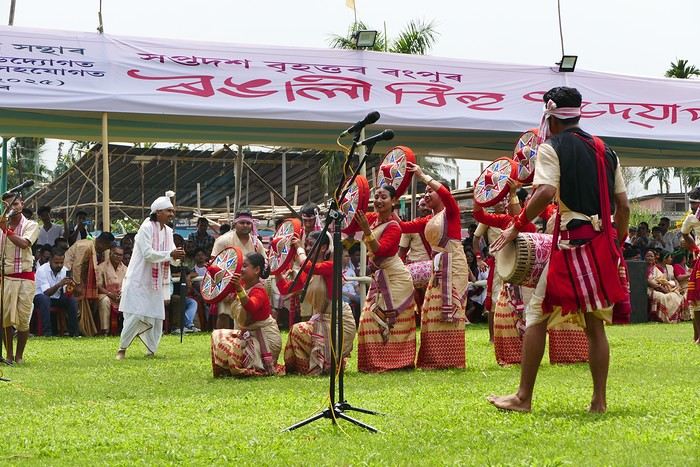
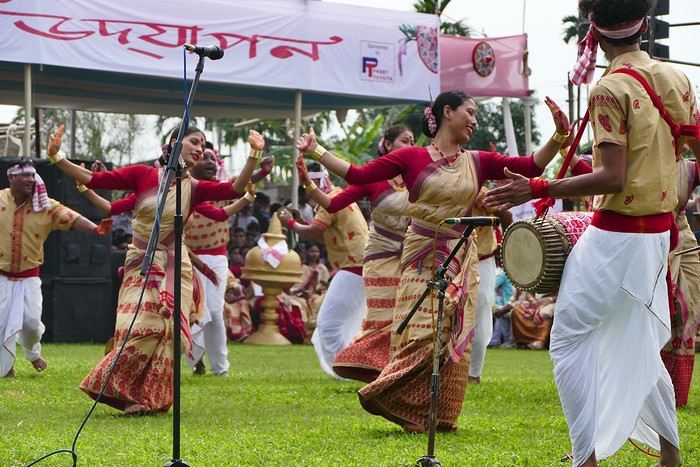
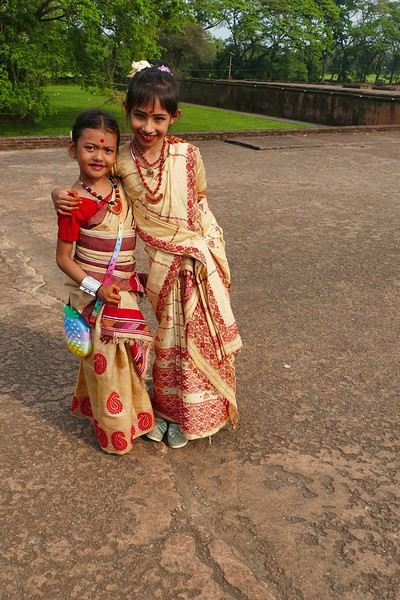
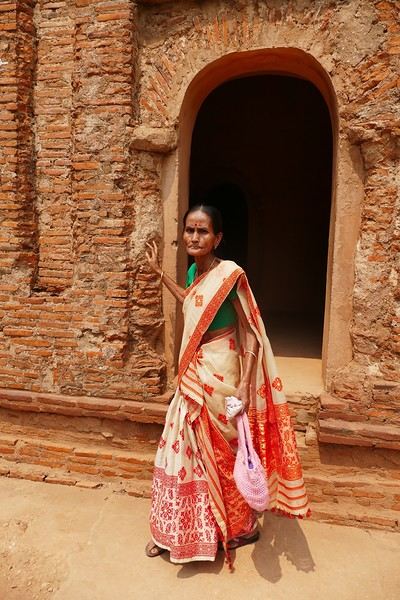
When we arrive at RamGarh, the crowd hasn’t shown up yet, so we can explore the building in peace. It’s in a well-maintained garden with a path leading to it. Women arrive in their beautiful Bihu-specific sarees—beige with a red border and different patterns at the bottom. They all wear special festival necklaces with matching earrings, and some have an orchid in their hair. They’re all so elegant and graceful in their outfits—way more than us in our jeans and T-shirts. And oh, what a surprise—we end up taking lots of photos, selfies, and the vibe is really cool. I have a great time exploring this beautiful building, which feels so alive today.


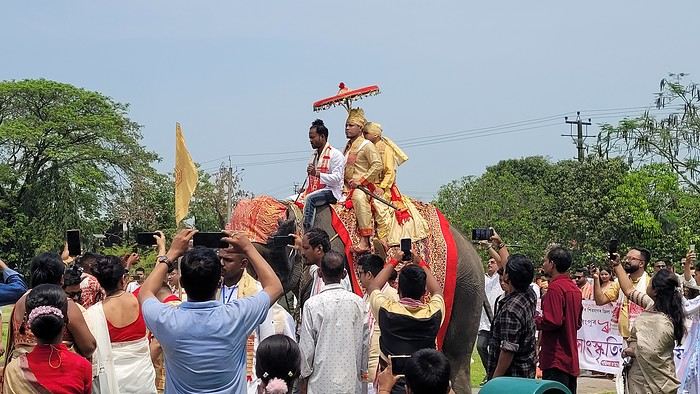
We find a spot in the shade under the canopy to watch the show. Nirupam disappears—I have no idea where he went—so I save his seat. The spectators arrive, and the canopy fills up quickly. Outside, I see some commotion and try to get closer to see what’s happening. An elephant carrying three people, accompanied by musicians, approaches the stage.


The young king, dressed all in white, approaches the stage where the musicians are seated and declares the festival open.


He stays with the musicians as the dancers take the stage and sing many songs with them.


I can’t see very well, so I move to the lawns—practically the VIP spot—and from there, I can take videos, photos, and enjoy the moment, which feels magical once again.


We leave around 1:30 PM, and then the chaos begins—traffic is insane, and all the roads are jammed. It takes us a good two hours to cross the city and get back home. Lunch is waiting for us: a vegetable rice dish cooked differently, and I love it. Given the traffic, I take a tuk-tuk to the guesthouse, which is near Ramgarh. I have to pay a bit more than usual because of the traffic. Before we part ways, we take some final souvenir photos. Ghritachi’s father gives me another gamosa—the third one from the family during this stay.


We’re all sad to say goodbye. This stay will be a highlight of the trip. Nirupam is coming to France in July, and I’m thrilled to host him, along with Michèle, who made this meeting possible. They’ll stay for a week, and I’ll take charge of showing them my beautiful region, which they don’t know yet. The blank pages of their travel journals will soon be filled with color, and I can’t wait. When I arrive at the guesthouse, a woman welcomes me and shows me to a fairly large and decent room. They’re having internet issues, and I have to wait for the owner’s daughter, who manages the guesthouse. Jess arrives in the evening—she’s young, very dynamic, and super friendly. She gives me a SIM card from one of her employees who’s away right now, so I can get internet. She’s adorable. She’s really impressed that I’m traveling alone all the way here. She’d love to visit Europe and France but was afraid to go alone. Seeing me travel like this, and at my age, gives her courage and hope that she can come this autumn and visit me. She insists on showing me the countryside around Sivasagar, and we head out by car. Jess wants to take me back tomorrow for the sunset if I get back early enough—we’ll see. In the evening, she takes the staff to the festival and invites me along. We drop off the girls from the house, but I’m pretty tired after such a wonderful day, so we head back at 11 PM, and I go to bed. Jess has to arrange my bus to Guwahati and a tuk-tuk for tomorrow’s visits. It’s quite late, so I’ll see what happens in the morning.
Qui a l'habitude de voyager sait qu'il vient toujours un moment où il faut partir... Paulo Coelho
AL Aleph240758 Veteran ·
Wednesday, April 16 Breakfast isn’t included in the room price, but Jess treats me to it. I have to wait until 8:30 AM to see the person who welcomed me yesterday arrive with a tray full of an omelet, toasts, and tea—enough to keep me going for a good part of the day. Jess is still asleep, so I leave the guesthouse and set off on foot with the help of Maps.me for my first visit to the Sivadol, Vishnoudol, and Devidol temples. Along the way, I pass several basket-weaving shops. They’re beautiful but too large to bring home, and shipping them would be way too expensive. The walk to the temples is pleasant, and I arrive easily. Indian tourists who came to celebrate Bihu are here today, so I’m not alone this morning. The entrance is through the large middle temple, Sivadol, the most beautiful one. People come up to me, curious to meet me, and I get the usual questions: where I’m from, if I’m traveling alone, my age, how many hours the flight took to get here… It leaves them thoughtful, and they’re happy to take photos with me. During the Bihu festival, I noticed that very young girls were wearing sarees, which are usually only worn once a girl starts menstruating—so it’s different here.


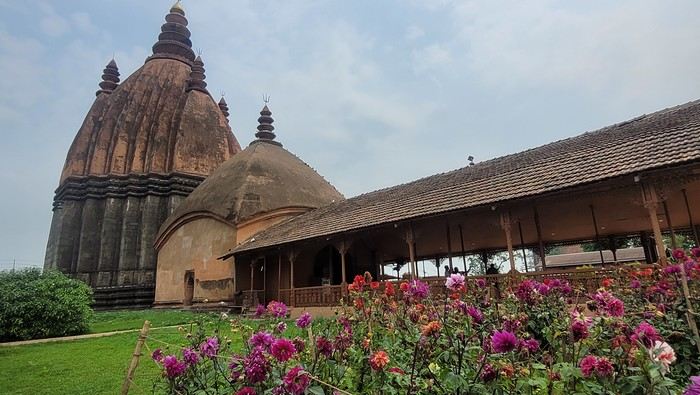
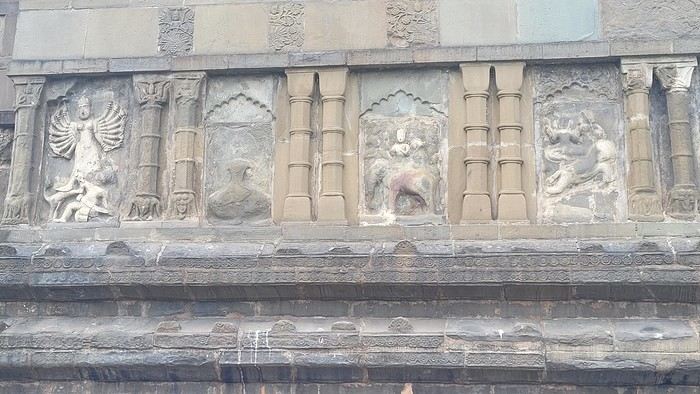
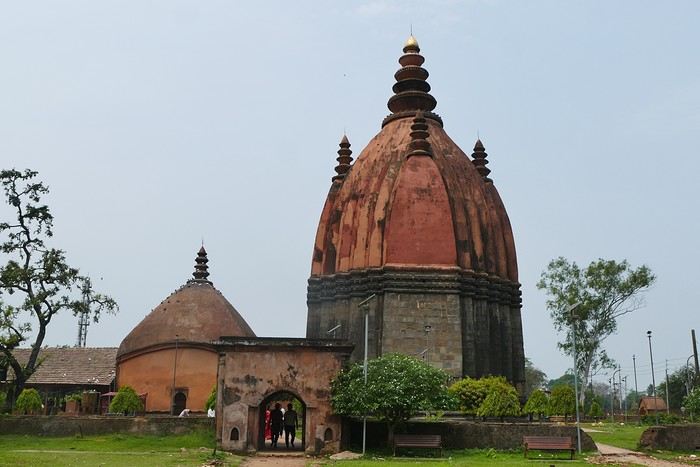
This temple has a tall central tower and is said to be the tallest Shiva temple in India. The outer walls are adorned with sculptures and floral motifs in bas-relief, with an antechamber resembling a traditional Assamese hut.

The goddess Durga is depicted with 16 arms.


To its right is Vishnoudol, with a dome decorated in honeycomb patterns.


To its left is Devidol.


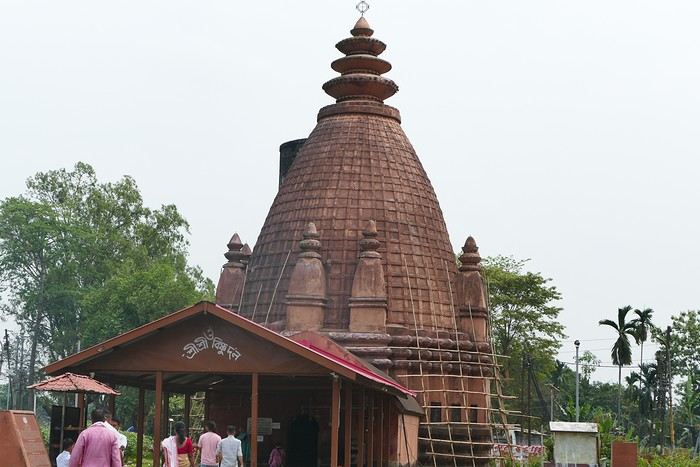
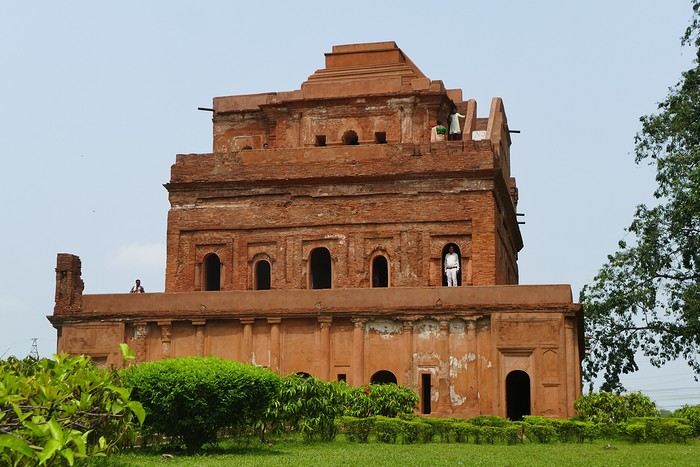
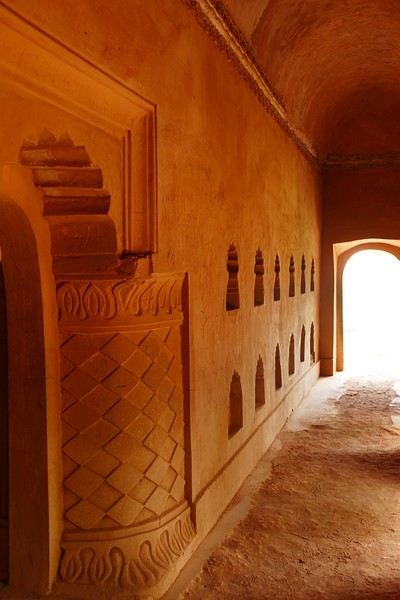
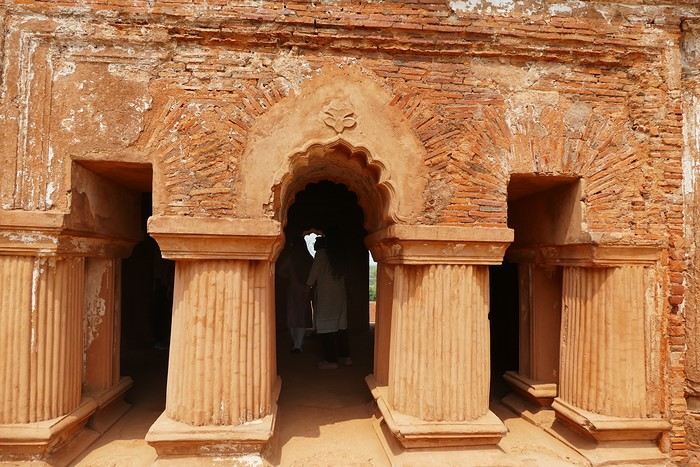
At the exit, several auto-rickshaws are waiting for customers. I pick one at random, and they all come over to ask where I want to go. Karenghar, located outside the city in Gargaon on the way to Charaideo Maidam. It’s a royal palace of the Tai-Ahom kings. A seven-story structure, with the three levels below ground called Talatal Ghar and those above ground called Kareng Ghar. It’s shaped like a red-brick pyramid. I really like this place and stay for a while.

The top floor is topped with a dome and a chamber. Originally, it had four watchtowers, but only two remain today.


A young visitor approaches me for a photo and remembers seeing me the day before in full attire at the festival. I head back to Sivasagar and have the driver drop me off at Sivadol. I want to go to Talatal Ghar, 4 km away, but the driver asks for a price that’s way too high, so I set off on foot. Along the way, a shared taxi stops next to me and offers a reasonable fare, which I accept.
Qui a l'habitude de voyager sait qu'il vient toujours un moment où il faut partir... Paulo Coelho
AL Aleph240758 Veteran ·
Talatal Ghar is an underground barracks, and the lowest level is said to be connected by a tunnel to the river. I meet up with a lot of tourists who were at Kareng Ghar, and we take a few more photos.


From there, I head out for a stroll to Joysagar Lake, where I find a great restaurant.

I take a shared taxi back to Ramghar, which is near the guesthouse. At dinnertime, Jess drops me off at the restaurant by car. She’ll call me later to check if I’ve eaten well and, most importantly, if I’ve made it back safely. She’ll also accompany me to the bus tomorrow morning.

The bus leaves at 8 AM for Guwahati. We arrive at 4:30 PM. The tea gardens have given way to rice fields, and I react too late to take some photos during the trip. My nose is glued to the window, and I relive the whole extraordinary journey with a pang in my heart at the thought of leaving Assam.


I return to the same guesthouse. I need to walk, so I head out for a stroll to the park near the planetarium. There are lots of activities—Bihu is still being celebrated, and the crowd is out in full force. An orchestra is playing in the background, but no one is dancing; everyone is just watching the musicians. What a shame.

What a unique and unforgettable trip.
Qui a l'habitude de voyager sait qu'il vient toujours un moment où il faut partir... Paulo Coelho
TH Thlaspi ·
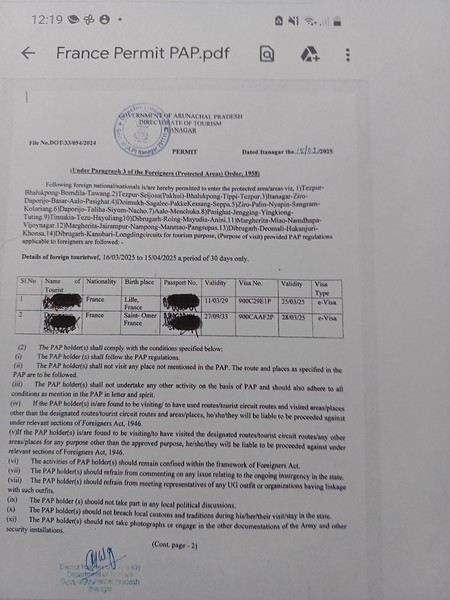
To protect local populations, a permit is required to enter Arunachal Pradesh since 1873. It’s the ILP (Inner Line Permit) for non-resident Indians and the PAP (Protected Area Permit) for foreigners, issued for a duration of 30 days to any group of at least 2 people. Recently, the conditions have been slightly relaxed: individual access is now allowed to Itanagar, Tawang, and the Ziro Valley. Checks are frequent.

As for the climate, two 15-day stays (Nov 2019 and March 2025) were ideal. It gets chilly at night in the high-altitude Tibetan areas like Tawang and Mechuka (no electricity, generator out of order). The villages in Ziro Valley have quickly lost some of their charm due to modernization (corrugated iron roofs, makeshift garages, etc.).

Apatani Ziro

The most interesting sites seem to be around Along (Aaloo) up to the ridge leading to Yingkiong. Galo Aaloo

Adi Yingkiong Riga village Surroundings of Pasighat The lower part of the state is of more niche interest. Though...
AL Aleph240758 Veteran ·
Thanks so much, Pierre. Is April rainy? Can you get the permit online like the one for Nagaland? If not, where do you need to go, and how long does it take to get it? How much does it cost? Is it easy to get around using local transport? I’m really tempted by this region—I’ll definitely reach out again for more info. Thanks!
Qui a l'habitude de voyager sait qu'il vient toujours un moment où il faut partir... Paulo Coelho
PR Prerna Regular ·
Hi there, I just read your story in one go and found it really interesting—thanks for sharing! Back in 1997, I set off for Calcutta with plans to visit the accessible regions of the northeast, especially Nagaland, which fascinated me. However, after an unsuccessful visit to the Ministry of Home Affairs, I couldn’t get a permit because you had to be in a group of at least four. Instead, I headed to Darjeeling, then Sikkim, before wrapping up my three-month trip with a few weeks in Goa. I’ve always kept that deep desire to go, especially now that it’s easier to get there than back then when permits were required. Plus, that change of plans led me to meet the woman who would become my wife five years later in Kalimpong—we’re still together here in Switzerland. The camper van was probably waiting for its chance to cross into Burma to reach Southeast Asia without having to take a boat. It’s complicated—Burma doesn’t let you pass easily, and if you do, you *must* hire a guide/supervisor for the entire crossing until you exit into another country, all with exorbitant fees. But it’s still more fun and much cheaper than taking a boat. It even makes it possible to travel from France to Singapore entirely overland. After that, you can even return via Laos, China, the "Stan" countries, Turkey, or even Russia and then Europe.
Keep it simple.
GB Gbubu Regular ·
Thanks Marie Jo for this beautiful travel story. I read the account in silence all the way to the return to Guwahati. I was supposed to take a similar trip in 2024—Meghalaya, Assam, Nagaland, and Arunachal Pradesh (almost 7 weeks)—but fate had other plans after an accident in West Bengal on the 10th day of a trip that was supposed to last over 10 weeks (including 3 weeks in WB). It was a bit like "twisting the knife," but I really loved it. I hope to finish this trip next year and I’ll add visits I hadn’t included back then. That said, in 2024, we couldn’t go to Manipur (I wanted to visit two megalithic sites not far from the Nagaland border), and I don’t think it’s allowed today. For the Arunachal Pradesh permit, I got it through an agency I’d booked a car and driver with. Thanks!!!
AL Aleph240758 Veteran ·
Hi Pierre, I hope this travel journal inspires you to check it out. The permit for Nagaland is available online and is processed very quickly. Make sure to keep it with you during the trip for checks in every city. This state is easy to explore using shared taxis, though the roads are often dusty. I highly recommend the Mon festival—I’m not sure if I’ll ever go back, it all depends on whether I can visit Arunachal Pradesh. I haven’t given up yet 😏😉
Qui a l'habitude de voyager sait qu'il vient toujours un moment où il faut partir... Paulo Coelho
AL Aleph240758 Veteran ·
Hi Gisèle, I remember chatting with you during my trip. Hope everything’s going well and you can travel again soon. West Bengal really is fascinating—I loved it. Maybe I should consider going back to explore it more. Could you share the details about that agency that booked your Arunachal Pradesh permit for you? I’ll ask Nirupam if he can help me get one when he’s at my place in early July. I’d love to check out that area. I’m picking up my travel journal on Meghalaya again—the rain kind of ruined the week, though. Maybe we’ll cross paths in India one of these days 😉
Qui a l'habitude de voyager sait qu'il vient toujours un moment où il faut partir... Paulo Coelho
GB Gbubu Regular ·
This is Aborcountry Travels and Expeditions aborcountrytravels.com

aborcountry@gmail.com They're based in Itanagar. I'll keep reading about Meghalaya. Thanks.

AL Aleph240758 Veteran ·
Thanks for the info!😊
Qui a l'habitude de voyager sait qu'il vient toujours un moment où il faut partir... Paulo Coelho
TH Thlaspi ·
Hi Marie-Jo, Here are a few answers to your questions about obtaining the entry permit for Arunachal Pradesh. First, contact a travel agent (in Guwahati for convenience)—they’ll handle the paperwork. The cost is $50 + fees. Processing time: less than a week. You’ll need to provide a copy of your visa. For individual travelers, the permit is valid for Tawang and the Ziro Valley. For the rest of the territory (except border zones), you’ll need to be in a group—two people are enough. For the climate, late autumn to early spring is best—mild temperatures. I did two two-week trips in November and March, and there wasn’t a single rainy day. The Myoko Festival takes place in mid-March. Public transport is practically nonexistent, so shared taxis or hiring a driver are your best options. The mountain roads, while not as spectacular as those in Kashmir or Garhwal, are in (very) poor condition. For example, the road from Aalo to Mechuka (180 km, 9-hour journey) is only passable in alternating two-hour windows—two hours for travel, two hours for repairs. Good to know if you’re leaving at 5 AM. Hope these little tips help with planning your next trip! Safe travels
AL Aleph240758 Veteran ·
Thanks so much, Pierre! Your tips are really valuable and will definitely help me and others, I’m sure.
Qui a l'habitude de voyager sait qu'il vient toujours un moment où il faut partir... Paulo Coelho
FR Fran38 Regular ·
Hi there, a bit of confusion here— is the permit for Nagaland the PAP or the ILP? Thanks
SI Sinforosa Veteran ·
Hi Aleph240758,

Your travel journal is amazing—more like a documentary than a vacation diary. I loved the Mon festival, the carved wooden doors, the markets, the portraits... everything!

I’ve never been drawn to India before, but your post made me want to go!
" Celui qui voyage sans rencontrer l'autre ne voyage pas , il se déplace " ( Alexandra David-Néel )

" Ahora todos quieren ser latinos , no , ey , pero les falta sazon , bateria y reggaeton " ( Bad Bunny )

Similar discussions

You might also like