Salut sushi,
Le problème dans "tes" idées c'est justement qu'elles sont "a la mode", rien mais vraiment rien d'original ni d'extrémiste (j'en rigole encore 😄) il est de bon ton de les avoir, sans esprit critique tu gobes tout ce qu'on te raconte et pendant ce temps la les capitalistes que tu critiques continuent a s'engraisser et rigoles eux aussi. L'argent des produits bio que tu achètes va direct dans leur caisses... en plus tu les aides en affamant les "petits", ouvriers, paysans, pêcheurs et autres artisans. Allez restes bien au chaud a Paris ou tu n'as pas besoin de voitures pour polluer le monde, il est si facile d'être pseudo écolo en ville. Et surtout ne voyages plus, les avions ca pollue encore plus que les voitures, ca va être compliquer pour aller au soleil en métro 😉😛
Réfléchissons sans trop se laisser bercer par l'émotionnel....
Mathématiquement, le système est arrivé à ce que l'on appelle son asymptote, sa limite viable, tout modèle macro-économique confondu.
Les économistes du monde entier tirent la sonnette d'alarme et aujourd'hui, comme par hasard, (les risques de pertes étant plus importants en terme de volume d'exportations pour le G8 que les gains potentiels), le conseil de l'Europe va instituer, créer un "comité de crise d'urgence mondiale économique", composé des grands savants "retraités "de notre planète. (santer, delors, Jospin, Rocard etc...).
Nous serons obliger de changer probablement certaines habitudes....et si des Shumpeter et autres ont démontrés que tout était cyclique, pour la première fois la démonstration mathématique ne tient plus la route.
l'humain ne va pas regarder ses parents crever de faim ou voir les autorités s'emparer de sa maison (même démonstration pour l'hypothèque, arrivée à son paroxysme), nous sommes vraiment à un tournant de l'histoire.
peut-être pour un mieux ? peut-être allons-nous régresser en terme de qualité de vie ? ça nous fait une belle jambe d'être prévenu !!!!!
» L'expérience est une lanterne accrochée dans le dos qui n'éclaire que le chemin parcouru ..." Confucius
Je ne suis pas contre une économie plus juste, plus équitable, plus respectueuse des enjeux environnementaux, je suis, justement, pour ce genre d'économie et d'initiative.....il est évident que le marché du bio représente à lui seul un secteur économique ! ! !! A quoi bon le préciser, cela semble tellement évident !😛
Entre une révolution à la Arlette ou Besançenot (personnages que je ne porte pas dans mon coeur ! ! ! bien que cela puisse en étonner certains) et un nouveau visage économique mondial basé sur l'agriculture bio, le commerce équitable et solidaire...il y a une marge n'est-ce pas?
Je souhaite qu'il y ait une révolution dans la façon de consommer des uns et des autres........peut être, comme je le dis plus haut cette prise de conscience mènera à un conflit sans précédent.......ou bien peut être que cette prise de conscience passera par une révolution des habitudes de consommation....
Le débat est ellement complexe, que tu m'excuseras de trouver des arguments et contre arguments.....si les choses étaient aussi si simples!
Et toi, qui ne semble faire aucune erreur ......as-tu quelque chose à apporter au sujet ?????????????????????
Pour répondre à ta question, lorsque les humains de tous horizons commenceront à manquer d'eau et de ressources vitales pour leurs survies, la seule chose qui se produira sera une révolution des mentalités et des façons de fonctionner, et de consommer...
Je crains (et j'en suis le premier navré) que tu te berces de douces illusions...
Je ne me souviens pas qu'un peuple se soit révolté par sa simple volonté...
Souvent il est instrumentalisé à grand renfort de propagande démagogique par une classe social (disons le ventre mou ) et est utilisé pour renverser un pouvoir au profit de quelques uns...
Quant à la révolution, elle viendra du plus grand nombre, nous sommes tous habités par un instinct de survie...
Là encore ton idéalisme t'aveugle...
L'instinct de survie est individuel très rarement collectif...
Sur un bateau prenant l'eau avec un nombre insuffisant de gilets de sauvetage, ils ne seront pas nombreux les grands seigneurs...(ce jour là j'espère être avec toi)
l'individualisme dans lequel nous sommes plongés tendra à la longue vers des valeurs communautaristes
Ici nous voyons tout le paradoxe, si l'avenir est de se replier sur soi même, avec les meilleurs intentions du monde, nous arriverons par ce communautarisme, inéluctablement vers de nouvelles confrontations...
Triste de constater qu'une réelle prise de conscience de ma part passe pour une simple mode ! !
Il n'est plus question de mode, c'est bien plus profond que ça, réveille toi un peu !
Comment tu gères le réchauffement climatique avec la montée des eaux ce qui signifie de moins en moins de territoires habitables et exploitables, tout en intensifiant l'agriculture mondiale, en trouvant des alternatives à la flambée des prix du pétrole tout en gérant une démographie mondiale exponentielle et en continuant à défricher pour laisser la place à la culture des biocarburants (qui en eux même sont une pure catastrophe)? Dis moi?
Au début le débat portait sur la crise alimentaire (il a un peu dévié.....j'y contribue largement) mais comme tout est étroitement lié....pour ce qui est de la malnutrition, il est évident que les obèses autant que les personnes atteintes de famine sont au final (à peu de choses près) victimes de la crise alimentaire.....alors gros ou maigres, je vois pas bien la différence car dans le fond il n'y en a pas......le problème est allarmant dans les deux cas !
Alors continuons à bouffer des pesticides, des OGM, des viandes bourées de toxines ! ! ! ! Et surtout n'oublions pas de consommer made in china (bin ouai c'est pas cher, alors allons y gaiement ! !) 😛
Mais sushi, tu n'as pas encore compris qu'on est tous d'accord avec toi? mais simplement faut ouvrir les yeux sur la vrai réalité du monde, ces problèmes n'existent pas depuis hier mais depuis bien longtemps et il faut mieux travailler de l'intérieur de la société que de se la jouer "no futur" on va tous crever 😛 Réveilles toi tu crois vraiment nous apprendre quelque chose la? 😉
Et de toute façon le bio a aussi son économie de marché ...mais tu disais plus haut qu'économie et écologie ne font pas bon marché :))
Oui c'est bien d'avoir des idées, mais il faut aussi la réflexion, sans ça ...
Alors ça, c'était complètement trop facile.
D'autant plus que le fait que le Bio soit désormais intégré dans une économie de marché n'est pas incompatible avec l'idée que, tout de même, Ecologie et Economie (sous-entendu je pense, Economie dominante, capitaliste, où le mot d'ordre reste "des profits à tout prix") ne fasse pas vraiment bon ménage.
De toute manière, même si c'est paradoxale, c'est 2 réalités coexistent : le bio est bien intégré dans une économie de marché l'économie dominante actuelle privilégie bien la recherche de profits à la préservation des ressources naturelles (ex: Total dans le Delta du Niger)
Mais comme tu le dis toi même : c'est bien d'avoir des idées mais il faut aussi la réflexion ... (vaste programme)
Bonjour ceci est tres pessimiste mais il ne pourrait en être autrement rien ne fera changer ce qui est en route et toi qui est de Belgique tu parles d'un €uro fort mais regarde en europe qui fou la merde, dans les pays du tiers monde, ce sont tes petits amis qui sont à la communauté européenne tu les connais tu sais bien les bruxellois qui gerent tout décident tout pour tout puisque BRUXELLES fait tout mais n'oublie jamais ce n'est pas BRUXELLES qui a fait l'EUROPE, résultat vous avez un commissaire ou aviez un commissaire détaché pour les pays du tiers monde pour l'humanitaire je peux même donner son nom ici et que fait-il que faites-vous, rien beaucoup de bla bla sur papier ou quelques peitits travaux sur ancien congo belge mais bofff) ci ce n'est faire rentrer des viandes et des produits de comonweld et non communautaire, le seul pays qui ce bat encore dont le peuple récolte des fonds pour chaques évenements dans le monde est encore la FRANCE on ne le voit nulle par ailleurs et tu as ete mal placé de lancer ce débat me semble t-il.
Alors si tu as fait un peu d'histoire rendons à jules ce qui lui appartient........ c'est à dire un César !
Non non pas facile, je cherchais plus d'explications de la part de Sushi car excuse moi d'etre restée (je ne suis pas la seule) perplexe à ses paroles du début !
Concernant la chaine bio, que j'approuve, meme là il sera question de profit, on est d'accord ... ce sera (c'est) une autre forme de consommation et je me demande s'il ny aura pas encore des raleurs plus ou moins endoctrinés contre le profit ...et aussi qui vous dit que cette économie sera plus juste et garantira un juste prix au producteur ?
Moi à mon humble niveau, je ne sais pas ... dsl je n'ai pas de prétentions, je ne suis pas spécialiste, ni économiste ...je suis comme la plupart ici je lis et m'informe en restant prudente face aux médias et industriels qui se servent par exemple du dérèglement climatique en exagérant (en affolant les foules) pour le lancement de produits "propres"....
Ce n'est que depuis dernièrement que les gens comprennent que le bioéthanol n'est pas la solution, alors que ça fait perpette les agriculteurs savent ça (logique c leur boulot), mais là aussi il y a des directives, pour nous de Bruxelles en l'occurence il en va ainsi pour tout le blé, le lait, les matières 1eres ....
Quels amalgames !
Quiquonque connaît le fonctionnement DES institutions européennes sait que Bxl n'es que le siège "administratif" de la Commission, le Parlement est à Strasbourg ! La cour de justice à la haye et la banque de Dévpt à Londres. Les décisions se prennent dans le pays où siège la présidence (en Slovénie pour le moment).
Mes "petits amis eurocrates" et oui, en vivant à bxl, on en connaît beaucoup c'est vrai, font pour la plupart du bon boulot, mais dictés par le top management européen. le débat n'est pas là. La construction de l'Union (plan Marshall) se voulait de reconstruire la carte européenne bafouée par le traité de versailles puis par la seconde guerre mondiale, l'objectif était une Europe sociale avec un libre échange des marchandises et des populations. cela a donné un sacré coup de fouet à l'Espagne, au Portugal, etc...Le problème c'est que de cet objectif économico-social, on s'est écarté et avons opté pour une politique économique de défensive vis à vis des E Unis, l'ennemi rouge ayant depuis peu disparu ...Tout économiste sait que la crise actuelle est dûe principallement à la sortie de la guerre de 45, à la mise en circulation des hedge equity founds, des spéculations boursières sans garde fou, le système ne peut qu'échouer car on partait du postulat que l'on spécule sur des denrée illimitées sur une planète à ressources limitées !!! L'économie virtuelle a atteint ses limites, les entreprises ne finançant leurs activités que sur des capitaux virtuels. je ne vais pas vous "ennuyer" plus longtemps sur les techniques économiques mais je pense important parfois de remettre les pendules à l'heure ! Les hydrocarbures s'épuisant, on mise sur les bio-carburants, avec la même logique, c'est tout simplement intenable.
En tant que belge ou toute autre nationalité, l'opinion de tout en chacun est enrichissant, objectif de mon poste, très vaste c'est vrai.
» L'expérience est une lanterne accrochée dans le dos qui n'éclaire que le chemin parcouru ..." Confucius
Concernant la chaine bio, que j'approuve, meme là il sera question de profit, on est d'accord ... ce sera (c'est) une autre forme de consommation et je me demande s'il ny aura pas encore des raleurs plus ou moins endoctrinés contre le profit ...et aussi qui vous dit que cette économie sera plus juste et garantira un juste prix au producteur ?
A partir du moment qu'il y a marché économique, il y a forcément profit........donc avec le bio également.
Mais en essayant de mettre de côté l'aspect économique, n'en as tu pas tout simplement marre de bouffer de la merde? Des légumes farcis aux pesticides et insecticides? Des viandes nourries aux farines animales? Des fruits bourrés d'engrais chimiques? Des oeufs provennant de poules n'ayant jamais connues la liberté ni même la lumière du jour? De la mayonnaise faite avec de l'huile de moteur provenant d'Ukraine? (Oui oui.....véridique, je n'ai rien inventé! je m'informe justement et fais référence au dernier scandale sanitaire et alimentaire en date de la semaine dernière)..........................
Il est question, aussi, de l'aspect sanitaire de l'alimentation ....... moi ce qui me tue, c'est qu'en plus de faire du profit ils nous vendent de la M....
Et nous comme des gros nazes, on continue à faire nos courses, tjrs chez les mêmes........quand je dis que tout vient de nos modes de consommation.
Alors que le bio tire profit, cela ne me dérange pas (en tout cas -) à partir du moment que ses pratiques sont respectueuses de l'environnement et des hommes.....
Mais surtout que ce soit accessible à tous....ce qui est loin d'être le cas ! car je réitère, en campagne, pour une famille nombreuse, faire ses course dans les magas bios, c'est un sacré budget !!! que malheureusement peu peuvent se permettre.
De plus, les scandales de non transparence (production et distribution) des produits dits "bio" commencent à se flageller, tout simplement car comme toute entité économique ils répondent à la logique du lobbying, et même AB n'y échappent plus....
Actuellement, la seule solution viable est tout simplement d'acheter des denrée de SAISON, car une mangue "bio" pollue bien plus en terme de transport qu'une cochonnerie produite dans une usine française et mise en distribution chez carrefour !
» L'expérience est une lanterne accrochée dans le dos qui n'éclaire que le chemin parcouru ..." Confucius
Citation l'individualisme dans lequel nous sommes plongés tendra à la longue vers des valeurs communautaristes
Ici nous voyons tout le paradoxe, si l'avenir est de se replier sur soi même, avec les meilleurs intentions du monde, nous arriverons par ce communautarisme, inéluctablement vers de nouvelles confrontations...
Eh oui, tu as raison...................le communautarisme a souvent ammené aux conflits...........c'est la raison pour laquelle je n'ais jamais cru aux idéaux d'extrème gauche que je trouve bien trop dangereux: l'idéal collectif est une belle utopie: je te l'accorde.....
lorsque je parle de "communautarisme", j'y vais un peu fort, je dois l'avouer......ce que je veux dire c'est qu'un jour ou l'autre nous serons ammenés qu'on le veuille ou non à changer nos modes de consommation car nous n'auront plus le choix de faire autrement........et que ces nouveaux modes de consommation tendront vers des échanges plus humains, et tendront tous vers la même direction (approvisionnement chez l'agriculteur du coin, le maraîcher........vers des commerces de proximité) les choses seront donc un peu plus équitables......car la grande distribution ne va pas pouvoir continuer à tirer sur tous les plans.....à la fois sur le consommateur et sur le producteur ! ! ! Avec un pouvoir d'achat qui ne fait que baisser et une montée du prix de l'essence......forcément, il deviendra plus économique d'adopter de nouveaux modes de consommation.............à moins qu'ils ne trouvent encore de nouvelles politiques marketing pour nous faire encore consommer chez eux, ou qu'ils ne changent leur politique???
pourquoi parler plan Marshall qui a remplacé le plan Jean MONNET qui etait bien meilleur mais évidemment une question Argent et nous replacer au second rang mais le dial n'est pas la, tu n'as pas répondu à la vrai question car Mr Louis Mchel toi qui sais tou tu connais donc demande lui les aides humanitaires et dis lui d'envoyer au caméroun, au Burkina, au Bénin, au Togo, tu veux que je site encore, ce n'est pas de pares soleil, ils ont besion de nourriture en priorité c'est tout ry la ce n'est pas Strasbourg ni aillersu comme tu dis et ne renvoie pas la balle ou elle se trouve c'est bien votre mentalite Bruxelloise.
Le jour où les banlieues françaises vont vouloir cultiver leur propre potager, ça va pèter chez vous !!! au moins, il nous restera à nous les belges "le journal de Carla" !!!!
» L'expérience est une lanterne accrochée dans le dos qui n'éclaire que le chemin parcouru ..." Confucius
S'il y avait une "mentalité bruxelloise ", je t'invite à venir l'expliquer à nos politiciens, car bxl et BHV, c'est notre Jérusalem à nous...pas jojo évidemment, voire lamentable, mais bon, si nous sommes perçu comme ça en France ! nous voilà peut-être sauvés !
Quand à Louis Michel, ancien libéral (PRL puis MR), c'est un scandale en belgique car son fils, n'est autre que le Ministre des affaires étrangères, donc aucun contre pouvoir. Cela étant, je pense qu'il y a plus idiot comme personnage politique ! Il est clairevoyant à bien d'égard mais n'arrivera jamais à gommer ses pots de vin pour les mines au Congo ! En tant que Commissaire européen, il a un rôle d'expert, mais probablement n'arrivera pas à faire le poid par rapport aux géants de la politique financière internationale . On demande à voir....je ne l'aime pas quant à sa politique et surtout actions menées dans la région des grands lacs, laissons lui sa chance pour le développement....
Quelle horreur cela doit être de tout savoir....j'envie mes enfants encore si ignorants....
» L'expérience est une lanterne accrochée dans le dos qui n'éclaire que le chemin parcouru ..." Confucius
Voila donc je suis content de constater que tu reconnais mes raisons, ce n'est pas apres toi que j'en ai mais apres tout ce méli-mélo car je connais tres bien les problemes et ceux de l'Afrique surtout les mensonges qui ont été lancés surtout par le fameux haut commissaire et rien de fait c'est plus qu'ecoeurant et ou sont passés les millions d'€uros depuis 2001 pour humanitaire a destination Afirque
Les cultures et élevages intensifs c'était pour nourrir la plus grande population à prix abordables...aujourd'hui certains peuvent choisir et faire attention à la qualité de la bouffe, encore faut il avoir le temps de lire toutes les étiquettes et aussi la bourse qui va avec, mais la culture bio c'est encore à petite échelle...et les pauvres alors il leur reste la mal bouffe, je dis pas que c'est bien, évidemment (!), mais voilà on en est là où on est et tout le monde n'a pas de potager ... Mais de là croire qu'on va révolutionner les mentalités alors que tous n'ont pas les moyens, et l'économie brusquement sans conflits aussi ...
Oui, comme la plupart des gens j'aimerai et j'essaye de manger plus sain plus souvent, mais si je remplissais la totalité de mon caddie de produits AB, bio ... ma foi la note serait salée à la caisse et tout ne peux passer dans la bouffe ! Bon au moins j'ai l'air iodé et pour le moment c'est encore gratuit :) . Chacun fait ce qu'il peut à ce niveau avec ses moyens ...les gens sont pas tous des gros nazes par volonté ou par ignorance
Bon là ya vraiment basta pour moi ce soir, je ne parlerais pas du reste on en entend assez parler comme ça par ailleurs, bouh... @ +
les gens sont pas tous des gros nazes par volonté ou par ignorance
Ils sont aussi victimes des groupes agro-alimentaires : on les habitue à des aliments saturés en graisse, en épices, en sauce sur des viandes bas de gamme... le jour où il goutte un poulet fermier ou un steack bio ils les noient sous des sauces ou des épices car ils trouvent le goût de la viande nature trop fade... In fine, ils paient presqu'aussi cher de la viande insipide saturée d'exhausteurs de goûts qu'une viande savoureuse mais ils ne s'en rendent pas compte... dur de lutter contre le marketing et la politique "produit" à long terme des groupes agro-alimentaires !
Et à produire plus et gagner plus certains meme n'ont plus le temps de bien manger! :))) Encore des victimes !
Pour les prix pas d'accord: 1 flacon ketchup marque gloup et un poulet glauque restent moins chers qu'un poulet fermier ou bio sans sauce ajoutée ... 😕
Bonsoir,
Le bio n'est pas la panacée universelle, il ne va pas nous sauver de la mal bouffe. C'est une possibilité pour les plus fortunés, sans plus!
Soit dit en passant, encore aujourd'hui en France, dans les Cévennes par exemple, il y a des agriculteurs qui font du bio depuis toujours sans pour autant en avoir le label!
Pour mieux manger, il faut avoir reçu une bonne éducation dans ce sens et surtout vouloir la transmettre.
C'est à dire aimer choisir ses produits, ne pas s'en remettre uniquement à la bouffe toute prête, varier ses aliments et surtout faire aimer à ses enfants également les aliments que l'on aime pas. Combien de jeunes couples préfèrent acheter systématiquement des petits pots pour bébé plutôt que de préparer une purée eux-même! Le gamin est habitué dès le plus jeune âge à consommer que des aliments industriels. S'il n'aime pas les carottes les parents n'insisteront pas. Si maman n'aime pas le poisson, bébé n'en connaîtra jamais le goût etc...Les habitudes alimentaires du futur consommateur s'apprennent dès l'enfance.
Plus notre bouffe est industrialisée et plus nous dérivons vers le sécuritaire, l'intensif ou le labellisé bio. Dans ce domaine, des habitudes culinaires variées et des gestes simples font plus que les longs discours idéologiques et formatés.
Pour les prix pas d'accord: 1 flacon ketchup marque gloup et un poulet glauque restent moins chers qu'un poulet fermier ou bio sans sauce ajoutée ...
Seulement ça ne marche pas comme ça... le poulet glauque on le vend sous des formes préparées comme ailes de poulet tex-mex, filet sauce paprika, ... et là quand tu regardes le prix au kilo tu n'est pas très loin du prix du poulet bio !
Si tu veux me citer, merci de le faire sans couper les passages qui donnaient un sens à ma phrase... par ailleurs, le débat, curieusement en ton absence, s'est poursuivi en dehors des ambiguïtés que tu relevais, merci donc de ne pas relancer les attaques personnelles...
les 70% d'aide en tout genre pour l'Afrique sub-saharienne passe dans les mains des bandes et guérillas locales, voir de l'armée et maffia du pouvoir en place. Après la revente de ces denrées, cet argent servira à financer armes, munitions en tout genre.
Idem pour les médicaments exportés par MSF, Med du monde etc....recoupés, transformés et vendu à des prix très bas sur les marchés locaux.
Sorry, mais c'est la triste réalité, les facteurs INTERNES sont au moins tout aussi importants que les facteurs externes. les phénomènes de clientèlismes sont en tête de liste en Afrique !
» L'expérience est une lanterne accrochée dans le dos qui n'éclaire que le chemin parcouru ..." Confucius
Encore une fois, Giles, je suis entièrement d'accord avec toi en ce qui concerne le "vrai coût" de la malbouffe et tes commentaires sur le bio.
J'ai l'impression que la plupart des intervenants ici (je ne citerai pas de noms, hein 😉) ont une vision de citadins sur le bio (ce qui est étrange car il y a pas mal de campagnards dans le lot), du style qui va acheter du bio importé d'Allemagne ou pire d'Argentine en magasin spécialisé et qui paye ses 6 oeufs 4 euros... Mais chez moi, les producteurs bio sont à 5km du marché (certains certifiés, d'autres non). Ca veut dire pas de coûts de transports (et au passage, pas de pollution due au transports), pas d'intermédiaires, la relation producteur-consommateur avec tout ce que ça implique de petits cadeaux ou suppléments à droite à gauche, et donc au final un coût moindre, qui pour la plupart des produits est le même que celui pratiqué par les simples revendeurs. Et ce n'est pas un marché pour bobos, c'est un marché de campagne où des gens de toutes conditions vont faire leurs courses. Ceux qui restent scotchés au supermarché et uniquement à lui sont des cas extrêmes, des intoxiqués à la pub et aux produits aux goûts addictifs comme l'explique GilesB, ou tout simplement des gens qui ont des préjugés sur l'attractivité financière prétendument plus importante du supermarché, des gens qui n'ont pas le temps, ou des gens qui ignorent ce qu'ils ratent.
Après, il faut tempérer un peu ces propos : parmi les plus modestes, c'est vrai, beaucoup s'en sortent au moins en partie avec un potager (qui peut être bio, question de volonté) et du troc entre voisins, et ne vont pas acheter bio au marché, mais de toutes façons tout acheter en GMS serait également hors de portée de leur bourse.
Tout à fait d'accord avec toi, le bio est souvent vendu à un prix prohibitif et particulièrement à PARIS (je pense qu'il est peut être plus facile de trouver des bons produits en province sur les marchés ou directement chez le producteur !!!) Dans mon quartier, plutôt pauvre, il y a une célèbre épicerie Bio, les prix y sont incroyables, impossible à l'individu lambda payé au SMIC d'y faire ses courses, tout le monde se rabat sur LIDL ou Leader Price pour pouvoir avoir des prix accessibles...Les seuls qui fréquentent le SUPERMARCHE Bio sont les "bobos" qui commencent à s'installer le long du bassin de la villette, . Au marché, les stands bio ont des prix incroyable (j'ai le souvenir cuisant du pain acheté sur le stand 15 euros pour deux baguettes, qui peut se payer ça tous les jours !)....
Quant au goût du poulet, c'est vrai qu'il y a une différence entre le bio et le "pouic-pouic", et les préparations tex mex and co sont loins d'être aussi chères !!!!!
bonjour, je sais tout cela tu ne m'apprends rien et je ne cesse de dire qu'il faut faire plus confiance aux petites associations qui vont sur palce avec du concretdans les poches que d'envoyer à des ONG que l'on voit tout le temps aux TV et differents Médias qui eux prennent les sous dans les poches et ne donnent que 15 à 20 pour cent seulement pour la cause défendu ce qui est scandaleux on peut remonter, loin que ce soit pour la Somalie, en passant par les pays d'Asie revenant par le Tchad pour Arriver aux pays d'Afrique de l'Ouest etc la dial serait trop long et souvent les vérités pas bonnes à dires car le net est aussi un nid d'espionnage j'en sais quelques chose donc toujours faire attention à ce que l'on dit si même c'est vrai.
Je vais toujours dans ma pensée, je vais dans la vérite, la route me guide ou une larme deviendra sourire c'est tout ce que je demande en échange un sourire.
tiens, pour une fois je suis bien d accord avec gillou quand il dit:
"Il est évident que, tous, nous refusons de changer notre mode de vie... et que notre propension est d'accuser le voisin plutôt que d'agir réellement... "
parce que ca parle beaucoup, mais concretement, vous faites quoi tous?
vous faites gaffe a l eau(genre fermer le robinet de la douche pendant que vous vous savonnez, ne pas laisser l eau couler inutilement quand vous vous lavez les dents etc...)?
a mettre un point d honneur a ne jamais gaspiller de bouffe et a toujours finir vos assiettes?
a faire gaffe a votre consommation d energie(par exemple toujours eteindre les lumieres d une chambre ou il n y a personne, ne pas acheter d appareils menagers gros bouffeurs d electricte)?
a ne rien n acheter d inutile, ce qui revient a ne quasimment pas consommer, a part le strict necessaire?
a faire attention a ne rien gaspiller, meme pas le moindre sac plastique?
a n acheter une nouvelle chemise que quand la derniere s est usee jusqu a la corde?
a n avoir qu une paire de chaussures, qu on change quand elle commence a avoir faim?
a boycotter certaines marques?
le bio est cher parait il?
on peut pas se le payer parait il?
ouais, c est plutot qu on prefere mettre son fric dans des ecrans plasma, des portables dernier cri avec leurs forfaits, des belles pompes, sappes et bagnoles, sorties etc...
et avec ce qu il reste de sous on pleure misere sur la bouffe, alors que ca devrait etre le 1 er truc dans le budget...
et on achete des cochonneries poulet pouic pouic le bien nomme, parce que soi disant on n a pas de sous, mais on a le beau portable dans la poche, la super tele et le dvd a la maison, le hi pod etc...
et on se lamente sur la planete et les miseres du tiers monde, sans se rendre compte que c est de par son comportement irresponsable de consommateur et de gaspilleur qu on cree cette situation.
la pollution bien sur, car pour produire toutes ces si belles choses qu on reve de se payer et que des qu on en a la possibilite on consomme a outrance, ben oui, faut polluer.
et aussi l asservissement du tiers monde auquel on achete ses matieres premieres pas cher, ben oui, faut que ca arrive chez les blancs a un prix abordable pour que les memes blancs puissent bouffer de la viande tous les jours et acheter plein de saletes inutiles etc...
faites un inventaire chez vous et dites moi combien de choses inutiles vous avez...
parlez moi un peu de votre garde robe et du nombre de paires de pompes que vous avez.
du parfum que vous mettez.
etc...la liste serait longue mais je pense que vous me suivez.
ils m ont toujours fait rigoler les blancs, mais c est d un rire jaune helas....
Voilà, illustration parfaite de ce que j'écrivais juste au-dessus. Le problème du bio en GMS (les logos AB dans votre supermarché) ou en "chaîne spécialisée" est le même que pour les autres produits en grande distribution : ce sont les marges qui font que le bio que vous évoquez est un luxe et qu'on ne parle pas de la même chose. Ce n'est pas le bio en lui-même qui est cher, c'est son mode de distribution. Moi, le pain bio, je le paye au même prix que le pain normal : en plus, j'en mange moins car il est plus dense et plus nourrissant, et il est meilleur car ce n'est pas de la farine industrielle préparée par un gars qui ne sait pas faire du pain.
Il faut ajouter à cela que, parmi les raisons du "bio-luxe" tel que tu l'évoques, un autre facteur important est que la quasi-totalité est importée, et souvent de loin. L'Amérique du Sud est en train de devenir le réservoir bio des pays développés, ce qui est absurde en plus d'être environnementalement catastrophique. La raison ? La demande en France de produits bios excède largement l'offre, en partie en raison de la PAC, en partie par choix politiques spécifiques à la France (car d'autres pays de l'UE ont jusqu'à 7 fois plus de producteurs bio installés) : n'oublions pas que tout est fait dans la PAC pour favoriser l'ultra-intensif, que si tu veux faire 500ha de céréales gavés d'intrants chimiques tu croules sous les aides, alors que si tu veux t'installer en bio tu peux te brosser... Tant qu'on fonctionnera comme ça, le bio sera bien plus cher (au moins pour les citadins, et sur une partie des produits pour les campagnards).
Un bio qui serait la norme, accompagné d'une relocalisation de la production, ne serait pas un luxe. Et c'est possible : dans nos campagnes on commence à observer une tendance pas n��gligeable au tout-bio en restauration collective, alors que c'est typiquement un secteur ou on tire habituellement les coûts au max.
" ouais, c est plutot qu on prefere mettre son fric dans des ecrans plasma, des portables dernier cri avec leurs forfaits, des belles pompes, sappes et bagnoles, sorties etc...
et avec ce qu il reste de sous on pleure misere sur la bouffe, alors que ca devrait etre le 1 er truc dans le budget..."
Puis-je glisser que je te trouve un peu injuste, et caricatural ?
Si ce que tu décris existe, il y a également pas mal de monde qui passe une part énorme de son budget dans le logement (qui coûte horriblement cher) et la voiture qui pour certains reste indispensable, et ils ont raison de pleurer misère sur la bouffe.
Non c'est pas ça le problème, c'est archi faux ce que tu écris (je te promets que je ne te cherche pas....). Les ONG ne prenne pas l'argent destiné à ces pays. Une fois distribué, ce sont les structures maffieuses locales qui piquent tout.
Il y aurait des solutions à cela, mais les instances internationales ont trop d'interêt à laisser faire que pour avoir en retour les informations ou les droits de passage (pipe lines, oléo duc gazier etc) de ces maffias de structures claniques ou tribales et gèrent ces territoires illicitement.
» L'expérience est une lanterne accrochée dans le dos qui n'éclaire que le chemin parcouru ..." Confucius
A différents degrés, nous sommes a peu près identiques... nous n'agissons pas significativement parce que sans le dire notre première préoccupation c'est nous.
Tiens juste une question à tous qui pourrez peut-être me donner une réponse : je comprends très bien qu'il ne faut ni gaspiller les aliments ni l'énergie mais l'eau ? Qu'est ce qu'il y a de mal à gaspiller l'eau puisqu'elle retourne dans la nature ?
ok, ok, tu me rappeleras de verser une larme sur le sort des petits blancs, dont je fais partie soit dit en passant.
c est a dire que dans les pays ou je vis je suis catalogue a priori comme faisant partie de cette race de gaspilleurs, qui n ont aucun respect pour la bouffe et les matieres premieres etc...et que j ai d ailleurs souvent entendu le:
vous les blancs, vous etes forts pour parler, mais y a pas grand chose derriere.
dans les gens que tu cites mi amor(tu permets que je t appelle mi amor?tu sais que je suis latin😛)dis moi un peu:
combien parmi eux n ont pas de portable inutile(c est a dire un portable dont on n a pas besoin pour des raisons professionnelles)?
combien parmi eux vivent avec le strict minimum au niveau fringues?
combien n ont rien d inutile chez eux?
le logement as tu dit carina(tu permets que...bon, t as compris)?
les alloc logement, elle sont ete abolies en france?
tu les touches pas?
ben c est que tu gagnes pas trop mal alors...
tiens, un exemple parmi d autres:
dans mon village provencal, tous smicards a vie...
ben faut voir les caisses qu ils ont(a credit bien sur), les portable etc...et vive le poulet pouic pouic!!!!
caricatural?
non, je ne pense pas.
ce ne st pas une generalite, je te l accorde deliciosa(tu p...bon, ok)mais disons qu il s agit d un cas de figure TRES repandu...
tu fais quoi ce soir bellissima que sei?😛
ben deja l eau, quand elle est sale, elle retourne a la nature en effet, et ca s appelle la pollution mon gillou!!!
ensuite y a une question de principe:
n utilise pas plus que ce dont tu as besoin, sinon tu es un je prefere pas dire quoi...
et pour finir, y a plein de pays ou y en a pas de l eau, le partage, ca fait partie de ta chaine alimentaire?
L'eau usée est fortement polluée, les sols ne se renouvellant plus naturellement (agriculture extensive), l'écosystème des nappes phréatiques ne se régularise plus.
Mais le problème à nouveau n'est pas là, l'eau était du domaine publique avant, il se privatise comme toute denrée naturelle. Qui dit privatisation (et acquisition) dit spéculation, je pense que tu sauras terminer le raisonnement...
» L'expérience est une lanterne accrochée dans le dos qui n'éclaire que le chemin parcouru ..." Confucius
Mais au-delà du mode de vie, c'est le système entier qu'il faut changer...
Car les pauvres hères qui dépensent ou gaspillent dans de futiles babioles compensant ainsi leur misère sont aussi dépendant financièrement (emplois) de cette consommation...
Ben non justement ! Par exemple, si je me brosse les dents (si si ça m'arrive) et que plutôt d'utiliser un verre je laisse couler l'eau... l'eau qui repart est propre ! Or le message sans cesse véhiculé c'est que ce geste est mauvais ! Alors je ne comprends pas !
il est évident que les obèses autant que les personnes atteintes de famine sont au final (à peu de choses près) victimes de la crise alimentaire.....alors gros ou maigres, je vois pas bien la différence car dans le fond il n'y en a pas......le problème est allarmant dans les deux cas !
Bonjour.
En théorie, je suis d'accord.
Maintenant, dans la réalité d'une existence soumise à la sélection naturelle,
et dans le cadre de la crise à laquelle il est fait allusion dans cette discussion,
les plus gros ne sont pas ceux qui survivront.
Les moins bien lotis aujourd'hui
ne sont pas ceux qui partiront les premiers.
Car au final on peut remuer autant d'air que l'on veut,
ce n'est pas la somme de nos idées qui nous fera vivre,
mais la surface de terre que nous aurons bêchée.
Qu'est ce qu'il y a de mal à gaspiller l'eau puisqu'elle retourne dans la nature ?
Salut Gilles !!!ça, c'est une question que je me suis souvent posée, d'autant plus que jusqu'à preuve du contraire,
ce n'est pas en économisant l'eau dans les pays du nord, que cela va mieux alimenter certaines régions arrides d'Afrique ou d'ailleurs... sont cons ces conditions météorologiques et ces climats continentaux, ils n'ont rien compris aux besoins de la mondialisation !!!🤪!!!
Voici les petites phrases inscrites au bas de chaque photo de l'exposition de Yann Arthus-Bertrand, La Terre vu du ciel. Cela fait 3 mois que je passe devant,…
Quel drôle de pays que Cuba! Un pays a l’envers des autres, comme me disait mon logeur Frankie: tout ce qui est logique chez vous ne l’est pas ici et vice et…
On savait déjà qu’en Islande, les habitants avaient de plus en plus de mal à digérer le tsunami touristique qui les envahit chaque année. C’est que 2 millions…
Réflexions de voyageurs › Grande-Bretagne · 721 replies
Depuis 2002, l'Euro est devenue la monnaie européenne. C'est un atout pour les pays qui l'ont adopté, car cela favorise le tourisme chez eux et facilite la…
Je vous livre ce message que je viens de recevoir: "C'est avec tristesse que je vous transmets la nouvelle du décès de Rinzin Wangyal, prisonnier politique…
Bonjour à tous et à toutes qui se retrouvent sur ce forum !
Je sais d’avance que ce que je vais dire ici ne va pas plaire à tout le monde, mais la franchise est une qualité, n‘est-ce pas ?
Voilà, cela fait moultes années que je retrouve une manie dans les postes francophones de plaquer des abréviations à tout bout de champ, comme une manière de montrer qu‘on est ‘introduit dans le sujet‘. Je m‘explique en donnant quelques exemples :
- - Dans des discussions sur le Pérou, je trouve ‘Aguas‘ pour ‘Aguas Calientes‘. Et s‘il s‘agit du Mexique, allez, ce sera ‘Aguas‘ pour ‘Aguascalientes‘ !
- - Pour le Guatemala, les ‘voyageurs‘ diront ‘Guaté‘ . Allez donc, dire ‘Guatemalas‘, ce serait peut-être le signe indiscutable de ne rien y connaitre sur le pays en question ???
- - De retour de l‘Indonésie, beaucoup diront à quel degré ils se sont familiarisés avec la langue du pays : le ‘bahasa‘. Bien sur, tout un chacun saura de quoi on parle, mais ça me hérisse tout de même, car la langue (l‘une des multiples langues) de l‘Indonésie, c‘est le ‘bahasa Indonesia‘. ‘Bahasa‘ veut d‘ailleurs dire ‘langue‘, et on retrouve ce mot d’origine Indienne ‘Bhāṣā‘ (c‘est du sanskrit au départ) ailleurs qu‘en Indonésie : en Thaïlande par exemple, toute langue sera ‘phasǎa‘ comme dans ‘phasǎa thaï‘ (le Thai officiel), ‘phasǎa iisǎan‘ (ce qu‘on parle dans le nord-est de la Thaïlande, ‘phasǎa angkrit‘ = l‘Anglais etc.
Suis-je un incorrigible pinailleur ? Peut-être. Mais je trouverais ridicule également si un étranger venait me dire qu‘il/elle a visité ‘Monte‘ pendant son voyage en France, cela ayant été Monte Carlo.
Je lis beaucoup en Anglais et je ne crois pas avoir rencontré une telle manie chez les anglophones.
Who’d like to share their best and worst travel memories in a few lines?
For me, it’s watching the TAJ MAHAL at sunrise and getting chased by dogs at the top of a mountain pass in GREECE on the way back from ISTANBUL.
THANKS GUYS
This is my 15,000th post, and it's a message I would have preferred never to write.
Patrick—Yangguizi—won’t be returning from his trek in Uganda. His health betrayed him in the mountains.
Like many of you, I laughed until I couldn’t anymore at his travel stories. I met him in Shanghai, then in Istanbul... We scoured restaurants—he was an incredible expert on world cuisines. We relived Korea, China. Always brilliant, so sharp, so funny, so down-to-earth. Being even a little bit his friend was something to be proud of. I think I envied him.
Patrick is still out there, of course...
He found his happiness running across the world. He’s on his path. He never doubted that "the traveler doesn’t even know if he’ll return one day."
Not sure this would’ve suited him, but his departure devastates me.
Alright,
Farewell, you foreign devil. Safe travels.
hello to all travelers with their eyes wide open to the desert...
I’ve always wondered what I was "doing" on this earth. And why my father, who died a few months after I was born—a former youngest French resistance fighter—joined the First Saharan Motorized Company in Atar and spent the rest of his life repairing army engines in Algeria, Mauritania, Senegal, Mali (which didn’t exist under that name back then), Morocco, and finally Algeria, where my mother was born and raised. (Believe me, it’s not "cool" being the child of a soldier in a country occupied by France, and even less so the child of a "pied-noir.")
Of course, I never got an answer: the dead don’t talk, and the army doesn’t either.
But here’s the thing—I had photos...
So naturally, one day I hit the road. I wanted to see, to understand.
It’s thanks to VF that I was able to do a little research on crossing the Morocco-Mauritania border, and I’m grateful to its members, just as I’m grateful to all those who welcomed me on the road for 14 years.
For the past few weeks, I’ve been wondering if I should talk about this or not...
It turns out the Mauritanians changed my life by asking for my help... And that started as early as February 2012... (Did I owe them something? No answer to that question.)
Ah, the irony—they saw me coming. But when you’re handed sick children and begged to do something, what would you have done? I’d worked in a hospital, so I knew a bit about the rules to follow. I didn’t hesitate.
And well, over all these years, I met doctors, surgeons, and together we organized care, evacuations of children, training for surgeons—even trying to stop children from having to travel outside their country. It was never easy. I’d like to thank those who supported us, as well as *La Chaîne de l’Espoir*, *La Fondation Face au Monde*, and everyone who built bridges between our two countries.
Unfortunately, despite the constant efforts of Mauritanian doctors and surgeons, some children couldn’t be helped in time. Today, I want to talk about four siblings—orphans of their mother—suffering from congenital glaucoma causing irreversible blindness. Their case was entrusted to me in 2020, just weeks before the big lockdown. We couldn’t do anything for them then, but when their father asked me for a gift, I rushed to my computer and wrote a story.
Through a tale, the children take a great journey, explore their country, and fulfill a dream. I never thought this book would be published—it was, in 2023.
This book pays tribute to Mauritania. It’s a message for those who know nothing about the hardships of life there, carrying both the harshness and beauty of an immense desert where you can travel by 4x4, bike, on foot, or by camel in complete safety. It bears witness to the kindness of Mauritanians toward travelers.
As a woman traveling alone in my vehicle—a now-rusted old Mercedes that no longer runs—I had the most beautiful encounters of my life there (I’ve seen other parts of the world...). The blind children of Choum, Atar, Nouadhibou, and Nouakchott will forever be in my heart.
Volunteer readers transcribed the book into a free audio version for the visually impaired. It’s available in sound libraries in France, the *Fondation Valentin Haüy*, and the Swiss Romande library.
I made my last trip to Mauritania in my old 4x4 to distribute the book everywhere, especially to its heroes and the school for the visually impaired in Nouakchott.
After that, I thought it was time to close the chapter because I no longer have the means or the strength to travel.
My publishers chose this title for it: *The Blue Eyes of the Desert*.
This publication helped a mission of Swiss volunteer ophthalmologists come to operate on glaucomas in Mauritania. I’m thrilled because they come back every year!
This adventure is ending, yes—everything must come to an end—but ultimately, it was born here, on the VF site!! So yes, I had to say it: THANK YOU!!!!!
Hi everyone,
I’m Loulou, a French expat who’s been living in Southeast Asia for about fifteen years, currently in Phnom Penh, Cambodia. A passionate walker at heart, I’ve trekked in Nepal (Thorung La, Mardi Himal), India, Vietnam, and I’m still planning new hikes (Char Dham, Langtang, Annapurna).
I’ve just published my first travel journal, recounting three months of walking and encounters across India. A portion of the sales goes to an educational center I support in Kep, for children whose parents work in the salt marshes.
I’m also working on a second book about Nepal with a musician friend, focusing on the Mardi Himal trek—two independent perspectives on the same journey.
Happy to swap stories with you about the Himalayas, India, Southeast Asia, or just the urge to hit the road and walk far from home.
Safe travels,
Loulou
Hi! It was totally by chance that I stumbled upon VoyageForum (an ad online and a story lol), and I’ve been reading some really old posts from 2011 about Thai massage schools—discussions on how to get by, accommodation, prices, etc. It reminded me of my own experience: I kept things simple by staying with a local family during my entire trip. I only shared all the expenses with them, which, I’ll admit, was super cheap… and I often traveled with them, which naturally opened a lot of doors for me. To start, at the school in Salaya, my Thai friend immediately connected me with Teacher Phong (the school’s mentor and teacher of teachers, a former monk). I was supposed to join a group session with other foreigners, but for some reason I don’t know, I got two days of private lessons for free with this expert… incredible! And on top of that, he loved France! It was an amazing experience. I "discovered" massage by chance—the Thai family just told me: "Try it, you’ll see!" (I’d had a pretty intense massage in the capital before 😅… but the next day, I felt unbelievably great!))
Every morning, I’d take a taxi (chosen by the Thai family at prices that beat all the competition) to this school—I’ve forgotten the name of the little village now… right in the heart of the countryside. Then, in the evenings, I’d keep practicing massage on all the family members… and they’d teach me Thai at the same time!))
Since then, I’ve practiced a bit, with lots of positive feedback. Following Teacher Phong’s advice—he thought my pressure was deep, firm, and precise—he strongly encouraged me to take this seriously.
I love Thailand so much. It’s a whole different way of living… and it’s a real blessing, even if I couldn’t live there full-time. Anyway, that was an unforgettable memory, and sometimes the Thai family and I still say hi—from 2011, 2013… right up to today!
"It seems to me that poverty would be less painful in the sun" wrote Aznavour...
Not sure...😕 Who can prove that people in hot countries are happier than others?
What do you think?
Is it better to live in Montpellier than in Lille?
Are the Pygmies happier than the Inuit?
Are Canadians less happy than the people of Louisiana?
Are there more French expats in hot countries?
And your travels? Do you choose your destinations based on the climate?
Do you rejoice when a bit of sunshine appears?
Hi everyone, just this once I’m not posting for a travel story, but to share a thought for Venezuela.
If you didn’t know—since it’s not making headlines—the country was hit by two 7.5-magnitude earthquakes last week. Over 2,200 people have died, more than 50,000 are missing, and some coastal towns have been completely destroyed.
Maybe when the scale of the humanitarian crisis becomes clear, our media will cover it a bit more... especially since earthquakes with this many casualties usually make the front page, but there’s been nothing in France.
So here’s a thought for this country, which, whatever you think of its politics, is a true jewel of South America, both for its landscapes and its people.
hi there
I’d like to invite you to discover my coastal province in central Vietnam: Quang Ngai.
This year, my province has really improved its infrastructure—mountains, countryside, and sea are all authentic here.
No harassers or thieves, and no Russians either.
A local lunch costs around 1 €.
A *** hotel room is about 25 €, and you can find hotels right on My Khe Beach.
We have a specialty: *banh xeo*—10 crepes for just 1.5 €.
You can rent motorbikes to explore the province and maybe visit the many ethnic minorities.
I live here—I’m not selling anything, but I can help if needed (my father-in-law is a traditional Vietnamese doctor and he’s very skilled).
Hi everyone! 😉
I’m Typhaine, 35 years old. Five years ago, I left France for a solo round-the-world trip—no planes, just a van, hitchhiking, cycling, and even a canoe in the Amazon! Today, I work as a naturalist guide in Argentine Patagonia.
Wherever I go, my compass stays the same: observing and photographing wildlife, which I deeply admire and respect.
My project: I’d love to share this experience through a sustainable, authentic, and immersive nature tourism initiative. But to build something meaningful, I need to understand how other nature enthusiasts experience their own adventures.
If you:
Are over 20 years old
Have a true passion for Nature
Have already taken at least one trip lasting more than 3 nights (in your country or abroad) in your life
Promise: I’m not selling anything, this isn’t marketing. Your answers are 100% anonymous and will only help me shape this wild project.
A huge thank you to everyone for your help and kindness! Looking forward to chatting in this thread 😛
(Dear admins, this is purely a collaborative effort for my project study, with no commercial purpose. Thank you so much for your support!)
Photo: Grizzly Bear (Ursus arctos horribilis), female on the left and her cub on the right. Photo taken by me in Alaska, Denali National Park.
It’s something we often notice in this forum—and many others—this behavioral shift.
A long-time member, or even a new one, asks a question.
They get one or more answers, some brief, some detailed, and then... nothing???
Not even a simple thank you!!!
From what I’ve gathered, if the answers don’t align with what they wanted to hear, it seems natural for the asker to just disappear!! 😕
Unless—(and I fear this is the case)—basic politeness is no longer part of our society????
I spent 3 weeks in Bali last summer (+ 3 nights on Gili Meno and a day trip to Kawah Ijen in Java). So I wanted to see what ChatGPT could suggest for comparison...
Here’s the prompt I gave:
"You’re a local expert guide for Bali.
- Plan a 20-day itinerary for Bali with a side trip to Gili Meno and a day trip to Kawah Ijen in Java without staying overnight.
- I’m traveling with my wife, and I love visiting historical sites, hiking, relaxing at the beach, snorkeling, and exploring rice terraces...
- For the duration of the stay, I don’t want more than 8 places to sleep, and I’d like to stay at least 2 days at each stop to avoid unpacking too often. Except for the last night, where I’m okay with just one night near the airport.
- I prefer neighborhoods that are walkable and try to avoid typical tourist traps, though I don’t want to miss the must-see spots. So suggest a mix of iconic sites and hidden gems.
- Recommend hotels or guesthouses with a budget of 50 to 100 € per night, including breakfast. Make suggestions in areas popular with travelers, specifying the vibe (I prefer quiet), and consider safety and proximity to attractions.
- For lunch and dinner, suggest two to three restaurants that are well-rated by customers.
- Give me a day-by-day program with details on travel times, visiting times for each point of interest, and recommendations for transportation (taxi, train, bike, etc.).
Estimate the total cost of the trip, including accommodations, food, transportation, and activities, and suggest two tips for saving money in each category.
- Don’t make anything up—be realistic about travel times, take into account the opening dates and hours of sites, and give me the entry fees for places to visit.
- Ask me all the questions until you’re 95% sure you understand what’s being asked. Don’t generate your response until you’ve understood."
The AI asked for a few clarifications:
"Great request—I can build you a really optimized and enjoyable itinerary, but to be 95% sure I hit the mark, I need a few key clarifications (this will really influence the pace, areas, and accommodations)."
In the end, it proposed a program very close to what we actually did.
I’ll skip its accommodation and restaurant suggestions...
Its proposal:
"Ubud (4 nights) => we did 5 nights
Sidemen (2 nights)
Amed (3 nights) => we’d planned 2 nights
Gili Meno (3 nights) => we did Gili between Sidemen and Amed
Munduk (3 nights) => we did 2 nights before Pemuteran
Pemuteran (3 nights) with Ijen => we did 4 nights
Sanur (2 nights + 1 last night) => we chose Jatiluwih instead of Sanur
It suggested "activities" (and accommodations too):
IN UBUD:
- Walk around central Ubud (1–2h)
- Campuhan Ridge Walk
- Tegalalang Rice Terrace
- Tirta Empul
- Gunung Kawi
- Massage / market / slow café
IN SIDEMEN:
- Rice terrace hike (2–3h)
- Cooking class
IN AMED:
- Snorkeling
- Japanese Shipwreck
- Beach + relaxation
- Volcano sunset
ON GILI:
- Snorkeling at Gili Meno Turtle Point, Nest Underwater Statues
IN MUNDUK:
- Jungle & waterfall hike - Munduk Waterfall + Melanting Waterfall
- Loop: 3–4h (perfect for your level)
- Ulun Danu Bratan Temple
- Twin Lakes
IN PEMUTERAN
- Snorkeling: Menjangan Island
For Kawah Ijen, it detailed the day well:
👍 from Pemuteran = best possible option
12 PM: leave hotel (we left at 10 PM)
1 PM: ferry
3 PM: arrival in Java + transfer
11 PM: start ascent
2 AM–6 AM: volcano
Return to Bali around 11 AM–12 PM (we got back at 4 PM)
👍 still very intense, but doable with an agency
💰 ~80–120 €/person all-inclusive
IN SANUR:
- Relaxation
- Quiet beach
- Proximity to airport (30 min)"
I’ve kept the habit of blowing my nose in the sink and then washing my hands—a custom I picked up in India. Sometimes, non-travelers are shocked when they catch me in the act... 🤪
Also, when I run out of toilet paper, it doesn’t bother me—unless I’ve got company over... 🤪
Just got back from walking a friend’s dog (while they’re on vacation), wearing a djellaba and Tibetan boots... 😏😏😏 Oh, for sure, if I’d run into locals, I probably would’ve shocked them? 😏
Anyway, as long as I’m not spitting on the floor at a restaurant or squatting on the side of a highway with a water bottle in hand...
After taking a little trip around the world, I came back a few months ago with an idea in mind.
I mostly do diving, and I love observing animals in their natural habitat without disturbing them.
During the trip, I realized it was quite complicated to know where and when to see certain species.
For example:
where to dive with sharks or manta rays
where you might get a chance to swim with whales
I even discovered thresher sharks during my trip… I didn’t even know this species existed before, even though they’re incredible to see.
We spent a ton of time searching for info all over the place, especially on social media, without ever getting a clear picture.
So I started putting all this together on my own, in the form of a map, to make it easier to visualize where to go depending on the seasons.
I recently put a first version online (it’s called Fauneya).
There are probably mistakes, inconsistencies, or things to improve, and that’s partly why I’m posting here.
I’d really love to know how you all go about planning this kind of trip.
As part of my Master’s thesis, I’m currently conducting a public survey on a topic that concerns all of us when planning a trip: artificial intelligence and the role of human contact in travel planning.
These days, we’re using more and more digital tools to find ideas, compare options, and book trips... but is the role of human advisors still essential? At what moments? And for what types of trips?
The survey is anonymous and takes about 7 minutes.
It’s aimed at anyone who travels (or has traveled) for leisure, whether you plan everything yourself or go through an agency.
While browsing the forum to gather info for my upcoming trip to Thailand, I often see the terms "traveler," "great traveler," and also "tourist"—so what’s the nuance for you?
I've traveled quite a bit in Vietnam over the past few years—from the southern delta to bustling cities and even some small islands—but what really sticks with me is the north, the high mountains.
Up there, there's something different—maybe slower, more raw. The morning markets with ethnic groups, women in traditional clothes, the colors...
The stilt houses, kids following you and laughing for no reason, the terraced rice fields—it almost feels unreal at times, so vast and quiet, yet so human and simple.
You often hear that Sapa has become too touristy, and that's partly true, especially in the center. But as soon as you move a little farther away, everything changes quickly. The landscapes open up, encounters feel more natural, and you rediscover something truly authentic.
I think it's that contrast that struck me—the difference between what you imagine before going and what you actually discover when you take the time.
And you—what memory do you hold onto from Vietnam? A particular place that touched you more than others?
Hello,
We’re finalizing the plans for our upcoming trip to China in May 2025. The second-to-last stop will be in Zhangjiajie, where we’ve planned to stay for 2 full days before heading to Shanghai.
We’re traveling solo using local transport and have arranged to stay in the city of Zhangjiajie.
We’ve seen that there’s a lot to see:
Tianmen Mountain, the Grand Canyon and the glass bridge, Zhangjiajie National Park, and that the sites are quite far apart with fairly expensive entry fees.
We’re thinking of dedicating one day to the national park and the Grand Canyon (glass bridge) and one day to Tianmen Mountain.
But we’re not sure if this plan is realistic—any thoughts would be much appreciated!
I should be serving a warming drink to the participants in the discussion about gardens and parks that provide us with beautiful photos, I could mention the delicious buttery scent wafting from bakeries in the thread about returning to France, but my heart, its powerful pulse that nourishes my entire being, is elsewhere.
Dasht-e Lut, Yazd, Esfahan, Bam, Kerman, Qeshm, Hormuz—a melody, a prayer at the heart of desire.
A dream, an unattainable fantasy? No. Not anymore.
A very serious Italian travel agency is organizing this trip for 6 people this winter. I’m signed up, I’m going, I’m living. Maybe.
"But you’re completely crazy!!!!"
I know... I know that every civilization, every society has a vital need to create scapegoats to define and justify itself, pathetically. And Iran is one of them, top of the list. I laugh or sigh, and it doesn’t bother me.
But that unchanging red, deep red and garnet, so beautiful in itself, in all the Western chancelleries repeats, whispers, shouts: don’t go, don’t go, don’t go, you’re putting yourself in danger and we can’t do anything for you. You’ll be turned into mere bargaining chips, into arguments for endless negotiations. Fear must be instilled, its power absolutely preserved, no concessions made to the enemy. The information (how many French hostages, real or fake, compared to the number of travelers?) is always lacking.
Traveling becomes a merciless confrontation between desire, the vital pulse, and anxiety, its ghosts.
Hi everyone, here’s our itinerary. Arriving on the evening of December 13th. Departing on January 7th.
Thanks in advance for your tips and valuable feedback.
Manila – 1 night
Coron – 4 nights
Coron to El Nido cruise – 2 nights
El Nido – 4 nights
Port Barton – 5 nights
Flight from Puerto Princesa to Vigan
Vigan – 2 nights
Sagada – 2 nights
Banaue – 2 nights
Bagabag – 1 night
Manila – 1 night
I’ve only booked the flight to Manila and the Manila/Coron flight so far. Is it possible to book boat trips, accommodations, and the Puerto Princesa flight last-minute?
Really disappointed with Costa Rica! Pura vida? The scam of the century!
(Costa Rica pure emptiness).
The country where animals are free and people are in cages.
3 weeks in December in this country and never again. Imagine the trailer of a movie that seems interesting, and when you go see it, you realize it’s a flop and the best moments were in the trailer.
Well, that’s exactly how we felt with Costa Rica pure emptiness.
My wife and I have traveled quite a bit and didn’t expect to be so wrong about a place.
On the main routes, we visited:
San José
Alajuela
Limón, Cahuita, Puerto Viejo, Manzanillo (Caribbean side)
Jaco, Quepos, Manuel Antonio (Pacific side)
And a few short stops in intermediate towns.
Our dissatisfaction grew gradually like this:
When we arrived at the hotel, the taxi dropped us off on a small street in front of a white metal gate with ground-floor windows barred. We looked at it skeptically, but the sign matched.
He approached the gate, rang the bell, the buzzer sounded, and the door opened slightly. The hotel wasn’t bad for the price, a 10-minute walk from downtown, but with a "Fleury-Mérogis" vibe guaranteed.
So far, so good.
After showering and regaining our bearings, we headed downtown.
What started to unsettle us on the way was seeing houses with bars on the ground-floor windows and even on the second floor.
At first, we thought the hotel’s neighborhood wasn’t great.
Downtown San José:
It’s a generic city, not very exotic, with a pedestrian street and a small mercado where you can eat local food without frills. Very few tourists—if any—which let you blend in with the locals. We had lunch and struggled to make ourselves understood because, aside from one or two shops, English wasn’t spoken.
On the way back to the hotel, we took a different route, and while chatting and strolling, my wife pointed out a beautiful two-story white house completely barricaded like Fort Knox.
From that moment, we started noticing the facades of houses and buildings, and wow, it was creepy—most looked like prisons, some even with barbed wire.
Though put off, we told ourselves it was probably a big-city thing and the rest of the country couldn’t be like this.
So far, so good.
We relaxed at the hotel and had a drink at the bar. Night falls early, around 5:30 PM. By 7:30 PM, we headed back downtown for dinner. A bit unsettling for a capital—downtown was almost deserted, and aside from fast-food chains, very few restaurants were open, with hardly anyone on the streets.
Bars with security guards out front.
I won’t say we felt unsafe that night, but once it got dark, we realized the bars on the windows weren’t for nothing. First day in, and our impression was already mixed.
The next day, we explored the city and surroundings, and our feelings didn’t change.
So far, so good.
Off to Cahuita by bus—4 hours of travel.
The landscapes are very green but quickly become monotonous. The road runs alongside the forest and passes through a few towns and villages, and even in the countryside, there were just as many prison-like houses.
The bus dropped us off at Cahuita’s terminal station—only four of us got off. It’s a village, or rather, a small town. Cahuita is basically one straight road and a perpendicular one, and honestly, doubt started to creep in.
A few restaurants that add 13% tax and 10% service charge—so 23% extra. We dropped our stuff at the hotel and went to explore. In 20 minutes, we’d seen it all. We had lunch and planned to check out the famous park.
Entry is by donation—well, the "entry" is a joke. There’s a path along the forest by the sea, and that’s it.
Nothing’s going right anymore.
We thought it was a total scam, but since we hadn’t gone far, we decided to come back the next day to explore further.
We returned to the hotel, relaxed, and around 8:00 PM, we went out for dinner. Only two restaurants were open, and the streets were deserted.
Creepy!
The next day, we explored the so-called park more thoroughly and really got it.
A path along the forest by the sea—2 hours there and 2 hours back, where you see animals that feel like showing their faces.
A total joke—"all that for this?"
The beach was full of wood debris and coconut husks. We wondered if the photos online were edited because the sea, very rough, wasn’t the azure blue we’d seen in pictures.
But calling this a park is a joke—it’s like a new concept.
When we thought about the reviews online, we started to suspect that professionals with interests in the country were monitoring and countering any negative feedback that could harm their business.
Too bad we didn’t check the negative reviews beforehand—we did while we were there, and it helped. We wondered if we’d become too demanding after all our travels, but no—when something’s bad, it’s bad.
Manuel Antonio’s park is even more ridiculous—there’s a short path along the sea for about 500 meters, and then nothing. You have to climb through mud and hack your way through the forest. We ended up barefoot because the mud was up to our calves. All that to see a raccoon and a few parrots flying overhead.
We didn’t expect Noah’s Ark, but we’ve seen more animals in Bali, Mexico, and Thailand while visiting temples or just walking around than in these so-called parks!
Puerto Viejo, not far from Cahuita and supposedly livelier—well, it couldn’t be worse!
According to Lonely Planet, it had a Caribbean vibe and wild nights, but maybe that was a long time ago. The good reggae music playing everywhere isn’t enough.
In the evening, Puerto Viejo was a bit livelier than Cahuita, but that’s not saying much. Very few tourists—if any—no night market, just two or three shops open selling $20 T-shirts. Same vibe as San José.
No big deal—we enjoyed the beach and the sun, which was reliable.
Our itinerary was supposed to include Tortuguero Park, but after talking to other travelers who’d just been, we changed our minds, knowing we’d be visiting Manuel Antonio Park on the Pacific side.
To get back to the Pacific side, you have to take the bus and go through San José again—5 hours this time—then switch bus terminals and another 4.5 hours to Quepos.
A stopover town to get to Manuel Antonio’s beach and park!
A town just like the others we’d seen—deserted as soon as the sun sets, and not exactly bustling during the day either. (Where are all the tourists?)
Still as many bars on the windows and that feeling of being in the wrong place.
7 km later: Manuel Antonio beach and park.
The beach is very beautiful and quite large, but don’t expect turquoise blue water—the waves stir up the sand, giving the water a brownish color.
Along the beach, shops and restaurants for about 300 meters, and then nothing. At night, after sunset, the town shuts down too.
Manuel Antonio Park is highly praised for its wildlife, so we were eager to see it. When you express dissatisfaction with Cahuita or Manzanillo parks, the response is always, "But you should’ve gone to Monteverde or Manuel Antonio!" No matter what you do or say, they’ll tell you, "You should’ve gone there or here."
Back to our famous park—entry was about $16, and contrary to what we’d heard, it wasn’t crowded!
Guides at the entrance with spotting scopes offered their services for about $30.
The park: a mix of boardwalk and dirt paths through the forest, sometimes running alongside beautiful coves and beaches.
As soon as we entered, a crowd was taking photos of a deer eating leaves.
A little further on, a guide with a group of five stopped. The guide raised his arm and set up his spotting scope! He showed them, about 100 meters away, a hummingbird perched on a branch. Some, looking through the scope, exclaimed, "Oh my God! Amazing! Incredible!"
For a moment, we thought they’d discovered a unicorn or were in Jurassic Park and had just crossed paths with a T-Rex!
The concept is comical—looking at a bird or another animal through a spotting scope because it’s too far away. Isn’t that what TV is for?
For our part, we saw monkeys, ants, an armadillo, an iguana, and the backside of a sloth climbing a tree. Amazing, incredible!
We stayed a few days in Manuel Antonio to enjoy the beach, changing hotels often because prices varied wildly from one day to the next for shameful services. On top of that, they’d quote a price in dollars and convert it at their discretion—thieves!
Alajuela, a city near the airport, has a two-story mall and a local market downtown! No interest except its proximity to the airport.
What we liked:
The climate and, in hindsight, San José—the most authentic city we visited.
What we didn’t like, in addition to what we’ve already mentioned:
Costa Ricans aren’t very friendly or communicative. English is barely spoken, not even by doctors at Quepos Hospital, where my wife ended up with food poisoning (thanks, Google Translate). The widespread obesity among Costa Ricans, who eat like Americans. The insecurity. The eco-hipsters who leave their $150 lodges in minivans with guides to visit parks and other sites, then return to barricade themselves in their fortresses at nightfall (oh my God, amazing, incredible). The blue signs at the entrance of towns that accept this payment method: "We accept American Express." Parking lots that become paid just because a guy is watching your car. Prices displayed in dollars. The cost of living (hotels, restaurants, taxes). Landscapes that are too green and not flowery enough. Beaches—nothing exceptional. Pollution in cities where big American trucks rule. Sewage dumped directly into the sea. Aside from the jungle, there’s nothing to visit—no ruins, monuments, or anything worth seeing.
In short, my wife and I think the hype about this supposedly eco-friendly country is overrated. It’s just the trendy destination of the moment. There are much better, cheaper, and more authentic places.
In hindsight, we keep the good memories and our beautiful photos, but if we had to do it over...
Before signing off, a little message to those who don’t like hearing opinions different from theirs:
Well, some things aren’t up for debate. And to those who’d have us believe that in 3 weeks, we don’t have the right to criticize a country or express our feelings—how can you praise it in so little time? What a scam. Costa Rica is a money pit. Pura vida? Pure cosmic emptiness.
If you like spending your evenings barricaded in your cozy hotel after dark, this country is for you.
For everyone else: run!
Hello,
Since the war between Russia and Ukraine, nothing is simple anymore for traveling to Belarus due to sanctions.
No more direct flights from the EU to Minsk.
Driving is a huge hassle, especially crossing through Poland at the only open border in Brest—you can wait 2, 3, or even 4 days just to get through by car.
The least painful driving option is to come via Lithuania and cross at the only open border, with a minimum wait time of 8 hours, sometimes up to 20 hours or more!!
Controls are very strict and annoying on both the Lithuanian and Belarusian sides. Avoid bringing alcohol, food, or cigarettes—everything will end up in the trash, especially when leaving Belarus for Vilnius, where the Lithuanians are tough, even with EU citizens.
The joy I once knew when visiting my wife in Minsk is sadly over—it’s now a real ordeal.
The fastest solution is to fly. My wife travels to France by taking a bus to Kaunas in Lithuania, where you can catch a flight (though not daily) to Paris Beauvais or Charleroi in Belgium with Ryanair, for example.
For the return trip, it’s the same: a flight to Kaunas and then a direct bus from the airport to Minsk.
The bus crossing is quicker than driving—the 250 km journey, including border checks, takes about 6 to 8 hours for buses leaving Lithuania around midnight, but controls are still strict at the border.
The biggest challenge is finding flight schedules that align with the bus routes between the two countries, given the unpredictable border crossing times.
Now, my wife travels via Charleroi in Belgium (near Brussels), and you can take a train to Paris. Alternatively, you can fly into Beauvais and take a bus to Paris (Porte Maillot).
For those driving, note that EU insurance and assistance policies no longer work in Belarus or Russia. You’ll need to get local insurance, usually limited to third-party liability (I don’t think full coverage exists?), as well as mandatory medical insurance. This is available at the border.
You now have to pay highway tolls—no more BELTOLL boxes. Instead, you pay a flat fee for the duration of your stay. Stop at the first gas station after crossing from Lithuania to fill up on fuel and cigarettes.
From what I know, Lithuania bans carrying more than 60 € in cash, but there’s no limit for USD (though it’s capped at $10,000??).
With a Visa card, you can now withdraw 1,000 rubles per week (about 270 €)—two months ago, it was only 500 rubles!!
For now, you can still pay by card in shops and gas stations.
However, major retailers like KORONA (which may be Russian-owned??) no longer accept foreign Visa cards.
Unfortunately, the additional sanctions announced by the U.S. on August 5, 2025, against Russia—and possibly Belarus—aren’t promising for the future.
After 20 years of visiting Belarus, I’m truly saddened to see the joy of living in this country with my wonderful wife turn into such a bleak situation, all because of human folly.
Hi everyone!
I’m putting together our travel itinerary for Veneto at the end of April. And the more I look and research potential sites to visit, the more I find!
We’ll only be there for a week—my family and I—including 3 days in Venice. So we have to make some choices...
I plan to rent a car when we arrive in Venice and head straight to Bergamo, which would be our first stop. We’d leave the car at the airport when we return to Venice so we can explore the city at our leisure.
What do you think:
1 night in Bergamo (a 2h15 drive from Venice airport),
1 night in Garda,
1 night in Verona,
1 in Padua, and
3 in Venice—would that be doable?
Thanks in advance for your tips and experiences! :)
Now that the curtain has fallen on the past year, it’s time to see what’s happening around here.
It seems pretty quiet, but I’ll read more in detail later.
First, I need to tell you all an anecdote.
My eldest little girl, in her third year of law school, was really scared she wouldn’t pass the year.
I told her:
“Trust yourself, you’ve worked so hard, and worst case, if you fail, you’ll just redo the year.”
“But I don’t think I’ll make it—they changed the rules, and if I mess up even one unit, I have to start all over.”
I knew her grades weren’t exactly stellar, and with what I was about to say, I wasn’t taking much of a risk.
“Here’s the deal, sweetheart: if you pass, I promise I’ll take you to India, just the two of us.”
I have to admit, India is a country I’ve talked about so much to all my grandchildren that in their minds, it’s become a magical, mythical place (hmm).
July had barely begun when my phone rang, her name flashing on the screen.
“Mamido, I did it!”
My promise came rushing back—oh no, oh no, oh no!
“Congratulations, sweetheart!”
A little shyly, she said:
“Is the India trip still on?”
And me, replying:
“Of course it is!”
And that’s that—a promise is a promise, or you risk losing that precious trust that keeps hearts warm and at peace.
We’re leaving in February. Only 8 days—yikes, the carbon footprint!
But we can’t miss her tutorials, or she’ll be kicked out.
Personally, that works just fine for me.
Going to India has become a challenge for me. It’s far, it’s exhausting, I sweat, I hate mosquitoes, the spices bother my mouth when I used to love them. There’s noise all the time—at night, the dogs bark nonstop, and we almost get run over. I’ll get lost in the streets because my sense of direction has vanished. I don’t like rice anymore. All that chaos and those cultural differences that once enchanted me now just overwhelm me.
But I promised.
The upside—and it’s a big one—Raman, the same driver I’ve had forever, will be at the airport with a sign with our names. We’ll stop at the same little shop for chai (or tea, plain and simple) with that aroma that intoxicates me, halfway through the trip.
It’ll be a tiny trip—staying with friends, I’ll show her a few places I love: Chidambaram, Mamallapuram, and the clinic where I worked. Then we’ll head back.
My little girl will go home to her parents.
As for me, I’ll leave right away for our Scottish island with Homme for our chilly winter.
How can you love a country so much you want to live there, then suddenly reject it, no longer able to appreciate what once made it special?
That’s the mystery of love, I guess.
I’ve visited the U.S. four times myself, including two long road trips. The last one was just this past August...
I won’t be going back. I already felt guilty last August, but recent policies have finally convinced me: the humiliation of Zelensky, authoritarian excesses, Gestapo-like methods for detaining people of foreign origin, the murder of innocent people (a mother shot dead), corruption, insane "tariffs," skyrocketing healthcare costs for Americans, the abduction of foreign figures to secure oil, the requirement to disclose social media accounts, and now... threats and blackmail to forcibly take Greenland—a region that belongs to Denmark and thus the European Union!
The reality is that simply posting this could get me denied entry to the U.S.!
In this context, I just can’t keep spending money there. I loved my trips, but there are so many other countries with stunning landscapes to explore.
So I get why you’d want to travel there. I did, and I loved it. But once a country no longer respects any of the values that made us love it, why go?
How can we even consider traveling to a country that threatens to take one of our territories by force?
Hello everyone,
Controversial topic? Not necessarily—maybe just a reflection on a world to come.
I spent the last 15 days of August on a cruise in Greenland, from Kangerlussuaq to Tasiilaq.
I was utterly amazed by this unique world of rock and ice, the little houses in every color, a simple life that’s also complicated by isolation and climate, among other things...
I carry in my heart the kindness of the people I met, the raw and gentle majesty of the icebergs, the colors of the sky...
So, I can’t even imagine a massive presence of raw material prospectors, heavy machinery requiring roads to be built—if that’s even possible—changing their way of life... putting sled dogs out to pasture!
Do fast food and Greenland’s northern lights really mix?
I wouldn’t trade my memories for an ESTA!
All opinions are respectable, which is why this isn’t a controversy—but I’m sorry, I have a soft spot for *my* Greenland.




 Bon là ya vraiment basta pour moi ce soir, je ne parlerais pas du reste on en entend assez parler comme ça par ailleurs, bouh... @ +



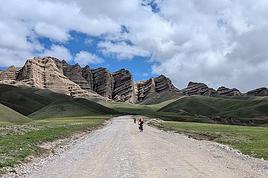
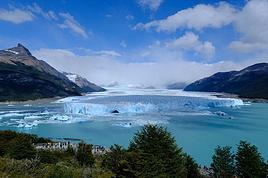
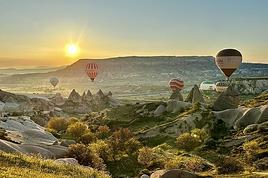



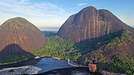

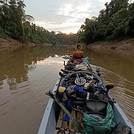


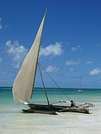
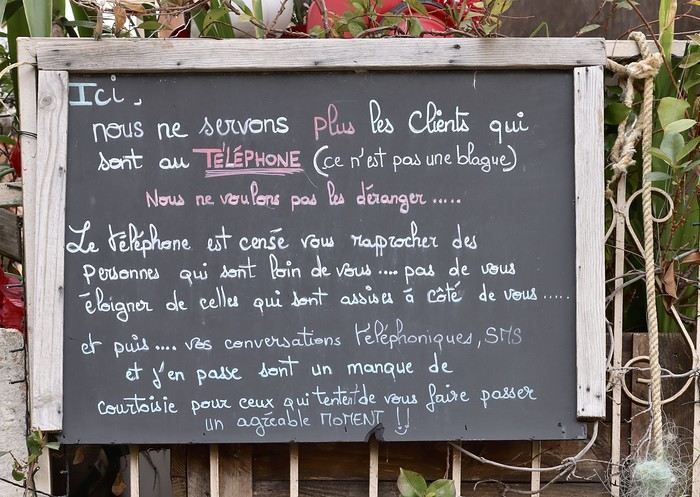 .
.
.
.