Well, here we are at the final stretch!!
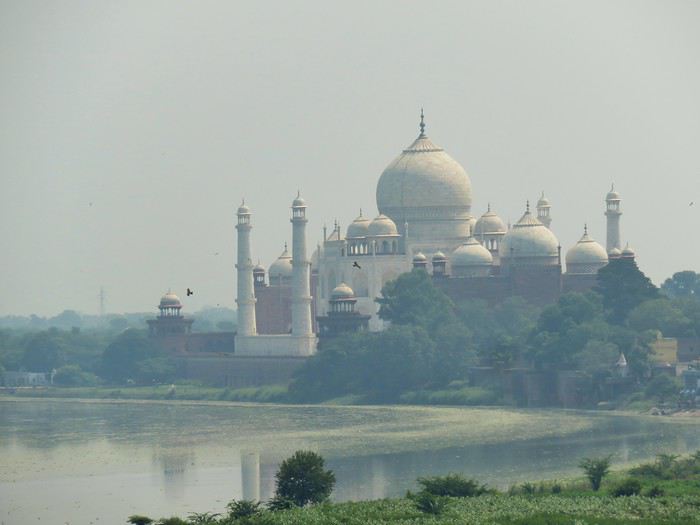
The Taj Mahal in AGRA... and everything they don’t tell you!!
Yep, today I’m gonna spill the beans on what’s behind the postcard!
To be honest, we really hesitated about coming here because when I read the Routard and Lonely Planet at home, they didn’t exactly make me want to jump on a plane:
1 – “Agra is the most touristy city in the country, and the Taj Mahal is one of the most visited monuments in the world, with 15,000 people... per day.” I mean, I love people one-on-one, but crowds? Hate ‘em!!
2 – Since tourism is pushed to the max here, “don’t expect to make meaningful connections in this city—you’ll just be seen as a walking wallet.”
3 – “You’ll get scammed everywhere because they’re *especially* creative here.” And they back it up with stories from a few years ago when some restaurant owners were *intentionally* poisoning tourists so clinics could bill their insurance!! The embassies eventually uncovered the whole scheme!!
With all that, we weren’t exactly thrilled.
But Agra was right on our route, and seeing the Taj Mahal in person? Worth a little effort.
So off we went by train, arriving Thursday evening.
I think Shiva, Krishna, Vishnu, and co. decided to punish us for our hesitation because we *completely* forgot that the Taj Mahal is CLOSED on Fridays!!
Oh, the geniuses 🤪!! That’s next-level cluelessness, especially since we’d both read it ages ago but totally blanked!
Well, we’ll adapt like we always do.
So Friday was Baby Taj and the Red Fort, and Saturday was the Taj Mahal at dawn, then a 3-hour drive to Delhi and our midnight flight to Paris. At least we’ll sleep well on the way back!
When we arrived, we took a stroll around the city—super clean.
We were 1 km from the Taj, on a paved, almost pedestrian-only street.
If it weren’t for the sewer smell everywhere, we might’ve thought we were on the Champs-Élysées—everything was *that* spotless 😉!
At nightfall, we headed to a rooftop and met a couple from Cognac who were on a year-long world tour.
Obviously fascinating (especially since Jordan had the gift of gab), and super helpful because they gave us tons of great tips for visiting the Taj 😛!!
The next day, we flagged down the first tuk-tuk we saw, Salim, who offered us a totally fair rate for the day’s tour.
Super nice, even if he *did* try to sell us the whole package (shop visits, “manufacturing” tours, sunset at “the middle of nowhere”...).
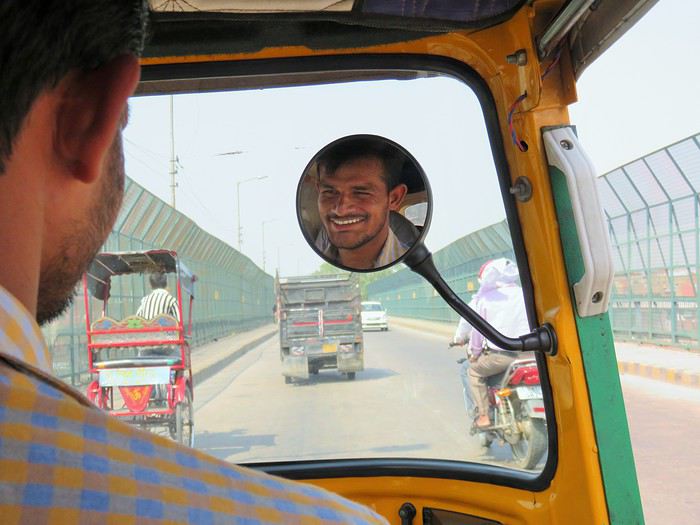
We politely declined everything (with a smile—and multiple *no*s), and he even came to say goodbye when we left. Not holding a grudge (okay, the tip *might* have helped 😄).
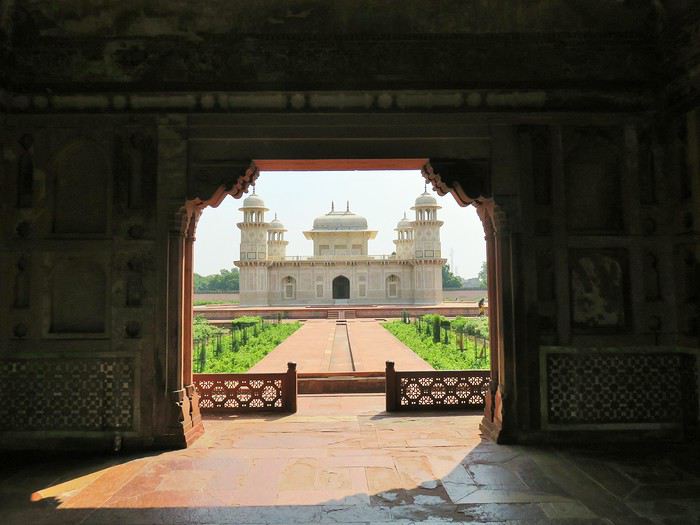
So Friday, we visited the mini Taj Mahal—adorable, really.
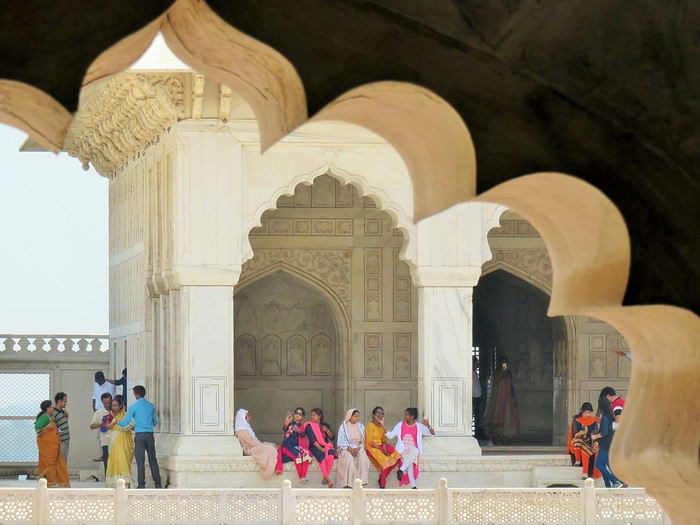
And the massive Red Fort, packed with hundreds of Indian tourists—and that was awesome.
Hindus, Muslims, Sikhs, all dressed in their “Sunday best.” The real India.
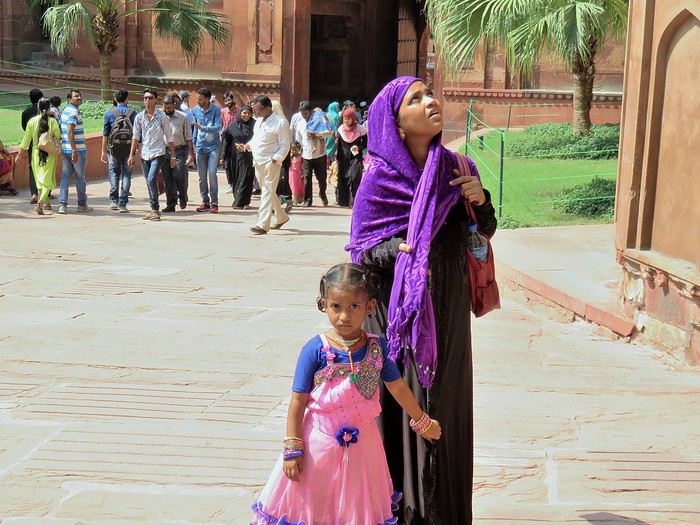
Because we totally forget in the West that this country has a middle class that travels, and millions of people way richer than us (they’re 1.4 *billion* people, after all!!).
For our last night in India, we found a local restaurant for our final thali.
When we walked in, there were 40 young guys at tables, and some came over to chat nicely.
Too bad you weren’t there to bet on where they were from—I challenge you to guess!
Turns out, they were from Bangladesh! University students aiming to become “businessmen,” touring the country for ten days.
Super friendly, but after warm goodbyes, I hear Loulou say: “For all we know, they’re the sons of the crooks who exploit kids in collapsing buildings!”
“Uh, thanks, honey, for that *positive* note”—how to kill the vibe in 10 seconds 🤪!!
Well, here we are—Taj day!
5 AM, pitch black, Chouchou and Loulou still half-asleep, and we’re the *first* ones there—yay (won’t last long, don’t worry!!).
Loulou queues at the ticket booth while I wait 100 m away at the entrance gate.
The soldier on duty says: “Wow, you’re here early!”
“Well, yeah, I’m only seeing the Taj Mahal once in my life!”
Then Indians arrive, three Chinese (one girl who’s hilarious and super friendly), some Frenchies, Americans—the whole world, basically.
As the clock ticks, the tension rises.
Four lines: two for men, two for women.
In the Indian men’s line, they start pushing!!
The Chinese girl asks every minute: “Can we go yet??” “No, wait,” we tell her!!
You can’t help but feel like you’re in the starting blocks at the World Athletics Championships 😛!!
Then the massive doors open.
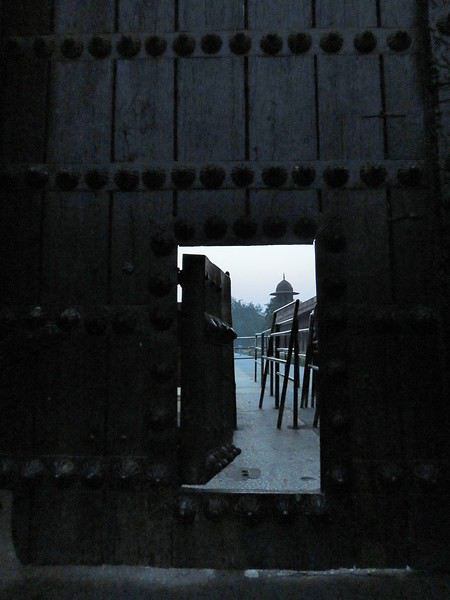
No stampede because you’ve got to go through security: pat-downs, bag checks (lots of stuff is banned)!!
Thanks to Jordan’s briefing, we only had our camera.
Once through security, the Chinese girl *can’t* resist and starts running... but she’s not the only one!!
There are three entry gates to the Taj, all converging at a central point facing the monument.
After security, you see the crowd running toward you from the other side.
No way—tell me this isn’t happening!! But it is, and it’s September, *off-season*!!
Only the Westerners and “Asians” are running—the Indians keep their dignity (though we speed up a bit 😉).
And there we are, in the first 50, let’s say. Luckily, it’s spacious—no fights for photos!!!
So yeah, we *did* get the Taj to ourselves... for at least 10 seconds 😛!
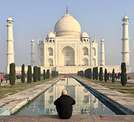
A glance at the serenity sold by the tourism industry.
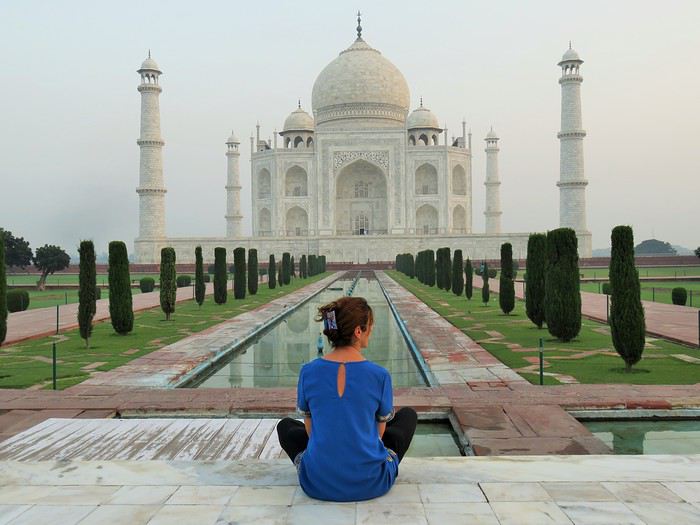
And the reality at 7 AM 😮!
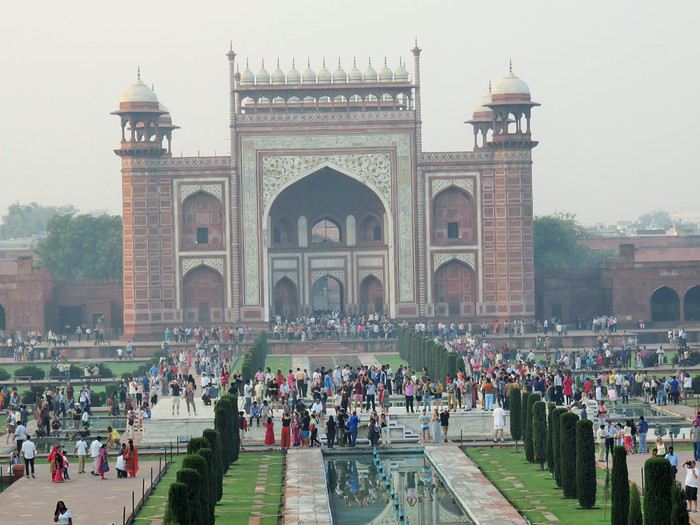
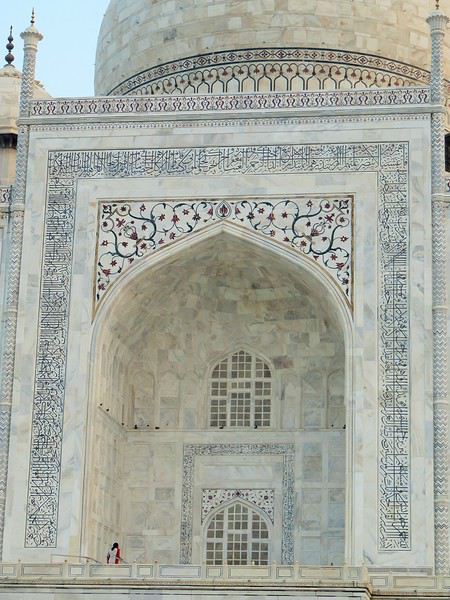
No denying it—it’s stunning, with those dimensions and all that carved marble—but honestly, all the chaos around it? What a circus!!
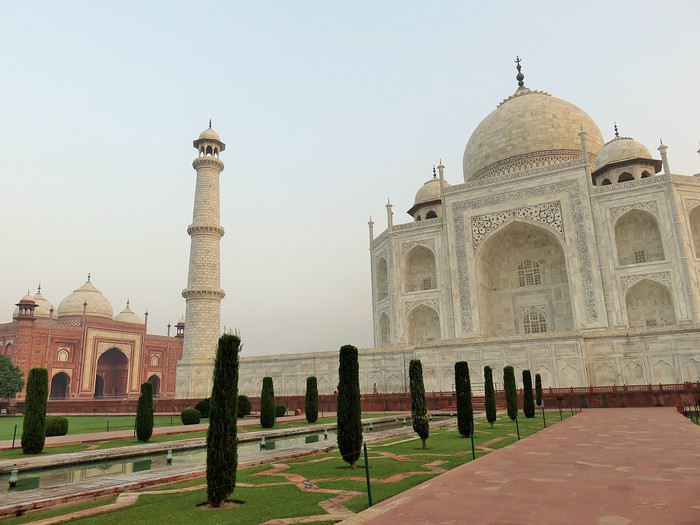
But it *is* breathtaking!!
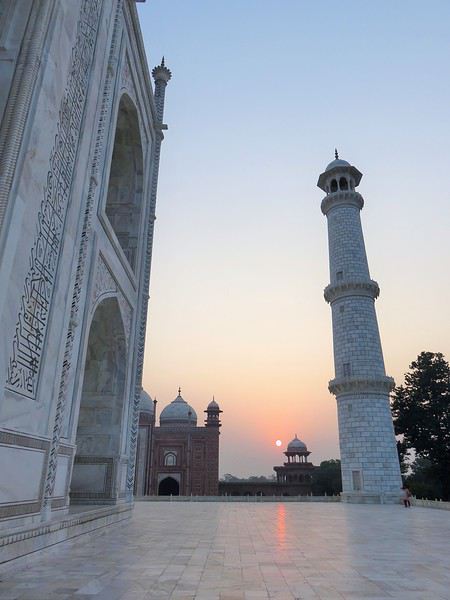
And no, the sun doesn’t rise *in front* of the Taj—it’s to the right 😉.
So yeah, we’re really glad we came, but it wasn’t our favorite part of the trip—even if Agra wasn’t as terrible as we’d feared!!
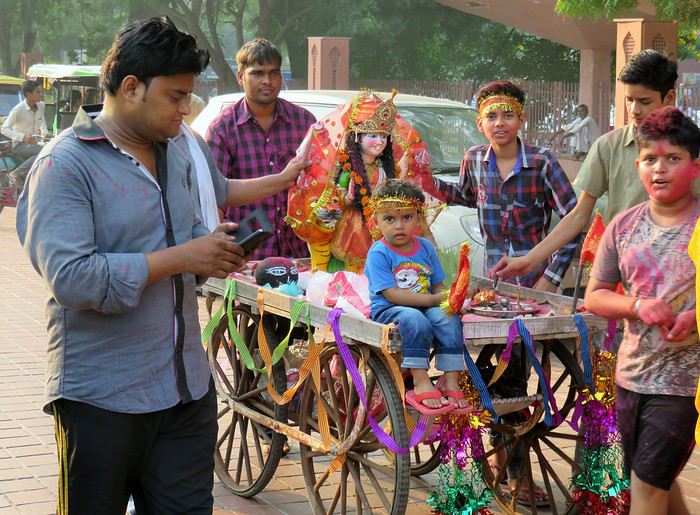
Well, that’s it, folks (don’t cry 😄)!
A huge thank you to everyone who added soul to this travel journal—because a journal without feedback is *so* boring for me!
Next March, we’re off to discover Cambodia—we’ll see if I’m as chatty!!
Obviously, if you’ve got questions, I’m all ears!!
Now it’s time to get back to work 😛
Hugs, friends, and thanks for following along









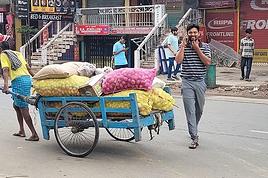
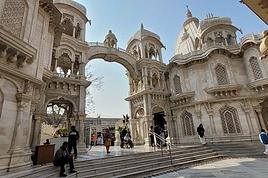
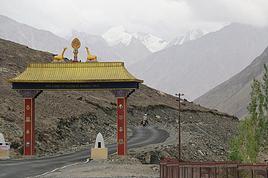

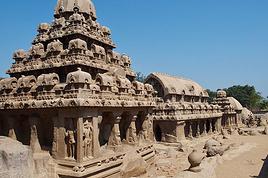





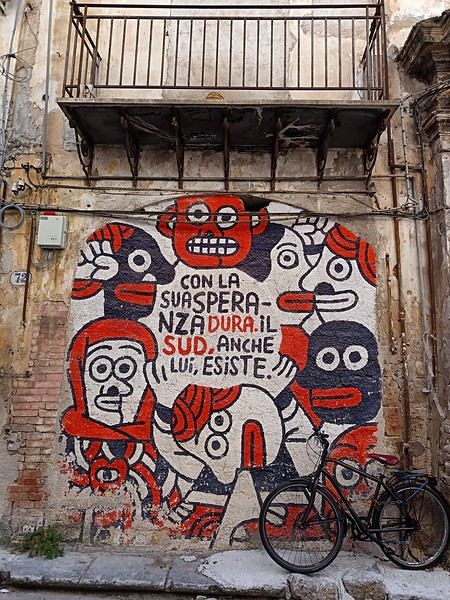 (In the heart of Albergheria, on a street every visitor walks down—lovely message from an unidentified artist)

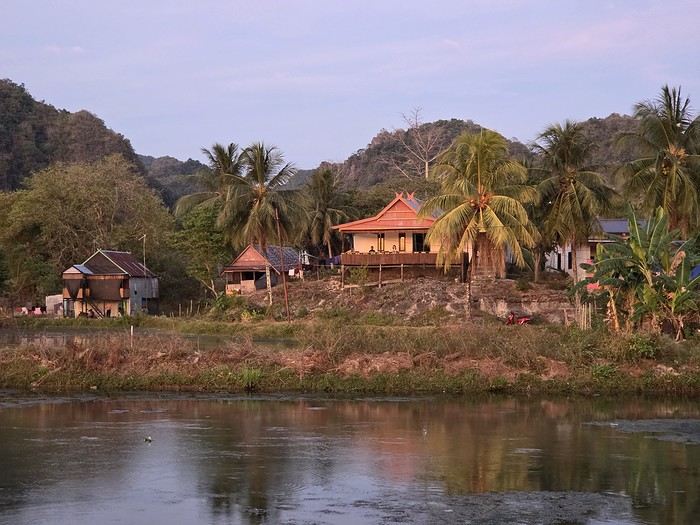
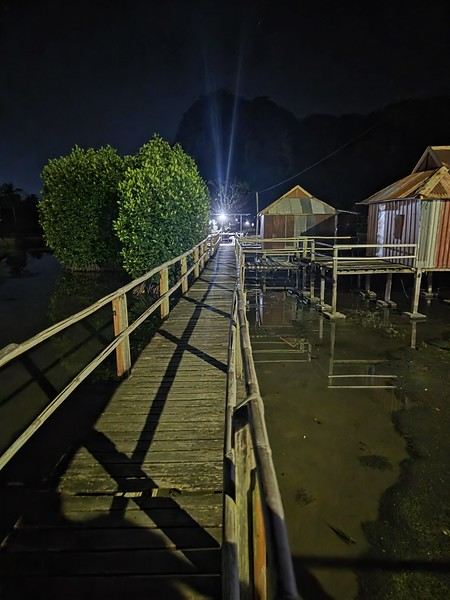
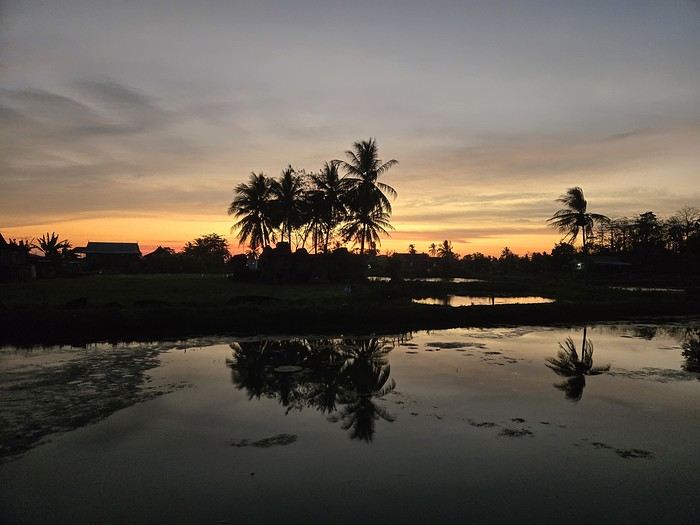
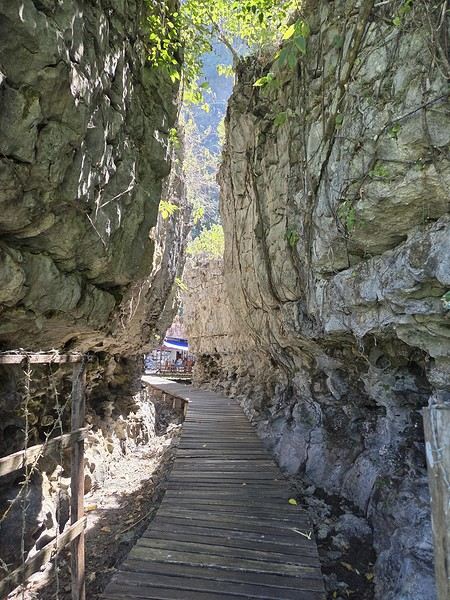
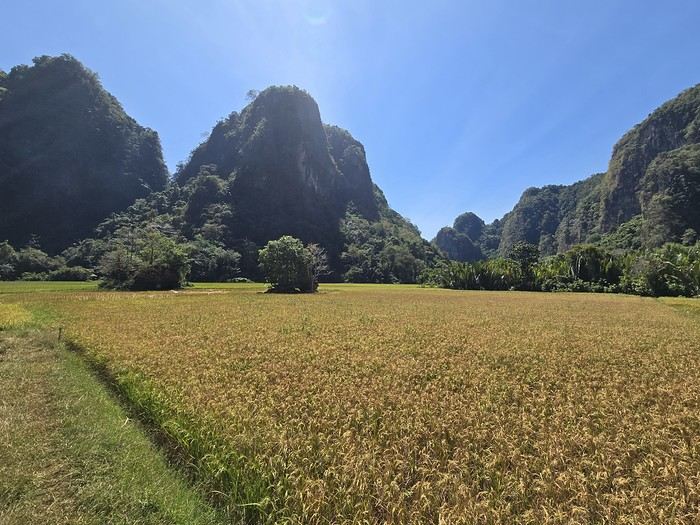
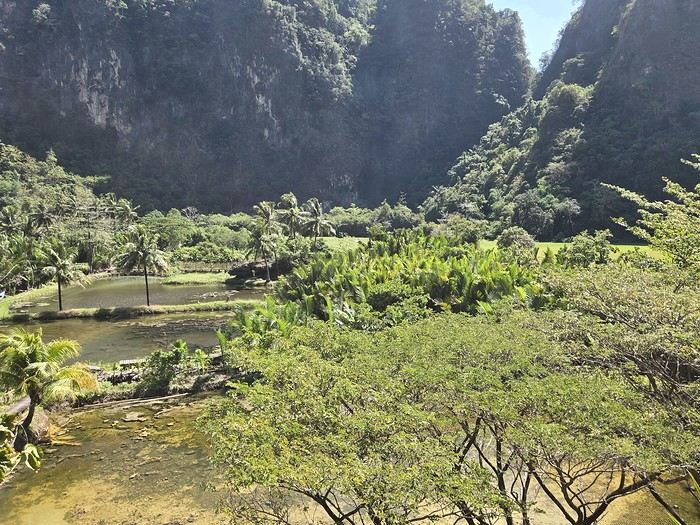
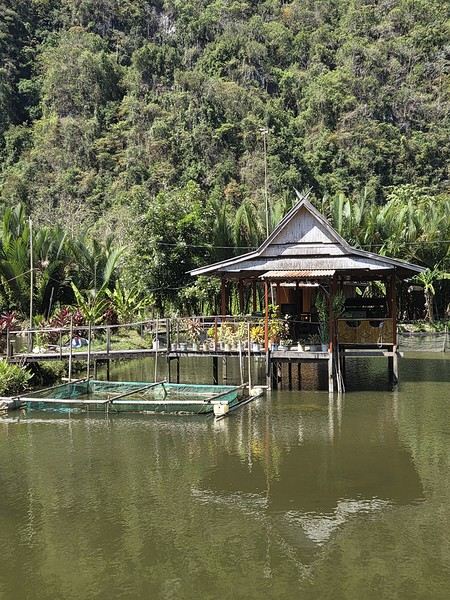
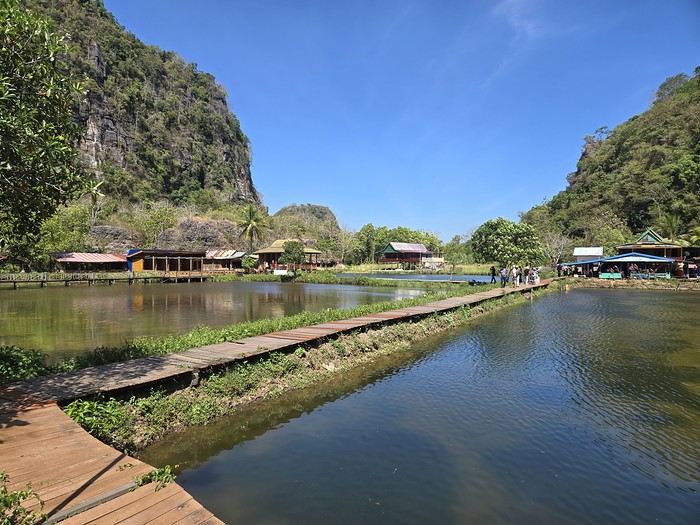
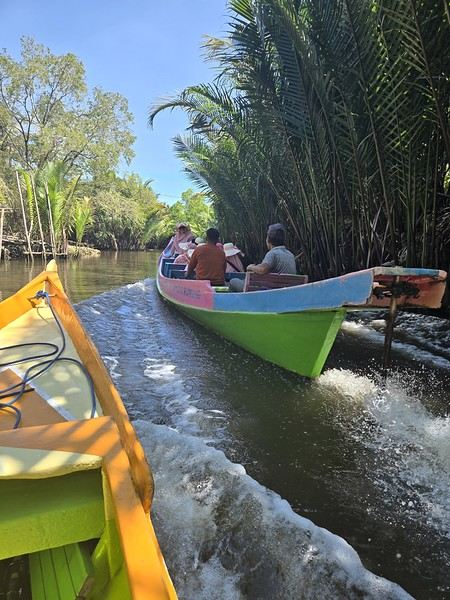 The karst site:

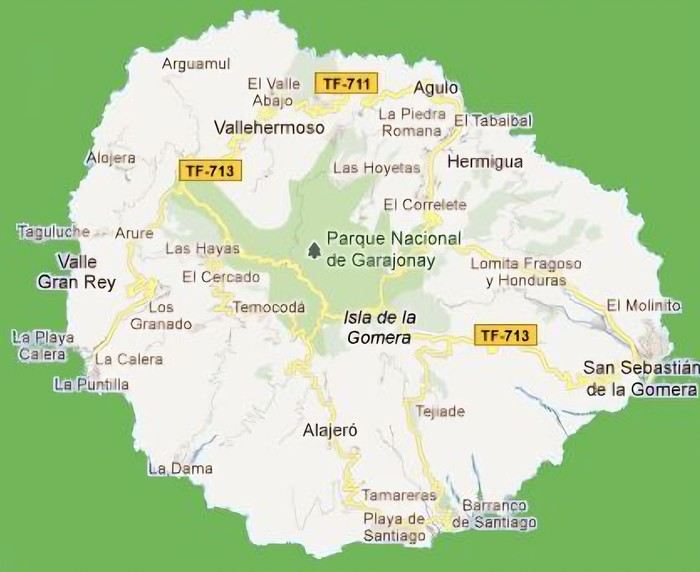 The large solidified magma massifs that shape the heart of the island have created a large depression more protected from the sun at its center, allowing the growth of a vast laurel forest, today grouped within the Garajonay National Park, La Gomera’s green lung, which has earned it the status of a World Biosphere Reserve. Its completely European appearance contrasts sharply with the rocky and tropical landscapes of the rest of the island. Thus, the climate varies greatly from one point to another on the island: in summer, you can quickly go from a dry and sunny valley at 35°C to a humid forest area at altitude at 18°C.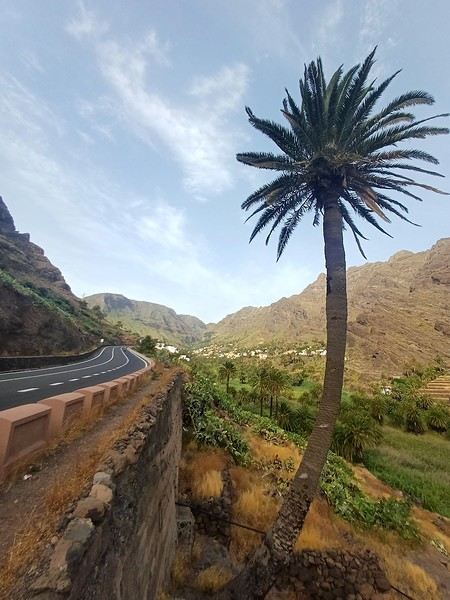
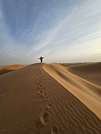
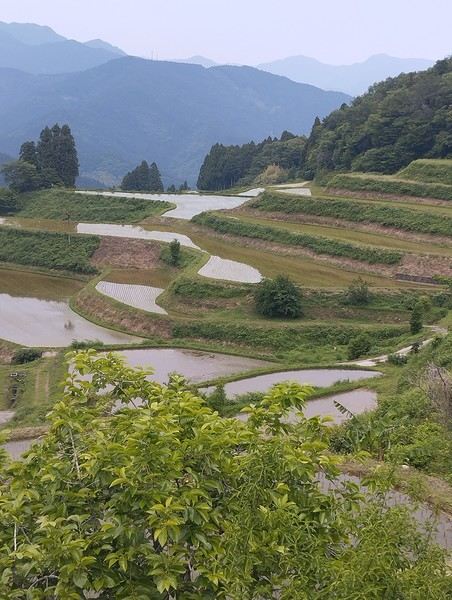
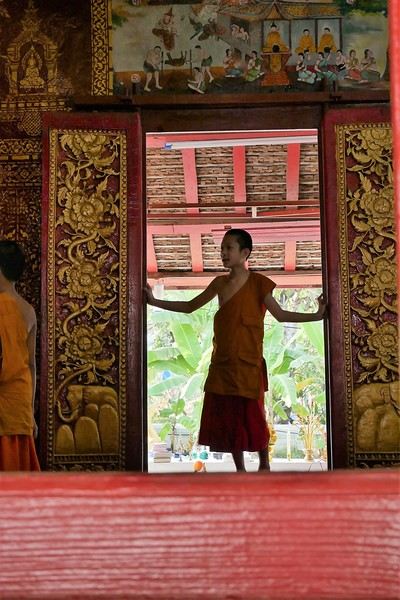 Come along, I'm taking you to this country where it's so nice to wander and slow down...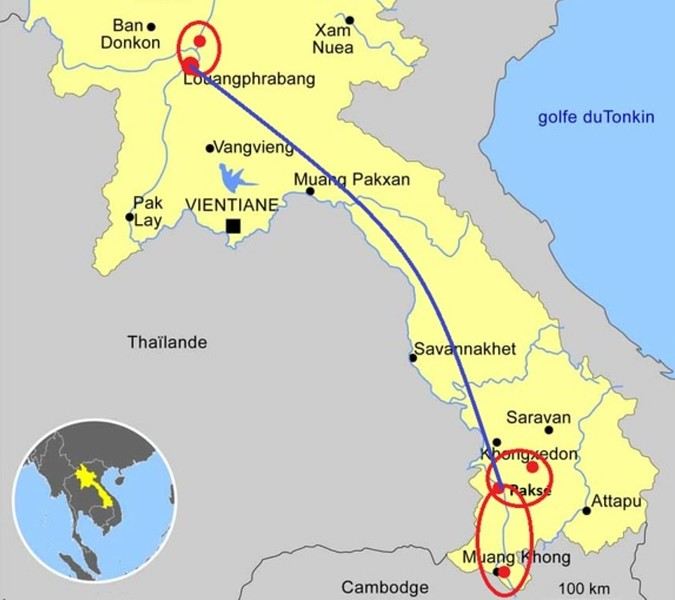



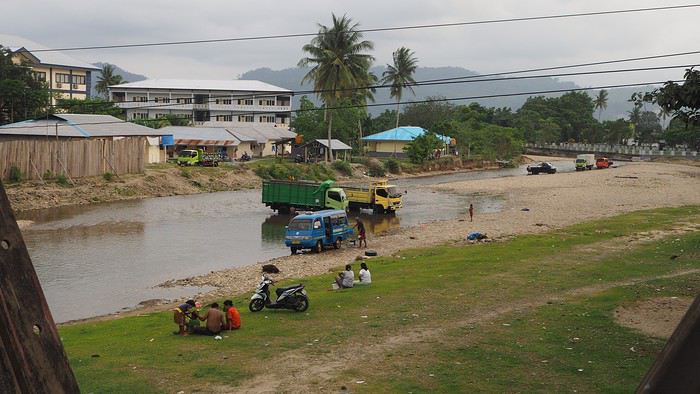
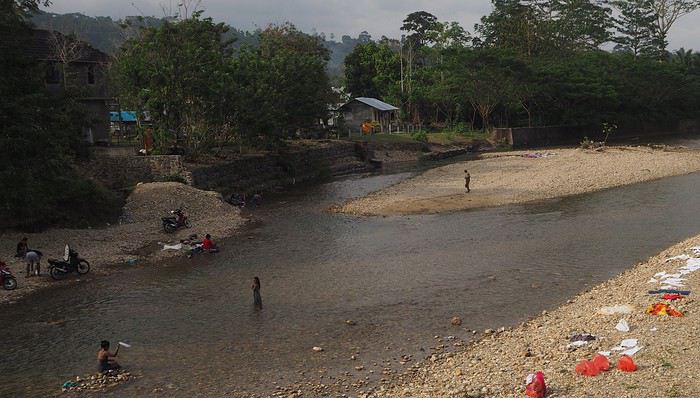 Laundry and trucks washed in the same stream.
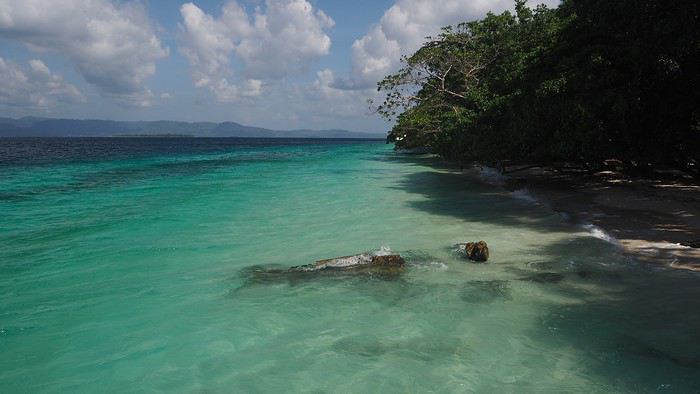
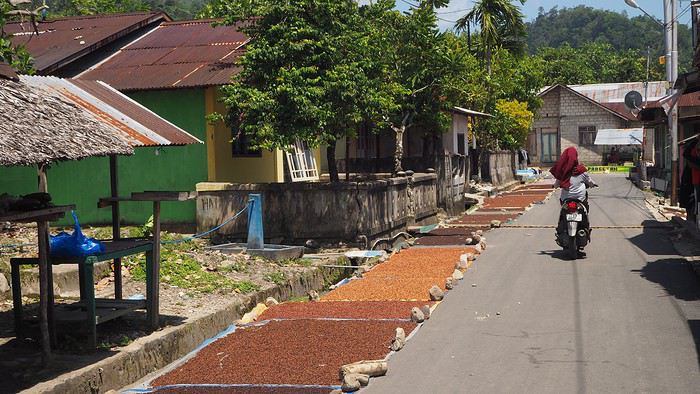
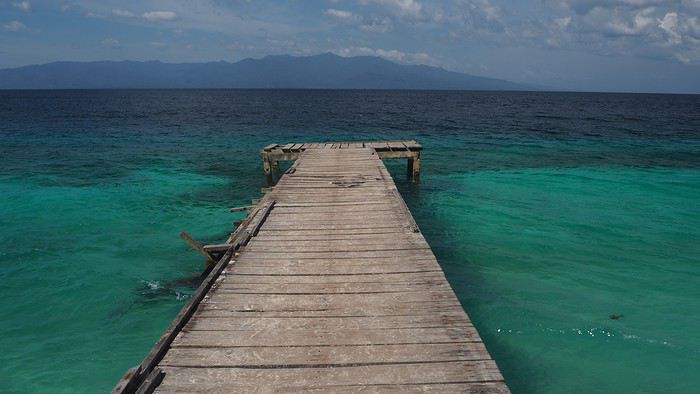
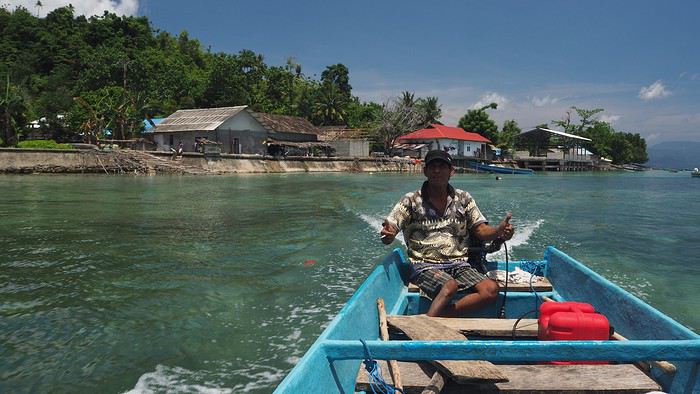
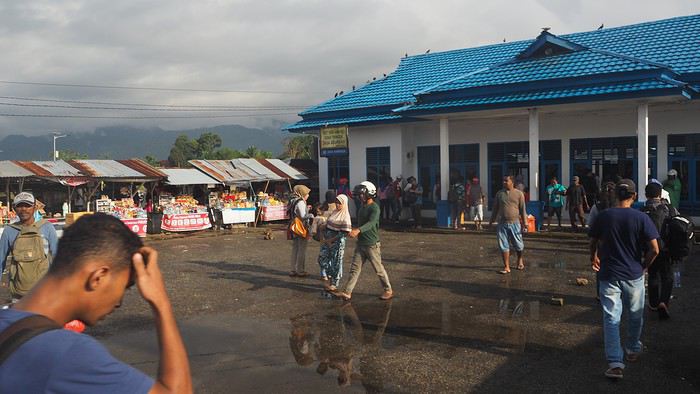
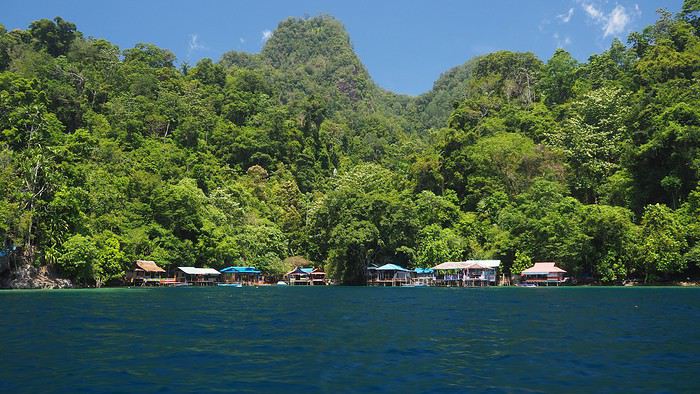 We’re greeted dozens of times with “Hello Mister”—a daily routine in the Moluccas. Every time we stop, we pose for photos to be saved on locals’ smartphones. They don’t see tourists often.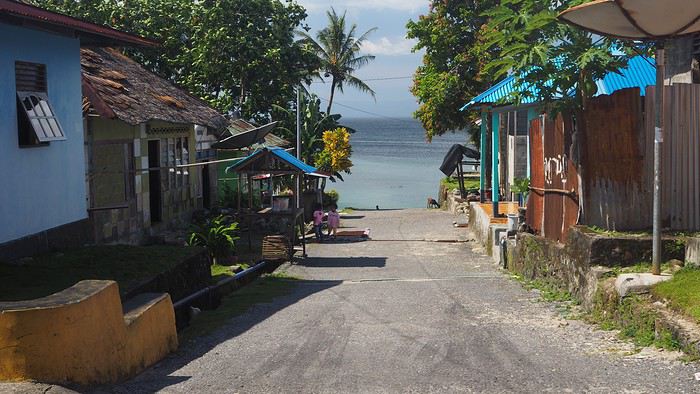









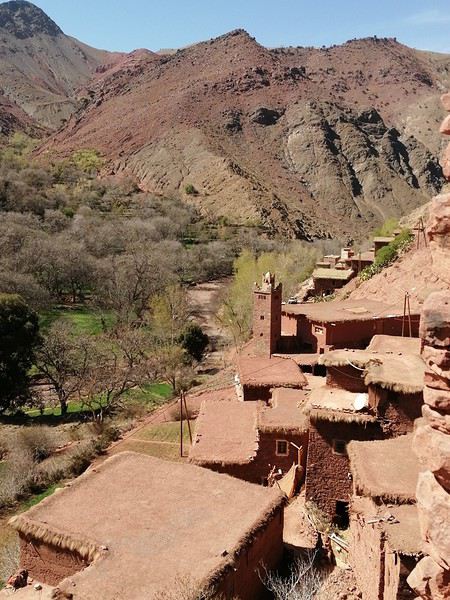
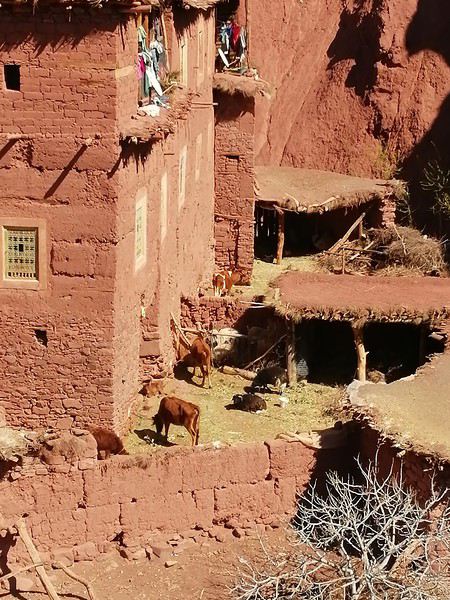
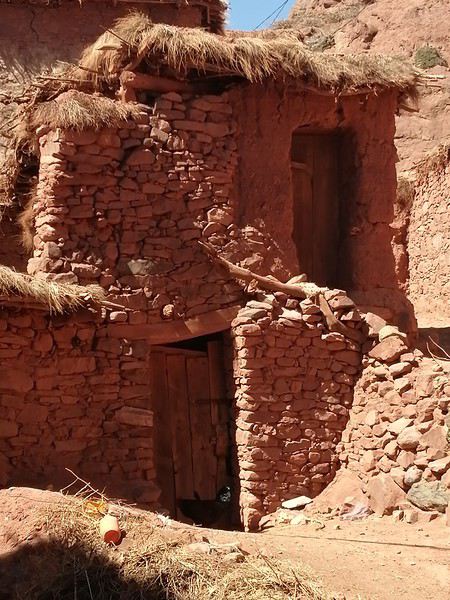 Several magnificent collective granaries have been beautifully restored. The warm colors of the stone capture the light wonderfully. It’s stunning!
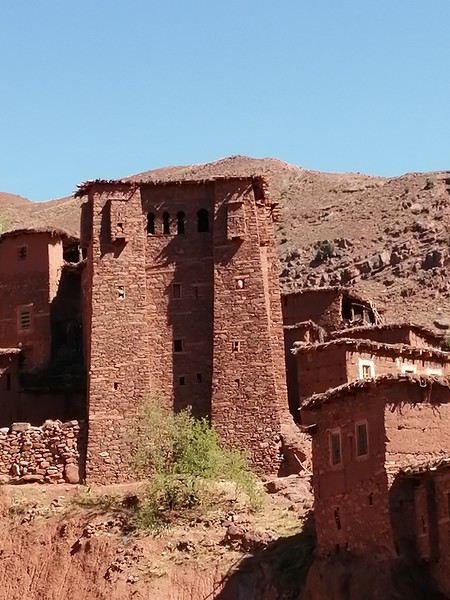
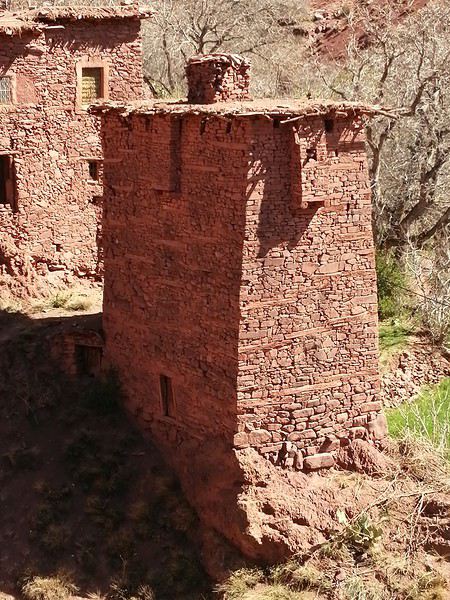

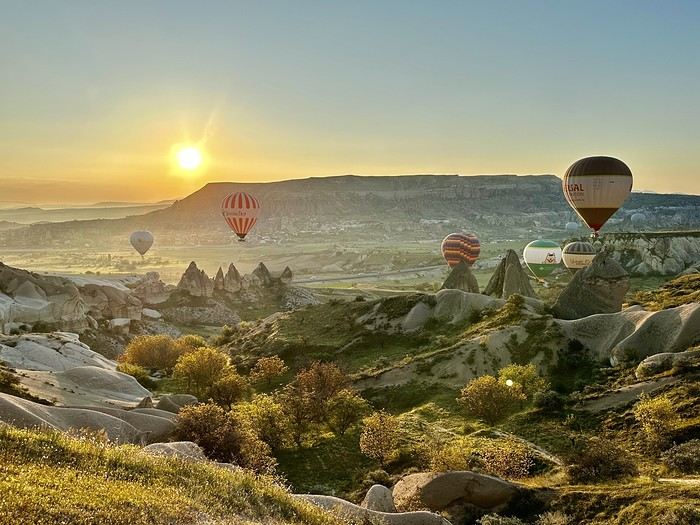 A little sneak peek?