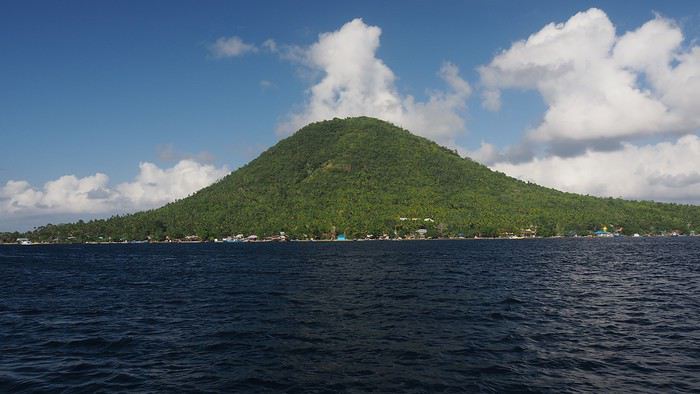
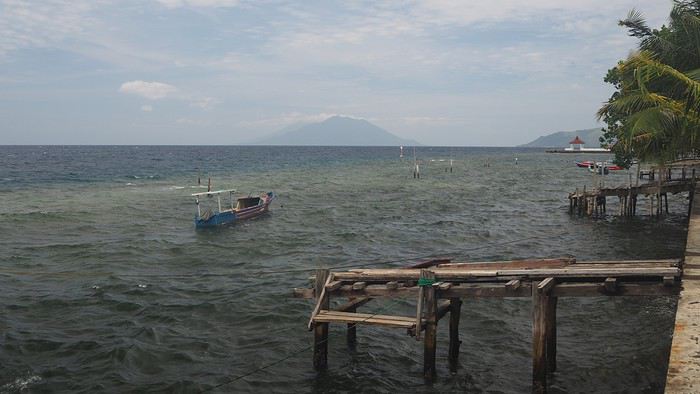
After "the unnamed archipelago" off Morotai, today's goal:
- Kolorai-Morotai by private boat
- Morotai-Tobelo (north Halmahera) by public speedboat
- Tobelo-Kupakupa: we'll see
Daily speedboat from Daruba (Morotai) at 8 AM.
Our host confirms the night before that her husband can take us to Daruba by boat. Good news.
Skeptical (you inevitably become so in Indonesia, where things rarely go as planned), I still ask to see the boat... Instead of the usual outrigger boat that can carry 5-6 people, it's a tiny dinghy with a minuscule motor.
I make it clear we can't board with two people and two bags on such a small boat. Plus, we're really not reassured—if the sea is rough, we're not sure we'll make it to Daruba.
Finally, he shows me the usual boat, I thank him, and hope he doesn’t change his mind overnight.
I ask our host to wake us at 5:30 AM for a 6 AM departure, knowing we have the speedboat at 8 AM. For this, I take a sheet of paper and write:
5:30 AM (I draw a clock)
6 AM Kolorai -> Daruba
8 AM Daruba -> Tobelo
She gives me big signs that she understands, so we’re reassured for the next day.
Skeptical (again), we set our alarm for 5:30 AM. When no one shows up 15 minutes later, I start making noise: the woman arrives, clearly surprised to see me—she completely forgot or didn’t understand.
I manage to explain we need to leave at 6 AM with her husband. She’s okay with it, so I ask her to show me the boat with her husband (the house is on the beach): we go out, and no one’s there.
Finally, she goes to wake him up (we could’ve kept searching the beach), and after refueling, we leave at dawn.
The sea is calm, everything goes well—we still remember our trip in the Togians two years earlier, caught in a storm between Malenge and Dolong to catch the 8 AM ferry. The fear of our lives, soaked in the boat amid waves, obviously without life jackets.
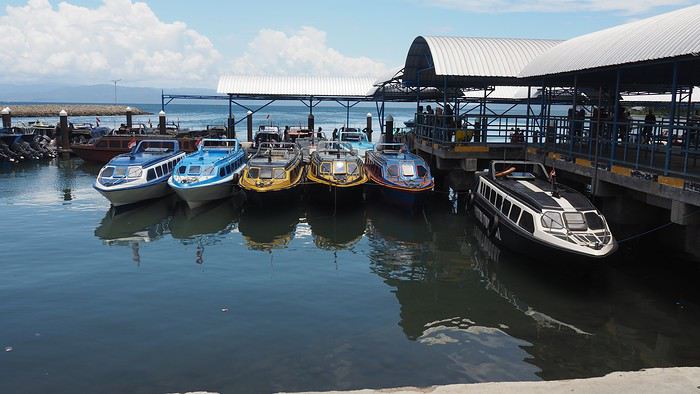
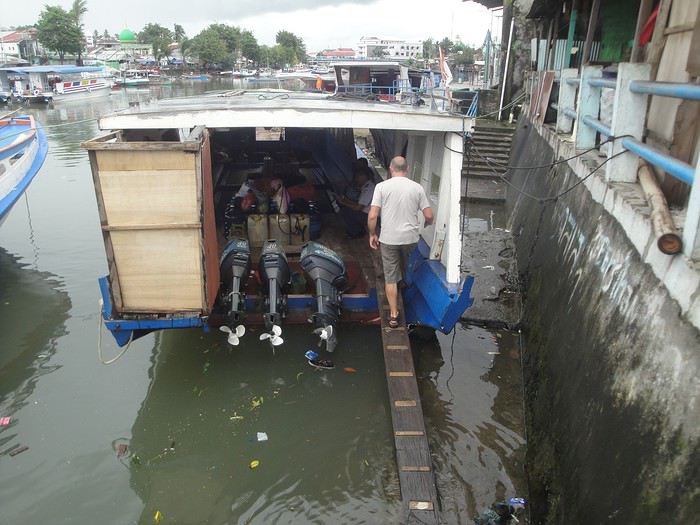
About an hour later, we’re at Daruba port (not on the beach like on the way there—I had confirmed before departure).
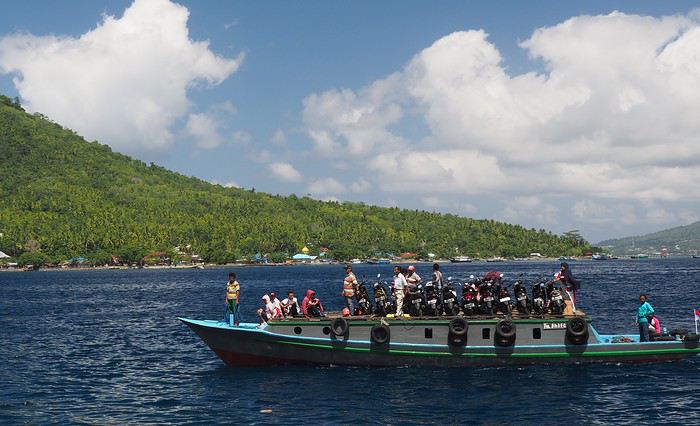
I’m quickly reassured—other people are waiting for the speedboat, one shows it to me, everything looks good.
The planned boat is replaced by another, then a third. Why? No idea, but departure is on time.
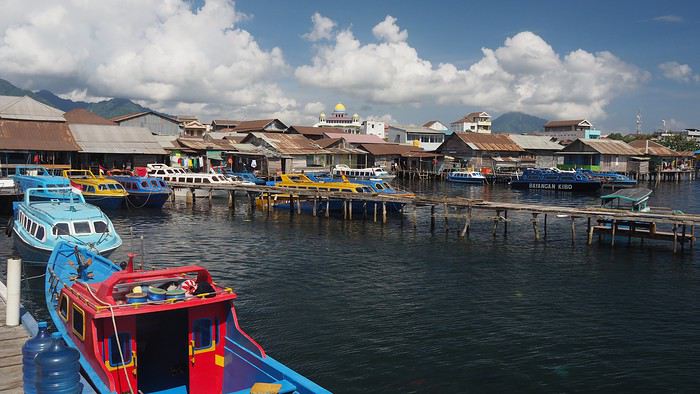
2+ hours later, we arrive in Tobelo with a calm sea (apparently, it’s often rough and very unpleasant).
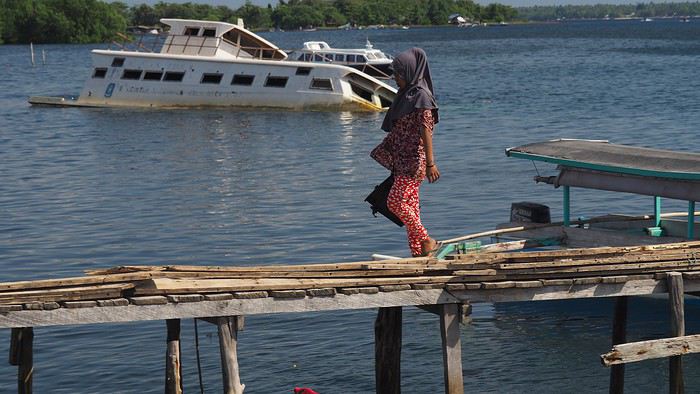
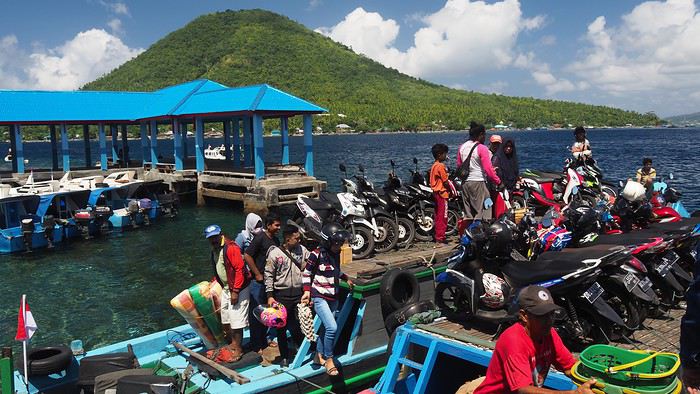
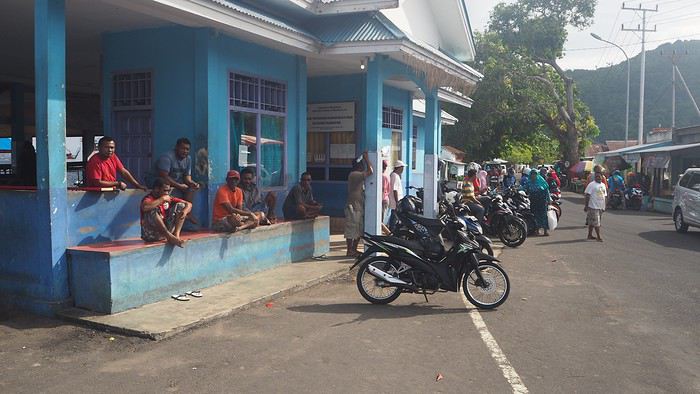
At the pier exit, we look for a taxi or a *kijang* (shared taxi). Since there are several of us, we quickly fill a *kijang* and head to Kupakupa.
I’d read on this forum that after the dramatic events of 1999-2002 between Christians and Muslims, there was a slight climate of insecurity in Halmahera in general and the Tobelo area in particular, and that Christians should be discreet in certain places. So, we’re cautious—no crosses, but we must look like Christians anyway 😎.
Indeed, there must have been tense moments in the past when churches and mosques tended to burn.
There are still destroyed churches, but we see mosques and, above all, huge churches under construction in the villages we pass through.
Everything seems to have calmed down; we never saw the slightest aggressive attitude, whether in town, villages, or the countryside.
On the contrary, as always, people come to talk to us and especially take selfies with us, which they’ll proudly show to their friends.
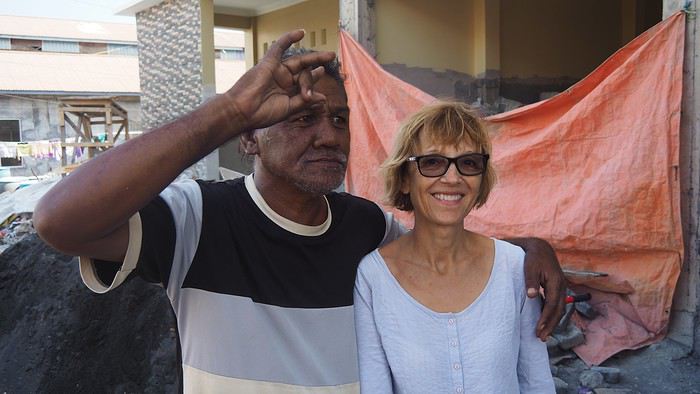
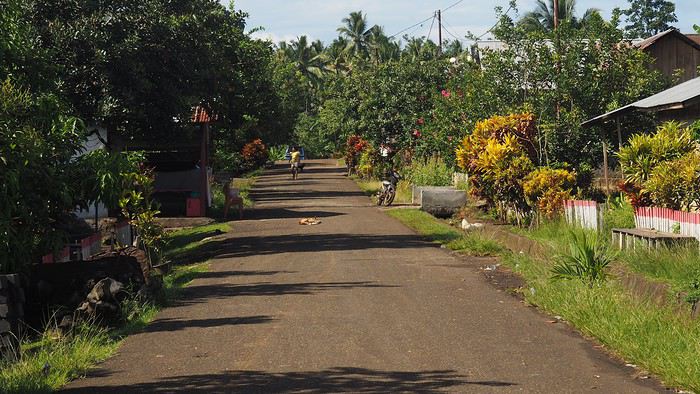
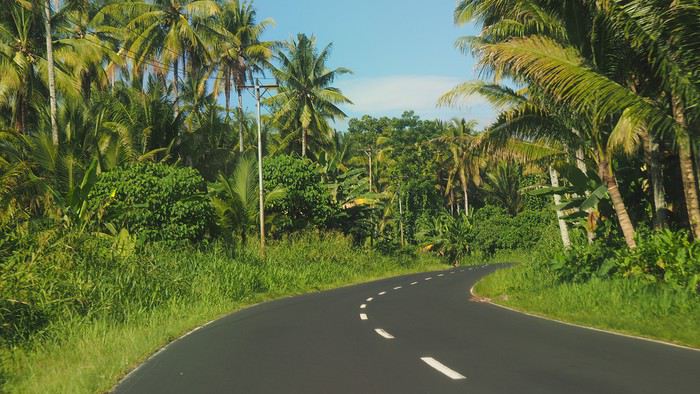
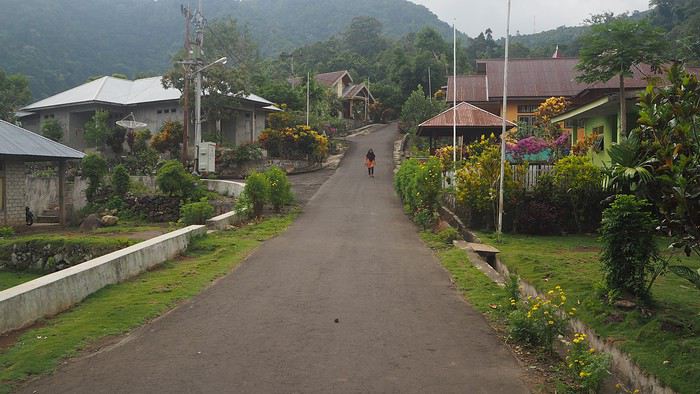
The road winds through a beautiful coconut palm landscape and passes through a few villages, then we leave the main road, and the *kijang* drops us at the end of a dead end. To the right, many Pertamina trucks enter (it’s the local small oil terminal); to the left, a dirt track. Surprised, we don’t feel like getting out in this remote spot (again, we remember last year when a taxi dropped us on a forest track, alone, 10 km from the nearest village, at night, in front of a... closed hotel. Fortunately, everything ended well).
A few young girls chatting in the shade confirm that Kupakupa Cottages is indeed here. After a 500-meter walk, the sea appears, then the bungalows. It’s open, and a girl calls the boss: a surprised older white man arrives. Just like my English accent always gives me away as French, in two sentences, I detect a German!
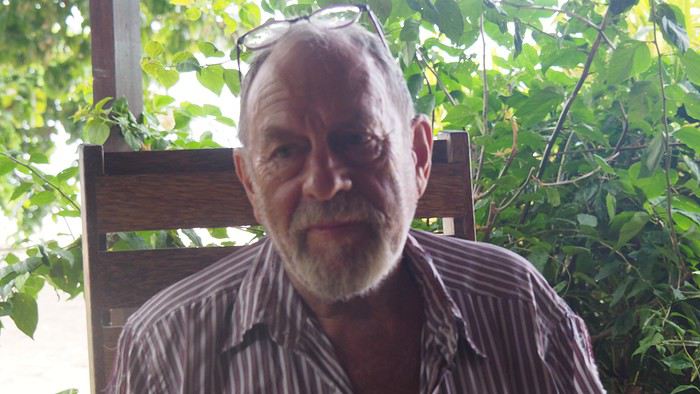
Lutz (a bit blurry!)
I understand then why Bernt in Ternate recommended coming here—he’s a friend of Lutz’s (there can’t be many Germans in the Moluccas).
He settled in Kupakupa in 1993, left in 1999, and returned in 2003 when peace was restored.
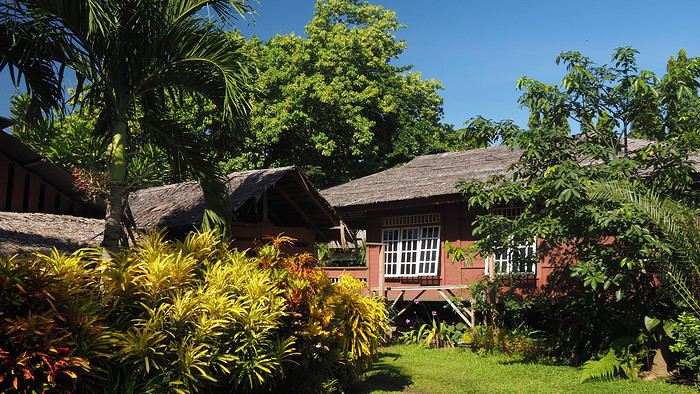
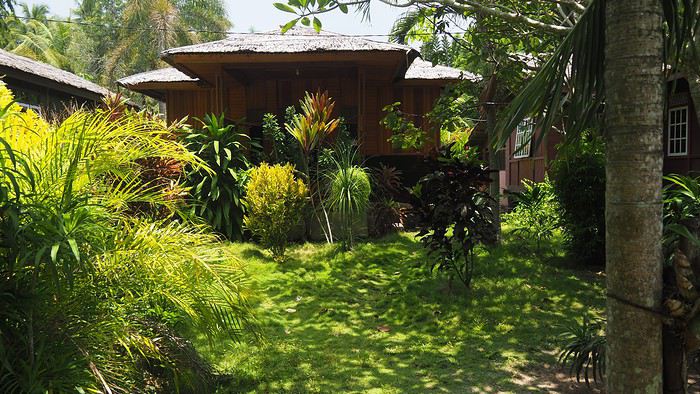
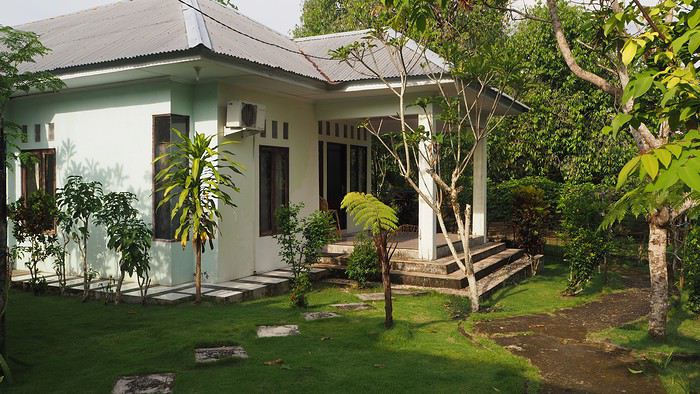
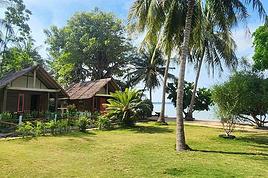
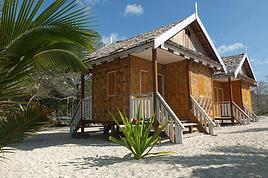
There are about ten bungalows—the simplest ones right on the beach, the more comfortable ones in a lush, beautiful garden adorned with flowers, trees, and shrubs, and there’s even a greenhouse full of cacti: that’s Lutz’s passion and occupation.
We’re the only guests, as usual.
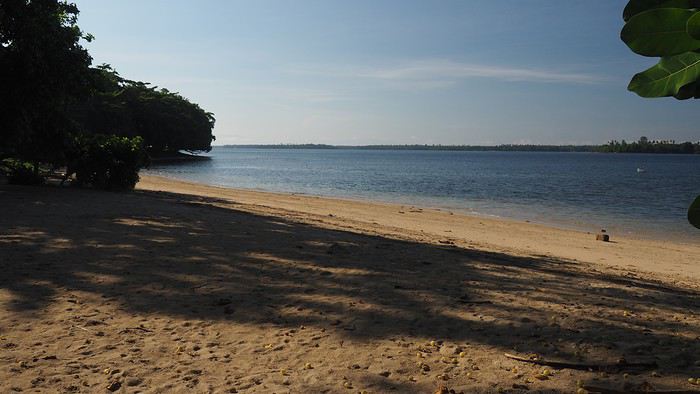
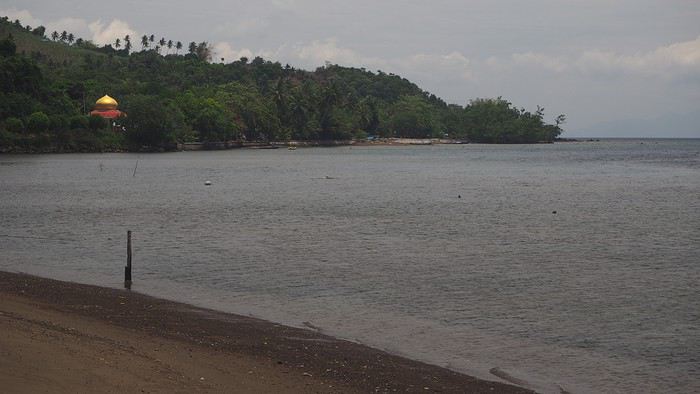
The beach is beautiful (though not as much as in Morotai’s atoll, sorry 😊), in a sheltered bay, deserted, well-shaded by large trees, with a small snorkeling spot 200 meters to the left.
Further to the right is the small oil terminal, but no smell, no pollution, no noise—just don’t look.
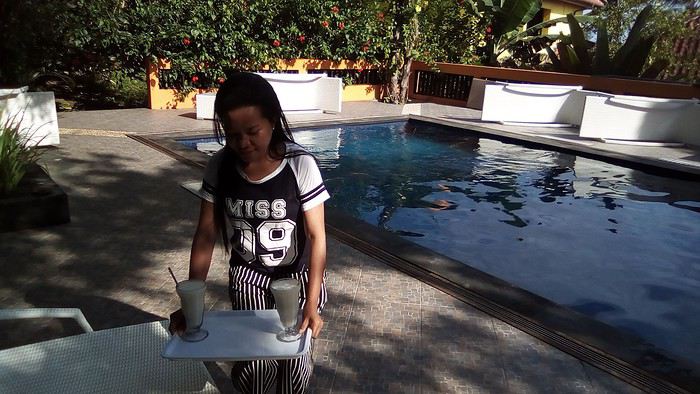
You can lounge in a good armchair watching the sea, drink excellent fruit juices, and eat exceptional cuisine prepared by the very friendly Davy, a young woman who’ll also be our guide. A good enough reason to stay here a few days (especially after the cold rice-fish at Kolorai).

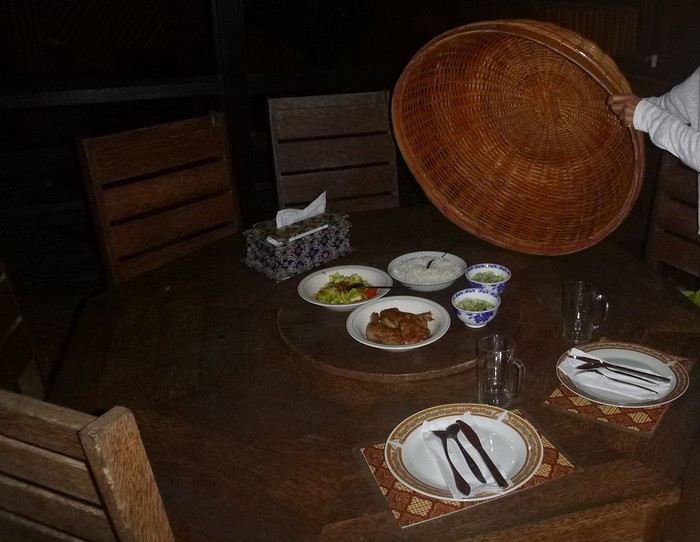
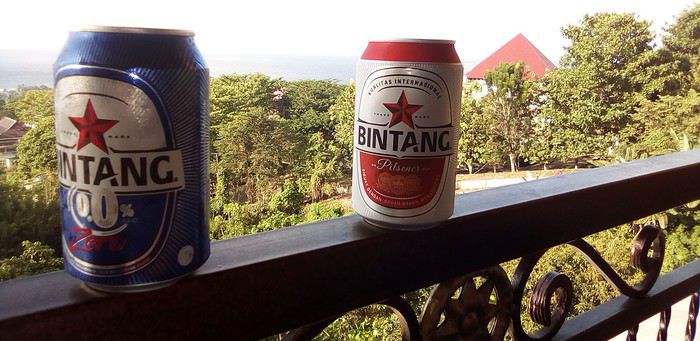
Plus, Lutz offers us beer... obviously, I have to accept after days of withdrawal on the islands! 😛
With everything I’d read about religious tensions and the risks of drinking alcohol in public in this region, I’m rather surprised. And when he runs out of beer, Lutz takes his scooter to a small shop (which doesn’t just sell Bintang—there’s even a choice of beers) in Kupakupa village.
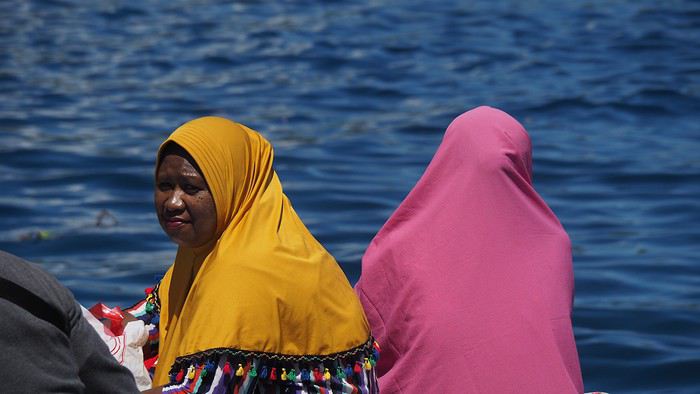
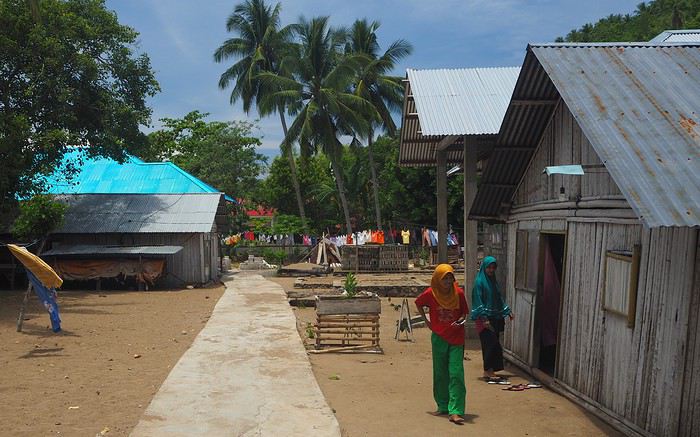
The clothing also surprises us: while we expected to see veiled women like in Ternate, Tidore, and the Morotai islands, we see young women aged 16-25 dressed very skimpily. 😉
And we’re not done being surprised because on Sunday:
- The beach is invaded by men who come to drink beers bought at Kupakupa Cottage (and obviously left there, which means Lutz cleans the beach every Monday).
- Many young couples stroll hand in hand under the trees, far from the usual behavior in these parts.
One evening, Lutz offers to take us to Pulau Meti, a small island a few kilometers long where a Frenchman has created a guesthouse in a magnificent spot. The next day, he decides it’ll be better with Davy, who’s organized everything.
Bernt had also told us about it, so we think if we like it, we can come back for 2-3 days.
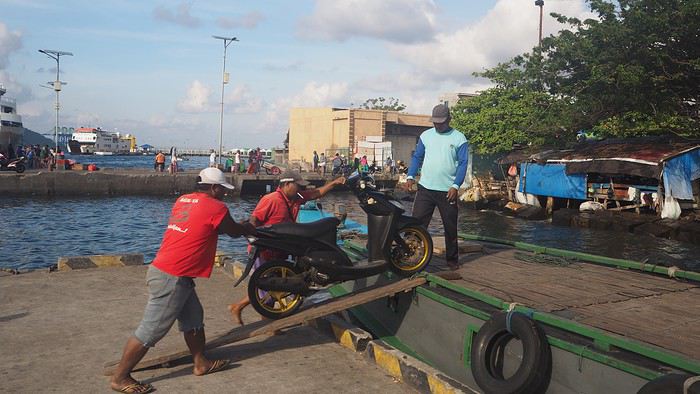
30 minutes by scooter and a few villages later, we arrive at the pier where a boat is waiting (how great organized trips are in the end 😏):
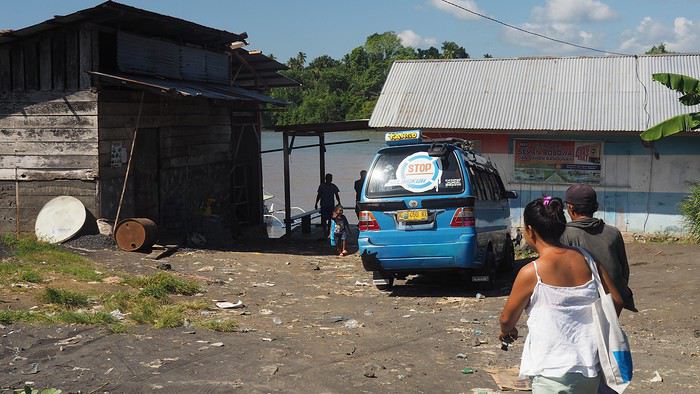
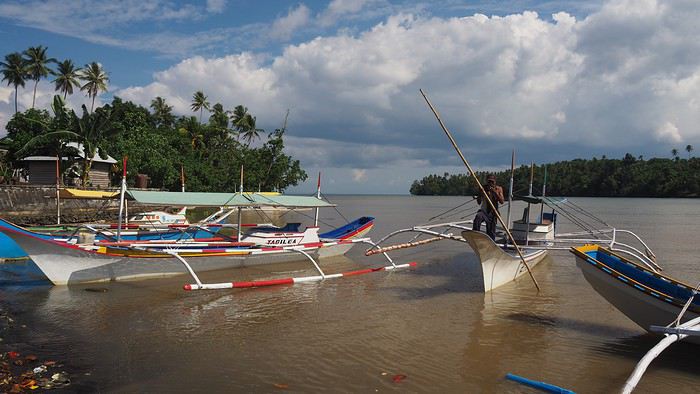
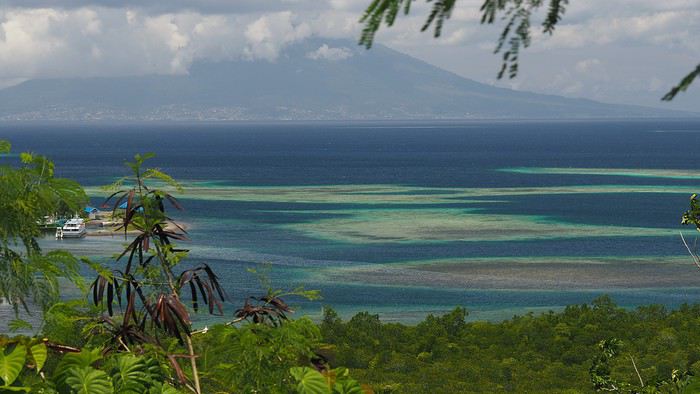
We reach Pulau Meti in about half an hour, circling several very beautiful small islands. The boat will come back to pick us up in the afternoon.
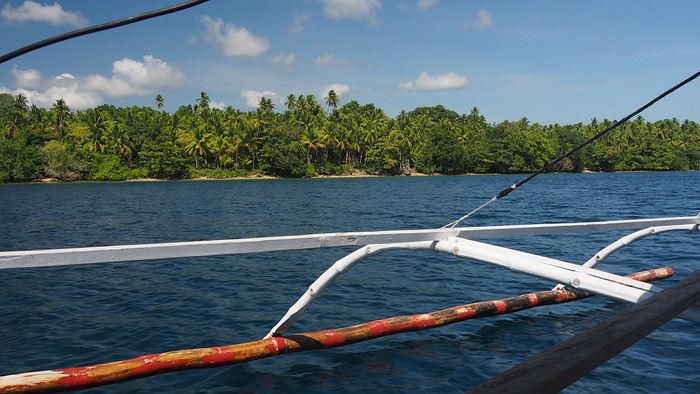
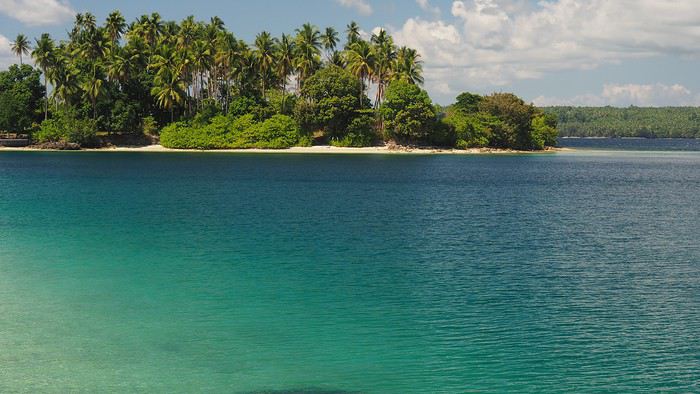
The Frenchman isn’t there—he’s gone for a few days with clients to go diving, so we give up on the idea of coming back.
The guesthouse is simple but built according to local customs: one long palm bungalow with light partitions, not completely closed to cool the interior, very pretty shared outdoor showers, shared toilets, a reading room, etc... all along a small white sand beach with a (small but beautiful) snorkeling spot, coconut grove in the back.
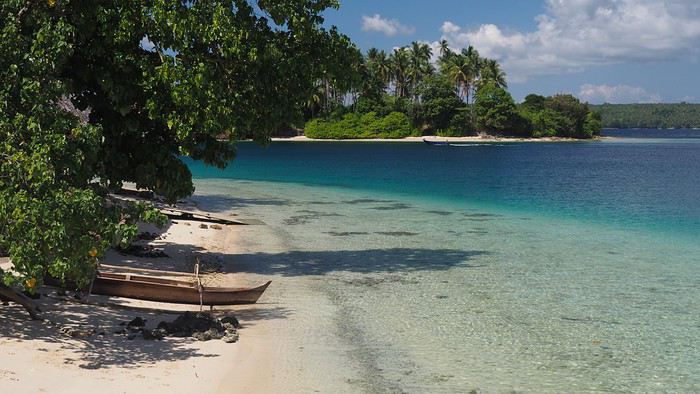
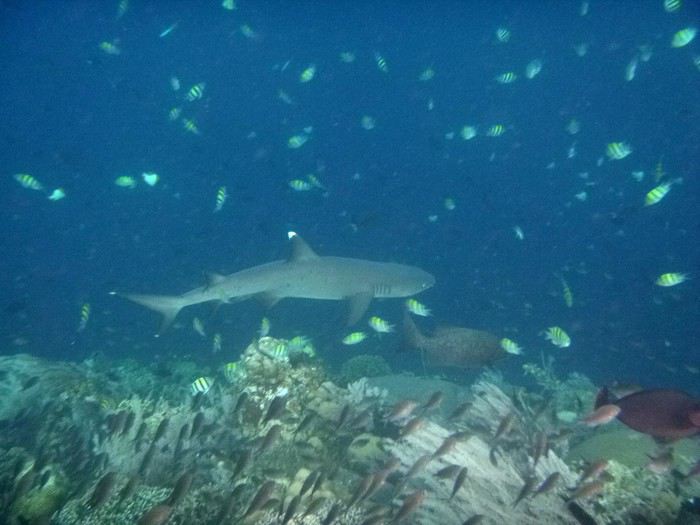
Right in front, we swam in an incredible school of fish—probably tens of thousands. Amazing (I’d seen this in documentaries, didn’t think I’d see it with my own eyes) and almost stressful when you swim through it (too bad my "waterproof" camera had no battery).
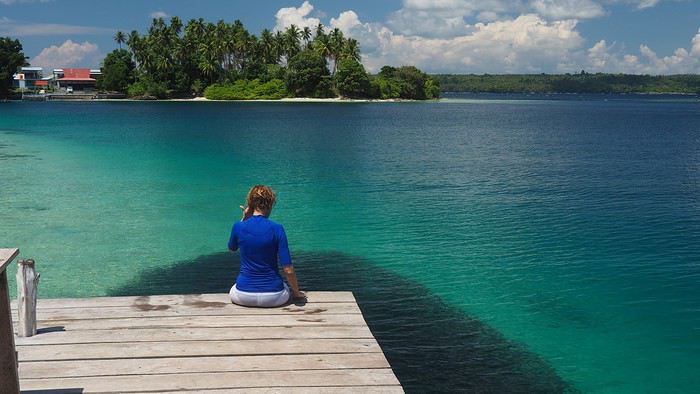
As expected (if you can say that), the return boat doesn’t come back to pick us up, but the advantage of "being on an organized trip" is that we don’t have to worry—Davy takes care of everything and tells us we just have to walk through a beautiful coconut grove to the village 2 km away.
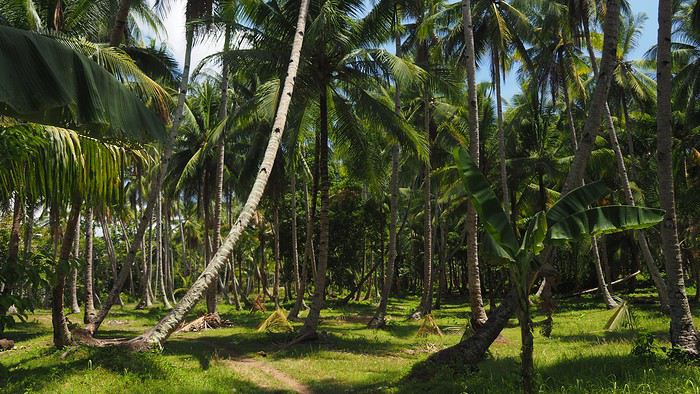
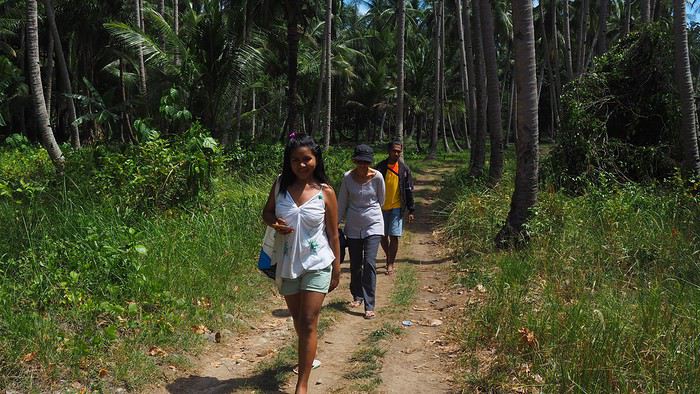
Davy explains that the Japanese had built a landing strip on this island—the strip is now the village’s main street, which is therefore very long:
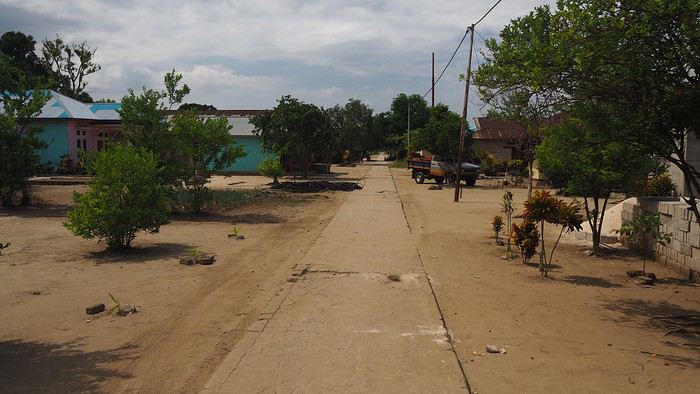
The Japanese landing strip
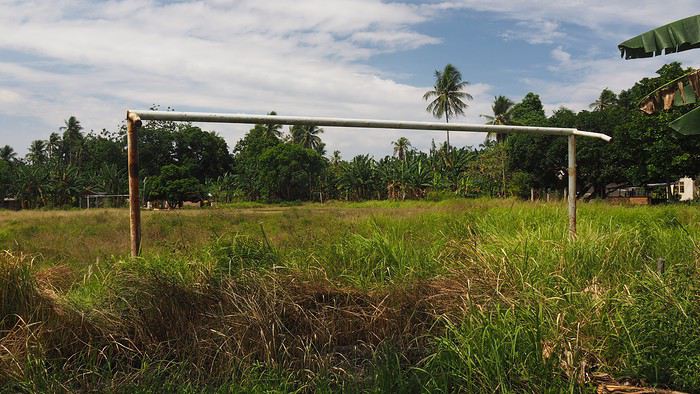
The Japanese were also supposed to build a soccer field in addition to the landing strip—this one isn’t great!
We then wait for the public boat, hoping to beat the storm—it’s getting really dark:
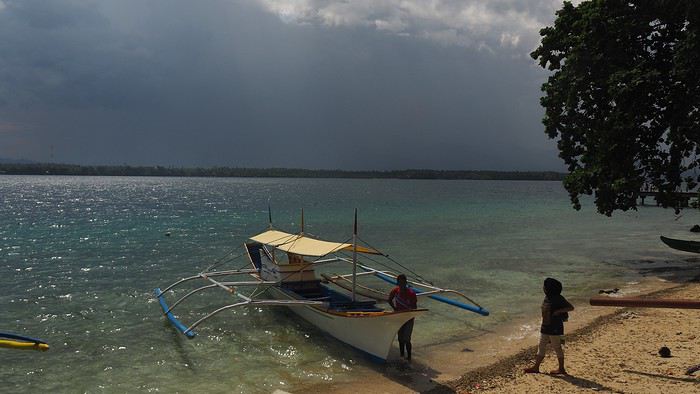
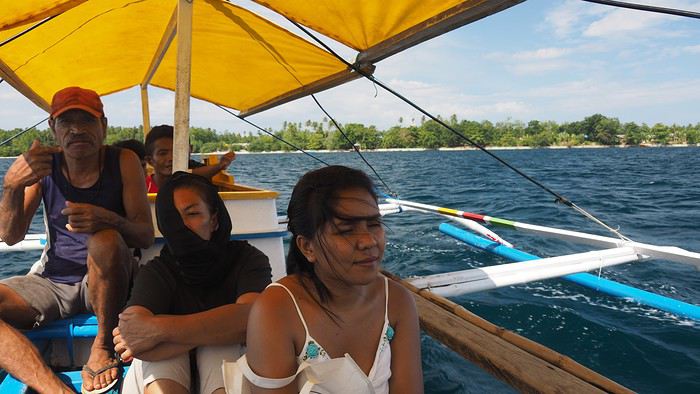
Davy, our guide-cook, and villagers on the public boat
Back to Kupakupa.
Practical info:
- I don’t think Kupakupa is a destination in itself—the long journey isn’t worth it, but it’s a really pleasant stop on the way from Morotai to recharge with good food. The LP (Lonely Planet) gives a phone number, I don’t know if it works.
- Pulau Meti might be worth a trip on its own. I don’t know how to contact the Frenchman, I don’t know if there’s a phone, obviously no email (internet was only in Ternate during our entire stay).
After these few days of complete rest in Kupakupa, next episode:
- Return to Ternate
- Discovering Tidore by scooter



 For 75,000 IDR, you get an excellent full meal: salad, fish/meat with sides, fruit for dessert, and water. We also just had a single dish for lunch... but I forgot the price.
For the taxi to Sofifi, no problem—like always, we ask the owner, who calls someone he knows at our preferred time: 500,000 IDR—about 4 hours to the boat with 2-3 photo stops.
For 75,000 IDR, you get an excellent full meal: salad, fish/meat with sides, fruit for dessert, and water. We also just had a single dish for lunch... but I forgot the price.
For the taxi to Sofifi, no problem—like always, we ask the owner, who calls someone he knows at our preferred time: 500,000 IDR—about 4 hours to the boat with 2-3 photo stops.
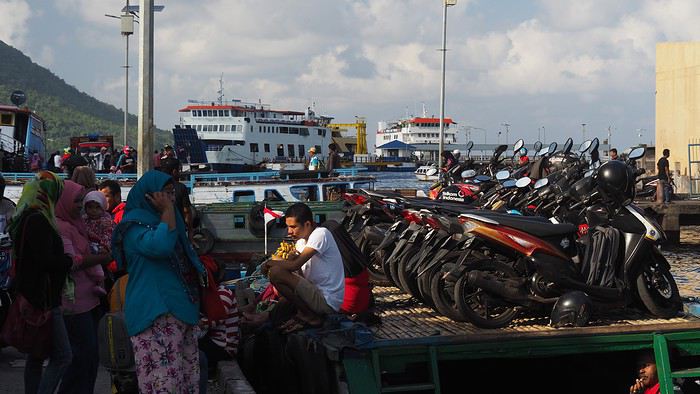
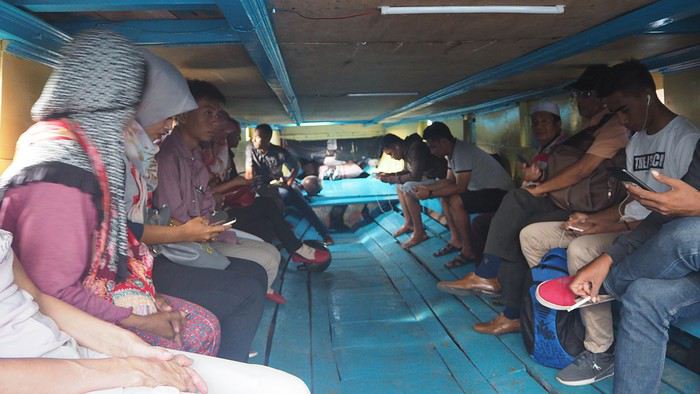 Minimum comfort.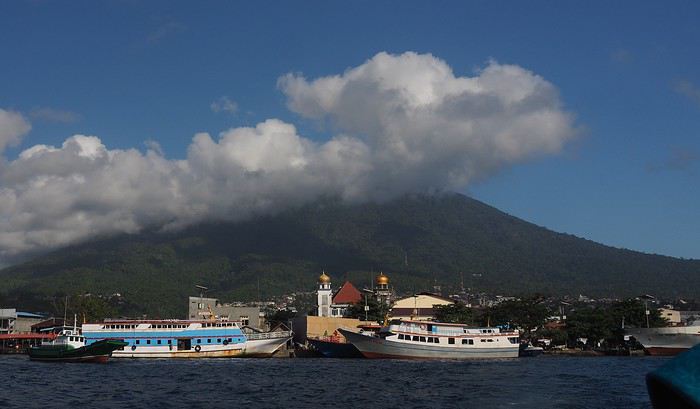







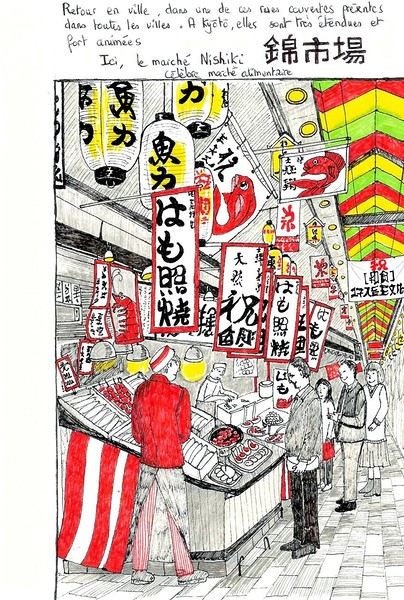
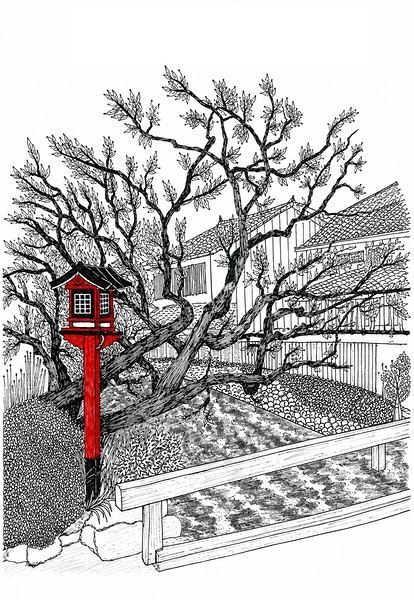 I’m inviting you on a stroll through my drawings—a completely subjective, far-from-exhaustive, and totally personal take, since it’s based on my own sketches. I put this travel journal together after returning in late 2024, mostly using felt-tip pens and pencils, with a few collages thrown in. I worked from our personal photos.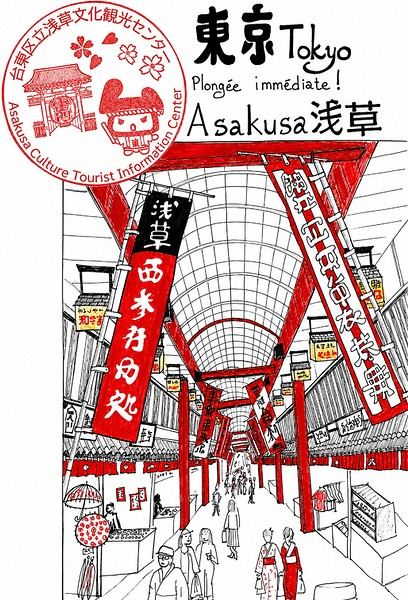
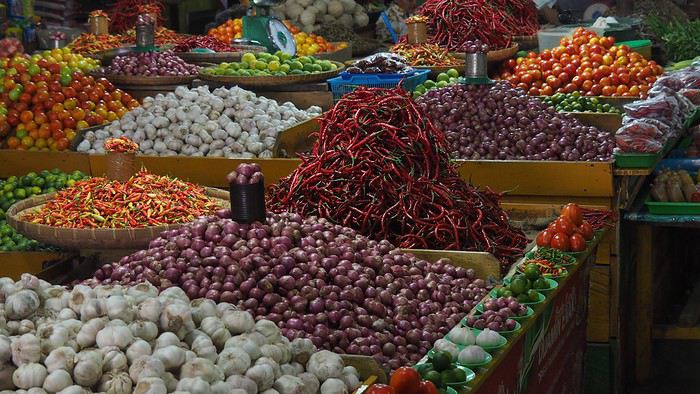
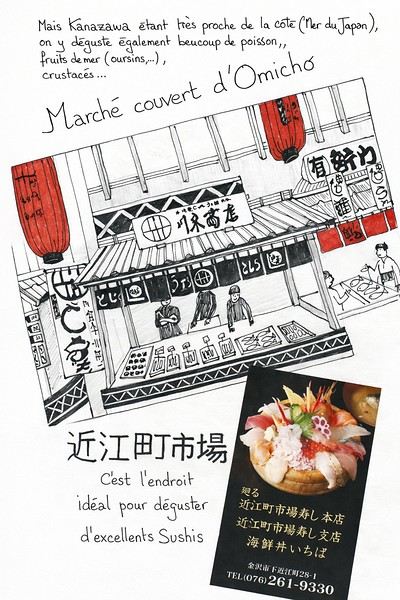 And in Kyoto, the Nishiki Market:

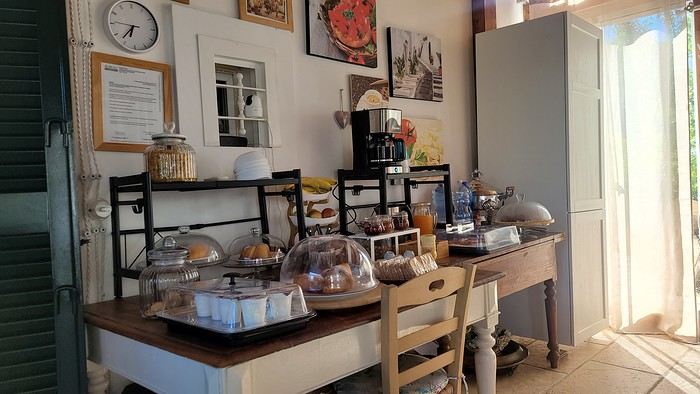
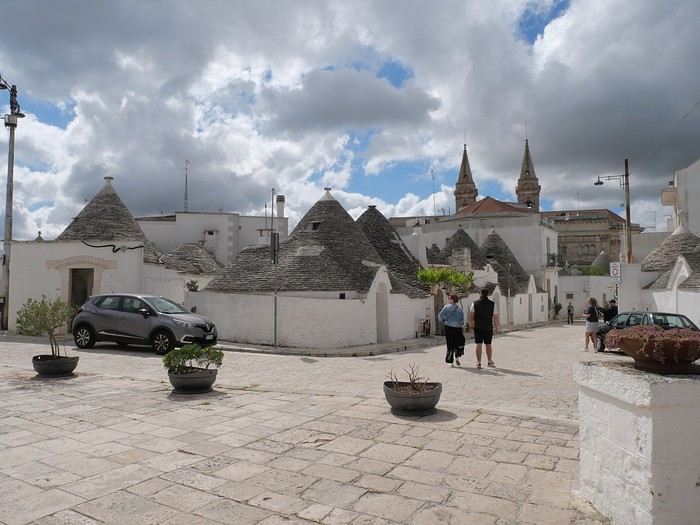
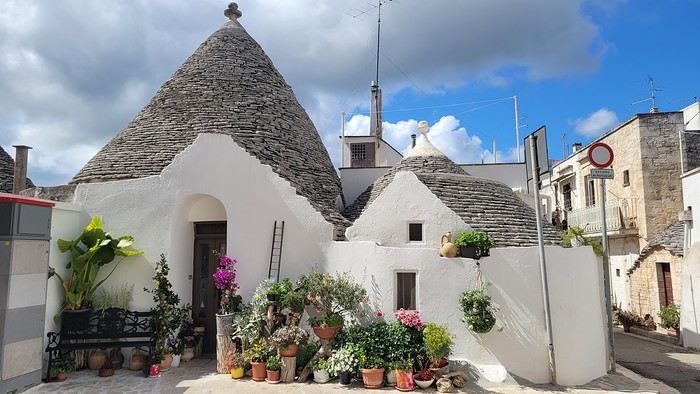
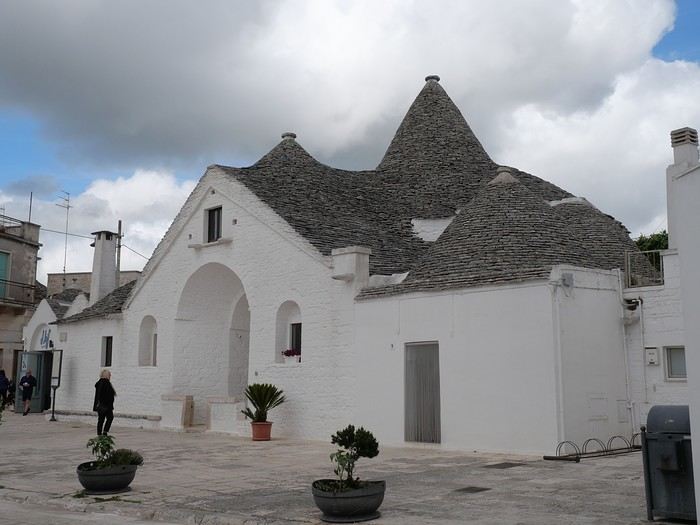
 Come along, I'm taking you to this country where it's so nice to wander and slow down...


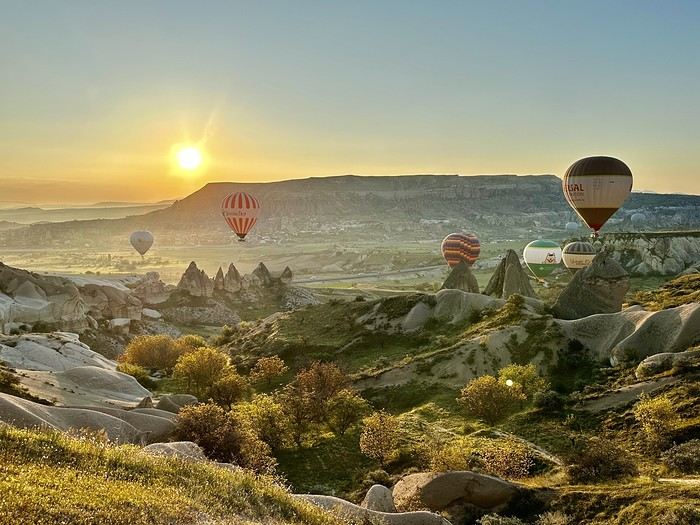 A little sneak peek?
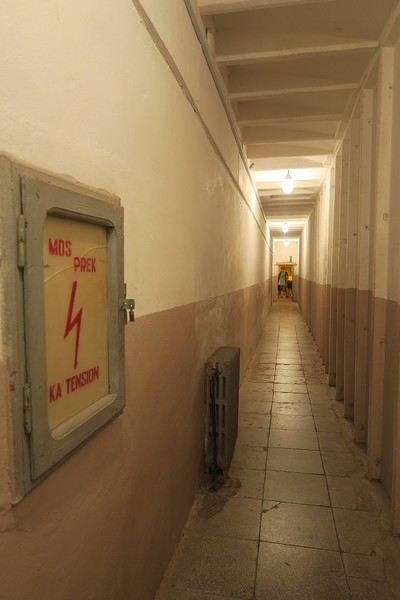
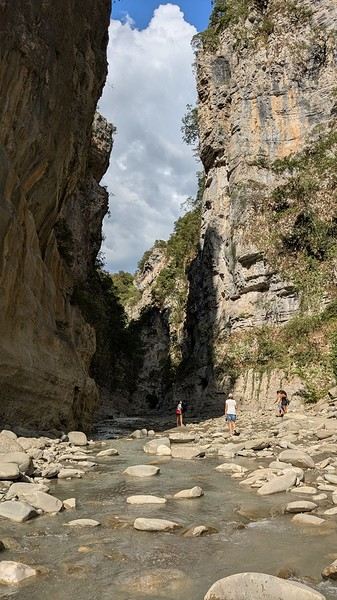
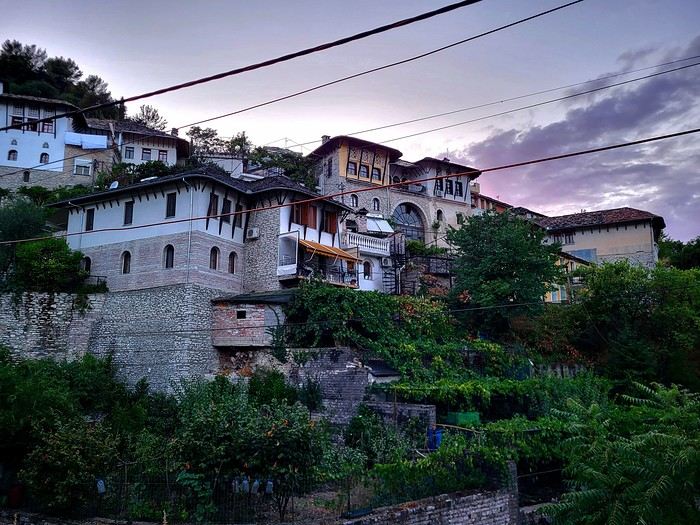
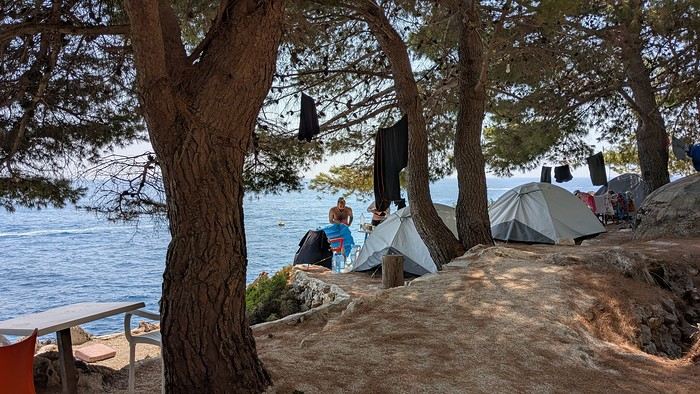
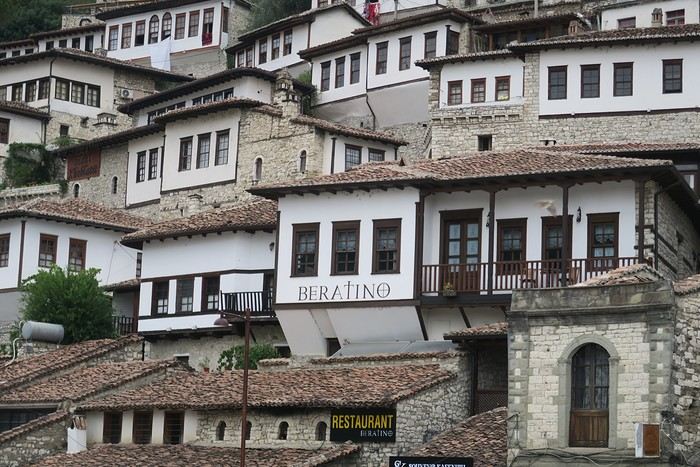
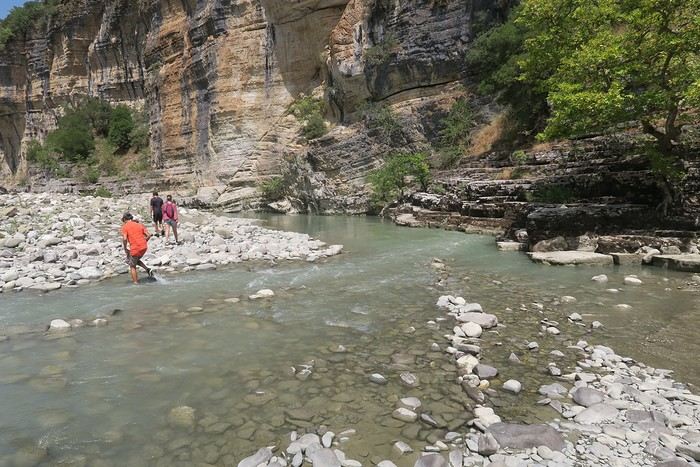
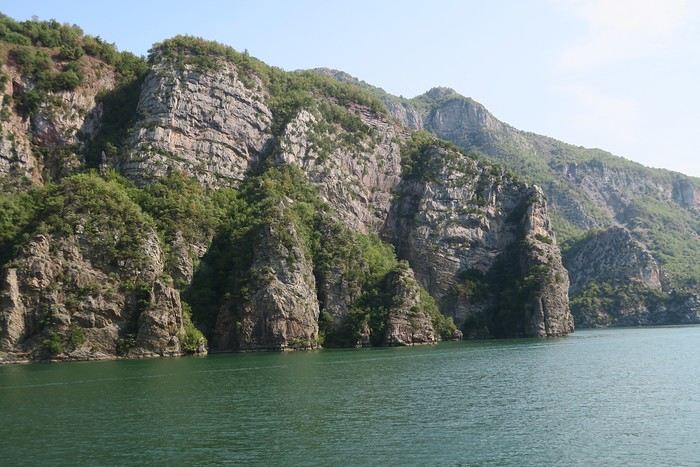
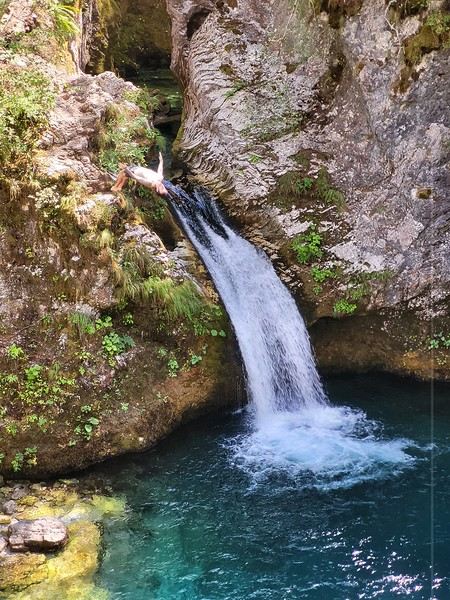
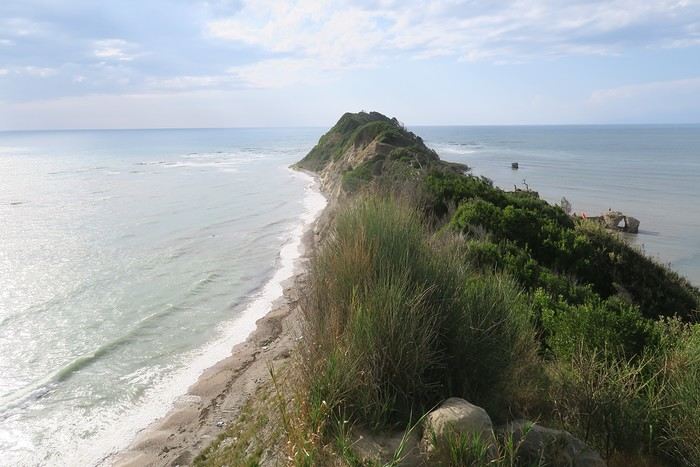
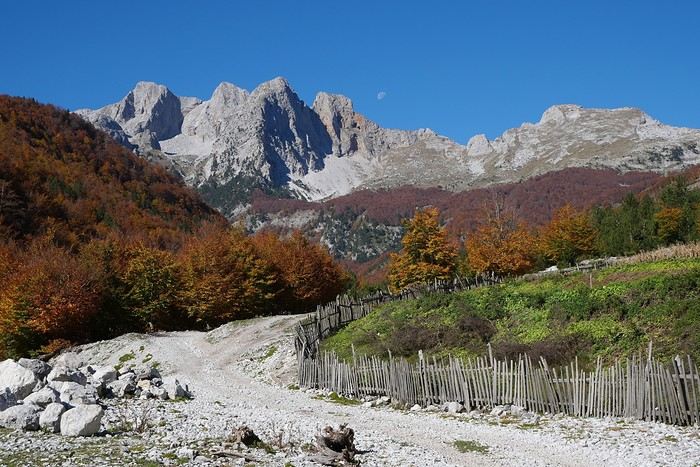



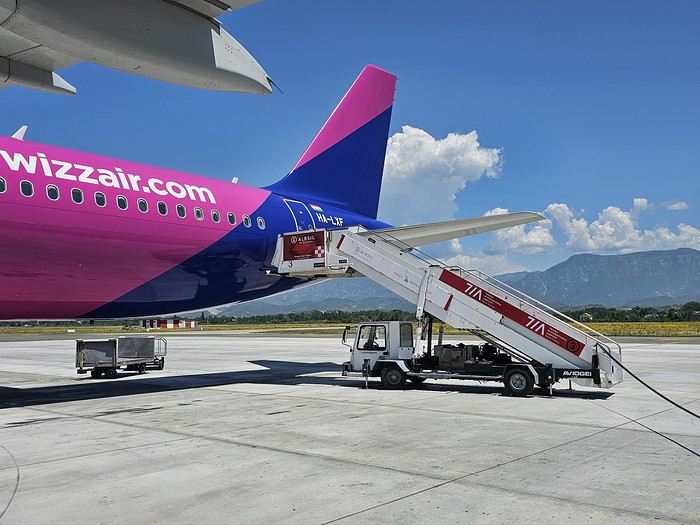 Since Albania isn’t part of Europe when it comes to phone service (at least not yet! :-)), we had to buy a physical SIM card—otherwise, the bill would’ve been sky-high if we’d used our French plan! We got one from Vodafone AL at the airport. You can buy online before leaving with a virtual SIM (e-SIM) for compatible phones, so you don’t have to swap cards. But given the uncertainty about choosing a plan online, we preferred buying one directly at Tirana Airport. Cost: 31 € for 100 GB. That’s way too much—100 GB is overkill. For 40 GB, it’s 27 €, and the plan lasts 21 days. The price difference isn’t huge, and it was cheaper than online. This plan covers all the countries along the Balkan range.
Money tip: All guesthouses and accommodations accept euros. The local currency in Albania is the LEK. In Montenegro, it’s the euro. Bank fees for withdrawing money from an ATM in Albania are pretty steep: 8 € for a withdrawal of 600–700 LEK (about 200 €)! So it’s better to withdraw cash (euros) in France. Oh, and we booked all our accommodations before leaving, but payment is always in cash. Budget around 400–500 € for 9 days of trekking.
Since Albania isn’t part of Europe when it comes to phone service (at least not yet! :-)), we had to buy a physical SIM card—otherwise, the bill would’ve been sky-high if we’d used our French plan! We got one from Vodafone AL at the airport. You can buy online before leaving with a virtual SIM (e-SIM) for compatible phones, so you don’t have to swap cards. But given the uncertainty about choosing a plan online, we preferred buying one directly at Tirana Airport. Cost: 31 € for 100 GB. That’s way too much—100 GB is overkill. For 40 GB, it’s 27 €, and the plan lasts 21 days. The price difference isn’t huge, and it was cheaper than online. This plan covers all the countries along the Balkan range.
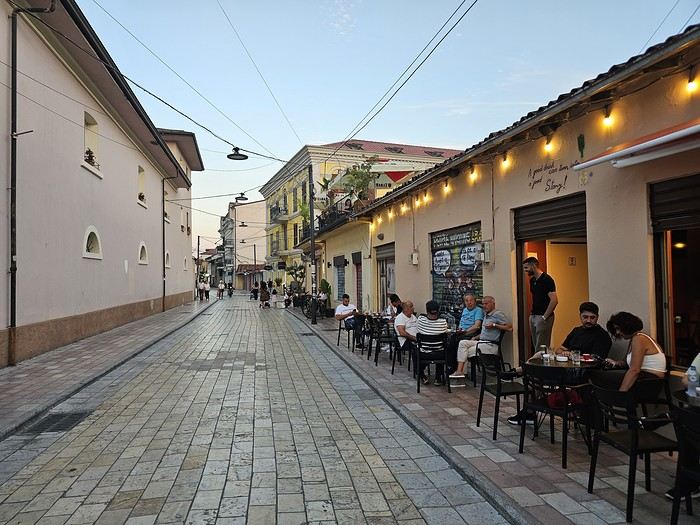
Money tip: All guesthouses and accommodations accept euros. The local currency in Albania is the LEK. In Montenegro, it’s the euro. Bank fees for withdrawing money from an ATM in Albania are pretty steep: 8 € for a withdrawal of 600–700 LEK (about 200 €)! So it’s better to withdraw cash (euros) in France. Oh, and we booked all our accommodations before leaving, but payment is always in cash. Budget around 400–500 € for 9 days of trekking.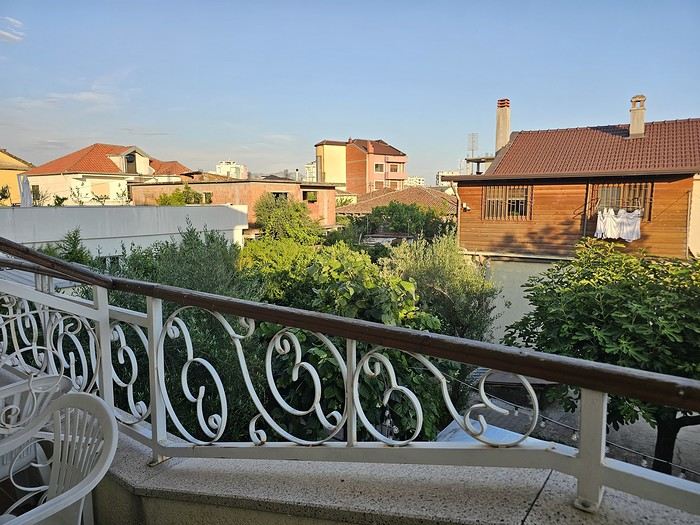 I really liked Shköder, especially its pedestrian street lined with restaurants and lit up at night. It’s a great place to stroll and eat. The food isn’t expensive—two big salads and two beers: 14 € :-) . Fruit prices are also very reasonable: 3 € for a kilo of cherries, compared to 9–10 € in France.
Religions coexist peacefully in these countries—Catholics and Muslims. From our balcony, my friend heard the call to prayer for the first time, coming from one of the city’s mosques.
I really liked Shköder, especially its pedestrian street lined with restaurants and lit up at night. It’s a great place to stroll and eat. The food isn’t expensive—two big salads and two beers: 14 € :-) . Fruit prices are also very reasonable: 3 € for a kilo of cherries, compared to 9–10 € in France.
Religions coexist peacefully in these countries—Catholics and Muslims. From our balcony, my friend heard the call to prayer for the first time, coming from one of the city’s mosques.
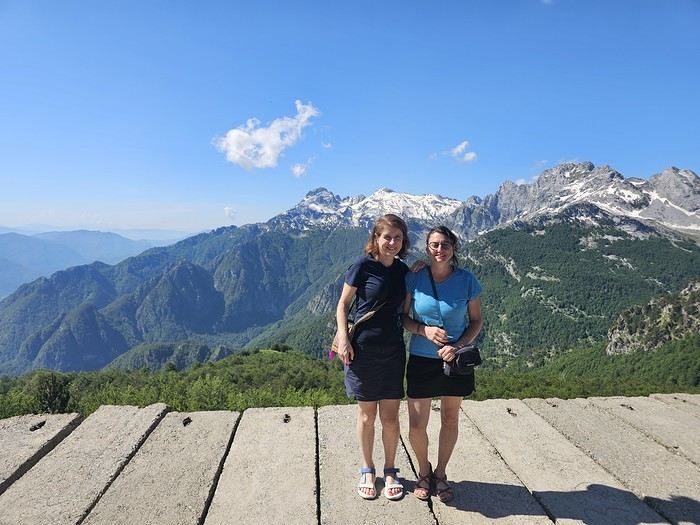
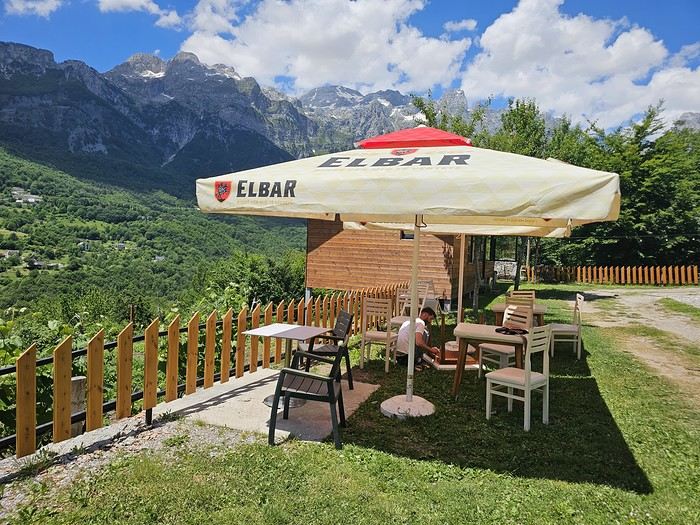
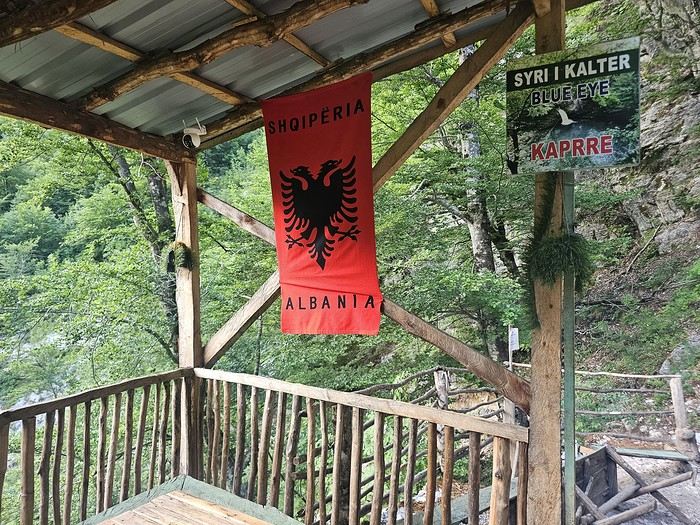
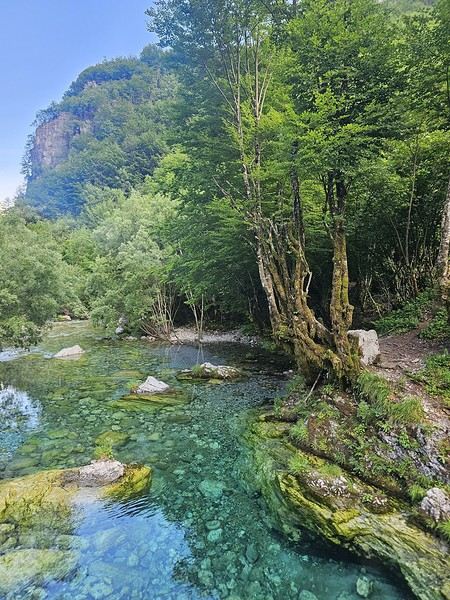
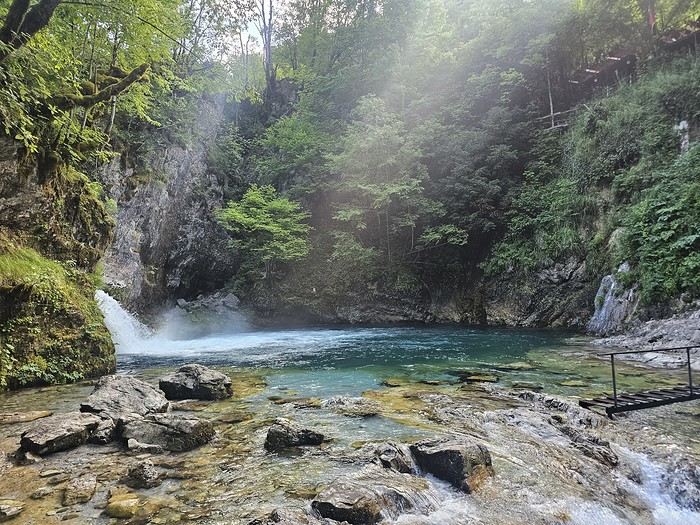
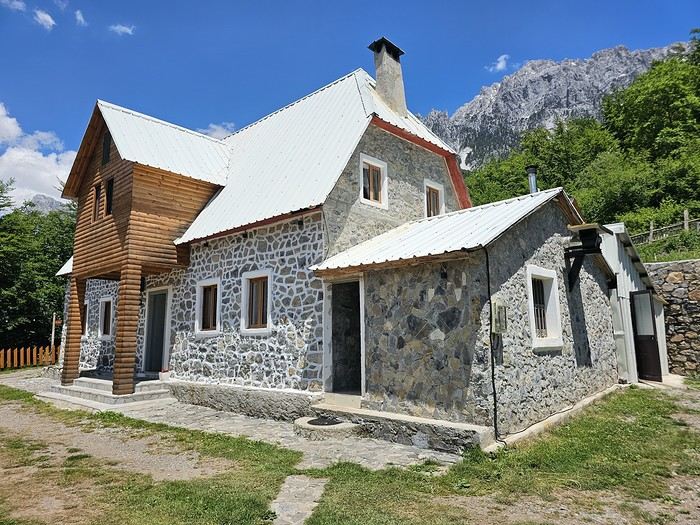 We slept in the heights of Theth at a new guesthouse, "Mountain Vista Shkafi," with an amazing view.


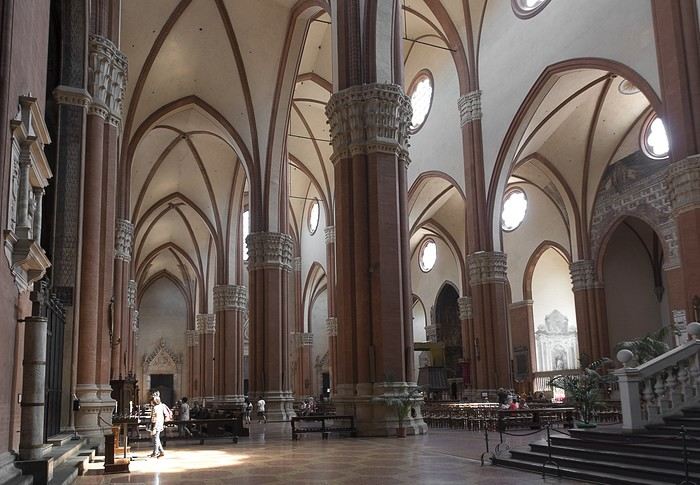
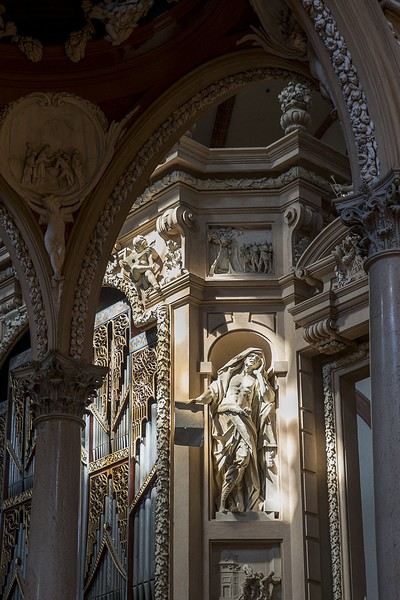
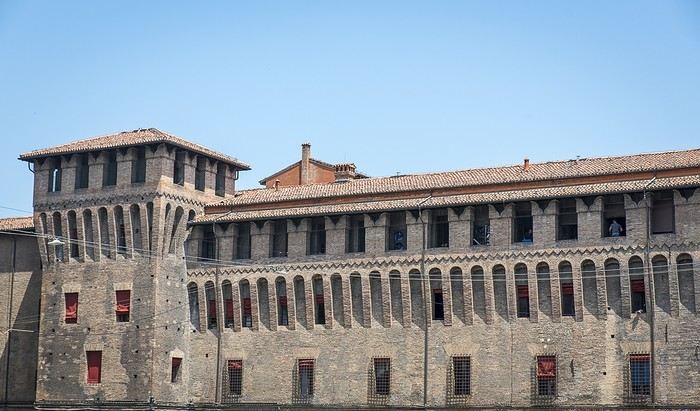 But Bologna’s real charm lies in its porticoes, which were added to the UNESCO World Heritage list in 2021: 62 km of arcades running along buildings, letting you walk sheltered from the sun or rain. Back in 1288, the city required houses to include private arcades for public use. In the city center, you can stroll under 32 km of porticoes in all sorts of styles—some plain, some ornate—with a strong presence of red tones.




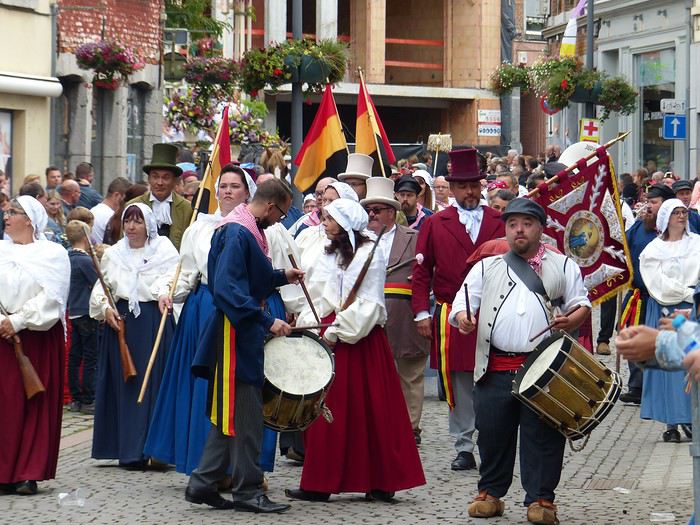
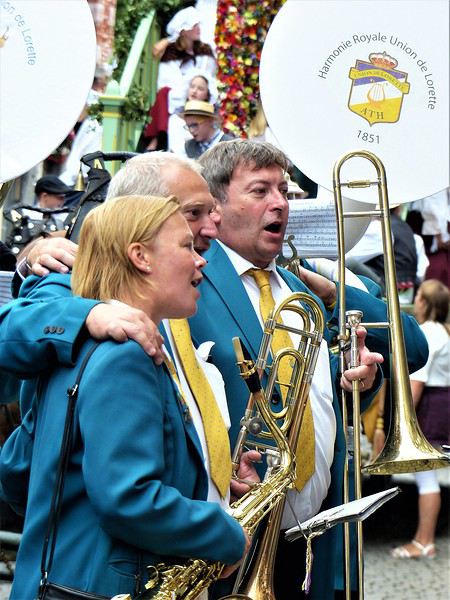
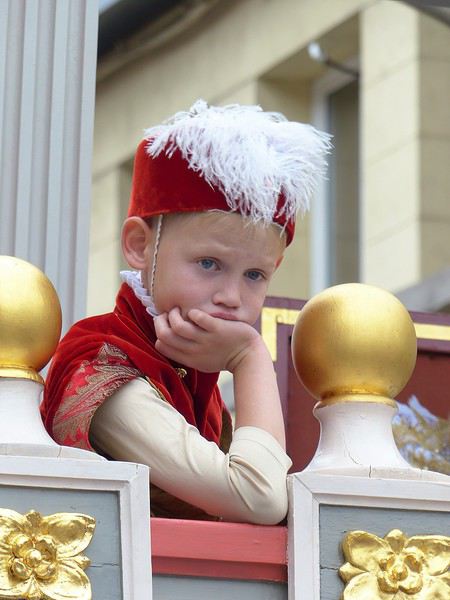 Ooooooooh, giants!
Oh, how I love them! In the North, we have lots of these giants, like Reuze Papa and Reuze Maman in Cassel, or Gayant, Marie, and their children Binbin, Jacquot, and Fillon in Douai, and many more.
Ooooooooh, giants!
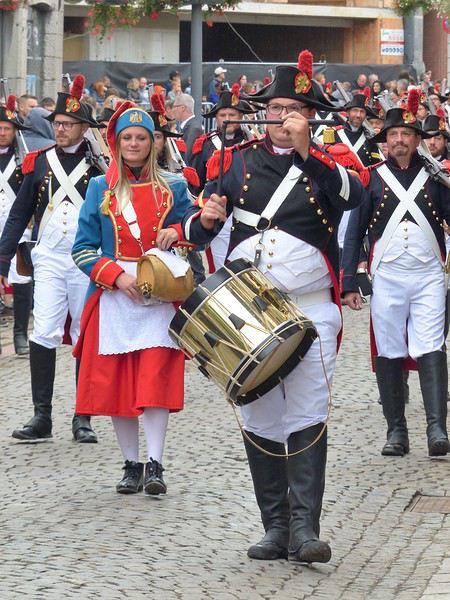
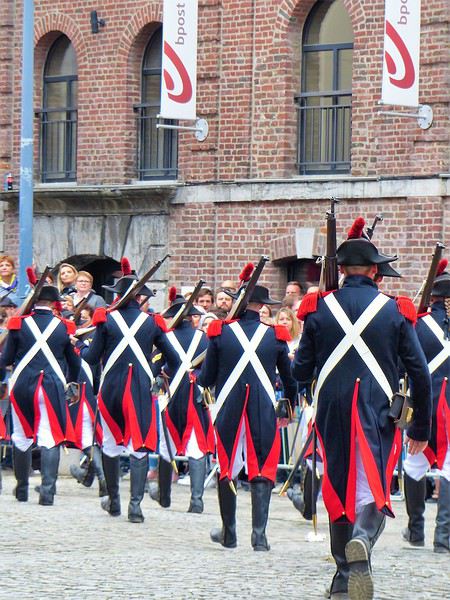
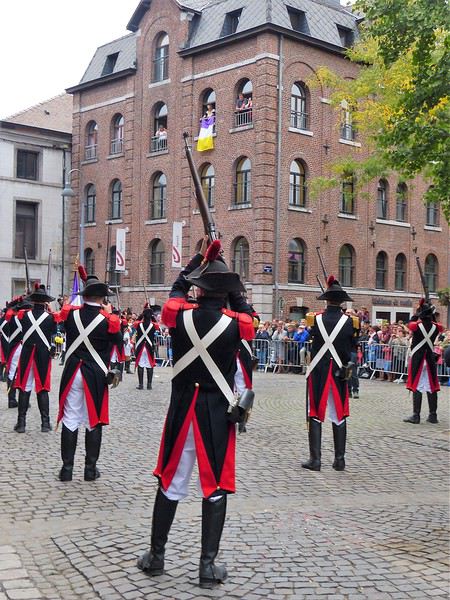
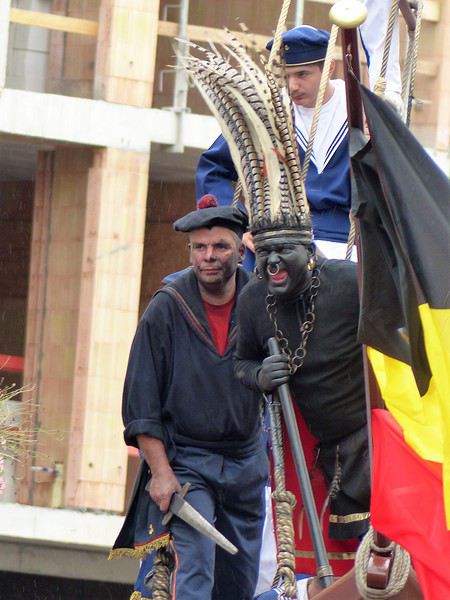
Oh, how I love them! In the North, we have lots of these giants, like Reuze Papa and Reuze Maman in Cassel, or Gayant, Marie, and their children Binbin, Jacquot, and Fillon in Douai, and many more.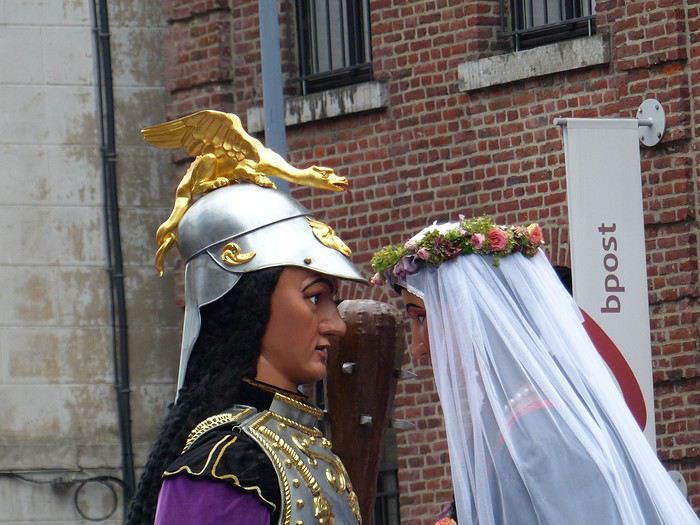 What’s more, the Ducasse of Ath is remarkable for its age and local roots; a procession was first mentioned in 1399, and today the many musical groups are still local (Ath and surrounding towns). The event is extremely popular: a good part of the population is there, all generations mixed together. Everyone knows the groups, floats, and giants, and each has their favorite! Originally, religious groups paraded, illustrating episodes from the Bible or the Golden Legend. Gradually, the parade became secular and kept evolving by adding new giants, historical figures, or allegories linked to local history (Ath, Belgian Hainaut, Belgium).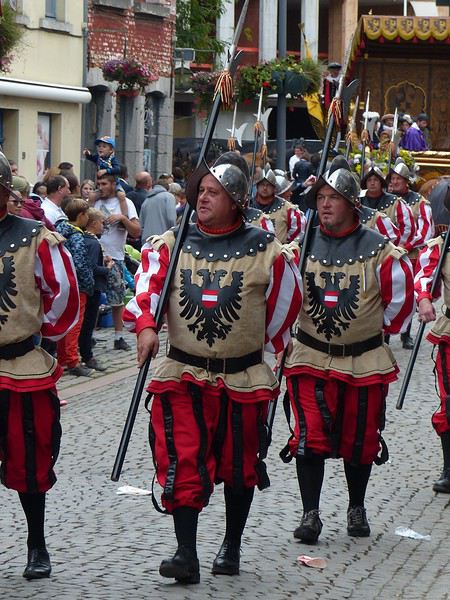
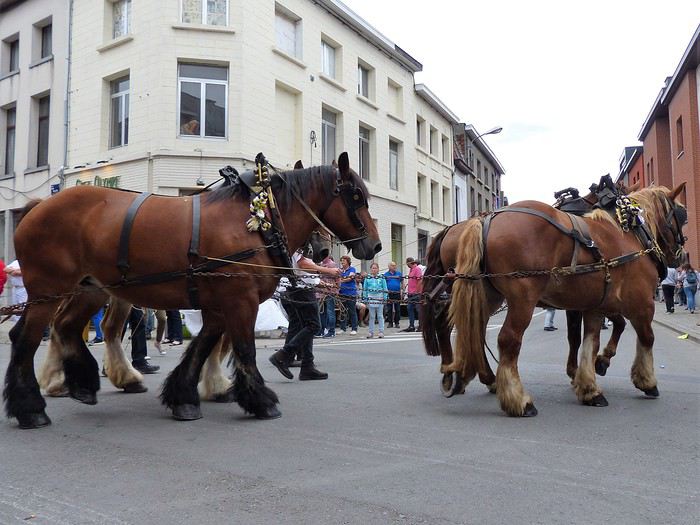 To wrap up this long introduction, know that the Ducasse of Ath lasts several days, but the highlight is the highly codified procession that takes place on the 4th Sunday of August (actually, the procession passes twice, once in the morning and once in the afternoon).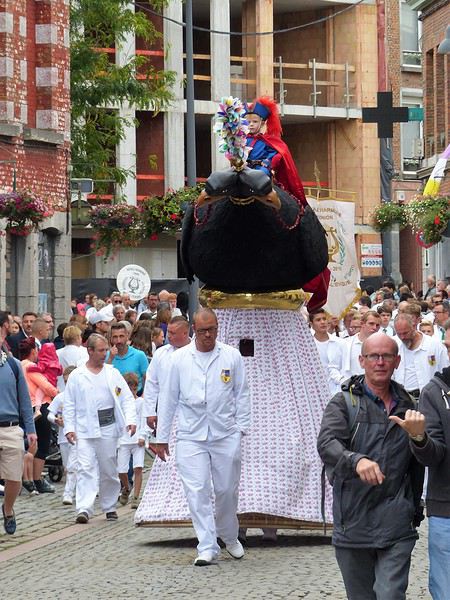
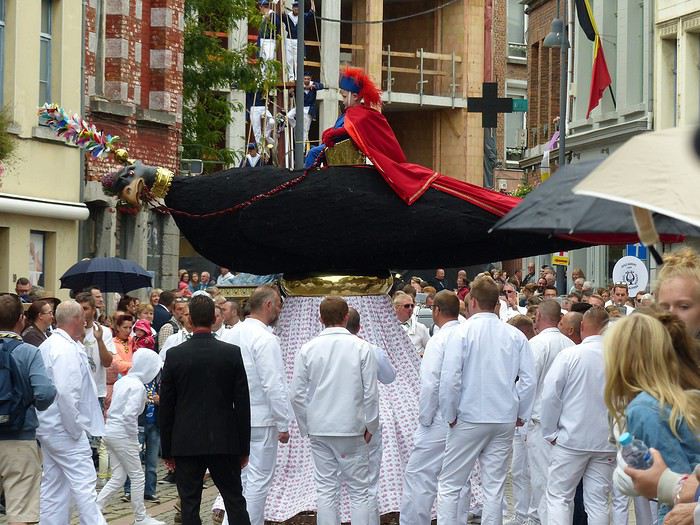
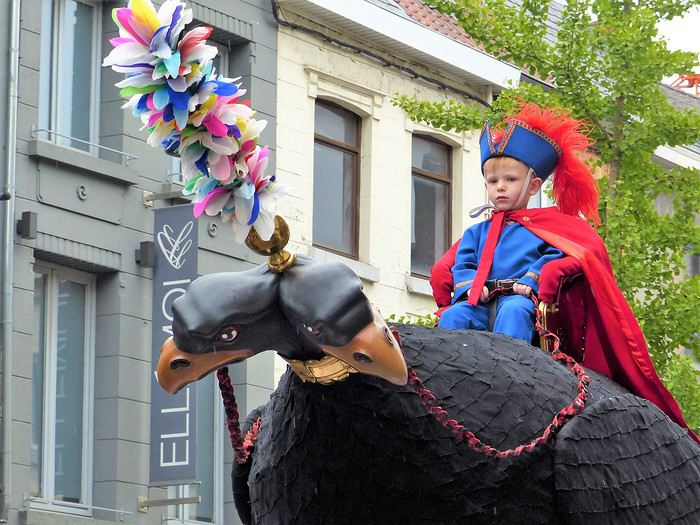
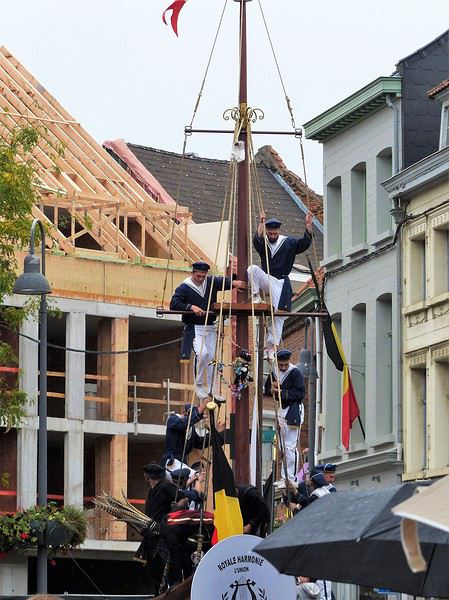
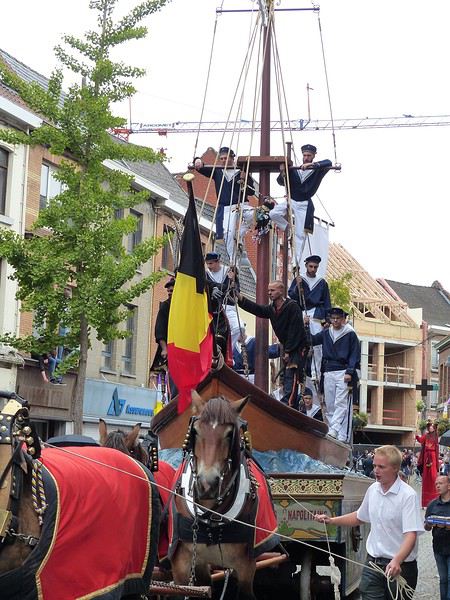
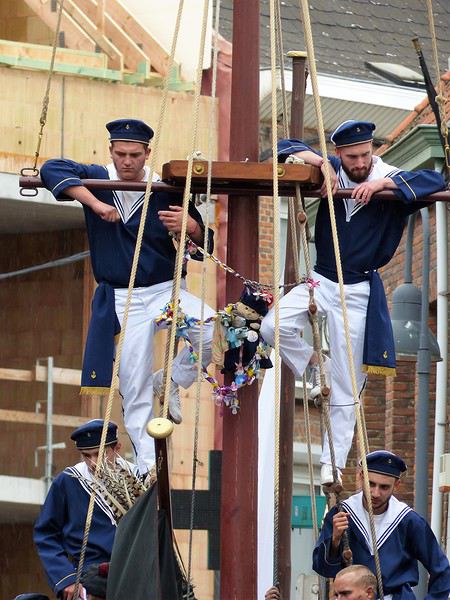
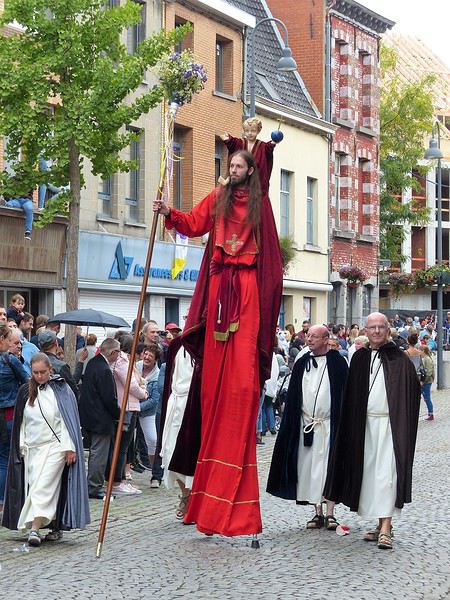
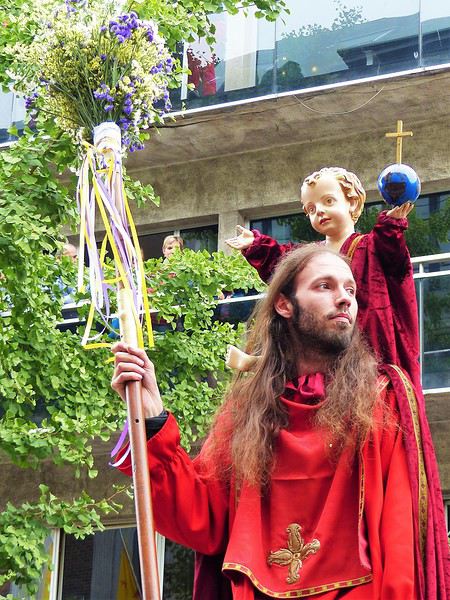
 It’s followed by a human giant on stilts: "Saint Christopher of Flobecq," holding a flowered staff and carrying Christ on his shoulders (this time, not a real child!). It appeared in the 19th century, then disappeared from the procession before being reintroduced in 1976.