Happiness Settles in the Heart of the Maasai Mara
FR

Translated into English.

PY Pygmalion19 Veteran ·
Hi Bernard,

My post was actually addressed to Yolande and Eric, and here you are, Bernard by first name, responding to me. Strange courtesy indeed. But we won’t take offense over such a small thing. However, responding on someone else’s behalf—even if it wasn’t your intention—is a lack of consideration... That’s the thing, you got lost, but luckily our duo didn’t; they’re still cruising and treating us to beautiful images and a text that sparks our imagination.

If Yolande shoots in RAW, the camera settings don’t matter—it’s in post-processing that you’ll adjust the color temperature if needed, which does seem a bit warm on our calibrated screen, but only on certain photos (e.g., ostriches). It also depends on the time of day the shot was taken.

It could also be a deliberate choice, having nothing to do with post-production but rather her aesthetic decision or camera settings. By the way, for your info, color can also be adjusted when taking the shot.

Bateleur or Bateleur des savanes! I prefer the poetry of words over the dictate of designation, even though I know a few bird names myself🙂. Bateleur des savanes has a nice ring to it. I’m wandering, just like our two companions, on terribly chaotic tracks. So, Bateleur des savanes it is—I also love its flight. That’s my choice!
pygmalion
JE Jety34 Veteran ·
Good evening Eric and Bernard, I love your very friendly banter—it adds a touch of whimsy to the replies and so much humor. So, to sum up, yes, I took big risks for the croc. Exceptionally, Michel had allowed me to step down onto the rocks—he probably wanted to get rid of me. He didn’t succeed. Not even true. Yes, I shoot in RAW+JPEG at base resolution to remember the colors with a B of B in AWB, but sometimes I find it too dull, and in Lightroom, I switch to natural color, which actually adds a slight yellow tint. I try not to push the sliders too much, but I do add a bit of vibrance. My settings for the croc: the 400 mounted on the 7D Mark II, so 640 at ISO 125, f/5.6 at 1/640s, and for the bateleur: ISO 500, f/6.3, 1/1600.

I wish you a great end to the evening.

Take care of yourselves too—see you tomorrow! Yolande
Yol + D'Jack
BL Blesl Veteran ·
Hello Yolande,

Once again, congratulations on the croc photo—great sharpness with a shutter speed of 1/125 s at an equivalent of 640 mm. The stabilization on the 7D II works well, but that’s not all...

I always read your partner’s posts (and yours) with great interest, and I enjoy your photos just as much, even if MDH judges them harshly (but fairly, right?).

You mentioned shooting in RAW + JPEG to remember the colors, which surprised me based on my own experience (which is extensive, though I should cut back a bit). The JPEG your camera produces doesn’t show the *true* colors—it’s the result of the RAW file being demosaiced by the camera’s built-in software, applying the settings you’ve chosen:

- Color temperature, which doesn’t just affect the "warm" (yellow) or "cool" (blue) tones but also the magenta/cyan balance - Saturation in the selected style - Rendering choices, like "skin tone" - Color space (sRGB or Adobe RGB) - Exposure—overexposure can distort colors by desaturating them

All these adjustments are possible when processing your RAW file and are fully reversible, with even more options, including additional color spaces (useful only for printing, not for screen viewing, where the monitor’s gamut is already limiting compared to the two standard spaces).

That said, if your shooting method follows the Master’s advice, ignore everything I just said—"Magister dixit!".

Michel mentioned some time ago (before he became a Fuji ambassador) that he locks his color temperature at 5600 Kelvin. Do you know if he still does that? He also secures all the settings he doesn’t use on his lenses with duct tape (pre-focus, AF mode, etc.).

And thanks for your amused indulgence—Éric loves teasing me, but always politely, right? And I’m certainly not without my own flaws.

Keep up the great work on your travel journal—again, it’s not just the active members who follow along; the silent majority is *very* large.

Take care of yourself and your loved ones, and

Vale!

BL
safari photo en Tanzanie et ailleurs https://safari-tanzanie.fr WILIPI photographie animalière
JE Jety34 Veteran ·
Hello, hello!

The sky is clear and starry, the temperature much cooler than the previous days as we step outside. We’ve heard the leopard’s growl three times—it’s a large male, Motoron explains. He’s prowled around our perimeter, likely because human presence bothers him or because this territory is his. The photographers set off at 6:15 AM, and we follow a quarter-hour later after tidying up the camp’s surroundings, leaving only the wheel ruts and the remains of a fire behind. Only a sharp eye would notice that five people spent the night in this clearing.

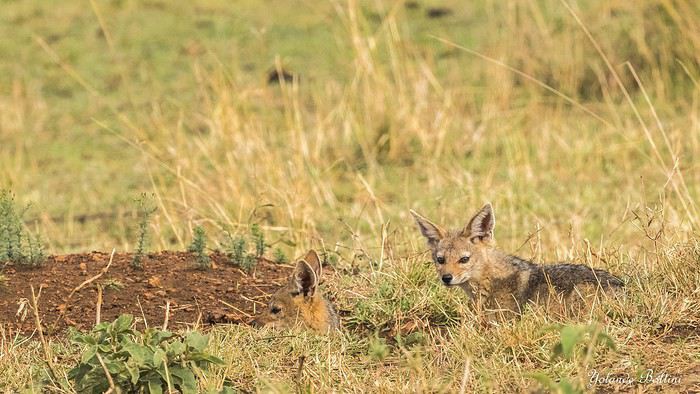
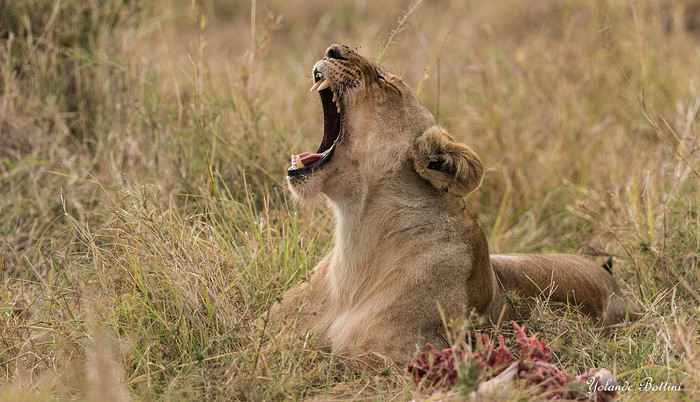
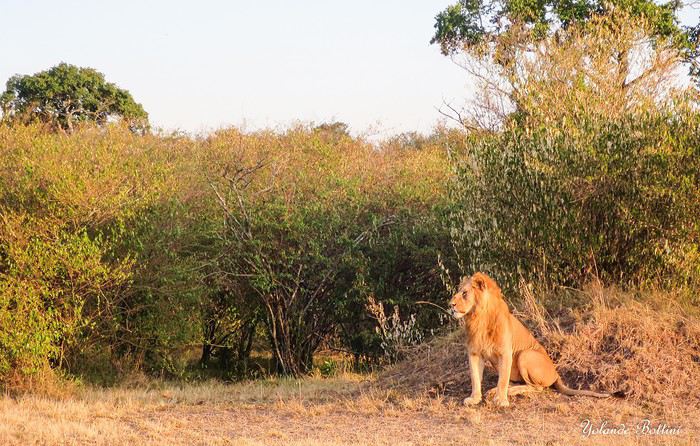
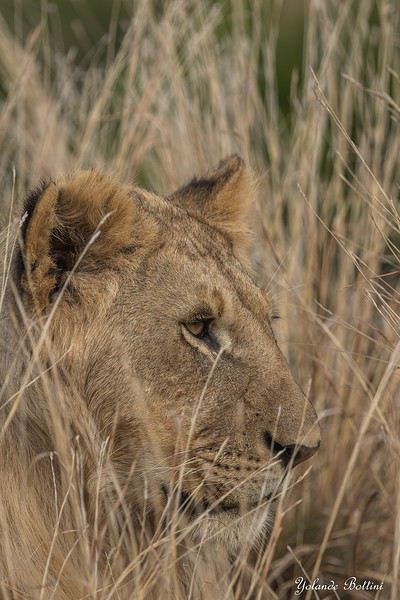
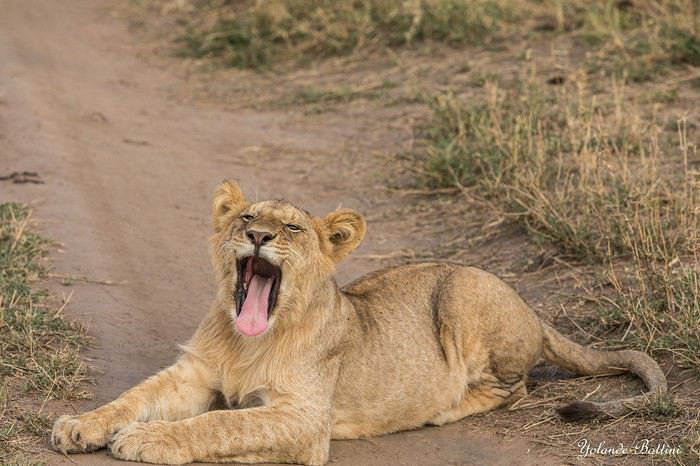
Wildlife wakes up slowly, with only the storks in the river bustling to prepare their breakfast. A magnificent lion, sitting just a few steps from the path, watches us yawning. I capture him with the compact camera Yolande lent me, but I don’t think this shot will make the front page! The topi seem to be the most active at the crack of dawn, as many mothers train their young to run while single males and females engage in astonishing displays—"flirting lessons," Motoron explains with a mischievous grin. We search in vain for the leopard spotted yesterday in the tangled vegetation along the stream. Mikaël drives slowly, attentive to his neighbor, who seems very observant. Suddenly, he points to a mound at least 200 meters away: "jackal." With my binoculars, I try to make out what he’s showing me but only spot two heads after a while. "No, no, next to it—there are four babies." Even with the quality of my gear, I see nothing. So, to make me happy, we venture into the bush. Sure enough, we’re near the family’s den. The parents are wary, but the pups, full of energy, pay us no mind—they’re absolutely adorable. I think this is the most mind-blowing sighting Motoron has found during this trip. Of course, we quickly left to avoid disturbing the canines, attracting other people, or getting into trouble with the authorities, since only professionals are allowed off-road.

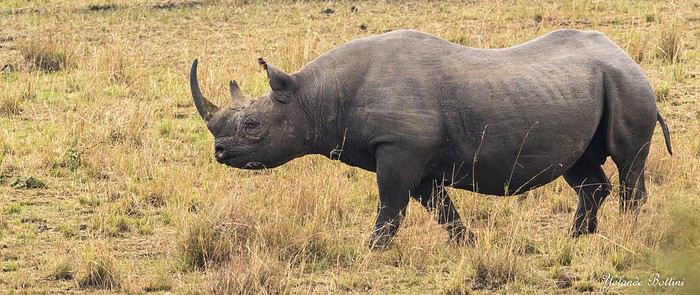
Around 8:00 AM, we head up to the lookout for a panoramic view of the plain, the surrounding hills, and the legendary Mara. The slopes are covered in lush green grass, and grazers flock to feast. Yol and Michel didn’t find the jackals but spotted a black rhino, which they invite us to admire—these are so rare in Kenya. Maybe this beautiful creature owes its survival to the crowds that hound it all day, keeping poachers at bay? I count twenty-seven vehicles, most straddling the roadside. But let’s get back to our little rascals—they’ve drawn a crowd too, meaning twenty more cars have trampled the vegetation to watch the pups’ antics. In the chaos, the Land Rover couldn’t get close to the den, so its two passengers observe the mbweha family from a distance, in their playground.

We never get tired of it.
Yol + D'Jack
JE Jety34 Veteran ·
Sorry, wrong move—I think today isn’t my day.

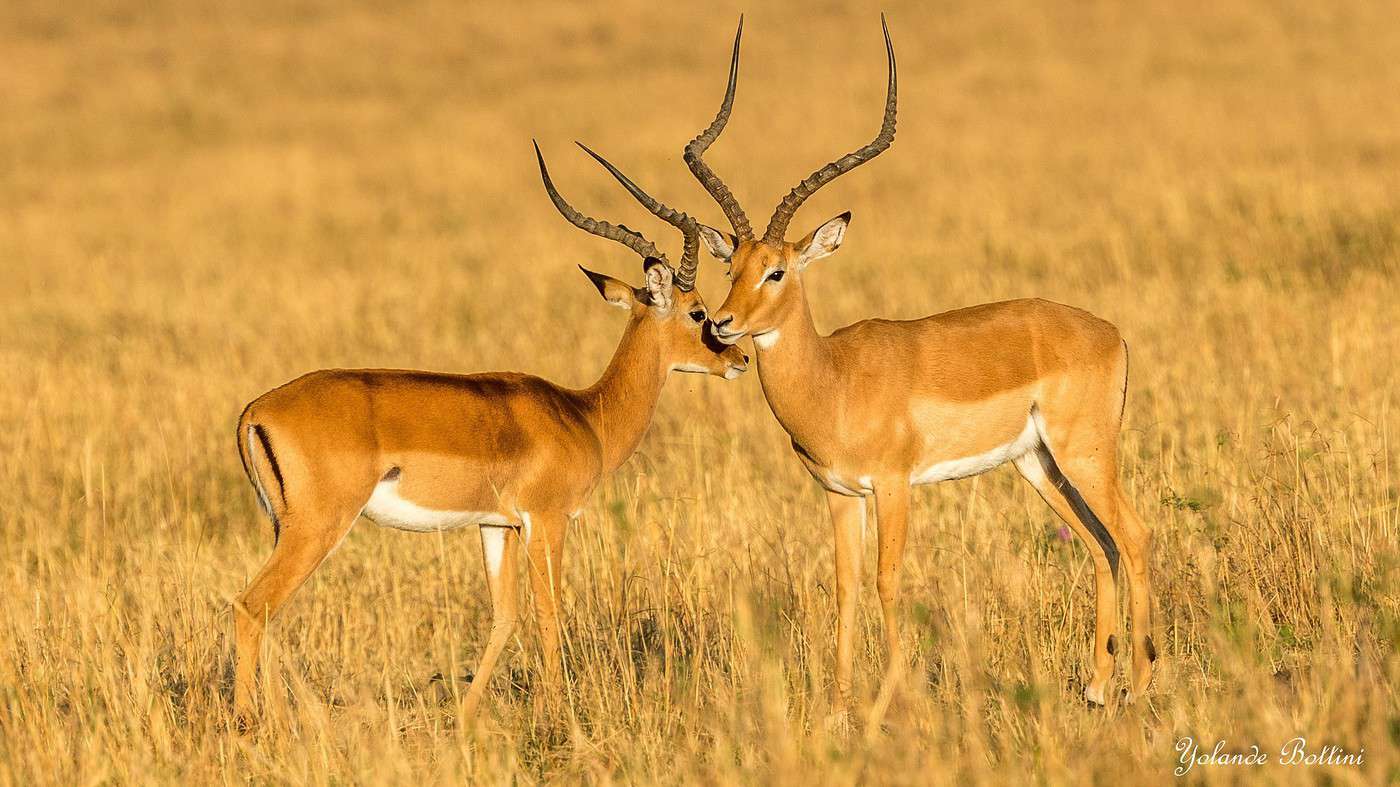
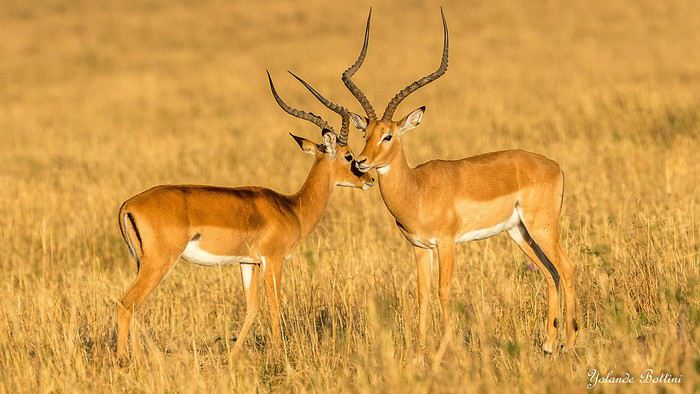
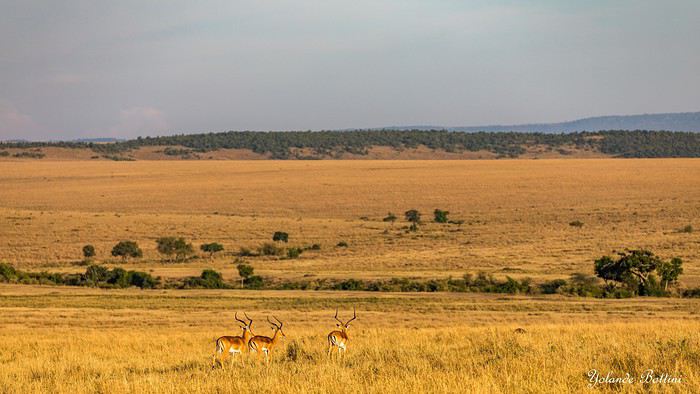
Impalas in the beautiful morning light


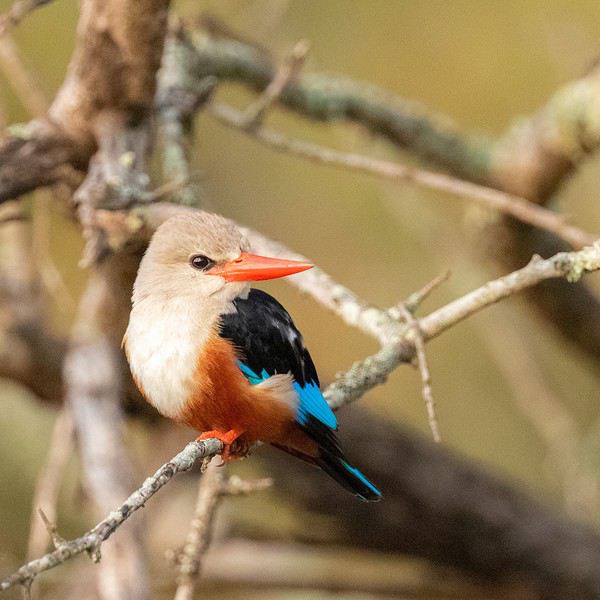
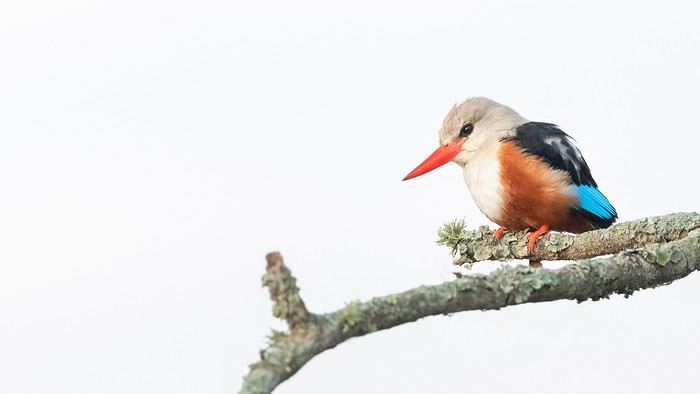
Grey-headed kingfisher (Halcyon leucocephala)

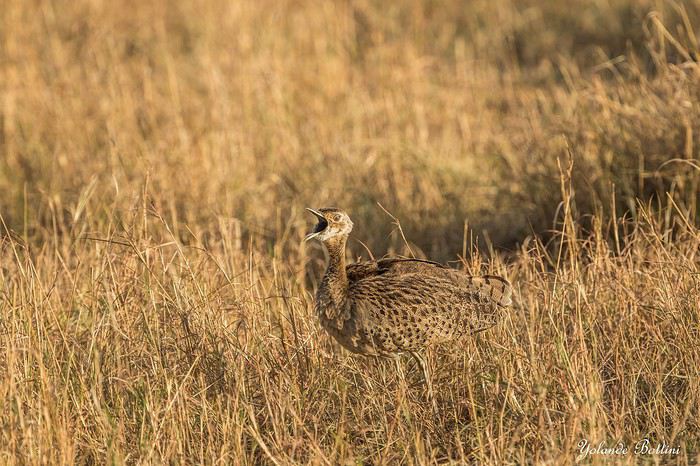
Bustard, but which one?

Some young black-backed jackals (Canis mesomelas)!

Black rhinoceros (Diceros bicornis)

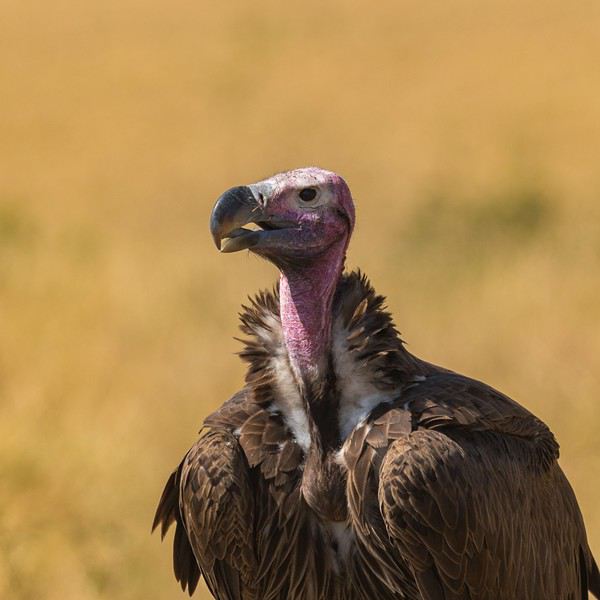
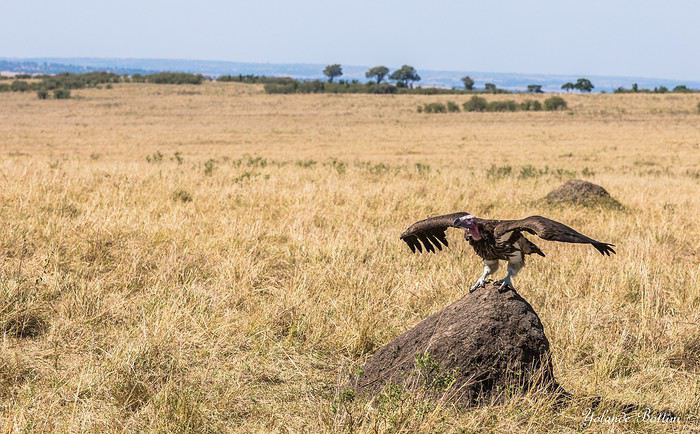
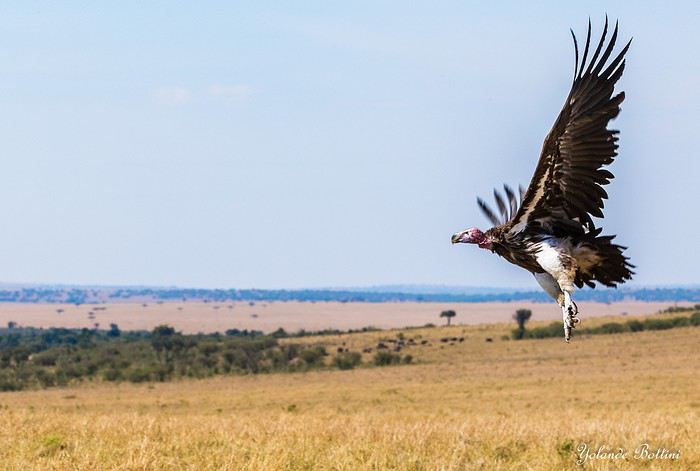
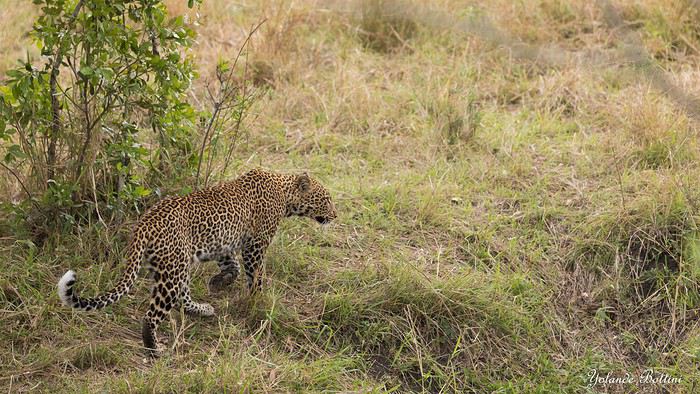
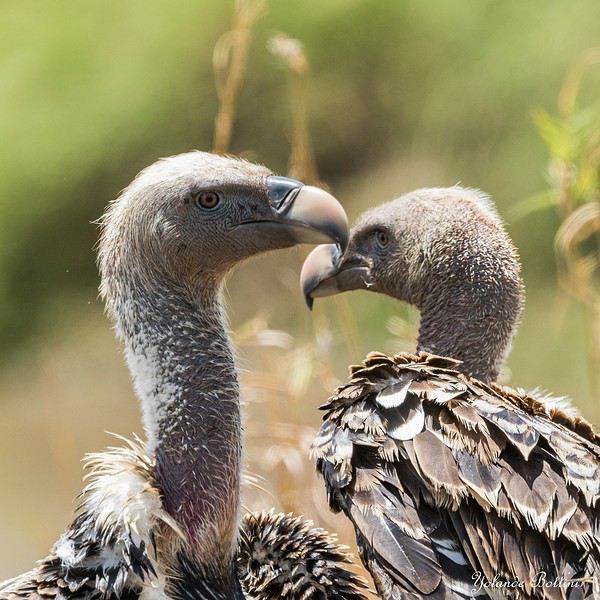
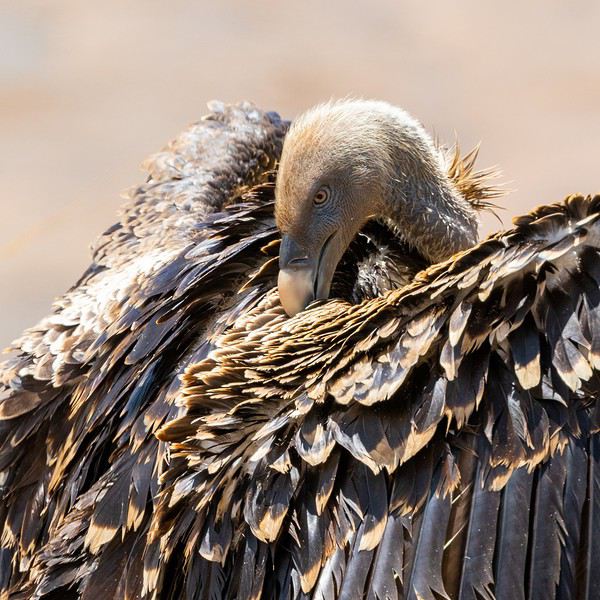
After coffee break at Look-out Hill, we head south—Tanzania and the Serengeti lie beyond the hills closing the panorama. A large group of Rüppell’s vultures has gathered around and on top of a termite mound, which isn’t common. These scavengers are usually solitary or in pairs, except during a feeding frenzy. Here, they waddle, preen, sniff each other, and stretch their wings without a sound, as this big bird is mostly quiet. Our African friends are surprised we’re interested in these bush cleaners! It’s true that this species, with its red head and bare neck, isn’t as pleasant-looking as the African white-backed vulture or the Cape vulture. Maybe they’re here because a cheetah is lurking in the area, and a potential feast might be on the horizon? The feline is calmly lying under a thorny bush, far from the path. Mikaël, encouraged by his teammate, ventures into the bush so I can get a proper look but quickly leaves this off-limits no man’s land. By mid-morning, we skirt Ashnil Bush Camp and turn right onto a secondary track that winds into a hilly, wilder, and uninhabited landscape! We take another right onto a barely marked path leading to a dried-up river called Keekorok. We cross it and follow it downstream to a grove—our reward is there, lying in the grass, indifferent to our presence. It’s a moderately sized adult, so a female, the expert tells me. This feline is the most graceful in the animal kingdom, and I understand why it’s a visitor favorite. We inform the technical team of our discovery, but they’re slow to arrive. The access isn’t easy in this maze of paths and tracks, so we have to go meet them and lead them to the site, which we then leave immediately to avoid drawing attention. The tracker has done his job! Rüppell’s vulture ready to take flight.


More photos from late morning to come.
Yol + D'Jack
RJ Rjulie95 Globetrotter ·
Do we have to wait to see the leopard now? Ughhh
"Je suis africain, non pas parce que je suis né en Afrique, mais parce que l'Afrique est née en moi." Kwame Nkrumah.

"J'ai appris que le courage n'est pas l'absence de peur, mais la capacité de la vaincre." Nelson Mandela

https://www.en-voyages.fr
BL Blesl Veteran ·
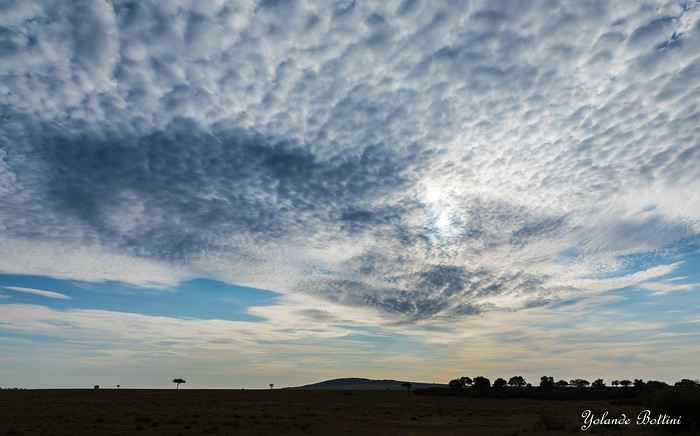
The sky is gorgeous!

For the bustard, my favorite consultant—my partner—points out a female Black-bellied Bustard, Lissotis (formerly Eupodotis) melanogaster. You might confuse it with a female of the nearly identical Hartlaub’s Bustard, but it’s less common in the Masai Mara.

Waiting for the photos—so much suspense—for Lady Leopard...
safari photo en Tanzanie et ailleurs https://safari-tanzanie.fr WILIPI photographie animalière
JE Jety34 Veteran ·
Next. Ready for the hunt.


Meh... a bit too big.


Back after my nap.
Yol + D'Jack
JE Jety34 Veteran ·
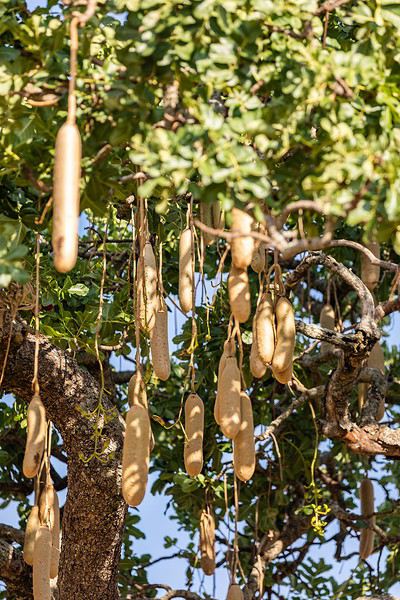
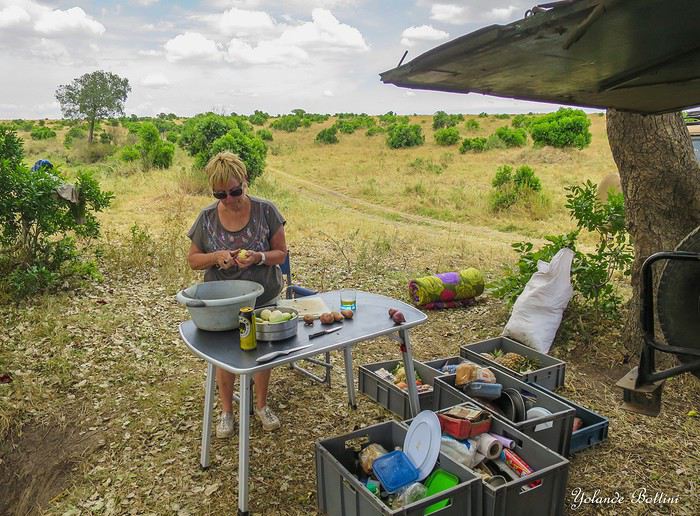
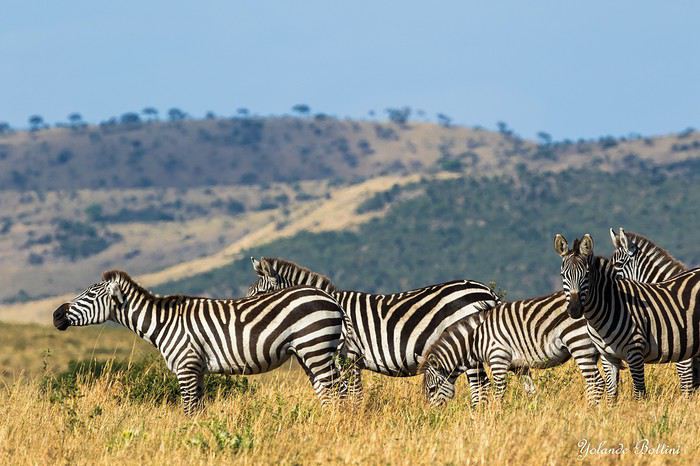
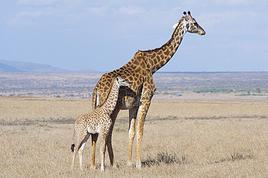
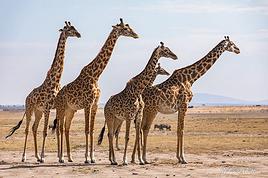
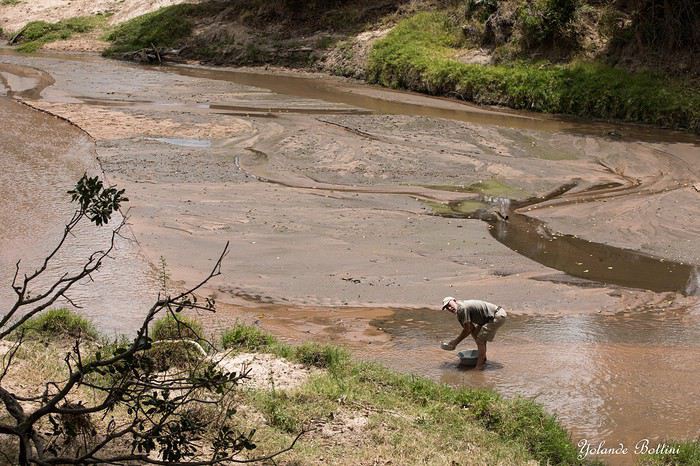
At noon, we park under a sausage tree, by the Sand River. The ground is strewn with flowers from this colossal tree, its fruits, as big as sausages, hanging from long stems. The spot is idyllic, peaceful, and deserted—what more could you ask for! The riverbed is wide, a rare, shallow, and crystal-clear stream gliding over ochre sand with dark brown effects. Zebras and a family of giraffes drink upstream while buffaloes lounge in a nearby puddle. The cook prepares lunch and dinner, helped by Yolande with the peeling; I volunteer to rinse the vegetables in the pure current!

We take advantage of this clear water to freshen up a bit in the basin—no sharing, though!

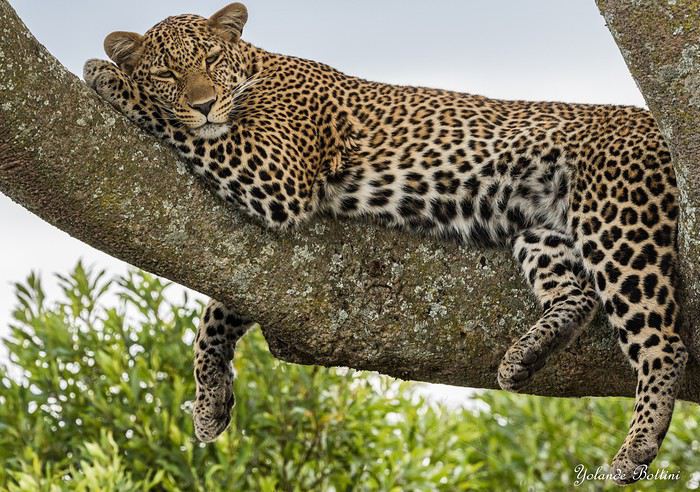
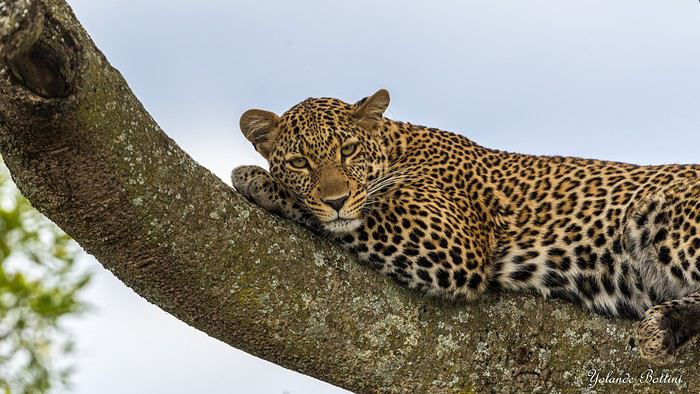
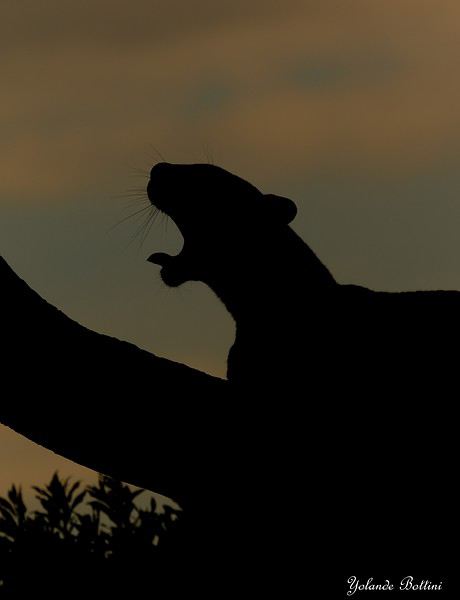
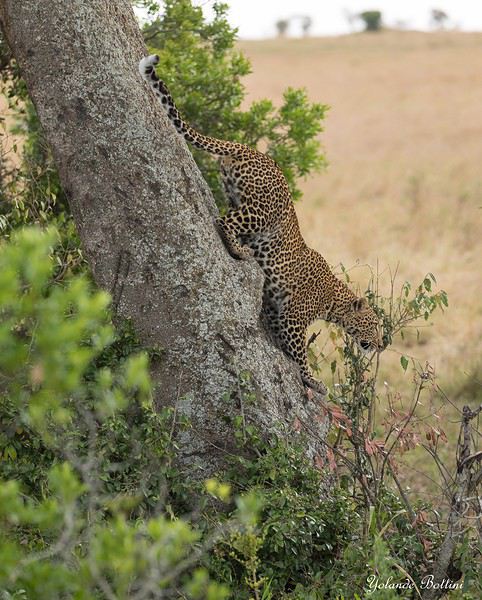
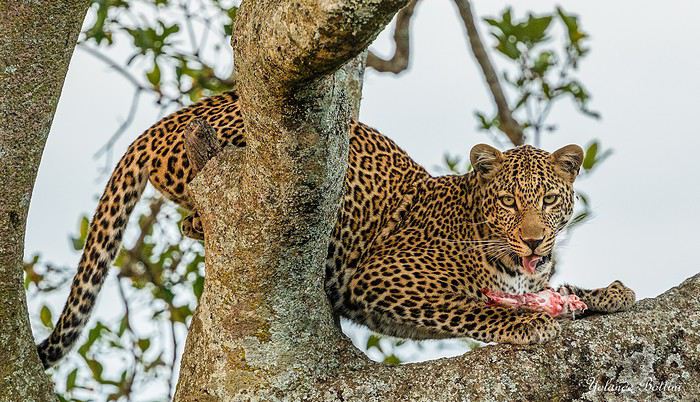
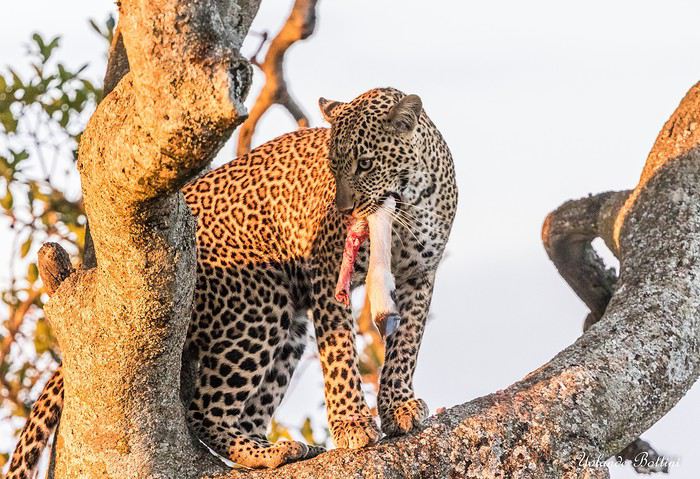
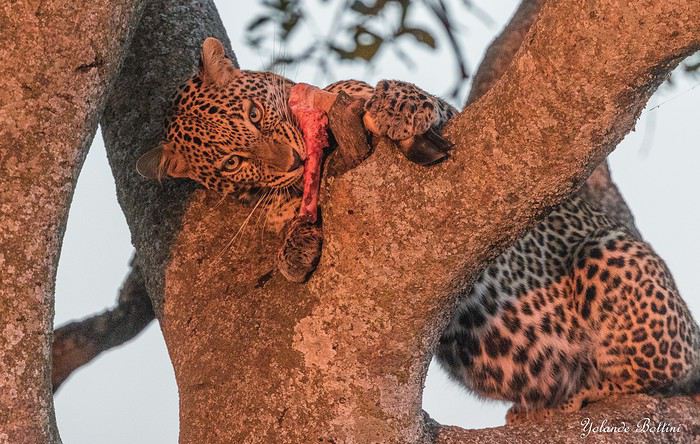
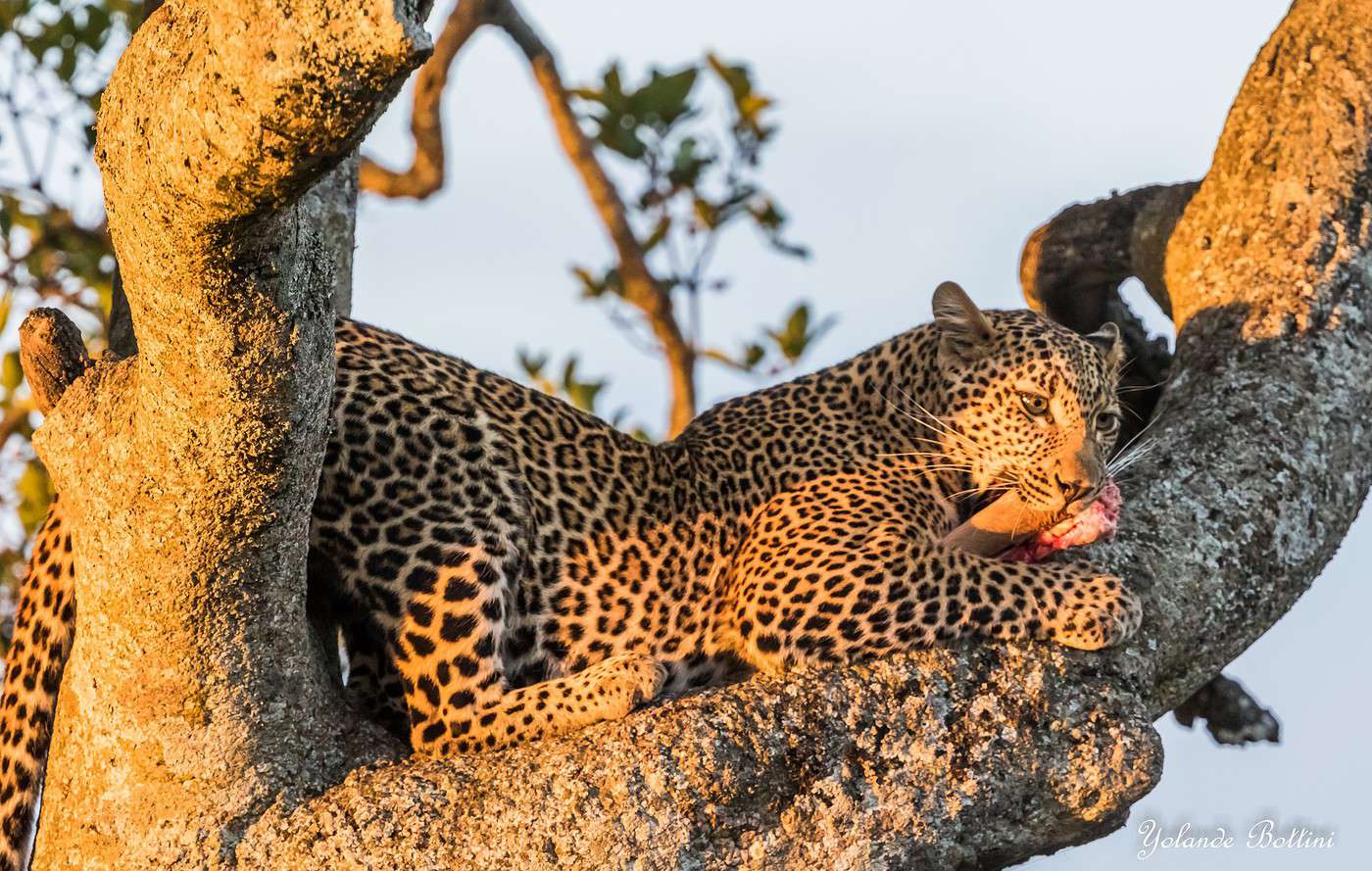
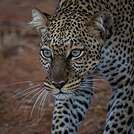
After our daily relaxation moment, we break camp—Yolande and Michel on one side, us on the other. Of course, it’s Lynx’s sharp eye that makes the first discovery near the Keekorok River: a lioness, then a second one on the opposite bank. The closer one seems very focused while her companion devours the remains of a baby eland but flees at our arrival. What I didn’t notice—but why we came here—is the leopard in a tree. It had its prey stolen by the two sisters: one eats while the other keeps watch. The operators take over as we head back to the trail about fifty meters away. The photographers stay until evening and observe that, taking advantage of a moment of inattention from the lionesses, the leopard climbs down from its perch to reclaim its meal and enjoy it quietly, perched on its branch.

The rangers who patrol the park looking for rule-breakers avoid these isolated areas, preferring spots crowded with tourists—it pays more!

Nearly 3 hours watching this marvel.


One of the thieves.

Backlit.


Of course, I missed the descent


to retrieve part of its meal.


Under changing lights.


Time to go.
Yol + D'Jack
JE Jety34 Veteran ·
Everything is a source of fascination for me, so we drive slowly, Mikaël stopping whenever I ask: for a buffalo carcass in a pond, bee-eaters—easily recognizable by their silhouettes and vibrant colors, as well as their distinctive chirps—two young lions lounging in the grass, buffaloes, hippos, and a crocodile all sharing the same watering hole.

As dusk falls, we arrive at our accommodation by the Sand River, actually just a stone’s throw from our midday picnic spot. Nothing indicates you can settle there, but Motoron knows the permitted spots for his boss inside out—this one is particularly beautiful and wild. We park the vehicles under the canopy of a massive tree and set up our gear toward the sunset. The butler, always attentive to his guests’ comfort, has gone down to the river to dig a hole where we’ll take our bath, saving the water tank and avoiding daily supply runs. Four buffaloes have decided to do the same—they’re 150 meters away, completely indifferent to human presence. Meanwhile, the *pot-au-feu* simmers away, just as it should, in its pot. Mikaël discovers and appreciates traditional French cuisine made with local ingredients like turnips, carrots, potatoes, cabbage, and leeks, not to mention tender, flavorful beef. A glass of Gevrey-Chambertin would’ve been a perfect pairing, but we only have a second bottle of champagne to toast with—just the right temperature. No complaints here, and we won’t be writing to Voyage Forum or TripAdvisor about the fridge’s shortcomings or the bath being two degrees off! You’re doing great on this one, my dear Maestro!

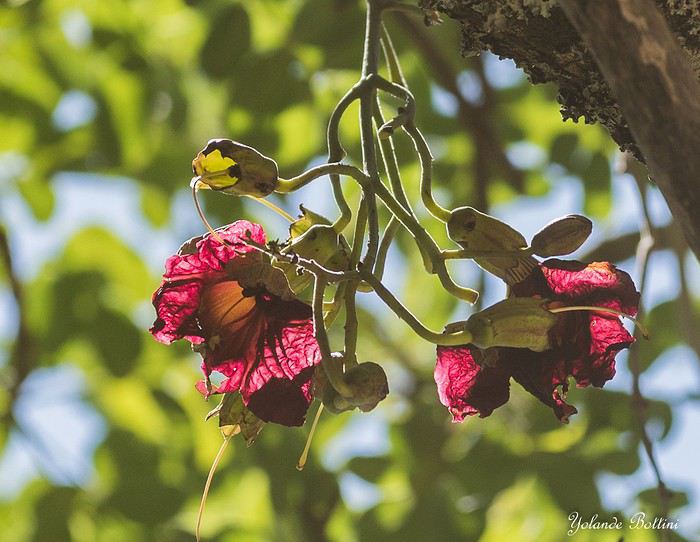
Gorgeous flowers from a bush in the savanna?

Flowers of the sausage tree (*Kigelia africana*).


Preparing the *pot-au-feu*. Washing the vegetables in the Sand River.
Until next time...
Yol + D'Jack
BL Blesl Veteran ·
Gorgeous travel journal, beautifully illustrated, really! 😊
safari photo en Tanzanie et ailleurs https://safari-tanzanie.fr WILIPI photographie animalière
MA Max68 Globetrotter ·
Hi Bernard,

qu'il bloquait sa température de couleur sur 5600 Kelvin

Wow, that’s high! Personally, I lock mine at 5,000 K. 😮 I find it’s better for color accuracy and consistency to lock in a set temperature—it saves time in post-processing.
https://apprentisvoyageurs.com
MA Max68 Globetrotter ·
It's so beautifuuul, I really love your post... and the photos of your wife 😎

That's it, I'm itching to go back to Africa again... thanks and well done 🙂
https://apprentisvoyageurs.com
PY Pygmalion19 Veteran ·
Hi Max68, Bernard, Eric, Yolande, and all the others stuck at home,

This journal is truly amazing—both the text and images are spot-on. It really stirs up emotions and a few regrets. It also makes me want to dive back into the bush. I love the adventurous side of this trip. Honestly, we missed that in the parks of western Kenya.

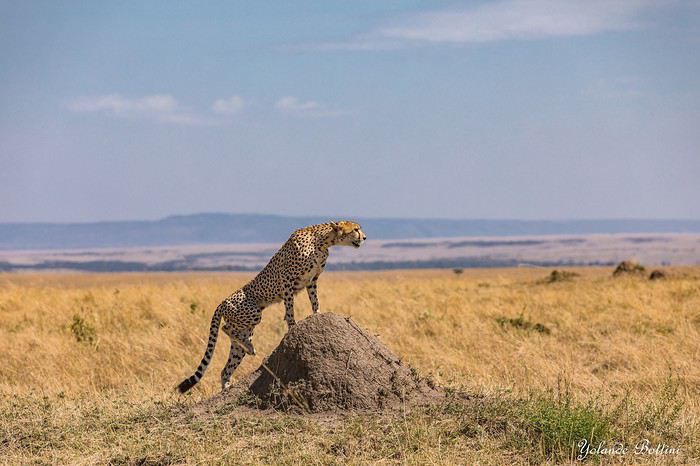
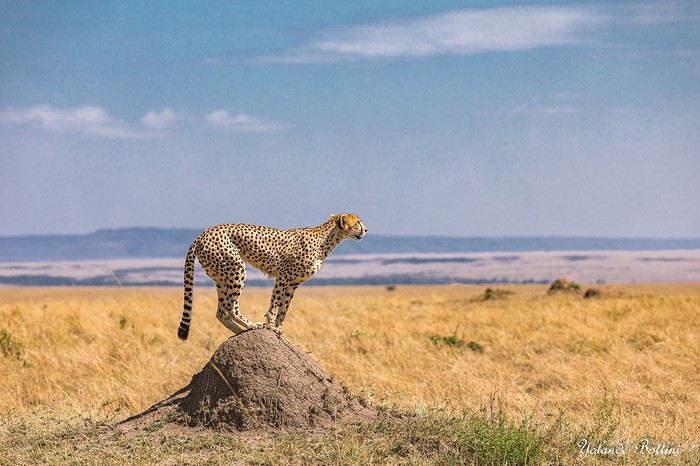
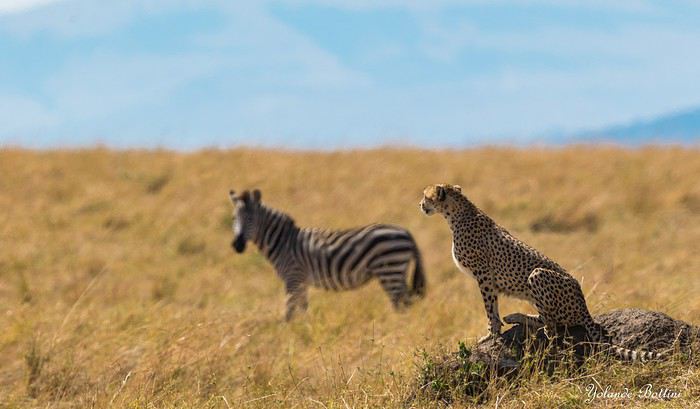
The big cats are well represented. And that cheetah on its mound, with that backdrop—pure class! Always a thrill to see the leos, the lions too, well, when they’re eating neatly.

On my smartphone, the color rendering of Yolande’s images looks different. The yellows are less overwhelming, making the overall result more balanced. I can’t explain it, but it works well.

Canon cameras have a native look that almost makes me want to switch. I don’t know if Nikon DSLRs can compete. But I think the yellows are really something special. Maybe they give more natural tones—though it depends on the model and settings... no hitting!

Yolande and Eric, the union break is over... Looking forward to the next chapter of your African adventures🙂.
pygmalion
JE Jety34 Veteran ·
Hi Bernard,

So, about the croc—if I remember correctly, the speed I mentioned was at 1/640th, not 1/125th. As for the color temperature, I don’t recall Michel locking it at 5600K; I think he suggested AWB instead. Not entirely sure, though. Thanks for all the info! You guys are real treasure troves of knowledge, Blesl.... Yes! Cheers, Yolande
Yol + D'Jack
MA Max68 Globetrotter ·
The native rendering on those Canon bodies almost makes me want to switch. I don’t know if Nikon DSLRs can match that.

Yeah, the native renderings aren’t the same. Nikon’s native images are way more neutral—I personally prefer that; it’s simpler for post-processing, and I like softer images. But if you don’t want to tweak your photos at all, Canon might be the better choice.

Personally, I’ve only been to Southern Africa, but Kenya really makes you want to go.

For me, the biggest highlight of Yolande and Michel’s trip was the mobile camps—being alone in the middle of the bush is an unbeatable feeling. We experienced that in Moremi, in the Okavango Delta 😛
https://apprentisvoyageurs.com
JE Jety34 Veteran ·
Thanks Jean François

So glad you enjoyed our travel journal and it makes you want to return to Africa—we’re total enthusiasts ourselves, though it’s a shame the sounds and smells can’t come along too!

Thanks a million for your kind words.

Maybe if there’s interest, I’ll attach a slideshow recap of the trip at the end.

Have a great evening! Best, Yolande
Yol + D'Jack
MA Max68 Globetrotter ·
Oh yes, for the slideshow 😛

And you're right, sounds and smells are important elements. 🙂 Especially the nights with all the animal "noises"—absolutely amazing 😎

If I tell you that one night in Chitake, Mana Pools (meaning the next human is at least 50 km away), we had a group of 4 lions passing by the foot of our tent, growling—it must resonate with you 😉.

Hearing their footsteps and their breathing...
https://apprentisvoyageurs.com
JE Jety34 Veteran ·
Oh yes, but on the roof of the car is usually quieter. Mana Pools is in Zimbabwe. From there, we set off in a canoe with a guide and three other canoes. In the evening, we slept under mosquito nets on a light frame, by the Zambezi River—amazing! One early morning, a leopard passed between our individual nets to reach the river. You just hold your breath and stay still. But what an experience—100 km like that from Mana Pools to the Mozambique border. So many memories! Have a good evening, Yolande
Yol + D'Jack
MA Max68 Globetrotter ·
Canoeing with a guide ... Zambezi, amazing—one morning very early, a leopard passed between our individual mosquito nets to reach the river. We held our breath and didn’t move. But what an experience—100 km like that from Mana Pools to the Mozambique border.

Too awesome, too beautiful 😛 😎 🙂
https://apprentisvoyageurs.com
JE Jety34 Veteran ·
Good evening Jean-François, Bernard, Eric, Régis, and other seasoned confined travelers,

This discussion is getting seriously complicated for me—I was still stuck on *The Red and the Black*, which I always placed in Franche-Comté, but *the Red and the Yellow* in Africa? What on earth is that? I’m completely lost, even though I’ve expanded my Latin since high school (that was ages ago) with words like *Acynonix jubatus*, *Torgos tracheliotos*, *Crocuta crocuta*, *Ceratotherium simum*, and more. I won’t even get into RGB, color temperature, the sometimes heavy weight of photos, native rendering, or RAW demosaicing... I’d rather leave that to the experts in bird plumage colors, even if I’ve noticed you sometimes have to be pretty nitpicky in that field.

You’ll see in the next message one of the three or four photos I’m claiming, taken with a tiny Canon—exceptionally black (not all of them are red). I’m preparing for the worst!

Best regards, Jacky.
Yol + D'Jack
PY Pygmalion19 Veteran ·
Good evening, everyone!

From there, we set off in a canoe with a guide and three other canoes. In the evening, we slept under mosquito nets on a light frame by the Zambezi River. It was amazing—one early morning, a leopard passed between our individual mosquito nets to reach the river. You just hold your breath and stay still. But what an experience—100 km like that, from Mana Pools to the Mozambique border.

Oh, I can just imagine it—no noise, breathing in stealth mode... It reminds me of Ihaha in Botswana. We were camping near the Chobe River (4x4 + tent on the roof). In the middle of the night, a young elephant was devoured on the riverbank by lions. We heard its cries, the roars of the predators, and the bones of the animal giving way under the pressure of their jaws. A little later, once the feast was over, the pride settled at the foot of our vehicle, roaring even louder (the car was shaking). They stayed there, right at the foot of the vehicle, "singing" for a good hour before heading back into the bush. The next day, we cautiously approached the animal’s remains. The lions had eaten it alive from the inside out. Of course, no death by strangulation here...
pygmalion
GI Girardinpho Veteran ·
Hi,

Like Jean François, I find that Nikon offers more neutral colors, but it really depends on a lot of things like the camera settings, the camera itself, and also the screen settings where you're viewing this travel journal.
Nathalie

Photos et carnets de voyage : http://www.girardinphoto.net
BL Blesl Veteran ·
Hello Nathalie,

I don’t think we can say that one sensor brand—Sony, Canon, or any other—is more neutral than another. Sure, we often hear that Canon favors skin tones and Nikon has a cooler rendering.

But neutrality doesn’t exist.

The same Canon RAW file developed with all sliders at zero in Camera Raw (Lightroom and Photoshop), DPP (Canon’s proprietary demosaicing software), and Capture One will show visible differences in rendering on a calibrated screen. The same goes for a RAW file from a Sony sensor (or any other brand).

Then, even without going as far as color blindness, our internal RGB demosaicing—our retina/brain combo—isn’t absolutely identical. Our perception of colors can vary from one person to another.

Finally, our optical system can play a role, with its lens, the crystalline lens that “yellows” vision with age (or intense UV exposure, etc.). I had cataract surgery on my left eye, and the right one, which was supposed to follow, wasn’t operated on right away for reasons you can guess. When I close one eye, I feel like I have a different color temperature in each.

That won’t stop a careful safari photographer from calibrating their white balance with a gray card, obviously placed where the main subject is—lion, elephant, leopard, or crocodile... Don’t know why, but there are fewer and fewer careful safari photographers these days...

Best to all, and kisses to the rest,

BL

PS: Jacky, Red is Canon, Yellow is Nikon—the two rival brands (it’s just folklore, really...). And we’re all eager to admire your *magnum opus*...
safari photo en Tanzanie et ailleurs https://safari-tanzanie.fr WILIPI photographie animalière
GI Girardinpho Veteran ·
That’s what I meant, but simpler!
Nathalie

Photos et carnets de voyage : http://www.girardinphoto.net
RJ Rjulie95 Globetrotter ·
Since everyone wants to get their white balance right, I invite you to read this article
"Je suis africain, non pas parce que je suis né en Afrique, mais parce que l'Afrique est née en moi." Kwame Nkrumah.

"J'ai appris que le courage n'est pas l'absence de peur, mais la capacité de la vaincre." Nelson Mandela

https://www.en-voyages.fr
PY Pygmalion19 Veteran ·
Hi Bernard,

Heh, heh, heh! The oh-so-crucial role of the subject in photography. Many of us still think—or rather, perceive—that Nikon and Canon cameras have different native color renditions. It’s hard to say what the lens/sensor system actually senses at this level, but here on this forum, we living, breathing folks collectively and cordially agree that it’s not just a rumor. What we’re comparing is different. It doesn’t come down to our eyes but rather how the lens/sensor system processes and renders the information. So, subjectivity might actually lie with our machines, which aren’t as neutral as we’d like to think... oh!

This lockdown really does make you daydream... to be or not to be😉.
pygmalion
PY Pygmalion19 Veteran ·
Hi Régis,

Would the charter get our camera bodies to agree? Great article, and thanks!
pygmalion
JE Jety34 Veteran ·
Hello everyone.

Second-to-last day.

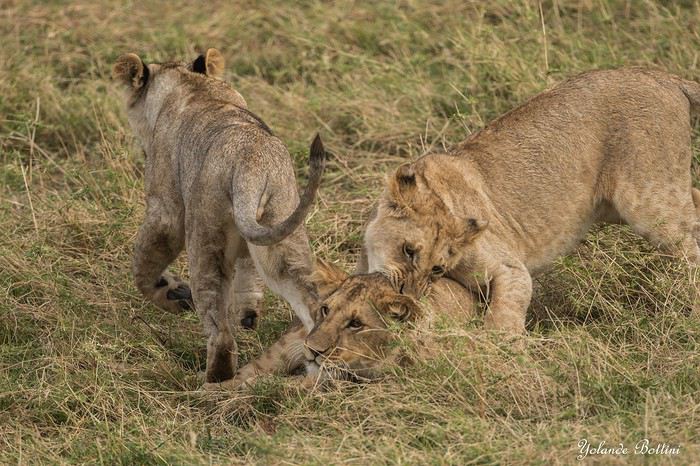
After an early night, we wake up feeling refreshed, despite the continuous roars of lions prowling nearby. We pack up a little after 6:00 AM, just as the first rays of the sun color the sky to the east—it’s the time when hyenas return to their dens after a night of wandering. We come across a massive herd of buffalo; there must be five or six hundred of them grazing peacefully, likely having already paid their dues to the predators that haven’t stopped howling. A strange rumbling fills the savanna: these bovines are all grumpy! A little further upstream near Sand River Camp, a large lion family, their muzzles stained with blood, rests after a long hunt. Between the cubs and their parents, there are sixteen of them, which seems to be a common number in the reserve. Several crossings exist in this area, but there isn’t enough depth for crocodiles—unfortunately for the herbivores, the carnivores have taken over, as other lions lie in wait. A Tanzanian clan points out Motoron, who knows them all: a couple and four cubs squabbling over a bone they’re struggling to grab. All around us and beyond the nearby border, the gently rolling plain teems with herds—tens of thousands of them, still as reluctant as ever to cross the obstacle.

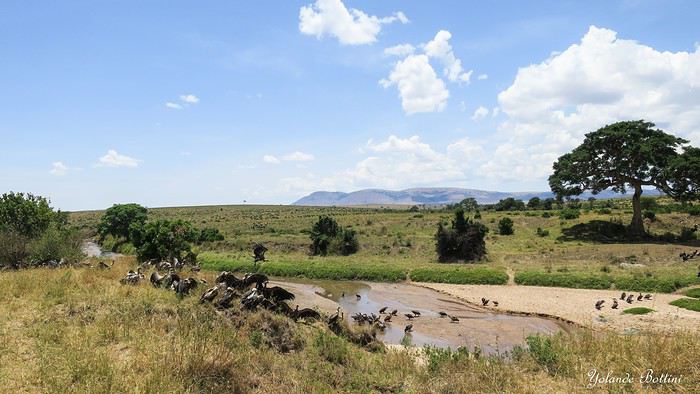
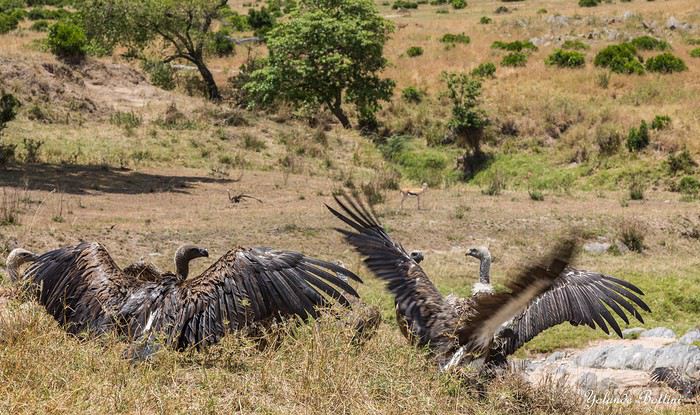
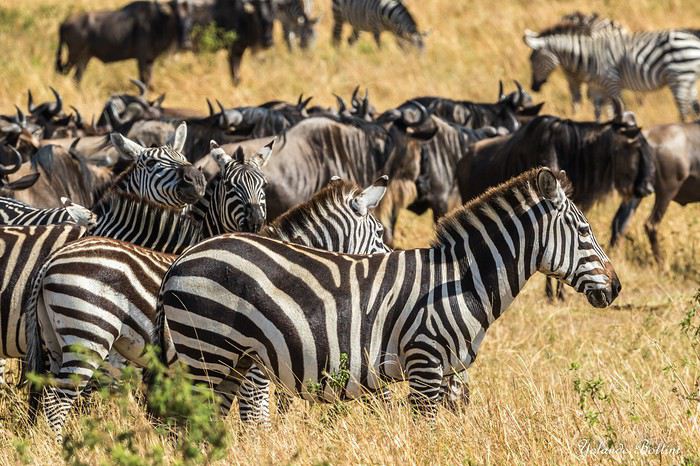
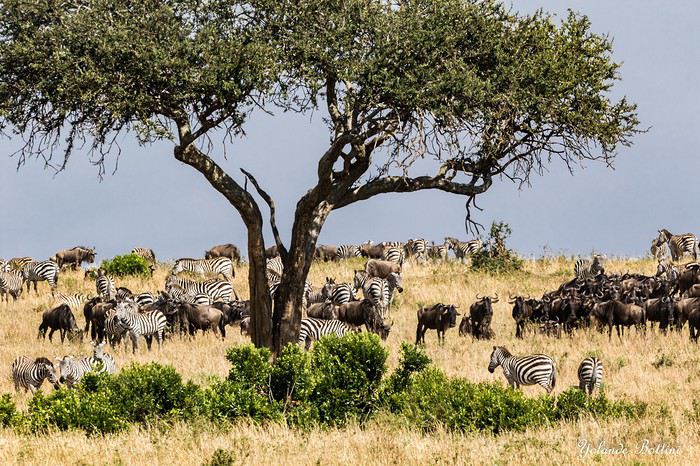
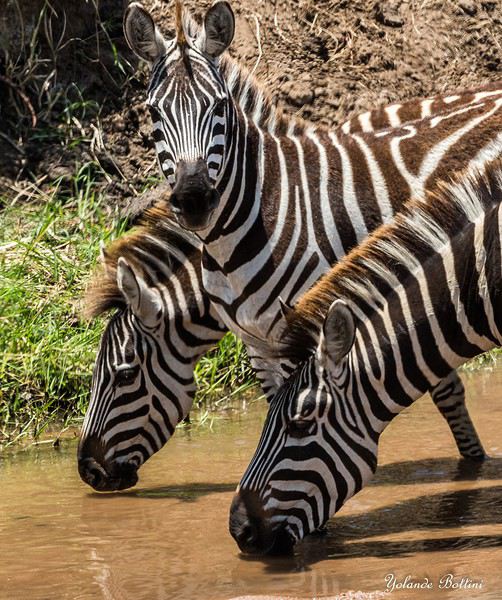
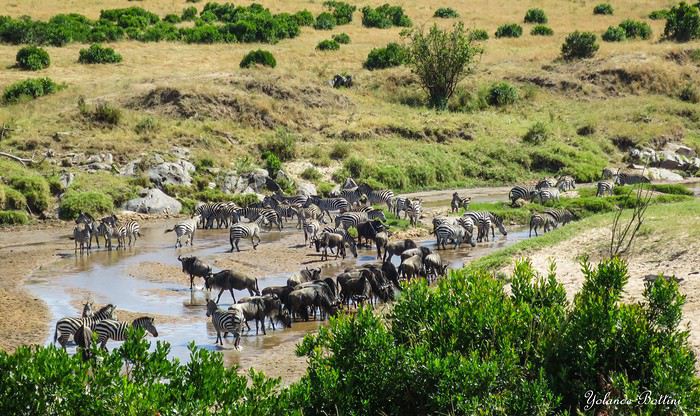
At 8:40 AM, we take shelter in the shade of a large fig tree for the usual coffee or tea, joined by numerous wildebeest and zebras that come nearby to drink from the clear waters of the Sand River. Michel, perhaps needing some solitude, entrusts us to Mikaël and leaves for some unknown reason with his assistant. The water, source of life, attracts wildlife—animals are everywhere, in small groups or vast herds on both riverbanks. Besides the usual species I won’t mention, we spot warthogs and two reedbucks, also called redunca. The two males keep their distance from other species; these are the first we’ve been lucky enough to see. Lions also dominate the territory—we spot three prides in barely forty-five minutes and a magnificent lone male. Olive baboons scattered across the grassland sit on their haunches, foraging in the grass. Their posture and expressions remind me of geladas from the Ethiopian Highlands, their mostly herbivorous cousins. The bushes in the area have attracted birds—though not as many as in some parks of Southern Africa or even Ethiopia—but we spot swallows, bulbuls, barbets, thrushes, doves, green pigeons, rollers, and a lone secretary bird amid a hundred African vultures. These great gliders have landed on the path, the ford, and the steep riverbank, indifferent to our presence. No "kill" in sight; they’re here to preen, bathe their rear ends and beaks in the water, or soak up some warmth.


Come on, buddy!

No, you shall not pass!


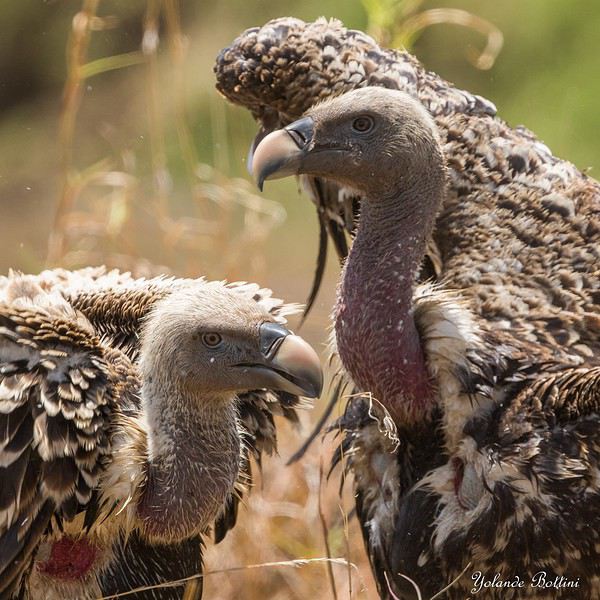
African vultures,


very photogenic, in my opinion.


To be continued...
Yol + D'Jack
JE Jety34 Veteran ·
Back to it


With the sun at its zenith, it’s snack time, so we head to our ficus tree where the table is set for a lunch heartier than on other days. Michel isn’t feeling great—on top of smoking like a chimney, which gives him a raspy voice, he’s still fighting off an old bout of malaria and prefers to lie down while we head to the river for a foot soak. The buffaloes are still there, along with two reedbucks, much shyer than the cattle. The famous “crossings” are supposedly imminent, as Motoron got word. But no, still nothing—though the herds are massed on either side of the water, making you wonder about the point of their migration. A small clue, though: the crocodiles are concentrated on the opposite bank, and the hippos have ceded the area to them. We only spot one hippo running through the bush, its mouth twisted—it seems both anxious and irritable. It’ll pass right under the nose of the Land Rover following us at a distance. We’ll cross paths with plenty more herbivores: giraffes, elephants (the first we’ve seen today), buffaloes, a lion family near Serena Lodge, three jackals, a pair of ostriches with their chicks, and on the way back, a stunning serval that pops out of a bush just a few steps away. Our stop draws several cars—practically the first we’ve seen all day. While the passengers jostle to photograph the big spotted cat, Motoron chats with the drivers, all of whom he knows, and relays their remark: “Who’s that guy alone with you who isn’t taking any photos?” It’s true, it’s pretty rare, but I can proudly say that travel and contemplation existed long before Niepce and Daguerre were born.

Gathering to head to the river.


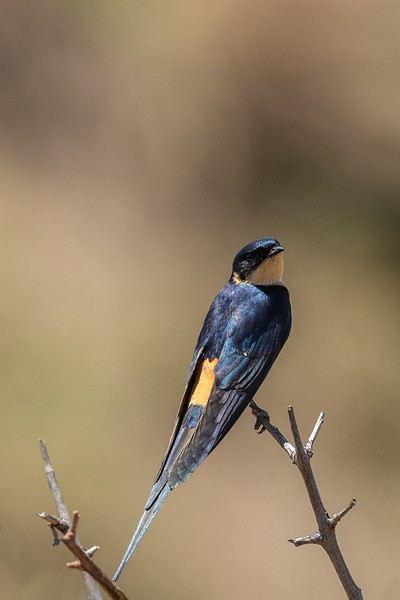
Red-bellied swallow?

To be continued...
Yol + D'Jack
BL Blesl Veteran ·
Hello Yolande and Jacky,

Yolande, I love your vulture photos, especially the one after the recovery. Jacky, I love your subtle humor style. For the swallow, I’d say yes—red-bellied.

Thanks for sharing!

BL
safari photo en Tanzanie et ailleurs https://safari-tanzanie.fr WILIPI photographie animalière
PY Pygmalion19 Veteran ·
Hello, hello,

Jacky, I notice in your post that you’ve really got a knack for birding. All those bird names—amazing! 🙂 While photography can sometimes lose the connection to the subject, I see that well-crafted words can bring it back to life... Hats off to you! Reading your posts feels like a stroll. In these constrained times, it’s a blessing. Hallelujah!

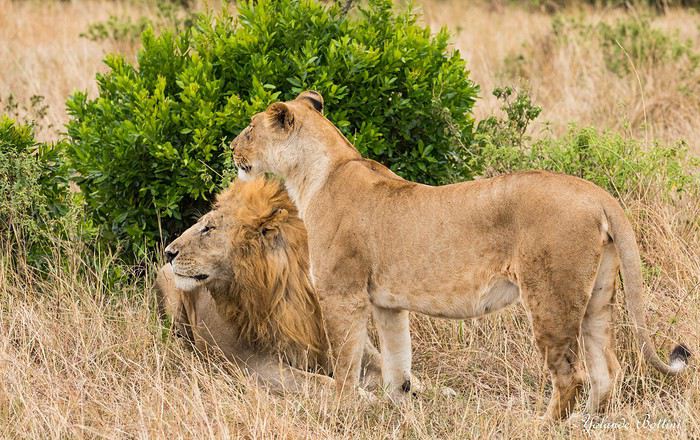
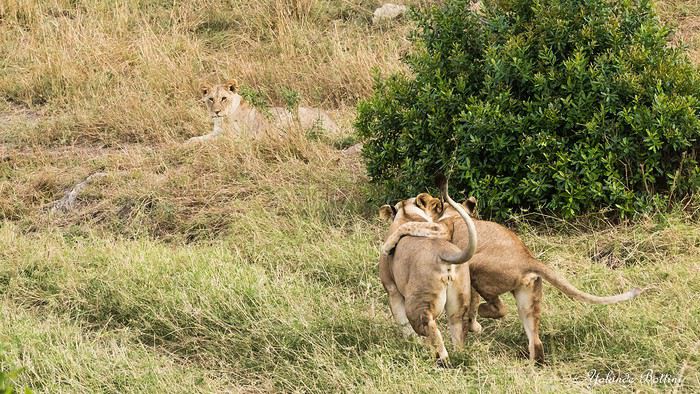
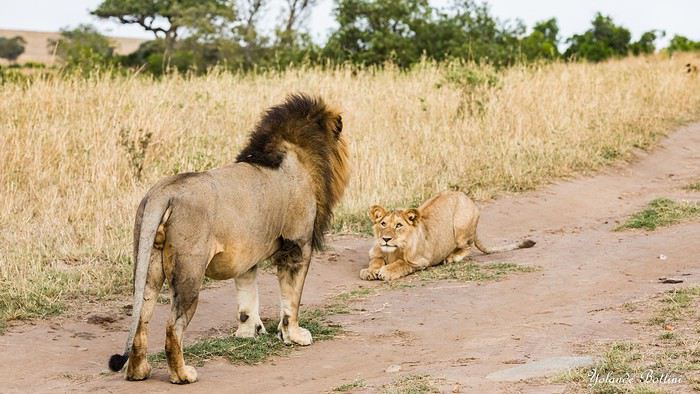
Yolande, I *love* your photos. Like Bernard, I have a soft spot for vultures. Like them, I don’t leave anything on my plate 😉. Extra points for the playful lion scenes and the vulture portrait at the end of the page. The swallow shot is a success (what focal length?). The atmosphere shots of the early migration make it feel like we’re right there under that scorching sun! Straight down, I assume?
pygmalion
JE Jety34 Veteran ·
Good evening Eric and Bernard,

Thank you for your kind words—we’re really touched, and it means a lot to us.

Yes, I love taking photos, especially of the savanna’s underdogs, like hyenas, vultures (and snakes, which were noticeably absent this trip—actually, we rarely see them on our African travels except for Boomslangs and Puff Adders). We’d be over the moon to spot caracals, servals, honey badgers, or porcupines, but we’ve hardly ever had the chance to see them. As for the swallow shot at 400x1.6=640mm, ISO 200, f/5.6, 1/500s, it’s heavily cropped.

Have a great evening! Best, Yolande and Jacky
Yol + D'Jack
MU Muriel18 Globetrotter ·
Hello both of you,

I love taking photos, especially of the outcasts of the savanna

It's true that these images make vultures photogenic—I never would've thought that possible! Muriel
Si tu diffères de moi, mon frère, loin de me léser, tu m'enrichis (Saint Exupéry)
RJ Rjulie95 Globetrotter ·
The vulture photos are really beautiful, but I’ve never featured them in the "left behind" shots, unlike impalas, for example.

On the other hand, if you manage to make the marabou stork photogenic... well, that’d be a challenge! 😛
"Je suis africain, non pas parce que je suis né en Afrique, mais parce que l'Afrique est née en moi." Kwame Nkrumah.

"J'ai appris que le courage n'est pas l'absence de peur, mais la capacité de la vaincre." Nelson Mandela

https://www.en-voyages.fr
BL Blesl Veteran ·
Régis, check out our new (sorry, hacked site) marabou gallery... I think they’ve got the beauty of those "supposedly ugly" creatures—way too unfairly overlooked, like hyenas, hippos, hornbills, guinea fowl, etc. And of course, vultures—photos like Yolande’s should help rehabilitate them, not to mention their role in the savanna’s ecosystem (marabous too).

Take care, stay well!

BL
safari photo en Tanzanie et ailleurs https://safari-tanzanie.fr WILIPI photographie animalière
JE Jety34 Veteran ·
Hello Régis, It's true that with its nearly bald head, its scrawny neck, its large beak, and its dangling pouch, this bird really isn't very aesthetic. Plus, the fact that it often feeds on carrion and scavenges in dumpsters doesn’t help its image. But in flight, it’s actually quite graceful—sometimes soaring high in the sky, it can even evoke images of those long-gone flying reptiles! I can see how even an experienced photographer would struggle to improve this wader’s image, even with all the advances in Canon, Nikon, and other gear that can otherwise bend reality. For this winged giant, it’s gonna be tough!

Best regards, Jacky.
Yol + D'Jack
RJ Rjulie95 Globetrotter ·
Looks like they dropped an atomic bomb on his head 😏
"Je suis africain, non pas parce que je suis né en Afrique, mais parce que l'Afrique est née en moi." Kwame Nkrumah.

"J'ai appris que le courage n'est pas l'absence de peur, mais la capacité de la vaincre." Nelson Mandela

https://www.en-voyages.fr
RJ Rjulie95 Globetrotter ·
Even like this, I just can't find it beautiful 🤪
"Je suis africain, non pas parce que je suis né en Afrique, mais parce que l'Afrique est née en moi." Kwame Nkrumah.

"J'ai appris que le courage n'est pas l'absence de peur, mais la capacité de la vaincre." Nelson Mandela

https://www.en-voyages.fr
JE Jety34 Veteran ·
Hello Bernard,

I completely agree with you about the "unloved" creatures of the animal kingdom. Personally, I appreciate them all—well, except maybe tsetse flies and mosquitoes, especially the females, at least when they're buzzing around me! I really like the photos on your site, especially the one with the hippo and the one featuring the bald eagle and the vulture. Best regards, Jacky.
Yol + D'Jack
JE Jety34 Veteran ·
Hello everyone,

This final night in the bush was almost silent—no birdsong, not even a peep. But that was the case every day: where are all the birds? No mosquitoes either, by the way? The photographers left at dawn under a cloudy sky and mild temperatures for one last lesson. Meanwhile, we’re packing up, but Mikaël lost his glasses—they got tangled in the tent he just rolled up with the poles and pegs. It took him a while to untangle everything and retrieve his lenses, without which he’s pretty much helpless. Will he make the cut with MDH, who’s looking to hire a driver for future trips? He asked all three of us what we thought of Mikaël’s skills, and we all gave a positive review, knowing this kind of experience is quite different from the vibe in tour operators and lodges, where you rarely have to pitch a tent or cook a stew or lobster outdoors!

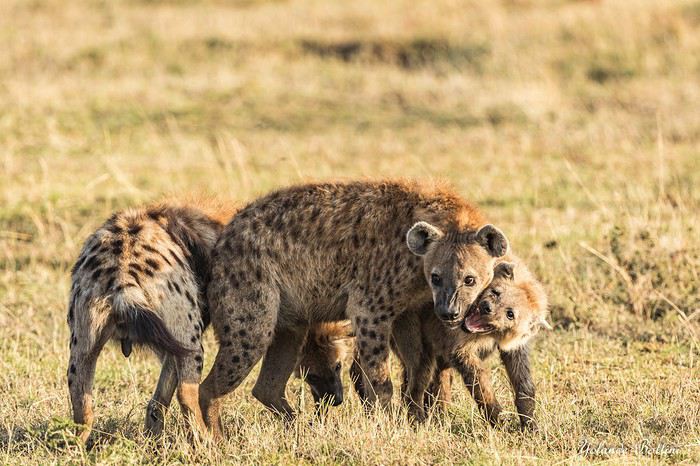
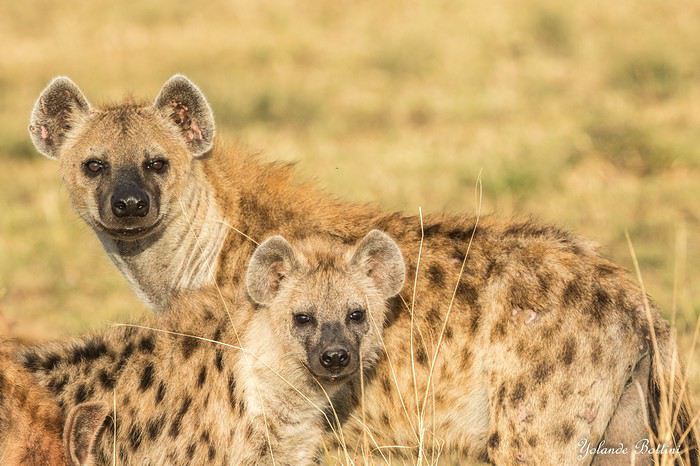
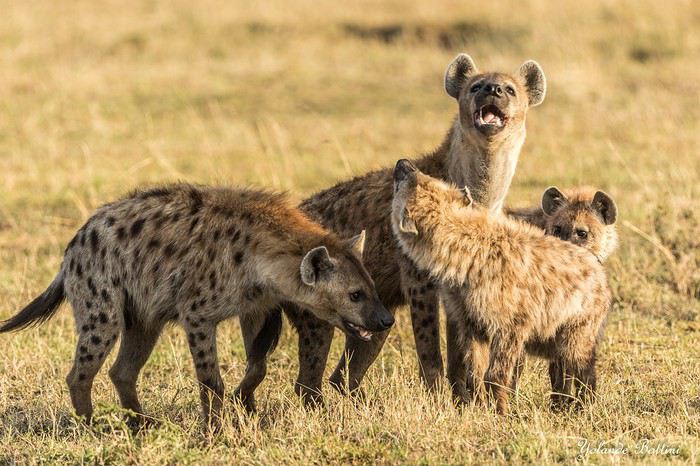
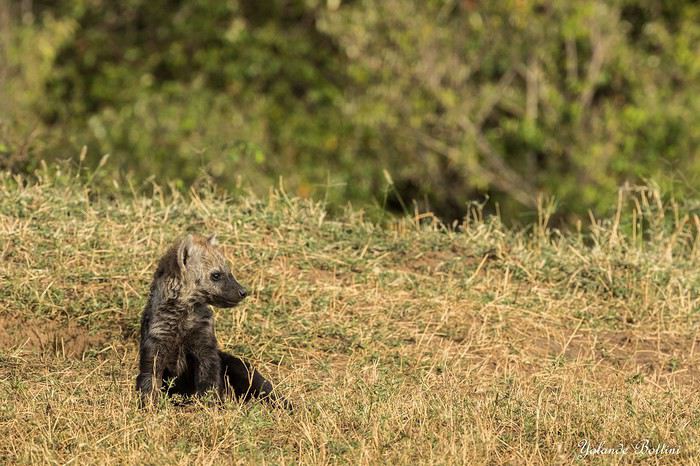
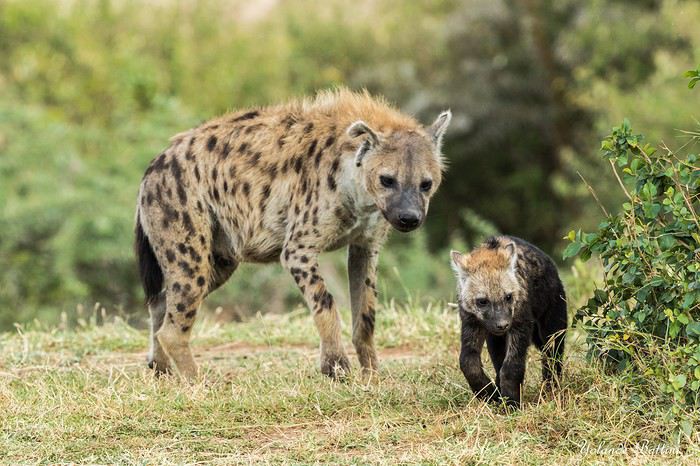
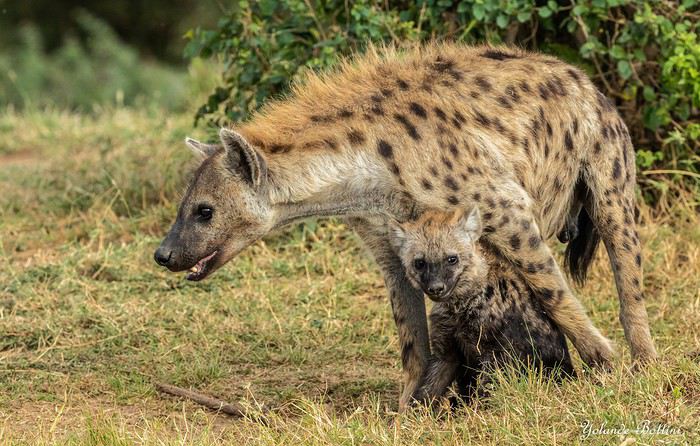
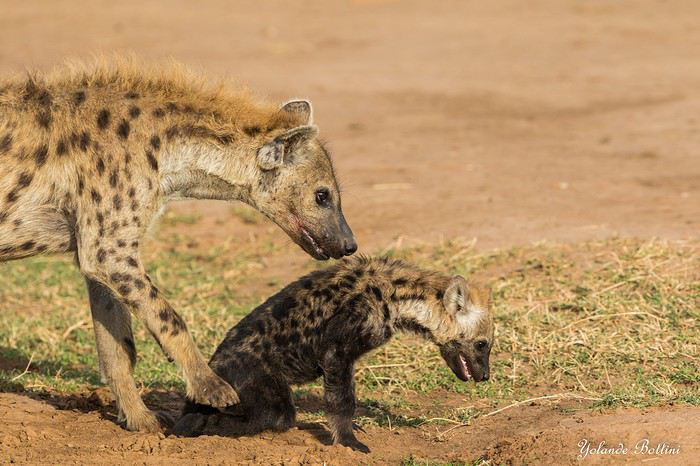
The cars are already crisscrossing the vastness of the park—we’d almost forgotten about them during our stop by the Sand River. The buffalo are still near the gallery forest, but the lions aren’t far off. Just look for the traffic jams: there are more cars than big cats, even though the pride has 17 members. Personally, I’m fascinated by the hyenas, and Motoron knows their hideout. He must’ve called them in just to make me happy because we spot one fleeing with that jerky gait, adults and cubs moving a few meters away as we approach. Further on, we see others isolated in the middle of a massive wildebeest herd, who pay them no mind. The highlight is by the river, where a mother and her still-black cub share tender, touching moments—just like the ones Yolande captured earlier. I never tire of watching these highly social creatures, so unfairly maligned. Proof? There’s absolutely no one in this area, even though it’s close to many camps. And that’s a good thing—the visitors here seem only interested in the "kill," the "crossing," or the big cats!
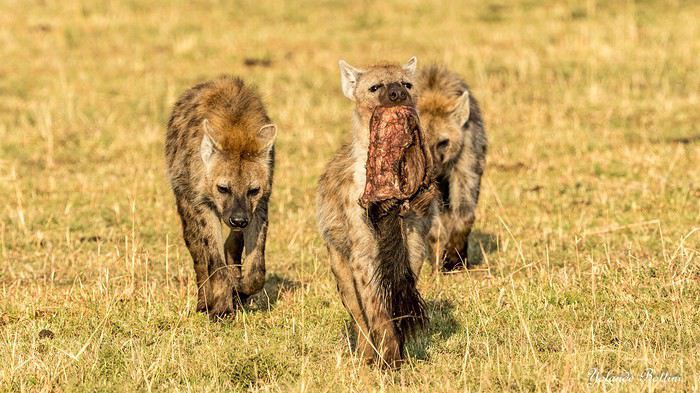
Our "Return to Maasai Mara" ends on these beautiful images. We settle our accounts (peacefully) and say goodbye with a pang in our hearts and a few kisses to this incredible guy with whom we’ve shared unforgettable moments. He’ll continue his solo wanderings before reuniting with his beloved Christine for a trip to Magadi—I envy them!

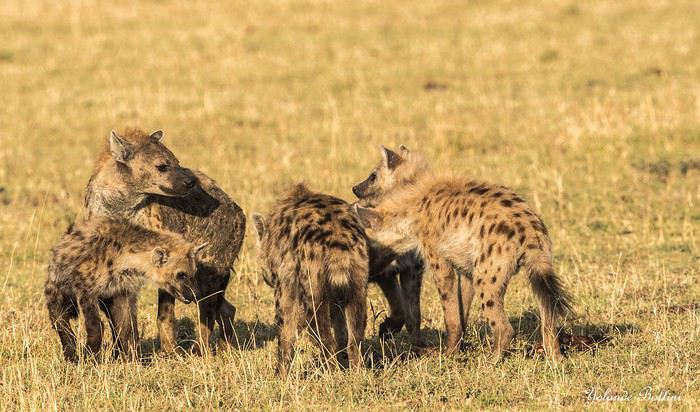
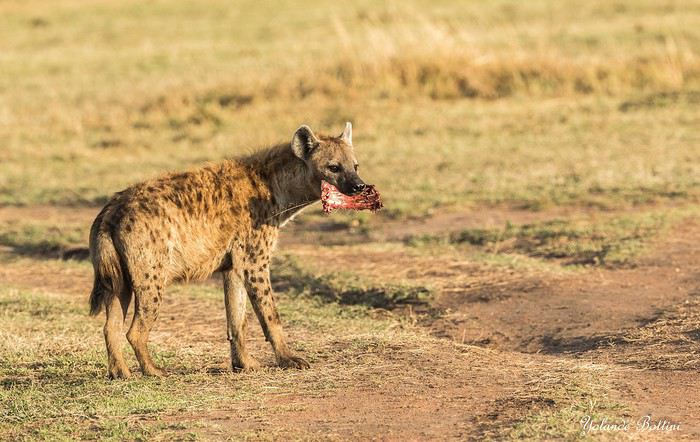
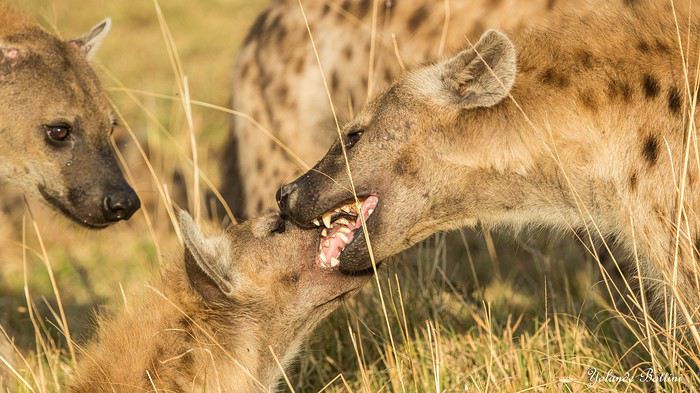
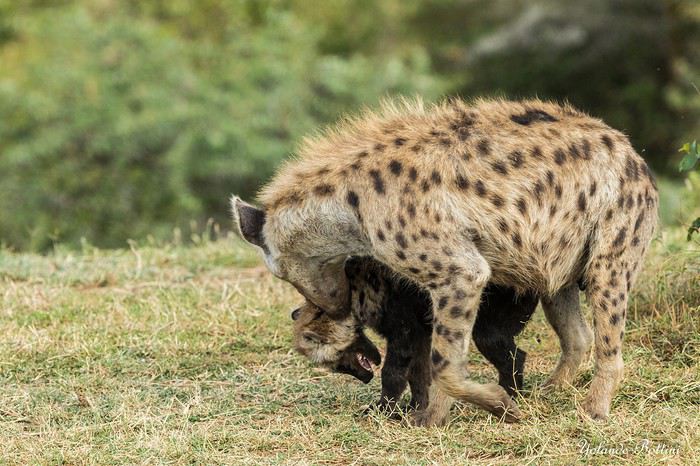
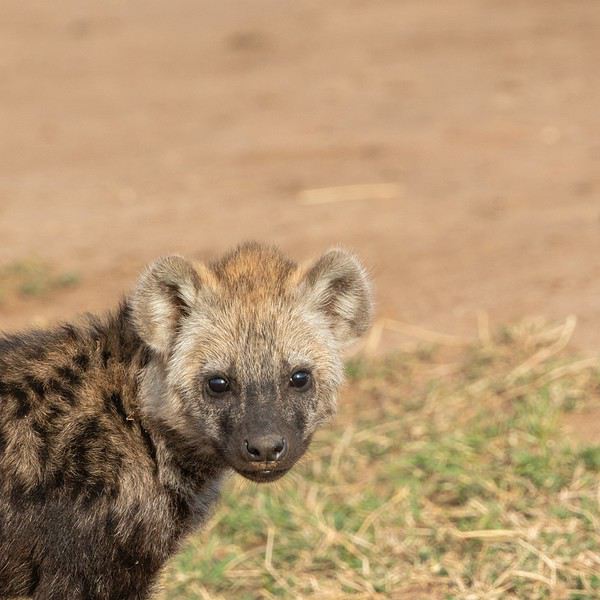
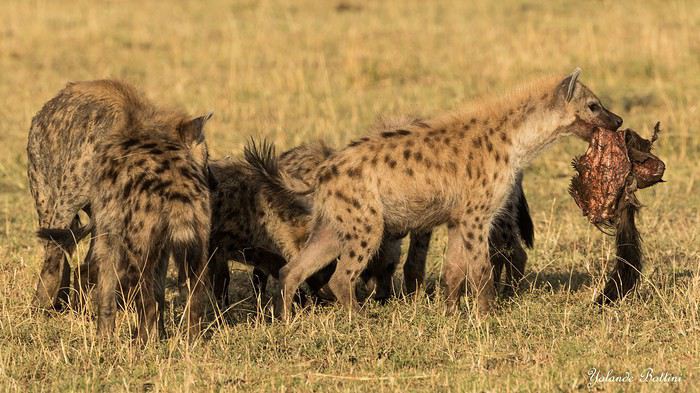
This morning, Michel suggests heading to the hyena den, which we missed yesterday because we were busy at another observation site. Early in the beautiful light, we come across a family returning from a hunt, and we spend a lot of time watching them—chases, scuffles, food snatching, threats, and feeding the youngest: pure delight.


The important thing: feeding the little ones

by regurgitating.

Beautiful scenes we never tire of.
Yol + D'Jack
JE Jety34 Veteran ·
We're leaving the family to reunite with those who had stayed behind at the den. There, shock—no one was left, except for one adult and a kid I’ll call Rascal, because he wasn’t ready to leave and put on quite the show: tantrums, running off, grumbling, protests, and all sorts of funny faces. A long moment of pure laughter. So I end this trip swimming in happiness. Yol.

Rascal. No, I don’t want to leave.


Bye, Rascal....


Motoron, on the other hand, said goodbye to his employer with respect but no fuss—he’s coming home with us. We still run into lots of animals, even near civilization, where they mix with domestic livestock. In the village, he drops off his small bundle of belongings and comes back to us, asking if we can take him to Narok. The road through the conservancies is terrible, and we spot our last topi, gazelles, warthogs, wildebeest, zebras, giraffes, and even more cattle or sheep. Soon, we reach areas farmed by an ethnic group different from the Red People, who, as everyone knows, are semi-nomadic herders. What will our guide do in town, you ask? Spend his money, of course—and what will he buy? Cows, you’d think? Nope. Michel managed to talk him out of expanding his herd, which causes problems with the wild animals. So instead, he’s treating himself to a fourth wife. We part ways at a gas station, without much emotion. Traffic to Nairobi is hellish, especially near the escarpment, where an endless convoy of slow-moving trucks blocks the road. Mikael’s mission is to drop us off directly at the departure gate, even though we’re still in bush gear, unwashed since the day before, and—I haven’t shaved in a week. This wasn’t part of the plan, so we ask him to take us to his employer, Sunworld Safaris Ltd. It’s only 4:15 PM, and they have no instructions from Paris about us—probably an oversight! The manager, who’s really nice, gives us a room with showers and asks the driver to wait and take us to the airport, where we arrive for check-in at 6:30 PM.

Our Kenya Airways flight takes off at 12:15 AM. The in-flight service is nonexistent, and the movie is terrible, but it doesn’t matter. A thought for Mikael, who’s back with his family and has plenty to tell them; another for Motoron, who’s tying the knot with a pretty "en-kitok"; and one last thought for Michel, alone in the vastness of the Masai Mara with his cigarettes, a glass of whisky, and his Canon cameras. We should see each other again at the Montier-en-Der Festival next November. Until then, our minds are free to wander! Thanks to Mikael, Motoron, and especially Michel.

Le Méjanel, Friday, October 4, 2019. Jacky and Yolande.

Sorry for the long story—it was a short trip, after all. I tend to ramble, but luckily, my "Blonde’s" rather amusing photos livened up this prose. Thanks to those who read it all the way through!
Yol + D'Jack
BL Blesl Veteran ·
Jacky,

Not a word too many—we’d even ask for more! A consistent, high-quality story and photos, such a rich and generous share. Thank you, thank you, and thank you again!

Have a great evening, take care.

BL
safari photo en Tanzanie et ailleurs https://safari-tanzanie.fr WILIPI photographie animalière
GI Girardinpho Veteran ·
Gorgeous photos of hyenas! 😄
Nathalie

Photos et carnets de voyage : http://www.girardinphoto.net
RJ Rjulie95 Globetrotter ·
This is all so wonderful, Jacky and Yolande! If the epidemic leaves us alone, I’ll be heading back there in mid-November 🤗😊
"Je suis africain, non pas parce que je suis né en Afrique, mais parce que l'Afrique est née en moi." Kwame Nkrumah.

"J'ai appris que le courage n'est pas l'absence de peur, mais la capacité de la vaincre." Nelson Mandela

https://www.en-voyages.fr
MU Muriel18 Globetrotter ·
If the skin would just leave us alone,

Oh, the joys of autocorrect 😏😏

Thanks Yolande and Jacky for this story. I’d love another helping for Zambia 😎. Muriel
Si tu diffères de moi, mon frère, loin de me léser, tu m'enrichis (Saint Exupéry)
RO Rouquine38 Globetrotter ·
A huge thank you, Yolande and Jacky, for this amazing recap of the Masai Mara. Now that I’ve been dreaming away to these gorgeous images and beautiful text, I’ve got just one thing on my mind... going there... our trip’s been postponed to late November 🙂.
"Voyager est un triple plaisir : l'attente, l'éblouissement et le souvenir." Ilka Chase
MA Max68 Globetrotter ·
Bravo for this magnificent travel journal written by four hands and ONE camera 😉 😎

That means you can still travel in Kenya "off the beaten path" without too much contact with our fellow travelers... it really makes you want to go. 😛 However, I think it’s necessarily within a specific framework, like here with a pro photographer, and I must admit that even though I love taking photos, I don’t feel ready to make it the central focus of a trip and be under the "dictates" of an "insider." 😊

Oh, and I almost forgot—I really love hyenas and their laughs too 😉

Thanks again 🙂
https://apprentisvoyageurs.com
SY Sylvie56 Veteran ·
Thank you both for sharing this adventure full of emotions. I really love the scenes with the hyenas. No matter which animals you encounter, what I find interesting is when you can observe interactions and behaviors. Your experience shows that even in the Mara (which has sadly become so touristy) you can still have a unique experience. (Even though personally, I prefer the tranquility of Meru, for example) When can we expect a story about your earlier travels? I’d personally love to hear about your safaris in the 80s, especially in Aberdare and Meru (I also have the Adamson books in my library 😉).

A big thank you and have a wonderful May Day!
https://www.routard.com/forums/t/safari-au-kenya-en-quatuor-octobre-2025/481554/25?u=karen56 https://voyageforum.com/forum/kenya-hors-sentiers-battus-d9781073/ https://www.routard.com/forums/t/evasion-au-kenya-entre-deux-confinements/276792
JE Jety34 Veteran ·
Régis, Even though this year we’d decided to enjoy our beautiful region, I hope the epidemic will be behind us and everyone can go wherever they please. Have a great time in the Masai Mara and see you next time. Jacky
Yol + D'Jack

Similar discussions

You might also like