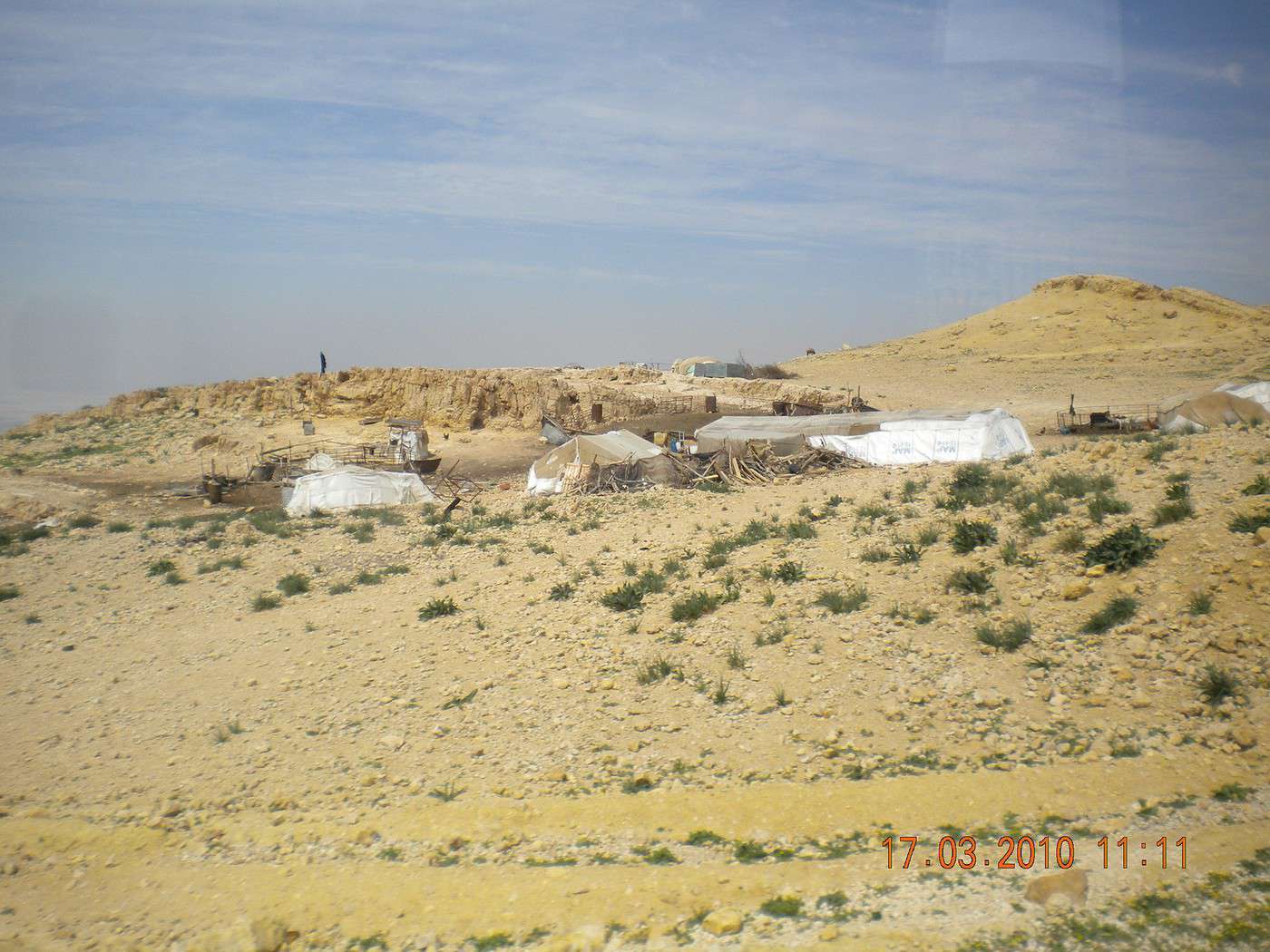
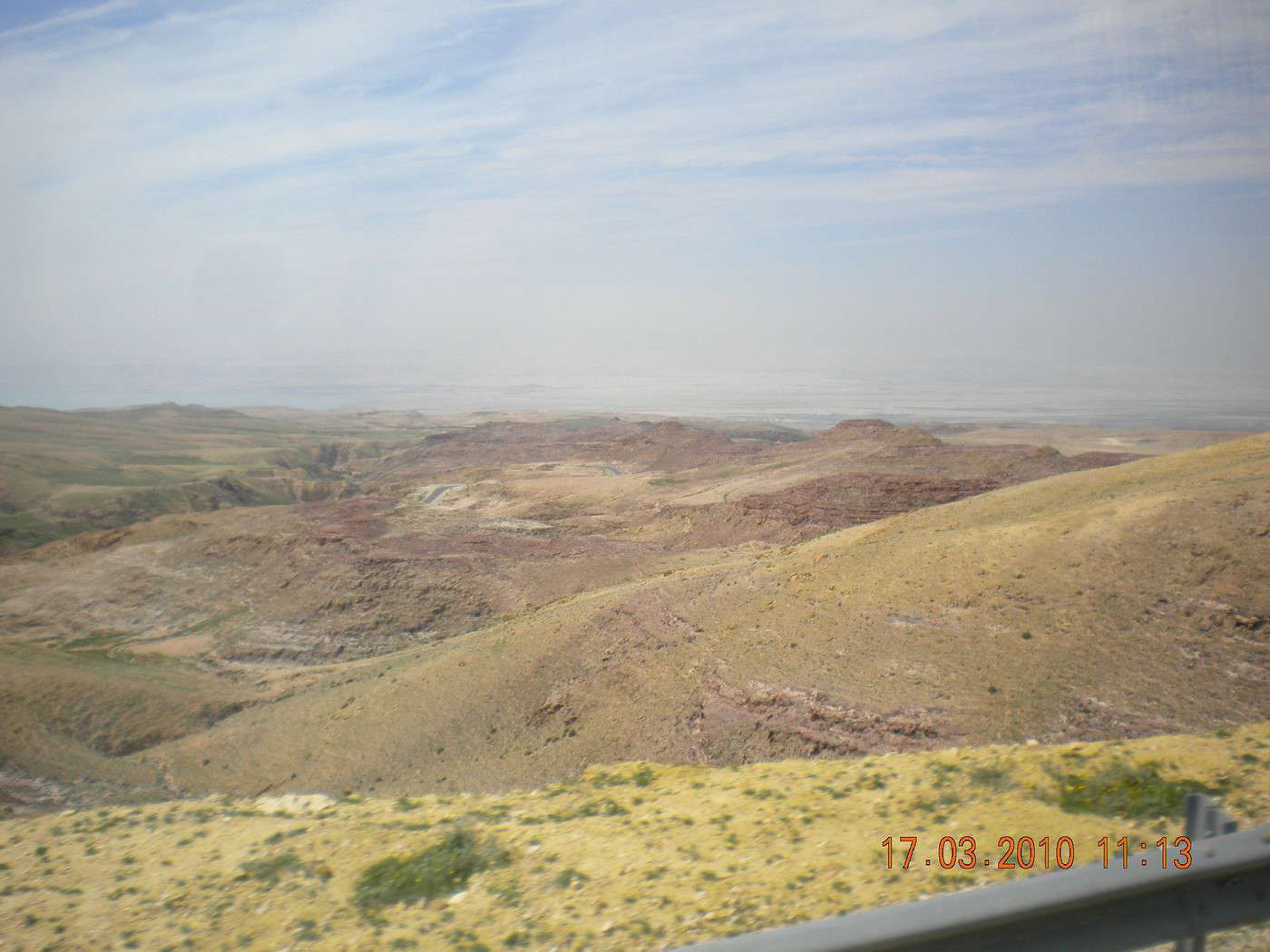
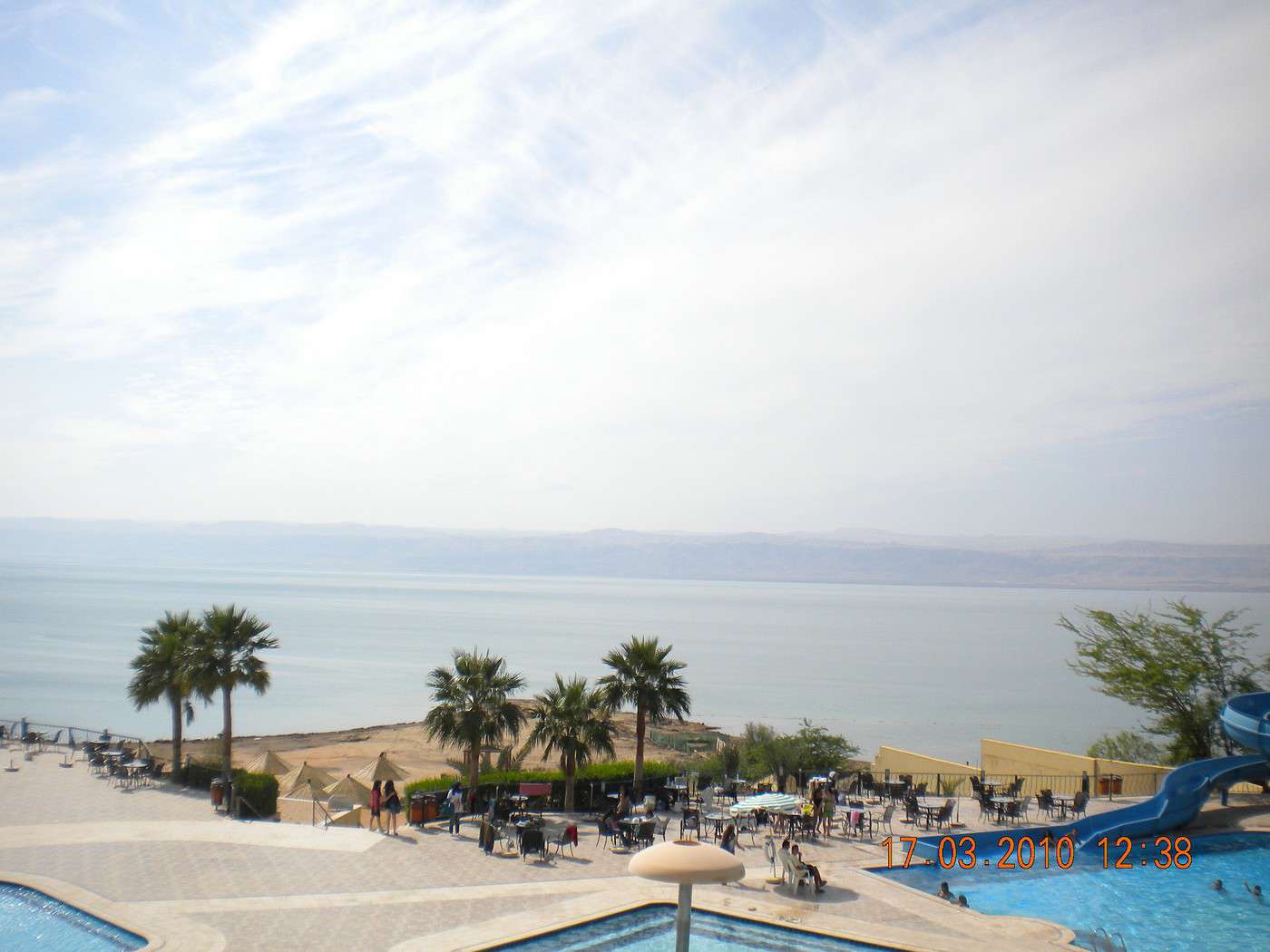
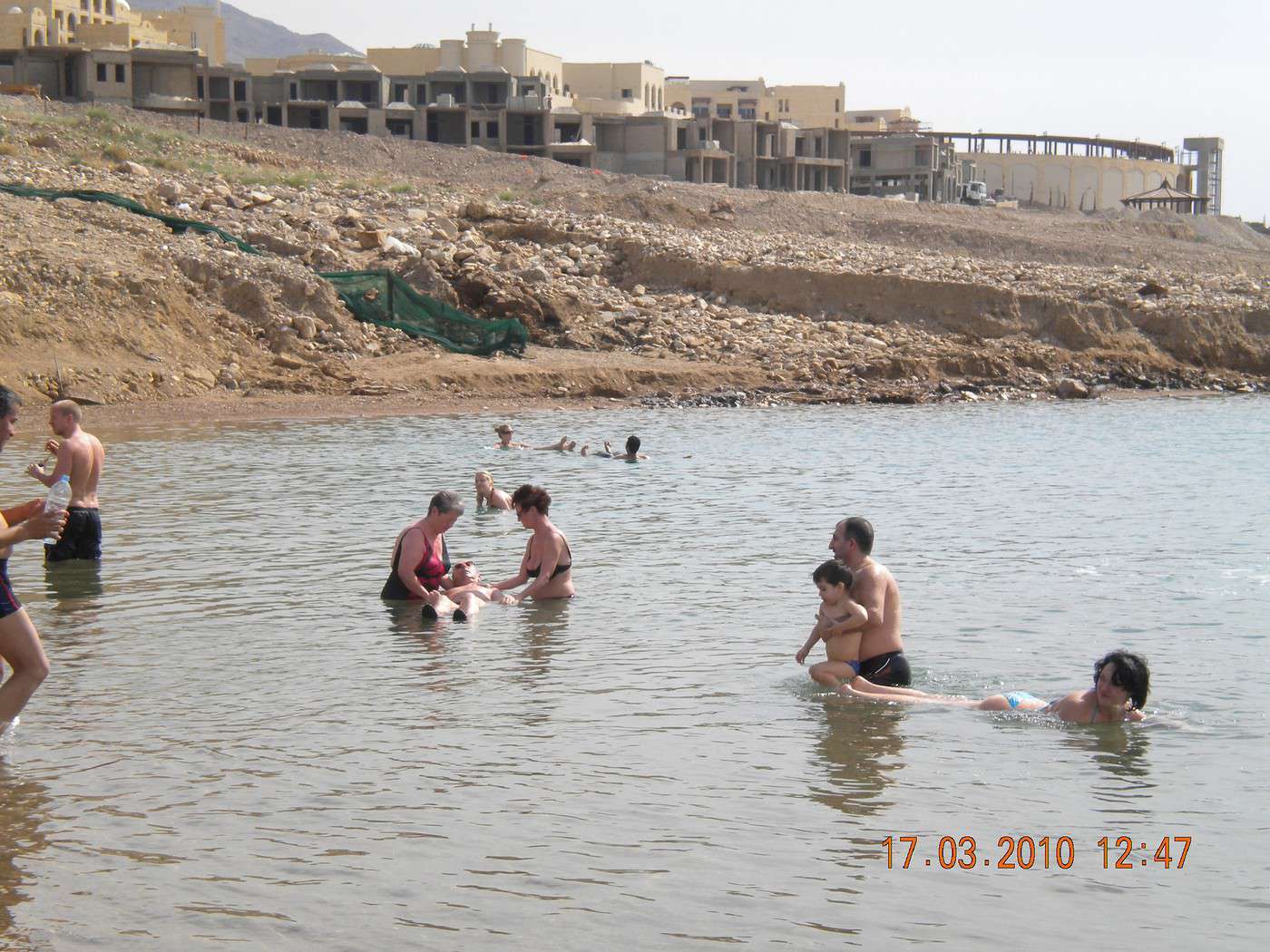
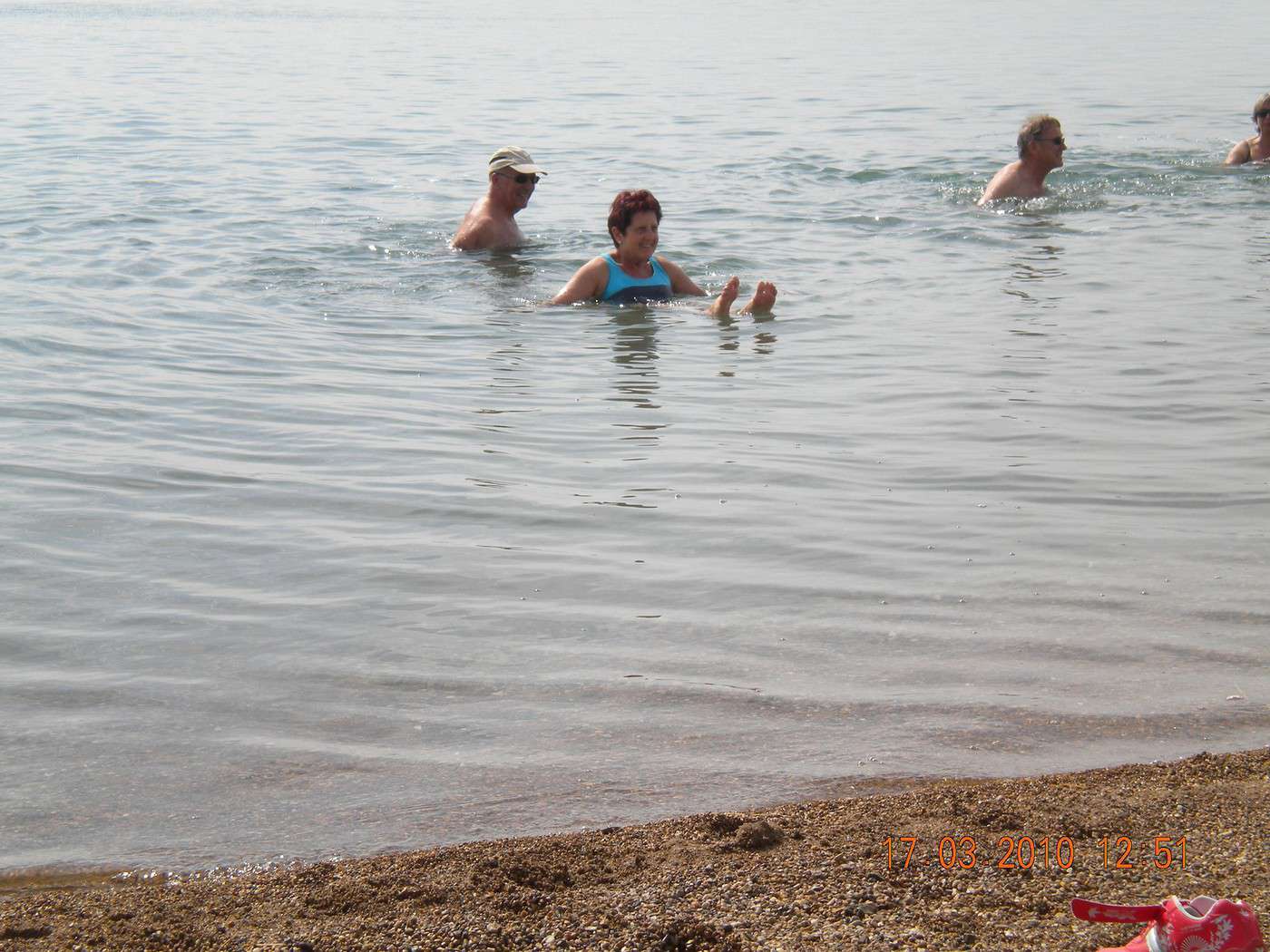
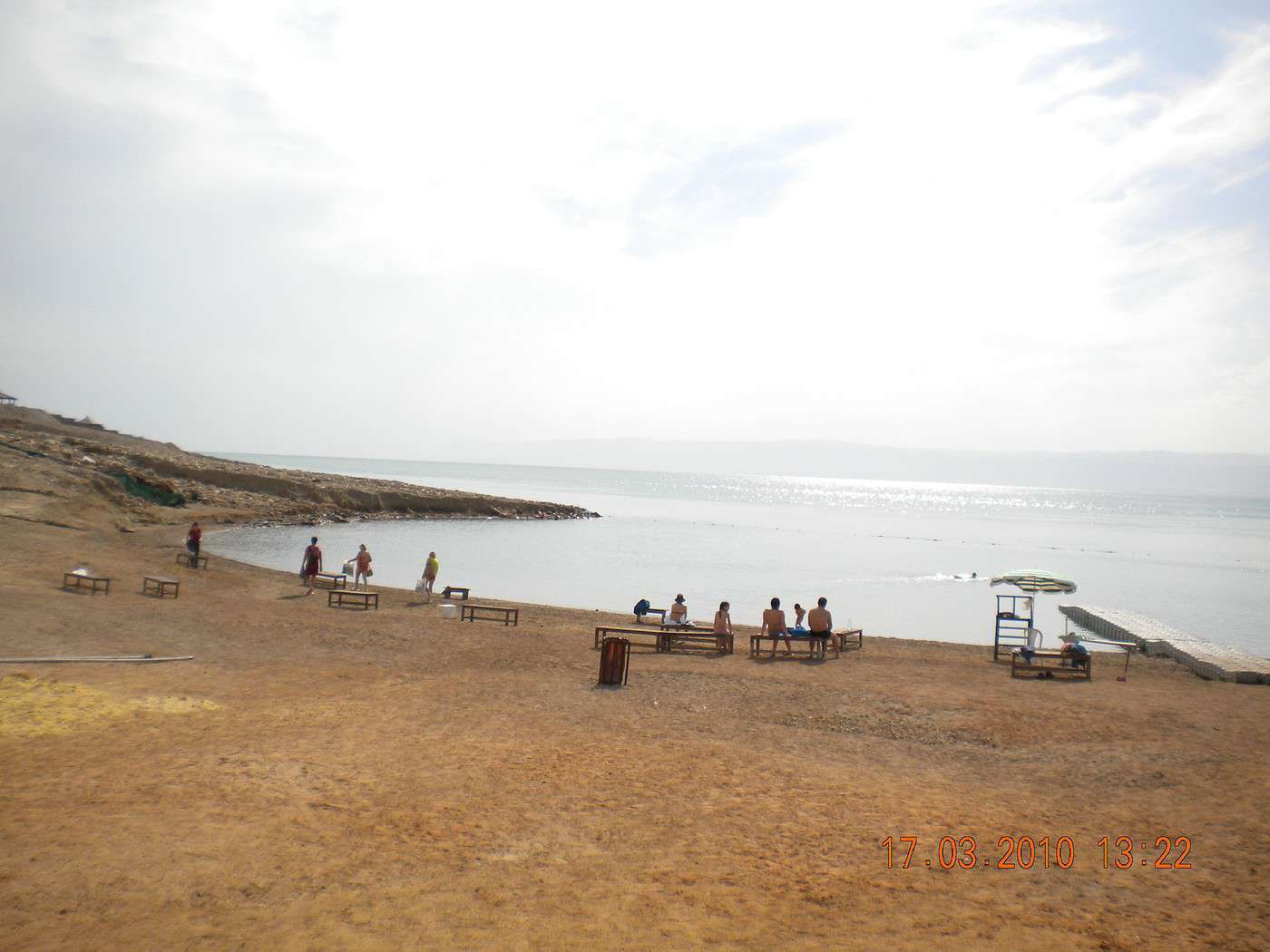
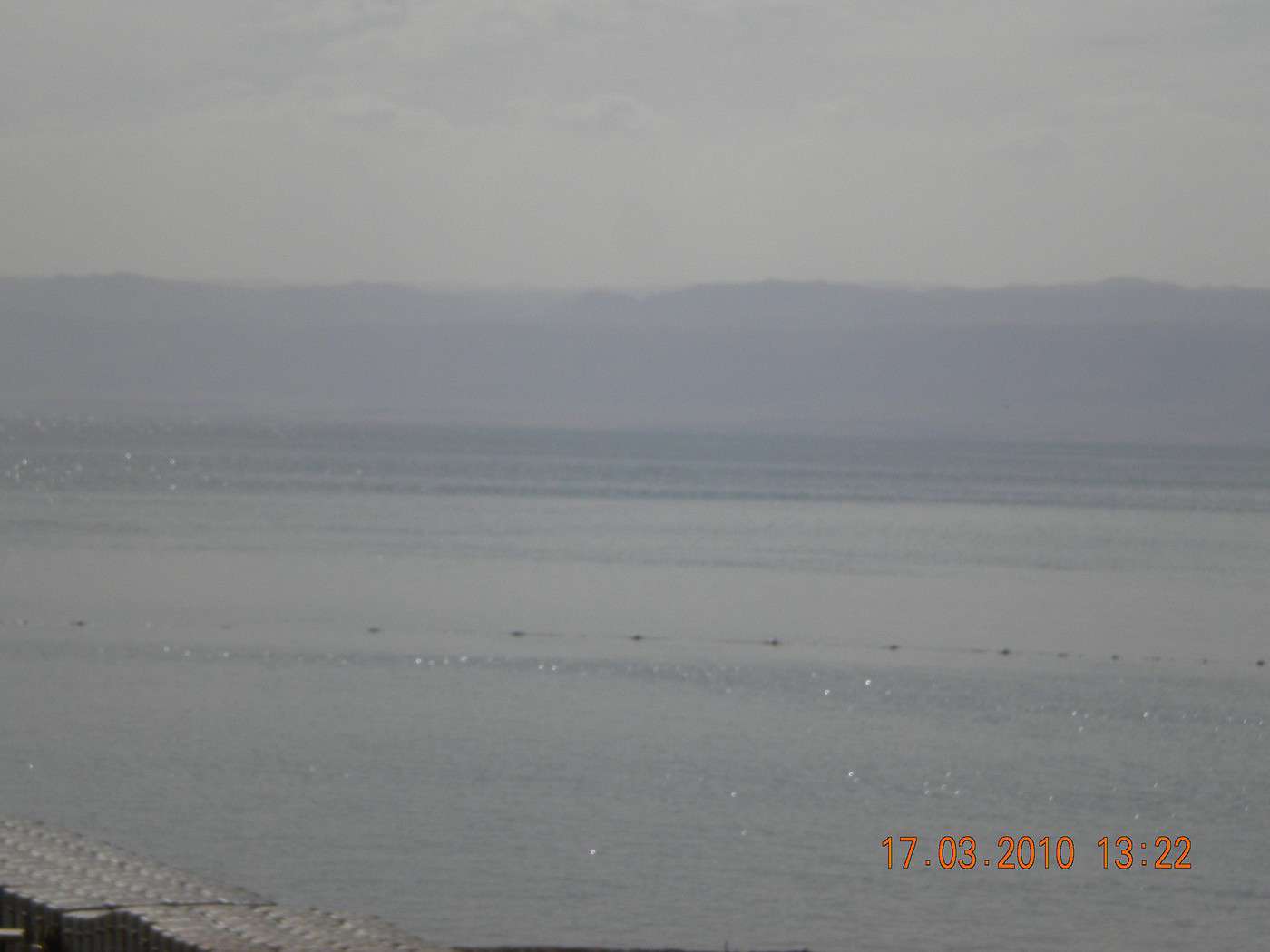
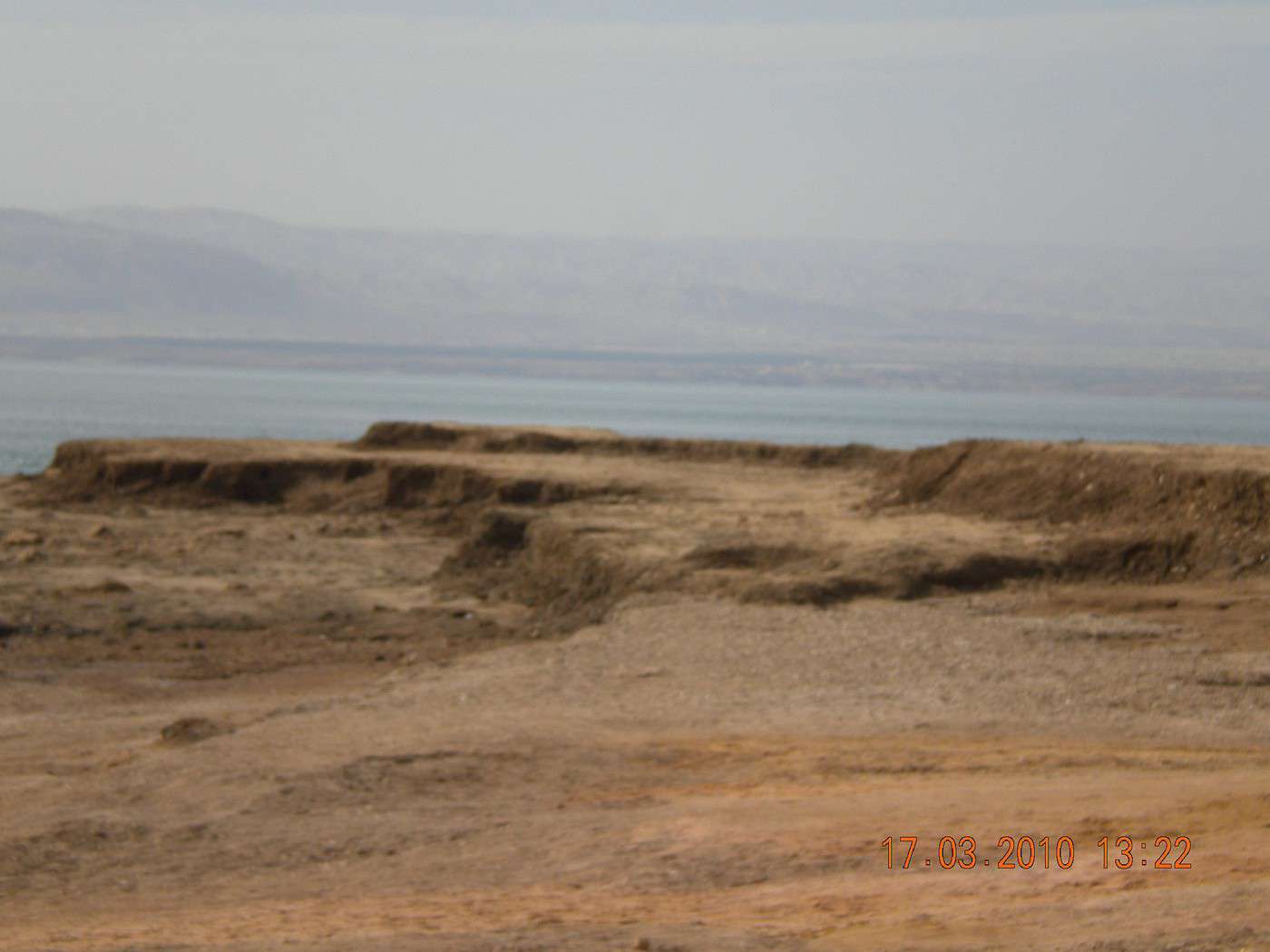
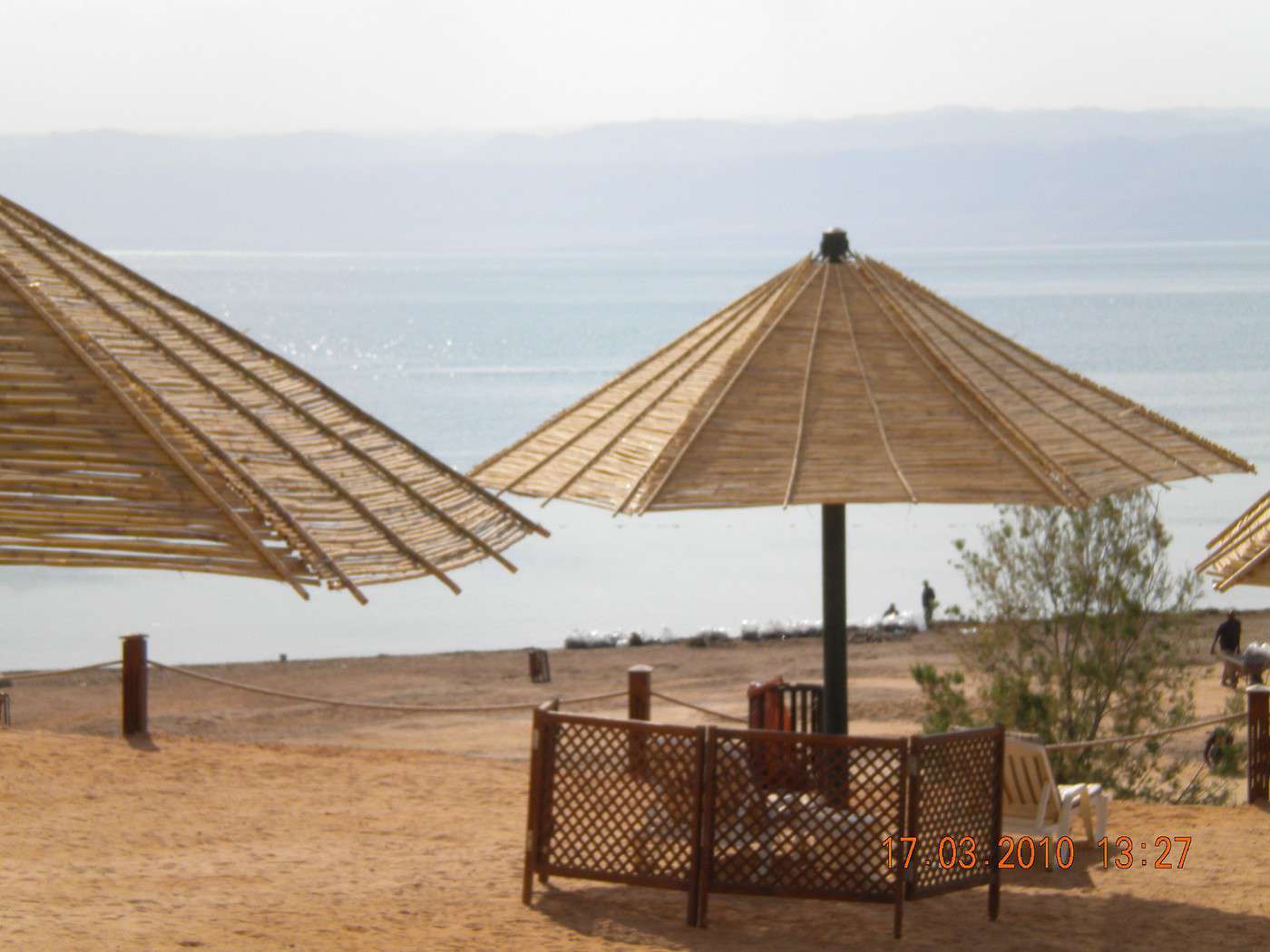
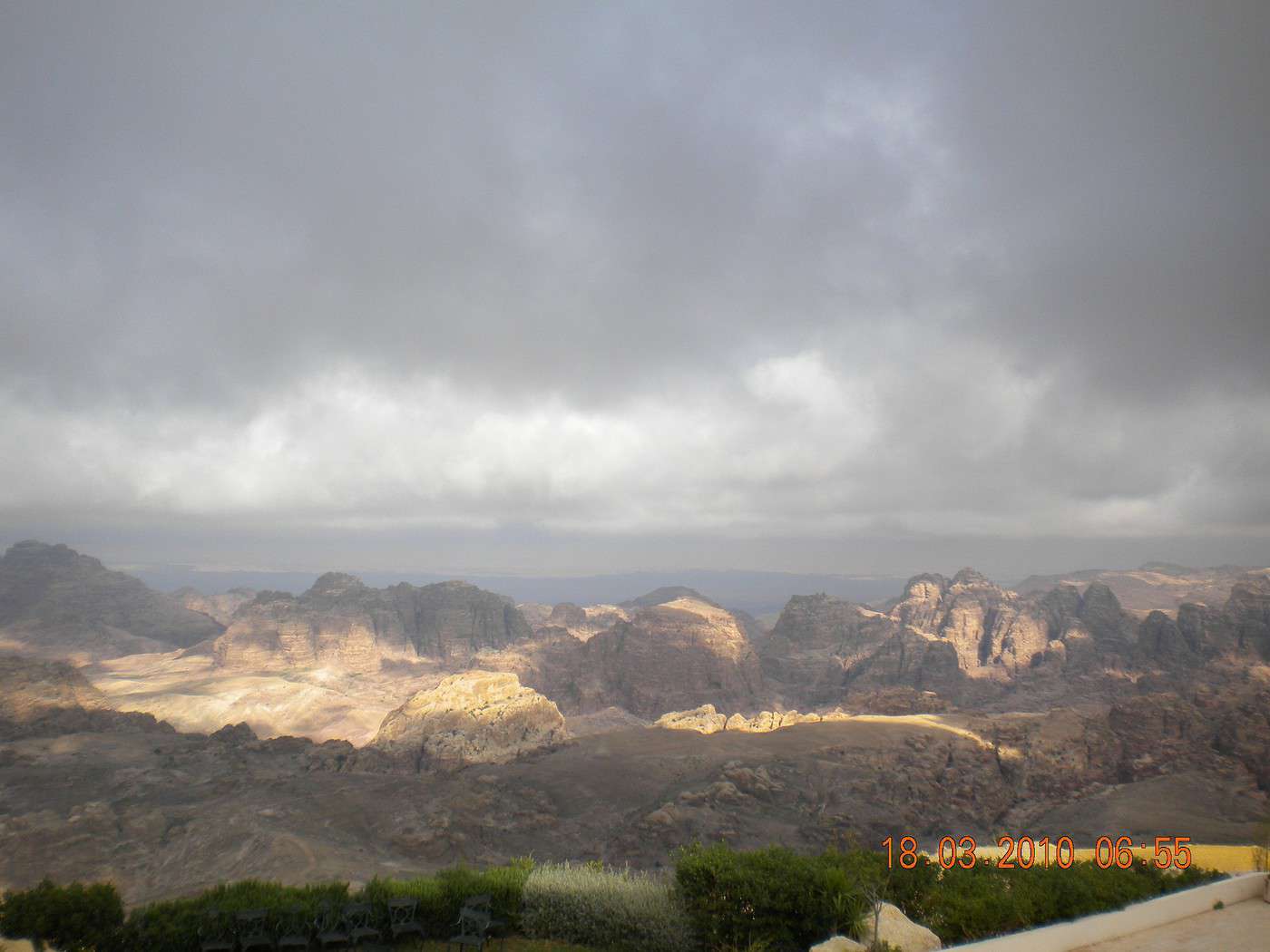
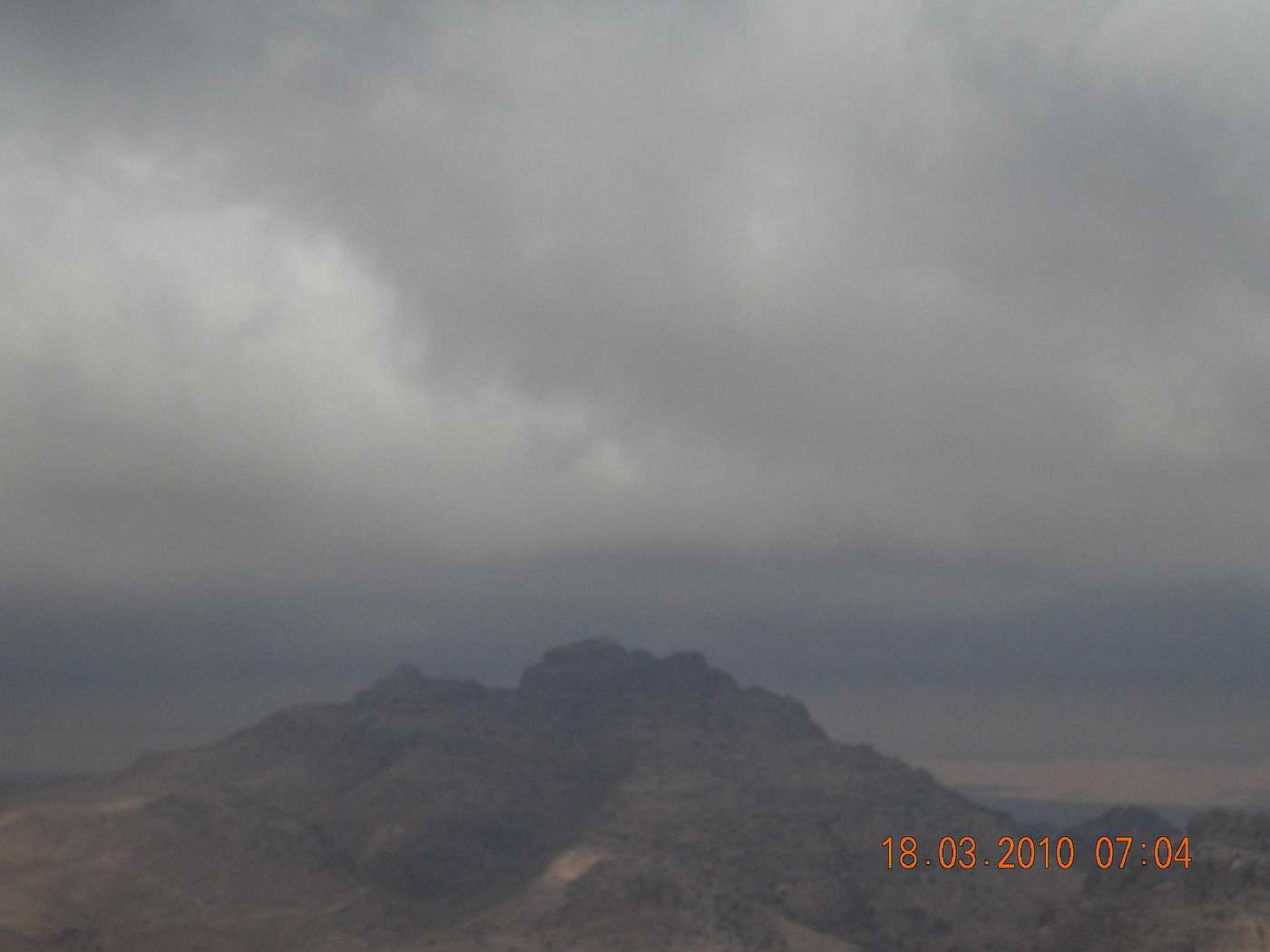
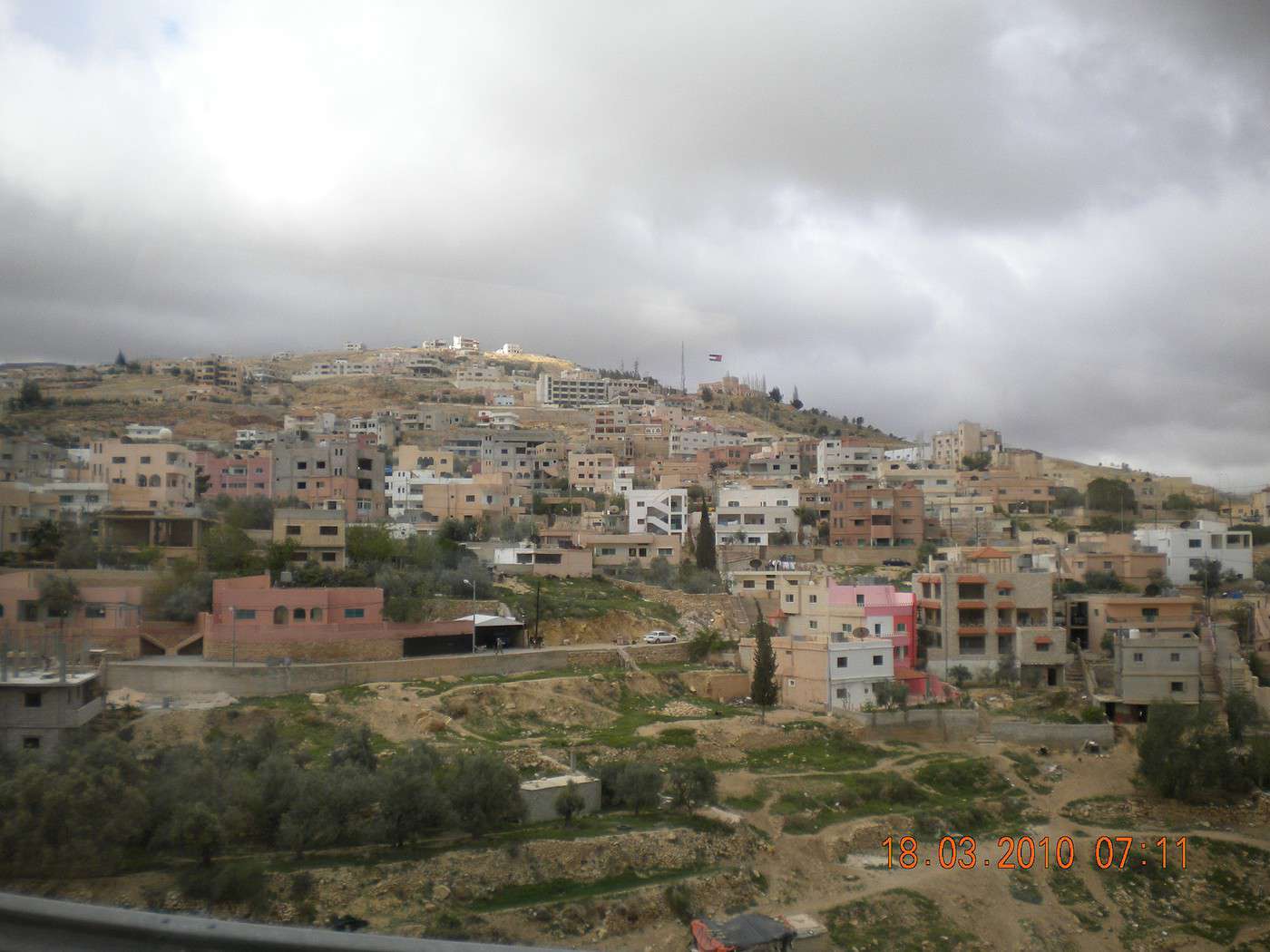
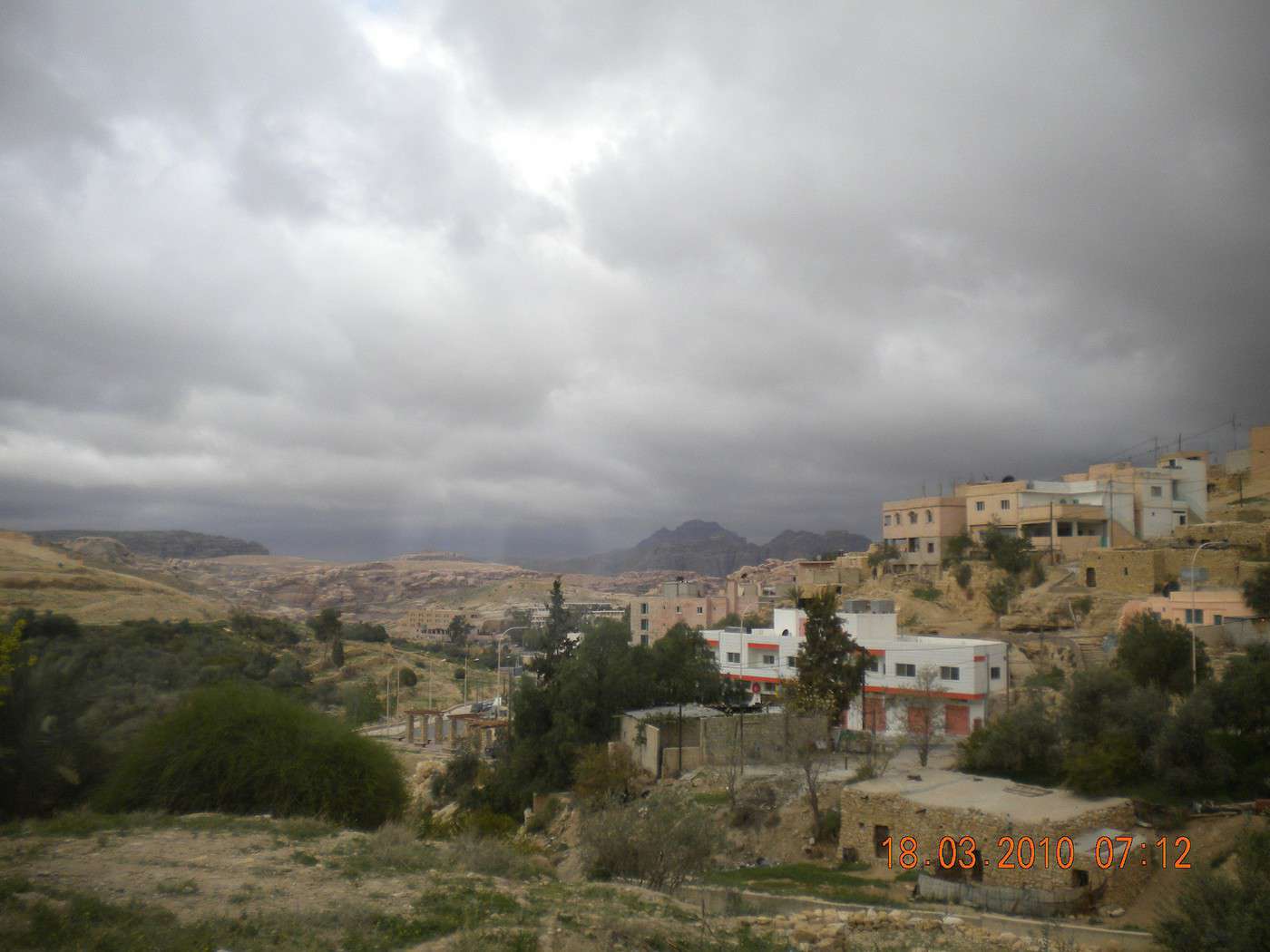
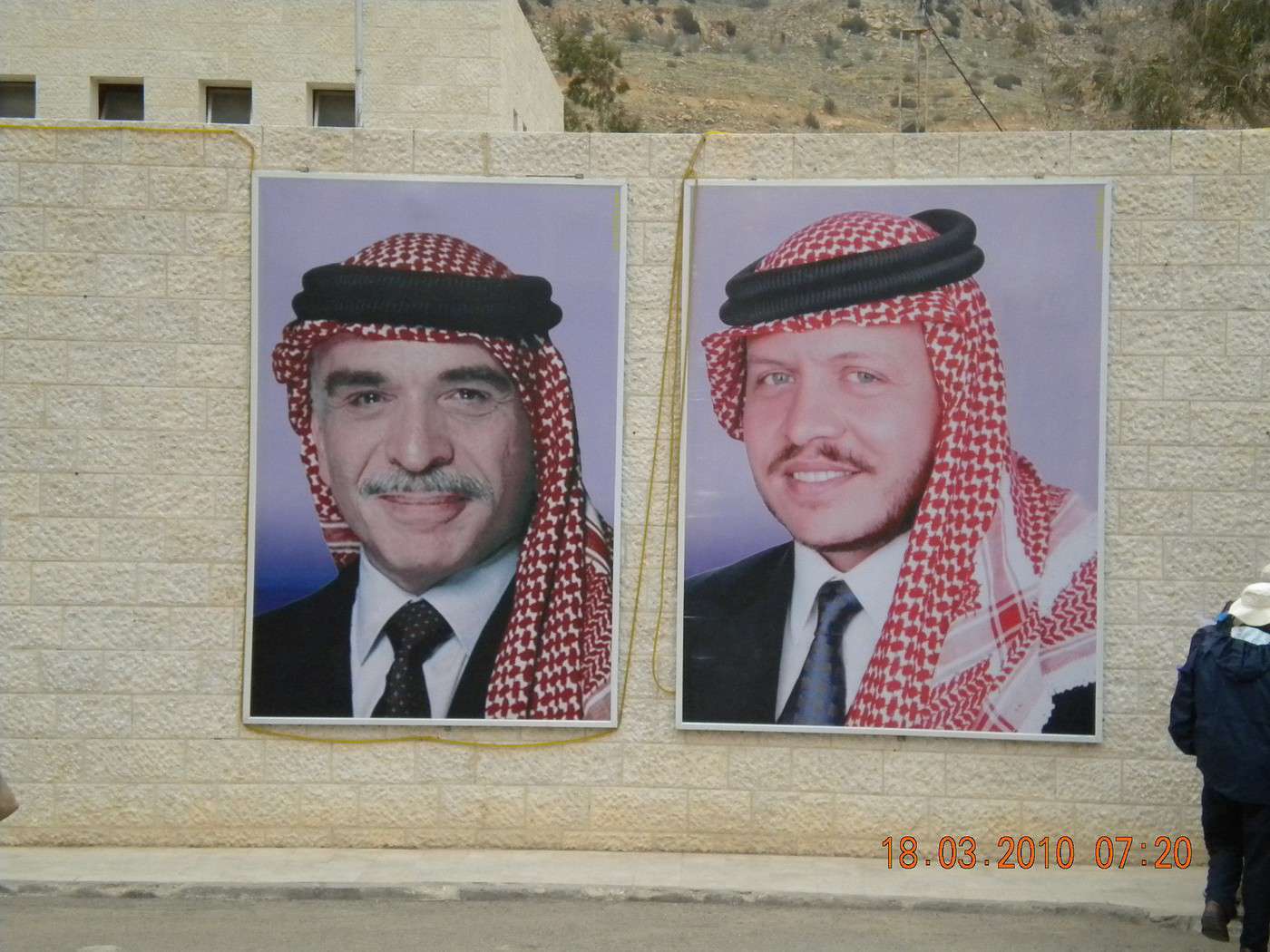
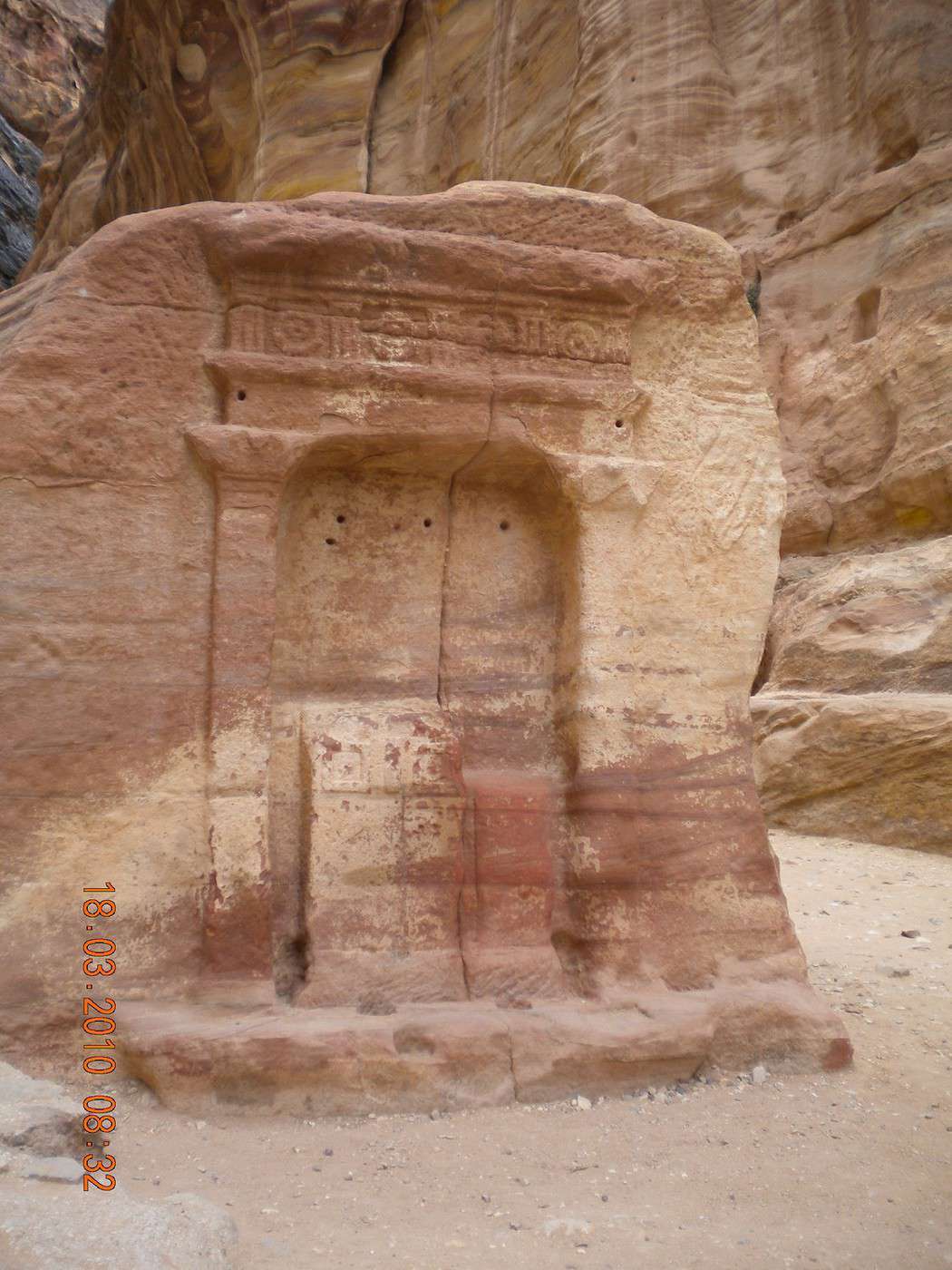
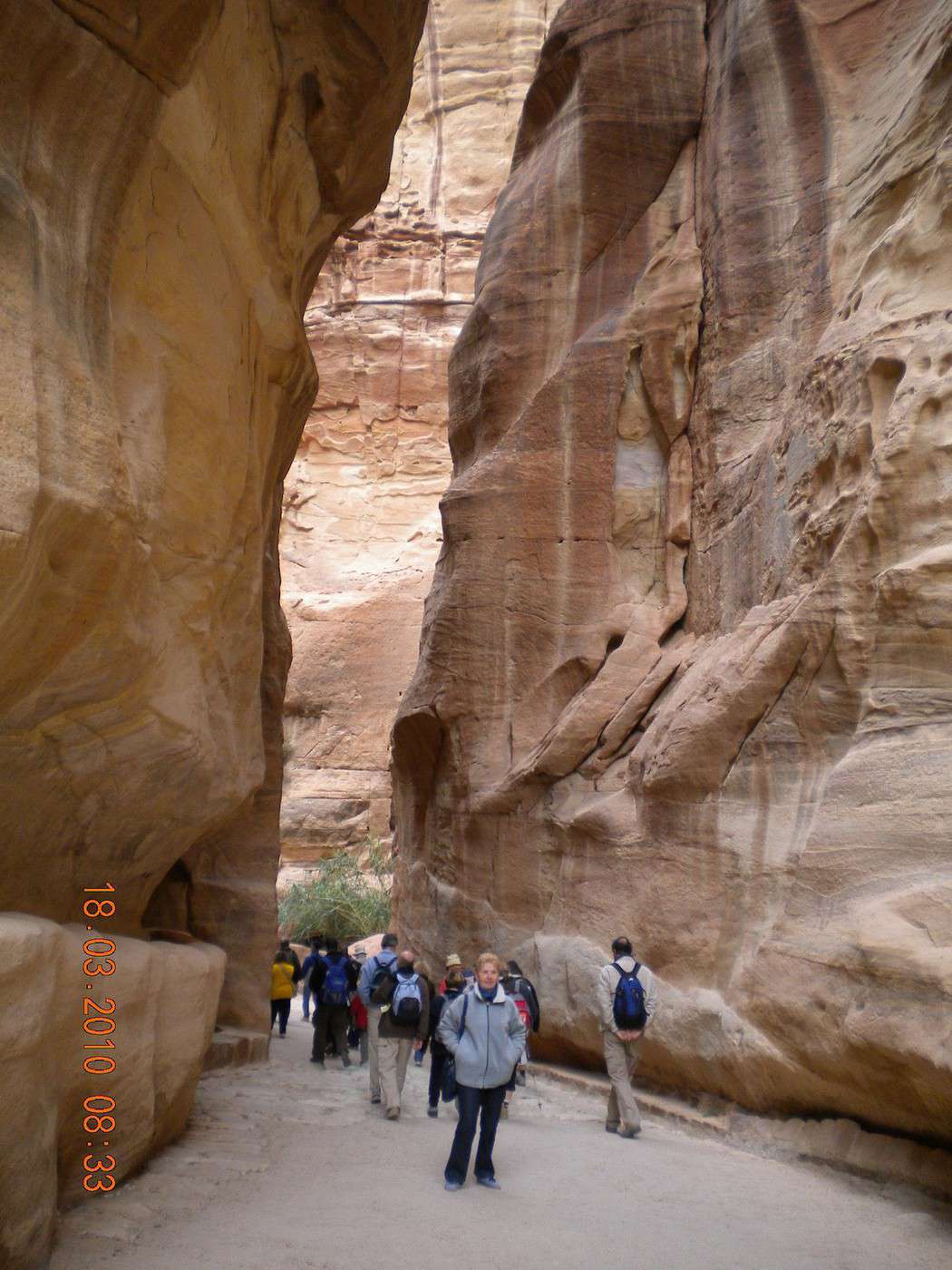
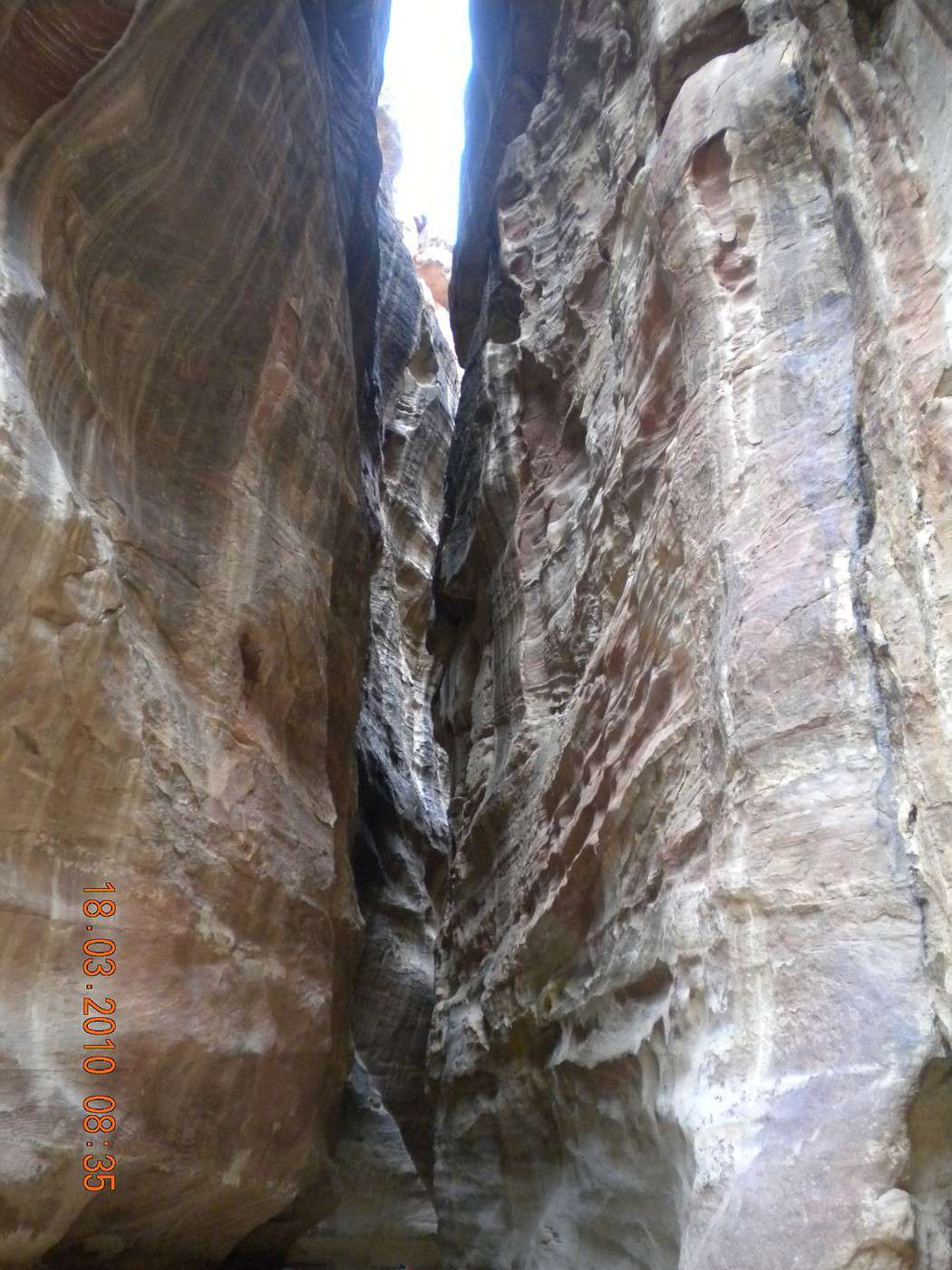
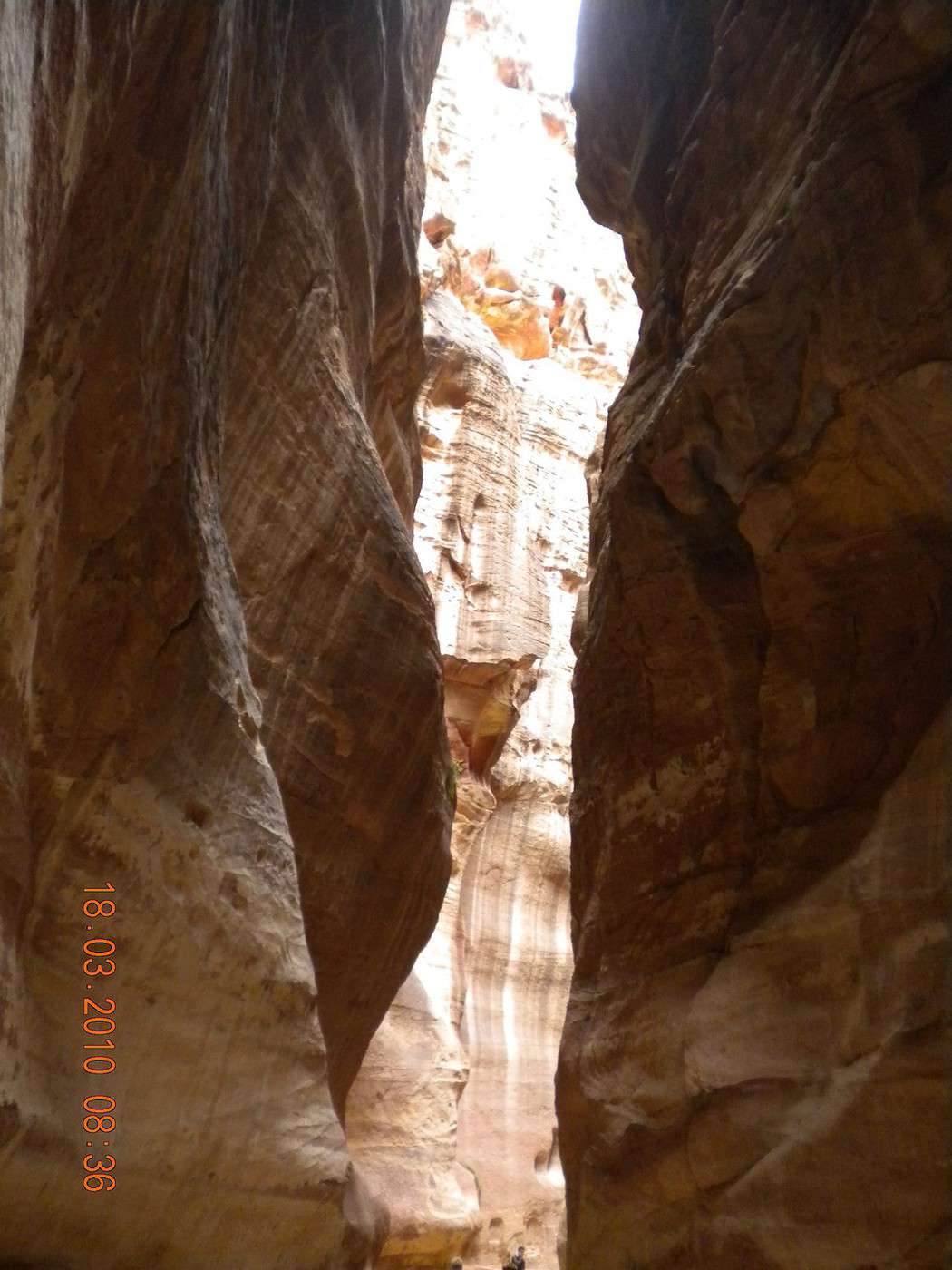
Phir melenge pour la suite des aventures...
Retour d'un voyage en Syrie et en Jordanie (mars 2010)
by Capucine18
This discussion is in French, the community’s main language.
Bonjour Capucine,
Exotique à souhait! Quels beaux souvenirs, ces photos.
Je viens de réaliser 🤪 qu'avec la flèche de droite de mon clavier, je peux faire défiler les images agrandies les unes après les autres après avoir cliqué sur la première image seulement. Avant, je me croyais obligée de cliquer sur chacune d'elles... c'était assez long...: pratique amélioration au système ou ignorance de ma part?... Bye!
Bonjour, Merci pour l'astuce , effectivement c'est bien plus facile ainsi que de cliquer sur chaque images. Quel beau partage de récit et photos magnifiques, bravo Capucine. @+ Michel T@ http://michel.talon.free.fr/Saint-Maurice_en_Quercy_Lot-/photos.htm
Je viens de réaliser 🤪 qu'avec la flèche de droite de mon clavier, je peux faire défiler les images agrandies les unes après les autres après avoir cliqué sur la première image seulement. Avant, je me croyais obligée de cliquer sur chacune d'elles... c'était assez long...: pratique amélioration au système ou ignorance de ma part?... Bye!
Bonjour, Merci pour l'astuce , effectivement c'est bien plus facile ainsi que de cliquer sur chaque images. Quel beau partage de récit et photos magnifiques, bravo Capucine. @+ Michel T@ http://michel.talon.free.fr/Saint-Maurice_en_Quercy_Lot-/photos.htm
a+ Michel T@
http://michel.talon.free.fr
et avec la flèche gauche, ca reviens en arrière. tu peux faire défiler toutes les images situées sur la page. pas besoin de faire message après message.
😉😉Bonsoir Michel,
Ouf ! Je vois que nous étions au moins 3 à ne pas savoir nous servir de ce système qui vas nous simplifier la vie, nous pauvre novice dans l'informatique !
Merci pour votre gentillesse. c'est un plaisir pour moi de vous faire profiter de mes voyages par l'écriture et la photo. J'adore celà ! Dans un mois nous serons sur la route de Moscou ! J'espère rapporter de belles images;
Capucine 18
Ouf ! Je vois que nous étions au moins 3 à ne pas savoir nous servir de ce système qui vas nous simplifier la vie, nous pauvre novice dans l'informatique !
Merci pour votre gentillesse. c'est un plaisir pour moi de vous faire profiter de mes voyages par l'écriture et la photo. J'adore celà ! Dans un mois nous serons sur la route de Moscou ! J'espère rapporter de belles images;
Capucine 18
😏😏😏Tu veux que je te dises Bruno "Tu es sensationnel ! Tu viens de rendre service à 3 pauvres valeureux VF qui se "prenaient la tête" pour regarder les photos des copains !!!
N'est ce pas Monique et Michel46 ! Un sacré gain de temps pour des retraités dont le teaming est serré toute la journée !!!!
MERCI BRUNO !!!!!!!😏😏😏
Capucine 18
N'est ce pas Monique et Michel46 ! Un sacré gain de temps pour des retraités dont le teaming est serré toute la journée !!!!
MERCI BRUNO !!!!!!!😏😏😏
Capucine 18
Bonsoir Capucine,
La Russie est magnifique à cette saison, tu peux voir un tout petit aperçu sur le site !!
Je fais aussi de la vidéo qui est plus vivant que des images !!!!
On attend tes images !!!
Bon voyage
@+ Michel T@
http://michel.talon.free.fr/Saint-Maurice_en_Quercy_Lot-/russie.htm
a+ Michel T@
http://michel.talon.free.fr
Bonjour Michel,
Je viens de regarder vos diapos de Russie, bravo! Ça rappelle de magnifiques souvenirs! Merci.
MoniqueM
« Emmenez- moi au bout de la terre
Emmenez-moi au pays des merveilles...»
😏😏😏Tu veux que je te dises Bruno "Tu es sensationnel ! ....N'est ce pas Monique... ! Un sacré gain de temps pour des retraités dont le teaming est serré toute la journée !!!!... MERCI BRUNO !!!!!!!
Bonjour Capucine, Je suis de retour de ma petite croisière aux îles de la Madeleine de Montréal à Cap-aux-Meules🙂. Une belle expérience! Ce n'est pas le confort des grands paquebots, mais l'accueil, la gentillesse inouïe, la beauté des paysages compensaient largement...
Et oui, je t'approuve à 100%: MERCI BRUNO! Je n'avais pas réalisé qu'on pouvait aussi sauter d'un message à l'autre et reculer avec les flèches... Belle économie de temps en effet... 😉 Monique
Bonjour Capucine, Je suis de retour de ma petite croisière aux îles de la Madeleine de Montréal à Cap-aux-Meules🙂. Une belle expérience! Ce n'est pas le confort des grands paquebots, mais l'accueil, la gentillesse inouïe, la beauté des paysages compensaient largement...
Et oui, je t'approuve à 100%: MERCI BRUNO! Je n'avais pas réalisé qu'on pouvait aussi sauter d'un message à l'autre et reculer avec les flèches... Belle économie de temps en effet... 😉 Monique
MoniqueM
« Emmenez- moi au bout de la terre
Emmenez-moi au pays des merveilles...»
... On verra...
coucou Mesdames. ce système de défilement à toujours exister... 😉
MERCI Bruno, C'est bien ce que je voulais savoir... et tu m'en as appris davantage dans ton autre message - j'apprécie vivement... Time is money...😉 Merci, Monique
coucou Mesdames. ce système de défilement à toujours exister... 😉
MERCI Bruno, C'est bien ce que je voulais savoir... et tu m'en as appris davantage dans ton autre message - j'apprécie vivement... Time is money...😉 Merci, Monique
MoniqueM
« Emmenez- moi au bout de la terre
Emmenez-moi au pays des merveilles...»
... On verra...
coucou Mesdames. ce système de défilement à toujours exister... 😉
MERCI Bruno, C'est bien ce que je voulais savoir... et tu m'en as appris davantage dans ton autre message - j'apprécie vivement... Time is money...😉 Merci, Monique
mais de rien. on est la pour s'entraider. 🙂 bises.
coucou Mesdames. ce système de défilement à toujours exister... 😉
MERCI Bruno, C'est bien ce que je voulais savoir... et tu m'en as appris davantage dans ton autre message - j'apprécie vivement... Time is money...😉 Merci, Monique
mais de rien. on est la pour s'entraider. 🙂 bises.
🙂bonjour et merci pour votre récit de voyages, il est génial ainsi que les photos !!
cela m'a rappelé notre séjour en Syrie en mars 2007: un superbe pays
je note qu'autour de la citadelle d'Alep les travaux sont terminés, les arbres plantés, nous c'était en travaux.
Vous vous rappelez les noms de vos hôtels à Damas et Alep ? On aimerait bien retourner en Syrie
merci kajolka
je note qu'autour de la citadelle d'Alep les travaux sont terminés, les arbres plantés, nous c'était en travaux.
Vous vous rappelez les noms de vos hôtels à Damas et Alep ? On aimerait bien retourner en Syrie
merci kajolka
😉😉Bonjour,
Bien sur, les hotels sont tous répertoriés donc pas de soucis pour vous les redonner :
Damas Semiramis Damascus Hotel (tout près du Musée national, de la poste et des banques) très bonne situation.
Hama Apamia El Cham Palace (situation idéale pour les Norias)
Alep Dedeman Hotel (bon hotel situation bonne)
Pour le moment je me suis arrêtée dans mon récit car je pars dans 8 jours pour un autre voyage. Je continuerai la Syrie Jordanie à mon retour. Pas avant le 15 aout.
Vous pouvez me contacter si besoin à mon retour.
Merci de me lire et de regarder mes photos.
Capucine 18
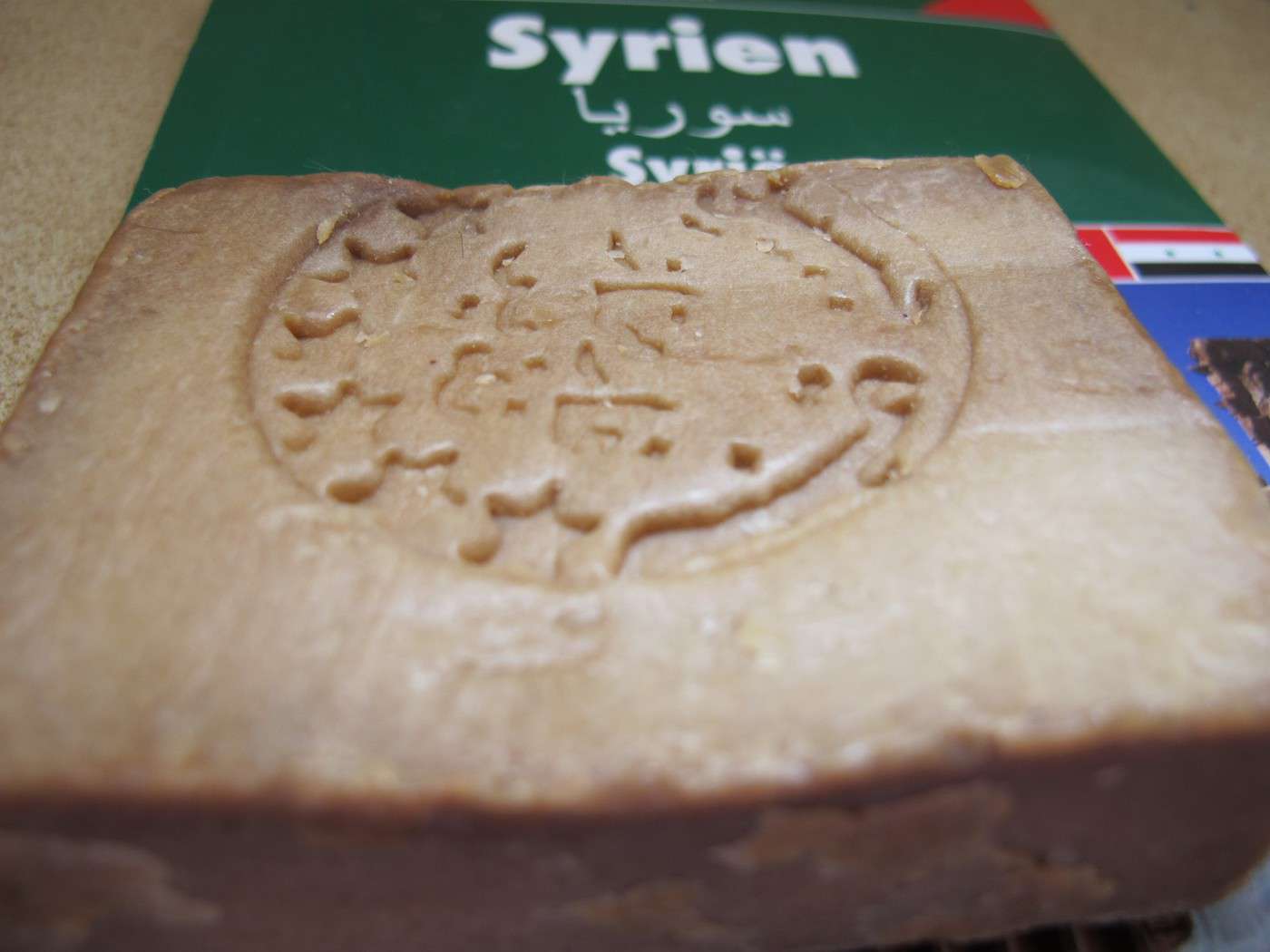
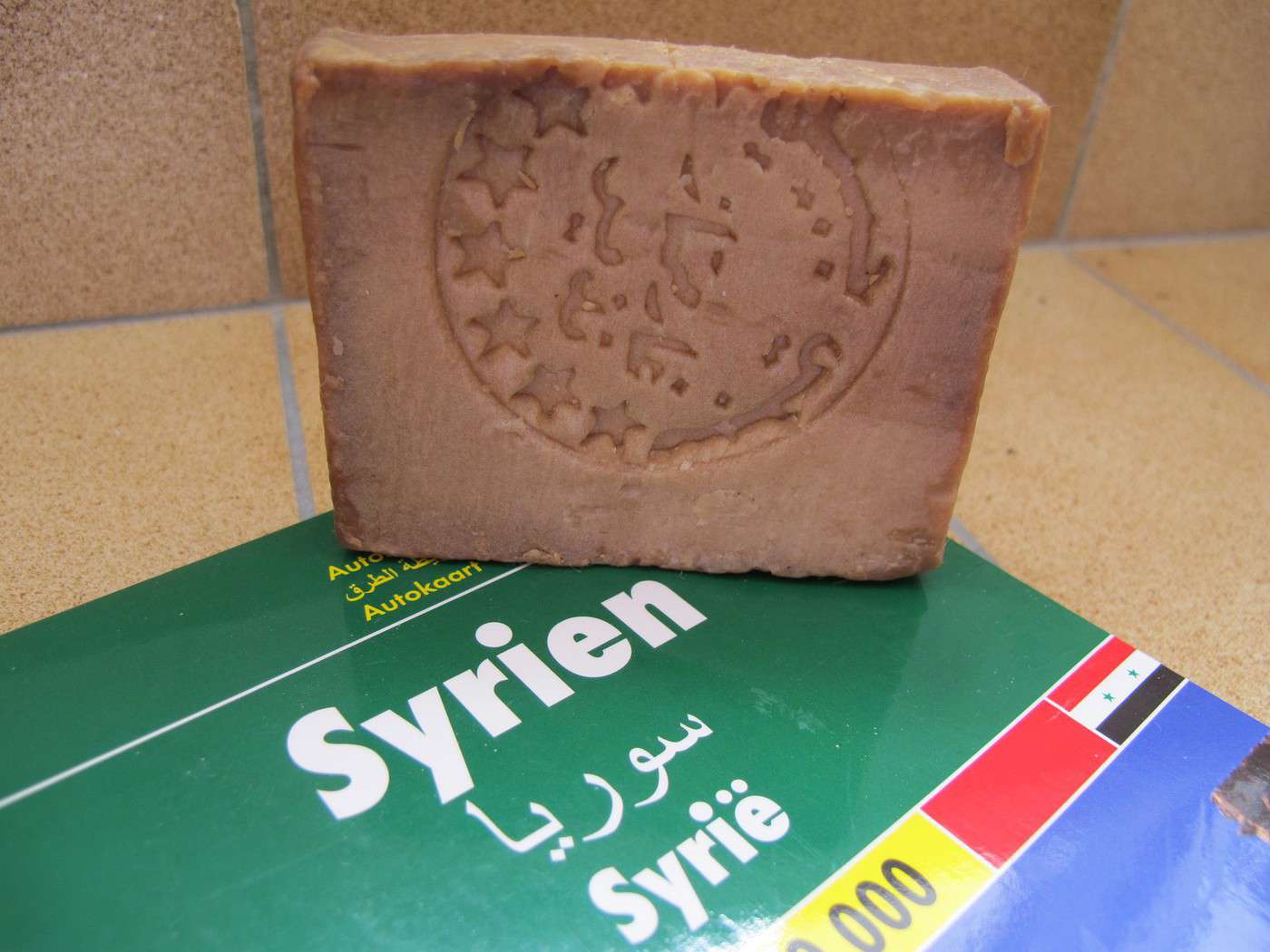
Savon d'Alep (normalement il est plus gros mais il est coupé en deux)
Bien sur, les hotels sont tous répertoriés donc pas de soucis pour vous les redonner :
Damas Semiramis Damascus Hotel (tout près du Musée national, de la poste et des banques) très bonne situation.
Hama Apamia El Cham Palace (situation idéale pour les Norias)
Alep Dedeman Hotel (bon hotel situation bonne)
Pour le moment je me suis arrêtée dans mon récit car je pars dans 8 jours pour un autre voyage. Je continuerai la Syrie Jordanie à mon retour. Pas avant le 15 aout.
Vous pouvez me contacter si besoin à mon retour.
Merci de me lire et de regarder mes photos.
Capucine 18
Savon d'Alep (normalement il est plus gros mais il est coupé en deux)
Ahhh Capucine,
Un grand merci pour ce reportage. Il m'a vraiment donné envie pour un futur voyage..... Merci à vous de m'avoir fait rêver....
A bentôt, Marine😉
Un grand merci pour ce reportage. Il m'a vraiment donné envie pour un futur voyage..... Merci à vous de m'avoir fait rêver....
A bentôt, Marine😉
😉Bonsoir,
Et oui me revoilà ! Nous sommes de retour depuis environ une semaine de Russie.
Je vais donc essayer de terminer mon précédent voyage en Syrie Jordanie avant de mettre en page notre "sacré circuit russe" !!!!!!
Je vous avais quittée à Alep, un samedi 13 mars 2010 et le réveil devait sonner à 6 h pour un départ 7 h pour la fabuleuse Palmyre !
DIMANCHE 14 MARS 2010
ALEP / PALMYRE
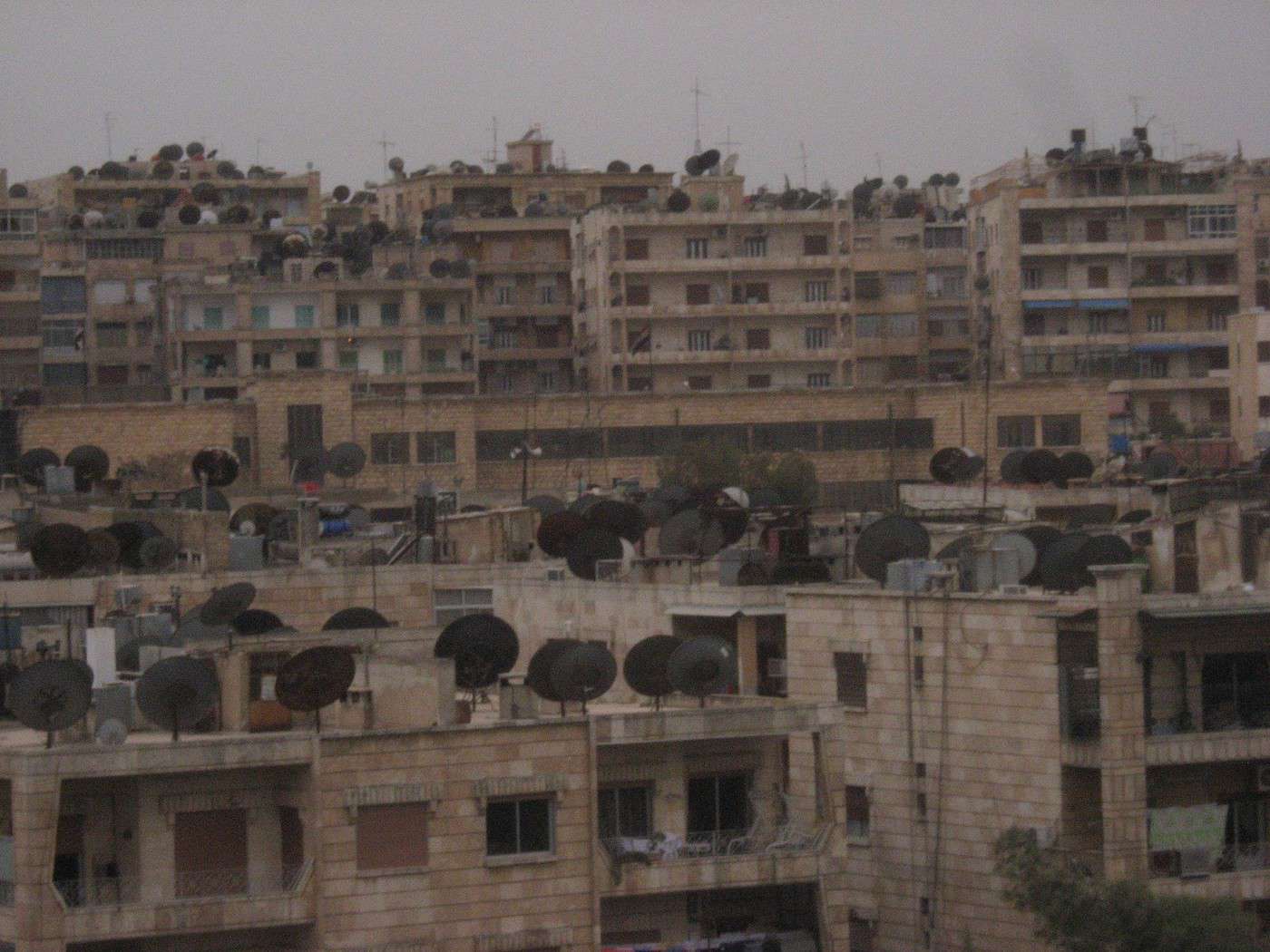
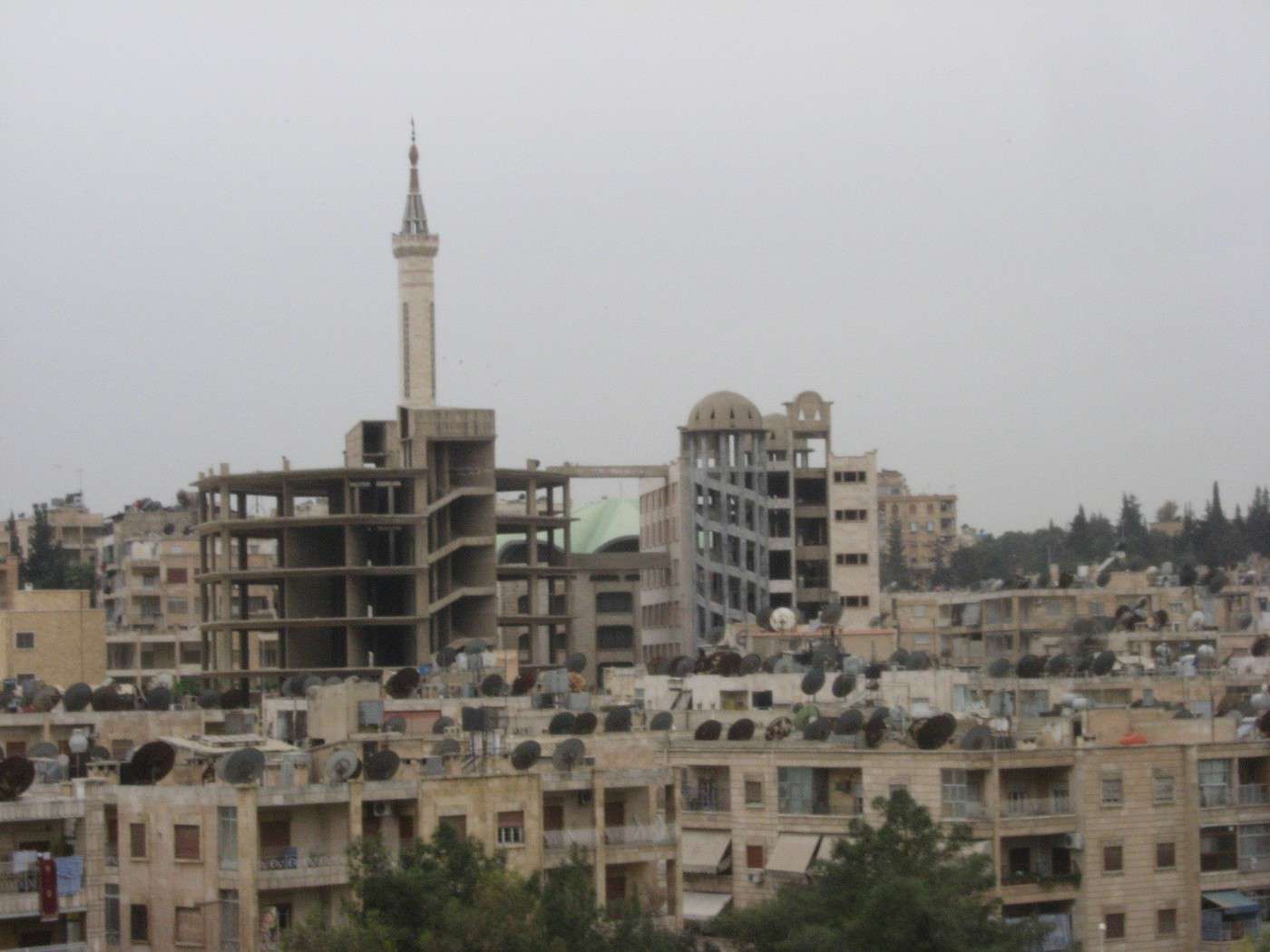
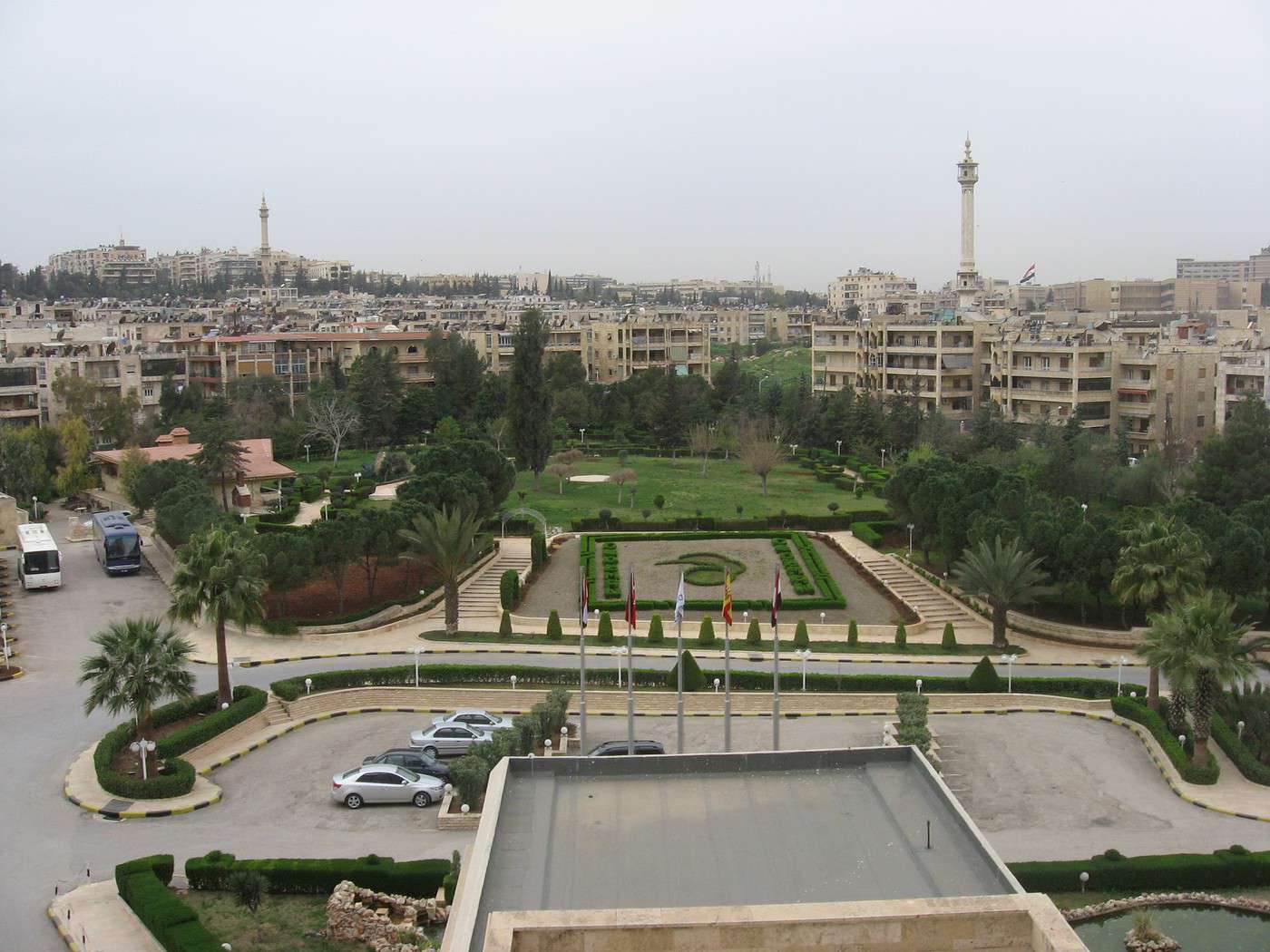
6 h le réveil effectivement nous incite à nous lever. Les valises sont prêtes à mettre dans le couloir pour les bagagistes. Nous nous préparons pour une longue journée avec une traversée ... du désert !!! Petit déjeuner et dernier coup d'oeil sur les toits d'Alep avec ses centaines de paraboles ! Impressionnant !
7 h Nadine, Youssef et bien sur le chauffeur de notre bus syrien sont fin prêts, les clients aussi;
Nous quittons Alep par la route de Hama car nous sommes obligés de repasser par Hama et Homs pour prendre la direction de Palmyre.
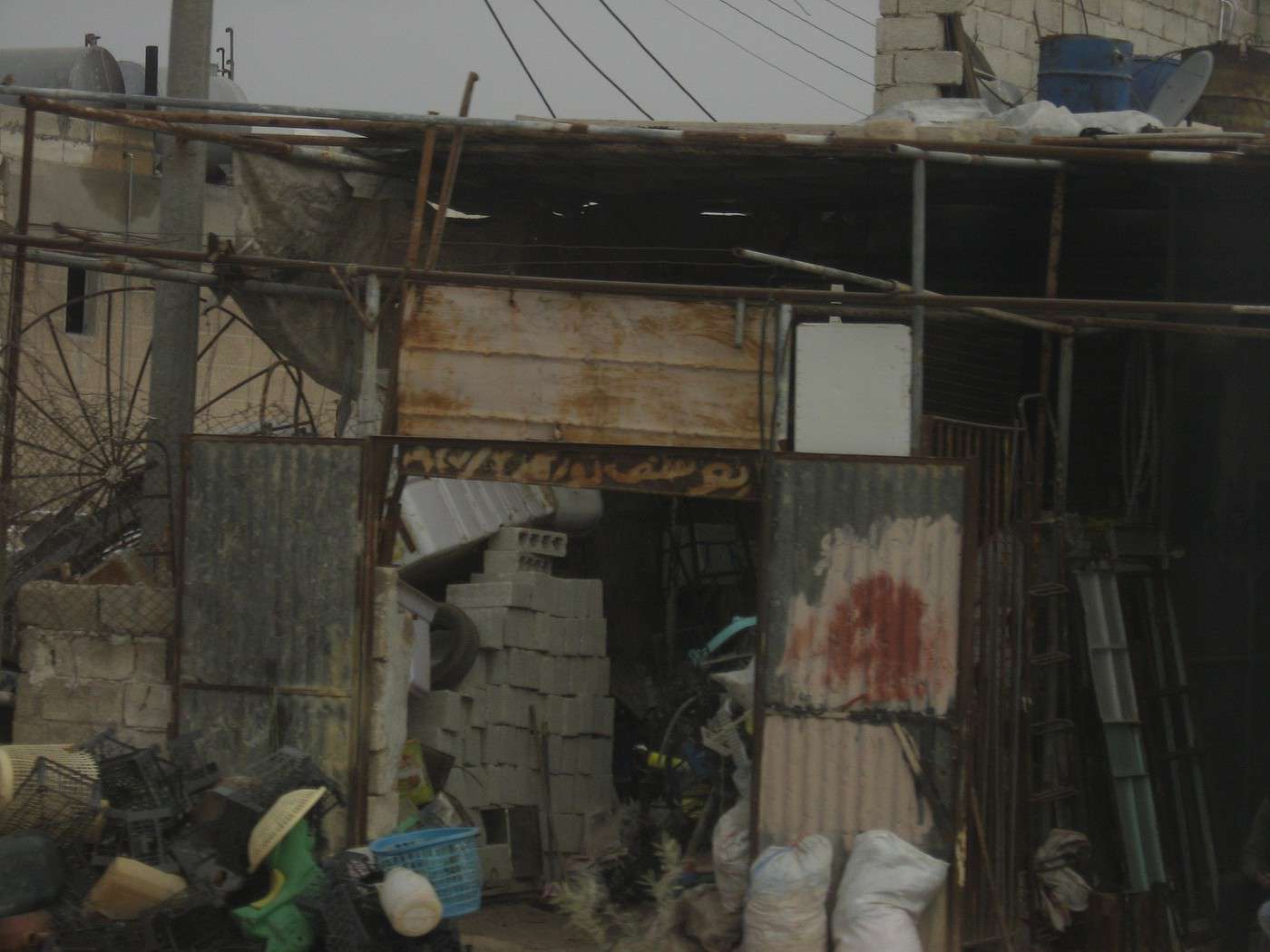
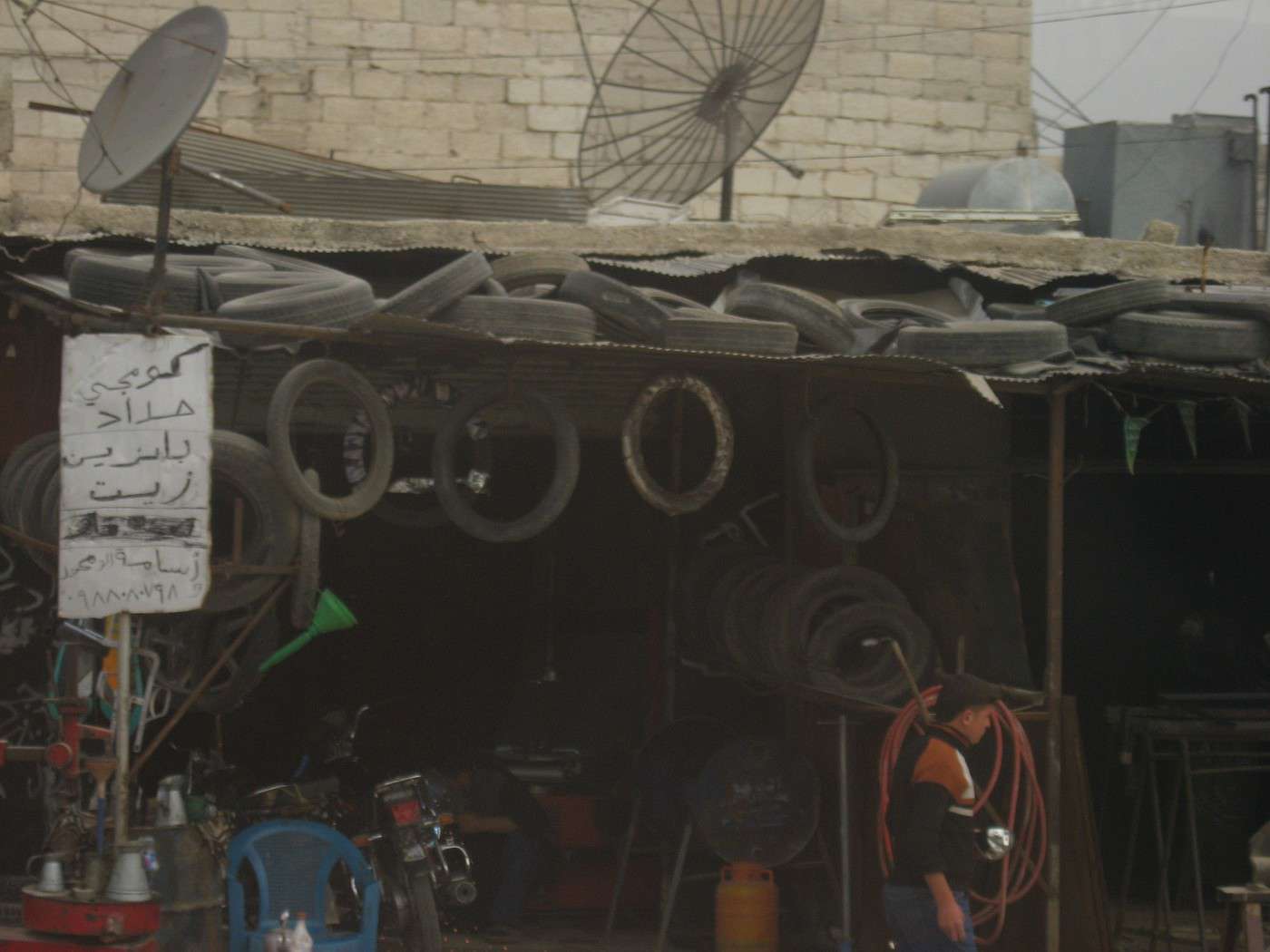
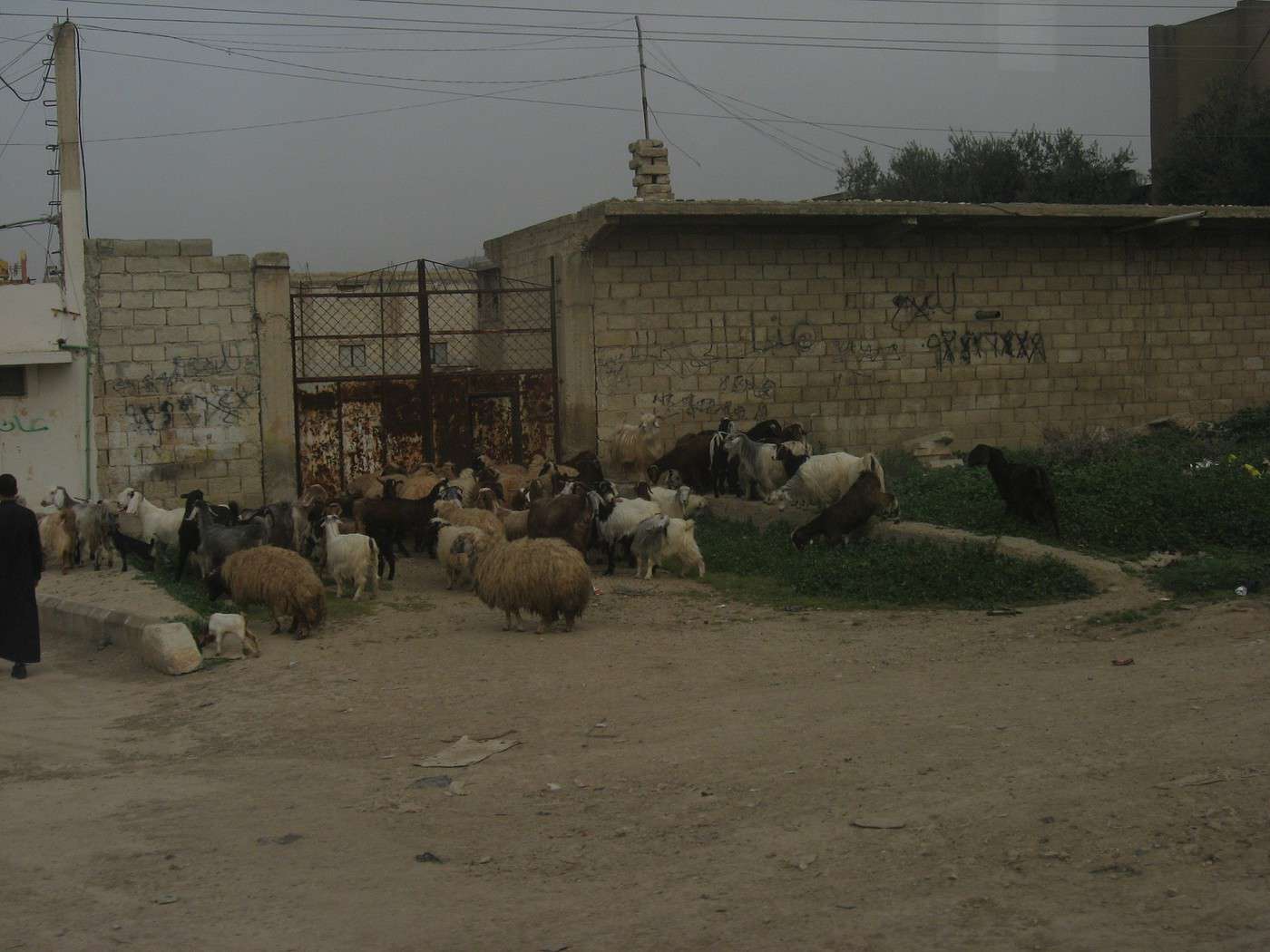
La route est une 4 voix avec un peu de circulation mais rien de bien important. Nous sommes entre un monde sédentaire et un monde nomade. Nous traversons de gros bourgs avec des échoppes de toute sorte. Les moutons sont très présents et les bédouins les laissent paître partout où il y a un brin d'herbe.
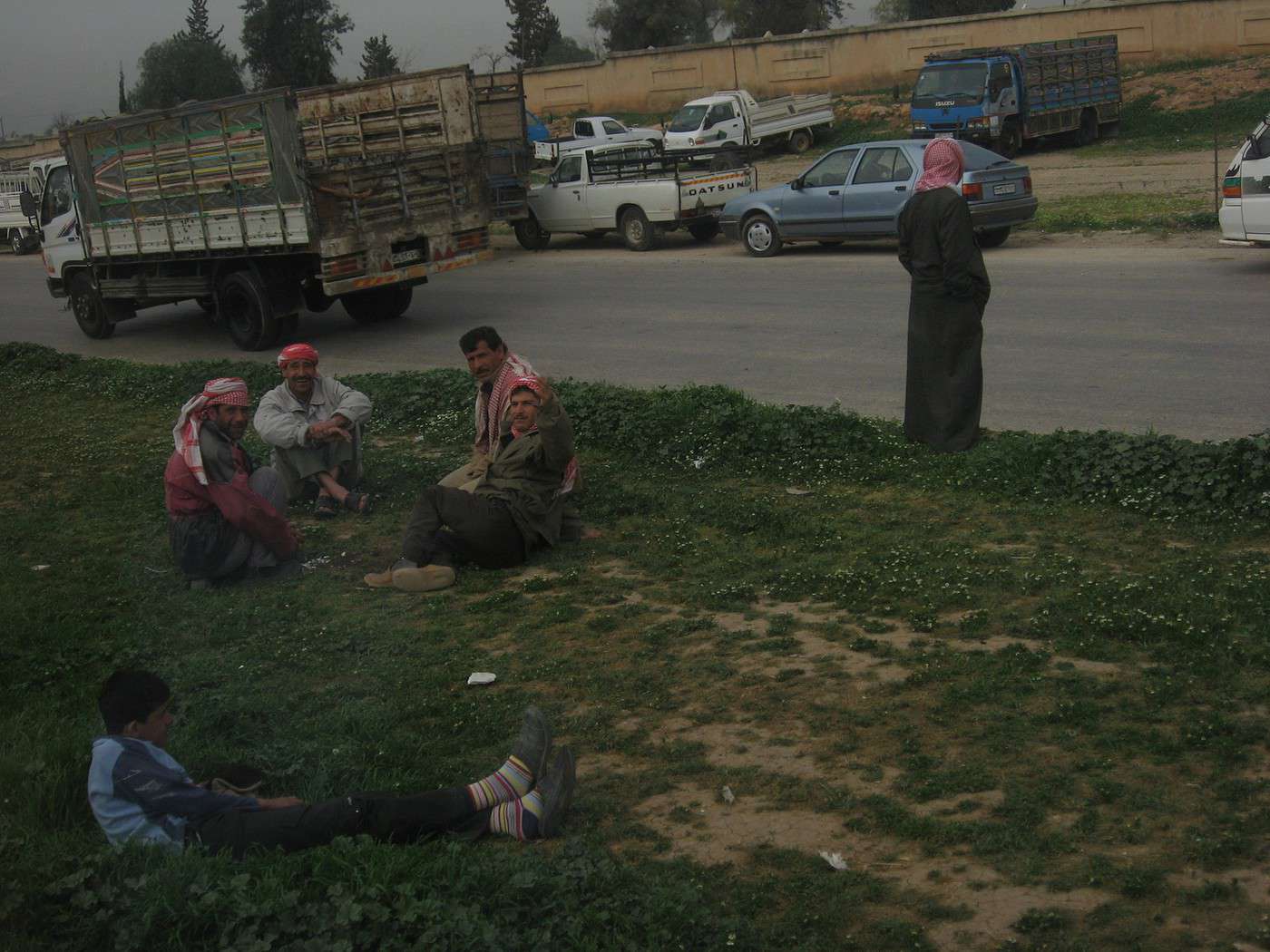
Nous voyons plusieurs rassemblement de camions qui attendent pour "faire la transhumance". Les hommes eux sont tranquillement sur le bord de la route entrain de discuter .
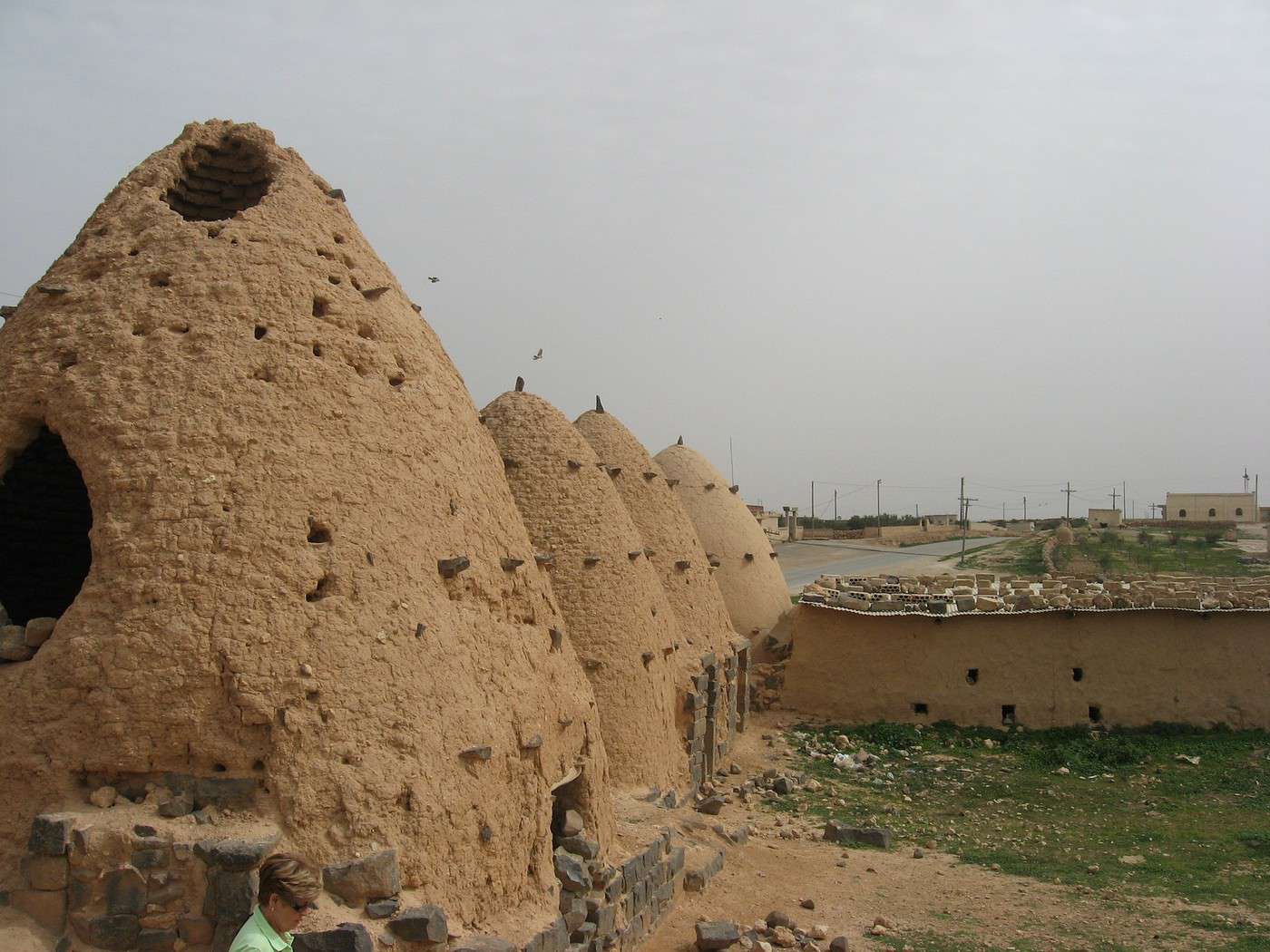
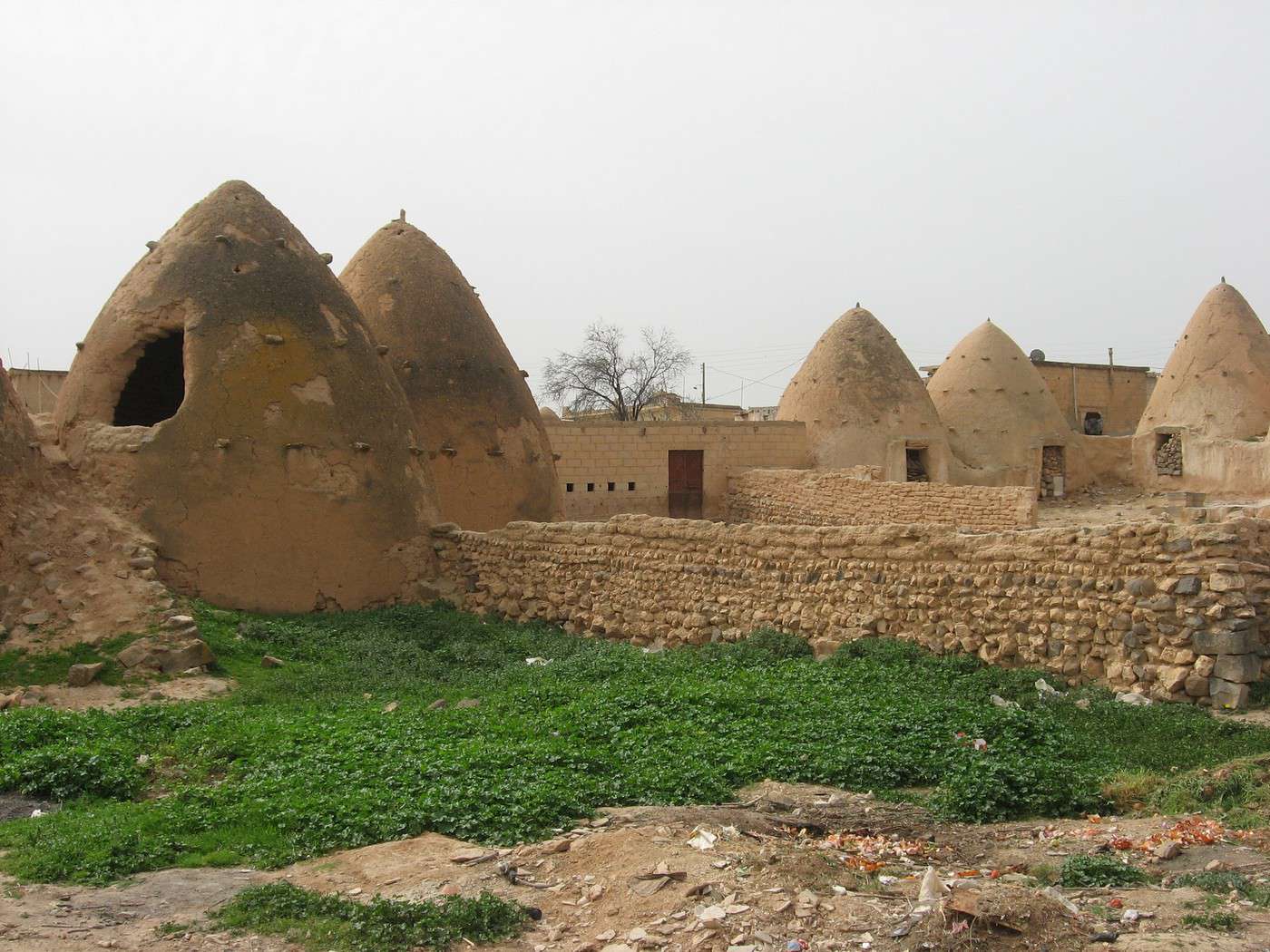
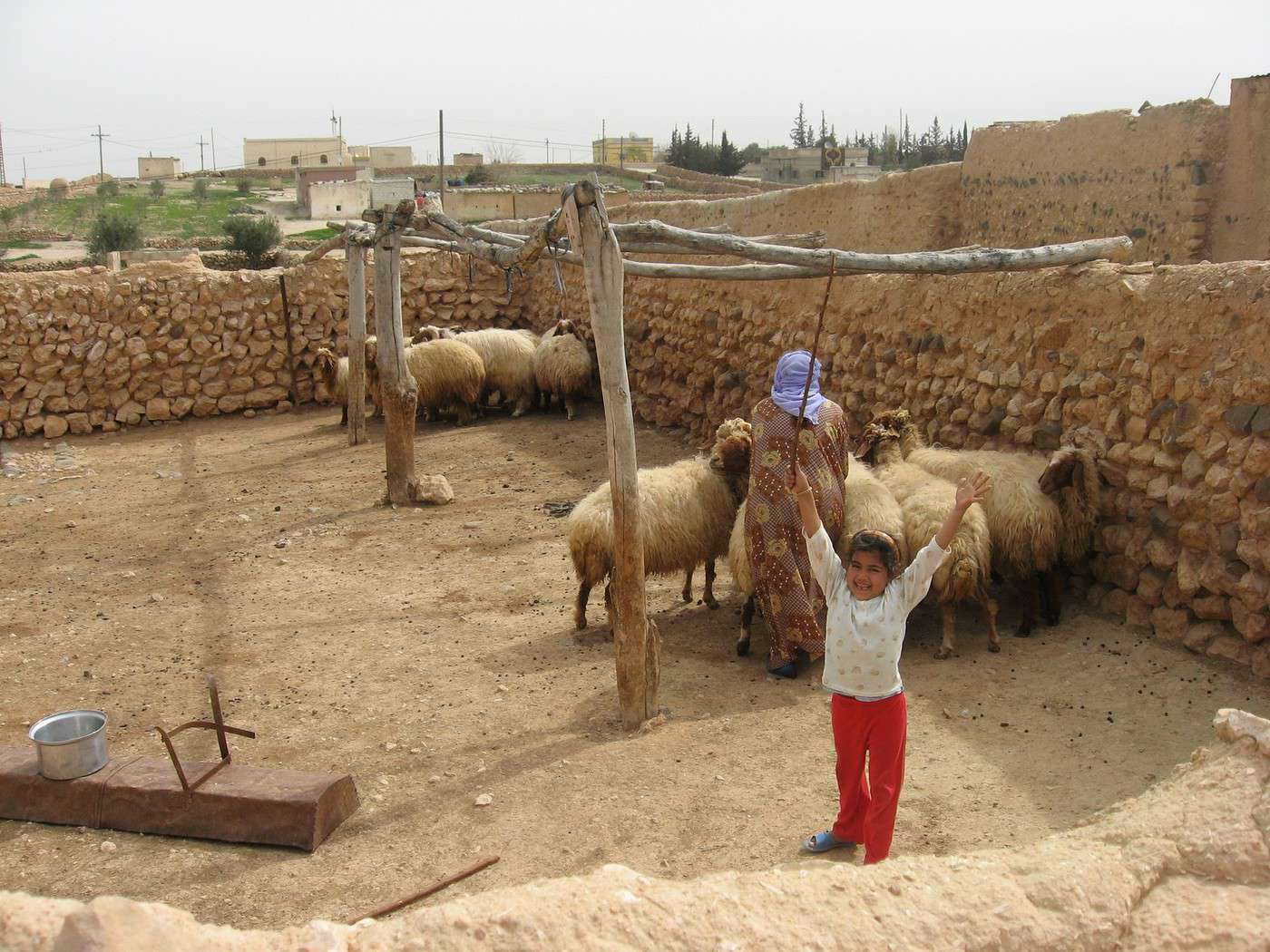
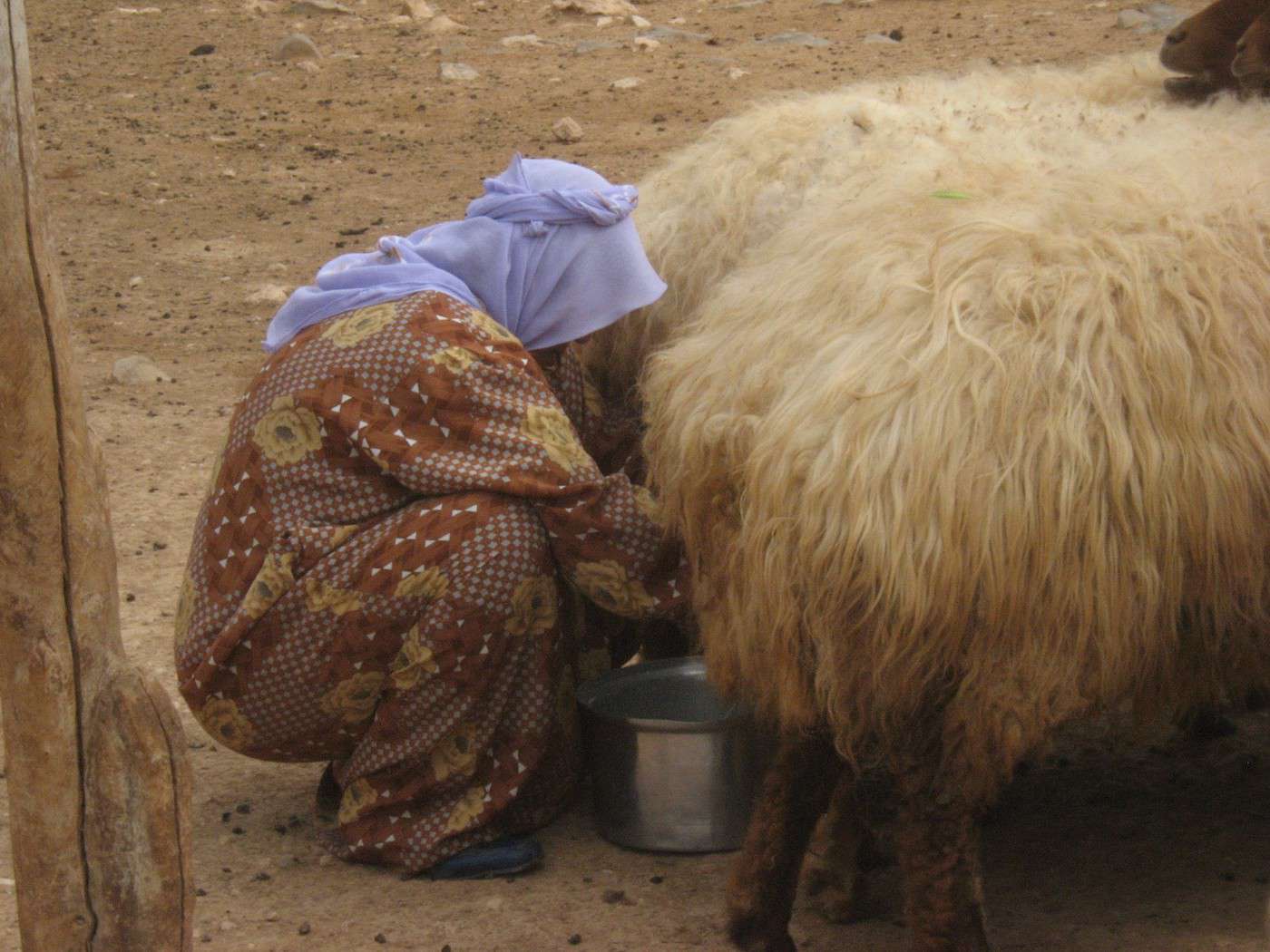
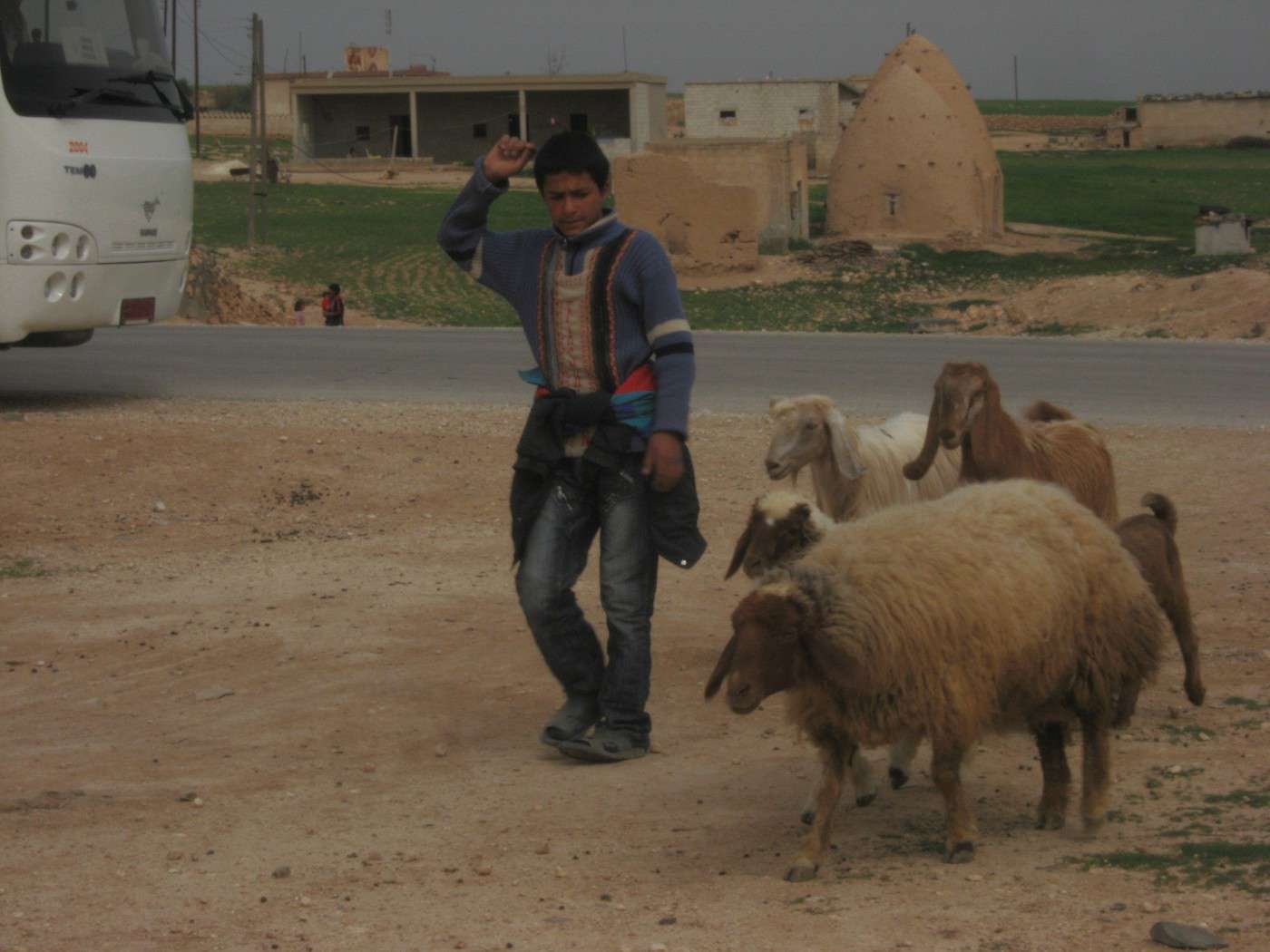
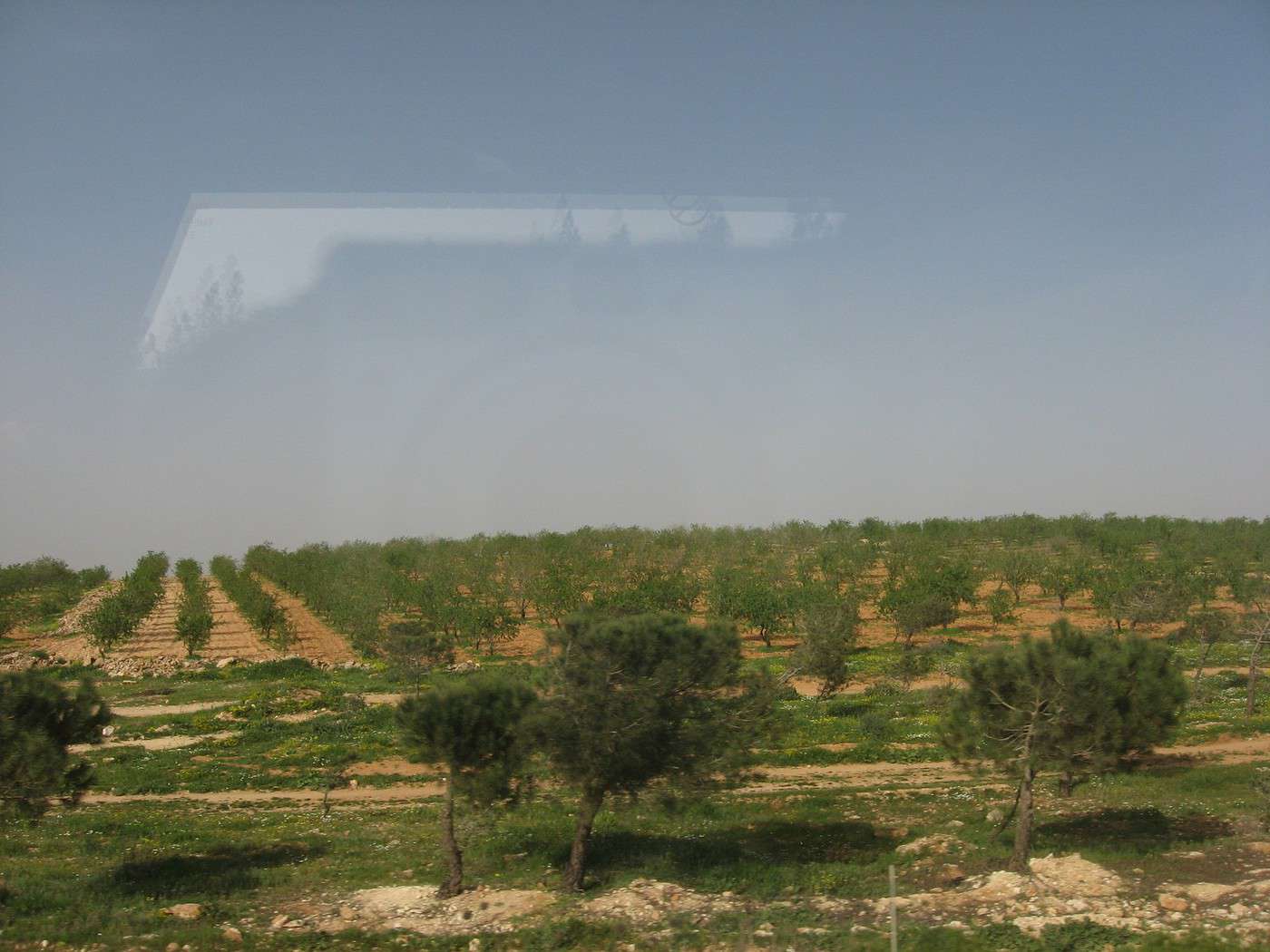
Nous bifurquons sur une route nettement moins importante que la précédente. les alentours sont ... peu fertiles ! Quelques oliviers garnissent des endroits pierreux et secs. Mais nous voilà arrrivés dans un petit village aux contructions très bizarres. Le bus nous arrête le long de la route et Youssef nous explique que ces maisons sont typiques de cette région : elles sont en forme de pain de sucre. Le dome est fait de brique, l'extérieur est crépi de torchis avec de la paille. Il parait que celà protége de la chaleur qui régne dans cette région. Certaines d'entres elles sont encore habitées. Une dame est entrain de rassembler ses brebis dans une courette intérieure pour pouvoir les traire. Pendant ce temps sa fille fait le clown devant nous et se laisse prendre en toute décontraction en photo. D'autres enfants accourent et posent eux aussi pour la photo. Un garçon plus âgé rentre des environs avec un troupeau de moutons. Mais il faut repartir, cet endroit est assez exceptionnel mais malheureusement bientôt il ne servira plus que pour les touristes car de l'autre côté de la route un village "normal" est entrain de voir le jour.
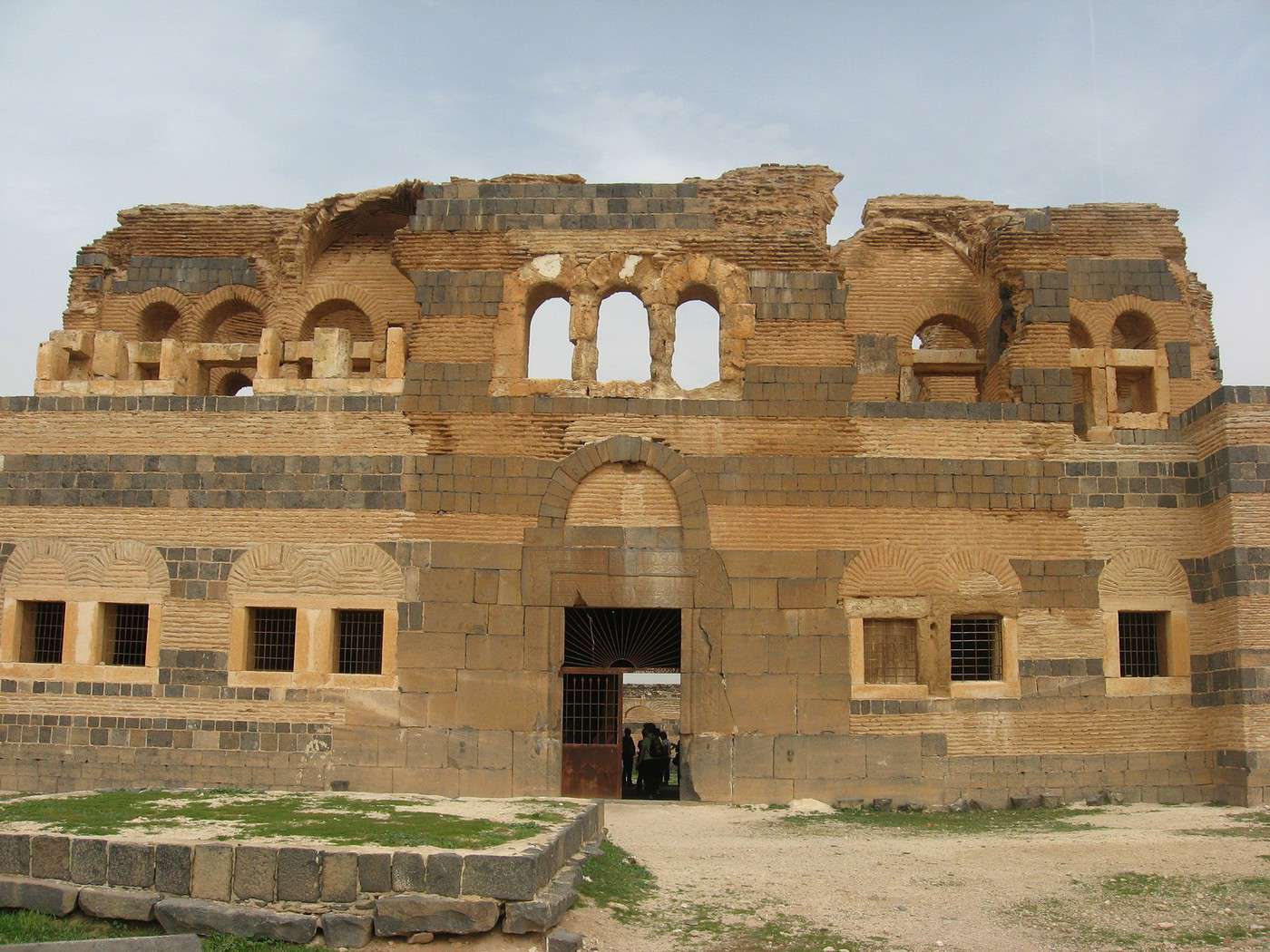
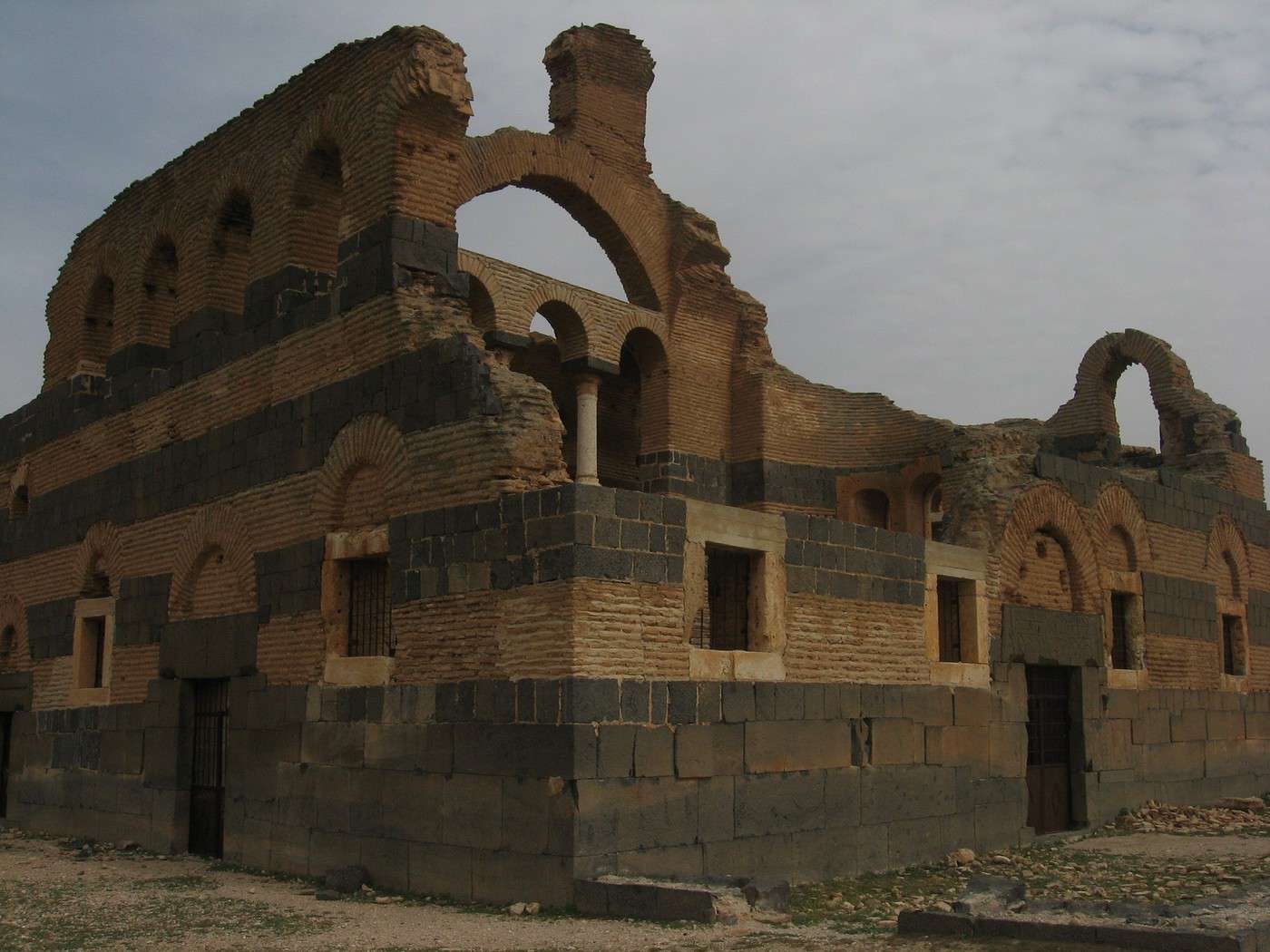
Il fait déjà très chaud et nous devons aller voir un chateau (Qasr Ibn Wardan) en plein milieu de cette steppe qui soit dit en passant est très inhospitalière.
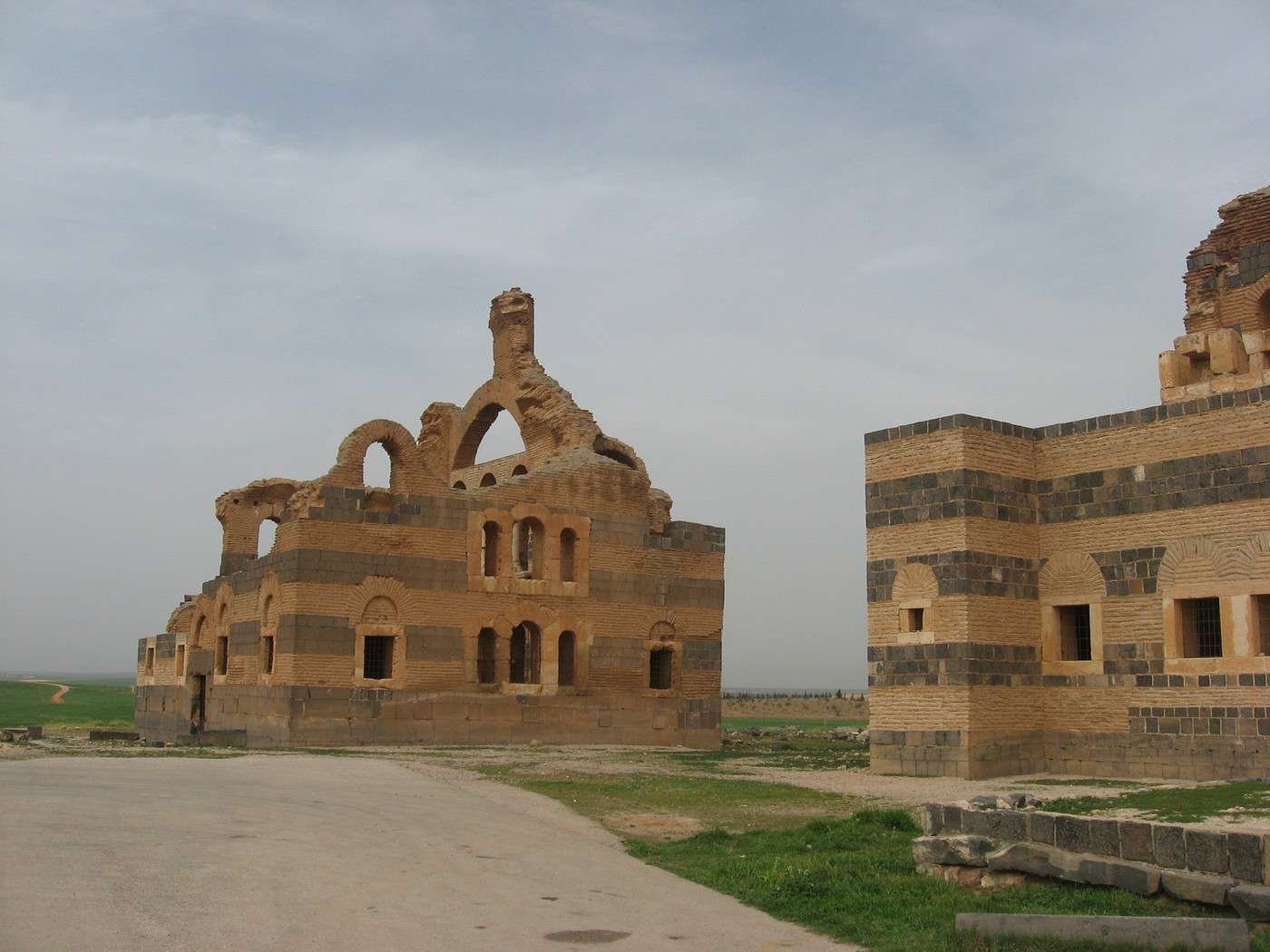
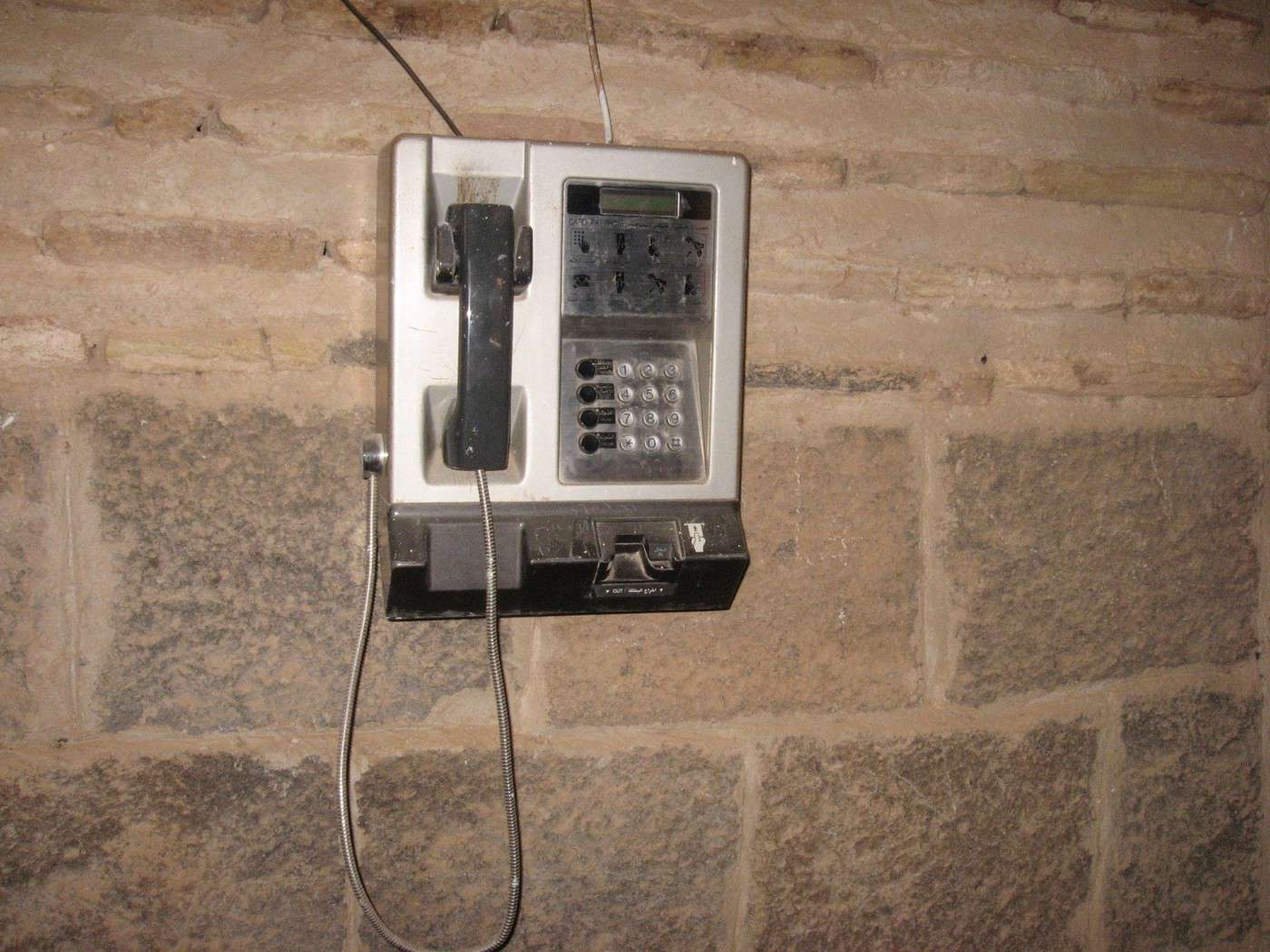
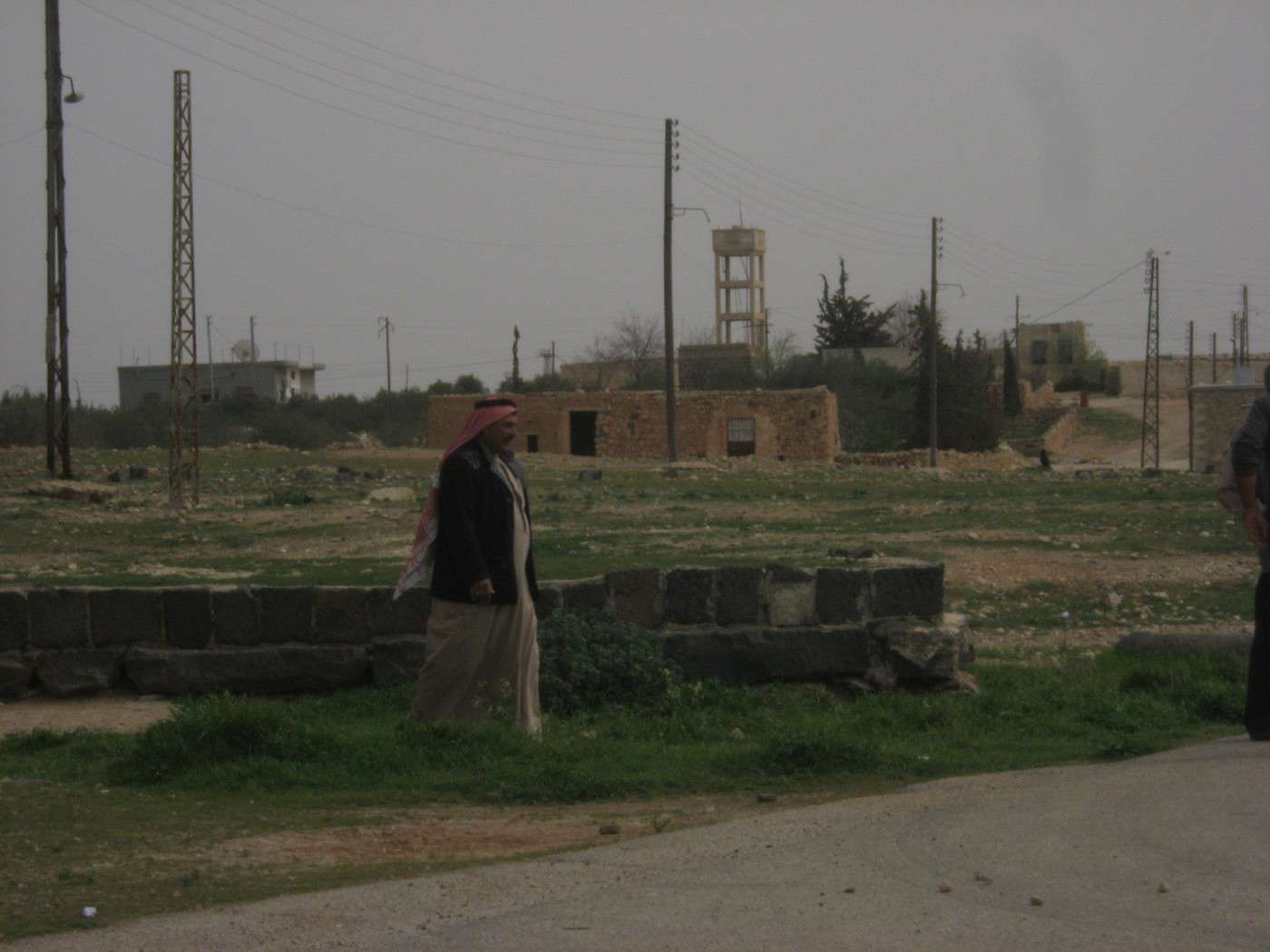
Nous arrivons, au bout de quelques minute, à ce sacré chateau qui d'après Youssef est très peu visité mais très beau. Effectivement nous sommes les seuls visiteurs et il n'y a effectivement pas grand chose dans les environs. La forteresse (enfin les ruines !) dresse son soubassement noir et jaune au milieu de nulle part et devait être là pour pouvoir défendre la Syrie, voilà fort longtemps des invasions car la vue est fort dégagée . L'ensemble est beau avec ses briques cuites noires et jaune et vaste. Un gardien nous accueille et nous laisse tranquillement "vaquer à nos occupations". Je remarque dans ce décor un téléphone pas des plus moderne mais qui "sonne" faux dans ce milieu !!!
Au moment de partir certaines personnes ont un "besoin technique" pas facile d'aller derrière les buissons ... c'est le désert... Mais le gardien va intervenir et à la "clef" du sésame ! Les toilettes ! Et tout le monde part à queue leu leu....
Nous retrouvons au bout de quelques kilomètres notre route à grande circulation et nous nous dirigeons vers Hama où nous allons déjeuner.
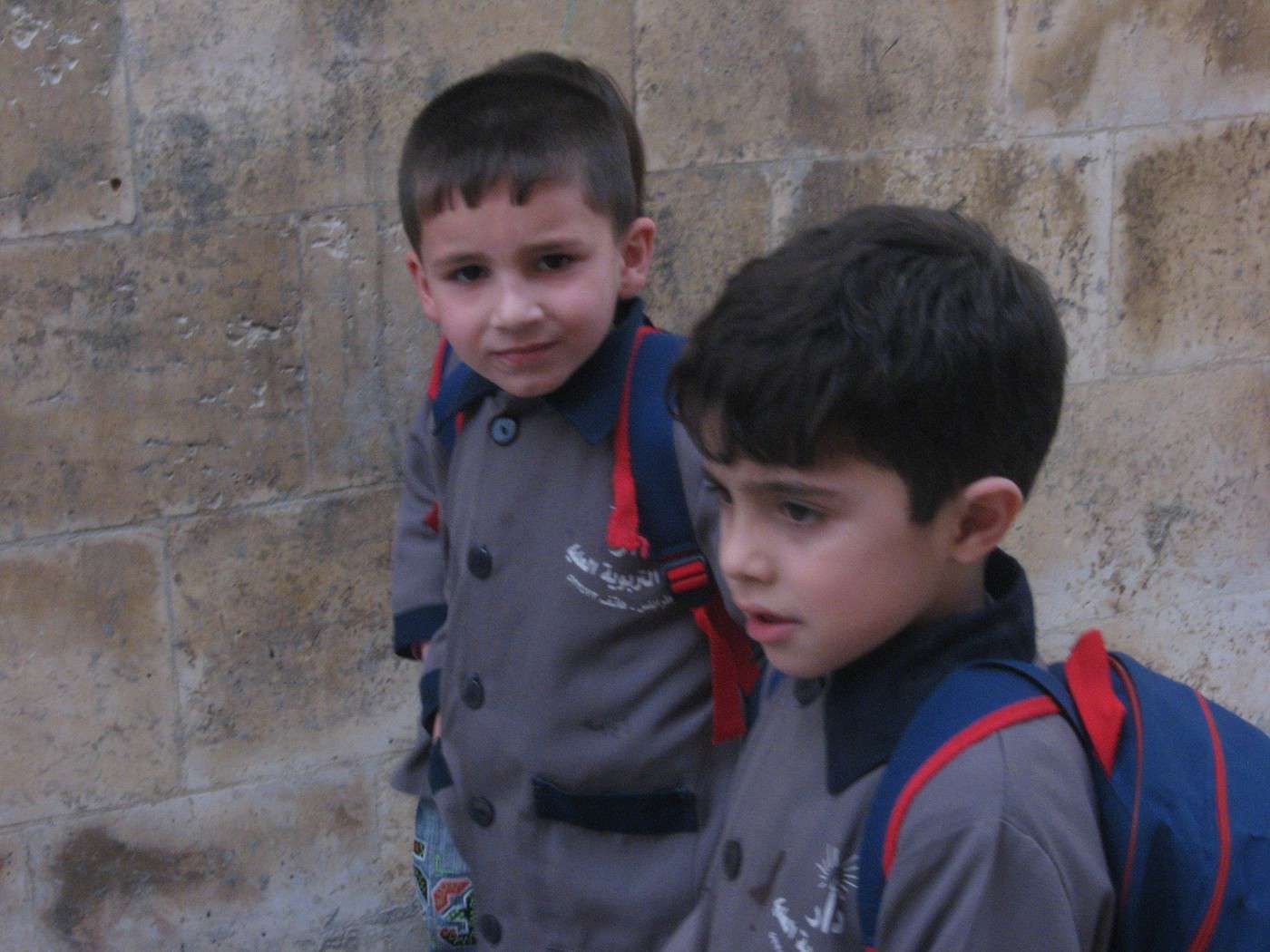
Nous allons dans un charmant restaurant dans le quartier ancien. Tout se passe bien. A notre sortie du restaurant nous assistons à la rentrée de jeunes enfants à l'école. Ce sont de petits garçons de 5/6 ans tous en uniforme.
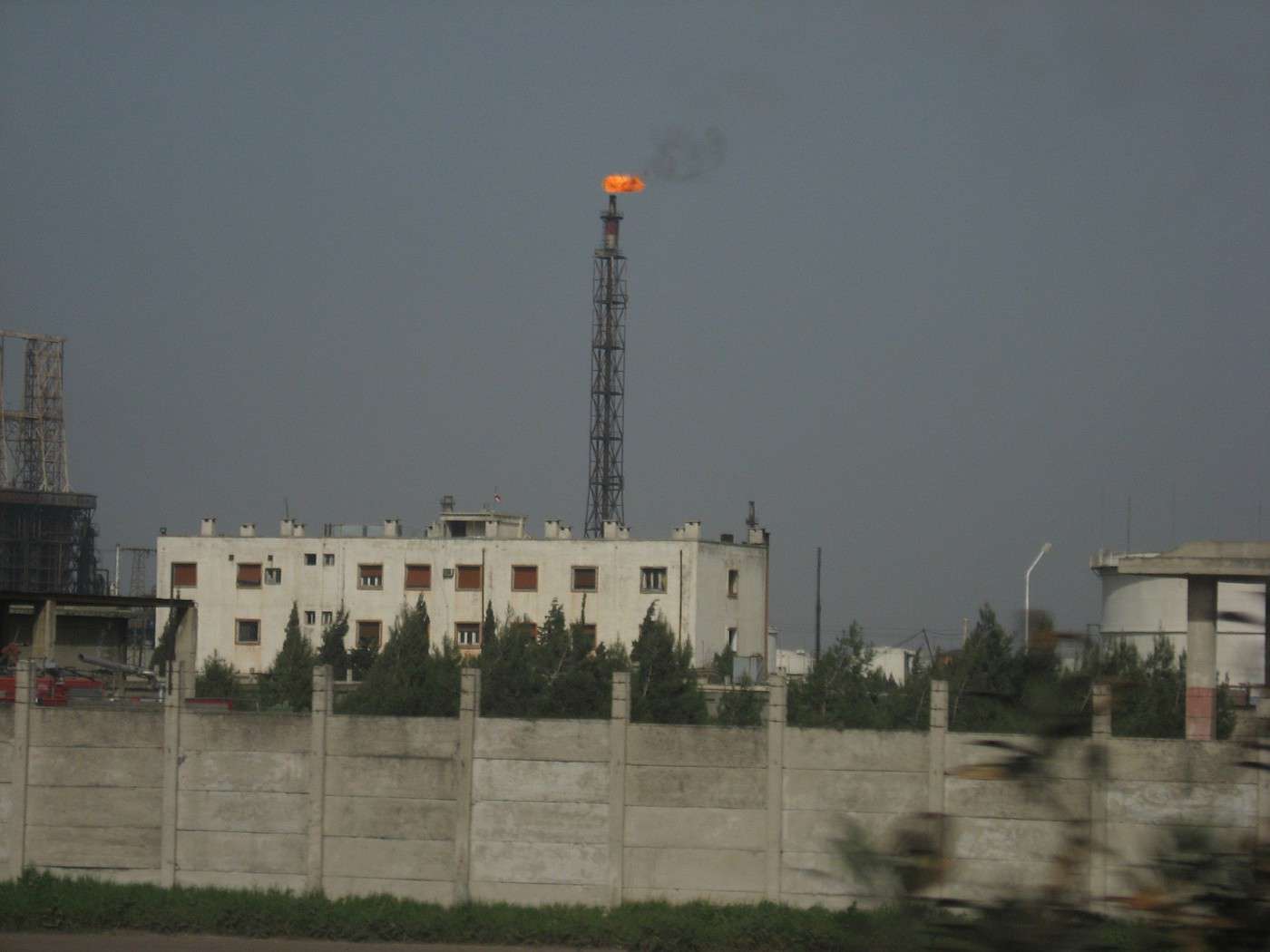
Nous repartons vers Homs pour prendre la route qui va nous mener vers Palmyre. A Hom nous repassons devant la raffinerie de pétrole qui crache sa torchère haut dans le ciel un peu pollué .
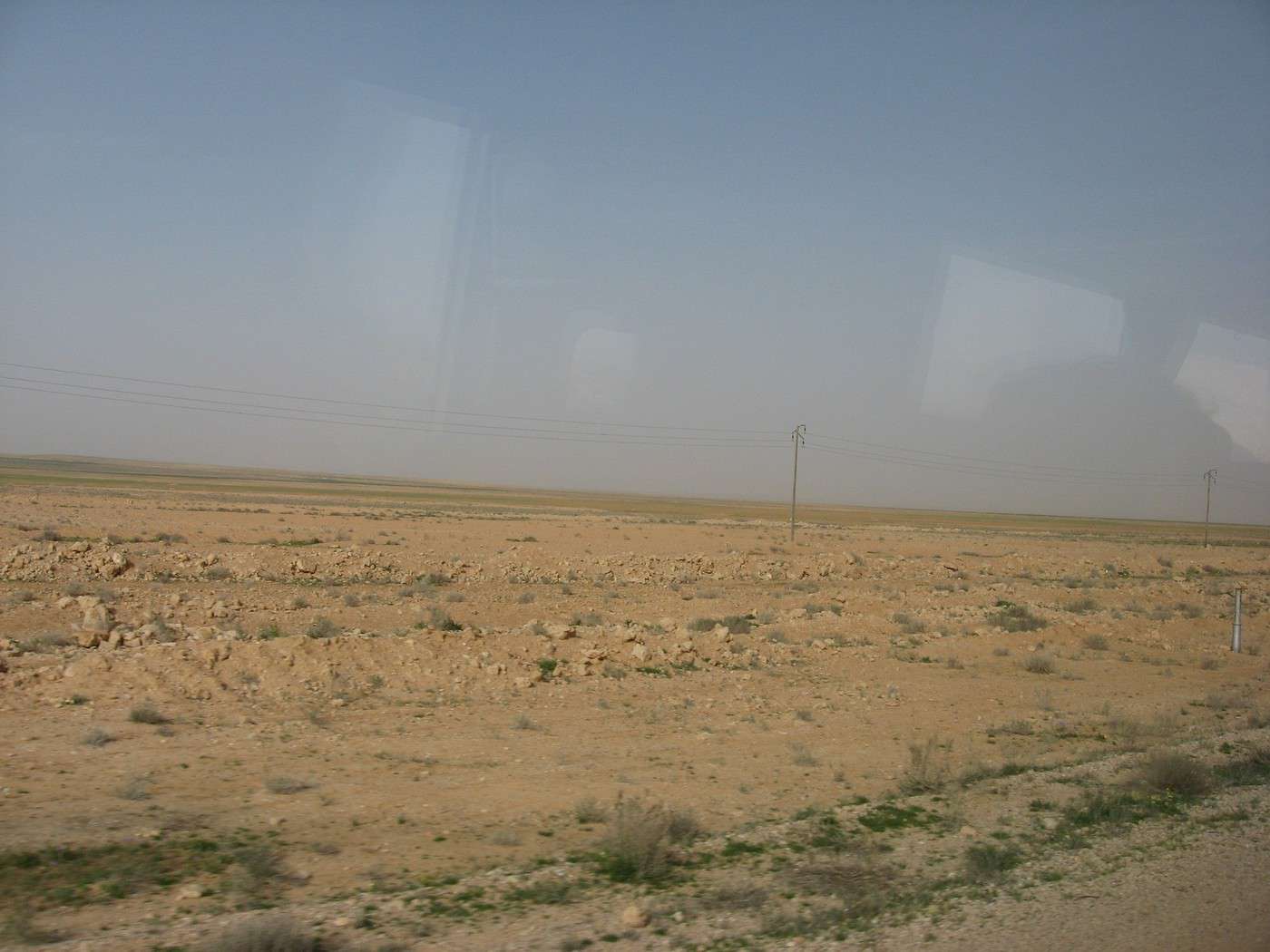
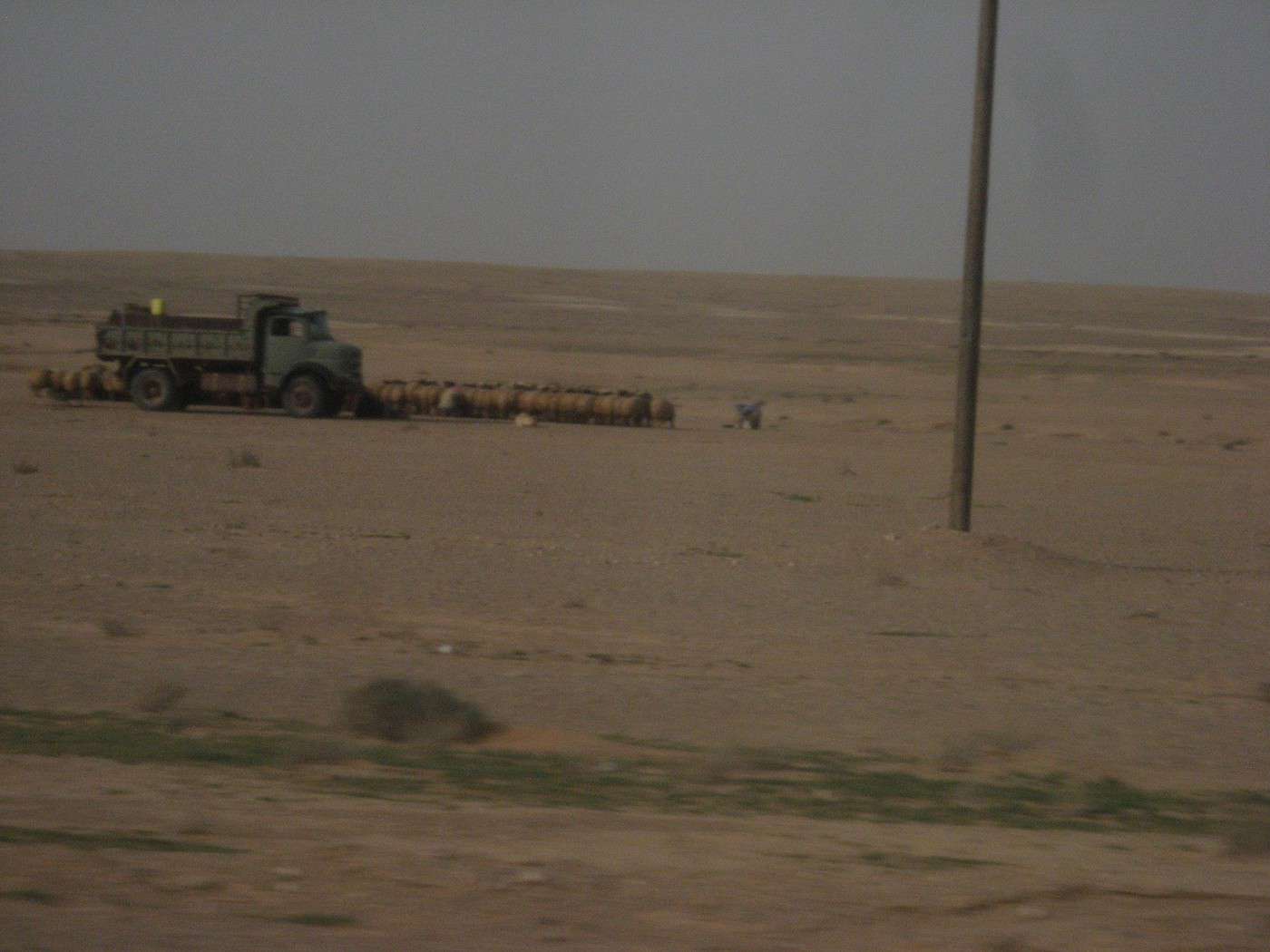
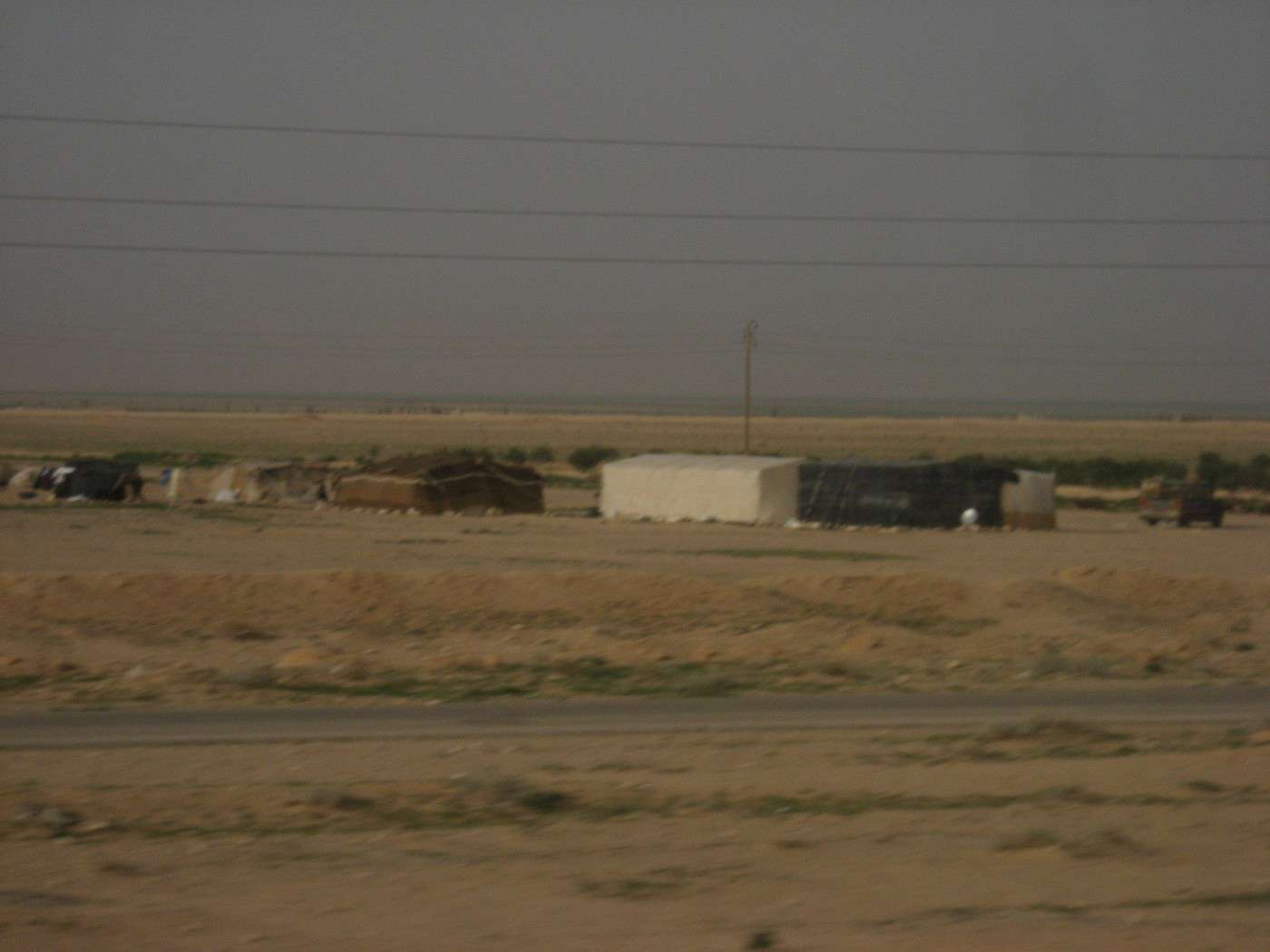
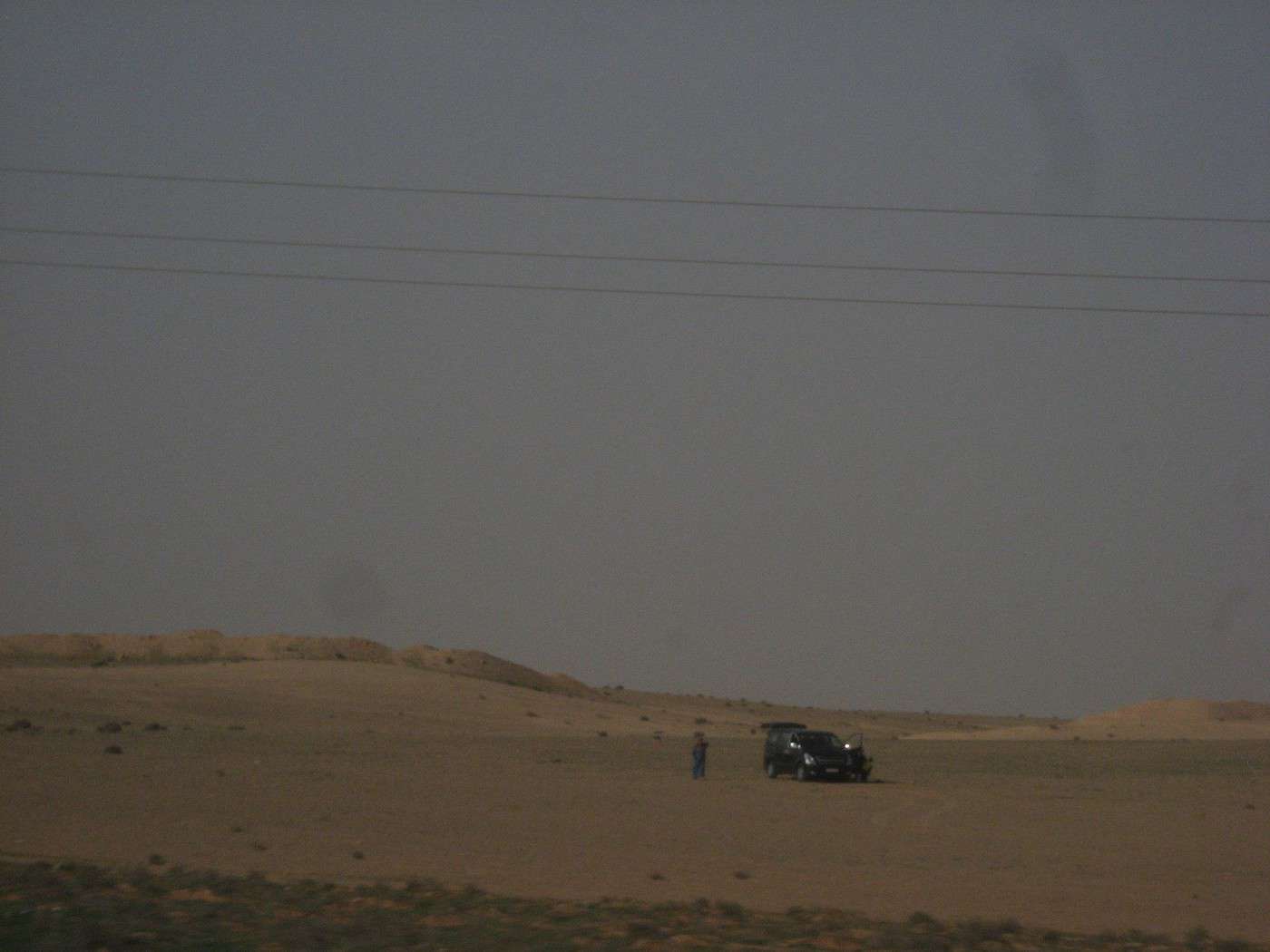
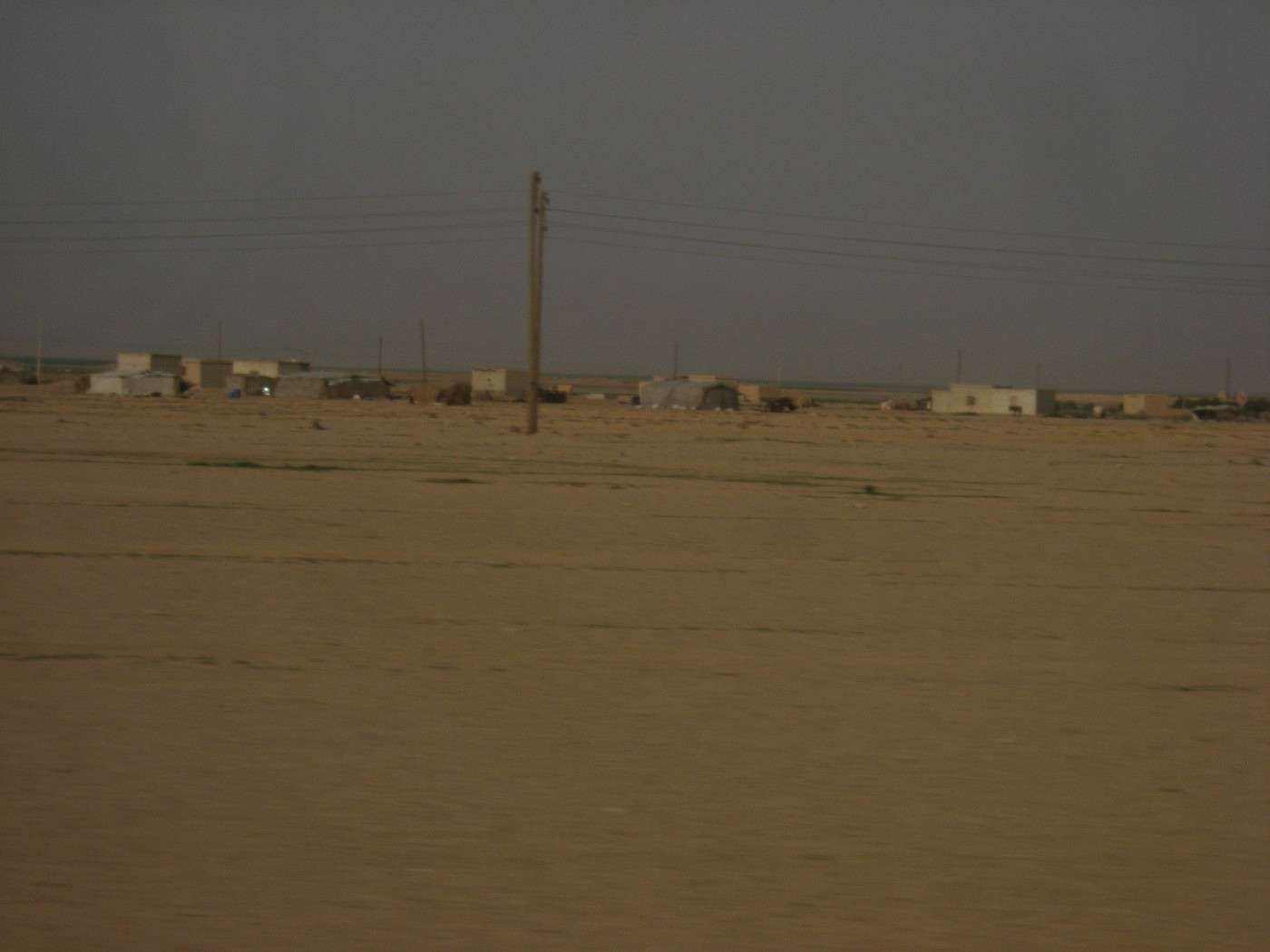
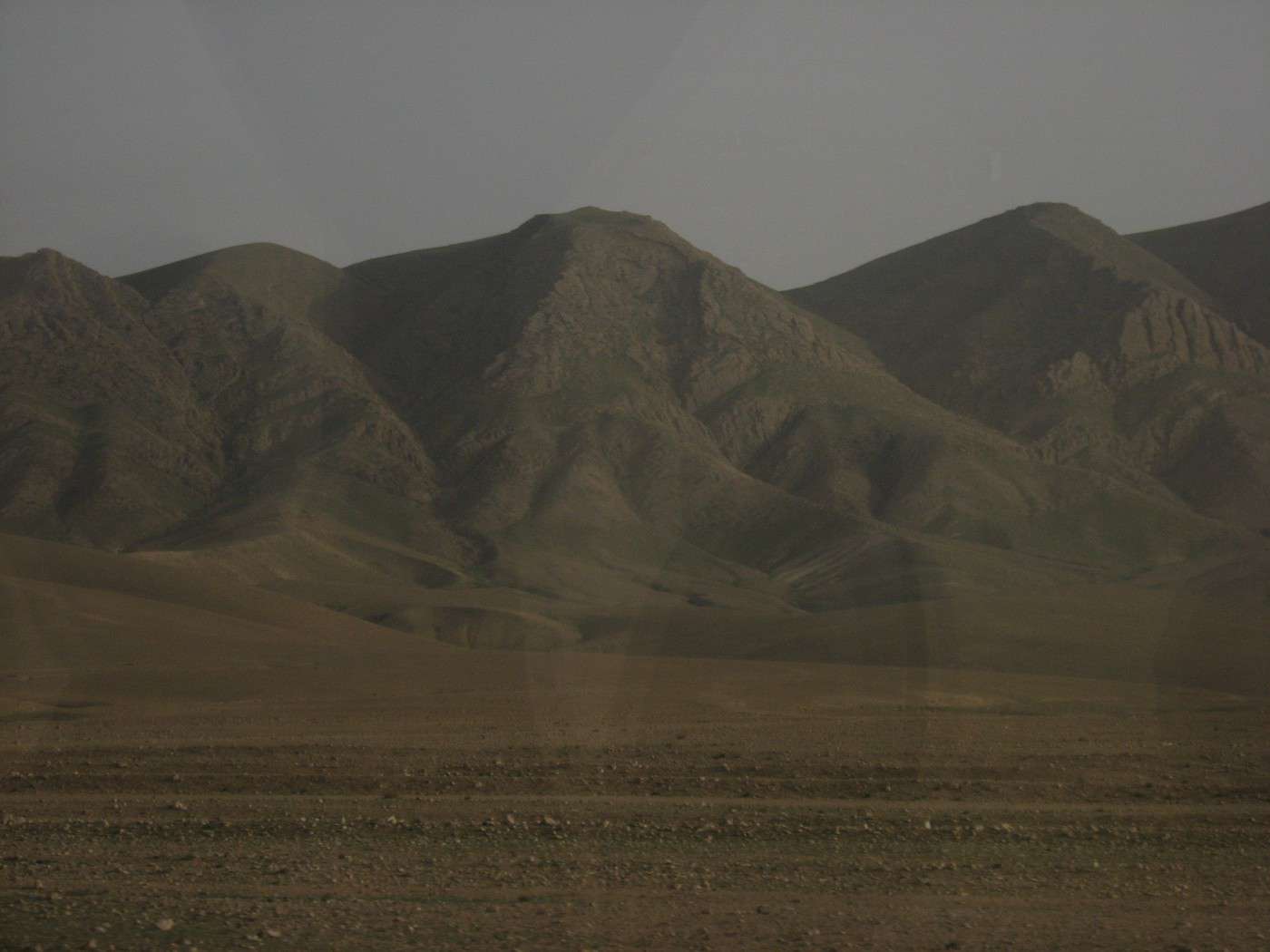
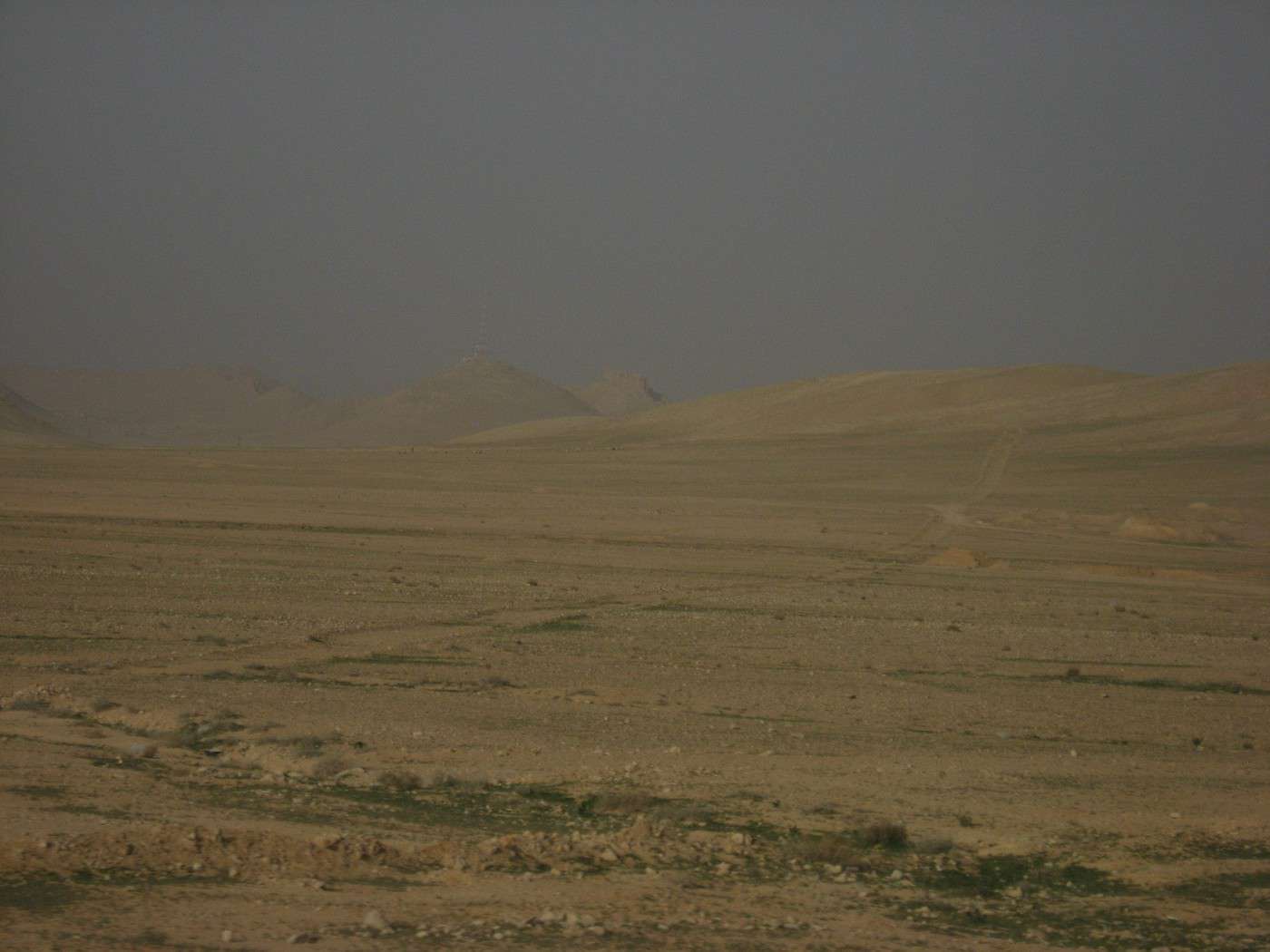
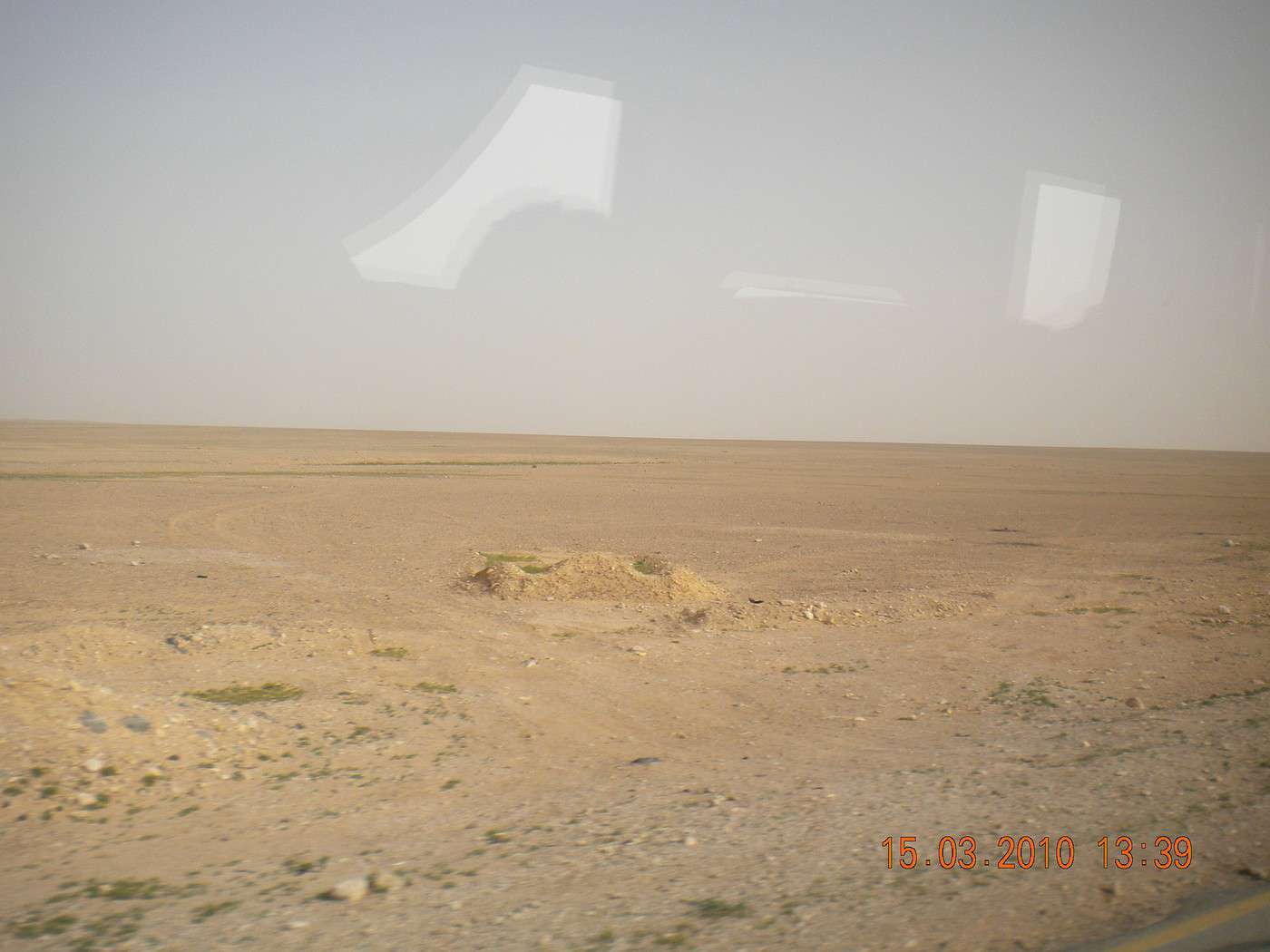
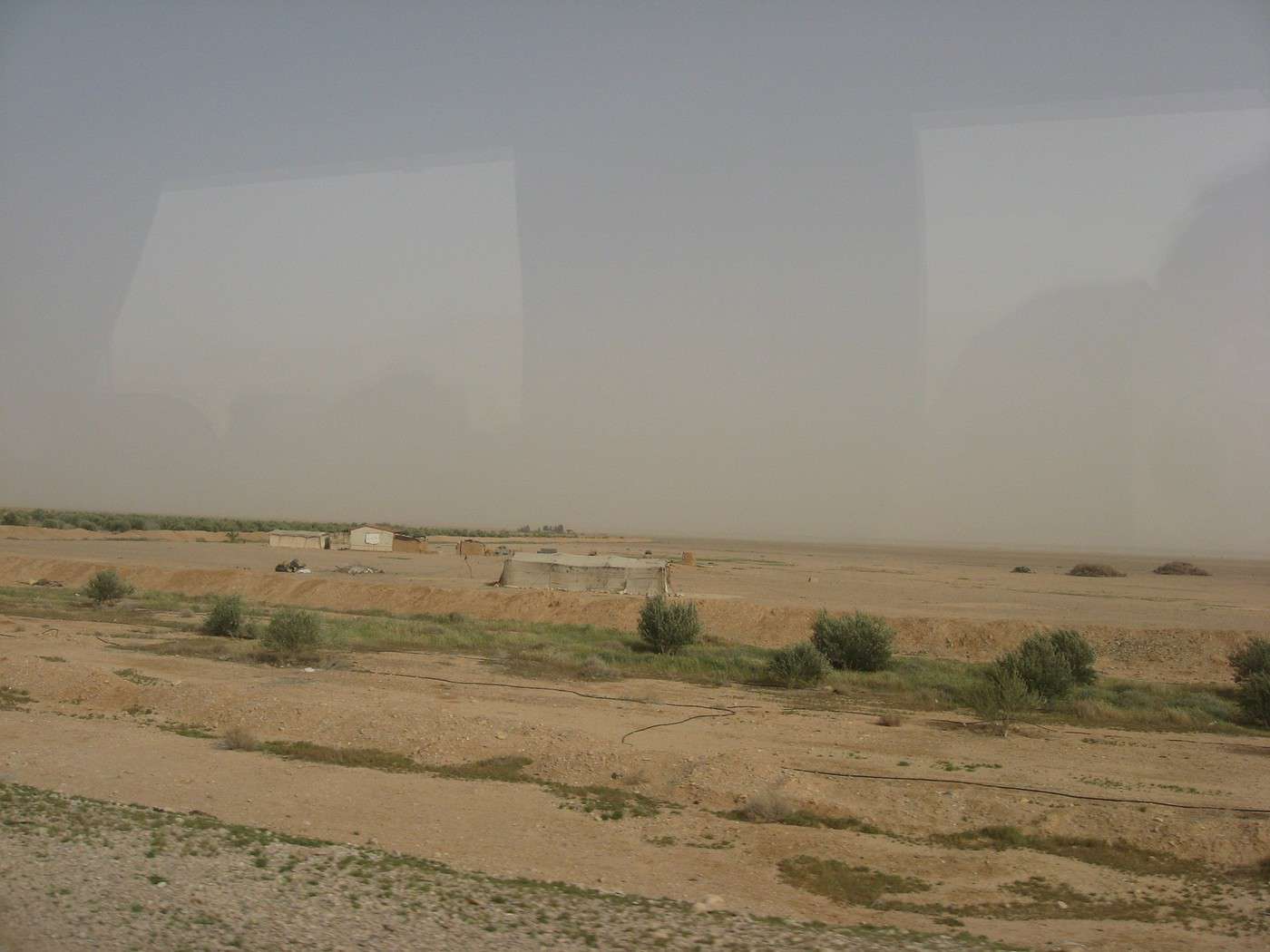
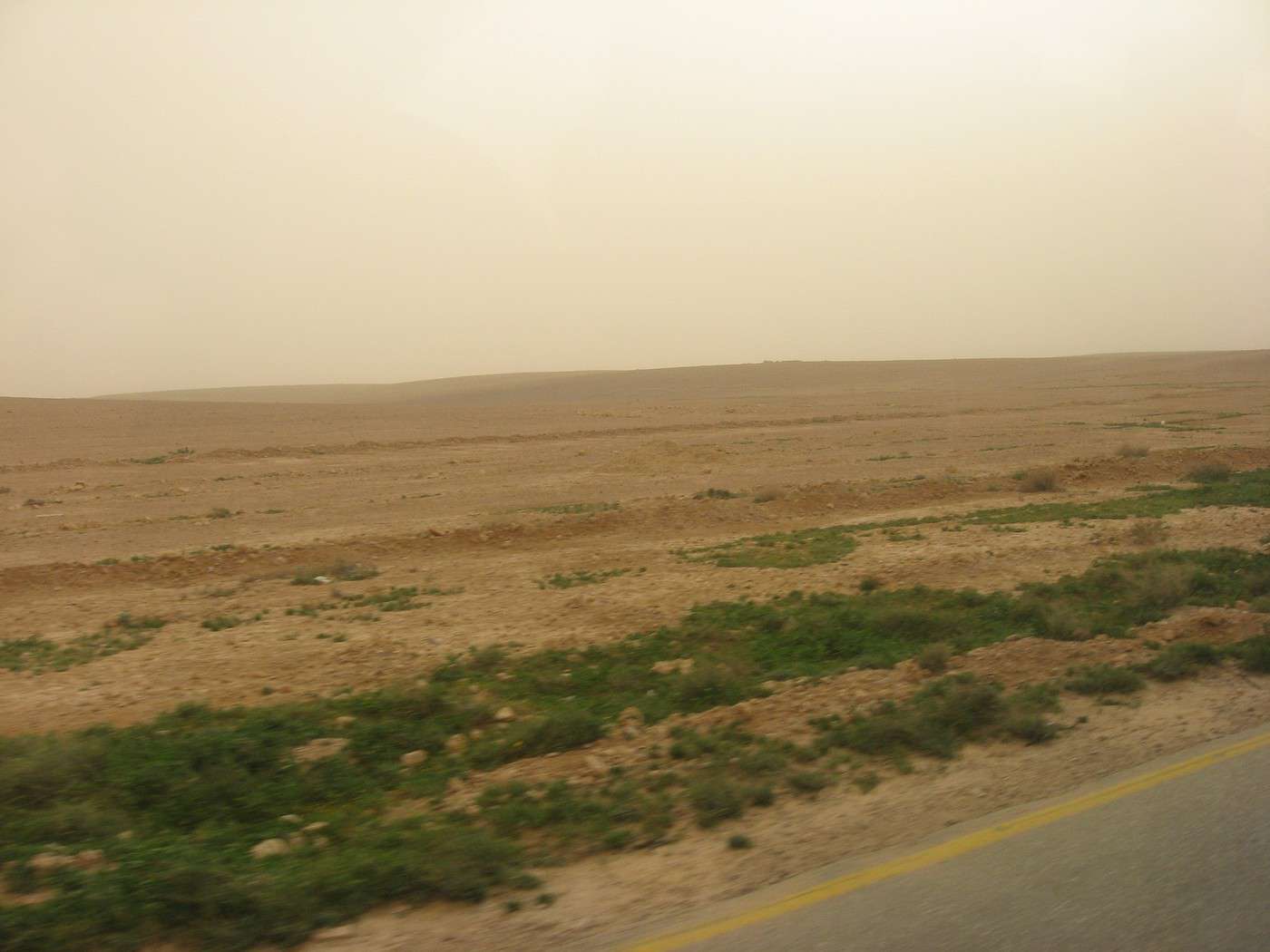
Et nous voilà dans le désert syrien. Ce désert est un des plus chaud au monde. Aucune dune, pas de sable, pas d'oasis ! de la pierre , de hautes crêtes qui forment une barre dans ce paysage impressionnant. Peu de véhicule sur la route qui déroule son long ruban au milieu de ce paysage irréel et de temps en temps un campement avec une dizaine de tentes , et oui des hommes vivent ici ! . Parfois un tout petit carré d'herbe grillée par le soleil est investi par des moutons. Des camions sillonnent ce désert de pierres et de gros 4 x 4 nous signalent que même les bédouins sont " à la mode du gros véhicule à moteur".
La route est un peu longue . Beaucoup de passagers en profitent pour faire une sieste en prévision de la journée de demain.
Et tout à coup un mirage ! nous voilà arrivé : PALMYRE = TADMOR = palmier, dattes
Palmyre la capitale de la datte le principal centre de production en Syrie.
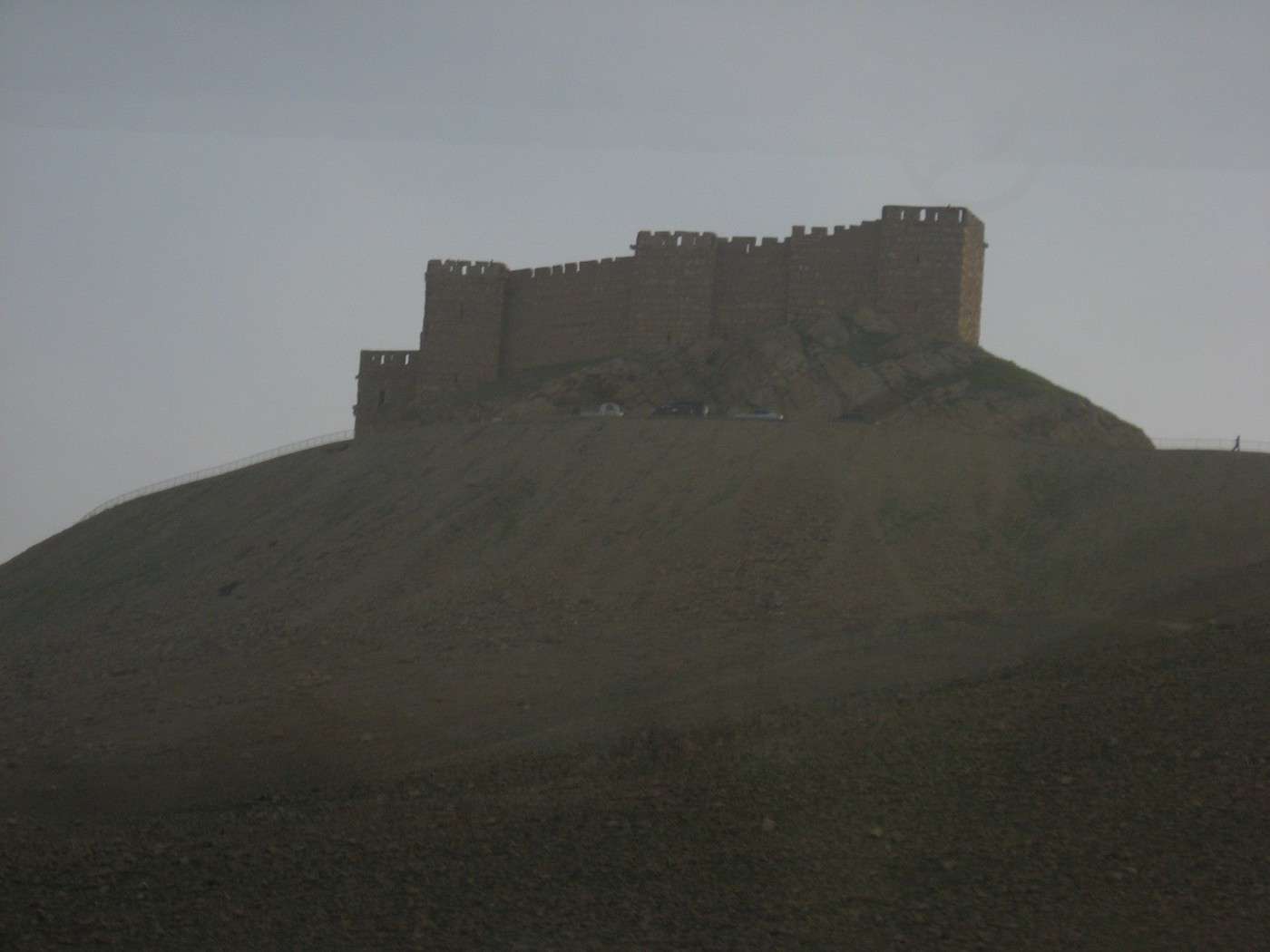
Nous faisons un tour en autocar au milieu de ce merveilleux site, nous montons au chateau arabe pour voire le coucher du soleil .... mais j'ai bien peur que le soleil soit absent tout au moins disparaisse... derrière un épais vent de sable. Le sable tourbillonne et la visibilité est très réduite.
Nous montons en bus au chateau. C'est très beau . Nous ne sommes pas seul !!! Les marchands de cartes postales et autres gadgets nous harcèlent. La montée en haut du chateau est assez rude et j'ai des soucis pour me hisser tout là haut ... pour ne rien voir ! Le soleil et surtout son coucher ...et bien pas aujourd'hui !
Nous retournons au bus toujours suivis par nos vendeurs à la sauvette. C'est la première fois qu'ils sont ...collants depuis notre séjour dans ce pays.
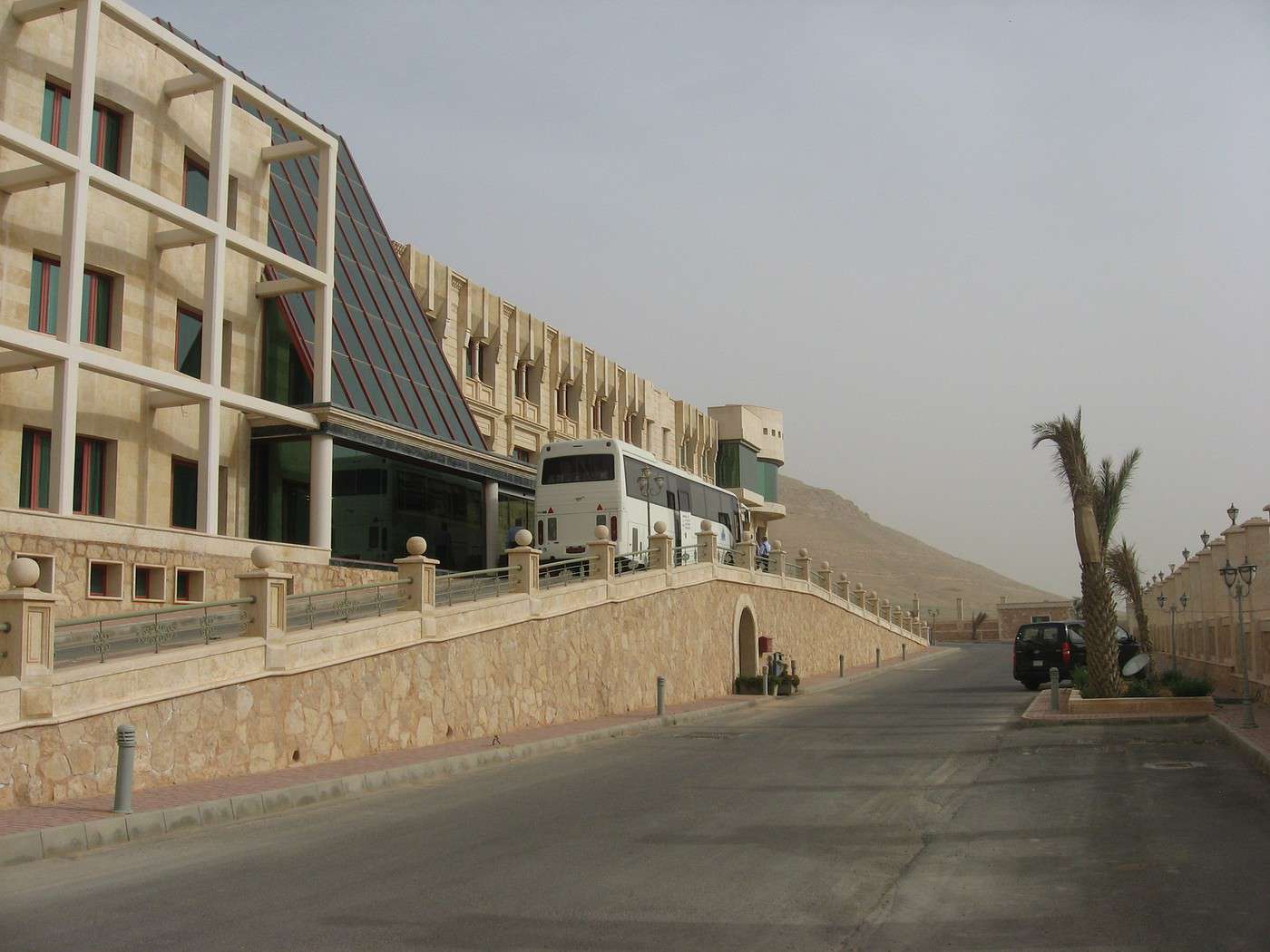
On nous conduit à notre hotel, un peu en dehors du site. Ce soir nous dinons chez les bédouins !!! sous la tente.
Pour une reprise, je vais vous laisser et aller dormir . Demain je vous raconterai notre diner et quelques photos vous récompenserons de votre lecture.
A demain
Capucine 18
Et oui me revoilà ! Nous sommes de retour depuis environ une semaine de Russie.
Je vais donc essayer de terminer mon précédent voyage en Syrie Jordanie avant de mettre en page notre "sacré circuit russe" !!!!!!
Je vous avais quittée à Alep, un samedi 13 mars 2010 et le réveil devait sonner à 6 h pour un départ 7 h pour la fabuleuse Palmyre !
DIMANCHE 14 MARS 2010
ALEP / PALMYRE
6 h le réveil effectivement nous incite à nous lever. Les valises sont prêtes à mettre dans le couloir pour les bagagistes. Nous nous préparons pour une longue journée avec une traversée ... du désert !!! Petit déjeuner et dernier coup d'oeil sur les toits d'Alep avec ses centaines de paraboles ! Impressionnant !
7 h Nadine, Youssef et bien sur le chauffeur de notre bus syrien sont fin prêts, les clients aussi;
Nous quittons Alep par la route de Hama car nous sommes obligés de repasser par Hama et Homs pour prendre la direction de Palmyre.
La route est une 4 voix avec un peu de circulation mais rien de bien important. Nous sommes entre un monde sédentaire et un monde nomade. Nous traversons de gros bourgs avec des échoppes de toute sorte. Les moutons sont très présents et les bédouins les laissent paître partout où il y a un brin d'herbe.
Nous voyons plusieurs rassemblement de camions qui attendent pour "faire la transhumance". Les hommes eux sont tranquillement sur le bord de la route entrain de discuter .
Nous bifurquons sur une route nettement moins importante que la précédente. les alentours sont ... peu fertiles ! Quelques oliviers garnissent des endroits pierreux et secs. Mais nous voilà arrrivés dans un petit village aux contructions très bizarres. Le bus nous arrête le long de la route et Youssef nous explique que ces maisons sont typiques de cette région : elles sont en forme de pain de sucre. Le dome est fait de brique, l'extérieur est crépi de torchis avec de la paille. Il parait que celà protége de la chaleur qui régne dans cette région. Certaines d'entres elles sont encore habitées. Une dame est entrain de rassembler ses brebis dans une courette intérieure pour pouvoir les traire. Pendant ce temps sa fille fait le clown devant nous et se laisse prendre en toute décontraction en photo. D'autres enfants accourent et posent eux aussi pour la photo. Un garçon plus âgé rentre des environs avec un troupeau de moutons. Mais il faut repartir, cet endroit est assez exceptionnel mais malheureusement bientôt il ne servira plus que pour les touristes car de l'autre côté de la route un village "normal" est entrain de voir le jour.
Il fait déjà très chaud et nous devons aller voir un chateau (Qasr Ibn Wardan) en plein milieu de cette steppe qui soit dit en passant est très inhospitalière.
Nous arrivons, au bout de quelques minute, à ce sacré chateau qui d'après Youssef est très peu visité mais très beau. Effectivement nous sommes les seuls visiteurs et il n'y a effectivement pas grand chose dans les environs. La forteresse (enfin les ruines !) dresse son soubassement noir et jaune au milieu de nulle part et devait être là pour pouvoir défendre la Syrie, voilà fort longtemps des invasions car la vue est fort dégagée . L'ensemble est beau avec ses briques cuites noires et jaune et vaste. Un gardien nous accueille et nous laisse tranquillement "vaquer à nos occupations". Je remarque dans ce décor un téléphone pas des plus moderne mais qui "sonne" faux dans ce milieu !!!
Au moment de partir certaines personnes ont un "besoin technique" pas facile d'aller derrière les buissons ... c'est le désert... Mais le gardien va intervenir et à la "clef" du sésame ! Les toilettes ! Et tout le monde part à queue leu leu....
Nous retrouvons au bout de quelques kilomètres notre route à grande circulation et nous nous dirigeons vers Hama où nous allons déjeuner.
Nous allons dans un charmant restaurant dans le quartier ancien. Tout se passe bien. A notre sortie du restaurant nous assistons à la rentrée de jeunes enfants à l'école. Ce sont de petits garçons de 5/6 ans tous en uniforme.
Nous repartons vers Homs pour prendre la route qui va nous mener vers Palmyre. A Hom nous repassons devant la raffinerie de pétrole qui crache sa torchère haut dans le ciel un peu pollué .
Et nous voilà dans le désert syrien. Ce désert est un des plus chaud au monde. Aucune dune, pas de sable, pas d'oasis ! de la pierre , de hautes crêtes qui forment une barre dans ce paysage impressionnant. Peu de véhicule sur la route qui déroule son long ruban au milieu de ce paysage irréel et de temps en temps un campement avec une dizaine de tentes , et oui des hommes vivent ici ! . Parfois un tout petit carré d'herbe grillée par le soleil est investi par des moutons. Des camions sillonnent ce désert de pierres et de gros 4 x 4 nous signalent que même les bédouins sont " à la mode du gros véhicule à moteur".
La route est un peu longue . Beaucoup de passagers en profitent pour faire une sieste en prévision de la journée de demain.
Et tout à coup un mirage ! nous voilà arrivé : PALMYRE = TADMOR = palmier, dattes
Palmyre la capitale de la datte le principal centre de production en Syrie.
Nous faisons un tour en autocar au milieu de ce merveilleux site, nous montons au chateau arabe pour voire le coucher du soleil .... mais j'ai bien peur que le soleil soit absent tout au moins disparaisse... derrière un épais vent de sable. Le sable tourbillonne et la visibilité est très réduite.
Nous montons en bus au chateau. C'est très beau . Nous ne sommes pas seul !!! Les marchands de cartes postales et autres gadgets nous harcèlent. La montée en haut du chateau est assez rude et j'ai des soucis pour me hisser tout là haut ... pour ne rien voir ! Le soleil et surtout son coucher ...et bien pas aujourd'hui !
Nous retournons au bus toujours suivis par nos vendeurs à la sauvette. C'est la première fois qu'ils sont ...collants depuis notre séjour dans ce pays.
On nous conduit à notre hotel, un peu en dehors du site. Ce soir nous dinons chez les bédouins !!! sous la tente.
Pour une reprise, je vais vous laisser et aller dormir . Demain je vous raconterai notre diner et quelques photos vous récompenserons de votre lecture.
A demain
Capucine 18
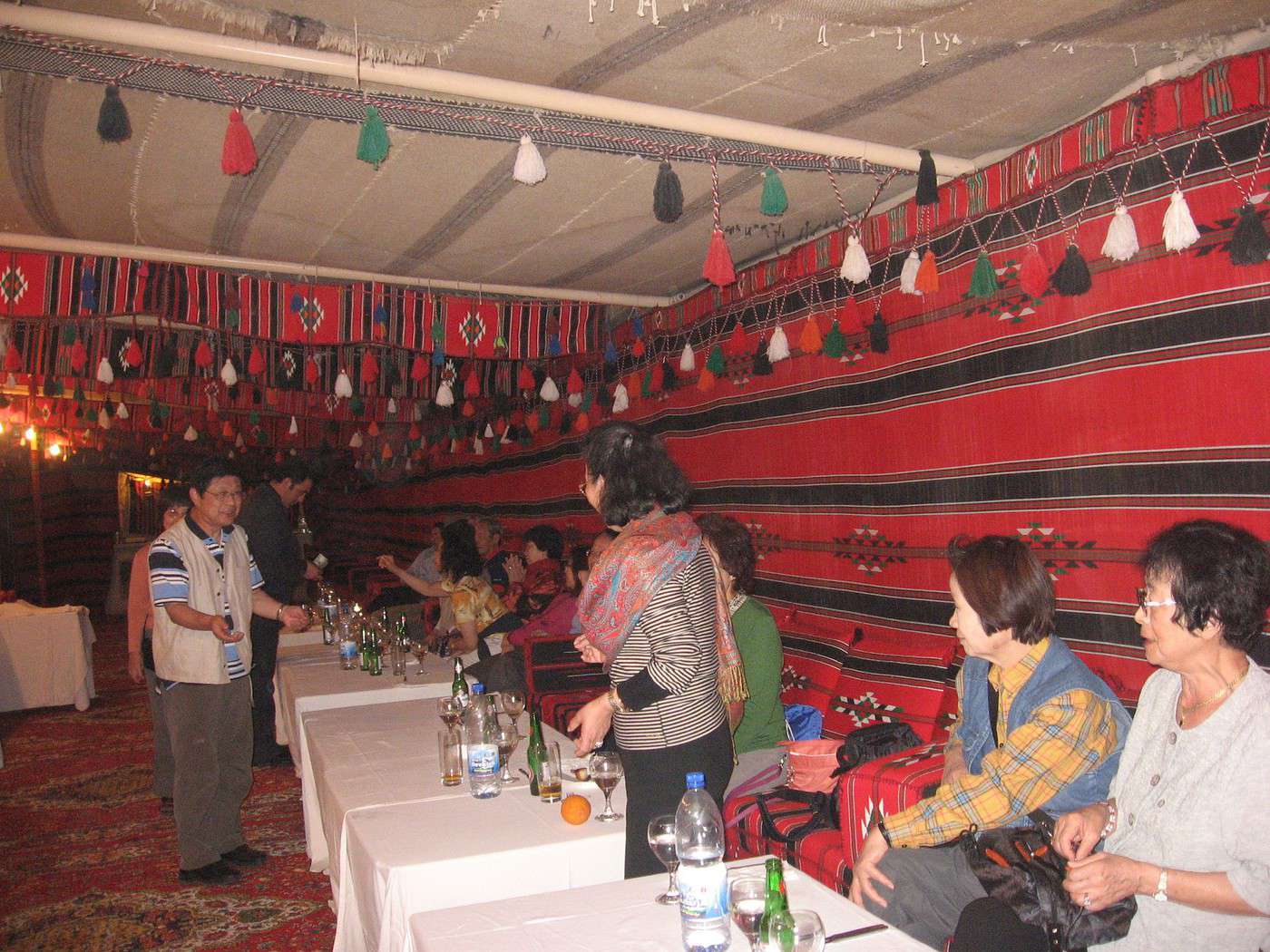
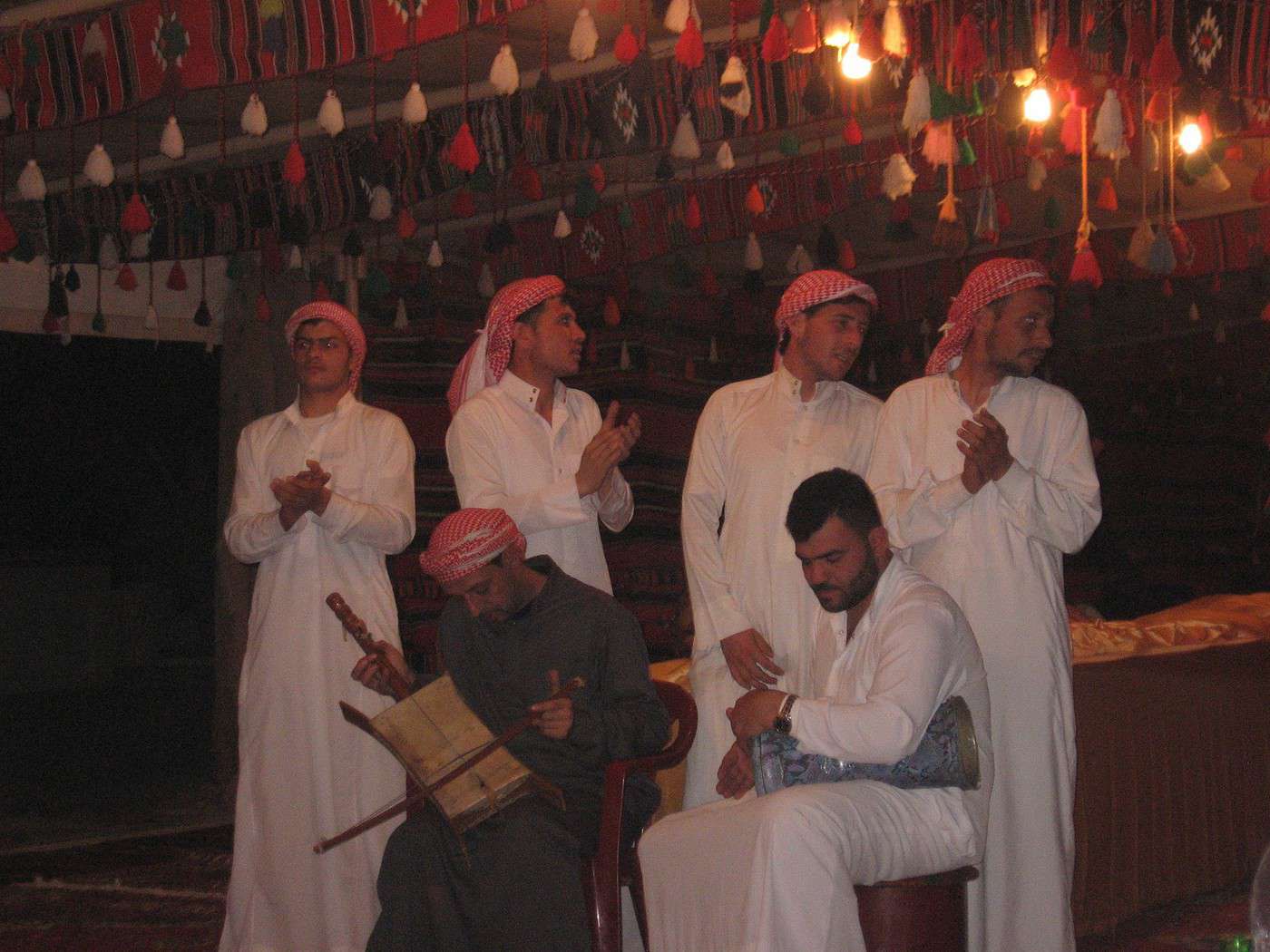
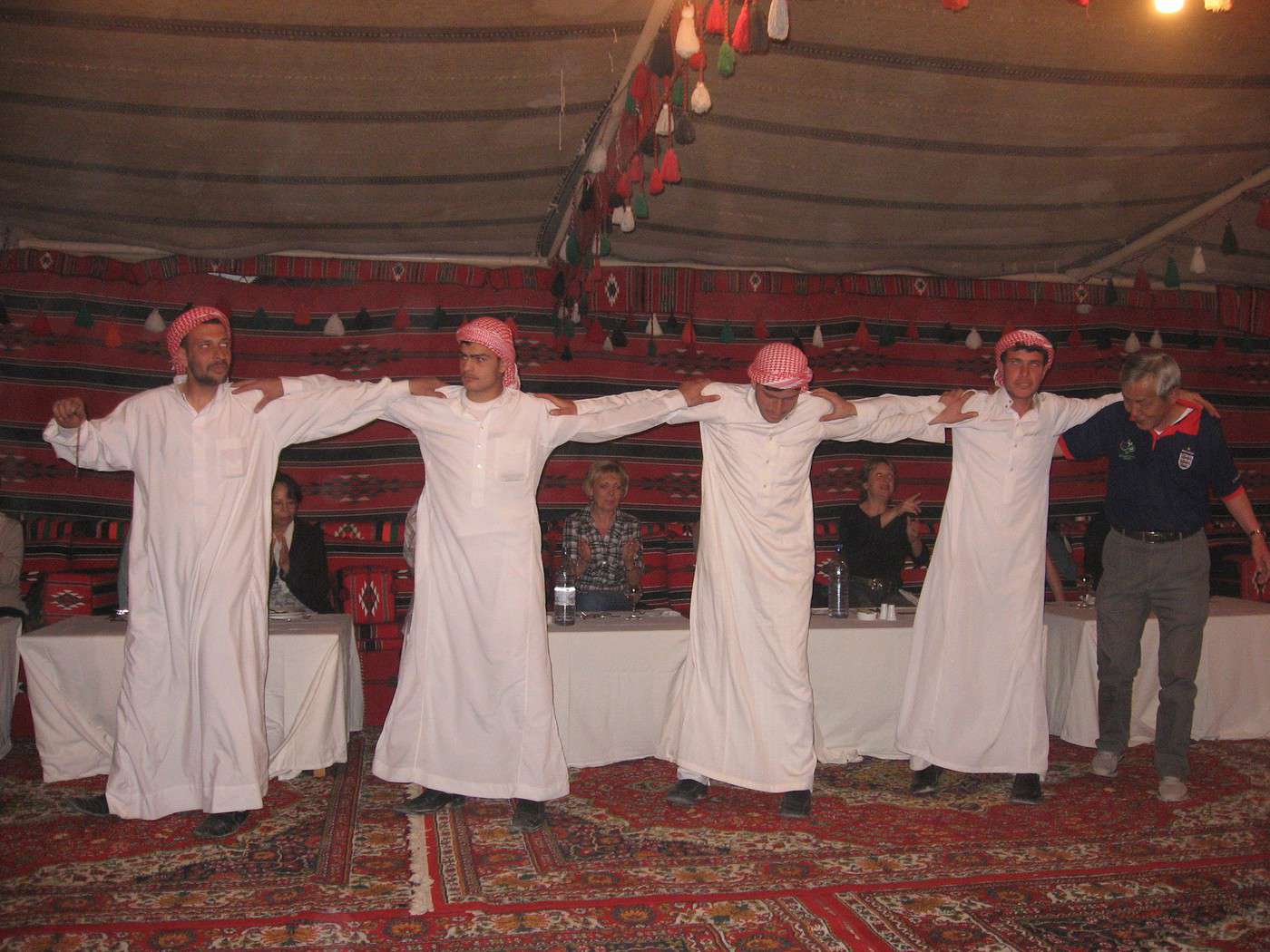
😉A 20 h le bus nous conduit jusqu'à d'immenses tentes dressées au milieu du désert. Nous sommes accueillis par des chants et de la musique locale.
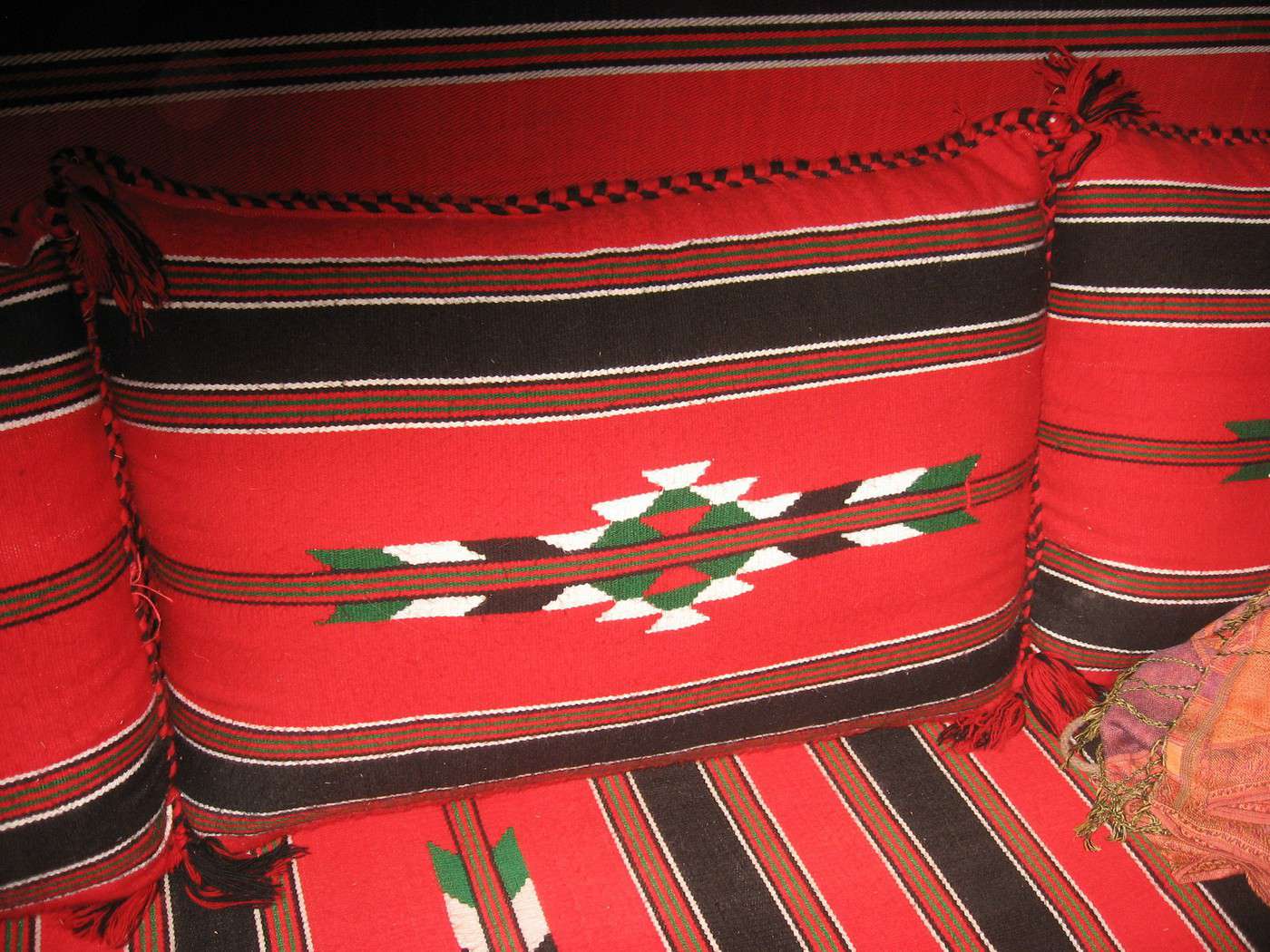
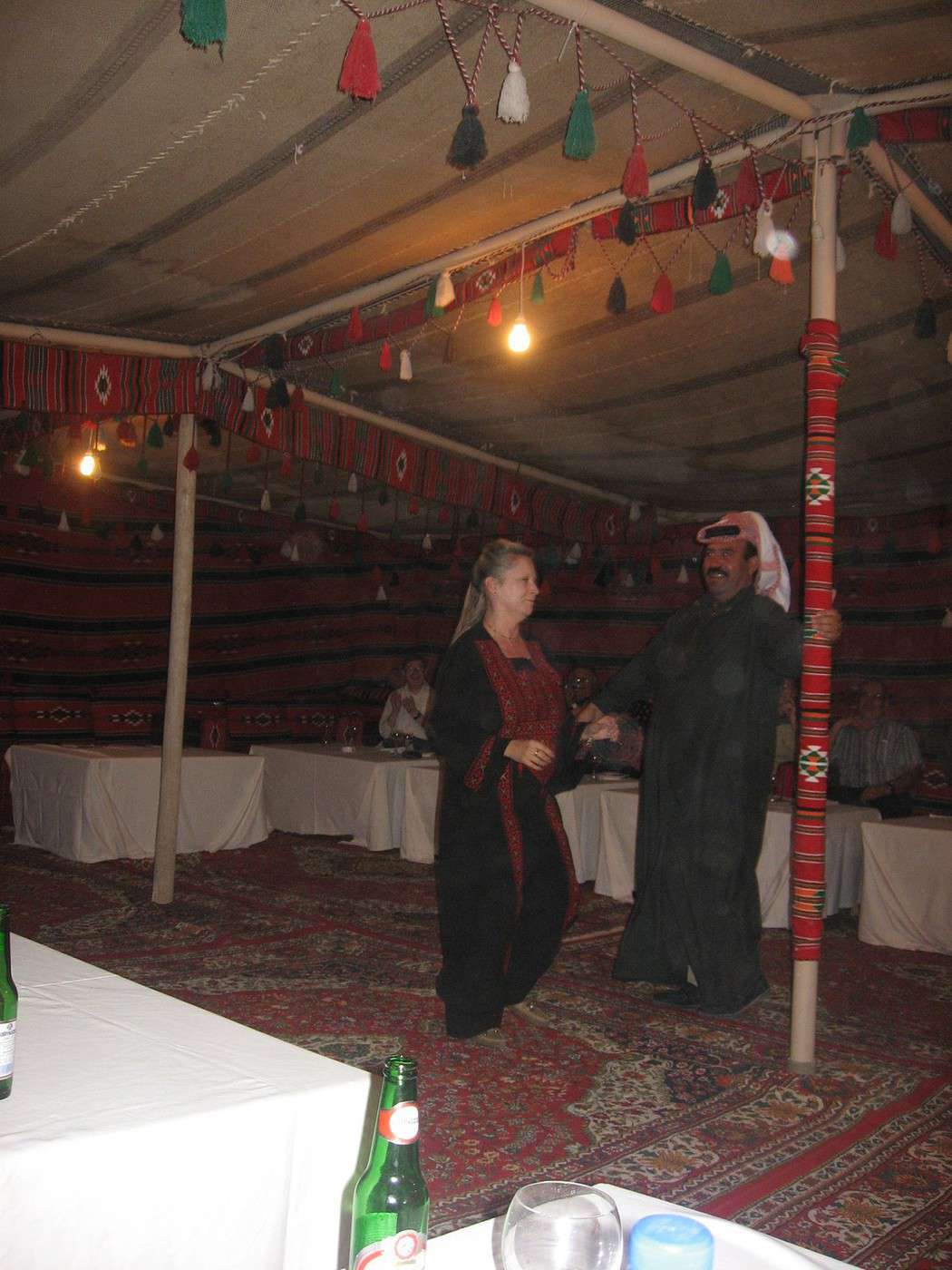
En pénétrant dans la tente principale c'est la couleur rouge qui vous interpelle. . La tente est assez vaste et tout le long sont disposés des sièges recouverts de tapis et les coussins formant les dossiers sont d'un rouge éclatant.
Nadine qui a revêtue pour la circonstance une superbe djellaba noire et rouge qui fait ressortir encore plus sa blondeur nous désigne nos places et nous invite à prendre place . Chacun se répartis par affinité et nous nous retrouvons avec nos "copains" de Chalon sur Saone et d'Autun.
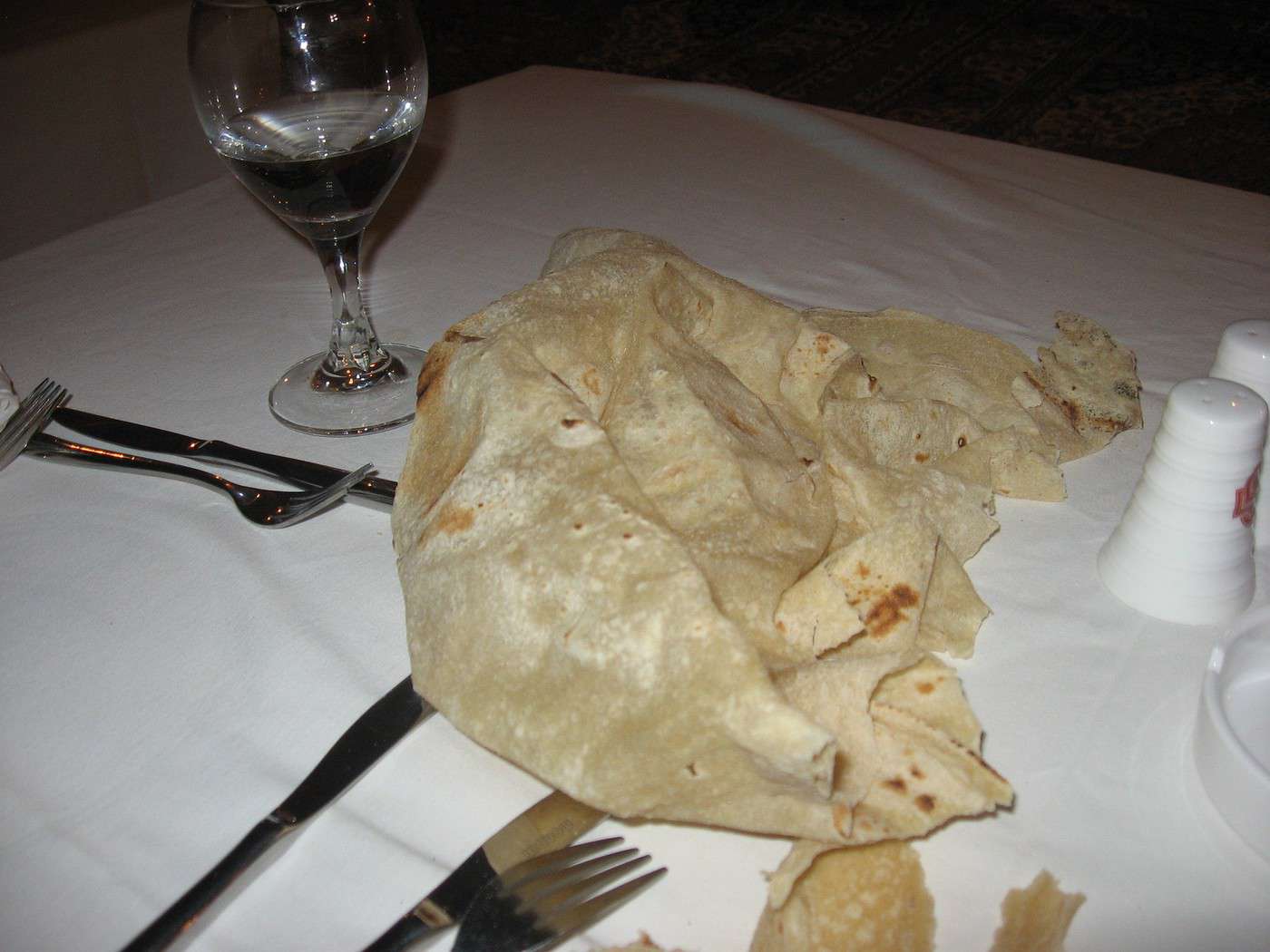
Des jeunes gens en costume local s'agitent pour disposer les plats sur de grandes tables . Une jeune femme entourée de 3 petits enfants fait des galettes de pain.
Nos compagnons de soirées arrivent, ils sont japonais. Ils sont avec une accompagnatrice qui vient nous saluer dans un français impeccable. ils sont d'Osaka et nous lui expliquons nos différentes provenances. Elle situe parfaitement bien nos régions et nous dit apprécier la France pour sa gastronomie et ses chateaux.
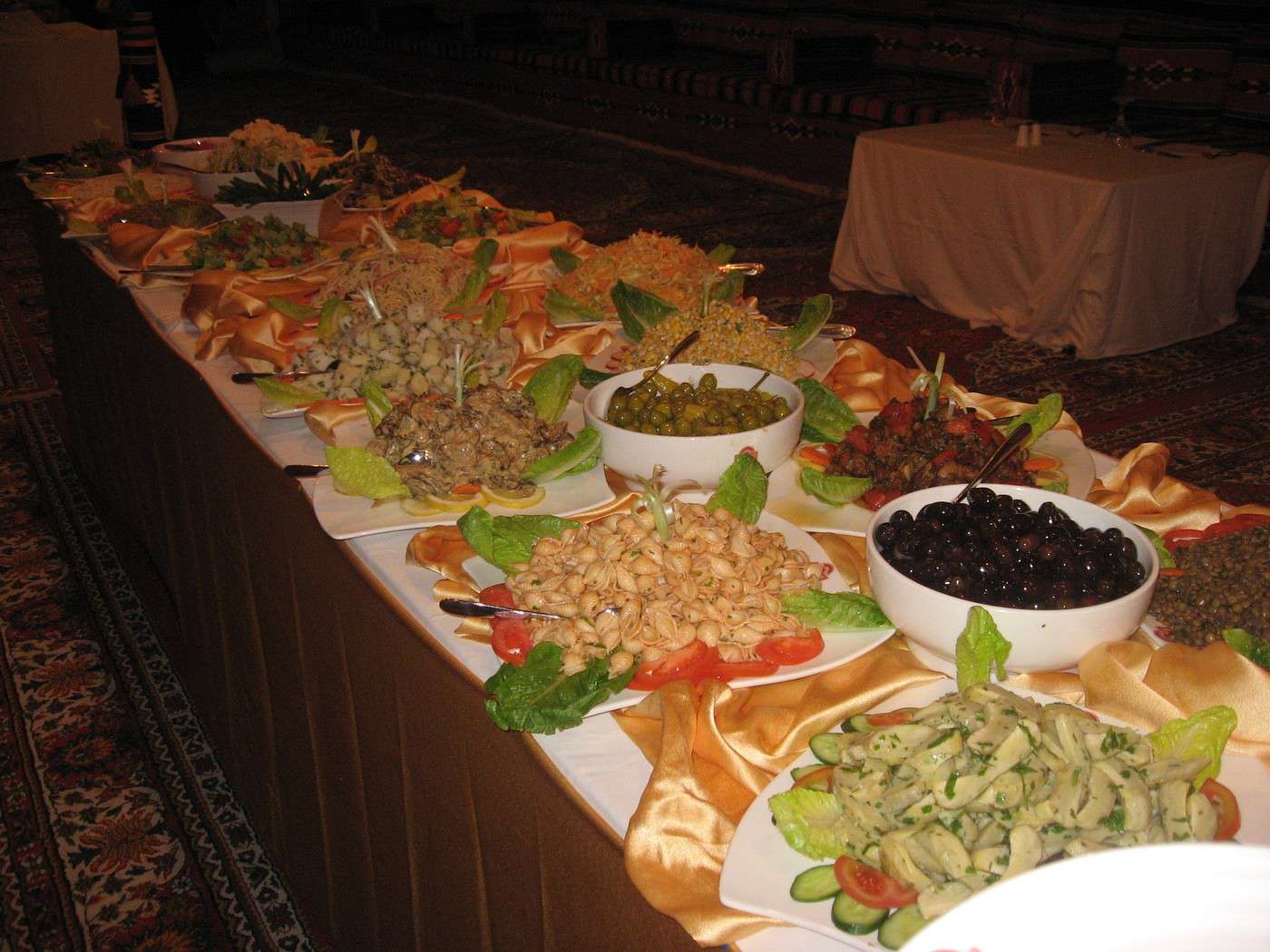
Les jeunes gens locaux se mettent à danser et à chanter. Puis nous passons au buffet, il est imposant et très appétissant. Nous dînons avec appétit et les galettes de pate toute chaude fabriquée par la jeune femme sont excellentes.
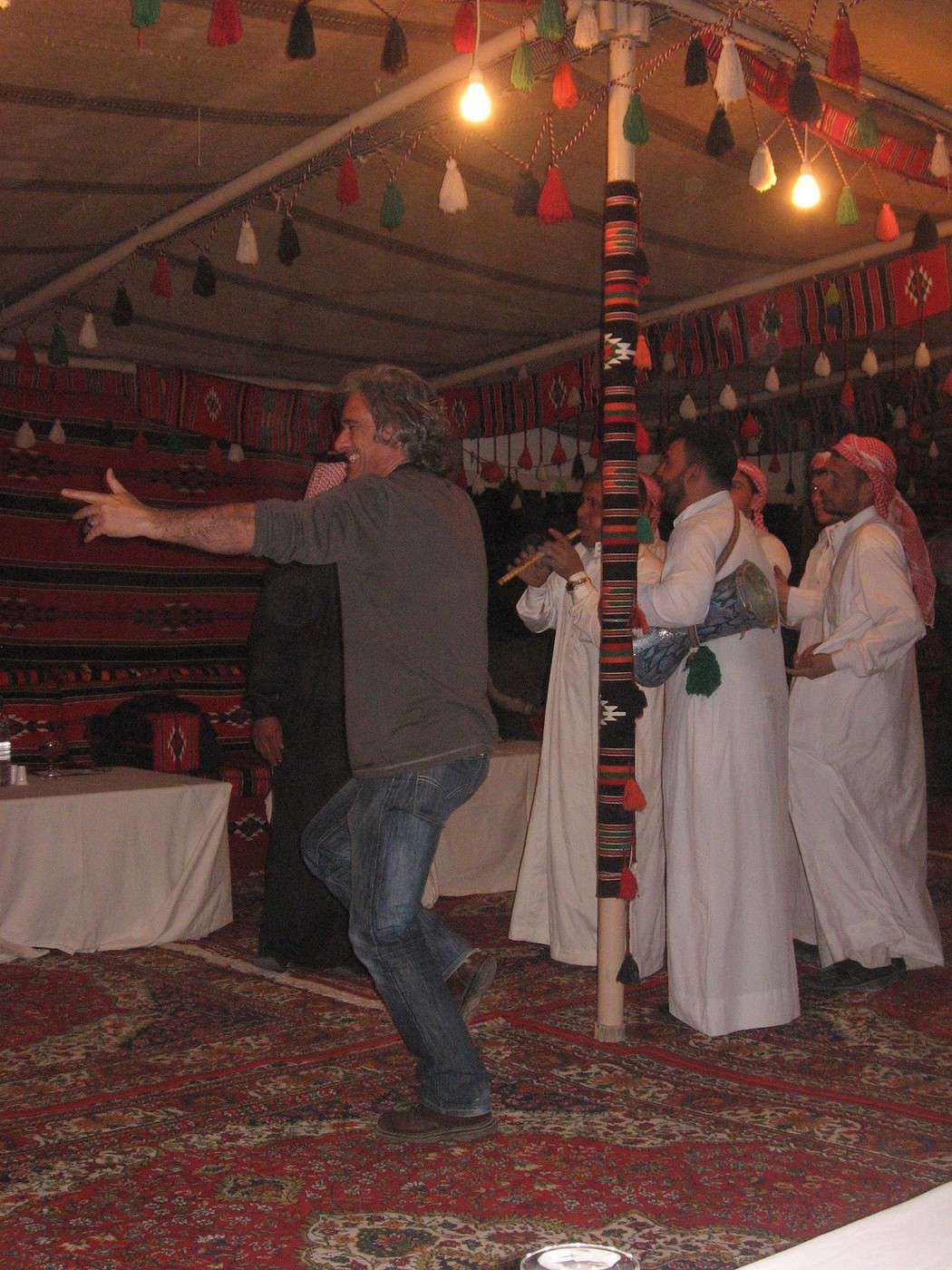
L'ambiance monte en puissance. le public est invité pour danser. Youssef, notre guide nous fait une démonstration de danse de son pays. Il danse pas mal du tout mais nous avions eu un aperçu de son talent à Damas lors de la soirée.
Le plat de résistance est à base de riz avec des légumes variés avec soient de la viande de mouton ou de poulet.
L'ambiance est agréable et la guide japonaise nous dit que son groupe va nous chanter une chanson de bienvenue. elle nous demande de faire de même !!!! Ils chantent bien et nous apprenons qu'il s'agit d'une chorale mais nous, qu'allons nous interpréter ? Nous nous décidons pour une chanson connue de tous " Le Petit Vin Blanc" . Oh ! ce n'était pas parfait , mais nous avons essayé d'interpréter du mieux possible cette chanson que nos compagnons japonais ont applaudie gentillement.
Après cet intermède le spectacle reprends et c'est "le chef de la tribu" qui intervient. Les jeunes jouent et dansent tandis que lui vas chercher notre Nadine pour danser avec elle ! Nous avons bien rit car le Monsieur devenait, malgré le public, assez entreprenant et notre charmante accompagnatrice eu toutes les peines du monde a se défaire de lui!
Le dessert sous forme de buffet est servi durant l'animation.
Il est l'heure d'aller retrouver notre bus et de saluer nos amis japonais qui sont hébergés dans l'hôtel voisin du notre.
La soirée fut agréable et nous avons été bien heureux de retrouver notre lit car demain visite du site de Palmyre et retour sur Bosra à la frontière Jordanienne. Encore beaucoup de route !
Capucine 18
En pénétrant dans la tente principale c'est la couleur rouge qui vous interpelle. . La tente est assez vaste et tout le long sont disposés des sièges recouverts de tapis et les coussins formant les dossiers sont d'un rouge éclatant.
Nadine qui a revêtue pour la circonstance une superbe djellaba noire et rouge qui fait ressortir encore plus sa blondeur nous désigne nos places et nous invite à prendre place . Chacun se répartis par affinité et nous nous retrouvons avec nos "copains" de Chalon sur Saone et d'Autun.
Des jeunes gens en costume local s'agitent pour disposer les plats sur de grandes tables . Une jeune femme entourée de 3 petits enfants fait des galettes de pain.
Nos compagnons de soirées arrivent, ils sont japonais. Ils sont avec une accompagnatrice qui vient nous saluer dans un français impeccable. ils sont d'Osaka et nous lui expliquons nos différentes provenances. Elle situe parfaitement bien nos régions et nous dit apprécier la France pour sa gastronomie et ses chateaux.
Les jeunes gens locaux se mettent à danser et à chanter. Puis nous passons au buffet, il est imposant et très appétissant. Nous dînons avec appétit et les galettes de pate toute chaude fabriquée par la jeune femme sont excellentes.
L'ambiance monte en puissance. le public est invité pour danser. Youssef, notre guide nous fait une démonstration de danse de son pays. Il danse pas mal du tout mais nous avions eu un aperçu de son talent à Damas lors de la soirée.
Le plat de résistance est à base de riz avec des légumes variés avec soient de la viande de mouton ou de poulet.
L'ambiance est agréable et la guide japonaise nous dit que son groupe va nous chanter une chanson de bienvenue. elle nous demande de faire de même !!!! Ils chantent bien et nous apprenons qu'il s'agit d'une chorale mais nous, qu'allons nous interpréter ? Nous nous décidons pour une chanson connue de tous " Le Petit Vin Blanc" . Oh ! ce n'était pas parfait , mais nous avons essayé d'interpréter du mieux possible cette chanson que nos compagnons japonais ont applaudie gentillement.
Après cet intermède le spectacle reprends et c'est "le chef de la tribu" qui intervient. Les jeunes jouent et dansent tandis que lui vas chercher notre Nadine pour danser avec elle ! Nous avons bien rit car le Monsieur devenait, malgré le public, assez entreprenant et notre charmante accompagnatrice eu toutes les peines du monde a se défaire de lui!
Le dessert sous forme de buffet est servi durant l'animation.
Il est l'heure d'aller retrouver notre bus et de saluer nos amis japonais qui sont hébergés dans l'hôtel voisin du notre.
La soirée fut agréable et nous avons été bien heureux de retrouver notre lit car demain visite du site de Palmyre et retour sur Bosra à la frontière Jordanienne. Encore beaucoup de route !
Capucine 18
Bonsoir,
Voilà quelques photos de notre traversée du désert .
1 2 3 les toits de Alep ! et ses paraboles !
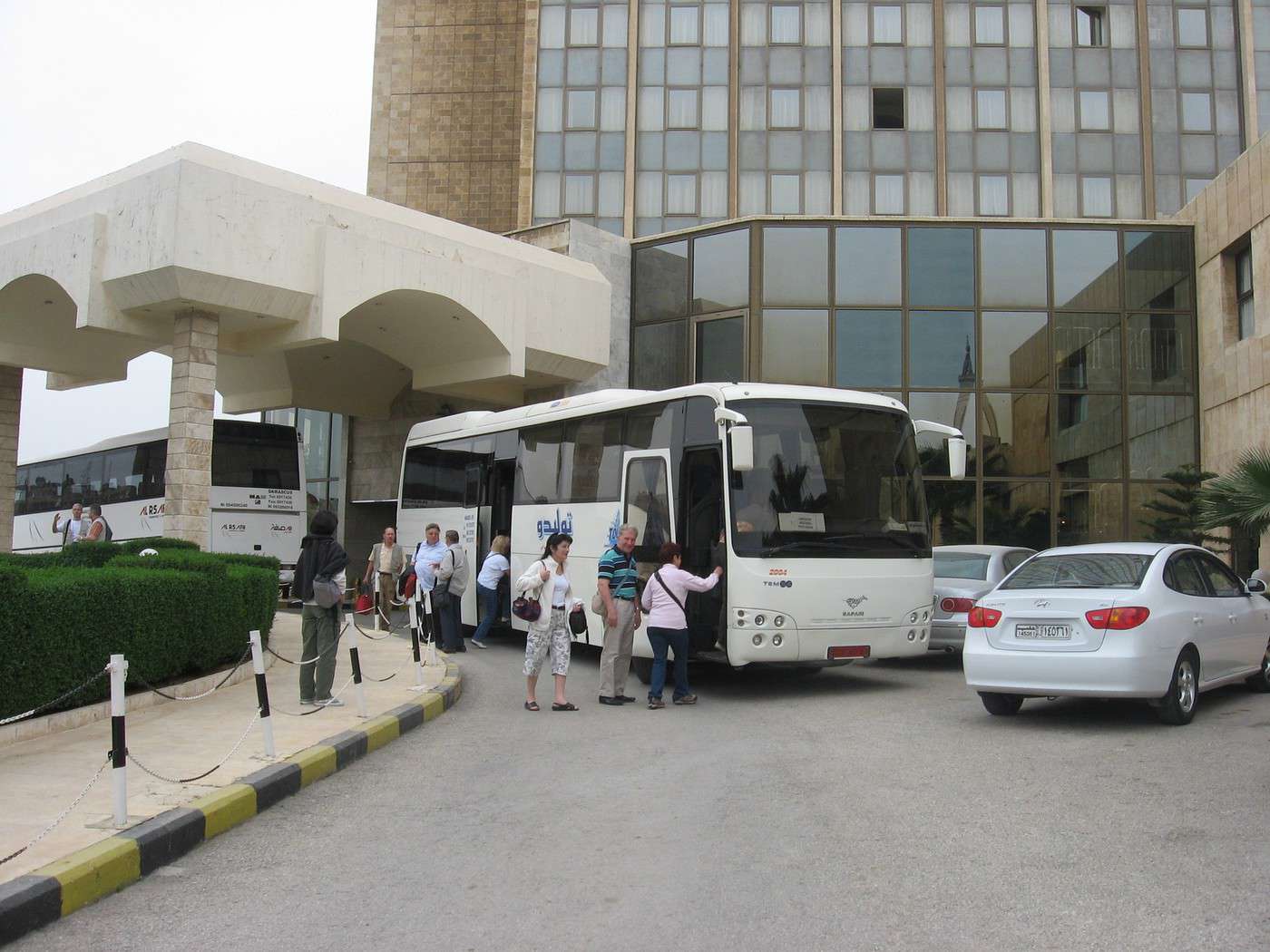
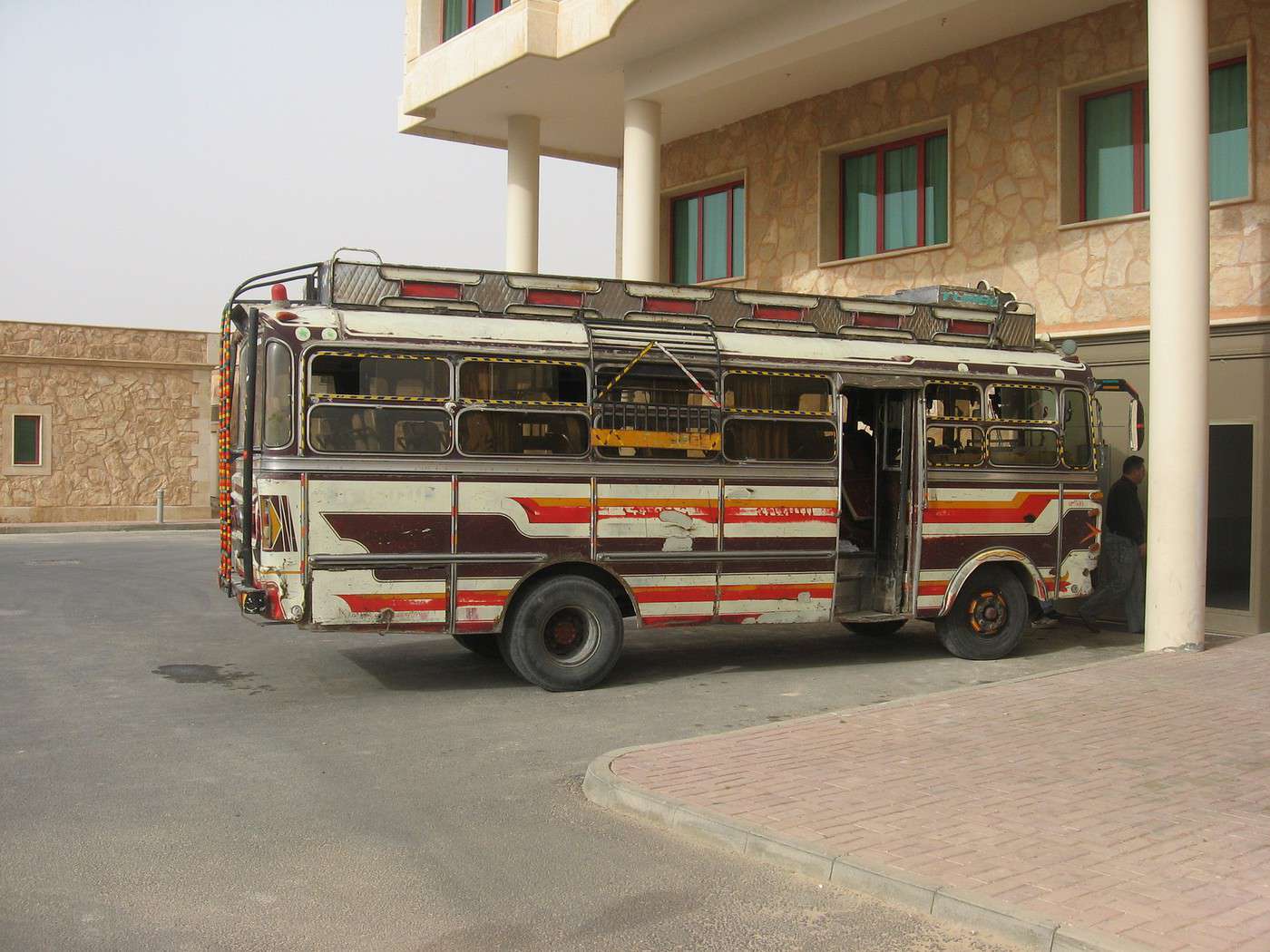
4 notre bus
5 6 tout ce vends
7 ils attendent ...
8 qu'ils en finissent avec le carré d'herbe !
9 10 Bizarre ! ces maisons
11 12 mère, fille et les brebis
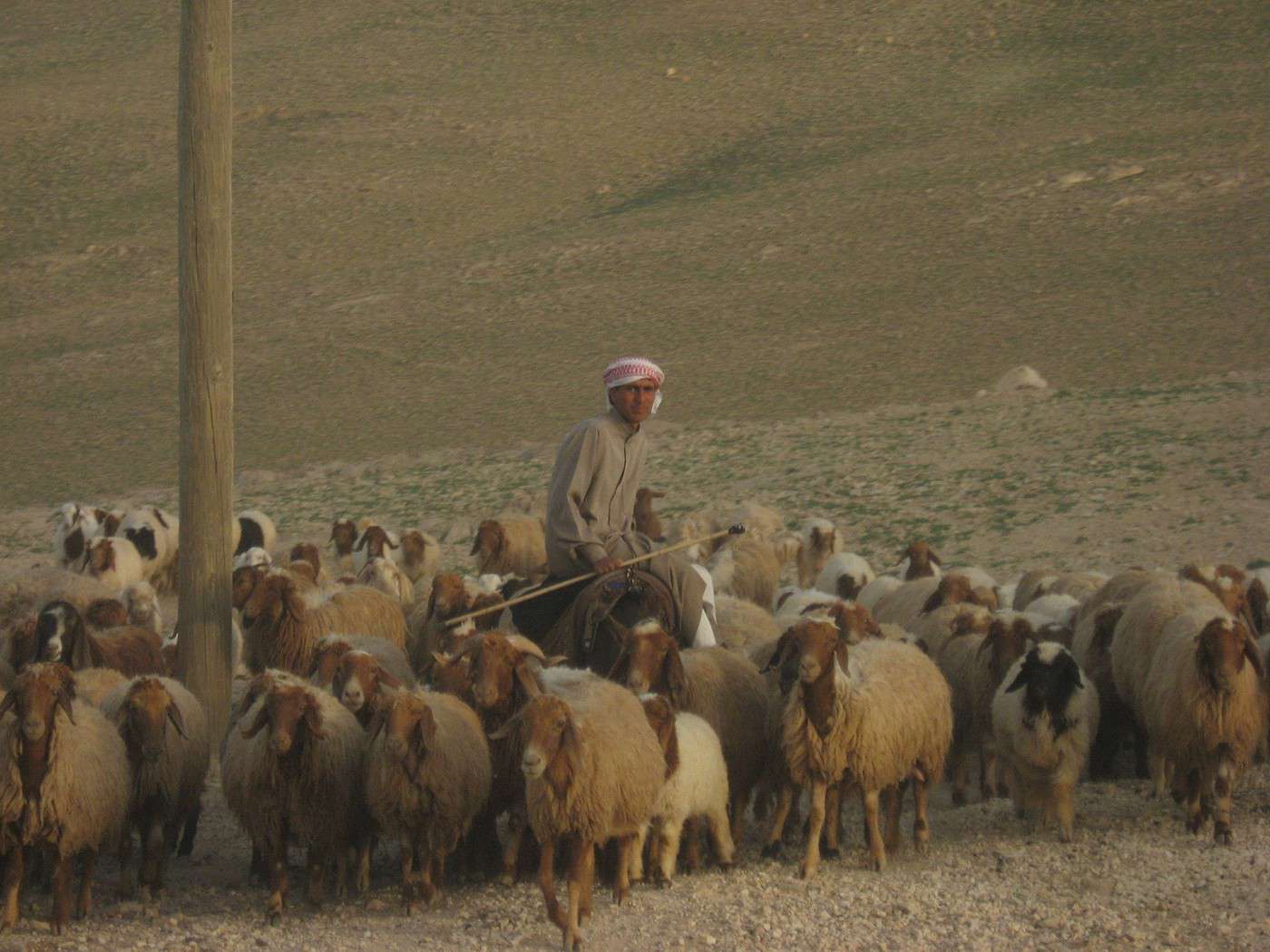
13 jeune berger et son mini troupeau
14 15 16 chateau du désert
17 un téléphone
18 notre "dame pipi"
19 restaurant à Hama
20 jeunes écoliers dans les rues de Hama
Voilà quelques photos de notre traversée du désert .
1 2 3 les toits de Alep ! et ses paraboles !
4 notre bus
5 6 tout ce vends
7 ils attendent ...
8 qu'ils en finissent avec le carré d'herbe !
9 10 Bizarre ! ces maisons
11 12 mère, fille et les brebis
13 jeune berger et son mini troupeau
14 15 16 chateau du désert
17 un téléphone
18 notre "dame pipi"
19 restaurant à Hama
20 jeunes écoliers dans les rues de Hama
Re,
1 Raffinerie à HOm
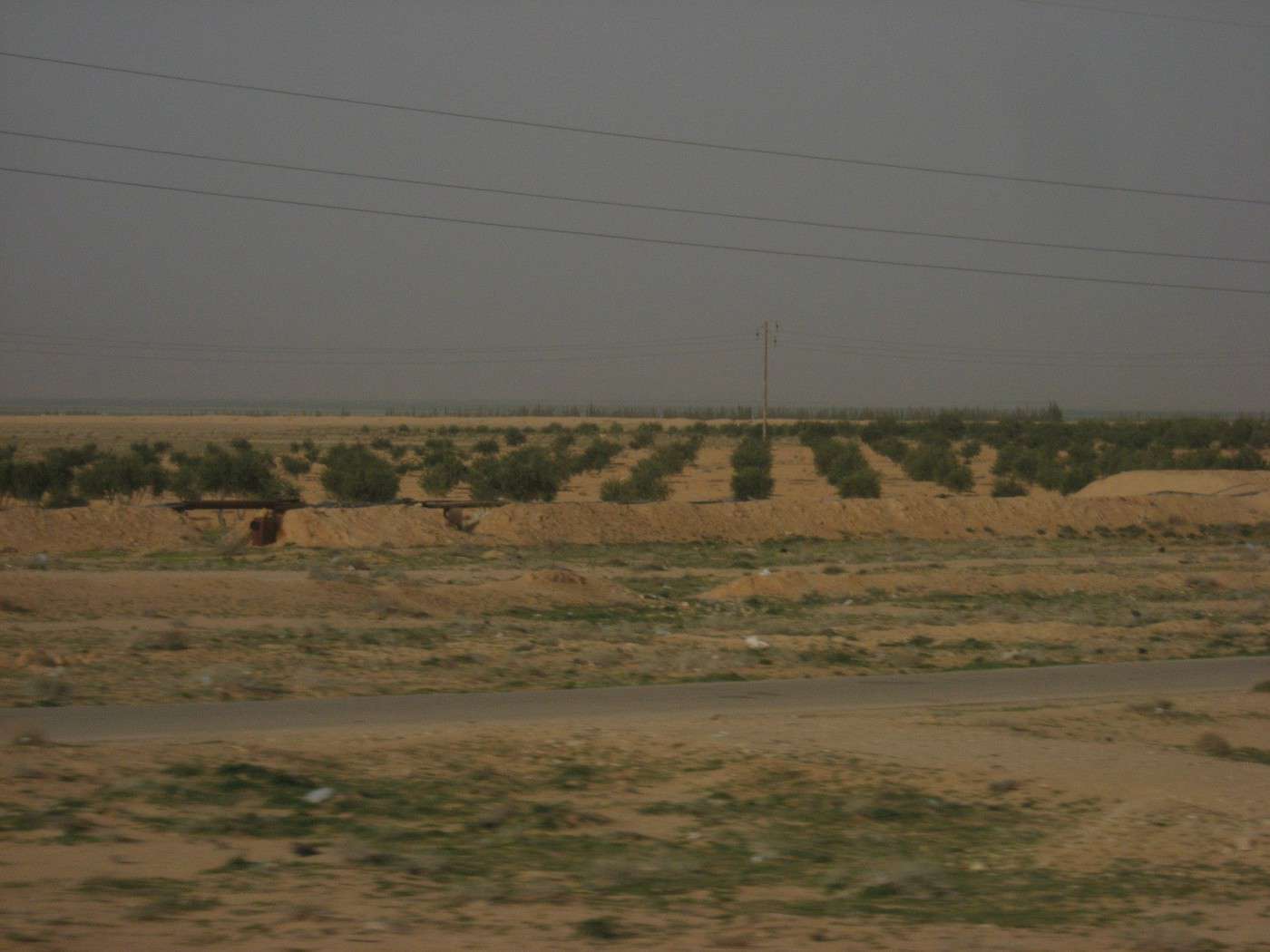
2 encore quelques cultures
3 le désert
4 camion et moutons dans le désert
5 un campement bédouins
6 un 4 x 4 jamais bien loin
7 8 oliviers et campement
9 10 pas plat le désert
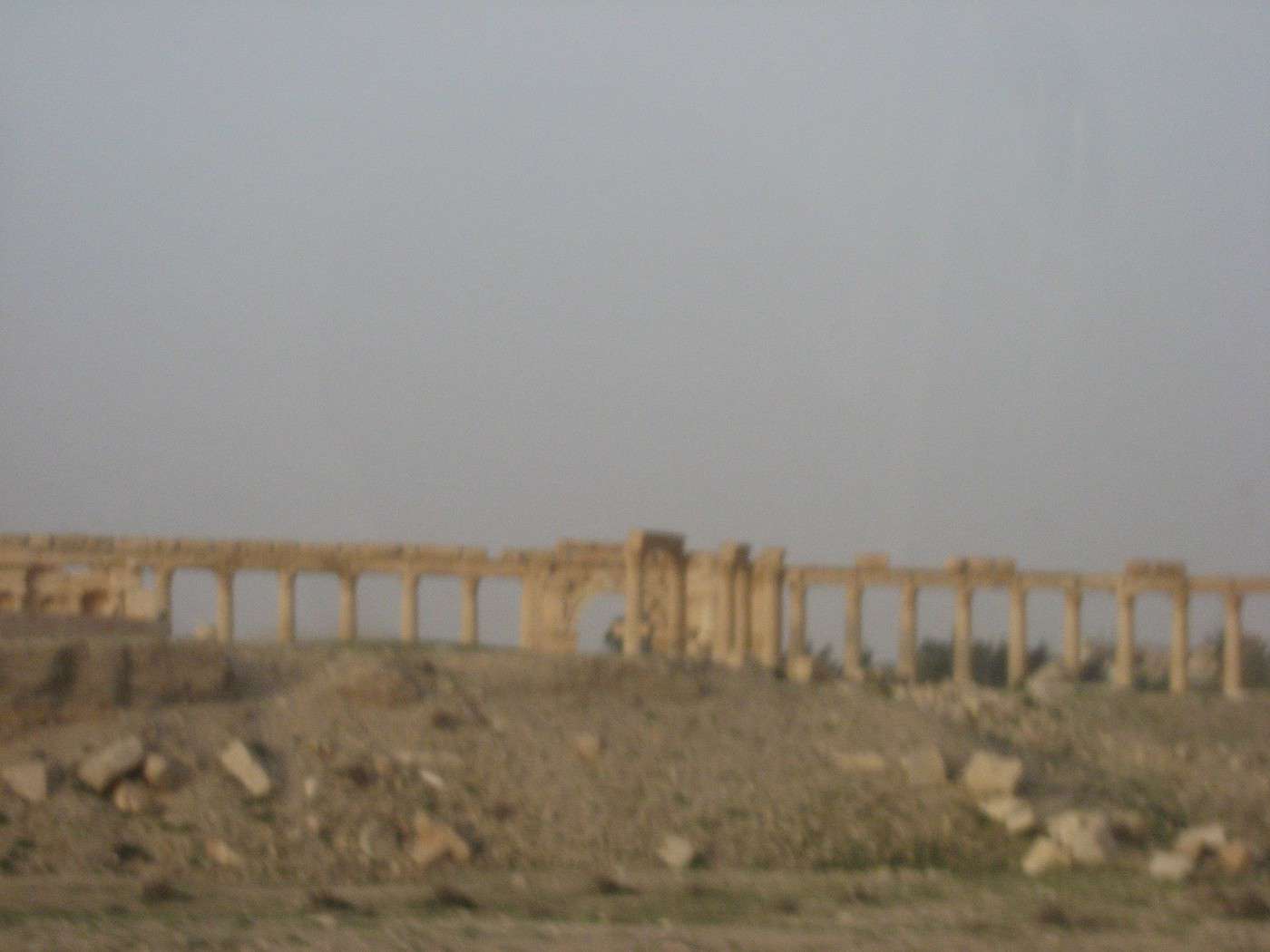
11 ma première vision de Palmyre (vue du bus)
12 le chateau arabe
13 berger et son troupeau sur la route montant au chateau
1 Raffinerie à HOm
2 encore quelques cultures
3 le désert
4 camion et moutons dans le désert
5 un campement bédouins
6 un 4 x 4 jamais bien loin
7 8 oliviers et campement
9 10 pas plat le désert
11 ma première vision de Palmyre (vue du bus)
12 le chateau arabe
13 berger et son troupeau sur la route montant au chateau
LUNDI 15 MARS 2010
PALMYRE/BOSRA
La nuit a été bonne et le réveil nous tire du lit vers 7 h 30. Nous sommes a deux pas du site de Palmyre. Un coup d'oeil par la fenêtre de notre chambre et je m'aperçois que le temps est un peu "jaune", même couleur qu'hier soir lors de notre arrivée !
Le système des bagages étant bien rodé Nadine ne rencontre aucun problème pour comptabiliser nos valises.
Nous prenons notre petit déjeuner et le départ est prévu pour 8 h 45.
Palmyre est devenue prospère voilà ...fort longtemps grace à sa source d'Efca. Palmyre , Tadmor en arabe , possède une superbe palmeraie ou sont produit les meilleurs dattes de Syrie, et j'atteste elles sont excellentes.. La ville fut une citée en pleine expansion grace à la route de la soie et était un arrêt obligé pour les commerçants.
Zénobie fut une de "reine" qui gouverna Palmyre après avoir fait assassiné tout ceux qui pouvaient l'empêcher d'accéder au trône. Elle était belle, intelligente et ambitieuse. Ele tient tête à Rome mais Palmyre ne résiste pas à l'ogre romain.
C'est au 18 ème siècle que les européens découvre cette magnifique cité antique. La ville est toujours en cours de restauration.
Nous partons donc a la découverte de ce joyau antique.
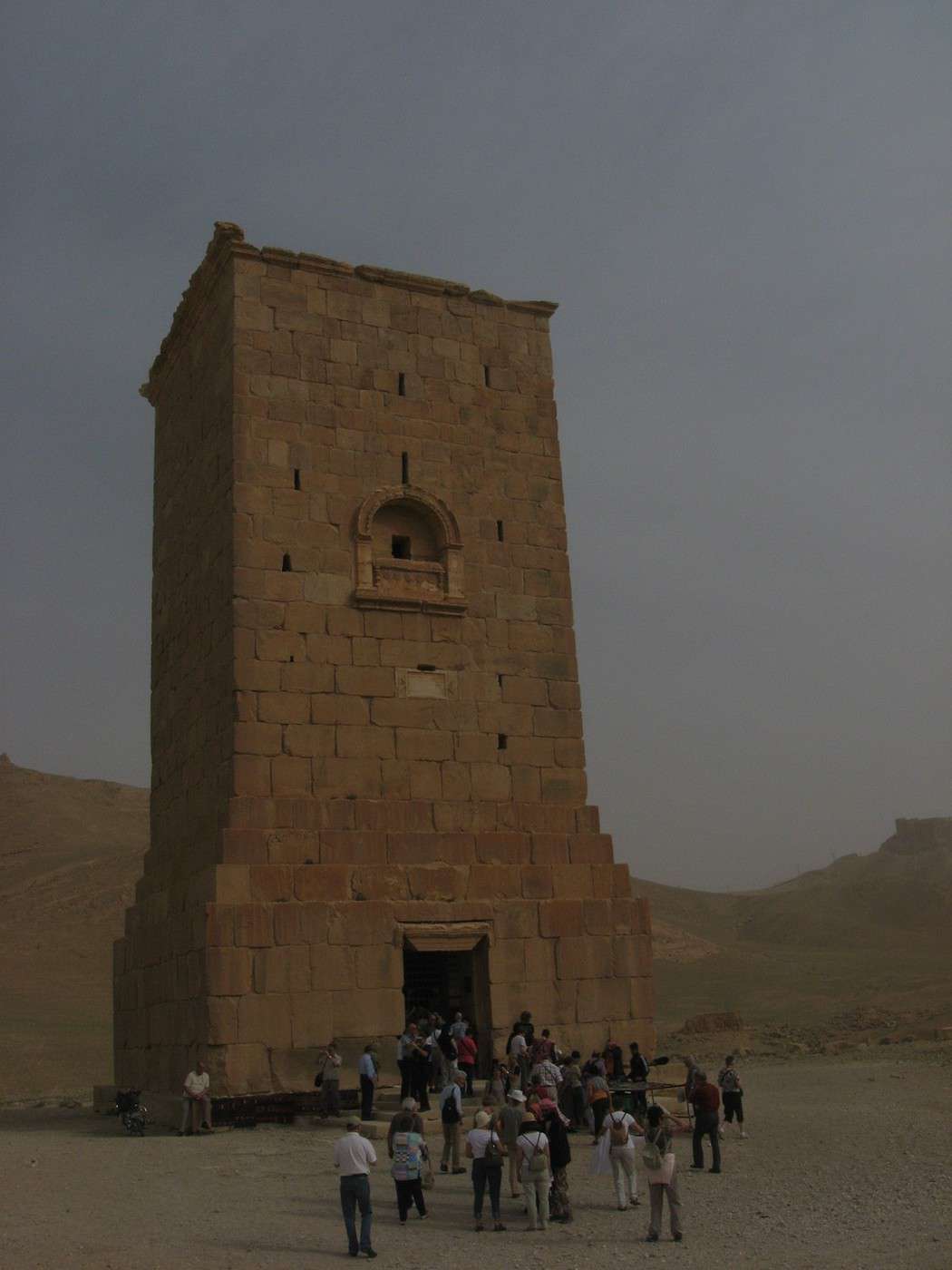
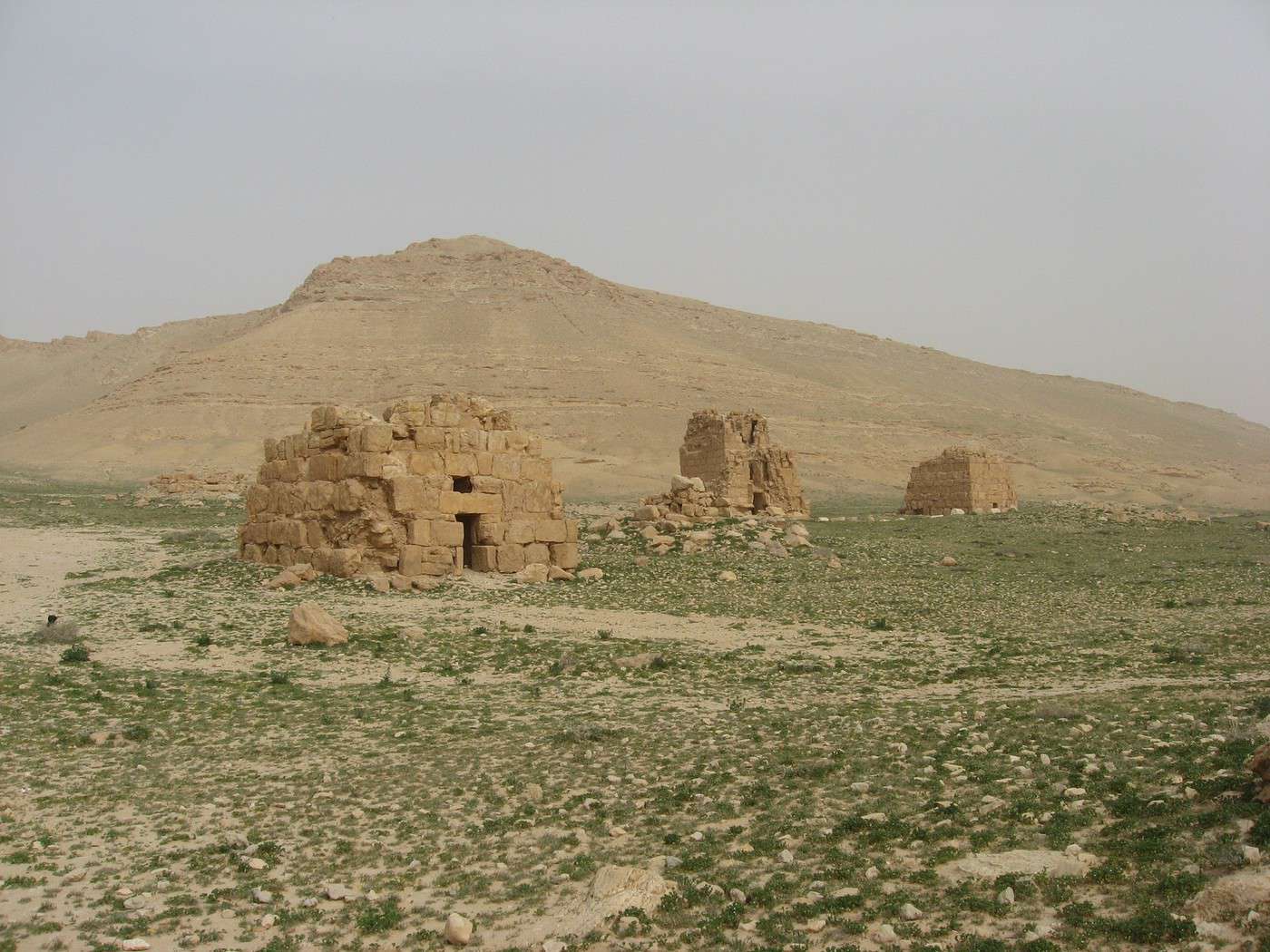
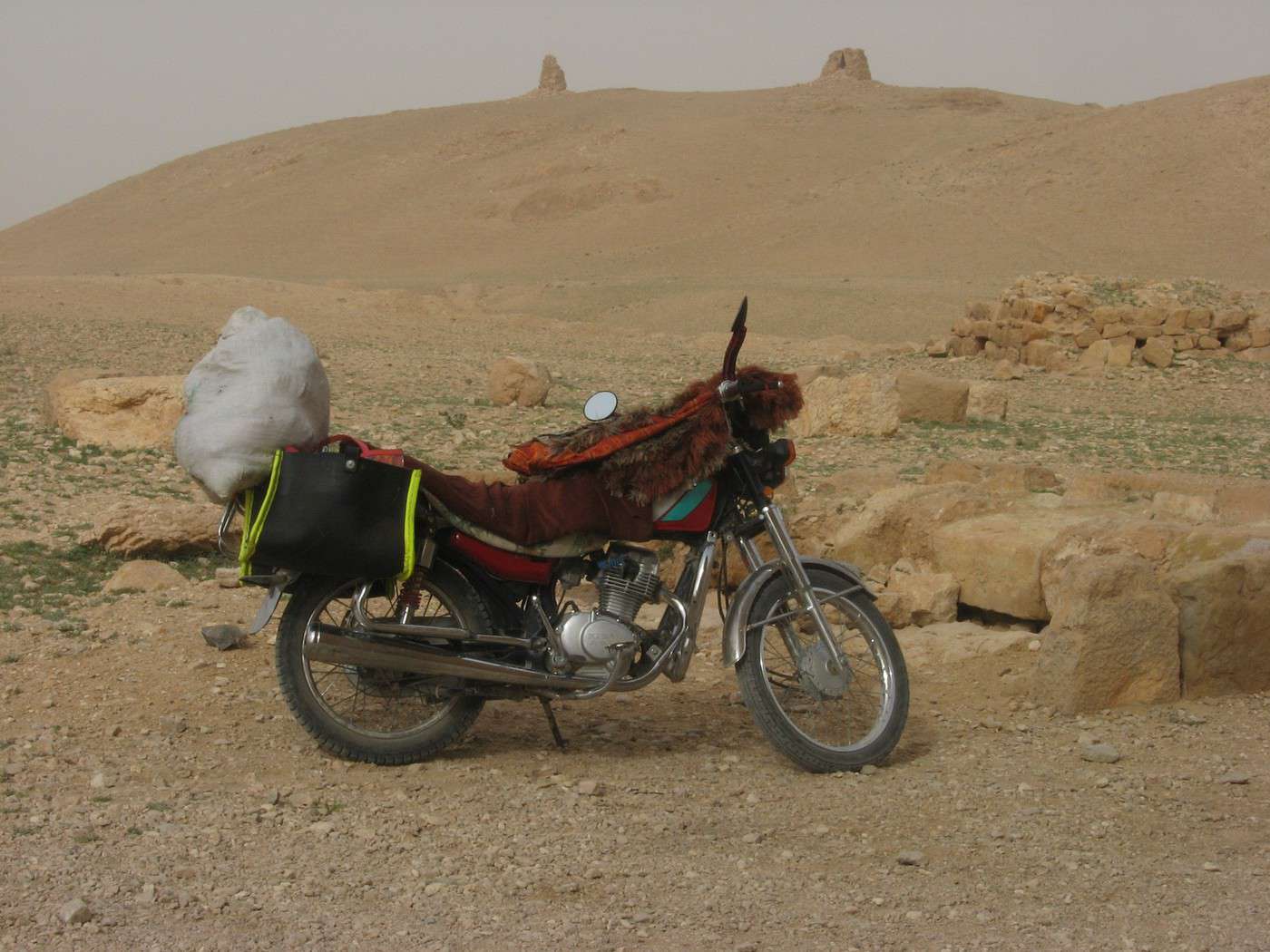
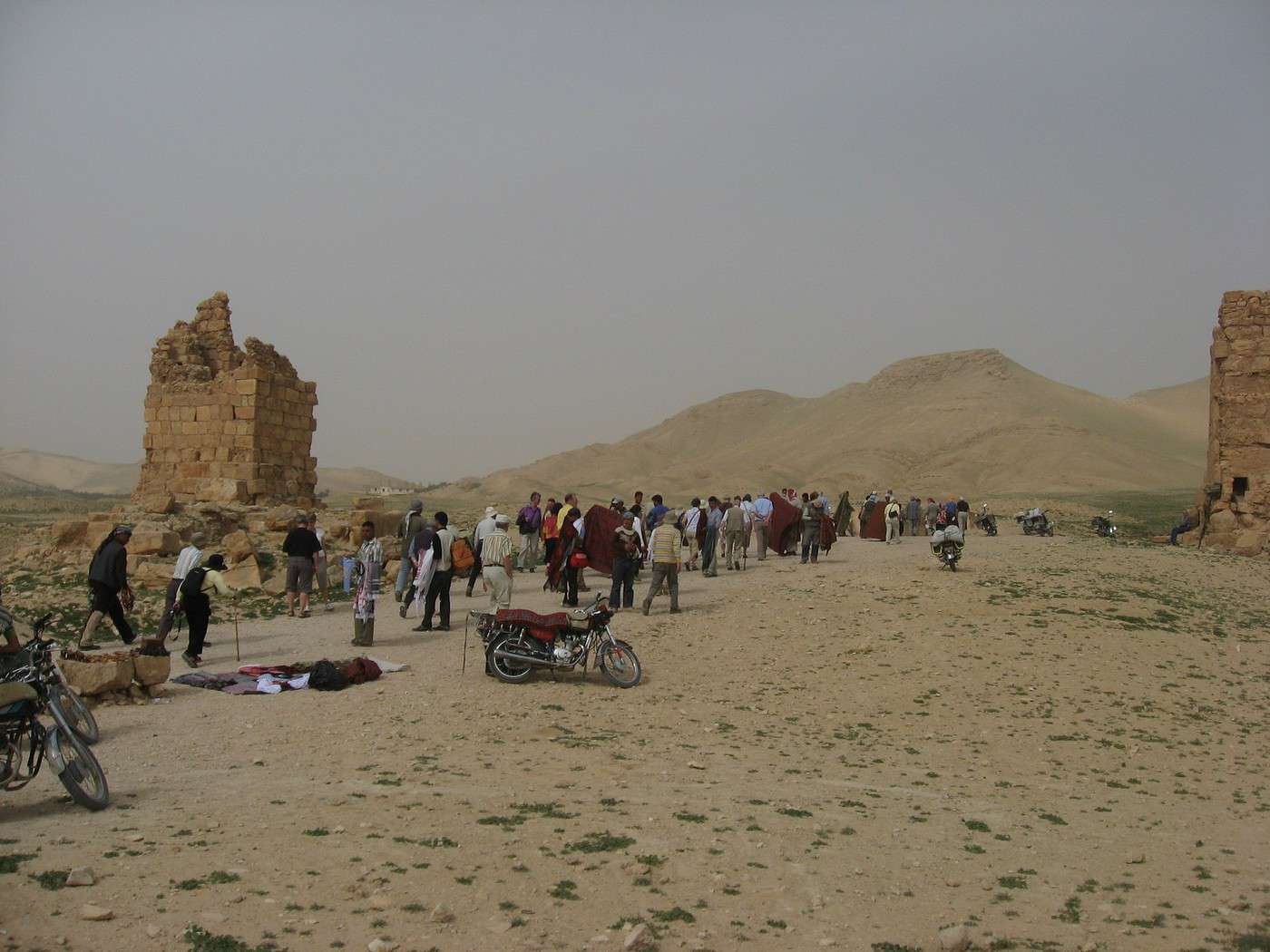
Notre premier arrêt est pour les tombeaux. Palmyre est entourée de nécropoles avec des tombeaux funéraires impressionnants en forme de tour. Nous sommes les premiers mais les marchands à la sauvette sont déjà là a nous attendre : cartes postales et autres souvenirs nous sont proposés. Leur "boutique" c'est une moto avec accroché à l'arrière sur le porte bagages leur fond de commerce. Ils sont assez virulents et un peu casse pieds. Ils ne lachent pas le client facilement ! Voilà d'autres bus ! nous sommes "sauvés" voilà de nouveaux clients.
Malgré l'heure il fait déjà chaud et la file d'attente pour descendre dans les tombeaux est déjà longue. Je donne un rapide coup d'oeil et je laisse ma place. Je m'amuse à regarder le va et vient des marchands. Avec leur moto ils se déplacent rapidement et dès qu'un bus arrive ils sont une dizaine a chercher a accrocher le client. Un bédoin avec des chameaux dont 2 petits est là pour la photo.
Nous repartons direction le site située tout à côté. Le bus nous dépose a un endroit prévu à cet effet et nous voilà partis ! pour une longue marche sous un soleil assez violent et dans des bourrasque de vent assez désagréable ! Comme a mon habitude je ne suis pas Youssef et je vais à la découverte de ses vieilles pierres toute seule. Dès notre arrivée Bernard a trouvé une minuscule place à l'ombre d'une colonnade et s'est installé là. il vas trouver encore a discuter avec des locaux : des chauffeurs de taxi dont un parle français et des guides qui attendent des clients.
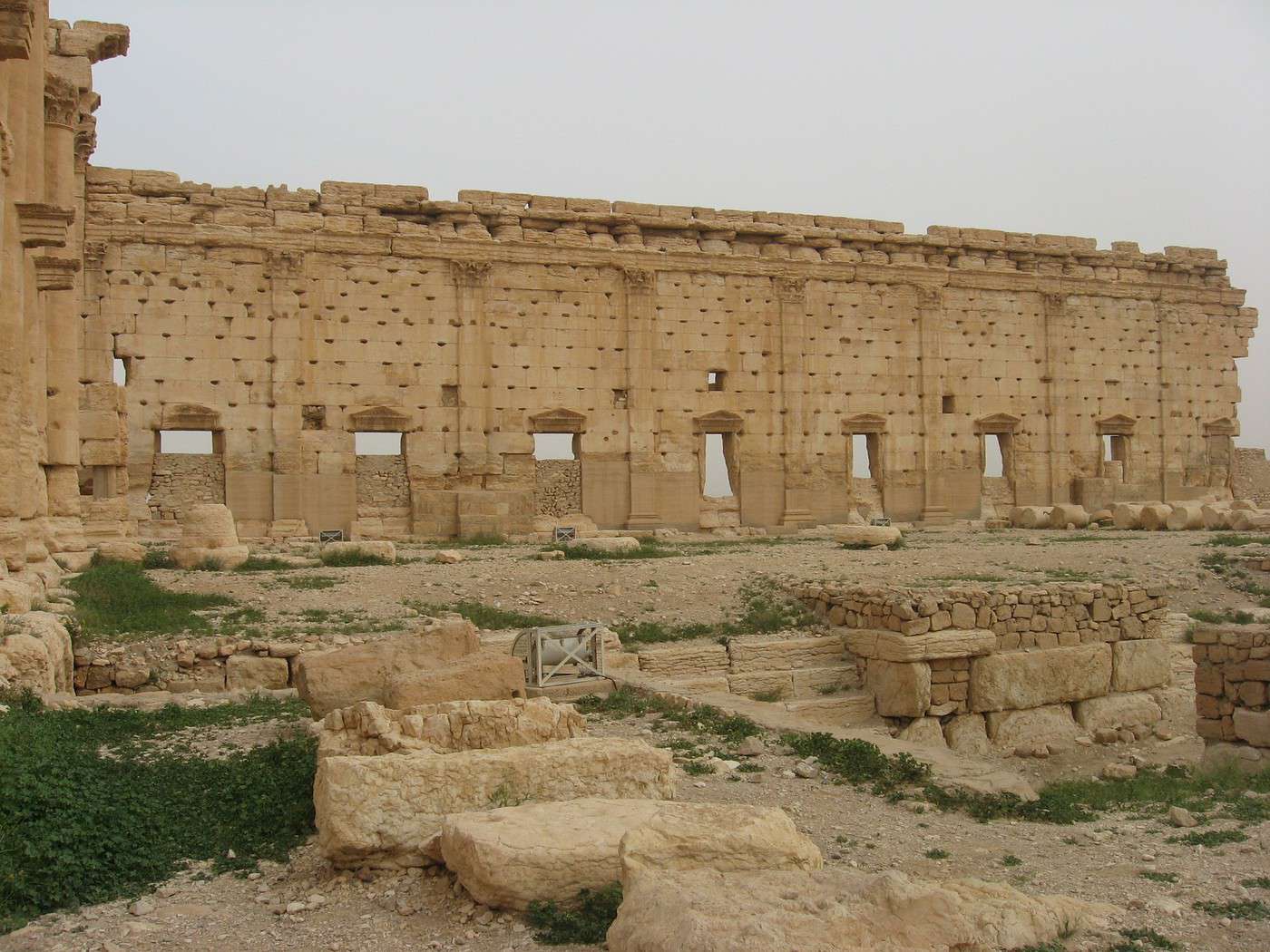
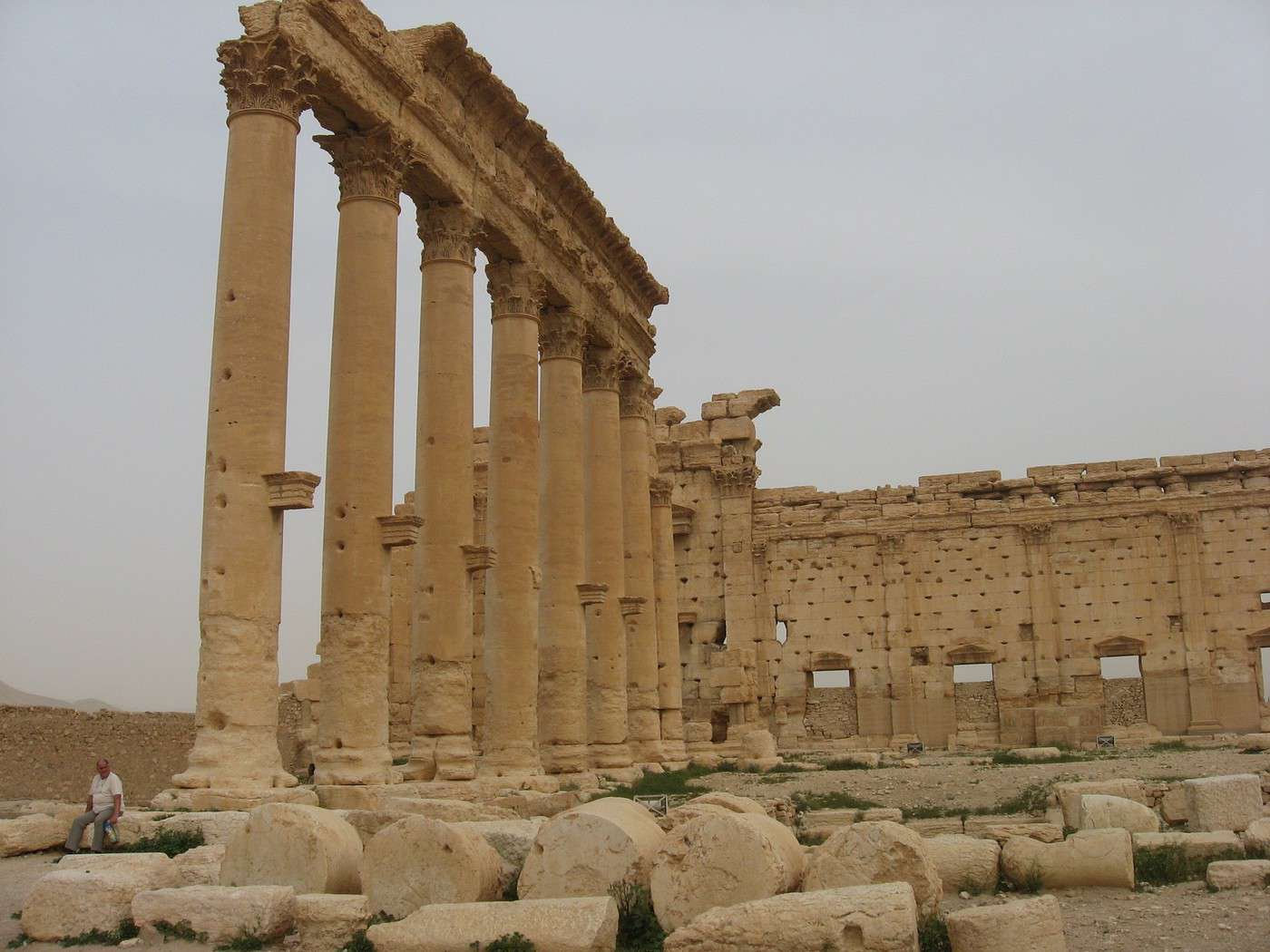
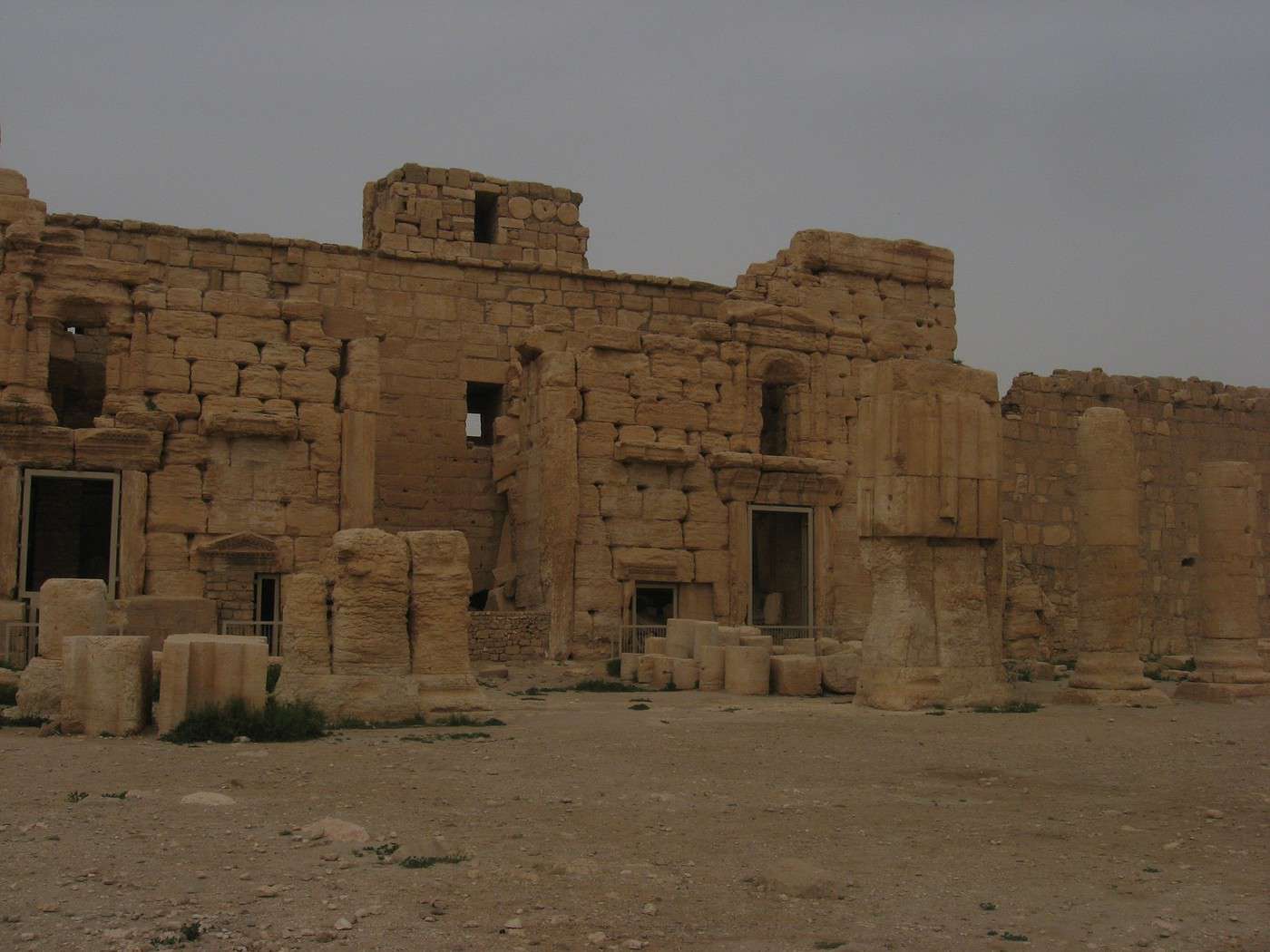
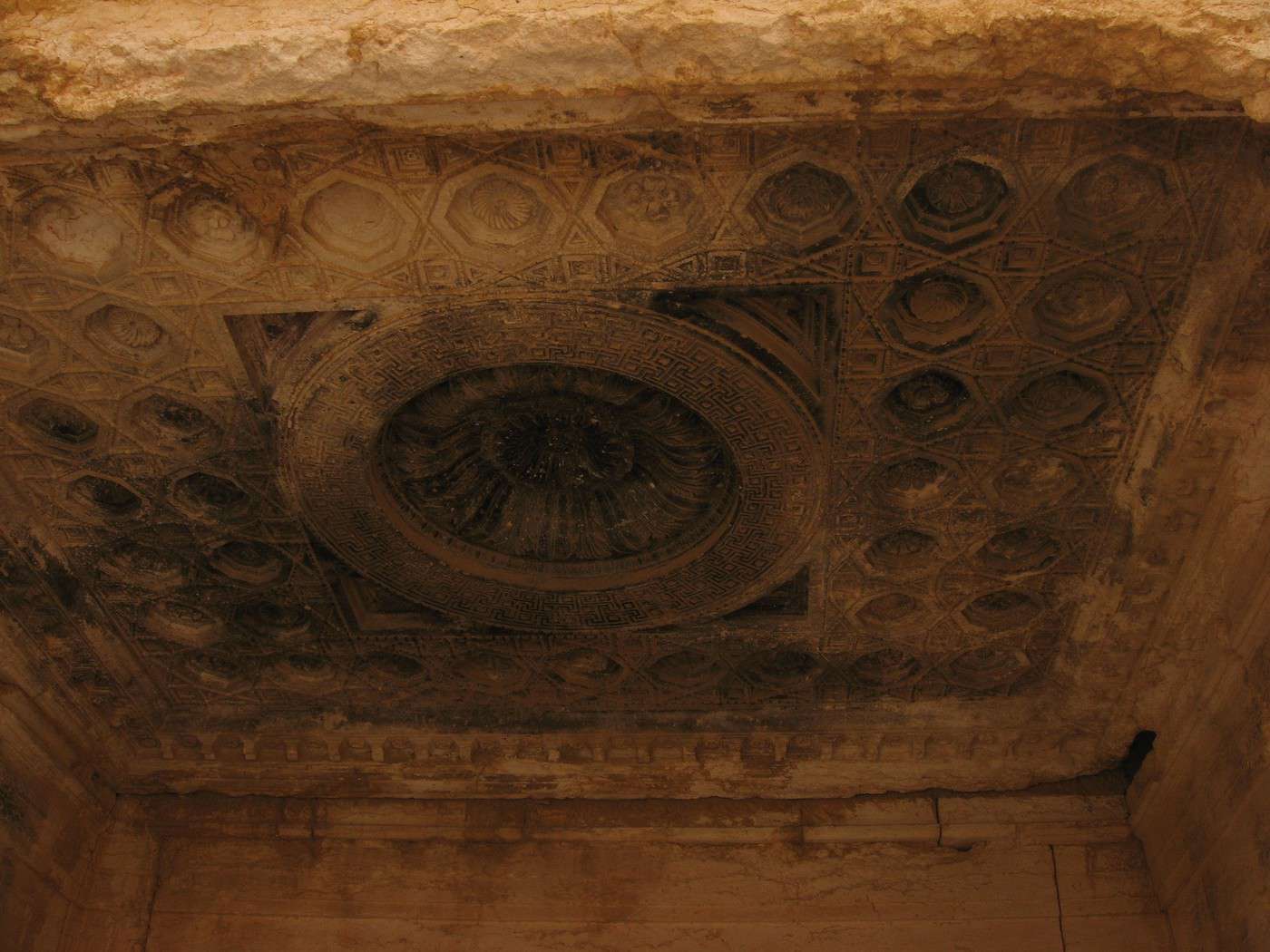
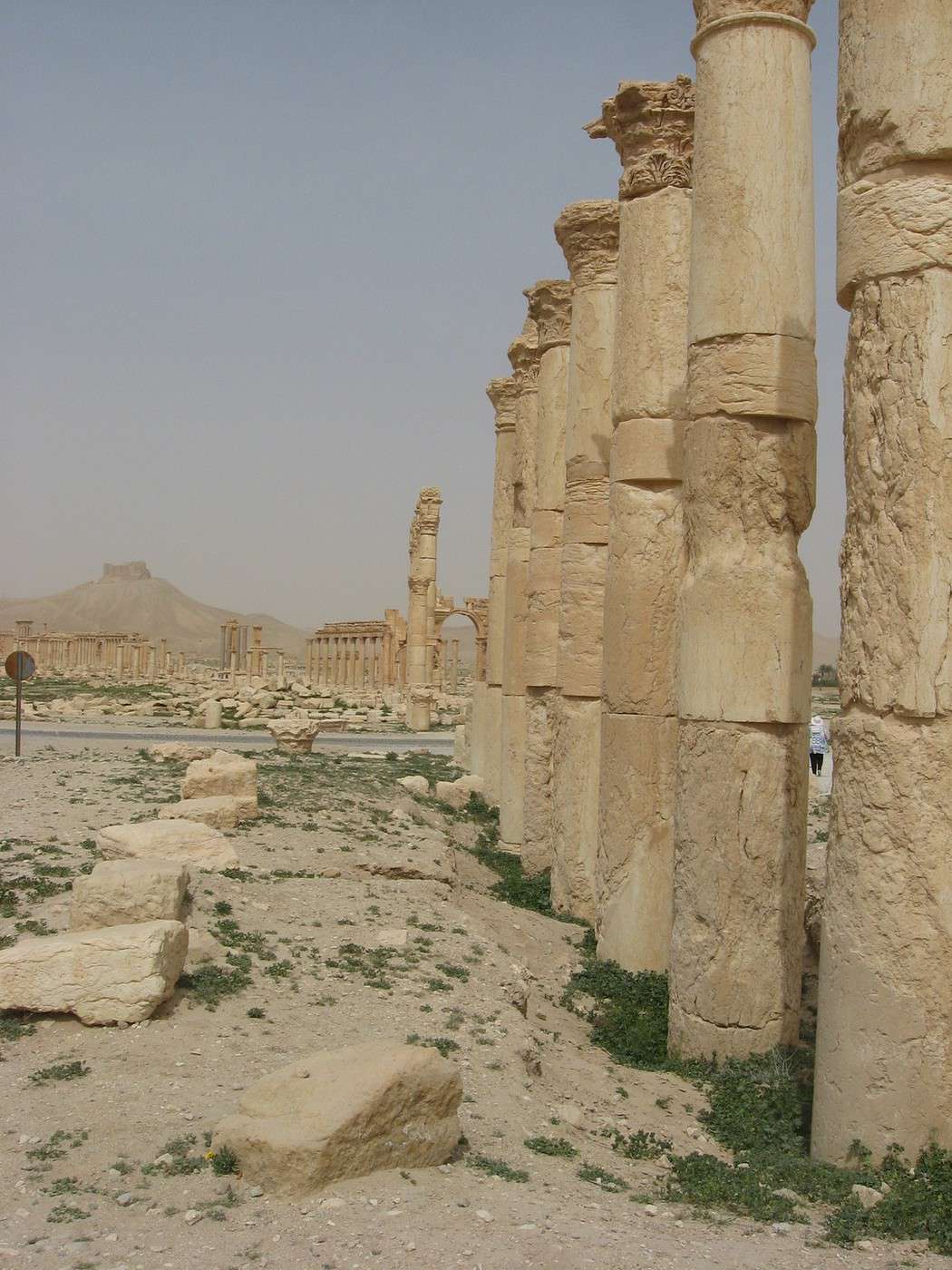
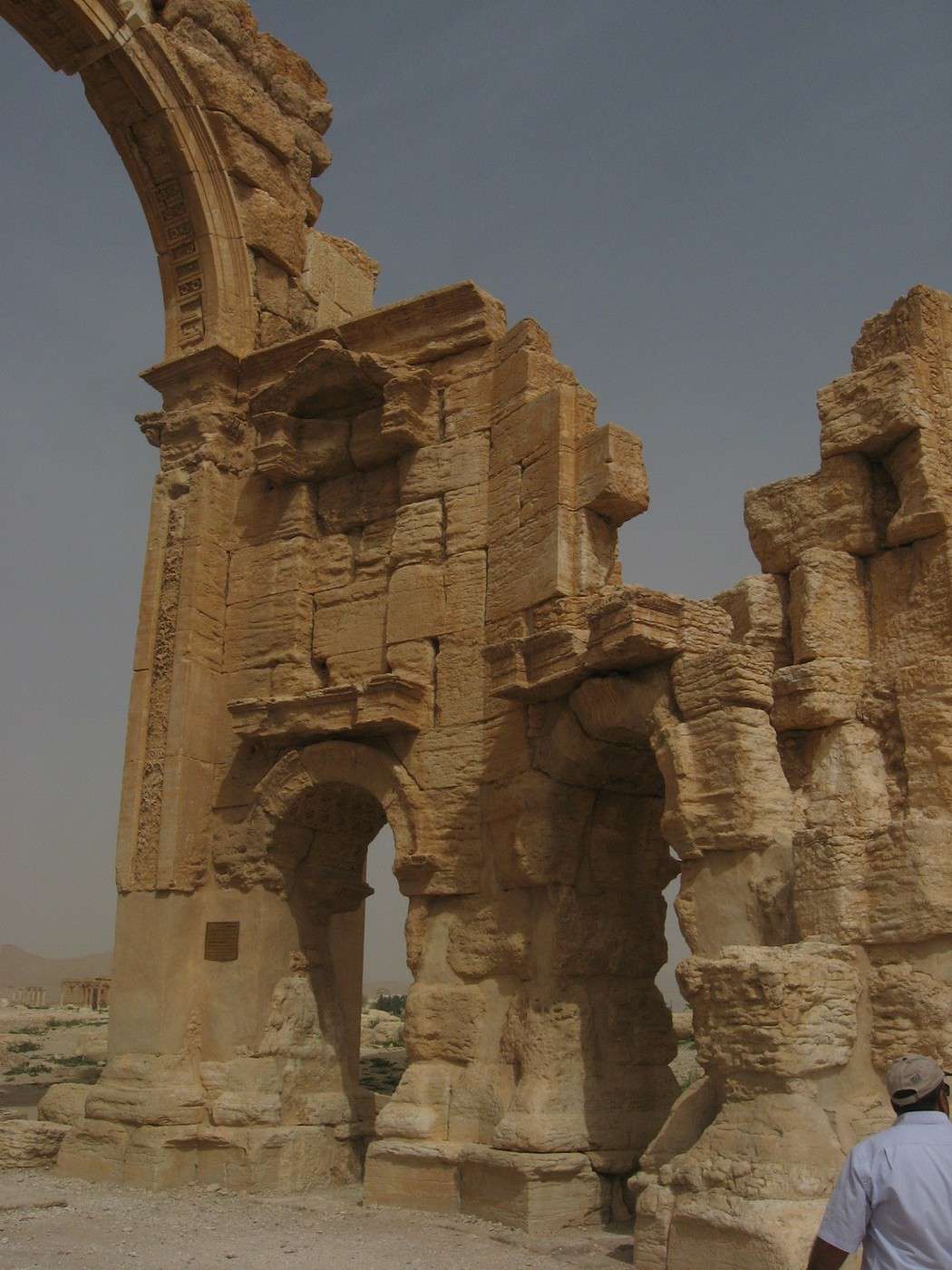
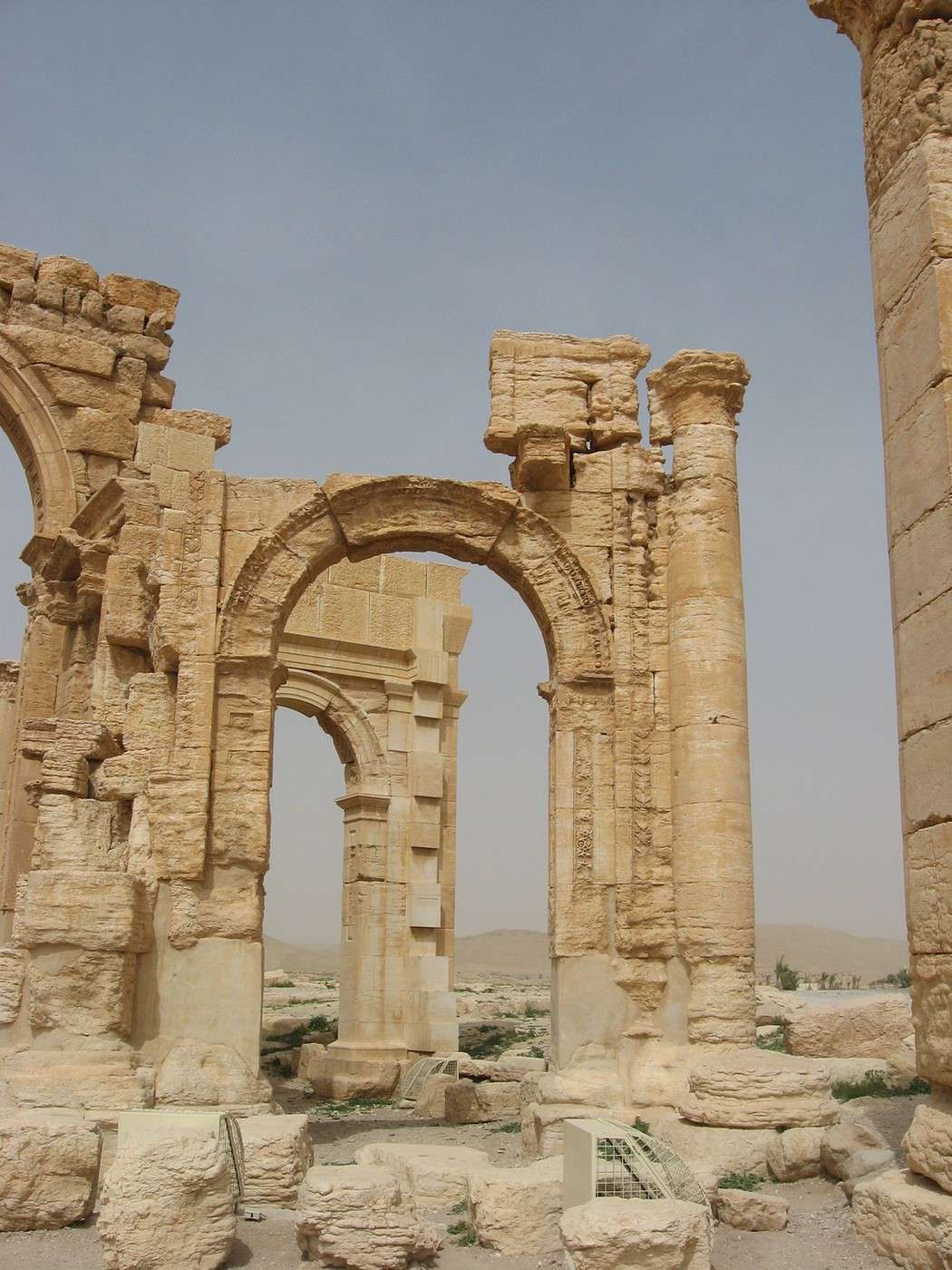
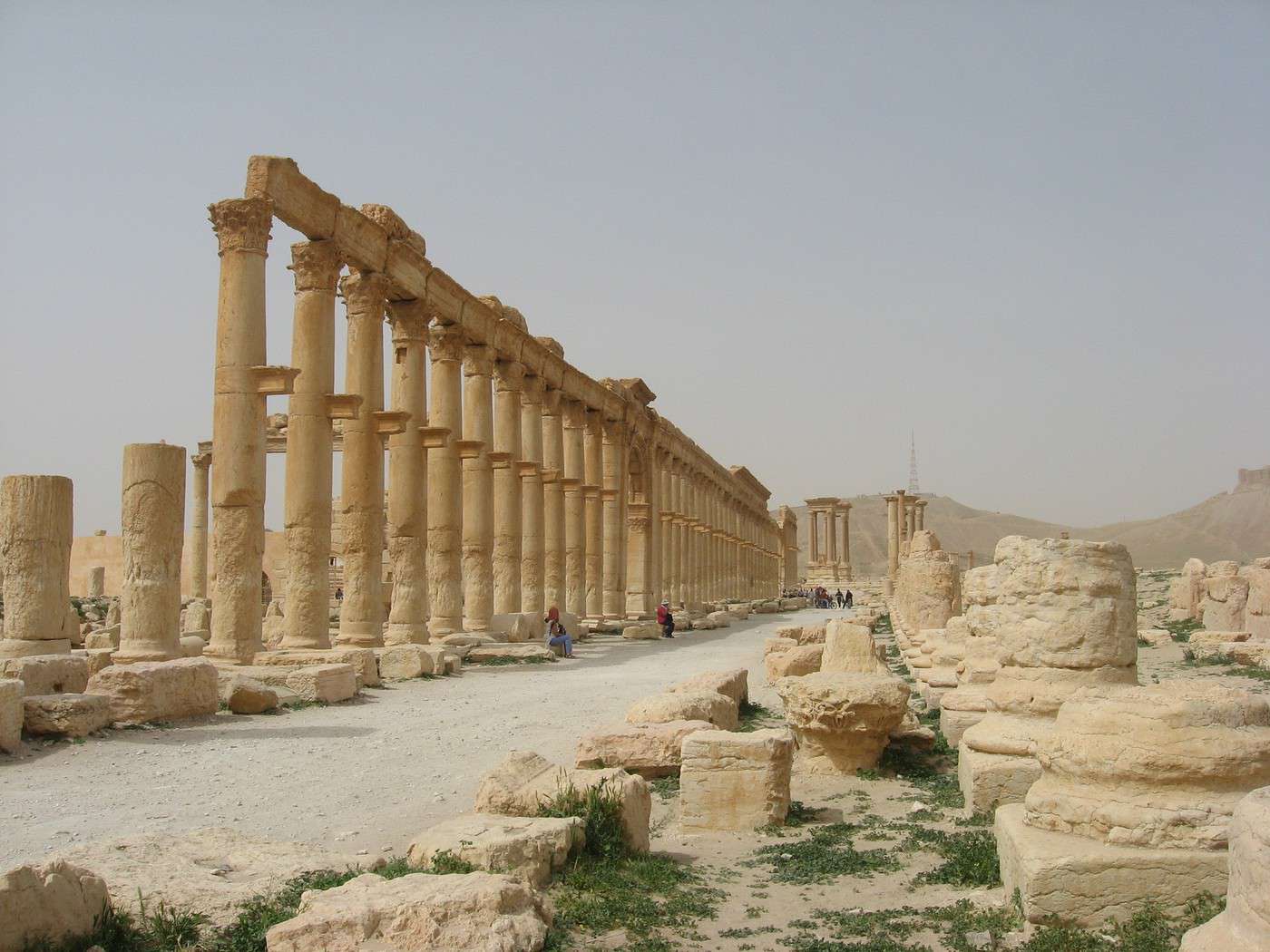
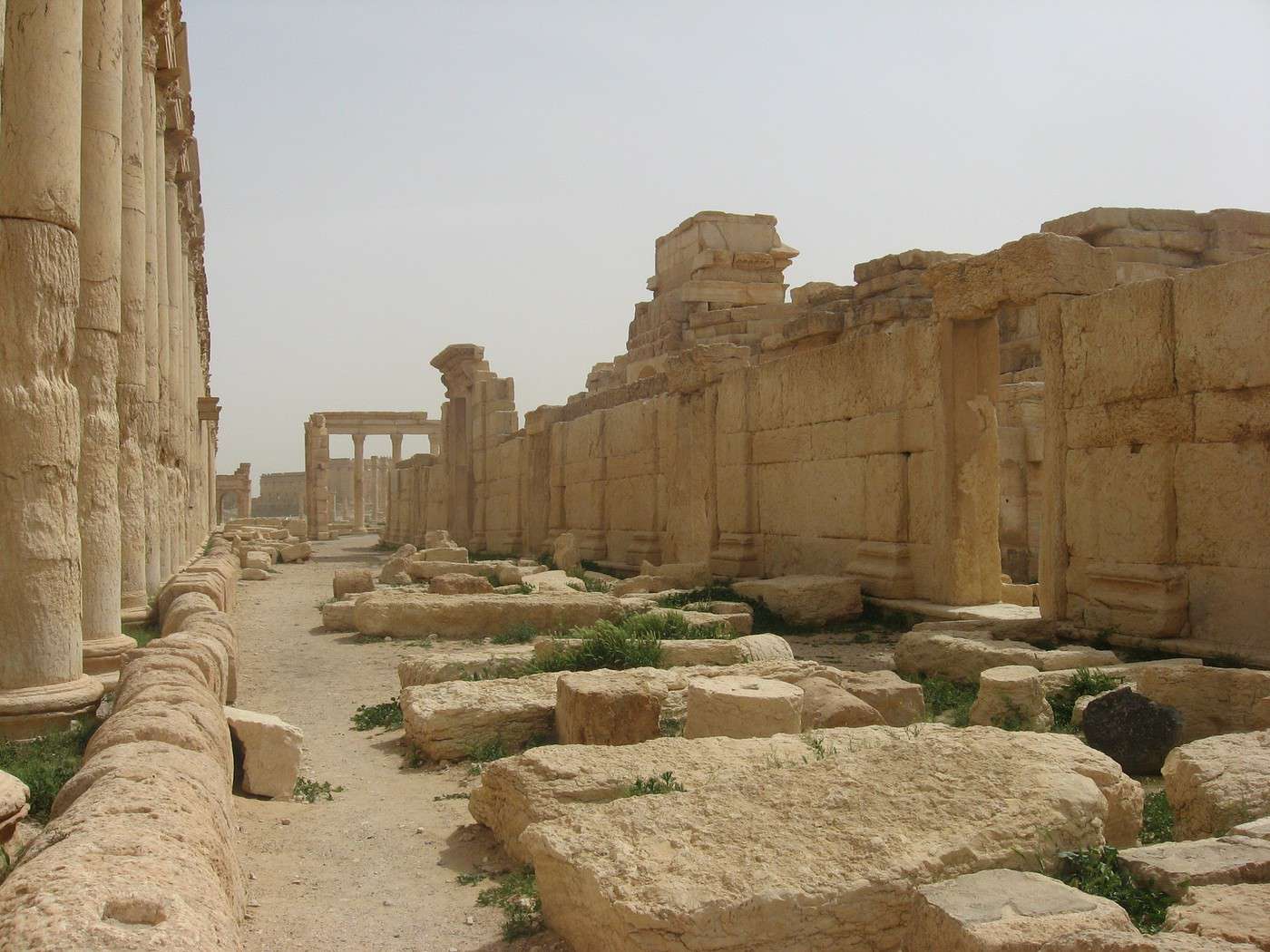
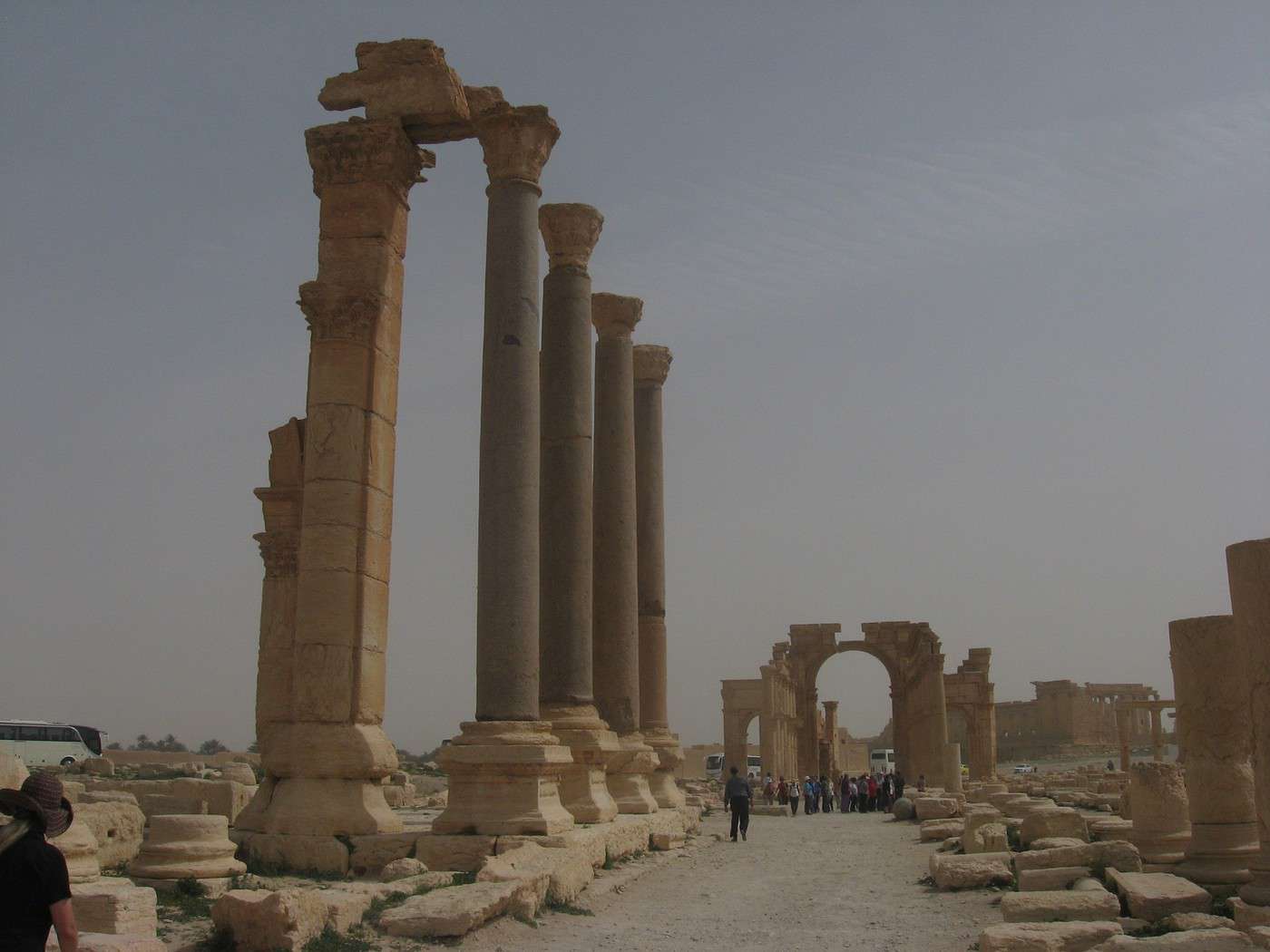
Pendant ce temps je marche dans ces ruines ocres : le temple de Bel, la rue Principale, l'Arc Monumental, le Théatre, le camp de Dioclètien (le même que j'ai "rencontré" à Split en Croatie l'année dernière, c'est magnifique. Mais le vent a pour effet de soulever le sable et du sable il y en a ! et mon compagnon de voyage, mon appareil photo, n'a pas du tout aimé !!! La poussière a eu raison de son zoom ! Certaines de mes photos sont blanches car je ne m'en suis pas rendu compte de suite. Bon tant pis ! Heureusement je suis une fille prévoyante et j'ai un appareil de secours. On verra au retour au bus.
Tout le long de la ballade dans les rues de Palmyre le chateau arabe nous domine. Cette forteresse est imposante dommage qu'hier soir le soleil était absent et que la vue était bouchée par le début de la tempête de sable.
Je retrouve le groupe qui semble un peu las des explications très pointues de Youssef. Un peu mais pas trop !
Nous avons rendez vous au bus à 13 h pour aller déjeuner. Tout le monde est là et nous sommes bien heureux de trouver la climatisation de notre bus.
Nous regardons une dernière fois cette merveilleuse citée en plein milieu du désert et nous prenons la route pour le restaurant. Nous sommes les premiers, Heureusement ! Nous nous servons au buffet. C'est à peu près la même chose que d'habitude mais nous sommes tranquille pour notre début de repas ... mais cette tranquilité ne dura pas.... plusieurs bus déversent des japonais (dont nos compagnons de la veille) des allemands enfin de toutes les nationalités. Ils se ruent sur les plats !! Nous n'avons qu'une envie partir de ce lieu bruyant et surchauffé .
Personne ne traîne et une fois le repas terminé nous retrouvons notre car pour une longue traversée du désert en direction de Damas et la ville de Bosra. Adieu Palmyre voilà longtemps que j'en rêvais !
A plus pour la route vers Damas
Capucine 18 1 Non ce n'est pas le notre ... pour un tournage de film
2 Le notre
3 4 6 les tombeaux
5 la boutique et la marchandise
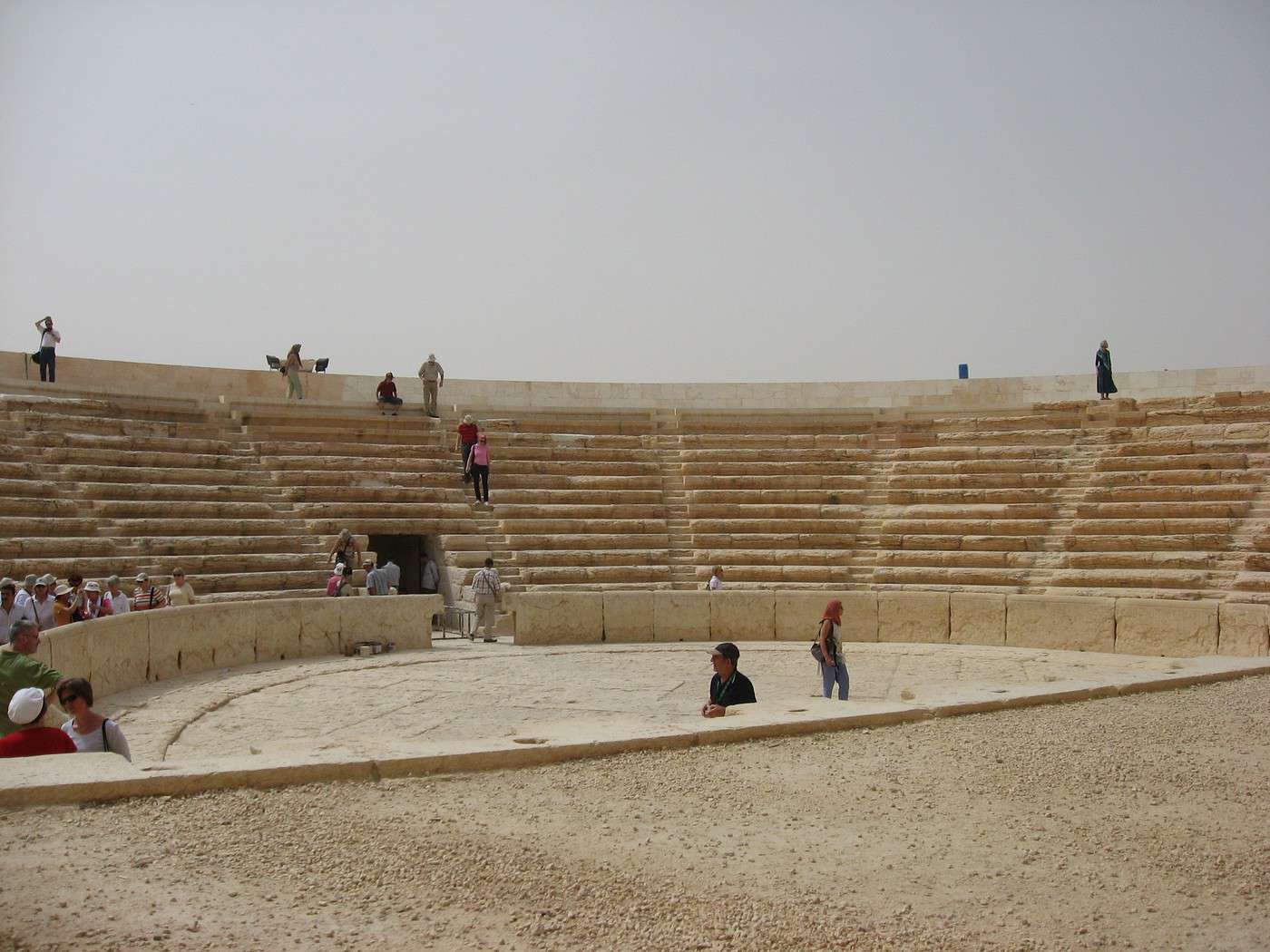
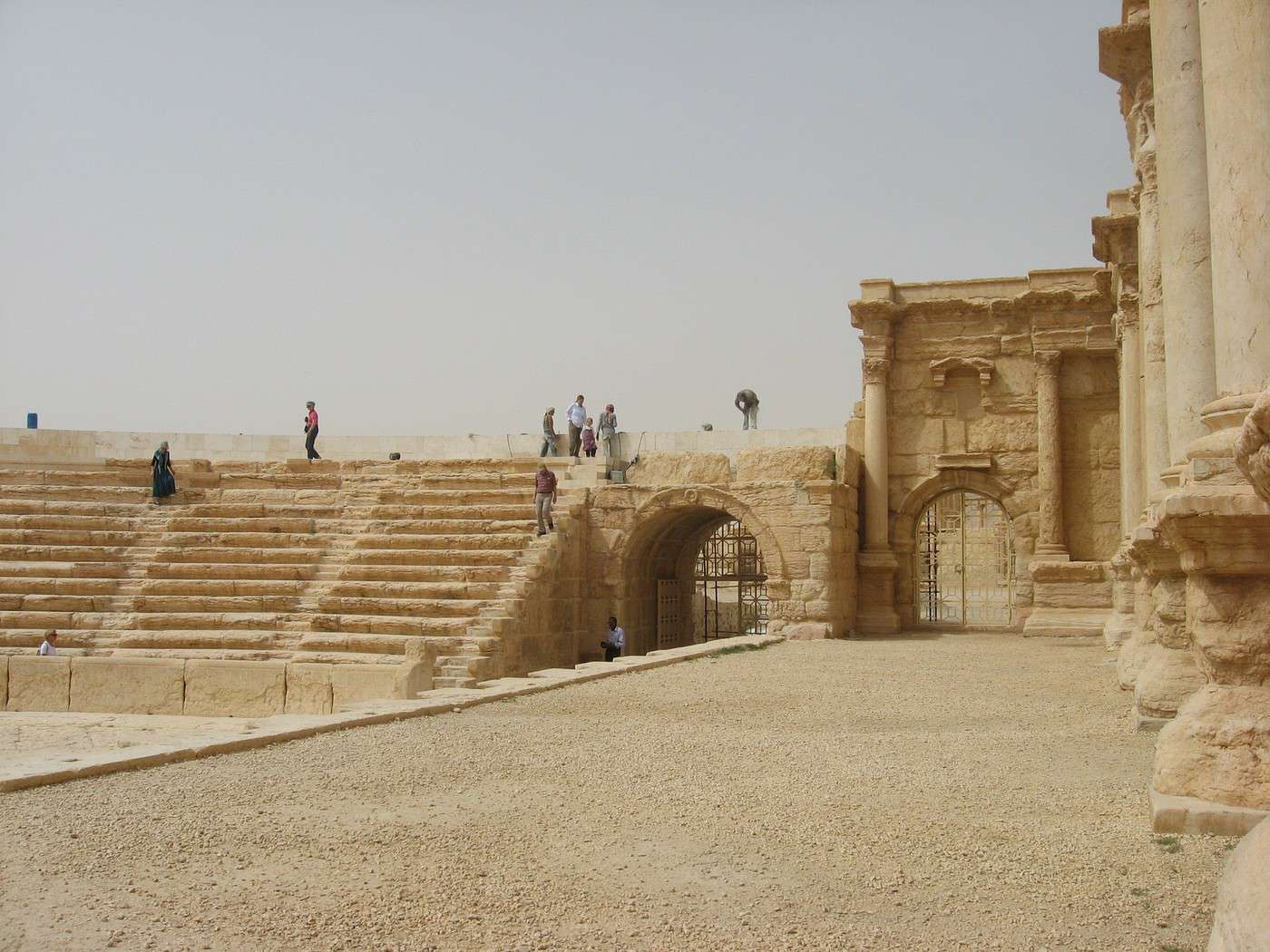
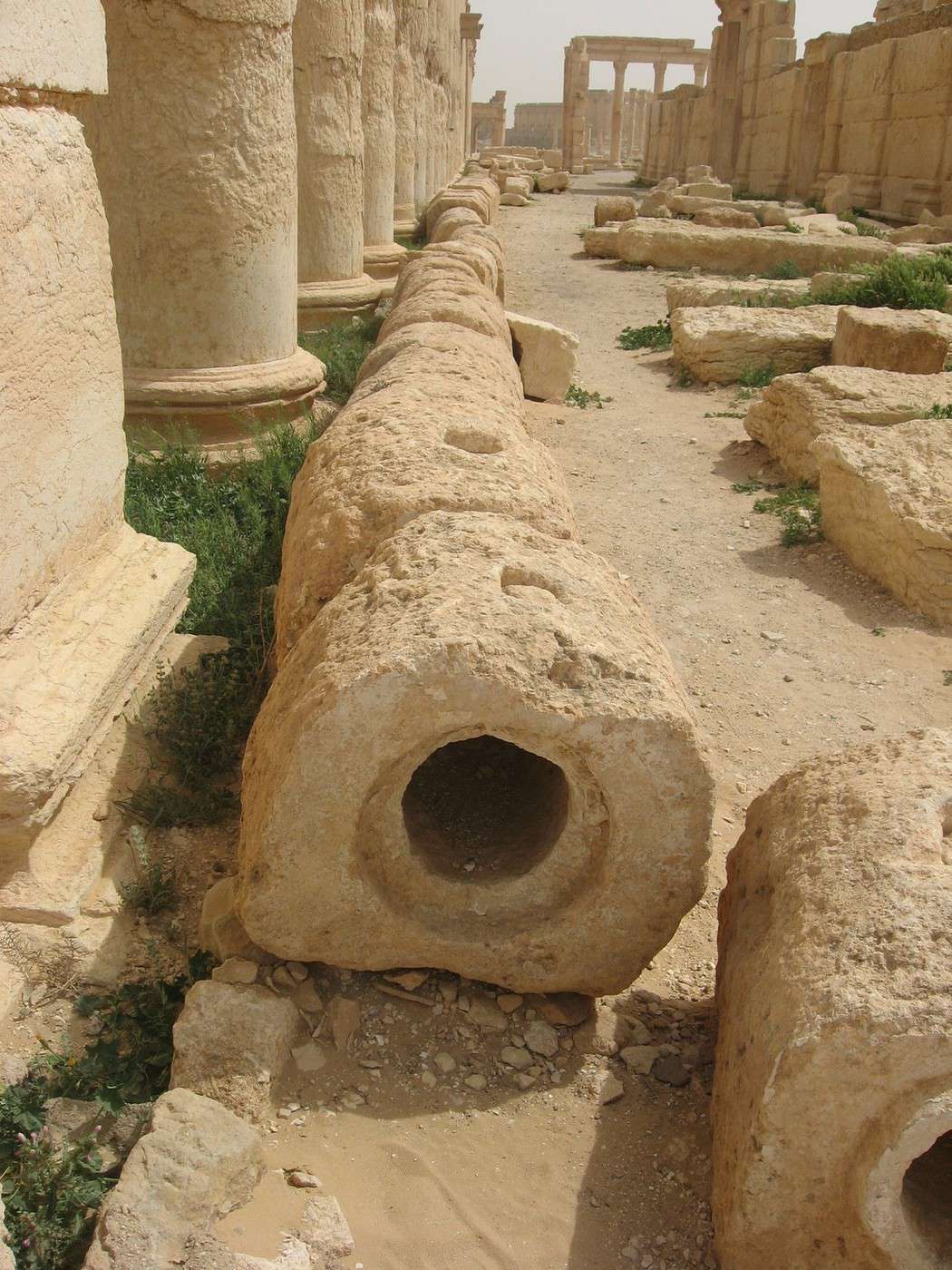
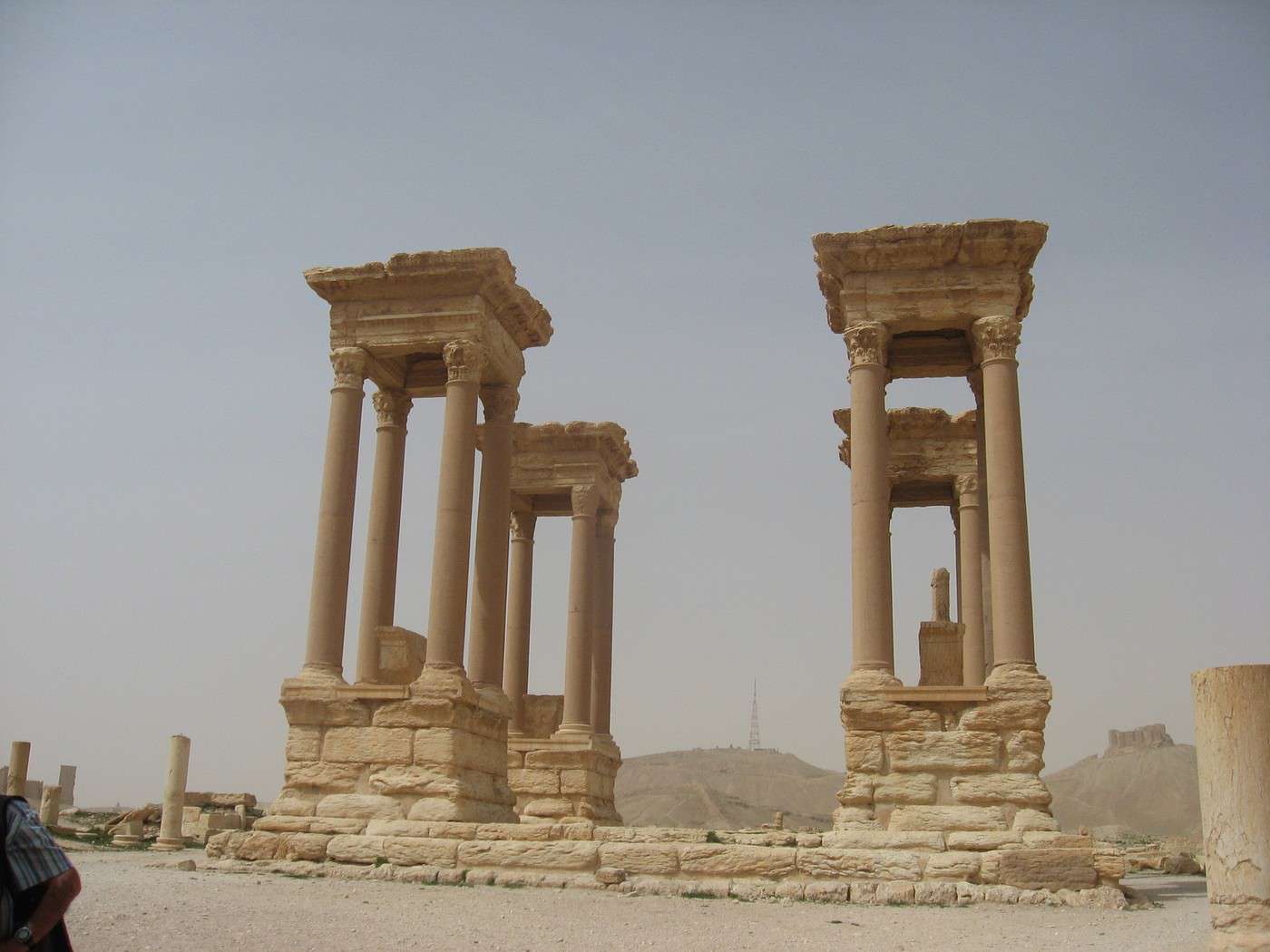
7 à 20 le site de Palmyre
PALMYRE/BOSRA
La nuit a été bonne et le réveil nous tire du lit vers 7 h 30. Nous sommes a deux pas du site de Palmyre. Un coup d'oeil par la fenêtre de notre chambre et je m'aperçois que le temps est un peu "jaune", même couleur qu'hier soir lors de notre arrivée !
Le système des bagages étant bien rodé Nadine ne rencontre aucun problème pour comptabiliser nos valises.
Nous prenons notre petit déjeuner et le départ est prévu pour 8 h 45.
Palmyre est devenue prospère voilà ...fort longtemps grace à sa source d'Efca. Palmyre , Tadmor en arabe , possède une superbe palmeraie ou sont produit les meilleurs dattes de Syrie, et j'atteste elles sont excellentes.. La ville fut une citée en pleine expansion grace à la route de la soie et était un arrêt obligé pour les commerçants.
Zénobie fut une de "reine" qui gouverna Palmyre après avoir fait assassiné tout ceux qui pouvaient l'empêcher d'accéder au trône. Elle était belle, intelligente et ambitieuse. Ele tient tête à Rome mais Palmyre ne résiste pas à l'ogre romain.
C'est au 18 ème siècle que les européens découvre cette magnifique cité antique. La ville est toujours en cours de restauration.
Nous partons donc a la découverte de ce joyau antique.
Notre premier arrêt est pour les tombeaux. Palmyre est entourée de nécropoles avec des tombeaux funéraires impressionnants en forme de tour. Nous sommes les premiers mais les marchands à la sauvette sont déjà là a nous attendre : cartes postales et autres souvenirs nous sont proposés. Leur "boutique" c'est une moto avec accroché à l'arrière sur le porte bagages leur fond de commerce. Ils sont assez virulents et un peu casse pieds. Ils ne lachent pas le client facilement ! Voilà d'autres bus ! nous sommes "sauvés" voilà de nouveaux clients.
Malgré l'heure il fait déjà chaud et la file d'attente pour descendre dans les tombeaux est déjà longue. Je donne un rapide coup d'oeil et je laisse ma place. Je m'amuse à regarder le va et vient des marchands. Avec leur moto ils se déplacent rapidement et dès qu'un bus arrive ils sont une dizaine a chercher a accrocher le client. Un bédoin avec des chameaux dont 2 petits est là pour la photo.
Nous repartons direction le site située tout à côté. Le bus nous dépose a un endroit prévu à cet effet et nous voilà partis ! pour une longue marche sous un soleil assez violent et dans des bourrasque de vent assez désagréable ! Comme a mon habitude je ne suis pas Youssef et je vais à la découverte de ses vieilles pierres toute seule. Dès notre arrivée Bernard a trouvé une minuscule place à l'ombre d'une colonnade et s'est installé là. il vas trouver encore a discuter avec des locaux : des chauffeurs de taxi dont un parle français et des guides qui attendent des clients.
Pendant ce temps je marche dans ces ruines ocres : le temple de Bel, la rue Principale, l'Arc Monumental, le Théatre, le camp de Dioclètien (le même que j'ai "rencontré" à Split en Croatie l'année dernière, c'est magnifique. Mais le vent a pour effet de soulever le sable et du sable il y en a ! et mon compagnon de voyage, mon appareil photo, n'a pas du tout aimé !!! La poussière a eu raison de son zoom ! Certaines de mes photos sont blanches car je ne m'en suis pas rendu compte de suite. Bon tant pis ! Heureusement je suis une fille prévoyante et j'ai un appareil de secours. On verra au retour au bus.
Tout le long de la ballade dans les rues de Palmyre le chateau arabe nous domine. Cette forteresse est imposante dommage qu'hier soir le soleil était absent et que la vue était bouchée par le début de la tempête de sable.
Je retrouve le groupe qui semble un peu las des explications très pointues de Youssef. Un peu mais pas trop !
Nous avons rendez vous au bus à 13 h pour aller déjeuner. Tout le monde est là et nous sommes bien heureux de trouver la climatisation de notre bus.
Nous regardons une dernière fois cette merveilleuse citée en plein milieu du désert et nous prenons la route pour le restaurant. Nous sommes les premiers, Heureusement ! Nous nous servons au buffet. C'est à peu près la même chose que d'habitude mais nous sommes tranquille pour notre début de repas ... mais cette tranquilité ne dura pas.... plusieurs bus déversent des japonais (dont nos compagnons de la veille) des allemands enfin de toutes les nationalités. Ils se ruent sur les plats !! Nous n'avons qu'une envie partir de ce lieu bruyant et surchauffé .
Personne ne traîne et une fois le repas terminé nous retrouvons notre car pour une longue traversée du désert en direction de Damas et la ville de Bosra. Adieu Palmyre voilà longtemps que j'en rêvais !
A plus pour la route vers Damas
Capucine 18 1 Non ce n'est pas le notre ... pour un tournage de film
2 Le notre
3 4 6 les tombeaux
5 la boutique et la marchandise
7 à 20 le site de Palmyre
😉PALMYRE/BOSRA (suite)
Nous voilà donc repartis pour la dernière étape en Syrie.
Nous laissons Palmyre derrière nous et notre route nous conduit direction sud . La route est bonne et nous avançons assez rapidement. Nous traversons un ou eux villages plantés là au milieu de nulle part. Le ciel est bizarre et la ligne d'horizon pas très distincte. Nous apercevons des troupeaux de moutons avec leurs bédouins, ils cherchent l'herbe et elle est plus que rare.
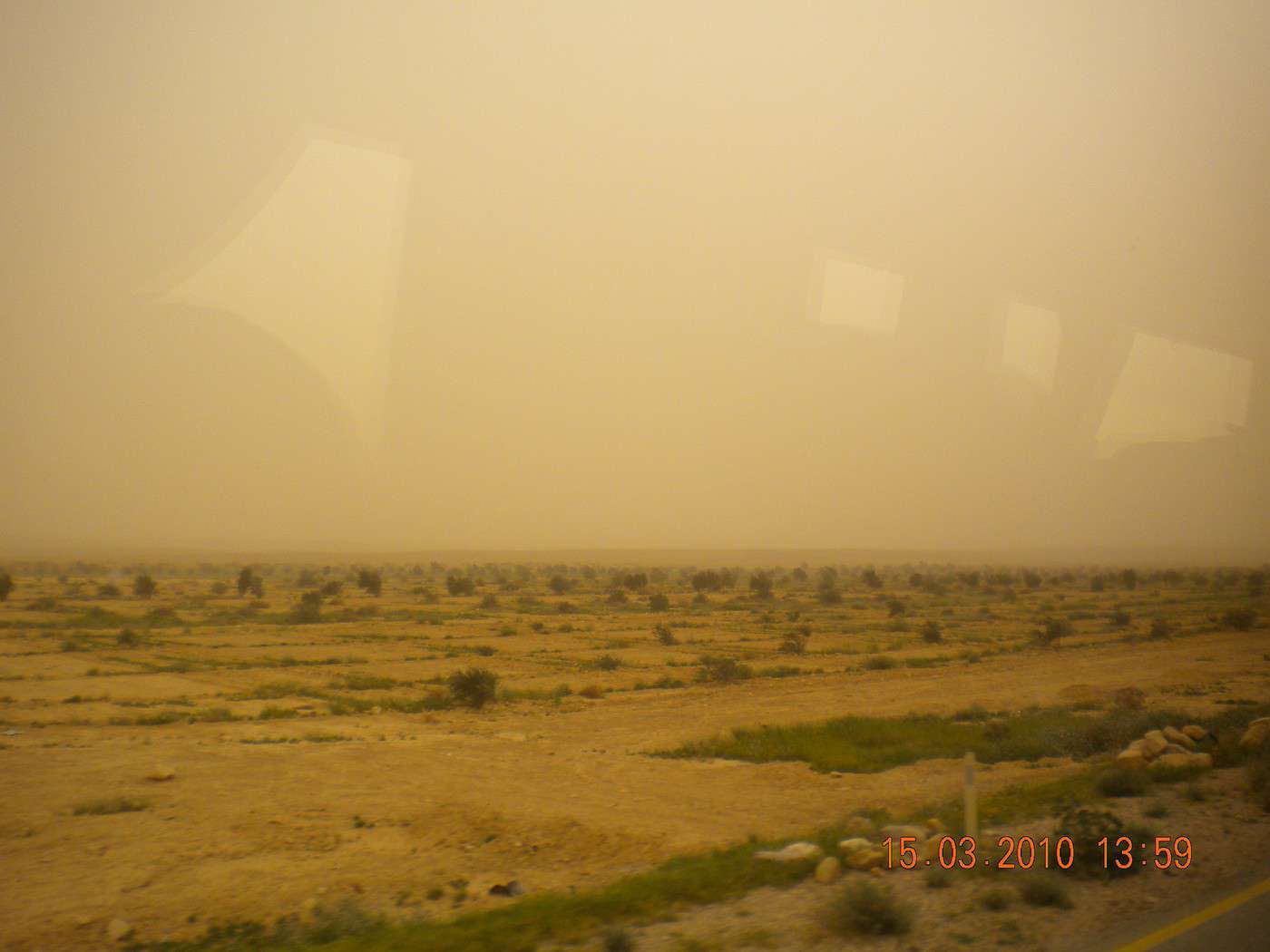
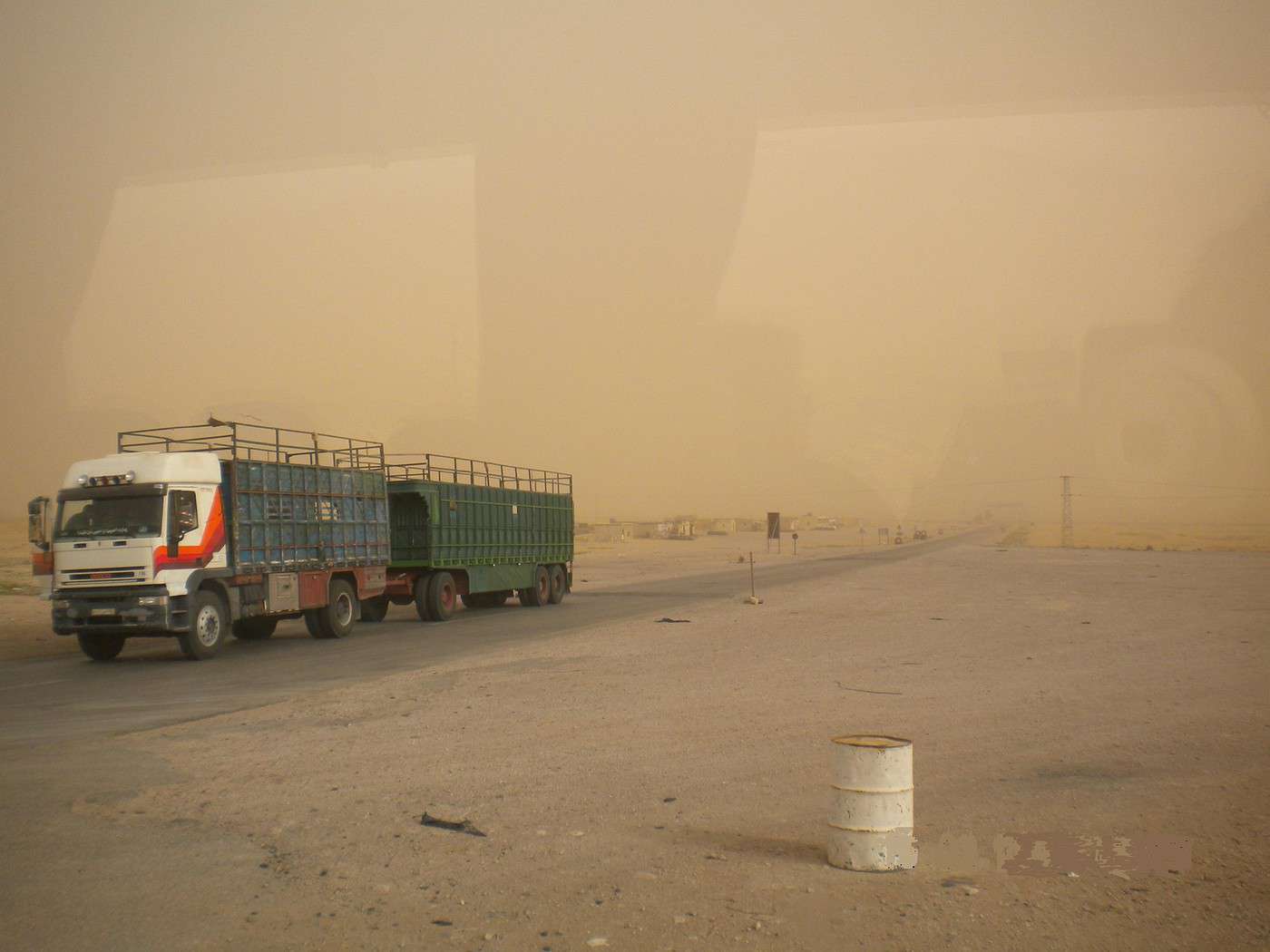
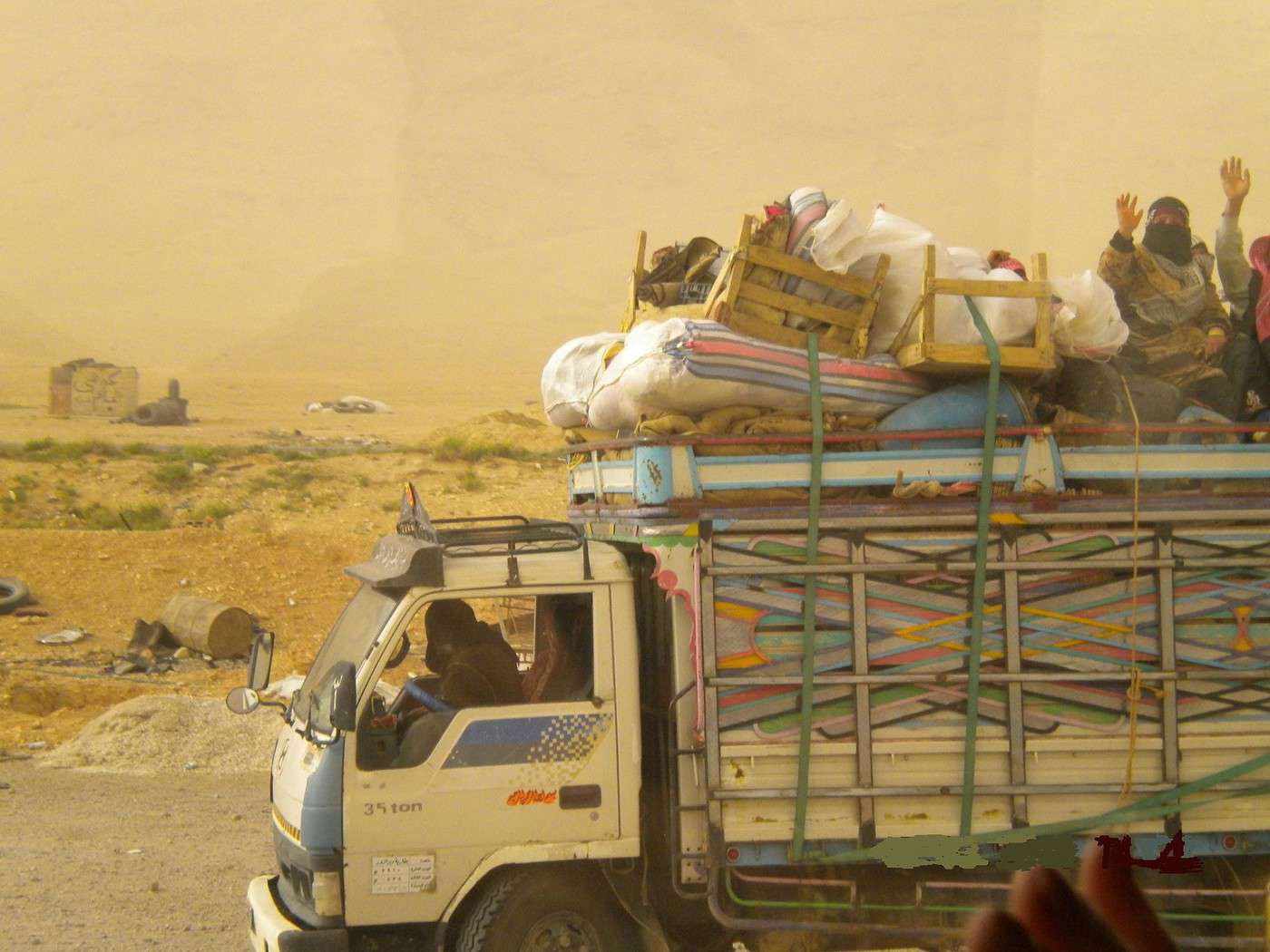
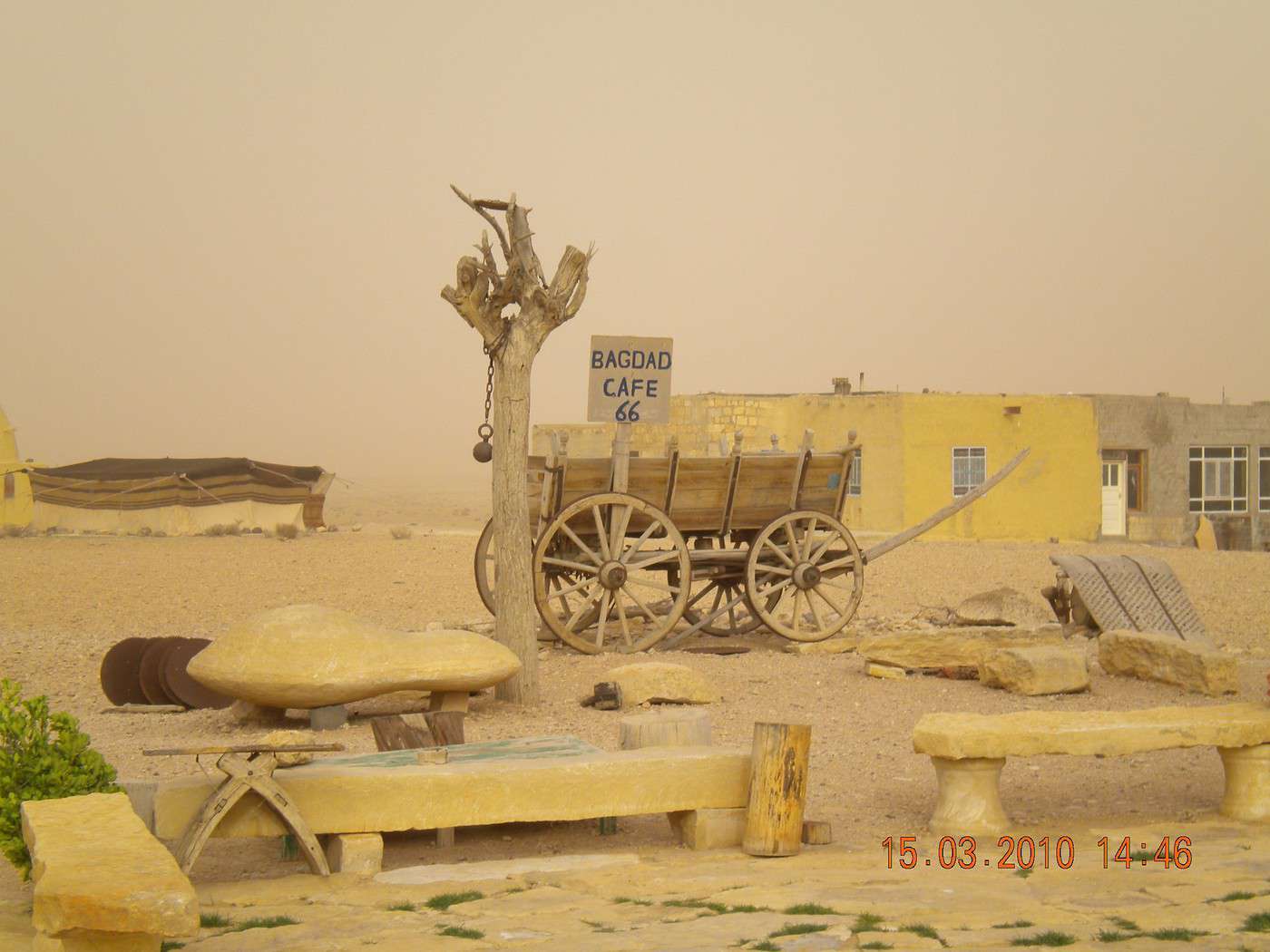
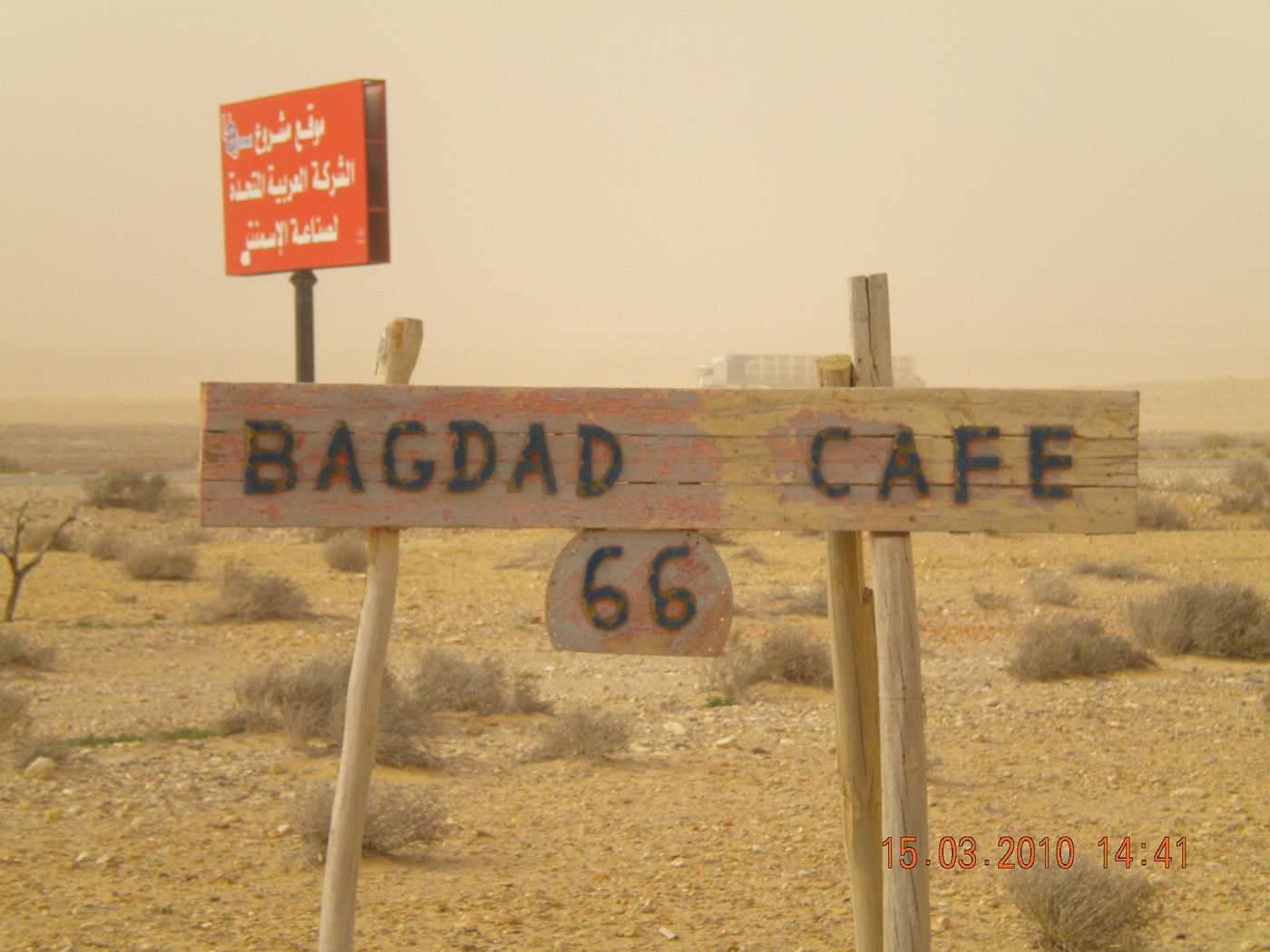
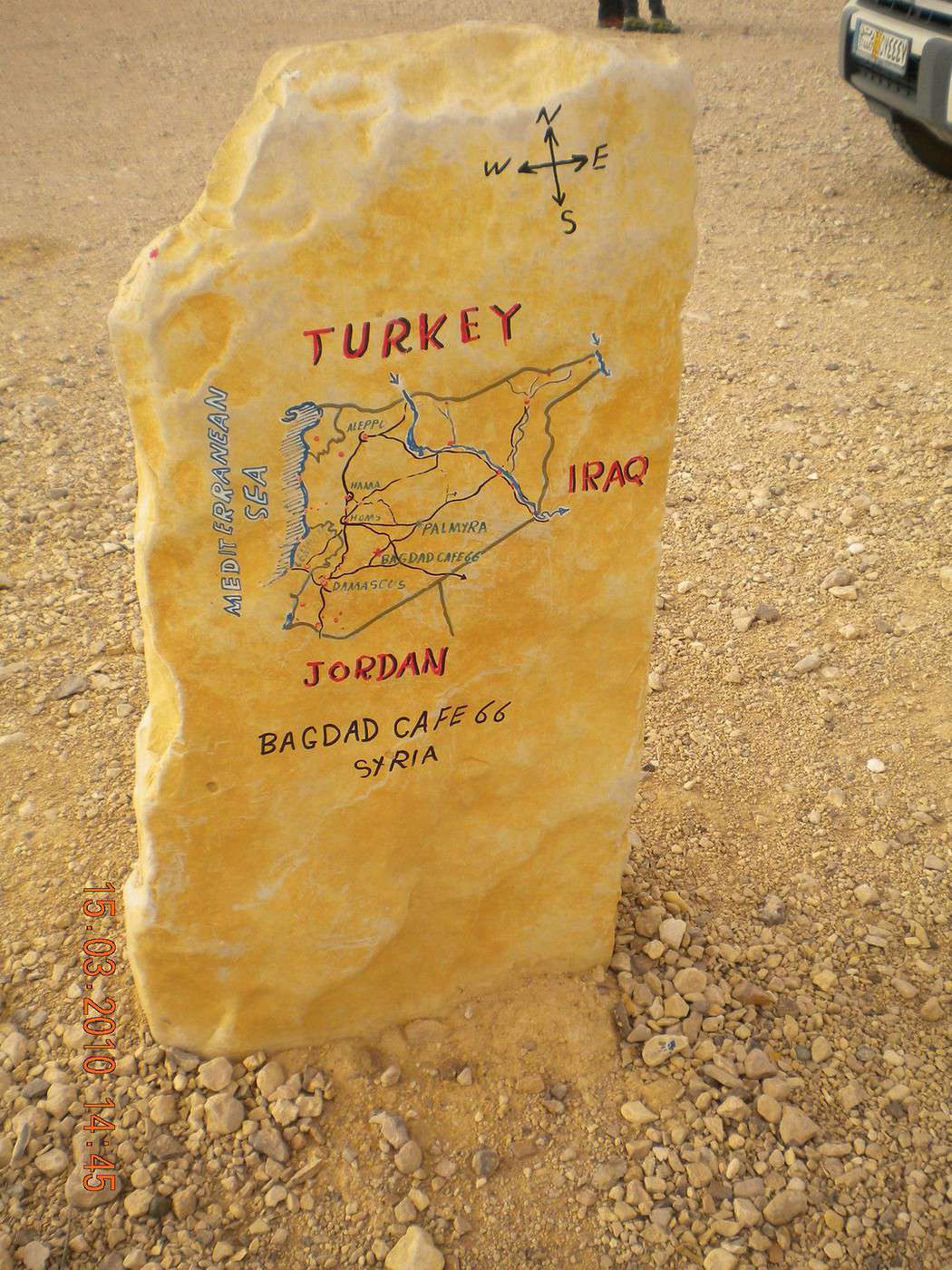
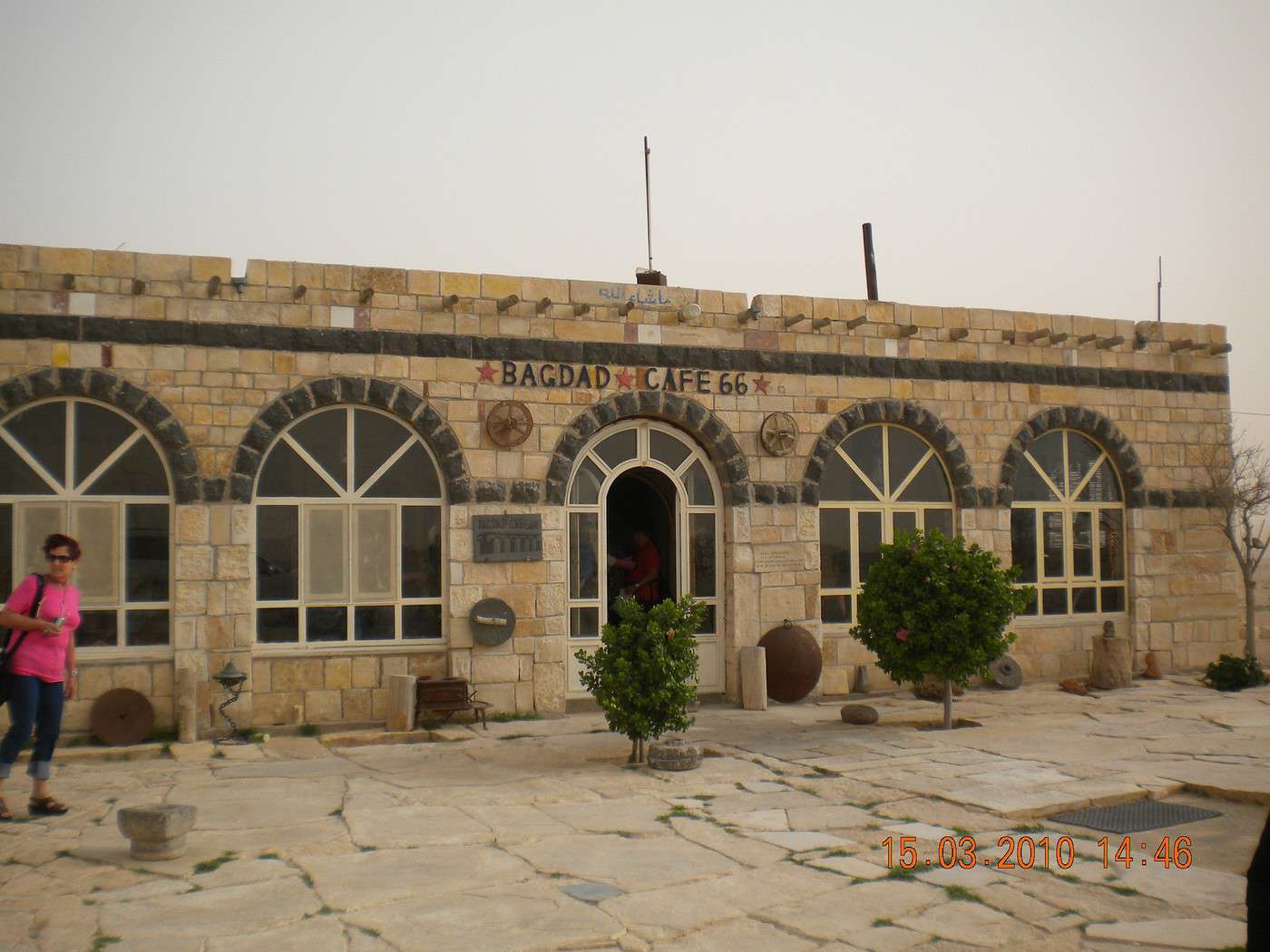
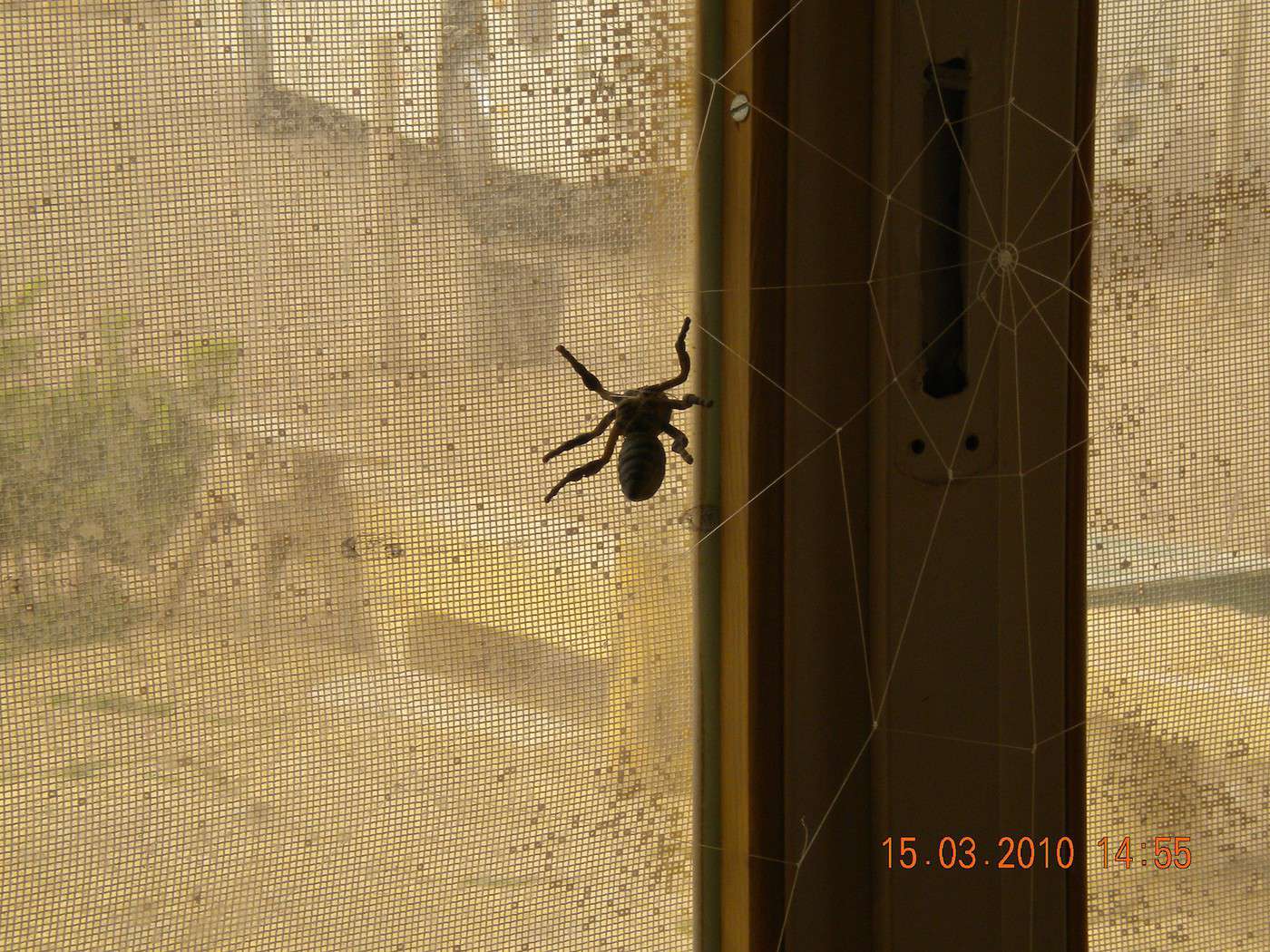
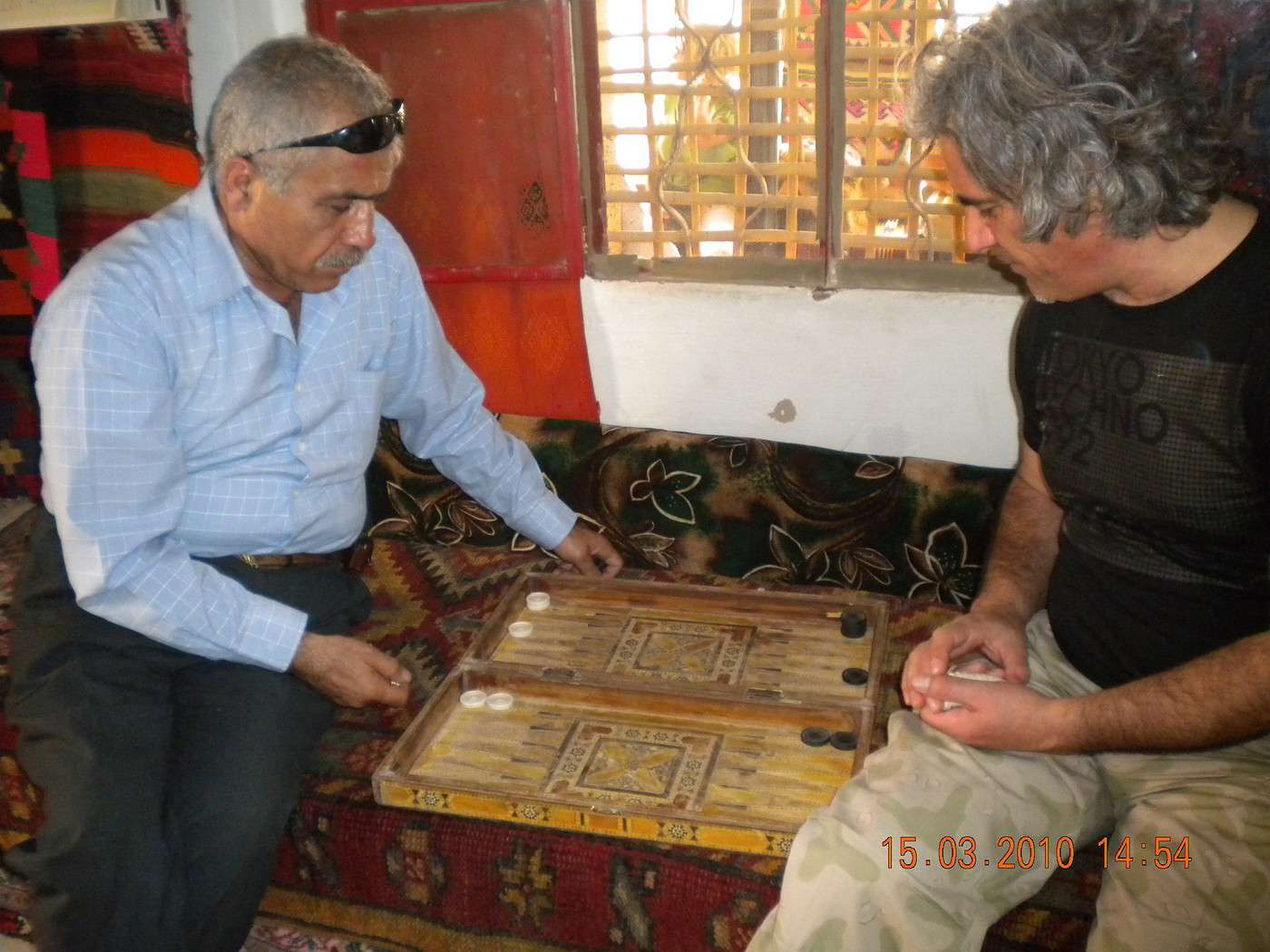
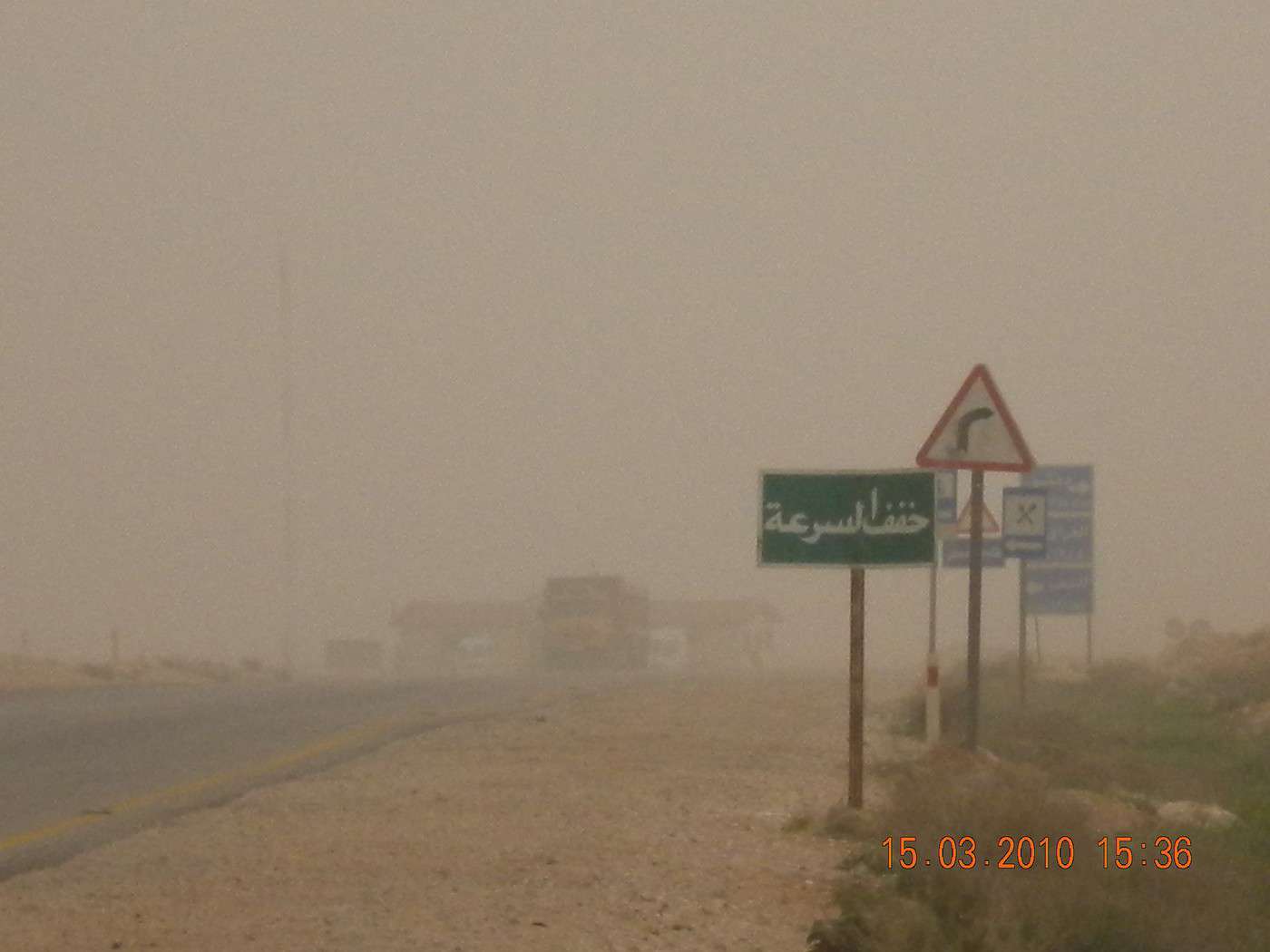
Nous arrivons à un carrefour dans une bourgade assez importante et là il y a beaucoup de camions bariolés certains ont le capot du moteur ouvert, d'autres sont chargés de gens ! Un panneau autoroutier enjambe la route et indique "IRAQ" ! Nous laissons cette route et empreintons une route beaucoup moins importante et là le desert est partout et j'ignore s'il s'agit d'une tempête de sable mais nous ne voyons pas a 10 mètres devant nous, le chauffeur est d'une extême prudence car la circulation est dense : des camions, des bus, quelques automobiles mais surtout des camions chargés d'une façon assez anarchique. Youssef nous indique que nous allons nous arrêter dans un endroit connu de tout le monde : le Bagdad Café mais que vu le temps il vas falloir patienter un peu car les conditions météo sont de plus en plus mauvaises ! Et bien nous voilà bien ! allons -nous avoir droit au bivouac .... ??? Non bien sur notre chauffeur qui est un homme très effacé et très prudent nous conduit à bon port ! Nous voilà donc a se sacré "Bagdad Café". L'endroit est perdu au beau milieu du désert. Nous descendons de notre bus, il y a un vent terrible et le sable pénétre partout. Cet endroit est célébre par le film de Percy Adlon qui porte le même nom mais qui n'a rien a voir avec l'endroit ! Juste le patron devait être amoureux des States et a reconstitués à la perfection l'endroit . Tout y est même les araignées dans les fenêtre ! C'est un petit bout de far west ! Il ya la possibilité de se désaltérer, d'acheter des souvenirs, de jouer aux dés ce que fait Youssef avec un compagnon de rencontre. Nous sommes bien à l'abri pendant que dehors la tempête fait rage. Je veux sortir pour prendre quelques photos mais cette fois je protège mon appareil car je n'ai plus de secours ! Difficilement je prends des photos de l'endroit. La route toute proche est a peine visible. Youssef nous demande de bien vouloir regagner le bus car le conducteur est un peu inquiet de la tournure des événements et voudrait repartir assez rapidement. Ce que nous comprennons ! Allez en route !
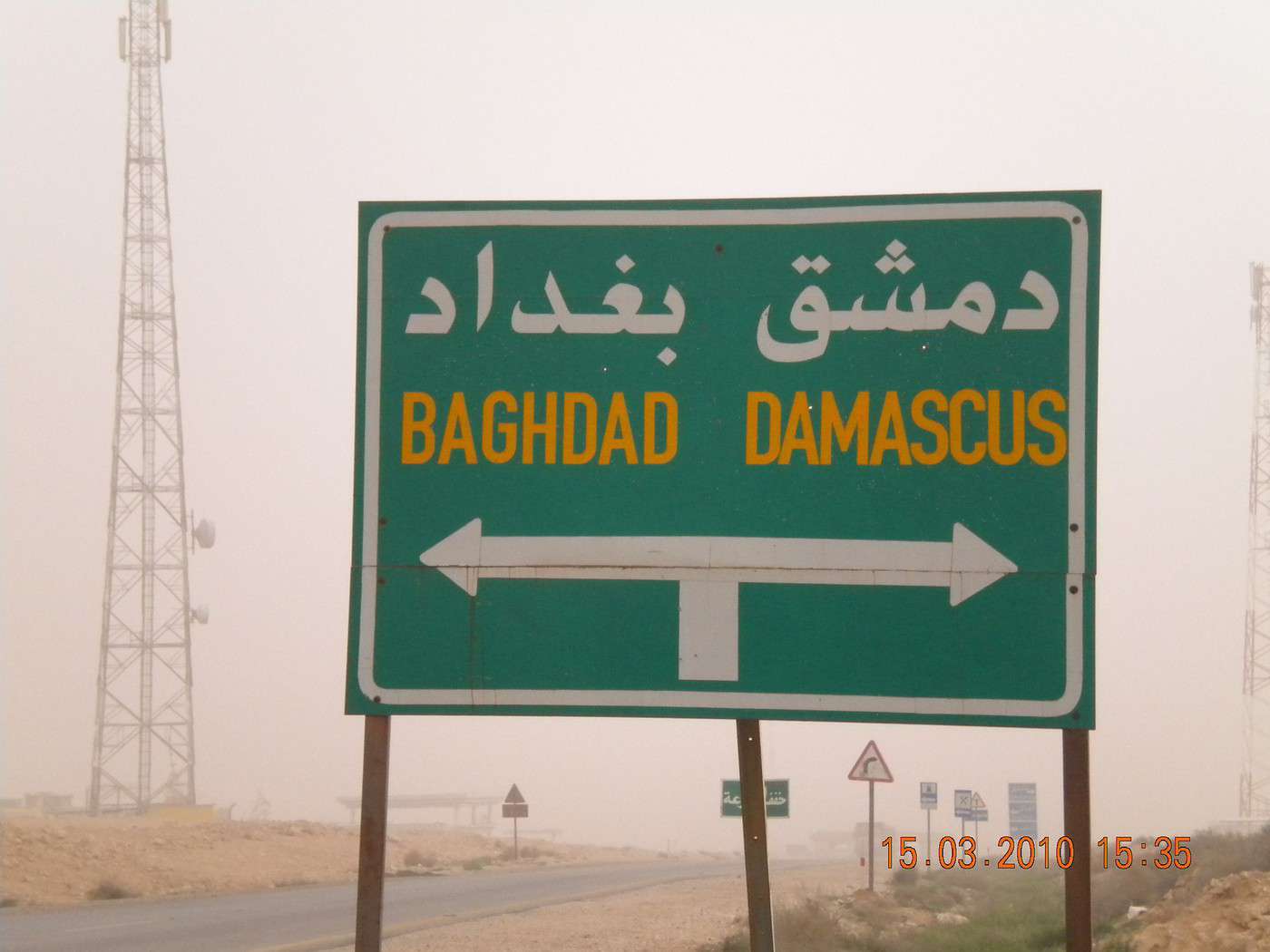
Nous reprenons cette route assez dangereuse. Nous arrivons a un nouveau carrefour et là le bus s'arrête. Nous pouvons descendre ... pourquoi ??? non, nous ne sommes pas les nouveaux bédouins !!! ici, il y a un panneau qui nous indique "Bagdad/Damas". Nous prenons la photo en essayant de ne pas la louper car nous ne sommes certainement pas prêts de revenir ici. L'Iraq n'est qu'à 140 kms de ce lieu ! Bizarre ! d'être si proche de ce pays meurtri par tant de luttes, ou tant de gens sont tués ! un léger malaise envahi le bus ! la circulation sur l'axe Damas / Bagdad est intense.
Nous approchons tout doucement de Damas. Les voitures particulières sont plus nombreuses. La nuit commence à tomber et le sable nous l'avons laissé derrière nous.
Nous contournons Damas sur la gauche. La ville est toute illuminée. L'autoroute va en direction de la Jordanie et nous voyons déjà des panneaux indiquant ce pays dont nous allons faire connaissance demain en fin de matinée.
La ville de Bosra est située à la frontière. Nous arrivons à l'hotel le Cham, c'est le seul de la ville. L'attrait de cette ville ! et bien la ville "nouvelle" est située dans les ruines de l'ancienne qui date comme Pétra des Nabatéens et a vu passer toutes les civilisations ! Nous prenons possession de nos chambres et en ouvrant la fenêtre de la terrasse ... une vue formidable sur les ruines de la ville, nous sommes au coeur de la cité !
Demain visite de cette ville dont j'ignorais l'existence voilà encore quelques mois et qui vas me séduire !!!
Capucine 18
Nous voilà donc repartis pour la dernière étape en Syrie.
Nous laissons Palmyre derrière nous et notre route nous conduit direction sud . La route est bonne et nous avançons assez rapidement. Nous traversons un ou eux villages plantés là au milieu de nulle part. Le ciel est bizarre et la ligne d'horizon pas très distincte. Nous apercevons des troupeaux de moutons avec leurs bédouins, ils cherchent l'herbe et elle est plus que rare.
Nous arrivons à un carrefour dans une bourgade assez importante et là il y a beaucoup de camions bariolés certains ont le capot du moteur ouvert, d'autres sont chargés de gens ! Un panneau autoroutier enjambe la route et indique "IRAQ" ! Nous laissons cette route et empreintons une route beaucoup moins importante et là le desert est partout et j'ignore s'il s'agit d'une tempête de sable mais nous ne voyons pas a 10 mètres devant nous, le chauffeur est d'une extême prudence car la circulation est dense : des camions, des bus, quelques automobiles mais surtout des camions chargés d'une façon assez anarchique. Youssef nous indique que nous allons nous arrêter dans un endroit connu de tout le monde : le Bagdad Café mais que vu le temps il vas falloir patienter un peu car les conditions météo sont de plus en plus mauvaises ! Et bien nous voilà bien ! allons -nous avoir droit au bivouac .... ??? Non bien sur notre chauffeur qui est un homme très effacé et très prudent nous conduit à bon port ! Nous voilà donc a se sacré "Bagdad Café". L'endroit est perdu au beau milieu du désert. Nous descendons de notre bus, il y a un vent terrible et le sable pénétre partout. Cet endroit est célébre par le film de Percy Adlon qui porte le même nom mais qui n'a rien a voir avec l'endroit ! Juste le patron devait être amoureux des States et a reconstitués à la perfection l'endroit . Tout y est même les araignées dans les fenêtre ! C'est un petit bout de far west ! Il ya la possibilité de se désaltérer, d'acheter des souvenirs, de jouer aux dés ce que fait Youssef avec un compagnon de rencontre. Nous sommes bien à l'abri pendant que dehors la tempête fait rage. Je veux sortir pour prendre quelques photos mais cette fois je protège mon appareil car je n'ai plus de secours ! Difficilement je prends des photos de l'endroit. La route toute proche est a peine visible. Youssef nous demande de bien vouloir regagner le bus car le conducteur est un peu inquiet de la tournure des événements et voudrait repartir assez rapidement. Ce que nous comprennons ! Allez en route !
Nous reprenons cette route assez dangereuse. Nous arrivons a un nouveau carrefour et là le bus s'arrête. Nous pouvons descendre ... pourquoi ??? non, nous ne sommes pas les nouveaux bédouins !!! ici, il y a un panneau qui nous indique "Bagdad/Damas". Nous prenons la photo en essayant de ne pas la louper car nous ne sommes certainement pas prêts de revenir ici. L'Iraq n'est qu'à 140 kms de ce lieu ! Bizarre ! d'être si proche de ce pays meurtri par tant de luttes, ou tant de gens sont tués ! un léger malaise envahi le bus ! la circulation sur l'axe Damas / Bagdad est intense.
Nous approchons tout doucement de Damas. Les voitures particulières sont plus nombreuses. La nuit commence à tomber et le sable nous l'avons laissé derrière nous.
Nous contournons Damas sur la gauche. La ville est toute illuminée. L'autoroute va en direction de la Jordanie et nous voyons déjà des panneaux indiquant ce pays dont nous allons faire connaissance demain en fin de matinée.
La ville de Bosra est située à la frontière. Nous arrivons à l'hotel le Cham, c'est le seul de la ville. L'attrait de cette ville ! et bien la ville "nouvelle" est située dans les ruines de l'ancienne qui date comme Pétra des Nabatéens et a vu passer toutes les civilisations ! Nous prenons possession de nos chambres et en ouvrant la fenêtre de la terrasse ... une vue formidable sur les ruines de la ville, nous sommes au coeur de la cité !
Demain visite de cette ville dont j'ignorais l'existence voilà encore quelques mois et qui vas me séduire !!!
Capucine 18
voucou Liliane. Merci encore pour ce C/R
😉😉Les photos du désert
Capucine 18 1 2 3 4 le désert syrien
5 6 les camions sur la route en direction de Bagdad
7 8 le Bagdad Café
9 direction pour ne pas perdre ...le Nord
10 le Bagdad Café dans le désert syrien
11 presque vrai !!!!!
12 Youssef entrain de jouer
13 panneau indiquant les directions ...nous prendrons celle de Damas
14 visibilité presque nulle
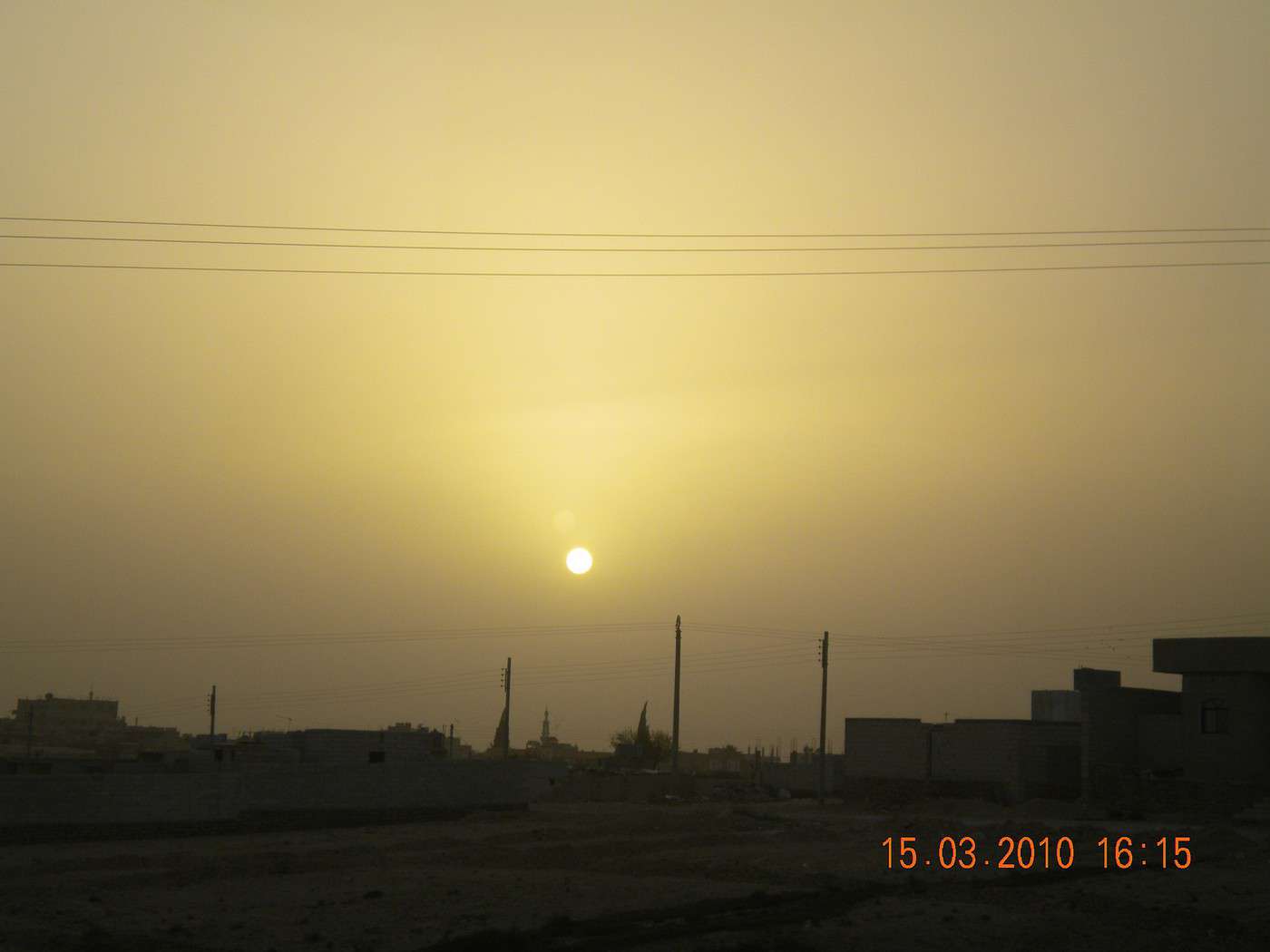
15 pale coucher de soleil très ensablé
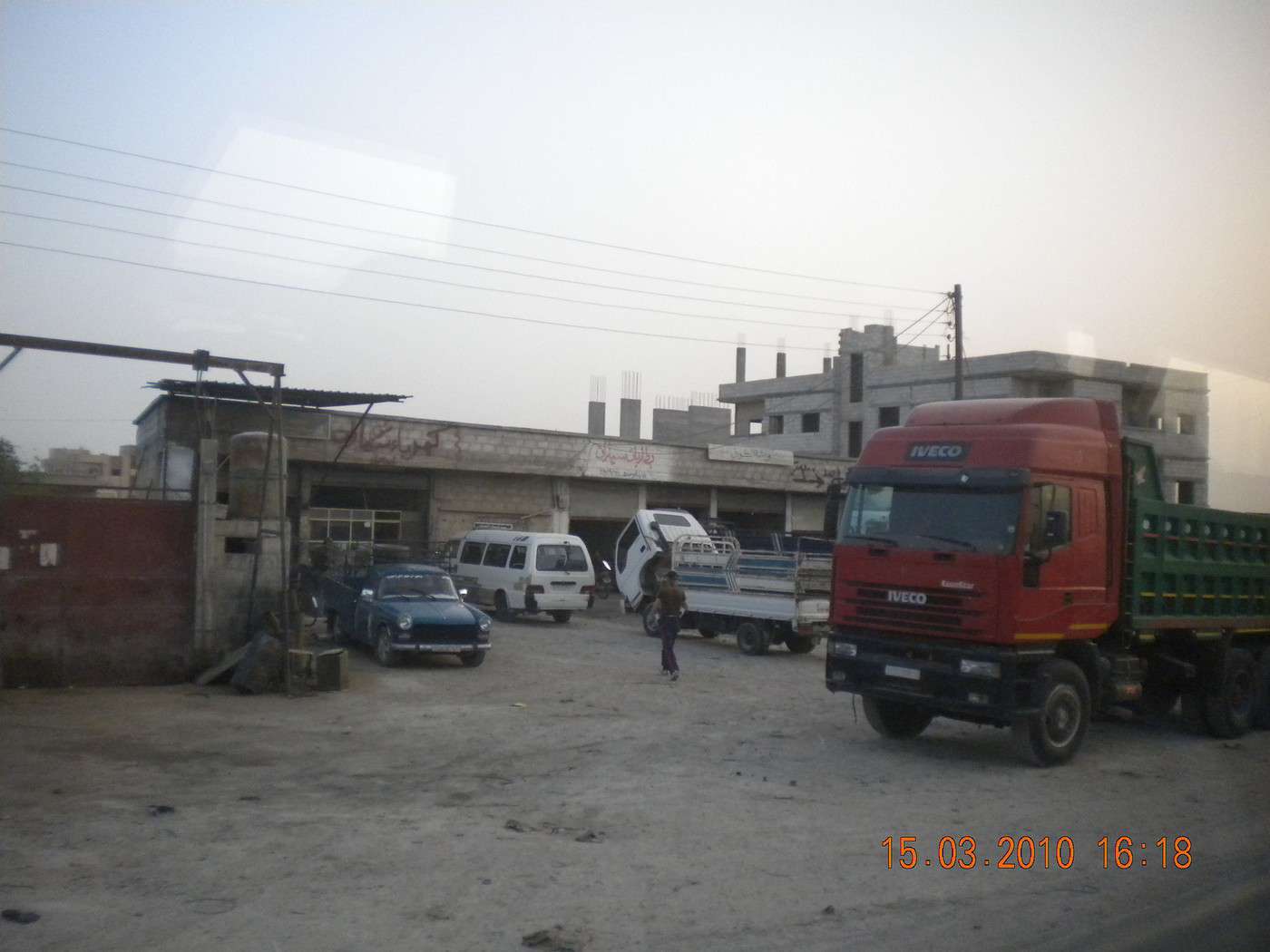
16 la banlieue de Damas des mécanos partout
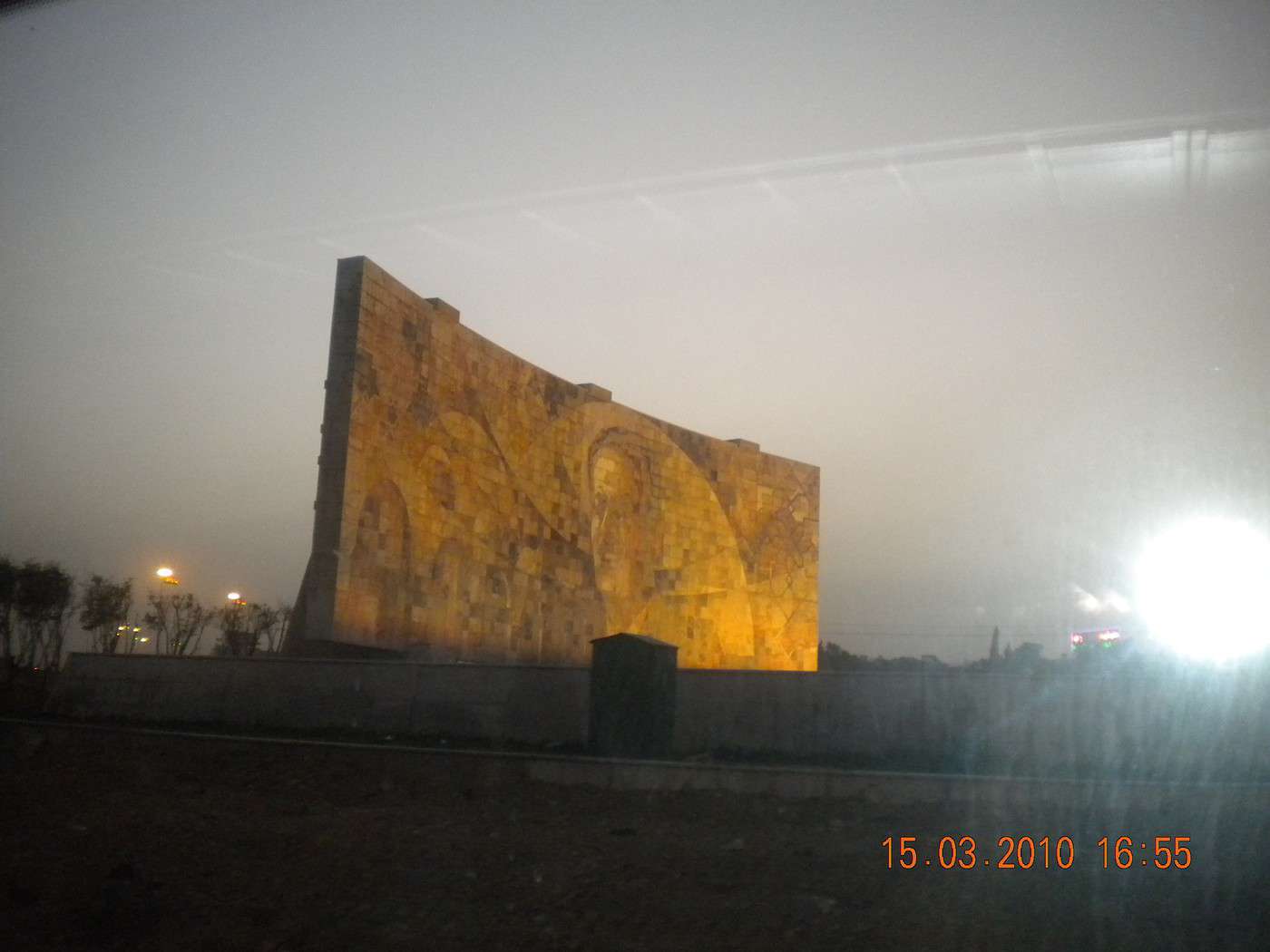
17 Damas : un monument à la gloire du président et de son père
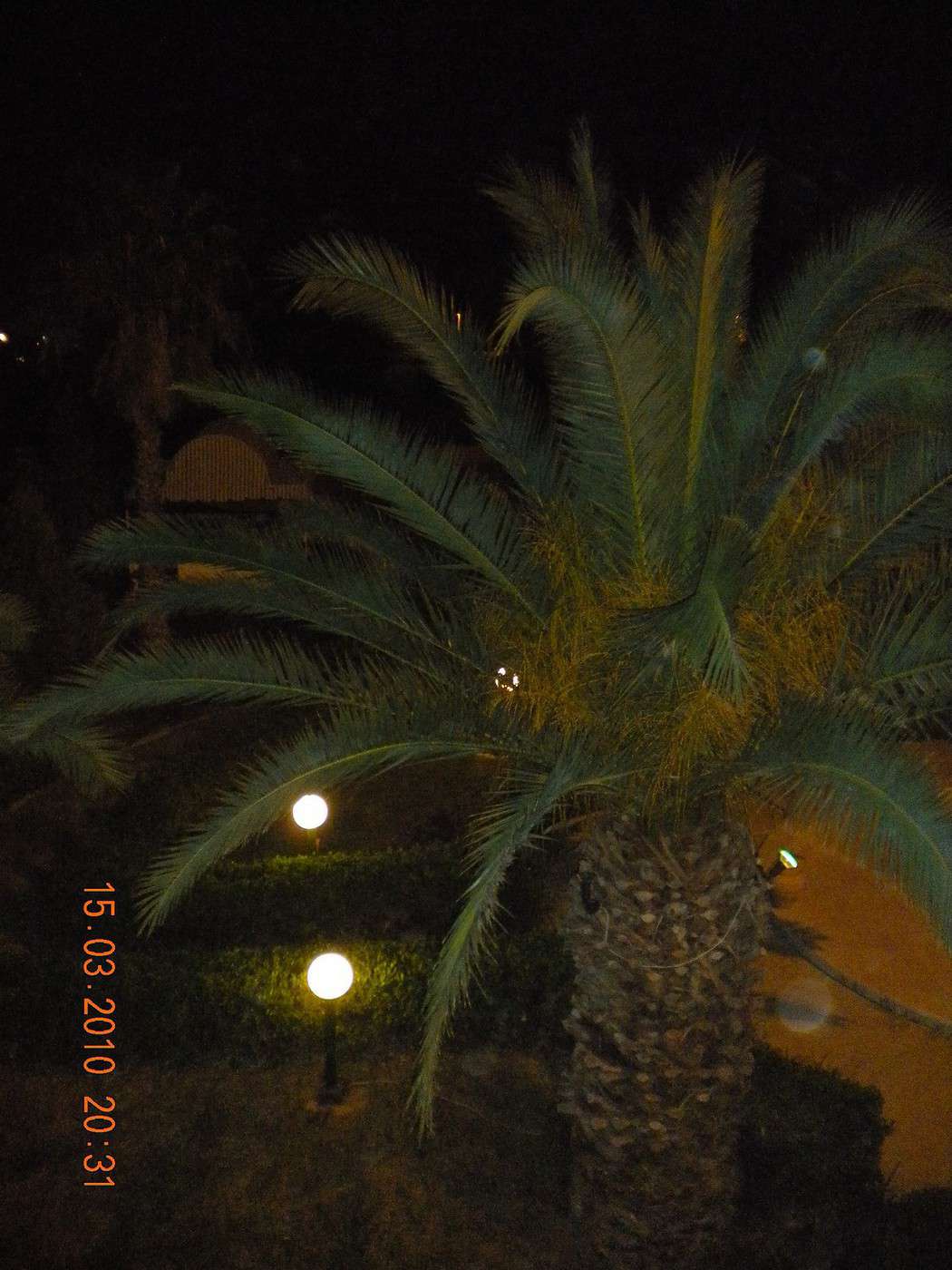
18 un palmier juste devant notre fenêtre à l'hôtel de Bosra a quelques mètres des ruines
19 intérieur de l'hotel
Capucine 18 1 2 3 4 le désert syrien
5 6 les camions sur la route en direction de Bagdad
7 8 le Bagdad Café
9 direction pour ne pas perdre ...le Nord
10 le Bagdad Café dans le désert syrien
11 presque vrai !!!!!
12 Youssef entrain de jouer
13 panneau indiquant les directions ...nous prendrons celle de Damas
14 visibilité presque nulle
15 pale coucher de soleil très ensablé
16 la banlieue de Damas des mécanos partout
17 Damas : un monument à la gloire du président et de son père
18 un palmier juste devant notre fenêtre à l'hôtel de Bosra a quelques mètres des ruines
19 intérieur de l'hotel
Re-bonsoir,
Je vois que vous venez d'ajouter les photos qui suivent le récit...
Je trouve que le dépaysement est de plus en plus complet... cette dernière série de photos, encore plus que les autres...😮 😐
Au sujet du "Bagdad Café", je suis perplexe et un peu perdue ???? L'an dernier, lors d'un voyage aux usa, en longeant la route 66, je me suis arrêtée boire un verre au "Bagdad Café", qui a servi de tournage au film... Quel lien, si il en existe un avec le "Bagdad Café" de Syrie ??????
En attendant avec impatience la suite de ton récit... ... bonne nuit !
Au sujet du "Bagdad Café", je suis perplexe et un peu perdue ???? L'an dernier, lors d'un voyage aux usa, en longeant la route 66, je me suis arrêtée boire un verre au "Bagdad Café", qui a servi de tournage au film... Quel lien, si il en existe un avec le "Bagdad Café" de Syrie ??????
En attendant avec impatience la suite de ton récit... ... bonne nuit !
😉Re,
Le film a bien été tourné au USA à l'endroit où vous vous êtes arrêtée. D'après notre guide le propriétaire du Bagdad Café syrien a aimé ce film et a reconstitué ce lieu dans le désert syrien bien sur le long de la route de Bagdad (mais il y a plusieurs établissement portant ce nom) mais le "vrai" "faux" c'est celui où nous nous sommes arrêtés. C'est un peu apocalyptique surtout dans la tempête de sable !
Bonne nuit
Capucine 18
Le film a bien été tourné au USA à l'endroit où vous vous êtes arrêtée. D'après notre guide le propriétaire du Bagdad Café syrien a aimé ce film et a reconstitué ce lieu dans le désert syrien bien sur le long de la route de Bagdad (mais il y a plusieurs établissement portant ce nom) mais le "vrai" "faux" c'est celui où nous nous sommes arrêtés. C'est un peu apocalyptique surtout dans la tempête de sable !
Bonne nuit
Capucine 18
moi aussi je suis la capucine, j'attends la suite.bisous😉😉😉
MARDI 16 MARS 2010
BOSRA/JERASH (Jordanie)/ AMMAN
Ce matin pas beaucoup de kilomètres a effectués pour aller visiter un des sites que j'ai préféré durant ce voyage et que j'ignorais totalement l'existence : le site de BOSRA.
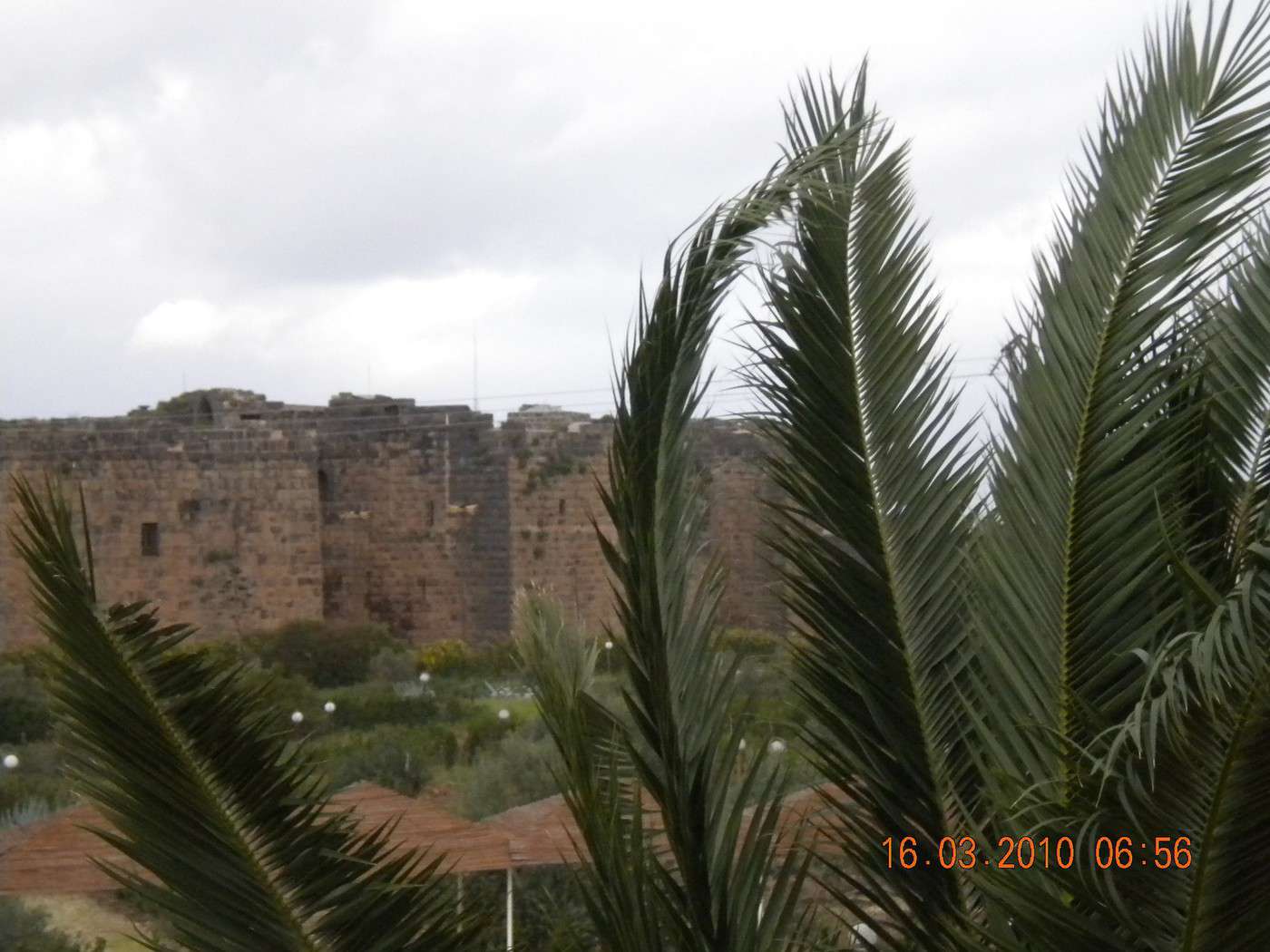
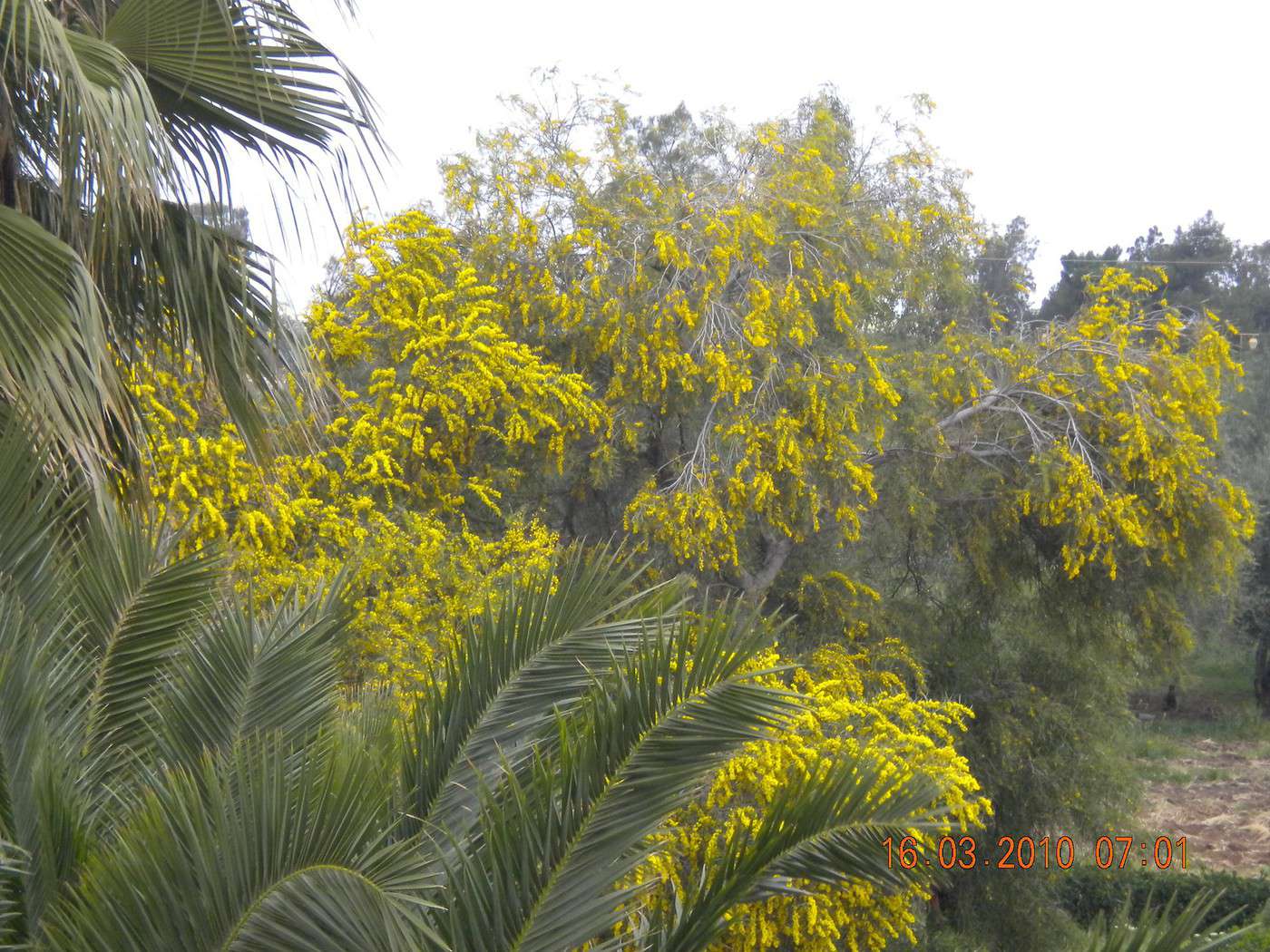
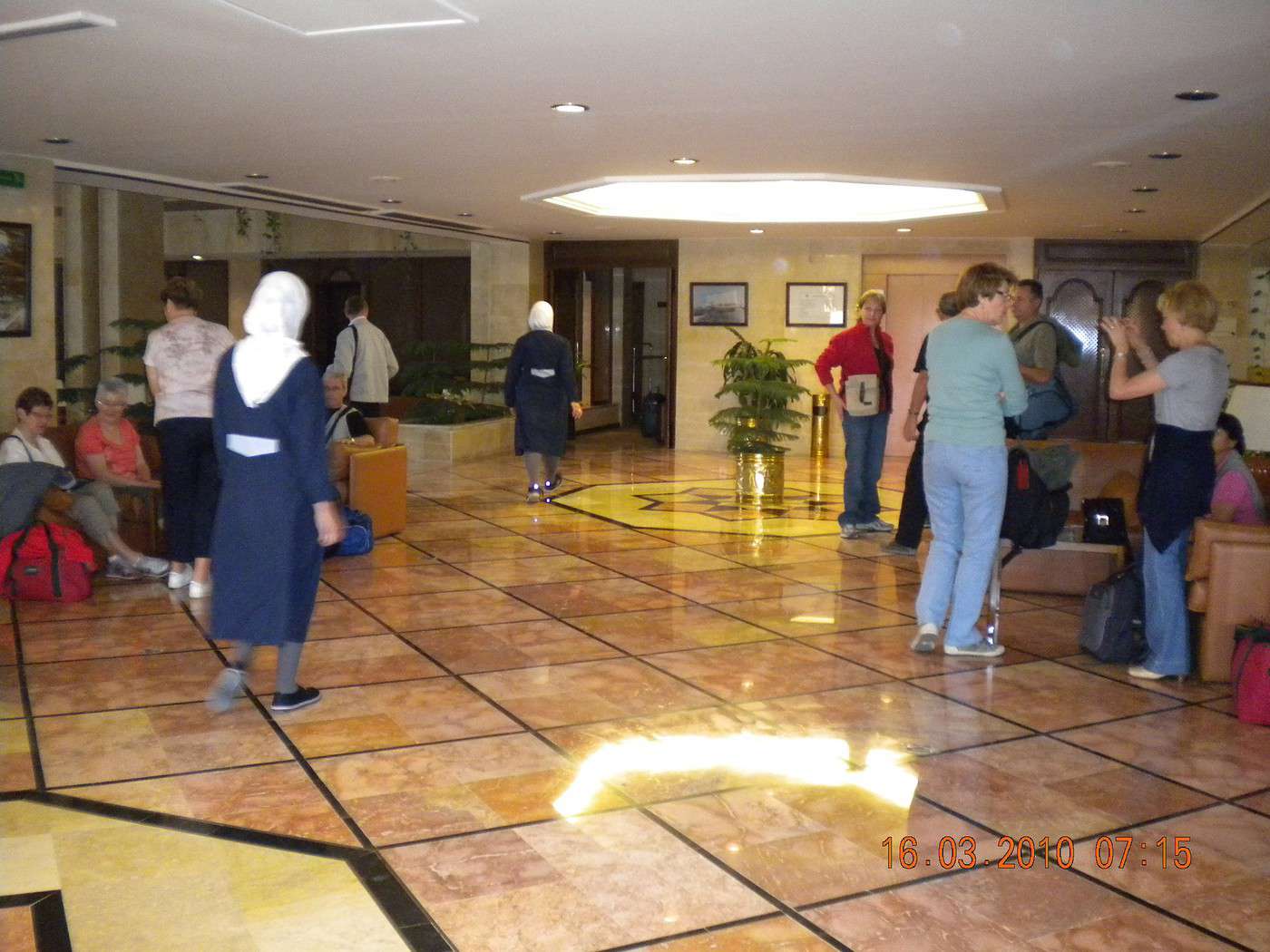
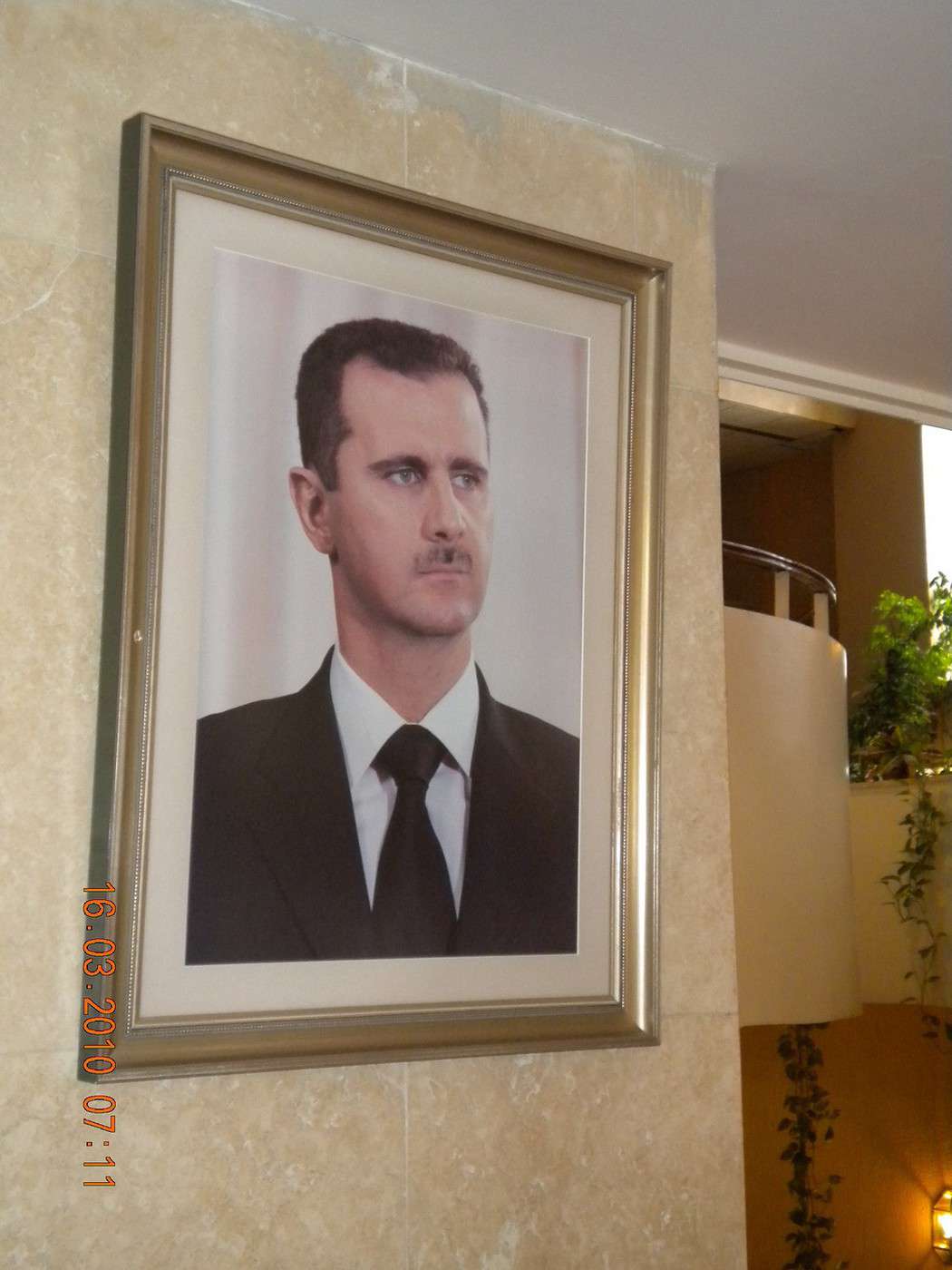
De notre chambre avec balcon nous bénéficions d'une vue sur le site avec en supplément un magnifique mimosa. Nous sortons nos valises et descendons prendre notre petit déjeuner. Ce sont des femmes qui s'occupent de la maintenance des bagages.... les hommes eux sont à la réception sous l'oeil vigilant de leur Président.
Nous traversons la ville nouvelle et suivons les remparts de cette citée qui connue l'abondance en même temps que Pétra sous les nabathéens. Bosra est située à environ 150 kms de Damas, tout près de l'autoroute Damas/Amman donc a la frontière syro/jordanienne.
Le trajet est très court. Quelle différence avec Palmyre que nous avons quittée hier ! Palmyre est solaire, faite de pierres rayonnantes sous le soleil ! Bosra est plus lunaire, la pierre de basalte lui donne "un air mystérieux" sobre. au contraire de Palmyre qui ne vit que par ....les touristes. Bosra, elle, vit encore, les ruines sont habitées. On vit à Bosra !
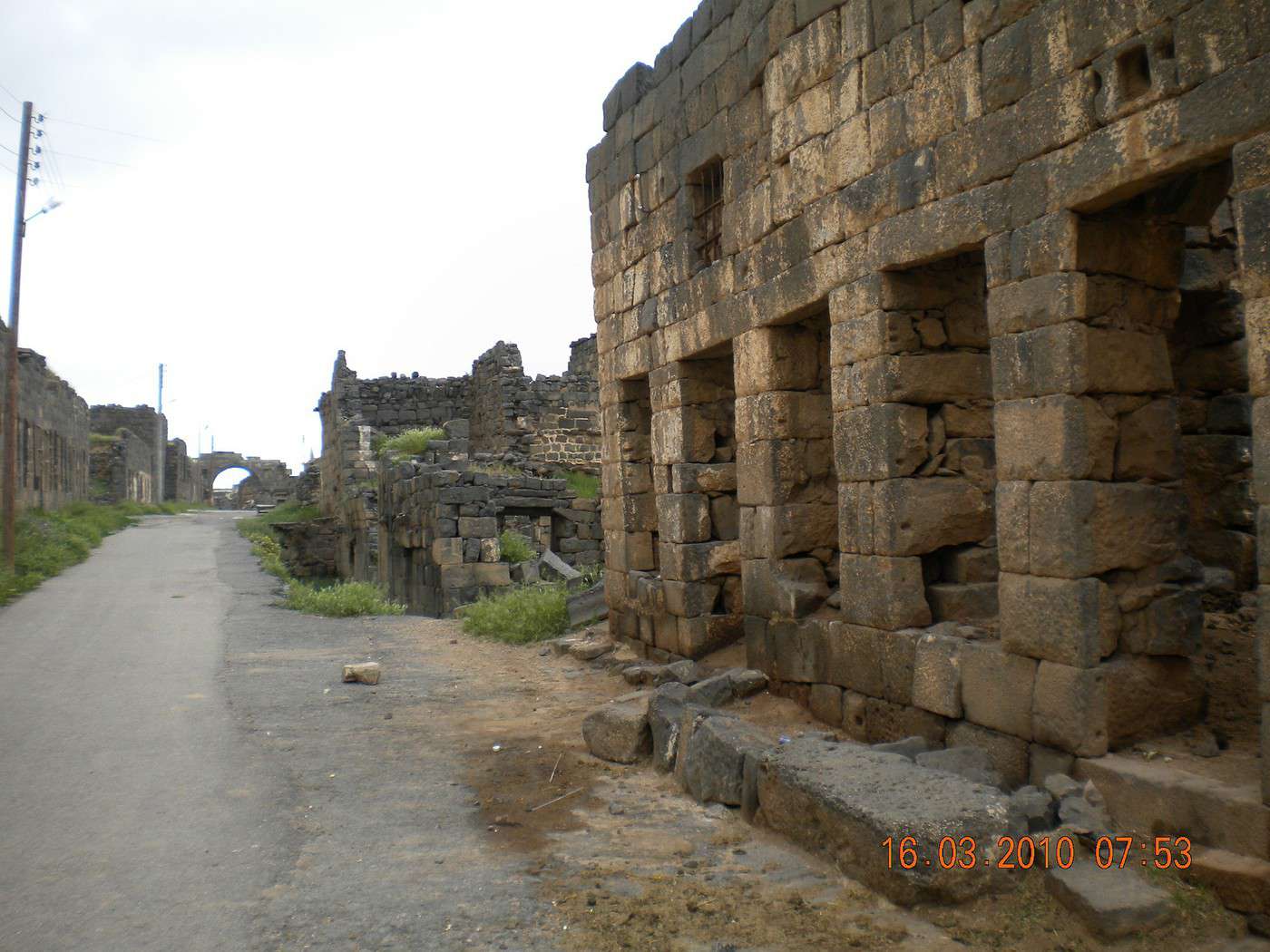
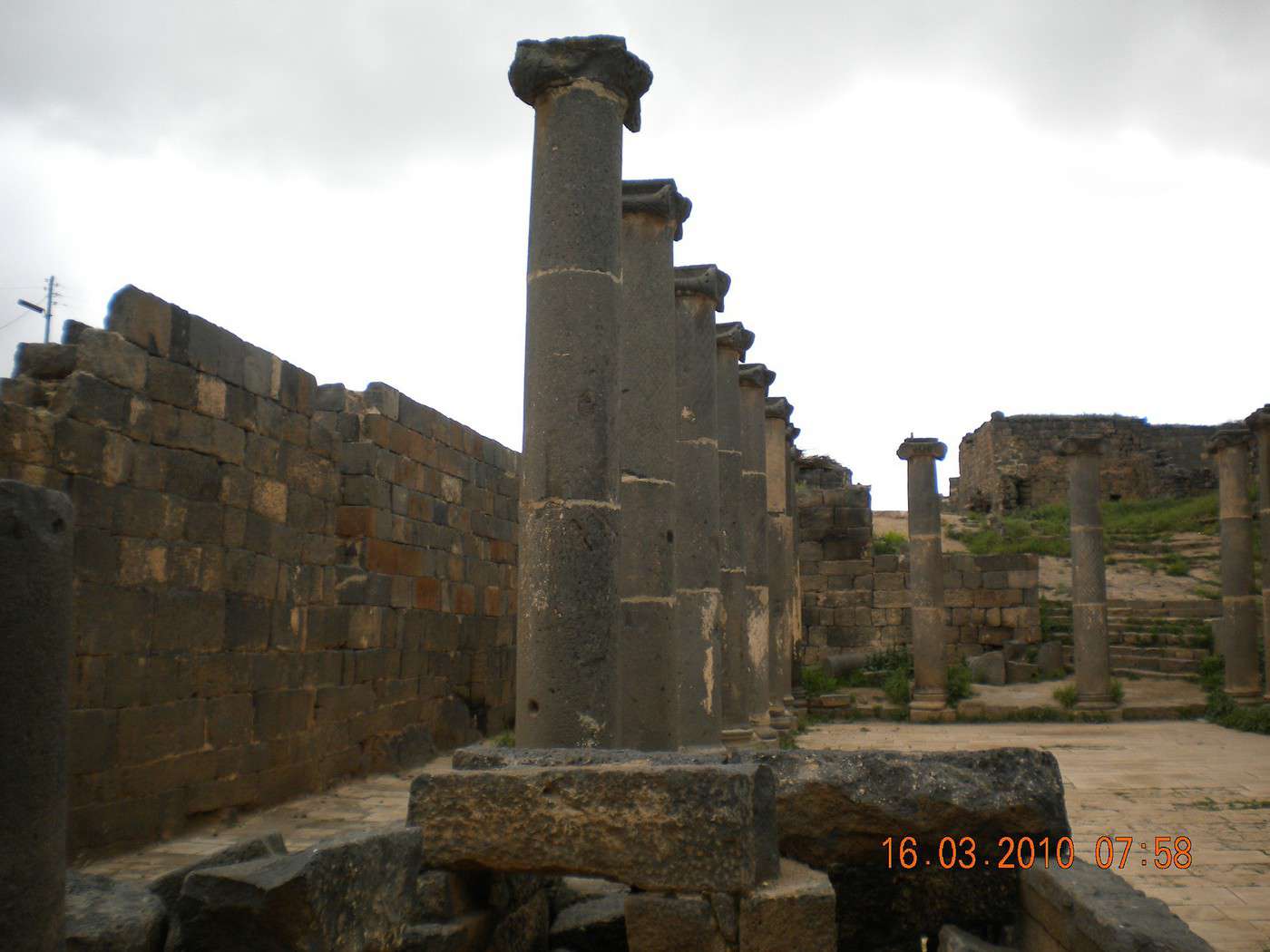
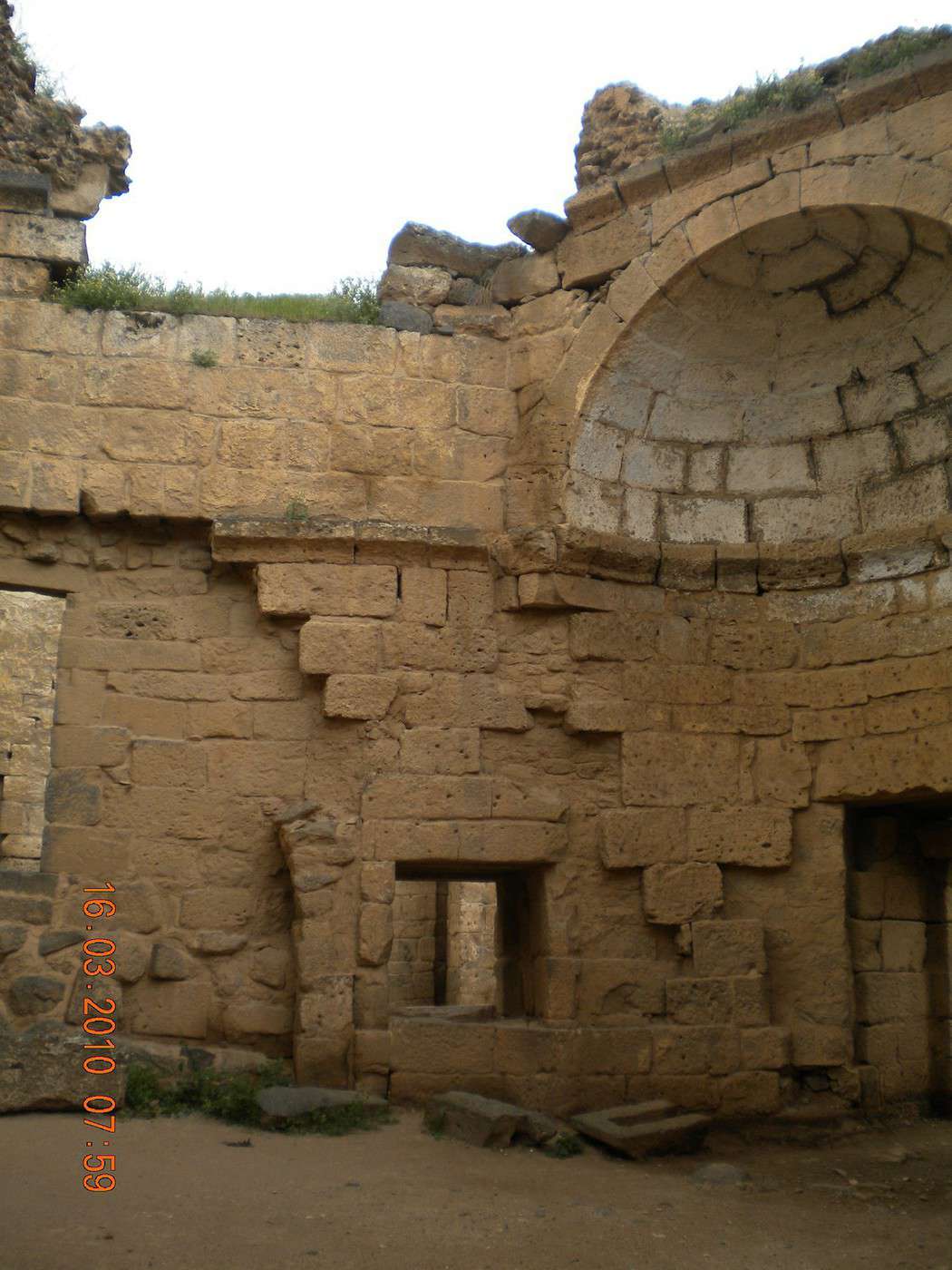
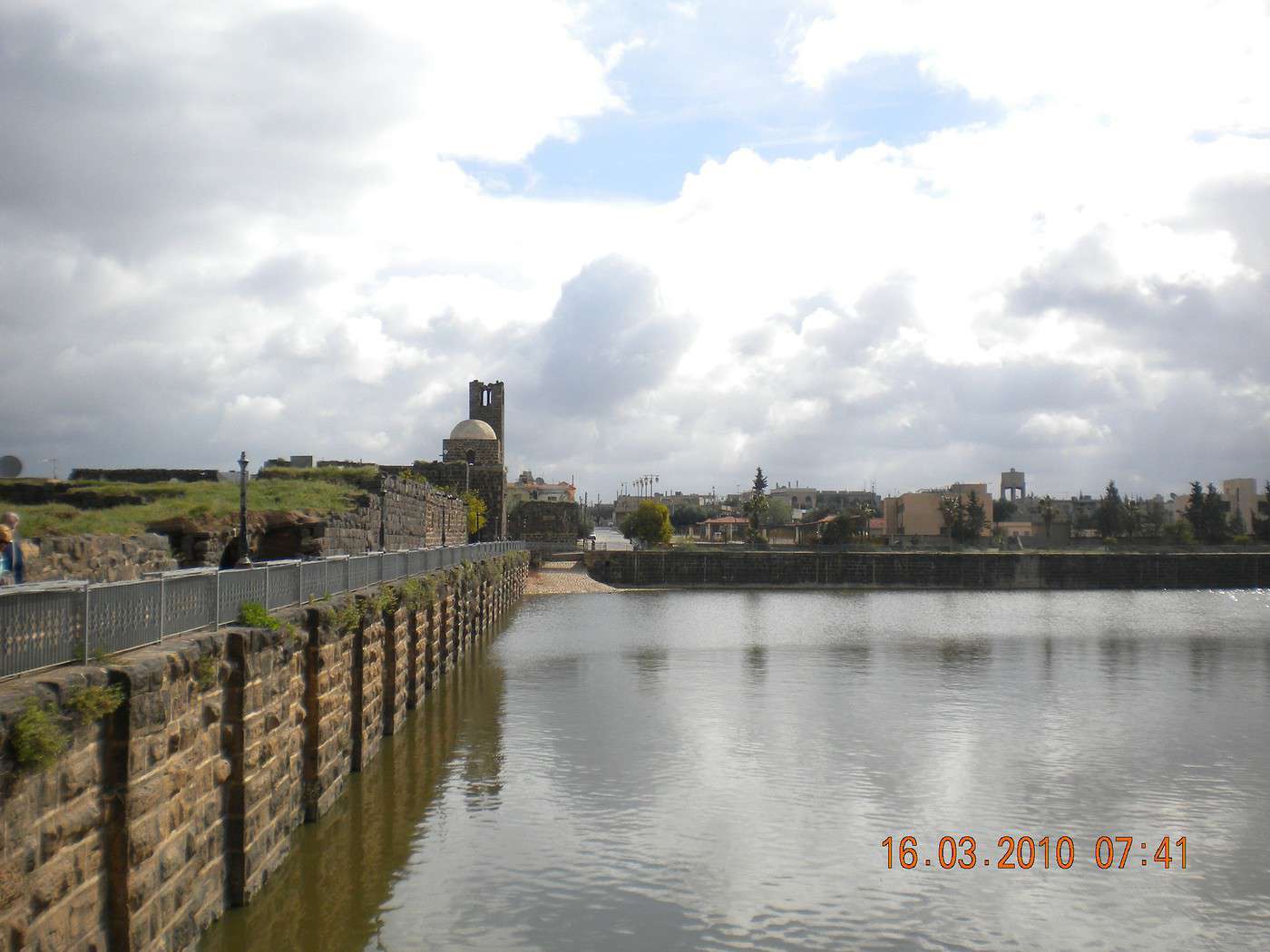
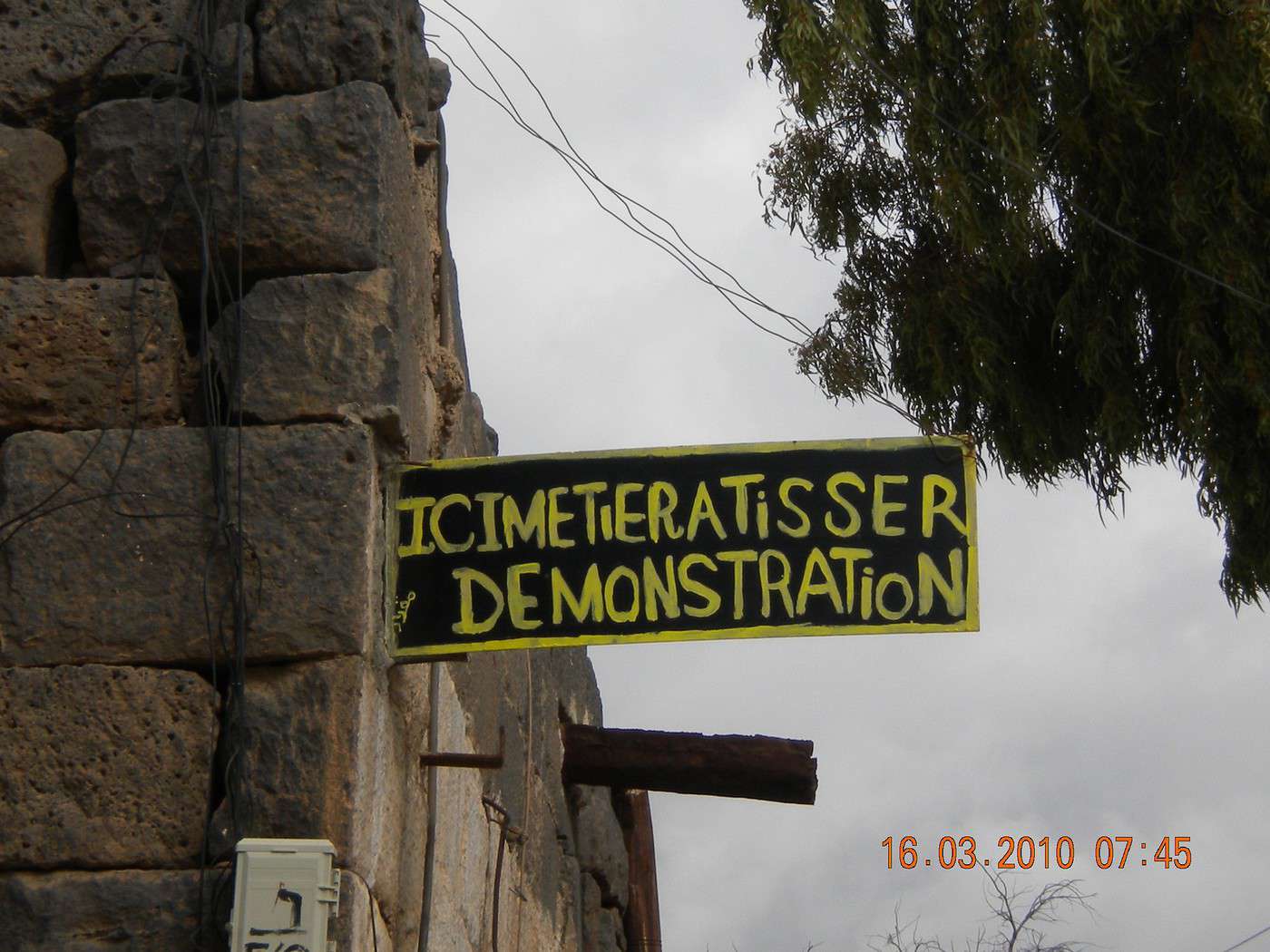
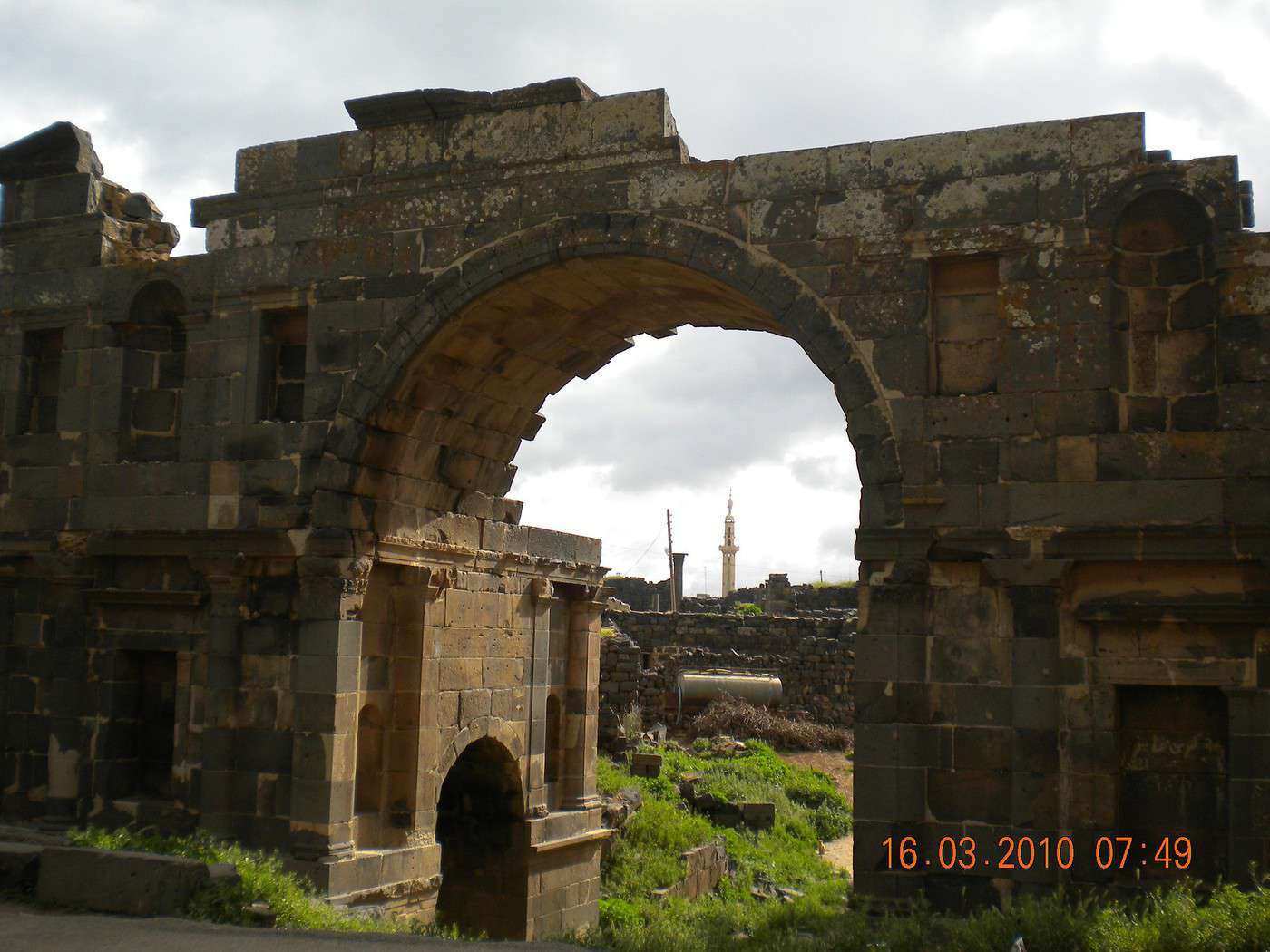
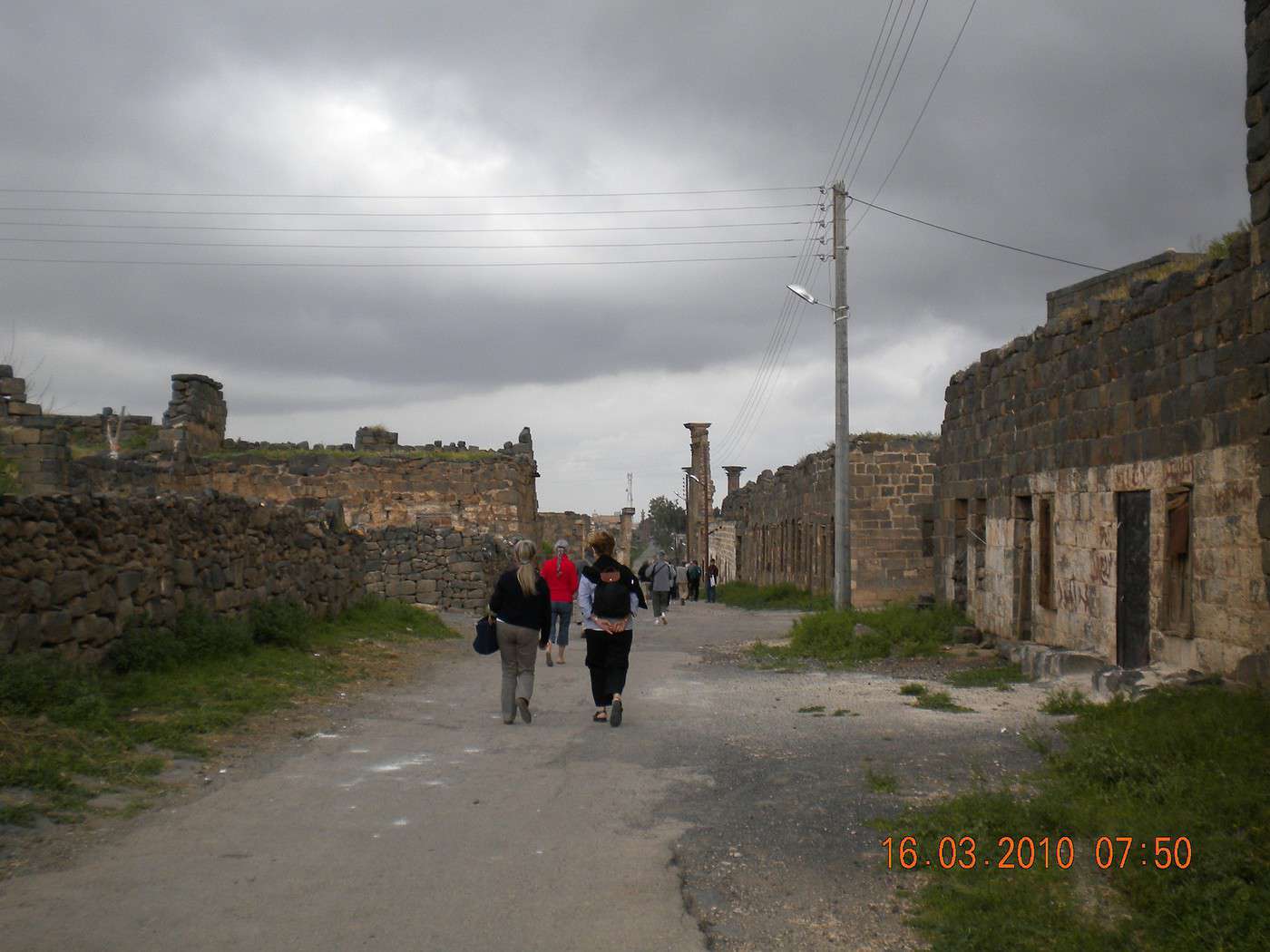
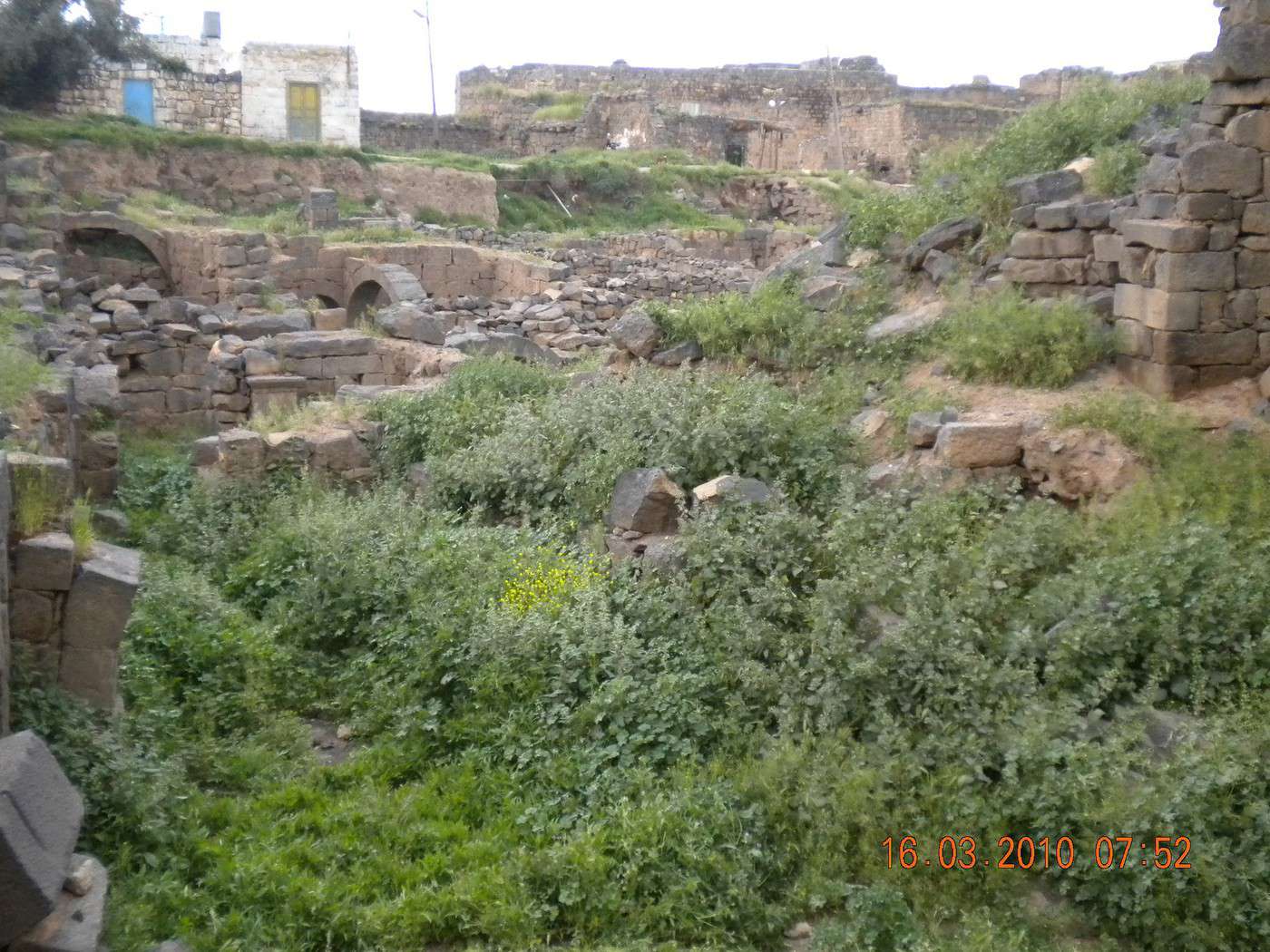
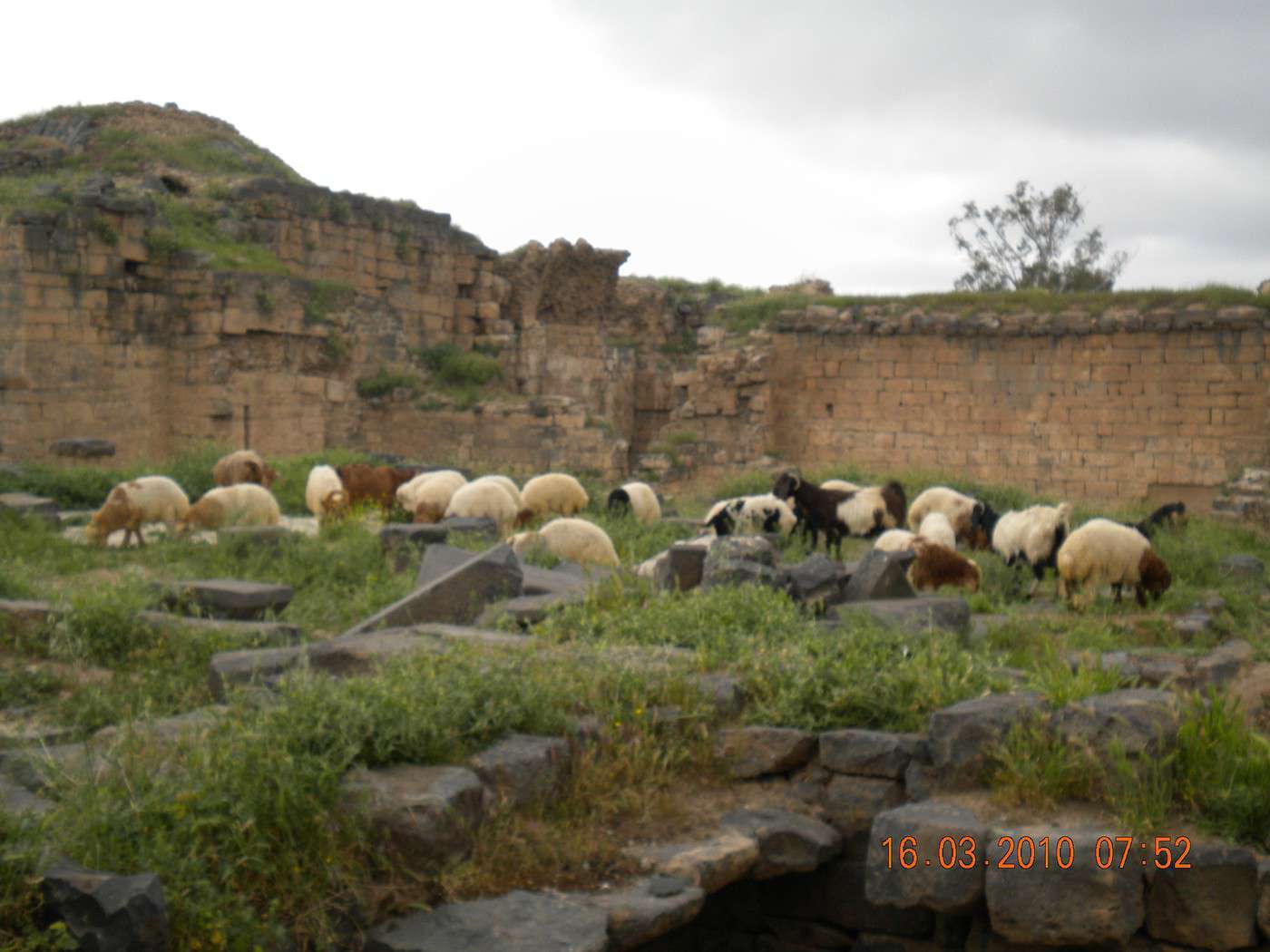
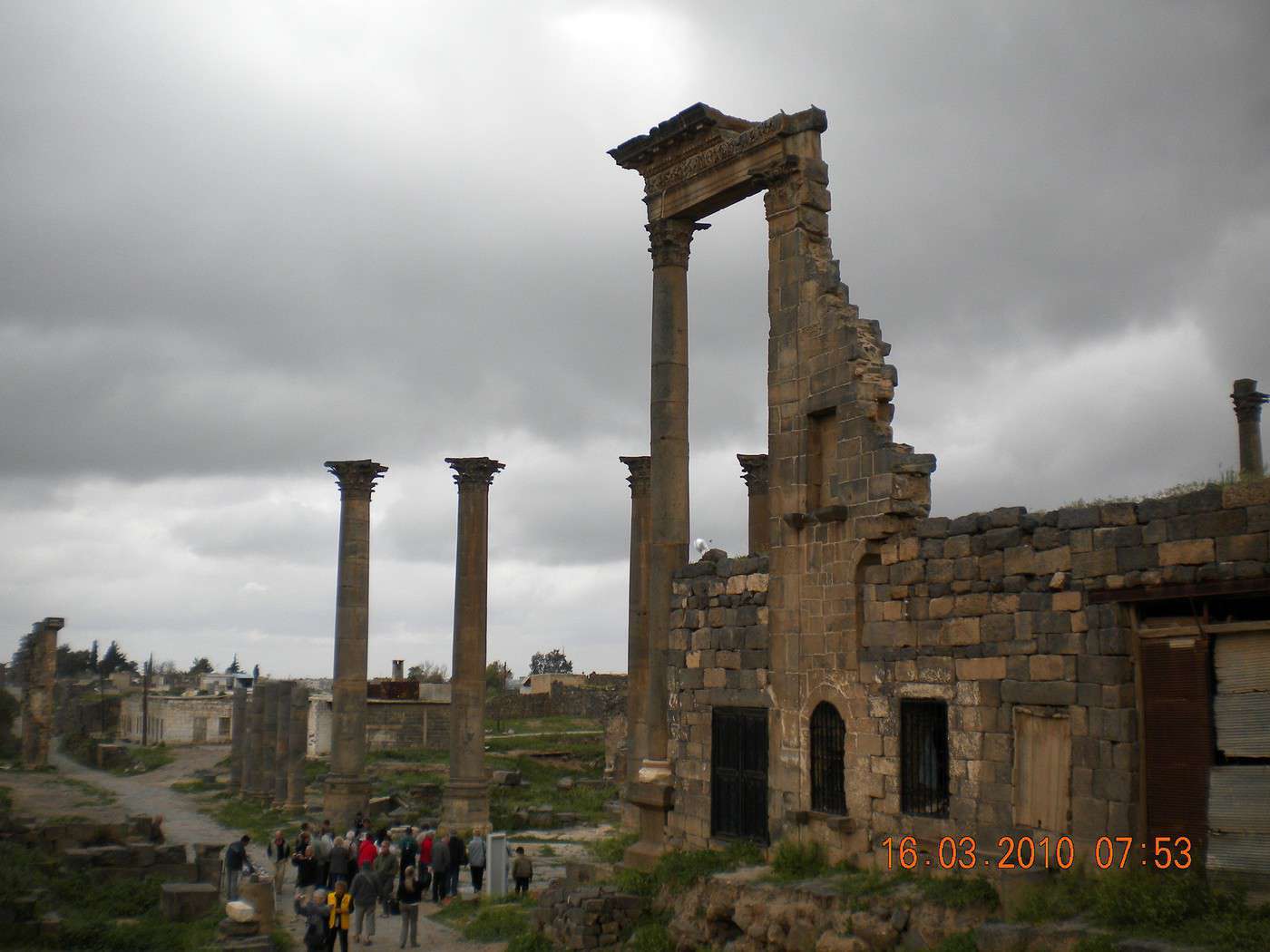
Nous pénétrons dans cette citée par une porte. L'aspect est rude nous longeons le decumanus pour arriver au cardo. Des batiments qui servaient d'entrepots nous donnent un aperçu de la grandeur du commerce de cette ville. Au milieu des pierres millénaires nous découvrons des moutons entrain de paître tranquillement. Quelques paraboles viennent ternir cette ambiance des caravanes que l'on peut imaginer arrivant avec leur chargement précieux ! Mais Bosra vit ! Nous voyons quelques échoppes dont une écrite en français "métieràtisser" ! Youssef nous indique les différents batiments, tout y était : les thermes, la mosquée, la cathédrale, et oui ! les colonnes nabathéennes, le palais. Nous nous dirigeons vers la citadelle. Nous apercevons notre hotel, le seul de Bosra, et effectivement la vue ne peut être que magnifique ! Le plus beau arrive !!! Nous traversons des souterrains un peu lugubres après être passé par un pont levis enjambant un fossé profond et là ! l'émerveillement !!!
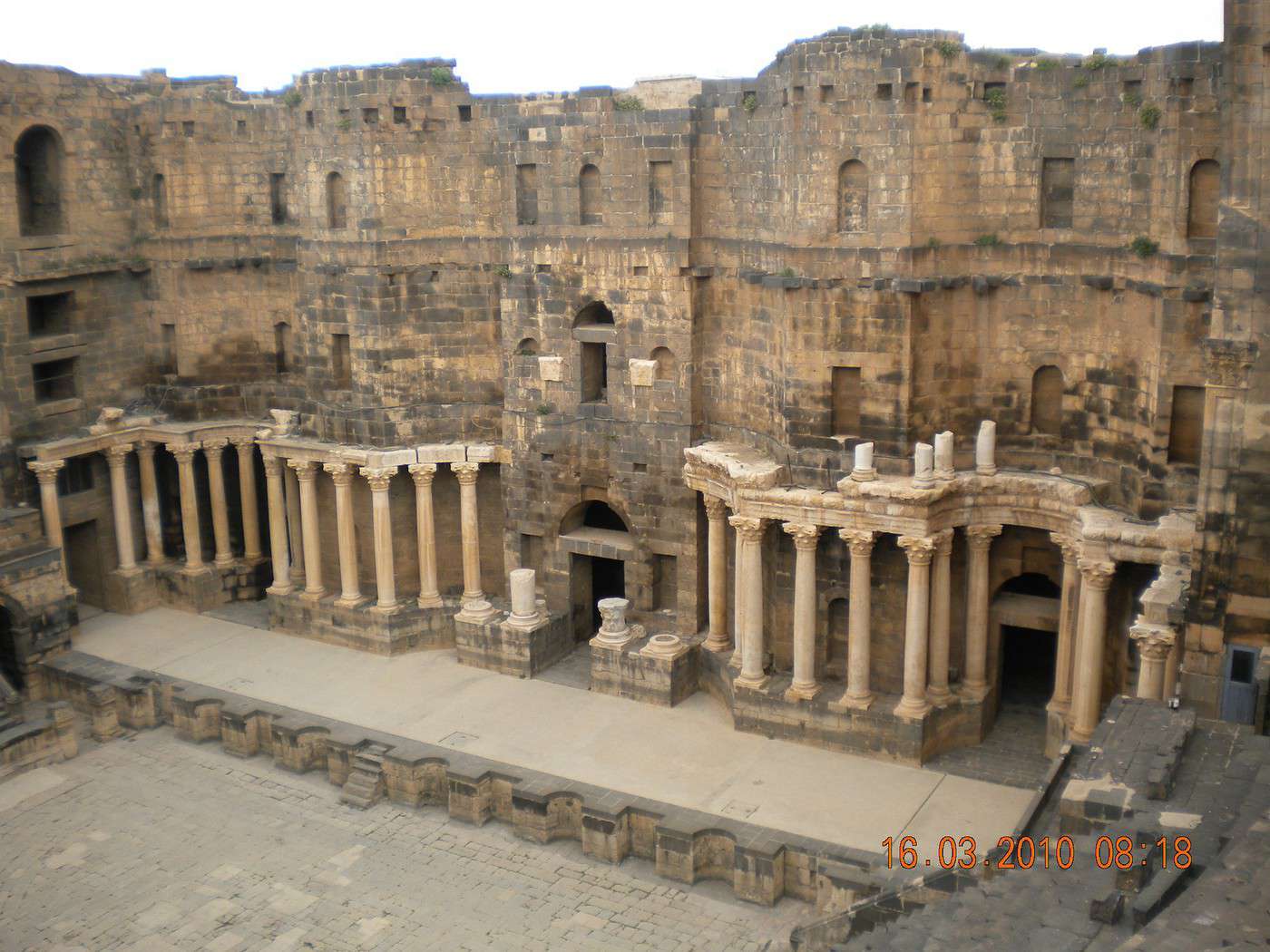
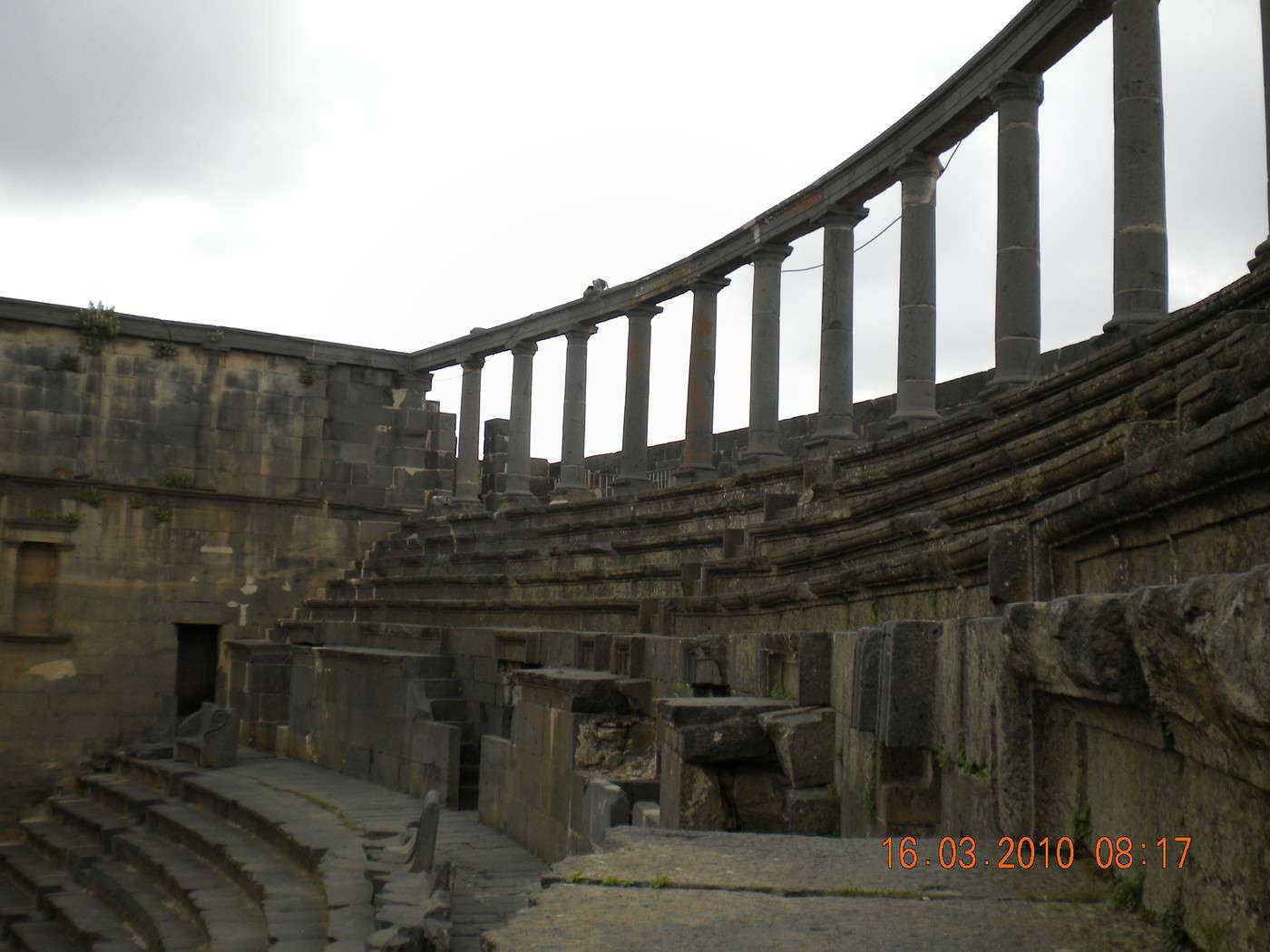
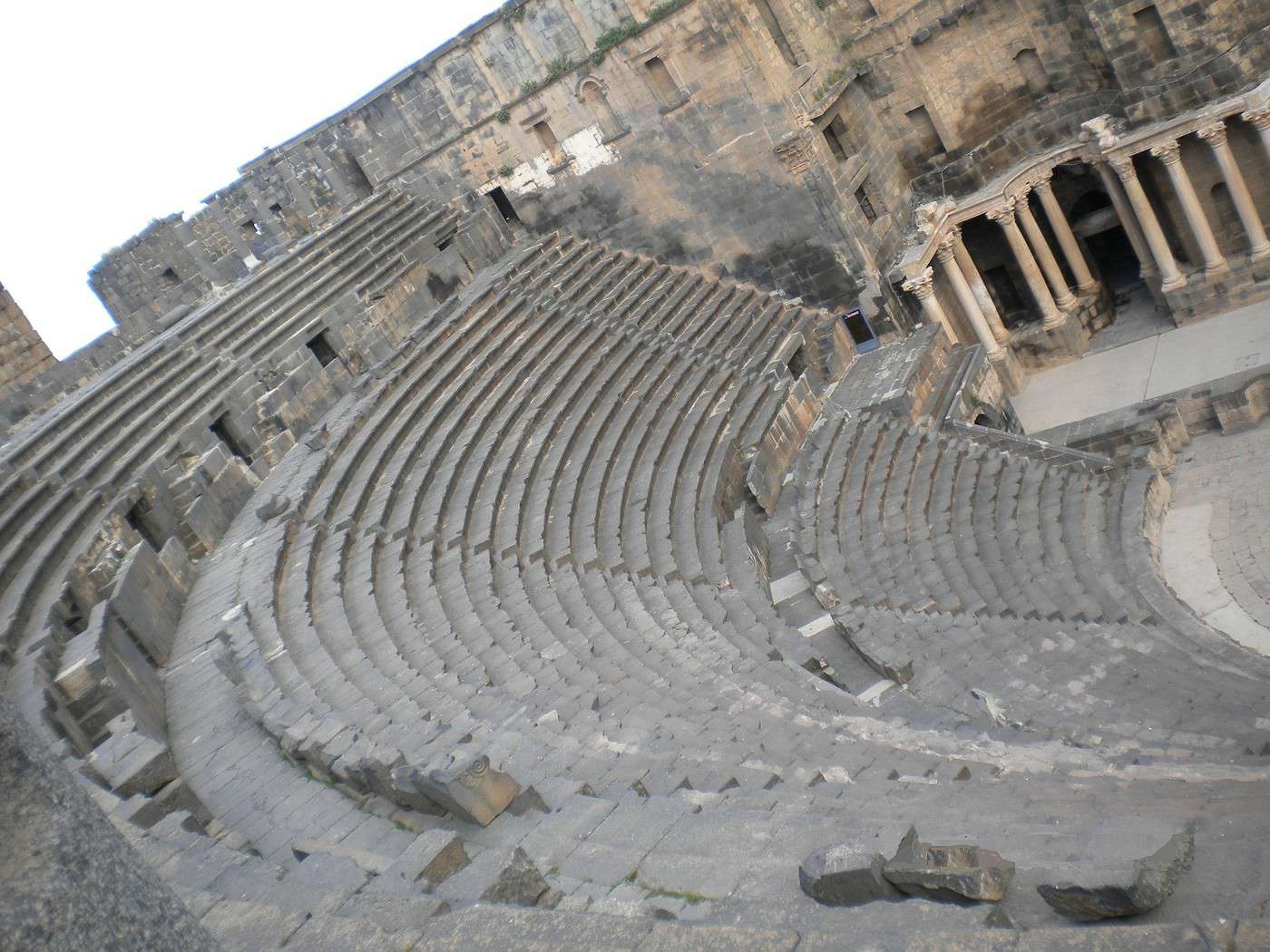
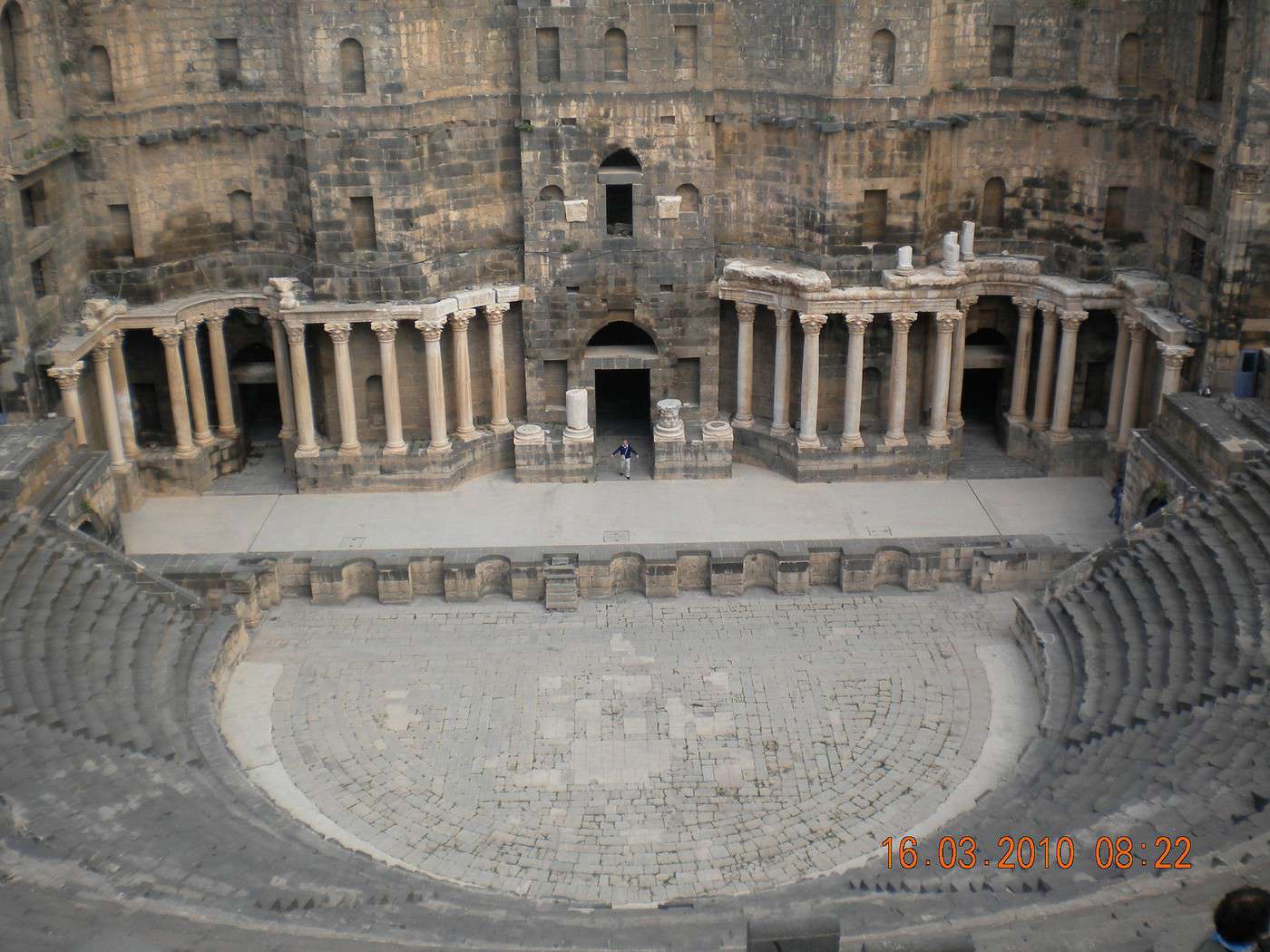
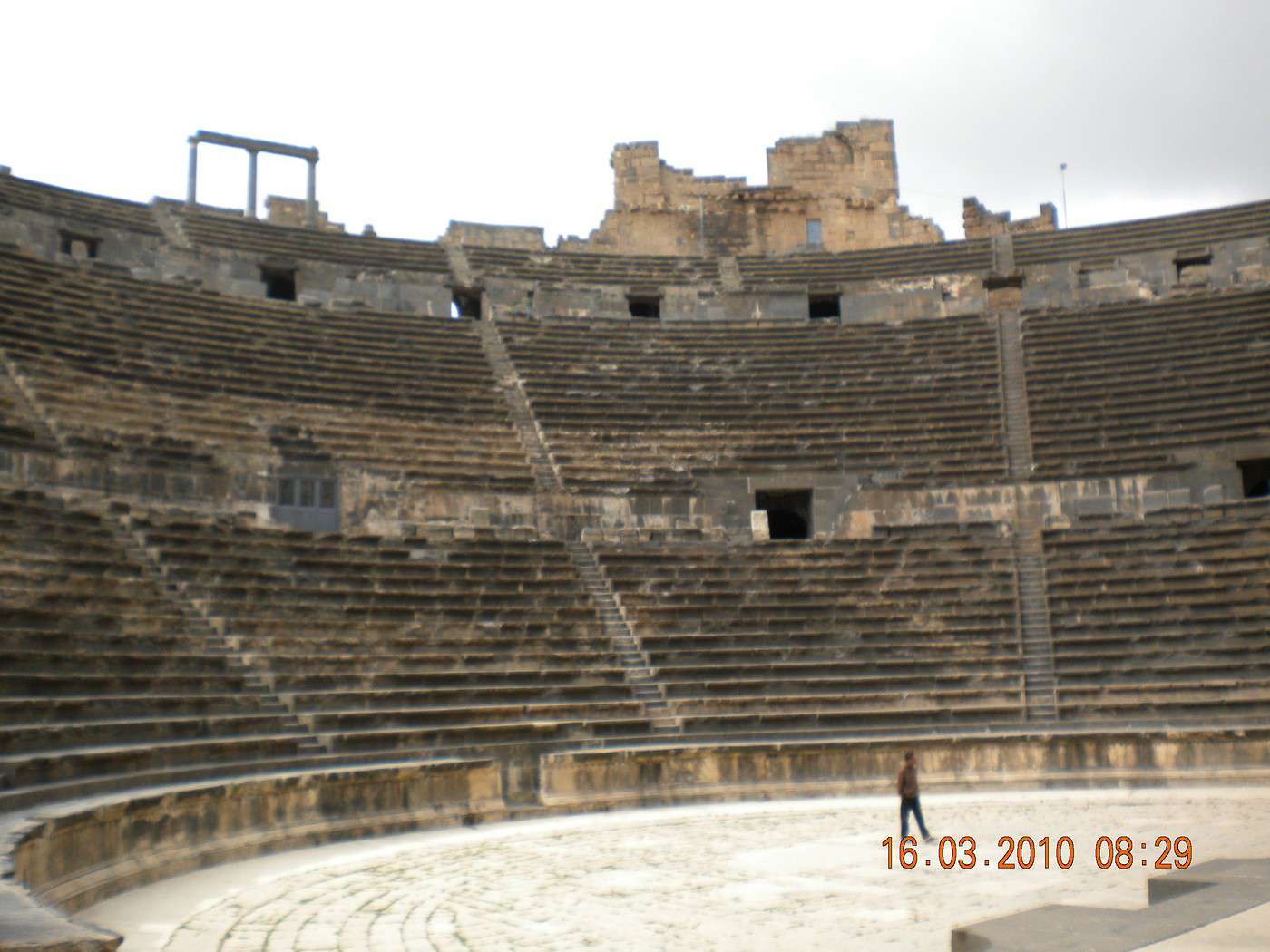
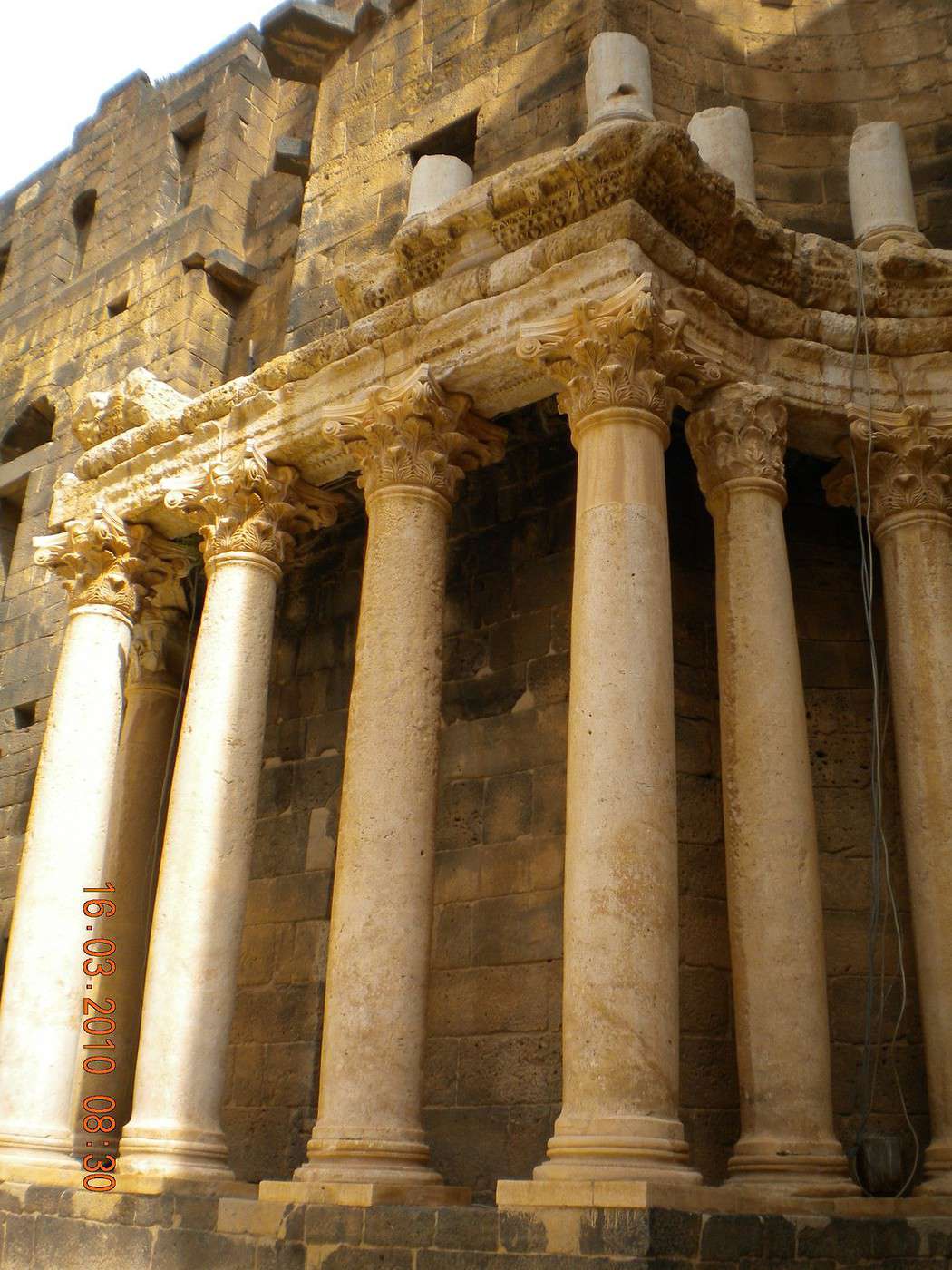
Le théâtre romain de Bosra ! Lorsqu'il fut découvert en 1854 par un français nommé Rey il avait été envahi par une mosquée et un arsenal . Les travaux durèrent jusqu'en 1947 mais le résultat fut superbe. Bosra est le théatre romain le mieux conservé au monde. 9000 spectateurs pouvaient y prendre place et son diamétre est de 100 m . La scène est magnifique et les gradins vus de la dite scène sont impressionnants.
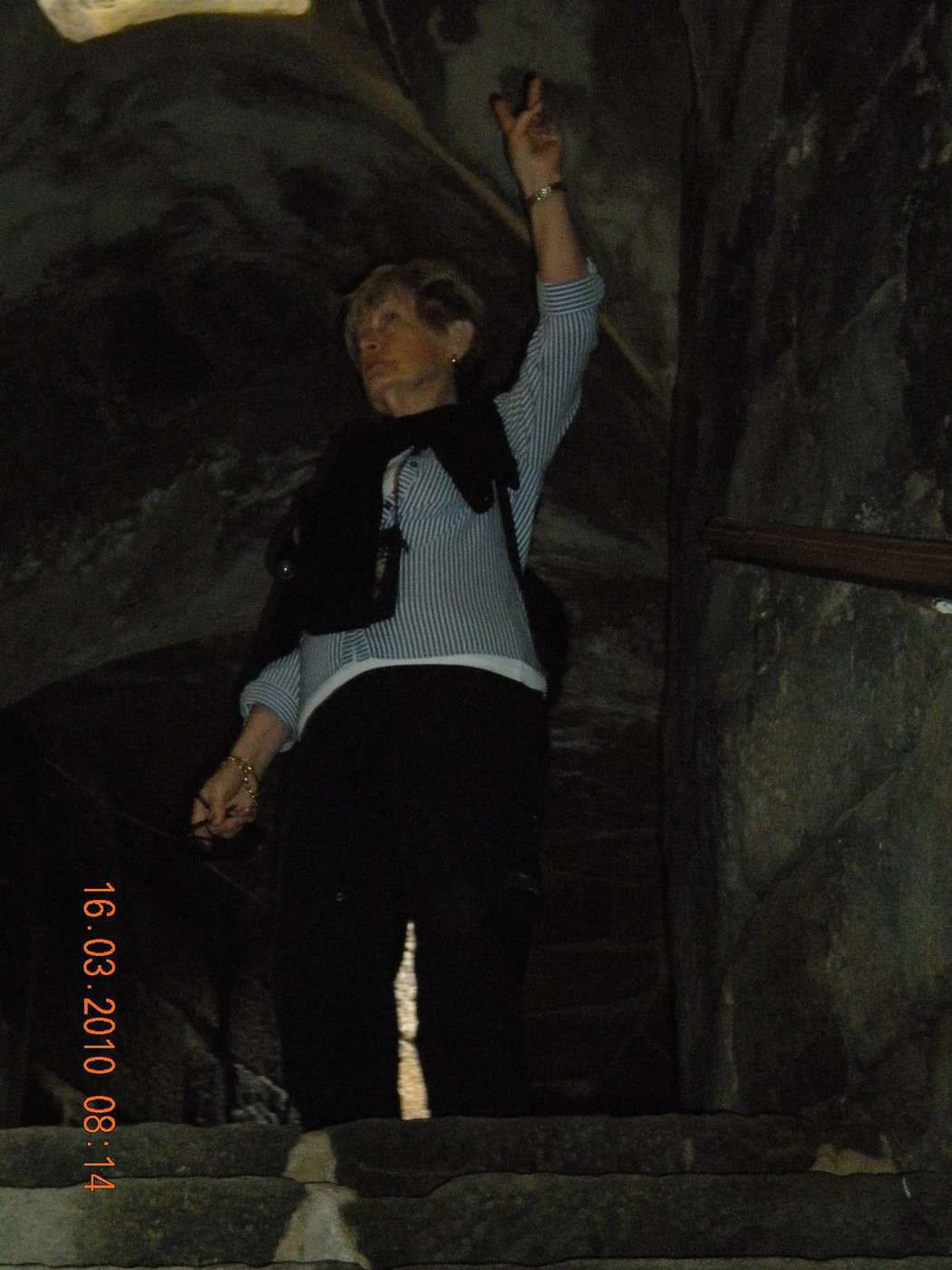
Une des voyageuses étant prof de musique et chantant à ravir nous a fait le plaisir de nous pousser une "chansonnette". L'accoustique est formidable. Assis au milieu de ces pierres sombres on sent l'emprise du passé mais le présent est bien là car un festival de musique fait revivre cet endroit tout les ans. Il faut repartir, il faut quitter ce lieu envoutant!
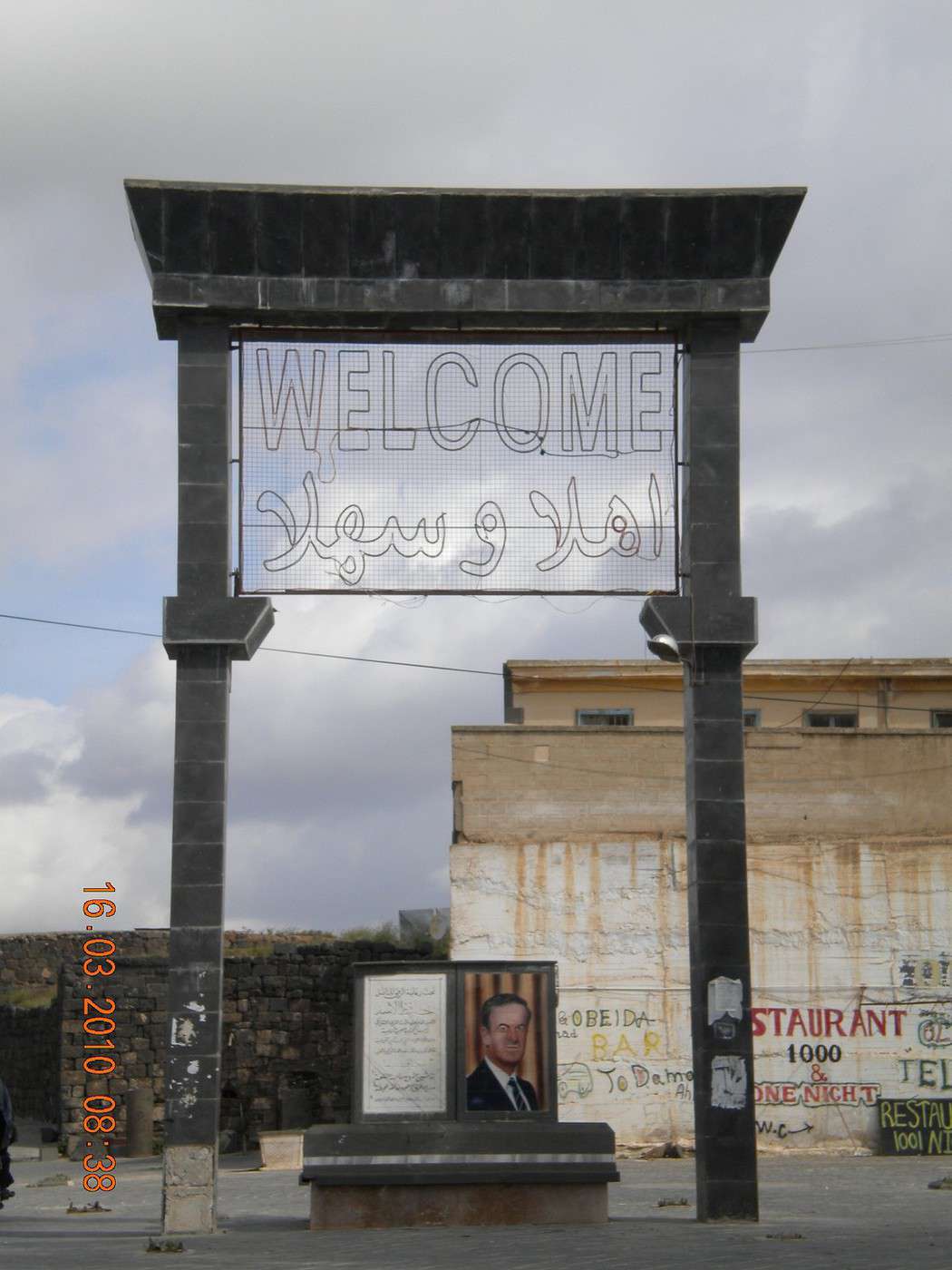
Nous laissons derrière nous la citadelle et son joyau, nous récupérons notre bus tout près de là après avoir traversé une esplanade où trône le père de l'actuel président syrien. les habitants continuent de vivre au milieu de se site qui reste ouvert nuit et jour.
Maintenant direction la frontière jordanienne. Nous avons dit aurevoir à Youssef qui nous quitte à Bosra mais pas à notre conducteur qui lui vas nous conduire à Amman. Mais avant il faut passer la douane syrienne, puis la jordanienne ????? Nous sommes tous un peu stressés. L'environnement avant la dooane n'est pas terrible. Il y a beaucoup de circulation. Les voitures .... et bien c'est les caravanes d'avant !!! Un douanier syrien discute avec notre chauffeur, il monte à bord, compte ... tout le monde est bien là ! personne n'est resté ! Nous repartons toujours autant de voitures, camions, cars dans les deux sens . La distance entre les frontières syrienne et jordanienne est relativement courte, le bord de la route est longé par des barbelés, c'est sale et l'herbe déséchée par le soleil envahie les accotements.
STOP !! JORDANIA !! Tout le monde descend. Nos passeports nous sont demandés, chic on vas avoir un tampon en sus !!!! Ah ! au faite on nous a recompté... au cas où .... Nous devons sortir nos bagages des soutes du véhicule en faisant bien attention de ne pas se les faire ...embarquer ! Il y a un monde fou a cette douane . Des syriens qui passent pour faire du commerce, les voitures ont toutes les coffres et les portières ouverts. C'est impressionnant de voir tout ce monde attendre très calmement, enfin ils ont pas le choix car les douaniers jordaniens n'ont pas un air tellement aimable. Nous sommes tous là, près de notre bus, avec nos valises, nos sacs en attente d'être contrôlés. Les discussions vont bon train ! Combien de temps allons nous rester ici ? Et bien pas longtemps !! Nos amis douaniers contrôlent avec beaucoup d'efficacité 4 valises, là au bord de la route. Rien à signaler ! Nous pouvons remonter dans le bus et Nadine nous remet nos passeports. Quelques mètre et nous nous arrêtons de nouveau, nous sommes en Jordanie ! Arrêt technique ! et opération "change" ! Il y a du monde au bureau de change ! Pas très avantageux 1euro = 0,96 JD. Nous avons le temps d'observer le trafic intense qui se fait entre les deux pays. Un appareil de contrôle est installé en face nous. Les véhicules montent dessus et le controle se fait assez rapidement. Certains véhicules sont totalement vidés de leur contenu et il en tient dans une voiture ! des marchandises de toutes sortes que les syriens vont vendre en Jordanie.
Tout le monde est de retour mais nous sommes 2 en supplèment : le guide très jeune et en sus nous avons droit à une garde rapprochée, un "malheureux" jeune policier de la "police touristique" qui vas nous escorter durant notre séjour en Jordanie ! J'ai bien peur qu'en cas de coup dur il aurait été surement le premier à ... prendre la poudre d'escampette ! Oh! il ne nous as pas dérangé ce brave garçon, nous n'avons jamais entedu sa voix, juste un salut le matin pour nous dire bonjour et c'est tout. Personnellement cette présence m'a fortement dérangée ! Notre guide s'appelait, devinez, Mohamed et pour nous ..Momo ! Original !
Nous voilà donc repartis, direction Amman mais nous allons déjeuner avant d'aller visiter le site antique de Jerash. Le restaurant n'est pas très loin de la frontière. Nous sommes très bien reçu et l'endroit est fort sympathique et en plein travaux. Le repas se déroule très bien et la nourriture est bonne. Nous avons toujours notre chauffeur syrien.
A plus
Capucine 18
BOSRA/JERASH (Jordanie)/ AMMAN
Ce matin pas beaucoup de kilomètres a effectués pour aller visiter un des sites que j'ai préféré durant ce voyage et que j'ignorais totalement l'existence : le site de BOSRA.
De notre chambre avec balcon nous bénéficions d'une vue sur le site avec en supplément un magnifique mimosa. Nous sortons nos valises et descendons prendre notre petit déjeuner. Ce sont des femmes qui s'occupent de la maintenance des bagages.... les hommes eux sont à la réception sous l'oeil vigilant de leur Président.
Nous traversons la ville nouvelle et suivons les remparts de cette citée qui connue l'abondance en même temps que Pétra sous les nabathéens. Bosra est située à environ 150 kms de Damas, tout près de l'autoroute Damas/Amman donc a la frontière syro/jordanienne.
Le trajet est très court. Quelle différence avec Palmyre que nous avons quittée hier ! Palmyre est solaire, faite de pierres rayonnantes sous le soleil ! Bosra est plus lunaire, la pierre de basalte lui donne "un air mystérieux" sobre. au contraire de Palmyre qui ne vit que par ....les touristes. Bosra, elle, vit encore, les ruines sont habitées. On vit à Bosra !
Nous pénétrons dans cette citée par une porte. L'aspect est rude nous longeons le decumanus pour arriver au cardo. Des batiments qui servaient d'entrepots nous donnent un aperçu de la grandeur du commerce de cette ville. Au milieu des pierres millénaires nous découvrons des moutons entrain de paître tranquillement. Quelques paraboles viennent ternir cette ambiance des caravanes que l'on peut imaginer arrivant avec leur chargement précieux ! Mais Bosra vit ! Nous voyons quelques échoppes dont une écrite en français "métieràtisser" ! Youssef nous indique les différents batiments, tout y était : les thermes, la mosquée, la cathédrale, et oui ! les colonnes nabathéennes, le palais. Nous nous dirigeons vers la citadelle. Nous apercevons notre hotel, le seul de Bosra, et effectivement la vue ne peut être que magnifique ! Le plus beau arrive !!! Nous traversons des souterrains un peu lugubres après être passé par un pont levis enjambant un fossé profond et là ! l'émerveillement !!!
Le théâtre romain de Bosra ! Lorsqu'il fut découvert en 1854 par un français nommé Rey il avait été envahi par une mosquée et un arsenal . Les travaux durèrent jusqu'en 1947 mais le résultat fut superbe. Bosra est le théatre romain le mieux conservé au monde. 9000 spectateurs pouvaient y prendre place et son diamétre est de 100 m . La scène est magnifique et les gradins vus de la dite scène sont impressionnants.
Une des voyageuses étant prof de musique et chantant à ravir nous a fait le plaisir de nous pousser une "chansonnette". L'accoustique est formidable. Assis au milieu de ces pierres sombres on sent l'emprise du passé mais le présent est bien là car un festival de musique fait revivre cet endroit tout les ans. Il faut repartir, il faut quitter ce lieu envoutant!
Nous laissons derrière nous la citadelle et son joyau, nous récupérons notre bus tout près de là après avoir traversé une esplanade où trône le père de l'actuel président syrien. les habitants continuent de vivre au milieu de se site qui reste ouvert nuit et jour.
Maintenant direction la frontière jordanienne. Nous avons dit aurevoir à Youssef qui nous quitte à Bosra mais pas à notre conducteur qui lui vas nous conduire à Amman. Mais avant il faut passer la douane syrienne, puis la jordanienne ????? Nous sommes tous un peu stressés. L'environnement avant la dooane n'est pas terrible. Il y a beaucoup de circulation. Les voitures .... et bien c'est les caravanes d'avant !!! Un douanier syrien discute avec notre chauffeur, il monte à bord, compte ... tout le monde est bien là ! personne n'est resté ! Nous repartons toujours autant de voitures, camions, cars dans les deux sens . La distance entre les frontières syrienne et jordanienne est relativement courte, le bord de la route est longé par des barbelés, c'est sale et l'herbe déséchée par le soleil envahie les accotements.
STOP !! JORDANIA !! Tout le monde descend. Nos passeports nous sont demandés, chic on vas avoir un tampon en sus !!!! Ah ! au faite on nous a recompté... au cas où .... Nous devons sortir nos bagages des soutes du véhicule en faisant bien attention de ne pas se les faire ...embarquer ! Il y a un monde fou a cette douane . Des syriens qui passent pour faire du commerce, les voitures ont toutes les coffres et les portières ouverts. C'est impressionnant de voir tout ce monde attendre très calmement, enfin ils ont pas le choix car les douaniers jordaniens n'ont pas un air tellement aimable. Nous sommes tous là, près de notre bus, avec nos valises, nos sacs en attente d'être contrôlés. Les discussions vont bon train ! Combien de temps allons nous rester ici ? Et bien pas longtemps !! Nos amis douaniers contrôlent avec beaucoup d'efficacité 4 valises, là au bord de la route. Rien à signaler ! Nous pouvons remonter dans le bus et Nadine nous remet nos passeports. Quelques mètre et nous nous arrêtons de nouveau, nous sommes en Jordanie ! Arrêt technique ! et opération "change" ! Il y a du monde au bureau de change ! Pas très avantageux 1euro = 0,96 JD. Nous avons le temps d'observer le trafic intense qui se fait entre les deux pays. Un appareil de contrôle est installé en face nous. Les véhicules montent dessus et le controle se fait assez rapidement. Certains véhicules sont totalement vidés de leur contenu et il en tient dans une voiture ! des marchandises de toutes sortes que les syriens vont vendre en Jordanie.
Tout le monde est de retour mais nous sommes 2 en supplèment : le guide très jeune et en sus nous avons droit à une garde rapprochée, un "malheureux" jeune policier de la "police touristique" qui vas nous escorter durant notre séjour en Jordanie ! J'ai bien peur qu'en cas de coup dur il aurait été surement le premier à ... prendre la poudre d'escampette ! Oh! il ne nous as pas dérangé ce brave garçon, nous n'avons jamais entedu sa voix, juste un salut le matin pour nous dire bonjour et c'est tout. Personnellement cette présence m'a fortement dérangée ! Notre guide s'appelait, devinez, Mohamed et pour nous ..Momo ! Original !
Nous voilà donc repartis, direction Amman mais nous allons déjeuner avant d'aller visiter le site antique de Jerash. Le restaurant n'est pas très loin de la frontière. Nous sommes très bien reçu et l'endroit est fort sympathique et en plein travaux. Le repas se déroule très bien et la nourriture est bonne. Nous avons toujours notre chauffeur syrien.
A plus
Capucine 18
😉Quelques photos !
Capucine 18
1 la vue de notre chambre d'hotel
2 le mimosa
3 les femmes au boulot
4 sous l'oeil du Président
5 la nouvelle ville de Bosra
6 7 8 9 10 11 12 13 14 le site de Bosra
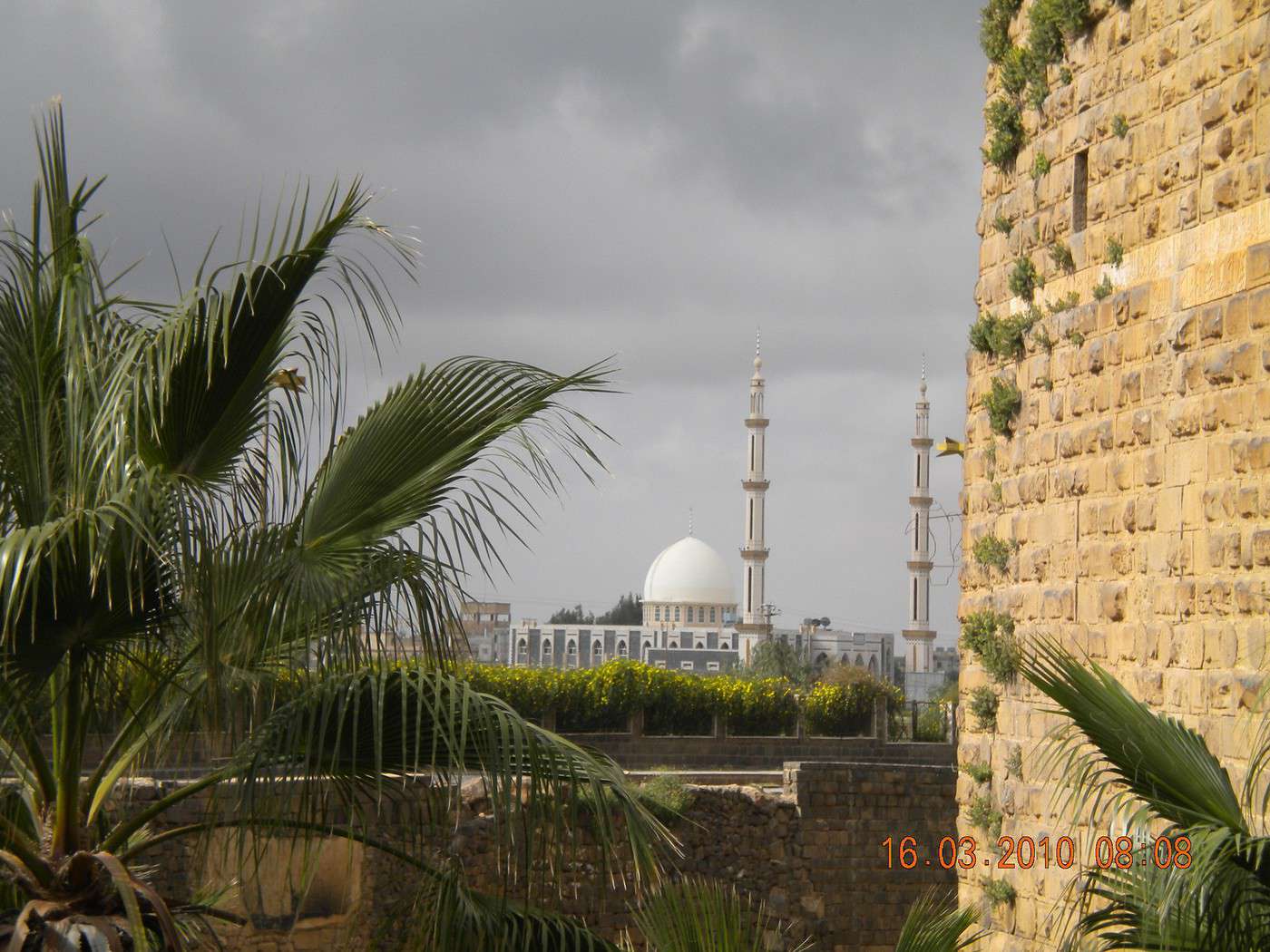
15 la nouvelle mosquée vue de la citadelle
16 17 18 les galeries avant d'arriver au théatre
Capucine 18
1 la vue de notre chambre d'hotel
2 le mimosa
3 les femmes au boulot
4 sous l'oeil du Président
5 la nouvelle ville de Bosra
6 7 8 9 10 11 12 13 14 le site de Bosra
15 la nouvelle mosquée vue de la citadelle
16 17 18 les galeries avant d'arriver au théatre
bonsoir Liliane. beau voyage. 🙂
coucou capucine, merci pour cette suite et pour les photos, superbes la suite je ne la vérrais qu'au mois d'octobre, je repart pour un mois dans les p.o
bonne soirée.😉😉😉
bonne soirée.😉😉😉
😉Bonsoir Lyda,
Bon séjour dans les PO ! En octobre nous partons pour l'Italie .
Bises
Capucine 18
Bon séjour dans les PO ! En octobre nous partons pour l'Italie .
Bises
Capucine 18
😉😉Salut Bruno,
Merci effectivement voyage très bien .
Je mets quelques photos de Bosra
Bises
Capucine 18
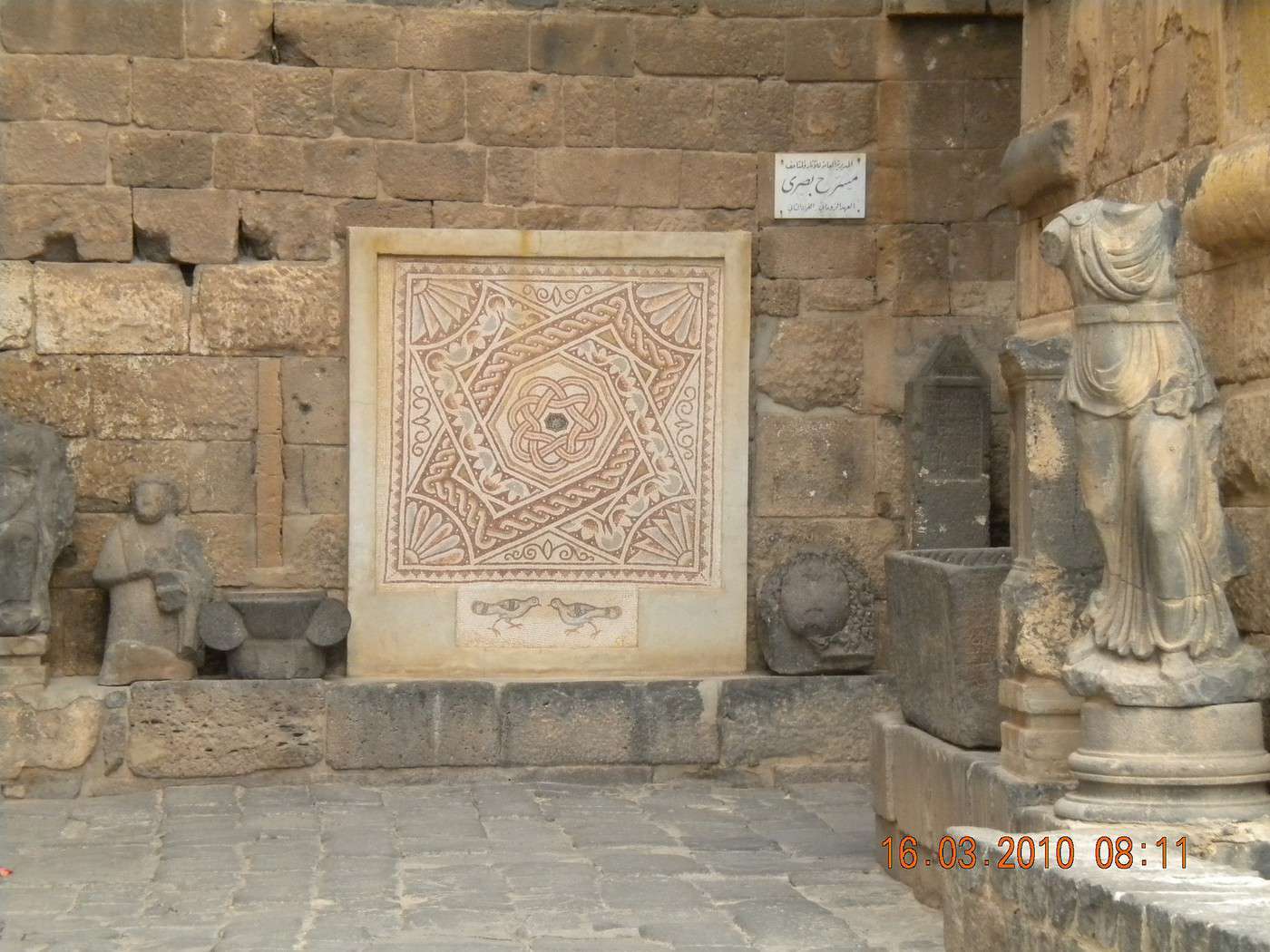
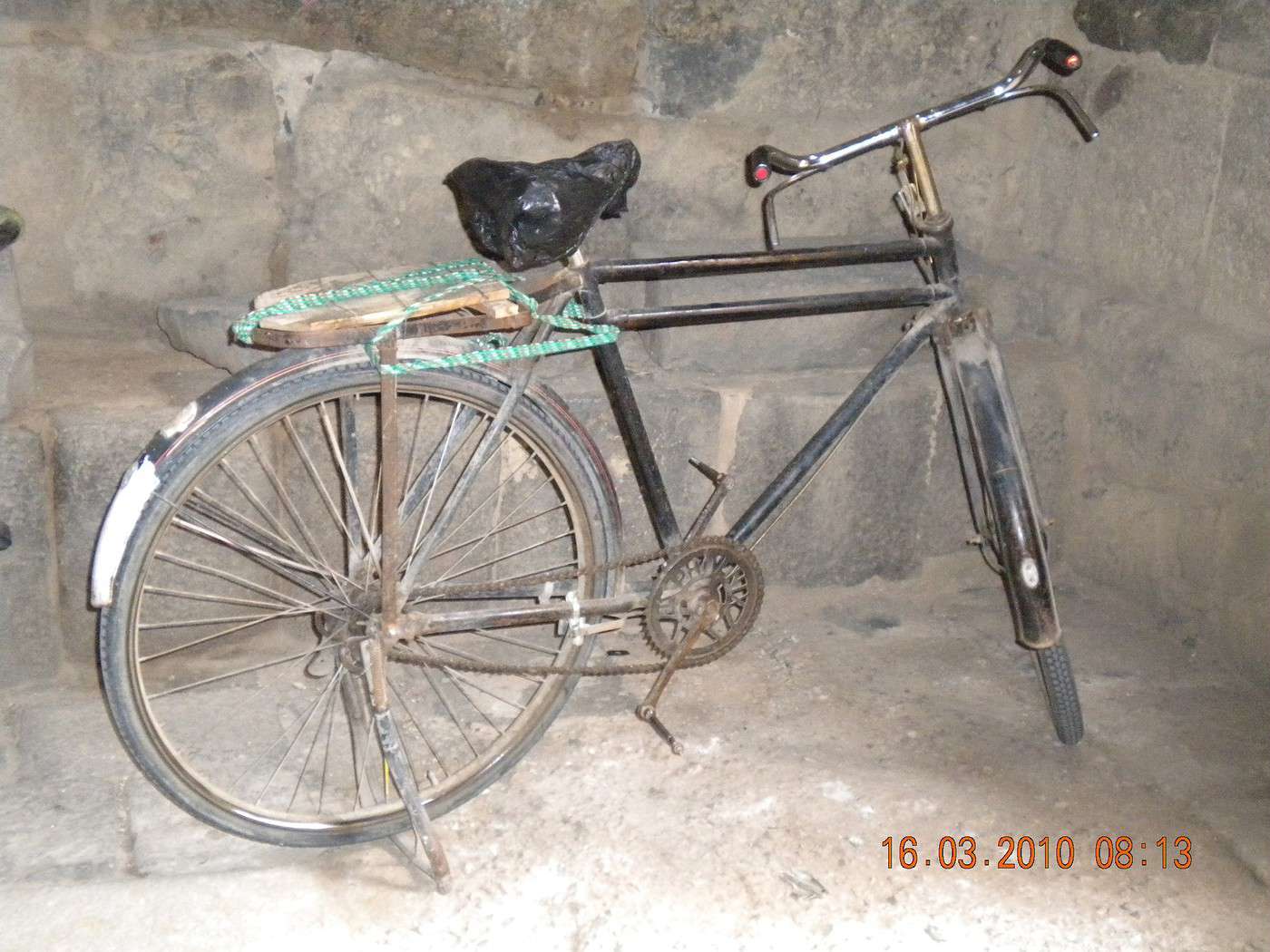
Bosra le théatre de 1 à 6
7 il surveille
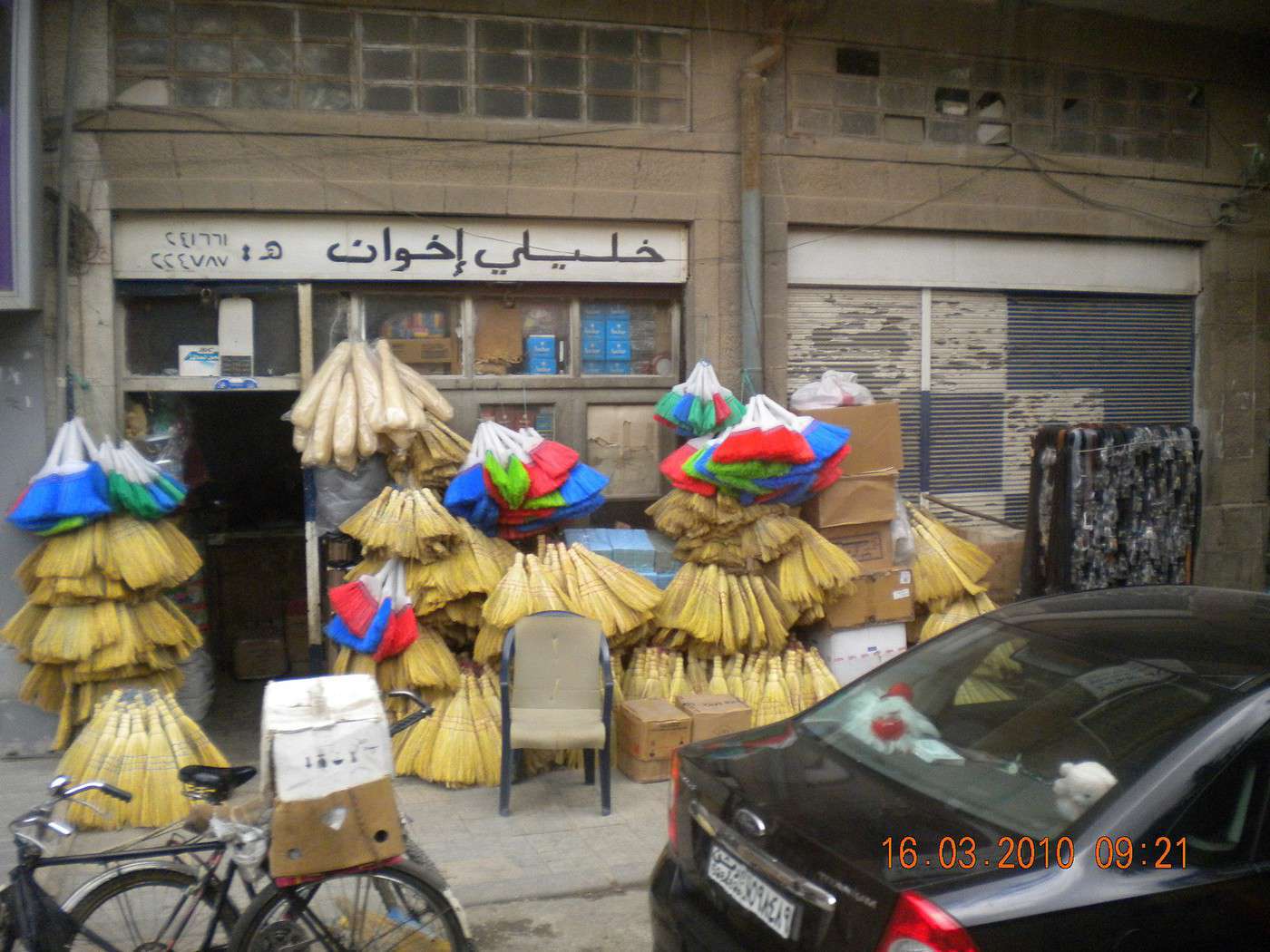
8 boutique près du site de Bosra
Merci effectivement voyage très bien .
Je mets quelques photos de Bosra
Bises
Capucine 18
Bosra le théatre de 1 à 6
7 il surveille
8 boutique près du site de Bosra
😉Bonjour,
C'est un des endroits qui m'a le plus impressionné sur ce voyage. Peut-être parce que j'ignorais son existence . J'avais vu peu de photos de ce théatre sur les infos que j'avais consultées avant de partir car malgré que je suis très voyages organisés je prépare toutes les étapes avant de partir.
Je suis entrain de "balbutier" un blog je vous mets le site :
http://capucine-18.blog4ever.com
(je ne sais pas le mettre dans mon profil, et oui pas douée en informatique !!!)
A plus
Capucine 18
C'est un des endroits qui m'a le plus impressionné sur ce voyage. Peut-être parce que j'ignorais son existence . J'avais vu peu de photos de ce théatre sur les infos que j'avais consultées avant de partir car malgré que je suis très voyages organisés je prépare toutes les étapes avant de partir.
Je suis entrain de "balbutier" un blog je vous mets le site :
http://capucine-18.blog4ever.com
(je ne sais pas le mettre dans mon profil, et oui pas douée en informatique !!!)
A plus
Capucine 18
suite JERASH
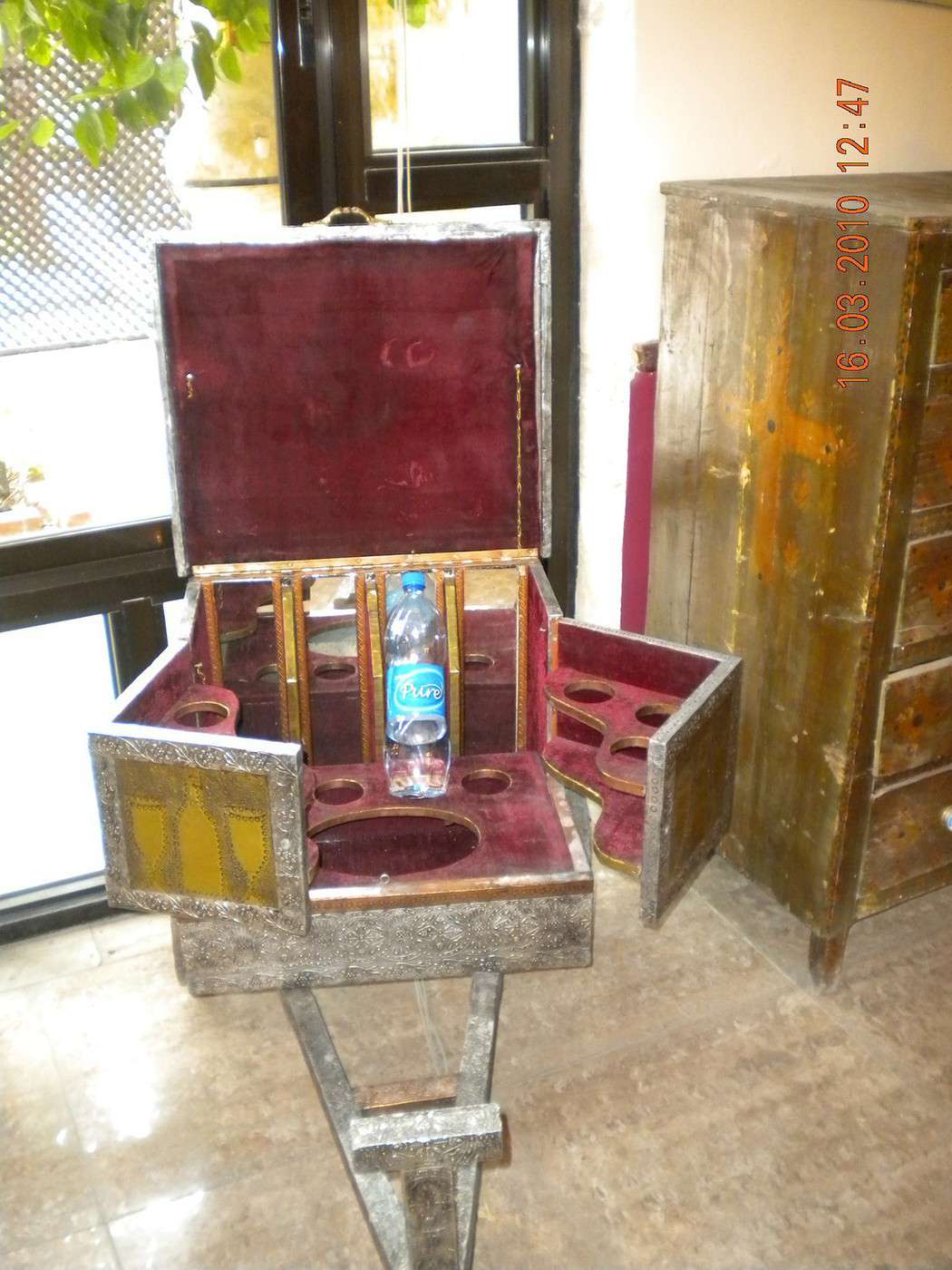
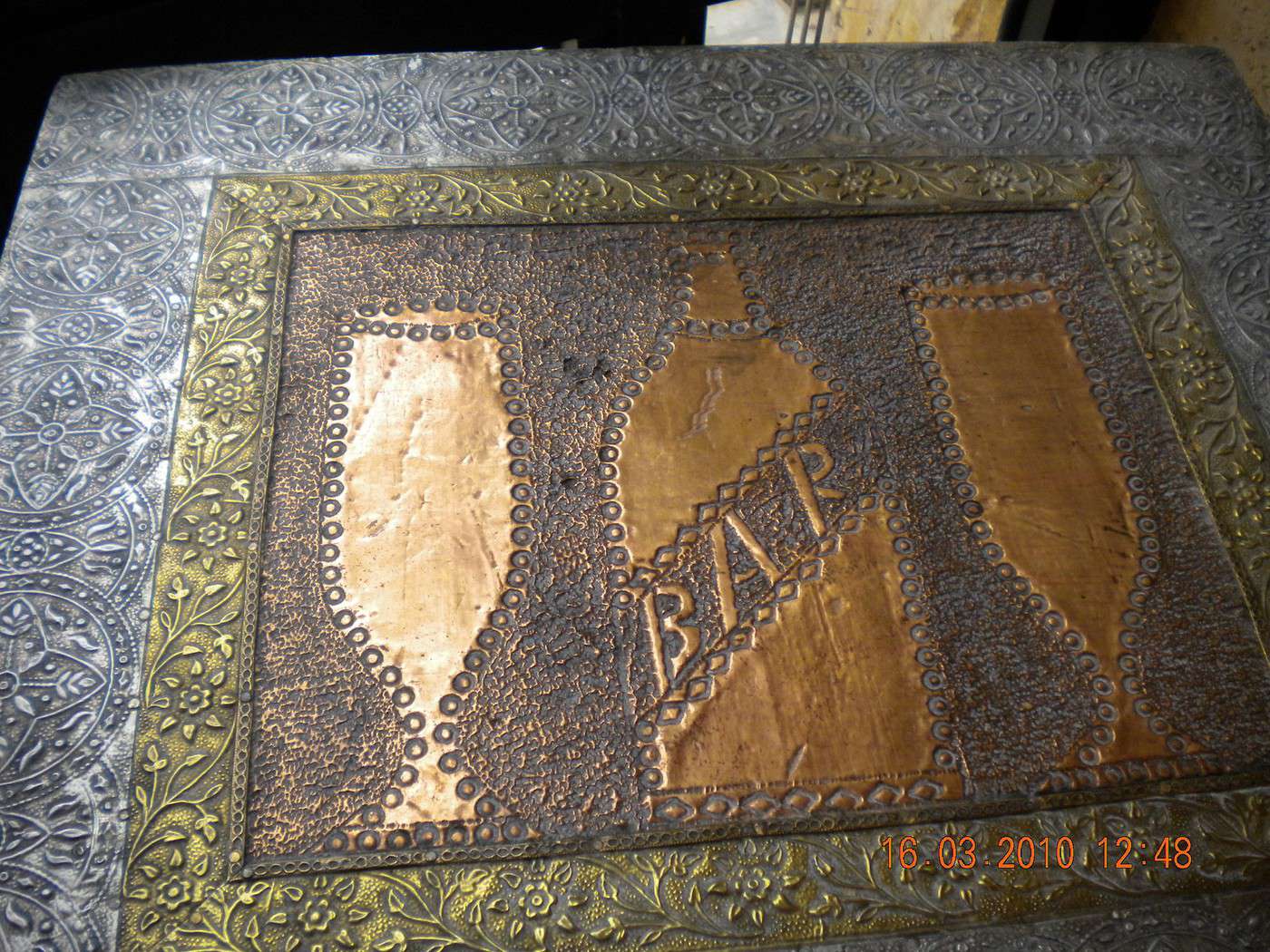
Nous sommes prèts à repartir pour la visite du site de Jerash. Avant nous faisons un petit tour dans le restaurant. il y a des meubles anciens intéressants dont un bar de toute beauté.
Nous regagnons notre bus pour un trajet assez court car Jerash est situé entre la frontière syrienne et la capitale de Jordanie Amman. Les champs que nous longeons ont l'air fertile. Nous arrivons dans la ville nouvelle de Jerash construite le long de l'Oued Jerash et de l'autre nous découvrons le site deux fois millénaire de la cité antique. Notre guide, Momo !!!, qui parle un français assez approximatif nous donne quelques infos mais vu son ardeur à prendre le micro, je sens que "ça vas pas le faire" Enfin on verra bien ! Nous arrivons sur le parking, il y a déjà pas mal de bus jordaniens nous sommes le seul ...étranger (syrien).
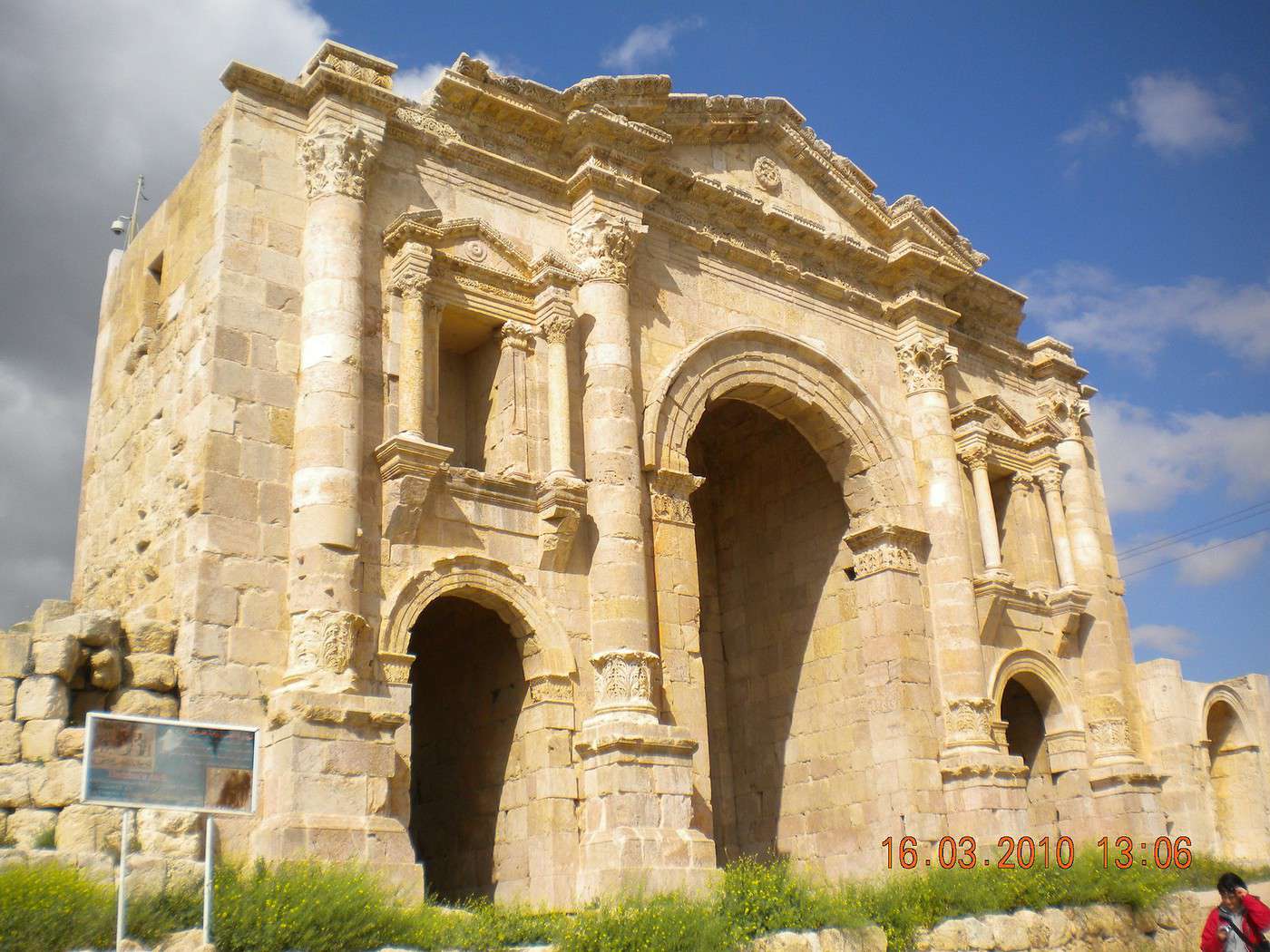
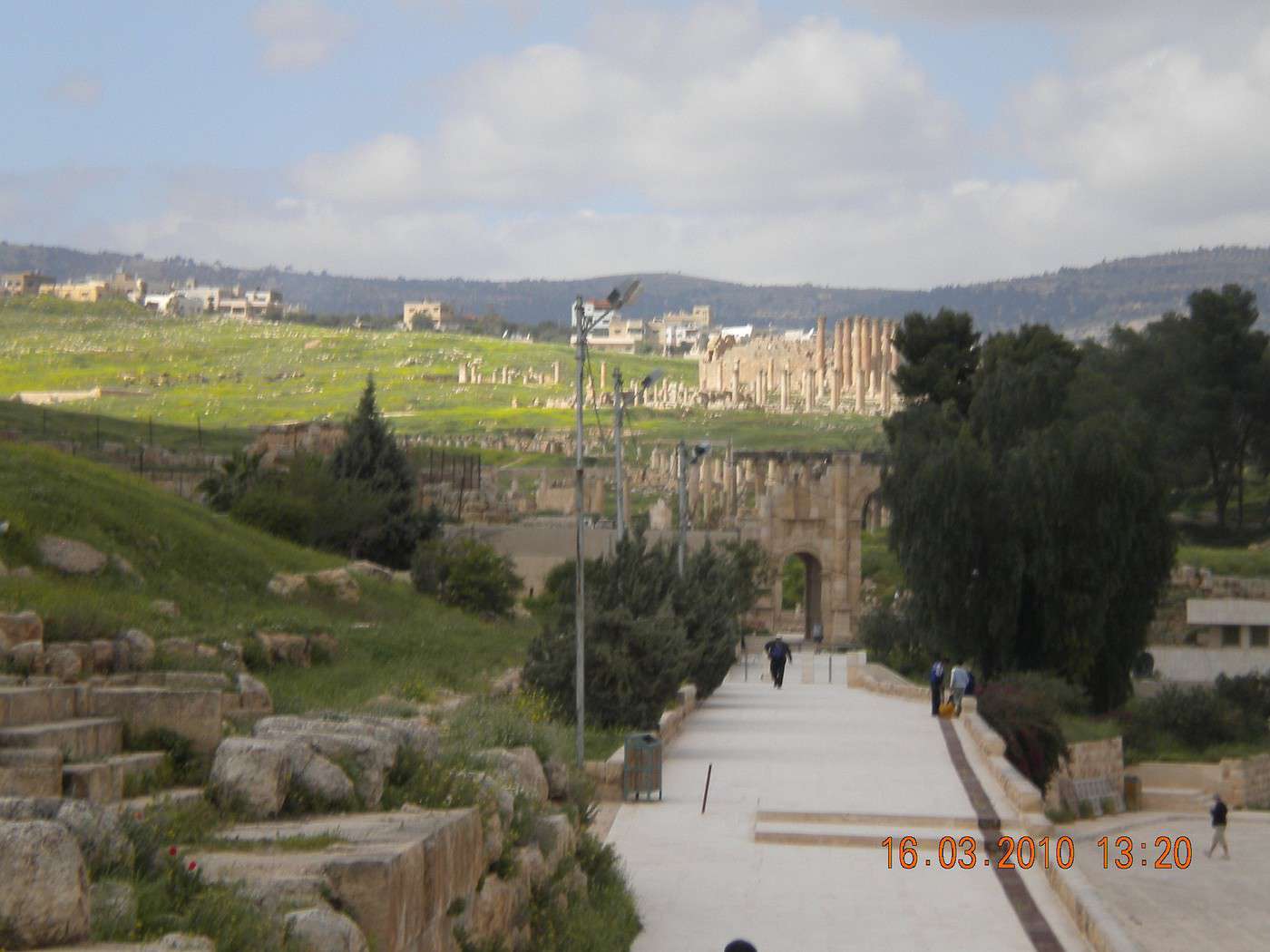
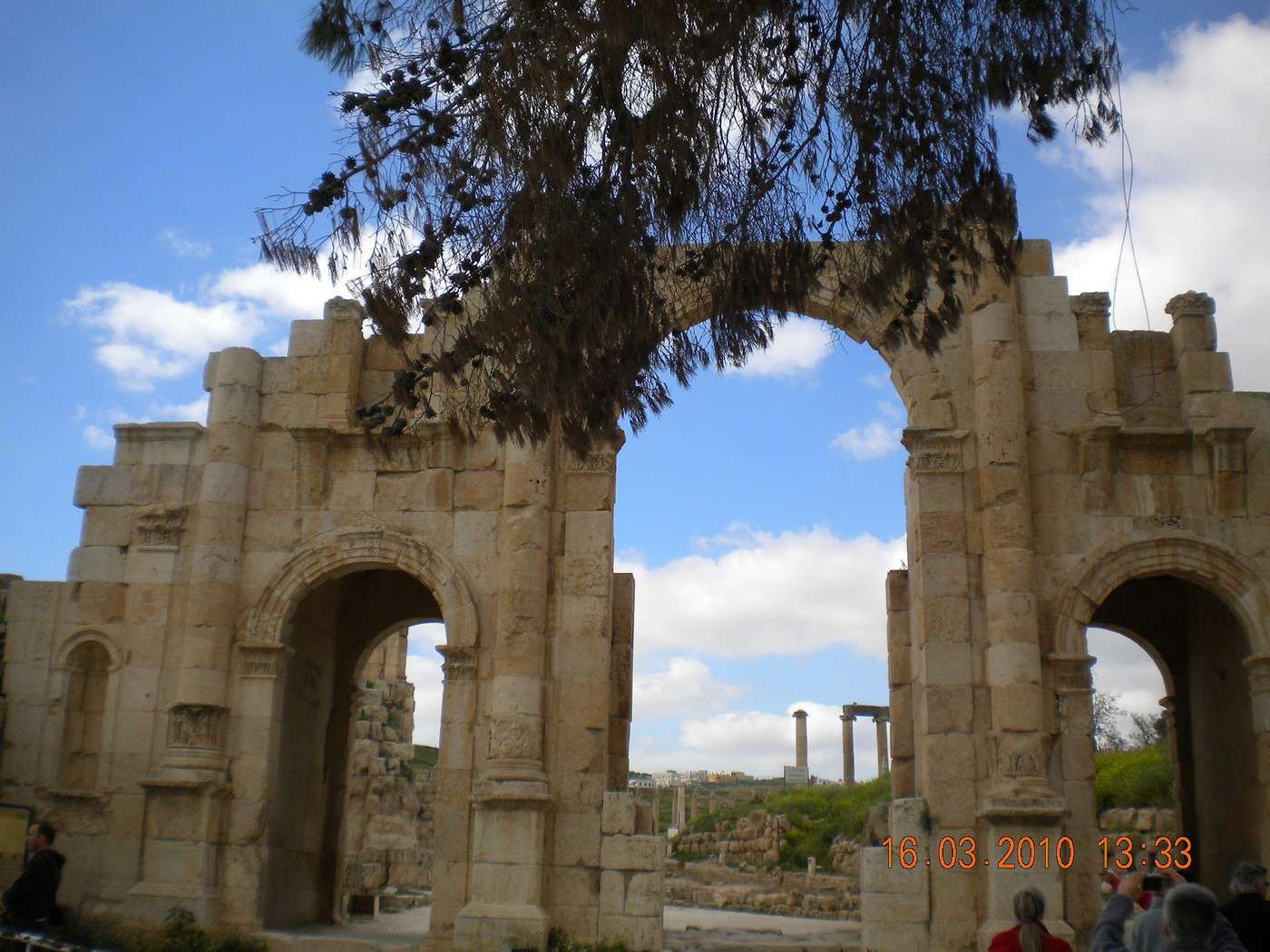
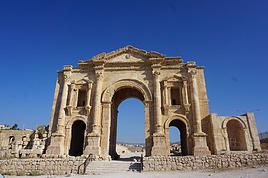
Nous passons dans un complexe fait de boutiques. Nous nous dirigeons vers le site. La porte d'Hadrien nous accueille (encore lui... on retrouve toujours les mêmes!), sur notre gauche, nous longeons l'hippodrome. Il est entrain d'être tout restauré. Momo nous fait entrer dans le Visitor center et la nous découvrons le plan de l'antique Jerash. Ticket en poche nous voilà parti pour une expédition que je sens "speed" . Ce guide ne m'inspire pas !!! Nous suivons un trajet très bien établi, notre guide nous donne des explications pas toujours compréhensives mais bon je vais faire comme d'habitude, suivre un peu et me laisser distancer pour prendre tranquillement mes photos . Le site est immense et il vas toujours en montant.
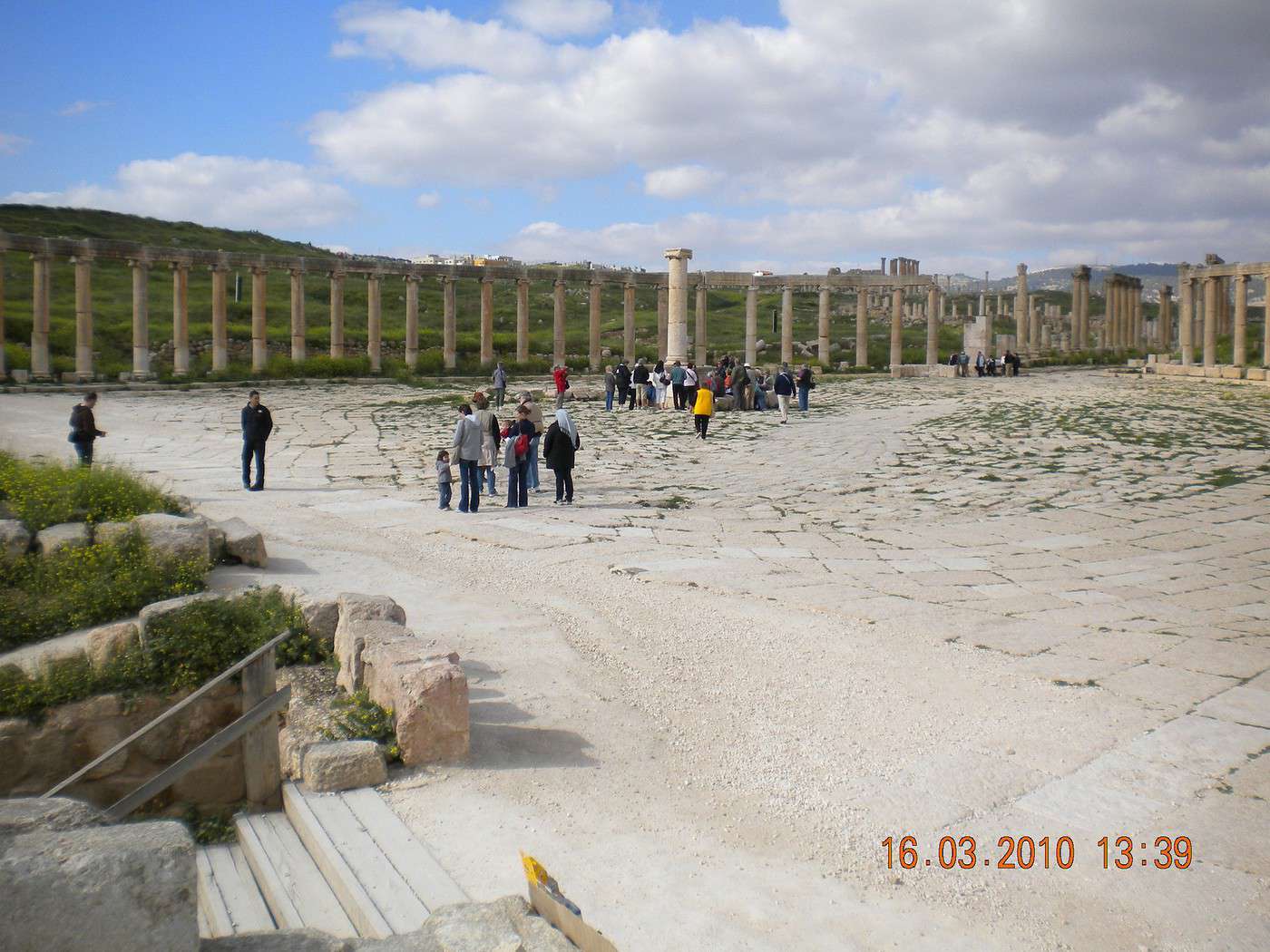
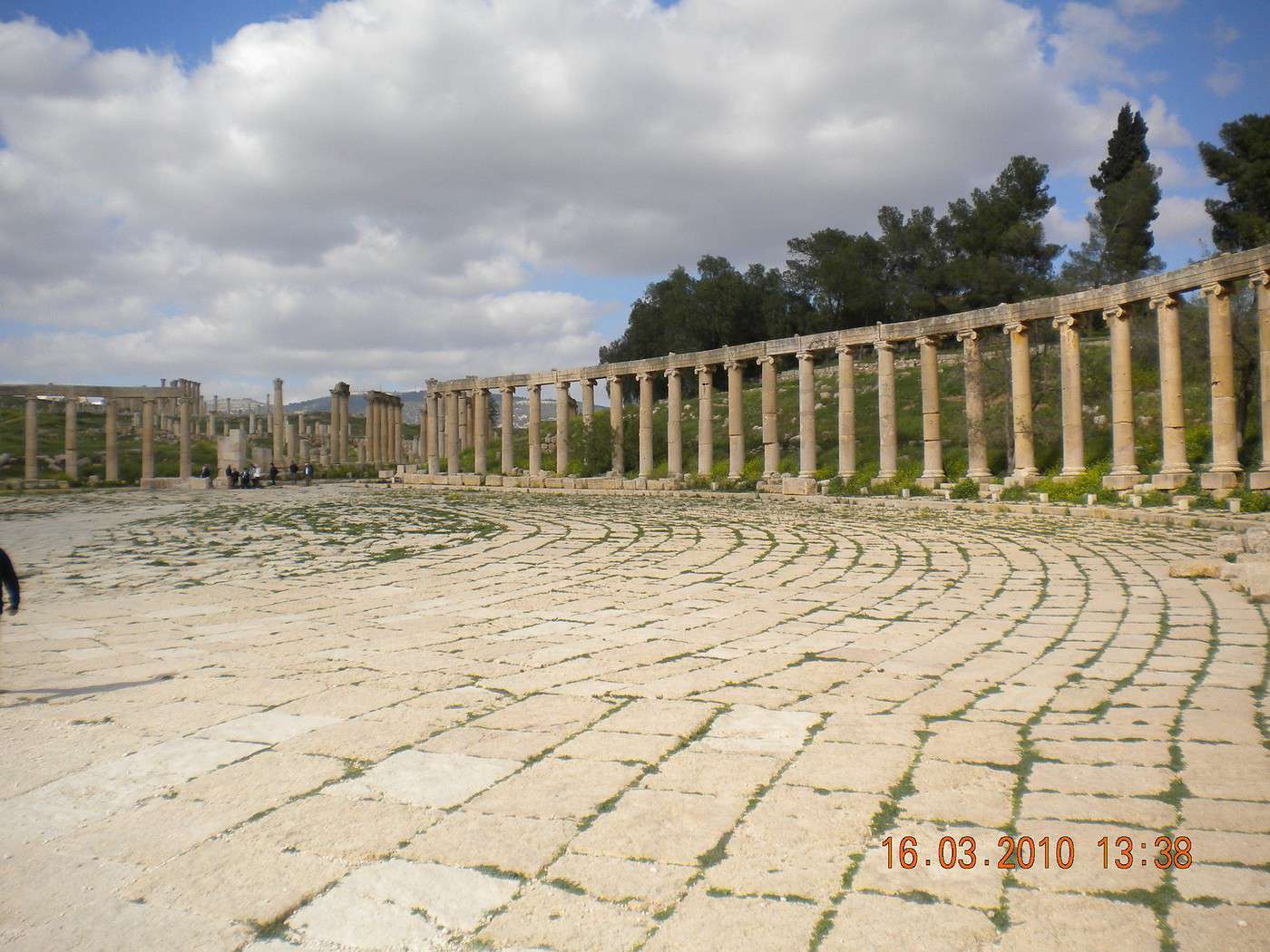
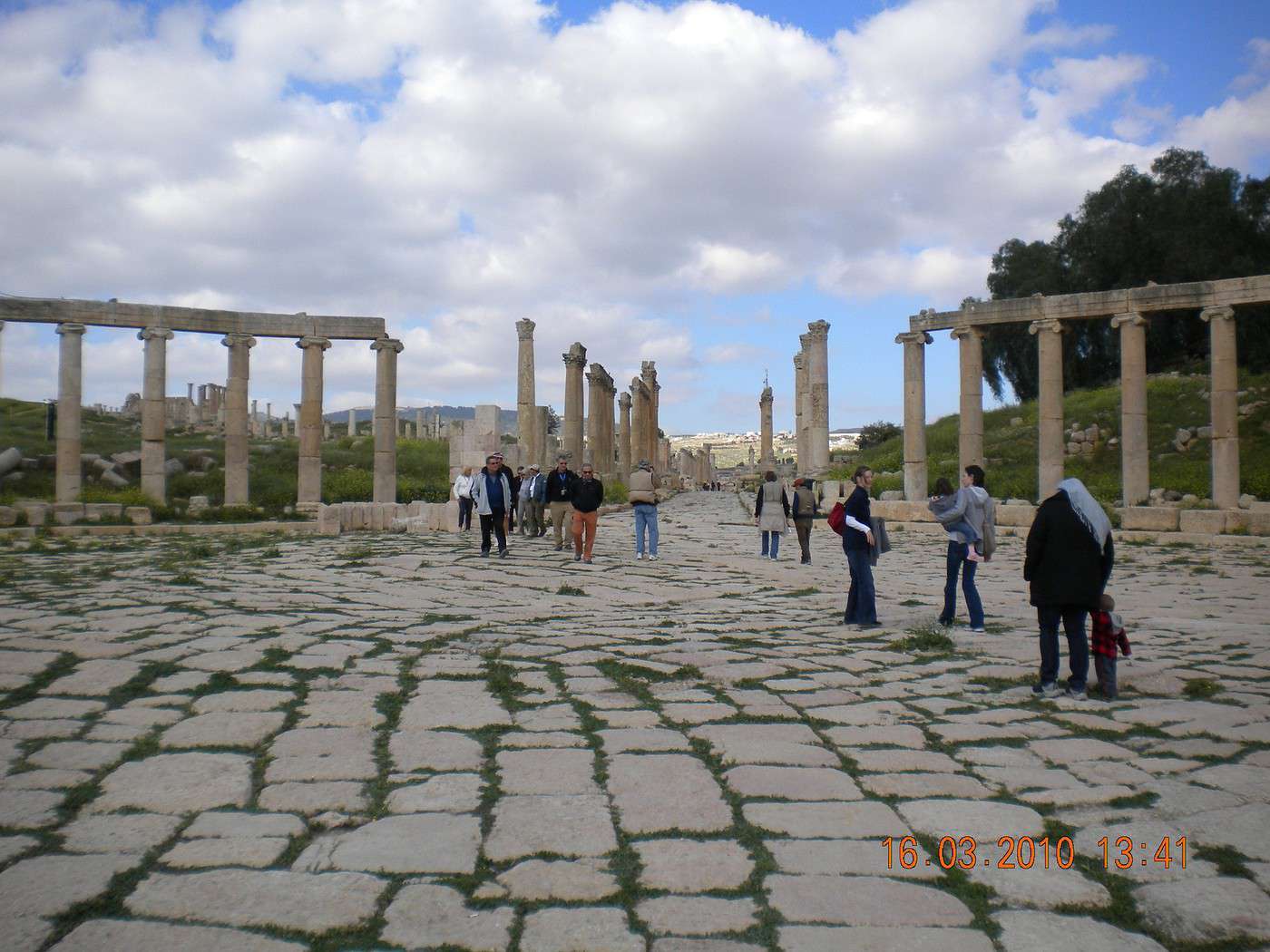
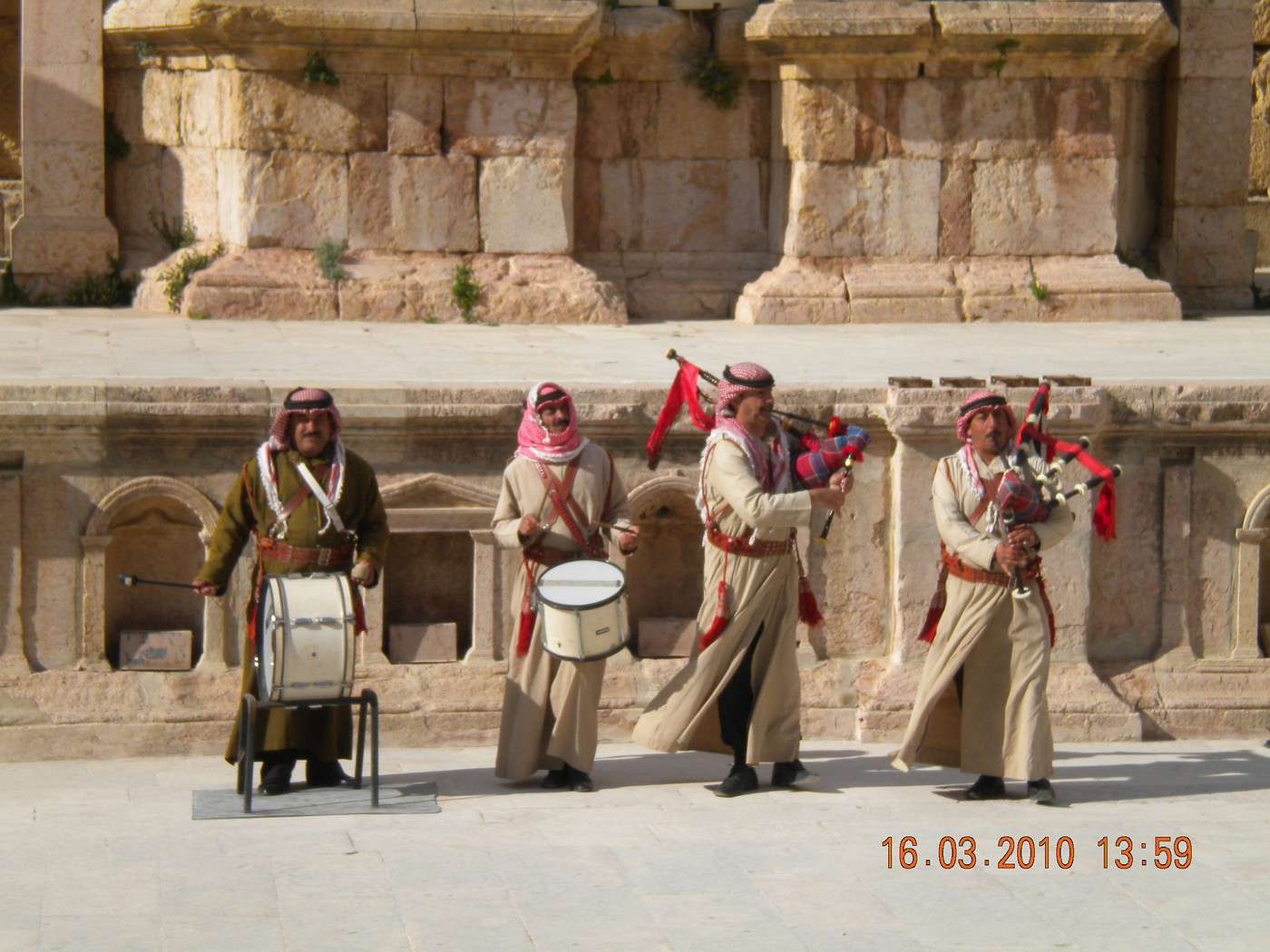
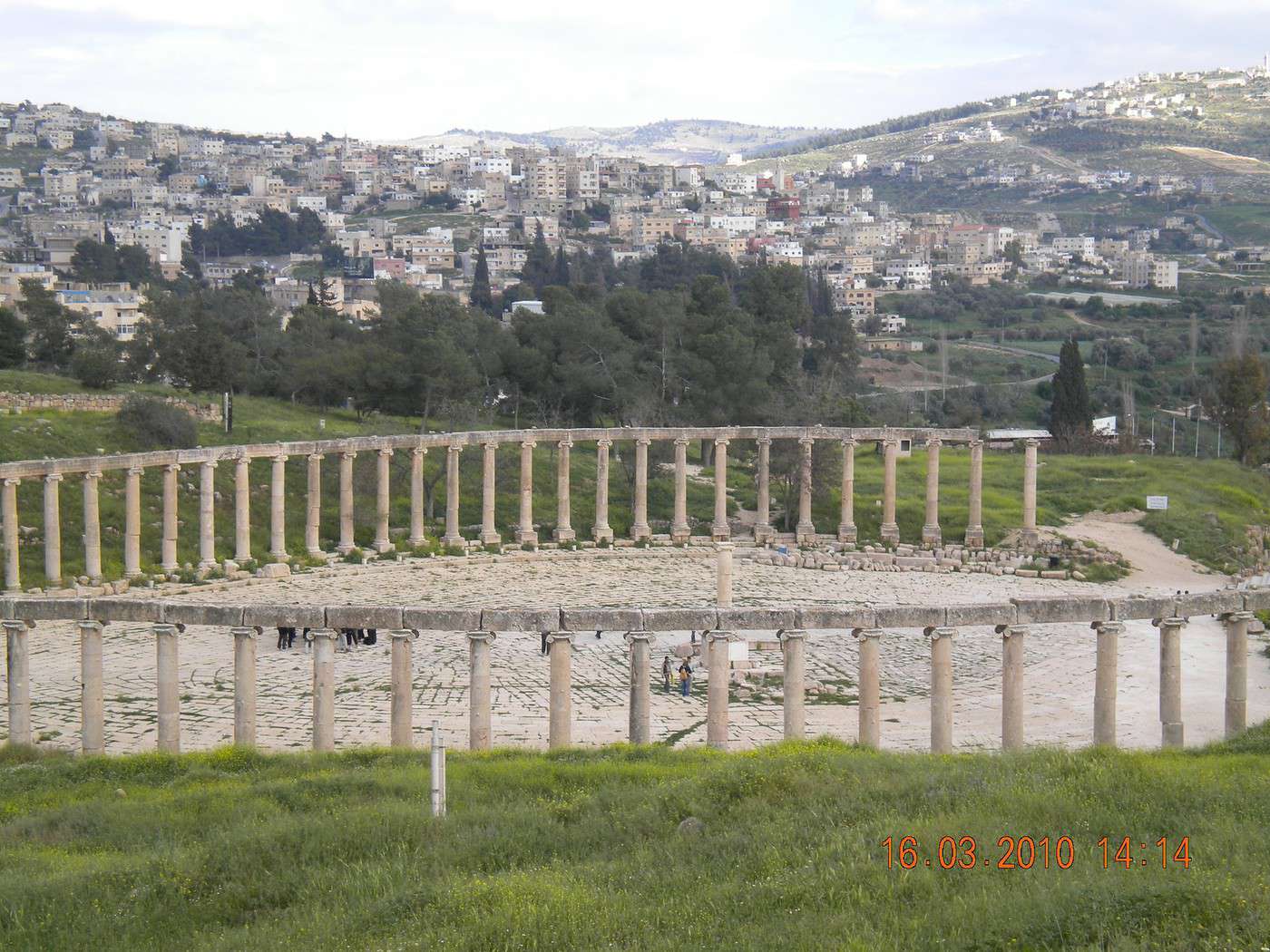
Le théâtre est là, nous avons droit à l'aubade d'anciens militaires. Bon passons pour les anciens militaires ! une petite pièce est demandée pour améliorer leur pension ...L'endroit est beau et c'est dans ce cadre qu'en juillet se déroule un festival de folklore. En sortant du théatre nous découvrons une place ovale de toute beauté. Sa forme elliptique est augmentée par la disposition concentrique de son dallage. Des colonnes ioniques la bordent et pour terminer la carte postale le cardo miximus est très long 800 m et est bordé de monuments importants .
Nous allons sur notre gauche et commençons a gravir par un chemin assez pentu la colline qui nous mène à d'autres batiments. La vue est superbe sur la campagne environnante . Nous nous retrouvons à 5 où 6 largués par notre ami Momo qui marche comme un "fou" ! Je ne peux pas suivre et ça ne me gêne pas plus que celà mais ce qui est dérangeant c'est que Nadine est partie à la recherche d'une voyageuse qui ...s'est trompée de groupe... faut le faire et elle a, d'après sa copine, fait le tour du Monde..., et ce n'est pas une "3 ème âge" ...!!!
Je ne peux plus suivre même de loin et nous sommes 4 dans ce cas. Je fais donc dire au guide qu'il ne doit pas nous chercher nous retournons au bus. Nous repartons tranquillement au milieu des ruines et nous trouvons notre Nadine toujours entrain de chercher sa cliente. "Ne cherches pas elle est avec un groupe de ....polonais!!!" Elle est furieuse ! Pour finir nous lui précisons que le guide marche beaucoup trop vite donc nous sommes repartis en le faisant prévenir .
Nous arrivons aux boutiques et là je commence à chercher mon cher mari qui lui se fiche royalement de tout ces vieilles pierres ! Pas de Bernard ! Je sors sur le parking, notre car est là et devinez à l'intérieur entrain de dormir et surement ronfler comme un sonneur, BERNARD !! Il parle pas syrien mais il s'est débrouillé pour que le conducteur qui soit dit en passant est un homme très effacé mais agréable, le laisse dormir dans le bus .
Je retourne aux boutiques et là effervescence notre groupe est de retour et notre "Momo" fait sa crise car nous ne lui avons pas dit que nous partions ! Je sens que je vais lui faire "sa fête" !! Nadine me demande de ne rien lui dire, mais ....je vais bien trouver un moment pour lui dire ce que je pense à ce jeune homme !
Nous repartons au bus. Mes impressions ! Ce site est beau fait de pierres calcaires et l'environnement est assez bucolique avec les collines boissées mais après ce que l'on a vu ce matin à Bosra pour moi ...il n'y a pas photo !!
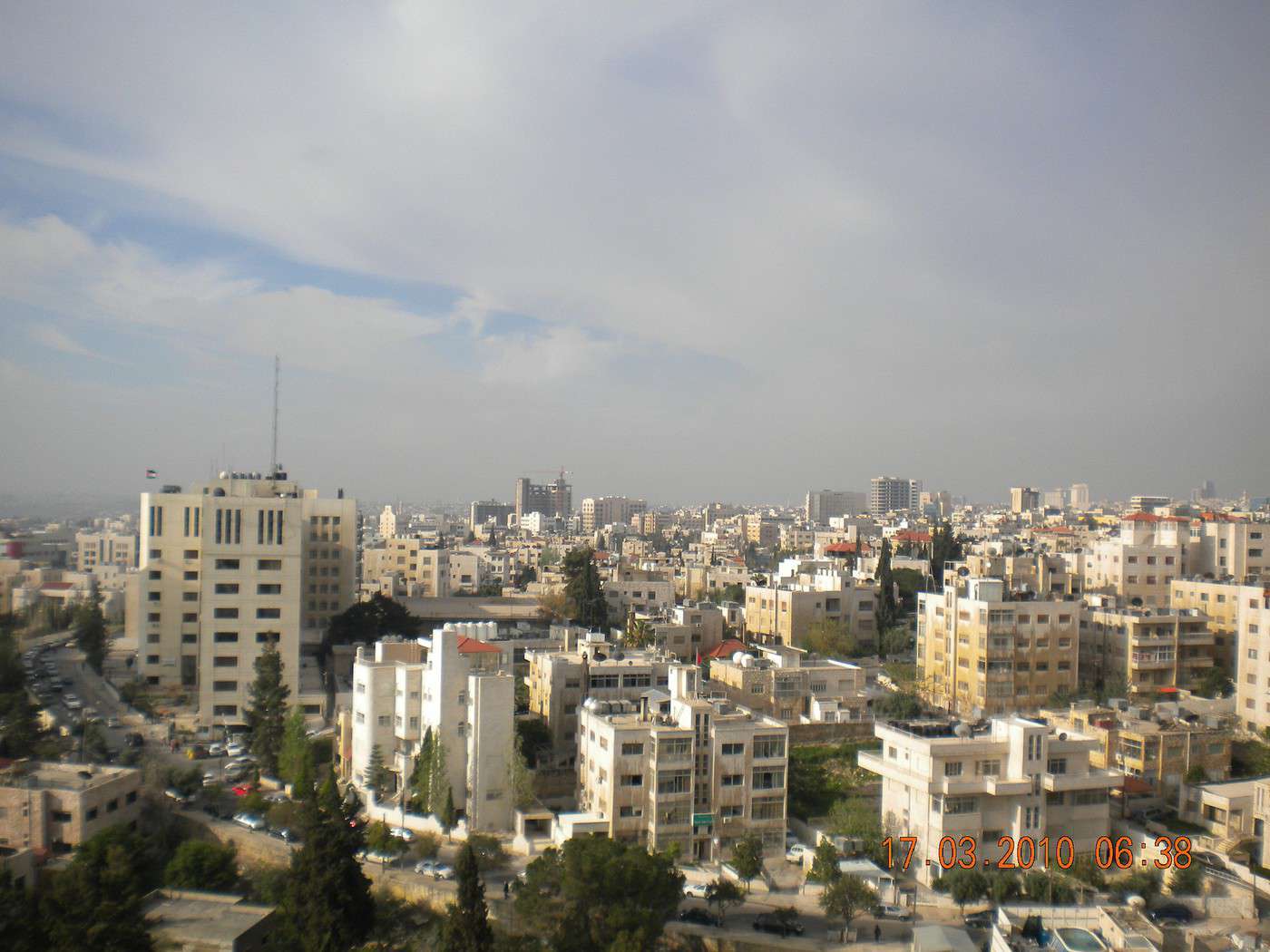
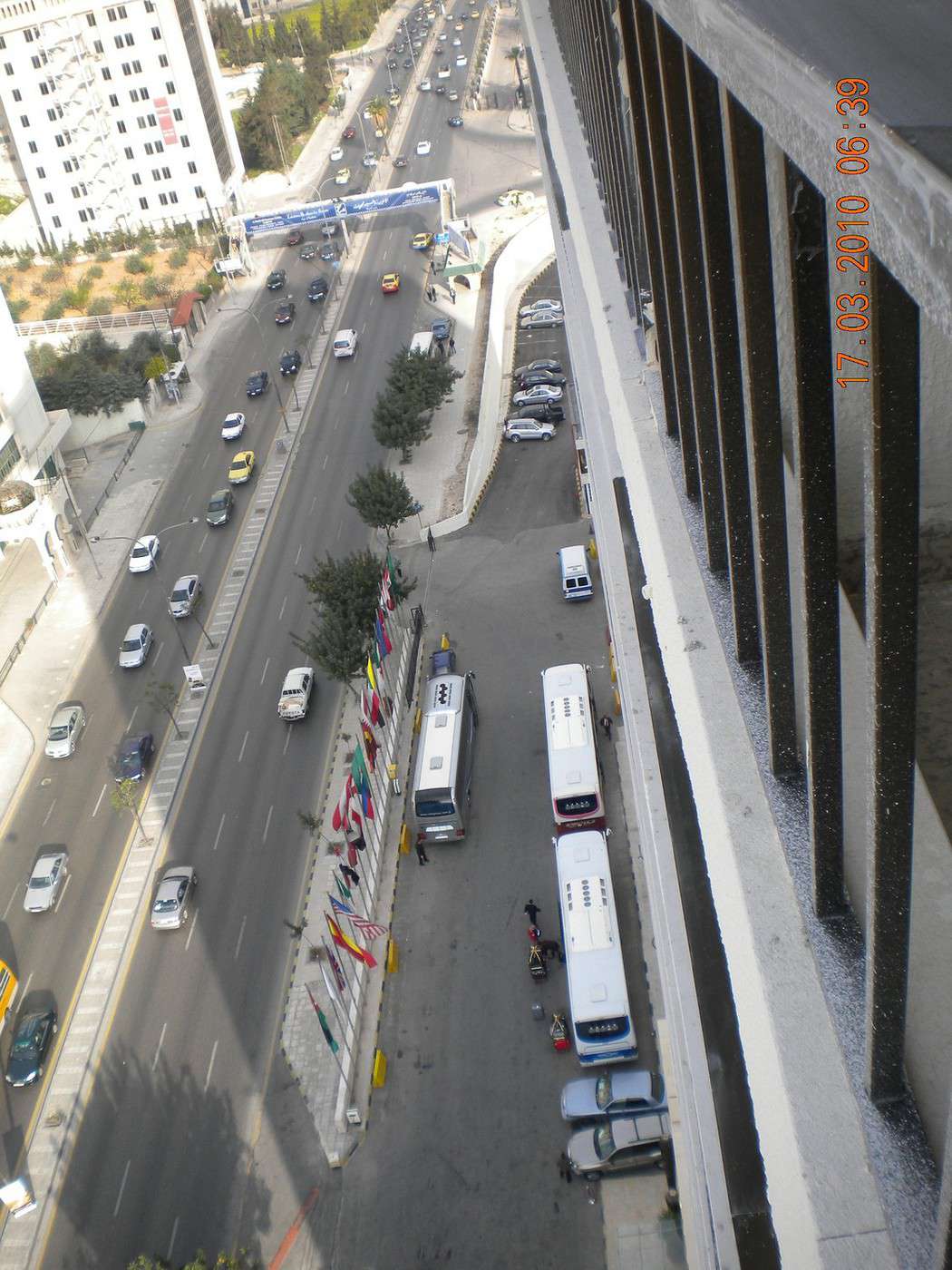
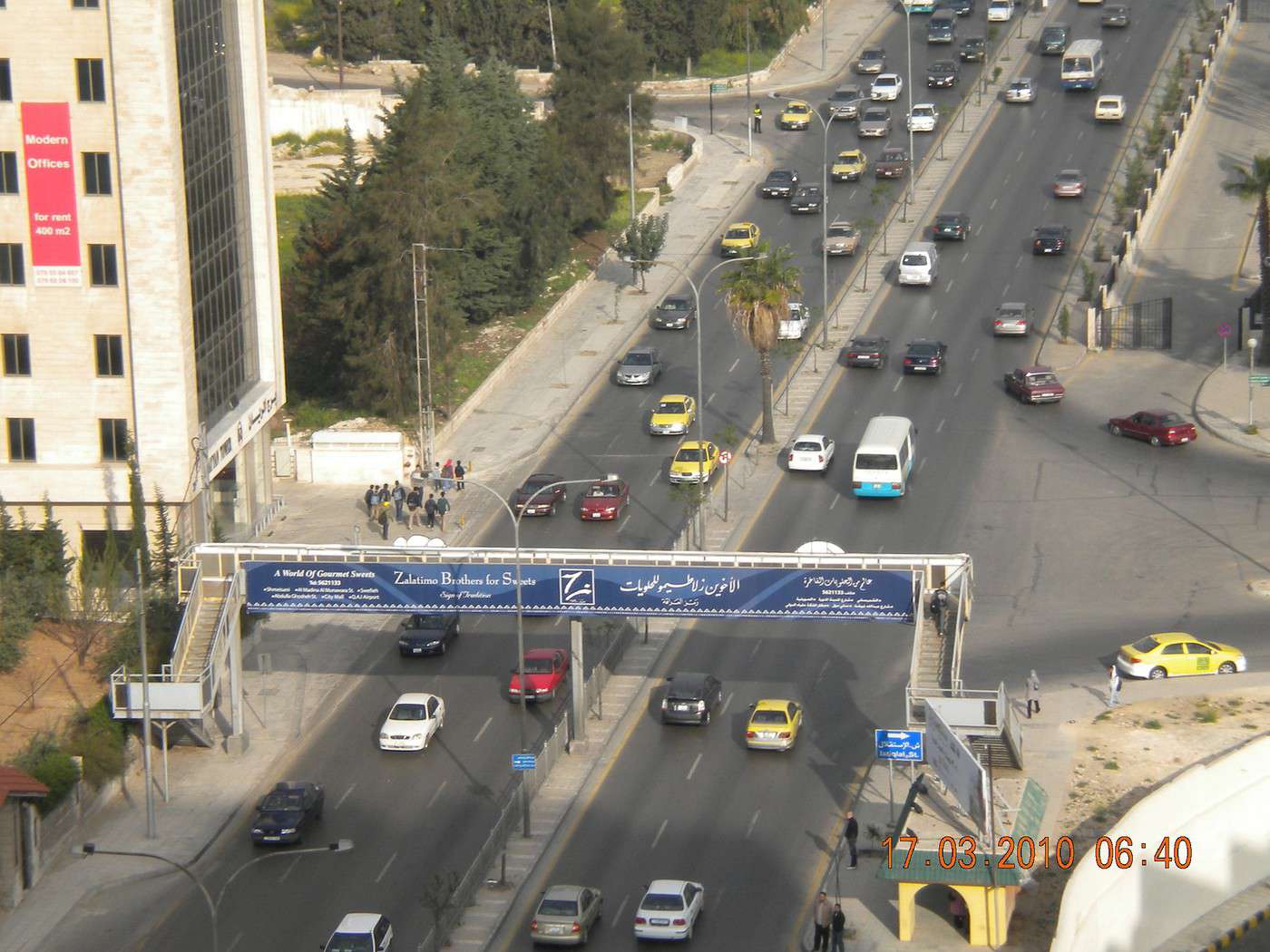
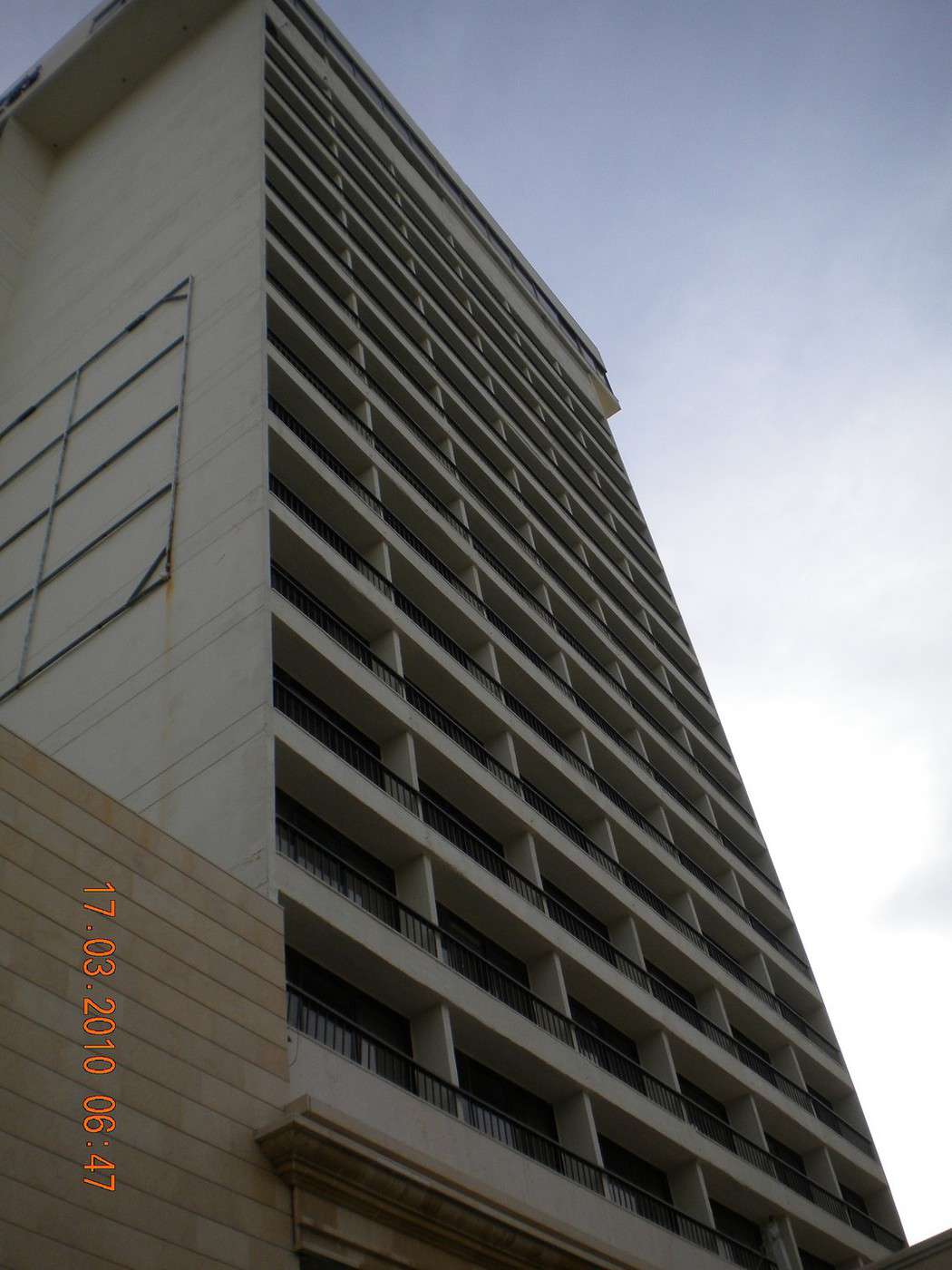
La route jusqu'à Amman est assez accidentée. 50 kms nous séparent de la capitale jordanienne. Le soleil se couche sur la Jordanie lorsque nous arrivons à Ammann. La ville est toute illuminée mais nous avons hate d'arriver à notre hôtel Le Régency Palace. Nous passons des immenses ronds point et les tunnels sont nombreux car la ville est construite sur des collines. a l'heure actuelle il y a 19 collines qui composent la ville. D'immenses centres commerciaux sont tout illuminés, les grosses cylindrées allemandes sont de sorties avec des 4 x 4 tout aussi rutilants. Les avenues sont très larges et la circulation est assez importante. Nous prenons possession de nos chambres qui sont très belles et la vue de notre fenêtre est impressionnante. A cette hauteur il y a un balcon et pas une seule protection ormis la ballustrade !!! Nous allons dîner et comme en Syrie c'est un buffet très copieux qui nous attends .
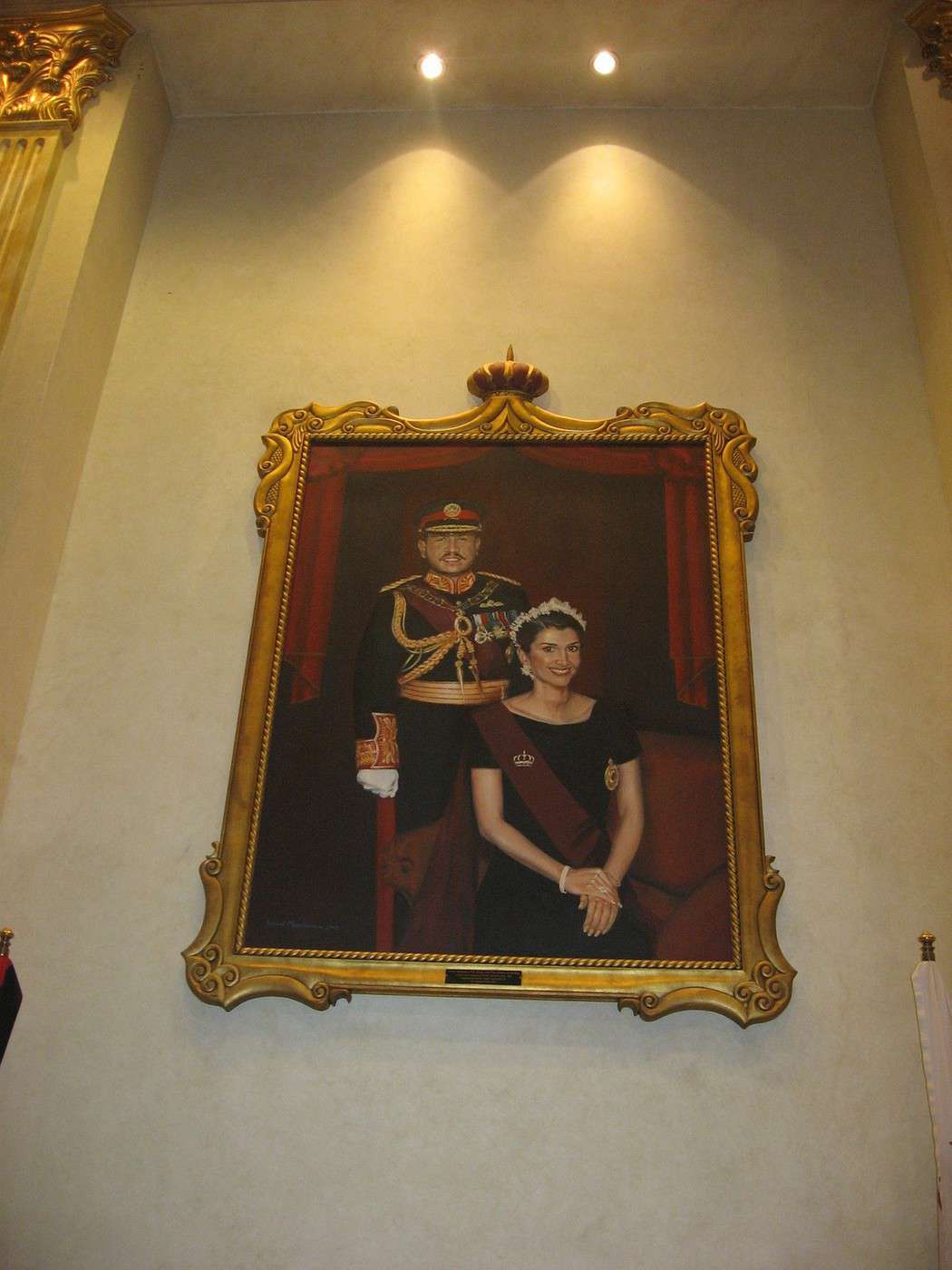
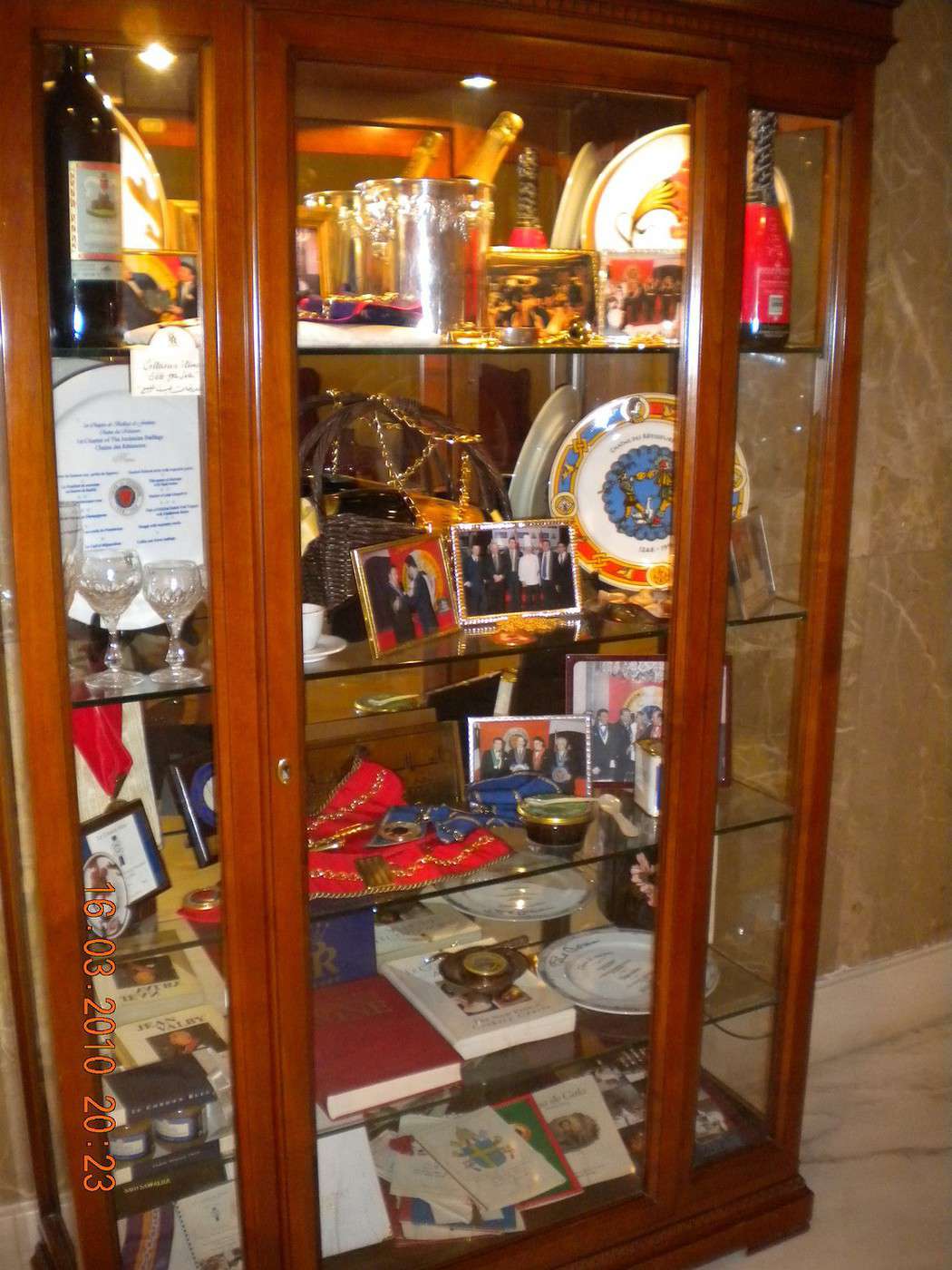
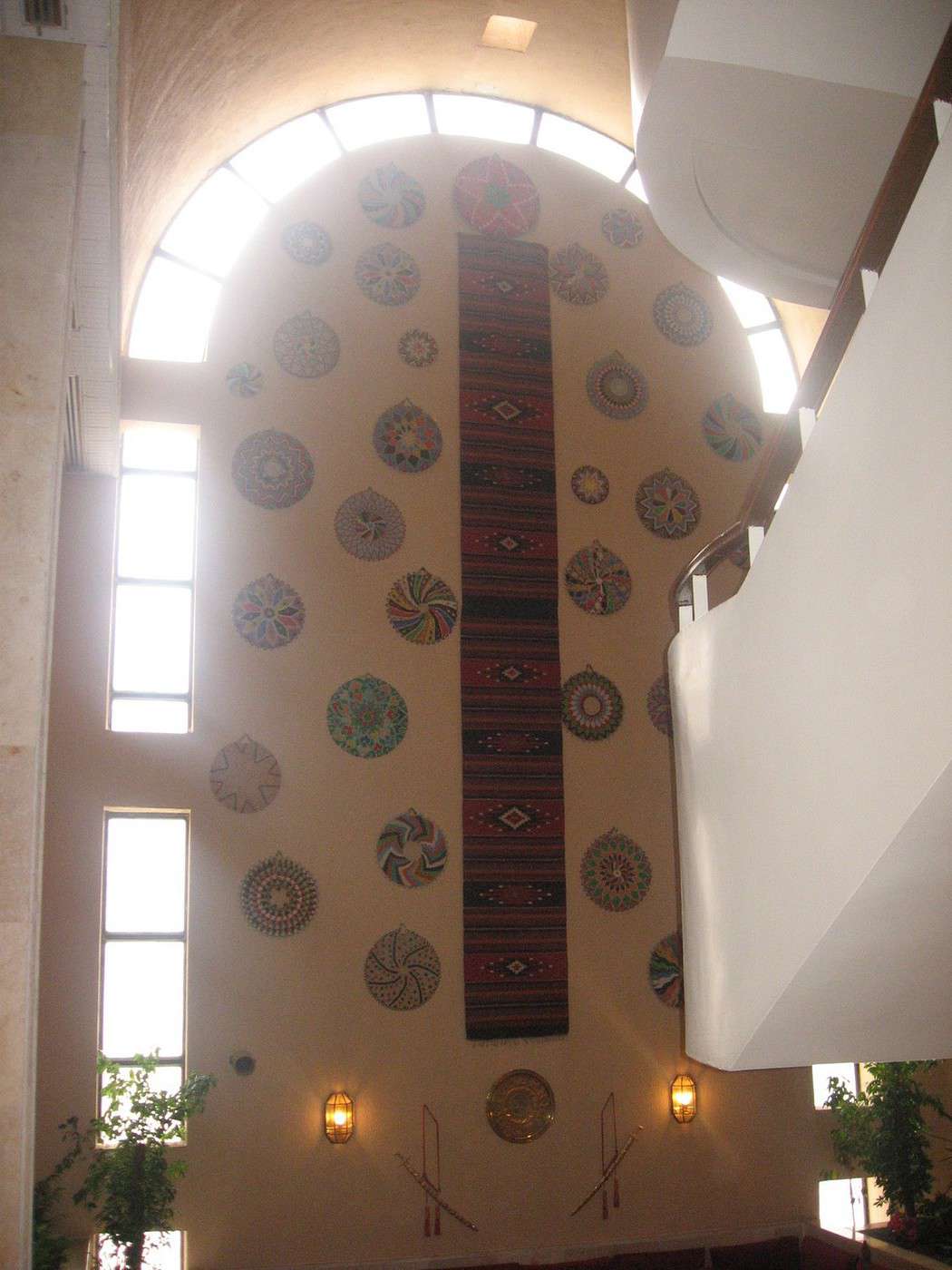
Après le repas nous faisons un petit tour dans le vaste hall de ce très bel hôtel . les portraits du roi et de son épouse Rania "trônent" à la réception . Des bouquets de fleurs magnifiques ornent de superbes meubles. Nous découvrons aussi une vitrine avec des trophés culinaires.
Nous partons nous coucher car demain le réveil vas être assez matinal , la route jusqu'à Petra est longue et nous avons des visites qui devraient être intéressantes. J'espère que notre guide sera un peu plus aimable, tiens justement le voilà qui pointe son nez... je vais vers lui et je lui demande exactement ce qu'il avait à nous reprocher cet après midi? Nous ne lui avions pas dit que nous retournions et que de toute façon "nous devions suivre le groupe" Alors là il a eu la suite et je peux vous garantir qu'après il ne m'a pas cassé les pieds et moi non plus et que les autres visites j'ai fait comme d'habitude sans m'ocuper de lui !
Notre chauffeur syrien est reparti vers son pays et demain nous allons faire connaissance de notre conducteur jordanien. et au faite notre militaire et bien envolé dès notre arrivée ! Oh demain il sera là au cas où !!!
Nous sommes prèts à repartir pour la visite du site de Jerash. Avant nous faisons un petit tour dans le restaurant. il y a des meubles anciens intéressants dont un bar de toute beauté.
Nous regagnons notre bus pour un trajet assez court car Jerash est situé entre la frontière syrienne et la capitale de Jordanie Amman. Les champs que nous longeons ont l'air fertile. Nous arrivons dans la ville nouvelle de Jerash construite le long de l'Oued Jerash et de l'autre nous découvrons le site deux fois millénaire de la cité antique. Notre guide, Momo !!!, qui parle un français assez approximatif nous donne quelques infos mais vu son ardeur à prendre le micro, je sens que "ça vas pas le faire" Enfin on verra bien ! Nous arrivons sur le parking, il y a déjà pas mal de bus jordaniens nous sommes le seul ...étranger (syrien).
Nous passons dans un complexe fait de boutiques. Nous nous dirigeons vers le site. La porte d'Hadrien nous accueille (encore lui... on retrouve toujours les mêmes!), sur notre gauche, nous longeons l'hippodrome. Il est entrain d'être tout restauré. Momo nous fait entrer dans le Visitor center et la nous découvrons le plan de l'antique Jerash. Ticket en poche nous voilà parti pour une expédition que je sens "speed" . Ce guide ne m'inspire pas !!! Nous suivons un trajet très bien établi, notre guide nous donne des explications pas toujours compréhensives mais bon je vais faire comme d'habitude, suivre un peu et me laisser distancer pour prendre tranquillement mes photos . Le site est immense et il vas toujours en montant.
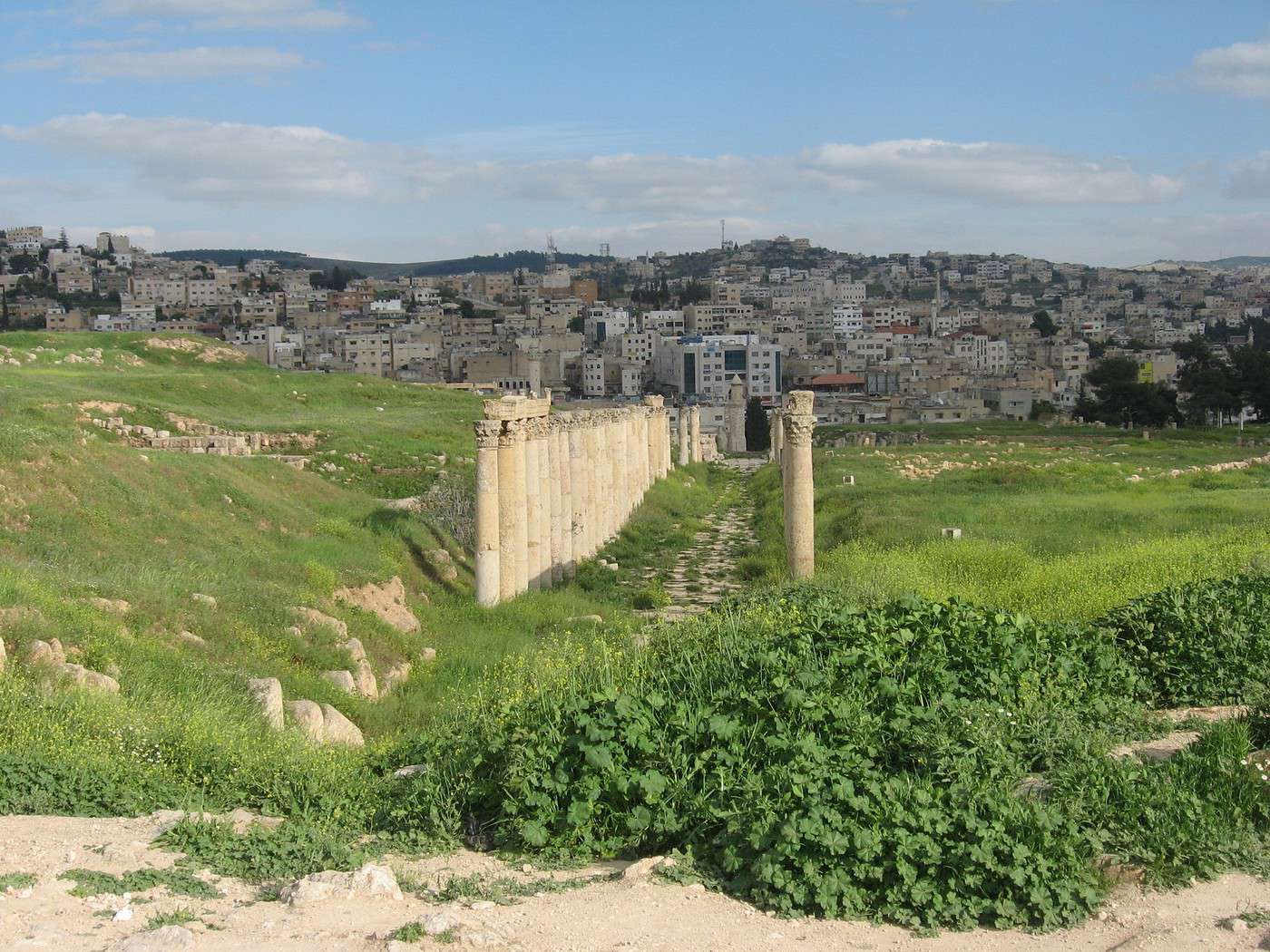
Le théâtre est là, nous avons droit à l'aubade d'anciens militaires. Bon passons pour les anciens militaires ! une petite pièce est demandée pour améliorer leur pension ...L'endroit est beau et c'est dans ce cadre qu'en juillet se déroule un festival de folklore. En sortant du théatre nous découvrons une place ovale de toute beauté. Sa forme elliptique est augmentée par la disposition concentrique de son dallage. Des colonnes ioniques la bordent et pour terminer la carte postale le cardo miximus est très long 800 m et est bordé de monuments importants .
Nous allons sur notre gauche et commençons a gravir par un chemin assez pentu la colline qui nous mène à d'autres batiments. La vue est superbe sur la campagne environnante . Nous nous retrouvons à 5 où 6 largués par notre ami Momo qui marche comme un "fou" ! Je ne peux pas suivre et ça ne me gêne pas plus que celà mais ce qui est dérangeant c'est que Nadine est partie à la recherche d'une voyageuse qui ...s'est trompée de groupe... faut le faire et elle a, d'après sa copine, fait le tour du Monde..., et ce n'est pas une "3 ème âge" ...!!!
Je ne peux plus suivre même de loin et nous sommes 4 dans ce cas. Je fais donc dire au guide qu'il ne doit pas nous chercher nous retournons au bus. Nous repartons tranquillement au milieu des ruines et nous trouvons notre Nadine toujours entrain de chercher sa cliente. "Ne cherches pas elle est avec un groupe de ....polonais!!!" Elle est furieuse ! Pour finir nous lui précisons que le guide marche beaucoup trop vite donc nous sommes repartis en le faisant prévenir .
Nous arrivons aux boutiques et là je commence à chercher mon cher mari qui lui se fiche royalement de tout ces vieilles pierres ! Pas de Bernard ! Je sors sur le parking, notre car est là et devinez à l'intérieur entrain de dormir et surement ronfler comme un sonneur, BERNARD !! Il parle pas syrien mais il s'est débrouillé pour que le conducteur qui soit dit en passant est un homme très effacé mais agréable, le laisse dormir dans le bus .
Je retourne aux boutiques et là effervescence notre groupe est de retour et notre "Momo" fait sa crise car nous ne lui avons pas dit que nous partions ! Je sens que je vais lui faire "sa fête" !! Nadine me demande de ne rien lui dire, mais ....je vais bien trouver un moment pour lui dire ce que je pense à ce jeune homme !
Nous repartons au bus. Mes impressions ! Ce site est beau fait de pierres calcaires et l'environnement est assez bucolique avec les collines boissées mais après ce que l'on a vu ce matin à Bosra pour moi ...il n'y a pas photo !!
La route jusqu'à Amman est assez accidentée. 50 kms nous séparent de la capitale jordanienne. Le soleil se couche sur la Jordanie lorsque nous arrivons à Ammann. La ville est toute illuminée mais nous avons hate d'arriver à notre hôtel Le Régency Palace. Nous passons des immenses ronds point et les tunnels sont nombreux car la ville est construite sur des collines. a l'heure actuelle il y a 19 collines qui composent la ville. D'immenses centres commerciaux sont tout illuminés, les grosses cylindrées allemandes sont de sorties avec des 4 x 4 tout aussi rutilants. Les avenues sont très larges et la circulation est assez importante. Nous prenons possession de nos chambres qui sont très belles et la vue de notre fenêtre est impressionnante. A cette hauteur il y a un balcon et pas une seule protection ormis la ballustrade !!! Nous allons dîner et comme en Syrie c'est un buffet très copieux qui nous attends .
Après le repas nous faisons un petit tour dans le vaste hall de ce très bel hôtel . les portraits du roi et de son épouse Rania "trônent" à la réception . Des bouquets de fleurs magnifiques ornent de superbes meubles. Nous découvrons aussi une vitrine avec des trophés culinaires.
Nous partons nous coucher car demain le réveil vas être assez matinal , la route jusqu'à Petra est longue et nous avons des visites qui devraient être intéressantes. J'espère que notre guide sera un peu plus aimable, tiens justement le voilà qui pointe son nez... je vais vers lui et je lui demande exactement ce qu'il avait à nous reprocher cet après midi? Nous ne lui avions pas dit que nous retournions et que de toute façon "nous devions suivre le groupe" Alors là il a eu la suite et je peux vous garantir qu'après il ne m'a pas cassé les pieds et moi non plus et que les autres visites j'ai fait comme d'habitude sans m'ocuper de lui !
Notre chauffeur syrien est reparti vers son pays et demain nous allons faire connaissance de notre conducteur jordanien. et au faite notre militaire et bien envolé dès notre arrivée ! Oh demain il sera là au cas où !!!
😉 Bonsoir,
Photos de cette 1ère journée en Jordanie .
Mon blog http://capucine-18.blog4ever.com
Capucine 18 1 Frontière Syrie/Jordanie
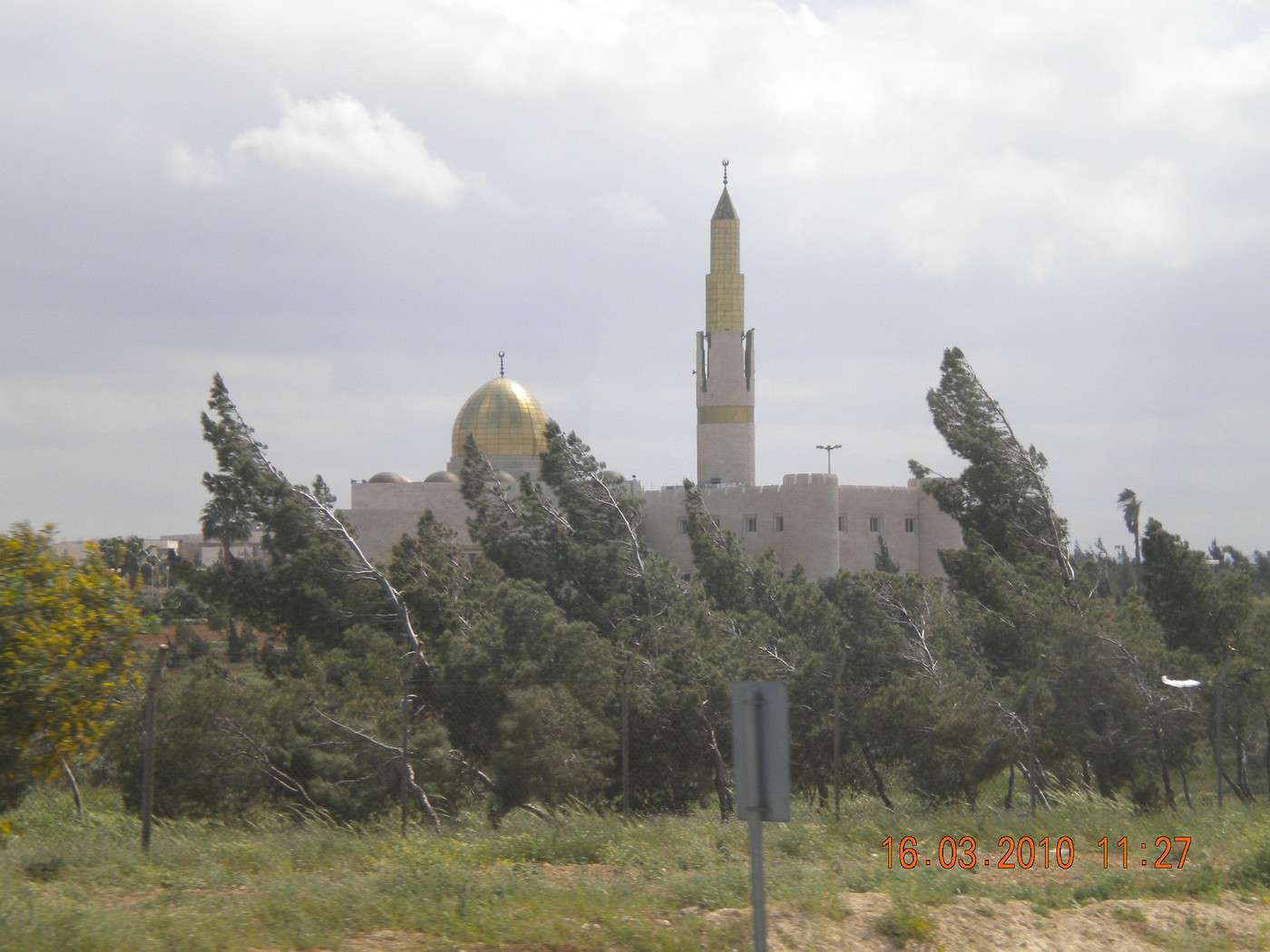
2 1ère mosquée jordanienne
3 4 le bar ancien
5 à 13 le site de Jerash
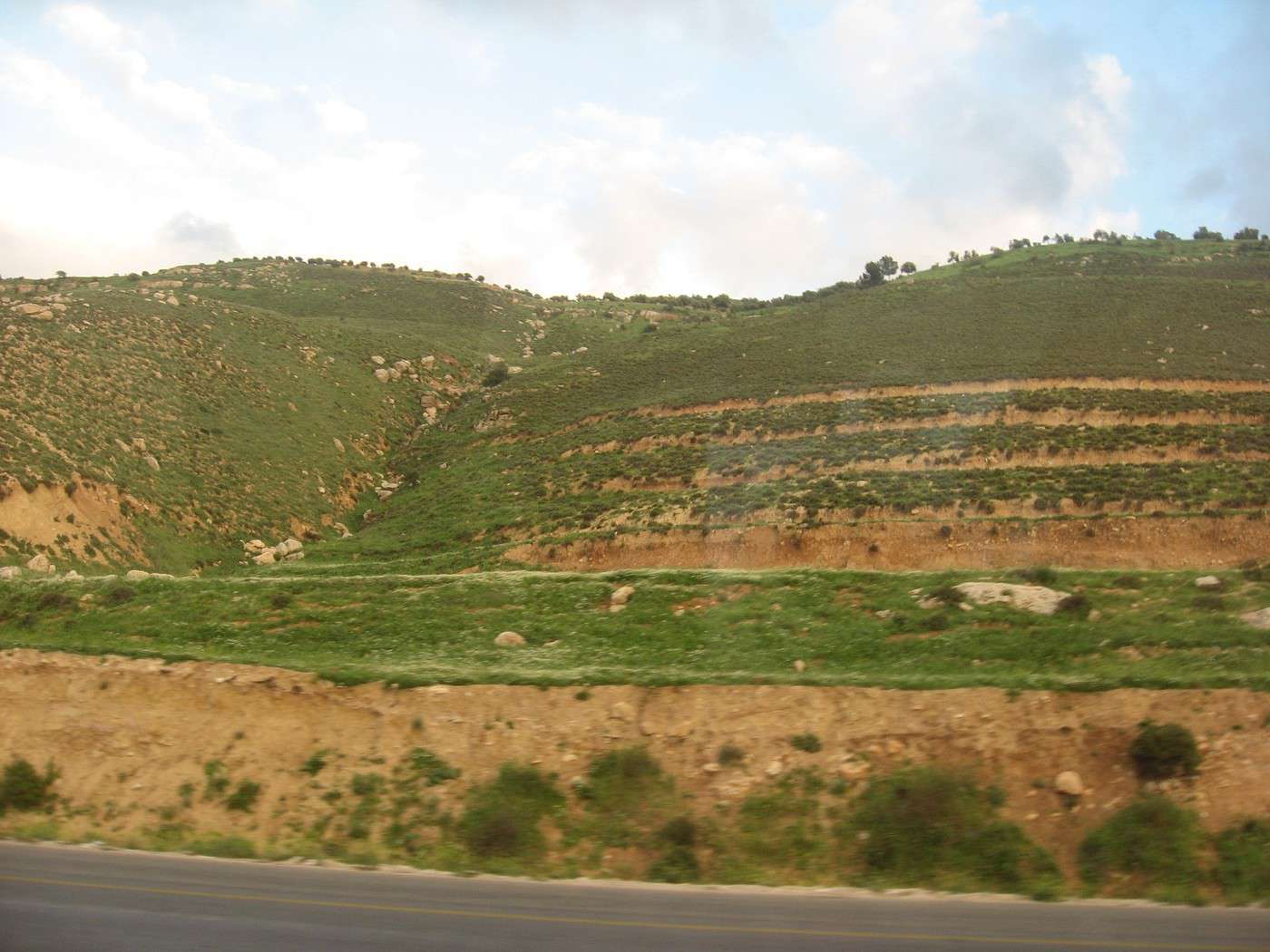
14 les collines sur la route d'Amann
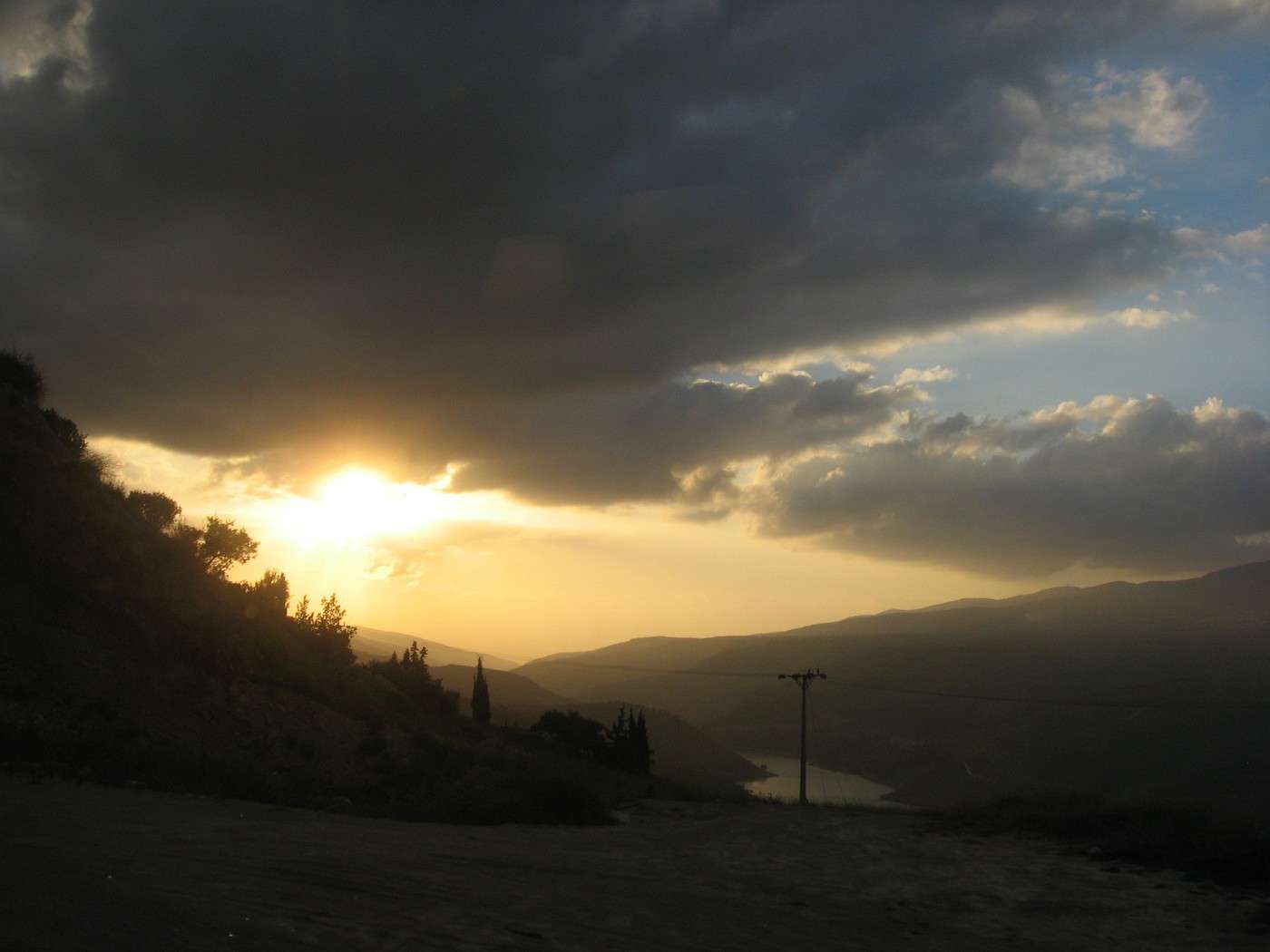
15 coucher de soleil sur la Jordanie
16 Le roi et la reine de Jordanie
17 les trophés culinaires
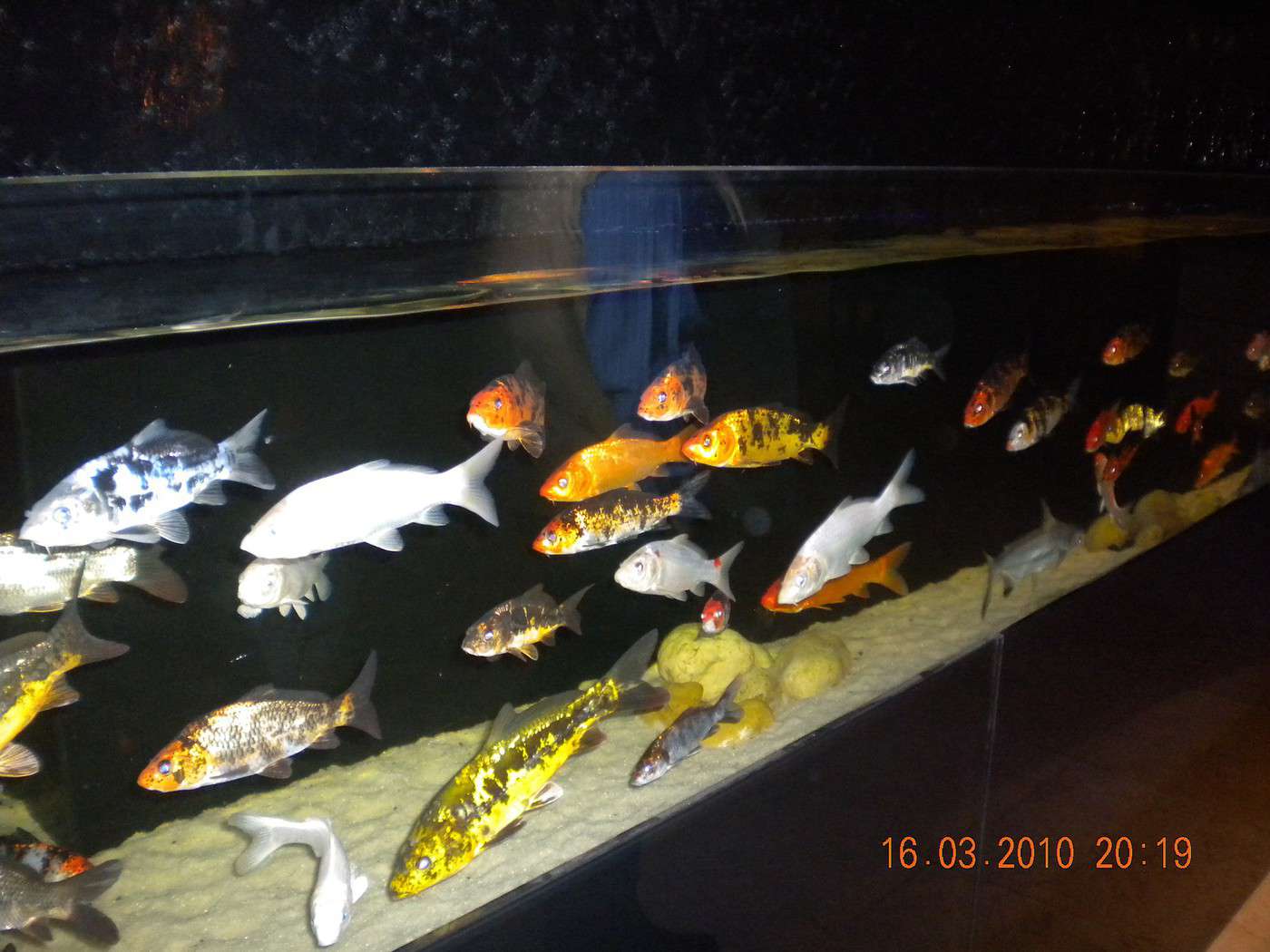
18 l'aquarium du Régency
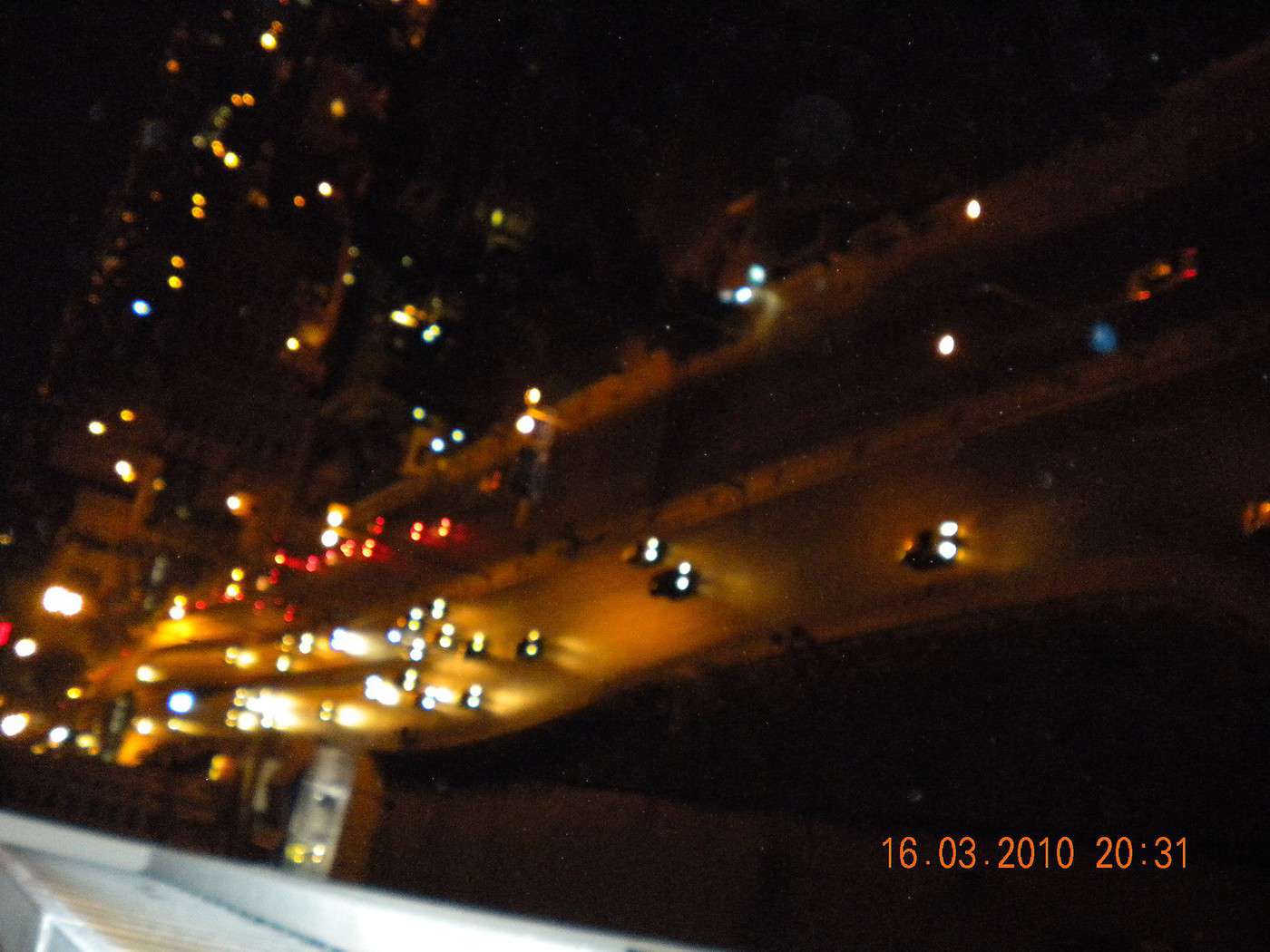
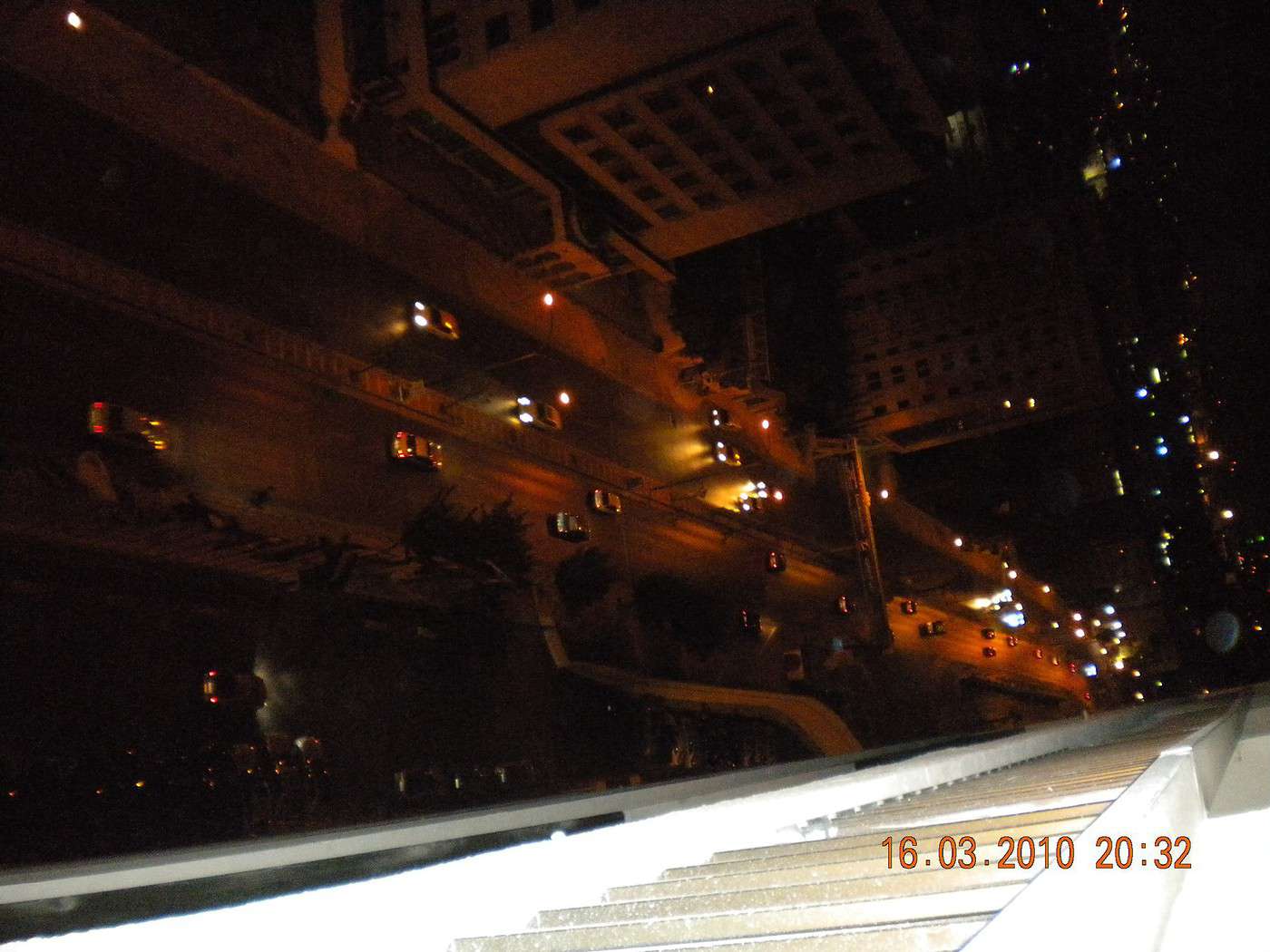
19 20 le boulevard vue de notre chambre
Photos de cette 1ère journée en Jordanie .
Mon blog http://capucine-18.blog4ever.com
Capucine 18 1 Frontière Syrie/Jordanie
2 1ère mosquée jordanienne
3 4 le bar ancien
5 à 13 le site de Jerash
14 les collines sur la route d'Amann
15 coucher de soleil sur la Jordanie
16 Le roi et la reine de Jordanie
17 les trophés culinaires
18 l'aquarium du Régency
19 20 le boulevard vue de notre chambre
😉Bonjour,
Merci d'avoir lu mon récit qui n'est pas terminé d'ailleurs. A la fin je donnerai mes impressions concernant la Syrie et la Jordanie. En lisant votre profil je m'aperçois que vous avez fait des pays de l'Est. J'arrive de Russie. Je vais mettre en route un carnet de voyage sur ce circuit qui a été effectué en juillet tout en autocar et en ferries pour le retour . .
Bonne journée
Capucine 18
Merci d'avoir lu mon récit qui n'est pas terminé d'ailleurs. A la fin je donnerai mes impressions concernant la Syrie et la Jordanie. En lisant votre profil je m'aperçois que vous avez fait des pays de l'Est. J'arrive de Russie. Je vais mettre en route un carnet de voyage sur ce circuit qui a été effectué en juillet tout en autocar et en ferries pour le retour . .
Bonne journée
Capucine 18
chère Capucine
c'est avec beaucoup de plaisir et d'intérêt que je suis les différentes étapes de votre périple. Comme je ne suis toujours pas décidé pour l'une ou l'autre destination (Syrie ou Jordanie, impossible de faire les deux), je me baserai beaucoup sur vos impressions (en voilà une grosse responsablité). D'après ce que j'ai déjà pu lire (et d'après tous les guides que je suis en train de potasser) ma préférence va vers la Syrie, mais je ne suis pas sûre que mes futurs compagnons de voyage vont me suivre.
Sinon ce sera la Jordanie, mais cela n'enchante pas mon époux qui lui aussi préfère la Syrie. J'attend avec beaucoup d'impatience la suite de vos aventures. merci de ces belles photos.
😉MERCREDI, 17 MARS 2010
AMMAN/MADABA/LE MT NEBO/LA MER MORTE/PETRA
La nuit a été très bonne et lorsque le réveil sonne je suis déjà debout. La route vas être longue aujourd'hui avec pas mal de visites.
Un coup d'oeil par la fenêtre et je peux voir de jour ce qui m'a impressionné de nuit. L'hotel est très haut et nous sommes presque tout en haut . Je prends quelques photos de la rue qui passe juste au pied de ce bulding. Une partie de la capitale jordanienne est face à moi.
Nous allons prendre notre petit déjeuner après avoir mis comme d'habitude nos valises dans le couloir. Tout le monde est prêt. Nous faisons la connaissance de notre conducteur et de notre nouveau car. Il est plus confortable que le syrien mais le conducteur a une "tête" moins sympa que notre gentil conducteur syrien. Notre "police touristique" est fidèle au poste, mais bien que n'étant pas très "encombrant" cette présence me laisse un sentiment bizarre !! Le guide nous présente notre conducteur et nous signale que nous sommes transportés par la compagnie appartenant à je ne sais plus trop quel membre de la famille royale !! Après avoir observé durant notre séjour en Jordanie les compagnies de bus, je pense que nous avions très peu de chance d'etre transporté par une autre ....La visite d'Amann n'est pas prévue donc nous quittons la capitale jordanienne par la route qui méne à Madaba.
Toujours des ronds point importants , une circulation encore plus dense qu'hier soir. Nous longeons des "zones commerciales" qui semblent haut de gamme. Les marchands de voitures sont en force et pas n'importe lesquels !!!. Les centres commerciaux (Mall) sont immenses. Nous passons devant "Américan School" . les batiments sont très importants et c'est là d'après le guide que la haute société jordanienne vient étudier.
Il nous fait un petit cours sur les alliances de la Jordanie avec ses voisins. Le Royaume Hachèmite de Jordanie, 89342 km2 et fort de 5 914 000 habitant dont 2700000 dans l'agglomération de Amann et de sa banlieue est "bien avec tout le monde". il ne craint pas les représailles soit des uns soit des autres ... c'est là que je ne comprends pas trop la présence de la "police touristique" à notre bord. Pourquoi ? Et tout le long de notre périple dans ce pays elle sera très présente sur tous les sites . Mais ne rentrons pas dans des considérations politiques surtout dans cette région du globe !!!
Nous arrivons rapidement en vue de la ville de Madaba située à environ 35 kms au Sud de la capitale. Le bus est stationné sur un parking et nous partons à pieds à travers cette ville assez agréable. de nombreuses boutiques bordent les petites ruelles menant à l'église orthodoxe St Georges. Cette église est célébre par sa mosaïque découverte en 1896 lors de sa construction sur les ruines d'une église byzantine. Cette mosaïque qui à l'origine mesurait 16 sur 6 m était composé de 2000 tesselles et représente la carte de la Terre Sainte. Beaucouip de monde pour admirer cette mosaïque !! Dans l'église se trouve également des Saints dont St Georges sur son cheval terrassant le dragon . Madaba est la capitale de la mosaïque et possède un institut. Nous visitons le parc archéologique ou de nombreuses oeuvres sont exposées. On nous propose d'aller rendre visite à un atelier où des femmes et des hommes avec dextérité fabriquent des mosaïques qui sont vendues dans la boutique toute proche. Habileté et patiente !!! donc pas pour moi !
Nous repartons pour quelques KMS en traversant un paysage qui devient de plus en plus aride. Nous voilà au Mont Nébo (802 m) qui sert de contrefort à la vallée du Jourdain et qui rappelle la mort de Moïse. Bien qu'étant athée cet endroit m'intéresse pour sa situation géo politique. Le bus nous dépose au pied de cet endroit vénéré par les chrétiens. La montée est assez rude. Une haie de mimosa embaume la voie d'accès à la stèle érigée pour la venue du Pape Jean Paul II lors du Jubilé en l'An 2000.
Nous arrivons à ce superbe paysage dominant cette région si tourmentée ! UNe pierre, dans laquelle sont gravées les directions des sites religieux avec les villes.J'imagine que de l'autre côté de ce paysage tourmenté et aride des femmes, des enfants, des hommes souffrent. Hier nous avons appris par le net que des affrontements avaient lieu pas très loin d'ici à la frontière du Liban et d'Israêl .... Le temps assez dégagé nous permets d'apercevoir une petite tache bleue sur notre gauche c'est la Mer Morte ! L'église toute proche est ouverte en direction du Jourdain. Une magnifique mosaïque précéde les fonds baptismaux . Nous repartons vers le bus et passons devant une pierre gravée signalant le Mémorial .
Le bus est garé tout près d'un superbe troupeau de chèvres et de moutons qui cherche sa nourriture dans les cailloux et sur les buissons des environs.
DEAD SEE !!! i y a là un panneau qui nous signale la direction ! Allez hop en route pour cet endroit situé à 400 m en dessous du niveau des mers libres !
La route en corniche passe au milieu d'un paysage désertique. Des lacets nous permettent de descendre tranquillement vers cet endroit attendu de tous . Et voilà ! elle est là ! Elle étincelle sous le soleil qui tappe fort. Nous allons déjeuner dans un complexe touristique et ceux qui le voudront pourront se baigner dans cette mer où il est impossible de se noyer.
Le complexe est immense. Nous apercevons la mer de l'endroit où nous déjeunons. Nadine nous indique où nous pouvons trouver des serviettes (fournies par le complexe) et où se trouve les douches.
J'ai bien envie de me baigner. Nous traversons tout le complexe qui à l'air très très grand avec des piscines d'eau douce où se baignent pas mal d'enfants. Nous arrivons juste au bord de la mer. La plage !!! grand mot ! n'est pas très engageante ! Quelques personnes se baignent dont un petit garçon, après nous apprendrons qu'il est russe, se mets à hurler ! Il a du perdre l'équilibre et a bu "la tasse" en sachant qu'ici boire la tasse n'a rien d'agréable et est même dangereux car vu la teneur en sel des brûlures sont à craindre. Le pauvre gosse doit beaucoup souffrir mais les parents n'ont pas l'air de réagir c'est un surveillant qui vient le tirer de cette eau salée et l'emméne tout de suite à la douche . Pas affolés les parents !!!
Non je ne me baignerai pas, non je ne ferai pas l'expérience de la Mer Morte. je ne suis pas une adepte de la baignade et là.... je crains pour ma ....peau blanche ...!! Non, je rigole mais les abords ne me plaisent pas . Je mettrais juste mes pieds (le bout des orteils !!!) et un doigt pour gouter ... et bien les amis elle est salée !!!!!
5 ou 6 personnes du groupe se baignent, elles flottent et nous rigolons bien. Mais elles ne restent pas longtemps. elles doivent aller se rincer rapidement pour éviter d'avoir des petits soucis. Nous nous installons sur des transats.
En face se dessinent les contours d'Israel qui à force de capter l'eau du Jourdain ne permets plus à celui ci de renouveler l'eau qui s'évapore. On transforme la mer en marais salants surtout plus au sud et du coté de l'état hébreux. Des projets couteux sont envisagés tel celui de remplir la Mer Morte avec l'eau de la Mer Rouge ....
Il faut penser qu'ici nous sommes au seul endroit habité en dessous du niveau de la mer !!! L'endroit le plus profond est à 793 m en dessous de la Méditerrannée, aucune vie dans cette eau d' une salinité de 33 %.
Nous nous préparons à partir mais avant nous allons faire des emplettes : du savons, des sels de bains, des produits de beauté enfin tout ce qui soit disant est bénéfique pour notre peau et qui vient de la Mer Morte.
Il faut partir direction la route des Rois pour une descente sur Petra où nous devons loger cette nuit.
Nous longeons quelques temps la mer Morte qui étincelle sous le soleil de plomb. Nous apercevons sur les collines arides des villages et des chateaux de la route des Rois. Mais le calme plat régne à l'intérieur du bus. On dort, je crois bien que même "la police touristique" qui d'après Nadine ne parle pas mais à un bon coup de fourchette.... dort aussi ... c'est la pause .... pas de gardiennage !!!! Quand à notre Momo et bien il est venu au fond et devinez et bien il ...dort !
Nous arrivons en vue de Wadi Musa où se trouve le site de Petra. nous débarquons la police au poste de police où il vas passer la nuit ... nous nous allons au Mariott !
Il fait presque nuit. Le hall de l'hôtel est envahi par les occupants des bus qui viennent comme nous d'arriver. Gros soucis pour Nadine ! il manque 2 chambres ! Surbook ! et c'est le Mariott ! Les employés n'ont pas l'air de se faire du souci, elle doit se débrouiller mais avant de trouver la solution, elle as "chanté une ritournelle ", en anglais, aux deux employés de la réception qui ne bronchaient pas . elle est pas haute notre Nadine mais pas commode du tout et pour finir elle a eu gain de cause ...elle a "piqué" deux chambres à un groupe d'espagnol qui devait arriver vers minuit !! Chacun sa M.... !!!
Les chambres sont très belles. Le diner est également très bien. Nous allons nous coucher car la journée a été longue et demain il faut se lever tôt pour arriver dans les premiers à Petra. Comment vais je trouver cet endroit qui me fait rêver depuis très longtemps ?
A demain .
Capucine 18
Blog : http://capucine-18.blog4ever.com
AMMAN/MADABA/LE MT NEBO/LA MER MORTE/PETRA
La nuit a été très bonne et lorsque le réveil sonne je suis déjà debout. La route vas être longue aujourd'hui avec pas mal de visites.
Un coup d'oeil par la fenêtre et je peux voir de jour ce qui m'a impressionné de nuit. L'hotel est très haut et nous sommes presque tout en haut . Je prends quelques photos de la rue qui passe juste au pied de ce bulding. Une partie de la capitale jordanienne est face à moi.
Nous allons prendre notre petit déjeuner après avoir mis comme d'habitude nos valises dans le couloir. Tout le monde est prêt. Nous faisons la connaissance de notre conducteur et de notre nouveau car. Il est plus confortable que le syrien mais le conducteur a une "tête" moins sympa que notre gentil conducteur syrien. Notre "police touristique" est fidèle au poste, mais bien que n'étant pas très "encombrant" cette présence me laisse un sentiment bizarre !! Le guide nous présente notre conducteur et nous signale que nous sommes transportés par la compagnie appartenant à je ne sais plus trop quel membre de la famille royale !! Après avoir observé durant notre séjour en Jordanie les compagnies de bus, je pense que nous avions très peu de chance d'etre transporté par une autre ....La visite d'Amann n'est pas prévue donc nous quittons la capitale jordanienne par la route qui méne à Madaba.
Toujours des ronds point importants , une circulation encore plus dense qu'hier soir. Nous longeons des "zones commerciales" qui semblent haut de gamme. Les marchands de voitures sont en force et pas n'importe lesquels !!!. Les centres commerciaux (Mall) sont immenses. Nous passons devant "Américan School" . les batiments sont très importants et c'est là d'après le guide que la haute société jordanienne vient étudier.
Il nous fait un petit cours sur les alliances de la Jordanie avec ses voisins. Le Royaume Hachèmite de Jordanie, 89342 km2 et fort de 5 914 000 habitant dont 2700000 dans l'agglomération de Amann et de sa banlieue est "bien avec tout le monde". il ne craint pas les représailles soit des uns soit des autres ... c'est là que je ne comprends pas trop la présence de la "police touristique" à notre bord. Pourquoi ? Et tout le long de notre périple dans ce pays elle sera très présente sur tous les sites . Mais ne rentrons pas dans des considérations politiques surtout dans cette région du globe !!!
Nous arrivons rapidement en vue de la ville de Madaba située à environ 35 kms au Sud de la capitale. Le bus est stationné sur un parking et nous partons à pieds à travers cette ville assez agréable. de nombreuses boutiques bordent les petites ruelles menant à l'église orthodoxe St Georges. Cette église est célébre par sa mosaïque découverte en 1896 lors de sa construction sur les ruines d'une église byzantine. Cette mosaïque qui à l'origine mesurait 16 sur 6 m était composé de 2000 tesselles et représente la carte de la Terre Sainte. Beaucouip de monde pour admirer cette mosaïque !! Dans l'église se trouve également des Saints dont St Georges sur son cheval terrassant le dragon . Madaba est la capitale de la mosaïque et possède un institut. Nous visitons le parc archéologique ou de nombreuses oeuvres sont exposées. On nous propose d'aller rendre visite à un atelier où des femmes et des hommes avec dextérité fabriquent des mosaïques qui sont vendues dans la boutique toute proche. Habileté et patiente !!! donc pas pour moi !
Nous repartons pour quelques KMS en traversant un paysage qui devient de plus en plus aride. Nous voilà au Mont Nébo (802 m) qui sert de contrefort à la vallée du Jourdain et qui rappelle la mort de Moïse. Bien qu'étant athée cet endroit m'intéresse pour sa situation géo politique. Le bus nous dépose au pied de cet endroit vénéré par les chrétiens. La montée est assez rude. Une haie de mimosa embaume la voie d'accès à la stèle érigée pour la venue du Pape Jean Paul II lors du Jubilé en l'An 2000.
Nous arrivons à ce superbe paysage dominant cette région si tourmentée ! UNe pierre, dans laquelle sont gravées les directions des sites religieux avec les villes.J'imagine que de l'autre côté de ce paysage tourmenté et aride des femmes, des enfants, des hommes souffrent. Hier nous avons appris par le net que des affrontements avaient lieu pas très loin d'ici à la frontière du Liban et d'Israêl .... Le temps assez dégagé nous permets d'apercevoir une petite tache bleue sur notre gauche c'est la Mer Morte ! L'église toute proche est ouverte en direction du Jourdain. Une magnifique mosaïque précéde les fonds baptismaux . Nous repartons vers le bus et passons devant une pierre gravée signalant le Mémorial .
Le bus est garé tout près d'un superbe troupeau de chèvres et de moutons qui cherche sa nourriture dans les cailloux et sur les buissons des environs.
DEAD SEE !!! i y a là un panneau qui nous signale la direction ! Allez hop en route pour cet endroit situé à 400 m en dessous du niveau des mers libres !
La route en corniche passe au milieu d'un paysage désertique. Des lacets nous permettent de descendre tranquillement vers cet endroit attendu de tous . Et voilà ! elle est là ! Elle étincelle sous le soleil qui tappe fort. Nous allons déjeuner dans un complexe touristique et ceux qui le voudront pourront se baigner dans cette mer où il est impossible de se noyer.
Le complexe est immense. Nous apercevons la mer de l'endroit où nous déjeunons. Nadine nous indique où nous pouvons trouver des serviettes (fournies par le complexe) et où se trouve les douches.
J'ai bien envie de me baigner. Nous traversons tout le complexe qui à l'air très très grand avec des piscines d'eau douce où se baignent pas mal d'enfants. Nous arrivons juste au bord de la mer. La plage !!! grand mot ! n'est pas très engageante ! Quelques personnes se baignent dont un petit garçon, après nous apprendrons qu'il est russe, se mets à hurler ! Il a du perdre l'équilibre et a bu "la tasse" en sachant qu'ici boire la tasse n'a rien d'agréable et est même dangereux car vu la teneur en sel des brûlures sont à craindre. Le pauvre gosse doit beaucoup souffrir mais les parents n'ont pas l'air de réagir c'est un surveillant qui vient le tirer de cette eau salée et l'emméne tout de suite à la douche . Pas affolés les parents !!!
Non je ne me baignerai pas, non je ne ferai pas l'expérience de la Mer Morte. je ne suis pas une adepte de la baignade et là.... je crains pour ma ....peau blanche ...!! Non, je rigole mais les abords ne me plaisent pas . Je mettrais juste mes pieds (le bout des orteils !!!) et un doigt pour gouter ... et bien les amis elle est salée !!!!!
5 ou 6 personnes du groupe se baignent, elles flottent et nous rigolons bien. Mais elles ne restent pas longtemps. elles doivent aller se rincer rapidement pour éviter d'avoir des petits soucis. Nous nous installons sur des transats.
En face se dessinent les contours d'Israel qui à force de capter l'eau du Jourdain ne permets plus à celui ci de renouveler l'eau qui s'évapore. On transforme la mer en marais salants surtout plus au sud et du coté de l'état hébreux. Des projets couteux sont envisagés tel celui de remplir la Mer Morte avec l'eau de la Mer Rouge ....
Il faut penser qu'ici nous sommes au seul endroit habité en dessous du niveau de la mer !!! L'endroit le plus profond est à 793 m en dessous de la Méditerrannée, aucune vie dans cette eau d' une salinité de 33 %.
Nous nous préparons à partir mais avant nous allons faire des emplettes : du savons, des sels de bains, des produits de beauté enfin tout ce qui soit disant est bénéfique pour notre peau et qui vient de la Mer Morte.
Il faut partir direction la route des Rois pour une descente sur Petra où nous devons loger cette nuit.
Nous longeons quelques temps la mer Morte qui étincelle sous le soleil de plomb. Nous apercevons sur les collines arides des villages et des chateaux de la route des Rois. Mais le calme plat régne à l'intérieur du bus. On dort, je crois bien que même "la police touristique" qui d'après Nadine ne parle pas mais à un bon coup de fourchette.... dort aussi ... c'est la pause .... pas de gardiennage !!!! Quand à notre Momo et bien il est venu au fond et devinez et bien il ...dort !
Nous arrivons en vue de Wadi Musa où se trouve le site de Petra. nous débarquons la police au poste de police où il vas passer la nuit ... nous nous allons au Mariott !
Il fait presque nuit. Le hall de l'hôtel est envahi par les occupants des bus qui viennent comme nous d'arriver. Gros soucis pour Nadine ! il manque 2 chambres ! Surbook ! et c'est le Mariott ! Les employés n'ont pas l'air de se faire du souci, elle doit se débrouiller mais avant de trouver la solution, elle as "chanté une ritournelle ", en anglais, aux deux employés de la réception qui ne bronchaient pas . elle est pas haute notre Nadine mais pas commode du tout et pour finir elle a eu gain de cause ...elle a "piqué" deux chambres à un groupe d'espagnol qui devait arriver vers minuit !! Chacun sa M.... !!!
Les chambres sont très belles. Le diner est également très bien. Nous allons nous coucher car la journée a été longue et demain il faut se lever tôt pour arriver dans les premiers à Petra. Comment vais je trouver cet endroit qui me fait rêver depuis très longtemps ?
A demain .
Capucine 18
Blog : http://capucine-18.blog4ever.com
😉
1 Amman de ma chambre
2 3 le boulevard vue de notre chambre
4 l'hotel (nous étions tout en haut )
5 les centres commerciaux
6 l'école américaine
7 les marchands de voitures (ici des Chevrolet ! discret comme couleur !!)
8 un des nombreux rond point
9 Madaba
10 entrée de l'aglise St Georges
11 st Georges
12 intérieure de l'église
13 14 15 la mosaique de la Terre Sainte
16 une mosaique
17 18 19 ouvrier travaillant à l'atelier de mosaïques
20 encore un Rond point
1 Amman de ma chambre
2 3 le boulevard vue de notre chambre
4 l'hotel (nous étions tout en haut )
5 les centres commerciaux
6 l'école américaine
7 les marchands de voitures (ici des Chevrolet ! discret comme couleur !!)
8 un des nombreux rond point
9 Madaba
10 entrée de l'aglise St Georges
11 st Georges
12 intérieure de l'église
13 14 15 la mosaique de la Terre Sainte
16 une mosaique
17 18 19 ouvrier travaillant à l'atelier de mosaïques
20 encore un Rond point
bonsoir Liliane. comment a tu fait pour mémoriser toutes ces infos. tu as noté ou c'est de mémoire ?
😉Salut Bruno,
Comment je fais ?
Bien que je fasse des voyages organisés je reprends toutes les étapes et je cherche de la doc : les livres (je vais assez souvent à la médiathèque de Bourges, j'ai une collection de livres assez importante, donc je lis beaucoup. Je prépare mon voyage à ma façon comme je le faisais quand j'étais en activité. Je fais des fiches sur les endroits importants pour moi. Je me sers aussi des guides de tourisme, des cartes routières (j'achète toutes les cartes des pays où je vais). Je connais par coeur mon circuit.
Ma mémoire me joue des tours pour certaines choses, pas sur les voyages et je me souviens de certains voyages, qui commencent à dater, comme si c'était hier.
Sur place je regarde, je prends des photos j'écoute un peu les guides. Mais je me sers de mes fiches par journée. Et le soir je fais des annotations.
Au retour avec mes photos, mes annotations j'arrive à me souvenirs et comme j'aime écrire et raconter .... voilà j'essaie de vous faire participer !
Voilà mon cher Bruno, ai je répondu a ta question ? Les voyages et la découvertes de nouveaux lieux et bien ....c'est ma drogue et j'en ai besoin presque tous les jours !!!!!
Bises
Capucine 18
Comment je fais ?
Bien que je fasse des voyages organisés je reprends toutes les étapes et je cherche de la doc : les livres (je vais assez souvent à la médiathèque de Bourges, j'ai une collection de livres assez importante, donc je lis beaucoup. Je prépare mon voyage à ma façon comme je le faisais quand j'étais en activité. Je fais des fiches sur les endroits importants pour moi. Je me sers aussi des guides de tourisme, des cartes routières (j'achète toutes les cartes des pays où je vais). Je connais par coeur mon circuit.
Ma mémoire me joue des tours pour certaines choses, pas sur les voyages et je me souviens de certains voyages, qui commencent à dater, comme si c'était hier.
Sur place je regarde, je prends des photos j'écoute un peu les guides. Mais je me sers de mes fiches par journée. Et le soir je fais des annotations.
Au retour avec mes photos, mes annotations j'arrive à me souvenirs et comme j'aime écrire et raconter .... voilà j'essaie de vous faire participer !
Voilà mon cher Bruno, ai je répondu a ta question ? Les voyages et la découvertes de nouveaux lieux et bien ....c'est ma drogue et j'en ai besoin presque tous les jours !!!!!
Bises
Capucine 18
oui. tu as parfaitement répondu. 🙂
😎Tiens pour passer la nuit voilà des photos de DEAD SEA !
Bonne nuit
Capucine 18
LA MER MORTE
Bonne nuit
Capucine 18
LA MER MORTE
Merci Liliane pour ces photos.
Super déçue par ce paysage, je voyais cela autrement. C'est pas très engageant côté "plage" et je pense qu'un arrêt de quelques heures suffit largement, pas de quoi choisir d'y passer une demie journée entière avec nuit à l'hôtel (Moevenpick, super cher en plus).
🙁Tout à fait d'accord avec vous !
Capucine 18
Capucine 18
😉JEUDI 18 MARS 2010
PETRA
Réveil assez matinal. Pas de valises aujourd'hui à préparer car nous passons deux nuits au Mariott. Le MARIOTT de PETRA a une organisation assez peu conventionnelle pour un hotel de cette catégorie : pas de petites cuillères, le sucre et bien il faut le pleurer aux serveurs qui ont vite fait d'aller ce "planquer" dans une coin, les boissons chaudes !!!! et bien il faut se prendre très à l'avance pour essayer d'avoir soit un café, soit un chocolat ... enfin très déçue par cet hôtel haut de gamme. Nous étions content de pouvoir être hébergés dans un hôtel de cette catégorie car seul il n'est guère possible de se "payer" le Mariott !
Nadine nous prévient qu'il fait froid !!!! Effectivement il y a de gros nuages et en sortant sur la terrasse de l'hôtel d'où nous avons un magnifique panorama sur les environs je constate qu'il ne fait pas chaud du tout. Il faut mettre plusieurs "doublures" et si le temps s'améliore et bien nous ...ferons ...comme les oignons !!! nous enleverons les couches ....
Le bus est là, le guide aussi notre "police touristique" fidèle au poste. Tous en route pour le lieu que la majorité des voyageurs attends ... PETRA !
Nous arrivons, au bout de 20 mns de route, sur le parking juste devant l'entrée du site. Le Roi de Jordanie et son défunt père "nous attendent" ! Le guide nous précise que nous allons avoir une jeune femme qui vas nous filmer durant le début de la visite et qu'il sera possible de lui acheter la vidéo.
J'attends cette visite depuis tellement de temps ! PETRA ! un rêve depuis des années et j'y suis ! Effectivement il fait froid, renseignements pris : 7 ° et peut-être de la pluie ... une aubaine pour eux mais pas pour nous ! mais les prévisions météo s'avèreront pas bonnes .... pas de pluie mais assez froid toute la journée.
Nous entrons dans l'enceinte de cette oeuvre de la nature où les Nabathéens construsirent leur capitale avec ces tombeaux plus beaux les uns que les autres . Il n'y a pas une grande affluence mais déjà les chevaux et leur cavalier nous proposent leurs services, des carrioles sont aussi disponibles. Des anes sont aussi là ! soit à tirer les carrioles soit à transporter des personnes sur leur dos ! pauvres animaux ! ils sont tellement sollicités par leur maîtres qu'ils doivent souvent se blesser. Leurs pattes sont tenues tant bien que mal par des lannières car vue les endroits où ils les font passer et le plus vite posible bien sur pour faire un max de clients, ils doivent se tortiller voir se casser les pattes ! Ils sont maigres et ils sont "fouettés" assez régulièrement pour les faire avancer ! Non, je ne fais pas partie de la socièté proptectrice des animaux mais là j'ai eu mal au coeur et je me suis juré d'aller à pieds et de quand même le signaler surtout après un autre incident que je vous conterai par la suite !
Je laisse le groupe et je vais faire la visite seule à ma vistesse avec mon guide papier et mon appareil photos . Après déjà une bonne marche au travers des blocs de grès blanchatre je passe devant des tombeaux tours "les Djinns". Le paysage est un peu lunaire. Je passe sur une retenue d'eau qui lors d'une crue en 1963 emporta 22 touristes français . Puis arrive un des endroits tant attendu : le SIQ ! Impressionnant ! cet endroit qui permets de pénétrer dans la cité antique mesure 1200m de long et vas en largeur de 3 m à 11 m de large. Le long de la paroi court un caniveau qui permettait d'acheminer l'eau d'une source. Il est très bien conservé . La roche, du grès, blanche d'abord change de couleurs. Les veines deviennent noires, rouges, ocres, jaunes. C'est une palette de tons incroyables ! Le Siq ce déroule devant moi, je vais à mon "train" donc pas très vite . Il faut faire attention aux carrioles qui ne ralentissent pas malgré le nombre de touristes dans cet endroit peu large et il est assez difficile de pouvoir admirer tranquillement cette oeuvre de la nature sans se faire interpeller par les conducteurs de charettes. Mais bon ils essaient de gagner leur vie !
Après XXXX photos me voilà arriver à cet endroit que tout le monde connait le KHAZNEH qui marque l'entrée de la grand nécropole de Pétra. La première image est entre les deux parois de la fin du Siq et là se découvre un monument de toute beauté, une façade rose, toute décorée de 40 m de haut ! Il y a beaucoup de monde devant cette merveille. Des promenades à dos de chameaux sont proposées. Les bédouins montrent leur agilité sur le dos de leur animal. L'entrée du monument qui est un tombeau est gardé par un militaire en tenue surement d'apparat. Ah ! au faite notre "ami" de la police touristique à plein de copains sur le site ! Ils sont partout !
Je continue ma visite en longeant des tombeaux décéminés le long du parcours. De nombreux vendeurs de souvenirs essaient de faire des affaires avec les touristes. Je m'installe a une buvettes pour boire un thé et me reposer un peu. Je ne marche pas très vite mais je serais à l'heure au resto situé à l'autre bout du site où nous avons rendez vous pour déjeuner. j'en connais un qui doit surement avoir déjà pris place sur "un caillou" et qui attends !!!!
Le théatre lui aussi taillé dans la roche est là sous mes yeux mais les acteurs et bien devinez ! des asiatiques entrain de mimer des scènes, coiffés de casquettes de couleurs plus que voyantes ! Dommage pour la photo ! Ce théâtre pouvait contenir 6000 spectateurs. Il est en assez mauvais état.
Les nabathéens ne vivaient pas dans les endroits que nous venons de traverser. J'arrive donc à la ville où se faisait le commerce, où se déroulait la vie des habitants . Cette partie est encore en fouilles, de belles colonnes delimitent la rue principale et ce devait être là que se déroulaient les marchés et que passaient les caravanes .
Je me dirige vers une construction dans le fond du site, le restaurant . je ne suis pas la première ! Devinez ! Bernard est là avec plusieurs voyageurs. Le repas sera servi sous forme de buffet mais il ne me laisseras pas un souvenir ....Pour aller au "toilette" et bien c'est un peu le parcours du combattant, il faut traverser ce qui sert de cuisines, d'autres endroits où mangent des personnes enfin rien de bien superbes et qui ne te mettent pas en appétit !!! Mais à la guerre comme à la guerre !!!
Maintenant il faut repartir. Nous avons temps libre. nous devrons être au bus à 17 h 30 . Certains montent au Deir mais trop compliqué pour moi. Nous choississons avec d'autres personnes d'aller à la découverte des TOMBEAUX ROYAUX .
Nous passons par un chemin peu empreinté et là nous découvrons un ane ! Le pauvre ! Il est tout efflanqué, il nous regarde d'un air triste ! Une des personnes du mini groupe vas demander à une personne qui doit être un guide s'il n'y a pas moyen de soulager ce pauvre animal ! Réponse " Il sera bientôt soulagé et il rendra visite à Dieu !!!!" Les larmes me viennent aux yeux ! Il a du en faire des aller retour dans le Siq a tirer sa carriole et son maitre le laisse là finir sa vie tout seul ! Quel remerciement ! Je me souviendrai toujours du regard de cet âne là dans cet endroit superbe qu'est PETRA !!! Nous continuons notre parcours tout en pensant à ce moment d'émotion. Nous avons une très belle vue sur le site car les tombeaux sont en hauteur. Nous admirons ces superbes monuments : le plus beau est le tombeau de l'Urne . Le plus original est celui à étages : 5 niveaux ! et le troisième ressemble au Khazneh. Nous prenons notre temps, le ciel est un peu plus clèment et la température a évoluée un peu 12 ° ! Nous rencontrons d'autres personnes du groupe et nous faisons cause commune pour repartir au bus et retraverser le Sicq. La lumière est meilleure que ce matin mais prendre des photos est encore plus compliquée car il y a du monde partout et les cris des conducteurs de carrioles est assez stressant.
Il est environ 17 h nous arrivons aux premières boutiques qui indiquent la sortie du site. J'achète quelques cartes postales et la poste étant là nous allons chercher des timbres. Il y a la queue dans le petit local. Le vendeurs parle très bien français, à signaler car très rare ...
Nous nous installons tranquillement sur les bancs pour attendre le bus qui .... ne viendras pas ...... Et oui ! organisation encore chaotique de la part des jordaniens ! Le car serait partie à AQUABA .... pour faire changer ... un retroviseur !!! Mais il vas arriver !!!! Nous attendons environ 45 mn mais il commence à faire froid et les clients commencent à trouver le temps long. Sur le parking il y a deux minis- bus de la même compagnie, nous insistons auprès du guide pour qu'ils puissent nous conduire à l'hôtel ! Nous nous serrons dans les 2 véhicules et arrivons sans encombre au Mariott. Passage obligé sous le portique de contrôle, sécurité !
Nous dînons copieusement car le repas de midi était assez léger et avec la marche nous avons faim. Demain c'est le dernier jour avec une visite à la Petite Pétra et une promenade en 4 x 4 dans le Wadi Rum.
Je viens de réaliser un de mes rêves ! Voir PETRA !
Capucine 18
PETRA
Réveil assez matinal. Pas de valises aujourd'hui à préparer car nous passons deux nuits au Mariott. Le MARIOTT de PETRA a une organisation assez peu conventionnelle pour un hotel de cette catégorie : pas de petites cuillères, le sucre et bien il faut le pleurer aux serveurs qui ont vite fait d'aller ce "planquer" dans une coin, les boissons chaudes !!!! et bien il faut se prendre très à l'avance pour essayer d'avoir soit un café, soit un chocolat ... enfin très déçue par cet hôtel haut de gamme. Nous étions content de pouvoir être hébergés dans un hôtel de cette catégorie car seul il n'est guère possible de se "payer" le Mariott !
Nadine nous prévient qu'il fait froid !!!! Effectivement il y a de gros nuages et en sortant sur la terrasse de l'hôtel d'où nous avons un magnifique panorama sur les environs je constate qu'il ne fait pas chaud du tout. Il faut mettre plusieurs "doublures" et si le temps s'améliore et bien nous ...ferons ...comme les oignons !!! nous enleverons les couches ....
Le bus est là, le guide aussi notre "police touristique" fidèle au poste. Tous en route pour le lieu que la majorité des voyageurs attends ... PETRA !
Nous arrivons, au bout de 20 mns de route, sur le parking juste devant l'entrée du site. Le Roi de Jordanie et son défunt père "nous attendent" ! Le guide nous précise que nous allons avoir une jeune femme qui vas nous filmer durant le début de la visite et qu'il sera possible de lui acheter la vidéo.
J'attends cette visite depuis tellement de temps ! PETRA ! un rêve depuis des années et j'y suis ! Effectivement il fait froid, renseignements pris : 7 ° et peut-être de la pluie ... une aubaine pour eux mais pas pour nous ! mais les prévisions météo s'avèreront pas bonnes .... pas de pluie mais assez froid toute la journée.
Nous entrons dans l'enceinte de cette oeuvre de la nature où les Nabathéens construsirent leur capitale avec ces tombeaux plus beaux les uns que les autres . Il n'y a pas une grande affluence mais déjà les chevaux et leur cavalier nous proposent leurs services, des carrioles sont aussi disponibles. Des anes sont aussi là ! soit à tirer les carrioles soit à transporter des personnes sur leur dos ! pauvres animaux ! ils sont tellement sollicités par leur maîtres qu'ils doivent souvent se blesser. Leurs pattes sont tenues tant bien que mal par des lannières car vue les endroits où ils les font passer et le plus vite posible bien sur pour faire un max de clients, ils doivent se tortiller voir se casser les pattes ! Ils sont maigres et ils sont "fouettés" assez régulièrement pour les faire avancer ! Non, je ne fais pas partie de la socièté proptectrice des animaux mais là j'ai eu mal au coeur et je me suis juré d'aller à pieds et de quand même le signaler surtout après un autre incident que je vous conterai par la suite !
Je laisse le groupe et je vais faire la visite seule à ma vistesse avec mon guide papier et mon appareil photos . Après déjà une bonne marche au travers des blocs de grès blanchatre je passe devant des tombeaux tours "les Djinns". Le paysage est un peu lunaire. Je passe sur une retenue d'eau qui lors d'une crue en 1963 emporta 22 touristes français . Puis arrive un des endroits tant attendu : le SIQ ! Impressionnant ! cet endroit qui permets de pénétrer dans la cité antique mesure 1200m de long et vas en largeur de 3 m à 11 m de large. Le long de la paroi court un caniveau qui permettait d'acheminer l'eau d'une source. Il est très bien conservé . La roche, du grès, blanche d'abord change de couleurs. Les veines deviennent noires, rouges, ocres, jaunes. C'est une palette de tons incroyables ! Le Siq ce déroule devant moi, je vais à mon "train" donc pas très vite . Il faut faire attention aux carrioles qui ne ralentissent pas malgré le nombre de touristes dans cet endroit peu large et il est assez difficile de pouvoir admirer tranquillement cette oeuvre de la nature sans se faire interpeller par les conducteurs de charettes. Mais bon ils essaient de gagner leur vie !
Après XXXX photos me voilà arriver à cet endroit que tout le monde connait le KHAZNEH qui marque l'entrée de la grand nécropole de Pétra. La première image est entre les deux parois de la fin du Siq et là se découvre un monument de toute beauté, une façade rose, toute décorée de 40 m de haut ! Il y a beaucoup de monde devant cette merveille. Des promenades à dos de chameaux sont proposées. Les bédouins montrent leur agilité sur le dos de leur animal. L'entrée du monument qui est un tombeau est gardé par un militaire en tenue surement d'apparat. Ah ! au faite notre "ami" de la police touristique à plein de copains sur le site ! Ils sont partout !
Je continue ma visite en longeant des tombeaux décéminés le long du parcours. De nombreux vendeurs de souvenirs essaient de faire des affaires avec les touristes. Je m'installe a une buvettes pour boire un thé et me reposer un peu. Je ne marche pas très vite mais je serais à l'heure au resto situé à l'autre bout du site où nous avons rendez vous pour déjeuner. j'en connais un qui doit surement avoir déjà pris place sur "un caillou" et qui attends !!!!
Le théatre lui aussi taillé dans la roche est là sous mes yeux mais les acteurs et bien devinez ! des asiatiques entrain de mimer des scènes, coiffés de casquettes de couleurs plus que voyantes ! Dommage pour la photo ! Ce théâtre pouvait contenir 6000 spectateurs. Il est en assez mauvais état.
Les nabathéens ne vivaient pas dans les endroits que nous venons de traverser. J'arrive donc à la ville où se faisait le commerce, où se déroulait la vie des habitants . Cette partie est encore en fouilles, de belles colonnes delimitent la rue principale et ce devait être là que se déroulaient les marchés et que passaient les caravanes .
Je me dirige vers une construction dans le fond du site, le restaurant . je ne suis pas la première ! Devinez ! Bernard est là avec plusieurs voyageurs. Le repas sera servi sous forme de buffet mais il ne me laisseras pas un souvenir ....Pour aller au "toilette" et bien c'est un peu le parcours du combattant, il faut traverser ce qui sert de cuisines, d'autres endroits où mangent des personnes enfin rien de bien superbes et qui ne te mettent pas en appétit !!! Mais à la guerre comme à la guerre !!!
Maintenant il faut repartir. Nous avons temps libre. nous devrons être au bus à 17 h 30 . Certains montent au Deir mais trop compliqué pour moi. Nous choississons avec d'autres personnes d'aller à la découverte des TOMBEAUX ROYAUX .
Nous passons par un chemin peu empreinté et là nous découvrons un ane ! Le pauvre ! Il est tout efflanqué, il nous regarde d'un air triste ! Une des personnes du mini groupe vas demander à une personne qui doit être un guide s'il n'y a pas moyen de soulager ce pauvre animal ! Réponse " Il sera bientôt soulagé et il rendra visite à Dieu !!!!" Les larmes me viennent aux yeux ! Il a du en faire des aller retour dans le Siq a tirer sa carriole et son maitre le laisse là finir sa vie tout seul ! Quel remerciement ! Je me souviendrai toujours du regard de cet âne là dans cet endroit superbe qu'est PETRA !!! Nous continuons notre parcours tout en pensant à ce moment d'émotion. Nous avons une très belle vue sur le site car les tombeaux sont en hauteur. Nous admirons ces superbes monuments : le plus beau est le tombeau de l'Urne . Le plus original est celui à étages : 5 niveaux ! et le troisième ressemble au Khazneh. Nous prenons notre temps, le ciel est un peu plus clèment et la température a évoluée un peu 12 ° ! Nous rencontrons d'autres personnes du groupe et nous faisons cause commune pour repartir au bus et retraverser le Sicq. La lumière est meilleure que ce matin mais prendre des photos est encore plus compliquée car il y a du monde partout et les cris des conducteurs de carrioles est assez stressant.
Il est environ 17 h nous arrivons aux premières boutiques qui indiquent la sortie du site. J'achète quelques cartes postales et la poste étant là nous allons chercher des timbres. Il y a la queue dans le petit local. Le vendeurs parle très bien français, à signaler car très rare ...
Nous nous installons tranquillement sur les bancs pour attendre le bus qui .... ne viendras pas ...... Et oui ! organisation encore chaotique de la part des jordaniens ! Le car serait partie à AQUABA .... pour faire changer ... un retroviseur !!! Mais il vas arriver !!!! Nous attendons environ 45 mn mais il commence à faire froid et les clients commencent à trouver le temps long. Sur le parking il y a deux minis- bus de la même compagnie, nous insistons auprès du guide pour qu'ils puissent nous conduire à l'hôtel ! Nous nous serrons dans les 2 véhicules et arrivons sans encombre au Mariott. Passage obligé sous le portique de contrôle, sécurité !
Nous dînons copieusement car le repas de midi était assez léger et avec la marche nous avons faim. Demain c'est le dernier jour avec une visite à la Petite Pétra et une promenade en 4 x 4 dans le Wadi Rum.
Je viens de réaliser un de mes rêves ! Voir PETRA !
Capucine 18
😉
1 2 Gros temps !
3 4 avant Pétra
5 6 Visitor center
7 8 les chevaux
9 à 14 avant le SIQ
Capucine 18
1 2 Gros temps !
3 4 avant Pétra
5 6 Visitor center
7 8 les chevaux
9 à 14 avant le SIQ
Capucine 18
😉😉
LE SIQ
superbe et impressionant. merci Liliane.
LE SIQ
superbe et impressionant. merci Liliane.
Log in first, then come back to this page.
You might also like
More discussions
Namaste !
Me voila en direct de Delhi, minuit passe, au moins 30 degres....
Je voulais poster le debut de ce carnet de France mais je n'ai pu trouver le temps, donc le voila en direct live !
c'est parti pour un 3eme voyage mais cette fois pour le double du temps, 6 semaines avec pour but la decouverte du Ladakh et Spiti, avec pour commencer un detour par Varanai pour retrouver Babeli et sa famille.
Phir melenge pour la suite des aventures...
Wednesday, April 1st
Hazaribagh I’ve got a meet-up with Adam Iman, a guide and painter. He picks me up from the hotel at 10 AM. Another traveler from Bangalore is supposed to join us, but while we wait for him to arrive, Adam takes me to see the paintings his mother and sister created at Hazaribagh station. The town became famous thanks to these murals, which can also be found in several surrounding villages. This art form has earned recognition and is now protected, a sign of its cultural importance. Once the visit is over, we go to pick up the other traveler and then head to our first village: Belwara, where Sohrai art is practiced. At the entrance, a sign proudly announces that we’re entering an artists’ village, where this art is created by women organized into micro-enterprises. Some even offer workshops for those who’d like to learn this tradition.

Sohrai art is tied to the harvest season, from October to mid-November. The motifs, in natural colors, celebrate fertility and abundance. The artists use pigments from the earth: red oxides, ochre, white kaolin, and black manganese. On the walls, you’ll see animals, fish, birds—all symbols of life and prosperity. As I look closer at the murals, I start to realize that each motif tells a story. Large animals like cows or bulls often take center stage. Their bodies are filled with intricate, almost hypnotic patterns. They symbolize wealth and prosperity for the household, as well as the deep respect for cattle, which are essential to daily life. On some facades, elephants stand out—massive and decorated with the same precision. They evoke quiet strength and protection. But it’s when I stop in front of one of the houses that I really take the time to look. The wall, a soft ochre, is entirely covered in murals. Two large animals stretch out on either side of the door, their elongated bodies fitting the length of the wall. Their silhouettes are filled with geometric patterns and incredibly fine curved lines, as if every space was patiently filled. Around them, stylized plants, flowers, and small decorative elements fill every gap. The door, dark and worn, becomes almost the silent center of the composition, framed by these living, protective forms. To the right, a more colorful motif catches the eye—a flower or a stylized lamp—like a touch of light on the earth. The whole thing gives an impression of perfect balance, between the rigor of the patterns and the freedom of the gesture.

Elsewhere, birds and freer forms bring movement. Peacocks, recognizable by their stylized silhouettes, embody beauty and vitality, while fish symbolize water, fertility, and the continuity of life.
On some paintings, the scenes become almost narrative: you can make out figures, everyday gestures, like a memory of the village inscribed in the walls. The decorative frames around the doors aren’t left to chance either—they symbolically protect the house, like a boundary between the inside and the outside world.


During the Sohrai festival, cattle are led into the jungle in the morning. Meanwhile, the women finish the *aripans*—these floor paintings—and continue the wall murals. Around noon, the animals return to the village, and the bulls’ horns are anointed with oil and vermilion in a gesture of gratitude, amid the vibrant colors adorning the houses. We visit several artists, including Parvat Devi, a well-known woman who has received many awards. Her arms are adorned with intriguing tattoos, which I’ll talk about in more detail later.

On another wall, the style changes completely. Here, no massive animals—just birds occupying the space, light and graceful, as if caught in mid-movement. Two silhouettes face each other, their long necks arched almost like mirrors, while their outstretched wings seem to vibrate with the patterns that compose them.

The design is more graphic, almost airy. The lines are smoother, more fluid, as if drawn in one confident stroke. The birds’ bodies aren’t solid—they’re filled with repetitive motifs like scales, stylized feathers, and spirals, giving a sense of continuous movement. Around them, everything comes to life: flowers burst open, arabesques swirl, and even the simplest shapes seem alive. What strikes me here is the sense of lightness. Where the large animals evoked stability and grounding, these birds bring something freer, almost joyful. They seem to embody movement, the circulation of life, like a breath flowing through the village.

The colors remain the same—deep reds, intense blacks, and chalky white—but the rhythm is different. Faster, more spontaneous. As if each wall had its own personality, while still speaking the same language.
That’s probably why I’m so moved. I’d heard about these paintings from my friend Raja, and last year, I saw an exhibition in a village near my home. That first encounter made me want to come here. But seeing them in person is a whole different experience. These paintings are unique. This ancient art is passed down from mother to daughter, or mother-in-law to daughter-in-law, in a quiet, deeply living continuity. At first glance, it might seem almost childlike in its simplicity and pared-down forms. And yet, everything is thought out, balanced, mastered. Nothing is left to chance.

That apparent simplicity, combined with such rich symbolism, touches me deeply. There’s something sincere and essential in these walls—and that’s what moves me.
Hazaribagh I’ve got a meet-up with Adam Iman, a guide and painter. He picks me up from the hotel at 10 AM. Another traveler from Bangalore is supposed to join us, but while we wait for him to arrive, Adam takes me to see the paintings his mother and sister created at Hazaribagh station. The town became famous thanks to these murals, which can also be found in several surrounding villages. This art form has earned recognition and is now protected, a sign of its cultural importance. Once the visit is over, we go to pick up the other traveler and then head to our first village: Belwara, where Sohrai art is practiced. At the entrance, a sign proudly announces that we’re entering an artists’ village, where this art is created by women organized into micro-enterprises. Some even offer workshops for those who’d like to learn this tradition.

Sohrai art is tied to the harvest season, from October to mid-November. The motifs, in natural colors, celebrate fertility and abundance. The artists use pigments from the earth: red oxides, ochre, white kaolin, and black manganese. On the walls, you’ll see animals, fish, birds—all symbols of life and prosperity. As I look closer at the murals, I start to realize that each motif tells a story. Large animals like cows or bulls often take center stage. Their bodies are filled with intricate, almost hypnotic patterns. They symbolize wealth and prosperity for the household, as well as the deep respect for cattle, which are essential to daily life. On some facades, elephants stand out—massive and decorated with the same precision. They evoke quiet strength and protection. But it’s when I stop in front of one of the houses that I really take the time to look. The wall, a soft ochre, is entirely covered in murals. Two large animals stretch out on either side of the door, their elongated bodies fitting the length of the wall. Their silhouettes are filled with geometric patterns and incredibly fine curved lines, as if every space was patiently filled. Around them, stylized plants, flowers, and small decorative elements fill every gap. The door, dark and worn, becomes almost the silent center of the composition, framed by these living, protective forms. To the right, a more colorful motif catches the eye—a flower or a stylized lamp—like a touch of light on the earth. The whole thing gives an impression of perfect balance, between the rigor of the patterns and the freedom of the gesture.

Elsewhere, birds and freer forms bring movement. Peacocks, recognizable by their stylized silhouettes, embody beauty and vitality, while fish symbolize water, fertility, and the continuity of life.
On some paintings, the scenes become almost narrative: you can make out figures, everyday gestures, like a memory of the village inscribed in the walls. The decorative frames around the doors aren’t left to chance either—they symbolically protect the house, like a boundary between the inside and the outside world.


During the Sohrai festival, cattle are led into the jungle in the morning. Meanwhile, the women finish the *aripans*—these floor paintings—and continue the wall murals. Around noon, the animals return to the village, and the bulls’ horns are anointed with oil and vermilion in a gesture of gratitude, amid the vibrant colors adorning the houses. We visit several artists, including Parvat Devi, a well-known woman who has received many awards. Her arms are adorned with intriguing tattoos, which I’ll talk about in more detail later.

On another wall, the style changes completely. Here, no massive animals—just birds occupying the space, light and graceful, as if caught in mid-movement. Two silhouettes face each other, their long necks arched almost like mirrors, while their outstretched wings seem to vibrate with the patterns that compose them.

The design is more graphic, almost airy. The lines are smoother, more fluid, as if drawn in one confident stroke. The birds’ bodies aren’t solid—they’re filled with repetitive motifs like scales, stylized feathers, and spirals, giving a sense of continuous movement. Around them, everything comes to life: flowers burst open, arabesques swirl, and even the simplest shapes seem alive. What strikes me here is the sense of lightness. Where the large animals evoked stability and grounding, these birds bring something freer, almost joyful. They seem to embody movement, the circulation of life, like a breath flowing through the village.

The colors remain the same—deep reds, intense blacks, and chalky white—but the rhythm is different. Faster, more spontaneous. As if each wall had its own personality, while still speaking the same language.
That’s probably why I’m so moved. I’d heard about these paintings from my friend Raja, and last year, I saw an exhibition in a village near my home. That first encounter made me want to come here. But seeing them in person is a whole different experience. These paintings are unique. This ancient art is passed down from mother to daughter, or mother-in-law to daughter-in-law, in a quiet, deeply living continuity. At first glance, it might seem almost childlike in its simplicity and pared-down forms. And yet, everything is thought out, balanced, mastered. Nothing is left to chance.

That apparent simplicity, combined with such rich symbolism, touches me deeply. There’s something sincere and essential in these walls—and that’s what moves me.
Hi everyone, I’m Patrick, 67 years old, a seasoned traveler (already 22 trips outside Europe).
In autumn 2025, I took my first 3-week trip to Japan, with stops in Tokyo, Kamakura, Matsumoto, Kamikochi, Takayama, Kanazawa, Kyoto, Nara, Osaka, Koyasan, Tokyo again, and Nikko.
I wanted to go back in May 2026 and explore some lesser-known places to complement my first trip.
Last year, there were four of us traveling together to discover Japan (a fairly classic itinerary). This time, I’ll be traveling solo for part of the trip and with a couple of French friends for the rest.
The weather was gorgeous in May, averaging around 25°C, with two very hot days in Kyoto and only two rainy days.
As usual, I organized everything myself, gathering plenty of information from various sites, including this one.
Transportation: An ICOCA card is essential. I got a 5-day Kansai-Hiroshima pass because I took the shinkansen between Hiroshima and Osaka three times, and it paid for itself quickly.
Accommodations: Mostly through Booking. No issues at all. Average cost was 46 € per night.
Meals: For breakfast, I alternated between buying food at a konbini to eat in my room or on the train and grabbing something at local cafés. For lunch and dinner, I tried to vary my meals as much as possible—lots of sashimi, sushi, and ramen. Okonomiyaki in Osaka and Hiroshima. Oysters in every form (raw, grilled, fried) in Onomichi and Hiroshima. A variety of seafood (shrimp, shellfish) in Hiroshima and Matsumoto. Fish whose names often escaped me, but notably mackerel and eel (unagi). Tempura and gyoza. Chicken skewers (yakitori) and one teppanyaki meal. One omakase meal (9 different dishes). In the end, not much meat aside from a few yakitori skewers. No splurges on super expensive wagyu or Kobe beef. Average dinner cost: 4,800 yen, drinks included.
The Itinerary: Day 1: Departure from Brussels Day 2: Arrival in Osaka Day 3: To Himeji, then Kurashiki Day 4: To Fukuyama, then Tomo no Ura, then Onomichi Day 5: Cycling the Shimanami Kaido Day 6: To Takahara, then Hiroshima Day 7: To Kyoto to attend the Aoi Matsuri parade Day 8: To Miyajima Day 9: Hiroshima, then Kyoto Day 10: Southern Kyoto Day 11: Northern Kyoto Day 12: Final day in Kyoto, then to Nagatsugawa Day 13: Start of the Nakasendo Trail (Magome to Tsumago) Day 14: Second day of the trail (Kiso Fukushima) Day 15: Third day of the trail (Narai), then Matsumoto Day 16: To Mt. Fuji (Kawaguchiko) Day 17: To Tokyo Day 18: Excursion to Enoshima and Kamakura Day 19: Flight home, with a 10-hour layover in Hong Kong Day 20: Arrival in Brussels
Transportation: An ICOCA card is essential. I got a 5-day Kansai-Hiroshima pass because I took the shinkansen between Hiroshima and Osaka three times, and it paid for itself quickly.
Accommodations: Mostly through Booking. No issues at all. Average cost was 46 € per night.
Meals: For breakfast, I alternated between buying food at a konbini to eat in my room or on the train and grabbing something at local cafés. For lunch and dinner, I tried to vary my meals as much as possible—lots of sashimi, sushi, and ramen. Okonomiyaki in Osaka and Hiroshima. Oysters in every form (raw, grilled, fried) in Onomichi and Hiroshima. A variety of seafood (shrimp, shellfish) in Hiroshima and Matsumoto. Fish whose names often escaped me, but notably mackerel and eel (unagi). Tempura and gyoza. Chicken skewers (yakitori) and one teppanyaki meal. One omakase meal (9 different dishes). In the end, not much meat aside from a few yakitori skewers. No splurges on super expensive wagyu or Kobe beef. Average dinner cost: 4,800 yen, drinks included.
The Itinerary: Day 1: Departure from Brussels Day 2: Arrival in Osaka Day 3: To Himeji, then Kurashiki Day 4: To Fukuyama, then Tomo no Ura, then Onomichi Day 5: Cycling the Shimanami Kaido Day 6: To Takahara, then Hiroshima Day 7: To Kyoto to attend the Aoi Matsuri parade Day 8: To Miyajima Day 9: Hiroshima, then Kyoto Day 10: Southern Kyoto Day 11: Northern Kyoto Day 12: Final day in Kyoto, then to Nagatsugawa Day 13: Start of the Nakasendo Trail (Magome to Tsumago) Day 14: Second day of the trail (Kiso Fukushima) Day 15: Third day of the trail (Narai), then Matsumoto Day 16: To Mt. Fuji (Kawaguchiko) Day 17: To Tokyo Day 18: Excursion to Enoshima and Kamakura Day 19: Flight home, with a 10-hour layover in Hong Kong Day 20: Arrival in Brussels
This trip had been on my mind for about fifteen years.
But the discomfort of overnight stays, the difficulty of communication, and the prices of the few car rentals kept making me postpone the project.
And then, everything fell into place—I told myself, now’s the time!
Preparations took longer than usual; the destination is still far from mainstream.
A bit of Kazakhstan? Not in the end.
The south or not? Yes, in the end.
Pre-book or play it by ear? Only two stops were a leap into the unknown.
To help me find the ideal route, I made great use of this forum (thanks to everyone for patiently answering my questions!), pored over travel journals and blogs (Christian, Jeff), zoomed in on Google Maps and Yandex, and bought the guide published by OunTravela on this destination (the guide has been updated since).
---/---
You’ve got your passport, international driver’s license, bank cards, and euros?
Off we go to Lyon—just one night left before our early morning flight.
Tomorrow night, we’ll be sleeping in Bishkek! (‘Beefsteak’ for my partner’s mischievous nephews...)

You’ll find here a post with some practical info.
But the discomfort of overnight stays, the difficulty of communication, and the prices of the few car rentals kept making me postpone the project.
And then, everything fell into place—I told myself, now’s the time!
Preparations took longer than usual; the destination is still far from mainstream.
A bit of Kazakhstan? Not in the end.
The south or not? Yes, in the end.
Pre-book or play it by ear? Only two stops were a leap into the unknown.
To help me find the ideal route, I made great use of this forum (thanks to everyone for patiently answering my questions!), pored over travel journals and blogs (Christian, Jeff), zoomed in on Google Maps and Yandex, and bought the guide published by OunTravela on this destination (the guide has been updated since).
---/---
You’ve got your passport, international driver’s license, bank cards, and euros?
Off we go to Lyon—just one night left before our early morning flight.
Tomorrow night, we’ll be sleeping in Bishkek! (‘Beefsteak’ for my partner’s mischievous nephews...)

You’ll find here a post with some practical info.
Day 1 – February 14
We all have two lives. And the second one kicks off the day you realize you only have one, with the determination to spend the time you have left on what truly adds sparkle to your life, Kevin! I like to elegantly introduce a trip with a philosophical quote. First, it gives you the illusion that I’m some kind of deep thinker, and second, it lets me fill up the first few lines of my blank page when I don’t know how to tell you I’m diving back into what really lights up my life: another adventure beyond the horizon! And nearly every other year, like a toxic relationship, my horizon tends to take shape in Uncle Sam’s backyard. And this, despite his cousin Donald calling the shots. Speaking of which, it was partly that impulsive guy who pushed us to be just as impulsive and snag our four flight tickets at a ridiculously low price—a direct result of foreign tourism taking a hit from BetaMax’s repeated antics... Four tickets? Who are the other lucky ones? In this case, our lucky ones are actually lucky ladies: My Flo, always up for exploring the world with me on foot, camelback, or scooter, is obviously in on the fun. The other two seats went to our daughters, Sasha and Luna, both thrilled to be part of this new American adventure...
But what’s the American West like in February?... A gamble. Let’s call it Russian roulette since we’re not landing during peak weather season. That’s why we encouraged our transportation and accommodation to get cozy and produce a little camper van, so we can stay ultra-flexible in the face of any weather tantrums. We’ll be roaming in Kara the van with the motto "Follow the sun!" Bad weather? We bolt. Snow? We speed up. Sunny? We act like it was the plan all along and soak it up.
"Okay, but why keep coming back to the same corner of the globe? After ten American adventures, you must be tired of seeing the same things, right?" But I’m not crazy, you know!... The American West is like making love to your gorgeous wife over and over, always enjoying it just as much. And contrary to what you might think, the American West isn’t just the Grand Canyon, Monument Valley, Las Vegas, and Bryce Canyon. Proof is, after ten trips to the U.S., my retinas are still untouched by three-quarters of the places I scribbled on a napkin for this adventure... Oh, and add to that my wife, who I’ve easily converted to my religion, and boom... relapse is even easier! Because yes, we’ve landed in Los Angeles after a sunny flight over Greenland, still under Danish flag for now. And we’re already heading east through the XXL traffic of L.A.’s eight-lane highways, eager to dive into our first discoveries. But first, night is taking over the sky, and second, we’ve been officially awake for 24 hours, so I suggest wrapping up this intro. I’ll tell you more tomorrow morning. Sound good?


We all have two lives. And the second one kicks off the day you realize you only have one, with the determination to spend the time you have left on what truly adds sparkle to your life, Kevin! I like to elegantly introduce a trip with a philosophical quote. First, it gives you the illusion that I’m some kind of deep thinker, and second, it lets me fill up the first few lines of my blank page when I don’t know how to tell you I’m diving back into what really lights up my life: another adventure beyond the horizon! And nearly every other year, like a toxic relationship, my horizon tends to take shape in Uncle Sam’s backyard. And this, despite his cousin Donald calling the shots. Speaking of which, it was partly that impulsive guy who pushed us to be just as impulsive and snag our four flight tickets at a ridiculously low price—a direct result of foreign tourism taking a hit from BetaMax’s repeated antics... Four tickets? Who are the other lucky ones? In this case, our lucky ones are actually lucky ladies: My Flo, always up for exploring the world with me on foot, camelback, or scooter, is obviously in on the fun. The other two seats went to our daughters, Sasha and Luna, both thrilled to be part of this new American adventure...
But what’s the American West like in February?... A gamble. Let’s call it Russian roulette since we’re not landing during peak weather season. That’s why we encouraged our transportation and accommodation to get cozy and produce a little camper van, so we can stay ultra-flexible in the face of any weather tantrums. We’ll be roaming in Kara the van with the motto "Follow the sun!" Bad weather? We bolt. Snow? We speed up. Sunny? We act like it was the plan all along and soak it up.
"Okay, but why keep coming back to the same corner of the globe? After ten American adventures, you must be tired of seeing the same things, right?" But I’m not crazy, you know!... The American West is like making love to your gorgeous wife over and over, always enjoying it just as much. And contrary to what you might think, the American West isn’t just the Grand Canyon, Monument Valley, Las Vegas, and Bryce Canyon. Proof is, after ten trips to the U.S., my retinas are still untouched by three-quarters of the places I scribbled on a napkin for this adventure... Oh, and add to that my wife, who I’ve easily converted to my religion, and boom... relapse is even easier! Because yes, we’ve landed in Los Angeles after a sunny flight over Greenland, still under Danish flag for now. And we’re already heading east through the XXL traffic of L.A.’s eight-lane highways, eager to dive into our first discoveries. But first, night is taking over the sky, and second, we’ve been officially awake for 24 hours, so I suggest wrapping up this intro. I’ll tell you more tomorrow morning. Sound good?


March 2nd — Departure by bus from Latour at 6:50 AM. The journey isn’t direct: we pass through Elne then Corneilla. In Perpignan, I switch to a BlablaBus heading to Barcelona’s northern bus station. Before reaching Le Perthus, French police stop us to check IDs. Several people aren’t in order, but after about fifteen minutes, we’re on our way again. We’re checked again at La Jonquera: this time, the wait lasts almost forty-five minutes while police identify those in violation and wait for a vehicle to pick them up. The driver then tries to make up for lost time; we finally arrive at our destination half an hour late.
I quickly head to the Arc de Triomphe metro station, located 200 meters away: you have to cross the bridge along the bus parking lot, then walk through a large garden; the station is on the right before the garden entrance. The trip to the airport isn’t direct: I have to change at Tomasso and take the line to the airport, where I arrive at 1 PM.
At the Emirates counter, I learn my flight was just canceled due to the war in Iran; they offer me another flight for the next day. I have to wait at the airport until 7 PM before being taken to a hotel; the next morning, I’ll take a flight to Vienna (with an 8-hour layover), then an Air India flight to Delhi, and finally a flight to Kolkata. I agree: I don’t know Vienna, so it’ll be an unexpected discovery.
At 7 PM, a small group is taken to the hotel, 35 minutes from the airport, where we’re served a light dinner upon arrival.
March 3rd — A taxi picks me up at 6:30 AM; the flight to Vienna takes off at 9:30 AM and arrives at noon. I’m free until 7 PM; the metro is direct to the city center. The weather is pleasant and not too cold, luckily, since my clothes are light.
When I exit the metro, I spot the St. Stephen’s Cathedral tower in the distance and approach it: the roof, made of glazed tiles, is remarkable.

Entry is free, and the interior, a mix of Gothic and Baroque styles in the center, is stunning.

Not far from there is St. Anne’s Church

, also Baroque, adorned with beautiful frescoes

—a music concert adds an enchanting atmosphere to the visit. I continue my walk at random through the pedestrian streets lined with magnificent buildings: I’m charmed by the city.


Before heading back to the airport, I stop at a lovely tea salon. My flight will eventually leave with a delay.
Wednesday, March 4th — Delhi and a little luggage scare We arrive in Delhi shortly after noon. Immigration is quick, and good news: my bag was checked through from Barcelona to Kolkata. I head to the connecting terminal and arrive half an hour before boarding: the flight goes smoothly. Upon arrival, the luggage comes out quickly… except mine. After filing a report, I’m told my bag is in Delhi—I have to retrieve it before taking another flight. I didn’t know (or had forgotten): with the delays, I wouldn’t have had time to pick it up and make the connection.
I take a taxi to the Ichamati Hotel. The welcome is warm, and the room is clean but very small. Without my bag, I feel a bit lost—I have nothing to change into.
Tonight, I’m dining with Raja and his friends at a beautiful restaurant, an old colonial house turned into a hotel.


We’re happy to see each other and have a comforting evening together.
I quickly head to the Arc de Triomphe metro station, located 200 meters away: you have to cross the bridge along the bus parking lot, then walk through a large garden; the station is on the right before the garden entrance. The trip to the airport isn’t direct: I have to change at Tomasso and take the line to the airport, where I arrive at 1 PM.
At the Emirates counter, I learn my flight was just canceled due to the war in Iran; they offer me another flight for the next day. I have to wait at the airport until 7 PM before being taken to a hotel; the next morning, I’ll take a flight to Vienna (with an 8-hour layover), then an Air India flight to Delhi, and finally a flight to Kolkata. I agree: I don’t know Vienna, so it’ll be an unexpected discovery.
At 7 PM, a small group is taken to the hotel, 35 minutes from the airport, where we’re served a light dinner upon arrival.
March 3rd — A taxi picks me up at 6:30 AM; the flight to Vienna takes off at 9:30 AM and arrives at noon. I’m free until 7 PM; the metro is direct to the city center. The weather is pleasant and not too cold, luckily, since my clothes are light.
When I exit the metro, I spot the St. Stephen’s Cathedral tower in the distance and approach it: the roof, made of glazed tiles, is remarkable.

Entry is free, and the interior, a mix of Gothic and Baroque styles in the center, is stunning.

Not far from there is St. Anne’s Church

, also Baroque, adorned with beautiful frescoes

—a music concert adds an enchanting atmosphere to the visit. I continue my walk at random through the pedestrian streets lined with magnificent buildings: I’m charmed by the city.


Before heading back to the airport, I stop at a lovely tea salon. My flight will eventually leave with a delay.
Wednesday, March 4th — Delhi and a little luggage scare We arrive in Delhi shortly after noon. Immigration is quick, and good news: my bag was checked through from Barcelona to Kolkata. I head to the connecting terminal and arrive half an hour before boarding: the flight goes smoothly. Upon arrival, the luggage comes out quickly… except mine. After filing a report, I’m told my bag is in Delhi—I have to retrieve it before taking another flight. I didn’t know (or had forgotten): with the delays, I wouldn’t have had time to pick it up and make the connection.
I take a taxi to the Ichamati Hotel. The welcome is warm, and the room is clean but very small. Without my bag, I feel a bit lost—I have nothing to change into.
Tonight, I’m dining with Raja and his friends at a beautiful restaurant, an old colonial house turned into a hotel.


We’re happy to see each other and have a comforting evening together.
I'm starting my first travel journal since VF reopened!
This will mostly be to share my impressions and some photos, with a few days' delay, but I'm starting this journal while I'm still here.
First, I'd like to thank those who helped me prepare for this trip.
I was able to organize this stay in one of the most expensive countries in the world thanks to the home-exchange principle. Not necessarily a direct swap, but through a points system, which is more practical for choosing where you want to go without it having to be a reciprocal exchange.
For this trip, there will already be two different accommodations. We'll see how it goes after that.
The first place is near Yverdon-les-Bains, close to Lake Neuchâtel.
So, we're going to explore this area!
We arrived under capricious weather that won’t leave us for the next few days!
We had dinner at a pizzeria recommended by *Le Routard* in Yverdon, then took a little nighttime stroll through the town center before heading inland to settle into our accommodation.
We discovered a very large, quiet house—and especially the cat that stayed behind! Funny for a couple of mice! He’ll be sleeping with us 😹
This will mostly be to share my impressions and some photos, with a few days' delay, but I'm starting this journal while I'm still here.
First, I'd like to thank those who helped me prepare for this trip.
I was able to organize this stay in one of the most expensive countries in the world thanks to the home-exchange principle. Not necessarily a direct swap, but through a points system, which is more practical for choosing where you want to go without it having to be a reciprocal exchange.
For this trip, there will already be two different accommodations. We'll see how it goes after that.
The first place is near Yverdon-les-Bains, close to Lake Neuchâtel.
So, we're going to explore this area!
We arrived under capricious weather that won’t leave us for the next few days!
We had dinner at a pizzeria recommended by *Le Routard* in Yverdon, then took a little nighttime stroll through the town center before heading inland to settle into our accommodation.
We discovered a very large, quiet house—and especially the cat that stayed behind! Funny for a couple of mice! He’ll be sleeping with us 😹
Hi everyone!
If you're looking for great tips and offbeat spots, if you love exploring uncharted parts of a country, if the exotic is your adrenaline, then move along!
Our 15 days in early May in this part of Turkey (a country I first discovered during a city trip to Istanbul in 2017) will only tread well-worn paths and revisit popular routes. Simply because I kept hoping until the very end that our flight to Jordan wouldn’t be canceled. Events in the Gulf proved me wrong, so we left with: Zero preparation. Not a single hotel booked (well, except the first one), no visits planned, just a flight ticket bought three weeks earlier. No guidebook, no app—just the desire to explore southern Turkey and Cappadocia, whose images and the chance to stretch our legs had caught my eye.
Oh, wait—I did bring along a new guide: Gemini! Yes, my friends, generative AI was my chief advisor throughout the trip for sites to visit, accommodations, routes, and even restaurants! An experiment I wanted to try to form my own opinion on using this new technology. And what better way to test it than a Turkish getaway?
The verdict? You’ll have to wait for the trip recap to find out!
The main idea of the trip is also relaxation.
So, the plan is Antalya for a few days, the Turkish Riviera for a few more, Cappadocia as the highlight, and a return via Antalya to wrap up the trip. And it was all planned by AI!
So, if you're ready, fasten your seatbelts—cabin crew, doors to automatic and cross check—boarding for Turkey now!
A little sneak peek?
If you're looking for great tips and offbeat spots, if you love exploring uncharted parts of a country, if the exotic is your adrenaline, then move along!
Our 15 days in early May in this part of Turkey (a country I first discovered during a city trip to Istanbul in 2017) will only tread well-worn paths and revisit popular routes. Simply because I kept hoping until the very end that our flight to Jordan wouldn’t be canceled. Events in the Gulf proved me wrong, so we left with: Zero preparation. Not a single hotel booked (well, except the first one), no visits planned, just a flight ticket bought three weeks earlier. No guidebook, no app—just the desire to explore southern Turkey and Cappadocia, whose images and the chance to stretch our legs had caught my eye.
Oh, wait—I did bring along a new guide: Gemini! Yes, my friends, generative AI was my chief advisor throughout the trip for sites to visit, accommodations, routes, and even restaurants! An experiment I wanted to try to form my own opinion on using this new technology. And what better way to test it than a Turkish getaway?
The verdict? You’ll have to wait for the trip recap to find out!
The main idea of the trip is also relaxation.
So, the plan is Antalya for a few days, the Turkish Riviera for a few more, Cappadocia as the highlight, and a return via Antalya to wrap up the trip. And it was all planned by AI!
So, if you're ready, fasten your seatbelts—cabin crew, doors to automatic and cross check—boarding for Turkey now!
A little sneak peek?We did the Langtang trek (hike) from September 10th to 17th, with the first and last days being the trip from Kathmandu and back—so 6 days of actual walking. It’s a fairly well-known trek but certainly not as famous or crowded as those in the Annapurna or Everest regions, which is why we chose it.
In theory, it’s mandatory to have a guide for this trek. In reality, it seems there are ways to bypass the regulations: we met at least two people hiking without a guide—a South Korean, a New Zealander, and possibly also a couple of English women and an American couple, though we’re not sure if they had a guide.
The agency we booked with had told us it was an affordable trek for relatively older people in good shape—which is our case (I’m 72 myself). I have to say upfront that we found it quite challenging, maybe because we didn’t have good weather—it was the end of the monsoon season. To be clear, no matter your fitness level, I’d say doing this trek in the middle of the monsoon season would be suicidal.
Day 1 – Journey from Kathmandu to Syapru Besi
On Monday, September 8th, there had been violent protests in Kathmandu against the government, which had, among other things, blocked access to social media and been accused of nepotism and corruption. There were 19 deaths. The situation was very tense on the day of our departure, Wednesday the 10th. The agency warned us that public transport was very unreliable. So, we decided to take a jeep, at an additional cost of $100 ($160 minus what was already budgeted for the bus).
We left a little before 7 a.m. and it took us a good hour just to reach the outskirts of Kathmandu. Along the way, we saw several houses and vehicles set on fire by protesters.
The road to Syapru Besi is only 120 km, but it’s frankly awful. It’s always narrow, winds through endless mountains, and the shoulders range from bad to confusing to nonexistent. Several sections are just dirt tracks. We didn’t regret opting for the jeep, as we could stop several times at our convenience—if only to let Y (my Thai partner) throw up everything she had. She’d taken her usual motion sickness medication, but the constant turns, accelerations, and braking eventually made her terribly carsick.
In Nuwakot, we stopped for breakfast at a nice little restaurant, Jimbu. It was around 8:30 a.m., and we’d barely covered 60 km. The restaurant has a lovely garden overlooking the Trishuli Ganga, the river flowing down from Syapru Besi. First photo: the river in the bottom right corner, mist and clouds over the mountain on the other side.
An hour later, my second photo: the hills along the Trishuli Ganga. You can see the different crops—lush green rice paddies in the lower right and corn, already yellowed and likely harvested, in the foreground on the left. And of course, the mist and clouds through which you can glimpse the mountain on the other side of the river.
In theory, it’s mandatory to have a guide for this trek. In reality, it seems there are ways to bypass the regulations: we met at least two people hiking without a guide—a South Korean, a New Zealander, and possibly also a couple of English women and an American couple, though we’re not sure if they had a guide.
The agency we booked with had told us it was an affordable trek for relatively older people in good shape—which is our case (I’m 72 myself). I have to say upfront that we found it quite challenging, maybe because we didn’t have good weather—it was the end of the monsoon season. To be clear, no matter your fitness level, I’d say doing this trek in the middle of the monsoon season would be suicidal.
Day 1 – Journey from Kathmandu to Syapru Besi
On Monday, September 8th, there had been violent protests in Kathmandu against the government, which had, among other things, blocked access to social media and been accused of nepotism and corruption. There were 19 deaths. The situation was very tense on the day of our departure, Wednesday the 10th. The agency warned us that public transport was very unreliable. So, we decided to take a jeep, at an additional cost of $100 ($160 minus what was already budgeted for the bus).
We left a little before 7 a.m. and it took us a good hour just to reach the outskirts of Kathmandu. Along the way, we saw several houses and vehicles set on fire by protesters.
The road to Syapru Besi is only 120 km, but it’s frankly awful. It’s always narrow, winds through endless mountains, and the shoulders range from bad to confusing to nonexistent. Several sections are just dirt tracks. We didn’t regret opting for the jeep, as we could stop several times at our convenience—if only to let Y (my Thai partner) throw up everything she had. She’d taken her usual motion sickness medication, but the constant turns, accelerations, and braking eventually made her terribly carsick.
In Nuwakot, we stopped for breakfast at a nice little restaurant, Jimbu. It was around 8:30 a.m., and we’d barely covered 60 km. The restaurant has a lovely garden overlooking the Trishuli Ganga, the river flowing down from Syapru Besi. First photo: the river in the bottom right corner, mist and clouds over the mountain on the other side.
An hour later, my second photo: the hills along the Trishuli Ganga. You can see the different crops—lush green rice paddies in the lower right and corn, already yellowed and likely harvested, in the foreground on the left. And of course, the mist and clouds through which you can glimpse the mountain on the other side of the river.
Summer 2022 left me with a sense of unfinished business, so here I am back in Swedish Lapland for summer 2024, ready to attempt the Sarek crossing again—and this time, tackle part of the Kungsleden too.
After much hesitation, my partner Jean Marie and I decided to start with the Kungsleden, which is, from what we’ve read, stunning but very busy (and it really is!!), and finish with the wilder option: SAREK! This park is known as Europe’s last true wilderness—sounds like a dream, right?! The downside of this plan is that there’s no way to resupply in Sarek, and the Kungsleden isn’t exactly set up for long-distance trekking either, so we’ll have to carry a lot of food for the first part of the trip with Sarek in mind. Oh well, we’re motivated!
Our plan is to start in Abisko (the classic route), head to Vakkotavare (also classic, but with some variations to avoid the official trail and the crowds), then continue the Kungsleden from Saltoluokta. Before reaching Aktse, we’ll set off on an east-to-west crossing of Sarek (weather-dependent, since aside from the Skarja hut in the center of the park, there’s no shelter if conditions turn bad). At least we’ll be on the right side of the park to climb Skierfe and enjoy the jaw-dropping view of Rappaladen if we have to bail on Sarek.
All in all, that’s 17 days of trekking, including 1 rest day and 1 buffer day for weather delays.
So if you’re interested, I invite you to follow our fully packed backpacks!
08/03 - Abisko – 5km before Abiskojaure Some info (guides we used for prep, SFT map, sending food to Saltoluokta) 08/04 – 5km before Abiskojaure - on the east shore of Lake Alisjavri 08/05 – East shore of Lake Alisjavri – just before Tjaktja 08/06 – Just before Tjaktja – above the Salka hut via Nallo 08/07 - Salka – just past Singi + side trip to Djalson Lake 08/08 - Singi – Teusajaure 08/09 - Teusajaure - Vakkotavare (end of the first section of the Kungsleden) 08/10 – rest day in Saltoluokta + round trip to the Sámi village of Pietjaure 08/11 – Saltoluokta – Sitojaure 08/12 - Sitojaure - Skierfe - Sarek or no Sarek? 08/13 – Skierfe – somewhere above Rapadalen 08/14 – Somewhere above Rapadalen – above the Skarki hut 08/15 – Above the Skarki hut - Skarja 08/16 – Camping at Skarja 08/17 – Ruohtesvagge 08/18 – Ruohtesvagge - Padjelantaleden 08/19 – Padjelantaleden - Ritsem – End of the trek 08/20–24 - End of the trip (Lullea - Stockholm) And of course, the recap
After much hesitation, my partner Jean Marie and I decided to start with the Kungsleden, which is, from what we’ve read, stunning but very busy (and it really is!!), and finish with the wilder option: SAREK! This park is known as Europe’s last true wilderness—sounds like a dream, right?! The downside of this plan is that there’s no way to resupply in Sarek, and the Kungsleden isn’t exactly set up for long-distance trekking either, so we’ll have to carry a lot of food for the first part of the trip with Sarek in mind. Oh well, we’re motivated!
Our plan is to start in Abisko (the classic route), head to Vakkotavare (also classic, but with some variations to avoid the official trail and the crowds), then continue the Kungsleden from Saltoluokta. Before reaching Aktse, we’ll set off on an east-to-west crossing of Sarek (weather-dependent, since aside from the Skarja hut in the center of the park, there’s no shelter if conditions turn bad). At least we’ll be on the right side of the park to climb Skierfe and enjoy the jaw-dropping view of Rappaladen if we have to bail on Sarek.
All in all, that’s 17 days of trekking, including 1 rest day and 1 buffer day for weather delays.
So if you’re interested, I invite you to follow our fully packed backpacks!
08/03 - Abisko – 5km before Abiskojaure Some info (guides we used for prep, SFT map, sending food to Saltoluokta) 08/04 – 5km before Abiskojaure - on the east shore of Lake Alisjavri 08/05 – East shore of Lake Alisjavri – just before Tjaktja 08/06 – Just before Tjaktja – above the Salka hut via Nallo 08/07 - Salka – just past Singi + side trip to Djalson Lake 08/08 - Singi – Teusajaure 08/09 - Teusajaure - Vakkotavare (end of the first section of the Kungsleden) 08/10 – rest day in Saltoluokta + round trip to the Sámi village of Pietjaure 08/11 – Saltoluokta – Sitojaure 08/12 - Sitojaure - Skierfe - Sarek or no Sarek? 08/13 – Skierfe – somewhere above Rapadalen 08/14 – Somewhere above Rapadalen – above the Skarki hut 08/15 – Above the Skarki hut - Skarja 08/16 – Camping at Skarja 08/17 – Ruohtesvagge 08/18 – Ruohtesvagge - Padjelantaleden 08/19 – Padjelantaleden - Ritsem – End of the trek 08/20–24 - End of the trip (Lullea - Stockholm) And of course, the recap
Preamble
June 2024. While hiking with my brother on the GR 36 Tour du Morvan, I catch sight now and then of strange rectangular markers fixed to tree trunks. Against a bright orange background, a deep black Greek tau topped with a white dove. My first encounter with the Assisi Way. The Way of St. Francis: a pilgrimage route linking Vézelay in Burgundy to Assisi in Italy, covering nearly 1,800 km. It felt like an obvious next step—I immediately knew I’d take it on, attempt the adventure solo.

In the months that followed, I talked about my project to everyone—family, friends, my partner. An avalanche of comments, more or less the same but varying depending on each person’s character and life experiences. But deep down, it all boiled down to one legitimate question: why?
And the answers? Hesitant, awkward, partial, even confused. I quickly realized they weren’t so easy to find. It was as if my project seemed more like a whim, a kind of intimate caprice, rather than a well-thought-out plan. Of course, I knew the reasons that pushed me to leave—you always have to give some. Loved ones need to understand to feel reassured, and that’s understandable. But I fear that when I list them, they’ll sound like the same old checklist anyone embarking on this kind of journey might give. Of all the reasons I could mention, I’ll highlight just one here: the call of the road, the solo adventure that brings a powerful sense of freedom. A bit like Monsieur Seguin’s goat, who from her comfortable pen gazes longingly at the unconstrained horizon of the mountain. But if I’m being honest, I think I didn’t really know what I was looking for—or, more importantly, what I’d find. Deep down, when I reflect on it, one word keeps coming up that explains nothing and everything at once: desire.
Now well past sixty, I know that when I ask myself who I am or where I’m going, two things bring me fully back to myself: hiking and writing. And my intention was also to anchor this adventure through words, day by day. Writing down my feelings, emotions, discoveries, and reflections each evening. The famous travel journal that grounds the daily experience in reality. When I discovered the app "Polarstep," which was initially just meant to keep my loved ones updated and reassured, inform them of my progress, and maintain a connection, I found an opportunity to do it a little differently than usual. No retrospective notes polished up after returning, but spontaneous writing—recounting everything that crossed my mind during the day and publishing it immediately. A journey lived in real time.
This text is the exact transcription of my daily writings. Rereading them, I didn’t change a thing—just corrected a few mistakes and tweaked some awkward phrasing here and there. Short texts, fitting the format imposed by this kind of app. Writing as if addressing others.
Now, all that was left was to walk. April 18, 2026 – Vézelay.

June 2024. While hiking with my brother on the GR 36 Tour du Morvan, I catch sight now and then of strange rectangular markers fixed to tree trunks. Against a bright orange background, a deep black Greek tau topped with a white dove. My first encounter with the Assisi Way. The Way of St. Francis: a pilgrimage route linking Vézelay in Burgundy to Assisi in Italy, covering nearly 1,800 km. It felt like an obvious next step—I immediately knew I’d take it on, attempt the adventure solo.

In the months that followed, I talked about my project to everyone—family, friends, my partner. An avalanche of comments, more or less the same but varying depending on each person’s character and life experiences. But deep down, it all boiled down to one legitimate question: why?
And the answers? Hesitant, awkward, partial, even confused. I quickly realized they weren’t so easy to find. It was as if my project seemed more like a whim, a kind of intimate caprice, rather than a well-thought-out plan. Of course, I knew the reasons that pushed me to leave—you always have to give some. Loved ones need to understand to feel reassured, and that’s understandable. But I fear that when I list them, they’ll sound like the same old checklist anyone embarking on this kind of journey might give. Of all the reasons I could mention, I’ll highlight just one here: the call of the road, the solo adventure that brings a powerful sense of freedom. A bit like Monsieur Seguin’s goat, who from her comfortable pen gazes longingly at the unconstrained horizon of the mountain. But if I’m being honest, I think I didn’t really know what I was looking for—or, more importantly, what I’d find. Deep down, when I reflect on it, one word keeps coming up that explains nothing and everything at once: desire.
Now well past sixty, I know that when I ask myself who I am or where I’m going, two things bring me fully back to myself: hiking and writing. And my intention was also to anchor this adventure through words, day by day. Writing down my feelings, emotions, discoveries, and reflections each evening. The famous travel journal that grounds the daily experience in reality. When I discovered the app "Polarstep," which was initially just meant to keep my loved ones updated and reassured, inform them of my progress, and maintain a connection, I found an opportunity to do it a little differently than usual. No retrospective notes polished up after returning, but spontaneous writing—recounting everything that crossed my mind during the day and publishing it immediately. A journey lived in real time.
This text is the exact transcription of my daily writings. Rereading them, I didn’t change a thing—just corrected a few mistakes and tweaked some awkward phrasing here and there. Short texts, fitting the format imposed by this kind of app. Writing as if addressing others.
Now, all that was left was to walk. April 18, 2026 – Vézelay.

You can post your personal photos in the following thread: https://voyageforum.com/forum/quelque-part-en-thailande-d10655574/
This travel journal is therefore intended solely for my photos, to present a consistent style. All the shots were taken with a simple Samsung Galaxy smartphone and with whatever was at hand.
All stays combined, I’ve spent the equivalent of a year at most in Thailand, and I’m no great expert. However, after many trips, lots of reading on VoyageForum and other sites, and conversations with many locals as well as expats, my view of the country is becoming clearer, though it’s constantly evolving. You never stop discovering and learning.
I guess I wanted to deliver a puzzle, mainly for those who want to get an idea of the country here and for those who feel nostalgic about it. I don’t know if this minimalist sharing will interest anyone, but it’ll do me good to put it together. After so many months without traveling and then these other long months with VF closed, there’s plenty of material available.
There’ll be a mix of places, periods, and subjects, but it might well be intentional.

I suspect many Thais have dogs because they make excellent guardians for the home. Nothing better to deter burglars or to signal the presence of a snake. You’ll often see Thais tapping the top of their dog’s head, but don’t be fooled: it’s a sign of affection from them. Judging by the dogs’ reactions, they’re used to it.
Thailand is one of the countries on the planet where rabies is still present, so keep that in mind. It’s not just bites that can be dangerous, so don’t let just any dog lick you. Especially on a wound, of course. Even though dogs often fear humans—this dangerous and unpredictable predator—we still need to stay cautious. Be careful when walking into alleys because the dog will defend its master’s big yard. Be careful at night, and be careful when they’re in packs. It sometimes crosses our minds that Thailand isn’t all that made for walking around, and dogs are one of the reasons. That said, it’s not uncommon to see them chasing bikes or scooters. Cars, though? Much rarer—they’re too big.
It seems Thais prefer to give their dogs freedom by not locking them behind gates. Though sometimes the gate is closed, the little side door is wide open. Oh, and sometimes there’s no gate in front of the property, or it’s been full of holes for years.
You’ll often see dogs sleeping on the roadside, sometimes right on the road. When you approach, they move aside nonchalantly—or not at all. It’s less funny when they suddenly appear from thick vegetation, reminding visitors not to drive too fast. As a result, you’ll notice that dogs with injuries or missing legs aren’t that rare.
Since they believe in reincarnation and respect for all forms of life, they don’t chase dog packs away too much, and they don’t sterilize them enough. When you see a small pack roaming freely in the countryside, you think twice about running into them at the edge of a field. A darker side of this is that euthanasia isn’t often practiced. Twice, we saw dogs at death’s door in temples, enduring terrible suffering with no one to help. The image (and the smell) of one of them, agonizing and exuding the stench of death, still comes back to me sometimes.
Some of you may have seen the YouTube vlog of a French woman living in Phuket who was given a little pig by her Thai friends. The animal, well-fed, quickly became a happy and enormous beast with its own garden. Yet it didn’t take long for it to fall seriously ill and become incurable. In her video, the French woman described how difficult it was to find a vet willing to perform euthanasia.
You’ll often see bowls by the side of the road. Thais leave food and water there for stray cats and dogs. Overall, they have a big heart for animals.
If you ever pop into a shopping mall, you might see people pushing their small dogs in strollers. It’s not just for fun—these strollers are provided for customers to put their pets in, otherwise you can’t bring them inside. It looks a bit odd when you expect to see a baby.
This travel journal is therefore intended solely for my photos, to present a consistent style. All the shots were taken with a simple Samsung Galaxy smartphone and with whatever was at hand.
All stays combined, I’ve spent the equivalent of a year at most in Thailand, and I’m no great expert. However, after many trips, lots of reading on VoyageForum and other sites, and conversations with many locals as well as expats, my view of the country is becoming clearer, though it’s constantly evolving. You never stop discovering and learning.
I guess I wanted to deliver a puzzle, mainly for those who want to get an idea of the country here and for those who feel nostalgic about it. I don’t know if this minimalist sharing will interest anyone, but it’ll do me good to put it together. After so many months without traveling and then these other long months with VF closed, there’s plenty of material available.
There’ll be a mix of places, periods, and subjects, but it might well be intentional.

I suspect many Thais have dogs because they make excellent guardians for the home. Nothing better to deter burglars or to signal the presence of a snake. You’ll often see Thais tapping the top of their dog’s head, but don’t be fooled: it’s a sign of affection from them. Judging by the dogs’ reactions, they’re used to it.
Thailand is one of the countries on the planet where rabies is still present, so keep that in mind. It’s not just bites that can be dangerous, so don’t let just any dog lick you. Especially on a wound, of course. Even though dogs often fear humans—this dangerous and unpredictable predator—we still need to stay cautious. Be careful when walking into alleys because the dog will defend its master’s big yard. Be careful at night, and be careful when they’re in packs. It sometimes crosses our minds that Thailand isn’t all that made for walking around, and dogs are one of the reasons. That said, it’s not uncommon to see them chasing bikes or scooters. Cars, though? Much rarer—they’re too big.
It seems Thais prefer to give their dogs freedom by not locking them behind gates. Though sometimes the gate is closed, the little side door is wide open. Oh, and sometimes there’s no gate in front of the property, or it’s been full of holes for years.
You’ll often see dogs sleeping on the roadside, sometimes right on the road. When you approach, they move aside nonchalantly—or not at all. It’s less funny when they suddenly appear from thick vegetation, reminding visitors not to drive too fast. As a result, you’ll notice that dogs with injuries or missing legs aren’t that rare.
Since they believe in reincarnation and respect for all forms of life, they don’t chase dog packs away too much, and they don’t sterilize them enough. When you see a small pack roaming freely in the countryside, you think twice about running into them at the edge of a field. A darker side of this is that euthanasia isn’t often practiced. Twice, we saw dogs at death’s door in temples, enduring terrible suffering with no one to help. The image (and the smell) of one of them, agonizing and exuding the stench of death, still comes back to me sometimes.
Some of you may have seen the YouTube vlog of a French woman living in Phuket who was given a little pig by her Thai friends. The animal, well-fed, quickly became a happy and enormous beast with its own garden. Yet it didn’t take long for it to fall seriously ill and become incurable. In her video, the French woman described how difficult it was to find a vet willing to perform euthanasia.
You’ll often see bowls by the side of the road. Thais leave food and water there for stray cats and dogs. Overall, they have a big heart for animals.
If you ever pop into a shopping mall, you might see people pushing their small dogs in strollers. It’s not just for fun—these strollers are provided for customers to put their pets in, otherwise you can’t bring them inside. It looks a bit odd when you expect to see a baby.
This travel journal summarizes a trip I took in March to Argentine and Chilean Patagonia. It starts in El Calafate and ends in Ushuaia. During my planning, I considered looking into the Australis cruise from Punta Arenas to Ushuaia, as well as the W trek in Torres del Paine National Park. In both cases, I was put off by the prices. Instead of the cruise, I found two interesting wildlife excursions from Punta Arenas: whale watching in the Strait of Magellan and observing king penguins in Tierra del Fuego. The journey to Ushuaia was by bus. For Torres del Paine, things were a bit confusing, so I reached out to two agencies. In the end, I went with a rental car option, overnight stays on-site, and day hikes. I shared my full itinerary with the agency and ended up being taken care of by a local Argentine agency and a Chilean one.
So, here we go...
From Southern Shikoku, between land and sea, to the blue waters of Miyakojima and finally Tokyo’s megacity
Hi everyone,
I have to admit, I really hesitated before deciding to write this travel journal... Writing one takes a lot of time and energy, and since this is my 4th trip, I wondered if it would even interest anyone other than myself (both for the discovery and the writing). But after a few people asked, "Are you going to write a journal?" and especially after rediscovering the joy of reading other travelers’ journals about Japan or elsewhere on this forum, I’ve decided to share my 4th installment in the Land of the Rising Sun here.
The itinerary: 27 full days, from late May to late June 2025, right in the middle of the rainy season, including:
-->13 days in Shikoku, from Kochi (Kochi Prefecture) to Matsuyama (Ehime Prefecture)

-->7 days in Miyakojima (Okinawa Prefecture)

-->7 days in Tokyo

The trip was decided on fairly last-minute again this year.
Since I regularly check flight prices to track fluctuations for this destination even without concrete plans, stumbling upon a slightly cheaper direct flight (900 €) than what I’d seen in previous months (around 1,200–1,400 € on average) for a Paris-Tokyo route with Japanese airline ANA was too tempting to resist the urge to return to this enchanting country. After much hesitation between exploring the San’in region (Matsue, Tottori, Yamaguchi) and Southern Shikoku, the decision was made—I took the plunge! The ticket is booked: Paris to Kochi with a layover in Tokyo, all with ANA, the airline I’d been dreaming of... for 1,120 € per person. Okay, it’s not cheap, but it’s better than in 2023.
Departure in 2 weeks! Now I just have to get everything ready!
Intense prep work over these next 2 weeks to:
finalize a more precise itinerary and reach an agreement—yep, because even though we both love Japan, our preferences differ slightly, and we have to choose between exploring new places or revisiting beloved spots... decide how much time to spend in each area without rushing while still exploring research places that might interest us and watch videos about Japan book accommodations: yes, it’s possible to do this on the spot, but last year, we realized that last-minute options were pretty expensive, so we’re booking ahead—though we’ll keep a few options open in case better deals pop up later reserve rental cars order yen check the weather regularly and wonder if choosing the *tsuyu* (rainy season) was really a good idea—are we going to be drenched the whole time???
"What hard work," you might say! Going to Japan for a month—what a tough life! Despite this being my 4th trip, the excitement is just as intense as the first time.
The only small downside is that when we booked the flight, there weren’t many seats left, so we’re only sitting together on the international return flight. Plus, on the way there, we have middle seats. Another lingering question: what French-language films will be available? According to the internet, the selection seems limited. Oh well, these are just minor details—it’s already time to fly! PS: I’ll be posting slowly and irregularly... so for those interested, be patient, and maybe set an alert...
Hi everyone,
I have to admit, I really hesitated before deciding to write this travel journal... Writing one takes a lot of time and energy, and since this is my 4th trip, I wondered if it would even interest anyone other than myself (both for the discovery and the writing). But after a few people asked, "Are you going to write a journal?" and especially after rediscovering the joy of reading other travelers’ journals about Japan or elsewhere on this forum, I’ve decided to share my 4th installment in the Land of the Rising Sun here.
The itinerary: 27 full days, from late May to late June 2025, right in the middle of the rainy season, including:
-->13 days in Shikoku, from Kochi (Kochi Prefecture) to Matsuyama (Ehime Prefecture)

-->7 days in Miyakojima (Okinawa Prefecture)

-->7 days in Tokyo

The trip was decided on fairly last-minute again this year.
Since I regularly check flight prices to track fluctuations for this destination even without concrete plans, stumbling upon a slightly cheaper direct flight (900 €) than what I’d seen in previous months (around 1,200–1,400 € on average) for a Paris-Tokyo route with Japanese airline ANA was too tempting to resist the urge to return to this enchanting country. After much hesitation between exploring the San’in region (Matsue, Tottori, Yamaguchi) and Southern Shikoku, the decision was made—I took the plunge! The ticket is booked: Paris to Kochi with a layover in Tokyo, all with ANA, the airline I’d been dreaming of... for 1,120 € per person. Okay, it’s not cheap, but it’s better than in 2023.
Departure in 2 weeks! Now I just have to get everything ready!
Intense prep work over these next 2 weeks to:
finalize a more precise itinerary and reach an agreement—yep, because even though we both love Japan, our preferences differ slightly, and we have to choose between exploring new places or revisiting beloved spots... decide how much time to spend in each area without rushing while still exploring research places that might interest us and watch videos about Japan book accommodations: yes, it’s possible to do this on the spot, but last year, we realized that last-minute options were pretty expensive, so we’re booking ahead—though we’ll keep a few options open in case better deals pop up later reserve rental cars order yen check the weather regularly and wonder if choosing the *tsuyu* (rainy season) was really a good idea—are we going to be drenched the whole time???
"What hard work," you might say! Going to Japan for a month—what a tough life! Despite this being my 4th trip, the excitement is just as intense as the first time.
The only small downside is that when we booked the flight, there weren’t many seats left, so we’re only sitting together on the international return flight. Plus, on the way there, we have middle seats. Another lingering question: what French-language films will be available? According to the internet, the selection seems limited. Oh well, these are just minor details—it’s already time to fly! PS: I’ll be posting slowly and irregularly... so for those interested, be patient, and maybe set an alert...
Kattegat isn’t just the name of the village in the TV series *Vikings*—it’s also the stretch of water separating Denmark from Sweden... the sea, basically! And further north, you’ve got Norway and its fjords!
Originally, I’d planned to just do a loop around Kattegat, with the *Under* restaurant in Lindesnes as our anniversary treat... but along the way, we thought, why not "push" a little further north, keeping an eye on the budget since we’d chosen to travel by car in June 2025 through Scandinavia.

Why by car when most travelers opt for a camper van, while others prefer the comfort of cruises? Well, because we don’t own a camper van, renting one is pricey, and then you’ve got to add fuel costs (those things guzzle gas!), ferry fees, and other "tolls." All things considered, we went for mostly rentals—especially since there were four of us at the start of the trip. We spent the first week in Denmark with our daughter and son-in-law. Then they flew back to Belgium, and we continued our adventure as a couple. For accommodation, we mainly booked Airbnb apartments, which helped keep costs down and, most importantly, let us prepare our own meals (diet, diet!). In this travel journal, you’ll discover (or rediscover, for those who followed my older ones) our unbridled love for theme parks, museums, unique experiences, and—especially in Denmark—Legos! Unfortunately, we didn’t do any hikes this year because the unpredictable weather had made the trails slippery, and since I’d already taken three tumbles during the trip, I didn’t want to risk another! In the end, we traveled for 32 days, covered 6,200 km, and most importantly, discovered the charming country of Denmark, marveled at Norway’s breathtaking fjords—all without suffering the heatwave that hit France and Belgium that June! If you’ve got any questions, don’t hesitate to ask!

Why by car when most travelers opt for a camper van, while others prefer the comfort of cruises? Well, because we don’t own a camper van, renting one is pricey, and then you’ve got to add fuel costs (those things guzzle gas!), ferry fees, and other "tolls." All things considered, we went for mostly rentals—especially since there were four of us at the start of the trip. We spent the first week in Denmark with our daughter and son-in-law. Then they flew back to Belgium, and we continued our adventure as a couple. For accommodation, we mainly booked Airbnb apartments, which helped keep costs down and, most importantly, let us prepare our own meals (diet, diet!). In this travel journal, you’ll discover (or rediscover, for those who followed my older ones) our unbridled love for theme parks, museums, unique experiences, and—especially in Denmark—Legos! Unfortunately, we didn’t do any hikes this year because the unpredictable weather had made the trails slippery, and since I’d already taken three tumbles during the trip, I didn’t want to risk another! In the end, we traveled for 32 days, covered 6,200 km, and most importantly, discovered the charming country of Denmark, marveled at Norway’s breathtaking fjords—all without suffering the heatwave that hit France and Belgium that June! If you’ve got any questions, don’t hesitate to ask!

Hi there,
Here’s our account of our trip to Malaysia from September 11th to 27th. I hope our tips can help others as much as this forum has helped us!
Day 0:
Departure from Nantes with a transfer in Amsterdam via KLM (720 €).
Day 1:
We arrive at KLIA1 in the early afternoon. First challenge: figuring out where to pick up our luggage. Turns out the answer is right under our noses—we need to take the airport’s internal metro! Once we’ve got our bags, we withdraw some cash from a Maybank ATM right there. Next up: SIM card! Just outside the arrivals hall, several kiosks offer them. We go for a Celcom 5 GB card (70 RM). Then it’s taxi time to get to KL, in the Bukit Bintang area—about 85 RM in a slightly old taxi with weak air conditioning. We check into our Airbnb apartment, which is clean, more spacious than a hotel room, and—best of all—has a charming balcony with a gorgeous nighttime view!

We end up hanging out on that balcony, reviewing our plans for the next day. After dark, we take the monorail just a short walk away to enjoy our first evening on a rooftop at the 34th floor: Hélipad (Raja Chulan station—you have to enter the Menara Tower at the base of the station) with a panoramic view of the city and its iconic towers.


Finally, we head to Jalan Alor to grab a bite in this super busy street. Big sleep ahead! 😴
Here’s our account of our trip to Malaysia from September 11th to 27th. I hope our tips can help others as much as this forum has helped us!
Day 0:
Departure from Nantes with a transfer in Amsterdam via KLM (720 €).
Day 1:
We arrive at KLIA1 in the early afternoon. First challenge: figuring out where to pick up our luggage. Turns out the answer is right under our noses—we need to take the airport’s internal metro! Once we’ve got our bags, we withdraw some cash from a Maybank ATM right there. Next up: SIM card! Just outside the arrivals hall, several kiosks offer them. We go for a Celcom 5 GB card (70 RM). Then it’s taxi time to get to KL, in the Bukit Bintang area—about 85 RM in a slightly old taxi with weak air conditioning. We check into our Airbnb apartment, which is clean, more spacious than a hotel room, and—best of all—has a charming balcony with a gorgeous nighttime view!

We end up hanging out on that balcony, reviewing our plans for the next day. After dark, we take the monorail just a short walk away to enjoy our first evening on a rooftop at the 34th floor: Hélipad (Raja Chulan station—you have to enter the Menara Tower at the base of the station) with a panoramic view of the city and its iconic towers.


Finally, we head to Jalan Alor to grab a bite in this super busy street. Big sleep ahead! 😴
After a pretty disastrous weather-wise trip to Gran Canaria, we’re hoping this time the sun will shine in Puglia.
It’s not a sure thing, though—the weather’s been awful all over Europe in early May.
For those who’d like to (re)read the story without the digressions, it’s here.
Saturday, May 16: This time we’re flying out of Charleroi (Brussels South): the ticket prices, flight times, and proximity all worked for us. The airport (Ryanair) was recently renovated... but it’s still not very well organized. There are hardly any seats in the boarding areas, and... the restrooms cost money!!! The flight goes smoothly, though, and we land in Bari a little late.
We quickly pick up our rental car, a very local-looking Pandina (even more so than the Fiat 500 in this region), and hit the Italian roads... and their unique driving quirks (like the fact that the countless road signs along the streets and in towns are purely decorative 😏, and that Italian cars don’t have turn signals 😮... except for rental cars).
About an hour later, we arrive at our first accommodation, right in the middle of the countryside near Monopoli. The owner isn’t there, but they’ve left us a ton of info via messages and even turned on the space heater, which is a nice touch. We explore the property:

And the next morning before breakfast, its immediate surroundings:


Sunday, May 17: After our "seaside" experience in Gran Canaria last weekend (packed with people and locals), we decide to start inland. After a hearty breakfast,

we head toward Alberobello, a super touristy village famous for its trulli—those stone houses with conical roofs. We easily find a free parking spot on a street near the Aia Piccola district, where some trulli are still lived in year-round.


We almost immediately come across the Trullo Sovrano (the only two-story one), which you can visit (but we skip it—it’s opening time, and there’s already a line).

From there, we head down toward the Basilica of Cosma e Damiano... but we don’t go in because there’s a mass.

Now we’re on the main Piazza del Popolo, which connects the two districts of Alberobello: Rione Aia Piccola and Rione Monti, the more touristy one.
For those who’d like to (re)read the story without the digressions, it’s here.
Saturday, May 16: This time we’re flying out of Charleroi (Brussels South): the ticket prices, flight times, and proximity all worked for us. The airport (Ryanair) was recently renovated... but it’s still not very well organized. There are hardly any seats in the boarding areas, and... the restrooms cost money!!! The flight goes smoothly, though, and we land in Bari a little late.
We quickly pick up our rental car, a very local-looking Pandina (even more so than the Fiat 500 in this region), and hit the Italian roads... and their unique driving quirks (like the fact that the countless road signs along the streets and in towns are purely decorative 😏, and that Italian cars don’t have turn signals 😮... except for rental cars).
About an hour later, we arrive at our first accommodation, right in the middle of the countryside near Monopoli. The owner isn’t there, but they’ve left us a ton of info via messages and even turned on the space heater, which is a nice touch. We explore the property:

And the next morning before breakfast, its immediate surroundings:


Sunday, May 17: After our "seaside" experience in Gran Canaria last weekend (packed with people and locals), we decide to start inland. After a hearty breakfast,

we head toward Alberobello, a super touristy village famous for its trulli—those stone houses with conical roofs. We easily find a free parking spot on a street near the Aia Piccola district, where some trulli are still lived in year-round.


We almost immediately come across the Trullo Sovrano (the only two-story one), which you can visit (but we skip it—it’s opening time, and there’s already a line).

From there, we head down toward the Basilica of Cosma e Damiano... but we don’t go in because there’s a mass.

Now we’re on the main Piazza del Popolo, which connects the two districts of Alberobello: Rione Aia Piccola and Rione Monti, the more touristy one.

Come along, I'm taking you to this country where it's so nice to wander and slow down...This trip was in 2023, but when I wanted to write my travel journal, VF was still closed to contributions... So, now that I've just finished my Japan travel journal here, I figured it was high time to honor this destination we came back from so enchanted. Disclaimer 1: This is a written travel journal. There’ll be text! Too much, for some! Disclaimer 2: This is an illustrated travel journal. There’ll be photos! Too many, for some!
I have to say, every time I try to discipline myself, to keep it shorter, to include fewer photos... I end up adding more. It feels like my dear Aunt Nicole, who exhausted us with her slide-show evenings in the 70s/80s, decided to take her revenge. The upside for you, readers, is that you can slip away anytime without offending Aunt Nicole. I won’t even notice!
Anyway, since I love maps, here’s one to give you an idea of where I’m taking you. As you can see, we only saw a tiny part of Laos (the areas circled in red); we only had 3 weeks for ourselves (my husband’s newly retired, I still work), and we prefer taking our time over rushing around like crazy.

In broad strokes, it was very classic:
First, we “settled in” at Luang Prabang (8 days), because we wanted and needed to. From there, we took three days to venture a little further north—not far in kilometers, but as we know, distances aren’t just about km! Then we flew south to Paksé, letting ourselves drift down to the 4,000 Islands while stopping by the pre-Angkorian archaeological sites. We wrapped up with the Bolaven Plateau.
A few practical notes: We arrived via Bangkok, then took a Bangkok-Luang Prabang flight, having picked up our luggage in Bangkok to check it in for Luang Prabang. No issues—the Bangkok airport, which many of you know, is very well organized. We got our visas on arrival in Luang Prabang. Quick, but to be fair, we were on a “small” plane, and the big flights had arrived earlier, so we weren’t too crowded in line! At the end of our trip, we didn’t fly out of Paksé but from the nearby airport in Thailand, Ubon Ratchathani (a 2.5-hour drive from Paksé), then Bangkok and Paris. You’ll notice we skipped Vientiane to stay longer in Luang Prabang. That said, there’s now a high-speed train between Vientiane and Luang Prabang—good to know—and soon the (Chinese) train will go all the way to Bangkok and even Kuala Lumpur!
With that intro out of the way, let’s dive into the heart of the matter. To be continued: Slowing down the pace... in Luang Prabang
Here’s a little story about my first trip to Japan with my partner.
We went for our first visit from October 29 to November 13, 2024.
I had planned this entire trip back in November 2020, but given the health situation at the time, I had to cancel...
Here’s the classic route we took:
We booked everything ourselves and got a regional pass for the area from Kyoto to Hiroshima. The hotels were reserved 3 months in advance on Book... and Agod... (1030 € for 2 people for 13 nights = 80 €/night). For the flight, we chose a Qatar Airways flight with a layover to break up the long journey (950 € per person). We also got a pass on the same site (Japan-Experience) to take the train connecting Narita Airport to Shibuya Station (the N'EX Narita Express). Since the airport is 75 km from central Tokyo, we opted for this mode of transport, even though there are cheaper alternatives. After reading various posts on VoyageForum, I understood how important it was to have a Welcome Suica card to pay for public transport (subway, tram, bus, boat throughout the country), and we were able to buy one at Narita Airport. It turned out to be super useful! After a long but smooth journey, we found ourselves at Narita Airport in the evening. Even though we had a pass for the Narita Express, we had to go to a counter to make a reservation for the train (mandatory). Then, once we arrived at Shibuya Station, we took the subway for 2 stops and finally reached our hotel, exhausted (Hotel Asia Center of Japan – 270 € for 3 nights with breakfast included).
I had planned this entire trip back in November 2020, but given the health situation at the time, I had to cancel...
Here’s the classic route we took:

We booked everything ourselves and got a regional pass for the area from Kyoto to Hiroshima. The hotels were reserved 3 months in advance on Book... and Agod... (1030 € for 2 people for 13 nights = 80 €/night). For the flight, we chose a Qatar Airways flight with a layover to break up the long journey (950 € per person). We also got a pass on the same site (Japan-Experience) to take the train connecting Narita Airport to Shibuya Station (the N'EX Narita Express). Since the airport is 75 km from central Tokyo, we opted for this mode of transport, even though there are cheaper alternatives. After reading various posts on VoyageForum, I understood how important it was to have a Welcome Suica card to pay for public transport (subway, tram, bus, boat throughout the country), and we were able to buy one at Narita Airport. It turned out to be super useful! After a long but smooth journey, we found ourselves at Narita Airport in the evening. Even though we had a pass for the Narita Express, we had to go to a counter to make a reservation for the train (mandatory). Then, once we arrived at Shibuya Station, we took the subway for 2 stops and finally reached our hotel, exhausted (Hotel Asia Center of Japan – 270 € for 3 nights with breakfast included).

Hi there!
I’m inviting you on a stroll through my drawings—a completely subjective, far from exhaustive, and totally personal take, since it’s based on my own sketches. I put this travel journal together after returning in late 2024, mostly using felt-tip pens and pencils, with a few collages thrown in. I worked from our personal photos.
Let’s start with the shotengai...

Our first "wow" moment came as we stepped out of the subway in Asakusa, the Tokyo neighborhood where we’d booked our hotel for our first five nights. Exhausted after our long flight, we finally arrived and took an exit that led straight into a shotengai—one of those covered shopping streets that pop up in city centers and flourished between the 1950s and 1980s.
It was an instant aesthetic shock, like a close encounter of the third kind between the modern city, a typical Asian market with its street stalls, the vintage vibe of the arcade, the sheer abundance of goods, and the bustling crowd—a mix of tourists, pilgrims (thanks to nearby Senso-ji Temple), and locals (it’s a very working-class area). In the end, it set the tone for a feeling we’d experience throughout the trip. Wherever we went, shotengai turned out to be fantastic spots for finding little restaurants, shops, or even fresh produce. Some are like real mazes, like in Kyoto, where we spent ages trying to relocate a restaurant we’d loved ;-)
In Kanazawa, the Omicho Market:
And in Kyoto, Nishiki Market:

To be continued...
I’m inviting you on a stroll through my drawings—a completely subjective, far from exhaustive, and totally personal take, since it’s based on my own sketches. I put this travel journal together after returning in late 2024, mostly using felt-tip pens and pencils, with a few collages thrown in. I worked from our personal photos.Let’s start with the shotengai...

Our first "wow" moment came as we stepped out of the subway in Asakusa, the Tokyo neighborhood where we’d booked our hotel for our first five nights. Exhausted after our long flight, we finally arrived and took an exit that led straight into a shotengai—one of those covered shopping streets that pop up in city centers and flourished between the 1950s and 1980s.
It was an instant aesthetic shock, like a close encounter of the third kind between the modern city, a typical Asian market with its street stalls, the vintage vibe of the arcade, the sheer abundance of goods, and the bustling crowd—a mix of tourists, pilgrims (thanks to nearby Senso-ji Temple), and locals (it’s a very working-class area). In the end, it set the tone for a feeling we’d experience throughout the trip. Wherever we went, shotengai turned out to be fantastic spots for finding little restaurants, shops, or even fresh produce. Some are like real mazes, like in Kyoto, where we spent ages trying to relocate a restaurant we’d loved ;-)
In Kanazawa, the Omicho Market:
And in Kyoto, Nishiki Market:

To be continued...
Hi everyone,
With my girlfriend Christelle, we’ve chosen South Africa for our first trip to Southern Africa, focusing on safaris—after a long debate with a Cape Town/Kruger combo. But that would’ve meant cutting out St Lucia, which would’ve been harder to fit into another trip. And St Lucia—thanks to Michel and all those travel journals—we really wanted to go there.
So our 11-night itinerary ended up like this, mostly shaped by school holidays: - 3 nights in St Lucia - 1 night in Hluhluwe - 1 night at Mkhaya Game Reserve (Eswatini) - 1 night at Hlane Royal National Park (Eswatini) - 3 nights in Kruger (Berg en Dal / Satara / Tamboti) - 1 night at Shindzela Tented Camp in the Timbavati private reserve - 1 final night in Kruger at Lower Sabie
All of this in the off-season and rainy season, just a month after catastrophic floods that killed over 150 people and seriously damaged Kruger’s infrastructure.
I’ll jump straight to St Lucia and skip the loooong journey to get there (with a layover in Frankfurt, landing in Johannesburg, a domestic flight to Durban, and the rest by rental SUV—First Car Rental, perfect, no complaints).
To motivate readers—especially some familiar faces here—I’ll drop in a first photo.

With my girlfriend Christelle, we’ve chosen South Africa for our first trip to Southern Africa, focusing on safaris—after a long debate with a Cape Town/Kruger combo. But that would’ve meant cutting out St Lucia, which would’ve been harder to fit into another trip. And St Lucia—thanks to Michel and all those travel journals—we really wanted to go there.
So our 11-night itinerary ended up like this, mostly shaped by school holidays: - 3 nights in St Lucia - 1 night in Hluhluwe - 1 night at Mkhaya Game Reserve (Eswatini) - 1 night at Hlane Royal National Park (Eswatini) - 3 nights in Kruger (Berg en Dal / Satara / Tamboti) - 1 night at Shindzela Tented Camp in the Timbavati private reserve - 1 final night in Kruger at Lower Sabie
All of this in the off-season and rainy season, just a month after catastrophic floods that killed over 150 people and seriously damaged Kruger’s infrastructure.
I’ll jump straight to St Lucia and skip the loooong journey to get there (with a layover in Frankfurt, landing in Johannesburg, a domestic flight to Durban, and the rest by rental SUV—First Car Rental, perfect, no complaints).
To motivate readers—especially some familiar faces here—I’ll drop in a first photo.

We went to Albania in August 2025.
Our itinerary included adventure (sporty activities, site visits), naps on the beach interspersed with swims, incredible natural sites, and a bit of culture.
I booked all our accommodations on Booking.com. Note: almost all places ask to be paid in cash!! You can obviously withdraw from banks, but the fees are pretty high. Luckily, we had plenty of cash, and the country is very safe. You can pay in euros most of the time, which avoids exchange fees. We started in Tirana. I’d read a really interesting post about Albania’s bunkers (link in my profile). We chose to visit Bunk’Art with a guide from the agency that wrote the post. It was fascinating—not only to better understand the country’s history but also because her grandfather was repressed by the regime, and she shared her family’s experience with us.
Bunkers are everywhere! In Tirana, Bunk’Art is the most interesting and largest. You’ll see the dictator Enver Hoxha’s office, where he would’ve taken refuge in case of an attack on the country. Bring a sweater—it’s really cold in the underground tunnels and their huge corridors. You can visit other bunkers around the country, in Tirana and elsewhere. Almost all are just abandoned. The cable car up Mount Dajti is right next to Bunk’Art. The view is stunning—you realize Tirana is so close to the mountains and the sea... But otherwise, it’s not that exciting for older teens (17 and 19) and their parents. We picked up a rental car in Tirana—it’d be ours for the next three weeks. We used Goalbania’s agency to avoid any hassles. First, there aren’t many cars available in Albania in summer. Second, French credit cards can be a nightmare abroad. So we preferred to sort that out in advance. After Tirana, we headed to Permet. Just a heads-up: the roads are in great condition except in the mountains. And Albanian drivers aren’t stressful to deal with. Though you might suddenly encounter a herd of goats crossing the road—haha—but if you’re not going too fast, it’s fine. In Permet, I’d been dreaming of rafting on the Vjosa, one of Europe’s last wild rivers. And we did it with a local agency! It’s beautiful, accessible to everyone, not too physical but still a bit lively—just how we like it. You can even jump into the river in some spots. In Permet, we also hiked through a canyon and visited a lovely little church.

And we took a workshop to make their local culinary pride: gliko. It’s a jam with whole fruits inside. We’d seen it on Goalbania’s site, and it was really fun. We were with a family where the secret to making gliko has been passed down for generations... Next, we headed to Gjirokastër. A city we loved: its old traditional houses (Skendulli and Zekate), its grand castle, the Ali Pasha Bridge. Along the way, we stopped for artisanal ice cream at a little shop run by a grandmother who’s been making it herself for ages.

One afternoon, my husband *had* to go to the coast in the south, to Ksamil (he’d read it was better than Sarandë). Verdict: we didn’t like it. Parking is a nightmare, the beaches are super noisy and crowded. The sea is packed with jet skis, boats, pedalos, and ropes. Avoid it.
On the other hand, we really liked Himarë, where we went next. We stayed at a campsite where we rented tents with mattresses and sheets inside. Right by the sea, on a low cliff (about 2 meters high). You can hear the waves at night... Magical!! To swim, you either jump straight into the sea (almost from the tent) or climb down a ladder, which you’ll need to climb back up to get out.

I was a little worried the campsite wouldn’t be very comfortable, so afterward, I’d booked a small place in Gjilek. Turns out, the place was really tiny (one room for four, no kitchen) and pretty expensive (over 100 € a night). We’d drive to the beach or restaurants—it’s on a steep slope, so not very accessible. Parking near the sea is tricky. But the (private) beaches were nice—we’d rent an umbrella not too close to the music and spend the day there. We also went to a wilder beach, harder to reach, via a long path. Behind the beach, there’s an amazing canyon where we’d sometimes climb using ropes (already in place, no need to bring your own) over big boulders rolled around by the stream, which must swell a lot in spring. So, the sea in Albania: it’s nice if you like swimming and relaxing, but it’s not the most interesting part of the country. There are so many other amazing things to see and discover—so many stunning sites! Maybe an agency could’ve helped us find more practical accommodations and avoid Ksamil and its surroundings. We left the coast to head to the beautiful city of Berat and its "thousand windows." We explored the city, its fortress, and its icon museum.

Then we discovered the Osum Canyon—it’s incredible. The view from the top is breathtaking. And at the bottom, it’s magical. There’s little water in summer, so rafting isn’t an option. We weren’t tempted by the big-tube descent offered by an agency—it looked fun, but the group had 40 people. We preferred hiking on our own as a family of four. We scouted the area on Google Maps... and found where to descend. We walked in the water, then it rose to our waists, then our shoulders... We weren’t moving fast. And how to get back up?? Eventually, we followed a group with a guide—the path was hard to find.

After that unforgettable hike, we visited the Bogovë Waterfalls. It’s pretty, and we swam, but the water was *really* cold. We passed through Tirana again and then headed to Shkodër. We explored a bit—its charming little streets, the Rozafa Fortress. There’s a tiny museum where you can see *huge* Ottoman stone cannonballs. And they tell you the (charming) story of the young woman who was walled alive in the castle’s foundations to ensure its strength... Shkodër is mostly a stopover to head into the mountains and discover Theth. Our goal: hiking in the Valbona Valley, from Valbona to Theth. We organized the trip ourselves, without an agency, but it took some time to figure everything out. So I’ll save you the trouble—haha. Book your tickets on the Komanilakeferry website. The ticket includes: 🙂 minibus transfer from downtown Shkodër to Koman 🙂 ferry ticket from Koman to Fierze. This ferry ride is *gorgeous*—between mountain slopes covered in pine trees, and sometimes a little house with a few fields...

🙂 minibus ticket from Fierze to Valbona. Now you’re in the mountains! The minibus drops you off near your accommodation—pick one as close as possible to the start of the hike (if that’s your goal!). The ones at the far end of the village add up to 1.5 hours of walking. Our choice: Guesthouse Dioni. The host is really lovely, it’s in the woods, and it’s basic but great. After a day of hiking, we arrived in Theth. What beautiful mountains! Then we explored Theth and the surrounding area. It’s pretty busy, but you can still enjoy the Blue Eye of Theth and its swim. It’s *so* cold! But so beautiful!

🙂 minibus ticket from Theth back to Shkodër. After a night in Shkodër, we drove to Kepi i Rodonit. A guidebook (I forget which one) raved about its beauty. And it *is* beautiful!

But the view is ruined by plastic bottles and other trash in the bushes, along the paths, and of course on the beaches. The only peaceful spot: the private beach at Kepi i Rodonit, which is cleaned. You can rent an umbrella and have lunch there. That’s where we spent our last few days—very relaxing. In short... Albania turned out to be perfect for us and our teens!
I booked all our accommodations on Booking.com. Note: almost all places ask to be paid in cash!! You can obviously withdraw from banks, but the fees are pretty high. Luckily, we had plenty of cash, and the country is very safe. You can pay in euros most of the time, which avoids exchange fees. We started in Tirana. I’d read a really interesting post about Albania’s bunkers (link in my profile). We chose to visit Bunk’Art with a guide from the agency that wrote the post. It was fascinating—not only to better understand the country’s history but also because her grandfather was repressed by the regime, and she shared her family’s experience with us.

Bunkers are everywhere! In Tirana, Bunk’Art is the most interesting and largest. You’ll see the dictator Enver Hoxha’s office, where he would’ve taken refuge in case of an attack on the country. Bring a sweater—it’s really cold in the underground tunnels and their huge corridors. You can visit other bunkers around the country, in Tirana and elsewhere. Almost all are just abandoned. The cable car up Mount Dajti is right next to Bunk’Art. The view is stunning—you realize Tirana is so close to the mountains and the sea... But otherwise, it’s not that exciting for older teens (17 and 19) and their parents. We picked up a rental car in Tirana—it’d be ours for the next three weeks. We used Goalbania’s agency to avoid any hassles. First, there aren’t many cars available in Albania in summer. Second, French credit cards can be a nightmare abroad. So we preferred to sort that out in advance. After Tirana, we headed to Permet. Just a heads-up: the roads are in great condition except in the mountains. And Albanian drivers aren’t stressful to deal with. Though you might suddenly encounter a herd of goats crossing the road—haha—but if you’re not going too fast, it’s fine. In Permet, I’d been dreaming of rafting on the Vjosa, one of Europe’s last wild rivers. And we did it with a local agency! It’s beautiful, accessible to everyone, not too physical but still a bit lively—just how we like it. You can even jump into the river in some spots. In Permet, we also hiked through a canyon and visited a lovely little church.

And we took a workshop to make their local culinary pride: gliko. It’s a jam with whole fruits inside. We’d seen it on Goalbania’s site, and it was really fun. We were with a family where the secret to making gliko has been passed down for generations... Next, we headed to Gjirokastër. A city we loved: its old traditional houses (Skendulli and Zekate), its grand castle, the Ali Pasha Bridge. Along the way, we stopped for artisanal ice cream at a little shop run by a grandmother who’s been making it herself for ages.

One afternoon, my husband *had* to go to the coast in the south, to Ksamil (he’d read it was better than Sarandë). Verdict: we didn’t like it. Parking is a nightmare, the beaches are super noisy and crowded. The sea is packed with jet skis, boats, pedalos, and ropes. Avoid it.
On the other hand, we really liked Himarë, where we went next. We stayed at a campsite where we rented tents with mattresses and sheets inside. Right by the sea, on a low cliff (about 2 meters high). You can hear the waves at night... Magical!! To swim, you either jump straight into the sea (almost from the tent) or climb down a ladder, which you’ll need to climb back up to get out.

I was a little worried the campsite wouldn’t be very comfortable, so afterward, I’d booked a small place in Gjilek. Turns out, the place was really tiny (one room for four, no kitchen) and pretty expensive (over 100 € a night). We’d drive to the beach or restaurants—it’s on a steep slope, so not very accessible. Parking near the sea is tricky. But the (private) beaches were nice—we’d rent an umbrella not too close to the music and spend the day there. We also went to a wilder beach, harder to reach, via a long path. Behind the beach, there’s an amazing canyon where we’d sometimes climb using ropes (already in place, no need to bring your own) over big boulders rolled around by the stream, which must swell a lot in spring. So, the sea in Albania: it’s nice if you like swimming and relaxing, but it’s not the most interesting part of the country. There are so many other amazing things to see and discover—so many stunning sites! Maybe an agency could’ve helped us find more practical accommodations and avoid Ksamil and its surroundings. We left the coast to head to the beautiful city of Berat and its "thousand windows." We explored the city, its fortress, and its icon museum.

Then we discovered the Osum Canyon—it’s incredible. The view from the top is breathtaking. And at the bottom, it’s magical. There’s little water in summer, so rafting isn’t an option. We weren’t tempted by the big-tube descent offered by an agency—it looked fun, but the group had 40 people. We preferred hiking on our own as a family of four. We scouted the area on Google Maps... and found where to descend. We walked in the water, then it rose to our waists, then our shoulders... We weren’t moving fast. And how to get back up?? Eventually, we followed a group with a guide—the path was hard to find.

After that unforgettable hike, we visited the Bogovë Waterfalls. It’s pretty, and we swam, but the water was *really* cold. We passed through Tirana again and then headed to Shkodër. We explored a bit—its charming little streets, the Rozafa Fortress. There’s a tiny museum where you can see *huge* Ottoman stone cannonballs. And they tell you the (charming) story of the young woman who was walled alive in the castle’s foundations to ensure its strength... Shkodër is mostly a stopover to head into the mountains and discover Theth. Our goal: hiking in the Valbona Valley, from Valbona to Theth. We organized the trip ourselves, without an agency, but it took some time to figure everything out. So I’ll save you the trouble—haha. Book your tickets on the Komanilakeferry website. The ticket includes: 🙂 minibus transfer from downtown Shkodër to Koman 🙂 ferry ticket from Koman to Fierze. This ferry ride is *gorgeous*—between mountain slopes covered in pine trees, and sometimes a little house with a few fields...

🙂 minibus ticket from Fierze to Valbona. Now you’re in the mountains! The minibus drops you off near your accommodation—pick one as close as possible to the start of the hike (if that’s your goal!). The ones at the far end of the village add up to 1.5 hours of walking. Our choice: Guesthouse Dioni. The host is really lovely, it’s in the woods, and it’s basic but great. After a day of hiking, we arrived in Theth. What beautiful mountains! Then we explored Theth and the surrounding area. It’s pretty busy, but you can still enjoy the Blue Eye of Theth and its swim. It’s *so* cold! But so beautiful!

🙂 minibus ticket from Theth back to Shkodër. After a night in Shkodër, we drove to Kepi i Rodonit. A guidebook (I forget which one) raved about its beauty. And it *is* beautiful!

But the view is ruined by plastic bottles and other trash in the bushes, along the paths, and of course on the beaches. The only peaceful spot: the private beach at Kepi i Rodonit, which is cleaned. You can rent an umbrella and have lunch there. That’s where we spent our last few days—very relaxing. In short... Albania turned out to be perfect for us and our teens!
A new work assignment means our vacation dates can't stay the same.
We had planned to go to the Canary Islands, but flight prices are skyrocketing with this new holiday schedule.
So, I’m looking for an alternative to Gran Canaria and El Hierro and found two round-trip flights with Wizz Air to Tirana.
398 €, including baggage and seats—perfect!
Plus, the departure and return times are great, which is pretty rare for a low-cost flight!
All that’s left is to rent a car, plan the route, and book accommodations.
With two weeks, we’ll have to make some choices!
Here’s the final itinerary: Shkodra (2 nights), Valbonë (3 nights), Tirana (1 night), Lake Ohrid (1 night), Korçë (1 night), Përmet (1 night), Gjirokastër (1 night), Himarë (2 nights), Berat (2 nights), and Krujë (1 night).
A mix of countryside and small towns, a bit of the Mediterranean, and some mountains!
Late October isn’t the best season, so let’s keep our fingers crossed for the rest...

We had planned to go to the Canary Islands, but flight prices are skyrocketing with this new holiday schedule.
So, I’m looking for an alternative to Gran Canaria and El Hierro and found two round-trip flights with Wizz Air to Tirana.
398 €, including baggage and seats—perfect!
Plus, the departure and return times are great, which is pretty rare for a low-cost flight!
All that’s left is to rent a car, plan the route, and book accommodations.
With two weeks, we’ll have to make some choices!
Here’s the final itinerary: Shkodra (2 nights), Valbonë (3 nights), Tirana (1 night), Lake Ohrid (1 night), Korçë (1 night), Përmet (1 night), Gjirokastër (1 night), Himarë (2 nights), Berat (2 nights), and Krujë (1 night).
A mix of countryside and small towns, a bit of the Mediterranean, and some mountains!
Late October isn’t the best season, so let’s keep our fingers crossed for the rest...

Hi there,
I’m diving into a recap of our loop—pretty classic, really—Denver-Yellowstone-Denver this past summer, from July 24 to August 17. Given the sheer number of trip reports already out there (or in the works), and since I don’t have the writing chops or the photography skills of many of you, I’ll keep it practical—well, I’ll try, at least—to share our take on some of the less-visited parks and spots.
First off, a huge thank you to everyone whose trip reports, blogs, websites, comments, and more helped us put together this itinerary. Looking back, it could’ve been even better optimized: a few disappointments when we missed out on some great discoveries, often because we were short on time. Plenty of reasons to come back to the area!
We’re traveling with our four (almost) teens—18, 16, 14, and nearly 12 years old. To keep the trip enjoyable for everyone, we had to make compromises on both sides: cutting a visit short to spend more time swimming, waking up at dawn, and so on. But logistics also played a big role—things like laundry, grocery shopping, and keeping luggage organized could’ve quickly become time-consuming without a little planning. And honestly, I think we visited every Walmart along the way! Blame it on the lack of fridges in some accommodations and, more importantly, the *very* limited space in the car, which made it impossible to bring a proper cooler. I’ll come back to the car saga later.
For accommodations, this year we alternated between basic cabins in KOA campgrounds and Yellowstone (when staying more than one night in the same place) and hotels. Always with a pool (except in Yellowstone, of course), which let the kids burn off energy—because they always have reserves, even after packed days!—and, let’s be honest, gave us a chance to relax. No Wi-Fi issues either; we all had plans with 25 GB of data (a big thanks to Gilles for the amazing deal at 0.99 €). It worked perfectly, even for texts and calls between phones—no extra charges.
Now, onto our route: as I mentioned, a classic Denver-Yellowstone-Denver loop. To avoid rushing through the parks or spending all our time on the road, we prioritized staying as close to them as possible, with at least two nights in each place. And I’ve got to say, it’s really nice to settle in, even if it’s just for two nights. It also helped us deal with the weather, which wasn’t always great during this trip. The trade-off? With vacation time being limited, some driving days ended up being long. We knew that going in, but since we kept a relaxed pace with no time constraints (don’t ask me for timings—I don’t keep track of the clock on vacation, except in the morning to get everyone up before noon!), we sometimes ended up with marathon days.
With that said, I’ll dive into the trip itself in the next post.
I’m diving into a recap of our loop—pretty classic, really—Denver-Yellowstone-Denver this past summer, from July 24 to August 17. Given the sheer number of trip reports already out there (or in the works), and since I don’t have the writing chops or the photography skills of many of you, I’ll keep it practical—well, I’ll try, at least—to share our take on some of the less-visited parks and spots.
First off, a huge thank you to everyone whose trip reports, blogs, websites, comments, and more helped us put together this itinerary. Looking back, it could’ve been even better optimized: a few disappointments when we missed out on some great discoveries, often because we were short on time. Plenty of reasons to come back to the area!
We’re traveling with our four (almost) teens—18, 16, 14, and nearly 12 years old. To keep the trip enjoyable for everyone, we had to make compromises on both sides: cutting a visit short to spend more time swimming, waking up at dawn, and so on. But logistics also played a big role—things like laundry, grocery shopping, and keeping luggage organized could’ve quickly become time-consuming without a little planning. And honestly, I think we visited every Walmart along the way! Blame it on the lack of fridges in some accommodations and, more importantly, the *very* limited space in the car, which made it impossible to bring a proper cooler. I’ll come back to the car saga later.
For accommodations, this year we alternated between basic cabins in KOA campgrounds and Yellowstone (when staying more than one night in the same place) and hotels. Always with a pool (except in Yellowstone, of course), which let the kids burn off energy—because they always have reserves, even after packed days!—and, let’s be honest, gave us a chance to relax. No Wi-Fi issues either; we all had plans with 25 GB of data (a big thanks to Gilles for the amazing deal at 0.99 €). It worked perfectly, even for texts and calls between phones—no extra charges.
Now, onto our route: as I mentioned, a classic Denver-Yellowstone-Denver loop. To avoid rushing through the parks or spending all our time on the road, we prioritized staying as close to them as possible, with at least two nights in each place. And I’ve got to say, it’s really nice to settle in, even if it’s just for two nights. It also helped us deal with the weather, which wasn’t always great during this trip. The trade-off? With vacation time being limited, some driving days ended up being long. We knew that going in, but since we kept a relaxed pace with no time constraints (don’t ask me for timings—I don’t keep track of the clock on vacation, except in the morning to get everyone up before noon!), we sometimes ended up with marathon days.
With that said, I’ll dive into the trip itself in the next post.
15 days across Gran Canaria, El Hierro, and a dash of Tenerife under the storm Thérèse!
The planned itinerary will be slightly disrupted...
(The version without discussions is here)
The planned itinerary will be slightly disrupted...
(The version without discussions is here)
And we still haven’t seen everything!
Before setting off for new horizons at the end of this year, it’s time for me to share my trip to Cape Verde this summer 2025.
I particularly love these spontaneous trips, and our stay in Cape Verde is one of those because it was only at the beginning of April that we decided on this getaway, which had been catching our eye for a while, given our love for the mountains.
As always—well, when it’s open—I turned to VF, and I want to immediately thank Marie, aka ptitortue, who helped me a lot in planning this trip through her travel journals and our exchanges!
Because Cape Verde is both small and vast! We decided not to rush from one airport to another, to enjoy the places and the people, but also to relax, since the work backlog from being stuck in May (see my previous travel journal 😅) had to be caught up on in June.
So, 4 islands will be our winners from 06/28 to 07/19:
Santiago first for logistical reasons, as round-trip flights from the capital Praia were the cheapest (650 €/person from Lyon via Lisbon with TAP, still!)
São Vicente, because it’s the gateway to the next one but ultimately more than that...
Santo Antão, pretty much the main goal of the trip since Marie (and the photos) had really sold it to me.
And finally, Sal Island, for some rest—a non-negotiable condition for my other half—and we’ll see that I should’ve listened to Marie...
That said, what a chatterbox I am—buckle up, flight attendants at the doors, off we go on new beautiful escapes! (Thanks to Sophie for the easy loan)
Last note for my eager fan club 😏: yes, there will be alcohol—how could there not be in the land of grogue!
It starts here:
https://voyageforum.com/v.f?post=10790234;a=10790234

I particularly love these spontaneous trips, and our stay in Cape Verde is one of those because it was only at the beginning of April that we decided on this getaway, which had been catching our eye for a while, given our love for the mountains.
As always—well, when it’s open—I turned to VF, and I want to immediately thank Marie, aka ptitortue, who helped me a lot in planning this trip through her travel journals and our exchanges!
Because Cape Verde is both small and vast! We decided not to rush from one airport to another, to enjoy the places and the people, but also to relax, since the work backlog from being stuck in May (see my previous travel journal 😅) had to be caught up on in June.
So, 4 islands will be our winners from 06/28 to 07/19:
Santiago first for logistical reasons, as round-trip flights from the capital Praia were the cheapest (650 €/person from Lyon via Lisbon with TAP, still!)
São Vicente, because it’s the gateway to the next one but ultimately more than that...
Santo Antão, pretty much the main goal of the trip since Marie (and the photos) had really sold it to me.
And finally, Sal Island, for some rest—a non-negotiable condition for my other half—and we’ll see that I should’ve listened to Marie...
That said, what a chatterbox I am—buckle up, flight attendants at the doors, off we go on new beautiful escapes! (Thanks to Sophie for the easy loan)
Last note for my eager fan club 😏: yes, there will be alcohol—how could there not be in the land of grogue!
It starts here:
https://voyageforum.com/v.f?post=10790234;a=10790234

Hello,
Since I enjoy not only the countryside but also everything related to rail travel, I’m starting this photo thread dedicated to trains in Thailand (I’d guess most of us have taken one at some point...).
Feel free to post your pictures here as long as they fit the theme: rolling stock**, stations**, platforms, tracks (even without a train on them), technical equipment, engineering structures (bridges, viaducts), etc.—all in Thailand.
For each photo, I’ll (or you can) note the station or line where it was taken.
Comments and questions are welcome.
* train ** interiors or exteriors
All aboard!
* train ** interiors or exteriors
All aboard!
As I’ve mentioned elsewhere, I inherited my love of travel from my parents and some of my grandparents. A strong passion, but one that was unfortunately limited by our family’s modest resources. Back then, living in northern Alsace, a simple trip to the southern part of the region—with the Wine Route as our destination—felt like an extraordinary journey to a land of plenty for the little boy I was in the late 60s and early 70s.
Everything seemed so huge when you were still just a kid.
Back then, I was overwhelmed by countless sensations—I was already highly sensitive, with a keen mind and a nose and taste buds that were developing like a pro’s. Which, as I’d later realize, wasn’t always an advantage.
Those magical days always began with a gentle late-spring or midsummer morning. The interior of the white Peugeot 404, license plate 210 LZ 67, had already soaked up the sun before the engine purred to life, and the cabin gave off a scent I could still recognize today—a fragrance I found so pleasant. Back then, I had no idea it was just the smell of warm plastic from the car’s interior. Yes, the scents of the 404 on sunny days became my madeleine de Proust... What’s more, the whole family was unusually cheerful because those moments of relaxation and leisure were rare. Everyone worked, and no one had an easy job or was well paid. Without the *Trente Glorieuses*, these experiences might never have happened.
Once we crossed the canton’s borders, I felt like I was light-years away from my everyday surroundings, and every kilometer plunged me deeper into *terra incognita*. It was thrilling. Far from my so-called "medium-sized" town, wheat fields, cornfields, and cabbage patches stretched out, punctuated by tall poles connected by long wires and topped with vegetation—like giant clotheslines without laundry, where magical beanstalks might grow to touch the sky. Back then, I was still far from tasting their product, which was simply beer. At the time, there was still a significant local hop production. Fun fact: it wasn’t until 2002 that Anglo-Saxon scientists proved hops and cannabis belong to the same biological family.
After the fields, the landscape took another step up as it rolled past the little boy’s eyes, often glued to the windows. First came modest hills, then a succession of rolling slopes that soon formed an unbroken chain. Their 700 meters in altitude felt like Himalayan peaks to me—impressive, inert giants, a whole new world. Gazing at them, an intense emotion welled up somewhere between my stomach and lungs, nearly taking my breath away. What mysteries, what treasures did these heights hold? And then there were the cherries on top—the crowning touch that made the scene even more magical: proud, majestic castles perched on the summits like impassive sentinels. Monuments from the past, yet firmly rooted in the present on their rocky spurs. The little boy’s eyes sparkled—he’d been given a castle for Christmas, complete with battlements, towers, a drawbridge, and fully armed knights. He’d watched and lived *Ivanhoe* on the only French TV channel that existed back then.
Only once did my paternal grandfather join us on one of these trips. A tall, intelligent man with a face that could shift from stern to mischievous, clearly full of humor and charisma. Sadly, his relationship with alcohol had taken a toll on his life and, by extension, those of his loved ones. He had a strong personality—if his boss crossed the line, he wouldn’t hesitate to punch him, which meant he went through a lot of different jobs. Back then, you could quit one job and easily find another. It was quite something to see him in his final stages, hallucinating pink elephants and even drinking perfume when he had nothing else left. The last time I saw him, he’d slipped away from the doctors and nurses while hospitalized in pretty bad shape—at least, I assume his liver was the issue. We were sitting down for a family lunch when the door burst open, and there he stood in his pajamas, eyes twinkling with mischief, clearly pleased with the dramatic entrance. That theatrical moment didn’t spare us from burying him a few months later at the age of 71. One day, my mother told me the family doctor had quietly remarked that it was a shame—with his robust constitution, he could’ve lived to be a hundred. Yes, the family doctor—this was the man who’d come treat you any day, at almost any hour, just for a phone call. It really existed, it’s not a myth!
That day, his wife—my paternal grandmother—was also along for the ride. Everyone agreed that Jeannette was a good woman. She worked as a waitress at *Le Tigre*, the biggest brasserie in town, right in the center. Most customers preferred to be served by her, including local dignitaries and even the mayor. As a kid, I didn’t find her very fun, open, or warm—she seemed a bit stern. Back then, women in their fifties already had the face and build of grandmothers. Same went for men, don’t get me wrong. I had no idea about the struggles she faced because of her husband. I didn’t know that 30 years earlier, she’d had to flee Alsace while pregnant, under threat from Nazi fighter-bombers. I didn’t know she’d had several miscarriages, and that my father—her only surviving child, born prematurely in March 1940 at the other end of France—weighed less than a kilo at birth and was so tiny he could fit in a shoebox. Hard to imagine he’d grow into a strapping man nearly 1.80 meters tall, tipping the scales at 100 kilos. When you come back from summer camp in early August and ask why she didn’t pick you up with your parents, and they gently tell you she’s "in heaven," you don’t realize she passed away at 54 after suffering greatly from stomach cancer that had spread.
Back to that family outing, that enchanted parenthesis. I even remembered where we’d had lunch when I passed through Dambach-la-Ville decades later. One of those charming, flower-filled towns Alsace produces in abundance—and preserves so well. This one sits high on a hill, and I was a bit stunned on the parking lot because the view stretched far, revealing the Alsace plain below—its fields, villages, hills, and forests. The world seemed so vast and enticing that day, even though I was only glimpsing a tiny fraction of it.
The region was already very touristy, but I wouldn’t notice the downsides until much later. That Sunday noon, I discovered a large restaurant filled with diners. I can still see the enormous piece of meat they served me, decorated with a little wooden skewer topped with a flag. I kept that one for a long time. Those were the golden days of rich, flowing, thick sauces—so flavorful—and the era of the world’s best fries, made on the spot with the best potatoes. To top it off, I was *exceptionally* allowed a small bottle of apple juice, Orangina, or—even better if possible—Sinalco. Yes, Sinalco—like Orangina, but better. A brand that must’ve disappeared in the 70s, but why, and what a shame! Since then, Orangina’s little bubbles have taken the brand to the other side of the planet—it’s now Japanese.
Year after year, I’d eagerly await that ecstatic moment when the most beautiful castle in Alsace, the Haut-Koenigsbourg, appeared in my field of vision. The perfect model, the archetype that blended into the landscape at the height of a child’s dreams. The trip home always felt like a reality check—less jarring than an alarm clock, but more diffuse and melancholic. From then on, there was only one wish: *When do we leave again?*
Those magical days always began with a gentle late-spring or midsummer morning. The interior of the white Peugeot 404, license plate 210 LZ 67, had already soaked up the sun before the engine purred to life, and the cabin gave off a scent I could still recognize today—a fragrance I found so pleasant. Back then, I had no idea it was just the smell of warm plastic from the car’s interior. Yes, the scents of the 404 on sunny days became my madeleine de Proust... What’s more, the whole family was unusually cheerful because those moments of relaxation and leisure were rare. Everyone worked, and no one had an easy job or was well paid. Without the *Trente Glorieuses*, these experiences might never have happened.

Once we crossed the canton’s borders, I felt like I was light-years away from my everyday surroundings, and every kilometer plunged me deeper into *terra incognita*. It was thrilling. Far from my so-called "medium-sized" town, wheat fields, cornfields, and cabbage patches stretched out, punctuated by tall poles connected by long wires and topped with vegetation—like giant clotheslines without laundry, where magical beanstalks might grow to touch the sky. Back then, I was still far from tasting their product, which was simply beer. At the time, there was still a significant local hop production. Fun fact: it wasn’t until 2002 that Anglo-Saxon scientists proved hops and cannabis belong to the same biological family.
After the fields, the landscape took another step up as it rolled past the little boy’s eyes, often glued to the windows. First came modest hills, then a succession of rolling slopes that soon formed an unbroken chain. Their 700 meters in altitude felt like Himalayan peaks to me—impressive, inert giants, a whole new world. Gazing at them, an intense emotion welled up somewhere between my stomach and lungs, nearly taking my breath away. What mysteries, what treasures did these heights hold? And then there were the cherries on top—the crowning touch that made the scene even more magical: proud, majestic castles perched on the summits like impassive sentinels. Monuments from the past, yet firmly rooted in the present on their rocky spurs. The little boy’s eyes sparkled—he’d been given a castle for Christmas, complete with battlements, towers, a drawbridge, and fully armed knights. He’d watched and lived *Ivanhoe* on the only French TV channel that existed back then.
Only once did my paternal grandfather join us on one of these trips. A tall, intelligent man with a face that could shift from stern to mischievous, clearly full of humor and charisma. Sadly, his relationship with alcohol had taken a toll on his life and, by extension, those of his loved ones. He had a strong personality—if his boss crossed the line, he wouldn’t hesitate to punch him, which meant he went through a lot of different jobs. Back then, you could quit one job and easily find another. It was quite something to see him in his final stages, hallucinating pink elephants and even drinking perfume when he had nothing else left. The last time I saw him, he’d slipped away from the doctors and nurses while hospitalized in pretty bad shape—at least, I assume his liver was the issue. We were sitting down for a family lunch when the door burst open, and there he stood in his pajamas, eyes twinkling with mischief, clearly pleased with the dramatic entrance. That theatrical moment didn’t spare us from burying him a few months later at the age of 71. One day, my mother told me the family doctor had quietly remarked that it was a shame—with his robust constitution, he could’ve lived to be a hundred. Yes, the family doctor—this was the man who’d come treat you any day, at almost any hour, just for a phone call. It really existed, it’s not a myth!
That day, his wife—my paternal grandmother—was also along for the ride. Everyone agreed that Jeannette was a good woman. She worked as a waitress at *Le Tigre*, the biggest brasserie in town, right in the center. Most customers preferred to be served by her, including local dignitaries and even the mayor. As a kid, I didn’t find her very fun, open, or warm—she seemed a bit stern. Back then, women in their fifties already had the face and build of grandmothers. Same went for men, don’t get me wrong. I had no idea about the struggles she faced because of her husband. I didn’t know that 30 years earlier, she’d had to flee Alsace while pregnant, under threat from Nazi fighter-bombers. I didn’t know she’d had several miscarriages, and that my father—her only surviving child, born prematurely in March 1940 at the other end of France—weighed less than a kilo at birth and was so tiny he could fit in a shoebox. Hard to imagine he’d grow into a strapping man nearly 1.80 meters tall, tipping the scales at 100 kilos. When you come back from summer camp in early August and ask why she didn’t pick you up with your parents, and they gently tell you she’s "in heaven," you don’t realize she passed away at 54 after suffering greatly from stomach cancer that had spread.
Back to that family outing, that enchanted parenthesis. I even remembered where we’d had lunch when I passed through Dambach-la-Ville decades later. One of those charming, flower-filled towns Alsace produces in abundance—and preserves so well. This one sits high on a hill, and I was a bit stunned on the parking lot because the view stretched far, revealing the Alsace plain below—its fields, villages, hills, and forests. The world seemed so vast and enticing that day, even though I was only glimpsing a tiny fraction of it.

The region was already very touristy, but I wouldn’t notice the downsides until much later. That Sunday noon, I discovered a large restaurant filled with diners. I can still see the enormous piece of meat they served me, decorated with a little wooden skewer topped with a flag. I kept that one for a long time. Those were the golden days of rich, flowing, thick sauces—so flavorful—and the era of the world’s best fries, made on the spot with the best potatoes. To top it off, I was *exceptionally* allowed a small bottle of apple juice, Orangina, or—even better if possible—Sinalco. Yes, Sinalco—like Orangina, but better. A brand that must’ve disappeared in the 70s, but why, and what a shame! Since then, Orangina’s little bubbles have taken the brand to the other side of the planet—it’s now Japanese.
Year after year, I’d eagerly await that ecstatic moment when the most beautiful castle in Alsace, the Haut-Koenigsbourg, appeared in my field of vision. The perfect model, the archetype that blended into the landscape at the height of a child’s dreams. The trip home always felt like a reality check—less jarring than an alarm clock, but more diffuse and melancholic. From then on, there was only one wish: *When do we leave again?*
Hi there,
Here’s a recap of a trek through the Balkans covering three countries: Albania, Montenegro, and Kosovo. I was with a friend, and we didn’t do the full route (only one day in Kosovo).
It was a wonderful trek through snow-capped mountains and vast flower-filled meadows, meeting incredibly welcoming people.
At the end of the travel journal, I’ll share what I loved and what I liked less.
Day 1: Flight from Paris-Beauvais to Tirana with Wizz Air.
Since Albania isn’t part of Europe when it comes to phone service (at least not yet! :-)), we had to buy a physical SIM card—otherwise, the bill would’ve been sky-high if we’d used our French plan! We got one from Vodafone AL at the airport. You can buy online before leaving with a virtual SIM (e-SIM) for compatible phones, so you don’t have to swap cards. But given the uncertainty about choosing a plan online, we preferred buying one directly at Tirana Airport. Cost: 31 € for 100 GB. That’s way too much—100 GB is overkill. For 40 GB, it’s 27 €, and the plan lasts 21 days. The price difference isn’t huge, and it was cheaper than online. This plan covers all the countries along the Balkan range.
Money tip: All guesthouses and accommodations accept euros. The local currency in Albania is the LEK. In Montenegro, it’s the euro. Bank fees for withdrawing money from an ATM in Albania are pretty steep: 8 € for a withdrawal of 600–700 LEK (about 200 €)! So it’s better to withdraw cash (euros) in France. Oh, and we booked all our accommodations before leaving, but payment is always in cash. Budget around 400–500 € for 9 days of trekking.
Then, a transfer the same day to Shköder, about a 2-hour bus ride. Cost: 10 € per person. Tickets bought directly on the bus. We spent the night in Shköder at a very clean guesthouse, Open Doors B&B. It had a small balcony overlooking the city.
I really liked Shköder, especially its pedestrian street lined with restaurants and lit up at night. It’s a great place to stroll and eat. The food isn’t expensive—two big salads and two beers: 14 € :-) . Fruit prices are also very reasonable: 3 € for a kilo of cherries, compared to 9–10 € in France.
Religions coexist peacefully in these countries—Catholics and Muslims. From our balcony, my friend heard the call to prayer for the first time, coming from one of the city’s mosques.

Day 2: Bus ride to Theth, about 1,100 meters in elevation gain, the starting point for our hike the next day.
The trip took 2 hours and 40 minutes with a break in the middle. The bus was affordable, but taxis also make the trip—though they’re very expensive.

We slept in the heights of Theth at a new guesthouse, "Mountain Vista Shkafi," with an amazing view.

The family was adorable. The husband is a handyman and built almost everything himself. Their baby is named "Sky"—such a cute name, right? :-) Throughout the trek, I found the guesthouses very clean, and the hosts think of everything—no need to bring soap or shampoo; they provide it. Lunch in Theth at a traditional restaurant on the main road. We tried "Tave Dheu," an Albanian dish with beef, cabbage (very common), and cottage cheese. Delicious but not quite filling enough. For dessert, a honey cake that was perfectly moist—such a treat! Desserts like this are rare; sometimes they serve watermelon instead. We took a small private bus for 5 € to the "Blue Eye" parking lot, then walked for about 45 minutes to reach a stunning natural site—a kind of lagoon with incredibly blue water. The bravest can swim, but the water’s freezing!


That evening, we dined at "La Montagne Blanche"—excellent! A delightful mix of grilled meats with potatoes and grilled peppers. Some watermelon slices (which I’m not a fan of) and the famous Raki, a brandy served in Turkey and the Balkans! It was my first time drinking brandy "bottoms up." 😉
To be continued... 😉
Day 1: Flight from Paris-Beauvais to Tirana with Wizz Air.
Since Albania isn’t part of Europe when it comes to phone service (at least not yet! :-)), we had to buy a physical SIM card—otherwise, the bill would’ve been sky-high if we’d used our French plan! We got one from Vodafone AL at the airport. You can buy online before leaving with a virtual SIM (e-SIM) for compatible phones, so you don’t have to swap cards. But given the uncertainty about choosing a plan online, we preferred buying one directly at Tirana Airport. Cost: 31 € for 100 GB. That’s way too much—100 GB is overkill. For 40 GB, it’s 27 €, and the plan lasts 21 days. The price difference isn’t huge, and it was cheaper than online. This plan covers all the countries along the Balkan range.
Money tip: All guesthouses and accommodations accept euros. The local currency in Albania is the LEK. In Montenegro, it’s the euro. Bank fees for withdrawing money from an ATM in Albania are pretty steep: 8 € for a withdrawal of 600–700 LEK (about 200 €)! So it’s better to withdraw cash (euros) in France. Oh, and we booked all our accommodations before leaving, but payment is always in cash. Budget around 400–500 € for 9 days of trekking.Then, a transfer the same day to Shköder, about a 2-hour bus ride. Cost: 10 € per person. Tickets bought directly on the bus. We spent the night in Shköder at a very clean guesthouse, Open Doors B&B. It had a small balcony overlooking the city.
I really liked Shköder, especially its pedestrian street lined with restaurants and lit up at night. It’s a great place to stroll and eat. The food isn’t expensive—two big salads and two beers: 14 € :-) . Fruit prices are also very reasonable: 3 € for a kilo of cherries, compared to 9–10 € in France.
Religions coexist peacefully in these countries—Catholics and Muslims. From our balcony, my friend heard the call to prayer for the first time, coming from one of the city’s mosques.

Day 2: Bus ride to Theth, about 1,100 meters in elevation gain, the starting point for our hike the next day.
The trip took 2 hours and 40 minutes with a break in the middle. The bus was affordable, but taxis also make the trip—though they’re very expensive.

We slept in the heights of Theth at a new guesthouse, "Mountain Vista Shkafi," with an amazing view.

The family was adorable. The husband is a handyman and built almost everything himself. Their baby is named "Sky"—such a cute name, right? :-) Throughout the trek, I found the guesthouses very clean, and the hosts think of everything—no need to bring soap or shampoo; they provide it. Lunch in Theth at a traditional restaurant on the main road. We tried "Tave Dheu," an Albanian dish with beef, cabbage (very common), and cottage cheese. Delicious but not quite filling enough. For dessert, a honey cake that was perfectly moist—such a treat! Desserts like this are rare; sometimes they serve watermelon instead. We took a small private bus for 5 € to the "Blue Eye" parking lot, then walked for about 45 minutes to reach a stunning natural site—a kind of lagoon with incredibly blue water. The bravest can swim, but the water’s freezing!


That evening, we dined at "La Montagne Blanche"—excellent! A delightful mix of grilled meats with potatoes and grilled peppers. Some watermelon slices (which I’m not a fan of) and the famous Raki, a brandy served in Turkey and the Balkans! It was my first time drinking brandy "bottoms up." 😉
To be continued... 😉
Hi everyone,
I’d like to share my family trip to Colombia with kids aged 8. After spending hours browsing the forum and only having two weeks there, we decided to focus on two regions: the Coffee Zone for one week and the Caribbean coast for another. We traveled from August 8 to 23.
Day 1 – First stop: Bogotá
We arrived in Bogotá in the evening on an Air France flight—nothing to complain about, decent service, comfortable, and on time. However, the first night was a miss. We’d booked a hotel near the airport (Abitel Prime) for convenience, but the soundproofing was almost nonexistent; we heard planes as if we were on the runway. Luckily, exhaustion helped us sleep well anyway.
Day 2 – Off to the Coffee Zone and Salento
The next morning, we headed to the airport for a domestic flight to Pereira with LATAM. No issues: punctual and efficient, and in 30 minutes, we landed in Pereira. The landing already set a different mood: lush valleys, endless plantations, and humid air. We picked up our rental car from Localiza. Unfortunately, the experience wasn’t smooth—the paperwork took forever, and the wait tested our patience. Finally free, we hit the road to Salento, one of Quindío’s gems. We arrived in the late afternoon and discovered a colorful village bustling with artisan shops and cafés. Our first stroll helped us soak in the atmosphere before dinner at Bambú restaurant—a great surprise with careful cooking and local flavors. We spent the night at Casa Serafín, a charming little hotel, nicely decorated and well-located… but unfortunately very noisy.
Day 3 – The magic of Cocora Valley
This was one of the trip’s highlights. We set off early for Cocora Valley, famous for its giant wax palms, Colombia’s emblem. We chose the 12 km loop recommended by the *Routard*. The landscapes were spectacular: towering palms, rivers, suspension bridges. It felt like walking through a postcard. The weather was perfect. That evening, we dined at Barnabé restaurant—pleasant setting, decent food, but the bill was a bit steep for what it was. Back to Casa Serafín.
Day 4 – Coffee and panoramic views
The plan was a visit to Finca El Ocaso. For 1.5 hours, we followed a passionate guide who explained the entire coffee process, from harvest to cup. Very educational, accessible for both kids and adults, all in a stunning setting. The tour was in English for us, and we translated for our kids, who aren’t bilingual yet. In the afternoon, we climbed to Salento’s viewpoint. The valley view was superb. That evening, we ate at Veggie Garden, a simple and pleasant spot that was a nice change from the heavier meals of previous days.
Day 5 – Horseback ride to Santa Rita Waterfall
We booked a horseback ride with Cocora Magic. It was a real success: calm horses, a beautiful trail, mountain and meadow landscapes, and finally the refreshing and wild Santa Rita Waterfall. Without a doubt, one of the best moments of our time in the region. We even got a bonus ride up a 300-meter hill. We then headed to Filandia, less known than Salento but just as charming. We spent the late afternoon enjoying the pool at MuchoSur Filandia. The hotel is beautiful, in an idyllic setting. However, we also had soundproofing issues and could hear our neighbors.
Day 6 – Rainy detour through Filandia and Manizales
Rain caught up with us in the early morning: torrents of water made it impossible to go out. We stayed at the hotel, reading quietly. By noon, the rain let up: a quick walk in Filandia, a quick lunch, then off to Manizales. We chose to stay at El Otoño hot springs. Great choice: as soon as we arrived, we plunged into the hot pools, perfect after hours on the road.
Day 7 – Hiking and hot springs
In the morning, we hiked the Camino de Super Coco (found somewhat randomly on Google). A pleasant trail with mountain views and a peaceful atmosphere. The afternoon was spent in the hotel’s thermal pools, with a short marked hike down to the river. Dinner on-site at the hot springs’ restaurant. A simple but very relaxing day.
Day 8 – Rain, jacuzzi, and games
We continued to Finca Los Alpes. The rain greeted us again, but this time it turned into an asset: nothing like a steaming jacuzzi with a view of the misty mountains. The kids enjoyed the facilities too: mini-golf, ping-pong, billiards. Dinner and night at the hotel, cozy vibes.
Day 9 – Off to the Caribbean coast
Back to the airport to return the car (still a bit long). Flight to Cartagena with Avianca: punctual and comfortable. Upon arrival, we picked up another car and headed straight to the Hyatt Regency, a modern hotel with a pool. That evening, we dined at the hotel—practical after a travel day.
Day 10 – Colonial Cartagena
We set off to explore Cartagena’s old town. It was enchanting: colorful facades, flowered balconies, colonial charm—just magical. However, the heat was stifling and very humid. Afternoon relaxation by the pool. Dinner at Gestlani, a good restaurant in town.
Day 11 – Road to Barú
A hearty breakfast, then one last swim in the pool before heading to Barú. We checked into Las Islas Hotel. The setting was enchanting: wooden cabins nestled in the vegetation, a private beach, turquoise sea, impeccable service. Dinner at the hotel’s restaurant.
Day 12 – Beach and relaxation
A full beach day in Barú. Warm water, white sand, coconut trees, peace and quiet. A real postcard scene with iguanas and birds.
Day 13 – On to Santa Marta
Another morning at the beach before hitting the road to Santa Marta. The drive was a bit long (6 hours), especially with traffic jams in Barranquilla. It was the longest car ride of the trip. We spent the night at Villa María Tayrona, a beautiful place near the park.
Day 14 – Tayrona Park
We left early for Tayrona Park. We entered through **El Zaino**, parked the car, and set off on a hike to La Piscina (about 2 hours). We stopped along the way at Playa Arenilla, a stunning little beach, to rest. Lunch on-site, a swim, then back by 4 PM. The hike was a bit tiring, but the nature was spectacular: dense jungle, the sound of waves, and even a monkey encounter along the way. Evening and dinner at the hotel.
Day 15 – Last swim and return flight to Bogotá
Our last morning was split between the pool and the beach (the hotel has direct access via a 7-minute trail through vegetation and flowers)—hard to leave this paradise. We drove to Santa Marta’s airport to return the car, then flew back to Bogotá. We spent the night at Casa Dann Carlton, a comfortable hotel. We simply ordered room service, arriving too late to go out.
Day 16 – Bogotá and the end of the trip
Our last day in Colombia. After a good breakfast, we explored La Candelaria. Its cobbled streets and colorful houses were worth the visit. We visited the Botero Museum (free) and the Gold Museum, both fascinating. Back to the airport for our 11:55 PM Air France flight.
That’s a wrap on a varied trip—lush mountains, colorful villages, dream beaches, and tropical jungle. The pace was pretty relaxed, well-suited for our kids. They absolutely loved the trip to Colombia. Driving in Colombia was very easy, and we didn’t regret renting a car at all—it gave us more freedom to get around.
If I were to do it again, here’s what I’d change: - I’d spend less time in the Coffee Zone to stay a bit longer on the Caribbean coast, which was more relaxing for the kids. Or I’d head to Medellín, but I didn’t think the city was very kid-friendly. - Bogotá is a city that deserves a day’s visit, but it’s not a must-see. Maybe I’d have taken the KLM flight from Cartagena to Amsterdam instead.
If you have any questions, don’t hesitate!
Antoine
I’d like to share my family trip to Colombia with kids aged 8. After spending hours browsing the forum and only having two weeks there, we decided to focus on two regions: the Coffee Zone for one week and the Caribbean coast for another. We traveled from August 8 to 23.
Day 1 – First stop: Bogotá
We arrived in Bogotá in the evening on an Air France flight—nothing to complain about, decent service, comfortable, and on time. However, the first night was a miss. We’d booked a hotel near the airport (Abitel Prime) for convenience, but the soundproofing was almost nonexistent; we heard planes as if we were on the runway. Luckily, exhaustion helped us sleep well anyway.
Day 2 – Off to the Coffee Zone and Salento
The next morning, we headed to the airport for a domestic flight to Pereira with LATAM. No issues: punctual and efficient, and in 30 minutes, we landed in Pereira. The landing already set a different mood: lush valleys, endless plantations, and humid air. We picked up our rental car from Localiza. Unfortunately, the experience wasn’t smooth—the paperwork took forever, and the wait tested our patience. Finally free, we hit the road to Salento, one of Quindío’s gems. We arrived in the late afternoon and discovered a colorful village bustling with artisan shops and cafés. Our first stroll helped us soak in the atmosphere before dinner at Bambú restaurant—a great surprise with careful cooking and local flavors. We spent the night at Casa Serafín, a charming little hotel, nicely decorated and well-located… but unfortunately very noisy.
Day 3 – The magic of Cocora Valley
This was one of the trip’s highlights. We set off early for Cocora Valley, famous for its giant wax palms, Colombia’s emblem. We chose the 12 km loop recommended by the *Routard*. The landscapes were spectacular: towering palms, rivers, suspension bridges. It felt like walking through a postcard. The weather was perfect. That evening, we dined at Barnabé restaurant—pleasant setting, decent food, but the bill was a bit steep for what it was. Back to Casa Serafín.
Day 4 – Coffee and panoramic views
The plan was a visit to Finca El Ocaso. For 1.5 hours, we followed a passionate guide who explained the entire coffee process, from harvest to cup. Very educational, accessible for both kids and adults, all in a stunning setting. The tour was in English for us, and we translated for our kids, who aren’t bilingual yet. In the afternoon, we climbed to Salento’s viewpoint. The valley view was superb. That evening, we ate at Veggie Garden, a simple and pleasant spot that was a nice change from the heavier meals of previous days.
Day 5 – Horseback ride to Santa Rita Waterfall
We booked a horseback ride with Cocora Magic. It was a real success: calm horses, a beautiful trail, mountain and meadow landscapes, and finally the refreshing and wild Santa Rita Waterfall. Without a doubt, one of the best moments of our time in the region. We even got a bonus ride up a 300-meter hill. We then headed to Filandia, less known than Salento but just as charming. We spent the late afternoon enjoying the pool at MuchoSur Filandia. The hotel is beautiful, in an idyllic setting. However, we also had soundproofing issues and could hear our neighbors.
Day 6 – Rainy detour through Filandia and Manizales
Rain caught up with us in the early morning: torrents of water made it impossible to go out. We stayed at the hotel, reading quietly. By noon, the rain let up: a quick walk in Filandia, a quick lunch, then off to Manizales. We chose to stay at El Otoño hot springs. Great choice: as soon as we arrived, we plunged into the hot pools, perfect after hours on the road.
Day 7 – Hiking and hot springs
In the morning, we hiked the Camino de Super Coco (found somewhat randomly on Google). A pleasant trail with mountain views and a peaceful atmosphere. The afternoon was spent in the hotel’s thermal pools, with a short marked hike down to the river. Dinner on-site at the hot springs’ restaurant. A simple but very relaxing day.
Day 8 – Rain, jacuzzi, and games
We continued to Finca Los Alpes. The rain greeted us again, but this time it turned into an asset: nothing like a steaming jacuzzi with a view of the misty mountains. The kids enjoyed the facilities too: mini-golf, ping-pong, billiards. Dinner and night at the hotel, cozy vibes.
Day 9 – Off to the Caribbean coast
Back to the airport to return the car (still a bit long). Flight to Cartagena with Avianca: punctual and comfortable. Upon arrival, we picked up another car and headed straight to the Hyatt Regency, a modern hotel with a pool. That evening, we dined at the hotel—practical after a travel day.
Day 10 – Colonial Cartagena
We set off to explore Cartagena’s old town. It was enchanting: colorful facades, flowered balconies, colonial charm—just magical. However, the heat was stifling and very humid. Afternoon relaxation by the pool. Dinner at Gestlani, a good restaurant in town.
Day 11 – Road to Barú
A hearty breakfast, then one last swim in the pool before heading to Barú. We checked into Las Islas Hotel. The setting was enchanting: wooden cabins nestled in the vegetation, a private beach, turquoise sea, impeccable service. Dinner at the hotel’s restaurant.
Day 12 – Beach and relaxation
A full beach day in Barú. Warm water, white sand, coconut trees, peace and quiet. A real postcard scene with iguanas and birds.
Day 13 – On to Santa Marta
Another morning at the beach before hitting the road to Santa Marta. The drive was a bit long (6 hours), especially with traffic jams in Barranquilla. It was the longest car ride of the trip. We spent the night at Villa María Tayrona, a beautiful place near the park.
Day 14 – Tayrona Park
We left early for Tayrona Park. We entered through **El Zaino**, parked the car, and set off on a hike to La Piscina (about 2 hours). We stopped along the way at Playa Arenilla, a stunning little beach, to rest. Lunch on-site, a swim, then back by 4 PM. The hike was a bit tiring, but the nature was spectacular: dense jungle, the sound of waves, and even a monkey encounter along the way. Evening and dinner at the hotel.
Day 15 – Last swim and return flight to Bogotá
Our last morning was split between the pool and the beach (the hotel has direct access via a 7-minute trail through vegetation and flowers)—hard to leave this paradise. We drove to Santa Marta’s airport to return the car, then flew back to Bogotá. We spent the night at Casa Dann Carlton, a comfortable hotel. We simply ordered room service, arriving too late to go out.
Day 16 – Bogotá and the end of the trip
Our last day in Colombia. After a good breakfast, we explored La Candelaria. Its cobbled streets and colorful houses were worth the visit. We visited the Botero Museum (free) and the Gold Museum, both fascinating. Back to the airport for our 11:55 PM Air France flight.
That’s a wrap on a varied trip—lush mountains, colorful villages, dream beaches, and tropical jungle. The pace was pretty relaxed, well-suited for our kids. They absolutely loved the trip to Colombia. Driving in Colombia was very easy, and we didn’t regret renting a car at all—it gave us more freedom to get around.
If I were to do it again, here’s what I’d change: - I’d spend less time in the Coffee Zone to stay a bit longer on the Caribbean coast, which was more relaxing for the kids. Or I’d head to Medellín, but I didn’t think the city was very kid-friendly. - Bogotá is a city that deserves a day’s visit, but it’s not a must-see. Maybe I’d have taken the KLM flight from Cartagena to Amsterdam instead.
If you have any questions, don’t hesitate!
Antoine