The Moluccas: Splendors (and Struggles) of an Archipelago Unknown to Tourists
FR

Translated into English.

PA Pascathy ·
Hey there!

Your trip sounds amazing! I’ve traveled through a bunch of places like that in Indonesia too. But one thing I don’t get—especially since it’s not your first time there—is why you didn’t pick up some Bahasa Indonesia? It’s not a super complicated language to pronounce or conjugate, and it’s a total game-changer for communicating in spots like that. 😉
EI Eiger Veteran ·
Hi Philippe, Thanks for the tip about Bunaken... but unfortunately, I’m no longer in Indonesia 😜... all good things must come to an end.

Yeah, I know the public boat—cheap, really nice with water bottles and people playing cards. We took it twice in 2016, and it’s true that crossing the market is amazing (they don’t make much effort for tourists to find this boat—it’s all about business with the private ones): This year, we treated ourselves to a private boat for the outbound trip and took the public one on the way back (since we arrived at the port at 9 AM and didn’t feel like waiting until 2–3 PM for the public boat—schedules are flexible, as we saw last time).
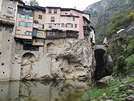

You mentioned Lorenzo, whom we chose in 2016 for the reason you mentioned: it drops you right in front with a clear passage through the mangrove (otherwise, it’s not easy at low tide). This year, we wanted to try somewhere else—the rest is in my upcoming trip report!
Photos commentées voyages et montagne : http://christian.aude.free.fr

Carnets de voyages en images : Bornéo 2025 (Brunei et Malaisie), Sumba 2024, Papouasie 2022, Vietnam 2019, Moluques 2018, Sulawesi 2016, Philippines 1984 (eh oui ! ) .
EI Eiger Veteran ·
.... Why didn’t you learn Bahasa Indonesia? It’s not a very complicated language to pronounce or conjugate, and it’s a game-changer for communicating in places like this.😉

Out of laziness... and because I’m not great with languages 😛 Plus, I’ve read multiple times that Bahasa isn’t hard... bummer
Photos commentées voyages et montagne : http://christian.aude.free.fr

Carnets de voyages en images : Bornéo 2025 (Brunei et Malaisie), Sumba 2024, Papouasie 2022, Vietnam 2019, Moluques 2018, Sulawesi 2016, Philippines 1984 (eh oui ! ) .
HO HohYao Veteran ·
Hello, Great travel journal, thanks! And sorry you couldn’t make it to Hatta. That’s what’s holding me back from planning a trip there, as a huge snorkeling fan.

We almost crossed paths in Bunaken (Seagarden and Panorama) by just a few days. I was there in October, and I can confirm the white-tip reef shark (we saw it in front of both resorts) isn’t dangerous. We also spotted sea snakes, and rarer critters like the cowfish, black triggerfish, porcupinefish with turquoise eyes, dartfish and fire gobies, nudibranchs, tons of moray eels and different scorpionfish... In short, an amazing spot for snorkeling.

Looking forward to the rest, and any info on the SITARO and SANGIHE archipelagos.
Mes vidéos de voyages et surtout de snorkeling https://www.youtube.com/user/tsarabanjina
DJ Djalma Globetrotter ·
We almost crossed paths in Bunaken (Seagarden and Panorama) by just a few days. I was there in October, and I can confirm the white-tip reef shark (which we saw in front of both resorts) isn’t dangerous. We also spotted sea snakes and rarer critters like the cowfish, black triggerfish, porcupinefish with turquoise eyes, dartfish and firefish, nudibranchs, tons of different moray eels and scorpionfish... In short, an amazing spot for snorkeling.

Hi, Is that Bunaken in your avatar photo or somewhere in the Philippines?
https://www.youtube.com/watch?v=-XCOyB7WStI https://www.youtube.com/watch?v=g2eI67iCbKY
EI Eiger Veteran ·
I confirm about the white-tip reef shark (we saw it in front of both resorts)—it’s not dangerous. We also spotted snakes and rarer creatures like the cowfish, black triggerfish, porcupinefish with turquoise eyes, dartfish and firefish, nudibranchs, tons of moray eels, and different scorpionfish,

I saw 2 or 3 harmless snakes (but I still don’t like them much) and 1 whose bite is deadly (this was in 2016, according to Lorenzo, who we were staying with). BBBBbbrrrrr, luckily it almost never bites 🤪 The next day, we were a little nervous in the water!

... Anyway, it’s an amazing destination for snorkeling.

YES 🙂 . In 2016, we hadn’t planned to go, but a couple from Austria we met in the Togians strongly recommended it... we didn’t regret it since we went back in 2018, when it wasn’t planned either (to be continued in the next episode 😄)

I can’t wait for the rest, and for info on the SITARO and SANGIHE archipelagos.

The Bunaken trip report is taking a while to come 😛 (tomorrow, I think), but SITARO and SANGIHE—it’s not me!
Photos commentées voyages et montagne : http://christian.aude.free.fr

Carnets de voyages en images : Bornéo 2025 (Brunei et Malaisie), Sumba 2024, Papouasie 2022, Vietnam 2019, Moluques 2018, Sulawesi 2016, Philippines 1984 (eh oui ! ) .
HO HohYao Veteran ·
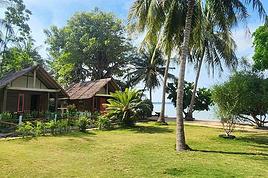
Hello, No, this is a photo of Paradise Beach on Koh Yao, Yao Noi in Thailand.

@Eiger, some say the snake’s mouth is too small to bite us unless it manages to grab an earlobe. In that case, its venom is deadly... but it’s not aggressive (unless you really annoy it or block its breathing).
Mes vidéos de voyages et surtout de snorkeling https://www.youtube.com/user/tsarabanjina
MA Marifb Veteran ·
On the other hand, I came across two bigger ones, yellowish, in Alor (Indonesia) that seem really dangerous and more aggressive (if the internet isn’t lying to me). They were busy with some romantic stuff 😉, so I didn’t stick around...
Marifb
MA Marifb Veteran ·
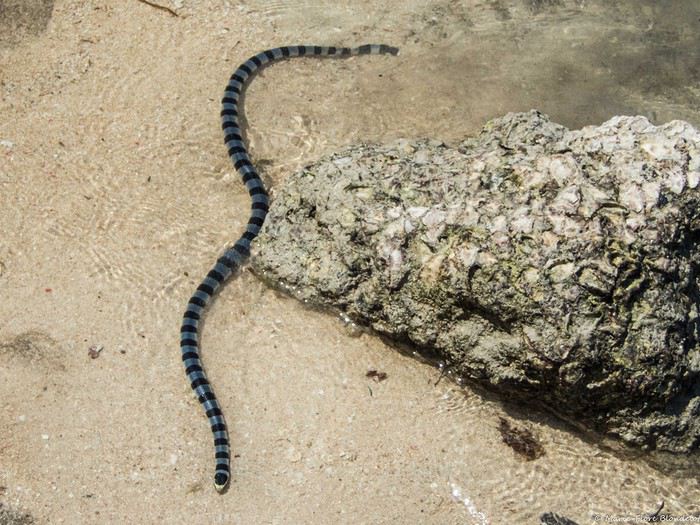
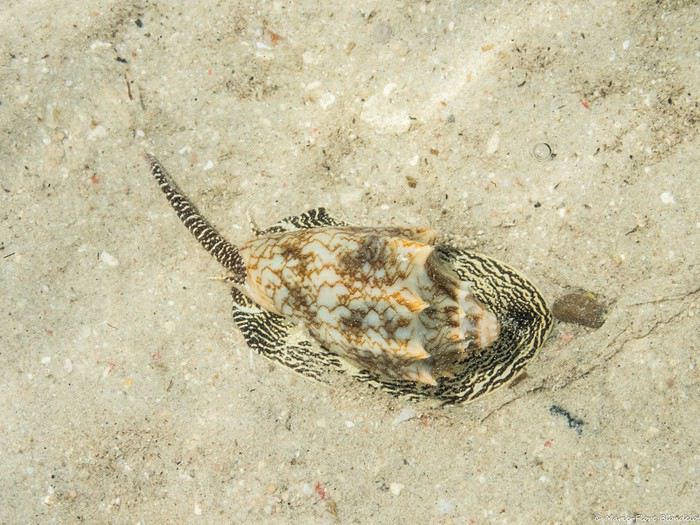
That cute little striped knit? It was in 20 cm of water next to a cone (a pretty deadly seashell too...). Komodo


Watch out for this seashell...

According to the Bajau, it’s almost impossible to get bitten—they told me it’s on the skin between the thumb and index finger—but they’re also shy despite their venom being stronger than a cobra’s. The cone shell, though, is no joke at all...
Marifb
DJ Djalma Globetrotter ·
On the other hand, that cone shell isn’t funny at all...

Back in the 75/80s, you’d see a lot of them in Indonesia and the Philippines. For years now, I haven’t seen any again—like many other shells, they’ve pretty much disappeared. As for the snakes, I’d seen ones similar to the photo but with yellow and black stripes, all standing vertically with their heads poking out of holes in the sand at less than 10 meters deep.
https://www.youtube.com/watch?v=-XCOyB7WStI https://www.youtube.com/watch?v=g2eI67iCbKY
CR Croquignol Veteran ·
The "banded sea krait" or banded sea snake. You see them very often while snorkeling. Their bite is deadly—it’s actually one of the most venomous creatures in existence. But it almost never bites because its mouth is too small. As mentioned earlier, it can only grab the skin between fingers. The only known accidents involve fishermen who got bitten while manually emptying their nets.
MO Mohamma2 Veteran ·
And how exactly does the "cone" kill??? I’d never heard of a deadly seashell before...
MA Marifb Veteran ·
It has a deadly stinger on its tail. It shoots out super fast and is super powerful. ..
Marifb
MO Mohamma2 Veteran ·
🏴‍☠️ oh yeah, nice! Anyway, if you don’t know anything about diving... don’t touch anything!
RJ Rjulie95 Globetrotter ·
🏴‍☠️ Oh yeah, nice! Anyway, if you don’t know anything about diving... don’t touch anything!

Whether you know about diving or not, the rule is not to touch the animals or the coral.....
"Je suis africain, non pas parce que je suis né en Afrique, mais parce que l'Afrique est née en moi." Kwame Nkrumah.

"J'ai appris que le courage n'est pas l'absence de peur, mais la capacité de la vaincre." Nelson Mandela

https://www.en-voyages.fr
HO HohYao Veteran ·
🏴‍☠️ Oh yeah, nice! Anyway, if we don’t know anything about diving... we don’t touch anything!

Whether you know about diving or not, the rule is not to touch the animals or the coral.....

+1
Mes vidéos de voyages et surtout de snorkeling https://www.youtube.com/user/tsarabanjina
DJ Djalma Globetrotter ·
Whether you're into diving or not, the rule is not to touch the animals or the coral.....

A bit like lions in South Africa...😏
https://www.youtube.com/watch?v=-XCOyB7WStI https://www.youtube.com/watch?v=g2eI67iCbKY
EI Eiger Veteran ·
According to the Bajau, it’s almost impossible to get bitten—they told me on the skin between the thumb and index finger—but they’re also timid despite their venom being stronger than a cobra’s.

That’s what I’d heard, but when you’ve got a sea cobra 1 meter away, even if you tell yourself it almost never kills, it’s not exactly fun . As for cone shells, I didn’t see any in Komodo, but I’ll keep the advice in mind. Like Régis said, I always follow the rule: "don’t touch the animals or the coral."
Photos commentées voyages et montagne : http://christian.aude.free.fr

Carnets de voyages en images : Bornéo 2025 (Brunei et Malaisie), Sumba 2024, Papouasie 2022, Vietnam 2019, Moluques 2018, Sulawesi 2016, Philippines 1984 (eh oui ! ) .
EI Eiger Veteran ·
Whether you're experienced in diving or not, the rule is not to touch the animals or corals.....

A bit like lions in South Africa...

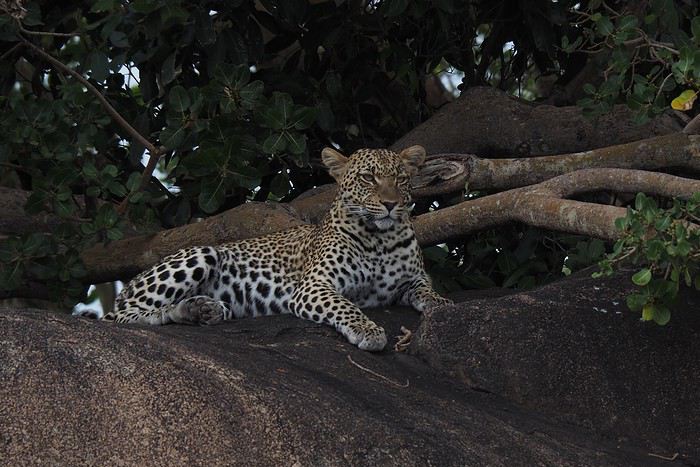
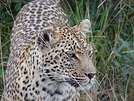
And yet, I was more tempted to pet that big cat 3 meters away from me in the Serengeti than any creature in the water... but I didn’t try either. It’s a bit like the sea serpent: the guide assured us there was no risk, but with a little jump, *whoosh*, it was on us 😕

Photos commentées voyages et montagne : http://christian.aude.free.fr

Carnets de voyages en images : Bornéo 2025 (Brunei et Malaisie), Sumba 2024, Papouasie 2022, Vietnam 2019, Moluques 2018, Sulawesi 2016, Philippines 1984 (eh oui ! ) .
LA Largeu ·
Hello, that photo is amazing!

Most sea snakes are dangerous and can attack humans. For those interested: www.google.com/...P0kTsiJdmlX4DHjjB1Xo

caledonie-csm.e-monsite.com/...ations-serpents....

Anyway, I was already charged by a big yellow-striped sea snake off the coast of Ouvéa, and I can tell you—even though I’ve never been afraid of snakes (I used to raise them as a kid)—well, that time I was really scared. It might’ve just been curious, but that wasn’t written on its forehead!

As for the geography cone in Marifb’s photo: Check out this short video to understand—plus, there’s apparently no antivenom. www.youtube.com/watch?v=_SvYnNR9byU

So stay cautious, especially when you’re hours or even days away from a hospital. See you on the forum!
DJ Djalma Globetrotter ·
Regarding the geography cone in Marifb's photo: watch this short video to understand; plus, there’s apparently no antivenom.

I shouldn’t really say this here, but it’s true. A few decades ago, seashells were everywhere in the tropical waters of many countries like Indonesia and the Philippines, and my 4- or 5-year-old son used to collect them on the beaches. One day while spearfishing, I spotted the pretty geography cone in question on the sand or in the coral. I didn’t know about this type of shell yet, and since I had one hand busy holding my spear, I slipped the cone into my swim trunks to bring back to my son. It was only afterward, when I saw the stinger come out and later realized its sting could be fatal, that I realized how close I’d come to disaster! PS: Luckily, out of all the cones we collected, they were all empty shells except for the one I picked up during that spearfishing trip!
https://www.youtube.com/watch?v=-XCOyB7WStI https://www.youtube.com/watch?v=g2eI67iCbKY
EI Eiger Veteran ·
Hard to wrap up this travel journal on the Moluccas, but it’s finally coming!

Today’s episode: Detour via Bunaken/Siladen

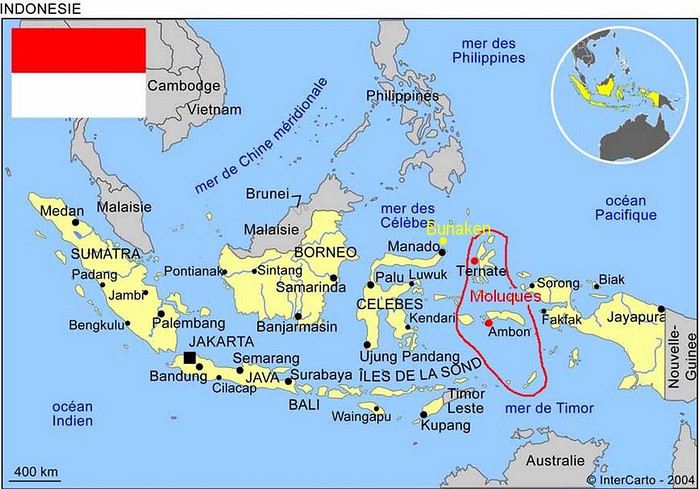
But what’s Bunaken (located in Sulawesi) doing in a travel journal about the Moluccas? - Our trip was supposed to start in the Banda Islands, the historic "Spice Islands" with their exceptional marine life where snorkeling (mask-fins-snorkel in French) was planned. But as mentioned in "Episode 1," a boat breakdown made this stay impossible: a huge disappointment, as it was supposed to be one of the highlights of the trip. - On the other hand, we had a few days left before returning. - Plus, Bunaken, an island in Sulawesi but close to Ternate, has a large number of diving and snorkeling sites on par with the Banda Islands. - Finally, transportation (plane/boat) from Ternate to Manado to Bunaken isn’t expensive. - So, we decided to return to Bunaken for a few days after our first visit in 2016.

Bunaken (in yellow) and Sulawesi in relation to the Moluccas below:

After our stay in Morotai and Halmahera (Kupakupa), we visited Tidore by scooter from Ternate while Hasrun (Villa Ma Rasai) booked our round-trip tickets from Ternate to Manado. Departure at 8:30 AM – Arrival in Manado at 8:20 AM... classic Indonesia, you arrive before you leave 🙂... thanks to the time zone change.

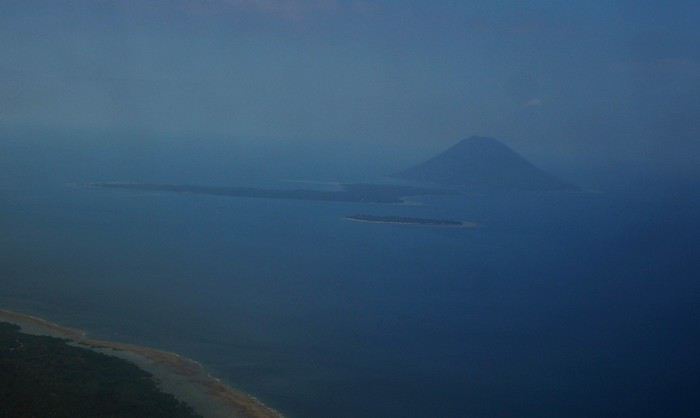
Just before landing, a view of Bunaken in the center, the small Siladen to the right, and a volcano in the background (photo’s a bit dark!):

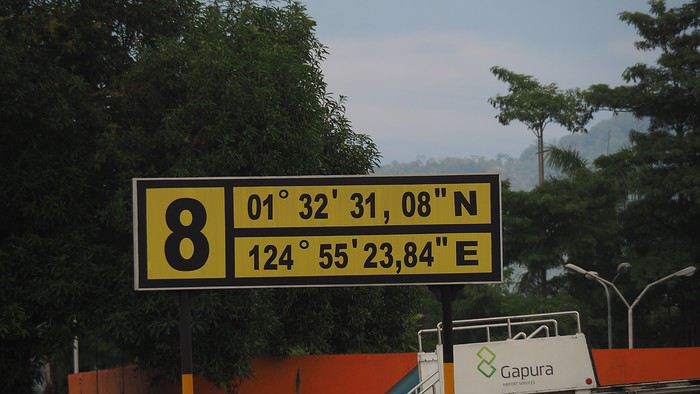
Manado Airport: Most of Sulawesi and the Moluccas are in the Southern Hemisphere, but Manado is just on the other side of the equator at 1° north.

The first advantage of having been to Bunaken before is not wasting time hesitating or asking questions: we immediately took a taxi to Hotel Celebes, a must-stop in Manado before heading to Bunaken.

A quick note on Hotel Celebes: The super-friendly staff is available to help you organize the rest of your trip—Tomohon, its volcano, and its market with monkeys/snakes/dogs/bats ... (see photos on my site under the Sulawesi section), the Tangkoko Forest with tarsiers found only here and on one island in the Philippines (photos there too), Bunaken, etc. The hotel isn’t high-end, but you can eat or grab a drink there and swap tips with other travelers passing through.

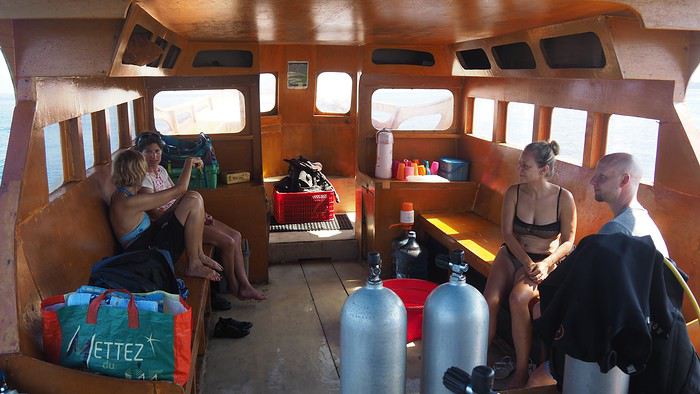
The staff confirmed that the public boat to Bunaken still leaves between 2 PM and 3 PM. Since it was barely 9 AM, we decided to splurge on a private boat: a good investment that got us there by 10 AM instead of 3–4 PM. Plus, we avoided the long trek through the market to reach the public boat, which isn’t well-marked and isn’t easy to find (common in Indonesia, but here they take advantage of it to steer you toward a private boat that’s 10 times more expensive).
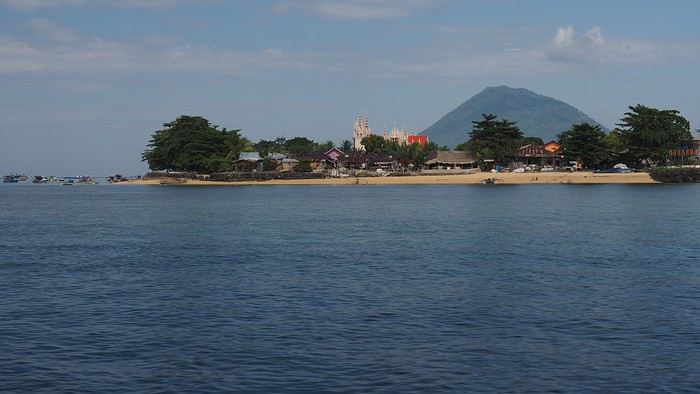
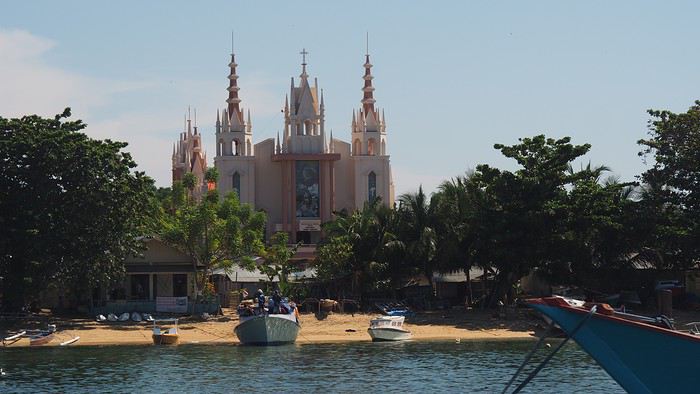
Arrival in Bunaken: We’re not church fans, but when they replace mosques with the 4 AM call to prayer, we’re not exactly upset to see them 😉:

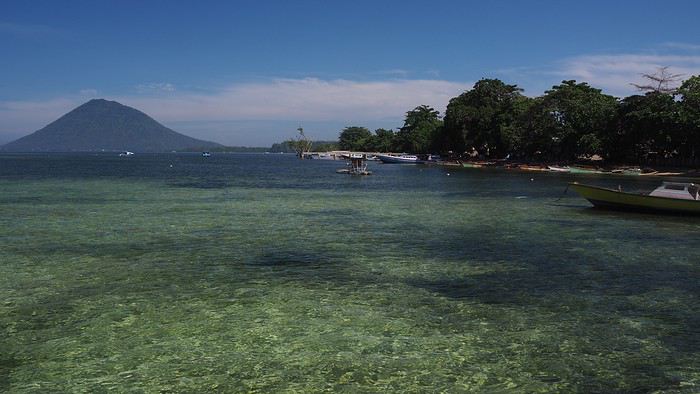
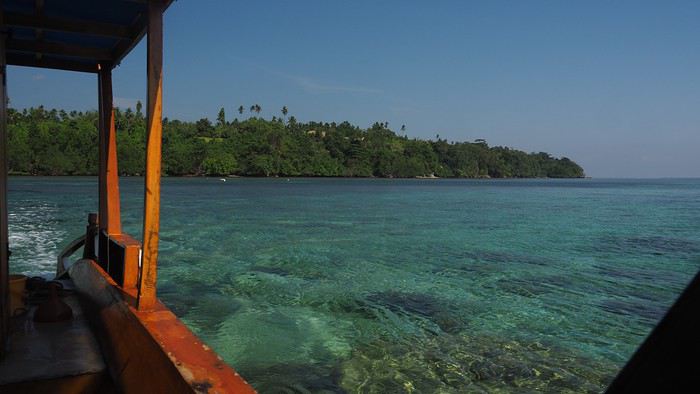
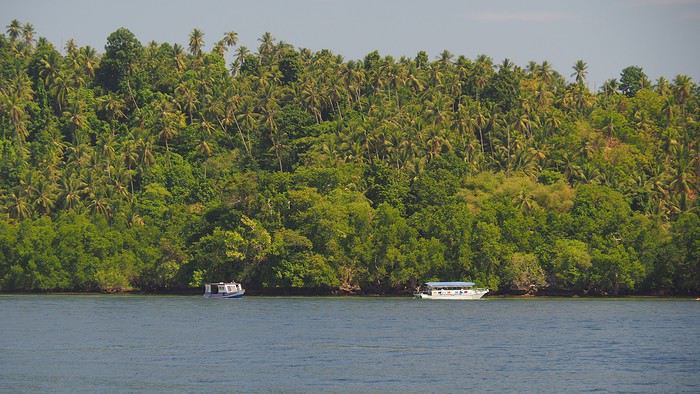
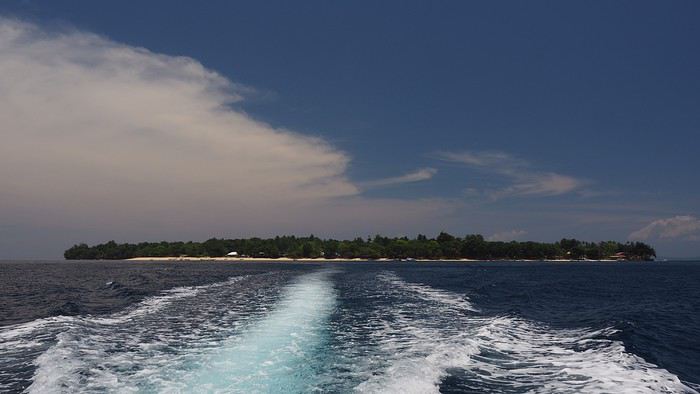
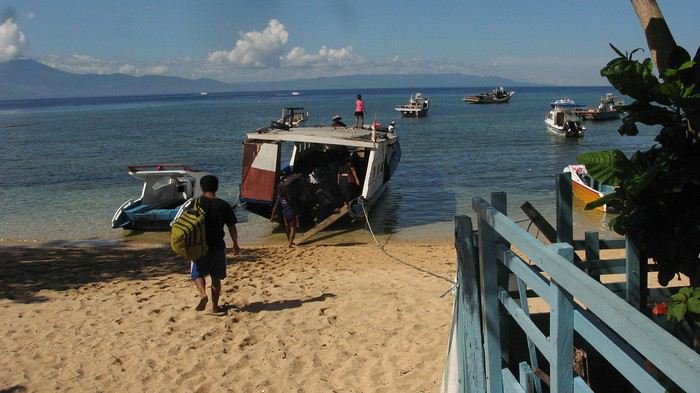
Bunaken isn’t particularly beautiful like the Togian Islands or the Morotai archipelago, but the colors are always magical upon arrival:

The second advantage of knowing Bunaken is having an idea of the best snorkeling spots (I’ll mention a few in the practical info at the end of this post). In 2016, we stayed at Lorenzo’s, where snorkeling is the most accessible on the whole island: they carved a path through the mangroves, which are impassable at low tide, and the route to the drop-off is relatively short (not the case everywhere). At low tide, this is a real plus, as the corals are like razor blades.


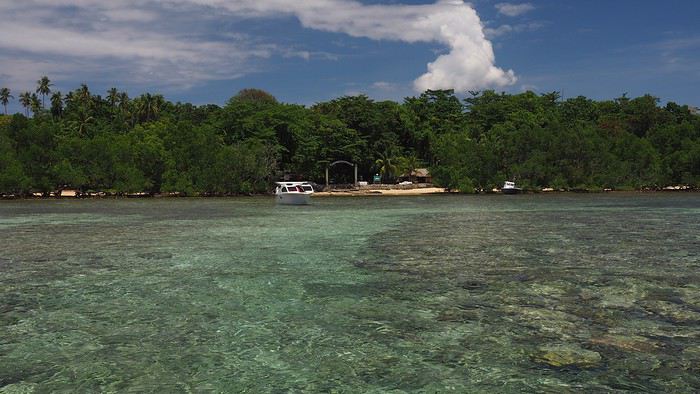
You don’t come here for white-sand beaches—they’re almost nonexistent, as the photo shows. The island is about 5 km long, bordered by mangroves that are really tough to cross. You might be thinking: "What a weird idea to come to a place like this."

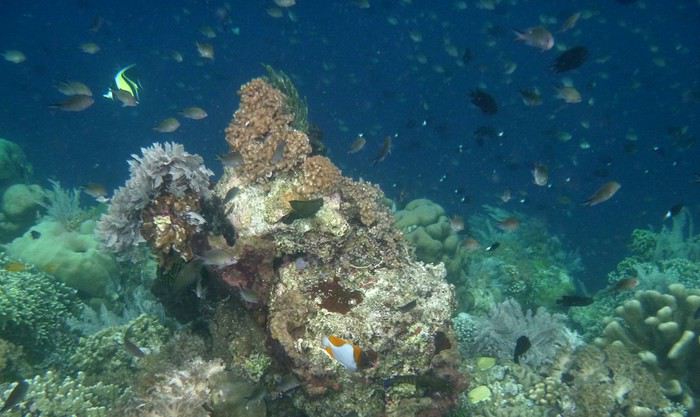
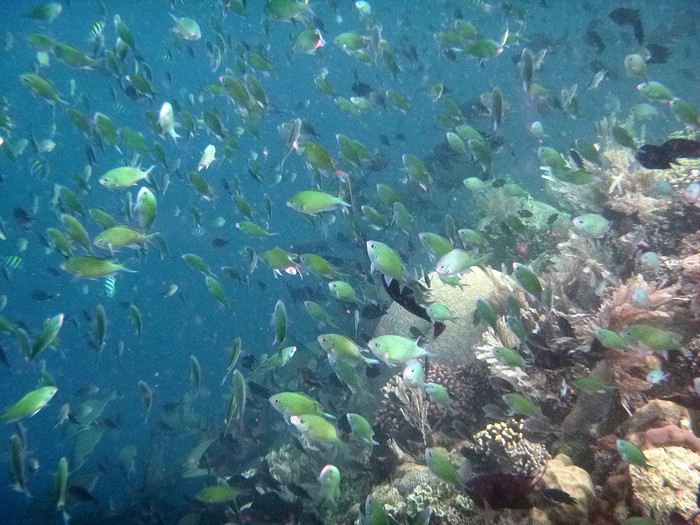
Bunaken’s richness is underwater: after 100–200 meters of coral covered by 1–2 meters of water at high tide (impassable at low tide), you reach an area with stunning corals followed by a fabulous 900-meter drop-off (a 900-meter-high cliff!). When the sea is calm, visibility is 20–30 meters—obviously not 900 😎, but along this drop-off lives a multitude of fish of all shapes and colors, turtles, sharks, and sea snakes (brrr). The moment you pass over the drop-off is always thrilling with that sudden sheer drop.

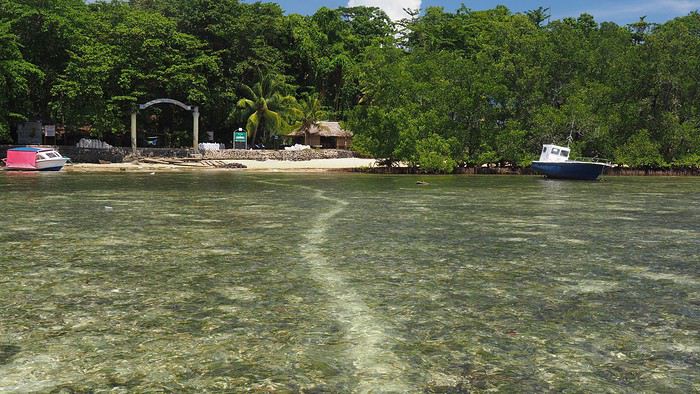
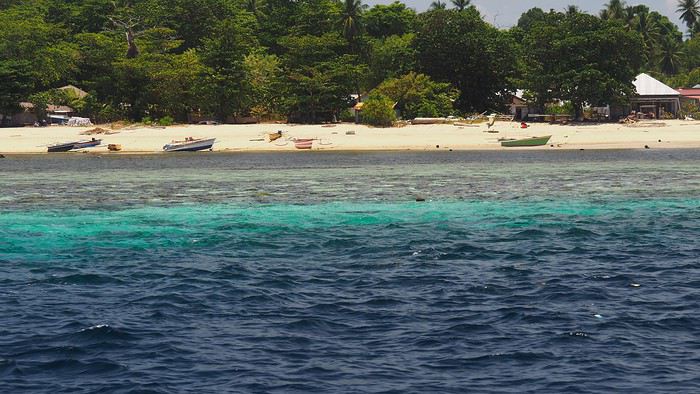
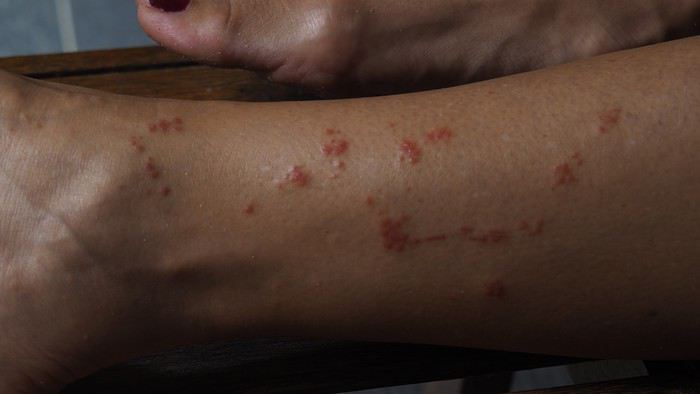
We decided to stay near Lorenzo’s but change accommodations: we chose Kuskus Lodge, then moved to Living Colors Lodge, which is fancier but less well-located. Plus, as we’ll see later, it’s run by a really unpleasant Finnish couple, which is surprising for a country where everyone is usually so nice (I’d avoid this place). Since we had a private boat, it dropped us right in front, saving us the short but fun ride from the "dock" by ojek (motorcycle taxi). It was low tide, so the boat got as close as possible—the corals had been crushed to dust to make a channel (!), clearly visible in the photo below:

After the boat channel, we still had to wade the last 50 meters with a "pedestrian crossing" , which didn’t stop us from wearing shoes because of a very venomous fish (I’ve forgotten its name) that hides nicely in the sand and gives you a nasty sting if you step on it (snakes, sharks, venomous fish... great vacation 😉):

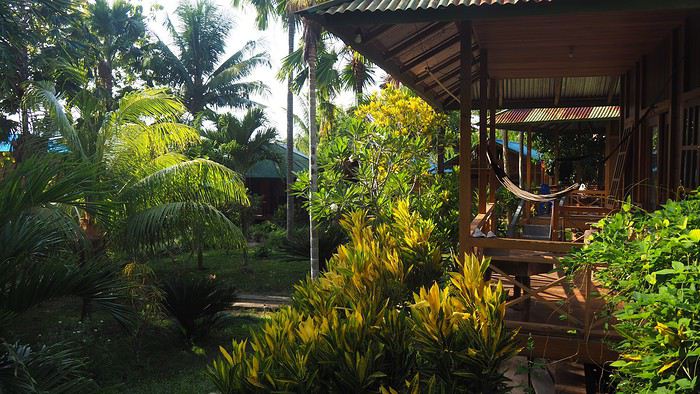
We picked our bungalow in a beautiful garden just 10 meters from the sea:

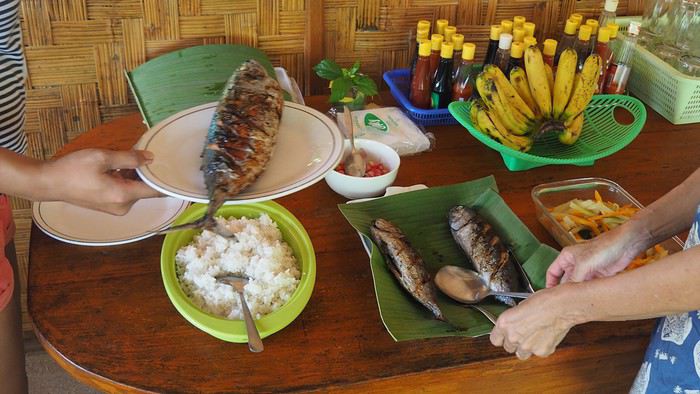
a quick meal:

then off to snorkeling—our only activity for the next 4 days.

My waterproof camera got waterlogged in Kupakupa after a mishap , so all the underwater photos below are from 2016 at the same spot. Bunaken was also our last stop after a fantastic south-to-north crossing of Sulawesi.

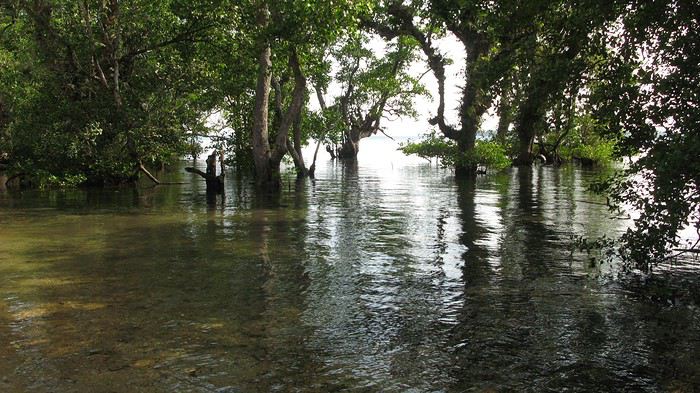
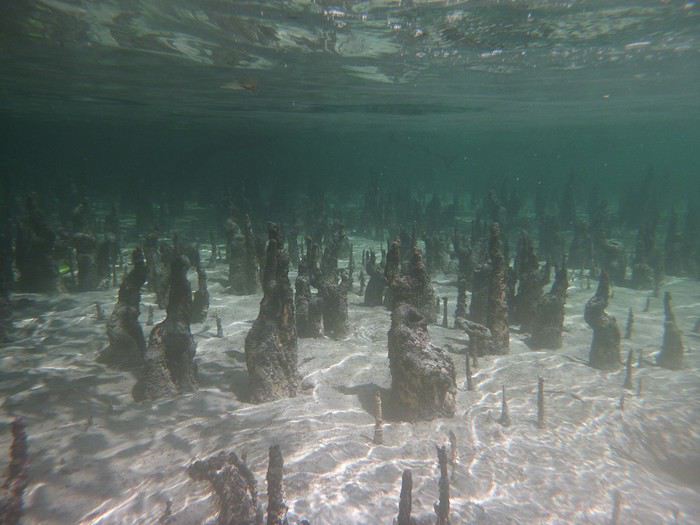
The mangroves at high tide:

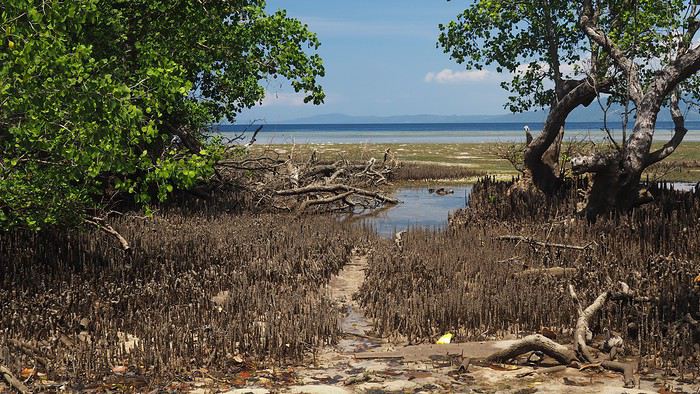
The mangroves at low tide are impassable without this path—we tried elsewhere without success:

The mangroves from below:


The fish are countless, and turtles are fairly common. Luckily, we only spotted 2 or 3 sea snakes, and none came close.


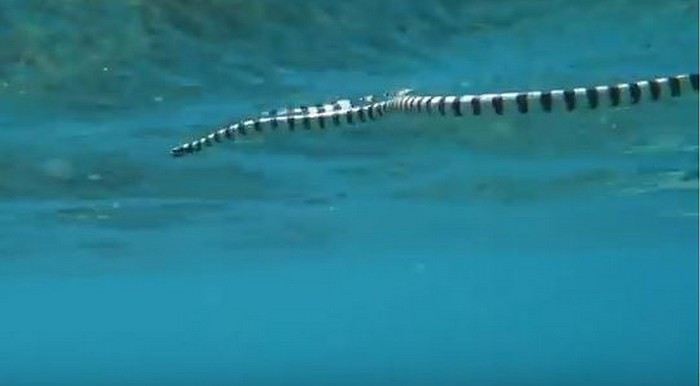
According to the locals, there are two types of sea snakes here: yellow-and-black and white-and-black (they couldn’t tell me the English names, and I wouldn’t have remembered anyway). One is harmless, and the other is deadly (see previous discussions—big thanks to everyone who helped clarify!). The most common ones are harmless, but sometimes you encounter a sea cobra, whose bite is way more dangerous than a land cobra’s (apparently it’s possible!). They’re not aggressive but curious, so the beautiful snake might swim beside you a little too long for your liking, as happened to us here in 2016. Thanks, snake—you gave me time to capture you.


I looked for blacktip reef sharks without success—at the time, I was disappointed, but after Fred’s post (thanks and kudos to him) about my 2016 photos, I now know they weren’t the harmless vegetarian blacktip reef sharks but carnivorous coral sharks, which sometimes get a little too close (brrrr again).

The days passed with snorkeling. Twice, we rented a boat with others to explore other snorkeling sites:

including the small island of Siladen, 2 km away, where the corals are even more stunning and abundant than in Bunaken, and the fish even more numerous (I didn’t think that was possible). However, we didn’t see a single turtle in Siladen, though they’re so common in Bunaken:

Siladen in all its width!

Snorkeling in front of Siladen’s village:

Coming up: the end of Bunaken, plus practical info, tips, and prices.
Photos commentées voyages et montagne : http://christian.aude.free.fr

Carnets de voyages en images : Bornéo 2025 (Brunei et Malaisie), Sumba 2024, Papouasie 2022, Vietnam 2019, Moluques 2018, Sulawesi 2016, Philippines 1984 (eh oui ! ) .
RJ Rjulie95 Globetrotter ·
Don't freak out about sharks—underwater, the risk of getting attacked is practically zero.
"Je suis africain, non pas parce que je suis né en Afrique, mais parce que l'Afrique est née en moi." Kwame Nkrumah.

"J'ai appris que le courage n'est pas l'absence de peur, mais la capacité de la vaincre." Nelson Mandela

https://www.en-voyages.fr
DJ Djalma Globetrotter ·
According to the locals, there are 2 types of snakes here: the yellow and black ones and the white and black ones (they couldn’t tell me the English name, but anyway I wouldn’t have remembered). One is harmless and the other deadly (see previous exchanges—big thanks to the participants who enlightened us!)

Do you know which ones are deadly? I’ve only seen the yellow and black ones...😕
https://www.youtube.com/watch?v=-XCOyB7WStI https://www.youtube.com/watch?v=g2eI67iCbKY
EI Eiger Veteran ·
Do you know which ones are deadly? I only saw yellow and black ones...😕

All good then 😉 . Here’s what Lorenzo told me in Bunaken: - we didn’t get lucky (those were his exact words... in English 😉 ) to run into a black and white one—they’re pretty rare - it’s the black and white one that’s deadly (though I’m not sure if it’s the one called the sea cobra) - the most common ones are the yellow and black: I saw them in several spots, often resting on sand between corals (Bunaken, Togians, Moluccas), and they never moved when I passed by

Also: - as others have already mentioned, they’re usually indifferent, and if one gets curious and comes closer, it can be scary, but that’s about it—they supposedly can’t bite humans - you might see them, but you can still snorkel for days without running into any, so no stress
Photos commentées voyages et montagne : http://christian.aude.free.fr

Carnets de voyages en images : Bornéo 2025 (Brunei et Malaisie), Sumba 2024, Papouasie 2022, Vietnam 2019, Moluques 2018, Sulawesi 2016, Philippines 1984 (eh oui ! ) .
EI Eiger Veteran ·
Don’t make it a phobia with sharks—the risk of being attacked underwater is close to zero.

No, I’m not phobic, it’s just that on this forum, I was relieved to say I hadn’t seen any this year. On the spot, no problem. Plus, the two big reef sharks I photographed swam right past me, and it didn’t bother them at all 😮
Photos commentées voyages et montagne : http://christian.aude.free.fr

Carnets de voyages en images : Bornéo 2025 (Brunei et Malaisie), Sumba 2024, Papouasie 2022, Vietnam 2019, Moluques 2018, Sulawesi 2016, Philippines 1984 (eh oui ! ) .
EI Eiger Veteran ·
Hi everyone, here’s finally the continuation and end of my travel journal from the Moluccas! 😛: - Return from Bunaken - Reasons to go (and not to go) to the Moluccas - Some practical info: tips, prices, schedules...

First off, the trip photos are finally available on my site: christian.aude.free.fr/...sie_moluques_154.htm

Bunaken

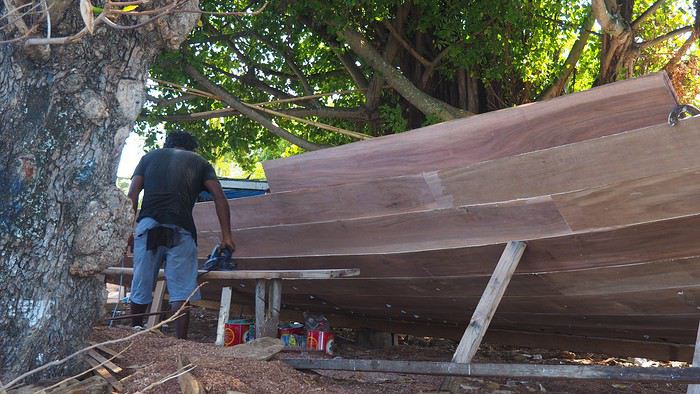
Boat building in the village of Bunaken:

The huge church in the small village of Bunaken. In Sulawesi and the Moluccas, churches are always imposing (to compete with mosques?):

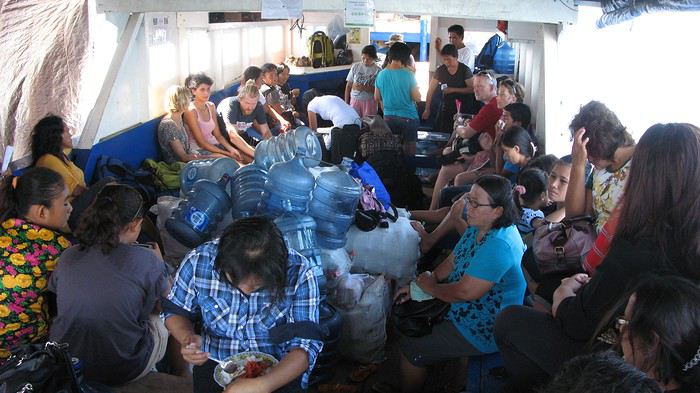
The public boat for the return to Manado:

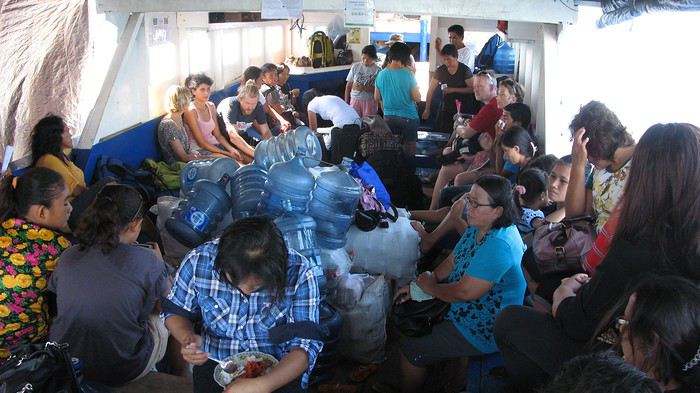
Inside, the usual cheerful chaos:

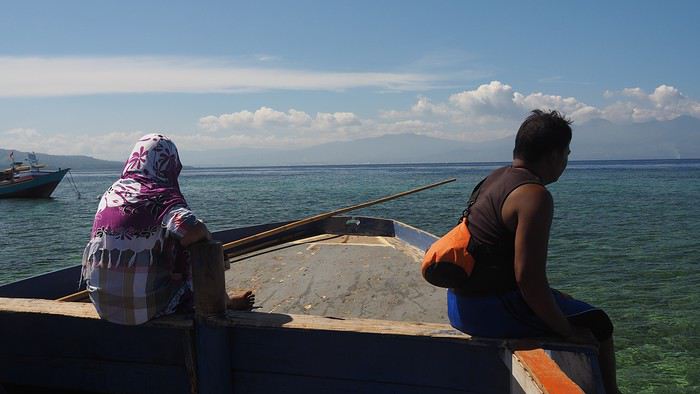
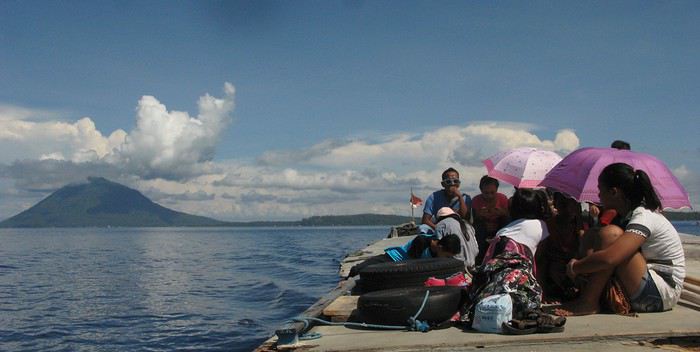
On deck, the sun beats down hard, but it’s worth it:


Arrival in Manado amid trash—a classic in Indonesia:

1 hour crossing, 40 minutes by taxi, 50 minutes by plane, and we’re back in Ternate. It doesn’t make any sense to go back through Ternate: if we’d planned from the start to go to Bunaken, we’d have taken a Manado-Singapore flight (where we’ll spend 3 days before returning to France) instead of Manado-Ternate-Jakarta-Singapore 😛. Plus, the Ternate-Jakarta flight on Lion Air made a stop in Makassar due to a technical issue. It didn’t worry us at all, but a few days after our return, a Lion Air flight crashed off the coast of Java... and according to the first findings, it was due to a problem that was fixed too quickly 😠. Maybe it was our plane that had an early warning 🤪.

We were in Bunaken the day of the Palu tsunami, which devastated everything: several friends were worried, but since Bunaken is on the other side of Sulawesi, there wasn’t even a ripple.

Conclusions:

Reasons to visit the Moluccas: - Fulfill an old dream (for me): discover the legendary and mysterious Spice Islands - Meet its inhabitants, even more welcoming and smiling than in the rest of Indonesia - Respond with smiles to the countless "Hello Mister" greetings - Get photographed every day by Indonesians (our faces are now in hundreds of smartphones 😉) - Discover some of its paradise-like deserted islands (almost 1,000 in total!), each more beautiful than the last—thick jungle or white-sand beaches lined with coconut trees (I know it’s cliché, but we Westerners all dream of it) 😎 - Dive and snorkel (especially in the southern Moluccas) - Climb a volcano - Experience a hint of "adventure..." (don’t exaggerate, though!) - Travel without any tourists (though this can also be a reason *not* to go to the Moluccas—see below) - Simply wander around on a scooter, discovering villages where the scent of spices intoxicates you everywhere

Some good (or bad) reasons *not* to visit the Moluccas: - Because it’s far (2 time zones farther than Jakarta, which is already far from Europe): 19 hours of flying from Paris - Because you like vacations planned in advance - Because it’s expensive: not entirely true. It mostly depends on the long-haul flight, since prices on the ground are the same as in Indonesia (not more expensive, contrary to what I’d read). In September: 420 € Lyon-Paris-Singapore on Air France + Singapore-Moluccas → total 705 € round-trip) - Because accommodations are often basic and you prefer luxury (no high-end hotels), with almost no guesthouses/hotels outside Banda, Ternate, and Ambon - Because you don’t like being the only tourist: many travelers enjoy places without tourists🙁... but only if there are a few others around to avoid feeling too isolated, to chat in the evening, or have a mojito 😊 - Because you dislike uncertainty: Where to sleep? Is there a boat to XXX? What time? In the Moluccas, you decide day by day - Because your schedule is tight: transportation is unpredictable, so you have to adapt and change your itinerary on the fly - Because you don’t speak Bahasa: neither do we, and even though almost no one speaks English, we always manage. So that’s not a good reason 😉

A few tips/tricks: - Bring cash: a few ATMs in (rare) cities, only one bank exchanges euros in Ternate (near the Grand Mosque) and probably another in Ambon. - Roads are in perfect condition (surprising, nothing like the rest of Indonesia), deserted (except in Kota Ambon and Kota Ternate). Apparently, this is thanks to UN money after the religious riots of 1999–2002. - Ambon is Protestant; Ternate, Tidore, Halmahera, and Morotai are majority Muslim, but you’ll find many churches. Even though the veil is common in Ternate and women bathe fully clothed (in theory—hardly any locals swim), there’s no particular religious pressure. Contrary to what I’d read, it’s cool. You even see young people flirting and drinking beers on Sundays at the beach and behind coconut trees (what are they doing?). Obviously, no shorts in villages or towns, and no bikinis for women (except in places where you’re alone). - I’d read that alcohol was prohibited in the northern Moluccas, but I drank beer in several places (not smuggled—it was offered to me), and it didn’t bother anyone. Still, avoid drinking in the street; we noticed that those who do drink do it discreetly.

A few schedules and prices (I didn’t note everything):

Accommodation prices are for 2 people, breakfast included, unless specified otherwise. 100,000 IDR ≈ 6 €

Ternate Villa Ma’Rasai: 616,250 IDR Kupa Kupa bungalow: 600,000 IDR Kolorai Homestay: 400,000 IDR (full board) Ambon Solim Guesthouse: 280,000 IDR Bunaken Kuskus Resort: 600,000 IDR (full board) Bunaken Living Colors: 1,000,000 IDR (full board)

Transport (times often rough estimates):

Ambon Airport-Solim Guesthouse (+farther than the city): 150,000 IDR/taxi Ambon: scooter lent by the guesthouse Snorkeling boat to an island near Ambon (village name forgotten): 100,000 IDR/boat Ternate-Morotai Wings Air: 40 min, 550,000 IDR/person (booked just before departure) Morotai-Kolorai speedboat: 45 min, 600,000 IDR/boat (we know we got ripped off, but no choice) Kolorai-Morotai outrigger boat: 1 hour, 200,000 IDR/boat Morotai-Tobelo speedboat: 2 hours, 100,000 IDR/person Tobelo-Kupakupa kijang: 30 min, 50,000 IDR/person Kupakupa-Sofifi taxi: 4 hours, 500,000 IDR/taxi Sofifi-Ternate speedboat: 40–50 min, 50,000 IDR/person Ternate-Tidore ferry by scooter: 30 min, 50,000 IDR/scooter (with 2 people) Ternate-Manado Wings Air: 50 min, 420,000 IDR/person

Scooter rental (2-seater) at Villa Ma’Rasai: 150,000 IDR/day (expensive for the country, but rentals are rare in Ternate) Kolorai: half-day snorkeling and islands: 250,000 IDR/boat Day trip Kupakupa-Pulau Meti: 350,000 IDR (2 scooters + boat + 2 meals + "guide")

Ternate Airport-Villa Ma’Rasai taxi: 150,000 IDR

More than any other region in Indonesia, this is the ultimate destination for those who love off-the-beaten-path islands! 😎 😉 A few struggles, but so many splendors 🙂 🙂 Go before airports and luxury hotels are built everywhere!

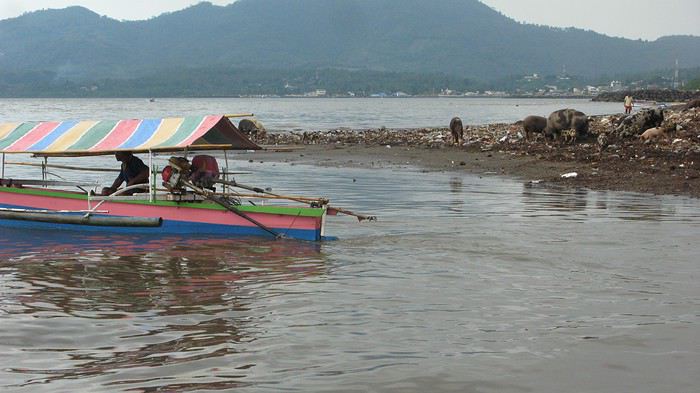
To finish, 2 photos: - A forgotten detail in the travel journal: the bites below are from sand flies (sand fly). Terrible, relentless itching for days. We probably encountered these flies in Tidore, but we’re not sure of the origin since you don’t see them—you only feel them later (well, they don’t like me, so I didn’t get any🙂). It’s not a reason to avoid the Moluccas, but do some research if you’re going to Tidore.

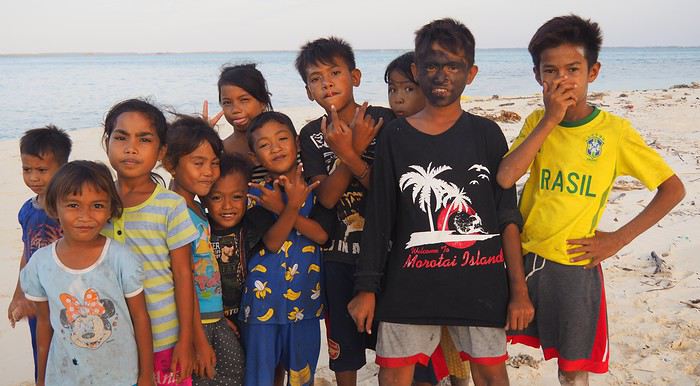
- Goodbye and happy travels to all from my group of friends in Kolorai:

Photos commentées voyages et montagne : http://christian.aude.free.fr

Carnets de voyages en images : Bornéo 2025 (Brunei et Malaisie), Sumba 2024, Papouasie 2022, Vietnam 2019, Moluques 2018, Sulawesi 2016, Philippines 1984 (eh oui ! ) .
JO Jofmess Regular ·
hi everyone, we're back from the Moluccas, exhausted from all the flight hours, but so happy about the trip we had. The Banda Islands were magical, especially AI and RUN. We met such kind, smiling, generous people that coming back is even harder with the current situation. Thanks to Eiger and Lolodesiles for all the info that turned out to be really reliable and valuable. If anyone has questions about prices or anything else, don't hesitate. (For the sandflies, we got eaten alive at Dodola—the place was infested. In Tidore, though, we didn’t have any problems at all.)
EI Eiger Veteran ·
Hi there,

....the Banda Islands were enchanting, especially AI and RUN.

Lucky you... makes me even more sorry I couldn’t make it there.

we met such beautiful, smiling, generous people.

One of the Moluccas’ greatest treasures 🙂 🙂

(for the sandflies, we got absolutely devoured at Dodola—the place was infested. In Tidore, though, we didn’t have any).

We hadn’t thought of Dodola, since the bites and itching started after we left Tidore, but looking back, I think Dodola was infested too... and since we went there on two different days, we really got our fill 😛. In Tidore, it’s likely they’re not everywhere.
Photos commentées voyages et montagne : http://christian.aude.free.fr

Carnets de voyages en images : Bornéo 2025 (Brunei et Malaisie), Sumba 2024, Papouasie 2022, Vietnam 2019, Moluques 2018, Sulawesi 2016, Philippines 1984 (eh oui ! ) .
EI Eiger Veteran ·
Did you enjoy this travel journal about the Moluccas? Then a little plug: you might like my travel journal "Crossing Sulawesi" 😎: voyageforum.com/...-en-photos-d9647895/

If you didn’t like the travel journal about the Moluccas... you don’t have to read the one about Sulawesi

Happy reading and safe travels
Photos commentées voyages et montagne : http://christian.aude.free.fr

Carnets de voyages en images : Bornéo 2025 (Brunei et Malaisie), Sumba 2024, Papouasie 2022, Vietnam 2019, Moluques 2018, Sulawesi 2016, Philippines 1984 (eh oui ! ) .
EP Epeel ·
Thanks, Eiger, for this detailed account with tips—I’ll save it for later. My next trip is to Wakatobi, my third in Indonesia, but there’ll be more to come.
EPeel
VP VP44 Regular ·
Even several years later, the pleasure of reading this trip report is still here. Thanks so much for sharing your impressions of the Moluccas! The islands have surely changed a lot since 2018.
EI Eiger Veteran ·
The islands have surely changed a lot since 2018.

Thanks for appreciating! I don’t think the Moluccas have changed much since then. Tourism-wise: - It’s still difficult to reach the Banda Islands from Ambon, so they’re not about to be overrun by tourists. - Seram, Makian, and Bacan have no infrastructure, and some ethnic groups still live isolated in the forest with no contact with the rest of the population. - Halmahera is covered in volcanoes and jungle; the road only connects the northeast and the center (from Tobelo to Sofifi). Elsewhere, there are no roads—so here and there, you might find a homestay, but not much more. - On Tidore, there was only one homestay, and given how peaceful the island is, I doubt there are many more now. - But from what I’ve read here and there, Morotai and its fantastic islands are starting to develop some tourist infrastructure. The trip is quick from Manado (Sulawesi), with one flight per day (45 minutes to Tidore, then another 45 minutes without changing planes). - The Kei Islands and their stunning white-sand beaches, despite being remote (right next to Papua), might be the only ones slightly more frequented (all things considered!). There’s an airport, which helps.

Development-wise, the islands are very isolated, and cloves and nutmeg make them wealthy. The big issue is the nickel mine on Halmahera: displacing ethnic groups living in the forest in self-sufficiency, deforestation, pollution, etc...
Photos commentées voyages et montagne : http://christian.aude.free.fr

Carnets de voyages en images : Bornéo 2025 (Brunei et Malaisie), Sumba 2024, Papouasie 2022, Vietnam 2019, Moluques 2018, Sulawesi 2016, Philippines 1984 (eh oui ! ) .

Similar discussions

You might also like