The Bridge
We only stayed in Mandalay for the day to see what there was to see. Around 11 PM, we got back in the car for another nighttime drive to Bagan, which shouldn’t take more than 5-6 hours if we don’t break down (I’m hopeful). That’d get us there nice and early. Just enough time to drop our bags at a guesthouse, freshen up, and we’d be at the pagodas first thing—perfect morning light for great photos. By then, we’d be on our second night in a row without sleeping in a bed, and after rushing through Mandalay and its surroundings, we’re exhausted. The "room" setup was the same as always: one girl (the same one) up front, two girls on the back benches, and the two guys and the fourth girl on the floor between them. Despite the discomfort—thanks to the road conditions—we fell asleep easily.
The engine noise and bumps stopping woke me up: we weren’t moving. I stayed still, waiting to see what happened next. Straining my ears, I heard Sonny talking to unfamiliar voices. I sat up and looked: the cops. Their conversation dragged on, which wasn’t a good sign. I got out, head spinning, to find out what was going on. Before I even spoke, I caught a glimpse of the problem: we had a bridge to cross, but its access was blocked by a barrier the officers seemed to be guarding. Annoying, because in the police (like in the military), they never assign this kind of job to the brightest. Sonny told me the barrier wouldn’t open until 6 AM. I checked my watch: it was 1 AM... I tried striking up a conversation with the one who seemed to be in charge, but his response was to ask for my passport. Could he read anything other than Burmese? I doubted it. Meanwhile, my passengers had woken up and were all visible. I expected him to ask what a group of six tourists was doing out this late in a vehicle that wasn’t even officially authorized for this—he probably already guessed the answer, and it spelled trouble for us, especially Sonny and me.
But no, he handed my passport back. Okay...
Still, we were stuck there, and that wasn’t good for me—first, because he wasn’t saying anything about us waiting five hours in the middle of nowhere with sketchy company, and second, because it’d make us arrive in Bagan much later, at the worst time of day. And there were other photographers in the group.
Conclusion: I had to try psychology, my way...
I went to the car and quietly took a pack of cigarettes from my bag, opening it and emptying three-quarters of its contents. It was the brand with the cowboy—one pack costs a Burmese the equivalent of about four days’ salary at the official exchange rate.
In front of everyone, I offered a cigarette to Sonny, the driver, and each of my passengers.
"No, thanks, I don’t smoke," the first one declined.
"Yes, today you’re all smoking! Take one, light it, and look relaxed."
But since I’d made sure there were only five cigarettes left in the pack, there weren’t enough.
"Oh darn, I’m out," I said, faking disappointment as I showed the empty pack to everyone—including the cops, who were watching the whole scene. But since "they were on duty," I hadn’t offered them any...
I went back to my bag, took it out of the car, and reached in, pulling out—oops—two packs by accident. One was extra, so I offered it to Sonny like I was being generous rather than bothering to put the pack back. I finished handing them out to the passengers who hadn’t gotten one yet. I watched, amused, as they pretended to smoke—it was funny.
Then I gestured to the driver.
"You want a pack too?"
Of course he did—he’d smoke it or sell it. I reached into my bag again, this time pulling out the whole carton in full view of everyone, took one pack out, and gave it to him.
We kept smoking casually, chatting among ourselves and showing no impatience. The cops watched. After a while, I gestured:
"Want one?"
The chief said yes, and the others followed. I handed them out, saying,
"I really like this brand—do you?"
Sonny translated; the answer was positive.
"I got them for a good price at Bangkok Airport. They’re expensive here, right?" (I was being diabolical...)
The answer was *very* positive this time.
Then I looked at the lowered barrier, clearly annoyed, then at the carton of cigarettes, then at them.
"Want a pack?"
The question was unnecessary. I dug into my bag, found the second carton, and gave them two packs each.
The chief signaled to one of his guys, the barrier lifted, we got back in the car, and we were off.

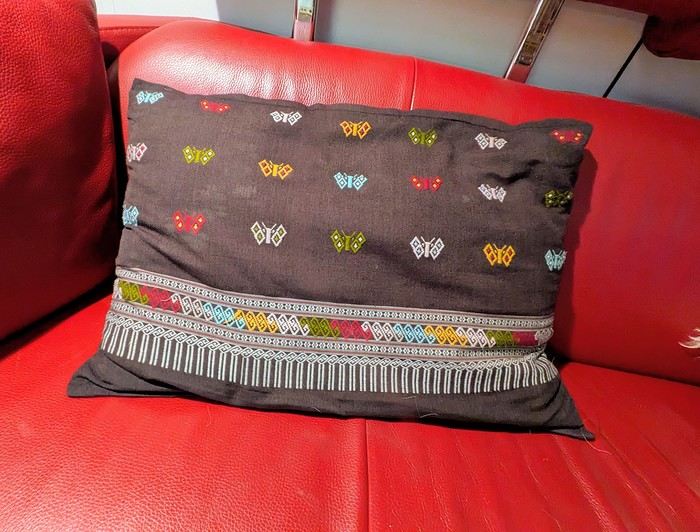 I used the fabrics to make cushions.
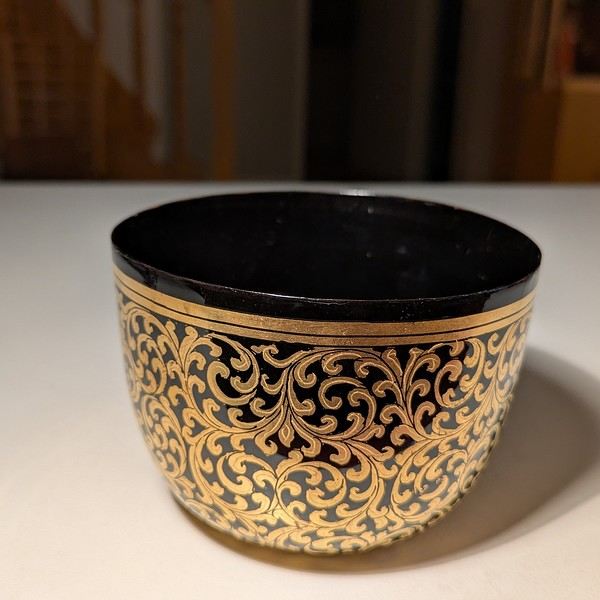 Ultra-thin and flexible bowl, traditional technique: frame made of thin bamboo strips, woven horsehair covered with genuine lacquer (tree resin), decorated with gold leaf.
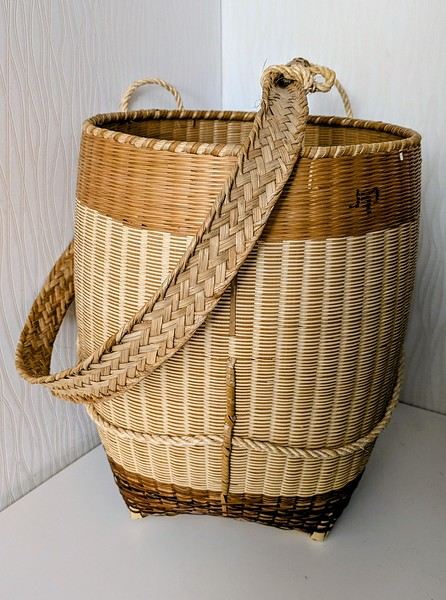
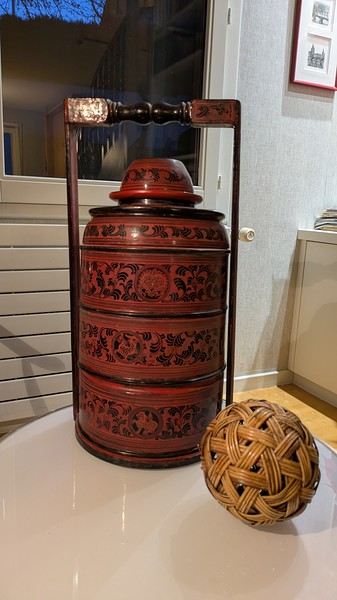 Traditional lacquered and carved wicker lunchbox used to carry meals. And a woven ball for the popular game called *takraw* in Thailand.








I had to leave Thailand as my 60-day visa was coming to an end, and this time I opted for a 14-day visit to Japan. I’d already spent 3 days in Tokyo a few years ago on a business trip, which left me with a great impression. Y, my Thai partner, had never been there. That’s why we chose a fairly classic itinerary, including a few castles and Kyoto among other things.
Before diving into the details of our trip, I’d like to recap the expenses we incurred. This will be useful for some of you, and it’ll help us prepare for our next trip to Japan.
I’ve categorized our expenses into 5 groups: - Hotels: 1150 € (breakfast included) - Transportation: 278 € (trains, buses) - Big expenses: 487 € (souvenirs and a few necessary items) - Excursions: 116 € (museum visits, temples, castles) - Daily expenses: 1125 € (meals, small purchases) Total = 3194 €, or 228 € per day on average. I’m excluding flights, as those depend on everyone’s arrangements (departure location, travel dates, etc.).
Jpeg below: apologies for “hotel” without a circumflex—my software isn’t French!

For hotels, we always chose decent but not luxurious places, well-located to let us walk to and from transportation hubs. We systematically avoided taxis, which are notoriously expensive in Japan. We’ve also gotten into the habit over several trips of traveling with minimal luggage: one duffel bag each (7-8 kg) plus the small carry-on allowed on planes (2-3 kg). This lets us travel with three sets of clothes (what we’re wearing plus two changes). We add a checked bag for the return trip to accommodate the things we buy along the way.
‘Transportation’ and ‘Big expenses’: I’ll give more details in the day-by-day account.
We didn’t do any extravagant excursions, like safaris or sports activities.
Meals and food make up the bulk of our daily expenses. We often ate at izakayas, which offer great value—between 2000 and 6000 yen for two (about 11-12 to 33-34 € for two, usually around 20-25 €). We didn’t hold back, but we also didn’t go to high-end restaurants.
More to come while I gather my photos: General Remarks.
Before diving into the details of our trip, I’d like to recap the expenses we incurred. This will be useful for some of you, and it’ll help us prepare for our next trip to Japan.
I’ve categorized our expenses into 5 groups: - Hotels: 1150 € (breakfast included) - Transportation: 278 € (trains, buses) - Big expenses: 487 € (souvenirs and a few necessary items) - Excursions: 116 € (museum visits, temples, castles) - Daily expenses: 1125 € (meals, small purchases) Total = 3194 €, or 228 € per day on average. I’m excluding flights, as those depend on everyone’s arrangements (departure location, travel dates, etc.).
Jpeg below: apologies for “hotel” without a circumflex—my software isn’t French!
For hotels, we always chose decent but not luxurious places, well-located to let us walk to and from transportation hubs. We systematically avoided taxis, which are notoriously expensive in Japan. We’ve also gotten into the habit over several trips of traveling with minimal luggage: one duffel bag each (7-8 kg) plus the small carry-on allowed on planes (2-3 kg). This lets us travel with three sets of clothes (what we’re wearing plus two changes). We add a checked bag for the return trip to accommodate the things we buy along the way.
‘Transportation’ and ‘Big expenses’: I’ll give more details in the day-by-day account.
We didn’t do any extravagant excursions, like safaris or sports activities.
Meals and food make up the bulk of our daily expenses. We often ate at izakayas, which offer great value—between 2000 and 6000 yen for two (about 11-12 to 33-34 € for two, usually around 20-25 €). We didn’t hold back, but we also didn’t go to high-end restaurants.
More to come while I gather my photos: General Remarks.








 Roundabouts are particularly interesting because they feature emblems of Turkmen culture, like the dog, a carpet, the Ahal Teke horse, or Muslim symbols, even though the presence of Islamic artifacts is quite limited.





















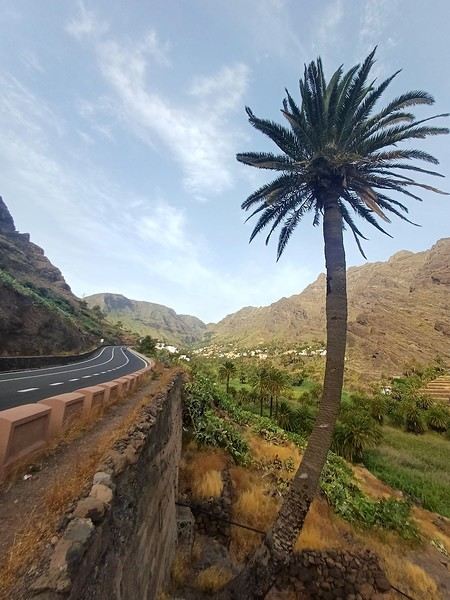
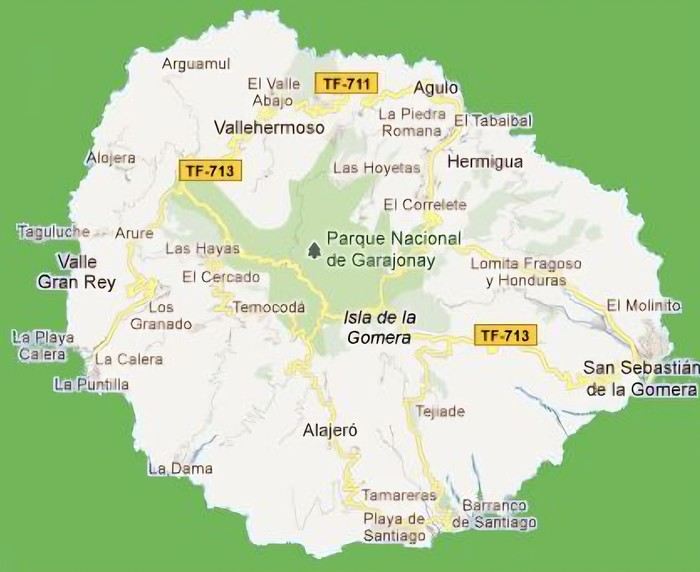 The large solidified magma massifs that shape the heart of the island have created a large depression more protected from the sun at its center, allowing the growth of a vast laurel forest, today grouped within the Garajonay National Park, La Gomera’s green lung, which has earned it the status of a World Biosphere Reserve. Its completely European appearance contrasts sharply with the rocky and tropical landscapes of the rest of the island. Thus, the climate varies greatly from one point to another on the island: in summer, you can quickly go from a dry and sunny valley at 35°C to a humid forest area at altitude at 18°C.























 Why this country?
After visiting Hungary, Slovenia, Romania, and Poland in recent years, I’ve fallen in love with Eastern European countries. I adore the Slavic soul, its Austro-Hungarian villages, the gentle landscapes, the Carpathian Mountains, and that slightly mysterious atmosphere.
Slovakia evokes a certain imagination with its deep forests, medieval castles, and cobbled villages.
After seeing photos of the High Tatras—especially Lake Štrbské Pleso and Spiš Castle—I thought, "Let’s do it! We’re going!"
So, will Slovakia live up to what I imagine?
We’ll find out together.
We decided to travel as a group of six (five adults and a six-year-old child), by car (we needed two).
Here’s the day-by-day itinerary for this family trip, which started with a 3-day stay in Vienna (see the dedicated travel journal):















 When it comes to the Caribbean island of Saint-Martin, it's customary to praise its coastline and dreamy beaches—and they certainly deserve it.
But in this story, I’d like to highlight other memories, aspects, and impressions for a slightly different change of scenery.
Enjoy the read—some text and, above all, lots of photos.
« Byenveni sou zile Sen Maten! » (Welcome to the island of Saint-Martin)





































 Come along, I'm taking you to this country where it's so nice to wander and slow down...










