Back in Tunisia (live account)
FR

Translated into English.

Original post
SI
Hi there,

On this forum, I shared my first trip to Tunisia from mid-February to early March (https://voyageforum.com/forum/impressions-tunisiennes-en-direct-d11460662/), a stay I enjoyed so much that six weeks later, I’m back in Tunisia for a full 15 days (I return on April 27).

This time, I landed in Monastir on a direct flight from Nice, again with Tunisair. We left about ten minutes late, and the flight lasted around 1 hour 30 minutes. A meal was served on board (cucumber salad with Edam-like cheese, carrots, and two small portions of dishes I couldn’t identify—semolina with peppers, olives, and parsley, two small rolls, a square of processed cheese, and a chocolate cake). It’s worth noting because it’s not common on flights this short.

In February, France and Tunisia were in the same time zone, but now Tunisia is one hour behind. This time difference and the flight duration work perfectly for a short 15-day trip since it takes me a few days to adjust to jet lag.

Luckily, I’d asked my hotel about the taxi fare from the airport because the drivers (there were several around me) didn’t hesitate to quote outrageous prices. The actual fare is 20 dinars, but one asked for 120 dinars. I refused, and another offered 60 dinars. I replied, "That’s too expensive—I’ll take the metro!" (Having tried the Tunis metro, I had no desire to repeat the experience in Monastir with a suitcase!). I started walking toward the metro, and one of the drivers caught up with me, saying, "20 dinars is fine!" I’ll skip the details, but the negotiation took a little while. When I arrived at the hotel, I told the receptionist someone had asked for 120 dinars. He put his hands to his head and said, "They’re awful!" He remembered our phone call two days earlier when I’d booked (he’s the one who told me I could take the metro).

The Mezri Hotel isn’t expensive. I got a sea-view room for 75 dinars (22 €). (I’d booked a balcony room for 90 dinars but wouldn’t have had time to enjoy it.) It’s well-located but noisy because there’s no double glazing. The receptionist is a very kind older gentleman. He called a friend whose wife is from Tozeur to find out if I should take a bus or a *louage* tomorrow and what time.

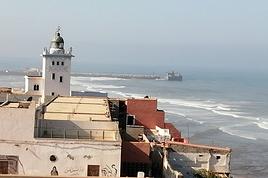
I arrived at the hotel around 7:00 PM and had time to stroll along the corniche to the ribat. Despite some run-down buildings, the seaside seemed livelier and cheerier than Sousse’s.

Monastir is the hometown of former president Bourguiba. I passed his mausoleum by taxi. There are Tunisian flags along the avenue by the sea because every year on April 6—the anniversary of Habib Bourguiba’s death—the president of the Republic visits the Bourguiba Mausoleum in Monastir to pay respects.

The taxi driver mentioned other Tunisian presidents. He complained about rising prices and insecurity, blaming President Kaïs Saïed (I’d already heard that security was better under Ben Ali).

At the end of my stay, I’ll take time to explore Monastir, but tomorrow morning, I’m off to Tozeur—a long bus ride awaits me.


TO BE CONTINUED....
SI Sinforosa Veteran ·
Today I traveled from Monastir to Tozeur by bus—it’s a long trip. The bus left around 10:00 AM and arrived around 4:30 PM.

As I’d been told, the bus departs between 8:30 and 10:00 AM. After an hour on the road, it stops for an hour so everyone can eat, and then it doesn’t stop again until Gafsa, then Metlaoui (though some people did get off between those two stops).

The bus is more comfortable than a *louage* but takes longer. The two drivers who took turns drove carefully, though they did check their phones now and then. Still, it’s nothing like the crazy drivers I’ve had in Central America, and the roads are much better here.

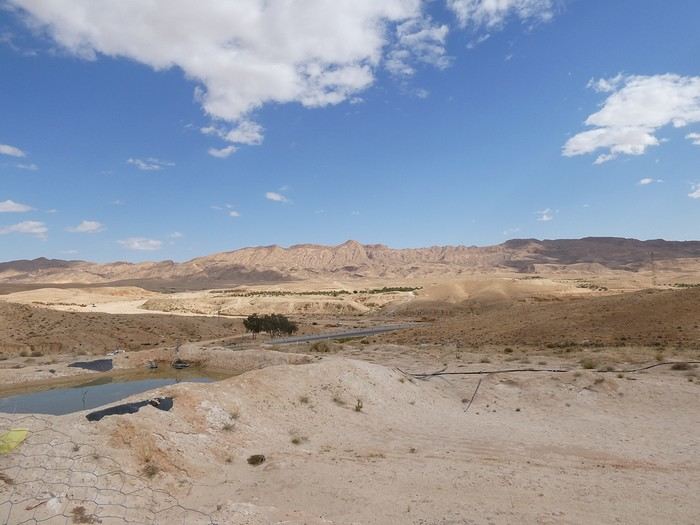
Tozeur is in southern Tunisia, near the Algerian border and the Sahara. Before reaching Gafsa, we drove through a sandstorm all the way to Tozeur. It created this whitish, slightly ochre light, and part of the landscape looked like it was in a haze.

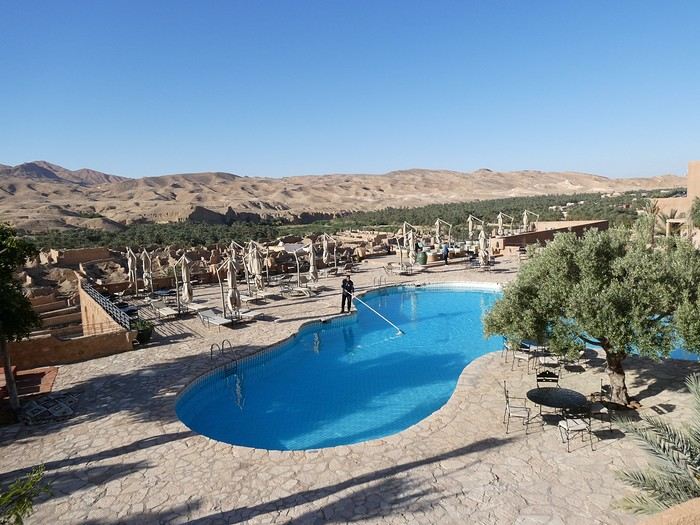
Between Metlaoui and Tozeur, I saw several herds of dromedaries. It’s so different from what I’ve seen in Tunisia so far—the landscape is much more arid (and littered with plastic bags, even in the Tozeur oasis, where I barely stepped in). I’m even surprised there are hotels with pools in this region.

Like during my first trip, I’ve met Tunisians—both men and women—who were really eager to help, even when I didn’t ask. For example, during the bus stop, I was looking at the pastries in the place we’d stopped, and two young women from the same bus (who I hadn’t spoken to) came up to me and asked, "Do you need anything? If you want us to translate for you, we can." I thanked them warmly. Earlier, before getting on the bus, a man who works at the station asked the driver to put my suitcase in the hold first. I felt a little awkward about it compared to the other passengers, but later, he even came onto the bus to make sure I was inside! And like last time, some Tunisians quickly welcomed me—like a *louage* driver I asked about how to get to Tozeur, who immediately said, "Welcome to Tunisia!" (Though, just like anywhere, there are also some unfriendly Tunisians.)
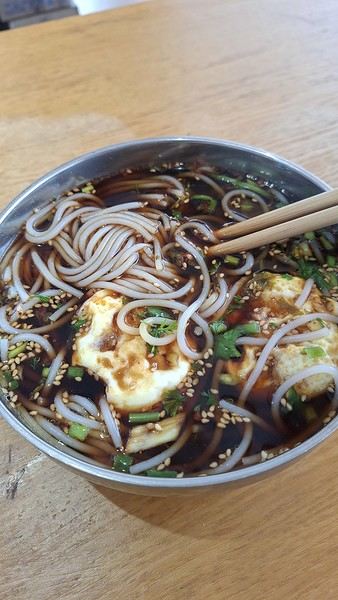
Since my last trip was during Ramadan, I didn’t get much of a chance to try Tunisian food (aside from pastries). I’m hoping to make up for it this time. Today, I tried dromedary in a jar at the restaurant *Dar Deda*—it’s dromedary meat cooked in a small jar with potatoes, tomatoes, and chili. I thought it lacked flavor, the portions were small, and it was a bit pricey (45 dinars). There aren’t many restaurants in Tozeur, but tomorrow I’ll try the one across the street to taste another local specialty.

Tomorrow, I’m visiting the medina and the palm grove, and I’ll try to figure out how to get to Chott El-Djerid. I saw a few agencies, but they were all closed. I’ve run into some tourists, but not many—there’s a group of Italian bikers at my hotel, dressed like they’re about to do the Paris-Dakar. Their big motorcycles are such a contrast to the old mopeds Tunisians ride, often without helmets and with multiple people on them.


TO BE CONTINUED...
MR Mraissa Veteran ·
Hi Marie, you’re not going to Chott el Jerid—you cross the chott on your way to Kébili and Douz. That’ll be your route. You should really check out how to get to the mountain oases instead. As for food, I’d say the further south you go, the more expensive life gets and the smaller the portions become—especially meat. You’ve got to learn to make do... I remember eating well at Tozeurus and a pizzeria near Dar Cheraiet. What’s the deal with Le Minaret restaurant next to the mosque? Back in the day, the food there was amazing. This was around the time of Serge and Pierre Maurice and their lovely guesthouse. La République is a basic but decent restaurant.
SI Sinforosa Veteran ·
Yesterday I wrote that the trip from Monastir had been long—it’s nearly 500 kilometers between the two cities, and the bus fare is 23 dinars (7 €).

Today there was no more sandstorm, and the light was nicer, but apparently it’s sandstorm season.
SI Sinforosa Veteran ·
TOZEUR ❤️❤️

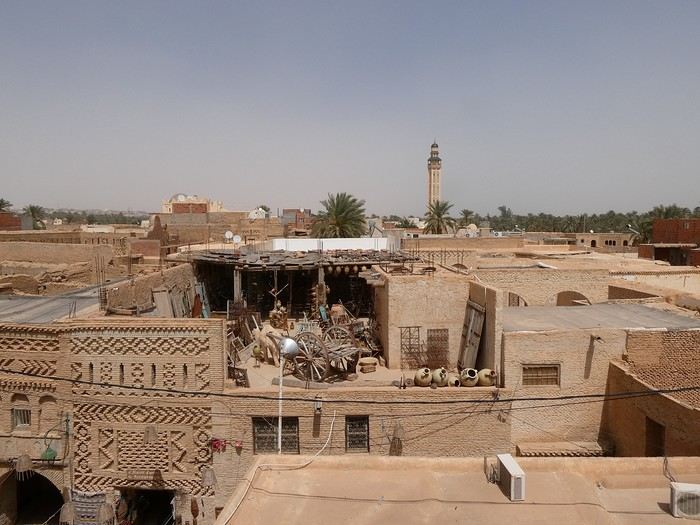
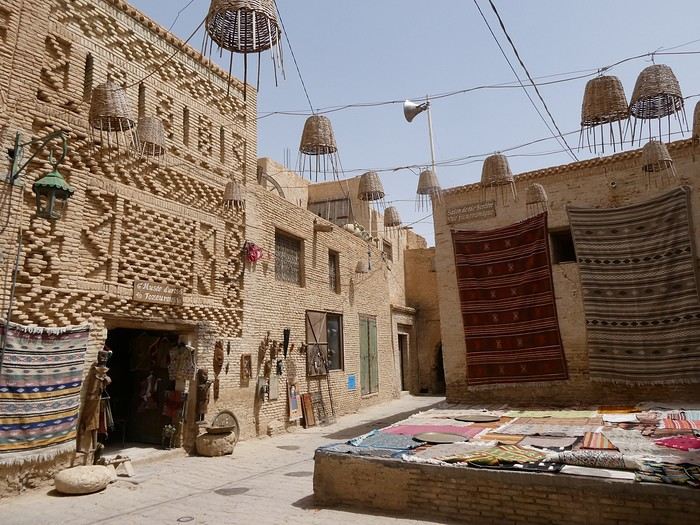
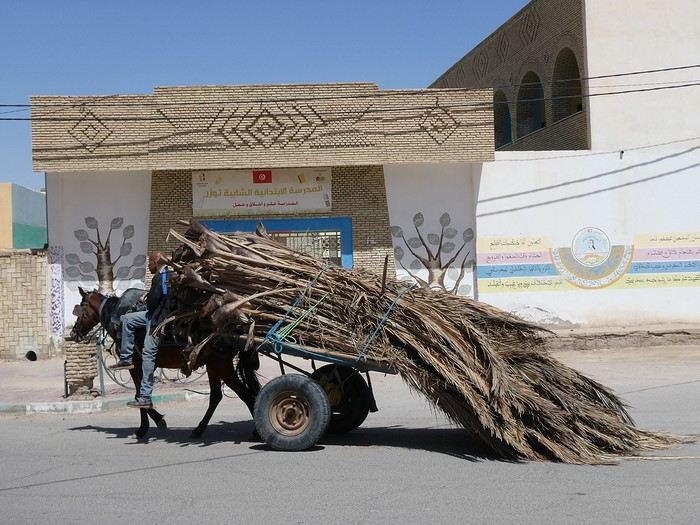
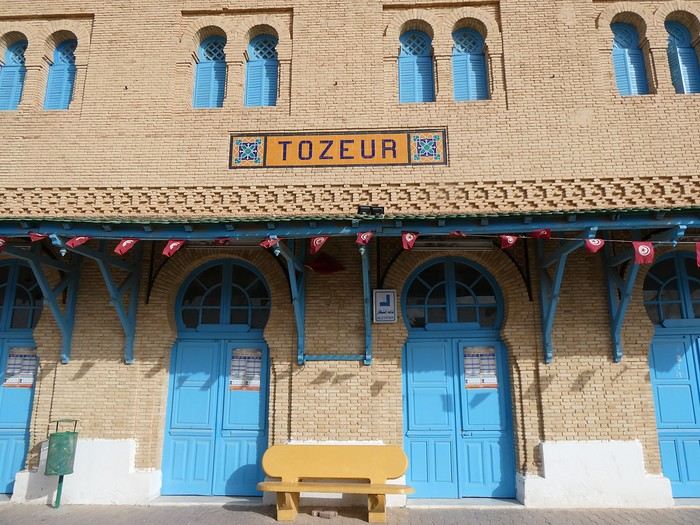
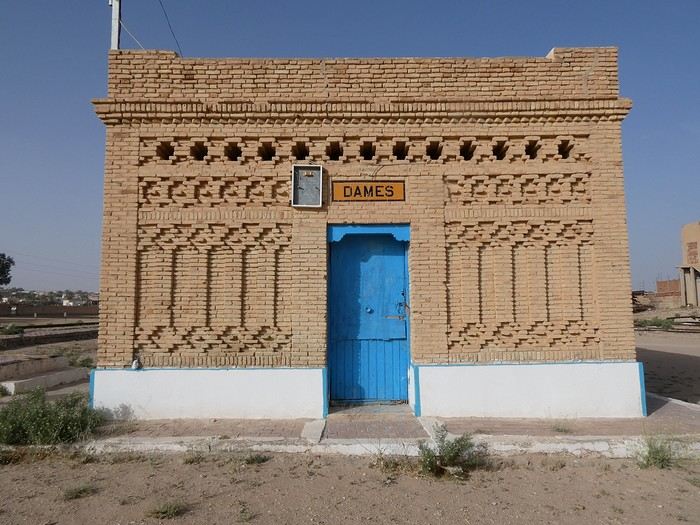
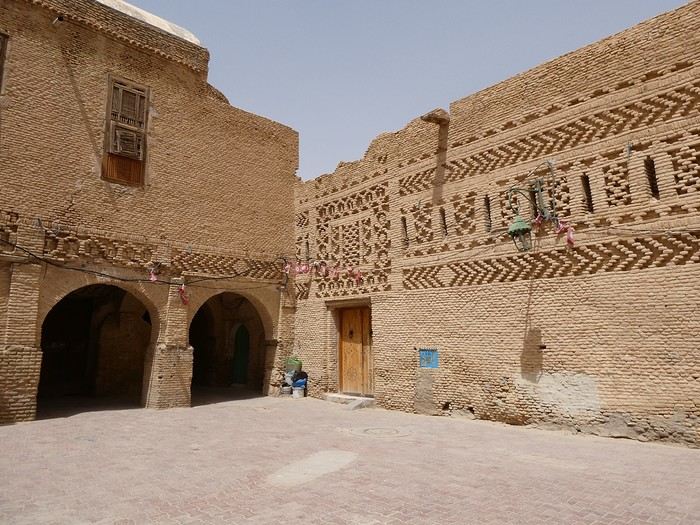
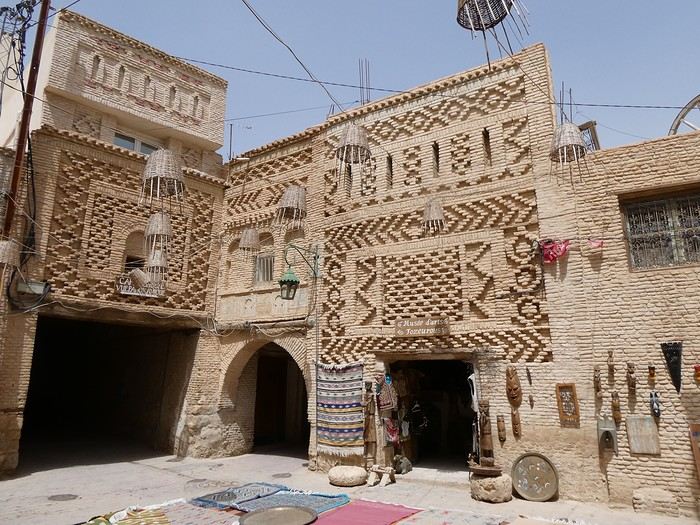
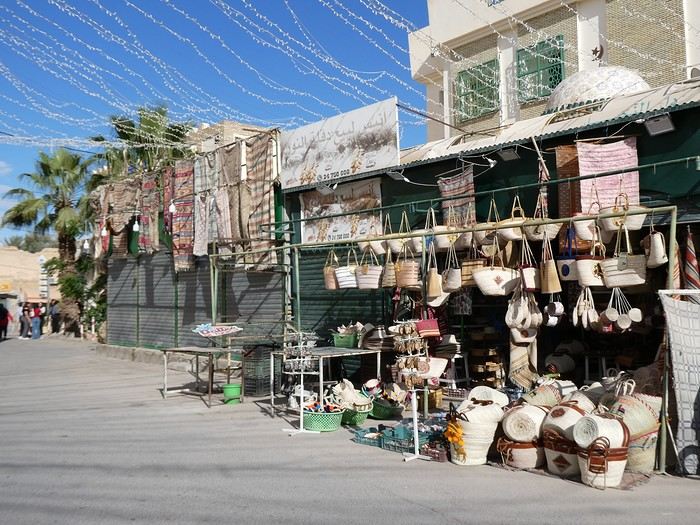
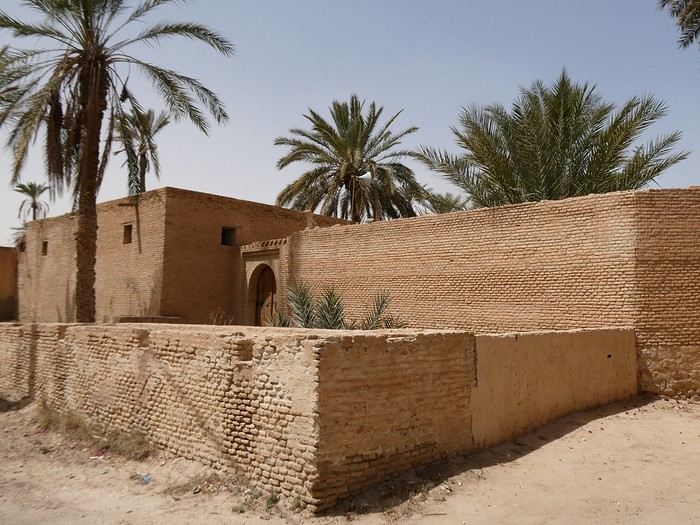
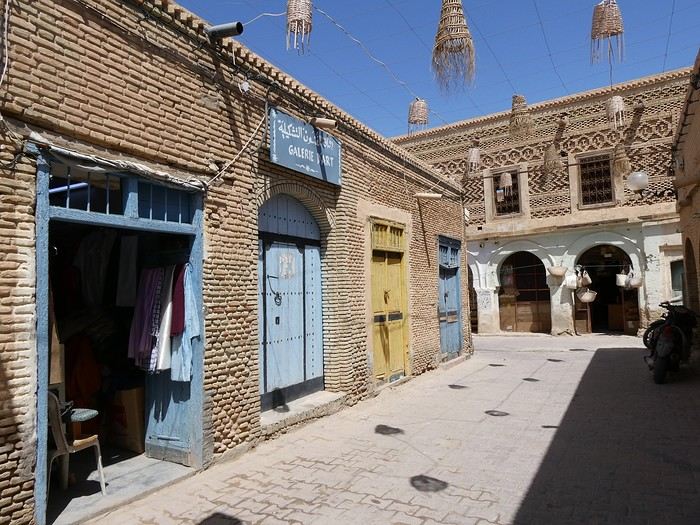
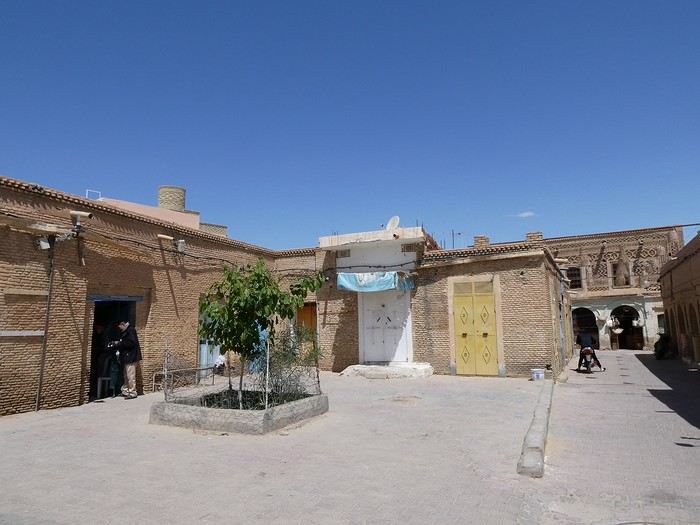
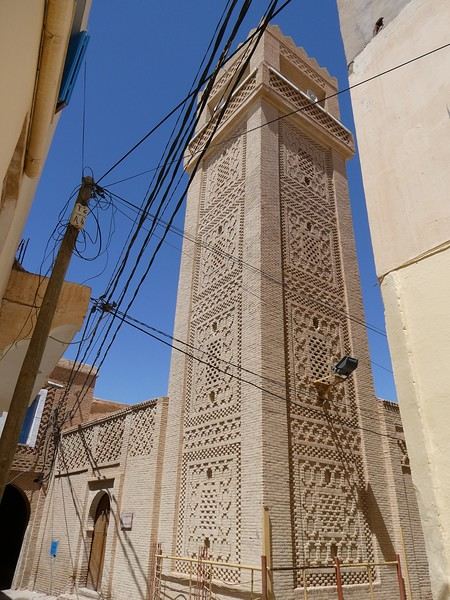
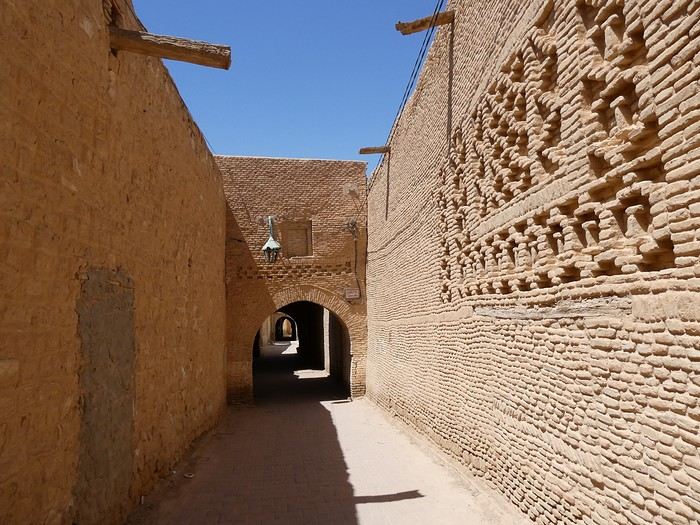
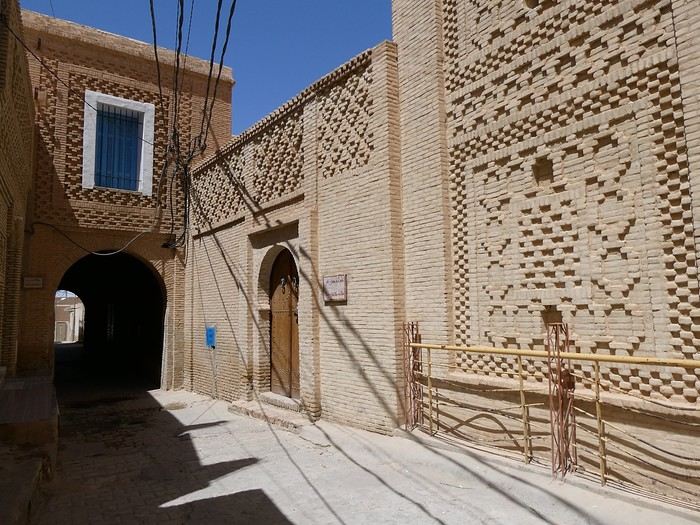
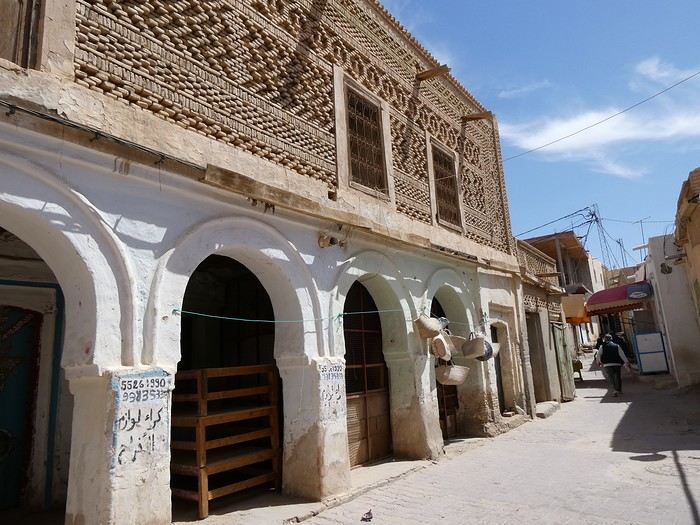
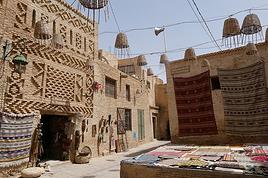
The town has a lot of charm with its sand-colored brick buildings featuring geometric relief patterns. The train station and its ladies' restroom:


I'm staying at Hôtel El Arich. The room costs 80 dinars (23.57 €), breakfast is included, the hotel is well located, and it offers good value for money.

THE MEDINA ❤️ ❤️

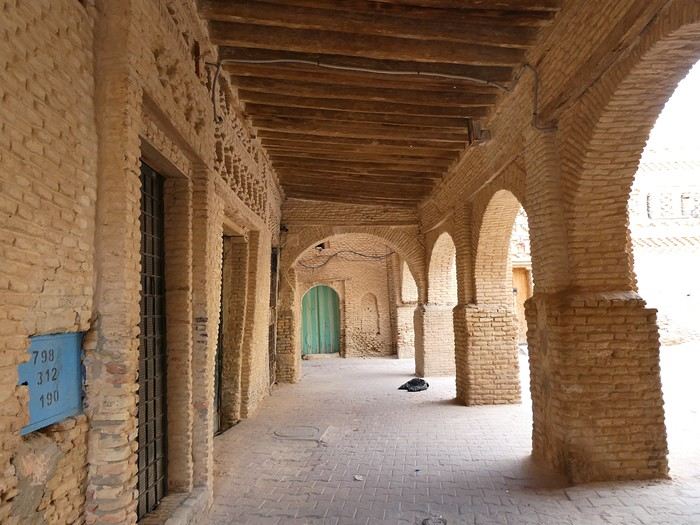
With its light brick walls, it’s very different from the medinas in Tunis, Sousse, or Kairouan. You’ll find religious buildings, stunning doors, a café with a great view, and more.

I spent nearly two hours with a lady painter who served me dates and olives she prepares herself. She shows visitors around the house where she works (Tozart Raoudha Bribech, 5 dinars). You can also enter without taking a tour or buying anything—I didn’t buy anything, just visited the house.

Almost opposite is the small Museum of Popular Arts and Traditions, run by Souad, who wasn’t there. Her husband gave me a tour. You’ll see kitchen utensils, costumes, a loom, and more.


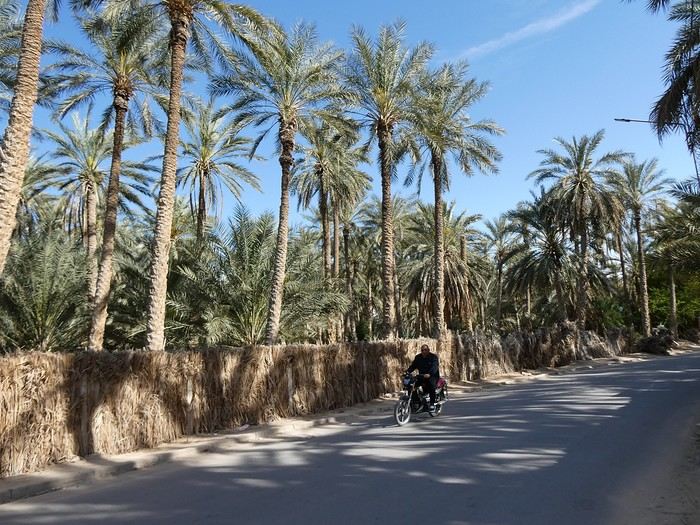
THE PALM GROVE ❤️

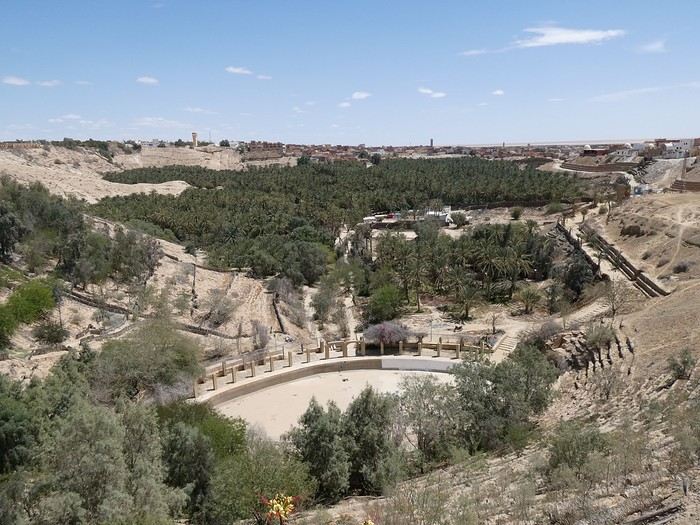
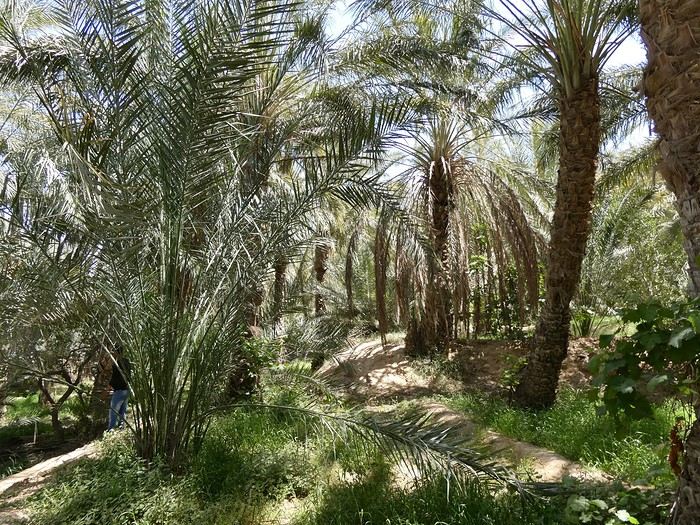
I was there around noon, on foot, and it was pretty hot, so I only saw a small part of this vast oasis. Some areas are really dirty, with countless plastic bags. I’ll go back tomorrow morning, earlier.


DAR CHERAIT MUSEUM ❤️

There are two exhibitions—I only did one (entry: 12 dinars each = 3.50 €).

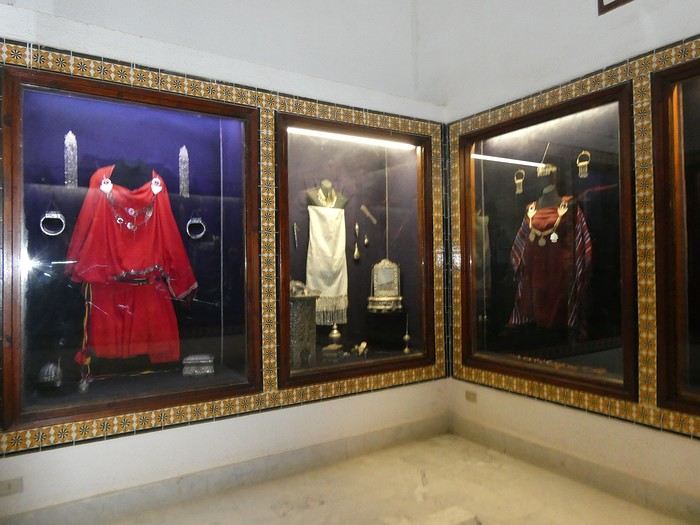
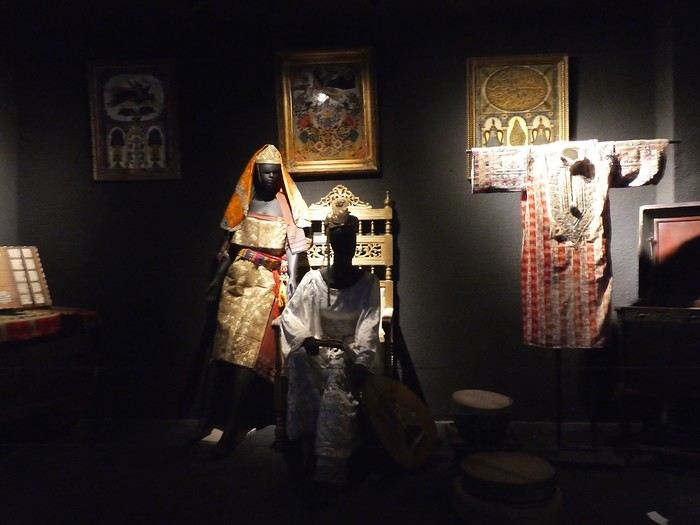
A lovely museum showcasing beautiful costumes, stunning Berber jewelry, and mannequins depicting scenes like a hammam, weaving, and henna for weddings. Too bad there aren’t more explanations.


■ Tonight, I had dinner at Restaurant Tisouros. It was much better and way more filling than yesterday’s restaurant—I couldn’t finish my plate, it was too much! I told the owner (super nice) that I’d be back tomorrow. I tried "barkoukech," a typical dish from the region made with small semolina pasta balls, sauce, fava beans, and a piece of quail, chicken, octopus, or dried fish. It’s really good but quite spicy—you have to say if you don’t want it too spicy.

■ Tomorrow, I’m going to Chott El Jerid with a tour agency. Prices vary from 180 dinars to 250 dinars depending on the agency. For now, I’m alone, but if other people join, the price should drop. We leave around 3:30 PM for the sunset, and we’ll go by 4x4.

For those without a car, there’s no problem visiting mountain oases or other places in the region with an agency—they even go to Douz.

I plan to visit Mides and Chebika from Tamerza since I’ll be staying there, but if that’s not possible, I’ll go with a tour agency from Tozeur. Souad’s husband also gave me the phone number of a guide in Metlaoui. You can go to Nefta and Tamerza by *louage* (shared taxi).

Tomorrow morning, I intend to visit a brickworks to see how Tozeur’s famous bricks are made.

TO BE CONTINUED...
SI Sinforosa Veteran ·
you’re not going to Chott el Jerid, you cross the chott on your way to Kébili and Douz. That’ll be your route.

Hi Michèle,

But the shared taxi doesn’t stop....
MR Mraissa Veteran ·
Marie, let us know if it's interesting at sunset. I think it’d be better to do it at sunrise. Suggesting a 4x4 for this road is just a way to charge a lot for the trip. It’d be more interesting to do a sunset trip in the sand dunes at Douz. Maybe a night in the desert at this time of year—isn’t it too cold? What’s really interesting is the trip from the chott to Kébili, the sand rocks, and the hot springs at Debebcha. Let us know if you’re going that far. Have a great day tomorrow.
SI Sinforosa Veteran ·
, you’ll have to tell us if it’s interesting at sunset. I think it’d be better at sunrise.

Possible to spend a night in the desert at this time of year, not too cold?

Hi there,

I think all the agencies do it at sunset. The one I’m going with asked me if I’d prefer morning or afternoon. I asked what was best, and they said afternoon, but it’s possible they do it in the afternoon so they have time to visit the mountain oases in the morning.

I think they don’t do desert excursions here—they do them in Ksar Ghilane.

For the weather, even during the day, it’s not that hot.

Otherwise, yeah, the trip to Chott El-Djerid is pretty expensive.
SI Sinforosa Veteran ·
TOZEUR (continued)

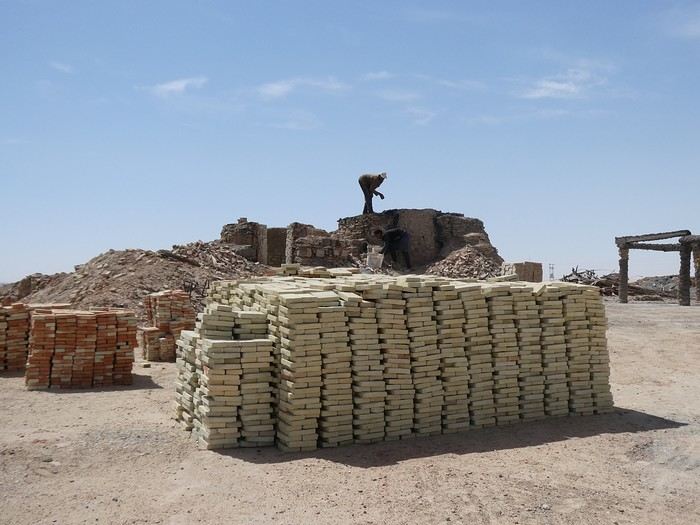
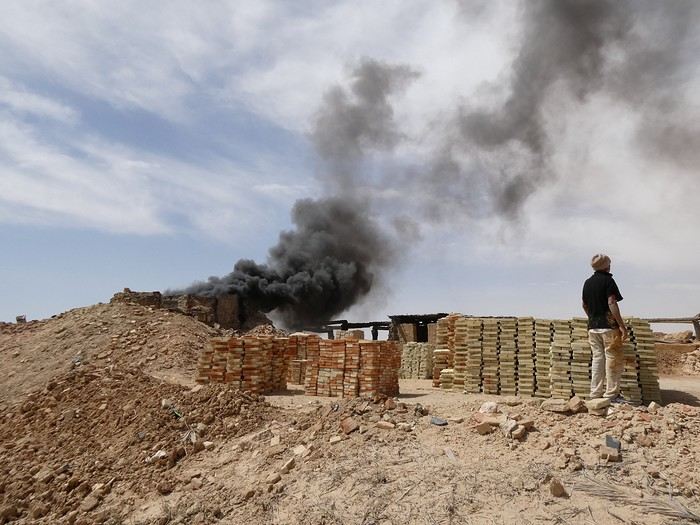
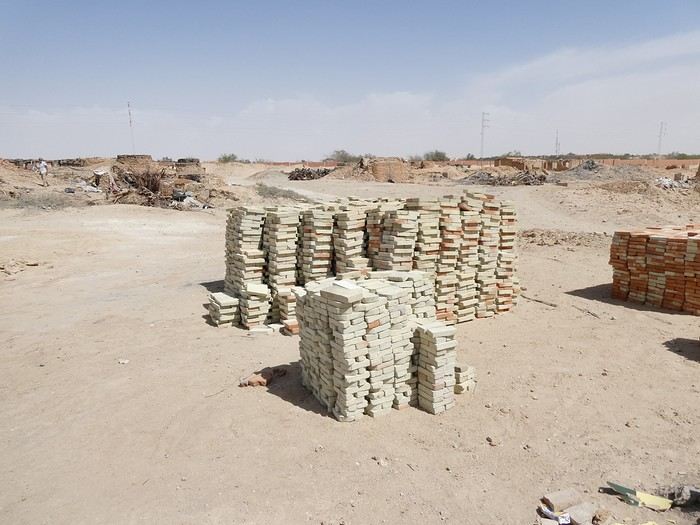
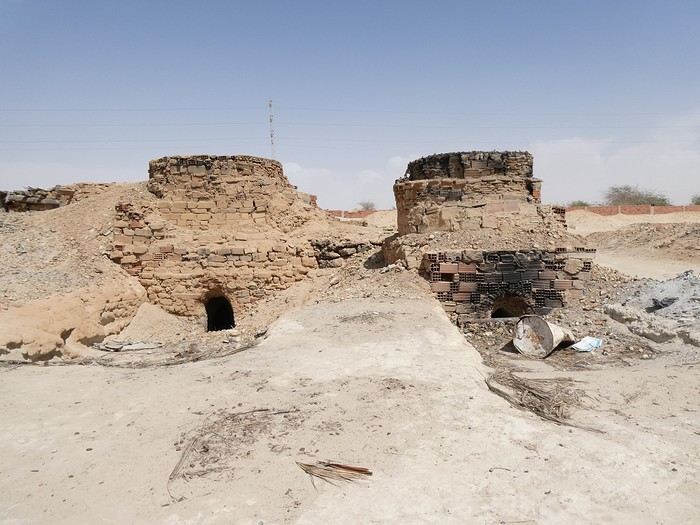
The brickworks ♥️

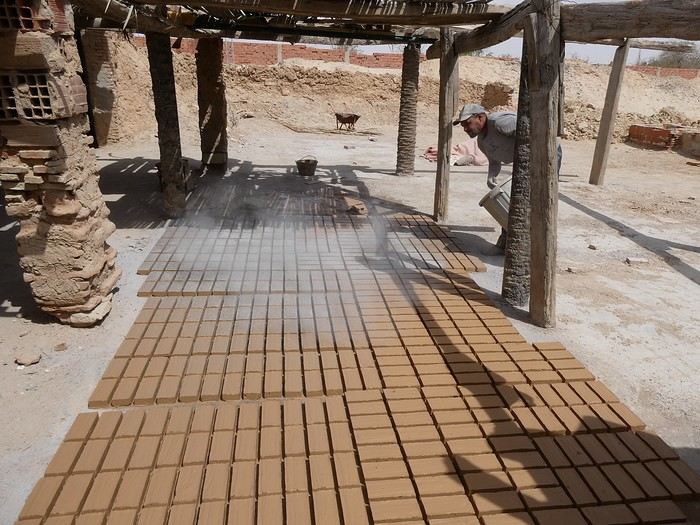
Tozeur is known for its light-colored bricks, some of which form raised geometric patterns. This morning, I went to see the brickworks where these famous bricks are made.

The brickworks aren’t far from my hotel. I first exchanged some money at a currency exchange place along the way. Yesterday, I’d asked the man who works there if it was possible to walk there, and today he asked how my visit went. I told him I was heading there now, and when I was already a little ways off, he called me back to introduce me to a man who works at the brickworks and was just leaving at that moment. So I set off on foot with this 70-year-old man who still makes bricks and walks the route every day.

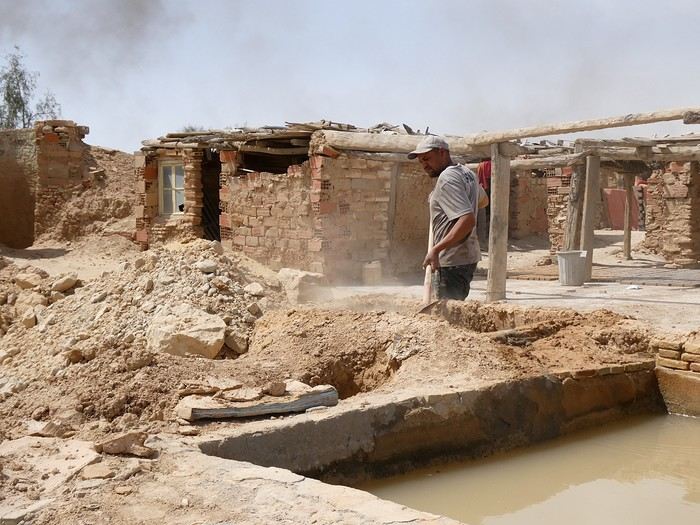
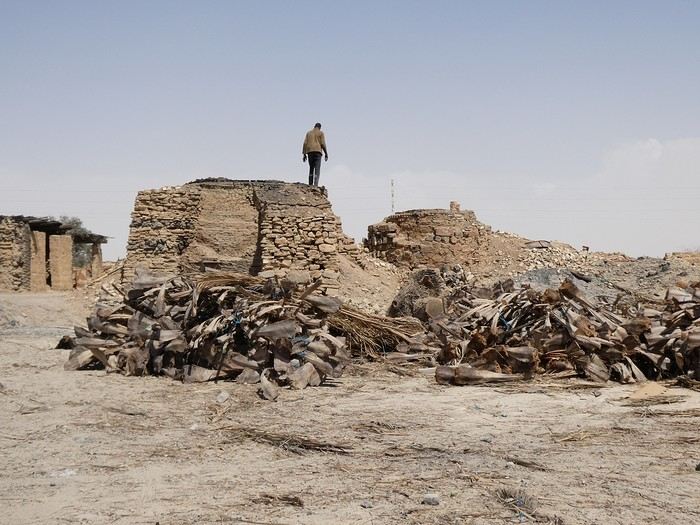
I was lucky because this man spoke French well and was really interesting. Once we arrived, he showed and explained everything to me: the two-colored clays that are mixed, the wooden frames of different shapes and sizes used as molds. I saw a worker covering the bricks with ash to prevent cracking, then they’re fired in a kiln fueled by palm branches and left to cool.

The visit is interesting if someone explains the whole process to you. A young man who was molding the bricks and covering them with ash also gave me some explanations. I gave the older man a tip because he’d spent quite a bit of time showing and explaining everything to me.


I left on foot again. A little further on, a young man from the brickworks arrived on a motorcycle to offer me a ride back to Tozeur, but I declined, and he headed back toward the brickworks.

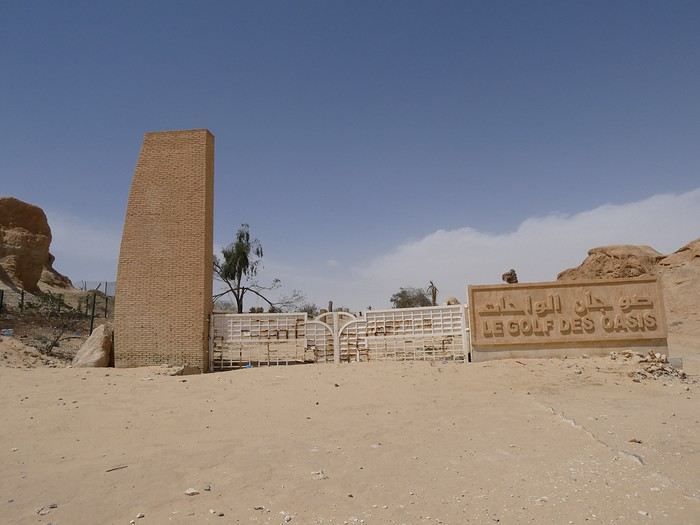
Not far from the brickworks, there’s a somewhat surreal place: the former Golf des Oasis! It’s mind-blowing to see this in a place where there’s sand everywhere! I looked it up online and found articles from the tourist press in 2006 with photos of the golf course’s grass. Today, it seems incredible that such a place could have existed!


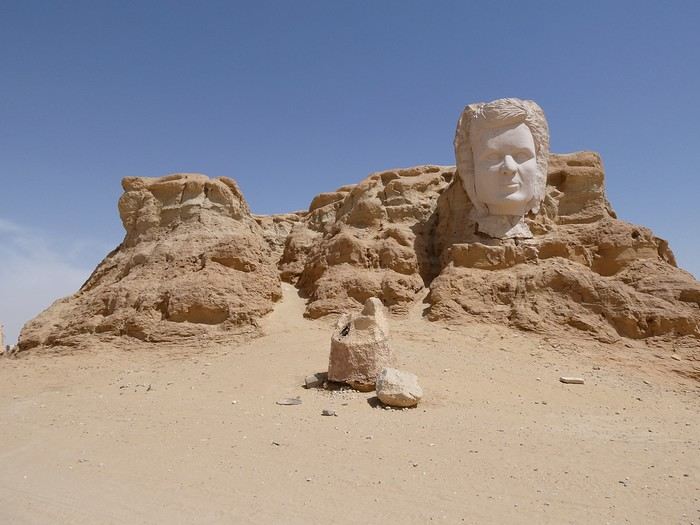
In the same area, there’s a rock with the molded face of a poet from Tozeur—it’s quite curious.


There are also camels for those who want to take a short ride through this arid landscape. I walked part of the way with a man and his camel who were going in the same direction as me. Before, he used to live in tents in the desert, but now he lives in Tozeur. I asked him which he preferred, and he told me it’s better for the kids because there’s no school in the desert (someone else had mentioned that to me yesterday).

Other than that, it’s not just the Golf des Oasis that’s disappeared—there are other fairly large hotels that are closed and even a bit abandoned. I think there must have been more tourists in Tozeur at one time than there are now (right now, there are some, but not that many).

TO BE CONTINUED...
SI Sinforosa Veteran ·
CHOTT EL-JERID ❤️

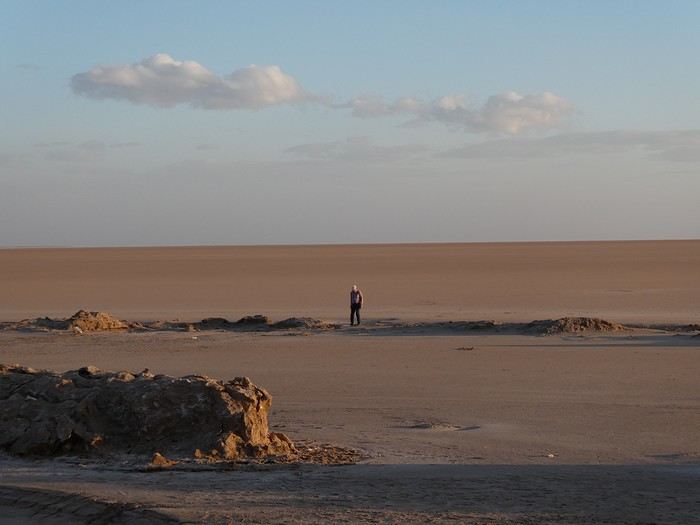
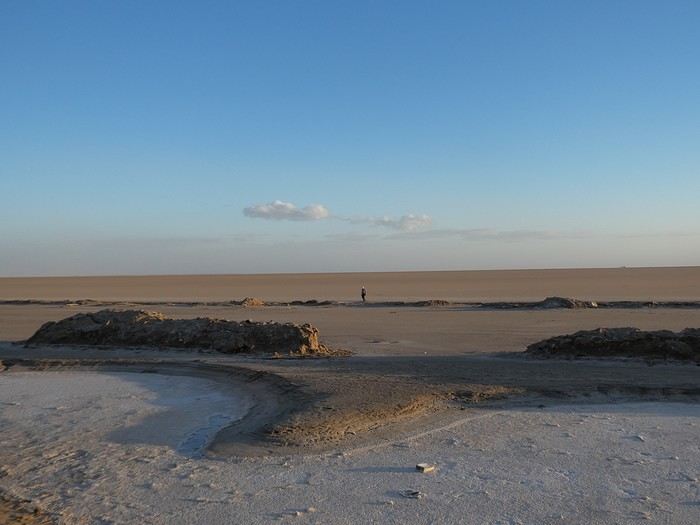
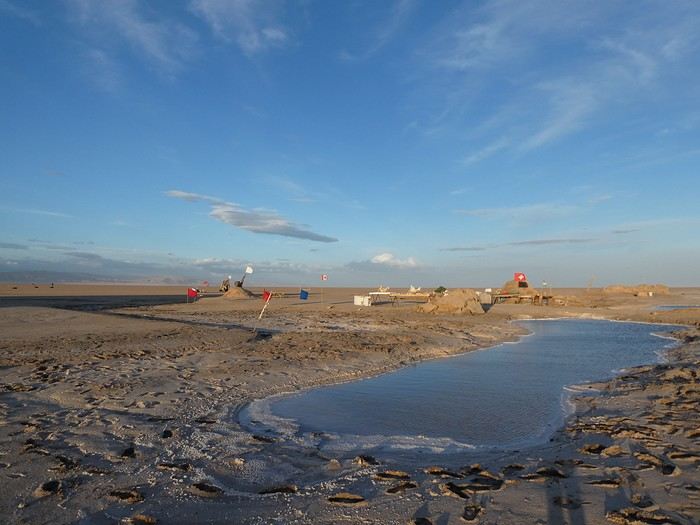
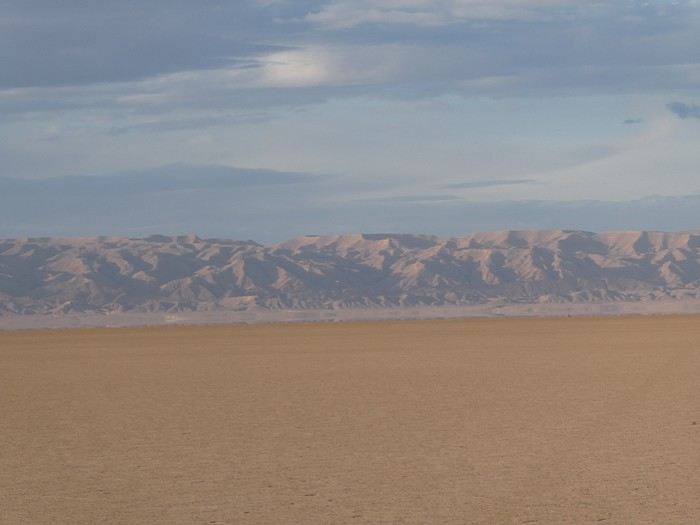
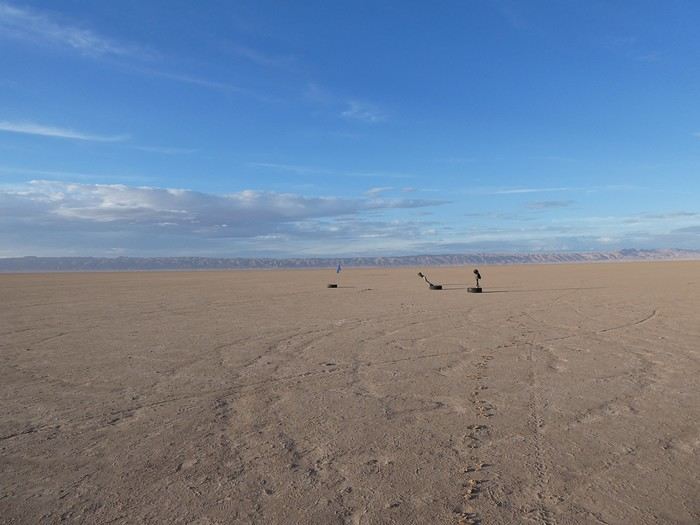
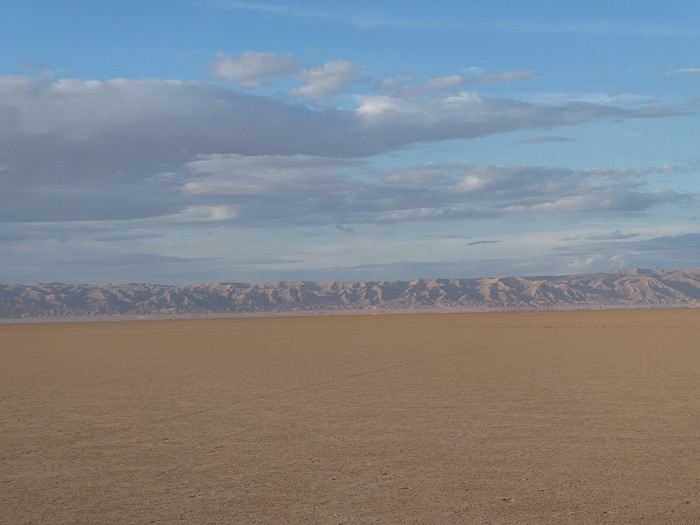
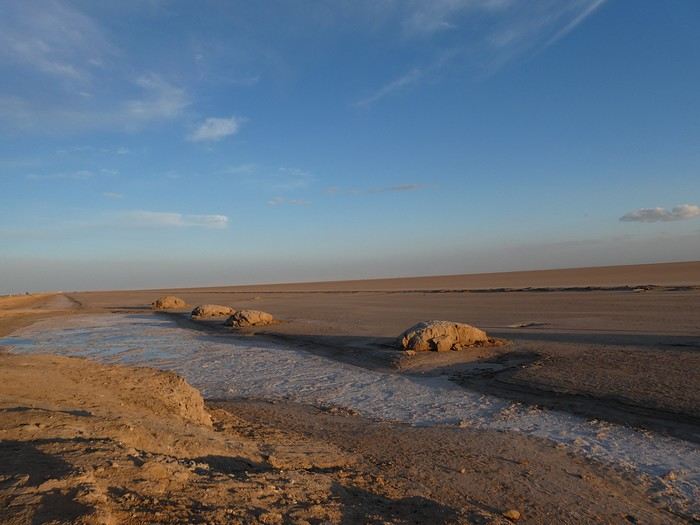
This is a massive salt lake, covering an area of 5,000 km². You can actually see mirages here—it looks like there’s a sheet of water in the distance, but there’s no water at all.

There’s no public transport that stops here, so I went with a tour agency. I was alone, and it was pretty expensive: 180 dinars (53 €) for just over 4 hours. We went in a 4x4 because that’s the only type of vehicle the agency has. Normally, the stop at Chott El-Jerid is included in the excursion to Douz and Ksar Ghilane.

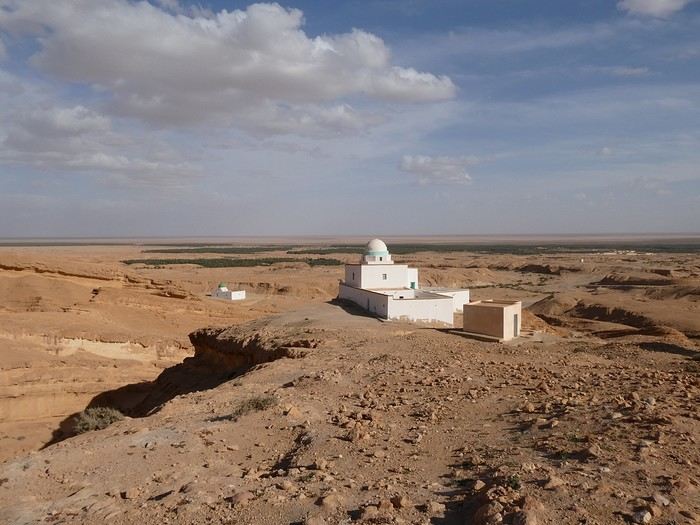
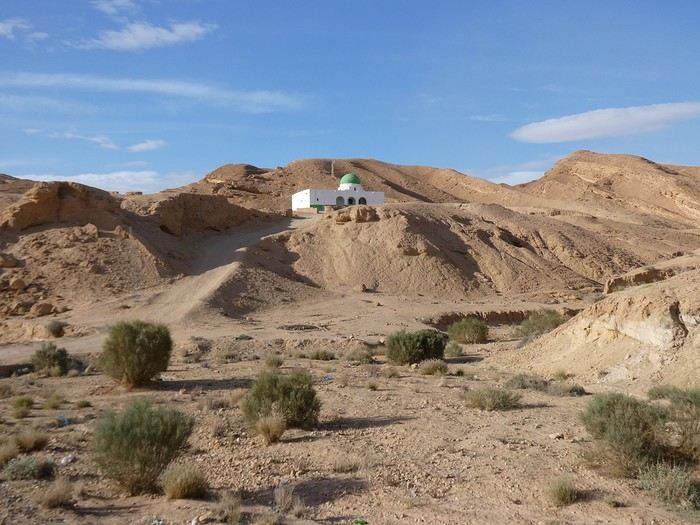
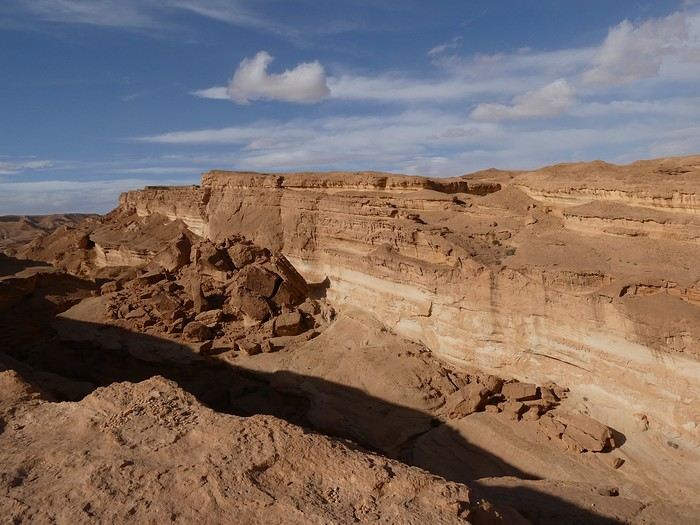
Before arriving at the chott, we stopped at the Sidi Bouhlel canyon, where there are two small, isolated mosques and where some *Star Wars* scenes were filmed.


At the end of the day, the light was gorgeous, but it was *super* windy—cold wind, too. We passed by the place where the salt is harvested. You can’t go in, but you can see the mountains of salt and the trucks loading it up.

For those without a vehicle, the best option is to find people to split the cost of the trip or maybe even go with a taxi.

The guide didn’t give much explanation—too bad, I think he was tired. He’d started the excursions at 7:30 AM with a group of Spaniards in the mountain oases.

I’d originally planned to leave Tozeur tomorrow, but I’m staying another night since I’m heading to Nefta by *louage*. I emailed the hotel in Tamerza to change my stay dates.


TO BE CONTINUED.....
SI Sinforosa Veteran ·
NEFTA ❤️

A small town about twenty kilometers from Tozeur, easily accessible by shared taxi (2,500 dinars = 0.70 €).

While the town once saw many tourists, that’s no longer the case today. Many hotels and restaurants are closed. Former French presidents like Jacques Chirac and François Mitterrand are said to have stayed in Nefta. Nowadays, guides waiting for tourists call it the "dead city."

Yet Nefta is worth the detour, if only for its medina with its typical regional architecture—light bricks, vaulted passages, beautiful doors, a charming little square, and more. Nefta is Tunisia’s second holiest city after Kairouan, with many zaouïas and mosques. The latter are also made of light bricks, with geometric patterns on the minarets.


To get to the Corbeille, you need to take a taxi. I waited at one spot with a shopkeeper who kept me company, telling me about Tunisia’s healthcare system. There were very few taxis, and none were available. I moved to wait somewhere else and asked another shopkeeper if I could walk there. He said he’d take me, closed his shop, and let me ride in his pickup—he wouldn’t accept any money.

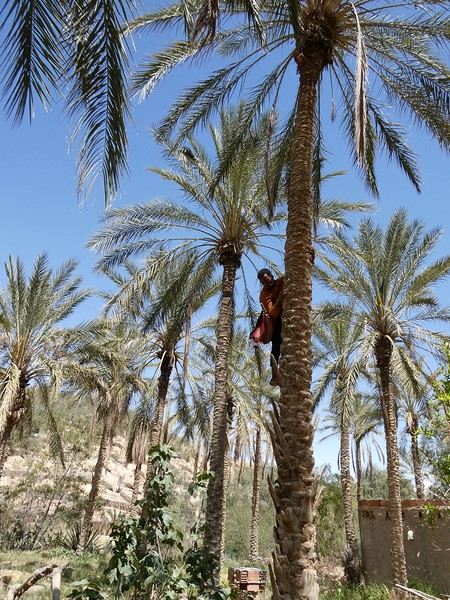
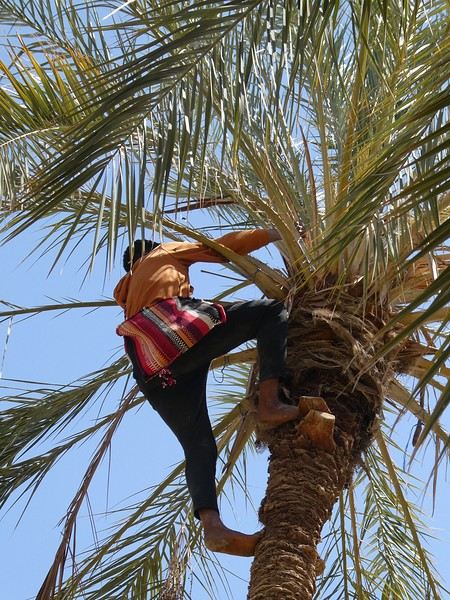
At the Corbeille, a guide was desperately waiting for clients. He offered to show me the small palm grove for 20 dinars, and I agreed. You can see the three layers of cultivation: vegetable crops (peppers, lettuce, etc.), fruit trees (figs, apricots, pomegranates, etc.), and palm trees. A young man was pollinating the palm trees, climbing barefoot to the top of a female palm with a cloth pouch containing male stems, which he attached to the female stems. There are also henna plants—I’d never seen them before. The guide, Ali, explained how to prepare henna from these plants and gave me a whole bundle to dry in the sun and try making some. Ali also explained the irrigation system, and more.

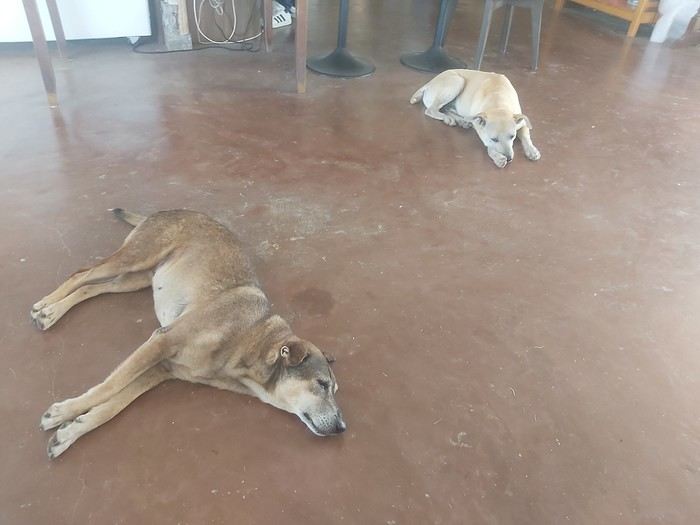
You can explore the basin on your own without a guide, but be very careful of the many stray dogs. At the end of the visit, as we were leaving, a pack of at least six dogs—some looking like Rottweilers—ran toward us, very aggressive. Luckily, Ali grabbed a stick, and they eventually left, but I was really scared (if the dogs attack, there’s no one around to help).

The Corbeille is a basin carved into the rock, planted with palm trees. From where the shopkeeper dropped me off, you get a panoramic view of the basin, the town, and the Chott El-Djerid in the distance.

Ali had mentioned another guide who could take me to Oung Jmel, a chott with Star Wars filming locations. Since it was around 3:30 PM and very hot, I didn’t go, but travel guides say it’s worth it.


For those without a vehicle, it’s entirely possible to visit the main tourist sites by combining shared taxis, travel agencies, or even hitchhiking.

Tomorrow, I’m heading to Tamerza. There’s only one shared taxi at 7:00 AM. I’ll stay overnight in Tamerza, and the only return taxi leaves at noon. I’m not sure if I’ll find a connection to Douz right after. I don’t know how long I’ll stay in Tamerza, but at least a full day.


TO BE CONTINUED...
SI Sinforosa Veteran ·
MOUNTAIN OASES ♥️♥️♥️

These are Tamerza, Mides, and Chbika, which are a few kilometers from Tozeur and very close to the Algerian border.

TAMERZA

The shared taxi that was supposed to leave at 7:00 AM finally left at 8:30. There were four of us passengers, so it was a comfortable ride (shared taxis can carry 8 or 9 people, including one in the front). The trip took 1 hour and 10 minutes and cost 6 dinars (1.75 €). Tamerza isn’t far from Tozeur, but in some places, the road isn’t in great condition, and there are curves since we’re in the mountains—so we didn’t drive fast. We’re about ten kilometers from the Algerian border.

The shared taxi dropped me off right in front of the hotel.

■ I’m staying at the Tamerza Palace, a 4-star hotel that’s absolutely stunning. The room costs 231 dinars, which is 68 €, and an excellent breakfast is included. It’s cheaper than an Ibis Budget in Europe. For an extra 40 dinars (11.78 €), there’s a very good and varied buffet dinner.

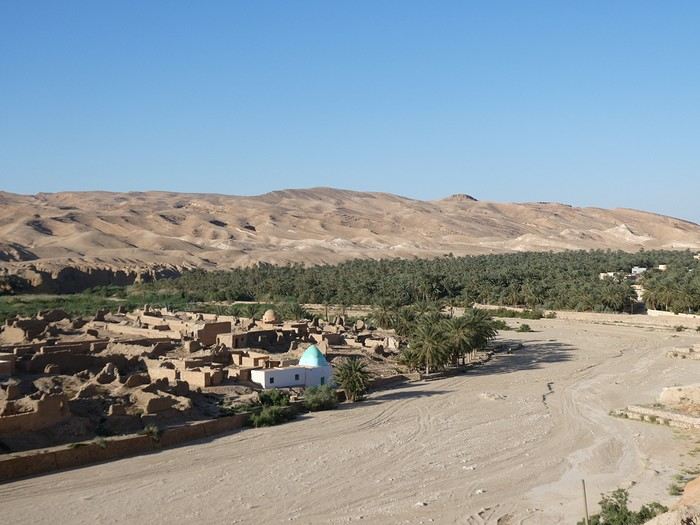
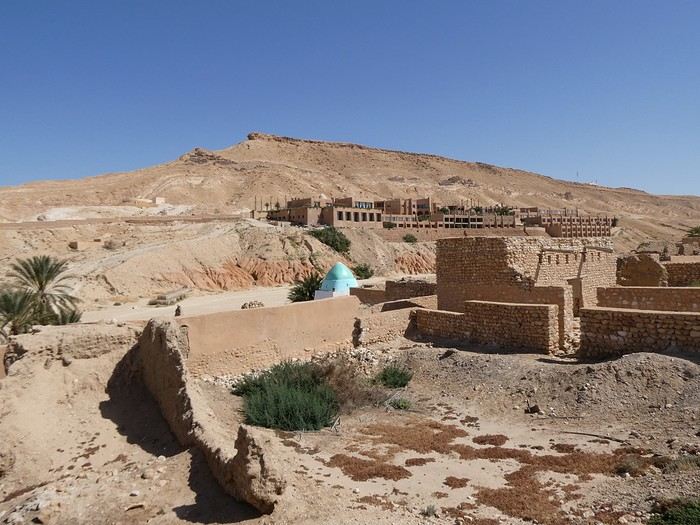
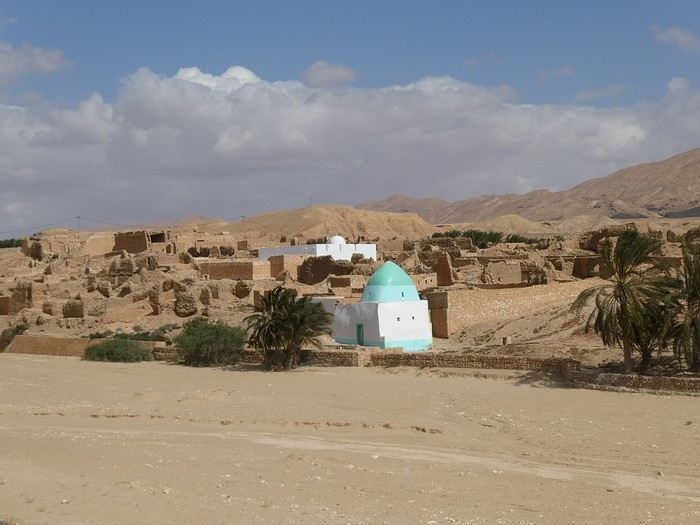
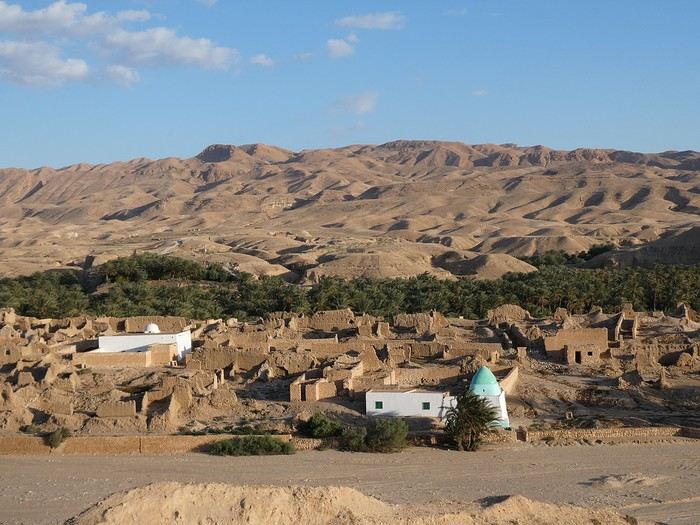
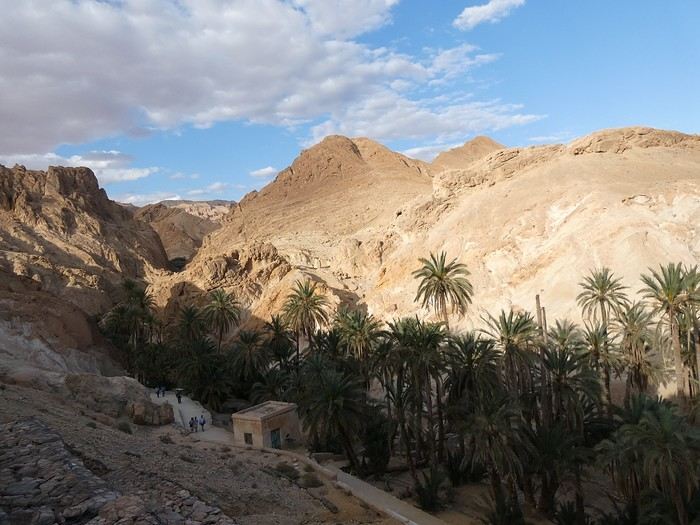
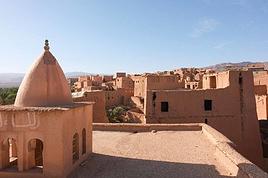
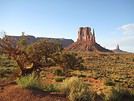
The hotel’s location is exceptional—right in the middle of a mineral landscape, overlooking the old ruined village devastated by floods in the 1960s. At sunset, the light on the desert mountains is gorgeous! The hotel blends perfectly into the landscape, matching the same color, and inside, the walls of the common areas look like rock.

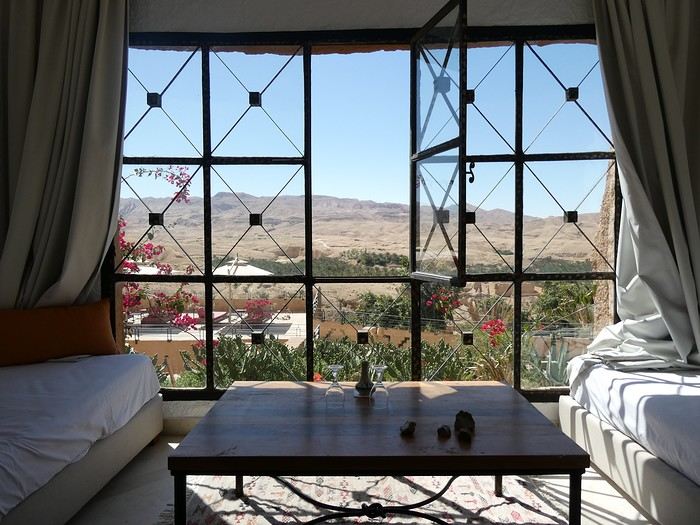
The rooms face the ruins and the mountains. My room is huge, all made of palm wood and wrought iron, with Berber rugs. It has a loggia with a huge bay window and two bench beds. The mountains are right in front, along with the ruins of the village and the three marabouts (sacred sites). I’m tempted to stay longer than planned just to spend a whole day lounging and reading with this view! The doors of the rooms are traditional Tunisian palm wood doors with nails representing figures to ward off the evil eye or Berber symbols—I love these doors!

The hotel has a pool, which seems a bit odd in such an arid region. Among the guests, there are a lot of French families of Tunisian origin and a big group of Quebecois. I chatted with a Quebecoise who works in tourism—they’re in Tunisia for three weeks (I’d already met quite a few Quebecois in February).


■ Today, I took a little walk in the palm grove. After the pack of dogs in Nefta yesterday, I didn’t feel like going alone, but I was with a man I’d asked for directions. He insisted on taking me there (for free). He owns several palm trees himself (about 300, I think). Afterward, we had lemonade. Some guides arrived with tourists, and I chatted with one of them. He’s an English teacher (and a guide during school holidays). Too bad he’s not available tomorrow—he’s really nice and interesting. He’s known the man I was with for a long time and told me, "You’re in good hands!" Luckily, so far, I haven’t had any bad encounters—even though people say, "I’ll take you there," or "Get in the car," and I just do it without thinking, even though I don’t know them...

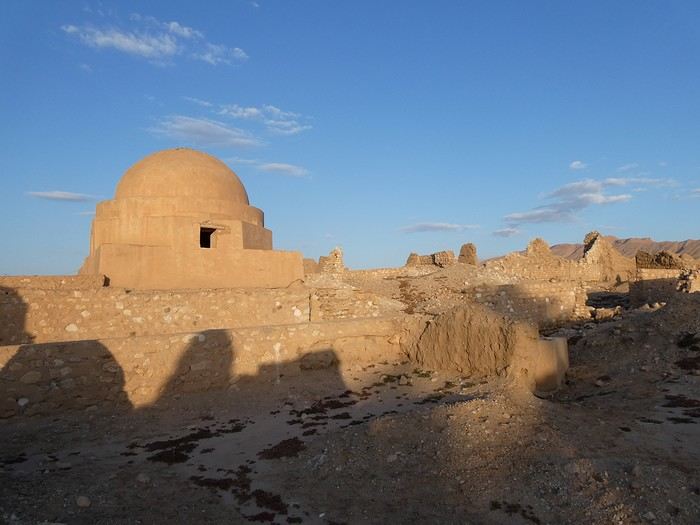
I also walked around the ruins of the old village, where three marabouts remain. One still seems to be in use, I think. I’ll find out more tomorrow since I’ve hired a guide (who works with the hotel) to visit Tamerza, Mides, and Chebika. Otherwise, the man I met this morning was willing to take me there tomorrow.

I’m supposed to leave the day after tomorrow for Douz, but I haven’t booked anything yet, and I don’t even know what time the shared taxi leaves. Someone told me noon, but I’m not sure.


TO BE CONTINUED...
BA Babouandco ·
Hi Marie, It’s a pleasure following your adventures and encounters! 😊 Can’t wait to see some photos—your story makes me want to know more. Like Tamerza, for example, which you describe so well.
SI Sinforosa Veteran ·
Your story makes me want to know more. About Tamerza, for example, which you describe so well.

I’ll say a bit more tomorrow—we’ll see what the guide tells me....
MR Mraissa Veteran ·
Hi Marie, I hope your guide will be great and make this day a special memory of southern Tunisia. We’ve been going there for about 30 years, and for us and those we introduce to the south, the stop in the mountain oases is always the highlight of the trip—even if we don’t stay at the Tamerza Palace... But we often spend the evening with a family of guides we know in Chebika, and even though I don’t understand everything that’s said, I always leave with a heavy heart. I don’t remember seeing dogs in these villages, but I often realize that in many places where I think I’m alone, there’s always someone I didn’t notice. Ask the Tamerza Palace for info on the Bey’s train—the hotel and train used to work together before. That’d be awesome! Have a wonderful day. Thanks for sharing.
SI Sinforosa Veteran ·
I don’t remember seeing any dogs in those villages, but I often realize that in many places where I think I’m alone, there’s always someone I didn’t notice.

Hello,

Anyway, the dogs in Nefta didn’t have good intentions—they came running and barking toward us, and they weren’t poodles or chihuahuas. There were Rottweilers. It’s true that there’s always someone in the plots of land; we could hear a woman singing. But if an attack dog goes for your throat or another vital spot, by the time someone arrives, your chances of getting out alive are slim. I think there are dogs in all the palm groves. In Tozeur, I was told they come out at night, and there are some in Tamerza too.

You’re the one who told me about the Tamerza Palace on this forum—it’s a great hotel for the price of an Ibis Budget in Europe.

The visit that was supposed to happen this morning will take place this afternoon. There’s no shortage of guides—the hardest part is finding one who’s actually good....
MR Mraissa Veteran ·
Yes, the Tamerza Palace is a really safe bet—we had a great stay there with my parents. You should’ve called Hassan, he would’ve been awesome! Enjoy your walk
SI Sinforosa Veteran ·
TAMERZA (continued)

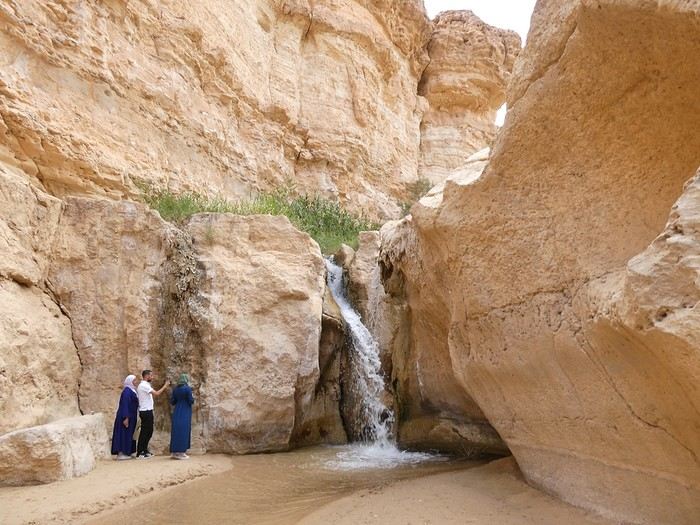
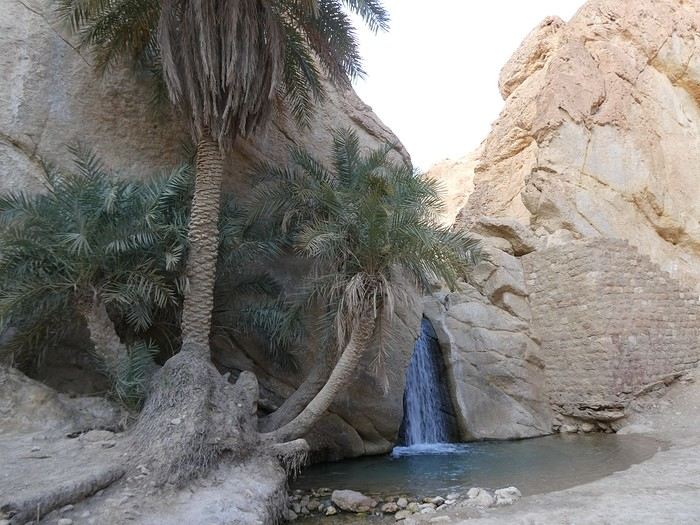
Besides the ruined old village, don’t miss the big waterfall♥️ in the canyon.

The waterfalls and oasis are a real blessing in this region where temperatures can soar above 50°C (122°F) in summer.

There’s a really nice souvenir and tea seller (he also owns sheep), Amir. We chatted in Spanish, and he gave me two delicious teas—mint and mountain herbs. I’d warned him I couldn’t pay because I’d left my bag in the car, but he just said, "You don’t always have to think about money!" It’s amazing how many Tunisians speak one or more foreign languages fluently without ever studying them at school or setting foot abroad. Later, a guide spoke to me in Spanish with an excellent accent.

Otherwise, in Tamerza, the only place to stay is the Tamerza Palace Hotel. Another hotel mentioned in some travel guides no longer exists.

In Tozeur, a hotel from the same chain, the Tozeur Palace, is opening in a few days.


MIDES ♥️

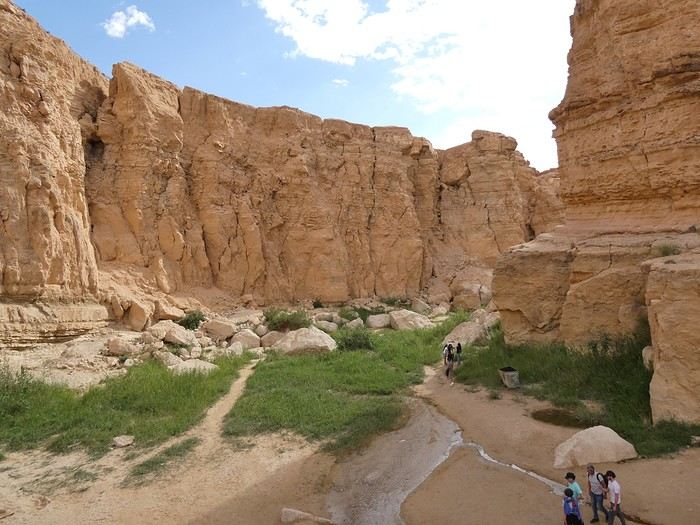
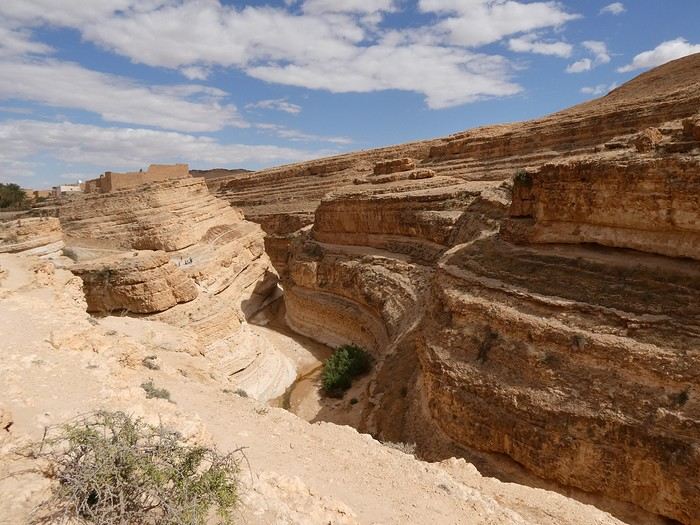
Another mountain oasis. We went to see the canyon from above—you can hike inside, but only with a local guide.


CHBIKA ♥️♥️

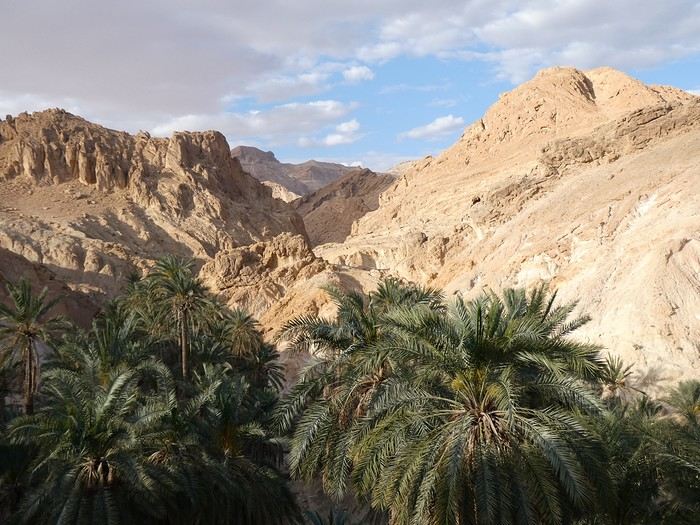
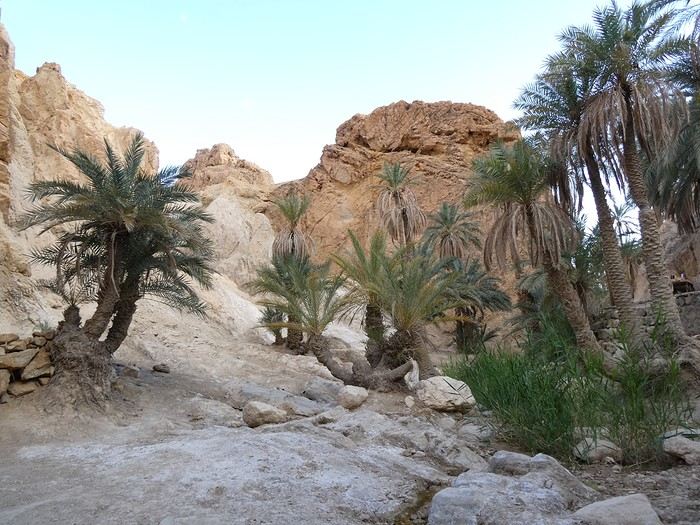
This is the most beautiful of the three oases, with a small canyon, a waterfall, and a promontory offering a stunning panoramic view all the way to nearby Algeria.

I visited these places with a hotel agency—the driver came from Tozeur since he works for a Tozeur-based agency. The hotel reception isn’t allowed to give out names of other guides because they work with this agency, but there’s definitely a way to get there for less. In Tamerza, there’s a woman who runs a *louage* (shared taxi), and I think she can take tourists to Chebika. The hotel has her number, or someone in the village can tell you how to contact her.

I paid 160 dinars (47 €) (they initially asked for 180 dinars). The price is the same whether it’s for one person or several, so since I was alone, it was a bit pricey—but for two or more, it’s not too bad. The guide was more of a driver than a guide, but he was nice.

I’m supposed to leave tomorrow morning at 8:30 with the *louage* woman, so I should have time to reach Douz.

We arrived in Chebika late in the day, and there wasn’t much sunlight left, so the photos aren’t great—but the place is truly beautiful.


TO BE CONTINUED...
SI Sinforosa Veteran ·
Asked at Tamerza Palace for info about the Train du Bey; before, the hotel and the train used to work together.

I forgot to ask—if I remember, I’ll ask tomorrow before leaving—but in Tozeur, Souad’s husband had called a guide from Metlaoui who I’d spoken to, and I’d asked him if the Lézard Rouge was running, and he told me it’s under repair in Tunis.
SI Sinforosa Veteran ·
This morning the hotel was supposed to call the shared-taxi driver to check if she was coming at 8:30, but she only makes the trip if the van is full (8 seats). Since I was the only one, we could’ve paid for all the seats (48 dinars = 14 €), but I didn’t do that because she said there are other louages to Douz in the afternoon, and I’ll admit I’m not upset about spending another morning in Tamerza doing nothing.

As I mentioned earlier, I think this driver can take tourists to Chebika and Mides for much cheaper than an agency driver.

Otherwise, there aren’t many places to stay in the mountain oases, but I was told there’s a guesthouse in Chebika, a bit far from the village.

For Douz, I don’t know if I have a room for today—the hotel hasn’t replied to my email to confirm....

Similar discussions

You might also like