New adventures from Perpignan to Ranchi (Jharkhand)
FR

Translated into English.

Original post
AL
March 2nd — Departure by bus from Latour at 6:50 AM. The journey isn’t direct: we pass through Elne then Corneilla. In Perpignan, I switch to a BlablaBus heading to Barcelona’s northern bus station. Before reaching Le Perthus, French police stop us to check IDs. Several people aren’t in order, but after about fifteen minutes, we’re on our way again. We’re checked again at La Jonquera: this time, the wait lasts almost forty-five minutes while police identify those in violation and wait for a vehicle to pick them up. The driver then tries to make up for lost time; we finally arrive at our destination half an hour late.

I quickly head to the Arc de Triomphe metro station, located 200 meters away: you have to cross the bridge along the bus parking lot, then walk through a large garden; the station is on the right before the garden entrance. The trip to the airport isn’t direct: I have to change at Tomasso and take the line to the airport, where I arrive at 1 PM.

At the Emirates counter, I learn my flight was just canceled due to the war in Iran; they offer me another flight for the next day. I have to wait at the airport until 7 PM before being taken to a hotel; the next morning, I’ll take a flight to Vienna (with an 8-hour layover), then an Air India flight to Delhi, and finally a flight to Kolkata. I agree: I don’t know Vienna, so it’ll be an unexpected discovery.

At 7 PM, a small group is taken to the hotel, 35 minutes from the airport, where we’re served a light dinner upon arrival.

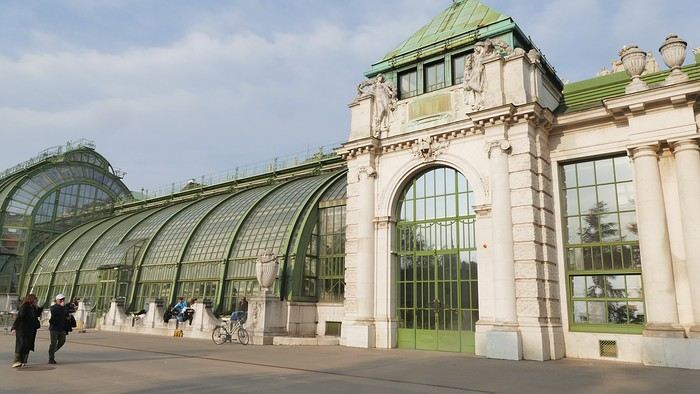
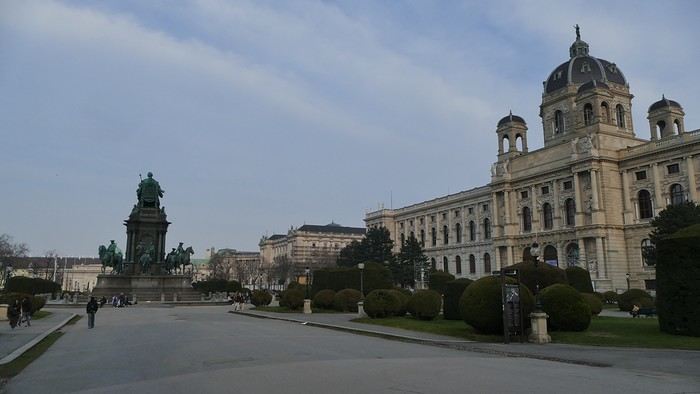
March 3rd — A taxi picks me up at 6:30 AM; the flight to Vienna takes off at 9:30 AM and arrives at noon. I’m free until 7 PM; the metro is direct to the city center. The weather is pleasant and not too cold, luckily, since my clothes are light.

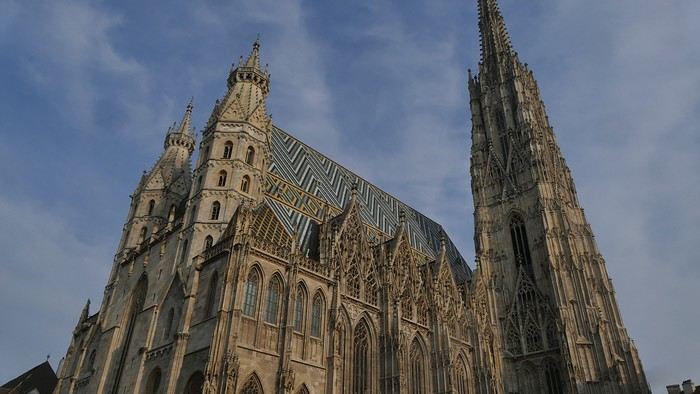
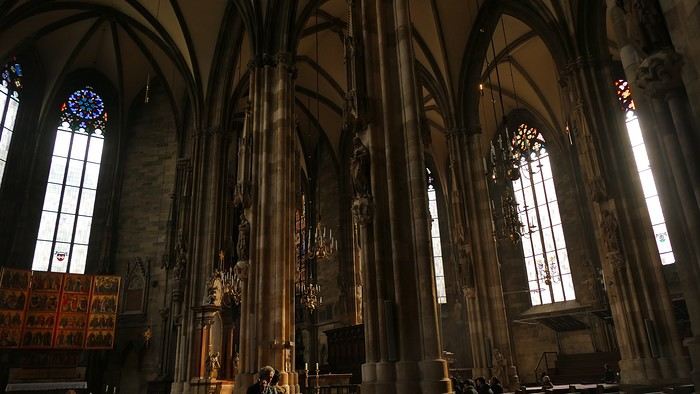
When I exit the metro, I spot the St. Stephen’s Cathedral tower in the distance and approach it: the roof, made of glazed tiles, is remarkable.


Entry is free, and the interior, a mix of Gothic and Baroque styles in the center, is stunning.


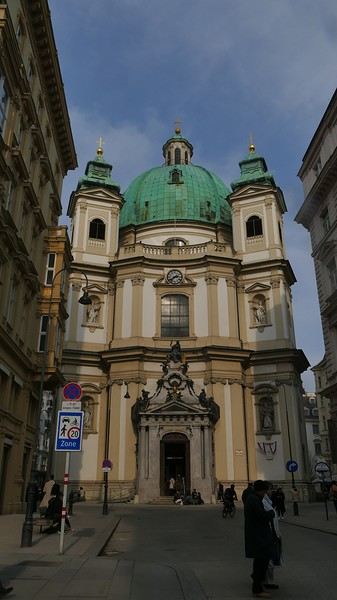
Not far from there is St. Anne’s Church


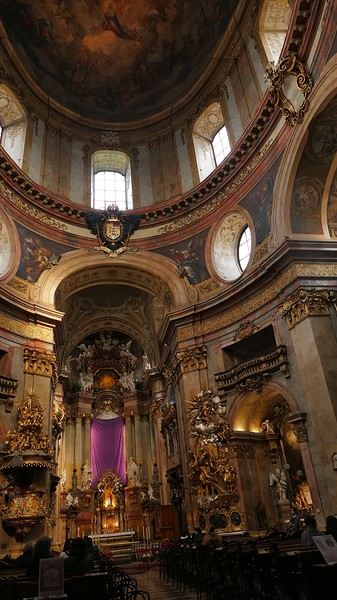
, also Baroque, adorned with beautiful frescoes


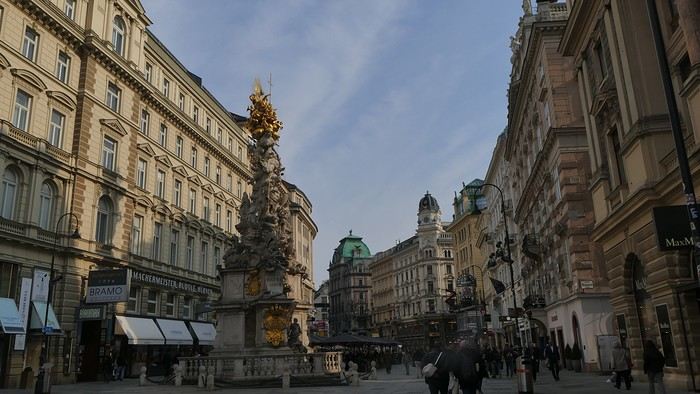
—a music concert adds an enchanting atmosphere to the visit. I continue my walk at random through the pedestrian streets lined with magnificent buildings: I’m charmed by the city.


Before heading back to the airport, I stop at a lovely tea salon. My flight will eventually leave with a delay.

Wednesday, March 4th — Delhi and a little luggage scare We arrive in Delhi shortly after noon. Immigration is quick, and good news: my bag was checked through from Barcelona to Kolkata. I head to the connecting terminal and arrive half an hour before boarding: the flight goes smoothly. Upon arrival, the luggage comes out quickly… except mine. After filing a report, I’m told my bag is in Delhi—I have to retrieve it before taking another flight. I didn’t know (or had forgotten): with the delays, I wouldn’t have had time to pick it up and make the connection.

I take a taxi to the Ichamati Hotel. The welcome is warm, and the room is clean but very small. Without my bag, I feel a bit lost—I have nothing to change into.

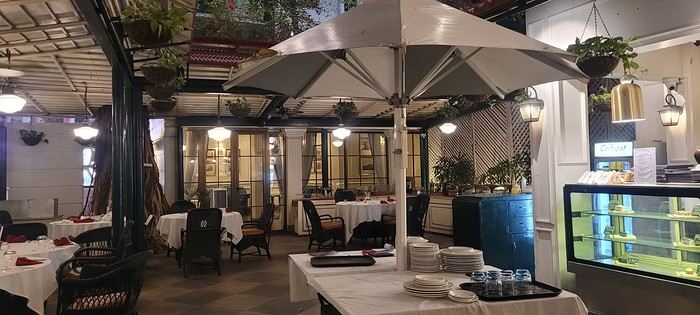
Tonight, I’m dining with Raja and his friends at a beautiful restaurant, an old colonial house turned into a hotel.


We’re happy to see each other and have a comforting evening together.
PI Pierre38 Regular ·
Hello, Great to hear about your new adventures. I hope everything went well, apart from the trip there. Pierre
AL Aleph240758 Veteran ·
Welcome Pierre, you're the first to board.

I’m no longer receiving emails letting me know I have messages. What should I do to get notified again?
AL Aleph240758 Veteran ·
Thursday, March 5th

I slept really well—the hotel is super quiet, you can’t hear a sound. I need to head out and find an open restaurant for breakfast. I didn’t go the right way at first, but I found one near the hotel on a parallel street, the Prince Hotel, which is nice and very local.

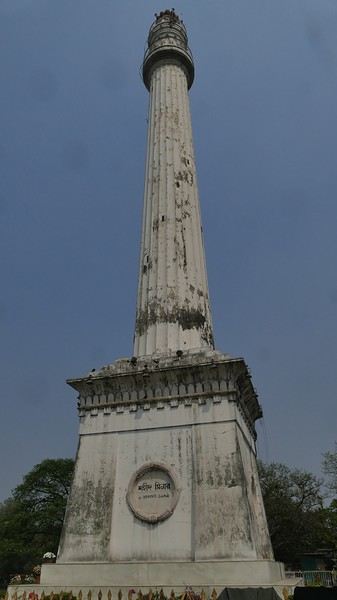
It’s past 10 a.m. when I set off to explore the city. I pass by the museum and continue to the Shaheed Minar, located on Esplanade. The column is 48 meters tall and was nicknamed the "cloud-kissing monument."


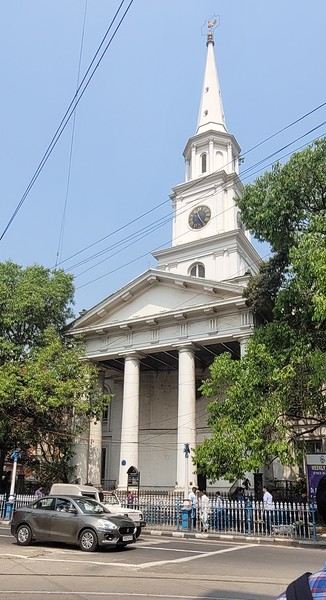
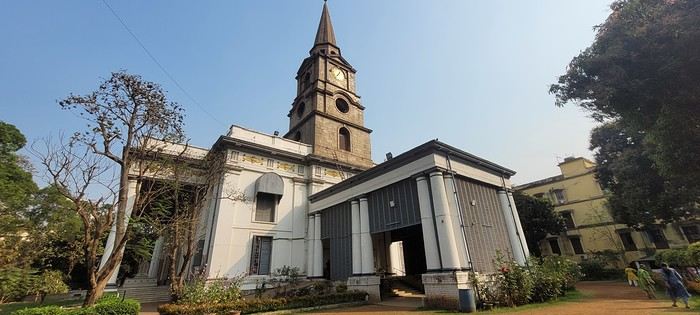
I reach an intersection in the BBD Bagh neighborhood, and St. Andrew's Church comes into view. It’ll be my landmark during my stay.


I keep going until I reach Tiretta Bazar,


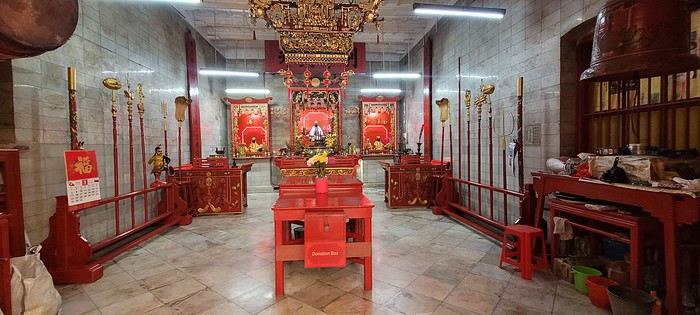
then I wander into the alleys in search of the Chinese temples. There are five in this neighborhood, but I only visit two, including the Sea Ip Church. The others are closed—it’s already past noon. These small temples, hidden in a maze of alleys, are colorful and exude a peaceful atmosphere, contrasting with the hustle and bustle of the nearby streets.


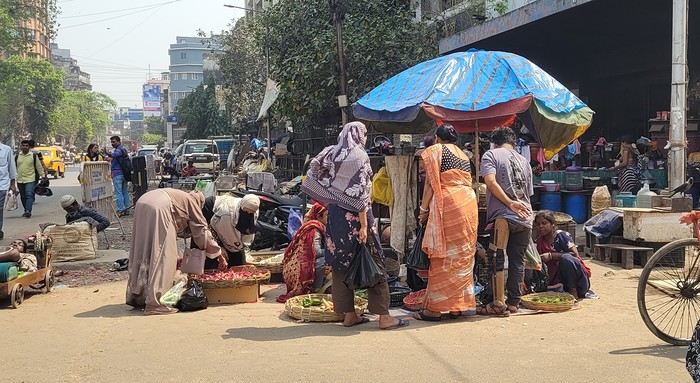
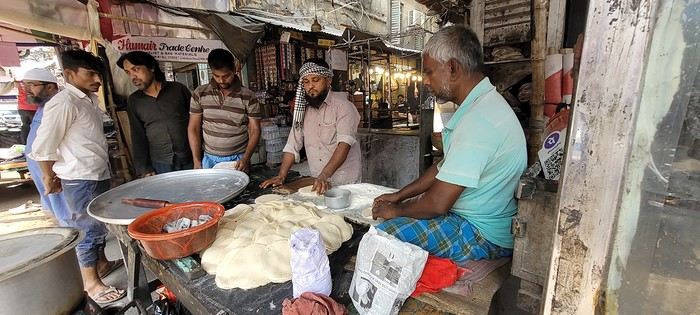
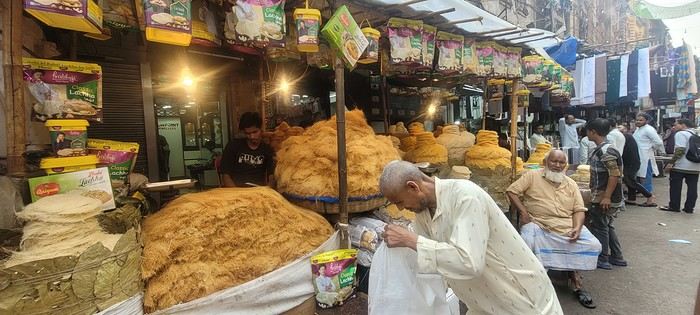
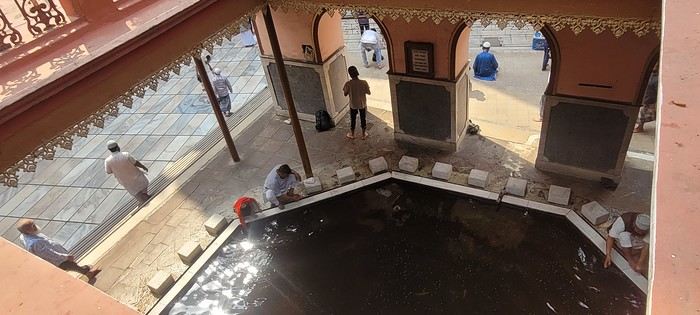
I continue my walk through a lively market until I reach the Nakhoda Masjid.


Women can only enter the courtyard. Two basins allow men to perform their ablutions before entering the mosque.

The Buddhist monastery closes at noon, so there’s no point in heading there—it’s way too late. I set off in search of St. John’s Church but can’t find the cemetery, which should be nearby.

I end the day with a visit to Eden Garden, which didn’t really impress me in the end. I take a moment to rest before receiving a message from the hotel saying my bag has finally arrived at the airport.


I decide to walk back to the hotel despite the distance. A Uber driver then takes me to the airport and even accompanies me to the baggage claim service. First, I need to find the right counter, which is upstairs. I show my passport and the receipt I was given, then wait for a staff member to retrieve my bag. The wait is a bit long. Before handing it over, the staff takes a photo of the bag alone, then another of me holding it, probably to confirm the handover. Once the formalities are done, the taxi takes me back to the hotel. I’m exhausted and have dinner at the same restaurant as this morning.
AL Aleph240758 Veteran ·
Friday, March 6

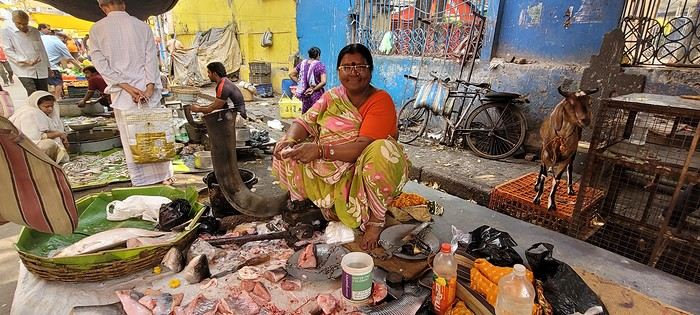
After breakfast, I set off to find Mother Teresa’s dispensary to drop off some dressing supplies I’d collected from a friend. Once there, I realize I’m in the wrong place. Fortunately, a sister agrees to take the supplies and ensures they reach the dispensary. Before arriving, I stop at a small market—just the kind of authentic spot I love.


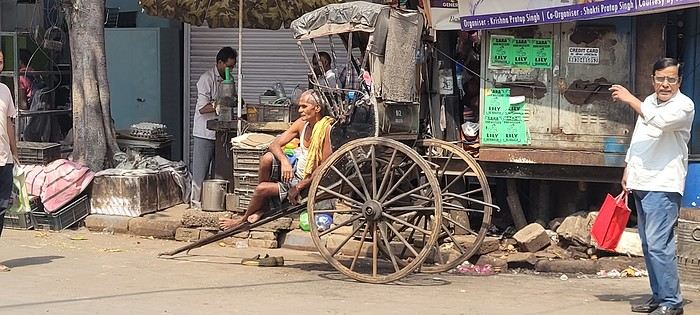
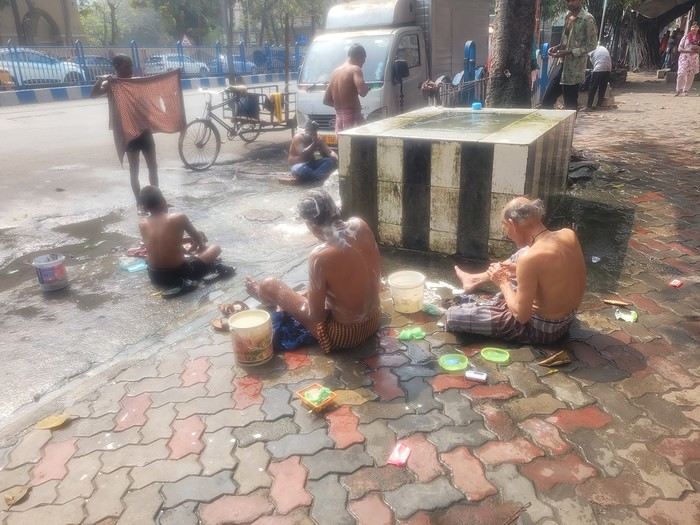
In Calcutta, it’s common to see men washing up on the sidewalks, using simple water spouts as showers. Though surprising at first glance, this scene is part of the city’s daily life.

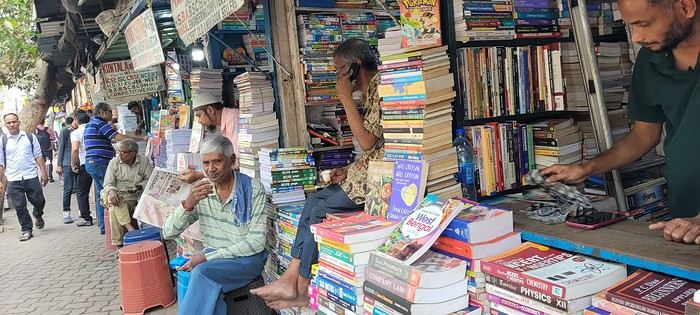
Next, I’m near College Street and pass through Boi Para, the famous book market. Booksellers line both sides of the street for its entire length, creating an impressive open-air library where books stack as far as the eye can see.


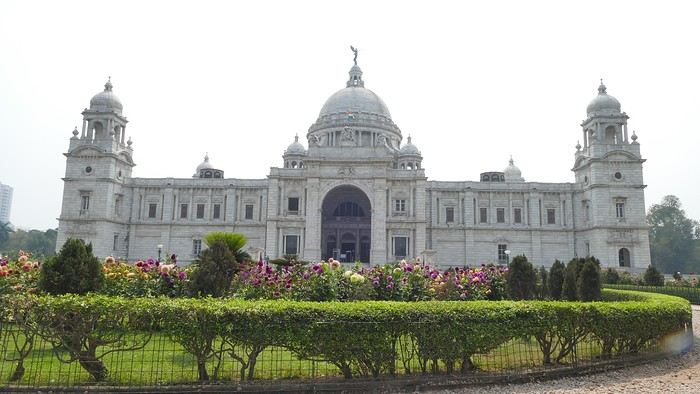
I then head to the Victoria Memorial. Given the distance, I decide to take a taxi. I only visit the gardens, having already explored the interior on a previous trip.


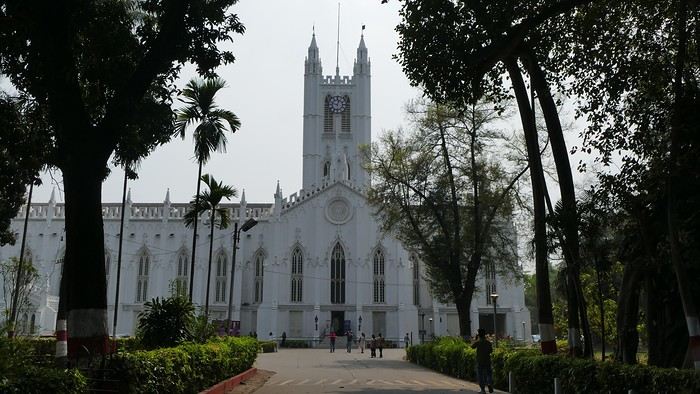
From there, I walk to St. Paul’s Cathedral, located near the planetarium.


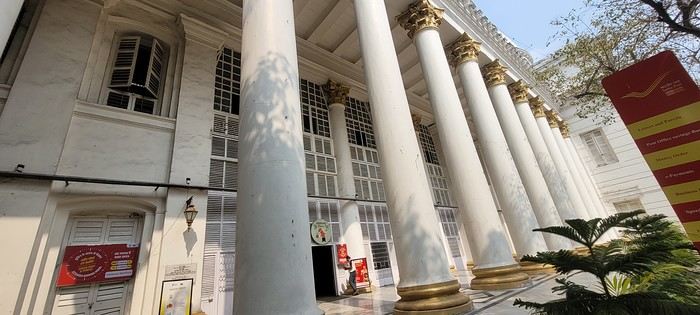
I take a bus to the G.P.O. (General Post Office), an old colonial building.

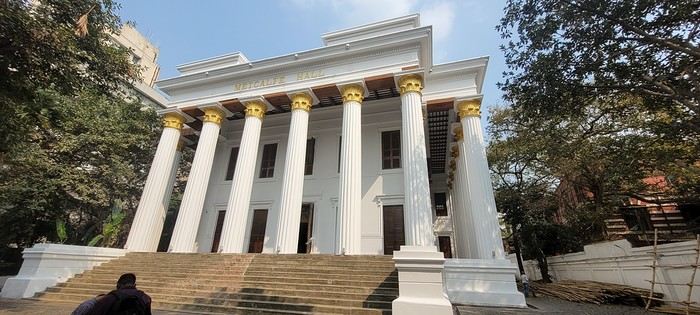
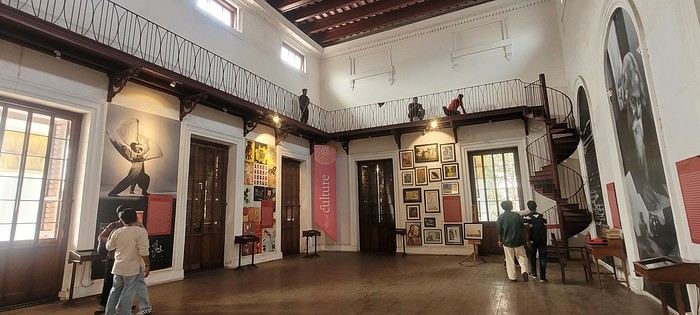
I continue my walk to Metcalfe Hall. Since the entrance is paid, a young man helps me make the payment using his phone. Inside, I discover modern exhibitions that contrast with the building’s beauty and elegance—its architecture is truly worth seeing.


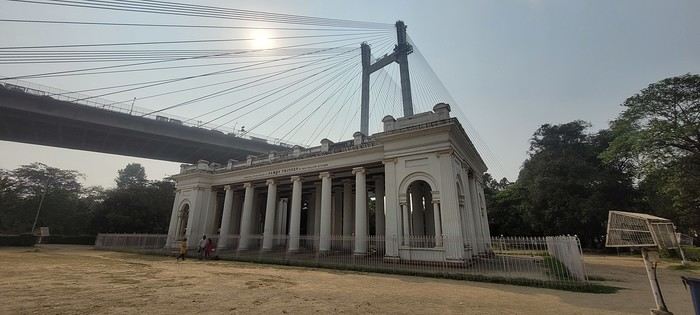
I take another taxi to reach the James Prinsep Memorial, which is quite far from the center.


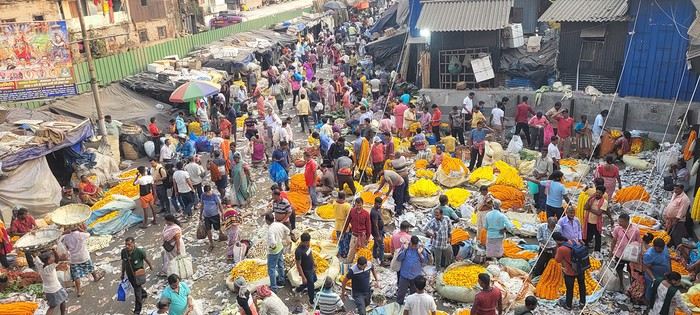
I then take another taxi to drop me near a metro station, as the traffic jams in this area are too heavy. I take the metro to Maidan station, then a bus before walking to the flower market, which is as lively and colorful as ever.


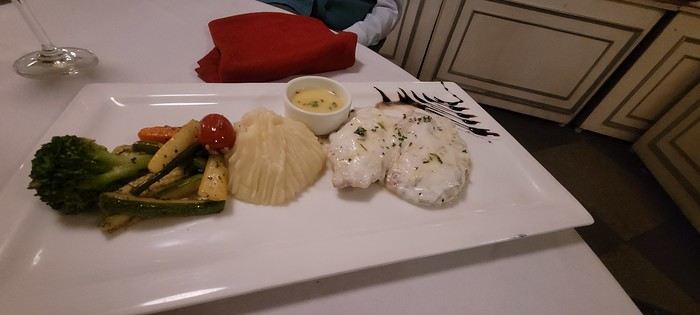
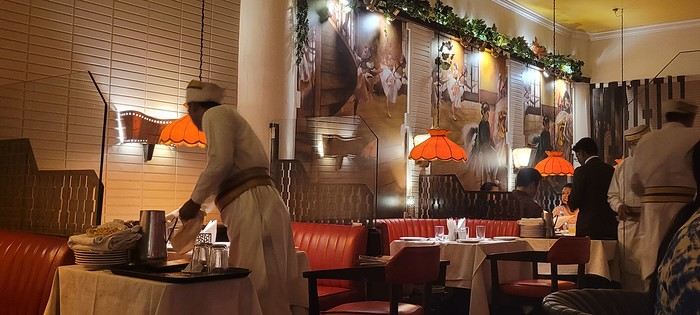
I decide to walk back and make a detour through New Market. I spend a long time in a large shop where I find some lovely pants I really like. Tonight, I’m dining at the restaurant I discovered ten years ago: Mocombo. It’s still as elegant, and the food is just as excellent. The restaurant is only 500 meters from my hotel, which is much appreciated after such a long day.
AL Aleph240758 Veteran ·
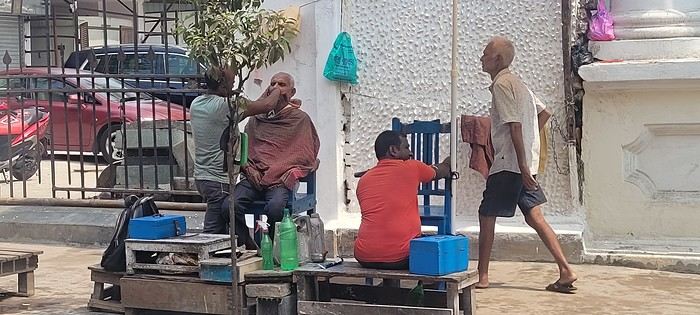
Saturday, March 7 I take the metro at Park Street to go to Marble Palace, getting off at Mahatma Gandhi Road station. The palace isn’t very far, but you have to weave your way through the neighborhood’s narrow alleys. The visit is free, but photos are forbidden, even outside. At the entrance, the guard still asks me for 100 rupees. Another staff member then comes to get me and escorts me to the house’s hall. First, I have to sign a register. There’s a lot of staff around, and a man gives me a quick tour of the place. After that, I’m just a five-minute walk from Tagore’s house, which I really enjoyed during my last visit. Entry costs 500 rupees, with an extra fee to visit the outside area, which I decide not to pay—no need to go overboard! Here too, I have to sign a register before entering. I continue my walk on foot to Kumartuli. Along the way, I discover several typical scenes of daily life: a barber set up right in the street.


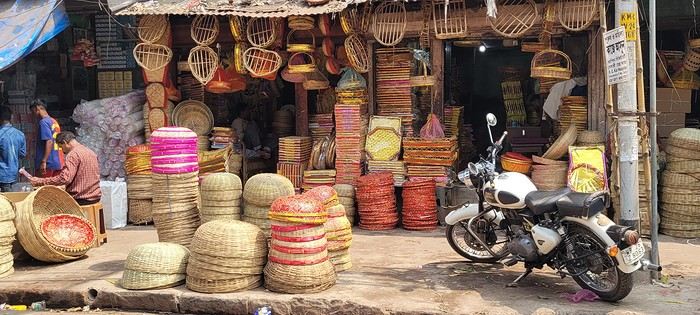
A basket-weaving shop also catches my eye.


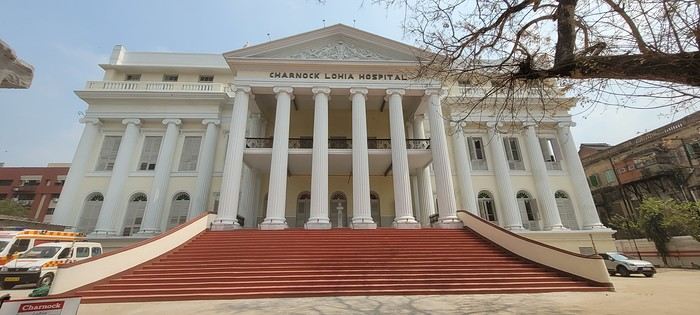
I also pass by a magnificent colonial building, now a hospital.


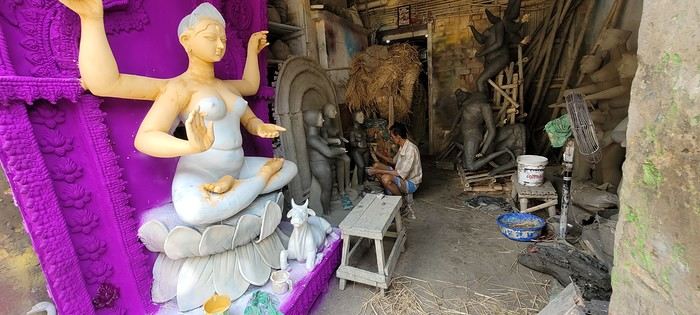
I finally arrive in the potters’ neighborhood. Here, they make clay statues of deities. At first, they’re just straw structures tied with ropes, which are then covered with several layers of clay and left to dry in the sun. Later, they’ll be painted and richly decorated.


I then take the metro toward Dakshineswar Kali Temple. I still have to walk about a kilometer to get there. When I arrive, it’s already 2 p.m., and the temple has just closed. Oh well, I’ll come back another time. I head back to Park Street and look for a pastry shop where I can sit for a while to rest after this busy day. Dinner at Mocambo.

AL Aleph240758 Veteran ·
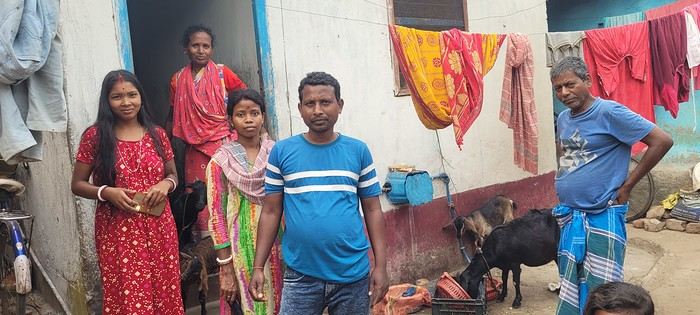
Sunday, March 8: Medinipur Yesterday evening, I asked the hotel manager to book a taxi to take me to the station at 9:30 AM. I was on time for the meet-up, but no car showed up. So I went back to the reception, and the manager immediately booked another one, which arrived very quickly. It took us about 15 minutes to get to the station. There was no one at the counter to buy a ticket to Medinipur. Someone just pointed me to the platform, but since I couldn’t find the train, I asked for help—it was actually right in front of me! The train was supposed to leave at 9:20 AM, but with the delay, it was already 10:20 AM. This setback actually worked in my favor, as I was able to catch it without waiting for the next one. The train was packed, but I managed to find a seat. It stopped every three or four minutes, and we made over thirty stops before reaching our destination. Some travelers weren’t as lucky as me and had to stand the whole way. At every stop, vendors boarded the train to sell all sorts of things: food, small items, dish towels… You could really find anything. The ride was lively—there was always something happening, which made the time pass pleasantly. The scenery flew by with bright green rice paddies. Every now and then, I’d spot fields of flowers, often marigolds. When I arrived, I took a rickshaw to the Light House Hotel, which I’d found on Google. It’s a small family-run place. The receptionist didn’t quite understand my request, so he called the owner, who arrived quickly with his wife and daughter, curious to meet this Frenchwoman—they clearly don’t get foreign tourists every day. The room was decent and clean. I wanted to visit Pathra, the temple town, that very afternoon. The owner knew a taxi driver who arrived quickly. The distance wasn’t far, but we moved slowly behind numerous trucks that kept stopping. The temples of Pathra are right by the road, in the middle of the countryside, surrounded by rice paddies. The site is well-maintained, and a few young people were hanging out there. The setting was peaceful and very pleasant.



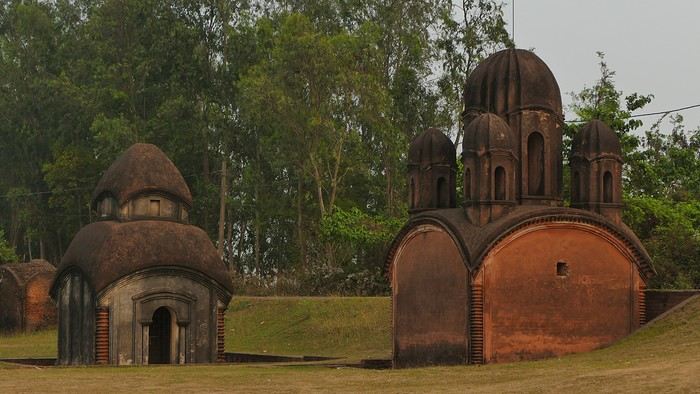
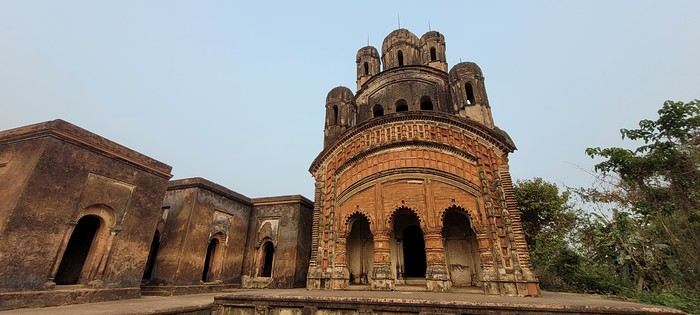
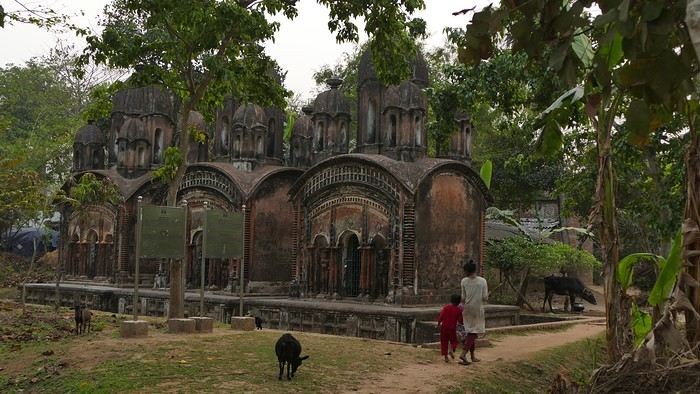
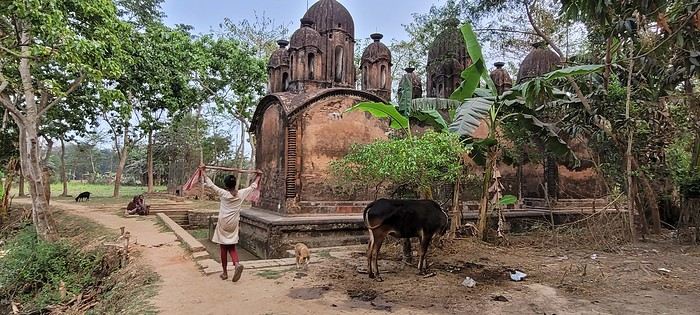
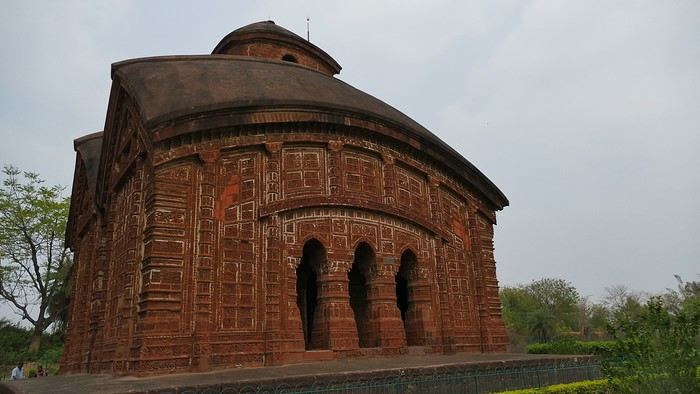
The temples of Pathra are divided into three main groups: the Nabaratna temple complex, the Kalachand complex, and the Rasmancha complex.

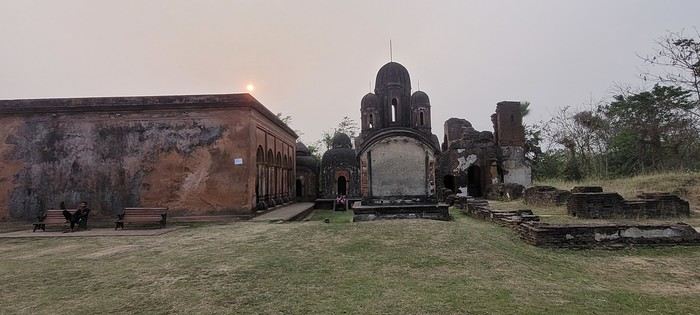
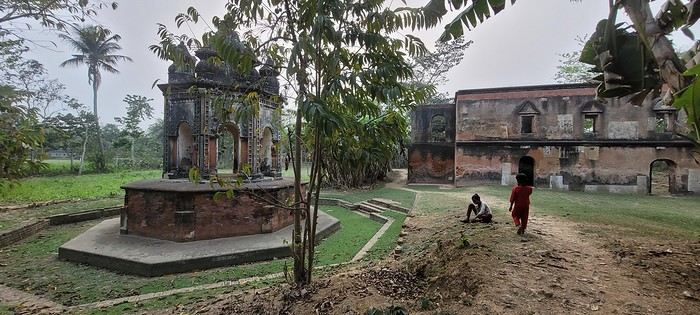
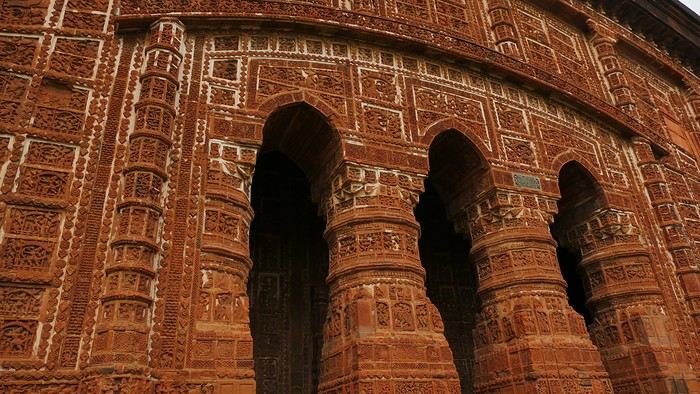
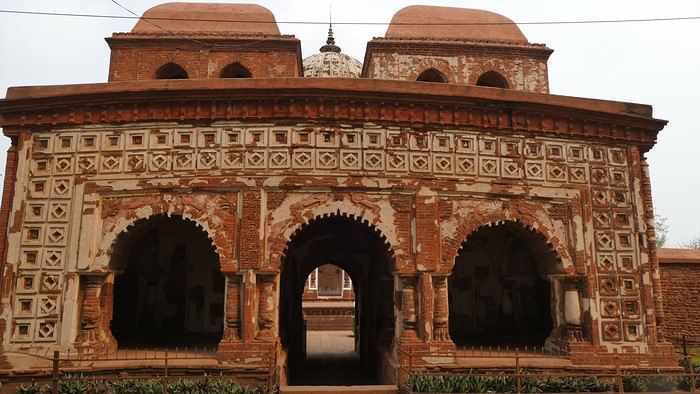
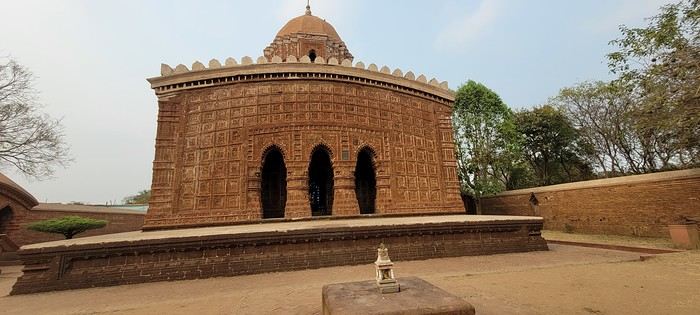
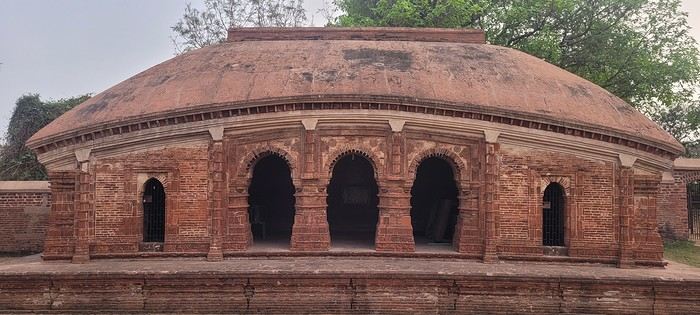
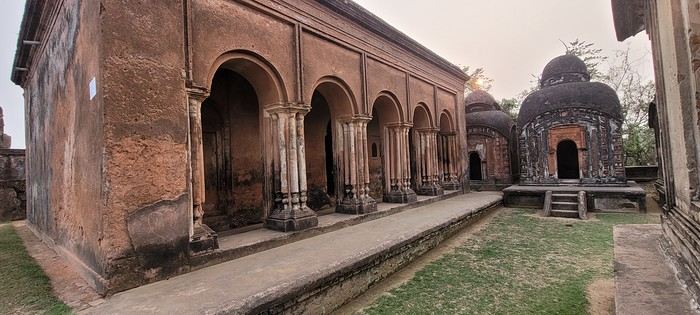
The Kalachand complex is the most elaborate of the temple complexes in Pathra. It’s on the left side of the road for visitors coming from Midnapore. The Kalachand temple, a rectangular flat-roofed structure with decorative pillars supporting five arched doors, stands by the roadside. Behind it are three sloping-roofed Shiva temples (aat chala) and a pancha ratna (five-spired) temple. Further back stands a roofless rectangular laterite structure, preceded by a veranda and locally known as the Durga Mandapa. Next to the Durga Mandapa is the dilapidated home of the Zamindar, whose staircase, still visible, leads to the roof.



Further down the road stand two temples built in the aat chala and panch ratna styles. The temples in the Kalachand complex only retain remnants of terracotta ornamentation, without intricate details. The complex also houses several ruined structures completely overgrown with vegetation.


Right across from the Kalachand temple complex stands the Nabaratna temple complex, centered around the imposing nine-spired (nabaratna) temple. It’s the only nine-spired temple in Pathra and the tallest of all the town’s temples.


A left turn after the Kalachand temple complex, followed by a winding dirt path passing a small unknown aat chala temple, leads to the Rasmancha complex.


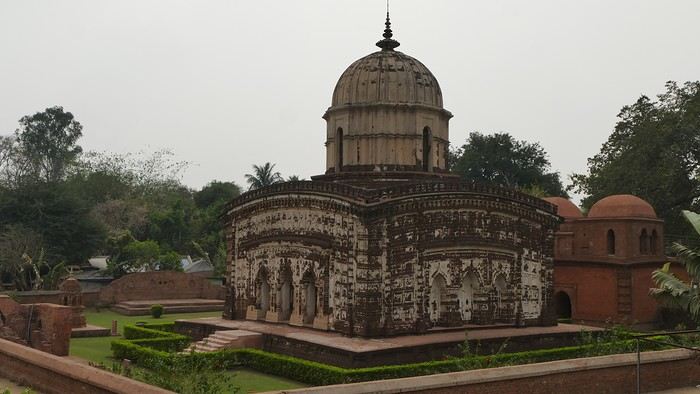
Built by the Bandopadhyay family, it’s also known as the Bandopadhyay temple complex. The Bandopadhyay family’s temple complex includes three pancha ratna Shiva temples, the octagonal Rasmancha, the Kacharibari, and two smaller Shiva temples. The three Pancha Ratna temples feature fine terracotta ornamentation, while the Rasmancha is adorned with stucco. The octagonal Rasmancha, with its nine spires, stands out clearly from the others.


A great discovery—I’m really happy with this outing. I had dinner at a small open-air restaurant by the road near the hotel.
AL Aleph240758 Veteran ·
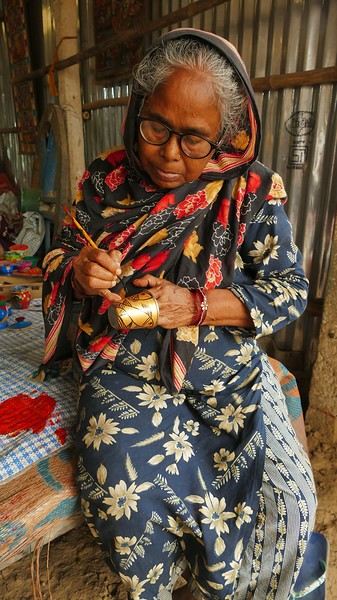
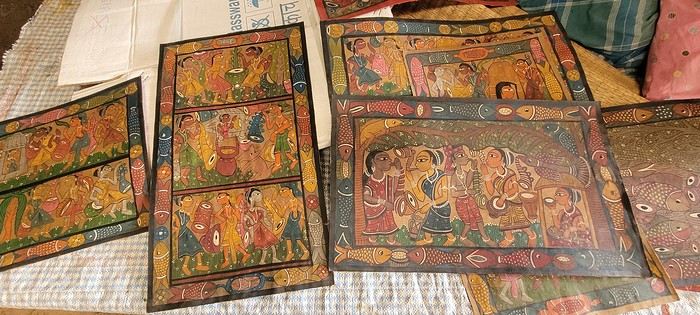
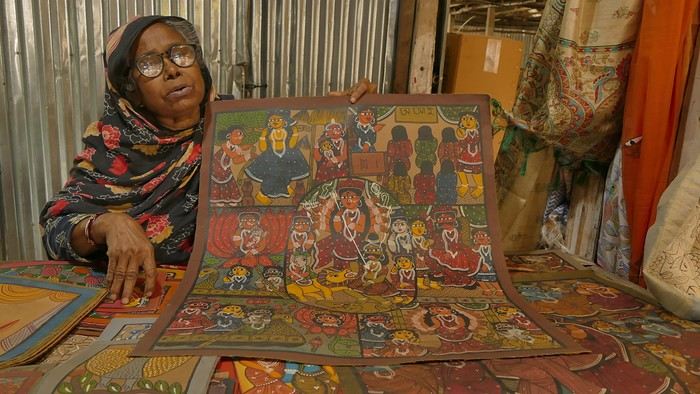
Monday, March 9 At 8:30 AM, there's a knock at my door. The receptionist brings me an omelet, but no toast or tea. I ask if it’s possible to get some. After a long wait, he returns with three very greasy toasts, each accompanied by a piece of a new omelet! I’m a little embarrassed because I’ll have to eat all of it… and the whole thing is rather unappetizing. I then leave by bus for Pingla. The trip isn’t direct, and I have to make two changes. The first is in Debra, where I cross the railway tracks to catch a bus toward Balichak. The next bus drops me off at an intersection, where I take an auto to reach Naya. It ultimately takes me over three hours to cover just 45 kilometers. The road winds through magnificent landscapes, lined with vibrant green rice paddies. Naya is famous for its Patachitra paintings. The community of artists is gathered at the village entrance, where you can discover their workshops and traditional craftsmanship.


Patachitra refers to a type of scroll painting practiced by a unique community of artists who are painters, lyricists, and singers from the village of Naya in West Bengal, India. The tradition itself dates back to the 13th century; the scroll painting is called Patachitra, while the "Poter Gaan" are the songs associated with the stories painted on the scrolls. In the past, the traditional bearers of this visual and oral art lived on alms they received in exchange for their door-to-door performances, which gradually declined due to a lack of patrons. However, over the years, the artists have evolved and diversified their offerings, creating an artist collective called "Chitrataru." Today, the Patuas of Naya form a recognized community of artists with over 250 practitioners from more than 80 families who have won numerous national and international awards.


I go from house to house discovering these beautiful paintings. I watch the songs as the scroll unfolds—it’s moving.


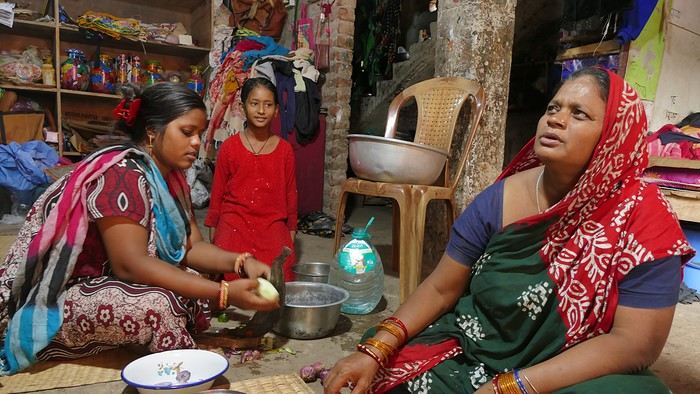
At one house, I’m invited to lunch with the whole family. I eat an excellent thali; we’re seated on the floor on a mat. I buy a few small paintings—they’re really beautiful.


I was supposed to visit another craft village, but it’s too late. I take a direct bus to Balichak, then a train to Medinipur—it’s much faster. When I arrive in Medinipur, the hotel owner’s daughter spots me, and we head up together by car. In the evening, I dine at a restaurant where I’m the only customer. I’m not very hungry, so I order a paneer 65—it’s really good and very filling; I can’t finish it. I head back quickly—I need to repack my bag. Between 11 PM and 1 AM, I hear music and firecrackers in the street: it must be for a wedding.
PI Pierre38 Regular ·
Hi, You need to go to "my account - my options" and confirm that you want to receive an email notifying you of new messages in the followed discussion. Pierre
DE Deuxhavrais ·
Thanks for this travel journal—we’ll be following it with interest! We easily recognized Kolkata and its bustling activities. We’re going to check out your route since it’s a region we’re not familiar with.
AL Aleph240758 Veteran ·
Hi, You need to go to "my account-my options" and confirm that you want to receive an email notifying you of new messages in the followed discussion. Pierre

I’ve double-checked—everything’s set up correctly, but I’m no longer receiving any messages.
AL Aleph240758 Veteran ·
Welcome Didier! You're going to discover "another India" with no Western tourists at all.
AL Aleph240758 Veteran ·
Tuesday, March 10 At 8:30 AM, the waiter brings me breakfast. Today, the omelet is served separately from the toast, which is no longer swimming in oil, along with a cup of tea. All good—I can finally have a normal breakfast. I leave the hotel to head to the train station. My train to Bishnupur leaves at 9:30 AM. It’s on time, and the journey takes an hour. In Bishnupur, the train station is far from the city center. The auto-rickshaw driver asks for 200 rupees and refuses to negotiate. My hotel, the Suryadeep, is about a kilometer from the bus station. I booked it via WhatsApp. The welcome is warm. Western tourists don’t seem to be very common here, as they seem surprised to see a French woman. Or maybe it’s because I’m traveling alone and I’m not exactly young anymore—it always raises eyebrows. Once settled in my room, a boy brings me a nice cold lemon juice. The receptionist offers to book an auto-rickshaw for sightseeing, but I prefer to do everything on foot despite the distances. I’ve got all the time in the world, and I love strolling, observing, and wandering. I plan to visit all the main sites on this first day. First on my list is the Rasmancha, located three kilometers away. The entry ticket, at 300 rupees, also gives access to the Jor Bangla and Shyam Rai temples.


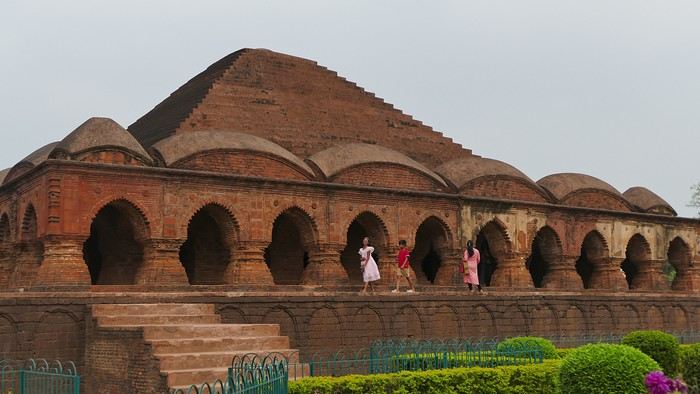
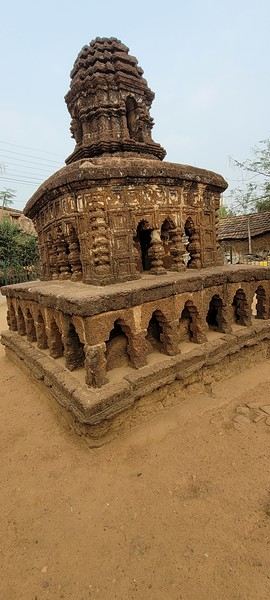
The Rasmancha is a magnificent structure with many side arches supported by pillars. Its base rests on a raised laterite platform. Built around 1600 by King Malla Hambhir, this temple once hosted all the idols of Radha and Krishna from the city of Bishnupur during the Vaishnava Ras festival, where they were gathered to be worshipped. The Rasmancha is the oldest brick temple in Bishnupur and remains one of its most iconic monuments.


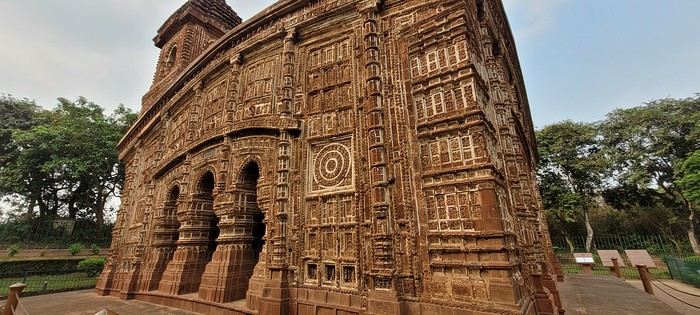
I continue my walk to the Garh Darwaja, now in ruins and overgrown with vegetation. I keep going down the same road and arrive at the Jor Bangla temple, whose name evokes two traditional huts joined together. I really like its sloping roofs connected to each other, giving it such a unique silhouette.


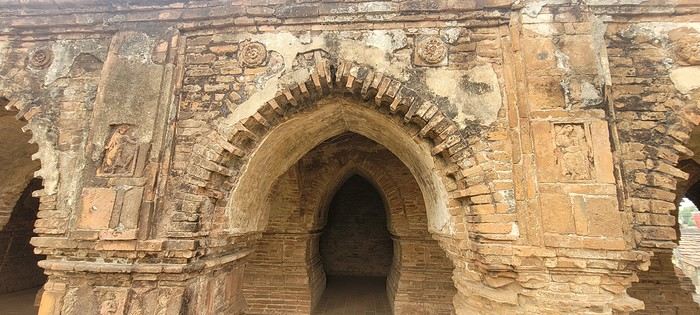
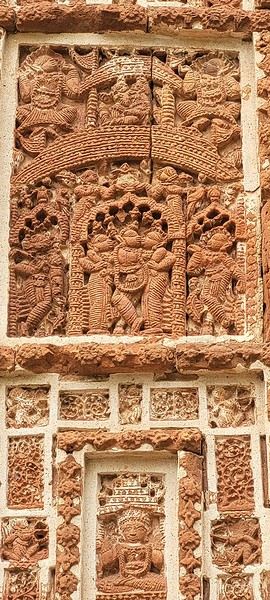
The walls, both inside and out, as well as the ceiling, are beautifully adorned with terracotta panels.


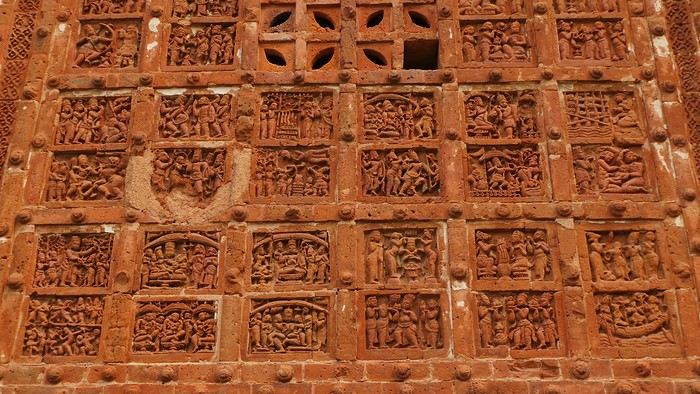
The sculpted scenes, with incredible detail, remind me of comic strips—they tell so many stories through their many characters and intricate details.


Right next to it is the Radhashyam temple, recognizable by its single spire. Built from laterite, it’s adorned with delicate lime stucco decorations.


The temple is surrounded by high walls, and its entrance is through a three-domed gateway with Islamic influences, contrasting with the architecture of the sanctuary.


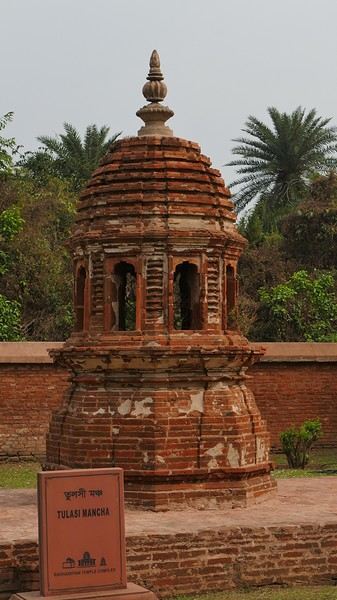
It has a unique feature: a tulsi mancha, a raised platform where the tulsi, the sacred basil, grows—a plant particularly revered by Hindus.


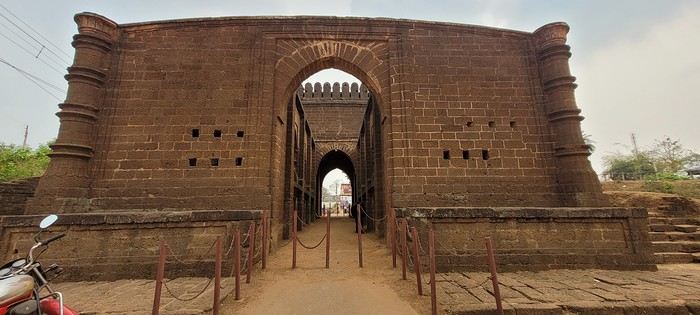
I continue walking down this road, which leads me to the main gate of Bishnupur, the Pathar Darja, the "Stone Gate." Built from laterite, it stands two stories high and was once one of the main entrances to the fortified city.


A few steps away is a second, more modest gate: the Garh Darja, which also marked the entrance to the old fortress.
AL Aleph240758 Veteran ·
I had to backtrack—I’d forgotten to visit the Shyam Rai Temple, located at the junction near Garh Darwaja. Luckily, it wasn’t too far away. I don’t regret the detour at all; it’s one of the most beautiful temples in Bishnupur.


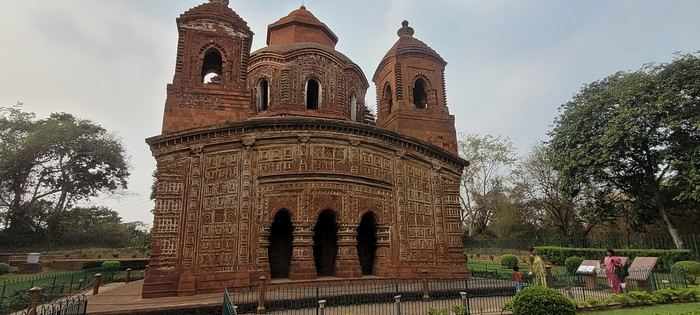
Also known as the Temple of the Five Jewels, it gets its name from its five spires, each symbolically representing a jewel. Accessible through a three-arched entrance on each of its four sides, it’s entirely covered in stunning terracotta panels, even on the inner walls and spires. The scenes depicting the love stories of Krishna and Radha are remarkably delicate.


Afterward, I passed back through the city gates and headed toward the stone chariot.


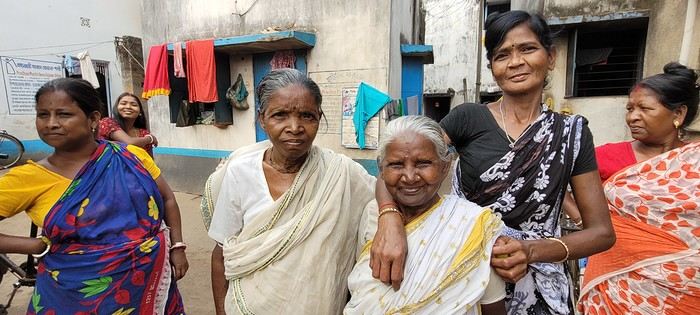
Nearby, women were doing their laundry. Across the way, a narrow alley caught my eye. Music was drifting out, and the atmosphere was lively. The women were all sitting in front of their homes while a little girl danced in the middle of the street.


When they saw me, they waved me over—they wanted me to take their picture. I stayed with them for a while.


A little later, some men arrived with a large basin filled with a sweet preparation. They offered me a bite: a kind of meringue, light and delicious.

I then continued my visits toward the Madan Mohan Temple. Along the way, I made several stops to take photos. The locals are really friendly, and I had some great moments with them. A smile, a few words, sometimes just a glance is enough to create a connection.


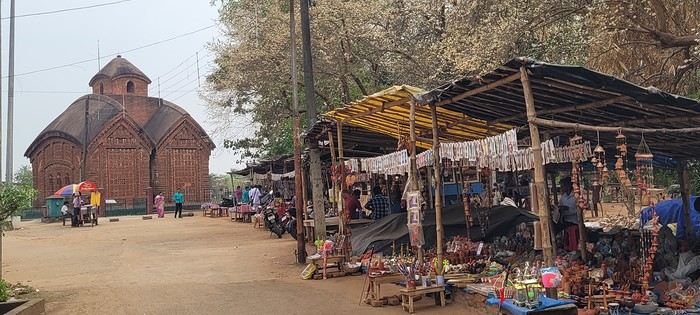
The Madan Mohan Temple is quite a distance away, but the walk is easy. It’s also magnificent, with a single spire and a rectangular roof with slightly rounded edges, reminiscent of the traditional thatched-roof houses of Bengal.


The terracotta panels adorning the temple depict scenes from the Ramayana, with incredible detail. Across from the temple stands a long terracotta structure that once housed the temple kitchens.


Bishnupur is a truly unique city, where every monument holds a new discovery.


I returned to the hotel by crossing the market. When I arrived, the manager offered me tea. I then had dinner at the hotel restaurant, where all the staff were incredibly attentive. It was really nice!
MA Marien33 Veteran ·
Hi Marie Jo, I stumbled upon your new travel journal by chance. Still going strong, I see! Well done! Once again, you’re making me want to follow in your footsteps... There are the places you visit, but it’s your way of traveling that really resonates with me—so much like mine before I settled down in Kerala. You’re making me want to grab my walking staff again. Unfortunately, I want to go where you’re going, but my legs aren’t what they used to be... Did you switch cameras?
AL Aleph240758 Veteran ·
Hi Jean Marie, To really follow me, you’d better have good legs—I don’t know any other way to travel. I need to take my time and "get lost" among the locals. I love discovering off-the-beaten-path places, the more authentic, the better. Even in touristy cities, I always find unusual spots. This is how I like to travel, though I don’t think many others do—my travel journals in India and elsewhere don’t get much attention.

I’m still using the same camera and the same phone, which takes great photos, in my opinion. Have a nice day.
MA Marien33 Veteran ·
To truly follow me, you’d better have legs—I don’t know any other way to travel. I need to take my time and "get lost" among the locals. I love discovering off-the-beaten-path places, more authentic spots. Even in touristy cities, I always find unusual corners. This is how I like to travel, though I don’t think many travelers do it this way—my travel journals in India or elsewhere don’t attract much attention.

But that’s just it—you seem to have misunderstood my point. What I love about your journals isn’t your prose or your photos—though they *do* make me want to visit the places they show—but the spirit behind them. Your way of traveling is *exactly* how I travel. I also adore your mindset, your philosophy, your taste for risk (like when you set off on a motorcycle at your age to some remote place with a stranger...).

Reading you, I see myself wandering those same spots, strolling through markets, lingering in little streets lined with shops displaying their treasures... I’d love to take YOUR trip, the way YOU do it. I envy you. I want to do exactly what you do and go where you take us. But... I don’t have the legs for it anymore...

So next time, we’ll go together—and *you* can push the wheelchair...🤣 I can already hear you yelling: "Oh no! Not you!"

I love this way of traveling, though I don’t think many travelers do it this way—my journals in India or elsewhere don’t attract much attention.

If you think your journals don’t attract much attention, I don’t think it’s because of *how* you travel...
KA Kate Globetrotter ·
I don’t think there are many travelers in this situation because my travel journals in India or elsewhere don’t attract much attention.

Hey Marie Jo!

Well, I’m into them because your itineraries give us a break from the "classics"! So I’m sticking with you, but just a heads-up—I won’t have the patience you show when it comes to delayed transport or lost bags 🏴‍☠️
AL Aleph240758 Veteran ·
So next time we leave together, and you push the wheelchair...👨‍🦽 I can just hear you screaming: Oh no! Not you!

You know me well, huh😉 I just love going solo. And yeah, I’m not afraid to ride off on a bike with strangers—I only do it in India!!!!😄
CA Calaf Regular ·
Hello,

Don’t get me wrong—I’ve always followed your travel journals—fast-paced and full of energy!—with as much interest as pleasure. Thank you for that.

Best regards,

Similar discussions

You might also like