Est-ce que quelqu'un qui aurait eut l'occasion de visité la Turquie pourrait nous dire dans quels villes ou lieux peut-ont admiré les sites anciens des civilisations Hittites et Byzantines?
Où trouver les mausolée ou tombes des empereurs Byzantins comme Justinien par exemple?
Peut-ont visiter ces endroits? Et si oui, quels sont les tarifs pratiqués? De plus, peut-on prendre des photos dans les musées consacrées à ces deux civilisations?
Pour finir, quels sont les moyens de transports pour gagner ses lieux anciens.
Je pose ces questions, car le problème avec la Turquie c'est que beaucoup de sites Grecques ont changé de noms.
Quand est-il aussi du site de Troie?
Merci de vos réponses😉
Ceux qui renoncent à une liberté fondamentale en échange d’un peu de sécurité temporaire ne méritent ni la sécurité, ni la liberté.
L'Empire hittite fut, au IIe millénaire avant J.-C., l'une des plus grandes puissances du Proche-Orient, contrecarrant les ambitions des pharaons en Syrie. Cette grandiose épopée eut pour centre la ville-montagne de Bogazköy, l'ancienne Hattousa, où s'élèvent encore des fortifications aux portes remarquables et un gigantesque temple consacré au dieu de l'Orage et à la déesse d'Arinna. Non loin se trouve le sanctuaire rupestre de Yazilikaya, voué aux divinités du panthéon hittite.
Merci les amis, en tenant compte de vos informations voici ce que l'ont peut voir comme représentation de l'art Hittite pour donner envie à tous ceux qui le désire de découvrir cette autre facette de la terre d'Anatolie:
bas relief à Hattusas
Dieu de la Montagne Disque solaire
Pour plus d'informations sur les Hittites ont peut consulter la page de wikipedia:
Merci Nemo1001 pour ses superbes et imprésionnantes images du mont Nemru, je vais effectué une recherche sur le net pour avoir des infos complémentaire sur ce site qui me parait ont ne peut plus extraordinaire, sinon grandiose!
Sais-tu par quel moyen de locomotion ont peut rejoindre ses différents sites, le mont Nemru par exemple, et s'il est ouvert au publique car cela semble trop beau, pouvoir approché ses merveilles!(les statues)
Ceux qui renoncent à une liberté fondamentale en échange d’un peu de sécurité temporaire ne méritent ni la sécurité, ni la liberté.
on y accede, pour la derniere partie, par la marche car c'est en altitude a moins qu'une route a été construite depuis ma visite.
pour profiter du lieu, il est conseillé d'y aller tres tot le matin pour voir le levé du soleil.
Le lieu est en fait, le sanctuaire du roi hittite commagene.
Encore merci pour ses précisions, petit à petit ont se fait une meilleur idée de ses sites, surtout si quelqu'un qui les as visité apporte des informations de première main, je continue en paralèlle ma recherche sur le mont Nemrut pour enrichir ce topic sur les hittites.
Encore merci!
Ceux qui renoncent à une liberté fondamentale en échange d’un peu de sécurité temporaire ne méritent ni la sécurité, ni la liberté.
De plus, peut-on prendre des photos dans les musées consacrées à ces deux civilisations?
Je vais essayer, à ma modeste façon, de faire avancer ce topic très intéressant et enrichissant (merci sincèrement de l'avoir créé, cela fait plaisir de voir des gens sortir un peu des sentiers battus).
Juste pour dire que, sans connaître la Turquie, je ne pense pas que pour les musées ce soit très différent d'ailleurs. En général, la règle dans les musées est la suivante: Pas de photos pour les expos temporaires Photos autorisées pour les collections permanentes Et surtout: JAMAIS DE FLASH, a fortiori en direction des oeuvres peintes!
Je te souhaite un bon voyage à la découverte de la civilisation hittite, et rapporte-nous des photos le moment venu! 😉
Lectures, voyages, musées, choses diverses et variées: www.nouvellefeuille.canalblog.com
Dans le musée il est interdit de faire des photos aux flashs. je te conseille d'ammener un ptit trepied de poche pour faire tes photos.
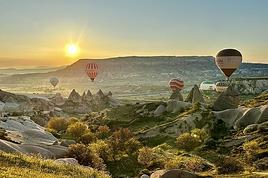
Et je pense aussi que tu iras en cappadoce (sur la route). Et la aussi tu auras besoin d'un trepied pour photographie a l'interieur des eglises creusés dans la roche.
De plus, peut-on prendre des photos dans les musées consacrées à ces deux civilisations?
Je vais essayer, à ma modeste façon, de faire avancer ce topic très intéressant et enrichissant (merci sincèrement de l'avoir créé, cela fait plaisir de voir des gens sortir un peu des sentiers battus).
Juste pour dire que, sans connaître la Turquie, je ne pense pas que pour les musées ce soit très différent d'ailleurs. En général, la règle dans les musées est la suivante: Pas de photos pour les expos temporaires Photos autorisées pour les collections permanentes Et surtout: JAMAIS DE FLASH, a fortiori en direction des oeuvres peintes!
Je te souhaite un bon voyage à la découverte de la civilisation hittite, et rapporte-nous des photos le moment venu! 😉
😉 Merci des encouragements, cela faisait un bon bout de temps que je cherchais des infos sur les sites hittites et Byzantin sur ce forum, mais je n'ai pas trouvé de topic sur ce sujet au combien important, la Turquie ne se résume pas aux plages, ou aux sites d'Ephèse ou Istanbul, il y a pas mal de sites que l'ont ne connait pas, j'ai cherché dans un lonely planet, mais à part les classiques Istanbul et plages, il n'y avait pas grand chose sur les Hittites ou même le fabuleux roi Midas et Gordias je cherche pour vous où localisé ses fameux sites dont nous avons tous entendus parlé, mais que les Turcs ont changé le nom ce qui rend la recherche difficile si comme moi ont s'appui sur des livres d'histoires.
Merci pour les conseils dans les musées, cela servira, car j'ai eu une experience de ce genre dans un musée à Hong Kong, il y avait beaucoup de belles choses à photographier, mais malheureusement, les appareils photos l'usage des appareils photos étaient restreints.
Je prépare le voyage, mais cela reste hypothétique, le travail et mon emploi du temps, j'avais déjà planifié de bout en bout le voyage à Xian en Chine, mais à cause du boulot et de ses maudits JO je l'ai reporté, le topic sur la Turquie des Hittites servira à tous, et appelons ceux qui ont des infos sur les sites hittites et autres à apporté leur contribution.
Ceux qui renoncent à une liberté fondamentale en échange d’un peu de sécurité temporaire ne méritent ni la sécurité, ni la liberté.
😉Merci pour le lien, clio.fr est un site que je visite souvent car il y a des thèses publié par des chercheurs, la civilisation Hittite c'est l'une des plus grande de l'Antiquité, trop peu étudié selon moi, elle mérite notre attention.
Ceux qui renoncent à une liberté fondamentale en échange d’un peu de sécurité temporaire ne méritent ni la sécurité, ni la liberté.
Dans le musée il est interdit de faire des photos aux flashs. je te conseille d'ammener un ptit trepied de poche pour faire tes photos.
Et je pense aussi que tu iras en cappadoce (sur la route). Et la aussi tu auras besoin d'un trepied pour photographie a l'interieur des eglises creusés dans la roche.
Merci nemo1001 pour le lien, très intéressant ce site officiel du ministère turc de la culture, je le conseil à tous, car il y est indiqué où ce situent les sites Hittites, le reste n'est plus difficile, suffit de chercher sur le net ou une carte de la turquie où ce situe tel ou tel ville, merci nemo1001 pour ce précieux lien.
Oui, les flashs, c'est dommage car la plupart du temps les oeuvres que l'ont présente sont souvent mal éclairé🏴☠️
Le trepied cela sert si l'ont veut se faire prendre en photo à côté d'un monument, je suis très timide alors je préfère photographier les monuments respectable plutot que moi😄 qui ne fait pas le poids devant les statues d'Antiochus sur le mont Nemrut, respect pour ses oeuvres du passé.😄
Ceux qui renoncent à une liberté fondamentale en échange d’un peu de sécurité temporaire ne méritent ni la sécurité, ni la liberté.
Loin de la Turquie, mais comme je vois que Byzance vous intéresse aussi, je vous signale la tenue de l'exposition "Byzantium, 330-1453", à Londres, du 25 octobre au 22 mars 2009, à la Royal Academy of Arts.
A priori, cette expo a l'air exceptionnelle.
Loin de la Turquie, mais comme je vois que Byzance vous intéresse aussi, je vous signale la tenue de l'exposition "Byzantium, 330-1453", à Londres, du 25 octobre au 22 mars 2009, à la Royal Academy of Arts.
A priori, cette expo a l'air exceptionnelle.
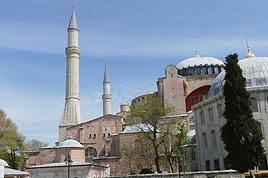
Byzance, encore un trésore méconnu selon moi et qui n'est pas très abordé dans le forum, dès que l'ont aura epuisé le sujet sur les hittites (et il y a de quoi remplir plusieurs pages) ont passera aux Byzantins qui ont laissé en Turquie des vestiges, Nemo1001 parlait de Sainte Sophie, j'ai déniché d'autres sites dans Istanbul, comme l'Hippodrome par exemple, mais qu'en est-il du reste de la Turquie en matière de sites byzantins? Il faut juste que l'ont situe tel ou tel site pour pouvoir obtenir de plus amples informations comme ça localisation.
En suivant le lien posté par Nemo1001 je suis tombé sur la page des musée de Turquie, et dans celui d'ankara il y a celui-ci: le musée Gordion en relation avec le légendaire roi Midas:
si tu utilises le trepied pour tes photos d'interieur sans flash tu auras de meilleurs photos qui te permetront aussi de prendre le cadre autour. Ce qui est difficile avec des simples flashs meme en utilisant le double flash (le flash s'enclenche 2 fois) sur certains appareils photos.
Le trépied sert surtout à augmenter le temps de pose, donc à faire des photos sans flash.
Michel
Et surtout à ne pas trembloter comme une feuille morte pendant le temps de pose! Bonjour les photos floues sinon 😛
Tu as raison, j'ai pas mal de photo floutté pour cause de tremblote, par chance j'emploi un appareil numérique, le hic, c'est que le modèle dont je dispose est gourmand en piles! Plus de 20 piles duracell consommé lors de mon dernier voyage!🏴☠️
Autre lien sur les Hittite dans un musée d'Ankara, celui des civilisations Anatoliennes:
si tu utilises le trepied pour tes photos d'interieur sans flash tu auras de meilleurs photos qui te permetront aussi de prendre le cadre autour. Ce qui est difficile avec des simples flashs meme en utilisant le double flash (le flash s'enclenche 2 fois) sur certains appareils photos.
Fort utile à tous ce conseil concernant le trepied, je n'ai jamais utilisé un trepied pour faire des photos, je vais m'y mettre.
Si je puis me permettre, je reviens au fabuleux site du Mont Nemrut, est-ce que tu peux nous en dire un peu plus en ce qui concerne ça localisation, car malgré mes recherches je n'arrive pas à le fixé sur une carte, de quel ville est-il le plus proche?
Et aussi, à combien d'heure de la ville la plus proche est-il rejoignable, et s'il existe une ligne de bus ou faut-il prendre le taxi pour gagner le mont Nemrut, tu disais que le reste du trajet ce faisait à pied, mais avant?
Merci pour les infos.
Ceux qui renoncent à une liberté fondamentale en échange d’un peu de sécurité temporaire ne méritent ni la sécurité, ni la liberté.
Très très bon boulot Nemo1001, le lien est très très utile, surtout la carte de la région!!
Je le conseil une fois de plus à tous, ont a des détails sur les sites de cette région.
Merci encore, et la photo est de toute beauté!😮
Le site de Nemrut est une merveille incomparable!!!
Sur Troie je propose le lien sur Troie au musée de çannakele:
😉 mille merci pour tous vos conseils et vos informations sur le Nemrut dag, je prend bonne note de la localisation et des liens.
Nous en avons fini avec ce fabuleux site de Nemrut Dag, ont découvre un autre site de la Turquie hittite: Hattusha situe a bogazkoy, j'abuse de votre gentillesse, comment ce rendre a Hattusha?🙂
😉Synthétisons un peu ce que nous avons appris concernant le Nemrut Dagi et la dynastie de Commagènes qui quoique n'étant pas Hittite mérite amplement que l'ont s'y intéresse, merci à Nemo1001 pour avoir fait connaître à tous ce site fabuleux:
Parc national du Nemrut Dağı
Un énorme complexe fondé par Antiochus Theos sur le sommet du Nemrut Dağı compose un sanctuaire avec des statues géantes du roi (dont l'épithète en grec signifie modestement « dieu ») entouré de dieux. L'emplacement de la tombe d'Antiochos est l'un des mystères de l'archéologie et des recherches récentes ont révélé que près du mausolée se trouvent des cavités qui pourraient contenir la tombe du roi. Nemrud est un testament du syncrétisme hellénistique, chaque dieu étant une synthèse de dieux grecs et perses classiques (par exemple Apollon-Mithra-Hélios), et fut créé pour n'être rien de moins que le « logis des dieux », faisant de la Commagène et de ses rois un centre spirituel pour le Moyen-Orient. Les statues furent cependant détruites par les Romains, et le sanctuaire tomba dans l'oubli. Il ne fut redécouvert qu'au XIXe siècle. C'est à l'heure actuelle un site du plus haut intérêt archéologique et un patrimoine de l'humanité. Sous l'Empire Romain, les rois de Commagène tentèrent d'établir des liens forts entre leur dynastie et le dieu iranien Mithra. L'historien et chercheur Roger Beck, a suggéré en 1996 qu'un groupe de militaires et d'élites de la Commagène ont été un instrument de la diffusion du culte à mystère romain qu'est le mithraïsme. Ceci souligne l'importance des héritiers de la tradition militaire macédonienne et leur influence dans l'armée romaine orientale y compris pour la diffusion de culte orientaux qu'ils avaient largement adopté.
sources Wikipedia
Comment s'y rendre: depuis Malatya entre autre, voir sur la carte en bas.
Ceux qui renoncent à une liberté fondamentale en échange d’un peu de sécurité temporaire ne méritent ni la sécurité, ni la liberté.
Le Pont (en grec Πόντος) est un royaume antique situé sur la côte méridionale de la Mer Noire.
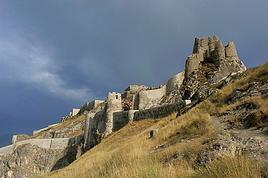
Amasya est facilement localisable sur la carte, à l'Est d'Ankara et au nord de Tokat.
Les Tombeaux Rocheux de Rois : Il y a 5 tombeaux creusés dans les rochers raides ressemblants à un mur au pied de la Forteresse de Amasya qui attirent l’attention avec leur emplacements. Ils sont carrément séparés de la roche. Seulement un escalier lie les tombeaux et les rochers. Dans la vallée, il y a 18 tombeaux de tailles différentes. Selon le célèbre géographe Strabon (de 63 avant J-C à 5 après J-C) qui est née à Amasya, ces tombeaux rocheux appartiennent aux rois du Pont.
Ceux qui renoncent à une liberté fondamentale en échange d’un peu de sécurité temporaire ne méritent ni la sécurité, ni la liberté.
Retour sur la période Hittite et le site de Hattusas (Hattusha)
Boðazköy - Hattusa: Boðazköy (Hattuþ) qui est situé entre les limites du district de Boðazkale de la ville de Çorum est à 208 km de distance d’Ankara et à 82 km de Çorum. Hattuþ qui est la capitale des Hittites qui ont fondé le premier état organisé en Anatolie occupe aussi une grande place dans l’archéologie de l’Anatolie.
A Boðazköy qui a de nos jours été déclaré Parc National Historique, les endroits à visiter appartiennent aux périodes supérieures du Grand Empire Hittite et peuvent être cités de la façon suivante si l’on visite selon la trajectoire routière : Le Grand Temple à Sevir inférieur (le Temple numéroté I), les murailles de la cité et les portes monumentales qui se trouvent dessus (la porte aux Lions (Aslanlý), la Poterne et la Porte de Yer, la Porte du Roi (Kral) ), les temples situés à Sevir dont le nombre atteint 31. la Colline Nisan, Le Palais Royal, les autres constructions et la Grande Citadelle. Et les constructions importantes qui appartiennent à la Période Phrygienne sont le Bastion et la Citadelle du Sud (Güney Kale). En outre, on expose, au musée local situé à Boðazköy, les trouvailles des ruines.
Yazýlýkaya : Le Temple de Plein-air de Yazlýkaya qui est un vestige unique de la Période d’Empire des hittites se situe à 2 km nord-est de Boðazköy. Il est constitué de deux espaces qui sont la grande et la petite galerie qui sont organisées selon la place naturelle des roches locales. Sur le mur droit de la grande galerie, sont gravées des déesses et sur le mur gauche, il y a des reliefs de dieux, et les deux groupes ont été décrits en train d’avancer vers la scène de rencontre de Tesup, dieu de l’Air, et de sa femme, la déesse Hepatu, cette scène est située sur la scène principale. Le relief du Roi Tuthaliya IV est sur le mur de l’est et s’est le plus grand relief de la galerie. Dans cette chambre, on décrit la célébration des fêtes printanières. L’entrée à la petite galerie se fait par l’intermédiaire d’un corridor étroit. Des deux côtés de l’entrée, il y a des descriptions de lions aux ailes protecteurs. Ici, se trouvent les reliefs de Tuthaliya IV qui sont sous la protection de Douze Dieux, du Dieu Mec et du dieu Sarumna. Ce lieu de culte a abrité, dans les ages précédents, des constructions de temples.
Alacahöyük : Il est situé à l’intérieur du terrain d’habitation du Village Höyük du district d’Alaca, à 45 km de distance de Çorum. Pour ceux qui visitent Boðazköy et Yazlýkaya, ce sont des ruines archéologiques importantes avec leur porte grandiose à sphinx, leurs constructions architecturales intéressantes et leur musée local, qui peuvent être visités dans la même journée. Il est situé à 34 km de Boðazköy et à 210 km d’Ankara.
Les vestiges qui ont pu parvenir jusqu’à nos jours datent de la période de l’Empire Hittite. Avec la porte grandiose à sphinx, ses constructions religieuses et officielles de complexe de temple-palais et ses autres vestiges architecturaux, Alacahöyük peut être considéré comme un musée de plein-air.
Ortaköy (Sapinuva) : Il est situé du district d’Alaca. A la fin des travaux d’excavation, on a découvert un bâtiment monumental appartenant à la période de l’Empire Hittite dont 18 chambres ont été sorties de la terre. Parmi les vestiges de bâtiment appartenant à la Période de l’Empire Hittite, on a découvert des tombes de rocher appartenant à la période Romaine.
La Tombe de Rocher d’Iskilip : Il a été bâti sur un rocher naturel à 100 mètres d’hauteur, au centre du district. Au sud et au sud-est de la citadelle, il y a des tombes de rocher appartenant à la Période Romaine.
Le Musée de Boðazköy
Numéro de téléphone du musée : (+90-364) 452 20 06Les heures de visite : de 8h à 12h de 13h30 à 17h30
Le Museé d'Alacahöyük
Numéro de téléphone du musée : (+90-364) 422 70 11
Les heures de visite : de 8h à 12h de 13h30 à 17h30
Auriez-vous des informations pratiques (trajet: bus ou train, jours et heures d'ouverture, prix, etc.) pour me rendre sur le site de Zincirli (ou Sam'al) qui…
J'ai lu que la mosquée bleue ainsi que d'autres monuments sont en cours de rénovation. Je pensais me rendre à Istambul avant la fin de l'année mais si certains…
Nous partons cet été à Bodrum, au club Marmara Bodrum Beach 5*, repos bien sûr mais je compte bien découvrir des endroits, des lieux, des sites exceptionnels à…
Je compte partir à Istanbul quelques jours début mai et je ne trouve pas l'info que je cherche à savoir: certains sites sont-ils fermés le premier mai? Un…
Activités aquatiques en voyage › Turquie · 7 replies
Après des passages par l'Océan indien, la mer de chine, nous décidons cette année de passer nos vacances en Turquie pour découvrir ce pays et ses habitants.…
Hello,
I’m looking for a snowy destination in Europe that’s accessible by car from Lille, not too expensive, and family-friendly. We have two kids aged 4 and almost 9. We don’t ski—we just want to soak up the Christmas vibe, go on short walks, and sled right outside our rental.
We’d considered Slovakia (the Tatras—but that’s 15 hours by car) or the Czech Republic (closer—Jizera Mountains, Korenov). We’re also hoping for some sightseeing (castles, monuments) and that festive Christmas atmosphere.
Do you think the Czech Republic would work for us for a week?
Thanks,
Hi there,
We're heading to Crete at the end of September, staying in a hotel near Agios Nikolaos—Zeus Premium Mirabello Bay.
Has anyone stayed there before, or at least in that area?
What are the possible outings?
Are there buses to get around easily?
Is the weather still pleasant then?
Thanks for your feedback!
Hi there, the island of Limnos (or Lemnos) looks like a great spot for a September trip: not too many tourists at that time, plenty of hiking opportunities, beaches, villages, etc. That said, guidebooks mention an airbase on the island, with some sources saying there are more or less frequent aircraft flyovers. For those who’ve been there—how’s the situation with this? Lots of air traffic or noise issues?
Thanks in advance
I'm currently planning a trip to Cyprus for late October. I have a few questions:
- I plan to visit Nicosia, Paphos, and Ayia Napa. What do you recommend in Ayia Napa?
- Is it easy to get around by bus from one city to another? Or do you have any private drivers to recommend?
- Do you have any hotels to recommend?
Any tips or advice is welcome!
Thanks in advance
Hi! I'm torn between these two destinations. If we go to Crete, we'll probably head to the Chania region and the south, which seems wilder. With 10 days and a car, it should work out. If we choose Sardinia, we haven't figured out the exact area yet. We love hiking, swimming, and eating well. We have 10 days at the end of September and prefer to avoid crowds this year. In May, we went to Menorca and really enjoyed it—great hikes, beautiful beaches, good food, and not too many cars.
Hi,
I'm looking for a private transfer from Istanbul Airport to the historic center of Sirkeci. Does anyone know a company? I've found a few:
GetYourGuide,
Istanbultour24.fr (more interesting because they offer round-trip transfers at a lower price).
If you've used any of these services, I'd love to hear your feedback.
Thanks in advance!
Hi,
I'm looking for info on the Pristina–Skopje bus route.
Can you leave from the main bus station in Pristina?
I’ve also heard about a bus station near the theater...
If anyone has details, I’d love to hear them—thanks!!!!
We want to book our tickets to visit the Acropolis site and the associated museum. For these reservations, we need to specify entry time slots.
For the Acropolis alone: the first slot is at 8:30 AM.
For the museum: 10 AM? 11 AM?
We like to wander around, so here’s our question: if we haven’t finished exploring the site after 1.5 hours, is it possible to go back in after leaving the museum?
We’ll be buying tickets from the official websites—audio guides are mentioned. Any feedback on those? On sites like Get Your Guide, the prices are much higher with the audio guide included, but does that mean better quality?
Hello,
We're heading to Istanbul from October 7th to 12th. I’d love to do a dinner cruise on the Bosphorus on a more intimate boat (no show) with a private table and alcohol (wine, since it’s a birthday dinner). Could anyone recommend a reliable company (I’m not looking for a private yacht either) that organizes this kind of evening?
Thanks in advance,
Hi, I’d like to buy a ticket to go to Terezín from Prague using the Pid Litacka app, but I don’t know which zone to get the ticket for. Thanks for your help! 😊
Hi there,
After booking an Airbnb last January for this summer’s vacation in Sarajevo... My "host" canceled our reservation without any reason—this has never happened to me before.
Of course, now it’s impossible to find a place to stay at a "normal" price in Sarajevo with parking...
So we’re falling back on the capital of the Republika Srpska, Banja Luka, which had already crossed my mind before I booked Sarajevo.
I already have quite a few ideas in mind, without having dug too deep into the region yet.
But if anyone has already been there and has suggestions? Even for restaurants—I’m all ears!
And even if it’s not right next door, I’m planning to spend a day in Sarajevo!
Hi, I’m going to Turkey for 3 weeks. I’ve heard that you can’t book through Booking.com once you’re there and that everything has to be reserved in advance. Is it true that Booking.com doesn’t work in Turkey? Thanks to anyone who’s already been or is there—if it’s true, how do you handle bookings?
I’d love to get your opinions and advice on a destination.
It’s actually for my 19-year-old son who wants to go to Greece with his cousin, who’s the same age.
They’re looking at leaving on October 24th for 7 to 10 days.
For their trip, they want gorgeous beaches where they can swim, beautiful typical villages and historic cities, stunning landscapes, but also lively spots for their nights out. In short, they’re not just going there to laze around—they want to make the most of it...
But here’s the thing: will the weather be too iffy at that time, especially for swimming?
Also, would Crete be the best choice for what they’re looking for?
Then, a travel agent suggested Tenerife instead because of the weather at that time of year—he said the climate there is the same all year round. But will they find landscapes and beaches as beautiful as in Crete?
Hi there,
Our first trip to Greece as a couple. We're planning to spend 7 days in Greece from August 30th to September 5th. We'll reserve 2 days for Athens at the end of the trip. For the remaining 5 days, we want to visit an island—any recommendations? Thanks for your tips and details, we really appreciate it.
Hi,
What tips can you give me for dealing with a car rental scam attempt in Lithuania?
In our case, it’s the Avis-Budget agency in Vilnius trying to scam us.
We rented a car at Vilnius Airport for 2 weeks on July 28, 2019, to return it in Tallinn on August 11.
We brought it back on August 11 at the airport, in perfect condition, and with a full tank at the gas station right by Tallinn Airport.
On the parking lot, the receptionist’s booth was closed. So we had to leave the car in the lot and go to the counter inside the airport. The person at the counter told us their colleague had gone for lunch!
But they refused to come out and do the inspection with us because they were alone at the counter.
They told us we could leave and that everything was fine!!!!
Two days later, we got an email from Avis-Budget with two invoices saying the car was damaged—scratched on both sides—and charging us for a full tank of gas. That’s two bills totaling 800 €!!!! Coincidentally, the deposit was 900 €!
It’s clear this isn’t over!!
Have any of you been through the same nightmare? How did you handle it?
Thanks in advance!
I’m spending 2 weeks in Crete in September and will need a rental car.
I usually go with Europcar, but comparing their offer to what Aegean Rentals has, I see Europcar is charging no less than 400 € more for the same car and similar insurance!
I’d love to hear if others have experience with Aegean Rentals, and if so, whether it was a good one?
Hi,
We’re heading to Greece in early October and will be staying in Kineta, north of the Saronic Gulf, and renting a car.
Is it feasible to visit Acrocorinth, Mycenae, Nafplio, and Epidaurus in a single day?
Thanks for your recommendations!
Hi there!
I’m sharing our itinerary for May/June 2027—23 days. This is our first time in Greece, so we’re starting with the must-see spots. We’re planning another trip later to explore the north, Thessaloniki, Macedonia, and some islands.
- Athens, 4 nights
- Corinth area, 2 nights (Heraion of Perachora, Canal, Acrocorinth)
- Nafplio, 3 nights (Mycenae, Epidaurus, Methana peninsula)
- Gefira, 2 nights (Monemvasia)
- Areopoli, 2 nights (Mani). Maybe add an extra night and stay on the peninsula??? Based on my calculations, the Mani loop is about 100 km—doable in a day, but it’d be a quick trip.
- Sparta or Pikoulianika, 2 nights (Mystras)
- Dimitsana, 2 nights (Lousios Gorge, monasteries)
- Olympia, 2 nights (via Lagkadia?)
- Delphi or Arachova, 3 nights (via the west coast, Galaxidi bridge) (Delphi, Hosios Loukas Monastery)
- And back to Athens.
This is just a rough draft for now. We’re planning to stay in hotels or book through Booking.com. What do you think? Thanks for your feedback and suggestions!
Over the past twenty-five years, I’ve traveled the roads between France and Moldova a good ten times, sometimes via Central Europe, other times via the Balkans.
It was while traveling like this—what I call "hitting the road the slow way"—that I realized something simple: our neighbors' neighbors are very clearly our neighbors too. And that’s not insignificant.
After a break of a few years, I’m planning to hit the road again in September, this time heading to Kosovo, crossing through Bosnia-Herzegovina and Montenegro.
Having gotten a bit older, I’ve no intention of rushing—no need to speed ahead of the music! 😄
I’d rather take my time.
I’m not looking to see everything, but to soak in the atmosphere of the places, always leaving room for the unexpected and for encounters.
I’m especially drawn to culturally immersive, authentic, and welcoming regions: lively villages, backroads, preserved landscapes, markets, local festivals, traditions that are still very much alive... and, why not, a few offbeat, forgotten, or slightly secret spots.
If any of you know Bosnia-Herzegovina, Montenegro, or Kosovo a little, I’d love to hear your suggestions for itineraries, stops, backroads, homestays, village festivals, or local contacts, for example.
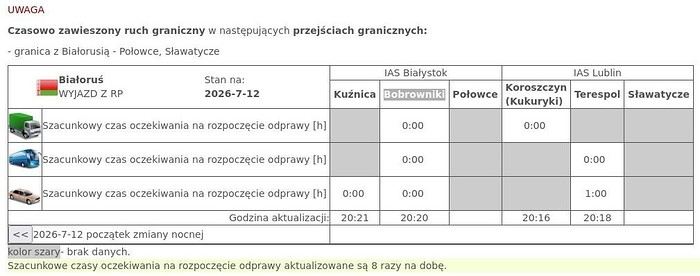
Planning to return to Belarus in mid-August, I just realized that since last September, Poland has reopened several border crossing points, and for buses, this means connections like Białystok-Grodno.
Several bus company routes, like on infobus.eu, take between 3 and 4 hours.
Trains from Warsaw to Białystok take about 1.5 to 2 hours.
This has the advantage of allowing comfortable train journeys with minimal time spent on a bus.
Also, the Terespol-Brest border might have shorter queues if you still prefer a Warsaw-Brest bus.
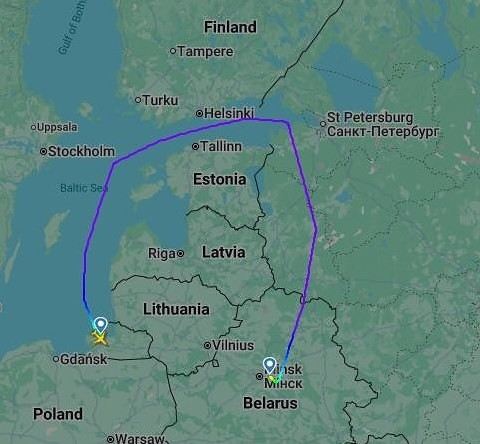
Note that another route to Minsk, if you have a paper Russian or Belarusian visa, is the Kaliningrad-Minsk train. It’s long—around ten or eleven hours—but you can lie down and sleep. An option if you fly into Gdańsk and then take a short bus to Kaliningrad.
There are also Belavia flights from Minsk to Kaliningrad, but they’re expensive. The route is scenic:
In any case, this adds a few more options compared to what’s been available over the last four years.
Hi there.
I’d like to know what the daily budget is for Greece in December. I’ll be landing in Athens and staying there for a week, then heading to some other islands—I don’t have a set itinerary yet. Also, I’ve heard that in December, or early January, the temperature is around 11–16°C. Is that accurate?
Finally, does anyone have a good recommendation for a cheap but clean hotel near the tourist sites? I don’t need a TV or any other extras. Also, is Greece gay-friendly?
I’d like to know the opening hours of physical stores between Germany and Austria, and between Austria and Slovenia, that sell the PAPER STICKER toll vignettes that still exist for 2026—non-digital ones. I don’t think they’re open 24/7, and I can’t find the info anywhere.
Thanks
Hi there,
We’re planning a 3-week trip in late September with our camper van to explore Bulgaria and Romania.
What routes would you recommend, starting from the South?
Is there an option to take a ferry in Italy, and is it worth it?
Thanks for all your tips!😊
Hi there, we’re a young couple and we’d love to go to the Blue Eye (Syri i Kalter) between today (26/06/26) and tomorrow (27/06/26).
Is anyone heading there and could give us a ride? We’re super friendly!
Thanks so much!
We're back. It's still a bit tough to get precise info, so here's a quick trip report!
A good starting point is Shkoder, a really pleasant city. You can easily explore Shkoder itself in a day or two.
Two accessible spots: Valbona and Theth.
In both cases, local travel agencies in Shkoder or online offer round-trip or one-way access packages. Super handy, especially for Valbona.
Valbona and Theth are both very steep! There aren’t many easy hikes for less sporty folks (like me!).
Valbona: The highlight is the amazing 2.5-hour boat ride across Lake Koman. There are day trips from Shkoder, but you’ll only get a short tour of the lake. The best option is to do the full crossing—so spend a night in Valbona (or two if you want to hike in the valley) and return.
Theth is deeply nestled in the mountains. The village at the end of the valley, which is a dead end, has lots of hotels, but they’re pricey. Other hostels are scattered along the mountainside road, but it’s a steep climb down to the village or to the start of the two easy hikes (waterfalls and the Blue Eye). For us, it was a one-hour descent (and ascent!). It’s fine if you have a car; otherwise, keep an eye out for a taxi (cheap) or try hitchhiking—it works really well.
Access from Shkoder to Theth is through an agency. The road is in great condition, and you can also rent a car for 2-3 days in Shkoder. If we did it again, that’s the option we’d choose.
We didn’t do the trek and returned to Shkoder each time. I can’t speak to its difficulty, but we were there in late May, and even experienced hikers had given up because of heavy rain and snow.
Hope this helps! It’s a stunning region you shouldn’t miss.
We’re a Canadian couple, both 77, and we’re already planning our vacation for fall 2027.
Timeframe: mid-September to mid-October... dates are flexible, and we might stay even longer.
Initially, I had planned this itinerary:
Athens (3), Naxos (4), Paros (4), Santorini (4), then a flight to Istanbul (7–10 days!!). This would let us maximize our flights and experience another culture.
That’s a lot of ferries, though... I’ve already cut out Milos.
Our second option would be to stay 2 x 15 days on two different islands, but I’d still keep Istanbul as our next destination... or maybe 30 days on one island that offers the chance to take day trips to other islands where the ferry ride is no more than 2 to 2.5 hours. For example, Naxos to Paros only takes 30 minutes. We could return the same evening or stay overnight.
Naxos seems like the best option!!!
For Istanbul, of course we want to do a day cruise on the Bosphorus and see Hagia Sophia. If we stay 6–7 days, what would be the other main attractions? Are there any points of interest we can reach by local bus?
Hi there!
We bought our tickets to Greece at the end of November 2025, and let’s just say the geopolitical climate has really taken a turn since then with the war started by the United States against Iran. Not to mention all the other conflicts happening around the world 😕... Anyway!
Our flight from Montreal is on May 1st, and I was wondering how things are currently being experienced in Greece.
We were planning to rent a car and had already booked accommodations on three Cyclades islands!!
The oil shortage is also worrying us...
If you could share some insights on this, that would be great!



 bas relief à Hattusas
 Dieu de la Montagne
  Disque solaire





 Parc national du Nemrut Dağı
Un énorme complexe fondé par Antiochus Theos sur le sommet du Nemrut Dağı compose un sanctuaire avec des statues géantes du roi (dont l'épithète en grec signifie modestement « dieu ») entouré de dieux. L'emplacement de la tombe d'Antiochos est l'un des mystères de l'archéologie et des recherches récentes ont révélé que près du mausolée se trouvent des cavités qui pourraient contenir la tombe du roi. Nemrud est un testament du syncrétisme hellénistique, chaque dieu étant une synthèse de dieux grecs et perses classiques (par exemple Apollon-Mithra-Hélios), et fut créé pour n'être rien de moins que le « logis des dieux », faisant de la Commagène et de ses rois un centre spirituel pour le Moyen-Orient. Les statues furent cependant détruites par les Romains, et le sanctuaire tomba dans l'oubli. Il ne fut redécouvert qu'au XIXe siècle. C'est à l'heure actuelle un site du plus haut intérêt archéologique et un patrimoine de l'humanité. Sous l'Empire Romain, les rois de Commagène tentèrent d'établir des liens forts entre leur dynastie et le dieu iranien Mithra. L'historien et chercheur Roger Beck, a suggéré en 1996 qu'un groupe de militaires et d'élites de la Commagène ont été un instrument de la diffusion du culte à mystère romain qu'est le mithraïsme. Ceci souligne l'importance des héritiers de la tradition militaire macédonienne et leur influence dans l'armée romaine orientale y compris pour la diffusion de culte orientaux qu'ils avaient largement adopté.
Parc national du Nemrut Dağı
Un énorme complexe fondé par Antiochus Theos sur le sommet du Nemrut Dağı compose un sanctuaire avec des statues géantes du roi (dont l'épithète en grec signifie modestement « dieu ») entouré de dieux. L'emplacement de la tombe d'Antiochos est l'un des mystères de l'archéologie et des recherches récentes ont révélé que près du mausolée se trouvent des cavités qui pourraient contenir la tombe du roi. Nemrud est un testament du syncrétisme hellénistique, chaque dieu étant une synthèse de dieux grecs et perses classiques (par exemple Apollon-Mithra-Hélios), et fut créé pour n'être rien de moins que le « logis des dieux », faisant de la Commagène et de ses rois un centre spirituel pour le Moyen-Orient. Les statues furent cependant détruites par les Romains, et le sanctuaire tomba dans l'oubli. Il ne fut redécouvert qu'au XIXe siècle. C'est à l'heure actuelle un site du plus haut intérêt archéologique et un patrimoine de l'humanité. Sous l'Empire Romain, les rois de Commagène tentèrent d'établir des liens forts entre leur dynastie et le dieu iranien Mithra. L'historien et chercheur Roger Beck, a suggéré en 1996 qu'un groupe de militaires et d'élites de la Commagène ont été un instrument de la diffusion du culte à mystère romain qu'est le mithraïsme. Ceci souligne l'importance des héritiers de la tradition militaire macédonienne et leur influence dans l'armée romaine orientale y compris pour la diffusion de culte orientaux qu'ils avaient largement adopté.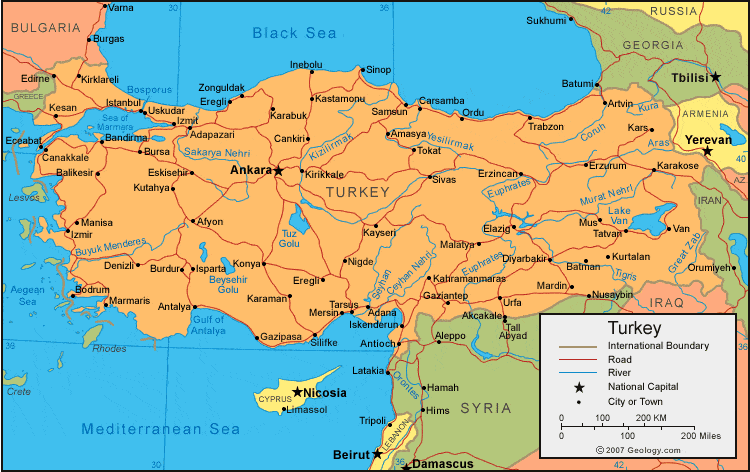
 vue d'Amasya