voilà le résumé de mon épopée dans l'Afrique de l'ouest, avec quelque photo, bien plus si vous aimez.
le 24 janvier, une proportion de près du 3/4 de mon sablier interne va s’être écoulé en atteignent 8 mois sur 12 d’aventure, en ayant dans le crâne les souvenirs de la magie de chaque grain tombé tel un flocon de neige si gentiment déposé sur le nez rougis de ta tendre moitié en une douce journée de décembre sur l’anneau de glace du quartier ( ouf j’ai été la chercher loin celle là )
Voilà que je me suis baladé en duo, en trio, en solo, avec de meilleurs amis, avec des connaissances, avec des pocailles, à dos de moto, de voitures, de trois roues, de train, de métro, de bus, de bus surabondé, de dromadaire, d’avion, de vélo, à pied, en pirogue, en bateau, avec l’âne, à travers vents et marrées, en Europe et en Afrique, Amsterdam, Allemagne, Espagne, République islamique de la Mauritanie, Sénégal, Bénin, Burkina Faso, fait Noël, Tabaski, Halloween, la St-Jean et fait le ramadan, j’ai été super gourment, manger 5-6 repas par jour et manger uniquement orange et biscuit sablé pendant 2 jours, vu chutes, cascades, bassins d’eaux, lacs, fleuves, rivières, océans, criques à mardes, oasis, vu montagnes, plaines, vallées, marigots, terres apocalyptiques, terres bouetteuses, terres rouges, brunes, jaunes, blanches, dorés, bu de la bière local, du thé, du jus d’orange/ d’ananas / mangue fraîchement pressé sous mes yeux, bu jus de maïs, de patate, jus de fruits que je ne savais même pas l’existence, juste de noix de coco, lait caillé, alcool de canne à sucre alcoolisé et moins alcoolisé, alcool de renier alcoolisé et moins alcoolisé, alcool de mil, alcool de fruits que je ne savais même pas qu’il pouvait donner de l’alcool, vu des ruines anciennes, des dunes, des villages dans l’eau, des villages de 20 personnes, des villages de pigmé, des villages de nomades et de touareg, des villes de millions d’habitants, dépensé moins de 3 dollars logé/nourrit/bordé par jour et claquer 100 piaces pour une soirée, eu des amis qui avait la table de couture en guise de lit et d’autres ayant de la difficulté a choisir dans quel chambres poser sa tête, dormit à l’ hôtel, à l’auberge, à l’auberge jeunesse, dans des des chambres de passe, chez des amis, dans notre appartement, chez des inconnus, à même le sol, sur une natte, dans le désert, sur le divan, sur banc de bois, sur plage, dans la forêt, avec lit simple, double , triple, avec douche froide ou très froide, avec paumeau et surtout avec sceaux, ou parfois pas de douche du tout, goûter épices, soupe de tête de coq, boyaux de coq, boyaux de bœuf, salade de chenille, cerveau de mouton, vu toréador, vu sacrifice de poules et de chèvre, vu homme frapper âne, homme frappé homme, homme frappé enfant pour un oui ou pour un non ou pour avoir répondu 5 à la question 2x2, j’ai vu femme se promener sein nue et des femmes voilées/semi voilées/pleinement voilées, des églises et des mosqués tellement pleines que les gens prient jusqu’à deux rues plus loin, vu des femmes pleurer parce que devaient montrer ses oreilles pour photo d’identité, gars chier en pleine rue no stress, l’autobus arrêter 3-4 fois pendant la ride, parce que le chauffeur était piss minutes, vu taxi arrêter pour aller prier même si on était pressé, je me suis fait appeler Alibaba, Benladen, Terroriste, Bocoaram, Jésus, Moïse, Père Noël, Chinois, Russe, Allemand, Espagnol, Michel, Toubab, Yovo, Nassara, Toubabou, la blanche, le blanc, mon ami, mon frère, patron, chef, j’ai parler Arab, wolof, diola, morré, fon, je me suis fait arnaquer et arnaquer les arnaqueurs, donner des pots de vin à des policiers pour me sortir de certaines situations, entendu l’expression ‘’mamamilla’’ dans une vrai conversation ou encore ‘’Jésus Christ de Nazareth’’ pour exprimer de l’étonnement, vu plantation de canne a sucre, de coton, d’acajous, de noix de Karité, de mangue, d’olive, de dattes, j’ai senti des odeurs qui peuvent faire rêver les plus grand parfumiers, et d’autre à mettre un arrière goût dans yeul pour toute une journée, je me suis fait invité à manger par des inconnus sur le côté de la route, partager un bout de pain en 4 pour que tout le monde puisse manger, manger 8 autour d’un bol à même la main, même si c’est du spaghattie ou des patates piller, je me suis fait inviter à dormir chez quelqu’un rencontré dans le bus, partagé des vrais amitié grâce à ma barbe, fait un documentaire sur la barbe, fait pleurer nombres d’enfant grâces à ma barbe, fait rigoler nombre d’enfant, porter le même habit pendant 1 semaine et me faire donner 1 habit à tout les jours, j’ai été plus marocain que les marocain, plus sénégalais que les sénégalais, plus béninois que les béninois, mais certainement pas plus Mauritanien que les Mauritanien, j’ai vu des couchés de soleil embrassant la mer plus que le client en demande, vu le levé du soleil ( … peut-être deux fois . ), vu des orages époustouflante et des canicule étouffantes, des 50 degrés à l’ombre, vu des pluies qui se faisait attendre depuis 2 ans, une tempête de sable, écouté tamtam, djembé, balafon, guitare et autres que je ne sais même pas le nom, eu des amis fervent chrétien, fervent islamique, fervent animiste, fervent athée, lu le coran et crier Jésus, pleurer de joie, de colère et de tristesse, rit au éclat et lâcher une coupe d’osti d’criss de tabarnak, vécu des hospitalité légendaire et des douces hostilité sur la couleur de ma peau,
haaaa le voyage
Ps : j’ai taquiner les douanier en mettant la robe marocaine et le foulard arabe rouge haha
Ps 2 : en sandale pi en robe à -20 c’est frette en Jésus-Christ de Nazareth.
et bien plus si vous aimez !! ( oublie pas de regarder les images héhé )
Ouaouh ! On sent qu'il ya du vécu dans ce concentré de récit de voyage qui, pour ce qui me concerne, ravive plein d'images, sons, odeurs de mes séjours africains passés ! Je demande plus de photos ...
haha, sans problème l'ami, mais le tout est un concept, avec un rythme voulu dans la lecture, les mots sont bien choisi et la ponctuation aussi selon l'âme que je voulais octroyer au texte.
Comme tout les goûts sont dans la nature c'est bien que tu n'aimes pas, faut pas me prendre pour un attardé pour autant.
Je ne m'expliquerais pas plus, parce que anyway tu va lire en diagonale ;) :P : )
Petite tranche de vie.
Tragédie Pipi caca dans l’autobus
Prêt pour affronter les 20 heures de route que me réservait le trajet Cotonou / Ouagadougou, j’arrive un heure d’avance à la gare routière, comme prévu. Sans grande surprise que le départ est retardé.Toute un meli mélo pour faire assoir les gens, puisque les bancs ne sont pas numéroté, ou devrai-je dire seulement 5 bancs sur 40 le sont, et sur le billet on a clairement des numéro, ce qui fait qu’un groupe veut respecter l’ordre et l’autre s’en calisse, résultat des courses, tout le monde se cri dessus. Une fois tout le monde assis, nouvelle constatation : y’a trop de monde et surtout trop de bagage , les gens sont dans le milieu de l’allée, avec des marchandises à n’en plus en finir, impossible de circuler. Moi, assis avec mon banc doublement coussiné, les coussinets étant les énormes cuisse de ma partenaires, j’étais quand même cosy. Deuxième constatation, sur le déplient il était marqué “climatisé”, ce qui est une petite erreur de langue, il voulait dire “fenêtre” et quand il on dit confortable il voulait plutôt dire manque de confort. Jsuis capable d’en prendre , j’ai déjà fais pire au Maroc avec une ride moins longue, mais assis dans les marches.
Bon ceux qui n’aime pas l’humour pipi caca, pas la peine de lire la suite du texte, jvous le jure . Mais le titre est tout de même accrocheur n’est-ce pas, surtout quand tu as lis le début hehe, quel piège.
Pour ma part, je récupérais d’une petite diarrhée timide et j’étais en constipation, parfait pour un long voyage , croyais-je. En fais je n’avais pas calculé les fameux gaz, que mes amis connaissent très bien, puisqu’ils peuvent être destructeur. Bon mon ratio était 1 ti pet à tous les 5 minutes, ceux ci presque inodore pour un nez qui s’en soucis peu. J’avais la chance d’être dans un cars surbondé, donc toutes sortes d’effluves s’en dégageaient, ça camouflait mes petites fiouzes minutes. Le problème était qu’une fois à tout les heures j’en larguait un capable. Lui, je suis sûr que même les nez bouché pouvais le renifler, mais pour les premières heures je me disais, impossible de découvrir que c’est moi, je fessais des feintes de dormir quand je sentais les pires arrivés, l’alibi parfaite. Bon c’était comme un jeux pour moi, la problématique était quand les petites caisses minutes se transformèrent en pet nauséabonde, là j’ai voulu remédier à la situation, puisque je me sentais mal pour ma coussinneuse. Lors de l’arrivé à la frontière, je cherchais les toilettes m’attendant au pire, ayant vu les chiotes de la frontière Maroc/Mauritanie qui était sans doute les pires chiotes de l’histoire de l’humanité. Bon je trouva mon saint graal, et fis ma sal besogne dans un confort turque. Étrangement, des gaz à faire jalouser le plus gros lion d’Afrique résonnaient dans le tout le périmètre, pas de temps pour les complexes, faisant mes plus sincères excuses au jeune qui était préposer pour laver la turque . J’étais bloqué bin dure, y’a fallu je force l’affaire pour que sa sorte et une fois terminé j’étais pas totalement satisfait. Mais je dois accélérer, l’autobus attend après moi, j’remonte les pantalons et va faire les formalités frontalière. En marchant, je sens des gargouillies inquiétants, je me dis au merde, une fois la valve ouverte, tu ne peux plus la refermer à ta guise, et là y’a du gigaloo tout l’tour donc sa ouvre et sa ferme un peu n’importe quand. Avant de remonter dans l’autobus je prends le temps d’y aller une deuxième fois, juste au cas. Content de ma shot, je m’assois dans le cars. Alors me disant, qu’il reste moins de 2h à toffer, je vais attendre d’être à ouaga pour fignoler mon ouvrage. Erreur, je voit clairement que je ne peux pas toffer 2 heures , des gargouillis à tout les 2 minutes, on dirait littéralement de l’eau qui bouille ou le bruit du boulier que tourne la vieille dame au bingo. Je connais ces gargouilli, ça l’annonce quelque chose de terrible, mais le cars ne doit plus s’arrêter pour un bon bout. Je pensais à quoi faire quand je vais me chier dans les short, parce que ce n’était même plus un “si” je me chie dessus, ça allait arriver. Par chance, y’a deux coter à une frontière et j’avais oublié qu’il restait les formalités burkinabé. Aussi tôt l’autobus arrêté, un heure plus tard j’accours vers les chiotes et fait mon truc, revient faire la queue pour donner mon passeport, quitte la queue pour aller tirer de la mitrailleuse, revient faire la fils, mais les tabarnak me lâche pas, toujours des gargouilli plus intense et je vois nul part mon riz de ce midi , ce qui veut dire qui reste des enfants à aller porter à la piscine, assurément. Si j’embarque maintenant dans le bus, jsuis foutu. Le bus arrive pour partir, et je maudit mon corps et la soupe à la tête de poulet que j’ai manger la veille, mais comme par magie un autre bus se brise en mile morceaux tout juste à côté de nous, intriguée tous vont voir, moi ça me donne quelques minutes pour aller proche d’un arbre pour voir si mon riz basmatie est prêt. Dieu est grand me dis je . Tout est fait, je grimpe pour affronter les 2 dernières heures, un gros maximum que je serais capable de supporter sans voir le bole. J’entends les autres murmurer sur la lenteur du chauffeur et un habituer confirme qu’il reste bien 6 heures sans plus aucune arrêt de prévu. Les larmes montaient en moi, parce que impossible de me retenir tout ce temps. J’essayais de me convaincre que y’avait rien là de faire arrêter le bus en pleine nuit pour chier ou encore de lancer mes bobettes plein marde par la fenêtre, je faisais le dure, mais ça m’attristait vraiment de devoir faire une de ses deux options. Chaque bosse, chaque secousse que recevait mon anus était un coup de bélier sur une porte en paille. Comme y’a les coupeur de route, c’est pas trop prudent de s’arrêter comme ça, donc mon option était vraiment de lancer par la fenêtre le tissu victime de mon courroux. Bon comme le bus est surbondé, je ne peux pas murmurer en catimini au chauffeur de s’arrêter, je dois enjambé plein de chose pour aller le voir, le comble si je tapisse le stock des autres avec mon beurre de karité, donc il ne reste plus que de façon assumé à me lever et dire ” mesdames mesieurs, j’me suis chier dessus, arrêter l’autobus que je me change de bobette” . Je me convainquait que j’était capable. Le coup de gogne n’avait pas encore sonner, ce n’est qu’anticipation. J’espère que le chauffeur s’arrête pour une dernière fois, de tout mon cœur, de tout mon ego. En faite, la triste réalité c’est que j’ai reporter depuis des mois un travail que je jugeait inoffensif depuis lors, qui est de m’acheter des bobettes, ce qui fait que si je fouare ceux la, j’ai rien d’autre et quand ça va frapper, c’est un Barry Bond qui va être au bat, donc assurer mes pantalons vont avoir des dommages collatéraux de caramilk fondu. Tout ceci signifie qu’il faut ouvrir la sout, trouver mon pack etc. J’suis tellement en osti que j’ai le goût de pleurer. J’sens mon cœur battre sur mon ognion ring… Je souffre. Par la grâce de dieu le car s’arrête, les gens sorte un contrôle policier, tels un barrage surprise pour l’alcool au volant pour les fêtes. Avec ma démarche pingouin, je vide les derniers décilitres de redhot qui restait, non loin des gendarmes. Maintenant jsuis sûre que même si y’a gargouilli, le garde mangé est vide. Ça me donne le courage nécessaire pour poursuivre et de nouveau le sourire au lèvre, je continue le périple qui aurait pu être une tragédie, qui est maintenant une histoire cocasse à raconter.
deuxième post,
Première photo : quartier de Ouagadougou Burkina
Deuxième photo : Enfant qui joue à Sindou, Burkina Faso
Troisième photo : Coton, route entre Banfora et Sindou, Burkina Faso
Quatrième Photo : Quartier Central de Tanger, Maroc
Cinquième Photo : Couché de soleil à Kafountine, Casamance, Sénégal
sixième photo : Un des nombreux party à Kafountine, Casamance, Sénégal
septième Photo : vu du haut du village de pigmé, petit village burkina faso dans les environ de Banfora
Premier post :
Première photo: La brousse au Bénin, au sud, dans la deuxième plus grande vallée de l'Afrique de l'ouest
Deuxième Photo : Chute d'eau, Burkina Faso
Troisième photo : Pic de Sindou, Burkina Faso
Quatrième Photo :Village dans l'eau, Bénin
Cinquième Photo : Brousse du Bénin, même que 1.
Sixième photo : Sindou, Burkina Faso
Septième : Déchet à Kaolack, Sénégal
Huitième : Enfant de bobo, Burkina
si vous voulez que j'inscrive le lieu des photo, pas obligé de passer par du simili sarcasme, vous avez juste a demander, c'est beaucoup plus simple, plus polie.
Pour le texte à vrai dire je le trouve navrant et affligeant , un pavé difficile à lire , les histoires scatos j'aime bien pourtant ...
Vous avez de l'humour , des choses à dire , mais la forme est rebutante .
Je ne considère pas être impolie , juste critique . Il me semble que vous pourriez tirer quelques chose d’intéressant . Mais c'est votre choix et c'est le mien de vous dire ce que j'en pense .
Merci Antoine
Malgré l'écriture peu conventionnelle, Je me suis éclatée😏😄
J'imaginais l’ambiance, ton angoisse, la scène est bien décrite et très colorée😉
Il ne manquait que les odeurs😎
Depuis 2011 nous ne sommes pas retournés en Afrique de l'Ouest.
Ça nous manque...
bonjour,
c très réaliste comme récit, et en + c drole, ça change !!! par rapport à certains !!!
continue de t'éclater, et racontes nous !! lol
quand tu reviens passes chez moi en casamance !!
@+
patrick
Bonjour,
Pour ma part, suis bien plus fan des photos que du texte. Le scato, pas trop mon truc et le texte avant, j adore pas. Mais comme vous dites, vous avez prévenu, on aime ou on aime pas et je n ai pas trouvé cela affligeant, juste un style que je n adore pas spécialement pour un récit de voyage. Mais voilà, j ai quand même pris plaisir cet écrit-parlé québécois assez direct et imagé, vraiment sympa pour le coup.
Sur la photo de cascade au Burkina Faso, pour ceusses que cela intéresse, c est à Karfiguela, juste à côté de Banfora. Spot très touristique en particulier le WE. Si on veut être plus tranquille, il faut aller tout en haut et même plus. Là très peu de monde.
La poursuite scientifique dans la brousse africaine Partie 1
La genèse : assis à mes côtés dans le plus grand et renommé campus universitaire du bénin, le docteur George, scientifique, en pleine discussion avec moi pour fignoler les derniers préparatifs pour une opportunité qui va s’avérer hors du commun.
1.1. Sous-titre : l’arrivé :
Je chevauche le zemidjan, moto béninoise, avec deux de mes coéquipiers et mon gros sac à dos, pour aller à Togbota, un nom qui m’est inconnu, pour aller accomplir une mission qui est encore flou pour moi. À trois sur la moto en pleine vitesse, la gravité joue son rôle et j’ai peine à garder mon équilibre entre la route cadavérique et les 50 livres de charge qui me balance d’un côté comme de l’autre. J’espère qu’on a pas long à faire, puisque déjà, je navigue entre différentes positons pour alléger l’inconfort de ma posture. On prend un premier tournant, on quitte le goudrons pour emprunter une voie sablonneuse. Après une trentaine de minute, on bifurque vers une plus petite voie, me disant en moi même qu’on allait arriver bientôt. Sur le chemin, mon partenaire Joao m’explique qu’on va commencer à quitter la civilisation pour s’enfoncer dans la brousse, pas n’importe quelle brousse, la deuxième plus grande vallée de toute le continent africains. À ma gauche, des plantations d’ananas, à droite ceux des cocotiers, on m’explique qu’en brousse toute est plus naturelle, plus goûteux, plus juteux, plus savoureux. On interrompe la conversation pour pénétrer à l’intérieur d’un chemin invisible à l’œil de touriste, chemin qui peut seulement aceuillir une moto à la fois. Je commence à réaliser que sans m’en rendre compte, j’ai maintenant l’opportunité de vivre la vrai brousse, je fabule en écoutant de la voix de mon partenaire raconté des histoires, les légendes et les caractéristiques de l’immense vallée que mes yeux salut pour la premier fois. Chaque village passant devant nous était, je croyais, celui a qu’on allait s’arrêter. Maintenant trop fasciné pour me souvenir du mal d’épaule, dos, cuisse , coup, j’attendais avec impatience quand on allait stopper notre engin. Finalement, le vélo s’arrête, heureux, je débarque en vitesse et lance mon sac par terre avec soulagement tel fredon avec l’anneau du haut du volcan. On rigole un peu de moi m’expliquant qu’il reste une petite marche et un voyage de pirogue avant d’arriver à notre village. Tu sais que ton trip trou le cul quand tu dois obligatoirement t’y rendre en pirogue.
1.1.2 L’exploration jour 1 : la mâtiné.
habillé en explorateur avec ma chemise bigbill déboutonné, le chaggie caressant le vent, nous progressons dans la brousse au petit matin pour voir les singes à ventre rouge en activité. Ce que je ne savais pas, c’est que se sont des singes rares et que les scientifiques de partout dans le monde viennent au bénin, spécialement à Togbota, pour venir les étudiées. Moi, nowhere, travailleur social à la retraite, je suis à la même place qu’eux. Une des caractéristiques de ces singes c’est qu’ils ne se laissent pas approcher par les humains, donc ils devient difficile de les observer, il faut donc jouer les fins stratèges. Le brouillard mélangé avec la rosé nous empêches de bien voir devant nous. On avance à tâtons, en essayant d’identifier des arbres qui se font aller de gauche à droite de façon animal. Pour la première fois mes pieds marche dans la brousse africaine, elle qui est si sauvage et même voir farouche avec les inconnu. Quand ce n’est pas la boue qui veut extirpé tes bottes, c’est les lianes qui te font un croque en jambe . Immobile on observe avec les jumelles, mais en vain, définitivement trop de brouillard, on doit pénétrer au cœur de cette épaisse brousse pour peut être pouvoir apercevoir quelque chose. Mon partenaire Joao sait la où il va, mais les chemins sont invisible pour moi, les papillons coupent mon passage, ils s’amusent de nous voir, ils nous font les premières salutations. Les oiseaux de toutes sortes nous chante la bienvenue et des bestioles de couleurs vive sont en quantité phénoménale, j’ai mon appareille en main, tout est gage de cliché à gagner des concours. La rosé de l’étroit chemin mouille nos habits dans un temps record, je trouve que ça fait encore plus aventurier si je suis trempé à lavette. La brousse se referme derrière nous, j’ai l’impression qu’on va nul part, Joao regarde à gauche et va à droite, regarde à droite et va à gauche, il scrute les horizons de façon méticuleuses, moi j’imite ces mouvements essayant d’être complémentaire, soudain il s’arrête brusquement, comme dans l’Armer, avec le langage des signes , il me dit de m’assoir au sol, les arbres grouillent juste devant nous, on entend des cris, j’entends en sourdine : c’est eux, l’excitation monte, on reste accroupi , en silence, les arbres se secoue une dernière fois en s’éloignant. Les singes nous observait depuis belle lurette, on ait dans leurs cours de jeux, eux nous analyse mais nous on ne les voit pas. Ils nous on lancé un signale qui signifiait qu’on ai venu trop proche d’eux et que si on croyait les voir d’aussi près , on se mettais le doigt dans l’œil . On attend le reste de la mâtiné à cette endroit voir s’il vont revenir , sans résultat. Sur le chemin du retour on m’explique à quel point les animaux en brousse se dissimule bien et qu’on peut passer juste à côté d’eux, même les regarder sans les voir, Thomas comme je suis, j’en prend pi j’en laisse. Joao s’arrête et dit tu voit pas?
- heu non
-mais oui juste la
- non je t’assure je vois rien
- là là là, ( presque en colère ou pour me démontrer mon incompétence )
Je plisse les yeux tels un chinois et j’aperçois un énorme porc dissimulé dans la boue, juste devant moi, je pouvais le toucher avec ma main, il épousait parfaitement la nature, fessant qu’un avec elle. Maintenant je comprends.
Pour les photo "
1. Lézard du Burkina à banfora
2. marchande ambulantes, cotonou, bénin
3. Vu du haut de l'auberge, Chefchaouen Maroc.
4. Désert dune de Chigaga, Maroc
5. Hippo, Lac aux hippo, Burkina
6. Fumoir de poisson, Kafountine, Casamance, Sénégal
7. Le village que je parle dans mon récit, Togbota, Bénin sud.
Quelques photos sympa, d'autres fort banales... Quant aux textes, j'avoue ne pas avoir pu aller au-delà des quelques premières lignes: ces énormes pavés, truffés de fautes, sans ponctuation, et faisant appel à un vocabulaire quelque peu étrange, sont trop rebutants pour être lus.
Curieux cette manière de critiquer les publications des autres ! Quel intérêt ?! Je pensais qu'un forum de ce type avait pour but d'échanger des impressions, des infos sur les voyages de façon positive ....
Curieux cette manière de critiquer les publications des autres ! Quel intérêt ?!
C'est un phénomène dont tu constateras souvent la récurrence dans ces lieux, certes étranges, et qu'aujourd'hui on appelle des forums (ou fora) internet... Très couramment, des choses sont publiées, c'est-à-dire proposées au regard des autres... Les autres en question regardent, et donnent leur avis. C'est très normal, n'est-ce pas, dans un tel cas, de remercier et de féliciter quand on a apprécié? Oui. Et c'est tout aussi normal, cela va sans dire (sinon, ce serait de l'hypocrisie) de le dire lorsqu'on n'a pas apprécié, ou qu'une langue incompréhensible nous a empêchés d'aller au-delà des premiers mots...
Il n'y a rien de "curieux" là-dedans, c'est au contraire tout ce qu'il y a de plus normal.
En effet, tout à fait normal que cela ne plait pas à tous et avec plaisir
Faut bien venir de France pour se penser centre du monde de la francophonie,
Au lieu de dire :vocabulaire étrange, ou langue incompréhensible,
On peut dire : mot et expression que je ne connais pas.
Un brin pathétique, mais c'est vrai que quand un français ne connait pas quelque chose, ce que cela n'existe pas ;) :P
Truffé de fautes je m'en excuse, pour obtenir mon bac et mon université j'ai du triché !
''Nouakchoc''
Après un périple de plus de 1170 kilomètres en Mercedes (plus vieille que moi et plus de 700 000 kms au compteur, qui m’a démoli l’coccyx avec sa banquette défoncée ) entre Dakhla et Nouakchott. Je suis en train de réaliser que je vis mon véritable premier CHOC CULTUREL.
"Poooooov ti gars" j’vous entend dire sarcastiquement.
Merci, mais non merci.
J’suis venu pour ça. Mais j’avais oublié que j’étais venu pour ça après trois mois de “vie facile” au Maroc.
Multiples complications, multiples “Hen ouin”
Genre. Le 3 kilomètres de “No-mans land” entre la frontière du Maroc et de la Mauritanie est un cimetière de pneus, de téléviseurs cathodiques (va savoir pourquoi) et de carcasses de voitures.
Les carcasses de voitures…
C’est des véhicules vendus dans le terrain neutre, démontés pour les pièces et à la fin il reste juste le frame.
Y’à deux type de frames.
Les beau frames.
Pis les frames noirs.
J’apprend plus tard, que les squelettes de voitures noircis style brûlé, c’est des gens, qui n’avaient pas les papiers pour traverser la frontière.
Ils ont rencontrés une mine.
Après plusieurs heures à déconner à la frontière parce que Xavier n’a pas son visa Mauritanien, on reprend la route. Juste avant d’embarquer dans la voiture un haut-gradé (trois bananes surmontées d’une étoile comme épaulettes) s’approche de moi. Il me saisit fermement par le bras (pas de panique les bonhommes se parlent de même ici, c’est l’équivalent du “r’garde moé din yeux quand j’te parle”). Il me dit que je dois ABSOLUMENT lui donner une paire de lunette de soleil…
J’prend ma tronche de gars sérieux et je lui répond que je ferai tout de mon possible pour lui donner l’outil de prédilection dont il a besoin pour survivre.
On embarque dans la voiture.
C’est un purgatoire. Y’a rien. Du désert pas tant beau. Mais sinon.
Rien.
Rien.
Rerien.
À part les points de contrôle de la garde national, de la sécurité routière et de d’autres entités avec des uniformes et des badges qui zèle.
Rien pendant 10 heures.
Un cristi de beau d’couché de soleil en revanche.
On est arrivé de nuit, dans le gros ghetto de Nouakchott.
Je vois pas grand chose, mais j’en ressens beaucoup. Un peu trop.
L’odeur de merde transportée dans l’humidité ambiante, la bouette qui fait office d’asphalte, les silhouettes noires vêtus de couleurs éclatantes sur fond noir qui pointent leurs grandes billes blanches comme l’ivoire en notre direction. On débarque de la voiture.
Chien dans un jeu d’quilles.
Alien.
Malaise de 6 pieds 2 avec sac gargantuesque sur le dos.
"I think we are in the wroooooong neighborhood"
Dis-je pour la première fois, sans que ce sois une blague.
On arrive à l’hôtel.
La chambre… Imaginez-vous une pièce qui aurait pu servir de lieu de tournage pour le film “Décadence”.
Globe fluorescent qui donne se jolie teint verdâtre-cadavre, peinture collante beige crasse, pas de dit “lit”. C’est un amas de couvertes à même le sol. Y fait chaud. Y fait collant. J’sens l’ciboire. J’veux une douche bouillante pour faire fondre ma crasse.
L’électricité de l’hôtel au complet prend un break quand notre hôte bien vaillant veut allumer le ventilo. Le maître d’hôtel est aussi électricien. Il prend une paire de pince pas isolée et commence à jouer avec des fils pis du tape. J’vois des sparks. J’vois l’gars s’prendre du jus à 2-3 reprises pendant que je l’éclaire avec ma spotlight. Une couples de soupirs en “Allaaaah…..” Deux fils se touchent, Il se prend un bon gros choc, il tient le coup, il prend le dessus sur le courant, twist les deux fils (toujours avec du 120 dans l’sang) lâche le tout. L’électricité revient.
Douche.
20 sceaux d’eau tiède plus tard. Mon odeur revient à “tolérable”
Je veux sortir.
On me dit “Non”
Je dis: Pourquoi?
On me dit “Danger”
Je dis: “Okay. L’épicerie est où?”
Je sors quand même, juste question d’aller m’dégourdir les pattes.
J’veux de l’eau pis des fruits.
J’me fais littéralement décapité du regard.
J’reviens à l’hôtel, j’m’assomme avec deux Lenoltec parce je ne me sens plus du tout fatigué même si ça fait 48 heures que j’ai pas dormi.
Demain Sénégal.
Inch Allah
C'est bien mieux de même avec un paragraphe par phrase, j'ai des textes pour tous les goûts
Photo 1. La chaux, ChefChaouen, Maroc
Photo 2. Ombre d'un arbre, route entre Banfora et Sindou, Burkina
Photo 3. Maître potier, route entre banfora et sindou, Burkina
Photo 4. scène classique Ziguinchor, Casamance, Sénégal
Photo 5. Couché de soleil, St-Louis, Sénégal
Photo 6. Chute Akchour, près de Chefchaouen, Maroc
Photo 7. Soupe à la tête de coq, un peu partout au Burkina, miam.
ENCORE merci
ne te laisse pas abattre par les facheux
j'arrive d'inde et vais partir en iran et je retrouve ici la france de...s raleurs, mécontents....triste
continue
Je suis journaliste pour une nouvelle série documentaire diffusée sur la chaîne de télévision Voyage, et je recherche des témoignages de mésaventures de voyage... (vol, galère de papiers ou transports, catastrophe naturelle, maladie, accident, arnaques...) qui aient été filmées (ou avec beaucoup de photos).
Je suis sûre que vous regorgez d'anecdotes de voyages... Peut-être êtes-vous intéressé par les raconter en interview à télévision?
Il s'agit d'une interview en studio, ou vous nous raconterez vos mésaventures, qui seront illustrées par votre film de voyage.
Si vous êtes intéressés, n'hésitez pas à me contacter à camille.zedprod@gmail.com
Je vous remercie.
Bien cordialement,
Camille
PS : Vos jolis souvenirs y auront aussi leur place !
Lol! Ne parlons pas de ce qui va bien, mais essentiellement de ce qui va mal, les (rares) trains qui arrivent en retard sont toujours plus intéressants (pour l'audience) que les (très nombreux) qui sont à l'heure.
Désolé, mais en ce qui me concerne, mes voyages se sont toujours bien passés, donc aucune mésaventure à monter en mayonnaise... 😎 😇
merci de m'avoir répondu, même par la négative! Je vous rassure, l'émission ne sera en rien alarmiste, et nous sommes soucieux de ne choisir que des mésaventures qui se terminent bien, et qui laissent d'excellents souvenirs aux voyageurs!
la galère fait partie du voyage, autant que les moments de grâce!
La galère des stagiaires "journalistes" pourrait faire un bon sujet n'est ce pas ?
Pas de fric pour les déplacements , alors on demande les vidéos et les photos , pleins de photos n'est ce pas et avec ça on essaie de monter un sujet de bric et de broc , de toute façon ce genre d'émission se moque des téléspectateurs , alors pourquoi s'en faire .
Bonjour, félicitations pour votre périple. J'étais au Mali en 2011 puis j'ai continué vers le togo via le burkina ou j'ai pris un bus. Mais j'ai toujours refusé ces longs voyages et préferais les petites haltes avant d'arriver a la capitale togolaise. Mon voyage a en tout cas été un régal pour moi.
Mais ce n'est pas le suijet de ma question. Mes parents souhaitent se rendre au bénin et notamment dans la penjari. J'ai lu quelques posts qui déconseillaient la zone actuelle par rapport a la présence de boko haram au nigeria. Je sais qu'il y a plein d'autres choses a faire, mais ils voulaient surtout voir la grande faune et je ne sais pas s'il y a de la faune ailleurs au Bénin sinon au parc du W mais plus risqué encore. Au togo il n'y a malheureusement plus de grande faune sinon dans des réserves mais ce n'est pas l'idéal et elles sont tres cheres. Au burkina ca ne court pas les rues non plus. Ils voulaient éviter d'aller en Afrique de l'Est ou du Sud pour économiser davantage et partir plus longtemps.
Qu'en pensez-vous? Quelle est la sécurité au Bénin notamment par rapport aux derniers évènements. Il n'y a aucun post a ce sujet. La situation s'est-elle tres degradée par rapport a 2011?
Je sais qu'il ne faut pas laisser place a la désinformation mais je m'interroge. Ils n'ont pas trop l'habitude de voyager en mode sac a dos et voulaient plutôt prendre des agences réceptives avec un vol simple. Il y aurait juste alors les trajets entre cotonou et le parc et bien sur le sejour. Ils ne comptent faire qu'un pays en 15 jours a 3 semaines max.
Que pouvez-vous conseiller? Une agence peut etre? Quelle compagnie de bus?
Je sais qu'il y a eco benin et benin culture et biodiversité qui réalisent des excursions dans le pays mais je ne les connais pas personnellement. Les connaissez-vous? En avez-vous d'autres a conseiller?
Puis dernière question, le visa est passé a 50 €? Il était de 15 € quand j'y suis allée en 2011 car j'ai pris mon vol retour de cotonou, mais j'avais passé la frontiere terrestre avec le togo.
Merci de vos réponses et bons voyages....
Je voyage énormément depuis plus de 20 ans, j'ai surtt des bons souvenirs et je n'aime guère parler des rares mésaventures qui font le lit du racisme alors je ne pense pas vous intéresser et surtt je n'en ai pas de photos !!!qd on est agressé ce n(est pas la priorité
ou se passent les interwiews ? Paris
cdlmt
sinon recontactez moi
Fort heureusement, les interviews se dérouleront sur un ton léger, et nous ne choisissons que les les histoires qui se terminent bien, et dont le voyageur garde un très bon souvenir! il ne s'agira en AUCUN cas de stigmatiser un pays, un peuple, ou une coutûme.
Il s'agit de la chaîne Voyage, et ce serait se tirer une balle dans le pied que de faire peur aux gens...
Les interviews se déroulent à paris, mais nous défrayons bien sur le transport et repas.
N'hésitez pas à faire passer ce message autour de vous!
Bien cordialement,
Camille
vous mettez le même post dans plusieurs discussions ?
Pourquoi dites-vous que le parc W est dangereux ? Y êtes vous allée récemment ?
Ce n'est pas parce que Boko Haram fait des vagues, qu'il faut faire peur à toute personne désirant d'aller au Bénin par exemple !
moi j'y fais des périodes de 3 mois actuellement et je dois dire que c'est calme et la sécurité est là aussi !
Concernant Boko Haram, il est au nord est du Nigéria, au nord du Cameroun ayant frontière avec lui, il aurait attaqué le sud niger où il a pris une raclée par l'armée nigérienne ! (= de 100 morts dans son camp !), il serait aussi rentré ou tenté de rentrer au Tchad où il a trouvé aussi l'armée tchadienne et les français !
En ce qui concerne le Bénin, il devrait traverser le nord du Nigéria pour y arriver et je pense que les armées de la région ne le laisseront pas avancer si loin de son petit coin !
Il faut arrête d'alarmer comme ça ! Nous qui vivons dans le pays, somme plus tranquille qu'ici en France ou en Europe actuellement où actuellement il y a des attentats non prévisibles par des individus inconnus mais qui sont surveillés par certains services de police et qui là encore ratent l'occasion d'avoir arrêté ces gens avant leurs forfaits !
Donc arrêtons de stigmatiser l'Afrique de l'Ouest avec Ebola ou Boko Haram !
Il est évident que nous faisons attention mais nous ne stigmatisons pas tout !
ouaouh! ton talent est proportionnel à ton envie de chier!!
je crois que c'est contagieux.... excuses moi, j'y vais!!!
nota: en fait, je répondais au deuxième chapitre du roman: "pipi cacca dans l'autobus"!
Je sais, le message a un mois, mais bon, il est trop drôle...
Truffé de fautes je m'en excuse
C'est inutile, on se doute que ce n'est pas volontaire.
pour obtenir mon bac et mon université j'ai du triché !
Bon, là, problème. Les deux fautes de cette phrase sont-elles volontaires ou non ?
Ironie ou ignorance ? Difficile à dire...
En plus, obtenir une université, ça veut dire quoi ? Et surtout quel rapport avec l'orthographe ?
Du coup, je reviens sur le texte dénué de la moindre respiration. L'attrape-coeur dont on peut penser (?) qu'il emprunte le style, est parfaitement lisible. Là, ce n'est pas le cas. C'est dommage (et je suis sincère) car la partie mauritanienne, elle, se lit très bien...
Pour obtenir mon diplôme universitaire. Le mot diplôme est manquant, tout comme pour obtenir mon bac, le mot diplôme est manquant.
Tout comme on dit, j'ai réussis mon université, et non j'ai réussis mes examens d'université. ce qui fait, qu'effectivement, obtenir une université ne veut strictement rien dire. À moins que ton père t'achète une université pour ta fête...
Et si on crois à la tendance populaire, plus une personne est diplômé, plus elle va maîtrisé l'orthographe, puisqu'il y a des standards au niveau de la qualité du français à respecté, plus tu montes, plus c'est difficile. À moins que tu triche, ou encore que cela soit madame Papineau qui corrige t'es fautes avant que tu remettre le rapport au professeur. Genre que mon docteur fait moins de fautes que ma petite soeur du secondaire 4. (15 ans). ou que Mon ami Avocat est meilleurs au scrable que mon ami électricien. mais bon, peut-être c'est deux exceptions.
Un texte dénudé de respiration, pour un voyage qui ne m'a pas laissé le temps de souffler!!
Quel figure de style !!
:)
j'ai une autre brique de fromage pour vous
un petit résumé des trois tentative de vole à mon égard ( bien entendu sans aucune ponctuation )
Retour en arrière, il y a 6 mois, continent africain, premier pays , l’hospitalité marocaine, deuxième ville, à la gare d’autobus. J’attends, tout bonnement que l’autobus arrive. Je suis debout et je contemple le spectacle chaotique des préposés aux autobus criant dans tout les sens les noms des destinations pour insister les gens à venir dans leurs villes. Vestimentairement parlant j’arbore mes pantalons jaune baggy, poche large, avec mes effets personnels soigneusement déposés dans la poche avec bouton. Parle parle, jase jase, en admirant la scène... quand je me tourne et vois une main, qui n'est pas la mienne, dans ma poche. Je sursaute ” qu’est-ce que tu fais la tabarnak” le marocain me regarde avec un air idiot et prend fuite.
Technique foulard : porter un long foulard qui tombe presqu’au sol, avec son bras, suit méticuleusement le foulard pour faire un écran, agilement déboutonne le pantalon et hop. Le genre de gars qui n’a pas trop de difficulté avec les brassières féminines, lui dans le noir, avec deux doigt le tour est joué.
J’vous recule maintenant il y a 3 mois, au pays de la terrenga sénégalaise. Marchant en plein rue, la nuit, dans un quartier mal famé de Dakar, moi et mon ami sommes à la recherche de fataya pas cher. Ayant un fou swag, j’ai l’habitude que les gens m’interpellent et me complimentent sur mon accoutrement. Un gars vient me voir pour me dire que j’ai des beau pantalons ( ceux jaune baggy de la première histoire). Maintenant le bouton n’est plus, il a tomber au combat, mais mes effets personnel y sont toujours. Donc le gars me charge pour prendre mes pantalons à deux main, les secouer vivement en disant avec une face de cabochon qu’il aime mes pantalons et 5 secondes plus tard quitte l’autre côté de la rue. Trouvant son agissement quelque peu étrange, je fais un ti check-up de mes truc et mon porte feuille n’est plus. Criant au voleur et pointant le gars du doigt, mon ami accours vers le gars tels un mastodonte. Le gars reste là, niant les faits, on commence à le pousser et l’insulter. Il prend fuite, ni une, ni deux, , mon ami décide de pratiquer son sprint et accours vers lui dans l’optique de le BigHit. Le gars trop furtif réussit à se faufiler dans les ruelles les plus sombres, l'ami arrête sa course laissant les dizaines de sénégalais révoltés continuer à courir après le voleur.
Heureusement, le voleur avait laisser tomber le porte feuille au sol quand il a vu la grande charpente de mon ami lui courir dessus. Tout est bien qui fini bien.
Technique ” hey ta du beau linge, j’peu tu y touché” probablement la pire technique que j’ai vu.
Tout ceci m’amène à maintenant, Burkina, pays des hommes intègres, Ouagadougou , veille de Noël, église pleine à craqué, moi habillée propre avec mon pagne béninois, assiste à une cérémonie d'eucharistie pour la première fois en prêt de 15 ans. Les gens danse, les gens chantes avec les choristes et l’orchestre, les gens lèvent les bras très haut au ciel criant Jésus. Moi même me laissant prendre au Jeu chante à tue-tête les anges dans nos campagnes, gloooooooo-ooooooooooooooooo-ooooooooooooooooo-ooooooooooooooooooooooo-rrrrrriiiiia, criant Jésus, allélouya amen, faisant un peu tout croche le signe de prière et n’osant même pas essayer de récité le notre père sachant que j’allais le saboté comme pas possible. Petite parenthèse ( j’ai vu un osti de gros osti, presque deux pieds de diamètre ). Deux heures et demi plus tard, la messe termine et les gens sortent. Vers la sortie je sens une légèreté dans ma poche, constate que mon téléphone n’est plus, scrute en vitesse, le pocailles est à porté de main, le prend par le collet et lui ordonne de me redonner mon cell. Niant le tout, me dit de le fouiller , je continue de l’accuser, jsuis pas con, j’sais que c’est lui qu’il l’a. 3 autres personnes ont mon back up, je décide de tâté les poches du gars .. Rien .. Je garde mon rôle et lui le sien, il dit qu’il est avec sa vieille mère LOL. Un, deux, trois policiers arrivent et fouille le gars , le téléphone était dans ses bobettes, le gars niant encore que c’est lui, ... “c’qu’il sont cons ces drogués” .
Technique de la foule, il te coince subtilement, avec deux doigt extirpe ce qu’il veut de la poche et aussitôt le tout din bobette.
Next time, une trappe a souris dans les poche avec un beau billet de 10 000 CFA en guise de fromage
Je viens de lire ton récit sans respirer, une chance pour moi à cause de la 2ème partie !!!.
J'ai aimé MAIS je comprends mes anciens compatriotes français de ne pas suivre .... Il faut quelques années de Québec pour en comprendre certaines expressions et subtilités. Quant aux fautes d'orthographe (fessons pour faisons) ce n'est pas la peine d'en rajouter ... on perd en compréhension alors déjà que certains ont du mal à suivre à cause du manque de ponctuation (perso j'ai aimé ce rythme) là tu les perds et pour un récit c'est platte tu avoueras !!!.
Le 2ème, j'ai souri et bien aimé. Très imagé ton récit .... Je connais ces problèmes d'intestin ... ça m'est arrivé en septembre 2014 en voyage au USA .... guère le temps de respirer, il faut courrrrrrrrrrrir se cacher et courir à 67 ans et pas en forme tu vois le genre !!!!.
Tout ça pour dire que les français ne critiquent pas systématiquement pour critiquer mais ils aimeraient comprendre TOUT ton récit et non seulement des bouts (et non des bouttes !!!).
Fait un effort sur le français et tu vas avoir de nombreux fans de partout, car tu sais raconter une histoire.
"Obtenir mon université", perso ça ne me choque pas .
Et puis faire un effort en français pour obtenir plus de fans n'est peut être pas le but, et puis il est québécois et son français c'est aussi son style, sa langue à lui. Vive le Québec libre😎 !
il est québécois et son français c'est aussi son style, sa langue à lui. Vive le Québec libre😎 !
nullement représentatif de la plupart des ses concitoyens.
Il est tout à fait possible d'écrire en Québécois en utilisant le vocabulaire, les expressions ainsi que la syntaxe qui nous est propre, sans toutefois truffer son texte de fautes d'orthographe ! 😠
Je ne connais personne qui a obtenu son université !
Je ne parle pas des fautes d'orthographe et autres car je ne connais pas l'origine de son soucis à ce propos et donc je m'abstiens de juger là dessus.
Par contre, j'aurais dû dire "façon de parler" au lieu de "langue". Veuillez m'excuser donc de vous avoir heurté ce que je peux donc comprendre.
Le style est une affaire de goût, mais personnellement il ne me choque pas car à le lire on est vraiment dans l'action dans les rues ou les marchés. Sans chipoter cependant, et personnellement, oui j'avais bien compris ce qu'il voulait dire par "obtenir mon université".
Et pour lui je rajoute que j'ai pris plaisir à le lire...: anecdotes et souvenirs! La technique de la foule et de l'embouteillage de foule dans les marchés est assez classique, dernièrement en date ça m'est arrivé à Grand Marché à Pointe Noire (mais sans réussite).
je crois assez fermement que même si monsieur René ne connait personne qui à obtenu son université, il sait vigoureusement les enjeux que cache cette phrase malhabile, ou habilement mal construite.
et que si on lui demande en court martial : Sous serment monsieur René, quel est le plus haut niveau de scolarité que Monsieur QuebecAfriqu à obtenue durant sa triste existence ??
Alors Monsieur René sera obligé de dire que Monsieur QuebecAfriqu à réussit son niveau académique universitaire.
Ce qui fait que, oui c'est mal dit, et oui c'est compréhensible. et la compréhension est ici ce qui est mise en relief,
tout comme quand j'écoute les chansons de france à titre d'exemple, je dois parfois faire des recherches intellectuelles pour déchiffrer certain mots, taff, C.R.S, re-lou,
Alors que ce qui fait la beauté de la chose est cette originalité et authenticité qui n'est pas accessible à la première écoute.
J'étais en train d'écrire que j'étais plutôt d'accord avec ton message précédent, mais bon, tu l'as supprimé.
Pas grave.
je ne connais pas de monsieur René non plus !
Pour un français, René, ou plutôt, R'né, c'est le mari de votre chanteuse nationale.
Pour le reste, je trouve tes arguments sans queue ni tête !
Le côté positif de son écriture quasi-phonétique, c'est que c'est assez drôle, notamment le court martial : ce doit être un terrain de tennis réservé aux militaires...
C'est assez drôle l'agacement de certains.
No comment*, bonne continuation et merci de cette petite virée chez les west afs, zut, chez les africains de l'Ouest 😉
*en anglais dans le texte.
le seul bout intéressant de ma diarrhée verbale c'est quand je dis que l'important c'est de comprendre là oû je veux en venir, et que j'aime bien quand il faut se creuser le ouistiti pour comprendre mes nuances
:) au plaisir de rigoler ensemble,
Ps: court martial c'est l'endroit oû les gens de petites taille font l'art martiaux
Bonjour,
je n'ai pas mon université... je n'y ai jamais mis un pied d'ailleurs!
Mais j'ai pris plaisir à lire vos posts, et je dois même dire que cela m'a fait beaucoup rire....
Et pour cela je vous en remercie.... c'est tellement rare en ces temps tristounets!
Geneviève
''Une personne commence à mourrir losrqu'elle arrête de rêver'' Brian Williams
je réponds à ton message concernant la Mauritanie, que j'ai bien aimé :
je me suis bien retrouvée lorsque tu parles de choc culturel, surtout après le Maroc ...
le Maroc, quand on est allé en Afrique de l'ouest, c'est l'Europe 😉
arrivée à Nouaddibou (en novembre 2014) et d'ailleurs aussi à Nouakchott : on change de planète.
Je m'étais figuré la Mauritanie comme un mix d’Afrique noire (enfin celle que je connaissais jusque là) et le Maroc : pas du tout. du tout. du tout.
la Mauritanie ne ressemble qu'à ... la Mauritanie !
vous me direz que chaque pays ne ressemble qu'à lui-même ....
je peux dire que lorsque, 3 semaines plus tard, je suis arrivée à Bamako, j'ai mieux respiré.
Pourtant, j'ai de super souvenirs, fait de belles rencontres !
merci pour tes apports très sympa sur l'Afrique de l'Ouest, moi j'aime bien te lire ....😉
Carnets de voyage › Afrique de l'Ouest et du Centre · 2 replies
A chacun son aventure Tout voyage est une aventure, une entreprise plus ou moins hasardeuse, tout au moins une rupture avec ses habitudes, son quotidien. Tout…
Après la « belle surprise » du Burkina l’an passé, l’envie de prolonger la découverte de l’Afrique de l’Ouest n’a cessé de me trotter dans la tête, en…
Je mets en ligne mon petit recit de voyage du mois de janvier fait avec un pote (+ un 4x4... au début) pour ceux que ça aiderait pour franchir le pas... *…
Le Burkina-Faso: Tiens! Une destination à laquelle je n'aurais pas pensé: Qu'y t-il à voir, à faire, pas de plages, ni villes historiques classées, la…
C'est un voyage qui date un peu, mais il se trouve que les circonstances de la vie m'offrent du temps libre... L'occasion de replonger dans mes souvenirs et…
After as many weeks as I have fingers on my right hand, we're hitting the road again, fully recovered from our pharaonic adventure. Back in France to drop off our daughters (sorry, girls!), this time it's just the two of us, ready to be welcomed by a new destination. They say it offers one of the richest cultural heritages in the world for those willing to put in the effort. It's the land of the ancient Silk Road, where we'll follow a journey steeped in history and discoveries straight out of *One Thousand and One Nights*. A former Soviet bloc region independent only since 1991, we'll be walking in the footsteps of Genghis Khan, Tamerlane, Alexander the Great, Marco Polo...
Another fun fact about this country: it's strictly forbidden to import porn on your phone. True story. The same goes for painkillers! Unless it's about sodomy—though the two don’t seem connected, that’s just how it is. Don’t ask me why! Anyway, I’m getting off track. Here’s the big question: Where do you think we’ve just landed?... To give you a hint, the locals are known for being incredibly welcoming. No sooner said than done—our first taxi driver, proud to transport French travelers, refused to let us pay for the ride. Great vibes for these two weeks ahead. So, any guesses?
Uzbekistan!!!
Traveling with just one spare pair of underwear, considering a hot shower a miracle, never staying in the same place too long by sleeping wherever night catches us, taking whatever local, improbable, and rickety transport we can find—this is the DNA of us wanderers. Except this time, the script for our movie is going to be a whole different genre. On paper, the destination doesn’t exactly scream epic adventure: Réunion! And what’s more... we won’t be two, or four, or even ten. We’ll be a solid thirty. All from the same family. Yes, thirty. At this point, it’s not just a trip—it’s a summer camp on the move! Why inflict this on such a peaceful island? Because my brother decided to get married there with his lovely bride. A great idea, you might say... especially when it involves relocating the equivalent of a small Ardennes village 10,000 kilometers from home for three weeks! So who’s stepping up to be the guide and wave the little flag?
So, for an exceptional trip, exceptional stories! Don’t worry, the debates at the supermarket over whether to choose plain chips or roast chicken chips, the beach picnics washed down with ti’ punch, and other rougail sausages to digest by the pool will only make it into the family archives. Here, I’ll stick to the tales of our beautiful escapes, the ones where we explore the wild corners of this little volcanic rock planted in the middle of the Indian Ocean. So where exactly are we headed?
For the first week—the subject of this first installment—we’re taking it easy. We’ll start by rediscovering the coastline, from the Souffleur in Saint-Leu to the Hermitage lagoon, before a little trip to the Cirque de Cilaos and its legendary road with 400 turns, just to get our legs warmed up.
This travel journal is our second on VoyageForum, following last year’s where we recounted our four weeks in Vietnam.
The goal remains the same: since some members on this site share tips, experiences, and great deals that help us prepare for our trips, we do the same after returning—both to give back a little and in the hope that our experiences might be useful to others in some way.
Our route was as follows: Bangkok, Siem Reap, Krabi, Suratthani, Koh Phangan, Koh Tao, Chumphon, Bang Saphan, Prachuab Khiri Khan, Sam Roi Yod, Hua Hin, Phetchaburi, Bangkok.
Beyond rediscovering Bangkok, our objectives were the long-held dream of seeing Angkor and exploring southern Thailand, much of which isn’t overly touristy.
A quick big thank-you to Barbot, who took the time to answer several of our questions.
12/07/2013
The cheapest flight we found earlier this year was a Paris-Bangkok route with a layover in Moscow for 1440 €, total for two people.
So, this time we tried Aeroflot. Airbus A318 for the first leg, A330 for the second. Nothing particularly annoying to report—the passengers were very calm, the cabin temperature was comfortable, and we had enough legroom.
That said, the quality of the meal trays was pretty mediocre, and the flight attendants weren’t exactly comedians.
We’d like to remind everyone that it’s best to exchange as little money as possible at the airport upon arrival, since the rate is about 5% worse than at city banks.
Of course, we made sure to take the airport exit where you can catch official taxis to avoid getting scammed. So, we queued up, a little lady gave us the ticket, and off we went with the driver.
Generally, this system works well because these drivers are registered, know their duties, and the risks they face if they break the rules. Except that day, right off the bat, we got the scammer of the day. His first move was to snatch the ticket from my wife’s hands—the one you’re supposed to keep in case of a complaint. My husband saw it, but after a full day of travel, we were a bit out of it, and honestly, there was no reason to be suspicious. But once we started driving, the guy refused to turn on the meter. We insisted more and more firmly, but nothing. So, I used the famous method of opening the door and starting to step out of the car. At 40 km/h, that scares the driver more than the passenger. He finally turned on the meter, but that didn’t calm him down—quite the opposite. For the next half-hour, he ruined the ride by demanding extra fees here and there. Having dealt with several scam attempts last year in Vietnam, this wasn’t exactly new, and we were proud of ourselves for staying pretty zen. Still, this guy was a little scary—he was completely wired and aggressive. Honestly, it was hard not to think he was on something. He’d be perfect for a *Scarface* remake. When we finally arrived at the hotel, he followed us to the entrance. We paid the two tolls (25 and 45 baht), gave him the usual 100 baht extra for the ride, and stayed polite but firm. So, meter: 245 baht + 100 baht + 25 and 45 baht for tolls—we paid the exact amount, no way we were tipping this guy. He left furious, but he was already like that before picking us up... Anyway, avoid Mr. Chartree Chidchen, number 089 826 7308, car E2663!
We were so relieved to finally settle in at Feung Nakorn Balcony hotel in the temple district. 42 € per night, great reception, all the staff is friendly. The AC works fine, the bed seemed hard at first but turned out to be comfortable. The hotel is quiet, away from the nightlife, but at this time of year, many places are less crowded than in high season. Even with a nice fish pond and outdoor breakfast area, it’s a decent hotel, though we felt we could’ve found something better.
After a night on the plane, the first afternoon is always a bit of a slog. We napped for a few hours, and when we woke up—guess what—we were starving. We visited a temple across from the hotel (nothing special) and then decided to take the Chao Phraya Express, the river shuttle that serves many piers along the river. It was a really enjoyable experience. The steel gangway wobbles when you board and disembark, the boat sits low in the water, and sometimes you get splashed. During peak times, you’re packed in like sardines, but most of all, there’s that exotic urban landscape passing by, especially the temple rooftops.
At that exact moment, the boat was packed. We didn’t see a ticket booth at the pier, and we tried in vain to pay the few baht for the ride. The cashier on the boat was too busy, and another employee we called didn’t have time to help us. Oh well, we weren’t going to force the issue. Still, this mode of transport is super practical for avoiding traffic, and at the piers, the lines with station names are clearly marked, with colors matching the flags on the boats. Combined with a map like the *Routard* guide, it’s easy to navigate.
We easily made it to the restaurant *Harmonique*, located near one of these piers. It’s a unanimous favorite on this forum, and let us tell you—it’s well-deserved. What a wonderful experience that evening! We only saw the outdoor gazebo because there was no way we were dining inside. It’s not flashy, so those looking for a luxurious setting should look elsewhere.
That night, the staff was a bit slow, and we had to track them down several times to move things along. But oh, my friends—what a feast on the plate! Start with the appetizer platter for two at 250 baht, featuring four specialties, each more tempting than the last, followed by their famous crab curry for 200 baht. There’s *so much* crab in there! The dish is so delicious and rich that when you finish, you feel—how to put it—like it was almost *too* good, to the point where you’re almost put off eating for days. And also, oh yes, we *will* be back. Their satay chicken is just as amazing, and it would be a crime not to mention their generous dessert with ice cream, warm banana, and chocolate, plus their *excellent* almond milkshake.
Later, we took a taxi to Kao San Road, mainly to book a Ko Tao-Chumphon trip for 600 baht per person at the Lomprayah counter. In hindsight, we should’ve booked all three of our trips there right away.
Kao San Road is *ultra*-touristy—better for younger crowds, but it’s still worth seeing. There’s rock ‘n’ roll, hippies, and crowds everywhere.
We walked back to the hotel, and when we got a little lost near a canal, a really nice older Thai man spontaneously appeared out of the night to kindly point us in the right direction.
Finally, a real long night of sleep ahead—we cranked up the AC. Sweet, the vacation has begun!
With my girlfriend Christelle, we’ve chosen South Africa for our first trip to Southern Africa, focusing on safaris—after a long debate with a Cape Town/Kruger combo.
But that would’ve meant cutting out St Lucia, which would’ve been harder to fit into another trip.
And St Lucia—thanks to Michel and all those travel journals—we really wanted to go there.
So our 11-night itinerary ended up like this, mostly shaped by school holidays:
- 3 nights in St Lucia
- 1 night in Hluhluwe
- 1 night at Mkhaya Game Reserve (Eswatini)
- 1 night at Hlane Royal National Park (Eswatini)
- 3 nights in Kruger (Berg en Dal / Satara / Tamboti)
- 1 night at Shindzela Tented Camp in the Timbavati private reserve
- 1 final night in Kruger at Lower Sabie
All of this in the off-season and rainy season, just a month after catastrophic floods that killed over 150 people and seriously damaged Kruger’s infrastructure.
I’ll jump straight to St Lucia and skip the loooong journey to get there (with a layover in Frankfurt, landing in Johannesburg, a domestic flight to Durban, and the rest by rental SUV—First Car Rental, perfect, no complaints).
To motivate readers—especially some familiar faces here—I’ll drop in a first photo.
It was winter, a winter with beautiful weather,
A season that only exists in the southwest of America,
I remember very well what I told you that morning
A month ago... A century ago, an eternity ago...
We’ll go... wherever you want, whenever you want...
Well, yeah, back from our adventure in our enchanting American West just a month ago, we’re already taking a bite out of one of its lesser-known competitors. "Flo, if you had to pick just one reason to justify your love for the U.S., what would it be?" The greasy, dripping burgers? No, I don’t think I’m going out on a limb by saying it’d be the wide-open spaces... And that’s exactly what our new quest is taking us to—a land on the other side of the globe where the horizon also seems endless, where silence tastes like salty wind and sand, where freedom is measured in kilometers of desert tracks, where the GPS is mostly there to confirm you’re lost in the middle of nowhere... Add to that magic formula the fact that you’ll see more zebras, giraffes, wildebeest, and elephants than people per square kilometer, and you can imagine us setting foot in Southern Africa for the first time, more precisely at the small airport in Windhoek, capital of... of...? Brush up on your geography, damn it! We’re landing in Namibia!!!
To be honest, Namibian landscapes have been flirting with me for ages. So how did I resist this island of temptation for so long? First, the budget. Let’s just say that for the same amount of effort (and kidneys), the bank lets you choose two other adventures almost anywhere else on the planet. Then there were my girls. Yeah, back then, they were too little to dose up on Malarone, the only malaria remedy at the time... Long story short, ten years later, all the planets have aligned. First, I won the Euromillions! Well, almost... Let’s just say my girls are now old enough... not to take Malarone, but to stop following me on all my adventures! Jackpot! "Flo, how about a little two-person caprice, just the two of us, tackling the Namibian tracks?"
As we landed on the runway, first wow effect: The horizon is immense. It’s flat as can be, incredibly flat... So much flat space! Did I mention it was flat?... Looking into the distance, it feels like your gaze could circle the Earth without hitting a single obstacle—until you end up staring at your own backside. "Oh, what a nice view!" Well, it’s the first time I’ve seen my butt from this angle! Touching moment... Sorry, I’m rambling—must be the exhaustion from the three-flight marathon we just powered through via Ethiopia and South Africa... And yet, no time to philosophize about my anatomy. As usual, we want to rack up our first kilometers to be front and center at dawn tomorrow. After wrapping up the tedious Namibian immigration formalities and meeting the 4x4 that’ll be our companion day and night for the next fifteen days, we’re off! We’re not exactly fresh, but we’re ready to tackle the next five hundred kilometers in night mode, cruise control set due south! Just outside Windhoek, the local wildlife—a jackal—welcomes us with a smile: "Welcome to Namibia!" That’s what it said! Honest... Okay, first endless straight road, first flaming sunset, first corrugated dirt track, first Milky Way with zero light pollution... You get it—it’s definitely the day of firsts... First night camping, too, in the big trunk of our Toyota Fortuner parked by the side of the track... The real adventure, the kind that smells under the arms, can finally begin...
Je vous propose un petit retour sur ce nouveau séjour de 4 semaines en Chine, sans prétention.
On profite du prolongement de l'exemption de visa pour retourner en Chine pour la 4ème fois. J'ai tellement adoré le séjour de l'été 2025 que je crains un peu la déception pour cette année. En plus, j'ai quelques petits tracas avant ce départ. Mon compte wechat a été bloqué, impossible de le récupérer (heureusement Alipay fonctionne encore sans problème) ; impossible de valider mon compte 12306 pendant des semaines ; Trip n'a pas réussi à réserver notre 2ème train ; j'ai une blessure qui va pas mal me handicaper durant ce séjour... Grrr j’aime pas partir avec des petits tracas comme ça. Et puis oh, surprise ! juste avant de partir mon compte 12306 est validé ! Très simple à utiliser à partir de ce moment, je vais pouvoir réserver quelques billets de train sans frais.
On reste sur les e-sim free qui fonctionnent très bien en Chine.
2 – 3 aout
Bref, 2 août matin, RER direction CDG. Comme d'hab, on n'a pas pu s'enregistrer en ligne. C’est toujours un peu rageant sachant qu’en plus on n’a pas de bagages en soute. On vole avec Air China. On arrive devant l’enregistrement à 9h50, soit 2h40 avant le vol. La file pour notre enregistrement traverse l'aéroport sur 300 mètres en double-sens. La blague !! On passera 1h45 dans cette file pour atteindre le guichet et récupérer nos boarding pass. Il est 11h35, l'embarquement est déjà commencé depuis 11h20. Les écrans annoncent 25 minutes jusqu'à notre porte d’embarquement située à l'autre bout évidemment, et entre-temps, il faudra passer le parafe et le contrôle de sécurité... Bref, l'avion n'est pas parti sans nous 🙂 On s'installe dans les derniers et à 12h30, on décolle. On avait déjà utilisé Air China pour quatre autres voyages auparavant, mais cette fois-ci je l'ai trouvée vraiment low cost. Déjà, ce cirque à l'enregistrement, l'espace vraiment restreint en largeur dans l'avion (rangées de 12), aucun album d'un artiste qui serait connu en dehors de Chine à écouter, la bouffe pas extra, une salle d’embarquement avec 10 sièges à Beijing digne d’une Ryanair ou Easyjet. Et en revanche, un prix hyper élevé. Alors oui, encore une fois, les congés de D. ont été refusés en dehors de juillet août et on se retrouve à partir du 2 au 30 août. On doit pas faire mieux comme période de prix ultra élevés et avec les histoires en Iran on a 390 € de surcharge carburant. Bref j'ai jamais payé des billets aussi chers, j'ai eu l'impression d'avoir acheté de la business mais non, non, loin de là !!
On atterrit à Beijing vers 4h15. 28°, gros brouillard. On roule, on roule, on roule pendant 20 minutes comme dab à Beijing. Puis on passe un premier contrôle, un 2ème contrôle, un 3ème contrôle et on part attendre notre 2ème vol prévu à 6h40. Petit Airbus A320, mais beaucoup plus d'espace que dans le Boeing 777 du premier vol, qui se pose vers 10h15 à Kunming, Yunnan, sous la pluie.
On part prendre le métro. On ne peut pas payer sur les automates avec Alipay ici non plus, donc on configure directement le QR code transport dans Alipay, à présenter directement au portillon du métro. La procédure est un peu longue la première fois si vous n’avez jamais saisi vos informations mais une fois que c’est fait, c’est tellement plus simple ! On prend la ligne 6 jusqu'au terminus pour 6 yuan chacun.
On a réservé un hôtel là, tout près du métro, au 16ème étage. Ce sont en fait des studios à différents étages d’un très grand immeuble d'habitation. On a une vue sympa d'ici. On se pose vite fait, on retrouve les lits en bois, enfin les matelas durs comme du bois qui ne nous avaient pas manqué...
Puis on sort manger le premier bol de nouilles du séjour et se promener dans les rues commerçantes du quartier de la vieille ville.
Il y a beaucoup de monde et il fait frais, un petit 19 / 20°. On goûte une première spécialité du coin : de la peau de lait, épaisse, séchée puis grillée avec de la confiture de rose. Bon, on n’y reviendra pas. Le goût et la texture de la peau de lait... non.
On voit beaucoup de hotpot de champignons sauvages aussi. C'est sur notre liste pour plus tard. On passe également par les portes de Jinma et Biji où je peux jouer avec le reflet dans les flaques. J'aime trop jouer à ça 🙂
En fin de journée, on se dirige vers un temple annoncé ouvert H24 sur Amap. Évidemment, quand on arrive, il est fermé. On reviendra demain. C’était la première déconvenue d’une longue série avec Amap alors que je n’avais pas eu cette impression lors des précédents voyages.
On est bien crevés avec cette nuit de vol sans sommeil. La nuit tombe doucement, on décide d'aller manger vite fait, sans trop d'appétit. Ce sera un riz frit aux légumes délicieux, partagé à deux pour 12 yuan. On en a laissé la moitié, même à deux. Les portions sont vraiment généreuses.
Deux / trois achats et on rentre à 21h, cuits, après avoir marché 17 km entre les aéroports et ces premiers pas dans Kunming. Je m'attendais à voir pas mal de voyageurs occidentaux ici. On n’en a pas vu un seul, en revanche on a retrouvé plein de chinois curieux de nous voir différents, plein de chinois très sympas, très aidants, trop dévoués même quand ils se mettent à courir pour nous servir au plus vite. C’est trop, mais ça fait plaisir d’être de retour !
Hi there,
I just got back from a trip to Sri Lanka from December 18th to January 1st with 2 adults and 2 kids (12 years old).
If it helps, here’s my itinerary.
We left on December 18th from Madrid with Qatar Airways. No complaints. I booked my tickets back in March for 800 € per person. (I flew from Madrid because I live near the Spanish border and was too worried about strikes in France.)
We arrived on December 19th at 4 PM (local time). Before leaving France, I’d booked a taxi through MyTransfer for 59 € to Sigiriya. A van was waiting for us at the airport exit.
A never-ending 3-hour drive to Sigiriya. We stayed at Samana Guesthouse—very simple, clean, with a pool and an excellent Sri Lankan breakfast. Shower and straight to bed.
Friday, December 20th: Beautiful weather, but very humid and hot. We visited Lion Rock (36 € for adults) and then Pidurangala.
I loved both sites—they’re a must-do in my opinion.
Spent the late afternoon by the pool.
Saturday, December 21st: Another gorgeous day. The guesthouse manager offered us a free 2-hour tuk-tuk tour. We first visited a lake, rice fields, the temple, and the Sigiriya market, plus the usual tourist trap—the botanical garden (no pressure to buy anything at the end).
Then we took a tuk-tuk to Dambulla Temple, the Golden Buddha, and the wholesale market.
Sunday, December 22nd: Still beautiful weather. I’d booked a taxi for 8 AM. We did all the long trips by taxi to save time. I’d ask for prices from 2 or 3 WhatsApp taxi agencies 2 days or the day before—super responsive, always got replies within 5 minutes. We headed to Ella (4-hour drive) for 22,000 LKR.
Arrived in the afternoon at Rest Full Homestay—a small, family-run guesthouse. Clean, cozy, and an amazing Sri Lankan breakfast.
In the afternoon, we went to Nine Arches Bridge. It was a Sunday, a Sri Lankan holiday, so it was *packed*—mostly locals and very few white tourists! Even though it was crowded, it was cool because it was all Sri Lankans. We waited an hour for the train. It’s worth seeing, but honestly, I didn’t think it was that amazing.
Then we headed to the station to check if we needed to book tickets for the train to Haputale—turns out, no.
Monday, December 23rd: Beautiful weather. We hiked Ella Rock—a gorgeous trek. The final stretch is steep but shaded, so it wasn’t as tough as I’d read. The whole hike is stunning from start to finish. We saw the train pass twice (one blue, one red) and lots of women picking tea.
After that, we did Little Adam’s Peak. It’s not hard, but it was *packed* with tourists—meh. Luckily, at the top, you can walk a bit farther (down one side and back up) to get some space to yourself.
What I *didn’t* like was the commercial vibe at the big café/restaurant with a pool at the entrance of Little Adam’s Peak. Loud music, all that money being made right next to little souvenir stands run by Sri Lankans or tea-picking women. Felt off.
Ended the day buying souvenirs at one of the few shops we found during the trip.
Tuesday, December 24th: Beautiful weather. Took the train to Haputale. We got to the station 30 minutes before the 9:30 AM train. We could’ve taken 2nd or 3rd class—I went with 2nd (160 LKR per person).
It was crowded, but we managed to get seats—first 2, then 3. Only a 1-hour ride, but I *loved* it—windows and doors open the whole time.
Arrived in Haputale around 11 AM, and the mist was already rolling in.
We walked to our guesthouse, The Mist Holiday Bungalow. Simple but clean, with a great view of the tea plantations. The owner’s wife is Vietnamese and used to work for French tour operators, so her French is still pretty good—helpful for us since our English is terrible. They booked us a tuk-tuk for 4:45 AM the next day (2,000 LKR) to Lipton’s Seat.
Spent the afternoon wandering around Haputale. Not much charm, but there’s a nice fruit and veggie market and a short walk through the tea plantations.
Wednesday, December 25th: Beautiful weather. The tuk-tuk was on time to take us to Lipton’s Seat. We were the first ones there—the sky was just starting to turn pink. In the end, only about ten of us watched the sunrise. The guesthouse had packed us breakfast, and we walked back down (half on the road, half through the plantations). Didn’t see any tea picking since it was Christmas, but the walk was still incredible. We took detours through villages full of kids.
After that, we visited the tea factory. The tour was really interesting, and we took the bus back down to Haputale. Such a great moment—whole families were heading to mass, dressed up and made up. All so beautiful.
At noon, we left for Udawalawe National Park. Taxi for 14,000 LKR. Stayed at River Inn Safari Cottage. *Warning*: It’s the same place as Eagle Safari Cottage. I don’t recommend it. We’d always stayed with families before, but here it was just staff—totally different vibe. The pool was nice but not very clean (water was murky). The bungalow was big and fine, but it was brand new—so new the asphalt floor wasn’t fully dry. It’s in the middle of nowhere, so we had to eat on-site. Couldn’t leave a review on Booking because they never confirmed we’d stayed, and they canceled our reservation the next day.
Thursday, December 26th: Beautiful weather. I’d booked a safari through the hotel for 5:30–10 AM for 54 USD. Honestly, yes, there are a lot of jeeps, but it was great. The kids loved it—we saw everything there was to see.
Left by taxi at 11:30 AM for Welligama (12,000 LKR).
We didn’t stay in Welligama city but at Coconut Beach, between Welligama and Midigama. *Total crush* on the guesthouse: Sky Mountain Café with View. Such a lovely family. The mom makes amazing meals at reasonable prices. The view from the hill over the sea is unreal.
Spent the afternoon walking along the beach.
Friday, December 27th: Beautiful weather. My kids are surfers. Unfortunately, there weren’t any boards their size to rent at Coconut, so we took a tuk-tuk to Welligama Bay (1,000 LKR). They surfed from 8 AM to 5 PM—rental was 5,000 LKR for the day. Meanwhile, we walked the beach and swam. Water was 29°C.
Saturday, December 28th: Beautiful weather, rain from 4 PM until midnight. Same surf day. They were so well-behaved the whole trip, so this was their reward.
Sunday, December 29th: Beautiful weather. Beach day at Coconut. *Warning*: It’s a reef break. For surfers, there are three spots (Coconut Left, Middle, and Right). The boys bodysurfed (with fins) all morning, and at 1 PM, we took the bus to Hikkaduwa.
Stayed at Hotel Universal Beach. Nothing special—right on the water, but the rooms were dark even though they were clean. The manager was super nice, but the rest was meh, and breakfast was mediocre compared to what we’d had before (2 eggs and 3 slices of toast). Plus, it was late—8 AM.
First impression of Hikkaduwa wasn’t great—way too many Russians for our taste.
Monday, December 30th: Beautiful weather. Spent the whole day exploring. Turtle Beach, then the other side of the beach (toward Galle) near the fishing port. The beach there is much wider, with scattered hotels and super quiet. It’s beautiful—I should’ve booked somewhere in that area. Ended up having a great day away from the crowds.
Tuesday, December 31st: Overcast, then beautiful, rain at 4 PM. Had to end the year (and the trip) with some surf. Rented boards for the kids (3,000 LKR per board for the day). Bad luck—the waves were on a reef break but small. Not great for them, but no big deal. They still got out of the water by 2 PM. Walked the beach (which is gorgeous), had a juice, and went for a swim. Then back to surfing in the rain at 4 PM.
Wednesday, January 1st: Left by taxi at 5 AM (18,000 LKR). Flight at 10 AM. Arrived in Madrid at 8 PM.
Hi everyone, I’m Patrick, 67 years old, a seasoned traveler (already 22 trips outside Europe).
In autumn 2025, I took my first 3-week trip to Japan, with stops in Tokyo, Kamakura, Matsumoto, Kamikochi, Takayama, Kanazawa, Kyoto, Nara, Osaka, Koyasan, Tokyo again, and Nikko.
I wanted to go back in May 2026 and explore some lesser-known places to complement my first trip.
Last year, there were four of us traveling together to discover Japan (a fairly classic itinerary). This time, I’ll be traveling solo for part of the trip and with a couple of French friends for the rest.
The weather was gorgeous in May, averaging around 25°C, with two very hot days in Kyoto and only two rainy days.
As usual, I organized everything myself, gathering plenty of information from various sites, including this one.
Transportation:
An ICOCA card is essential.
I got a 5-day Kansai-Hiroshima pass because I took the shinkansen between Hiroshima and Osaka three times, and it paid for itself quickly.
Accommodations:
Mostly through Booking. No issues at all. Average cost was 46 € per night.
Meals:
For breakfast, I alternated between buying food at a konbini to eat in my room or on the train and grabbing something at local cafés.
For lunch and dinner, I tried to vary my meals as much as possible—lots of sashimi, sushi, and ramen.
Okonomiyaki in Osaka and Hiroshima.
Oysters in every form (raw, grilled, fried) in Onomichi and Hiroshima.
A variety of seafood (shrimp, shellfish) in Hiroshima and Matsumoto.
Fish whose names often escaped me, but notably mackerel and eel (unagi).
Tempura and gyoza.
Chicken skewers (yakitori) and one teppanyaki meal.
One omakase meal (9 different dishes).
In the end, not much meat aside from a few yakitori skewers. No splurges on super expensive wagyu or Kobe beef.
Average dinner cost: 4,800 yen, drinks included.
The Itinerary:
Day 1: Departure from Brussels
Day 2: Arrival in Osaka
Day 3: To Himeji, then Kurashiki
Day 4: To Fukuyama, then Tomo no Ura, then Onomichi
Day 5: Cycling the Shimanami Kaido
Day 6: To Takahara, then Hiroshima
Day 7: To Kyoto to attend the Aoi Matsuri parade
Day 8: To Miyajima
Day 9: Hiroshima, then Kyoto
Day 10: Southern Kyoto
Day 11: Northern Kyoto
Day 12: Final day in Kyoto, then to Nagatsugawa
Day 13: Start of the Nakasendo Trail (Magome to Tsumago)
Day 14: Second day of the trail (Kiso Fukushima)
Day 15: Third day of the trail (Narai), then Matsumoto
Day 16: To Mt. Fuji (Kawaguchiko)
Day 17: To Tokyo
Day 18: Excursion to Enoshima and Kamakura
Day 19: Flight home, with a 10-hour layover in Hong Kong
Day 20: Arrival in Brussels
I could have titled my travel journal like Carmen: "Some trips are born twice." Indeed, we had considered this destination back in February 2020. However, an honest tour operator advised us against traveling at that time due to the climate. So, we gave up and opted for Guatemala instead (see "On the Mayan Lands" on this site).
So, why this title? When I was in primary school, over 65 years ago, the illustrations in my history books (Machu Picchu) and geography books (Lake Titicaca) made me dream, and those images stayed in my mind. It took until 2026 to finally make this dream come true!
We prepared our trip with Tout Pérou, a French-speaking "agency." Everything was handled via email and WhatsApp exchanges with our contact: Laurent, who was both competent, friendly, and full of good advice.
For 200 €, Tout Pérou provided us with drivers and guides whenever we wanted, helped us buy our domestic flights (cheaper when purchased in Peru), booked shuttles between airports and hotels, and got us a discount on the train ride to Aguas Calientes, as well as on the buses between Chivay and Puno and between Puno and Cusco. In short, Laurent took care of all the logistics and the Machu Picchu tickets. It was up to us to book our hotels. Tout Pérou provided a list, but we weren’t obliged to follow it. Another advantage of the package: we didn’t have to pay in advance; we paid the service providers directly day by day.
We didn’t meet Laurent in person because he was on vacation in Europe. Before his departure, he gave us a briefing, provided a summary table with the entire program, the service providers, their phone numbers, their fees, the schedules, and gave us plenty of advice (money, exchange, safety, etc.). After returning at the end of our stay, he kept checking in on us.
Lastly, we had also gathered information from Arnaud Lagadec, who runs a hotel in Cusco and offers tours of the region. He gave us a lot of useful information. Another contact: Thomas Montaigne, very friendly, who runs an agency in Arequipa (Agence Pérou Exclusif).
Day 1 – Paris to Lima
Foreword
I’ll share our trip without any pretension—I don’t have the talent of some contributors on this forum—and I’ll illustrate it with a few photos (taken with an ordinary smartphone). My comments are personal and only reflect my own views. So, please be kind! Feel free to comment on my story as you like, but let’s avoid pointless debates.
Even though we live in the south of the Paris region, true to our habits when the flight is in the morning, we chose to spend the night before our departure in a hotel near CDG and parked our car in a parking lot in Garches. This way, we avoid the stress that often comes with traveling around Paris (accidents, roadworks, traffic jams, etc.).
Check-in and border control went smoothly on that Sunday morning. Our Air France flight was uneventful. In Lima, border control took a particularly long time, and for the first time, we didn’t get an entry visa stamped in our passports.
As planned, a driver took us to the Miraflores district, where our hotel was located. We were surprised by the numerous signs about possible tsunamis, having forgotten that Peru is prone to such events and regularly experiences earthquakes. We’d see the consequences of these during our journey.
Exhausted from the early wake-up, the 13-hour flight, and the 7-hour time difference, we had dinner at the hotel before a restful night.
Note that this day was Peru’s presidential election day. As a result, we weren’t served beer—the sale of alcohol was banned that Sunday.
If I close my eyes and think of the Sultanate of Oman, I first smell a light scent of incense, feel the warmth of a sunbeam on my skin, before sand slips through my fingers. I taste the sweetness of a date, a real candy, then the flavor of coffee with a hint of cardamom and rosewater... I hear the desert wind whistling in my ears, the distant call of a muezzin, then the murmur of water. I open my eyes to see smiles, welcoming gestures, a turquoise sea, rocks ranging from ochre to purple, deep wadis where torrents burst forth, orange dunes, white sandy beaches where tiny crabs scurry at full speed. I see incredible oases emerging between arid mountains. I see abandoned villages that I’d dream were full of life, imposing fortresses overlooking valleys, and lively souks where offers are delicate and negotiation is a mutual courtesy.
All that, and so much more.
This is what I tried to capture in my illustrated travel journal, which I’ll fill in here and there with photos.
I drew this journal “cold,” after my return (actually, I made it this summer, while our trip was last winter). It’s a pretty special format—I bought it in Japan without really knowing what I’d do with it. Well, it found its purpose! Below is a photo of this accordion-style journal: here, it’s only partially open, because when fully unfolded, it’s 5 meters long!
For drawing enthusiasts: The accordion format is both a constraint (each sheet is 9 cm x 27 cm) and a freedom (you can create a fresco). The paper is also a bit special: it doesn’t allow for fine lines, but it takes ink well (liner pen). However, everything has to be done almost in one go (with a very light pencil sketch) because it erases poorly. It absorbs too much water for coloring with markers or watercolors (unless you avoid soaking it), but it works well with oil pastels and their use with a brush and solvent. Since it’s yellowish, it allowed me to create contrasts even with white pastel.
On the right, the "welcome marker"—those dates offered everywhere as a sign of hospitality. On the left, a tribute to those stunning doors worn by time, admired all over the old quarters, including the abandoned ones.
Oman is one of the world’s largest producers of frankincense resin. Incense burners are everywhere, from the simplest clay ones to the most precious handcrafted silver ones...
Hospitality will often lead you to accept a small coffee, an "Omani coffee," very light, subtly flavored with cardamom, maybe a touch of saffron, and occasionally rosewater.
Here, I’ve depicted a man in the common everyday attire of Omanis: the dishdasha, mostly white (during the week and daytime; colors are more common in the evening or on Fridays and Saturdays). While you’ll see some men dressed in Western clothes, they’re very few. The white dishdasha is truly the shared attire of all men. The dishdasha, which has no hood, is distinguished by a small pom-pom attached to the collar, the furakha, which is soaked in perfume. And believe me, Omanis go overboard with it! "It smells like the pom-pom" is an expression that’s now part of our shared language, my husband and I.
Another must of men’s attire is the kuma, a small round head covering, usually white with brightly colored patterns. The keffiyeh is also worn (but without the cord called an agal in Arab countries), and it’s mostly worn by those with roots in the desert, from what I understood.
And what about the women, you might ask? Some are veiled, some in full black (but not a burka—more like a chador + abaya), due to the influence of Saudi Arabia and the United Arab Emirates, whereas the traditional outfit used to be a layering of very colorful dresses. Most of the women we saw wore neutral clothing, a plain veil over their hair, but with their faces uncovered. We also saw many saris and colorful veils—don’t forget that 40% of the population consists of Indian, Nepalese, and Bangladeshi immigrants, who work a lot in tourism, hospitality, restaurants, services, and construction.
Just to clarify, as a tourist, there’s no pressure to wear a veil, and never any disapproving looks. Of course, you’ll save the mini shorts, plunging necklines, bare shoulders, and midriffs for the hotel terrace—but I’d say that’s the same for men and women, and with the sun being strong, it’s better for your skin too.
Here’s the introduction! In the next post, I’ll tell you about my itinerary, and we can dive in!
We did the Langtang trek (hike) from September 10th to 17th, with the first and last days being the trip from Kathmandu and back—so 6 days of actual walking. It’s a fairly well-known trek but certainly not as famous or crowded as those in the Annapurna or Everest regions, which is why we chose it.
In theory, it’s mandatory to have a guide for this trek. In reality, it seems there are ways to bypass the regulations: we met at least two people hiking without a guide—a South Korean, a New Zealander, and possibly also a couple of English women and an American couple, though we’re not sure if they had a guide.
The agency we booked with had told us it was an affordable trek for relatively older people in good shape—which is our case (I’m 72 myself). I have to say upfront that we found it quite challenging, maybe because we didn’t have good weather—it was the end of the monsoon season. To be clear, no matter your fitness level, I’d say doing this trek in the middle of the monsoon season would be suicidal.
Day 1 – Journey from Kathmandu to Syapru Besi
On Monday, September 8th, there had been violent protests in Kathmandu against the government, which had, among other things, blocked access to social media and been accused of nepotism and corruption. There were 19 deaths. The situation was very tense on the day of our departure, Wednesday the 10th. The agency warned us that public transport was very unreliable. So, we decided to take a jeep, at an additional cost of $100 ($160 minus what was already budgeted for the bus).
We left a little before 7 a.m. and it took us a good hour just to reach the outskirts of Kathmandu. Along the way, we saw several houses and vehicles set on fire by protesters.
The road to Syapru Besi is only 120 km, but it’s frankly awful. It’s always narrow, winds through endless mountains, and the shoulders range from bad to confusing to nonexistent. Several sections are just dirt tracks. We didn’t regret opting for the jeep, as we could stop several times at our convenience—if only to let Y (my Thai partner) throw up everything she had. She’d taken her usual motion sickness medication, but the constant turns, accelerations, and braking eventually made her terribly carsick.
In Nuwakot, we stopped for breakfast at a nice little restaurant, Jimbu. It was around 8:30 a.m., and we’d barely covered 60 km. The restaurant has a lovely garden overlooking the Trishuli Ganga, the river flowing down from Syapru Besi. First photo: the river in the bottom right corner, mist and clouds over the mountain on the other side.
An hour later, my second photo: the hills along the Trishuli Ganga. You can see the different crops—lush green rice paddies in the lower right and corn, already yellowed and likely harvested, in the foreground on the left. And of course, the mist and clouds through which you can glimpse the mountain on the other side of the river.
Here we go—finally, the big day has arrived! A trip the whole family (my two kids, my husband, and me) had been looking forward to for so long.
To keep it short, we left from Nice, arrived in Namibia on June 25, 2025, and left again on the 21st—four weeks later.
We used an agency for all the camping reservations, activities, and the car rental. At least that side of things was taken care of. Michaël was our contact throughout the planning and the trip itself.
We spent our first night at Londiningi BB. A bit out of the city center but very quiet. The rooms were spacious and clean, and we could eat on-site that evening. Perfect for recovering from the flight.
Hi everyone, we're back from a DIY USA road trip we organized from July 31, 2026, to August 26, 2026.
The destination: The Southwest USA, including Texas, Arizona, and New Mexico. Roughly 7,000 kilometers covered.
The car: A Chevrolet Equinox for two, rented through BSP Auto and Avis. Inside, we had 2 suitcases, a travel bag, two carry-on bags, a Walmart cooler, photo gear, and water bottles (a 40-pack).
The route: Dallas DFW, Fort Worth, Houston, Austin, San Antonio, Alpine, El Paso, Tucson, Sedona, Albuquerque, Amarillo, and back to Dallas to finish with a departure from DFW.
The travelers: Two seniors well advanced in years (73 and 75) but still active (nothing too physically demanding—to stay alive and fund our trips), fully independent physically, though a bit less so mentally. Big USA fans, a country where anything is possible. More walkers than hikers, preferring 3-star hotels over roadside motels, Italian restaurants over US food, frequent stops for photos, museums over nothing, naps over forced marches. Not too whiny, just enough to stay French in the land of the "great Satan," as they say.
Not great with languages—street English (but handy), and my Spanish is non-existent except for: "Hola! Una cerveza por favor!" That’s about it. My wife understands everything but refuses to speak.
The cost of the road trip: Around 12,000 €, including AF flights, the car, gas, gifts, visits, and everything else. Well managed, since we’d budgeted 13,500 € initially.
The positive side: A delight, with those endless open roads. Museums to discover. The realization of the Hispanic presence and its important history in this part of America. Lovely locals. Tourists who were more or less friendly. A terrible Texan accent that was hard to understand. Gas stations that were like real stores, with prepared food, alcohol sold in Arizona and New Mexico, and employees who were always up for a laugh!
The negative side: The heat throughout the trip... 43°C in Dallas at the end. Impossible to walk the streets. Lots of homeless people in downtown Dallas. Hotel breakfasts that were always the same. You get used to it.
So, it was positive overall, but the concept is starting to wear us out. We might rethink the DIY road trip model for next time. If the man upstairs grants us more time.
Next up, we’ll wait for the first batch of sorted photos to go through the wringer.
When we started looking for a summer destination a few months ago, our first criterion was to avoid extreme heat and heatwaves. We had already been to Norway two years ago and are considering going back in the future for other occasions. So, we had some fun asking ChatGPT which destinations enjoyed a mild climate during the summer without going too far. Among the list provided by the AI were the Canary Islands... The idea of a place we wouldn’t have thought of first, both not too far away and exotic enough, appealed to us: “Hmm, why not?”
This destination had never really attracted me, though Magali was a bit more interested. Five years earlier, COVID had caused a short break in my professional activity, and I had planned a trip because the flight price was attractive, and I was looking for a destination different from what usually appeals to me, more than out of deep interest. From a distance and with a social judgment I acknowledge (it’s not great, but it’s not completely wrong), I had the image of a destination for party-goers enjoying the sun without the slightest interest in local culture, with concrete coastlines and denatured landscapes—everything I detest the most. Still, I had done some quick research on the different islands and spotted Lanzarote for its beautiful volcanic landscapes, hiking trails, beaches, and the impression of a good balance between activity and fewer crowds than Tenerife or Gran Canaria. Then I dropped the idea of going, without ever reconsidering traveling to the Canaries...
Until now! Because we started researching the different islands of the archipelago to see which ones might appeal to us the most. It was La Gomera, the third smallest island of the archipelago, more praised for its hiking trails and preserved nature than for its beaches, away from mass tourism (fifty times fewer tourists than Tenerife) but still a bit more developed than its wild neighbor El Hierro, that caught our attention. Contrary to what might be suggested later, I’m not at all addicted to AI, but I use it from time to time to synthesize quick research or simply for experimentation. Since ChatGPT had started anticipating my tastes lately as if it had become my buddy (often successfully, sometimes off the mark), I asked which Canary Island would suit me best for a trip with my family. The tool answered first with... La Gomera. So, I tested it and teased it a bit to see if this suggestion was well-founded, as the method sometimes makes it contradict itself. But no luck: “You’d appreciate the wild nature of El Hierro, but with family, you’ll find little activity for the kids. You won’t like the touristy vibe of the big islands like Tenerife, Gran Canaria, Lanzarote, and Fuerteventura. You could consider La Palma, but it’s really La Gomera that will suit you best, based on your interests and the criteria given.” So, we dug deeper into our research and were convinced without a shadow of a doubt that this island was the one waiting for us.
Without knowing it, we had Canarians in our circle who revealed their origins when they heard about our travel plans. One from Tenerife insisted we’d be better off choosing Tenerife (obviously...) because it also has preserved spots and that La Gomera, “you can explore it in two or three days, you’ll get bored quickly...” The other, a colleague from Gran Canaria who had never visited La Gomera, still recommended it without hesitation because it turned out her parents had just gone there on vacation: they loved it and had encountered few tourists. She also tended to think this destination was usually the subject of short stays, but according to what her parents told her, taking your time there was also a great idea. However, in our research, the idea that La Gomera is an island you can explore in three or four days max kept coming up. So, we considered combining its visit with La Palma or El Hierro, the other two that caught our eye. But hopping between islands by ferry represents a significant budget for non-Canarians, even more so for a family of four. Then, scrutinizing Google Maps, it seemed obvious that two weeks were too short to discover two islands as they deserve, and that there seemed to be plenty to see in La Gomera, given its very unique culture. After all, we read that some people spend several months a year there, others never even leave... Finally, these landscapes and this atmosphere, which seemed to us a mix of Europe, North Africa, and Latin America, tempted us. So, it would be two weeks in La Gomera, deal!
La Gomera is therefore the second... well, the third smallest island of the Canaries since La Graciosa was recently recognized as a fully inhabited island. It has the shape of a rough circle about 20 to 25 kilometers in diameter and has just over 20,000 inhabitants, half of them in its capital, San Sebastián de la Gomera, the only real town. Like its Canarian sisters, La Gomera is a volcanic formation that rose about 10 million years ago. The island is very mountainous and rugged, covered with red and black rocky landscapes. Geological activity has shaped, between the sprawling massifs that end in steep cliffs in the ocean, six coastal valleys with tropical vegetation that have favored human settlement. They divide the island like slices of a cake; from the north clockwise: the agricultural Vallehermoso, the rustic Agulo, the green, humid, and fertile Hermigua, the sunny capital San Sebastián de la Gomera, the southern and isolated Alajeró-Santiago, and the seaside Valle Gran Rey. They constitute the six municipalities (more like cantons to our French understanding) of the territory.
The large solidified magma massifs that shape the heart of the island have created a large depression more protected from the sun at its center, allowing the growth of a vast laurel forest, today grouped within the Garajonay National Park, La Gomera’s green lung, which has earned it the status of a World Biosphere Reserve. Its completely European appearance contrasts sharply with the rocky and tropical landscapes of the rest of the island. Thus, the climate varies greatly from one point to another on the island: in summer, you can quickly go from a dry and sunny valley at 35°C to a humid forest area at altitude at 18°C.
La Gomera was populated late. As with the rest of the Canaries, human presence is thought to have begun about 2,000 years ago. Groups of animist Berbers, probably fleeing persecution, gradually populated the archipelago, especially the western islands and La Gomera, becoming its small aboriginal population: the Guanches (or later Gomeros). The animist and pastoral civilization of the Guanches thrived until the Spanish takeover in the 15th century, which, after a short period of harmony and mixing with the indigenous people, suddenly ended in bloodshed... La Gomera later became the “Columbus Island” after Christopher Columbus’s stopover, increasing the blending of populations. In the 20th century, many Gomeros emigrated to Cuba and other Latin American countries in search of a better life, bringing back a mix of cultures and traits quite palpable in today’s Gomeran culture. It is, however, in La Gomera that the vestiges of Guanche culture seem to have left the most traces, in the language, gastronomy, social practices... Moreover, most Gomeros, especially in remote villages, have a particular identifiable type and proudly claim their ancestral roots, even making La Gomera a bit exotic in the eyes of other Canarians.
Perhaps that’s why it has never really wanted to develop its tourist infrastructure too much. If we set aside the tourists who visit for the day by bus or boat from Tenerife on a marked itinerary (and whom we ultimately rarely encounter), La Gomera has remained a hidden gem, a destination focused on nature discovery that attracts hikers, nature-loving divers, and scientists for its fauna and flora, and to a lesser extent, beachgoers who don’t seek overly developed coastlines. Tourist activity is therefore limited. Roughly speaking, you’ll find a majority of Spaniards, including a substantial number of residents from other Canary Islands, many Germans who have a particular fondness for La Gomera and spend long stays there or own second homes, to the point that the German cultural footprint is clearly noticeable in some places (it’s said to be Angela Merkel’s favorite holiday spot), and still quite a few French. The presence of other nationalities seemed negligible to us. Most travelers come mainly for hiking, but it’s also a prime spot for whale watching. Additionally, the seaside resorts of La Gomera—San Sebastián, Santiago, and especially Valle Gran Rey—are well-known destinations for hippies, especially German ones, ranging from chic boho hippies to old-school hippies who’ve been there for decades, quite similar to those you’d meet in India in Goa, Rishikesh, or Paharganj. Thus, practices like naturism, vegetarianism, and local organic production are quite well established in some areas.
Some practical info:
- The round-trip flight from Paris to Tenerife cost us 365 € per person (outbound with Transavia, return with EasyJet), including checked luggage and three seats reserved side by side.
- We chose two bases to explore the island: one week in Valle Gran Rey, reputed to be the most pleasant of the three seaside resorts, and one week in Hermigua, more mountainous and close to the natural park. We booked two houses with balconies and views: the first at 120 € per night, the second at 99 €.
- The round-trip ferry between Tenerife and La Gomera cost us 270 € with the company Baleària Canarias, including discounts for children aged 4 and 12, but I don’t have the exact details. It was a bit cheaper than with the other company, Fred Olsen.
- Finally, we rented a car through the agency Cicar for 360 € for 16 days, which comes to 22.50 € per day.
- Apart from that, we didn’t plan anything and decided the day before or even the morning of what we wanted to do. We didn’t invest in any paper guide on the Canaries, as information on La Gomera was scarce, but we used the very comprehensive site La Gomera Travel, a travel guide published by the Canary Islands Tourism Council, a real goldmine of almost exhaustive information on the island.
Alright, off we go for 16 days of adventure discovering La Gomera!
Last October, we landed in Marrakech to spend a few days with family exploring Morocco’s roads.
Transport: a rented Dacia.
Accommodations: small guesthouses.
Our first stop was just a few kilometers from Marrakech, at a lovely house perfect for relaxing and recharging before continuing. It’s called Bleu House, a little paradise on the outskirts of Marrakech. The welcome was very warm, with a beautiful pool and a lovely garden.
Next, we headed toward the Tichka Pass. The road has really improved in recent years—it’s much easier to drive now. No more getting stuck behind trucks, and today, the construction is practically finished.
Morocco has turned green after the recent rains. It’s a joy for the herds and shepherds.
I hesitated about writing this travel journal...
This summer, we only did the classics (the 3 northern parks and Zanzibar) and let a local agency take care of everything from start to finish.
No craziness, no risks, no sleeping under the stars, no self-drive, no venturing off the beaten path, no incidents, and not even any delays in the pre-planned itinerary...
But don’t think we were disappointed!
The whole family (there were 6 of us) came back with smiles and memories of great moments spent together.
So, if you're looking for a "classic" way to discover Tanzania, this is the place to be.
Our 2-week itinerary:
- Arusha (1 night upon arrival)
- Tarangire (1 night)
- Ngorongoro (2 nights in Karatu then Irmisigiyo)
- Serengeti (3 nights in Robanda, Togoro Plains, and Seronera)
- Zanzibar Stone Town (1 night)
- Zanzibar Matemwe (3 nights)
- Zanzibar Jambiani (3 nights)
This travel journal is therefore intended solely for my photos, to present a consistent style.
All the shots were taken with a simple Samsung Galaxy smartphone and with whatever was at hand.
All stays combined, I’ve spent the equivalent of three years at most in Thailand, and I’m not a big expert on the country.
However, after many trips, lots of reading on VoyageForum and other sites, and conversations with many locals as well as expats, my view of the country is becoming clearer, though it’s constantly evolving. You never stop discovering and learning.
I guess I wanted to piece together a puzzle, mainly for those who want to get an idea of the country here and for those who miss it.
I don’t know if this minimalist sharing will interest anyone, but it’ll do me good to put it together. After so many months without traveling and then these other long months with VF closed, there’s plenty of material available.
There’ll be a mix of places, periods, and subjects, but it might well be intentional.
I suspect many Thais have dogs because they make excellent guards for the home. Nothing better to deter burglars or to signal the presence of a snake. You’ll often see Thais tapping the top of their dog’s head, but don’t be fooled: it’s a sign of affection from them. Judging by the dogs’ reactions, they’re used to it.
Thailand is one of the countries on the planet where rabies is still present, so keep that in mind. It’s not just bites that can be dangerous, so don’t let just any dog lick you. Especially on a wound, of course.
Even though dogs often fear humans—this dangerous and unpredictable predator—we still need to stay cautious.
Be careful when walking into alleys because the dog will defend its master’s big property, be careful at night, and be careful when they’re in packs.
It sometimes crosses our minds that Thailand isn’t really made for walking around, and dogs are one of the reasons.
That said, it’s not uncommon to see them chasing bikes or scooters. Cars, though, are much rarer—they’re too big.
It seems Thais prefer to give their dogs freedom by not locking them behind gates. Though sometimes the gate is closed, the little side door is wide open. Oh, and sometimes there’s no gate in front of the property, or it’s been broken for years.
You’ll often see dogs sleeping on the side of the road, sometimes right on the road. When you arrive, they move aside nonchalantly—or not at all. It’s less funny when they suddenly appear from thick vegetation, which reminds visitors not to drive too fast. As a result, you’ll notice that dogs with injuries or missing legs aren’t that rare.
Since they believe in reincarnation and respect for all forms of life, they don’t chase dog packs away too much, and they don’t sterilize them enough. Seeing a small pack roaming freely in the countryside, you might think it’s best not to cross paths with them at the edge of a field.
A darker side of this is that euthanasia isn’t often practiced. Twice, we saw dogs at temples on the brink of death, enduring terrible suffering. No one did anything about it. The image (and the smell) of one of them, dying and emitting the stench of death, still comes back to me sometimes.
Some of you may have seen the YouTube vlog of a French woman living in Phuket who was given a little pig by her Thai friends. The well-fed animal quickly became a happy, enormous beast with its own garden. Yet, it didn’t take long for it to fall seriously ill and become incurable. In her video, the French woman described how difficult it was to find a vet willing to perform euthanasia.
You’ll often see bowls by the side of the road. Thais leave food and water in them for stray cats and dogs. Overall, they have a big heart for animals.
If you ever pop into a shopping mall, you might see people pushing their small dogs in strollers. It’s not a gimmick—it’s just that these strollers are provided for customers to put their pets in, otherwise you can’t bring them inside. It looks a bit odd when you expect to see a baby.
Come along, I'm taking you to this country where it's so nice to wander and slow down...
This trip was in 2023, but when I wanted to write my travel journal, VF was still closed to contributions...
So, now that I've just finished my Japan travel journal here, I figured it was high time to honor this destination we came back from so enchanted.
Disclaimer 1: This is a written travel journal. There’ll be text! Too much, for some!
Disclaimer 2: This is an illustrated travel journal. There’ll be photos! Too many, for some!
I have to say, every time I try to discipline myself, to keep it shorter, to include fewer photos... I end up adding more. It feels like my dear Aunt Nicole, who exhausted us with her slide-show evenings in the 70s/80s, decided to take her revenge. The upside for you, readers, is that you can slip away anytime without offending Aunt Nicole. I won’t even notice!
Anyway, since I love maps, here’s one to give you an idea of where I’m taking you. As you can see, we only saw a tiny part of Laos (the areas circled in red); we only had 3 weeks for ourselves (my husband’s newly retired, I still work), and we prefer taking our time over rushing around like crazy.
In broad strokes, it was very classic:
First, we “settled in” at Luang Prabang (8 days), because we wanted and needed to.
From there, we took three days to venture a little further north—not far in kilometers, but as we know, distances aren’t just about km!
Then we flew south to Paksé, letting ourselves drift down to the 4,000 Islands while stopping by the pre-Angkorian archaeological sites.
We wrapped up with the Bolaven Plateau.
A few practical notes: We arrived via Bangkok, then took a Bangkok-Luang Prabang flight, having picked up our luggage in Bangkok to check it in for Luang Prabang. No issues—the Bangkok airport, which many of you know, is very well organized.
We got our visas on arrival in Luang Prabang. Quick, but to be fair, we were on a “small” plane, and the big flights had arrived earlier, so we weren’t too crowded in line!
At the end of our trip, we didn’t fly out of Paksé but from the nearby airport in Thailand, Ubon Ratchathani (a 2.5-hour drive from Paksé), then Bangkok and Paris.
You’ll notice we skipped Vientiane to stay longer in Luang Prabang. That said, there’s now a high-speed train between Vientiane and Luang Prabang—good to know—and soon the (Chinese) train will go all the way to Bangkok and even Kuala Lumpur!
With that intro out of the way, let’s dive into the heart of the matter.
To be continued: Slowing down the pace... in Luang Prabang
It’s an ancient city that breathes, a living spring.
Here, no kitschy signs like “I miss you in Fengyu,” nor mass-produced fake antiques.
The century-old houses still bear the marks of wind and rain; in the morning, you hear roosters crowing, and at dusk, smoke gently rises from the kitchens.
This city doesn’t try to please anyone—like the spring water flowing through it, it simply keeps living at its own pace.
Located in Eryuan County, in the Dali Prefecture of Yunnan, the ancient town of Fengyu is a nationally designated historical and cultural city. It’s nicknamed the “land of scholars and ink”—during the Qing Dynasty, the Fengxiang Academy produced four *jinshi* and eleven *juren* in the imperial examinations. The Bai families made studying and farming a true legacy. Even on market days, you’ll find stalls of calligraphy and paintings, while lintels and screen walls are covered with family mottos.
Fengyu was also an important stop on the ancient Tea Horse Road. It preserves the second-largest Bai architectural complex in China, just after Xizhou. The famous traveler Xu Xiake spent seven days here and compared it to the “peach blossom paradise.”
I’m inviting you on a stroll through my drawings—a completely subjective, far from exhaustive, and totally personal take, since it’s based on my own sketches. I put this travel journal together after returning in late 2024, mostly using felt-tip pens and pencils, with a few collages thrown in. I worked from our personal photos.
Let’s start with the shotengai...
Our first "wow" moment came as we stepped out of the subway in Asakusa, the Tokyo neighborhood where we’d booked our hotel for our first five nights. Exhausted after our long flight, we finally arrived and took an exit that led straight into a shotengai—one of those covered shopping streets that pop up in city centers and flourished between the 1950s and 1980s.
It was an instant aesthetic shock, like a close encounter of the third kind between the modern city, a typical Asian market with its street stalls, the vintage vibe of the arcade, the sheer abundance of goods, and the bustling crowd—a mix of tourists, pilgrims (thanks to nearby Senso-ji Temple), and locals (it’s a very working-class area).
In the end, it set the tone for a feeling we’d experience throughout the trip. Wherever we went, shotengai turned out to be fantastic spots for finding little restaurants, shops, or even fresh produce. Some are like real mazes, like in Kyoto, where we spent ages trying to relocate a restaurant we’d loved ;-)
In Kanazawa, the Omicho Market:
And in Kyoto, Nishiki Market:
The latest travel journal about Turkmenistan dates back to 2019. Here’s a quick update on this vast desert country, which is now a bit easier to visit than before.
This is my first travel journal. If you have any questions, don’t hesitate to ask. The country is slowly opening up, but it’s still possible to visit sites where you’ll be completely alone. In five days, I saw two Hongkongers, a few Germans, and a Chilean at the crater, ten Chinese people in a capital bazaar, and that’s it!
It’s possible to visit Turkmenistan from Uzbekistan. The easiest and most economical way is to take a taxi to the border from Bukhara. The trip takes a little over an hour.
Crossing the border takes quite a while because many Turkmen bring back items bought in Uzbekistan to resell in Turkmenistan. For example, diapers, baby products, or beauty products.
It took me over 2.5 hours to cross the border. To visit Turkmenistan, it’s mandatory to have a guide and go through a travel agency. British agencies often offer three-, five-, or seven-day trips for over 1,500 or 2,000 €.
But if your budget is more limited, you can contact a few Turkmen agencies directly by email, and they’ll make you an offer between 700 and 1,300 € for three to seven days. I took a five-day trip from Turkmenabat in the northeast of the country to Dashoguz in the north. The goal was to visit the main UNESCO-listed sites, including Merv, and archaeological sites like Nisa or Gonur Tepe.
Your guide will also be your driver. They’ll pick you up at the border. The formalities are very long because customs officers have to stamp multiple documents, and obtaining the visa you previously requested from your travel agency requires several checks. But the process goes relatively smoothly, even if each step takes a while.
Once on the other side, the first surprise is the brand-new highway all the way to Turkmenabat. A very long line of trucks stretches for several kilometers on the Turkmen side to cross the border into Uzbekistan. According to my guide, Turkmen trucks transport gas and cotton (though not this season, since the harvest is in September), but they mainly fill up their tanks because fuel is much cheaper in Turkmenistan. A full tank for a car costs about 3 €, which is unbeatable.
From the Farap border post, the goal is to reach the city of Mary, which is home to the UNESCO-listed site of Merv in its suburbs, about thirty kilometers away. This city is known as a foundation by Alexander the Great in the 4th century BC under the name Alexandria of Margiana. Several fortresses are visible.
After more than three hours on the road, we have lunch at a Turkish restaurant called Aladdin. Several quotes from the president are visible along the highway, but the road is in good condition, and we move along easily. This will be by far the best road in the country—things will get much worse later.
Roundabouts are particularly interesting because they feature emblems of Turkmen culture, like the dog, a carpet, the Ahal Teke horse, or Muslim symbols, even though the presence of Islamic artifacts is quite limited.
Preamble:
Africa was calling to me, so a year ago, with our usual travel companions, we decided to return to the continent we love so much.
Where to go?
Uganda quickly caught our attention—wildlife we’re used to seeing, plus gorillas and the shoebill we missed in Zambia.
We got in touch with Paul, who’s been mentioned several times on the forum back in September, booked our flight tickets, secured the gorilla permits, and by early October, the most important things were done.
We still had plenty of time to hold our "prep meetings" for the final itinerary.
Three days before departure, I sprained my ankle (my weak spot, as you’ll recall from our Colombia trip).
I wasn’t in great spirits, but after a year of waiting, nothing was going to stop me.
We’d see how it goes!
Off we went for our new adventures
If you're looking for great tips and offbeat spots, if you love exploring uncharted parts of a country, if the exotic is your adrenaline, then move along!
Our 15 days in early May in this part of Turkey (a country I first discovered during a city trip to Istanbul in 2017) will only tread well-worn paths and revisit popular routes. Simply because I kept hoping until the very end that our flight to Jordan wouldn’t be canceled. Events in the Gulf proved me wrong, so we left with:
Zero preparation.
Not a single hotel booked (well, except the first one), no visits planned, just a flight ticket bought three weeks earlier. No guidebook, no app—just the desire to explore southern Turkey and Cappadocia, whose images and the chance to stretch our legs had caught my eye.
Oh, wait—I did bring along a new guide: Gemini! Yes, my friends, generative AI was my chief advisor throughout the trip for sites to visit, accommodations, routes, and even restaurants! An experiment I wanted to try to form my own opinion on using this new technology. And what better way to test it than a Turkish getaway?
The verdict? You’ll have to wait for the trip recap to find out!
The main idea of the trip is also relaxation.
So, the plan is Antalya for a few days, the Turkish Riviera for a few more, Cappadocia as the highlight, and a return via Antalya to wrap up the trip. And it was all planned by AI!
So, if you're ready, fasten your seatbelts—cabin crew, doors to automatic and cross check—boarding for Turkey now!
It often happens that we're asked what to visit in Belgium.
And the answers usually point to Bruges, Ghent, Antwerp, and Brussels—and rightly so, as these cities are well worth visiting ;).
However, Belgium, though small, isn’t just limited to these four cities.
I live in one of them (Brussels), enjoy spending time in the other three, but I’d like to highlight some lesser-known spots that could add to the trip for those who want to see a bit more or something different.
Between trips, I like exploring one or two corners of the country where I live.
Hence the idea for a travel journal of walks.
Most of the places I’ll talk about can be visited as a day trip from Brussels, whether by public transport or car.
In chronological order of the topics covered:
- The Gileppe Dam (Liège province) - message 2, page 1
- The Domaine de La Hulpe (Walloon Brabant) - message 3, page 1
- Mechelen (Antwerp province) - message 4, page 1
- The coast - message 5, page 1
- The Westhoek, from De Panne - message 6, page 1
- The Zwin, from Knokke - message 7, page 1
- Lier (between Mechelen and Antwerp) - message 8, page 1
- Mons (Hainaut) - message 9, page 1
- The Florenville region - message 12, page 1
- The East Cantons - message 13, page 1
- Dinant - message 18, page 1
- The Japanese garden in Hasselt - message 24, page 2
- Leuven - message 29, page 2
- Louvain-la-Neuve - message 32, page 2
- Ostend - message 42 (page 3) and message 166 (page 9)
- The floralies of Groot-Bijgaarden - message 43, page 3
- Halle Forest - message 44, page 3
- Pralines - message 54, page 3
- Charleroi - message 68, page 4
- Namur - message 92, page 5
- Le Bois du Cazier (Marcinelle) - message 95, page 5
- Couques and gosettes - message 96, page 5
- Liège - message 99, page 5
- Tournai - message 115, page 6
- Oudenaarde - message 121, page 7
- Meise Botanical Garden - message 124, page 7
- Tongeren - message 125, page 7
- Beersel Castle (Flemish Brabant) - message 126, page 7
- Brussels in lockdown (messages 150 and 154, page 8)
- Notre-Dame à la Rose Hospital in Lessines (messages 161 and 162, page 9)
- Westende (message 167, page 9)
I’ll keep updating this list as the journal progresses...
This trip had been on my mind for about fifteen years.
But the discomfort of overnight stays, the difficulty of communication, and the prices of the few car rental options kept making me postpone the project.
And then, everything suddenly fell into place—I told myself, it’s time!
The preparations took longer than usual; the destination is still far from mainstream.
A bit of Kazakhstan?
Not in the end.
The south or not the south?
Yes, in the end.
Pre-book or go with the flow?
Only two stops were a leap into the unknown.
To help me find the ideal route, I made great use of this forum (thanks to everyone for patiently answering my questions!), pored over travel journals and blogs (Christian, Jeff), zoomed in on Google Maps and Yandex, and bought the guide published by OunTravela about this destination (the guide has been updated since).
---/---
You’ve got your passport, international driver’s license, bank cards, and euros?
Off we go to Lyon—just one night left before our early morning flight.
Tomorrow night, we’ll be sleeping in Bishkek!
(Steak for my partner’s mischievous nephews...)
You’ll find here a post with some practical information.
And here, the version of the travel journal without comments.
---/---
As a supplement, the route track.
Not necessarily ultra-accurate since Google has serious gaps for this destination...
January 2026
Here we go again for new adventures and the pleasure of sharing them with you here! First of all, I’d like to thank everyone who helped me with the preparations, even with some last-minute improvisations just days before departure. Thanks to Montagnard74, Jojoone1, Songsam, Attila, Dennis2, NadegerFERM, and the authors whose travel journals about Laos inspired me (Montagnard74, Muriel18, Mavietongs...).
In this story, written by Richard and illustrated by me, we’ll tell you about the journey of four friends: Catherine, Richard, Nathalie, and Bruno. A reinvented but overall successful trip, filled with discoveries and surprises, the scents of spices and frangipani flowers, (too) spicy food, sunsets, and... one big mess.
I’d been wanting to discover Sulawesi for years. But then life happened—COVID, the cost of flight tickets, you name it. Long story short, years went by, but we finally set off as a family for a three-week trip in southern Sulawesi: Rammang Rammang, Rantepao, Sengkang, Bira, and Selayar.
I like to spend a good amount of time in the places I visit, giving myself the chance to really get to know the area and meet locals. So no island-hopping this time—just the south. But when I say "just," it’s not restrictive at all, given how rich this island is in landscapes, little encounters, and magical moments.
Wednesday 07/08 - Thursday 07/09:
We left Montpellier for what was supposed to be five flights, though we only took four to start, landing in Jakarta.
We picked up our luggage there to catch a flight to Makassar the next day. That’s the only way we could get an affordable ticket (702 €).
I won’t bore you with the flight details—there’s not much to say. We arrived at 7 PM and considered heading straight to Makassar that evening. But we opted for a recovery night before taking off again. Good thing we did, because my son’s suitcase was missing...
First contact with the locals was a bit stressful—a trip without your luggage isn’t exactly fun. But right away, a woman reassured us: the suitcase was just enjoying some extra time in Singapore. Maybe it was doing some last-minute shopping. Anyway, nothing serious—it was supposed to arrive at 9 AM the next day. That gave us some breathing room since our flight wasn’t until noon.
So off we went to our hotel (Days Hotel & Suites) near the airport. It was cheap (40 € for three rooms—my kids are older and need their space), but it wasn’t worth much more. The place had definitely seen better days. But no big deal—we were only there for the night, and... we got to watch France beat Morocco in the World Cup live at 3 AM. That’s what really mattered!
Friday 07/10: In search of the lost suitcase
First challenge of the morning: finding our missing suitcase. They sent us to the airport basement, to the staff entrance. We were greeted with smiles, and an airport employee led me through the underground corridors back to the baggage claim. Right on time at 9 AM, the suitcase arrived, just like they’d promised. We were finally complete!
Off we went to change terminals, grab a well-deserved meal, and board our fifth flight to Makassar.
Little side note: I struggled for a while trying to book domestic flights directly on the airlines’ websites with no luck. Without meaning to advertise (though I guess I am a little), I realized it’d be easier to use sites like tiket.com or Traveloka. That turned out to be a great choice—I even ended up booking hotels through them later in the trip.
12:40 PM: We were on our way to Makassar. First good news: we were the only tourists. Well, the only European tourists on the flight, anyway.
No, you’re not dreaming—the bag is full of... potato chip packets.
To each their own souvenirs, I guess...
When we arrived in Makassar, a driver was waiting to take us straight to Rammang Rammang: 250,000 IDR (12 €) to our guesthouse (Rammang Rammang House). Forget about meeting people on the bus—we were headed straight to the first stop of our trip, and it was already stunning.
My kids’ guesthouse:
Ours:
View of the little lake:
But not everything is straightforward around here.
I wanted to get a local SIM card for internet and calls. I found them expensive at Jakarta’s airport (20 € for 20 GB), so I decided to wait. Well, no luck in Rammang Rammang either. You can’t just buy one from the local shop—you need a Telkomsat store (they have the best coverage). So we’d have to wait for Rantepao to get Wi-Fi... When I say "local shop," I mean the little shack around the corner. No big deal—we’d find one easily in Rantepao for 5 € and 25 GB. So there we were, offline, just the four of us enjoying the amazing view.
Saturday 07/11: Rammang Rammang
We woke up early to the sound of wedding music blasting through the village (everyone’s invited!). Off we went to explore the area.
A little walking, a little boat ride (shared with a French tourist and a Polish one—yes, there *are* tourists here, just not many; 750,000 IDR for up to 8 people) through a lovely canal, and we discovered the karst site. It was peaceful and beautiful.
The river:
The karst site:
Okay, Palermo—we know it. We go there to marvel at the architectural wonders born from the Arab-Norman-Byzantine-Gothic mix. And rightly so. We also go to treat our taste buds to all kinds of delights, both savory and sweet. Again, rightly so. We go to succumb to the charms of Palermo’s women, their sun-kissed skin glowing with golden highlights. Still, rightly so. And all while fantasizing about a mafia we’ll never actually see. Anyway.
But you’ll also find street art everywhere, even in the historic center. Sometimes, you just need to step a few meters away from the main tourist highways like Cassaro, Via Maqueda, or the main arteries of the Ballarò, Capo, or Vucciria markets to stumble upon some amazing murals. Duck into one or two slightly grimy alleys, weaving past trash and crumbling walls, and you’ll find real gems.
For example, just 50 meters south of the main artery of the Mercato del Capo, there’s a great spot with dozens of murals in a tiny neighborhood of run-down mini-houses. You’ll find plenty more south of the Mercato di Ballarò, in the Albergheria (the grittier side, not the one near Cassaro). There’s some in Ballarò itself too, but it’s hard to spot when the market’s in full swing with stalls everywhere. La Kalsa isn’t left out either, nor is Vucciria—just step away from the restaurant-packed streets.
Here are a few examples that really caught my eye.
(In the heart of Albergheria, on a street every visitor walks down—lovely message from an unidentified artist)
We landed in Victoria Falls, Zimbabwe, and headed straight to Kasane in Botswana to pick up our car.
Our vehicle is a 4x4 because in Zambia, it's practically impossible to use anything else, especially in the national parks. I’ve already had the pleasure of visiting South Luangwa National Park—it’s one of the reasons for this trip, the main one being to travel in Africa with one of my sons.
First stop: Livingstone on the banks of the Zambezi River. Along the way, we discovered a lovely restaurant at Socrates with a super-friendly owner (we’ll actually stop there again on our way back). We spent our first night in the rooftop tent after a stunning sunset, accompanied by the grunting of hippos in the river.
The next day, we set off early, heading to Kafue NP. In fact, we’ll always leave early—waking up between 5:00 and 5:30 AM and hitting the road an hour later. Kafue is a lesser-known park, mostly forested, and the animals are skittish because they’re not used to human presence. We crossed the park from south to north and came across various antelopes. Near Lake Itezhi-Tezhi, there are plains where wildlife is easier to spot.
After Kafue, we headed to South Luangwa. This journey requires stops in Mumbwa and Petauke. Two pleasant stops where we found lodges (a nice change from the rooftop tent) at affordable prices and met welcoming people.
For me, South Luangwa is Zambia’s most beautiful park—the river is stunning, the landscapes are gorgeous, and there’s a wide variety of wildlife, including, of course, big cats. A tip for those, like us, who aren’t with a guide: if you’re staying near the park for several days, don’t hesitate to do a "game drive" to scout out where the animals are so you can return the next day with your own vehicle. Of course, in the dry season, you’ll want to focus on waterholes to see the animals—and you’ll need a bit of luck too. The elephant population is growing, and we were lucky enough to see around sixty elephants crossing the Luangwa at dawn, spread across several groups. South Luangwa is the westernmost point of our trip, and we’re now heading east to Lower Zambezi.
Lower Zambezi is Zambia’s side of Mana Pools on the Zimbabwe side. We took a boat ride on the Zambezi to see elephants, hippos, crocodiles, and a multitude of birds living along the water and on the river’s islands. The sunset there is also magnificent.
To explore the park, we followed the waterways parallel to the Zambezi, mostly on the western side (see our route). Lower Zambezi is the last park we visit, and the final leg of our trip will be Victoria Falls.
Victoria Falls—or Mosi-Oa-Tunya ("The Smoke That Thunders")—are truly impressive, even during the dry season. We saw the falls from both countries: in Zambia for the overall view and the bridge that serves as the border, and in Zimbabwe to get as close as possible to the most spectacular parts of the falls.
This marks the end of our trip, which, despite a blown tire on the road, went off without any major issues. Zambia is a beautiful country that immerses you in wild, still-preserved nature.
From Southern Shikoku, between land and sea, to the blue waters of Miyakojima and finally Tokyo’s megacity
Hi everyone,
I have to admit, I really hesitated before deciding to write this travel journal... Writing one takes a lot of time and energy, and since this is my 4th trip, I wondered if it would actually interest anyone other than myself (both for the discovery and the writing). But after a few "Are you going to write a journal?" requests and especially the renewed pleasure from reading other travelers’ travel journals about Japan or elsewhere on this forum or elsewhere, I’ve decided to share this 4th installment in the Land of the Rising Sun here.
The itinerary:
27 full days, from late May to late June 2025, right in the middle of the rainy season, including:
-->13 days in Shikoku, from Kochi (Kochi Prefecture) to Matsuyama (Ehime Prefecture)
-->7 days in Miyakojima (Okinawa Prefecture)
-->7 days in Tokyo
The trip was decided on fairly last-minute this year, as usual.
I regularly check flight prices to track fluctuations for this destination, even without concrete plans. Finding a slightly cheaper direct flight (900 €) than what I’d seen in previous months (around 1,200–1,400 € on average) for a Paris-Tokyo route with Japanese airline ANA was too tempting to resist the urge to return to this enchanting country. After long hesitations between exploring the San’in region (Matsue, Tottori, Yamaguchi) and southern Shikoku, the decision was made—I took the plunge! The tickets are booked: Paris to Kochi with a layover in Tokyo, all with ANA, the airline I’d been dreaming of... for 1,120 € per person. Okay, it’s not cheap, but it’s still better than in 2023.
We leave in 2 weeks!! Now it’s just a matter of getting everything ready!
Intense work ahead in these 2 weeks to:
finalize a more precise itinerary and reach an agreement—yep, because even though we both love Japan, our preferences differ slightly, and we have to choose between exploring new places or taking time to revisit beloved spots...
decide how much time to spend in each selected area without rushing while still exploring
research places that might interest us and watch videos about Japan
book accommodations: yes, it’s possible to do this on the spot as we go, but last year, we noticed that last-minute options were pretty expensive, so we’re booking ahead—even if it means keeping a few options open while we decide or see if better deals pop up later
reserve rental cars
order yen
check the weather regularly and wonder if choosing the *tsuyu* (rainy season) was really a good idea—and whether we’ll be stuck in non-stop rain???
What a tough job, right? Traveling to Japan for a month—such a hard life!
Despite this being my 4th trip, the excitement is just as intense as the first time.
The only small downside is that when we booked the flight tickets, there were only a few seats left, so we’re only sitting together on the international return flight. Plus, on the outbound flight, we’ve got the middle seats.
Another lingering question: what French-language films will be available? According to the internet, the selection seems limited.
Oh well, these are just minor details—it’s almost time to fly!
PS: I’ll be posting slowly and irregularly... so for those interested, be patient or maybe set an alert...
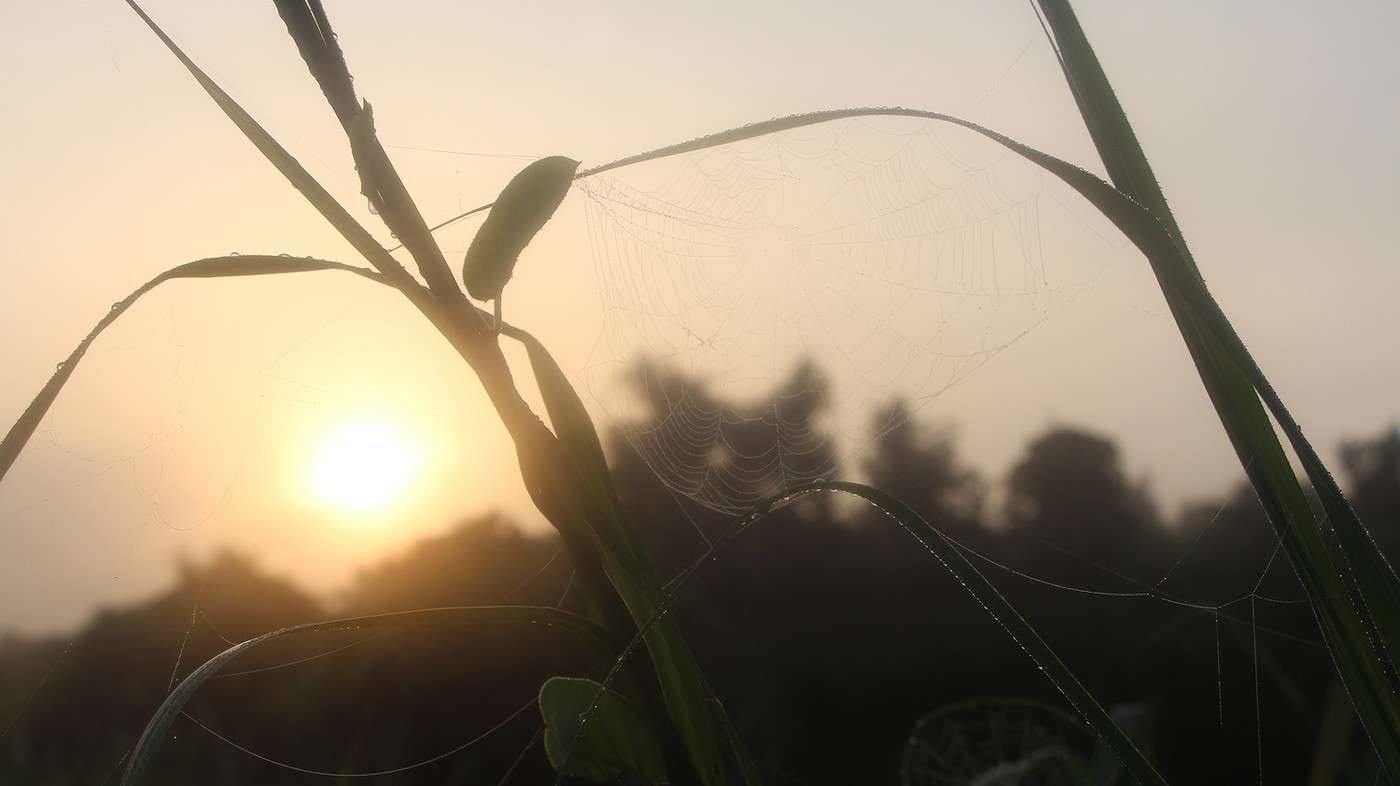

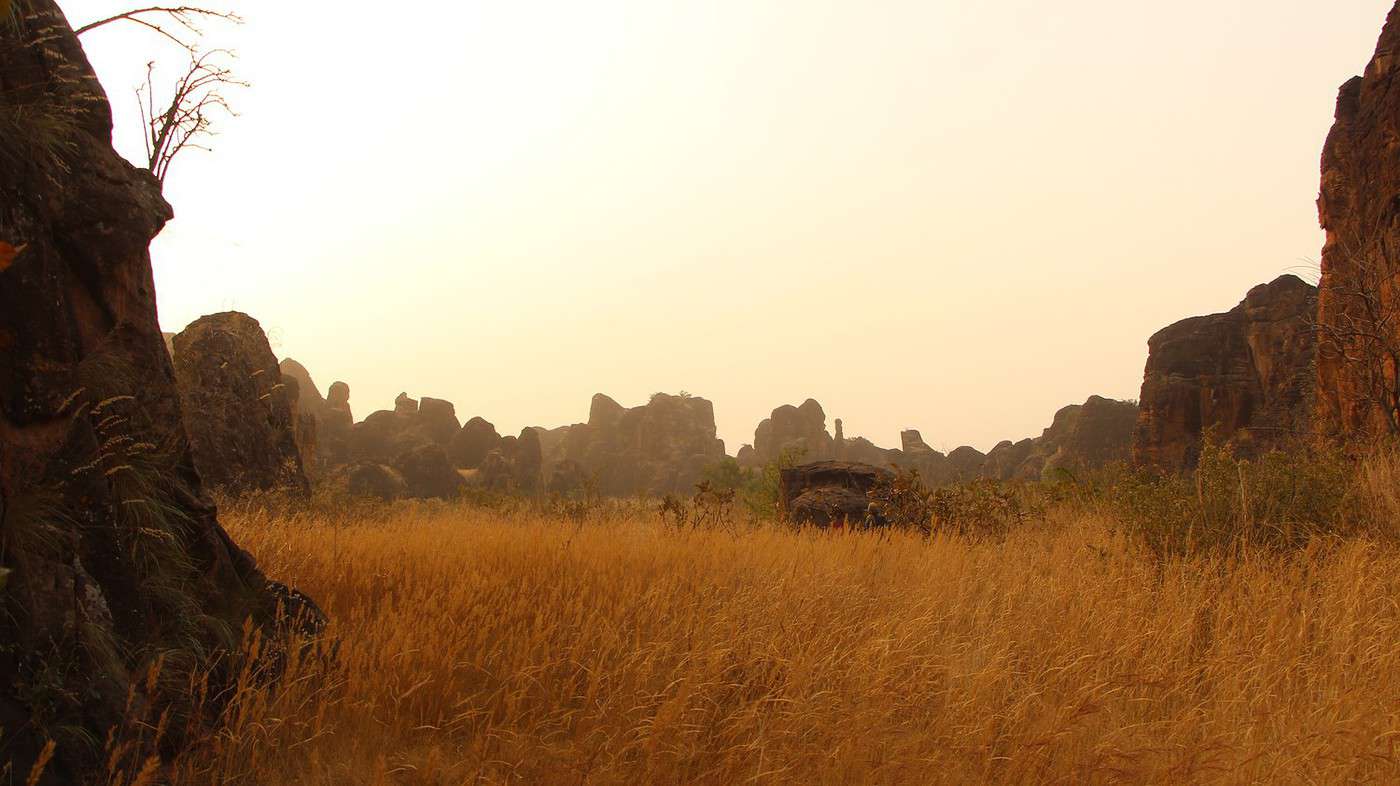
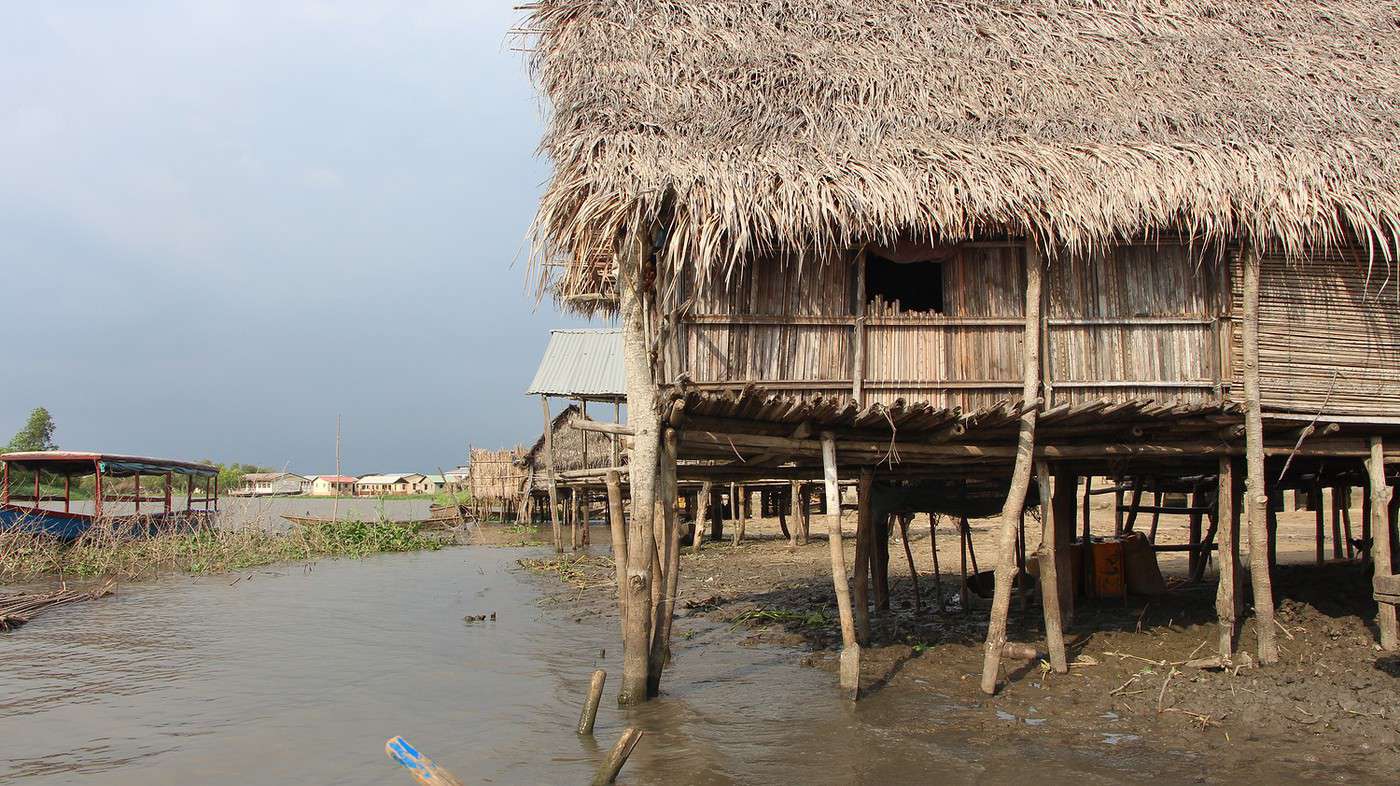


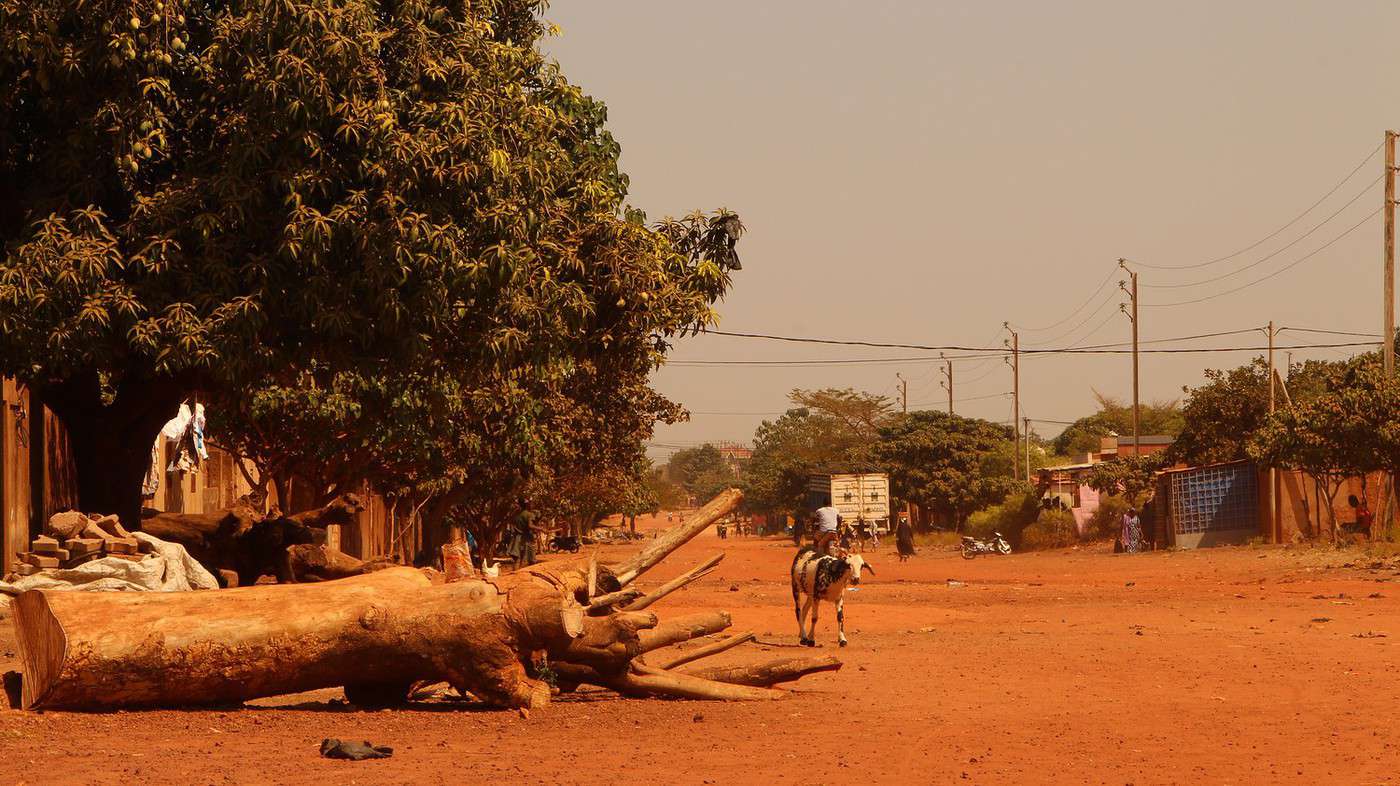
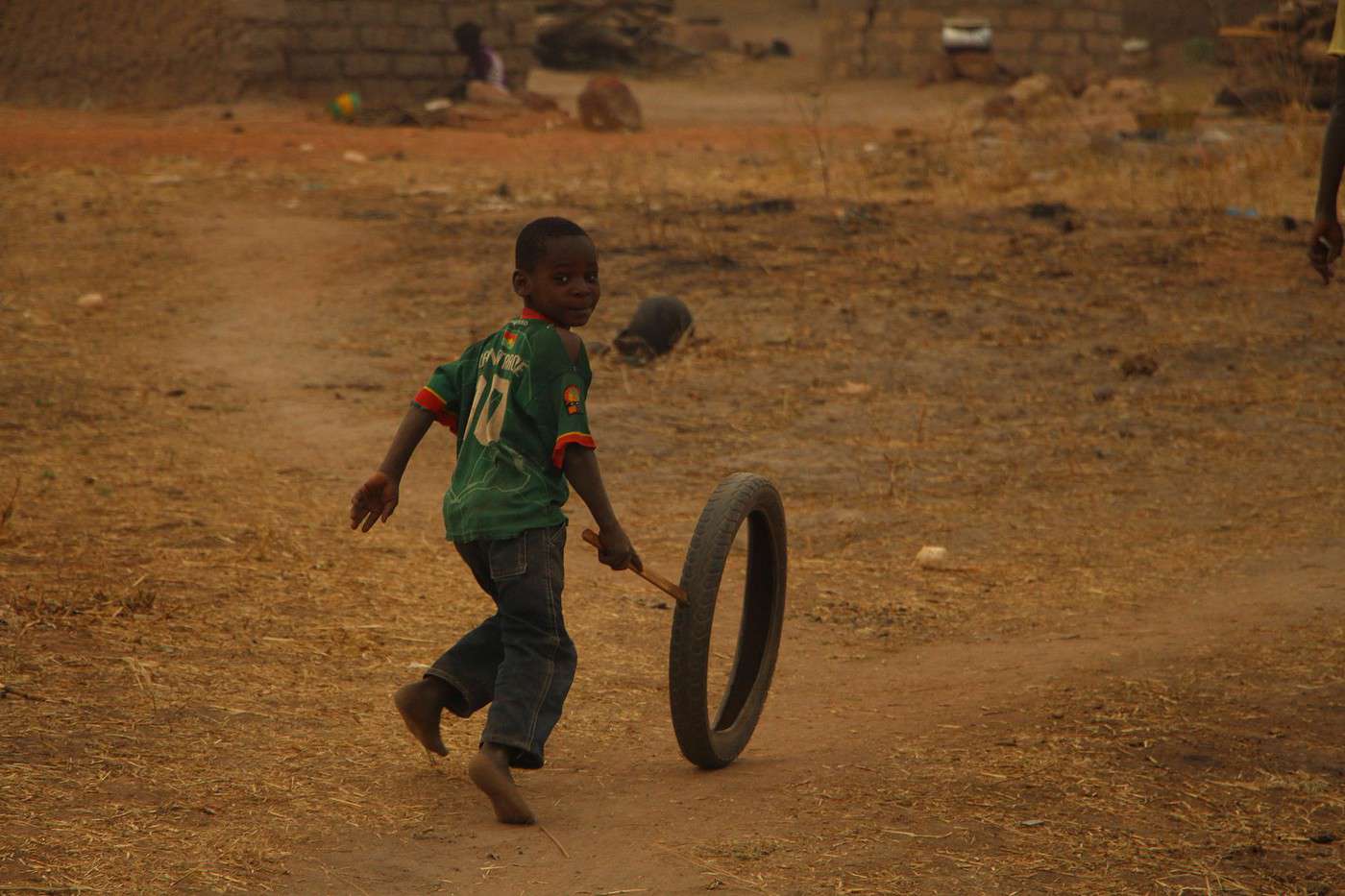


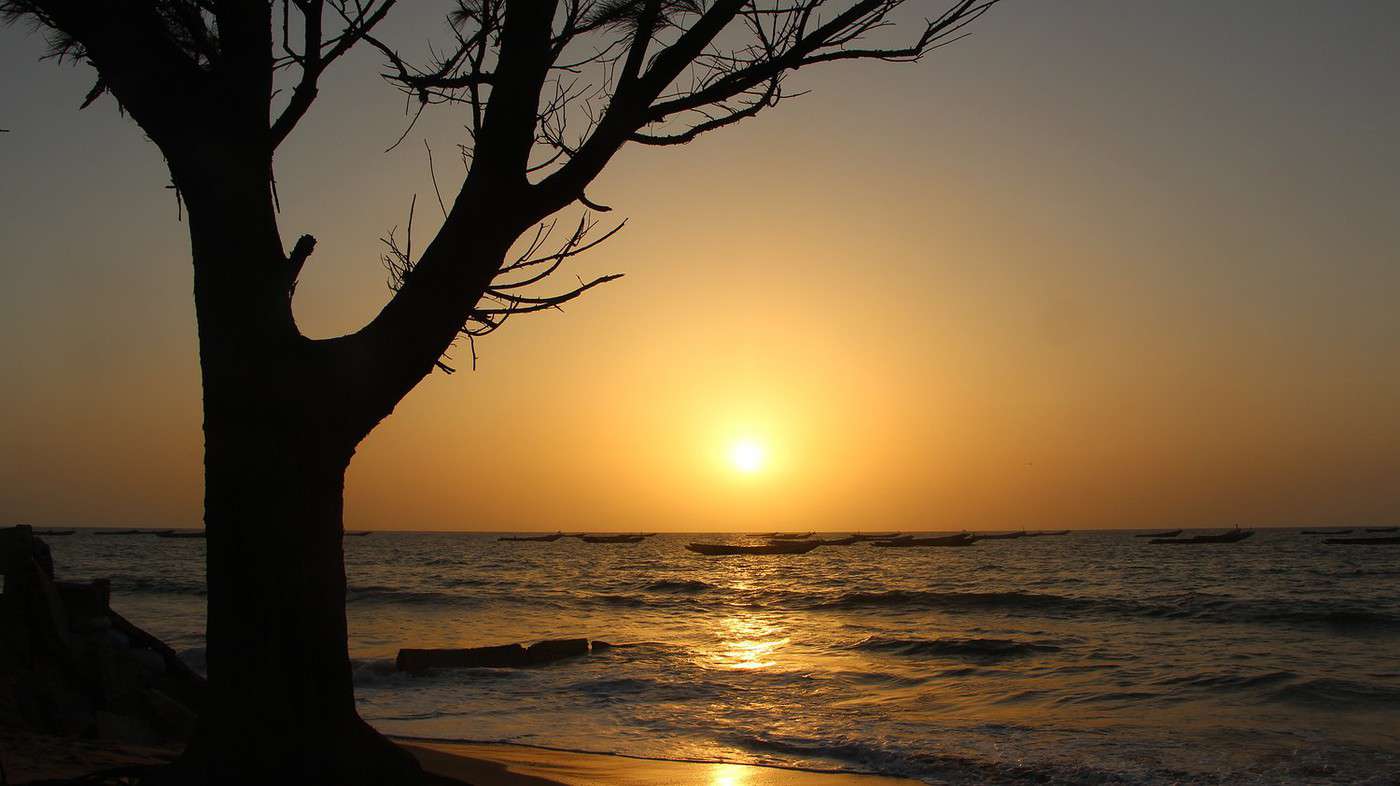



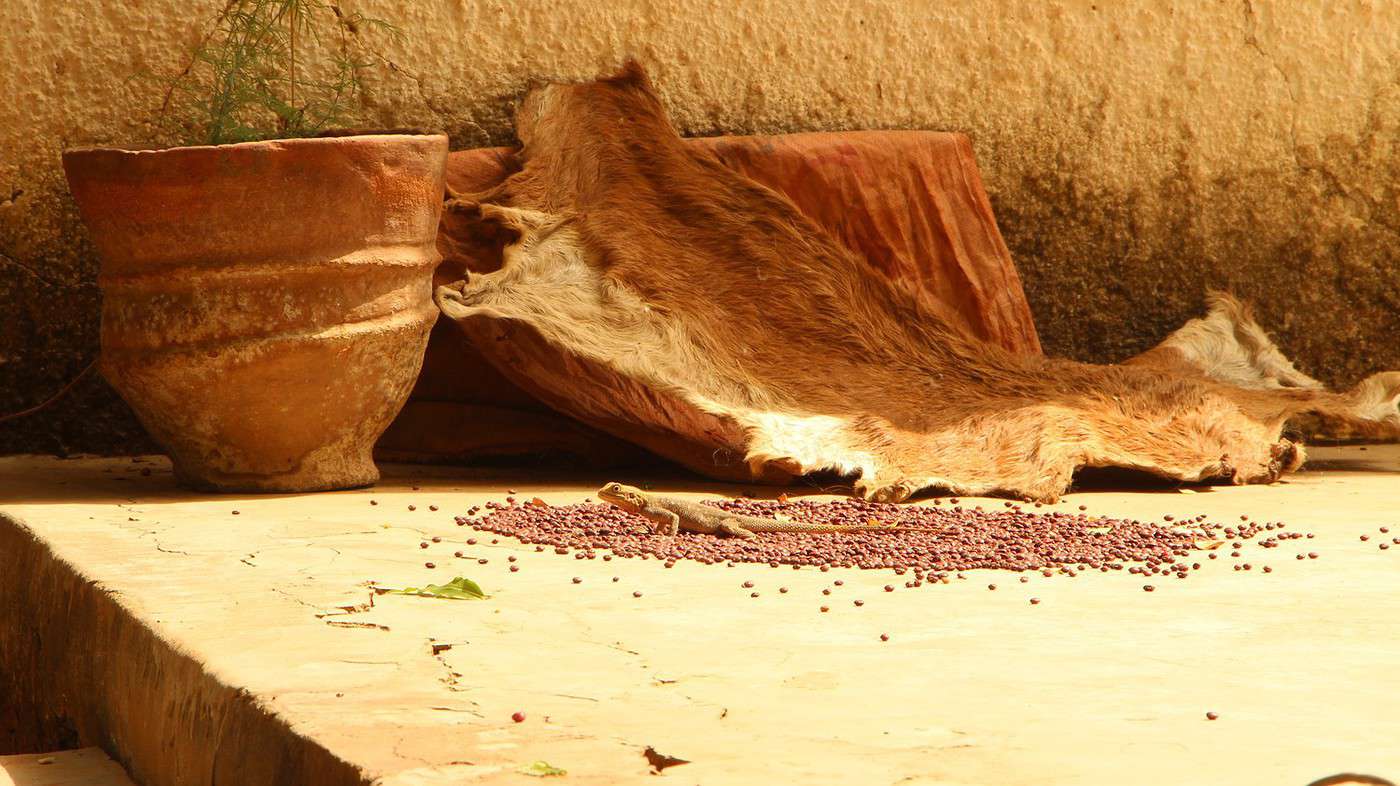
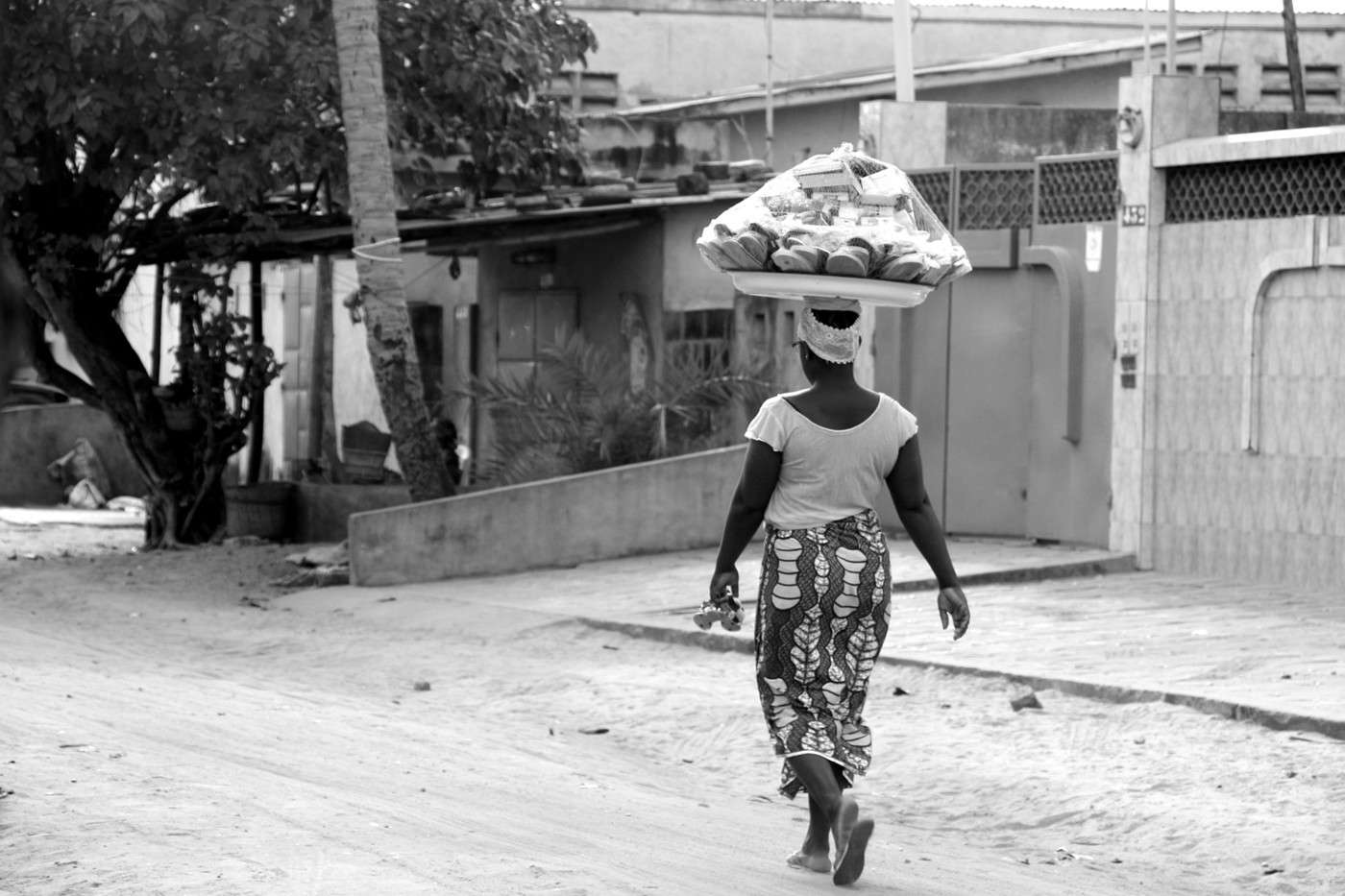


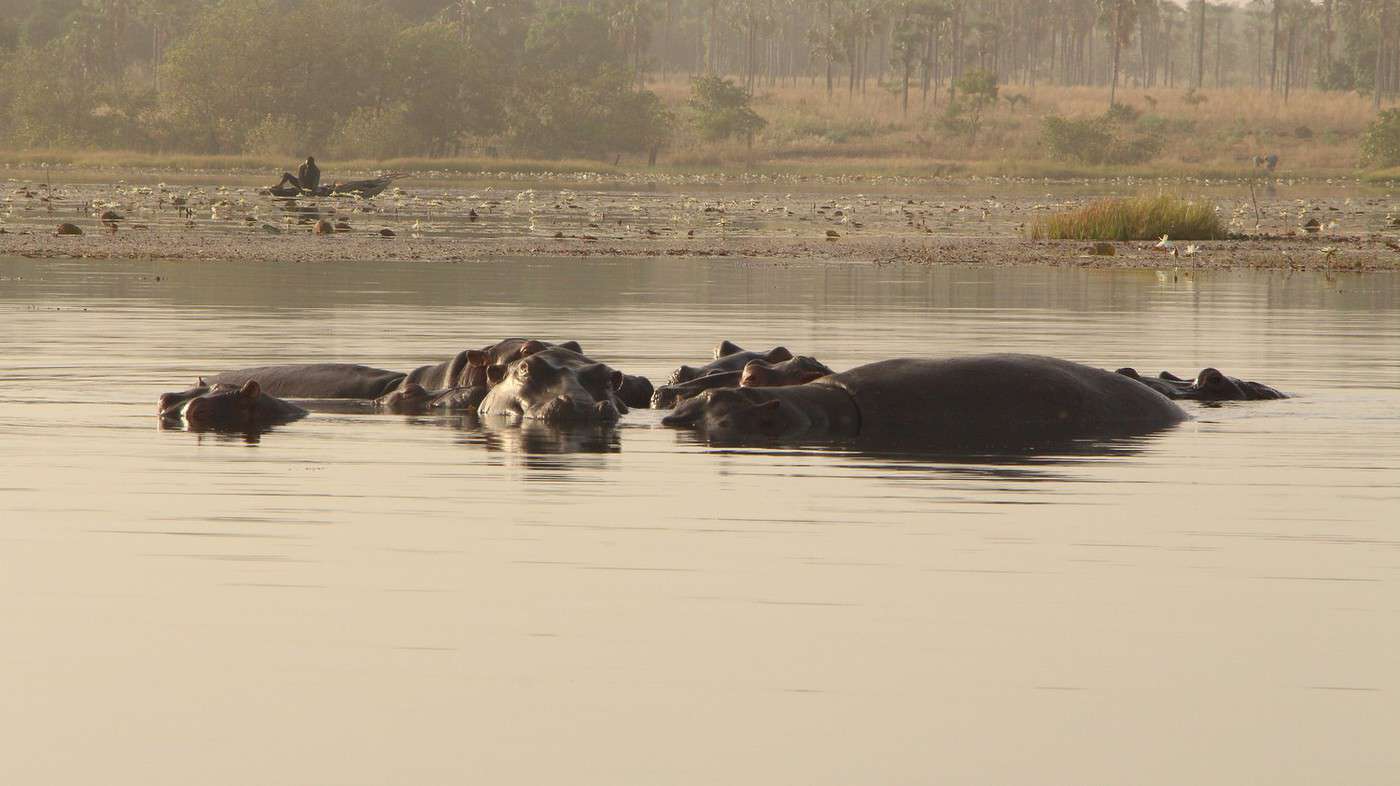


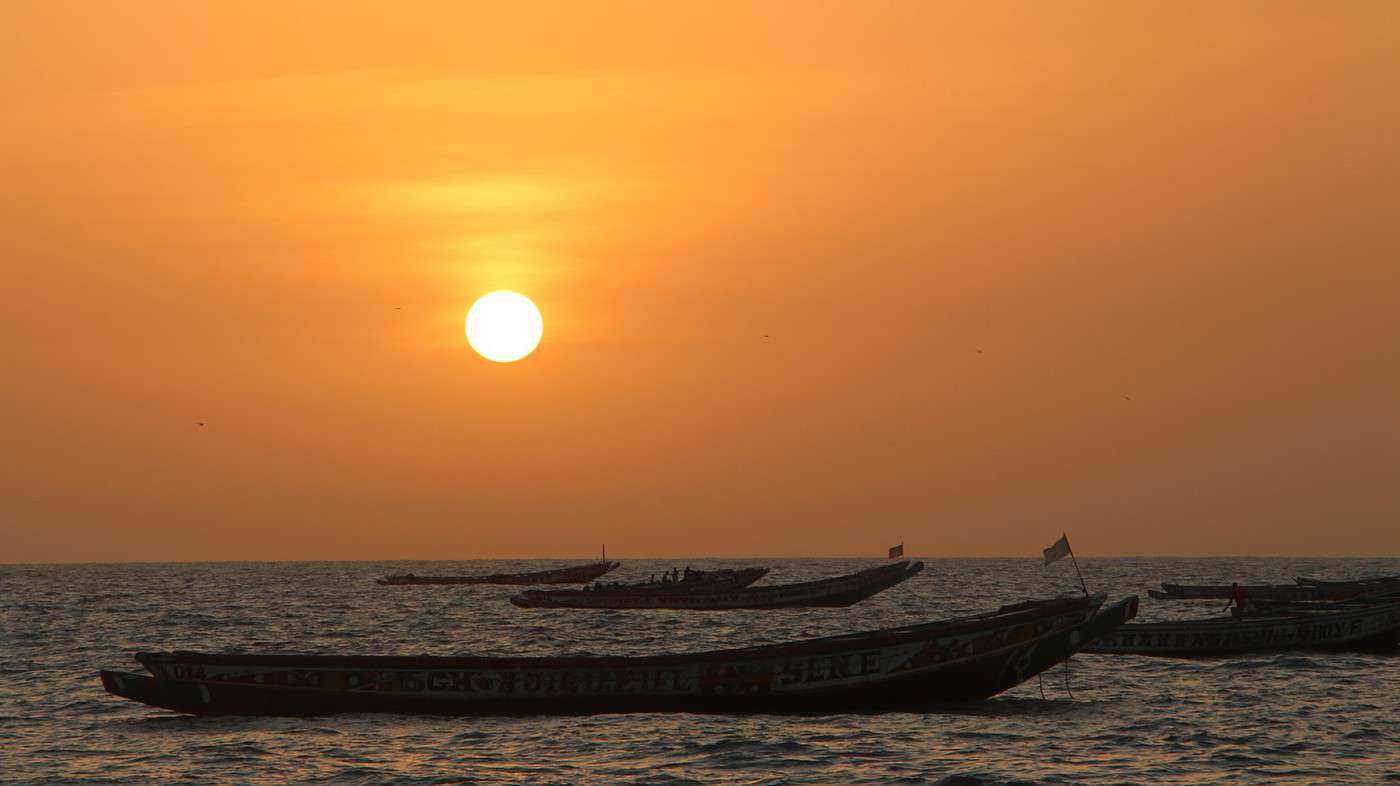

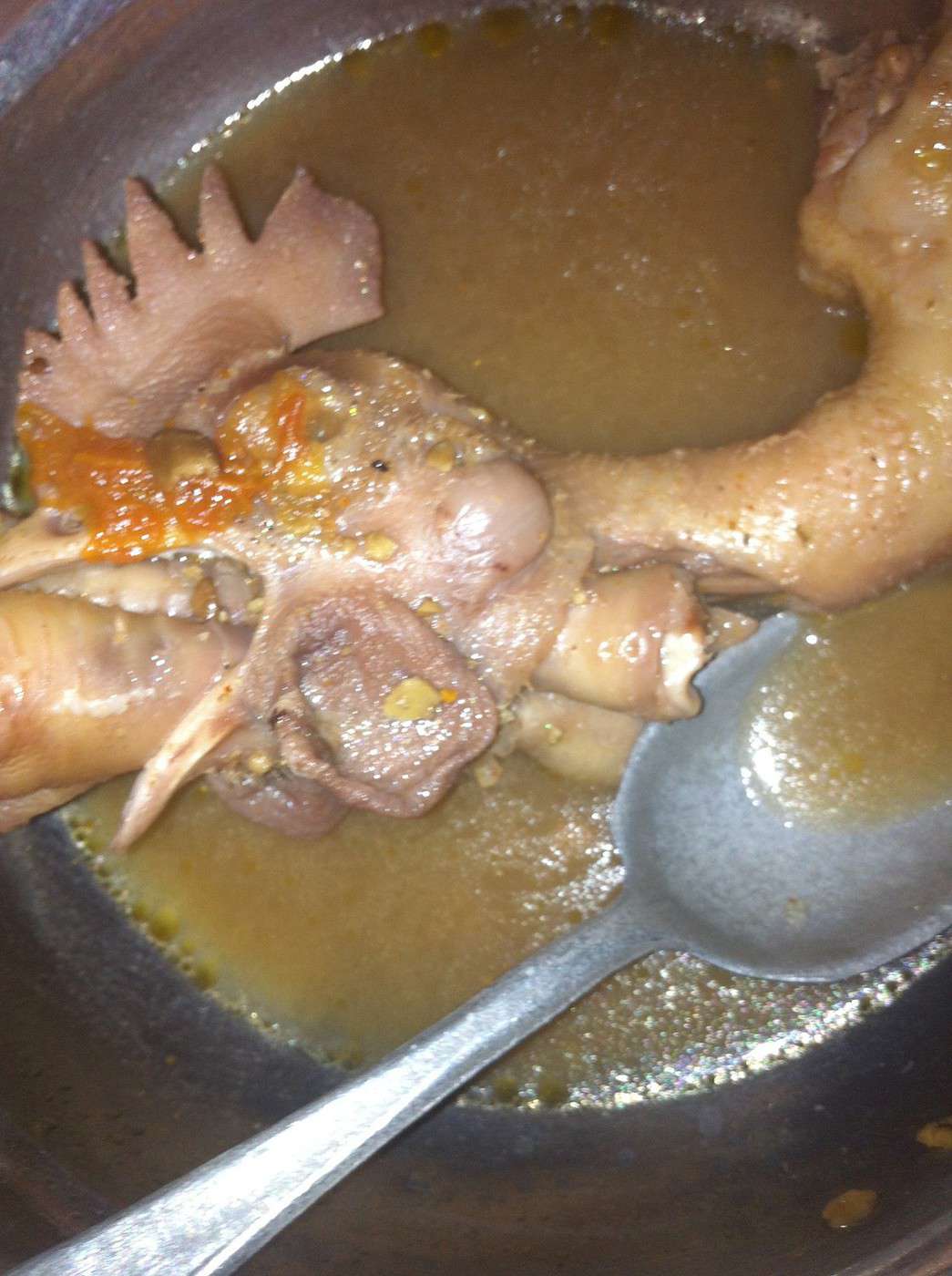



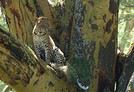

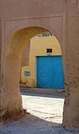
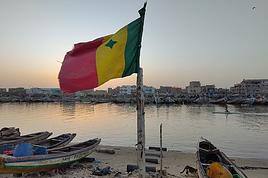
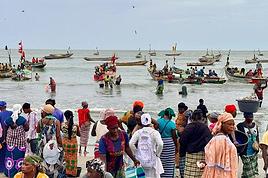
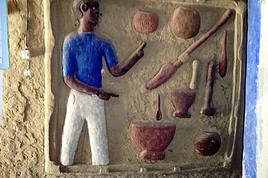
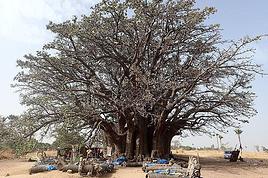
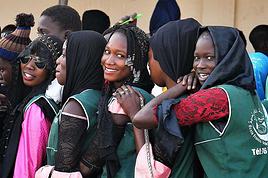
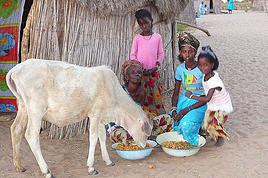
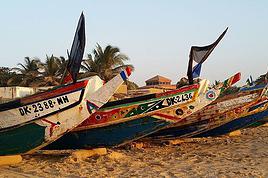
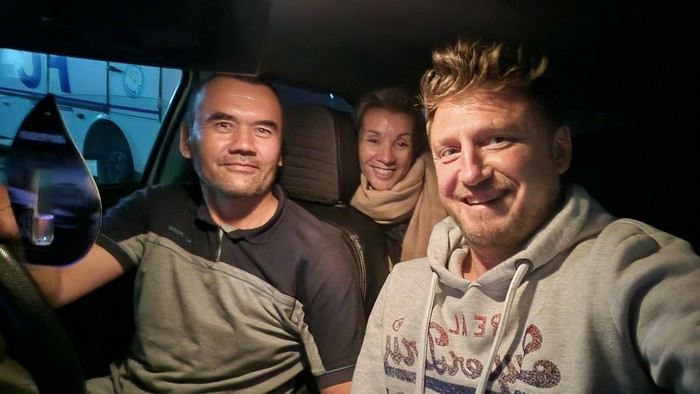
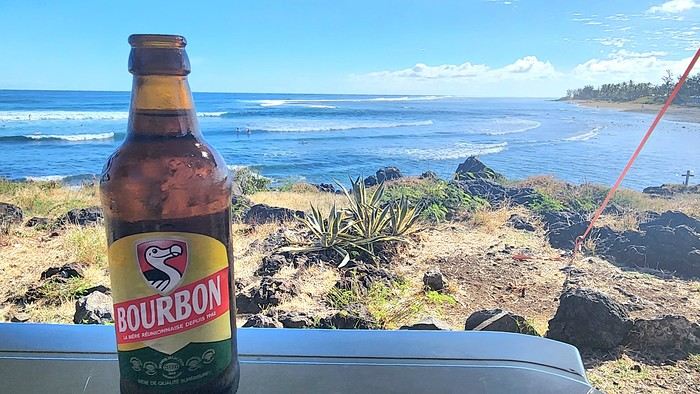
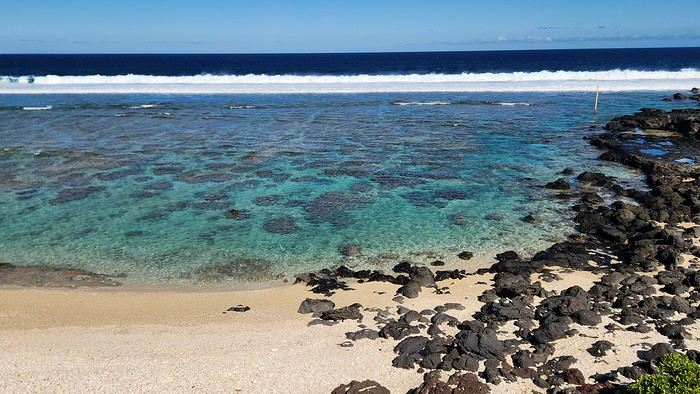
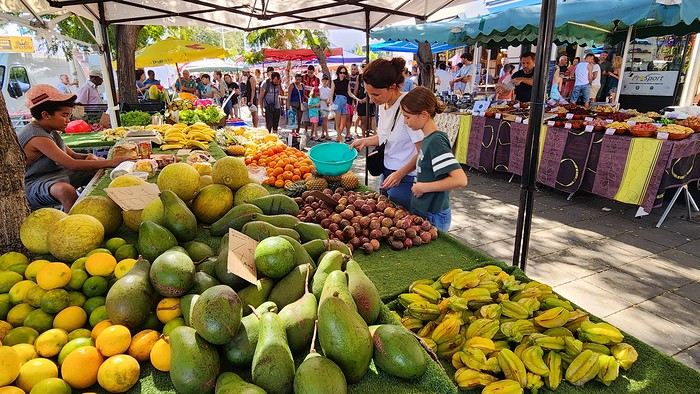
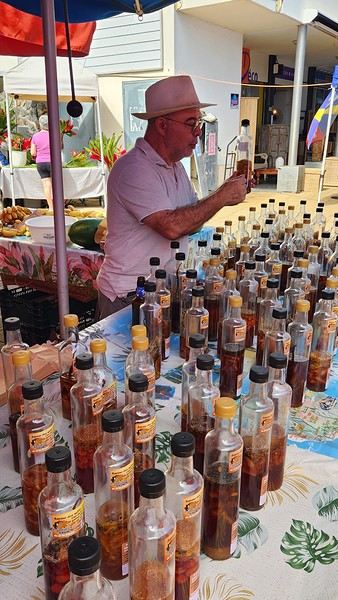
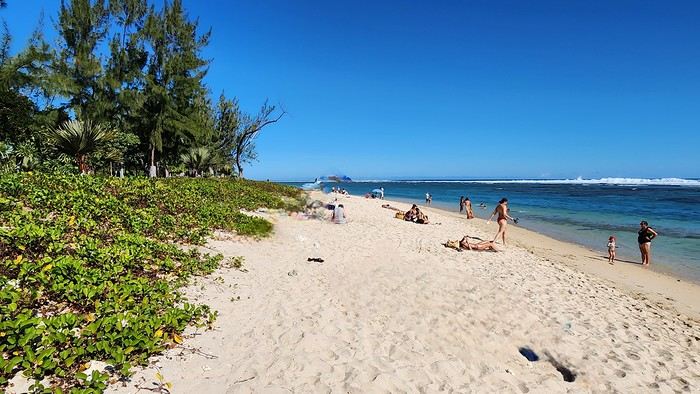
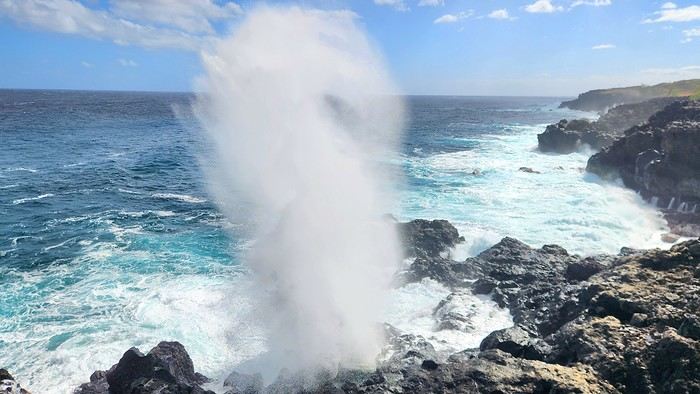
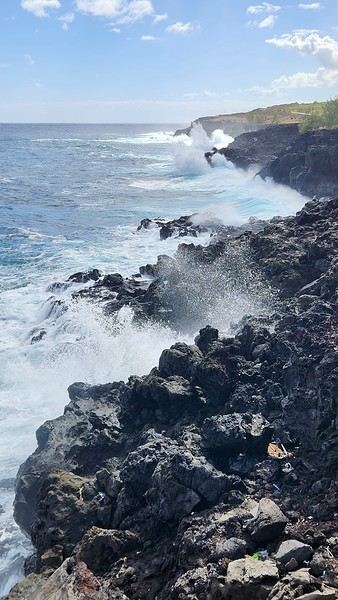
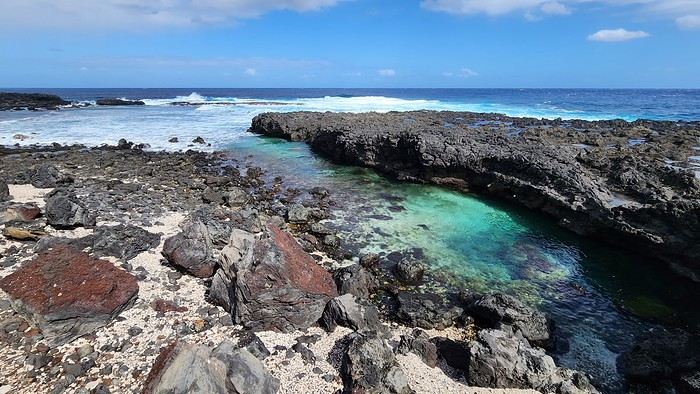
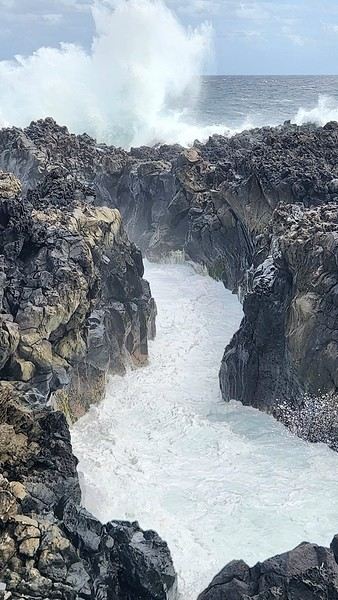

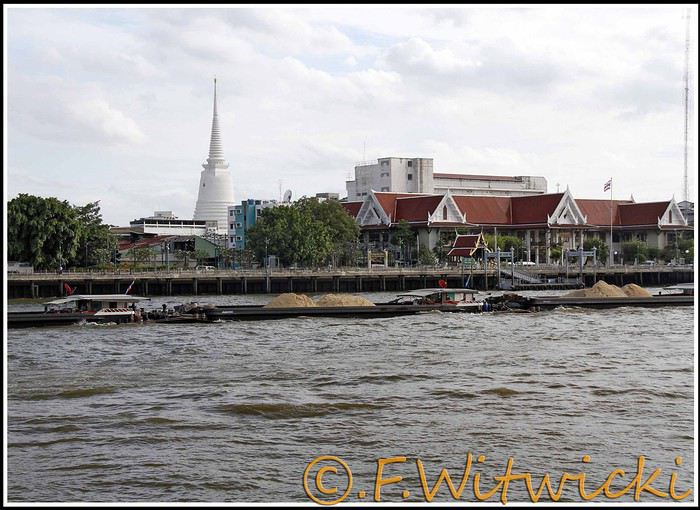
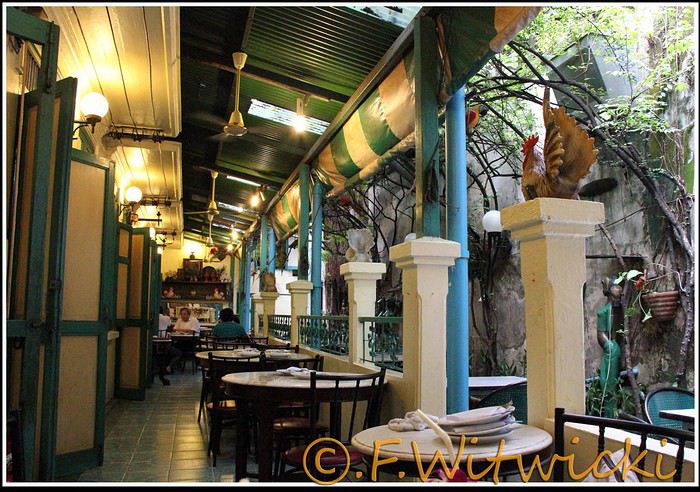
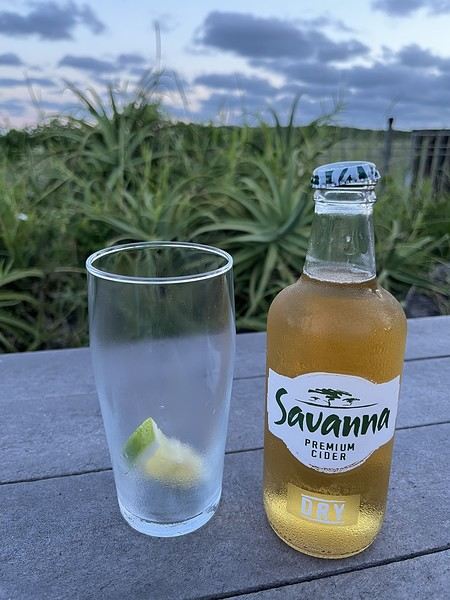
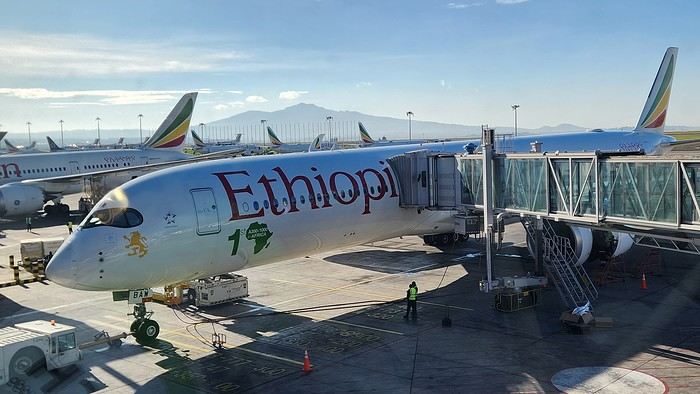
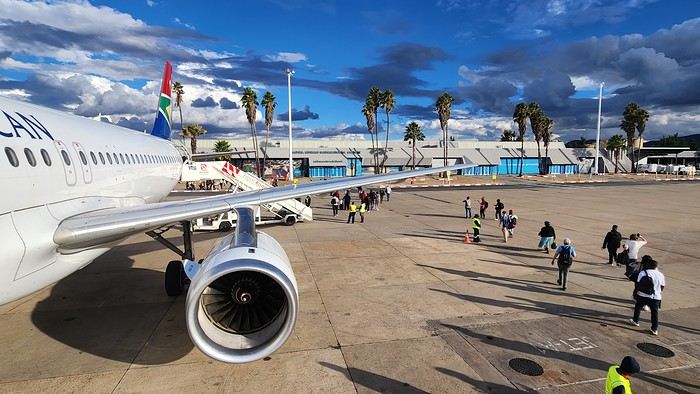
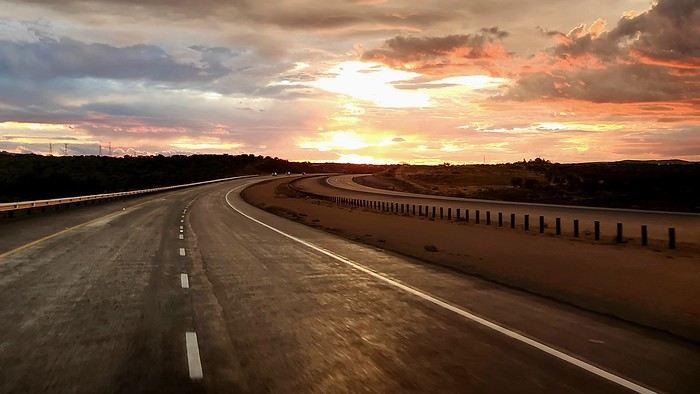
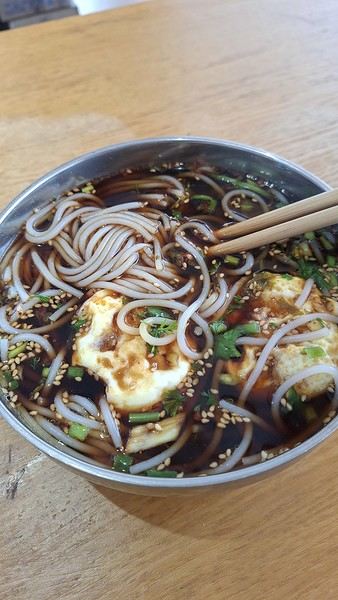
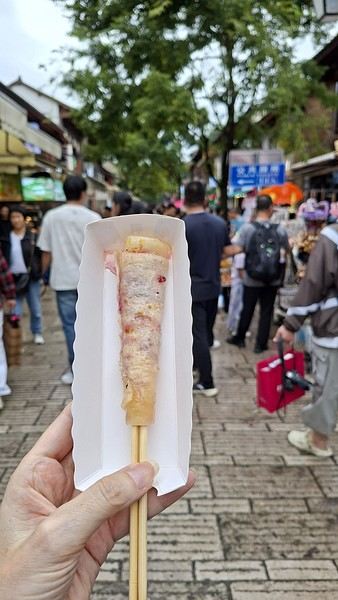
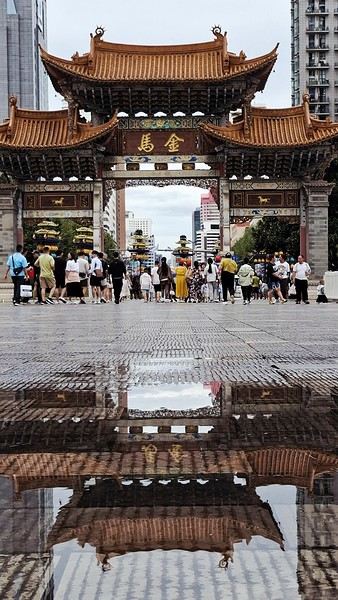
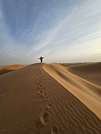
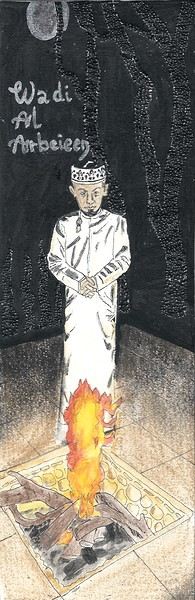
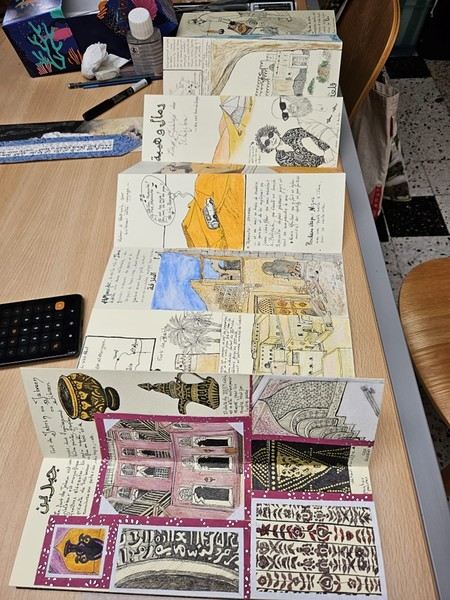
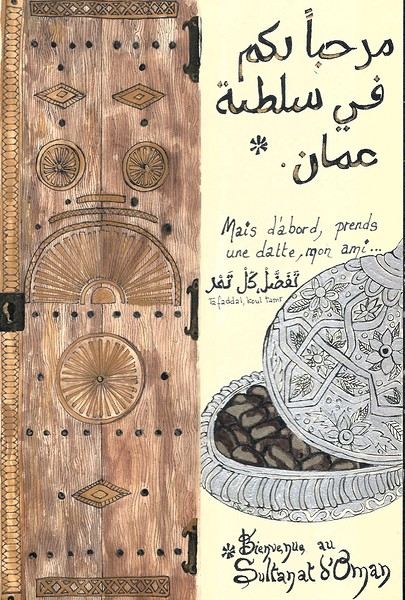 On the right, the "welcome marker"—those dates offered everywhere as a sign of hospitality. On the left, a tribute to those stunning doors worn by time, admired all over the old quarters, including the abandoned ones.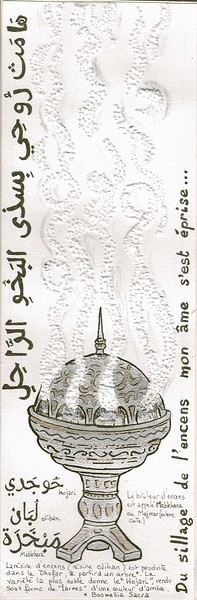
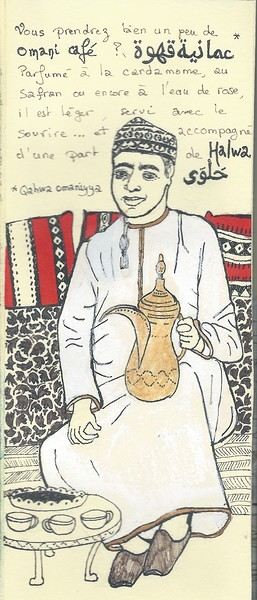 Hospitality will often lead you to accept a small coffee, an "Omani coffee," very light, subtly flavored with cardamom, maybe a touch of saffron, and occasionally rosewater.
Here, I’ve depicted a man in the common everyday attire of Omanis: the dishdasha, mostly white (during the week and daytime; colors are more common in the evening or on Fridays and Saturdays). While you’ll see some men dressed in Western clothes, they’re very few. The white dishdasha is truly the shared attire of all men. The dishdasha, which has no hood, is distinguished by a small pom-pom attached to the collar, the furakha, which is soaked in perfume. And believe me, Omanis go overboard with it! "It smells like the pom-pom" is an expression that’s now part of our shared language, my husband and I.
Another must of men’s attire is the kuma, a small round head covering, usually white with brightly colored patterns. The keffiyeh is also worn (but without the cord called an agal in Arab countries), and it’s mostly worn by those with roots in the desert, from what I understood.
And what about the women, you might ask? Some are veiled, some in full black (but not a burka—more like a chador + abaya), due to the influence of Saudi Arabia and the United Arab Emirates, whereas the traditional outfit used to be a layering of very colorful dresses. Most of the women we saw wore neutral clothing, a plain veil over their hair, but with their faces uncovered. We also saw many saris and colorful veils—don’t forget that 40% of the population consists of Indian, Nepalese, and Bangladeshi immigrants, who work a lot in tourism, hospitality, restaurants, services, and construction.
Just to clarify, as a tourist, there’s no pressure to wear a veil, and never any disapproving looks. Of course, you’ll save the mini shorts, plunging necklines, bare shoulders, and midriffs for the hotel terrace—but I’d say that’s the same for men and women, and with the sun being strong, it’s better for your skin too.
Here’s the introduction! In the next post, I’ll tell you about my itinerary, and we can dive in!
Hospitality will often lead you to accept a small coffee, an "Omani coffee," very light, subtly flavored with cardamom, maybe a touch of saffron, and occasionally rosewater.
Here, I’ve depicted a man in the common everyday attire of Omanis: the dishdasha, mostly white (during the week and daytime; colors are more common in the evening or on Fridays and Saturdays). While you’ll see some men dressed in Western clothes, they’re very few. The white dishdasha is truly the shared attire of all men. The dishdasha, which has no hood, is distinguished by a small pom-pom attached to the collar, the furakha, which is soaked in perfume. And believe me, Omanis go overboard with it! "It smells like the pom-pom" is an expression that’s now part of our shared language, my husband and I.
Another must of men’s attire is the kuma, a small round head covering, usually white with brightly colored patterns. The keffiyeh is also worn (but without the cord called an agal in Arab countries), and it’s mostly worn by those with roots in the desert, from what I understood.
And what about the women, you might ask? Some are veiled, some in full black (but not a burka—more like a chador + abaya), due to the influence of Saudi Arabia and the United Arab Emirates, whereas the traditional outfit used to be a layering of very colorful dresses. Most of the women we saw wore neutral clothing, a plain veil over their hair, but with their faces uncovered. We also saw many saris and colorful veils—don’t forget that 40% of the population consists of Indian, Nepalese, and Bangladeshi immigrants, who work a lot in tourism, hospitality, restaurants, services, and construction.
Just to clarify, as a tourist, there’s no pressure to wear a veil, and never any disapproving looks. Of course, you’ll save the mini shorts, plunging necklines, bare shoulders, and midriffs for the hotel terrace—but I’d say that’s the same for men and women, and with the sun being strong, it’s better for your skin too.
Here’s the introduction! In the next post, I’ll tell you about my itinerary, and we can dive in!
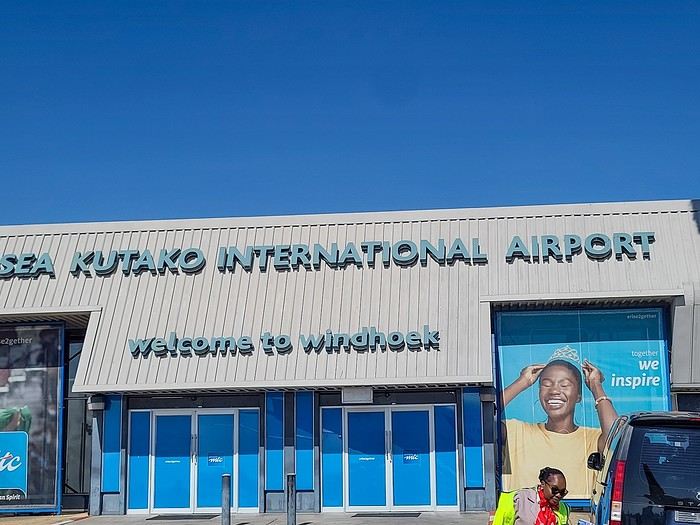
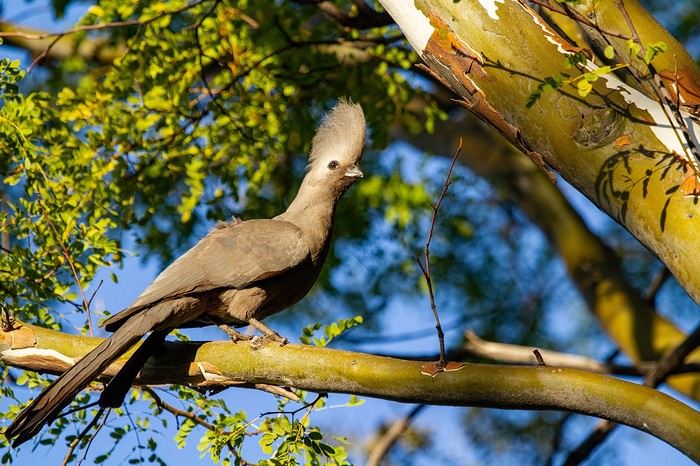
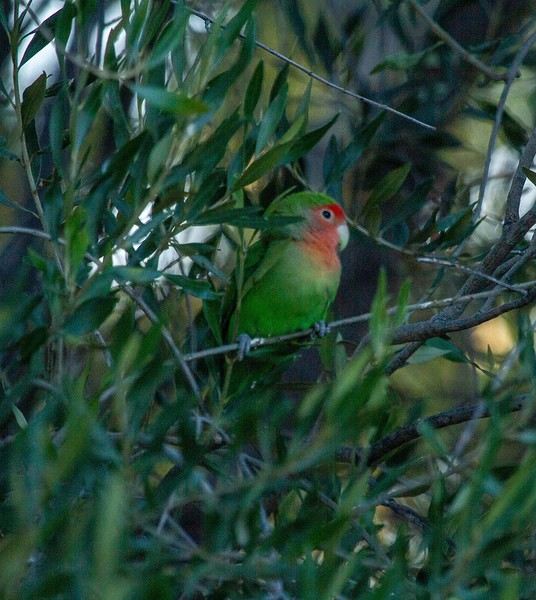

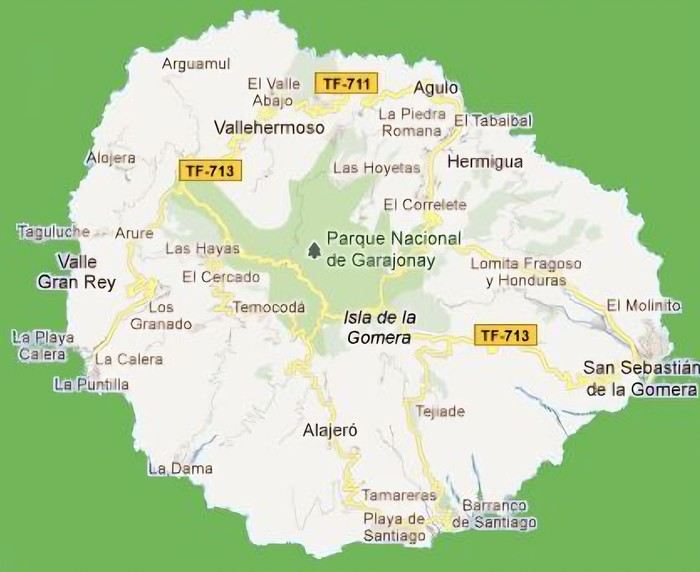 The large solidified magma massifs that shape the heart of the island have created a large depression more protected from the sun at its center, allowing the growth of a vast laurel forest, today grouped within the Garajonay National Park, La Gomera’s green lung, which has earned it the status of a World Biosphere Reserve. Its completely European appearance contrasts sharply with the rocky and tropical landscapes of the rest of the island. Thus, the climate varies greatly from one point to another on the island: in summer, you can quickly go from a dry and sunny valley at 35°C to a humid forest area at altitude at 18°C.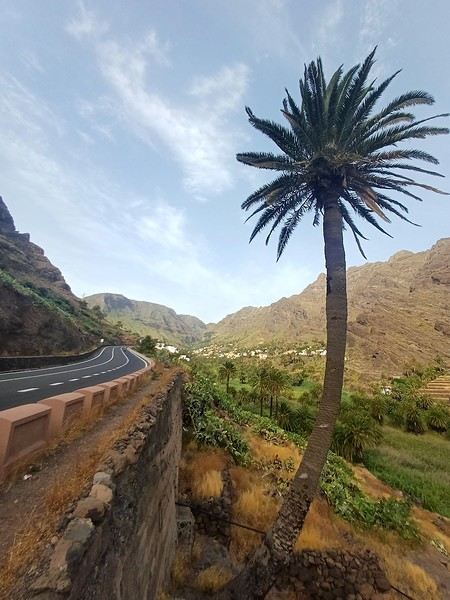
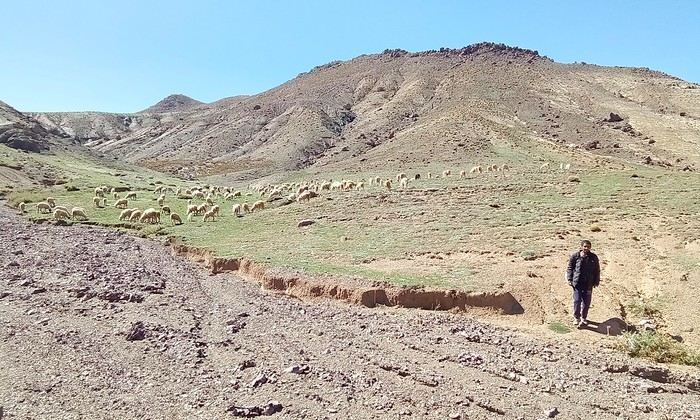
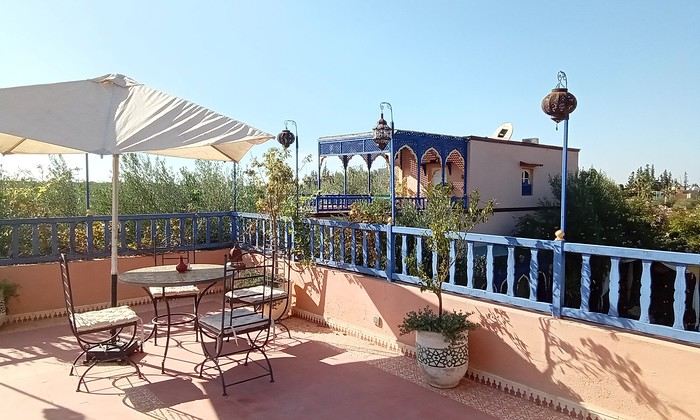
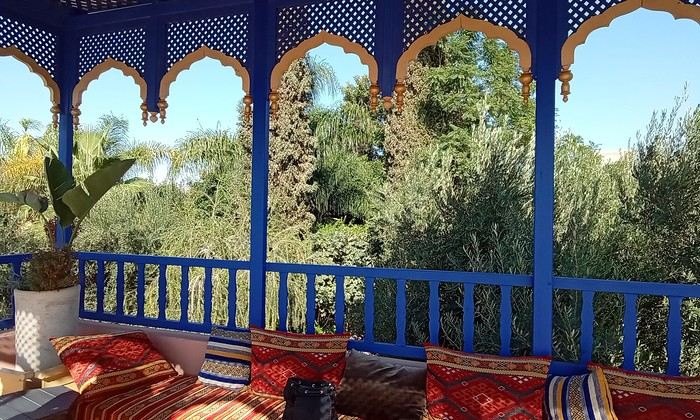 Last October, we landed in Marrakech to spend a few days with family exploring Morocco’s roads.
Transport: a rented Dacia.
Accommodations: small guesthouses.
Last October, we landed in Marrakech to spend a few days with family exploring Morocco’s roads.
Transport: a rented Dacia.
Accommodations: small guesthouses.
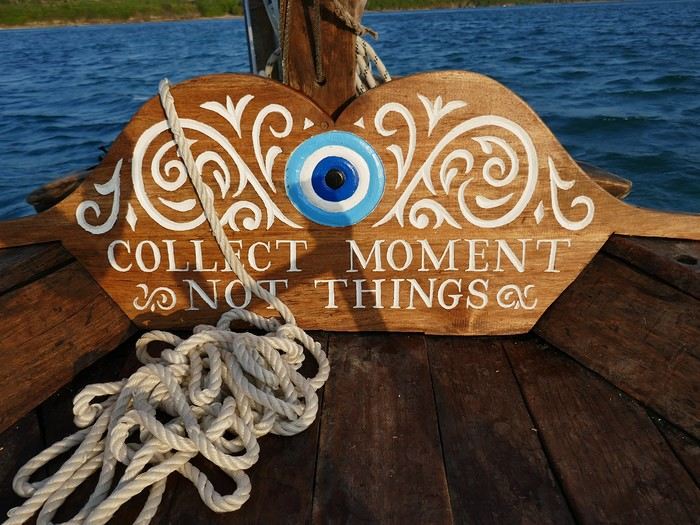
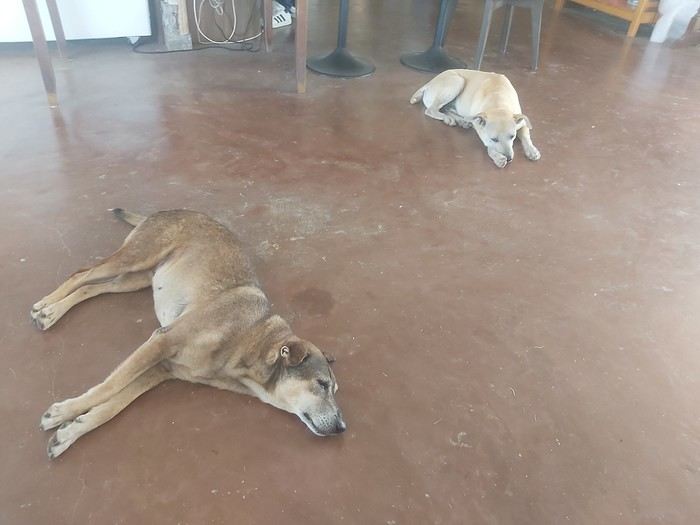
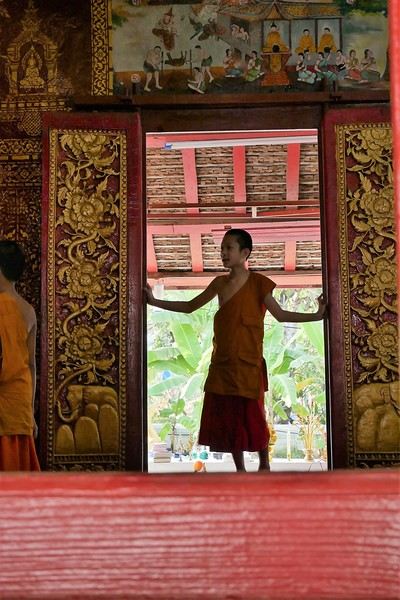 Come along, I'm taking you to this country where it's so nice to wander and slow down...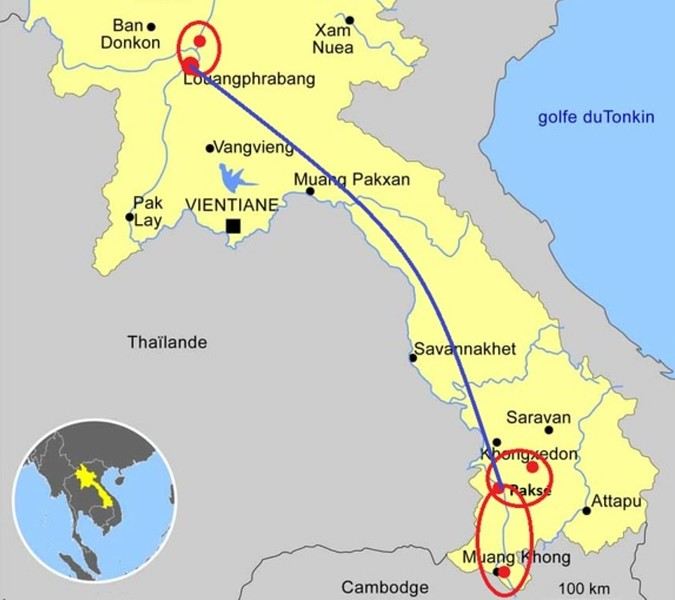
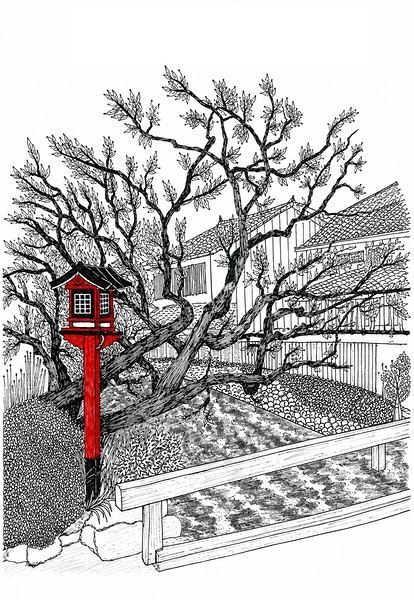 I’m inviting you on a stroll through my drawings—a completely subjective, far from exhaustive, and totally personal take, since it’s based on my own sketches. I put this travel journal together after returning in late 2024, mostly using felt-tip pens and pencils, with a few collages thrown in. I worked from our personal photos.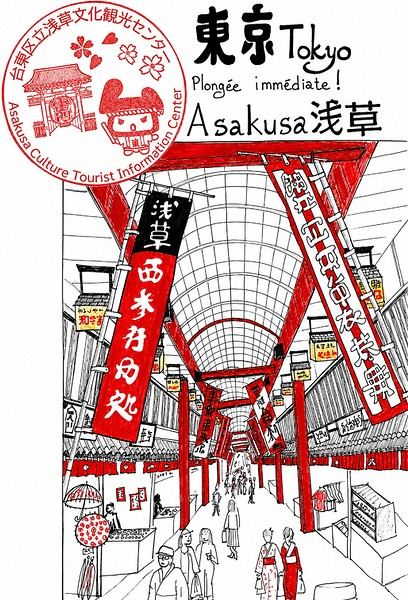
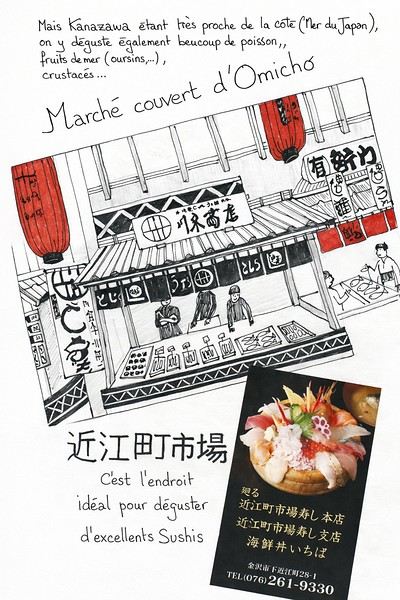 And in Kyoto, Nishiki Market:
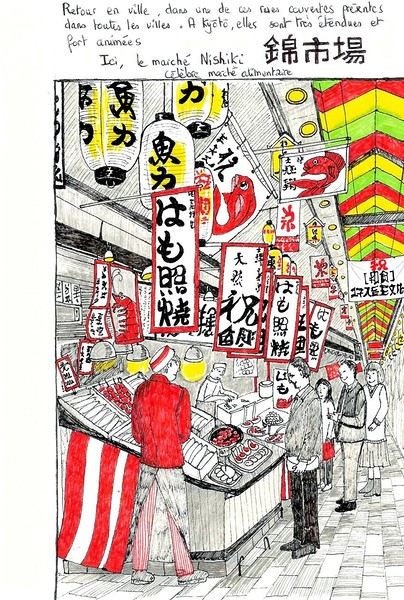
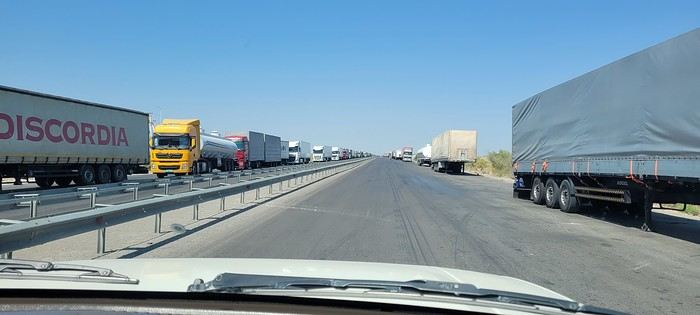
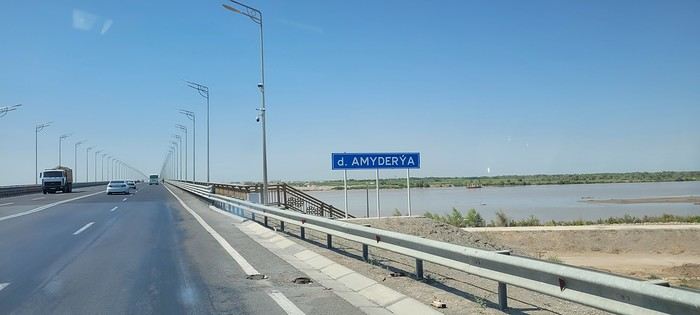
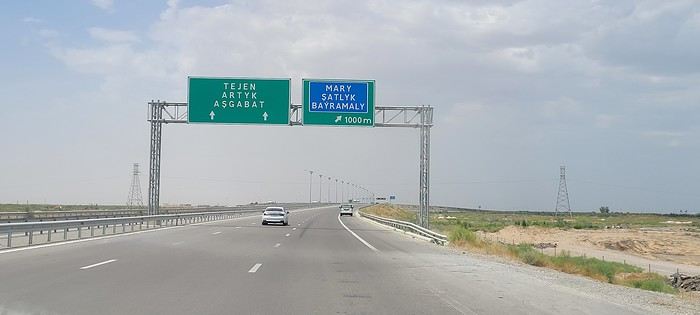
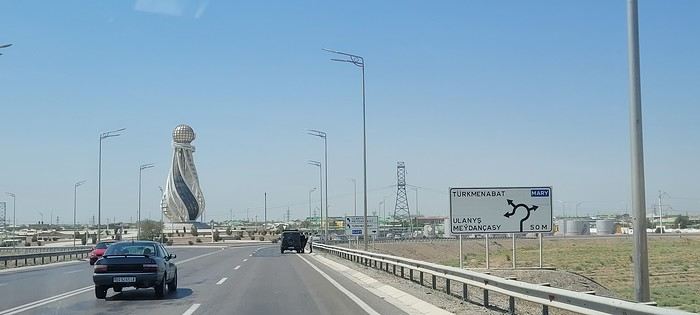
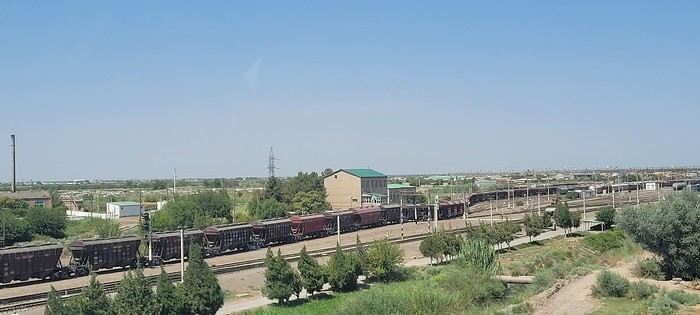
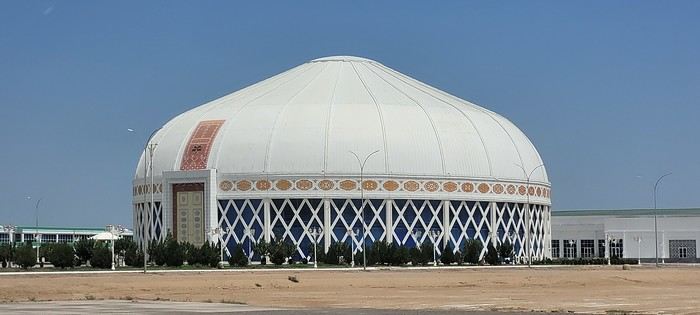
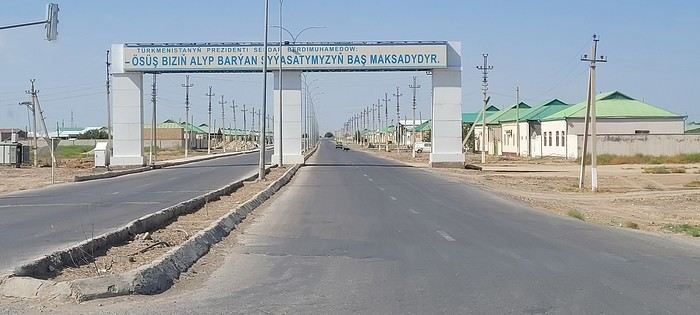
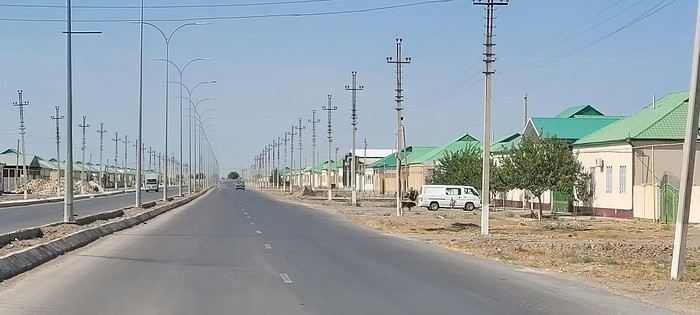 Roundabouts are particularly interesting because they feature emblems of Turkmen culture, like the dog, a carpet, the Ahal Teke horse, or Muslim symbols, even though the presence of Islamic artifacts is quite limited.
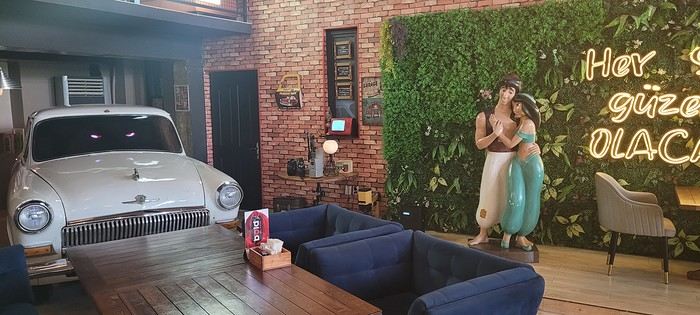

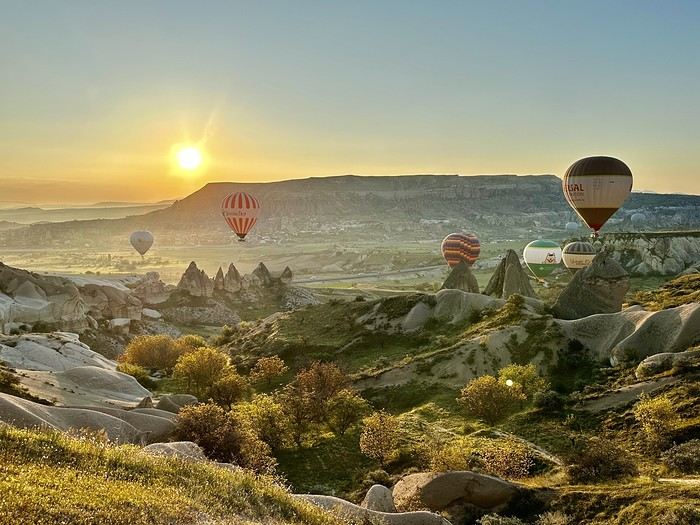 A little sneak peek?
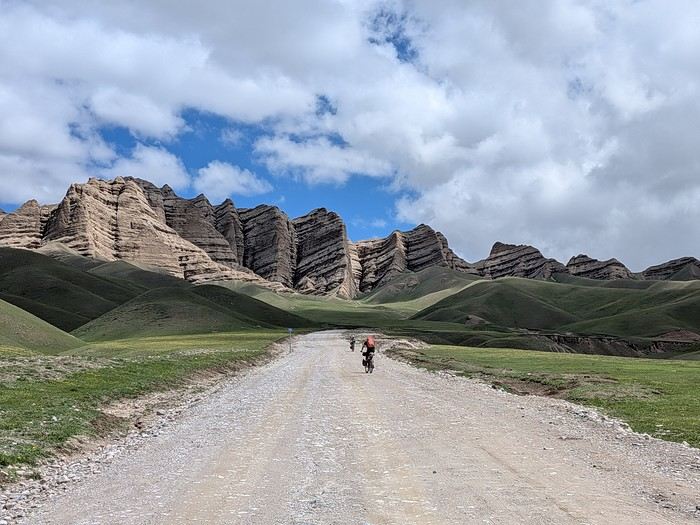
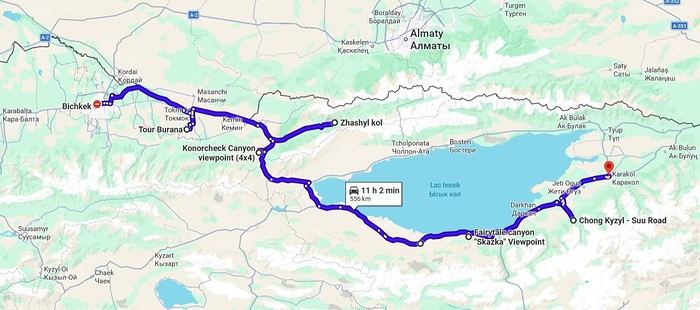
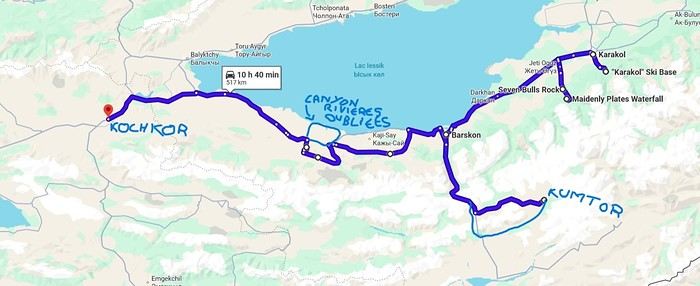
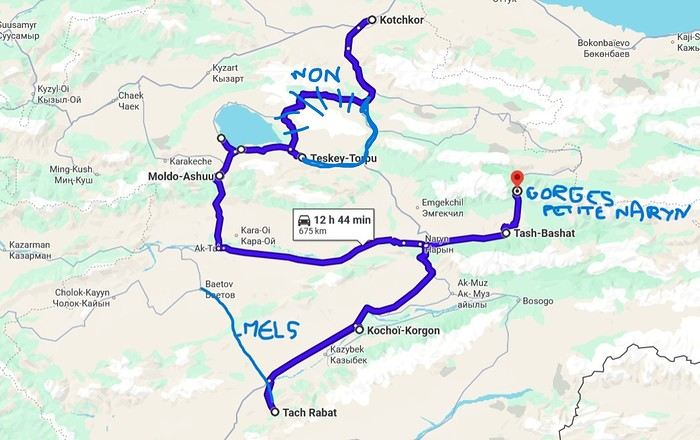
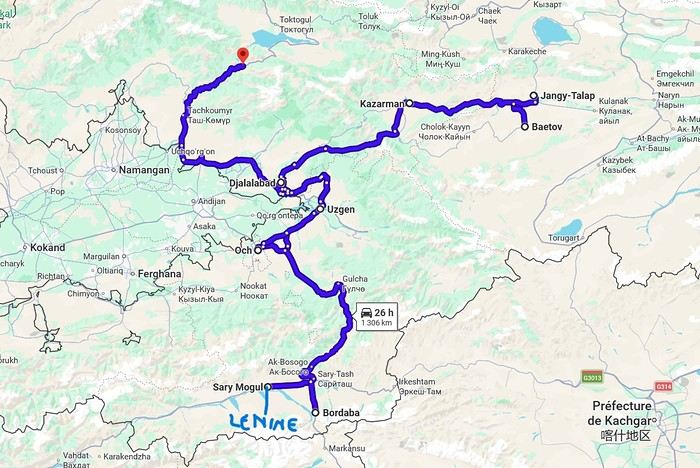
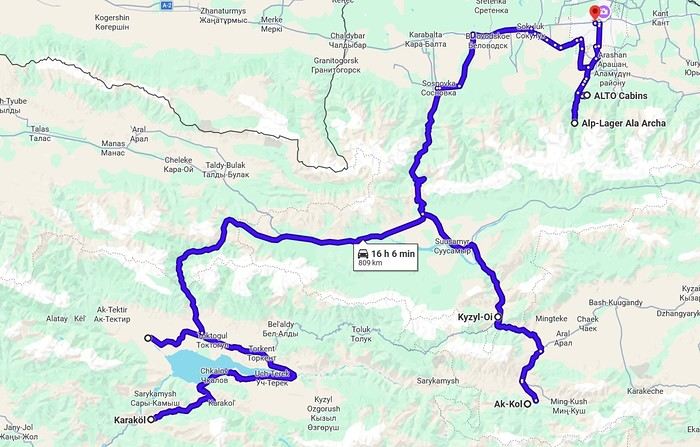

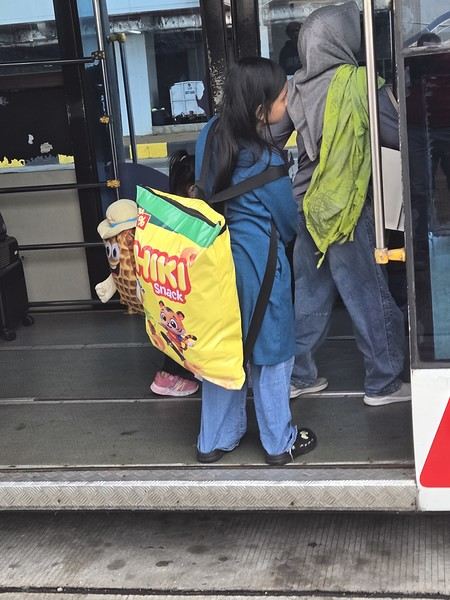
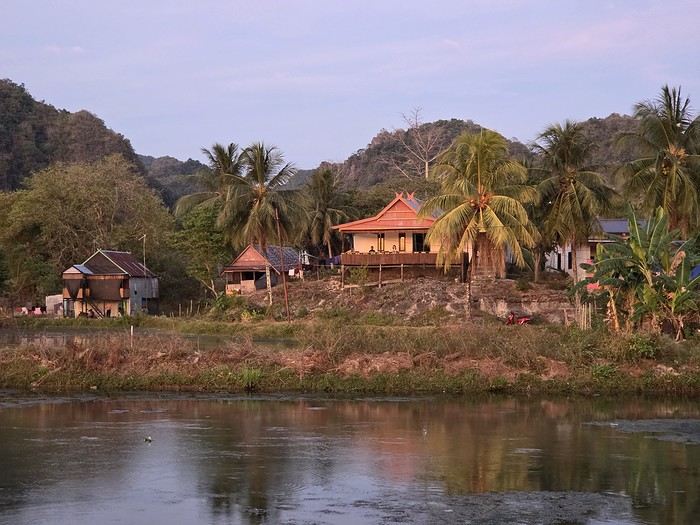
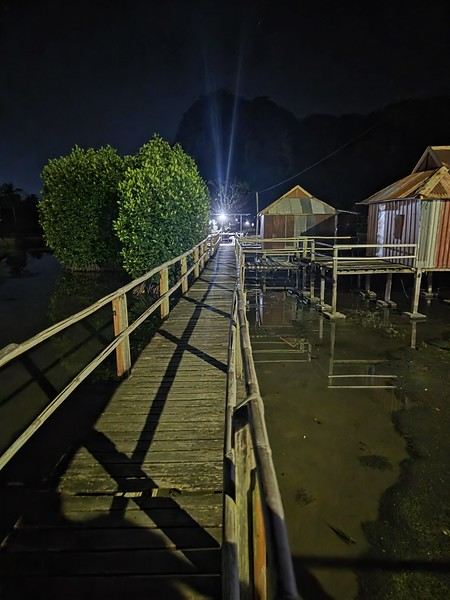
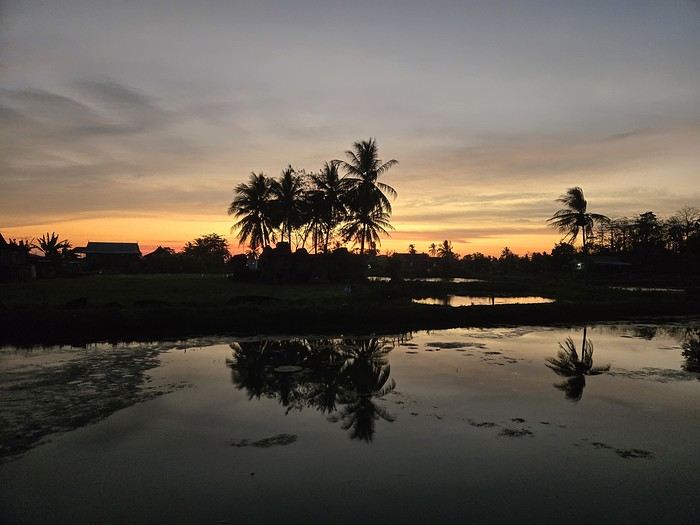
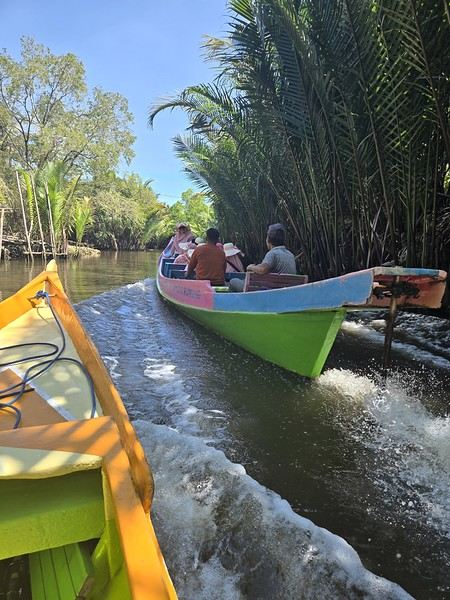 The karst site:
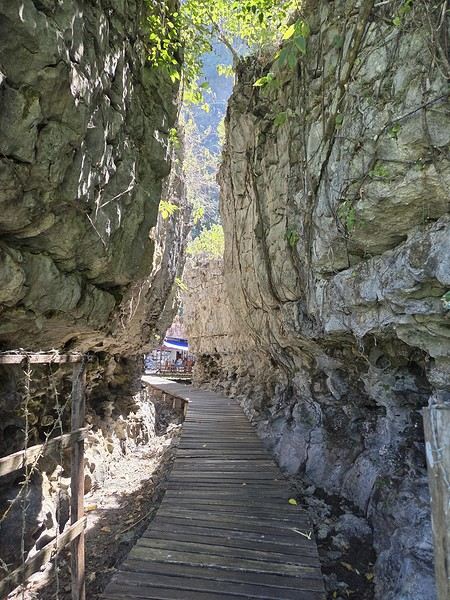
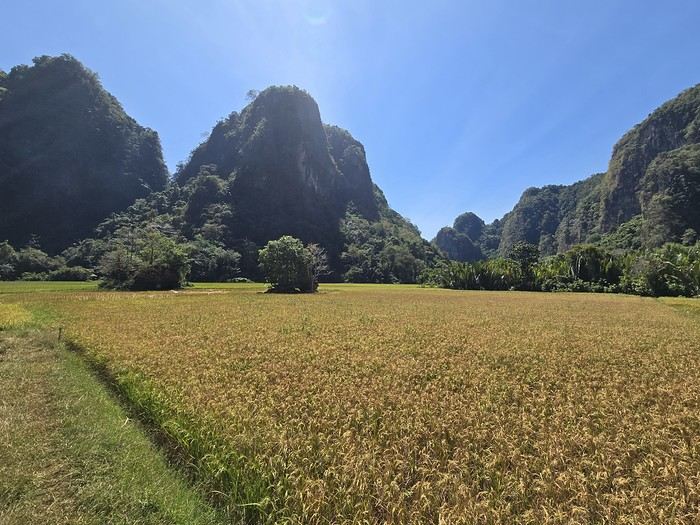
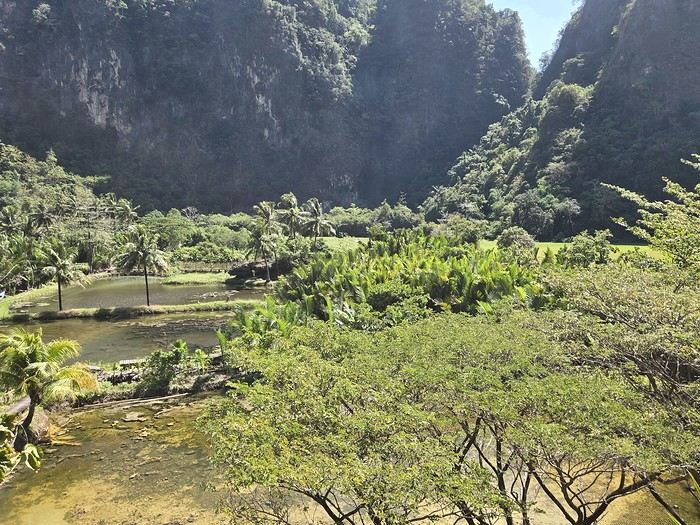
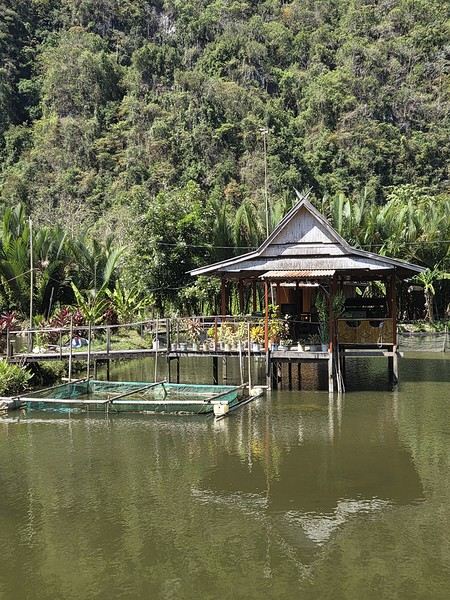
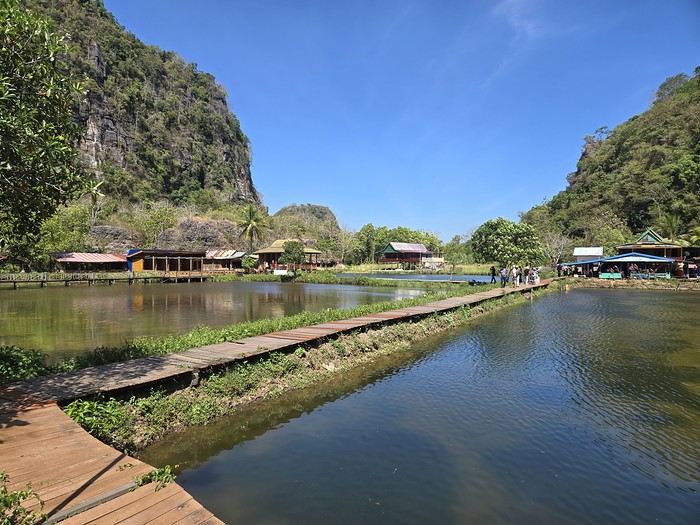
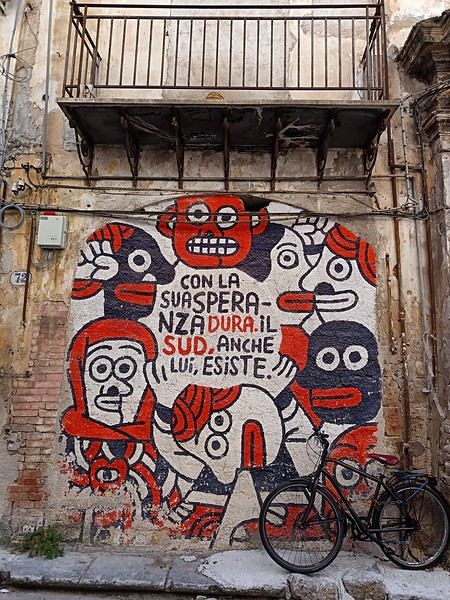 (In the heart of Albergheria, on a street every visitor walks down—lovely message from an unidentified artist)