In the Land of the Tswana (Botswana)
FR

Translated into English.

Original post
OL
We’ve been back for a month now, so it’s high time I posted the story of our adventures! 😉 I’d also like to thank everyone who shared their own experiences on this forum (or elsewhere) and gave us tips—it really helped us plan our trip.
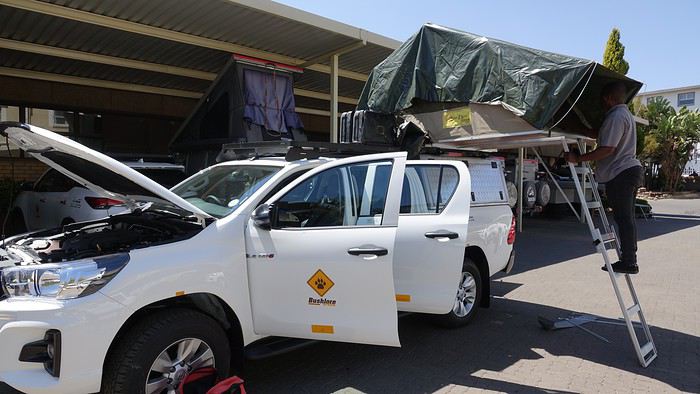
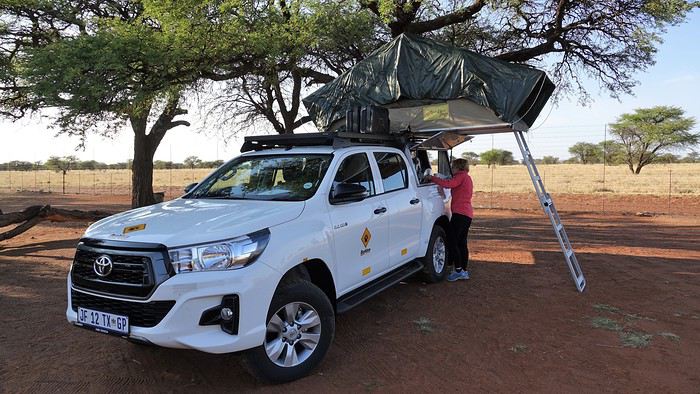
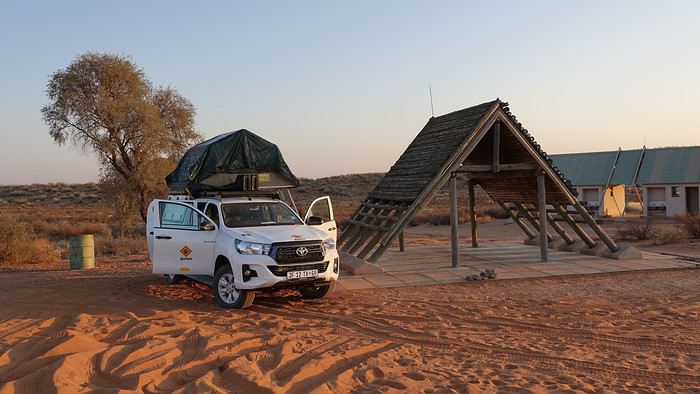
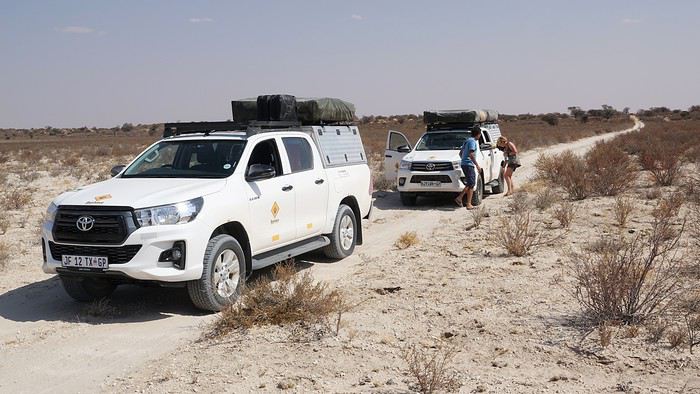
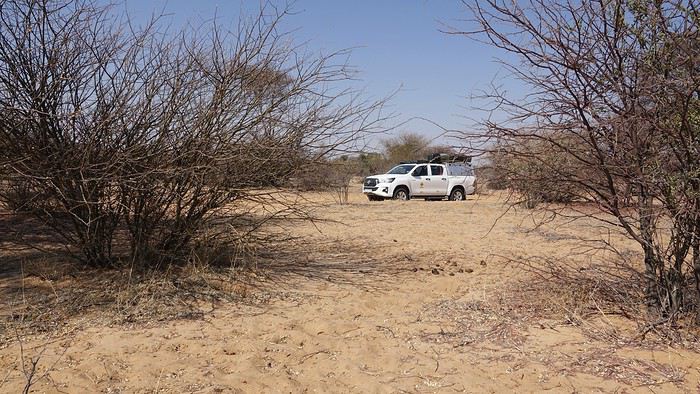
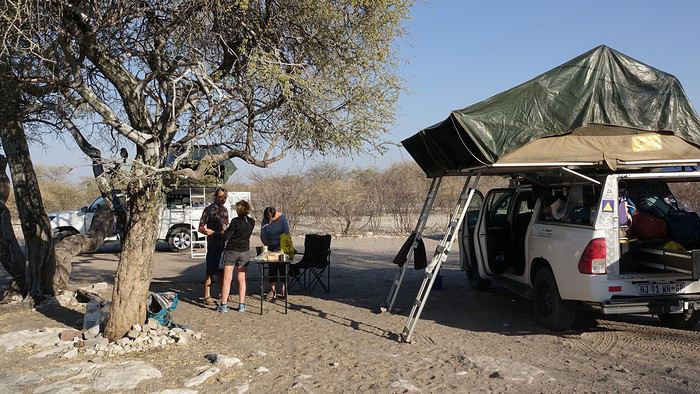
14/09/2019: Johannesburg - Vryburg After months of waiting and reading other travelers’ journals, it’s finally our turn! We arrived in Johannesburg from Nantes and Paris in the morning. We looked for the Bushlore rep—we’d rented our 4x4 from them—but there was no sign with our name! « Bushlore? She’s a woman, I saw her a few minutes ago, » someone told us. A minute later, the Bushlore employee showed up: a man! 🤪 He sped onto the highway, and just 30 minutes later, we arrived at the rental place. It’s a big operation with good organization and lots of vehicles—pretty reassuring. Our 4x4 was there, a classic Toyota Hilux fully equipped for safari: rooftop tent, dual diesel tanks, 60-liter water reserve, two batteries, two spare tires, all the camping gear, plus everything needed for *désensablement* (getting unstuck from sand). Speaking of which, is it "désensablage" or "désensablement"? Best to just avoid getting stuck in the first place! 😏 Good news… or not: the vehicle was brand new, with barely 100 kilometers on the odometer. On one hand, we figured we wouldn’t have mechanical issues or a fridge breakdown, but on the other, we knew it wouldn’t be easy to return it without a single scratch. Either way, it was our first time renting a 4x4, and we were impressed.


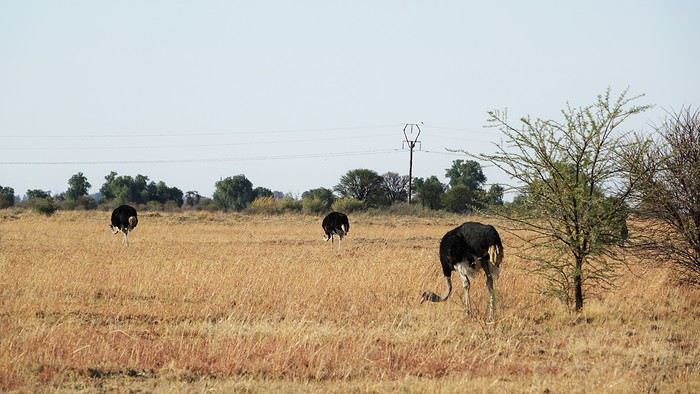
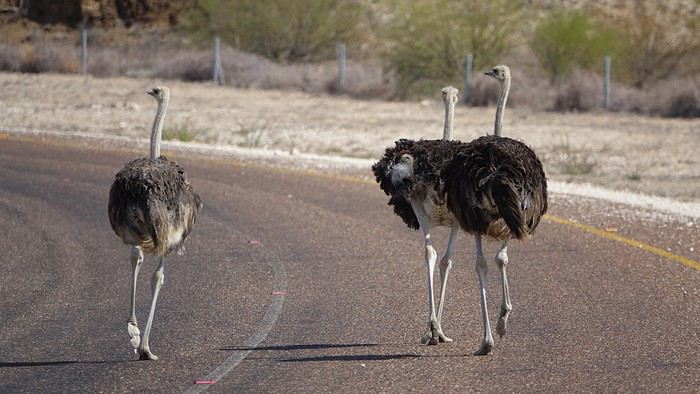
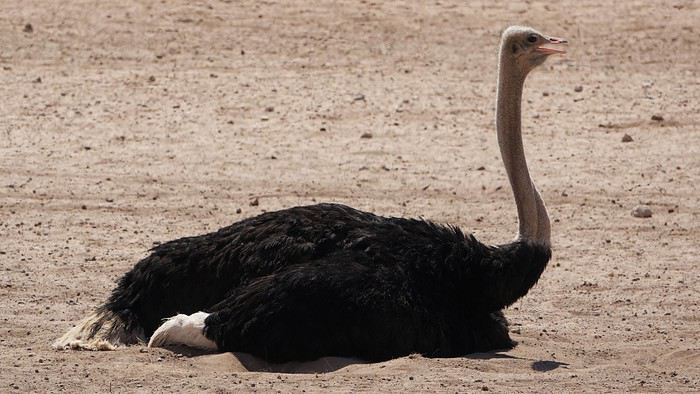
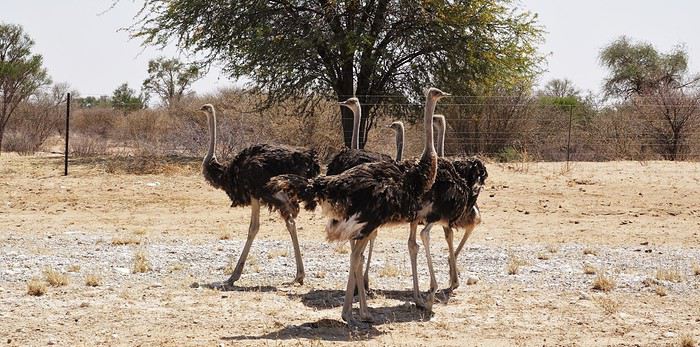
We set off toward Kgalagadi Transfrontier Park—it’s not exactly around the corner! In 1994 (when Mandela had just become President) and 2007, during our two previous trips to South Africa, we loved this park, so we couldn’t imagine going to Botswana without returning. The road was pretty monotonous, with not much to see except a few ostriches.


We stopped for the night in Vryburg at the Kameelboom Lodge campsite. It was a bit noisy since it’s close to the road, and the facilities weren’t great, but it was fine for one night.
SO Soso78180 ·
Awesome! A new travel journal in Botswana! I’m joining you in this brand-new 4x4!

Solène
RO Rouquine38 Globetrotter ·
Me too, I'm in... Botswana will definitely be our next destination in Southern Africa 😎.
OL OldPlatypus Regular ·
15/09/2019: Vryburg - Kgalagadi The night was chilly: only 6°C. Knowing that supplies in the Kgalagadi would be limited, we stocked up on groceries for several days. But disaster—it’s Sunday, so we couldn’t buy a single bottle of wine or can of beer! Rookie mistake!


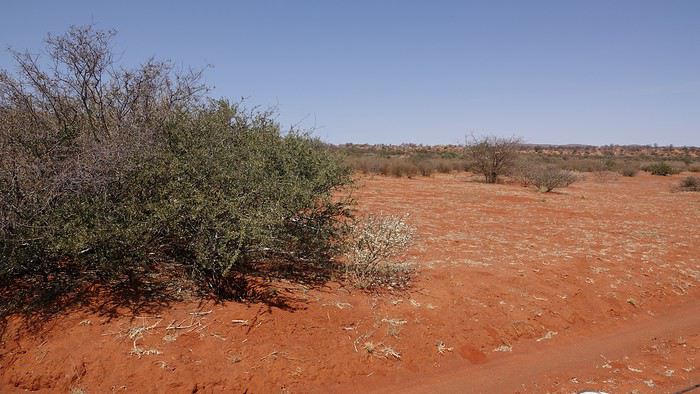
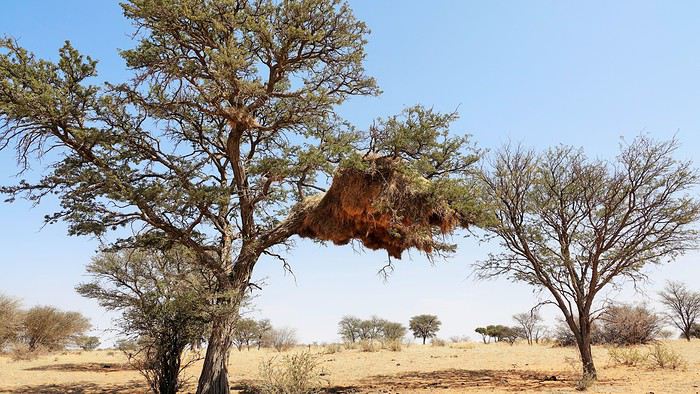
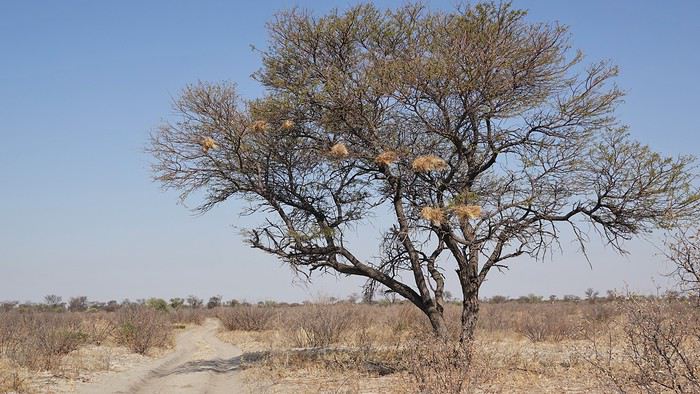
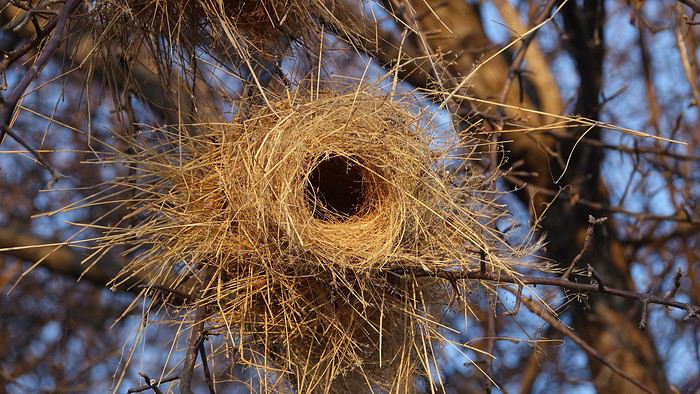
In Kuruman, we headed toward Van Zylsrus, a shorter route than going through Upington. The first red dunes appeared, along with large weaver bird nests—this was the start of the Kalahari.


We decided to cross the border at Middleputs. As Girardinpho mentions on his excellent site, this lets you join the new tarred road running along the entire Botswana-side border. While this choice made driving easier, it turned out to be a mistake—the Botswanan customs officer refused to let us bring in any fresh produce we were carrying: fruits, vegetables, and eggs (we had no meat, as there was a real risk it wouldn’t be allowed). Later, when we saw how things worked at the Twee Rivieren/Two Rivers border post—where, apparently, no veterinary checks are done—we realized we should’ve crossed there. Luckily, the officer was so thrilled to immediately find “forbidden” items in the fridge and a stray box in the trunk that he completely forgot to check the large drawer in the trunk where we’d stashed more fruits and veggies. Every little bit saved helps! Note that Middleputs is so quiet that while one official was dealing with us, the other two were playing Candy Crush and watching YouTube videos. The tarred road on the Botswana side is excellent—just watch out for cows, sheep, and ostriches.


Since we were already in Botswana, the administrative formalities to enter Kgalagadi via Twee Rivieren/Two Rivers were quick, leaving us two hours to start exploring the park’s tracks. We were thrilled to return to KTP, straddling South Africa and Botswana—a place full of great memories.


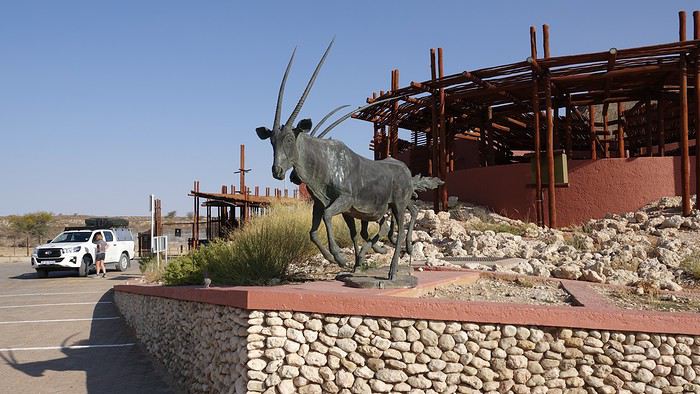
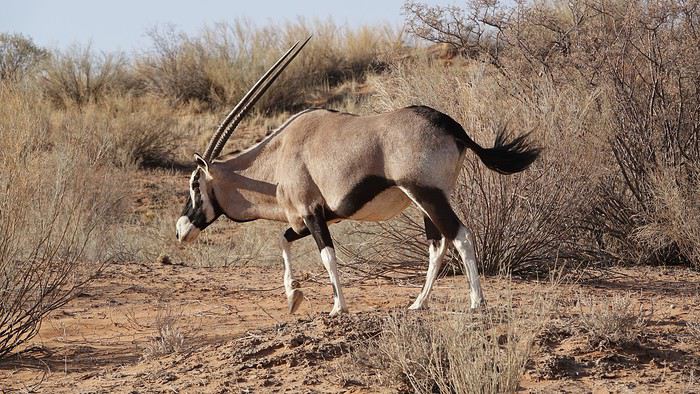
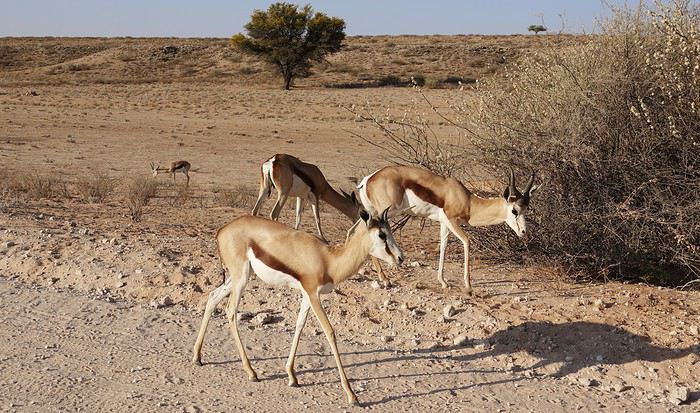
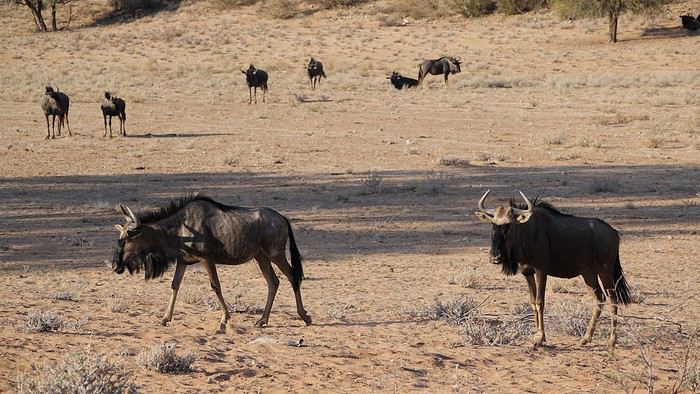
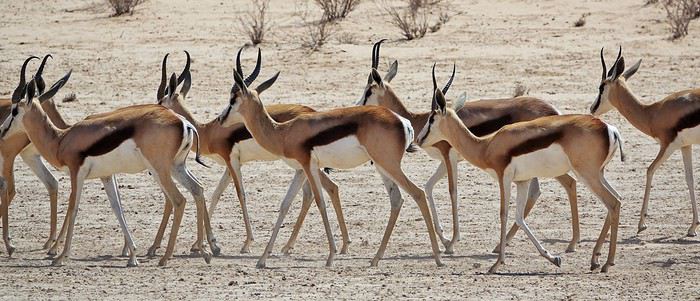
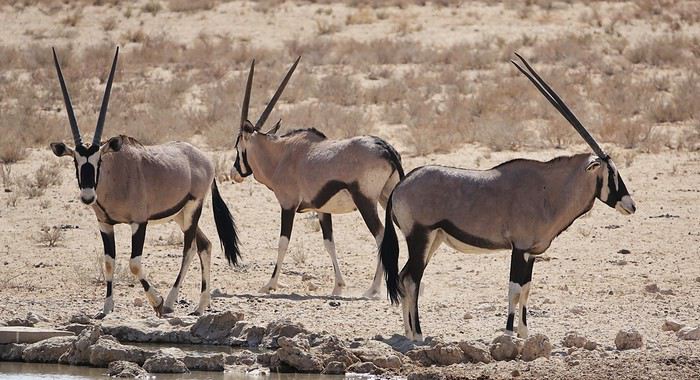
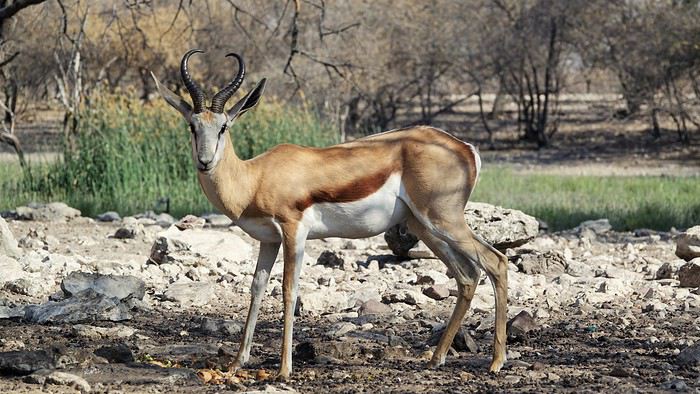
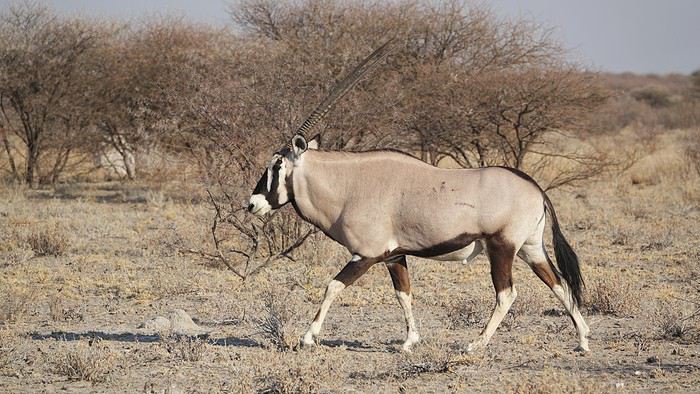
But we’d forgotten that even though the tracks are easy, you don’t drive very fast (that’s not the point anyway), and with stops to watch animals (gemsboks, springboks, wildebeest, kori bustards, etc.), we couldn’t complete the loop via the small cross-track in just two hours.


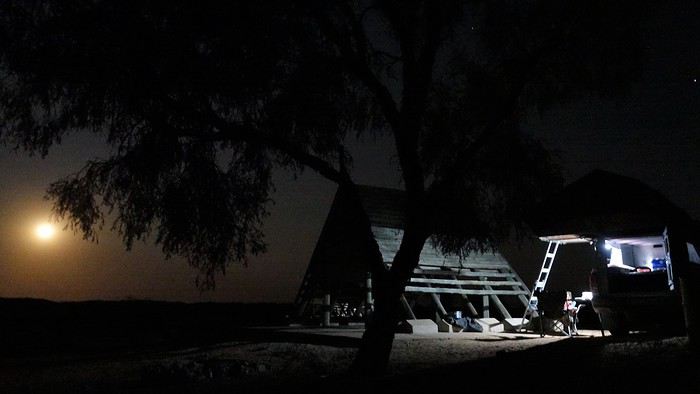
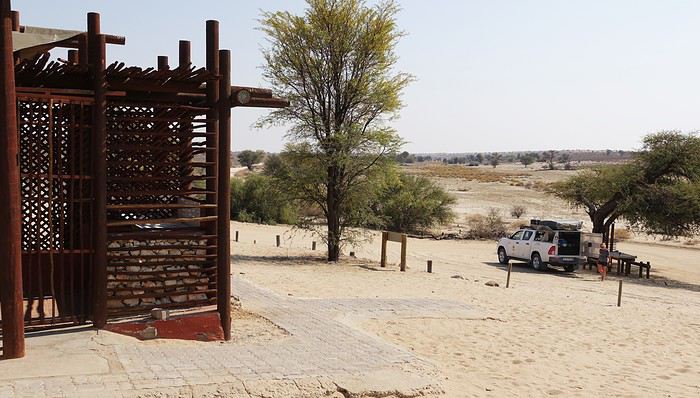
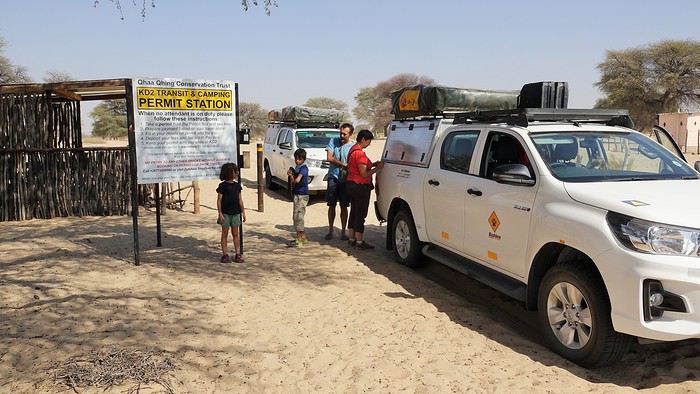
We reached the Two Rivers camp before nightfall. We’d chosen to stay only in Botswana camps, and the prices are ridiculously low compared to what we’d pay in a South African camp (which are better equipped, admittedly): for two adults and a car, it costs 44 pula for park entry and 60 pula for camping—less than 9 € per day. There are four sites at Two Rivers camp, and only one was occupied—ours, as it turned out. While we were about to set up at another free site, the occupants insisted on clearing theirs for us (apparently, they had a reservation for that night but no site number on their voucher). The facilities are a bit run-down: we were supposed to have hot showers, but there wasn’t even running water. Okay, it’s cheap, but you get what you pay for! First night in the wild, under the full moon, and since the camp is just outside the park, no risk of a lion showing up.

GI Girardinpho Veteran ·
Hi Ludo,

As Girardinpho mentions on his excellent site

Thanks, and sorry to hear you had issues with food at the Middleputs border. For us in 2015, we didn’t have any checks.

I’ll keep following your updates with interest since we’ll likely be heading back to this region next summer.
OL OldPlatypus Regular ·
Thanks, Nathalie. It was still a great idea to join the paved road on the Botswana side. I think the customs officer was a bit overzealous. In the end, it wasn’t too bad—we didn’t starve in the Kgalagadi. 😉 I checked out your site many times before leaving, both for the amazing photos and all the info I could gather. And it was fun seeing the family grow and the kids get older with each trip...
AT Atila Globetrotter ·
The Botswanan customs officer refused to let us bring in any of the fresh produce we were carrying: fruits, vegetables, and eggs (we didn’t have any meat because there was a real risk it wouldn’t get through)

We’d also wanted to use a smaller border post during our last trip. The South African customs officer had warned us that our supplies wouldn’t be allowed into Botswana. So we opted for the easier option of the park border post, where nothing is ever checked.
TO Toopil Veteran ·
Wait for us, we're boarding! 😎
OL OldPlatypus Regular ·
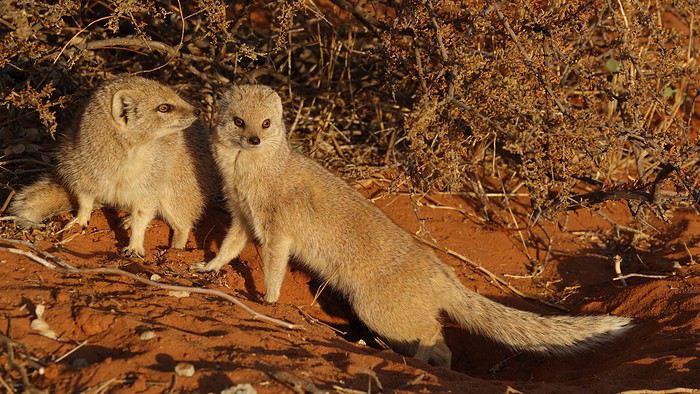
16/09/2019: Kgalagadi When we woke up, we were surrounded by yellow mongooses that weren’t shy at all. Nice!


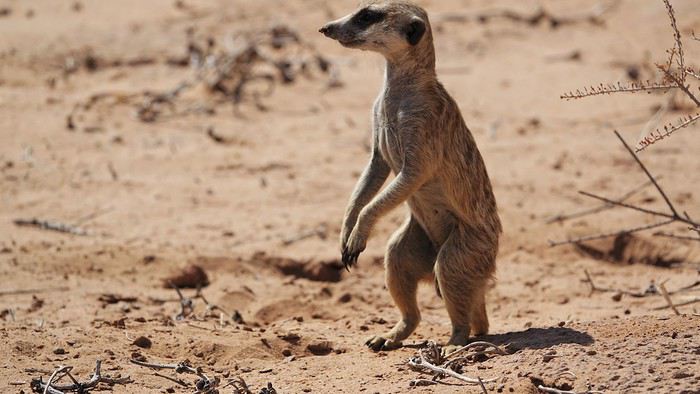
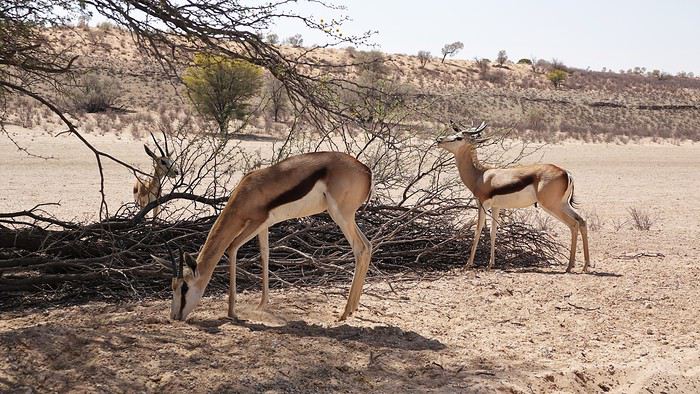
As soon as the park gates opened, we set off to explore the trails. But we didn’t have much time ahead of us because we had to meet our friends Sylvain and Corinne, and their kids Alex and Claire, at 8:00 AM at the Kgalagadi reception. They’re on a year-long round-the-world trip and just arrived from Madagascar, and we’re supposed to explore Botswana together. We’d agreed on a first meet-up at 8:00 AM, another at 9:00 AM in case one group or the other wasn’t there, and at worst, we’d meet at the Rooiputs camp that evening. At exactly 8:00 AM, we were at the park entrance… but they weren’t! What to do with the little hour we had ahead of us? Knowing we wouldn’t have a chance to shower for the next three or four days, and since the showers at Two Rivers Camp were out of order, we decided to take advantage of the facilities at Twee Rivieren Camp right next door. At 9:00 AM, we were back at the park entrance… and so were our friends! Despite the joy of seeing each other again, we didn’t linger because the trails were waiting for us. To easily communicate between vehicles, we dug out some walkie-talkies that hadn’t been used in years. Old tech can still come in handy when there’s little or no network! We headed toward Mata-Mata. In addition to the usual gemsboks, springboks, wildebeest, ostriches, jackals, and other easily visible animals, we managed to spot a few meerkats.


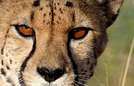
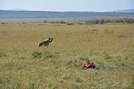
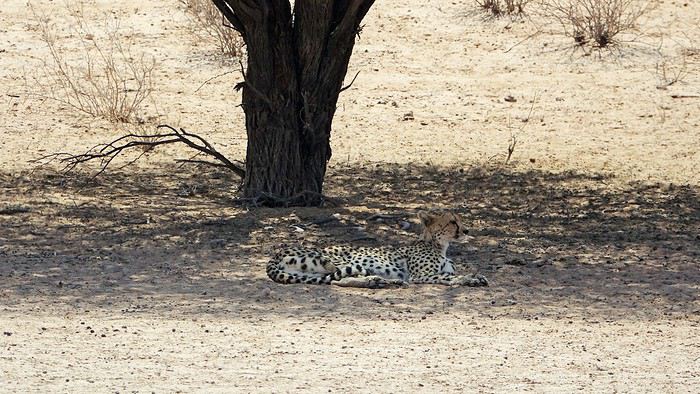
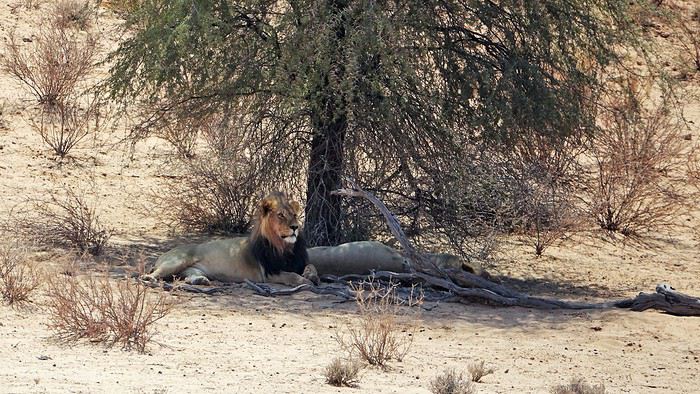
The excitement rose a notch when we spotted our first feline: a cheetah lying under a tree, unfortunately a bit far from the trail (though we could see it very well with binoculars). Less than ten minutes later, we came across a pair of lions, also napping and far from the trail. A little frustrated not to be able to observe them better, it still gave us confidence for the rest of the trip.


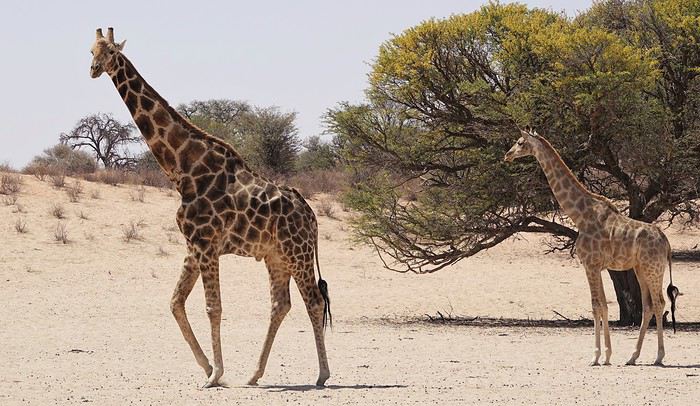
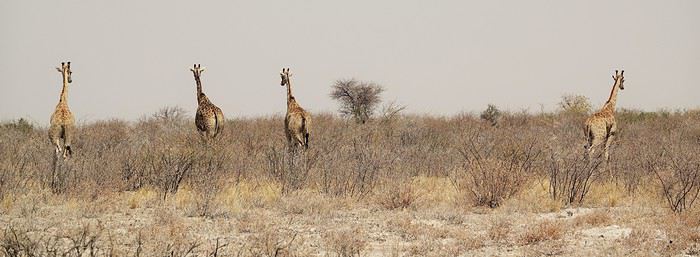
Still a bit surprising in this arid environment, what I’d call "the giraffes of Mata-Mata" (since, as far as I know, you can only see them in this part of the park) were drinking at a waterhole.


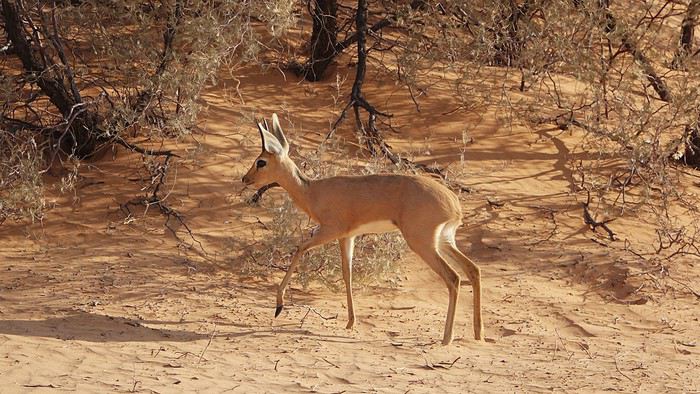
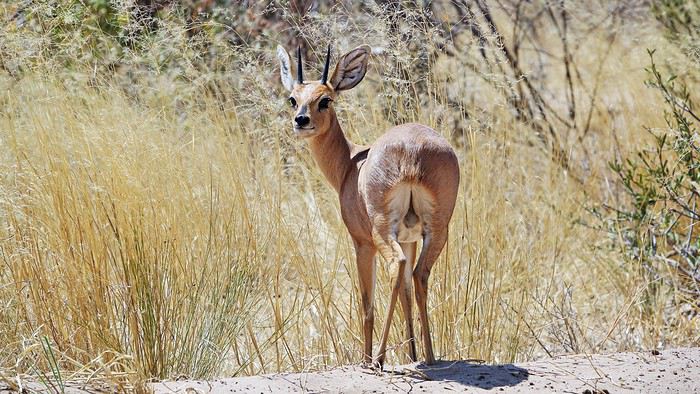
The temperature climbed to 38°C! We took a short break at the Mata-Mata camp and took the opportunity to stock up on wine and beer since we hadn’t been able to do so yesterday, Sunday. To get to the Rooiputs camp where we’d spend the night, we’d originally planned to take the main cross-route to the Nossob River valley, but the day seemed too far along, and it was more reasonable to backtrack along the Auob River and take the shorter cross-route. There was almost no one on this trail where we spotted steenboks, recognizable by their large ears.


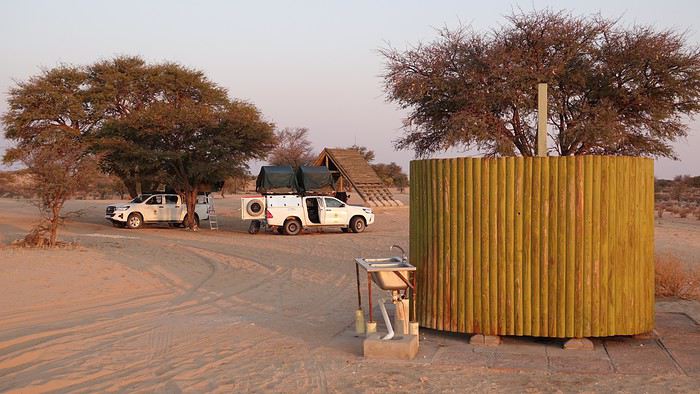
The Rooiputs camp has eight sites spaced far apart. We had dry toilets, a cold shower (not really cold), and running water. Pure luxury, or almost!


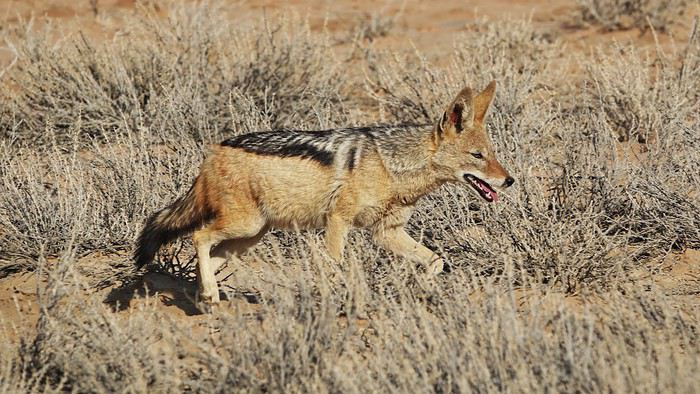
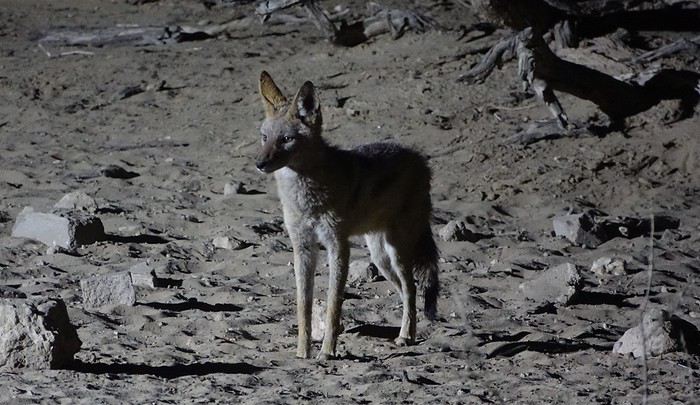
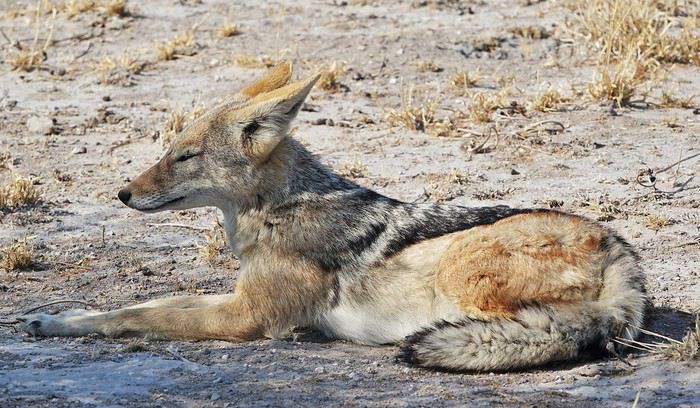
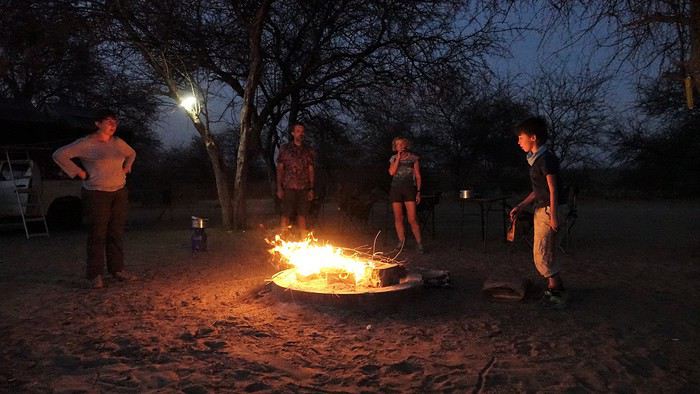
This was the first evening we spent in an unfenced environment, so we made a fire—apparently, it keeps animals away… Well, not the jackal that seemed very interested in our meal! We ended the evening with some old rum from Madagascar brought by our friends.
OL OldPlatypus Regular ·
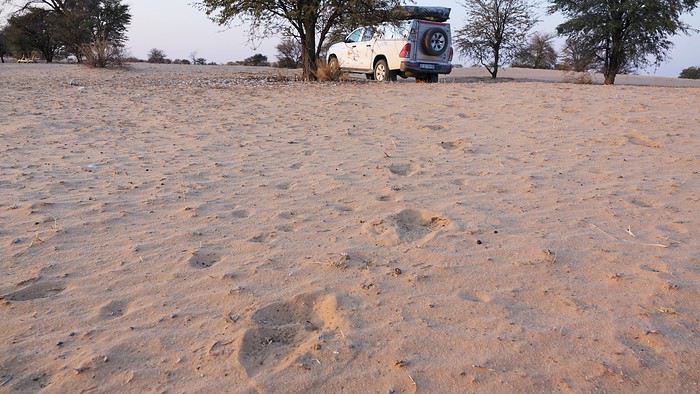
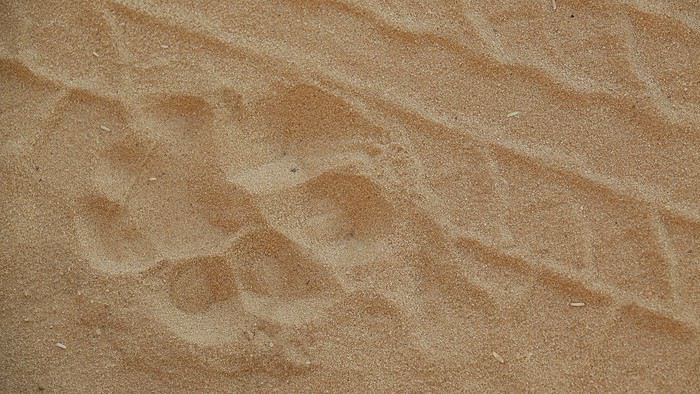
TUE 17/09/2019 : Kgalagadi During the night, we clearly hear a lion roaring. Far away? Not far? Hard to tell… In the morning, campers from the nearest site come over to see us: - "Did you see the lion last night?" - "Seen? No, but heard? Yes!" - "Yet it passed right here!" And they show us its tracks just thirty meters from the car… We kick ourselves for not trying to see it!


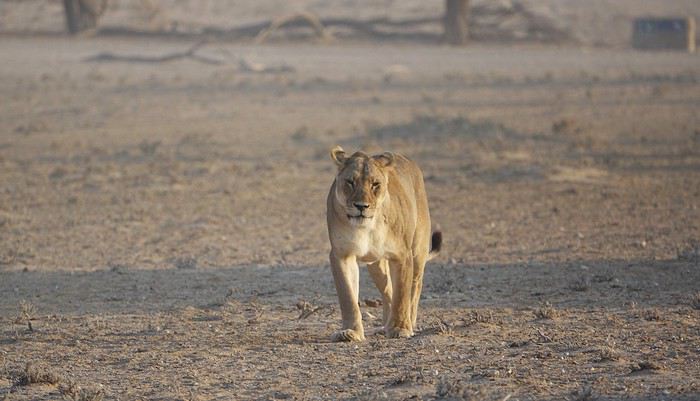
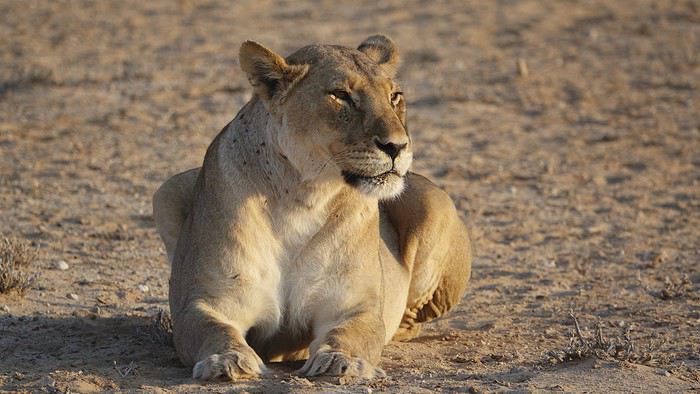
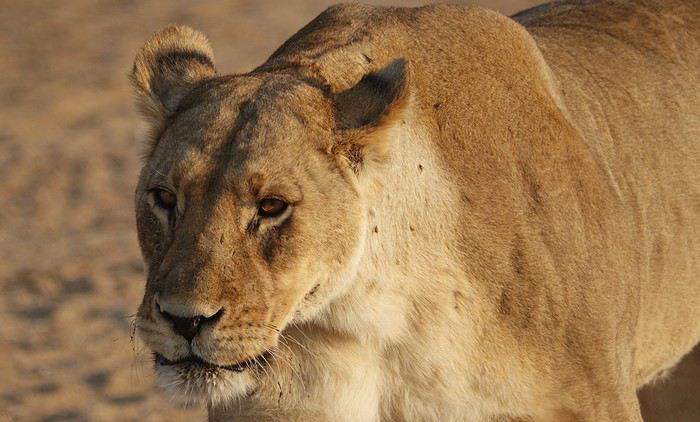
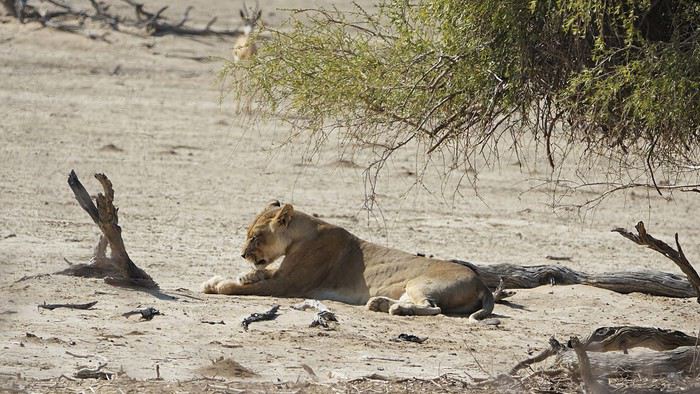
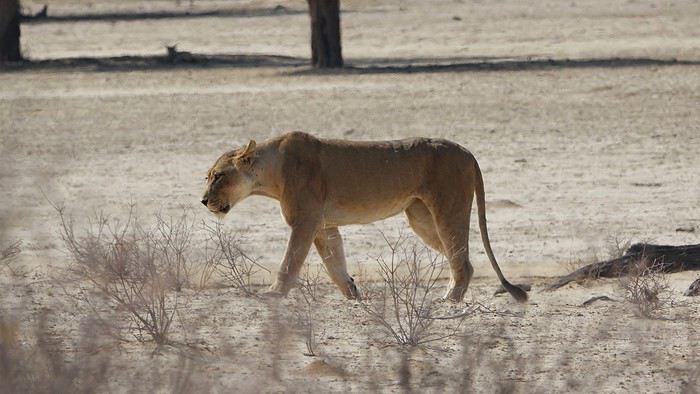
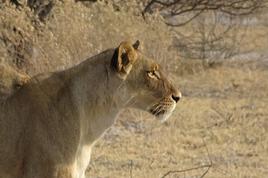
A long day of driving awaits us. Even though we made our reservations nearly eight months in advance, we couldn’t find an available spot at the Nossob or Polentswa camps. So we have to head to Sizatswe, all the way north in the KTP, while we’re currently at Rooiputs, way down south. Luck is on our side because just a few kilometers after leaving camp, a lioness appears in front of us. She walks calmly alongside the track, then stops for a few minutes almost level with us before crossing behind the car and finally disappearing behind a dune. The day is off to a great start!


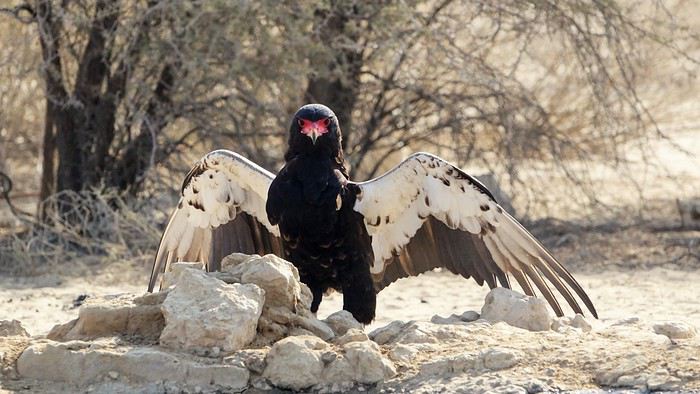
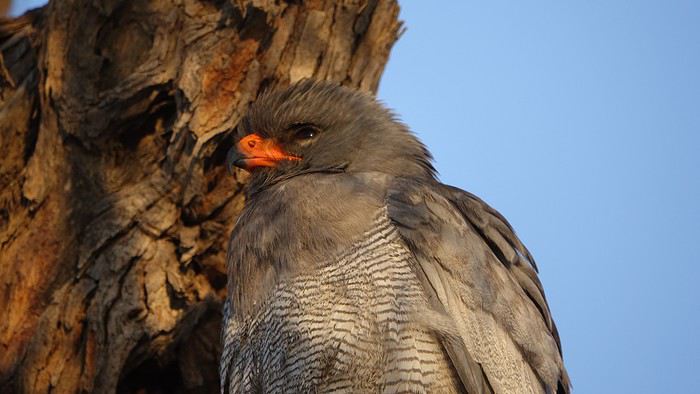
We stay alert but only see the park’s usual herbivores afterward, along with several bird species, including vultures, chanting goshawks, and bateleur eagles.


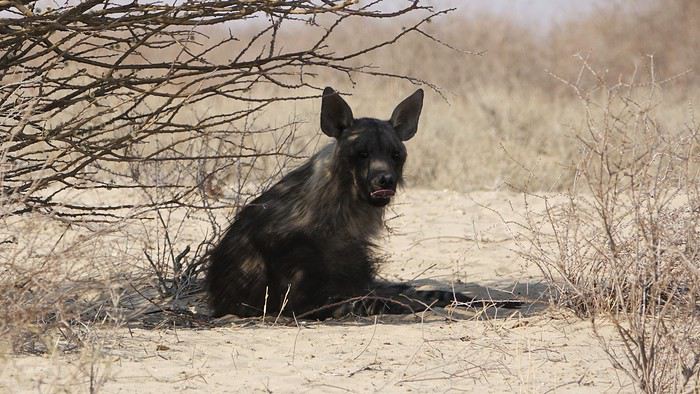
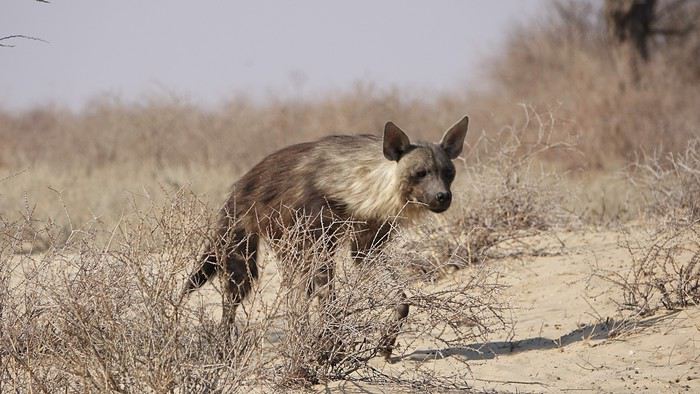
While we’re stopped at a waterhole watching gemsboks, we realize that behind us, just over our shoulders, a brown hyena is lying in the shade of a bush. It’s the first time we’ve seen this species, and we’re thrilled. It gets up, walks toward us, but eventually turns back, and we lose sight of it.


A little later, we arrive at Nossob and ask on the off chance if there might be a camping spot available. And just our luck—there is!!! It’s a "premium" site, meaning it has a private bathroom block. The price is pretty steep, especially since we also have to pay a day’s park fee at the South Africa rate, but we don’t hesitate long. We’re too happy to split the trip into two and stay in what’s maybe the best area for spotting big cats. It’s the middle of the day, 38°C, and animals are scarce, so we take a break now that we’ve got a great spot. Later in the afternoon, we head north on the track. At the Kwang waterhole, a car is stopped even though there are no animals around. Odd! The occupants tell us there’s a pair of lions a few hundred meters further on, and they’re waiting there hoping the lions will come to drink. A few hundred meters down the track, there are no fewer than ten cars already clustered together. It’s hard for us to see the lions, who are partly hidden behind a tree. We wait for the vehicles to move a bit. It seems the lions have feasted recently and aren’t likely to leave anytime soon.


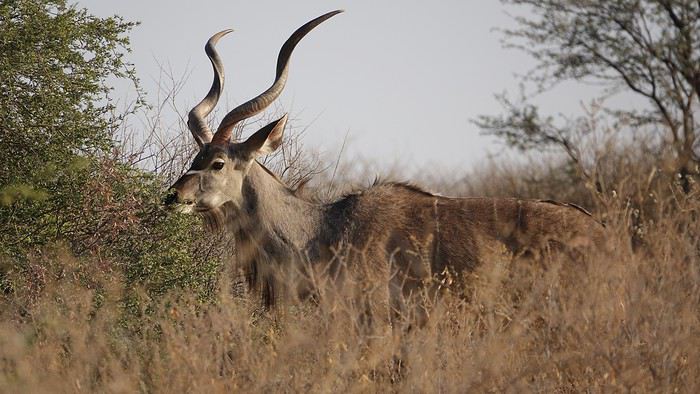
It’s the end of the day, and we head back to Nossob camp. We fill up on gas for the days ahead since the next station is far away. At the waterhole, kudus and jackals come to cool off. Jackals are also roaming inside the camp. Another big plus of this unplanned stop at Nossob: we can take a shower!
GI Girardinpho Veteran ·
How lucky to have seen a brown hyena. 🤩 It’s exactly to have a chance to see one too that we’re thinking of maybe heading to Kgalagadi next year.
TO Toopil Veteran ·
Lucky me. I think this hyena is gorgeous!
SY Sylvie56 Veteran ·
Amazing encounter with the brown hyena! Never seen one myself before. It reminds me of Mark and Delia Owens' book *The Cry of the Kalahari*.
RO Rouquine38 Globetrotter ·
Amazing! Indeed, the brown hyena and the magnificent lioness 😊 For the lion at night, you’d need a camera trap like Sylvie used in Kenya—it’s awesome! 😄
OL OldPlatypus Regular ·
18/09/2019: Kgalagadi

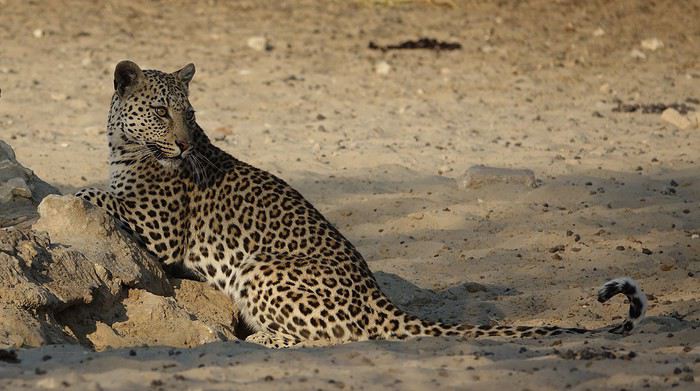
The sun hasn’t risen yet when we leave Nossob for the Rooikop waterhole, a few kilometers to the south, where a leopard was spotted the day before. We stay for about fifteen minutes, but no animals show up.


We continue to the Marie Se Draai loop. Big cat tracks are clearly visible on the trail, but none appear—just kudus, springboks, and gemsboks. A handsome goshawk keeps watch over the waterhole.


We head back toward Nossob, as the journey to Sizatswe today is quite long. Along the way, we stop briefly at Rooikop just in case the leopard decided to make an appearance—but no luck! Just as we’ve barely left the waterhole, our friends following just a hundred meters behind shout over the walkie-talkie, "The leopard’s coming!!!". Quick reverse, careful not to scare the animal, we keep our distance. It drinks for three minutes, then leaves and disappears into the tall grass. You really had to be there at the right moment—it all came down to a few seconds!


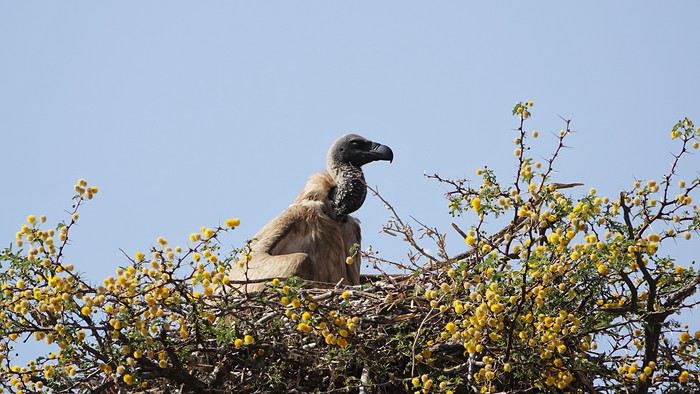
North of Nossob, we arrive at the spot where we’d seen a pair of lions the day before. Incredible—they haven’t moved! The male is still well hidden behind a tree, and the female is a bit more visible. They seem to still have food and aren’t about to leave. Just like yesterday, the lioness gets up and moves about twenty meters away. A vulture watches the scene.


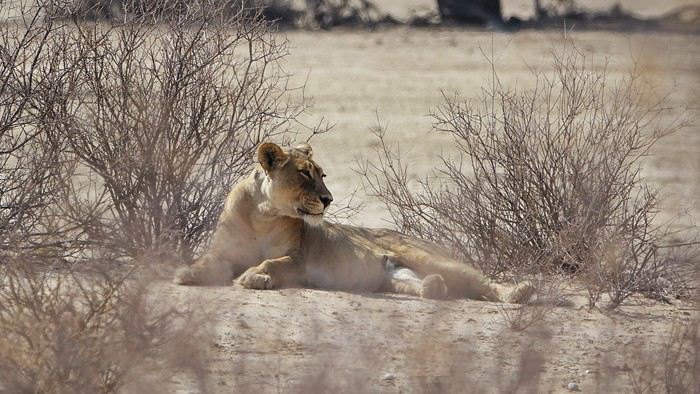
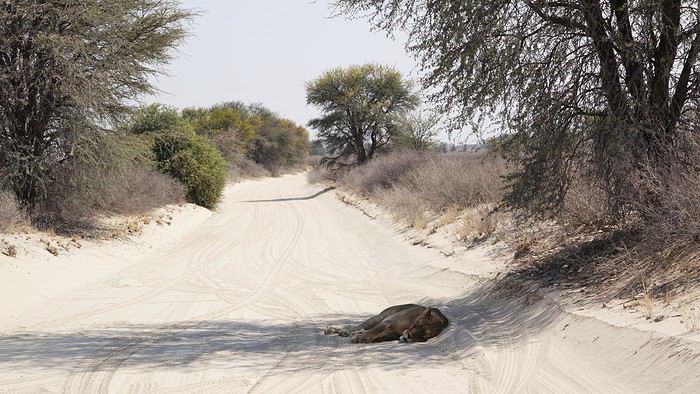
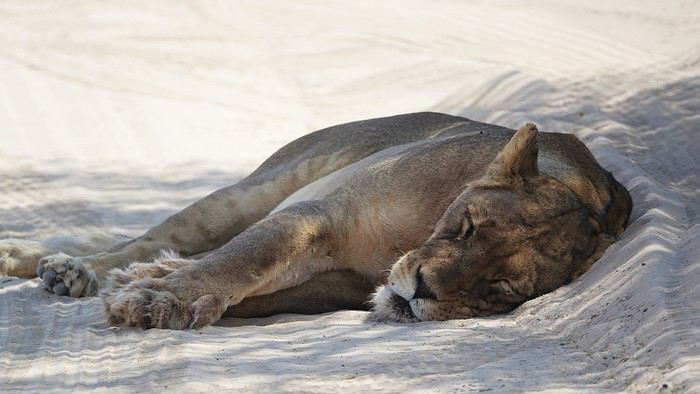
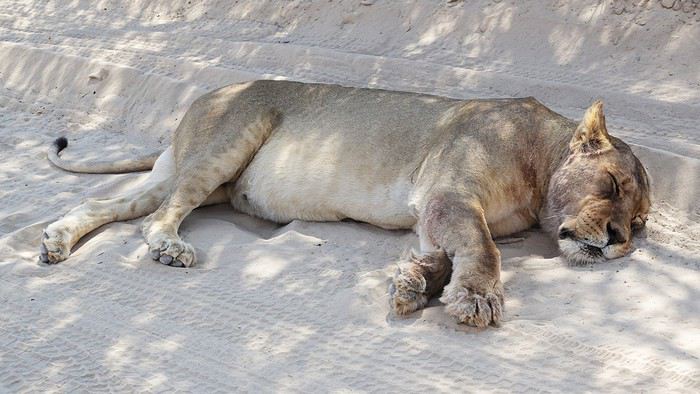
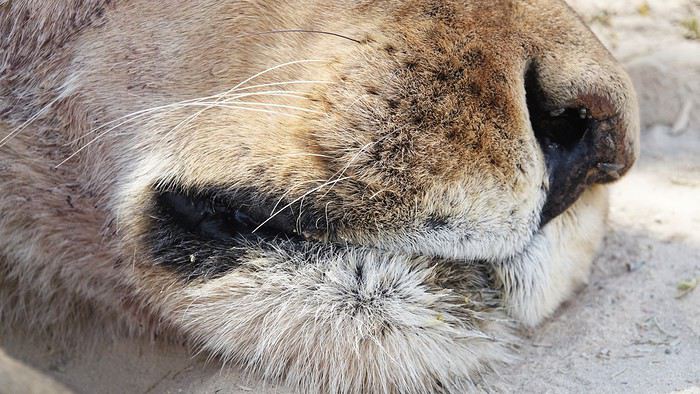
Further on, just before Polentswa, we spot an animal lying on the trail. We stop at a safe distance and scan it with binoculars—it’s a lioness! We slowly approach until we’re level with her (luckily, the trail is wide here). She doesn’t budge, not even opening an eye! We stay a while and observe her from every angle: she’s got flies in her nostrils. But since she seems fast asleep, we decide to move on.


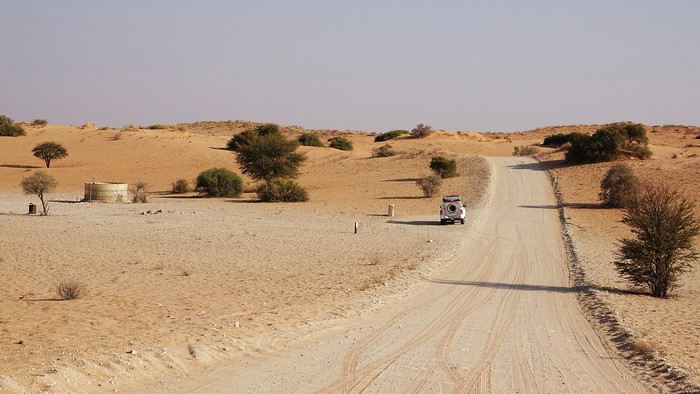
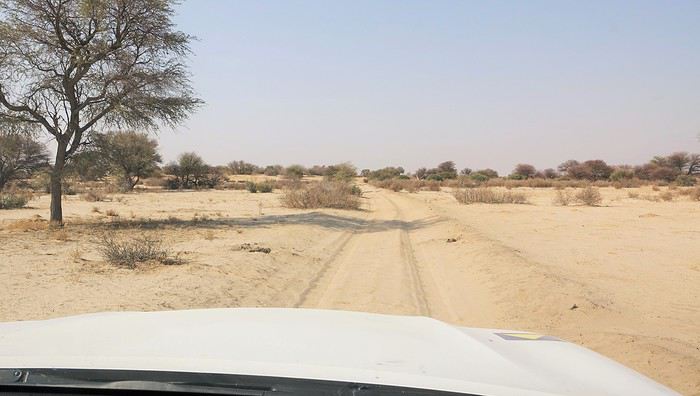
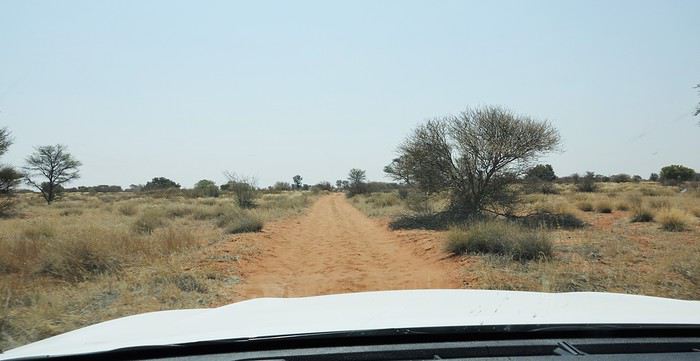
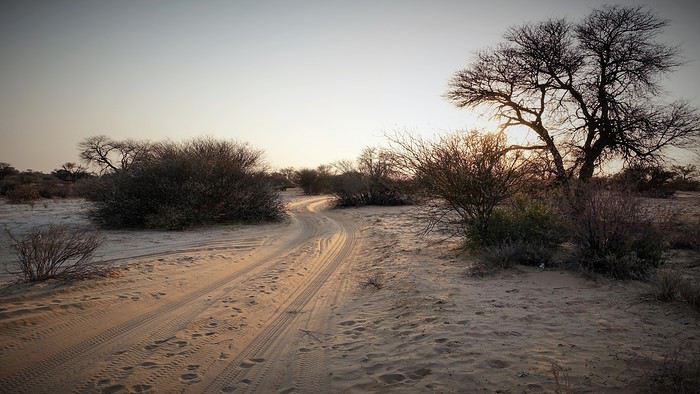
At Kannaguass, we leave the well-maintained South African trails and head toward Kaa in the far north. For the first time, we face the deep sand of Botswana’s tracks. The sand itself isn’t a problem—the Toyota Hilux handles it well. The issue is that the trail is often narrow and lined with acacias with sharp thorns: hard to avoid scratches on the brand-new bodywork! We spot gemsboks and steenboks near the trail, seemingly unaccustomed to vehicles. Driving requires constant attention and is pretty tiring for us inexperienced drivers. Twice, in more open areas, we stop for about ten minutes to rest a little, while still keeping an eye out for predators.


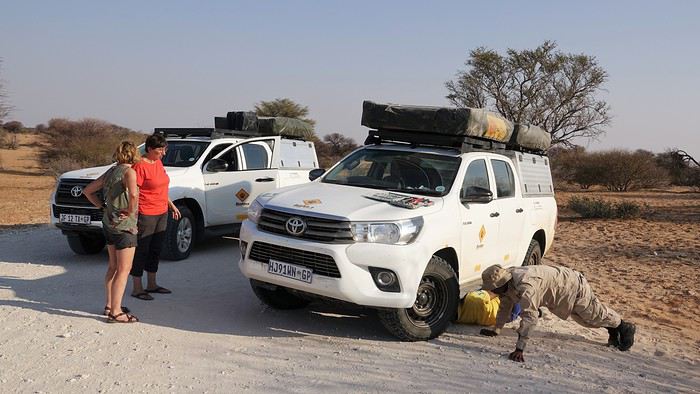
It takes us a good three hours to reach Kaa from Kannaguass. Just before arriving, our friends’ 4x4 makes a strange noise. A quick check reveals that the underbody protection plate has partly come loose. Despite its thickness, it’s now completely bent under the vehicle and scraping the ground. We decide to push on to Kaa Gate before dealing with it. Once there, the rangers immediately help us unscrew the remaining bolts and remove the plate entirely. Given its thickness, there’s no way we can fix it ourselves. Oh well, our friends will have to do without it for the rest of the trip!


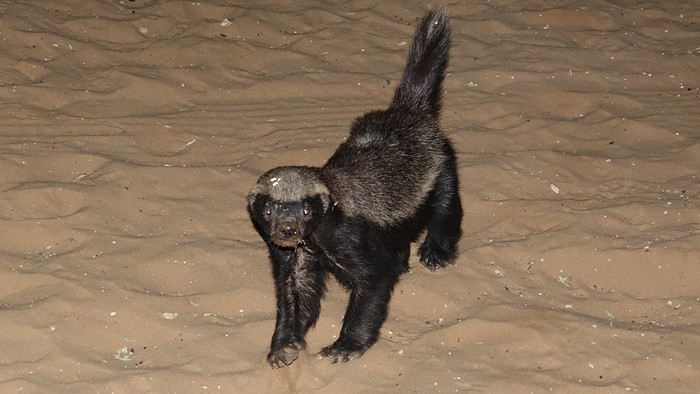
Normally, we’d continue to Sizatswe, where we have a reservation for tonight. However, there are two campsites at Kaa, but they’re emergency spots for those arriving at Kaa Gate from outside without a booking. From the start, we’d planned to negotiate with the rangers to camp at Kaa. First, because Sizatswe has no facilities—not even dry toilets. But also because tomorrow we face a long drive to Ghanzi, and leaving from Sizatswe would add an extra hour. Given how late it is, the rangers agree without hesitation. Great! Plus, we get to use decent restrooms with running water and showers. Before nightfall, we have a little time to visit a waterhole about ten kilometers away: we only see kudus, springboks, and wildebeests. Back at camp, we’re visited by a fearless honey badger.


After this long, eventful day, we enjoy some Amarula.
OL OldPlatypus Regular ·
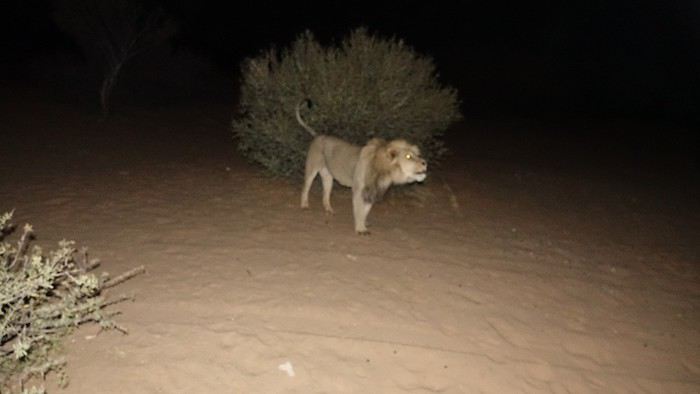
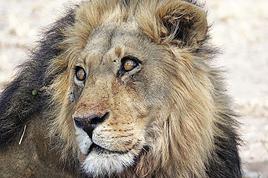
19/09/2019: Kgalagadi - Ghanzi In the middle of the night, we’re woken up by the roar of a lion. After hearing it a second time, it’s clear—it’s getting closer! Disappointed we missed the one that had crossed the Rooiputs camp two days earlier, we’re determined not to let this second chance slip by. The rooftop tent is an excellent observation post. We crack open the tent flaps. The moon is almost full, and we can see the surroundings pretty well. Suddenly, a shape appears and moves closer. No doubt about it—it’s a lion, or rather a lioness, perfectly visible as she passes ten meters from the car. But another roar proves she’s not alone. A few moments later, a lion approaches, right in front of us. We’re both excited and terrified when he stops just a few meters away and lets out a massive roar. We hold our breath. We’re frozen… Well, not entirely, since we try to capture the moment with a photo. Wide angle and rough focus in the dark… Too bad, the photo’s blurry!


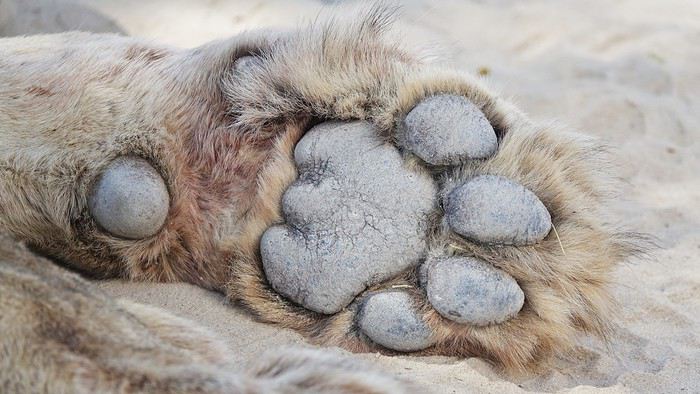
Completely unfazed, the lion leaves, brushes past the car, sniffs a friend’s vehicle tire, then disappears into the dark. Needless to say, we didn’t get much sleep the rest of the night. At dawn, we climb down carefully and check out the paw prints left by the big cats. Our friends had heard them too but didn’t dare open their tent. We don’t have time to waste this morning—the drive to Ghanzi promises to be long.


At Kaa Gate, we sign the KTP exit register. The previous travelers left two days ago, and the ones before that just a week earlier—the area is really quiet! The track toward Zutshwa is deep sand, but it’s wider than the last one in Kgalagadi, so driving is a bit easier. There are still a few wild animals around.


We arrive in Zutshwa with a strong wind kicking up a lot of dust. Locals wave as we pass. There’s a 50 pula toll here (no one checked when we passed), which you can pay in rand, euros, or US dollars if needed.


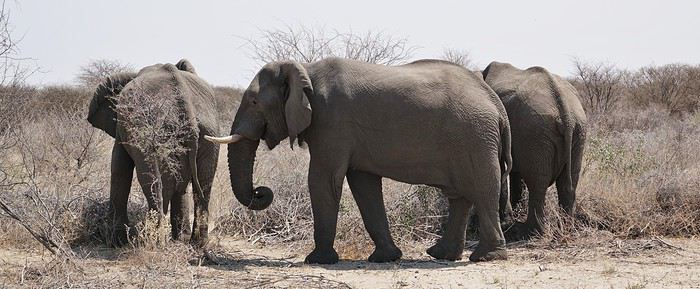
Further on, we pass through the small town of Hukuntsi. Though it has several gas stations and plenty of shops, we keep going to Kang, especially since the last stretch is paved. In Kang, we withdraw our first pulas from an ATM. We also get our tires reinflated (we could’ve/should’ve done it in Hukuntsi) and fill up on gas, including the two extra jerry cans we rented from Bushlore. The rental company was a bit surprised we needed jerry cans on top of the Hilux’s double tank. Let’s just say it’s for peace of mind, especially for the five or six days north of Maun with no possible resupply. The road to Ghanzi is pretty monotonous. Suddenly, a big truck coming toward us flashes its lights. What did we do wrong? Are we speeding? Losing the rooftop tent? Not at all! It’s just to warn us there are elephants by the road. We also spot hartebeest, ostriches, and vultures.


When we arrive in Ghanzi, we head to the lush Kalahari Arms Hotel and Campsite, where we’d planned to spend the night, but it’s fully booked and we hadn’t reserved. So we go to Thakadu Bush Camp, just south of town. The campsites and facilities are decent. There’s a small watering hole where different antelope species come to drink—sometimes rarer animals too, but we don’t see any.


We’re mostly worried by the signs warning about thefts and advising not to leave anything visible in the car. The camp also has (slow) Wi-Fi, which lets us update our families and friends.

OL OldPlatypus Regular ·
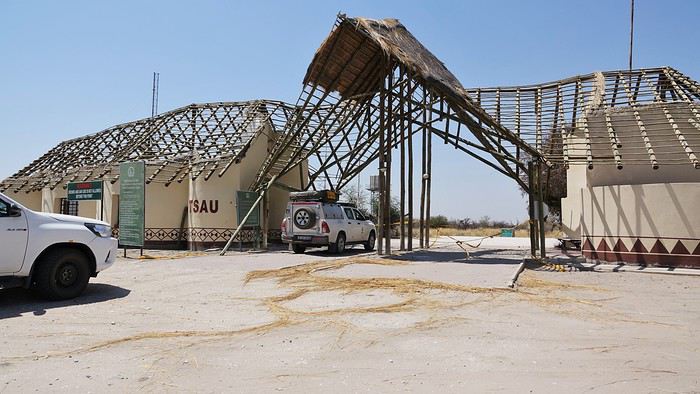
09/20/2019: Ghanzi - Central Kalahari We finish up yesterday’s big shopping with the purchase of firewood and fill up on gas in preparation for the days ahead. We’re heading to the Central Kalahari Game Reserve, where resupplying will be impossible. After about an hour on the road to Maun, we turn right toward the CKGR. The sandy track forces us to deflate the tires, but we make pretty good progress until Tsau Gate, the northeast entrance to the reserve.


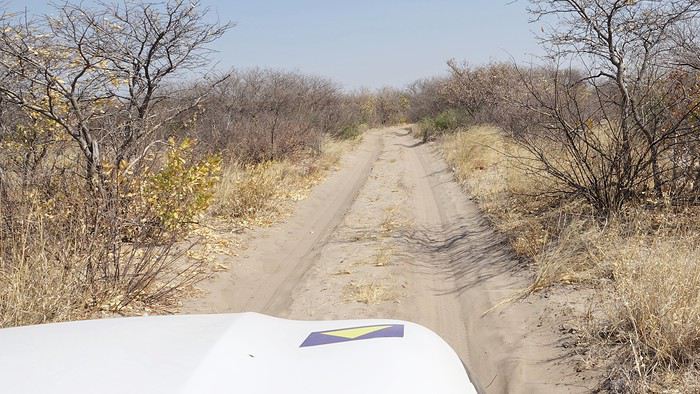
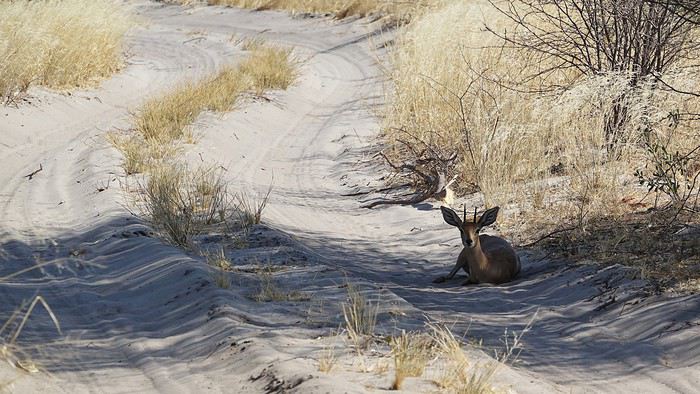
Elephant droppings are everywhere here, and the friendly ranger who checks us in suggests we head to the waterhole just one kilometer south. There’s no doubt elephants are in the area, but unfortunately, we don’t spot any. We continue for about thirty kilometers along the track that runs along the northern boundary of the reserve. It’s relatively easy to drive but monotonous, and the vegetation blocks the view of any animals that might be around. A few steenboks, lying in the shade, bolt as we pass. When we turn due south toward Motopi Pan, the track gets tougher. Alternating between deep sand, corrugated sections, and ruts, it’s narrow and lined with acacias that scratch the car. Sometimes, the vehicle lurches sharply from side to side or bounces violently. The drivers, who still have little experience with 4x4s, have to stay focused.


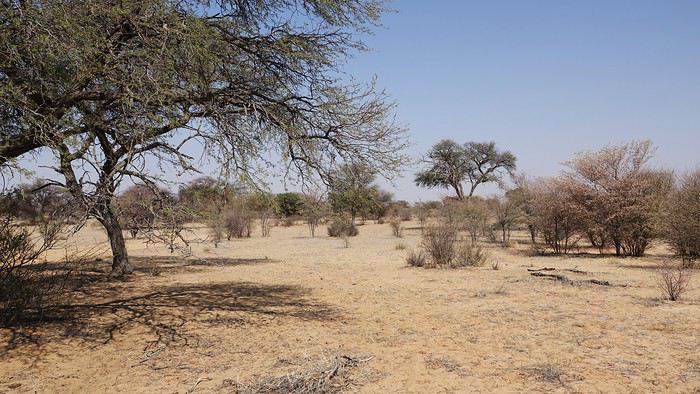
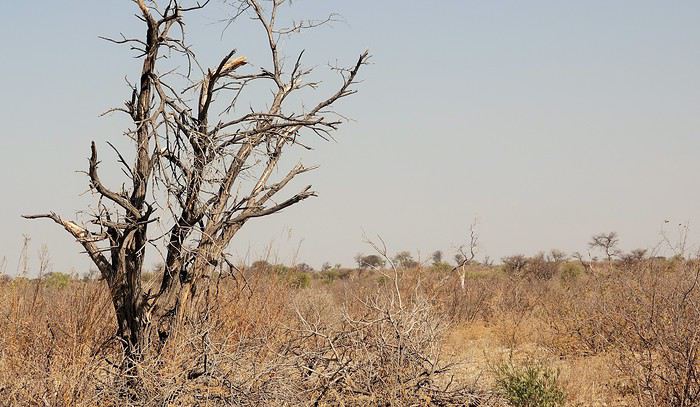
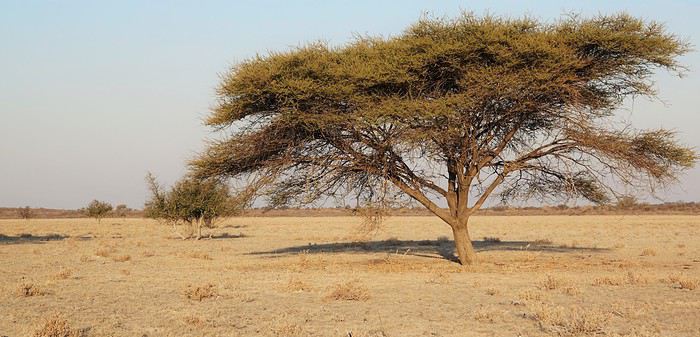
Plus, the vegetation still blocks most of the view, which isn’t much fun. It gives us the feeling that the Central Kalahari is truly wild and has to be earned. The landscape becomes nicer when we enter Passarge Valley: the vegetation is less dense, the dry grassy savanna looks like the classic African bush, and wildlife becomes more visible (springboks, giraffes, gemsboks, ostriches).


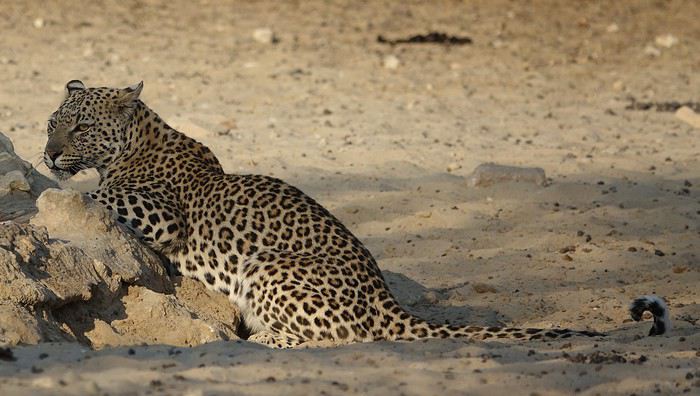
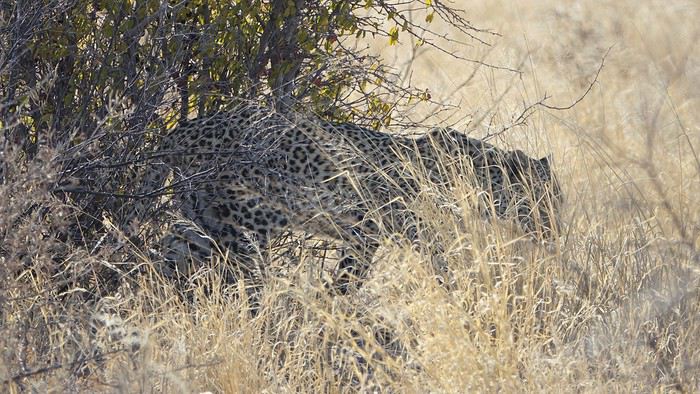
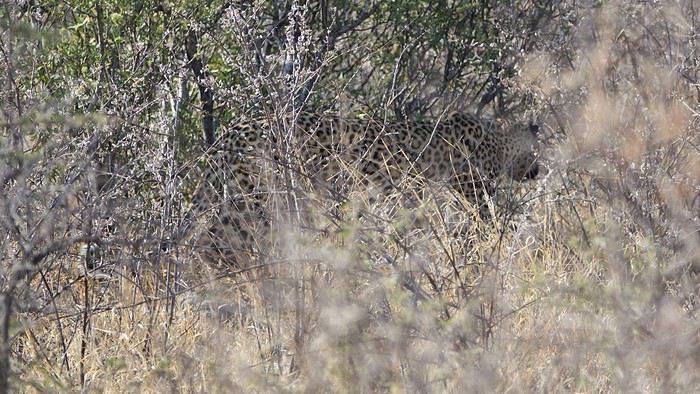
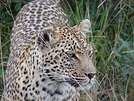
Suddenly, emergency brake! There’s a feline shape lying in the shade of a bush about ten meters from the track… It’s a leopard! Unfortunately, it’s barely visible behind the tall grass… We wait a while in case it decides to move… And we’re glad we did because it stands up, but ultimately heads in a direction that takes it away from us. Too bad—we didn’t get a good look at it!


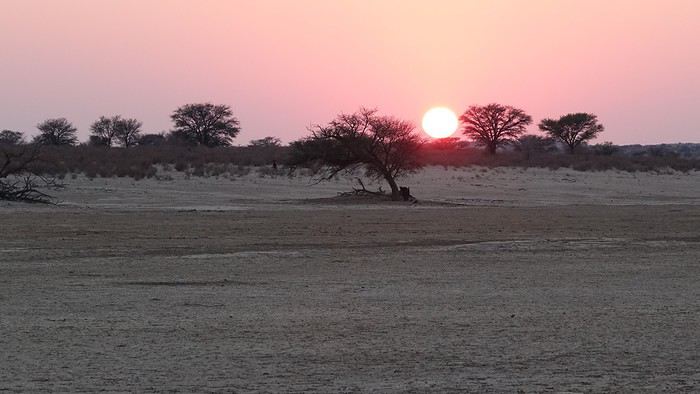
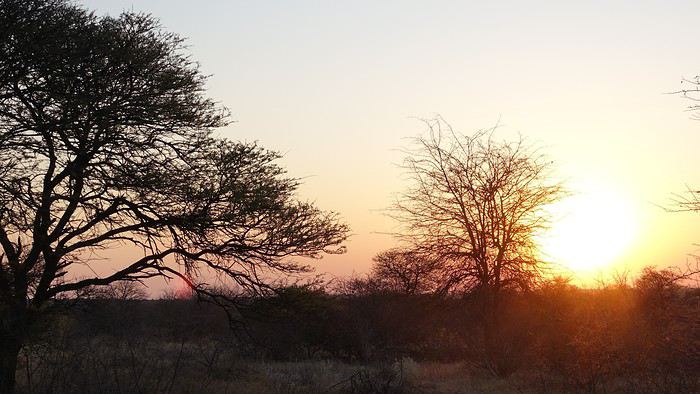
The sun starts to set, and the Kalahari becomes stunning. The track is still long until campsite CKPAS1, where we arrive just before nightfall, pretty exhausted. Dry toilets, out-of-service bucket shower: at 130 € (for the six of us), yes, the Central Kalahari has to be earned—financially too! Even though the vegetation is quite thick, the site overlooks the plain and is rather nice. We spend a pleasant evening around the fire, recapping the day that’s ending and looking ahead to the next one. The friends don’t want to wake up at dawn, so we’ll start the morning on our own.

AI AirOne Globetrotter ·
That’s wild! Lions crossing the camp at Kaa Gate—we had the exact same experience. They roared through the camp in the middle of the night, and we found them at the nearby watering hole the next morning. During the crossing, we didn’t dare peek out of the tent—let’s just say it was a ground tent… The next morning, after their nap at the watering hole, the lions crossed the camp again in the opposite direction. It really seems like this is a resident pride that’s been there for years, and this kind of adventure must happen all the time. Kaa Gate campsite comes *highly* recommended! 😎
TO Toopil Veteran ·
Even though it was hidden, it's a real treat to have spotted a leopard!
OL OldPlatypus Regular ·
That’s absolutely true: quite a few travelers have mentioned seeing lions near the Kaa Gate camp. They were clearly patrolling their territory, and it seemed like a regular thing...

Similar discussions

You might also like