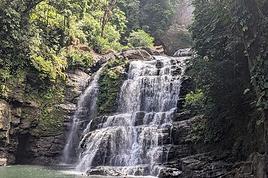
Hello 🙂
I should be serving a warming drink to the participants in the discussion about gardens and parks that provide us with beautiful photos, I could mention the delicious buttery scent wafting from bakeries in the thread about returning to France, but my heart, its powerful pulse that nourishes my entire being, is elsewhere.
Dasht-e Lut, Yazd, Esfahan, Bam, Kerman, Qeshm, Hormuz—a melody, a prayer at the heart of desire.
A dream, an unattainable fantasy? No. Not anymore.
A very serious Italian travel agency is organizing this trip for 6 people this winter. I’m signed up, I’m going, I’m living. Maybe.
"But you’re completely crazy!!!!"
I know... I know that every civilization, every society has a vital need to create scapegoats to define and justify itself, pathetically. And Iran is one of them, top of the list. I laugh or sigh, and it doesn’t bother me.
But that unchanging red, deep red and garnet, so beautiful in itself, in all the Western chancelleries repeats, whispers, shouts: don’t go, don’t go, don’t go, you’re putting yourself in danger and we can’t do anything for you. You’ll be turned into mere bargaining chips, into arguments for endless negotiations. Fear must be instilled, its power absolutely preserved, no concessions made to the enemy. The information (how many French hostages, real or fake, compared to the number of travelers?) is always lacking.
Traveling becomes a merciless confrontation between desire, the vital pulse, and anxiety, its ghosts.
Catherine
477 similar discussions in English
For once, given the destination, the author can’t set aside their religious beliefs, which inevitably shape this kind of journey.
The Trip
Early in the morning at Orly Airport, in the departure lounge for Tel Aviv, a group of about forty young men arrives, all looking identical! The same neatly trimmed beards, the same identical haircuts, the same outfits with a touch of whimsy… The effect of seeing these forty “clones” is striking and raises questions! Why such perfect uniformity among this group of guys? Do they belong to the same family, sports club, cultural association, or religious group? A mystery! At the same time, the waiting area fills up with men who are more expected, given our destination: they wear large felt hats and dress in black suits with white shirts—Hassidim? The ones I’ve glimpsed fleetingly in Paris or New York, who have always been a mystery to me. More discreet-looking women accompany them.
I’m already in Israel without even setting foot there! Plus, I witness the preparations for an improvised show.
The “clones” start a flash mob at seven in the morning in a Paris airport departure lounge! Some pull out musical instruments, others begin singing and dancing. A music with strange, unfamiliar sounds enchants the waiting passengers.
The flight crew finally arrives, cutting through the flash mob, bringing us back to the reality of the moment: waiting to take off soon for this so troubling and mysterious Middle East. We go through passport control, presenting our faces to the scanners that operate the exit gate. The group of “identical” young men gets held up by the system: logically, a scanner let the first one through but blocked the second because of his perfect resemblance to the first. To the machine, the same person shouldn’t be able to cross the border twice? But eventually, the whole group makes it through the glass doors, leaving the Republic behind. My simplistic explanation is left looking ridiculous.
At every new destination, I ask myself countless questions, revealing a certain anxiety tied to the unknown: fear of attacks (one just happened at a bus station in Jerusalem), possible police pressure, unexpected events. Israel isn’t known for being a relaxing destination. In reality, if I did face a serious difficulty in this country, it wasn’t one I had anticipated—and it wasn’t particularly tied to Israel!
I take my seat by the window, which is already occupied by a little girl. Her father, a Hassidic man, politely asks if I’d be willing to give up my seat for his daughter. I tell him I’d be happy to make her happy. Seeing me masked, he asks if I’d like him and his daughter to wear masks too. In response, I take off my mask so as not to impose any constraints on them and wish them a good flight.
It was the first time I’d approached and spoken to a Hassidic man. He didn’t speak the way I might have expected after watching *Rabbi Jacob* with Louis de Funès; he spoke perfectly without an accent, just like you and me! Beware of stereotypes! Throughout the flight, I sneak glances at my strange neighbor: he prayed silently without stopping for a minute. His daughter, as good as gold, never interrupted him. He used several religious accessories during his three-hour continuous prayer: a kippa, a prayer shawl, and a rosary?… I left that plane deeply impressed, me, who has a very distant relationship with my Creator and only prays now and then.
Hello everyone,
I’ve wanted to take this Norway cruise for a very long time. The first time I booked it was in July 2020 with Azamara. Unfortunately, it was canceled, as everyone remembers. When I tried to book it again, the prices (already a bit high with Azamara) had simply doubled. So, since then, I’ve been keeping an eye out every year for any opportunities...
The last time we sailed with Princess was eleven years ago, and things didn’t go very well. I came back pretty unhappy with their service and quite disappointed. Despite the $600 they gave me as credit for a future cruise, I’d never set foot on one of their ships again.
But this time, the opportunity arose—a fantastic itinerary with lots of stops, a reasonable price for 16 nights (I’ll share the details in the conclusion), and a ship that’s not too big, so to speak, with only 3,000 passengers. I’m not expecting much from the cruise line this time and am boarding the ship with low expectations beyond the itinerary.
Princess has introduced an app to download before the cruise. It’s essential because online check-in is no longer available, and the agency doesn’t send a travel journal. Everything is done through the app. After completing the check-in on the app, we only know that we’ll need to pick up our key, the Medallion, at embarkation by following the blue line in the terminal and presenting our passport.

Up until our departure, the weather forecast for the coming week in Norway is disastrous—rain, rain, and more rain. It was pretty much the same two years ago before our Iceland cruise, and in the end, the weather turned out fine.
If you’re ready to embark on the Emerald Princess to discover this beautiful cruise and the stunning landscapes of Norway, let’s go!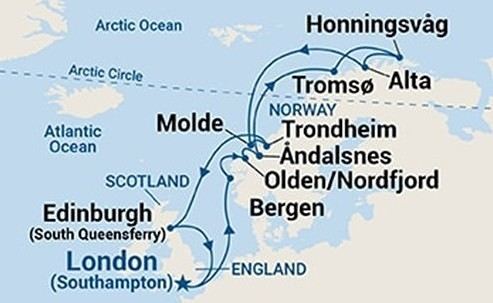
Southampton - Sea day - Bergen - Olden - Åndalsnes - Sea day - Tromsø - Honningsvåg (North Cape) - Alta - Sea day - Molde - Trondheim - Two sea days - Edinburgh - Sea day - Southampton
I’ve wanted to take this Norway cruise for a very long time. The first time I booked it was in July 2020 with Azamara. Unfortunately, it was canceled, as everyone remembers. When I tried to book it again, the prices (already a bit high with Azamara) had simply doubled. So, since then, I’ve been keeping an eye out every year for any opportunities...
The last time we sailed with Princess was eleven years ago, and things didn’t go very well. I came back pretty unhappy with their service and quite disappointed. Despite the $600 they gave me as credit for a future cruise, I’d never set foot on one of their ships again.
But this time, the opportunity arose—a fantastic itinerary with lots of stops, a reasonable price for 16 nights (I’ll share the details in the conclusion), and a ship that’s not too big, so to speak, with only 3,000 passengers. I’m not expecting much from the cruise line this time and am boarding the ship with low expectations beyond the itinerary.
Princess has introduced an app to download before the cruise. It’s essential because online check-in is no longer available, and the agency doesn’t send a travel journal. Everything is done through the app. After completing the check-in on the app, we only know that we’ll need to pick up our key, the Medallion, at embarkation by following the blue line in the terminal and presenting our passport.
Up until our departure, the weather forecast for the coming week in Norway is disastrous—rain, rain, and more rain. It was pretty much the same two years ago before our Iceland cruise, and in the end, the weather turned out fine.
If you’re ready to embark on the Emerald Princess to discover this beautiful cruise and the stunning landscapes of Norway, let’s go!
Southampton - Sea day - Bergen - Olden - Åndalsnes - Sea day - Tromsø - Honningsvåg (North Cape) - Alta - Sea day - Molde - Trondheim - Two sea days - Edinburgh - Sea day - Southampton
KARIBUUU
Over 5 years later, I’m finally getting around to writing the travel journal for our first trip to East Africa: Tanzania. *Polé Polé*, as they say! 😎
A trip I’d started planning just 6 years ago, in February 2019, for my post-internship exam vacation. After returning to South Africa in July 2019 with my family, this trip, planned for September 2019, would be all about discovery and a few firsts: first trip with friends, first trek, first time in East Africa. I really wanted to attempt the Kilimanjaro ascent, try to still see some of its "eternal" ice, and Alison wanted to do as much safari as possible. Unlike with the Zulus, Himbas, or San, visiting a Maasai village wasn’t on the agenda. Thanks to the Kessy Brothers agency, who were super responsive, Sandy from VF, and other members who helped prepare our trip, we settled on the following itinerary:
Day -1 (8/30): Departure from Pointe-à-Pitre Day 0 (8/31): Departure from Paris Day 1 (9/01): Arrival at Kilimanjaro Airport / Ameg Lodge (Moshi) DAY 2 (9/02): Machame gate / Machame camp DAY 3 (9/03): Shira / Shira camp DAY 4 (9/04): Baranco / Baranco camp DAY 5 (9/05): Barafu / Barafu camp DAY 6 (9/06): Barafu + Summit at midnight / Mweka camp DAY 7 (9/07): Mweka gate / Sal Salnero Hotel (Moshi) DAY 8 (9/08): Arusha National Park / Kanga camp DAY 9 (9/09): Tarangire National Park / Kanga camp DAY 10 (9/10): Tarangire National Park / Twiga Lodge DAY 11 (9/11): Lake Manyara / Twiga Lodge DAY 12 (9/12): Ngorongoro Crater / Simba campsite DAY 13 (9/13): Serengeti National Park / Seronera campsite DAY 14 (9/14): Serengeti National Park - Uoga Kuria Camp DAY 15 (9/15): Serengeti National Park / Waso campsite DAY 16 (9/16): Lake Natron / Maasai Giraffe Ecolodge DAY 17 (9/17): Kilimanjaro Airport Day 18 (9/18): Zanzibar Day 19 (9/19): Zanzibar Day 20 (9/20): Zanzibar Day 21 (9/21): Zanzibar
As I mentioned in my first travel journal about our South Africa trip, I’ve had a special connection to Tanzania for a long time. Growing up in the Indian Ocean without ever visiting Africa, those wildlife documentaries on TV when I skipped my pharmacy classes... I imagined and dreamed about this land and country so much.
The original plan was to go just the two of us with Alison, but somehow—though I don’t quite remember how—we ended up organizing the trip with our friends Mélissa and Doriane, who joined us in Arusha after our Kilimanjaro trek for the last two weeks and their very first safari. I think it was Melissa who had the idea to crash our trip, and she was right to do so! 😉 Flights: Pointe-à-Pitre-Grand Case and Grand Case-Paris with Air Caraïbes. Flights: Paris-JRO and ZNZ-Paris with Kenya Airways (layover in Nairobi). Flight: JRO-ZNZ with Air Tanzania.
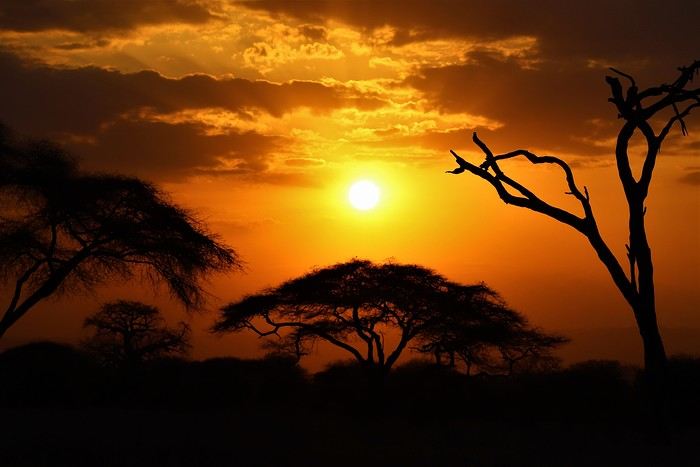
Safe travels! !
Over 5 years later, I’m finally getting around to writing the travel journal for our first trip to East Africa: Tanzania. *Polé Polé*, as they say! 😎
A trip I’d started planning just 6 years ago, in February 2019, for my post-internship exam vacation. After returning to South Africa in July 2019 with my family, this trip, planned for September 2019, would be all about discovery and a few firsts: first trip with friends, first trek, first time in East Africa. I really wanted to attempt the Kilimanjaro ascent, try to still see some of its "eternal" ice, and Alison wanted to do as much safari as possible. Unlike with the Zulus, Himbas, or San, visiting a Maasai village wasn’t on the agenda. Thanks to the Kessy Brothers agency, who were super responsive, Sandy from VF, and other members who helped prepare our trip, we settled on the following itinerary:
Day -1 (8/30): Departure from Pointe-à-Pitre Day 0 (8/31): Departure from Paris Day 1 (9/01): Arrival at Kilimanjaro Airport / Ameg Lodge (Moshi) DAY 2 (9/02): Machame gate / Machame camp DAY 3 (9/03): Shira / Shira camp DAY 4 (9/04): Baranco / Baranco camp DAY 5 (9/05): Barafu / Barafu camp DAY 6 (9/06): Barafu + Summit at midnight / Mweka camp DAY 7 (9/07): Mweka gate / Sal Salnero Hotel (Moshi) DAY 8 (9/08): Arusha National Park / Kanga camp DAY 9 (9/09): Tarangire National Park / Kanga camp DAY 10 (9/10): Tarangire National Park / Twiga Lodge DAY 11 (9/11): Lake Manyara / Twiga Lodge DAY 12 (9/12): Ngorongoro Crater / Simba campsite DAY 13 (9/13): Serengeti National Park / Seronera campsite DAY 14 (9/14): Serengeti National Park - Uoga Kuria Camp DAY 15 (9/15): Serengeti National Park / Waso campsite DAY 16 (9/16): Lake Natron / Maasai Giraffe Ecolodge DAY 17 (9/17): Kilimanjaro Airport Day 18 (9/18): Zanzibar Day 19 (9/19): Zanzibar Day 20 (9/20): Zanzibar Day 21 (9/21): Zanzibar
As I mentioned in my first travel journal about our South Africa trip, I’ve had a special connection to Tanzania for a long time. Growing up in the Indian Ocean without ever visiting Africa, those wildlife documentaries on TV when I skipped my pharmacy classes... I imagined and dreamed about this land and country so much.
The original plan was to go just the two of us with Alison, but somehow—though I don’t quite remember how—we ended up organizing the trip with our friends Mélissa and Doriane, who joined us in Arusha after our Kilimanjaro trek for the last two weeks and their very first safari. I think it was Melissa who had the idea to crash our trip, and she was right to do so! 😉 Flights: Pointe-à-Pitre-Grand Case and Grand Case-Paris with Air Caraïbes. Flights: Paris-JRO and ZNZ-Paris with Kenya Airways (layover in Nairobi). Flight: JRO-ZNZ with Air Tanzania.
Safe travels! !
Hello everyone! 🙂
So many silent months, and now Voyage Forum is accessible again. That’s cool because we can pick up our discussions for our mutual enjoyment.
I hope everyone is doing well and that you’ve been able to take some great trips, whether to the USA or elsewhere.
In September 2020, we had planned a round trip to explore Colorado, but unfortunately, a nasty virus messed up our plans, closing borders and keeping us stuck at home. Luckily for us, canceling the car, flights, and accommodations didn’t cost us a thing—everything was refunded.
In 2023, a loop from Las Vegas let us revisit places we’d seen in 2017 and discover new ones, this time spending more time at each stop with some lovely hikes.
In 2024, we finally revisited the 2020 plan, and I’ll start with that.
However, unforeseen circumstances mean I have much less time than before, so I’ll keep my trip reports shorter (ha ha ha—you’ll have less of my prose to endure).
Another change: for those who remember the "Gang of Four crazy sixty-somethings," it was just DD and me this time. Our dear Mimi and Maumau left the Var to focus on raising horses and can’t leave their little green paradise to join us anymore. We were unfortunately much tamer without them.
We traveled from September 11 to October 3.
The itinerary
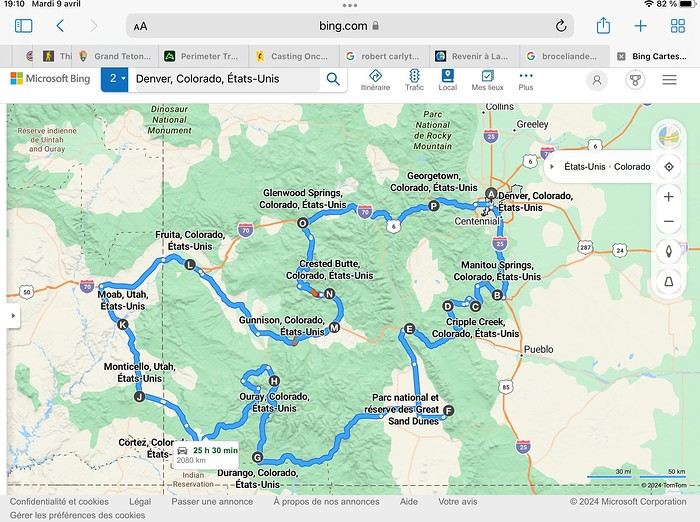
Day 1: Flight Marseille-Paris-Denver, then Manitou Springs (133 km) Day 2: Manitou Springs (49 km) Day 3: Cripple Creek (104 km) Day 4: Salida (254 km) Day 5: Great Sand Dunes (231 km) Day 6: Durango (283 km) Day 7: Durango (Durango-Silverton train) Day 8: Ouray (121 km) Day 9: Ouray (Perimeter Trail hike) Day 10: Cortez (213 km) Day 11: Cortez (Mesa Verde National Park, 134 km) Day 12: Monticello (268 km, detour to Chesler Park) Day 13: Moab (171 km, Delicate Arch) Day 14: Moab (98 km, Fisher Towers) Day 15: Moab (171 km, Canyonlands) Day 16: Fruita (210 km, Colorado National Monument) Day 17: Crested Butte (224 km via Kebler Pass) Day 18: Crested Butte (57 km) Day 19: Glenwood Springs (150 km) Day 20: Glenwood Springs (118 km, Rifle State Park) Day 21: Georgetown (258 km via Independence Pass) Day 22: Denver (123 km), then return flight
We speak very little English. We spent 21 nights there and covered a 3,400 km loop by car and 160 km on foot (we’re still trying to hike while we’re in shape) from Denver in September 2024. We wanted this road trip to help us explore Colorado a bit more—we’d only spent 6 nights there in 2019—and to see it during the fall foliage season. We also wanted to return to Utah (we love Moab) to enjoy its red rocks, which we adore.
In the prices you see (some in euros, others in dollars), I’ve included bank fees and exchange charges. The flights, car, and parking were paid by credit card when we booked in February. Usually, we book around November, but some obligations kept us from doing it earlier. We downloaded the MPC (Mobile Passport Control) app on our phone, which saved us time at immigration.
📊 **Budget: just under 8,500 € for both of us, all included**
📊 **Flights** Marseille-Paris (CDG)-Denver: 2,152 € for both of us, with one checked bag each
📊 **ESTA and America the Beautiful Pass** The ones from our 2023 road trip were still valid
📊 **Parking at Marseille airport: 122 €**
📊 **Car: Nissan Rogue (the French X-Trail) from Hertz: 1,165 €** By booking through Air France (and earning miles), we got a 15% discount. Hertz offers a free Hertz Gold Plus Rewards program, which gives us priority counter service.
📊 **Accommodation: 3,050 €** We stayed in motels and hotels of various ranges (from 100 € to 270 € per night, depending on the city), all booked through Hotels.com or Booking. Booking sometimes offers cheaper rates if you book via the "Booking mobile" app. We also got some preferential rates thanks to our Genius 2 status. Out of 21 nights, only one place didn’t include breakfast.
📊 **Other expenses (activities booked by credit card before leaving)** Durango-Silverton train: 210 € (we booked the enclosed vintage coach in March) Mesa Verde: Balcony House: 15.15 € (booked 14 days before the visit) Timed-entry passes for Arches National Park: 6 € for 3 days (booked June 1 for September entries via http://récreation.gov/). We booked three different days to play with the weather.
📊 **Supplementary insurance with AVA: 204 €** (due to our age 😅 and the high cost of medical consultations in the USA)
📊 **Cash: 1,540 €** We left with 1,000 € exchanged before departure and made two withdrawals (500 $ and 200 $). This cash was used to pay for: - Evening restaurants and tips (between 70 $ and 95 $ for two meals and two drinks) - Two state parks: Dead Horse State Park (20 $) and Rifle State Park (10 $) - The Monarch Pass gondola (24 $) - Midday picnics - Gas (slightly cheaper with cash): 204 $ for 3,400 km - Personal souvenirs and little treats.
Like in our previous road trips, we didn’t rent a GPS. We used the offline GPS app Here We Go, for which we’d downloaded maps of Colorado and Utah from France, as well as a new offline app called Organic Maps as a backup—though we didn’t end up needing it.
❤️❤️❤️ **Highlights (there are so many!)** 📍 The stunning landscapes of Colorado, especially with the fall colors 📍 A step back in time at the old farm in Florissant Fossil Beds National Monument 📍 The prairies of Cripple Creek and the mining remnants of the Vindicator Trail 📍 The cheeky chipmunks in the ghost town of St. Elmo 📍 Great Sand Dunes and its soft sand 📍 The steam train between Durango and Silverton: we’re glad we chose the round-trip because it rained heavily on the way there, but we got to enjoy the scenery on the way back when the sun came out 📍 The unexpected meet-up with Michèle from the group outside a restaurant in Durango 📍 The hot springs in Ouray 📍 Mesa Verde and its still-vibrant past 📍 The red rocks of Moab and Delicate Arch at sunset 📍 The lace-like Fisher Towers and the view from the end of the trail 📍 The gorgeous Route 128 leading to Colorado National Monument—small, easy to visit, and so beautiful 📍 The colors of the fabulous Kebler Pass, Crested Butte, and especially the hike through the golden aspens (Lower and Upper Loop) 📍 The waterfalls at Rifle State Park 📍 The tundra of Independence Pass 📍 The Halloween decorations in Georgetown and Idaho Springs
😞😞 **Flops (there are very few!)** 📍 The viewpoints we missed because they weren’t well-marked or we didn’t see the signs 📍 The closure of some hiking trails (Hanging Lake and parts of Canyonlands) and the Sal Mountain Loop road, which kept us from accessing it 📍😢 The Chesler Park hike we had to cut short due to poor time management—180 km between our stop in Cortez meant we didn’t arrive until 10:30 AM, way too late for a 17 km hike.
Hope this helps! Have a great evening, everyone, and see you soon! 😊
The itinerary
Day 1: Flight Marseille-Paris-Denver, then Manitou Springs (133 km) Day 2: Manitou Springs (49 km) Day 3: Cripple Creek (104 km) Day 4: Salida (254 km) Day 5: Great Sand Dunes (231 km) Day 6: Durango (283 km) Day 7: Durango (Durango-Silverton train) Day 8: Ouray (121 km) Day 9: Ouray (Perimeter Trail hike) Day 10: Cortez (213 km) Day 11: Cortez (Mesa Verde National Park, 134 km) Day 12: Monticello (268 km, detour to Chesler Park) Day 13: Moab (171 km, Delicate Arch) Day 14: Moab (98 km, Fisher Towers) Day 15: Moab (171 km, Canyonlands) Day 16: Fruita (210 km, Colorado National Monument) Day 17: Crested Butte (224 km via Kebler Pass) Day 18: Crested Butte (57 km) Day 19: Glenwood Springs (150 km) Day 20: Glenwood Springs (118 km, Rifle State Park) Day 21: Georgetown (258 km via Independence Pass) Day 22: Denver (123 km), then return flight
We speak very little English. We spent 21 nights there and covered a 3,400 km loop by car and 160 km on foot (we’re still trying to hike while we’re in shape) from Denver in September 2024. We wanted this road trip to help us explore Colorado a bit more—we’d only spent 6 nights there in 2019—and to see it during the fall foliage season. We also wanted to return to Utah (we love Moab) to enjoy its red rocks, which we adore.
In the prices you see (some in euros, others in dollars), I’ve included bank fees and exchange charges. The flights, car, and parking were paid by credit card when we booked in February. Usually, we book around November, but some obligations kept us from doing it earlier. We downloaded the MPC (Mobile Passport Control) app on our phone, which saved us time at immigration.
📊 **Budget: just under 8,500 € for both of us, all included**
📊 **Flights** Marseille-Paris (CDG)-Denver: 2,152 € for both of us, with one checked bag each
📊 **ESTA and America the Beautiful Pass** The ones from our 2023 road trip were still valid
📊 **Parking at Marseille airport: 122 €**
📊 **Car: Nissan Rogue (the French X-Trail) from Hertz: 1,165 €** By booking through Air France (and earning miles), we got a 15% discount. Hertz offers a free Hertz Gold Plus Rewards program, which gives us priority counter service.
📊 **Accommodation: 3,050 €** We stayed in motels and hotels of various ranges (from 100 € to 270 € per night, depending on the city), all booked through Hotels.com or Booking. Booking sometimes offers cheaper rates if you book via the "Booking mobile" app. We also got some preferential rates thanks to our Genius 2 status. Out of 21 nights, only one place didn’t include breakfast.
📊 **Other expenses (activities booked by credit card before leaving)** Durango-Silverton train: 210 € (we booked the enclosed vintage coach in March) Mesa Verde: Balcony House: 15.15 € (booked 14 days before the visit) Timed-entry passes for Arches National Park: 6 € for 3 days (booked June 1 for September entries via http://récreation.gov/). We booked three different days to play with the weather.
📊 **Supplementary insurance with AVA: 204 €** (due to our age 😅 and the high cost of medical consultations in the USA)
📊 **Cash: 1,540 €** We left with 1,000 € exchanged before departure and made two withdrawals (500 $ and 200 $). This cash was used to pay for: - Evening restaurants and tips (between 70 $ and 95 $ for two meals and two drinks) - Two state parks: Dead Horse State Park (20 $) and Rifle State Park (10 $) - The Monarch Pass gondola (24 $) - Midday picnics - Gas (slightly cheaper with cash): 204 $ for 3,400 km - Personal souvenirs and little treats.
Like in our previous road trips, we didn’t rent a GPS. We used the offline GPS app Here We Go, for which we’d downloaded maps of Colorado and Utah from France, as well as a new offline app called Organic Maps as a backup—though we didn’t end up needing it.
❤️❤️❤️ **Highlights (there are so many!)** 📍 The stunning landscapes of Colorado, especially with the fall colors 📍 A step back in time at the old farm in Florissant Fossil Beds National Monument 📍 The prairies of Cripple Creek and the mining remnants of the Vindicator Trail 📍 The cheeky chipmunks in the ghost town of St. Elmo 📍 Great Sand Dunes and its soft sand 📍 The steam train between Durango and Silverton: we’re glad we chose the round-trip because it rained heavily on the way there, but we got to enjoy the scenery on the way back when the sun came out 📍 The unexpected meet-up with Michèle from the group outside a restaurant in Durango 📍 The hot springs in Ouray 📍 Mesa Verde and its still-vibrant past 📍 The red rocks of Moab and Delicate Arch at sunset 📍 The lace-like Fisher Towers and the view from the end of the trail 📍 The gorgeous Route 128 leading to Colorado National Monument—small, easy to visit, and so beautiful 📍 The colors of the fabulous Kebler Pass, Crested Butte, and especially the hike through the golden aspens (Lower and Upper Loop) 📍 The waterfalls at Rifle State Park 📍 The tundra of Independence Pass 📍 The Halloween decorations in Georgetown and Idaho Springs
😞😞 **Flops (there are very few!)** 📍 The viewpoints we missed because they weren’t well-marked or we didn’t see the signs 📍 The closure of some hiking trails (Hanging Lake and parts of Canyonlands) and the Sal Mountain Loop road, which kept us from accessing it 📍😢 The Chesler Park hike we had to cut short due to poor time management—180 km between our stop in Cortez meant we didn’t arrive until 10:30 AM, way too late for a 17 km hike.
Hope this helps! Have a great evening, everyone, and see you soon! 😊
From Beijing to Khiva: China, Kyrgyzstan, Tajikistan, Uzbekistan
Chronicle of anecdotes, highlights, and other adventures that marked this eight-week journey in 2018.
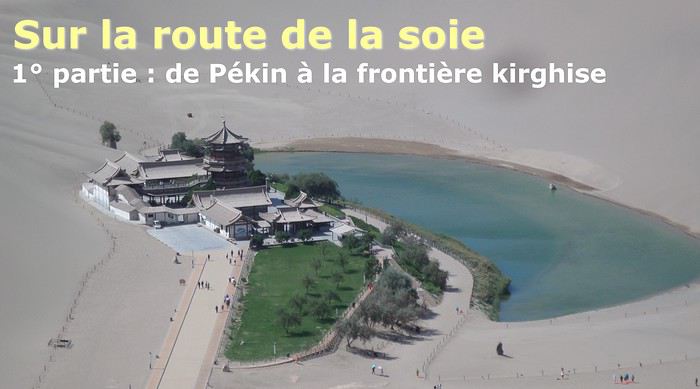
The Chinese Far West More than 30 years after my first trip to eastern China, I finally fulfilled an old dream: traveling solo from Beijing to the far west, discovering Xinjiang, the Uyghur people and the oppression they endure, the oases of Turpan and Kashgar, the Taklamakan Desert, the end of the Great Wall... The route was covered by train.
MENU PART 1: CHINA
1- Beijing (Jiankou) : the authentic Great Wall, without tourists 2- Cycling in Beijing, the best way to get around 3- Beijing : departure for the far west 4- Jiayuguan : getting by without English 5- Jiayuguan : scams and heritage 6- Dunhuang : abundance in the middle of the desert 7- Turpan : the Uyghurs under heavy surveillance 8- Kashgar : love at first sight for the old city 9- Kashgar : China’s recipe for controlling the populace 10- Tashkurgan : what on earth was I thinking going there! Kyrgyz border: a surreal epic Photo album from the 80s, contributions from other travelers (page 2)
1- JIANKOU Finding the authentic Great Wall, without tourists or a guide Friday, August 24, 2018 Thirty years later, I didn’t feel like revisiting the Great Wall at Badaling or any other overcrowded site. I chose to explore it at Jiankou, in its wildest, most authentic, and unrestored section, starting from a lost village deep in a valley—though it wasn’t *that* lost, since it had everything for communication.
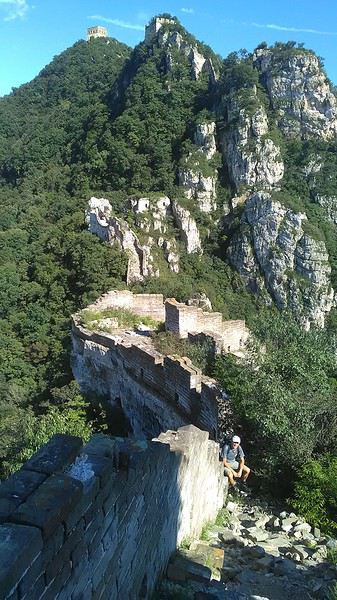
No need to pay for a taxi to get there—by timing it right, you can take the bus for just a few yuan. You have to get off at Xizhazi, the bus terminus. Be careful, there are only two buses a day in each direction. At the Xizhazi bus stop, I met a young couple who’d arrived with zero information about what to expect. We hiked the three of us toward the restored section of Mutianyu.
Still, be cautious With GPS and a topographic map (OpenTopoMap), you can set off without a problem or guide. The trail up to Jiankou is easy and well-marked. The trails down are too. But be careful—once you’re on the Wall, it’s real mountain hiking, with easy but dangerous climbing sections (over sheer drops). Not for amateurs or those afraid of heights! But what a reward. The Wall all to yourself, where it’s at its most daring. Truly mesmerizing.
More photos...
2- BEIJING The best way to get around the capital Sunday, August 26 The best way to explore the city is still by bike. Most are in a bike-share system, but you need to use an app—WeChat, the app that does everything, like monitoring your every move. No way I was installing that.
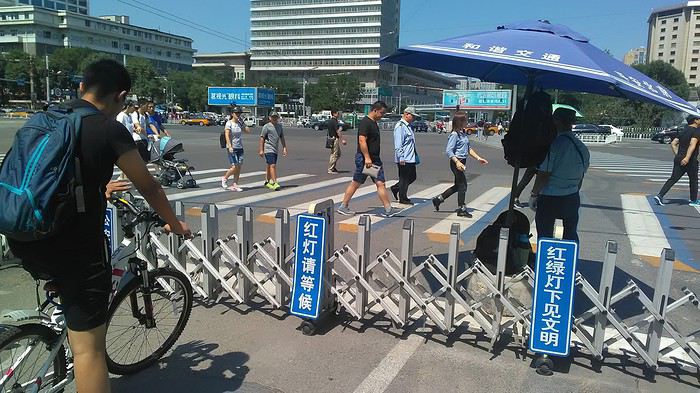
I found one at a rental shop near the hostel. The key is to quickly learn local traffic customs to minimize risks. Bike lanes are wide along the avenues.
But you still have to: - Watch out for anything parked on the bike paths—the most annoying are people napping or talking on the phone in their cars - Keep an eye on everything coming the wrong way—the list is long - The worst is right turns on red, which in Chinese traffic rules seem to have priority Once you get the hang of it, it’s fine. The city is huge but flat, so you can just wing it.
3- BEIJING By train to the far west Sunday, August 26 Beijing West Station is the size and operates like an airport. With your e-ticket from the agency, you first have to pick up your ticket at the special "English" counter, after passing through security. With your ticket in hand, you have to exit and enter through the boarding waiting area—not the platform—after a second security check.
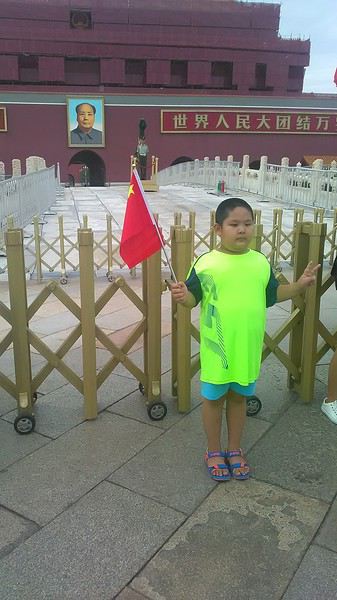 Then you find the right hall and wait for the sign to finally access the platform. In the end, it works pretty well given the incredible number of passengers to manage. Everywhere in Beijing, I saw that the Chinese have mastered crowd flow management.
Nice surprise: second-class carriages are clean, air-conditioned, and bright. Perfect, since I was in for 20 hours. One uniformed attendant per carriage, mobile meal service—luxury! Small downside: no luggage space. Hauling your suitcase up to the top bunk is quite a workout. I was in the middle, so it wasn’t too bad. The landscape, though, whether rural or urban, is pretty bleak. That should change once we leave the eastern plains.
Of course, I got my first police visit, with a thorough passport check and bag search. I was warned—going to the Chinese far west exposes you to this kind of hassle. But they were polite and respectful.
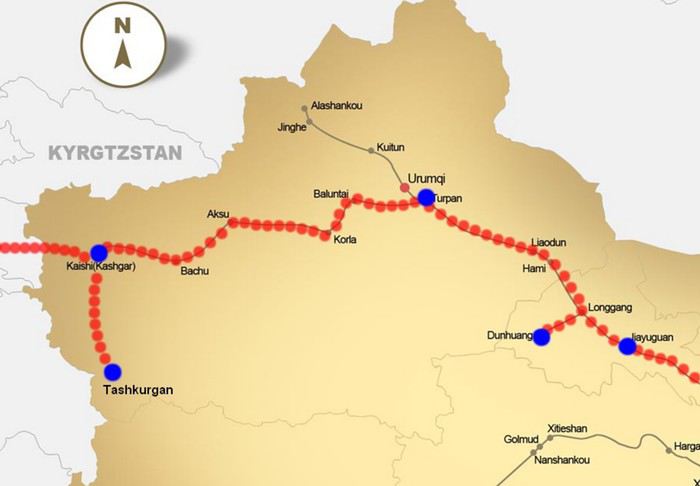 The Chinese Far West
4- JIAYUGUAN Getting by without English Monday, August 27 At the gates of two deserts (Gobi and Taklamakan) and at the foot of the Tibetan highlands, the Great Wall ends at Jiayuguan. Here, I found the deeper China I’d somewhat rediscovered during my bike ride, even if now everyone gets around on electric bikes and I’m no longer stared at like an alien.
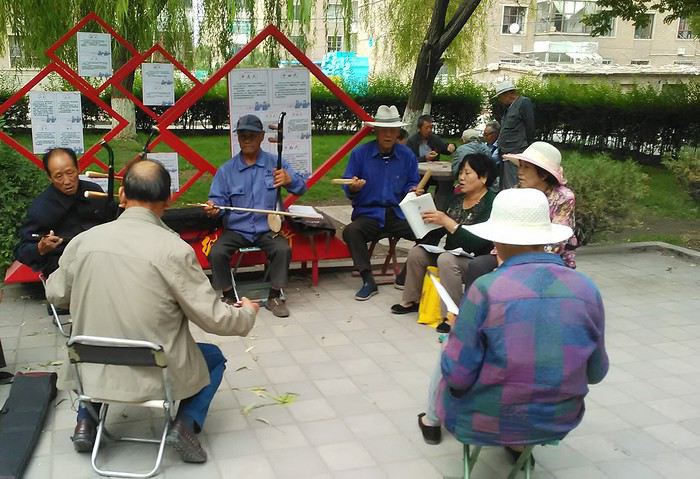
Prices are nothing like Beijing: you can find a full meal for 2 €, and my bike cost 7 € for two days. Plus, few people speak English—neither the owner of the HI hostel where I stayed, nor the ticket sellers at the sites, let alone the servers at the small eateries where I ate. Everything is written in Chinese. So I had to use the little Chinese I know to communicate about essentials. It makes the locals laugh to see a European trying to speak their language, but it earns respect. With Google Translate’s help, I managed.
Rant: With their avenues blocked for construction for kilometers without warning, and new roads not yet on maps, I must’ve taken 15 km of detours. More photos...
5- JIAYUGUAN Scams and heritage Tuesday, August 28 The Great Wall doesn’t exactly end at the fort I visited yesterday but 10 km further, at the entrance to a river gorge at the foot of the mountains. All that’s left is a badly damaged tower (more like a mound of earth) and a section of clay wall, similar to the one I biked yesterday.
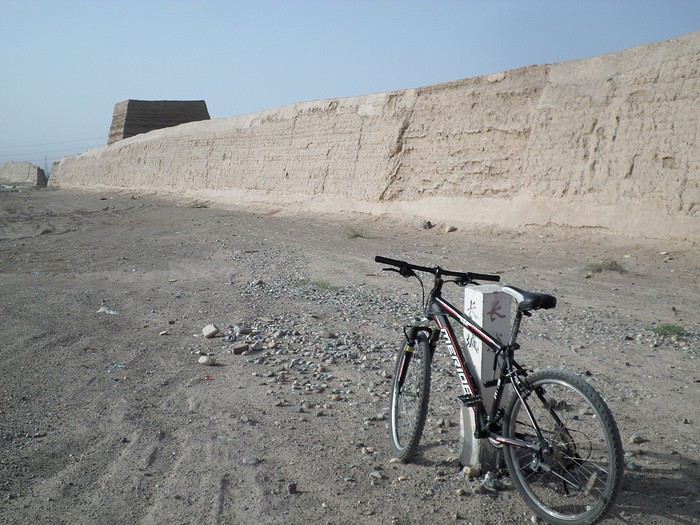
This morning, I hopped on my bike, determined to venture into the desert to see this highly symbolic site. First, you access it via a wide, brand-new road with not a soul in sight. Just before the site, I came across a grand welcome gate, very period-style, but it’s actually the inevitable toll booth.
Behind the gate, the road continues straight to the site, which you can see in the distance—at least 2 km away—the remains of the tower and wall. I had to leave my bike here. Fine. I went to the ticket counter and asked the price: 120 yuan! I couldn’t believe it—over 15 € for a simple mound of earth.
I showed my displeasure to the attendant, who couldn’t care less, and immediately turned back. 120 yuan—that’s the price for a new road, a fancy gate planted 2 km before the site just to force you to take a shuttle, and employees with nothing to do all day... Now I understand why I didn’t meet anyone!
Heritage China is a bit pricey Generally, sites are expensive for the country’s standard of living, but travelers are supposed to have money, so why hold back? I even gave up on the Forbidden City—reservations required days in advance (or on the black market at an impossible price). I prefer to keep the memory of my first visit, when entry must’ve cost a few dozen cents, and there were only a handful of visitors.
This morning, I took a taxi to see remarkable tombs of common people from the 3rd to 6th centuries. They’re small vaulted caves made of painted bricks, depicting scenes of daily life. Very pretty and moving. But even here, though the price was more reasonable, I was left wanting—only one of the 16 tombs is open to visitors, and it’s apparently not the most beautiful.
The authentic China—at least what’s left of it... Wandering the impersonal avenues of the city, you stumble upon a market. There, you still find traditional China—small shops with questionable hygiene, Go players, musicians, and even a dental prosthetist. The last refuge for those untouched by modernity. More photos...
6- DUNHUANG Abundance in the middle of the desert Wednesday, August 29 Well, I thought the landscape would be less bleak as I headed west. Nope. The only distraction in this expanse of dark, clayey sand is the forests of pylons and wind turbines, plus wild camels racing each other.
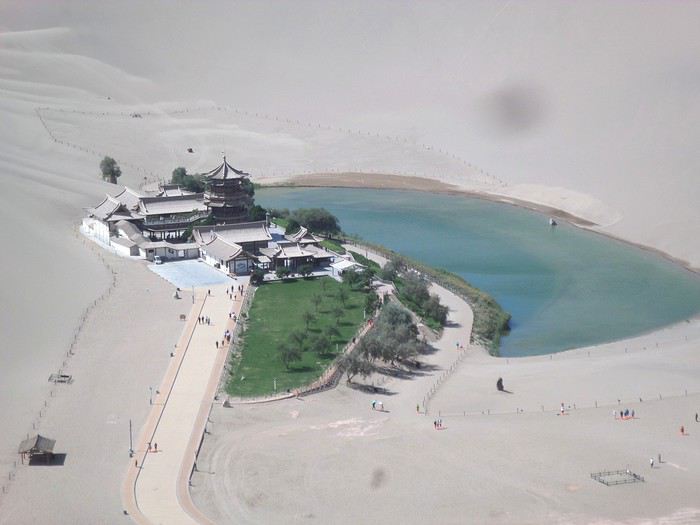 However, Dunhuang, the gateway to the Taklamakan, is by far the most pleasant Chinese city I know. There’s a real city center you can explore on foot. It’s hot but not unbearable, with a light, dry breeze. Much nicer than Beijing. The Han Chinese are still the majority, but the Muslim Uyghurs are more numerous, and the muezzin’s call to prayer echoes around the mosque.
The most surprising thing is the abundance and diversity of fruits and vegetables. You wonder how it all grows here. Well-irrigated, the desert sands are very fertile. Here, raisins have subtle, mysterious flavors, and the lamb really tastes like lamb.
Today, I visited the must-see Mingshashan, a dune complex next to which Pila is a molehill. The Basque Country, but covered in sand... More photos...
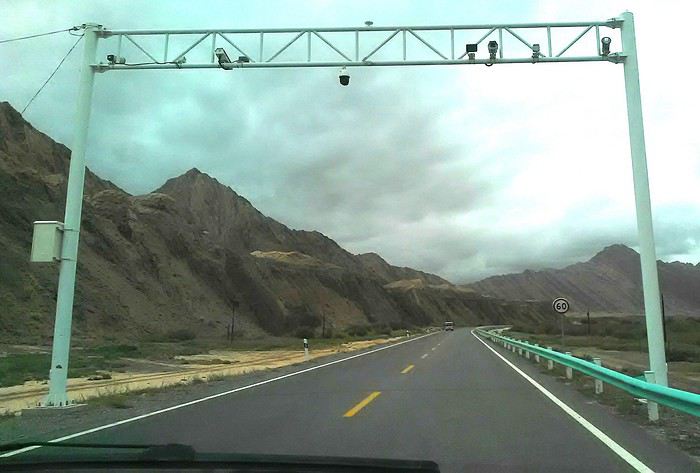
7- TURPAN The Uyghurs under heavy surveillance Friday, August 31 Surveillance cameras everywhere in the city, armed police stationed at intersections, in front of public buildings, at the entrance and inside tourist sites, police stations on every corner, patrols on foot or by car, khaki uniforms even for middle schoolers... here, the Han Chinese are in the minority, and you can feel it. Turpan feels like a city under siege.
To enter the youth hostel where I stayed, there’s even a security gate, and the receptionist (a Han, like everyone in tourism) wears a bulletproof vest! Reassuring. Still, you don’t feel particularly threatened here, especially as a European. The troublemakers are the Chinese, not the Uyghurs. Generally, China is a very safe country for visitors.
Smile, you’re on camera! I was biking on an avenue when the car in front of me got flashed for driving slowly. I quickly understood why when I got flashed too.
Here, the official time is Beijing time, but it gets dark two hours later. It’ll be even worse in Kashgar. Trickier to manage: everything is displayed in Chinese and Arabic. Nothing in English. Choosing a menu is a shot in the dark. Apart from a few young Chinese, no one here speaks English, and my Chinese doesn’t seem very understandable...
Mogao, the end of the road for the Han Yesterday, near Dunhuang, I went to Mogao, a complex of decorated caves with Buddha sculptures and paintings. Stunning, but so crowded! Luckily, here in Turpan, Chinese tourists barely venture out. So I visited a Silk Road ghost town with only a handful of other visitors and under a howling wind.
The modern Chinese city is swallowing up the old Uyghur neighborhoods—only a museum-like district remains in the center, and pockets of resistance on the outskirts are doomed to disappear soon. More photos...
8- KASHGAR A (relative) love at first sight for the old city Sunday, September 2 After three overnight trains, here I am in the far west of China, nearly 4,000 km from the capital. Despite the omnipresent police and an old city preserved UNESCO-style, Kashgar is my Chinese love at first sight.
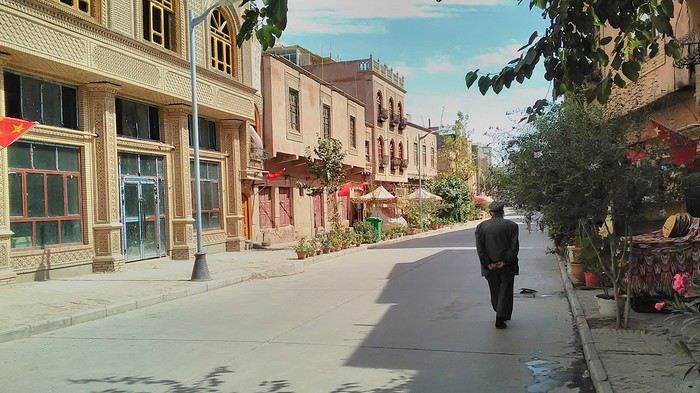
Finally, Chinese... well, sort of, because we’re in Uyghur territory here—a Turkic people with nothing culturally in common with the Han, the eastern Chinese. It started badly yesterday at Turfan station, where after three security gate passes, at least five passport checks, and a bag search, three adorable policewomen confiscated my antibacterial lotion because it had a flammable logo...
Then came the welcoming committee of armed cops at Kashgar station. Once all that was over, they left me alone—except you still have to go through security checks like everyone else to enter the old city, the bazaar, the livestock market... The further west you go, the more the siege mentality is evident. Luckily, the border isn’t far...
Despite the inevitable destruction-reconstruction, the city center has been well preserved. Thankfully, because it’s a very original style, a mix of local and colonial. I love it, even if it’s a bit too artificial, sanitized, and watered-down, and rather empty of residents. On the Silk Road, the city was famous for its great food. And it still is—rarely have I seen such richness and abundance of food! And not just scorpions or snakes. More photos...
9- KASHGAR China’s recipe for controlling the populace Saturday, September 1 Xinjiang, along with Tibet, is a "sensitive" area of rebellion in the eyes of Chinese authorities. As a result, the state has these regions and their populations under total control. Tourists also feel the consequences, even if they’re not at risk of re-education camps.
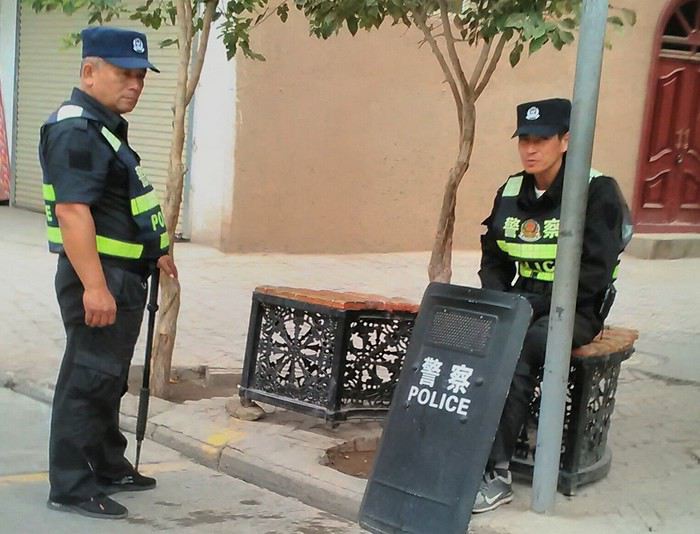 - Putting barbed wire and anti-ramming barriers around sensitive sites (schools, big hotels, government buildings...)
- Installing traffic surveillance gates with cameras and photo flashes (for all vehicles passing, including bikes) throughout the city and even in the countryside
- Posting uniformed guards with tasers, batons, or huge baseball bats every 100 meters
- Training the Han population (ethnic Chinese) in self-defense with sticks, preferably in the morning on the street. Men and women of all ages
- Starting school with the national anthem, doing military exercises, and receiving political indoctrination, all neatly lined up in the courtyard. (The dream school for any teacher)
- Placing a snitch in uniform (a pseudo-guard) in public gathering places, like youth hostels. Mine spends the day loafing around the courtyard
- Putting Chinese flags everywhere on the streets to remind everyone who’s in charge
- Installing security gates at every entrance to areas frequented by tourists (thanks for that) but not just there
- Never photographing cops, or else! I tried, but it’s not easy...
With all that, you can stroll around safely Not much crime! As for the amount the Chinese state spends to maintain such a system, it’s staggering! A third of the Han living in Xinjiang work in security. Today, I wandered freely around old Kashgar, which is quite large after all. More photos...
10- TASHKURGAN What on earth was I thinking going there! Wednesday, September 5 First, there’s the taxi—pretty crappy, with a driver who doesn’t speak a word of English and won’t stop smoking. Over six hours in that... shared with a completely out-of-it American.
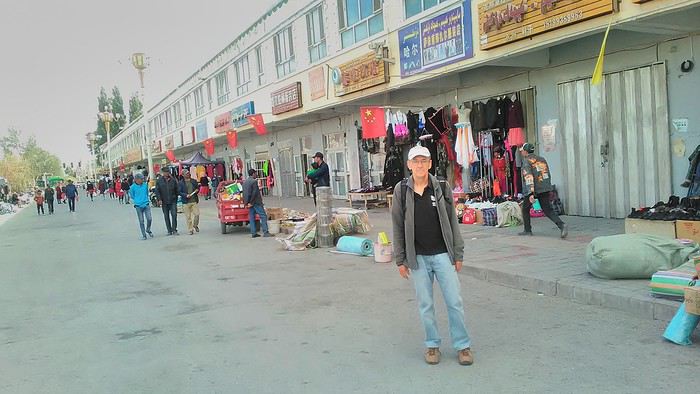
Then there are all the checkpoints along the way. I won’t go on—you know the drill by now.
After that, there’s Tashkurgan—a town with nothing to see, nothing to do. Deserted as soon as night falls. There’s this huge youth hostel and a few lost Chinese tapping away on their smartphones, chain-smoking. This lost American-European crowd, swapping tips on how to enter Pakistan or Tajikistan.
Luckily, there’s the Chinese Pamir Highway, lined with peaks over 7,000m. There’s the feeling of no longer being in China, with a population whose features are Middle Eastern. And these Tajik women with their stunning hairstyles and vibrant costumes. There’s the fact of having reached the westernmost Chinese city, far from crowds and tourist sites. A sort of end of the world. More photos...
11- KYRGYZ BORDER A surreal epic Thursday, September 6 The road from Kashgar to the Kyrgyzstan border is a little over 200 km and passes through beautiful landscapes of colorful, desert-like mountains with acrobatic folds. That’s the bucolic part of the trip.
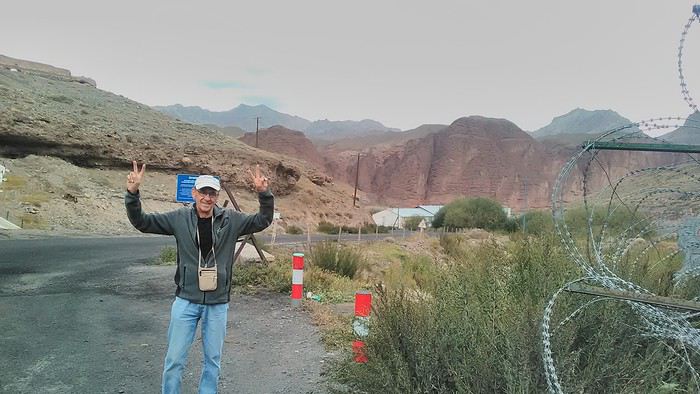 Yesterday, I managed to gather four people to rent a minibus to reach the border more easily: a Spaniard and an Argentine I’d already met in Turpan, and two New Zealanders who responded to the ad left at the hostel.
Absurdity and paranoia of Chinese authorities The highlight was crossing the town of Wuqia, 50 km past Kashgar. After tallying up with my fellow sufferers, we must’ve passed about ten checkpoints with: - Passport checks: 14 times, sometimes by two cops side by side - Bag checks: 4 times - Smartphone checks: 2 times, with deletion of "non-compliant" photos, and registration of your IMEI in the exit log!... Absurd and surreal at the same time, since my camera stayed in my bag, my apps are in French, and my photos have been online for ages...
With all that, we arrived just as the last checkpoint before the no man’s land marking the border between the two countries was on lunch break. And bam! Another 1.5-hour wait, alongside truckers who were much more used to this than we were.
What to think? The cops themselves aren’t fooled. They play the role they’re asked to, but sometimes you can coax a smile out of them—they realize how ridiculous the situation is.
What’s the point? That’s the big question my companions and I were tempted to answer with "to piss people off." To show you your place isn’t here, but with the other tourists, over there in the east, in Shanghai, Xi’an, or Guangzhou.
As for you, a traveler from a democratic country, you really experience this as aggression, humiliation, a violation of your private space. And yet, I’m respected, they speak to me properly. Today, I better understand what a Palestinian or a citizen of an occupied country might feel daily. A unique experience! Thanks, China.
And to top it off, the cherry on the cake! It’s still this glowing button you press to rate your passage after clearing the last obstacle before the exit stamp. I was so surprised it turned off before I could react. The Spaniard, with great humor and irony, had time to vote "excellent." In the end, he wasn’t wrong—you can hardly do better!
PS: I ditched my buddies at the border. They didn’t want to pay for a taxi to continue. So I took a direct taxi to Osh. The first 100 km are fabulous. I couldn’t take many photos, but I’ll be back on Monday to go to Tajikistan.
More photos...
The rest of the Silk Road, Part 2, in these travel journals: Kyrgyzstan, Tajikistan, Uzbekistan.
The Chinese Far West More than 30 years after my first trip to eastern China, I finally fulfilled an old dream: traveling solo from Beijing to the far west, discovering Xinjiang, the Uyghur people and the oppression they endure, the oases of Turpan and Kashgar, the Taklamakan Desert, the end of the Great Wall... The route was covered by train.
MENU PART 1: CHINA
1- Beijing (Jiankou) : the authentic Great Wall, without tourists 2- Cycling in Beijing, the best way to get around 3- Beijing : departure for the far west 4- Jiayuguan : getting by without English 5- Jiayuguan : scams and heritage 6- Dunhuang : abundance in the middle of the desert 7- Turpan : the Uyghurs under heavy surveillance 8- Kashgar : love at first sight for the old city 9- Kashgar : China’s recipe for controlling the populace 10- Tashkurgan : what on earth was I thinking going there! Kyrgyz border: a surreal epic Photo album from the 80s, contributions from other travelers (page 2)
1- JIANKOU Finding the authentic Great Wall, without tourists or a guide Friday, August 24, 2018 Thirty years later, I didn’t feel like revisiting the Great Wall at Badaling or any other overcrowded site. I chose to explore it at Jiankou, in its wildest, most authentic, and unrestored section, starting from a lost village deep in a valley—though it wasn’t *that* lost, since it had everything for communication.
No need to pay for a taxi to get there—by timing it right, you can take the bus for just a few yuan. You have to get off at Xizhazi, the bus terminus. Be careful, there are only two buses a day in each direction. At the Xizhazi bus stop, I met a young couple who’d arrived with zero information about what to expect. We hiked the three of us toward the restored section of Mutianyu.
Still, be cautious With GPS and a topographic map (OpenTopoMap), you can set off without a problem or guide. The trail up to Jiankou is easy and well-marked. The trails down are too. But be careful—once you’re on the Wall, it’s real mountain hiking, with easy but dangerous climbing sections (over sheer drops). Not for amateurs or those afraid of heights! But what a reward. The Wall all to yourself, where it’s at its most daring. Truly mesmerizing.
More photos...
2- BEIJING The best way to get around the capital Sunday, August 26 The best way to explore the city is still by bike. Most are in a bike-share system, but you need to use an app—WeChat, the app that does everything, like monitoring your every move. No way I was installing that.
I found one at a rental shop near the hostel. The key is to quickly learn local traffic customs to minimize risks. Bike lanes are wide along the avenues.
But you still have to: - Watch out for anything parked on the bike paths—the most annoying are people napping or talking on the phone in their cars - Keep an eye on everything coming the wrong way—the list is long - The worst is right turns on red, which in Chinese traffic rules seem to have priority Once you get the hang of it, it’s fine. The city is huge but flat, so you can just wing it.
3- BEIJING By train to the far west Sunday, August 26 Beijing West Station is the size and operates like an airport. With your e-ticket from the agency, you first have to pick up your ticket at the special "English" counter, after passing through security. With your ticket in hand, you have to exit and enter through the boarding waiting area—not the platform—after a second security check.
Then you find the right hall and wait for the sign to finally access the platform. In the end, it works pretty well given the incredible number of passengers to manage. Everywhere in Beijing, I saw that the Chinese have mastered crowd flow management.Nice surprise: second-class carriages are clean, air-conditioned, and bright. Perfect, since I was in for 20 hours. One uniformed attendant per carriage, mobile meal service—luxury! Small downside: no luggage space. Hauling your suitcase up to the top bunk is quite a workout. I was in the middle, so it wasn’t too bad. The landscape, though, whether rural or urban, is pretty bleak. That should change once we leave the eastern plains.
Of course, I got my first police visit, with a thorough passport check and bag search. I was warned—going to the Chinese far west exposes you to this kind of hassle. But they were polite and respectful.
The Chinese Far West4- JIAYUGUAN Getting by without English Monday, August 27 At the gates of two deserts (Gobi and Taklamakan) and at the foot of the Tibetan highlands, the Great Wall ends at Jiayuguan. Here, I found the deeper China I’d somewhat rediscovered during my bike ride, even if now everyone gets around on electric bikes and I’m no longer stared at like an alien.
Prices are nothing like Beijing: you can find a full meal for 2 €, and my bike cost 7 € for two days. Plus, few people speak English—neither the owner of the HI hostel where I stayed, nor the ticket sellers at the sites, let alone the servers at the small eateries where I ate. Everything is written in Chinese. So I had to use the little Chinese I know to communicate about essentials. It makes the locals laugh to see a European trying to speak their language, but it earns respect. With Google Translate’s help, I managed.
Rant: With their avenues blocked for construction for kilometers without warning, and new roads not yet on maps, I must’ve taken 15 km of detours. More photos...
5- JIAYUGUAN Scams and heritage Tuesday, August 28 The Great Wall doesn’t exactly end at the fort I visited yesterday but 10 km further, at the entrance to a river gorge at the foot of the mountains. All that’s left is a badly damaged tower (more like a mound of earth) and a section of clay wall, similar to the one I biked yesterday.
This morning, I hopped on my bike, determined to venture into the desert to see this highly symbolic site. First, you access it via a wide, brand-new road with not a soul in sight. Just before the site, I came across a grand welcome gate, very period-style, but it’s actually the inevitable toll booth.
Behind the gate, the road continues straight to the site, which you can see in the distance—at least 2 km away—the remains of the tower and wall. I had to leave my bike here. Fine. I went to the ticket counter and asked the price: 120 yuan! I couldn’t believe it—over 15 € for a simple mound of earth.
I showed my displeasure to the attendant, who couldn’t care less, and immediately turned back. 120 yuan—that’s the price for a new road, a fancy gate planted 2 km before the site just to force you to take a shuttle, and employees with nothing to do all day... Now I understand why I didn’t meet anyone!
Heritage China is a bit pricey Generally, sites are expensive for the country’s standard of living, but travelers are supposed to have money, so why hold back? I even gave up on the Forbidden City—reservations required days in advance (or on the black market at an impossible price). I prefer to keep the memory of my first visit, when entry must’ve cost a few dozen cents, and there were only a handful of visitors.
This morning, I took a taxi to see remarkable tombs of common people from the 3rd to 6th centuries. They’re small vaulted caves made of painted bricks, depicting scenes of daily life. Very pretty and moving. But even here, though the price was more reasonable, I was left wanting—only one of the 16 tombs is open to visitors, and it’s apparently not the most beautiful.
The authentic China—at least what’s left of it... Wandering the impersonal avenues of the city, you stumble upon a market. There, you still find traditional China—small shops with questionable hygiene, Go players, musicians, and even a dental prosthetist. The last refuge for those untouched by modernity. More photos...
6- DUNHUANG Abundance in the middle of the desert Wednesday, August 29 Well, I thought the landscape would be less bleak as I headed west. Nope. The only distraction in this expanse of dark, clayey sand is the forests of pylons and wind turbines, plus wild camels racing each other.
However, Dunhuang, the gateway to the Taklamakan, is by far the most pleasant Chinese city I know. There’s a real city center you can explore on foot. It’s hot but not unbearable, with a light, dry breeze. Much nicer than Beijing. The Han Chinese are still the majority, but the Muslim Uyghurs are more numerous, and the muezzin’s call to prayer echoes around the mosque.The most surprising thing is the abundance and diversity of fruits and vegetables. You wonder how it all grows here. Well-irrigated, the desert sands are very fertile. Here, raisins have subtle, mysterious flavors, and the lamb really tastes like lamb.
Today, I visited the must-see Mingshashan, a dune complex next to which Pila is a molehill. The Basque Country, but covered in sand... More photos...
7- TURPAN The Uyghurs under heavy surveillance Friday, August 31 Surveillance cameras everywhere in the city, armed police stationed at intersections, in front of public buildings, at the entrance and inside tourist sites, police stations on every corner, patrols on foot or by car, khaki uniforms even for middle schoolers... here, the Han Chinese are in the minority, and you can feel it. Turpan feels like a city under siege.
To enter the youth hostel where I stayed, there’s even a security gate, and the receptionist (a Han, like everyone in tourism) wears a bulletproof vest! Reassuring. Still, you don’t feel particularly threatened here, especially as a European. The troublemakers are the Chinese, not the Uyghurs. Generally, China is a very safe country for visitors.
Smile, you’re on camera! I was biking on an avenue when the car in front of me got flashed for driving slowly. I quickly understood why when I got flashed too.
Here, the official time is Beijing time, but it gets dark two hours later. It’ll be even worse in Kashgar. Trickier to manage: everything is displayed in Chinese and Arabic. Nothing in English. Choosing a menu is a shot in the dark. Apart from a few young Chinese, no one here speaks English, and my Chinese doesn’t seem very understandable...
Mogao, the end of the road for the Han Yesterday, near Dunhuang, I went to Mogao, a complex of decorated caves with Buddha sculptures and paintings. Stunning, but so crowded! Luckily, here in Turpan, Chinese tourists barely venture out. So I visited a Silk Road ghost town with only a handful of other visitors and under a howling wind.
The modern Chinese city is swallowing up the old Uyghur neighborhoods—only a museum-like district remains in the center, and pockets of resistance on the outskirts are doomed to disappear soon. More photos...
8- KASHGAR A (relative) love at first sight for the old city Sunday, September 2 After three overnight trains, here I am in the far west of China, nearly 4,000 km from the capital. Despite the omnipresent police and an old city preserved UNESCO-style, Kashgar is my Chinese love at first sight.
Finally, Chinese... well, sort of, because we’re in Uyghur territory here—a Turkic people with nothing culturally in common with the Han, the eastern Chinese. It started badly yesterday at Turfan station, where after three security gate passes, at least five passport checks, and a bag search, three adorable policewomen confiscated my antibacterial lotion because it had a flammable logo...
Then came the welcoming committee of armed cops at Kashgar station. Once all that was over, they left me alone—except you still have to go through security checks like everyone else to enter the old city, the bazaar, the livestock market... The further west you go, the more the siege mentality is evident. Luckily, the border isn’t far...
Despite the inevitable destruction-reconstruction, the city center has been well preserved. Thankfully, because it’s a very original style, a mix of local and colonial. I love it, even if it’s a bit too artificial, sanitized, and watered-down, and rather empty of residents. On the Silk Road, the city was famous for its great food. And it still is—rarely have I seen such richness and abundance of food! And not just scorpions or snakes. More photos...
9- KASHGAR China’s recipe for controlling the populace Saturday, September 1 Xinjiang, along with Tibet, is a "sensitive" area of rebellion in the eyes of Chinese authorities. As a result, the state has these regions and their populations under total control. Tourists also feel the consequences, even if they’re not at risk of re-education camps.
- Putting barbed wire and anti-ramming barriers around sensitive sites (schools, big hotels, government buildings...)
- Installing traffic surveillance gates with cameras and photo flashes (for all vehicles passing, including bikes) throughout the city and even in the countryside
- Posting uniformed guards with tasers, batons, or huge baseball bats every 100 meters
- Training the Han population (ethnic Chinese) in self-defense with sticks, preferably in the morning on the street. Men and women of all ages
- Starting school with the national anthem, doing military exercises, and receiving political indoctrination, all neatly lined up in the courtyard. (The dream school for any teacher)
- Placing a snitch in uniform (a pseudo-guard) in public gathering places, like youth hostels. Mine spends the day loafing around the courtyard
- Putting Chinese flags everywhere on the streets to remind everyone who’s in charge
- Installing security gates at every entrance to areas frequented by tourists (thanks for that) but not just there
- Never photographing cops, or else! I tried, but it’s not easy...With all that, you can stroll around safely Not much crime! As for the amount the Chinese state spends to maintain such a system, it’s staggering! A third of the Han living in Xinjiang work in security. Today, I wandered freely around old Kashgar, which is quite large after all. More photos...
10- TASHKURGAN What on earth was I thinking going there! Wednesday, September 5 First, there’s the taxi—pretty crappy, with a driver who doesn’t speak a word of English and won’t stop smoking. Over six hours in that... shared with a completely out-of-it American.
Then there are all the checkpoints along the way. I won’t go on—you know the drill by now.
After that, there’s Tashkurgan—a town with nothing to see, nothing to do. Deserted as soon as night falls. There’s this huge youth hostel and a few lost Chinese tapping away on their smartphones, chain-smoking. This lost American-European crowd, swapping tips on how to enter Pakistan or Tajikistan.
Luckily, there’s the Chinese Pamir Highway, lined with peaks over 7,000m. There’s the feeling of no longer being in China, with a population whose features are Middle Eastern. And these Tajik women with their stunning hairstyles and vibrant costumes. There’s the fact of having reached the westernmost Chinese city, far from crowds and tourist sites. A sort of end of the world. More photos...
11- KYRGYZ BORDER A surreal epic Thursday, September 6 The road from Kashgar to the Kyrgyzstan border is a little over 200 km and passes through beautiful landscapes of colorful, desert-like mountains with acrobatic folds. That’s the bucolic part of the trip.
Yesterday, I managed to gather four people to rent a minibus to reach the border more easily: a Spaniard and an Argentine I’d already met in Turpan, and two New Zealanders who responded to the ad left at the hostel.Absurdity and paranoia of Chinese authorities The highlight was crossing the town of Wuqia, 50 km past Kashgar. After tallying up with my fellow sufferers, we must’ve passed about ten checkpoints with: - Passport checks: 14 times, sometimes by two cops side by side - Bag checks: 4 times - Smartphone checks: 2 times, with deletion of "non-compliant" photos, and registration of your IMEI in the exit log!... Absurd and surreal at the same time, since my camera stayed in my bag, my apps are in French, and my photos have been online for ages...
With all that, we arrived just as the last checkpoint before the no man’s land marking the border between the two countries was on lunch break. And bam! Another 1.5-hour wait, alongside truckers who were much more used to this than we were.
What to think? The cops themselves aren’t fooled. They play the role they’re asked to, but sometimes you can coax a smile out of them—they realize how ridiculous the situation is.
What’s the point? That’s the big question my companions and I were tempted to answer with "to piss people off." To show you your place isn’t here, but with the other tourists, over there in the east, in Shanghai, Xi’an, or Guangzhou.
As for you, a traveler from a democratic country, you really experience this as aggression, humiliation, a violation of your private space. And yet, I’m respected, they speak to me properly. Today, I better understand what a Palestinian or a citizen of an occupied country might feel daily. A unique experience! Thanks, China.
And to top it off, the cherry on the cake! It’s still this glowing button you press to rate your passage after clearing the last obstacle before the exit stamp. I was so surprised it turned off before I could react. The Spaniard, with great humor and irony, had time to vote "excellent." In the end, he wasn’t wrong—you can hardly do better!
PS: I ditched my buddies at the border. They didn’t want to pay for a taxi to continue. So I took a direct taxi to Osh. The first 100 km are fabulous. I couldn’t take many photos, but I’ll be back on Monday to go to Tajikistan.
More photos...
The rest of the Silk Road, Part 2, in these travel journals: Kyrgyzstan, Tajikistan, Uzbekistan.
Hi everyone,
The idea of traveling to Bolivia came to me after seeing Jean-François (Max68)’s photos on his website. I thought we *had* to see those stunning landscapes with the colorful lagoons for ourselves. But a self-drive trip didn’t seem doable at first. A few years ago, everyone advised against going to the South Lipez with just one car.
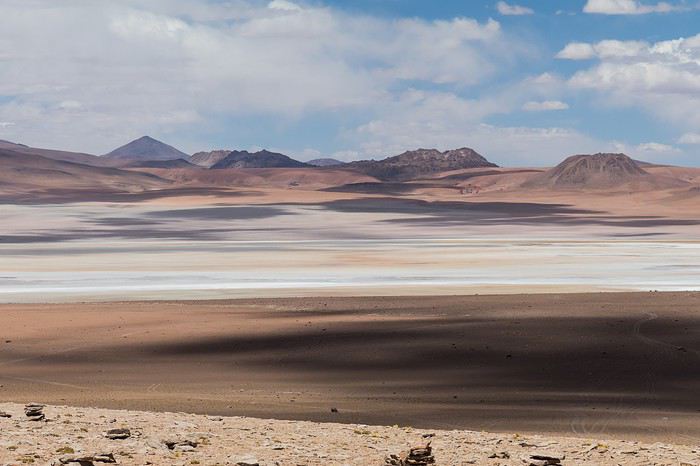 Laguna Kara
It was only after reading Laurent (Lolobe) and Pascal (Pepe874)’s travel journals—who explored the South Lipez solo with a car from Biz Rent a Car—that I thought we might be able to do the same. Meanwhile, we’d already contacted a local agency to organize a trip with a driver and guide. But the idea of a self-drive adventure really appealed to us. With encouragement and tips from Thierry (Tbernay) and Jean-François (Max68), we decided to plan our own self-drive trip. I’d like to thank them for their advice—it was *super* helpful. And a big thanks to all the other forum members for the info shared during our prep!
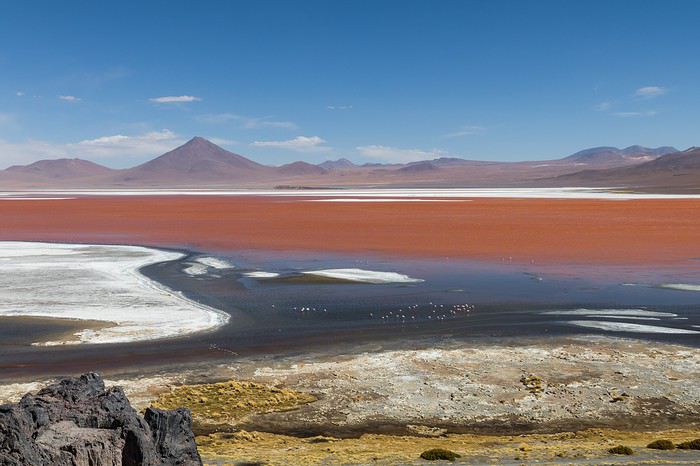 Laguna Colorada
Planning this trip happened during a tough time for our family. My mother-in-law’s illness and passing, plus a few health issues of my own, made us doubt the trip multiple times and nearly scrap the whole thing.
We booked our international flights in February with Swiss. They offered the best balance of travel time and price from Switzerland. Swiss operates Zurich–São Paulo with their own fleet, and São Paulo–Santa Cruz with GOL. In June, GOL canceled the Saturday flight and rebooked us on Sunday. Spending over 24 hours in that huge Brazilian city didn’t work for us at all, so we asked Swiss to put us on the next Zurich–São Paulo flight. Too bad—we lost a day in Bolivia and had to skip the Tarabucco market on Sunday.
Right after, we also booked the car in February. After contacting Imbex and Biz, we went with Biz. Not speaking Spanish, we were relieved to communicate with Alejandra in French. The contact was great—she answered all our questions patiently. Sometimes it took a few days to get a reply, but we could also reach her on WhatsApp. After our trip, we can *only* recommend Biz for rentals in Bolivia. The cars are well-prepped for the South Lipez tracks. The agency is reliable, and the vehicles are new and well-maintained.
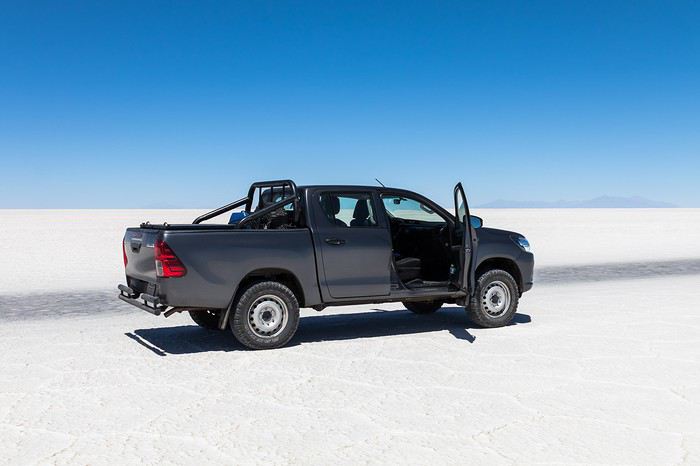 “Our” car, a Toyota Hilux
While planning, we realized the presidential elections would happen while we were in Bolivia. The risk of *bloqueos* (roadblocks and protests) was very real. But in Bolivia, *bloqueos* seem common—you always have to account for that kind of hassle. In late August/early September, Uyuni and the Salar region were blocked for days, leading to food, fuel, and cash shortages. Worried about a blockade in Uyuni and missing the Salar, we decided to visit it first *just in case*.
On election day, the whole country shut down. Planes were grounded, buses and taxis couldn’t circulate, and private cars were banned. There were a few exceptions—ambulances, police, or certain professions—but as tourists, we couldn’t get permission to drive. We asked the embassy, and Biz even requested a permit from the electoral office. So we had to plan to be somewhere with things to do *without* the car.
We decided not to book any accommodations in advance—a first for us. Usually, we plan our stops and reserve lodges, hotels, or campgrounds well ahead. This time, only the room in Sucre was booked, so we’d have a base when we arrived.
In July, Alex (Delhenry) reached out to propose joining part of the trip. He didn’t realize we were leaving in October. Still, we got fresh updates when he returned from the South Lipez. Thanks, Alex—your tips, especially about the Guadalupe–Tupiza stretch, were *super* useful.
In September, we connected with Jean-Louis (Avx) and Anne (Xeta), who were also heading to Bolivia in October, one and two weeks after us. We had dinner with Jean-Louis and his friend after our South Lipez trip and stayed in touch with Anne. It was great to chat with them! Unfortunately, Anne and her husband had a much rockier trip—they got hit hard by post-election issues.
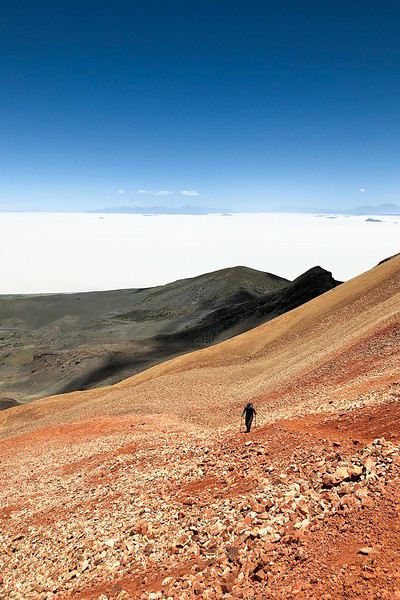 Climbing Volcán Tunupa
Our itinerary wasn’t set in stone—we decided to wing it on the spot. Two weeks before departure, I reconnected with Alejandra at Biz to move the car rental up by a day. With the elections, we wanted to leave Sucre ASAP and focus on the South Lipez. Outside Uyuni and Tupiza, the risk of blockades was zero. We also planned a two-night buffer in Sucre before our flights, just in case. It might sound overcautious, but in hindsight, we made the right call. If we’d left Sucre a day later, we wouldn’t have made it to Potosí—it was completely blocked. On the way back, we *just* dodged blockades in Potosí and elsewhere. Sometimes, you’ve gotta trust your gut.
Here’s our route—only the first two nights in Sucre were booked ahead:
D1 Departure from Switzerland
D2 Sucre (La Selenita)
D3 Sucre (La Selenita)
D4 Colchani (Hotel de Sal Luna Salada)
D5 Jirira (Auberge Doña Lupe)
D6 On the Salar (in the car)
D7 A few kilometers from Estancia Catal (in the car)
D8 Laguna Hedionda (Hotel Los Flamencos)
D9 Laguna Colorada (Lodge by the lagoon)
D10 Middle of nowhere, en route Laguna Verde–Mina Horsu–Quetena Chico (in the car)
D11 Quetena Chico (Lamphaya Lodge Andino)
D12 Quetena Chico (Lamphaya Lodge Andino)
D13 Guadalupe (Guest room at Celia’s)
D14 Along the Rio Grande (in the car)
D15 Tupiza (Hotel Mitru)
D16 Tupiza (Hotel Mitru)
D17 Sucre (La Selenita)
D18 Sucre (La Selenita)
D19 Santa Cruz (Hotel Sun)
D20 Departure from Santa Cruz
D21 Arrival in Switzerland
As you can see, we spent 13 nights in the South Lipez. Initially, we’d planned for nine, but Jean-François (Max68) suggested staying longer. Great advice—we didn’t regret it one bit. We could’ve even added 2–3 more days without getting bored.
Self-driving in the South Lipez takes some prep and a good GPS. We kept it simple and used maps.me to navigate. It’s a solid app—just save your waypoints ahead of time. For some stretches, I used Google Earth to visualize the tracks and sites. If you stick to the tour operator routes, you *almost* can’t get lost. But we often veered off the beaten path and took different routes. Some days, we didn’t see another car. So in case of a breakdown, it’s key to have water and food for several days. In some spots, there’s *zero* signal—your phone won’t work. Another must: it gets *cold* in the South Lipez, and a good sleeping bag is essential. We brought down sleeping bags rated for -10°C and didn’t regret it during our car nights.
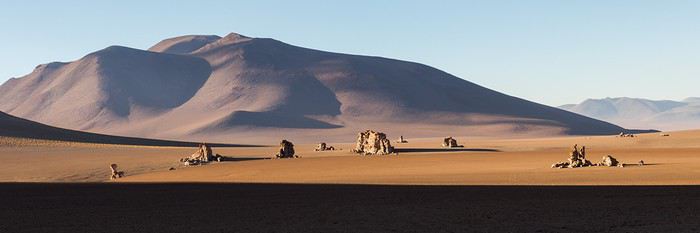 The Dalí Desert
Some tracks are *super* rocky—flat tires are a real risk. On those stretches, maps.me’s estimated travel time was way off. Some sections barely let us go over 15 km/h.
Lots of forum members recommend doing the South Lipez “loop” from Tupiza to Uyuni—ending with the Salar—to avoid Uyuni’s crowds. That might work for organized tours, but for self-drive, the direction *doesn’t* matter. I’ll say this: the few vehicles we saw mostly came from Tupiza and Chile, not Uyuni. So if starting from Uyuni works better for you, go for it! Ending in Tupiza means heading toward warmer weather. For our planned stops and climbs, starting in Uyuni helped with acclimatization. Spending a few nights between 3,600–3,800 m before going over 4,000 m is a smart move.
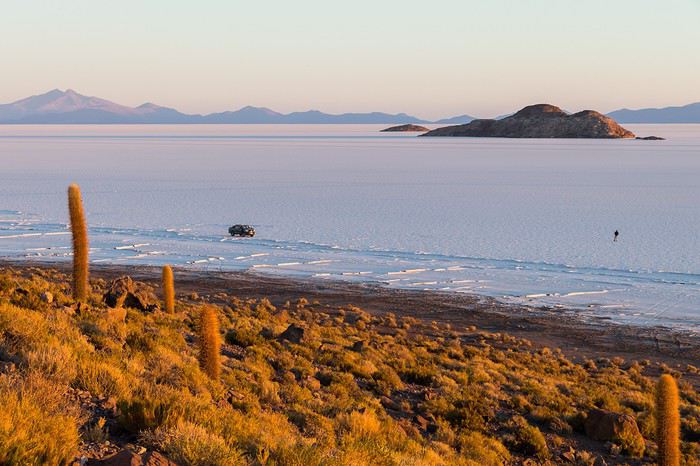 Uyuni Salt Flats in the morning
Overall, we barely saw anyone—except at Laguna Hedionda and Chalviri. There were several tour groups at Hotel Los Flamencos (Laguna Hedionda), but we didn’t cross paths during the day. Hardly anyone on the Salar, on the roads, or at the lodges in the evenings. The *only* place that shocked us was Chalviri. We’d planned to stay there, but it was fully booked—and we counted *forty* tour jeeps on-site. This was around noon! At the Polques hot springs (Chalviri), it was *packed*—we quickly nixed the idea of a dip. Plus, the vibe wasn’t great: soaking right by the road with lodges and restaurants in the background? Meh. Still, lots of tourists love it, so it’s up to you.
For the photos, I kept the colors and mood we saw. The lagoons’ hues are often stunning, but some online photos are *way* over-edited and oversaturated. The South Lipez’s landscapes are breathtaking—no need for excessive retouching.
If you don’t want to read all the details, the start of the travel journal is here: https://voyageforum.com/v.f?post=9888761;a=9888761
The idea of traveling to Bolivia came to me after seeing Jean-François (Max68)’s photos on his website. I thought we *had* to see those stunning landscapes with the colorful lagoons for ourselves. But a self-drive trip didn’t seem doable at first. A few years ago, everyone advised against going to the South Lipez with just one car.
Laguna KaraIt was only after reading Laurent (Lolobe) and Pascal (Pepe874)’s travel journals—who explored the South Lipez solo with a car from Biz Rent a Car—that I thought we might be able to do the same. Meanwhile, we’d already contacted a local agency to organize a trip with a driver and guide. But the idea of a self-drive adventure really appealed to us. With encouragement and tips from Thierry (Tbernay) and Jean-François (Max68), we decided to plan our own self-drive trip. I’d like to thank them for their advice—it was *super* helpful. And a big thanks to all the other forum members for the info shared during our prep!
Laguna ColoradaPlanning this trip happened during a tough time for our family. My mother-in-law’s illness and passing, plus a few health issues of my own, made us doubt the trip multiple times and nearly scrap the whole thing.
We booked our international flights in February with Swiss. They offered the best balance of travel time and price from Switzerland. Swiss operates Zurich–São Paulo with their own fleet, and São Paulo–Santa Cruz with GOL. In June, GOL canceled the Saturday flight and rebooked us on Sunday. Spending over 24 hours in that huge Brazilian city didn’t work for us at all, so we asked Swiss to put us on the next Zurich–São Paulo flight. Too bad—we lost a day in Bolivia and had to skip the Tarabucco market on Sunday.
Right after, we also booked the car in February. After contacting Imbex and Biz, we went with Biz. Not speaking Spanish, we were relieved to communicate with Alejandra in French. The contact was great—she answered all our questions patiently. Sometimes it took a few days to get a reply, but we could also reach her on WhatsApp. After our trip, we can *only* recommend Biz for rentals in Bolivia. The cars are well-prepped for the South Lipez tracks. The agency is reliable, and the vehicles are new and well-maintained.
“Our” car, a Toyota HiluxWhile planning, we realized the presidential elections would happen while we were in Bolivia. The risk of *bloqueos* (roadblocks and protests) was very real. But in Bolivia, *bloqueos* seem common—you always have to account for that kind of hassle. In late August/early September, Uyuni and the Salar region were blocked for days, leading to food, fuel, and cash shortages. Worried about a blockade in Uyuni and missing the Salar, we decided to visit it first *just in case*.
On election day, the whole country shut down. Planes were grounded, buses and taxis couldn’t circulate, and private cars were banned. There were a few exceptions—ambulances, police, or certain professions—but as tourists, we couldn’t get permission to drive. We asked the embassy, and Biz even requested a permit from the electoral office. So we had to plan to be somewhere with things to do *without* the car.
We decided not to book any accommodations in advance—a first for us. Usually, we plan our stops and reserve lodges, hotels, or campgrounds well ahead. This time, only the room in Sucre was booked, so we’d have a base when we arrived.
In July, Alex (Delhenry) reached out to propose joining part of the trip. He didn’t realize we were leaving in October. Still, we got fresh updates when he returned from the South Lipez. Thanks, Alex—your tips, especially about the Guadalupe–Tupiza stretch, were *super* useful.
In September, we connected with Jean-Louis (Avx) and Anne (Xeta), who were also heading to Bolivia in October, one and two weeks after us. We had dinner with Jean-Louis and his friend after our South Lipez trip and stayed in touch with Anne. It was great to chat with them! Unfortunately, Anne and her husband had a much rockier trip—they got hit hard by post-election issues.
Climbing Volcán TunupaOur itinerary wasn’t set in stone—we decided to wing it on the spot. Two weeks before departure, I reconnected with Alejandra at Biz to move the car rental up by a day. With the elections, we wanted to leave Sucre ASAP and focus on the South Lipez. Outside Uyuni and Tupiza, the risk of blockades was zero. We also planned a two-night buffer in Sucre before our flights, just in case. It might sound overcautious, but in hindsight, we made the right call. If we’d left Sucre a day later, we wouldn’t have made it to Potosí—it was completely blocked. On the way back, we *just* dodged blockades in Potosí and elsewhere. Sometimes, you’ve gotta trust your gut.
Here’s our route—only the first two nights in Sucre were booked ahead:
D1 Departure from Switzerland
D2 Sucre (La Selenita)
D3 Sucre (La Selenita)
D4 Colchani (Hotel de Sal Luna Salada)
D5 Jirira (Auberge Doña Lupe)
D6 On the Salar (in the car)
D7 A few kilometers from Estancia Catal (in the car)
D8 Laguna Hedionda (Hotel Los Flamencos)
D9 Laguna Colorada (Lodge by the lagoon)
D10 Middle of nowhere, en route Laguna Verde–Mina Horsu–Quetena Chico (in the car)
D11 Quetena Chico (Lamphaya Lodge Andino)
D12 Quetena Chico (Lamphaya Lodge Andino)
D13 Guadalupe (Guest room at Celia’s)
D14 Along the Rio Grande (in the car)
D15 Tupiza (Hotel Mitru)
D16 Tupiza (Hotel Mitru)
D17 Sucre (La Selenita)
D18 Sucre (La Selenita)
D19 Santa Cruz (Hotel Sun)
D20 Departure from Santa Cruz
D21 Arrival in Switzerland
As you can see, we spent 13 nights in the South Lipez. Initially, we’d planned for nine, but Jean-François (Max68) suggested staying longer. Great advice—we didn’t regret it one bit. We could’ve even added 2–3 more days without getting bored.
Self-driving in the South Lipez takes some prep and a good GPS. We kept it simple and used maps.me to navigate. It’s a solid app—just save your waypoints ahead of time. For some stretches, I used Google Earth to visualize the tracks and sites. If you stick to the tour operator routes, you *almost* can’t get lost. But we often veered off the beaten path and took different routes. Some days, we didn’t see another car. So in case of a breakdown, it’s key to have water and food for several days. In some spots, there’s *zero* signal—your phone won’t work. Another must: it gets *cold* in the South Lipez, and a good sleeping bag is essential. We brought down sleeping bags rated for -10°C and didn’t regret it during our car nights.
The Dalí DesertSome tracks are *super* rocky—flat tires are a real risk. On those stretches, maps.me’s estimated travel time was way off. Some sections barely let us go over 15 km/h.
Lots of forum members recommend doing the South Lipez “loop” from Tupiza to Uyuni—ending with the Salar—to avoid Uyuni’s crowds. That might work for organized tours, but for self-drive, the direction *doesn’t* matter. I’ll say this: the few vehicles we saw mostly came from Tupiza and Chile, not Uyuni. So if starting from Uyuni works better for you, go for it! Ending in Tupiza means heading toward warmer weather. For our planned stops and climbs, starting in Uyuni helped with acclimatization. Spending a few nights between 3,600–3,800 m before going over 4,000 m is a smart move.
Uyuni Salt Flats in the morningOverall, we barely saw anyone—except at Laguna Hedionda and Chalviri. There were several tour groups at Hotel Los Flamencos (Laguna Hedionda), but we didn’t cross paths during the day. Hardly anyone on the Salar, on the roads, or at the lodges in the evenings. The *only* place that shocked us was Chalviri. We’d planned to stay there, but it was fully booked—and we counted *forty* tour jeeps on-site. This was around noon! At the Polques hot springs (Chalviri), it was *packed*—we quickly nixed the idea of a dip. Plus, the vibe wasn’t great: soaking right by the road with lodges and restaurants in the background? Meh. Still, lots of tourists love it, so it’s up to you.
For the photos, I kept the colors and mood we saw. The lagoons’ hues are often stunning, but some online photos are *way* over-edited and oversaturated. The South Lipez’s landscapes are breathtaking—no need for excessive retouching.
If you don’t want to read all the details, the start of the travel journal is here: https://voyageforum.com/v.f?post=9888761;a=9888761
After my trip to Oregon in 2018 (see Travel Journal "Oregon and Only Oregon"), I vaguely intended to return to the West (the western USA, of course—the west of France is where I almost live) someday, later... with no specific date or plan.
November 2018, I stumbled upon a promotion for round-trip flights from Paris to San Francisco. Well, I *stumbled*—they must’ve collected some "data" on me to make sure this deal crossed my path. And it worked! My ESTA was still valid, and two days later, it was decided: May 13, 2019 (departure from Paris) to June 15, 2019 (return to Paris).
The travel style? Just like last year: low-budget trip, rental car, and accommodation only in campgrounds, with no reservations to stay as free as possible.
Exceptions? 3 nights in a youth hostel upon arrival in downtown San Francisco, and 1 night on the way back (right before flying) in Montara, near Pacifica—a spot that seemed well-located for driving back to the airport in the middle of the night.
Now, to sketch out the rough itinerary. Here’s what it looked like after the trip:
Westernmost point: Montara Lighthouse on the coast, 30 km south of San Francisco (California); Easternmost point: Zion National Park (Utah). Northernmost point: Reno (Nevada). Southernmost point: Spring Mountain Ranch State Park in Blue Diamond, near Las Vegas (Nevada).
Another view:
I’ll be spending 33 days in this little area! I’m a slow traveler.
Meanwhile, I realized that in some places I wanted to visit (Las Vegas and National Parks), it was better to book ahead. So, I added to my reservations: - 2 nights in a hostel in Las Vegas - 6 nights of camping in the national parks (2 at Zion NP, 2 at Yosemite NP, 2 at Sequoia-Kings Canyon NP). Between all these dated stops, it’s a choose-your-own-adventure from the ideas I found.
I’m also a slow writer—slow writer, slow traveler—so it’ll take me a while to wrap this up. I’ll start tomorrow.
November 2018, I stumbled upon a promotion for round-trip flights from Paris to San Francisco. Well, I *stumbled*—they must’ve collected some "data" on me to make sure this deal crossed my path. And it worked! My ESTA was still valid, and two days later, it was decided: May 13, 2019 (departure from Paris) to June 15, 2019 (return to Paris).
The travel style? Just like last year: low-budget trip, rental car, and accommodation only in campgrounds, with no reservations to stay as free as possible.
Exceptions? 3 nights in a youth hostel upon arrival in downtown San Francisco, and 1 night on the way back (right before flying) in Montara, near Pacifica—a spot that seemed well-located for driving back to the airport in the middle of the night.
Now, to sketch out the rough itinerary. Here’s what it looked like after the trip:
Westernmost point: Montara Lighthouse on the coast, 30 km south of San Francisco (California); Easternmost point: Zion National Park (Utah). Northernmost point: Reno (Nevada). Southernmost point: Spring Mountain Ranch State Park in Blue Diamond, near Las Vegas (Nevada).
Another view:
I’ll be spending 33 days in this little area! I’m a slow traveler.
Meanwhile, I realized that in some places I wanted to visit (Las Vegas and National Parks), it was better to book ahead. So, I added to my reservations: - 2 nights in a hostel in Las Vegas - 6 nights of camping in the national parks (2 at Zion NP, 2 at Yosemite NP, 2 at Sequoia-Kings Canyon NP). Between all these dated stops, it’s a choose-your-own-adventure from the ideas I found.
I’m also a slow writer—slow writer, slow traveler—so it’ll take me a while to wrap this up. I’ll start tomorrow.
Hello,
my Indian fiancé and I are getting married in France in a few weeks. Like many couples before us, we had extreme difficulties finding out the steps to follow in India to obtain the necessary documents for our marriage. We received no useful information from the Indian Embassy in Paris. It took us hours of research on traveler forums to gather scattered information and piece together the puzzle. I decided to summarize here the steps that allowed my fiancé to obtain the required papers, so other couples can struggle a little less than we did in the future.
I hope this post helps!
Context reminder: the list of documents required for a non-EU national to marry in France (see also www.service-public.fr):
Certificate of Custom: This is an explanation in French of the rules governing marriage eligibility in your country of origin. I read that some countries include proof that the applicant is indeed eligible. This is not the case for India.
Single-status certificate/marital capacity certificate. This is simply proof that you are eligible to marry under the laws of your country of origin.
Birth certificate.
All these documents must be less than 6 months old at the date of the banns publication.
The birth certificate and the single-status certificate must be apostilled. This procedure is linked to the international Hague Convention, of which both France and India are members. The apostille is a kind of stamp affixed to an official document by the authorities of the country where it was issued, giving it legal value in a third country.
How we obtained these documents:
The certificate of custom is very easy to obtain if you already live in France. You just need to go to the Indian Embassy in Paris with the required documents and pay the fees. We received it by mail the next day. The instructions on the Indian Embassy in Paris website are very clear (spring 2019). See also the VFS Global website (the company to which the embassy outsources consular activities).
Obtaining the single-status certificate was much more complicated. In France, a birth certificate is enough to prove whether you are married or not, as annotations are added for every major life event. In contrast, the Indian administration, although it can prove that someone is already married, is unable to prove that someone is still single. The only way to resolve this is to produce an affidavit. It took several trials and errors before we succeeded, as the administrators we dealt with generally did not know the procedure. Here’s what finally worked:
Prepare the affidavit on 100-rupee bond paper (first party: signatory; second party: Sub-Divisional Magistrate) at the Sub-Divisional Magistrate’s office in your place of birth. See Model No. 1 below. It must be signed by you and the Sub-Divisional Magistrate. For my fiancé, the latter only agreed to sign after presenting a certificate from the Tahsildar of his birth Taluk stating that he knew my fiancé was still single. If you don’t know the Tahsildar well, it might be useful to first request such a certificate from the "village accountant" before approaching the Tahsildar. We don’t know if the process would be the same in other districts than my fiancé’s. Attestation at the Regional Commissioner’s (RC) office. The Ministry of External Affairs will only apostille documents that have been attested this way. In our case, we found clear information about the procedure on the Regional Commissioner’s website (required documents, cost, bond paper value). The RC asked us to justify why my fiancé needed a single-status certificate. Such certificates are usually requested by people wishing to join the army, in which case the RC receives a request letter. I asked the mayor of my village to sign such a letter (see Model No. 2, which I wrote myself). I come from a very small town, which was lucky here, as the mayor knows both of us personally and immediately agreed to do it. I have no idea if it would be as easy in a larger town. Once the document was submitted to the RC, it was sent back to the administrator who issued it for authentication. This back-and-forth should not take more than 25 days, but it may be useful to follow the progress of the procedure by calling or visiting the offices of both administrations regularly. Send the attested documents to the Ministry of External Affairs (MEA) for apostille. In 2019, the Indian MEA only accepts apostille requests through private operators, whose list is available on the MEA website.
The birth certificate, once obtained from the municipality of your place of birth, follows the same procedure as the single-status certificate: attestation by the Regional Commissioner, then apostille at the Ministry of External Affairs.
Note: The Indian Embassy in Paris offers to issue a birth certificate. We recommend NOT GOING THROUGH THEM. The procedure is expensive, and they simply copy the information available on your passport. We seriously doubt the validity of such a document for marriage.
A few tips:
Obtaining these documents in India will require a lot of time, patience, and creativity! For us, more than 4 months passed between the moment my fiancé signed his single-status certificate and the day we had it apostilled in hand. In the meantime, there were dozens of phone calls and visits to various local administrations, a lot of brainstorming, and money wasted on canceled flights due to the monsoon.
If you have contacts in the local administration, don’t hesitate to use them. Also, if possible, closely monitor the progress of the procedures by calling or visiting the offices regularly, as mistakes are very common.
I recommend only requesting the certificate of custom once you’re close to having the other documents in hand, as it’s expensive, its issuance is very quick (at least if you both live in France; otherwise, I don’t know), and it’s only valid for 6 months.
All the steps for the birth certificate and the single-status certificate must be done in person, which can be complicated if you already live outside India. Some companies offer to handle it for you if you’re willing to pay. My fiancé bypassed the problem by designating his brother as an "Authorised representative" (a step taken at the notary of his birth Taluk). Once the single-status certificate was established in person, my fiancé’s brother was able to take over and complete the rest of the steps on his behalf. Finally, we asked the service provider handling the apostille to send the documents to our address in France via DHL (we don’t trust the postal service, as we’ve had mail stuck at customs for several weeks before).
My fiancé first tried to establish his single-status certificate at the notary of his birth Taluk. It didn’t work because the Regional Commissioner categorically refused to attest it. Indeed, it is generally forbidden to make any modifications to a document signed by a notary.
Once the birth certificate and the single-status certificate arrive in France, you must have them translated by a sworn translator registered with the Court of Appeal in your area. You can find the list on your Court of Appeal’s website. There are no sworn translators for all Indian languages! So, check beforehand if one exists for the language in which your certificates will be issued, or ensure they are issued in English.
Model No. 1 - Single-status certificate, affidavit
I, (name of applicant), son of (name of father) and (name of mother), with permanent address (address in India), solemnly affirm and declare as follows: 1. That I am a citizen of India 2. That I was born in (place of birth) on the (date of birth) 3. That I am holding a valid Indian passport bearing the number (passport number) issued at (place of issue) and valid from (date of issue) to (date of expiry). 4. That I am unmarried (single) and have no living spouse at present either in India or abroad 5. That I am eligible to marry an Indian or a person of any other nationality according to law. 6. That I am of sound health and in mentally fit condition 7. I further state that whatever stated therein is correct to the best of my knowledge.
I am aware that suppression of facts or furnishing false/misleading information is punishable under Indian law, under section 193(2), 199, 200 of the Indian Penal Code.
Solemnly declared at (place of signature) on (date of signature).
(your signature) (the subdivisional magistrate’s signature)
Model No. 2 – Request letter from the French mayor to the Indian Regional Commissioner
Dear Sir/Madam, (English version below) I, the undersigned (Mayor’s name), Mayor of the Commune of xxx, department of xxx, France, certify as follows. Firstly, that Mr./Ms. (Name of the Indian future spouse), citizen of India, passport No. xxx, issued in xxx on xxx, valid until xxx, residing at (address), INDIA, and Ms./Mr. (Name of the French future spouse), citizen of France, passport No. xxx, residing at (address), FRANCE, have requested that I solemnize their marriage in my Commune under French law.
Secondly, that French law requires me to request from Mr./Ms. (Name of the Indian future spouse) a certificate attesting to their single status.
Issued for all legal purposes.
(Place, date, stamp, and signature of the mayor)
Note: Prepared on the town hall’s letterhead, directly in both French AND English to avoid needing a translator.
Time flies: here we are already presenting our tenth travel journal to VoyageForum’s readers!
We discovered Thailand about a dozen years ago, and it quickly became addictive for us. It’s only fair to say that this country stands out from many—if not most—thanks to an extraordinary combination of qualities: a generally smiling, laid-back, and friendly people; a territory dotted with natural beauties of exotic exuberance; a substantial selection of dishes, each more delicious than the last; and an obvious ease in making yourself understood and finding help to organize your activities.
Over the years, it’s been tough to keep things fresh, to continue sparking readers’ interest—and who knows, maybe even enthusiasm. We’re going to try to rise to that challenge.
After revisiting or introducing you to over 120 temples in Thailand, this year Joel and Françoise want to reveal a "Thailand Naturally."
Both in well-known areas and others that are more off the beaten path.
By "natural," we first mean nature itself, with its stunning sites and landscapes. But it’s also about places where Thais love to stroll with family and friends. Sometimes it’s just faces, glances, moments of life, or ceremonies captured on the spot. For the ladies, there’ll certainly be flowers to admire along the way. Uh... for the gentlemen too, who appreciate them (the flowers)... oh, and also for the gentlemen who appreciate gentlemen who appreciate flowers. And even for the ladies who don’t appreciate gentlemen. Alright, let’s go wild—on top of all that, we’ll still include a few places of worship. No matter how hard we try to resist, there’s always someone or something pulling us toward temples. The ever-vibrant popular devotion encourages us, and we never regret it.
To do this, we’ll lead you through six provinces or regions that will reveal themselves as the story unfolds, letting you enjoy the thrill of discovery. Even if we’ve mentioned some of them in previous years, this time it’ll all be new. For a more complete picture of any province we’ve already covered, readers can check out our past travel journals—just click on our username Jojoone1 to see what we’ve published.
One last note before we begin: we’re sticking to our tastes, our preferences, and what brings us joy. We just really wanted to show you multiple facets of the country’s interior—we’ll see if we pull it off...
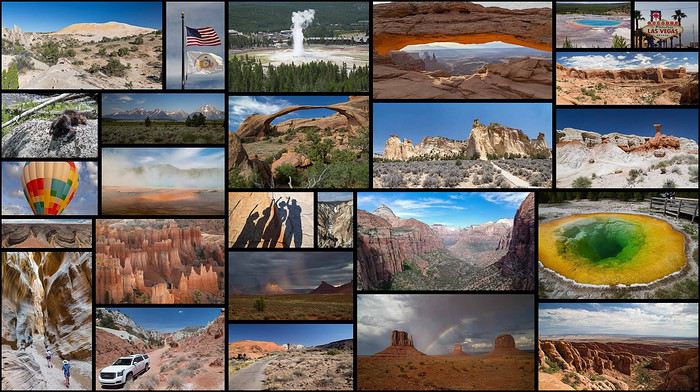
Nine Bretons in the USA from June 24 to July 20, 2018: Greenery and mosquitoes in the North, heat and storms in the South
Choosing the trip:
After returning from the USA in 2014 (travel journal here), it was clear we’d go back, this time with the firm intention of bringing our kids. 😇
2015 was the year of Scotland (travel journal here), 2016 was a work year, and 2017 was the discovery of Aragon in Spain (travel journal here)… Meanwhile, our kids’ age still seemed like a hurdle for this kind of trip. The long wait turned out to be an advantage, letting us refine the project and rally others: what started as a two-week trip for four turned into three weeks for nine!! JF’s parents (M&P, who’d already been in 2014) and JF’s brother (C&D&Y) joined our little family (C&JF&A&L)!!😎 After plenty of family discussions, route tweaks, travel journal reads, and advice from VF (plus some specialized books like Photographing the Southwest by Laurent Martrès), we made up our minds—fully aware of the constraints—and split the trip in two:
- First week, just the four of us in an SUV + hotels, looping from LV (Valley of Fire, Saint George, Bryce, Kanab), focusing on rocky, sandy, and colorful hikes:
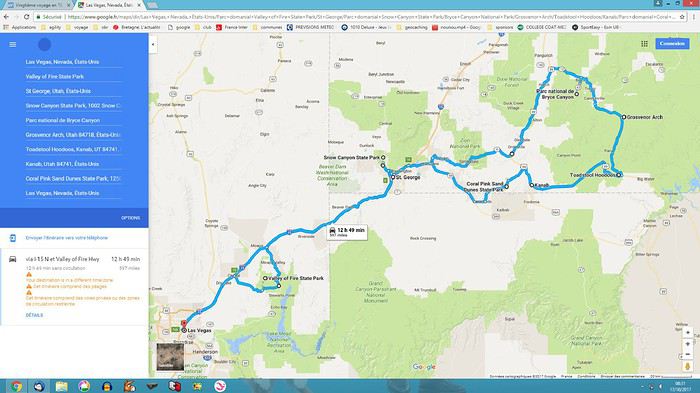 - Followed by two weeks with nine people in 2 RVs + campgrounds, as close to nature as possible in the parks (Snow Canyon, Kodachrome, Yellowstone, Arches, Canyonlands, Dead Horse, Monument Valley, Grand Canyon):
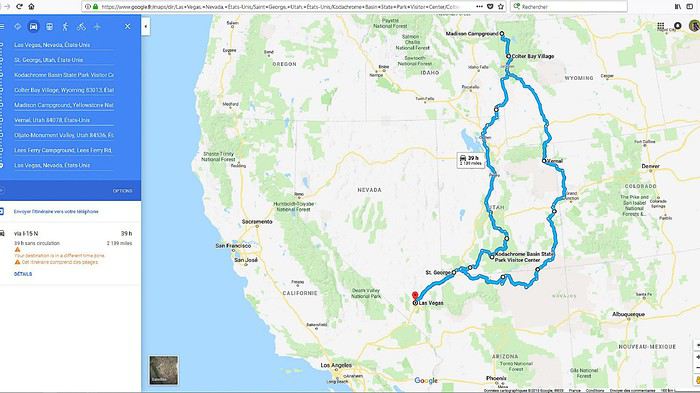 🙂Before going further, we want to thank the forum members who took the time to answer our questions. Your patience and kindness are amazing! We might forget someone, but thank you all: Jpg13, Mlefebvre, Kast13,Glll2012New, PCecile, Aquilegia, Adumas4, Ju45, Mycovtt, Natb72, Soula1, Orionide, Simonic, Hiacinthe, etc.
Traveling with nine people (ages 9 to 76, including three kids!!) requires some serious logistics and near-perfect timing to avoid wasting time. The plan went off without a hitch😎… well, almost—we’ll get into the details later…😛🏴☠️🙂 In the end, we came back enchanted and happy!! 🙂The family aspect played a big part, but we also discovered spots that were much less crowded, definitely less known to the general public and the hordes of Asian tourists… The kids returned with stars in their eyes, and the adults with just as many memories (plus around 1,200 photos and 130 GB of GoPro video to sort through)!!😎 We’re already feeling the itch to go back—a Denver loop is starting to take shape…😇
Thoughts on the Americans we met and places we visited: They haven’t changed since 2014… Still cool, optimistic, and smiling, always ready to strike up a conversation and offer help—even without the lure of our tourist dollars. (Only two cold locals at Monument Valley clearly made little effort to help us.) We noticed a few changes in the parks😕: some infrastructure was less well-maintained (wobbly wooden walkways, for example), French info pamphlets disappeared from entrance huts, and there were fewer rangers (Lee’s Ferry ranger station was closed). These changes are likely due to Trump’s restrictive policies toward national parks. On the economic side, gas prices rose by 30% since 2014, now around 0.85 € per liter, and with the current exchange rate, conditions are much less favorable for European tourists than in 2014. But this area is so beautiful—too bad Americans have such an idiot for a president!😠
The flights: Round-trip Paris CDG to Las Vegas LAS Roissy to Los Angeles with Air Tahiti Nui, then American Airlines for Los Angeles to Las Vegas. The A340s were impeccable, and service was great with Air Tahiti Nui (the tiare flower given at boarding), and no complaints about AA either.🙂
The hotels: All booked in advance, either through Hotels.com or directly on the hotel’s website (like the Planet Hollywood in Las Vegas). No surprises, everything met expectations.🙂 It’s a real plus for a family of four to have two beds in every room… Still rare in France.
The campgrounds: Except for one night at Lee’s Ferry, all were booked from France through NPS, Xanterra, and KOA sites. No surprises here either—everything met expectations and was well-organized (fire rings and tables at every site, for example).🙂
The vehicles:
First week: Four people in a GMC Yukon XL from HERTZ, at Las Vegas airport for 327 €, unlimited miles, second driver, and insurance. A typically American beast—355 hp, seven seats: it’s long, big, wide, and tall😮😎😎!! Impeccable condition, quiet, super comfortable with tons of safety features and gadgets (like weather updates tied to GPS!!), and it averaged about 12 L/100 km in 2WD (in 4WD, we nearly hit 19 L on the Stukumpah Road…). A total win thanks to the HERTZ GOLD card, following Jpg13’s advice (Jean-Pierre, you’re my idol!!😎). It let us skip the counter lines (we didn’t even stop there!), pick up the car, and leave the parking lot in under seven minutes… Even less time for the return!
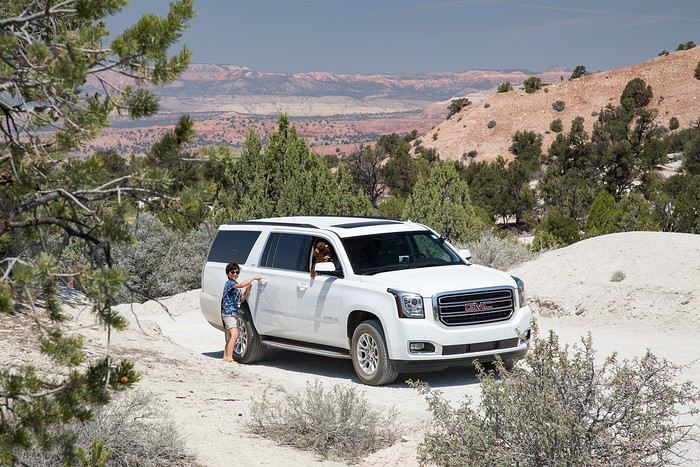 Second and third weeks: Nine people in two RVs. A 30-foot RV + a 25-foot RV from CRUISE AMERICA in Las Vegas for 5000 €, unlimited miles, kitchenware, and linens/towels/comforters.
A love story in 2014 with this same agency, but unfortunately, this year was much more mixed: aging RVs, ineffective AC in the C30, a leak in the C25’s skylight, a leak in the C25’s toilet drain valve (imagine the dump every time we opened the drain plug…😠🙁), late delivery of both RVs (after 5 PM, though the contract said 4 PM max), abnormal wear on the front tires (we’d discover that later😠), trouble closing the door, etc.In short, a disappointment.😠
Note that other rental companies (El Monte and Road Bear) are probably gaining market share—we saw a lot of their vehicles on the road, and they offer much newer models (at least on the outside) for similar prices…🙂
But setting aside those issues, the vehicles still did their job: letting us sleep as close to nature as possible in the parks and enjoy beautiful sunrises/sunsets with family campfires and marshmallows flambéed with Jack Daniel’s Tennessee Honey😇!!😎 Also worth noting: Cruise America’s solid roadside assistance (we’ll talk more about that later), and how easy it was to drive these beasts—nearly 10 meters long! (Our walkie-talkies were super handy for communication between the two RVs.)
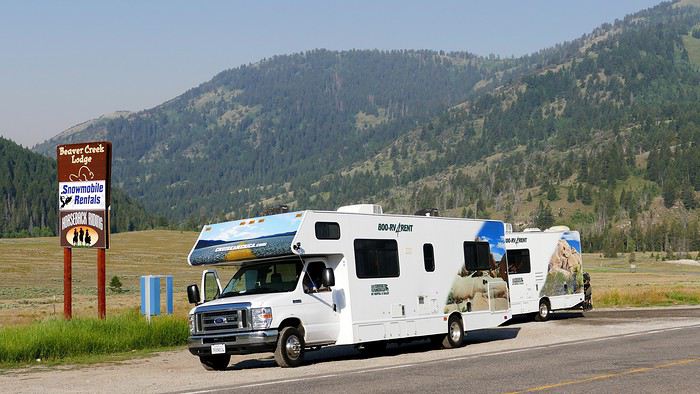 And for the last day, a Ford Transit 12-seater from Hertz, at Las Vegas airport for 145 € for 24 hours. Perfect for a day with nine people and nine suitcases + nine bags!! Everything fit in the trunk, and it let us explore LV independently (including a trip to the outlet) for less than three taxis would’ve cost…😎
There you have it—the scene is set! If you’re interested in the rest, feel free to join in. The travel journal is done on the computer, and we’re up to day 11 for photos… We should be posting daily!!🙂
See you soon. Christelle & JF
Hi everyone,
My husband and I have just gone through this stage of a Franco-Togolese marriage—he’s Togolese, and I’m French. Given how complicated things can get with the administration, I thought I’d leave this post here. If you’d like advice or want to learn from our experience, don’t hesitate to ask...
Good luck to all of you in the same situation!!
The story of a trip to Morocco, from the first to the last day—otherwise, it wouldn’t have made sense...
Marrakech... then four days on foot in the desert, alone with a guide, a camel driver, and two dromedaries... and Marrakech again.
Everything mattered, even the smallest details, so this is a (very) long story.
Behind the descriptions and anecdotes, there’s emotion, intimacy, and... soul-searching.
All the things it’s strangely easier to share this way, all the things it’s strangely easier to share with people you don’t know...
I have beautiful images in my eyes, but only a few are visible—if you read carefully, you’ll understand why.
The other photos are imagined, created upon returning with souvenirs and a bit of staging.
But everything is authentic.
Since I’ve been back, sometimes at night I open my eyes and don’t know where I am... Sleepless night, starry night, night of communion, connected night... In that suspended moment, between wakefulness and sleep, which makes you so receptive... Communion with whom? Connected to what? Lila gnawa... lila de derdeba.
The desert, a solitary path. You step in, and you’re immediately in the essential...
Wednesday... My companion drops me off at Orly Ouest... There are two hours before boarding. My MP3 player turns on but that’s it. It freezes—no commands work, and nothing fixes it... Smile... A trip without music, then? And the first anchor falls away.
(Photo...) ... Passport, tickets, receipts, labels...
Nose pressed to the window for the entire flight... Descending over Marrakech, at low altitude, a pretty mosaic—shades of pink and ochre dotted with green, but also, to the right, less harmonious, aligned cubes. Housing developments under construction? A bumpy, turbulent landing—the plane circles for a long time before touching down.
Welcomed by the familiar, unchanged sound of creaking doors and seats in the little taxis. In Casablanca, it was red Simca 1000s with meters; here, they’re yellow, and you have to negotiate the price. I have no talent for that, so here’s 100 DH!
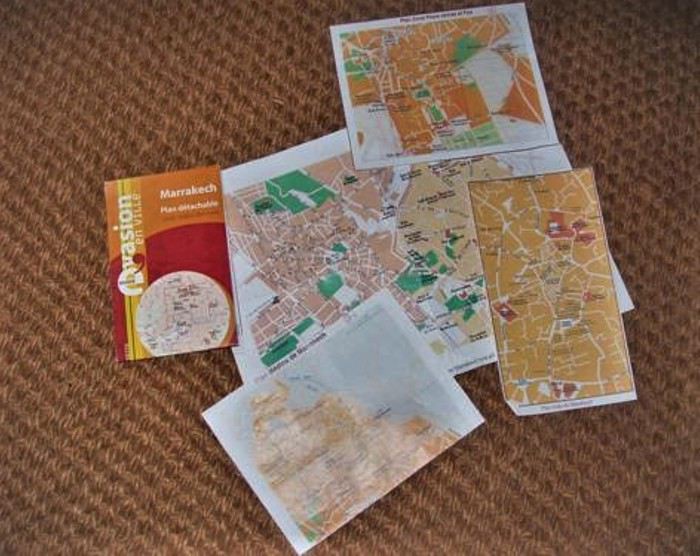 Traversed and forgotten
Marrakech... Sunny, luminous, sensual. Torn between tradition and modernity... Shimmering and fragrant, very noisy... rather polluted? On the road, horses and donkeys still mingle with vehicles... and watch out for traffic when crossing! It’s always a strategic—and athletic—adventure: at what exact moment do you sprint to the opposite sidewalk? And why aren’t any street names marked?
Afternoon on foot, heading to the Bab Doukkala bus station... A landmark: the McDonald’s, then a square with a fountain. Then turn left onto Avenue Hassan II. There’s a bus to Zagora Friday morning, but I can only buy the ticket tomorrow. On the way back to the hotel, at a kiosk on the corner, I buy *Tel Quel*, which I read with great interest online.
Thursday... Early morning, walking to Place Jemaa el-Fna, calm and almost deserted... I don’t get a good deal buying two small daggers for my kids. No talent for haggling—it takes more than charm for that... So I’ll pick the rest of my gifts at the artisan center on Avenue Mohammed V, where prices are marked, and it’s a pleasure to watch the craftsmen work... For my daughter, a satchel and earrings. The satchel smells like goat. The earrings are hand-chiseled in front of me by a very young man with nimble fingers—marvels of delicacy and fragility. Then I linger for a long time in the souk alleys. Scents of leather, thuya and cedar wood, wool and copper... Familiar smells... Childhood memories...
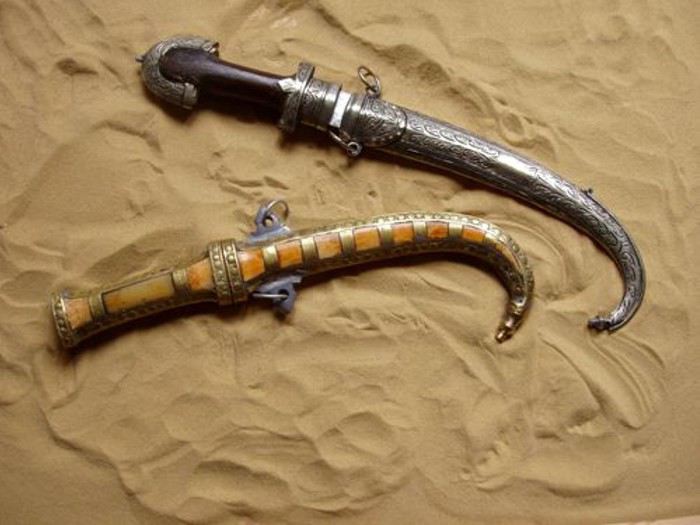 Dear daggers
Earrings
Back at the bus station, an unexpected change: no bus Friday morning, but a departure tonight at 8:30 PM... I have a little time before packing, so I take a long detour: Boulevard de Safi, then right onto Avenue El Mansour to the Majorelle Garden... A quiet pause. Rare plants, all kinds of cacti—smooth, fuzzy, bristling with spines... strange, squat, or stretched-out shapes. An infinite variety of greens, and that famous blue... The song of birds, the sun and shadows playing in the water basins... Time flows lazily. I write postcards—they’ll arrive long after I’m back...
Back to the hotel. Avenue El Mansour, Boulevard Zerktouni—okay, but why are the small street names never marked?!! I get a little lost...
I hope you got my MMS, because before leaving, I left something for you at the front desk...
8 PM, night has already fallen. Arriving at the bus station, and then... Then, a step back... A dense crowd, a tangle of buses... Where to go?... Rare woman, lone foreigner, backpack... I’m quickly spotted, surrounded, poorly guided... Someone with a badge finally points me to the right sidewalk. The bus isn’t there, and the sidewalk is already packed, mostly with men. Will I even get a seat?... Three young men are particularly insistent... They want to know where I’m going and why, if someone is with me, if I’m expected... I answer with a smile. A bit tricky—choosing words, staying polite while evasive... Their French is hesitant, my Arabic is more than rudimentary... Actually, I shouldn’t have tried... Their tone becomes a bit... aggressive, and their eyes light up. Uh-oh... They say they’re students, but what of?... Want to know what I think of the Quran and Allah, what I think of holy war, if I’m "for the Americans," "for the Palestinians"... Other travelers intervene... And the bus still isn’t here... The speech turns fanatical... Then, my smile freezes a little... A small wave of panic, so I send a "freaked out" MMS... (But who else could I send it to?) Then, in this dark crowd, a light dressed in white... Nabila, a young student heading to Zagora for vacation, she speaks French... She plants herself in front of them and scolds them thoroughly. I didn’t catch everything, but it worked! The three troublemakers retreat. Plus, they weren’t on the right sidewalk, and their bus is about to leave without them...
Nabila and I manage to board and sit side by side... The bus leaves two hours late. The trip is long, a bit uncomfortable, slowed by many stops—it was very cold...
Friday... A little stiff, a little dazzled, a little chilled, arriving in Zagora at dawn with the sunrise... Magical! Craving something warm... And then, a heartfelt gift—kindness and hospitality—Nabila invites me to her home. Warm welcome from her mother and siblings, not at all surprised to see me show up so early to share their breakfast! A few hours in their company... We exchange addresses, and the youngest brother, Nouamare, gives me a children’s storybook...
Noon, at *La Fibule du Draa* Lahcen Sarti, the owner... I finally put a smile and a face to an email exchange... He shows me the trek route on the map, laughs when I tell him about my night on the bus, and sends me to rest by the pool... No swimsuit, so a lounge chair and a book... A book that will accompany me into the desert and which I’ll finish in Marrakech, in the Koutoubia Garden...
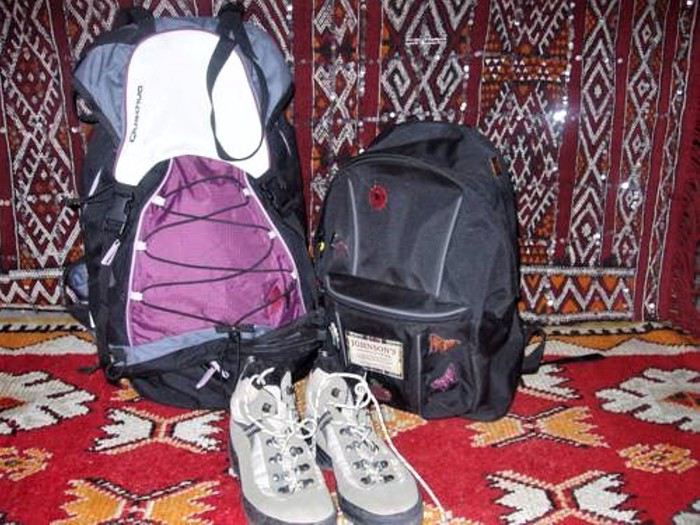
Saturday, Day 1... When I wake up this morning, I know the desert sand will also absorb my blood...
Early departure for four days and three nights, alone, as I wished, with a young guide, Mohammed, and a younger camel driver, Abdou. We’ll be together 24/7, and we won’t see a soul until we reach the fixed campsite on the third evening. Everything we need is loaded onto two dromedaries. And in those baskets, there are miracles—a *Prévert*-style inventory I’ll discover bit by bit, like... a tray for glasses, a basket for bread, a sugar loaf and small glasses for tea, but... large glasses and sugar cubes for coffee, spices, oranges, vegetables, raw eggs!... That won’t break, *La Vache qui Rit*... And so many other unexpected wonders, so surprising in the middle of the desert... (*La Vache qui Rit* is the desert butter. Every morning for breakfast, it was coffee with Nido powdered milk and *kesra* with *La Vache qui Rit* and Aïcha apricot jam... A delight.)
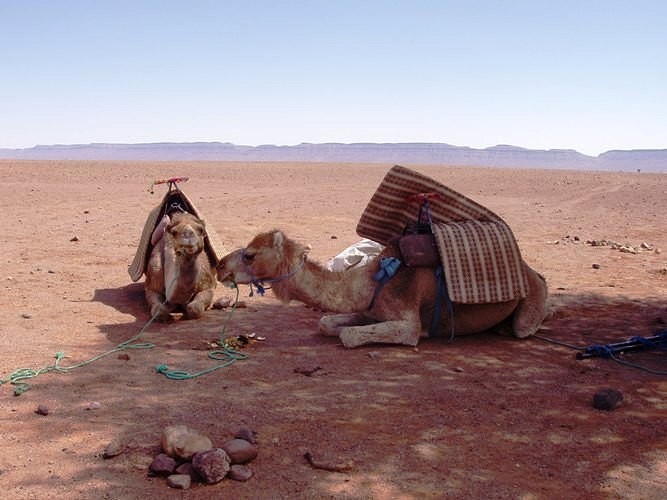
Start of the journey, and the beginning of a long, long walk... We’ll cover 80 km in three days, crossing all kinds of landscapes until the real desert of sand and dunes... I’ll drink water from wells, eat raw vegetables, sleep on a mattress that saddles the dromedaries by day... I’ll forget all the warnings and all my hygiene references... My body will quiet its complaints. No heat, no thirst, no fatigue, no trouble of any kind... just woken by the cold every morning around 6 AM... I take off my watch. Like my companions, I’ll live by the sun’s rhythm...
Abdou leads the dromedaries, so he walks at their pace. Sometimes, we’re grouped together. Sometimes the two guides are together, and I walk behind. Sometimes we talk. Nothing is forced, no discomfort. It’s a simple, harmonious dance—one foot in front of the other, following your shadow as it turns with the sun... Each step leaves behind the useless, the cumbersome, the superfluous... Room for intimacy... Room for silence... Room for the inner self... Facing yourself... I find seashells, and with my eyes closed, I smell the sea...
 ... One foot in front of the other...
I take out my camera... Capacity for a hundred shots, but it’ll be 10 photos, no more. It freezes—no commands work, and nothing fixes it... Smile... A trip without photos, then? And the second anchor falls... I think of my MP3 player...
 ... A few photos among the ten...
Noon... Unsaddling the dromedaries, which immediately wander off in search of food. And before the meal cooked by Mohammed, the mint tea ritual, prepared by Abdou in a tiny teapot... Thick, frothy, very sweet tea... He serves it on a tray with dates, peanuts, and raisins... And it’ll be like this every day, noon and night...
We gradually get to know each other... Mohammed, 25 years old... Calm, very introspective, almost ascetic, he knows the desert well and loves it... So at ease that he’ll walk in slippers or barefoot, no matter the terrain... When I’m behind him, the advertisement on the back of his sweatshirt makes me smile... There’s a date: January 8, 2003... A little wink from life? (I have a clear memory of that day.) Abdou, barely 20, with a round, jovial face. The mint tea master... When he hands me my glass, he says "Bismillah," and I respond in kind... A joker and a foodie. Thrilled that I only eat vegetables, he’ll have double the meat!
 ... Abdou and his teapot...
 ... Mohammed...
Late afternoon, a well... Abdou waters the dromedaries, and Mohammed fills the canteens. The caps aren’t watertight, so he wedges a piece of plastic bag found in one of the baskets and screws it on top... Forget all hygiene warnings...
First night in a tent at the foot of Jebel Baní...
 ... Jebel
Sunday, Day 2... Crossing and ascending Jebel Baní... A mineral, lunar landscape—rocks the color of burnt bread and anthracite gray. I pick up pretty pebbles, and Mohammed finds me a fossilized stone... Lunch in a deserted nomad oasis... When we resume our walk, the wind picks up. A wind that only blows in April, violent, terrible—the *Sahli*... Swirls of sand and gravel. Where’s the sky, where’s the earth... everything is dust, everything is yellow and opaque... The gusts are so strong they make us stagger. At times, we even have to crouch to avoid falling. In the acacia forest, Abdou and the dromedaries are only a few meters ahead, yet we can’t see them... We’ll later learn that on that day, planned excursions were canceled... That a group got lost and had to be picked up by 4x4... But Mohammed has a sense of the desert. He’s calm, he guides us... so we continue, and I trust him. He wraps a *chèche* around my head—a fragile barrier against these onslaughts... We have to keep moving, and it’s difficult... But the desert has accepted me, so without resistance, I accept it... And the sand gets everywhere... in my mouth, crunching between my teeth, in my eyes, ears, and nostrils... in my hair... A fine ochre layer covers my face and body, even under my clothes. I’ve become a sand woman... Communion... Fusion with the mineral. I absorb the desert’s prodigious power, just as the desert absorbs my blood...
We walked for four hours, pushed by this furious wind, before stopping for the night under an acacia... There, we had to set up the tent, which they did with difficulty. Then we had to weigh it down... So the utensils and the mint tea tray served as shovels to cover the edges with sand. Then Abdou took care of the dromedaries, holding one of their front legs bent with a rope to keep them from wandering too far... Then we brought everything into the tent and collapsed... but not for long.
Mohammed prepared kingly meals at noon and night with the wonders in the baskets: finely chopped raw vegetable salad, vegetable tagine, soup (and not from a packet!)... Even the canned sardines were garnished with thin orange slices... After this exhausting day for all of us, I told him that bread with *La Vache qui Rit* would be enough... He looked at me with a big smile and said his evening ritual phrase: "Now, Laurence, sit down, take your time, take your book..." He pulled his sand-filled utensils from the miraculous basket, his stove, some vegetables, and made us couscous (and not from a box!), couscous he rolled between his hands... Meanwhile, Abdou took out his sand-filled teapot, his sugar loaf, the peanuts, the dates... The mint tea ritual, like every day, noon and night...
Outside, the wind keeps blowing, stirring up sand whirlwinds... So I won’t go out like the other night to brush my teeth and hair. Just a wipe on my face to remove the dust... Mohammed turns off the gas lamp, and I curl up in my sleeping bag. The dromedaries have moved closer to my side of the tent, and the moonlight stretches their shadows on the canvas. They’ve settled in and make strange noises... We fall asleep very quickly...
Monday, Day 3... My two companions are still asleep when the cold wakes me at 6 AM, like every morning... Everything seems so calm—the wind has stopped... I untie the tent door and... A pure blue sky, gradually tinted with pink and flaming orange. The sun rises before my dazzled eyes. A day of light begins: no trace of yesterday’s storm, except sand... everywhere.
So, breakfast with sand... Then we shake out everything that can be shaken, sending clouds of dust flying... Then Abdou gives the dromedaries back their fourth leg, and we continue the journey.
After the expanses of stones and shrubs on the first day, the rocky ridges of Jebel Baní, and the acacia forest on the second day, the landscape changes, softens... We arrive in the desert as you imagine it, as you dream it, as you’ve seen in thousands of photos: endless golden dunes, in harmonious hollows and curves... The desert of sand... vast, fascinating...
Last meal for the three of us... Tonight, we’ll arrive at the fixed campsite, and we won’t be alone anymore. The break stretches on... So, a little apart on the smooth sand, I write a few words... an obvious truth... entrusting a secret to the desert. In a small box, I’ll bring back some of this magical sand...
 .. A secret in the desert...
Abdou grabs my notebook and draws the dunes. Mohammed draws Abdou and his dromedaries... I learn to do dishes with the contents of a single glass of water... A tiny bird lands on my bag... A bird!... in the middle of nowhere!... The dromedaries seem to relish the acacia branches, thorns and all...
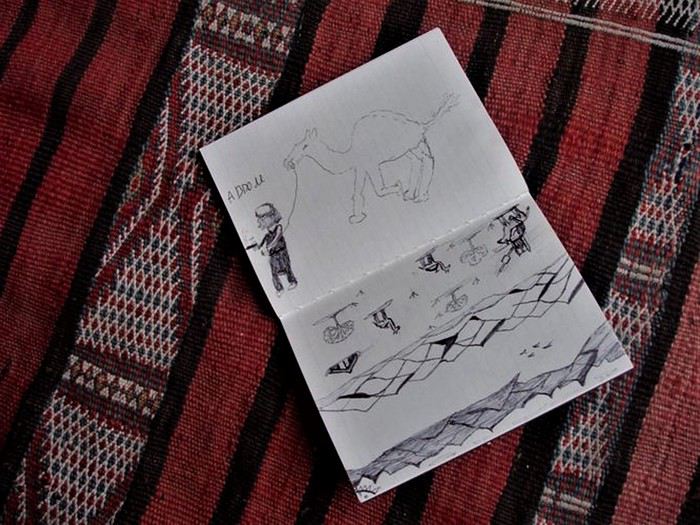 Desert drawings
We set off again... The dunes are higher... Easy to climb, the desert has sensual, feminine curves. A giant’s hand would fit its reliefs like a caress on a soft, supple body... The setting sun gives the landscape colors of amber and spices, cinnamon reflections... The sand offers me pink pebbles and pieces of white quartz that sparkle... I also find a black stone... Mystery...
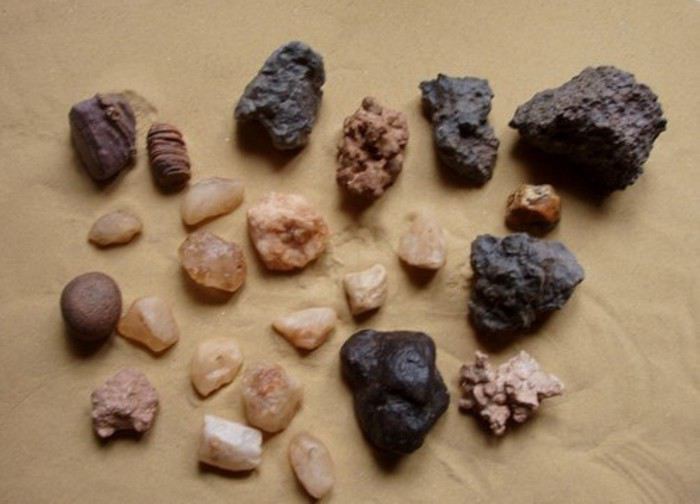 Pink pebbles, fossilized pebbles, sparkling pebbles, and a black stone
Late afternoon, arrival at the fixed campsite at the foot of Erg Lihoudi... The guardian, Lahcen, a whirlwind of chatter and energy, welcomes us with mint tea. He quickly pegs me: "You do yoga, right?" He tells lots of anecdotes about his "clients," ending every sentence with: "No problem! *Machi mouchkil*... *Machi mouchkil*, no problem!" Around the tents, dozens... hundreds of big black beetles swarm on the sand... As I shudder, Lahcen gently picks one up and wants to put it on my hand: "*Machi mouchkil*! It doesn’t sting!"... I hold out a hesitant palm... Despite Lahcen’s infectious enthusiasm, I don’t like this last evening. Two groups arrived by 4x4 to spend a night in the desert... Noise of engines, cameras, voices, and exclamations... An intrusion into my bubble... I keep my distance... They’ll leave very early the next morning...
 Memory of beetles
Tuesday, Day 4... Standing still on a sand dune, I see both the full moon and the sun in the same sky... A luminous face-off. Magical, overwhelming... Then the moon paled, and the sun blazed brighter. It wasn’t quite night anymore, but day wasn’t far off... The Sacred, Mystical universe unfolded before me... A moment of grace that made my heart beat a little faster... Something indescribable gradually filled me, with infinite gentleness, to the depths of my soul... Facing this unlikely encounter, hesitations, reluctance, and fears seem so trivial... What are we if not fragments of this universe where everything is united... everything is connected...
Then comes the intention of a new message: "I’d love to put a face to..." But in this exchange scattered with misunderstandings, could you receive the intention without interpreting it?...
I stayed a long time on that dune, under the spell... Standing, barefoot and rooted... heart open... Receptive... in Unity between the infinitely small grain of sand and the infinitely vast universe... I hadn’t come to seek anything, yet the generous Earth offered its energy, its subtle strength to every cell of my body, and filled my soul with light... In exchange for this blood spilled on the sand over these four days?...
Give to Receive... Receive and Give... like a signed pact.
What exiled me from my life, disrupting all my bearings, drew me here... A necessary passage through space, withdrawal, and silence... for another birth?... The real desert after the symbolic desert... Pausing for a moment, as if at a crossroads. Connecting before continuing... If this path leads to the essential, then this path has a heart and will continue...
At the foot of the dune on the way down, I found a little Fatima’s hand made of beads. A gift from the desert...
 Gift from the desert, good luck charm?
Mohammed and Abdou leave Erg Lihoudi with other people—our shared adventure ends here... Emotion... looks and gestures speak louder than any words... Thank you, from the bottom of my heart...
Return to Zagora in a rickety, bumpy 4x4... After the track, we cross a vast palm grove... Shimmering colors, lush vegetation, palm trees growing in wheat fields... Tender green of the ears, faded green of the fronds, all shades of green contrast with the ochre and pink stone walls... My eyes rediscover green... My eyes rediscover colors... On a narrow path, the 4x4 finds itself facing a donkey carrying three children on its back... Impossible to pass. Who will back up?... Well, roaring progress bowed to four-legged tradition: in a cloud of dust, the 4x4 reversed for several hundred meters... The donkey passed calmly... On its back, the three children waved their hands...
Noon, arrival at *La Fibule du Draa*... Smiling welcome from Lahcen. He offers me a shower—I refuse... Even if he seems a little surprised, he has the delicacy not to show it too much... Strangely, I don’t feel dirty. Yet my clothes are the same, and my body hasn’t seen a drop of water since the day I left... But I want to keep the warmth and the smell of sand on my skin... reconnecting with forgotten, instinctive, animal sensations... So, I transfer my meticulousness and civilized conditioning to my bag... I take everything out, empty it, shake it... hunting down the smallest grain of sand... Futile effort! (I still find some today...) The afternoon stretches lazily by the pool... I contemplate my pebbles and make a lovely encounter...
The Zagora-Marrakech bus leaves at 7 PM... It’s the night of the full moon, and as soon as night falls, the sky fills with stars... Points of light without beginning, without duration, without end... Tiny lights so distant and so close...
Wanting to share this moment... And with whom else? If you look up, you’re the only one seeing the same sky as me. So, the intention of another message. But in this fragile, stumbling exchange... marked by misunderstandings... could you receive the intention without interpreting it?
The trip is shorter than on the way there, but barely more comfortable. A speaker right above my seat blares music and incantations the whole way... Halfway through, the same unusual stop in a village lit up and bustling as if it were daytime (Taddart, I think...). Along the main street, the ground is checkered black and white. Butcher stalls display entire beef carcasses... Smells of smoke and grilling... People are busy... Others, seated, are eating... in the middle of the night.
Arrival in Marrakech at 2 AM. Taxi strike, no room until tonight... Uh-oh! My backpack draws attention: a car stops and offers to take me for 80 DH... Trust... Five minutes later, I push open the door of *Le Toulousain*... The guard offers to let me finish the night on one of the lobby benches. I unfold my sleeping bag and slip into the desert’s scent... No sleep. But with my eyes closed, I see the stars... You came to pick up my bulky envelope.
Wednesday... Difficult early morning... Now, I feel dirty, my clothes bother me, my shoes hurt... Craving a long hot shower, wanting to find my body, wash my hair, put on cream, do my nails, and... It’ll be a long shower... cold! The hotel is charming but a bit run-down.
 Clothes from 4 days...
Afternoon on foot in the quiet Hivernage district, searching for a childhood memory that may have changed names: the *Holiday Inn* hotel... I didn’t find it, or didn’t recognize it. Long stroll in the Menara Gardens, and return to the hotel at sunset...
Thursday... Last day... Wanting to see the Marrakech Museum because the founder was a friend of my father’s... So, the familiar route: the McDonald’s, the square with the fountain, Avenue Hassan II, Bab Doukkala... but this time, I pass through the ramparts, and in the old city—sensual, charming, enchanting—I get lost, found, and lost again... I tracked down the museum and the Ben Youssef Madrasa at the end of a maze of alleys... Followed scents of mint, olives, honey, and cinnamon... Savored, moved, the same donuts as in my childhood—golden fried dough rings with a hole in the middle, tied together with a blade of grass... (I don’t remember the name...) I filled my eyes with pretty things and exchanged smiles... Received, just like that... A gift... a ring for my little finger... Someone called out to me: "Hey, gazelle," and it made me happy...
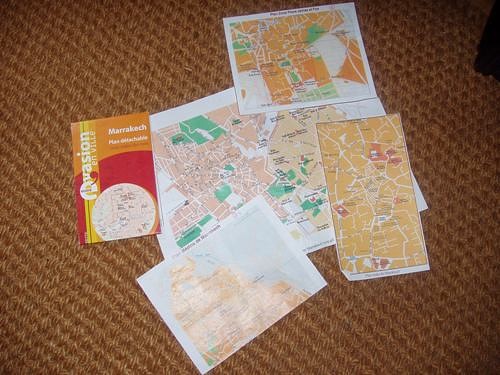 .. Still lost!...
Afternoon in the sun in the Koutoubia Gardens. I finish my book—sand falls from between the pages...
 .. Started on the plane... read in the desert... finished in Marrakech...
Melancholy of the last evening... So, on the way back to the hotel, I buy *kesra* and *La Vache qui Rit*...
Long, long sleepless night... Flight in a few hours... Happy to see the ones I love again, too.
Thoughts, emotions, sensations, images... Questions... One question... So, more than reason, going over and over the question... What there is to live, it’ll have to be lived...
The desert, a solitary path... like all paths that lead to the essential...
3:30 AM, your message, read by the metallic voice of a voicemail. And you, facing physical failure, past mistakes, fear... A solitary path. Also. Like all paths that lead to the essential...
Since I’ve been back, sometimes at night I open my eyes and don’t know where I am... Sleepless night, starry night, night of communion, connected night... In that suspended moment, between wakefulness and sleep, which makes you so receptive... Communion with whom? Connected to what? Lila gnawa... lila de derdeba.
The desert, a solitary path. You step in, and you’re immediately in the essential...
Wednesday... My companion drops me off at Orly Ouest... There are two hours before boarding. My MP3 player turns on but that’s it. It freezes—no commands work, and nothing fixes it... Smile... A trip without music, then? And the first anchor falls away.
(Photo...) ... Passport, tickets, receipts, labels...
Nose pressed to the window for the entire flight... Descending over Marrakech, at low altitude, a pretty mosaic—shades of pink and ochre dotted with green, but also, to the right, less harmonious, aligned cubes. Housing developments under construction? A bumpy, turbulent landing—the plane circles for a long time before touching down.
Welcomed by the familiar, unchanged sound of creaking doors and seats in the little taxis. In Casablanca, it was red Simca 1000s with meters; here, they’re yellow, and you have to negotiate the price. I have no talent for that, so here’s 100 DH!
Traversed and forgottenMarrakech... Sunny, luminous, sensual. Torn between tradition and modernity... Shimmering and fragrant, very noisy... rather polluted? On the road, horses and donkeys still mingle with vehicles... and watch out for traffic when crossing! It’s always a strategic—and athletic—adventure: at what exact moment do you sprint to the opposite sidewalk? And why aren’t any street names marked?
Afternoon on foot, heading to the Bab Doukkala bus station... A landmark: the McDonald’s, then a square with a fountain. Then turn left onto Avenue Hassan II. There’s a bus to Zagora Friday morning, but I can only buy the ticket tomorrow. On the way back to the hotel, at a kiosk on the corner, I buy *Tel Quel*, which I read with great interest online.
Thursday... Early morning, walking to Place Jemaa el-Fna, calm and almost deserted... I don’t get a good deal buying two small daggers for my kids. No talent for haggling—it takes more than charm for that... So I’ll pick the rest of my gifts at the artisan center on Avenue Mohammed V, where prices are marked, and it’s a pleasure to watch the craftsmen work... For my daughter, a satchel and earrings. The satchel smells like goat. The earrings are hand-chiseled in front of me by a very young man with nimble fingers—marvels of delicacy and fragility. Then I linger for a long time in the souk alleys. Scents of leather, thuya and cedar wood, wool and copper... Familiar smells... Childhood memories...
Dear daggersEarrings
Back at the bus station, an unexpected change: no bus Friday morning, but a departure tonight at 8:30 PM... I have a little time before packing, so I take a long detour: Boulevard de Safi, then right onto Avenue El Mansour to the Majorelle Garden... A quiet pause. Rare plants, all kinds of cacti—smooth, fuzzy, bristling with spines... strange, squat, or stretched-out shapes. An infinite variety of greens, and that famous blue... The song of birds, the sun and shadows playing in the water basins... Time flows lazily. I write postcards—they’ll arrive long after I’m back...
Back to the hotel. Avenue El Mansour, Boulevard Zerktouni—okay, but why are the small street names never marked?!! I get a little lost...
I hope you got my MMS, because before leaving, I left something for you at the front desk...
8 PM, night has already fallen. Arriving at the bus station, and then... Then, a step back... A dense crowd, a tangle of buses... Where to go?... Rare woman, lone foreigner, backpack... I’m quickly spotted, surrounded, poorly guided... Someone with a badge finally points me to the right sidewalk. The bus isn’t there, and the sidewalk is already packed, mostly with men. Will I even get a seat?... Three young men are particularly insistent... They want to know where I’m going and why, if someone is with me, if I’m expected... I answer with a smile. A bit tricky—choosing words, staying polite while evasive... Their French is hesitant, my Arabic is more than rudimentary... Actually, I shouldn’t have tried... Their tone becomes a bit... aggressive, and their eyes light up. Uh-oh... They say they’re students, but what of?... Want to know what I think of the Quran and Allah, what I think of holy war, if I’m "for the Americans," "for the Palestinians"... Other travelers intervene... And the bus still isn’t here... The speech turns fanatical... Then, my smile freezes a little... A small wave of panic, so I send a "freaked out" MMS... (But who else could I send it to?) Then, in this dark crowd, a light dressed in white... Nabila, a young student heading to Zagora for vacation, she speaks French... She plants herself in front of them and scolds them thoroughly. I didn’t catch everything, but it worked! The three troublemakers retreat. Plus, they weren’t on the right sidewalk, and their bus is about to leave without them...
Nabila and I manage to board and sit side by side... The bus leaves two hours late. The trip is long, a bit uncomfortable, slowed by many stops—it was very cold...
Friday... A little stiff, a little dazzled, a little chilled, arriving in Zagora at dawn with the sunrise... Magical! Craving something warm... And then, a heartfelt gift—kindness and hospitality—Nabila invites me to her home. Warm welcome from her mother and siblings, not at all surprised to see me show up so early to share their breakfast! A few hours in their company... We exchange addresses, and the youngest brother, Nouamare, gives me a children’s storybook...
Noon, at *La Fibule du Draa* Lahcen Sarti, the owner... I finally put a smile and a face to an email exchange... He shows me the trek route on the map, laughs when I tell him about my night on the bus, and sends me to rest by the pool... No swimsuit, so a lounge chair and a book... A book that will accompany me into the desert and which I’ll finish in Marrakech, in the Koutoubia Garden...
Saturday, Day 1... When I wake up this morning, I know the desert sand will also absorb my blood...
Early departure for four days and three nights, alone, as I wished, with a young guide, Mohammed, and a younger camel driver, Abdou. We’ll be together 24/7, and we won’t see a soul until we reach the fixed campsite on the third evening. Everything we need is loaded onto two dromedaries. And in those baskets, there are miracles—a *Prévert*-style inventory I’ll discover bit by bit, like... a tray for glasses, a basket for bread, a sugar loaf and small glasses for tea, but... large glasses and sugar cubes for coffee, spices, oranges, vegetables, raw eggs!... That won’t break, *La Vache qui Rit*... And so many other unexpected wonders, so surprising in the middle of the desert... (*La Vache qui Rit* is the desert butter. Every morning for breakfast, it was coffee with Nido powdered milk and *kesra* with *La Vache qui Rit* and Aïcha apricot jam... A delight.)
Start of the journey, and the beginning of a long, long walk... We’ll cover 80 km in three days, crossing all kinds of landscapes until the real desert of sand and dunes... I’ll drink water from wells, eat raw vegetables, sleep on a mattress that saddles the dromedaries by day... I’ll forget all the warnings and all my hygiene references... My body will quiet its complaints. No heat, no thirst, no fatigue, no trouble of any kind... just woken by the cold every morning around 6 AM... I take off my watch. Like my companions, I’ll live by the sun’s rhythm...
Abdou leads the dromedaries, so he walks at their pace. Sometimes, we’re grouped together. Sometimes the two guides are together, and I walk behind. Sometimes we talk. Nothing is forced, no discomfort. It’s a simple, harmonious dance—one foot in front of the other, following your shadow as it turns with the sun... Each step leaves behind the useless, the cumbersome, the superfluous... Room for intimacy... Room for silence... Room for the inner self... Facing yourself... I find seashells, and with my eyes closed, I smell the sea...
... One foot in front of the other...I take out my camera... Capacity for a hundred shots, but it’ll be 10 photos, no more. It freezes—no commands work, and nothing fixes it... Smile... A trip without photos, then? And the second anchor falls... I think of my MP3 player...
... A few photos among the ten...Noon... Unsaddling the dromedaries, which immediately wander off in search of food. And before the meal cooked by Mohammed, the mint tea ritual, prepared by Abdou in a tiny teapot... Thick, frothy, very sweet tea... He serves it on a tray with dates, peanuts, and raisins... And it’ll be like this every day, noon and night...
We gradually get to know each other... Mohammed, 25 years old... Calm, very introspective, almost ascetic, he knows the desert well and loves it... So at ease that he’ll walk in slippers or barefoot, no matter the terrain... When I’m behind him, the advertisement on the back of his sweatshirt makes me smile... There’s a date: January 8, 2003... A little wink from life? (I have a clear memory of that day.) Abdou, barely 20, with a round, jovial face. The mint tea master... When he hands me my glass, he says "Bismillah," and I respond in kind... A joker and a foodie. Thrilled that I only eat vegetables, he’ll have double the meat!
... Abdou and his teapot...
... Mohammed...Late afternoon, a well... Abdou waters the dromedaries, and Mohammed fills the canteens. The caps aren’t watertight, so he wedges a piece of plastic bag found in one of the baskets and screws it on top... Forget all hygiene warnings...
First night in a tent at the foot of Jebel Baní...
... JebelSunday, Day 2... Crossing and ascending Jebel Baní... A mineral, lunar landscape—rocks the color of burnt bread and anthracite gray. I pick up pretty pebbles, and Mohammed finds me a fossilized stone... Lunch in a deserted nomad oasis... When we resume our walk, the wind picks up. A wind that only blows in April, violent, terrible—the *Sahli*... Swirls of sand and gravel. Where’s the sky, where’s the earth... everything is dust, everything is yellow and opaque... The gusts are so strong they make us stagger. At times, we even have to crouch to avoid falling. In the acacia forest, Abdou and the dromedaries are only a few meters ahead, yet we can’t see them... We’ll later learn that on that day, planned excursions were canceled... That a group got lost and had to be picked up by 4x4... But Mohammed has a sense of the desert. He’s calm, he guides us... so we continue, and I trust him. He wraps a *chèche* around my head—a fragile barrier against these onslaughts... We have to keep moving, and it’s difficult... But the desert has accepted me, so without resistance, I accept it... And the sand gets everywhere... in my mouth, crunching between my teeth, in my eyes, ears, and nostrils... in my hair... A fine ochre layer covers my face and body, even under my clothes. I’ve become a sand woman... Communion... Fusion with the mineral. I absorb the desert’s prodigious power, just as the desert absorbs my blood...
We walked for four hours, pushed by this furious wind, before stopping for the night under an acacia... There, we had to set up the tent, which they did with difficulty. Then we had to weigh it down... So the utensils and the mint tea tray served as shovels to cover the edges with sand. Then Abdou took care of the dromedaries, holding one of their front legs bent with a rope to keep them from wandering too far... Then we brought everything into the tent and collapsed... but not for long.
Mohammed prepared kingly meals at noon and night with the wonders in the baskets: finely chopped raw vegetable salad, vegetable tagine, soup (and not from a packet!)... Even the canned sardines were garnished with thin orange slices... After this exhausting day for all of us, I told him that bread with *La Vache qui Rit* would be enough... He looked at me with a big smile and said his evening ritual phrase: "Now, Laurence, sit down, take your time, take your book..." He pulled his sand-filled utensils from the miraculous basket, his stove, some vegetables, and made us couscous (and not from a box!), couscous he rolled between his hands... Meanwhile, Abdou took out his sand-filled teapot, his sugar loaf, the peanuts, the dates... The mint tea ritual, like every day, noon and night...
Outside, the wind keeps blowing, stirring up sand whirlwinds... So I won’t go out like the other night to brush my teeth and hair. Just a wipe on my face to remove the dust... Mohammed turns off the gas lamp, and I curl up in my sleeping bag. The dromedaries have moved closer to my side of the tent, and the moonlight stretches their shadows on the canvas. They’ve settled in and make strange noises... We fall asleep very quickly...
Monday, Day 3... My two companions are still asleep when the cold wakes me at 6 AM, like every morning... Everything seems so calm—the wind has stopped... I untie the tent door and... A pure blue sky, gradually tinted with pink and flaming orange. The sun rises before my dazzled eyes. A day of light begins: no trace of yesterday’s storm, except sand... everywhere.
So, breakfast with sand... Then we shake out everything that can be shaken, sending clouds of dust flying... Then Abdou gives the dromedaries back their fourth leg, and we continue the journey.
After the expanses of stones and shrubs on the first day, the rocky ridges of Jebel Baní, and the acacia forest on the second day, the landscape changes, softens... We arrive in the desert as you imagine it, as you dream it, as you’ve seen in thousands of photos: endless golden dunes, in harmonious hollows and curves... The desert of sand... vast, fascinating...
Last meal for the three of us... Tonight, we’ll arrive at the fixed campsite, and we won’t be alone anymore. The break stretches on... So, a little apart on the smooth sand, I write a few words... an obvious truth... entrusting a secret to the desert. In a small box, I’ll bring back some of this magical sand...
.. A secret in the desert...Abdou grabs my notebook and draws the dunes. Mohammed draws Abdou and his dromedaries... I learn to do dishes with the contents of a single glass of water... A tiny bird lands on my bag... A bird!... in the middle of nowhere!... The dromedaries seem to relish the acacia branches, thorns and all...
Desert drawingsWe set off again... The dunes are higher... Easy to climb, the desert has sensual, feminine curves. A giant’s hand would fit its reliefs like a caress on a soft, supple body... The setting sun gives the landscape colors of amber and spices, cinnamon reflections... The sand offers me pink pebbles and pieces of white quartz that sparkle... I also find a black stone... Mystery...
Pink pebbles, fossilized pebbles, sparkling pebbles, and a black stoneLate afternoon, arrival at the fixed campsite at the foot of Erg Lihoudi... The guardian, Lahcen, a whirlwind of chatter and energy, welcomes us with mint tea. He quickly pegs me: "You do yoga, right?" He tells lots of anecdotes about his "clients," ending every sentence with: "No problem! *Machi mouchkil*... *Machi mouchkil*, no problem!" Around the tents, dozens... hundreds of big black beetles swarm on the sand... As I shudder, Lahcen gently picks one up and wants to put it on my hand: "*Machi mouchkil*! It doesn’t sting!"... I hold out a hesitant palm... Despite Lahcen’s infectious enthusiasm, I don’t like this last evening. Two groups arrived by 4x4 to spend a night in the desert... Noise of engines, cameras, voices, and exclamations... An intrusion into my bubble... I keep my distance... They’ll leave very early the next morning...
Memory of beetlesTuesday, Day 4... Standing still on a sand dune, I see both the full moon and the sun in the same sky... A luminous face-off. Magical, overwhelming... Then the moon paled, and the sun blazed brighter. It wasn’t quite night anymore, but day wasn’t far off... The Sacred, Mystical universe unfolded before me... A moment of grace that made my heart beat a little faster... Something indescribable gradually filled me, with infinite gentleness, to the depths of my soul... Facing this unlikely encounter, hesitations, reluctance, and fears seem so trivial... What are we if not fragments of this universe where everything is united... everything is connected...
Then comes the intention of a new message: "I’d love to put a face to..." But in this exchange scattered with misunderstandings, could you receive the intention without interpreting it?...
I stayed a long time on that dune, under the spell... Standing, barefoot and rooted... heart open... Receptive... in Unity between the infinitely small grain of sand and the infinitely vast universe... I hadn’t come to seek anything, yet the generous Earth offered its energy, its subtle strength to every cell of my body, and filled my soul with light... In exchange for this blood spilled on the sand over these four days?...
Give to Receive... Receive and Give... like a signed pact.
What exiled me from my life, disrupting all my bearings, drew me here... A necessary passage through space, withdrawal, and silence... for another birth?... The real desert after the symbolic desert... Pausing for a moment, as if at a crossroads. Connecting before continuing... If this path leads to the essential, then this path has a heart and will continue...
At the foot of the dune on the way down, I found a little Fatima’s hand made of beads. A gift from the desert...
Gift from the desert, good luck charm?Mohammed and Abdou leave Erg Lihoudi with other people—our shared adventure ends here... Emotion... looks and gestures speak louder than any words... Thank you, from the bottom of my heart...
Return to Zagora in a rickety, bumpy 4x4... After the track, we cross a vast palm grove... Shimmering colors, lush vegetation, palm trees growing in wheat fields... Tender green of the ears, faded green of the fronds, all shades of green contrast with the ochre and pink stone walls... My eyes rediscover green... My eyes rediscover colors... On a narrow path, the 4x4 finds itself facing a donkey carrying three children on its back... Impossible to pass. Who will back up?... Well, roaring progress bowed to four-legged tradition: in a cloud of dust, the 4x4 reversed for several hundred meters... The donkey passed calmly... On its back, the three children waved their hands...
Noon, arrival at *La Fibule du Draa*... Smiling welcome from Lahcen. He offers me a shower—I refuse... Even if he seems a little surprised, he has the delicacy not to show it too much... Strangely, I don’t feel dirty. Yet my clothes are the same, and my body hasn’t seen a drop of water since the day I left... But I want to keep the warmth and the smell of sand on my skin... reconnecting with forgotten, instinctive, animal sensations... So, I transfer my meticulousness and civilized conditioning to my bag... I take everything out, empty it, shake it... hunting down the smallest grain of sand... Futile effort! (I still find some today...) The afternoon stretches lazily by the pool... I contemplate my pebbles and make a lovely encounter...
The Zagora-Marrakech bus leaves at 7 PM... It’s the night of the full moon, and as soon as night falls, the sky fills with stars... Points of light without beginning, without duration, without end... Tiny lights so distant and so close...
Wanting to share this moment... And with whom else? If you look up, you’re the only one seeing the same sky as me. So, the intention of another message. But in this fragile, stumbling exchange... marked by misunderstandings... could you receive the intention without interpreting it?
The trip is shorter than on the way there, but barely more comfortable. A speaker right above my seat blares music and incantations the whole way... Halfway through, the same unusual stop in a village lit up and bustling as if it were daytime (Taddart, I think...). Along the main street, the ground is checkered black and white. Butcher stalls display entire beef carcasses... Smells of smoke and grilling... People are busy... Others, seated, are eating... in the middle of the night.
Arrival in Marrakech at 2 AM. Taxi strike, no room until tonight... Uh-oh! My backpack draws attention: a car stops and offers to take me for 80 DH... Trust... Five minutes later, I push open the door of *Le Toulousain*... The guard offers to let me finish the night on one of the lobby benches. I unfold my sleeping bag and slip into the desert’s scent... No sleep. But with my eyes closed, I see the stars... You came to pick up my bulky envelope.
Wednesday... Difficult early morning... Now, I feel dirty, my clothes bother me, my shoes hurt... Craving a long hot shower, wanting to find my body, wash my hair, put on cream, do my nails, and... It’ll be a long shower... cold! The hotel is charming but a bit run-down.
Clothes from 4 days...Afternoon on foot in the quiet Hivernage district, searching for a childhood memory that may have changed names: the *Holiday Inn* hotel... I didn’t find it, or didn’t recognize it. Long stroll in the Menara Gardens, and return to the hotel at sunset...
Thursday... Last day... Wanting to see the Marrakech Museum because the founder was a friend of my father’s... So, the familiar route: the McDonald’s, the square with the fountain, Avenue Hassan II, Bab Doukkala... but this time, I pass through the ramparts, and in the old city—sensual, charming, enchanting—I get lost, found, and lost again... I tracked down the museum and the Ben Youssef Madrasa at the end of a maze of alleys... Followed scents of mint, olives, honey, and cinnamon... Savored, moved, the same donuts as in my childhood—golden fried dough rings with a hole in the middle, tied together with a blade of grass... (I don’t remember the name...) I filled my eyes with pretty things and exchanged smiles... Received, just like that... A gift... a ring for my little finger... Someone called out to me: "Hey, gazelle," and it made me happy...
.. Still lost!...Afternoon in the sun in the Koutoubia Gardens. I finish my book—sand falls from between the pages...
.. Started on the plane... read in the desert... finished in Marrakech...Melancholy of the last evening... So, on the way back to the hotel, I buy *kesra* and *La Vache qui Rit*...
Long, long sleepless night... Flight in a few hours... Happy to see the ones I love again, too.
Thoughts, emotions, sensations, images... Questions... One question... So, more than reason, going over and over the question... What there is to live, it’ll have to be lived...
The desert, a solitary path... like all paths that lead to the essential...
3:30 AM, your message, read by the metallic voice of a voicemail. And you, facing physical failure, past mistakes, fear... A solitary path. Also. Like all paths that lead to the essential...
Hi there,
Last February, I made a trip using "public transport" from France to southern Senegal via Spain, Morocco, Western Sahara, and Mauritania.
It’s a journey of about 5,000 km, where I took trains (as far as Marrakech), ferries (to cross Gibraltar and then to reach Casamance from Dakar), and mostly buses on the long desert straightaways. I hadn’t planned any stops in advance or booked any hotels, except for the very first train to Spain, which left plenty of room for the unexpected. Why travel by land and sea? In recent years, flight-free travel has been gaining popularity. On social media, posts explaining how to cross Europe by train as quickly as possible go viral. Traveling without flying—and making sure people know about it—has become a great way to earn a badge of eco-responsibility: an essential totem for anyone wanting to prove both their dedication to the ecological cause and the wisdom of slow travel. I haven’t flown in years, and this journey to West Africa could easily be filed under "responsible travel." But it wouldn’t be honest to say that: in reality, it wasn’t really my aversion to flying that motivated this long trek. I see overland travel primarily as a way to experience the world’s geography at a grounded, earthly pace—the pace of the locals. Besides, I’ll be flying back, which disqualifies any claim to being a model of sustainability. So no eco-badge, and no adventurer’s badge either: you won’t find any heroic tales of camel rides in lost lands or mineral train wagons in this account (popular with influencers, the Mauritania iron ore train now attracts tourists from all over the world, turning "the experience" into something you "have to do at least once in your life"). This five-part story, written on the road, has no other ambition than to recount a journey through places and people, and to share the thoughts they inspire in me. As simply and, I hope, as humbly as possible.
I’m posting the episodes here, which you can also find on my blog (with more photos) at the following links:
Episode 1: Spain, from Avignon to Algeciras
Episode 2: Morocco, from Tangier to Tarfaya
Episode 3: Western Sahara, from Tarfaya to Guerguerat
Episode 4: Mauritania, from Guerguerat to Nouakchott
Episode 5: Senegal, from Rosso to Saloulou
To help those who might want to make the same trip, I’ve also put together a summary of the route with recommendations—you can read it at the end of the story and on the blog: From France to Senegal Without Flying: Route and Itinerary Recommendations
Happy reading, and safe travels!
As I’ve mentioned elsewhere, I inherited my love of travel from my parents and some of my grandparents. A strong passion, but one that was unfortunately limited by our family’s modest resources. Back then, living in northern Alsace, a simple trip to the southern part of the region—with the Wine Route as our destination—felt like an extraordinary journey to a land of plenty for the little boy I was in the late 60s and early 70s.
Everything seemed so huge when you were still just a kid.
Back then, I was overwhelmed by countless sensations—I was already highly sensitive, with a keen mind and a nose and taste buds that were developing like a pro’s. Which, as I’d later realize, wasn’t always an advantage.
Those magical days always began with a gentle late-spring or midsummer morning. The interior of the white Peugeot 404, license plate 210 LZ 67, had already soaked up the sun before the engine purred to life, and the cabin gave off a scent I could still recognize today—a fragrance I found so pleasant. Back then, I had no idea it was just the smell of warm plastic from the car’s interior. Yes, the scents of the 404 on sunny days became my madeleine de Proust... What’s more, the whole family was unusually cheerful because those moments of relaxation and leisure were rare. Everyone worked, and no one had an easy job or was well paid. Without the *Trente Glorieuses*, these experiences might never have happened.
Once we crossed the canton’s borders, I felt like I was light-years away from my everyday surroundings, and every kilometer plunged me deeper into *terra incognita*. It was thrilling. Far from my so-called "medium-sized" town, wheat fields, cornfields, and cabbage patches stretched out, punctuated by tall poles connected by long wires and topped with vegetation—like giant clotheslines without laundry, where magical beanstalks might grow to touch the sky. Back then, I was still far from tasting their product, which was simply beer. At the time, there was still a significant local hop production. Fun fact: it wasn’t until 2002 that Anglo-Saxon scientists proved hops and cannabis belong to the same biological family.
After the fields, the landscape took another step up as it rolled past the little boy’s eyes, often glued to the windows. First came modest hills, then a succession of rolling slopes that soon formed an unbroken chain. Their 700 meters in altitude felt like Himalayan peaks to me—impressive, inert giants, a whole new world. Gazing at them, an intense emotion welled up somewhere between my stomach and lungs, nearly taking my breath away. What mysteries, what treasures did these heights hold? And then there were the cherries on top—the crowning touch that made the scene even more magical: proud, majestic castles perched on the summits like impassive sentinels. Monuments from the past, yet firmly rooted in the present on their rocky spurs. The little boy’s eyes sparkled—he’d been given a castle for Christmas, complete with battlements, towers, a drawbridge, and fully armed knights. He’d watched and lived *Ivanhoe* on the only French TV channel that existed back then.
Only once did my paternal grandfather join us on one of these trips. A tall, intelligent man with a face that could shift from stern to mischievous, clearly full of humor and charisma. Sadly, his relationship with alcohol had taken a toll on his life and, by extension, those of his loved ones. He had a strong personality—if his boss crossed the line, he wouldn’t hesitate to punch him, which meant he went through a lot of different jobs. Back then, you could quit one job and easily find another. It was quite something to see him in his final stages, hallucinating pink elephants and even drinking perfume when he had nothing else left. The last time I saw him, he’d slipped away from the doctors and nurses while hospitalized in pretty bad shape—at least, I assume his liver was the issue. We were sitting down for a family lunch when the door burst open, and there he stood in his pajamas, eyes twinkling with mischief, clearly pleased with the dramatic entrance. That theatrical moment didn’t spare us from burying him a few months later at the age of 71. One day, my mother told me the family doctor had quietly remarked that it was a shame—with his robust constitution, he could’ve lived to be a hundred. Yes, the family doctor—this was the man who’d come treat you any day, at almost any hour, just for a phone call. It really existed, it’s not a myth!
That day, his wife—my paternal grandmother—was also along for the ride. Everyone agreed that Jeannette was a good woman. She worked as a waitress at *Le Tigre*, the biggest brasserie in town, right in the center. Most customers preferred to be served by her, including local dignitaries and even the mayor. As a kid, I didn’t find her very fun, open, or warm—she seemed a bit stern. Back then, women in their fifties already had the face and build of grandmothers. Same went for men, don’t get me wrong. I had no idea about the struggles she faced because of her husband. I didn’t know that 30 years earlier, she’d had to flee Alsace while pregnant, under threat from Nazi fighter-bombers. I didn’t know she’d had several miscarriages, and that my father—her only surviving child, born prematurely in March 1940 at the other end of France—weighed less than a kilo at birth and was so tiny he could fit in a shoebox. Hard to imagine he’d grow into a strapping man nearly 1.80 meters tall, tipping the scales at 100 kilos. When you come back from summer camp in early August and ask why she didn’t pick you up with your parents, and they gently tell you she’s "in heaven," you don’t realize she passed away at 54 after suffering greatly from stomach cancer that had spread.
Back to that family outing, that enchanted parenthesis. I even remembered where we’d had lunch when I passed through Dambach-la-Ville decades later. One of those charming, flower-filled towns Alsace produces in abundance—and preserves so well. This one sits high on a hill, and I was a bit stunned on the parking lot because the view stretched far, revealing the Alsace plain below—its fields, villages, hills, and forests. The world seemed so vast and enticing that day, even though I was only glimpsing a tiny fraction of it.
The region was already very touristy, but I wouldn’t notice the downsides until much later. That Sunday noon, I discovered a large restaurant filled with diners. I can still see the enormous piece of meat they served me, decorated with a little wooden skewer topped with a flag. I kept that one for a long time. Those were the golden days of rich, flowing, thick sauces—so flavorful—and the era of the world’s best fries, made on the spot with the best potatoes. To top it off, I was *exceptionally* allowed a small bottle of apple juice, Orangina, or—even better if possible—Sinalco. Yes, Sinalco—like Orangina, but better. A brand that must’ve disappeared in the 70s, but why, and what a shame! Since then, Orangina’s little bubbles have taken the brand to the other side of the planet—it’s now Japanese.
Year after year, I’d eagerly await that ecstatic moment when the most beautiful castle in Alsace, the Haut-Koenigsbourg, appeared in my field of vision. The perfect model, the archetype that blended into the landscape at the height of a child’s dreams. The trip home always felt like a reality check—less jarring than an alarm clock, but more diffuse and melancholic. From then on, there was only one wish: *When do we leave again?*
Those magical days always began with a gentle late-spring or midsummer morning. The interior of the white Peugeot 404, license plate 210 LZ 67, had already soaked up the sun before the engine purred to life, and the cabin gave off a scent I could still recognize today—a fragrance I found so pleasant. Back then, I had no idea it was just the smell of warm plastic from the car’s interior. Yes, the scents of the 404 on sunny days became my madeleine de Proust... What’s more, the whole family was unusually cheerful because those moments of relaxation and leisure were rare. Everyone worked, and no one had an easy job or was well paid. Without the *Trente Glorieuses*, these experiences might never have happened.
Once we crossed the canton’s borders, I felt like I was light-years away from my everyday surroundings, and every kilometer plunged me deeper into *terra incognita*. It was thrilling. Far from my so-called "medium-sized" town, wheat fields, cornfields, and cabbage patches stretched out, punctuated by tall poles connected by long wires and topped with vegetation—like giant clotheslines without laundry, where magical beanstalks might grow to touch the sky. Back then, I was still far from tasting their product, which was simply beer. At the time, there was still a significant local hop production. Fun fact: it wasn’t until 2002 that Anglo-Saxon scientists proved hops and cannabis belong to the same biological family.
After the fields, the landscape took another step up as it rolled past the little boy’s eyes, often glued to the windows. First came modest hills, then a succession of rolling slopes that soon formed an unbroken chain. Their 700 meters in altitude felt like Himalayan peaks to me—impressive, inert giants, a whole new world. Gazing at them, an intense emotion welled up somewhere between my stomach and lungs, nearly taking my breath away. What mysteries, what treasures did these heights hold? And then there were the cherries on top—the crowning touch that made the scene even more magical: proud, majestic castles perched on the summits like impassive sentinels. Monuments from the past, yet firmly rooted in the present on their rocky spurs. The little boy’s eyes sparkled—he’d been given a castle for Christmas, complete with battlements, towers, a drawbridge, and fully armed knights. He’d watched and lived *Ivanhoe* on the only French TV channel that existed back then.
Only once did my paternal grandfather join us on one of these trips. A tall, intelligent man with a face that could shift from stern to mischievous, clearly full of humor and charisma. Sadly, his relationship with alcohol had taken a toll on his life and, by extension, those of his loved ones. He had a strong personality—if his boss crossed the line, he wouldn’t hesitate to punch him, which meant he went through a lot of different jobs. Back then, you could quit one job and easily find another. It was quite something to see him in his final stages, hallucinating pink elephants and even drinking perfume when he had nothing else left. The last time I saw him, he’d slipped away from the doctors and nurses while hospitalized in pretty bad shape—at least, I assume his liver was the issue. We were sitting down for a family lunch when the door burst open, and there he stood in his pajamas, eyes twinkling with mischief, clearly pleased with the dramatic entrance. That theatrical moment didn’t spare us from burying him a few months later at the age of 71. One day, my mother told me the family doctor had quietly remarked that it was a shame—with his robust constitution, he could’ve lived to be a hundred. Yes, the family doctor—this was the man who’d come treat you any day, at almost any hour, just for a phone call. It really existed, it’s not a myth!
That day, his wife—my paternal grandmother—was also along for the ride. Everyone agreed that Jeannette was a good woman. She worked as a waitress at *Le Tigre*, the biggest brasserie in town, right in the center. Most customers preferred to be served by her, including local dignitaries and even the mayor. As a kid, I didn’t find her very fun, open, or warm—she seemed a bit stern. Back then, women in their fifties already had the face and build of grandmothers. Same went for men, don’t get me wrong. I had no idea about the struggles she faced because of her husband. I didn’t know that 30 years earlier, she’d had to flee Alsace while pregnant, under threat from Nazi fighter-bombers. I didn’t know she’d had several miscarriages, and that my father—her only surviving child, born prematurely in March 1940 at the other end of France—weighed less than a kilo at birth and was so tiny he could fit in a shoebox. Hard to imagine he’d grow into a strapping man nearly 1.80 meters tall, tipping the scales at 100 kilos. When you come back from summer camp in early August and ask why she didn’t pick you up with your parents, and they gently tell you she’s "in heaven," you don’t realize she passed away at 54 after suffering greatly from stomach cancer that had spread.
Back to that family outing, that enchanted parenthesis. I even remembered where we’d had lunch when I passed through Dambach-la-Ville decades later. One of those charming, flower-filled towns Alsace produces in abundance—and preserves so well. This one sits high on a hill, and I was a bit stunned on the parking lot because the view stretched far, revealing the Alsace plain below—its fields, villages, hills, and forests. The world seemed so vast and enticing that day, even though I was only glimpsing a tiny fraction of it.
The region was already very touristy, but I wouldn’t notice the downsides until much later. That Sunday noon, I discovered a large restaurant filled with diners. I can still see the enormous piece of meat they served me, decorated with a little wooden skewer topped with a flag. I kept that one for a long time. Those were the golden days of rich, flowing, thick sauces—so flavorful—and the era of the world’s best fries, made on the spot with the best potatoes. To top it off, I was *exceptionally* allowed a small bottle of apple juice, Orangina, or—even better if possible—Sinalco. Yes, Sinalco—like Orangina, but better. A brand that must’ve disappeared in the 70s, but why, and what a shame! Since then, Orangina’s little bubbles have taken the brand to the other side of the planet—it’s now Japanese.
Year after year, I’d eagerly await that ecstatic moment when the most beautiful castle in Alsace, the Haut-Koenigsbourg, appeared in my field of vision. The perfect model, the archetype that blended into the landscape at the height of a child’s dreams. The trip home always felt like a reality check—less jarring than an alarm clock, but more diffuse and melancholic. From then on, there was only one wish: *When do we leave again?*
Northern Laos, Nov 25
Thursday, Oct 23. Left home at 8:25 AM, took the bus from St Cyp to Perpignan, then a BlaBlaBus to Barcelona airport. Last night, a huge storm crossed France, and the bus was an hour late. We finally left at 11 AM. At the Spanish border, we were checked—several Africans were traveling on the bus, and their document verification took quite a while. In the end, everything was in order, and we set off again a good half-hour later. We finally arrived at Barcelona airport after 2 PM, but no stress since my flight was scheduled for 4:30 PM with Saudia. At check-in, the hostess told me there’d be a 1-hour delay due to bad weather in France and Belgium. In the end, the flight didn’t just have a 1-hour delay but a 5-hour one because of a technical issue. The next flight wouldn’t wait for us. When we arrived in Jeddah, they gave us another ticket for the following day—the flight to Bangkok was scheduled for 11:55 AM. The airline assigned us a room, which was good news since I was exhausted. Friday morning, the flight was still scheduled for 11:55 AM, but the gate wasn’t displayed. It was announced with a 1-hour delay, but that stretched to 4 hours. They handed out drinks and a snack—again, the delay was due to technical problems. In Bangkok, I had a connecting flight to Chiang Rai, where I’d also booked a room—I lost everything. We finally arrived in Bangkok on Saturday at 4 AM. I had to buy another ticket for a 7 AM flight. The formalities were quick, and my flight went smoothly. A taxi took me to Bus Terminal 1, where I caught a bus leaving at 10 AM, and we arrived at the Thailand-Laos border. I shared a taxi with other travelers, which took us to Houay Xai. The guesthouse I’d booked was right across from the stop—that was great. I exchanged some money and bought a SIM card at the guesthouse. Despite the fatigue, I needed to stretch my legs, so I walked down the street to the temple.
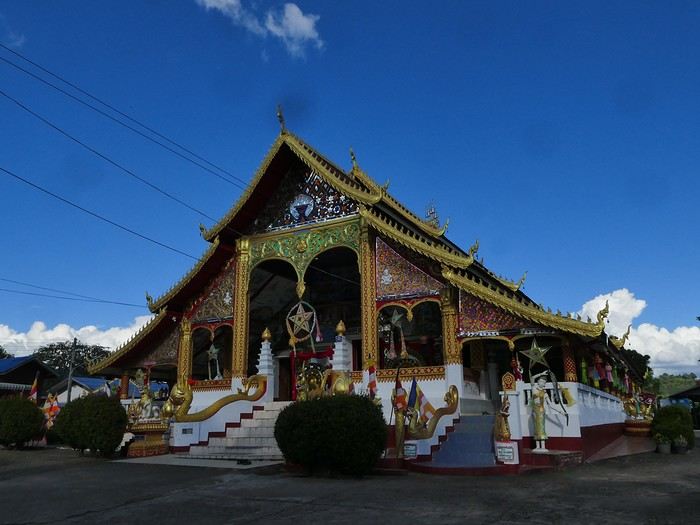
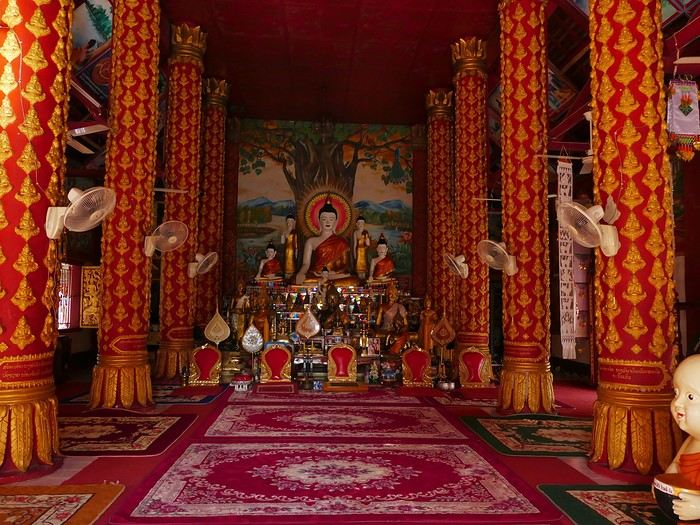
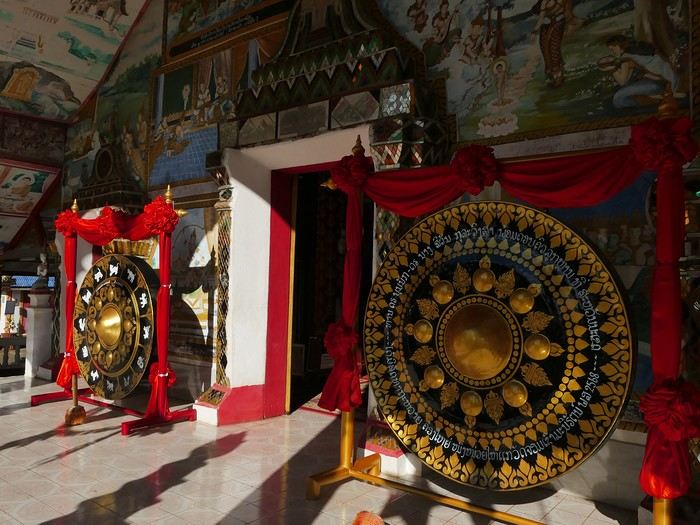
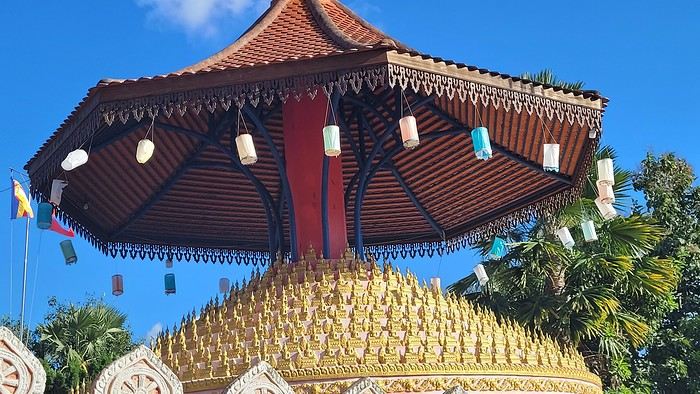
and continued to Fort Carnot, built by the French.
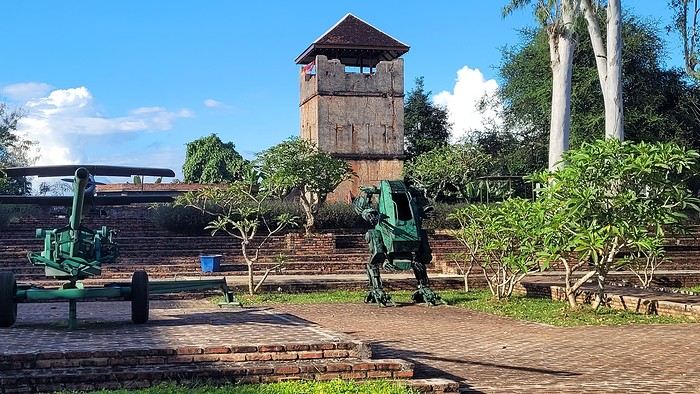
The views of the Mekong are beautiful for a first glimpse of the country.
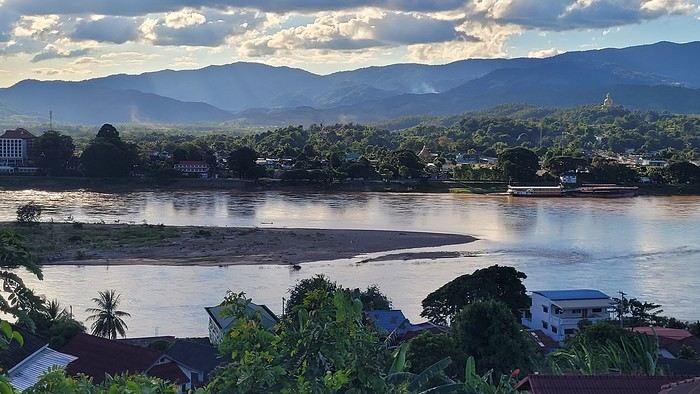
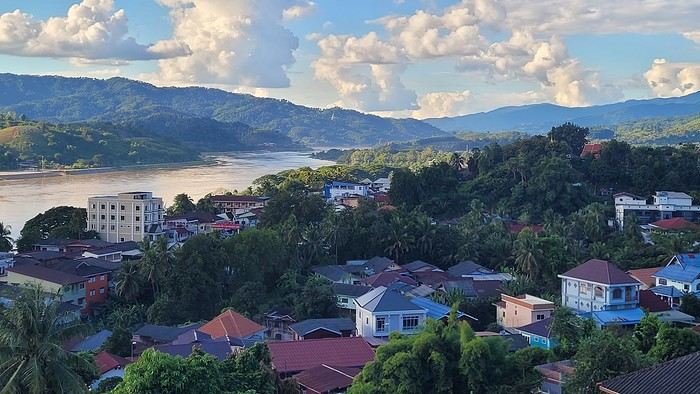
yum-yum, bon appétit!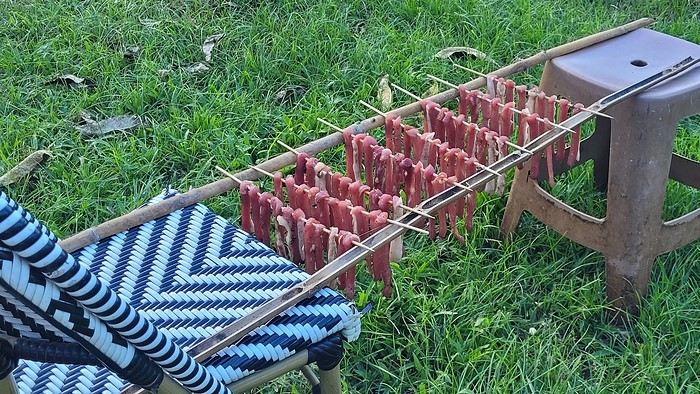
At 6:30 PM, I went to dinner at a restaurant across from the guesthouse—a chicken curry with vegetables.
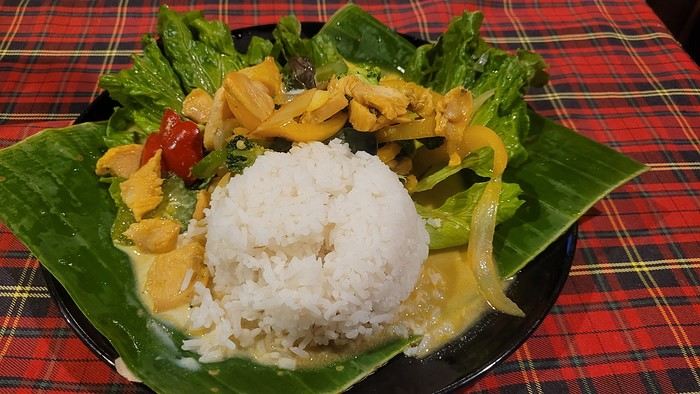
I didn’t linger and went back to bed. I slept well, even if I woke up often.
Thursday, Oct 23. Left home at 8:25 AM, took the bus from St Cyp to Perpignan, then a BlaBlaBus to Barcelona airport. Last night, a huge storm crossed France, and the bus was an hour late. We finally left at 11 AM. At the Spanish border, we were checked—several Africans were traveling on the bus, and their document verification took quite a while. In the end, everything was in order, and we set off again a good half-hour later. We finally arrived at Barcelona airport after 2 PM, but no stress since my flight was scheduled for 4:30 PM with Saudia. At check-in, the hostess told me there’d be a 1-hour delay due to bad weather in France and Belgium. In the end, the flight didn’t just have a 1-hour delay but a 5-hour one because of a technical issue. The next flight wouldn’t wait for us. When we arrived in Jeddah, they gave us another ticket for the following day—the flight to Bangkok was scheduled for 11:55 AM. The airline assigned us a room, which was good news since I was exhausted. Friday morning, the flight was still scheduled for 11:55 AM, but the gate wasn’t displayed. It was announced with a 1-hour delay, but that stretched to 4 hours. They handed out drinks and a snack—again, the delay was due to technical problems. In Bangkok, I had a connecting flight to Chiang Rai, where I’d also booked a room—I lost everything. We finally arrived in Bangkok on Saturday at 4 AM. I had to buy another ticket for a 7 AM flight. The formalities were quick, and my flight went smoothly. A taxi took me to Bus Terminal 1, where I caught a bus leaving at 10 AM, and we arrived at the Thailand-Laos border. I shared a taxi with other travelers, which took us to Houay Xai. The guesthouse I’d booked was right across from the stop—that was great. I exchanged some money and bought a SIM card at the guesthouse. Despite the fatigue, I needed to stretch my legs, so I walked down the street to the temple.
and continued to Fort Carnot, built by the French.
The views of the Mekong are beautiful for a first glimpse of the country.
yum-yum, bon appétit!
At 6:30 PM, I went to dinner at a restaurant across from the guesthouse—a chicken curry with vegetables.
I didn’t linger and went back to bed. I slept well, even if I woke up often.
Hello! 🙂
January 2026 Here we go again for new adventures and the pleasure of sharing them with you here! First of all, I’d like to thank everyone who helped me with the preparations, even with some last-minute improvisations just days before departure. Thanks to Montagnard74, Jojoone1, Songsam, Attila, Dennis2, NadegerFERM, and the authors whose travel journals about Laos inspired me (Montagnard74, Muriel18, Mavietongs...).
In this story, written by Richard and illustrated by me, we’ll tell you about the journey of four friends: Catherine, Richard, Nathalie, and Bruno. A reinvented but overall successful trip, filled with discoveries and surprises, the scents of spices and frangipani flowers, (too) spicy food, sunsets, and... one big mess.
January 2026 Here we go again for new adventures and the pleasure of sharing them with you here! First of all, I’d like to thank everyone who helped me with the preparations, even with some last-minute improvisations just days before departure. Thanks to Montagnard74, Jojoone1, Songsam, Attila, Dennis2, NadegerFERM, and the authors whose travel journals about Laos inspired me (Montagnard74, Muriel18, Mavietongs...).
In this story, written by Richard and illustrated by me, we’ll tell you about the journey of four friends: Catherine, Richard, Nathalie, and Bruno. A reinvented but overall successful trip, filled with discoveries and surprises, the scents of spices and frangipani flowers, (too) spicy food, sunsets, and... one big mess.
Prologue
This journal recounts a trip to Rajasthan that’s already over a year old and that I’ve only now found the chance to write about. The summer of 2024 marked my return to India—my tenth trip—after six long years away since my last solo wanderings in Tamil Nadu in 2018 (the journal of which is published on this site). That absence was partly (but not only) due to the long COVID and post-COVID period, which saw a complete halt and then a major slowdown in global tourism. To top it off, Voyage Forum announced its closure in an end-of-the-world atmosphere. A sad time for our favorite social activity…
A few weeks after returning from Rajasthan, I tried to motivate myself to start writing a journal to publish on a forum claiming to be VF’s successor, which I’d eventually signed up for out of desperation. But I kept hesitating and putting the project off because, for one, I no longer have the time I used to. For another, the vibe wasn’t really taking off on that forum—it was overrun with ads and not very active, contrary to what its host’s name suggested. Despite its good intentions and commendable role as a stopgap, it also turned out to be very impractical to use, especially when you don’t have much time like me. I’ll admit I’d occasionally check back on VF to see if anything was happening. But all the discussions remained frozen in time, stuck in that fateful year, 2020. Then, rumors swirled online about shady reasons behind its closure, leaving little room for hope.
And then, one fine morning, I got a message at work from Marien informing me that VF had reopened. What a huge surprise! Even though the forum’s “end” had played out in a somewhat apocalyptic atmosphere, the memories of passionate and heated discussions, the frank debates, and the useful exchanges that made this site a traveler’s goldmine and a unique hub of conviviality all came rushing back to me like a breath of fresh air. I finally saw a sign and tried to motivate myself to find the time to publish the journal of this tenth trip to India and fifth to Rajasthan. But in the end, I got bogged down in professional and family obligations and never managed to find the time to get started. That’s now fixed, though, because I had two reasons for wanting to do it: I find that looking back on a trip to tell others about it is a highly beneficial introspective exercise. Also, I thought this journal could be useful to other travelers on a few points.
Because, “do we really need yet another journal about Rajasthan?” you might rightly ask! Especially in a time when so many journals about the “Land of Kings” have been published since VF’s return, not to mention the countless stories you can already find online about this region, one of India’s most touristy. And I’d add, why go back to Rajasthan for a fifth time, where I’ve already dragged my feet more than enough—through its forts, deserts, temples, cities, villages, bumpy roads, train stations, tasty street food stalls, cheap guesthouses, and more? Where some might see just another overhyped tourist destination full of the same old *Arabian Nights* clichés, worn to a thread, that I mentioned earlier, when there’s so much else to see in India? Well, first because it’s a magnificent country I never tire of, where I started an academic study and made so many connections. It’s also packed with places where you won’t find a single tourist (right, Marie-Jo?), even in the heart of well-trodden paths and classic itineraries. And most importantly, as I said earlier, things have changed in recent years. First, after six years without traveling far, the urge to go back to India was getting stronger. But this time, no more solo trips (often) or duo adventures (sometimes)—now it’s a team of four that has to come along! And even if you can argue with that, what better place than Rajasthan to introduce India to people who’ve never seen it? To kids you want to amaze? Plus, traveling with your new little family to your favorite country isn’t the same as going solo in often spartan conditions that only affect you. It’s a different challenge, but ultimately probably much harder. So, is it really reasonable to take two kids to India, including a two-year-old baby? That’s one of the main goals of this journal (but not the only one)—to try to answer that question.
As you can tell, it’s not so much the destination but the slightly unusual setup of this trip that, in my opinion, will make this journal interesting. Despite my experience and expertise (yes, I dare say it) in India, there were plenty of questions before we finalized the plan and said, “Alright, let’s go!” The questions were flying for us parents. Is it wise to travel to India with a two-year-old? What would we do (it happened) if the kids got very sick? Would they be able to handle a road trip on Rajasthan’s bumpy, dusty roads using public transport? Could they handle the shock of such a different world—the dirt, poverty, pollution, noise (…and the smell, as they say), the spicy food, monkeys, mosquitoes, snakes, tigers, leopards, and so on? In short, all the clichés that I usually joke about suddenly became potential realities. Another concern: as a mixed Franco-African family (not me, but my partner and her oldest), wouldn’t we risk not always being well received, given what you sometimes hear about that in India? How would Indians react to seeing a mixed-race family, the ultimate taboo in a country of purity and social segregation, which would undoubtedly raise many questions for them? Of course, not everything went as expected… Because, as you know, with India—and what makes it charming for some—there are always complications: sometimes where you don’t expect them… and sometimes where you do. I’ll go into detail about that in the journal to come (not right away) and in the final review (even later). These experiences could be useful to travelers who find themselves in similar situations and have the same questions we did before embarking on such a journey. And maybe it’ll spark the curiosity of those who aren’t concerned and will read yet another Rajasthan journal, but with its own unique twists.
Despite my unchanged constraints, which mean I have little time to write this, I don’t want to rush the story, so I’ll take my time. There will probably be lulls. I hope that won’t stop people from coming to react, debate, share their impressions, or ask for information.
Hello everyone,
I’d like to invite you on a new adventure in Kenya.
Back in 2010, my husband Ben and I fell in love with Kenya, and we’ve been traveling there regularly ever since. This 2025 safari marked the first weeks of an important milestone in my life: retirement.
Of course, Felix—our guide and friend for all these years, whom some of you may even know from this forum—joined us again.
We chose an itinerary that takes us through the parks and reserves we particularly love in Kenya: Tsavo East (3 nights), Tsavo West (2 nights), a transition day in Embu, Samburu (5 nights), Meru NP (4 nights), Nanuyki to visit the Mount Kenya Animal Orphanage (https://mountkenyawildlifeconservancy.org/) (1 night), and Aberdare NP (2 nights).
This safari wasn’t our most prolific in terms of wildlife sightings and photos (all taken by Ben), but I still think it’s worth sharing our experiences and impressions of the places we visited. Maybe other travelers will find useful information here to help them fulfill their dream of a Kenyan safari one day...
Living in Brittany, we left from Nantes on Wednesday, January 8, 2025, on the 6 AM Air France flight to CDG, then took the direct flight to Nairobi at 10:50 AM. No issues this time on either flight (unlike in October 2023...).
We arrived in Nairobi at 9:20 PM local time (there’s a two-hour time difference with France at this time of year). Going through passport control and collecting our luggage went smoothly. The hotel shuttle (https://67airporthotel.co.ke/) was waiting for us. We shared it with a friendly Swiss couple who were there to climb Mount Kenya. We arrived at the hotel around midnight. The 67 Airport Hotel is 10-15 minutes from Jomo Kenyatta Airport and offers great value for money. Plus, it’s close to the Mombasa road, which is handy when heading that way the next morning.
On Thursday, January 9, we had breakfast at the hotel restaurant at 6:30 AM, and as planned, Felix arrived around 7 AM. We got to check out his brand-new 4x4 Nissan—we’d be the first to test it! 🙂
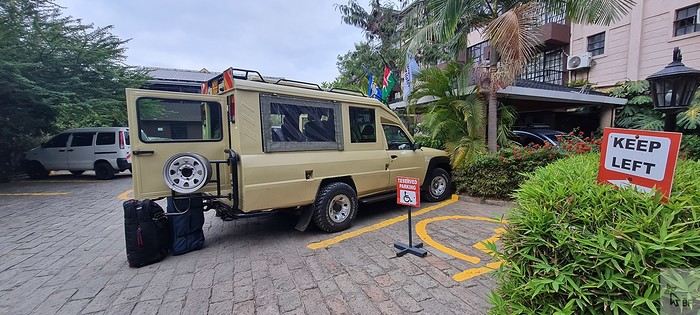
We set off for Voi, making our usual stop in Mtito Andei. Traffic was heavy on the Mombasa road, with lots of trucks.
We arrived at the entrance of Tsavo East around 1 PM and made it to Sentrim Camp (https://www.sentrim-hotels.com/sentrim-tsavo.html) just in time for lunch.
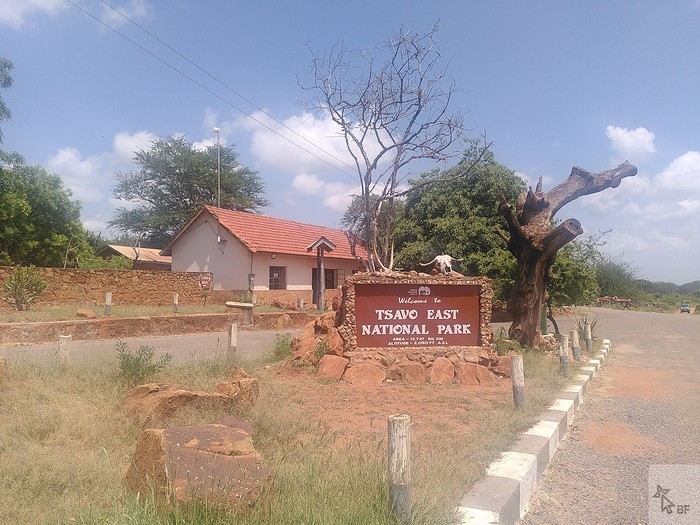
We found Tsavo East unusually green—there had been heavy rains in December, which isn’t typical. As a result, the animals were scattered and harder to spot. The watering hole visible from the camp’s dining area was completely deserted, whereas it’s usually bustling with herds of elephants and other mammals.
Our tent, No. 9, for 3 nights.
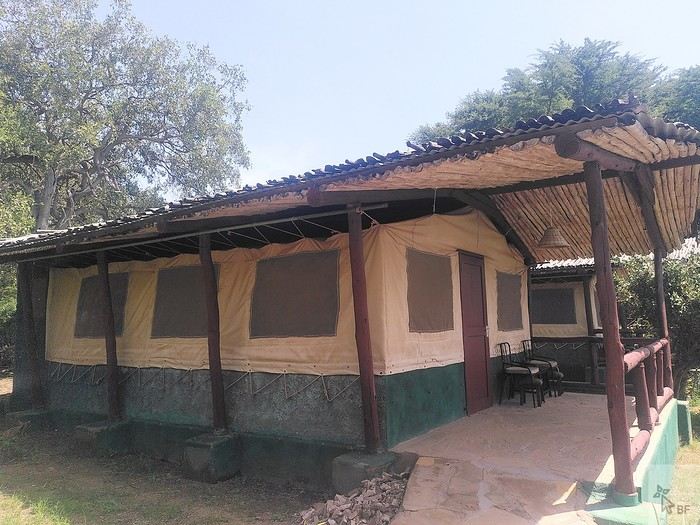
This camp is well-located inside the park. It’s simple but comfortable enough for our tastes, the staff is super friendly (as is often the case in Kenya), and the buffet-style meals are varied and good. Tsavo is the main destination for tourists staying on the coast who come for a night or two on safari. In January, some days at the camp are very quiet, while some evenings, the restaurant is packed with groups (lots of Italians, in particular).
Tsavo is, of course, famous for its elephants. This time, we didn’t see many large herds, but we did have some great encounters with solitary males.
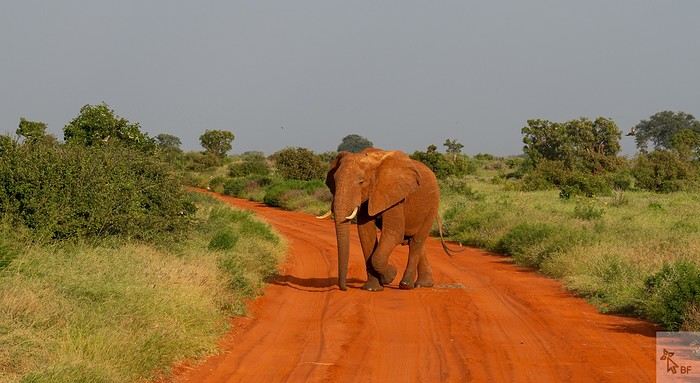
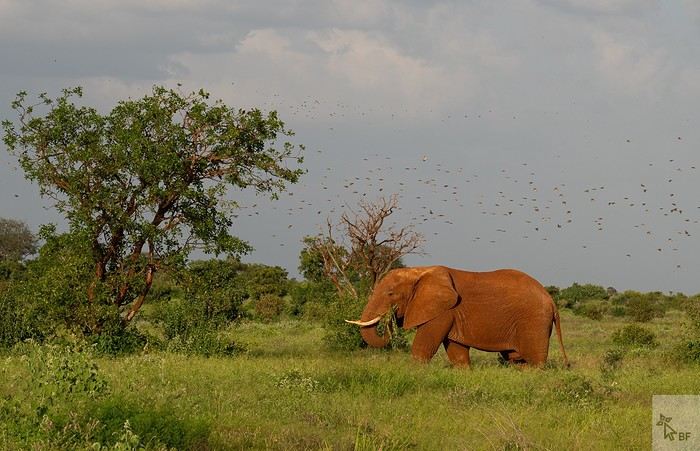
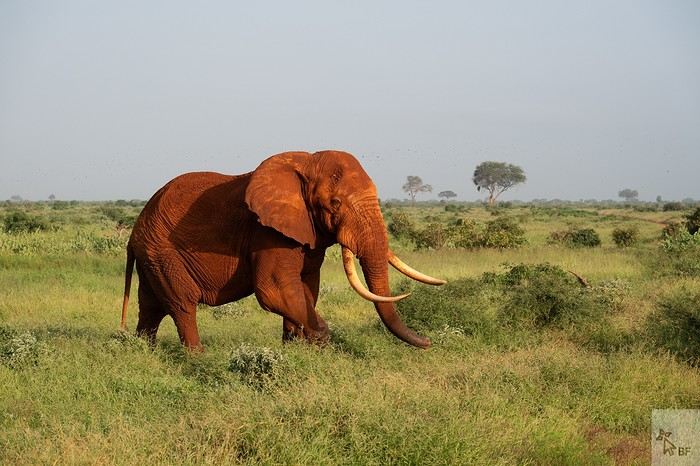
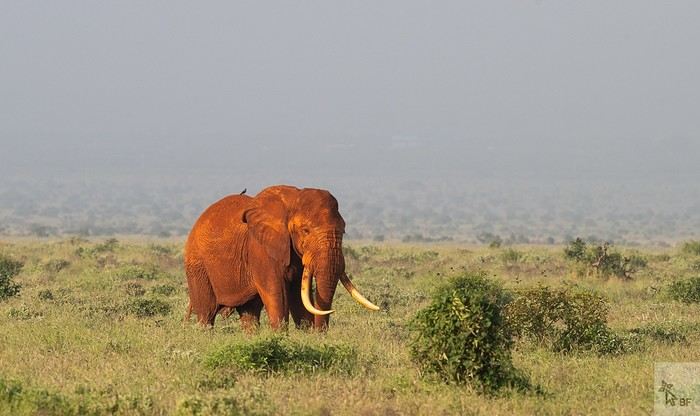
Around this small watering hole, we saw a gathering of African open-billed storks—we’d never seen so many before!
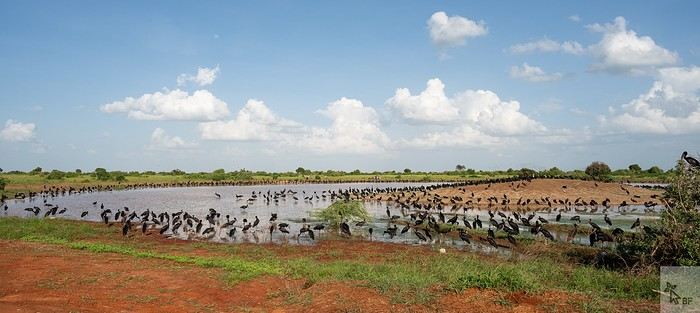
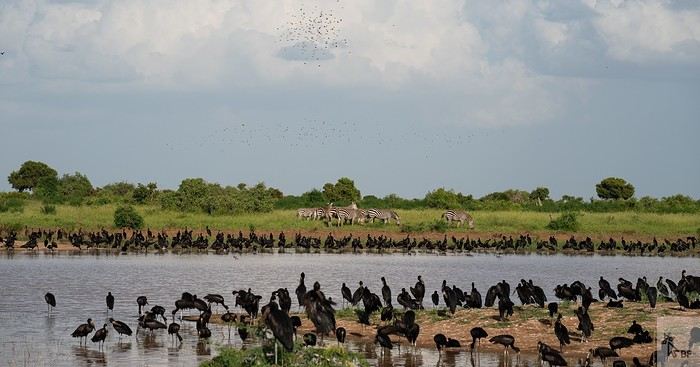
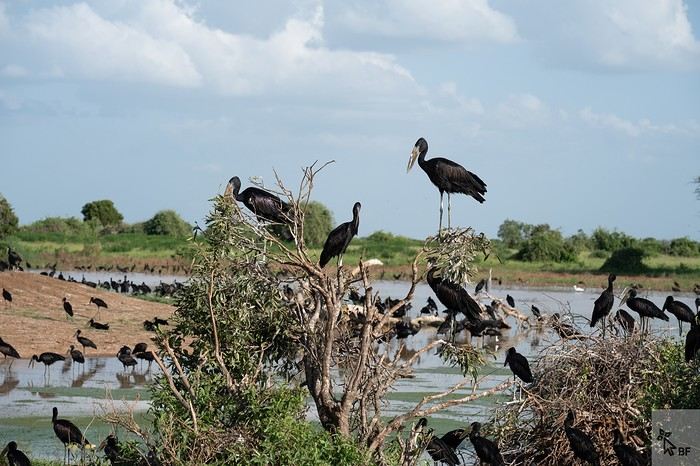
I’d like to invite you on a new adventure in Kenya.
Back in 2010, my husband Ben and I fell in love with Kenya, and we’ve been traveling there regularly ever since. This 2025 safari marked the first weeks of an important milestone in my life: retirement.
Of course, Felix—our guide and friend for all these years, whom some of you may even know from this forum—joined us again.
We chose an itinerary that takes us through the parks and reserves we particularly love in Kenya: Tsavo East (3 nights), Tsavo West (2 nights), a transition day in Embu, Samburu (5 nights), Meru NP (4 nights), Nanuyki to visit the Mount Kenya Animal Orphanage (https://mountkenyawildlifeconservancy.org/) (1 night), and Aberdare NP (2 nights).
This safari wasn’t our most prolific in terms of wildlife sightings and photos (all taken by Ben), but I still think it’s worth sharing our experiences and impressions of the places we visited. Maybe other travelers will find useful information here to help them fulfill their dream of a Kenyan safari one day...
Living in Brittany, we left from Nantes on Wednesday, January 8, 2025, on the 6 AM Air France flight to CDG, then took the direct flight to Nairobi at 10:50 AM. No issues this time on either flight (unlike in October 2023...).
We arrived in Nairobi at 9:20 PM local time (there’s a two-hour time difference with France at this time of year). Going through passport control and collecting our luggage went smoothly. The hotel shuttle (https://67airporthotel.co.ke/) was waiting for us. We shared it with a friendly Swiss couple who were there to climb Mount Kenya. We arrived at the hotel around midnight. The 67 Airport Hotel is 10-15 minutes from Jomo Kenyatta Airport and offers great value for money. Plus, it’s close to the Mombasa road, which is handy when heading that way the next morning.
On Thursday, January 9, we had breakfast at the hotel restaurant at 6:30 AM, and as planned, Felix arrived around 7 AM. We got to check out his brand-new 4x4 Nissan—we’d be the first to test it! 🙂
We set off for Voi, making our usual stop in Mtito Andei. Traffic was heavy on the Mombasa road, with lots of trucks.
We arrived at the entrance of Tsavo East around 1 PM and made it to Sentrim Camp (https://www.sentrim-hotels.com/sentrim-tsavo.html) just in time for lunch.
We found Tsavo East unusually green—there had been heavy rains in December, which isn’t typical. As a result, the animals were scattered and harder to spot. The watering hole visible from the camp’s dining area was completely deserted, whereas it’s usually bustling with herds of elephants and other mammals.
Our tent, No. 9, for 3 nights.
This camp is well-located inside the park. It’s simple but comfortable enough for our tastes, the staff is super friendly (as is often the case in Kenya), and the buffet-style meals are varied and good. Tsavo is the main destination for tourists staying on the coast who come for a night or two on safari. In January, some days at the camp are very quiet, while some evenings, the restaurant is packed with groups (lots of Italians, in particular).
Tsavo is, of course, famous for its elephants. This time, we didn’t see many large herds, but we did have some great encounters with solitary males.
Around this small watering hole, we saw a gathering of African open-billed storks—we’d never seen so many before!
My buddy Christian and I (Patrick) are off for 28 days in Argentina in March.
We’ve already shared several trips as a duo (Bolivia Peru, Namibia, Laos, Costa Rica).
Since we’re starting from the idea that at our age (65) we won’t be coming back here—there are just too many other corners of the world to discover—we did the "grand tour" of Argentina, with 6 domestic flights to make the most of our 28 days.
Here are our stops:
1) Departure from Brussels to Buenos Aires via Madrid
2) Arrival and first contact with Buenos Aires
3) Early morning flight to Ushuaia. Boat trip on the Beagle Channel
4) Ushuaia: hikes in Tierra del Fuego National Park
5) Ushuaia: last hike and flight to El Calafate
6) El Calafate to El Chaltén by bus. First hike
7) El Chaltén: hike
8) El Chaltén: hike
9) El Chaltén: hike and bus back to El Calafate
10) El Calafate: Perito Moreno Glacier
11) Flight to Bariloche. Car rental and surrounding areas
12) Seven Lakes Region
13) Nahuel Huapi National Park region
14) Flight to Salta. Car rental
15) To Tilcara
16) To Humahuaca
17) To Purmamarca
18) To Jujuy via the salt flats
19) To Cafayate
20) Around Cafayate
21) To Cachi
22) Back to Salta
23) Flight to Iguazu
24) Waterfalls on the Argentine side
25) Waterfalls on the Brazilian side and flight to Buenos Aires
26) Buenos Aires
27) Return flight
28) Morning arrival
Happy reading!..
Hey there, it's me again—back with my usual travel journal share for our loved ones, from our 15-day trip in October 2019.
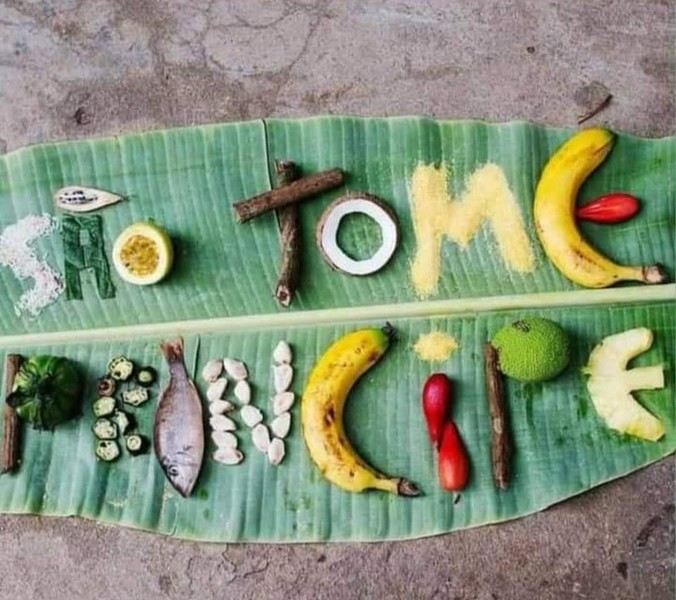
"Ah, here it is at last—that sweet scent of elsewhere so dear to Cricri and Lulu’s noses, that mix of apprehension and desire when facing the unknown.
We’re really diving into the unknown this time, taking you to the island of SAO TOMÉ... also known as the island: *‘Wait, what did you say?’* 😄. Because apparently, no one’s heard of Sao Tomé—except our Portuguese friends.
It’s an archipelago of three islands smack in the middle of the world, right on the equator, off the coast of Gabon.
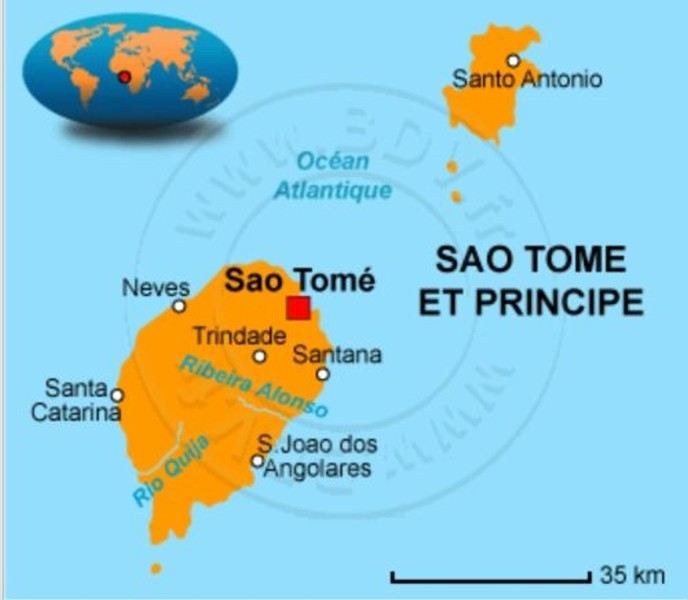
No, these aren’t the sun-soaked, Polynesian lagoon islands. Here, *‘it rains, it pours...’* pretty much all the time, it seems.
There’s not much to *‘see’* in the traditional tourist sense—EXCEPT for stunning landscapes, lush vegetation, a few beaches with golden or black sand, colonial buildings still in their original state, a single main road, and plenty of *‘tracks’* that are more or less drivable. All this surrounded by an African population that speaks Portuguese and is known for its warm welcome.
Well, that should be enough for our happiness—and hopefully yours too! 😊
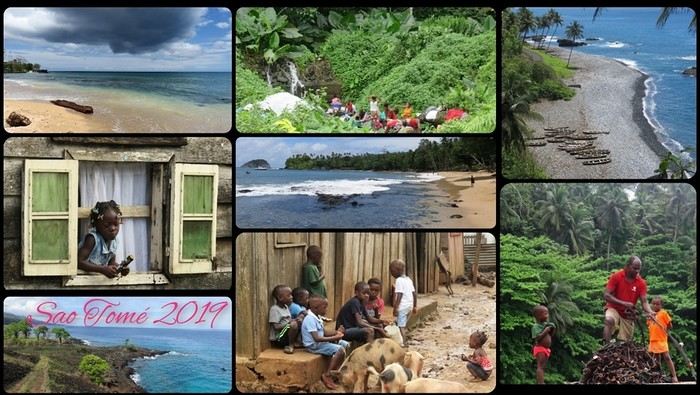
Ready for landing?
"Ah, here it is at last—that sweet scent of elsewhere so dear to Cricri and Lulu’s noses, that mix of apprehension and desire when facing the unknown.
We’re really diving into the unknown this time, taking you to the island of SAO TOMÉ... also known as the island: *‘Wait, what did you say?’* 😄. Because apparently, no one’s heard of Sao Tomé—except our Portuguese friends.
It’s an archipelago of three islands smack in the middle of the world, right on the equator, off the coast of Gabon.
No, these aren’t the sun-soaked, Polynesian lagoon islands. Here, *‘it rains, it pours...’* pretty much all the time, it seems.
There’s not much to *‘see’* in the traditional tourist sense—EXCEPT for stunning landscapes, lush vegetation, a few beaches with golden or black sand, colonial buildings still in their original state, a single main road, and plenty of *‘tracks’* that are more or less drivable. All this surrounded by an African population that speaks Portuguese and is known for its warm welcome.
Well, that should be enough for our happiness—and hopefully yours too! 😊
Ready for landing?
This catchy and somewhat mysterious title comes from several questions I’ve been asking myself.
VF has been back open for a reasonable number of weeks and months now. The number of visitors overall matches past averages, but the number of members online in the last 24 hours seems relatively lower than what we used to see.
Yet, to my surprise, I’m seeing fewer travel journals, way fewer messages, and way fewer questions. I don’t see many new registered users online, and I notice a number of members who are logged in but either aren’t participating or have stopped participating.
Something’s not adding up for me because, in my opinion, VF is still appealing, and I don’t see which other sites could really compete.
Was there a real break between pre- and post-Covid? Does it just take more time for some people to discover the site or learn that it’s active again? Do people now prefer quick consumption on sites like FB or others I’m not familiar with? Where have the site’s old-timers gone, and what are they doing with their time now? What’s really going on here?
Hi there,
This will be my first trip to Thailand, which will be the first stop on my Asian journey. This time, I’d like to leave with a one-way ticket so I can return to France from the last country I visit.
First and foremost, I’d like to confirm whether it’s possible to get a VOA (Visa on Arrival) when I land in Thailand without any prior steps? Is proof of onward travel (like a return ticket) required to get this visa?
If so, does it have to be a round-trip ticket from the country I’m arriving from, or can I use a flight or train ticket from Thailand to a neighboring country as proof of exit?
For Cambodia and Vietnam, is it also possible to get a VOA on the spot?
I’d also love any tips or important info you think might be useful about Thailand, Cambodia, and Vietnam—my planned destinations—especially regarding accommodation, transportation, points of interest, and, of course, any personal advice or experiences you’d like to share!
Thanks so much to everyone, and I wish you all an amazing 2025 filled with health, travel, and discoveries! !
Hey fellow travelers,
We’re a couple in our fifties who’ve been traveling independently for ages—mostly in Asia, a bit in Africa, very little in the Americas, and never ever in West Asia until November 2023, when we discovered the Sultanate of Oman.
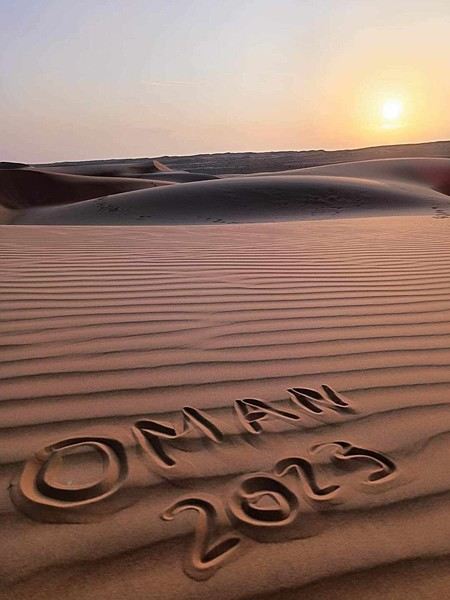
If we waited so long to explore this part of the world, it’s because a few questions were nagging at us, like: Can two Landais party lovers like us survive 15 days without apéro 😄? Or, more seriously: Can a feminist like me enjoy traveling in such a conservative country?
That is the question (and I feel your pain with this unbearable suspense 😅).
Ready to dive in?
PS: Apologies in advance for the casual tone of this travel journal—it’s the one I shared with our loved ones in real time, which explains everything.
We’re a couple in our fifties who’ve been traveling independently for ages—mostly in Asia, a bit in Africa, very little in the Americas, and never ever in West Asia until November 2023, when we discovered the Sultanate of Oman.
If we waited so long to explore this part of the world, it’s because a few questions were nagging at us, like: Can two Landais party lovers like us survive 15 days without apéro 😄? Or, more seriously: Can a feminist like me enjoy traveling in such a conservative country?
That is the question (and I feel your pain with this unbearable suspense 😅).
Ready to dive in?
PS: Apologies in advance for the casual tone of this travel journal—it’s the one I shared with our loved ones in real time, which explains everything.
INTRODUCTION
Travel journal updated in MAY 2025
Since our travel plans outside Canada were canceled due to Covid-19, we decided to take our vacation in Quebec this summer and cover over 5,270 kilometers to explore the various tourist attractions of the North Shore and Gaspésie.
This summary will cover our experiences on the North Shore, while Gaspésie will be the subject of a future summary.
The North Shore, known for its stunning nature, is the perfect spot for outdoor enthusiasts since you can enjoy activities like hiking, wildlife observation, sea kayaking, fishing, and hunting (to name just a few).
It’s also one of the best places in the world to see whales.
Our journey along the North Shore took place between the villages of Tadoussac and Kegaska, as Route 138 ends at the beautiful, long beach in Kegaska.
Passionate about travel, animals (furry, feathered, scaly), and my partner’s love for photography, it was in 2014, after encountering orangutans in Gunung Leuser National Park in Sumatra, that I felt the urge to see other great apes in their natural habitat and in the wild. For my 40th birthday, I dreamed of only one thing... seeing gorillas. I still had four years to wait and four years to save up.
At the time, I had only heard of the Virunga Mountains, particularly the part in Rwanda. To be honest, Uganda had never really struck me as a destination I’d ever set foot in, and the DRC, for security reasons, didn’t particularly appeal to me.
But then, one day, I heard that Rwanda was going to increase the price of gorilla permits to USD 1,500 per person. Ouch... that seemed way overpriced, especially since we were going as a couple and I really wanted to see them twice. $6,000 for two days... Okay, it’s for my 40th birthday, but still...
At the end of 2017, I started looking more closely into our trip planned for December 2018. A stroke of luck in my schedule meant my former English teacher sent me a link to an article she’d written for her travel agency about her encounter with gorillas in Uganda. Hmm, Uganda? It was the first time I’d read about the country. Why not?
I scoured various forums in French and English and re-discovered voyageforum.com. And most importantly, I came across Ticapi’s travel journal, which I devoured in one evening, and a few months later, Muriel18’s, whose release I eagerly awaited. Wow!!! Not only can you see gorillas in Uganda, but also chimpanzees and the shoebill, not to mention the savannah and the chance to go on more classic safaris.
All that’s left is to convince my better half that Uganda is a safe country...
Usually, and now more than ever, we prefer independent travel and self-drive trips in particular. But given the proximity to the DRC border, the potentially impassable roads after rain, and rental cars that aren’t always in the best condition, we hired a guide for two weeks in December 2018. The months passed, and the excitement grew.
Three weeks before departure, I fell ill after a work trip to Asia. Darn! This time, I didn’t waste any time—I quickly saw a doctor and got rid of that virus. That was the plan! Flu or malaria? (I’d been to the Amazon six months earlier.) The doctor didn’t know; the cough only appeared a few days later. We did blood tests two days in a row to rule out malaria. So it was the flu or... pneumonia :-( ...?
The X-rays spoke for themselves—it was pneumonia, and it was already quite advanced. No big deal, I still had two weeks to recover! I religiously took my antibiotics, downed loads of vitamin C, but nothing worked—the antibiotics didn’t seem to be doing anything. I was coughing so hard I thought my lungs would come up, I was short of breath, exhausted. I’d dreamed of this trip for so long... it seemed unthinkable not to go. Five days before departure, my doctor hospitalized me—the pneumonia had worsened, and my blood oxygen levels were dangerously low. I was in tears but still in denial about what was happening to me. Besides, I’d still taken my anti-malarial, because I was determined to leave.
I spent the first day in the emergency room on oxygen 24/7. The germ causing my pneumonia was unknown to the infectious disease and pulmonary specialists. They tried a combination of antibiotics. No big deal, in four days, I’d be leaving. I harassed the doctor, who must have thought I was crazy, to find out when I could be discharged—"because, you see, doctor, I have a flight to Uganda on Saturday." On Thursday, the doctor was firm: I’d still be hospitalized on Saturday... deep down, I knew it but didn’t want to admit it. My partner handled canceling the flights, contacted our travel insurance (thankfully we had some), and I wrote to our guide (who, in the meantime, had become our tour operator) who could hardly believe it. And neither could I! We told ourselves it was just postponed and that we’d take this long-awaited trip at the end of 2019!
March 2019, the tour operator reached out to us: "Didn’t you say you wanted to go to Uganda this year? You’d better hurry and book the gorilla permits before they run out."
Oh yes, we wanted to see the gorillas. But we hesitated about rebooking. I still hoped to do this trip as a self-drive. The thing is, this year, we managed to take three weeks off, and we also wanted to spend a week in Rwanda. My partner still didn’t feel comfortable driving there. Yet, he’s driven all over the world. I respected his feelings, especially since he’s the only one who drives.
Anyway, we went back and forth but neither of us really said what we were thinking: "What if we used someone else to organize our trip?" In the end, we went with him again, made a first deposit for four gorilla permits (two days each) (not the best idea we’ve ever had), and looked into adding Rwanda to our itinerary. We’d have a guide/driver for the whole trip with mid-range accommodations.
After several back-and-forths, the itinerary was supposed to look something like this. To be honest, I got fed up after a while.
Day 1: Arrival in Kigali in the evening Day 2: Transfer from Kigali to Akagera NP Day 3: Safari in Akagera NP Day 4: Akagera NP and night in Nyagatare Day 5: Transfer from Nyagatare to Nyungwe Forest Day 6: Nyungwe Day 7: Nyungwe Day 8: Transfer from Nyungwe to Lake Kivu, Rubavu/Gisenyi Day 9: Transfer from Rubavu/Gisenyi to Kisoro/Uganda via the Cyanika border Day 10: Gorilla tracking in Mgahinga NP Day 11: Golden Monkey tracking in Mgahinga NP, night at Lake Mutanda Day 12: Gorilla tracking in Bwindi, Ruhija (later changed to Rushaga) Day 13: Queen Elizabeth NP, Ishasha sector in the morning and Kazinga Channel in the afternoon Day 14: No clear answer on activities for that day. After three attempts, I gave up. I shouldn’t have... Day 15: Chimpanzee tracking in Kyambura Gorge, night at Lake Nkuruba Day 16: Lake Nkuruba, morning activities around the lake and Bigodi Swamps in the afternoon Day 17: Transfer from Lake Nkuruba to Murchison Falls Day 18: Murchison Falls Day 19: Murchison Falls Day 20: Transfer from Murchison Falls via Ziwa Rhino Sanctuary, night in Entebbe Day 21: Entebbe – Mabamba Swamps Day 22: Mabamba Swamps in the morning, Botanical Garden in Entebbe in the afternoon, and transfer to the airport for the overnight return flight.
In April, he asked us for a substantial deposit for the accommodations and some park activities, as one of his colleagues was doing the same tour in May and it would be good if he could secure the already-made reservations by paying the bill.
A week before departure, just like in 2018, we paid the remaining balance of the agreed amount. Three days later, since I hadn’t heard from him (the TO is based in Germany), I sent him a message to confirm he’d received the payment.
My partner joked, "And that’s when he tells us he closed the account we sent the money to." I forced a laugh... and even more so when the TO asked me which account I’d sent the balance to... "Uh, the same one as before." And then he told me he’d closed that account and maybe should’ve mentioned it earlier... uh, you think?! And of course, he needed the money sent again quickly. "Well, buddy, you’ll have to wait until I get it back!!!
It was already late, and my bank had been closed for hours. The next morning, first thing, I called my bank and explained the situation.
"Unfortunately, we can’t do anything for you; you’ll have to wait for the money to be returned." "But how long will that take?" "A few days or weeks, depending on the banks, and you should expect transfer fees."
Brilliant! :-(
After nearly 10 years of traveling almost exclusively without traditional travel agencies, had we just been scammed? I went back to the forums to reread posts about this TO from other travelers. They were all positive; no one mentioned a scam.
The next day, I searched online for the contact details of his bank in Germany. I wrote to the generic email address in English, explaining that I’d made a transfer without knowing that this gentleman had closed his bank account. The employee replied in impeccable English that the bank only responded to emails written in German. Grrr! I used a well-known translator since my German is, let’s say, rusty, and resent my email in German. The same agent replied in German that unfortunately, they couldn’t do anything for me—that if the account had been closed, an automatic rule would return the money to the sender... period, end of story!
Well, our money is lost somewhere in the "cloud," or so we hope! Wait and see!
No news from our TO, and we didn’t reach out either—we were too annoyed by the whole situation.
Hello! 🙂
In 2017, struck by western addiction, our first road trip gave us an irresistible urge to return, which we did from September 2nd to 24th, 2019, on a loop from Denver to Denver via Yellowstone. The westernmost point of this journey, which took us through the geographical center of the USA, brought us within about a hundred kilometers of Moab, which had been the easternmost point of our last trip.
We’ve been back for over a month now, and I realize I’m starting to forget some details—it’s high time I started my travel journal before my brain turns into Swiss cheese and lets everything slip away. As I mentioned in my last story, it’ll take me quite a while to finish, so if any travelers have specific questions, don’t hesitate to message me privately. Once again, I’d like to thank everyone who helped me (and there were many!) prepare our road trip, with a special shout-out to Disneydiddl, Hiacinthe, and Titou (ladies first) as well as Fred and Itat, whom I bombarded with questions for months and who always kindly and patiently gave me tons of great tips. It’s thanks to all of you that this trip was such a success. I was a little worried I wouldn’t recapture the emotion and enthusiasm of our 2017 trip, but this one was just as "Wow" as the last.
For those who don’t know us, let me introduce our little group. We’re four friends in our sixties (this time, everyone made it, which let us score some "senior" discounts...). We live in the Var region, have known each other for over 20 years, and this was our second trip together to this magical West.
Mimi (Michèle): always the smallest and the funniest. Thank goodness she was there to speak English! Maumau (Maurice): her husband, always with his white hair, his Gallic mustache, his humor, and his Southern accent. He drove every other day. DD (André): the one with the beard, with whom I celebrated our 41st wedding anniversary at Yellowstone. Our second driver appreciated having a peaceful mind since he’s been retired since July. Marcalamar (Martine): that’s me—still blonde with glasses, still talking a lot, and still terrified of messing up the organization of this trip despite all the hours spent on the forum.
 Recognize us? Ha ha ha!!!! No, just kidding!!!!
That’s us!!!
In 2017, struck by western addiction, our first road trip gave us an irresistible urge to return, which we did from September 2nd to 24th, 2019, on a loop from Denver to Denver via Yellowstone. The westernmost point of this journey, which took us through the geographical center of the USA, brought us within about a hundred kilometers of Moab, which had been the easternmost point of our last trip.
We’ve been back for over a month now, and I realize I’m starting to forget some details—it’s high time I started my travel journal before my brain turns into Swiss cheese and lets everything slip away. As I mentioned in my last story, it’ll take me quite a while to finish, so if any travelers have specific questions, don’t hesitate to message me privately. Once again, I’d like to thank everyone who helped me (and there were many!) prepare our road trip, with a special shout-out to Disneydiddl, Hiacinthe, and Titou (ladies first) as well as Fred and Itat, whom I bombarded with questions for months and who always kindly and patiently gave me tons of great tips. It’s thanks to all of you that this trip was such a success. I was a little worried I wouldn’t recapture the emotion and enthusiasm of our 2017 trip, but this one was just as "Wow" as the last.
For those who don’t know us, let me introduce our little group. We’re four friends in our sixties (this time, everyone made it, which let us score some "senior" discounts...). We live in the Var region, have known each other for over 20 years, and this was our second trip together to this magical West.
Mimi (Michèle): always the smallest and the funniest. Thank goodness she was there to speak English! Maumau (Maurice): her husband, always with his white hair, his Gallic mustache, his humor, and his Southern accent. He drove every other day. DD (André): the one with the beard, with whom I celebrated our 41st wedding anniversary at Yellowstone. Our second driver appreciated having a peaceful mind since he’s been retired since July. Marcalamar (Martine): that’s me—still blonde with glasses, still talking a lot, and still terrified of messing up the organization of this trip despite all the hours spent on the forum.
Recognize us? Ha ha ha!!!! No, just kidding!!!!
That’s us!!!Sometimes a trip to Thailand starts in a hotel near an airport, where guests have misunderstood the meaning of the name easyJet...
We know all too well that this long flight will leave us a bit jet-lagged when we arrive...
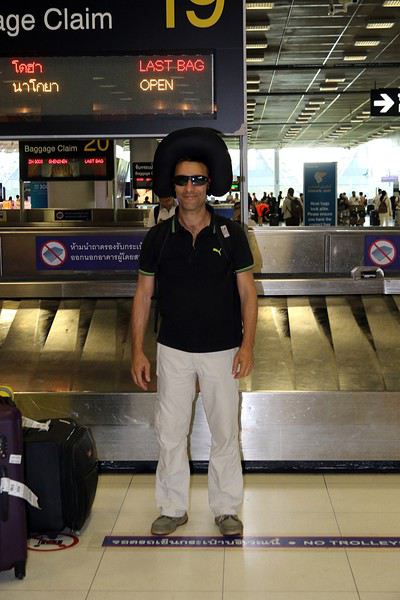
all while hoping we won’t start our stay completely...
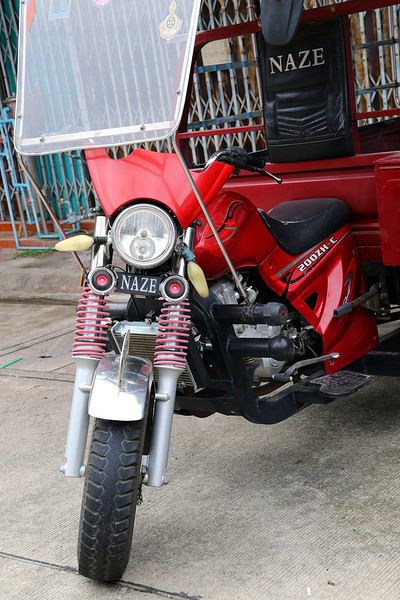
Still, we’re lucid enough to notice that they could’ve at least leveled the ground before adding the decor at the airport:
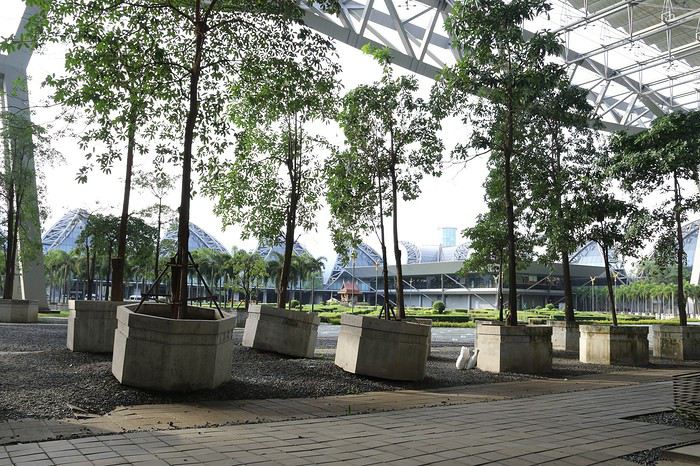
As always, our arrival is under the watchful eye of some...
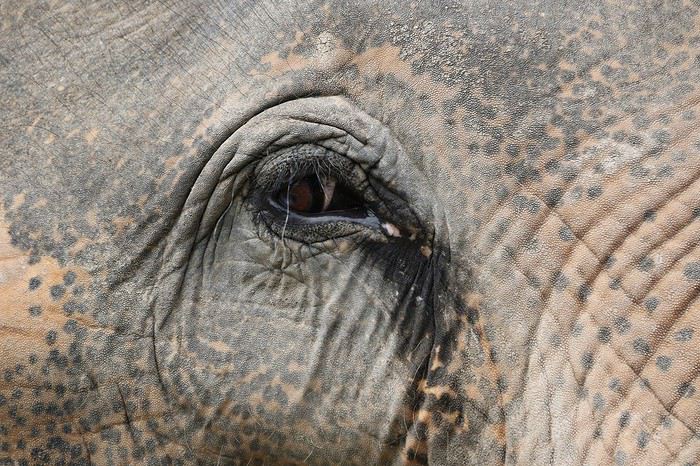
under the frankly curious gaze of others...
but of course, there are plenty who couldn’t care less...
All that’s left is to set off exploring, while staying cautious so we don’t get caught off guard...
We know all too well that this long flight will leave us a bit jet-lagged when we arrive...
all while hoping we won’t start our stay completely...
Still, we’re lucid enough to notice that they could’ve at least leveled the ground before adding the decor at the airport:
As always, our arrival is under the watchful eye of some...
under the frankly curious gaze of others...
but of course, there are plenty who couldn’t care less...
All that’s left is to set off exploring, while staying cautious so we don’t get caught off guard...
Hi everyone,
Since the safety reports on Peru are sometimes a bit outdated, I got curious and checked the Ministry of Foreign Affairs website for travel advice.
It’s honestly pretty worrying!!
Here’s the link: https://www.diplomatie.gouv.fr/fr/conseils-aux-voyageurs/conseils-par-pays/perou/
Among other things, they don’t just mention fake taxis that rob you or express kidnappings (especially in Arequipa), but also drugs that can be slipped into your drink if left unattended, "with the risk of scopolamine being added."
They’ve marked the Cuzco region as a red zone (formally avoid!!) and central Lima as an orange zone, "to avoid after dark."
What do those who’ve been there recently think?
Hi there,
Here’s our account of our trip to Malaysia from September 11th to 27th. I hope our tips can help others as much as this forum has helped us!
Day 0:
Departure from Nantes with a transfer in Amsterdam via KLM (720 €).
Day 1:
We arrive at KLIA1 in the early afternoon. First challenge: figuring out where to pick up our luggage. Turns out the answer is right under our noses—we need to take the airport’s internal metro! Once we’ve got our bags, we withdraw some cash from a Maybank ATM right there. Next up: SIM card! Just outside the arrivals hall, several kiosks offer them. We go for a Celcom 5 GB card (70 RM). Then it’s taxi time to get to KL, in the Bukit Bintang area—about 85 RM in a slightly old taxi with weak air conditioning. We check into our Airbnb apartment, which is clean, more spacious than a hotel room, and—best of all—has a charming balcony with a gorgeous nighttime view!
We end up hanging out on that balcony, reviewing our plans for the next day. After dark, we take the monorail just a short walk away to enjoy our first evening on a rooftop at the 34th floor: Hélipad (Raja Chulan station—you have to enter the Menara Tower at the base of the station) with a panoramic view of the city and its iconic towers.
Finally, we head to Jalan Alor to grab a bite in this super busy street. Big sleep ahead! 😴
Here’s our account of our trip to Malaysia from September 11th to 27th. I hope our tips can help others as much as this forum has helped us!
Day 0:
Departure from Nantes with a transfer in Amsterdam via KLM (720 €).
Day 1:
We arrive at KLIA1 in the early afternoon. First challenge: figuring out where to pick up our luggage. Turns out the answer is right under our noses—we need to take the airport’s internal metro! Once we’ve got our bags, we withdraw some cash from a Maybank ATM right there. Next up: SIM card! Just outside the arrivals hall, several kiosks offer them. We go for a Celcom 5 GB card (70 RM). Then it’s taxi time to get to KL, in the Bukit Bintang area—about 85 RM in a slightly old taxi with weak air conditioning. We check into our Airbnb apartment, which is clean, more spacious than a hotel room, and—best of all—has a charming balcony with a gorgeous nighttime view!
We end up hanging out on that balcony, reviewing our plans for the next day. After dark, we take the monorail just a short walk away to enjoy our first evening on a rooftop at the 34th floor: Hélipad (Raja Chulan station—you have to enter the Menara Tower at the base of the station) with a panoramic view of the city and its iconic towers.
Finally, we head to Jalan Alor to grab a bite in this super busy street. Big sleep ahead! 😴