Bonjour, j'ai hésité à poster ces carnets de voyage. Le but étant de partager avec amis et famille, faire rêver , interpeller et surtout partager. Je pars régulièrement avec mon meilleur ami à la découverte d'autres paysages , d'autres cultures. Aucune prétention dans ces petits textes.
J'ai du rater qq billets mais l'essentiel est bien là A bisousssssss
Salut tous,
Pré billet .... On est sur les starting-blocks 🙂.Départ le 13 ( putain le 13 comme par hasard le jour où les avions tombent le plus ) Nice - Frankfurt - Singapour - Danang ... 3 chances de s’écraser 😞
Cette année j’ai décidé qu’en plus de la télékinésie pour maintenir l’avion en l’air, j’allais battre des bras très vite et très fort pour aider le maintien en l’air tout le temps du trajet. Chuis épuisé d’avance.
À bisoussss
Salut tous,
On suppose que nous arrivions sains et saufs à destination.... on verra pour le retour .... qui qui se dévoue pour faire une compilation des textes et tofs de notre escapade sur FB ? En fait la seule manipulation que je sache faire est de coller le texte et le reproduire via mail mais dans ce cas il n’y a pas de photos n vice et versa . Bon ok chuis pas doué ou alors ce sont ces salauds de pirates , je suis et reste innocent 😇
À bisoussss
Modifier
Salut tous,
Avec cette nouvelle technique qui consiste à battre les bras alliée à mes performances télékinésiques, j’ai sauvé le premier vol : avion , équipage et passagers jusqu’à Frankfurt. Je reprends des forces pour Singapour. Il est remarquable que toutes ces années à brasser de l’air et faire du vent portent enfin leurs fruits pour le bien commun.
L’année dernière il y avait une espèce d’errance mystique et de quête initiatique qui se matérialisait par le fait que tous les jours j’abandonnais un t-shirt sur place comme autant de mauvais souvenirs. Je voulais réitérer cette année, j’ai encore nombre de vêtements et de pensées parasites, inutiles . Mais je souhaitais me renouveler et surtout garder mes t-shirts manches longues pour me protéger du bobo soleil. L’idée m’est venue lorsque nous nous sommes pesés Olivier et moi . Je vais larguer mes kilos et mon poids superflu! Oliv étant d’un naturel coquet, assez féminin n’avouera jamais combien il pèse et comme je suis respectueux de ses secrets de beauté : je ne dirai rien ! Moi la balance m’a affublé de 107 kg ( soit 30 de plus qu’Oliv ... Oupsss salauds de pirates!) . C’est le challenge de cette année....
Bon allez Singapour....
À bisoussss si on arrive à la deuxième étape, surtout ne pas dormir! Veiller sur mon petit monde
Modifier
Salut tous,
Un dernier flip avant d’être enfin au Vietnam. Le contrôle douanier.
Il faut savoir qu’Olivier Gédon vient de découvrir qu’il ne fixe pas les protéines, rien de grave en soi, mais son toubib lui a prescrit des compléments alimentaires. Je me trimballe dans mon sac à dos 3 boites d’un kilo de poudre blanche .... Je me fais un film , avec comme scénario un pot pourri de “Voyage au bout de l’enfer Et Midnight express” . J’en tiens le rôle principal évidemment. Tous les bagages des voyageurs nous précédant sont vérifiés et passent dans le tunnel radio qui va bien . Aucun doute! Au mieux je suis torturé quelques heures avant d’être relâché, avec des excuses certes, mais la tronche en biais. oliv est devant avec son baluchon et moi je suis Sherpa derrière à pousser nos malles cabine sur un trolley. Embouteillages! La douanière lui fait signe de passer, il ne comprend pas et pose quand même son sac sur le tapis roulant, elle a un petit geste d’impatience. Ho Oliv , la meuf elle te fait signe de passer! Du coup moi aussi ! Et là : bonheur! Je défile sous les ovations de tous mes mois intérieurs ( nous sommes très nombreux dans ma tête ) qui m’applaudissent et me lancent des paillettes. Mon film vient de remporter le Golden Globe, l’Oscar et le César. Quel soulagement. Notre chauffeur nous attend avec la pancarte qui va bien, on lui explique qu’il nous faut un peu de Dôngs et changer de l’argent. Je me retrouve instantanément millionnaire. Tout va bien . J’ai survécu aux différents crashs, à la prison et l’opprobre de tous les miens, il fait doux, je suis riche.
Nous sommes attendus par les fillettes de la pension de famille que nous avions quitté l’année précédente précipitamment et dans la douleur ( la maman d’Oliv étant très fatiguée) . C’est marrant ces rencontres. On avait alors fort sympathisé avec nos hôtes, et cette année nous avons apporté deux peluches pour les filles.... Retrouvailles magiques. Nous décidons d’aller promener et boire un godet dans la vieille ville, en plus un peu de marche après ces dizaines d’heures engoncés dans ces boîtes de mort n’est pas fait pour me déplaire. On choisit un troquet pas trop touristique près de la rivière , une Delarue, une Saigon et quelques grignotes plus tard , nous commençons enfin à réaliser que ayé we did it! La serveuse est enjouée, à chaque commande on dirait qu’elle saute de joie, vraiment l’impression de lui faire plaisir. Marrant. Il est 23 h , temps de rentrer. Peu de monde dans les rues, je me demande si le couvre feu est toujours en vigueur . On se fait harponner par la faune interlope qui nous propose des “happy ending” , promesses de toutes les voluptés de l’Asie. Je dois être béat , les types m’interpellent : “Happy Bouddha” , hè ouaissss c’est moi .
Insomnie. Tout est normal, tout va bien .
A bisousssss
Salut tous,
Il est 9h , généralement nous nous retrouvons pour un petit déjeuner commun et une planification de notre néant du jour. Olivier Gédon doit encore dormir et je vais le laisser récupérer. Je vois bien qu’il fatigue, un peu de dodos supplémentaire lui sera bénéfique.
Généralement c’est lui qui toque à ma porte, le temps que je oigne mon corps d’athlète d’essences rares, il file dans la cuisine et prépare le petit dej sous la surveillance « d’eau tiède » . Il essaie de s’initier aux subtilités de la cuisine asiate. Régulièrement nous nous régalons d’un panndmy ( pain de mie : héritage phonétique et culinaire de la colonisation française). Il s’agit d’un sandwich constitué d’une baguette croustillante à souhait fourrée avec des légumes crus et d’un œuf frit , sauce aigre douce et mayo locale. Délicieux. Thé, café, fruits frais .... c’est parti pour la journée. On descend la rue sur une cinquantaine de mètres et on récupère notre scooter. C’est le notre à nous perso! Il nous est réservé car on a fait le plein d’essence le premier jour, sinon généralement après chaque location ils siphonnent le réservoir et le prochain fait le plein pour la journée etc ... Pas de petites éconocrocs.
Ce matin surprise: Jane me dit qu’elle ne nous fera pas le petit déjeuner car elle nous invite à déjeuner à 11 h et elle n’à pas le temps. Jane c’est notre hôtesse : elle est jolie comme un cœur, un charme ravageur, gracile, aérienne , toujours souriante et elle se met en quatre pour nous rendre service, nous informer, nous faire sentir que nous sommes accueillis non comme des clients mêmes privilegiés mais comme des amis. Je pense que c’est surtout une apparence , c’est une femme d’affaire redoutable, qui tient sa maisonnée d’une poigne de fer, son business marche à la baguette. Elle est partout, je ne l’ai jamais vue se reposer, toujours sur la brèche. Elle coud, elle ravaude, elle va nous chercher des échantillons de cuir ( j’ai commandé une trousse de toilette de voyage, l’autre jaloux veut la même dans une autre couleur), réserve les taxis, les bus, nous a pris nos cartes SIM (les a confié à son mari qui a oublié de nous les donner). Elle s’occupe en plus de ses trois enfants : Mika, Maya et eau tiède (son mari et troisième enfant) . Lui est souriant, ne parle pas anglais, et disponible et dit oui à tout sans rien comprendre . Brave, agréable, quasi décoratif.
Bon j’entame ma mangue, je vais m.en mettre plein les doigts .
À bisousssss
Salut tous,
J’ai encore failli demander aux salauds de pirates de produire un nouveau billet, piqué parmi ceux qui datent de lonnnng, et puis je me suis dit que peut-être vous finiriez par vous en rendre compte .
J’adore ce pays, vraiment , j’adore tout: la culture, les gens, la bouffe, le dépaysement, le temps, la chaleur, la sonorité chantante et nasillarde de la langue et même le fait d’être touriste. Potentiellement me faire arnaquer fait parti du jeu. Il faut prendre l’habitude de négocier le bout de gras tout le temps et accepter de « perdre » quelques centimes par rapport à ce que paierait un autochtone. Mais certains parmi les meilleurs d’entres nous , ne supportent pas de surpayer. Oliv a calculé qu’entre les T-shirts achetés en boutique , les mangues prises à la sauvette dans la rue auprès d’une marchande ambulante et les prix du marché local hors zone colifichets pour gogos.... Et bien depuis le début de notre séjour il (on) s’était avoir de l’équivalent de 3.80€. Moche! Bouhhhhh l’est tout énervé mon poto. Du coup il refuse toute négociation.... j’ai suggéré de louer deux vélos ( ben oui deux, il refuse de pédaler avec moi derrière sur le porte bagage) pour changer. Devant l’énormité de la somme : 60.000 dôngs les deux vélos , soit plus de la moitié du prix journalier de notre scooter, il fait la moue. On s’en va et la nana nous hèle : 50.000 ! Du coup c’est un non définitif.... 2€ de chiffre d’affaire raté pour elle. Bien fait 🙂
Je connais maintenant Hoi An comme ma poche, de la grande artère, à la petite ruelle, en passant par la moindre impasse, le plus petit cul de sac . Je peux sans problème faire taxi, guide, office du tourisme, critique gastronomique , bottin mondain, page jaune .... Et je connais le nom de tous les habitants, ça c’est facile, ils s’appellent tous Nguyen ( message perso : Maï-Lan je t’embrasse). Bref j’ai hâte de bouger de coin et faire de nouvelles découvertes . On s’en occupe ce soir lorsque nous aurons fini notre rien du jour. Pour le moment je vous écris de la plage , où je déguste une soupe aux crevettes en guise de petit déjeuner. Oliv s’est baigné mais moi je suis moins courageux, je trouve que l’eau s’est vachement refroidie depuis mon dernier plouf, elle doit titrer dans les 20 degrés . Pas pour moi .
À bisousssss
Salut tous,
Je sais que mes nuits vous passionnent : presque 7h de dodo d’affilées ! Un exploit.
Il y a un paradoxe au Vietnam, une dimension culturelle qui touche au sacré et que je n’arrive pas à appréhender... Grrrrrr.
C’est un pays communiste, mais l’éducation est payante, il n’y a pas de retraite et surtout je ne veux pas connaître la qualité des services de santé . Culturellement les vieux sont pris en charge par les enfants. Il y a des temples, des autels, des exvotos partout.
Pour le têt, chaque maison est nettoyée, repeinte parfois, embellie avec des fleurs, des arbres, afin que les Dieux soient attirés et viennent prendre l’endroit sous leur protection pour la nouvelle année lunaire. Beaucoup de ferveur religieuse.
Je pense que c’est bien plus profond que chez nous Noël et nouvel an réunis : symbiose de païen et de religieux, finalement une teuf où on bouffe trop, boit trop, se sent seul s’il n’y a pas d’enfant. Ici je pense que les 10 jours que durent les festivités sont différents. Au Vietnam il y a une effervescence, une énergie journalière qui se ressent, surtout lorsque l’on est promeneur contemplatif, les gens bossent, font des affaires, sont à l’affût de la moindre opportunité. Le PIB est l’un des plus important d’Asie . Si je prends comme exemple notre hôtesse : non seulement elle s’occupe de son home stay mais , également propose de faire des vêtements sur mesure, prend les dimensions , réalise les patrons sur simples photos ; mais également coud , ravaude, te fait choisir les tissus, négocie les prix.... Tout pareil avec le cuir, l’année dernière à la nuit noire, elle nous a amené dans un dépôt , ouvert spécialement pour notre visite, , qui tenait plus d’un garage et l’arrière cour coupe gorge , que d’une boutique chic où s’amoncellent des dizaines et des dizaines de peaux de toutes qualités et couleurs possibles. Pour finalement nous faire des sacs de voyages’ ceintures et chaussures suivant nos desiderata et à un prix dérisoire. Pour le lendemain!!!!!! Cette année nous avons commandé des trousses de toilettes.... Et tout pareil.
Le scooter que nous prenons tous les jours, c’est dans sa famille au bout de la rue, mais le magasin vend également des chaussures de sport et des vêtements. Si nous cherchons un produit spécifique, on demande et il y a toujours une solution. Tous travaillent , sont besogneux, avides de gagner. Si tu n’avances pas .... je ne pense pas qu’il y ait des services sociaux aussi développés qu’en France. Hoi An et surtout la vielle ville est magnifique, inscrite au patrimoine mondiale, vit du tourisme. En cette période il y a affluence du monde entier . Et c’est là où se place ce paradoxe, je n’arrive pas à comprendre, les très très nombreuses boutiques au mieux fonctionnent au ralenti ou bien sont carrément fermées. Nos hôtes qui sont toujours sur la brèche , disparaissent pour la journée. L’autre matin Olivier Gédon accueille des nouveaux arrivant et téléphone afin de savoir dans quelle chambre les placer. Conciergerie une nouvelle vocation ? On pourrait se barrer sans payer.... va nous retrouver!
Aujourd’hui Disney land .... ou pas . Je vous raconterai.
À bisousssss
Salut tous,
Deux scooters, un pour chacun ! D’habitude nous louons un seul scooter , Olivier Gédon conduit à la vietnamienne, en klaxonnant tout en regardant où aller sur son smartphone, alors que moi je hurle de terreur derrière lui. En fait on se fait des blagues et on teste l’humour de l’autre..... Je regarde un pendentif féminin, il me jette un regard courroucé voire de pitié, puis se rend compte que ma démarche était sciemment faite pour l’énerver lorsque je lui dis : « bah quoi c’est la St Valentin dans pas long ». On revient de la plage et il déboite pour doubler un bus. Il n’y a ni la place, ni le temps, ni la puissance. Je vocifère « Nannnnn là ça va pas le faire », il se marre.
En nous baladant en ville nous remarquons une affiche publicitaire proposant un « daily trip to Ban Ha » .... in peto et en moi même je me mets à chanter un refrain de Lio « Banana split, banana split, c’est un amour de dessert. Hum banana..... et laloulala ». Les pirates espèrent vous avoir mis cet air pourri dans la tête . De rien!
Il se trouve que cette affiche montre le Golden Bridge. C’est un ouvrage qui m’a frappé lorsque je regardais différents blogs consacrés au Vietnam. Un pont dont les arches sont de gigantesques mains ouvertes et qui soutiennent une passerelle surplombant la forêt primaire. De toute beauté ! Oliv est d’accord on ne peut pas rater un tel spectacle. Renseignements pris c’est à environ 60 kilomètres de Hoi An , à 1500 mètres d’altitude. Les deux pépés titines se préparent donc pour l’ascension. Je fais remarquer à Oliv que c’est haut et que peut-être nous risquons d’avoir froid. Petite laine dans le baluchon.( en fait j’ai cru crever de chaud ). Lui me dit que sur un seul scoot, grimper à l’intérieur des terres , vu notre poids (surtout le mien quoique je sois en phase de maigritude totale ) , l’engin va rendre l’âme. Deux scooters! Il faut que je m’habitue, que je me concentre. D’abord c’est très léger , je promène usuellement les 300 kilos de ma Harley. Mais c’est marrant ils sont débridés. Nous atteignons plus de 100km/h avec des 50 cc. Yessss. Les règles de circulation sont simples : vert, je passe. Orange, je passe. Rouge, je passe et je klaxonne. Celui qui freine ou qui hésite est un lâche.
Nous arrivons en fait dans un complexe du genre sous Disney Land asiate. Impossible de promener que sur le pont, on est obligé de prendre toutes options. Deux téléphériques plus tard nous survolons la canopée d’une forêt primaire à plus de 130 mètre au plus haut, entre deux cimes. C’est magnifique, c’est vert, c’est terrorisant pour un fils du béton comme moi. Je n’arrive même pas à m’imaginer promener dans cet enfer vert, encore moins y survivre. Ben ouiii lorsque je suis en l’air je ne peux pas m’empêcher de penser que je vais finir par m’écraser . Après 20 minutes d’ascension on arrive dans un sous Disney, un sous sous sous Las Vegas. Des châteaux en carton pâte sensés être les répliques conformes de certains existant en Europe. Toute vague similitude avec des bâtisses situées sur le vieux continent ne pourrait être que fortuite. Une maison de vigneron , une d’un tonnelier , ne vendent que t-shirt et ours en peluche, une espèce de foire foraine propose des manèges. Le clou c’est un pseudo musée genre Madame Tussaud ou Grévin . Nous sommes obligés de lire les pancartes pour savoir que l’effigie représente Michael Jackson ou Marylin.... Mais bon , il y a foule. Et puis ce pont , franchement c’est ce qui attire les touristes comme nous. Je ne suis pas du tout déçu, je m’attendais à autre chose mais je suis ravi de ce que j’ai pu découvrir et arpenter. Retour rapide. On fait la course! Olivier est persuadé qu’il a gagné. Je suis généreux, c’est mon joyeux Nani .
Soirée avec nos hôtes que nous invitons dans un super restaurant, ils me font la surprise d’apporter un gâteau, les petites jouent à me faire des couettes.
Demain bateau, plongée et découverte d’une des 10 plus belles îles du Vietnam .
À bisousssss
Salut tous,
Ne vous laissez pas manipuler! Les salauds de pirates essaient de vous mettre des airs dans la tête depuis quelques temps.
Hier c’était ça :
https://youtu.be/juqTxbUiYnQAujourd’hui bien que de plus haute tenue, cela n’en reste pas moins une perversion de l’esprit . Reprenez avec moi : Cham, Cham, Cham......
L’île de Cham est donnée pour faire parti des 10 plus belles îles du Vietnam, réserve naturelle et paradis pour le snorkelling et/ou la plongée . Jane nous propose d’y aller en speed boat et si l’on veut on peut même y séjourner deux nuits . Olivier Gédon est né sur une île (Guadeloupe); j’ai eu la chance grâce à mon occupation de skipper de débarquer dans nombre d’entres elles et même d’y habiter plusieurs mois d’affilée comme en Martinique . Je connais, on connaît. On en a vite fait le tour et on s’y fait yech très très rapidement même sur une grande île . Alors une petite.... on se méfie.... Et heureusement. Ce sera un : « thời gian lưu trú tối đa » comme on dit chez nous .
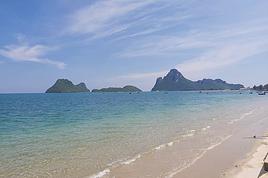
Par contre on nous vante également la richesse des fonds marins, que ce soit pour les bestioles qui viennent faire copain/ copine avec les plongeurs ou pour la beauté de la flore sous marine. Je sais maintenant pourquoi je suis voileux avant tout. Éloge de la lenteur, j’accompagne et je déroule les vagues. Le speed boat lui coupe à travers, à pleine vitesse , s’envole au dessus des crêtes et s’écrase à l’atterrissage . À chaque fois, j’ai l’impression que mes vertèbres se tassent et de perdre plusieurs centimètres en hauteur de taille. Mal de crâne rapidement et l’impression de multiples cou du lapin. En fait ne sachant pas à quoi m’attendre je m’étais positionné derrière le chauffeur ( il mérite pas l’appellation skipper) afin d’observer comment il jouait avec les manettes de gaz. Je connais la théorie, je voulais voir en pratique. En fait lorsque le bateau décolle, on doit couper les gaz sinon on flingue les moteurs qui s’emballent , et on remet pleine balle dès que la coque retrouve l’eau . Heuuuu là nannnnn , c’est comme en scooter celui qui freine est un lâche. Au retour nous squatterons la banquette arrière. L’arrivée est très jolie, plein de petits bateaux de pêche, bariolés, en bois, qui dansent au gré des vaguelettes . Un petit village de maisonnettes de couleurs vives. On dirait Marie Galante me souffle Oliv. On suit notre guide, petit bonhomme boitillant, un béret basque vissé sur la tête, qui nous explique que l’on va d’abord visiter le musée. (Yesssss j’adore, à priori. À la vue d’une dizaine de bocaux de formole contenant entres autres spécimens un mérou, un bébé requin et une murène.... bof ! 3 ou 4 tortues ratées par le taxidermiste, je déchante.) Puis la ville (bof) , enfin reprendre le bateau pour débarquer les non plongeurs sur la plage, snorkelling pour les autres, grignote et enfin retour au bercail. Du moins en comparant notre compréhension de son sabir Anglo-viet c’est ce que nous en déduisons . L’eau est délicieuse, nous sommes une quinzaine à patauger. Il n’y a absolument rien à voir ! Que dalle, nib de nib, wallou , zéro, le néant . Fond gris , pas d’herbier, ni de posidonie , quelques très rares poissons. J’ai eu la chance de plonger dans d’autres endroits tout aussi beaux, aussi sauvages mais avec des visions animales et végétales tellement plus belles, vrais poissons, vraies tortues, vrais requ... nannn c’était des dauphins ! Je garde de cette visite effectivement une très belle plage, vous avez pu voir les photos, mais surtout l’image de ce vieillard, ayant objectivement fait l’effort de mettre de très beaux atours, en train de prier devant un autel dressé à l’entrée du salon de coiffure de ses filles, du moins je le suppose. C’était beau, puissant, une passerelle vers le sacré. Un émerveillement du profane et athée que je suis.
Retour tôt , sieste. J’ai mal au cou et je demande à Oliv s’il serait partant pour un massage? Mais comment donc ! Justement il a repéré un nouveau salon, nous y allons. Les prix sont outrageusement gonflés. Je propose que nous retournions au précédent qui m’avait bien plu. Oui mais comme c’est le têt, il y a un afflux de touristes, donc de travail alors les prix marqués sont augmentés. Cette fois-ci c’est moi qui met un veto pour le principe ! Finalement à force de tourner, virer et négocier, notre choix s’arrête devant une devanture pas loin de la maison . Oliv demande un truc dur ( hardcore , avec des ustensiles et tout .... nannnnn je déconne!) et moi comme je suis scoufiniette , du soft. Sa meuf est debout sur lui et lui pétrit le dos en lui marchant dessus. Je me marre à chaque fois qu’il grogne . Moi je m’installe confortablement pour qu’elle s’occupe doucement, gentiment, avec toute la bienveillance possible de ma nuque endolorie.
Grignote .
Une aspirine et au lit .
Demain Marble Mountain , ou pas .
À bisousssss
Xin chào, hôm nay chúng tôi đã đi dạo quanh Ngũ Hành Sơn. Như thường lệ, chúng tôi lấy xe tay ga của chúng tôi. Điều này không rõ ràng vào ngày sau năm mới vì phần lớn các cửa hàng đều đóng cửa, kể cả ở các khu vực du lịch. Chúng tôi chọn tùy chọn thang máy để lên đỉnh núi này. Trong thực tế, nó là một bugger Chúng tôi đến một nền tảng đầu tiên. Từ đó bạn phải lê bước trên hàng trăm bước không bằng phẳng và trơn trượt. Tôi nhẹ nhàng nhổ phổi, tôi đổ mồ hôi và nghẹt thở, trong khi Olivier Gedon, với một ân sủng trên không đáng ngạc nhiên, vui vẻ làm cho đứa trẻ trên sườn dốc. Tôi suy luận rằng trong số 3 kg mà tôi có vượt quá tôi vẫn còn 25 để mất. Và chúng tôi bị lạc. Trong một cái hang. Tôi đến trong đau đớn, trong khi tôi đã thực hiện một số điểm dừng bởi một số đội tàu, chỉ để cung cấp cho mình một năng lực và để làm kéké. Chúng tôi trượt vào một cái vỏ dẫn đến một bàn thờ cầu nguyện, từ đó tôi lẻn vào, treo trên móng vuốt và móng tay bắt chước để giữ tôi lại và không đổ lại và cuối cùng kết thúc thành một vòng tròn nơi chúng ta nhìn thấy bầu trời khoảng 20 mét phía trên chúng ta. Có một lối đi nhỏ hẹp-rikiki-mời gọi leo lên cao hơn, cao hơn. Không phải đối với tôi, tôi thích sự vinh quang và sự xui xẻo khi chết vì virus Trung Quốc hơn là ngất xỉu trong một hang động ảm đạm và được cứu thương (vâng tôi biết điều đó không tồn tại) bởi các dịch vụ cứu hộ và thậm chí không có phẩm giá cao quý của cơ thể tôi được kéo dài (nếu nó tồn tại) bởi các nhân viên cứu hỏa màu vàng đang làm nhiệm vụ. Oliv tiếp tục đi lên, tôi nói với cô ấy rất hẹp và dốc đến nỗi tôi thậm chí không gặp ác mộng. Có anh đi. Tôi đợi lonnnnggg và anh ấy không quay lại nữa. Rõ ràng điện thoại không vượt qua. Khi tôi hỏi anh ấy có chết không, không có câu trả lời. Tôi trở lại con đường được đánh dấu. Trên thực tế, toàn bộ ngọn núi được điểm xuyết bằng những hang động, thác nước, những ngôi đền xa hoa, ít nhiều, cho phép nhìn ra khung cảnh xung quanh. Những ngôi làng nhỏ, shantytowns với mái tôn và khách sạn sang trọng đang được xây dựng bên bờ biển. Thành thật mà nói tôi yêu nó và nếu sự biến dạng về thể chất của tôi làm tôi thương hại, tôi sẽ ở lại thêm vài giờ để chọc ngoáy và tìm hiểu. Cuối cùng chúng tôi gặp nhau ở lối ra. Olivier đã kiểm tra độ rắn chắc của tảng đá bằng đầu, ngọn núi đã thắng ..... Cuối cùng, bãi biển, yum, một giấc ngủ ngắn và nhảy rất lớn ???? Thực tế chúng tôi không biết ngoại trừ ngày mai chúng tôi sẽ chuyển đến Huế ..
Je m’efforce de faire beaucoup d’efforts d’intégration, mais pour ceux qui ont un peu plus de mal avec la syntaxe, ci-après la traduction :
Salut tous,
Aujourd’hui nous sommes allés promener du côté de Marble Mountain . Comme d’habitude nous avons pris notre scooter. ce qui n’est pas évident un lendemain du jour de l’an car la majorité des commerces sont fermés, y compris dans les zones touristiques!
En nous baladant nous avons remarqué qu’énormément d’autochtones brulent les décorations mises en place. J’interroge Jane sur la signification mystique du geste. Deux fois par mois, les gens rendent grâce à la mémoire des ancêtres, espérant ainsi que
ceux-ci intercèdent pour les vivants auprès des Dieux. C’était la minute culturelle. Nous prenons l’option ascenseur afin de nous rendre au sommet de la dite montagne. Enfait c’est un attrape couillon. On arrive à une première plateforme. Delà il faut crapahuter sur des centaines de marches inégales et glissantes. Je crachote gentiment mes poumons, je sue sous l’effort et la chaleur de bête, je suffoque . Olivier Gedon , avec une surprenante grace aérienne s’amuse à faire le cabris sur les pentes escarpées. J’en déduis habilement que sur les 3 kilos que j’ai en trop j’en ai encore 25 de plus à perdre. Et on s’est perdu . Dans une grotte. J’arrive en agonisant, alors que j’ai fait plusieurs arrêts ponctués de plusieurs rasades de flotte, histoire de se donner une contenance et faire le kéké en espérant donner le change, dans le genre j’ai trop trop soif . Je tente de reprendre un souffle qui me fait défaut . On se glisse dans un boyaux qui débouche sur un autel de prière, de là je me faufile en m’accrochant avec les griffes des pieds et les ongles des mimines pour me retenir et ne pas verser en arrière. Aboutir, comme récompense, dans un demi cercle d’où l’on voit le ciel à environ 20 mètres au-dessus de nous. Il y a un minuscule-étroit-rikiki-petit passage qui invite à escalader plus loin , plus haut . Pas pour moi , je préfère la gloire et la malchance de mourir du virus chinois que défaillir dans une grotte lugubre et être ambulancé ( oui je sais ça n’existe pas ) par des services de secours et ne même pas avoir la noble dignité d’avoir mon corps brancardé (si ça existe) par les jaunes pompiers de service. Oliv lui continue l’ascension, je lui dis que c’est tellement étroit et abrupte que je même pas en cauchemar je pourrais passer. Il y va. J’attends lonnnnggg et il ne revient plus. Évidemment le téléphone ne passe pas . Lorsque je lui demande s.il est mouru, aucune réponse. Je regagne le chemin balisé. En fait toute la montagne est parsemée de grottes, cascades , de temples plus ou moins somptueux, de belvédères qui permettent une vue sur les alentours. Petits villages , bidonvilles aux toits de tôle et hôtels de luxe en construction en bord de mer . Franchement j’adore et si ma méforme physique avait eu pitié de moi je serais bien resté quelques heures de plus à fouiner et découvrir. Finalement on se retrouve à la sortie . Olivier a testé la solidité de la roche avec sa tête, la montagne à gagné..... Finalement plage , miam , une très grosse sieste et hop ???? En fait on sait pas sauf que demain nous bougeons sur Hué..
À bisousssss
Bon je fais un dernier essai !!!
Salut tous,
Suite à notre rencontre avec les deux djeuns médecins tourdumondistes , ils nous ont conseillé et convaincu d’essayer cette application qui a priori (cela demandera confirmation à l’usage) cumule les avantages du texte, des tofs ET surtout une géolocalisation précise . J’avoue que je galère un peu pour accéder et comprendre les différents menus .....
Aujourd’hui: rien!
Mais un rien rempli de plein de petits détails qui font la saveur du voyage. J’ai trouvé MON troquet! Olivier me demande si je me souviens des massages faits par les aveugles dont il a profités, et moi subis, lorsque nous étions au Cambodge. J’étais tombé, où plutôt un ancien gladiateur se vengeait de sa cécité, en m’arrachant la peau, m’éclatant les os et me démembrant les articulations alors que lui se faisait papouiller par une jolie meufette. Bref il avait apprécié et moi moins . Il s’est mis dans l’idée de recommencer l’expérience ici. Lorsque nous déambulons, il s’arrête, regarde les devantures, compare les prix et opère choix et qualifications . Je lui suggère de demander à Jane, notre hôtesse ( il faut que je vous parle de notre maman poule, besogneuse et toujours souriante, ravissante et charmante ) si parmi ses amis ou connaissances elle ne connaîtrait pas une personne digne de confiance. Et bé oui justement ! Sauf que c’est entre deux et trois fois plus onéreux que la moyenne des prix lissés par Oliv. Nous allons donc à l’endroit repéré et choisi par mon ami. Moi je me méfie, ouaissss et lui aussi car il me confie tout le fric qu’il a sur lui. Et puis j’ai peur d’un traquenard monté par des demoiselles peu vertueuses et qui en voudraient à mon intégrité physique. Je ne suis pas un garçon facile, ni volage (quoiqueuuuue) et surtout pas « in the mood for love » en ce moment. Je m’installe donc dans un troquet, admirablement situé à l’intersection de deux artères. Et je me pose en observant la vie des gens. C’est incroyable comme l’endroit grouille d’activités . En face il y a une clinique dentaire peu engageante, d’autres bars et restaurants de rue, des magasins qui vendent tout et n’importe quoi, des habitations ouvertes laissant voir l’intérieur et l’autel des ancêtres où brûle l’encens . Je vois passer des scooters évidemment, mais avec trois ou quatre passagers, des mamans avec leur très jeunes rejetons soit assis sur leur genoux pendant qu’elle conduisent, soit debout devant elles accrochés au guidon pour ne pas tomber, sans casque ni aucune protection . Le conducteur qui m’a le plus estomaqué tenait carrément son bébé dans un bras et accélérait et freinait de l’autre. Hallucinant! Concert de klaxonnes. Mais aussi des charrettes à bras tirés ou poussés par de vielles personnes et charriant des emballages plastiques, des cartons, également des cantines de rue fumantes et faisant saliver par la bonne odeur répandue. Certains ont bricolé une remorque avec un plateau et des roues de vélo et pour faire le lien attelage-scooter c’est simple il s’assoient sur la barre transversale qui relie les deux bras. Un camion de livraison ne trouve pas où se garer? Pas de problème : il s’arrête au milieu du carrefour pour décharger sa marchandise en laissant de droite et de gauche, d’avant et derrière suffisamment de place pour que les autres usagers puissent passer et le contourner pendant qu’il décharge. Un anglais arrive, se gare, embrasse la serveuse et on se met à papoter. C’est le propriétaire. Il est marié à la cuisinière et vit ici depuis 7 ans. Il est heureux, le dit et ça se voit. Oliv arrive. Il a l’air détendu . Il me rassure, j’en avais besoin, absolument aucun geste équivoque de la part de la masseuse, qui a descendu et remonté sa colonne vertébrale accroupie sur lui et avec les genoux le disloquant . Demain j’essaie !
En passant nous visitons une sublime, somptueuse maison magnifique, des meubles tri centenaires sculptés dans des bois précieux (oui je sais des fois je le laisse emporter et j’en fait un peu trop) invités par une femme dont la famille est propriétaire depuis 6 générations et qui essaye de nous vendre des bijoux en argent. J’ai failli me laisser tenter par une bague mais tout d’un coup j’ai eu son mari et sa fille comme des arapèdes pépiants autour de moi, qui me touchent, me parlent tous ensemble bref me gonflent. On ne se met pas d’accord sur le prix . Ouf dehors pour continuer notre maraude.
À bisousssss
Salut tous,
Deux petits riens, presque anecdotiques pour certains, mais qui pour moi font le sel de notre voyage. Coutumes et traditions. Ma petites copines est aux anges. Radieuse elle étale sur la table nombre de petites enveloppes colorées, chatoyantes, décorées, enluminées. Dans chacune : des sous, un ou plusieurs billets (les pièces n’existent plus au Vietnam) . Pour le nouvel an, les personnes zagées , bons les vieux, offrent des étrennes aux plus jeunes. Le sens de la famille et de l’entraide sont beaucoup plus élevés et importants que chez nous. Il est normal, et la tradition est toujours très fortement ancrée, que plusieurs générations d’une même famille cohabitent dans le même endroit. Chacun prenant soin de l’autre. L’épouse quitte sa famille à son mariage pour s’installer chez son mari et s’occupe non seulement de son ménage; mari et enfants, mais également de ses beaux-parents . Un million d’argent de poche.....
À la plage, je suis fasciné par notre parasol. Entièrement confectionné en bambou, tout : le pied, l’armature, les portants, le toit. Ni clous ni visses. Le toit est composé de feuilles, toutes coupées à la même longueur, accolées les unes aux autres et maintenues par un cerclage en bambou, il y en a des dizaines en fonction du diamètre voulu, sur plusieurs étages, jusqu’à ce que la pointe du cône du chapeau soit atteint . C’est un travail qui touche à la perfection. Que j’imagine long, difficile et fastidieux. L’art peut prendre différentes formes.
A bisoussss
Salut tous,
Ce matin mon Thermo-sensible m’annonce dès le petit déjeuner que non, décidément non, aujourd’hui il ne sort pas: « je préfère rester enfermer dans ma chambre à domestiquer l’air conditionné afin de pouvoir enfin jouir d’une température décente frisant les 30 degrés ». Nous planifions les jours suivants en fonction de la météo. Bahhhh en bateau j’ai l’habitude, je fais suivant les contraintes du temps. Ici aussi. Nous confirmons donc à notre hôtel notre souhait de réserver 2 nuits supplémentaires, car la météo s’améliore sensiblement. L’avantage d’avoir le temps. Je loue un scooter et décide de partir à l’émerveillement de ce parc national, où fut très récemment découverte une des plus grande grotte du monde. Capable de contenir un building haut de 40 étages, elle bénéficie d’un biotope unique de plantes et d’animaux capables de vivre, croître et se développer sans lumière . On peut la visiter. L’entrée est filtrée et soumise à deux conditions : pas plus de 5000 visiteurs par an (c’est trop) et 3000 USD (trois milles dollars) par personne le ticket (c’est pas assez)! J’ai pas cet argent sur moi et Olivier Gédon non plus. Il y a par contre d’autres endroits plus abordables que nous comptons bien visiter, notamment la « Dark cave », qui nous fait vraiment baver d’envie : imaginez: non seulement c’est une grotte immense, mais en plus on peut y nager, faire du kayak, prendre des bains de boue et faire de la tyrolienne. Yessssss! Je lis que la tyrolienne est limitée à un poids maximum de 90 kg....Arghhhh . J’ai beau être en phase de maigritude ascétique extrême, perdre plus de 15 kg en moins de 24h, même en buvant l’eau directement à l’embouchure du Mékong.....Difficile. Et me voilà parti noble aventureux aventurier. Première mission : trouver rapidement de l’essence, je suis passé devant la pompe sans la voir, puis trouver la bonne route . Raté. C’est quand même plus facile en bateau , l’énergie c’est le vent, pour la direction et bé tu calcules le cap et la dérive qui vont bien et zouuuuu. J’avoue je suis paumé, il n’y a pas beaucoup d’habitations, ma jauge flirte très largement avec la partie noire qui se trouve après la zone rouge. Je vois un jeune homme sortir d’un garage, je m’arrête et lui fais comprendre par signes : glou-glou-miam-miam scooter. Il revient avec deux bouteilles en plastique pleines d’essence. Chuis trop fort! Je décide de quitter cette route sans intérêt pour prendre des chemins de traverse, aller vers plus d’authenticité, aller à la rencontre, provoquer le hasard. Un troupeau de chèvres partage un moment la route avec moi, bien en rang sur sa file. Il n’y a pas de berger mais le bouc veille. Dès qu’une coquine a des velléités de sortir du rang, un petit coup de corne sur le côté et hop le troupeau est réformé. Plus loin ce sont des buffles qui traversent nonchalamment en laissant en souvenir des bouses monstrueuses sur lesquelles je n’aimerais pas glisser. Tout est vert. Il y a aussi quelques bovidés qui sont attachés par une longe, elle-même raccordée à un fléau en équilibre sur un balancier lesté à l’autre bout afin qu’ils ne s’éloignent pas trop, ou bien pour définir une zone à brouter, je ne sais. Je m.approche de plus en plus des montagnes que je voyais au loin. En fait ce sont des pitons rocheux, vaguement menaçants . Je m’enfonce dans le Mordor. Des dents de dragon. Entièrement végétalisés, ces pics sont recouverts d’arbres, de roseaux, de palmiers, de verdure. Les troncs et les branches sont vampirisés par des grimpants, genre lierre, qui redescendent en corolles, comme autant de parasols, c’est très très dense, touffu, impénétrable. Je me demande comment les arbres’ et autres plantes, peuvent trouver à s’implanter sur ces rochers. Je grimpe, il fait vraiment froid. Je traverse des nappes de brouillard, mais je suis récompensé par des points de vue féeriques . Magnifique. Les descentes des cols sont plus aléatoires. Notre loueur à l’hotel m’a affirmé que certes il était plus cher, mais que les engins étaient neufs. Pas de freins, j’ai beau écraser les poignées , je ralentis à peine. Heureusement je suis seul, j’aurais mon fragile derrière moi, avec le poids je pense que l’on se serait pris des gadins. Je retrouve ma porcelaine à l’hôtel, grignote , café, sieste.....
À bisousssss
Salut tous,
J’ai l’air cool, j’ai l’air laxiste ( l’air con aussi ? Toi ta gueule salaud de 🏴☠️ c’est pas le moment! ). J’ai râlé fort hier lorsque j’ai rendu le scooter qui m’avait été vendu comme quasi neuf donc plus cher que les autres locations . Pas de frein c’est criminel. Le mec me promet que demain j’en aurais un tout droit sorti d’usine, préparé course mais luxueux quand même. On se prépare : ou qu’il est ? Et la meuf me tend la clé du mien d’hier.... Nannnnn . Le patron au téléphone me propose d’attendre 5 minutes et me ramène un scooter, Oliv le teste : pareil... je pète un plomb et je lui dis qu’il se garde et sa mobylette et les trois autres nuits ( x 2 chambres) .
On cherche où dormir ....
À bisoussss
Salut tous,
On s’est fait courser par notre hôtelier.... Olivier Gédon avait oublié de rendre sa clé. Oupssss skuse mi! Solide petit déjeuner. Je trouve à nous loger pour DEUX gros euros la chambre . Pour cela il aurait fallu que je fus seul 😂, j’ai jugé que le confort était trop spartiate pour le meilleur d’entre nous. C’était quand même cosy. Pour s’isoler on tire un rideau, douche et toilettes communes, pas d’isolation ( il fait froid pour nous mais les moustiques indigènes se portent bien et ils ont faim). Finalement un œil sur booking : juste en face de nous , après un parking terrain vague notre hôtel. Que des critiques élogieuses. Et puis il affiche une très vague ressemblance avec la maison de Gomez et Mortissia Adams. J’y vais je visite et réserve. Franchement plein centre ville, l’autre était à plus 1/2 h de marche forcée ( chuis en vacances, j’aime pas me forcer) , très propre, nickel ! Ça c’est fait en plus bcp moins cher, mais bon au retour de notre virée mes tongs ont disparu cette coutume de se déchausser avant de pénétrer dans une demeure..... Pfff demain je pique une paire de pompes au hasard. Pour le scooter on a fini aussi par y arriver..... Tout va bien . Direction Paradise Cave. En chemin nous découvrons trois ou quatre églises catholiques en l’espace de quelques kilomètres. Étonnant. Le paysage de plaine qui jouxte les pains de sucre sont entièrement cultivés, les très nombreux paysans qui s’affèrent dans les champs font des tâches de couleurs, comme dans un tableau impressionniste. Je ne sais pas pour vous mais moi dans mon imaginaire : pour visiter une grotte ON DESCEND ! Le paradis se gagne .... on commence déjà par marcher lonnng, mais lonnng pour arriver au pied d’un piton rocheux. La grotte est tout en haut de cet appendice, pain de sucre . J’ai du m’arrêter une dizaine de fois avant d’atteindre l’entrée. Je crachouille mes poumons, poisson hors de l’eau, j’essaie de reprendre mon souffle, je sue sang et eau... ce n’est plus de l’escalade, de la varape: je suis en mode survie, les tempes battent, mon chapeau est trempé de sueur. Les jaunes qui croisent mon chemin à contre sens s’amusent à se moquer en haletant exagérément. Vé me venger là également et bloquer leurs réincarnations sur trois générations! Dès demain j’achète des actions chez Monsanto et je nettoie tous ces communistes ricanants à l’agent orange. Depuis ce matin il faut pas me chatouiller et le karma en son intégralité se joue de moi, ça va pas ce bordel! Oliiv lui m’attend patiemment. Je reprends vie sur la plateforme et je lis que la grotte découverte en 2005 fait plus de 31 kilomètres. Je jette un œil dans le gouffre. Oliv m’encourage moyen : les gens qui en sortent on l’air de ne plus en pouvoir. Je renonce! Lui est plus volontaire, plus en forme, plus léger.... il s’enfonce.
Je lui demande de prendre des tofs et moi je sirote une bière dans l’espoir de son hypothétique retour. 300x2 marches et environ deux kilomètres de souterrains plus tard, il émerge en m’avouant qu’il s’est demandé s’il reverrait la surface un jour. Par contre il parait que c’est magnifique, je le crois bien volontiers à la découverte des photos prises dans les profondeurs. Nous regagnons notre engin par le même chemin, plus long mais sans aucune marche à travers la forêt primaire. Nous devons être les derniers visiteurs. Nous flânons et prenons le temps d’observer et surtout d’écouter la forêt. Évidemment il y a les pépiements des oiseaux dans les arbres , mais aussi dans les buissons. Un bruit gorge ou de glotte nous interpelle en hauteur. Nous voyons la queue d’un singe qui bat la mesure comme un chat énervé, l’animal restera caché ; et puis un son étrange, jamais entendu auparavant. Olivier plaisante et parle d’une tronçonneuse, moi je pencherai plutôt pour un ampli mal réglé. C’est très puissant. J’essaie d’enregistrer mais je ne suis pas assez rapide. Quelques mètres plus loin le même son semble lui repondre puis disparaît. Je suis frustré. Spa mon jour. Il est relativement tard . Nos rentrons par des routes désertiques, nous somme entourés d’un mur végétal, pas âme qui vive sur des kilomètres . Lorsque l’on s’éloigne des agglomérations le revêtement n’est plus fait de macadam mais de plaques en bétons d’environ 5 par 4 très légèrement disjointes. Les amortisseurs de notre scooter avec presque 200 kilos de charge ne remplissent plus leur fonction et chaque passage d’un tronçon à l’autre, chaque aspérité, inégalité de la route sont intégralement répercutées du bas du dos à la racine des cheveux. En arrivant à destination : pharmacie , mon fragile préféré s’arrête pour quelques emplettes, moi je fais le plein de mangues à côté. Impossible de repartir ! Et hop encore un petit kilomètre à pied ..... Il faut relever la béquille sinon la sécurité se met en coupe circuit.
À bisoussss
alut tous,
Petit blog culturel. Lorsque nous fûmes à Hué nous avons remarqué lors de la visite du palais impérial la calligraphie qui orne les murs. Elle est de toute évidence chinoise. Or toute l’écriture actuelle est cursive, elle fut mis au point par un prêtre français au 16 siècle, le père Alexandre de Rhodes. Le dernier empereur quant à lui , Bao Daï , est décédé en 1997 à Paris. Notre hôtesse parlant parfaitement anglais, Olivier Gédon lui demande des précisions pour savoir quand officiellement la langue a muté sino/latine. En fait ce que nous apprenons c’est que la calligraphie prise pour chinoise est en fait une écriture vietnamienne propre certes dérivée du grand frère ennemi mais qui reste culturellement que vietnamienne. La passation en lettre latine se faisant progressivement lors de l’occupation française de la cochichine .
De rien .
À bisousssss
Salut tous,
Effectivement je n’ai plus fait de billet depuis looonnngggg . J’ai pensé que les photos et vidéos se suffisaient à elles mêmes. À l’unanimité des votants (moins une voix) nous avons décidé d’un commun accord de différer notre visite à la Dark Cave. Il y a surtout des activités aquatiques et étant donné la température frisquette dont nous avons bénéficiée , nous avons supposé que l’eau était glacée. Et cette fois-ci la majorité absolue s’est prononcée pour revenir en mars. Ce soir nous prenons le bus vers 21h30 direction Hanoï pour une arrivée vers 7h afin d’y découvrir quelques jours et obtenir nos visas pour le Laos ( où nous avons rendez-vous avec mon pote Berni Toocourt.... Mais ce seront d’autres histoires) et également pour la Birmanie. Du coup aujourd’hui Olivier Gédon en consultant la carte me dit que la frontière laotienne n’est pas très loin et que l’on pourrait y faire un saut.... Pour voir. Check out de notre hôtel, on récupère nos passeports, on fait le plein du scouter. La meuf essaie de m’endoffer sur la monnaie, mais Oliv veille. La saloooooope en plus elle m’a touché le ventre pour être bénie. Je la maudis sur plusieurs générations. La route est sublime, nous ne croisons personne sur plusieurs dizaines de km.... puis au détour d’une courbe : une barrière, des gardes et un panneau qui avertit : surtout ne klaxonnez pas ou vous serez très sévèrement fusillés! Après un bon moment un uniforme apparaît et nous fait signe de passer, mais sans lever pour autant le barrage. On se contorsionne et on continue notre chemin sur une route qui se dégrade très rapidement, sur notre droite un joli petit village ..... on se relaie pour conduire car la place du conducteur est mieux rembourrée et notre séant nous brûle tous les feux de l’enfer, surtout à l’arrière car les amortisseurs étant écrasés, la moindre bosse remonte la vibration dans l’échine, nous fait claquer les ratiches et s’échappe par les cheveux . Je dis à Oliv depuis que l’on roule il n’y a personne, aucune cabane, rien. Aucun moyen de se ravitailler en essence . À moitié du réservoir nous décidons de rebrousser chemin à moins de trouver du pétrole dans le village croisé plus bas . Rien , que nenni et les rares habitants ne semblent pas d’humeur à faire des bisous. Parfois sur le bas côté, il y a un scooter recouvert de branchages, comme dans les films pour échapper à l’aviation ennemie, mais aucune maison visible. Intrigués nous cherchons et trouvons de tous petits passages en terre qui s’enfoncent dans la jungle. Nous en suivons un sur une centaine de mètres et effectivement il y a bien une cabane cachée dans la verdure luxuriante. On déboule à tombeau ouvert le plus possible moteur éteint et en roues libres afin de prendre de l’élan pour les montées et hop juste avant de s’arrêter on rallume, on met les gaz ... on arrive finalement réservoir vide....
à bisoussss
Salut tous,
Nous arrivons vers 6h du matin après une nuit d’insomnie pour moi et de demi sommeil pour Oliv. 10 heures de voyage . Il fait nuit, crachin. Les faubourgs sont peu engageants. La gare des bus n’est en fait qu’un arrêt au milieu d’une rocade . Tout le monde descend et nous suivons le mouvement. Je me fais aborder par un taxi qui charge nos bagages et nous dépose au coin d’une rue coupe gorge près de la gare ferroviaire centrale. Je vérifie l’adresse.... je suis fatigué, usé, méfiant . Le taxi me dit que c’est au bout de la rue, je laisse Oliv payer le trajet. Le ton monte , Oliv me hurle: “prend la photo de la plaque”, malheureusement je n’obtiens qu’un reflet miroir. Le compteur marquait 470 et le taxi nous réclame 470.000dg , en fait 10 fois le prix de la course . Trop tard Olivier avait présenté un billet de 500.000dg. Le taxi ne veut rien entendre et s’enfuit. Dépité et furieux, Olivier peste sur le trottoir mais note le plaque. L’aube n’est toujours pas levée. Tous les commerces alentours sont fermés. Je propose qu’en l’on aille jusqu’à la gare; il doit bien y avoir un buffet ouvert nuit et jour. On atterrit dans une supérette, la meuf est désagréable au possible, ne comprend pas ou fait semblant de ne pas comprendre que l'on veut un café, un thé. Bref sandwich sous blister, une bouteille de jus et on se casse. La première impression de notre visite à Hanoï est désastreuse. Je m’enfonce dans le trou noir supposé abriter notre hôtel. Il y a plein d’étals de street food, on doit longer un marché. Je découvre une toute petite échoppe qui porte le nom de notre hôtel. C’est le plus dispendieux de tous les logements que j’ai retenus jusqu’à présent. Soit je me suis fait avoir soit le taxi nous a mené à une mauvaise adresse. La serveuse a l’air étonné d’avoir un blanc d’aussi bon matin. En bonne commerçante elle m’invite à entrer: café? Nannnn ! Hôtel! ???? Appartement! ??? Flat! ???? Condominium!??? Studio! Ha studio yes come with me . Nous nous enfonçons encore plus loin dans ce qui s’avère être une impasse, on zigzague entre scooters et étals et on arrive devant une porte fermée: Le Narcissus. Hé ouaisss ça s’invente pas! Elle tambourine contre le volet roulant un bon moment avant que celui-ci n’ouvre. Surprise agréable , au premier coup d’œil c’est propre et engageant. Le préposé parle un anglais très correct, je demande si on peut laisser nos sacs en attendant le check in. Mais vouiiii en plus vos appartements sont libres et vous pouvez en disposer immédiatement. Quel luxe! C’est le cri du coeur d’Olivier, une mini suite avec bureau, cuisine , mobilier cossu mais moderne. Un temps de récupération plus tard nous partons explorer la ville. Nous voulons voir ce petit train qui serpente en pleine ville. D’après les reportages vus à la télé, dès que la locomotive déboule, très lentement, tout le petit monde de commerçants qui a squatté les rails se précipite pour récupérer la marchandise disposée sous peine de la voir disparaître et avaler par les wagons. En fait maintenant l’accès est interdit aux touristes. Les flics veillent et nous interdisent l’entrée. On observe bien vite comment contourner le blocus instauré par les pandores. Ils sont de mèche avec les gargotiers qui longent la voie ; il suffit d’être accompagné par une tenancière de troquet , s’installer et siroter un .... café à l’œuf pour Oliv, qui s’en délecte ( yearkkkk) et une bière pour moi. Le tour est joué. Il n’y a qu’à attendre le train qui n’arrivera qu’à la nuit plusieurs heures d’attente dans le froid. C’est le têt personne pour faire le spectacle , on déquanille. Autre fait remarquable qui me revient à l’esprit: une voiture monte sur le trottoir en nous coupant le passage et en descend un cadavre enveloppé dans un linceul blanc immaculé. Brrr... On rentre siester . Oliv me rejoint en début de soirée dans le hall où je suis en grande conversation avec un couple de pakistanais . Nous nous racontons nos déboires et autres mésaventures devant la jeune préposée, mademoiselle Sunshine ☀️, qui prend fait et cause contre le voleur taxi, nous demande son numéro de plaque et la tof que j’ai prise . Elle téléponne à la compagnie, qui fait une enquête, le chauffeur reconnaît son erreur! Et promet de venir nous rembourser ce matin à la première heure. Suspense .......
À bisoussss
Salut tous,
Et donc le taxi est revenu nous rembourser en s’excusant pour l’erreur commise. J’ai cru qu’Olivier allait s’étrangler.
Nous sommes toujours à Hanoï. La moitié de notre quête au Graal bridé est remplie: nous avons nos visas pour le Laos 🇱🇦. Ce matin mission Birmanie.... Ratée! Comme c’est une junte militaire au pouvoir, on peut moins le faire à la ouaneugaine. Il faut vraiment réserver les hôtels ce qui induit de connaître la date exacte d’entrée sur le territoire et par où . Si c’est voie terrestre on doit obligatoirement passer par la Thaïlande ( Bruno Boschiero Claude Amiel vous y êtes en ce moment, on pourrait en profiter pour se faire des bisoussss?!), préciser par quel poste frontière et tout un tas de détails que mon acolyte refuse que j’improvise. Pourtant je suis doué en version stand up impro totale. Si par avion ( nannnnnn y tombent tous là bas ) , il faut indiquer le jour, le numéro de vol et la compagnie. Nous ferons les démarches du Laos , il y a une ambassade à Ventiane. Par contre pour des raisons de sécurité la frontière est fermée entre les deux pays . Hier soir soirée retrouvailles bisoussss câlins avec nos deux toubibs en devenir professionnel. Ils ont fait la grande boucle du Nord que nous projetons d’accomplir en mars .... Et ouaissss mais nous on a regardé la météo ( réflexe de marin), eux ils ont hurlé de glaciation gelée de froidure hivernale mouillée glaçante. Avec dodo sans chauffage, sans isolation et parfois sans eau chaude. Bon ils sont djeuns eux et puis ils peuvent se tenir chaud dans les bras de l’autre. Nous non. Mars c’est bien comme projet.
J’avoue être un peu déçu par la capitale et par ricochet Olivier Gédon également. Je lui ai survendu l’énergie, le monde, la foule, la vie qui se dégagent de la ville. Dans mon souvenir, qui date que de quatre ou cinq ans au plus, tout était beaucoup plus animé, plus fun, avec plus de monde. La pluie n’aide pas bien sûr mais quand même. Anecdote : j’ai de plus en plus une tête de pirate Scarface depuis mon opération, on m’a proposé de la weed . La peine encourue ici pour trafic : la mort ! Moi chuis innocent 😇 c’est bien connu.
À bisoussss
C’est bien ces souvenirs ..... Ils m’évitent les cloques aux doigts à force de produire des billets 🙂 Donc je précise pour ceux qui ne suivent pas : nous sommes toujours à Hanoï. On déambule et nous découvrons des nouveaux endroits tous les jours . On alterne les zones touristiques et les coins improbables ( en fait ceux que je préfère) . Mon indiscrétion et ma curiosité naturelles m’incitent à pousser toujours plus loin dans les ruelles, à jeter des regards furtifs, m’étonner du courant et de l’extraordinaire qui font la vie du peuple. Jamais choqués du fait de nos croyances et déformations culturelles occidentales, nous sommes parfois ébahis par l’ingéniosité, le travail, la débrouillardise et la méticulosité dont font preuve les hanoiens, hanouiais, hanoinanichous, ... bref les habitants de la capitale. Par rapport à l’année dernière Olivier Gédon est sur un plan culinaire devenu un explorateur presque, quasi, moyen, à quelques exceptions , un découvreur de nouvelles saveurs . Sauf pour le petit dej où il reste bloqué sur du sûr , du certain. Je viens de vérifier la météo..... Et merde! Et merde pour les deux prochains jours. Notre prochaine étape se dessine: ce sera vraisemblablement la baie d’Along TERRESTRE, avant de rallier le Laos. Puis peut-être, sûrement ? Une escapade en Thaïlande , à Pattaya où mon pote Claude se reconstruit une vie ( message perso : Mag March tu as les coordonnées de Bruno?) .
À bisousssss
Salut tous ,
Nous continuons nos déambulations à Hanoï . En plus je deviens comme mon mentor es statistiques et calculs : toutes les fins de journée , dans la solitude de mon alc��ve , je regarde le nombre de pas marchés depuis le matin ..... Trop fier de moi. En fait en moyenne depuis notre arrivée nous rampons 5 km/jour. En moyenne!!!!!! Alors que nous avons loué les scooters , ça compte pas! Nous sommes allés à la plage, ça compte pas! J’ascétise à vue d’œil. Povvvvv presque plus de peau sur les os . J’ai peur , si je continue à être aussi émacié, voire squelettique, mon corps va lâcher, mes défenses immunitaires itou et hopppp corona sans le morceau de citron qui va bien. Povvvvv.
Aujourd’hui nous avons visité le Hilton Palace . Très impressionnant comme hôtel. De police . C’est le surnom donné par dérision à la prison centrale de Hanoï, construite par les français, au bon temps de l’invasion coloniale, en 1889. Avec toutes les options possibles et inimaginables dans l’horreur et l’abject. Tortures, confinement, surpopulation, maladies, , sous alimentation chronique, cachots, chaînes au pied et même deux guillotines. Depuis les horreurs ont persisté jusqu’en 1975. Théoriquement car j’ai des gros doutes quant aux images montrées de prisonniers américains si bien traités que l’on se demande pourquoi ils ont voulu repartir chez eux. Ne soyons pas dupes. Lorsque l’on sait ce que sont devenus les prisonniers français après Dien Bien Phu, du moins selon les témoignages des rares qui ont survécus.
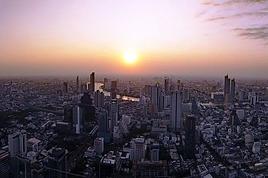
D’après les divers blogs que nous consultons d’abord pour connaître les sites remarquables , puis pour pouvoir organiser nos journées ; il y a une tour panoramique , en fait 65 étages, de laquelle on a une vue splendide sur toute la capitale. Dommage qu’il fasse grisouille. J’ai adoré, en plus demander à un local de nous prendre en tof dans coin des amoureux , se marrer devant sa tête gênée mais polie.....
Demain on prend le train direction Nin Binh , la baie d’Along terrestre .
A bisousssss
Salut tous,
lỗi là của con người
Errare humanum est
L’erreur est humaine
Nous nous réveillons à Hanoï une nouvelle fois sous le crachin, une nouvelle fois dans le froid (14*). Mais aujourd’hui départ pour Nin Binh, la baie d’Along terrestre. J’avais très. Brièvement découvert cet endroit en 2014, et j’en ai gardé un souvenir de merveilleux et d’amusement . Merveilleux du fait des paysages, une cérémonie dans un temple isolé de tout et découvert au hasard de mes promenades rêveries . Amusement, car la capitaine de mon embarcation , chargée de faire découvrir le site, ne savait dire et répétait à l’envie: “Vietnam beaucoup beaucoup bananes”. Un coup d’œil sur la météo du lieu: temps moyen mais 27*! Olivier est sidéré qu’en l’espace de seulement 200 km à vol d’oiseau il puisse y avoir un tel changement de température. Moi cela ne m’étonne pas du tout : à Hoi An on se baignait alors qu’ à Hanoï on se pèle tellement que j’ai du acheter une doudoune..... Hanoï/ Hoï An : Avertissement! Saloperie d’anagramme, encore un coup des pirates pour nous tromper en géographie, ne vous laissez pas embobiner ! Le pays est tout en longueur : 2500 bornes. Imaginez une distance encore plus importante que celle séparant les deux capitales : Pomérols ( capitale de l’Hérault en Occitanie, où je réside pas loin du bar du village) à Stockholm (Suède, pays froid au nord de l’Europe). Sauf que, sauf que, on continue à se geler une fois arrivés à destination. Et ouaissss il y a plusieurs Nin Binh , dont un situé à l’extrême sud du pays; dans le notre il caille sévère. Puisque j’en suis à parler de géographie, pourquoi pas évoquer les fuseaux horaires ? Pour ceux qui ont encore quelques difficultés à nous situer, nous sommes en Asie pas en Afrique. Les billets sur le Cambodge datent de l’année dernière et nous ne serons au Laos que dans 4 jours, pas avant. IL Y A 6 HEURES DE DÉCALAGE avec la France ! Par exemple lorsqu’il est 20 h en France, il est 2 h ici ( du matin , je précise on ne sait jamais ) . Là tout de suite je suis dans ma période d’insomnie . Merci de ne pas m’appeler en rentrant le soir du boulot, certes cela fait grand plaisir, mais vous flinguez ma nuit..... Du coup dans le train qui m’amène ici, je m’endors profondément et lorsque j’entends le haut parleur annoncer l’arrivée en gare de Nan Binh , je fais un bon , secoue Olivier. Et on descend pour commander notre GRAB ( le GRAB est l’équivalent de UBER ici, c’est un peu plus cher que le taxi, mais le prix est fixé d’avance, ce qui évite les discussions, négociations et les mésaventures avec les rongeurs margoulins chauffeurs malhonnêtes). Putain de merde! Comment ça une heure de route? Alors que notre hôtelier nous informe que le logement n’est qu’à 6 km?! Nous sommes à NaN Binh.... Pas NiN Binh! Fo que je révise mon accent.
À bisousssss
Salut tous ,
Bon on va attendre mon insomnie ..... je sors de l’apéro avec Olivier Gédon, deux viets et un Russe . Mais en résumé: je kiffe ma laïfe !
Salut tous,
Jules Verne pour: « voyage au centre de la terre »
Francis Ford Coppola : Apocalypse Now
Steven Spielberg : Jurassic park
Sont autant de références et d’images pour l’imaginaire qui surgissent à l’esprit lors de cette navigation de trois heures au cœur de la baie D’Ha Long terrestre. Ayant eu la chance de découvrir la « vraie » , maritime, il y a quelques années , ce titre n’est pas usurpé. Nous avons comme d’habitude loué un scooter, comme d’habitude on a tourné, viré, paumé avant d’arriver enfin à destination. Olivier Gédon sent venir le piège à touriste grandiose, je lui reponds que vouiiii bien sûr, mais 1) on est touristes 2) c’est à faire et à voir et nous avons fait plus de 200 bornes que pour ça . Il y a trois itinéraires possibles et nous devons choisir sur un petit leaflet qui nous est donné avec nos billets. Évidemment nous n’avons rien lu. Il faut se décider sur l’instant. Tous durent trois heures. Nous prenons celui qui propose le plus de grottes .... on verra bien. On embarque à quatre sur un petit bateau à fond plat, instable et dont le franc bord est au maximum de 10 cm haut dessus de l’eau ( glacée, j’y ai plongé ma mimine). C’est un peu rock n roll et taillé pour les minuscules rachitiques asiatiques et non pour les magnifiques sculptés et musculeux européens. Et en plus faut être amoureux collés serrés. Notre rameur me fait un peu de peine à pousser la barque surchargée de touristes ébahis.
Car réellement c’est magnifique, féerique, extraordinaire, magique, somptueux.... je cherche d’autres qualificatifs.... ça va viendre. Heureusement nous sommes en semaine, temps dégueulasse, crachouille et froid. Corollaire : il y a peu de monde. En pleine saison le plan d’eau doit ressembler à place de l’étoile aux heures de pointe. Il y a une quiétude et une réelle sérénité à se laisser bercer par la légère ondulation générée par les coups de rames, le silence , et cette verdure partout qui nous entoure, nous avale. La première grotte , il y en a neuf en tout, arrive juste après la visite d’un temple de toute beauté, ors et bordeaux à l’intérieur contrastent avec le côté monastique gris de l’extérieur. Ce ne serait notre conducteur, nous aurions raté l’entrée cachée dans le méandre de l’eau et le mariage de la forêt. Un panneau nous indique 720 mètres de long. Les salauds de pirates rappellent à Oliv qu’il est claustrophobe.... Héhé ! Tout se déroule au mieux, il faut juste faire très attention à ne pas abîmer les concrétions et les stalactites avec la tête. Ça passe juste, mais ça passe ! Et on sort sur un cirque végétal, entour�� de pitons de plusieurs centaines de mètres, dans le silence. Je suis déçu de ne pas voir de pérodactyles .... cet enchantement perdure sur nos trois heures de trajets. On rentre. Gelés. On s’arrête pour une bonne soupe bien chaude . Phò c’est délicieux et roboratif. Puis nous promenons un peu avant de rentrer prendre l’apéro. Choc du souvenir! J’étais là exactement à cet endroit en 2014, 2013 ou 12 ? Faut vraiment que je fasse un effort devant ce temps qui fuit. Je suis rassuré car ce n’est pas du tout la même visite que j’ai faite à l’époque, bon en plus il faisait beau et chaud.
Dernière référence filmographique : Rocco Siffredi « j’en ai plein le cul » d’avoir eu les genoux au niveau du menton sans pouvoir bouger pendant 3 plombes.
Demain on se rapproche un peu plus du Laos .
À bisoussss
Salut tous,
C’est donc la troisième fois que nous nous faisons masser, en tout bien tout honneur comme il se doit! C’est assez drôle à analyser. Tout d’abord , en ce qui me concerne, je tombe toujours sur des brindilles. Elles essaient de me faire craquer, mais malgré mon gabarit de moins en moins délicieusement entrelardé, la carcasse a tellement été éprouvée par plus de 35 années de sports de combat durs , que même en me piétinant à pieds joints sur moi elles n’y arrivent pas. Ce qui me rend perplexe c’est que les massages ne sont pas symétriques. Si on papouille le côté droit de telle façon, normalement on doit papouiller le côté gauche exactement tout pareil. Mêmes gestes, mêmes amplitudes. Et bien non. Très déstabilisant pour moi.... enfin je souffre en silence, comme d’habitude. Après ou avant suivant la masseuse s’acharne sur d’Hypothétiques noeuds nerveux.... Mais je suis tellement détendu et relaxe en Asie que ceux-ci n’existent pour ainsi dire pas ou peu et je commence à somnoler voire à m’endormir. Les dames finissent toujours par se demander si je suis bien là.... Are you ok Sir ? Yessssss... quant au “happy ending” , on doit systématiquement se tromper d’endroit , et aussi bien Olivier Gédon que moi, nous ne sommes pas du tout “in the mood for love” . Beaucoup trop cérébral, pas assez reptilien . Le drame de ma laïfe.
À bisoussssss
Salut tous,
J’aime bien cette nervosité, cette fébrilité qui précède les départs . Ce matin le taxi doit venir nous chercher à l’hôtel afin de nous conduire à la gare à 7h30. Direction Vinh. Évidemment il arrive à 7 heures. Oliv n’est pas encore prêt, moi j’ai pas pris mon petit dej. D’habitude je rattrape mes folles insomnies le matin , là le réveil est méchant dès 6h30. Le wagon est sympa, des couchettes lits qui permettent le repos. En plus il y a des écrans qui projettent des Toms et Jerry, fort le son! Trop ! J’arrive quand même à m’assoupir quand le contrôleur me secoue pour me demander mon passeport. Il a un recul devant ma réaction instinctive de défense..... pffff ya qu’à pas m’agresser lorsque je repose enfin. Impossible de repartir promener avec Morphée. Je profite du paysage. On s’enfonce dans le profond, le rural, l’inconnu. Rizières à perte de vue, les paysans s’y affairent. Jolis taches de couleurs, chapeaux coniques dans le vert des pousses qui commence à pointer. La tâche doit être rude car chaque brin est planté à la main. Des bottes de brins verts sont réparties tout au long du champ afin d’éviter les aller-retours. Gain de temps, efficacité, mais le dos et les cuisses doivent être en compote en fin de journée. Nous arrivons à Vinh . Il y a entre nous un jeu ou un rituel ou une entraide. Lorsque l’un n’a pas envie de causer ou se faire embêter , il décide qu’il ne parle pas anglais ou bien fait comprendre à l’interlocuteur que c’est l’autre le décisionnaire. À la descente du train c’est moi qui m’y colle. En fait Oliv n’a toujours pas digérer de s’être fait plumer par le taxi de Hanoï; et juste à la descente, je n’ai même pas mis le deuxième pied sur le quai , qu’un rongeur me fait la danse traditionnelle vietnamienne. Taxi, taxi, taxi , taxi, taxi .... Merde ! Il ne me suit pas, il me colle, met sa tête carrément devant mon écran , cherche à prendre mes bagages de force. Ce n’est pas encore la Saint Valentin ! Je m’énerve! Je dois faire un peu peur, il disparaît. La ville est sans attrait et sans âme, peut-être connue car c’est le lieu de naissance d’oncle Ô? J’ai regardé les sites à visiter sur Trip A et ..... Rien , que dalle, nib de nib. La frontière est à environ 45 km. Nous nous renseignons pour un bus : 800kdg par personne pour un départ à 2 heures du matin. Pour nous retrouver vers 3 h , seuls dans la nuit glacée comme un yench abandoned sur une terre inconnue et à priori hostile ( en fait la température est très agréable, mais j’aime bien me plaindre et surtout me faire consoler. Calimero). Et puis idée lumineuse? De génie? Un peu d’autosatisfaction. Je dis à Olivier Gédon, demande un peu au taxi combien il nous prendrait.... 1 million. Bingo!
La population est jeune, très jeune. Il y a des enfants partout, qui jouent ou se chamaillent, se promènent. Ils sont tous toujours très souriants, lorsque nous les croisons à pied ou en scooter, il nous font des petits signes de la main , nous interpellent . Les adultes sont très légèrement plus réservés, mais ne demandent qu’à papoter, communiquer. La plupart des personnes croisées sont adorables. J’adore l’Asie ! Je l’ai déjà dit ? Spas grave , à mon âge on devient liquide....
À bisousssss
Salut tous,
Je suis réellement tombé amoureux de ce pays! Saint Valentin oblige.... les gens bossent, profitent de toutes les opportunités, en ce moment lorsque nous nous promenons dans certains quartiers, il y a une odeur de roses 🌹 qui flotte dans l’air. Les échoppes mettent à profit la période pour proposer des bouquets, des compositions florales en forme de cœurs. Les vendeurs au bord des routes, masque sur le nez , tendent des roses rouges magnifiques à qui veut bien acheter. Ça embaume, c’est joyeux ... bref moi ça me plaît . Mon côté titine. J’adore offrir des fleurs . Nostalgie : l’année dernière j’avais fait livrer 100 roses rouges.... Petite anecdote souvenir : lorsque j’étais marié.... y’a lonnnnggg.... j’offrais un bouquet toutes les semaines à mon épouse pendant bouhhh plus de 15 ans. Déjà les pirates... faisaient remarquer le fait aux amis lors des dîners et ces salauds demandaient innocemment : « comment ton mari n’a pas cette attention pour toi ? Pourtant tu le mérites ... » Héhé 🤣 . Chuis innocent . Le problème c’est que tout ce travail , toute cette énergie, ce dynamisme doivent se transformer en ventes, en argent, générer des profits . Les gens cumulent parfois plusieurs boulots au même endroit. Je me souviens du jour où nous avons loué un scooter, chez une dame qui faisait également épicerie, matériel de plage, manucure et massages. Rentabiliser. Lorsqu’un client se présente, il ne doit absolument pas repartir les mains vides. Pas que pour les fleurs. Pour tout! Petit lexique pour touristes débutants :
Yes = oui
Yes = non
Yes yes = peut-être
Yes yes = ou pas
Et on peut développer à l’infini...
Oké = bien sûr
Oké oké =certainement
Yes yes oké oké = j’ai pas tout compris.
Avant de parler couramment vietnamien Olivier Gédon crisait un tout petit peu , maintenant il fait avec. Il n’hésite pas à passer derrière les comptoirs, fouiller, prendre par le bras et montrer du doigt et même comme ça il a parfois des envies de renoncement . En désespoir de cause il sort son traducteur, étonnement, peu de gens savent lire. Mais ils savent compter. Et moi je me marre. L’autre soir on décide de prendre l’apéro : vodka à base de riz ( ben vouiii de riz), mais pas de bobo à la tête le lendemain, car, prudents, on avait joué la qualité ! 4€ le litre quand même ! À mélanger avec du Schweppes, impératif ! Sinon c’est dégueulasse. Olivier Gédon se met en quête de bulles, et dans plusieurs boutiques toujours le même scénario : vous avez du Schweppes ( je traduis directement c’est plus facile pour les non polyglottes) ? Yesssss ! Et la meuf lui montre une cannettes Pepsi. No Schweppes. Yes yes ! Et elle lui tend la cannette. No Schweppes ! Yes yes ok ok et lui sort un carton de Pepsi . Je hurle de rire. Finalement il ouvre le frigo et farfouille. Ce qui est très étonnant ce sont les contrastes avec les mêmes vendeurs mais qui n’ont pas tous la lumière sous leur crâne. Pendant presque 10 jours tous les matins nous allions au même troquet tenu par la même personne commander deux expresso et un thé citron. Là c’est moi qui devenais hystérique : impossible d’avoir deux fois d’affilé la même commande, un coup il y avait du lait concentré sucré, un coup un seul café , un coup un thé avec des trucs bizarres, etc ... mais c’était le plus proche et le seul à faire un expresso. Arghhhh !
Ce matin pareil, il a fallu 3/4 d’heure pour avoir deux autres cafés. J’avoue c’était compliqué. Un expresso et un Americano. Les deux boissons notées sur la carte. Et on montre avec le doigt. Yes yes ok ok . Putain on aurait du se méfier.... surtout lorsque je suis retourné avec les deux tasses vides. Same same ! En viet ça veut dire : tout pareil, la même chose, commande identique, kifkif.... Oliv a pris le relais après l’avoir calmé. Il demandait au traducteur de transmettre : t’es vraiment con où tu as eu un accident ? Allez une dernière..... À midi , je demande une bière, on a marché plusieurs km et enfin sous une bonne chaleur estivale, j’ai soif! J’attends . Rien . Je recommande une bière. Rien. Quatre fois de suite. Finalement le jeton finit par tomber et j’ai mes 4 bières livrées en même temps. J’adore ma laïfe !
À bisoussss
Salut tous ,
Je suis la version masculine de « la belle au bois dormant »! Je viens de déployer ma traîne virginale autour de ma couche. Moustiquaire. Et j’attends ma Valentine qui ne viendra pas ce soir. 😔 . Mais j’anticipe notre périple pour arriver au 🇱🇦. Le taxi est en avance , je ne suis pas prêt 😁 , l’hôtel ne prend pas les cartes de crédit et j’ai mal dormi. Je soupçonne le lieu d’être un hôtel de passe . Bruits de gerbe, engueulades, cris et suçotements, ont eu raison de mon sommeil déjà bancal. Olivier Gédonmonte à l’avant et dès que nous sortons de l’agglomération il commence à râler . Les paysages sont superbes, je ne sais par où le gps nous fait passer mais rapidement nous gagnons des petites routes qui se transforment en petits chemins de découvertes . Les paysans dans les rizières binent, bêchent, plantent, arrachent. Certains travaillent la terre à l’ancienne, pour nous, avec socs et charrues tirés par des buffles. Dépaysant, déroutant, déconcertant. Au bout d’un moment je demande à notre chauffeur de nous arrêter dans un Ca Phé pour un petit déjeuner que voulons évidemment partager avec lui. Yes yes ok ok ! Après plusieurs demandes réitérées : okok yes yes : Il a fallu que nous trouvions le troquet nous mêmes ... Oliv s’impatiente, en ligne droite nous ne dépassons pas 40km/h. Grâce au traducteur il lui indique que nous avons rd. Speed un peu Gonzales ! Puis à quelle vitesse est la limitation? Et enfin s’il peut accélérer.... Yes yes ok ok . Je hurle de rire dans ma tête . On quitte la plaine pour attaquer la montée, la moyenne chute encore. Oliv bout. Dans une pente prononcée, nous sommes à 20 km/h en troisième. La voiture en sous sous sous régime cale et notre chauffeur se demande pourquoi ? Oliv peste et l’insulte. Et il m’élabore toute une théorie, son côté Dr Financier. « Je suis certain qu’il fait ça en étant persuadé de faire des econocrocs d’essence ! Mais son raisonnement est faux : non seulement il consomme plus, il abime sa voiture ( là détails techniques sur des pignons .... ) mais en plus il perd du temps qu’il pourrait mettre à profit pour faire d’autres clients et augmenter.... » et lalou et lala..... bref ! Nannnnn long! Nous arrivons à la frontière. La bonne nouvelle c’est que nous ne sommes pas infectés par le virus . Température dans les normes .... quoique 35*, il ne faut pas que je refroidisse plus. On se fait délester d’un peu de tunes, sans factures ni reçus, après moult A /R entre différentes guitounes et des uniformes pliés de rire à chacune de nos déconvenues. Enfin le Laos ! 9 guichets et plusieurs tampons plus tard .Libres! Berni Toocourt et son pote Vieng nous retrouvent.... L’aventure commence.
À bisoussss
Salut tous,
Pacsé ..... !
Vous êtes les premiers à le savoir . Il fallait bien vous le dire .
Nannnnn chuis sérieux . Je sais que vous allez croire que c’est encore un coup de ces salauds de pirates . Mais c’est la vraie vérité pure. Croix de bois ... juré, craché!
Pacsé.!!! Promis c’est vrai.
D’ailleurs les photos le prouvent .
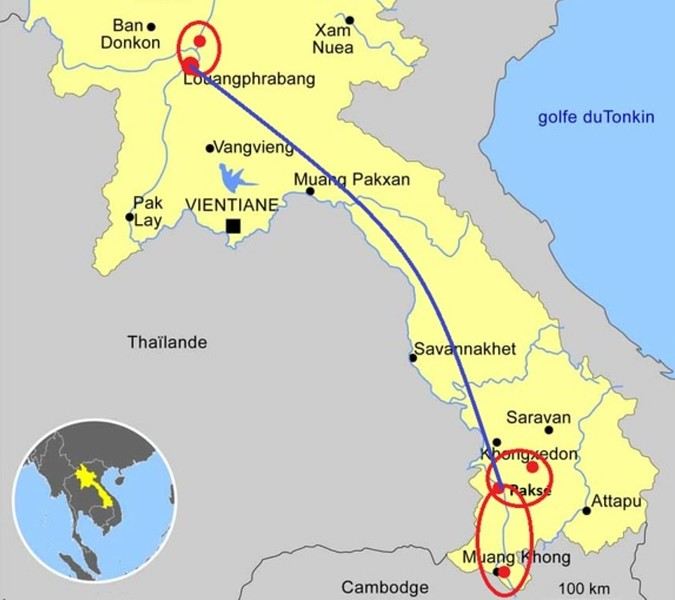
Nous sommes donc arrivés à destination, un peu fracassés par 9 heures de routes. Belle et bonne chaleur. Enfin. Plouffff piscine de l.hotel. Puis apéro PASTIS. Ça j’avoue , cela me manquait . Note à moi même : dans les futurs voyages toujours penser à prendre une ou deux bouteilles. Essaie des masseuses Lao , je me suis endormi. Ça aussi c’est vrai! Puis grignote au marché. Ce qui est génial dans notre périple , c’est d’être avec Vieng. Le pote de Bernie. Cela fait 17 ans qu’il vit au Lao ( ceci est le nom indigène , Laos c’est français. Un peu comme Myanmar et Birmanie) , non seulement il traduit , mais il informe, il conduit, il anecdote et en plus il est très drôle, bon sens de l.humour et toujours en train de se marrer..... Très respectueux aussi de nos coutumes : nannnnnnn on va pas courir deux heures avec toi sous un soleil de plomb , c’est l’heure de l’apéro! Mais il est 17h30! Et alors? Bref tout se passe au mieux . Une vraie réelle conviction d’être des privilégiés . Le luxe. Le temps passé à voir défiler le paysage, permet de se faire une première impression. Au niveau architectural , par rapport au Vietnam , c’est plus joli. Il y a toujours pas de style propre mais, les maisons ne sont plus en hauteur uniquement et de la largeur d’une boutique/garage, elles s’étalent. Suivant les endroits, beaucoup sont soit surélevées soit carrément sur pilotis du fait des inondations en période de mousson. Bernie nous raconte que parfois les gens sont obligés de se réfugier et vivre sur la route, toujours en hauteur par rapport aux édifices en contrebas, en attendant la décrue. Les paysages quant à eux ressemblent énormément à ceux que nous avions découverts au Cambodge.
Aujourd’hui nous restons au même endroit afin de découvrir les trésors cachés autour de Pacsé. Notre ville depuis hier. Héhé salauds de pirates, en plus ils vont encore jurer : chuis innocent ! À d’autres....
À bisousssss.
Salut tous,
Qu’il est doux de ne rien faire.... Franchement jusqu’ici j’étais déçu par le pays. Je m’attendais à tellement d’extraordinaire, de magnifique, de magique, d’irréel. Toutes les personnes rencontrées au cours de nos déplacements vantaient tant et tant les paysages, les gens, la mentalité, la façon de vivre. Il faut dire également que nous n’avons pas vraiment pris le temps de nous poser. Et rendu dans notre guest house : Le paradis, la douceur de vivre, mon hamac ! J’excelle dans le rien, je suis dans mon élément de vide rempli de rêves. Lorsque nous sommes arrivés à l’embarcadère, j’ai pourtant eu un très très gros doute. L’endroit était peu engageant. En plus j’ai vraiment failli finir à la baille en montant sur la barcasse. Et puis on démarre et on s’enfonce dans un paradis vert, sur un Mékong d’eau limpide. Nous nous étions jurés avec Oliv de ne jamais nous y mouiller un orteil! Eau boueuse, déchets de toutes sortes, cadavres d’animaux et autres yearkkkkk et là : miracle. Nous voguons sur une eau claire, qui laisse voir les rochers affleurants , les algues, quelques poissons . Il faut vraiment connaître le coin pour pouvoir diriger l’embarcation sans rien percuter et racler le fond. On s’enfonce dans un trésor de paysage constitué de toutes petites îles, îlots, touffe de verdure, rochers. Il s’en dégage une sérénité extraordinaire.... je sais mais je suis à court d’adjectifs. Bref j’ai trouvé mon coin , là où je me sens bien. Quelques petites anecdotes : hier soir alors que nous dînions sur une terrasse dominant le fleuve , mon regard est attiré par des lumières sur le Mékong qui apparaissent puis s’effacent en s’enfonçant sous l’eau. C’est une autre forme de pêche au lamparo, les gens nagent, marchent et plongent avec une lampe étanche et une arbalète pour attraper les poissons. En plus les îles sont reliées entre elles par des ponts qui sont les vestiges du premier train du Laos , construit par les français lors de l’occupation. Le train n’est plus qu’une relique mais les voies servent de route pour nos scooters. Des pilotes conduisent des moines , tout vêtu d’orange et assis en cavalières . Ce matin nous partons en exploration , moi je vais aux chutes afin de jouer avec une tyrolienne et promener tout en faisant des activités ..... Et Olivier va au village pour acheter une rallonge électrique . C’est lui qui conduit on ira aux chutes demain. Au retour on s’arrête à la piscine pendant que les potes s’activent en cuisine . Au menu : soupe au Canabis .... vous raconterait .... peut-être... mais après la sieste . Juste avant Morphée et avant que je sombre .... on entend le bruit du silence ... Et ouaissss
À bisoussss
Salut tous,
En fait je ne voulais pas faire ce billet, ou du moins pas tout de suite... Avant la sieste! C’est presque un péché . Mais voilà les circonstances, le fatum, les vissicitudes de nos vies en déshérence sociale, la volonté des dieux ou peut-être l’insouciance de la jeunesse, encore le gâtisme de nos âges avancés... le choix est vaste! Suivant vos inclinaisons, l’amitié ou l’amour portés à nos povvvvv personnes vous pencherez pour une ou l’autre raison... Ou également en cumuler plusieurs.
Nous sommes installés dans un endroit paradisiaque de l’île , restaurés, abreuvés, repus. C’est l’heure des projets: café et sieste puis piscine ou sieste à la piscine ? On discute âprement. C’est important ! On tergiverse, papote, discute, féminise ! Ok.... Café et après on voit.... the addition plizz! Je m’améliore en Lao. Arghhhh pas assez de sous, évidemment comme il n’y a rien alentours pas de DAB. On est très éloigné de la civilisation, au moins une heure de piste. Oliv s’y colle et moi je cligne des yeux sur mon minuscule écran . Ce matin je dormais enfin profondément lorsque vers 5h30 le pêcheur réservé par Bernie et Vien Phannoudej s’amarre toute musique hurlante juste en bas de ma chambre. Je n’ai rien contre les goûts musicaux des laotiens, même s’ils sont très éloignés de ma polyculture symphonique allant de Sylvie Vartan à Mireille Mathieu . Chuis fan...! Je sors à poil évidemment et je devine à la lueur des yeux brillants d’envie que me jette ma voisine de palier que si je veux garder ma dignité et mon intégrité physique il faut que j’aille mettre un slip. Je descends voir le travailleur matinal et lui susurre de ma gentille voix chantante, sirupeuse et empreinte d’une mélodie désuète : « FUCK OFF » comme quoi avec de la patience, de l’ouverture d’esprit et une bonhomie affichée on arrive très très bien à se faire comprendre. Après si la violence ne résout rien c’est que l’on ne tape pas assez fort. Il m’a quand même flingué le reste de ma nuit. Rd a 8h avec Olivier Gédon pour une grande première : descente en tyrolienne au dessus des chutes .... Géniale ! En plus coup de chance depuis que j’ai drastiquement maigri je suis juste à la limite de poids autorisé.
Bon ayé on est rentré. Sieste.
À bisoussss
Salut tous,
Effectivement plus de billets depuis quelques jours ..... Mais d’abord je suis deborded, ensuite chuis en vacances et tertio je n’avais rien à raconter de prenant , spécial , notable. En fait, on a roulé, roulé, roulé.... arrêt dodo, miam , rien de prenant . Vous avez eu des photos. Et puis nous sommes arrivés à Vientiane. Vien Phannoudej nous a reçu chez lui et fait découvrir son paradis à lui . 7 hectares de terrain en bordure du Mékong, un maison dans les arbres et une autre, atypique, sur pilotis mais façon tente d’indien. Je veux être Vien ! Ce type a tout compris à la vie! Il est heureux ! Il a sérié ses envies et ses besoins et fait en fonction de ses moyens en profitant de chaque moment à fond et sans se prendre la tête. Il aime les bestioles, il veut monter un petit zoo avec des autruches qu’un pote lui garde en attendant et des sangliers, il a construit un enclos.....Il aime courir, il fait ses 15 bornes tous les matins à l’aube. Il aime nager, il descend sur sa berge . Il a faim : miam. Soif : glouglou. Aucun sens du temps ni de la distance et ses points de repères partent tous du même endroit : le fleuve. En ça on se ressemble beaucoup pour le temps et la géographie. Donc lorsqu’il nous dit c’est pas loin et on en a pour maximum deux heures de route on se fout tous de lui et on double le temps nécessaire afin d’avoir une idée approximative du trajet. Il faut que je m’y mette sérieusement. Je sais déjà ce que je ne veux plus, reste à définir mes besoins , quant aux moyens.... patience ça va venir d’ici un an ou deux , le temps de la réflexion. Décidément je me vois bien finir en Asie, dès mon retour j’en parle à Sweety.
À bisousssssss
Salut tous,
Donc ce matin vers 6h45 Oliv m’envoie un smeuss pour me demander si c’est à 8 ou 9 heures que nous avons rd nous deux pour le petit dej. Je suis tellement dans le pâté que je réponds 9 mais sans appuyer sur envoi. Bernie dort dans un autre hôtel de riche avec piscine et Vien toujours chez son pote avec ses autruches. Quant à Oliv , lorsqu’il vient toquer à ma porte et bé mon gros bobo il fait peur à voir , il a des petits yeux larmoyants et il est engoncé dans une doudoune grand froid... Qu’il veuille bien se restaurer me rassure sur le fait qu’il ne soit pas encore tout à fait mort, mais plutôt dans une phase d’agonie avancée . Je le rassure immédiatement en lui disant que s’il était infecté par le virus , je l’amènerais daïrekt à l’ambassade de France , plutôt que dans un mouroir Lao. C’est ça les amis, toujours prévenants et plein d’attentions. Et ouaissss! En attendant je lui conseille de prendre sa température, ça tombe bien il a emporté dans sa malle de premiers secours un thermomètre. Moi j’ai rendez-vous promenade / découverte de Vientiane avec Bernie. Nous marchons vers un marché où Bernie sait trouver plusieurs officines pour changer des sous. Et moi j’écarquille les yeux. Comme d’habitude jessaie de tout voir , tout enregistrer, me souvenir .... Il y a devant la poste tout une file de diseuses de bonne aventure. Comme j’aurais aimé que Vien soit avec nous afin de traduire, je me serais laissé tenter; dans le genre :” j’adore ces tests “ . Également des thérapeutes locaux qui proposent des médecines traditionnelles à base de plantes et de décoctions. Un petit enfant se fait administrer un liquide blanchâtre, une purge si j’en crois son rejet. Nous continuons notre visite par deux musées temple. Dans l’un il y a toute une équipe de starlettes en promotion pour une “novella” télé réalité sauce Lao. Je veux faire pompom girl derrière mais J’en suis empêché par l’autre rabat joie. Dommage j’étais persuadé d’un succès à l’international.... D’ailleurs Rudolf Valentino a percé de la même manière ! Je remarque que le bout des tétons de toutes les statues représentant Bouddha sont polis. Je fais un parallèle avec la statue équestre de Louis XIV dans le hall de l’hôtel de Paris à Monte-Carlo; le genou droit du cheval est également poli car il est sensé porter chance aux joueurs. Je sais c’est moche mais j’ai pas pu m’empêcher d’être superstitieux. Dans l’autre temple, Bernie se fait dénoncer par un “farang ” ( salaud de touriste blanc ) auprès du gardien car il essaie de prendre des photos, totalement interdit! Du coup nous sommes suivis et épié par le pandore soupçonneux tout au long de notre visite .... Je reçois un message d’Oliv . Il n’a pas de fièvre , Ouf! J’annule l’avion de Mondial Assistance. Puis grignote du coup tous les trois, puis sieste et rd vers 16h pour d’autres zaventuresss.
A bisousssss
Salut tous,
Et donc suite des réjouissances . Après la sieste: massage ! Berni Toocourtconnaît un salon qu’il nous recommande comme un des meilleurs. Oliv est requinqué après son repos matinal et sa sieste . Nous voilà tous les trois poussant la porte pour être accueillis par une dame d’un certain âge parlant très bien français. Massage des pieds pour Bernie et à l’huile pour nous . Lorsque nous pénétrons l’endroit il y a qu’une masseuse en activité, personne d’autre. J’ai l’impression d’une volée de moineaux. Tout le personnel descend de l’étage. Magie et ordre secret. Évidemment tous veulent des meufs. D’accord pour un keum . Enfin je n’ai pas une brindille pour me papouiller ! Mon masseur est doux mais ferme, connaît son affaire, jauge la masse, évalue le temps et hop c’est parti pour une heure de relaxation. Super. J’en profite pour regarder la construction, l’architecture du lieu. Haut de plafond, toit en pente, tout en bois. On dirait un chalet. La différence réside dans les madriers, moins épais car ils ne supportent pas le poids de la neige. Entre, au lieu de lattes de bois , il y a des trames de bambous tressés. Et pour l’exotisme un ventilateur plafonnier... ça sent le sang et karaté... le Splendide, je fais immédiatement le rapport avec la chanson.
Nous décidons d’aller chez le coiffeur, Oliv part à la chasse aux chemisettes.
Le salaud! L’ignoble individu ! Même pas il remarque que je suis beau! Cheveux et barbe taillée, je vais féminiser et faire la gueule ça lui apprendra! Réservation faite pour le Myanmar..... mais ça c’est une autre histoire.
À bisoussss
Salut tous,
Je... Nous nous sommes créés des obligations, comme ça , sans s’en rendre compte. Insidieusement. Je l’ai réalisé hier après-midi, suite à un appel téléphonique qui m’a réveillé de la sieste. Olivier Gédon est mal foutu depuis quelques jours, d’où notre arrêt prolongé à Vientiane. À l’origine nous devions juste faire un saut dans cette ville le temps d’obtenir nos visas pour le Myanmar. Première tentative avortée à Hanoï, le personnel de l’ambassade étant aimable et ouvert comme une promesse de goulag. Au Laos par contre les gens sont aimables, souriants, serviables et donnent vraiment l’envie de tenter l’aventure. Par contre c’est compliqué. Impossible de s’y rendre directement du Laos; frontière terrestre fermée aux touristes. Dangerosité due aux mines, aux tensions avec des groupes opérant toujours dans le fameux triangle d’or ? Par contre de la Thaïlande cela ne semble poser aucun problème. Et puis le Siam cela fait plus de quinze ans que je n’y suis plus allé, j’en garde un souvenir mitigé : mon fils était dcd depuis peu et mon épouse venait de décider unilatéralement que nous allions nous séparer d’un commun accord. Une autre vie (c’était ma séquence nostalgie. Stop.). Nous, nous avons également ébauché un projet de promenades au Laos avec deux incontournables, que voulait voir absolument Olivier : la fête des éléphants et visite de Luang Trabang. Les deux endroits proches l’un de l’autre mais au nord du Laos, la Thaïlande étant au sud du pays. Les visas seront obtenus sous réserve de quelques menues conditions : il faut réserver un hôtel à Rangoon. Ok. Déterminer un point de passage obligatoire à un check-point, un jour précis. Sur les trois passages possibles seul un est autorisé aux touristes. Il est ouvert un jour dans un sens, un jour dans l’autre et nous devons fournir la preuve de l’achat d’un billet de bus . Ainsi qu’une date de retour fixe , même principe : avec preuve. Compliqué ! Un autre facteur entre en ligne de compte : ma trouille de l’avion. C’est alors que je fais le sacrifice et montre ma bravitude, mon courage, mon abnégation , mon sens du devoir au groupe de 2 , de l’abnégation (je l’ai déjà dit?spa grave!): okiiii on prend l’avion de Bangkok! Oliv me dit ébahi d’admiration, les yeux mouillés de larmes de gratitude devant mon dévouement à la cause: je n’osais même pas te le suggérer. Et ouaisssss chuis comme ça . On se réfugie à l’extérieur de l’ambassade (j’adore le concept surréaliste) , dans un troquet-wifi , je réserve les billets d’avion pour le 9 mars et retour sur Hanoï le 23 (arghhhh, en plus si il tombe ce sera dans la jungle et moi je suis un fils du béton) .... Enfin on a tout pour obtenir le sésame ....que nous aurons sous 48h . On fait un compte à rebours du temps. C’est serré pour tout faire. Oliv veut rester sur place pour continuer à récupérer . Mon fragile ne supporte ni le vent des vitres ouvertes en voiture, ni l’air conditionné et avec la paranoïa du corona , il a peur d’être refoulé à l’embarquement. Il me propose d’aller sans lui dans le nord avec Vien . Rd est pris pour un départ ce matin à 6h. Berni Toocourt repart en France le deux mars de Bangkok, moi j’ai deux potes qui y résident à l’année. Bruno juste sur le chemin qui mène à la Capitale et l’autre Claude au sud du pays à Pattaya. Évidemment je les ai contacté . Pas de problème : « viendez! Viendez! Je vous loge » , le cœur des vierges. Sauf que pour l’un bahhhh justement cette semaine, il est pas là. C’est ballot. Pour l’autre c’est compliqué.
C’est à ce moment exact que je réalise que je/nous faisons fausse route et que l’on se crée ces fameuses obligations. Non nous ne sommes pas obligés d’accompagner Bernie le 2. Non je n’ai pas envie d’aller seul dans le nord et laisser mon pote. Non je ne vais pas m’imposer chez des gens pour qui c’est difficile, embêtant, compliqué de nous recevoir. Notre seul et unique impératif étant de nous présenter en temps et heure devant l’épave volante. Arghhhh.
À bisousssss
par un des trois check-point terrestre ,
Salut tous,
Suivant l’adage : une bonne nouvelle ne vient jamais seule. Lorsque nous nous retrouvons pour notre rituel petit dej, avec Olivier, habitude de vieux garçons qui s’installe.... Il m’annonce demain on part. Sous-entendu : j’ai suffisamment récupéré et je me sens assez en forme pour aller dans le nord. Yessss! On va enfin bouger. Pas que je n’aime pas Vientiane, tout au contraire! C’est une ville qui est déconcertante. Nous sommes en plein centre ville. Ça bouge et j’adore . Mais en fait la citée est tellement étalée sur environ 130 km/2 (merci Wikipedia) que ça frémit partout et surtout dans des coins improbables. Hier soir nous sommes allés dîner à quelques kilomètres du centre, près du coin des ambassades, où se regroupent tous les hôtels de luxe . Nous passons par de drôles d’endroits tantôt pistes de laterite mal éclairées, tantôt des artères lumineuses et pleines d’effervescence. Ville tout en contraste. Dîner canard.... je ne suis pas très fan du volatile. En Asie les gallinacés sont découpés au hachoir en petits morceaux. Marinés, frits, poêlés, rôtis mais quasiment toujours en petits morceaux. Plein d’escarbilles d’os qui se coincent dans les ratiches et que j’ai peur d’avaler ( toujours mon côté scoufiniette ). Pas enthousiaste, mais curieux. J’ai une tendance certaine à goûter avant de dénigrer, mais là j’ai découvert un nouveau plat .... je n’ai pas pu ( c’est la deuxième fois que ça m’arrive avec les poussins cuits juste avant l’éclosion) ! C’est idiot je sais. La soupe de sang de canard frais que l’on déguste juste au début de la coagulation. Nannnn rejet-répulsion bête de ma part. Vien Phannoudej nous propose un vrai sauna Lao.... Quid ? Bien sur nous acceptons, surtout que je suis persuadé que cela ne pourra avoir qu’un effet bénéfique sur mon Oliv. En fait de sauna il s’agit plutôt d’une étuve genre hammam mais avec des herbes aromatiques qui macèrent sur ou dans le foyer. Citronnelle changée très régulièrement par la patronne. La vapeur d’eau est tellement dense que je suis incapable d’identifier le départ de la source de chaleur . Plusieurs aller-retour plus tard , entrecoupés de douches vivifiantes, je n’ose les qualifier de glacées et de thé-infusion-detox rouge carmin, nous attendrons en vain les masseuses commandées. Grignote et somnolence en attendant de nous rendre à l’ambassade Birmane pour récupérer nos visas. Entre 15 et 16 h. Très précis comme rendez-vous. La préposée avant de nous remettre nos documents nous dit : « j’ai une ultime question à vous poser ». Arghhhh ! Êtes-vous passés par la Chine ?
Nous partons pour le nord demain à 6 h .
À bisousssss
Salut tous,
10 heures dans la folie des hommes. Bien sûr les 200 kilomètres qui nous séparaient de notre destination xanapoury et la fête des éléphants.
Le Mékong quasi sec , on peut traverser d’une rive à l’autre à pied à certains endroits. Faute à un barrage mis en fonction juste l’année dernière et il y a en projet 8 autres barrages en construction!!!!
Folie de la piste qui sera une énorme route afin de désenclaver le nord du pays, des hectares de montagnes et forêts ravagés.
Folie de la déforestation et de l’écobuage, des milliers d’hectares en feu et la terre mise à nu pour la culture du manioc. Il va y avoir des glissements de terrain aux prochaines pluies de mousson . Plus rien ne repoussera avant longggg . La désertification est en marche.
Folie de la maltraitance animale pour l’amusement des foules avec ces éléphants enchaînés. Autant je peux comprendre l’utilité dans les temps anciens pour les travaux, la guerre ou les déplacements. Mais aujourd’hui pourquoi?
Je suis révolté.
A bisoussss
Salut tous ,
Je constate que vous avez de plus en plus de mal à nous situer géographiquement .... je vous propose un récapitulatif succinct. J’ai quitté mon joli village ( Pomérols) en occitanie pour rejoindre mon autre village dans l’autre sud ( cap d’ail) de là j’ai entamé un raid dangereux (milieu hostile, patois des habitants chantant, tessiture difficile à appréhender...) pour rejoindre Olivier Gédon à Cagnes sur mer. Nous prîmes l’avion de Nice pour le Vietnam via l.allemagne ou la suisse ( je sais plus car j’étais en transe télékinésique) via Singapour pour Danang ( VietnamCentre) , puis scooter, train, bus, voiture jusqu’au Laos où nous sommes actuellement. ATTENTION !!!! Ça se complique : dans quelques jours nous irons en Thaïlande puis de Bangkok au Myanmar . Et c’est là que ça devient très difficile, je veux dire encore plus , ardu, compliqué, abscons le pays a DEUX noms ! En français il est connu sous le nom de Birmanie et PARTOUT ailleurs dans le monde sous le nom de Myanmar.... Si je reste confus ou incomplet ou peu clair ... n’hésitez pas à demander à Olivier avec qui je voyage ( je savais que j’avais oublié un détail ) depuis le début ( même si entre-temps nous avons rejoins deux amis : Berni Toocourt qui lui est resté à Vientiane.Laos. Et Vien Phannoudej avec qui nous sommes toujours pour encore quelques jours). Aujourd’hui, première approche de luang Trabang (cf carte infra) . C’est vraiment une jolie charmante ville touristique , inscrite au patrimoine mondiale de l’UNESCO. Effet Coronabier, nous bénéficions de peu d’afflux touristique. J’imagine la ville bondée en temps normal. L’idée superbe qu’a eu le gouvernement ou l’UNESCO est de n’autoriser aucune construction ou amélioration de l’habitat s.il n’est pas conforme extérieurement en tous points à l’original. Il se dégage un charme désuet des anciennes maisons coloniales, mélangées au style original des maisons Lao. C’est superbe , c’est propre, c’est touristique.
4 h du matin, mon insomnie touche à sa fin . Je dois récupérer vite le train du sommeil.
À bisousssss
Salut tous,
Wouahhh quel régal que cette baignade.
Comme d’habitude notre journée démarre réellement à l’aube. Vers 11h. Aujourd’hui Vien Phannoudej nous conseille d’aller aux chutes de Kuan Si à environ 30 km de Luan Prabang, en plus en passant on pourra aller au sanctuaire des éléphants. Je suis contre, mais Oliv est pour, et puis on passe devant, et puis ce serait idiot de ma part de refuser. Pauvres bestioles, parquées dans un enclos. Grand mais grillagé, électrifié. À l’entrée payante, du coup je deviens ratchou et je refuse de m’acquitter de l’écot du, il y a un menu des activités :
- promenade à dos d’éléphants... tant.
- promenade avec l’éléphant en laisse comme un petit yench... tant.
- baignade avec les éléphants .... tant.
- douche des éléphants plants ... tant.
- panier de friandises pour les éléphants... tant.
Ceux que je peux apercevoir à l’entrée ont le haut du crâne entaillé par le pic acéré qui sert aux cornacs pour les guider. On dirait que les oreilles sont coupées en biais.
J’apprends quand même que les femelles en Asie n’ont pas de défenses et que comparés à leurs congénères africains ils sont beaucoup plus petits en taille.
Sanctuaire? Mon cul !
Nous arrivons à l’entrée du parc aux cascades. Après notre droit d’entrée (1 euro pour l’autochtone, 2 pour le touriste.... pffff ça devrait être gratuit pour les gens du cru), nous passons par un espèce zoo ( décidément!) où se trouvent enfermés des ours. Je ne savais pas du tout et je n’en avais aucune idée: les ours noirs sont une espèce indigène du territoire Lao ( et asiatique). Bien sûr chassés et braconnés. Ceux qui se trouvent ici ont été récupérés d’un esclavage forcé ou pire mais d’un négoce interdit. Ils semblent couler des jours heureux et jouent ensemble. À partir de ce point, nous nous avançons facilement à travers la forêt primaire. Je suis étonné par le chemin que nous foulons. Totalement lisse, couleur terre, des racines des arbres gigantesques qui nous entourent en sortent. Je suppose que la main de l’homme n’est pas étrangère à ce bitume qui se fond harmonieusement dans le paysage. Pour une fois. Et bien non , je découvrirai plus tard que le chemin est constitué de boue en voie de sédimentation par le calcaire déposé lors du ruissellement des eaux. La forêt bruisse des sons émis par les bestioles qui volent qui rampent, les feuilles des arbres jouent avec le vent . Il y a des papillons partout. C’est magnifique. Nous arrivons à un premier plan d’eau, il y a foule. Nous continuons et au fur et à mesure de notre avancée, le touriste se fait de plus en plus rare. Jusqu’à notre arrivée au pied de ces somptueuses chutes d’eau dont l’apothéose est la magnifique cascade au bas de laquelle le bassin invite à la baignade. Interdite ! Arghhh! La montée continue sur encore 45 minutes , trop raide pour moi. Il fait déjà plus de 30 degrés. Nous redescendons bien décidés à trouver une marmite d’eau claire où plouffer ( c’est moi qui écrit et j’invente les mots que je veux) . Un bassin nous attend justement, il n’y a personne. Eau pure, limpide, la transparence n’est pas troublée par les tourbillons de surface. Vien nous confirme que nous avons le droit de nous y baigner. Par contre ce droit se mérite doublement. Il faut descendre sur une patinoire d’humus en se cramponnant comme on peut aux racines des arbres. Merci les arbres. Et on met le pied dans une eau glaglaglacée. Entrée extrêmement prudente, le froid, les cailloux, la glisse, le courant. Le plus dangereux ce sont les morceaux d’arbres immergés. Très pointus, sédimentés, autant de pièges sur lesquels s’empaler. Quelle récompense ! Des petits poissons viennent nous grignoter les pieds. L’eau s’avère fraîchement délicieuse. On barbote heureux .
Au retour Vien s’arrête chez un bouilleur de cru local. Le riz fermenté dans de grande cuves chauffées au bois , le serpentin de l’alambic plonge dans de la flotte afin de condenser et liquéfier l’alcool recueilli dans un petit récipient. Il veut en acheter pour un pote qui adore ça . Je goûte. Putain ça arrache sa mère que les yeux y pleurent! Il achète 3 sacs plastique ! Vous avez bien lu. L’alcool est vendu moins cher en vrac dans des sacs plastoc transparents. Miam. Sieste. Et hop on verra ce soir.
À bisousssss
Salut tous,
Je vous rassure nous sommes au Laos . Tout va bien. À lire différentes publications : vous êtes totalement parano sur le coronabière . Nous sommes en Asie que nous parcourons depuis lonnngggg et ici rares sont les gens qui portent un masque. J’ai l’impression que c’est plus par politesse et pour NOUS protéger d’une éventuelle contamination que l’inverse . Arrivée à
Vientiane aujourd’hui, par la route des montagnes. Le trajet est le plus mortifère du pays! Un camion sur le dos dans une épingle de la « bonne » route ( celle de la montagne. La différence avec celle de la piste c’est que des fois il y a du macadam ) , une bagnole dans le fossé. Normal, tout va bien. Berni Toocourt part en éclaireur ( c’est son rôle! Infirmier légionnaire : il doit se sacrifier ) en Thaïlande . Si tout va bien , si pas de catastrophe, si pas de Corona, si pas ......etc ! Il nous accueillera après demain à Bangkok .
À bisousssss
Salut tous,
Dernière journée à Vientiane. Nous quittons le Laos en train cet après-midi pour la Thaïlande. Destination Bangkok , arrivée vers 6 plombes du mat et où nous passerons un dernier moment avec Berni qui lui, regagnera la France le lendemain.
Quelques petites anecdotes qui m’ont marqué durant notre séjour. Nous devenons très facilement millionnaire en kip. Le taux de change avec l’euro est d’environ 1/1000 . Par contre lorsque les laotiens parlent de grosses sommes, il discutent en baths thaï . Si le montant est réellement conséquent c’est alors le dollars us qui prend le dessus. Le nord du pays va connaître un véritable essor économique et touristique sous peu. En projet bien avancé il y a l’autoroute, l’amélioration de la route du Mékong ( c’est par celle-ci que nous avons vécu notre Paris-Dakar personnel) , le TGV et la construction d’autres barrages. Le tout en grande partie financé par les chinois qui vont accroître de façon exponentielle leur main mise sur le pays. Le nord est privilégié pour, à mon humble avis, plusieurs raisons : proximité du grand frère chinois et grâce également à la France . Et ouaissss! À la suite d’une guerre contre le Siam , les Laos ont perdu toute la partie droite du Mékong (ou gauche ça dépend comment on regarde) , annexée par la Thaïlande. Mais suite à la guerre menée et gagnée par les français le prince de Luan Prabang a demandé à ce qu’on lui rende les territoires pris par le Siam . Le nord du Laos possède donc les deux rives du Mékong et construit des barrages à tout va au grand dam de la Thaïlande. Merci Vien pour ce cours d’histoire.
Pour être propriétaire terrien au Laos, outre le fait d’être impérativement de nationalité . Il suffit de défricher et de cultiver une parcelle vierge. Ceci explique également en partie l’écobuage outrancier pratiqué. Il est dans la mentalité du cru d’avoir son lopin de terre pour y cultiver et élever le nécessaire quotidien . D’où l’étendue des villes, sans centre réel et ces putains de volailles qui chantent des 3 heures du matin . Où que l’on soit même dans des hôtels luxueux, il y a toujours une bestiole pour faire chier en pleine nuit . Autre source de chagrin : les déchets plastiques omniprésents. À tel point que je n’ai jamais été étonné du fait de les trouver en bordure des champs clôturés, jusqu’à ce que je remarque la symétrie de l’étalonnement des sacs accrochés aux barbelés. En fait il s’agit et de marquer son territoire et d’épouvantails à oiseaux. Trois endroits nous ont enthousiasmés au sud les 4000 îles, au centre Vientiane, au nord Luan Prabang. Et surtout surtout la gentillesse et la joie de vivre, la disponibilité et l’enthousiasme de Vien . Un grand merci à Berni pour nous avoir permis, facilité , aidé à découvrir. Le Laos, ses racines.
À bisousssss
Salut tous,
Internet est capricieux, erratique, féminin , fainéant, capricieux, en grève perlée ( pffff me fait penser à Sweety lorsqu’elle fait semblant de ne pas comprendre) dans notre hôtel de Bangkok et pourtant FB m’enjoint : exprimez-vous !
J’hésite.... pas que pour internet. Je chasse de vieux démons dont je ne suis pas fier du tout.
Ce matin nous avons eu un aperçu rapide du quartier chinois, où nous avons déambulé avec Berni pendant quelques heures. Quels contrastes avec les différents marchés asiates que nous avons déjà foulés, parcourus, explorés. Ici c’est du sérieux ! Tout est plus rangé, policé. On n’ose pas discuter les prix. Pourtant le principe est le même : vendre! Et la boutique qui propose des produits qui ressemblent plus à un inventaire à la Prevert dans le choix . Mon esprit pourtant peu cartésien a du mal à faire le lien entre un câble téléphonique, du baume du tigre et un ensemble de manucure pro.... Tout cela est pourtant mis à la disposition du client au même endroit et proposé par le même vendeur , les allées sont presque rectilignes et l’air conditionné des magasins rafraîchis les traverses séparant les différents étals . Et hop internet vient de sauter ....! Grrrrr! Nous avons fait quelques emplettes . Je soupçonne Berni de vouloir faire un trafic de masques anti Coronabière.
Sieste pour récupérer de la nuit précédente passée dans le train . Fort de notre expérience vietnamienne (cf les billets de l’année dernière ) , j’ai commandé d’office en première classe. Pas l’envie de passer 11h de voyage entassés à 6 dans la cabine sur 3 hauteurs de couchettes. Quelle surprise! Nous bénéficions d’une prise en charge dès la frontière Lao/ Thaïe passée. Salon d’attente lounge reserved. Avec flotte à volonté et air conditionné. Quant à notre cabine.... deux couchettes superposées, un petit lavabo, maître d’hôtel obséquieux. 3 chiottes et un douche réservées que pour notre wagon, service dans la cabine. Luxe. Trop... si j’avais su : la seconde est parfaite pour voyager ainsi. Bon à savoir.
Ce soir j’ai proposé à Olivier le night market de Patpong. Le quartier mal famé de Bangkok. Enfin le seul que je connaisse pour y avoir traîné mes guêtres en 2005. J’avoue, je suis secoué, j’ai vraiment changé. J’en suis heureux, c’est heureux. Attention je ne me cherche aucune excuse. Les faits et rien d’autre. J’étais avec un groupe en voyage organisé, entrainé par mon cousin , déboussolé par la perte de mon fils et le limogeage de la part de mon ex épouse. Il y a partout la prostitution hommes, femmes, lady boys , les spectacles heuuuu , je ne trouve pas les mots . Osées n’est pas suffisant par rapport aux « performances » auxquelles j’ai assistées à l’époque. Et oui j’ai eu consommé et plus jamais de ma vie je pourrais recommencer. Glauque. Triste. Sordide. Pathétique. Difficile à avouer.
Bref nous sommes retournés à l’hôtel en tuktuk sans rien acheter .
À bisousssss
Salut tous,
Nous partons pour la Birmanie dans quelques heures. Sans vraiment de regret de quitter Bangkok, mais déçu de ne pas avoir visité plus avant le pays comme nous l’avions projeté. Ville de contrastes encore plus accentués que dans les autres coins d’Asie où nous avons pu traîner. L’opulence, les paillettes bling-bling , les grattes ciel côtoient la misère noire, les masures. J’ai recommencé à me défaire de bribes de mon passé en donnant mes affaires directement aux clochards dormant à même le sol juste devant notre hôtel. La rue à traverser. Ils étaient très étonnés de mon geste. Au pays de Bouddha! Les moines par contre fleurent bon l’opulence. Certains sont grassouillets ( je sais hôpital, charité et gagnagna....) , fument, ont l’oreille collée au smartphone dernier cri. La charité est bien ordonnée. Quelques lieux communs: magnificence des lieux touristiques, Chinatown fascinante de jour comme de nuit, le glauque de Patpong, la pollution, l’or des temples. Bangkok est une trop grande ville pour moi, trop bruyante. Pensez: en une semaine je n’ai même pas pu apercevoir la majorité des 8 millions d’habitants, ça change de mon village . Par contre pas de clivage réel et net par quartier; les palais jouxtent les zones de verdure sauvage et se mélangent aux bidonvilles. J’ai quand même adoré me (nous ) perdre dans des endroits improbables, les petites aventures qui en découlent , nos rigolades, les embrouillent avec les taxis, tuktuk, Grab/Uber, observer le mode de vie des gens. J’ai moins apprécié les gigantesques centres commerciaux, qui n’ont que l’avantage d’avoir l’air conditionné , pansement fraîcheur à la chaleur accablante accentuée par le manque d’air, la rue, les embouteillages gigantesques.
Depuis quelques jours nous cherchions à visiter un des marchés flottants. Ils ne se tiennent que le week-end. Sont très touristiques, nous cherchions plus d’authenticité. Évidemment internet nous fournit des pistes, pas vraiment attrayantes car peu fréquentées par des locaux. Nous repérons quelques lieux et décidons d’aller en explorateurs essayer de trouver des capitaines de « long tail », ces bateaux avec des moteurs de voitures ou camions, un arbres d’hélice démesuré qui se manient avec dextérité, vitesse et dans un boucan d’enfer. L’idée c’est de nous faire harponner par des pêcheurs, marchands, rabatteurs locaux, de discuter de bout de gras et embarquer le lendemain sur la barcasse pour avoir une visite privilégiée. On ne trouvera jamais. Par contre , perdus au milieu d’un grand rien , au bord de l’eau. On fait du bateau stop et on embarque sur une péniche sans savoir pour où. Instant magique. Gentillesse de la personne. Que c’est bon. Pour finalement rentrer par le métro, d’une propreté remarquable. Je n’apprécie pas les tuktuks. Je suis trop grand, je dois me coucher à l’intérieur pour regarder en hauteur, ceux d’ici n’ont rien à voir avec ceux que nous avons pu apprécier au Cambodge. Ce qui compte ce n’est pas le confort mais l’accélération et le bruit fait par l’engin. Olivier lui adore. Il reste Grab (équivalent d’Uber) qui nous sert de référence prix ou les taxis. Pour nos déplacements il y a un autre problème de taille. Les chauffeurs ne savent pas lire l’alphabet romain et parfois pas lire du tout. L’écriture Thaïe comme Lao ressemblent à des vermicelles de sanscrit, c’est joli mais incompréhensible pour nous. Nous décidons d’un lieu, fixons une adresse que nous enregistrons sur une application. Le conducteur la regarde , puis nous dit yes yes .... Première expérience avec un tuktuk. J’ai perdu patience. Olivier Gédon se gaussait tant et plus . Le type m’a répété 20 , 30 fois un truc du genre talassine ???? MERDE !!!! Pour finalement nous amener à quelques encablures de là où nous souhaitions nous rendre. Ça c’était pour prendre le bateau bus Hop On/Off. Je recommande afin de visiter la ville sans embouteillage et en prendre plein les mirettes pour un prix très raisonnable. Deuxième expérience : le taxi . Il faut insister pour faire mettre le compteur, cette fois-ci c’est Oliv qui s’est énervé.... Héhé. Nous sommes dans le hall de notre hôtel et le portier nous demande si nous souhaitions un taxi. Mais vouiiii mon brave homme! Cela tombe bien mes seigneurs, votre jour de chance car par le plus grand des hasards, il se trouve que vacant là, un noble chauffeur oisif attendait votre venue .... nous indiquons notre destination. 200 baths . Non tu mets le compteur. Non pas le compteur mais pour vous et puisque nous sommes amis de longue date 150 baths. Nous prenons un autre taxi . Compteur. La facture s’élève à 55baths. De retour à l’hôtel Olivier fulmine, se plaint à la réception, en disant que c’est du vol, que l’hotel est complice, qu’il va écrire à la direction et aller à la police etc.... La personne comprend son courroux mais parle pas très très bien anglais, ne saisit pas le sens de toutes les phrases et noie le poisson. Oliv prend les autres clients qui arrivent à témoin, crie au scandale. Loué soit Bouddha , la préposée parle instantanément un anglais remarquable, comprend la colère justifiée, assure que le taxi n’est pas rattaché à l’hôtel , qu’il n’y a pas de rétro commission et s’il vous plaît taisez-vous , parlez moins fort et n’écrivez pas à la direction. Aujourd’hui Grab/Uber. Oliv a finalement déniché une agence de voyage tenue par un français qui propose non seulement la visite du marché, mais également une découverte des Klongs (canaux qui parcourent la ville) , du musée des orchidées et avec un guide francophone. Durée 4 heures pour un prix très raisonnable. Banco! Nous avons un message fixant le lieu de RD avec une carte et l’adresse en écriture Thaïe et en écriture romaine. Grab. Nous suivons le parcours sur Maps. Oliv interpelle plusieurs fois le chauffeur, lui montre l’adresse en sanscrit et en romain, le plan . Il est persuadé que nous faisons fausse route. Yes yes! Et on tourne, et on vire, et on se perd, et on arrive. Sur un chantier. Pas d’eau . Bizarre. Le doute s’installe, le chauffeur s’énerve , croit qu’on ne veut pas le payer. On lui montre l’argent, on descend de la voiture. Olivier Gédon demande à des gens si l’adresse est est exacte. Je comprends que non et je remonte immédiatement dans la voiture que je prends en otage. Oliv et le chauffeur me rejoignent. Palabres, énervement, discussion . Le chauffeur nous montre des papiers en sanscrit, refuse de téléphoner à notre contact à l’agence, tergiverse.... puis finit par céder et nous amène au bon endroit. A l’opposé de la ville. Dans un temple! Alors là je suis sur le cul . Personne. Oliv avise un moine qui lui confirme que c’est bien la bonne adresse. Effectivement au bout du temple un embarcadère . Vide. Nous avions prévu très large. Grignote. Encore une heure à tuer. Nous faisons la sieste sur un banc en attendant l’arrivée de notre guide et de notre bateau . La visite se fera également avec une famille sympathique. C’est beau, calme, reposant, zen. Les poissons s’agitent et sautent hors de l’eau car ils ne sont pas pêchés près des temples, nourris pas les moines qui gagnent ainsi des parts de karma. De gros Varangs se prélassent au soleil, nagent à côté de l’embarcation. La guide nous explique, nous renseigne. La construction des canaux est arrêtée du fait de la spéculation foncière. Creuser des terrains qui valent de l’or pour les remplir de flotte. Pas rentable. Le prix de l’immobilier atteint des sommets difficilement possibles par l’habitant lambda. Des appartements sont ainsi proposés sans cuisine. Il revient plus cher de se faire la popote à la maison que d’aller dans un street food. Pour espérer avoir un niveau de vie décent il faut au minimum obtenir un diplôme universitaire. Mais les études sont payantes. La famille fait alors soit des sacrifices, soit est fonctionnaire car dans ce cas l’école est gratuite. Pas de sécu. Pas de retraite. 6 jours de congé par an. Au retour du marché, plus beaucoup de vendeurs, nous y étions sur la fin et la remballe. Nous faisons un stop au musée des orchidées.... Bon. Bof. Sauf l’exceptionnel : dégustation d’un fruit, plus petit qu’une olive. Très rare . C’est un exhausteur de sucre, qui annihile totalement l’acidité en laissant une saveur sucrée en bouche d’une longueur étonnante. Tout de suite après avoir recraché le noyau nous croquons dans un citron vert.... un délice soyeux sous la langue. Le nom du fruit : Miracle ! Véridique !
À bisousssss
Salut tous,
Insomnie de 3h.
En arrivant hier en Birmanie j’étais énervé. Je ne me rappelle plus pourquoi? Le fait que l’avion se soit aplati sur la piste au lieu d’aterrir, qu’Oliv joue sur son téléphone alors que la consigne est formelle: l’éteindre sous peine de s’écraser. Il fait nuit noire, le réceptionniste de l’hôtel nous gonfle à vouloir se faire payer d’avance, ce que nous refusons. Ma chambre jouxte un appartement dans lequel des yenchs aboient tant et plus, l’air conditionné est hs (en fait il faut attendre 10’ de temporisation avant qu’il ne fonctionne), pas de restaurant alentours. Nous sortons faire des emplettes dans le supermarché à côté. C’est crade, les poubelles dégueulent et des jeunes femmes bien habillées, smartphone vissé à l’oreille fouillent dedans. Pas d’alcool et moi qui rêve d’une bière fraîche. On fait tous les rayons pour trouver de quoi nous restaurer sur le pouce. Pour moi ce sera cahouètes et eau tiède ! Yesss. Je suis étonné de croiser un femme cachée sous un niquab. Je réalise que nous devons être dans un quartier musulman. Heureusement sur le retour : une épicerie et ouf 😅 je trouve mon bonheur frais. J’arrive dans ce pays pétri de certitudes et de clichés forgés essentiellement grâce à mes lectures mais aussi aux personnes rencontrées qui ne tarissent pas d’éloge ni sur la bonté, la gentillesse des gens, ni quant à la magnificence des paysages. Dictature militaire, qui s’ouvre depuis peu au tourisme(vite, vite y aller avant la pollution du tourisme de masse!), triangle d’or, conflit ethnique entre hindous et musulmans, An San Sukyi (hummm orthographe phonétique) le prix nobel de la paix et dont la non réaction , la non condamnation fasse à cette épuration et la violence de la déportation d’une partie du peuple est choquante; inexplicable. Et comme j’ai toujours ancré en moi le mythe du bon sauvage, l’homme naturellement bon de mes lectures d’ado : Voltaire, Diderot, évidemment Rousseau ou plus récentes : Defoe et surtout la version plus trash de Tournier.... Bref intellectuellement, psychologiquement je suis certain d’arriver dans un pays policé, gendarmé, militarisé ; limite avec des « check point » , tiré au cordeau, une population digne mais soumise et un habitat constitué essentiellement de casernes. Bêtement je pensais pouvoir établir un classement de mes préférences entre : Cambodge, Vietnam, Laos et Thaïlande. Ho putain le choc! Le bug neuronal! La remise en question! Voyagez mes amis, voyagez! Et surtout remettez-vous en question, ouvrez votre esprit et essayez de penser différemment. Jai eu du mal à prendre du recul, à accepter, ne pas juger, ne plus comparer. En fait j’ai basculé dans un autre monde. Je ne suis plus en Asie ( jaune, bridée, douceur de vivre.... clichés occidentaux) mais en inde 🇮🇳 ! Un coup d’œil sur les cartes m’apprend qu’une grande partie ouest du pays est bordée par le Bangladesh 🇧🇩 et l’inde. La peau des gens est beaucoup plus foncée, les hommes sont vêtus de sarongs; les dents et gencives rouges du jus de betel quils machent tel un chewing gum. Les femmes de saris, beaucoup ont un point rouge dessiné au milieu du front, la peau visible ( visage, avant bras, mollets et pieds) enduite d’une épaisse couche de karité afin de se proteger du soleil, peu de pantalons et quasiment aucun masque parano. En regardant les visites incontournables sur internet. Je repère un train , genre intercité, qui fait le tour de Rangoon et communes limitrophes en environ trois heures. La gare est éloignée d’environ trois kilomètres et un peu de marche nous permettra de nous faire une ébauche de la capitale, des gens, conditions de vie et architecture. Choc visuel, olfactif, bouleversement des certitudes. Ho putain!!!! Il me faut un grand moment pour que le bordel dans mon cerveau entre l’imaginaire et le concret se mette en place , que les jetons tombent et que les ronds consentent enfin à entrer dans les carrés. On traverse un cloaque quasi ininterrompu de détritus, de bidonvilles , des cours d’eaux qui ont l’épaisseur de l’huile de vidange . Aucun scooter ni deux roues ne sont autorisés par la junte. Il y a comme partout en asie des street food mais les mets proposés sont plus à base de curry, toujours dans des bols mais il n’y a plus du tout de baguettes remplacées par une cuillère et une fourchette, pas de couteaux et surtout aucun alcool. Povvvvvv. La gare , bel édifice mais plus du tout d’une première fraîcheur, tout est écrit en sanscrit, les personnes attendent dans le calme mais en jouant des coudes pour obtenir des billets. Nous sommes un peu paumés. J’aperçois mon premier militaire armé d’une mitraillette. Aucune animosité ou nervosité. Je passe devant pour atteindre les quais en m’attendant à me faire rabrouer. Rien. Ouf, j’avise un panneau: tourist information. La personne nous indique le numéro de la voie et que notre ticket nous sera vendu sur le quai. Le train : un poème à lui seul. Banquettes en plastique, micheline poussive , pas de classe, pas de place réservée, pas de portes fermées sur l’extérieur. L’expérience du voyage commence. Foule bigarrée, les vendeurs proposent aux passagers en hurlant et bonimentant pour couvrir le bruit toutes sortents de marchandises. Eau , aliments, vêtements, tapis, coussins, lunettes de correction, écouteurs, fruits , légumes. Des femmes portent d’énormes plateaux sur leur tête chargés d’un repas complet. Elles le tiennent dune main et de l’autre un petit tabouret. Lorsqu’un client commande, elles posent le tabouret, commencent par s’asseoir dessus, puis posent le plateau sur leur genoux et préparent le repas proposé dans du plastique qui sera délicatement rangé a la fin de la collation directement sur la voie ferrée par la fenêtre ouverte.
Bon je fatigue.....
À bisoussss
Salut tous,
Je reprends mon billet d’hier avec quelques anecdotes qui m’ont échappées. En fait là tout de suite je me réveille de la sieste, je devrais être plus frais qu’entre deux insomnies.
À la gare, je suis surpris sur le quai d’attente du nombre de personnes assises ou couchées par terre alors qu’il y a des tas de places disponibles sur les bancs. En fait la plupart des gens étalent une natte ou une couverture et s’installent pour papoter, grignoter ou dormir. J’ai remarqué cette attitude également dans la rue. Près d’une école les femmes se réunissaient pour lire ou discuter. Tout le vacarme du monde, tout le tohu-bohu possible ne sauraient empêcher Olivier Gédon de s’endormir , alors qu’il est brinquebalé dans un train hors du temps. Et moi d’être jaloux ! À certains arrêts , les marchands refont le plein de marchandise. Quelques uns descendent et d’autres chargent. Il faut être rapide. À la montée des ballots sont jetés à la volée ou plus délicatement suivant le contenu, puis montent les vendeurs. Les marches sont très raides et les sarongs/ saris n’aident en rien. Une femme s’accroche avec les deux mains sur les poignées de chaque côté du passage et se hisse en force en perdant son sari. Éclat de rire général dans le wagon. Après presque trois heures de voyages, Oliv m’informe que ayé on est de retour. Une femme descend péniblement puis récupère ses affaires. Il y a embouteillage à la sortie. Je prends celle du wagon suivant et j’arrive sur le quai. Le train démarre et je vois Oliv goguenard me disant du haut de la porte : « je me suis trompé »! Le salaud je voltige en marche avant de me retrouver sain et sauf et déconfit. J’ai pu assister à la préparation et à la vente du fameux bétel qui rend les dents rouges, les gencives pourries, rend les consommateurs accrocs et accessoirement un petit cancer en prime. Le vendeur a une tablette posée sur son ventre, retenue par des bretelles, il dispose à la suite plusieurs feuilles, y dépose du tabac par dessus, une goutte d’acide comme liant. Plies les feuilles en quatre, les met par lot de 10 dans un petit sac plastique et hop terminé. L’operation dure pas plus d’une minute. D’autres différences culturelles m’ont frappées : il y a énormément de mendiants dans la rue, dans le train, partout. Dont de très très jeunes. Des quasi bébés qui tendent la main en nous apostrophant : « Hello! Money » , le plus petit savait à peine marcher et était envoyé par ses parents qui le couvait du regard pour vérifier sa rentabilité. Il est trop petit bébé ! Je regarde le papa qui me sourit et me dit également : « Money ». Je suis furieux contre lui, contre moi, contre la société qui permet ce comportement. Honteux d’être nanti et pourtant refusant de faire l’obole et encourager la mendicité des bébés. C’est révoltant ! Je suis révolté ! Impuissant.... Les taxis n’ont pas de compteur. La course se discute avant de monter. Pratique lorsque tu ne connais pas la ville. Mais on ruse. J’ai téléchargé deux applications : GRAB qui est l’équivalent de UBER et qui m’indique un montant maximum à régler et MAPS.Me qui permet une géolocalisation même hors connection. Grab est notre référence dans les autres pays d’Asie. Ici non, le taux de change nous est tellement favorable, le montant de la course tellement ridicule que l’on hèle les taxis à la volée. On discute le bout de gras et on paye deux fois le prix normal tout en s’amusant . Tout le monde est content.... Et ça nous donne bonne conscience à peu de frais. Aujourd’hui le contraste fut total. Magnificence, beauté, délicatesse, ors, sérénité, zenitude. Nous sommes partis visiter le temple de Shwedagon qui se situe à 3km de l’hôtel . De nouveau nous décidons de nous y rendre à pied et continuer ainsi notre exploration lente. Mais Maps nous trahi, nous fait tourner en rond et nous indique des passages inexistants. Taxi. Nous arrivons au pied d’un colline. L’endroit par lequel nous accédons ne nous permet pas de voir le temple en lui-même mais un magistral escalier nous permet d’y accéder. Il faut se déchausser. Impératif. À la fin de notre visite, Oliv m’indique que le panneau indiquant de se déchausser est derrière lui, plusieurs remarque de différentes personnes l’incite à de nouveau ôter ses souliers. Il est aussi en bermuda. Interdit. On achète un sarong. Moi je le trouve mignon en jupe... Héhé... en redescendant il a failli rater une marche et s’exploser dans les escaliers. Les talons aiguilles se sera pour une autre fois. Il y a plusieurs temples, les décorations sont différentes, les sculptures sont toutes des œuvres d’art. Le bois est ciselé, l’or est partout. La ferveur impressionnante. Certaines personnes viennent et s’installent dans les temples pour y déjeuner en famille. Tous prient. Le lieu est immense. Il fait très chaud et pourtant le marbre que nous foulons en plein soleil reste frais par contre la réverbération est intense. Bien sûr comme touristes nous sommes des proies potentielles. Nannnn je veux pas de guide . Merci. Un vieux monsieur nous interpelle , pour nous conter la bonne aventure et la bonne fortune de notre avenir. Il nous demande si nous connaissons notre jour de naissance. Olive : « samedi et toi ? Mais je n’en sais rien ! » , le monsieur cherche dans un répertoire, moi aussi samedi! Bon... et alors ? Il y a des autels pour tous les jours de la semaine. Il faut y aller arroser la statut de Bouddha pour le rafraîchir, les fleurs autour de son cou pour les conserver et la bestiole qui garde le tout afin de s’attirer graces et chance. Nous fîmes le rituel avec toute la dévotion possible. Grignote. Nous décidons de rentrer à l’hôtel en vélo side car, ce n’est pas un cyclo pousse. Et puis ça peut être rigolo. Je n’arrive même pas à m’asseoir dans le siège trop étroit et je plains mon pédaleur.... Les voitures nous frôlent, les pauvres suent sang et eau. On abrège leur souffrance un bon kilomètre avant d’arriver à destination et ils ont gagné très largement leur journée.
Bon Oli s’impatiente, me suis pas relu....
À bisousssss
Salut tous,
J’ai rien dit pour ne pas vous inquiéter mais je suis de nouveau dans un aéroport à attendre un cercueil volant pour Bagan .... Pffff tout ça parce que Olivier Gédon refuse de passer 17 toutes petites heures dans un train pour la même destination. Je trouve que mon sens du sacrifice touche à l’abnégation.
Adieu et à bisoussss
Salut tous,
Nous voilà à Bagan, vue du ciel c’est une plaine semi-désertique avec des lopins de terre délimités par des palmiers. Tout est jaune, poussiéreux. Nous ne sommes que 5 passagers dans l’avion, et moi qui croyais la destination courue par les hordes de touristes. À part nous le tarmac est vide. Dès notre arrivée prise de température par les autorités. Oufff rien contracté depuis notre dernier contrôle il y a moins d’une heure... L.aéroport est étrangement vide. Le seul comptoir ouvert est celui des gabelous qui nous rackettent d’une fortune pour avoir le droit d’entrer en ville. Pas de Grab disponible. Notre hôtel qui théoriquement propose des navettes ne répond pas. Tout cela me parait étrange, un peu irréel. Un taxi parlant bien anglais nous propose ses services, comme d’hab on discute le prix de la course. Non! Il nous montre une pancarte indiquant un montant fixé pour nous rendre en ville. Okiiii. Nous en profitons pour glaner des informations. Nous serons logés dans Bagan le neuf comparé à Bagan le vieux. Échaudé par notre visite de Rangoon, je me demande si c’est une bonne chose. Notre chauffeur se désole de la pandémie qui fait fuir les touristes, mais pourrait bien faire nos affaires. Il nous propose de nous servir de guide, des billets à prix cassés. Il nous laisse ses coordonnées et nous invite à le contacter. Pourquoi pas? Il fait très chaud et l’air conditionné est le bienvenu. 39 *, ressenti 43* d’après notre appli météo. L’hôtel est sympa, nos chambres également, même si certains parmi les meilleurs d’entres nous bénéficient systématiquement d’un surclassement par rapport à l’autre..... Et en plus qui profitent du trajet en avion pour dormir pendant que l’autre veille à tout ! Nous demandons à la mignonne de la réception de nous conseiller un restaurant. Le « Talisha », 5’ à pied, nous cherchons en vain, spa grave celui que nous dégotons est excellent. Sieste. Il serait suicidaire de continuer notre promenade en plein canard. Au retour on lui demande de nous préciser l’adresse de Talisha.... Nannnn Dalisha! Dalishchia! Dalicchioua! Delichioua! Mais ouiiii chuis nul avé mon assent anglais à la noix Delichioussss. On comprend enfin qu’il faudra tester le Delicious. Ma (notre) première impression, confirmée aujourd’hui, c’est zen, propre, vert. Les habitants sont aimables, serviables, sympathiques et avenants. Le jour et la nuit avec la capitale. Les rues du village sont en terre, mais les habitants nettoient devant leur porte, il y a un côté hors du temps qui fait du bien. Peu de bruit car ici les scooters sont électriques, les tuktuks neufs. C’est assez perturbant car on entend pas le danger éventuel arriver. Lever à l’aube pour bénéficier d’un peu de fraîcheur. Nous avons loué un scooter pour la journée et la prise en main dans le silence est bizarre mais ça l’a fait. Balade dans un dédale de merveilles, des temples à foison, peut-être plusieurs centaines, tous en bon état de conservation. Peu d’ors à l’intérieur mais des couloirs peints en blanc, très hauts de plafond. Sérénité des lieux. Les gens prient et nous avons vu au maximum dans les plus grands et spectaculaires 6 touristes visiteurs. Toutes les autres personnes présentes sont des autochtones venus se recueillir. Pour m’être un peu documenté je sais que certains organismes proposent des survols en montgolfière. D’accord j’appréhende, mais on touche ici à l’exceptionnel, la merveille. Le truc extraordinaire à faire une fois dans sa vie. C’est cher. Olivier Gédon renâcle un peu, pas longtemps. J’ai à chaque fois à ma disposition plusieurs arguments massues qui peuvent se résumer : « tu penses revenir quand? On va mourir dans pas long ! » Pas que je sois pessimiste, mais il y a des réalités.... Et puis ni lui ni moi n’avons déjà tenté l’expérience. J’ai peur, j’ai la trouille. Notre taxi nous avait également informé de la possibilité de rejoindre Mandalay, prochaine destination , en bateau . Yesssssss ! En plus il a un cousin qui ....Et il nous fait économiser plus de 100 USD sur les différents billets. Nous l’invitons à déjeuner et le dotons d’un généreux pourboire. Départ demain à 5h30.
À bisousssss
Salut tous,
Le plus difficile ne fut pas de se lever à l’aube , dans la nuit noire et glacée, enfin glacée moyen . Comme dirait Oliv il faut toujours que j’exagère... Pourtant chuis innocent ! Le plus dur ne fut pas non plus de convaincre mon compère pour tenter cette expérience verticale. Nannnnnnn c’est moi! Il a fallu que je me motive. Que je combatte ma trouille de tomber. Être aspiré par le vide. 5h30 un mini bus vient nous quérir à l’hôtel et continue sa chasse aux clients dans différents points de la ville. On se retrouve au milieu d’un champ, nacelle versée sur le côté, l’enveloppe du ballon flapi-flappou dans la poussière. Petit dej, présentation de l’équipe . Monsieur ! Pipi .... Faut bien se donner une contenance et en profiter pour se rapprocher . Le ballon est pré-gonflé par un énorme ventilateur et après seulement on envoie l’air chaud qui gonfle l’enveloppe. L’opération dure environ 1/4 d’heure. La taille est gigantesque, je ne m’attendais pas du tout à ça. Le bruit du gaz enflammé est assez impressionnant. D’ailleurs je le suis! Impressionné. Le cœur qui bat un peu ( beaucoup) la chamade. Je vérifie discrètement le système d’attache qui relie le panier d’osier à l’enveloppe . Ça ressemble assez à des haubans, je me rassure comme je peux. 10 personnes en tout. J’espère que le fond du panier est solide. Pour une fois je ne fais pas le malin. J’écoute religieusement les consignes de sécurité. Très attentif, on ne sait jamais. Le pilote envoie l.air chaud et hop on décolle. Trop tard pour sauter. Je m’accroche. Putain que c’est haut. Aucune chance de survie en cas de crash. Des images de dessins animés me traversent l’esprit avec le ballon qui part dans tous les sens en faisant pchiiiitttt. Et puis tout d’un coup le silence. Aucun vent ressenti, le ballon glisse silencieusement dans les airs. Je découvre un nouvel univers. J’arrête de me focaliser sur ma petite personne . Je profite. De tout! L’expérience, les sensations... Tiens il faut chaud, la chaleur dégagée suffit à nous faire ôter nos polaires. Et puis cette vue .... cette plaine, ces temples, l’horizon . Tout m’émerveille. Le pilote nous explique que ce que je prenais pour une brume de chaleur est en fait du aux différents foyers à bois allumés par les terriens ... Héhé je suis Icare... qui servent soit à brûler les ordures, soit à préparer les repas. Comme à ras de terre il n’y a pas de vent la fumée stagne. J’en déduis ( habilement... et ouaisss) que nous bénéficions d’en envol et surtout de la direction grâce au thermique qui va de la terre vers le fleuve. J’écoute aussi la radio : 300 pieds ( merde presque 1000 mètres et 5 noeuds) . J’oublie le temps, mais je pense : « déjà fini ». Arrivée. Champagne.
À bisousssss
Salut tous,
L’heure est grave ! C’est la guerre. Nous rentrons demain afin de lutter à vos côtés. Je précise que nous n’écoutons pas du tout notre courage, mais que nous y sommes contraints et forcés. Voici donc la der des ders des chroniques asiatiques 2020.
La première fois que j’ai entendu parler de Mandalay, c’était il y a .... bouhhh plein ou lonnnnggg comme vous voulez . J’étais djeun , beau, plein d’espoir d’une vie trépidante et glorieuse destinée à conquérir le monde. Las Vegas, j’étais dans l’hôtel éponyme, je savais que ce nom rappelait une contrée, un endroit que j’imaginais lointain et mystérieux. En Afrique, Asie ? L’Inde des maharadjas ? L’Arabie des mille et une nuit? Promesses de joyaux, de femmes lascives mais farouches. Déjà rêveur . Le rêve fut plus tard effacé par la réalité du quotidien. Pour atteindre notre destination : quelques heures enchanteresses de bateau à parcourir les berges de l’Irrawaddy. Nous quittons Bagan à l’aube ( réveil à 3h45) , l’esprit encore émerveillé par nos découvertes, nos rencontres et surtout ce voyage en ballon. Le survol a duré ce qui m’a semblé une courte période... Ô temps suspend ton vol ! Mais la sensation de liberté, de vivre un moment exceptionnel, emmagasiner tant de belles images, les couleurs changeantes en fonction de l’apparition et l’élévation de l’astre soleil’ ces centaines de temples. Magie d’un moment fugace et à la fois éternel. Pourtant le chemin aquatique pour rejoindre Mandalay est tout aussi charmant, intéressant. Il durera 10 heures. Nous arrivons sur un parking de poussière, une nuit d’encre, guidés uniquement par le halo d’une faible lampe torche d’un marin vers notre bateau. Il est à couple à d’autres navires. Pour le rejoindre nous devons faire l’équilibriste sur d’étroites planches, chargés comme des baudets; lestés de nos sacs à dos, les bras tendus comme quand je fais l’avion dans l’avion afin de ne pas choir dans un eau sombre. Surprise nous sommes 6 alors qu’il y a au moins une centaine de places assises. Phénomène Corona. Les berges défilent plates et monotones pour qui ne sait regarder. Il y a une vie discrète mais trépidante sur les côtes; faite de pêcheurs à l’épervier, d’éleveurs qui mènent les troupeaux se désaltérer, d’agriculteurs qui binent et collectent, les gens qui se lavent et les enfants qui jouent. Peu de villages visibles. Des temples épars . Nous croisons essentiellement des bateaux de travail, chargés de containers, de bois de teck, de charbon. Des barges à couple avec des remorqueurs sur leur trois quart arrière. Le plus étonnant pour moi ce sont les immenses radeaux de bambous sur lequel les marins ont posé un petit moteur teufteuf qui permet de diriger le bric à brac. Ce que je prends pour des dragueuses, le niveau de l’eau est bas, il n’a plus plu depuis octobre dernier . Renseignement pris ces suceuses de sable ont une double fonction : permettre au chenal de continuer à remplir son office de passage mais également orpailleur. Étonnant. Je ne peux résister à me rendre dans le poste de commandement, le capitaine est sympa et fait des efforts pour comprendre mes questions. Comme en mer il y un balisage rouge et vert, je repère également quelques « danger isolé » , mais je ne comprends pas la rouge et blanche . Une bouée d’eau saine? En rivière? Mon myanmariendutout reste incompréhensible. Je reste sans réponse. Nous arrivons à la nuit. Lendemain petite terreur. Oliv se rend compte qu’il n’a plus aucune carte de crédit. Allô, notre taxi de Bagan nous rappelle tout est retrouvé, nous récupérerons le tout à la prochaine rotation. La visite du pont en teck . Le plus long du monde : 1 km, nous permet de découvrir des pans entiers de la ville. Rien à voir avec la crasse et le laisser aller de Rangoon. J’adore l’endroit fait comme presque toutes les villes d’Asie de quartiers mono tâche. Là les sculpteurs de Bouddha, la tête est façonnée en dernier. J’ai des images de parodie de télé à écran plat , en attendant que les traits prennent forme. Une allégorie de de l’éducation et de la formation des idées. Là des rétameurs, des vrais orfèvres. .... il n’y a presque que des autochtones. La dernière mode: les filles se font photographier en posant avec une ombrelle qui ressemble en plus grand, mais furieusement à celles plantées dans nos cocktails. On discute et on papote avec des gens, au gré des rencontres et des sourires échangés. Un diseur de bonne aventure m’interpelle : you are bioutifoule ! Je m’assois à côté de lui le temps d’une photo. Des mendiants ont trouvé une source de profit quasi inépuisable. Je gagne quelques points de karma en libérant deux hiboux et deux autres pilafs. Cool , sérénité. Finalement j’adore le Myanmar et j’ai hâte de continuer nos découverte vers le lac Inle et les îles de la mer d’Adaman .... ce sera pour l’année prochaine.
À bisousssss
Salut tous,
C’est mon côté cabotin, artiste, starlette . J’en veux toujours plus! J’ai donc fait semblant de partir, j’ai attendu la standing ovation et hop! Coucou me revoilou avec un péniltunième billet d’humeur. Ou pas. Cela dépendra de ma sensibilité à la flatterie.
Ce matin je demande à Oliv : au fait on part à quelle heure? il me répond avec un air mi-goguenard mi-narquois: attannnn il faut que je vérifie mais c’est aux alentours de 19h30 . Il sait que j’appréhende et il s’en amuse. Ouaichhhh parce que je n’ai pas eu la copie de la résa. Et comme j’ai une tendance certaine à ne pas trop aimer l’avion , en plus des compagnies exotiques qui n’arrêtent pas de tomber. Je vérifie tout, déjà bien amont: j’étudie le nombre d’escales, j’en déduis habilement les chances de s’écraser au décollage, en vol et à l’atterrissage. Moi aussi je fais des statistiques ! 100% c’est sur. Puis après le nombre d’heures à patienter dans les différents aéroports, si on a par miracle survécu au trajet précédent . Si je pouvais j’établirais aussi le plan de vol, ça m’aiderait pour ma performance télékinésique. Nous sortons du petit déjeuner et du coup ça fait un long moment à tuer. Je commande un tuktuk et une dernière petite visite pour en prendre plein les yeux et en profiter une dernière fois de Mandalay. Et nous voici bien en avance , comme j’aime, en partance pour l’aéroport. Fais voir le papier ? ! C’est vrai quoi faut toujours réclamer.... Ho putain ! Je n’en crois pas mes yeux : départ 12h50 le 18 ..... il est presque 14h ( vouiiii d’accord mais on ne sait jamais, si on a un accident, si on crève... il vaut mieux être en avance, d’abord c’est la politesse des rois et en suite ben c’est comme ça .) . Oliv ? Hummm! On est bien le 18? Oui, qu’est ce que tu racontes?! La suite? J’ai cru qu’il se mettait des baffes. Victoire à la Pyrus pour moi.... Finalement grâce à un très généreux bakchich nous embarquons in extremis pour Rangoon afin de prendre une correspondance pour Kuala Lumpur et récupérer ainsi notre vol Emirates à destination de Nice. Impossible de nous enregistrer directement sur Emirates afin de confirmer notre place même si nous avons raté le premier vol international. Nous aurions du rester confinés en transit, dans l’attente de notre départ pour Nice...... Vouiiii mais dans notre cas le billet pris pour Kuala Lumpur est considéré comme notre destination finale. Et les frontières sont fermées ! Les vols annulés! Tu la sens la balayette ?
Finalement nous devrions ( conditionnel !) partir le 21 .... Sauf que je suis toujours en attente de la confirmation des vols malgré mon billet payé intégralement. Je dis « mon » car du coup c’est moi qui suis devenu le chef de la logistique. Dégoûté le père Oliv. 3 nuits à Rangoon , va falloir s’occuper! Enfin l’hôtel est chouette.
À bisousssss
Salut tous,
Franchement je suis un maudit de l’avion! J’aime pas , il me le rend bien. Pourtant cette fois-ci exceptionnellement je voulais monter à bord. Je tournais paranoïaque, confiné volontaire dans ma chambre d’hôtel de Rangoon. Impatient de prendre le taxi. Ce dernier attend. Le portier lui interdit de partir tant qu’il n’a pas vérifié si non n’avons rien volé ou détérioré. Je fulmine. Oliv fulmine. Rien n’y fait. Il manque dans le mini bar. Je hurle de la fenêtre du taxi : « mais il n’y a pas de mini bar!!!, je rajoute un petit FUCK OFF bien senti, des fois qu’un léger doute puisse subsister sur mon petit courroux.... Si j’ai pris une petite bouteille d’eau me calme Olivier. Et il nous font chier pour ça? On va rater ce putain d’avion . Je sors comme une balle du taxi et je crache mon venin. Je dois faire peur . Olivier lui fait convertir en pourcentage le montant réclamé pour la bouteille: 500 khyats (0,35 €) par rapport aux 345.000 khyats de notre facture. Il lui demande : Are you fucking stupid ? Yes yes répond le con. Je suis hystéro-louffe! Du coup le taxi n’en mène pas large et fait Fangio-Senna-Hamilton jusqu’à l’aéroport. Ouf sauvé ! Et bien non, que nenni. Au comptoir de l’embarquement il y a manifestement un problème. La compagnie Birmane et Emirates Airlines n’ont pas d’accord commerciaux en matière de transfert de bagages. Et vous restez combien de temps à Singapour? Rien nous sommes en transit dans l’attente de notre prochaine escale vers Dubai et de là vers Nice notre destination finale. Ha ça ce n’est pas possible, il faudra débarquer à Singapour et récupérer vos bagages pour les faire enregistrer ensuite sur vos prochains vols. Accessoirement y rester en quarantaine une petit quatorzaine de jours. Mais non! Nous avons acheté un one way ticket, nous restons en transit dans tous les aéroports . La meuf ne veut rien savoir. Je reconnais humblement qu’Olivier est beaucoup plus patient et diplomate que moi. Je reste en retrait pendant qu’il négocie. On joue l’inertie. Le temps passe, on va finir par rater l’avion si ça continue . Non désolé mais il n’y a pas de solution. Mais si propose mon pote : on abandonne nos bagages là tout de suite et comme ça on ne sort pas de la zone de transit . La meuf perd de son assurance et demande à sa cheffe-cheffe, qui nous assure qu’elle va essayer de voir avec ses collègues d’Emirates. Et moi je suis en apnée ébullition. Finalement le matriarcat cède la place à l’homme qui va nous sauver. Le boss du comptoir. J’ai vraiment l’impression que ça les faisait chier grave d’ailleurs. Prenez vos bagages dans l’avion et zouuu problème réglé. Oufff bon je perds quand même mon couteau Leatherman sea pathfinder( pour les connaisseurs : un petit morceau de rein quand même) dans l’affaire. Putain c’est juste au niveau timing! On a encore les formalités douanières à se taper et évidemment pour rejoindre notre porte d’embarquement il faut traverser l’immense zone duty free, j’arrive ventre à terre.... Pour retrouver nos deux connasses : « Puis-je voir vos passeports une dernière fois svp? » Elles veulent un rencard ou quoi , ça fait trois fois qu’elles les étudient. Toutes les pages, une par une, il y a des visas partout. Elles essaient de trouver la faille . En désespoir de cause: « vous vous rappelez avec qu’elle compagnie vous êtes arrivés au Myanmar ? Nannnnnnnn !!!! » . Merci messieurs , bon voyage. Nous arrivons à Singapour, il pleut et l’avion danse et frétille de joie. Moi non. Par le hublot j’ai le temps d’observer des dizaines et des dizaines de cargos en attente soit de chargement soit au contraire pour vider leurs cales. Plus que 7 heures d’attente avant de savoir si sur Emirates ils vont accepter de prendre nos deux gros sacs à dos en cabine. Suspense.....
À bisousssss
Salut tous ,
Ouffff! Ayé ! Rentrés!
D'après les informations entendues ça et là : de justesse. Nous avons pris le dernier avion Emirates avant que la compagnie ne suspende ses vols en direction de la France. Les aéroports ferment les uns après les autres. Nous nous attendions plus ou moins à être placés directement en quarantaine. Ce sera moins . À mon grand étonnement les douaniers du terminal de Nice ne portent ni gants ni masque. J'interroge celui qui vérifie mon passeport , cela n'a pas l'air de le perturber outre mesure . Nous prenons un rongeur pour rentrer chez Olivier . incroyable pour nous qui venons de pays où il y a la foule qui se bouscule, où pour faire un trajet on calcule le temps d'embouteillage. Tout est calme, silencieux, désert. Pas une voiture , de très rares piétons. On sent la peur . On discute avec le taxi afin d'avoir les dernières nouvelles concernant les possibilités de circulation et surtout pour moi : savoir si j'aurais l'occasion , l'opportunité et la possibilité de rejoindre le village le lendemain. Déjà quasi 48 heures que nous avons tenté de rejoindre le pays , le stress, le décalage horaire.... Je suis claqué. Mon plan est de passer la nuit chez Oliv et prendre la route le lendemain lundi. Le taxi nous affirme que ce sera impossible. Interdit. Il me fait flipper. On paye la course une énorme gigantesque fortune colossale , équivalent du cumul de plusieurs PIB des pays que nous venons de quitter. Pas le choix. Certains profitent, vé m'occuper personnellement de son karma à celui-là. Par contre il m'a foutu la trouille et je prends la décision de rentrer sur le champ. C'est dimanche, il fait beau, en plus je me dis qu'avec les gilets jaunes, les perdreaux ont de la récupération à faire valoir. Si jamais je suis nase et bien je m'arrêterais sur une aire pour récupérer un peu; et puis je suis toujours dans la continuité de la mouvance et sur les nerfs. C'est jouable et je joue. On imprime cette fameuse attestation dans laquelle je m'autorise à me déplacer. Un côté surréaliste tout de même. Plus copie de mes impôts fonciers et le décret du gouvernement (merci Benj'is) indiquant que pour rejoindre son domicile après avoir parcouru la moitié de l'univers, en être revenu vivant est autorisé par les sages au pouvoir (pour l'instant). Je téléphone à Brigitte Rousseaux, maman putative de ma Sweety d'amour en mon absence. Il faut qu'elle se fasse elle même à l'idée d'abandon et qu'elle prévienne et prépare la maisonnée quatre pattes au déchirement de la rupture de la copine et de l'amoureuse.... Et voui il y a eu des rapprochement sentimentaux en mon absence . Quand la souris n'est pas là les chats dansent. L'autoroute est complètement vide . La tentation d'accélérer est grande , mais bon je suis fatigué, on ne sait jamais.... Surtout que j'ai vu des bagnoles radar en embuscade. Grrrr rien d'autre à foutre? L'avantage de n'avoir aucun ennemi potentiel sur la route c'est que l'on peut rêver, relâcher son attention et rater sa putain de sortie pour se taper 40 bornes en plus. Il y a un barrage de la gendarmerie à la sortie de 'autoroute de Sète, je serre les fesse et rien .... Ma fiffille hésite entre me sauter au cou de joie et me faire la gueule, dans le doute elle vient me voir sourire aux babines puis part s'isoler pour bien me montrer son mécontentement..... Ayé les potes du village savent que je suis en route. Nannnn je suis peut-être porteur sain , pas d'apéro, on respecte les consignes d'isolement et on verra dans deux semaines ce qu'il se passe. Voilà comment nait la rumeur : Serge est contaminé, il est porteur sain, d'ailleurs il a même posté une photo de lui avec un masque .... Bouhhhh!!!! J'avais un peu oublié les désavantages du village. Olivier est beaucoup plus déconfit que moi d'avoir du écourter nos séjours. Moi aussi j'aurais adoré aller au lac Inle. Surtout voir les femmes girafes! Je croyais qu'elles étaient africaines . Pas du tout! C'est une peuplade Birmane. À l'origine , les femmes mettaient et empilaient des cerceaux autour de leur cou fin de se préserver des attaques des tigres ! Le fauve a tendance à saisir sa proie par le cou afin de l'étouffer et les cercles métalliques avaient un rôle de protection . Regret aussi de ne pas avoir exploré la côte longeant la mer encore vierge de tous touristes . Mais franchement ce n'était pas prudent et le risque de se retrouver confiner dans un pays , dictature militaire avec visa périmé et qui de surcroit n'a aucune infrastructure sociale et hospitalière. Nannnnnnnn. Regret également de ne pas avoir pu faire découvrir à Oliv la baie d'Along et surtout de ne pas avoir fait la boucle du nord en moto comme prévu en ratant nos derniers 15 jours au vietnam. Mais Olivier a encore plus de regrets que moi; Il en est fort marri. Ce sera pour l'année prochaine surtout que nous avions laissé des affaires dans notre Homestay de Hoi An . Nous avons déjà des ébauches de projets de voyages... l'Indonésie à rajouter dans notre prochain trip. Je vais compiler tous ces billets et les envoyer à ceux qui le souhaitent, pour cela il me faudra les adresses mails en mp car la totalité texte est trop lourd pour passer sur FB .
À bisoussssssss


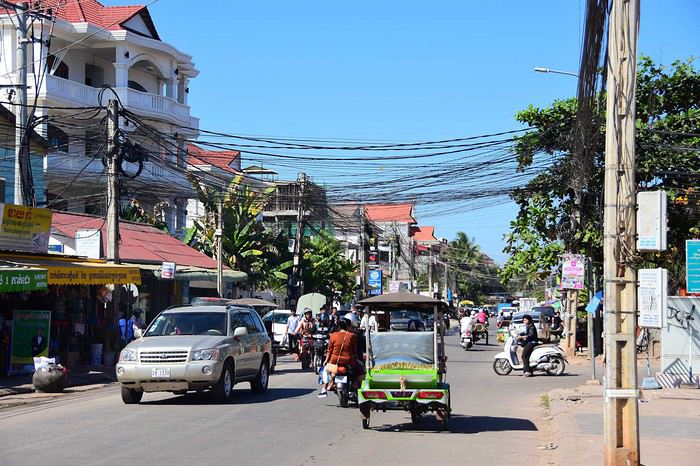
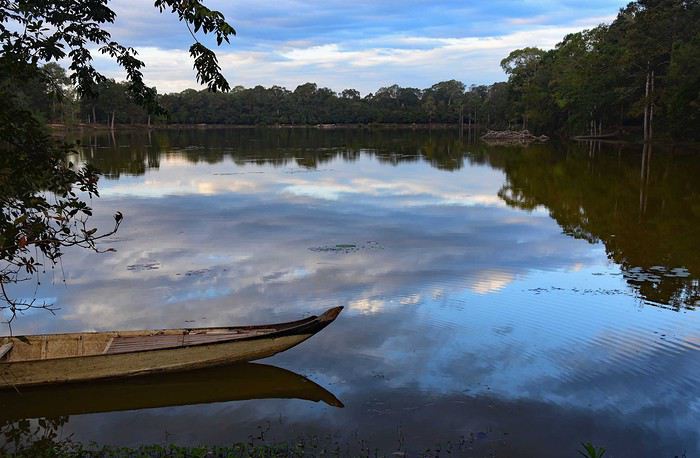
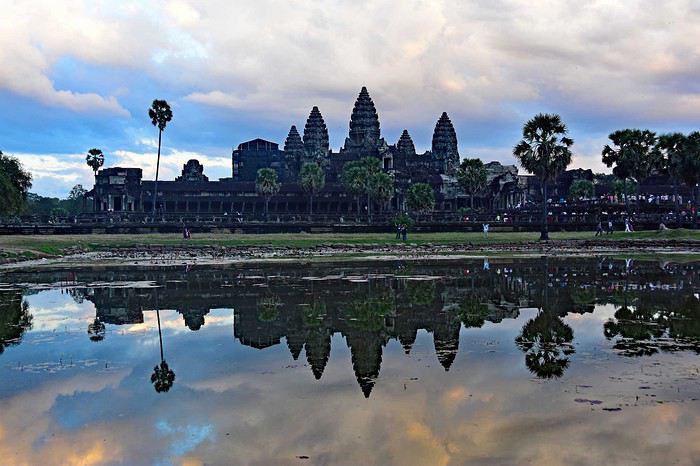
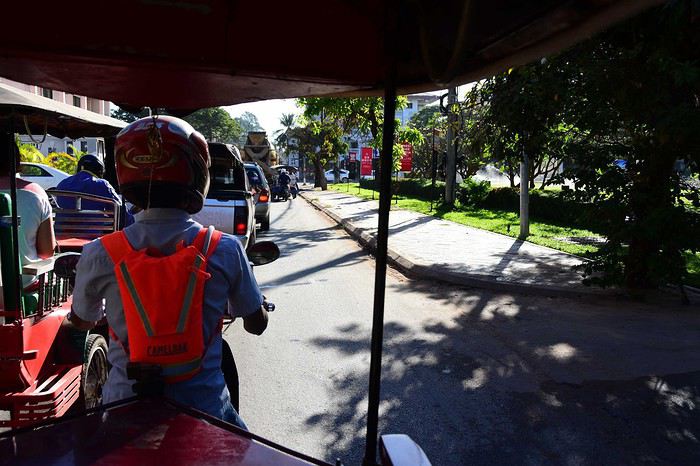
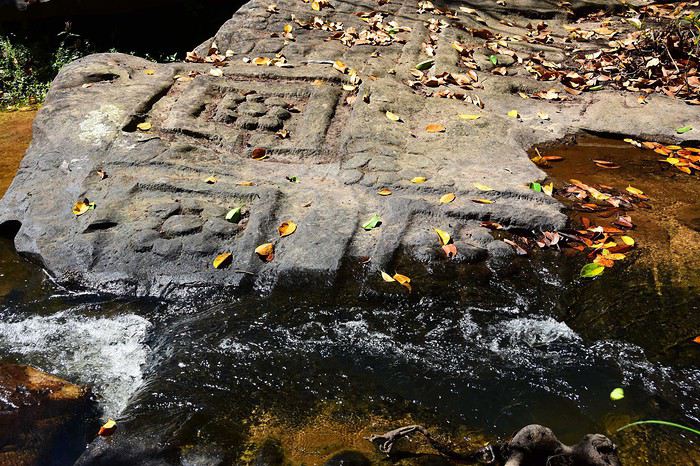
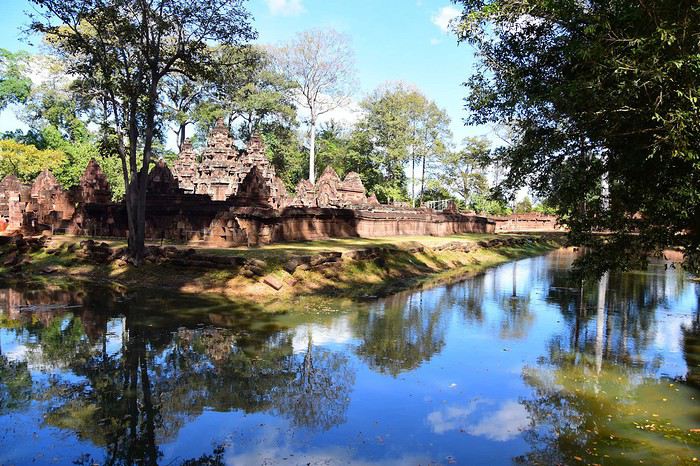
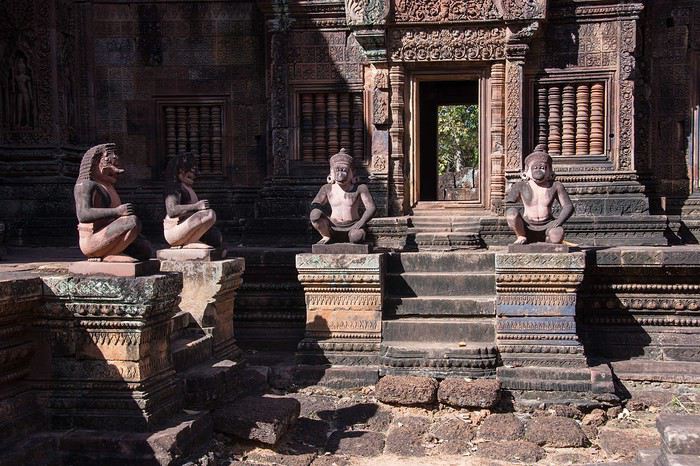
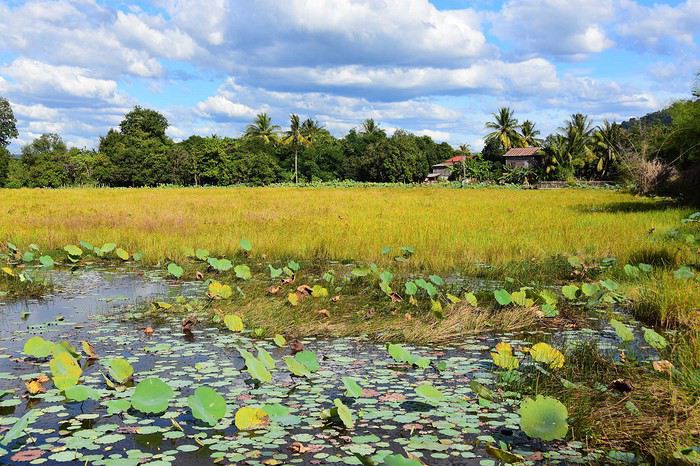
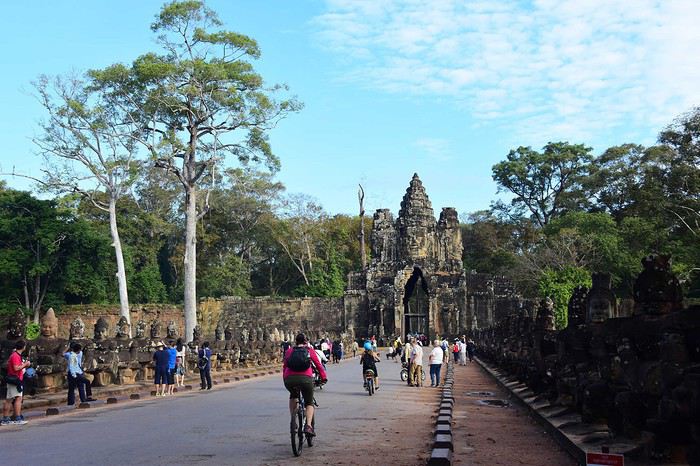
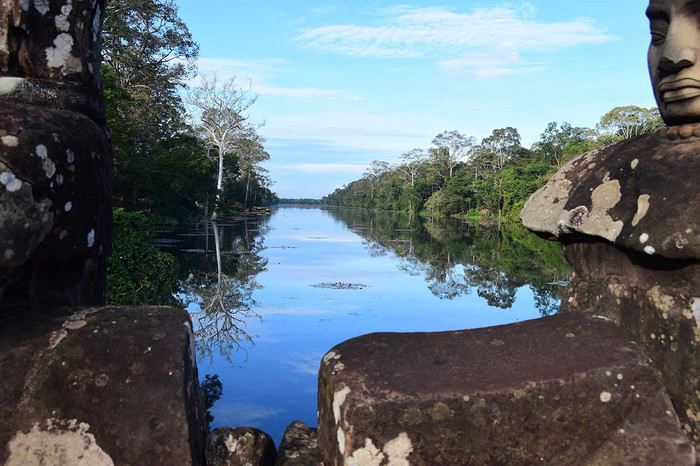
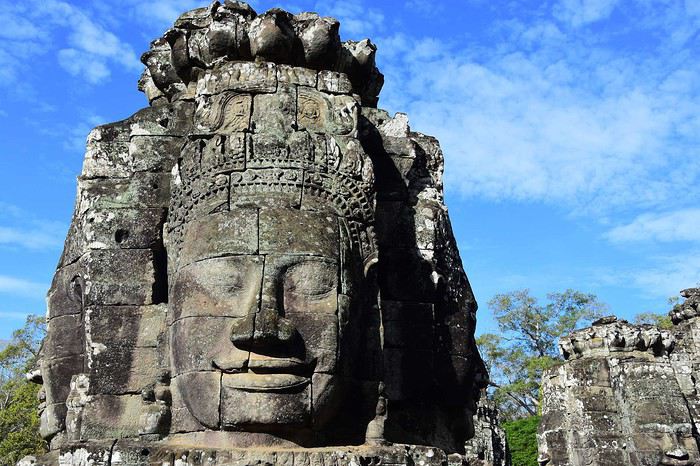
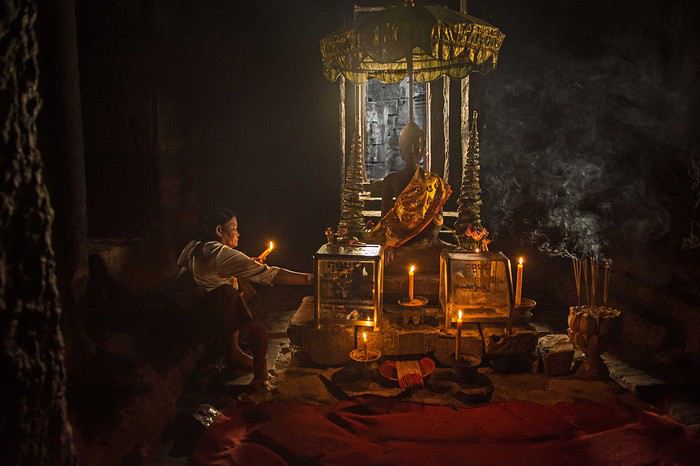
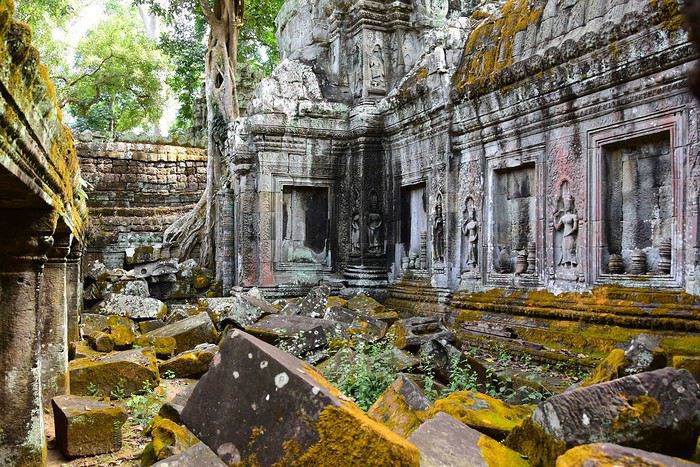
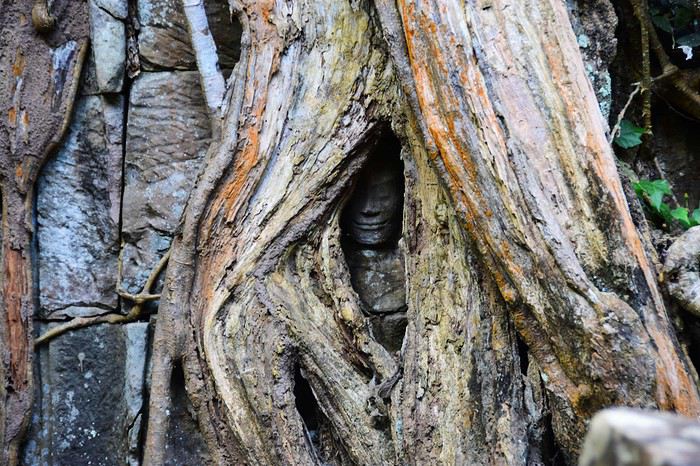
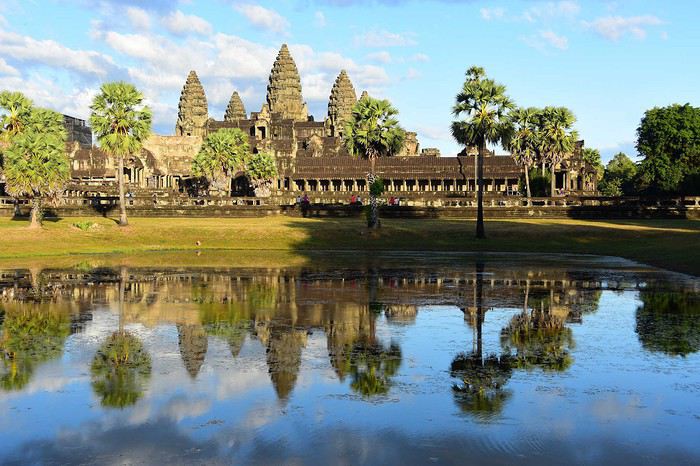
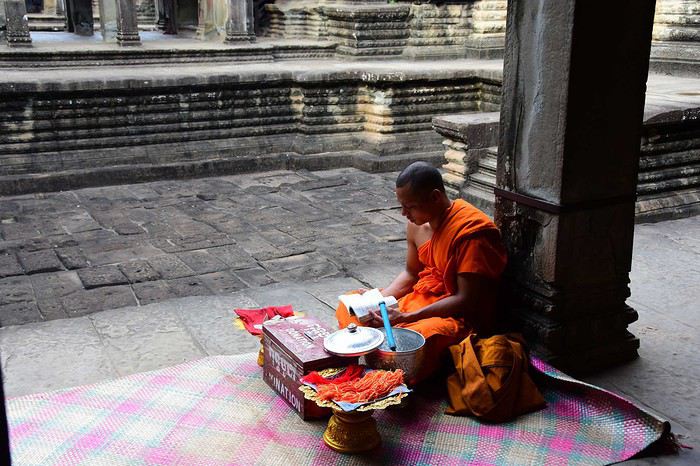
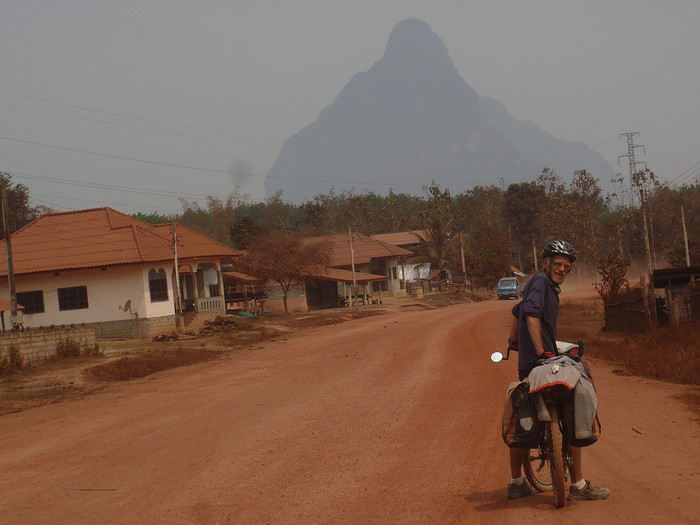 Effectivement, cette partie du monde je l’ai souvent regardée sous toutes les coutures à partir de google earth ou de cartes. Ces dernières ne sont jamais à des échelles vraiment compatibles pour le voyage à vélo, cependant elles permettent de rêver. Ma préférée est la Reise au 1/600 000. A côté des grands axes, on y voit apparaître un certain nombre de pistes en jaune, blanc voire marron pour les plus confidentielles. Que de mystères semblent se cacher dans ces lignes perdues au milieu des montagnes et des forêts impénétrables. Et puis il y a le Mékong, fleuve mythique qui de temps à autre est bordé d’une piste, incertaine par endroits, qui invite au départ.
 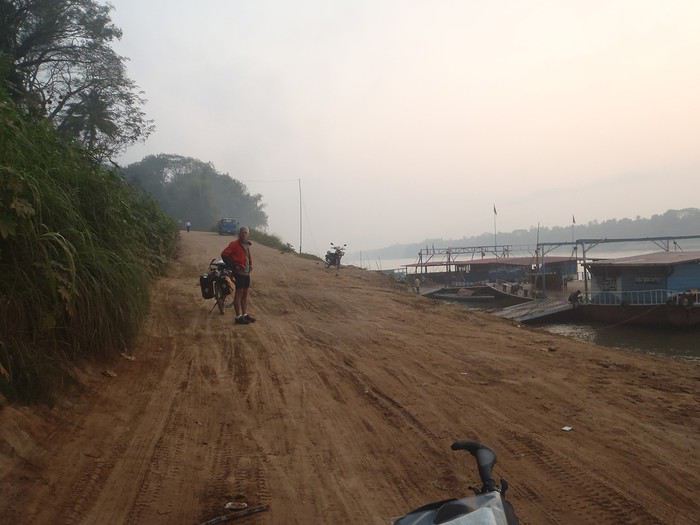 Je crois que chez beaucoup de cyclistes, et chez les autres voyageurs aussi, la passion du lointain est née en regardant en rêvant des cartes ou atlas, à bâtir d’hypothétiques itinéraires. Je ne sais pas si je possède plus de livres que de cartes, mais les deux participent à ce besoin d’évasion. Donc cette carte du Laos, malgré ma petite connaissance du pays, me fait des clins de pistes. Je repère plusieurs passages, chacun d’une longueur de 100 à 200 kilomètres. Ils semblent parfaits pour satisfaire nos exigences de très loin. Je sens l’appel de la route et j’entends le chant des pistes, il est temps de partir.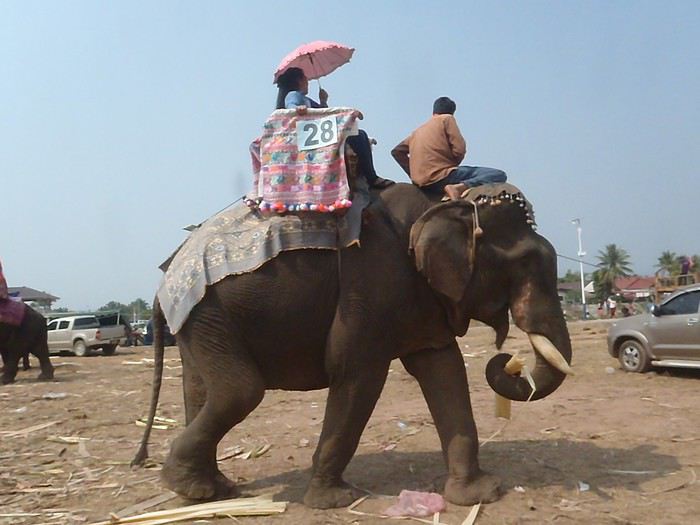
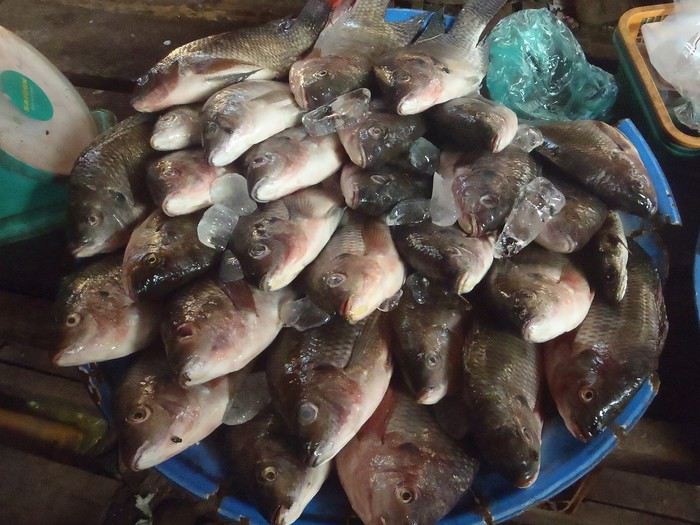 C’est justement le parcours de ces quelques 800 kilomètres de piste sur les 1750 de notre parcours à vélo que je me propose de vous relater. Ils hument bon le mystère et la surprise, car je n’ai trouvé que très peu de renseignements les concernant. Les deux portions sur lesquelles des informations m’ont été fournies, sont les deux que nous n’allons pas parcourir. C’est le hasard des imprévus qui en a décidé. D’une part, un problème mécanique sur des freins hydrauliques trop sollicités par la poussière, la chaleur, les descentes à plus de 20% et le poids des bagages, d’autre part l’intervention de l’inspecteur Lee qui un soir débarque dans notre chambre à Anouvong, et nous interroge sur notre itinéraire. Il nous interdira de poursuivre notre route vers le pied du plus haut sommet du pays (pic Bia 2819m), pour des raisons de sécurité nous dira-t-il sans trop de conviction, parlant aussi de route en réfection non praticable. Nous ne saurons pas exactement pourquoi nous avons été bloqués, certainement la raison a trait aux relations entre une ethnie habitant les environs du pic Bia point culminant du pays, et le gouvernement.
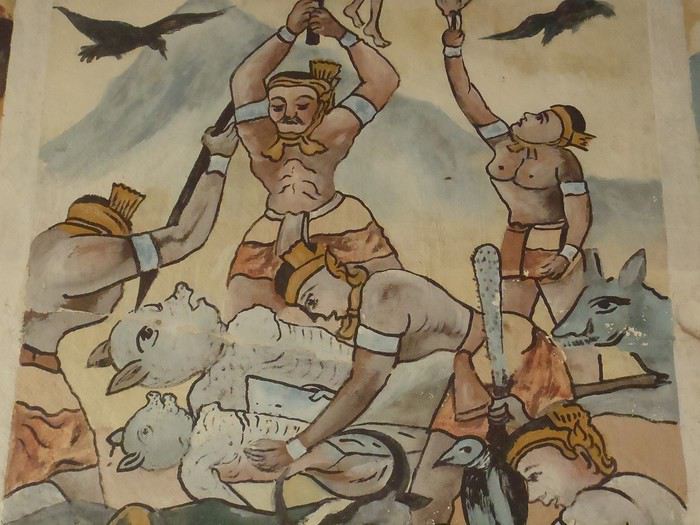
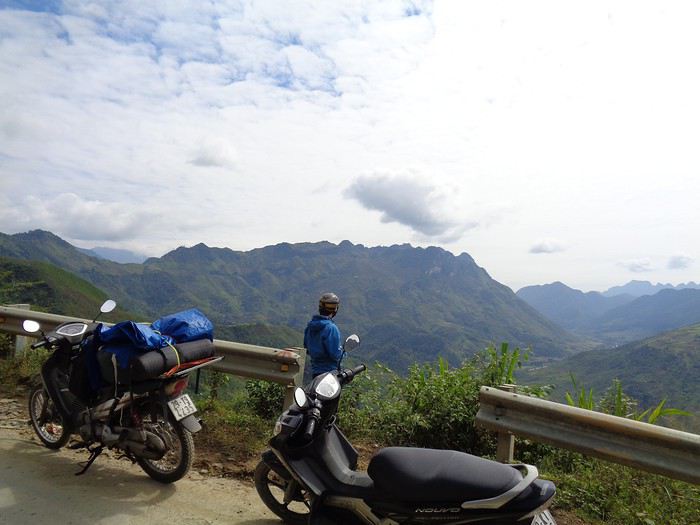
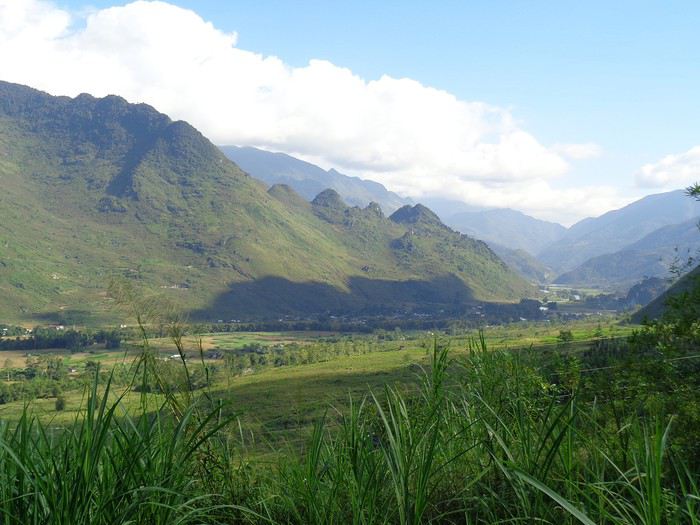
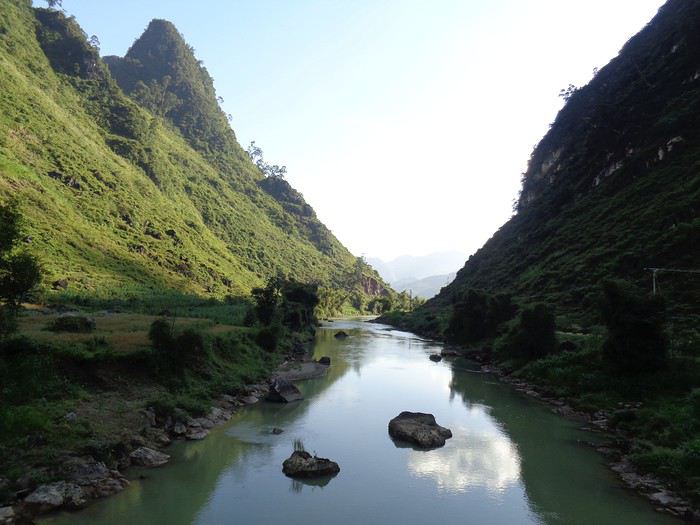
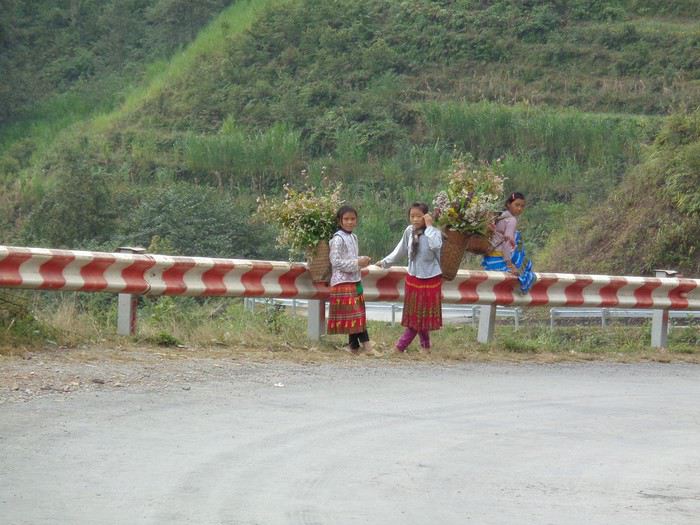
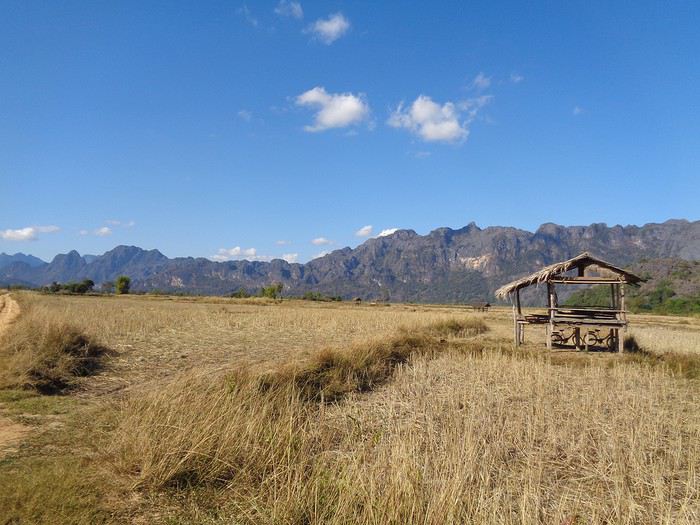
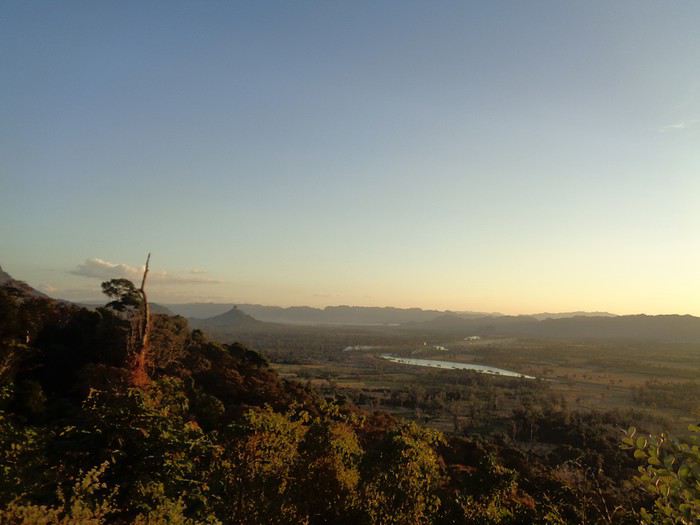
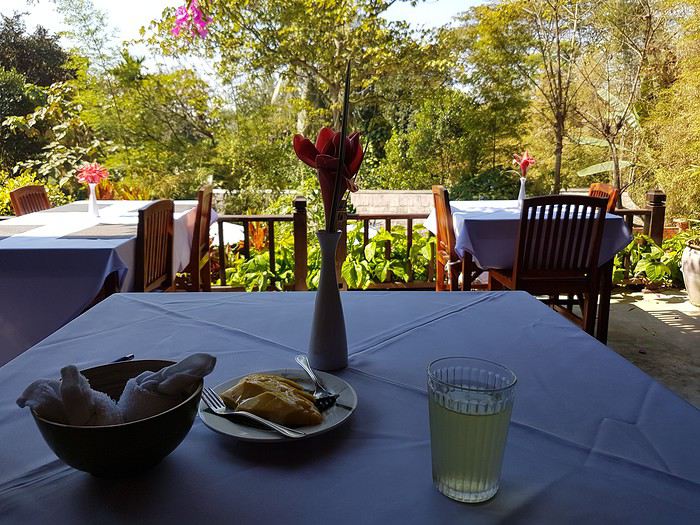
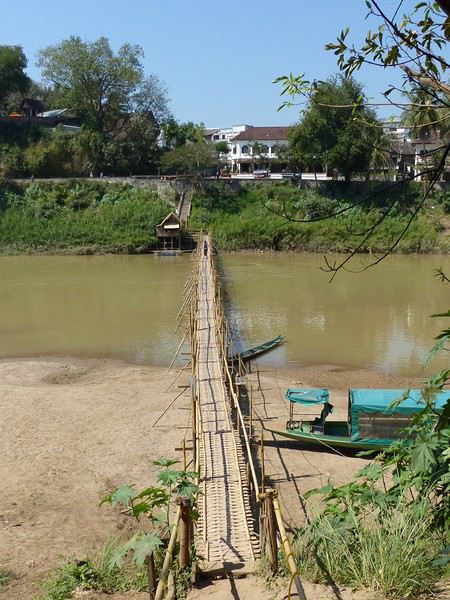 Dans la rue principale, on ne risque pas d'oublier que le Laos est une République Démocratique Populaire...😏.
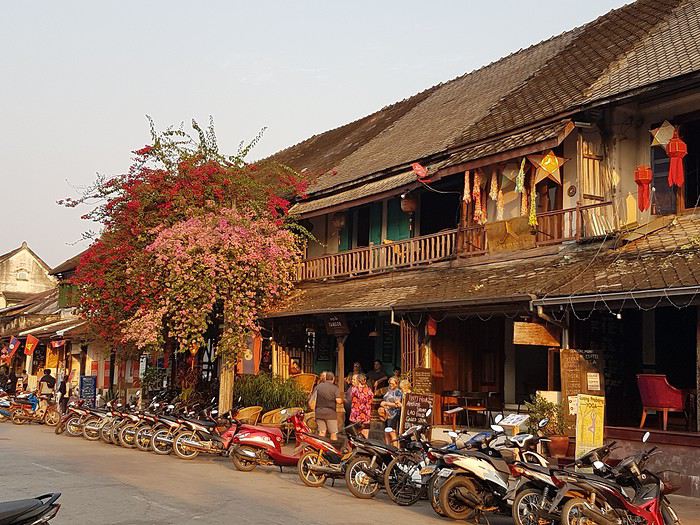 Rue principale
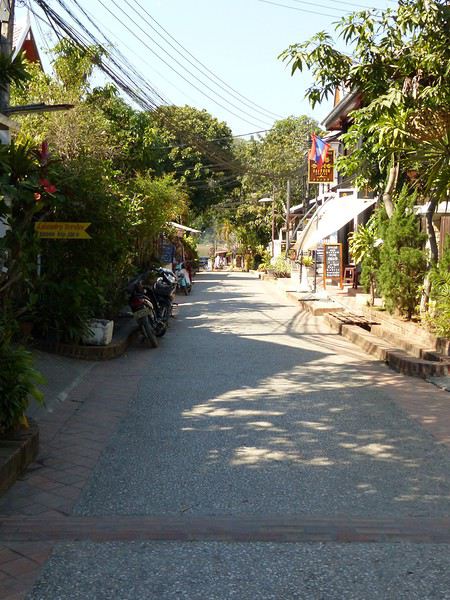 Rue transversale
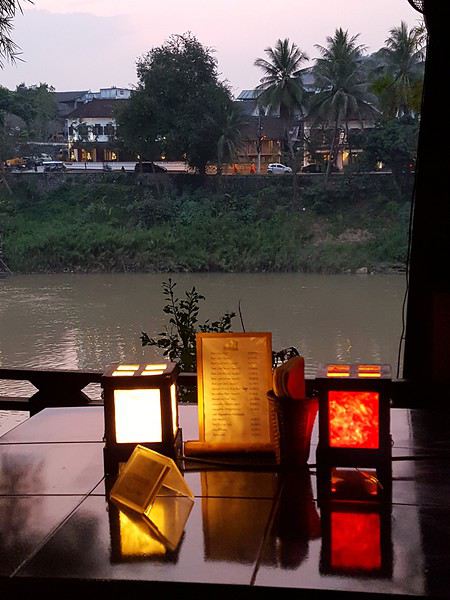 Muriel
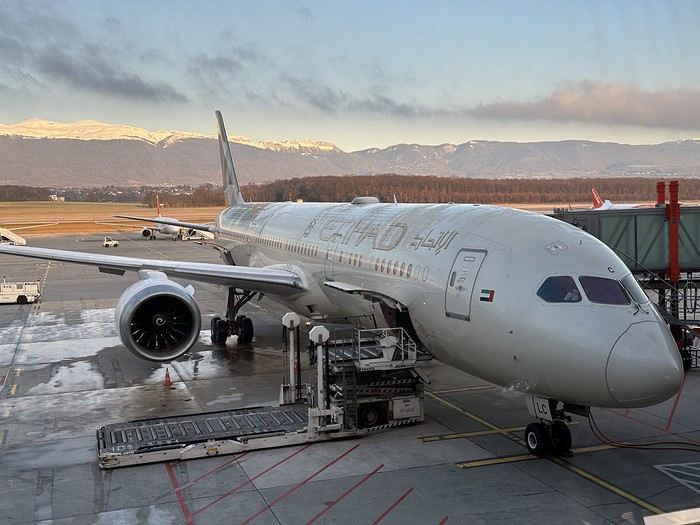
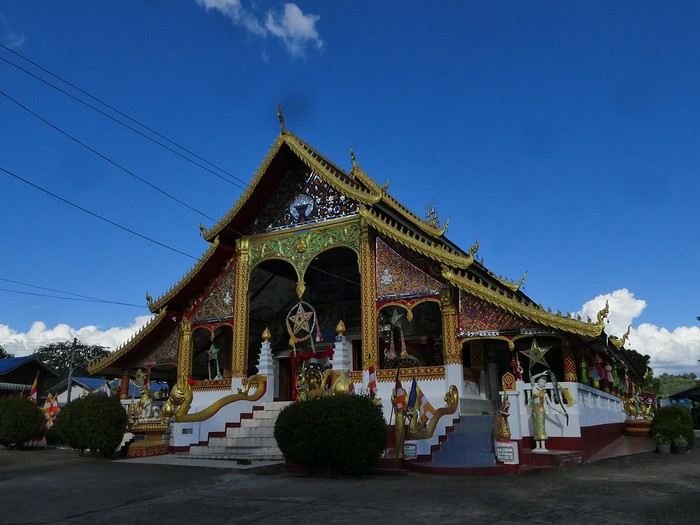
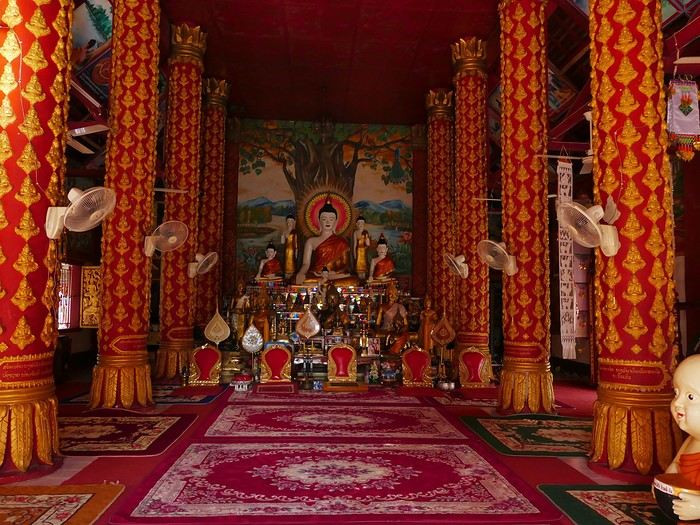
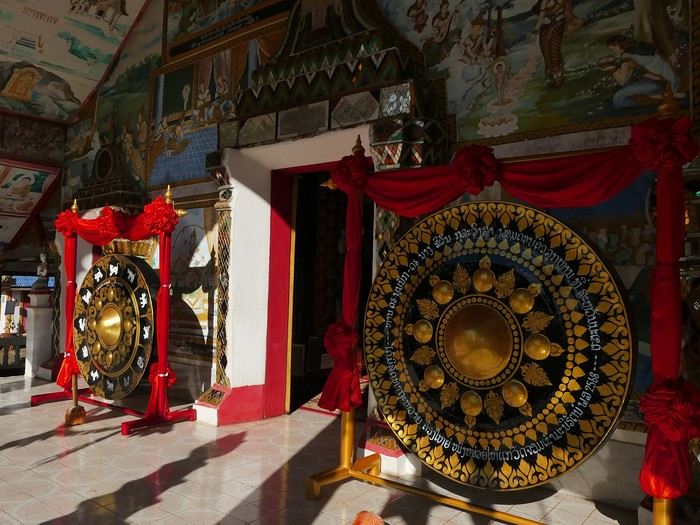
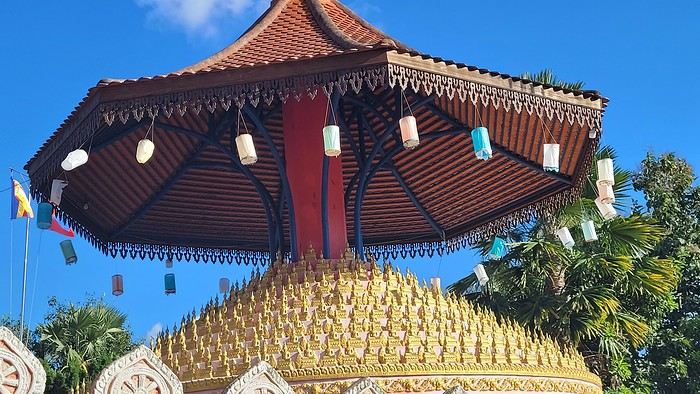
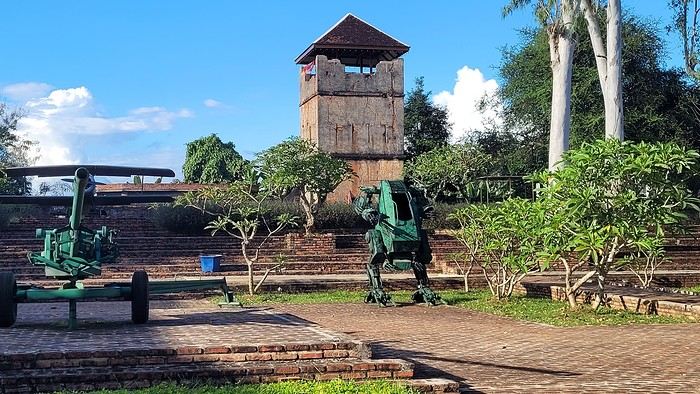
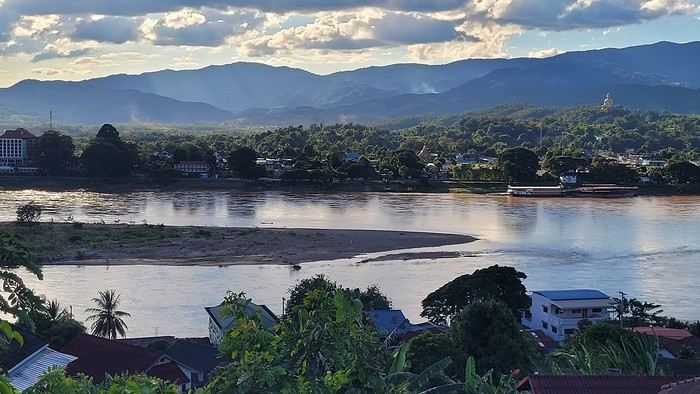
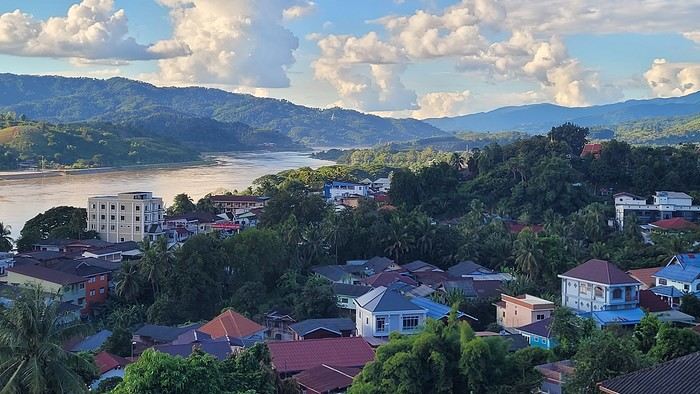
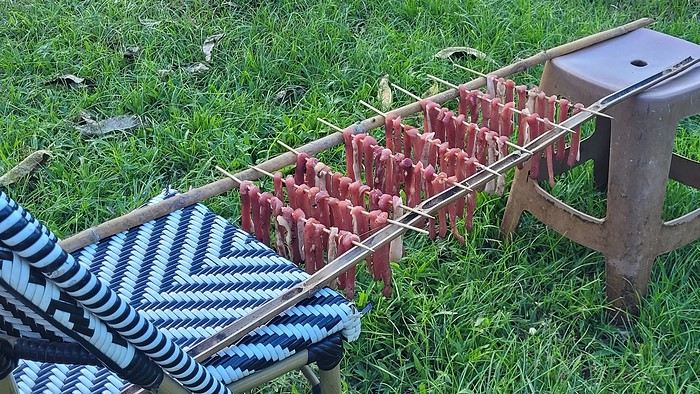
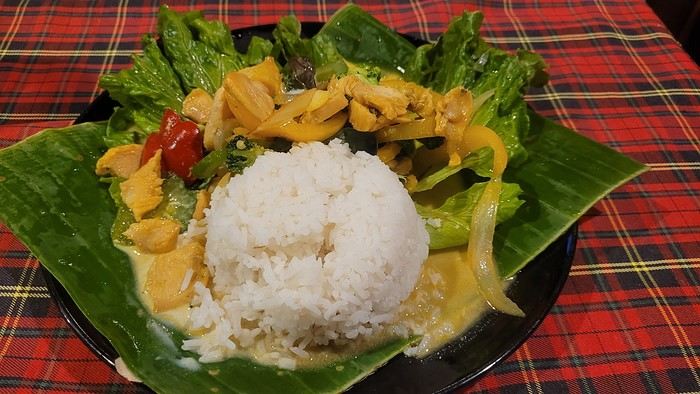
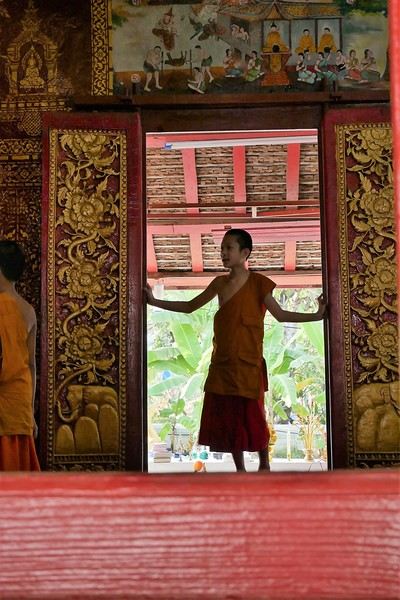 Come along, I'm taking you to this country where it's so nice to wander and slow down...