Discussions Levelo took part in
About 220 results.
More options
Many results are in French, the community’s main language. English translations are added over time.
Search results
L'hiver au pays des merveilles (Maroc)
Bonjour,
Je crains que le forum ne soit morose dans les mois à venir , alors pourquoi ne pas faire un nouveau carnet de voyage . J'ai eu la chance de rentrer du Maroc 2 jours avant la suspension des vols et me retrouve donc, comme vous sans doute , en mode confinement total, chez moi, en Basse-Bretagne , avec quelques centaines de photos de mon dernier séjour à sélectionner, recadrer, retravailler .... On s'occupe comme on peut, alors pourquoi ne pas en faire profiter les Forumeurs ?
Je suis resté au Maroc un mois et j'avais organisé un circuit de 10 nuits / 11 jours pour ma plus jeune fille ( 17 ans ) , mon épouse et la grand- mère, ma chère belle-mère, Mina . Ça correspond aux vacances de février en France .
J'avais donc prévu un voyage " simple" sur le papier, mais qui chaque jour et comme toujours allait nous réserver son lot de découvertes, d'émerveillements, de rencontres, de surprises ....
Au programme :
- Départ de Rabat - 2 nuits à Ouarzazate - 2 nuits à N'kob - 2 nuits à Foum Zguid, avec une longue journée 4X4 au plus profond du désert - 4 nuits à Icht / Borj Biramane et retour sur Rabat
Je vais donc essayer d'éviter des redites avec mes précédents carnets, mais le Maroc a tant de richesses à montrer.....
Rabat est une de mes balades urbaines préférées au Maroc . Je découvre toujours de nouveaux endroits, de jolis détails, des points de vue .... Je vais donc m'y balader avec toujours un plaisir renouvelé
Ma première surprise se passe en médina où je découvre avec étonnement que les autorités ont fait le ménage . Tout ce qui encombrait les rues ( déballages sauvages, marchands de tortues et autres lézards, empiétements sur les trottoirs, la rue , etc.... ) a disparu . Plus rien . Même les commerces " en dur " sont "rentrés dans leurs murs" : plus rien sur la voie publique, pas même une chaise.... Une première au Maroc ?
Si le résultat est plutôt agréable dans la rue des consuls ( rue de l'artisanat ) et la rue Souika ( commerces vestimentaires surtout ) , le boulevard Mohamed V, où régnaient les petits restaurants et gargotes , est désormais mort . Ils ont perdu la quasi-totalité de leur ancienne surface commerciale et ne peuvent plus accueillir que quelques clients à la fois . La rue est tuée et il ne me reste plus qu'à chercher un autre endroit où casser la croûte dans la ville . Ce qui est bénéfique dans une rue ( on peut enfin flâner tranquillement ) est catastrophique dans l'autre ( le commerce est mort et le charme est parti ) . A suivre ....
Bon. C'est comme çà . Ici, dans la rue Souika ( à l'heure de la prière ) . Il y a même des poubelles en plastique positionnées dans la rue !
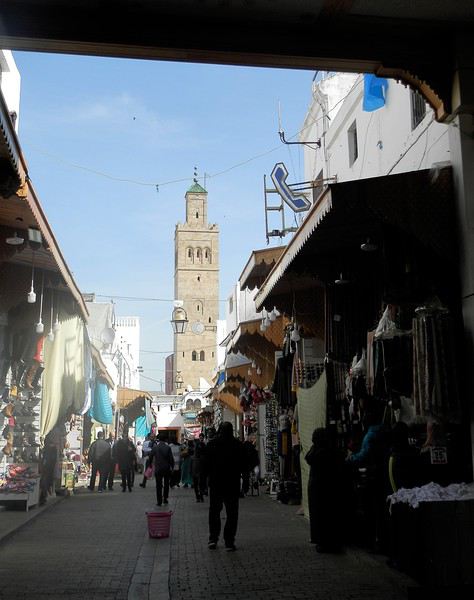
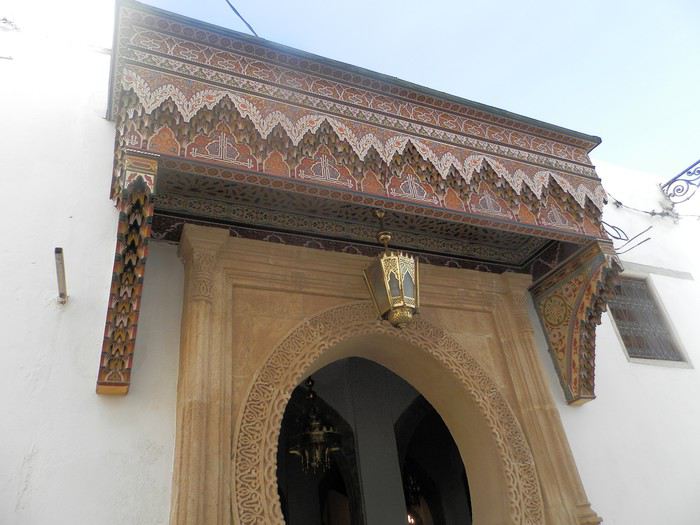
Une autre artère de la médina est la rue Sidi Fatah . Elle donne sur la rue Souika . Une magnifique mosquée y a été restaurée . Si j'en crois mon plan, il s'agit de la mosquée Moulay El Mekki . La porte principale est couverte et on trouve sur chacun des côtés 2 très belles portes ( 4 au total ) . Le minaret octogonal est remarquable . L'ensemble est complété par plusieurs marabout et un peu plus loin se trouve une importante zaouia . C'est vraiment très joli .
L'entrée principale est somptueuse . Le grand art de la peinture sur bois.
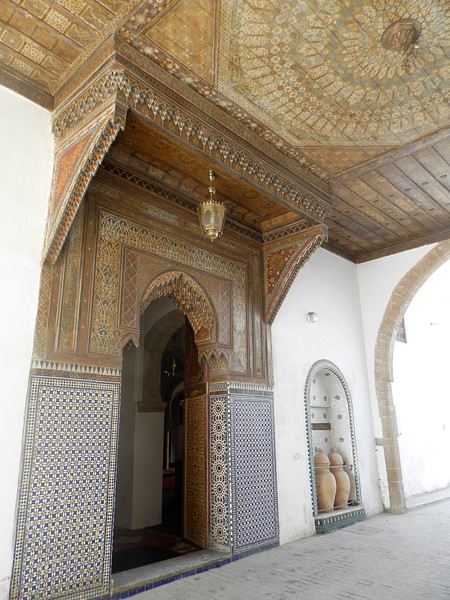
Quelques portes latérales
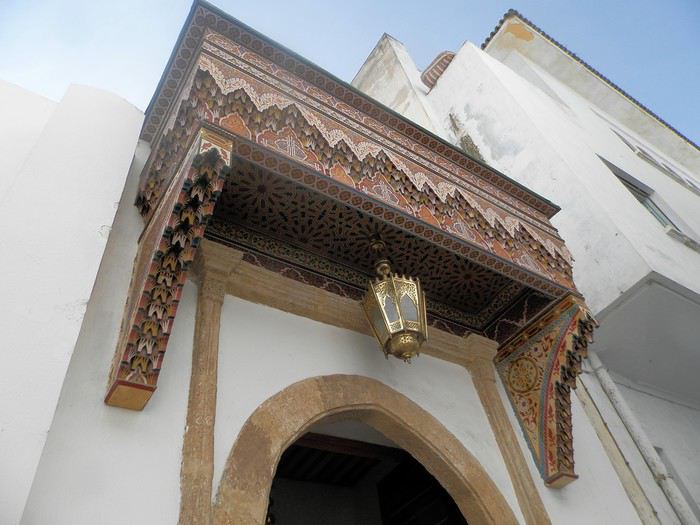
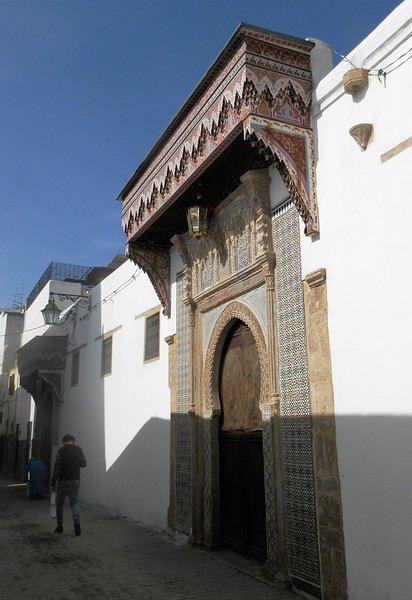
C'est vraiment très agréable de se balader sur la côte atlantique en cette saison ( mi-février ) . Il fait entre 18 et 22 degrés . Temps lumineux . Je n'aurai d'ailleurs pas de pluie pendant un mois ( après avoir eu de la pluie à peu près tous les jours les 5 derniers mois ) : que du bonheur donc ....
Le minaret octogonal
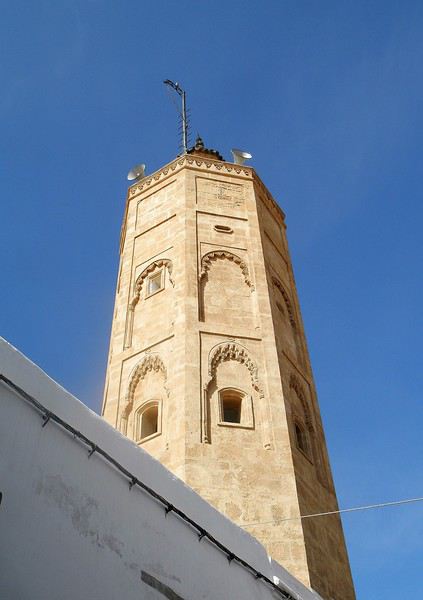
et la rue Sidi Fatah
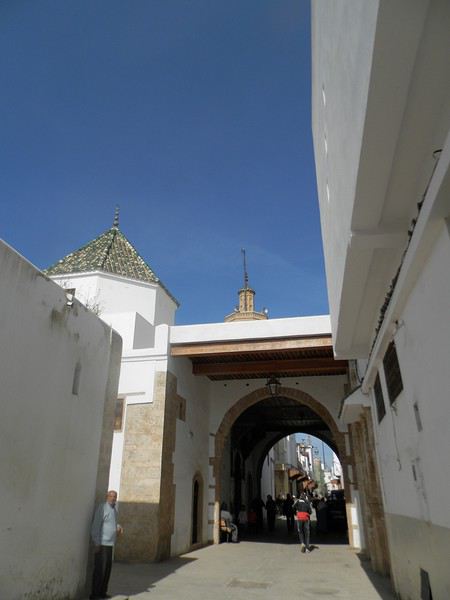
La rénovation des monuments de la médina est presque terminée . La rue des consuls reprend vie, même si les nombreux fondouks de cette rue sont toujours en travaux . J'ai hâte de les revoir . Je déambule dans les ruelles tranquilles , toujours à l’affût de ces détails qui en font le charme .
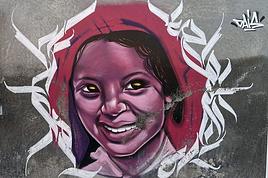
Une belle oeuvre de street-art accroche mon œil ....
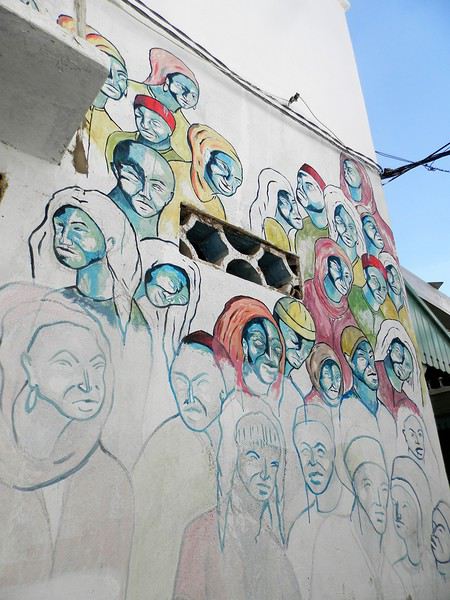
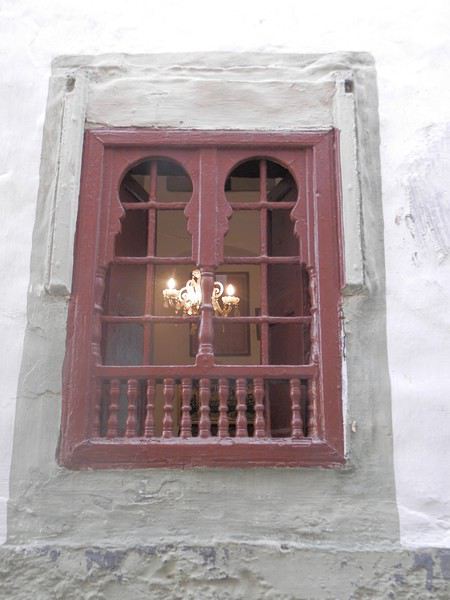
et cette fenêtre a un charme fou .
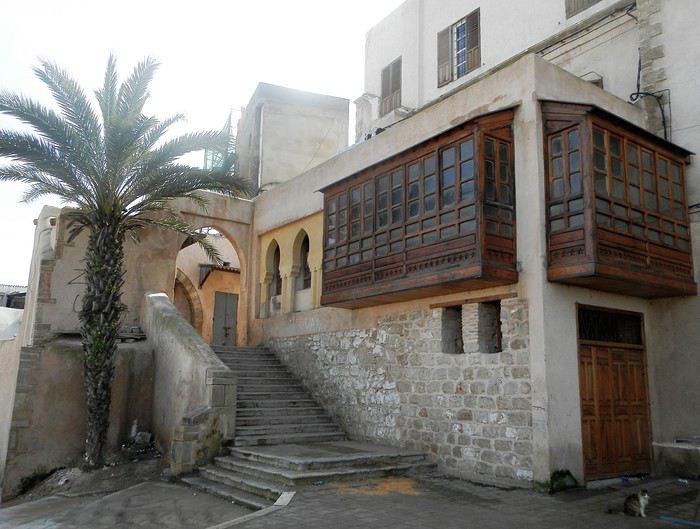
Cette fois , mes pas me portent vers les quais ( on pourrait presque dire le port ) de Rabat . Je quitte la médina par un jolie porte : l'ensemble , également restauré, est charmant . J'arrive directement sur l'Oued Bou Regreg .
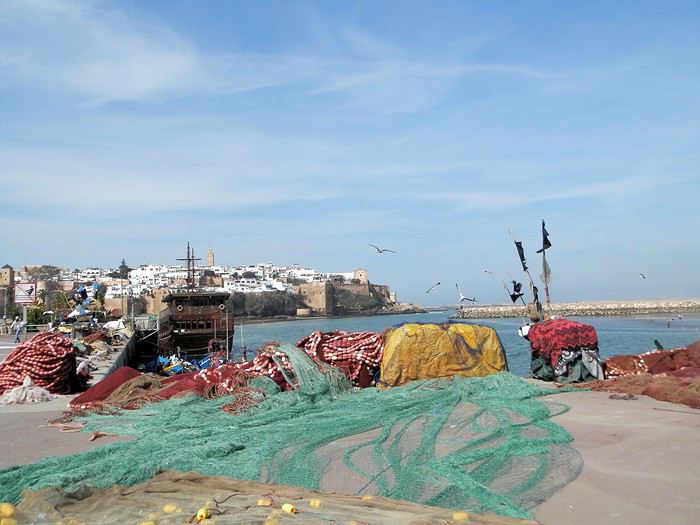
Au cœur de la capitale subsiste un coin " pêche " . Un petit navire est devenu un restaurant-Lounge , plutôt luxueux ( menu à 790 dirhams pour 2 en cette Saint Valentin ) .
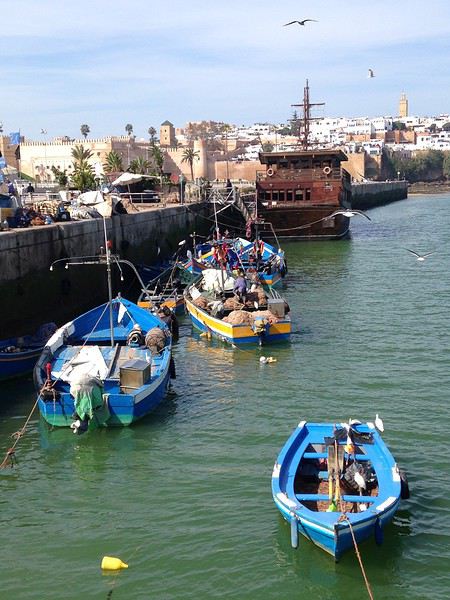
Rabat se donne des airs de petite Essaouira avec ses mouettes, ses bateaux, sa médina au fond, ses filets de pêche .... Le même site à l'horizontale .
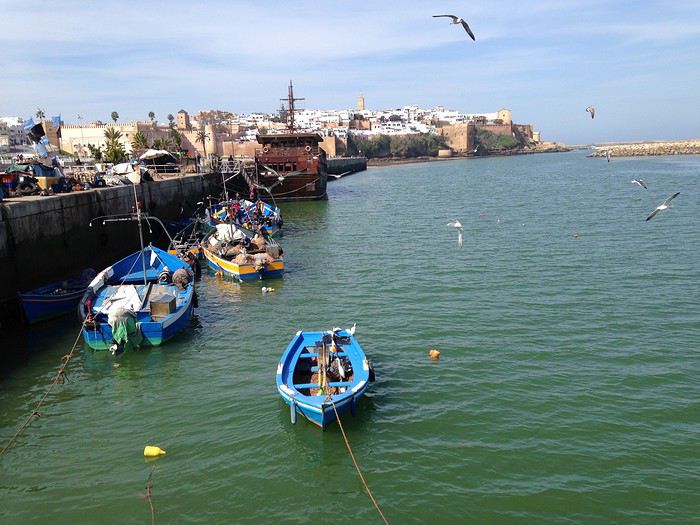
Au fond, Les Oudayas
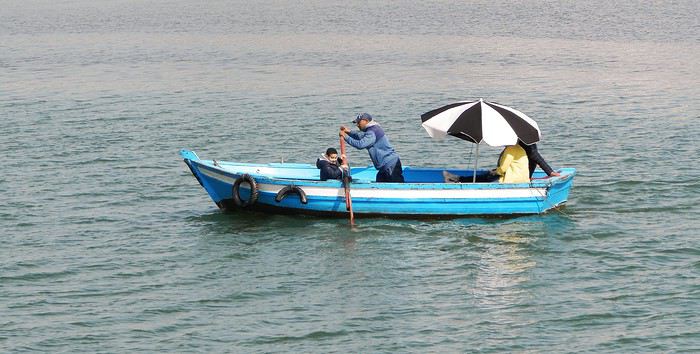
Un " pêche promenade ", me passe sous le nez . C'est mignon . On a envie de le faire la prochaine fois . Il y avait une activité de passeurs entre Rabat et Salé . Mais avec les ponts, le tramway, ..... Certains se sont adaptés , même si çà se fait toujours, plutôt en été ( la plage de Salé est toute proche ) .
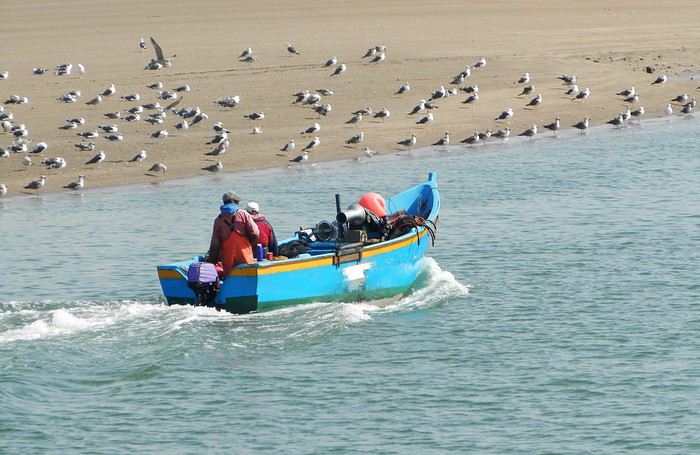
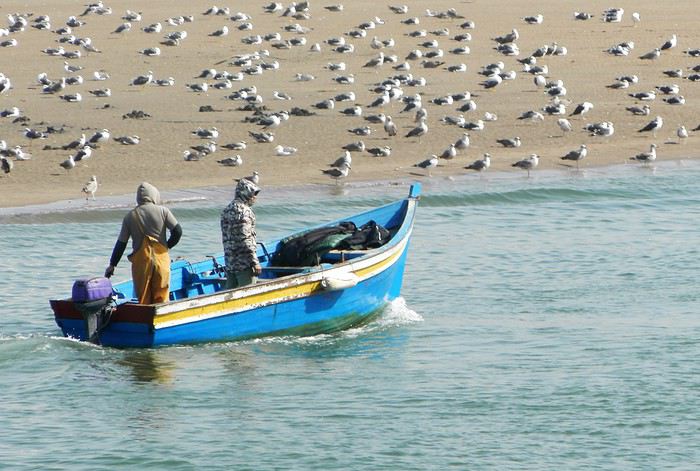
Quelques barques rentrent , les unes après les autres et s'amarrent au ponton, côté Salé . Surement les lointains descendants des redoutables corsaires de Salé . Leur univers a été " explosé" ces dernières années avec l'immense projet d'aménagement de l'oued Bou Regreg . Il leur reste un petit ponton , ..... et juste après, on a construit une grande marina pour accueillir les nouveaux jouets de l'aristocratie locale .
et une autre
Tout ceci fait un curieux mélange entre une architecture ancestrale et la plus grande modernité ....
Ci-après, à gauche, le médina sur sa falaise, au fond le toit blanc du nouveau " Grand Théâtre de Rabat ), à côté duquel commence à sortir la future tour Mohamed VI qui sera la plus haute d' Afrique , et à droite la marina côté Salé .
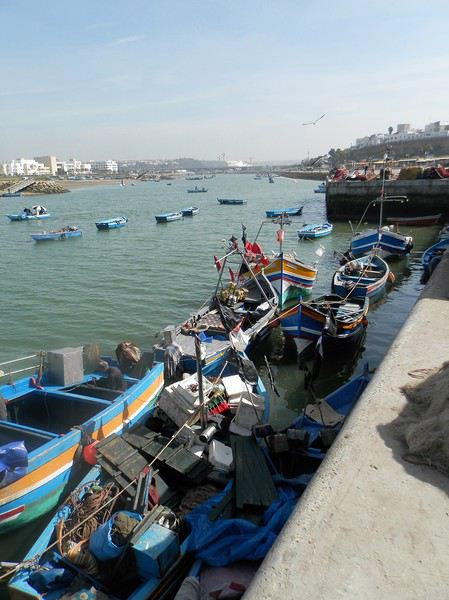
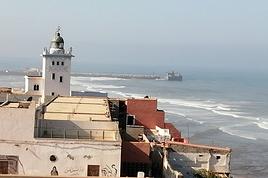
Mais la Kasbah veille toujours sur la capitale
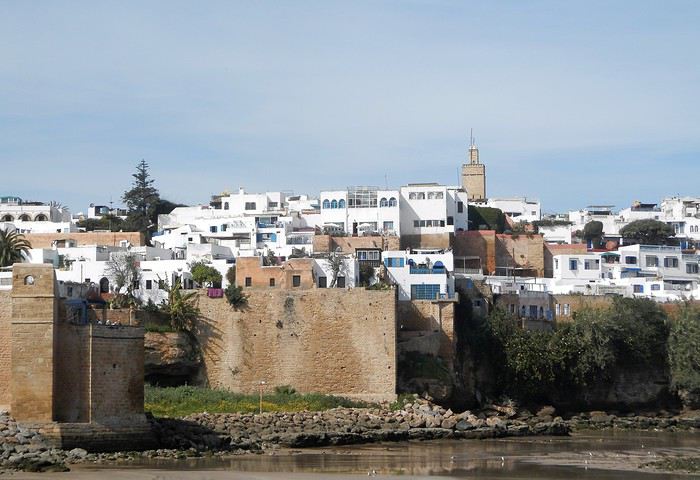
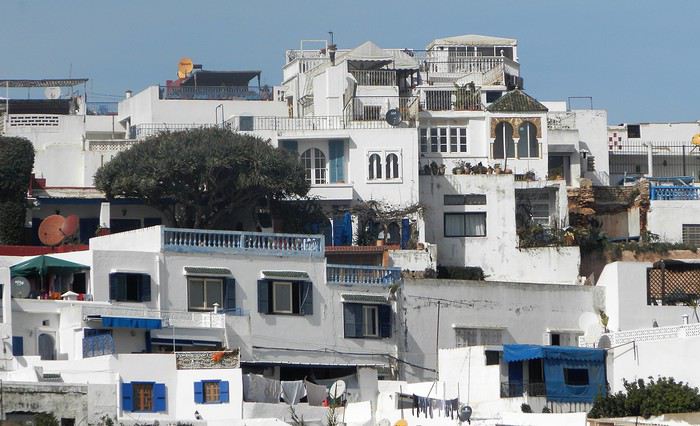
Un dernier regard ...
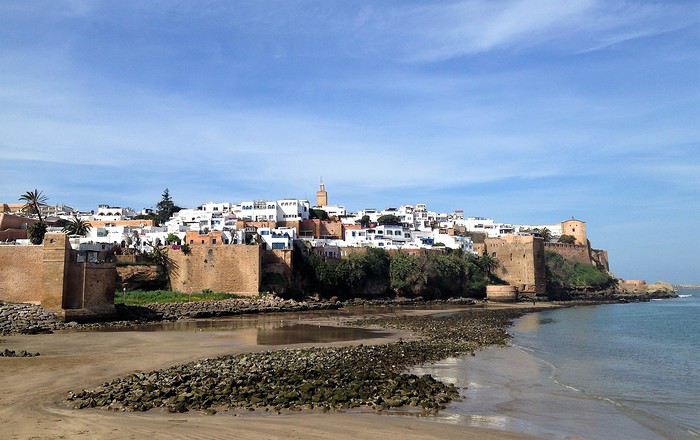
Voila pour ce nouveau coup de projecteur sur la capitale . Faites le détour et surprenez- vous
Demain, j'enfourche ma bonne Dacia Sandero et nous partons à l'assaut de l'Atlas .
Je crains que le forum ne soit morose dans les mois à venir , alors pourquoi ne pas faire un nouveau carnet de voyage . J'ai eu la chance de rentrer du Maroc 2 jours avant la suspension des vols et me retrouve donc, comme vous sans doute , en mode confinement total, chez moi, en Basse-Bretagne , avec quelques centaines de photos de mon dernier séjour à sélectionner, recadrer, retravailler .... On s'occupe comme on peut, alors pourquoi ne pas en faire profiter les Forumeurs ?
Je suis resté au Maroc un mois et j'avais organisé un circuit de 10 nuits / 11 jours pour ma plus jeune fille ( 17 ans ) , mon épouse et la grand- mère, ma chère belle-mère, Mina . Ça correspond aux vacances de février en France .
J'avais donc prévu un voyage " simple" sur le papier, mais qui chaque jour et comme toujours allait nous réserver son lot de découvertes, d'émerveillements, de rencontres, de surprises ....
Au programme :
- Départ de Rabat - 2 nuits à Ouarzazate - 2 nuits à N'kob - 2 nuits à Foum Zguid, avec une longue journée 4X4 au plus profond du désert - 4 nuits à Icht / Borj Biramane et retour sur Rabat
Je vais donc essayer d'éviter des redites avec mes précédents carnets, mais le Maroc a tant de richesses à montrer.....
Rabat est une de mes balades urbaines préférées au Maroc . Je découvre toujours de nouveaux endroits, de jolis détails, des points de vue .... Je vais donc m'y balader avec toujours un plaisir renouvelé
Ma première surprise se passe en médina où je découvre avec étonnement que les autorités ont fait le ménage . Tout ce qui encombrait les rues ( déballages sauvages, marchands de tortues et autres lézards, empiétements sur les trottoirs, la rue , etc.... ) a disparu . Plus rien . Même les commerces " en dur " sont "rentrés dans leurs murs" : plus rien sur la voie publique, pas même une chaise.... Une première au Maroc ?
Si le résultat est plutôt agréable dans la rue des consuls ( rue de l'artisanat ) et la rue Souika ( commerces vestimentaires surtout ) , le boulevard Mohamed V, où régnaient les petits restaurants et gargotes , est désormais mort . Ils ont perdu la quasi-totalité de leur ancienne surface commerciale et ne peuvent plus accueillir que quelques clients à la fois . La rue est tuée et il ne me reste plus qu'à chercher un autre endroit où casser la croûte dans la ville . Ce qui est bénéfique dans une rue ( on peut enfin flâner tranquillement ) est catastrophique dans l'autre ( le commerce est mort et le charme est parti ) . A suivre ....
Bon. C'est comme çà . Ici, dans la rue Souika ( à l'heure de la prière ) . Il y a même des poubelles en plastique positionnées dans la rue !
Une autre artère de la médina est la rue Sidi Fatah . Elle donne sur la rue Souika . Une magnifique mosquée y a été restaurée . Si j'en crois mon plan, il s'agit de la mosquée Moulay El Mekki . La porte principale est couverte et on trouve sur chacun des côtés 2 très belles portes ( 4 au total ) . Le minaret octogonal est remarquable . L'ensemble est complété par plusieurs marabout et un peu plus loin se trouve une importante zaouia . C'est vraiment très joli .
L'entrée principale est somptueuse . Le grand art de la peinture sur bois.
Quelques portes latérales
C'est vraiment très agréable de se balader sur la côte atlantique en cette saison ( mi-février ) . Il fait entre 18 et 22 degrés . Temps lumineux . Je n'aurai d'ailleurs pas de pluie pendant un mois ( après avoir eu de la pluie à peu près tous les jours les 5 derniers mois ) : que du bonheur donc ....
Le minaret octogonal
et la rue Sidi Fatah
La rénovation des monuments de la médina est presque terminée . La rue des consuls reprend vie, même si les nombreux fondouks de cette rue sont toujours en travaux . J'ai hâte de les revoir . Je déambule dans les ruelles tranquilles , toujours à l’affût de ces détails qui en font le charme .
Une belle oeuvre de street-art accroche mon œil ....
et cette fenêtre a un charme fou .
Cette fois , mes pas me portent vers les quais ( on pourrait presque dire le port ) de Rabat . Je quitte la médina par un jolie porte : l'ensemble , également restauré, est charmant . J'arrive directement sur l'Oued Bou Regreg .
Au cœur de la capitale subsiste un coin " pêche " . Un petit navire est devenu un restaurant-Lounge , plutôt luxueux ( menu à 790 dirhams pour 2 en cette Saint Valentin ) .
Rabat se donne des airs de petite Essaouira avec ses mouettes, ses bateaux, sa médina au fond, ses filets de pêche .... Le même site à l'horizontale .
Au fond, Les Oudayas
Un " pêche promenade ", me passe sous le nez . C'est mignon . On a envie de le faire la prochaine fois . Il y avait une activité de passeurs entre Rabat et Salé . Mais avec les ponts, le tramway, ..... Certains se sont adaptés , même si çà se fait toujours, plutôt en été ( la plage de Salé est toute proche ) .
Quelques barques rentrent , les unes après les autres et s'amarrent au ponton, côté Salé . Surement les lointains descendants des redoutables corsaires de Salé . Leur univers a été " explosé" ces dernières années avec l'immense projet d'aménagement de l'oued Bou Regreg . Il leur reste un petit ponton , ..... et juste après, on a construit une grande marina pour accueillir les nouveaux jouets de l'aristocratie locale .
et une autre
Tout ceci fait un curieux mélange entre une architecture ancestrale et la plus grande modernité ....
Ci-après, à gauche, le médina sur sa falaise, au fond le toit blanc du nouveau " Grand Théâtre de Rabat ), à côté duquel commence à sortir la future tour Mohamed VI qui sera la plus haute d' Afrique , et à droite la marina côté Salé .
Mais la Kasbah veille toujours sur la capitale
Un dernier regard ...
Voila pour ce nouveau coup de projecteur sur la capitale . Faites le détour et surprenez- vous
Demain, j'enfourche ma bonne Dacia Sandero et nous partons à l'assaut de l'Atlas .
Train Strasbourg-Lyon avec vélo
Bonjour,
Dans le cadre de mon auto-rapatriement vers Lyon je cherche à savoir si je pourrai trouver un train depuis Strasbourg demain qui m'acceptera avec mon vélo. J'ai posé la question dans mon autre fil mais je crains qu'elle se retrouve noyée dans une discussion parallèle 🙂. Le site voyageurs de la SNCF ne propose que des TGV où les vélos ne sont pas admis. Y-a-t-il une alternative ? TER ? Vélo démonté/emballé dans le TGV ? Transport du vélo vers Lyon dans un autre train plus tard ?
L.
La radio partout dans le monde
En ces moments de confinement, sans possibilité de voyages, Le monde entier chez vous en quelques secondes
Dans ce lien apparaît un globe terrestre comme celui de Google Earth, avec une infinité de points verts.
Au bout de 2 ou 3 minutes, vous pouvez zoomer de la même manière que dans Google Earth. Chaque point vert est une station de radio locale de n'importe où dans le monde. Lorsque vous cliquez sur le point, la station de radio est entendue immédiatement avec un bon son . C'est gratuit et sans virus 😉
http://radio.garden
Je pars à l'improviste 8 mois vers l'Est à vélo (Route de la Soie)
Je pensais que je n'en aurai jamais l'opportunité (travail, famille, maison), mais il se trouve que j'ai un créneau qui s'ouvre, je vais donc sauter sur l'occasion.
Départ au plus vite je me donne une dizaine de jours pour préparer l'itinéraire et le matériel, et bye bye !
Je vous donnerai des nouvelles, quelle est la meilleure façon de faire un micro-blog de voyage ? Page facebook ou blog ?
Sinon pour la destination, aucune idée !
J'ai envie de partir de la maison (Belgique), j'ai déjà fait plusieurs fois le nord, le sud sera trop chaud en été, il ne reste que l'est ... Mon premier choix à faire est de passer au dessus ou en-dessous de la Mer Noire, que conseillez-vous ?
Ca sera sans doute quelque chose qui tourne autour de la route de la soie, je vais essayer de retrouver les posts qui en parlent ...
Traversée de l'Algérie en camion aménagé
Bonjour à toutes et à tous.
Je compte partir avec ma compagne en octobre prochain, pour un road trip en Espagne, Portugal, Maroc et rejoindre l'Italie en traversant l'Algérie et la Tunisie. 😎
J'aurai voulu avoir quelques avis sur cette traversée, sécurité, formalités administratives, endroit pour se poser sur la route etc.
Les infos que j'ai pu récupérer pour le moment sont trop aléatoires. Dangereux - pas dangereux, visa - pas visa etc.
Merci d'avance de m'éclairer. 😉
Visa de transit pour la Russie dans un des pays en Stan?
Bonjour,
Nous partons par la route pour les pays en Stan en passant à l'aller par l'Azerbaidjan et l'Ouzbekistan en transitant par la Russie entre Bakou et Astrakhan. Nous pensons demander en France un visa de transit pour la Russie à l'aller mais à simple entrée car le double entrée n'est valable qu'un mois et nous reviendrons dans un délai supérieur. Pensez-vous que pour le retour il est possible d'obtenir un visa de transit pour la Russie dans un des pays en Stan. Merci
Choisir un vélo de voyage en Iran dans le contexte des sanctions américaines
Bonjour,
J'habite actuellement en Iran, pays placé sous sanctions américaines, et à Chiraz, une des grandes villes du pays, mais pas dans la capitale. Je veux m'acheter un vélo pour voyager dans des coins semi-désertiques ou désertiques sur le plateau iranien, à priori sans grands défis en termes de dénivelé, pendant 3-5 semaines. Je ne recherche pas à battre des records de kilomètres parcourus ou à passer des cols à la chaîne, j'aime mieux papillonner de monastère en monastère ou de mosquée en mosquée selon le contexte, me poser tranquille dans les endroits qui me plaisent , sans être limité à devoir prendre tout le temps des routes bien entretenues. J'ai pas besoin d'un vélo très exigeant pour ce voyage, mais je compte en organiser d'autres , en Iran en France ou ailleurs et j'aimerais quand même faire un achat pensé dans une perspective d'évolution à moyen-terme, je peux réfléchir à investir plus que les modèles indiqués plus bas.
J'ai fais le tour des magasins de vélos, regardé l'équivalent local du bon coin. Les options sont les suivantes, par ordre de prix décroissants (le Corona s'ajoutant aux sanctions américaines le rial iranien est très bas):
1) - OLYMPIA, champion (pas plus d'infos) environ 150 euros. On m'a dit beaucoup de mal de cette marque.
2) GIANT Rincon 2017. 220 euros. https://www.giant-bicycles.com/ua/rincon-disc-2017
3)VIVA, City Life 250 euros avec suspension avant. Désolé je n'ai pas le modèle exact, il est proche de celui-là en tout cas je crois: https://shop.asemanbike.com/?product=%D8%AF%D9%88%DA%86%D8%B1%D8%AE%D9%87-%D9%87%DB%8C%D8%A8%D8%B1%DB%8C%D8%AF%DB%8C-%D9%88%DB%8C%D9%88%D8%A7-%D9%85%D8%AF%D9%84-%D8%B3%DB%8C%D8%AA%DB%8C-%D9%84%D8%A7%DB%8C%D9%81-%D8%B3%D8%A7%DB%8C%D8%B2-2
4) Giant Escape R3 2017. 270 euros
5) Giant Escape 2 city 2018 340 euros
6) Un vélo java, autour de 340 euros: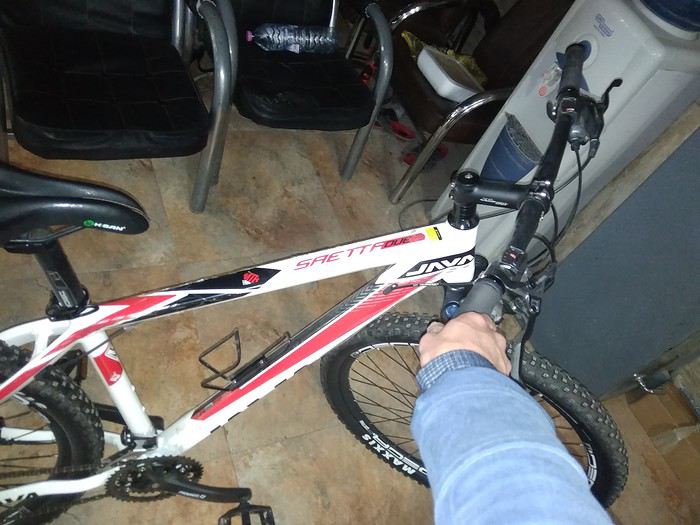
Je crois que je peux accéder assez facilement à pas mal de modèles Giant, Merinda, et Olympia si vous avez d'autres suggestions je peux chercher si c'est disponible localement, surtout pour les Giant c'est la marque que j'ai le plus vu en magasin.
Bon je dois la vérité à mes lecteurs je suis paumé. J'ai compris ou crois avoir compris que: -la supension avant ça a l'air super quand on essaie en magasin mais en vérité ça peut être une mauvaise idée, ça peut empêcher de bien répartir le poids des bagages à l'avant et à l'arrière et provoquer une usure plus rapide de l'arrière du vélo. -c'est bien d'avoir un vélo le plus simple possible pour permettre des réparations faciles sur la route. -pas forcément besoin de chercher midi à 14 heures pour faire un beau voyage.
Pour le reste je compte beaucoup sur vous, j'ai pas peur de faire des recherches. Si vous avez des liens à me filer je lis les pages que vous me recommandez avec plaisir.
Merci d'avance!
J'habite actuellement en Iran, pays placé sous sanctions américaines, et à Chiraz, une des grandes villes du pays, mais pas dans la capitale. Je veux m'acheter un vélo pour voyager dans des coins semi-désertiques ou désertiques sur le plateau iranien, à priori sans grands défis en termes de dénivelé, pendant 3-5 semaines. Je ne recherche pas à battre des records de kilomètres parcourus ou à passer des cols à la chaîne, j'aime mieux papillonner de monastère en monastère ou de mosquée en mosquée selon le contexte, me poser tranquille dans les endroits qui me plaisent , sans être limité à devoir prendre tout le temps des routes bien entretenues. J'ai pas besoin d'un vélo très exigeant pour ce voyage, mais je compte en organiser d'autres , en Iran en France ou ailleurs et j'aimerais quand même faire un achat pensé dans une perspective d'évolution à moyen-terme, je peux réfléchir à investir plus que les modèles indiqués plus bas.
J'ai fais le tour des magasins de vélos, regardé l'équivalent local du bon coin. Les options sont les suivantes, par ordre de prix décroissants (le Corona s'ajoutant aux sanctions américaines le rial iranien est très bas):
1) - OLYMPIA, champion (pas plus d'infos) environ 150 euros. On m'a dit beaucoup de mal de cette marque.
2) GIANT Rincon 2017. 220 euros. https://www.giant-bicycles.com/ua/rincon-disc-2017
3)VIVA, City Life 250 euros avec suspension avant. Désolé je n'ai pas le modèle exact, il est proche de celui-là en tout cas je crois: https://shop.asemanbike.com/?product=%D8%AF%D9%88%DA%86%D8%B1%D8%AE%D9%87-%D9%87%DB%8C%D8%A8%D8%B1%DB%8C%D8%AF%DB%8C-%D9%88%DB%8C%D9%88%D8%A7-%D9%85%D8%AF%D9%84-%D8%B3%DB%8C%D8%AA%DB%8C-%D9%84%D8%A7%DB%8C%D9%81-%D8%B3%D8%A7%DB%8C%D8%B2-2
4) Giant Escape R3 2017. 270 euros
5) Giant Escape 2 city 2018 340 euros
6) Un vélo java, autour de 340 euros:
Je crois que je peux accéder assez facilement à pas mal de modèles Giant, Merinda, et Olympia si vous avez d'autres suggestions je peux chercher si c'est disponible localement, surtout pour les Giant c'est la marque que j'ai le plus vu en magasin.
Bon je dois la vérité à mes lecteurs je suis paumé. J'ai compris ou crois avoir compris que: -la supension avant ça a l'air super quand on essaie en magasin mais en vérité ça peut être une mauvaise idée, ça peut empêcher de bien répartir le poids des bagages à l'avant et à l'arrière et provoquer une usure plus rapide de l'arrière du vélo. -c'est bien d'avoir un vélo le plus simple possible pour permettre des réparations faciles sur la route. -pas forcément besoin de chercher midi à 14 heures pour faire un beau voyage.
Pour le reste je compte beaucoup sur vous, j'ai pas peur de faire des recherches. Si vous avez des liens à me filer je lis les pages que vous me recommandez avec plaisir.
Merci d'avance!
On the Silk Road: Chronicles of a Sixty-Something Traveling Completely Independently
From Beijing to Khiva: China, Kyrgyzstan, Tajikistan, Uzbekistan
Chronicle of anecdotes, highlights, and other adventures that marked this eight-week journey in 2018.
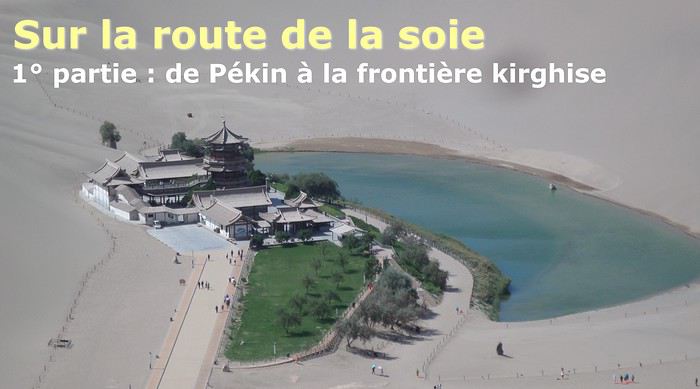
The Chinese Far West More than 30 years after my first trip to eastern China, I finally fulfilled an old dream: traveling solo from Beijing to the far west, discovering Xinjiang, the Uyghur people and the oppression they endure, the oases of Turpan and Kashgar, the Taklamakan Desert, the end of the Great Wall... The route was covered by train.
MENU PART 1: CHINA
1- Beijing (Jiankou) : the authentic Great Wall, without tourists 2- Cycling in Beijing, the best way to get around 3- Beijing : departure for the far west 4- Jiayuguan : getting by without English 5- Jiayuguan : scams and heritage 6- Dunhuang : abundance in the middle of the desert 7- Turpan : the Uyghurs under heavy surveillance 8- Kashgar : love at first sight for the old city 9- Kashgar : China’s recipe for controlling the populace 10- Tashkurgan : what on earth was I thinking going there! Kyrgyz border: a surreal epic Photo album from the 80s, contributions from other travelers (page 2)
1- JIANKOU Finding the authentic Great Wall, without tourists or a guide Friday, August 24, 2018 Thirty years later, I didn’t feel like revisiting the Great Wall at Badaling or any other overcrowded site. I chose to explore it at Jiankou, in its wildest, most authentic, and unrestored section, starting from a lost village deep in a valley—though it wasn’t *that* lost, since it had everything for communication.
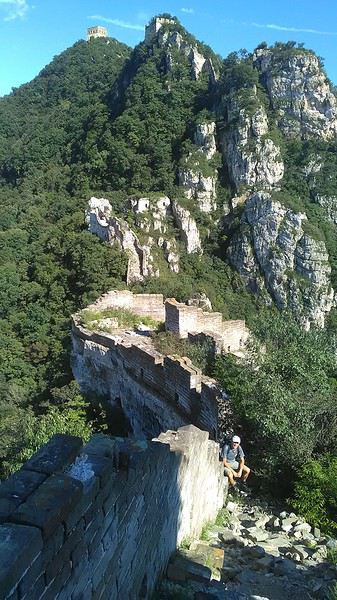
No need to pay for a taxi to get there—by timing it right, you can take the bus for just a few yuan. You have to get off at Xizhazi, the bus terminus. Be careful, there are only two buses a day in each direction. At the Xizhazi bus stop, I met a young couple who’d arrived with zero information about what to expect. We hiked the three of us toward the restored section of Mutianyu.
Still, be cautious With GPS and a topographic map (OpenTopoMap), you can set off without a problem or guide. The trail up to Jiankou is easy and well-marked. The trails down are too. But be careful—once you’re on the Wall, it’s real mountain hiking, with easy but dangerous climbing sections (over sheer drops). Not for amateurs or those afraid of heights! But what a reward. The Wall all to yourself, where it’s at its most daring. Truly mesmerizing.
More photos...
2- BEIJING The best way to get around the capital Sunday, August 26 The best way to explore the city is still by bike. Most are in a bike-share system, but you need to use an app—WeChat, the app that does everything, like monitoring your every move. No way I was installing that.
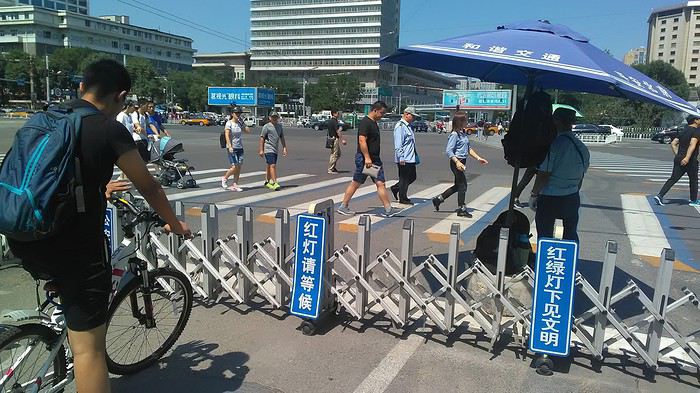
I found one at a rental shop near the hostel. The key is to quickly learn local traffic customs to minimize risks. Bike lanes are wide along the avenues.
But you still have to: - Watch out for anything parked on the bike paths—the most annoying are people napping or talking on the phone in their cars - Keep an eye on everything coming the wrong way—the list is long - The worst is right turns on red, which in Chinese traffic rules seem to have priority Once you get the hang of it, it’s fine. The city is huge but flat, so you can just wing it.
3- BEIJING By train to the far west Sunday, August 26 Beijing West Station is the size and operates like an airport. With your e-ticket from the agency, you first have to pick up your ticket at the special "English" counter, after passing through security. With your ticket in hand, you have to exit and enter through the boarding waiting area—not the platform—after a second security check.
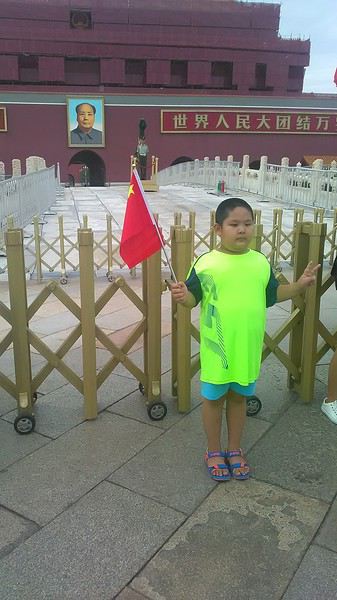 Then you find the right hall and wait for the sign to finally access the platform. In the end, it works pretty well given the incredible number of passengers to manage. Everywhere in Beijing, I saw that the Chinese have mastered crowd flow management.
Nice surprise: second-class carriages are clean, air-conditioned, and bright. Perfect, since I was in for 20 hours. One uniformed attendant per carriage, mobile meal service—luxury! Small downside: no luggage space. Hauling your suitcase up to the top bunk is quite a workout. I was in the middle, so it wasn’t too bad. The landscape, though, whether rural or urban, is pretty bleak. That should change once we leave the eastern plains.
Of course, I got my first police visit, with a thorough passport check and bag search. I was warned—going to the Chinese far west exposes you to this kind of hassle. But they were polite and respectful.
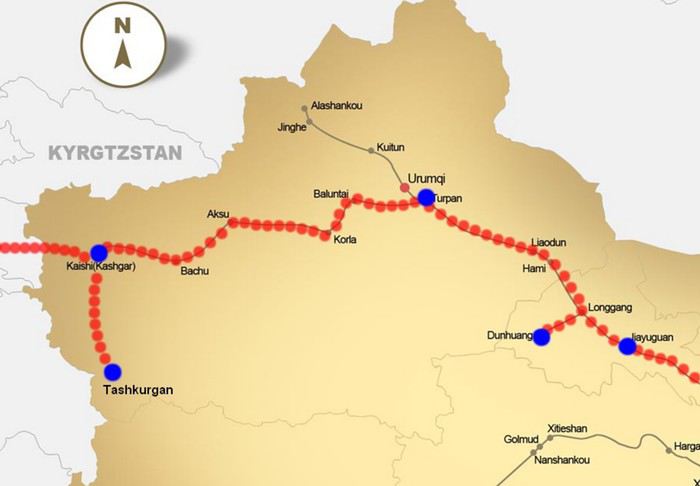 The Chinese Far West
4- JIAYUGUAN Getting by without English Monday, August 27 At the gates of two deserts (Gobi and Taklamakan) and at the foot of the Tibetan highlands, the Great Wall ends at Jiayuguan. Here, I found the deeper China I’d somewhat rediscovered during my bike ride, even if now everyone gets around on electric bikes and I’m no longer stared at like an alien.
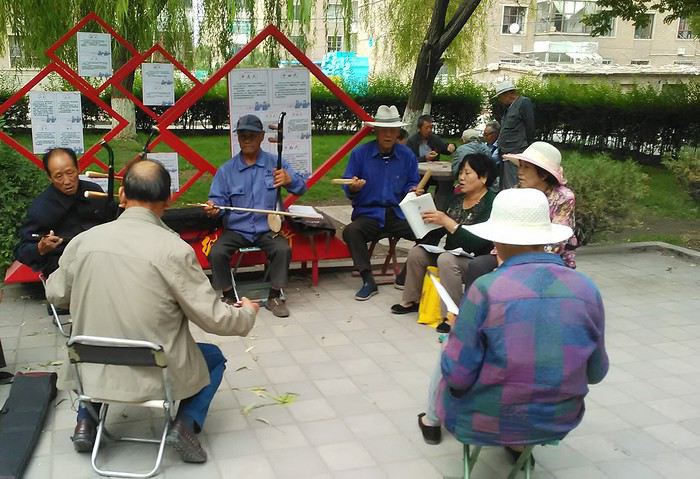
Prices are nothing like Beijing: you can find a full meal for 2 €, and my bike cost 7 € for two days. Plus, few people speak English—neither the owner of the HI hostel where I stayed, nor the ticket sellers at the sites, let alone the servers at the small eateries where I ate. Everything is written in Chinese. So I had to use the little Chinese I know to communicate about essentials. It makes the locals laugh to see a European trying to speak their language, but it earns respect. With Google Translate’s help, I managed.
Rant: With their avenues blocked for construction for kilometers without warning, and new roads not yet on maps, I must’ve taken 15 km of detours. More photos...
5- JIAYUGUAN Scams and heritage Tuesday, August 28 The Great Wall doesn’t exactly end at the fort I visited yesterday but 10 km further, at the entrance to a river gorge at the foot of the mountains. All that’s left is a badly damaged tower (more like a mound of earth) and a section of clay wall, similar to the one I biked yesterday.
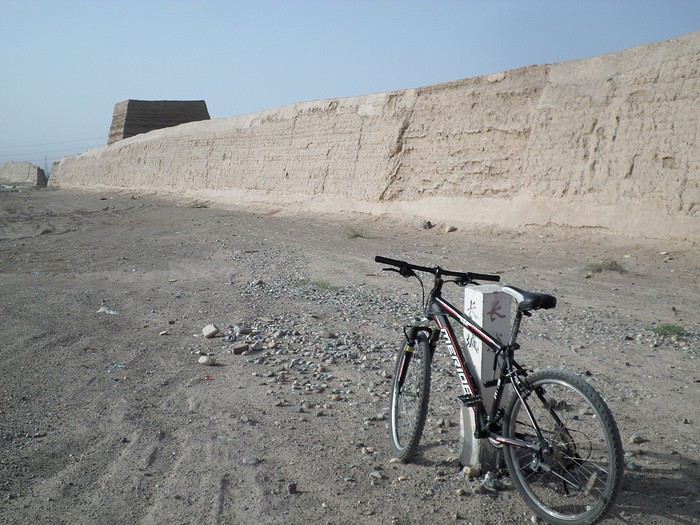
This morning, I hopped on my bike, determined to venture into the desert to see this highly symbolic site. First, you access it via a wide, brand-new road with not a soul in sight. Just before the site, I came across a grand welcome gate, very period-style, but it’s actually the inevitable toll booth.
Behind the gate, the road continues straight to the site, which you can see in the distance—at least 2 km away—the remains of the tower and wall. I had to leave my bike here. Fine. I went to the ticket counter and asked the price: 120 yuan! I couldn’t believe it—over 15 € for a simple mound of earth.
I showed my displeasure to the attendant, who couldn’t care less, and immediately turned back. 120 yuan—that’s the price for a new road, a fancy gate planted 2 km before the site just to force you to take a shuttle, and employees with nothing to do all day... Now I understand why I didn’t meet anyone!
Heritage China is a bit pricey Generally, sites are expensive for the country’s standard of living, but travelers are supposed to have money, so why hold back? I even gave up on the Forbidden City—reservations required days in advance (or on the black market at an impossible price). I prefer to keep the memory of my first visit, when entry must’ve cost a few dozen cents, and there were only a handful of visitors.
This morning, I took a taxi to see remarkable tombs of common people from the 3rd to 6th centuries. They’re small vaulted caves made of painted bricks, depicting scenes of daily life. Very pretty and moving. But even here, though the price was more reasonable, I was left wanting—only one of the 16 tombs is open to visitors, and it’s apparently not the most beautiful.
The authentic China—at least what’s left of it... Wandering the impersonal avenues of the city, you stumble upon a market. There, you still find traditional China—small shops with questionable hygiene, Go players, musicians, and even a dental prosthetist. The last refuge for those untouched by modernity. More photos...
6- DUNHUANG Abundance in the middle of the desert Wednesday, August 29 Well, I thought the landscape would be less bleak as I headed west. Nope. The only distraction in this expanse of dark, clayey sand is the forests of pylons and wind turbines, plus wild camels racing each other.
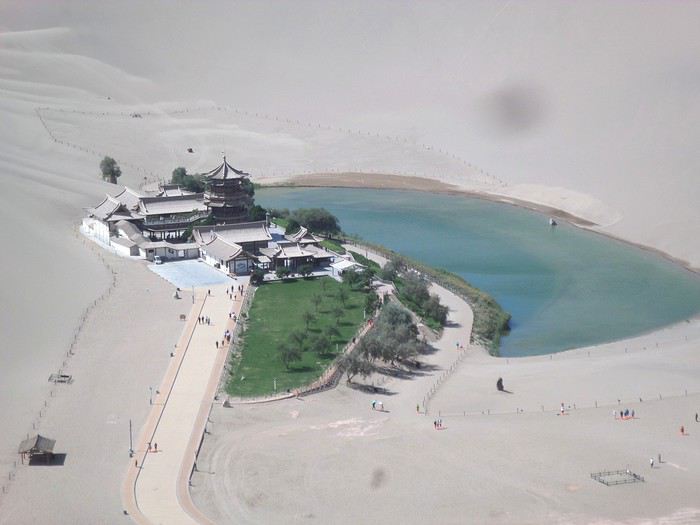 However, Dunhuang, the gateway to the Taklamakan, is by far the most pleasant Chinese city I know. There’s a real city center you can explore on foot. It’s hot but not unbearable, with a light, dry breeze. Much nicer than Beijing. The Han Chinese are still the majority, but the Muslim Uyghurs are more numerous, and the muezzin’s call to prayer echoes around the mosque.
The most surprising thing is the abundance and diversity of fruits and vegetables. You wonder how it all grows here. Well-irrigated, the desert sands are very fertile. Here, raisins have subtle, mysterious flavors, and the lamb really tastes like lamb.
Today, I visited the must-see Mingshashan, a dune complex next to which Pila is a molehill. The Basque Country, but covered in sand... More photos...
7- TURPAN The Uyghurs under heavy surveillance Friday, August 31 Surveillance cameras everywhere in the city, armed police stationed at intersections, in front of public buildings, at the entrance and inside tourist sites, police stations on every corner, patrols on foot or by car, khaki uniforms even for middle schoolers... here, the Han Chinese are in the minority, and you can feel it. Turpan feels like a city under siege.
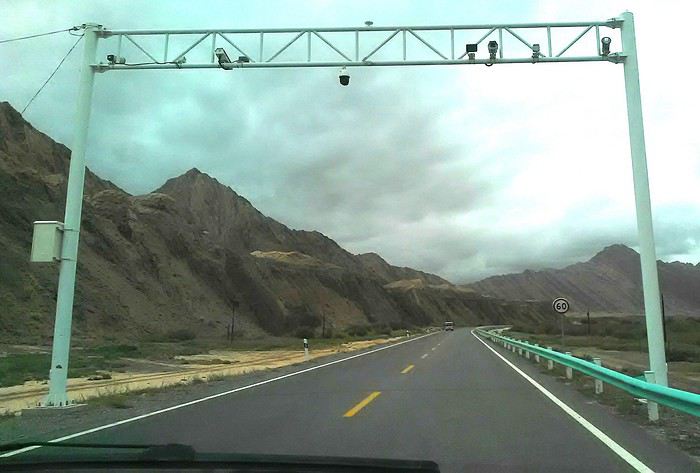
To enter the youth hostel where I stayed, there’s even a security gate, and the receptionist (a Han, like everyone in tourism) wears a bulletproof vest! Reassuring. Still, you don’t feel particularly threatened here, especially as a European. The troublemakers are the Chinese, not the Uyghurs. Generally, China is a very safe country for visitors.
Smile, you’re on camera! I was biking on an avenue when the car in front of me got flashed for driving slowly. I quickly understood why when I got flashed too.
Here, the official time is Beijing time, but it gets dark two hours later. It’ll be even worse in Kashgar. Trickier to manage: everything is displayed in Chinese and Arabic. Nothing in English. Choosing a menu is a shot in the dark. Apart from a few young Chinese, no one here speaks English, and my Chinese doesn’t seem very understandable...
Mogao, the end of the road for the Han Yesterday, near Dunhuang, I went to Mogao, a complex of decorated caves with Buddha sculptures and paintings. Stunning, but so crowded! Luckily, here in Turpan, Chinese tourists barely venture out. So I visited a Silk Road ghost town with only a handful of other visitors and under a howling wind.
The modern Chinese city is swallowing up the old Uyghur neighborhoods—only a museum-like district remains in the center, and pockets of resistance on the outskirts are doomed to disappear soon. More photos...
8- KASHGAR A (relative) love at first sight for the old city Sunday, September 2 After three overnight trains, here I am in the far west of China, nearly 4,000 km from the capital. Despite the omnipresent police and an old city preserved UNESCO-style, Kashgar is my Chinese love at first sight.
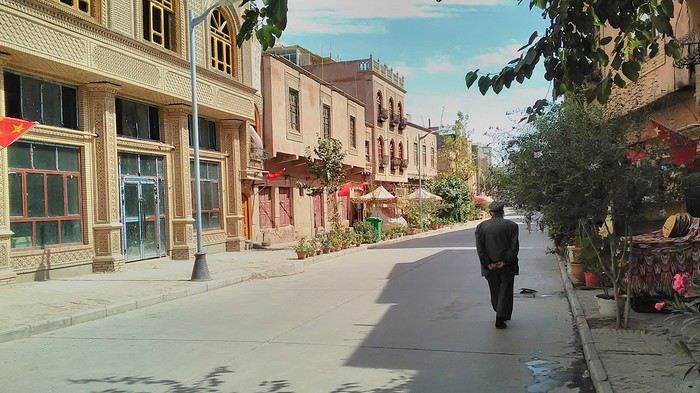
Finally, Chinese... well, sort of, because we’re in Uyghur territory here—a Turkic people with nothing culturally in common with the Han, the eastern Chinese. It started badly yesterday at Turfan station, where after three security gate passes, at least five passport checks, and a bag search, three adorable policewomen confiscated my antibacterial lotion because it had a flammable logo...
Then came the welcoming committee of armed cops at Kashgar station. Once all that was over, they left me alone—except you still have to go through security checks like everyone else to enter the old city, the bazaar, the livestock market... The further west you go, the more the siege mentality is evident. Luckily, the border isn’t far...
Despite the inevitable destruction-reconstruction, the city center has been well preserved. Thankfully, because it’s a very original style, a mix of local and colonial. I love it, even if it’s a bit too artificial, sanitized, and watered-down, and rather empty of residents. On the Silk Road, the city was famous for its great food. And it still is—rarely have I seen such richness and abundance of food! And not just scorpions or snakes. More photos...
9- KASHGAR China’s recipe for controlling the populace Saturday, September 1 Xinjiang, along with Tibet, is a "sensitive" area of rebellion in the eyes of Chinese authorities. As a result, the state has these regions and their populations under total control. Tourists also feel the consequences, even if they’re not at risk of re-education camps.
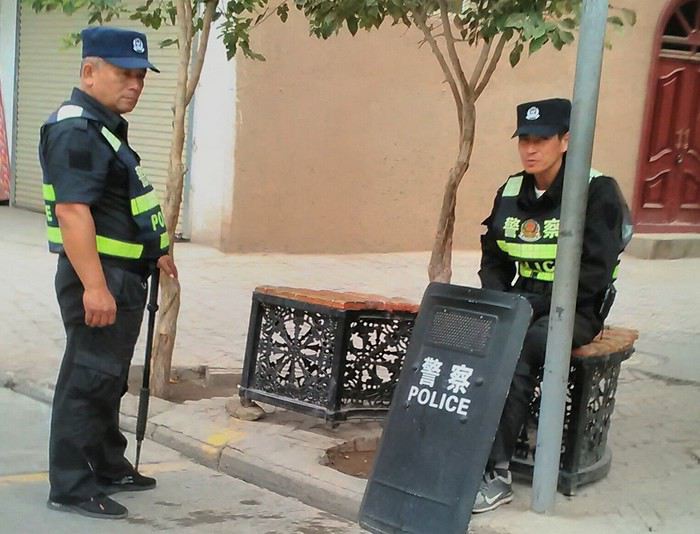 - Putting barbed wire and anti-ramming barriers around sensitive sites (schools, big hotels, government buildings...)
- Installing traffic surveillance gates with cameras and photo flashes (for all vehicles passing, including bikes) throughout the city and even in the countryside
- Posting uniformed guards with tasers, batons, or huge baseball bats every 100 meters
- Training the Han population (ethnic Chinese) in self-defense with sticks, preferably in the morning on the street. Men and women of all ages
- Starting school with the national anthem, doing military exercises, and receiving political indoctrination, all neatly lined up in the courtyard. (The dream school for any teacher)
- Placing a snitch in uniform (a pseudo-guard) in public gathering places, like youth hostels. Mine spends the day loafing around the courtyard
- Putting Chinese flags everywhere on the streets to remind everyone who’s in charge
- Installing security gates at every entrance to areas frequented by tourists (thanks for that) but not just there
- Never photographing cops, or else! I tried, but it’s not easy...
With all that, you can stroll around safely Not much crime! As for the amount the Chinese state spends to maintain such a system, it’s staggering! A third of the Han living in Xinjiang work in security. Today, I wandered freely around old Kashgar, which is quite large after all. More photos...
10- TASHKURGAN What on earth was I thinking going there! Wednesday, September 5 First, there’s the taxi—pretty crappy, with a driver who doesn’t speak a word of English and won’t stop smoking. Over six hours in that... shared with a completely out-of-it American.
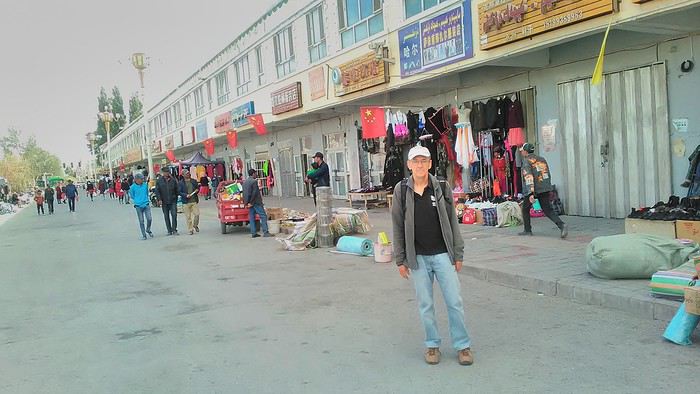
Then there are all the checkpoints along the way. I won’t go on—you know the drill by now.
After that, there’s Tashkurgan—a town with nothing to see, nothing to do. Deserted as soon as night falls. There’s this huge youth hostel and a few lost Chinese tapping away on their smartphones, chain-smoking. This lost American-European crowd, swapping tips on how to enter Pakistan or Tajikistan.
Luckily, there’s the Chinese Pamir Highway, lined with peaks over 7,000m. There’s the feeling of no longer being in China, with a population whose features are Middle Eastern. And these Tajik women with their stunning hairstyles and vibrant costumes. There’s the fact of having reached the westernmost Chinese city, far from crowds and tourist sites. A sort of end of the world. More photos...
11- KYRGYZ BORDER A surreal epic Thursday, September 6 The road from Kashgar to the Kyrgyzstan border is a little over 200 km and passes through beautiful landscapes of colorful, desert-like mountains with acrobatic folds. That’s the bucolic part of the trip.
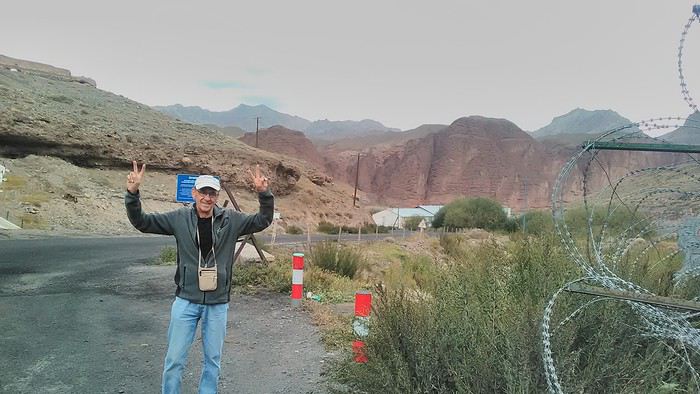 Yesterday, I managed to gather four people to rent a minibus to reach the border more easily: a Spaniard and an Argentine I’d already met in Turpan, and two New Zealanders who responded to the ad left at the hostel.
Absurdity and paranoia of Chinese authorities The highlight was crossing the town of Wuqia, 50 km past Kashgar. After tallying up with my fellow sufferers, we must’ve passed about ten checkpoints with: - Passport checks: 14 times, sometimes by two cops side by side - Bag checks: 4 times - Smartphone checks: 2 times, with deletion of "non-compliant" photos, and registration of your IMEI in the exit log!... Absurd and surreal at the same time, since my camera stayed in my bag, my apps are in French, and my photos have been online for ages...
With all that, we arrived just as the last checkpoint before the no man’s land marking the border between the two countries was on lunch break. And bam! Another 1.5-hour wait, alongside truckers who were much more used to this than we were.
What to think? The cops themselves aren’t fooled. They play the role they’re asked to, but sometimes you can coax a smile out of them—they realize how ridiculous the situation is.
What’s the point? That’s the big question my companions and I were tempted to answer with "to piss people off." To show you your place isn’t here, but with the other tourists, over there in the east, in Shanghai, Xi’an, or Guangzhou.
As for you, a traveler from a democratic country, you really experience this as aggression, humiliation, a violation of your private space. And yet, I’m respected, they speak to me properly. Today, I better understand what a Palestinian or a citizen of an occupied country might feel daily. A unique experience! Thanks, China.
And to top it off, the cherry on the cake! It’s still this glowing button you press to rate your passage after clearing the last obstacle before the exit stamp. I was so surprised it turned off before I could react. The Spaniard, with great humor and irony, had time to vote "excellent." In the end, he wasn’t wrong—you can hardly do better!
PS: I ditched my buddies at the border. They didn’t want to pay for a taxi to continue. So I took a direct taxi to Osh. The first 100 km are fabulous. I couldn’t take many photos, but I’ll be back on Monday to go to Tajikistan.
More photos...
The rest of the Silk Road, Part 2, in these travel journals: Kyrgyzstan, Tajikistan, Uzbekistan.
The Chinese Far West More than 30 years after my first trip to eastern China, I finally fulfilled an old dream: traveling solo from Beijing to the far west, discovering Xinjiang, the Uyghur people and the oppression they endure, the oases of Turpan and Kashgar, the Taklamakan Desert, the end of the Great Wall... The route was covered by train.
MENU PART 1: CHINA
1- Beijing (Jiankou) : the authentic Great Wall, without tourists 2- Cycling in Beijing, the best way to get around 3- Beijing : departure for the far west 4- Jiayuguan : getting by without English 5- Jiayuguan : scams and heritage 6- Dunhuang : abundance in the middle of the desert 7- Turpan : the Uyghurs under heavy surveillance 8- Kashgar : love at first sight for the old city 9- Kashgar : China’s recipe for controlling the populace 10- Tashkurgan : what on earth was I thinking going there! Kyrgyz border: a surreal epic Photo album from the 80s, contributions from other travelers (page 2)
1- JIANKOU Finding the authentic Great Wall, without tourists or a guide Friday, August 24, 2018 Thirty years later, I didn’t feel like revisiting the Great Wall at Badaling or any other overcrowded site. I chose to explore it at Jiankou, in its wildest, most authentic, and unrestored section, starting from a lost village deep in a valley—though it wasn’t *that* lost, since it had everything for communication.
No need to pay for a taxi to get there—by timing it right, you can take the bus for just a few yuan. You have to get off at Xizhazi, the bus terminus. Be careful, there are only two buses a day in each direction. At the Xizhazi bus stop, I met a young couple who’d arrived with zero information about what to expect. We hiked the three of us toward the restored section of Mutianyu.
Still, be cautious With GPS and a topographic map (OpenTopoMap), you can set off without a problem or guide. The trail up to Jiankou is easy and well-marked. The trails down are too. But be careful—once you’re on the Wall, it’s real mountain hiking, with easy but dangerous climbing sections (over sheer drops). Not for amateurs or those afraid of heights! But what a reward. The Wall all to yourself, where it’s at its most daring. Truly mesmerizing.
More photos...
2- BEIJING The best way to get around the capital Sunday, August 26 The best way to explore the city is still by bike. Most are in a bike-share system, but you need to use an app—WeChat, the app that does everything, like monitoring your every move. No way I was installing that.
I found one at a rental shop near the hostel. The key is to quickly learn local traffic customs to minimize risks. Bike lanes are wide along the avenues.
But you still have to: - Watch out for anything parked on the bike paths—the most annoying are people napping or talking on the phone in their cars - Keep an eye on everything coming the wrong way—the list is long - The worst is right turns on red, which in Chinese traffic rules seem to have priority Once you get the hang of it, it’s fine. The city is huge but flat, so you can just wing it.
3- BEIJING By train to the far west Sunday, August 26 Beijing West Station is the size and operates like an airport. With your e-ticket from the agency, you first have to pick up your ticket at the special "English" counter, after passing through security. With your ticket in hand, you have to exit and enter through the boarding waiting area—not the platform—after a second security check.
Then you find the right hall and wait for the sign to finally access the platform. In the end, it works pretty well given the incredible number of passengers to manage. Everywhere in Beijing, I saw that the Chinese have mastered crowd flow management.Nice surprise: second-class carriages are clean, air-conditioned, and bright. Perfect, since I was in for 20 hours. One uniformed attendant per carriage, mobile meal service—luxury! Small downside: no luggage space. Hauling your suitcase up to the top bunk is quite a workout. I was in the middle, so it wasn’t too bad. The landscape, though, whether rural or urban, is pretty bleak. That should change once we leave the eastern plains.
Of course, I got my first police visit, with a thorough passport check and bag search. I was warned—going to the Chinese far west exposes you to this kind of hassle. But they were polite and respectful.
The Chinese Far West4- JIAYUGUAN Getting by without English Monday, August 27 At the gates of two deserts (Gobi and Taklamakan) and at the foot of the Tibetan highlands, the Great Wall ends at Jiayuguan. Here, I found the deeper China I’d somewhat rediscovered during my bike ride, even if now everyone gets around on electric bikes and I’m no longer stared at like an alien.
Prices are nothing like Beijing: you can find a full meal for 2 €, and my bike cost 7 € for two days. Plus, few people speak English—neither the owner of the HI hostel where I stayed, nor the ticket sellers at the sites, let alone the servers at the small eateries where I ate. Everything is written in Chinese. So I had to use the little Chinese I know to communicate about essentials. It makes the locals laugh to see a European trying to speak their language, but it earns respect. With Google Translate’s help, I managed.
Rant: With their avenues blocked for construction for kilometers without warning, and new roads not yet on maps, I must’ve taken 15 km of detours. More photos...
5- JIAYUGUAN Scams and heritage Tuesday, August 28 The Great Wall doesn’t exactly end at the fort I visited yesterday but 10 km further, at the entrance to a river gorge at the foot of the mountains. All that’s left is a badly damaged tower (more like a mound of earth) and a section of clay wall, similar to the one I biked yesterday.
This morning, I hopped on my bike, determined to venture into the desert to see this highly symbolic site. First, you access it via a wide, brand-new road with not a soul in sight. Just before the site, I came across a grand welcome gate, very period-style, but it’s actually the inevitable toll booth.
Behind the gate, the road continues straight to the site, which you can see in the distance—at least 2 km away—the remains of the tower and wall. I had to leave my bike here. Fine. I went to the ticket counter and asked the price: 120 yuan! I couldn’t believe it—over 15 € for a simple mound of earth.
I showed my displeasure to the attendant, who couldn’t care less, and immediately turned back. 120 yuan—that’s the price for a new road, a fancy gate planted 2 km before the site just to force you to take a shuttle, and employees with nothing to do all day... Now I understand why I didn’t meet anyone!
Heritage China is a bit pricey Generally, sites are expensive for the country’s standard of living, but travelers are supposed to have money, so why hold back? I even gave up on the Forbidden City—reservations required days in advance (or on the black market at an impossible price). I prefer to keep the memory of my first visit, when entry must’ve cost a few dozen cents, and there were only a handful of visitors.
This morning, I took a taxi to see remarkable tombs of common people from the 3rd to 6th centuries. They’re small vaulted caves made of painted bricks, depicting scenes of daily life. Very pretty and moving. But even here, though the price was more reasonable, I was left wanting—only one of the 16 tombs is open to visitors, and it’s apparently not the most beautiful.
The authentic China—at least what’s left of it... Wandering the impersonal avenues of the city, you stumble upon a market. There, you still find traditional China—small shops with questionable hygiene, Go players, musicians, and even a dental prosthetist. The last refuge for those untouched by modernity. More photos...
6- DUNHUANG Abundance in the middle of the desert Wednesday, August 29 Well, I thought the landscape would be less bleak as I headed west. Nope. The only distraction in this expanse of dark, clayey sand is the forests of pylons and wind turbines, plus wild camels racing each other.
However, Dunhuang, the gateway to the Taklamakan, is by far the most pleasant Chinese city I know. There’s a real city center you can explore on foot. It’s hot but not unbearable, with a light, dry breeze. Much nicer than Beijing. The Han Chinese are still the majority, but the Muslim Uyghurs are more numerous, and the muezzin’s call to prayer echoes around the mosque.The most surprising thing is the abundance and diversity of fruits and vegetables. You wonder how it all grows here. Well-irrigated, the desert sands are very fertile. Here, raisins have subtle, mysterious flavors, and the lamb really tastes like lamb.
Today, I visited the must-see Mingshashan, a dune complex next to which Pila is a molehill. The Basque Country, but covered in sand... More photos...
7- TURPAN The Uyghurs under heavy surveillance Friday, August 31 Surveillance cameras everywhere in the city, armed police stationed at intersections, in front of public buildings, at the entrance and inside tourist sites, police stations on every corner, patrols on foot or by car, khaki uniforms even for middle schoolers... here, the Han Chinese are in the minority, and you can feel it. Turpan feels like a city under siege.
To enter the youth hostel where I stayed, there’s even a security gate, and the receptionist (a Han, like everyone in tourism) wears a bulletproof vest! Reassuring. Still, you don’t feel particularly threatened here, especially as a European. The troublemakers are the Chinese, not the Uyghurs. Generally, China is a very safe country for visitors.
Smile, you’re on camera! I was biking on an avenue when the car in front of me got flashed for driving slowly. I quickly understood why when I got flashed too.
Here, the official time is Beijing time, but it gets dark two hours later. It’ll be even worse in Kashgar. Trickier to manage: everything is displayed in Chinese and Arabic. Nothing in English. Choosing a menu is a shot in the dark. Apart from a few young Chinese, no one here speaks English, and my Chinese doesn’t seem very understandable...
Mogao, the end of the road for the Han Yesterday, near Dunhuang, I went to Mogao, a complex of decorated caves with Buddha sculptures and paintings. Stunning, but so crowded! Luckily, here in Turpan, Chinese tourists barely venture out. So I visited a Silk Road ghost town with only a handful of other visitors and under a howling wind.
The modern Chinese city is swallowing up the old Uyghur neighborhoods—only a museum-like district remains in the center, and pockets of resistance on the outskirts are doomed to disappear soon. More photos...
8- KASHGAR A (relative) love at first sight for the old city Sunday, September 2 After three overnight trains, here I am in the far west of China, nearly 4,000 km from the capital. Despite the omnipresent police and an old city preserved UNESCO-style, Kashgar is my Chinese love at first sight.
Finally, Chinese... well, sort of, because we’re in Uyghur territory here—a Turkic people with nothing culturally in common with the Han, the eastern Chinese. It started badly yesterday at Turfan station, where after three security gate passes, at least five passport checks, and a bag search, three adorable policewomen confiscated my antibacterial lotion because it had a flammable logo...
Then came the welcoming committee of armed cops at Kashgar station. Once all that was over, they left me alone—except you still have to go through security checks like everyone else to enter the old city, the bazaar, the livestock market... The further west you go, the more the siege mentality is evident. Luckily, the border isn’t far...
Despite the inevitable destruction-reconstruction, the city center has been well preserved. Thankfully, because it’s a very original style, a mix of local and colonial. I love it, even if it’s a bit too artificial, sanitized, and watered-down, and rather empty of residents. On the Silk Road, the city was famous for its great food. And it still is—rarely have I seen such richness and abundance of food! And not just scorpions or snakes. More photos...
9- KASHGAR China’s recipe for controlling the populace Saturday, September 1 Xinjiang, along with Tibet, is a "sensitive" area of rebellion in the eyes of Chinese authorities. As a result, the state has these regions and their populations under total control. Tourists also feel the consequences, even if they’re not at risk of re-education camps.
- Putting barbed wire and anti-ramming barriers around sensitive sites (schools, big hotels, government buildings...)
- Installing traffic surveillance gates with cameras and photo flashes (for all vehicles passing, including bikes) throughout the city and even in the countryside
- Posting uniformed guards with tasers, batons, or huge baseball bats every 100 meters
- Training the Han population (ethnic Chinese) in self-defense with sticks, preferably in the morning on the street. Men and women of all ages
- Starting school with the national anthem, doing military exercises, and receiving political indoctrination, all neatly lined up in the courtyard. (The dream school for any teacher)
- Placing a snitch in uniform (a pseudo-guard) in public gathering places, like youth hostels. Mine spends the day loafing around the courtyard
- Putting Chinese flags everywhere on the streets to remind everyone who’s in charge
- Installing security gates at every entrance to areas frequented by tourists (thanks for that) but not just there
- Never photographing cops, or else! I tried, but it’s not easy...With all that, you can stroll around safely Not much crime! As for the amount the Chinese state spends to maintain such a system, it’s staggering! A third of the Han living in Xinjiang work in security. Today, I wandered freely around old Kashgar, which is quite large after all. More photos...
10- TASHKURGAN What on earth was I thinking going there! Wednesday, September 5 First, there’s the taxi—pretty crappy, with a driver who doesn’t speak a word of English and won’t stop smoking. Over six hours in that... shared with a completely out-of-it American.
Then there are all the checkpoints along the way. I won’t go on—you know the drill by now.
After that, there’s Tashkurgan—a town with nothing to see, nothing to do. Deserted as soon as night falls. There’s this huge youth hostel and a few lost Chinese tapping away on their smartphones, chain-smoking. This lost American-European crowd, swapping tips on how to enter Pakistan or Tajikistan.
Luckily, there’s the Chinese Pamir Highway, lined with peaks over 7,000m. There’s the feeling of no longer being in China, with a population whose features are Middle Eastern. And these Tajik women with their stunning hairstyles and vibrant costumes. There’s the fact of having reached the westernmost Chinese city, far from crowds and tourist sites. A sort of end of the world. More photos...
11- KYRGYZ BORDER A surreal epic Thursday, September 6 The road from Kashgar to the Kyrgyzstan border is a little over 200 km and passes through beautiful landscapes of colorful, desert-like mountains with acrobatic folds. That’s the bucolic part of the trip.
Yesterday, I managed to gather four people to rent a minibus to reach the border more easily: a Spaniard and an Argentine I’d already met in Turpan, and two New Zealanders who responded to the ad left at the hostel.Absurdity and paranoia of Chinese authorities The highlight was crossing the town of Wuqia, 50 km past Kashgar. After tallying up with my fellow sufferers, we must’ve passed about ten checkpoints with: - Passport checks: 14 times, sometimes by two cops side by side - Bag checks: 4 times - Smartphone checks: 2 times, with deletion of "non-compliant" photos, and registration of your IMEI in the exit log!... Absurd and surreal at the same time, since my camera stayed in my bag, my apps are in French, and my photos have been online for ages...
With all that, we arrived just as the last checkpoint before the no man’s land marking the border between the two countries was on lunch break. And bam! Another 1.5-hour wait, alongside truckers who were much more used to this than we were.
What to think? The cops themselves aren’t fooled. They play the role they’re asked to, but sometimes you can coax a smile out of them—they realize how ridiculous the situation is.
What’s the point? That’s the big question my companions and I were tempted to answer with "to piss people off." To show you your place isn’t here, but with the other tourists, over there in the east, in Shanghai, Xi’an, or Guangzhou.
As for you, a traveler from a democratic country, you really experience this as aggression, humiliation, a violation of your private space. And yet, I’m respected, they speak to me properly. Today, I better understand what a Palestinian or a citizen of an occupied country might feel daily. A unique experience! Thanks, China.
And to top it off, the cherry on the cake! It’s still this glowing button you press to rate your passage after clearing the last obstacle before the exit stamp. I was so surprised it turned off before I could react. The Spaniard, with great humor and irony, had time to vote "excellent." In the end, he wasn’t wrong—you can hardly do better!
PS: I ditched my buddies at the border. They didn’t want to pay for a taxi to continue. So I took a direct taxi to Osh. The first 100 km are fabulous. I couldn’t take many photos, but I’ll be back on Monday to go to Tajikistan.
More photos...
The rest of the Silk Road, Part 2, in these travel journals: Kyrgyzstan, Tajikistan, Uzbekistan.
Obtention du visa iranien par Trabzon (Turquie) puis transport maritime vers Oman (à vélo)
bonjour
en vue d un tour du monde fin 2020 ( vive la retraite ) j aimerais renseignement sur obtention visa iranien je pense arriver par Trabzon puis direction Bazargan ou autre point de passage rejoindre Téhéran et direction sud pour aller territoire d Oman avant de rejoindre New Delhi par avion si des voyageurs ont fait a vélo un parcours semblable en partie ou complet
merci a tous
guy
Show off our bikes!
Some people have questions about choosing a touring bike, so those who are equipped can post a photo here and describe their ride—its strengths and, of course, its flaws.
I’ll go first!
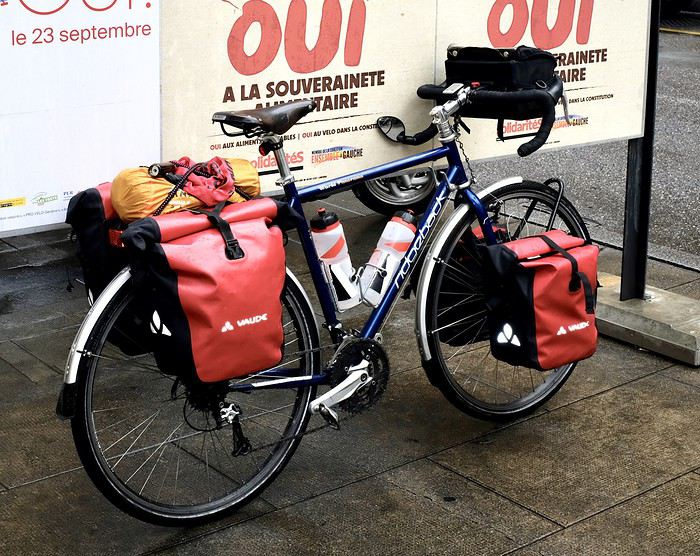
Here’s the beast: a Ridgeback Panorama model, around 10 years old, bought second-hand from a cyclist who’d picked the wrong size. Steel frame in Reynolds 725 (it’s written on it, but I doubt the whole set is that series). Gear ranges from XT for the rear derailleur to some cheaper parts. Three chainrings and sturdy but heavy wheels. Here with 35mm tires—plenty for gravel paths and the occasional rougher trail (as long as you don’t ride like a sausage!).
What I’ve modified: - Upgraded from 9 to 10 speeds when I changed the cassette - Installed two Tubus racks—the rear replaced the original aluminum one (which got bent) - Moved the shifters to the frame instead of the brake/shift combos, which were getting in the way of my handlebar bag - Swapped the saddle for a Brooks B17 (the original one didn’t suit me at all) Over time, some wear-and-tear parts have been replaced.
It’s comfy and sturdy but heavy (almost 14kg). Downsides? It’s a bit sluggish when you stand up to pedal—the chainring rubs against the front derailleur cage (the bottom bracket lacks rigidity). Definitely not a climber’s bike! The cantilever brakes are a tad weak—you get used to them, but you’ve gotta anticipate.
We’ve had some great rides together, but it’ll soon be on the market since I’m replacing it with a custom Cattin. I won’t sell it for much—it’ll make someone happy...
I’ll go first!
Here’s the beast: a Ridgeback Panorama model, around 10 years old, bought second-hand from a cyclist who’d picked the wrong size. Steel frame in Reynolds 725 (it’s written on it, but I doubt the whole set is that series). Gear ranges from XT for the rear derailleur to some cheaper parts. Three chainrings and sturdy but heavy wheels. Here with 35mm tires—plenty for gravel paths and the occasional rougher trail (as long as you don’t ride like a sausage!).
What I’ve modified: - Upgraded from 9 to 10 speeds when I changed the cassette - Installed two Tubus racks—the rear replaced the original aluminum one (which got bent) - Moved the shifters to the frame instead of the brake/shift combos, which were getting in the way of my handlebar bag - Swapped the saddle for a Brooks B17 (the original one didn’t suit me at all) Over time, some wear-and-tear parts have been replaced.
It’s comfy and sturdy but heavy (almost 14kg). Downsides? It’s a bit sluggish when you stand up to pedal—the chainring rubs against the front derailleur cage (the bottom bracket lacks rigidity). Definitely not a climber’s bike! The cantilever brakes are a tad weak—you get used to them, but you’ve gotta anticipate.
We’ve had some great rides together, but it’ll soon be on the market since I’m replacing it with a custom Cattin. I won’t sell it for much—it’ll make someone happy...
Qui pour l'Algérie à vélo cette année?
Salut,
Alors voilà, tout est dans le titre 😉
Nomades d'Iran
Des Nomades
grosso modo, de nos jours, environs 2% de la population iranienne est nomad; IL y a un siècle, c'était environ 25% et ainsi, le mode de vie nomade est une partie importante de la culture iranienne. malheureusement, ces 2% vont s'éteindre dans quelques années. il existe différentes tribus de nomades tels que Qhashqaii, Bakhtiari et ainsi de suite, qui sont dispersés dans tout l'Iran; dépendant des saisons (en fait de la météo), ils changent constamment de lieu. mais la plupart des nomades vivent dans le centre de Zagros (chaînes de montagnes de Zagros) où la nature nourrit leur bétail (le bétail est la principale source de revenus). ce sont les endroits où personnellement j'ai rencontré des nomades: au pied de la montagne Sahand ... ( au sud de Tabriz), koohrang ( aux alentours de Shahr-e Kord, Gachsaran (au sud-ouest de Shiraz), Eqlid ( au nord de Shiraz), Qaleh Babak ( au nord-ouest de Tabriz ), Nahawand (au sud d'Hamadan), Firuz Abad ( au sud de Shiraz)...
les photos sont prises par mes voyageurs
Sicily to France by bike via Puglia to the Lyon area
Hi there,
We’d like to take our bikes to Sicily in early April for Easter, then cycle back home via Puglia to the Lyon area.
Has anyone got any tips?
1: How to get there? Train or ferry?
2: Camping or other options in big cities? Is it true that campsites are really expensive?
3: Recommended route
We’re open to all suggestions.
Thanks, and happy holidays!
Difficultés d'obtention d'un visa longue durée pour le Japon
Comme nos voyages précédents depuis 2013, nous prévoyons voyager à vélo durant 6 mois consécutifs en 2020 (avril à octobre).
En Extrême-Orient, nous pourrions ainsi combiner la Corée du Sud et le Japon (respectivement 1 mois et 5 mois ).
Or pour les voyageurs étrangers, le Japon exige un visa pour les séjours excédant 90 jours sur leur territoire. A l'analyse, leurs exigences semblent compliquées, voir en fin de texte quelques exemples des documents demandés.
Comme nous voyageons à vélo, en itinérance, que nos hébergements ne sont pas connus à l'avance, que nous logeons chez l'habitant de temps à autres et que nous campons souvent, que nos trajets et nos plans sont en perpétuelle évolution, il me semble bien compliqué de documenter adéquatement nos demandes de visas au Consulat du Japon à leur satisfaction.
Qui parmi vous avez séjourné plus de 3 mois au Japon, en itinérance ? Comment avez-vous pu obtenir votre visa? Merci pour vos conseils et suggestions!
Quelques documents exigés pour supporter la demande visa au Japon: - Confirmation de votre réservation d'hôtel - Confirmation de votre réservation de billets d'avion ou votre itinéraire de vol L'itinéraire doit montrer clairement votre point de départ au Canada, le point d'arrivée au Japon, le point de départ du Japon, votre point d'arrivée au Canada, ainsi que tout autre endroit que vous visiterez au cours de ce voyage. - Programme de séjour:
Le programme doit comporter au moins une (1) ligne par jour passé au Japon, incluant le jour d'arrivée et le jour du départ; le programme d'un séjour de 12 jours doit donc comporter 12 lignes au minimum. Assurez-vous de donner suffisamment de détails; "visiter Tokyo" n'est pas une entrée acceptable.
Invitation pour le visa biélorusse et frontière Biélorussie/Lituanie
Bonjour,
Je vais entamer très prochainement les démarches pour obtenir le visa biélorusse à Paris. Il me faut une invitation pour l'obtenir ( je compte entrer en Biélorussie par la frontière terrestre depuis la Pologne, via Brest ). L'un ou l'une d'entre vous aurait-il un contact fiable et réactif sur place pour la recevoir dans des délais assez brefs ? Autre question : y-a-t-il un poste frontière ouvert pour les ressortissants de l'Union Européenne entre la Biélorussie et la Lituanie ? Merci.
L.
Voyage en Eurasie à vélo et visas longue durée
Bonjour,
Je commence doucement à préparer mon prochain voyage à vélo en direction de l'Asie Centrale. Départ de France, cap au nord-est vers les Etats Baltes, un crochet par la Biélorussie puis traversée de la Russie Occidentale et du Kazakhstan. Je souhaiterais obtenir les visas pour ces 3 pays avant de partir pour minimiser mon temps d'attente si je les demande en route. Le visa de touriste classique d'un mois pour la Russie et les 30 jours offerts pour le Kazakhstan ne me seront pas suffisants. Idéalement j'aimerais disposer de 3 mois de séjour pour chacun de ces 2 pays afin d'avoir de la flexibilité ( visa de type business ? ). Je compte faire les démarches à Paris. Des conseils pour mes dossiers ? Puis-je faire ça en solo ou le recours à une agence spécialisée s'impose-t-il ?
L.
Ferry entre la Turquie (Tasucu) et le Liban (Tripoli)
Bonjour, je suis actuellement en turwuie en souhaite rejoindre leliban sans prendre d'avion, j'ai entendu parler d'un ferry entre tasucu et tripoli mais ne trouve pas d'information concrète, est ce que vous savez si celui ci existe toujours et si oui ou puis je trouver un billet ?
Dans le cas ou il n'existe plus est ce que le passage par la côte syrienne est "safe"?
Merci beaucoup.
Merci beaucoup.
L'Afrique de l'Ouest à vélo du Cape Sud (Agulhas) au Cape Nord et visas
Bonjour,
Je prépare un voyage en vélo, sur une année, qui va du Cape Sud (Agulhas) au Cape Nord, ce projet d'aventure bien avancé bute sur le montage de dossier pour les futurs visa aux Congo Cameroun et Gabon.
Je cherche des personnes expatriés ou originaires ayant une adresse dans ces pays pour me faire la lettre d'invitation indispensable .
Merci d'avance
Conseils pour parcours Taliouine-Tissint à vélo
Bonsoir,
Nous préparons un voyage à vélo au Maroc trois semaines à Noël avec nos filles de 12 et 14 ans. Parcours qui se dessine : Taliouine - Tissint - Foum Zguig - Zagora ...
Nous aimerions avoir l'avis de personnes ayant déjà parcouru ce coin à vélo (Cube18, Transilien, kikilecyclo, ....) Pour la partie Taliouine-Tissint, nous pensions initialement suivre la P1743 pour éviter les montées et descentes (en nous faisant déposer à 30km de Taliouine au point le plus haut) . Mais je croyais que c'était de la piste alors que c'est a priori du goudron et je viens de lire que ce n'était pas forcement tres joli. Que nous conseilleriez vous pour cette partie. Sachant que nous cherchons surtout les endroits à l'écart, les villages perdus qui favorisent les rencontres, que nous n'aimons pas les montées mais que nous n'avons pas de scrupules à nous faire monter par un véhicule, que nous n'envisageons pas plus de 40 km par jour….
Merci bien Corinne
Balade au Pakistan en vélo
quelqu'un aurait il des infos récentes sur le Pakistan entre lahore et karachi: est on autorisé à voyager en vélo le long de la plaine de l'Indus?