Results for "Asie+du+Nord-Est+sécurité"
About 110,866 results.
More options
Many results are in French, the community’s main language. English translations are added over time.
Search results
Moto et bateau en Birmanie
Nous souhaiterions louer un scoot sur Mandalay. Quelqu'un a-t-il des adresses ? Est-ce dangereux ? (nous l'avons déjà fait en Thaïlande et au Cambodge).
Nous avons prévu de faire Mandalay-Bagan en speed boat (voyage fin février- 13 mars). Cela vaut - il vraiment le coup ? Les avis étant partagés, nous hésitons...
Marijose7
Gîtes ou bed and breakfast au Costa Rica ou au Panama?
Bonjour !
Des gites, ou des "bed and breakfast"....l'idée n'est pas nouvelle et bon nombre d'entre vous y a déjà sans doute pensé 😛
Ce que nous recherchons, ce sont des témoignages de gens qui l'ont fait...
Peut-on en vivre correctement ?
Tous les témoignages, positifs ou négatifs, seraient les bienvenus.
En France par exemple, on sait que c'est juste un complément de revenus...
Nous avons lu quelque part qu'au Costa Rica, il faut investir au moins 200 000 dollars pour avoir la carte de résident. Ca nous parait logique, compte tenu des prix de l'immobilier, mais est-ce toujours d'actualité ?
Y a-t'il toujours un marché pour ça ?
bref, nous sommes preneurs de toutes infos.
Voyager seule en Birmanie?
Bonjour,
après avoir voyagé en Indonésie, puis Vietnam (toute seule avec mon sac à dos), je me posais la question de savoir si la Birmanie était faisable aussi facilement que ces 2 précédents pays. Est-ce qu'il est facile de se déplacer, trouver des logements sans réservation, et surtout y a t'il des risques aux vues du contexte politique particulier de ce pays, d'autant plus pour une fille seule ?
Je souhaite retourner en Asie. Après, je suis ouverte à vos conseils sur les autres destinations de la région envisageable facilement !!!
Merci d'avance !
après avoir voyagé en Indonésie, puis Vietnam (toute seule avec mon sac à dos), je me posais la question de savoir si la Birmanie était faisable aussi facilement que ces 2 précédents pays. Est-ce qu'il est facile de se déplacer, trouver des logements sans réservation, et surtout y a t'il des risques aux vues du contexte politique particulier de ce pays, d'autant plus pour une fille seule ?
Je souhaite retourner en Asie. Après, je suis ouverte à vos conseils sur les autres destinations de la région envisageable facilement !!!
Merci d'avance !
Un 4 x4 français en Birmanie!
 Des FRANÇAIS avec leur propre véhicule 4 X 4 immatriculé en France en BIRMANIE MYANMAR faisant le tour de l’Asie.
Vous ne rêvez pas ! L’exploit est tellement rare… Nous avons rencontré des Français, dans une voiture Française ! ( Land Rover immatriculé dans le département 74) faisant tranquillement le tour de l’Asie.
Rien ne les arrête, même pas la Chine, encore moins la Birmanie… nous les avons rencontrés par hasard au bord du Lac Inlé heureux comme des Rois, avec leur voiture aménagée pour faire un ptit tour et puis reviens.
Thierry et Coralie avec lesquels nous avons passé une soirée, nous racontent qu’ils n’ont pas eus de soucis particuliers pour avoir les visas. Ceci étant, fier de leur exploit ils n’en diront pas plus…histoire de préserver le mystère.
Pour la petite histoire quand même, après un séjour au milieu du Lac dans des maisons sur pilotis, nous avons retrouvé nos guides restés à terre. Nos deux accompagnateurs, guide et chauffeur ont été sérieusement questionnés pendant notre absence par la police Birmane afin de connaître les raisons du dîner que nous avons fait ensemble avec les Français…
Des FRANÇAIS avec leur propre véhicule 4 X 4 immatriculé en France en BIRMANIE MYANMAR faisant le tour de l’Asie.
Vous ne rêvez pas ! L’exploit est tellement rare… Nous avons rencontré des Français, dans une voiture Française ! ( Land Rover immatriculé dans le département 74) faisant tranquillement le tour de l’Asie.
Rien ne les arrête, même pas la Chine, encore moins la Birmanie… nous les avons rencontrés par hasard au bord du Lac Inlé heureux comme des Rois, avec leur voiture aménagée pour faire un ptit tour et puis reviens.
Thierry et Coralie avec lesquels nous avons passé une soirée, nous racontent qu’ils n’ont pas eus de soucis particuliers pour avoir les visas. Ceci étant, fier de leur exploit ils n’en diront pas plus…histoire de préserver le mystère.
Pour la petite histoire quand même, après un séjour au milieu du Lac dans des maisons sur pilotis, nous avons retrouvé nos guides restés à terre. Nos deux accompagnateurs, guide et chauffeur ont été sérieusement questionnés pendant notre absence par la police Birmane afin de connaître les raisons du dîner que nous avons fait ensemble avec les Français…

Chapeau !
http://www.voyage-aroundtheworld.com/
Trois filles au bénin?
Bonjour à toute.
Nous sommes trois filles et nous apprétons de partir au bénin, un pays que nous connaissons en partie. Le seul problème est que nous ne sommes jamais parties sans hommes en notre companie. Nous savons qu'il sera un peu plus dur d'obtenir les renseignements que nous désirons, nous n'aurons pas le repsect qui serait donné à un homme, mais ce qui nous inquiète le plus concerne la sécurité.
Si quelqu'un est déjà parti au bénin entre filles, ca serait gentil de nous faire partager votre expérience.
Merci beaucoup.
Nous sommes trois filles et nous apprétons de partir au bénin, un pays que nous connaissons en partie. Le seul problème est que nous ne sommes jamais parties sans hommes en notre companie. Nous savons qu'il sera un peu plus dur d'obtenir les renseignements que nous désirons, nous n'aurons pas le repsect qui serait donné à un homme, mais ce qui nous inquiète le plus concerne la sécurité.
Si quelqu'un est déjà parti au bénin entre filles, ca serait gentil de nous faire partager votre expérience.
Merci beaucoup.
Uganda: 20 days discovering authenticity
Preamble:
For summer 2019, the idea was to return to Africa. We had already been to Namibia in 2017 (+ a few days in Botswana and the end of the trip at Victoria Falls), which we loved, and a trip to Asia in 2018 (Borneo, Perhentian, and Singapore), a nature-focused trip but a bit disappointing due to environmental destruction. The desire to return to Africa was very strong. We wanted a change of scenery, nature, discoveries, to step out of our little comfort zone (a bit, anyway!) and experience travel differently. In short, we dreamed of authenticity, and we weren’t disappointed.
We traveled as a family of four with our daughters, aged 19 and 17. When the urge for Africa hit, Uganda quickly stood out, especially for the chance to see rare animals, particularly the famous mountain gorillas. When I looked into the budget, I was quickly disheartened. It’s really expensive. Too expensive… Then, after reading a few trip reports on "VoyageForum" (thanks Muriel J!), I decided to ask a local agency for a quote. The first contact was very friendly and responsive, and the initial offer for two weeks fit our budget :). A few images gathered from the internet (especially Sipi Falls) finally convinced us all. I asked for an adapted offer with a few more sites to extend the trip to three weeks and cover a fairly complete visit to the country (which, of course, increased the budget! To stay within an acceptable range, we prioritized activities over accommodations and regularly chose the cheapest options, with 2-3 nice lodges in between). It’s booked! We were in October 2018, and the first thing to do was reserve permits to see the gorillas and chimpanzees. Then, the agency took care of all the bookings except for the international flights, which we booked with Ethiopian Airlines. A few months of waiting to look forward to… and a little worry too! Two events didn’t reassure us: the kidnapping of an American tourist by four men at the DRC border and the Ebola outbreak in Congo, with confirmed cases in Uganda by mid-June…
Here we are in July, and departure is approaching. The suitcases are packed (warm clothes, long, short, dark, light, practical, sun, rain, hiking/trekking shoes, flip-flops—clothes for every situation! Don’t forget: headlamp (essential!), binoculars, cameras), and we’re ready.
One day before departure, our agency Mpolampola, through its manager Paul, informs us that he won’t be the one taking care of us during the trip but another guide named Moses. He has a big problem with a vehicle and can’t do otherwise. For us, as long as everything is okay, no worries, especially since I had read glowing reviews about Moses, who turned out to be a very pleasant guide, cautious (most important) on the road, clear about all the activities, and an expert on birds, his specialty. We briefly met Paul in the middle of the trip, who is also very friendly. In short, we 100% recommend this agency. Flights to Entebbe went smoothly; we arrived around 10:30 AM, filled out health forms (Ebola information signs everywhere), visas, baggage claim, and met Moses, who took us directly to the vehicle. It was in pretty good condition with huge tires (we’d understand why later!), but it had quite a few miles (400,000 on the odometer!). Just missing a seatbelt… Okay, it’s Africa!
Now, here’s our day-by-day itinerary, which I’ll summarize briefly with ratings for each activity: ****TOPISSIME (Amazing) ***Very good **Good *Meh
Day 1) Departure from the airport at 11:45 AM for some currency exchange. Stop along the way at the equator for a meal and souvenir photo! Arrival at Lake Mburo Park *** around 5:00 PM. Even before entering the park, we saw lots of antelopes, zebras, elks, etc.—it’s magnificent. On the way, we had already encountered many goats and cows, and we were impressed by their enormous horns. We enjoyed a nice game drive until about 7:00 PM, when we reached our lodge, one of the nicest of the trip, Eagle’s Nest ****, with a magnificent view, a tent with a nice bathroom/shower, and a very good meal.
Day 2) Departure at 7:00 AM for a game drive; we encountered many animals again, especially antelopes, zebras, and birds. There are no giraffes, lions, or cheetahs in this park. We didn’t get lucky enough to see a leopard… :-) Then, we continued to Lake Bunyonyi ***, where the road and views are very beautiful, but we were shocked to see locals (mostly women and children) breaking stones by hand on the mountainside in very precarious safety conditions. There are regularly dramatic accidents because, over time, entire sections detach and cause landslides. These stones are then used for road construction… Another world… This was the only place we saw this. Lake Bunyonyi is a nice stop (but less exotic in our opinion since we have many lakes back home too!). We took a boat to our accommodation, Byoona Amagara ***, which has a lot of charm. We stayed in huts called "geodomes," completely open to nature, so it was very cool at night. To reach the toilets located below, you had to be brave! The meal consisted of lake shrimp—good but a bit bland.
Day 3) After a good breakfast, departure at 9:00 AM to visit three islands. We took several nice walks with beautiful views of the lake and islands. A local meal was served on the last island. At 1:00 PM, we met Moses for the rest of the program and headed to Ruhija in Bwindi Forest****. The landscapes are breathtaking. After two hours of driving and many photo stops, we arrived at our accommodation near the trekking starting point, Ruhija Gorilla Friends Resort **. We stayed in a room instead of the initially planned tents, which was just as well because there was a lot of wind during the night. We still had time for an activity and decided to meet the Bwata pygmies despite the bad reviews in the guide… The first part of the visit was quite nice, with a visit to a school where the children gave us a very joyful welcome. We had a great time listening to them sing and dance! Then we met the Bwata pygmies who live on the edge of the forest. When Bwindi Forest was declared a national park, they had to leave their habitat because their activities weren’t compatible with nature and wildlife protection. We left on a somewhat sad note… The visit ended with a local doctor explaining different medicinal plants, and we watched the making of local beer from sorghum. Good meal. We had butterflies in our stomachs—tomorrow was a big day! I admit I was a bit stressed, not entirely confident in my physical abilities…
Day 4) After a short night due to excitement, breakfast, and departure at 7:30 AM. First, it started calmly with singing and dancing. Then, a 15-minute briefing and group assignments. No one asked if we had any physical problems or anything (when booking, I had inquired a bit, and they told me groups were assigned based on physical abilities). We were assigned to the Mukiza group. At first, I was pretty happy—it was a fairly large group with babies :). The ranger explained that for now, they didn’t know where the gorillas were… the trackers couldn’t find them… Oh… (that’s not a good sign!!!) We set off at a good pace, first on a reasonably sloped path. We were accompanied by a family of four Italians and five porters (four for us!). After an hour, the ranger stopped us and informed us they still couldn’t find them—they had fought with another group the day before and scattered throughout the forest, so they were very far away, and we needed to move faster… Hmm… we picked up the pace (we weren’t going slowly before!!!) and walked for another good hour—down, up, down again, up again, we kept going, but always more or less on paths. Then another stop. A 10-minute break waiting for news. The news wasn’t very precise, it seemed! The ranger decided to cut through the forest—machetes were used to clear the path. We descended unimaginable slopes, then climbed back up. Our stick kept getting stuck; luckily, our porter helped us, held our hands, and the terrain was vertical! An hour later, another stop: we heard gorilla cries (yay!!!). False hope—we waited again for news from the trackers, who informed our ranger that it was a non-habituated family, so we couldn’t see them. Cold shower—we had to go all the way back up and return to the starting point to maybe see another group. But time was running out… We arrived around 1:30 PM; all the other groups had already left long ago. Our guide was worried because we still had a long drive ahead. We quickly ate a banana, and off we went for another trek (I was exhausted!). Luckily, this group was close—about 45 minutes of steep descent (I was already thinking about the climb back and considering being adopted by a gorilla ). The forest was sublime, with magnificent tree ferns—the place was truly splendid. Finally, we were there. The porters stayed behind, we grabbed our cameras, and followed the ranger. The progress wasn’t easy, but suddenly, a female was in front of us, curled up in a little ball, eating—so cute. The emotion overwhelmed us. But she moved away—it’s hard to observe them; they move constantly, and the terrain is very steep and uneven. We saw a female descending from a tree with a baby on her back—too adorable. Then, here was the silverback, enormous, incredible, yet so calm and peaceful. He ate quietly and gave us a nice demonstration of nostril exploration! We could observe them for a good hour, but photographing them wasn’t easy because they kept moving, and we could barely stand! Toward the end, a large male (black back) suddenly stood up and decided to pass right where I was! I ended up in the bushes, and the male passed in front of me just a few centimeters away (he stepped on one of my daughters’ feet!) followed by the whole family. Just an exceptional moment. It was time to leave; we had to climb back up. I dreaded it because, I admit, I was exhausted. We finished the hike after 4:00 PM, exhausted but happy. The ranger gave us diplomas, and we didn’t linger because we still had a long drive—we needed to reach Ishasha before nightfall. Our guide was a bit stressed. If we were to do it again, we’d spend an extra night in Bwindi. However, it seems finishing so late is exceptional—it never happens, according to our guide! The road between Bwindi and Ishasha is sublime, with extraordinary landscapes, and despite the late hour, we regularly asked our guide to stop for photos. We arrived at Enjojo *** Lodge around 6:00 PM. The huts are located quite far from the reception and the bathrooms, a bit far from the huts, but otherwise, it was very nice.
Day 5) Departure at 8:00 AM after a good breakfast with the hope of seeing tree-climbing lions (no luck!). Overall, there weren’t many animals, and we arrived around 12:45 PM at our next stop, Parkview Safari Lodge ****, with a magnificent view, a beautiful family bungalow, and a good meal. We enjoyed a short relaxation by the lovely pool. At 4:00 PM, we left to see Kyambura Gorge *** and hike there. Unfortunately, this activity is no longer available, so we walked around the area—it was very beautiful. Back at the hotel, a little rest after the previous day wasn’t a bad idea! Reading, swimming, meals, and dances made the end of the day enjoyable.
Day 6) Departure at 6:30 AM—one of our daughters was sick (stomachache, cold sweats…). Safari in Queen Elizabeth ** (Kaseny Plains)—a bit disappointing. Stop by the salt lake with a nice view. A small market, but we weren’t thrilled by the crafts (overall, apart from some beautiful baskets/plates, there wasn’t much, and the wooden objects were, in our opinion, much less pretty than in Namibia). Then we took the crater road (27 km long) **** with magnificent landscapes. However, you absolutely must close the windows because it’s infested with tsetse flies. At noon, we arrived at Mweya, where we stayed in basic rooms, but the restaurant was well-placed with a beautiful view of the Kazinga Channel. At 2:00 PM, we enjoyed a magnificent cruise **** on the channel. Elephants, antelopes, crocodiles, hippos (including adorable babies), buffaloes, all kinds of birds. Wow!!! Two hours of pure bliss. Quiet end of the day playing cards with a view of the channel and elephants.
Day 7) Departure at 6:00 AM—still sick, we weren’t sure if it was due to the preventive treatment (Malarone) or something else… Another game drive in Queen Elizabeth (Kaseny Plains) and breakfast by the salt lake. Overall, we were a bit disappointed by this park. Then we took the road to Crater Lakes***, again with very beautiful landscapes. A hike of about an hour and a half allowed us to discover these beautiful crater lakes (the water mainly comes from the Rwenzoris). We crossed pretty villages and had nice encounters. End of the day at Tinka’s Home ****, with a family. We loved this place—very welcoming, where we took a cooking class with our hosts. A really great time. After the meal, we enjoyed African stories and dances. Really awesome.
Day 8) Departure at 7:30 AM for another highly anticipated discovery—the chimpanzees in Kibale Forest ****. We went to the meeting point and were split into groups of six, each with a guide. We saw three different groups, and for the last group, we followed a chimpanzee (slightly more comfortable running in the forest than we were!) that led us to the group. Their cries are very impressive, and we could observe them well, even though they were often high up in the trees. We were lucky enough to see two on the ground, very close to us. It was magnificent. End of the encounter and return to the starting point—it was noon. We went back to Tinka’s Home for the meal (delicious!). At 2:00 PM, we hiked in Bigodi Swamp ***, a marsh surrounded by beautiful vegetation, especially huge papyrus, and inhabited by many birds and monkeys. We saw, among others, black-and-white colobus monkeys, red colobus monkeys, and vervet monkeys. We also visited a basket-weaving workshop where we bought two beautiful baskets. Then a short stop in Fort Portal, where we stayed for two nights at Ruwenzori View Guesthouse ***, a nice place with a family room and very good communal meals.
Day 9) Departure at 8:00 AM for a hike in the Rwenzori****—it was a bit chaotic today. First, we had to exchange shillings because we wouldn’t have another chance in the following days. At the bank, employees went to get the bills by motorcycle from other buildings—it was quite surreal! And it took time! Then there was a misunderstanding between the organizer and me… I really wanted to see the region where chameleons are found in the Rwenzori—this region is south of the mountain range, and we were in the north! Anyway, the program included an ascent in the northern part with a positive elevation gain of over 1,500 meters… Talking to the guide scheduled for this hike (Noah), we explained that we really wanted to discover the vegetation and these famous chameleons, not necessarily achieve a physical feat… (we’d had enough!). The decision was made to go south, which meant quite a bit of driving. The hike was really enjoyable, with magnificent vegetation by the river. We saw three of the four chameleon species present, including the famous three-horned chameleon. The region is superb. We ended with a drink at Ruboni Camp, which has a magnificent view of the region (ideally, we should have stayed there). Two hours of driving to finish, and a good meal :).
Day 10) Departure at 8:00 AM—we had a long drive to Ziwa Rhino Ranch****. We passed through Hoima, had lunch in Masindi, and arrived in time for the rhino tracking walk. We could approach them closely on foot—it was impressive. We saw eight. Since we were staying on-site in the guesthouse **, we received precise safety instructions for moving between the rooms and the restaurant. And we quickly understood why!
Day 11) Departure at 6:00 AM for breakfast—surprise, in front of our room, several large rhinos were sleeping (we had also heard a lot of animal noises during the night—rhinos but also what seemed to be predators). So we had to take a detour to reach the restaurant! Second surprise—next to the restaurant, just three meters away at most, two mothers and their baby were also sleeping! Memorable! Then we had an appointment for the shoebill trek and canoe ride **** (package with the previous day’s walk). So there we were, in our boots, splashing through 30 cm of water in search of the shoebill (I really wanted to see one :))! It was really fun, and luck was on our side—a shoebill had just landed in the distance! We approached as best we could and observed it from afar. What a strange bird! There are very few left, and Uganda is one of the countries where the chances of seeing one are quite good. The tour continued with a canoe cruise where we saw a herd of cows (the famous ones with enormous horns) being swum as a dowry to the father of the future bride! A funny spectacle. This stop wasn’t the most anticipated, but we all thought it was really worth the detour. Road to Murchison Falls Park, and arrival around noon at Red Chili Rest Camp **, where we stayed for two nights (family banda). Good meal. Then a cruise to Murchison Falls*** where we disembarked and continued on foot. It was pretty. Back to Red Chili.
Day 12) This morning, early departure for a cruise in search of the shoebill*** (booked in case we didn’t see one at Ziwa). The landscapes were pretty, but there weren’t many birds in the end. We spotted the chosen one from afar after the first 10 minutes—so the suspense didn’t last long :-) It was a nice activity but quite long—5 hours. In the afternoon, safari in Murchison Park****—this park is sublime, the landscapes fabulous. Really one of our favorite parts of the trip. Lots of animals and even a leopard spotted with binoculars because it was far away! Night at Red Chili.
Day 13) Departure for the first morning ferry—it was drizzling, the sky was threatening at first, so the landscape was spectacular! Beautiful contrasts. In the middle of the morning, we were lucky to observe a whole group of lions, first from afar, then with a little patience, the whole group approached until they passed beside and in front of our vehicle. What emotion and excitement! We could then observe large groups of giraffes. They were magnificent. The morning was incredible. Then we headed to our lodge, Fort Murchison ****, and on the way, we saw a whole group of elephants—the view was magnificent. We had a very good meal and enjoyed the pool a bit. We also met Paul, the organizer of our trip. Very nice :). In the late afternoon, off for a short safari in the park. We slept in very well-equipped tents.
Day 14) Today, we had a long drive to Kidepo Park. It was raining, which didn’t help our guide—according to him, the tracks near Kidepo turn to mud with rain and become difficult to navigate. We saw, among other things, a bus in a bad situation in the ditch. Some sections were really tricky, and we were glad to have a driver. The end of the trip—the landscape was spectacular and original, and we saw some traditional villages. We arrived at Kidepo quite late. Short safari in the park before reaching the accommodation. We booked two simple bandas in the park camp**. It was clean but didn’t hold up well in the rain . The restaurant was very nice, though.
Day 15) The day was dedicated to discovering Kidepo Park **** where the landscapes were again superb. First encounter with a lioness resting on a rock. We saw other lions later and observed them for a long time. There were almost no other tourists in the park. Our daughter wasn’t feeling well, and by the time we arrived at the lodge, she had a temperature of 39.5°C (103.1°F)… A nap was necessary. In the late afternoon, we returned to the spot where we had seen the lions that morning, and they were still there—they weren’t happy because rain was threatening! It was a great photo opportunity. Then came the downpour, and our driver urged us to return quickly because the tracks were becoming impassable. Indeed, a jeep was in the ditch… The return was eventful, and several times we slid without being able to do anything… Wow, what a day!
Day 16) No safari this morning because of impassable tracks—the road to Kotido*** was longer than expected as we had to take a detour. The landscapes along the way were surprising. We finally arrived around 1:00 PM at the accommodation and left at 3:00 PM to visit the largest manyatta in East Africa with two translators. It was incredible—a very beautiful experience. The manyatta is immense and has 28,000 inhabitants. Night at Karamojaarts guesthouse*—very average meal.
Day 17) Departure for Moroto****—on the way, we saw many bird species. Moroto doesn’t look like other Ugandan cities. Life there seems very pleasant. We arrived at Kara-Tunga and had a bite to eat. At 4:00 PM, we left to visit a Karamojong village. We enjoyed beautiful dances and watched communal games—it was fun and so authentic. Then we headed to a kraal (where shepherds and herds are) to set up our camp. Moses had to get used to the idea of sleeping in the tribe in a tent! It was incredible to find ourselves in this universe. The place was beautiful, and we had a great time with the Karamojong. Some had never seen white people… had never been in a car… Their culture is incredible. During the evening, around the fire, to our guide’s dismay (a bird enthusiast), they grilled hornbills! On our side, we ate a meal prepared by Kara-Tunga for our sensitive stomachs! Night in a tent.
Day 18) Dawn wake-up in the fog—the atmosphere was quite strange. Our daughter was attacked by a cow—fortunately, more fear than harm, but she ended up with a lot of thorns in her buttocks and thighs ! Then we left for the Mount Elgon region, specifically Sipi Falls****. Lacam Lodge****, perched on the edge of the cliff with a direct view of one of the falls, was just magnificent. The view and landscapes were fabulous. Big favorite. We had dinner and then went for a hike to visit the three falls in the region, partly in the rain. The landscapes were breathtaking! Sunset at Lacam Lodge with the sun setting over the waterfall. We couldn’t get enough and stayed to admire until nightfall!
Day 19) Visit to coffee plantations*** where we were given all the useful explanations to understand the culture and the incredible work required for this product, which is ultimately not very glorified. The visit was very interesting, and we drank very good coffee with the owners. Last photos at Lacam Lodge, and then departure for Jinja, where we arrived in the middle of the afternoon. We took a small cruise to see the source of the Nile*. Very touristy and not at all to our taste… Then a meal at Jinja Base Camp** where we enjoyed guacamole. Our guide Moses left us because another group was waiting for him!
Day 20) Road to Kampala***, the market, the Gaddafi Mosque. Short but interesting visit. Last meal in Entebbe by Lake Victoria, where we almost felt like we were by the sea. Transfer to the airport and return to Switzerland…
Epilogue: All four of us were enchanted by this trip, which will undoubtedly remain one of the most beautiful we’ve ever taken. Talking about it gives me chills and brings tears to my eyes. It was simply a magnificent experience. However, I wouldn’t recommend this trip to everyone because you often have to overlook small inconveniences like toilets (the worst of my life) and certain comfort details that, for us, remain details but could be important to others.
Our favorites: - The gorilla trek - The cruise on Kazinga Channel - The Fort Portal region - The Rwenzori Mountains - The chimpanzee trek - Murchison Falls - Kidepo - Spending time with the Karamojong tribe - The Sipi Falls region - The accommodations: Eagle’s Nest, Byonna Amagara, Parkview Lodge, Tinka’s Home, Rwenzori Guesthouse, Fort Murchison, Night in the kraal, and Lacam Lodge
What we liked less: - Queen Elizabeth Park - Jinja - The accommodations: Ziwa Rhino Ranch, Karamojaarts Guesthouse
I’ll try to post some photos later. If you have any questions about a future trip, I’d be happy to answer them.
For summer 2019, the idea was to return to Africa. We had already been to Namibia in 2017 (+ a few days in Botswana and the end of the trip at Victoria Falls), which we loved, and a trip to Asia in 2018 (Borneo, Perhentian, and Singapore), a nature-focused trip but a bit disappointing due to environmental destruction. The desire to return to Africa was very strong. We wanted a change of scenery, nature, discoveries, to step out of our little comfort zone (a bit, anyway!) and experience travel differently. In short, we dreamed of authenticity, and we weren’t disappointed.
We traveled as a family of four with our daughters, aged 19 and 17. When the urge for Africa hit, Uganda quickly stood out, especially for the chance to see rare animals, particularly the famous mountain gorillas. When I looked into the budget, I was quickly disheartened. It’s really expensive. Too expensive… Then, after reading a few trip reports on "VoyageForum" (thanks Muriel J!), I decided to ask a local agency for a quote. The first contact was very friendly and responsive, and the initial offer for two weeks fit our budget :). A few images gathered from the internet (especially Sipi Falls) finally convinced us all. I asked for an adapted offer with a few more sites to extend the trip to three weeks and cover a fairly complete visit to the country (which, of course, increased the budget! To stay within an acceptable range, we prioritized activities over accommodations and regularly chose the cheapest options, with 2-3 nice lodges in between). It’s booked! We were in October 2018, and the first thing to do was reserve permits to see the gorillas and chimpanzees. Then, the agency took care of all the bookings except for the international flights, which we booked with Ethiopian Airlines. A few months of waiting to look forward to… and a little worry too! Two events didn’t reassure us: the kidnapping of an American tourist by four men at the DRC border and the Ebola outbreak in Congo, with confirmed cases in Uganda by mid-June…
Here we are in July, and departure is approaching. The suitcases are packed (warm clothes, long, short, dark, light, practical, sun, rain, hiking/trekking shoes, flip-flops—clothes for every situation! Don’t forget: headlamp (essential!), binoculars, cameras), and we’re ready.
One day before departure, our agency Mpolampola, through its manager Paul, informs us that he won’t be the one taking care of us during the trip but another guide named Moses. He has a big problem with a vehicle and can’t do otherwise. For us, as long as everything is okay, no worries, especially since I had read glowing reviews about Moses, who turned out to be a very pleasant guide, cautious (most important) on the road, clear about all the activities, and an expert on birds, his specialty. We briefly met Paul in the middle of the trip, who is also very friendly. In short, we 100% recommend this agency. Flights to Entebbe went smoothly; we arrived around 10:30 AM, filled out health forms (Ebola information signs everywhere), visas, baggage claim, and met Moses, who took us directly to the vehicle. It was in pretty good condition with huge tires (we’d understand why later!), but it had quite a few miles (400,000 on the odometer!). Just missing a seatbelt… Okay, it’s Africa!
Now, here’s our day-by-day itinerary, which I’ll summarize briefly with ratings for each activity: ****TOPISSIME (Amazing) ***Very good **Good *Meh
Day 1) Departure from the airport at 11:45 AM for some currency exchange. Stop along the way at the equator for a meal and souvenir photo! Arrival at Lake Mburo Park *** around 5:00 PM. Even before entering the park, we saw lots of antelopes, zebras, elks, etc.—it’s magnificent. On the way, we had already encountered many goats and cows, and we were impressed by their enormous horns. We enjoyed a nice game drive until about 7:00 PM, when we reached our lodge, one of the nicest of the trip, Eagle’s Nest ****, with a magnificent view, a tent with a nice bathroom/shower, and a very good meal.
Day 2) Departure at 7:00 AM for a game drive; we encountered many animals again, especially antelopes, zebras, and birds. There are no giraffes, lions, or cheetahs in this park. We didn’t get lucky enough to see a leopard… :-) Then, we continued to Lake Bunyonyi ***, where the road and views are very beautiful, but we were shocked to see locals (mostly women and children) breaking stones by hand on the mountainside in very precarious safety conditions. There are regularly dramatic accidents because, over time, entire sections detach and cause landslides. These stones are then used for road construction… Another world… This was the only place we saw this. Lake Bunyonyi is a nice stop (but less exotic in our opinion since we have many lakes back home too!). We took a boat to our accommodation, Byoona Amagara ***, which has a lot of charm. We stayed in huts called "geodomes," completely open to nature, so it was very cool at night. To reach the toilets located below, you had to be brave! The meal consisted of lake shrimp—good but a bit bland.
Day 3) After a good breakfast, departure at 9:00 AM to visit three islands. We took several nice walks with beautiful views of the lake and islands. A local meal was served on the last island. At 1:00 PM, we met Moses for the rest of the program and headed to Ruhija in Bwindi Forest****. The landscapes are breathtaking. After two hours of driving and many photo stops, we arrived at our accommodation near the trekking starting point, Ruhija Gorilla Friends Resort **. We stayed in a room instead of the initially planned tents, which was just as well because there was a lot of wind during the night. We still had time for an activity and decided to meet the Bwata pygmies despite the bad reviews in the guide… The first part of the visit was quite nice, with a visit to a school where the children gave us a very joyful welcome. We had a great time listening to them sing and dance! Then we met the Bwata pygmies who live on the edge of the forest. When Bwindi Forest was declared a national park, they had to leave their habitat because their activities weren’t compatible with nature and wildlife protection. We left on a somewhat sad note… The visit ended with a local doctor explaining different medicinal plants, and we watched the making of local beer from sorghum. Good meal. We had butterflies in our stomachs—tomorrow was a big day! I admit I was a bit stressed, not entirely confident in my physical abilities…
Day 4) After a short night due to excitement, breakfast, and departure at 7:30 AM. First, it started calmly with singing and dancing. Then, a 15-minute briefing and group assignments. No one asked if we had any physical problems or anything (when booking, I had inquired a bit, and they told me groups were assigned based on physical abilities). We were assigned to the Mukiza group. At first, I was pretty happy—it was a fairly large group with babies :). The ranger explained that for now, they didn’t know where the gorillas were… the trackers couldn’t find them… Oh… (that’s not a good sign!!!) We set off at a good pace, first on a reasonably sloped path. We were accompanied by a family of four Italians and five porters (four for us!). After an hour, the ranger stopped us and informed us they still couldn’t find them—they had fought with another group the day before and scattered throughout the forest, so they were very far away, and we needed to move faster… Hmm… we picked up the pace (we weren’t going slowly before!!!) and walked for another good hour—down, up, down again, up again, we kept going, but always more or less on paths. Then another stop. A 10-minute break waiting for news. The news wasn’t very precise, it seemed! The ranger decided to cut through the forest—machetes were used to clear the path. We descended unimaginable slopes, then climbed back up. Our stick kept getting stuck; luckily, our porter helped us, held our hands, and the terrain was vertical! An hour later, another stop: we heard gorilla cries (yay!!!). False hope—we waited again for news from the trackers, who informed our ranger that it was a non-habituated family, so we couldn’t see them. Cold shower—we had to go all the way back up and return to the starting point to maybe see another group. But time was running out… We arrived around 1:30 PM; all the other groups had already left long ago. Our guide was worried because we still had a long drive ahead. We quickly ate a banana, and off we went for another trek (I was exhausted!). Luckily, this group was close—about 45 minutes of steep descent (I was already thinking about the climb back and considering being adopted by a gorilla ). The forest was sublime, with magnificent tree ferns—the place was truly splendid. Finally, we were there. The porters stayed behind, we grabbed our cameras, and followed the ranger. The progress wasn’t easy, but suddenly, a female was in front of us, curled up in a little ball, eating—so cute. The emotion overwhelmed us. But she moved away—it’s hard to observe them; they move constantly, and the terrain is very steep and uneven. We saw a female descending from a tree with a baby on her back—too adorable. Then, here was the silverback, enormous, incredible, yet so calm and peaceful. He ate quietly and gave us a nice demonstration of nostril exploration! We could observe them for a good hour, but photographing them wasn’t easy because they kept moving, and we could barely stand! Toward the end, a large male (black back) suddenly stood up and decided to pass right where I was! I ended up in the bushes, and the male passed in front of me just a few centimeters away (he stepped on one of my daughters’ feet!) followed by the whole family. Just an exceptional moment. It was time to leave; we had to climb back up. I dreaded it because, I admit, I was exhausted. We finished the hike after 4:00 PM, exhausted but happy. The ranger gave us diplomas, and we didn’t linger because we still had a long drive—we needed to reach Ishasha before nightfall. Our guide was a bit stressed. If we were to do it again, we’d spend an extra night in Bwindi. However, it seems finishing so late is exceptional—it never happens, according to our guide! The road between Bwindi and Ishasha is sublime, with extraordinary landscapes, and despite the late hour, we regularly asked our guide to stop for photos. We arrived at Enjojo *** Lodge around 6:00 PM. The huts are located quite far from the reception and the bathrooms, a bit far from the huts, but otherwise, it was very nice.
Day 5) Departure at 8:00 AM after a good breakfast with the hope of seeing tree-climbing lions (no luck!). Overall, there weren’t many animals, and we arrived around 12:45 PM at our next stop, Parkview Safari Lodge ****, with a magnificent view, a beautiful family bungalow, and a good meal. We enjoyed a short relaxation by the lovely pool. At 4:00 PM, we left to see Kyambura Gorge *** and hike there. Unfortunately, this activity is no longer available, so we walked around the area—it was very beautiful. Back at the hotel, a little rest after the previous day wasn’t a bad idea! Reading, swimming, meals, and dances made the end of the day enjoyable.
Day 6) Departure at 6:30 AM—one of our daughters was sick (stomachache, cold sweats…). Safari in Queen Elizabeth ** (Kaseny Plains)—a bit disappointing. Stop by the salt lake with a nice view. A small market, but we weren’t thrilled by the crafts (overall, apart from some beautiful baskets/plates, there wasn’t much, and the wooden objects were, in our opinion, much less pretty than in Namibia). Then we took the crater road (27 km long) **** with magnificent landscapes. However, you absolutely must close the windows because it’s infested with tsetse flies. At noon, we arrived at Mweya, where we stayed in basic rooms, but the restaurant was well-placed with a beautiful view of the Kazinga Channel. At 2:00 PM, we enjoyed a magnificent cruise **** on the channel. Elephants, antelopes, crocodiles, hippos (including adorable babies), buffaloes, all kinds of birds. Wow!!! Two hours of pure bliss. Quiet end of the day playing cards with a view of the channel and elephants.
Day 7) Departure at 6:00 AM—still sick, we weren’t sure if it was due to the preventive treatment (Malarone) or something else… Another game drive in Queen Elizabeth (Kaseny Plains) and breakfast by the salt lake. Overall, we were a bit disappointed by this park. Then we took the road to Crater Lakes***, again with very beautiful landscapes. A hike of about an hour and a half allowed us to discover these beautiful crater lakes (the water mainly comes from the Rwenzoris). We crossed pretty villages and had nice encounters. End of the day at Tinka’s Home ****, with a family. We loved this place—very welcoming, where we took a cooking class with our hosts. A really great time. After the meal, we enjoyed African stories and dances. Really awesome.
Day 8) Departure at 7:30 AM for another highly anticipated discovery—the chimpanzees in Kibale Forest ****. We went to the meeting point and were split into groups of six, each with a guide. We saw three different groups, and for the last group, we followed a chimpanzee (slightly more comfortable running in the forest than we were!) that led us to the group. Their cries are very impressive, and we could observe them well, even though they were often high up in the trees. We were lucky enough to see two on the ground, very close to us. It was magnificent. End of the encounter and return to the starting point—it was noon. We went back to Tinka’s Home for the meal (delicious!). At 2:00 PM, we hiked in Bigodi Swamp ***, a marsh surrounded by beautiful vegetation, especially huge papyrus, and inhabited by many birds and monkeys. We saw, among others, black-and-white colobus monkeys, red colobus monkeys, and vervet monkeys. We also visited a basket-weaving workshop where we bought two beautiful baskets. Then a short stop in Fort Portal, where we stayed for two nights at Ruwenzori View Guesthouse ***, a nice place with a family room and very good communal meals.
Day 9) Departure at 8:00 AM for a hike in the Rwenzori****—it was a bit chaotic today. First, we had to exchange shillings because we wouldn’t have another chance in the following days. At the bank, employees went to get the bills by motorcycle from other buildings—it was quite surreal! And it took time! Then there was a misunderstanding between the organizer and me… I really wanted to see the region where chameleons are found in the Rwenzori—this region is south of the mountain range, and we were in the north! Anyway, the program included an ascent in the northern part with a positive elevation gain of over 1,500 meters… Talking to the guide scheduled for this hike (Noah), we explained that we really wanted to discover the vegetation and these famous chameleons, not necessarily achieve a physical feat… (we’d had enough!). The decision was made to go south, which meant quite a bit of driving. The hike was really enjoyable, with magnificent vegetation by the river. We saw three of the four chameleon species present, including the famous three-horned chameleon. The region is superb. We ended with a drink at Ruboni Camp, which has a magnificent view of the region (ideally, we should have stayed there). Two hours of driving to finish, and a good meal :).
Day 10) Departure at 8:00 AM—we had a long drive to Ziwa Rhino Ranch****. We passed through Hoima, had lunch in Masindi, and arrived in time for the rhino tracking walk. We could approach them closely on foot—it was impressive. We saw eight. Since we were staying on-site in the guesthouse **, we received precise safety instructions for moving between the rooms and the restaurant. And we quickly understood why!
Day 11) Departure at 6:00 AM for breakfast—surprise, in front of our room, several large rhinos were sleeping (we had also heard a lot of animal noises during the night—rhinos but also what seemed to be predators). So we had to take a detour to reach the restaurant! Second surprise—next to the restaurant, just three meters away at most, two mothers and their baby were also sleeping! Memorable! Then we had an appointment for the shoebill trek and canoe ride **** (package with the previous day’s walk). So there we were, in our boots, splashing through 30 cm of water in search of the shoebill (I really wanted to see one :))! It was really fun, and luck was on our side—a shoebill had just landed in the distance! We approached as best we could and observed it from afar. What a strange bird! There are very few left, and Uganda is one of the countries where the chances of seeing one are quite good. The tour continued with a canoe cruise where we saw a herd of cows (the famous ones with enormous horns) being swum as a dowry to the father of the future bride! A funny spectacle. This stop wasn’t the most anticipated, but we all thought it was really worth the detour. Road to Murchison Falls Park, and arrival around noon at Red Chili Rest Camp **, where we stayed for two nights (family banda). Good meal. Then a cruise to Murchison Falls*** where we disembarked and continued on foot. It was pretty. Back to Red Chili.
Day 12) This morning, early departure for a cruise in search of the shoebill*** (booked in case we didn’t see one at Ziwa). The landscapes were pretty, but there weren’t many birds in the end. We spotted the chosen one from afar after the first 10 minutes—so the suspense didn’t last long :-) It was a nice activity but quite long—5 hours. In the afternoon, safari in Murchison Park****—this park is sublime, the landscapes fabulous. Really one of our favorite parts of the trip. Lots of animals and even a leopard spotted with binoculars because it was far away! Night at Red Chili.
Day 13) Departure for the first morning ferry—it was drizzling, the sky was threatening at first, so the landscape was spectacular! Beautiful contrasts. In the middle of the morning, we were lucky to observe a whole group of lions, first from afar, then with a little patience, the whole group approached until they passed beside and in front of our vehicle. What emotion and excitement! We could then observe large groups of giraffes. They were magnificent. The morning was incredible. Then we headed to our lodge, Fort Murchison ****, and on the way, we saw a whole group of elephants—the view was magnificent. We had a very good meal and enjoyed the pool a bit. We also met Paul, the organizer of our trip. Very nice :). In the late afternoon, off for a short safari in the park. We slept in very well-equipped tents.
Day 14) Today, we had a long drive to Kidepo Park. It was raining, which didn’t help our guide—according to him, the tracks near Kidepo turn to mud with rain and become difficult to navigate. We saw, among other things, a bus in a bad situation in the ditch. Some sections were really tricky, and we were glad to have a driver. The end of the trip—the landscape was spectacular and original, and we saw some traditional villages. We arrived at Kidepo quite late. Short safari in the park before reaching the accommodation. We booked two simple bandas in the park camp**. It was clean but didn’t hold up well in the rain . The restaurant was very nice, though.
Day 15) The day was dedicated to discovering Kidepo Park **** where the landscapes were again superb. First encounter with a lioness resting on a rock. We saw other lions later and observed them for a long time. There were almost no other tourists in the park. Our daughter wasn’t feeling well, and by the time we arrived at the lodge, she had a temperature of 39.5°C (103.1°F)… A nap was necessary. In the late afternoon, we returned to the spot where we had seen the lions that morning, and they were still there—they weren’t happy because rain was threatening! It was a great photo opportunity. Then came the downpour, and our driver urged us to return quickly because the tracks were becoming impassable. Indeed, a jeep was in the ditch… The return was eventful, and several times we slid without being able to do anything… Wow, what a day!
Day 16) No safari this morning because of impassable tracks—the road to Kotido*** was longer than expected as we had to take a detour. The landscapes along the way were surprising. We finally arrived around 1:00 PM at the accommodation and left at 3:00 PM to visit the largest manyatta in East Africa with two translators. It was incredible—a very beautiful experience. The manyatta is immense and has 28,000 inhabitants. Night at Karamojaarts guesthouse*—very average meal.
Day 17) Departure for Moroto****—on the way, we saw many bird species. Moroto doesn’t look like other Ugandan cities. Life there seems very pleasant. We arrived at Kara-Tunga and had a bite to eat. At 4:00 PM, we left to visit a Karamojong village. We enjoyed beautiful dances and watched communal games—it was fun and so authentic. Then we headed to a kraal (where shepherds and herds are) to set up our camp. Moses had to get used to the idea of sleeping in the tribe in a tent! It was incredible to find ourselves in this universe. The place was beautiful, and we had a great time with the Karamojong. Some had never seen white people… had never been in a car… Their culture is incredible. During the evening, around the fire, to our guide’s dismay (a bird enthusiast), they grilled hornbills! On our side, we ate a meal prepared by Kara-Tunga for our sensitive stomachs! Night in a tent.
Day 18) Dawn wake-up in the fog—the atmosphere was quite strange. Our daughter was attacked by a cow—fortunately, more fear than harm, but she ended up with a lot of thorns in her buttocks and thighs ! Then we left for the Mount Elgon region, specifically Sipi Falls****. Lacam Lodge****, perched on the edge of the cliff with a direct view of one of the falls, was just magnificent. The view and landscapes were fabulous. Big favorite. We had dinner and then went for a hike to visit the three falls in the region, partly in the rain. The landscapes were breathtaking! Sunset at Lacam Lodge with the sun setting over the waterfall. We couldn’t get enough and stayed to admire until nightfall!
Day 19) Visit to coffee plantations*** where we were given all the useful explanations to understand the culture and the incredible work required for this product, which is ultimately not very glorified. The visit was very interesting, and we drank very good coffee with the owners. Last photos at Lacam Lodge, and then departure for Jinja, where we arrived in the middle of the afternoon. We took a small cruise to see the source of the Nile*. Very touristy and not at all to our taste… Then a meal at Jinja Base Camp** where we enjoyed guacamole. Our guide Moses left us because another group was waiting for him!
Day 20) Road to Kampala***, the market, the Gaddafi Mosque. Short but interesting visit. Last meal in Entebbe by Lake Victoria, where we almost felt like we were by the sea. Transfer to the airport and return to Switzerland…
Epilogue: All four of us were enchanted by this trip, which will undoubtedly remain one of the most beautiful we’ve ever taken. Talking about it gives me chills and brings tears to my eyes. It was simply a magnificent experience. However, I wouldn’t recommend this trip to everyone because you often have to overlook small inconveniences like toilets (the worst of my life) and certain comfort details that, for us, remain details but could be important to others.
Our favorites: - The gorilla trek - The cruise on Kazinga Channel - The Fort Portal region - The Rwenzori Mountains - The chimpanzee trek - Murchison Falls - Kidepo - Spending time with the Karamojong tribe - The Sipi Falls region - The accommodations: Eagle’s Nest, Byonna Amagara, Parkview Lodge, Tinka’s Home, Rwenzori Guesthouse, Fort Murchison, Night in the kraal, and Lacam Lodge
What we liked less: - Queen Elizabeth Park - Jinja - The accommodations: Ziwa Rhino Ranch, Karamojaarts Guesthouse
I’ll try to post some photos later. If you have any questions about a future trip, I’d be happy to answer them.
Pourquoi cette condescendance vis-à-vis de Singapour?
La "Ville-Etat" suivant le poncif des journalistes: Singapour affiche une réussite éclatante:
Celle du bon goût dans ses réalisations architecturales, urbaines et ses jardins. Une réussite économique, sécuritaire, écologique, technologique, sanitaire, maîtrise de l'immigration, réussite du " vivre ensemble" de 3 communautés principales, même si ce n'est pas le grand amour entre elles.....
Et pourtant si vous évoquez Singapour et sa réussite on vous approuve du bout des lèvres, on évoque même la "face cachée" de Singapour.
Alors je suis un touriste de passage, je m'ébahis à chaque visite devant les réalisations de cet Etat. Qui peut me révéler la face cachée de Singapour? Qui peut me retirer mes illusions et mon admiration?
Je sais que par le passé le Gouvernement a utilisé à l'excès les pendaisons pour réprimer le traffic de drogue; la criminalité liée à ce traffic semble maintenant réduite et la jeunesse préservée. Je sais que Singapour pille ses voisins en important massivement du sable pour étendre son territoire.....Y a t'il plus grave? Le Gouvernement est très paternaliste, par exemple en taxant les Singapouriens jouant au casino, en interdisant le Chewing gum, ou forçant les travailleurs à garder intacts leur économies de retraite....Mais quoi d'autre? (Anecdote sur la propreté: J'étais allé au Bar du Raffles prendre un Singapore Sling, le sol était jonché d'écorces de cacahouète, j'ai demandé à un barman la raison de ce relâchement . Il me déclara: "C'est notre réaction silencieuse par rapport au "Trop de propreté")
Pourquoi cette condescendance ? La raison en est elle que cette réussite n'a pas éclos dans un pays d'Occident? Singapour est il le portait inversé de nos pays d'Occident où la crise sévit dans tous les domaines: Santé, économie, écologie, sécurité....
Comment ne pas admirer ses réalisations architecturales si l'on compare avec certaines capitales asiatiques assez laides? Quant à la pollution, la profusion de taxis à bas prix et au comportement très encadré, l'a éliminée. A Pékin on ne voit pas à 200 mètres. En technologie Singapour est un leader mondial pour le recyclage de l'eau......Quant à la Santé, l'Education...
Ce qui est remarquable à Singapour, c'est la détermination et la persistance de la Politique. Le pays embellit et s'enrichit à chaque visite. En France nous avions le Plan, beaucoup de réalisations ont été faites sous la IVè. Maintenant tout est au démantèlement depuis 20 ans, aux friches industrielles, à l'exode de nos Jeunes, à la Dette, aux brancards dans les Urgences; l'Etat ne réalise plus rien et taxe à l'infini pour nourrir l'ogre jamais rassassié qu'il est devenu, avec l'aide de ses Serviteurs, persuadés de la magie de leur Verbe. Affamé l'Etat va même faire la poche de ses sujets les plus pauvres.
Alors je suis un touriste de passage, je m'ébahis à chaque visite devant les réalisations de cet Etat. Qui peut me révéler la face cachée de Singapour? Qui peut me retirer mes illusions et mon admiration?
Je sais que par le passé le Gouvernement a utilisé à l'excès les pendaisons pour réprimer le traffic de drogue; la criminalité liée à ce traffic semble maintenant réduite et la jeunesse préservée. Je sais que Singapour pille ses voisins en important massivement du sable pour étendre son territoire.....Y a t'il plus grave? Le Gouvernement est très paternaliste, par exemple en taxant les Singapouriens jouant au casino, en interdisant le Chewing gum, ou forçant les travailleurs à garder intacts leur économies de retraite....Mais quoi d'autre? (Anecdote sur la propreté: J'étais allé au Bar du Raffles prendre un Singapore Sling, le sol était jonché d'écorces de cacahouète, j'ai demandé à un barman la raison de ce relâchement . Il me déclara: "C'est notre réaction silencieuse par rapport au "Trop de propreté")
Pourquoi cette condescendance ? La raison en est elle que cette réussite n'a pas éclos dans un pays d'Occident? Singapour est il le portait inversé de nos pays d'Occident où la crise sévit dans tous les domaines: Santé, économie, écologie, sécurité....
Comment ne pas admirer ses réalisations architecturales si l'on compare avec certaines capitales asiatiques assez laides? Quant à la pollution, la profusion de taxis à bas prix et au comportement très encadré, l'a éliminée. A Pékin on ne voit pas à 200 mètres. En technologie Singapour est un leader mondial pour le recyclage de l'eau......Quant à la Santé, l'Education...
Ce qui est remarquable à Singapour, c'est la détermination et la persistance de la Politique. Le pays embellit et s'enrichit à chaque visite. En France nous avions le Plan, beaucoup de réalisations ont été faites sous la IVè. Maintenant tout est au démantèlement depuis 20 ans, aux friches industrielles, à l'exode de nos Jeunes, à la Dette, aux brancards dans les Urgences; l'Etat ne réalise plus rien et taxe à l'infini pour nourrir l'ogre jamais rassassié qu'il est devenu, avec l'aide de ses Serviteurs, persuadés de la magie de leur Verbe. Affamé l'Etat va même faire la poche de ses sujets les plus pauvres.
Seule à Bali en août ou Ho-Chi-Minh-Ville en mars?
Bonjour à tous et toutes,
Très bonne année pleine de voyages !!!
J'ai déjà effectué des voyages sac à dos mais jamais seule. Cette année, j'ai 40 ans et comme cadeau d'anniversaire je voudrais m'offrir un voyage sympa. Je ne suis pas forcément trouillarde mais je partirai seule et j'ai clairement la tête d'une touriste européenne (blonde aux yeux bleus 😄). Je suis à la fois très excitée à l'idée de partir et un peu flippée... Et oui, je sors de ma zone de confort 😉
Mes objectifs : de beaux paysages, des gens sympas, un mélange contact avec les gens / culture / paysage, un peu de plongée sous marine (je suis niveau II) et de snorkelling, des balades, profiter du soleil et des plages pourquoi pas... Durée du séjour : environ 15 à 18 jours
Je suis tentée soit par : - en mars / début avril : le sud du Vietnam (j'ai déjà fait le nord en sac à dos) avec plongées à Phu Quoc et pourquoi pas une virée à Phnom Penh qui a l'air très chouette (j'ai "vu" Siemp Reap et Angkor), soit - en août / début septembre : Bali, le circuit classique (Denpasar, Ubud, Amed) et Gili Island pour la plongée. Je ne connais pas du tout l'Indonésie.
Pour ceux/celles qui ont effectué les deux destinations, auriez vous des conseils ? un avis ? une préférence ? J'avoue que ce n'est pas simple. D'un point de vue sécurité, que pensez vous de ces destinations ?
Merci beaucoup à vous tous
Très bonne année pleine de voyages !!!
J'ai déjà effectué des voyages sac à dos mais jamais seule. Cette année, j'ai 40 ans et comme cadeau d'anniversaire je voudrais m'offrir un voyage sympa. Je ne suis pas forcément trouillarde mais je partirai seule et j'ai clairement la tête d'une touriste européenne (blonde aux yeux bleus 😄). Je suis à la fois très excitée à l'idée de partir et un peu flippée... Et oui, je sors de ma zone de confort 😉
Mes objectifs : de beaux paysages, des gens sympas, un mélange contact avec les gens / culture / paysage, un peu de plongée sous marine (je suis niveau II) et de snorkelling, des balades, profiter du soleil et des plages pourquoi pas... Durée du séjour : environ 15 à 18 jours
Je suis tentée soit par : - en mars / début avril : le sud du Vietnam (j'ai déjà fait le nord en sac à dos) avec plongées à Phu Quoc et pourquoi pas une virée à Phnom Penh qui a l'air très chouette (j'ai "vu" Siemp Reap et Angkor), soit - en août / début septembre : Bali, le circuit classique (Denpasar, Ubud, Amed) et Gili Island pour la plongée. Je ne connais pas du tout l'Indonésie.
Pour ceux/celles qui ont effectué les deux destinations, auriez vous des conseils ? un avis ? une préférence ? J'avoue que ce n'est pas simple. D'un point de vue sécurité, que pensez vous de ces destinations ?
Merci beaucoup à vous tous
Votre avis sur la France
La France (j'allais dire notre pays , c'était oublier que le site VF est canadien, enfin c'est pas loin concernant les francophones, il s'agit de nos cousins😎), donc voilà ma réflexion: que vous ayez beaucoup voyagé ou pas, loin ou pas, à vélo, avec sac à dos (certains diraient bagpacker), en solo, en bivouac sauvage, en fréquentant les hôtels deux ou quatre étoiles, avec agence ou autrement, vous situez la France à quel niveau en matière d’intérêt touristique ou de voyage, car selon son point de vue j'ai constaté que l'on peut faire la différence entre touriste et voyageur?
Je vous livre en matière de préambule mon sentiment, la France c'est le top du top et de plus en France il y a un paradis sur Terre (certains diront que c'est un pays indépendant) la Corse. Je précise je ne suis pas corse, mais lyonnais qui ne jure que par les Vosges.
Au plaisir de vous lire Luc
Malaysia Airlines
Nous rentrons d'un voyage de 10 jours à BALI au départ de CDG avec Malaysia Airlines classe affaires, A380 :
Voici quelques commentaires :
Donc départ le 10 avril de CDG 1 à 12 heures précises comme indiqué sur notre billet. Nous nous étions "offert" la classe affaires vu que celle ci est légèrement plus chère que la classe économique d'AF
Enregistrement classique puis invitation au salon (lounge) commun avec AF, petit salon sans grand intérêt si ce n'est d'être au calme, petites collations et boissons avec et sans alcool. Avant notre enregistrement annonce du personnel du salon pour nous aider à trouver notre porte d'embarquement.
Nous avions les places 7H et 7J donc au niveau supérieur de l'avion, deuxième rangée, la première de 1 à 5 est au dessous.
Très bel accueil du personnel, beaux sièges et coffres à bagages et rangements importants.
Petit verre d'eau ou de jus de fruits (plusieurs choix) grand écran TV, couverture et surmatelas (pour mettre en dessous de soi). Pochette de soins de toilette et grande pantoufle. Démonstration de sécurité pendant le roulage.
Décollage impeccable puis peu de temps après, linge chaud pour nettoyage des mains et du visage et tout de suite après apéritifs avec ou sans alcool (beau choix) du champagne aux alcools classiques un peu déchu par le petit sachet de cacahuètes salés mais de suite des brochettes de boeuf et/ou poulet accompagné d'une délicieuse sauce chaude et brochet de légumes. Le repas est servi rapidement avec plusieurs choix de plats chauds, nappe et belle serviette blanches, repas très correct avec boissons et vins Français SVP, personnel très attentionné. Comme nous partions vers l'Est des le repas fini, on ferme les hublots et dodo pour tous, il est déjà tard en Malaysie......
Deux heures 30 avant l'atterissage, collation copieuse avec omelette au fromage, saucisse de viande Allal certainement mais c'est bien, fruits, yaourt, viennoisseries etc..... au total 12 h 30 de vol. Les sièges font lit totalement à plat, le personnel met le surmatelas en place ce qui permet d'être bien au chaud entre la couverture (couette) et le siège. Grand choix de films en plusieurs langues dont trois en Français.
Atterissage à l'heure à KUA LUMPUR (KUL) les bagages suivent car nous continuons sur DENPASAR, même compagnie. Avion B 777 même siège et même collation mais 2 h 50 de vol.
Pour le vol retour idem seulement un B 737 les sièges plus ordinaires et une heure de retard au départ de KUL 13 heures de vol, même prestation qu'à l'aller.
Nous sommes totalement satisfait de cette compagnie, c'est la première fois que nous prenions une compagnie d'Asie, c'est certain qu'il y a une grosse différence avec nos compagnies nationales et d'Amérique du Nord.
C'est dommage qu'aille pas au Canada et USA, AF aurait du soucis à se faire.
Nous recommandons totalement MALAYSIA AIRLINES.
Voici quelques commentaires :
Donc départ le 10 avril de CDG 1 à 12 heures précises comme indiqué sur notre billet. Nous nous étions "offert" la classe affaires vu que celle ci est légèrement plus chère que la classe économique d'AF
Enregistrement classique puis invitation au salon (lounge) commun avec AF, petit salon sans grand intérêt si ce n'est d'être au calme, petites collations et boissons avec et sans alcool. Avant notre enregistrement annonce du personnel du salon pour nous aider à trouver notre porte d'embarquement.
Nous avions les places 7H et 7J donc au niveau supérieur de l'avion, deuxième rangée, la première de 1 à 5 est au dessous.
Très bel accueil du personnel, beaux sièges et coffres à bagages et rangements importants.
Petit verre d'eau ou de jus de fruits (plusieurs choix) grand écran TV, couverture et surmatelas (pour mettre en dessous de soi). Pochette de soins de toilette et grande pantoufle. Démonstration de sécurité pendant le roulage.
Décollage impeccable puis peu de temps après, linge chaud pour nettoyage des mains et du visage et tout de suite après apéritifs avec ou sans alcool (beau choix) du champagne aux alcools classiques un peu déchu par le petit sachet de cacahuètes salés mais de suite des brochettes de boeuf et/ou poulet accompagné d'une délicieuse sauce chaude et brochet de légumes. Le repas est servi rapidement avec plusieurs choix de plats chauds, nappe et belle serviette blanches, repas très correct avec boissons et vins Français SVP, personnel très attentionné. Comme nous partions vers l'Est des le repas fini, on ferme les hublots et dodo pour tous, il est déjà tard en Malaysie......
Deux heures 30 avant l'atterissage, collation copieuse avec omelette au fromage, saucisse de viande Allal certainement mais c'est bien, fruits, yaourt, viennoisseries etc..... au total 12 h 30 de vol. Les sièges font lit totalement à plat, le personnel met le surmatelas en place ce qui permet d'être bien au chaud entre la couverture (couette) et le siège. Grand choix de films en plusieurs langues dont trois en Français.
Atterissage à l'heure à KUA LUMPUR (KUL) les bagages suivent car nous continuons sur DENPASAR, même compagnie. Avion B 777 même siège et même collation mais 2 h 50 de vol.
Pour le vol retour idem seulement un B 737 les sièges plus ordinaires et une heure de retard au départ de KUL 13 heures de vol, même prestation qu'à l'aller.
Nous sommes totalement satisfait de cette compagnie, c'est la première fois que nous prenions une compagnie d'Asie, c'est certain qu'il y a une grosse différence avec nos compagnies nationales et d'Amérique du Nord.
C'est dommage qu'aille pas au Canada et USA, AF aurait du soucis à se faire.
Nous recommandons totalement MALAYSIA AIRLINES.
Arnaques à éviter au Cameroun?
Bonjour,
j'aimerais aller au Cameroun et j'aimerais savoir s'il y a des arnaques à éviter?
Qui a eu des ennuis là-bas et quel genre?
Je suis très confiante de nature et je suis partie plusieurs fois en Inde(sac à dos)et jamais le moindre problème en est il de même pour le Cameroun?
Merci à tous et bonne journée.
Hébergement dans les petits villages au Vietnam?
bonjour?Je parcourrai le vietnam cet hiver, à vélo.J'envisage d'amener une tente et un matelas.Peut être que suivant vos conseils, je changerai d'avis.Dans les petits villages, trouverai je à me loger?Votre expérience m'interesse.Merci d'avance
Ouverture de la première ligne directe Paris CDG - Dzaoudzi (Mayotte) par Air Austral
Bonjour à tous,
C'était prévu mais l'annonce officielle est maintenant sur le site d'Air Austral : "Air austral a le plaisir de vous informer de l’ouverture de la nouvelle ligne Long Courrier Dzaoudzi < > Paris CDG en vols directs à compter du 31 octobre 2011." Il volera 3 fois par semaine, vol de jour dans le sens DZA-CDG et vol de nuit au retour, voir les horaires et jours au lien ci-dessous : http://www.air-austral.com/a-propos-dair-austral/actualites.html
Elle est la première compagnie à proposer des vols directs dans les deux sens grâce à l'acquisition de deux B777-200LR déjà en commande (le premier arrivera mi 2011). Cela évitera donc aux Mahorais de faire le détour par RUN pour ceux qui ont déjà l'habitude de prendre UU sur cette route. Ce sera également la première route de la compagnie au départ d'un autre aéroport que RUN.
Pour info sur la flotte de UU : les deux nouveaux B777-200LR devraient s'inscrire dans une optique de renouvellement des deux plus vieux B777-200ER (F-ORUN et F-OPAR) qui datent de 1999. L'aménagement cabine de ces deux nouveaux avion laisse espérer une démocratisation des écrans individuels sur toute la flotte Long Courrier et non seulement sur les 3 B777-300ER actuels.
C'était prévu mais l'annonce officielle est maintenant sur le site d'Air Austral : "Air austral a le plaisir de vous informer de l’ouverture de la nouvelle ligne Long Courrier Dzaoudzi < > Paris CDG en vols directs à compter du 31 octobre 2011." Il volera 3 fois par semaine, vol de jour dans le sens DZA-CDG et vol de nuit au retour, voir les horaires et jours au lien ci-dessous : http://www.air-austral.com/a-propos-dair-austral/actualites.html
Elle est la première compagnie à proposer des vols directs dans les deux sens grâce à l'acquisition de deux B777-200LR déjà en commande (le premier arrivera mi 2011). Cela évitera donc aux Mahorais de faire le détour par RUN pour ceux qui ont déjà l'habitude de prendre UU sur cette route. Ce sera également la première route de la compagnie au départ d'un autre aéroport que RUN.
Pour info sur la flotte de UU : les deux nouveaux B777-200LR devraient s'inscrire dans une optique de renouvellement des deux plus vieux B777-200ER (F-ORUN et F-OPAR) qui datent de 1999. L'aménagement cabine de ces deux nouveaux avion laisse espérer une démocratisation des écrans individuels sur toute la flotte Long Courrier et non seulement sur les 3 B777-300ER actuels.
To the Top West End
In this time of general travel-journal scarcity, I’m stepping up to tell you about a far-too-short getaway to the Top West End, a local term for the very northern part of Western Australia, right on the border ( ;) ) with the Northern Territory.
As usual, I didn’t manage to keep it short, but this time I’ve got photos to go with it!
August 2020. Since the opportunities to explore the world are extremely limited right now, all we (R&X) can do is explore our own island! Well, just a part of it, because with the state borders still closed, we’re stuck in Western Australia (WA).
Luckily, we’re pretty fortunate because this state is huge: over 2.5 million km² (that’s more than four times the size of France or 1.5 times Quebec). What’s more, stretching over 20 degrees of latitude between the Antarctic Ocean and the Timor Sea, you’ll find climates ranging from Mediterranean to arid to tropical. That’s actually why we decided to head as far north as possible. Sick of the endless rainy winter in Perth, bring on the heat of the Kimberley... way up Nooorth!
Friday. At the airport, the main terminal was closed (not enough flights), so we ended up in the annex (where flights to the various mines usually depart from). There was no crowd at the gate, and in this huge, single departure lounge, empty seats were plentiful. Only three flights were listed on the screens for the rest of the morning: the first to Coondewanna (?), the second to Darwin, and ours to Kununurra (code KNX).
A cool breeze swept through the half-open corridors along the runways. At the top of the walkway leading to the Fokker 100 (the Airbuses and Boeings are now parked!), a flight attendant greeted us with a basket full of sanitary masks. We were actually the only masked passengers (the staff weren’t wearing them either). With zero Covid-19 cases in WA at the time, the only rule was to maintain social distancing—something pretty hard to do on a full plane!
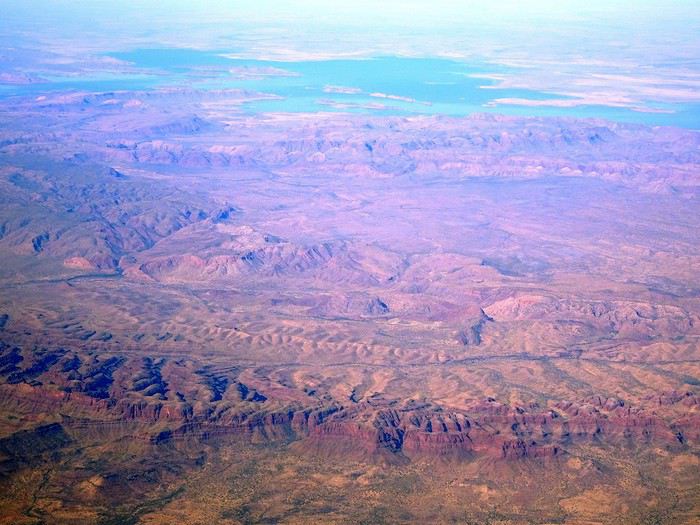
It was also my first time wearing a mask—it felt weird, pretty uncomfortable, and after a while, painful behind the ears. I really feel for those who have to wear one all day, every day. The flight lasted three long hours, but luckily, I had a good book. From the window, I watched an endless expanse of salt lakes in all shapes and sizes—round, elongated, gray, white, sometimes blue and green—and an infinity of winding, capricious meanders, along with long straight lines that led nowhere. The last half-hour got more interesting as rocky, swollen formations and long, sloping plateaus appeared. Against the vast ochre landscape, green patches became more frequent.
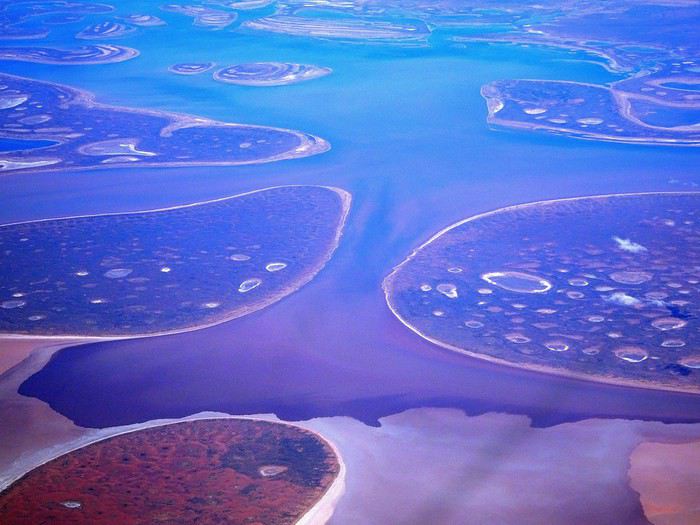
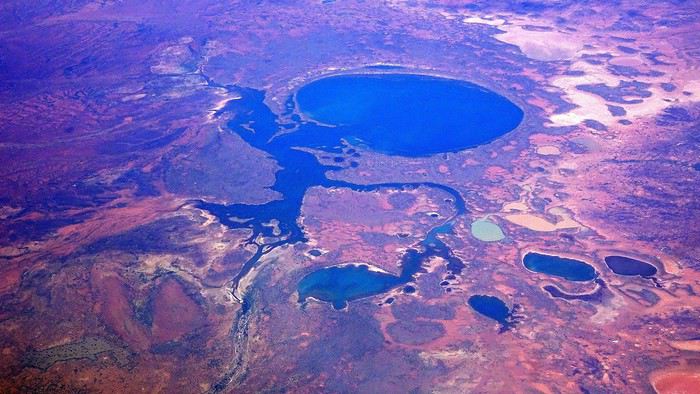
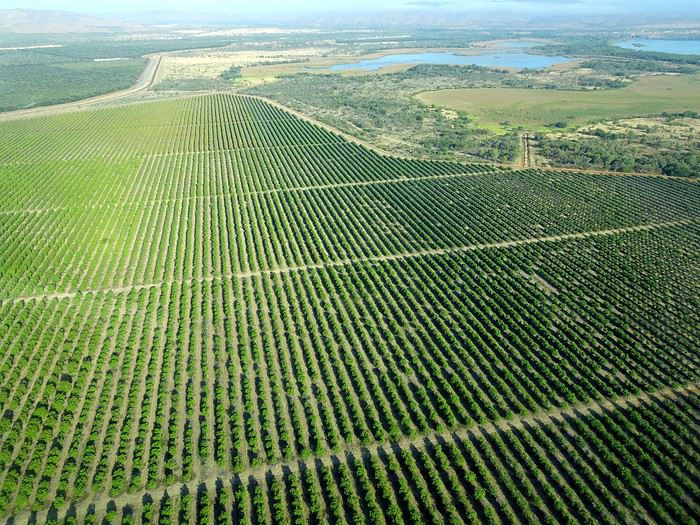
Just before landing, rows of green fields briefly appeared, along with an surprisingly wide river—but we were already rolling down the tarmac. A few hangars, a myriad of small, stationary planes, and a tiny terminal topped with a sign: “Welcome to Kununurra.”
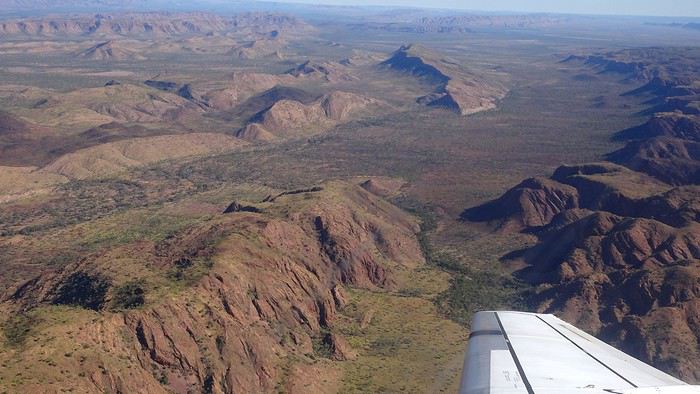
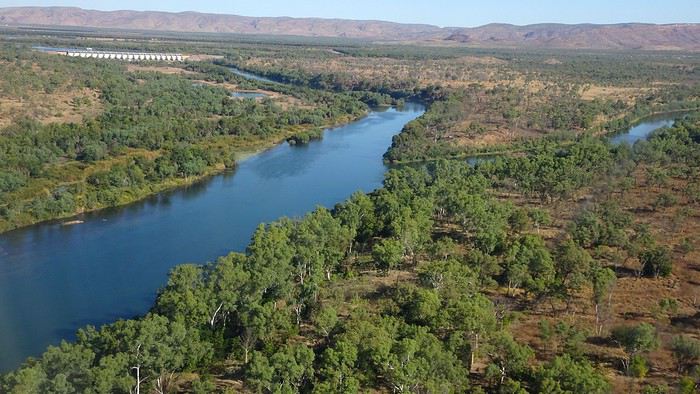
We wanted heat, and here it was—34°C the moment we stepped off the plane! We felt alive again and totally ridiculous in our jeans and sweaters. We quickly grabbed our suitcase and picked up the 4x4 we’d rented—more out of necessity, since only that type of vehicle can access the national parks we planned to visit.
Just four kilometers separated us from Kununurra, a town of 5,000 people founded in 1961 during the construction of the Lake Argyle Dam and the development of the Ord River Irrigation Area Scheme (more on that later). On the horizon, mountain ranges (a bit of an exaggeration, since we know Mt. Meharry, WA’s highest ‘mountain,’ doesn’t even reach 1,250 meters!) and closer to the road, a few irrigation canals cutting through stretches of bush, then a huge park overlooking a small lake lined with reeds.
A row of baobabs (yes, there are baobabs in Australia too!), a series of motels with immaculate lawns, a gas station, and there’s the main street leading to the town center—that is, the parking lots of the two supermarkets, the bottleshop, the pub, the Town Hall, the municipal pool, and the Tourist Office (already closed!), and at the next roundabout, another park, the Presbyterian church, and a few other shops. In short, two or three green blocks that you can explore in no time.
One road leads to the small industrial area and one of the town’s three or four campgrounds, while another heads toward the residential neighborhoods, which look just like the typical suburbs you find in any Australian city—except with tropical vegetation. We stocked up at Coles, an identical copy of the one near our place, and—surprise—the prices were practically the same.
We checked into one of the motels. The receptionist listed the town’s three or four restaurants, insisting that it’s always better to book a table. She recommended the Pump House, a bit outside town on the lake’s edge. “Best spot to watch the sunset, but hurry up.” she told us. It was only 5:00 PM!
When we got there half an hour later, the place was packed, and the sun had already disappeared behind a row of trees! Sure enough, we’d see a few days later that the sunset can be a stunning spectacle—if you wait a bit for the sky (especially if it’s cloudy) to blaze and reflect in the lake’s calm waters. A little disappointed, we headed back into town, where we easily found the other lively spot in town: the pub (nothing like an old English pub). Above the long L-shaped bar, several giant screens (thankfully muted) were broadcasting live footy, rugby league, etc. In one corner, players circled the pool table, while in another, customers were digging into plates of the day’s special. Instead of rooms, there were various patios where groups of friends and coworkers (easily recognizable by the fluoro vests they were still wearing) were gathered. We found a table under a mango tree—unfortunately, a little too close to the guitarist strumming his entire Country Music repertoire, complete with Keith Urban-style tremolos. Guaranteed culture shock!
Since it’s the custom here, we called the Country Club to book a table before the kitchen closed! The CC is the town’s—and even the region’s—fancy spot. Dark decor, modern furniture, dim lighting, and the air conditioning blasting. The twenty or so customers had taken refuge on the vast terrace, lit by torches. The view of the tall eucalyptus trees, illuminated by spotlights shifting from red to blue, was breathtaking.
The menu was minimal, but the grilled salmon was excellent, and the Pavlova (the meringue dessert Kiwis and Aussies have been arguing over since 1906) with melon and watermelon was absolutely divine.
It wasn’t even 9:00 PM, and we were already in bed. Had we already adopted the Top West End’s chicken schedule?!
To be continued... Journal dedicated to Attila
As usual, I didn’t manage to keep it short, but this time I’ve got photos to go with it!
August 2020. Since the opportunities to explore the world are extremely limited right now, all we (R&X) can do is explore our own island! Well, just a part of it, because with the state borders still closed, we’re stuck in Western Australia (WA).
Luckily, we’re pretty fortunate because this state is huge: over 2.5 million km² (that’s more than four times the size of France or 1.5 times Quebec). What’s more, stretching over 20 degrees of latitude between the Antarctic Ocean and the Timor Sea, you’ll find climates ranging from Mediterranean to arid to tropical. That’s actually why we decided to head as far north as possible. Sick of the endless rainy winter in Perth, bring on the heat of the Kimberley... way up Nooorth!
Friday. At the airport, the main terminal was closed (not enough flights), so we ended up in the annex (where flights to the various mines usually depart from). There was no crowd at the gate, and in this huge, single departure lounge, empty seats were plentiful. Only three flights were listed on the screens for the rest of the morning: the first to Coondewanna (?), the second to Darwin, and ours to Kununurra (code KNX).
A cool breeze swept through the half-open corridors along the runways. At the top of the walkway leading to the Fokker 100 (the Airbuses and Boeings are now parked!), a flight attendant greeted us with a basket full of sanitary masks. We were actually the only masked passengers (the staff weren’t wearing them either). With zero Covid-19 cases in WA at the time, the only rule was to maintain social distancing—something pretty hard to do on a full plane!
It was also my first time wearing a mask—it felt weird, pretty uncomfortable, and after a while, painful behind the ears. I really feel for those who have to wear one all day, every day. The flight lasted three long hours, but luckily, I had a good book. From the window, I watched an endless expanse of salt lakes in all shapes and sizes—round, elongated, gray, white, sometimes blue and green—and an infinity of winding, capricious meanders, along with long straight lines that led nowhere. The last half-hour got more interesting as rocky, swollen formations and long, sloping plateaus appeared. Against the vast ochre landscape, green patches became more frequent.
Just before landing, rows of green fields briefly appeared, along with an surprisingly wide river—but we were already rolling down the tarmac. A few hangars, a myriad of small, stationary planes, and a tiny terminal topped with a sign: “Welcome to Kununurra.”
We wanted heat, and here it was—34°C the moment we stepped off the plane! We felt alive again and totally ridiculous in our jeans and sweaters. We quickly grabbed our suitcase and picked up the 4x4 we’d rented—more out of necessity, since only that type of vehicle can access the national parks we planned to visit.
Just four kilometers separated us from Kununurra, a town of 5,000 people founded in 1961 during the construction of the Lake Argyle Dam and the development of the Ord River Irrigation Area Scheme (more on that later). On the horizon, mountain ranges (a bit of an exaggeration, since we know Mt. Meharry, WA’s highest ‘mountain,’ doesn’t even reach 1,250 meters!) and closer to the road, a few irrigation canals cutting through stretches of bush, then a huge park overlooking a small lake lined with reeds.
A row of baobabs (yes, there are baobabs in Australia too!), a series of motels with immaculate lawns, a gas station, and there’s the main street leading to the town center—that is, the parking lots of the two supermarkets, the bottleshop, the pub, the Town Hall, the municipal pool, and the Tourist Office (already closed!), and at the next roundabout, another park, the Presbyterian church, and a few other shops. In short, two or three green blocks that you can explore in no time.
One road leads to the small industrial area and one of the town’s three or four campgrounds, while another heads toward the residential neighborhoods, which look just like the typical suburbs you find in any Australian city—except with tropical vegetation. We stocked up at Coles, an identical copy of the one near our place, and—surprise—the prices were practically the same.
We checked into one of the motels. The receptionist listed the town’s three or four restaurants, insisting that it’s always better to book a table. She recommended the Pump House, a bit outside town on the lake’s edge. “Best spot to watch the sunset, but hurry up.” she told us. It was only 5:00 PM!
When we got there half an hour later, the place was packed, and the sun had already disappeared behind a row of trees! Sure enough, we’d see a few days later that the sunset can be a stunning spectacle—if you wait a bit for the sky (especially if it’s cloudy) to blaze and reflect in the lake’s calm waters. A little disappointed, we headed back into town, where we easily found the other lively spot in town: the pub (nothing like an old English pub). Above the long L-shaped bar, several giant screens (thankfully muted) were broadcasting live footy, rugby league, etc. In one corner, players circled the pool table, while in another, customers were digging into plates of the day’s special. Instead of rooms, there were various patios where groups of friends and coworkers (easily recognizable by the fluoro vests they were still wearing) were gathered. We found a table under a mango tree—unfortunately, a little too close to the guitarist strumming his entire Country Music repertoire, complete with Keith Urban-style tremolos. Guaranteed culture shock!
Since it’s the custom here, we called the Country Club to book a table before the kitchen closed! The CC is the town’s—and even the region’s—fancy spot. Dark decor, modern furniture, dim lighting, and the air conditioning blasting. The twenty or so customers had taken refuge on the vast terrace, lit by torches. The view of the tall eucalyptus trees, illuminated by spotlights shifting from red to blue, was breathtaking.
The menu was minimal, but the grilled salmon was excellent, and the Pavlova (the meringue dessert Kiwis and Aussies have been arguing over since 1906) with melon and watermelon was absolutely divine.
It wasn’t even 9:00 PM, and we were already in bed. Had we already adopted the Top West End’s chicken schedule?!
To be continued... Journal dedicated to Attila
Voyage seule au Laos: transport et hébergement
Bonjour,
Je ne suis jamais partie au Laos, j'ai quelques questions dont je n'ai pas trouve le reponses dans le forum ( elles existent surement, mais pas trouve). J'envisage un voyage de 3-4 semaines sur place
Concernant les transports: Je suis plutot habituee a l'Inde (et les trains que j'adoooore). En revanche les bus je n'aime pas trop. J'ai vu qu'il n'y a pas de train du tout au Laos. Est-ce que comme en Inde, il faut compter 1h pour faire 30km en bus?.. Dans un voyage type "backapacking", quelles sont les durees d'un trajet d'un site a un autre typiquement?
Pour les transports en bateau: recommande ou pas? dangereux?
Concernant le fait d'etre une femme seule: le comportement est il plutot bienveillant ou plutot mefiant de maniere generale de la part des habitants?
Concernant les hebergements: Je n'ai pas du tout besoin de confort - une fenetre et lit ca me suffit. Est-ce qu'il y a comme en Inde bcp de guest houses basiques ? Ou l'offre est-elle plus limitee?
Merci d'avance a ceux qui pourront m'aider a preparer le voyage :) (pour fevrier 2020 - on a le temps. Mais j'aime bien y rever deja .. c'est presque commencer le voyage de le preparer ;) )
Je ne suis jamais partie au Laos, j'ai quelques questions dont je n'ai pas trouve le reponses dans le forum ( elles existent surement, mais pas trouve). J'envisage un voyage de 3-4 semaines sur place
Concernant les transports: Je suis plutot habituee a l'Inde (et les trains que j'adoooore). En revanche les bus je n'aime pas trop. J'ai vu qu'il n'y a pas de train du tout au Laos. Est-ce que comme en Inde, il faut compter 1h pour faire 30km en bus?.. Dans un voyage type "backapacking", quelles sont les durees d'un trajet d'un site a un autre typiquement?
Pour les transports en bateau: recommande ou pas? dangereux?
Concernant le fait d'etre une femme seule: le comportement est il plutot bienveillant ou plutot mefiant de maniere generale de la part des habitants?
Concernant les hebergements: Je n'ai pas du tout besoin de confort - une fenetre et lit ca me suffit. Est-ce qu'il y a comme en Inde bcp de guest houses basiques ? Ou l'offre est-elle plus limitee?
Merci d'avance a ceux qui pourront m'aider a preparer le voyage :) (pour fevrier 2020 - on a le temps. Mais j'aime bien y rever deja .. c'est presque commencer le voyage de le preparer ;) )
Choix de destination pour voyage de 3 à 4 mois avec 2 enfants (2 et 5 ans)
Bonjour la communauté,
Je reviens sur ce forum quelques années plus tard, et avec à présent une petite famille qui m'accompagne.
Nous sommes un couple de 35 ans et deux enfants qui auront 2 ans et 5 ans au moment où l'on projette de partir voyager durant environ 3 ou 4 mois, sur la période Juin-Juillet-Aout-Septembre 2019.
Nous avons déjà quelques envies de destinations, néanmoins nous devons prendre en compte plusieurs paramètres supplémentaires avec la présence de nos enfants, pour qui nous souhaitons adapter le voyage afin qu'il laisse un agréable souvenir à chacun.
Nous souhaitons voyager avec un budget quotidien léger, dans des régions où les risques sanitaires sont faibles, et à un rythme qui nous laisse le temps de profiter ensemble, des rencontres, et de la nature essentiellement.
Nous avons donc pensé à:
- L'Asie du Sud-Est (Thaïlande, Laos, Vietnam).. mais la période ne semble pas favorable, surtout si nous envisageons les parties montagneuses de ces pays? Je n'ai aucune expérience de voyage en Asie du Sud Est.
- Le Transsibérien (Moscou->Pékin)... un vieux rêve de contempler le lac Baïkal, et faire ce trajet avec du temps devant nous. Ma sœur vit à Tokyo, ça serait la belle occasion de se rapprocher du Japon et d'inclure un petit séjour chez elle en fin de voyage.
- L'Amérique du Sud... parce que la météo s'y prête à cette période. Nous avons déjà été en Argentine et Bolivie. Je pensais à l’Equateur avec les enfants, éventuellement le sud de la Colombie, ou le Nord Pérou.
Avez vous des conseils ou des expériences de voyage avec vos enfants (ou pas!) à me partager pour nous aider à faire un choix, raisonnable, pour une première aventure avec des enfants en bas age. Nous ne cherchons pas absolument la météo ou la destination parfaite pour voyager en famille, mais si nous pouvons éviter de nous encombrer de certaines difficultés évidentes, ça nous permettra de mieux en profiter :)
Merci pour votre intérêt!
Avez vous des conseils ou des expériences de voyage avec vos enfants (ou pas!) à me partager pour nous aider à faire un choix, raisonnable, pour une première aventure avec des enfants en bas age. Nous ne cherchons pas absolument la météo ou la destination parfaite pour voyager en famille, mais si nous pouvons éviter de nous encombrer de certaines difficultés évidentes, ça nous permettra de mieux en profiter :)
Merci pour votre intérêt!
Le Burkina Faso: la belle surprise!
Le Burkina-Faso : Tiens ! Une destination à laquelle je n'aurais pas pensé: Qu'y t-il à voir, à faire, pas de plages, ni villes historiques classées, la poussière et la chaleur, pas de complexes touristiques... puis de récents attentats à Ouagadougou et dans le nord du pays n'incitent guère à s'y rendre.
Mais, invit�� depuis longtemps par des amis tombés sous le charme du pays et y vivant depuis 20 ans, cela rend la découverte du pays et le contact avec ses habitants particulièrement facile !
Notre rayon de circulation s'est "limité" au quart sud-ouest du Burkina, en gros dans un quadrilatère formé par Ouagadougou au centre, Gaoua au sud, Banfora au sud-ouest et Bobo-Dioulasso.
Bilan: Ce fût un régal ! Quel pays chaleureux, coloré, ouvert aux autres, et sûr. 😎
Aussi à peine remis de mon enthousiasme 4 mois après le retour, il est temps de partager, en images plutôt qu'en mots, quelques impressions tirées de la vie quotidienne.
Voici donc une toute petite sélection parmi beaucoup beaucoup de photos, dont quelques visages souriants, à l'image de la population burkinabé, toujours pris avec l'accord (ou à la demande) des personnes.
Pour commencer la visite, "on the road": 1.
2.
3.
4.
5.
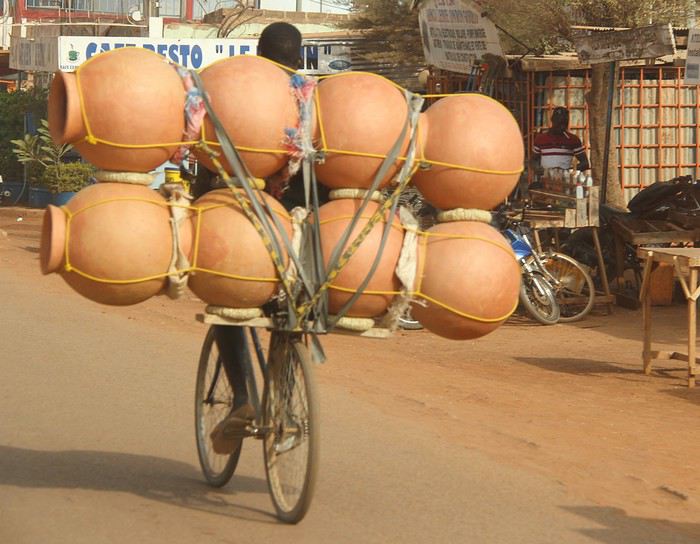
6.
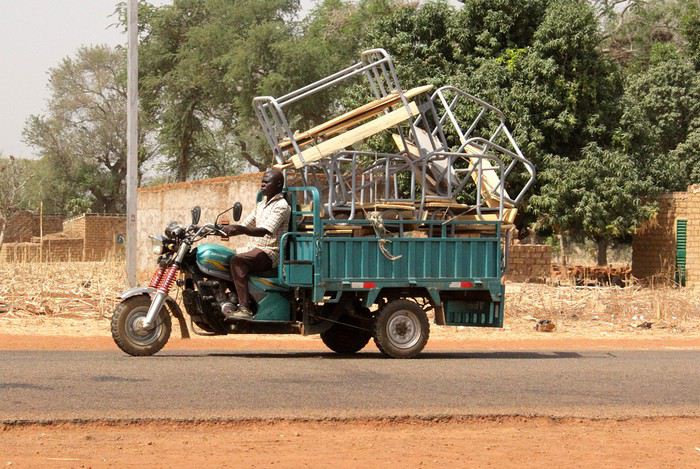
7.
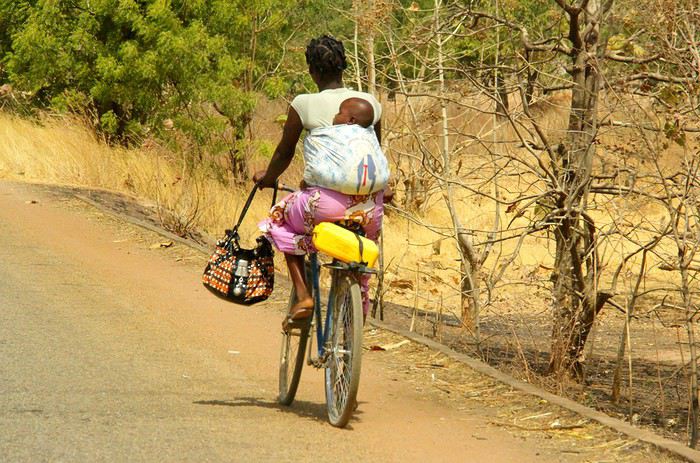
8.
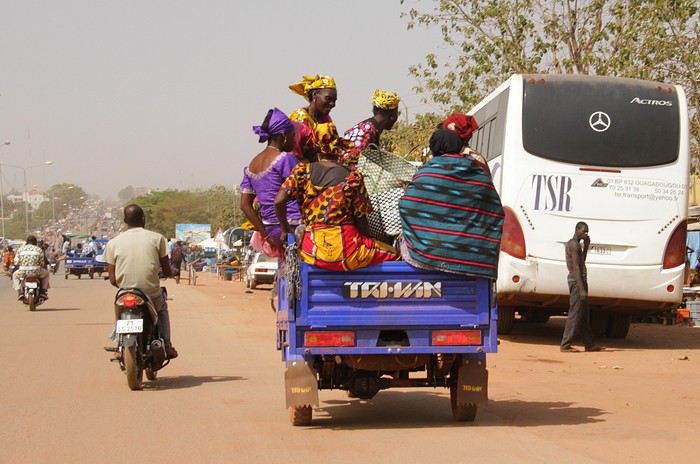
Notre rayon de circulation s'est "limité" au quart sud-ouest du Burkina, en gros dans un quadrilatère formé par Ouagadougou au centre, Gaoua au sud, Banfora au sud-ouest et Bobo-Dioulasso.
Bilan: Ce fût un régal ! Quel pays chaleureux, coloré, ouvert aux autres, et sûr. 😎
Aussi à peine remis de mon enthousiasme 4 mois après le retour, il est temps de partager, en images plutôt qu'en mots, quelques impressions tirées de la vie quotidienne.
Voici donc une toute petite sélection parmi beaucoup beaucoup de photos, dont quelques visages souriants, à l'image de la population burkinabé, toujours pris avec l'accord (ou à la demande) des personnes.
Pour commencer la visite, "on the road": 1.
2.
3.
4.
5.
6.
7.
8.
Colombie... dépaysement et enchantement
Bonjour à tous,
4 mois que nous sommes rentrés de notre tour d'amérique latine.... c'est pas tous les jours facile et un carnet finalement ça permettra de revivre et de temporiser l'envie de repartir ... (ou pas ?).
Nous avons donc passé 1 mois et demi en Colombie en juillet-août 2017 (après Cuba et avant le Pérou). Nous = couple d'une trentaine d'année. Mode de voyage : bus, transport locaux, occasionnellement l'avion. Nous n'avons pas choisi de voiture pour plusieurs raisons : - budgétaire (on est sur un voyage de 6 mois donc forcément...) - fatigue/timing (on a souvent pris des bus de nuit pour les grandes distances et on était toujours assez frais pour attaquer les visites ou chercher un logement après le bus... pas sûr que ça aurait été pareil si on conduisait) - sécurité : pour nous la conduite à Bogota nous a paru FOLLE donc on se sentait pas trop (bon après sur les routes de campagne c'était plus simple).
Après il est vrai que certains trajets sont beaucoup plus court en voiture (on en a parlé avec une famille qui voyageait comme ça) et surtout tu peux aller un peu ou tu veux quand tu veux. Bref un autre style de voyage qui n'était pas le nôtre sur ces 6 mois d'Amérique latine.
La Colombie, on nous en avait beaucoup parlé avant le départ mais peu d'info sur le net et peu de carnet. On a donc navigué à vue (mais j'avais la chance d'avoir un ami d'enfance qui s'y connait TRES bien sur la Colombie et qui se met à organiser des voyages durables et hors des sentiers battus donc je l'ai un peu sollicité pour les endroits qu'il connait bien).
Pour essayer de faire un "bilan" je dirais que c'est un pays qui nous a BEAUCOUP plu. Il est simple et sécurisé de voyager en Colombie. Le pays est un des plus varié que nous ayons vu au cours de nos 6 mois de voyage. Et c'est sans conteste celui où les gens ont été le plus adorable (mais bon on a rencontré que des gens adorable pendant 6 mois alors...) mais le smile et l'échange avec les Colombiens a été exceptionnel.
On a fait le choix de faire BEAUCOUP de choses en Colombie car c'est un pays encore peu visité et on s'est dit que c'était l'occasion d'en profité pour découvrir des choses AUTHENTIQUES. Et on n'a pas regretté.
Itinéraire à la grosse pour vous situer : - Amazonie Colombienne pendant quelques jours (avion et contact local trouvé sur ce forum ou celui du routard je me souviens plus) - Centre de la Colombie : les villages du Boyaca et du Santander - Caraibes : Parc de Tayrona / Guarija / Carthagène - Nord Ouest : Medellin / Guatapé / Jardin - Région du café : autour de Salento - Cali : salsa et excursion sur la côte pacifique - Centre Sud : Popayan / San Augustin / Désert de Tatacoa - Bogota
Je ne vais probablement pas mettre BEAUCOUP de photos parce que ça met du temps à charger. Mais je ferai au mieux pour vous donner l'eau à la bouche ! Quelques astuces : - Airbnb marche très bien dans les grandes villes et nous avons toujours rencontré des colombiens extraordinaires, ouverts à la discussion et disponibles ! Ideal pour manger local et se fondre dans la foule - Ne pas retirer à l'aéroport de Bogota (frais au distributeur) - Uber marche du tonnerre en Colombie ! Et c'est assez sûr et moins cher pour bouger. Comme il y a pas mal de wifi partout (étonnant mais c'est le pays où on a eu le plus de free wifi dans les zones publiques et même aéroport) donc ... - les colombiens ont tous whatsapp : idéal pour communiquer avec eux en amont (guide à Taganga, à Mongui, à la Guarija, ...) - maps.me : application essentielle de tout voyageur pour se repérer en ville et dans les rando ! Nous l'avons utilisé tous les jours (bon j'exagère mais à peine)
Allez hop je commence le récit !
5 jours en Amazonie Colombienne Avion pour Bogota depuis la Havane vers 16h. Arrivée à 19h (1h de décalage en plus, il y a donc 7h de moins qu'en France). Première impression... IL FAIT FROID! Bon tout est relatif mais après Cuba... à 2600m d'altitude on a à peine 20°C donc on le sent! Deuxième impression : ici le code de la route c'est la jungle!! C'est à celui qui s'imposera le plus!
Ce soir on va vite car on reprend l'avion demain a 11h pour Leticia en Amazonie. Du coup on a choisi un bon airbnb pas trop loin de l'aéroport. Bien nous en a pris, Cesar notre hôte est au petit soin : premiers arepas (plats typiques Colombiens) et premières bières!
A Leticia le lendemain on renoue avec la chaleur l'humidité et cette fois BEAUCOUP de moustiques. Nous arrivons vers 13h et nous nous installons dans un hôtel pour la nuit. Ici petite particularité, j'avais contacté depuis la France une française installée en Amazonie depuis 7 ans pour organiser nos 5 jours sur place au plus proche des locaux. On va donc se laisser guider sans considérations logistiques.
Pour les premiers jours nous sommes seulement tous les 2 avec Marine. On commence tranquilou par une découverte de Leticia (la plus grande Ville du département Amazonas de Colombie, au bord du fleuve Amazone). On découvre l'histoire du lieu et de ses indigènes (16 ethnies tout de même) et quelques unes de leur tradition (le petit musée est très bien fait et Marine nous explique tout bien). Puis on découvre les saveurs de l'Amazonie en se balladant dans la ville : de nouveaux fruits (guama mmmm, aguaré bof, d'autres dont j'ai oublié le nom mais qui sont pas mal non plus).
Puis on va faire un tour.... au Brésil ! Car Leticia c'est vraiment une ville frontière : on est en Colombie mais en 10 min de bateau on est au Pérou et en 10 min de tuk tuk (si si ils ont des tuk tuk comme en asie) tu es au Brésil ! L'ambiance est un peu différente (plus musicale et plus le bordel) mais bien sympa. On se fait notre premier coucher de soleil amazonien côté brésilien et on déguste le traditionnel Açaï. Puis Marine nous laisse et on mange en ville avant de rentrer à l'hostel.
Le lendemain on part tôt pour une communauté indigène au Nord de la ville. On va y passer la nuit et observer ainsi leur quotidien et leur environnement. Belle journée avec marche en forêt amazonienne primaire ( José nous montre comment fabriquer des pièges, explique les remèdes, nous montre les arbres à larves blanches comme dans koh lanta berkķkk) visite du village et des potagers qui nourrissent la famille où nous logeons (petite anecdote : au retour de la ballade on s'arrête à la nuit tombée dans un des potagers qui est aussi le terrain d'énormes tarentules qui sortent à cette heure ci. Même avec le guide et nos frontales on n'était pas très serein...), observation de la préparation du pain traditionnel et du mambé (mélange de feuilles de coca et de tabac). Le soir participation à la discussion journalière des hommes durant laquelle on testera aussi le mambé. Moment hors du temps. Nuit en hamac sous moustiquaire, on est réveillé par le froid matinal mais surtout les coqs qui ici hurlent une heure AVANT le lever du soleil ! Vilains!
Le troisième jour nous rentrons sur Leticia pour prendre un bateau taxi rapide qui en 2h sur la rivière Amazone nous emmène dans la deuxième ville du département : Puerto Nariño ! En chemin nous voyons quelques oiseaux et surtout.... nos premiers dauphins de l'Amazone, des roses et des gris!!!!! Trop bon! La ville est très chou et a comme d'habitude un grand terrain de foot. Après avoir déposé nos bagages dans un petit coin de paradis appelé Alto Aguila (lieu de réinsertion de singes et de perroquets) puis déjeuner et visite de la ville et de la fondation Natutama qui explique les écosystèmes spécifiques de la région.
Puis on retrouve au bateau les deux couples français qui vont nous accompagner pendant les derniers jours. On ne perd pas de temps et Obsimar (le guide) nous emmène sur son peque peque voir les dauphins roses et gris par dizaine, moment magique avec l'harmonica d'Obsimar pour les appeler (on se croirait dans Sauvez Willy). Puis direction les lacs de Tarapoto. Baignade bien appréciée par cette chaleur! On ne pense pas aux piranhas et autres bébêtes qu'il peut y avoir la dessous. Tant mieux on en profite. Puis on s'installe pour pêcher à la ligne. Piranha pour moi ! yes ! Magnifique coucher de soleil sur les lacs. La lumière ici est superbe.
De retour à Puerto Nariño nous passons 1h avec une conteuse qui nous raconte des légendes Ticuna (ethnie majoritaire ici). Puis il est l'heure de rentrer à l'hôtel car nous devons passer par l'école des bonnes soeurs qui lâchent des chiens méchants à 21h!! On est limite donc Marine nous dit de nous armer de bouts de bois pour les tenir à distance le cas échéant.... pas très rassurant... et on n'a pas l'air fin comme ça tous les 7! Au final on est dans les temps et on arrive sans encombre. On est tous épuisés donc on part se coucher!
Le 4ème jour le réveil se fait tôt vu le coucher à 22h... ça nous laisse bien le temps de profiter des petits singes qui viennent ici dormir le soir et déjeuner le matin avant de repartir en forêt. Ce sont d'anciens animaux domestiqués. Ils sont ADORABLES mais je doute qu'ils puissent un jour revenir complètement à l'état sauvage.... ici c'est la maison des animaux.... 2 chats, 2 chiens, 2 dindons et 4 perroquets ... le rouge a été maltraité par son ancienne propriétaire et du coup attaque les filles.... on a bien ri (et un peu flippé aussi) de son obstination à nous chasser. Par contre mon homme a kiffé qu'elle lui grimpe dessus dès qu'il le lui demandait! Vers 9h on prend le bateau pour s'enfoncer un peu plus sur la rivière du Loretoyacu afin de rejoindre une famille indigène Ticuna à San Juan del Zoco. En chemin on s'arrête dans la communauté de San Francisco (ticuna aussi). Et croyez le ou pas mais ce San Francisco là aussi a son propre pont! Là on va rencontrer un monsieur qui a son jardin médicinal et nous explique tout ça mais il a surtout des caimans blancs et noirs qu'il fait se reproduire pour repeupler le fleuve et les rivières car leur nombre avait trop baissé. Impressionnant de les voir d'aussi près et de les entendre! Ils peuvent faire jusque 8 mètres ! La vache!!
Malgré la chaleur et le soleil qui tape à fond les garçons ne résistent pas à l'envie de rejoindre les enfants qui tapent la balle sur le terrain de foot du village! Ils sont trempés!!!
Puis marche dans la forêt pendant 2h 3h. On revoit certains arbres du jour 2 et on détaille l'histoire du caoutchouc et des indigènes en chemin. On voit aussi de nouvelles choses comme les arbres dont ils se servaient pour leur vêtements et aujourd'hui comme toile pour peindre le plus souvent. Sur le chemin.... incroyable... on tombe sur un cèpe! Même odeur en plus!!!rhalala ça nous rappelle que cette année on va rater la saison !
Avant la nuit on reprend le bateau pour aller tenter d'observer les caimans dans leur milieu naturel. L'ambiance de nuit est differente et le ciel est MAGNIFIQUE! On les voit de loin (et seulement leurs yeux) donc on ne s'attarde pas trop). Sur le retour on arrête le moteur du bateau, les hommes rament et Eduardo notre guide depuis ce matin nous raconte des contes ticuna. Ambiance amazonienne!
Le lendemain c'est le retour a Leticia.... réveil 5h, on arrive tout juste à Puerto Nariño pour le bateau de 7h30. A 10h nous sommes arrivés et avons récupéré nos affaires... il est temps de se séparer des français. Marine (et son fils) nous accompagne à l'aquarium puis on file déjeuner.... au PEROU!!! En 10 min de bateau nous sommes à Santa Rosa. Déjeuner aux couleurs péruviennes donc, un bon avant goût de notre prochaine destination après la Colombie : bière et surtout Pisco Sour!
Cette fois c'est l'heure! Nous reprenons l'avion pour Bogota. Bye bye l'Amazonie! On se reverra en Bolivie !
(photos à venir) On a beaucoup aimé ces 5 jours avec Marine et son point de vue est très intéressant à partager. Par contre c'était un peu speed. On a beaucoup couru et peut-être que finalement il n'était pas nécessaire d'aller si loin. Passer 2 nuits un peu posés à Puerto Narino aurait aussi été une bonne option et moins contrainte niveau transport bateau. Il y a apparemment à faire dans le coin niveau rando mais on ne regrette vraiment pas la rencontre d'Eduardo et sa famille donc...
4 mois que nous sommes rentrés de notre tour d'amérique latine.... c'est pas tous les jours facile et un carnet finalement ça permettra de revivre et de temporiser l'envie de repartir ... (ou pas ?).
Nous avons donc passé 1 mois et demi en Colombie en juillet-août 2017 (après Cuba et avant le Pérou). Nous = couple d'une trentaine d'année. Mode de voyage : bus, transport locaux, occasionnellement l'avion. Nous n'avons pas choisi de voiture pour plusieurs raisons : - budgétaire (on est sur un voyage de 6 mois donc forcément...) - fatigue/timing (on a souvent pris des bus de nuit pour les grandes distances et on était toujours assez frais pour attaquer les visites ou chercher un logement après le bus... pas sûr que ça aurait été pareil si on conduisait) - sécurité : pour nous la conduite à Bogota nous a paru FOLLE donc on se sentait pas trop (bon après sur les routes de campagne c'était plus simple).
Après il est vrai que certains trajets sont beaucoup plus court en voiture (on en a parlé avec une famille qui voyageait comme ça) et surtout tu peux aller un peu ou tu veux quand tu veux. Bref un autre style de voyage qui n'était pas le nôtre sur ces 6 mois d'Amérique latine.
La Colombie, on nous en avait beaucoup parlé avant le départ mais peu d'info sur le net et peu de carnet. On a donc navigué à vue (mais j'avais la chance d'avoir un ami d'enfance qui s'y connait TRES bien sur la Colombie et qui se met à organiser des voyages durables et hors des sentiers battus donc je l'ai un peu sollicité pour les endroits qu'il connait bien).
Pour essayer de faire un "bilan" je dirais que c'est un pays qui nous a BEAUCOUP plu. Il est simple et sécurisé de voyager en Colombie. Le pays est un des plus varié que nous ayons vu au cours de nos 6 mois de voyage. Et c'est sans conteste celui où les gens ont été le plus adorable (mais bon on a rencontré que des gens adorable pendant 6 mois alors...) mais le smile et l'échange avec les Colombiens a été exceptionnel.
On a fait le choix de faire BEAUCOUP de choses en Colombie car c'est un pays encore peu visité et on s'est dit que c'était l'occasion d'en profité pour découvrir des choses AUTHENTIQUES. Et on n'a pas regretté.
Itinéraire à la grosse pour vous situer : - Amazonie Colombienne pendant quelques jours (avion et contact local trouvé sur ce forum ou celui du routard je me souviens plus) - Centre de la Colombie : les villages du Boyaca et du Santander - Caraibes : Parc de Tayrona / Guarija / Carthagène - Nord Ouest : Medellin / Guatapé / Jardin - Région du café : autour de Salento - Cali : salsa et excursion sur la côte pacifique - Centre Sud : Popayan / San Augustin / Désert de Tatacoa - Bogota
Je ne vais probablement pas mettre BEAUCOUP de photos parce que ça met du temps à charger. Mais je ferai au mieux pour vous donner l'eau à la bouche ! Quelques astuces : - Airbnb marche très bien dans les grandes villes et nous avons toujours rencontré des colombiens extraordinaires, ouverts à la discussion et disponibles ! Ideal pour manger local et se fondre dans la foule - Ne pas retirer à l'aéroport de Bogota (frais au distributeur) - Uber marche du tonnerre en Colombie ! Et c'est assez sûr et moins cher pour bouger. Comme il y a pas mal de wifi partout (étonnant mais c'est le pays où on a eu le plus de free wifi dans les zones publiques et même aéroport) donc ... - les colombiens ont tous whatsapp : idéal pour communiquer avec eux en amont (guide à Taganga, à Mongui, à la Guarija, ...) - maps.me : application essentielle de tout voyageur pour se repérer en ville et dans les rando ! Nous l'avons utilisé tous les jours (bon j'exagère mais à peine)
Allez hop je commence le récit !
5 jours en Amazonie Colombienne Avion pour Bogota depuis la Havane vers 16h. Arrivée à 19h (1h de décalage en plus, il y a donc 7h de moins qu'en France). Première impression... IL FAIT FROID! Bon tout est relatif mais après Cuba... à 2600m d'altitude on a à peine 20°C donc on le sent! Deuxième impression : ici le code de la route c'est la jungle!! C'est à celui qui s'imposera le plus!
Ce soir on va vite car on reprend l'avion demain a 11h pour Leticia en Amazonie. Du coup on a choisi un bon airbnb pas trop loin de l'aéroport. Bien nous en a pris, Cesar notre hôte est au petit soin : premiers arepas (plats typiques Colombiens) et premières bières!
A Leticia le lendemain on renoue avec la chaleur l'humidité et cette fois BEAUCOUP de moustiques. Nous arrivons vers 13h et nous nous installons dans un hôtel pour la nuit. Ici petite particularité, j'avais contacté depuis la France une française installée en Amazonie depuis 7 ans pour organiser nos 5 jours sur place au plus proche des locaux. On va donc se laisser guider sans considérations logistiques.
Pour les premiers jours nous sommes seulement tous les 2 avec Marine. On commence tranquilou par une découverte de Leticia (la plus grande Ville du département Amazonas de Colombie, au bord du fleuve Amazone). On découvre l'histoire du lieu et de ses indigènes (16 ethnies tout de même) et quelques unes de leur tradition (le petit musée est très bien fait et Marine nous explique tout bien). Puis on découvre les saveurs de l'Amazonie en se balladant dans la ville : de nouveaux fruits (guama mmmm, aguaré bof, d'autres dont j'ai oublié le nom mais qui sont pas mal non plus).
Puis on va faire un tour.... au Brésil ! Car Leticia c'est vraiment une ville frontière : on est en Colombie mais en 10 min de bateau on est au Pérou et en 10 min de tuk tuk (si si ils ont des tuk tuk comme en asie) tu es au Brésil ! L'ambiance est un peu différente (plus musicale et plus le bordel) mais bien sympa. On se fait notre premier coucher de soleil amazonien côté brésilien et on déguste le traditionnel Açaï. Puis Marine nous laisse et on mange en ville avant de rentrer à l'hostel.
Le lendemain on part tôt pour une communauté indigène au Nord de la ville. On va y passer la nuit et observer ainsi leur quotidien et leur environnement. Belle journée avec marche en forêt amazonienne primaire ( José nous montre comment fabriquer des pièges, explique les remèdes, nous montre les arbres à larves blanches comme dans koh lanta berkķkk) visite du village et des potagers qui nourrissent la famille où nous logeons (petite anecdote : au retour de la ballade on s'arrête à la nuit tombée dans un des potagers qui est aussi le terrain d'énormes tarentules qui sortent à cette heure ci. Même avec le guide et nos frontales on n'était pas très serein...), observation de la préparation du pain traditionnel et du mambé (mélange de feuilles de coca et de tabac). Le soir participation à la discussion journalière des hommes durant laquelle on testera aussi le mambé. Moment hors du temps. Nuit en hamac sous moustiquaire, on est réveillé par le froid matinal mais surtout les coqs qui ici hurlent une heure AVANT le lever du soleil ! Vilains!
Le troisième jour nous rentrons sur Leticia pour prendre un bateau taxi rapide qui en 2h sur la rivière Amazone nous emmène dans la deuxième ville du département : Puerto Nariño ! En chemin nous voyons quelques oiseaux et surtout.... nos premiers dauphins de l'Amazone, des roses et des gris!!!!! Trop bon! La ville est très chou et a comme d'habitude un grand terrain de foot. Après avoir déposé nos bagages dans un petit coin de paradis appelé Alto Aguila (lieu de réinsertion de singes et de perroquets) puis déjeuner et visite de la ville et de la fondation Natutama qui explique les écosystèmes spécifiques de la région.
Puis on retrouve au bateau les deux couples français qui vont nous accompagner pendant les derniers jours. On ne perd pas de temps et Obsimar (le guide) nous emmène sur son peque peque voir les dauphins roses et gris par dizaine, moment magique avec l'harmonica d'Obsimar pour les appeler (on se croirait dans Sauvez Willy). Puis direction les lacs de Tarapoto. Baignade bien appréciée par cette chaleur! On ne pense pas aux piranhas et autres bébêtes qu'il peut y avoir la dessous. Tant mieux on en profite. Puis on s'installe pour pêcher à la ligne. Piranha pour moi ! yes ! Magnifique coucher de soleil sur les lacs. La lumière ici est superbe.
De retour à Puerto Nariño nous passons 1h avec une conteuse qui nous raconte des légendes Ticuna (ethnie majoritaire ici). Puis il est l'heure de rentrer à l'hôtel car nous devons passer par l'école des bonnes soeurs qui lâchent des chiens méchants à 21h!! On est limite donc Marine nous dit de nous armer de bouts de bois pour les tenir à distance le cas échéant.... pas très rassurant... et on n'a pas l'air fin comme ça tous les 7! Au final on est dans les temps et on arrive sans encombre. On est tous épuisés donc on part se coucher!
Le 4ème jour le réveil se fait tôt vu le coucher à 22h... ça nous laisse bien le temps de profiter des petits singes qui viennent ici dormir le soir et déjeuner le matin avant de repartir en forêt. Ce sont d'anciens animaux domestiqués. Ils sont ADORABLES mais je doute qu'ils puissent un jour revenir complètement à l'état sauvage.... ici c'est la maison des animaux.... 2 chats, 2 chiens, 2 dindons et 4 perroquets ... le rouge a été maltraité par son ancienne propriétaire et du coup attaque les filles.... on a bien ri (et un peu flippé aussi) de son obstination à nous chasser. Par contre mon homme a kiffé qu'elle lui grimpe dessus dès qu'il le lui demandait! Vers 9h on prend le bateau pour s'enfoncer un peu plus sur la rivière du Loretoyacu afin de rejoindre une famille indigène Ticuna à San Juan del Zoco. En chemin on s'arrête dans la communauté de San Francisco (ticuna aussi). Et croyez le ou pas mais ce San Francisco là aussi a son propre pont! Là on va rencontrer un monsieur qui a son jardin médicinal et nous explique tout ça mais il a surtout des caimans blancs et noirs qu'il fait se reproduire pour repeupler le fleuve et les rivières car leur nombre avait trop baissé. Impressionnant de les voir d'aussi près et de les entendre! Ils peuvent faire jusque 8 mètres ! La vache!!
Malgré la chaleur et le soleil qui tape à fond les garçons ne résistent pas à l'envie de rejoindre les enfants qui tapent la balle sur le terrain de foot du village! Ils sont trempés!!!
Puis marche dans la forêt pendant 2h 3h. On revoit certains arbres du jour 2 et on détaille l'histoire du caoutchouc et des indigènes en chemin. On voit aussi de nouvelles choses comme les arbres dont ils se servaient pour leur vêtements et aujourd'hui comme toile pour peindre le plus souvent. Sur le chemin.... incroyable... on tombe sur un cèpe! Même odeur en plus!!!rhalala ça nous rappelle que cette année on va rater la saison !
Avant la nuit on reprend le bateau pour aller tenter d'observer les caimans dans leur milieu naturel. L'ambiance de nuit est differente et le ciel est MAGNIFIQUE! On les voit de loin (et seulement leurs yeux) donc on ne s'attarde pas trop). Sur le retour on arrête le moteur du bateau, les hommes rament et Eduardo notre guide depuis ce matin nous raconte des contes ticuna. Ambiance amazonienne!
Le lendemain c'est le retour a Leticia.... réveil 5h, on arrive tout juste à Puerto Nariño pour le bateau de 7h30. A 10h nous sommes arrivés et avons récupéré nos affaires... il est temps de se séparer des français. Marine (et son fils) nous accompagne à l'aquarium puis on file déjeuner.... au PEROU!!! En 10 min de bateau nous sommes à Santa Rosa. Déjeuner aux couleurs péruviennes donc, un bon avant goût de notre prochaine destination après la Colombie : bière et surtout Pisco Sour!
Cette fois c'est l'heure! Nous reprenons l'avion pour Bogota. Bye bye l'Amazonie! On se reverra en Bolivie !
(photos à venir) On a beaucoup aimé ces 5 jours avec Marine et son point de vue est très intéressant à partager. Par contre c'était un peu speed. On a beaucoup couru et peut-être que finalement il n'était pas nécessaire d'aller si loin. Passer 2 nuits un peu posés à Puerto Narino aurait aussi été une bonne option et moins contrainte niveau transport bateau. Il y a apparemment à faire dans le coin niveau rando mais on ne regrette vraiment pas la rencontre d'Eduardo et sa famille donc...
Bilan cyclo Visayas en famille
Bonjour,
Le sujet vélo étant rarement abordé dans la rubrique Philippines voici un petit bilan sur notre séjour cyclo de 2 mois (mi avril, mi mai 2017) en famille avec 2 enfants de 8 et 4 ans dans l’archipel des visayas.
Le parcours Kalibo, Carabao, Tablas, Romblon, Sibuyan, Masbate, nord Cebu, Camotes, Leyte, Bohol, Siquijor, sud Negros, Guimaras et retour vers Panay et donc Kalibo soit environ 1500 kms
Nous avons choisi kalibo non pas pour se rendre à Boracay mais pour éviter Manille et Cebu city petite ville bien plus agréable en 2 roues et au même tarif depuis la Malaisie avec Air Asia. Attention quand même au petit raquette de 700 pesos pour les taxes d’aéroport au départ de kalibo.
C’est curieux ayant pas mal trainé nos guêtres ici et là nous n’avions jamais posé un orteil aux Philippines. Pays relativement méconnu en comparaison des voisins thailandais ou indonesien. Et il faut bien l’avouer c’est bien dommage particulièrement pour les philippins qui sont vraiment très courtois et honnêtes. Cela facilite grandement le séjour
Cote logistique pas de soucis pour charger les vélos sur les bangkas ou dans les ferrrys très souvent à prix modiques ou gratuits hormis à destination et au départ de Siquijor ??? Cote hébergement budget de 500 à 1000 pesos (10-20 euros ) pour une chambre avec ventilo ce qui généralement suffisant, la clim c’ est plus cher . Pour ce prix gamme très variable de prestations ça dépend bien sûr du lieu mais nous privilégions plutôt le budget au confort. Quand on longe les cotes generallement assez facile de trouver un hotel ou un resort bon marche (attention ne pas se fier au nom « resort » ne signifie pas forcement hotel de luxe loin de la) ou même poser la tente sur un petit coin de plage prive avec abri. Très populaire chez les locaux .En prime le week end possibilité d’avoir le karaoke et l’emperador inclus ! Quand on rentre dans les terres la ça se complique. Etant limite avec les enfants en terme de kilometrage (environ 50) nous avons parfois dû improviser. Ayant une tente, rechaud et toujours un peu de nourriture pas de soucis dans les petits villages (barangay) on vous trouve toujours un coin généralement à proximité du hall communal souvent via un élu, le villageois lambda n’osant apparemnent pas prendre de décision. Pour le camping sauvage même si cela nous est arrivé ce n’est pas évident car il y a du monde partout.
Pour ce qui est de l’eau pas de soucis beaucoup de water station le long des routes ou dans les villages on l’on peut faire le plein pour 10/20 pesos pour une 10aines de litre. La nourriture philippine n’a pas grande réputation. Beaucoup de mauvais fast food, pizza, aliments frits et peu de vendeurs ambulants. Néanmoins des petits restos/gargotes proposent des plats préparés au choix accompagnes de riz ou de nouilles très convenables. Le seul problème c’est qu’ on en trouve pas partout et le soir en particulier c’est souvent mission impossible ! Il faut alors se rabattre sur un riz/poulet rôti quand on a la possibilité. Notre réserve nourriture et le réchaud nous ont bien souvent dépanné sinon faire le plein de fruits (bananes, mangues) et de pâtisserie dans les très nombreuses « panaderia ».
Bonne surprise concernant le trafic avec des conducteurs respectueux. Hormis le nord de l’ile de Cebu, la région d’ Ormoc et de Bacolod peu agréable car plus peuplées mais difficile à éviter en raison des liaisons maritimes. Pour le reste vraiment très chouette et bien sûr plus l’ile est petite plus c’est tranquille
Autre bonne surprise une relative propreté aux bords des routes comparé a certains pays voisins tel que la birmanie et l indonesie … des villages soignes, jardins fleuris.
Concernant le climat en cette periode (mi-avril/mi-mai) il a fait très chaud évidemment mais peu de pluie ce qui n’est pas négligeable par contre cela correspond avec les vacances des philippins donc parfois du monde dans les coins les plus prisés. Apres il semble difficile d’etablir quelle est la saison la plus propice …pluies de juillet a novembre , haute saison pas forcement sèche de décembre a février et chaleur en avril-mai. Bien sur la météo est très variable selon les années et les régions
Question à la mode de nos jours La Sécurité … ce qui semble une obsession nationale car pas une journée sans qu’un philippin nous vante la sécurité de son village . Nous avons pris soin d’éviter Mindanao et pour le reste absolument rien à signaler
Coté moins si la sécurité est un cheval de bataille de Mr Duterte qu’ en est t’il des inégalités vraiment frappantes ici . Nombres d’immenses et belles villas qui cotoient des cabanes en tôle, même dans les petites villes de nombreuses familles et enfants vivent dans les rues au pied de nouveaux fastfood ou magasins clinquants . Cela semble normal. Autre aspect inquiétant à notre sens une démographie incontrôlée, une population qui a doublée en 25 ans et cela n’est pas prêt de s’arrêter l’environnement parait souvent au bord de l’asphyxie . Ca betonne de partout. La taille des poissons sur les étales nous a paru bien triste pour un pays bordé d’océans.
Sommes-nous peut être alarmistes étant généralement plutôt amoureux des grands espaces ? Pour nous néanmoins le principal attrait de ce pays sont les philippins eux même honnetes, courtois, souriants avec qui il est facile de communiquer via l’anglais. Cet archipel en choisissant bien son itinéraire est très agréable à parcourir à bicyclette avec de bonnes connexions inter iles qui plus est assez ponctuelles. Pour ceux qui le souhaite n’ hésitez pas à nous contacter pour des renseignements plus précis.
Peu actif sur le forum nous souhaitons remercier les habitués tels que Cottetcottet-lemonk68-jeandeaune-doud2…qui donnent de bonnes pistes via leur post et dans la bonne humeur SVP (sans doute à l’image des philippins) ce qui n’est pas toujours le cas sur toutes les destinations
seblilieandcie
Coup de gueule sur Roissy CDG 1
Bonjour, je voulais pousser un coup de gueule sur l'aeroport CDG 1, qui pour le premier contact avec la France est une honte. J'espere que des employés qui y bossent liront mon post.
1) Il n'y a plus de rhum français dans les Dutyfree, (je suis passé dans 2 dutyfree avant hier) juste du Baccardi et Captain Morgan, une honte quand on connait a qualité du rhum des Dom TOM.
2) Arrivée a 22h30 pu rien d'ouvert, les derniers dutyfree etaient en train de fermer
3) La brioche dorée du T1 était en train de baisser le rideau a 22h40 alors qu'ils sont censé fermer a 23h. Le personnel TRES agressif et grossier a repousser les voyageurs qui demandaient un sandwich, certains passagers se sont fait hurler dessus.
4) Saleté, personnel de l’aéroport désagreable, aucun commerce d'ouvert.
Bref ça me désole de voir que le premier contact en arrivant en France peut etre extrêmement négatif, je n'ai jamais vu ça ailleurs. Aucune valorisation de produits locaux et c'est de pire en pire a chaque fois que j'y remet les pieds.
Voila, juste un ptit coup de gueule et au final un aéroport qui se dégrade a l'image du pays, il erite sa place de pire aéroport d'Europe.
1) Il n'y a plus de rhum français dans les Dutyfree, (je suis passé dans 2 dutyfree avant hier) juste du Baccardi et Captain Morgan, une honte quand on connait a qualité du rhum des Dom TOM.
2) Arrivée a 22h30 pu rien d'ouvert, les derniers dutyfree etaient en train de fermer
3) La brioche dorée du T1 était en train de baisser le rideau a 22h40 alors qu'ils sont censé fermer a 23h. Le personnel TRES agressif et grossier a repousser les voyageurs qui demandaient un sandwich, certains passagers se sont fait hurler dessus.
4) Saleté, personnel de l’aéroport désagreable, aucun commerce d'ouvert.
Bref ça me désole de voir que le premier contact en arrivant en France peut etre extrêmement négatif, je n'ai jamais vu ça ailleurs. Aucune valorisation de produits locaux et c'est de pire en pire a chaque fois que j'y remet les pieds.
Voila, juste un ptit coup de gueule et au final un aéroport qui se dégrade a l'image du pays, il erite sa place de pire aéroport d'Europe.