Results for "Cameroun"
About 6,105 results.
More options
Many results are in French, the community’s main language. English translations are added over time.
Search results
Pinceau dans l'avion?
😇 je pars en avion et je ne prends pas de valise car c'est pour 2 jours seulement, comme j'emporte mes aquarelles, puis-je prendre actuellement un pinceau dans l'avion dans mon bagage à main...On m'a dit que tout objet pointu était interdit mais le bout est arrondi...bref, j'hésite ...
Les pinceaux sont très chers sur place...et je suis habituée au mien...
merci pour toute réponse... merci...
Cherche stage dans les associations, ONG et/ou organismes locaux au Burkina Faso
Bonjour à tous
Je suis en premiére année d'un IUT Gestion du developpement et de l'action humanitaire. Je cherche un stage au burkina dans la coordination ou la gestion de projet, dans les domaines du social, de l'education et/ou du culturel. Ce stage est d'une durée de 2 mois environ, et je souhaiterais le faire dans une association, ONG ou organisme local, si vous avez des contacts ou que vous êtes vous même interréssé, contactez moi
Merci d'avance
Recherche projet ou aide humanitaire en Afrique pour l'été 2007
Bonjour à tous
Je suis à la recherche d'une association sérieuse pour un projet ou une aide humanitaire en Afrique, si possible dans un pays francophone, pour le courant de l'été 2007, plutôt au mois de juillet. Je suis professeur des écoles; je pense donc pouvoir apporter de l'aide aux enfants en particulier dans le domaine de l'éducation et de l'enseignement, mais aussi dans d'autres domaines variés, en fonction des besoins du moment. Polyvalente et très motivée, je recevrai avec plaisir toute proposition bienveillante. Pourquoi ne pas instaurer également un échange ou une correspondance entre les petits enfants français (ou adultes..., ça me plairais vraiment!) et d'autres écoles ou enfants du monde? J'accueillerai toute proposition avec plaisir. Merci de votre aide.
Je suis à la recherche d'une association sérieuse pour un projet ou une aide humanitaire en Afrique, si possible dans un pays francophone, pour le courant de l'été 2007, plutôt au mois de juillet. Je suis professeur des écoles; je pense donc pouvoir apporter de l'aide aux enfants en particulier dans le domaine de l'éducation et de l'enseignement, mais aussi dans d'autres domaines variés, en fonction des besoins du moment. Polyvalente et très motivée, je recevrai avec plaisir toute proposition bienveillante. Pourquoi ne pas instaurer également un échange ou une correspondance entre les petits enfants français (ou adultes..., ça me plairais vraiment!) et d'autres écoles ou enfants du monde? J'accueillerai toute proposition avec plaisir. Merci de votre aide.
Recherche voyage humanitaire dans un pays francophone
salut,
recherche voyage humanitaire(pays fancophonne...si possible;) ), que me proposez-vous? (pour le printemps, ete 2007)
recherche voyage humanitaire(pays fancophonne...si possible;) ), que me proposez-vous? (pour le printemps, ete 2007)
Nécessité du visa pour la Tunisie?
Bonjour,
Je pars samedi, croisière Dolce vita qui passe notamment par la Tunisie, j'habite en Belgique et je suis d'origine Italienne, j'ai donc un passeport qui est valide mais on vient de m'annoncer qu'il me fallait un visa pour la Tunisie!!!! QQn parmis vous a t'il déjà rencontré un problème au port de Tunis par manque de ce Visa?? je vais essayer de me rendre au consulat mais c'est juste au cas où!!!!!!
Merci je viens de prendre une douche froide avec cette histoire pffffff
Je pars samedi, croisière Dolce vita qui passe notamment par la Tunisie, j'habite en Belgique et je suis d'origine Italienne, j'ai donc un passeport qui est valide mais on vient de m'annoncer qu'il me fallait un visa pour la Tunisie!!!! QQn parmis vous a t'il déjà rencontré un problème au port de Tunis par manque de ce Visa?? je vais essayer de me rendre au consulat mais c'est juste au cas où!!!!!!
Merci je viens de prendre une douche froide avec cette histoire pffffff
Chômeur et voyage humanitaire?
Bonjour a tous et toutes
je voulais savoir, si un chomeur peut faire partie d'un voyage humanitaire s'il ne peut payer son billet ect ...?
Je suis assistante maternelle, et j'aimerais donner un coup de main, mais j'ai remarqué que si l'on est pas médecin ou infirmière on ne sert a rien...je trouve celà un peu injuste et j'espere me tromper.
pourriez vous m'éclairer s'il vous plais?
Merci d'avance.
je voulais savoir, si un chomeur peut faire partie d'un voyage humanitaire s'il ne peut payer son billet ect ...?
Je suis assistante maternelle, et j'aimerais donner un coup de main, mais j'ai remarqué que si l'on est pas médecin ou infirmière on ne sert a rien...je trouve celà un peu injuste et j'espere me tromper.
pourriez vous m'éclairer s'il vous plais?
Merci d'avance.
Habiter au Cap en Afrique du Sud
Bonjour,
je pars prochainement vivre au Cap, et je dois trouver un logement. Pourriez vous me dire quels sont les quartiers sympas, les quartiers plutôt "sécures", les quartiers à éviter si il y en a, sachant que je n'aurais à priori pas de voiture, et un salaire local......donc, je cherche qqc de simple..... Voilà, toute autre suggestion est bonne à prendre pour la vie au Cap : des adresses, des recommandations.....est ce qu'il y a moyen de faire de l'escalade autour du Cap?
Merci à toutes les suggestions qui sont les bienvenues!!! Cordialement Jenny
Couple mixte au Gabon
Bonjour,
Voilà je suis française (blanche) et mon ami est gabonnais. Nous nous sommes connus au Québec pendant nos études et depuis un an nous sommes tous deux retournés dans nos pays respectifs. Dans notre dernière discussion nous avons conclu que le mieux serait pour moi d'aller le rejoindre au Gabon. Toutefois d'après ce que l'on m'a dit c'est un pays un peu raciscte alors j'ai un peur. Est ce que quelqu'un pourrait me faire partager son expérience ou alors me rassurer?
Merci d'avance, j'attends encore avant de prendre ma décision.
Maud
Voilà je suis française (blanche) et mon ami est gabonnais. Nous nous sommes connus au Québec pendant nos études et depuis un an nous sommes tous deux retournés dans nos pays respectifs. Dans notre dernière discussion nous avons conclu que le mieux serait pour moi d'aller le rejoindre au Gabon. Toutefois d'après ce que l'on m'a dit c'est un pays un peu raciscte alors j'ai un peur. Est ce que quelqu'un pourrait me faire partager son expérience ou alors me rassurer?
Merci d'avance, j'attends encore avant de prendre ma décision.
Maud
Air France: nouvel écart de conduite...
ET voilà, encore un écart de conduite pour AF, je sais c'est pas beau d'en parler, mais on a le droit de s'informer...
Bonne lecture...
http://www.spcm.org/....php3?id_article=860 http://www.lemessager.net/...0&code_art=10562
http://www.spcm.org/....php3?id_article=860 http://www.lemessager.net/...0&code_art=10562
Etudier à Kuala Lumpur
Bonjour à tous
Je suis actuellement en IUT Mesures physiques et étant malaisien du côté de ma mère je suis en gros mal de pays. C'est pourquoi j'aimerai vraiment étudier en Malaisie.
Je voulai savoir si étant en IUT je pourrai tout de même espérer trouver un programme d'échanges d'étudiants avec la malaisie. SI oui où le trouver et quelles sont les démarches à entreprendre ? Je sais que les IUT ne sont pas trop tournés vers les échanges, c'est pour ça que je m'inquiète un peu.
Par ailleurs je serai ravi de lire des témoignages de personne qui étudient ou qui ont étudié dans mon beau pays 😏. Qu'avez vous fait comme études ? Votre diplome a t-il tout de même une certaine valeure, est-il reconnu quoi ? Combien vous ont couté en gros vos études ? Où avez vous étudié ? Quelles démarches avez-vous entrepris etc...
Merci bcp d'avance d'essayer de participer à la guérison de mon mal de pays 🤪
Par ailleurs je serai ravi de lire des témoignages de personne qui étudient ou qui ont étudié dans mon beau pays 😏. Qu'avez vous fait comme études ? Votre diplome a t-il tout de même une certaine valeure, est-il reconnu quoi ? Combien vous ont couté en gros vos études ? Où avez vous étudié ? Quelles démarches avez-vous entrepris etc...
Merci bcp d'avance d'essayer de participer à la guérison de mon mal de pays 🤪
cherche la recette d'un plat du Sénégal
Je recherche la recette d''un plat composé d'épinard, sauce arachide ou dakatine, viande et accompagné
d'une semoule particulière, plûtot marron, peut etre du couscous de mil.apparemment, ce serait une recette du sénégal.
merci
d'une semoule particulière, plûtot marron, peut etre du couscous de mil.apparemment, ce serait une recette du sénégal.
merci
Road trip en bus en californie
Bonjour a tous,
Je me rend en Californie au mois de juillet. Jai deja pris mon billet pour san diego. J'aimerai faire un road trip en bus car ni moi ni mon amie n'avons le permis de conduire. Est-ce possible? Est il preferable de prendre un pass?
J'avais pensé à un itineraire san diego- vegas - death valley - monument valley (etc) pour remonter ensuite vers san francisco.
Est-ce qu'une personne a deja effectué un tel voyage? Tout conseil sur un eventuel itineraire, les lieux a voir absolument, la necessité ou non de reserver hotels etc...serait les bienvenues.
D'avance merci beaucoup.😉
Bonne journée a tous
Je me rend en Californie au mois de juillet. Jai deja pris mon billet pour san diego. J'aimerai faire un road trip en bus car ni moi ni mon amie n'avons le permis de conduire. Est-ce possible? Est il preferable de prendre un pass?
J'avais pensé à un itineraire san diego- vegas - death valley - monument valley (etc) pour remonter ensuite vers san francisco.
Est-ce qu'une personne a deja effectué un tel voyage? Tout conseil sur un eventuel itineraire, les lieux a voir absolument, la necessité ou non de reserver hotels etc...serait les bienvenues.
D'avance merci beaucoup.😉
Bonne journée a tous
Aide pour la construction d'une école
Bonjour, nous sommes trois personnes entre 22 et 25 ans qui souhaitons nous rendre utile pour la construction d'une école ou autre pour pouvoir aider les pays qui en ont besoin.
Nous aimerions savoir si des personnes sont intéressées pour nous proposer ce type de travail qu'elle que soit la région du monde ou si qq'un connaitrait un site qui propose cela.
Nous vous remercions d'avance, merci.
Nous aimerions savoir si des personnes sont intéressées pour nous proposer ce type de travail qu'elle que soit la région du monde ou si qq'un connaitrait un site qui propose cela.
Nous vous remercions d'avance, merci.
Megacom SIM card, how does it work?
Hi there,
I’ve never bought a SIM card abroad or even used prepaid cards in France...
So I’m wondering how it all works?
You buy a SIM card and pop it into your phone. Okay, so far so good... 😏
But after that?
I can’t find the price of prepaid cards or how they work with MegaCom.
If someone could give me a step-by-step guide... 😊
Thanks! 🙂
I’ve never bought a SIM card abroad or even used prepaid cards in France...
So I’m wondering how it all works?
You buy a SIM card and pop it into your phone. Okay, so far so good... 😏
But after that?
I can’t find the price of prepaid cards or how they work with MegaCom.
If someone could give me a step-by-step guide... 😊
Thanks! 🙂
Africa: A Heartfelt Love for a Continent
“When the Whites came to Africa, we had the land and they had the Bible. They taught us to pray with our eyes closed: when we opened them, the Whites had the land and we had the Bible.” Jomo Kenyatta (p.7)
The Maggi cube, an unchallenged hegemony, and so much more
“The hopeless continent,” headlined The Economist, a British magazine, in July 2000 about Africa. Eleven years later, the same magazine headlined “Africa rising” instead. Images of Africa in the prosperous North constantly oscillate between apocalyptic scenarios and enthusiastic projections. A key issue with such images lies in the generalization they entail. If you look at the continent, considerable contrasts emerge depending on space and time. It’s no surprise that a region of the world encompassing such diverse ecological zones, maintaining such varied ties with other continents, comprising nearly fifty nation-states in sub-Saharan Africa alone, and characterized by a great diversity of languages, belief systems, and historical paths, doesn’t share a single destiny.
And yet, for many people outside Africa, as well as for many Africans, the continent constitutes a single entity, defined by criteria such as skin color, a colonial past, poverty, and the art of survival. Until now, these perspectives were generally accompanied by the idea that Africa had to—or should have—followed a single path together, sometimes called development, sometimes modernization, sometimes liberation, then a market economy. None of these paths delivered on their promises.
The two writers Alain Mabanckou and Abdourahman Waberi—one from Congo, the other raised in Djibouti, both long settled in France and now professors at renowned North American universities (Los Angeles, Washington)—have had enough of pessimistic scenarios: “We are aware that Africa is in the world and the world is in Africa. The same goes for all other continents, as our destinies are inextricably linked for better or worse. We refuse to see Africa as a reservoir of misfortunes or a continent cursed by atavistic misfortune and characterized by ethnic conflicts. [...] It’s this passionate flame we wanted to capture in a book [...] a kind of stroll through African cultures, without any demands, each letter of the alphabet leading us to a notion, a practice, a concept, a moment in history, literature, painting, politics, economics, cuisine, etc.” (p.10-11). Africa, they write, is on the verge of “imposing a signature, a style, a way of being in the world and in relation to the rest of the world.” (p.11) To put words to the continent’s diversity and dynamism, the two authors created a “rambling ABC,” a kind of portrait—or more precisely, a mythography—that lets you see and feel the pulse of a vast continent whose cultural power is unfolding before our eyes. Once marginalized or even mocked, the voice and importance of the Continent in global affairs are now undeniable” (p.11), containing over a hundred entries, mostly concise, written in a relaxed and casual style. The optimistic, even exuberant tone is set from the brief introduction. The duo of authors wants to “sing a love song to the cultures of our continent, to its inhabitants past and present, to its exceptional resources and its spectacular globalization despite a certain pollution that still clouds our skies due to the unmatched duration of dictatorships in some of our regions.” (p.12) In doing so, they don’t want to be too distracted by today’s Afewerki-Biya-Bongo-Déby & Co. ...
Of course, you’ll find tributes to great precursors like Frantz Fanon (“[...] it was a love story and admiration that wasn’t dimmed by the four decades separating his birth from ours. Let’s add that we were born while the native of Fort-de-France had left the world’s stage four years earlier, in the prime of life” p.141), Mongo Beti (“You must read and reread Mongo Beti, a genius who used his fame to support often just causes in Africa, like defending oppressed groups. His place is already in History. His oppressors, like the dictators Ahmadou Ahidjo and Paul Biya, can’t compete in the same category” p.64), the Malian Amadou Hampâté Bâ
(“Posterity remembers him mainly as an tireless defender of African cultures. His plea for the collection and preservation of traditional African knowledge remains a major event for all men and women of good will. One day in 1960, at the UNESCO podium, the native of Bandiagara sounded the alarm: ‘[...] Since we’ve admitted that the humanity of each people is the heritage of all humanity, if African traditions aren’t collected in time and written down, they’ll one day be missing from the universal archives of humanity.’” p.51),
Kwame Nkrumah, “one of the founders of Pan-Africanism, father of Ghana’s independence” (p.239), as well as the historian Cheikh Anta Diop, the writer, poet, and politician Aimé Césaire, and the economist and thinker Samir Amin, but also very warm tributes to certain contemporary African intellectuals like Souleymane Bachir Diagne and Achille Mbembe
(“A few years ago, in dominant economic circles, a rumor often resurfaced, usually disguised as a cold and scientifically proven analysis: Africa is useless. It’s a burden for the rest of the human community. With its 2% share in world trade, it would disappear from stock market radars without anyone noticing. So? Maybe it’ll be pulled up by other continents. Wanting to surpass itself is a crazy bet for Africans, they concluded. Arrogant or clueless, President Nicolas Sarkozy declared before an audience of students and teachers at Cheikh Anta Diop University in Dakar: ‘The African man hasn’t entered history enough [...] He only knows the eternal repetition of time marked by the endless repetition of the same gestures and words.’ That was in 2007. For decades, armed only with reason, an intellectual often steps up to debunk prejudices, lazy readings, and dishonest frameworks used as false fronts by those who, like Nicolas Sarkozy or former journalist Stephen Smith, out of ignorance, contempt, or condescension, distort African reality. This intellectual is none other than the historian and political scientist Achille Mbembe. This heir of Frantz Fanon, Amílcar Cabral, Jean-Marc Ela, and Fabien Eboussi-Boulaga was born in 1957 in Cameroon, in the Bassa region. Marked early by the upheavals of a fratricidal war, Achille Mbembe became the guardian of the memory of martyrs. After brilliant studies in Paris, he went on to teach at the best American universities, but the call of the Continent was stronger than anything else. In Dakar, he once directed CODESRIA (Council for the Development of Social Science Research in Africa) before joining the University of the Witwatersrand in Johannesburg, South Africa. Even though the author of *Critique of Black Reason* (Éditions La Découverte, 2015) spends a few months at Duke University in North Carolina, his observation post remains South Africa. From Johannesburg, Achille Mbembe scrutinizes Africa and the whole world. A lucid observer with an elegant and generous pen, Achille Mbembe knows how to blend big and small history: ‘I was born one day in July, as the month was drawing to a close. It was 1957, in that part of Africa recently named ‘Cameroon,’ a memory of the wonder that seized Portuguese sailors in the 15th century when, sailing up the river near Douala, they couldn’t help but note the presence of a multitude of crustaceans, and named it *Rio dos Camarões*, meaning ‘River of Shrimp.’ I grew up in the shadow of this nameless land, since, in a way, the name it bears is only the product of someone else’s astonishment: a lexical mistake, if you will.’ From this mistake or wound, he made leaven, a springboard to compose a rich work, recognized worldwide. To denounce barriers and barbarians too. But that’s not enough. Among his peers in circles of thought and action, Achille Mbembe passionately and consistently defends human dignity and the beauty of the world. In doing so, he fulfills the mission Frantz Fanon entrusted to him.” (p.227-229),
as well as entries dedicated to lesser-known artists and intellectuals, like the French journalist and activist Rokhaya Diallo, daughter of Senegalese and Gambian parents, or the Ethiopian filmmaker Haile Gerima, who has long lived in the United States. Other names from politics, sports, music, art, and literature: Kofi Annan, p.36; Barack Obama, p.243; Thomas Sankara, p.277; Ousmane Sow, p.285; Yambo Ouologuem, p.250; Léopold Sédar Senghor, p.282; Muhammad Ali, p.30; Nuruddin Farah, p.146; Salif Keita, p.203; Ahmadou Kourouma, p.206; Ngũgĩ wa Thiong’o, p.236; Winnie Mandela, p.224; Kylian Mbappé, p.226 ...
The authors, who resolutely commit to a “mythography” (p.11) of Africa, also pay special attention to local social movements, cultural events, and aspects of daily life. *Y’en a marre*, “which also meant ‘we’re fed up with sitting on our hands’” (p.320-321), emerged about a decade ago in Senegal as a citizen movement of peaceful resistance and symbolizes, the authors emphasize, the fact that African youth are increasingly fed up “with the political circus deployed in Africa since independence, as our parents would say, ‘since the White man left’...” (p.321). A full entry is dedicated to the Maggi bouillon cube, which has flooded African markets for about forty years and enjoys immense popularity (“It’s everywhere in Africa, from Dakar to Djibouti, and from Tangier to Cape Town. It’s in every pot, every stew. Little hands put it in every sauce, every local or adapted dish. An unchallenged hegemony! You’ll find it in diasporas too. The culinary strolls in Paris, in the [...] neighborhood” p.90). Critics blame it not only for impoverishing the aromatic diversity of local dishes but also for being harmful to health. And yet, “he poorest Africans, those who eat only once a day, a few spoonfuls of white beans and a ball of *foufou*, for example, are the most fervent users of the magic cube.” (p.92-93)
For *fonio*, “the new trendy cereal. [...] From the millet family, fonio is probably the oldest cereal cultivated in West Africa, and mainly in its sub-Saharan part, for millennia. [...] Easy to grow, water-efficient, fonio grows everywhere except on clay soils. Long neglected because it was considered the poor man’s crop, fonio is now a source of pride for the farmers who cultivate it and cherish it like the apple of their eye” (p.156-157), the authors immediately offer a detailed recipe, letting the reader know that “e can’t resist sharing this fonio with chicken recipe from Mali with you:
Ingredients: 1 chicken 3 large ripe red tomatoes 4 tbsp tomato paste 4 large onions 1 garlic clove 1/2 cup oil 2 Maggi cubes or salt 2 large carrots 1 turnip 1 large cabbage 2 large potatoes 1 celery stalk 1 packet pre-cooked fonio 4 okra (or okra powder) salt, pepper
Preparation: 1. Prepare the sauce: wash and cut the chicken. Peel the onions, garlic, and vegetables. 2. In a pot, fry the chicken pieces. 3. Dice the onions, tomatoes, carrots, and turnip very small and add them to the pot. 4. Add the tomato paste, salt, and pepper. 5. Simmer for 15 min, then add 2 L of water and the cooked chicken pieces. 6. Simmer for 30 min, then add the crushed garlic and celery, plus the cabbage cut into 4 and the potatoes cut in half. 7. Prepare the fonio: cover it with warm water, let it rest for 15 min, and cook it over low heat. 8. In a small pot, boil the okra and crush them. 9. Mix the crushed okra with the cooked fonio, then salt. Serve hot.” (p.158-159)
The comedy *Black Mic Mac*, released in French theaters in 1986 and addressing France’s increasingly restrictive immigration policy at the time, also gets an entry, as do *Tintin in the Congo*, the popular comic, and *Jip’s Café* (“[...] a little Africa in the heart of Paris, with passersby stopping to admire the ‘ambianceurs’ on the dance floor or attend the cultural events offered by the place” (p.194), an African establishment in Paris that Alain Mabanckou already immortalized in one of his novels.
The duo of authors also tackles thorny subjects like jihadism (p.119), the Rwandan genocide (p.272), the CFA franc (p.82), and dictatorship (p.110). While the two strike the right tone here, many entries leave a slightly bitter taste. Two examples: why doesn’t the text on Barack Obama mention the great disappointment of many people in Africa, who expected more from the African policy of the first U.S. president with African roots than just occasional warm words? Why do the comments on Winnie Mandela gloss over the fact that she was a highly controversial icon of the anti-apartheid movement due to her involvement in kidnappings, acts of torture, and murders of alleged apartheid collaborators? Instead, there’s a compassion that brings tears to the eyes: “She was often reduced to a secondary role, the wife of a great man” or “When victory came, she didn’t taste its fruits. Divorced, isolated. She would never be a ‘first lady’ in an evening gown, posing before a bed of chrysanthemums. They’d keep her far from the circles of power” (p.224-225). At this point, I would’ve liked the authors to take a slightly more critical stance...
That said, these “weaknesses” (if you can call them that) shouldn’t overshadow the book as a whole. It remains an informative, sometimes very entertaining, and often even original work in its own way.
Book information (the original French and the German translation):
Alain Mabanckou/Abdourahman Waberi. Dictionnaire enjoué des cultures africaines. Fayard, 2019. Alain Mabanckou/Abdourahman Waberi. Der Puls Afrikas. Eine Liebeserklärung von A bis Z. Reclam, 2022.
Hery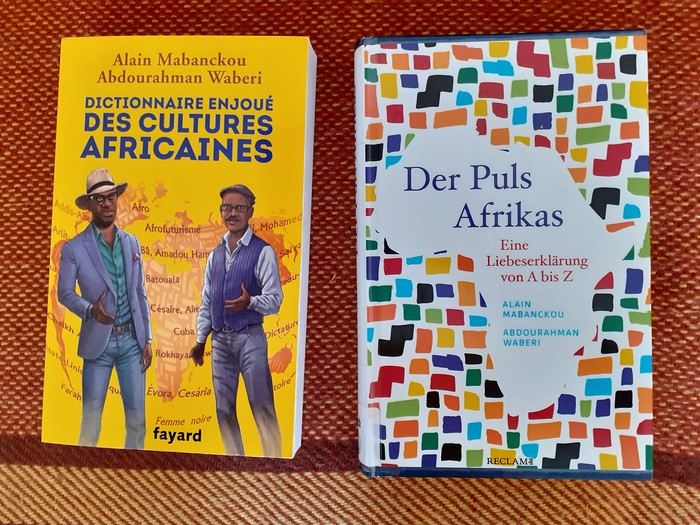
The Maggi cube, an unchallenged hegemony, and so much more
“The hopeless continent,” headlined The Economist, a British magazine, in July 2000 about Africa. Eleven years later, the same magazine headlined “Africa rising” instead. Images of Africa in the prosperous North constantly oscillate between apocalyptic scenarios and enthusiastic projections. A key issue with such images lies in the generalization they entail. If you look at the continent, considerable contrasts emerge depending on space and time. It’s no surprise that a region of the world encompassing such diverse ecological zones, maintaining such varied ties with other continents, comprising nearly fifty nation-states in sub-Saharan Africa alone, and characterized by a great diversity of languages, belief systems, and historical paths, doesn’t share a single destiny.
And yet, for many people outside Africa, as well as for many Africans, the continent constitutes a single entity, defined by criteria such as skin color, a colonial past, poverty, and the art of survival. Until now, these perspectives were generally accompanied by the idea that Africa had to—or should have—followed a single path together, sometimes called development, sometimes modernization, sometimes liberation, then a market economy. None of these paths delivered on their promises.
The two writers Alain Mabanckou and Abdourahman Waberi—one from Congo, the other raised in Djibouti, both long settled in France and now professors at renowned North American universities (Los Angeles, Washington)—have had enough of pessimistic scenarios: “We are aware that Africa is in the world and the world is in Africa. The same goes for all other continents, as our destinies are inextricably linked for better or worse. We refuse to see Africa as a reservoir of misfortunes or a continent cursed by atavistic misfortune and characterized by ethnic conflicts. [...] It’s this passionate flame we wanted to capture in a book [...] a kind of stroll through African cultures, without any demands, each letter of the alphabet leading us to a notion, a practice, a concept, a moment in history, literature, painting, politics, economics, cuisine, etc.” (p.10-11). Africa, they write, is on the verge of “imposing a signature, a style, a way of being in the world and in relation to the rest of the world.” (p.11) To put words to the continent’s diversity and dynamism, the two authors created a “rambling ABC,” a kind of portrait—or more precisely, a mythography—that lets you see and feel the pulse of a vast continent whose cultural power is unfolding before our eyes. Once marginalized or even mocked, the voice and importance of the Continent in global affairs are now undeniable” (p.11), containing over a hundred entries, mostly concise, written in a relaxed and casual style. The optimistic, even exuberant tone is set from the brief introduction. The duo of authors wants to “sing a love song to the cultures of our continent, to its inhabitants past and present, to its exceptional resources and its spectacular globalization despite a certain pollution that still clouds our skies due to the unmatched duration of dictatorships in some of our regions.” (p.12) In doing so, they don’t want to be too distracted by today’s Afewerki-Biya-Bongo-Déby & Co. ...
Of course, you’ll find tributes to great precursors like Frantz Fanon (“[...] it was a love story and admiration that wasn’t dimmed by the four decades separating his birth from ours. Let’s add that we were born while the native of Fort-de-France had left the world’s stage four years earlier, in the prime of life” p.141), Mongo Beti (“You must read and reread Mongo Beti, a genius who used his fame to support often just causes in Africa, like defending oppressed groups. His place is already in History. His oppressors, like the dictators Ahmadou Ahidjo and Paul Biya, can’t compete in the same category” p.64), the Malian Amadou Hampâté Bâ
(“Posterity remembers him mainly as an tireless defender of African cultures. His plea for the collection and preservation of traditional African knowledge remains a major event for all men and women of good will. One day in 1960, at the UNESCO podium, the native of Bandiagara sounded the alarm: ‘[...] Since we’ve admitted that the humanity of each people is the heritage of all humanity, if African traditions aren’t collected in time and written down, they’ll one day be missing from the universal archives of humanity.’” p.51),
Kwame Nkrumah, “one of the founders of Pan-Africanism, father of Ghana’s independence” (p.239), as well as the historian Cheikh Anta Diop, the writer, poet, and politician Aimé Césaire, and the economist and thinker Samir Amin, but also very warm tributes to certain contemporary African intellectuals like Souleymane Bachir Diagne and Achille Mbembe
(“A few years ago, in dominant economic circles, a rumor often resurfaced, usually disguised as a cold and scientifically proven analysis: Africa is useless. It’s a burden for the rest of the human community. With its 2% share in world trade, it would disappear from stock market radars without anyone noticing. So? Maybe it’ll be pulled up by other continents. Wanting to surpass itself is a crazy bet for Africans, they concluded. Arrogant or clueless, President Nicolas Sarkozy declared before an audience of students and teachers at Cheikh Anta Diop University in Dakar: ‘The African man hasn’t entered history enough [...] He only knows the eternal repetition of time marked by the endless repetition of the same gestures and words.’ That was in 2007. For decades, armed only with reason, an intellectual often steps up to debunk prejudices, lazy readings, and dishonest frameworks used as false fronts by those who, like Nicolas Sarkozy or former journalist Stephen Smith, out of ignorance, contempt, or condescension, distort African reality. This intellectual is none other than the historian and political scientist Achille Mbembe. This heir of Frantz Fanon, Amílcar Cabral, Jean-Marc Ela, and Fabien Eboussi-Boulaga was born in 1957 in Cameroon, in the Bassa region. Marked early by the upheavals of a fratricidal war, Achille Mbembe became the guardian of the memory of martyrs. After brilliant studies in Paris, he went on to teach at the best American universities, but the call of the Continent was stronger than anything else. In Dakar, he once directed CODESRIA (Council for the Development of Social Science Research in Africa) before joining the University of the Witwatersrand in Johannesburg, South Africa. Even though the author of *Critique of Black Reason* (Éditions La Découverte, 2015) spends a few months at Duke University in North Carolina, his observation post remains South Africa. From Johannesburg, Achille Mbembe scrutinizes Africa and the whole world. A lucid observer with an elegant and generous pen, Achille Mbembe knows how to blend big and small history: ‘I was born one day in July, as the month was drawing to a close. It was 1957, in that part of Africa recently named ‘Cameroon,’ a memory of the wonder that seized Portuguese sailors in the 15th century when, sailing up the river near Douala, they couldn’t help but note the presence of a multitude of crustaceans, and named it *Rio dos Camarões*, meaning ‘River of Shrimp.’ I grew up in the shadow of this nameless land, since, in a way, the name it bears is only the product of someone else’s astonishment: a lexical mistake, if you will.’ From this mistake or wound, he made leaven, a springboard to compose a rich work, recognized worldwide. To denounce barriers and barbarians too. But that’s not enough. Among his peers in circles of thought and action, Achille Mbembe passionately and consistently defends human dignity and the beauty of the world. In doing so, he fulfills the mission Frantz Fanon entrusted to him.” (p.227-229),
as well as entries dedicated to lesser-known artists and intellectuals, like the French journalist and activist Rokhaya Diallo, daughter of Senegalese and Gambian parents, or the Ethiopian filmmaker Haile Gerima, who has long lived in the United States. Other names from politics, sports, music, art, and literature: Kofi Annan, p.36; Barack Obama, p.243; Thomas Sankara, p.277; Ousmane Sow, p.285; Yambo Ouologuem, p.250; Léopold Sédar Senghor, p.282; Muhammad Ali, p.30; Nuruddin Farah, p.146; Salif Keita, p.203; Ahmadou Kourouma, p.206; Ngũgĩ wa Thiong’o, p.236; Winnie Mandela, p.224; Kylian Mbappé, p.226 ...
The authors, who resolutely commit to a “mythography” (p.11) of Africa, also pay special attention to local social movements, cultural events, and aspects of daily life. *Y’en a marre*, “which also meant ‘we’re fed up with sitting on our hands’” (p.320-321), emerged about a decade ago in Senegal as a citizen movement of peaceful resistance and symbolizes, the authors emphasize, the fact that African youth are increasingly fed up “with the political circus deployed in Africa since independence, as our parents would say, ‘since the White man left’...” (p.321). A full entry is dedicated to the Maggi bouillon cube, which has flooded African markets for about forty years and enjoys immense popularity (“It’s everywhere in Africa, from Dakar to Djibouti, and from Tangier to Cape Town. It’s in every pot, every stew. Little hands put it in every sauce, every local or adapted dish. An unchallenged hegemony! You’ll find it in diasporas too. The culinary strolls in Paris, in the [...] neighborhood” p.90). Critics blame it not only for impoverishing the aromatic diversity of local dishes but also for being harmful to health. And yet, “he poorest Africans, those who eat only once a day, a few spoonfuls of white beans and a ball of *foufou*, for example, are the most fervent users of the magic cube.” (p.92-93)
For *fonio*, “the new trendy cereal. [...] From the millet family, fonio is probably the oldest cereal cultivated in West Africa, and mainly in its sub-Saharan part, for millennia. [...] Easy to grow, water-efficient, fonio grows everywhere except on clay soils. Long neglected because it was considered the poor man’s crop, fonio is now a source of pride for the farmers who cultivate it and cherish it like the apple of their eye” (p.156-157), the authors immediately offer a detailed recipe, letting the reader know that “e can’t resist sharing this fonio with chicken recipe from Mali with you:
Ingredients: 1 chicken 3 large ripe red tomatoes 4 tbsp tomato paste 4 large onions 1 garlic clove 1/2 cup oil 2 Maggi cubes or salt 2 large carrots 1 turnip 1 large cabbage 2 large potatoes 1 celery stalk 1 packet pre-cooked fonio 4 okra (or okra powder) salt, pepper
Preparation: 1. Prepare the sauce: wash and cut the chicken. Peel the onions, garlic, and vegetables. 2. In a pot, fry the chicken pieces. 3. Dice the onions, tomatoes, carrots, and turnip very small and add them to the pot. 4. Add the tomato paste, salt, and pepper. 5. Simmer for 15 min, then add 2 L of water and the cooked chicken pieces. 6. Simmer for 30 min, then add the crushed garlic and celery, plus the cabbage cut into 4 and the potatoes cut in half. 7. Prepare the fonio: cover it with warm water, let it rest for 15 min, and cook it over low heat. 8. In a small pot, boil the okra and crush them. 9. Mix the crushed okra with the cooked fonio, then salt. Serve hot.” (p.158-159)
The comedy *Black Mic Mac*, released in French theaters in 1986 and addressing France’s increasingly restrictive immigration policy at the time, also gets an entry, as do *Tintin in the Congo*, the popular comic, and *Jip’s Café* (“[...] a little Africa in the heart of Paris, with passersby stopping to admire the ‘ambianceurs’ on the dance floor or attend the cultural events offered by the place” (p.194), an African establishment in Paris that Alain Mabanckou already immortalized in one of his novels.
The duo of authors also tackles thorny subjects like jihadism (p.119), the Rwandan genocide (p.272), the CFA franc (p.82), and dictatorship (p.110). While the two strike the right tone here, many entries leave a slightly bitter taste. Two examples: why doesn’t the text on Barack Obama mention the great disappointment of many people in Africa, who expected more from the African policy of the first U.S. president with African roots than just occasional warm words? Why do the comments on Winnie Mandela gloss over the fact that she was a highly controversial icon of the anti-apartheid movement due to her involvement in kidnappings, acts of torture, and murders of alleged apartheid collaborators? Instead, there’s a compassion that brings tears to the eyes: “She was often reduced to a secondary role, the wife of a great man” or “When victory came, she didn’t taste its fruits. Divorced, isolated. She would never be a ‘first lady’ in an evening gown, posing before a bed of chrysanthemums. They’d keep her far from the circles of power” (p.224-225). At this point, I would’ve liked the authors to take a slightly more critical stance...
That said, these “weaknesses” (if you can call them that) shouldn’t overshadow the book as a whole. It remains an informative, sometimes very entertaining, and often even original work in its own way.
Book information (the original French and the German translation):
Alain Mabanckou/Abdourahman Waberi. Dictionnaire enjoué des cultures africaines. Fayard, 2019. Alain Mabanckou/Abdourahman Waberi. Der Puls Afrikas. Eine Liebeserklärung von A bis Z. Reclam, 2022.
Hery
Solo backpacking trip to Benin
Hi everyone, thanks for your advice! I’m starting a new thread because it seems my first one about Senegal was deleted—or maybe it’s just my computer acting up again 😉. Anyway, I’ve decided to go to Benin instead. I’ll be there from January 5th to February 2nd—why count the days when you love traveling😄? I’d love all your tips on accommodations, restaurants, and itineraries. I’m basically starting from scratch to plan my trip.
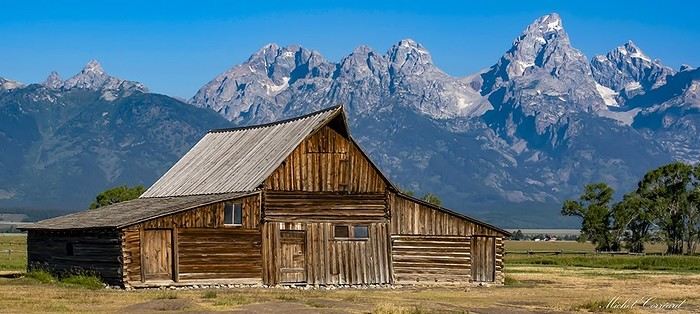
Grand Teton National Park
Every day, I look back at my 2022 trip to Wyoming. And every day, I tell myself I need to start getting ready to go back. Don’t agree? 😎
Tips for choosing a long-distance touring bike
Hi there,
I’m currently looking for a bike to do my first bike trip across France, with the ultimate goal of cycling through Latin America. I’ve got a lot of questions and I’d love to hear if you have any answers or advice to share. First off, I’ve been through this before with hiking. I want to get top-quality gear right away. When I started hiking, I ended up buying everything three times—first beginner gear, then intermediate, then expert, etc. For biking, I’d prefer to skip that process and invest right now in a bike that could ideally handle Latin America. I’ve set a total max budget of around 5000 € (roughly 4000–4500 € for the bike and the rest for accessories: panniers, helmet, cycling shorts, etc.).
So, I’ve got quite a few questions:
* I’ve read in several places that some people recommend buying the bike directly in Latin America. Since I need a first bike to train in Europe, would it be better to buy an entry-level bike in France (and sell it before the big departure)? Or is it preferable to start right away with my final bike to get used to it? Is buying it there just to save a bit of money?
* For a long-term trip (around six months) in Latin America, is it better to go for a gravel bike or a mountain bike?
* Should I buy a new bike or a refurbished one? Even more so given that I’m planning a long trip—could a refurbished bike end up causing more breakdowns?
If you have any advice on models, technical features to prioritize, or recommended sellers or resellers, I’d love to hear it. I’m a total beginner—I’ve only just started watching videos and reading up on the subject, and all the technical specs are new to me!
Thanks in advance for your help!
I’m currently looking for a bike to do my first bike trip across France, with the ultimate goal of cycling through Latin America. I’ve got a lot of questions and I’d love to hear if you have any answers or advice to share. First off, I’ve been through this before with hiking. I want to get top-quality gear right away. When I started hiking, I ended up buying everything three times—first beginner gear, then intermediate, then expert, etc. For biking, I’d prefer to skip that process and invest right now in a bike that could ideally handle Latin America. I’ve set a total max budget of around 5000 € (roughly 4000–4500 € for the bike and the rest for accessories: panniers, helmet, cycling shorts, etc.).
So, I’ve got quite a few questions:
* I’ve read in several places that some people recommend buying the bike directly in Latin America. Since I need a first bike to train in Europe, would it be better to buy an entry-level bike in France (and sell it before the big departure)? Or is it preferable to start right away with my final bike to get used to it? Is buying it there just to save a bit of money?
* For a long-term trip (around six months) in Latin America, is it better to go for a gravel bike or a mountain bike?
* Should I buy a new bike or a refurbished one? Even more so given that I’m planning a long trip—could a refurbished bike end up causing more breakdowns?
If you have any advice on models, technical features to prioritize, or recommended sellers or resellers, I’d love to hear it. I’m a total beginner—I’ve only just started watching videos and reading up on the subject, and all the technical specs are new to me!
Thanks in advance for your help!
What’s your definition of a nature destination?
Hi,
I’m starting this thread after a digression that began in the India section and continued in a travel journal about Kerala.
The original topic was whether India is—or isn’t—a nature destination.
I’ll let you all discuss and share your own definition of a nature destination. 🙂
I’m starting this thread after a digression that began in the India section and continued in a travel journal about Kerala.
The original topic was whether India is—or isn’t—a nature destination.
I’ll let you all discuss and share your own definition of a nature destination. 🙂
Family trip to Asia
Hello everyone,
My wife Fanny and I, along with our three kids (ages 10, 12, and 14), are planning a two-week trip to Asia during the February break. This would be our first big family trip, and we’re looking to mix discovery, a change of scenery, some relaxation, and cultural immersion. We want to avoid overly organized tours or over-touristed destinations.
Over 20 years ago, Fanny and I used to travel as a couple with backpacks, especially in India and Mongolia, but things have surely changed a lot since then. Now, we’re torn between:
• Thailand: for its diversity (beaches, temples, nature) and accessibility for a first family trip.
• Laos-Cambodia combo: for a potentially more authentic immersion, but we’re wondering if it’s well-suited for kids.
- Sri Lanka: it seems amazing and family-friendly? Is the political situation stable enough?
We have a few questions:
Which destination would you recommend for this kind of family setup? What itineraries might work for two weeks without feeling too rushed?
Logistics-wise: can we travel with a round-trip flight ticket, book a few basic hotels, and improvise the rest once we’re there? Or do we need to plan everything in advance (transport, accommodations, activities) for this time of year?
Thanks in advance for your valuable tips! Mathieu
Which destination would you recommend for this kind of family setup? What itineraries might work for two weeks without feeling too rushed?
Logistics-wise: can we travel with a round-trip flight ticket, book a few basic hotels, and improvise the rest once we’re there? Or do we need to plan everything in advance (transport, accommodations, activities) for this time of year?
Thanks in advance for your valuable tips! Mathieu