Results for "Berlin+et+métro+|+9+>+196"
5821 results found.
Practical aspects spring 2026: border to Murmansk, to Pskov, SIM cards, internet.
I took a few days to get some fresh air outside the Schengen-NATO prison. Between March 18, 2026, and March 25, 2026, as shown by the passport stamps:
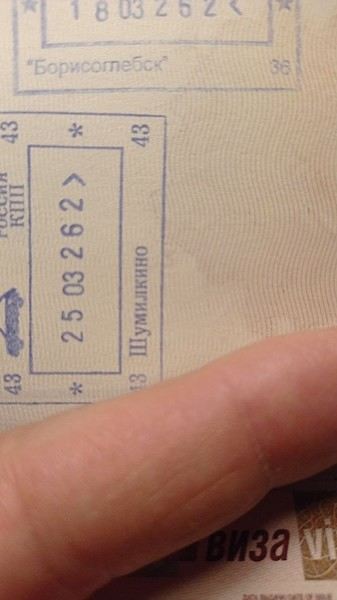
Borisoglebsk is the Russian border checkpoint after Kirkenes, on the road to Murmansk.
Kirkenes is a tiny town with a correspondingly small airport. Nothing has changed there: the minibuses to Murmansk wait on the right as you exit the airport. They’re synchronized with the two daily flights from Oslo—the SAS around 11:00 AM and Norwegian around 11:30 AM. They stop in Kirkenes at the corner of the Scandic for an hour, where other passengers can board, then head straight to the nearby border.
This is the least hassle Frontex/Schengen border. The Norwegian agent quickly scans your passport, and that’s it. No customs, since Norway is Schengen but not in the EU. On the Russian side, there’s a passport check and a quick customs inspection. All in all, crossing both the Norwegian and Russian checkpoints takes about 15 minutes.
A paper visa is required; e-visas aren’t accepted.
Two companies run the route: Avto Ekspress and Borodin: https://ae51.ru/routes/kirkenes-murmansk/ https://borodinbus.com/
The one-way fare is 5,500 ₽. You can either buy it online in rubles with a MIR card or make a formal reservation and pay in NOK cash to the driver. I took Borodin, and the price in NOK was much more expensive than in ₽.
=========================
On March 25, I left from Pskov via the Estonian border post at Luhaama. I spent three days in Murmansk, flew to St. Petersburg (SPB), stayed there for two days, then took an evening train to Pskov.
Since the end of February—and reportedly until the end of May—the Estonians have restricted the opening hours of the two border crossings near Pskov: Koidula (Pechory on the Russian side) and Luhaama (Izborsk on the Russian side). They’re closed at night between 7:00 PM and 7:00 AM. Right now, there’s a bus from Pskov at 7:00 AM to the border. It drops you off at the end of the road where truckers—many Kazakh and Serbian—are parked on the side. You finish the rest on foot to the barrier, where there’s a quick initial check for Ukrainian stamps in passports. Then you walk to the customs building, followed by passport control at the kiosk for motorists. After that, it’s a 500-meter walk to the Estonian checkpoint. At the moment, things seem calmer. Passport control is quick. The usual silly questions in English: "Where were you? Where are you going?" I just gave my most clueless smile: "Sorry, I don’t understand." Yeah, right—I don’t speak English, especially not at an Estonian border with a French passport. If they’re in a mood, though... A very quick bag inspection. Once you exit the Estonian post, walk to the bus stop sign by the road where another coach takes you to Riga.
The catch: in my case, last Wednesday, there were two passengers (Russians) with old Ukrainian stamps in their passports. The bus from the Estonian post to Riga was supposed to leave around 9:30 AM. We ended up leaving around noon after the two were grilled by the FSB. Since it was a weekday outside of holidays, the bus was half-empty. The fuller the bus and the more people with Ukrainian stamps, the worse the nightmare. Don’t book a same-day flight from Riga. I had a flight at 6:00 PM, so it worked out.
=============
The Kirkenes-Murmansk route is still clearly the easiest and fastest. But it’s not the most convenient since it’s way up north.
Next, I’d say the Gdansk-Kaliningrad route in the middle of the week. Avoid weekends and holiday departures/returns.
Avoid the Narva-Ivangorod route during Christmas, Easter, May 9, and *all* summer.
==============
About flights from Murmansk to St. Petersburg: prices are good. I bought my ticket the day before departure on Rossiya for 7,500 ₽, including 10 kg of luggage + a handbag.
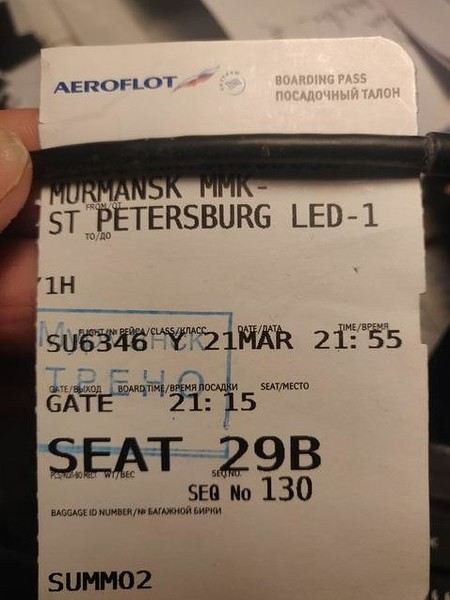
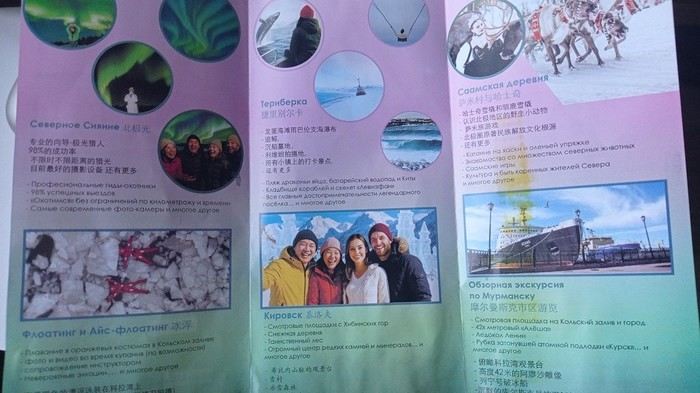
It’s the tail end of the northern lights season, and there were still crowds of Chinese tourists.
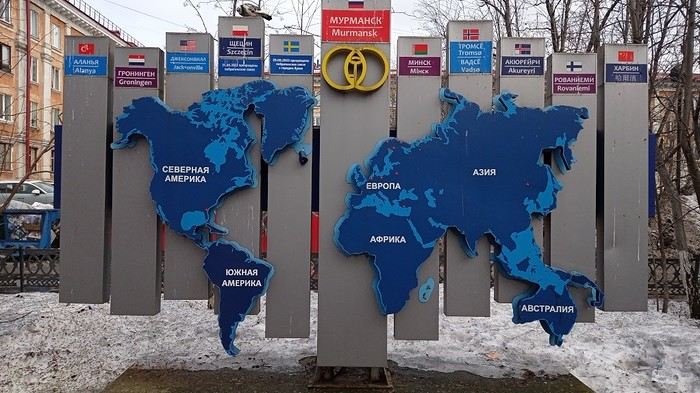
By the way, Murmansk is twinned with Harbin:
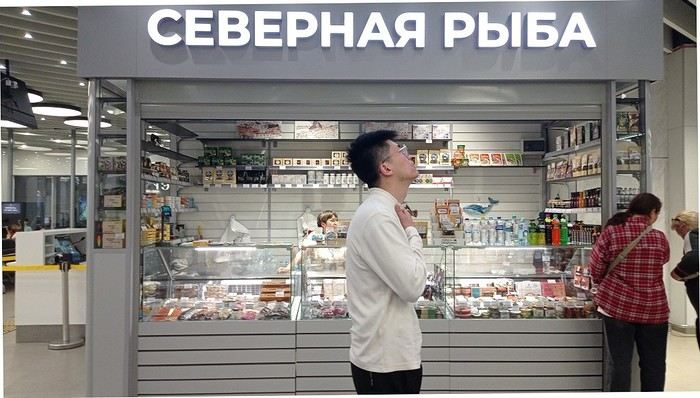
Chinese tourists are the largest foreign group, followed by Indians, then a mix of others from the Far East, Turks, Arabs, etc. Brochures are bilingual—Russian and Chinese:
============================
But let’s talk practical stuff. --
My domestic SIM card was restricted for SMS and internet for 24 hours. After that, if you want to keep using SMS, don’t turn off your phone—restarting triggers another 24-hour purgatory.
My Russian SIM cards (Megafon, MTS, Beeline) were activated as soon as I logged into their respective apps with my credentials.
Internet --
Telegram is heavily slowed down by authorities. To use it, you need to connect through proxy servers, which you load into the latest version of the app. Traffic is then rerouted internally within Telegram to servers outside Russia (Germany, Poland, Sweden, etc.). You can find these proxies on various channels. One is ChatVPN—check their website too.
For general internet use, like browsing the web, VPNs that work right now use the VLESS protocol. You can find several on Telegram by searching "VPN." A few free days, then payment in rubles or crypto.
Rozkomnadzor’s team are experts at this, so things can change. It’s a constant cat-and-mouse game.
Pskov is a special case. The city is near Estonia and has a large military base. Depending on NATO drone swarms launched from the Baltics, Wi-Fi can be completely suspended except for the most essential mobile apps. The drone swarms use the 4G network, and the powerful electronic jamming and drone suppression systems cause periods without Wi-Fi—including in hotels. Wired connections aren’t affected.
Borisoglebsk is the Russian border checkpoint after Kirkenes, on the road to Murmansk.
Kirkenes is a tiny town with a correspondingly small airport. Nothing has changed there: the minibuses to Murmansk wait on the right as you exit the airport. They’re synchronized with the two daily flights from Oslo—the SAS around 11:00 AM and Norwegian around 11:30 AM. They stop in Kirkenes at the corner of the Scandic for an hour, where other passengers can board, then head straight to the nearby border.
This is the least hassle Frontex/Schengen border. The Norwegian agent quickly scans your passport, and that’s it. No customs, since Norway is Schengen but not in the EU. On the Russian side, there’s a passport check and a quick customs inspection. All in all, crossing both the Norwegian and Russian checkpoints takes about 15 minutes.
A paper visa is required; e-visas aren’t accepted.
Two companies run the route: Avto Ekspress and Borodin: https://ae51.ru/routes/kirkenes-murmansk/ https://borodinbus.com/
The one-way fare is 5,500 ₽. You can either buy it online in rubles with a MIR card or make a formal reservation and pay in NOK cash to the driver. I took Borodin, and the price in NOK was much more expensive than in ₽.
=========================
On March 25, I left from Pskov via the Estonian border post at Luhaama. I spent three days in Murmansk, flew to St. Petersburg (SPB), stayed there for two days, then took an evening train to Pskov.
Since the end of February—and reportedly until the end of May—the Estonians have restricted the opening hours of the two border crossings near Pskov: Koidula (Pechory on the Russian side) and Luhaama (Izborsk on the Russian side). They’re closed at night between 7:00 PM and 7:00 AM. Right now, there’s a bus from Pskov at 7:00 AM to the border. It drops you off at the end of the road where truckers—many Kazakh and Serbian—are parked on the side. You finish the rest on foot to the barrier, where there’s a quick initial check for Ukrainian stamps in passports. Then you walk to the customs building, followed by passport control at the kiosk for motorists. After that, it’s a 500-meter walk to the Estonian checkpoint. At the moment, things seem calmer. Passport control is quick. The usual silly questions in English: "Where were you? Where are you going?" I just gave my most clueless smile: "Sorry, I don’t understand." Yeah, right—I don’t speak English, especially not at an Estonian border with a French passport. If they’re in a mood, though... A very quick bag inspection. Once you exit the Estonian post, walk to the bus stop sign by the road where another coach takes you to Riga.
The catch: in my case, last Wednesday, there were two passengers (Russians) with old Ukrainian stamps in their passports. The bus from the Estonian post to Riga was supposed to leave around 9:30 AM. We ended up leaving around noon after the two were grilled by the FSB. Since it was a weekday outside of holidays, the bus was half-empty. The fuller the bus and the more people with Ukrainian stamps, the worse the nightmare. Don’t book a same-day flight from Riga. I had a flight at 6:00 PM, so it worked out.
=============
The Kirkenes-Murmansk route is still clearly the easiest and fastest. But it’s not the most convenient since it’s way up north.
Next, I’d say the Gdansk-Kaliningrad route in the middle of the week. Avoid weekends and holiday departures/returns.
Avoid the Narva-Ivangorod route during Christmas, Easter, May 9, and *all* summer.
==============
About flights from Murmansk to St. Petersburg: prices are good. I bought my ticket the day before departure on Rossiya for 7,500 ₽, including 10 kg of luggage + a handbag.
It’s the tail end of the northern lights season, and there were still crowds of Chinese tourists.
By the way, Murmansk is twinned with Harbin:
Chinese tourists are the largest foreign group, followed by Indians, then a mix of others from the Far East, Turks, Arabs, etc. Brochures are bilingual—Russian and Chinese:
============================
But let’s talk practical stuff. --
My domestic SIM card was restricted for SMS and internet for 24 hours. After that, if you want to keep using SMS, don’t turn off your phone—restarting triggers another 24-hour purgatory.
My Russian SIM cards (Megafon, MTS, Beeline) were activated as soon as I logged into their respective apps with my credentials.
Internet --
Telegram is heavily slowed down by authorities. To use it, you need to connect through proxy servers, which you load into the latest version of the app. Traffic is then rerouted internally within Telegram to servers outside Russia (Germany, Poland, Sweden, etc.). You can find these proxies on various channels. One is ChatVPN—check their website too.
For general internet use, like browsing the web, VPNs that work right now use the VLESS protocol. You can find several on Telegram by searching "VPN." A few free days, then payment in rubles or crypto.
Rozkomnadzor’s team are experts at this, so things can change. It’s a constant cat-and-mouse game.
Pskov is a special case. The city is near Estonia and has a large military base. Depending on NATO drone swarms launched from the Baltics, Wi-Fi can be completely suspended except for the most essential mobile apps. The drone swarms use the 4G network, and the powerful electronic jamming and drone suppression systems cause periods without Wi-Fi—including in hotels. Wired connections aren’t affected.
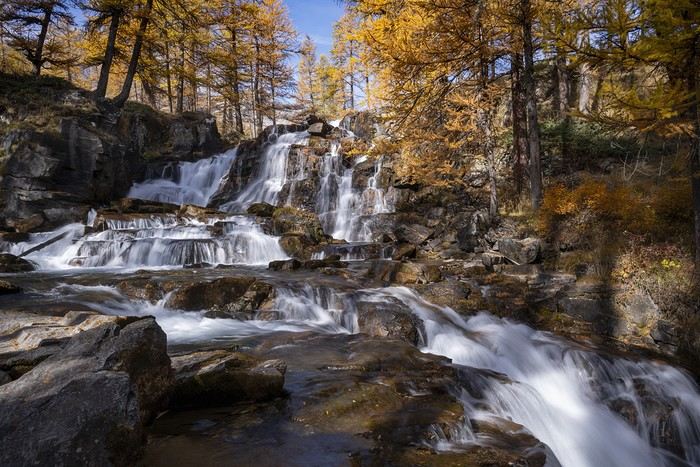
Discussion: Waterways Around the World - January 2026 Photo Contest
To chat about waterways, this is the place.
General 2022+ Update for Russia
This forum was closed for a long time after COVID, then due to its sale by the previous owner. Since 2022, there have been notable changes for Russia. It became possible to travel to Russia as a tourist again after COVID restrictions ended in summer 2022. But before that, in March 2022, the EU and member countries cut air links with Russia, as well as train lines. They also cut Russian banks off from the Euro-American banking network—meaning cards and wire transfers.
EU-based insurers stopped offering policies for Russia. The Green Card for cars in Russia was also discontinued. Then the EU abolished the simplified visa regime agreement with Russia. All in all, a summary of the current practical aspects would be helpful.
I’ve been traveling to Russia regularly for about twenty years, and after the long COVID break, I resumed in autumn 2022.
Visa
The usual paper visa is much more expensive. On one hand, because the previous regime was scrapped, and on the other, because invitations for multi-entry visas are pricier. A single-entry 30-day visa costs 80 €. The multi-entry one is 240 €. To be sure you’ll get a 12-month multi-entry, it’s best to buy a telex invitation from the MID (Russian Ministry of Foreign Affairs), though there are few resellers. Prices vary depending on the seller.
E-visas are now available for Schengen passport holders. A big simplification for trips up to 16 days within a 60-day validity period. You can apply from 40 days up to 5 days before your desired date. Issued in up to four days. The site is https://evisa.kdmid.ru/ Cost: 50 €. Processed through an Emirati bank (United Arab Emirates).
Medical Insurance
Medical insurance with repatriation is required to get a visa. So you’ll need to buy a policy. This brings up payment methods. If you’re already familiar with Russia and have a Russian bank account, you can pay with your Russian card. Otherwise, you’ll have to buy from a site that accepts payments via a Belarusian bank—which means your bank must work with Belarus—or go through https://goingrus.com/fr/insurance
Transport from the EU
Minibus (marshrutka) from Kirkenes (Norway) to Murmansk. Schedules are coordinated with flights from Oslo, which arrive between 11:00 and 12:00. They wait on the right as you exit the airport. Some are chartered by groups and leave directly, but may have space—ask the driver. Otherwise, two companies run the route, with a stop in town at the corner of the Scandic, where they depart around 14:00 or 15:00. Payment in cash (NOK or RUB) to the driver. Main operator: https://borodinbus.com Bus from Tallinn (Estonia) to St. Petersburg. The border crossing is on the Narva River. The Russian road checkpoint has been closed since January 2024 for construction expected to last 2.5 years, so reopening is possible in summer 2026. In the meantime, it’s a two-bus journey: Tallinn-Narva, then walk across the bridge between the Estonian and Russian checkpoints at Ivangorod, followed by another bus. Several companies: Luxexpress, Ecolines, Baltic Shuttle, Anniston, СКСавто. Bus from Riga to Pskov or St. Petersburg (final destination). Departs from Riga’s bus station (behind the train station) daily between 18:00 and 19:00. Arrives in Pskov between 01:00 and 02:00 (Russian time). Company: СКСавто. There’s another bus around 21:00 with Ecolines, but it’s longer, with a long stop at the border. Bus from Gdańsk to Kaliningrad. Several buses per day. From the PKS bus station, behind Gdańsk’s central station, on the other side of the boulevard. From Kaliningrad, a 1-hour flight to St. Petersburg costs around 5000 RUB.
Basically, unless you’re planning to go to Murmansk and the Kola Peninsula—and possibly from Murmansk, flights to Arkhangelsk, then Nenetsia (Naryan-Mar), etc.—the three main crossing points with airports are Tallinn, Riga, and Gdańsk.
The Gdańsk-Kaliningrad bus is the fastest, and the ticket to St. Petersburg is very reasonable.
The Narva-Ivangorod route is the riskiest in terms of potential queues and crossing time. Holiday periods are especially risky. Last mid-June, I took a 14:00 bus from Tallinn. I’d bought a single-berth compartment on the Grand Express St. Petersburg-Moscow train, leaving at 23:00, with the idea of a good night’s rest before a Moscow-Magadan flight. A 7-hour queue at the border meant I arrived at St. Petersburg’s bus station at 23:00—missed the train, had to book a room, and spent time finding a reasonably priced flight to Moscow the next day for the same airport as my Magadan flight.
The Riga-Pskov route is a bit long but relaxed. If you get off in Pskov, you can still get decent sleep between 02:00 and 12:00. The Oktyabrskaya Hotel is cheap. I’ve also stopped in Izborsk. You ask the driver when boarding in Riga. The stop is on the federal highway—cross the road, and the main inn is 200m away. You can explore the medieval site the next morning before taking a bus to Pskov (30 km).
From Pskov, there are fast regional Lastochka trains—three or four per day—to St. Petersburg, taking 3.5 hours. Very comfortable and affordable. Also, two daily flights with Azimuth to Moscow-Vnukovo from 5000 RUB. A one-hour flight. It’s a section of Pskov’s military airfield, just a few kilometers from the city center.
Money
Cash. The EU issued a nonsensical decree: a ban on importing EU currency (euros, zloty, kroner, forints, etc.) except for personal travel use. This doesn’t make sense because as a citizen of a eurozone country, you *have* to have euros—cash or electronic (card). You can’t travel without them. The stipulation about a limit for personal use is absurd because personal use can mean anything from a hostel bed to a luxury hotel room, plus transport (flight tickets, train tickets in Russia), restaurants, etc. Estonian customs officers ask about this at the border when leaving. They ask in Estonian, then Russian, then English, depending. Since I cross with a French passport, I just say, "Sorry, I don’t understand," no matter what. Then they ask with a questioning look, "Euro?" and I shake my head. I haven’t been searched, but they do ask to glance in your bag. Russians with large suitcases often get checked. Cards and phone apps: if you have a Russian bank account.
Telephony and Internet
Roaming works but is pricey. Okay for calls and SMS, but very expensive for data. In that case, use an e-SIM with your home carrier if your phone supports it. Otherwise, look into prepaid rechargeable SIMs in Russia for data only—like SIM cards for mobile modems.
Russian SIM: Since this year (2025), as of March, it’s mandatory to be registered in the EBS (Unified Biometric System) to buy a SIM card. For a non-resident foreigner, this means first registering for a SNILS at an MFC (Multifunctional Center)—also called "My Documents." The SNILS is the pension center, which doesn’t require residency. After getting your SNILS number and certificate, you register on the public services portal, Gosuslugi. Finally, you register in the EBS system (voice sample—you read numbers—and a biometric facial photo).
Personal Car
The Green Card no longer covers Russia, and neither do EU-based insurers. But third-party liability insurance (OSAGO) is mandatory. Since the closure of the Russian checkpoint at Ivangorod for construction and the Finnish border closure, the routes are from Kirkenes in Norway, the Estonia-Pskov route, and—since the Belarus-Russia joint visa this year—the Belarus route, e.g., Poland-Terespol-Brest or Lithuania-Belarus. No OSAGO sales if you cross via Kirkenes. I didn’t see any at Shumilkino, the Russian checkpoint after Estonia toward Pskov. If you have a Russian card, you can buy online, of course. Otherwise, pay in cash on-site at certain company offices (specific forms aren’t available at all agencies) or online by paying to a third-party account outside Russia—with added fees.
EU-based insurers stopped offering policies for Russia. The Green Card for cars in Russia was also discontinued. Then the EU abolished the simplified visa regime agreement with Russia. All in all, a summary of the current practical aspects would be helpful.
I’ve been traveling to Russia regularly for about twenty years, and after the long COVID break, I resumed in autumn 2022.
Visa
The usual paper visa is much more expensive. On one hand, because the previous regime was scrapped, and on the other, because invitations for multi-entry visas are pricier. A single-entry 30-day visa costs 80 €. The multi-entry one is 240 €. To be sure you’ll get a 12-month multi-entry, it’s best to buy a telex invitation from the MID (Russian Ministry of Foreign Affairs), though there are few resellers. Prices vary depending on the seller.
E-visas are now available for Schengen passport holders. A big simplification for trips up to 16 days within a 60-day validity period. You can apply from 40 days up to 5 days before your desired date. Issued in up to four days. The site is https://evisa.kdmid.ru/ Cost: 50 €. Processed through an Emirati bank (United Arab Emirates).
Medical Insurance
Medical insurance with repatriation is required to get a visa. So you’ll need to buy a policy. This brings up payment methods. If you’re already familiar with Russia and have a Russian bank account, you can pay with your Russian card. Otherwise, you’ll have to buy from a site that accepts payments via a Belarusian bank—which means your bank must work with Belarus—or go through https://goingrus.com/fr/insurance
Transport from the EU
Minibus (marshrutka) from Kirkenes (Norway) to Murmansk. Schedules are coordinated with flights from Oslo, which arrive between 11:00 and 12:00. They wait on the right as you exit the airport. Some are chartered by groups and leave directly, but may have space—ask the driver. Otherwise, two companies run the route, with a stop in town at the corner of the Scandic, where they depart around 14:00 or 15:00. Payment in cash (NOK or RUB) to the driver. Main operator: https://borodinbus.com Bus from Tallinn (Estonia) to St. Petersburg. The border crossing is on the Narva River. The Russian road checkpoint has been closed since January 2024 for construction expected to last 2.5 years, so reopening is possible in summer 2026. In the meantime, it’s a two-bus journey: Tallinn-Narva, then walk across the bridge between the Estonian and Russian checkpoints at Ivangorod, followed by another bus. Several companies: Luxexpress, Ecolines, Baltic Shuttle, Anniston, СКСавто. Bus from Riga to Pskov or St. Petersburg (final destination). Departs from Riga’s bus station (behind the train station) daily between 18:00 and 19:00. Arrives in Pskov between 01:00 and 02:00 (Russian time). Company: СКСавто. There’s another bus around 21:00 with Ecolines, but it’s longer, with a long stop at the border. Bus from Gdańsk to Kaliningrad. Several buses per day. From the PKS bus station, behind Gdańsk’s central station, on the other side of the boulevard. From Kaliningrad, a 1-hour flight to St. Petersburg costs around 5000 RUB.
Basically, unless you’re planning to go to Murmansk and the Kola Peninsula—and possibly from Murmansk, flights to Arkhangelsk, then Nenetsia (Naryan-Mar), etc.—the three main crossing points with airports are Tallinn, Riga, and Gdańsk.
The Gdańsk-Kaliningrad bus is the fastest, and the ticket to St. Petersburg is very reasonable.
The Narva-Ivangorod route is the riskiest in terms of potential queues and crossing time. Holiday periods are especially risky. Last mid-June, I took a 14:00 bus from Tallinn. I’d bought a single-berth compartment on the Grand Express St. Petersburg-Moscow train, leaving at 23:00, with the idea of a good night’s rest before a Moscow-Magadan flight. A 7-hour queue at the border meant I arrived at St. Petersburg’s bus station at 23:00—missed the train, had to book a room, and spent time finding a reasonably priced flight to Moscow the next day for the same airport as my Magadan flight.
The Riga-Pskov route is a bit long but relaxed. If you get off in Pskov, you can still get decent sleep between 02:00 and 12:00. The Oktyabrskaya Hotel is cheap. I’ve also stopped in Izborsk. You ask the driver when boarding in Riga. The stop is on the federal highway—cross the road, and the main inn is 200m away. You can explore the medieval site the next morning before taking a bus to Pskov (30 km).
From Pskov, there are fast regional Lastochka trains—three or four per day—to St. Petersburg, taking 3.5 hours. Very comfortable and affordable. Also, two daily flights with Azimuth to Moscow-Vnukovo from 5000 RUB. A one-hour flight. It’s a section of Pskov’s military airfield, just a few kilometers from the city center.
Money
Cash. The EU issued a nonsensical decree: a ban on importing EU currency (euros, zloty, kroner, forints, etc.) except for personal travel use. This doesn’t make sense because as a citizen of a eurozone country, you *have* to have euros—cash or electronic (card). You can’t travel without them. The stipulation about a limit for personal use is absurd because personal use can mean anything from a hostel bed to a luxury hotel room, plus transport (flight tickets, train tickets in Russia), restaurants, etc. Estonian customs officers ask about this at the border when leaving. They ask in Estonian, then Russian, then English, depending. Since I cross with a French passport, I just say, "Sorry, I don’t understand," no matter what. Then they ask with a questioning look, "Euro?" and I shake my head. I haven’t been searched, but they do ask to glance in your bag. Russians with large suitcases often get checked. Cards and phone apps: if you have a Russian bank account.
Telephony and Internet
Roaming works but is pricey. Okay for calls and SMS, but very expensive for data. In that case, use an e-SIM with your home carrier if your phone supports it. Otherwise, look into prepaid rechargeable SIMs in Russia for data only—like SIM cards for mobile modems.
Russian SIM: Since this year (2025), as of March, it’s mandatory to be registered in the EBS (Unified Biometric System) to buy a SIM card. For a non-resident foreigner, this means first registering for a SNILS at an MFC (Multifunctional Center)—also called "My Documents." The SNILS is the pension center, which doesn’t require residency. After getting your SNILS number and certificate, you register on the public services portal, Gosuslugi. Finally, you register in the EBS system (voice sample—you read numbers—and a biometric facial photo).
Personal Car
The Green Card no longer covers Russia, and neither do EU-based insurers. But third-party liability insurance (OSAGO) is mandatory. Since the closure of the Russian checkpoint at Ivangorod for construction and the Finnish border closure, the routes are from Kirkenes in Norway, the Estonia-Pskov route, and—since the Belarus-Russia joint visa this year—the Belarus route, e.g., Poland-Terespol-Brest or Lithuania-Belarus. No OSAGO sales if you cross via Kirkenes. I didn’t see any at Shumilkino, the Russian checkpoint after Estonia toward Pskov. If you have a Russian card, you can buy online, of course. Otherwise, pay in cash on-site at certain company offices (specific forms aren’t available at all agencies) or online by paying to a third-party account outside Russia—with added fees.
Which destination for New Year's Eve accessible by car: Prague or Zurich?
Hi everyone!
We’re heading to Alsace as a couple right after Christmas for 4 days. After that, we’d like to continue east by car to spend New Year’s Eve there.
We’re torn between Prague and Zurich. Which one would you recommend? In terms of driving convenience (distance isn’t an issue for us), things to see, and overall vibe. I’ve read, for example, that Czechs aren’t very welcoming, and it’s really important for us to have a good connection with the locals. On the other hand, I’m worried Zurich might be less interesting to visit...
Maybe you have other city suggestions?
Thanks so much for your help!
We’re heading to Alsace as a couple right after Christmas for 4 days. After that, we’d like to continue east by car to spend New Year’s Eve there.
We’re torn between Prague and Zurich. Which one would you recommend? In terms of driving convenience (distance isn’t an issue for us), things to see, and overall vibe. I’ve read, for example, that Czechs aren’t very welcoming, and it’s really important for us to have a good connection with the locals. On the other hand, I’m worried Zurich might be less interesting to visit...
Maybe you have other city suggestions?
Thanks so much for your help!
Ryanair prévoit jusqu'à 3 000 suppressions d'emplois English translation pending
sur 19 000 personnes.
Comme quoi cela arrive même aux meilleurs...
https://www.lalibre.be/economie/entreprises-startup/ryanair-prevoit-jusqu-a-3-000-suppressions-d-emplois-et-ne-s-attend-pas-a-une-reprise-des-vols-avant-juillet-au-moins-5eabc7e27b50a67d2ef24b5d et https://www.air-journal.fr/2020-05-01-ryanair-previsions-emploi-et-coup-de-gueule-contre-les-aides-5219895.html
https://www.lalibre.be/economie/entreprises-startup/ryanair-prevoit-jusqu-a-3-000-suppressions-d-emplois-et-ne-s-attend-pas-a-une-reprise-des-vols-avant-juillet-au-moins-5eabc7e27b50a67d2ef24b5d et https://www.air-journal.fr/2020-05-01-ryanair-previsions-emploi-et-coup-de-gueule-contre-les-aides-5219895.html
9 milliards d'euros pour Lufthansa English translation pending
Ce devrait être annoncé officiellement aujourd'hui.
https://www.reuters.com/article/us-health-coronavirus-lufthansa/germany-agrees-on-lufthansa-rescue-package-worth-9-billion-euros-business-insider-idUSKCN22A0IU
Lufthansa désirerait conserver ses filiales Brussels Airlines, Austrian Airlines et Swiss. https://www.lesoir.be/297346/article/2020-04-28/lufthansa-ne-compte-pas-lacher-brussels-airlines
Lufthansa désirerait conserver ses filiales Brussels Airlines, Austrian Airlines et Swiss. https://www.lesoir.be/297346/article/2020-04-28/lufthansa-ne-compte-pas-lacher-brussels-airlines
Finir mon voyage de Pologne jusqu'à Göteborg English translation pending
Qu'est-ce que on s'--de avec cette histoire de corona no pas que je soies confiné, moi j'ai toujours été confiné par choix donc j'ai 70ans, je vis à Paris, Barcelone et à Alger et je suis diabéto-cardiaque avec 2 stents et depuis le 29 février je suis bloqué à Alger pas d'avion et certainement les frontières fermées mais celà ne durera pas longtemps car les gens du CHR, les avioneurs et les gens en auront tellement marre que celà va gicler........en 2018 je voulais faire toute la Scandinavie via l'allemagne, le danemark mais arrivé à Kobenhaven,1 seule nuit et come back sur Hambourg, ville extraordinairre mais cette année avec tout ce merdier, car fin mai ou mi juin tout rentrera dans l'ordre car faire rentrer de l'argent et les emplois passeront avant, donc pour cet été, tou seul et à bord de mon duster la Scandinavie mai non plus via Le danemark mais via la pologne (un peu réticent sur ce choix), les pays baltes, en estonie une virée à St Petersbourgh, la finlande, nord de la suède, nord de la norvège, ,, ,, une virée aux fjords de Geiranger, Stronda puis après un zig zag entre la norvège et la suède jusqu'Goteborg, Kobenhaven, Hambourg, traversée rapide des pays bas, Brugge, une ville que j'adore puis Paris et ensuite 2ème quizaine d'aout jusqu'à mi septembre l'Andalousie puis auto reconfinemententre dans mes trois résidences........ vos conseils et infos me seront très utiles à partir de mon entrée en pologne jusquà Goteborg......Merci Beaucoup
On the Silk Road: Chronicles of a Sixty-Something Traveling Completely Independently
From Beijing to Khiva: China, Kyrgyzstan, Tajikistan, Uzbekistan
Chronicle of anecdotes, highlights, and other adventures that marked this eight-week journey in 2018.
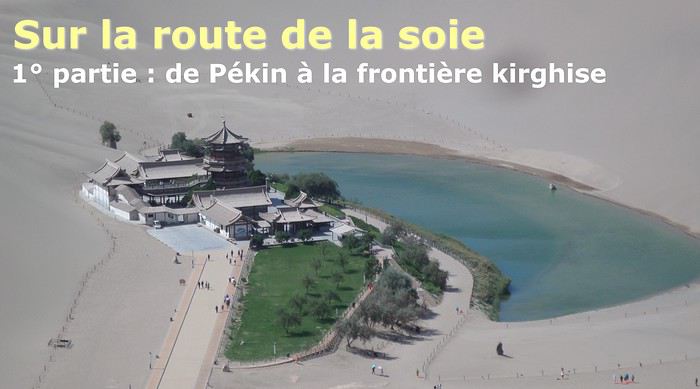
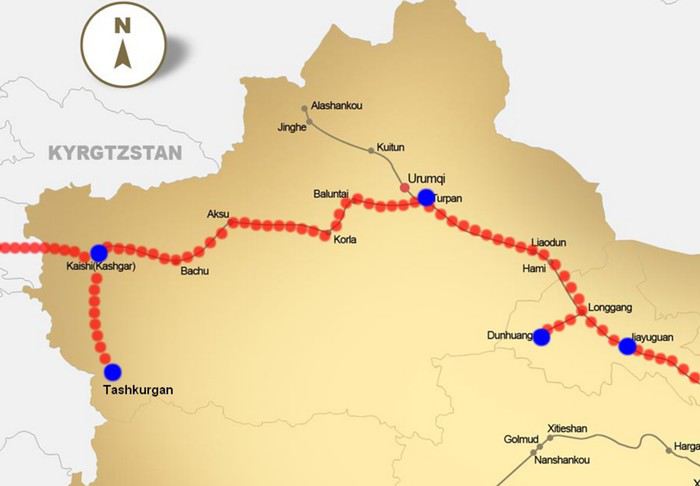
The Chinese Far West More than 30 years after my first trip to eastern China, I finally fulfilled an old dream: traveling solo from Beijing to the far west, discovering Xinjiang, the Uyghur people and the oppression they endure, the oases of Turpan and Kashgar, the Taklamakan Desert, the end of the Great Wall... The route was covered by train.
MENU PART 1: CHINA
1- Beijing (Jiankou) : the authentic Great Wall, without tourists 2- Cycling in Beijing, the best way to get around 3- Beijing : departure for the far west 4- Jiayuguan : getting by without English 5- Jiayuguan : scams and heritage 6- Dunhuang : abundance in the middle of the desert 7- Turpan : the Uyghurs under heavy surveillance 8- Kashgar : love at first sight for the old city 9- Kashgar : China’s recipe for controlling the populace 10- Tashkurgan : what on earth was I thinking going there! Kyrgyz border: a surreal epic Photo album from the 80s, contributions from other travelers (page 2)
1- JIANKOU Finding the authentic Great Wall, without tourists or a guide Friday, August 24, 2018 Thirty years later, I didn’t feel like revisiting the Great Wall at Badaling or any other overcrowded site. I chose to explore it at Jiankou, in its wildest, most authentic, and unrestored section, starting from a lost village deep in a valley—though it wasn’t *that* lost, since it had everything for communication.
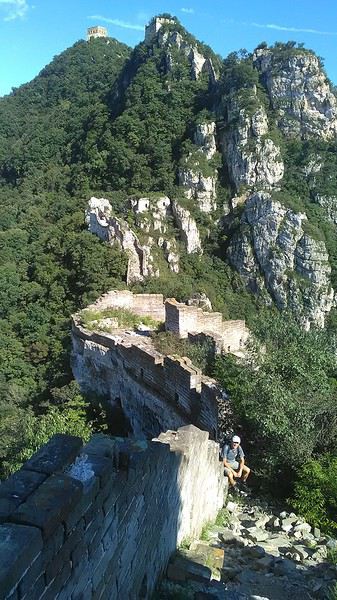
No need to pay for a taxi to get there—by timing it right, you can take the bus for just a few yuan. You have to get off at Xizhazi, the bus terminus. Be careful, there are only two buses a day in each direction. At the Xizhazi bus stop, I met a young couple who’d arrived with zero information about what to expect. We hiked the three of us toward the restored section of Mutianyu.
Still, be cautious With GPS and a topographic map (OpenTopoMap), you can set off without a problem or guide. The trail up to Jiankou is easy and well-marked. The trails down are too. But be careful—once you’re on the Wall, it’s real mountain hiking, with easy but dangerous climbing sections (over sheer drops). Not for amateurs or those afraid of heights! But what a reward. The Wall all to yourself, where it’s at its most daring. Truly mesmerizing.
More photos...
2- BEIJING The best way to get around the capital Sunday, August 26 The best way to explore the city is still by bike. Most are in a bike-share system, but you need to use an app—WeChat, the app that does everything, like monitoring your every move. No way I was installing that.
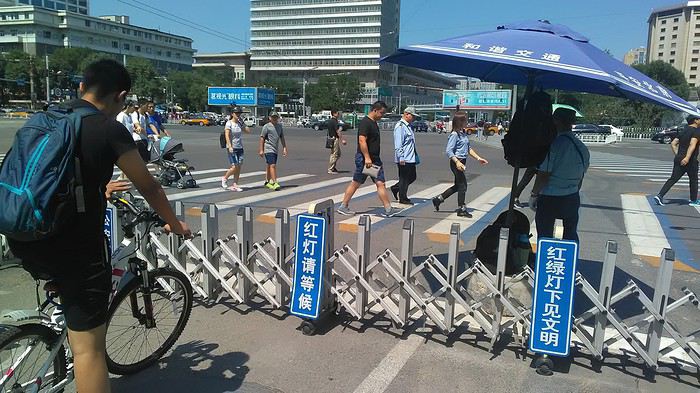
I found one at a rental shop near the hostel. The key is to quickly learn local traffic customs to minimize risks. Bike lanes are wide along the avenues.
But you still have to: - Watch out for anything parked on the bike paths—the most annoying are people napping or talking on the phone in their cars - Keep an eye on everything coming the wrong way—the list is long - The worst is right turns on red, which in Chinese traffic rules seem to have priority Once you get the hang of it, it’s fine. The city is huge but flat, so you can just wing it.
3- BEIJING By train to the far west Sunday, August 26 Beijing West Station is the size and operates like an airport. With your e-ticket from the agency, you first have to pick up your ticket at the special "English" counter, after passing through security. With your ticket in hand, you have to exit and enter through the boarding waiting area—not the platform—after a second security check.
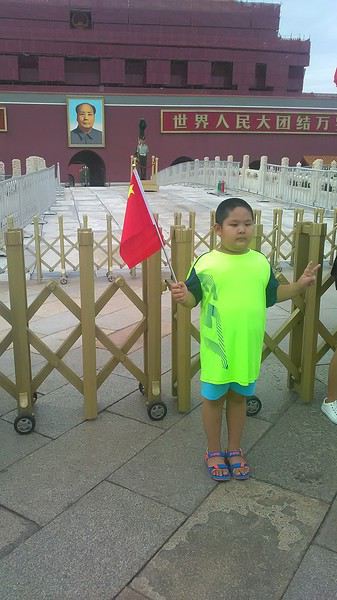 Then you find the right hall and wait for the sign to finally access the platform. In the end, it works pretty well given the incredible number of passengers to manage. Everywhere in Beijing, I saw that the Chinese have mastered crowd flow management.
Nice surprise: second-class carriages are clean, air-conditioned, and bright. Perfect, since I was in for 20 hours. One uniformed attendant per carriage, mobile meal service—luxury! Small downside: no luggage space. Hauling your suitcase up to the top bunk is quite a workout. I was in the middle, so it wasn’t too bad. The landscape, though, whether rural or urban, is pretty bleak. That should change once we leave the eastern plains.
Of course, I got my first police visit, with a thorough passport check and bag search. I was warned—going to the Chinese far west exposes you to this kind of hassle. But they were polite and respectful.
 The Chinese Far West
4- JIAYUGUAN Getting by without English Monday, August 27 At the gates of two deserts (Gobi and Taklamakan) and at the foot of the Tibetan highlands, the Great Wall ends at Jiayuguan. Here, I found the deeper China I’d somewhat rediscovered during my bike ride, even if now everyone gets around on electric bikes and I’m no longer stared at like an alien.
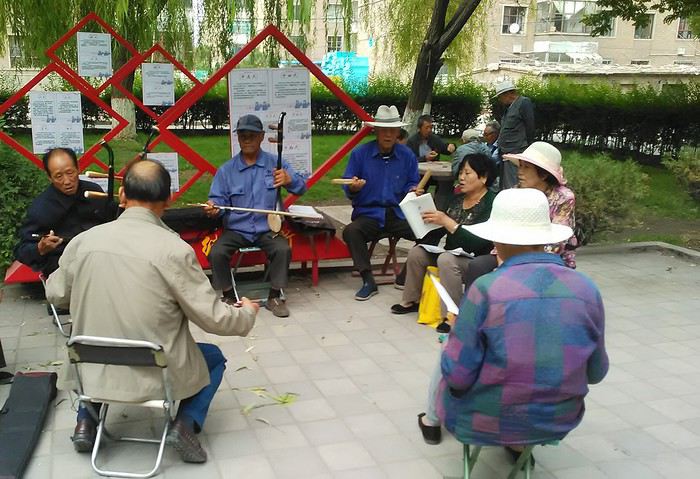
Prices are nothing like Beijing: you can find a full meal for 2 €, and my bike cost 7 € for two days. Plus, few people speak English—neither the owner of the HI hostel where I stayed, nor the ticket sellers at the sites, let alone the servers at the small eateries where I ate. Everything is written in Chinese. So I had to use the little Chinese I know to communicate about essentials. It makes the locals laugh to see a European trying to speak their language, but it earns respect. With Google Translate’s help, I managed.
Rant: With their avenues blocked for construction for kilometers without warning, and new roads not yet on maps, I must’ve taken 15 km of detours. More photos...
5- JIAYUGUAN Scams and heritage Tuesday, August 28 The Great Wall doesn’t exactly end at the fort I visited yesterday but 10 km further, at the entrance to a river gorge at the foot of the mountains. All that’s left is a badly damaged tower (more like a mound of earth) and a section of clay wall, similar to the one I biked yesterday.
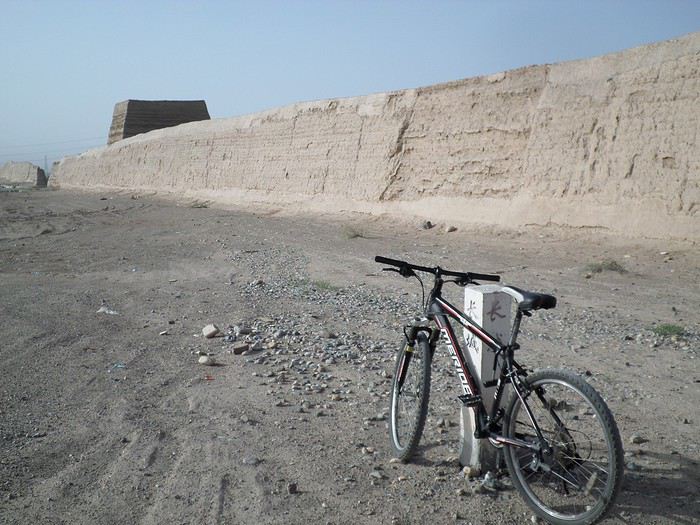
This morning, I hopped on my bike, determined to venture into the desert to see this highly symbolic site. First, you access it via a wide, brand-new road with not a soul in sight. Just before the site, I came across a grand welcome gate, very period-style, but it’s actually the inevitable toll booth.
Behind the gate, the road continues straight to the site, which you can see in the distance—at least 2 km away—the remains of the tower and wall. I had to leave my bike here. Fine. I went to the ticket counter and asked the price: 120 yuan! I couldn’t believe it—over 15 € for a simple mound of earth.
I showed my displeasure to the attendant, who couldn’t care less, and immediately turned back. 120 yuan—that’s the price for a new road, a fancy gate planted 2 km before the site just to force you to take a shuttle, and employees with nothing to do all day... Now I understand why I didn’t meet anyone!
Heritage China is a bit pricey Generally, sites are expensive for the country’s standard of living, but travelers are supposed to have money, so why hold back? I even gave up on the Forbidden City—reservations required days in advance (or on the black market at an impossible price). I prefer to keep the memory of my first visit, when entry must’ve cost a few dozen cents, and there were only a handful of visitors.
This morning, I took a taxi to see remarkable tombs of common people from the 3rd to 6th centuries. They’re small vaulted caves made of painted bricks, depicting scenes of daily life. Very pretty and moving. But even here, though the price was more reasonable, I was left wanting—only one of the 16 tombs is open to visitors, and it’s apparently not the most beautiful.
The authentic China—at least what’s left of it... Wandering the impersonal avenues of the city, you stumble upon a market. There, you still find traditional China—small shops with questionable hygiene, Go players, musicians, and even a dental prosthetist. The last refuge for those untouched by modernity. More photos...
6- DUNHUANG Abundance in the middle of the desert Wednesday, August 29 Well, I thought the landscape would be less bleak as I headed west. Nope. The only distraction in this expanse of dark, clayey sand is the forests of pylons and wind turbines, plus wild camels racing each other.
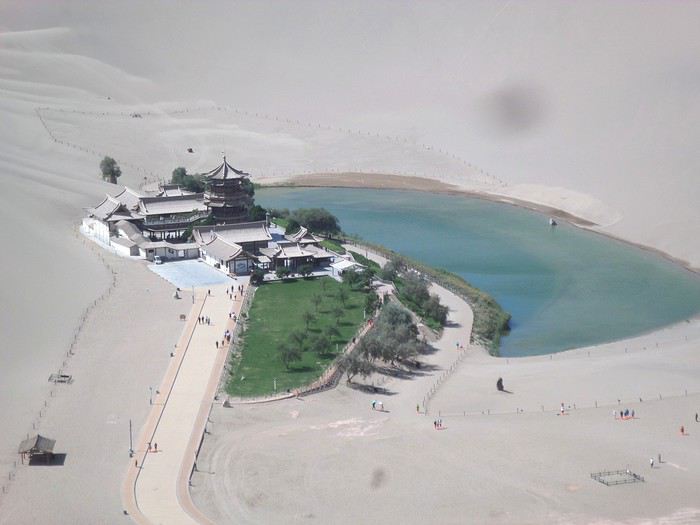 However, Dunhuang, the gateway to the Taklamakan, is by far the most pleasant Chinese city I know. There’s a real city center you can explore on foot. It’s hot but not unbearable, with a light, dry breeze. Much nicer than Beijing. The Han Chinese are still the majority, but the Muslim Uyghurs are more numerous, and the muezzin’s call to prayer echoes around the mosque.
The most surprising thing is the abundance and diversity of fruits and vegetables. You wonder how it all grows here. Well-irrigated, the desert sands are very fertile. Here, raisins have subtle, mysterious flavors, and the lamb really tastes like lamb.
Today, I visited the must-see Mingshashan, a dune complex next to which Pila is a molehill. The Basque Country, but covered in sand... More photos...
7- TURPAN The Uyghurs under heavy surveillance Friday, August 31 Surveillance cameras everywhere in the city, armed police stationed at intersections, in front of public buildings, at the entrance and inside tourist sites, police stations on every corner, patrols on foot or by car, khaki uniforms even for middle schoolers... here, the Han Chinese are in the minority, and you can feel it. Turpan feels like a city under siege.
To enter the youth hostel where I stayed, there’s even a security gate, and the receptionist (a Han, like everyone in tourism) wears a bulletproof vest! Reassuring. Still, you don’t feel particularly threatened here, especially as a European. The troublemakers are the Chinese, not the Uyghurs. Generally, China is a very safe country for visitors.
Smile, you’re on camera! I was biking on an avenue when the car in front of me got flashed for driving slowly. I quickly understood why when I got flashed too.
Here, the official time is Beijing time, but it gets dark two hours later. It’ll be even worse in Kashgar. Trickier to manage: everything is displayed in Chinese and Arabic. Nothing in English. Choosing a menu is a shot in the dark. Apart from a few young Chinese, no one here speaks English, and my Chinese doesn’t seem very understandable...
Mogao, the end of the road for the Han Yesterday, near Dunhuang, I went to Mogao, a complex of decorated caves with Buddha sculptures and paintings. Stunning, but so crowded! Luckily, here in Turpan, Chinese tourists barely venture out. So I visited a Silk Road ghost town with only a handful of other visitors and under a howling wind.
The modern Chinese city is swallowing up the old Uyghur neighborhoods—only a museum-like district remains in the center, and pockets of resistance on the outskirts are doomed to disappear soon. More photos...
8- KASHGAR A (relative) love at first sight for the old city Sunday, September 2 After three overnight trains, here I am in the far west of China, nearly 4,000 km from the capital. Despite the omnipresent police and an old city preserved UNESCO-style, Kashgar is my Chinese love at first sight.
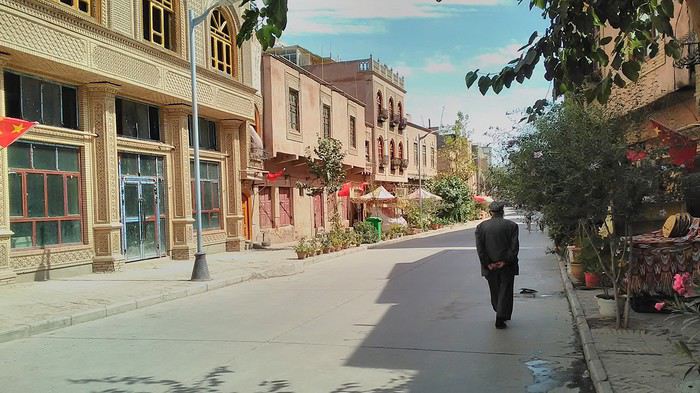
Finally, Chinese... well, sort of, because we’re in Uyghur territory here—a Turkic people with nothing culturally in common with the Han, the eastern Chinese. It started badly yesterday at Turfan station, where after three security gate passes, at least five passport checks, and a bag search, three adorable policewomen confiscated my antibacterial lotion because it had a flammable logo...
Then came the welcoming committee of armed cops at Kashgar station. Once all that was over, they left me alone—except you still have to go through security checks like everyone else to enter the old city, the bazaar, the livestock market... The further west you go, the more the siege mentality is evident. Luckily, the border isn’t far...
Despite the inevitable destruction-reconstruction, the city center has been well preserved. Thankfully, because it’s a very original style, a mix of local and colonial. I love it, even if it’s a bit too artificial, sanitized, and watered-down, and rather empty of residents. On the Silk Road, the city was famous for its great food. And it still is—rarely have I seen such richness and abundance of food! And not just scorpions or snakes. More photos...
9- KASHGAR China’s recipe for controlling the populace Saturday, September 1 Xinjiang, along with Tibet, is a "sensitive" area of rebellion in the eyes of Chinese authorities. As a result, the state has these regions and their populations under total control. Tourists also feel the consequences, even if they’re not at risk of re-education camps.
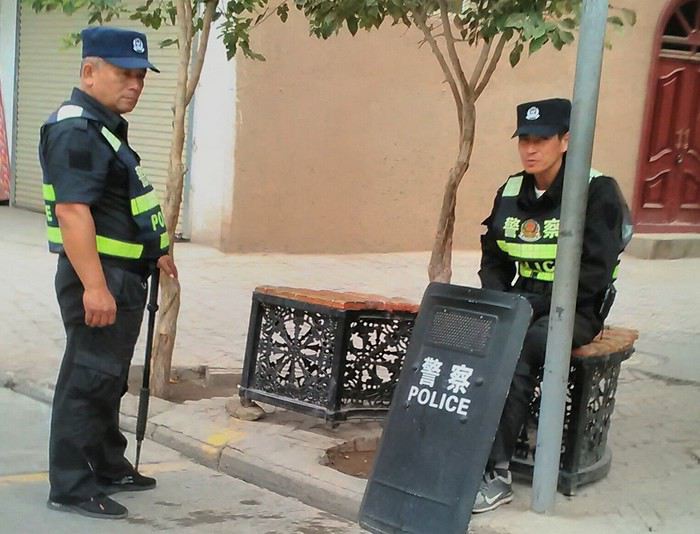 - Putting barbed wire and anti-ramming barriers around sensitive sites (schools, big hotels, government buildings...)
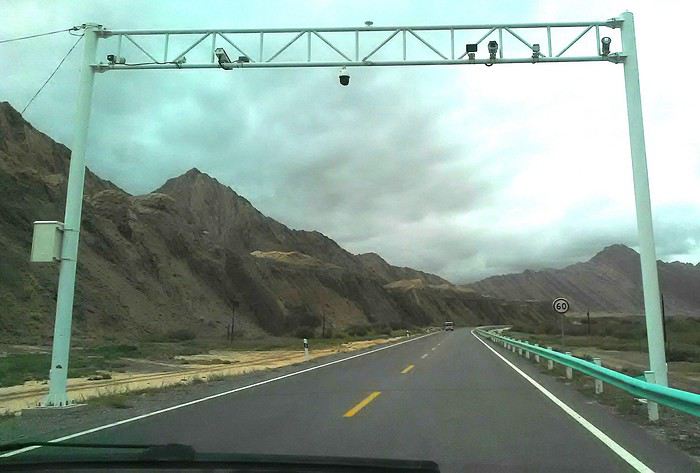
- Installing traffic surveillance gates with cameras and photo flashes (for all vehicles passing, including bikes) throughout the city and even in the countryside
- Posting uniformed guards with tasers, batons, or huge baseball bats every 100 meters
- Training the Han population (ethnic Chinese) in self-defense with sticks, preferably in the morning on the street. Men and women of all ages
- Starting school with the national anthem, doing military exercises, and receiving political indoctrination, all neatly lined up in the courtyard. (The dream school for any teacher)
- Placing a snitch in uniform (a pseudo-guard) in public gathering places, like youth hostels. Mine spends the day loafing around the courtyard
- Putting Chinese flags everywhere on the streets to remind everyone who’s in charge
- Installing security gates at every entrance to areas frequented by tourists (thanks for that) but not just there
- Never photographing cops, or else! I tried, but it’s not easy...
- Putting barbed wire and anti-ramming barriers around sensitive sites (schools, big hotels, government buildings...)
- Installing traffic surveillance gates with cameras and photo flashes (for all vehicles passing, including bikes) throughout the city and even in the countryside
- Posting uniformed guards with tasers, batons, or huge baseball bats every 100 meters
- Training the Han population (ethnic Chinese) in self-defense with sticks, preferably in the morning on the street. Men and women of all ages
- Starting school with the national anthem, doing military exercises, and receiving political indoctrination, all neatly lined up in the courtyard. (The dream school for any teacher)
- Placing a snitch in uniform (a pseudo-guard) in public gathering places, like youth hostels. Mine spends the day loafing around the courtyard
- Putting Chinese flags everywhere on the streets to remind everyone who’s in charge
- Installing security gates at every entrance to areas frequented by tourists (thanks for that) but not just there
- Never photographing cops, or else! I tried, but it’s not easy...
With all that, you can stroll around safely Not much crime! As for the amount the Chinese state spends to maintain such a system, it’s staggering! A third of the Han living in Xinjiang work in security. Today, I wandered freely around old Kashgar, which is quite large after all. More photos...
10- TASHKURGAN What on earth was I thinking going there! Wednesday, September 5 First, there’s the taxi—pretty crappy, with a driver who doesn’t speak a word of English and won’t stop smoking. Over six hours in that... shared with a completely out-of-it American.
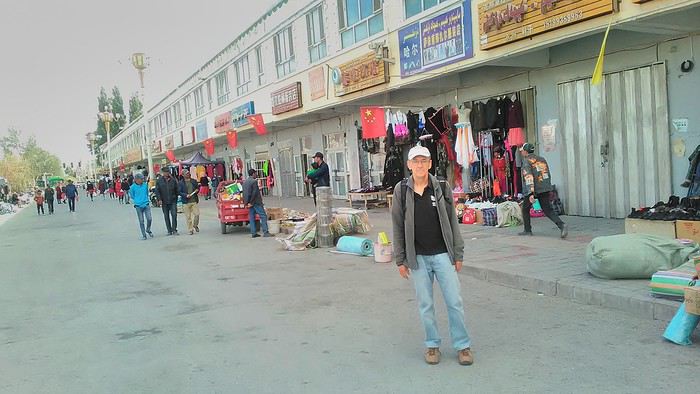
Then there are all the checkpoints along the way. I won’t go on—you know the drill by now.
After that, there’s Tashkurgan—a town with nothing to see, nothing to do. Deserted as soon as night falls. There’s this huge youth hostel and a few lost Chinese tapping away on their smartphones, chain-smoking. This lost American-European crowd, swapping tips on how to enter Pakistan or Tajikistan.
Luckily, there’s the Chinese Pamir Highway, lined with peaks over 7,000m. There’s the feeling of no longer being in China, with a population whose features are Middle Eastern. And these Tajik women with their stunning hairstyles and vibrant costumes. There’s the fact of having reached the westernmost Chinese city, far from crowds and tourist sites. A sort of end of the world. More photos...
11- KYRGYZ BORDER A surreal epic Thursday, September 6 The road from Kashgar to the Kyrgyzstan border is a little over 200 km and passes through beautiful landscapes of colorful, desert-like mountains with acrobatic folds. That’s the bucolic part of the trip.
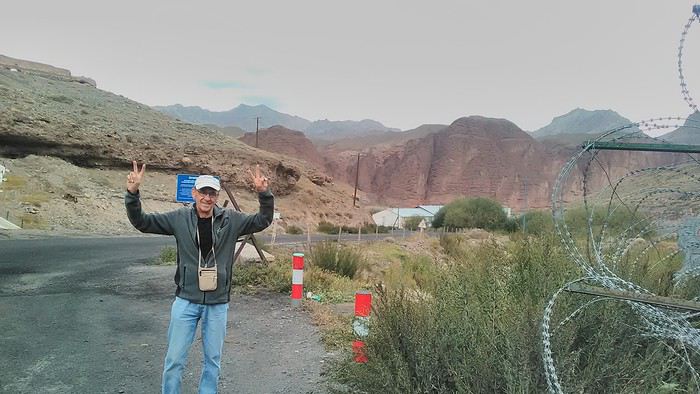 Yesterday, I managed to gather four people to rent a minibus to reach the border more easily: a Spaniard and an Argentine I’d already met in Turpan, and two New Zealanders who responded to the ad left at the hostel.
Absurdity and paranoia of Chinese authorities The highlight was crossing the town of Wuqia, 50 km past Kashgar. After tallying up with my fellow sufferers, we must’ve passed about ten checkpoints with: - Passport checks: 14 times, sometimes by two cops side by side - Bag checks: 4 times - Smartphone checks: 2 times, with deletion of "non-compliant" photos, and registration of your IMEI in the exit log!... Absurd and surreal at the same time, since my camera stayed in my bag, my apps are in French, and my photos have been online for ages...
With all that, we arrived just as the last checkpoint before the no man’s land marking the border between the two countries was on lunch break. And bam! Another 1.5-hour wait, alongside truckers who were much more used to this than we were.
What to think? The cops themselves aren’t fooled. They play the role they’re asked to, but sometimes you can coax a smile out of them—they realize how ridiculous the situation is.
What’s the point? That’s the big question my companions and I were tempted to answer with "to piss people off." To show you your place isn’t here, but with the other tourists, over there in the east, in Shanghai, Xi’an, or Guangzhou.
As for you, a traveler from a democratic country, you really experience this as aggression, humiliation, a violation of your private space. And yet, I’m respected, they speak to me properly. Today, I better understand what a Palestinian or a citizen of an occupied country might feel daily. A unique experience! Thanks, China.
And to top it off, the cherry on the cake! It’s still this glowing button you press to rate your passage after clearing the last obstacle before the exit stamp. I was so surprised it turned off before I could react. The Spaniard, with great humor and irony, had time to vote "excellent." In the end, he wasn’t wrong—you can hardly do better!
PS: I ditched my buddies at the border. They didn’t want to pay for a taxi to continue. So I took a direct taxi to Osh. The first 100 km are fabulous. I couldn’t take many photos, but I’ll be back on Monday to go to Tajikistan.
More photos...
The rest of the Silk Road, Part 2, in these travel journals: Kyrgyzstan, Tajikistan, Uzbekistan.
The Chinese Far West More than 30 years after my first trip to eastern China, I finally fulfilled an old dream: traveling solo from Beijing to the far west, discovering Xinjiang, the Uyghur people and the oppression they endure, the oases of Turpan and Kashgar, the Taklamakan Desert, the end of the Great Wall... The route was covered by train.
MENU PART 1: CHINA
1- Beijing (Jiankou) : the authentic Great Wall, without tourists 2- Cycling in Beijing, the best way to get around 3- Beijing : departure for the far west 4- Jiayuguan : getting by without English 5- Jiayuguan : scams and heritage 6- Dunhuang : abundance in the middle of the desert 7- Turpan : the Uyghurs under heavy surveillance 8- Kashgar : love at first sight for the old city 9- Kashgar : China’s recipe for controlling the populace 10- Tashkurgan : what on earth was I thinking going there! Kyrgyz border: a surreal epic Photo album from the 80s, contributions from other travelers (page 2)
1- JIANKOU Finding the authentic Great Wall, without tourists or a guide Friday, August 24, 2018 Thirty years later, I didn’t feel like revisiting the Great Wall at Badaling or any other overcrowded site. I chose to explore it at Jiankou, in its wildest, most authentic, and unrestored section, starting from a lost village deep in a valley—though it wasn’t *that* lost, since it had everything for communication.
No need to pay for a taxi to get there—by timing it right, you can take the bus for just a few yuan. You have to get off at Xizhazi, the bus terminus. Be careful, there are only two buses a day in each direction. At the Xizhazi bus stop, I met a young couple who’d arrived with zero information about what to expect. We hiked the three of us toward the restored section of Mutianyu.
Still, be cautious With GPS and a topographic map (OpenTopoMap), you can set off without a problem or guide. The trail up to Jiankou is easy and well-marked. The trails down are too. But be careful—once you’re on the Wall, it’s real mountain hiking, with easy but dangerous climbing sections (over sheer drops). Not for amateurs or those afraid of heights! But what a reward. The Wall all to yourself, where it’s at its most daring. Truly mesmerizing.
More photos...
2- BEIJING The best way to get around the capital Sunday, August 26 The best way to explore the city is still by bike. Most are in a bike-share system, but you need to use an app—WeChat, the app that does everything, like monitoring your every move. No way I was installing that.
I found one at a rental shop near the hostel. The key is to quickly learn local traffic customs to minimize risks. Bike lanes are wide along the avenues.
But you still have to: - Watch out for anything parked on the bike paths—the most annoying are people napping or talking on the phone in their cars - Keep an eye on everything coming the wrong way—the list is long - The worst is right turns on red, which in Chinese traffic rules seem to have priority Once you get the hang of it, it’s fine. The city is huge but flat, so you can just wing it.
3- BEIJING By train to the far west Sunday, August 26 Beijing West Station is the size and operates like an airport. With your e-ticket from the agency, you first have to pick up your ticket at the special "English" counter, after passing through security. With your ticket in hand, you have to exit and enter through the boarding waiting area—not the platform—after a second security check.
Then you find the right hall and wait for the sign to finally access the platform. In the end, it works pretty well given the incredible number of passengers to manage. Everywhere in Beijing, I saw that the Chinese have mastered crowd flow management.Nice surprise: second-class carriages are clean, air-conditioned, and bright. Perfect, since I was in for 20 hours. One uniformed attendant per carriage, mobile meal service—luxury! Small downside: no luggage space. Hauling your suitcase up to the top bunk is quite a workout. I was in the middle, so it wasn’t too bad. The landscape, though, whether rural or urban, is pretty bleak. That should change once we leave the eastern plains.
Of course, I got my first police visit, with a thorough passport check and bag search. I was warned—going to the Chinese far west exposes you to this kind of hassle. But they were polite and respectful.
The Chinese Far West4- JIAYUGUAN Getting by without English Monday, August 27 At the gates of two deserts (Gobi and Taklamakan) and at the foot of the Tibetan highlands, the Great Wall ends at Jiayuguan. Here, I found the deeper China I’d somewhat rediscovered during my bike ride, even if now everyone gets around on electric bikes and I’m no longer stared at like an alien.
Prices are nothing like Beijing: you can find a full meal for 2 €, and my bike cost 7 € for two days. Plus, few people speak English—neither the owner of the HI hostel where I stayed, nor the ticket sellers at the sites, let alone the servers at the small eateries where I ate. Everything is written in Chinese. So I had to use the little Chinese I know to communicate about essentials. It makes the locals laugh to see a European trying to speak their language, but it earns respect. With Google Translate’s help, I managed.
Rant: With their avenues blocked for construction for kilometers without warning, and new roads not yet on maps, I must’ve taken 15 km of detours. More photos...
5- JIAYUGUAN Scams and heritage Tuesday, August 28 The Great Wall doesn’t exactly end at the fort I visited yesterday but 10 km further, at the entrance to a river gorge at the foot of the mountains. All that’s left is a badly damaged tower (more like a mound of earth) and a section of clay wall, similar to the one I biked yesterday.
This morning, I hopped on my bike, determined to venture into the desert to see this highly symbolic site. First, you access it via a wide, brand-new road with not a soul in sight. Just before the site, I came across a grand welcome gate, very period-style, but it’s actually the inevitable toll booth.
Behind the gate, the road continues straight to the site, which you can see in the distance—at least 2 km away—the remains of the tower and wall. I had to leave my bike here. Fine. I went to the ticket counter and asked the price: 120 yuan! I couldn’t believe it—over 15 € for a simple mound of earth.
I showed my displeasure to the attendant, who couldn’t care less, and immediately turned back. 120 yuan—that’s the price for a new road, a fancy gate planted 2 km before the site just to force you to take a shuttle, and employees with nothing to do all day... Now I understand why I didn’t meet anyone!
Heritage China is a bit pricey Generally, sites are expensive for the country’s standard of living, but travelers are supposed to have money, so why hold back? I even gave up on the Forbidden City—reservations required days in advance (or on the black market at an impossible price). I prefer to keep the memory of my first visit, when entry must’ve cost a few dozen cents, and there were only a handful of visitors.
This morning, I took a taxi to see remarkable tombs of common people from the 3rd to 6th centuries. They’re small vaulted caves made of painted bricks, depicting scenes of daily life. Very pretty and moving. But even here, though the price was more reasonable, I was left wanting—only one of the 16 tombs is open to visitors, and it’s apparently not the most beautiful.
The authentic China—at least what’s left of it... Wandering the impersonal avenues of the city, you stumble upon a market. There, you still find traditional China—small shops with questionable hygiene, Go players, musicians, and even a dental prosthetist. The last refuge for those untouched by modernity. More photos...
6- DUNHUANG Abundance in the middle of the desert Wednesday, August 29 Well, I thought the landscape would be less bleak as I headed west. Nope. The only distraction in this expanse of dark, clayey sand is the forests of pylons and wind turbines, plus wild camels racing each other.
However, Dunhuang, the gateway to the Taklamakan, is by far the most pleasant Chinese city I know. There’s a real city center you can explore on foot. It’s hot but not unbearable, with a light, dry breeze. Much nicer than Beijing. The Han Chinese are still the majority, but the Muslim Uyghurs are more numerous, and the muezzin’s call to prayer echoes around the mosque.The most surprising thing is the abundance and diversity of fruits and vegetables. You wonder how it all grows here. Well-irrigated, the desert sands are very fertile. Here, raisins have subtle, mysterious flavors, and the lamb really tastes like lamb.
Today, I visited the must-see Mingshashan, a dune complex next to which Pila is a molehill. The Basque Country, but covered in sand... More photos...
7- TURPAN The Uyghurs under heavy surveillance Friday, August 31 Surveillance cameras everywhere in the city, armed police stationed at intersections, in front of public buildings, at the entrance and inside tourist sites, police stations on every corner, patrols on foot or by car, khaki uniforms even for middle schoolers... here, the Han Chinese are in the minority, and you can feel it. Turpan feels like a city under siege.
To enter the youth hostel where I stayed, there’s even a security gate, and the receptionist (a Han, like everyone in tourism) wears a bulletproof vest! Reassuring. Still, you don’t feel particularly threatened here, especially as a European. The troublemakers are the Chinese, not the Uyghurs. Generally, China is a very safe country for visitors.
Smile, you’re on camera! I was biking on an avenue when the car in front of me got flashed for driving slowly. I quickly understood why when I got flashed too.
Here, the official time is Beijing time, but it gets dark two hours later. It’ll be even worse in Kashgar. Trickier to manage: everything is displayed in Chinese and Arabic. Nothing in English. Choosing a menu is a shot in the dark. Apart from a few young Chinese, no one here speaks English, and my Chinese doesn’t seem very understandable...
Mogao, the end of the road for the Han Yesterday, near Dunhuang, I went to Mogao, a complex of decorated caves with Buddha sculptures and paintings. Stunning, but so crowded! Luckily, here in Turpan, Chinese tourists barely venture out. So I visited a Silk Road ghost town with only a handful of other visitors and under a howling wind.
The modern Chinese city is swallowing up the old Uyghur neighborhoods—only a museum-like district remains in the center, and pockets of resistance on the outskirts are doomed to disappear soon. More photos...
8- KASHGAR A (relative) love at first sight for the old city Sunday, September 2 After three overnight trains, here I am in the far west of China, nearly 4,000 km from the capital. Despite the omnipresent police and an old city preserved UNESCO-style, Kashgar is my Chinese love at first sight.
Finally, Chinese... well, sort of, because we’re in Uyghur territory here—a Turkic people with nothing culturally in common with the Han, the eastern Chinese. It started badly yesterday at Turfan station, where after three security gate passes, at least five passport checks, and a bag search, three adorable policewomen confiscated my antibacterial lotion because it had a flammable logo...
Then came the welcoming committee of armed cops at Kashgar station. Once all that was over, they left me alone—except you still have to go through security checks like everyone else to enter the old city, the bazaar, the livestock market... The further west you go, the more the siege mentality is evident. Luckily, the border isn’t far...
Despite the inevitable destruction-reconstruction, the city center has been well preserved. Thankfully, because it’s a very original style, a mix of local and colonial. I love it, even if it’s a bit too artificial, sanitized, and watered-down, and rather empty of residents. On the Silk Road, the city was famous for its great food. And it still is—rarely have I seen such richness and abundance of food! And not just scorpions or snakes. More photos...
9- KASHGAR China’s recipe for controlling the populace Saturday, September 1 Xinjiang, along with Tibet, is a "sensitive" area of rebellion in the eyes of Chinese authorities. As a result, the state has these regions and their populations under total control. Tourists also feel the consequences, even if they’re not at risk of re-education camps.
- Putting barbed wire and anti-ramming barriers around sensitive sites (schools, big hotels, government buildings...)
- Installing traffic surveillance gates with cameras and photo flashes (for all vehicles passing, including bikes) throughout the city and even in the countryside
- Posting uniformed guards with tasers, batons, or huge baseball bats every 100 meters
- Training the Han population (ethnic Chinese) in self-defense with sticks, preferably in the morning on the street. Men and women of all ages
- Starting school with the national anthem, doing military exercises, and receiving political indoctrination, all neatly lined up in the courtyard. (The dream school for any teacher)
- Placing a snitch in uniform (a pseudo-guard) in public gathering places, like youth hostels. Mine spends the day loafing around the courtyard
- Putting Chinese flags everywhere on the streets to remind everyone who’s in charge
- Installing security gates at every entrance to areas frequented by tourists (thanks for that) but not just there
- Never photographing cops, or else! I tried, but it’s not easy...With all that, you can stroll around safely Not much crime! As for the amount the Chinese state spends to maintain such a system, it’s staggering! A third of the Han living in Xinjiang work in security. Today, I wandered freely around old Kashgar, which is quite large after all. More photos...
10- TASHKURGAN What on earth was I thinking going there! Wednesday, September 5 First, there’s the taxi—pretty crappy, with a driver who doesn’t speak a word of English and won’t stop smoking. Over six hours in that... shared with a completely out-of-it American.
Then there are all the checkpoints along the way. I won’t go on—you know the drill by now.
After that, there’s Tashkurgan—a town with nothing to see, nothing to do. Deserted as soon as night falls. There’s this huge youth hostel and a few lost Chinese tapping away on their smartphones, chain-smoking. This lost American-European crowd, swapping tips on how to enter Pakistan or Tajikistan.
Luckily, there’s the Chinese Pamir Highway, lined with peaks over 7,000m. There’s the feeling of no longer being in China, with a population whose features are Middle Eastern. And these Tajik women with their stunning hairstyles and vibrant costumes. There’s the fact of having reached the westernmost Chinese city, far from crowds and tourist sites. A sort of end of the world. More photos...
11- KYRGYZ BORDER A surreal epic Thursday, September 6 The road from Kashgar to the Kyrgyzstan border is a little over 200 km and passes through beautiful landscapes of colorful, desert-like mountains with acrobatic folds. That’s the bucolic part of the trip.
Yesterday, I managed to gather four people to rent a minibus to reach the border more easily: a Spaniard and an Argentine I’d already met in Turpan, and two New Zealanders who responded to the ad left at the hostel.Absurdity and paranoia of Chinese authorities The highlight was crossing the town of Wuqia, 50 km past Kashgar. After tallying up with my fellow sufferers, we must’ve passed about ten checkpoints with: - Passport checks: 14 times, sometimes by two cops side by side - Bag checks: 4 times - Smartphone checks: 2 times, with deletion of "non-compliant" photos, and registration of your IMEI in the exit log!... Absurd and surreal at the same time, since my camera stayed in my bag, my apps are in French, and my photos have been online for ages...
With all that, we arrived just as the last checkpoint before the no man’s land marking the border between the two countries was on lunch break. And bam! Another 1.5-hour wait, alongside truckers who were much more used to this than we were.
What to think? The cops themselves aren’t fooled. They play the role they’re asked to, but sometimes you can coax a smile out of them—they realize how ridiculous the situation is.
What’s the point? That’s the big question my companions and I were tempted to answer with "to piss people off." To show you your place isn’t here, but with the other tourists, over there in the east, in Shanghai, Xi’an, or Guangzhou.
As for you, a traveler from a democratic country, you really experience this as aggression, humiliation, a violation of your private space. And yet, I’m respected, they speak to me properly. Today, I better understand what a Palestinian or a citizen of an occupied country might feel daily. A unique experience! Thanks, China.
And to top it off, the cherry on the cake! It’s still this glowing button you press to rate your passage after clearing the last obstacle before the exit stamp. I was so surprised it turned off before I could react. The Spaniard, with great humor and irony, had time to vote "excellent." In the end, he wasn’t wrong—you can hardly do better!
PS: I ditched my buddies at the border. They didn’t want to pay for a taxi to continue. So I took a direct taxi to Osh. The first 100 km are fabulous. I couldn’t take many photos, but I’ll be back on Monday to go to Tajikistan.
More photos...
The rest of the Silk Road, Part 2, in these travel journals: Kyrgyzstan, Tajikistan, Uzbekistan.
Destination pour voyage en camping-car en août avec des enfants English translation pending
Bonjour à tous!
Ca y est, c'est décidé, on se lance pour notre premier voyage en camping-car. C'est un peu logique vu que avec 3 enfants (10, 6 et 2 ans), c'est le moyen le plus pratique pour faire des road-trips et sortir un peu des sentiers battus.
J'ai pas mal regardé sur le forum et j'ai quelques alternatives, sachant qu'il s'agirait d'un voyage de 2 semaines au mois d'août, et que pour l'instant avec un enfant en bas âge on se limite à l'Europe.
Irlande> Avion pour Dublin + location semblerait idéal, mais apparemment pas très indiqué aux CC car pas mal de route étroites, hors nous ne sommes pas habitués à conduire des gros véhicules.
Islande> Avion pour Rejkjavik + location seul bémol: la location très chère (a priori 5000€ pour 2 semaines yc assurance) et aussi la température un peu fraiche au mois d'août
Suède Avantage: location à Hamburg, donc moins chère, puis remontée vers le Danemark et la Suède Inconvénient: beaucoup de route si on veut monter jusqu'à Stockholm
Sinon, il y aurait l'Allemagne (avec l'Avantage que nous parlons allemand parfaitement), mais j'ai peur qu'il y ait vraiment trop de monde. ou la Norvège jusqu'au Nord (j'ai lu des récits merveilleux sur le forum), mais c'est aussi bcp de km.
Avez vous des conseils à me donner pour ce voyage de 2 semaines avec nos 3 enfants? L'une de ces destinations paraît elle mieux que d'autres au moins d'août avec des enfants, et en ne réservant pas des emplacements à l'avance pour rester flexible? La contrainte aussi est que nous ne pourrons pas emporter 4 vélos, donc pas de possibilité a priori de faire du vélo sur place, une fois garé, sauf si qq'un a des idées.
Un grand merci pour vos conseils Clément
Irlande> Avion pour Dublin + location semblerait idéal, mais apparemment pas très indiqué aux CC car pas mal de route étroites, hors nous ne sommes pas habitués à conduire des gros véhicules.
Islande> Avion pour Rejkjavik + location seul bémol: la location très chère (a priori 5000€ pour 2 semaines yc assurance) et aussi la température un peu fraiche au mois d'août
Suède Avantage: location à Hamburg, donc moins chère, puis remontée vers le Danemark et la Suède Inconvénient: beaucoup de route si on veut monter jusqu'à Stockholm
Sinon, il y aurait l'Allemagne (avec l'Avantage que nous parlons allemand parfaitement), mais j'ai peur qu'il y ait vraiment trop de monde. ou la Norvège jusqu'au Nord (j'ai lu des récits merveilleux sur le forum), mais c'est aussi bcp de km.
Avez vous des conseils à me donner pour ce voyage de 2 semaines avec nos 3 enfants? L'une de ces destinations paraît elle mieux que d'autres au moins d'août avec des enfants, et en ne réservant pas des emplacements à l'avance pour rester flexible? La contrainte aussi est que nous ne pourrons pas emporter 4 vélos, donc pas de possibilité a priori de faire du vélo sur place, une fois garé, sauf si qq'un a des idées.
Un grand merci pour vos conseils Clément
Périple à vélo de la Bretagne jusqu'au Japon English translation pending
Bonjour,
Voyageur à vélo au long cours, je projette un périple de Lorient à Moscou. De la capitale russe, je souhaite embarquer avec mon vélo dans le Transsibérien à destination de Vladivostok via Irkoutsk et le lac Baïkal. A Vladivostok, j'embarque sur un bateau pour le Japon pour poursuivre à vélo jusqu'à Osaka, ma destination finale, avant de rentrer en France. Mon épouse pourrait me rejoindre par avion à Moscou avec son vélo en soute. Elle m'accompagnerait dans la seconde partie du voyage. J'en suis au stade de la faisabilité. C'est pourquoi je m'adresse aux membres de la communautés de VoyageForum susceptibles de m'apporter leur propre expérience sur tout ou partie du voyage. Ma première question porte sur les formalités d'obtention d'un visa pour la Russie, seul pays à priori sur le trajet dont le visa est obligatoire. Merci pour votre aide.
Amicalement
PS : mon dernier périple sur youtube : Bike ride Costa Rica to USA 2019
Voyageur à vélo au long cours, je projette un périple de Lorient à Moscou. De la capitale russe, je souhaite embarquer avec mon vélo dans le Transsibérien à destination de Vladivostok via Irkoutsk et le lac Baïkal. A Vladivostok, j'embarque sur un bateau pour le Japon pour poursuivre à vélo jusqu'à Osaka, ma destination finale, avant de rentrer en France. Mon épouse pourrait me rejoindre par avion à Moscou avec son vélo en soute. Elle m'accompagnerait dans la seconde partie du voyage. J'en suis au stade de la faisabilité. C'est pourquoi je m'adresse aux membres de la communautés de VoyageForum susceptibles de m'apporter leur propre expérience sur tout ou partie du voyage. Ma première question porte sur les formalités d'obtention d'un visa pour la Russie, seul pays à priori sur le trajet dont le visa est obligatoire. Merci pour votre aide.
Amicalement
PS : mon dernier périple sur youtube : Bike ride Costa Rica to USA 2019
Vol Bâle - Anchorage avec escale English translation pending
Bonjour,
Un vol Bale Anchorage avec une escale à 730€ pour août 2020, pensez-vous qu’il est possible de trouver moins cher?
Merci pour vos réponses
Christine
Un train de nuit Vienne-Bruxelles dès janvier 2020 English translation pending
La société de chemins de fer autrichienne ÖBB prévoit de mettre en service un train de nuit entre Bruxelles et Vienne dès le mois de janvier.
'ÖBB a posté samedi sur Twitter une photo de l'Atomium, sans donner davantage de détails sur la fréquence, l'itinéraire précis et les tarifs de cette nouvelle ligne.
https://www.lalibre.be/economie/entreprises-startup/un-train-de-nuit-entre-bruxelles-et-vienne-des-janvier-5d998c0dd8ad5841fc4f1075
La concurrence sera rude : Lauda Air propose un Vienne-Charleroi en1h50 de vol (de jour) à partir de 9,99 €.
La concurrence sera rude : Lauda Air propose un Vienne-Charleroi en1h50 de vol (de jour) à partir de 9,99 €.
Noël à Göteborg ou Stockholm? English translation pending
Hello !
J'ai décidé d'offrir un séjour de 3n/4j en Suède à mon homme pour aller profiter des marchés de Noël scandinaves.
Avez-vous une préférence entre les deux villes ? Quel est le plus beau marché de noël ? Et dans quel quartier faut-il loger (nous préférons les endroits calmes) ?
Concernant les transports, faut-il louer une voiture ou les transports sont bien organisés ?
Merci pour vos réponses :)
J'ai décidé d'offrir un séjour de 3n/4j en Suède à mon homme pour aller profiter des marchés de Noël scandinaves.
Avez-vous une préférence entre les deux villes ? Quel est le plus beau marché de noël ? Et dans quel quartier faut-il loger (nous préférons les endroits calmes) ?
Concernant les transports, faut-il louer une voiture ou les transports sont bien organisés ?
Merci pour vos réponses :)
Santé financière de la compagnie aérienne Norwegian English translation pending
Bonjour, j'hésite à prendre un billet avec la Norwegian pour octobre.
Avez vous des infos sur leur santé financière ?
Merci
Formalités frontière France - Italie English translation pending
Bonjour,
La carte d'identité de ma fille (13 ans) est périmée en juillet 2019, je n'ai aucun rendez-vous pour la renouveler avant septembre 2019 et doit partir en juillet 2019, l''ancienne carte de ma fille suffira-t-elle pour passer la frontière. Merci d'avance
La carte d'identité de ma fille (13 ans) est périmée en juillet 2019, je n'ai aucun rendez-vous pour la renouveler avant septembre 2019 et doit partir en juillet 2019, l''ancienne carte de ma fille suffira-t-elle pour passer la frontière. Merci d'avance
Apartheid (Afrique du Sud) English translation pending
Bonjour,
Voilà un vrai article de fond paru aujourd'hui dans le monde qui élève le débat et qui va au-delà du simple "ça me débecte" et qui donne réellement à réfléchir.
afrique-du-sud-les-secrets-de-l-apartheid-peu-a-peu-devoiles_5455521_3212.html
Voilà un vrai article de fond paru aujourd'hui dans le monde qui élève le débat et qui va au-delà du simple "ça me débecte" et qui donne réellement à réfléchir.
afrique-du-sud-les-secrets-de-l-apartheid-peu-a-peu-devoiles_5455521_3212.html
La compagnie iranienne Mahan Air annule tous ses vols vers Paris English translation pending
Bonjour,
trop contents d'aller enfin en Iran barouder, nous avons pris des vols paris teheran paris sur mahan air pour fin avril, et venons de recevoir un mail (via bravo fly) que le vol aller est annulé "à cause des sanctions"... ils ne parlent pas du vol retour, ni de remboursement, ni de si on doit racheter un vol aller sur une autre compagnie... bref je ne sais pas quoi faire, à part attendre des conseils des voyageurs qui connaissent bien l'iran...ou qui ont des infos sur cette compagnie?!
merci de vos infos si vous en avez,
quand au visa, une vraie galère, donc on le fera en arrivant... si on arrive à partir
bon dimanche à tous Camille
bon dimanche à tous Camille
Transport d'Helsinki à Stockholm English translation pending
Bonjour
Je cherche comment aller d Helsinki a Stockholm.
Bateau ou avion
Il.me semble que les prix sont.assez semblables.
Y a t il des elements (autre que le timing, qui est en faveur de l avion) qui me feraient choisir l un ou l autre mode de transport....
Merci de vos avis
Merci de vos avis
Germania... clouée au sol English translation pending
la Cie allemande Germania a déposé son bilan
a lire
https://www.lemonde.fr/economie/article/2019/02/05/la-compagnie-aerienne-germania-depose-le-bilan_5419272_3234.html
com officiel cCe
https://www.flygermania.com/fr-fr/
et ce n'est surement pas fini dans le domaine du "bas cout"
et ce n'est surement pas fini dans le domaine du "bas cout"
Deux fois plus de passagers aériens en 2037 English translation pending
Selon l'Association internationale du transport aérien (IATA), le nombre de passagers annuel pourrait atteindre les 8,2 milliards en 2037, soit le double qu'actuellement (4,1 milliards en 2017).
Lire la suite...
Conseils pour voyageur seul English translation pending
Bonjour à tous,
J'ai décidé de voyager seul ce mois d'octobre ou celui de novembre, cependant j'hésite énormément quant à ma destination.
J'ai un budget d'environ 800€, je ne ferme à aucune expérience, aucun pays. J'aimerais cependant avoir des retours d’expériences de personnes ayant voyagé seul.
Dans quel pays ou ville me conseillerez-vous d'aller pour un voyageur "débutant" ? J'aimerais dans l'idéal ne pas avoir à faire de long trajet pendant mon séjour, et me débrouiller avec les transports en commun. Je parle correctement l'Anglais.
Toutes idées, astuces, propositions seraient donc vraiment appréciés !
Je vous remercie d'avance !
Léo.
J'ai décidé de voyager seul ce mois d'octobre ou celui de novembre, cependant j'hésite énormément quant à ma destination.
J'ai un budget d'environ 800€, je ne ferme à aucune expérience, aucun pays. J'aimerais cependant avoir des retours d’expériences de personnes ayant voyagé seul.
Dans quel pays ou ville me conseillerez-vous d'aller pour un voyageur "débutant" ? J'aimerais dans l'idéal ne pas avoir à faire de long trajet pendant mon séjour, et me débrouiller avec les transports en commun. Je parle correctement l'Anglais.
Toutes idées, astuces, propositions seraient donc vraiment appréciés !
Je vous remercie d'avance !
Léo.
Dossier détaillé sur Pompéi English translation pending
Bonjour à Tous,
Quelques plans illustrés, les appellations des bâtiments, comment se repérer, nous pensons que toutes ces ressources peuvent aider les autres voyageurs.
Munis de la carte disponible sur place et de notre dossier, qui présente les lieux quartier par quartier nous vous souhaitons une belle visite.
Au plaisir de lire vos questions éventuelles.
Véro
Quelques plans illustrés, les appellations des bâtiments, comment se repérer, nous pensons que toutes ces ressources peuvent aider les autres voyageurs.
Munis de la carte disponible sur place et de notre dossier, qui présente les lieux quartier par quartier nous vous souhaitons une belle visite.
Au plaisir de lire vos questions éventuelles.
Véro
Tourisme d'oxygénation ou voyageur radical English translation pending
Hola, ce texte n'est pas de moi, mais je le trouve assez juste. Je n'ai pas la pretention d'etre un voyageur radical ou sans reproche, en tous cas assez loin des consommateurs de voyages, je prefere le vagabondage pour ma part, à velo, et autres ; )
""Tourisme d’oxygénation ou voyage radical
L'INVENDABLE·SAMEDI 14 JUILLET 2018
« Le but de notre voyage, de notre quête est de parvenir à percer le mystère des choses de la vie. »
Proverbe africain
« On croit qu’on va faire un voyage, mais bientôt, c’est le voyage qui vous fait, ou vous défait. »
Nicolas Bouvier
Promener son angoisse comme son chien
Durant les temps de libres de vacation que nous offre la société du salariat, le marché de la transhumance fait commerce des nécessités oxygénatoires d’individus ontologiquement aliénés, au milieu du bal des échanges narcissiques et marchands. Voyage, qui dans ce cas de figure, n’est rien d’autre qu’un mouvement gesticulatoire à travers l’espace. Autrement dit, un « Déplacement, allées et venues, en particulier pour transporter quelque chose. » En l’occurrence, il s’agit pour le voyageur salarié en question de se déplacer sur le globe terrestre pour transporter son angoisse, engendrée par le néant intérieur qui l’habite. Le Capital produit du consommateur en série, atomisé et en total déconnexion avec son être générique. Ce dernier finit donc par s’ennuyer au rayon suisse dans le grand supermarché mondial en devenir qu’est la planète Terre. Il veut alors consommer de l’ailleurs… Et chaque année le voyage est un événement qu’il faut préparer avec soin et ne pas rater. Cela sous peine de revenir au bureau sans grand récit à vendre à ses collègues et ainsi devoir attendre l’an suivant pour espérer vivre une échappée oxygénante, restructurante et réparatrice. En réalité ce désir d’ailleurs traduit davantage, l’incapacité du touriste prolétaire d’objectiver ses névroses, qu’il imputera à tort à la géographie de l’endroit où il se trouve. Il va donc faire déféquer ses angoisses hors de son territoire, comme il irait faire pisser son chien hors de l’appartement.
Voyage express à bas coûts
Aujourd’hui, il est fort aisé de se déplacer rapidement, pour peu de temps, à travers le monde. En Europe les deux compagnies aériennes low cost Ryannair et Easy jet, nous permettent de nous mouvoir pour de bons prix à travers le Vieux Continent. Quoi de mieux, pour nous les prolos suisses qui nous trouvons au carrefour de l’Europe ? Les étudiants raffolent donc de ces moyens de transports qui permettent d’aller se bourrer la gueule, vite fait, bien fait, dans les mégapoles européennes de leurs choix. Il ira donc le temps d’un week-end plonger dans la mer, visiter un ou deux musées, mais surtout, se murger la face dans les bars et boîtes de Barcelone, Berlin, Maga louf, Ibiza, Londres ou Dublin. Cela, pour laisser éclater au grand jour, en lieu où il ne connaît personne, le spectacle de la folie, que l’alcool, couplée au sentiment d’anonymat génère. Somme toute l’étudiant n’aura pas vu ni connu grand-chose de l’authentique culture locale. Il continue à faire ce qu’il fait chez lui, ailleurs, de manière plus excessive. Il ne se sera pas exprimé dans sa langue ni dans la langue du pays, mais en anglais pour jacasser ivre mort avec d’autres touristes estudiantins venus d’encore ailleurs. Le contact avec les locaux aura éventuellement eu cours lorsqu’il s’agissait de se taper de la putain locale, souvent moins chères, attisant la curiosité du touriste consommateur, intéressé de savoir si dans ce rayon du supermarché-monde, les demi-mondaines sucent mieux. Il réattérira à la fin de son voyage express, sans avoir vécu de radical dépaysement , à l’aéroport de Genève ou de Zurich, encore en gueule de bois.
McDonald, Burger King, KFC, zèbres, lions, éléphants et putains d’ailleurs
Ceux dont le porte-monnaie l’autorise s’adonneront à des voyages plus lointains, à des ailleurs plus éloignés. Sur les iles aux Maldives, dans les grands complexes hôteliers à Koh Samui ou Phuket, dans une chambre d’hôtel au dernier étage d’une tour de 800 mètres de haut à Dubai ou encore dans les Safari au Kenya. Notre voyageur prolétaire veut jouer les clients de luxe. Il ne veut voir de gueux autour de lui qu���à conditions qu’il s’agisse de locaux. Là il photographiera névrotiquement tout ce qu’il perçoit autour de lui. Il s’inscrira aux visites guidées dites culturelles, pour effectuer un semblant d’immersion en terre inconnue. Son voyage devient « Exploration, découverte, description de quelque chose qu'on suit comme un parcours ». Il pourra ainsi revaloriser son capital culturel pour se redonner une valeur sur le marché narcissique des échanges, en racontant ses récits d’ailleurs.
Le touriste un peu moins riche et un peu plus beauf, ira quant à lui, dans les Clubs Meds sécurisés au milieu des palmiers. Il ira se murger la gueule sur l’île thaïlandaise de Ko Pha Ngan, aux milieux d’autres Occidentaux. De peur d’avoir la tourista, il se cramponnera à ses habitudes alimentaires en allant grailler, pas trop loin de l’Hôtel, au MacDonald, Burger King ou KFC. Comme l’étudiant voyageur express, lui non plus n’aura pas de réel contact avec la culture et la population locale, si ce n’est la faune ou les putains. Faune qu’il aura pris soin de moult fois photographier, putains dont il y aura eu peut-être une qu’il ramènera chez lui, heureux d’avoir trouvé une marchandise affective exotique, qui n’était pas en vente dans les rayons de son secteur-monde.
En somme le touriste prolétaire névrosé veut de l’ailleurs pour faire la même la chose. Il veut être autre part mais ne rien faire autrement. Il veut un ailleurs qui soit comme ici. Il est le fruit « d’une humanité qui passe à côté d’elle-même et qui pour ne pas voir qu’elle passe à côté d’elle, n’arrête pas de passer partout ailleurs. »
Le voyageur radical
Le voyageur radical ne voyage pas pour fuir les névroses qu’il attribue, à tort, à son monde particulier. Il sait qu’il n’y a nulle fuite absolue à espérer. Le voyageur radical est un éveillé. Et « Il y a pour les éveillés un monde unique et commun, mais chacun des endormis se détourne dans un monde particulier. »
Le voyageur radical ne consomme pas de l’ailleurs de manière médicamenteuse. Le voyageur ne va pas forcément loin dans l’espace mais, il va loin dans la découverte du monde réel pour aller loin dans la découverte de lui-même. C’est parce qu’il est en véritable immersion dans une partie du monde, dans lequel le Tout du monde se trouve qu’il est dans une découverte radicale de ce monde unique et commun à tous. Il prend conscience de l’existence de l’Autre, d’une partie du monde, composante de l’unicité du monde dans sa diversité. Il comprend le discours vrai universel et les particularités culturelles de la région, qui lui font, par extension, prendre conscience des particularités de son environnement géographique. Il effectue une rupture épistémologique avec sa propre culture qu’il avait naturalisé. Il découvre donc sa culture en découvrant celle d’ailleurs. « On ne peut pas peindre du blanc sur du blanc, du noir sur du noir. Chacun a besoin de l'autre pour se révéler. »
Le voyageur ne fétichise pas, ailleurs, ce qu’il exècre chez lui. Il sait que les ravages du Capital sont les mêmes partout. Il est conscient qu’au mieux il se trouve dans une autre temporalité, où le Capital, dans son mouvement auto déployé, est simplement situé au sein d’une autre séquence historique aliénatoire. Il est conscient qu’aujourd’hui le fétichisme de la marchandise est une religion universelle en devenir, et que « La religion est le nouvel habit d'un culte du morbide qui se répand sur le monde. » Il est conscient qu’il faut faire, avant tout, un voyage en soi, en son Etre générique, pour rester dans la vie et la lumière qui fait l’Homme, sous peine de finir son voyage au bout de la nuit.
Le voyageur ne cherche pas le repos ou le plaisir dans son périple. Le voyage n’est pas activité consumériste et médicamenteuse qu’il ferait pour fuir le Réel. Il ne fuit pas ce qui est par le mouvement comme on fuirait le Vrai par une escapade via l��esprit. Voyage qui dans ce cas de figure correspondrait à un « État hallucinatoire provoqué par l'usage d'une drogue, en particulier le L.S.D. »
Le voyageur radical voyage pour comprendre ce qu’est l’humanité universelle qui partout, sous des formes différentes et propres à sa culture, participe au Vrai. Il s’émancipe des constructions sociales propres à son paradigme culturel et aux éventuels mensonges auxquels il participait en voyant celles d’ailleurs qui, comme la sienne, contiennent du Faux et du Vrai. Il voyage en l’humanité pour voyager au bout de son Etre. « Vous n’imaginez pas comment ma vie ici peut être fatigante. Cette observation toujours à cheval entre le réel et l’occulte me tue. Ma tête se rebiffe à s’ouvrir et me fait mal. Souvent je pleure sans savoir pourquoi. Les postiers me perdent crânement ces lettres d’Europe dont j’ai autant besoin de sang. J’en reste donc à la dernière où vous me dites que ce séjour ne me vaut rien, que l’Ile est en train de me brûler les nerfs et qu’on ne peut faire façon de ce que je vous adresse, que le lecteur occidental n’est pas préparé. Je veux bien, mais je voyage pour apprendre et personne ne m’avait appris ce que je découvre ici. ».
Lorsqu’il se perd dans les méandres des territoires lointains, où tous les jours il doit distinguer entre la Vérité et le Mensonge, ce qu’il voit et ce qui est réellement, ce qui est universel et ce qui est culturel, il se meurt pour renaître. Car il sait le voyageur radical qu’« On ne voyage pas pour se garnir d'exotisme et d'anecdotes comme un sapin de Noël, mais pour que la route vous plume, vous rince, vous essore, vous rende comme ces serviettes élimées par les lessives qu'on vous tend avec un éclat de savon dans les bordels. » Le voyageur radical est un philosophe qui lorsqu’il rentre aux bercailles n’a qu’une seule chose à répondre aux curieux consommateurs qui lui demanderont de faire récit de ses vagabondages : « Je me suis cherché moi-même ».
Yoann Lusikila, le 11 juillet 2018
""Tourisme d’oxygénation ou voyage radical
L'INVENDABLE·SAMEDI 14 JUILLET 2018
« Le but de notre voyage, de notre quête est de parvenir à percer le mystère des choses de la vie. »
Proverbe africain
« On croit qu’on va faire un voyage, mais bientôt, c’est le voyage qui vous fait, ou vous défait. »
Nicolas Bouvier
Promener son angoisse comme son chien
Durant les temps de libres de vacation que nous offre la société du salariat, le marché de la transhumance fait commerce des nécessités oxygénatoires d’individus ontologiquement aliénés, au milieu du bal des échanges narcissiques et marchands. Voyage, qui dans ce cas de figure, n’est rien d’autre qu’un mouvement gesticulatoire à travers l’espace. Autrement dit, un « Déplacement, allées et venues, en particulier pour transporter quelque chose. » En l’occurrence, il s’agit pour le voyageur salarié en question de se déplacer sur le globe terrestre pour transporter son angoisse, engendrée par le néant intérieur qui l’habite. Le Capital produit du consommateur en série, atomisé et en total déconnexion avec son être générique. Ce dernier finit donc par s’ennuyer au rayon suisse dans le grand supermarché mondial en devenir qu’est la planète Terre. Il veut alors consommer de l’ailleurs… Et chaque année le voyage est un événement qu’il faut préparer avec soin et ne pas rater. Cela sous peine de revenir au bureau sans grand récit à vendre à ses collègues et ainsi devoir attendre l’an suivant pour espérer vivre une échappée oxygénante, restructurante et réparatrice. En réalité ce désir d’ailleurs traduit davantage, l’incapacité du touriste prolétaire d’objectiver ses névroses, qu’il imputera à tort à la géographie de l’endroit où il se trouve. Il va donc faire déféquer ses angoisses hors de son territoire, comme il irait faire pisser son chien hors de l’appartement.
Voyage express à bas coûts
Aujourd’hui, il est fort aisé de se déplacer rapidement, pour peu de temps, à travers le monde. En Europe les deux compagnies aériennes low cost Ryannair et Easy jet, nous permettent de nous mouvoir pour de bons prix à travers le Vieux Continent. Quoi de mieux, pour nous les prolos suisses qui nous trouvons au carrefour de l’Europe ? Les étudiants raffolent donc de ces moyens de transports qui permettent d’aller se bourrer la gueule, vite fait, bien fait, dans les mégapoles européennes de leurs choix. Il ira donc le temps d’un week-end plonger dans la mer, visiter un ou deux musées, mais surtout, se murger la face dans les bars et boîtes de Barcelone, Berlin, Maga louf, Ibiza, Londres ou Dublin. Cela, pour laisser éclater au grand jour, en lieu où il ne connaît personne, le spectacle de la folie, que l’alcool, couplée au sentiment d’anonymat génère. Somme toute l’étudiant n’aura pas vu ni connu grand-chose de l’authentique culture locale. Il continue à faire ce qu’il fait chez lui, ailleurs, de manière plus excessive. Il ne se sera pas exprimé dans sa langue ni dans la langue du pays, mais en anglais pour jacasser ivre mort avec d’autres touristes estudiantins venus d’encore ailleurs. Le contact avec les locaux aura éventuellement eu cours lorsqu’il s’agissait de se taper de la putain locale, souvent moins chères, attisant la curiosité du touriste consommateur, intéressé de savoir si dans ce rayon du supermarché-monde, les demi-mondaines sucent mieux. Il réattérira à la fin de son voyage express, sans avoir vécu de radical dépaysement , à l’aéroport de Genève ou de Zurich, encore en gueule de bois.
McDonald, Burger King, KFC, zèbres, lions, éléphants et putains d’ailleurs
Ceux dont le porte-monnaie l’autorise s’adonneront à des voyages plus lointains, à des ailleurs plus éloignés. Sur les iles aux Maldives, dans les grands complexes hôteliers à Koh Samui ou Phuket, dans une chambre d’hôtel au dernier étage d’une tour de 800 mètres de haut à Dubai ou encore dans les Safari au Kenya. Notre voyageur prolétaire veut jouer les clients de luxe. Il ne veut voir de gueux autour de lui qu���à conditions qu’il s’agisse de locaux. Là il photographiera névrotiquement tout ce qu’il perçoit autour de lui. Il s’inscrira aux visites guidées dites culturelles, pour effectuer un semblant d’immersion en terre inconnue. Son voyage devient « Exploration, découverte, description de quelque chose qu'on suit comme un parcours ». Il pourra ainsi revaloriser son capital culturel pour se redonner une valeur sur le marché narcissique des échanges, en racontant ses récits d’ailleurs.
Le touriste un peu moins riche et un peu plus beauf, ira quant à lui, dans les Clubs Meds sécurisés au milieu des palmiers. Il ira se murger la gueule sur l’île thaïlandaise de Ko Pha Ngan, aux milieux d’autres Occidentaux. De peur d’avoir la tourista, il se cramponnera à ses habitudes alimentaires en allant grailler, pas trop loin de l’Hôtel, au MacDonald, Burger King ou KFC. Comme l’étudiant voyageur express, lui non plus n’aura pas de réel contact avec la culture et la population locale, si ce n’est la faune ou les putains. Faune qu’il aura pris soin de moult fois photographier, putains dont il y aura eu peut-être une qu’il ramènera chez lui, heureux d’avoir trouvé une marchandise affective exotique, qui n’était pas en vente dans les rayons de son secteur-monde.
En somme le touriste prolétaire névrosé veut de l’ailleurs pour faire la même la chose. Il veut être autre part mais ne rien faire autrement. Il veut un ailleurs qui soit comme ici. Il est le fruit « d’une humanité qui passe à côté d’elle-même et qui pour ne pas voir qu’elle passe à côté d’elle, n’arrête pas de passer partout ailleurs. »
Le voyageur radical
Le voyageur radical ne voyage pas pour fuir les névroses qu’il attribue, à tort, à son monde particulier. Il sait qu’il n’y a nulle fuite absolue à espérer. Le voyageur radical est un éveillé. Et « Il y a pour les éveillés un monde unique et commun, mais chacun des endormis se détourne dans un monde particulier. »
Le voyageur radical ne consomme pas de l’ailleurs de manière médicamenteuse. Le voyageur ne va pas forcément loin dans l’espace mais, il va loin dans la découverte du monde réel pour aller loin dans la découverte de lui-même. C’est parce qu’il est en véritable immersion dans une partie du monde, dans lequel le Tout du monde se trouve qu’il est dans une découverte radicale de ce monde unique et commun à tous. Il prend conscience de l’existence de l’Autre, d’une partie du monde, composante de l’unicité du monde dans sa diversité. Il comprend le discours vrai universel et les particularités culturelles de la région, qui lui font, par extension, prendre conscience des particularités de son environnement géographique. Il effectue une rupture épistémologique avec sa propre culture qu’il avait naturalisé. Il découvre donc sa culture en découvrant celle d’ailleurs. « On ne peut pas peindre du blanc sur du blanc, du noir sur du noir. Chacun a besoin de l'autre pour se révéler. »
Le voyageur ne fétichise pas, ailleurs, ce qu’il exècre chez lui. Il sait que les ravages du Capital sont les mêmes partout. Il est conscient qu’au mieux il se trouve dans une autre temporalité, où le Capital, dans son mouvement auto déployé, est simplement situé au sein d’une autre séquence historique aliénatoire. Il est conscient qu’aujourd’hui le fétichisme de la marchandise est une religion universelle en devenir, et que « La religion est le nouvel habit d'un culte du morbide qui se répand sur le monde. » Il est conscient qu’il faut faire, avant tout, un voyage en soi, en son Etre générique, pour rester dans la vie et la lumière qui fait l’Homme, sous peine de finir son voyage au bout de la nuit.
Le voyageur ne cherche pas le repos ou le plaisir dans son périple. Le voyage n’est pas activité consumériste et médicamenteuse qu’il ferait pour fuir le Réel. Il ne fuit pas ce qui est par le mouvement comme on fuirait le Vrai par une escapade via l��esprit. Voyage qui dans ce cas de figure correspondrait à un « État hallucinatoire provoqué par l'usage d'une drogue, en particulier le L.S.D. »
Le voyageur radical voyage pour comprendre ce qu’est l’humanité universelle qui partout, sous des formes différentes et propres à sa culture, participe au Vrai. Il s’émancipe des constructions sociales propres à son paradigme culturel et aux éventuels mensonges auxquels il participait en voyant celles d’ailleurs qui, comme la sienne, contiennent du Faux et du Vrai. Il voyage en l’humanité pour voyager au bout de son Etre. « Vous n’imaginez pas comment ma vie ici peut être fatigante. Cette observation toujours à cheval entre le réel et l’occulte me tue. Ma tête se rebiffe à s’ouvrir et me fait mal. Souvent je pleure sans savoir pourquoi. Les postiers me perdent crânement ces lettres d’Europe dont j’ai autant besoin de sang. J’en reste donc à la dernière où vous me dites que ce séjour ne me vaut rien, que l’Ile est en train de me brûler les nerfs et qu’on ne peut faire façon de ce que je vous adresse, que le lecteur occidental n’est pas préparé. Je veux bien, mais je voyage pour apprendre et personne ne m’avait appris ce que je découvre ici. ».
Lorsqu’il se perd dans les méandres des territoires lointains, où tous les jours il doit distinguer entre la Vérité et le Mensonge, ce qu’il voit et ce qui est réellement, ce qui est universel et ce qui est culturel, il se meurt pour renaître. Car il sait le voyageur radical qu’« On ne voyage pas pour se garnir d'exotisme et d'anecdotes comme un sapin de Noël, mais pour que la route vous plume, vous rince, vous essore, vous rende comme ces serviettes élimées par les lessives qu'on vous tend avec un éclat de savon dans les bordels. » Le voyageur radical est un philosophe qui lorsqu’il rentre aux bercailles n’a qu’une seule chose à répondre aux curieux consommateurs qui lui demanderont de faire récit de ses vagabondages : « Je me suis cherché moi-même ».
Yoann Lusikila, le 11 juillet 2018
Surbooking: quels sont les recours English translation pending
Bonjour,
dans les médias québécois, on a récemment bcp parlé de passagers d'avion qui se sont vus expulsés de leur vols parce que l'avion a été 'surbooké'? Quelle est la probabilité que cela se produise et quels sont les recours si cela survient? Parce que je pars pour un congrès en France dans lequel je présente, je ne peux donc pas manquer mon vol..
dans les médias québécois, on a récemment bcp parlé de passagers d'avion qui se sont vus expulsés de leur vols parce que l'avion a été 'surbooké'? Quelle est la probabilité que cela se produise et quels sont les recours si cela survient? Parce que je pars pour un congrès en France dans lequel je présente, je ne peux donc pas manquer mon vol..
Peindre la côte normande à vélo (premier post) English translation pending
bonjour tout le monde .
c'est ma première fois sur le forum , je prepare un petit voyage a vélo en france et j'aimerai partir avec le moins de chose possible et le moins cher, j'aurais aimer avoir des retour de voyageurs , je suis en possession dun Schwinn Moab que je compte équiper pour ce voyage , les question que je me pose cest plus quelle porte bagage prendre , comment choisir , si vous avez de bonne pochettes a me conseiller , etc .. je vous remercie d'avance , et si j'ouvre un page de discussion cest aussi pour pouvoir parler avec vous du projet au fur et a mesure de sont avancement .
merci beaucoup a tres vite , jattend vos retour .
c'est ma première fois sur le forum , je prepare un petit voyage a vélo en france et j'aimerai partir avec le moins de chose possible et le moins cher, j'aurais aimer avoir des retour de voyageurs , je suis en possession dun Schwinn Moab que je compte équiper pour ce voyage , les question que je me pose cest plus quelle porte bagage prendre , comment choisir , si vous avez de bonne pochettes a me conseiller , etc .. je vous remercie d'avance , et si j'ouvre un page de discussion cest aussi pour pouvoir parler avec vous du projet au fur et a mesure de sont avancement .
merci beaucoup a tres vite , jattend vos retour .
Idées de destination en vol direct (ou escale courte) à partir de Marseille pour septembre English translation pending
Bonjour,
Je cherche des idées de destination pour septembre au départ de Marseille :
en vol direct (ou escale courte) moins de 6h de trajet destination balnéaire mer chaude (28°+) sable blanc et eau turquoise si possible pays "sûr" (politiquement & autres)
Le résultat de mes recherches jusqu'a présent :
Malte îles Canaries
Si vous avez d'autres idées, je suis preneuse ! Merci
Je cherche des idées de destination pour septembre au départ de Marseille :
en vol direct (ou escale courte) moins de 6h de trajet destination balnéaire mer chaude (28°+) sable blanc et eau turquoise si possible pays "sûr" (politiquement & autres)
Le résultat de mes recherches jusqu'a présent :
Malte îles Canaries
Si vous avez d'autres idées, je suis preneuse ! Merci
Train de Varsovie à Gdansk English translation pending
Bonjour,
Je vois qu'il y a un train rapide reliant Varsovie à Gdansk, le Pendolino qui met 3 heures. Quelqu'un a t-il déjà fait ce trajet en train et avec ce type de train ?
Merci pour vos retours
Je vois qu'il y a un train rapide reliant Varsovie à Gdansk, le Pendolino qui met 3 heures. Quelqu'un a t-il déjà fait ce trajet en train et avec ce type de train ?
Merci pour vos retours
France - Albanie à vélo English translation pending
Bonjour, je souhaiterai avoir plus d'infos sur l'euroute 8 en vélo. Nous souhaiterions nous rendre jusqu'en Albanie avec un format de voyage de 15 jours environ.
Quels sont vos conseils ? Est-il possible d'obtenir le kilométrage et le dénivelé des portions du trajet quelque part ?
Merci à vous !
Circuit de 3 semaines en Argentine English translation pending
Bonjour,
Avec mon ami nous souhaitons partir en argentine 3 semaines en janvier. Mon souci concerne le circuit. Voici un premier projet :
Buenos Aires
Ushuaia
el calafete (perito Moreno)
salta
chutes iguazu
nous partirions sac à dos et pour dormir dans les auberges de jeunesse. Qui peut me donner des conseils, je suis un peu perdue merci d'avance amel
nous partirions sac à dos et pour dormir dans les auberges de jeunesse. Qui peut me donner des conseils, je suis un peu perdue merci d'avance amel
Salon dans les aéroports English translation pending
J’aimerais savoir s’il existe une carte de crédit pourrait donner accès à un salon dans les aéroports? Autant en Europe que dans les États Unis...
Peux être autre genre de carte...