Results for "Bandar+Abbas+|+5+>+159"
1403 results found.
Téléphone mobile en Amérique Latine English translation pending
Bonsoir tout le monde,
Je pars faire toute seule le tour de l'Amérique Latine pendant un an et je souhaiterai m'équiper d'un téléphone mobile et mon budget reste assez limité.
Je sais qu'il faut un mobile au minimum tribande voire "around the world".Et hors forfait opérateur, ils sont hors de prix ici.
En termes de communication, les cartes prépayées internationales semblent être la solution et une solution pas trop chère.
Mais oh grand voyageurs, je souhaitais avoir votre avis. Est ce que vous avez déjà testé ce système de carte ? connaissez-vous un autre moyen peu onéreux ?
Pensez-vous que ce serait moins cher de me procurer un mobile sur place ? ou par un autre biais ?
Merci beaucoup pour votre aide.
A très bientôt
Léna
Je pars faire toute seule le tour de l'Amérique Latine pendant un an et je souhaiterai m'équiper d'un téléphone mobile et mon budget reste assez limité.
Je sais qu'il faut un mobile au minimum tribande voire "around the world".Et hors forfait opérateur, ils sont hors de prix ici.
En termes de communication, les cartes prépayées internationales semblent être la solution et une solution pas trop chère.
Mais oh grand voyageurs, je souhaitais avoir votre avis. Est ce que vous avez déjà testé ce système de carte ? connaissez-vous un autre moyen peu onéreux ?
Pensez-vous que ce serait moins cher de me procurer un mobile sur place ? ou par un autre biais ?
Merci beaucoup pour votre aide.
A très bientôt
Léna
L'Asie du sud ravagée par les raz-de-marée: plus de 2 000 morts, des centaines de disparus English translation pending
Au moins 2 000 personnes ont été tuées et des centaines d'autres sont portées disparues, notamment au Sri Lanka, après une série de raz-de-marée qui a ravagé l'Asie du sud à la suite d'un très fort séisme au large de l'île indonésienne de Sumatra.
Sri Lanka, Thaïlande, Indonésie, Inde, Maldives, Malaisie, Singapour, un à un les pays de l'Asie du sud ont été violemment frappés dimanche 26 décembre par une série de raz-de-marée post-sismique. Le séisme survenu dimanche à 1 h 58 (heure française) au large de l'île indonésienne de Sumatra, avec une magnitude de 8, 9 sur l'échelle ouverte de Richter, selon l'institut géologique américain, est le plus violent qui ait été enregistré dans le monde depuis celui de 1960 au Chili (9, 5 Richter). Le séisme a provoqué une série de raz-de-marée en Asie provoquant la mort de plus de 2 000 personnes, notamment au Sri Lanka et en Inde.
Au moins 1 000 personnes sont mortes dans les raz-de-marée au Sri Lanka, a déclaré un conseiller du premier ministre. Selon la police et des responsables des secours, il y aurait des centaines de disparus. Selon un responsable des secours, M.D. Rodrigo, au moins 200 corps ont été conduits dans un hôpital local à Muttur, dans le nord-est, alors que 16 autres corps étaient dénombrés dans le principal hôpital du district, à Trincomalee. Dans la ville de Matara, 160 km plus au sud, 190 corps ont été amenés dans l'hôpital principal de le ville, a affirmé la police.
En vacances en Grande-Bretagne, la présidente du Sri Lanka, Chandrika Kumaratunga, a déclaré, dimanche "l'état de catastrophe nationale, en raison de la gravité de la situation", a annoncé un membre de son cabinet dans un communiqué. Elle a "demandé une aide d'urgence à la communauté internationale", selon le communiqué.
En Thailande au moins 84 personnes ont été tuées, plus de 400 autres blessées et de nombreuses personnes portées disparues après un raz-de-marée qui a ravagé dimanche les îles touristiques de Phuket et de Phi Phi (sud), à la suite de la secousse sismique, selon un bilan donné de sources officielles et par les hôpitaux. Au moins quatre touristes étrangers sont portés disparus, des bateaux ont coulé et plusieurs hôtels ont été évacués à la suite du raz-de-marée, ont indiqué des responsables officiels sur la radio publique.
En outre, selon un responsable des services météorologiques thaïlandais, 200 personnes ont été blessées lorsque d'immenses vagues ont submergé plusieurs stations balnéaires de Phuket et la ville principale de l'île, Patong, sur la cote ouest.
En Indonésie, plus de 150 personnes ont trouvé la mort dans le nord de l'île indonésienne de Sumatra, selon une source gouvernementale. Mustofa Gelanggang, responsable du district Bireuen d'Aceh, a précisé que 49 corps avaient été retrouvés après qu'un raz-de-marée consécutif à la secousse sismique eut touché le rivage de la province. Des témoins ont également rapporté d'importantes destructions à Banda Aceh, la capitale de la province d'Aceh.
En Inde, plus de 1 000 personnes ont été tuées dans un raz-de-marée qui a touché dimanche l'archipel d'Andaman, dans l'océan Indien, a indiqué un ministre du gouvernement à New Delhi. 26 personnes sont mortes sur la côte sud de l'Inde dans la région de Madras.
Les Maldives, petit paradis touristique de l'Océan indien, ont été également touchées, mais aucune victime n'était signalée dans l'immédiat dans l'archipel. Des habitants de la capitale, Male, contactés par téléphone, ont déclaré que la plus grande partie de la ville était inondée.
La Malaisie a également été touchée par la série de raz-de-marée. Six morts et plusieurs disparus ont été signalés dans l'île touristique malaisienne de Penang par la police et les secours.
Le séisme a aussi été ressenti à Singapour.
"ÉVÉNEMENT RARE"
Le tremblement de terre de dimanche s'est produit un an après celui de Bam, dans le sud-est de l'Iran, qui avait fait plus de 30000 morts. La violence du séisme est "un événement très rare", du à une énorme accumulation d'énergie sous l'écorce terrestre, a expliqué le directeur de l'institut national de géophysique italien (INGV), Enzo Boschi. "Une telle secousse n'avait pas été enregistrée depuis au moins 40 ans", a-t-il souligné.
Avec AFP
Sri Lanka, Thaïlande, Indonésie, Inde, Maldives, Malaisie, Singapour, un à un les pays de l'Asie du sud ont été violemment frappés dimanche 26 décembre par une série de raz-de-marée post-sismique. Le séisme survenu dimanche à 1 h 58 (heure française) au large de l'île indonésienne de Sumatra, avec une magnitude de 8, 9 sur l'échelle ouverte de Richter, selon l'institut géologique américain, est le plus violent qui ait été enregistré dans le monde depuis celui de 1960 au Chili (9, 5 Richter). Le séisme a provoqué une série de raz-de-marée en Asie provoquant la mort de plus de 2 000 personnes, notamment au Sri Lanka et en Inde.
Au moins 1 000 personnes sont mortes dans les raz-de-marée au Sri Lanka, a déclaré un conseiller du premier ministre. Selon la police et des responsables des secours, il y aurait des centaines de disparus. Selon un responsable des secours, M.D. Rodrigo, au moins 200 corps ont été conduits dans un hôpital local à Muttur, dans le nord-est, alors que 16 autres corps étaient dénombrés dans le principal hôpital du district, à Trincomalee. Dans la ville de Matara, 160 km plus au sud, 190 corps ont été amenés dans l'hôpital principal de le ville, a affirmé la police.
En vacances en Grande-Bretagne, la présidente du Sri Lanka, Chandrika Kumaratunga, a déclaré, dimanche "l'état de catastrophe nationale, en raison de la gravité de la situation", a annoncé un membre de son cabinet dans un communiqué. Elle a "demandé une aide d'urgence à la communauté internationale", selon le communiqué.
En Thailande au moins 84 personnes ont été tuées, plus de 400 autres blessées et de nombreuses personnes portées disparues après un raz-de-marée qui a ravagé dimanche les îles touristiques de Phuket et de Phi Phi (sud), à la suite de la secousse sismique, selon un bilan donné de sources officielles et par les hôpitaux. Au moins quatre touristes étrangers sont portés disparus, des bateaux ont coulé et plusieurs hôtels ont été évacués à la suite du raz-de-marée, ont indiqué des responsables officiels sur la radio publique.
En outre, selon un responsable des services météorologiques thaïlandais, 200 personnes ont été blessées lorsque d'immenses vagues ont submergé plusieurs stations balnéaires de Phuket et la ville principale de l'île, Patong, sur la cote ouest.
En Indonésie, plus de 150 personnes ont trouvé la mort dans le nord de l'île indonésienne de Sumatra, selon une source gouvernementale. Mustofa Gelanggang, responsable du district Bireuen d'Aceh, a précisé que 49 corps avaient été retrouvés après qu'un raz-de-marée consécutif à la secousse sismique eut touché le rivage de la province. Des témoins ont également rapporté d'importantes destructions à Banda Aceh, la capitale de la province d'Aceh.
En Inde, plus de 1 000 personnes ont été tuées dans un raz-de-marée qui a touché dimanche l'archipel d'Andaman, dans l'océan Indien, a indiqué un ministre du gouvernement à New Delhi. 26 personnes sont mortes sur la côte sud de l'Inde dans la région de Madras.
Les Maldives, petit paradis touristique de l'Océan indien, ont été également touchées, mais aucune victime n'était signalée dans l'immédiat dans l'archipel. Des habitants de la capitale, Male, contactés par téléphone, ont déclaré que la plus grande partie de la ville était inondée.
La Malaisie a également été touchée par la série de raz-de-marée. Six morts et plusieurs disparus ont été signalés dans l'île touristique malaisienne de Penang par la police et les secours.
Le séisme a aussi été ressenti à Singapour.
"ÉVÉNEMENT RARE"
Le tremblement de terre de dimanche s'est produit un an après celui de Bam, dans le sud-est de l'Iran, qui avait fait plus de 30000 morts. La violence du séisme est "un événement très rare", du à une énorme accumulation d'énergie sous l'écorce terrestre, a expliqué le directeur de l'institut national de géophysique italien (INGV), Enzo Boschi. "Une telle secousse n'avait pas été enregistrée depuis au moins 40 ans", a-t-il souligné.
Avec AFP
Visite de Rio de Janeiro English translation pending
Salut !!!
je pars au brésil dans à peine 2 mois, j'ai deja prevu beaucoup de choses mais je suis en train de me poser la question de savoir combien de jours je dois rester à Rio pour voir le principal ??? et qu'y a t il de principal justement à voir ??? de plus je vais sans doute passer une nuit blanche à rio pendant le carnaval, savez vous combien peut couter une telle nuit au sambodrome ???
merci de vos reponses
Até logo Anthony
je pars au brésil dans à peine 2 mois, j'ai deja prevu beaucoup de choses mais je suis en train de me poser la question de savoir combien de jours je dois rester à Rio pour voir le principal ??? et qu'y a t il de principal justement à voir ??? de plus je vais sans doute passer une nuit blanche à rio pendant le carnaval, savez vous combien peut couter une telle nuit au sambodrome ???
merci de vos reponses
Até logo Anthony
Votre avis sur mon parcours au Brésil English translation pending
Bonjour tout le monde !!!
je pars au Brésil le 28 decembre et je reviens en France le 1er mars. Ca me laisse donc 2 mois pr decouvrir ce joli pays. J'ai commencé à preparer mon voyage en faisant un parcours et j'aimerais savoir ce que vous en pensez, si c realisable, et si bien entendu vous avez des choses à modifier ou ajouter, des ptits coins sympas à voir pres des endroits que je vais citer ??????? Avant tout merci pour les personnes qui ont laissé des infos sur Ilha Grande, c prevu ds mon voyage et je dois dire que j'ai hate d'y etre, surtt si je retrouve des français là bas ...
donc voila mon itineraire :
Chutes d’Iguaçu (3 jours)
Remontée de la côte atlantique en bus •Sao Paulo (2 jours) •Trindade + Ubatuba (2 jours) •Paraty (1 jour) •Ilha Grande (2 jours) •Angra dos Reis + Mangaratiba + Itacuruça (2 jours) •Rio de Janeiro (5 jours) •Petropolis ou Teresopolis (1 jour) •Cabo Frio (1 jour)
Fortaleza (4 jours) en avion
Natal + Fernando de Noronha (4 + 3 jours)
Brasilia (2 jours)
ça en fait des choses à voir ...
et concernant plus particulierement Fernando de Noronha, j'aimerais savoir si certains y st deja allés, leurs impressions, et combien ça coute pour y aller parce que c cher à ce qu'on m'a dit ????
Merci d'avance Vous pouvez me joindre par mail : anthony_messag@hotmail.com
Ate logo Anthony
je pars au Brésil le 28 decembre et je reviens en France le 1er mars. Ca me laisse donc 2 mois pr decouvrir ce joli pays. J'ai commencé à preparer mon voyage en faisant un parcours et j'aimerais savoir ce que vous en pensez, si c realisable, et si bien entendu vous avez des choses à modifier ou ajouter, des ptits coins sympas à voir pres des endroits que je vais citer ??????? Avant tout merci pour les personnes qui ont laissé des infos sur Ilha Grande, c prevu ds mon voyage et je dois dire que j'ai hate d'y etre, surtt si je retrouve des français là bas ...
donc voila mon itineraire :
Chutes d’Iguaçu (3 jours)
Remontée de la côte atlantique en bus •Sao Paulo (2 jours) •Trindade + Ubatuba (2 jours) •Paraty (1 jour) •Ilha Grande (2 jours) •Angra dos Reis + Mangaratiba + Itacuruça (2 jours) •Rio de Janeiro (5 jours) •Petropolis ou Teresopolis (1 jour) •Cabo Frio (1 jour)
Fortaleza (4 jours) en avion
Natal + Fernando de Noronha (4 + 3 jours)
Brasilia (2 jours)
ça en fait des choses à voir ...
et concernant plus particulierement Fernando de Noronha, j'aimerais savoir si certains y st deja allés, leurs impressions, et combien ça coute pour y aller parce que c cher à ce qu'on m'a dit ????
Merci d'avance Vous pouvez me joindre par mail : anthony_messag@hotmail.com
Ate logo Anthony
Ubud à Bali English translation pending
Merci a celui qui a un hotel ou logement sympa a me recommander a ubud qui soit avec vu sur les rizieres et proche des lieux de balades de ubuh,
Je voudarit faire plaisir a mon compagnon de route pour la premiere nuit a bali
merci...
Situation politique au Népal English translation pending
Vous qui revennez juste du Népal, vos conseils sur la situation politique actuelle sont les bienvenus, afin de pouvoir répondre à la question suivante : Est-il inconcient de partir là-bas actuellement ?
QL
Dansons le Bachata English translation pending
Salut a tous
SI vous etes revenus de la republique tous comme moi et si vous aussi vous etes tombe sous le charme de la musique dominicaine...
Il a quelques morceaux (tubes) qui passent souvent en ce moment la bas (je dirai meme en boucles)
Savez vous me dire les titres et le noms de ses chanteurs (dont un est chante en duo!)
Merci de m'aider ce serait vraiment sympa ..
Bisous
Sandrine😎
SI vous etes revenus de la republique tous comme moi et si vous aussi vous etes tombe sous le charme de la musique dominicaine...
Il a quelques morceaux (tubes) qui passent souvent en ce moment la bas (je dirai meme en boucles)
Savez vous me dire les titres et le noms de ses chanteurs (dont un est chante en duo!)
Merci de m'aider ce serait vraiment sympa ..
Bisous
Sandrine😎
Indonésie sur deux mois??? English translation pending
Hello à tous !!!!
Je vais avoir deux mois pour voyager en Indonésie je souhaiterais savoir comment je peux répartir mon temps entre Bali, Java et Sumatra sachant trois contraintes : 1/ J'arrive en avion à Denpensar 2/ Je repart par bateau pour Singapour 3/ Je ne veux pas prendre de vol interieur (uniquement train, bus et taxi)
😕😕
l'objectif n'étant pas de tout visiter (pas le temps et aucun interet) mais prendre son temps et rester de temps en temps trois quatres jours dans le même lieu.
Javais pensé à : 3 semaines Bali 4 semaine Java 1 semaine sumatra (à priori je n'irai pas jusqu'à Médan)
😇😇
Vous qui avez l'expérience de ce pays qu'en pensez-vous ??? Merci pour vos réponses ???
Je vais avoir deux mois pour voyager en Indonésie je souhaiterais savoir comment je peux répartir mon temps entre Bali, Java et Sumatra sachant trois contraintes : 1/ J'arrive en avion à Denpensar 2/ Je repart par bateau pour Singapour 3/ Je ne veux pas prendre de vol interieur (uniquement train, bus et taxi)
😕😕
l'objectif n'étant pas de tout visiter (pas le temps et aucun interet) mais prendre son temps et rester de temps en temps trois quatres jours dans le même lieu.
Javais pensé à : 3 semaines Bali 4 semaine Java 1 semaine sumatra (à priori je n'irai pas jusqu'à Médan)
😇😇
Vous qui avez l'expérience de ce pays qu'en pensez-vous ??? Merci pour vos réponses ???
Which destination to prioritize in Southeast Asia in June/July/August/September?
🙂 Hi everyone!
Hope you're all doing well! It's been a while since I last traveled, but I'm finally heading out again soon!
For those familiar with SOUTHEAST ASIA, I'm planning to leave in mid-June (with the trip ending at the latest in November), and I don’t have a precise idea of exact places or itineraries yet. The thing is, this period is usually the rainy season...
Any advice? I was thinking of Malaysia or Indonesia, like Sulawesi, for example (all countries and islands in Southeast Asia interest me except Bali).
Any recommendations? I’m doing my research online, but if anyone here has the time and knowledge, I’d love to hear from you.
Thanks everyone, take care and stay happy! ❤️
Hope you're all doing well! It's been a while since I last traveled, but I'm finally heading out again soon!
For those familiar with SOUTHEAST ASIA, I'm planning to leave in mid-June (with the trip ending at the latest in November), and I don’t have a precise idea of exact places or itineraries yet. The thing is, this period is usually the rainy season...
Any advice? I was thinking of Malaysia or Indonesia, like Sulawesi, for example (all countries and islands in Southeast Asia interest me except Bali).
Any recommendations? I’m doing my research online, but if anyone here has the time and knowledge, I’d love to hear from you.
Thanks everyone, take care and stay happy! ❤️
Sumatra and Bali in 20 days: possible with kids?
Hi there, we're planning our vacation in Indonesia. We're a family with two kids aged 11 and 14. We leave on July 26th and return on August 17th, 2026.
We initially planned to visit Bali, Komodo, and Flores, but after looking into it more, we came across Sumatra, which is less touristy... a real plus for us. However, skipping Bali might be a shame.
I was wondering if spending 12 days in Sumatra and finishing with about 7 days in Bali is a doable plan.
Thanks for your feedback!
We initially planned to visit Bali, Komodo, and Flores, but after looking into it more, we came across Sumatra, which is less touristy... a real plus for us. However, skipping Bali might be a shame.
I was wondering if spending 12 days in Sumatra and finishing with about 7 days in Bali is a doable plan.
Thanks for your feedback!
Yet Another Travel Journal in this (Too) Familiar Rajasthan, But with Family and Kids
Prologue
This journal recounts a trip to Rajasthan that’s already over a year old and that I’ve only now found the chance to write about. The summer of 2024 marked my return to India—my tenth trip—after six long years away since my last solo wanderings in Tamil Nadu in 2018 (the journal of which is published on this site). That absence was partly (but not only) due to the long COVID and post-COVID period, which saw a complete halt and then a major slowdown in global tourism. To top it off, Voyage Forum announced its closure in an end-of-the-world atmosphere. A sad time for our favorite social activity…
A few weeks after returning from Rajasthan, I tried to motivate myself to start writing a journal to publish on a forum claiming to be VF’s successor, which I’d eventually signed up for out of desperation. But I kept hesitating and putting the project off because, for one, I no longer have the time I used to. For another, the vibe wasn’t really taking off on that forum—it was overrun with ads and not very active, contrary to what its host’s name suggested. Despite its good intentions and commendable role as a stopgap, it also turned out to be very impractical to use, especially when you don’t have much time like me. I’ll admit I’d occasionally check back on VF to see if anything was happening. But all the discussions remained frozen in time, stuck in that fateful year, 2020. Then, rumors swirled online about shady reasons behind its closure, leaving little room for hope.
And then, one fine morning, I got a message at work from Marien informing me that VF had reopened. What a huge surprise! Even though the forum’s “end” had played out in a somewhat apocalyptic atmosphere, the memories of passionate and heated discussions, the frank debates, and the useful exchanges that made this site a traveler’s goldmine and a unique hub of conviviality all came rushing back to me like a breath of fresh air. I finally saw a sign and tried to motivate myself to find the time to publish the journal of this tenth trip to India and fifth to Rajasthan. But in the end, I got bogged down in professional and family obligations and never managed to find the time to get started. That’s now fixed, though, because I had two reasons for wanting to do it: I find that looking back on a trip to tell others about it is a highly beneficial introspective exercise. Also, I thought this journal could be useful to other travelers on a few points.
Because, “do we really need yet another journal about Rajasthan?” you might rightly ask! Especially in a time when so many journals about the “Land of Kings” have been published since VF’s return, not to mention the countless stories you can already find online about this region, one of India’s most touristy. And I’d add, why go back to Rajasthan for a fifth time, where I’ve already dragged my feet more than enough—through its forts, deserts, temples, cities, villages, bumpy roads, train stations, tasty street food stalls, cheap guesthouses, and more? Where some might see just another overhyped tourist destination full of the same old *Arabian Nights* clichés, worn to a thread, that I mentioned earlier, when there’s so much else to see in India? Well, first because it’s a magnificent country I never tire of, where I started an academic study and made so many connections. It’s also packed with places where you won’t find a single tourist (right, Marie-Jo?), even in the heart of well-trodden paths and classic itineraries. And most importantly, as I said earlier, things have changed in recent years. First, after six years without traveling far, the urge to go back to India was getting stronger. But this time, no more solo trips (often) or duo adventures (sometimes)—now it’s a team of four that has to come along! And even if you can argue with that, what better place than Rajasthan to introduce India to people who’ve never seen it? To kids you want to amaze? Plus, traveling with your new little family to your favorite country isn’t the same as going solo in often spartan conditions that only affect you. It’s a different challenge, but ultimately probably much harder. So, is it really reasonable to take two kids to India, including a two-year-old baby? That’s one of the main goals of this journal (but not the only one)—to try to answer that question.
As you can tell, it’s not so much the destination but the slightly unusual setup of this trip that, in my opinion, will make this journal interesting. Despite my experience and expertise (yes, I dare say it) in India, there were plenty of questions before we finalized the plan and said, “Alright, let’s go!” The questions were flying for us parents. Is it wise to travel to India with a two-year-old? What would we do (it happened) if the kids got very sick? Would they be able to handle a road trip on Rajasthan’s bumpy, dusty roads using public transport? Could they handle the shock of such a different world—the dirt, poverty, pollution, noise (…and the smell, as they say), the spicy food, monkeys, mosquitoes, snakes, tigers, leopards, and so on? In short, all the clichés that I usually joke about suddenly became potential realities. Another concern: as a mixed Franco-African family (not me, but my partner and her oldest), wouldn’t we risk not always being well received, given what you sometimes hear about that in India? How would Indians react to seeing a mixed-race family, the ultimate taboo in a country of purity and social segregation, which would undoubtedly raise many questions for them? Of course, not everything went as expected… Because, as you know, with India—and what makes it charming for some—there are always complications: sometimes where you don’t expect them… and sometimes where you do. I’ll go into detail about that in the journal to come (not right away) and in the final review (even later). These experiences could be useful to travelers who find themselves in similar situations and have the same questions we did before embarking on such a journey. And maybe it’ll spark the curiosity of those who aren’t concerned and will read yet another Rajasthan journal, but with its own unique twists.
Despite my unchanged constraints, which mean I have little time to write this, I don’t want to rush the story, so I’ll take my time. There will probably be lulls. I hope that won’t stop people from coming to react, debate, share their impressions, or ask for information.
This journal recounts a trip to Rajasthan that’s already over a year old and that I’ve only now found the chance to write about. The summer of 2024 marked my return to India—my tenth trip—after six long years away since my last solo wanderings in Tamil Nadu in 2018 (the journal of which is published on this site). That absence was partly (but not only) due to the long COVID and post-COVID period, which saw a complete halt and then a major slowdown in global tourism. To top it off, Voyage Forum announced its closure in an end-of-the-world atmosphere. A sad time for our favorite social activity…
A few weeks after returning from Rajasthan, I tried to motivate myself to start writing a journal to publish on a forum claiming to be VF’s successor, which I’d eventually signed up for out of desperation. But I kept hesitating and putting the project off because, for one, I no longer have the time I used to. For another, the vibe wasn’t really taking off on that forum—it was overrun with ads and not very active, contrary to what its host’s name suggested. Despite its good intentions and commendable role as a stopgap, it also turned out to be very impractical to use, especially when you don’t have much time like me. I’ll admit I’d occasionally check back on VF to see if anything was happening. But all the discussions remained frozen in time, stuck in that fateful year, 2020. Then, rumors swirled online about shady reasons behind its closure, leaving little room for hope.
And then, one fine morning, I got a message at work from Marien informing me that VF had reopened. What a huge surprise! Even though the forum’s “end” had played out in a somewhat apocalyptic atmosphere, the memories of passionate and heated discussions, the frank debates, and the useful exchanges that made this site a traveler’s goldmine and a unique hub of conviviality all came rushing back to me like a breath of fresh air. I finally saw a sign and tried to motivate myself to find the time to publish the journal of this tenth trip to India and fifth to Rajasthan. But in the end, I got bogged down in professional and family obligations and never managed to find the time to get started. That’s now fixed, though, because I had two reasons for wanting to do it: I find that looking back on a trip to tell others about it is a highly beneficial introspective exercise. Also, I thought this journal could be useful to other travelers on a few points.
Because, “do we really need yet another journal about Rajasthan?” you might rightly ask! Especially in a time when so many journals about the “Land of Kings” have been published since VF’s return, not to mention the countless stories you can already find online about this region, one of India’s most touristy. And I’d add, why go back to Rajasthan for a fifth time, where I’ve already dragged my feet more than enough—through its forts, deserts, temples, cities, villages, bumpy roads, train stations, tasty street food stalls, cheap guesthouses, and more? Where some might see just another overhyped tourist destination full of the same old *Arabian Nights* clichés, worn to a thread, that I mentioned earlier, when there’s so much else to see in India? Well, first because it’s a magnificent country I never tire of, where I started an academic study and made so many connections. It’s also packed with places where you won’t find a single tourist (right, Marie-Jo?), even in the heart of well-trodden paths and classic itineraries. And most importantly, as I said earlier, things have changed in recent years. First, after six years without traveling far, the urge to go back to India was getting stronger. But this time, no more solo trips (often) or duo adventures (sometimes)—now it’s a team of four that has to come along! And even if you can argue with that, what better place than Rajasthan to introduce India to people who’ve never seen it? To kids you want to amaze? Plus, traveling with your new little family to your favorite country isn’t the same as going solo in often spartan conditions that only affect you. It’s a different challenge, but ultimately probably much harder. So, is it really reasonable to take two kids to India, including a two-year-old baby? That’s one of the main goals of this journal (but not the only one)—to try to answer that question.
As you can tell, it’s not so much the destination but the slightly unusual setup of this trip that, in my opinion, will make this journal interesting. Despite my experience and expertise (yes, I dare say it) in India, there were plenty of questions before we finalized the plan and said, “Alright, let’s go!” The questions were flying for us parents. Is it wise to travel to India with a two-year-old? What would we do (it happened) if the kids got very sick? Would they be able to handle a road trip on Rajasthan’s bumpy, dusty roads using public transport? Could they handle the shock of such a different world—the dirt, poverty, pollution, noise (…and the smell, as they say), the spicy food, monkeys, mosquitoes, snakes, tigers, leopards, and so on? In short, all the clichés that I usually joke about suddenly became potential realities. Another concern: as a mixed Franco-African family (not me, but my partner and her oldest), wouldn’t we risk not always being well received, given what you sometimes hear about that in India? How would Indians react to seeing a mixed-race family, the ultimate taboo in a country of purity and social segregation, which would undoubtedly raise many questions for them? Of course, not everything went as expected… Because, as you know, with India—and what makes it charming for some—there are always complications: sometimes where you don’t expect them… and sometimes where you do. I’ll go into detail about that in the journal to come (not right away) and in the final review (even later). These experiences could be useful to travelers who find themselves in similar situations and have the same questions we did before embarking on such a journey. And maybe it’ll spark the curiosity of those who aren’t concerned and will read yet another Rajasthan journal, but with its own unique twists.
Despite my unchanged constraints, which mean I have little time to write this, I don’t want to rush the story, so I’ll take my time. There will probably be lulls. I hope that won’t stop people from coming to react, debate, share their impressions, or ask for information.
3 weeks in Bali in 2025
We’ve read it all about Bali: mass tourism, non-stop parties, ferry disasters, the kingdom of “Instagrammers,” pollution, “Bali belly”... But luckily, this island isn’t just about Kuta’s beaches and the Lempuyang Temple.
Sure, it’s not as exotic or off-the-beaten-path as other Indonesian islands (the Moluccas, Timor, Flores...), but we spent 3 weeks there and loved it!
Our (planned) itinerary in 7 stops: - Ubud (4 nights) - Sidemen (2 nights) - Gili Meno (3 nights) - Amed (2 nights) - Pemuteran (4 nights) - Munduk (2 nights) - Jatiluwih (2 nights)
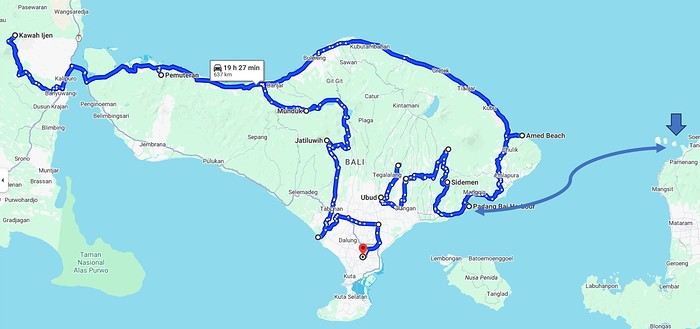
We booked our accommodations in advance, and for the rest (drivers, activities...), we took it day by day with help from the homestays (making sure to contact them a few days ahead via WhatsApp).
In the end, it’s an “easy” destination, very affordable, and one that’s managed to keep a certain authenticity.
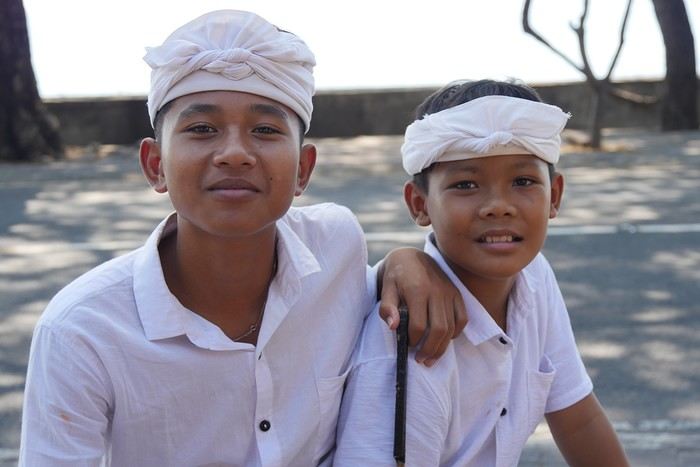
Sure, it’s not as exotic or off-the-beaten-path as other Indonesian islands (the Moluccas, Timor, Flores...), but we spent 3 weeks there and loved it!
Our (planned) itinerary in 7 stops: - Ubud (4 nights) - Sidemen (2 nights) - Gili Meno (3 nights) - Amed (2 nights) - Pemuteran (4 nights) - Munduk (2 nights) - Jatiluwih (2 nights)
We booked our accommodations in advance, and for the rest (drivers, activities...), we took it day by day with help from the homestays (making sure to contact them a few days ahead via WhatsApp).
In the end, it’s an “easy” destination, very affordable, and one that’s managed to keep a certain authenticity.
What to choose for a first summer trip to Asia: Indonesia or Thailand?
Hi there,
I’m planning my first trip to Asia next summer with my partner and our daughter, who’ll be 3 and a half at the time, for 4 weeks (maybe 5).
I’ve heard that the timing is better for visiting Indonesia, but I’m hesitant because Thailand seems more accessible, and I’m worried that traveling to Indonesia during high season might be less enjoyable and a lot more expensive due to the number of tourists. We love cultural sites as much as natural ones, and we’re big foodies. We’re not necessarily looking for luxury and tend to take our time, travel by public transport, and look for accommodations with a good value for money—though we do occasionally splurge on a high-end restaurant.
I’m also wondering when and where to buy flight tickets and how comfortable the journey will be (especially for our daughter) if we fly with Thai Airways or Garuda.
Thanks in advance for sharing your thoughts and tips!
Damien
I’m planning my first trip to Asia next summer with my partner and our daughter, who’ll be 3 and a half at the time, for 4 weeks (maybe 5).
I’ve heard that the timing is better for visiting Indonesia, but I’m hesitant because Thailand seems more accessible, and I’m worried that traveling to Indonesia during high season might be less enjoyable and a lot more expensive due to the number of tourists. We love cultural sites as much as natural ones, and we’re big foodies. We’re not necessarily looking for luxury and tend to take our time, travel by public transport, and look for accommodations with a good value for money—though we do occasionally splurge on a high-end restaurant.
I’m also wondering when and where to buy flight tickets and how comfortable the journey will be (especially for our daughter) if we fly with Thai Airways or Garuda.
Thanks in advance for sharing your thoughts and tips!
Damien
From Bangkok to Krabi, Thailand by Car!
This first trip of 2025 will have the taste of Asia.
More precisely, Thailand!
It’s not my first time—I’ve often traveled across Southeast Asia between 2000 and 2015. (This travel journal, for example...)
But it’ll be my partner’s first steps in this part of the world.
The itinerary we’ve chosen will alternate between familiar sights for me and new discoveries for both of us.
I’ll get to see how the country has changed in 20 years—and what’s stayed the same!
We were torn between the north and the south of the kingdom. Fears of smoke from slash-and-burn farming and a desire to relax on the sand tipped the scales toward the south...
What if we rented a car?
I think driving in sprawling Bangkok would be a bit ambitious, so we’ll only book our vehicle from Hua Hin to return it in Surat Thani.
Other transportation will range from tuk-tuks to overnight trains and ride-hailing services.
And of course, the plane!
I’d love to travel from Auvergne to Bangkok by road, but 15 days wouldn’t be enough...
Plus, the current geopolitical situation isn’t exactly favorable...
So, once again, we’ll be stuck for hours in the less-than-comfortable economy class of Qatar Airways.
The arrival time was on schedule, entry formalities were quick, and all our luggage made it.
We left Lyon in wind and cold—now we’re breathing in the warm, humid air of กรุงเทพมหานคร.
To reach our hotel, we first took the metro, which dropped us off in the city center in about 30 minutes for the incredible price of 1.18 €.
A few taps on the GRAB app, and we booked a ride-hailing service for the last few kilometers.
We waited a while for our driver due to insane traffic in the area, but once in the 4x4, we were at our lodging in no time.
We chose this small hotel for its riverside location, tranquility, and price.
It’ll do the job perfectly—the only downside is the weak breakfast.
The room is inviting, and we collapse onto the bed for a well-deserved short nap.
Wake-up call in an hour for our first visits!
See you soon...
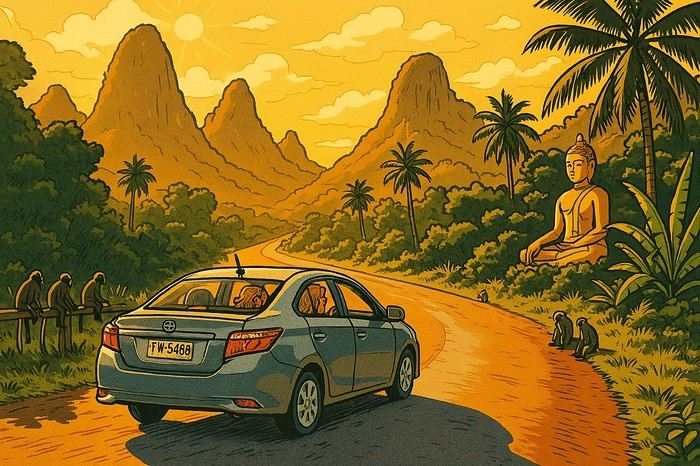
More precisely, Thailand!
It’s not my first time—I’ve often traveled across Southeast Asia between 2000 and 2015. (This travel journal, for example...)
But it’ll be my partner’s first steps in this part of the world.
The itinerary we’ve chosen will alternate between familiar sights for me and new discoveries for both of us.
I’ll get to see how the country has changed in 20 years—and what’s stayed the same!
We were torn between the north and the south of the kingdom. Fears of smoke from slash-and-burn farming and a desire to relax on the sand tipped the scales toward the south...
What if we rented a car?
I think driving in sprawling Bangkok would be a bit ambitious, so we’ll only book our vehicle from Hua Hin to return it in Surat Thani.
Other transportation will range from tuk-tuks to overnight trains and ride-hailing services.
And of course, the plane!
I’d love to travel from Auvergne to Bangkok by road, but 15 days wouldn’t be enough...
Plus, the current geopolitical situation isn’t exactly favorable...
So, once again, we’ll be stuck for hours in the less-than-comfortable economy class of Qatar Airways.
The arrival time was on schedule, entry formalities were quick, and all our luggage made it.
We left Lyon in wind and cold—now we’re breathing in the warm, humid air of กรุงเทพมหานคร.
To reach our hotel, we first took the metro, which dropped us off in the city center in about 30 minutes for the incredible price of 1.18 €.
A few taps on the GRAB app, and we booked a ride-hailing service for the last few kilometers.
We waited a while for our driver due to insane traffic in the area, but once in the 4x4, we were at our lodging in no time.
We chose this small hotel for its riverside location, tranquility, and price.
It’ll do the job perfectly—the only downside is the weak breakfast.
The room is inviting, and we collapse onto the bed for a well-deserved short nap.
Wake-up call in an hour for our first visits!
See you soon...
AI, the Holy Grail of Travel and Travel Journals?
Three of our grandchildren came to spend the last weekend of the holidays at our house.
With her driver’s license just in hand, the oldest took her sister and a cousin along.
I was talking about VoyageForum, and the conversation turned to AI, which finds writing travel journals a breeze—churning out amazing ads for this or that country and even nudging tourists to visit one place over another.
Jules: "It’s crazy, you can plan and organize everything, then just add your photos and the AI’s text, and boom—you’ve got something great." Héloïse: "What a cheat for yourself and for others." (She’s so wise!) Gaïané: "Ugh, no more surprises. It even picks the restaurants—so lame."
I had this idea to stay on the theme of travel journals:
I found an excerpt from a book (I’ll let you guess the title and author—of course, the kids figured it out in two seconds with their phones), then I wrote my own version, and finally, the AI generated its own using a few keywords.
Here they are:
"We walked at dusk through the thick, dark forest. Sometimes, a clearing would reveal a dreamlike landscape. A magical world, far from humans. A world of frozen waterfalls, stiff fir trees, and sharp peaks slicing through the blinding whiteness of the air.
We gazed, dazzled, at the spectacle, imagining we’d left the human world behind and joined that of the spirits."
"For days, we walked through the half-darkness of dense, untouched forests, then suddenly, a clearing would unveil landscapes you only see in dreams. Sharp peaks piercing the sky, icy torrents, giant waterfalls—an entire fantastical world, blindingly white, rising above the dark line traced by the giant fir trees. We stared at this extraordinary sight, speechless, awestruck, ready to believe we’d reached the limits of the human world and stood at the threshold of the spirits’ realm."
"We walked through the mountain, wild and unyielding, its sharp peaks tearing the sky like honed blades. Giant waterfalls roared and foamed, as if the earth’s hidden forces were pouring out. Higher still, the blinding whiteness belonged to the world of spirits—capricious beings whispering to lost travelers. Faced with this silent vastness, we felt tiny, uninvited guests meditating on the invisible that dwells in these forbidden peaks."
And, amazingly, they unanimously agreed that the author’s excerpt was a thousand times more poetic. Héloïse, my history buff, said: "Nothing replaces the real travel experience." Jules said: "Yeah, but it does the job. Even if the excerpt is cool." And our oldest added: "It makes you want to go there—not at all like the other two versions. Sorry, Mamido."
And then, miracle—Jules asks: "Do you have the book? Can I borrow it?"
I’m so relieved—young people aren’t completely devoured by technology yet. And the forum will keep its charm and usefulness for a long time. Phew!
You agree, right?
Jules: "It’s crazy, you can plan and organize everything, then just add your photos and the AI’s text, and boom—you’ve got something great." Héloïse: "What a cheat for yourself and for others." (She’s so wise!) Gaïané: "Ugh, no more surprises. It even picks the restaurants—so lame."
I had this idea to stay on the theme of travel journals:
I found an excerpt from a book (I’ll let you guess the title and author—of course, the kids figured it out in two seconds with their phones), then I wrote my own version, and finally, the AI generated its own using a few keywords.
Here they are:
"We walked at dusk through the thick, dark forest. Sometimes, a clearing would reveal a dreamlike landscape. A magical world, far from humans. A world of frozen waterfalls, stiff fir trees, and sharp peaks slicing through the blinding whiteness of the air.
We gazed, dazzled, at the spectacle, imagining we’d left the human world behind and joined that of the spirits."
"For days, we walked through the half-darkness of dense, untouched forests, then suddenly, a clearing would unveil landscapes you only see in dreams. Sharp peaks piercing the sky, icy torrents, giant waterfalls—an entire fantastical world, blindingly white, rising above the dark line traced by the giant fir trees. We stared at this extraordinary sight, speechless, awestruck, ready to believe we’d reached the limits of the human world and stood at the threshold of the spirits’ realm."
"We walked through the mountain, wild and unyielding, its sharp peaks tearing the sky like honed blades. Giant waterfalls roared and foamed, as if the earth’s hidden forces were pouring out. Higher still, the blinding whiteness belonged to the world of spirits—capricious beings whispering to lost travelers. Faced with this silent vastness, we felt tiny, uninvited guests meditating on the invisible that dwells in these forbidden peaks."
And, amazingly, they unanimously agreed that the author’s excerpt was a thousand times more poetic. Héloïse, my history buff, said: "Nothing replaces the real travel experience." Jules said: "Yeah, but it does the job. Even if the excerpt is cool." And our oldest added: "It makes you want to go there—not at all like the other two versions. Sorry, Mamido."
And then, miracle—Jules asks: "Do you have the book? Can I borrow it?"
I’m so relieved—young people aren’t completely devoured by technology yet. And the forum will keep its charm and usefulness for a long time. Phew!
You agree, right?
From Caño Cristales to Tayrona Park
After about 12 hours of flying from Toulouse (via Paris), we landed in Bogotá six years after our first trip to Colombia. This time, our journey will be very different, with only this stop in the Colombian capital in common.
Our travel itinerary
Bogotá / La Macarena (Caño Cristales) / Villa de Leyva / Barichara / San Gil / Girón / Mompox / Ciénaga and the Santa Marta lagoon / Minca / Los Naranjos (Tayrona Park) / Bogotá.
Step 1: Bogotá (and Nemecon)
Bogotá (1/3)
This morning, we had a meet-up with Flora from Aventure Colombia, who helped me organize one of our stops, a few transfers, and tomorrow’s day trip, the program of which I changed at the last minute after deciding to skip the visit to the Salt Cathedral of Zipaquirá. Flora is a kind and lovely person, always available, and she did everything to answer my questions and give me advice.
She’s a local contact I highly recommend. Flora can help you plan your trip, whether you want a fully organized tour or, like us, just need assistance with a specific stop or one or more transfers between cities.
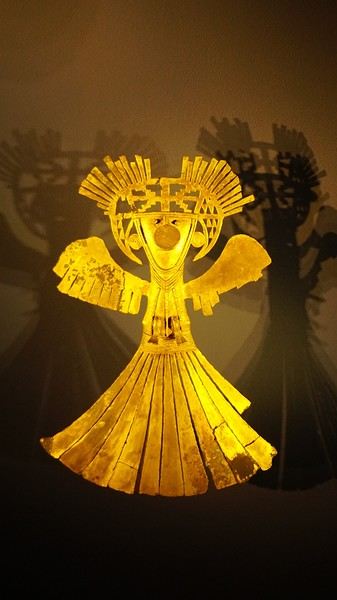
We left Flora after setting a meet-up for our return to Bogotá in a month. As we walked out of her agency, we headed to the wonderful Gold Museum, located just a hundred meters away. I was excited to revisit this amazing museum.
Note: Free entry for those over 60, regardless of nationality. Just show your passport.
Like six years ago, I was amazed by its museography, the beauty of the pieces on display, and that breathtaking shamanic room.
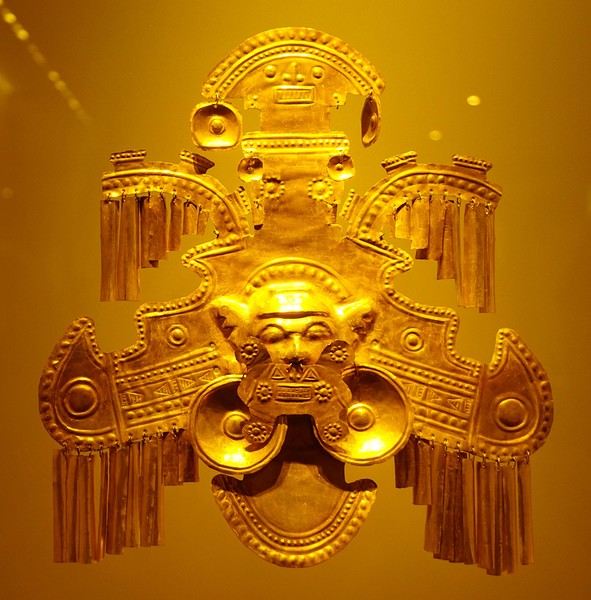
About two hours later, we decided to walk (careful, it’s a climb!) to the Monserrate cable car (3152m). Long wait to buy tickets and board the cable car! Once we arrived, a few raindrops, an impressive panoramic view of Bogotá’s vastness, a quick visit to the basilica (a pilgrimage site for Colombians), a walk through the tourist market, and at the top, plenty of small restaurants where we had our first Colombian meal. After our hearty lunch, we were lucky to see the sun return! No line for the descent. We then headed back to the hotel because Justine wanted to rest and recover from the trip. As for me, I continued my walk. I discovered a really nice craft market recommended by Flora, Pasaje Rivas, returned to Bolívar Square, and wandered through different streets, including the main pedestrian avenue (Calle 7), where there’s always something to see.
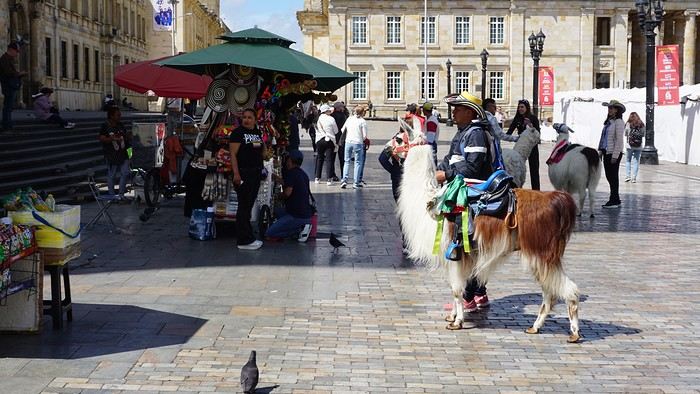
Tomorrow, a change of scenery as we head out for a hike in a small desert (Desierto de Chueca), located about 2 hours from Bogotá in the village of Nemecon. For this outing from Bogotá, with Flora’s help, we booked a car with a driver for the day. Flora also took care of booking the guide (since the site can only be visited with one). Nemecon (2/3) Today, we went to Nemecon to hike about 7.5 km in the ‘Desert of Checua.’ It’s nothing like sandy deserts! Instead, it’s geological formations sculpted by time, wind, and water. After two hours on the road—almost one of them spent navigating traffic jams with cars, trucks, buses, and a continuous flow of motorcycles on either side of our taxi—we reached Nemecon! The village center is really (too?) quiet. We met up with Deisy and headed toward the ‘desert,’ about twenty minutes away on a bumpy dirt road. Once there, a quick briefing, and off we went! Deisy didn’t stop talking (in Spanish) for over 3 hours!!! She told us so much about her region (flower farming, water management, traditions, songs, etc.), the origin of the site, and even mentioned Antonio Banderas, who filmed *The 33* in the village’s salt mine (the story of the survival of 33 Chilean miners after a collapse in their copper and gold mine). One hour of walking to reach the site, one hour to explore it, and one hour to return.
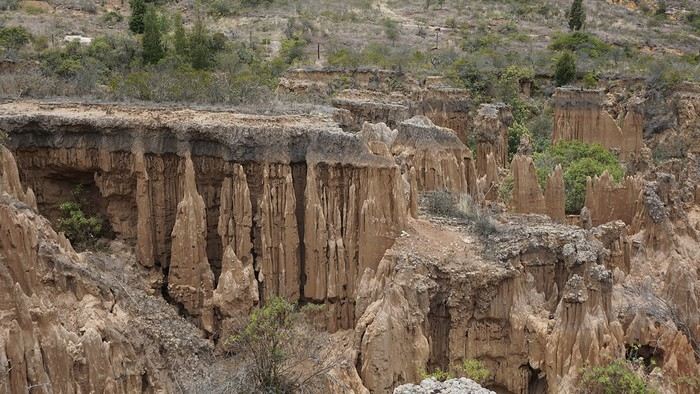
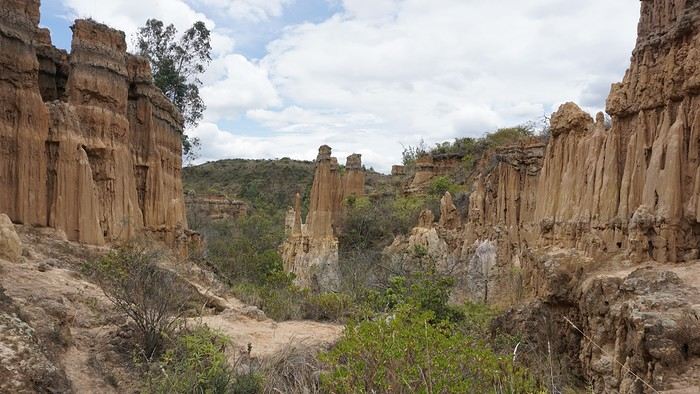
The advantage of this non-stop chatter was that it forced us to brush up on our Spanish at lightning speed. I even wondered if the effort to concentrate wasn’t more exhausting than the physical effort! Especially since on the way back, I got an oral quiz. Deisy wanted to make sure I remembered some of the information she’d given me during the visit: why is this rock white, that one red, and that one black? Back in the village, we had lunch at a restaurant recommended by Deisy before visiting the Nemecon salt mine. Before entering, a guide spent a good half-hour explaining the origin of the salt and the presence of many fossils in the area. Again, concentrating was tough because all the comments were exclusively in Spanish! An hour and a half wandering through the tunnels with a ‘lovely miner’s helmet’ on our heads!
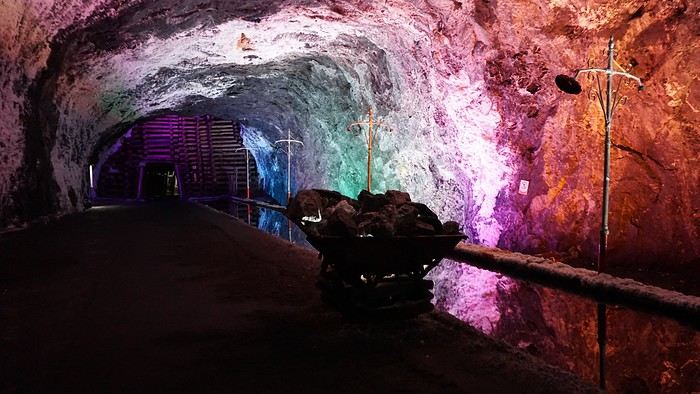
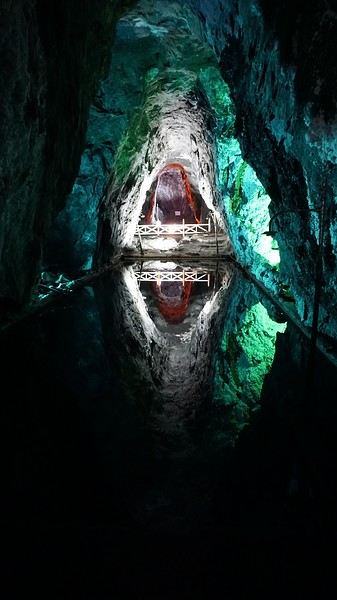
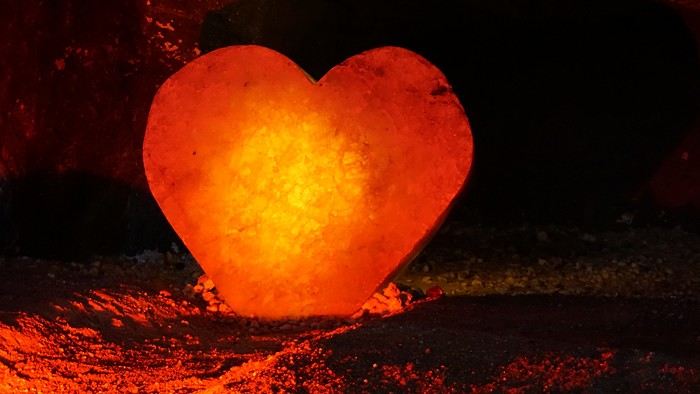
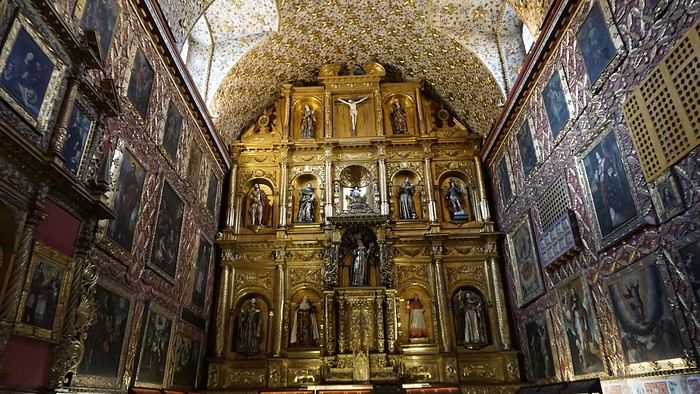
We met our driver at the mine entrance. The return to Bogotá was a bit faster, but traffic in the city center was still heavy! We arrived in front of our hotel between 8:00 and 8:30 PM. It’s been a pretty intense start to the trip! Tonight, our legs are tired. Hopefully, tomorrow will be a bit more relaxed! Bogotá (3/3) We started the day by visiting the Santa Clara Church Museum, located next to the presidential palace. Alejandra (from the local agency ‘Gaia Tours Colombia,’ which organized our stay in Caño Cristales (La Macarena)) had recommended this visit for its rich mural paintings.
A few hundred meters further, after crossing the Plaza Mayor again, we visited the cultural complex housing the Botero Museum, the Mint Museum, and the Bank of the Republic Art Museum. Note that entry is free for all three museums. Botero Museum: There are fewer works by Botero here than in the Medellín museum, but more paintings and sculptures by other artists, all from Botero’s private collection (donated to Colombia). Mint Museum: We limited ourselves to visiting one room (on Flora’s advice) where three gold and gemstone monstrances and a Christ with a crown of emerald thorns are displayed. Photos are not allowed. Art Museum: We visited two temporary exhibitions. Lunchtime came quickly. We had a good meal at a reasonably priced small restaurant in the La Candelaria micro-district, near the Chorro de Quevedo square. We decided to spend the afternoon wandering the streets and alleys of the historic center to discover local street art.
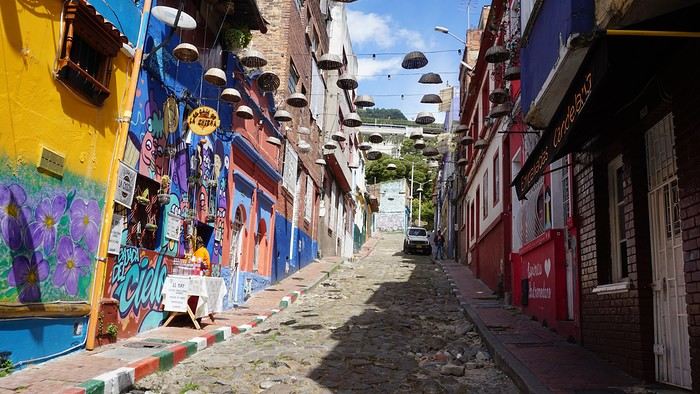
We also passed through very lively pedestrian streets. I also decided to revisit Pasaje Rivas to show Justine all the shops selling more or less artisanal products. Tomorrow morning, we fly to La Macarena at 10:30 AM. Not to dance (you’d be surprised if I told you we were going to take a South American dance class, right?!), but to visit the fabulous Caño Cristales, a river naturally colored by aquatic plants. The planned program includes hiking, horseback riding, canoeing, and swimming among these plants. This site was long inaccessible because the area was controlled by the FARC. Access and tourism development became possible after agreements and amnesty measures between the Colombian government and paramilitary groups. As in other regions, former FARC members have been able to transition into various tourism-related activities.
About two hours later, we decided to walk (careful, it’s a climb!) to the Monserrate cable car (3152m). Long wait to buy tickets and board the cable car! Once we arrived, a few raindrops, an impressive panoramic view of Bogotá’s vastness, a quick visit to the basilica (a pilgrimage site for Colombians), a walk through the tourist market, and at the top, plenty of small restaurants where we had our first Colombian meal. After our hearty lunch, we were lucky to see the sun return! No line for the descent. We then headed back to the hotel because Justine wanted to rest and recover from the trip. As for me, I continued my walk. I discovered a really nice craft market recommended by Flora, Pasaje Rivas, returned to Bolívar Square, and wandered through different streets, including the main pedestrian avenue (Calle 7), where there’s always something to see.
Tomorrow, a change of scenery as we head out for a hike in a small desert (Desierto de Chueca), located about 2 hours from Bogotá in the village of Nemecon. For this outing from Bogotá, with Flora’s help, we booked a car with a driver for the day. Flora also took care of booking the guide (since the site can only be visited with one). Nemecon (2/3) Today, we went to Nemecon to hike about 7.5 km in the ‘Desert of Checua.’ It’s nothing like sandy deserts! Instead, it’s geological formations sculpted by time, wind, and water. After two hours on the road—almost one of them spent navigating traffic jams with cars, trucks, buses, and a continuous flow of motorcycles on either side of our taxi—we reached Nemecon! The village center is really (too?) quiet. We met up with Deisy and headed toward the ‘desert,’ about twenty minutes away on a bumpy dirt road. Once there, a quick briefing, and off we went! Deisy didn’t stop talking (in Spanish) for over 3 hours!!! She told us so much about her region (flower farming, water management, traditions, songs, etc.), the origin of the site, and even mentioned Antonio Banderas, who filmed *The 33* in the village’s salt mine (the story of the survival of 33 Chilean miners after a collapse in their copper and gold mine). One hour of walking to reach the site, one hour to explore it, and one hour to return.
The advantage of this non-stop chatter was that it forced us to brush up on our Spanish at lightning speed. I even wondered if the effort to concentrate wasn’t more exhausting than the physical effort! Especially since on the way back, I got an oral quiz. Deisy wanted to make sure I remembered some of the information she’d given me during the visit: why is this rock white, that one red, and that one black? Back in the village, we had lunch at a restaurant recommended by Deisy before visiting the Nemecon salt mine. Before entering, a guide spent a good half-hour explaining the origin of the salt and the presence of many fossils in the area. Again, concentrating was tough because all the comments were exclusively in Spanish! An hour and a half wandering through the tunnels with a ‘lovely miner’s helmet’ on our heads!
We met our driver at the mine entrance. The return to Bogotá was a bit faster, but traffic in the city center was still heavy! We arrived in front of our hotel between 8:00 and 8:30 PM. It’s been a pretty intense start to the trip! Tonight, our legs are tired. Hopefully, tomorrow will be a bit more relaxed! Bogotá (3/3) We started the day by visiting the Santa Clara Church Museum, located next to the presidential palace. Alejandra (from the local agency ‘Gaia Tours Colombia,’ which organized our stay in Caño Cristales (La Macarena)) had recommended this visit for its rich mural paintings.
A few hundred meters further, after crossing the Plaza Mayor again, we visited the cultural complex housing the Botero Museum, the Mint Museum, and the Bank of the Republic Art Museum. Note that entry is free for all three museums. Botero Museum: There are fewer works by Botero here than in the Medellín museum, but more paintings and sculptures by other artists, all from Botero’s private collection (donated to Colombia). Mint Museum: We limited ourselves to visiting one room (on Flora’s advice) where three gold and gemstone monstrances and a Christ with a crown of emerald thorns are displayed. Photos are not allowed. Art Museum: We visited two temporary exhibitions. Lunchtime came quickly. We had a good meal at a reasonably priced small restaurant in the La Candelaria micro-district, near the Chorro de Quevedo square. We decided to spend the afternoon wandering the streets and alleys of the historic center to discover local street art.
We also passed through very lively pedestrian streets. I also decided to revisit Pasaje Rivas to show Justine all the shops selling more or less artisanal products. Tomorrow morning, we fly to La Macarena at 10:30 AM. Not to dance (you’d be surprised if I told you we were going to take a South American dance class, right?!), but to visit the fabulous Caño Cristales, a river naturally colored by aquatic plants. The planned program includes hiking, horseback riding, canoeing, and swimming among these plants. This site was long inaccessible because the area was controlled by the FARC. Access and tourism development became possible after agreements and amnesty measures between the Colombian government and paramilitary groups. As in other regions, former FARC members have been able to transition into various tourism-related activities.
Transsibérien et suite (Japon-Asie) English translation pending
Bonjour
Pour août 21, nous souhaiterions partir pour 6 mois; d'abord avec le Transsiberien et ensuite le Japon (1 mois si correct du Nord au Sud) et enfin terminer par Asie du SE , type Indonésie
Pour le Transsiberien, quelles sont vos recommandations pour les arrêts d'étapes (que voir et durées ) , comment acheter les billets directement (par internet ?) et prix; autres infos ?
On pensait aussi faire en suivant le Japon du Nord au Sud ; quel meilleur moyen de transport: train? ou voiture louée, ou les deux (train + voiture pour étages) ; pareil , quels sont vos "incontournables"
On pensait terminer par l'Indonésie (on a déjà fait Bali ); autres conseils de pays dans la région
Après retour en avion (on peut pas tout se faire ecolo !)
Merci pour vos infos
Bruno
Vos meilleures plages en voyage English translation pending
Bonjour
Avec le confinement j'ai pris le temps de faire un gros tri dans mes photos. Beaucoup étaient des photos de plages qui m'ont rappelé de magnifiques souvenirs.
Donc je me demandais qu'elles sont les 3 plages qui vous viennent à l'esprit quand vous y pensez et qui vous ont marqué d'une manière ou d'une autre.
Personnellement 3 me viennent à l'esprit car elles étaient calmes, pas aménagées, en pleine nature et quasiment personnes dessus.
1) plage barra velha sur l'île de Marajo au Brésil (en plus j'ai pu louer une petite cabane sur pilotis pendant 1 semaine sur cette plage)
2)Mission beach dans l'état du Queensland en Australie
3) La plage du parc de Cahuita au Costa rica
Personnellement 3 me viennent à l'esprit car elles étaient calmes, pas aménagées, en pleine nature et quasiment personnes dessus.
1) plage barra velha sur l'île de Marajo au Brésil (en plus j'ai pu louer une petite cabane sur pilotis pendant 1 semaine sur cette plage)
2)Mission beach dans l'état du Queensland en Australie
3) La plage du parc de Cahuita au Costa rica
Kenya February 2020: From Tsavo to Samburu via Meru National Park
Good evening everyone,
I hope you're all doing well despite this very unusual time…
Here’s a new travel journal to get you back on the Kenyan trails.
It was a really great idea to buy those flight tickets to Nairobi back in December. When Benoit suggested this new safari in February, I hesitated a little (very little): it was the season with particularly high temperatures, and the short rainy season in November/December had been very heavy, raising concerns about the state of the tracks… Given the current situation, no regrets, of course… We quickly organized the safari with our usual guide, and we booked the accommodations ourselves directly. (If we’d waited just a few more weeks, we might’ve regretted it…)
For once, we were able to leave from the airport near where we live (Lorient - Lann Bihoué), which is really convenient: no driving, no parking… We left home at 2 PM on Tuesday, February 18th, and arrived in Nairobi at 6 AM the next morning—perfect. (With a layover in CDG, of course 😉) Upon arrival, after a forehead temperature check by airport staff, we got our visas very quickly (forms filled out before departure). The customs agents congratulated us on our passports full of Kenyan stamps… but we still had to pay the 40 € for the visa.
All that was left was to collect our luggage, and we’d be ready to leave the airport shortly after landing. But there was a small issue: the baggage conveyor belt was broken… Eventually, the suitcases and bags were brought out by hand… Hakuna Matata, as they say here—no problem, as long as they’re all there. Benoit sent a message to Félix, our guide, to come meet us in the airport parking lot. After catching up with our respective families, we set off toward the Mombasa road, heading to Voi.
Traffic in Nairobi is still as heavy as ever, and the pollution is very noticeable (cars, but also cement factories…). The current lockdown has changed things. On social media, Mount Kenya and Kilimanjaro seem visible from Nairobi now!…
The first stop on this safari was a place we hadn’t visited before: the LUMO Community Wildlife Conservancy lumoconservancy.com/. It’s a small reserve located west of Tsavo West and near the Taita Hills. The reserve is managed by the local community, and entry fees are lower than in Tsavo’s national parks. We had initially planned to spend three days in Tsavo East, but since the accommodation wasn’t available for that long, we ended up choosing this option, which turned out to be a great discovery. Since the reserve is small, I think it’s hard to spend more than two days there. The advantage is that, since it’s not a national park, activities like walks or night safaris can be offered.
Alright, here are a few images to set the mood.
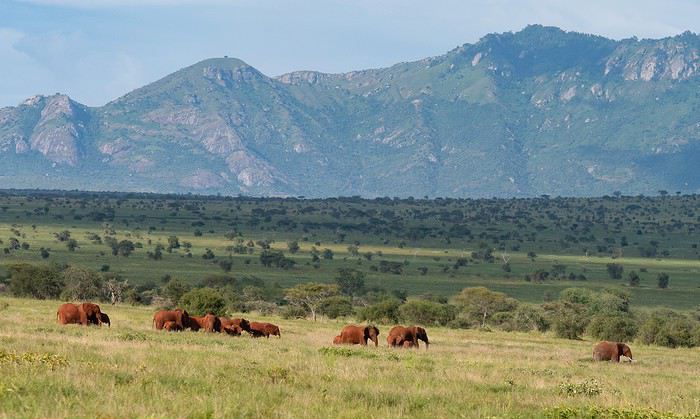
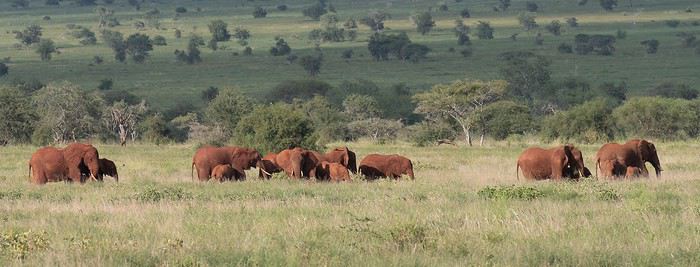
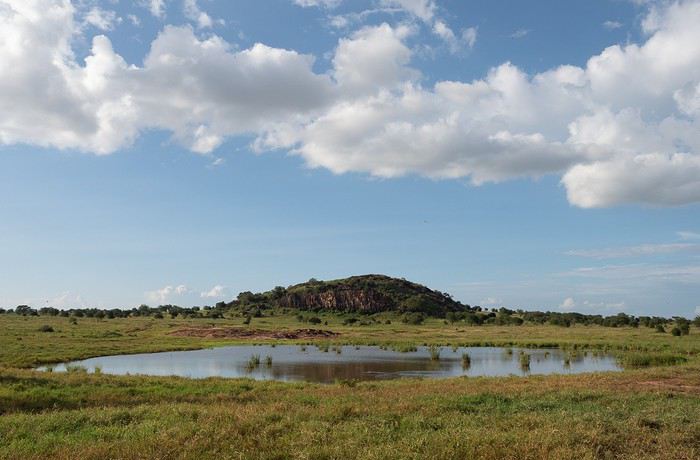
Elephants, but also hartebeests and lots of giraffes in a light we really liked.
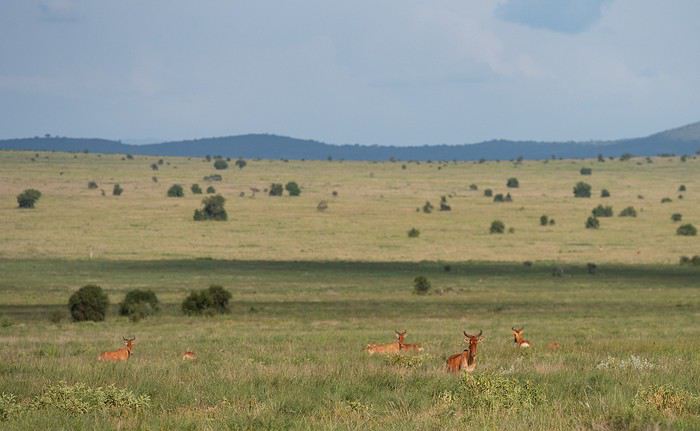
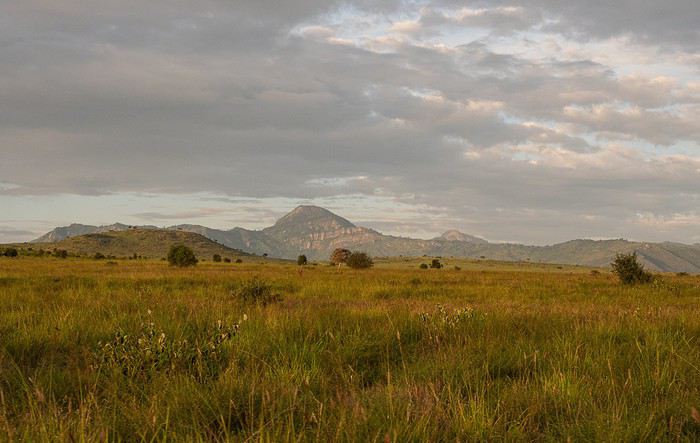
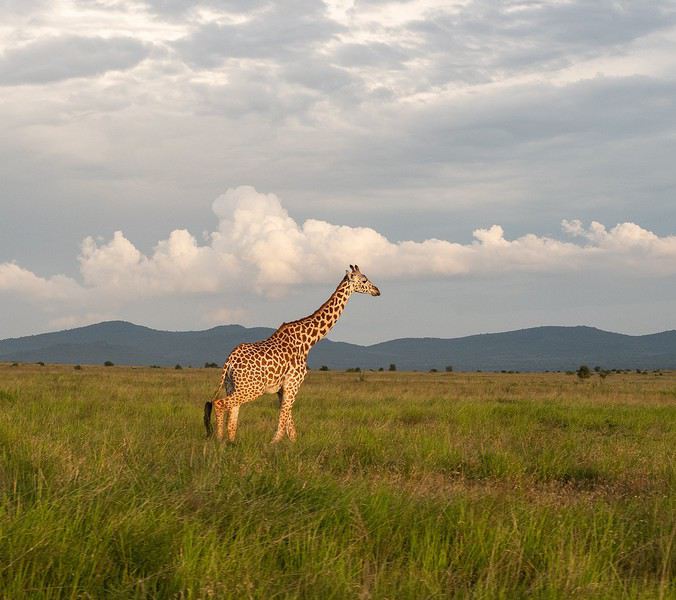
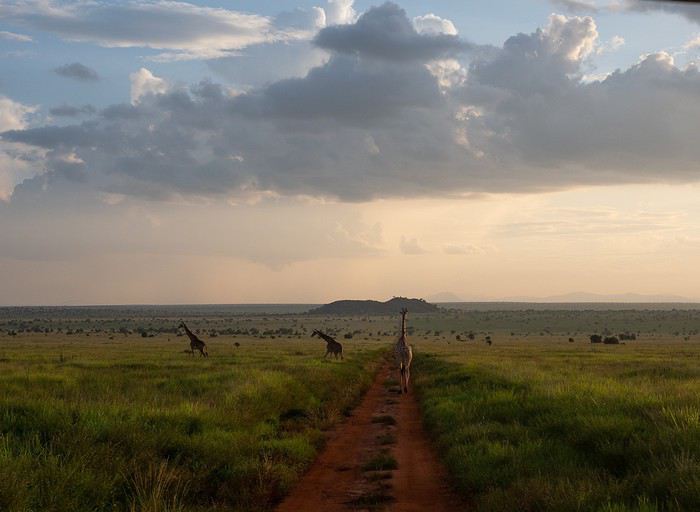
It was a really great idea to buy those flight tickets to Nairobi back in December. When Benoit suggested this new safari in February, I hesitated a little (very little): it was the season with particularly high temperatures, and the short rainy season in November/December had been very heavy, raising concerns about the state of the tracks… Given the current situation, no regrets, of course… We quickly organized the safari with our usual guide, and we booked the accommodations ourselves directly. (If we’d waited just a few more weeks, we might’ve regretted it…)
For once, we were able to leave from the airport near where we live (Lorient - Lann Bihoué), which is really convenient: no driving, no parking… We left home at 2 PM on Tuesday, February 18th, and arrived in Nairobi at 6 AM the next morning—perfect. (With a layover in CDG, of course 😉) Upon arrival, after a forehead temperature check by airport staff, we got our visas very quickly (forms filled out before departure). The customs agents congratulated us on our passports full of Kenyan stamps… but we still had to pay the 40 € for the visa.
All that was left was to collect our luggage, and we’d be ready to leave the airport shortly after landing. But there was a small issue: the baggage conveyor belt was broken… Eventually, the suitcases and bags were brought out by hand… Hakuna Matata, as they say here—no problem, as long as they’re all there. Benoit sent a message to Félix, our guide, to come meet us in the airport parking lot. After catching up with our respective families, we set off toward the Mombasa road, heading to Voi.
Traffic in Nairobi is still as heavy as ever, and the pollution is very noticeable (cars, but also cement factories…). The current lockdown has changed things. On social media, Mount Kenya and Kilimanjaro seem visible from Nairobi now!…
The first stop on this safari was a place we hadn’t visited before: the LUMO Community Wildlife Conservancy lumoconservancy.com/. It’s a small reserve located west of Tsavo West and near the Taita Hills. The reserve is managed by the local community, and entry fees are lower than in Tsavo’s national parks. We had initially planned to spend three days in Tsavo East, but since the accommodation wasn’t available for that long, we ended up choosing this option, which turned out to be a great discovery. Since the reserve is small, I think it’s hard to spend more than two days there. The advantage is that, since it’s not a national park, activities like walks or night safaris can be offered.
Alright, here are a few images to set the mood.
Elephants, but also hartebeests and lots of giraffes in a light we really liked.
Modification d'horaire de vol par la compagnie empêchant la correspondance English translation pending
Bonjour,
J'ai réservé via GoVoyage (compte prime) un A/R Barcelone - Denpasar (Bali) du 11.07.2020 au 05.08.2020. A l'aller comme au retour, les escales se font à Dubaï et Singapour.
La compagnie que l'on prend de Barcelone à Singapour est Emirates puis nous prenons AirAsia pour rejoindre Denpasar depuis Singapour. Cela fait déjà 3 fois que la compagnie modifie nos horaires de vols sur le voyage aller et cette dernière modification nous empeche de prendre la correspondance.
En effet, le vol AirAsia part de Singapour à 17h alors que nous arrivons à Singapour avec Emirates à 20h le même jour (contre 14h au départ). Cela nous fait en plus une escale de 9h à Dubaï au lieux de 2h prévu au départ.. Normal ?
Je sais qu'il y'a de fortes chances que le voyage soit annulé dans le contexte actuel lié au Covid-19 mais je préfère, par sécurité, prendre les devants.
Que dois-je faire pour résoudre la situation vu que ce sont deux compagnies différentes et que nous avons réservé en 1 fois sur GoVoyages ?
Je vous remercie par avance de vos réponses.
J'ai réservé via GoVoyage (compte prime) un A/R Barcelone - Denpasar (Bali) du 11.07.2020 au 05.08.2020. A l'aller comme au retour, les escales se font à Dubaï et Singapour.
La compagnie que l'on prend de Barcelone à Singapour est Emirates puis nous prenons AirAsia pour rejoindre Denpasar depuis Singapour. Cela fait déjà 3 fois que la compagnie modifie nos horaires de vols sur le voyage aller et cette dernière modification nous empeche de prendre la correspondance.
En effet, le vol AirAsia part de Singapour à 17h alors que nous arrivons à Singapour avec Emirates à 20h le même jour (contre 14h au départ). Cela nous fait en plus une escale de 9h à Dubaï au lieux de 2h prévu au départ.. Normal ?
Je sais qu'il y'a de fortes chances que le voyage soit annulé dans le contexte actuel lié au Covid-19 mais je préfère, par sécurité, prendre les devants.
Que dois-je faire pour résoudre la situation vu que ce sont deux compagnies différentes et que nous avons réservé en 1 fois sur GoVoyages ?
Je vous remercie par avance de vos réponses.
Camping sauvage sur une île inhabité en Asie English translation pending
Bonjour à tous, après de nombreuses recherches au sujet du "camping sauvage sur ile inhabité en Asie", je me retrouve a poser ma question sur ce forum car très peu d'informations ou même de retours d’expériences sont disponible sur internet.
J'ai pour projet de partir 3 semaines avec un groupe d'ami sur une Île inhabité au mois de SEPTEMBRE 2020. Idéalement vis à vis de la saison, l’Indonésie, la Malaisie, les philippines paraissent être les endroits idéaux (saison & nombre d'île confondu).
Si je devais résumer vulgairement notre projet, il s’agirait de nous faire déposer en bateau sur une île inhabité avec nos ressources (eau, nourriture, tente & équipement indispensable a la survie) pour 3 semaines d'aventure, puis a la fin de cette période, le bateau reviendrait nous chercher pour nous ramener à la civilisation. C'est un rêves d'enfance que nous souhaitons réaliser ensemble en étant totalement conscient de la difficulté de ce projet un peu fou. Nous ne sommes pas débutant dans le domaine & la galère est notre recherche commune hihi.
Nos questions sont les suivantes : Est-il possible de faire du camping sauvage sur ces îles inhabités ? La population/gouvernement est-elle/il contre ce type de voyageur ? Quels sont les législations ? ...
Bien évidement si vous avez des retours d’expérience dans d'autres pays ou autres, si vous connaissez des personnes qui pourraient potentiellement nous renseigner ou même des liens que j'aurais loupé a ce sujet, merci de me les renseigner. Ca serait une aide précieuse dans l'organisation de notre périple.
J’espère avoir été clair dans mes propos. Dans l’espoir d'avoir des réponses. Merci à tous
J'ai pour projet de partir 3 semaines avec un groupe d'ami sur une Île inhabité au mois de SEPTEMBRE 2020. Idéalement vis à vis de la saison, l’Indonésie, la Malaisie, les philippines paraissent être les endroits idéaux (saison & nombre d'île confondu).
Si je devais résumer vulgairement notre projet, il s’agirait de nous faire déposer en bateau sur une île inhabité avec nos ressources (eau, nourriture, tente & équipement indispensable a la survie) pour 3 semaines d'aventure, puis a la fin de cette période, le bateau reviendrait nous chercher pour nous ramener à la civilisation. C'est un rêves d'enfance que nous souhaitons réaliser ensemble en étant totalement conscient de la difficulté de ce projet un peu fou. Nous ne sommes pas débutant dans le domaine & la galère est notre recherche commune hihi.
Nos questions sont les suivantes : Est-il possible de faire du camping sauvage sur ces îles inhabités ? La population/gouvernement est-elle/il contre ce type de voyageur ? Quels sont les législations ? ...
Bien évidement si vous avez des retours d’expérience dans d'autres pays ou autres, si vous connaissez des personnes qui pourraient potentiellement nous renseigner ou même des liens que j'aurais loupé a ce sujet, merci de me les renseigner. Ca serait une aide précieuse dans l'organisation de notre périple.
J’espère avoir été clair dans mes propos. Dans l’espoir d'avoir des réponses. Merci à tous
Self-drive in southwestern Uganda, February 2020
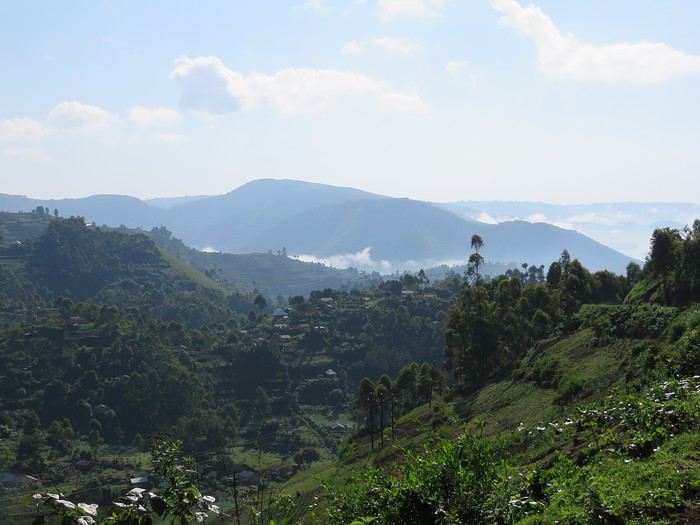
Since I used this forum a lot to prepare our trip, here’s a little feedback from our 15-day self-drive adventure in southwestern Uganda.
For those who have questions, don’t hesitate! I’ll do my best to answer them 😉
We’d already traveled quite a bit in South Africa and once in Namibia, always self-driving. When the idea of visiting Uganda came up, we debated—especially me 😛—whether to go solo or with a guide. My husband quickly convinced me to do it self-drive, so I started planning and organizing the trip accordingly. We began preparations and bookings in June 2019 for a trip scheduled during the first two weeks of February 2020. We deliberately chose to explore just a small part of Uganda and take our time. We traveled as a group of four, with our oldest son and his partner.
Here’s our itinerary: - February 1: Departure from Brussels, arrival and overnight in Entebbe - February 2: Drive to Lake Mburo and overnight there - February 3: Drive to Lake Bunyonyi and overnight there - February 4: Boat ride on the lake, then departure for Kisoro. Overnight there - February 5: Trek in Mount Mgahinga National Park for the youngsters. Overnight in Kisoro - February 6: Drive to Bwindi Impenetrable Forest. Overnight in Rushaga - February 7: Gorilla tracking in Rushaga. Overnight in Rushaga - February 8: Drive to Queen Elizabeth National Park – Southern sector – Overnight on the park’s edge - February 9: Morning in the southern sector of the park, then crossing to the northern part – Short safari in the late afternoon – Overnight by the Kazinga Channel - February 10: Safari and boat cruise – Second night on site - February 11: Drive to Kibale Forest – Overnight there - February 12: Chimpanzee tracking in the morning – Bigodi swamps in the afternoon – Second night there - February 13: Scenic drive to see the crater lakes + walk at Lake Nkuruba Nature Reserve – Third night there - February 14: Return to Entebbe - February 15: Morning boat ride in the Mabamba swamps – Afternoon by Lake Victoria and midnight flight to Brussels. That’s the broad outline of our trip.
We fell in love with this country: the people, the kids shouting "muzungu," the colors, the landscapes, the wildlife... But we were also saddened by the poverty in some villages and the child labor, especially in "quarries."
I’ll try to post a day-by-day account if it interests anyone.
We’d already traveled quite a bit in South Africa and once in Namibia, always self-driving. When the idea of visiting Uganda came up, we debated—especially me 😛—whether to go solo or with a guide. My husband quickly convinced me to do it self-drive, so I started planning and organizing the trip accordingly. We began preparations and bookings in June 2019 for a trip scheduled during the first two weeks of February 2020. We deliberately chose to explore just a small part of Uganda and take our time. We traveled as a group of four, with our oldest son and his partner.
Here’s our itinerary: - February 1: Departure from Brussels, arrival and overnight in Entebbe - February 2: Drive to Lake Mburo and overnight there - February 3: Drive to Lake Bunyonyi and overnight there - February 4: Boat ride on the lake, then departure for Kisoro. Overnight there - February 5: Trek in Mount Mgahinga National Park for the youngsters. Overnight in Kisoro - February 6: Drive to Bwindi Impenetrable Forest. Overnight in Rushaga - February 7: Gorilla tracking in Rushaga. Overnight in Rushaga - February 8: Drive to Queen Elizabeth National Park – Southern sector – Overnight on the park’s edge - February 9: Morning in the southern sector of the park, then crossing to the northern part – Short safari in the late afternoon – Overnight by the Kazinga Channel - February 10: Safari and boat cruise – Second night on site - February 11: Drive to Kibale Forest – Overnight there - February 12: Chimpanzee tracking in the morning – Bigodi swamps in the afternoon – Second night there - February 13: Scenic drive to see the crater lakes + walk at Lake Nkuruba Nature Reserve – Third night there - February 14: Return to Entebbe - February 15: Morning boat ride in the Mabamba swamps – Afternoon by Lake Victoria and midnight flight to Brussels. That’s the broad outline of our trip.
We fell in love with this country: the people, the kids shouting "muzungu," the colors, the landscapes, the wildlife... But we were also saddened by the poverty in some villages and the child labor, especially in "quarries."
I’ll try to post a day-by-day account if it interests anyone.
In the Land of Mountain Gorillas: The Story of an "Epic" Trip
Passionate about travel, animals (furry, feathered, scaly), and my partner’s love for photography, it was in 2014, after encountering orangutans in Gunung Leuser National Park in Sumatra, that I felt the urge to see other great apes in their natural habitat and in the wild. For my 40th birthday, I dreamed of only one thing... seeing gorillas. I still had four years to wait and four years to save up.
At the time, I had only heard of the Virunga Mountains, particularly the part in Rwanda. To be honest, Uganda had never really struck me as a destination I’d ever set foot in, and the DRC, for security reasons, didn’t particularly appeal to me.
But then, one day, I heard that Rwanda was going to increase the price of gorilla permits to USD 1,500 per person. Ouch... that seemed way overpriced, especially since we were going as a couple and I really wanted to see them twice. $6,000 for two days... Okay, it’s for my 40th birthday, but still...
At the end of 2017, I started looking more closely into our trip planned for December 2018. A stroke of luck in my schedule meant my former English teacher sent me a link to an article she’d written for her travel agency about her encounter with gorillas in Uganda. Hmm, Uganda? It was the first time I’d read about the country. Why not?
I scoured various forums in French and English and re-discovered voyageforum.com. And most importantly, I came across Ticapi’s travel journal, which I devoured in one evening, and a few months later, Muriel18’s, whose release I eagerly awaited. Wow!!! Not only can you see gorillas in Uganda, but also chimpanzees and the shoebill, not to mention the savannah and the chance to go on more classic safaris.
All that’s left is to convince my better half that Uganda is a safe country...
Usually, and now more than ever, we prefer independent travel and self-drive trips in particular. But given the proximity to the DRC border, the potentially impassable roads after rain, and rental cars that aren’t always in the best condition, we hired a guide for two weeks in December 2018. The months passed, and the excitement grew.
Three weeks before departure, I fell ill after a work trip to Asia. Darn! This time, I didn’t waste any time—I quickly saw a doctor and got rid of that virus. That was the plan! Flu or malaria? (I’d been to the Amazon six months earlier.) The doctor didn’t know; the cough only appeared a few days later. We did blood tests two days in a row to rule out malaria. So it was the flu or... pneumonia :-( ...?
The X-rays spoke for themselves—it was pneumonia, and it was already quite advanced. No big deal, I still had two weeks to recover! I religiously took my antibiotics, downed loads of vitamin C, but nothing worked—the antibiotics didn’t seem to be doing anything. I was coughing so hard I thought my lungs would come up, I was short of breath, exhausted. I’d dreamed of this trip for so long... it seemed unthinkable not to go. Five days before departure, my doctor hospitalized me—the pneumonia had worsened, and my blood oxygen levels were dangerously low. I was in tears but still in denial about what was happening to me. Besides, I’d still taken my anti-malarial, because I was determined to leave.
I spent the first day in the emergency room on oxygen 24/7. The germ causing my pneumonia was unknown to the infectious disease and pulmonary specialists. They tried a combination of antibiotics. No big deal, in four days, I’d be leaving. I harassed the doctor, who must have thought I was crazy, to find out when I could be discharged—"because, you see, doctor, I have a flight to Uganda on Saturday." On Thursday, the doctor was firm: I’d still be hospitalized on Saturday... deep down, I knew it but didn’t want to admit it. My partner handled canceling the flights, contacted our travel insurance (thankfully we had some), and I wrote to our guide (who, in the meantime, had become our tour operator) who could hardly believe it. And neither could I! We told ourselves it was just postponed and that we’d take this long-awaited trip at the end of 2019!
March 2019, the tour operator reached out to us: "Didn’t you say you wanted to go to Uganda this year? You’d better hurry and book the gorilla permits before they run out."
Oh yes, we wanted to see the gorillas. But we hesitated about rebooking. I still hoped to do this trip as a self-drive. The thing is, this year, we managed to take three weeks off, and we also wanted to spend a week in Rwanda. My partner still didn’t feel comfortable driving there. Yet, he’s driven all over the world. I respected his feelings, especially since he’s the only one who drives.
Anyway, we went back and forth but neither of us really said what we were thinking: "What if we used someone else to organize our trip?" In the end, we went with him again, made a first deposit for four gorilla permits (two days each) (not the best idea we’ve ever had), and looked into adding Rwanda to our itinerary. We’d have a guide/driver for the whole trip with mid-range accommodations.
After several back-and-forths, the itinerary was supposed to look something like this. To be honest, I got fed up after a while.
Day 1: Arrival in Kigali in the evening Day 2: Transfer from Kigali to Akagera NP Day 3: Safari in Akagera NP Day 4: Akagera NP and night in Nyagatare Day 5: Transfer from Nyagatare to Nyungwe Forest Day 6: Nyungwe Day 7: Nyungwe Day 8: Transfer from Nyungwe to Lake Kivu, Rubavu/Gisenyi Day 9: Transfer from Rubavu/Gisenyi to Kisoro/Uganda via the Cyanika border Day 10: Gorilla tracking in Mgahinga NP Day 11: Golden Monkey tracking in Mgahinga NP, night at Lake Mutanda Day 12: Gorilla tracking in Bwindi, Ruhija (later changed to Rushaga) Day 13: Queen Elizabeth NP, Ishasha sector in the morning and Kazinga Channel in the afternoon Day 14: No clear answer on activities for that day. After three attempts, I gave up. I shouldn’t have... Day 15: Chimpanzee tracking in Kyambura Gorge, night at Lake Nkuruba Day 16: Lake Nkuruba, morning activities around the lake and Bigodi Swamps in the afternoon Day 17: Transfer from Lake Nkuruba to Murchison Falls Day 18: Murchison Falls Day 19: Murchison Falls Day 20: Transfer from Murchison Falls via Ziwa Rhino Sanctuary, night in Entebbe Day 21: Entebbe – Mabamba Swamps Day 22: Mabamba Swamps in the morning, Botanical Garden in Entebbe in the afternoon, and transfer to the airport for the overnight return flight.
In April, he asked us for a substantial deposit for the accommodations and some park activities, as one of his colleagues was doing the same tour in May and it would be good if he could secure the already-made reservations by paying the bill.
A week before departure, just like in 2018, we paid the remaining balance of the agreed amount. Three days later, since I hadn’t heard from him (the TO is based in Germany), I sent him a message to confirm he’d received the payment.
My partner joked, "And that’s when he tells us he closed the account we sent the money to." I forced a laugh... and even more so when the TO asked me which account I’d sent the balance to... "Uh, the same one as before." And then he told me he’d closed that account and maybe should’ve mentioned it earlier... uh, you think?! And of course, he needed the money sent again quickly. "Well, buddy, you’ll have to wait until I get it back!!!
It was already late, and my bank had been closed for hours. The next morning, first thing, I called my bank and explained the situation.
"Unfortunately, we can’t do anything for you; you’ll have to wait for the money to be returned." "But how long will that take?" "A few days or weeks, depending on the banks, and you should expect transfer fees."
Brilliant! :-(
After nearly 10 years of traveling almost exclusively without traditional travel agencies, had we just been scammed? I went back to the forums to reread posts about this TO from other travelers. They were all positive; no one mentioned a scam.
The next day, I searched online for the contact details of his bank in Germany. I wrote to the generic email address in English, explaining that I’d made a transfer without knowing that this gentleman had closed his bank account. The employee replied in impeccable English that the bank only responded to emails written in German. Grrr! I used a well-known translator since my German is, let’s say, rusty, and resent my email in German. The same agent replied in German that unfortunately, they couldn’t do anything for me—that if the account had been closed, an automatic rule would return the money to the sender... period, end of story!
Well, our money is lost somewhere in the "cloud," or so we hope! Wait and see!
No news from our TO, and we didn’t reach out either—we were too annoyed by the whole situation.
At the time, I had only heard of the Virunga Mountains, particularly the part in Rwanda. To be honest, Uganda had never really struck me as a destination I’d ever set foot in, and the DRC, for security reasons, didn’t particularly appeal to me.
But then, one day, I heard that Rwanda was going to increase the price of gorilla permits to USD 1,500 per person. Ouch... that seemed way overpriced, especially since we were going as a couple and I really wanted to see them twice. $6,000 for two days... Okay, it’s for my 40th birthday, but still...
At the end of 2017, I started looking more closely into our trip planned for December 2018. A stroke of luck in my schedule meant my former English teacher sent me a link to an article she’d written for her travel agency about her encounter with gorillas in Uganda. Hmm, Uganda? It was the first time I’d read about the country. Why not?
I scoured various forums in French and English and re-discovered voyageforum.com. And most importantly, I came across Ticapi’s travel journal, which I devoured in one evening, and a few months later, Muriel18’s, whose release I eagerly awaited. Wow!!! Not only can you see gorillas in Uganda, but also chimpanzees and the shoebill, not to mention the savannah and the chance to go on more classic safaris.
All that’s left is to convince my better half that Uganda is a safe country...
Usually, and now more than ever, we prefer independent travel and self-drive trips in particular. But given the proximity to the DRC border, the potentially impassable roads after rain, and rental cars that aren’t always in the best condition, we hired a guide for two weeks in December 2018. The months passed, and the excitement grew.
Three weeks before departure, I fell ill after a work trip to Asia. Darn! This time, I didn’t waste any time—I quickly saw a doctor and got rid of that virus. That was the plan! Flu or malaria? (I’d been to the Amazon six months earlier.) The doctor didn’t know; the cough only appeared a few days later. We did blood tests two days in a row to rule out malaria. So it was the flu or... pneumonia :-( ...?
The X-rays spoke for themselves—it was pneumonia, and it was already quite advanced. No big deal, I still had two weeks to recover! I religiously took my antibiotics, downed loads of vitamin C, but nothing worked—the antibiotics didn’t seem to be doing anything. I was coughing so hard I thought my lungs would come up, I was short of breath, exhausted. I’d dreamed of this trip for so long... it seemed unthinkable not to go. Five days before departure, my doctor hospitalized me—the pneumonia had worsened, and my blood oxygen levels were dangerously low. I was in tears but still in denial about what was happening to me. Besides, I’d still taken my anti-malarial, because I was determined to leave.
I spent the first day in the emergency room on oxygen 24/7. The germ causing my pneumonia was unknown to the infectious disease and pulmonary specialists. They tried a combination of antibiotics. No big deal, in four days, I’d be leaving. I harassed the doctor, who must have thought I was crazy, to find out when I could be discharged—"because, you see, doctor, I have a flight to Uganda on Saturday." On Thursday, the doctor was firm: I’d still be hospitalized on Saturday... deep down, I knew it but didn’t want to admit it. My partner handled canceling the flights, contacted our travel insurance (thankfully we had some), and I wrote to our guide (who, in the meantime, had become our tour operator) who could hardly believe it. And neither could I! We told ourselves it was just postponed and that we’d take this long-awaited trip at the end of 2019!
March 2019, the tour operator reached out to us: "Didn’t you say you wanted to go to Uganda this year? You’d better hurry and book the gorilla permits before they run out."
Oh yes, we wanted to see the gorillas. But we hesitated about rebooking. I still hoped to do this trip as a self-drive. The thing is, this year, we managed to take three weeks off, and we also wanted to spend a week in Rwanda. My partner still didn’t feel comfortable driving there. Yet, he’s driven all over the world. I respected his feelings, especially since he’s the only one who drives.
Anyway, we went back and forth but neither of us really said what we were thinking: "What if we used someone else to organize our trip?" In the end, we went with him again, made a first deposit for four gorilla permits (two days each) (not the best idea we’ve ever had), and looked into adding Rwanda to our itinerary. We’d have a guide/driver for the whole trip with mid-range accommodations.
After several back-and-forths, the itinerary was supposed to look something like this. To be honest, I got fed up after a while.
Day 1: Arrival in Kigali in the evening Day 2: Transfer from Kigali to Akagera NP Day 3: Safari in Akagera NP Day 4: Akagera NP and night in Nyagatare Day 5: Transfer from Nyagatare to Nyungwe Forest Day 6: Nyungwe Day 7: Nyungwe Day 8: Transfer from Nyungwe to Lake Kivu, Rubavu/Gisenyi Day 9: Transfer from Rubavu/Gisenyi to Kisoro/Uganda via the Cyanika border Day 10: Gorilla tracking in Mgahinga NP Day 11: Golden Monkey tracking in Mgahinga NP, night at Lake Mutanda Day 12: Gorilla tracking in Bwindi, Ruhija (later changed to Rushaga) Day 13: Queen Elizabeth NP, Ishasha sector in the morning and Kazinga Channel in the afternoon Day 14: No clear answer on activities for that day. After three attempts, I gave up. I shouldn’t have... Day 15: Chimpanzee tracking in Kyambura Gorge, night at Lake Nkuruba Day 16: Lake Nkuruba, morning activities around the lake and Bigodi Swamps in the afternoon Day 17: Transfer from Lake Nkuruba to Murchison Falls Day 18: Murchison Falls Day 19: Murchison Falls Day 20: Transfer from Murchison Falls via Ziwa Rhino Sanctuary, night in Entebbe Day 21: Entebbe – Mabamba Swamps Day 22: Mabamba Swamps in the morning, Botanical Garden in Entebbe in the afternoon, and transfer to the airport for the overnight return flight.
In April, he asked us for a substantial deposit for the accommodations and some park activities, as one of his colleagues was doing the same tour in May and it would be good if he could secure the already-made reservations by paying the bill.
A week before departure, just like in 2018, we paid the remaining balance of the agreed amount. Three days later, since I hadn’t heard from him (the TO is based in Germany), I sent him a message to confirm he’d received the payment.
My partner joked, "And that’s when he tells us he closed the account we sent the money to." I forced a laugh... and even more so when the TO asked me which account I’d sent the balance to... "Uh, the same one as before." And then he told me he’d closed that account and maybe should’ve mentioned it earlier... uh, you think?! And of course, he needed the money sent again quickly. "Well, buddy, you’ll have to wait until I get it back!!!
It was already late, and my bank had been closed for hours. The next morning, first thing, I called my bank and explained the situation.
"Unfortunately, we can’t do anything for you; you’ll have to wait for the money to be returned." "But how long will that take?" "A few days or weeks, depending on the banks, and you should expect transfer fees."
Brilliant! :-(
After nearly 10 years of traveling almost exclusively without traditional travel agencies, had we just been scammed? I went back to the forums to reread posts about this TO from other travelers. They were all positive; no one mentioned a scam.
The next day, I searched online for the contact details of his bank in Germany. I wrote to the generic email address in English, explaining that I’d made a transfer without knowing that this gentleman had closed his bank account. The employee replied in impeccable English that the bank only responded to emails written in German. Grrr! I used a well-known translator since my German is, let’s say, rusty, and resent my email in German. The same agent replied in German that unfortunately, they couldn’t do anything for me—that if the account had been closed, an automatic rule would return the money to the sender... period, end of story!
Well, our money is lost somewhere in the "cloud," or so we hope! Wait and see!
No news from our TO, and we didn’t reach out either—we were too annoyed by the whole situation.
Discussion du concours photo du mois de février 2020: Les volcans English translation pending
Ici le fil de discussion autour du thème de ce mois-ci: les volcans
Retour au concours pour y déposer vos photos, ici
Retour au concours pour y déposer vos photos, ici
Concours photo du mois de février 2020: Les volcans English translation pending
Ouverture du 115ème Concours Photos de Voyage Forum
Le thème a été un peu compliqué pour moi à trouver, je me suis donc posé les questions suivantes : qu’est-ce que j’aimerais voir, quels paysages m’interpellent lorsque je voyage ? Alors, la réponse est dans ce thème : « Les volcans »
Je me suis demandé s’il pouvait être redondant avec le thème du mois de Juin 2019 « Chaleur » mais même s’il y a eu quelques photos présentant de la lave, des volcans en éruption, ce n’était qu’une très faible partie des photos proposées.
Je ne serai pas restrictive sur des volcans en activités, toutes les photos ayant un lien avec les volcans seront les bienvenues : des volcans éteints, endormis, des calderas effondrées, des champs de lave, des geysers d’eau chaude …
Quelques exemples :
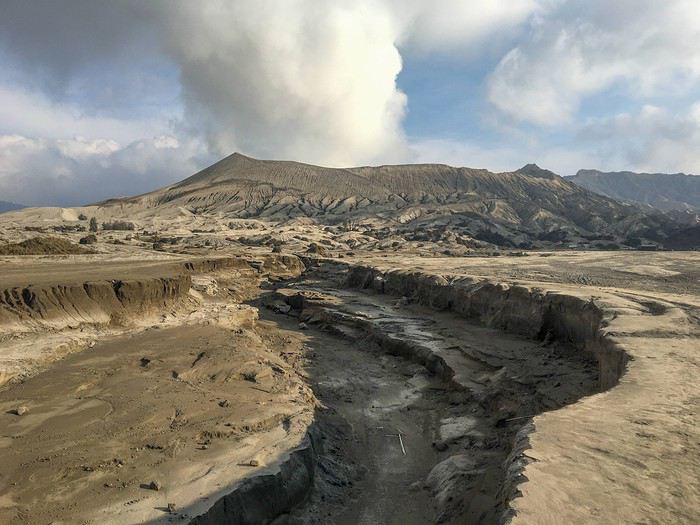 Mont Bromo sur l’île de Java en Indonésie
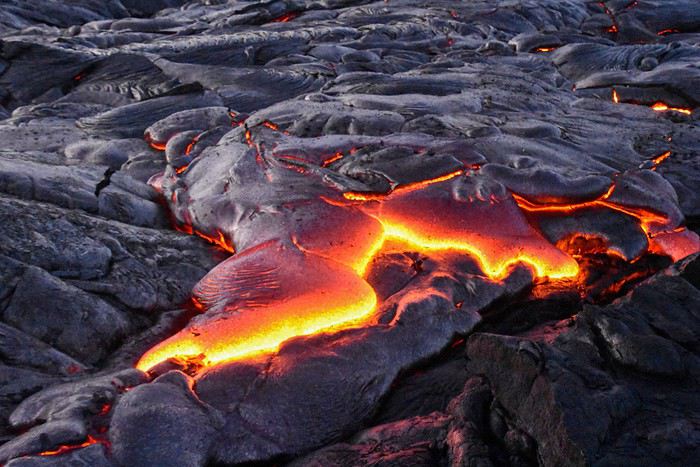 Coulée de lave provenant du volcan Kilauea sur Big Island à Hawaï
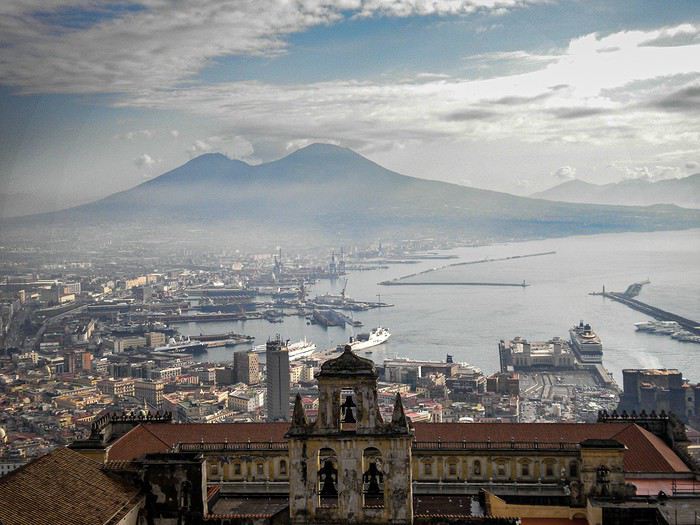 Vésuve dans la baie de Naples
Dépôt des photos jusqu’au Vendredi 21 Février minuit. Vous pouvez poster jusqu’à 3 photos, numérotées et postées dans des messages différents, accompagnées d’un petit descriptif (lieu, anecdote...)
Vote du Samedi 22 Février au Samedi 28 Février minuit. Merci d’indiquer le numéro de la photo, le pseudo et le nombre de points attribués. Photo n°1 = 3 pts Photo n°2 = 2 pts Photo n°3 = 1 pt Tous les membres de VF peuvent voter (même ceux qui n’ont pas déposé de photos).
En cas d’égalité de points pour la première position, la photo gagnante sera celle ayant obtenu le plus grand nombre de 1ères places, puis de secondes places ! L’heureux (se) gagnant(e) devra organiser le concours photo de Mars 2020.
Pour discuter, c’est par ici
Le thème a été un peu compliqué pour moi à trouver, je me suis donc posé les questions suivantes : qu’est-ce que j’aimerais voir, quels paysages m’interpellent lorsque je voyage ? Alors, la réponse est dans ce thème : « Les volcans »
Je me suis demandé s’il pouvait être redondant avec le thème du mois de Juin 2019 « Chaleur » mais même s’il y a eu quelques photos présentant de la lave, des volcans en éruption, ce n’était qu’une très faible partie des photos proposées.
Je ne serai pas restrictive sur des volcans en activités, toutes les photos ayant un lien avec les volcans seront les bienvenues : des volcans éteints, endormis, des calderas effondrées, des champs de lave, des geysers d’eau chaude …
Quelques exemples :
Mont Bromo sur l’île de Java en Indonésie
Coulée de lave provenant du volcan Kilauea sur Big Island à Hawaï
Vésuve dans la baie de NaplesDépôt des photos jusqu’au Vendredi 21 Février minuit. Vous pouvez poster jusqu’à 3 photos, numérotées et postées dans des messages différents, accompagnées d’un petit descriptif (lieu, anecdote...)
Vote du Samedi 22 Février au Samedi 28 Février minuit. Merci d’indiquer le numéro de la photo, le pseudo et le nombre de points attribués. Photo n°1 = 3 pts Photo n°2 = 2 pts Photo n°3 = 1 pt Tous les membres de VF peuvent voter (même ceux qui n’ont pas déposé de photos).
En cas d’égalité de points pour la première position, la photo gagnante sera celle ayant obtenu le plus grand nombre de 1ères places, puis de secondes places ! L’heureux (se) gagnant(e) devra organiser le concours photo de Mars 2020.
Pour discuter, c’est par ici
Sulawesi centrale: Luwuk et les iles Banggai English translation pending
Bonjour à tous,
J’ai envie de partager avec vous cette magnifique région que j’ai découverte en Indonésie, sur l’île de Sulawesi, la région de Luwuk Banggai dans l’est de la Sulawesi Centrale. C’est une région à découvrir, encore peu touchée par le tourisme et pourtant splendide, avec un accueil chaleureux et attentionné des indonésiens.
J’ai découvert Luwuk et sa région par hasard en 2019 car c’était la région dont était originaire la famille avec laquelle je vivais à Makassar à l’époque.
La richesse de ce lieu est impressionnante : des chutes d’eau à la couleur turquoise, des randonnées en forêts, de la pêche en pirogue de nuit au ciel étoilé, de la plongée dans des fonds marins intouchés, des minorités ethniques de rendez-vous en terre inconnue, bref, tout y est.
Bonne lecture !
Partie I : Région de Luwuk
Episode 1 : Dormir chez l’habitant dans le village de Tangkiang
La ville de Luwuk est souvent une option choisie par les voyageurs pour aller rapidement vers les iles Toggians. La ville est accessible par avion de Makassar, Menado et Palu et permet de rejoindre Ampana en 4h de voiture, point de départ pour les iles Toggians.
Mais Luwuk et sa région valent le temps que l’on s’y arrête ! Ma première étape fut le village de Tangkiang, à 40mn en moto de Luwuk.
Tangkiang est un village traditionnel de pêcheurs et de cultivateurs, au bord de la mer, hors des sentiers battus. Les villageois sont très accueillants et étaient ravis d’avoir un bule (dit « boulet » pour dire « touriste » 😉 ) découvrant leur quotidien.
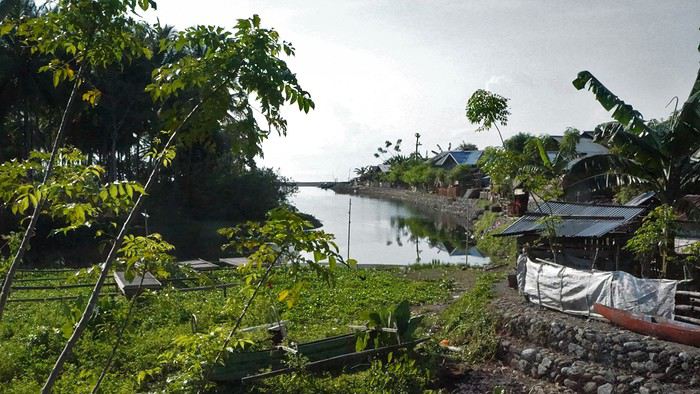
L’entrée du village, entre rivière et mer
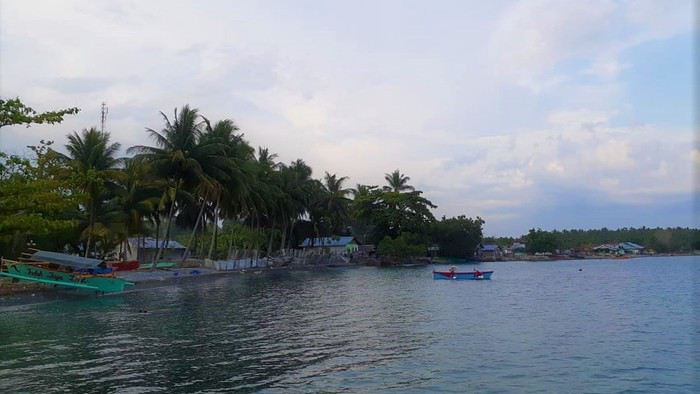 Le bord de mer
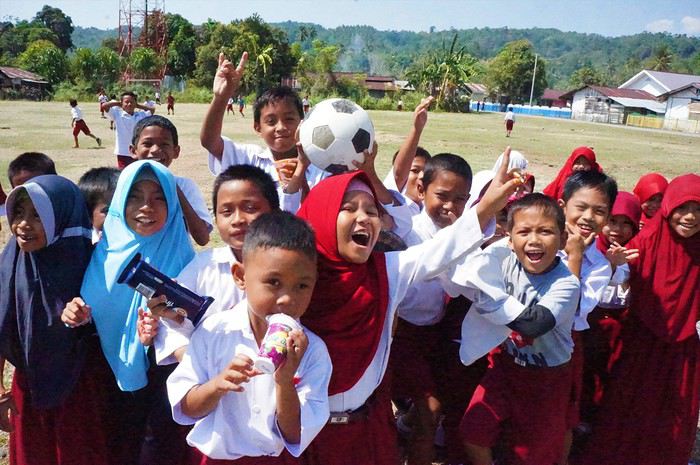
Le foot et le volley-ball
Je dormais chez l’habitant, l’occasion de partager la vie d’une famille. J’avais une chambre confortable et ils étaient aux petits soins pour me préparer de délicieux plats. Mes plats préférés restant le poisson frais et le tempé, à base de soja - Un délice !
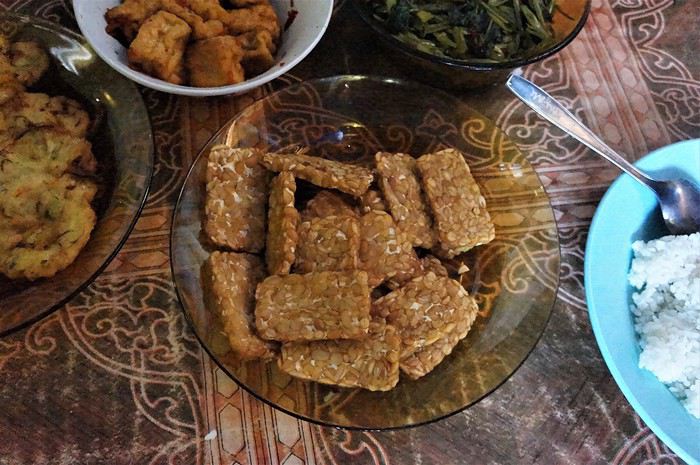
Le tempé, du tofu, beignets de crevettes et kangkung (ou liseron d’eau)
J’allais aussi me baigner dans la rivière du village bien rafraichissante au moment le plus chaud de la journée.
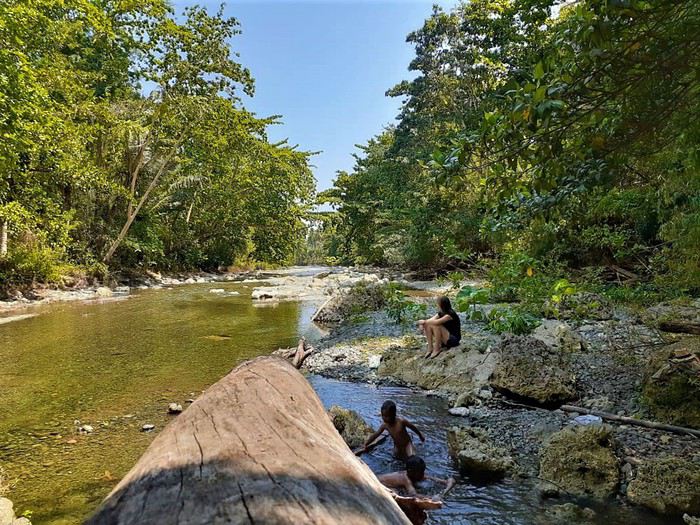
A l’eau ! La douche dans la rivière 😎
J’ai découvert la pêche au fil. Ils utilisent des pirogues et des « rompong », des plates-formes en bambou au milieu de la mer pour attirer les poissons. Je suis allée pêcher le poulpe de nuit, en utilisant des petites lumières que l’on mettait dans l’eau pour attirer les poulpes. Fantastique.
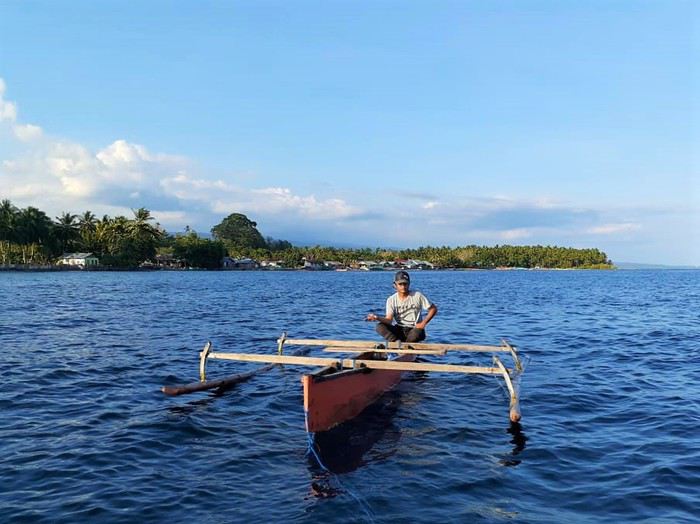 La pêche au fil
Je me suis également baladée dans les collines avoisinantes, qui donnent une très belle vue sur la mer. J’ai adoré récolter le piment, très relaxant, au milieu de la montagne, au calme. J’ai également appris à faire de l’huile de noix de coco avec la coopérative agricole du village.
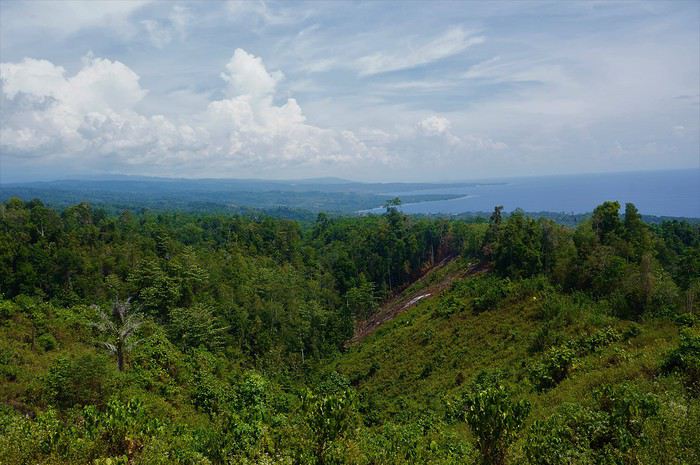
Vue des hauteurs de Tangkiang
L’escalade du cocotier
 La préparation de l’huile de noix de coco
La récolte du piment
Entre Luwuk et Tangkiang, il y a d’autres villages, dont celui de Nambo, où une tisseuse locale vend de très beaux tissus avec l’emblème local, l’oiseau maléo.
 La tisseuse du village de Nambo
INFOS PRATIQUES
Pour accéder à Tangkiang, le plus simple est qu’on vienne vous chercher en moto ou en voiture en fonction de vos besoins à Luwuk.
Kahar, qui est le responsable de la coopérative de noix de coco et de piment et qui se débrouille en anglais, pourra vous accueillir et organiser votre séjour au village. Il m’a donné son accord pour partager ses coordonnées et serait ravi d’aider des « bule » à visiter la région. Son mail est donc abd.kahar024@gmail.com et son numéro Whats App est le +62 853-9424-8801.
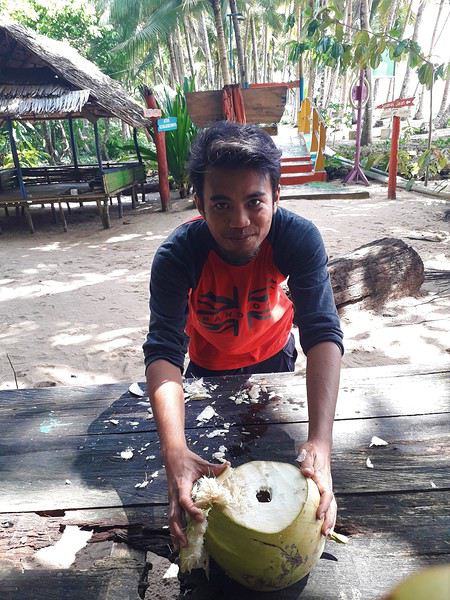
Voici Kahar
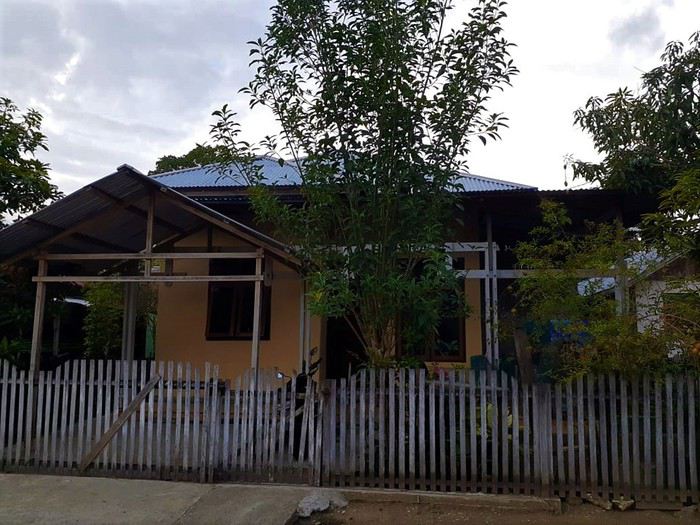
Une des maisons dont les habitants sont prêts à accueillir les touristes
Il faut savoir que les indonésiens de cette région ne sont pas habitués aux touristes. Ils n’osent pas toujours parler d’argent. Personnellement, j’ai décidé de leur donner 150 000 RP par nuit incluant la nourriture.
La suite au prochain épisode 🙂
J’ai envie de partager avec vous cette magnifique région que j’ai découverte en Indonésie, sur l’île de Sulawesi, la région de Luwuk Banggai dans l’est de la Sulawesi Centrale. C’est une région à découvrir, encore peu touchée par le tourisme et pourtant splendide, avec un accueil chaleureux et attentionné des indonésiens.
J’ai découvert Luwuk et sa région par hasard en 2019 car c’était la région dont était originaire la famille avec laquelle je vivais à Makassar à l’époque.
La richesse de ce lieu est impressionnante : des chutes d’eau à la couleur turquoise, des randonnées en forêts, de la pêche en pirogue de nuit au ciel étoilé, de la plongée dans des fonds marins intouchés, des minorités ethniques de rendez-vous en terre inconnue, bref, tout y est.
Bonne lecture !
Partie I : Région de Luwuk
Episode 1 : Dormir chez l’habitant dans le village de Tangkiang
La ville de Luwuk est souvent une option choisie par les voyageurs pour aller rapidement vers les iles Toggians. La ville est accessible par avion de Makassar, Menado et Palu et permet de rejoindre Ampana en 4h de voiture, point de départ pour les iles Toggians.
Mais Luwuk et sa région valent le temps que l’on s’y arrête ! Ma première étape fut le village de Tangkiang, à 40mn en moto de Luwuk.
Tangkiang est un village traditionnel de pêcheurs et de cultivateurs, au bord de la mer, hors des sentiers battus. Les villageois sont très accueillants et étaient ravis d’avoir un bule (dit « boulet » pour dire « touriste » 😉 ) découvrant leur quotidien.
L’entrée du village, entre rivière et mer
Le bord de merLe foot et le volley-ball
Je dormais chez l’habitant, l’occasion de partager la vie d’une famille. J’avais une chambre confortable et ils étaient aux petits soins pour me préparer de délicieux plats. Mes plats préférés restant le poisson frais et le tempé, à base de soja - Un délice !
Le tempé, du tofu, beignets de crevettes et kangkung (ou liseron d’eau)
J’allais aussi me baigner dans la rivière du village bien rafraichissante au moment le plus chaud de la journée.
A l’eau !
La douche dans la rivière 😎J’ai découvert la pêche au fil. Ils utilisent des pirogues et des « rompong », des plates-formes en bambou au milieu de la mer pour attirer les poissons. Je suis allée pêcher le poulpe de nuit, en utilisant des petites lumières que l’on mettait dans l’eau pour attirer les poulpes. Fantastique.
La pêche au filJe me suis également baladée dans les collines avoisinantes, qui donnent une très belle vue sur la mer. J’ai adoré récolter le piment, très relaxant, au milieu de la montagne, au calme. J’ai également appris à faire de l’huile de noix de coco avec la coopérative agricole du village.
Vue des hauteurs de Tangkiang
L’escalade du cocotier
La préparation de l’huile de noix de cocoLa récolte du piment
Entre Luwuk et Tangkiang, il y a d’autres villages, dont celui de Nambo, où une tisseuse locale vend de très beaux tissus avec l’emblème local, l’oiseau maléo.
La tisseuse du village de NamboINFOS PRATIQUES
Pour accéder à Tangkiang, le plus simple est qu’on vienne vous chercher en moto ou en voiture en fonction de vos besoins à Luwuk.
Kahar, qui est le responsable de la coopérative de noix de coco et de piment et qui se débrouille en anglais, pourra vous accueillir et organiser votre séjour au village. Il m’a donné son accord pour partager ses coordonnées et serait ravi d’aider des « bule » à visiter la région. Son mail est donc abd.kahar024@gmail.com et son numéro Whats App est le +62 853-9424-8801.
Voici Kahar
Une des maisons dont les habitants sont prêts à accueillir les touristes
Il faut savoir que les indonésiens de cette région ne sont pas habitués aux touristes. Ils n’osent pas toujours parler d’argent. Personnellement, j’ai décidé de leur donner 150 000 RP par nuit incluant la nourriture.
La suite au prochain épisode 🙂
Uganda: 20 days discovering authenticity
Preamble:
For summer 2019, the idea was to return to Africa. We had already been to Namibia in 2017 (+ a few days in Botswana and the end of the trip at Victoria Falls), which we loved, and a trip to Asia in 2018 (Borneo, Perhentian, and Singapore), a nature-focused trip but a bit disappointing due to environmental destruction. The desire to return to Africa was very strong. We wanted a change of scenery, nature, discoveries, to step out of our little comfort zone (a bit, anyway!) and experience travel differently. In short, we dreamed of authenticity, and we weren’t disappointed.
We traveled as a family of four with our daughters, aged 19 and 17. When the urge for Africa hit, Uganda quickly stood out, especially for the chance to see rare animals, particularly the famous mountain gorillas. When I looked into the budget, I was quickly disheartened. It’s really expensive. Too expensive… Then, after reading a few trip reports on "VoyageForum" (thanks Muriel J!), I decided to ask a local agency for a quote. The first contact was very friendly and responsive, and the initial offer for two weeks fit our budget :). A few images gathered from the internet (especially Sipi Falls) finally convinced us all. I asked for an adapted offer with a few more sites to extend the trip to three weeks and cover a fairly complete visit to the country (which, of course, increased the budget! To stay within an acceptable range, we prioritized activities over accommodations and regularly chose the cheapest options, with 2-3 nice lodges in between). It’s booked! We were in October 2018, and the first thing to do was reserve permits to see the gorillas and chimpanzees. Then, the agency took care of all the bookings except for the international flights, which we booked with Ethiopian Airlines. A few months of waiting to look forward to… and a little worry too! Two events didn’t reassure us: the kidnapping of an American tourist by four men at the DRC border and the Ebola outbreak in Congo, with confirmed cases in Uganda by mid-June…
Here we are in July, and departure is approaching. The suitcases are packed (warm clothes, long, short, dark, light, practical, sun, rain, hiking/trekking shoes, flip-flops—clothes for every situation! Don’t forget: headlamp (essential!), binoculars, cameras), and we’re ready.
One day before departure, our agency Mpolampola, through its manager Paul, informs us that he won’t be the one taking care of us during the trip but another guide named Moses. He has a big problem with a vehicle and can’t do otherwise. For us, as long as everything is okay, no worries, especially since I had read glowing reviews about Moses, who turned out to be a very pleasant guide, cautious (most important) on the road, clear about all the activities, and an expert on birds, his specialty. We briefly met Paul in the middle of the trip, who is also very friendly. In short, we 100% recommend this agency. Flights to Entebbe went smoothly; we arrived around 10:30 AM, filled out health forms (Ebola information signs everywhere), visas, baggage claim, and met Moses, who took us directly to the vehicle. It was in pretty good condition with huge tires (we’d understand why later!), but it had quite a few miles (400,000 on the odometer!). Just missing a seatbelt… Okay, it’s Africa!
Now, here’s our day-by-day itinerary, which I’ll summarize briefly with ratings for each activity: ****TOPISSIME (Amazing) ***Very good **Good *Meh
Day 1) Departure from the airport at 11:45 AM for some currency exchange. Stop along the way at the equator for a meal and souvenir photo! Arrival at Lake Mburo Park *** around 5:00 PM. Even before entering the park, we saw lots of antelopes, zebras, elks, etc.—it’s magnificent. On the way, we had already encountered many goats and cows, and we were impressed by their enormous horns. We enjoyed a nice game drive until about 7:00 PM, when we reached our lodge, one of the nicest of the trip, Eagle’s Nest ****, with a magnificent view, a tent with a nice bathroom/shower, and a very good meal.
Day 2) Departure at 7:00 AM for a game drive; we encountered many animals again, especially antelopes, zebras, and birds. There are no giraffes, lions, or cheetahs in this park. We didn’t get lucky enough to see a leopard… :-) Then, we continued to Lake Bunyonyi ***, where the road and views are very beautiful, but we were shocked to see locals (mostly women and children) breaking stones by hand on the mountainside in very precarious safety conditions. There are regularly dramatic accidents because, over time, entire sections detach and cause landslides. These stones are then used for road construction… Another world… This was the only place we saw this. Lake Bunyonyi is a nice stop (but less exotic in our opinion since we have many lakes back home too!). We took a boat to our accommodation, Byoona Amagara ***, which has a lot of charm. We stayed in huts called "geodomes," completely open to nature, so it was very cool at night. To reach the toilets located below, you had to be brave! The meal consisted of lake shrimp—good but a bit bland.
Day 3) After a good breakfast, departure at 9:00 AM to visit three islands. We took several nice walks with beautiful views of the lake and islands. A local meal was served on the last island. At 1:00 PM, we met Moses for the rest of the program and headed to Ruhija in Bwindi Forest****. The landscapes are breathtaking. After two hours of driving and many photo stops, we arrived at our accommodation near the trekking starting point, Ruhija Gorilla Friends Resort **. We stayed in a room instead of the initially planned tents, which was just as well because there was a lot of wind during the night. We still had time for an activity and decided to meet the Bwata pygmies despite the bad reviews in the guide… The first part of the visit was quite nice, with a visit to a school where the children gave us a very joyful welcome. We had a great time listening to them sing and dance! Then we met the Bwata pygmies who live on the edge of the forest. When Bwindi Forest was declared a national park, they had to leave their habitat because their activities weren’t compatible with nature and wildlife protection. We left on a somewhat sad note… The visit ended with a local doctor explaining different medicinal plants, and we watched the making of local beer from sorghum. Good meal. We had butterflies in our stomachs—tomorrow was a big day! I admit I was a bit stressed, not entirely confident in my physical abilities…
Day 4) After a short night due to excitement, breakfast, and departure at 7:30 AM. First, it started calmly with singing and dancing. Then, a 15-minute briefing and group assignments. No one asked if we had any physical problems or anything (when booking, I had inquired a bit, and they told me groups were assigned based on physical abilities). We were assigned to the Mukiza group. At first, I was pretty happy—it was a fairly large group with babies :). The ranger explained that for now, they didn’t know where the gorillas were… the trackers couldn’t find them… Oh… (that’s not a good sign!!!) We set off at a good pace, first on a reasonably sloped path. We were accompanied by a family of four Italians and five porters (four for us!). After an hour, the ranger stopped us and informed us they still couldn’t find them—they had fought with another group the day before and scattered throughout the forest, so they were very far away, and we needed to move faster… Hmm… we picked up the pace (we weren’t going slowly before!!!) and walked for another good hour—down, up, down again, up again, we kept going, but always more or less on paths. Then another stop. A 10-minute break waiting for news. The news wasn’t very precise, it seemed! The ranger decided to cut through the forest—machetes were used to clear the path. We descended unimaginable slopes, then climbed back up. Our stick kept getting stuck; luckily, our porter helped us, held our hands, and the terrain was vertical! An hour later, another stop: we heard gorilla cries (yay!!!). False hope—we waited again for news from the trackers, who informed our ranger that it was a non-habituated family, so we couldn’t see them. Cold shower—we had to go all the way back up and return to the starting point to maybe see another group. But time was running out… We arrived around 1:30 PM; all the other groups had already left long ago. Our guide was worried because we still had a long drive ahead. We quickly ate a banana, and off we went for another trek (I was exhausted!). Luckily, this group was close—about 45 minutes of steep descent (I was already thinking about the climb back and considering being adopted by a gorilla ). The forest was sublime, with magnificent tree ferns—the place was truly splendid. Finally, we were there. The porters stayed behind, we grabbed our cameras, and followed the ranger. The progress wasn’t easy, but suddenly, a female was in front of us, curled up in a little ball, eating—so cute. The emotion overwhelmed us. But she moved away—it’s hard to observe them; they move constantly, and the terrain is very steep and uneven. We saw a female descending from a tree with a baby on her back—too adorable. Then, here was the silverback, enormous, incredible, yet so calm and peaceful. He ate quietly and gave us a nice demonstration of nostril exploration! We could observe them for a good hour, but photographing them wasn’t easy because they kept moving, and we could barely stand! Toward the end, a large male (black back) suddenly stood up and decided to pass right where I was! I ended up in the bushes, and the male passed in front of me just a few centimeters away (he stepped on one of my daughters’ feet!) followed by the whole family. Just an exceptional moment. It was time to leave; we had to climb back up. I dreaded it because, I admit, I was exhausted. We finished the hike after 4:00 PM, exhausted but happy. The ranger gave us diplomas, and we didn’t linger because we still had a long drive—we needed to reach Ishasha before nightfall. Our guide was a bit stressed. If we were to do it again, we’d spend an extra night in Bwindi. However, it seems finishing so late is exceptional—it never happens, according to our guide! The road between Bwindi and Ishasha is sublime, with extraordinary landscapes, and despite the late hour, we regularly asked our guide to stop for photos. We arrived at Enjojo *** Lodge around 6:00 PM. The huts are located quite far from the reception and the bathrooms, a bit far from the huts, but otherwise, it was very nice.
Day 5) Departure at 8:00 AM after a good breakfast with the hope of seeing tree-climbing lions (no luck!). Overall, there weren’t many animals, and we arrived around 12:45 PM at our next stop, Parkview Safari Lodge ****, with a magnificent view, a beautiful family bungalow, and a good meal. We enjoyed a short relaxation by the lovely pool. At 4:00 PM, we left to see Kyambura Gorge *** and hike there. Unfortunately, this activity is no longer available, so we walked around the area—it was very beautiful. Back at the hotel, a little rest after the previous day wasn’t a bad idea! Reading, swimming, meals, and dances made the end of the day enjoyable.
Day 6) Departure at 6:30 AM—one of our daughters was sick (stomachache, cold sweats…). Safari in Queen Elizabeth ** (Kaseny Plains)—a bit disappointing. Stop by the salt lake with a nice view. A small market, but we weren’t thrilled by the crafts (overall, apart from some beautiful baskets/plates, there wasn’t much, and the wooden objects were, in our opinion, much less pretty than in Namibia). Then we took the crater road (27 km long) **** with magnificent landscapes. However, you absolutely must close the windows because it’s infested with tsetse flies. At noon, we arrived at Mweya, where we stayed in basic rooms, but the restaurant was well-placed with a beautiful view of the Kazinga Channel. At 2:00 PM, we enjoyed a magnificent cruise **** on the channel. Elephants, antelopes, crocodiles, hippos (including adorable babies), buffaloes, all kinds of birds. Wow!!! Two hours of pure bliss. Quiet end of the day playing cards with a view of the channel and elephants.
Day 7) Departure at 6:00 AM—still sick, we weren’t sure if it was due to the preventive treatment (Malarone) or something else… Another game drive in Queen Elizabeth (Kaseny Plains) and breakfast by the salt lake. Overall, we were a bit disappointed by this park. Then we took the road to Crater Lakes***, again with very beautiful landscapes. A hike of about an hour and a half allowed us to discover these beautiful crater lakes (the water mainly comes from the Rwenzoris). We crossed pretty villages and had nice encounters. End of the day at Tinka’s Home ****, with a family. We loved this place—very welcoming, where we took a cooking class with our hosts. A really great time. After the meal, we enjoyed African stories and dances. Really awesome.
Day 8) Departure at 7:30 AM for another highly anticipated discovery—the chimpanzees in Kibale Forest ****. We went to the meeting point and were split into groups of six, each with a guide. We saw three different groups, and for the last group, we followed a chimpanzee (slightly more comfortable running in the forest than we were!) that led us to the group. Their cries are very impressive, and we could observe them well, even though they were often high up in the trees. We were lucky enough to see two on the ground, very close to us. It was magnificent. End of the encounter and return to the starting point—it was noon. We went back to Tinka’s Home for the meal (delicious!). At 2:00 PM, we hiked in Bigodi Swamp ***, a marsh surrounded by beautiful vegetation, especially huge papyrus, and inhabited by many birds and monkeys. We saw, among others, black-and-white colobus monkeys, red colobus monkeys, and vervet monkeys. We also visited a basket-weaving workshop where we bought two beautiful baskets. Then a short stop in Fort Portal, where we stayed for two nights at Ruwenzori View Guesthouse ***, a nice place with a family room and very good communal meals.
Day 9) Departure at 8:00 AM for a hike in the Rwenzori****—it was a bit chaotic today. First, we had to exchange shillings because we wouldn’t have another chance in the following days. At the bank, employees went to get the bills by motorcycle from other buildings—it was quite surreal! And it took time! Then there was a misunderstanding between the organizer and me… I really wanted to see the region where chameleons are found in the Rwenzori—this region is south of the mountain range, and we were in the north! Anyway, the program included an ascent in the northern part with a positive elevation gain of over 1,500 meters… Talking to the guide scheduled for this hike (Noah), we explained that we really wanted to discover the vegetation and these famous chameleons, not necessarily achieve a physical feat… (we’d had enough!). The decision was made to go south, which meant quite a bit of driving. The hike was really enjoyable, with magnificent vegetation by the river. We saw three of the four chameleon species present, including the famous three-horned chameleon. The region is superb. We ended with a drink at Ruboni Camp, which has a magnificent view of the region (ideally, we should have stayed there). Two hours of driving to finish, and a good meal :).
Day 10) Departure at 8:00 AM—we had a long drive to Ziwa Rhino Ranch****. We passed through Hoima, had lunch in Masindi, and arrived in time for the rhino tracking walk. We could approach them closely on foot—it was impressive. We saw eight. Since we were staying on-site in the guesthouse **, we received precise safety instructions for moving between the rooms and the restaurant. And we quickly understood why!
Day 11) Departure at 6:00 AM for breakfast—surprise, in front of our room, several large rhinos were sleeping (we had also heard a lot of animal noises during the night—rhinos but also what seemed to be predators). So we had to take a detour to reach the restaurant! Second surprise—next to the restaurant, just three meters away at most, two mothers and their baby were also sleeping! Memorable! Then we had an appointment for the shoebill trek and canoe ride **** (package with the previous day’s walk). So there we were, in our boots, splashing through 30 cm of water in search of the shoebill (I really wanted to see one :))! It was really fun, and luck was on our side—a shoebill had just landed in the distance! We approached as best we could and observed it from afar. What a strange bird! There are very few left, and Uganda is one of the countries where the chances of seeing one are quite good. The tour continued with a canoe cruise where we saw a herd of cows (the famous ones with enormous horns) being swum as a dowry to the father of the future bride! A funny spectacle. This stop wasn’t the most anticipated, but we all thought it was really worth the detour. Road to Murchison Falls Park, and arrival around noon at Red Chili Rest Camp **, where we stayed for two nights (family banda). Good meal. Then a cruise to Murchison Falls*** where we disembarked and continued on foot. It was pretty. Back to Red Chili.
Day 12) This morning, early departure for a cruise in search of the shoebill*** (booked in case we didn’t see one at Ziwa). The landscapes were pretty, but there weren’t many birds in the end. We spotted the chosen one from afar after the first 10 minutes—so the suspense didn’t last long :-) It was a nice activity but quite long—5 hours. In the afternoon, safari in Murchison Park****—this park is sublime, the landscapes fabulous. Really one of our favorite parts of the trip. Lots of animals and even a leopard spotted with binoculars because it was far away! Night at Red Chili.
Day 13) Departure for the first morning ferry—it was drizzling, the sky was threatening at first, so the landscape was spectacular! Beautiful contrasts. In the middle of the morning, we were lucky to observe a whole group of lions, first from afar, then with a little patience, the whole group approached until they passed beside and in front of our vehicle. What emotion and excitement! We could then observe large groups of giraffes. They were magnificent. The morning was incredible. Then we headed to our lodge, Fort Murchison ****, and on the way, we saw a whole group of elephants—the view was magnificent. We had a very good meal and enjoyed the pool a bit. We also met Paul, the organizer of our trip. Very nice :). In the late afternoon, off for a short safari in the park. We slept in very well-equipped tents.
Day 14) Today, we had a long drive to Kidepo Park. It was raining, which didn’t help our guide—according to him, the tracks near Kidepo turn to mud with rain and become difficult to navigate. We saw, among other things, a bus in a bad situation in the ditch. Some sections were really tricky, and we were glad to have a driver. The end of the trip—the landscape was spectacular and original, and we saw some traditional villages. We arrived at Kidepo quite late. Short safari in the park before reaching the accommodation. We booked two simple bandas in the park camp**. It was clean but didn’t hold up well in the rain . The restaurant was very nice, though.
Day 15) The day was dedicated to discovering Kidepo Park **** where the landscapes were again superb. First encounter with a lioness resting on a rock. We saw other lions later and observed them for a long time. There were almost no other tourists in the park. Our daughter wasn’t feeling well, and by the time we arrived at the lodge, she had a temperature of 39.5°C (103.1°F)… A nap was necessary. In the late afternoon, we returned to the spot where we had seen the lions that morning, and they were still there—they weren’t happy because rain was threatening! It was a great photo opportunity. Then came the downpour, and our driver urged us to return quickly because the tracks were becoming impassable. Indeed, a jeep was in the ditch… The return was eventful, and several times we slid without being able to do anything… Wow, what a day!
Day 16) No safari this morning because of impassable tracks—the road to Kotido*** was longer than expected as we had to take a detour. The landscapes along the way were surprising. We finally arrived around 1:00 PM at the accommodation and left at 3:00 PM to visit the largest manyatta in East Africa with two translators. It was incredible—a very beautiful experience. The manyatta is immense and has 28,000 inhabitants. Night at Karamojaarts guesthouse*—very average meal.
Day 17) Departure for Moroto****—on the way, we saw many bird species. Moroto doesn’t look like other Ugandan cities. Life there seems very pleasant. We arrived at Kara-Tunga and had a bite to eat. At 4:00 PM, we left to visit a Karamojong village. We enjoyed beautiful dances and watched communal games—it was fun and so authentic. Then we headed to a kraal (where shepherds and herds are) to set up our camp. Moses had to get used to the idea of sleeping in the tribe in a tent! It was incredible to find ourselves in this universe. The place was beautiful, and we had a great time with the Karamojong. Some had never seen white people… had never been in a car… Their culture is incredible. During the evening, around the fire, to our guide’s dismay (a bird enthusiast), they grilled hornbills! On our side, we ate a meal prepared by Kara-Tunga for our sensitive stomachs! Night in a tent.
Day 18) Dawn wake-up in the fog—the atmosphere was quite strange. Our daughter was attacked by a cow—fortunately, more fear than harm, but she ended up with a lot of thorns in her buttocks and thighs ! Then we left for the Mount Elgon region, specifically Sipi Falls****. Lacam Lodge****, perched on the edge of the cliff with a direct view of one of the falls, was just magnificent. The view and landscapes were fabulous. Big favorite. We had dinner and then went for a hike to visit the three falls in the region, partly in the rain. The landscapes were breathtaking! Sunset at Lacam Lodge with the sun setting over the waterfall. We couldn’t get enough and stayed to admire until nightfall!
Day 19) Visit to coffee plantations*** where we were given all the useful explanations to understand the culture and the incredible work required for this product, which is ultimately not very glorified. The visit was very interesting, and we drank very good coffee with the owners. Last photos at Lacam Lodge, and then departure for Jinja, where we arrived in the middle of the afternoon. We took a small cruise to see the source of the Nile*. Very touristy and not at all to our taste… Then a meal at Jinja Base Camp** where we enjoyed guacamole. Our guide Moses left us because another group was waiting for him!
Day 20) Road to Kampala***, the market, the Gaddafi Mosque. Short but interesting visit. Last meal in Entebbe by Lake Victoria, where we almost felt like we were by the sea. Transfer to the airport and return to Switzerland…
Epilogue: All four of us were enchanted by this trip, which will undoubtedly remain one of the most beautiful we’ve ever taken. Talking about it gives me chills and brings tears to my eyes. It was simply a magnificent experience. However, I wouldn’t recommend this trip to everyone because you often have to overlook small inconveniences like toilets (the worst of my life) and certain comfort details that, for us, remain details but could be important to others.
Our favorites: - The gorilla trek - The cruise on Kazinga Channel - The Fort Portal region - The Rwenzori Mountains - The chimpanzee trek - Murchison Falls - Kidepo - Spending time with the Karamojong tribe - The Sipi Falls region - The accommodations: Eagle’s Nest, Byonna Amagara, Parkview Lodge, Tinka’s Home, Rwenzori Guesthouse, Fort Murchison, Night in the kraal, and Lacam Lodge
What we liked less: - Queen Elizabeth Park - Jinja - The accommodations: Ziwa Rhino Ranch, Karamojaarts Guesthouse
I’ll try to post some photos later. If you have any questions about a future trip, I’d be happy to answer them.
For summer 2019, the idea was to return to Africa. We had already been to Namibia in 2017 (+ a few days in Botswana and the end of the trip at Victoria Falls), which we loved, and a trip to Asia in 2018 (Borneo, Perhentian, and Singapore), a nature-focused trip but a bit disappointing due to environmental destruction. The desire to return to Africa was very strong. We wanted a change of scenery, nature, discoveries, to step out of our little comfort zone (a bit, anyway!) and experience travel differently. In short, we dreamed of authenticity, and we weren’t disappointed.
We traveled as a family of four with our daughters, aged 19 and 17. When the urge for Africa hit, Uganda quickly stood out, especially for the chance to see rare animals, particularly the famous mountain gorillas. When I looked into the budget, I was quickly disheartened. It’s really expensive. Too expensive… Then, after reading a few trip reports on "VoyageForum" (thanks Muriel J!), I decided to ask a local agency for a quote. The first contact was very friendly and responsive, and the initial offer for two weeks fit our budget :). A few images gathered from the internet (especially Sipi Falls) finally convinced us all. I asked for an adapted offer with a few more sites to extend the trip to three weeks and cover a fairly complete visit to the country (which, of course, increased the budget! To stay within an acceptable range, we prioritized activities over accommodations and regularly chose the cheapest options, with 2-3 nice lodges in between). It’s booked! We were in October 2018, and the first thing to do was reserve permits to see the gorillas and chimpanzees. Then, the agency took care of all the bookings except for the international flights, which we booked with Ethiopian Airlines. A few months of waiting to look forward to… and a little worry too! Two events didn’t reassure us: the kidnapping of an American tourist by four men at the DRC border and the Ebola outbreak in Congo, with confirmed cases in Uganda by mid-June…
Here we are in July, and departure is approaching. The suitcases are packed (warm clothes, long, short, dark, light, practical, sun, rain, hiking/trekking shoes, flip-flops—clothes for every situation! Don’t forget: headlamp (essential!), binoculars, cameras), and we’re ready.
One day before departure, our agency Mpolampola, through its manager Paul, informs us that he won’t be the one taking care of us during the trip but another guide named Moses. He has a big problem with a vehicle and can’t do otherwise. For us, as long as everything is okay, no worries, especially since I had read glowing reviews about Moses, who turned out to be a very pleasant guide, cautious (most important) on the road, clear about all the activities, and an expert on birds, his specialty. We briefly met Paul in the middle of the trip, who is also very friendly. In short, we 100% recommend this agency. Flights to Entebbe went smoothly; we arrived around 10:30 AM, filled out health forms (Ebola information signs everywhere), visas, baggage claim, and met Moses, who took us directly to the vehicle. It was in pretty good condition with huge tires (we’d understand why later!), but it had quite a few miles (400,000 on the odometer!). Just missing a seatbelt… Okay, it’s Africa!
Now, here’s our day-by-day itinerary, which I’ll summarize briefly with ratings for each activity: ****TOPISSIME (Amazing) ***Very good **Good *Meh
Day 1) Departure from the airport at 11:45 AM for some currency exchange. Stop along the way at the equator for a meal and souvenir photo! Arrival at Lake Mburo Park *** around 5:00 PM. Even before entering the park, we saw lots of antelopes, zebras, elks, etc.—it’s magnificent. On the way, we had already encountered many goats and cows, and we were impressed by their enormous horns. We enjoyed a nice game drive until about 7:00 PM, when we reached our lodge, one of the nicest of the trip, Eagle’s Nest ****, with a magnificent view, a tent with a nice bathroom/shower, and a very good meal.
Day 2) Departure at 7:00 AM for a game drive; we encountered many animals again, especially antelopes, zebras, and birds. There are no giraffes, lions, or cheetahs in this park. We didn’t get lucky enough to see a leopard… :-) Then, we continued to Lake Bunyonyi ***, where the road and views are very beautiful, but we were shocked to see locals (mostly women and children) breaking stones by hand on the mountainside in very precarious safety conditions. There are regularly dramatic accidents because, over time, entire sections detach and cause landslides. These stones are then used for road construction… Another world… This was the only place we saw this. Lake Bunyonyi is a nice stop (but less exotic in our opinion since we have many lakes back home too!). We took a boat to our accommodation, Byoona Amagara ***, which has a lot of charm. We stayed in huts called "geodomes," completely open to nature, so it was very cool at night. To reach the toilets located below, you had to be brave! The meal consisted of lake shrimp—good but a bit bland.
Day 3) After a good breakfast, departure at 9:00 AM to visit three islands. We took several nice walks with beautiful views of the lake and islands. A local meal was served on the last island. At 1:00 PM, we met Moses for the rest of the program and headed to Ruhija in Bwindi Forest****. The landscapes are breathtaking. After two hours of driving and many photo stops, we arrived at our accommodation near the trekking starting point, Ruhija Gorilla Friends Resort **. We stayed in a room instead of the initially planned tents, which was just as well because there was a lot of wind during the night. We still had time for an activity and decided to meet the Bwata pygmies despite the bad reviews in the guide… The first part of the visit was quite nice, with a visit to a school where the children gave us a very joyful welcome. We had a great time listening to them sing and dance! Then we met the Bwata pygmies who live on the edge of the forest. When Bwindi Forest was declared a national park, they had to leave their habitat because their activities weren’t compatible with nature and wildlife protection. We left on a somewhat sad note… The visit ended with a local doctor explaining different medicinal plants, and we watched the making of local beer from sorghum. Good meal. We had butterflies in our stomachs—tomorrow was a big day! I admit I was a bit stressed, not entirely confident in my physical abilities…
Day 4) After a short night due to excitement, breakfast, and departure at 7:30 AM. First, it started calmly with singing and dancing. Then, a 15-minute briefing and group assignments. No one asked if we had any physical problems or anything (when booking, I had inquired a bit, and they told me groups were assigned based on physical abilities). We were assigned to the Mukiza group. At first, I was pretty happy—it was a fairly large group with babies :). The ranger explained that for now, they didn’t know where the gorillas were… the trackers couldn’t find them… Oh… (that’s not a good sign!!!) We set off at a good pace, first on a reasonably sloped path. We were accompanied by a family of four Italians and five porters (four for us!). After an hour, the ranger stopped us and informed us they still couldn’t find them—they had fought with another group the day before and scattered throughout the forest, so they were very far away, and we needed to move faster… Hmm… we picked up the pace (we weren’t going slowly before!!!) and walked for another good hour—down, up, down again, up again, we kept going, but always more or less on paths. Then another stop. A 10-minute break waiting for news. The news wasn’t very precise, it seemed! The ranger decided to cut through the forest—machetes were used to clear the path. We descended unimaginable slopes, then climbed back up. Our stick kept getting stuck; luckily, our porter helped us, held our hands, and the terrain was vertical! An hour later, another stop: we heard gorilla cries (yay!!!). False hope—we waited again for news from the trackers, who informed our ranger that it was a non-habituated family, so we couldn’t see them. Cold shower—we had to go all the way back up and return to the starting point to maybe see another group. But time was running out… We arrived around 1:30 PM; all the other groups had already left long ago. Our guide was worried because we still had a long drive ahead. We quickly ate a banana, and off we went for another trek (I was exhausted!). Luckily, this group was close—about 45 minutes of steep descent (I was already thinking about the climb back and considering being adopted by a gorilla ). The forest was sublime, with magnificent tree ferns—the place was truly splendid. Finally, we were there. The porters stayed behind, we grabbed our cameras, and followed the ranger. The progress wasn’t easy, but suddenly, a female was in front of us, curled up in a little ball, eating—so cute. The emotion overwhelmed us. But she moved away—it’s hard to observe them; they move constantly, and the terrain is very steep and uneven. We saw a female descending from a tree with a baby on her back—too adorable. Then, here was the silverback, enormous, incredible, yet so calm and peaceful. He ate quietly and gave us a nice demonstration of nostril exploration! We could observe them for a good hour, but photographing them wasn’t easy because they kept moving, and we could barely stand! Toward the end, a large male (black back) suddenly stood up and decided to pass right where I was! I ended up in the bushes, and the male passed in front of me just a few centimeters away (he stepped on one of my daughters’ feet!) followed by the whole family. Just an exceptional moment. It was time to leave; we had to climb back up. I dreaded it because, I admit, I was exhausted. We finished the hike after 4:00 PM, exhausted but happy. The ranger gave us diplomas, and we didn’t linger because we still had a long drive—we needed to reach Ishasha before nightfall. Our guide was a bit stressed. If we were to do it again, we’d spend an extra night in Bwindi. However, it seems finishing so late is exceptional—it never happens, according to our guide! The road between Bwindi and Ishasha is sublime, with extraordinary landscapes, and despite the late hour, we regularly asked our guide to stop for photos. We arrived at Enjojo *** Lodge around 6:00 PM. The huts are located quite far from the reception and the bathrooms, a bit far from the huts, but otherwise, it was very nice.
Day 5) Departure at 8:00 AM after a good breakfast with the hope of seeing tree-climbing lions (no luck!). Overall, there weren’t many animals, and we arrived around 12:45 PM at our next stop, Parkview Safari Lodge ****, with a magnificent view, a beautiful family bungalow, and a good meal. We enjoyed a short relaxation by the lovely pool. At 4:00 PM, we left to see Kyambura Gorge *** and hike there. Unfortunately, this activity is no longer available, so we walked around the area—it was very beautiful. Back at the hotel, a little rest after the previous day wasn’t a bad idea! Reading, swimming, meals, and dances made the end of the day enjoyable.
Day 6) Departure at 6:30 AM—one of our daughters was sick (stomachache, cold sweats…). Safari in Queen Elizabeth ** (Kaseny Plains)—a bit disappointing. Stop by the salt lake with a nice view. A small market, but we weren’t thrilled by the crafts (overall, apart from some beautiful baskets/plates, there wasn’t much, and the wooden objects were, in our opinion, much less pretty than in Namibia). Then we took the crater road (27 km long) **** with magnificent landscapes. However, you absolutely must close the windows because it’s infested with tsetse flies. At noon, we arrived at Mweya, where we stayed in basic rooms, but the restaurant was well-placed with a beautiful view of the Kazinga Channel. At 2:00 PM, we enjoyed a magnificent cruise **** on the channel. Elephants, antelopes, crocodiles, hippos (including adorable babies), buffaloes, all kinds of birds. Wow!!! Two hours of pure bliss. Quiet end of the day playing cards with a view of the channel and elephants.
Day 7) Departure at 6:00 AM—still sick, we weren’t sure if it was due to the preventive treatment (Malarone) or something else… Another game drive in Queen Elizabeth (Kaseny Plains) and breakfast by the salt lake. Overall, we were a bit disappointed by this park. Then we took the road to Crater Lakes***, again with very beautiful landscapes. A hike of about an hour and a half allowed us to discover these beautiful crater lakes (the water mainly comes from the Rwenzoris). We crossed pretty villages and had nice encounters. End of the day at Tinka’s Home ****, with a family. We loved this place—very welcoming, where we took a cooking class with our hosts. A really great time. After the meal, we enjoyed African stories and dances. Really awesome.
Day 8) Departure at 7:30 AM for another highly anticipated discovery—the chimpanzees in Kibale Forest ****. We went to the meeting point and were split into groups of six, each with a guide. We saw three different groups, and for the last group, we followed a chimpanzee (slightly more comfortable running in the forest than we were!) that led us to the group. Their cries are very impressive, and we could observe them well, even though they were often high up in the trees. We were lucky enough to see two on the ground, very close to us. It was magnificent. End of the encounter and return to the starting point—it was noon. We went back to Tinka’s Home for the meal (delicious!). At 2:00 PM, we hiked in Bigodi Swamp ***, a marsh surrounded by beautiful vegetation, especially huge papyrus, and inhabited by many birds and monkeys. We saw, among others, black-and-white colobus monkeys, red colobus monkeys, and vervet monkeys. We also visited a basket-weaving workshop where we bought two beautiful baskets. Then a short stop in Fort Portal, where we stayed for two nights at Ruwenzori View Guesthouse ***, a nice place with a family room and very good communal meals.
Day 9) Departure at 8:00 AM for a hike in the Rwenzori****—it was a bit chaotic today. First, we had to exchange shillings because we wouldn’t have another chance in the following days. At the bank, employees went to get the bills by motorcycle from other buildings—it was quite surreal! And it took time! Then there was a misunderstanding between the organizer and me… I really wanted to see the region where chameleons are found in the Rwenzori—this region is south of the mountain range, and we were in the north! Anyway, the program included an ascent in the northern part with a positive elevation gain of over 1,500 meters… Talking to the guide scheduled for this hike (Noah), we explained that we really wanted to discover the vegetation and these famous chameleons, not necessarily achieve a physical feat… (we’d had enough!). The decision was made to go south, which meant quite a bit of driving. The hike was really enjoyable, with magnificent vegetation by the river. We saw three of the four chameleon species present, including the famous three-horned chameleon. The region is superb. We ended with a drink at Ruboni Camp, which has a magnificent view of the region (ideally, we should have stayed there). Two hours of driving to finish, and a good meal :).
Day 10) Departure at 8:00 AM—we had a long drive to Ziwa Rhino Ranch****. We passed through Hoima, had lunch in Masindi, and arrived in time for the rhino tracking walk. We could approach them closely on foot—it was impressive. We saw eight. Since we were staying on-site in the guesthouse **, we received precise safety instructions for moving between the rooms and the restaurant. And we quickly understood why!
Day 11) Departure at 6:00 AM for breakfast—surprise, in front of our room, several large rhinos were sleeping (we had also heard a lot of animal noises during the night—rhinos but also what seemed to be predators). So we had to take a detour to reach the restaurant! Second surprise—next to the restaurant, just three meters away at most, two mothers and their baby were also sleeping! Memorable! Then we had an appointment for the shoebill trek and canoe ride **** (package with the previous day’s walk). So there we were, in our boots, splashing through 30 cm of water in search of the shoebill (I really wanted to see one :))! It was really fun, and luck was on our side—a shoebill had just landed in the distance! We approached as best we could and observed it from afar. What a strange bird! There are very few left, and Uganda is one of the countries where the chances of seeing one are quite good. The tour continued with a canoe cruise where we saw a herd of cows (the famous ones with enormous horns) being swum as a dowry to the father of the future bride! A funny spectacle. This stop wasn’t the most anticipated, but we all thought it was really worth the detour. Road to Murchison Falls Park, and arrival around noon at Red Chili Rest Camp **, where we stayed for two nights (family banda). Good meal. Then a cruise to Murchison Falls*** where we disembarked and continued on foot. It was pretty. Back to Red Chili.
Day 12) This morning, early departure for a cruise in search of the shoebill*** (booked in case we didn’t see one at Ziwa). The landscapes were pretty, but there weren’t many birds in the end. We spotted the chosen one from afar after the first 10 minutes—so the suspense didn’t last long :-) It was a nice activity but quite long—5 hours. In the afternoon, safari in Murchison Park****—this park is sublime, the landscapes fabulous. Really one of our favorite parts of the trip. Lots of animals and even a leopard spotted with binoculars because it was far away! Night at Red Chili.
Day 13) Departure for the first morning ferry—it was drizzling, the sky was threatening at first, so the landscape was spectacular! Beautiful contrasts. In the middle of the morning, we were lucky to observe a whole group of lions, first from afar, then with a little patience, the whole group approached until they passed beside and in front of our vehicle. What emotion and excitement! We could then observe large groups of giraffes. They were magnificent. The morning was incredible. Then we headed to our lodge, Fort Murchison ****, and on the way, we saw a whole group of elephants—the view was magnificent. We had a very good meal and enjoyed the pool a bit. We also met Paul, the organizer of our trip. Very nice :). In the late afternoon, off for a short safari in the park. We slept in very well-equipped tents.
Day 14) Today, we had a long drive to Kidepo Park. It was raining, which didn’t help our guide—according to him, the tracks near Kidepo turn to mud with rain and become difficult to navigate. We saw, among other things, a bus in a bad situation in the ditch. Some sections were really tricky, and we were glad to have a driver. The end of the trip—the landscape was spectacular and original, and we saw some traditional villages. We arrived at Kidepo quite late. Short safari in the park before reaching the accommodation. We booked two simple bandas in the park camp**. It was clean but didn’t hold up well in the rain . The restaurant was very nice, though.
Day 15) The day was dedicated to discovering Kidepo Park **** where the landscapes were again superb. First encounter with a lioness resting on a rock. We saw other lions later and observed them for a long time. There were almost no other tourists in the park. Our daughter wasn’t feeling well, and by the time we arrived at the lodge, she had a temperature of 39.5°C (103.1°F)… A nap was necessary. In the late afternoon, we returned to the spot where we had seen the lions that morning, and they were still there—they weren’t happy because rain was threatening! It was a great photo opportunity. Then came the downpour, and our driver urged us to return quickly because the tracks were becoming impassable. Indeed, a jeep was in the ditch… The return was eventful, and several times we slid without being able to do anything… Wow, what a day!
Day 16) No safari this morning because of impassable tracks—the road to Kotido*** was longer than expected as we had to take a detour. The landscapes along the way were surprising. We finally arrived around 1:00 PM at the accommodation and left at 3:00 PM to visit the largest manyatta in East Africa with two translators. It was incredible—a very beautiful experience. The manyatta is immense and has 28,000 inhabitants. Night at Karamojaarts guesthouse*—very average meal.
Day 17) Departure for Moroto****—on the way, we saw many bird species. Moroto doesn’t look like other Ugandan cities. Life there seems very pleasant. We arrived at Kara-Tunga and had a bite to eat. At 4:00 PM, we left to visit a Karamojong village. We enjoyed beautiful dances and watched communal games—it was fun and so authentic. Then we headed to a kraal (where shepherds and herds are) to set up our camp. Moses had to get used to the idea of sleeping in the tribe in a tent! It was incredible to find ourselves in this universe. The place was beautiful, and we had a great time with the Karamojong. Some had never seen white people… had never been in a car… Their culture is incredible. During the evening, around the fire, to our guide’s dismay (a bird enthusiast), they grilled hornbills! On our side, we ate a meal prepared by Kara-Tunga for our sensitive stomachs! Night in a tent.
Day 18) Dawn wake-up in the fog—the atmosphere was quite strange. Our daughter was attacked by a cow—fortunately, more fear than harm, but she ended up with a lot of thorns in her buttocks and thighs ! Then we left for the Mount Elgon region, specifically Sipi Falls****. Lacam Lodge****, perched on the edge of the cliff with a direct view of one of the falls, was just magnificent. The view and landscapes were fabulous. Big favorite. We had dinner and then went for a hike to visit the three falls in the region, partly in the rain. The landscapes were breathtaking! Sunset at Lacam Lodge with the sun setting over the waterfall. We couldn’t get enough and stayed to admire until nightfall!
Day 19) Visit to coffee plantations*** where we were given all the useful explanations to understand the culture and the incredible work required for this product, which is ultimately not very glorified. The visit was very interesting, and we drank very good coffee with the owners. Last photos at Lacam Lodge, and then departure for Jinja, where we arrived in the middle of the afternoon. We took a small cruise to see the source of the Nile*. Very touristy and not at all to our taste… Then a meal at Jinja Base Camp** where we enjoyed guacamole. Our guide Moses left us because another group was waiting for him!
Day 20) Road to Kampala***, the market, the Gaddafi Mosque. Short but interesting visit. Last meal in Entebbe by Lake Victoria, where we almost felt like we were by the sea. Transfer to the airport and return to Switzerland…
Epilogue: All four of us were enchanted by this trip, which will undoubtedly remain one of the most beautiful we’ve ever taken. Talking about it gives me chills and brings tears to my eyes. It was simply a magnificent experience. However, I wouldn’t recommend this trip to everyone because you often have to overlook small inconveniences like toilets (the worst of my life) and certain comfort details that, for us, remain details but could be important to others.
Our favorites: - The gorilla trek - The cruise on Kazinga Channel - The Fort Portal region - The Rwenzori Mountains - The chimpanzee trek - Murchison Falls - Kidepo - Spending time with the Karamojong tribe - The Sipi Falls region - The accommodations: Eagle’s Nest, Byonna Amagara, Parkview Lodge, Tinka’s Home, Rwenzori Guesthouse, Fort Murchison, Night in the kraal, and Lacam Lodge
What we liked less: - Queen Elizabeth Park - Jinja - The accommodations: Ziwa Rhino Ranch, Karamojaarts Guesthouse
I’ll try to post some photos later. If you have any questions about a future trip, I’d be happy to answer them.
Programme de 17 jours en voiture en Croatie avec deux enfants English translation pending
Bonjour,
J'ai pas mal navigué sur les forums de voyageurs, mais je m'interroge encore sur l'itinéraire que j'ai préparé pour le mois d'août 2020. Nous sommes 4, avec deux enfants de 3 et 7 ans. Nous allons louer une voiture . J'ai bien noté l'intérêt des îles, et du fait qu'il y ait un peu moins de monde sur les îles que sur la côte... Mais ma crainte principale reste l'attente aux ferries... Je déteste le monde (oui, je sais qu'il y a du monde en Croatie sur cette période mais je n'ai pas le choix !), et je redoute les longues attentes sur le bitume en pleine chaleur, avec deux enfants en voiture... Que pensez-vous de cet itinéraire ? J'hésite à supprimer l'étape de 3 nuits à Korkula pour opter sur un AR piéton en ferry sur la journée (pour passer seulement la journée sur Korkula), afin d' éviter l'attente aux car ferries.
Du 2 au 10/08/20 : 8 nuits sur Slatine (Visite de Primosten / Sibenik / Split...)
Faire la route jusqu'à Ploce pour le car ferry 633 Ploce - Trpanj (ou est-il plus rapide de faire le détour par la presqu'ile, vu l'attente possible pour le ferry ???)
Du 10 au 11/08 : 1 nuit sur Orebic
Car ferry 634 Orebic - Korcula (Domince)
Du 11 au 14/08/20 : Ile de Korcula (logement à Lumbarda)
Puis retour car ferry 634 Korcula (Domince)-Orebic
Du 14 au 16/08 : 2 nuits à Dubrovnic
Car Ferry Line 632 Drvenic à Sucuraj
Du 16 au 19/08 : 3 nuits sur l'Ile de Hvar
Ferry n° 635 Stari Grad (Hvar) - Split
Du 19 au 21/08 : Split
Que pensez-vous de cet itinéraire ? 5 trajets en ferry, mais j'ai du mal à me résigner à enlever Korcula du circuit... et peut être dommage de ne le faire que sur la journée... Un grand merci pour vos avis ou retours d'expériences... J'attends de valider cet itinéraire avant de réserver les hébergements... qui sont déjà pas mal réservés sur cette période... Merci par avance...
Lucie
J'ai pas mal navigué sur les forums de voyageurs, mais je m'interroge encore sur l'itinéraire que j'ai préparé pour le mois d'août 2020. Nous sommes 4, avec deux enfants de 3 et 7 ans. Nous allons louer une voiture . J'ai bien noté l'intérêt des îles, et du fait qu'il y ait un peu moins de monde sur les îles que sur la côte... Mais ma crainte principale reste l'attente aux ferries... Je déteste le monde (oui, je sais qu'il y a du monde en Croatie sur cette période mais je n'ai pas le choix !), et je redoute les longues attentes sur le bitume en pleine chaleur, avec deux enfants en voiture... Que pensez-vous de cet itinéraire ? J'hésite à supprimer l'étape de 3 nuits à Korkula pour opter sur un AR piéton en ferry sur la journée (pour passer seulement la journée sur Korkula), afin d' éviter l'attente aux car ferries.
Du 2 au 10/08/20 : 8 nuits sur Slatine (Visite de Primosten / Sibenik / Split...)
Faire la route jusqu'à Ploce pour le car ferry 633 Ploce - Trpanj (ou est-il plus rapide de faire le détour par la presqu'ile, vu l'attente possible pour le ferry ???)
Du 10 au 11/08 : 1 nuit sur Orebic
Car ferry 634 Orebic - Korcula (Domince)
Du 11 au 14/08/20 : Ile de Korcula (logement à Lumbarda)
Puis retour car ferry 634 Korcula (Domince)-Orebic
Du 14 au 16/08 : 2 nuits à Dubrovnic
Car Ferry Line 632 Drvenic à Sucuraj
Du 16 au 19/08 : 3 nuits sur l'Ile de Hvar
Ferry n° 635 Stari Grad (Hvar) - Split
Du 19 au 21/08 : Split
Que pensez-vous de cet itinéraire ? 5 trajets en ferry, mais j'ai du mal à me résigner à enlever Korcula du circuit... et peut être dommage de ne le faire que sur la journée... Un grand merci pour vos avis ou retours d'expériences... J'attends de valider cet itinéraire avant de réserver les hébergements... qui sont déjà pas mal réservés sur cette période... Merci par avance...
Lucie
Trek Gokyo - Camp de base de l'Everest English translation pending
Bonjour,
Quelques questions pratiques !
1 - Existe t-il des bus Kathmandu - Salleri ou Kathmandu - Phaplu ? Si oui à quelles fréquences et au départ de quelle gare de bus ? Temps de trajet ? Tarifs ?
2 - Chola pass fin décembre avec micro-spike envisageable ou non ? Idem pour Renjo La ?
3 - Est-il possible de louer un très bon duvet (- 20 ° C ) et un sac à dos de qualité à Kathmandu ? Quel magasin ?
4 - Quel budget envisager au dessus de Namche ( lodge + repas / jour ) ? Mon dernier treck dans ce coin date de 2016, j'imagine que les prix ont augmenté !
5 - Le Tourist Service Center de KTM qui délivre la Tim's card est il ouvert le dimanche ?
Merci d'avance pour vos précisions.
Ed
Quelques questions pratiques !
1 - Existe t-il des bus Kathmandu - Salleri ou Kathmandu - Phaplu ? Si oui à quelles fréquences et au départ de quelle gare de bus ? Temps de trajet ? Tarifs ?
2 - Chola pass fin décembre avec micro-spike envisageable ou non ? Idem pour Renjo La ?
3 - Est-il possible de louer un très bon duvet (- 20 ° C ) et un sac à dos de qualité à Kathmandu ? Quel magasin ?
4 - Quel budget envisager au dessus de Namche ( lodge + repas / jour ) ? Mon dernier treck dans ce coin date de 2016, j'imagine que les prix ont augmenté !
5 - Le Tourist Service Center de KTM qui délivre la Tim's card est il ouvert le dimanche ?
Merci d'avance pour vos précisions.
Ed
Ici et là... mes balades au pays des pralines, des couques et des gosettes.. English translation pending
Bonjour,
Il arrive souvent qu'on nous demande quoi visiter en Belgique . Et les réponses ramènent le plus souvent à Bruges , Gand, Anvers et Bruxelles , avec raison , ces villes valant la peine d'être visitées 😉 . Toutefois, la Belgique, bien que petite , ne se limite pas à ces 4 villes .
J'habite l'une d'entre elles ( Bruxelles) , passe avec plaisir du temps dans les trois autres , mais j'ai envie d'aborder d'autres coins moins connus , qui pourront compléter le séjour de ceux qui ont envie d'en voir un peu plus , ou de voir autre chose . C'est qu'entre deux voyages , j'aime bien visiter l'un ou l'autre coin du pays où j'habite .
D'où l'idée d'un carnet de balades .
La plupart des endroits dont je vais parler peuvent être visités en faisant l'aller-retour le même jour , au départ de Bruxelles , que ce soit en transports en commun ou en voiture .
Dans l'ordre chronologique des sujets abordés :
- Le barrage de la Gileppe ( province de Liège) -message 2 , page 1 - Le domaine de La Hulpe ( Brabant wallon ) - message 3 , page 1 - Malines ( province d'Anvers ) message 4 , page 1 - La côte - message 5 , page 1 - Le Westhoek , au départ de La Panne - message 6 , page 1 - Le Zwin, au départ de Knokke - message 7 , page 1 - Lier ( entre Malines et Anvers ) - message 8 , page 1 - Mons (Hainaut) - message 9 , page 1 - La région de Florenville . - message 12 , page 1 - Les Cantons de l'Est - message 13 , page 1 - Dinant - message 18 , page 1 - Le jardin japonais d'Hasselt - message 24 , page 2 - Louvain message 29 , page 2 - Louvain-la-neuve - message 32 , page 2 - Ostende - message 42 (page 3) et message 166 (page 9) - Les floralies de Grand-Bigard . - message 43 , page 3 - Le bois de Halle -message 44 , page 3 - Les pralines - message 54 , page 3 - Charleroi - message 68 , page 4 - Namur - message 92 , page 5 - Le Bois du Cazier ( Marcinelle) - message 95 , page 5 - Les couques et les gozettes - message 96 , page 5 - Liège - message 99 , page 5 - Tournai - message 115 , page 6 . - Audenarde ( Oudenaarde ) - message 121, page 7 - Jardin botanique de Meise - message 124, page 7 . - Tongres ( Tongeren ) - message 125 , page 7 . - Château de Beersel ( Brabant flamand) - message 126, page 7 . - Bruxelles confinée ( messages 150 et 154 , page 8 ) - L'hôpital Notre Dame à la Rose , à Lessines ( messages 161 et 162 , page 9 ) . - Westende ( message 167, page 9) je complète cette liste au fur et à mesure de l'avancement du carnet ...
Il arrive souvent qu'on nous demande quoi visiter en Belgique . Et les réponses ramènent le plus souvent à Bruges , Gand, Anvers et Bruxelles , avec raison , ces villes valant la peine d'être visitées 😉 . Toutefois, la Belgique, bien que petite , ne se limite pas à ces 4 villes .
J'habite l'une d'entre elles ( Bruxelles) , passe avec plaisir du temps dans les trois autres , mais j'ai envie d'aborder d'autres coins moins connus , qui pourront compléter le séjour de ceux qui ont envie d'en voir un peu plus , ou de voir autre chose . C'est qu'entre deux voyages , j'aime bien visiter l'un ou l'autre coin du pays où j'habite .
D'où l'idée d'un carnet de balades .
La plupart des endroits dont je vais parler peuvent être visités en faisant l'aller-retour le même jour , au départ de Bruxelles , que ce soit en transports en commun ou en voiture .
Dans l'ordre chronologique des sujets abordés :
- Le barrage de la Gileppe ( province de Liège) -message 2 , page 1 - Le domaine de La Hulpe ( Brabant wallon ) - message 3 , page 1 - Malines ( province d'Anvers ) message 4 , page 1 - La côte - message 5 , page 1 - Le Westhoek , au départ de La Panne - message 6 , page 1 - Le Zwin, au départ de Knokke - message 7 , page 1 - Lier ( entre Malines et Anvers ) - message 8 , page 1 - Mons (Hainaut) - message 9 , page 1 - La région de Florenville . - message 12 , page 1 - Les Cantons de l'Est - message 13 , page 1 - Dinant - message 18 , page 1 - Le jardin japonais d'Hasselt - message 24 , page 2 - Louvain message 29 , page 2 - Louvain-la-neuve - message 32 , page 2 - Ostende - message 42 (page 3) et message 166 (page 9) - Les floralies de Grand-Bigard . - message 43 , page 3 - Le bois de Halle -message 44 , page 3 - Les pralines - message 54 , page 3 - Charleroi - message 68 , page 4 - Namur - message 92 , page 5 - Le Bois du Cazier ( Marcinelle) - message 95 , page 5 - Les couques et les gozettes - message 96 , page 5 - Liège - message 99 , page 5 - Tournai - message 115 , page 6 . - Audenarde ( Oudenaarde ) - message 121, page 7 - Jardin botanique de Meise - message 124, page 7 . - Tongres ( Tongeren ) - message 125 , page 7 . - Château de Beersel ( Brabant flamand) - message 126, page 7 . - Bruxelles confinée ( messages 150 et 154 , page 8 ) - L'hôpital Notre Dame à la Rose , à Lessines ( messages 161 et 162 , page 9 ) . - Westende ( message 167, page 9) je complète cette liste au fur et à mesure de l'avancement du carnet ...