Results for "Diamant+|+50+>+148"
1723 results found.
April 2026 Theme Discussion: Feeling Peachy?
Hey there!
This is the spot where we can chill and chat about fishing at sea worldwide 😊
Here are two charming fishermen taking a well-deserved break near Zanzibar!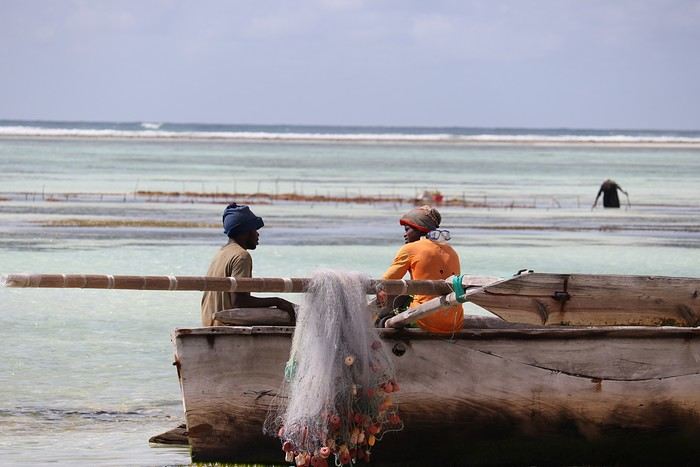
This is the spot where we can chill and chat about fishing at sea worldwide 😊
Here are two charming fishermen taking a well-deserved break near Zanzibar!
A summer in the sun in... Iceland!!
Ah, Iceland and us—it’s quite the story, or rather, a long wait... The first time we considered going was already 7-8 years ago, after reading travel journals describing breathtaking landscapes, countless active and dormant volcanoes, glaciers, and waterfalls with extraordinary flows. In short, this island, made of fire and ice, right at Europe’s doorstep with its own unique culture, had nothing but advantages, and it was urgent to visit without delay 😇
My *Routard* guidebook is actually from 2016. So why did Iceland make us wait so long before we finally gave in to its charms? Yes, why indeed?
Simply because reading other travel journals revealed the cost of living there—and especially the harsh climate, even in the middle of July 🤪! Some journals described entire weeks of rain and foggy weather, making it tricky to explore the island. The budget wasn’t spared either, because in the most touristy areas, especially in the south and around Myvatn, accommodation prices are downright indecent—even outright robbery. 😕
Plus, in the Highlands, there’s literally no permanent lodging, and the only way to spend several nights there is to camp. And camping in winter conditions wasn’t exactly part of our plans... 😄
So, year after year, this trip kept getting postponed...
until August 2023, when prices for Southern Africa, North or South America, or even Asia were all way too high for summer 2024!
That’s when I turned my attention back to the Land of Fire and Ice and scoured all the comparison sites for the best accommodation deals across the country. Planning for 20 nights, I found 13 nights in "proper" lodging for 5 people at an average cost of under 200 €! A miracle, considering that in the southern glacier region, around Vik or Myvatn, prices range from 300 to 1000 € per night 😮 😮!
Still, that means we’ll have to camp for 7 nights, mostly in the Highlands, near Askja or Landmannalaugar. 😎
For once, I built the daily itinerary entirely around the decently priced lodgings I found 11 months in advance! The shortage of places to stay in some areas forced me to plan a few long transition days and make some tough choices. No big deal, though—there’s so much to do on this island 🙂!
Once the main itinerary was set, everyone agreed to the plan: 2/3 in proper lodging and 1/3 camping, even the most camping-averse among us! *Follow my gaze...*
By the time we bought the flight tickets, I had to tweak the itinerary a bit because one or two places were already booked! Plus, it was impossible to wait for a more refined plan to adjust reservations, since almost all bookings are non-refundable!! The harsh law of supply and demand...
For the car rental, we booked a Hyundai Tucson, approved for the Highlands, from Lava Car Rental—a company I’d read good reviews about in a Facebook group—for a cool 2500 € with full insurance. A real 4x4, like a Defender, would’ve been more than double...! Welcome to Iceland 😕...
Activities and excursions also required some tough choices. We had two must-dos: whale watching in Húsavík (60 € pp on Getyourguide) and a Glacier and Summer Treasure Glacier Walk with BlueIceland (165 € pp with discount codes on Getyourguide).
For the baths, we skipped the Blue Lagoon—too expensive—in favor of the Secret Lagoon and the Myvatn Baths, the Blue Lagoon’s equivalent but half the price.
Two baths for the price of one... and even more, since I spotted several free hot-water swimming spots.
Itinerary: Day 1: Arrival in Reykjavik - Hraunfossar Waterfall - Surtshellir Cave Day 2: Grábrók Crater - Snæfellsnes Peninsula Day 3: Stykkishólmur - Sturlungalaug Hot Springs Day 4: Northwest Coast - Akureyri - Goðafoss Day 5: Myvatn Day 6: Myvatn - Dettifoss - Selfoss - Rauðhólar Day 7: Húsavík Whale Watching - Dettifoss - Selfoss Day 8: Stuðlagil Canyon - Seyðisfjörður Day 9: Puffin colony - Störurð Hike Day 10: Hengifoss - East Fjords, Mjóifjörður Day 11: Viking Village - Jökulsárlón - Fjallsárlón Day 12: Glacier Excursion - Svartifoss Day 13: Fjaðrárgljúfur Canyon - Vík Day 14: Þakgil - Lava Show Vík Day 15: Southern Waterfalls Day Day 16: Landmannalaugar - Skalli Hike Day 17: Landmannalaugar - Bláhnjúkur - Brennisteinsalda Day 18: Secret Lagoon, Kerlingarfjöll, and Gullfoss Day 19: Geysir - Reykjavik Day 20: Bruarfoss - Þingvellir - Kerid Crater - Krýsuvík Geothermal Area Day 21: Reykjanes Peninsula
Friday, July 5, 2024, is our last workday before driving up to Alsace overnight to leave the cockers at Grandpa’s for boarding. Then, at 1:30 AM, we’ll head to Frankfurt, where a direct flight to Iceland awaits.
We arrive at 4 AM. Since we leave at 7 AM, the "night" will only last the equivalent of a 30-minute nap 🤪... just enough to get us in the road-trip mood 😏!!
My *Routard* guidebook is actually from 2016. So why did Iceland make us wait so long before we finally gave in to its charms? Yes, why indeed?
Simply because reading other travel journals revealed the cost of living there—and especially the harsh climate, even in the middle of July 🤪! Some journals described entire weeks of rain and foggy weather, making it tricky to explore the island. The budget wasn’t spared either, because in the most touristy areas, especially in the south and around Myvatn, accommodation prices are downright indecent—even outright robbery. 😕
Plus, in the Highlands, there’s literally no permanent lodging, and the only way to spend several nights there is to camp. And camping in winter conditions wasn’t exactly part of our plans... 😄
So, year after year, this trip kept getting postponed...
until August 2023, when prices for Southern Africa, North or South America, or even Asia were all way too high for summer 2024!
That’s when I turned my attention back to the Land of Fire and Ice and scoured all the comparison sites for the best accommodation deals across the country. Planning for 20 nights, I found 13 nights in "proper" lodging for 5 people at an average cost of under 200 €! A miracle, considering that in the southern glacier region, around Vik or Myvatn, prices range from 300 to 1000 € per night 😮 😮!
Still, that means we’ll have to camp for 7 nights, mostly in the Highlands, near Askja or Landmannalaugar. 😎
For once, I built the daily itinerary entirely around the decently priced lodgings I found 11 months in advance! The shortage of places to stay in some areas forced me to plan a few long transition days and make some tough choices. No big deal, though—there’s so much to do on this island 🙂!
Once the main itinerary was set, everyone agreed to the plan: 2/3 in proper lodging and 1/3 camping, even the most camping-averse among us! *Follow my gaze...*
By the time we bought the flight tickets, I had to tweak the itinerary a bit because one or two places were already booked! Plus, it was impossible to wait for a more refined plan to adjust reservations, since almost all bookings are non-refundable!! The harsh law of supply and demand...
For the car rental, we booked a Hyundai Tucson, approved for the Highlands, from Lava Car Rental—a company I’d read good reviews about in a Facebook group—for a cool 2500 € with full insurance. A real 4x4, like a Defender, would’ve been more than double...! Welcome to Iceland 😕...
Activities and excursions also required some tough choices. We had two must-dos: whale watching in Húsavík (60 € pp on Getyourguide) and a Glacier and Summer Treasure Glacier Walk with BlueIceland (165 € pp with discount codes on Getyourguide).
For the baths, we skipped the Blue Lagoon—too expensive—in favor of the Secret Lagoon and the Myvatn Baths, the Blue Lagoon’s equivalent but half the price.
Two baths for the price of one... and even more, since I spotted several free hot-water swimming spots.
Itinerary: Day 1: Arrival in Reykjavik - Hraunfossar Waterfall - Surtshellir Cave Day 2: Grábrók Crater - Snæfellsnes Peninsula Day 3: Stykkishólmur - Sturlungalaug Hot Springs Day 4: Northwest Coast - Akureyri - Goðafoss Day 5: Myvatn Day 6: Myvatn - Dettifoss - Selfoss - Rauðhólar Day 7: Húsavík Whale Watching - Dettifoss - Selfoss Day 8: Stuðlagil Canyon - Seyðisfjörður Day 9: Puffin colony - Störurð Hike Day 10: Hengifoss - East Fjords, Mjóifjörður Day 11: Viking Village - Jökulsárlón - Fjallsárlón Day 12: Glacier Excursion - Svartifoss Day 13: Fjaðrárgljúfur Canyon - Vík Day 14: Þakgil - Lava Show Vík Day 15: Southern Waterfalls Day Day 16: Landmannalaugar - Skalli Hike Day 17: Landmannalaugar - Bláhnjúkur - Brennisteinsalda Day 18: Secret Lagoon, Kerlingarfjöll, and Gullfoss Day 19: Geysir - Reykjavik Day 20: Bruarfoss - Þingvellir - Kerid Crater - Krýsuvík Geothermal Area Day 21: Reykjanes Peninsula
Friday, July 5, 2024, is our last workday before driving up to Alsace overnight to leave the cockers at Grandpa’s for boarding. Then, at 1:30 AM, we’ll head to Frankfurt, where a direct flight to Iceland awaits.
We arrive at 4 AM. Since we leave at 7 AM, the "night" will only last the equivalent of a 30-minute nap 🤪... just enough to get us in the road-trip mood 😏!!
Preparing for a trip to Sri Lanka
Hi everyone.
The tickets for SRI LANKA are booked—arriving in COLOMBO on 12/21 and returning from the same place on 01/17. I’ve read here and there that it’ll be high season, but we don’t have a choice, so we’ll make do...
My first question is obviously about the itinerary: Most of the ones I’ve seen go clockwise, and I’m wondering if I should do it the other way: - To avoid the cultural triangle between Christmas and New Year’s - To start with a bit of rest (we’re really wiped out) Does that make sense?
My second question is about the time allocated to each stop, which you’ll find below. Is it balanced? Too much here and not enough there?
My third question will be about Jaffna: yes or no? How long is the trip from Anuradhapura? Where can I fit in the 3 days needed?
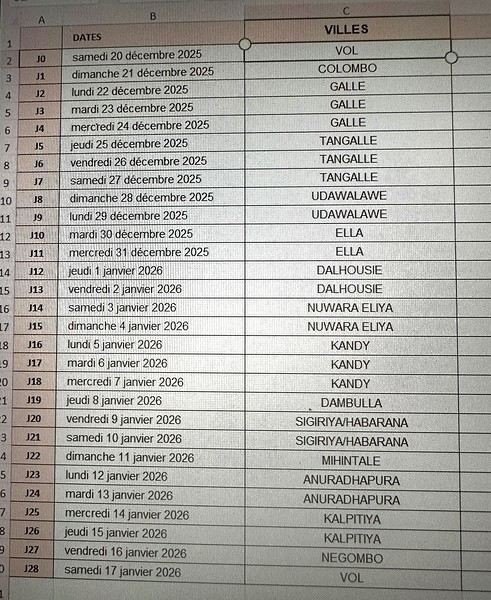
Thanks for your replies. A few details: ultra-independent travelers, using public transport, hikers, minimum 2 nights per accommodation. First time in Sri Lanka! !
The tickets for SRI LANKA are booked—arriving in COLOMBO on 12/21 and returning from the same place on 01/17. I’ve read here and there that it’ll be high season, but we don’t have a choice, so we’ll make do...
My first question is obviously about the itinerary: Most of the ones I’ve seen go clockwise, and I’m wondering if I should do it the other way: - To avoid the cultural triangle between Christmas and New Year’s - To start with a bit of rest (we’re really wiped out) Does that make sense?
My second question is about the time allocated to each stop, which you’ll find below. Is it balanced? Too much here and not enough there?
My third question will be about Jaffna: yes or no? How long is the trip from Anuradhapura? Where can I fit in the 3 days needed?
Thanks for your replies. A few details: ultra-independent travelers, using public transport, hikers, minimum 2 nights per accommodation. First time in Sri Lanka! !
Namibia Travel Journal: May 2025 - Trip Review
NAMIBIA TRIP 2025: April 24 to May 20: Feel free to comment or ask us any questions about this amazing journey.
>> Find all our photos and videos for each day on our website here: www.montagne-aventure.net
**DAY 1: Thursday, April 24, 2025: Outbound Flights from Lyon to Windhoek via Munich - Visit to Munich:**
Off we go on a new adventure. The alarm rings at 6:30 AM, the travel bags are packed, and we head to Lyon Airport. We booked our flight tickets with Lufthansa. The first leg to Munich, Germany, is operated by AirBaltic. Departure at 1:05 PM for a 1-hour and 20-minute flight. We arrive at 2:30 PM.
**We now have a 7-hour layover, so we take the opportunity to get some fresh air and explore Munich.** We quickly exit Terminal 2 of the airport and head towards the subway. We buy a group day ticket "Airport-city Day Zone M-5," valid for 2 to 5 people at a price of 30.50 € (instead of 16.30 € per person). We take the S8 line to **Marienplatz** in 35 minutes. **This is the heart of the city.** The weather is overcast, quite cool, but dry. Perfect for a little city trip between two flights while leaving our large luggage in transit at the airport. **Munich is the third-largest German city after Berlin and Hamburg, in the Bavaria region.** **The center has a lot of charm and brings together several religious buildings, easy to explore on foot.** We are impressed by the number of people enjoying these 100% pedestrian streets, which are very pleasant. After Marienplatz, the most famous square with the town hall, we head to the Cathedral of Our Lady, a Gothic church, then continue to **Karlsplatz** and move on to **the food market offering a wide selection of high-end food products in an atmosphere where a certain art of living prevails.** We also visit St. Peter's Church before grabbing a bite to eat. Two good hours were enough for this 10 km city walk. It's time to take the subway back: by 6:30 PM, we are back at the airport. Now, it's time for a bit of waiting and rest. Our second flight is scheduled for 9:35 PM for a 9-hour and 30-minute journey to our final destination in Namibia: **Windhoek.**
> Round-trip flight tickets with Lufthansa from Lyon: 2029 €, or 1,014.50 € per person.
> Lyon Airport parking: 120 €
> Today's expenses: 7 € for 2 pizzas in France / 14 € for the restaurant in Munich / 30.50 € for the daily subway ticket in Munich.
**DAY 2: Friday, April 25, 2024: Arrival in Windhoek, Visit to the Namibian Capital:**
After a 9-hour and 30-minute overnight flight with Discover Airlines, we finally land on Namibian soil just before 7:30 AM. The day is breaking, and the colors are already stunning. We are eager despite the usual fatigue from the flight. The airline was punctual, with friendly staff and good meals, though a bit light. We are the first flight of the day to land, with no more than 15 flights per day here, from 7 AM to 8 PM. We disembark on the tarmac at this airport located in the middle of nowhere, **I finally set foot on African soil for the first time.** We exit among the first from the aircraft to go through the long formalities at the front of the line, as the wait can quickly become endless. Allow at least 5 minutes per person for e-visas. We still wait 45 minutes despite only about twenty people ahead of us. Phew, it's done. We collect our luggage and then withdraw money from an ATM. We make 4 withdrawals of the maximum amount, 2000 NAD $ per withdrawal, for a total of 380 €, or 95.33 € per withdrawal.
Our driver arrives at the same time, perfect timing, we were quick.
We leave the airport at 8:45 AM. By 9:30 AM, we arrive at the **Gracious Whisp vehicle rental agency**, located at the entrance of Windhoek, small and human-sized with a fleet of recent vehicles. More formalities, then a short wait as our vehicle is not yet ready. Time to decompress, catch our breath, and enjoy the very pleasant morning temperature. Not a cloud in sight. Next, a briefing on the vehicle, always with a bit of apprehension due to our approximate English. Allow 45 minutes of explanations, including setting up the roof tent, camping equipment, technical information in case of a flat tire, driving tips in Namibia, and a tour of the 4x4. We have all the necessary equipment for camping: mattresses, sleeping bags, pillows, table, chairs, gas stove, BBQ grill... as well as 2 spare tires, a compressor, a dual tank, and accessories for removing wheels. Off we go, it's time to muster our courage and get behind the wheel. **Heading to SuperSpar Maerua**, fortunately located less than 10 minutes away. We park with the help of a parking attendant; it's very crowded, the space is narrow, but everything goes well despite the cursed right-hand drive. Today's new mission: stock up on groceries. The store is well-stocked with local and imported products, catering to all tastes. We spend 114 € on groceries, from pasta to meat, BBQ lighters to dishwashing products. Two people load our groceries into two carts and transfer them to our vehicle; we feel compelled to leave a tip, 50 NAD $, as we don't have change yet. Now, we head to the hotel, 15 minutes away. Traffic is difficult at a complicated intersection; this will likely be the only traffic jam in Namibia. **We arrive at Kate's Nest Guesthouse & Backpackers around 1:15 PM, quite tired.** We take some well-deserved rest at this recent establishment, quite calm with secure private parking. After a short nap, we enjoy the quiet by the hotel pool. Night falls between 6:30 PM and 7 PM. We eat quietly in our room tonight before starting this long 4x4 road trip in camping mode in the heart of Namibia.
> Today's grocery expenses: 114 € at Super Spar Marua (2395.21 NAD $).
> Round-trip flight tickets with Lufthansa from Lyon: 2029 €, or 1,014.50 € per person.
> Vehicle rental: 4x4 Toyota with roof tent for 24 days: Gracious Whisp Car Rentals: 2,638 € (N$50,640) or **1,319 €** per person - (https://gwcarrentals.com/)
> Distance driven today: 15 km.
> Accommodation: Kate's Nest Guesthouse & Backpackers - 4 Aristotles Street Academia, 9000 Windhoek - 36 € for two for one night.
> Windhoek International Airport website: (https://www.airports.com.na/)
**DAY 3: Saturday, April 26, 2025: Windhoek to Hardap: Mariental Region - Kalahari Desert:**
After a good, restful night, we wake up leisurely around 7 AM. We enjoy the comfort provided by this first and last hotel before 24 nights under the tent.
**We leave Kate's Nest Guesthouse at 8:30 AM to tackle the Namibian roads.** We quickly leave the capital; in just 30 minutes, we find ourselves almost alone in the world. The landscape is dotted with small domes. We leave the **paved B1** quickly to turn left onto the **C15**. **From there, we won't see more than 10 vehicles all day.** After passing through the few houses of **Lekkerwaterpoort**, we tackle our first gravel road. These road sections are limited to 100 km/h, but even at 70 km/h, I find it already challenging. However, I quickly get used to it and gradually pick up speed to reach my cruising speed of around 80 to 90 km/h. **We are on immense straight lines crossing wild expanses as far as the eye can see.** **We come across two baboons, a few ostriches, and numerous cattle and sheep farms.** We pass through the charming village of **Uhlenhorst** with its typical houses and children with broad smiles waving at us. Life here is already very different from Windhoek. **The thermometer rises quickly from 16°C at 8:30 AM to over 28°C in the early afternoon.**
**We arrive at the Hardap Dam reserve at 2 PM.** We stop at the toll booth at the park entrance to pay the entrance fee: 250 NAD $ for 2 people and 1 vehicle. We continue to the dam and then the camp entrance, located a bit further. We had booked in advance, but this place remains little frequented by foreigners.
We take advantage of the hottest hours to rest by the large pool overlooking the immense lake, a very enjoyable moment. Would this be a bit of a vacation?
Around 4:30 PM, we head to the campsite. We overlook this vast water reserve. We arrive first; we will be only 3 vehicles spending the night here. It's time to get to work and set up our equipment for the first time. It takes us a good 20 minutes to set everything up, with a slight apprehension about unfolding the tent. Once this task is done, which we will have to repeat for almost a month, we will become much more efficient over time. Time for rest and contemplation in total silence. The sun gradually sets, and the heat quickly becomes bearable again. Bliss! **This dam is located 20 km northwest of Mariental in an area dotted with conical hills topped with dolerite buttons (Hardap means "hillock" in Nama). It captures the Fish River, which flows south, creating a large lake in the middle of an arid environment. The contrast is striking.** We enjoy our first sunset facing this 360° otherworldly landscape.
Around 7 PM, we start our first BBQ, or "braai" as it's called here. The temperature is perfect. The sun sets, giving way to a star-filled sky of incredible beauty thanks to the absence of any light pollution. The Milky Way will lull us throughout the evening. After some good sausages and potatoes on the BBQ, we head to our roof tent around 9:30 PM with a complete change of scenery in just 24 hours. France already seems so far away...
This campsite has shared showers and toilets, quite clean and functional, as well as a central area with several BBQs and tables. The sites are arranged in a semicircle, each with an electrical outlet. The sites are close to each other but spacious, some slightly shaded. We are only three vehicles tonight, so it's perfectly comfortable and quiet. Not to mention the large pool near the restaurant. Our trip is off to a great start.
> Today's road itinerary: Windhoek > Head south on the B1 to Rehoboth > Turn left onto the C25 then C15 to Stampriet > C20 to Hardap > Full north on the B1 > Then turn left onto the M93 - 5 hours of driving.
> Distance driven today: 354 km.
> Accommodation: Hardap Recreation Resort - 23.3 € for two - Large pool - GR6W+3M2, Hardap Game Reserve, Mariental, Namibia - (http://www.nwr.com.na/resorts/hardap-resort/)
**DAY 4: Sunday, April 27, 2025: Hardap - Brukkaros Volcano - Keetmanshoop - Quivertree Forest Rest Camp**
Our first night under the tent was very pleasant; the little wind quickly calmed down, giving way to absolute silence. The mattress is decent, more comfortable than some nights in Nepal. The length and width give us enough space for maximum comfort, despite my height (1.91 m). We wake up a little before 7 AM as the sun rises, and the lights dazzle us from the start of the day. We pack up the equipment in 30 minutes, quite easily. Then we enjoy the sun, which warms up quickly while we keep our light fleece on.
At 8:30 AM, **we hit the road again, heading south** to our first stop in **Mariental**. We want to do some shopping at SuperSpar, but once we arrive in the parking lot, a young local is fighting with the supermarket security guards and then threatens to throw stones. We don't want to take any risks right at the start, so despite the baton blows he receives, he doesn't stop. We leave empty-handed but fill up with fuel at the Shell station 1 km further. The price per liter is 21.33 NAD $, we fill our 107-liter tank for 107 €. In Namibia, you get served, and they bring the card machine to the window to pay. It's then customary to leave a tip.
We then take the B1 heading due south on a recently renovated road. Around 11:30 AM, we leave it on our right to take **a wild gravel road, the M98**. Just before **Berseba**, we turn right onto a small track, the **D3904 towards Brukkaros Crater up to a camp at 1588 m altitude**. The track then becomes too bumpy. We stop on the counter-slopes where **a wide panorama unfolds over these immense plains as far as the eye can see**. It's 12:15 PM, time for us to eat a rice and tuna salad facing this landscape.
**We are alone in the world until a vehicle arrives and parks next to us.** A bit of apprehension, 4 men head towards us. It turns out to be 4 shepherds looking for a lost foal. The conversation is pleasant, lost in the middle of nowhere. We find ourselves alone again in this absolute silence. **The heat becomes stifling with a good 30°C**. We get back on the road around 1 PM. Back on the B1, **we continue due south to Keetmanshoop**, which we reach around 3 PM. We stop there to do some shopping for 262 NAD $ (12 eggs, a can of tuna, a can of corn, bread, a soda, and a 5-liter water container), or 12.48 €. Two quite insistent children ask us for money or candy at the store exit, yet we give them a small tip, but they continue to cling to the car. Locals parked next to us tell them to leave us alone. Anyway, we finish the trip to **Quivertree Forest**, 15 km away. We will spend the night in this **pleasant farm run by a German**. Upon arrival, as the day before, and as I suppose in the future, we dive straight into the cool pool to relax after all these kilometers. A bliss. Then we take our 4x4 and choose a spot near these famous trees. After the 33°C this afternoon, once 4 PM passed, the temperature drops again and becomes very pleasant. **We are in the middle of the Kokerboom, one of the most interesting and characteristic plants of hot and arid regions. It's not really a tree but a variant of the aloe plant whose botanical name is Aloe Dichotoma. This Kokerboom has a smooth and thick trunk reaching up to 1 m in thickness and 9 m in height. They bloom for the first time at the age of 20 to 30 years.** The flowers are yellow and reach about thirty centimeters during the season between June and July. **They grow mainly in an environment with a high concentration of black rocks absorbing a large amount of heat (38°C). The rocks also serve to anchor the tree with its tentacle-like roots. It also resists frost. Each is between 200 and 300 years old.**
Around 5 PM, we walk to the farm reception to watch the feeding of **two cheetahs**. Magnificent carnivores taking their time to savor their piece of meat. **Then we return near our campsite to enjoy the sunset among these trees. The colors are sublime, as every evening apparently. A magnificent spectacle with colors evolving from yellow to orange then to pink, before giving way once again to a sky filled with thousands of stars.** Our campsite at Quiver Tree Forest Camp is very comfortable; we have a water supply, a stone table, a small lamp, an electrical outlet, a small tree for shade, and a BBQ that we won't use tonight; we'll cook on gas. The sites are far apart, with some shared facilities scattered around, a very beautiful setting. No reservation possible, no need, just show up directly. **The campsite accommodation for 2 people costs 28 €, including the reserve entrance fee of 5 €**. We finish this second bivouac evening around 9:30 PM, time for some reading and sleep in peaceful silence without wind.
> Today's road itinerary: Mariental > B1 heading south to Brukkaros > At Tses turn right towards Berseba via the M98 > Turn right onto the D3904 > 8 km > Brukkaros Volcano (stop at the lower camp as the track is difficult for 1 hour) > Keetmanshoop > Turn left onto the M29 > Quivertree Forest - 4 hours of driving.
> Distance driven today: 371 km.
> Distance walked today: 6 km.
> Today's expenses: Groceries for 12.48 € (262 NAD $) / Fuel for 107 € (1 liter of diesel for 21.33 NAD $).
> Accommodation: Quivertree Forest Rest Camp, P.O. Box 262, Keetmanshoop, Namibia - BBQ, hot showers, toilets, and electricity - No reservation - Pool - 18 €/Person (N$ 340.00 with park entrance) - (http://www.quivertreeforest.com/)
**DAY 5: Monday, April 28, 2025: Quivertree Forest Rest Camp - Giant's Playground - Keetmanshoop - Fish River Canyon - Canyon Roadhouse:**
After an excellent start to the night, we are woken up by the wind shortly before 6 AM, but the sunrise is not far off. We get up at 6:30 AM to enjoy it. The atmosphere is a bit cooler this morning, but the reward is already here.
The adventure continues. At 7:45 AM, we head towards **Giant's Playground**, 4 km away. We take a 3-kilometer walk through this expanse of blocks and igneous rocks.
We continue south at 8:45 AM, passing through Keetmanshoop again where we do some shopping for 25 €, a big stock-up for a good part of the trip: meats, canned goods, pasta, fruits... At 9:30 AM, we take the B4 to Fish River Canyon.
At 11:30 AM, we arrive at the entrance to the NWR park (350 NAD $ entrance for 2 people and 1 vehicle). The track becomes bumpy immediately upon entering the park. After about ten kilometers, we come upon this landscape carved by nature. In the end, it's well worth the detour. We were at the Grand Canyon in the USA exactly (https://www.montagne-aventure.net/2024/04/29/j21-3-juin-2024-grand-canyon-et-lac-powell/) and can thus confirm that this Fish River Canyon is comparable. We make several stops along the southern flank. **Here, nothing is developed; nature is almost in the wild state.** **With 160 km in length, up to 27 km in width, and a depth of 150 m, it is indeed the second-largest canyon in the world.** The history of the canyon is apparent in its different earth layers and stratification: the antiquity of the place is tangible, and the absence of vegetation is surprising. **It consists of two nested canyons, formed at distinct periods. The first distinct layer of schist, sandstone, and eruptive material surrounding the canyon was formed a few two billion years ago, then transformed due to heat and pressure into more solid rock such as gneiss. The inner canyon, carved more recently by the Fish River, has a depth of 270 m.**
We have a picnic once again alone in the world facing this grand panorama at the **Sulphur Spring View Point**. This is where the hiking trail begins, plunging into this narrow canyon, but it is forbidden to venture there alone without a guide. It's 30°C, but a slight wind makes the atmosphere bearable. At 1 PM, we retrace our steps and continue to the **Main View Point** then to the **Hikers View Point**.
In the south of Namibia, the Fish River Canyon, 160 km long, is a true geological wonder: a canyon nested within another canyon, one of the largest in the world. The first sedimentary layers formed two billion years ago; 500 million years ago, a period of tectonic activity caused these layers to crack and tilt, opening a vast canyon in the Earth's crust. The second canyon, with a depth of 270 m, was carved over time by the passage of the Fish River in this new valley.
At 3 PM, we arrive at our very charming camp for the evening, the **Canyon Road House**. We fill up with fuel right away because tomorrow we have a long day of isolated driving: 55 liters for 1240 NAD $. Then we settle into the campsite we had previously reserved in France. We are assigned site 2, very well set up under a tree with its BBQ and stone table just steps from the pool. We quickly set up the tent and jump straight into the pool for the relaxation moment of the day. As usual, the water is quite cool, but it's a real pleasure. Then we stroll around this Canyon Road House, which recreates the atmosphere of the roadside inns of the 1950s with old car wrecks and vintage gas pumps in a bygone era. **Around 5:45 PM, we start a short walk leading us to the top of a hill overlooking the wide plateau where we are to watch the sunset.**
And finally, to end this beautiful day, it's time for the braai, with grilled sausages and white beans on the evening menu.
> Park entrance: 150 DN/person + 50 DN/vehicle (18 € for two). It is possible to enter at two access points: Hobas in the north and Ai-Ais in the south.
> Today's road itinerary: M29 > Keetmanshoop > B1 > B4 > C12 (track) > After Holoog turn right onto the D601 (C37 track) > Accommodation on our right (stop just to check in before 6 PM) > Continue 30 km (30 minutes of track) to the viewpoints after Hobas where you must pay the entrance fee. Sunset View Point to the left > Return before sunset as the park closes (best lights at sunrise). 3 hours.
> Distance driven today: 228 km.
> Distance walked today: 10 km.
> Today's expenses: 25 € for groceries / 17 € for the Fish River Canyon park entrance / 58 € for fuel.
> Accommodation: Canyon Roadhouse, Gondwana Collection Namibia – 34.4 € for two - Pool - Near Hobas - (http://www.gondwana-collection.com/fr/accommodation/canyon-road-campsite)
**DAY 6: Tuesday, April 29, 2025: Canyon Roadhouse - Orange River - South African Border - Vista Trail - Gondwana Sperrgebiet Park - Aus:**
The night was excellent in this very comfortable campsite. **We wake up to the sound of birds** before the alarm at 6:45 AM. Our little morning routine starts as the sun rises. **A big day of driving awaits us to the South African border. This will be the southernmost point of our journey.** We hit the road at 8 AM via the C37, pass through **Hobas**, then turn onto the D207 to **Aussenkehr.** **We cross a mountainous barrier with some high peaks and perfect cones. The rock varies from orange to pink to black.**
We then cross a lunar desert as far as the eye can see on a giant dome; the track winds through nowhere without meeting anyone for hours. The landscapes are surprising. **We spot several ostriches and a gemsbok.** In the middle of this endless expanse, we come to an improbable intersection and continue right onto the D278.
In the middle of these arid lands, we come across a green zone: a vast vineyard. At 10:30 AM, **we come across a "Road closed" sign, fortunately, a local resident waves us to continue; a bit stressed, we proceed.** We start to follow the beautiful Orange River. On the other side of the bank, just a few meters away, South Africa is there. It is the second-longest river in Southern Africa, after the Zambezi. It flows over 2,000 km to the Atlantic. After passing through narrow gorges, we regain altitude before starting the descent, gently heading back north.
**We now cross and follow the Fish River, which joins the Orange River further south** **along this gorge dating back millennia.** At exactly noon, we take a lunch break by the Fish River, still without meeting a soul in this landscape between greenery and aridity. The temperature here is cooler with a pleasant 23°C on the banks, the perfect spot. **We continue on the track to Rosh Pinah**, where we find a paved road again. **The section along the Orange River and the Fish River was officially closed, but we were able to pass without any issues, avoiding a detour of at least 3 hours.** Phew. We now drive at high speed (limited to 120 km/h) through these vast spaces. We come across many ostriches after the **dozens of monkeys along the Fish River**. Around 3 PM, 3 km after the very small town of **Aus**, we reach **our campsite for the evening at Klein Aus Vista**. A new **small peaceful haven very well set up**. As usual, after checking in at reception, we jump straight into the beautiful pool to get our well-deserved dose of coolness, another good thermal shock that our bodies appreciate. Once this moment of relaxation is over, we take our 4x4 to reach the campsite located a bit higher, set apart at the foot of a hill that overlooks us.
After setting up, **around 5 PM, we head to the Vista Trail to climb to the top of a mountain overlooking the vast plain that surrounds us at 360°**. It takes about 30 minutes to climb. The place is just magical, **the perfect viewpoint to admire the sunset**. **We fully savor the moment. We also spot one of the few wild horses in the world capable of living in the desert.** Their numbers have decreased in recent years due to predation and drought (around 100 to 150). At 7 PM, we return to the camp, time for the braai and preparing the meal in this peaceful little camp.
In the south of Namibia, the Fish River Canyon, 160 km long, is a true geological wonder: a canyon nested within another canyon, one of the largest in the world. The first sedimentary layers formed two billion years ago; 500 million years ago, a period of tectonic activity caused these layers to crack and tilt, opening a vast canyon in the Earth's crust. The second canyon, with a depth of 270 m, was carved over time by the passage of the Fish River in this new valley.
> Today's road itinerary: 5 hours of driving: D324 heading south (track) > turn right onto the C10 (track) > D316 heading south > turn right onto the C13 > In Aus turn left onto the B4 > Campsite via a track on the left.
> Fuel station: Solitaire or Aus.
> Distance driven today: 398 km.
> Distance walked today: 7 km.
> Accommodation: Klein-Aus Vista Desert Horse Campsite - Farm Klein-Aus No 8 on the B4 main road to Luederitz Aus 9000, Aus, Namibia - (http://www.klein-aus-vista.com/accommodation/desert-horse-campsite/) 17908 420 DN - Water + Shared shower (hot water). No electricity.
**DAY 7: Wednesday, April 30, 2025: Aus - Kolmanskop - Diaz Point - Luderitz - Kanaan Desert:**
We wake up around 6:45 AM, with partly cloudy weather for once; we feel the ocean's influence gradually. But the sun isn't far off. At 7 AM, we leave the campsite heading west towards Luderitz via the B4. **First stop of the day: Kolmanskop, the ghost town we reach at 8:30 AM**, entry costs 180 NAD $ per person. We discover this **timeless place** in 1.5 hours, moving from building to building amidst violent sand-laden gusts of wind. There's a lot of charm in these different living spaces. **The sand quickly reclaimed the place after this mining town was abandoned.** This was once the headquarters of Consolidated Diamond Mines. It's hard to believe that this former town, where the diamond industry once flourished, had a hospital, a bowling alley, and a theater. The decline in diamond sales after World War II and the discovery of richer deposits put an end to this golden age. By 1956, the town was already completely deserted, and the sand had reclaimed its rights. **These dilapidated buildings swallowed by shifting dunes have something surreal about them.**
At 10:15 AM, we hit the road again **heading to Luderitz, 22 km away**, and first to **Diaz Point** **facing the Atlantic Ocean**. It's a wind-swept peninsula with its characteristic red and white lighthouse. There's a campsite and a coffee shop on site, but the place doesn't inspire rest without shade or shelter from the wind. We return to the city via the D701 track that runs along the ocean, be careful at low tide. We come across **a few fishermen and a fox as well as flamingos.**
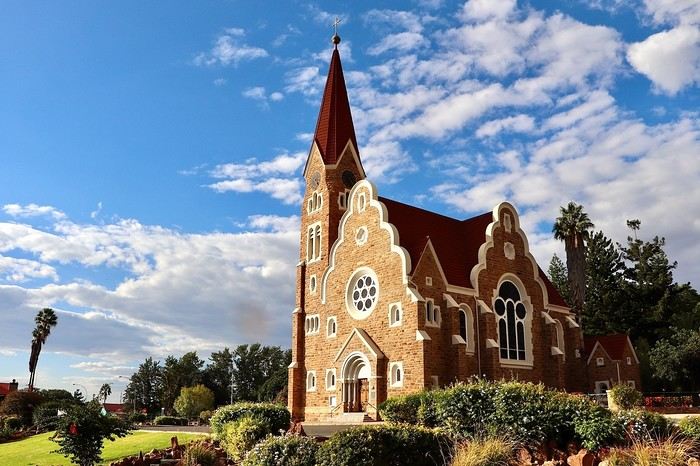
We walk through the few streets of the city, much smaller than I imagined, then climb to the **famous little Lutheran church that overlooks the city, the Felsenkirchr.** **The wind blows very strongly here, and the sand is omnipresent, surrounded by the Namib Desert and the southern Atlantic coast.** **A German colonial relic barely touched by the 21st century, Luderitz seems frozen in the past, giving it both a gloomy and a certain charm. In short, it's certainly one of the most incongruous places in Africa.**
At 1:15 PM, just before leaving Luderitz, we do some shopping for 20.50 € and fill up with fuel: 61.50 €, 1290 NAD $ for 61 liters (21.18 $ per liter).
**We return via the B4 to Aus** (paved), **then via rougher tracks**, the C13 then the D707, magnificent as it runs along a mountain range with multiple colors on our right and an endless flat desert on the other side.
To access our campsite for the evening, we must take a **narrow private track for 7 km** on our right to emerge, in this total vastness, at the **isolated Kanaan Desert Retreat on a small hill**. I don't have time today to jump into the pool near the reception; we arrive at 5 PM at 8 small, isolated, and unique sites with a small kitchen, a shower, and a private toilet under a small tarp shelter. **A crazy charm with a unique view...** **This will be my favorite accommodation of this trip. The photos speak for themselves.** We jump into the outdoor shower while savoring the landscape, then prepare our evening braai while enjoying the colors fading, facing this plateau with bushes turning a vivid orange. **A moment that will remain etched for life.** **Savanna atmosphere under a thin emerging moon. Every minute offers different colors. Facing our meal, we have a natural giant screen.**
We end this day contemplating the stars and admire this thin orange moon setting on the horizon (8:42 PM).
**Ghost town just before Luderitz: Kolmanskop** (open from 8 AM to 3 PM - N$ 180 p.p – 9 €). Once, Kolmanskoppe was organized around diamond mining. After finding new, more prolific spots, the town was abandoned and is now a ghost town. The sand and dunes have reclaimed their rights and buried everything humans had built. Houses, train station, bakery, everything has been covered by sand, which passes through the windows, even though they are 1 meter high.
> Today's road itinerary: 5h30: B4 to Luderitz (paved) > Round trip > Kolmanskop on the left > Return via the previous campsite > Then C13 (track) > Turn left D707 (track) > Then track to the right to the campsite.
> Distance driven today: 438 km.
> Distance walked today: 8 km.
> Today's expenses: Groceries at the Spar in Luderitz for 20.50 € / Fuel fill-up in Luderitz for 61.50 €.
> Official Kolmanskop website: (https://kolmanskuppe.com) (open from 8 AM to 1 PM - N$ 180 p.p – 9 €).
> Accommodation: Night at the south of the Namibrand Nature Reserve: Kanaan Desert Retreat – 26.5 € for two - (http://www.kanaannamibia.com/) - Farm 104 Karas 9000 - Sanitary facilities + BBQ + Water + Pool - No electricity - My favorite accommodation of this trip.
**DAY 8: Thursday, May 1, 2025: Kanaan Desert Retreat - Namib Desert - Crossing the Namibrand Nature Reserve – Sesriem Canyon - Elim Dune - Little Sossus Lodge**
After a cooler night than the previous ones with about 10°C, we wake up around 7 AM. We admire, as usual, the sunrise between the desert and the mountains. **The spot from last night was truly perfect, isolated from the world, in total serenity, with a wake-up call to the sound of birds.**
We hit the road a little after 8 AM, heading north via the D707 to Spes Bona, then the gravel road C27 via Betta to Sesriem. **The landscapes roll by and dazzle us.** **We are right in the heart of the Namibrand reserve**, coming across numerous **zebras**, **impalas**, **ruminants that reproduce in large numbers**, and **gemsboks**. At noon, we stop in the shade of a tree to eat. The spot is so romantic facing orange arid mountains and a vast green plateau. **A landscape full of contrasts, timeless and silent.**
**The Namib Desert is the oldest on the planet; its name means "vast arid plain," and it also gave its name to the entire country: Namibia.** The majority of these arid and semi-arid lands dotted with viewpoints are part of the Namib-Naukluft National Park, which covers 23,000 km².
At 1 PM, we enter the Sossusvlei park. We start with the **Sesriem Canyon**, which is 3 km long and 30 m deep. We enter it with a short 1-hour hike into its depths. **It was carved by the Tsauchab River in an agglomerate of sand and pebbles over 15 million years old.** We retrace our steps back to Sesriem, which means "six belts," referring to the number of leather belts (from ox wagons) needed to draw water from the canyon. This remote locality is mainly the gateway to Sossusvlei but offers a gas station and some accommodations. For our part, we sleep 40 km away tonight.
**We then move on to Elim Dune.** It takes about 45 minutes of walking to reach its summit, and the climb is very breath-taking as we progress in the sand where we almost slide back with each step. **A first grand 360° panorama unfolds. The ochre color of the sand contrasts completely with the yellow plain and the brown and black mountains in the distance.**
At 3:15 PM, we start the descent facing Sesriem. We were completely alone once again on this dune. **These Namib dunes are composed of colored quartzite sand, presenting hues ranging from cream to orange and from red to purple. Unlike the ancient dunes of the Kalahari, these move with the wind and adopt distinct, ever-changing shapes.** Star dunes resemble stars seen from above, while transverse dunes, like those on the coast south of Walvis Bay, stand perpendicular to the prevailing southwest wind. The most stable dunes, which thus have the most vegetation, are parabolic dunes, due to the variability of the winds. Longitudinal (seif) dunes measure up to 100 m in height, while barchan dunes, crescent-shaped and predominant at the extreme north of the Skeleton Coast and south of Luderitz, are the most mobile, created by unidirectional winds.
**We get back on the road for 45 minutes to our campsite for the evening, Little Sossus, which we reach at 5 PM**, via C27 then right onto C19. As often upon our arrival, I jump into the cool pool to relax after all this driving, then we proceed to set up the camp. As the day before, the campsite consists of 10 fairly distant sites, with private sanitary facilities and a small roof. We are delighted with this crazy charm. The hot water for our shower is wood-heated: a Namibian lights it every evening around 5 PM.
For a change, or not, the menu features a small BBQ with pork ribs and pasta, facing another sunset, this time with partial cloud cover giving equally splendid colors. Time for a well-deserved rest after long corrugated tracks covered in our 4x4 today.
> Today's road itinerary: 4h45 of driving: Find the D707 and head north (track) > At Spesbona turn left onto the C27 (track) > At Sesriem after entering the park, turn left following View Point Sesriem > Continue 4.5 km to the Sesriem Canyon Parking > Return then head towards Elim Dune > Exit the park then take the D826 > Turn right onto the C19 heading SE > Turn right facing the D854 to the campsite (campsite closes at 7 PM).
> Distance driven today: 272 km.
> Distance walked today: 8 km.
> Today's expenses: Entry to the Sossusvlei Namib-Naukluft Park: 17 € for two (with one car).
> Accommodation: Little Sossus Lodge – 35 € for two - At the junction of the C19 and D854 roads Maltahohe 9000, Maltahohe, Namibia - (http://www.littlesossus.net/) - Pool + Private bathroom + Hot water + Electricity + BBQ + Grocery store (bread to order the day before).
**DAY 9: Friday, May 2, 2025: Little Sossus Lodge - Namib-Naukluft National Park – Sesriem - Sossusvlei - Big Daddy – Deadvlei - Tsauchab River Camp**
Today we start the day early to tackle **the famous dunes of Sossusvlei at first light**. The alarm goes off at 6 AM to leave the camp at 6:45 AM. The wind is blowing quite strongly in gusts this morning, but it only woke us up a quarter of an hour before sunrise. The park opens at 7:15 AM. We start with a small encounter: a friendly **jackal lounging by the roadside.**
We first have to cover the 40 km of track to Sesriem, pay the entrance fee (350 NAD $), and drive 65 km on a paved road this time to reach the **vast salt pan (a lake whose sediments are made of salts) of Sossusvlei**. **It appears amidst the gigantic red dunes that rise on either side. The wind constantly changes the shape of the dunes, as well as their colors, which vary with the light. The setting is breathtaking, giving an impression of immensity and timeless grandeur.**
The paved road ends; the last 4 kilometers become technical and are reserved for 4x4s. Phew, I pass without any problems, though not without stress, switching to L4 mode. **We start the ascent to Big Daddy at 8:45 AM, 325 m of elevation gain in the sand nonetheless.** We climb at an excellent speed despite the strong wind, in exactly 1 hour. At 9:45 AM, we are at the summit of what will remain etched for a long time. The 360° view is simply unimaginable; you have to experience it to believe it. The wind blows violently up there, **it feels like being in the high mountains, on a snow ridge, with a strong transport of sand. The atmosphere is magical.** We start the descent running barefoot in the steep sand.
**We then move on to its neighbor, Deadvlei.** **Here, petrified trees stand in the "vlei" (basin) with their dried branches casting desolate shadows on the white ground. The juxtaposition of the deep blue sky and the towering dunes is captivating.**
We return to the 4x4 parking at 11 AM, the stress rises again for the sandy track passage. We retrace our steps and stop at **Dune 45**.
At noon, we take the opportunity to picnic at the foot of **the beautiful Dune 40**, where there is already no one left. We enjoy the quiet again, well, almost, as the wind remains omnipresent.
At 1 PM, we return to **Sesriem**, where we fill up with fuel (21.15 NAD $ per liter), totaling 1630 for 77 liters (78 €), and do some shopping for 245 NAD $ (two nice pieces of pork, 2 cans, 2 sandwiches for tomorrow, and 1 soda), which is 12.48 €. It's 27°C. We hit the road again, heading to a new destination at 2 PM. We take the C19 back to Little Sossus where we spent the night, then turn left onto the gravel road D854 for about 40 km to **Tsauchab River camp**. Finally, we won't be sleeping here; we are redirected 7 km downstream to **Naukluft View Camp**, which also belongs to Tsauchab River Camp.
We arrive at 4 PM, and thankfully, the fatigue was starting to set in. **Our campsite is located under a small forest, providing some protection from the wind that blew strongly all day. The calm does us a world of good. Once again, a lot of charm**, with very spaced-out sites without any visibility. We can't wait to take our shower. It will be possible from 5 PM with, as the day before, water heated by a wood fire. Time to prepare the campsite for the night. And on the menu, a braai with two superb pieces of pork bought in Sesriem and fries!!!!
**The Namib Desert**
An impressive coastal desert stretching from the Atlantic to a high plateau inland, the narrow Namib Desert runs along the southwest African coast for about 1,300 km. **Considered one of the oldest deserts in the world**, it is bordered to the north by the Kaokoland Desert, which extends into Angola, and to the south by South Africa's Karoo. The narrow Namib is mostly less than 160 km wide. Despite this, it is considered to consist of three sections: the coastal strip influenced by the Atlantic; the Outer Namib, occupying what remains of the western half; and the Inner Namib, comprising the eastern half of the desert. Generally called the Skeleton Coast, the coastal Namib receives almost no rain and depends on regular marine fogs for moisture. From sea level, the terrain rises to 900 m, where the desert meets the base of the Great Escarpment to the east. In the Inner Namib, average annual rainfall is only about 50 mm.
The dryness is such a characteristic of the Namib that it is thought to have been in this arid state for at least 55 million years. It is all the more surprising to learn that animals such as vipers, geckos, zebras, and elephants live in this desert. Some areas of the Namib are also rich in flora, including Welwitschia mirabilis, which grows near the ground with seemingly exhausted leaves, extracting moisture from marine fogs and can live over 1,000 years. In the southern Namib, some dunes are up to 32 km long and 240 m high.
**The frequent fog of the Skeleton Coast:** Driving north along the coast of Namibia, the cold Benguela Current in the Atlantic cools the moist air above the ocean, which, upon meeting the warm desert air, leads to the formation of thick fog banks that drift up to 100 km into the center of the Namib before evaporating under the sun.
> Today's road itinerary: 4 hours of driving: C19 towards Sesriem (track) > D826 (paved) > Foot of Big Daddy via a technical sandy track > Return via the same route > D854 to Tsauchab.
> Gas station: Sesriem.
> Distance driven today: 254 km.
> Distance walked today: 12 km.
> Today's expenses: Park entry at Sesriem for 2 people: 17 € / Fuel fill-up: 78 € / Groceries at Sesriem gas station: 12 € (245 NAD $).
> Accommodation: Tsauchab River Camp - Naukluft View Camp - D054 & D850 GPS: S24 26' 37" E16 10' 11" Sossusvlei 22007, Maltahohe, Namibia - BBQ + Private sanitary facilities + Water - www.tsauchab.com
**DAY 10: Saturday, May 3, 2025: Tsauchab River Camp - Naukluft National Park - Olive Trail Hike (10 km) - Ababis Guest Farm**
We pack up the camp at 8 AM and continue our road trip north via the D854, a bumpy track with many corrugated sections. It's cool this morning, 12°C.
**We enter the Naukluft massif, discovering landscapes with very different terrain than before.** We first need to check in at the campsite, 13 km from the entrance at the end of the track: 350 NAD $ for 2 people and 1 vehicle, then return 4 km back. **On the agenda is the lovely Olive Trail, a 10 km hiking loop that starts 4 km northwest of the park office**, along the D854 that we follow. At 9:45 AM, the hike begins with a fairly steep ascent (about 45 minutes) among the **wild olive trees** from which the trail gets its name. **At the summit, we enjoy a view that embraces the Naukluft Valley.** We then turn east and gradually descend into a deep valley, passing over sometimes slippery rocks. We have a snack around 11:30 AM in these small gorges. **Further on, to cross the wall of a canyon in front of us, some chains are fixed to the rock to help us pass.** We finish this superb loop clockwise at 1:15 PM, taking 3.5 hours including 30 minutes of breaks. We only crossed a small group of 3 people on this wild adventure far from everything. At 1:45 PM, we exit the park and take the **D854 track north to Bullsport**. From there, we turn left and take the C14, which **runs along the bed of the Tsondab River.**
**We arrive at our campsite for the evening, Ababis Guest Farm, at 3 PM.** Quite early for once, allowing us to rest a bit in this peaceful farm where many sheep wander around us. We also enjoy the pool under a magnificent sun, less hot than the previous days, it's 22°C. The camp has only 4 spaced-out sites around shared sanitary facilities. **We are in the middle of a vast plain facing the Naukluft massif mountains.** We will have another beautiful sunset on these mountains. For the first time on this trip, **we will be completely alone at this campsite.** **We haven't encountered many people today**, just 3 during the hike and fewer than 10 vehicles all day.
> Today's road itinerary: Head north on the D854 (track) > Turn left to enter the Naukfluft National Park > Continue on the track then turn right to the Olive Trail hike parking lot (1 hour for 45 km). Return to the D854 and continue north > At Bullsport turn left onto the C14 to Ababis (still a track) > The camp is located on the left facing the D1261 (1 hour for 60 km from Olive Trail). Total: 2 hours of driving for 100 km.
> Gas station: No gas station on the route, except in Solitaire.
> Distance driven today: 115 km.
> Distance walked today: 13 km.
> Accommodation: Ababis Gaestefarm - Night booked by email – payment on site: (https://www.ababis-gaestefarm.de/) - P.O.Box 1004, Maltahöhe - N$ 300.00 per person
**DAY 11: Sunday, May 4, 2025: Ababis Gaestefarm - Namib-Naukluft National Park – Solitaire - Gaub Pass - Kuiseb Canyon - Moon Landscape - Walvis Bay**
The night was, for the first time since the start of this road trip, quite difficult. A strong wind accompanied us all night, making the tent flap constantly. A racket that drove us crazy. We still managed to sleep a few hours. The morning sun brings back our smiles. We hit the road for this new stage a little before 7:45 AM.
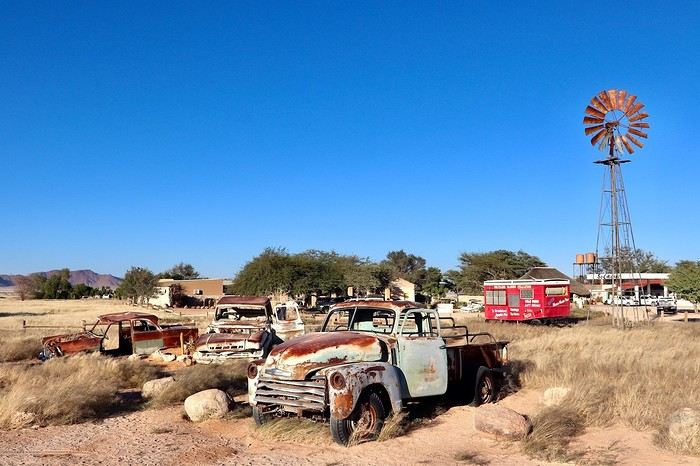
We start the day with a first stop less than 15 km away **on the C14 in Solitaire** at 8:15 AM. **This town is lost in the middle of nowhere with its small gas station with a western atmosphere adorned with rusted and sand-covered car wrecks.** After a quick supply stop: 86 NAD $, or 4 € for 1 water container and a box of cookies, we continue north still on the C14, **crossing the Tropic of Capricorn** then devouring this **magnificent track up to Gaub Pass**. **A succession of narrow gorges, turns, climbs, and descents breaking the monotony of the previous long straight lines.** We are right in the heart of no man's land for 200 km. We then start the descent to the **Kuiseb Canyon. It houses the wide bed of the eponymous river, dry almost all year.** Even when it flows for 2 to 3 weeks during the rainy season, it doesn't go beyond Gobabeb and then seeps into the sand. **The drinking water that supplies Walvis Bay is pumped at Rooibank from this underground water table.** **We now cross the Kuiseb Desert where impressive dunes roll down.** We make a short stop at a **natural rock arch** reminding us of our (https://www.montagne-aventure.net/2024/04/29/j19-1-juin-2024-canyonlands-national-park-et-arches-national-park/). Then we gradually descend towards **Walvis Bay** where we will spend the night. At noon, we enter the **Dorob National Park**. The thermometer drops 10°C in 10 minutes as we get closer to the Atlantic Ocean.
At 12:45 PM, much earlier than initially planned, we arrive at the **Moon Landscape** (View Point 4, free) to have a snack, via a very recent surprising dual carriageway in the middle of nowhere, then via the C28. We are again in the hinterlands, the temperature has soared: 30°C without a bit of shade. Even if the colors and the panorama must be exceptional at sunrise or sunset, the detour for this 360° panorama is still worth it. Extreme aridity as far as the eye can see. The place lives up to its name; it really feels like being on the moon. We get back on the road at 1:30 PM via the D1991, C28, then again the A2, which is very new. The latter runs along the beautiful dunes up to the **Dune 7**, where we make another stop.
Then we head towards our final destination of the day, **Walvis Bay. Its port is sheltered by a sand spit, a natural breakwater that protects the city from the powerful assaults of the ocean. Its port was long a strategic place: claimed by the Cape Colony in 1795, it was officially annexed by the British in 1878 to counter Germany's ambitions in the region. A colony of fur seals, pelicans, flamingos, and whale terns have made it their home.**
We do a big grocery shopping at the Spar located in the center for 66 €; it's very easy to park there. Then we fill up with fuel at an Engen station right across for 1117 NAD $ for 54 liters (20.6 NAD $ per liter), which is 54 €. We then **enjoy the seaside in the Lagoon neighborhood**, where it's also easy to park. After kilometers in the desert, **this cool break is more than welcome. The outside temperature is 22°C. In the distance, we can clearly see the clouds lingering over Swakopmund.**
We take the 4x4 one last time to the **Lagoon Chalets where we will spend the night**. The spot is well set up and surprising in the heart of a residential neighborhood. The sites are quite large, separated by fences around very comfortable shared sanitary facilities. BBQ, electricity, and shaded area. We settle in quietly before going out on foot to watch the **sunset over the Pacific Ocean along Lagoon Promenade Road**. We can still see this impressive persistent mist in the distance. The neighborhood is very peaceful, certainly without much charm, but with a very well-developed seafront that inspires relaxation after kilometers without meeting anyone in inhospitable lands. We end the day with our traditional braai: grilled chicken thighs and sautéed potatoes in the coolness of a starry sky.
> Today's road itinerary: 5h30 of driving (or 3h30 of driving for 250 km without the Moon Landscape): Head north on the C14 > Cross the Tropic of Capricorn > Gaub Pass > Kuiseb Canyon on our left in a round trip > Continue to Green Valley and leave the C14 to the right on the D1984 > Turn right on the C28 > Then left D1991 to Moon Landscape D1991 View Point 4 > Return via the same road and stop at Dune 7 for sunset > Walvis Bay.
> Gas station: Solitaire or Walvis Bay.
> Distance driven today: 372 km.
> Distance walked today: 5 km.
> Today's expenses: Fuel fill-up for 54 € + Groceries for 66 € at Spar.
> Accommodation: Walvis Bay: Lagoon Chalets – 36.6 € for two - (http://www.lagoonchaletswb.com/) - 8th Road West, Meersig Meersig 9000, Walvis Bay, Namibia - BBQ – Electricity – Shared sanitary facilities.
**DAY 12: Monday, May 5, 2025: Walvis Bay - Swakopmund - Round Trip to Cape Cross (seals) - Wreck of the Zeila en route - Henties Bay - Spitzkoppe Tented Camp & Campsite**
After an excellent night, a bit cooler and more humid than usual, we wake up around 7 AM and leave the camp at 7:45 AM to **follow the Atlantic coast heading north**. We thus leave **Walvis Bay**, a very pleasant stopover town, and follow the ocean via the B2. **We enter the mist and Swakopmund** at 8:40 AM, parking **near the lighthouse**. The atmosphere is very quiet, the streets seem dead with large empty parking lots and very little traffic, but the few open shops are filled with expatriates enjoying their breakfasts, French bakeries, cafes, travel agencies... **We are in this Benguela Current, a fast cold ocean current that flows from South Africa, up the coasts of Namibia and Angola, towards the northwest to join a warm equatorial current. Hence the supply of very fish-rich waters and this tenacious mist depending on the seasons. In the northern part of the Namib Desert, fogs are frequent during the southern winter. It's almost the only source of moisture since the city of Swakopmund receives, on average, only 11 liters of water per m² in December and January.**
**Swakopmund is wedged between the dunes and the Atlantic rollers. It is the Namibian capital of adventure activities and has a ghostly colonial remnant. With its German architecture, its seaside promenade, it resembles a seaside town of the North Sea or the Baltic.** It is also a bustling African city. **Nearly two-thirds of Swakopmund's population live in Mondesa, a township created during apartheid, northeast of the city center, a legacy of the South African mandate.** The heart of the city is located in the area of the pier, at the foot of the lighthouse, better known as the Mole. During the South African occupation of Swakopmund, the port took a back seat to Walvis Bay.
Continuing on this C34, sometimes on salt, we come across the famous **wreck of the Zeila, stranded in 2008**, on our left. We can see it through the thick fog, being very close to the beach. It's 10:15 AM. Further on, Henties Bay is a bay that attracts many fishermen; it's teeming with vehicles equipped with fishing rods. Besides its fish-rich waters, it enjoys a relaxed atmosphere and a large beach suitable for walks.
We continue further north, heading to Cape Cross, this time a round trip because we will turn off later here in Henties Bay to reach Spitzkoppe via good gravel roads that are quiet alternatives to the very busy paved B2 further south. **Henties Bay is part of the Dorob National Park, a multi-purpose park protecting coastal ecosystems and hosting the many renowned recreational activities of the region. The part of the coast north of Swakopmund up to the Ugab is particularly popular with fishermen who come in droves to fish for saltwater fish.** The small concrete buildings spaced at regular intervals are actually toilets for fishermen and campers. The coastline is also dotted with world-renowned surf spots.
Even before arriving, we can already smell it before we come across thousands of seals (population in 2021: 1.5 million). **The Cape Cross Seal Reserve, the most renowned on the Namibian coast, is home to the most famous breeding colony of fur seals, which seems to take full advantage of the high concentrations of fish present in the icy waters of the Benguela Current. We are impressed by the sight of these 100,000 pinnipeds lounging on the beach and frolicking in the waves.** We have a picnic a little away from the smells facing the ocean in the sun.
At 12:45 PM, it's time to hit the road again. We retrace our steps back to Henties Bay. We stop there to do another big grocery run before not encountering any big cities for many days. We will only buy fresh items day by day until the end of the trip; we have 23 € worth. **In the space of 30 minutes, we go from 15 to 36°C. The thermal shock with an amplitude of more than 20°C.** At 1:45 PM, we hit the road again via the D1918, then we try a very small track on our left, the D1925. It becomes narrow and rough; I have a bit of apprehension. We arrive at a gate to open in the middle of nowhere, then young children run up to us asking for water or food... We then drive to **Spitzkoppe. The arrival right in front of the mountains is majestic, off the beaten path. This mountain appears in the distance like a mirage above the dusty plains of southern Damaraland.** We come across a second gate held by a guard. We enter the "Community Camp" campsite without realizing it through the west entrance. We are given a small paper, then we go to the reception passing **at the foot of these gigantic, magnificent rocks.** Once at the reception, we are informed that this is not the camp we had booked. Ours is located just a little further, and in the end, it's better because the latter was packed. We were able to cross the park very close to these rocks without paying. We exit through the main entrance; 5 Himba children cling to our doors and trunk asking for bread and food again. We continue despite them staying attached, worried about hurting them. Phew, more fear than harm. We cross the few houses and arrive at the right camp at 4:30 PM, the Spitzkoppe Tented & Campsite. The spot is much quieter and well set up. We have site C12, cozy to perfection with its sink, a private shower and toilet, as well as electricity, under the shade of a tree and facing the mountains. The sunset and sunrise will be perfect. We set up the tent and, without delay, head to the pool for a big dose of coolness. Then it's time to prepare the BBQ and **contemplate the fading lights on the Spitzkoppe massif.**
> Today's road itinerary: 5 hours of driving: Head north on the B2 (paved) along the ocean > Swakopmund > C34 (paved) still heading north > On the left, the wreck of the Zeila before Henties Bay > Cape Cross round trip > Henties Bay > D1916 heading east (track) > Turn left onto D3716 > Turn left to the campsite.
> Gas station: Swakopmund or Henties Bay.
> Distance driven today: 344 km.
> Distance walked today: 6 km.
> Today's expenses: Groceries in Henties Bay: 23 € + Cape Cross park entry: 17 €.
> Accommodation: Spitzkoppe Tented Camp & Campsite - Spitzkoppe River Valley 00000, Spitzkoppe river valley, Namibia - (http://spitzkoppemountaincamp.com/) - 26 € - Pool - BBQ - Shower and toilet.
**DAY 13: Tuesday, May 6, 2025: Spitzkoppe - Rock Pools - Uis**
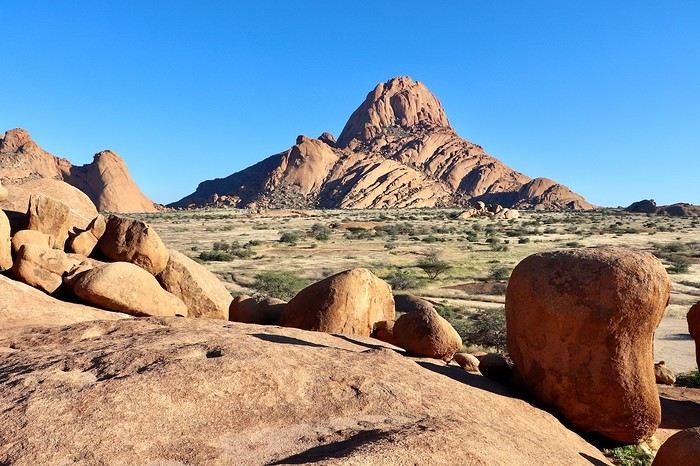
It's 6:45 AM, **we wake up at the foot of one of the most emblematic landscapes of the country, Spitzkoppe, which towers over the valley at 1,728 m.** **The Spitzkoppe massif, "pointed hat" in Afrikaans, is actually a set of three rock formations: Big Spitzkoppe, the granite domes of the Pontok Mountains that surround it, and Little Spitzkoppe, to the southwest. It was first climbed in 1946 and has never stopped attracting experienced climbers; it remains one of the most challenging ascents in the country. The climate in the region is hot**, so try to visit during the cooler months, as it can quickly reach 36°C in the sun in the afternoon. **Spitzkoppe is particularly striking at dusk, as it was last night, and at dawn this morning when the low light sets the rocks ablaze with red and orange hues. The spectacle is unique.**
We re-enter the park managed by the local community (160 NAD $ per person), then start with the **arch sector**. We quietly enjoy all the viewpoints under perfect orange colors. We leave this magnificent spot, reminding us of (https://www.montagne-aventure.net/2024/04/29/j19-1-juin-2024-canyonlands-national-park-et-arches-national-park/), but with much less crowding here. Around 10 AM, we head closer to these mythical peaks, including the main one nicknamed the Matterhorn of Namibia. Then we finish with the **ascent of the rock above Rock Pool. The 360° view of the park is a must-see. Small natural pools carved into the rock bring a bit of water to this arid and rocky landscape.** The wind blows strongly up there, and during a photo shoot with a tripod, it falls forward right onto the lens glass, cracking it... Frustration and shouts, these will be the last quality photos of this trip, and a new bill to pay when we return to replace it... Disgusted.
We continue to **Bushmans Paradise**, have a lunch break in the shade of a rock before hitting the road again around 12:30 PM after thoroughly exploring the park, feeling weakened and sad about my passion: photography...
We fill up with fuel as soon as we arrive in Uis at the price of 21 NAD $ per liter, a total of 1021 NAD $ for 50 liters (52 € by card). **Uis is a former mining town. Tin mining ceased in the early 1990s, but the high white mountain where the ore was dumped is clearly visible. The region is rich in amethysts, Brandberg crystals, and other semi-precious stones; we come across many vendors on the roadside.**
We then head to our final destination of the day, the **Daureb Isib Restcamp**. We arrive quite early for once at 2:45 PM in the heat, but the camp is just perfectly set up, surely the most upscale we will have during this trip. We are in a fortunately shaded area under palm leaves, with a table, chairs with cushions, a sink, a hot shower, toilets, a beautiful pool, and of course our private BBQ. Perfect for regaining a bit of a smile after the fall of my DSLR camera. **We are facing the Brandberg massif, the "fire mountain" in Afrikaans, dominated by Königstein (2,573 m), the highest peak in Namibia.** **The Brandberg owes its name to the reddish-orange glow that forms on its slopes at dawn and dusk, when the sun's rays awaken its red granite faces studded with crystals. It also hides a real treasure inside, as it contains an exceptional concentration of prehistoric rock art**, mainly paintings and some petroglyphs, including the most famous of them, the **White Lady in the Tsisab Gorge**. There are over 43,000 in total, dating back 2,000 to 4,000 years, scattered in hundreds of crevices around the mountain.
Time for the usual swim, laundry, and evening cooking. On the braai menu, local sausages with cheese pasta and leftovers for a good salad the next day.
> Today's road itinerary: 1h45: Head north on the D3716 > Then D1930 (gravel and sand track) to Uis.
> Gas station: Uis.
> Distance driven today: 113 km.
> Distance walked today: 6 km.
> Today's expenses: Fuel fill-up in Uis for 52 € (1,021 NAD $).
> Accommodation: Daureb Isib Restcamp - Erf 672 C/O 3rd & 4th Avenue Uis 9000, Uis, Namibia - (http://www.daurebisib.com/) – 31 € - Pool. Comfort with private bathroom + electricity + Wi-Fi at the restaurant. Clear sky for a beautiful starry night.
**DAY 14: Wednesday, May 7, 2025: Brandberg (Namibia's Highest Mountain) - Damaraland:**
**The Brandberg massif is an isolated, dome-shaped mountain, an inselberg, that towers over the gravel plains scorched by the sun of the Namib Desert to the northwest. It measures 23 km long and 20 km wide. It is the highest point in Namibia at 2,573 meters.**
This massif formed about 130 million years ago when a gigantic viscous mass of magma from deep within the Earth's crust rose through the surrounding rock layers before solidifying. Later, the granite mass was exposed by the erosion of the surrounding rocks.
**The Brandberg is the highest mountain in Namibia, peaking at an altitude of 2,573 m. The indigenous San people call it the "burning mountain," as it appears to glow with a red light at sunset. With its considerable height and width, this massif influences the local climate, attracting more rain on its slopes than the desert below.** The rain seeps through the springs. Unique animal and plant species thrive in this high-altitude environment, and prehistoric paintings adorn the rock faces hidden in the ravines around the base of the mountain.
The first night was also hot since the start of this trip, the thermometer did not drop below 20°C. We wake up gently around 8 AM, a pleasant sleep-in, the sun is already out. After a quick morning cleanup of the 4x4, we have time today, we hit the road at 9:30 AM, getting lost in the Brandberg massif. We are now in the **Damaraland, which stretches from the majestic rock formations of the Brandberg in the south, where we are today, to the bushy expanses at the foot of the rugged mountains of Sesfontein in the north, where we will be tomorrow. It is the perfect destination for wildlife and flora observation.**
We take the track heading towards the **White Lady**, but we want an alternative to this guided visit only. So, just before arriving, we turn right towards a viewpoint named on Google Maps **Rastplatz**. We come across **small Himba villages, living in extreme poverty with no natural resources; the inhabitants ask for water with every passing vehicle...** A bit further, we encounter about ten **ostriches** in the middle of the track, magnificent, as we get closer to the mountains in the background, and a few meters further, **a herd of Oryx**. Then we approach the **bed of the Ugab River**. We then go back and have a snack in the middle of nowhere, under the shade of our 4x4, facing the mountainous massif. We get back on the road around noon, while the temperature is at its peak in this very hot region, 35°C on the gauge with very dry air. We go up the C35 slightly then turn left onto the small track D2319 until we reach the Ugab bed again. Back to Uis in the mid-afternoon.
We did not book the same campsite as the previous night; today we are at the Brandberg Rest Camp. Unfortunately, the camp is not at the same level as the previous one, which was perfect. But the price is also much lower. The sites are next to each other, separated by small fences behind the main building. But it will do just fine. We have our BBQ and electricity, the shared sanitary facilities are decent. We then lounge in the large pool. We will then buy some water for 10 € at the supermarket located right across.
> Gas station: Uis.
> Distance driven today: 118 km.
> Today's expenses: Groceries in Uis: 10 €.
> Accommodation: Brandberg Rest Camp Uis - No 3 Uis Street Namibia 9000, Damaraland, Namibia - (http://www.brandbergrestcamp.com/) - Large pool – Shower – Electricity
**DAY 15: Thursday, May 8, 2025: Damaraland: Petrified Forest - Ugab Valley - Palmwag**
The night was excellent and slightly cooler than the previous one. We wake up around 7 AM and hit the road just before 7:45 AM heading to a new destination as we continue this Namibian road trip. **We cross Damaraland today from south to north.** First via the C35 to **Khorixas**, then turning left onto the C39. **We come across some villagers walking kilometers under the scorching sun with only a small water container in their hand... What a tough life, light-years away from ours.** About 40 km west of this town, we arrive at the **Petrified Forest National Monument**. It is a vast expanse of veld (open vegetation area), dotted with petrified tree trunks that can reach 34 m in length and 6 m in circumference, estimated to be over 260 million years old. These trees belonged to the Gymnospermae family, conifers among which we find today's cycads and welwitschias. The absence of roots and branches suggests that the trunks were deposited here during a significant flood. The site has about fifty trees, some half-buried in sandstone, others perfectly petrified in silica with their bark and growth rings. A guide is mandatory at the entrance to visit the site.
We then continue on this C39 due west to the junction of the D2612. We make a round trip to the south to **Twyfelfontein, which means "uncertain spring" or "bubbling spring" in Damara**. The site is a UNESCO World Heritage site, located at the entrance of the grassy Aba Huab Valley and houses one of the largest collections of rock art on the continent. More than **2,500 petroglyphs** have been discovered on over 200 stones, as well as some rock paintings. They date back about 6,000 years and others 2,500 years. Many engravings depict species that have since disappeared from the region, such as elephants, rhinoceroses, giraffes, and lions. The presence of a seal attests to the existence of links with the coastline at the time, now over 100 km away. It is here, as well as at Brandberg, that the human history of Namibia began with these testimonies of ritual and economic practices among hunter-gatherer peoples.
We continue a bit further south on the D3214 then D3254 to visit the **Organ Pipes, "organ pipes"**. The entrance is also paid, much to our regret... 500 NAD $ for two. We take a well-marked trail leading to a small gorge containing dolerite (coarse-grained basalt) columns 4 m high and aligned on an astonishing 100 m long wall. We are in a volcanic chain stretching over a dozen kilometers, a pile of scoria that seems to have been exposed to fire, the Burnt Mountain "burnt mountain" stands in a bleak and desolate landscape where almost nothing grows.
We head back north and return to the C39 then the C43 to **Palmwag where we will spend the night**. **This concession, covering an area of 5,500 km², is a region of red hills and plains, remarkable for its rolling landscapes as well as its rich fauna and flora**. The region serves as a **buffer zone between Etosha and the Skeleton Coast**. We have a good chance of encountering black rhinos, desert elephants, and lions, as well as spotted hyenas, giraffes, gemsboks, and other antelopes.
We pass the sanitary control barrier at 4 PM, just before entering Palmwag. In our direction, from south to north, we are simply asked about our future destinations and to present my French driver's license. A few meters further, there is a small gas station, then on our left our final destination of the day: the Palmwag Lodge Campsites. We are happy to arrive after this long journey. The welcome is very pleasant, and the site is very comfortable with a real brick shelter housing our shower and toilet, as well as water and electricity. We always have a BBQ available, but today we unfortunately no longer have meat due to concerns about the sanitary control, but we were not sure if it was rather in the other direction that the transport of fresh meat and dairy products is prohibited. We now cross our fingers to be able to observe some different animals, as the place is renowned for elephants, giraffes, and rhinos. We first take some time to relax in the pool before going for a walk around the reserve, without encountering anything unfortunately this evening, but the wake-up will be up to par... Time for the sunset, which is always one of the highlights of the day.
> Today's road itinerary: 5h30 of driving: C35 heading north > Then turn left onto the C39 > Petrified Forest > Go down on the D3612 in a round trip to Twyfelfontain (rock paintings and Organ Pipes) > Go back up on the C39 then C43 to Palmwag > Round trip on the C40 to Mount Grootberg Pass.
For info on the C43, there is a sanitary control at the entrance and exit (transporting raw meat is prohibited).
Palmwag: black rhinos (guided or free visit? at sunrise or sunset).
> Gas station: Twyfelfontain or Palmwag (07:00 – 19:00) – Tire repair in Palmwag.
> Distance driven today: 349 km.
> Distance walked today: km.
> Accommodation: North of Palmwag Lodge Campsites - GPS Coordinates -19.88556°, 13.93694° - Pool – Water and electricity – 34 € - (https://gondwana-collection.com/accommodation/palmwag-campsite?LodgeName=PALMWAG%20CAMPSITE)
**DAY 16: Friday, May 9, 2025: Palmwag - Sesfontein - Entry into Kaokoland - Opuwo**
This morning, we take our time watching for wildlife. We can finally observe our first **kudus** as the sun begins to illuminate the plain in front of us (see video and time-lapse of the day). A few minutes later, we also spot **a couple of giraffes with their calf**, moving calmly and serenely.
**We leave Palmwag** at 9 AM, heading to the northernmost point of Damaraland via the C43 to Sesfontein.
A few kilometers on the track, and we come across **a herd of zebras**, 11 to be exact, in the middle of green hills. Even further, it's more than twenty that cross right in front of us, a treat for our eyes. Their gait is majestic; they are very sensitive to noise. Some are more curious than others and don't hesitate to stay close if we remain quiet. We then cross numerous rough riverbeds. We must always stay very attentive at the wheel because we can drive at over 80 km/h on straight lines and then suddenly have to brake to cross these small streams, usually already dry at this time of year. Many antelopes are still present by the side of the track; the heat is already rising, and they are often lying on the ground at this hour.
**We arrive in Sesfontein at 11:15 AM**, just as the children are leaving school. Transportation is done by donkey-drawn carts. The villagers spend their time in the shade of the trees and in front of the few small shops. The atmosphere of its streets is dusty with a laid-back pace; this town has the feel of an oasis located **by the Hoanib River**, the town of six springs from which it gets its name. Founded in 1896, it was a military outpost built after a cattle plague epidemic. This page of its history is reflected in Fort Sesfontein, erected in 1905 to fight cattle diseases, arms smuggling, and poaching.
We take a lunch break at the exit of the village around 11:30 AM in the shade of a tree, so peaceful, it's 32°C. We continue further north, away from the usual tourist routes, and **enter the Kunene region, also called Kaokoland**. The track becomes narrower and more winding. **These are now vast solitary spaces largely devoid of roads, simply crossed by sandy tracks opened by the South African army just a few decades ago.** The fauna and flora have managed to adapt to this harsh and dry environment, like the desert elephant, an endangered species whose slender legs are perfectly suited to the long journeys the animal must make to find water, a rare resource. This region is also the territory of the Himba people, emblematic of the country. Its name comes from the Kunene River, which marks a narrow belt of vegetation at the Angolan border.
**We arrive in Opuwo at 3 PM**, **this town is the capital of the Kunene region**. Its name means "the end" in the Herero language, a fitting term for this dusty collection of commercial buildings surrounded by traditional huts with round thatched roofs.
**Opuwo is a strong cultural moment of this trip in Himba territory, this semi-nomadic people traditionally settles in an onganda (small village), moving if necessary to find access to water. Himba women are known for their ochre-colored cream, otjize, a mixture of butterfat and ochre powder, applied to protect and moisturize the skin and hair. Fire and smoke play an important role in their culture.** Smoke, often scented with herbs, is used by women for purification. It can also convey prayers to the supreme being, Muluru. In traditional celebrations, there is always a sacred fire that remains lit between the main hut and the animal enclosure, to maintain ties with the ancestors.
Right upon arrival, we fill up with fuel at the Shell station at the price of 21.48 NAD $ per liter, or 67 liters for 1454 NAD $ (72 €) by card. We then quickly stock up on meat at the Spar **where Himba women with bare breasts mix with us, the only white people shopping in the aisles**. **Since the beginning of this trip, this is where life is most bustling**. There are many people on these dusty streets, after kilometers without seeing anyone, the shock is brutal. There are small markets, poverty but also wealth. The town is quite spread out. There are no white people left, **we finally discover the true, harsh African life.**
We arrive at the **Opuwo Country Lodge at 3:30 PM**, located slightly on the heights. We have site 9 at the end of the property for maximum isolation as we like. Once again, we have private sanitary facilities, a BBQ, and electricity. Once settled, we walk 10 minutes to the reception where the pool is located to cool off. An infinity pool that is just magnificent facing the vast landscape before us. But this contrast between this little comfort and the town below makes us uneasy. The employees walk back down. A guard is present at the entrance of the lodge to ensure security; the park where we are is fenced. We enjoy a good braai, then enjoy the few lights of the town gradually lighting up. The night will be quite noisy for once with very loud music rising from a party below until 2:30 AM... And yet it comes from far away... Maybe a bar? In any case, we rule out what we thought was just a party during our visit here on Friday.
> Today's road itinerary: 4 hours of track: Return via the C43 heading south to Opuwo.
> Gas station: Okangwati or Opuwo
> Distance driven today: 261 km.
> Today's expenses: Fuel fill-up in Opuwo for 72 € + Groceries in Opuwo for 21 €.
> Accommodation: Opuwo Country Hotel - Opuwo Hilltop Opuwo 9000, Opuwo, Namibia - -18.044682 / 13.833861 - (http://www.opuwolodge.com/) - N$600.00 - Pool / Water / Private sanitary facilities / Electricity / BBQ.
**DAY 17: Saturday, May 10, 2025: Opuwo to Epupa Falls:**
We take our time this morning by the **Kunene River**, then we hit the road at 8:45 AM. This is our return trip to Opuwo.
After 4 good hours of driving, **we return to the bustling life of Opuwo**. We refill with fuel at the Shell station (21.48 NAD $ per liter) 820 NAD $ (40 €) for 38 liters and do a quick grocery run at the Spar for 488 NAD $ (24 €). We don't take any meat because we have the **sanitary barrier** to cross tomorrow before entering Etosha Park. We pay for these two expenses in cash for the first time; until now, the credit card was always accepted, so we now have to use the cash we withdrew at the airport. Then we head back to the Opuwo Country Lodge, arriving at the campsite at 2 PM. We are the first to arrive, we rest for a moment before heading to the pool and then end the day around our traditional BBQ with sausages and sautéed potatoes. The full moon accompanies us, perfect for nighttime observations in Etosha starting tomorrow.
The campsite's location should be avoided because we again have infernal music that gets louder from 7 PM to 2:30 AM... And yet it comes from far away... Maybe a bar? In any case, we eliminate what we thought was just a party during our visit here on Friday.
> Today's road itinerary: 4 hours of track: Return via the C43 heading south to Opuwo.
> Gas station: Okangwati or Opuwo
> Distance driven today: 180 km.
> Accommodation: Opuwo Country Hotel - Opuwo Hilltop Opuwo 9000, Opuwo, Namibia - -18.044682 / 13.833861 - (http://www.opuwolodge.com/) - N$600.00 - Pool / Water / Electricity / BBQ
**DAY 18: Sunday, May 11, 2025: Epupa Falls:**
Time for a "vacation" day; we wake up leisurely at 8 AM and take our time this morning. Breakfast and even coffee. The night was good, lulled by the sound of the waterfalls.
In the late morning, we head out on the small path along the banks of the Kunene River, which offers magnificent landscapes. We have a beautiful view of Angola from the opposite bank. The falls extend over about 1.5 km and flow over a series of promontories, the highest of which reaches 37 m.
At noon, we return to our campsite to eat in the shade of the palm trees. On the menu: fried eggs and pasta. We take advantage of this afternoon to rest before the last part of this road trip, with reading, writing, and pool time on the agenda.
In the late afternoon, we return to one of the viewpoints overlooking Epupa Falls to once again enjoy the sunset colors from a different angle. We are over the moon; our thoughts wander in all directions. We discuss future trips, adventures, reminisce about our memories, and think about the world around us... We savor the luck of being here. On the way back, a Himba woman asks if we can give her a ride in our 4x4 to Opuwo tomorrow.
Tonight, we dine on our traditional braai with white beans by the Kunene River. We are lulled by the sound of this powerful river flowing under the song of insects. The coolness sets in, and we fall asleep under the stars.
> Distance driven today: 0 km.
> Distance walked today: 10 km.
> Accommodation: Omarunga Lodge Campsites - 68 € for two nights - Site by the river - (https://gondwana-collection.com/fr/accommodation/omarunga-epupa-falls-campsite?LodgeName=OMARUNGA%20EPUPA-FALLS%20CAMPSITE&hsLang=en)
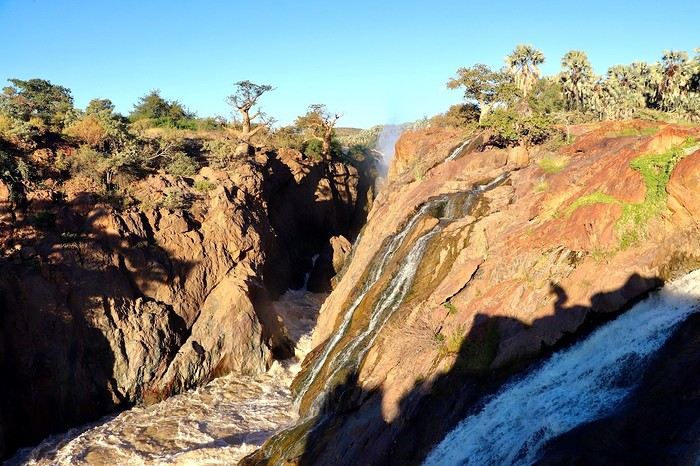
**DAY 19: Monday, May 12, 2025: Epupa to Opuwo**
We enjoy the morning a bit more by the **Kunene River**, then we hit the road at 8:45 AM. This is our return trip to Opuwo.
After 4 good hours on the road, **we return to the bustling life of Opuwo**. We refill with fuel at the Shell station (21.48 NAD $ per liter) for 820 NAD $ (40 €) for 38 liters and do a quick grocery run at the Spar for 488 NAD $ (24 €). We don't take any meat because we have the **sanitary barrier** to cross tomorrow before entering Etosha Park. We pay in cash for these two expenses for the first time; until now, the credit card was always accepted, so we have to use the cash we withdrew at the airport. Then we head back to the Opuwo Country Lodge, arriving at the campsite at 2:30 PM. We are the first to arrive, rest for a moment before heading to the pool, and then end the day with our traditional BBQ: sausages and sautéed potatoes. The full moon accompanies us, perfect for nighttime observations in Etosha starting tomorrow.
The campsite's location should be avoided, as we again have loud music until 2:30 AM... And it comes from far away... Maybe a bar? In any case, we rule out what we thought was just a party during our visit here on Friday.
> Today's road itinerary: 4 hours of track: Return via the C43 heading south to Opuwo.
> Gas station: Okangwati or Opuwo
> Distance driven today: 180 km.
> Accommodation: Opuwo Country Hotel - Opuwo Hilltop Opuwo 9000, Opuwo, Namibia - -18.044682 / 13.833861 - (http://www.opuwolodge.com/) - N$600.00 - Pool / Water / Private sanitary facilities / Electricity / BBQ
**DAY 20: Tuesday, May 13, 2025: Opuwo – Etosha - Olifantsrus**
We wake up before dawn around 6:30 AM. We pack up the camp at 7:15 AM heading to a first waterhole to watch the sunrise and start our day of observations and discoveries. It's 11°C, and as soon as we leave the campsite, we come across numerous zebras, foxes, and springboks with the sun rising on the horizon. Magnificent images.
**At 8:30 AM, we are still alone**, we witness **one of the most beautiful scenes of this trip: 3 lionesses hunting springboks**. It's thanks to the latter, slowing down, that we manage to spot 4 lionesses' heads barely above the tall grass. They hide, stand up, move slowly... We wait without moving. This is their perfect terrain for camouflage. **We are on the lookout and try to be discreet during this hunting scene**. We leave the area to let them finish their remarkable work and continue the track towards the East. The terrain becomes completely flat. It's now been 3 hours since we left the campsite without noticing the time passing, and especially without meeting anyone. Around 10 AM, near a waterhole, we come across a solitary elephant mixed with zebras, buffaloes, and springboks.
Around 11 AM, we take a lunch break; here, it's us who are enclosed in enclosures. Whether in the campsites or the few small equipped areas, we are fenced in by a gate. The animals are free on their territory. The wind has picked up again, just like the sun. We eat alone in absolute calm in the heart of this incredible, unique park; there are no words to describe what nature offers us here, far from any human activity. We start to see some safari vehicles arriving, but the attendance remains much lower than I had imagined. At most, a total of fifteen throughout the day.
Etosha is also a wonderful reserve of vegetation; you can find multiple mopane groves. But also acacias and other trees appreciated by ruminants. The south and east of the park have the most waterholes, which is where most animals gather. In the West, the vegetation is denser, and the wildlife is harder to spot, but it is well present, especially the black-faced impala and Hartmann's mountain zebra, which are found almost nowhere else. The area being less frequented, the bush feeling is more pronounced.
30 minutes of track after eating, **we come across a solitary male lion. The build compared to the females this morning is noticeable from afar**, even though this one is quite far from us unfortunately, unlike this morning when they were right on top of us.
**Etosha is the preferred habitat of lions in Namibia, with about 330 individuals roaming the park's plains, nearly half of the country's wild lions.** The big cats rest under the trees near waterholes, especially the one at Okaukuejo where we arrive today, but it's also a good spot for elephants and rhinos.
We then enter the territory of buffaloes, which we come across by the dozens now. Wow, the encounters keep coming. Then around 2 PM, we follow this immense **Etosha Pan** for the first time, which we will follow for a good part of tomorrow's day.
We arrive at our campsite at 3:30 PM after more than 8 hours of self-safari filled with discoveries. We sleep tonight at the **Olifantsrus Camp**, which we had previously booked in France. We had to wait and click several times for a spot to open up, as the camp has very few sites, and that's a good thing. It is located in one of the wildest areas of Etosha and has a practical observation tower overlooking a waterhole, offering us great opportunities to spot wildlife after nightfall (see photos). **The sunset is once again memorable.** In the guestbook at the reception, where each visitor can note their observations, 3 lions were seen the day before just a few steps from here (1 male, 1 female, and their cub), on a part of the track we didn't cover today; it will be on tomorrow morning's program. We cross our fingers for these predators.
> Today's road itinerary: 6 hours of driving: Leave Opuwo via the C41 (paved road) > Turn right onto the C35 (paved road) to the Galton Gate > Enter Etosha Park.
> Gas station: Opuwo.
> Distance driven today: 369 km.
> Accommodation: Olifantsrus Camping site - 53.4 € for two – Shared sanitary facilities – Electricity – BBQ – No grocery store - (https://www.etoshanationalpark.org/fr/accommodation/olifantsrus-camp)
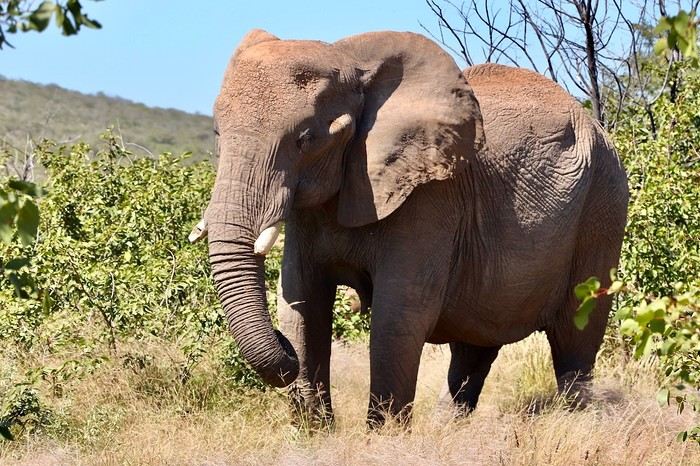
**DAY 21: Wednesday, May 14, 2025: Etosha National Park: From Olifantsrus to Okaukuejo:**
We wake up before dawn around 6:30 AM. We pack up the camp at 7:15 AM as the gates open, heading to a first waterhole to watch the sunrise and start our day of observations. It's 11°C, and just outside the campsite, we come across numerous zebras, foxes, and springboks with the sun rising on the horizon. Magnificent scenes.
**At 8:30 AM, we are still alone**, and we witness **one of the most beautiful moments of this trip: three lionesses hunting springboks**. Thanks to the springboks slowing down, we manage to spot four lionesses' heads barely above the tall grass. They hide, stand up, and move slowly... We wait without moving. This is their perfect terrain for camouflage. **We stay alert and try to be discreet during this hunting scene**. We leave the area to let them finish their remarkable work and continue the track towards the east. The terrain becomes completely flat. It's been 3 hours since we left the campsite without noticing the time, and especially without meeting anyone. Around 10 AM, near a waterhole, we come across a solitary elephant mixed with zebras, buffaloes, and springboks.
Around 11 AM, we take a lunch break; here, it's us who are enclosed in enclosures. Whether in the campsites or the few small equipped areas, we are fenced in by a gate. The animals are free on their territory. The wind has picked up again, just like the sun. We eat alone in absolute calm in the heart of this incredible, unique park; there are no words to describe what nature offers us here, far from any human activity. We start to see some safari vehicles arriving, but the attendance remains much lower than I had imagined. At most, a total of fifteen throughout the day.
Etosha is also a wonderful reserve of vegetation; you can find multiple mopane groves. But also acacias and other trees appreciated by ruminants. The south and east of the park have the most waterholes, which is where most animals gather. In the west, the vegetation is denser, and the wildlife is harder to spot, but it is well present, especially the black-faced impala and Hartmann's mountain zebra, which are found almost nowhere else. The area being less frequented, the bush feeling is more pronounced.
Thirty minutes of track after eating, **we come across a solitary male lion. The build compared to the females this morning is noticeable from afar**, even though this one is quite far from us unfortunately, unlike this morning when they were right on top of us.
**Etosha is the preferred habitat of lions in Namibia, with about 330 individuals roaming the park's plains, nearly half of the country's wild lions.** The big cats rest under the trees near waterholes, especially the one at Okaukuejo where we arrive today, but it's also a good spot for elephants and rhinos.
We then enter the territory of buffaloes, which we come across by the dozens now. Wow, the encounters keep coming. Then around 2 PM, we follow this immense **Etosha Pan** for the first time, which we will follow for a good part of tomorrow's day.
We arrive at our campsite at 3:30 PM after more than 8 hours of self-safari filled with discoveries. We sleep tonight at the **Okaukuejo Resort**. Upon arrival, this impression of a small town in the middle of hundreds of kilometers without infrastructure remains shocking. **The atmosphere is quite different from last night in our small wild campsite**. However, even though the attendance is higher, we are lucky to get a site in a corner (number 46). **The lit waterhole will also be a reward**. After checking in, we take advantage of the small grocery store to buy two meats for our next BBQs in the park, 3 pork chops and sausages, as well as a cold drink for 252 NAD $. This locality also offers a gas station, a restaurant, and a nice pool, but our goal during this park stay remains focused on the wildlife, so I won't give in this time. Time to set up, followed by a short rest, then our toilette before heading to the "waterhole" for the sunset around 6 PM. **A new grand spectacle unfolds before us, a hundred zebras come to hydrate right before our eyes at the water reserve facing the sunset in a cloud of dust. Then a couple of lions approach stealthily without managing to fill their stomachs. A third guest arrives, a second male lion also comes to drink. The waterhole now becomes the territory of the lions... We are speechless facing what nature offers us, we savor for over an hour scrutinizing the smallest details. What an intense day, images that will remain forever etched in our minds.** It's our turn to have our meal with three beautiful pork chops on the BBQ accompanied by curry vegetables.
At 9 PM, we decide to return to the waterhole, a wonderful idea because we find **an elephant and two black rhinos courting in the water. The male has a hard time seducing his sweetheart and eventually leaves, but a third rhino appears out of nowhere to join her. The scenes unfold under the spotlights** accompanied by a sky full of stars. We eventually go to bed. Looking forward to the rest of the story tomorrow.
> Today's road itinerary: Camp Olifantsrus > Camp Okaukuejo.
> Gas station: Okaukuejo camp.
> Distance driven today: 229 km. > Today's expenses: Groceries for 12 €.
> Accommodation: Okaukuejo Camping Site - 48.12 € for two - Pool - Gas station - Lit waterhole - Grocery store - (https://www.etoshanationalpark.org/fr/accommodation/okaukuejo)
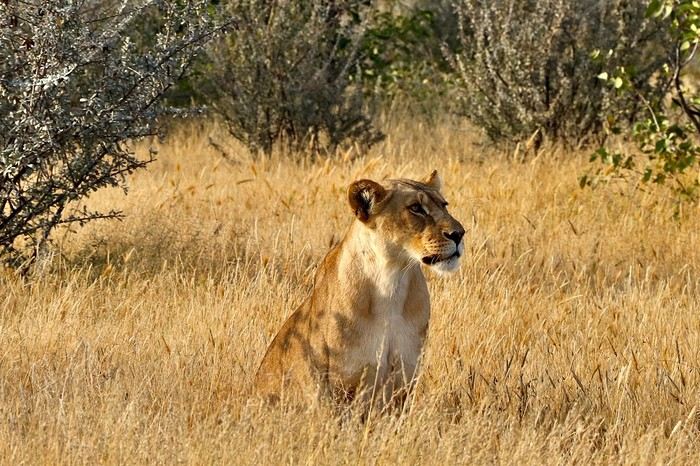
**DAY 22: Thursday, May 15, 2025: Etosha National Park: From Okaukuejo to Halali:**
We wake up around 5:30 AM to a strange noise getting closer, a few thunderclaps, then heavy rain pours down on us! The first since the start of this trip, we had forgotten its sound and smell. We leave the campsite quickly at 7:13 AM as the gates open, the rain stops just in time!
We are right in the heart of the park today. We arrive at the Etosha Pan, an immense flat salt desert that, a few days a year, transforms into a shallow expanse teeming with flamingos and pelicans. At the end of the dry season, everything, from elephants to grasslands, is covered in the white, chalky dust of Etosha.
Around noon, at the Riedfontein waterhole, we spot two male lions in this picturesque savannah. As we've noticed, the females hunt while the males protect the territory. The males and cubs will benefit first.
The day was less emotional than the previous one. We encounter far fewer animals, often at a greater distance. Is it because of the stormy rain we had at dawn this morning, or is it the area? The tracks were also more exhausting, especially the Rhino Drive without meeting a soul. But the view over the immense salt pan as far as the eye can see is worth seeing. Maybe the waterhole at the campsite will surprise us tonight as it did yesterday?
We arrive at 4 PM at the Halali Resort for our last night in the park. We still have a lit waterhole, more intimate than yesterday's, and we can walk around the park thanks to a hiking trail. The sanitary facilities are shared and quite recent, with each site offering its own BBQ and electrical outlet. After setting up and a quick wash, we head on foot to the Halali waterhole for sunset. Tonight's menu features local sausages (beef and pork) with curry pasta.
> Today's road itinerary: Camp Okaukuejo > Camp Halali.
> Gas station: Halali Camp.
> Distance driven today: 242 km.
> Accommodation: Halali Camping Site - 48.12 € for two - Pool - Gas station - Lit waterhole - Grocery store - (https://www.nwr.com.na/resorts/halali-resort/)
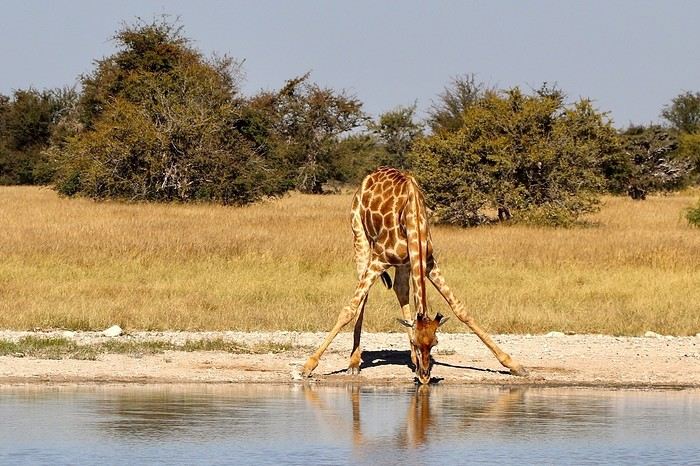
**DAY 23: Friday, May 16, 2025: Etosha National Park: From Halali to Namutoni - Waterberg Park:**
We pack up the camp at 7:15 AM as the gates open. It's 17°C, and the sun is out as usual. **We follow the Etosha Pan, still quite wet at this time of year.** The small track offers different viewpoints under a sun gradually rising higher.
The further east we go, the more we encounter gnus, kudus, and impalas. **We are once again spoiled and delighted by everything we discover this morning.** A majestic **giraffe** appears before our eyes just before arriving at **Namutoni** around 9:45 AM, quickly followed by 4 other companions. From there, we change plans, do the **Fischer's Pan** loop, and then decide to exit through the northern gate, allowing us to cover the entire park. Our last encounters will be with these tallest animals, the giraffes, and what a spectacle to see them spread their legs to hydrate, followed by gnus.
Just before the exit, we take a lunch break at an equipped area at 11:30 AM.
**We leave Etosha National Park with a touch of nostalgia through the King Nehale Iya Mpingana gate** at 12:30 PM. We find the beautiful paved B1 road, which is a great relief. Cows and goats take over; driving at 120 km/h on these single-lane, two-way roads with these animals we brush past requires constant vigilance. We fill up with fuel at 1:30 PM in **Oshivelo** (21.33 $ per liter), 93 liters for 99 € by card. Since we hadn't planned to go so far north out of Etosha, we are surprised to go through a **sanitary check** at the exit of the town, but it turns out to be even quicker than the previous one, a simple glance in the fridge by very smiling women, much more pleasant than the staff at the Etosha entrances and exits.
We pass **near Lake Otjikoto** ("deep hole" in Herero), which is **one of the only two natural lakes in Namibia along with its neighbor Lake Guinas**. In 1851, explorers Charles Andersson and Francis Galton came across this karst lake occupying a limestone cauldron 100 m long, 150 m wide, and 55 m deep. Its steep walls, about 20 m high, are the result of the collapse of the rock roof of the sinkhole under water pressure. This lake is also known for the large quantity of weapons and ammunition found in its depths. Remnants of the region's violent past, they were dumped there in 1915 by the retreating German army, refusing to let South African troops get their hands on them. Unfortunately, it's paid entry, and given the late hour, we continue on our way. To our great surprise, there is a lot of traffic on this B1, including many trucks, the first time we've seen so many people in this country. The landscapes change; we even discover deciduous trees taking on their autumn colors.
We pass through **Tsumeb**, and the road continues to **Otjiwarongo**, which means "pleasant place" in the Herero language, and the town lives up to its name. Prosperous and peaceful, with wide avenues and a relaxed atmosphere, we stop there to do some shopping. We buy some local meat to treat ourselves during these last two remaining camping nights: skewers, pork, and sausages, as well as biscuits, a last water tank, and yogurt for Mimi; 388 NAD $ - 20 €. We get back on the road heading south via the B1 for 15 minutes, then turn left onto the C42, still paved, for 30 minutes and 41 km, then left again onto the D2512, a wavy sandy track for 15 minutes.
**We enter the Waterberg National Park this evening.** The arrival facing this mountainous massif in the middle of the plains under the end-of-day lights of a deep red makes us even more eager to discover it. **Composed of impressive sandstone cliffs, tangles of vines, a canopy teeming with birds, elusive wildlife, and improbable dinosaur footprints. The Waterberg occupies a large sandstone plateau 50 km long and 16 km wide, at an altitude of 150 m above the plain.** It is possible to encounter elands, black wildebeests, roan antelopes, buffaloes, and red hartebeests, and with luck, leopards, as well as 200 identified bird species.
We arrive at the NWR campsite at 6 PM, the first time we arrive so late, just before nightfall. It's from here that various hiking trails start for tomorrow's day, including the **Mountain View Trail** that climbs to the edge of the plateau. We quickly settle into this peaceful camp where calm reigns, no more than 5 vehicles tonight. The place is shaded, with fairly recent shared sanitary facilities, electricity, and a BBQ for each. We savor our second-to-last braai under the stars, hearing our plane that brought us to Frankfurt fly over, every day at the same time over the Waterberg then Etosha. Very rare, as there are very few flights that land or fly over Namibian skies.
> Today's road itinerary: 10 hours of driving: B1 then C42 then D2512.
> Gas station: Exit of Etosha Park, Tsumeb, Otavi, or Waterberg Park.
> Distance driven today: 616 km.
> Accommodation: NWR Waterberg Camping Site - Pool - Water - 45 € for two - (https://www.nwr.com.na/resorts/waterberg-resort/#1577510913112-8f243e49-35a647e7-1997)
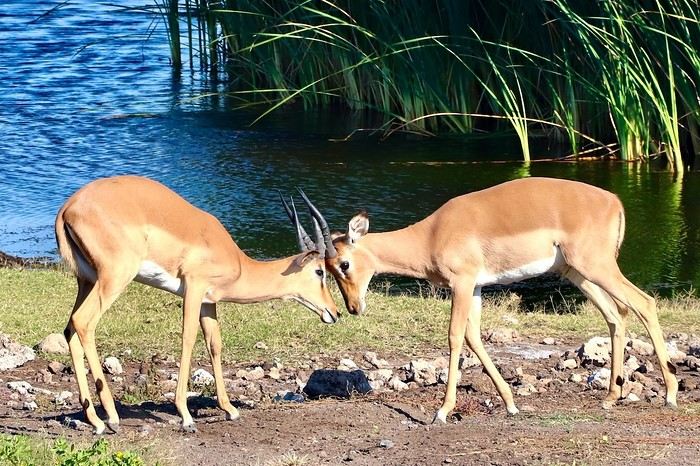
**DAY 24: Saturday, May 17, 2025: Waterberg Park - Otjiwa:**
We wake up around 7 AM after a very cool night.
**At sunrise, the cliffs appear even redder, and the cries of baboons echo around us.** We come across about thirty of them. We start the hike around 8:15 AM. **The Mountain View Trail will take us to the Waterberg Plateau.** The temperature is pleasant for walking. **The trail starts in a thick forest where the song of birds resonates.** The path is little frequented, so progress is slow and irregular; we regularly have to duck, step over, and climb rocks. However, in 35 minutes, we reach the top of the plateau. We are once again alone in the world in this Namibian nature. **The 360° panorama extends over a wide plain of green shrubs below, then over these steep red cliffs** giving access to this suspended plateau of the Waterberg. To enter, unfortunately, a special permit is required, and you must be accompanied by a guide. We savor the moment under the already hot sun at 9 AM. After an hour reminiscing about our journey on our rocky promontory, we start the descent at 10 AM, completing a loop back to our starting point. **At 10:30 AM, we pass by the small cemetery of German fighters who died in 1904**, then we hit the road back to the B1. We take a lunch break at noon at one of the tables scattered regularly along the paved roads. We are watched by **baboons** perched in their tree. We then decide to make a **detour through the town of Otjiwarongo**, which we didn't have time to explore properly yesterday. **A quick visit to the train station is a must to see locomotive No. 41, built in 1912 by the German company Henschel. It was transported to Namibia to carry ore between the mines of Tsumeb and the port of Swakopmund before being decommissioned in 1960 when the tracks were modified.**
We return to do some shopping and bring back some souvenirs for 300 NAD $ (14 €). We then take the road south on the B1. I start to feel the end of this immense loop through Namibia. Morale is gradually dropping. But we still have plenty of beautiful things to discover. We arrive at 3 PM at the **Otjiwa Safari Lodge. This will be our last night camping after 22 nights sleeping in the wild to the sound of animals.** The nostalgia is palpable. We enter this high-end private park; we don't really feel at home upon arrival. The reception, the pool, the restaurant, everything is very upscale, unlike anything we've experienced during this road trip. However, the reserve has its charm; we come across our beautiful antelopes again. The 10 sites are very comfortable, spaced apart under some bushes. Each has, of course, its BBQ, electricity, lighting, and sink. Before enjoying our last evening, we need to do a thorough dusting of the 4x4 and a good cleaning and organizing of our belongings. Then it's time for our last perfect braai: chicken and pork skewers, as well as tomato-flavored white beans.
> Today's road itinerary: 1h30 of driving: Waterberg > Otjiwarongo > Okonjima wildlife reserve - D2512 then C22 then B1 then turn right onto a 3 km track.
> Gas station: Waterberg Park.
> Distance driven today: 135 km.
> Distance walked today: 6 km.
> Today's expenses: Souvenirs for 14 €.
> Accommodation: Otjiwa Safari Lodge - B1 main road, west side Otjiwarongo 12001, Otjiwarongo, Namibia - (http://www.otjiwa.com.na/) – 40 € for two – From 3 PM.
**DAY 25: Sunday, May 18, 2025: Otjiwa - Windhoek:**
For this last leg of our Namibian journey, we complete the loop back to our starting point, Windhoek. We leave our last campsite at Otjiwa, later than usual, at 10 AM. We head due south on the B1 in less than 3 hours to the country's capital, not without a touch of nostalgia after all these kilometers traveled through Namibia. The landscapes roll by with a lot of melancholy. We make a stop 60 km north, in Okahandja. We take the opportunity to fill up with fuel (21.10 $ per liter), 500 NAD $ for 23 liters; the card machine wasn't working, so we had to withdraw from an ATM at the next gas station. A local was quite insistent at my window, asking for food or money. Anyway, after 15 minutes, we get back on the road.
From here, we take the new A1, a 2x2 lane highway limited, like the previous roads, to 120 km/h. Then we gradually see some of the country's industries before entering the capital in the blink of an eye. We arrive at 1:45 PM at Chameleon Backpackers. It's a small hostel-style hotel with a central pool, a shared kitchen, secure indoor parking, and a restaurant. They also organize tours (3 Day Express, 3 Day Link, 4 Days Etosha, 7 Day Norbert Adventure), very different from everything we've encountered so far, a kind of atmosphere like in Thailand. There are dormitories, rooms with shared bathrooms, and our little cocoon, the Love Bird, a room located alone on the upper floor with its small balcony, a swing, its bathroom, and its large bed with a thatched roof. A lot of charm while overlooking the pool. We eat before setting off to explore the capital.
Windhoek is a modern and well-maintained city, contrasting completely with the rest of the country. It is heavily influenced by its German colonial heritage, still very present in some streets of the capital. The architecture is colorful and surprising. The skyline is shared between the spires of a neo-baroque cathedral, the unusual silhouette of three castles from the German colonial era, and glass and steel skyscrapers. Office workers head to Zoo Park at lunchtime.
We enjoy the smell of grills at some street corners lined with small single-story houses with zinc roofs.
We first head to Windhoek's emblematic monument, its unofficial symbol: Christuskirche, just a 10-minute walk away. This German Lutheran church rises above the traffic at the center of an intersection. Built in 1907 with local sandstone. The roof and other elements were imported from Europe. The result evokes a gingerbread house.
We then walk along the pedestrian shopping street of **Post Street Mall** to admire African crafts, but on this Sunday, most shops are closed; we'll come back tomorrow. We return via the Wernhil shopping center.
> Today's road itinerary: Return to Windhoek in 3 hours via the B1 then the A1. In the capital, turn left onto Florence Nightingale, then right onto Beethoven Street then C28 then B6, then Bismarck Street. Take Church Street and Trift Street towards Voight Street.
> Gas station: Okahandja or Windhoek.
> Distance driven today: 245 km.
> Accommodation: Chameleon Backpackers & Guesthouse – 49 € for two - 5-7 Voigt St, North Windhoek Central, 9000 Windhoek
**DAY 26: Monday, May 19, 2025: Windhoek, Visit to the Namibian Capital:**
Our last sleep in Namibia... The wake-up is a bit sad; we still enjoy this return to comfort in a real bed. After a hearty breakfast, we check out of our little cocoon at 10 AM. We leave our vehicle in the secure parking lot and return for a walk in the center of Windhoek. On this Monday, the center is immediately livelier while still remaining extremely calm for a capital. The pace of life is slow; employees move slowly without rushing, each task is performed with a slowness that is almost surprising. A few skyscrapers further on, we quickly leave the hyper-center. We retrace our steps to the shopping gallery where we linger for a while. We eat around noon with African music in the background, making us even more nostalgic. Then the trip will gradually come to an end, unfortunately, until the moment when we will have to, not without regret, return our rental vehicle around 3 PM... We stop by the hotel again and then head to the rental agency and then to the airport by shuttle, included in our contract.
At 4:20 PM, we are back at the airport. We see ourselves upon arrival as if it were yesterday... Tears are not far off; we wait, the formalities are much quicker than upon arrival. **We board by walking across the tarmac on foot, escorted by about fifteen Namibians, facing the sunset. It will be there until the end, beautifully drawn on the horizon, to say goodbye to Namibia...**
> Round-trip flight tickets with Lufthansa from Lyon: 2029 €, or **1,014.50 €** per person.
> Vehicle rental: 4x4 Toyota with roof tent for 24 days: Gracious Whisp Car Rentals: 2,638 € (N$50,640) or **1,319 €** per person - (https://gwcarrentals.com/)
**DAY 27: Tuesday, May 20, 2025:** Flight FRA 8:15 AM -> 9:35 AM LYS (Air Dolomite No. 1074)
Total expenses including flight tickets + vehicle rental + visa + Lyon parking + food + fuel:
Cost per person: 3467 € Cost for two: 6935 €
>> All our photos and videos for each day on our website here: (https://www.montagne-aventure.net/voyages-découvertes/namibie-2025/)
>> Find all our photos and videos for each day on our website here: www.montagne-aventure.net
**DAY 1: Thursday, April 24, 2025: Outbound Flights from Lyon to Windhoek via Munich - Visit to Munich:**
Off we go on a new adventure. The alarm rings at 6:30 AM, the travel bags are packed, and we head to Lyon Airport. We booked our flight tickets with Lufthansa. The first leg to Munich, Germany, is operated by AirBaltic. Departure at 1:05 PM for a 1-hour and 20-minute flight. We arrive at 2:30 PM.
**We now have a 7-hour layover, so we take the opportunity to get some fresh air and explore Munich.** We quickly exit Terminal 2 of the airport and head towards the subway. We buy a group day ticket "Airport-city Day Zone M-5," valid for 2 to 5 people at a price of 30.50 € (instead of 16.30 € per person). We take the S8 line to **Marienplatz** in 35 minutes. **This is the heart of the city.** The weather is overcast, quite cool, but dry. Perfect for a little city trip between two flights while leaving our large luggage in transit at the airport. **Munich is the third-largest German city after Berlin and Hamburg, in the Bavaria region.** **The center has a lot of charm and brings together several religious buildings, easy to explore on foot.** We are impressed by the number of people enjoying these 100% pedestrian streets, which are very pleasant. After Marienplatz, the most famous square with the town hall, we head to the Cathedral of Our Lady, a Gothic church, then continue to **Karlsplatz** and move on to **the food market offering a wide selection of high-end food products in an atmosphere where a certain art of living prevails.** We also visit St. Peter's Church before grabbing a bite to eat. Two good hours were enough for this 10 km city walk. It's time to take the subway back: by 6:30 PM, we are back at the airport. Now, it's time for a bit of waiting and rest. Our second flight is scheduled for 9:35 PM for a 9-hour and 30-minute journey to our final destination in Namibia: **Windhoek.**
> Round-trip flight tickets with Lufthansa from Lyon: 2029 €, or 1,014.50 € per person.
> Lyon Airport parking: 120 €
> Today's expenses: 7 € for 2 pizzas in France / 14 € for the restaurant in Munich / 30.50 € for the daily subway ticket in Munich.
**DAY 2: Friday, April 25, 2024: Arrival in Windhoek, Visit to the Namibian Capital:**
After a 9-hour and 30-minute overnight flight with Discover Airlines, we finally land on Namibian soil just before 7:30 AM. The day is breaking, and the colors are already stunning. We are eager despite the usual fatigue from the flight. The airline was punctual, with friendly staff and good meals, though a bit light. We are the first flight of the day to land, with no more than 15 flights per day here, from 7 AM to 8 PM. We disembark on the tarmac at this airport located in the middle of nowhere, **I finally set foot on African soil for the first time.** We exit among the first from the aircraft to go through the long formalities at the front of the line, as the wait can quickly become endless. Allow at least 5 minutes per person for e-visas. We still wait 45 minutes despite only about twenty people ahead of us. Phew, it's done. We collect our luggage and then withdraw money from an ATM. We make 4 withdrawals of the maximum amount, 2000 NAD $ per withdrawal, for a total of 380 €, or 95.33 € per withdrawal.
Our driver arrives at the same time, perfect timing, we were quick.
We leave the airport at 8:45 AM. By 9:30 AM, we arrive at the **Gracious Whisp vehicle rental agency**, located at the entrance of Windhoek, small and human-sized with a fleet of recent vehicles. More formalities, then a short wait as our vehicle is not yet ready. Time to decompress, catch our breath, and enjoy the very pleasant morning temperature. Not a cloud in sight. Next, a briefing on the vehicle, always with a bit of apprehension due to our approximate English. Allow 45 minutes of explanations, including setting up the roof tent, camping equipment, technical information in case of a flat tire, driving tips in Namibia, and a tour of the 4x4. We have all the necessary equipment for camping: mattresses, sleeping bags, pillows, table, chairs, gas stove, BBQ grill... as well as 2 spare tires, a compressor, a dual tank, and accessories for removing wheels. Off we go, it's time to muster our courage and get behind the wheel. **Heading to SuperSpar Maerua**, fortunately located less than 10 minutes away. We park with the help of a parking attendant; it's very crowded, the space is narrow, but everything goes well despite the cursed right-hand drive. Today's new mission: stock up on groceries. The store is well-stocked with local and imported products, catering to all tastes. We spend 114 € on groceries, from pasta to meat, BBQ lighters to dishwashing products. Two people load our groceries into two carts and transfer them to our vehicle; we feel compelled to leave a tip, 50 NAD $, as we don't have change yet. Now, we head to the hotel, 15 minutes away. Traffic is difficult at a complicated intersection; this will likely be the only traffic jam in Namibia. **We arrive at Kate's Nest Guesthouse & Backpackers around 1:15 PM, quite tired.** We take some well-deserved rest at this recent establishment, quite calm with secure private parking. After a short nap, we enjoy the quiet by the hotel pool. Night falls between 6:30 PM and 7 PM. We eat quietly in our room tonight before starting this long 4x4 road trip in camping mode in the heart of Namibia.
> Today's grocery expenses: 114 € at Super Spar Marua (2395.21 NAD $).
> Round-trip flight tickets with Lufthansa from Lyon: 2029 €, or 1,014.50 € per person.
> Vehicle rental: 4x4 Toyota with roof tent for 24 days: Gracious Whisp Car Rentals: 2,638 € (N$50,640) or **1,319 €** per person - (https://gwcarrentals.com/)
> Distance driven today: 15 km.
> Accommodation: Kate's Nest Guesthouse & Backpackers - 4 Aristotles Street Academia, 9000 Windhoek - 36 € for two for one night.
> Windhoek International Airport website: (https://www.airports.com.na/)
**DAY 3: Saturday, April 26, 2025: Windhoek to Hardap: Mariental Region - Kalahari Desert:**
After a good, restful night, we wake up leisurely around 7 AM. We enjoy the comfort provided by this first and last hotel before 24 nights under the tent.
**We leave Kate's Nest Guesthouse at 8:30 AM to tackle the Namibian roads.** We quickly leave the capital; in just 30 minutes, we find ourselves almost alone in the world. The landscape is dotted with small domes. We leave the **paved B1** quickly to turn left onto the **C15**. **From there, we won't see more than 10 vehicles all day.** After passing through the few houses of **Lekkerwaterpoort**, we tackle our first gravel road. These road sections are limited to 100 km/h, but even at 70 km/h, I find it already challenging. However, I quickly get used to it and gradually pick up speed to reach my cruising speed of around 80 to 90 km/h. **We are on immense straight lines crossing wild expanses as far as the eye can see.** **We come across two baboons, a few ostriches, and numerous cattle and sheep farms.** We pass through the charming village of **Uhlenhorst** with its typical houses and children with broad smiles waving at us. Life here is already very different from Windhoek. **The thermometer rises quickly from 16°C at 8:30 AM to over 28°C in the early afternoon.**
**We arrive at the Hardap Dam reserve at 2 PM.** We stop at the toll booth at the park entrance to pay the entrance fee: 250 NAD $ for 2 people and 1 vehicle. We continue to the dam and then the camp entrance, located a bit further. We had booked in advance, but this place remains little frequented by foreigners.
We take advantage of the hottest hours to rest by the large pool overlooking the immense lake, a very enjoyable moment. Would this be a bit of a vacation?
Around 4:30 PM, we head to the campsite. We overlook this vast water reserve. We arrive first; we will be only 3 vehicles spending the night here. It's time to get to work and set up our equipment for the first time. It takes us a good 20 minutes to set everything up, with a slight apprehension about unfolding the tent. Once this task is done, which we will have to repeat for almost a month, we will become much more efficient over time. Time for rest and contemplation in total silence. The sun gradually sets, and the heat quickly becomes bearable again. Bliss! **This dam is located 20 km northwest of Mariental in an area dotted with conical hills topped with dolerite buttons (Hardap means "hillock" in Nama). It captures the Fish River, which flows south, creating a large lake in the middle of an arid environment. The contrast is striking.** We enjoy our first sunset facing this 360° otherworldly landscape.
Around 7 PM, we start our first BBQ, or "braai" as it's called here. The temperature is perfect. The sun sets, giving way to a star-filled sky of incredible beauty thanks to the absence of any light pollution. The Milky Way will lull us throughout the evening. After some good sausages and potatoes on the BBQ, we head to our roof tent around 9:30 PM with a complete change of scenery in just 24 hours. France already seems so far away...
This campsite has shared showers and toilets, quite clean and functional, as well as a central area with several BBQs and tables. The sites are arranged in a semicircle, each with an electrical outlet. The sites are close to each other but spacious, some slightly shaded. We are only three vehicles tonight, so it's perfectly comfortable and quiet. Not to mention the large pool near the restaurant. Our trip is off to a great start.
> Today's road itinerary: Windhoek > Head south on the B1 to Rehoboth > Turn left onto the C25 then C15 to Stampriet > C20 to Hardap > Full north on the B1 > Then turn left onto the M93 - 5 hours of driving.
> Distance driven today: 354 km.
> Accommodation: Hardap Recreation Resort - 23.3 € for two - Large pool - GR6W+3M2, Hardap Game Reserve, Mariental, Namibia - (http://www.nwr.com.na/resorts/hardap-resort/)
**DAY 4: Sunday, April 27, 2025: Hardap - Brukkaros Volcano - Keetmanshoop - Quivertree Forest Rest Camp**
Our first night under the tent was very pleasant; the little wind quickly calmed down, giving way to absolute silence. The mattress is decent, more comfortable than some nights in Nepal. The length and width give us enough space for maximum comfort, despite my height (1.91 m). We wake up a little before 7 AM as the sun rises, and the lights dazzle us from the start of the day. We pack up the equipment in 30 minutes, quite easily. Then we enjoy the sun, which warms up quickly while we keep our light fleece on.
At 8:30 AM, **we hit the road again, heading south** to our first stop in **Mariental**. We want to do some shopping at SuperSpar, but once we arrive in the parking lot, a young local is fighting with the supermarket security guards and then threatens to throw stones. We don't want to take any risks right at the start, so despite the baton blows he receives, he doesn't stop. We leave empty-handed but fill up with fuel at the Shell station 1 km further. The price per liter is 21.33 NAD $, we fill our 107-liter tank for 107 €. In Namibia, you get served, and they bring the card machine to the window to pay. It's then customary to leave a tip.
We then take the B1 heading due south on a recently renovated road. Around 11:30 AM, we leave it on our right to take **a wild gravel road, the M98**. Just before **Berseba**, we turn right onto a small track, the **D3904 towards Brukkaros Crater up to a camp at 1588 m altitude**. The track then becomes too bumpy. We stop on the counter-slopes where **a wide panorama unfolds over these immense plains as far as the eye can see**. It's 12:15 PM, time for us to eat a rice and tuna salad facing this landscape.
**We are alone in the world until a vehicle arrives and parks next to us.** A bit of apprehension, 4 men head towards us. It turns out to be 4 shepherds looking for a lost foal. The conversation is pleasant, lost in the middle of nowhere. We find ourselves alone again in this absolute silence. **The heat becomes stifling with a good 30°C**. We get back on the road around 1 PM. Back on the B1, **we continue due south to Keetmanshoop**, which we reach around 3 PM. We stop there to do some shopping for 262 NAD $ (12 eggs, a can of tuna, a can of corn, bread, a soda, and a 5-liter water container), or 12.48 €. Two quite insistent children ask us for money or candy at the store exit, yet we give them a small tip, but they continue to cling to the car. Locals parked next to us tell them to leave us alone. Anyway, we finish the trip to **Quivertree Forest**, 15 km away. We will spend the night in this **pleasant farm run by a German**. Upon arrival, as the day before, and as I suppose in the future, we dive straight into the cool pool to relax after all these kilometers. A bliss. Then we take our 4x4 and choose a spot near these famous trees. After the 33°C this afternoon, once 4 PM passed, the temperature drops again and becomes very pleasant. **We are in the middle of the Kokerboom, one of the most interesting and characteristic plants of hot and arid regions. It's not really a tree but a variant of the aloe plant whose botanical name is Aloe Dichotoma. This Kokerboom has a smooth and thick trunk reaching up to 1 m in thickness and 9 m in height. They bloom for the first time at the age of 20 to 30 years.** The flowers are yellow and reach about thirty centimeters during the season between June and July. **They grow mainly in an environment with a high concentration of black rocks absorbing a large amount of heat (38°C). The rocks also serve to anchor the tree with its tentacle-like roots. It also resists frost. Each is between 200 and 300 years old.**
Around 5 PM, we walk to the farm reception to watch the feeding of **two cheetahs**. Magnificent carnivores taking their time to savor their piece of meat. **Then we return near our campsite to enjoy the sunset among these trees. The colors are sublime, as every evening apparently. A magnificent spectacle with colors evolving from yellow to orange then to pink, before giving way once again to a sky filled with thousands of stars.** Our campsite at Quiver Tree Forest Camp is very comfortable; we have a water supply, a stone table, a small lamp, an electrical outlet, a small tree for shade, and a BBQ that we won't use tonight; we'll cook on gas. The sites are far apart, with some shared facilities scattered around, a very beautiful setting. No reservation possible, no need, just show up directly. **The campsite accommodation for 2 people costs 28 €, including the reserve entrance fee of 5 €**. We finish this second bivouac evening around 9:30 PM, time for some reading and sleep in peaceful silence without wind.
> Today's road itinerary: Mariental > B1 heading south to Brukkaros > At Tses turn right towards Berseba via the M98 > Turn right onto the D3904 > 8 km > Brukkaros Volcano (stop at the lower camp as the track is difficult for 1 hour) > Keetmanshoop > Turn left onto the M29 > Quivertree Forest - 4 hours of driving.
> Distance driven today: 371 km.
> Distance walked today: 6 km.
> Today's expenses: Groceries for 12.48 € (262 NAD $) / Fuel for 107 € (1 liter of diesel for 21.33 NAD $).
> Accommodation: Quivertree Forest Rest Camp, P.O. Box 262, Keetmanshoop, Namibia - BBQ, hot showers, toilets, and electricity - No reservation - Pool - 18 €/Person (N$ 340.00 with park entrance) - (http://www.quivertreeforest.com/)
**DAY 5: Monday, April 28, 2025: Quivertree Forest Rest Camp - Giant's Playground - Keetmanshoop - Fish River Canyon - Canyon Roadhouse:**
After an excellent start to the night, we are woken up by the wind shortly before 6 AM, but the sunrise is not far off. We get up at 6:30 AM to enjoy it. The atmosphere is a bit cooler this morning, but the reward is already here.
The adventure continues. At 7:45 AM, we head towards **Giant's Playground**, 4 km away. We take a 3-kilometer walk through this expanse of blocks and igneous rocks.
We continue south at 8:45 AM, passing through Keetmanshoop again where we do some shopping for 25 €, a big stock-up for a good part of the trip: meats, canned goods, pasta, fruits... At 9:30 AM, we take the B4 to Fish River Canyon.
At 11:30 AM, we arrive at the entrance to the NWR park (350 NAD $ entrance for 2 people and 1 vehicle). The track becomes bumpy immediately upon entering the park. After about ten kilometers, we come upon this landscape carved by nature. In the end, it's well worth the detour. We were at the Grand Canyon in the USA exactly (https://www.montagne-aventure.net/2024/04/29/j21-3-juin-2024-grand-canyon-et-lac-powell/) and can thus confirm that this Fish River Canyon is comparable. We make several stops along the southern flank. **Here, nothing is developed; nature is almost in the wild state.** **With 160 km in length, up to 27 km in width, and a depth of 150 m, it is indeed the second-largest canyon in the world.** The history of the canyon is apparent in its different earth layers and stratification: the antiquity of the place is tangible, and the absence of vegetation is surprising. **It consists of two nested canyons, formed at distinct periods. The first distinct layer of schist, sandstone, and eruptive material surrounding the canyon was formed a few two billion years ago, then transformed due to heat and pressure into more solid rock such as gneiss. The inner canyon, carved more recently by the Fish River, has a depth of 270 m.**
We have a picnic once again alone in the world facing this grand panorama at the **Sulphur Spring View Point**. This is where the hiking trail begins, plunging into this narrow canyon, but it is forbidden to venture there alone without a guide. It's 30°C, but a slight wind makes the atmosphere bearable. At 1 PM, we retrace our steps and continue to the **Main View Point** then to the **Hikers View Point**.
In the south of Namibia, the Fish River Canyon, 160 km long, is a true geological wonder: a canyon nested within another canyon, one of the largest in the world. The first sedimentary layers formed two billion years ago; 500 million years ago, a period of tectonic activity caused these layers to crack and tilt, opening a vast canyon in the Earth's crust. The second canyon, with a depth of 270 m, was carved over time by the passage of the Fish River in this new valley.
At 3 PM, we arrive at our very charming camp for the evening, the **Canyon Road House**. We fill up with fuel right away because tomorrow we have a long day of isolated driving: 55 liters for 1240 NAD $. Then we settle into the campsite we had previously reserved in France. We are assigned site 2, very well set up under a tree with its BBQ and stone table just steps from the pool. We quickly set up the tent and jump straight into the pool for the relaxation moment of the day. As usual, the water is quite cool, but it's a real pleasure. Then we stroll around this Canyon Road House, which recreates the atmosphere of the roadside inns of the 1950s with old car wrecks and vintage gas pumps in a bygone era. **Around 5:45 PM, we start a short walk leading us to the top of a hill overlooking the wide plateau where we are to watch the sunset.**
And finally, to end this beautiful day, it's time for the braai, with grilled sausages and white beans on the evening menu.
> Park entrance: 150 DN/person + 50 DN/vehicle (18 € for two). It is possible to enter at two access points: Hobas in the north and Ai-Ais in the south.
> Today's road itinerary: M29 > Keetmanshoop > B1 > B4 > C12 (track) > After Holoog turn right onto the D601 (C37 track) > Accommodation on our right (stop just to check in before 6 PM) > Continue 30 km (30 minutes of track) to the viewpoints after Hobas where you must pay the entrance fee. Sunset View Point to the left > Return before sunset as the park closes (best lights at sunrise). 3 hours.
> Distance driven today: 228 km.
> Distance walked today: 10 km.
> Today's expenses: 25 € for groceries / 17 € for the Fish River Canyon park entrance / 58 € for fuel.
> Accommodation: Canyon Roadhouse, Gondwana Collection Namibia – 34.4 € for two - Pool - Near Hobas - (http://www.gondwana-collection.com/fr/accommodation/canyon-road-campsite)
**DAY 6: Tuesday, April 29, 2025: Canyon Roadhouse - Orange River - South African Border - Vista Trail - Gondwana Sperrgebiet Park - Aus:**
The night was excellent in this very comfortable campsite. **We wake up to the sound of birds** before the alarm at 6:45 AM. Our little morning routine starts as the sun rises. **A big day of driving awaits us to the South African border. This will be the southernmost point of our journey.** We hit the road at 8 AM via the C37, pass through **Hobas**, then turn onto the D207 to **Aussenkehr.** **We cross a mountainous barrier with some high peaks and perfect cones. The rock varies from orange to pink to black.**
We then cross a lunar desert as far as the eye can see on a giant dome; the track winds through nowhere without meeting anyone for hours. The landscapes are surprising. **We spot several ostriches and a gemsbok.** In the middle of this endless expanse, we come to an improbable intersection and continue right onto the D278.
In the middle of these arid lands, we come across a green zone: a vast vineyard. At 10:30 AM, **we come across a "Road closed" sign, fortunately, a local resident waves us to continue; a bit stressed, we proceed.** We start to follow the beautiful Orange River. On the other side of the bank, just a few meters away, South Africa is there. It is the second-longest river in Southern Africa, after the Zambezi. It flows over 2,000 km to the Atlantic. After passing through narrow gorges, we regain altitude before starting the descent, gently heading back north.
**We now cross and follow the Fish River, which joins the Orange River further south** **along this gorge dating back millennia.** At exactly noon, we take a lunch break by the Fish River, still without meeting a soul in this landscape between greenery and aridity. The temperature here is cooler with a pleasant 23°C on the banks, the perfect spot. **We continue on the track to Rosh Pinah**, where we find a paved road again. **The section along the Orange River and the Fish River was officially closed, but we were able to pass without any issues, avoiding a detour of at least 3 hours.** Phew. We now drive at high speed (limited to 120 km/h) through these vast spaces. We come across many ostriches after the **dozens of monkeys along the Fish River**. Around 3 PM, 3 km after the very small town of **Aus**, we reach **our campsite for the evening at Klein Aus Vista**. A new **small peaceful haven very well set up**. As usual, after checking in at reception, we jump straight into the beautiful pool to get our well-deserved dose of coolness, another good thermal shock that our bodies appreciate. Once this moment of relaxation is over, we take our 4x4 to reach the campsite located a bit higher, set apart at the foot of a hill that overlooks us.
After setting up, **around 5 PM, we head to the Vista Trail to climb to the top of a mountain overlooking the vast plain that surrounds us at 360°**. It takes about 30 minutes to climb. The place is just magical, **the perfect viewpoint to admire the sunset**. **We fully savor the moment. We also spot one of the few wild horses in the world capable of living in the desert.** Their numbers have decreased in recent years due to predation and drought (around 100 to 150). At 7 PM, we return to the camp, time for the braai and preparing the meal in this peaceful little camp.
In the south of Namibia, the Fish River Canyon, 160 km long, is a true geological wonder: a canyon nested within another canyon, one of the largest in the world. The first sedimentary layers formed two billion years ago; 500 million years ago, a period of tectonic activity caused these layers to crack and tilt, opening a vast canyon in the Earth's crust. The second canyon, with a depth of 270 m, was carved over time by the passage of the Fish River in this new valley.
> Today's road itinerary: 5 hours of driving: D324 heading south (track) > turn right onto the C10 (track) > D316 heading south > turn right onto the C13 > In Aus turn left onto the B4 > Campsite via a track on the left.
> Fuel station: Solitaire or Aus.
> Distance driven today: 398 km.
> Distance walked today: 7 km.
> Accommodation: Klein-Aus Vista Desert Horse Campsite - Farm Klein-Aus No 8 on the B4 main road to Luederitz Aus 9000, Aus, Namibia - (http://www.klein-aus-vista.com/accommodation/desert-horse-campsite/) 17908 420 DN - Water + Shared shower (hot water). No electricity.
**DAY 7: Wednesday, April 30, 2025: Aus - Kolmanskop - Diaz Point - Luderitz - Kanaan Desert:**
We wake up around 6:45 AM, with partly cloudy weather for once; we feel the ocean's influence gradually. But the sun isn't far off. At 7 AM, we leave the campsite heading west towards Luderitz via the B4. **First stop of the day: Kolmanskop, the ghost town we reach at 8:30 AM**, entry costs 180 NAD $ per person. We discover this **timeless place** in 1.5 hours, moving from building to building amidst violent sand-laden gusts of wind. There's a lot of charm in these different living spaces. **The sand quickly reclaimed the place after this mining town was abandoned.** This was once the headquarters of Consolidated Diamond Mines. It's hard to believe that this former town, where the diamond industry once flourished, had a hospital, a bowling alley, and a theater. The decline in diamond sales after World War II and the discovery of richer deposits put an end to this golden age. By 1956, the town was already completely deserted, and the sand had reclaimed its rights. **These dilapidated buildings swallowed by shifting dunes have something surreal about them.**
At 10:15 AM, we hit the road again **heading to Luderitz, 22 km away**, and first to **Diaz Point** **facing the Atlantic Ocean**. It's a wind-swept peninsula with its characteristic red and white lighthouse. There's a campsite and a coffee shop on site, but the place doesn't inspire rest without shade or shelter from the wind. We return to the city via the D701 track that runs along the ocean, be careful at low tide. We come across **a few fishermen and a fox as well as flamingos.**
We walk through the few streets of the city, much smaller than I imagined, then climb to the **famous little Lutheran church that overlooks the city, the Felsenkirchr.** **The wind blows very strongly here, and the sand is omnipresent, surrounded by the Namib Desert and the southern Atlantic coast.** **A German colonial relic barely touched by the 21st century, Luderitz seems frozen in the past, giving it both a gloomy and a certain charm. In short, it's certainly one of the most incongruous places in Africa.**
At 1:15 PM, just before leaving Luderitz, we do some shopping for 20.50 € and fill up with fuel: 61.50 €, 1290 NAD $ for 61 liters (21.18 $ per liter).
**We return via the B4 to Aus** (paved), **then via rougher tracks**, the C13 then the D707, magnificent as it runs along a mountain range with multiple colors on our right and an endless flat desert on the other side.
To access our campsite for the evening, we must take a **narrow private track for 7 km** on our right to emerge, in this total vastness, at the **isolated Kanaan Desert Retreat on a small hill**. I don't have time today to jump into the pool near the reception; we arrive at 5 PM at 8 small, isolated, and unique sites with a small kitchen, a shower, and a private toilet under a small tarp shelter. **A crazy charm with a unique view...** **This will be my favorite accommodation of this trip. The photos speak for themselves.** We jump into the outdoor shower while savoring the landscape, then prepare our evening braai while enjoying the colors fading, facing this plateau with bushes turning a vivid orange. **A moment that will remain etched for life.** **Savanna atmosphere under a thin emerging moon. Every minute offers different colors. Facing our meal, we have a natural giant screen.**
We end this day contemplating the stars and admire this thin orange moon setting on the horizon (8:42 PM).
**Ghost town just before Luderitz: Kolmanskop** (open from 8 AM to 3 PM - N$ 180 p.p – 9 €). Once, Kolmanskoppe was organized around diamond mining. After finding new, more prolific spots, the town was abandoned and is now a ghost town. The sand and dunes have reclaimed their rights and buried everything humans had built. Houses, train station, bakery, everything has been covered by sand, which passes through the windows, even though they are 1 meter high.
> Today's road itinerary: 5h30: B4 to Luderitz (paved) > Round trip > Kolmanskop on the left > Return via the previous campsite > Then C13 (track) > Turn left D707 (track) > Then track to the right to the campsite.
> Distance driven today: 438 km.
> Distance walked today: 8 km.
> Today's expenses: Groceries at the Spar in Luderitz for 20.50 € / Fuel fill-up in Luderitz for 61.50 €.
> Official Kolmanskop website: (https://kolmanskuppe.com) (open from 8 AM to 1 PM - N$ 180 p.p – 9 €).
> Accommodation: Night at the south of the Namibrand Nature Reserve: Kanaan Desert Retreat – 26.5 € for two - (http://www.kanaannamibia.com/) - Farm 104 Karas 9000 - Sanitary facilities + BBQ + Water + Pool - No electricity - My favorite accommodation of this trip.
**DAY 8: Thursday, May 1, 2025: Kanaan Desert Retreat - Namib Desert - Crossing the Namibrand Nature Reserve – Sesriem Canyon - Elim Dune - Little Sossus Lodge**
After a cooler night than the previous ones with about 10°C, we wake up around 7 AM. We admire, as usual, the sunrise between the desert and the mountains. **The spot from last night was truly perfect, isolated from the world, in total serenity, with a wake-up call to the sound of birds.**
We hit the road a little after 8 AM, heading north via the D707 to Spes Bona, then the gravel road C27 via Betta to Sesriem. **The landscapes roll by and dazzle us.** **We are right in the heart of the Namibrand reserve**, coming across numerous **zebras**, **impalas**, **ruminants that reproduce in large numbers**, and **gemsboks**. At noon, we stop in the shade of a tree to eat. The spot is so romantic facing orange arid mountains and a vast green plateau. **A landscape full of contrasts, timeless and silent.**
**The Namib Desert is the oldest on the planet; its name means "vast arid plain," and it also gave its name to the entire country: Namibia.** The majority of these arid and semi-arid lands dotted with viewpoints are part of the Namib-Naukluft National Park, which covers 23,000 km².
At 1 PM, we enter the Sossusvlei park. We start with the **Sesriem Canyon**, which is 3 km long and 30 m deep. We enter it with a short 1-hour hike into its depths. **It was carved by the Tsauchab River in an agglomerate of sand and pebbles over 15 million years old.** We retrace our steps back to Sesriem, which means "six belts," referring to the number of leather belts (from ox wagons) needed to draw water from the canyon. This remote locality is mainly the gateway to Sossusvlei but offers a gas station and some accommodations. For our part, we sleep 40 km away tonight.
**We then move on to Elim Dune.** It takes about 45 minutes of walking to reach its summit, and the climb is very breath-taking as we progress in the sand where we almost slide back with each step. **A first grand 360° panorama unfolds. The ochre color of the sand contrasts completely with the yellow plain and the brown and black mountains in the distance.**
At 3:15 PM, we start the descent facing Sesriem. We were completely alone once again on this dune. **These Namib dunes are composed of colored quartzite sand, presenting hues ranging from cream to orange and from red to purple. Unlike the ancient dunes of the Kalahari, these move with the wind and adopt distinct, ever-changing shapes.** Star dunes resemble stars seen from above, while transverse dunes, like those on the coast south of Walvis Bay, stand perpendicular to the prevailing southwest wind. The most stable dunes, which thus have the most vegetation, are parabolic dunes, due to the variability of the winds. Longitudinal (seif) dunes measure up to 100 m in height, while barchan dunes, crescent-shaped and predominant at the extreme north of the Skeleton Coast and south of Luderitz, are the most mobile, created by unidirectional winds.
**We get back on the road for 45 minutes to our campsite for the evening, Little Sossus, which we reach at 5 PM**, via C27 then right onto C19. As often upon our arrival, I jump into the cool pool to relax after all this driving, then we proceed to set up the camp. As the day before, the campsite consists of 10 fairly distant sites, with private sanitary facilities and a small roof. We are delighted with this crazy charm. The hot water for our shower is wood-heated: a Namibian lights it every evening around 5 PM.
For a change, or not, the menu features a small BBQ with pork ribs and pasta, facing another sunset, this time with partial cloud cover giving equally splendid colors. Time for a well-deserved rest after long corrugated tracks covered in our 4x4 today.
> Today's road itinerary: 4h45 of driving: Find the D707 and head north (track) > At Spesbona turn left onto the C27 (track) > At Sesriem after entering the park, turn left following View Point Sesriem > Continue 4.5 km to the Sesriem Canyon Parking > Return then head towards Elim Dune > Exit the park then take the D826 > Turn right onto the C19 heading SE > Turn right facing the D854 to the campsite (campsite closes at 7 PM).
> Distance driven today: 272 km.
> Distance walked today: 8 km.
> Today's expenses: Entry to the Sossusvlei Namib-Naukluft Park: 17 € for two (with one car).
> Accommodation: Little Sossus Lodge – 35 € for two - At the junction of the C19 and D854 roads Maltahohe 9000, Maltahohe, Namibia - (http://www.littlesossus.net/) - Pool + Private bathroom + Hot water + Electricity + BBQ + Grocery store (bread to order the day before).
**DAY 9: Friday, May 2, 2025: Little Sossus Lodge - Namib-Naukluft National Park – Sesriem - Sossusvlei - Big Daddy – Deadvlei - Tsauchab River Camp**
Today we start the day early to tackle **the famous dunes of Sossusvlei at first light**. The alarm goes off at 6 AM to leave the camp at 6:45 AM. The wind is blowing quite strongly in gusts this morning, but it only woke us up a quarter of an hour before sunrise. The park opens at 7:15 AM. We start with a small encounter: a friendly **jackal lounging by the roadside.**
We first have to cover the 40 km of track to Sesriem, pay the entrance fee (350 NAD $), and drive 65 km on a paved road this time to reach the **vast salt pan (a lake whose sediments are made of salts) of Sossusvlei**. **It appears amidst the gigantic red dunes that rise on either side. The wind constantly changes the shape of the dunes, as well as their colors, which vary with the light. The setting is breathtaking, giving an impression of immensity and timeless grandeur.**
The paved road ends; the last 4 kilometers become technical and are reserved for 4x4s. Phew, I pass without any problems, though not without stress, switching to L4 mode. **We start the ascent to Big Daddy at 8:45 AM, 325 m of elevation gain in the sand nonetheless.** We climb at an excellent speed despite the strong wind, in exactly 1 hour. At 9:45 AM, we are at the summit of what will remain etched for a long time. The 360° view is simply unimaginable; you have to experience it to believe it. The wind blows violently up there, **it feels like being in the high mountains, on a snow ridge, with a strong transport of sand. The atmosphere is magical.** We start the descent running barefoot in the steep sand.
**We then move on to its neighbor, Deadvlei.** **Here, petrified trees stand in the "vlei" (basin) with their dried branches casting desolate shadows on the white ground. The juxtaposition of the deep blue sky and the towering dunes is captivating.**
We return to the 4x4 parking at 11 AM, the stress rises again for the sandy track passage. We retrace our steps and stop at **Dune 45**.
At noon, we take the opportunity to picnic at the foot of **the beautiful Dune 40**, where there is already no one left. We enjoy the quiet again, well, almost, as the wind remains omnipresent.
At 1 PM, we return to **Sesriem**, where we fill up with fuel (21.15 NAD $ per liter), totaling 1630 for 77 liters (78 €), and do some shopping for 245 NAD $ (two nice pieces of pork, 2 cans, 2 sandwiches for tomorrow, and 1 soda), which is 12.48 €. It's 27°C. We hit the road again, heading to a new destination at 2 PM. We take the C19 back to Little Sossus where we spent the night, then turn left onto the gravel road D854 for about 40 km to **Tsauchab River camp**. Finally, we won't be sleeping here; we are redirected 7 km downstream to **Naukluft View Camp**, which also belongs to Tsauchab River Camp.
We arrive at 4 PM, and thankfully, the fatigue was starting to set in. **Our campsite is located under a small forest, providing some protection from the wind that blew strongly all day. The calm does us a world of good. Once again, a lot of charm**, with very spaced-out sites without any visibility. We can't wait to take our shower. It will be possible from 5 PM with, as the day before, water heated by a wood fire. Time to prepare the campsite for the night. And on the menu, a braai with two superb pieces of pork bought in Sesriem and fries!!!!
**The Namib Desert**
An impressive coastal desert stretching from the Atlantic to a high plateau inland, the narrow Namib Desert runs along the southwest African coast for about 1,300 km. **Considered one of the oldest deserts in the world**, it is bordered to the north by the Kaokoland Desert, which extends into Angola, and to the south by South Africa's Karoo. The narrow Namib is mostly less than 160 km wide. Despite this, it is considered to consist of three sections: the coastal strip influenced by the Atlantic; the Outer Namib, occupying what remains of the western half; and the Inner Namib, comprising the eastern half of the desert. Generally called the Skeleton Coast, the coastal Namib receives almost no rain and depends on regular marine fogs for moisture. From sea level, the terrain rises to 900 m, where the desert meets the base of the Great Escarpment to the east. In the Inner Namib, average annual rainfall is only about 50 mm.
The dryness is such a characteristic of the Namib that it is thought to have been in this arid state for at least 55 million years. It is all the more surprising to learn that animals such as vipers, geckos, zebras, and elephants live in this desert. Some areas of the Namib are also rich in flora, including Welwitschia mirabilis, which grows near the ground with seemingly exhausted leaves, extracting moisture from marine fogs and can live over 1,000 years. In the southern Namib, some dunes are up to 32 km long and 240 m high.
**The frequent fog of the Skeleton Coast:** Driving north along the coast of Namibia, the cold Benguela Current in the Atlantic cools the moist air above the ocean, which, upon meeting the warm desert air, leads to the formation of thick fog banks that drift up to 100 km into the center of the Namib before evaporating under the sun.
> Today's road itinerary: 4 hours of driving: C19 towards Sesriem (track) > D826 (paved) > Foot of Big Daddy via a technical sandy track > Return via the same route > D854 to Tsauchab.
> Gas station: Sesriem.
> Distance driven today: 254 km.
> Distance walked today: 12 km.
> Today's expenses: Park entry at Sesriem for 2 people: 17 € / Fuel fill-up: 78 € / Groceries at Sesriem gas station: 12 € (245 NAD $).
> Accommodation: Tsauchab River Camp - Naukluft View Camp - D054 & D850 GPS: S24 26' 37" E16 10' 11" Sossusvlei 22007, Maltahohe, Namibia - BBQ + Private sanitary facilities + Water - www.tsauchab.com
**DAY 10: Saturday, May 3, 2025: Tsauchab River Camp - Naukluft National Park - Olive Trail Hike (10 km) - Ababis Guest Farm**
We pack up the camp at 8 AM and continue our road trip north via the D854, a bumpy track with many corrugated sections. It's cool this morning, 12°C.
**We enter the Naukluft massif, discovering landscapes with very different terrain than before.** We first need to check in at the campsite, 13 km from the entrance at the end of the track: 350 NAD $ for 2 people and 1 vehicle, then return 4 km back. **On the agenda is the lovely Olive Trail, a 10 km hiking loop that starts 4 km northwest of the park office**, along the D854 that we follow. At 9:45 AM, the hike begins with a fairly steep ascent (about 45 minutes) among the **wild olive trees** from which the trail gets its name. **At the summit, we enjoy a view that embraces the Naukluft Valley.** We then turn east and gradually descend into a deep valley, passing over sometimes slippery rocks. We have a snack around 11:30 AM in these small gorges. **Further on, to cross the wall of a canyon in front of us, some chains are fixed to the rock to help us pass.** We finish this superb loop clockwise at 1:15 PM, taking 3.5 hours including 30 minutes of breaks. We only crossed a small group of 3 people on this wild adventure far from everything. At 1:45 PM, we exit the park and take the **D854 track north to Bullsport**. From there, we turn left and take the C14, which **runs along the bed of the Tsondab River.**
**We arrive at our campsite for the evening, Ababis Guest Farm, at 3 PM.** Quite early for once, allowing us to rest a bit in this peaceful farm where many sheep wander around us. We also enjoy the pool under a magnificent sun, less hot than the previous days, it's 22°C. The camp has only 4 spaced-out sites around shared sanitary facilities. **We are in the middle of a vast plain facing the Naukluft massif mountains.** We will have another beautiful sunset on these mountains. For the first time on this trip, **we will be completely alone at this campsite.** **We haven't encountered many people today**, just 3 during the hike and fewer than 10 vehicles all day.
> Today's road itinerary: Head north on the D854 (track) > Turn left to enter the Naukfluft National Park > Continue on the track then turn right to the Olive Trail hike parking lot (1 hour for 45 km). Return to the D854 and continue north > At Bullsport turn left onto the C14 to Ababis (still a track) > The camp is located on the left facing the D1261 (1 hour for 60 km from Olive Trail). Total: 2 hours of driving for 100 km.
> Gas station: No gas station on the route, except in Solitaire.
> Distance driven today: 115 km.
> Distance walked today: 13 km.
> Accommodation: Ababis Gaestefarm - Night booked by email – payment on site: (https://www.ababis-gaestefarm.de/) - P.O.Box 1004, Maltahöhe - N$ 300.00 per person
**DAY 11: Sunday, May 4, 2025: Ababis Gaestefarm - Namib-Naukluft National Park – Solitaire - Gaub Pass - Kuiseb Canyon - Moon Landscape - Walvis Bay**
The night was, for the first time since the start of this road trip, quite difficult. A strong wind accompanied us all night, making the tent flap constantly. A racket that drove us crazy. We still managed to sleep a few hours. The morning sun brings back our smiles. We hit the road for this new stage a little before 7:45 AM.
We start the day with a first stop less than 15 km away **on the C14 in Solitaire** at 8:15 AM. **This town is lost in the middle of nowhere with its small gas station with a western atmosphere adorned with rusted and sand-covered car wrecks.** After a quick supply stop: 86 NAD $, or 4 € for 1 water container and a box of cookies, we continue north still on the C14, **crossing the Tropic of Capricorn** then devouring this **magnificent track up to Gaub Pass**. **A succession of narrow gorges, turns, climbs, and descents breaking the monotony of the previous long straight lines.** We are right in the heart of no man's land for 200 km. We then start the descent to the **Kuiseb Canyon. It houses the wide bed of the eponymous river, dry almost all year.** Even when it flows for 2 to 3 weeks during the rainy season, it doesn't go beyond Gobabeb and then seeps into the sand. **The drinking water that supplies Walvis Bay is pumped at Rooibank from this underground water table.** **We now cross the Kuiseb Desert where impressive dunes roll down.** We make a short stop at a **natural rock arch** reminding us of our (https://www.montagne-aventure.net/2024/04/29/j19-1-juin-2024-canyonlands-national-park-et-arches-national-park/). Then we gradually descend towards **Walvis Bay** where we will spend the night. At noon, we enter the **Dorob National Park**. The thermometer drops 10°C in 10 minutes as we get closer to the Atlantic Ocean.
At 12:45 PM, much earlier than initially planned, we arrive at the **Moon Landscape** (View Point 4, free) to have a snack, via a very recent surprising dual carriageway in the middle of nowhere, then via the C28. We are again in the hinterlands, the temperature has soared: 30°C without a bit of shade. Even if the colors and the panorama must be exceptional at sunrise or sunset, the detour for this 360° panorama is still worth it. Extreme aridity as far as the eye can see. The place lives up to its name; it really feels like being on the moon. We get back on the road at 1:30 PM via the D1991, C28, then again the A2, which is very new. The latter runs along the beautiful dunes up to the **Dune 7**, where we make another stop.
Then we head towards our final destination of the day, **Walvis Bay. Its port is sheltered by a sand spit, a natural breakwater that protects the city from the powerful assaults of the ocean. Its port was long a strategic place: claimed by the Cape Colony in 1795, it was officially annexed by the British in 1878 to counter Germany's ambitions in the region. A colony of fur seals, pelicans, flamingos, and whale terns have made it their home.**
We do a big grocery shopping at the Spar located in the center for 66 €; it's very easy to park there. Then we fill up with fuel at an Engen station right across for 1117 NAD $ for 54 liters (20.6 NAD $ per liter), which is 54 €. We then **enjoy the seaside in the Lagoon neighborhood**, where it's also easy to park. After kilometers in the desert, **this cool break is more than welcome. The outside temperature is 22°C. In the distance, we can clearly see the clouds lingering over Swakopmund.**
We take the 4x4 one last time to the **Lagoon Chalets where we will spend the night**. The spot is well set up and surprising in the heart of a residential neighborhood. The sites are quite large, separated by fences around very comfortable shared sanitary facilities. BBQ, electricity, and shaded area. We settle in quietly before going out on foot to watch the **sunset over the Pacific Ocean along Lagoon Promenade Road**. We can still see this impressive persistent mist in the distance. The neighborhood is very peaceful, certainly without much charm, but with a very well-developed seafront that inspires relaxation after kilometers without meeting anyone in inhospitable lands. We end the day with our traditional braai: grilled chicken thighs and sautéed potatoes in the coolness of a starry sky.
> Today's road itinerary: 5h30 of driving (or 3h30 of driving for 250 km without the Moon Landscape): Head north on the C14 > Cross the Tropic of Capricorn > Gaub Pass > Kuiseb Canyon on our left in a round trip > Continue to Green Valley and leave the C14 to the right on the D1984 > Turn right on the C28 > Then left D1991 to Moon Landscape D1991 View Point 4 > Return via the same road and stop at Dune 7 for sunset > Walvis Bay.
> Gas station: Solitaire or Walvis Bay.
> Distance driven today: 372 km.
> Distance walked today: 5 km.
> Today's expenses: Fuel fill-up for 54 € + Groceries for 66 € at Spar.
> Accommodation: Walvis Bay: Lagoon Chalets – 36.6 € for two - (http://www.lagoonchaletswb.com/) - 8th Road West, Meersig Meersig 9000, Walvis Bay, Namibia - BBQ – Electricity – Shared sanitary facilities.
**DAY 12: Monday, May 5, 2025: Walvis Bay - Swakopmund - Round Trip to Cape Cross (seals) - Wreck of the Zeila en route - Henties Bay - Spitzkoppe Tented Camp & Campsite**
After an excellent night, a bit cooler and more humid than usual, we wake up around 7 AM and leave the camp at 7:45 AM to **follow the Atlantic coast heading north**. We thus leave **Walvis Bay**, a very pleasant stopover town, and follow the ocean via the B2. **We enter the mist and Swakopmund** at 8:40 AM, parking **near the lighthouse**. The atmosphere is very quiet, the streets seem dead with large empty parking lots and very little traffic, but the few open shops are filled with expatriates enjoying their breakfasts, French bakeries, cafes, travel agencies... **We are in this Benguela Current, a fast cold ocean current that flows from South Africa, up the coasts of Namibia and Angola, towards the northwest to join a warm equatorial current. Hence the supply of very fish-rich waters and this tenacious mist depending on the seasons. In the northern part of the Namib Desert, fogs are frequent during the southern winter. It's almost the only source of moisture since the city of Swakopmund receives, on average, only 11 liters of water per m² in December and January.**
**Swakopmund is wedged between the dunes and the Atlantic rollers. It is the Namibian capital of adventure activities and has a ghostly colonial remnant. With its German architecture, its seaside promenade, it resembles a seaside town of the North Sea or the Baltic.** It is also a bustling African city. **Nearly two-thirds of Swakopmund's population live in Mondesa, a township created during apartheid, northeast of the city center, a legacy of the South African mandate.** The heart of the city is located in the area of the pier, at the foot of the lighthouse, better known as the Mole. During the South African occupation of Swakopmund, the port took a back seat to Walvis Bay.
Continuing on this C34, sometimes on salt, we come across the famous **wreck of the Zeila, stranded in 2008**, on our left. We can see it through the thick fog, being very close to the beach. It's 10:15 AM. Further on, Henties Bay is a bay that attracts many fishermen; it's teeming with vehicles equipped with fishing rods. Besides its fish-rich waters, it enjoys a relaxed atmosphere and a large beach suitable for walks.
We continue further north, heading to Cape Cross, this time a round trip because we will turn off later here in Henties Bay to reach Spitzkoppe via good gravel roads that are quiet alternatives to the very busy paved B2 further south. **Henties Bay is part of the Dorob National Park, a multi-purpose park protecting coastal ecosystems and hosting the many renowned recreational activities of the region. The part of the coast north of Swakopmund up to the Ugab is particularly popular with fishermen who come in droves to fish for saltwater fish.** The small concrete buildings spaced at regular intervals are actually toilets for fishermen and campers. The coastline is also dotted with world-renowned surf spots.
Even before arriving, we can already smell it before we come across thousands of seals (population in 2021: 1.5 million). **The Cape Cross Seal Reserve, the most renowned on the Namibian coast, is home to the most famous breeding colony of fur seals, which seems to take full advantage of the high concentrations of fish present in the icy waters of the Benguela Current. We are impressed by the sight of these 100,000 pinnipeds lounging on the beach and frolicking in the waves.** We have a picnic a little away from the smells facing the ocean in the sun.
At 12:45 PM, it's time to hit the road again. We retrace our steps back to Henties Bay. We stop there to do another big grocery run before not encountering any big cities for many days. We will only buy fresh items day by day until the end of the trip; we have 23 € worth. **In the space of 30 minutes, we go from 15 to 36°C. The thermal shock with an amplitude of more than 20°C.** At 1:45 PM, we hit the road again via the D1918, then we try a very small track on our left, the D1925. It becomes narrow and rough; I have a bit of apprehension. We arrive at a gate to open in the middle of nowhere, then young children run up to us asking for water or food... We then drive to **Spitzkoppe. The arrival right in front of the mountains is majestic, off the beaten path. This mountain appears in the distance like a mirage above the dusty plains of southern Damaraland.** We come across a second gate held by a guard. We enter the "Community Camp" campsite without realizing it through the west entrance. We are given a small paper, then we go to the reception passing **at the foot of these gigantic, magnificent rocks.** Once at the reception, we are informed that this is not the camp we had booked. Ours is located just a little further, and in the end, it's better because the latter was packed. We were able to cross the park very close to these rocks without paying. We exit through the main entrance; 5 Himba children cling to our doors and trunk asking for bread and food again. We continue despite them staying attached, worried about hurting them. Phew, more fear than harm. We cross the few houses and arrive at the right camp at 4:30 PM, the Spitzkoppe Tented & Campsite. The spot is much quieter and well set up. We have site C12, cozy to perfection with its sink, a private shower and toilet, as well as electricity, under the shade of a tree and facing the mountains. The sunset and sunrise will be perfect. We set up the tent and, without delay, head to the pool for a big dose of coolness. Then it's time to prepare the BBQ and **contemplate the fading lights on the Spitzkoppe massif.**
> Today's road itinerary: 5 hours of driving: Head north on the B2 (paved) along the ocean > Swakopmund > C34 (paved) still heading north > On the left, the wreck of the Zeila before Henties Bay > Cape Cross round trip > Henties Bay > D1916 heading east (track) > Turn left onto D3716 > Turn left to the campsite.
> Gas station: Swakopmund or Henties Bay.
> Distance driven today: 344 km.
> Distance walked today: 6 km.
> Today's expenses: Groceries in Henties Bay: 23 € + Cape Cross park entry: 17 €.
> Accommodation: Spitzkoppe Tented Camp & Campsite - Spitzkoppe River Valley 00000, Spitzkoppe river valley, Namibia - (http://spitzkoppemountaincamp.com/) - 26 € - Pool - BBQ - Shower and toilet.
**DAY 13: Tuesday, May 6, 2025: Spitzkoppe - Rock Pools - Uis**
It's 6:45 AM, **we wake up at the foot of one of the most emblematic landscapes of the country, Spitzkoppe, which towers over the valley at 1,728 m.** **The Spitzkoppe massif, "pointed hat" in Afrikaans, is actually a set of three rock formations: Big Spitzkoppe, the granite domes of the Pontok Mountains that surround it, and Little Spitzkoppe, to the southwest. It was first climbed in 1946 and has never stopped attracting experienced climbers; it remains one of the most challenging ascents in the country. The climate in the region is hot**, so try to visit during the cooler months, as it can quickly reach 36°C in the sun in the afternoon. **Spitzkoppe is particularly striking at dusk, as it was last night, and at dawn this morning when the low light sets the rocks ablaze with red and orange hues. The spectacle is unique.**
We re-enter the park managed by the local community (160 NAD $ per person), then start with the **arch sector**. We quietly enjoy all the viewpoints under perfect orange colors. We leave this magnificent spot, reminding us of (https://www.montagne-aventure.net/2024/04/29/j19-1-juin-2024-canyonlands-national-park-et-arches-national-park/), but with much less crowding here. Around 10 AM, we head closer to these mythical peaks, including the main one nicknamed the Matterhorn of Namibia. Then we finish with the **ascent of the rock above Rock Pool. The 360° view of the park is a must-see. Small natural pools carved into the rock bring a bit of water to this arid and rocky landscape.** The wind blows strongly up there, and during a photo shoot with a tripod, it falls forward right onto the lens glass, cracking it... Frustration and shouts, these will be the last quality photos of this trip, and a new bill to pay when we return to replace it... Disgusted.
We continue to **Bushmans Paradise**, have a lunch break in the shade of a rock before hitting the road again around 12:30 PM after thoroughly exploring the park, feeling weakened and sad about my passion: photography...
We fill up with fuel as soon as we arrive in Uis at the price of 21 NAD $ per liter, a total of 1021 NAD $ for 50 liters (52 € by card). **Uis is a former mining town. Tin mining ceased in the early 1990s, but the high white mountain where the ore was dumped is clearly visible. The region is rich in amethysts, Brandberg crystals, and other semi-precious stones; we come across many vendors on the roadside.**
We then head to our final destination of the day, the **Daureb Isib Restcamp**. We arrive quite early for once at 2:45 PM in the heat, but the camp is just perfectly set up, surely the most upscale we will have during this trip. We are in a fortunately shaded area under palm leaves, with a table, chairs with cushions, a sink, a hot shower, toilets, a beautiful pool, and of course our private BBQ. Perfect for regaining a bit of a smile after the fall of my DSLR camera. **We are facing the Brandberg massif, the "fire mountain" in Afrikaans, dominated by Königstein (2,573 m), the highest peak in Namibia.** **The Brandberg owes its name to the reddish-orange glow that forms on its slopes at dawn and dusk, when the sun's rays awaken its red granite faces studded with crystals. It also hides a real treasure inside, as it contains an exceptional concentration of prehistoric rock art**, mainly paintings and some petroglyphs, including the most famous of them, the **White Lady in the Tsisab Gorge**. There are over 43,000 in total, dating back 2,000 to 4,000 years, scattered in hundreds of crevices around the mountain.
Time for the usual swim, laundry, and evening cooking. On the braai menu, local sausages with cheese pasta and leftovers for a good salad the next day.
> Today's road itinerary: 1h45: Head north on the D3716 > Then D1930 (gravel and sand track) to Uis.
> Gas station: Uis.
> Distance driven today: 113 km.
> Distance walked today: 6 km.
> Today's expenses: Fuel fill-up in Uis for 52 € (1,021 NAD $).
> Accommodation: Daureb Isib Restcamp - Erf 672 C/O 3rd & 4th Avenue Uis 9000, Uis, Namibia - (http://www.daurebisib.com/) – 31 € - Pool. Comfort with private bathroom + electricity + Wi-Fi at the restaurant. Clear sky for a beautiful starry night.
**DAY 14: Wednesday, May 7, 2025: Brandberg (Namibia's Highest Mountain) - Damaraland:**
**The Brandberg massif is an isolated, dome-shaped mountain, an inselberg, that towers over the gravel plains scorched by the sun of the Namib Desert to the northwest. It measures 23 km long and 20 km wide. It is the highest point in Namibia at 2,573 meters.**
This massif formed about 130 million years ago when a gigantic viscous mass of magma from deep within the Earth's crust rose through the surrounding rock layers before solidifying. Later, the granite mass was exposed by the erosion of the surrounding rocks.
**The Brandberg is the highest mountain in Namibia, peaking at an altitude of 2,573 m. The indigenous San people call it the "burning mountain," as it appears to glow with a red light at sunset. With its considerable height and width, this massif influences the local climate, attracting more rain on its slopes than the desert below.** The rain seeps through the springs. Unique animal and plant species thrive in this high-altitude environment, and prehistoric paintings adorn the rock faces hidden in the ravines around the base of the mountain.
The first night was also hot since the start of this trip, the thermometer did not drop below 20°C. We wake up gently around 8 AM, a pleasant sleep-in, the sun is already out. After a quick morning cleanup of the 4x4, we have time today, we hit the road at 9:30 AM, getting lost in the Brandberg massif. We are now in the **Damaraland, which stretches from the majestic rock formations of the Brandberg in the south, where we are today, to the bushy expanses at the foot of the rugged mountains of Sesfontein in the north, where we will be tomorrow. It is the perfect destination for wildlife and flora observation.**
We take the track heading towards the **White Lady**, but we want an alternative to this guided visit only. So, just before arriving, we turn right towards a viewpoint named on Google Maps **Rastplatz**. We come across **small Himba villages, living in extreme poverty with no natural resources; the inhabitants ask for water with every passing vehicle...** A bit further, we encounter about ten **ostriches** in the middle of the track, magnificent, as we get closer to the mountains in the background, and a few meters further, **a herd of Oryx**. Then we approach the **bed of the Ugab River**. We then go back and have a snack in the middle of nowhere, under the shade of our 4x4, facing the mountainous massif. We get back on the road around noon, while the temperature is at its peak in this very hot region, 35°C on the gauge with very dry air. We go up the C35 slightly then turn left onto the small track D2319 until we reach the Ugab bed again. Back to Uis in the mid-afternoon.
We did not book the same campsite as the previous night; today we are at the Brandberg Rest Camp. Unfortunately, the camp is not at the same level as the previous one, which was perfect. But the price is also much lower. The sites are next to each other, separated by small fences behind the main building. But it will do just fine. We have our BBQ and electricity, the shared sanitary facilities are decent. We then lounge in the large pool. We will then buy some water for 10 € at the supermarket located right across.
> Gas station: Uis.
> Distance driven today: 118 km.
> Today's expenses: Groceries in Uis: 10 €.
> Accommodation: Brandberg Rest Camp Uis - No 3 Uis Street Namibia 9000, Damaraland, Namibia - (http://www.brandbergrestcamp.com/) - Large pool – Shower – Electricity
**DAY 15: Thursday, May 8, 2025: Damaraland: Petrified Forest - Ugab Valley - Palmwag**
The night was excellent and slightly cooler than the previous one. We wake up around 7 AM and hit the road just before 7:45 AM heading to a new destination as we continue this Namibian road trip. **We cross Damaraland today from south to north.** First via the C35 to **Khorixas**, then turning left onto the C39. **We come across some villagers walking kilometers under the scorching sun with only a small water container in their hand... What a tough life, light-years away from ours.** About 40 km west of this town, we arrive at the **Petrified Forest National Monument**. It is a vast expanse of veld (open vegetation area), dotted with petrified tree trunks that can reach 34 m in length and 6 m in circumference, estimated to be over 260 million years old. These trees belonged to the Gymnospermae family, conifers among which we find today's cycads and welwitschias. The absence of roots and branches suggests that the trunks were deposited here during a significant flood. The site has about fifty trees, some half-buried in sandstone, others perfectly petrified in silica with their bark and growth rings. A guide is mandatory at the entrance to visit the site.
We then continue on this C39 due west to the junction of the D2612. We make a round trip to the south to **Twyfelfontein, which means "uncertain spring" or "bubbling spring" in Damara**. The site is a UNESCO World Heritage site, located at the entrance of the grassy Aba Huab Valley and houses one of the largest collections of rock art on the continent. More than **2,500 petroglyphs** have been discovered on over 200 stones, as well as some rock paintings. They date back about 6,000 years and others 2,500 years. Many engravings depict species that have since disappeared from the region, such as elephants, rhinoceroses, giraffes, and lions. The presence of a seal attests to the existence of links with the coastline at the time, now over 100 km away. It is here, as well as at Brandberg, that the human history of Namibia began with these testimonies of ritual and economic practices among hunter-gatherer peoples.
We continue a bit further south on the D3214 then D3254 to visit the **Organ Pipes, "organ pipes"**. The entrance is also paid, much to our regret... 500 NAD $ for two. We take a well-marked trail leading to a small gorge containing dolerite (coarse-grained basalt) columns 4 m high and aligned on an astonishing 100 m long wall. We are in a volcanic chain stretching over a dozen kilometers, a pile of scoria that seems to have been exposed to fire, the Burnt Mountain "burnt mountain" stands in a bleak and desolate landscape where almost nothing grows.
We head back north and return to the C39 then the C43 to **Palmwag where we will spend the night**. **This concession, covering an area of 5,500 km², is a region of red hills and plains, remarkable for its rolling landscapes as well as its rich fauna and flora**. The region serves as a **buffer zone between Etosha and the Skeleton Coast**. We have a good chance of encountering black rhinos, desert elephants, and lions, as well as spotted hyenas, giraffes, gemsboks, and other antelopes.
We pass the sanitary control barrier at 4 PM, just before entering Palmwag. In our direction, from south to north, we are simply asked about our future destinations and to present my French driver's license. A few meters further, there is a small gas station, then on our left our final destination of the day: the Palmwag Lodge Campsites. We are happy to arrive after this long journey. The welcome is very pleasant, and the site is very comfortable with a real brick shelter housing our shower and toilet, as well as water and electricity. We always have a BBQ available, but today we unfortunately no longer have meat due to concerns about the sanitary control, but we were not sure if it was rather in the other direction that the transport of fresh meat and dairy products is prohibited. We now cross our fingers to be able to observe some different animals, as the place is renowned for elephants, giraffes, and rhinos. We first take some time to relax in the pool before going for a walk around the reserve, without encountering anything unfortunately this evening, but the wake-up will be up to par... Time for the sunset, which is always one of the highlights of the day.
> Today's road itinerary: 5h30 of driving: C35 heading north > Then turn left onto the C39 > Petrified Forest > Go down on the D3612 in a round trip to Twyfelfontain (rock paintings and Organ Pipes) > Go back up on the C39 then C43 to Palmwag > Round trip on the C40 to Mount Grootberg Pass.
For info on the C43, there is a sanitary control at the entrance and exit (transporting raw meat is prohibited).
Palmwag: black rhinos (guided or free visit? at sunrise or sunset).
> Gas station: Twyfelfontain or Palmwag (07:00 – 19:00) – Tire repair in Palmwag.
> Distance driven today: 349 km.
> Distance walked today: km.
> Accommodation: North of Palmwag Lodge Campsites - GPS Coordinates -19.88556°, 13.93694° - Pool – Water and electricity – 34 € - (https://gondwana-collection.com/accommodation/palmwag-campsite?LodgeName=PALMWAG%20CAMPSITE)
**DAY 16: Friday, May 9, 2025: Palmwag - Sesfontein - Entry into Kaokoland - Opuwo**
This morning, we take our time watching for wildlife. We can finally observe our first **kudus** as the sun begins to illuminate the plain in front of us (see video and time-lapse of the day). A few minutes later, we also spot **a couple of giraffes with their calf**, moving calmly and serenely.
**We leave Palmwag** at 9 AM, heading to the northernmost point of Damaraland via the C43 to Sesfontein.
A few kilometers on the track, and we come across **a herd of zebras**, 11 to be exact, in the middle of green hills. Even further, it's more than twenty that cross right in front of us, a treat for our eyes. Their gait is majestic; they are very sensitive to noise. Some are more curious than others and don't hesitate to stay close if we remain quiet. We then cross numerous rough riverbeds. We must always stay very attentive at the wheel because we can drive at over 80 km/h on straight lines and then suddenly have to brake to cross these small streams, usually already dry at this time of year. Many antelopes are still present by the side of the track; the heat is already rising, and they are often lying on the ground at this hour.
**We arrive in Sesfontein at 11:15 AM**, just as the children are leaving school. Transportation is done by donkey-drawn carts. The villagers spend their time in the shade of the trees and in front of the few small shops. The atmosphere of its streets is dusty with a laid-back pace; this town has the feel of an oasis located **by the Hoanib River**, the town of six springs from which it gets its name. Founded in 1896, it was a military outpost built after a cattle plague epidemic. This page of its history is reflected in Fort Sesfontein, erected in 1905 to fight cattle diseases, arms smuggling, and poaching.
We take a lunch break at the exit of the village around 11:30 AM in the shade of a tree, so peaceful, it's 32°C. We continue further north, away from the usual tourist routes, and **enter the Kunene region, also called Kaokoland**. The track becomes narrower and more winding. **These are now vast solitary spaces largely devoid of roads, simply crossed by sandy tracks opened by the South African army just a few decades ago.** The fauna and flora have managed to adapt to this harsh and dry environment, like the desert elephant, an endangered species whose slender legs are perfectly suited to the long journeys the animal must make to find water, a rare resource. This region is also the territory of the Himba people, emblematic of the country. Its name comes from the Kunene River, which marks a narrow belt of vegetation at the Angolan border.
**We arrive in Opuwo at 3 PM**, **this town is the capital of the Kunene region**. Its name means "the end" in the Herero language, a fitting term for this dusty collection of commercial buildings surrounded by traditional huts with round thatched roofs.
**Opuwo is a strong cultural moment of this trip in Himba territory, this semi-nomadic people traditionally settles in an onganda (small village), moving if necessary to find access to water. Himba women are known for their ochre-colored cream, otjize, a mixture of butterfat and ochre powder, applied to protect and moisturize the skin and hair. Fire and smoke play an important role in their culture.** Smoke, often scented with herbs, is used by women for purification. It can also convey prayers to the supreme being, Muluru. In traditional celebrations, there is always a sacred fire that remains lit between the main hut and the animal enclosure, to maintain ties with the ancestors.
Right upon arrival, we fill up with fuel at the Shell station at the price of 21.48 NAD $ per liter, or 67 liters for 1454 NAD $ (72 €) by card. We then quickly stock up on meat at the Spar **where Himba women with bare breasts mix with us, the only white people shopping in the aisles**. **Since the beginning of this trip, this is where life is most bustling**. There are many people on these dusty streets, after kilometers without seeing anyone, the shock is brutal. There are small markets, poverty but also wealth. The town is quite spread out. There are no white people left, **we finally discover the true, harsh African life.**
We arrive at the **Opuwo Country Lodge at 3:30 PM**, located slightly on the heights. We have site 9 at the end of the property for maximum isolation as we like. Once again, we have private sanitary facilities, a BBQ, and electricity. Once settled, we walk 10 minutes to the reception where the pool is located to cool off. An infinity pool that is just magnificent facing the vast landscape before us. But this contrast between this little comfort and the town below makes us uneasy. The employees walk back down. A guard is present at the entrance of the lodge to ensure security; the park where we are is fenced. We enjoy a good braai, then enjoy the few lights of the town gradually lighting up. The night will be quite noisy for once with very loud music rising from a party below until 2:30 AM... And yet it comes from far away... Maybe a bar? In any case, we rule out what we thought was just a party during our visit here on Friday.
> Today's road itinerary: 4 hours of track: Return via the C43 heading south to Opuwo.
> Gas station: Okangwati or Opuwo
> Distance driven today: 261 km.
> Today's expenses: Fuel fill-up in Opuwo for 72 € + Groceries in Opuwo for 21 €.
> Accommodation: Opuwo Country Hotel - Opuwo Hilltop Opuwo 9000, Opuwo, Namibia - -18.044682 / 13.833861 - (http://www.opuwolodge.com/) - N$600.00 - Pool / Water / Private sanitary facilities / Electricity / BBQ.
**DAY 17: Saturday, May 10, 2025: Opuwo to Epupa Falls:**
We take our time this morning by the **Kunene River**, then we hit the road at 8:45 AM. This is our return trip to Opuwo.
After 4 good hours of driving, **we return to the bustling life of Opuwo**. We refill with fuel at the Shell station (21.48 NAD $ per liter) 820 NAD $ (40 €) for 38 liters and do a quick grocery run at the Spar for 488 NAD $ (24 €). We don't take any meat because we have the **sanitary barrier** to cross tomorrow before entering Etosha Park. We pay for these two expenses in cash for the first time; until now, the credit card was always accepted, so we now have to use the cash we withdrew at the airport. Then we head back to the Opuwo Country Lodge, arriving at the campsite at 2 PM. We are the first to arrive, we rest for a moment before heading to the pool and then end the day around our traditional BBQ with sausages and sautéed potatoes. The full moon accompanies us, perfect for nighttime observations in Etosha starting tomorrow.
The campsite's location should be avoided because we again have infernal music that gets louder from 7 PM to 2:30 AM... And yet it comes from far away... Maybe a bar? In any case, we eliminate what we thought was just a party during our visit here on Friday.
> Today's road itinerary: 4 hours of track: Return via the C43 heading south to Opuwo.
> Gas station: Okangwati or Opuwo
> Distance driven today: 180 km.
> Accommodation: Opuwo Country Hotel - Opuwo Hilltop Opuwo 9000, Opuwo, Namibia - -18.044682 / 13.833861 - (http://www.opuwolodge.com/) - N$600.00 - Pool / Water / Electricity / BBQ
**DAY 18: Sunday, May 11, 2025: Epupa Falls:**
Time for a "vacation" day; we wake up leisurely at 8 AM and take our time this morning. Breakfast and even coffee. The night was good, lulled by the sound of the waterfalls.
In the late morning, we head out on the small path along the banks of the Kunene River, which offers magnificent landscapes. We have a beautiful view of Angola from the opposite bank. The falls extend over about 1.5 km and flow over a series of promontories, the highest of which reaches 37 m.
At noon, we return to our campsite to eat in the shade of the palm trees. On the menu: fried eggs and pasta. We take advantage of this afternoon to rest before the last part of this road trip, with reading, writing, and pool time on the agenda.
In the late afternoon, we return to one of the viewpoints overlooking Epupa Falls to once again enjoy the sunset colors from a different angle. We are over the moon; our thoughts wander in all directions. We discuss future trips, adventures, reminisce about our memories, and think about the world around us... We savor the luck of being here. On the way back, a Himba woman asks if we can give her a ride in our 4x4 to Opuwo tomorrow.
Tonight, we dine on our traditional braai with white beans by the Kunene River. We are lulled by the sound of this powerful river flowing under the song of insects. The coolness sets in, and we fall asleep under the stars.
> Distance driven today: 0 km.
> Distance walked today: 10 km.
> Accommodation: Omarunga Lodge Campsites - 68 € for two nights - Site by the river - (https://gondwana-collection.com/fr/accommodation/omarunga-epupa-falls-campsite?LodgeName=OMARUNGA%20EPUPA-FALLS%20CAMPSITE&hsLang=en)
**DAY 19: Monday, May 12, 2025: Epupa to Opuwo**
We enjoy the morning a bit more by the **Kunene River**, then we hit the road at 8:45 AM. This is our return trip to Opuwo.
After 4 good hours on the road, **we return to the bustling life of Opuwo**. We refill with fuel at the Shell station (21.48 NAD $ per liter) for 820 NAD $ (40 €) for 38 liters and do a quick grocery run at the Spar for 488 NAD $ (24 €). We don't take any meat because we have the **sanitary barrier** to cross tomorrow before entering Etosha Park. We pay in cash for these two expenses for the first time; until now, the credit card was always accepted, so we have to use the cash we withdrew at the airport. Then we head back to the Opuwo Country Lodge, arriving at the campsite at 2:30 PM. We are the first to arrive, rest for a moment before heading to the pool, and then end the day with our traditional BBQ: sausages and sautéed potatoes. The full moon accompanies us, perfect for nighttime observations in Etosha starting tomorrow.
The campsite's location should be avoided, as we again have loud music until 2:30 AM... And it comes from far away... Maybe a bar? In any case, we rule out what we thought was just a party during our visit here on Friday.
> Today's road itinerary: 4 hours of track: Return via the C43 heading south to Opuwo.
> Gas station: Okangwati or Opuwo
> Distance driven today: 180 km.
> Accommodation: Opuwo Country Hotel - Opuwo Hilltop Opuwo 9000, Opuwo, Namibia - -18.044682 / 13.833861 - (http://www.opuwolodge.com/) - N$600.00 - Pool / Water / Private sanitary facilities / Electricity / BBQ
**DAY 20: Tuesday, May 13, 2025: Opuwo – Etosha - Olifantsrus**
We wake up before dawn around 6:30 AM. We pack up the camp at 7:15 AM heading to a first waterhole to watch the sunrise and start our day of observations and discoveries. It's 11°C, and as soon as we leave the campsite, we come across numerous zebras, foxes, and springboks with the sun rising on the horizon. Magnificent images.
**At 8:30 AM, we are still alone**, we witness **one of the most beautiful scenes of this trip: 3 lionesses hunting springboks**. It's thanks to the latter, slowing down, that we manage to spot 4 lionesses' heads barely above the tall grass. They hide, stand up, move slowly... We wait without moving. This is their perfect terrain for camouflage. **We are on the lookout and try to be discreet during this hunting scene**. We leave the area to let them finish their remarkable work and continue the track towards the East. The terrain becomes completely flat. It's now been 3 hours since we left the campsite without noticing the time passing, and especially without meeting anyone. Around 10 AM, near a waterhole, we come across a solitary elephant mixed with zebras, buffaloes, and springboks.
Around 11 AM, we take a lunch break; here, it's us who are enclosed in enclosures. Whether in the campsites or the few small equipped areas, we are fenced in by a gate. The animals are free on their territory. The wind has picked up again, just like the sun. We eat alone in absolute calm in the heart of this incredible, unique park; there are no words to describe what nature offers us here, far from any human activity. We start to see some safari vehicles arriving, but the attendance remains much lower than I had imagined. At most, a total of fifteen throughout the day.
Etosha is also a wonderful reserve of vegetation; you can find multiple mopane groves. But also acacias and other trees appreciated by ruminants. The south and east of the park have the most waterholes, which is where most animals gather. In the West, the vegetation is denser, and the wildlife is harder to spot, but it is well present, especially the black-faced impala and Hartmann's mountain zebra, which are found almost nowhere else. The area being less frequented, the bush feeling is more pronounced.
30 minutes of track after eating, **we come across a solitary male lion. The build compared to the females this morning is noticeable from afar**, even though this one is quite far from us unfortunately, unlike this morning when they were right on top of us.
**Etosha is the preferred habitat of lions in Namibia, with about 330 individuals roaming the park's plains, nearly half of the country's wild lions.** The big cats rest under the trees near waterholes, especially the one at Okaukuejo where we arrive today, but it's also a good spot for elephants and rhinos.
We then enter the territory of buffaloes, which we come across by the dozens now. Wow, the encounters keep coming. Then around 2 PM, we follow this immense **Etosha Pan** for the first time, which we will follow for a good part of tomorrow's day.
We arrive at our campsite at 3:30 PM after more than 8 hours of self-safari filled with discoveries. We sleep tonight at the **Olifantsrus Camp**, which we had previously booked in France. We had to wait and click several times for a spot to open up, as the camp has very few sites, and that's a good thing. It is located in one of the wildest areas of Etosha and has a practical observation tower overlooking a waterhole, offering us great opportunities to spot wildlife after nightfall (see photos). **The sunset is once again memorable.** In the guestbook at the reception, where each visitor can note their observations, 3 lions were seen the day before just a few steps from here (1 male, 1 female, and their cub), on a part of the track we didn't cover today; it will be on tomorrow morning's program. We cross our fingers for these predators.
> Today's road itinerary: 6 hours of driving: Leave Opuwo via the C41 (paved road) > Turn right onto the C35 (paved road) to the Galton Gate > Enter Etosha Park.
> Gas station: Opuwo.
> Distance driven today: 369 km.
> Accommodation: Olifantsrus Camping site - 53.4 € for two – Shared sanitary facilities – Electricity – BBQ – No grocery store - (https://www.etoshanationalpark.org/fr/accommodation/olifantsrus-camp)
**DAY 21: Wednesday, May 14, 2025: Etosha National Park: From Olifantsrus to Okaukuejo:**
We wake up before dawn around 6:30 AM. We pack up the camp at 7:15 AM as the gates open, heading to a first waterhole to watch the sunrise and start our day of observations. It's 11°C, and just outside the campsite, we come across numerous zebras, foxes, and springboks with the sun rising on the horizon. Magnificent scenes.
**At 8:30 AM, we are still alone**, and we witness **one of the most beautiful moments of this trip: three lionesses hunting springboks**. Thanks to the springboks slowing down, we manage to spot four lionesses' heads barely above the tall grass. They hide, stand up, and move slowly... We wait without moving. This is their perfect terrain for camouflage. **We stay alert and try to be discreet during this hunting scene**. We leave the area to let them finish their remarkable work and continue the track towards the east. The terrain becomes completely flat. It's been 3 hours since we left the campsite without noticing the time, and especially without meeting anyone. Around 10 AM, near a waterhole, we come across a solitary elephant mixed with zebras, buffaloes, and springboks.
Around 11 AM, we take a lunch break; here, it's us who are enclosed in enclosures. Whether in the campsites or the few small equipped areas, we are fenced in by a gate. The animals are free on their territory. The wind has picked up again, just like the sun. We eat alone in absolute calm in the heart of this incredible, unique park; there are no words to describe what nature offers us here, far from any human activity. We start to see some safari vehicles arriving, but the attendance remains much lower than I had imagined. At most, a total of fifteen throughout the day.
Etosha is also a wonderful reserve of vegetation; you can find multiple mopane groves. But also acacias and other trees appreciated by ruminants. The south and east of the park have the most waterholes, which is where most animals gather. In the west, the vegetation is denser, and the wildlife is harder to spot, but it is well present, especially the black-faced impala and Hartmann's mountain zebra, which are found almost nowhere else. The area being less frequented, the bush feeling is more pronounced.
Thirty minutes of track after eating, **we come across a solitary male lion. The build compared to the females this morning is noticeable from afar**, even though this one is quite far from us unfortunately, unlike this morning when they were right on top of us.
**Etosha is the preferred habitat of lions in Namibia, with about 330 individuals roaming the park's plains, nearly half of the country's wild lions.** The big cats rest under the trees near waterholes, especially the one at Okaukuejo where we arrive today, but it's also a good spot for elephants and rhinos.
We then enter the territory of buffaloes, which we come across by the dozens now. Wow, the encounters keep coming. Then around 2 PM, we follow this immense **Etosha Pan** for the first time, which we will follow for a good part of tomorrow's day.
We arrive at our campsite at 3:30 PM after more than 8 hours of self-safari filled with discoveries. We sleep tonight at the **Okaukuejo Resort**. Upon arrival, this impression of a small town in the middle of hundreds of kilometers without infrastructure remains shocking. **The atmosphere is quite different from last night in our small wild campsite**. However, even though the attendance is higher, we are lucky to get a site in a corner (number 46). **The lit waterhole will also be a reward**. After checking in, we take advantage of the small grocery store to buy two meats for our next BBQs in the park, 3 pork chops and sausages, as well as a cold drink for 252 NAD $. This locality also offers a gas station, a restaurant, and a nice pool, but our goal during this park stay remains focused on the wildlife, so I won't give in this time. Time to set up, followed by a short rest, then our toilette before heading to the "waterhole" for the sunset around 6 PM. **A new grand spectacle unfolds before us, a hundred zebras come to hydrate right before our eyes at the water reserve facing the sunset in a cloud of dust. Then a couple of lions approach stealthily without managing to fill their stomachs. A third guest arrives, a second male lion also comes to drink. The waterhole now becomes the territory of the lions... We are speechless facing what nature offers us, we savor for over an hour scrutinizing the smallest details. What an intense day, images that will remain forever etched in our minds.** It's our turn to have our meal with three beautiful pork chops on the BBQ accompanied by curry vegetables.
At 9 PM, we decide to return to the waterhole, a wonderful idea because we find **an elephant and two black rhinos courting in the water. The male has a hard time seducing his sweetheart and eventually leaves, but a third rhino appears out of nowhere to join her. The scenes unfold under the spotlights** accompanied by a sky full of stars. We eventually go to bed. Looking forward to the rest of the story tomorrow.
> Today's road itinerary: Camp Olifantsrus > Camp Okaukuejo.
> Gas station: Okaukuejo camp.
> Distance driven today: 229 km. > Today's expenses: Groceries for 12 €.
> Accommodation: Okaukuejo Camping Site - 48.12 € for two - Pool - Gas station - Lit waterhole - Grocery store - (https://www.etoshanationalpark.org/fr/accommodation/okaukuejo)
**DAY 22: Thursday, May 15, 2025: Etosha National Park: From Okaukuejo to Halali:**
We wake up around 5:30 AM to a strange noise getting closer, a few thunderclaps, then heavy rain pours down on us! The first since the start of this trip, we had forgotten its sound and smell. We leave the campsite quickly at 7:13 AM as the gates open, the rain stops just in time!
We are right in the heart of the park today. We arrive at the Etosha Pan, an immense flat salt desert that, a few days a year, transforms into a shallow expanse teeming with flamingos and pelicans. At the end of the dry season, everything, from elephants to grasslands, is covered in the white, chalky dust of Etosha.
Around noon, at the Riedfontein waterhole, we spot two male lions in this picturesque savannah. As we've noticed, the females hunt while the males protect the territory. The males and cubs will benefit first.
The day was less emotional than the previous one. We encounter far fewer animals, often at a greater distance. Is it because of the stormy rain we had at dawn this morning, or is it the area? The tracks were also more exhausting, especially the Rhino Drive without meeting a soul. But the view over the immense salt pan as far as the eye can see is worth seeing. Maybe the waterhole at the campsite will surprise us tonight as it did yesterday?
We arrive at 4 PM at the Halali Resort for our last night in the park. We still have a lit waterhole, more intimate than yesterday's, and we can walk around the park thanks to a hiking trail. The sanitary facilities are shared and quite recent, with each site offering its own BBQ and electrical outlet. After setting up and a quick wash, we head on foot to the Halali waterhole for sunset. Tonight's menu features local sausages (beef and pork) with curry pasta.
> Today's road itinerary: Camp Okaukuejo > Camp Halali.
> Gas station: Halali Camp.
> Distance driven today: 242 km.
> Accommodation: Halali Camping Site - 48.12 € for two - Pool - Gas station - Lit waterhole - Grocery store - (https://www.nwr.com.na/resorts/halali-resort/)
**DAY 23: Friday, May 16, 2025: Etosha National Park: From Halali to Namutoni - Waterberg Park:**
We pack up the camp at 7:15 AM as the gates open. It's 17°C, and the sun is out as usual. **We follow the Etosha Pan, still quite wet at this time of year.** The small track offers different viewpoints under a sun gradually rising higher.
The further east we go, the more we encounter gnus, kudus, and impalas. **We are once again spoiled and delighted by everything we discover this morning.** A majestic **giraffe** appears before our eyes just before arriving at **Namutoni** around 9:45 AM, quickly followed by 4 other companions. From there, we change plans, do the **Fischer's Pan** loop, and then decide to exit through the northern gate, allowing us to cover the entire park. Our last encounters will be with these tallest animals, the giraffes, and what a spectacle to see them spread their legs to hydrate, followed by gnus.
Just before the exit, we take a lunch break at an equipped area at 11:30 AM.
**We leave Etosha National Park with a touch of nostalgia through the King Nehale Iya Mpingana gate** at 12:30 PM. We find the beautiful paved B1 road, which is a great relief. Cows and goats take over; driving at 120 km/h on these single-lane, two-way roads with these animals we brush past requires constant vigilance. We fill up with fuel at 1:30 PM in **Oshivelo** (21.33 $ per liter), 93 liters for 99 € by card. Since we hadn't planned to go so far north out of Etosha, we are surprised to go through a **sanitary check** at the exit of the town, but it turns out to be even quicker than the previous one, a simple glance in the fridge by very smiling women, much more pleasant than the staff at the Etosha entrances and exits.
We pass **near Lake Otjikoto** ("deep hole" in Herero), which is **one of the only two natural lakes in Namibia along with its neighbor Lake Guinas**. In 1851, explorers Charles Andersson and Francis Galton came across this karst lake occupying a limestone cauldron 100 m long, 150 m wide, and 55 m deep. Its steep walls, about 20 m high, are the result of the collapse of the rock roof of the sinkhole under water pressure. This lake is also known for the large quantity of weapons and ammunition found in its depths. Remnants of the region's violent past, they were dumped there in 1915 by the retreating German army, refusing to let South African troops get their hands on them. Unfortunately, it's paid entry, and given the late hour, we continue on our way. To our great surprise, there is a lot of traffic on this B1, including many trucks, the first time we've seen so many people in this country. The landscapes change; we even discover deciduous trees taking on their autumn colors.
We pass through **Tsumeb**, and the road continues to **Otjiwarongo**, which means "pleasant place" in the Herero language, and the town lives up to its name. Prosperous and peaceful, with wide avenues and a relaxed atmosphere, we stop there to do some shopping. We buy some local meat to treat ourselves during these last two remaining camping nights: skewers, pork, and sausages, as well as biscuits, a last water tank, and yogurt for Mimi; 388 NAD $ - 20 €. We get back on the road heading south via the B1 for 15 minutes, then turn left onto the C42, still paved, for 30 minutes and 41 km, then left again onto the D2512, a wavy sandy track for 15 minutes.
**We enter the Waterberg National Park this evening.** The arrival facing this mountainous massif in the middle of the plains under the end-of-day lights of a deep red makes us even more eager to discover it. **Composed of impressive sandstone cliffs, tangles of vines, a canopy teeming with birds, elusive wildlife, and improbable dinosaur footprints. The Waterberg occupies a large sandstone plateau 50 km long and 16 km wide, at an altitude of 150 m above the plain.** It is possible to encounter elands, black wildebeests, roan antelopes, buffaloes, and red hartebeests, and with luck, leopards, as well as 200 identified bird species.
We arrive at the NWR campsite at 6 PM, the first time we arrive so late, just before nightfall. It's from here that various hiking trails start for tomorrow's day, including the **Mountain View Trail** that climbs to the edge of the plateau. We quickly settle into this peaceful camp where calm reigns, no more than 5 vehicles tonight. The place is shaded, with fairly recent shared sanitary facilities, electricity, and a BBQ for each. We savor our second-to-last braai under the stars, hearing our plane that brought us to Frankfurt fly over, every day at the same time over the Waterberg then Etosha. Very rare, as there are very few flights that land or fly over Namibian skies.
> Today's road itinerary: 10 hours of driving: B1 then C42 then D2512.
> Gas station: Exit of Etosha Park, Tsumeb, Otavi, or Waterberg Park.
> Distance driven today: 616 km.
> Accommodation: NWR Waterberg Camping Site - Pool - Water - 45 € for two - (https://www.nwr.com.na/resorts/waterberg-resort/#1577510913112-8f243e49-35a647e7-1997)
**DAY 24: Saturday, May 17, 2025: Waterberg Park - Otjiwa:**
We wake up around 7 AM after a very cool night.
**At sunrise, the cliffs appear even redder, and the cries of baboons echo around us.** We come across about thirty of them. We start the hike around 8:15 AM. **The Mountain View Trail will take us to the Waterberg Plateau.** The temperature is pleasant for walking. **The trail starts in a thick forest where the song of birds resonates.** The path is little frequented, so progress is slow and irregular; we regularly have to duck, step over, and climb rocks. However, in 35 minutes, we reach the top of the plateau. We are once again alone in the world in this Namibian nature. **The 360° panorama extends over a wide plain of green shrubs below, then over these steep red cliffs** giving access to this suspended plateau of the Waterberg. To enter, unfortunately, a special permit is required, and you must be accompanied by a guide. We savor the moment under the already hot sun at 9 AM. After an hour reminiscing about our journey on our rocky promontory, we start the descent at 10 AM, completing a loop back to our starting point. **At 10:30 AM, we pass by the small cemetery of German fighters who died in 1904**, then we hit the road back to the B1. We take a lunch break at noon at one of the tables scattered regularly along the paved roads. We are watched by **baboons** perched in their tree. We then decide to make a **detour through the town of Otjiwarongo**, which we didn't have time to explore properly yesterday. **A quick visit to the train station is a must to see locomotive No. 41, built in 1912 by the German company Henschel. It was transported to Namibia to carry ore between the mines of Tsumeb and the port of Swakopmund before being decommissioned in 1960 when the tracks were modified.**
We return to do some shopping and bring back some souvenirs for 300 NAD $ (14 €). We then take the road south on the B1. I start to feel the end of this immense loop through Namibia. Morale is gradually dropping. But we still have plenty of beautiful things to discover. We arrive at 3 PM at the **Otjiwa Safari Lodge. This will be our last night camping after 22 nights sleeping in the wild to the sound of animals.** The nostalgia is palpable. We enter this high-end private park; we don't really feel at home upon arrival. The reception, the pool, the restaurant, everything is very upscale, unlike anything we've experienced during this road trip. However, the reserve has its charm; we come across our beautiful antelopes again. The 10 sites are very comfortable, spaced apart under some bushes. Each has, of course, its BBQ, electricity, lighting, and sink. Before enjoying our last evening, we need to do a thorough dusting of the 4x4 and a good cleaning and organizing of our belongings. Then it's time for our last perfect braai: chicken and pork skewers, as well as tomato-flavored white beans.
> Today's road itinerary: 1h30 of driving: Waterberg > Otjiwarongo > Okonjima wildlife reserve - D2512 then C22 then B1 then turn right onto a 3 km track.
> Gas station: Waterberg Park.
> Distance driven today: 135 km.
> Distance walked today: 6 km.
> Today's expenses: Souvenirs for 14 €.
> Accommodation: Otjiwa Safari Lodge - B1 main road, west side Otjiwarongo 12001, Otjiwarongo, Namibia - (http://www.otjiwa.com.na/) – 40 € for two – From 3 PM.
**DAY 25: Sunday, May 18, 2025: Otjiwa - Windhoek:**
For this last leg of our Namibian journey, we complete the loop back to our starting point, Windhoek. We leave our last campsite at Otjiwa, later than usual, at 10 AM. We head due south on the B1 in less than 3 hours to the country's capital, not without a touch of nostalgia after all these kilometers traveled through Namibia. The landscapes roll by with a lot of melancholy. We make a stop 60 km north, in Okahandja. We take the opportunity to fill up with fuel (21.10 $ per liter), 500 NAD $ for 23 liters; the card machine wasn't working, so we had to withdraw from an ATM at the next gas station. A local was quite insistent at my window, asking for food or money. Anyway, after 15 minutes, we get back on the road.
From here, we take the new A1, a 2x2 lane highway limited, like the previous roads, to 120 km/h. Then we gradually see some of the country's industries before entering the capital in the blink of an eye. We arrive at 1:45 PM at Chameleon Backpackers. It's a small hostel-style hotel with a central pool, a shared kitchen, secure indoor parking, and a restaurant. They also organize tours (3 Day Express, 3 Day Link, 4 Days Etosha, 7 Day Norbert Adventure), very different from everything we've encountered so far, a kind of atmosphere like in Thailand. There are dormitories, rooms with shared bathrooms, and our little cocoon, the Love Bird, a room located alone on the upper floor with its small balcony, a swing, its bathroom, and its large bed with a thatched roof. A lot of charm while overlooking the pool. We eat before setting off to explore the capital.
Windhoek is a modern and well-maintained city, contrasting completely with the rest of the country. It is heavily influenced by its German colonial heritage, still very present in some streets of the capital. The architecture is colorful and surprising. The skyline is shared between the spires of a neo-baroque cathedral, the unusual silhouette of three castles from the German colonial era, and glass and steel skyscrapers. Office workers head to Zoo Park at lunchtime.
We enjoy the smell of grills at some street corners lined with small single-story houses with zinc roofs.
We first head to Windhoek's emblematic monument, its unofficial symbol: Christuskirche, just a 10-minute walk away. This German Lutheran church rises above the traffic at the center of an intersection. Built in 1907 with local sandstone. The roof and other elements were imported from Europe. The result evokes a gingerbread house.
We then walk along the pedestrian shopping street of **Post Street Mall** to admire African crafts, but on this Sunday, most shops are closed; we'll come back tomorrow. We return via the Wernhil shopping center.
> Today's road itinerary: Return to Windhoek in 3 hours via the B1 then the A1. In the capital, turn left onto Florence Nightingale, then right onto Beethoven Street then C28 then B6, then Bismarck Street. Take Church Street and Trift Street towards Voight Street.
> Gas station: Okahandja or Windhoek.
> Distance driven today: 245 km.
> Accommodation: Chameleon Backpackers & Guesthouse – 49 € for two - 5-7 Voigt St, North Windhoek Central, 9000 Windhoek
**DAY 26: Monday, May 19, 2025: Windhoek, Visit to the Namibian Capital:**
Our last sleep in Namibia... The wake-up is a bit sad; we still enjoy this return to comfort in a real bed. After a hearty breakfast, we check out of our little cocoon at 10 AM. We leave our vehicle in the secure parking lot and return for a walk in the center of Windhoek. On this Monday, the center is immediately livelier while still remaining extremely calm for a capital. The pace of life is slow; employees move slowly without rushing, each task is performed with a slowness that is almost surprising. A few skyscrapers further on, we quickly leave the hyper-center. We retrace our steps to the shopping gallery where we linger for a while. We eat around noon with African music in the background, making us even more nostalgic. Then the trip will gradually come to an end, unfortunately, until the moment when we will have to, not without regret, return our rental vehicle around 3 PM... We stop by the hotel again and then head to the rental agency and then to the airport by shuttle, included in our contract.
At 4:20 PM, we are back at the airport. We see ourselves upon arrival as if it were yesterday... Tears are not far off; we wait, the formalities are much quicker than upon arrival. **We board by walking across the tarmac on foot, escorted by about fifteen Namibians, facing the sunset. It will be there until the end, beautifully drawn on the horizon, to say goodbye to Namibia...**
> Round-trip flight tickets with Lufthansa from Lyon: 2029 €, or **1,014.50 €** per person.
> Vehicle rental: 4x4 Toyota with roof tent for 24 days: Gracious Whisp Car Rentals: 2,638 € (N$50,640) or **1,319 €** per person - (https://gwcarrentals.com/)
**DAY 27: Tuesday, May 20, 2025:** Flight FRA 8:15 AM -> 9:35 AM LYS (Air Dolomite No. 1074)
Total expenses including flight tickets + vehicle rental + visa + Lyon parking + food + fuel:
Cost per person: 3467 € Cost for two: 6935 €
>> All our photos and videos for each day on our website here: (https://www.montagne-aventure.net/voyages-découvertes/namibie-2025/)
Tuscany: Arezzo province and the Siena area
So happy the forum reopened last October!!!
I’ve started reading again (posts, travel journals) and chiming in on a few discussions. Now I’m stepping it up by writing a new travel journal—I’ve already posted a few between 2018 and 2020.
My latest trip was to Italy from August 27 to September 26, 2024. As the title says, it was a wander through Tuscany in parts of the region that aren’t the most visited. No Firenze-Siena-Pisa trilogy, no San Gimignano; there’ll be a quick detour into Siena, but I’ll skip the best-known sights. That choice, plus traveling in September, should help dodge overtourism. It worked out—crowds were light, sometimes very light, the whole way. Here’s the practical rundown: - a long trip outside peak season (ah, retirees!) - solo camping (caravan) - a mix of activities (hiking, mountain biking, sightseeing) in places that aren’t always packed with tourists. Still, I don’t feel like I ended up in some hidden-away spots. Not sure if this will draw any readers.
DAY 1: Tuesday, August 27, 2024 The heat was intense on the drive in across the plain; two big storms—more rain and hail than lightning and thunder—threw the weather off, the first near Imola, the second on the four-lane road up the Savio valley. I left the Cesena-Roma four-lane at the Verghereto exit and climbed up to Balze (1,100 meters). The campsite is even higher (1,200 meters), in the forest near the source of the Tevere (Tiber). Staying up here will cut down on driving for the first part of the trip: a route through the Appennino (Apennines) on the border between Toscana and Emilia-Romagna. The temperature was surprisingly mild for the altitude, the air thick with moisture by late afternoon. I drove back down from the campsite to Balze (2 km on the road) to grab groceries (it’s doable) and scout tomorrow’s hike. .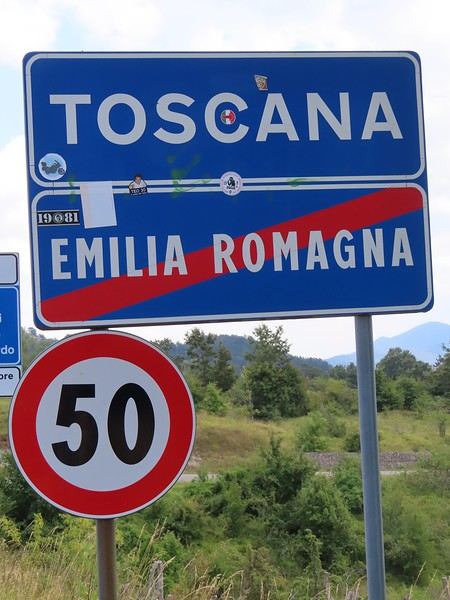
The endpoint of the planned hike is just a few meters from this sign (the trail crosses this road about 3 km from Balze). I realized Balze and the source of the Tevere (Tiber) are actually in Emilia-Romagna, not Toscana. I always thought the Tevere (Tiber), which flows toward Roma (Tyrrhenian side), started in Toscana! I’ll come back to this quirk in Day 3’s write-up.
My latest trip was to Italy from August 27 to September 26, 2024. As the title says, it was a wander through Tuscany in parts of the region that aren’t the most visited. No Firenze-Siena-Pisa trilogy, no San Gimignano; there’ll be a quick detour into Siena, but I’ll skip the best-known sights. That choice, plus traveling in September, should help dodge overtourism. It worked out—crowds were light, sometimes very light, the whole way. Here’s the practical rundown: - a long trip outside peak season (ah, retirees!) - solo camping (caravan) - a mix of activities (hiking, mountain biking, sightseeing) in places that aren’t always packed with tourists. Still, I don’t feel like I ended up in some hidden-away spots. Not sure if this will draw any readers.
DAY 1: Tuesday, August 27, 2024 The heat was intense on the drive in across the plain; two big storms—more rain and hail than lightning and thunder—threw the weather off, the first near Imola, the second on the four-lane road up the Savio valley. I left the Cesena-Roma four-lane at the Verghereto exit and climbed up to Balze (1,100 meters). The campsite is even higher (1,200 meters), in the forest near the source of the Tevere (Tiber). Staying up here will cut down on driving for the first part of the trip: a route through the Appennino (Apennines) on the border between Toscana and Emilia-Romagna. The temperature was surprisingly mild for the altitude, the air thick with moisture by late afternoon. I drove back down from the campsite to Balze (2 km on the road) to grab groceries (it’s doable) and scout tomorrow’s hike. .
The endpoint of the planned hike is just a few meters from this sign (the trail crosses this road about 3 km from Balze). I realized Balze and the source of the Tevere (Tiber) are actually in Emilia-Romagna, not Toscana. I always thought the Tevere (Tiber), which flows toward Roma (Tyrrhenian side), started in Toscana! I’ll come back to this quirk in Day 3’s write-up.
Safety and travel in Burkina Faso
Hello everyone! From 2002 to 2017, I made 10 annual two-month trips to Burkina Faso, backpacking style—traveling solo (independent, self-sufficient, no agency) across the country. I happily mixed with the local population (neighborhoods, maquis, hostels, bush taxis...) and was always on the lookout for joyful, interesting exchanges. Back then, the country was peaceful, very welcoming, and any issues were always resolved with laughter, patience, and kindness!
In 2017, I was preparing to settle there for six months a year, like others do elsewhere... But in early 2018, I had an emergency medical airlift (a "welcome sign" from the skies, in hindsight—compared to what followed, the country’s negative and unpredictable evolution in recent years, plus the lasting COVID crisis...).
So, "while waiting for things to improve," I haven’t returned personally since 2018. Burkina Faso is still currently classified as a red zone ("strongly advised against for tourists") by our authorities. Though I’ve heard a few rare contradictory reports, what’s the *real* situation on the ground right now? Specifically: - General safety for Europeans - Security in the main cities - Road safety, intercity transport, and travel conditions
The current transitional president, Ibrahim Traoré, enforces strict censorship on communications (journalistic and digital networks) to the outside world... and RTB (Burkinabè television) is state-run... so...
Welcome to any fresh, recent updates from travelers or locals. Many thanks!
In 2017, I was preparing to settle there for six months a year, like others do elsewhere... But in early 2018, I had an emergency medical airlift (a "welcome sign" from the skies, in hindsight—compared to what followed, the country’s negative and unpredictable evolution in recent years, plus the lasting COVID crisis...).
So, "while waiting for things to improve," I haven’t returned personally since 2018. Burkina Faso is still currently classified as a red zone ("strongly advised against for tourists") by our authorities. Though I’ve heard a few rare contradictory reports, what’s the *real* situation on the ground right now? Specifically: - General safety for Europeans - Security in the main cities - Road safety, intercity transport, and travel conditions
The current transitional president, Ibrahim Traoré, enforces strict censorship on communications (journalistic and digital networks) to the outside world... and RTB (Burkinabè television) is state-run... so...
Welcome to any fresh, recent updates from travelers or locals. Many thanks!
To the Top West End
In this time of general travel-journal scarcity, I’m stepping up to tell you about a far-too-short getaway to the Top West End, a local term for the very northern part of Western Australia, right on the border ( ;) ) with the Northern Territory.
As usual, I didn’t manage to keep it short, but this time I’ve got photos to go with it!
August 2020. Since the opportunities to explore the world are extremely limited right now, all we (R&X) can do is explore our own island! Well, just a part of it, because with the state borders still closed, we’re stuck in Western Australia (WA).
Luckily, we’re pretty fortunate because this state is huge: over 2.5 million km² (that’s more than four times the size of France or 1.5 times Quebec). What’s more, stretching over 20 degrees of latitude between the Antarctic Ocean and the Timor Sea, you’ll find climates ranging from Mediterranean to arid to tropical. That’s actually why we decided to head as far north as possible. Sick of the endless rainy winter in Perth, bring on the heat of the Kimberley... way up Nooorth!
Friday. At the airport, the main terminal was closed (not enough flights), so we ended up in the annex (where flights to the various mines usually depart from). There was no crowd at the gate, and in this huge, single departure lounge, empty seats were plentiful. Only three flights were listed on the screens for the rest of the morning: the first to Coondewanna (?), the second to Darwin, and ours to Kununurra (code KNX).
A cool breeze swept through the half-open corridors along the runways. At the top of the walkway leading to the Fokker 100 (the Airbuses and Boeings are now parked!), a flight attendant greeted us with a basket full of sanitary masks. We were actually the only masked passengers (the staff weren’t wearing them either). With zero Covid-19 cases in WA at the time, the only rule was to maintain social distancing—something pretty hard to do on a full plane!
It was also my first time wearing a mask—it felt weird, pretty uncomfortable, and after a while, painful behind the ears. I really feel for those who have to wear one all day, every day. The flight lasted three long hours, but luckily, I had a good book. From the window, I watched an endless expanse of salt lakes in all shapes and sizes—round, elongated, gray, white, sometimes blue and green—and an infinity of winding, capricious meanders, along with long straight lines that led nowhere. The last half-hour got more interesting as rocky, swollen formations and long, sloping plateaus appeared. Against the vast ochre landscape, green patches became more frequent.
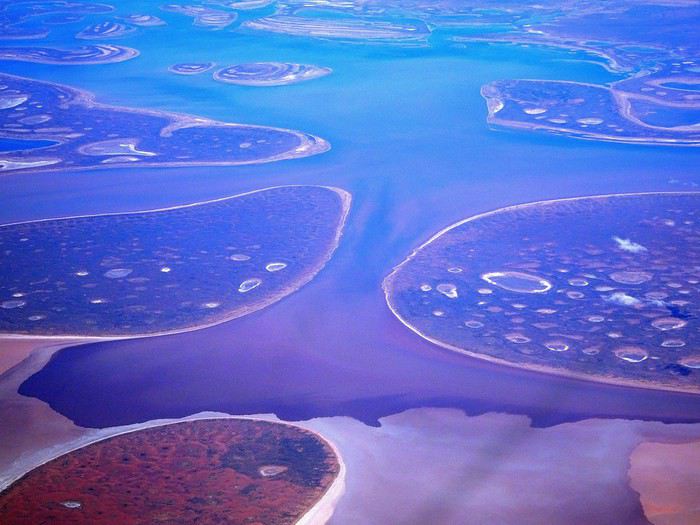
Just before landing, rows of green fields briefly appeared, along with an surprisingly wide river—but we were already rolling down the tarmac. A few hangars, a myriad of small, stationary planes, and a tiny terminal topped with a sign: “Welcome to Kununurra.”
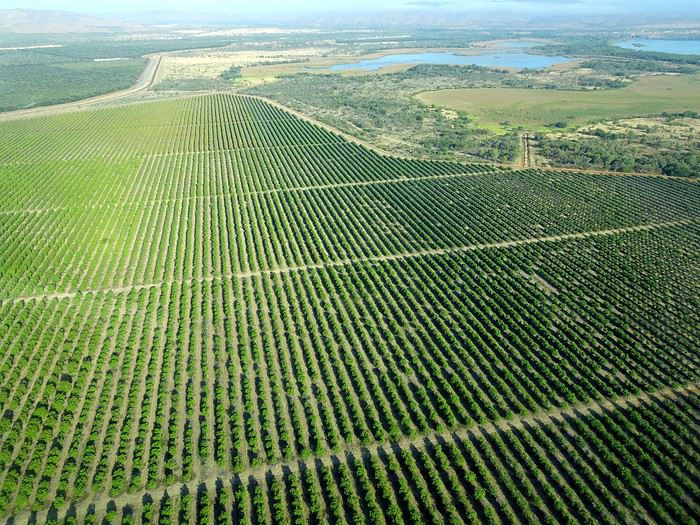
We wanted heat, and here it was—34°C the moment we stepped off the plane! We felt alive again and totally ridiculous in our jeans and sweaters. We quickly grabbed our suitcase and picked up the 4x4 we’d rented—more out of necessity, since only that type of vehicle can access the national parks we planned to visit.
Just four kilometers separated us from Kununurra, a town of 5,000 people founded in 1961 during the construction of the Lake Argyle Dam and the development of the Ord River Irrigation Area Scheme (more on that later). On the horizon, mountain ranges (a bit of an exaggeration, since we know Mt. Meharry, WA’s highest ‘mountain,’ doesn’t even reach 1,250 meters!) and closer to the road, a few irrigation canals cutting through stretches of bush, then a huge park overlooking a small lake lined with reeds.
A row of baobabs (yes, there are baobabs in Australia too!), a series of motels with immaculate lawns, a gas station, and there’s the main street leading to the town center—that is, the parking lots of the two supermarkets, the bottleshop, the pub, the Town Hall, the municipal pool, and the Tourist Office (already closed!), and at the next roundabout, another park, the Presbyterian church, and a few other shops. In short, two or three green blocks that you can explore in no time.
One road leads to the small industrial area and one of the town’s three or four campgrounds, while another heads toward the residential neighborhoods, which look just like the typical suburbs you find in any Australian city—except with tropical vegetation. We stocked up at Coles, an identical copy of the one near our place, and—surprise—the prices were practically the same.
We checked into one of the motels. The receptionist listed the town’s three or four restaurants, insisting that it’s always better to book a table. She recommended the Pump House, a bit outside town on the lake’s edge. “Best spot to watch the sunset, but hurry up.” she told us. It was only 5:00 PM!
When we got there half an hour later, the place was packed, and the sun had already disappeared behind a row of trees! Sure enough, we’d see a few days later that the sunset can be a stunning spectacle—if you wait a bit for the sky (especially if it’s cloudy) to blaze and reflect in the lake’s calm waters. A little disappointed, we headed back into town, where we easily found the other lively spot in town: the pub (nothing like an old English pub). Above the long L-shaped bar, several giant screens (thankfully muted) were broadcasting live footy, rugby league, etc. In one corner, players circled the pool table, while in another, customers were digging into plates of the day’s special. Instead of rooms, there were various patios where groups of friends and coworkers (easily recognizable by the fluoro vests they were still wearing) were gathered. We found a table under a mango tree—unfortunately, a little too close to the guitarist strumming his entire Country Music repertoire, complete with Keith Urban-style tremolos. Guaranteed culture shock!
Since it’s the custom here, we called the Country Club to book a table before the kitchen closed! The CC is the town’s—and even the region’s—fancy spot. Dark decor, modern furniture, dim lighting, and the air conditioning blasting. The twenty or so customers had taken refuge on the vast terrace, lit by torches. The view of the tall eucalyptus trees, illuminated by spotlights shifting from red to blue, was breathtaking.
The menu was minimal, but the grilled salmon was excellent, and the Pavlova (the meringue dessert Kiwis and Aussies have been arguing over since 1906) with melon and watermelon was absolutely divine.
It wasn’t even 9:00 PM, and we were already in bed. Had we already adopted the Top West End’s chicken schedule?!
To be continued... Journal dedicated to Attila
As usual, I didn’t manage to keep it short, but this time I’ve got photos to go with it!
August 2020. Since the opportunities to explore the world are extremely limited right now, all we (R&X) can do is explore our own island! Well, just a part of it, because with the state borders still closed, we’re stuck in Western Australia (WA).
Luckily, we’re pretty fortunate because this state is huge: over 2.5 million km² (that’s more than four times the size of France or 1.5 times Quebec). What’s more, stretching over 20 degrees of latitude between the Antarctic Ocean and the Timor Sea, you’ll find climates ranging from Mediterranean to arid to tropical. That’s actually why we decided to head as far north as possible. Sick of the endless rainy winter in Perth, bring on the heat of the Kimberley... way up Nooorth!
Friday. At the airport, the main terminal was closed (not enough flights), so we ended up in the annex (where flights to the various mines usually depart from). There was no crowd at the gate, and in this huge, single departure lounge, empty seats were plentiful. Only three flights were listed on the screens for the rest of the morning: the first to Coondewanna (?), the second to Darwin, and ours to Kununurra (code KNX).
A cool breeze swept through the half-open corridors along the runways. At the top of the walkway leading to the Fokker 100 (the Airbuses and Boeings are now parked!), a flight attendant greeted us with a basket full of sanitary masks. We were actually the only masked passengers (the staff weren’t wearing them either). With zero Covid-19 cases in WA at the time, the only rule was to maintain social distancing—something pretty hard to do on a full plane!
It was also my first time wearing a mask—it felt weird, pretty uncomfortable, and after a while, painful behind the ears. I really feel for those who have to wear one all day, every day. The flight lasted three long hours, but luckily, I had a good book. From the window, I watched an endless expanse of salt lakes in all shapes and sizes—round, elongated, gray, white, sometimes blue and green—and an infinity of winding, capricious meanders, along with long straight lines that led nowhere. The last half-hour got more interesting as rocky, swollen formations and long, sloping plateaus appeared. Against the vast ochre landscape, green patches became more frequent.
Just before landing, rows of green fields briefly appeared, along with an surprisingly wide river—but we were already rolling down the tarmac. A few hangars, a myriad of small, stationary planes, and a tiny terminal topped with a sign: “Welcome to Kununurra.”
We wanted heat, and here it was—34°C the moment we stepped off the plane! We felt alive again and totally ridiculous in our jeans and sweaters. We quickly grabbed our suitcase and picked up the 4x4 we’d rented—more out of necessity, since only that type of vehicle can access the national parks we planned to visit.
Just four kilometers separated us from Kununurra, a town of 5,000 people founded in 1961 during the construction of the Lake Argyle Dam and the development of the Ord River Irrigation Area Scheme (more on that later). On the horizon, mountain ranges (a bit of an exaggeration, since we know Mt. Meharry, WA’s highest ‘mountain,’ doesn’t even reach 1,250 meters!) and closer to the road, a few irrigation canals cutting through stretches of bush, then a huge park overlooking a small lake lined with reeds.
A row of baobabs (yes, there are baobabs in Australia too!), a series of motels with immaculate lawns, a gas station, and there’s the main street leading to the town center—that is, the parking lots of the two supermarkets, the bottleshop, the pub, the Town Hall, the municipal pool, and the Tourist Office (already closed!), and at the next roundabout, another park, the Presbyterian church, and a few other shops. In short, two or three green blocks that you can explore in no time.
One road leads to the small industrial area and one of the town’s three or four campgrounds, while another heads toward the residential neighborhoods, which look just like the typical suburbs you find in any Australian city—except with tropical vegetation. We stocked up at Coles, an identical copy of the one near our place, and—surprise—the prices were practically the same.
We checked into one of the motels. The receptionist listed the town’s three or four restaurants, insisting that it’s always better to book a table. She recommended the Pump House, a bit outside town on the lake’s edge. “Best spot to watch the sunset, but hurry up.” she told us. It was only 5:00 PM!
When we got there half an hour later, the place was packed, and the sun had already disappeared behind a row of trees! Sure enough, we’d see a few days later that the sunset can be a stunning spectacle—if you wait a bit for the sky (especially if it’s cloudy) to blaze and reflect in the lake’s calm waters. A little disappointed, we headed back into town, where we easily found the other lively spot in town: the pub (nothing like an old English pub). Above the long L-shaped bar, several giant screens (thankfully muted) were broadcasting live footy, rugby league, etc. In one corner, players circled the pool table, while in another, customers were digging into plates of the day’s special. Instead of rooms, there were various patios where groups of friends and coworkers (easily recognizable by the fluoro vests they were still wearing) were gathered. We found a table under a mango tree—unfortunately, a little too close to the guitarist strumming his entire Country Music repertoire, complete with Keith Urban-style tremolos. Guaranteed culture shock!
Since it’s the custom here, we called the Country Club to book a table before the kitchen closed! The CC is the town’s—and even the region’s—fancy spot. Dark decor, modern furniture, dim lighting, and the air conditioning blasting. The twenty or so customers had taken refuge on the vast terrace, lit by torches. The view of the tall eucalyptus trees, illuminated by spotlights shifting from red to blue, was breathtaking.
The menu was minimal, but the grilled salmon was excellent, and the Pavlova (the meringue dessert Kiwis and Aussies have been arguing over since 1906) with melon and watermelon was absolutely divine.
It wasn’t even 9:00 PM, and we were already in bed. Had we already adopted the Top West End’s chicken schedule?!
To be continued... Journal dedicated to Attila
Costa prolonge l'annulation de ses croisières English translation pending
Bonjour à tous,
Costa vient d'annoncer la prolongation de l'arrêt de ses croisières jusqu'au minimum 2 juin 20. Voici le détail et les dates de départ confirmés à ce jour :
BATEAUX CROISIÈRES ANNULÉES CROISIÈRES CONFIRMÉES Costa Smeralda Toutes les croisières jusqu’au 5/6 6/6 depuis Savona Costa Diadema Toutes les croisières jusqu’au 2/6 7/6 depuis Savona Costa Pacifica Toutes les croisières jusqu’au 4/6 5/6 depuis Genoa Costa Fascinosa Toutes les croisières jusqu’au 30/5 5/6 depuis Warnemunde Costa Favolosa Toutes les croisières jusqu’au 26/5 5/6 depuis Kiel Costa Magica Toutes les croisières jusqu’au 30/5 6/6 depuis Stockholm Costa Fortuna Toutes les croisières jusqu’au 8/6 9/6 depuis Ijmuiden Costa Luminosa Toutes les croisières jusqu’au 1/6 7/6 depuis Venice Costa Victoria Toutes les croisières jusqu’au 31/5 2/6 depuis Savona Costa Mediterranea Toutes les croisières jusqu’au 30/5 6/6 depuis Bari Costa Deliziosa Toutes les croisières jusqu’au 5/6 6/6 depuis Venice
Costa vient d'annoncer la prolongation de l'arrêt de ses croisières jusqu'au minimum 2 juin 20. Voici le détail et les dates de départ confirmés à ce jour :
BATEAUX CROISIÈRES ANNULÉES CROISIÈRES CONFIRMÉES Costa Smeralda Toutes les croisières jusqu’au 5/6 6/6 depuis Savona Costa Diadema Toutes les croisières jusqu’au 2/6 7/6 depuis Savona Costa Pacifica Toutes les croisières jusqu’au 4/6 5/6 depuis Genoa Costa Fascinosa Toutes les croisières jusqu’au 30/5 5/6 depuis Warnemunde Costa Favolosa Toutes les croisières jusqu’au 26/5 5/6 depuis Kiel Costa Magica Toutes les croisières jusqu’au 30/5 6/6 depuis Stockholm Costa Fortuna Toutes les croisières jusqu’au 8/6 9/6 depuis Ijmuiden Costa Luminosa Toutes les croisières jusqu’au 1/6 7/6 depuis Venice Costa Victoria Toutes les croisières jusqu’au 31/5 2/6 depuis Savona Costa Mediterranea Toutes les croisières jusqu’au 30/5 6/6 depuis Bari Costa Deliziosa Toutes les croisières jusqu’au 5/6 6/6 depuis Venice
Mais où qu'il est ce truc là (4) English translation pending
Croisière sur le Costa Mediterranea, départ le 12 mars 2020 English translation pending
Bonjour à tous, dans 1 semaine nous devrions partir d'Orly pour la Réunion et embarquer sur le "Costa Méditérranéa" pour 30 jours; déjà Israël qui empêche les touristes même Français de descendre du bateau ou une " petite quarantaine" sur leur sol (12 jours) . Donc quel nouveau itinéraire ?
Mon agence et Costa ne peuvent à ce jour nous en dire plus ! !
Dans ce contexte de morosité et les risques de confinement, le moral est bas loin du plaisir de partir en vacances !
Si d'autres croisiéristes sont dans le même cas, je les remercie par avance de se manifester pour partager nos inquiétudes
Le 10 Avril, nous devrions arriver à Venise, pour reprendre l'avion pour rentrer en France ; mais à ce jour il y a le corinavirus !
Si d'autres croisiéristes sont dans le même cas, je les remercie par avance de se manifester pour partager nos inquiétudes
Le 10 Avril, nous devrions arriver à Venise, pour reprendre l'avion pour rentrer en France ; mais à ce jour il y a le corinavirus !
Retour croisière sur le Costa Smeralda English translation pending
bonjour,
nous sommes de retour d'une croisière sur le COSTA SMERALDA. C'est un magnifique navire pour les personnes qui désirent admirer des spectacles. avec ses 2 zones de spectacles, il est possible d'admirer des spectacles à des heures différentes. nous sommes loin du concept des spectacles 1ier service et second service. les zones sur les ponts sont très jolies, plusieurs piscines, des bars, une très jolie promenade qui fait le tour du navire avec une passerelle de pavés de verres (pour les courageux). les cabines sembles un peu plus petites, ainsi que les balcons . Nous avons eu la chance de profiter d'une cabine avec terrasse, c'est vraiment super. une grande véranda (ou il est possible de se reposer sur les banquettes et prendre son petit déjeuner sans subir le mauvais temps) et un grand balcon. de très grands espaces (ce qui permet d'éviter la sensation de foule) et une décoration moderne et sobre. une magnifique piscine intérieure avec des spas, des zones de repos. un restaurant (self) réservé aux familles. les points négatifs: les cabines sembles plus petites et avec moins de rangement. il manque aussi le mini-bar. pour nos voisins Italiens, il n'y a pas de nappe sur les tables (nouveau style moderne et pour réduire améliorer l'écologie). il manque encore un peu d'organisation, ils n'ont pas encore trouvé leur vitesse de croisière. la piste pour les amateurs de danse est ovale et plus petite que sur les autres bateaux. l'aménagement du bar central est mal réparti, suivant ou l'on se trouve il est très difficile de voir le spectacle. les zones de spectacle ainsi que le théâtre sont fait pour être modulable, mais les piliers cachent la vue. nous retrouvons le concept américain par rapport aux spectacles. c'est un navire pour faire la fête. nous avons aimé notre croisière, malgré des péripéties : embarquement à BARCELONE (car de Marseille à Barcelone, très bien organisé), tempête à BARCELONE (donc bateau bloqué au port 2 nuits, l'escale de Palma annulée). très bonne croisière dans l'ensemble.
Carnet de Sierra Leone janvier 2020 English translation pending
Voici mes premieres infos d'un voyage que je viens de commencer depuis le 7 janvier
Contexte 72 ans au compteur avec des ossatures redressées par les chirurgiens Je pars seule avec les infos de Choucarde, Newyorp et Gabieri que je remercie au passage + la lecture du guide Bradt en anglais Mon itinéraire a été etabli en fonction de mes goûts : plutot la campagne que la ville, la visite des marches , tout ce que se rapporte à la nature puisque naturaliste de formation Et hebergement : matelas dur et salle de bain perso donc un certain confort
Billet achete Paris Bruxelles Freetown par Brussels Airlines : rien à dire Mais a Paris comme a Bruxelles j'ai du fournir le texte du " visa on arrival'' paru le 6 septembre....prévoyante le texte était archivé dans la tablette, Personne ne connaissait le texte et on m'a remercié. ...apparemment la première dans ce cas
Arrivee a Lungi l'aeroport de Freetown Le visa a été etabli sans pb pour 80 dollars ATM et bureau de change : un euro= 10300SL leones et découverte de la liasse de billets a trimbaler ....des cm d'épaisseur. ..des paquets de 5000 SLLeones Logement au Aiport Lodge: resa depuis la France avec booking.com mais payé directement au manager via ma banque sans frais ( Compte en GB ...avant le Brexit) Solution pour éviter d'arriver la nuit dans une ville inconnue . Differents moyens pour rallier Freetown distant d'une quarantaine de km via un estuaire Je choisis sur les conseils du manager de la lodge de prendre un vehicule qui m'emmenera directement au centre de Freetown( 50 dollars + 5000 SL Leones pour le prix d' une personne en ferry non VIP) duree totale presque 3 h dont 50 minutes de ferry et beaucoup d'embouteillage depuis le warf Kissay
Hebergement à Freetown au Sierra Leone International hotel au 27 Rawdon street ( Prix single 200 0000 SL leones ) Pas de moustiquaire pas de wifi la clim en soirée, mais Correct pas le vrai grand luxe Le quartier est celui d'un marché géant de rue ou les vehicules avancent cm par cm , Beaucoup de bruit par haut parleur le jour mais calme des 19h. Foule dense. J'ai pris le petit dej et les repas au J Royal Bakery de l'autre cote de la rue a 50m en montant.En étage. Une cuisinière aux petits oignons pour me cuire des légumes
Telephone : directement au magasin Africell Carte sim gratis et data 4G ( qui fonctionne uniquement a Freetown mais ailleurs c'est lent lent ou impossible ) Telephone en France : 2990 SL leones la minute ...on achete du crédit
Change : je n'aime pas changer au noir en ville....et une curiosite à la Banque Zenith dans meme rue il a été impossible de changer des euros , on appelle un gars qui change au noir dans la rue et la transaction s'effectue dans un recoin de la banque, a l'écart sous l'oeil d'un employe de la banque en gilet orange. ..je n'etais pas la seule dans ce cas Taux 1euro= 10700 SL leones mais pas de document qui prouve d'opération
Petite course en richshaw appele ici keke 2000 SL leones Musee national : 40000 SLLeones: des vieilleries coloniales, rien de spectaculaire Le musee est a proximite du Coton tree un kapokier tricentenaire au milieu de la circulation. Encore majestueux et en saidon sèche la seve est économisée et les branches superieures sont defeuillees National railway 50000SL leones assez loin et bien faire comprendre au richshaw le nom sinon il se perd ....et on a droit a une visite des quartiers les uns apres les autres...et la note s'allonge Discussion interessante avec les gardiens de ce musee sur les couts de la vie locale
Depart pour Kambia a Shell jonction Vers 6h du matin pas de lumière sauf les loupiotes des lampes electriques, c'est glauque et les possibilites de depart nombreuses. Indispensable de se faire accompagner pour etre cornake utilement On a choisit pour moi le mieux: une voiture de 5 personnes et j'ai paye les 2 places de devant pour poser mon opulente personne soit 90000 SL Leones Duree du voyage 2h30 et 3 secteurs d'autoroute a l'africaine payante Les chinois ( ils sont quasiment partout en Afrique) activent pelleteuses , nivelleuses et bulldozers pour compléter au nord cette autoroute. Cette voie de Freetown a Kambia se prolonge jusqu'a Conakry ...Les chinois ont planifié une transafricaine depuis Djibouti et cela fait sans doute parti de leurs projets. La configuration geographique de cet estuaire en ferait un port en eau profonde le 2 eme de l'Afrique de l'Ouest
Kambia: hebergement a l'Africana Village dans un jardin sous les eucalyptus et les euphorbes géantes : .250000 SL Leones en suite dans un bungalow Avec petit dej succint compris. Electricite par générateur de 19h a 7 h du matin Pas de wi fi et la 4G inerte. J'ai paye le mot de passe 10000 SL leones la demi heure a l'Alfat internet cafe Tres bon accueil des proprios Olive et Ibraim secondés par Salaam J'ai diner la le soir mais j'ai achete mes bouteilles d'eau a la succursale de Total appelée Bonjour; vente de toutes boissons tres fraîches et même des pommes ( 6000 Slleones l'unite) Il m'a ete conseille de toujours etre accompagnée par quelqu'un pour favoriser le contact en creole appele le krio et pour demander la permission de prendre des photos rarement refusée. Ce quelqu'un a ete un chauffeur de moto Abdoula Donc taxi moto pour les villages a Massama ou on fabrique des nattes A Mambolo a 1h de moto il n'y a plus qu'un potier Et market day a Bamoi très très anime , recommande vue la foule de faire attention a ces affaires Il faut donc payer la course et rajouter a la louche l'equivalent de un dollar l'heure et arrondir
Pour l'instant accueil ++++ et on se met souvent en 4 pour me satisfaire. Je paie les efforts par des pourboires quand on me porte ma valise par exemple ou j'en donne aussi a la cuisiniere si le plat convient a ma demande
Il est tard je jouis a Makeni d'une confortable wifi au M J Hotel la où etait passe Beckham Je continuerais un autre jour si la wi fi se presente aussi bien
Carassou
Contexte 72 ans au compteur avec des ossatures redressées par les chirurgiens Je pars seule avec les infos de Choucarde, Newyorp et Gabieri que je remercie au passage + la lecture du guide Bradt en anglais Mon itinéraire a été etabli en fonction de mes goûts : plutot la campagne que la ville, la visite des marches , tout ce que se rapporte à la nature puisque naturaliste de formation Et hebergement : matelas dur et salle de bain perso donc un certain confort
Billet achete Paris Bruxelles Freetown par Brussels Airlines : rien à dire Mais a Paris comme a Bruxelles j'ai du fournir le texte du " visa on arrival'' paru le 6 septembre....prévoyante le texte était archivé dans la tablette, Personne ne connaissait le texte et on m'a remercié. ...apparemment la première dans ce cas
Arrivee a Lungi l'aeroport de Freetown Le visa a été etabli sans pb pour 80 dollars ATM et bureau de change : un euro= 10300SL leones et découverte de la liasse de billets a trimbaler ....des cm d'épaisseur. ..des paquets de 5000 SLLeones Logement au Aiport Lodge: resa depuis la France avec booking.com mais payé directement au manager via ma banque sans frais ( Compte en GB ...avant le Brexit) Solution pour éviter d'arriver la nuit dans une ville inconnue . Differents moyens pour rallier Freetown distant d'une quarantaine de km via un estuaire Je choisis sur les conseils du manager de la lodge de prendre un vehicule qui m'emmenera directement au centre de Freetown( 50 dollars + 5000 SL Leones pour le prix d' une personne en ferry non VIP) duree totale presque 3 h dont 50 minutes de ferry et beaucoup d'embouteillage depuis le warf Kissay
Hebergement à Freetown au Sierra Leone International hotel au 27 Rawdon street ( Prix single 200 0000 SL leones ) Pas de moustiquaire pas de wifi la clim en soirée, mais Correct pas le vrai grand luxe Le quartier est celui d'un marché géant de rue ou les vehicules avancent cm par cm , Beaucoup de bruit par haut parleur le jour mais calme des 19h. Foule dense. J'ai pris le petit dej et les repas au J Royal Bakery de l'autre cote de la rue a 50m en montant.En étage. Une cuisinière aux petits oignons pour me cuire des légumes
Telephone : directement au magasin Africell Carte sim gratis et data 4G ( qui fonctionne uniquement a Freetown mais ailleurs c'est lent lent ou impossible ) Telephone en France : 2990 SL leones la minute ...on achete du crédit
Change : je n'aime pas changer au noir en ville....et une curiosite à la Banque Zenith dans meme rue il a été impossible de changer des euros , on appelle un gars qui change au noir dans la rue et la transaction s'effectue dans un recoin de la banque, a l'écart sous l'oeil d'un employe de la banque en gilet orange. ..je n'etais pas la seule dans ce cas Taux 1euro= 10700 SL leones mais pas de document qui prouve d'opération
Petite course en richshaw appele ici keke 2000 SL leones Musee national : 40000 SLLeones: des vieilleries coloniales, rien de spectaculaire Le musee est a proximite du Coton tree un kapokier tricentenaire au milieu de la circulation. Encore majestueux et en saidon sèche la seve est économisée et les branches superieures sont defeuillees National railway 50000SL leones assez loin et bien faire comprendre au richshaw le nom sinon il se perd ....et on a droit a une visite des quartiers les uns apres les autres...et la note s'allonge Discussion interessante avec les gardiens de ce musee sur les couts de la vie locale
Depart pour Kambia a Shell jonction Vers 6h du matin pas de lumière sauf les loupiotes des lampes electriques, c'est glauque et les possibilites de depart nombreuses. Indispensable de se faire accompagner pour etre cornake utilement On a choisit pour moi le mieux: une voiture de 5 personnes et j'ai paye les 2 places de devant pour poser mon opulente personne soit 90000 SL Leones Duree du voyage 2h30 et 3 secteurs d'autoroute a l'africaine payante Les chinois ( ils sont quasiment partout en Afrique) activent pelleteuses , nivelleuses et bulldozers pour compléter au nord cette autoroute. Cette voie de Freetown a Kambia se prolonge jusqu'a Conakry ...Les chinois ont planifié une transafricaine depuis Djibouti et cela fait sans doute parti de leurs projets. La configuration geographique de cet estuaire en ferait un port en eau profonde le 2 eme de l'Afrique de l'Ouest
Kambia: hebergement a l'Africana Village dans un jardin sous les eucalyptus et les euphorbes géantes : .250000 SL Leones en suite dans un bungalow Avec petit dej succint compris. Electricite par générateur de 19h a 7 h du matin Pas de wi fi et la 4G inerte. J'ai paye le mot de passe 10000 SL leones la demi heure a l'Alfat internet cafe Tres bon accueil des proprios Olive et Ibraim secondés par Salaam J'ai diner la le soir mais j'ai achete mes bouteilles d'eau a la succursale de Total appelée Bonjour; vente de toutes boissons tres fraîches et même des pommes ( 6000 Slleones l'unite) Il m'a ete conseille de toujours etre accompagnée par quelqu'un pour favoriser le contact en creole appele le krio et pour demander la permission de prendre des photos rarement refusée. Ce quelqu'un a ete un chauffeur de moto Abdoula Donc taxi moto pour les villages a Massama ou on fabrique des nattes A Mambolo a 1h de moto il n'y a plus qu'un potier Et market day a Bamoi très très anime , recommande vue la foule de faire attention a ces affaires Il faut donc payer la course et rajouter a la louche l'equivalent de un dollar l'heure et arrondir
Pour l'instant accueil ++++ et on se met souvent en 4 pour me satisfaire. Je paie les efforts par des pourboires quand on me porte ma valise par exemple ou j'en donne aussi a la cuisiniere si le plat convient a ma demande
Il est tard je jouis a Makeni d'une confortable wifi au M J Hotel la où etait passe Beckham Je continuerais un autre jour si la wi fi se presente aussi bien
Carassou
Retour sur première croisière Costa Smeralda au départ de Savone le 21 décembre 2019 English translation pending
Bonjour à tous et bonne année.
Voici quelque infos sur la 1ere croisière du Smeralda départ de Savone le 21 déc 2019 (nous avons eu la chance de ne pas partir de Marseille ..)
Les points positifs : le navire est magnifique design italien très réussi , sobre, moderne et chic tant à l'intérieur qu'à l'extérieur. de nombreux bars tous différents "tranquilles" , ambiances musicales variées . Sur les ponts de nombreux endroits sympa, sièges confortables (mais non mis en place une bonne partie de la croisière , heureusement que nous avons fait le tour le premier jour lors de l'embarquement ! ) .Tables et chaise extérieures de différents style avec lumière intégrée , changements de niveaux ...
Fausses jardinières sur les ponts très jolies mais attention si vous avez une cabine terrasse pont 8 vous êtes en "direct sur le pont et donc au passage..
Le restau des suites , rien à dire sur la qualité des repas c'était bon.
Points négatifs : les spectacles du soir au théâtre et au Colosseo sont programmés à 20h15 ou 20h30 donc qq soit votre heure de diner vous manquez soit le début soit la fin. Après s'en être plaints la réponse fût: vous pouvez les revoir à la télé et ils repasseront dans la semaine mais au même créneau horaire ! De plus que ce soit au Colesseo ou au théâtre très peu de place permettent une bonne visibilité ( pour Costa ce n'est pas grave si l'on voit mal puisqu'il y a des écrans partout ! Moins de groupes de musiciens mais avec le nouveau concept nous avons droit aux groupes "virtuels " au Colesseo même pour danser .
Comme d'autres personnes nous avons regretté le manque de nappes aux restaurants y compris au Panorama ( réservé aux suites ).Choquant également que verres et couverts non utilisés par les convives précédents restent sur la table et que l'on se contente de rajouter ce qu'il manque (comment la table est elle nettoyée ? ).
attention avec un forfait connaisseur (intenditore ) il vaut mieux l'être car à 3 reprises nous avons commandé du champagne (Noël oblige ) et on nous a servi Spumanti , Prosecco ou autre , on ne voit pas les bouteilles les verres arrivant pleins. le changement s'est fait sans pb.
Un point positif le restaurant Panorama est en horaires libres de 19h à 21h .
Dans les suites il y a toujours le mini bar qui ne contient que cannettes de bière et sodas. Pas de corbeille de snacks .
Les suites arrières sont de véritables petits T2 avec immense balcon double (coté "chambre"et coté "salon" ) mais pas de chaise longue.
Coté pratique: la SDB elle aussi très design ( douche immense à jets multiples ) , doubles vasques WC indépendant mais à l'utilisation pas de rangement ( les étagères sous les lavabos étant occupées par les piles de serviettes) la nuit de la tempête nous avons couru derrière tout ! Pas de tiroirs pour les vêtements. Une grande penderie qui ferme à l'entrée et 2 penderies "ouvertes" coté chambre.
En cours de croisières on peut voir les dépenses sur les bornes mais pas le total et on ne peut rien imprimer il faut l'appli Costa mais elle ne marchait pas .
Pour les 10% premium on ne peut plus le faire sur les bornes, il faut soit le faire avant le départ soit faire la queue au Costa Club.
Il n'y a pas de réunion d'info pour le débarquement il faut regarder sur la télé mais pas de chance cela ne marchait pas .Pas de pb pour nous , c'est toujours pareil , mais pour ceux qui faisait une croisière la première fois beaucoup de stress.
En conclusion circuit sympa mais pour le bateau pour nous vraiment trop grand et design superbe pour les photos mais pas très fonctionnel et dommage pour les spectacles nous préférons le contact avec les artistes plutôt que le virtuel .
Si certains ont d'autres questions n'hésitez pas.
Carnet de Namibie (ou voyage au pays d’Hilux) English translation pending
Et oui, encore un ! 😉
(Le sous-titre vient uniquement de l’impression de n’avoir jamais vu autant de ce type de véhicule, l’impression qu’il n’y avait quasiment que ça.)
_
Ce voyage sera un « one-way » de 30 jours (15 août – 14 septembre), début à Windhoek (capitale de la Namibie) et fin à Victoria Falls (Zimbabwe), en Toyota Hilux avec tente sur le toit (loueur Asco Car Hire) et réservations (campings, hôtels et voiture) faites par Tourmaline ; les réservations ont été faites pratiquement 18 mois à l’avance, certains campings (Etosha par exemple) semblant être très demandés. La période a été choisie pour y être en hiver et avec encore assez d’eau aux chutes Victoria.
Nous (67 et 47 ans) avons l’habitude, aux USA, de dormir dans la voiture ; sur le toit, ce sera une première. Le matériel de couchage est fourni (couettes, drap, oreillers) mais nous apportons quand même nos duvets (on aurait pu s’en passer). La plupart des nuits seront en camping (mais pas sauvage) et une fois par semaine (environ) une nuit d’hôtel ou assimilé.
Comme nous serons en hiver, j’ai donné à Isabelle la fourchette de température (de 0 à 28°C) que nous devrions avoir à supporter, pour le choix des vêtements ; la réalité sera un peu différente mais n’anticipons pas.
_
Pour notre parcours, un bon dessin valant mieux qu’un long discours, voici la carte de notre projet :
_
 _
J00 – jeudi 15 août 2019
Départ pour la Namibie ; le vol principal a été choisi sur Air Namibia pour des raisons d'horaire (arrivée vers 6h30) et il nous faut donc rallier Francfort ; Air France nous propose des vols aller aux horaires convenables mais, pratiquement un an avant le départ, change complètement ses horaires d'où un départ très matinal de Brest à 6h vers Roissy puis Francfort pour un décollage final vers 20h10.
_
J00 – jeudi 15 août 2019
Départ pour la Namibie ; le vol principal a été choisi sur Air Namibia pour des raisons d'horaire (arrivée vers 6h30) et il nous faut donc rallier Francfort ; Air France nous propose des vols aller aux horaires convenables mais, pratiquement un an avant le départ, change complètement ses horaires d'où un départ très matinal de Brest à 6h vers Roissy puis Francfort pour un décollage final vers 20h10.
J01 – vendredi 16 août 2019 => Windhoek Finalement, tout se passe assez bien malgré les attentes un peu longues et nous atterrissons à Windhoek à 6h10 ; sortie de l’avion (on descend sur le tarmac), il fait encore nuit et frais. Passage de l’immigration assez rapide malgré le nombre de voyageurs, récupération des bagages et nous trouvons le chauffeur de chez Asco qui nous attend (enfin, pas que nous). On quitte l’aéroport à 7h10 soit 1 h après l’atterrissage ; il fait jour et, sur le trajet, nous découvrons nos premiers animaux « exotiques ». Arrivés chez Asco, nous faisons la connaissance de Benoît, notre interlocuteur français envoyé par Tourmaline ; les divers échanges et signatures de documents sont facilités par sa présence. Ensuite, découverte du véhicule, de la tente et toutes les explications qui vont avec (et il y en a !) ; j’espère que nous n’oublierons rien. Benoît demande à l’employé d’Asco de nous donner, en plus du matériel de camping, un escabeau 2 marches et il faut bien avouer que ce fût très pratique ; plus besoin de grimper sur le pneu (au risque de tomber) pour manipuler la fermeture-éclair de la tente. Je serai le seul conducteur (ce qui ne dérange pas trop Isabelle) car négociation impossible bien que nous venions de prendre le package d’assurances max. _ Le véhicule est donc un Hilux double cabine (pour notre confort), mais le modèle Raider avec snorkel (dont nous n’aurons pas besoin), 2,8l de cylindrée, boite auto et une vraie fonction 4x4 (long et court avec blocage de différentiel) et très belle garde au sol ; 6 pneus neufs à gros crampons équipent notre superbe destrier qui a environ 130 000 km et quelques « accrocs », ce qui n’est pas plus mal ; la peinture est noire, mais ça ne durera pas. La partie arrière, totalement fermée par de la tôle épaisse, est équipée de 2 énormes tiroirs de rangement sur glissières, d’une caisse plastique contenant le matériel de cuisine et d’un vrai frigo, lui aussi sur glissières ; ce frigo est branché sur une seconde batterie et, comme nous roulions tous les jours, nous n’avons jamais eu besoin de l’arrêter, même la nuit. _ Trois heures plus tard, nous quittons Asco pour le centre commercial Spar pour faire le plein de nourriture pour les jours suivants ; les essuie-glaces se mettent en route à chaque appui sur les clignotants, tout étant quasiment inversé avec la conduite à gauche. Comme aide à la conduite, nous utiliserons Maps.me sur le téléphone en mode avion (testé juste quelques jours auparavant) ; tous les trajets (format kml) sont chargés ainsi qu’environ 300 points GPS et une version de sauvegarde sur tablette au cas où. C’est donc une première pour nous avec cette application et je pense, après utilisation quotidienne pendant 1 mois, que l’on peut lui décerner une note de 8/10. Nous faisons nos courses dans la grande surface mais sommes déçus par certains rayons, notamment les fruits et légumes (nous trouverons nettement mieux le lendemain). _ En sortant, nous essayons d’acheter des pulas (monnaie du Botswana, pays limitrophe), mais impossible ; un bureau de change n’en a pas et la banque nationale de Windhoek ne traite qu’avec ceux qui ont un compte. Comment ferons-nous à la frontière puisque le Botswana refuse dorénavant tout paiement avec une autre monnaie que la sienne, y compris la carte bleue (information récente fournie par Tourmaline et que nous verrons affichée au poste frontière) ? Quelques dernières courses (vin, apéro…) et nous rejoignons notre havre pour la nuit, la pension Londiningi où nous avons retenu le repas du soir et la nuit ; cette pension est tenue par Nathalie, une française. Pour l’instant, Maps.me marche très bien. Un rafraîchissement puis nous sortons nos bagages de la voiture ; il va falloir vider nos 2 gros sacs de voyage et répartir les contenus (les duvets pour la tente, les polaires pour les nuits fraîches, …). Test de l’adaptateur électrique : impossible de brancher nos prises françaises dedans ; Nathalie et un des occupants nous montreront qu’il suffisait de casser 2 petits ergots. _ L’heure du dîner arrive et, avec un apéritif bien mérité, nous discutons avec nos proches voisins qui, eux, ont fini leur voyage ; ils ont donc des infos toutes fraîches. Assez rapidement, nous nous rendons compte que nous avons des « points communs » et pour cause, il s’agit de Rouquine38, membre de VF et de son mari. Retour à la chambre pour une nuit bien méritée. _ Notre carrosse pour un mois
_
Notre carrosse pour un mois
_

_

_
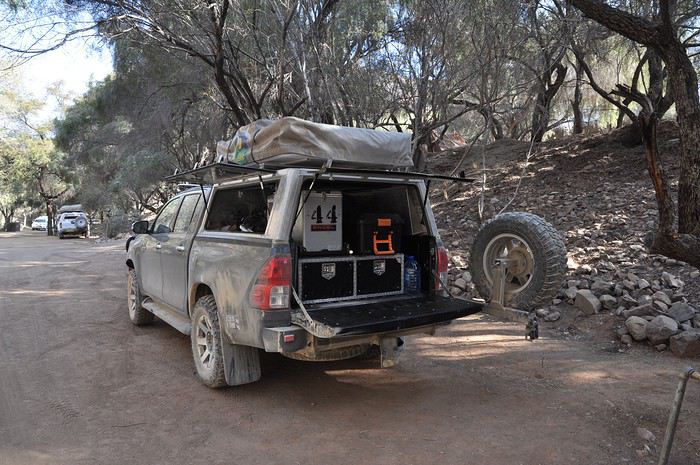
_
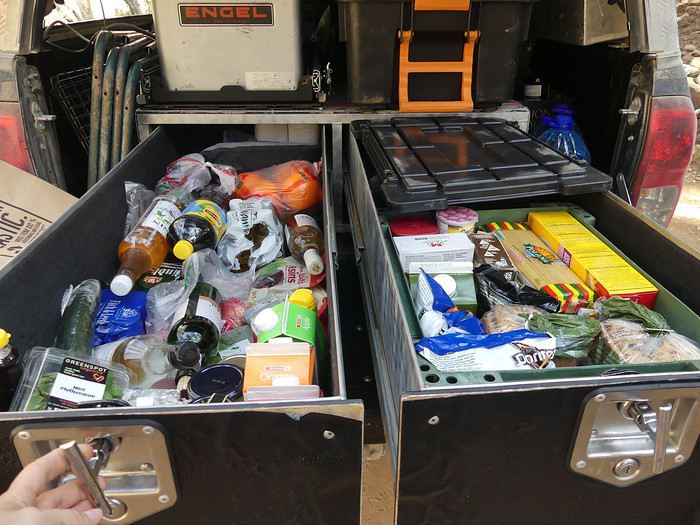 Les 2 énormes tiroirs
_
Les 2 énormes tiroirs
_
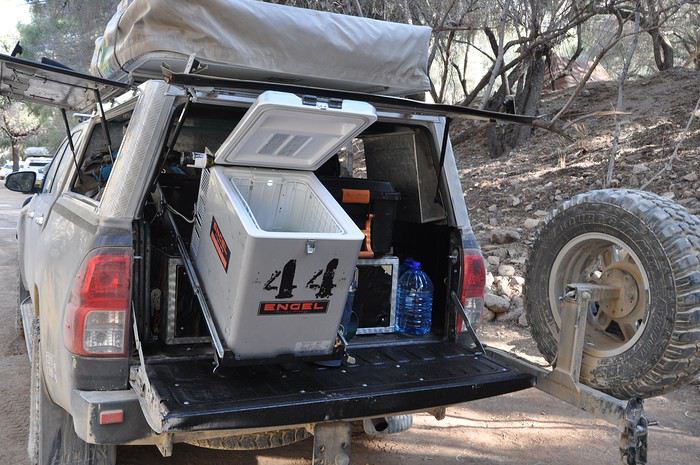 Le frigo de 44 litres en position ouvert
-

_
J00 – jeudi 15 août 2019
Départ pour la Namibie ; le vol principal a été choisi sur Air Namibia pour des raisons d'horaire (arrivée vers 6h30) et il nous faut donc rallier Francfort ; Air France nous propose des vols aller aux horaires convenables mais, pratiquement un an avant le départ, change complètement ses horaires d'où un départ très matinal de Brest à 6h vers Roissy puis Francfort pour un décollage final vers 20h10.J01 – vendredi 16 août 2019 => Windhoek Finalement, tout se passe assez bien malgré les attentes un peu longues et nous atterrissons à Windhoek à 6h10 ; sortie de l’avion (on descend sur le tarmac), il fait encore nuit et frais. Passage de l’immigration assez rapide malgré le nombre de voyageurs, récupération des bagages et nous trouvons le chauffeur de chez Asco qui nous attend (enfin, pas que nous). On quitte l’aéroport à 7h10 soit 1 h après l’atterrissage ; il fait jour et, sur le trajet, nous découvrons nos premiers animaux « exotiques ». Arrivés chez Asco, nous faisons la connaissance de Benoît, notre interlocuteur français envoyé par Tourmaline ; les divers échanges et signatures de documents sont facilités par sa présence. Ensuite, découverte du véhicule, de la tente et toutes les explications qui vont avec (et il y en a !) ; j’espère que nous n’oublierons rien. Benoît demande à l’employé d’Asco de nous donner, en plus du matériel de camping, un escabeau 2 marches et il faut bien avouer que ce fût très pratique ; plus besoin de grimper sur le pneu (au risque de tomber) pour manipuler la fermeture-éclair de la tente. Je serai le seul conducteur (ce qui ne dérange pas trop Isabelle) car négociation impossible bien que nous venions de prendre le package d’assurances max. _ Le véhicule est donc un Hilux double cabine (pour notre confort), mais le modèle Raider avec snorkel (dont nous n’aurons pas besoin), 2,8l de cylindrée, boite auto et une vraie fonction 4x4 (long et court avec blocage de différentiel) et très belle garde au sol ; 6 pneus neufs à gros crampons équipent notre superbe destrier qui a environ 130 000 km et quelques « accrocs », ce qui n’est pas plus mal ; la peinture est noire, mais ça ne durera pas. La partie arrière, totalement fermée par de la tôle épaisse, est équipée de 2 énormes tiroirs de rangement sur glissières, d’une caisse plastique contenant le matériel de cuisine et d’un vrai frigo, lui aussi sur glissières ; ce frigo est branché sur une seconde batterie et, comme nous roulions tous les jours, nous n’avons jamais eu besoin de l’arrêter, même la nuit. _ Trois heures plus tard, nous quittons Asco pour le centre commercial Spar pour faire le plein de nourriture pour les jours suivants ; les essuie-glaces se mettent en route à chaque appui sur les clignotants, tout étant quasiment inversé avec la conduite à gauche. Comme aide à la conduite, nous utiliserons Maps.me sur le téléphone en mode avion (testé juste quelques jours auparavant) ; tous les trajets (format kml) sont chargés ainsi qu’environ 300 points GPS et une version de sauvegarde sur tablette au cas où. C’est donc une première pour nous avec cette application et je pense, après utilisation quotidienne pendant 1 mois, que l’on peut lui décerner une note de 8/10. Nous faisons nos courses dans la grande surface mais sommes déçus par certains rayons, notamment les fruits et légumes (nous trouverons nettement mieux le lendemain). _ En sortant, nous essayons d’acheter des pulas (monnaie du Botswana, pays limitrophe), mais impossible ; un bureau de change n’en a pas et la banque nationale de Windhoek ne traite qu’avec ceux qui ont un compte. Comment ferons-nous à la frontière puisque le Botswana refuse dorénavant tout paiement avec une autre monnaie que la sienne, y compris la carte bleue (information récente fournie par Tourmaline et que nous verrons affichée au poste frontière) ? Quelques dernières courses (vin, apéro…) et nous rejoignons notre havre pour la nuit, la pension Londiningi où nous avons retenu le repas du soir et la nuit ; cette pension est tenue par Nathalie, une française. Pour l’instant, Maps.me marche très bien. Un rafraîchissement puis nous sortons nos bagages de la voiture ; il va falloir vider nos 2 gros sacs de voyage et répartir les contenus (les duvets pour la tente, les polaires pour les nuits fraîches, …). Test de l’adaptateur électrique : impossible de brancher nos prises françaises dedans ; Nathalie et un des occupants nous montreront qu’il suffisait de casser 2 petits ergots. _ L’heure du dîner arrive et, avec un apéritif bien mérité, nous discutons avec nos proches voisins qui, eux, ont fini leur voyage ; ils ont donc des infos toutes fraîches. Assez rapidement, nous nous rendons compte que nous avons des « points communs » et pour cause, il s’agit de Rouquine38, membre de VF et de son mari. Retour à la chambre pour une nuit bien méritée. _
Notre carrosse pour un mois
__
_
_
Les 2 énormes tiroirs
_
Le frigo de 44 litres en position ouvert-
Trajet Antofagasta de la Sierra - San Antonio de los Cobres en 2x4 SUV English translation pending
Bonjour,
est-ce que le trajet entre Antofagasta dlS et San Antonio dlC peut être raisonnablement effectué en véhicule de type 2x4 SUV, séjour prévu pour le mois d'août 2020?
La location d'un 4x4 pour faire la boucle prévue est hors de notre budget.
La boucle Sud de Salta que nous imaginons est la suivante: - départ de Salta / Cafayate 200km, 1 nuit à Cafayate - Cafayate / Antofagasta dlS 410km , 3 nuits à Antofagasta (2 jours d'excursions avec guide local et son 4x4) - Antofagasta / San Antonio dlC 330km, 1 nuit à San Antonio - San Antonio / Cachi 150km, 1 nuit à Cachi - Cachi / Salta 170km, nuit à Salta Cela donne des étapes longues longues en km et en temps (soit env 1300km en 5 jours / + 2 jours avec guide) surtout celles à l'arrivée et au départ de Antofagasta mais comment faire autrement?
Merci pour votre support et vos suggestions. Cordialement Willy
La boucle Sud de Salta que nous imaginons est la suivante: - départ de Salta / Cafayate 200km, 1 nuit à Cafayate - Cafayate / Antofagasta dlS 410km , 3 nuits à Antofagasta (2 jours d'excursions avec guide local et son 4x4) - Antofagasta / San Antonio dlC 330km, 1 nuit à San Antonio - San Antonio / Cachi 150km, 1 nuit à Cachi - Cachi / Salta 170km, nuit à Salta Cela donne des étapes longues longues en km et en temps (soit env 1300km en 5 jours / + 2 jours avec guide) surtout celles à l'arrivée et au départ de Antofagasta mais comment faire autrement?
Merci pour votre support et vos suggestions. Cordialement Willy
Voyage en Namibie en octobre 2018 English translation pending
Bonsoir tout le monde
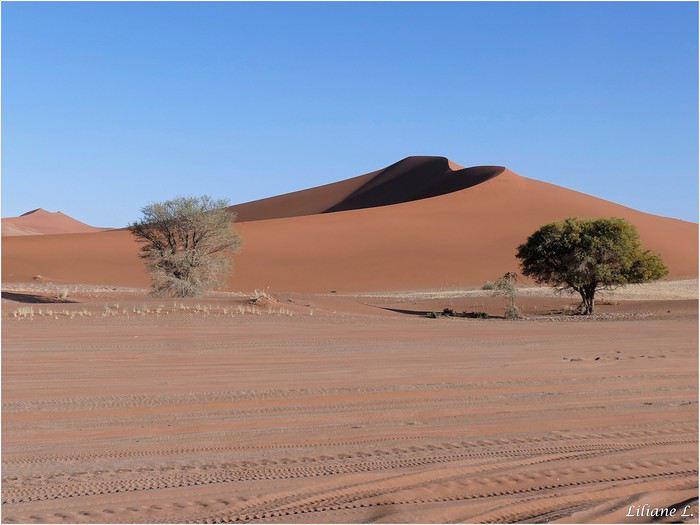
En Octobre 2018 nous avons fait un superbe voyage en Namibie entre déserts, safaris, et observations animalières. Nous ne l’avons pas fait en individuel comme c’est le cas sur ce forum mais j’ai quand même envie de le partager avec vous. Etant conscients que le montage, repliage de la tente sur le toit ce n’était pas pour nous, que nous n’avions jamais conduit sur piste ni même un 4 /4, mais surtout que si nous crevions nous n’aurions pas la force de changer la roue, nous avons opté pour un safari organisé par une agence en France que nous connaissions et ne l’avons pas regretté. Pour convenance personnelle nous sommes partis de Londres et retour à Paris. Nous retrouvons donc certains de nos co-équipiers à Londres, d'autres a Johannesburg et les 2 derniers à Windhoeck. Nous sommes 14 personnes répartis en deux 4/4 y compris nos deux Chauffeurs-Guides francophones et une Accompagnatrice. Nous logeons en bungalow.
Si notre circuit vous intéresse vous pouvez voir le récit complet avec photos ici
Bristol - Londres - JohannesburgWindhoek - Omaruru Omaruru - Mushara Bush camps (près entrée est du parc National d'Etosha) Parc National d'Etosha (Okaukuejo Lodge) Parc National d'Etosha - Hobatère Lodge (sortie Ouest du Parc) Hobatere Lodge -Epupa Falls Epupa Falls et les alentours(visite Himbas chutes) Epupa Epupa - Palmwag - Grooteberg Lodge Grootberg Lodge - Twyfelfontein Twyfelfontein - Swakopmund Swakopmund - Wallis Bay - Swakopmund Swakopmund - Sesriem - Sossus Lodge Désert du Namib (Sossus Lodge) Sossus Lodge - Windhoek Windhoek - Paris
7 Octobre
Bristol – Londres – Johannesburg
A Londres nous retrouvons 3 de nos compagnons de voyage partis de Paris ainsi que Caroline notre Guide.Nous voyageons sur un A380, c’est une première pour nous deux. Nous avons réservé des places duo au 1er étage. Ce qui est bien du côté hublot, c’est qu’ il y a un grand coffre où l’on peut mettre ses affaires. Il y a aussi un peu plus de place pour les jambes. Notre avion décolle à 19 h 05. Peu après le décollage on nous sert une boisson, jus de fruits ou autres, puis le dîner. C’est parti pour 12 heures de vol pour Johannesburg notre escale avant d’arriver à Windhoek.
8 Octobre
Johannesburg - Windhoek -Omaruru
Petit à petit tout le monde s’éveille et on nous sert le petit déjeuner.Nous arrivons à Johannesburg à 8 h 10 mn. heure locale. Notre avion pour Windhoek est à midi. Nous retrouvons nos compagnons de voyage.
Nous arrivons à 14 h 00 à Windhoek, il fait gris. Il y a du monde pour passer les formalités, pour mes compagnons de voyage c’est rapide, mais pour moi c’est plus long, je ne sais pas pourquoi, enfin il tamponne mon passeport, ouf je peux rejoindre les autres. A la sortie de l’aéroport les 2 dernières personnes du groupe nous attendent ainsi que nos 2 Chauffeurs –Guides Blandine et Rédemptus. Tout le monde se présente et nous montons dans les deux 4×4 direction Omaruru.
C’est parti pour Omaruru notre étape de ce soir. Premier arrêt au marché artisanal de Okahandja. A peine arrivés tout le monde veut nous attirer à son stand, c’est notre première journée en Namibie je voulais juste regarder tranquillement ce qu’ils vendaient.
Vers 18 h 45 mn, nous prenons la piste vers Omaruru avec un magnifique soleil couchant.
Dîner et nuit à Omaru Game Lodge. Il est situé dans une réserve privée à 15 km au Nord-Est d’Omaruru. Il est construit en style africain avec un toit de chaume. Les chambres et le restaurant sont organisés autour d’un point d’eau. Très beau lodge et très bon repas.Quelques animaux sont là, zèbres, oryx, etc. quel spectacle !
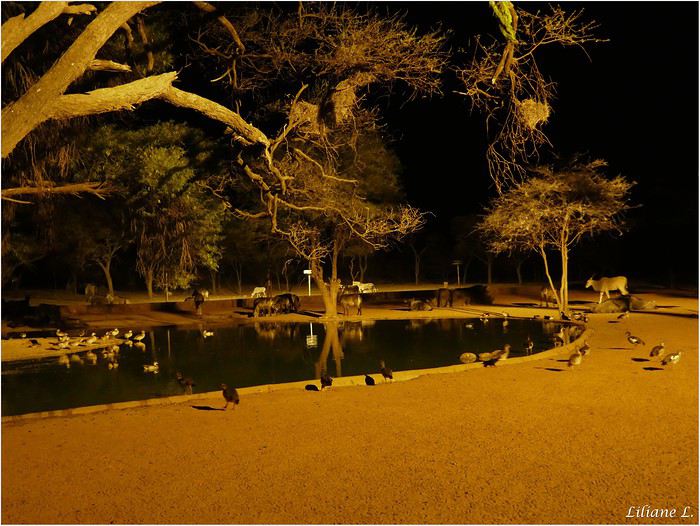
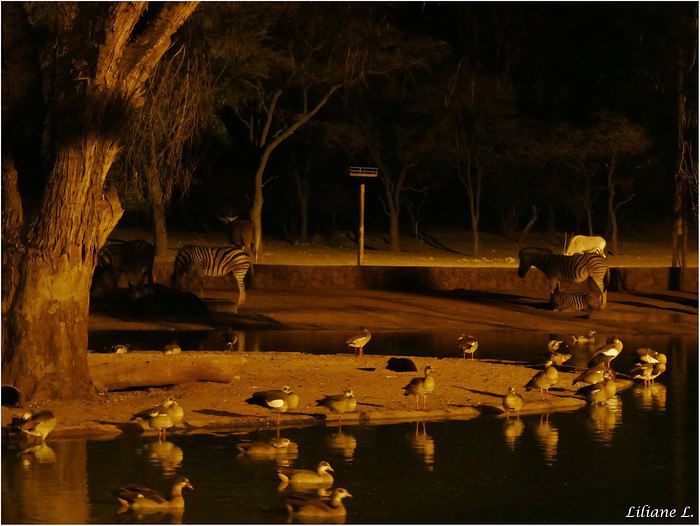
En Octobre 2018 nous avons fait un superbe voyage en Namibie entre déserts, safaris, et observations animalières. Nous ne l’avons pas fait en individuel comme c’est le cas sur ce forum mais j’ai quand même envie de le partager avec vous. Etant conscients que le montage, repliage de la tente sur le toit ce n’était pas pour nous, que nous n’avions jamais conduit sur piste ni même un 4 /4, mais surtout que si nous crevions nous n’aurions pas la force de changer la roue, nous avons opté pour un safari organisé par une agence en France que nous connaissions et ne l’avons pas regretté. Pour convenance personnelle nous sommes partis de Londres et retour à Paris. Nous retrouvons donc certains de nos co-équipiers à Londres, d'autres a Johannesburg et les 2 derniers à Windhoeck. Nous sommes 14 personnes répartis en deux 4/4 y compris nos deux Chauffeurs-Guides francophones et une Accompagnatrice. Nous logeons en bungalow.
Si notre circuit vous intéresse vous pouvez voir le récit complet avec photos ici
Bristol - Londres - JohannesburgWindhoek - Omaruru Omaruru - Mushara Bush camps (près entrée est du parc National d'Etosha) Parc National d'Etosha (Okaukuejo Lodge) Parc National d'Etosha - Hobatère Lodge (sortie Ouest du Parc) Hobatere Lodge -Epupa Falls Epupa Falls et les alentours(visite Himbas chutes) Epupa Epupa - Palmwag - Grooteberg Lodge Grootberg Lodge - Twyfelfontein Twyfelfontein - Swakopmund Swakopmund - Wallis Bay - Swakopmund Swakopmund - Sesriem - Sossus Lodge Désert du Namib (Sossus Lodge) Sossus Lodge - Windhoek Windhoek - Paris
7 Octobre
Bristol – Londres – Johannesburg
A Londres nous retrouvons 3 de nos compagnons de voyage partis de Paris ainsi que Caroline notre Guide.Nous voyageons sur un A380, c’est une première pour nous deux. Nous avons réservé des places duo au 1er étage. Ce qui est bien du côté hublot, c’est qu’ il y a un grand coffre où l’on peut mettre ses affaires. Il y a aussi un peu plus de place pour les jambes. Notre avion décolle à 19 h 05. Peu après le décollage on nous sert une boisson, jus de fruits ou autres, puis le dîner. C’est parti pour 12 heures de vol pour Johannesburg notre escale avant d’arriver à Windhoek.
8 Octobre
Johannesburg - Windhoek -Omaruru
Petit à petit tout le monde s’éveille et on nous sert le petit déjeuner.Nous arrivons à Johannesburg à 8 h 10 mn. heure locale. Notre avion pour Windhoek est à midi. Nous retrouvons nos compagnons de voyage.
Nous arrivons à 14 h 00 à Windhoek, il fait gris. Il y a du monde pour passer les formalités, pour mes compagnons de voyage c’est rapide, mais pour moi c’est plus long, je ne sais pas pourquoi, enfin il tamponne mon passeport, ouf je peux rejoindre les autres. A la sortie de l’aéroport les 2 dernières personnes du groupe nous attendent ainsi que nos 2 Chauffeurs –Guides Blandine et Rédemptus. Tout le monde se présente et nous montons dans les deux 4×4 direction Omaruru.
C’est parti pour Omaruru notre étape de ce soir. Premier arrêt au marché artisanal de Okahandja. A peine arrivés tout le monde veut nous attirer à son stand, c’est notre première journée en Namibie je voulais juste regarder tranquillement ce qu’ils vendaient.
Vers 18 h 45 mn, nous prenons la piste vers Omaruru avec un magnifique soleil couchant.
Dîner et nuit à Omaru Game Lodge. Il est situé dans une réserve privée à 15 km au Nord-Est d’Omaruru. Il est construit en style africain avec un toit de chaume. Les chambres et le restaurant sont organisés autour d’un point d’eau. Très beau lodge et très bon repas.Quelques animaux sont là, zèbres, oryx, etc. quel spectacle !
Retour de croisière sur le Bellissima English translation pending
Bonjour,
Je reviens de croisière sur le Bellissima de MSC. J'avais déjà effectué une croisière avec Costa il y a 5 ans. Soit les prestations ont diminuées soit MSC est nettement inférieur à Costa. Tout d'abord nous avons appris seulement 4 jours avant notre départ que le départ depuis la Suisse n'était plus à 07H15 du matin mais à 00H00 (donc voyage de nuit) ce qui aurait pu changer notre choix de voyager en bus. Nous sommes venus nous chercher à Fribourg avec la compagnie de bus "l'Oiseau bleu" dans un grand bus deux étages (toilettes, confortable avec bonne assise) mais à 02H00 du matin on nous a demandé de descendre à Granges (localité en Valais) pour changer de bus. Donc nos valises ont été sortis du bus (conseil suivez votre valise si vous n'avez pas envie de vous retrouver en croisière sans vêtements) et là on nous a fait attendre 45 min pour nous entasser dans un mini bus pour 16 personnes et nous étions 14 personnes (naturellement sans WC, sans confort ni place puisque le chauffeur n'arrivait pas à fermer le coffre avec les valises et qu'il a même essayé dans glisser une à l'intérieur du bus dans le couloir), et nous voilà parti pour un long voyage jusqu'à Gènes (arrivée sur place 07H30 du matin). Entassés comme des sardines sans espaces ni confort, naturellement nous n'avons pas pu ni dormir ni nous reposer (comme c'était prévu puisque nous avions choisi de voyager en bus). Arrivée à Gènes, le chauffeur nous a sorti les valises du coffre et nous a planté là sans aucune explication. Sur notre feuille d'embarquement nous avions un embarquement à partir de 13H00, nous avons donc profiter pour visiter un peu Gènes et prendre un café avec petit déjeuner. Nous avons été visité l'aquarium de Gènes (prix par adulte 27 Euro), comme nous étions à 09H00 le matin nous avons pas eu de problème de fil d'attente. Maintenant le prix n'est pas donné mais c'était une magnifique visite. Retour au bateau pour l'embarquement, là nous avons été accueilli par une hôtesse MSC qui nous a dirigé vers l'embarquement qui s'est fait assez rapidement et efficacement. En arrivant sur le bateau nous avons été émerveillé par la beauté de l'entrée du bateau tout scintille et brille de partout. Vraiment grandiose …… Par contre dès notre arrivée nous avons été happé par les employés pour nous vendre des forfaits boissons, le spectacle du cirque du soleil, des forfaits restaurants, des forfaits internet….donc nous avions pas le temps de nous imprégner du spectacle que le marqueting commençait déjà. Nous avons signalé que nous avions déjà un forfait boisson "easy" à 29 Euro et que ça nous convenait parfaitement mais il insistait pour nous vendre pour 140 Euro un forfait de gamme supérieur. Ensuite il nous a fallu bien une demie heure pour retrouver notre cabine. Tellement le bateau est grand et qu'il y a de monde. Nous avons fait un petit détour au restaurant buffet Market pour manger quelque chose. A mon avis le choix n'est pas très varié (tous les jours nous avons eu le droit à 4 sortes de salades vertes, carottes rappées, poivrons, concombre et au repas principal nous avions frites hamburger, pizzas, saucisses frites et un espace rôtisserie ainsi qu'un espace de spécialité, assez fades d'ailleurs, personnellement ce n'était pas très varié pas mauvais non plus mais sans plus, de la nourriture pour 5'500 personnes à bord il ne faut pas rêver on va pas vous servir du gastronomique non plus, mais c'était acceptable… disons que après une semaine on s'en lasse un peu). Par contre le restaurant du Market (sous forme de buffet) est hyper bruyant, très difficiles de trouver une place même à la mis septembre donc je n'ose pas imaginer l'été en pleine saison). Arrivée à notre cabine, nous avons dû constater que nous avions un grand lit donc un seul duvet alors que nous avions réservé deux lits, nos réservations pour le cirque du Soleil n'indiquait aucune date, notre forfait internet ne fonctionnait pas, le journal de bord était en anglais, et aucune information sur notre forfait photos. Bref la valse de la réception commençait. Tout d'abord un téléphone pour la chambre on nous informe que le changement se fera à 18H30 (ce qui a été respecté), le journal de bord et bien je suis priée d'aller le chercher moi même à la réception (alors que j'ai payé préalablement un service en cabine) mais bon on ne veux pas chipoter pour si peu…. pour le forfait internet, photos, et cirque du soleil on passe à la réception. Après une attente de bien 20 minutes on constate que la réception n'est là que pour dispatcher les clients à droite et à gauche. Donc rebelotte la queue pour le forfait internet (personne ne parle le français mais ça encore on peux comprendre par contre la personne incompétente et incapable de rentrer ce forfait dans notre natel, après plusieurs essais nous avons trouvé la solution par nous mêmes ne me demandez pas comment… pour le cirque du soleil on nous annonce que aucune réservation n'a été faite….super (en sachant que j'ai réservé cette croisière depuis décembre 2018 et que je suis passée par une agence) donc on réserve notre spectacle. Pour forfait photos il faut monter à l'étage. Super les vacances commencent bien. Par contre on me donne le journal de bord en français et tous les autres jours il est arrivé en français comme quoi les infos passent. Après avois réglé tous nos problèmes administratifs nous profitons d'un petit moment au bar pour savourer un cocktail (oh surprise pour les boissons avec le forfait à 6 Euro pour avez le droit à tout ce qui est sans alcool et quelques boissons alcoolisé mais pas de marque ce qui devrait nous convenir, par contre le bar pas le choix vous devez choisir le bar compris dans votre forfait donc vous pouvez dire au revoir au bar à champagne et aux autres bars de spécialités qui vous proposent des boissons à 12 Euro, naturellement ces derniers, vous trouvez de la place dès qu'il faut payer) Après pour ce que nous consommions notre forfait nous convenait juste qu'il fallait faire la course pour avoir une place au bar et ne plus la quitter. Par contre aucune glace n'est compris dans le forfait et si vous souhaitez un capuccino au restaurant spécial chocolat, même si votre capuccino coûte 3.50 Euro et qu'il entre dans votre forfait ben non, ça fonctionne pas vous devez payer plein pot car c'est considéré comme un restaurant de spécialité. Ce sont des petits détails mais une fois qu'on les connaît on dira qu'on s'adapte. Arrivée au restaurant servi à table (le restaurant du Poséidon nous a été attribué) nous avons choisi deuxième service (comme on nous avait mentionné lors de la réservation service entre 07H45 et 21H00) nous sommes arrivés à 20H15. Be là bingo retour à la case de départ…..trop tard vous devez être le 07H45 les portes ferment à 20H00. On a vite compris…...donc départ pour le restaurant du market avec buffet (même disposition qu'à midi) toujours hyper bruyant même en reculant votre chaise ça fait un bruit monstre. Ensuite nous nous dirigeons vers la salle de spectacle (que nous avons dû préalablement réservé sur notre application car tous les spectacles vous devez les réserver à l'avance sur MSC for me ou sur une borne ou sur votre télévision de votre cabine, vous avez trois possibilités d'heure chaque soir. Quelle surprise en arrivant …..lorsque l'employé nous annonce qu'aucune réservation n'a été faite et nous dit tout simplement de partir. Là je me dis non stop moi j'ai réservé si votre application ne fonctionne pas c'est pas mon problème. Un autre employé arrive nous réserve le spectacle en direct et nous laisse entrer….ouf... Tous les autres jours, nous avons constaté que notre réservation avait été faite mais que subitement une de nos deux têtes disparaissaient de l'écran et ou les deux, bref leur système n'est pas au point. Nous avons trouvé une autre solution à 22H45 si vous arrivez 5 min avant le début du spectacle il n'y a plus de contrôle et la salle n'est pas pleine. Donc notre premier jour à été une mise à niveau. Deuxième jour à Naples, nous avons pris le petit déjeuner au Poséidon avec un service à table plus calme que le buffet du market. Nous avions réservé une excursion à Pompéi avec MSC. Tout est très bien organisé on nous donne un lieu de rendez-vous et après on vous attribue un numéro de bus. Pour l'excursion, la guide nous a perdu dans le site sans se soucier et à continuer sa visite (nous étions tout de même 7 participants à rester en rade) nous l'avons attendu à la sortie….elle est passée devant nous sans se rendre compte de quoi que ce soit je crois que même aujourd'hui elle ne s'en est jamais rendu compte. En faite elle nous donnait une explication, ne nous laissait même pas le temps de prendre la photo et partait sans se retourner). Retour sur le bateau et nous commençons à prendre nos marques. Le troisième jour, nous avions choisi l'excursion MSC sur l'Etna. Nous avons eu un trajet de 1h40 jusqu'au cratère en bus où la guide nous a carrément cassé les horaires durant tout le trajet en explication pour nous laisser sur l'Etna 1heure pour visiter librement mais là aucune explication (à savoir qu'il y a un téléphérique mais nous n'avons pas pu le prendre puisque il faut 1 heure pour monter et une heure pour descendre) et retour en bus 1h40 avec des explications dans le bus à nous gaver….pour retour sur le bateau. Pour moi les excursions se n'étaient pas top ….mais maintenant si vous ne tombez pas sur un passionné ça risque d'être long. Pour le reste nous avons fait par nous même. A Malte, MSC vous laisse dans votre cabine des bons à signer pour prendre le bus rouge (prix par adulte 20 Euro, si vous signez le bon on vous le facture directement sur votre cabine), sachez que en sortant du bateau pour 15 Euro et même bus même prestation vous avez le bus rouge. Un tour de bus de 1heure et retour pour le centre de la Valette. (personnellement si c'était à refaire je prendrai l'ascenseur et visiterai l'intérieur de la ville et les remparts) car là on perd beaucoup de temps avec le bus rouge pour nous amener en dehors de la ville (les grottes bleues notamment très joli) mais beaucoup de perte de temps. A la Valette il faisait 37 degré donc très chaud pour la saison. Retour sur le bateau pour profiter de la piscine (Vu qu'il y a 5'500 passagers, nous avons opté pour la piscine intérieur où il y a moins de monde). Ensuite nous avons une journée en mer. Donc effectivement il y a beaucoup de monde aux ascenseurs, au bar, aux restaurants, à la piscine….mais c'est presque inévitable. Arrivée à Barcelone on nous a proposé une navette de bus depuis le bateau jusqu'au centre place Christophe Colomb pour 9.99 Euro par personne. Ensuite visite par nous même...le marché en vaut la peine. Ensuite escale à Marseille même principe MSC vous propose une navette de bus pour Euro 15.99 par personne qui vous amène jusqu'au vieux port de Marseille. Tout en sachant que le taxi jusqu'au vieux port vous coûte 22 Euro. Il existe des taxis pour 8 personnes à vous de faire votre choix. Ensuite vous pouvez effectuer une visite de la ville de Marseille en taxi pour 60 Euro de l'heure en deux heures nous avons pu voir trois monuments importants à plusieurs ça peux être plus rentable que les excursions MSC. Ensuite retour à Gènes. Pour le débarquement on nous a fait sortir à '08H10 et là quelqu'un nous a conduit jusqu'au transfert bus. Mais nous avons dû attendre une heure debout pour s'apercevoir que l'oiseau bleu était parqué bien plus loin mais qu'à aucun moment le chauffeur n'est venu à l'emplacement. Par contre voyage retour plus confortable dans un bus deux étages. En résumé le bateau est splendide mais pour moi c'est trop grand trop de monde et trop de technologie qui ne fonctionne pas (quand à Zoé vous pouvez l'oublier elle ne fonctionne pas même après avoir demandé au personnel qui nous a fait comprendre que Zoé ne fonctionne pas bien). J'ai déjà fait une croisière avec Costa dans un plus petit bateau de 3'000 personnes et pour moi le service était beaucoup plus élevé. Maintenant la cabine du Bellissima avec balcon est superbe, des rangements fonctionnels et super propre comme tout le bateau d'ailleurs. Au niveau restaurant je dirais que j'ai vraiment très bien mangé deux soirs au restaurant Poséidon les autres fois peu de choix et sans grande valeur (n'ayez pas trop faim car les assiettes sont pas grandes) Les spectacles et les animations sont beaucoup basées sur la musque et la danse donc si vous êtes des fans vous serez gâter.
Je reviens de croisière sur le Bellissima de MSC. J'avais déjà effectué une croisière avec Costa il y a 5 ans. Soit les prestations ont diminuées soit MSC est nettement inférieur à Costa. Tout d'abord nous avons appris seulement 4 jours avant notre départ que le départ depuis la Suisse n'était plus à 07H15 du matin mais à 00H00 (donc voyage de nuit) ce qui aurait pu changer notre choix de voyager en bus. Nous sommes venus nous chercher à Fribourg avec la compagnie de bus "l'Oiseau bleu" dans un grand bus deux étages (toilettes, confortable avec bonne assise) mais à 02H00 du matin on nous a demandé de descendre à Granges (localité en Valais) pour changer de bus. Donc nos valises ont été sortis du bus (conseil suivez votre valise si vous n'avez pas envie de vous retrouver en croisière sans vêtements) et là on nous a fait attendre 45 min pour nous entasser dans un mini bus pour 16 personnes et nous étions 14 personnes (naturellement sans WC, sans confort ni place puisque le chauffeur n'arrivait pas à fermer le coffre avec les valises et qu'il a même essayé dans glisser une à l'intérieur du bus dans le couloir), et nous voilà parti pour un long voyage jusqu'à Gènes (arrivée sur place 07H30 du matin). Entassés comme des sardines sans espaces ni confort, naturellement nous n'avons pas pu ni dormir ni nous reposer (comme c'était prévu puisque nous avions choisi de voyager en bus). Arrivée à Gènes, le chauffeur nous a sorti les valises du coffre et nous a planté là sans aucune explication. Sur notre feuille d'embarquement nous avions un embarquement à partir de 13H00, nous avons donc profiter pour visiter un peu Gènes et prendre un café avec petit déjeuner. Nous avons été visité l'aquarium de Gènes (prix par adulte 27 Euro), comme nous étions à 09H00 le matin nous avons pas eu de problème de fil d'attente. Maintenant le prix n'est pas donné mais c'était une magnifique visite. Retour au bateau pour l'embarquement, là nous avons été accueilli par une hôtesse MSC qui nous a dirigé vers l'embarquement qui s'est fait assez rapidement et efficacement. En arrivant sur le bateau nous avons été émerveillé par la beauté de l'entrée du bateau tout scintille et brille de partout. Vraiment grandiose …… Par contre dès notre arrivée nous avons été happé par les employés pour nous vendre des forfaits boissons, le spectacle du cirque du soleil, des forfaits restaurants, des forfaits internet….donc nous avions pas le temps de nous imprégner du spectacle que le marqueting commençait déjà. Nous avons signalé que nous avions déjà un forfait boisson "easy" à 29 Euro et que ça nous convenait parfaitement mais il insistait pour nous vendre pour 140 Euro un forfait de gamme supérieur. Ensuite il nous a fallu bien une demie heure pour retrouver notre cabine. Tellement le bateau est grand et qu'il y a de monde. Nous avons fait un petit détour au restaurant buffet Market pour manger quelque chose. A mon avis le choix n'est pas très varié (tous les jours nous avons eu le droit à 4 sortes de salades vertes, carottes rappées, poivrons, concombre et au repas principal nous avions frites hamburger, pizzas, saucisses frites et un espace rôtisserie ainsi qu'un espace de spécialité, assez fades d'ailleurs, personnellement ce n'était pas très varié pas mauvais non plus mais sans plus, de la nourriture pour 5'500 personnes à bord il ne faut pas rêver on va pas vous servir du gastronomique non plus, mais c'était acceptable… disons que après une semaine on s'en lasse un peu). Par contre le restaurant du Market (sous forme de buffet) est hyper bruyant, très difficiles de trouver une place même à la mis septembre donc je n'ose pas imaginer l'été en pleine saison). Arrivée à notre cabine, nous avons dû constater que nous avions un grand lit donc un seul duvet alors que nous avions réservé deux lits, nos réservations pour le cirque du Soleil n'indiquait aucune date, notre forfait internet ne fonctionnait pas, le journal de bord était en anglais, et aucune information sur notre forfait photos. Bref la valse de la réception commençait. Tout d'abord un téléphone pour la chambre on nous informe que le changement se fera à 18H30 (ce qui a été respecté), le journal de bord et bien je suis priée d'aller le chercher moi même à la réception (alors que j'ai payé préalablement un service en cabine) mais bon on ne veux pas chipoter pour si peu…. pour le forfait internet, photos, et cirque du soleil on passe à la réception. Après une attente de bien 20 minutes on constate que la réception n'est là que pour dispatcher les clients à droite et à gauche. Donc rebelotte la queue pour le forfait internet (personne ne parle le français mais ça encore on peux comprendre par contre la personne incompétente et incapable de rentrer ce forfait dans notre natel, après plusieurs essais nous avons trouvé la solution par nous mêmes ne me demandez pas comment… pour le cirque du soleil on nous annonce que aucune réservation n'a été faite….super (en sachant que j'ai réservé cette croisière depuis décembre 2018 et que je suis passée par une agence) donc on réserve notre spectacle. Pour forfait photos il faut monter à l'étage. Super les vacances commencent bien. Par contre on me donne le journal de bord en français et tous les autres jours il est arrivé en français comme quoi les infos passent. Après avois réglé tous nos problèmes administratifs nous profitons d'un petit moment au bar pour savourer un cocktail (oh surprise pour les boissons avec le forfait à 6 Euro pour avez le droit à tout ce qui est sans alcool et quelques boissons alcoolisé mais pas de marque ce qui devrait nous convenir, par contre le bar pas le choix vous devez choisir le bar compris dans votre forfait donc vous pouvez dire au revoir au bar à champagne et aux autres bars de spécialités qui vous proposent des boissons à 12 Euro, naturellement ces derniers, vous trouvez de la place dès qu'il faut payer) Après pour ce que nous consommions notre forfait nous convenait juste qu'il fallait faire la course pour avoir une place au bar et ne plus la quitter. Par contre aucune glace n'est compris dans le forfait et si vous souhaitez un capuccino au restaurant spécial chocolat, même si votre capuccino coûte 3.50 Euro et qu'il entre dans votre forfait ben non, ça fonctionne pas vous devez payer plein pot car c'est considéré comme un restaurant de spécialité. Ce sont des petits détails mais une fois qu'on les connaît on dira qu'on s'adapte. Arrivée au restaurant servi à table (le restaurant du Poséidon nous a été attribué) nous avons choisi deuxième service (comme on nous avait mentionné lors de la réservation service entre 07H45 et 21H00) nous sommes arrivés à 20H15. Be là bingo retour à la case de départ…..trop tard vous devez être le 07H45 les portes ferment à 20H00. On a vite compris…...donc départ pour le restaurant du market avec buffet (même disposition qu'à midi) toujours hyper bruyant même en reculant votre chaise ça fait un bruit monstre. Ensuite nous nous dirigeons vers la salle de spectacle (que nous avons dû préalablement réservé sur notre application car tous les spectacles vous devez les réserver à l'avance sur MSC for me ou sur une borne ou sur votre télévision de votre cabine, vous avez trois possibilités d'heure chaque soir. Quelle surprise en arrivant …..lorsque l'employé nous annonce qu'aucune réservation n'a été faite et nous dit tout simplement de partir. Là je me dis non stop moi j'ai réservé si votre application ne fonctionne pas c'est pas mon problème. Un autre employé arrive nous réserve le spectacle en direct et nous laisse entrer….ouf... Tous les autres jours, nous avons constaté que notre réservation avait été faite mais que subitement une de nos deux têtes disparaissaient de l'écran et ou les deux, bref leur système n'est pas au point. Nous avons trouvé une autre solution à 22H45 si vous arrivez 5 min avant le début du spectacle il n'y a plus de contrôle et la salle n'est pas pleine. Donc notre premier jour à été une mise à niveau. Deuxième jour à Naples, nous avons pris le petit déjeuner au Poséidon avec un service à table plus calme que le buffet du market. Nous avions réservé une excursion à Pompéi avec MSC. Tout est très bien organisé on nous donne un lieu de rendez-vous et après on vous attribue un numéro de bus. Pour l'excursion, la guide nous a perdu dans le site sans se soucier et à continuer sa visite (nous étions tout de même 7 participants à rester en rade) nous l'avons attendu à la sortie….elle est passée devant nous sans se rendre compte de quoi que ce soit je crois que même aujourd'hui elle ne s'en est jamais rendu compte. En faite elle nous donnait une explication, ne nous laissait même pas le temps de prendre la photo et partait sans se retourner). Retour sur le bateau et nous commençons à prendre nos marques. Le troisième jour, nous avions choisi l'excursion MSC sur l'Etna. Nous avons eu un trajet de 1h40 jusqu'au cratère en bus où la guide nous a carrément cassé les horaires durant tout le trajet en explication pour nous laisser sur l'Etna 1heure pour visiter librement mais là aucune explication (à savoir qu'il y a un téléphérique mais nous n'avons pas pu le prendre puisque il faut 1 heure pour monter et une heure pour descendre) et retour en bus 1h40 avec des explications dans le bus à nous gaver….pour retour sur le bateau. Pour moi les excursions se n'étaient pas top ….mais maintenant si vous ne tombez pas sur un passionné ça risque d'être long. Pour le reste nous avons fait par nous même. A Malte, MSC vous laisse dans votre cabine des bons à signer pour prendre le bus rouge (prix par adulte 20 Euro, si vous signez le bon on vous le facture directement sur votre cabine), sachez que en sortant du bateau pour 15 Euro et même bus même prestation vous avez le bus rouge. Un tour de bus de 1heure et retour pour le centre de la Valette. (personnellement si c'était à refaire je prendrai l'ascenseur et visiterai l'intérieur de la ville et les remparts) car là on perd beaucoup de temps avec le bus rouge pour nous amener en dehors de la ville (les grottes bleues notamment très joli) mais beaucoup de perte de temps. A la Valette il faisait 37 degré donc très chaud pour la saison. Retour sur le bateau pour profiter de la piscine (Vu qu'il y a 5'500 passagers, nous avons opté pour la piscine intérieur où il y a moins de monde). Ensuite nous avons une journée en mer. Donc effectivement il y a beaucoup de monde aux ascenseurs, au bar, aux restaurants, à la piscine….mais c'est presque inévitable. Arrivée à Barcelone on nous a proposé une navette de bus depuis le bateau jusqu'au centre place Christophe Colomb pour 9.99 Euro par personne. Ensuite visite par nous même...le marché en vaut la peine. Ensuite escale à Marseille même principe MSC vous propose une navette de bus pour Euro 15.99 par personne qui vous amène jusqu'au vieux port de Marseille. Tout en sachant que le taxi jusqu'au vieux port vous coûte 22 Euro. Il existe des taxis pour 8 personnes à vous de faire votre choix. Ensuite vous pouvez effectuer une visite de la ville de Marseille en taxi pour 60 Euro de l'heure en deux heures nous avons pu voir trois monuments importants à plusieurs ça peux être plus rentable que les excursions MSC. Ensuite retour à Gènes. Pour le débarquement on nous a fait sortir à '08H10 et là quelqu'un nous a conduit jusqu'au transfert bus. Mais nous avons dû attendre une heure debout pour s'apercevoir que l'oiseau bleu était parqué bien plus loin mais qu'à aucun moment le chauffeur n'est venu à l'emplacement. Par contre voyage retour plus confortable dans un bus deux étages. En résumé le bateau est splendide mais pour moi c'est trop grand trop de monde et trop de technologie qui ne fonctionne pas (quand à Zoé vous pouvez l'oublier elle ne fonctionne pas même après avoir demandé au personnel qui nous a fait comprendre que Zoé ne fonctionne pas bien). J'ai déjà fait une croisière avec Costa dans un plus petit bateau de 3'000 personnes et pour moi le service était beaucoup plus élevé. Maintenant la cabine du Bellissima avec balcon est superbe, des rangements fonctionnels et super propre comme tout le bateau d'ailleurs. Au niveau restaurant je dirais que j'ai vraiment très bien mangé deux soirs au restaurant Poséidon les autres fois peu de choix et sans grande valeur (n'ayez pas trop faim car les assiettes sont pas grandes) Les spectacles et les animations sont beaucoup basées sur la musque et la danse donc si vous êtes des fans vous serez gâter.
Récit de 28 jours en Namibie English translation pending
Nous sommes de retour de 28 jours en Namibie.
Nous sommes partis à deux 4X4 avec des amis marseillais en majorité en camping. Il faut reconnaître que lorsqu'on prévoit 80 à 90% de pistes, il est toujours très sécurisant de savoir qu'on a un deuxième véhicule en cas de pépin. D'autant plus que, sur certaines pistes, nous n'avons pas croisé énormément de monde.
Sur base d'un itinéraire concocté par nos soins, nous sommes passés via la société Namvic pour confirmer que tout tenait la route et pour la location des véhicules ainsi que pour les réservations de camping.
Namvic a un contact à Paris, Pascal, ce qui est bien entendu plus simple pour les échanges.
Le véhicule était un 4X4 de deuxième catégorie, c'est-à-dire un véhicule qui avait déjà pas mal baroudé. Cela fait sans doute moins "standing" mais le portefeuille s'en porte mieux et finalement il sera aussi poussiéreux et sâle qu'un neuf. La vraie différence est dans l'agencement du coffre. Pour nous, il fallait vider le coffre chaque jour pour accéder au matériel, ou au frigo alors que les nouveaux véhicules sont mieux pensés et donc plus pratiques.
Pour le camping, nous disposions de deux tentes sur le toit qui se montaient en 5 minutes et se repliaient en 10 jusqu'à la troisième semaine où, avec la poussière et l'âge les tirettes devenaient difficiles à refermer et les jurons commencaient à fuser. En humidifant les tirettes avec de l'eau ou avec du liquide vaisselle, on vient à bout de se repliage. J'ai été assez étonnée du confort de ces tentes. Pas mal de place, un matelas finalement confortable, oreillers et sacs de couchage fournis. Nous avions un téléphone satellite et un petit GSM avec un peu de forfait afin de pouvoir appeler si nécessaire. Deux roues de secours mais que nous n'utiliserons heureusement pas. Les assurances sont compliquées en Namibie, il n' y a pas grand chose de couvert. Nous étions assurés pour un accident avec un tiers, un animal mais il fallait pouvoir prouver par des photos notre bonne foi, le bris du pare-brise et un pneu, tout le reste était à notre charge. Cela paraît assez complet mais quand on tente de compter le nombre de cailoux qui tapent la voiture, les animaux qui traversent inopinément et l'état de certaines pistes, la prudence est de mise.
Aussi si un couvercle de casserole est perdu, et bien il faut payer la casserole soit une vingtaine d'euros, tout doit revenir en l'état sous peine de frais supplémentaires lorsqu'on rend le véhicule. Le véhicule doit être également nettoyé afin que la société puisse aisément vérifier l'état du véhicule, sinon de nouveau c'est facturé. Nous avons de notre côté profité d'un des derniers campings pour donner un coup de chiffon car il y avait un tuyau, ce qui n'est pas forcément possible en lodge.
Pour le trajet, nous avons resigné avec Qatar en passant par Doha, Johannesburg puis Windhoek via South Africa Airlines. Namvic nous avait déconseillé de passer par Johannesburg, apparemment connu pour ses problèmes de bagages. Les compagnies aériennes l'ont bien compris car les vols évitant l'Afrique du Sud étaient hors de prix.
Pour nous tout s'est bien passé mais nos amis qui voyageaient de Marseile avec Turkish ont eu des soucis avec le dernier vol assuré par Namibian Airlines. Ils ont perdu une journée, bloqués à Johannesburg, et ils ont du courir après leurs bagages. J'ai rencontré pas mal de gens qui avaient un à deux jours de retard sur leur itinéraire à cause de bagages perdus.
Croisière annulée sur le Mediterranea en mai 2020 English translation pending
Bonjour à toutes et tous,
Je recherche des personnes qui seraient dans la même situation que moi avec une réservation annulée de la part de Costa. Ils m' ont dit que je n' était pas seule!! triste consolation 😠 J' ai reçu le 06/08/2020 un mail envoi automatique, donc impossible de répondre directement, me signifiant que la croisière au départ de Venise vers les îles grecques sur le "méditerranéa" est annulée sans aucun renseignements complémentaires. Je vais donc voir sur mon compte en ligne "My Costa" se qu' il s'y passe et je constate qu' ils m' ont mis d' office sur une croisière au départ de la Valette arrivée sur Marseille avec 2 passages du navire sur ce port, ça ne me convient pas du tout, je suis de la région PACA et je connais par coeur ce lieu!! Je leur ait fait savoir mon mécontentement de me mettre sur une croisière sans aucune attrait pour moi, personne ne réagit. Après de multiples appels, je ne suis pas plus avancée, les réponses au téléphone sont très évasives: c' est normal, le bureau de Gènes travaille sur mon dossier!! Chacun a sa façon de me dire d' attendre. Oui mais attendre quoi?? Si vous avez reçu des infos que je n' ai pas eu, je vous remercie de me tenir au courant.
Merci et bonne journée à tous
Je recherche des personnes qui seraient dans la même situation que moi avec une réservation annulée de la part de Costa. Ils m' ont dit que je n' était pas seule!! triste consolation 😠 J' ai reçu le 06/08/2020 un mail envoi automatique, donc impossible de répondre directement, me signifiant que la croisière au départ de Venise vers les îles grecques sur le "méditerranéa" est annulée sans aucun renseignements complémentaires. Je vais donc voir sur mon compte en ligne "My Costa" se qu' il s'y passe et je constate qu' ils m' ont mis d' office sur une croisière au départ de la Valette arrivée sur Marseille avec 2 passages du navire sur ce port, ça ne me convient pas du tout, je suis de la région PACA et je connais par coeur ce lieu!! Je leur ait fait savoir mon mécontentement de me mettre sur une croisière sans aucune attrait pour moi, personne ne réagit. Après de multiples appels, je ne suis pas plus avancée, les réponses au téléphone sont très évasives: c' est normal, le bureau de Gènes travaille sur mon dossier!! Chacun a sa façon de me dire d' attendre. Oui mais attendre quoi?? Si vous avez reçu des infos que je n' ai pas eu, je vous remercie de me tenir au courant.
Merci et bonne journée à tous
Soignez votre arrivée! English translation pending
Les discussions montrent des culpabilités diverses quant à prendre l'avion trop souvent, de visiter une ville en coup de vent sans s'immerger......
Pour soigner une partie de cette culpabilité, je propose deux trajets pour soigner l'arrivée dans une grande capitale: La première impression marque à jamais. La difficulté à suivre ces itinéraires sont la présence des bagages, et que ces trajets ne sont pas directs.
Si vous avez des idées de trajets?
Je me lance:
New York City:
JFK - Brooklyn - Verrazano narrow bridge - Staten Island - Ferry terminal: De là traversée de la baie de New York par le Ferry jusqu'a Battery de Manhattan. Vous avez l'impression de découvrir New York comme un immigrant.
Athènes:
De l'aéroport aller au Lycabète en soirée et rêver.
Paris? par Montmartre peut être?
Si vous avez des idées de trajets?
Je me lance:
New York City:
JFK - Brooklyn - Verrazano narrow bridge - Staten Island - Ferry terminal: De là traversée de la baie de New York par le Ferry jusqu'a Battery de Manhattan. Vous avez l'impression de découvrir New York comme un immigrant.
Athènes:
De l'aéroport aller au Lycabète en soirée et rêver.
Paris? par Montmartre peut être?
Retour Costa Deliziosa English translation pending
Bonjour à tous,
je rentre de croisière sur le Deliziosa, et viens vous faire part de mon ressenti.
tout d'abord comme il a déjà été dit précédemment, on sent un nivellement vers le bas😕.
Introduction: Après environ 6 croisières Costa, dont une très belle l'année dernière sur le Costa Favolosa en europe du Nord, 🙂 nous avons par contre été déçu de cette dernière sur de nombreux points. C'était également ma première croisière du coté des iles grecs, après maintes croisières en méditerranée. Mon CR traitera surtout de la vie à bord, (très important à mes yeux vue qu'on y passe plus de temps qu'a terre.).
Sujet: -transfert/embarquement -cabine - restaurants ( Buffet, Albatros, Samsara, resto Club Deliziosa, et diner sous les étoiles (lobster bar) -bar, animation, -Spa Samsara (espace thermal + soins) - Commerce à bord (photos, boutiques, Costa for you( vente de croisière à bord), ... -Costa Club (privilège et soirée) - escales - dernier jour avec nuit à Venise -conclusion
transfert/embarquement: C'est parti: Selon discussion avec notre conseillère Cosa, nous avons réservé nos vols nous même ( car bien moins cher qu'avec eu) Nous avons pris un vol Zurich- Venise avec Swiss, qui était moins cher qu'EasyJet avec un service vraiment top, ou retour par contre nous avons du nous tourner vers la compagnie orange🙁. Dommage pour l'écologie, mais l'avion ( 40 minutes de vol environ) coutait bien moins cher que le bus (pour 8- 10 heures de trajet environs) Avec la différence de prix nous avons pu rester une nuit à Venise en fin de croisière. Transfert depuis l'aéroport avec un taxi réservé à l'avance, 38 euro, 20 minutes de trajet. Arriver au terminal, personne pour venir prendre nos bagages, à Savone il les décharges du coffre, ici rien, nous devons rejoindre les portes du terminale avec nos bagages. Il était environ 10h, on nous donne le N°7 alors que nous sommes Perle Oro, je demande à l'hôtesse si c'est possible d'avoir un embarquement prioritaire, elle s'excuse et me donne une carte avec le 1😉. L'embarquement était prévu à 14h, mais vers les 12 h, cela à débuter, incroyable les gens avec les numéros supérieurs 7,12... qui attendent droit devant l'entrée, heureusement le filtrage à très bien été fait, et après avoir jouer des coudes nous avons pu passer le barrage pour commencer le Chek-in😛. Nous filons à bord, déposons nos affaires en cabine et prenons notre Costa Card, la cabiniste s'excuse car elle n'est pas finie, on lui dit que ce n'est pas grave.. Nous repartons de suite pour le buffet😇, pure bonheur car c'est encore très calme.
Cabine: quelques semaines avant le départ nous avions reçu un email, avec une offre de surclassement pour un prix modique, à la base nous étions en intérieur prémium à l'arrière, et finalement nous nous sommes retrouvé en cabine extérieur ou pont 7, tout à l'avant du navire avec vue sur la proue du navire. La vue est superbe et dégagée, extrêmement calme. Par contre c'est vieillissant, rideau, frigo qui fait du bruit, chasse d'eau fendue et qui souvent ne fonctionne pas du premier coup. Gros coup de gueule sur les 2 rideaux qui n'occulte rien du tout.. vers 6h du matin il fait déjà jour dans la cabine😠 . Nous avons reçu le premier jour une bouteille de champagne dans un sceau à glace, déjà il n'y avait plus de verre à champagne, et de 2 le sceau avait une fuite et à inonder toute la commode et tout ce qu'il y avait dessus🏴☠️. Jour en mer, seul jour ou j'ai commandé le petit déjeuné (gratuit) en cabine, j'avais demandé croissants, viennoiserie, muffins et pains. Nous avons juste eu 4 petits ballons avec la croute dure et 2 muffins… c'est des détails, mais ca commence mal…😕
A suivre😉
Introduction: Après environ 6 croisières Costa, dont une très belle l'année dernière sur le Costa Favolosa en europe du Nord, 🙂 nous avons par contre été déçu de cette dernière sur de nombreux points. C'était également ma première croisière du coté des iles grecs, après maintes croisières en méditerranée. Mon CR traitera surtout de la vie à bord, (très important à mes yeux vue qu'on y passe plus de temps qu'a terre.).
Sujet: -transfert/embarquement -cabine - restaurants ( Buffet, Albatros, Samsara, resto Club Deliziosa, et diner sous les étoiles (lobster bar) -bar, animation, -Spa Samsara (espace thermal + soins) - Commerce à bord (photos, boutiques, Costa for you( vente de croisière à bord), ... -Costa Club (privilège et soirée) - escales - dernier jour avec nuit à Venise -conclusion
transfert/embarquement: C'est parti: Selon discussion avec notre conseillère Cosa, nous avons réservé nos vols nous même ( car bien moins cher qu'avec eu) Nous avons pris un vol Zurich- Venise avec Swiss, qui était moins cher qu'EasyJet avec un service vraiment top, ou retour par contre nous avons du nous tourner vers la compagnie orange🙁. Dommage pour l'écologie, mais l'avion ( 40 minutes de vol environ) coutait bien moins cher que le bus (pour 8- 10 heures de trajet environs) Avec la différence de prix nous avons pu rester une nuit à Venise en fin de croisière. Transfert depuis l'aéroport avec un taxi réservé à l'avance, 38 euro, 20 minutes de trajet. Arriver au terminal, personne pour venir prendre nos bagages, à Savone il les décharges du coffre, ici rien, nous devons rejoindre les portes du terminale avec nos bagages. Il était environ 10h, on nous donne le N°7 alors que nous sommes Perle Oro, je demande à l'hôtesse si c'est possible d'avoir un embarquement prioritaire, elle s'excuse et me donne une carte avec le 1😉. L'embarquement était prévu à 14h, mais vers les 12 h, cela à débuter, incroyable les gens avec les numéros supérieurs 7,12... qui attendent droit devant l'entrée, heureusement le filtrage à très bien été fait, et après avoir jouer des coudes nous avons pu passer le barrage pour commencer le Chek-in😛. Nous filons à bord, déposons nos affaires en cabine et prenons notre Costa Card, la cabiniste s'excuse car elle n'est pas finie, on lui dit que ce n'est pas grave.. Nous repartons de suite pour le buffet😇, pure bonheur car c'est encore très calme.
Cabine: quelques semaines avant le départ nous avions reçu un email, avec une offre de surclassement pour un prix modique, à la base nous étions en intérieur prémium à l'arrière, et finalement nous nous sommes retrouvé en cabine extérieur ou pont 7, tout à l'avant du navire avec vue sur la proue du navire. La vue est superbe et dégagée, extrêmement calme. Par contre c'est vieillissant, rideau, frigo qui fait du bruit, chasse d'eau fendue et qui souvent ne fonctionne pas du premier coup. Gros coup de gueule sur les 2 rideaux qui n'occulte rien du tout.. vers 6h du matin il fait déjà jour dans la cabine😠 . Nous avons reçu le premier jour une bouteille de champagne dans un sceau à glace, déjà il n'y avait plus de verre à champagne, et de 2 le sceau avait une fuite et à inonder toute la commode et tout ce qu'il y avait dessus🏴☠️. Jour en mer, seul jour ou j'ai commandé le petit déjeuné (gratuit) en cabine, j'avais demandé croissants, viennoiserie, muffins et pains. Nous avons juste eu 4 petits ballons avec la croute dure et 2 muffins… c'est des détails, mais ca commence mal…😕
A suivre😉
Croisière en Europe du Nord au départ d'Amsterdam le 25 août 2019 English translation pending
Nous partons faire le tout du Royaume uni sur le Costa Méditerranéa du 25 août au 8 septembre 2019.
Nous aimerions pouvoir partager les taxis aux escales.
Compte rendu d'une croisière transatlantique sur le Costa Magica, avril 2019 English translation pending
Bonjour
Je me décide à faire un compte rendu de notre dernière croisière du 5 au 19 avril 2019 : transat sur le Costa Magica
Croisière réservée en avril 2018 sur le Magica. Je précise que nous avons déjà fait une transat en 2016 sur le très beau Favolosa.
Après avoir effectué un pré acheminement depuis la province la veille. Nous partons de Paris Orly 4 pour la Guadeloupe avec un vol réservé avec Costa pour plus de tranquillité.
Vol Corsair 20 kg de bagage, ma valise pèse 22 kg ! pas de souci….Nous avions un mauvais souvenir de Corsair (hors Costa) du progrès a été fait : boissons à disposition etc…
A l’embarquement des hôtesses Costa vous prennent en charge, les valises sont enregistrées et livrées directement dans la cabine. Très pro et très agréable.
Ceci nous a évité une longue attente pour monter dans le bateau, plus d’1h30 tout de même….
Arrivée milieu d’après midi, transport en bus vers le bateau par Costa.
Nous retrouvons mes beaux parents qui étaient en Guadeloupe depuis 2 semaines.
Premier verre sur le pont, agréable !
Installation dans la cabine, exercice d’évacuation etc.…appareillage à 23h.
Première escale Antigua que nous ne connaissions pas. Musique sur le quai, sympa.
Dès la sortie du port nous sommes très sollicités pour des taxis, les prix diminuent en progressant dans la rue ! Nous partons 8 personnes pour un tours « classique » à 15$ par pers .
Le sympathique chauffeur parlait un Français mâtiné de Créole. Nous avons eu quelques explications.
Tour de 2h de visite et arrêt sur une plage au choix. Une heure de plage, le chauffeur attend autrement il vient vous rechercher après 2 ou 3h. Parfait !
L’ile est assez peu arborée et moins jolie , pour nous, que Ste Lucie et surtout Grenade que j’avais beaucoup aimé car plus sauvage
Retours vers 14h au bateau. Repas.
Nous ressortons faire une agréable promenade en ville, quelques achats de première nécessité suite à des oublis…Les boutiques du bateau sont bien mal achalandées en fin de saison aux Antilles.
Nous avions prévu des dollars, les prix affichés en ville sont souvent en $ caribéens qu’il faut diviser par deux.
2eme escale : Sainte Lucie que nous connaissons. En 2016 nous avions fait l’excursion Costa journée , un peu chère, mais complète et bien organisée. Nous avons donc pris un taxi (7 personnes). 25$ pour 2h, trop cher je pense… Arrêt superflu dans un atelier de sculpture. Peu d’explications par la chauffeuse. Le tour a été bien moins intéressant que celui de la veille. Retours au port mais c’est dimanche, le marché du village est quasi vide. Quelques boutiques autours du terminal qui nous ont semblé chères. Pluie dans l’après midi. 3eme escale La Barbade. Journée. Tous à bord 16h30. Nous retournons à pied à la plage de Carlisle Bay, environ 30 à 40 mn. Il y a de nombreux taxis qui proposent diverses courses, les prix affichés nous ont semblé corrects. Le temps est très menaçant, heureusement que nous n’avons pas réservé l’excursion Costa jeep 4*4 et catamaran qui me tentait… Nous avançons sur la plage et prenons transats et parasol à un petit loueur bien sympathique. Le parasol nous servira de parapluie…L’eau est chaude et très belle. Derrière nous il y a un restau « Lobster alive » ! Nous y avons mangé une langouste grillée , un peu chère mais vraiment excellente. Très bon service. Nous rentrons par la ville, les magasins ne nous ont pas semblé intéressants malgré les détaxes affichées. Les 6 jours de traversée. Positif : avec l’abonnement au spa nous avons eu accès au pont 12 à la proue à un espace « réservé » très tranquille mais il y a eu beaucoup de vent pendant la traversée donc difficile d’en profiter vraiment. Nous avons utilisé la salle de sport, il faut bien essayer d’éliminer un peu…. L’animation en journée : nous ne participons pas aux quizz, bingo, fabrication de costumes an papier crépon pour le carnaval ou atelier de bijoux avec des pâtes (si , si). Restent quelques cours de danse au salon. Les pianos bars à partir de 18h pour l’apéro ! Mes beaux parents ont trouvé des partenaires pour les cartes et ont eux aussi passé une très agréable croisière. Santa Cruz de Ténérife. Nous connaissons cette ville très agréable Nous accostons à proximité de la sortie du port, pas besoin de prendre de navette. Super. Afin de faciliter les déplacements pour mes beaux parents nous prenons le bus touristique à impériale. On nous le « vend » avec deux entrées comprises : la palmeraie et le musée du carnaval. Nous descendons du bus : musée fermé pour installation de la nouvelle expo ! Ouf le petit train arrive, il est compris lui aussi dans le prix. Nous allons ensuite faire les boutiques centre ville puis manger comme les fois précédentes au sous sol du marché : bières, tapas et cafés à un prix très intéressant. Typique et sympa . Le café en ville et en terrasse : 1€ ! Départ et un jour de mer avant : Gibraltar : Arrivée en début d’après midi. Temps gris, petite bruine anglaise ! Sortie pour acheter alcool et parfum. Les bouteilles ne resteront pas à la consigne. Tant mieux. Nous repartons pour un dernier jour en mer. Mauvaise météo, mer assez agitée et pluie. La mer se calme et nous profitons de cette dernière soirée. Le commandant a accéléré l’allure pour sortir de la dépression nous arriverons donc plus tôt que prévu à Marseille.
Le bateau est de 2004, la literie nous a semblé un peu défraîchie ainsi que certains sièges et fauteuils. Mais il est bien entretenu, le personnel toujours attentionné et dévoué. Nous avons eu, comme nos voisins de cabine, des soucis avec les toilettes qui ne fonctionnaient plus ou trop ! La chasse étant coincée en mode aspiration : bruit insupportable. Cela viendrait du grand nombre de passagers selon la réception ??? Le technicien est venu à plusieurs reprises assez rapidement. Le commandant sympathique. Nous l’avons vu à de nombreuses reprises et même au bar de l’atrium où il prend son café du matin avec ses officiers. Nous avons peu vu notre cabinier, qui faisait parfois le ménage l’après midi ; très occupé sans doute. Notre cabine à l’avant du 10 ème pont(1023) nous a donné entière satisfaction. Calme : spa au dessus et cabine au dessous. Proche, mais pas trop, des ascenseurs et de l’accès au 11eme pour le spa. Nous avions le forfait « Brindiamo » suffisant en ce qui nous concerne. Certes nous n’avions pas droit aux cocktails alcoolisés mais aux gins tonic et autres vodka lemon (je recommande !). Les repas Le petit déj au restaurant est plus calme et agréable. Pour le déjeuner après deux ou trois essais au restaurant nous avons préféré le self : plus rapide. Dîner au 2eme service pour nous : serveur parfait comme les repas qui sont variés, bien présentés, copieux et bons ! Nous avons pris des homards lors de la promotion :12,50€ à rajouter. A faire ! Pas de goûter pour nous! Il ya eu 2 buffets à 23h, nous les avons regardés…. La vie à bord. Le « Diario di bordo » est réduit, il manque les infos météo, les indications sur la navigation, les terres aperçues, les miles parcourus etc. Dommage. Plusieurs soirées à thème comme d’habitude, les serveurs ont dansé à plusieurs reprises dans les escaliers du restaurant, soirées de bienvenue, d’adieu, Italienne, blanche, noire et rouge, carnaval, et 2 de gala. La disposition des ponts n’est pas très agréable, les gradins donnent vers la piscine centrale où il y a une musique assez forte. Le spa n’est pas bien conçu : non mixité hors jacuzzi qui est d’ailleurs ridiculement petit, hammam qui dysfonctionne, salle de repos intérieure bruyante car à côté des moteurs dudit jacuzzi… Bref, ce n’est pas un spa Samsara nous a dit la responsable. Effectivement à côté du Néoromantica ou du Favolosa par exemple ce spa ne supporte pas la comparaison Prix très correct pour toute la croisière :110€ Nous aimons danser et là franchement le musette et les danses en ligne au grand bar nous sont vite devenus très pénibles. Après 3 mazurkas…. Bravo au très sympathique Simon le pianiste de l’atrium qui a su répondre aux demandes, satisfaire tout le monde et mettre de l’ambiance. Mais la piste est petite. Pas d’orchestre au grand salon Capri (à la poupe) dommage, un pianiste et une chanteuse type piano bar. En ce qui concerne la musique nous avons connu bien mieux chez Costa ! Il manquait aussi les danseurs professionnels Hongrois que nous avons connus sur d’autres bateaux. Les spectacles ont été « moyens », superbe chanteuse Martha Llenas , quelques beaux spectacles avec les danseurs. Celui de l’équipage a été merveilleux, que de talents ! Dommage que nous n’ayons pas su les postes occupés par les acteurs et chanteurs d’un soir. Il y a un manque de rigueur des passagers notamment en ce qui concerne la « réservation » à partir de 7h des transats sur les ponts et l’occupation des appareils en salle sport. Certains ne doivent pas savoir lire. De plus certains appareils ( vélos et tapis de course) étaient HS. Mais le personnel n’a pas du recevoir d’ordre pour intervenir et faire respecter un semblant de discipline. La responsable du Costa Club a été bien peu présente et lors de notre visite dans son bureau ne nous a pas même pas demandé si nous étions satisfaits. Impression confirmée par d’autres personnes rencontrées et « Perla diamante ». Idem pour la correspondante Française qui n’a fait qu’accueillir les passagers, il y a avait beaucoup de francophones, lors des soirées de gala au théâtre et chantonner au salon Capri lors de la « fête Française ». Balavoine à l’honneur….Nous en somme partis assez rapidement. Dommage. Les avantages Costa ne sont bien reluisants, nous étions Perla Oro puis Perla depuis l’an passé et en juin nous allons perdre plus de 7000 points… C’était notre 8eme croisière, une seule chez MSC. Nous préférons Costa, nous hésitons à essayer d’autres compagnies. 15 jours de croisière c’est un vrai plaisir, on s’installe vraiment sans se dire dès le 4eme jour que c’est bientôt fini ! Voilà ! J’espère que ce CR sera utile à certains, quoi qu’il en soit j’ai pris plaisir à le rédiger.
2eme escale : Sainte Lucie que nous connaissons. En 2016 nous avions fait l’excursion Costa journée , un peu chère, mais complète et bien organisée. Nous avons donc pris un taxi (7 personnes). 25$ pour 2h, trop cher je pense… Arrêt superflu dans un atelier de sculpture. Peu d’explications par la chauffeuse. Le tour a été bien moins intéressant que celui de la veille. Retours au port mais c’est dimanche, le marché du village est quasi vide. Quelques boutiques autours du terminal qui nous ont semblé chères. Pluie dans l’après midi. 3eme escale La Barbade. Journée. Tous à bord 16h30. Nous retournons à pied à la plage de Carlisle Bay, environ 30 à 40 mn. Il y a de nombreux taxis qui proposent diverses courses, les prix affichés nous ont semblé corrects. Le temps est très menaçant, heureusement que nous n’avons pas réservé l’excursion Costa jeep 4*4 et catamaran qui me tentait… Nous avançons sur la plage et prenons transats et parasol à un petit loueur bien sympathique. Le parasol nous servira de parapluie…L’eau est chaude et très belle. Derrière nous il y a un restau « Lobster alive » ! Nous y avons mangé une langouste grillée , un peu chère mais vraiment excellente. Très bon service. Nous rentrons par la ville, les magasins ne nous ont pas semblé intéressants malgré les détaxes affichées. Les 6 jours de traversée. Positif : avec l’abonnement au spa nous avons eu accès au pont 12 à la proue à un espace « réservé » très tranquille mais il y a eu beaucoup de vent pendant la traversée donc difficile d’en profiter vraiment. Nous avons utilisé la salle de sport, il faut bien essayer d’éliminer un peu…. L’animation en journée : nous ne participons pas aux quizz, bingo, fabrication de costumes an papier crépon pour le carnaval ou atelier de bijoux avec des pâtes (si , si). Restent quelques cours de danse au salon. Les pianos bars à partir de 18h pour l’apéro ! Mes beaux parents ont trouvé des partenaires pour les cartes et ont eux aussi passé une très agréable croisière. Santa Cruz de Ténérife. Nous connaissons cette ville très agréable Nous accostons à proximité de la sortie du port, pas besoin de prendre de navette. Super. Afin de faciliter les déplacements pour mes beaux parents nous prenons le bus touristique à impériale. On nous le « vend » avec deux entrées comprises : la palmeraie et le musée du carnaval. Nous descendons du bus : musée fermé pour installation de la nouvelle expo ! Ouf le petit train arrive, il est compris lui aussi dans le prix. Nous allons ensuite faire les boutiques centre ville puis manger comme les fois précédentes au sous sol du marché : bières, tapas et cafés à un prix très intéressant. Typique et sympa . Le café en ville et en terrasse : 1€ ! Départ et un jour de mer avant : Gibraltar : Arrivée en début d’après midi. Temps gris, petite bruine anglaise ! Sortie pour acheter alcool et parfum. Les bouteilles ne resteront pas à la consigne. Tant mieux. Nous repartons pour un dernier jour en mer. Mauvaise météo, mer assez agitée et pluie. La mer se calme et nous profitons de cette dernière soirée. Le commandant a accéléré l’allure pour sortir de la dépression nous arriverons donc plus tôt que prévu à Marseille.
Le bateau est de 2004, la literie nous a semblé un peu défraîchie ainsi que certains sièges et fauteuils. Mais il est bien entretenu, le personnel toujours attentionné et dévoué. Nous avons eu, comme nos voisins de cabine, des soucis avec les toilettes qui ne fonctionnaient plus ou trop ! La chasse étant coincée en mode aspiration : bruit insupportable. Cela viendrait du grand nombre de passagers selon la réception ??? Le technicien est venu à plusieurs reprises assez rapidement. Le commandant sympathique. Nous l’avons vu à de nombreuses reprises et même au bar de l’atrium où il prend son café du matin avec ses officiers. Nous avons peu vu notre cabinier, qui faisait parfois le ménage l’après midi ; très occupé sans doute. Notre cabine à l’avant du 10 ème pont(1023) nous a donné entière satisfaction. Calme : spa au dessus et cabine au dessous. Proche, mais pas trop, des ascenseurs et de l’accès au 11eme pour le spa. Nous avions le forfait « Brindiamo » suffisant en ce qui nous concerne. Certes nous n’avions pas droit aux cocktails alcoolisés mais aux gins tonic et autres vodka lemon (je recommande !). Les repas Le petit déj au restaurant est plus calme et agréable. Pour le déjeuner après deux ou trois essais au restaurant nous avons préféré le self : plus rapide. Dîner au 2eme service pour nous : serveur parfait comme les repas qui sont variés, bien présentés, copieux et bons ! Nous avons pris des homards lors de la promotion :12,50€ à rajouter. A faire ! Pas de goûter pour nous! Il ya eu 2 buffets à 23h, nous les avons regardés…. La vie à bord. Le « Diario di bordo » est réduit, il manque les infos météo, les indications sur la navigation, les terres aperçues, les miles parcourus etc. Dommage. Plusieurs soirées à thème comme d’habitude, les serveurs ont dansé à plusieurs reprises dans les escaliers du restaurant, soirées de bienvenue, d’adieu, Italienne, blanche, noire et rouge, carnaval, et 2 de gala. La disposition des ponts n’est pas très agréable, les gradins donnent vers la piscine centrale où il y a une musique assez forte. Le spa n’est pas bien conçu : non mixité hors jacuzzi qui est d’ailleurs ridiculement petit, hammam qui dysfonctionne, salle de repos intérieure bruyante car à côté des moteurs dudit jacuzzi… Bref, ce n’est pas un spa Samsara nous a dit la responsable. Effectivement à côté du Néoromantica ou du Favolosa par exemple ce spa ne supporte pas la comparaison Prix très correct pour toute la croisière :110€ Nous aimons danser et là franchement le musette et les danses en ligne au grand bar nous sont vite devenus très pénibles. Après 3 mazurkas…. Bravo au très sympathique Simon le pianiste de l’atrium qui a su répondre aux demandes, satisfaire tout le monde et mettre de l’ambiance. Mais la piste est petite. Pas d’orchestre au grand salon Capri (à la poupe) dommage, un pianiste et une chanteuse type piano bar. En ce qui concerne la musique nous avons connu bien mieux chez Costa ! Il manquait aussi les danseurs professionnels Hongrois que nous avons connus sur d’autres bateaux. Les spectacles ont été « moyens », superbe chanteuse Martha Llenas , quelques beaux spectacles avec les danseurs. Celui de l’équipage a été merveilleux, que de talents ! Dommage que nous n’ayons pas su les postes occupés par les acteurs et chanteurs d’un soir. Il y a un manque de rigueur des passagers notamment en ce qui concerne la « réservation » à partir de 7h des transats sur les ponts et l’occupation des appareils en salle sport. Certains ne doivent pas savoir lire. De plus certains appareils ( vélos et tapis de course) étaient HS. Mais le personnel n’a pas du recevoir d’ordre pour intervenir et faire respecter un semblant de discipline. La responsable du Costa Club a été bien peu présente et lors de notre visite dans son bureau ne nous a pas même pas demandé si nous étions satisfaits. Impression confirmée par d’autres personnes rencontrées et « Perla diamante ». Idem pour la correspondante Française qui n’a fait qu’accueillir les passagers, il y a avait beaucoup de francophones, lors des soirées de gala au théâtre et chantonner au salon Capri lors de la « fête Française ». Balavoine à l’honneur….Nous en somme partis assez rapidement. Dommage. Les avantages Costa ne sont bien reluisants, nous étions Perla Oro puis Perla depuis l’an passé et en juin nous allons perdre plus de 7000 points… C’était notre 8eme croisière, une seule chez MSC. Nous préférons Costa, nous hésitons à essayer d’autres compagnies. 15 jours de croisière c’est un vrai plaisir, on s’installe vraiment sans se dire dès le 4eme jour que c’est bientôt fini ! Voilà ! J’espère que ce CR sera utile à certains, quoi qu’il en soit j’ai pris plaisir à le rédiger.
Loueur de 4x4 à Salta dans le Nord-Ouest argentin English translation pending
Bonjour,
Je souhaite programmer pour juillet 2020 un voyage de 3 semaines prévus dans le Nord-Ouest argentin, dont 10 jours sur les hauts plateaux désertiques. Nous sommes une famille de 5 personnes : 2 adultes et 3 enfants (9, 13 et 15 ans en 2020).
Voici les étapes successives sur ces 11 jours : Iruya – La Quiacas- Susques – San Antonio de los Cobres – Tolar grande (2 nuits) – Antofalla – Antofagasta de la Sierra (2 nuits) – El Penon (2 nuits).
Le point clé pour la réussite de ce périple sera le 4x4. Sur ce site de l'office de tourisme de Salta sont répertoriés toutes les agences de location.
Dans la catégorie F 4x4, la plupart des agences ne proposent que des pick-up. Un certain nombre d'agences indiquent qu'il est possible d'embarquer 5 passagers, 2 grandes valises et 2 petites.
Question très bête mais qui me turlupine quand je vois certaines photos de pick-up : les pick-up ont-ils tous un coffre fermé (ou hard-top à hauteur réduite au niveau de la structure métallique de l'arrière du pick-up) ? Ou risquons-nous de nous pointer avec des valises que nous n'arriverons pas à mettre en sécurité, avec un arrière de pick-up ouvert sans coffre fermé 🏴☠️ ?? Sur certains sites, on voit des photos de pick-up ouverts. Et pourtant d'autres loueurs garantissent le fait de pouvoir voyager à 5 personnes + 2 grandes valises + 2 petites...
Certaines agences ont retenu mon attention : - 2 agences qui proposent des 4x4 autres que Pick-up : on aurait alors la garantie du coffre, mais valent-ils les pick-up en terme de franchissement ?
1. ORANGE Rent a Car http://www.rentacar-orange.com/vehiculos Chevrolet S10 4x4 2 grands valise + 2 petites Ou Chevrolet Captiva 4x4 5 places 3 grandes valises + 3 petites
2. DUO Rent A Car https://duorentacar.com/ PickUp ou ALTA GAMA 4x4
- Et 2 autres agences qui déclarent garantir une assurance mécanique et « semblent » plus sérieuses que les dizaines d'autres (mais c'est purement subjectif...)
3. Alpha Rentacar http://www.rentacarensalta.com/ Au choix : TOYOTA HILUX, VW AMAROK ou FORD RANGER 4x4
4. Andar Salta http://www.andarsalta.com.ar/web/index/flota/ 4x4 TOYOTA 5 pers : 2 grandes valises et 2 petites
L'un d'entre vous a t-il testé l'une de ces agences, ou alors toute autre qui s'est avérée fiable, avec des véhicules récents et/ou une assistance ?
Je n'en ai encore contacté aucune, mais je n'ai aucun doute que toutes les agences contactées me garantiront tout ce que j'ai envie d'entendre... : véhicules neufs, assistance H24, coffre fermé. 🤪
Merci d'avance pour toute info qui me permettrait de choisir ou éliminer tel ou tel loueur ! Guillaume
Voici les étapes successives sur ces 11 jours : Iruya – La Quiacas- Susques – San Antonio de los Cobres – Tolar grande (2 nuits) – Antofalla – Antofagasta de la Sierra (2 nuits) – El Penon (2 nuits).
Le point clé pour la réussite de ce périple sera le 4x4. Sur ce site de l'office de tourisme de Salta sont répertoriés toutes les agences de location.
Dans la catégorie F 4x4, la plupart des agences ne proposent que des pick-up. Un certain nombre d'agences indiquent qu'il est possible d'embarquer 5 passagers, 2 grandes valises et 2 petites.
Question très bête mais qui me turlupine quand je vois certaines photos de pick-up : les pick-up ont-ils tous un coffre fermé (ou hard-top à hauteur réduite au niveau de la structure métallique de l'arrière du pick-up) ? Ou risquons-nous de nous pointer avec des valises que nous n'arriverons pas à mettre en sécurité, avec un arrière de pick-up ouvert sans coffre fermé 🏴☠️ ?? Sur certains sites, on voit des photos de pick-up ouverts. Et pourtant d'autres loueurs garantissent le fait de pouvoir voyager à 5 personnes + 2 grandes valises + 2 petites...
Certaines agences ont retenu mon attention : - 2 agences qui proposent des 4x4 autres que Pick-up : on aurait alors la garantie du coffre, mais valent-ils les pick-up en terme de franchissement ?
1. ORANGE Rent a Car http://www.rentacar-orange.com/vehiculos Chevrolet S10 4x4 2 grands valise + 2 petites Ou Chevrolet Captiva 4x4 5 places 3 grandes valises + 3 petites
2. DUO Rent A Car https://duorentacar.com/ PickUp ou ALTA GAMA 4x4
- Et 2 autres agences qui déclarent garantir une assurance mécanique et « semblent » plus sérieuses que les dizaines d'autres (mais c'est purement subjectif...)
3. Alpha Rentacar http://www.rentacarensalta.com/ Au choix : TOYOTA HILUX, VW AMAROK ou FORD RANGER 4x4
4. Andar Salta http://www.andarsalta.com.ar/web/index/flota/ 4x4 TOYOTA 5 pers : 2 grandes valises et 2 petites
L'un d'entre vous a t-il testé l'une de ces agences, ou alors toute autre qui s'est avérée fiable, avec des véhicules récents et/ou une assistance ?
Je n'en ai encore contacté aucune, mais je n'ai aucun doute que toutes les agences contactées me garantiront tout ce que j'ai envie d'entendre... : véhicules neufs, assistance H24, coffre fermé. 🤪
Merci d'avance pour toute info qui me permettrait de choisir ou éliminer tel ou tel loueur ! Guillaume
Croisière Costa Club sur le Mediterranea du 20 avril au 5 mai, départ d'Amsterdam English translation pending
Bonjour,
Le départ de notre croisière approche, peu d'inscription sur le forum. Nous aimerions rencontrer d'autres croisièristes de langue française pour effectuer quelques visites ensemble et partager nos diverses expériences. Nous n'avons réservé que 2 excursions costa pour l'instant : Londres en liberté le dimanche 21 d'Harwich et la chaussée des Géants à partir de Belfast Les connaissances de croisèristes qui sont allés en escale à - Harwich, - Portland, Dublin, Belfast, Liverpool, Greenock, Invergordon, Edinbourg, Port de Tune et Bremenhaven sont les bienvenues. Merci par avance. Françoise
Le départ de notre croisière approche, peu d'inscription sur le forum. Nous aimerions rencontrer d'autres croisièristes de langue française pour effectuer quelques visites ensemble et partager nos diverses expériences. Nous n'avons réservé que 2 excursions costa pour l'instant : Londres en liberté le dimanche 21 d'Harwich et la chaussée des Géants à partir de Belfast Les connaissances de croisèristes qui sont allés en escale à - Harwich, - Portland, Dublin, Belfast, Liverpool, Greenock, Invergordon, Edinbourg, Port de Tune et Bremenhaven sont les bienvenues. Merci par avance. Françoise
In Search of Warmth in California, Utah, and Arizona in February
It all started last December, after another price alert from Gilou for United/Lufthansa flights at 250 € from Paris to San Francisco. Meanwhile, I was planning to spend a week alone with our three kids (Maxime, 14, Rachel, 12, and Timéo, 8) somewhere in France for the February break.
But this time, Gilou really outdid himself—way too tempting! 😮 His great tip worked for both the February and Easter breaks. I know April is the ideal month, especially if you love hiking! But for family reasons, only February would work for us.
Isn’t February a month to avoid for the Southwest? To keep our summer trip budget intact, I was thinking of camping as much as possible. After checking weather sites for temperature histories in key spots (Furnace Creek, Saint George, Page, Sedona), nighttime temps over the past two years ranged from +5 to -2°C. So, it seemed doable...
I started discussing (aka negotiating, even begging) with my better half. The kids caught on fast that there was a chance we’d go, and they were thrilled! She finally gave her consent to make the kids happy 😎. I quickly checked that our ESTAs were still valid, and 48 hours later, I had the tickets in hand 😎😎. But five days later, Laetitia changed her mind—her "Yes" turned back into a "No." No way were we going without her to her favorite country!!
Damn it 🤪! I had to tell her I’d already bought the four tickets (without bringing it up again, of course—a "Yes" is a "Yes," right?). And since the tickets were non-refundable, there was no going back... Apparently, with women, some "Yeses" mean *really* yes, but others mean, "I said yes in principle, but I wasn’t actually on board—and I never thought you’d have the nerve to buy the tickets without telling me!!" I had no idea 🤪!
Us guys? We’re way more straightforward—binary, even monetary... Yes means yes! And no can mean yes too 😏!! Anyway, in a lovely family atmosphere, I opened a thread to start planning and thanked Trois14 and Bluemesa for their help. On Trois14’s advice, I booked 5 nights in motels around St. George-Page at super tempting rates—around $35-40 a night...
On that note, Christmas cost me an arm and a leg... Gotta try to make up for it 😛!
Here’s the theoretical itinerary:
Death Valley (2 days) Valley of Fire The White Dome (hike up and down via Squirrel Canyon) 4 nights in the Kanab-Page area Sedona (2 days) Route 66 Alabama Hills / Trona Pinnacles Drive back to SFO via Highway 1
That’s the plan, at least...
In reality, it turned into a whole different story. I learned that in February, you’ve got to be flexible—*very* flexible sometimes—to dodge the weather. Halfway through, a cold snap made our second week (planned 100% camping) impossible, completely upending the itinerary.
So, a huge thanks to PapJ59, Noyellebis, and especially Caribou44 and Simonic. 🙂 A thousand thanks for your quick responses, availability, and sound advice, which let us have an original and unforgettable second week—Organ Pipe Cactus NM, Yuma, Salvation Mountain, Anza Borrego SP, a palm grove in Joshua Tree, then back to SFO!! Without you, we’d have been miserable on the spot, but instead... 😇
A big shout-out to Thibaut and his famous blog (rightfully praised on VF—it’s one of the few that details Organ Pipe), to travel journal writers for inspiration in general, and to those who helped me prep or during the trip (journals by Pong, Hiacinthe, Zitounet, and Laetitia).
Now, for the story...
But this time, Gilou really outdid himself—way too tempting! 😮 His great tip worked for both the February and Easter breaks. I know April is the ideal month, especially if you love hiking! But for family reasons, only February would work for us.
Isn’t February a month to avoid for the Southwest? To keep our summer trip budget intact, I was thinking of camping as much as possible. After checking weather sites for temperature histories in key spots (Furnace Creek, Saint George, Page, Sedona), nighttime temps over the past two years ranged from +5 to -2°C. So, it seemed doable...
I started discussing (aka negotiating, even begging) with my better half. The kids caught on fast that there was a chance we’d go, and they were thrilled! She finally gave her consent to make the kids happy 😎. I quickly checked that our ESTAs were still valid, and 48 hours later, I had the tickets in hand 😎😎. But five days later, Laetitia changed her mind—her "Yes" turned back into a "No." No way were we going without her to her favorite country!!
Damn it 🤪! I had to tell her I’d already bought the four tickets (without bringing it up again, of course—a "Yes" is a "Yes," right?). And since the tickets were non-refundable, there was no going back... Apparently, with women, some "Yeses" mean *really* yes, but others mean, "I said yes in principle, but I wasn’t actually on board—and I never thought you’d have the nerve to buy the tickets without telling me!!" I had no idea 🤪!
Us guys? We’re way more straightforward—binary, even monetary... Yes means yes! And no can mean yes too 😏!! Anyway, in a lovely family atmosphere, I opened a thread to start planning and thanked Trois14 and Bluemesa for their help. On Trois14’s advice, I booked 5 nights in motels around St. George-Page at super tempting rates—around $35-40 a night...
On that note, Christmas cost me an arm and a leg... Gotta try to make up for it 😛!
Here’s the theoretical itinerary:
Death Valley (2 days) Valley of Fire The White Dome (hike up and down via Squirrel Canyon) 4 nights in the Kanab-Page area Sedona (2 days) Route 66 Alabama Hills / Trona Pinnacles Drive back to SFO via Highway 1
That’s the plan, at least...
In reality, it turned into a whole different story. I learned that in February, you’ve got to be flexible—*very* flexible sometimes—to dodge the weather. Halfway through, a cold snap made our second week (planned 100% camping) impossible, completely upending the itinerary.
So, a huge thanks to PapJ59, Noyellebis, and especially Caribou44 and Simonic. 🙂 A thousand thanks for your quick responses, availability, and sound advice, which let us have an original and unforgettable second week—Organ Pipe Cactus NM, Yuma, Salvation Mountain, Anza Borrego SP, a palm grove in Joshua Tree, then back to SFO!! Without you, we’d have been miserable on the spot, but instead... 😇
A big shout-out to Thibaut and his famous blog (rightfully praised on VF—it’s one of the few that details Organ Pipe), to travel journal writers for inspiration in general, and to those who helped me prep or during the trip (journals by Pong, Hiacinthe, Zitounet, and Laetitia).
Now, for the story...
MSC Preziosa, départ du 7 avril de Paris English translation pending
bonjour à tous
nous faison la croisière sur le MSC PREZIOZA départ du 07 avril 2019. vol paris point à pitre arrivée au havre. quelqu'un fait il cette croisière. Ce serait sympa de dialoguer sur les escales si des personnes connaissent déjà et pourquoi pas s'entraider pour les excursions
merci à tous
muriel
Une TransEuropa 2019: Paris,Lyon,Budapest,Wien,Praha et OPorto English translation pending
V🙂ici ! Camarades voyageurs, le récit étalé sur 2019 de visites Capitalistes Européennes, certaines pour nousautes au goût du , d'autres de découverte.
1Ere Etape: Paris !
Si nous sommes curieux-de-Tout et aimons expérimenter les multi-facettes/envers de décor d'une Destination, aimons prioritairement découvrir Son identité singulière, ce qui fait d'Elle un Lieu unique.Dans le cas spécifique de Paris (enfin selon notre perception, hein) : l'Elégance, le Raffinement <à la Parisienne>, la Culture, la Gastronomie, qui sont donc les goals/buts de notre court séjour.
www.youtube.com/watch?v=x-E7s9vZ-_o
Sur 3 jours pleins, à la mi-janvier (à noter que cette période est d'entre-deux culturel/évennementiel, toutes proportions gardées pour la Ville -c'était la Fashion Week, quand mêêêême!- , checker l'programme sur la toile, en filtrant ses propres centres d'intérêt, hein.... ) Nous logeâmes dans le très "central"/stratégique XI° arrondissement, dans un studio sympa, bien équipé, pour <50 euros/nuit via Airbnb (la raison l'a emporté sur le coeur, ne sommes pas grands fans du site bah...).
Allez, on lance le Paris, nos highlights de la Ville Lumière:
* Intemporels:
La Fondation Louis Vuitton Visitez la Fondation Louis Vuitton Paris Musée d'art contemporain
Visitez la Fondation Louis Vuitton Paris Musée d'art contemporain La Fondation Louis Vuitton est un musée incontournable à Paris dédié à l’art moderne et aux artistes contemporai...
Le Quartier du Marais: Version LGBT: J'adooore l'idée de passages cloutés & plaques de rue aux couleurs rainbow.Et of course sa mythique Librairie . Version Feuje: une ptite faim? falafel&kefta Chez Marianne. Les galeries d'art, principalement Place des Vosges mais pas que: Benoît Trimborn (galerie Ariel Jakob), Juan Miguel Palacios (Next street gallery), Dhoffer (galerie Mickael Marciano) et quelques Autres ont accroché notre "arttention".
Notre Dame de Paris (à l'heure des Vèpres): pour les géographes The KM 0 !! de la Capitale/France , mais aussi ptêtre, pour les Spirituels, The plus Haut Lieu de la Fille aînée de l'Eglise: Bref, The Là de Panâme.
Le Musée du Louvre: visite ciblée de 2 heures pour se remplir les yeux et l'hémisphère droit du cerveau d'entre autres: de Kohei Nawa (à l'entrée), d'Antonello da Massina, de François-Marius Granet, de Véronèse, de Pierre Narcisse Guérin...Les sculptures: d'Edmé Bouchardon, de Jean-Baptiste Pigalle, de James Pradier....Tant de beauté, c'est ouf !!!!
* Temporaires:
by Jean Paul Gaultier aux Follies bergères ( suivre son World Tour). Show Total sur le vie & l'Oeuvre de /pluridisciplinaire: danse, accrobatie, video, costumes & vêtements iconiques... jpgfashionfreakshow.com/,
au Grand Palais (expo itinérante en Europe).Scusez du Peu: A.Wharol, K.Haring, D. Lachapelle, G.Perry, K.Wiley, entre Autres, ont portraituré The . www.bfmtv.com/...a-paris-1119772.html
* Au hasard-Balthazar de balades à pied (privilégiées au métro-crado) :
superbe oeuvre cartonnée d'Eva Jospin au hype Beau Passage (VII°) beaupassage.fr/fr/art/la-traversee
Le Bon Marché: Un des temples marchands de la chicitude Parisienne, avec en bonus++ sa pause arty (lors de notre passage, la génialissime Joana Vasconcelos et sa très inspirée installation (en vitrine+intérieur) www.24sevres.com/...asconcelos-interview
Nos best of food:
-Tea time au Prince de Galles*****: soo chic & gourmand; www.bar-les-heures.fr/fr/tea-time
-Dîner au Restaurant: fantastik (en quality&choix) buffet-à-volonté Boulom - Le Restaurant
Boulom - Le Restaurant MAIS LE BUFFET À VOLONTÉ C'EST QUOI ? C’est un ensemble de plats chauds, froids, sucrés, salés que nous avons p...
Une déception dans le programme réservé: le match d'impro théatrale à La Cigale, pas à la hauteur de l'affiche des 2 Equipes: on a vu mieux, sauf le respect pour les comédiens.
Bon ben Paris, c'est fait! Je reviens, plus tard dans 2019 et avec d'autres cieux, poursuivre ce tour à UE et à dia des Capitales du Vieux Continent.
Merci! de votre lecture et @++ incha Allah.
Sân😎uk30.
1Ere Etape: Paris !
Si nous sommes curieux-de-Tout et aimons expérimenter les multi-facettes/envers de décor d'une Destination, aimons prioritairement découvrir Son identité singulière, ce qui fait d'Elle un Lieu unique.Dans le cas spécifique de Paris (enfin selon notre perception, hein) : l'Elégance, le Raffinement <à la Parisienne>, la Culture, la Gastronomie, qui sont donc les goals/buts de notre court séjour.
www.youtube.com/watch?v=x-E7s9vZ-_o
Sur 3 jours pleins, à la mi-janvier (à noter que cette période est d'entre-deux culturel/évennementiel, toutes proportions gardées pour la Ville -c'était la Fashion Week, quand mêêêême!- , checker l'programme sur la toile, en filtrant ses propres centres d'intérêt, hein.... ) Nous logeâmes dans le très "central"/stratégique XI° arrondissement, dans un studio sympa, bien équipé, pour <50 euros/nuit via Airbnb (la raison l'a emporté sur le coeur, ne sommes pas grands fans du site bah...).
Allez, on lance le Paris, nos highlights de la Ville Lumière:
* Intemporels:
La Fondation Louis Vuitton Visitez la Fondation Louis Vuitton Paris Musée d'art contemporain
Visitez la Fondation Louis Vuitton Paris Musée d'art contemporain La Fondation Louis Vuitton est un musée incontournable à Paris dédié à l’art moderne et aux artistes contemporai...
Le Quartier du Marais: Version LGBT: J'adooore l'idée de passages cloutés & plaques de rue aux couleurs rainbow.Et of course sa mythique Librairie . Version Feuje: une ptite faim? falafel&kefta Chez Marianne. Les galeries d'art, principalement Place des Vosges mais pas que: Benoît Trimborn (galerie Ariel Jakob), Juan Miguel Palacios (Next street gallery), Dhoffer (galerie Mickael Marciano) et quelques Autres ont accroché notre "arttention".
Notre Dame de Paris (à l'heure des Vèpres): pour les géographes The KM 0 !! de la Capitale/France , mais aussi ptêtre, pour les Spirituels, The plus Haut Lieu de la Fille aînée de l'Eglise: Bref, The Là de Panâme.
Le Musée du Louvre: visite ciblée de 2 heures pour se remplir les yeux et l'hémisphère droit du cerveau d'entre autres: de Kohei Nawa (à l'entrée), d'Antonello da Massina, de François-Marius Granet, de Véronèse, de Pierre Narcisse Guérin...Les sculptures: d'Edmé Bouchardon, de Jean-Baptiste Pigalle, de James Pradier....Tant de beauté, c'est ouf !!!!
* Temporaires:
by Jean Paul Gaultier aux Follies bergères ( suivre son World Tour). Show Total sur le vie & l'Oeuvre de /pluridisciplinaire: danse, accrobatie, video, costumes & vêtements iconiques... jpgfashionfreakshow.com/,
au Grand Palais (expo itinérante en Europe).Scusez du Peu: A.Wharol, K.Haring, D. Lachapelle, G.Perry, K.Wiley, entre Autres, ont portraituré The . www.bfmtv.com/...a-paris-1119772.html
* Au hasard-Balthazar de balades à pied (privilégiées au métro-crado) :
superbe oeuvre cartonnée d'Eva Jospin au hype Beau Passage (VII°) beaupassage.fr/fr/art/la-traversee
Le Bon Marché: Un des temples marchands de la chicitude Parisienne, avec en bonus++ sa pause arty (lors de notre passage, la génialissime Joana Vasconcelos et sa très inspirée installation (en vitrine+intérieur) www.24sevres.com/...asconcelos-interview
Nos best of food:
-Tea time au Prince de Galles*****: soo chic & gourmand; www.bar-les-heures.fr/fr/tea-time
-Dîner au Restaurant: fantastik (en quality&choix) buffet-à-volonté Boulom - Le Restaurant
Boulom - Le Restaurant MAIS LE BUFFET À VOLONTÉ C'EST QUOI ? C’est un ensemble de plats chauds, froids, sucrés, salés que nous avons p...
Une déception dans le programme réservé: le match d'impro théatrale à La Cigale, pas à la hauteur de l'affiche des 2 Equipes: on a vu mieux, sauf le respect pour les comédiens.
Bon ben Paris, c'est fait! Je reviens, plus tard dans 2019 et avec d'autres cieux, poursuivre ce tour à UE et à dia des Capitales du Vieux Continent.
Merci! de votre lecture et @++ incha Allah.
Sân😎uk30.
Réduction Premium Costa English translation pending
Bonjour à tous
En demandant une cotation chez costa ce jour sur un départ Fortuna 15 avril 2020 on m’a informé que selon la nouvelle réglementation la réduction premium dorénavant ne s’appliquerait que sur une cabine balcon....
Est ce une erreur de l’opératrice ou quelqu’un a-t-il déjà eu ce problème ?
Cdt
Compte rendu croisière du 22 novembre au 9 décembre 2018 sur le Costa Favolosa English translation pending
Au soleil de Rio
Voyage du 21 novembre au 12 décembre
Croisière du 22 novembre au 9 décembre sur le Costa Favolosa
21 novembre. C’est à la gare SNCF de l’aéroport Lyon St Exupéry que tout commence avec un TGV OUIGO jusqu’à Marseille. Nous passons la nuit à l’Hôtel Holiday inn express St Charles et c’est frais et dispos que nous regagnons le lendemain le terminal de croisières en taxi (25€).
22 novembre. Il est 11h00 lorsque nous déposons nos bagages au terminal et recevons notre N° d’appel prioritaire. Avant que ne commence l’enregistrement un agent se met en place au comptoir dédié aux excursions. Nous sommes quelques-uns à nous y présenter. Après quelques minutes d’attente je réserve les trois excursions du « Tout compris » que j’avais auparavant sélectionnées sur le site de la compagnie. Peu de temps après nous embarquons et gagnons immédiatement notre cabine déjà prête. Nous prenons possession de nos cartes Costa et nous dirigeons ver le Lido di Porpora pour savourer notre première Caïpirinha. HIC ! nos cartes ne comportent pas la mention « Piu Gusto » du forfait que nous avons « upgradé » sur MY COSTA. Petite discussion sans résultat avec la barmaid, mail de confirmation pourtant à l’appui, je préfère aller régler directement le problème à l’hospitality service desk où nos cartes sont mises à jour illico. Ouf ! donc première caïpirinha avant le déjeuner au buffet Ca d’oro. C’est ensuite la réunion d’information sur la vie à bord et les consignes de sécurité présentée par notre consultant Français. Le déplacement à la Muster station complète « l’exercice vidéo ». Le temps de nous installer dans la cabine (tiroirs, penderies et étagères en nombre suffisant) et de placer nos trois imposantes valises sous les lits jumeaux (réclamés à la réservation) et il est l’heure de l’apéritif et du dîner. Nous avons choisi pour la première fois le premier service -ceci s’avérera une erreur compte tenu de notre mode de vie- au restaurant Duca d’Orléans situé à la poupe tout comme notre cabine balcon obtenue par surclassement Costa Club. Comme convenu nous avons obtenu au pont 4 en surplomb du niveau 3 une table individuelle et les deux fauteuils réclamés à la réservation.
23 novembre. EN MER, C’est la bonne journée pour se familiariser avec ce navire tout nouveau pour nous. Donc dès le matin c’est à la salle de sport que je me rends, ce sera le cas tous les jours de navigation pour une petite séance de pédalage de 45 mn. Ces jours-là, l’après-midi sera souvent consacré au SPA Samsara. Entre temps ; lecture, farniente, cocktails ou quizz (sans grand succès !) déjeuner et dîner au restaurant Duca d’Orléans (Menu Toscan). J’accompagnerai régulièrement les fumeurs soit au Cigar lounge Montespan soit au pont 9. Le tribord du lido di Porpora « bizarrement » est toujours plus animé que le bâbord non-fumeur! Le spectacle de ce soir est assuré par René Luden, ventriloque que nous avons déjà eu l’occasion de voir sur le NéoRomantica dans un style cabaret. Avec talent il a su s’approprier le théâtre Hortensia et présenter son show en 6 ou 7 langues
24 novembre. MALAGA, Petit déjeuner en cabine les jours d’excursion afin de prendre le temps et éviter l’attente incontournable au restaurant. Première excursion du tout compris ; Malaga panoramique. Bus confortable, guide cultivé maitrisant le français et répondant à toutes les questions. Promenade agréable à un rythme convenant à tous. Après le déjeuner pris à bord (Menu d’Emilie Romagne) je ressors seul afin d’effectuer ma promenade photo habituelle dans les lieux repérés le matin et où les touristes sont désormais moins nombreux.
25 novembre. CASABLANCA, nous avons accosté dans un port industriel, nous avions l’intention de voir la Mosquée Hassan II mais la distance et l’environnement ne nous ont pas incités à aller en ville. C’est donc une nouvelle journée à bord qui s’offre à nous. Salle de sport et Samsara. Menus de la Vénétie au restaurant Duca d’Orléans
26 novembre. EN MER, la journée est ponctuée par la fête des pâtes qui se déroule au Lido di Ondina. Nous ne faisons généralement que traverser ce lieu propice aux évènements auxquels nous ne participons pas mais qui font le bonheur d’autres croisiéristes. (Réveils musculaires, jeux de pont, cours de danse, soirée blanche etc…). Ce soir c’est le menu du chef Gennaro Balzano.
27 novembre. FUNCHAL, après le petit déjeuner en cabine nous partons pour la deuxième excursion du « Tout compris » ; Cabo Girao, la plus haute falaise d’Europe. Bus partagé avec les touristes allemands, chauffeur parfait, guide bilingue. Nous aurions pu nous passer de la visite à l’atelier de dentelle. Si les ouvrages sont de qualité cette visite n’apporte pas grand-chose en dehors du côté mercantile. On passe trop de temps à attendre le bus qui ne peut stationner aux abords de la « fabrique ». Le reste de la promenade est agréable jusqu’au pic de Barcelos et à Cabo Girao par des routes ou des rues fleuries entre les bananiers et les vignes. Virtuosité et patience des conducteurs, les croisements sont souvent hasardeux. La promenade se termine à la Camara dos lobos petit village de pêcheurs qui inspira jadis le peintre amateur qu’était W. Churchill. Notre guide a quelques difficultés linguistiques dans la transmission des horaires ce qui a pour effet un retard de 20 mn pour un couple d’allemands que nous avons attendu bien sagement tandis qu’à l’arrêt suivant le bus allait repartir 5mn avant l’horaire prévu sans l’intervention du voisin de siège d’un français arrivant ponctuellement au lieu de rendez-vous. Je conseille l’utilisation d’un cadran à aiguilles affiché dans le bus pour éviter ces écueils.
Samsara l’après-midi. Mais que ces après midi sont courts pour dîner à 18H30. Nous sommes plutôt des « couche-tard » quand bien même n’assistons-nous pas à tous les spectacles ou toutes les soirées. Nous aimons bien savourer un cocktail en écoutant de la musique ou prendre l’air sur les ponts. Le 2ème service n’étant qu’à 21H00 nous reculerons tous les jours notre heure d’arrivée au restaurant afin de profiter du début de soirée au Piano bar Camelot. Ce soir le menu est Calabrais.
28 novembre. SANTA CRUZ DE TENERIFE, C’est seul que je descends du bateau pour me promener dans cette agréable ville que nous avons parcourue lors d’une précédente croisière. Le Cruise terminal est à deux pas du centre-ville, on y trouve une connexion WIFI et des boutiques de souvenirs. Après le déjeuner au Duca d’Orléans, détente au Samsara avec un bon bouquin. C’est au Samsara en dehors de la cabine que je trouverai le calme pour lire en toute quiétude. La bibliothèque est régulièrement fréquentée par des « smartphonistes » brésiliens bruyants que le staff Costa n’appelle pas à la discrétion. Ces derniers semblent étonnés lorsqu’on leur en fait la remarque. Les lieux les plus calmes sont donc paradoxalement le grand bar Palatino aux tables de jeu, la salle des cartes et la chocolaterie/glacier malgré sa situation sur l’avenue la plus fréquentée du navire à savoir le pont 5 passage obligatoire pour traverser confortablement le navire. A moindre titre l’atrium dei diamanti est aussi peu fréquenté en escale. Après le dîner Sicilien J’assiste au spectacle. Ce soir, tissu aérien, cerceau, acrobaties par Nicky et Bob. Depuis 17H00 nous sommes en route pour le Brésil.
Du 29 novembre au 3 décembre. EN MER, les journées se suivent avec leur lot de ventes « promotionnelles » de Bingo, soirée Romaine, Talent show, passage de l’équateur, photo avec le commandant, course au trésor et autres attractions auxquelles nous ne participons que très épisodiquement. Menus des Pouilles, de la Sardaigne, du Latium, du Frioul et du 70ème anniversaire de COSTA. Je profiterai de ces journées de mer pour goûter la pizza Pummi d’oro, utiliser le Toboggan et assister à « The Voice of the sea ». Le format 45mn de cette version Costalienne est bien plus digeste que l’émission présentée par les TV.
4 décembre. RECIFE, nous avons atteint le Brésil. Après le petit déjeuner en cabine nous partons pour l’excursion Recife et Olinda réservée sur My Costa. Quelle déception cette Venise du Brésil qui nous accueille à marée basse dans une saleté repoussante. Rives et mangroves sont envahies par les détritus, nous en avions déjà eu un aperçu lors des manœuvres d’accostage. La situation économique de cette région du Brésil n’y est pas étrangère. Cette sensation sera légèrement atténuée une fois la marée haute. Mais il faut reconnaître que pour une première approche du Brésil ce n’est certainement pas une réussite. Dieu merci ce n’est pas notre cas ! Nous commençons la visite par un tour panoramique et la plage de Boa Viagem dans un bus très confortable. La plage et ses abords nous laissent indifférents. Elle enthousiasme cependant nos voisins de bus mais peut-être sommes-nous blasés ? ou avons-nous connu de plus belles plages brésiliennes. Notre excursion est réservée aux francophones et bien que très sympathique le guide finira par nous lasser par des commentaires sans cesse réitérés (proche du radotage) et ses anecdotes sans intérêt. Nous poursuivrons la visite par l’ascension à Olinda en mini bus. Nous nous trouvons 3 bus au point de départ et nous ne pouvons que déplorer le manque de régulation. Les minibus sont pris d’assaut sans gestion logique des 3 guides en présence. Cette incurie prévaudra tout au long de la visite d’Olinda dans la succession des chapelles, cloîtres et autre marché d’artisanat jusqu’au retour aux bus. Nous ne négligerons pas pour autant la beauté des lieux, le monastère Sao Bento ou le couvent Sao Francisco. A noter que de ce dernier au mercado da ribeira (marché d’artisanat) et l’Alto da Sé le chemin est très escarpé. Un taxi s’est proposé bénévolement pour véhiculer les touristes les plus handicapés sur ces centaines de mètres difficiles. Depuis l’Alto da Sé et la cathédrale métropolitaine éponyme la vue sur Recife et les plages est magnifique, sur les pavés la descente qui s’en suit à travers les ruelles d’Olinda est vertigineuse. L’excursion à Olinda peut être prévue à pied pour un petit groupe de bons marcheurs qui pourrait ainsi déambuler dans les ruelles et découvrir plus favorablement tous les attraits de cette ville classée au patrimoine mondial de l’humanité. Notre excursion se termine à Recife au centre culturel situé dans une ancienne prison, les cellules abritent désormais des échoppes d’artisanat.
Après le déjeuner pris à bord je ressors pour explorer en solitaire le Recife antigo situé à un quart d’heure du terminal. Hélas le musée du Cais de Céarà est sur le point de fermer ses portes. Je ne pourrais pas retrouver le parcours de Luis Gonzaga, le « sanfonista » chantre de la musique du Nordeste que nous avions découvert dès notre premier voyage au Brésil en 1976. La façade de ce musée bien que blanche n’est pas sans rappeler celle du MUCEM. Je me consolerai en parcourant les expositions du centre d’artisanat de Pernambuco voisin et avec l’animation de la place Marca Zéro point de départ de toutes les routes de l’état. Retour au bateau, nous appareillerons dans la soirée pour Maceió. Ce soir le Ballet de Pernambuco se produit au Théâtre Hortensia.
5 décembre. MACEIO, La navette Costa (7€) me dépose au pavillon de l’artisanat où nombre de touristes à l’air de faire des affaires. Je poursuis ma promenade à pied le long des plages. Des jangadas sont prêtes à prendre la mer, d’autres sont en réfection, les voiles peintes à même le sol. L’atmosphère est paisible. Les immeubles qui bordent l’avenue de la mer sont récents, les allées piétonnières et les pistes cyclables sinuant le long de la plage sont bien entretenues. C’est un contraste saisissant avec la plage Boa Viagem de Recife tellement encensée par les guides touristiques. Dans le terminal improvisé sous les agréables vélum le WIFI gratuit certes poussif est disponible. De retour au bateau après le déjeuner et le passage détente au Spa Samsara ce sera pensum cartes postales avant l’habituelle et joyeuse soirée Italienne. Nous avons auparavant appareillé dans l’après-midi pour Salvador de Bahia.
6 décembre. SALVADOR DE BAHIA, après le petit déjeuner en cabine nous partons en excursion pour la visite panoramique de Salvador, 3ème excursion du « Tout compris » Ayant déjà fait escale à maintes reprises nous avons choisi cette excursion pour voir un aspect différent de la Salvador touristique que nous connaissions, à savoir les îles en Saveiros (Itaparica notamment) le Pélourinho et la plage d’Itapúa.
Ce sont donc des quartiers totalement inconnus que nous allons découvrir avec plaisir, la ville basse, le stade Fonte Nova, les Orixas de Dique de Tororo, le port de tainheros etc… C’est à la basilique Senhor do Bonfim autrefois visitée que finira pour nous l’excursion. Hélas, un mal pour un bien, tout le quartier ainsi que l’église est en totale réfection. Ce que l’on voit des travaux laisse présager une superbe rénovation, un environnement magnifique pour un des lieux les plus fréquentés de Salvador. Pendant ces travaux malheureusement les Bahianaises dans leur costume traditionnel ne noueront pas les fameux bracelets à nos poignets, elles ont laissé – j’espère temporairement - la place à quelques « marchands du temple ». Notre guide bilingue Allemand Français très énergique menait rondement son groupe à tel point que certains de nos compagnons déjà fatigués et accablés par la chaleur sont restés dans le bus pour éviter l’ascension vers le Senhor do Bonfim à travers les engins de chantier les palissades et les ornières. D’autres ont profité de cet arrêt pour se désaltérer avec les cocos verde négociés par le chauffeur du bus. De retour au port, non sans avoir prévenu notre guide nous retournons au bateau. Nos compagnons continueront l’excursion en visitant le centre de gemmologie et le Mercado Modelo.
Après le déjeuner à bord au buffet, une fois n’est pas coutume, je ressors pour me lancer à l’assaut de la ville haute. Le terminal proposant le WIFI gratuit est très proche du Mercado Modelo et de l’ascenseur Lacerda que je vais donc emprunter. Je passe l’après midi au Pélourinho où je n’étais pas retourné depuis les années 90, Praça da Sé, Terreiro do Jesus, Praça Tome de Souza et retour à bord. Nous appareillerons de nuit pour Ilhéus.
7 décembre. ILHEUS, Le bateau est assez éloigné du centre, une navette Costa est mise en place (8€), je l’emprunte. Nombreux sont les croisiéristes qui rejoindront le centre à pied bien que le parcours ne soit pas très attractif. La halte de la navette est située devant la Cathédrale Sao Sebastiao dont le parvis très animé jouxte le Vesuvio. Que dire d’Ilhéus ? pas grand-chose sinon que le centre est très commerçant mais en dehors d’être la ville de George Amado et d’offrir la possibilité de se faire photographier (principale attraction !!!) à côté de la statue de l’écrivain devant le Vesuvio son bar favori, Il ne reste pas grand-chose à faire. A voir cependant le palais du Paranaguà ancien Hôtel de ville devenu musée. La plage de l’avenue (Praia da Avenida) n’est pas très agréable mais permet d’avoir un beau point de vue sur la ville. Peut-être faut-il se rendre à la Praia do cristo ou visiter les chocolateries pour découvrir les charmes d’Ilhéus. En fin d’après midi nous appareillons Rio de Janeiro. Ce soir Gala
8 décembre. EN MER, journée consacrée à la détente donc salle de sport et Samsara mais aussi hélas à la confection des bagages. Un dîner d’adieu laborieusement mis en scène depuis la veille nous est proposé dans une sympathique pagaille.
9 décembre. RIO DE JANEIRO, le débarquement final pour nous alors que le Favolosa appareillera ce soir pour Santos son port d’attache pour la saison Brésilienne. Nous séjournerons deux jours dans le quartier de Flamengo près du Catete, situation idéale pour rejoindre le Centro, la Confeitaria Colombo, Lapa ou l’escalier Selaron. Non sans avoir apprécié un Churrasco rodizio et nos dernières caïpirinhas nous quittons la Cidade maravilhosa le mardi 11 décembre via Porto avec TAP Air Portugal.
12 décembre. AEROPORT LYON SAINT EXUPERY. C’est la fin du voyage.