Que voir en Croatie ?
Pour préparer votre futur voyage, un aperçu des principaux sites et lieux à visiter dans le pays (carte).
Au niveau touristique on peut diviser la Croatie en trois parties :
- L'intérieur avec la Slavonie et la Croatie centrale,
- La côte qui va de l'Istrie à la Dalmatie,
- Les îles.
1- L'INTÉRIEURChâteau de Durdevac : petit château du XVe siècle proche de la frontière hongroise.Château de Tracoskan : un joli château du XIVe siècle situé à deux pas de la Slovénie.Château de Veliki Tabor : une forteresse-musée du XIIe siècle située au nord du pays, pas loin de la Slovénie.Osijek : c'est la ville principale de Slavonie avec quelques beaux édifices baroques, de vieux quartiers et une grande cathédrale. La réserve naturelle de Kopacki Rit est à sa périphérie.Samobor : une cité à l'aspect médiéval assez bien conservé à une trentaine de kilomètres à l'ouest de Zagreb.Slavonski Brod : la ville est connue pour sa forteresse autrichienne du XVIIIe siècle.Varazdin : c'est une des villes les plus visitées de l'intérieur pour sa belles architecture et son vieux centre urbain.Vukovar : sur le Danube, à la frontière serbe, Vukovar est avant tout une "ville symbole" du conflit en ex-Yougoslavie.Zagreb : la grande capitale croate possède un centre historique et une vingtaine de musées.Patrimoine naturelKopacki Rit : cette vaste zone de marais à la frontière serbe, en bordure du Danube, abrite nombre d'espèces d'oiseaux. On peut la visiter à pied, à cheval ou en bateau.2- LA CÔTE
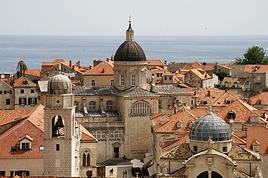
Biograd na Moru : station balnéaire à quelques kilomètres au sud de Zadar.Buje : un village médiéval du nord-ouest de l'Istrie, pas loin de la mer.Dubrovnik : c'est la ville "historique" du sud de la Dalmatie et une des destinations les plus visitées de la Méditerranée. La "Perle de l'Adriatique" est inscrite à l'UNESCO pour sa vieille ville (en partie restaurée suite au conflit des années 90). Plusieurs plages aux alentours.Groznjan : petit village d'artistes et de musiciens en Istrie connu pour ses manifestations artistiques estivales.Istrie : cette péninsule de la côte nord croate est un haut lieu du tourisme. On y vient pour découvrir de beaux paysages, notamment montagneux à l'intérieur, des petits villages et de nombreuses plages. On peut y randonner aussi bien sur la côte que dans l'intérieur.Komarna : ce village de la côte sud, tout comme son voisin Klek, offre de belles plages et des possibilités de treks dans les collines voisines parmi lesquelles on pourra découvrir plusieurs petits bourgs abandonnés.Labin : avec Rabac qui est son prolongement de bord de mer, c'est une station balnéaire d'Istrie.Makarska : la principale station balnéaire de la Makarska Riviera. Outre les plaisirs de la mer, on peut randonner dans le parc naturel de Biokovo, faire du canyoning, du raft et du kayak sur la rivière Cetine qui sont tout proches.Makarska Riviera : c'est le nom de la zone littorale qui court sur une soixantaine de kilomètres du sud de Split jusqu'à la frontière bosniaque. De beaux paysages côtiers, des plages agréables et des possibilités de randonnées.Motovun : petit village médiéval d'Istrie.Omis : ce joli port, avec ses anciennes forteresses et vieilles églises, marque le début de la Makarska Riviera.Opatija : la plus ancienne et une des plus chics stations balnéaires de l'Adriatique, pas loin de Rijeka.Péninsule de Peljesac : au nord de Dubrovnik, cette longue langue de terre montagneuse offre de beaux paysages, avec des plages et des possibilités de randonnées. On peut également visiter le monastère Notre dame des Anges à Orebic qui est la principale commune de la péninsule.Porec : grosse bourgade de la côte istrienne avec un petit centre ancien et surtout une basilique classée à l'UNESCO.Pula : la ville possède un vieux centre et un bel amphithéâtre romain. L'ensemble de la vieille ville est inscrit au patrimoine de l'UNESCO. Plusieurs plages dans les environs.Rijeka : premier port de Croatie. Quelques édifices historique et musées, ainsi qu'un carnaval parmi les plus importants d'Europe.Rovinj : directement reliée par ferries à Venise, cette cité de la côte istrienne possède un très beau centre ancien. On peut faire de la grimpe et profiter des plages dans ses environs.Salona : des vestiges antiques juste à côté de Split.Sibenik : entre Zadar et Split, la ville est surtout connue pour sa cathédrale Saint-Jacques classée à l'UNESCO et située au coeur de son centre ancien. Plusieurs plages dans ses environs.Split : la seconde ville de Croatie propose un superbe centre historique avec son célèbre palais Dioclétien. L'ensemble lui vaut d'ailleurs d'être classée au patrimoine de l'UNESCO. Plusieurs plages dans ses environs.Trogir : cette ville "historique" est située face à Split. Son superbe patrimoine architectural, notamment médiéval, fait qu'elle est entièrement inscrite au patrimoine mondial de l'UNESCO.Umag : grosse bourgade pittoresque de l'Istrie avec ses quartiers anciens.Vinisce : petit port de pêche proche de Trogir apprécié pour la chasse sous-marine et ses plages.Vrsar : station balnéaire populaire et familiale d'Istrie.Zadar : ville touristique visitée pour son vieux centre, ses plages et son animation.
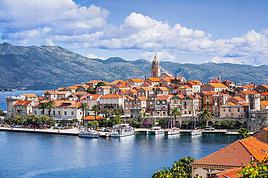
Patrimoine naturelCanyon de la Zrmanja : cette courte rivière qui se jette dans la mer du côté de Zadar est réputée pour ses possibilités de raft et de canoë.Grottes de Baredine : de belles grottes à visiter dans la région de l'Istrie.Parc National de Krka : ce parc proche de Sibenick permet de découvrir une zone de cascades et de canyons modelés par la rivière Krka. Un monastère et plusieurs forteresses, souvent en ruines, sont disséminés le long du parcours.Parc National de Paklenica : pas très loin de Zadar, ce parc avec ses oiseaux et sa grotte permet de belles balades de même que la pratique de l'escalade.Parc National de Plivitce : situé au nord de la Dalmatie, c'est le plus connu des parcs croates. Grâce à ses superbes paysages et ses nombreux lacs et cascades, il est classé au patrimoine de l'UNESCO et est considéré comme un des plus beaux parcs d'Europe. Parc National de Risnjak : parc montagneux du nord du pays, proche cependant de la mer, dans lequel on peut randonner.Parc National de Sjeverni Velebit : un parc de moyenne montagne entre Rijeka et Zadar. On y fait des randonnées.Vallée de la Lim : une rivière étroite et son estuaire, en Istrie, que certains qualifient de fjords.3- LES ÎLESBrac : grande île face à Split avec de belles plages, des grottes et des possibilités de plongée et de randonnées.Brijuni : cet archipel protégé d'une quinzaine d'îles face à Pula, en Istrie, est connu pour ses paysages et pour avoir servi de résidence secondaire à Tito. On peut y voir également quelques vestiges antiques et un jardin zoologique.Cres : c'est la plus grande île de l'Adriatique. Elle est très appréciée des visiteurs pour ses paysages, son lac intérieur, ses oiseaux, ses villages, sa plage et ses possibilités de randonnées ou de plongée.Dugi Otok : une île des environs de Zadar qu'on visite pour ses paysages, les plages et la plongée.Iles Elaphites : de petites îles (Sipan, Lopud...) à côté de Dubrovnik qui attirent du monde pour leurs paysages et leurs plages.Hvar : cette grande île dalmate est une des plus touristiques de l'Adriatique. Elle possède un riche patrimoine antique et médiéval (notamment dans la commune de Hvar), de beaux paysages, de petites criques avec de belles plages, ainsi qu'une animation certaine qui ont contribué à sa réputation.Korcula : c'est l'île la plus peuplée de Croatie. Sa ville principale qui porte le même nom possède un très joli centre ancien. En plus de ses paysages, l'île offre des possibilités de plongées et de belles plages.Archipel des Kornati : plusieurs dizaines de petites îles au centre de la côte dalmate dont près d'une centaine réunies en un parc naturel caractérisé par de hautes falaises. L'ensemble est surtout visité par les plaisanciers ou en petites croisières.Krk : grande île touristique de la côte nord reliée au continent par un pont. On peut découvrir ses petits villages, ses plages et y faire de la plongée.Losinj : une des îles de la côte nord. Comme ses voisines (Rab, Cres...) elle attire pas mal de monde pour ses plages, ses paysages et ses villages.Mljet : entre Korkula et Dubrovnik, Mjlet offre un bel environnement boisé avec une partie de l'île située en parc national, des petits villages, un joli monastère, des plages, et des possibilités de plongée.Pag : longue île rattachée au continent dans les environs de Zadar. On y vient pour les plages, la vieille ville de Pag, mais aussi et surtout pour y faire la fête.Pasman : des plages et des monastères sur cette île proche de Zadar.Rab : un endroit de la côte nord parmi les plus touristiques. On y vient pour les plages, les beaux paysage et la vieille bourgade de Rab.Solta : une petite île face à Split appréciée des visiteurs pour ses activités nautiques et la pêche. Egalement plusieurs églises anciennes et quelques vestiges historiques.Susak : la petite île proche de celle Losinj est devenue une destination touristique.Unije : c'est la troisième île de l'archipel Cres-Losinj. Des baies et des plages, plus un joli village de pêcheurs.Vis : un endroit connu avant tout pour ses plages et ses vignobles. 4- LE PLUS APPRÉCIÉ...
L'intérieur : Varazdin; Zagreb.
La côte : Dubrovnik; Istrie; Makarska Riviera; Parc National de Krka; Parc National de Plivitce; Pula; Split; Trogir.
Les îles : Cres; Hvar; Krk; Losinj; Mljet; Rab.
Carnets de voyage › Monténégro / Croatie · 85 replies
Je vous invite à embarquer avec moi à la découverte du Monténégro (et de la région de Dubrovnik!), que nous avons parcouru durant 3 semaines avec notre fille…
Je pars a Dubrovnik a la fin du mois d'aout pour 1 semaine, je n'ai encore rien preparé et je ne connais absolument rien de la croatie. J'atteris à Dubrovnik…
Je suis entrain de construire mon premier voyage en croatie! Il y a donc beaucoup d'inconnu pour moi. Notre recherche est avant tout basé sur les lieux magique…
Europe de l'Ouest › Malte / Croatie / Grèce · 12 replies
Fin juillet ma compagne et moi souhaitons partir en vacances, mais nous ne savons pas trop où encore... à vrai dire j’hésite entre la Grèce, la Croatie, Crète,…
Je vais passer 2 semaines en Crète en septembre et j’aurai besoin d’une voiture de location.
J’ai l’habitude de faire appel à Europcar, mais en comparant leur offre avec ce que Aegean Rentals propose, je constate qu’Europcar demande pas moins de 400€ en plus, pour la même voiture et avec assurances similaires !
Je serais intéressé de savoir si d’autres ont de l’expérience avec Aegean Rentals, et si oui, si cette expérience était positive ?
Hi,
We’re heading to Greece in early October and will be staying in Kineta, north of the Saronic Gulf, and renting a car.
Is it feasible to visit Acrocorinth, Mycenae, Nafplio, and Epidaurus in a single day?
Thanks for your recommendations!
Hi there!
I’m sharing our itinerary for May/June 2027—23 days. This is our first time in Greece, so we’re starting with the must-see spots. We’re planning another trip later to explore the north, Thessaloniki, Macedonia, and some islands.
- Athens, 4 nights
- Corinth area, 2 nights (Heraion of Perachora, Canal, Acrocorinth)
- Nafplio, 3 nights (Mycenae, Epidaurus, Methana peninsula)
- Gefira, 2 nights (Monemvasia)
- Areopoli, 2 nights (Mani). Maybe add an extra night and stay on the peninsula??? Based on my calculations, the Mani loop is about 100 km—doable in a day, but it’d be a quick trip.
- Sparta or Pikoulianika, 2 nights (Mystras)
- Dimitsana, 2 nights (Lousios Gorge, monasteries)
- Olympia, 2 nights (via Lagkadia?)
- Delphi or Arachova, 3 nights (via the west coast, Galaxidi bridge) (Delphi, Hosios Loukas Monastery)
- And back to Athens.
This is just a rough draft for now. We’re planning to stay in hotels or book through Booking.com. What do you think? Thanks for your feedback and suggestions!
Over the past twenty-five years, I’ve traveled the roads between France and Moldova a good ten times, sometimes via Central Europe, other times via the Balkans.
It was while traveling like this—what I call "hitting the road the slow way"—that I realized something simple: our neighbors' neighbors are very clearly our neighbors too. And that’s not insignificant.
After a break of a few years, I’m planning to hit the road again in September, this time heading to Kosovo, crossing through Bosnia-Herzegovina and Montenegro.
Having gotten a bit older, I’ve no intention of rushing—no need to speed ahead of the music! 😄
I’d rather take my time.
I’m not looking to see everything, but to soak in the atmosphere of the places, always leaving room for the unexpected and for encounters.
I’m especially drawn to culturally immersive, authentic, and welcoming regions: lively villages, backroads, preserved landscapes, markets, local festivals, traditions that are still very much alive... and, why not, a few offbeat, forgotten, or slightly secret spots.
If any of you know Bosnia-Herzegovina, Montenegro, or Kosovo a little, I’d love to hear your suggestions for itineraries, stops, backroads, homestays, village festivals, or local contacts, for example.
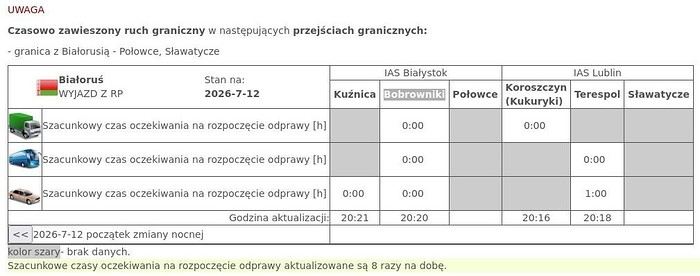
Planning to return to Belarus in mid-August, I just realized that since last September, Poland has reopened several border crossing points, and for buses, this means connections like Białystok-Grodno.
Several bus company routes, like on infobus.eu, take between 3 and 4 hours.
Trains from Warsaw to Białystok take about 1.5 to 2 hours.
This has the advantage of allowing comfortable train journeys with minimal time spent on a bus.
Also, the Terespol-Brest border might have shorter queues if you still prefer a Warsaw-Brest bus.
Note that another route to Minsk, if you have a paper Russian or Belarusian visa, is the Kaliningrad-Minsk train. It’s long—around ten or eleven hours—but you can lie down and sleep. An option if you fly into Gdańsk and then take a short bus to Kaliningrad.
There are also Belavia flights from Minsk to Kaliningrad, but they’re expensive. The route is scenic:
In any case, this adds a few more options compared to what’s been available over the last four years.
Hi there.
I’d like to know what the daily budget is for Greece in December. I’ll be landing in Athens and staying there for a week, then heading to some other islands—I don’t have a set itinerary yet. Also, I’ve heard that in December, or early January, the temperature is around 11–16°C. Is that accurate?
Finally, does anyone have a good recommendation for a cheap but clean hotel near the tourist sites? I don’t need a TV or any other extras. Also, is Greece gay-friendly?
Hi there,
After booking an Airbnb last January for this summer’s vacation in Sarajevo... My "host" canceled our reservation without any reason—this has never happened to me before.
Of course, now it’s impossible to find a place to stay at a "normal" price in Sarajevo with parking...
So we’re falling back on the capital of the Republika Srpska, Banja Luka, which had already crossed my mind before I booked Sarajevo.
I already have quite a few ideas in mind, without having dug too deep into the region yet.
But if anyone has already been there and has suggestions? Even for restaurants—I’m all ears!
And even if it’s not right next door, I’m planning to spend a day in Sarajevo!
Hi,
I'm looking for a car rental company in Tirana for September. Does anyone have a rental company to recommend? I saw that it's possible to rent from private individuals through a platform that groups them (rentfromlocals/al). Has anyone used this method, and if so, is it cost-effective, reliable, and what guarantees are there?
Also, I plan to drive through the Albanian mountains (Valbonë, Kukës, Përmet, Pogradec...). Can anyone tell me about the general condition of these roads? Is a 4x4 vehicle necessary, or would a car with a slightly raised undercarriage (like a Dacia Sandero Stepway) be enough?
Bruno
I’d like to know the opening hours of physical stores between Germany and Austria, and between Austria and Slovenia, that sell the PAPER STICKER toll vignettes that still exist for 2026—non-digital ones. I don’t think they’re open 24/7, and I can’t find the info anywhere.
Thanks
Hi there,
We’re planning a 3-week trip in late September with our camper van to explore Bulgaria and Romania.
What routes would you recommend, starting from the South?
Is there an option to take a ferry in Italy, and is it worth it?
Thanks for all your tips!😊
Hi there, we’re a young couple and we’d love to go to the Blue Eye (Syri i Kalter) between today (26/06/26) and tomorrow (27/06/26).
Is anyone heading there and could give us a ride? We’re super friendly!
Thanks so much!
We're back. It's still a bit tough to get precise info, so here's a quick trip report!
A good starting point is Shkoder, a really pleasant city. You can easily explore Shkoder itself in a day or two.
Two accessible spots: Valbona and Theth.
In both cases, local travel agencies in Shkoder or online offer round-trip or one-way access packages. Super handy, especially for Valbona.
Valbona and Theth are both very steep! There aren’t many easy hikes for less sporty folks (like me!).
Valbona: The highlight is the amazing 2.5-hour boat ride across Lake Koman. There are day trips from Shkoder, but you’ll only get a short tour of the lake. The best option is to do the full crossing—so spend a night in Valbona (or two if you want to hike in the valley) and return.
Theth is deeply nestled in the mountains. The village at the end of the valley, which is a dead end, has lots of hotels, but they’re pricey. Other hostels are scattered along the mountainside road, but it’s a steep climb down to the village or to the start of the two easy hikes (waterfalls and the Blue Eye). For us, it was a one-hour descent (and ascent!). It’s fine if you have a car; otherwise, keep an eye out for a taxi (cheap) or try hitchhiking—it works really well.
Access from Shkoder to Theth is through an agency. The road is in great condition, and you can also rent a car for 2-3 days in Shkoder. If we did it again, that’s the option we’d choose.
We didn’t do the trek and returned to Shkoder each time. I can’t speak to its difficulty, but we were there in late May, and even experienced hikers had given up because of heavy rain and snow.
Hope this helps! It’s a stunning region you shouldn’t miss.
We’re a Canadian couple, both 77, and we’re already planning our vacation for fall 2027.
Timeframe: mid-September to mid-October... dates are flexible, and we might stay even longer.
Initially, I had planned this itinerary:
Athens (3), Naxos (4), Paros (4), Santorini (4), then a flight to Istanbul (7–10 days!!). This would let us maximize our flights and experience another culture.
That’s a lot of ferries, though... I’ve already cut out Milos.
Our second option would be to stay 2 x 15 days on two different islands, but I’d still keep Istanbul as our next destination... or maybe 30 days on one island that offers the chance to take day trips to other islands where the ferry ride is no more than 2 to 2.5 hours. For example, Naxos to Paros only takes 30 minutes. We could return the same evening or stay overnight.
Naxos seems like the best option!!!
For Istanbul, of course we want to do a day cruise on the Bosphorus and see Hagia Sophia. If we stay 6–7 days, what would be the other main attractions? Are there any points of interest we can reach by local bus?
Hi there!
We bought our tickets to Greece at the end of November 2025, and let’s just say the geopolitical climate has really taken a turn since then with the war started by the United States against Iran. Not to mention all the other conflicts happening around the world 😕... Anyway!
Our flight from Montreal is on May 1st, and I was wondering how things are currently being experienced in Greece.
We were planning to rent a car and had already booked accommodations on three Cyclades islands!!
The oil shortage is also worrying us...
If you could share some insights on this, that would be great!
A little trip report from an 11-day journey to Albania at the end of April 2026, with two friends in their early sixties and beyond...
Our route: Berat, Gjirokastër, Himarë, Tirana
Here are some opinions, tips, and great deals to share:
Flight Round-trip Beauvais-Tirana: Ryanair, 260 € with checked baggage (20 kg) and seat selection. Flight was fine and on time. 2h 30min flight.
Exchange: 1 € was worth 95 lek in April 2026. We were advised to exchange in the airport hall at the Illiria counter (98 lek outside the security zone), saying we wouldn’t find a better rate. However, the exchange rate was 93 lek for 1 euro, while in the city it was 95...
Car rental at Tirana airport for 9 days via Booking.com: 144 € (56 € for the car rental and 88 € for optional full insurance deductible waiver).
Wheego agency: the car was fine, but be careful when signing the contract—they tried to convince us that the insurance taken through Booking didn’t cover everything and insisted we take their own insurance for 250 €... We refused.
After reading about driving in Tirana, instead of starting our trip by visiting the capital, we decided to head straight to Berat upon arrival and return the car at the end of the trip to explore the city on foot. This turned out to be a great choice!
Accommodations: All our stays were booked via Booking.com. Everyone prefers to be paid in euros and in cash—they mention this when booking.
Berat: 2-hour drive from the airport.
Accommodation: Vila Arben Elezi: 135 € for 3 nights with breakfast and private parking. The room was decent and clean but a bit dark, located slightly below ground level near the parking. However, the breakfast on the rooftop was excellent, especially with the stunning view of the "city of a thousand windows." Great location.
Berat was our favorite—there are lovely walks through the different neighborhoods on both sides of the river, each with a very different vibe. The citadel visit is also fascinating, as it’s like a small town within the fortress.
The walk along the river is pleasant, with plenty of restaurant choices. Other restaurants in the old town are also very nice. The White House Restaurant, on the first floor along the road, is good and offers a great view of the Gorica district.
Gjirokastër:
Accommodation: Te Ajdini Guest House: 120 € for 3 nights with breakfast. A private home stay. There’s free parking just before entering the city, a 5-minute walk from the accommodation, which is very convenient since the cobblestone streets are narrow and parking is tricky. Yes, it’s a climb to get to the place, but everything in this city is uphill... The room was bright and clean. Breakfast was very good, hearty, and served in the courtyard with a view of the castle. The guesthouse is a 5-minute walk from the city center (the bazaar) but in a quiet area.
Restaurants: Rrapi and Kujtimi—good and affordable with their little pergolas.
The old town of Gjirokastër is charming but very touristy, with streets packed with souvenir shops and restaurant tables and chairs. Lots of people.
-The bunker visit (near the tourist office) is very interesting: Cold War Tunnel.
The castle offers a beautiful view of the city.
-Visit to the Ottoman house Skenduli: very well done. Don’t forget to climb the ladder facing a trapdoor in the ceiling to see the roof’s framework—it’s like a forest of beams: impressive!
-The bridge Ura e Ali Pasha: A steep 45-minute climb from the city to the site is worth it, but once you reach the viewpoint (which is stunning), you have to go back down a path to reach the bridge. You can drive to the viewpoint, but parking is very tricky.
Around Gjirokastër:
-Just outside the city: Lake Liqeni i Viroit: a nice, ordinary-looking lake, but at the end, there’s a natural spring making the water crystal clear and a brilliant blue—really spectacular, like photos of Blue Eye near Sarandë.
-Drive to Përmet along the gorges: beautiful viewpoints along the way and lovely countryside.
Himarë:
Accommodation: Vila Kosteli: 120 € for 2 nights with breakfast—slightly overpriced for this type of place but very close to a small beach and not far from the promenade with all the restaurants. Private parking, but very tight (4 cars on a tiny lot along the road). The "sea view" room is a bit obstructed by the building across the street. However, the rooftop breakfast view is beautiful. Friendly staff.
Himarë is a pleasant seaside resort, quite calm (but it was April...). There’s a cute promenade with restaurants along the beach. The castle on the heights of Himarë is worth a visit.
Around Himarë:
-Qeparo is worth a quick stop, but Qeparo village is really worth the detour: a village lost in the heights after a scenic drive up from the coastal road—narrow but well-maintained. Beautiful view from the top and a charming village.
-The Big Bunker and Llogora Panorama: take a right turn several kilometers after Dhermi—a road that climbs steeply from the start... A breathtaking winding road that reaches 900 meters in altitude. The view is stunning.
-Several small villages between Dhermi and Himarë are worth a quick stop.
-Porto Palermo Castle is somewhat disappointing.
Tirana:
Taxi from Tirana airport to the city center: 15 € with electric taxis (Green Taxi, Bee Taxi, Do Taxi).
Accommodation: Hotel Nevi Apartment: 63 € for 2 nights. A private apartment in an older building but very clean and well-equipped, with a kitchen and small enclosed balcony.
Great welcome and contact—the owner even booked a taxi for our departure. Very well located, close to the main square, shops, and restaurants. A small supermarket nearby is perfect for stocking up on breakfast supplies.
The city is lively and dynamic, with plenty of green spaces and promenades. Buildings are popping up everywhere, often with surprising architecture—like a building shaped like a face, a huge golden cube, and many others under construction.
-Sky Tower: at the top, a rotating bar offers a 360° view of the city and its buildings. Drinks are a bit pricier than usual, but it’s totally worth it (6 € for a beer or a glass of white wine, 3 € for coffee). We were there for sunset, and it was amazing! A must-do. Arrive early, as it fills up quickly.
-The House of Leaves: a house used for secret surveillance and interrogations during the dictatorship... A great way to learn about the surveillance systems of that era.
-Bunk’Art 2: a bunker in the heart of the city—very interesting, covering the dictatorship period and its system...
-The Pazari i Ri Bazaar: the new bazaar district. The large hall is worth a visit, but souvenir prices are often higher than elsewhere... The area is nice.
Restaurant: Kastrati Restaurant—a bit like a canteen with lots of traditional dishes. It’s on the first floor of a building. Excellent value for money, and the waitress explains the dishes in French.
That’s a little overview of our trip and my personal impressions!
Albania is a beautiful and pleasant country to visit.
If you have any questions, feel free to ask!
Hi everyone,
We’re thinking of spending 3 weeks in Crete between mid-August and early September, renting a car, quickly exploring a few spots in the east, and focusing on the west, southwest, and south.
I’m worried about the heavy tourist crowds. Is it really more noticeable than elsewhere in Greece? Is there a way to avoid the crowds without missing out on the iconic places, which I imagine are stunning in Crete? Thanks for your thoughts and experiences!
Hi,
I'm heading to Greece via Albania soon. Does anyone have info on transportation from Gjirokastër to Ioannina?
Which company, fares, and schedules—it's not very clear with Google.
I’m just passing through Bratislava quickly (one afternoon, one night, one morning) and I’d love to see the highlights of the city.
I’ve put together a little itinerary—feel free to let me know what you think!
Start at the castle and its beautiful viewpoint
Visit the Baroque gardens
St. Martin’s Cathedral, quick visit
National Theatre
Discover the Cumil statues
Primatial Palace via Hlavné Namestie
Michael’s Gate
Grassalkovich Palace via Obchodna
Walk across Namesti Slobody to head back to the upside-down pyramid
Head down to the Blue Church
Cross the Danube to see Sad Janka Krala, then return via the UFO Bridge
There you go—10 km and a packed day!
What do you think?
Hi there,
we’re heading to Crete from May 8th to 15th, staying at a hotel in Agia Pelagia, 20 km from Heraklion, on half-board, so we’ll be back every evening. What daily itinerary would you recommend? We love hiking and discovering local cultures...
Thanks in advance!!
Hello,
We’re heading to Prague with so much excitement from June 10th to 20th. I’ve got three main questions for those who live there or have visited:
- What are your thoughts on what to pack clothing-wise? What’s the weather usually like at this time of year? We’re a bit sensitive to the cold—we live way down in southern Andalusia and are used to the *calor* 😎... Should we pack rain gear? Are we likely to get a lot of rain (which we’re dreading a little, but we couldn’t choose other dates)?
- I’ve seen there are "passes" for various attractions, museums, and sites, including one that’s valid for 10 days but costs a whopping 160 € per person—that’s an average of 16 € per day. Do you think it’s really worth it? We won’t be spending our days rushing between every indoor site; we also love wandering the streets and discovering things a bit "at random." If we do two paid visits a day, that’ll probably be the max... Can we make it worth the cost with that? Of course, we want to visit the castle and take a boat trip as a minimum. Are the sites included in these passes iconic, or are they more "minor" attractions? Does having the pass help us skip long lines?
- Finally, a question about communication: I speak French, obviously, plus Spanish and English fluently, but very little German (haven’t practiced in ages), and no Russian or Czech at all. My husband knows a few words of Russian, but it’s "Cuban" Russian—about the same level as my current German 🙂 !! Can we still get by without too much trouble? We don’t want to spend 10 days not saying a word to anyone and communicating only with gestures!!
Thanks for your valuable tips and opinions.
Hi there!
We’re heading to Crete (Heraklion) as a couple and I’d like to rent a car.
1) Do we need an international driver’s permit?
2) Are rentals super expensive?
Thanks everyone!
I’d like to know how much a meal costs on average in zloty in Poland (Warsaw, Kraków, Częstochowa, Wadowice), and also the price of souvenirs like postcards and magnets—so I don’t end up with too many zlotys left after my 5-day trip to Poland?
I’m just passing through the city very quickly (one afternoon, one night, one morning) and I’d love to see as many must-see spots as possible.
I’ve put together a little itinerary—let me know what you think!
Visit to Varosliget Park
Heroes’ Square
Quick stop in the southern part of Margitsziget (for the photo with the Budapest sign!!!)
Gül Baba Mausoleum and Rose Garden
Fisherman’s Bastion
Church of the Assumption of Our Lady of Budavár
Tóth Árpád stny promenade
Budavar Palace
Freedom Square
Parliament
This is just a first draft.
I still have a few months to tweak it.
hello
I’m looking for advice for a last-minute trip—about 3 weeks (half Montenegro, half Croatia).
I’m traveling solo, backpacker style (low budget, hostels). I’m 40 and love exploring cool spots—cities, beaches, mountains, sports activities, you name it.
I’m torn between renting a car or just going with the flow using buses once I’m there. A car would definitely be more convenient, but it might be pricier—plus, parking (is it paid?) and having to return it to the same place. My plan is to start in Montenegro (flying into Podgorica or Albania) and finish in Croatia, so I’d either need to do short-term rentals per country or one-way.
In Montenegro, here are the spots I’ve noted:
- Ulcinj and Velika Plaža beach
- A side trip to Lake Skadar and Virpazar
- Budva, Sveti Stefan, and Petrovac
- Cetinje and Lovćen National Park
- Kotor / Perast
- Žabljak and Durmitor National Park + rafting in the Tara Canyon
Is 8–10 days enough?
And in Croatia, I’ve got:
- Dubrovnik
- Korčula
- Hvar
- Split + Trogir and Krka National Park
- Zadar
- Plitvice Lakes National Park
- Croatian Istria / Rovinj / Pula
- Zagreb
Around 10–12 days.
Any tips on the stops (adding or cutting some from my list) or transportation options?
I’m heading to Pelion with my partner and then to Chalkidiki around mid-September (from September 12th to 26th). I arrive in Thessaloniki on Saturday evening and plan to spend a day there to check out the market (though it’s marked as temporarily closed on Google??) and, most importantly, enjoy the local food scene.
After that, I’ll head toward Meteora (Sunday evening/Monday), spend a week in Pelion, and then head up to Nikiti to finish the trip (5 days in Vourvourou) and explore the beaches of Sithonia. We’ll also make a trip to Afytos since I think it’s worth the detour.
About Pelion, I’m really not sure where to stay because the distances between Volos and Afissos aren’t straightforward.
I’m looking for a quiet spot but with a little evening activity—like strolling through a village or by the sea. I’ve seen a few suggestions via ChatGPT, but I’m not convinced about the vibe (Milies, Makrinitsa).
Volos is big… but kind of ugly.
We love hiking, spending time in picturesque/typical villages, and, like everyone else, tasting local specialties. As for balancing the trip, I’m open to changes or adjustments if you’ve got any tips—I’d love to hear them, along with any other ideas.
Hi! We’d like to go away for 10 days around May 15th, either to Menorca or Crete—we don’t know either place. We love hiking, unspoiled nature, good food, swimming, and, if possible, avoiding crowds. We enjoy getting off the beaten track. Menorca seems ideal because it’s not far by plane from Lyon, but if Crete is really wilder and more beautiful in terms of landscapes, we can add an extra hour of flight time. Can you help us out? Thanks!