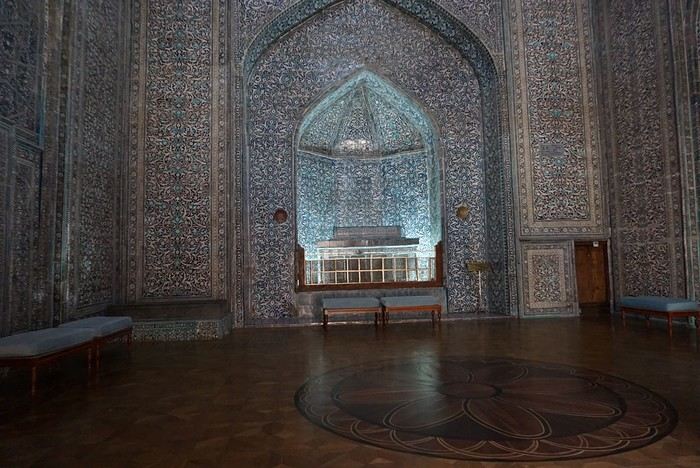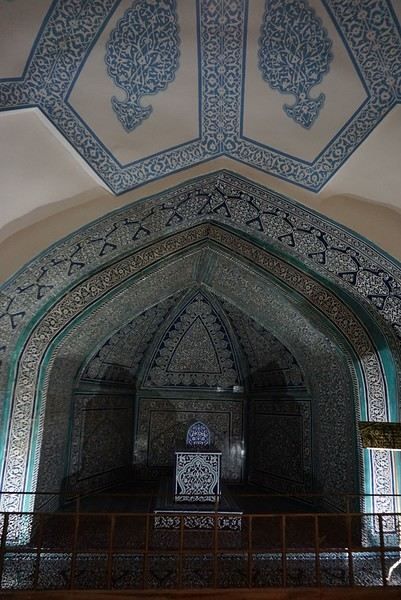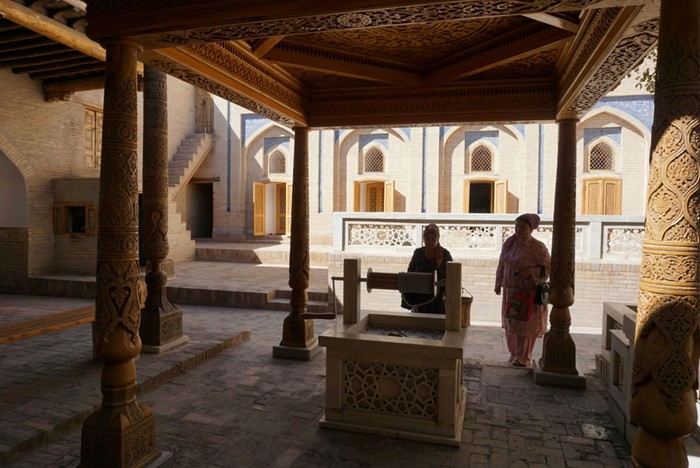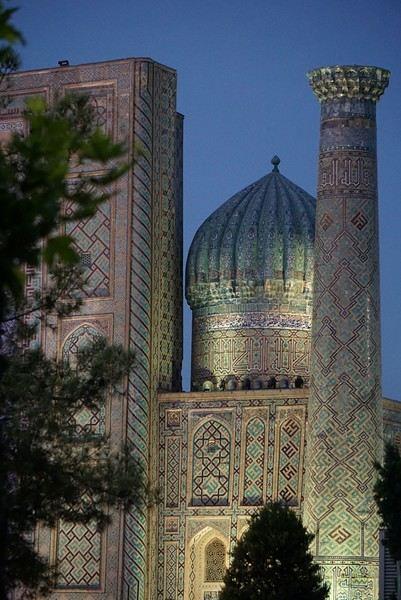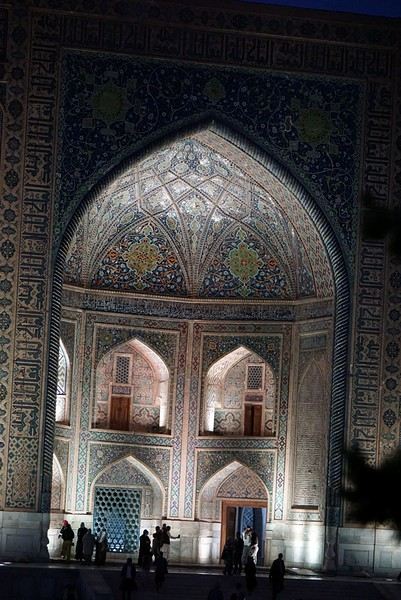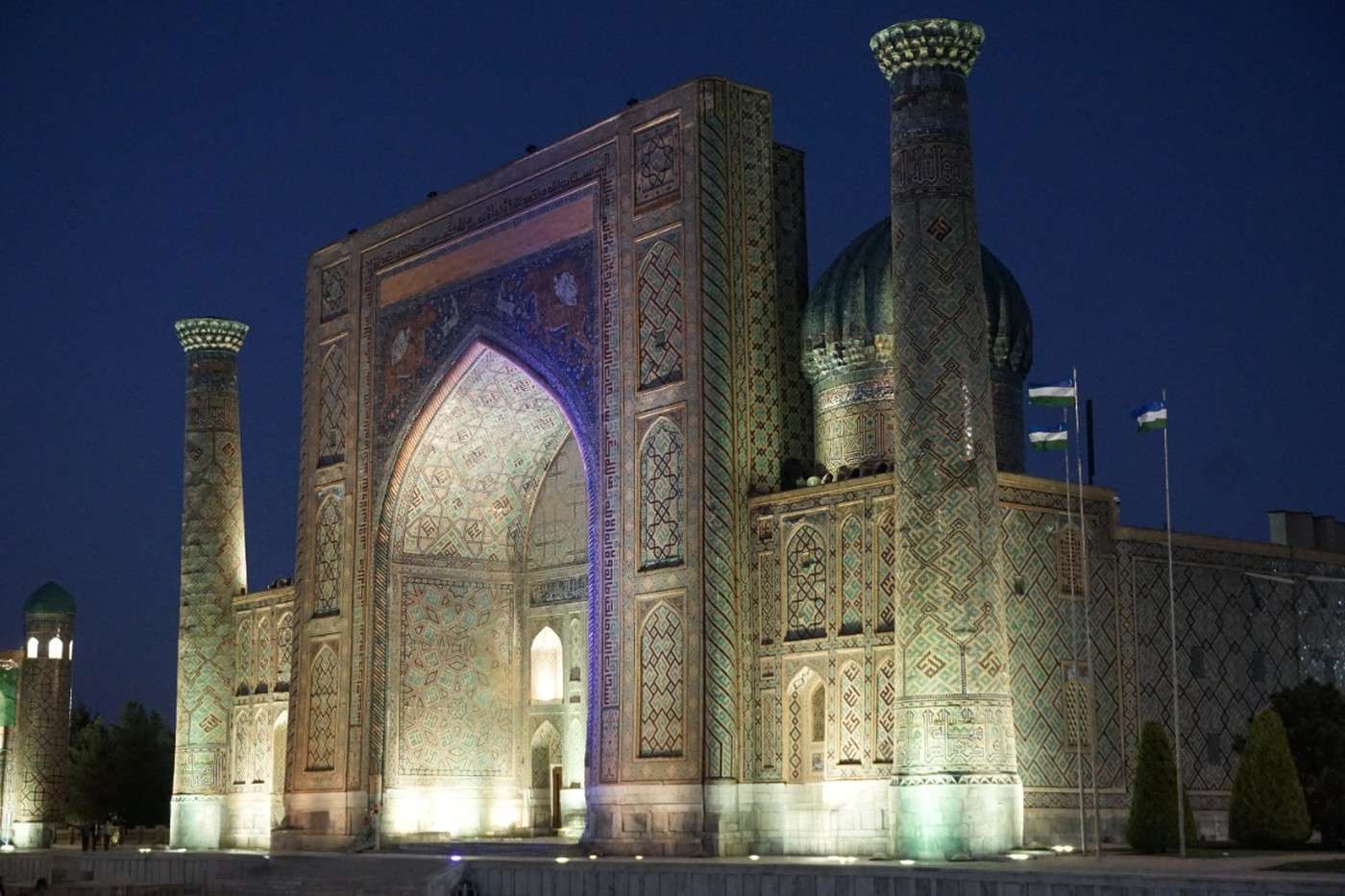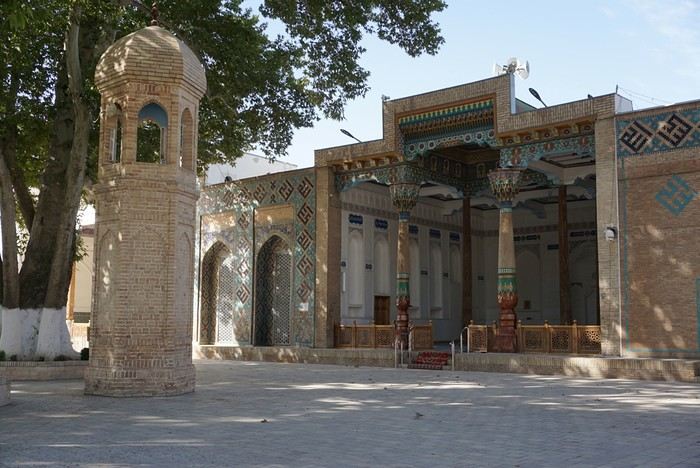
A Turquoise Dream Come True in Uzbekistan - 2022
FR

Translated into English.

Original post
PH
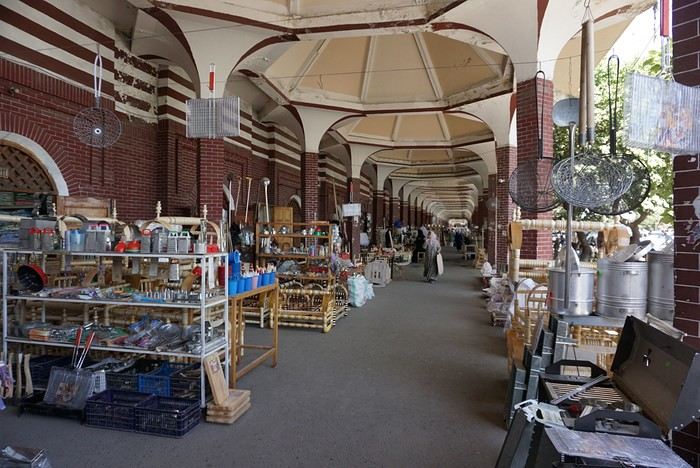
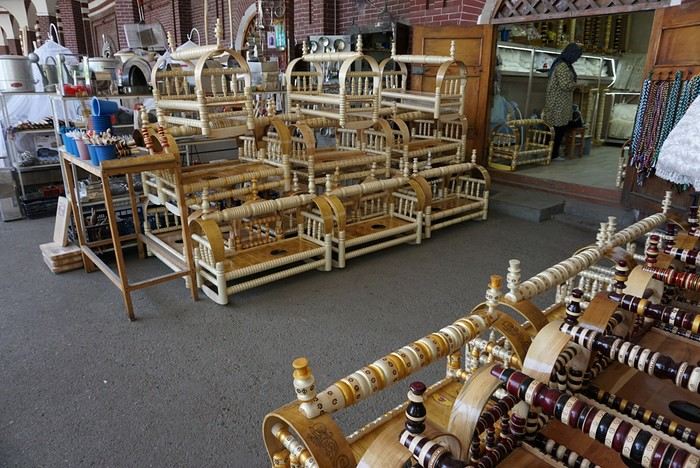
We took this trip from September 12 to October 7, 2022. I didn’t post this travel journal earlier in Voyage Forum because the site wasn’t back up yet (and also because I was short on time). Then, at the end of 2024, I made a promise to a friend: to publish my travel journal on VF. So here it is! We took off from Paris in the late afternoon on September 12 and arrived in Tashkent around 7:15 AM on the 13th. This trip was the result of long contemplation and preparation (it was originally planned for the year of the lockdown (2020) and was prepared with the help and advice of Nasrullo Jumanov from Turquoise Travel. Stages and Itinerary Stage 1: Tashkent - September 13 and 14 Stage 2: Ferghana Valley – September 15 to 17 Stage 3: Nukus and Moynaq - September 18 and 19 Stage 4: Mysterious Khiva - September 20 to 22 Stage 5: Holy Bukhara - September 23 to 26 Stage 6: Asraf - September 27 and 28 Stage 7: Mythical Samarkand - September 29 to October 2 Stage 8: Tersak (via Shakhrisabz and Urgut) – October 3 and 4 Stage 9: Samarkand – October 5 and 6 Stage 10: Tashkent/Istanbul/Paris – October 6 and 7 Stage 1: Tashkent September 13 At the airport exit, we were greeted by the owner of our B&B (B&B Gulnara). Today was all about recovery and our first steps in the capital. Our first currency exchange made us feel like sudden millionaires. Our first stroll down the avenue leading to Chorsu Market introduced us to the fact that 80 to 90% of the cars here are white Chevrolets. A walk under the arcades facing Chorsu: hardware stores, cabinetmakers, lute makers (one of them gave me a little concert/demo of a few string instruments).


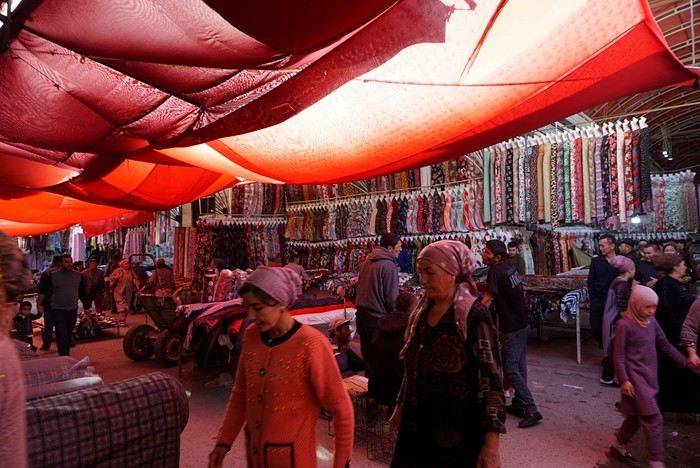
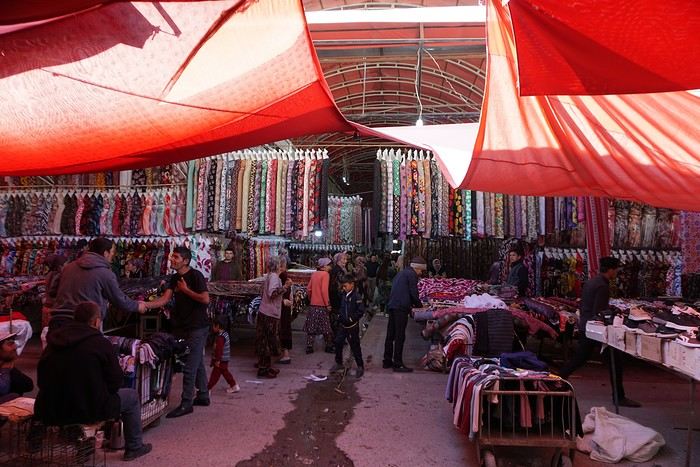
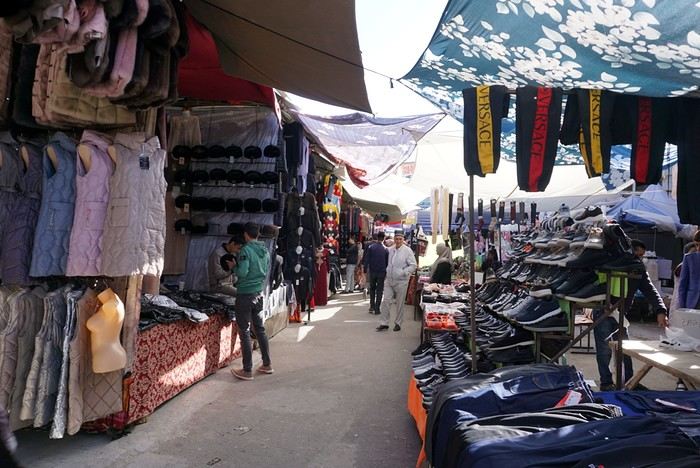
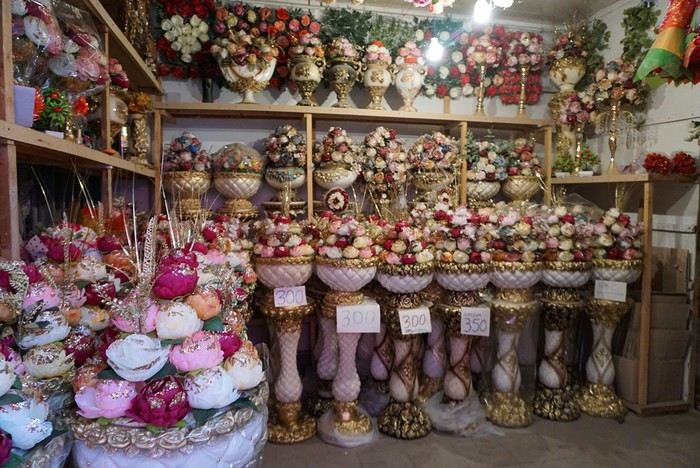
As we entered the market, many vendors called out to us, including this florist who asked where we were from: ‘France? Ah! Macron! PSG!’ He then recited a list of players from the Parisian team as well as past (Platini, Zidane, etc.) and current (Giroud, Griezmann, Mbappé, etc.) French national team players. Since we’re more into rugby (we live near Toulouse), he knew more players than I did!
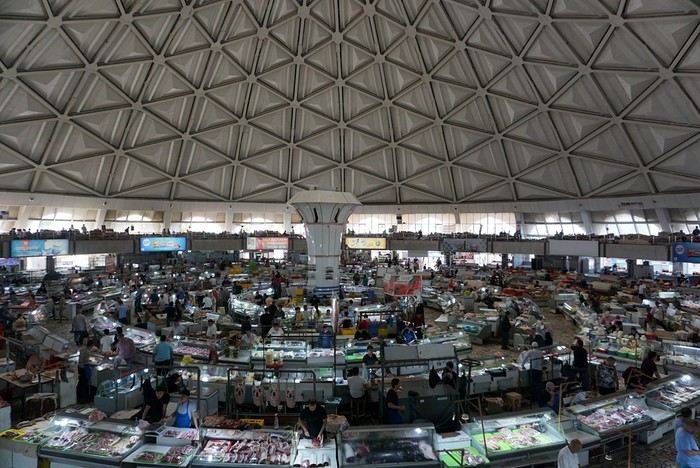
The market sprawls outside around the large circular, multi-story hall. We bought some grapes and bottles of freshly squeezed pomegranate juice for just a few sums. This evening, we had a meet-up with Nasrullo. The reunion was very warm: we’d been exchanging messages for over two years, and I’d been ‘torturing’ him with changes to our itinerary and trip duration. We were finally eager to meet, and honestly, I wasn’t disappointed—in fact, it was the opposite. Nasrullo was very attentive throughout our trip and always made sure, even from a distance (and most often from a distance!), that everything went smoothly. His goal was for us to leave delighted with our trip and, why not, indirectly become ambassadors for this destination. September 14 Breakfast with Nasrullo, then we set off with him by taxi to explore some of the capital’s sites.
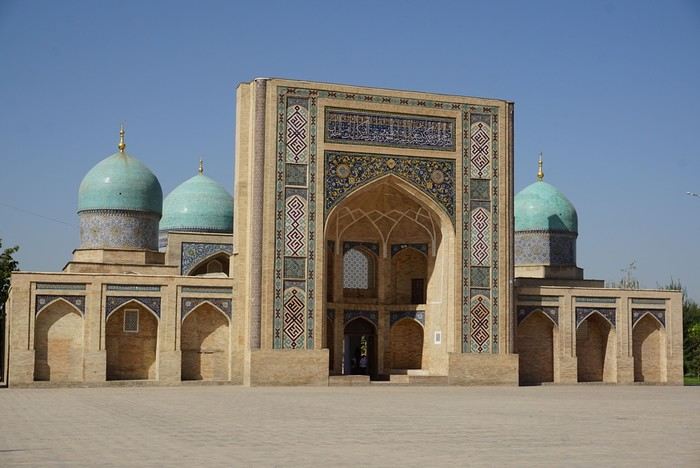
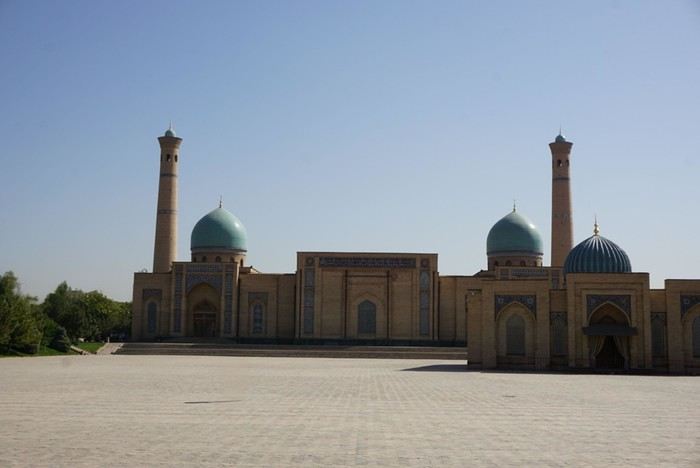

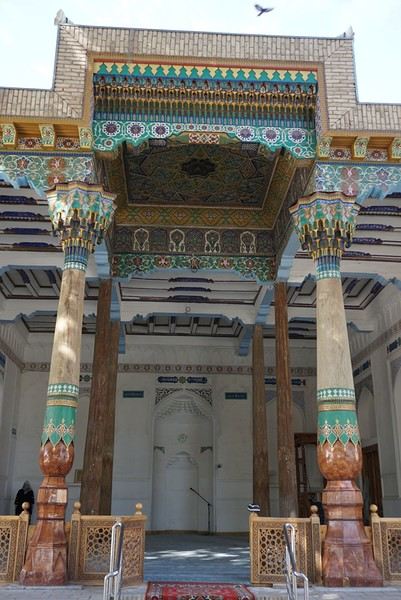
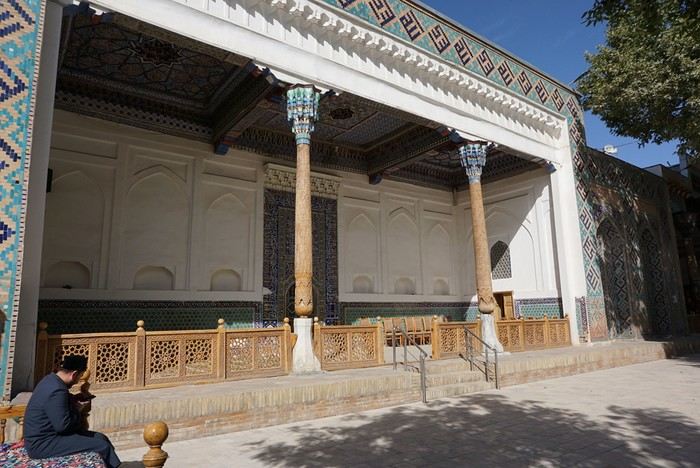
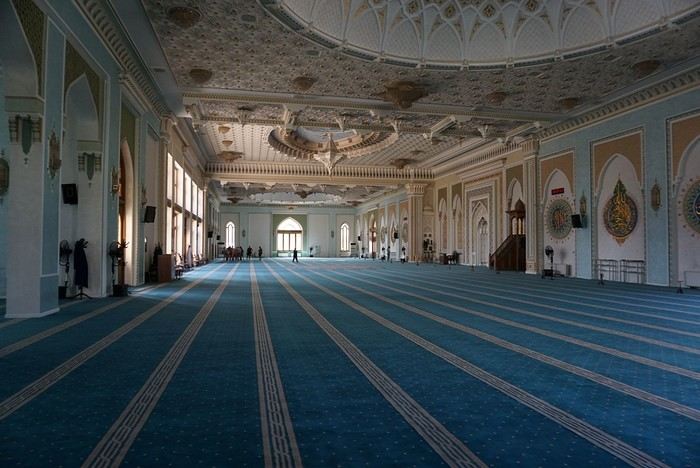
We started by visiting the Khazrati Imam complex, which includes the mausoleum of Kaffal Shashi, the Barak Khan and Muyi Muborak madrasas, and the great Khazrati Imam Mosque with its immense prayer hall.
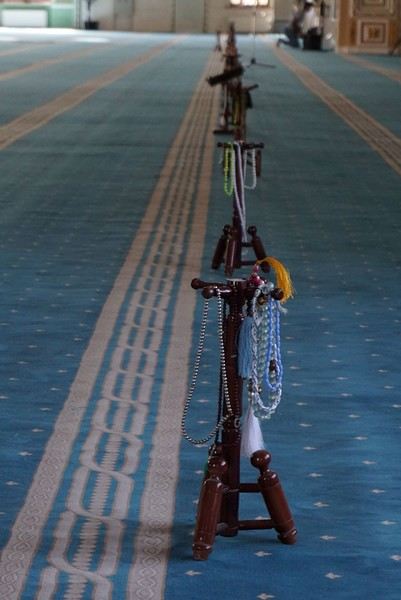


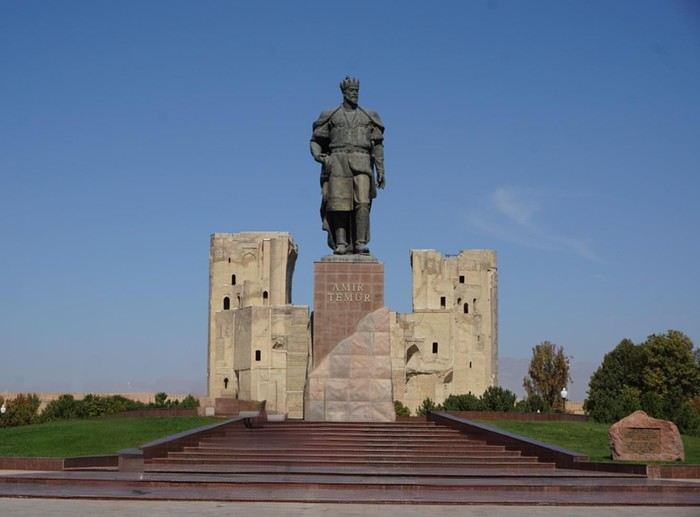
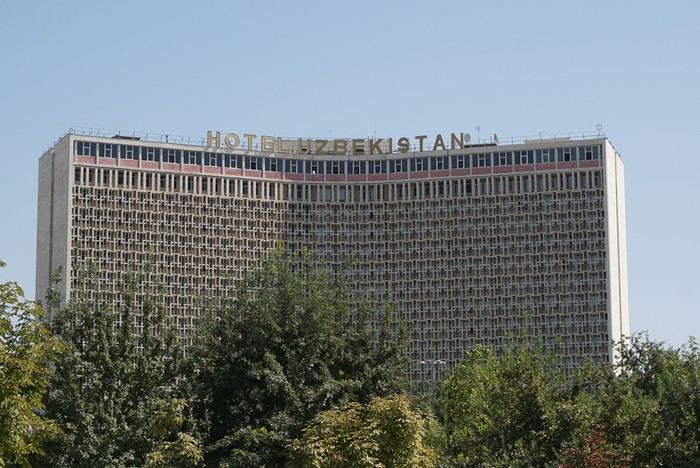
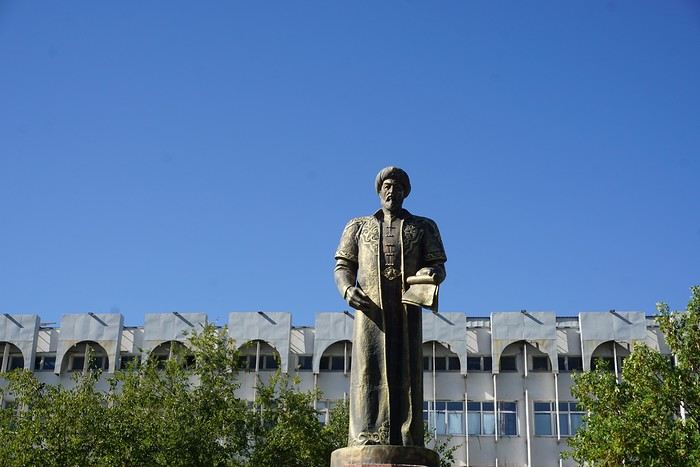
In the Muyi Muborak madrasa, now a museum, you can see the oldest Quran in the world. It was written by three religious scholars, including the secretary of the Prophet Muhammad, on large ‘pages’ made of antelope skin. Next, we explored Soviet-era Tashkent, discovering its parks, canals, and squares: Independence Square with its storks and phoenixes, Amir Temur Square with its large statue and, in the background, the massive Soviet-era hotel that has become one of Tashkent’s iconic buildings. Nasrullo took us through Broadway Boulevard and along what he calls ‘Tashkent’s Montmartre’… Well, it’s far, very far from Montmartre (in every sense of the word!). Then we took the metro to Chorsu station. Rush hour is pretty much the same everywhere in the metro… When we arrived at Chorsu, it was time to say goodbye. Nasrullo had to head back to Samarkand. Before leaving, he recommended some chaikhanas at the end of the galleries facing the market. We ate there for just a few euros (2 or 3 € for two people). After eating, we headed back to our room to cool off (our B&B is about a 10-minute walk away).
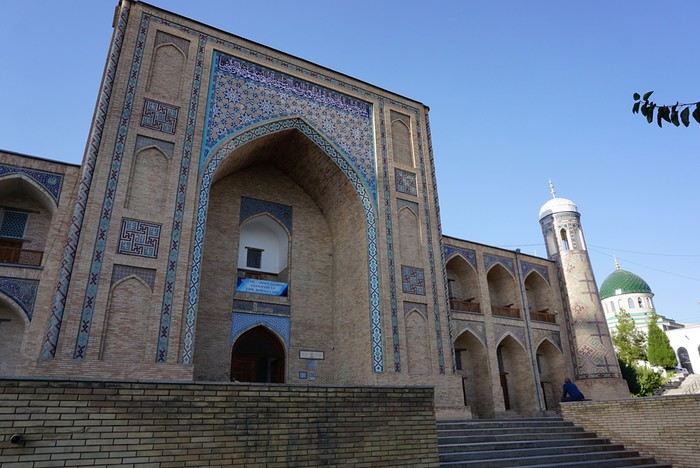


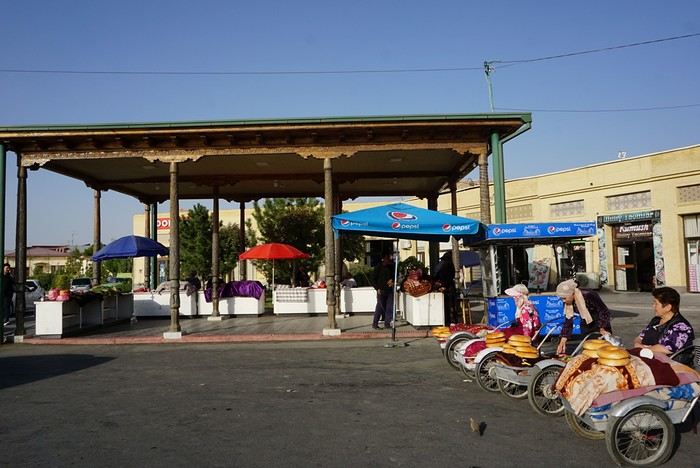
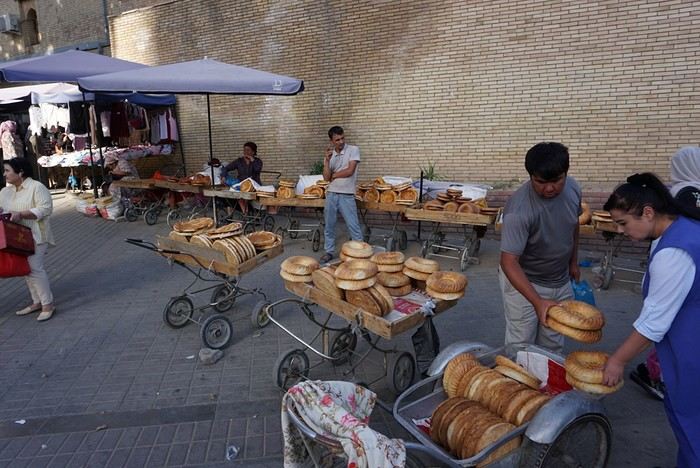
Around 4 PM, we set off to visit the Kokeldash Madrasa, which is still active. On the way, we stopped to watch some bread vendors and take a few photos. We were hesitating about buying some for our evening picnic when a young woman approached us. In perfect English, she asked: ‘Are you looking for something? Do you want to buy bread? Which one? How much?’ She then spoke to one of the vendors and negotiated the price. ‘Do you want one?’ And she took two. She paid directly. I took out my wallet to reimburse her, but she refused. It’s on the house! Then the vendor asked where we were from. And off we went again: Macron, PSG, football players… We’ll have to get used to it. The young woman smiled at the questions and comments, barely gave us time to thank her, and left as quickly as she had approached us.
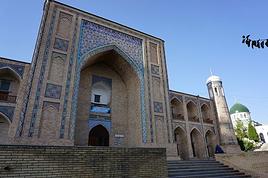
We continued our walk. Visited the madrasa. Then we crossed the boulevard to see the Tashkent Circus. I would’ve loved to go in and visit, but the ticket seller wouldn’t hear of it. We carried on around what should’ve been a park with old-fashioned rides and attractions. All we found was a construction site. Oh well! Back at our hotel, a message from Nasrullo was waiting for us. He had managed to change our train ticket for the next day. Instead of taking the 6:00 AM train, we’d take the 8:00 AM one. And instead of second class, we’d be in first class! Great! This evening, we had a picnic at one of the breakfast tables in the B&B courtyard. Under a shelter, the owner and his family were celebrating a birthday. The owner started by offering us some tea. Then they brought us some fruit (watermelon and melon). Finally, after the song, candles, and cake cutting, they brought us two generous slices of that beautiful birthday cake. Delicious!
Voyager ajoute à sa vie (proverbe berbère)
PH Phil31600 Regular ·
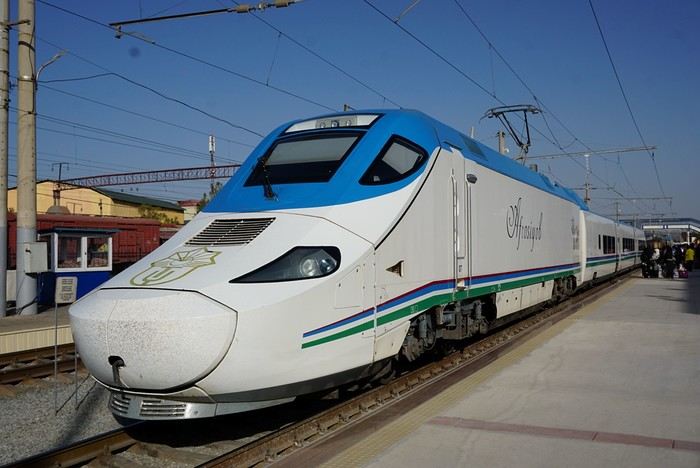
Step 2: The Ferghana Valley (Part 1) September 15 Early breakfast and taxi at 6:45 AM. 20 minutes later, we’re at the station. Ticket and baggage check before entering the premises. The train is on time. Comfortably settled in a small 4-person compartment. Tea is served. We get off at Kokand station around noon. Our driver, Mamour, is waiting for us as planned. He only speaks Uzbek or German (and we speak French, English, or Spanish). It seems like it’ll be tricky, but we’ll manage to understand and appreciate each other without any issues! And when necessary, we’ll call Nasrullo to act as an interpreter! Actually, every evening during almost the entire trip, we’ll give a little recap of the day and the next day’s program with Nasrullo. This allows him to pass on the latest instructions to the driver when we decide to adjust or modify the initial itinerary (which will happen quite often).


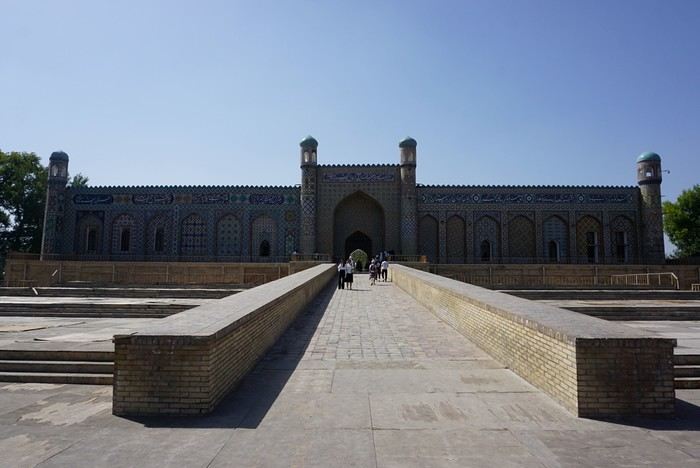
After lunch, we visit the Khudayar Khan Palace (about 1 hour), then the Juma Mosque and the Dakhmai-Shahon Mausoleum.


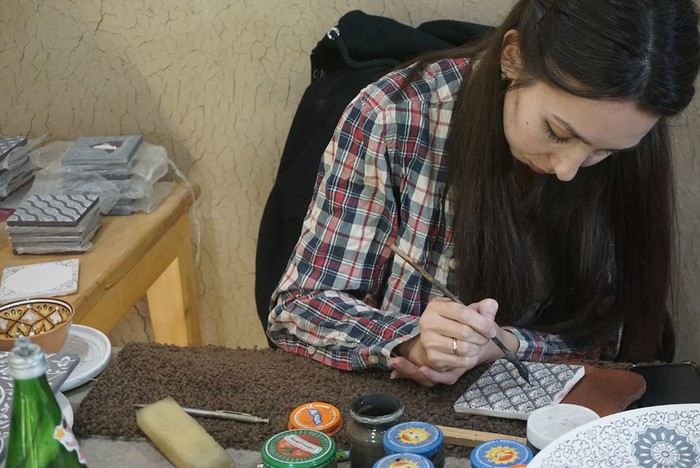
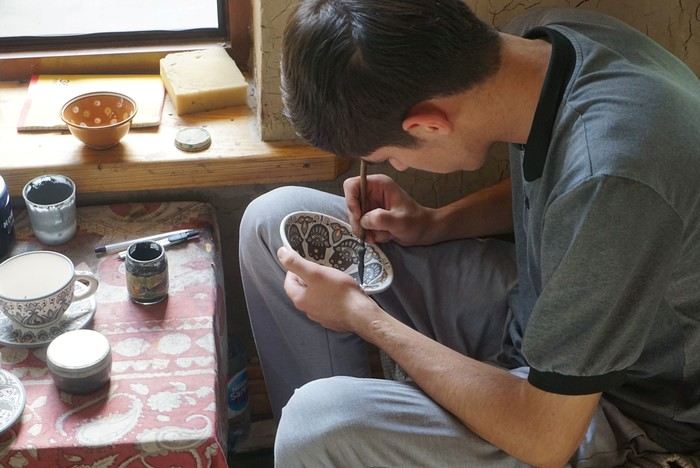
Kokand, also known as the "City of Winds," has a history of over 2,000 years. It was one of the largest trade centers at the crossroads of the Silk Road caravan routes. Next, we head to Rishtan, located 50 km from Kokand on the way to Marghilan, where we’ll be staying. Rishtan is the city of ceramists. For 800 years, the secrets of this craft have been passed down from father to son. Known for their blue and green traditions with a unique glaze (Ichkor), these ceramics are recognized worldwide. We visit a workshop where we see a potter at his wheel and young painters decorating bowls and other ceramics. No obligation to buy—free to wander around the workshop with no pressure to purchase. Pure visual delight!


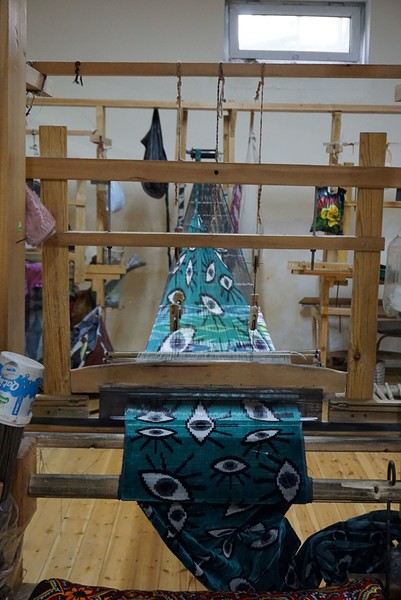
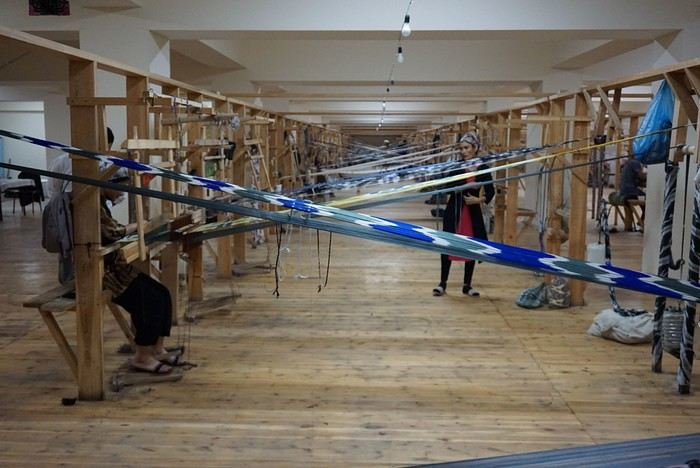
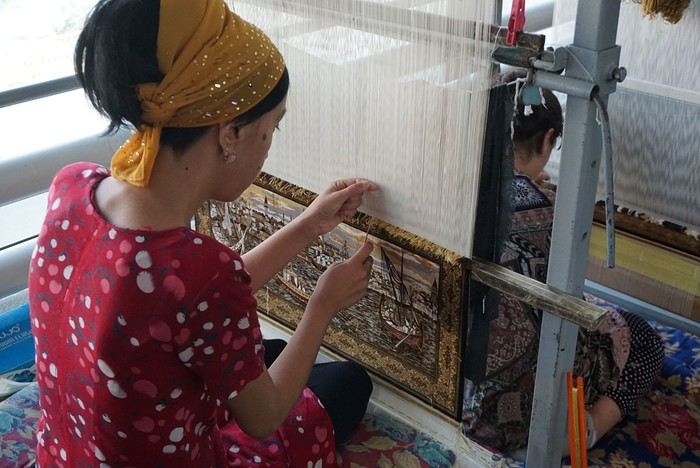
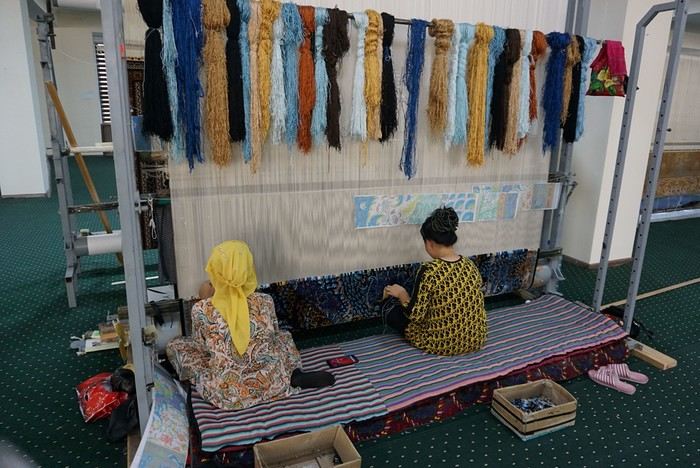
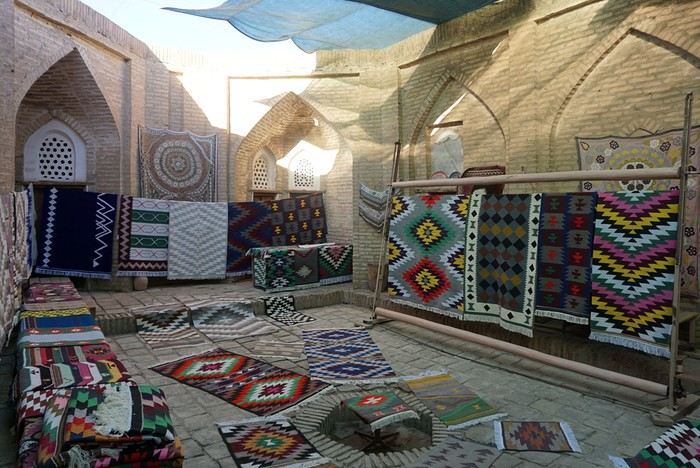
Then we hit the road again toward Marghilan, arriving around 4:30 PM. Check-in at the Diyor Hotel. Meet-up with Mamour set for 9:00 AM the next day. Tonight, we ask Nasrullo to remove the visit to the Yodgorlik silk factory from the program since entrance is now paid. Right next to the hotel, there’s an artisan center with a large weaving workshop in the basement, an exhibition and sales room on the ground floor, and a carpet-making workshop on the first floor.
Voyager ajoute à sa vie (proverbe berbère)
PH Phil31600 Regular ·
Step 2 - Ferghana Valley (Part 2) September 16 A stroll through the Marghilan Valley to Andijan and back via Ferghana. On the way to Andijan, we stop to see a memorial (with a large statue) dedicated to the last Timurid ruler, Babur. Not particularly interesting. Second stop, in Andijan, at Chaumol Park, also dedicated to Babur. He became ruler at 11 years old and retook Samarkand from the Shaybanids. But he was driven out seven years later by the same Shaybanids who had retreated to Bukhara. He fled the region and set out to conquer Kabul and Kandahar. After rebuilding his forces, he launched another campaign to retake Samarkand. He was driven out again a year later. He then returned to Kabul and set out to conquer India. He seized Delhi in 1526 and founded the Mughal dynasty, which ruled until the arrival of the British.


Babur died poisoned at the age of 47 in Agra. He was buried there, then his body was moved to Kabul. He never returned to Andijan. Legend has it that earth from his tomb in Kabul was brought to his symbolic grave in Andijan. You can visit this tomb in a cave on the heights of the park, a true place of pilgrimage. There’s even an old chairlift to access it for those who don’t want to climb the stairs. We continue our visit with the Jumi Mosque and Madrasa. Today is Friday! We arrive in front of the mosque just in time for Friday prayers (1:00 PM). There’s a huge crowd—the avenue in front of the mosque is a dual four-lane road. On each side, two lanes are blocked by parked cars. Their drivers and passengers are all at prayer inside or around the mosque.


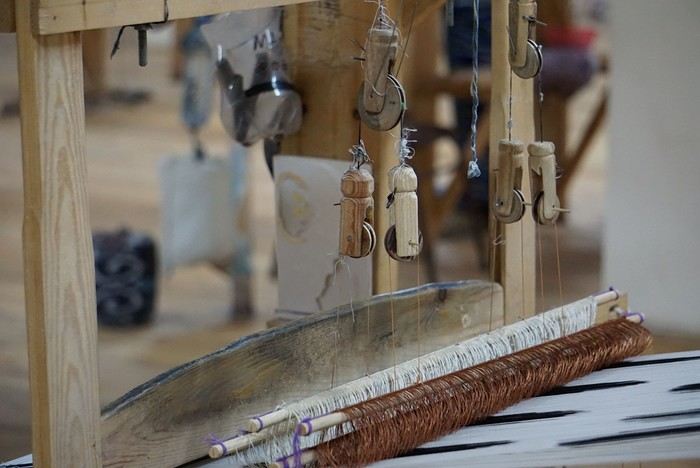
We visit respectfully around the mosque, then after eating, we head toward Ferghana. We stop in front of the Congress (or Festival) Palace Park and then at Al-Ferghani Park. There’s a funfair in the park, and at the very back, a statue of the man. We return to the hotel between 4:30 and 5:00 PM. I take the opportunity to go for a walk in a small nearby park along the remains of a fortification. On the way back, near the craft center, I see a group of Russian visitors entering. I join them and go down with them into the weaving workshop. No one pays attention to me, so I move around freely and take lots of photos, being careful not to disturb anyone.


I don’t go up to the carpet-making workshop since we’re supposed to come back tomorrow morning.
Voyager ajoute à sa vie (proverbe berbère)
PH Phil31600 Regular ·
Step 2 - Ferghana Valley (Part 3)

September 17 This morning, as planned, we visit the craft center. This time, we're accompanied by a hostess. Upstairs, it's impressive to see the meticulous work and patience required to make a carpet. Some, the largest ones, need four hands and over a year of work! In the shop, my wife can't resist buying a few silk scarves.


Then we head to the market for a quick stroll. On the way back, Mamour surprises us by inviting us to his home.

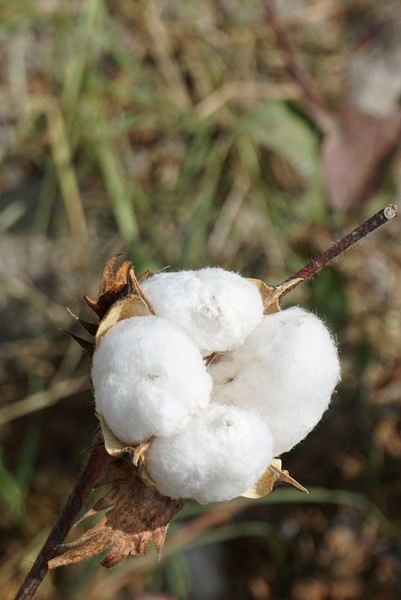
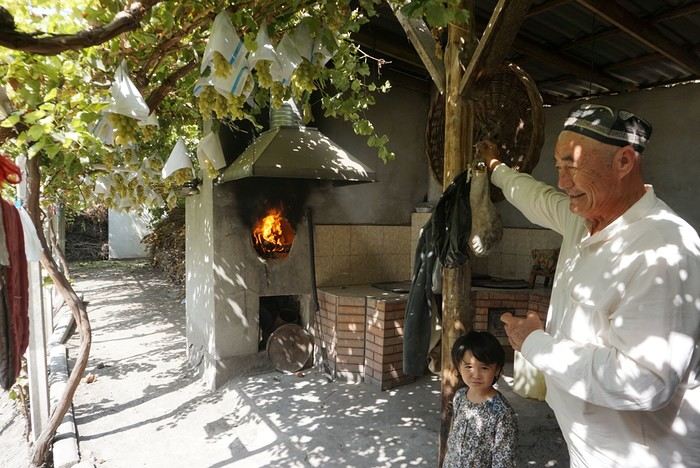
Along the way, we stop by a cotton field. Mamour shows us the different stages of cotton flower maturity. Then we stop at a bakery. The car smells amazing with the scent of warm bread! We finally arrive at his place, in a small countryside village. He parks his car under a huge trellis covered with white and red grapes.

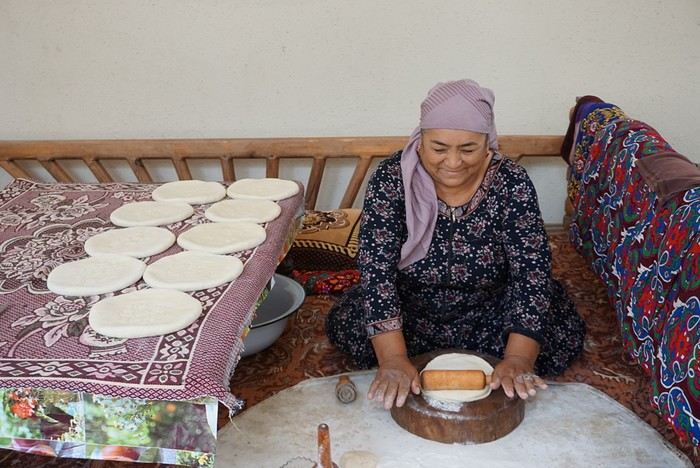
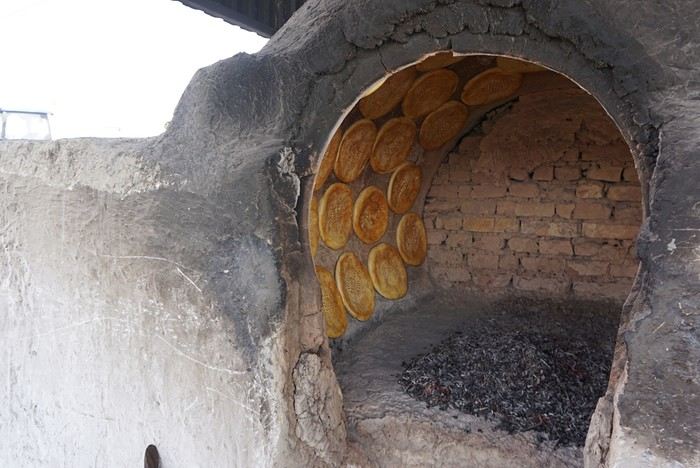
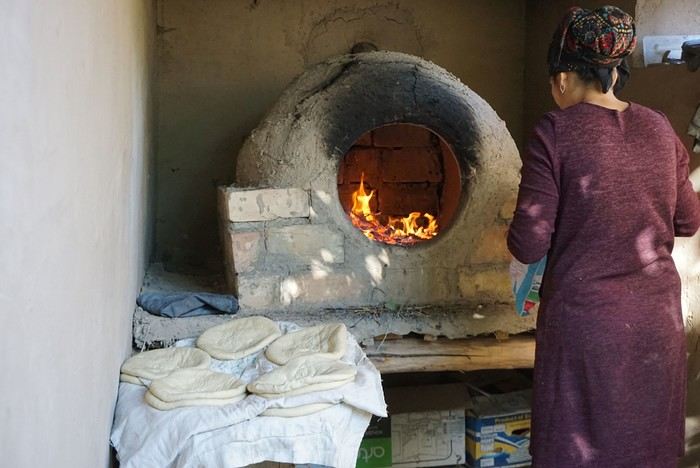
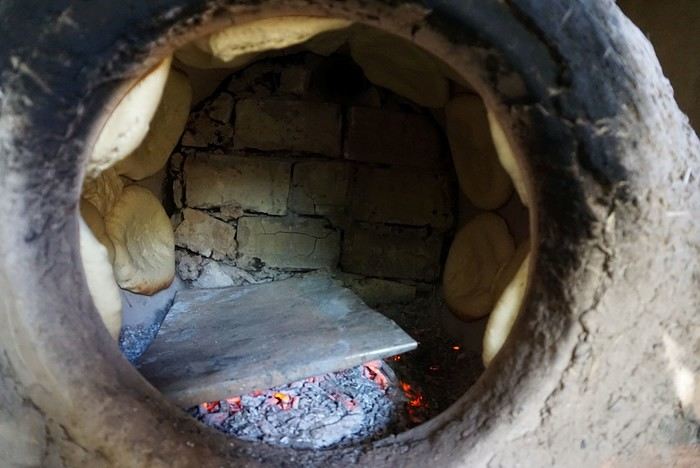
We're welcomed by the whole family: his wife, daughter, son, daughter-in-law, and three of his grandchildren. In the inner courtyard, also covered with grapes, we're invited to wash our hands, then after taking off our shoes, to enter a room. The table is set with different drinks, fruits (apples and grapes), candies, and cakes. We sit down with Mamour. Soon after, his wife brings fresh bread, sour cream, a kind of sesame/honey crumble, fried eggs, pomegranates, red and pink grapes, and of course, tea. We have to try a bit of everything! Mamour is very attentive, and we don’t want to offend him. I take out my tablet and show him photos of our family, our house, the Landes forest, the Atlantic coast, and the Pyrenees. He loves the ones with both the ocean and the mountains, but especially those of the forest. The conversation starts, despite the language barrier. He asks what vegetables are grown in France. Then he tells us his age and his wife’s (using his smartphone calculator) and asks ours. He talks about Putin and the war in Ukraine, giving a thumbs-down. He mentions our President, giving a thumbs-up. His respect is because Mr. Macron tried to talk with the Russians and their president to reason with them. We’ll understand later why this topic is so close to the hearts of Uzbeks. On our side, we’re surprised by the amount of grapes he grows, and he explains that he sells them at the market. After our mid-morning meal, Mamour takes us on a tour of his house and garden. We stop to watch his wife preparing homemade flatbreads. The wood-fired oven is lit. Mamour puts on a glove and shows us how the bread is stuck to its walls.


In his garden, he’s very proud to show us his rows of corn, leeks, cabbages, etc., and his pomegranate trees. He makes it clear that he doesn’t need to buy much in terms of fruits and vegetables because he produces so much. This makes my wife laugh—me, proud of my two small vegetable patches! We’re not in the same league! She teases me a bit, wishing I had photos of them on my tablet. We have a really pleasant time. Mamour invites us to rest before leaving, but we’re worried about disturbing him. So, it’s time to head to Tashkent to catch a domestic flight to Nukus, our next stop. In the end, it’s not Mamour who drives us back to Tashkent, but his son. As we get into the car, Mamour gives us a bag filled with bunches of white and red grapes and pomegranates. Two stops on the way back:

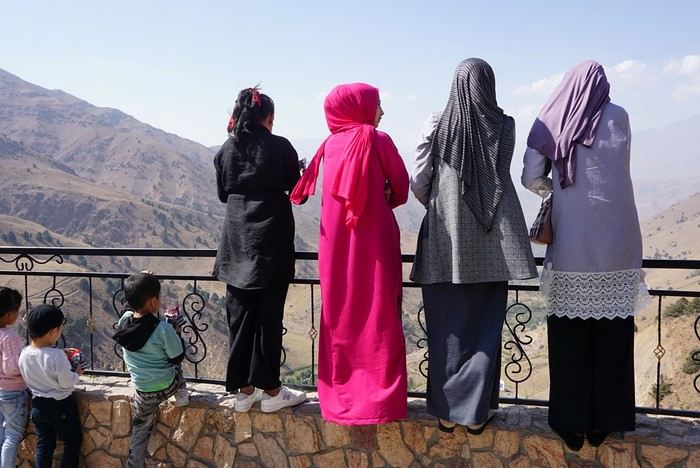
The first at Kamchik Pass, 2,200 meters high, for the view


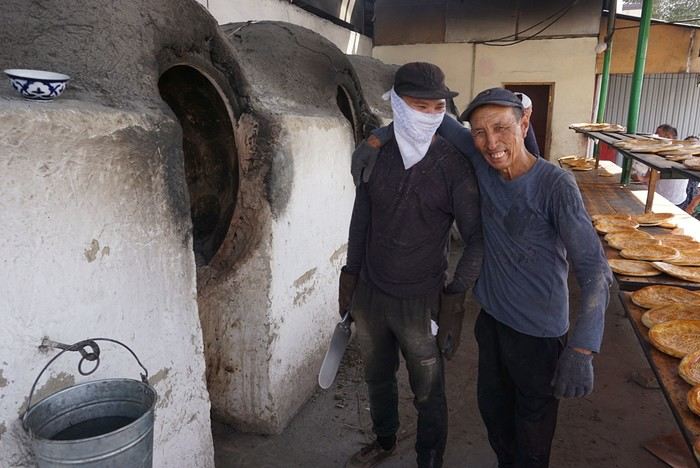
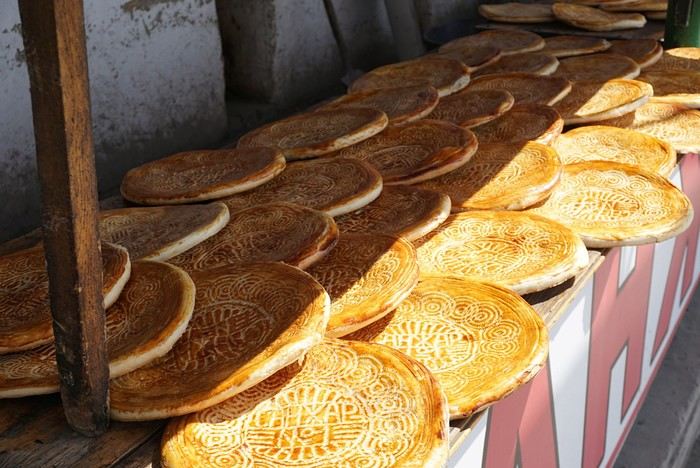
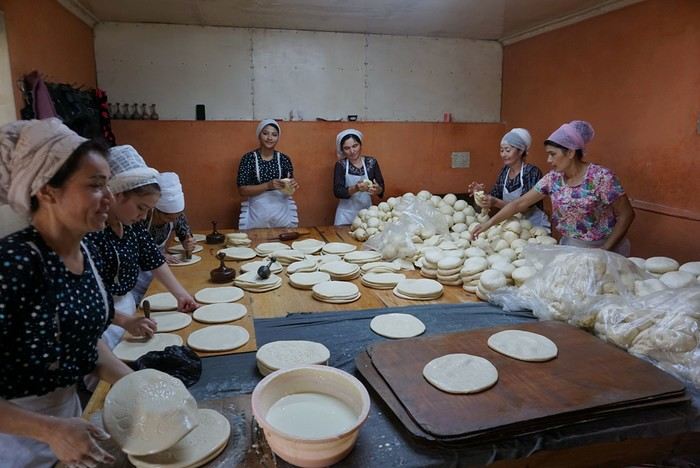
The second at a kind of roadside bread market. Many vendors and bakeries with outdoor ovens. We stop in front of one of these bakeries. We’re greeted by two men in charge of baking the flatbreads, all smiles. They pose for a photo in front of their ovens and offer us some small ones. I walk a little further and see, in a sort of bakery room, about ten young women shaping the dough. I ask if I can go in to watch them work. Granted. Then I ask if I can take their photo. Laughter and smiles. Granted. They even seem delighted by my visit. The boldest one, amid her friends’ laughter, asks me to take a photo of her alone. I comply and show her the portrait on my camera screen. She’s satisfied and smiles. I thank everyone, say goodbye, and return to our car.


The drive to the airport feels long. The closer we get to Tashkent, the heavier the traffic becomes. We finally arrive at the airport with several hours to spare. Like at the train station, before entering the premises, we have to show our ticket and go through baggage control. Inside the terminal, we’re almost alone. Actually, there are very few domestic flights, and passengers only arrive at the last minute, just before boarding. Full flight. On time. No issues. Upon arrival, outside the airport, we’re met by a taxi driver who takes us to our hotel (Hotel Tashkent) without us having to ask.
Voyager ajoute à sa vie (proverbe berbère)
PH Phil31600 Regular ·
Step 3: Nukus and Moynaq September 18 - Nukus Late breakfast, then we set off on foot toward the Savitsky Museum. The building seemed right next to our hotel. Once there, we found ourselves facing an abandoned-looking building. I must have gotten it wrong! We should have headed to the new museum instead! MapsMe quickly puts us back on the right track. Luckily, it’s not far—about a 20-minute walk. This gives us a chance to explore a few streets in the city and pass by the Museum of Arts and Traditions of Karakalpakstan, which we’ll visit later. There are so few people in front of the Fine Arts Museum, also known as the ‘Louvre of the Desert,’ that we think we’ve gotten the address wrong again. But no, this is the right place!
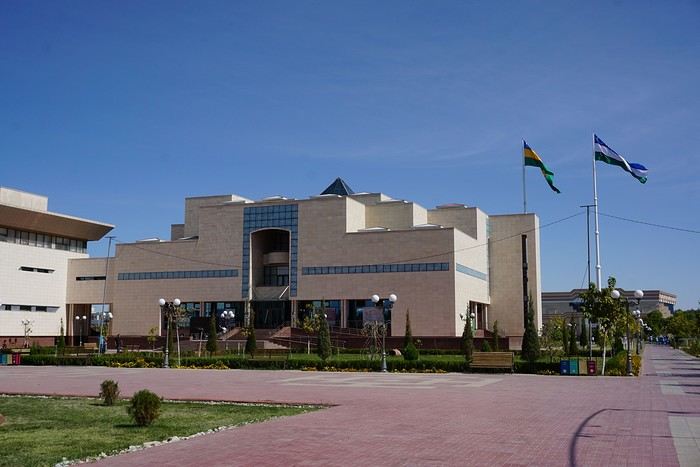
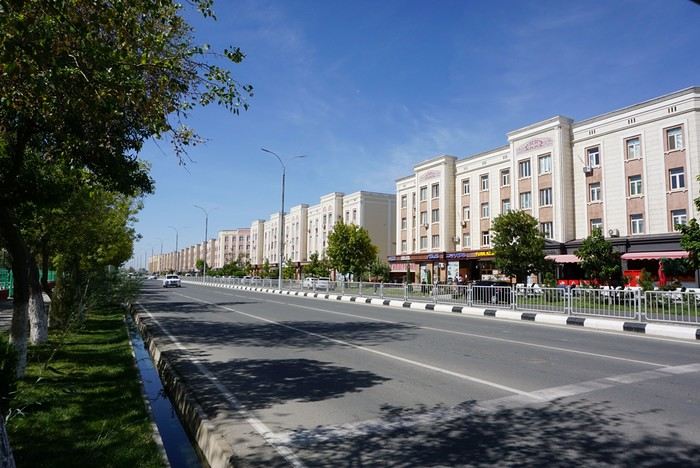
This stunning museum is almost deserted! A little confusion at the entrance: photos are allowed inside, but only with a smartphone. I have to put away my camera and leave it at the coat check. Too bad, because we’ll see some beautiful paintings by artists we don’t know—masters of the Soviet avant-garde from the 1920s/30s. In one corner of a room, we spot a group of kids focused on reproducing a work of art. Actually, they’re recreating several works on each side of paper cubes, and their creations are displayed in a room across from one of the reproduced paintings. We spend over two hours admiring the canvases (well, not all of them!), as well as the objects, jewelry, and traditional clothing on display in the rooms dedicated to Khorezm antiquities and Karakalpak craftsmanship. At the exit, we stop by the museum shop! A few days later, we’ll regret not buying the museum book and only getting 2 or 3 magnets of the works we’d noticed. Leaving the museum, we head down the main avenue toward the market. The Soviet style is very present here!


The market is huge. We’re looking for a spot to eat and stumble upon a pork butcher shop. Surprising! Then we find a little snack stand where they offer a whole selection of doughnuts (like hot dogs, but with doughnuts instead of bread) and savory pastries with veggies or meat. We make our choices and order some tea. We eat for about 1.7 € for two. Funny story: I left my cap on a chair, and one of the servers ran after us to return it. I think tonight we can treat ourselves to a nice little restaurant! Afterward, we continue our walk toward the Museum of Arts and Traditions. Here, the museum is completely empty! No visitors at all! So much so that a guard follows us into every room. A bit overwhelming, honestly! At the entrance, I ask if I can take photos. Still not with a camera. With my tablet? Yes? Okay. (I should’ve thought of that this morning! What an idiot I am!). Well, there’s not much to remember here. This museum isn’t a must-see, far from it! At the exit, it’s really hot, and we decide to head back to the hotel for a cool break. In the late afternoon, we decide to take a walk along the canal near the hotel toward an amusement park. We pass by a Ferris wheel under construction, but of the amusement park… all that’s left are a few ruined buildings.
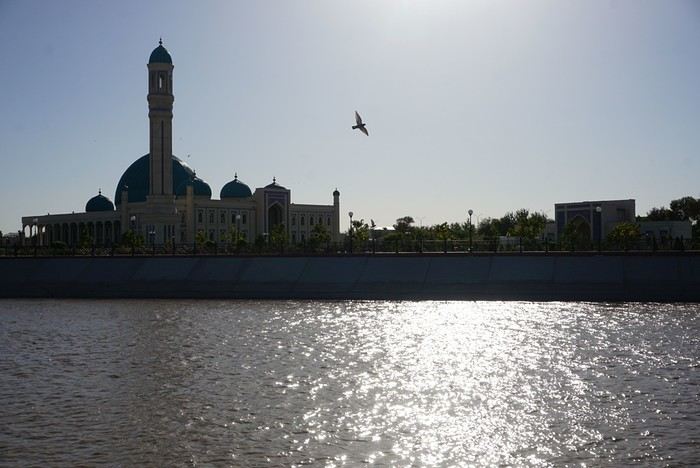
At the end of the canal, on the other bank, is the Nukus Mosque. The walk is still pleasant, and it’s a popular spot for locals, young and old. We head back to the hotel in the late afternoon and debrief with Nasrullo: planning tomorrow’s day, which includes Moynaq, the Mizdakhan necropolis, and the 14th-century Mazloumkhan Sulu Mausoleum. We also agree on the meet-up time with our new driver, Javlon. Today, we walked a lot and don’t feel like going out again to look for one of the restaurants Nasrullo recommended. So we opt for the hotel’s restaurant… Well, how can I put this? Not really the best choice! We’re the only customers. The menu is very limited. And the piece of boiled meat we’re served… found by chance in the middle of sheep fat. Oh well! We won’t make that mistake again, that’s for sure!
Voyager ajoute à sa vie (proverbe berbère)
PH Phil31600 Regular ·
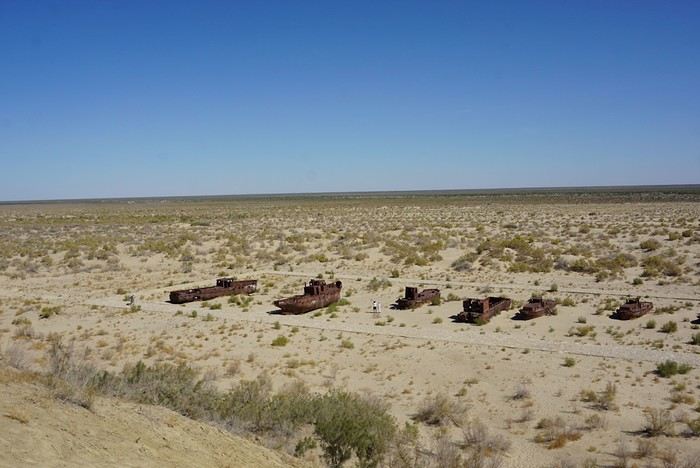
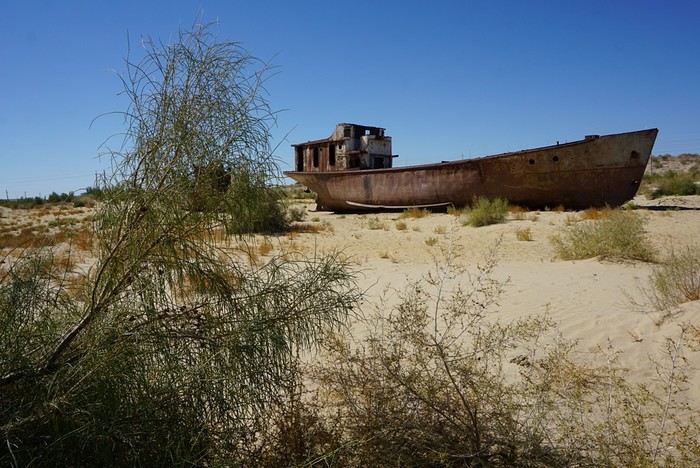
Step 3: Nukus and Moynaq September 18 - Moynaq and the Mizdakhan Necropolis Javlon will be our driver all the way to Samarkand. He understands French but has a bit of trouble speaking it. Enough, though, for us to chat from time to time. He’s not very talkative, but he’ll turn out to be a very cautious, considerate, and super kind driver. We left this morning for Moynaq because I really wanted to see the ship graveyard. The road quickly becomes very rough and uncomfortable. Here, the asphalt is just a random patch between potholes. The 200 km we have to cover will feel *very* long. It’ll take us about 3 hours to reach our destination. This is Javlon’s first time here, and he’s just as saddened as we are by the sad sight of the ships stranded in the sand.


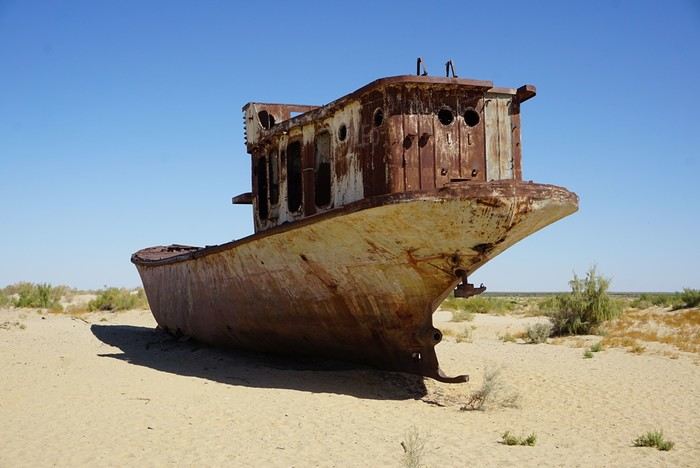
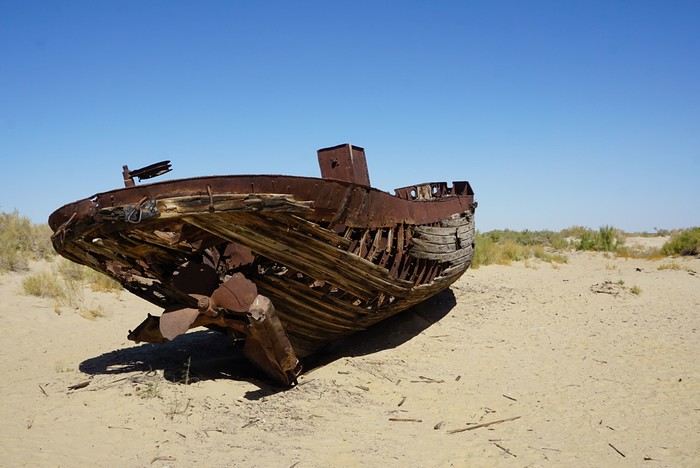
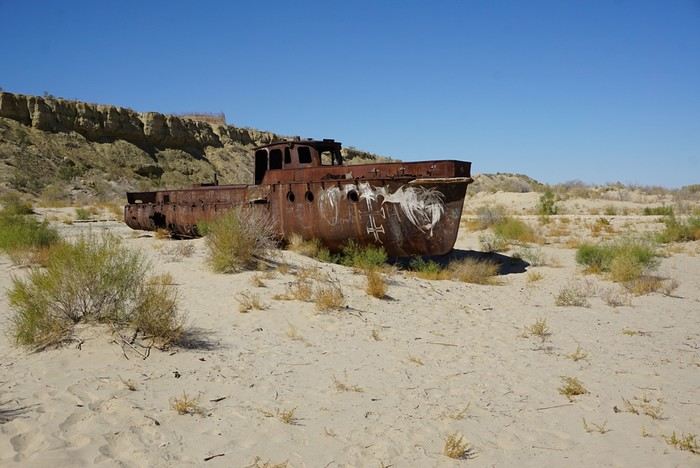
This once-thriving fishing port until the early 1960s declined with the disappearance of the Aral Sea. From that era, only a few stranded ships remain, a lighthouse on a cliff that once overlooked the sea (and now the desert), and a nostalgic museum that recalls this lost prosperity. A short film is shown, featuring almost miraculous fishing scenes and the bustling activity of the canneries. The intensive cotton farming imposed by the USSR, requiring excessive irrigation, prevented the Amu Darya and Syr Darya rivers from feeding the Aral Sea, which quickly retreated from the coast until it nearly vanished. The shores are now 200 km from the port, and the sea continues to recede. Nasrullo will tell us a few days later that the yurt camp for tourists, which was on the shores of the sea just a year or two ago, is now 2 km from the water’s edge. After wandering around the stranded ships, we had lunch in town. Then, we headed to the Mizdakhan Necropolis. Another rough road for nearly 200 km. Mizdakhan was once a large city on the banks of the Amu Darya. According to historians, it had over 12,000 suburbs. But it was destroyed by the Mongols, along with the Gaukala fortress.

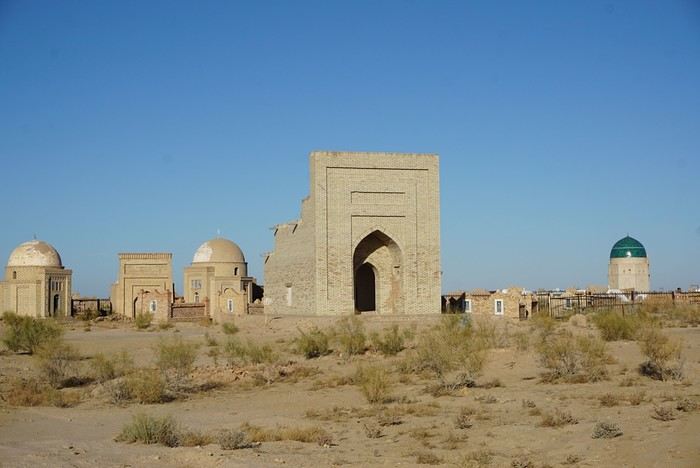
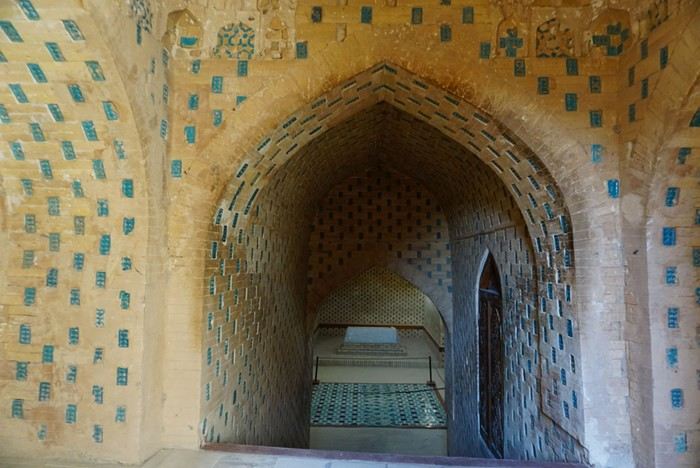
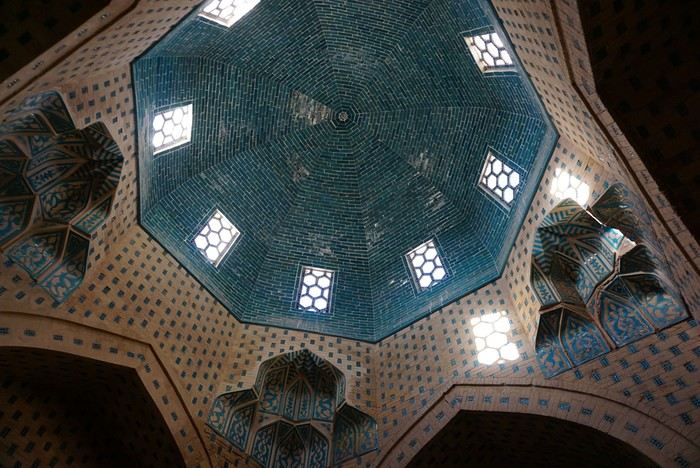


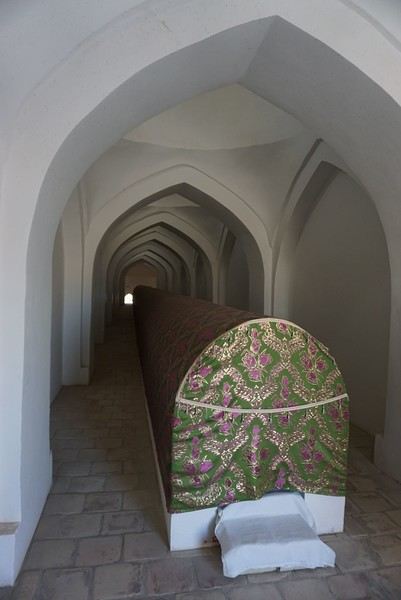
An interesting visit in the late afternoon. A tourist-free site located 22 km from Nukus. The mausoleum is stunning!
Voyager ajoute à sa vie (proverbe berbère)
PH Phil31600 Regular ·
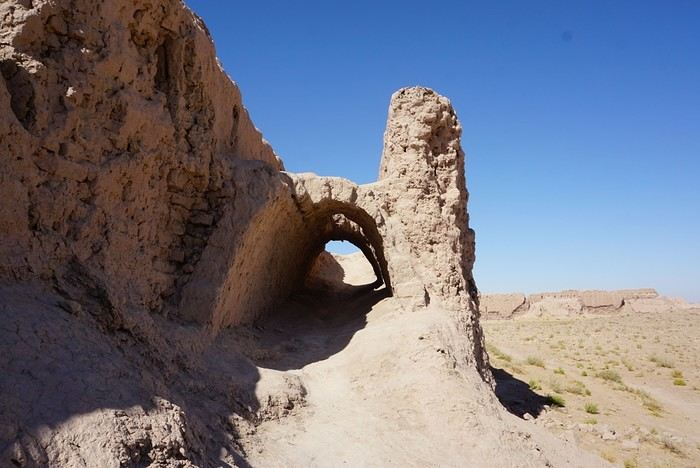
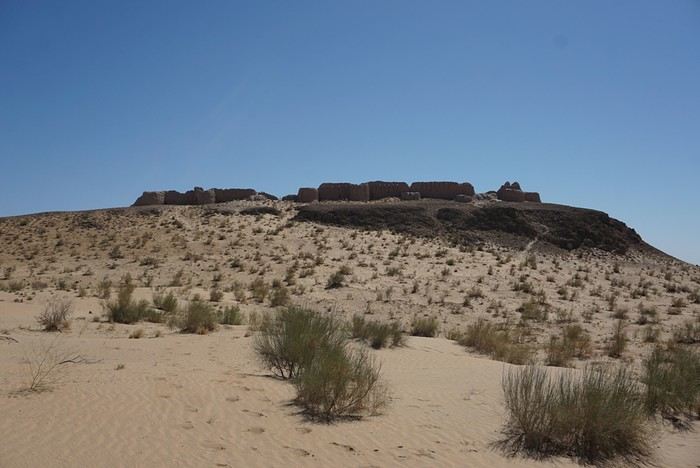
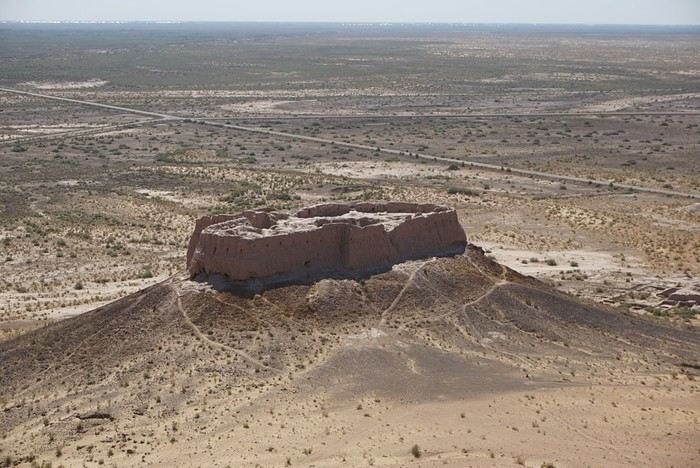
Step 4: Mysterious Khiva September 20 - Desert Fortresses We start the day by visiting four desert fortresses located between Nukus and Khiva. Admission is paid only for the first one.


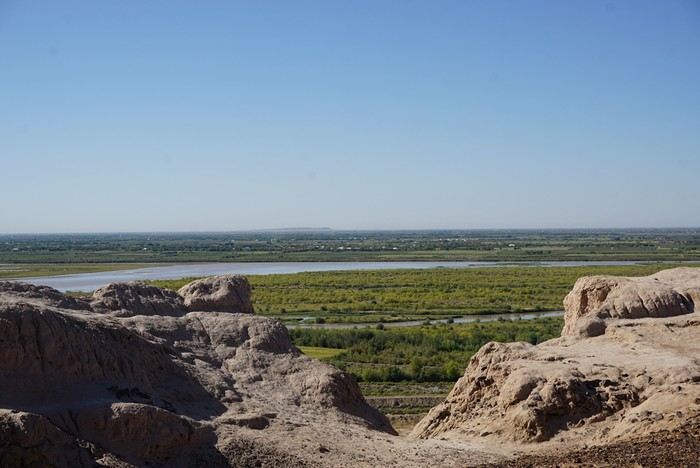
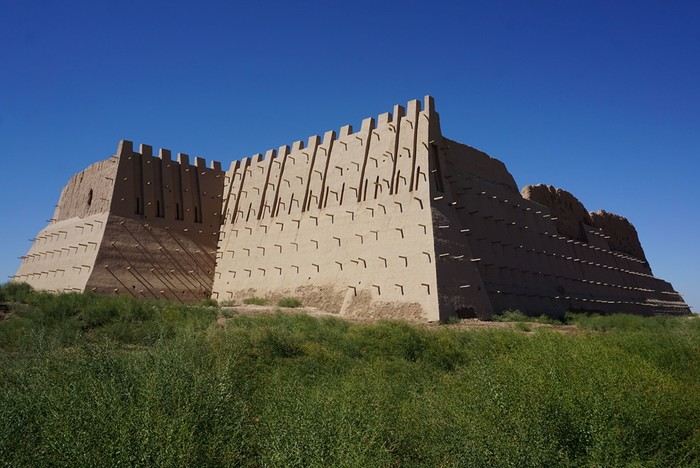
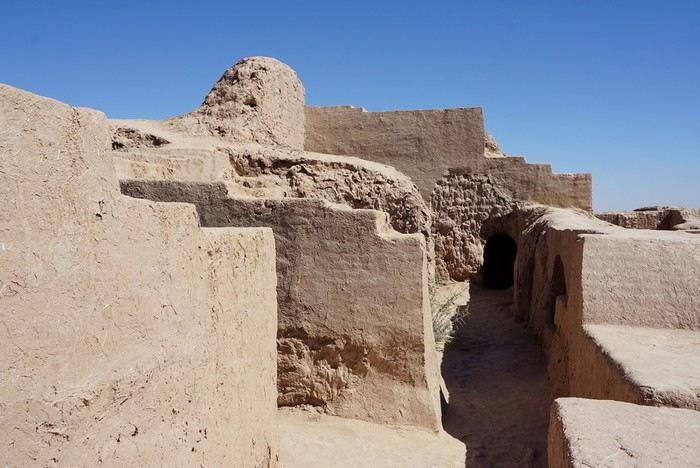
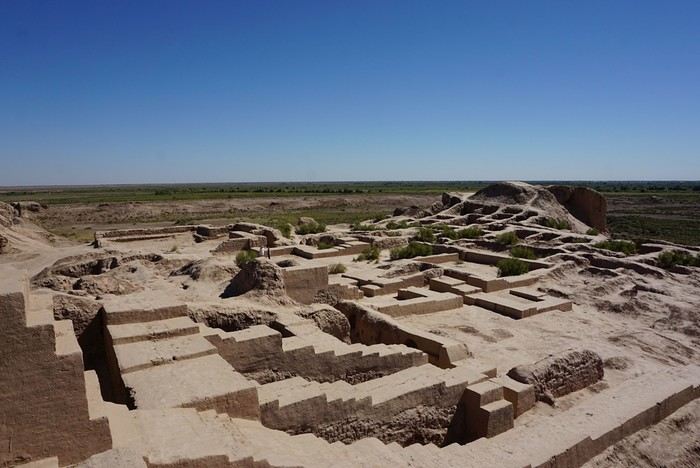
The location of each fortress is strategic and offers a beautiful view of either the Amu Darya River, the desert, or both. The interiors are somewhat disappointing because, except for the third one where some remains of buildings, staircases, and alleys are still visible, the others look more like a vast desert plateau with a few shrubs adding a touch of green to the landscape.


At the last fortress, perched on a hill in the desert, Javlon wanted to do us a favor by driving a bit farther than the parking lot. The path was very sandy. His intention was good—he wanted to save us from walking too long in the sand before reaching the citadel entrance. We kept telling him: "It’s not necessary, we’ll walk, we’ll get stuck in the sand..." The Uzbek is stubborn! And what was bound to happen... The front of the car suddenly sank, the wheels started spinning in the air and spraying sand all around us. Reverse? Same thing! Well, not exactly—I think we sank in even deeper!


Attempting to free the two front wheels by hand: no effect! "Push, sir, while I try to reverse," Javlon says. And there I am, covered in sand! Another try, but this time Javlon pushes alongside me while my wife takes the wheel. Same result! Javlon sends me to visit the fort. My wife is too hot and gives up on the climb. She eventually convinces Javlon to ask for help from the yurt camp guardian near the parking lot. She lends him a shovel and two planks.


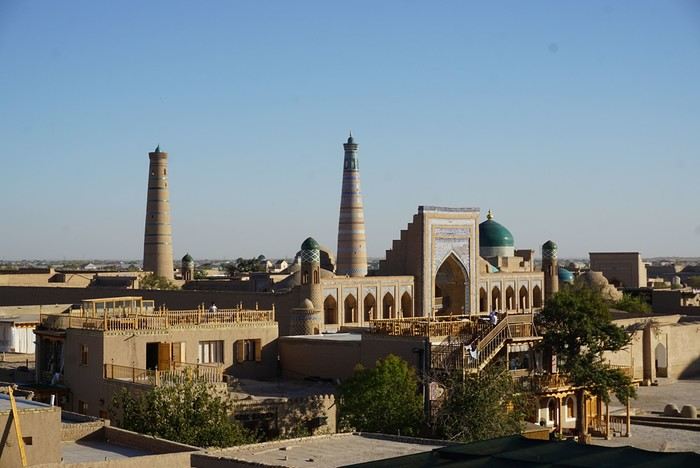
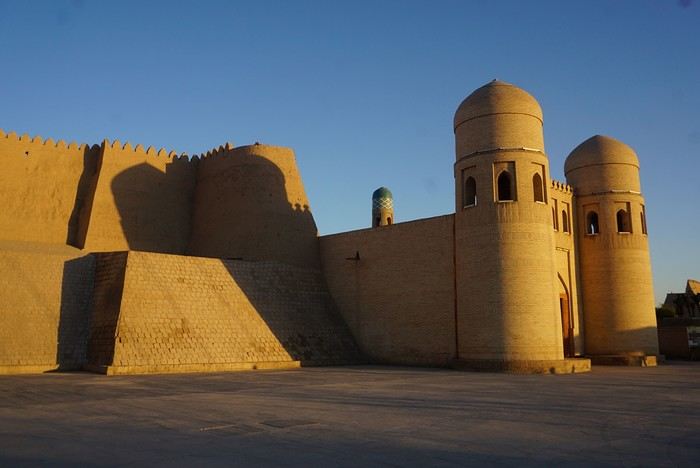
When I came back down from the fort, Javlon was still digging sand out from under the car with the shovel. I help a bit by completely freeing one wheel and placing a plank under the other. Javlon gets behind the wheel, puts it in reverse... and since we’re back and I’m writing this travel journal, it means we managed to get unstuck! Once cleaned up and refreshed, we hit the road again for Khiva. We check into our hotel in the old town (Hotel Zukhro), where Javlon drops us off. Complimentary tea on the terrace with a view of the rooftops and a few monuments. Gorgeous!


We go for a walk and at the intersection of two streets, we run into Javlon, who recommends his friend’s restaurant. And indeed, it’s a great spot with reasonable prices where we’ll have almost all our meals.
Voyager ajoute à sa vie (proverbe berbère)
PH Phil31600 Regular ·
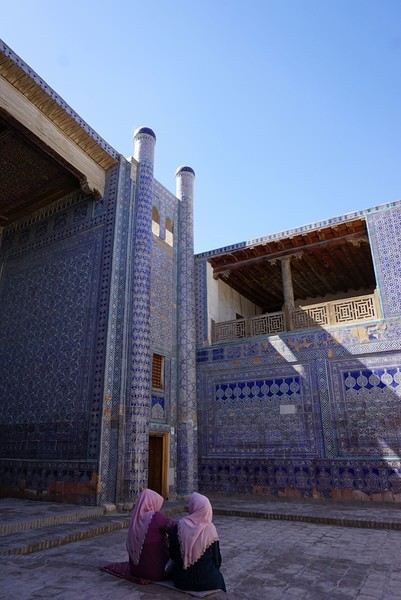
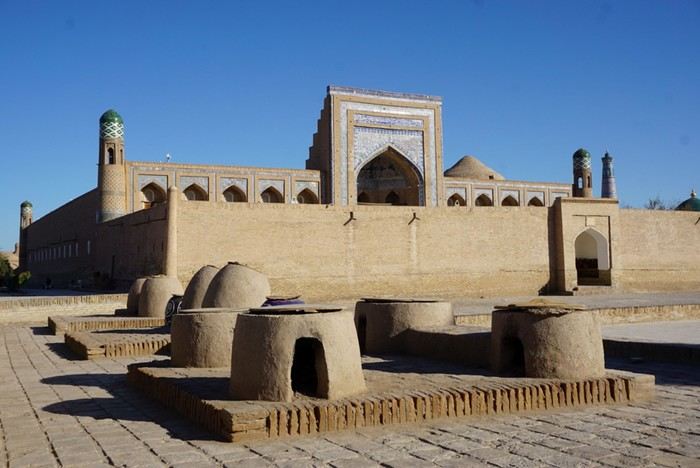
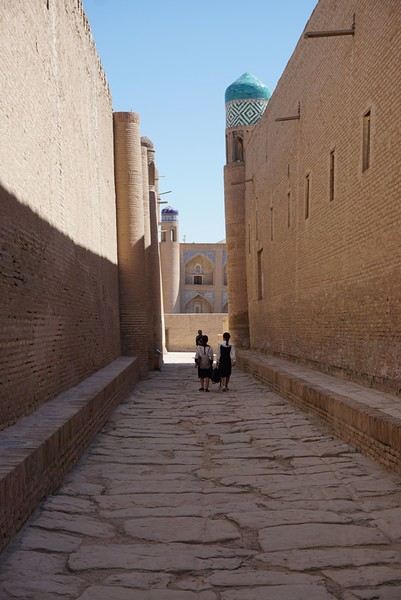
Step 4: Mysterious Khiva September 21 - Day with a French-speaking guide According to legend, Khiva was founded by Shem, the son of Noah. It’s the last of the mythical Silk Road cities, alongside Bukhara and Samarkand. It’s the smallest of the three but also one of the oldest, with houses dating back to the 11th century. The city is divided into two parts: Itchan Kala (inner city) and Dishan Kala (outer city). This morning, we met up with our French-speaking guide at 9 a.m.


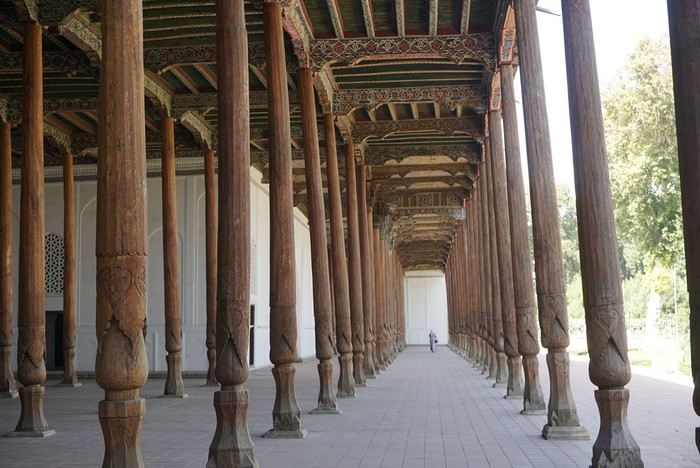
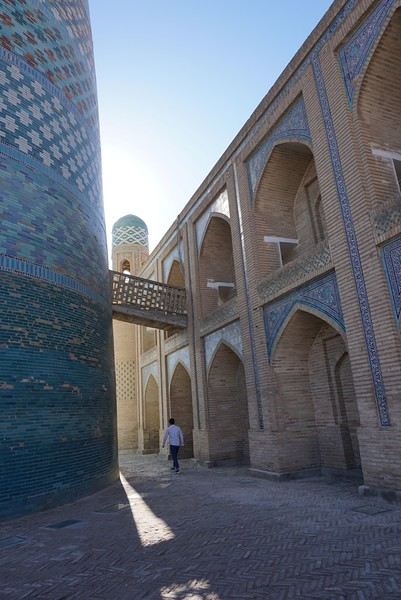
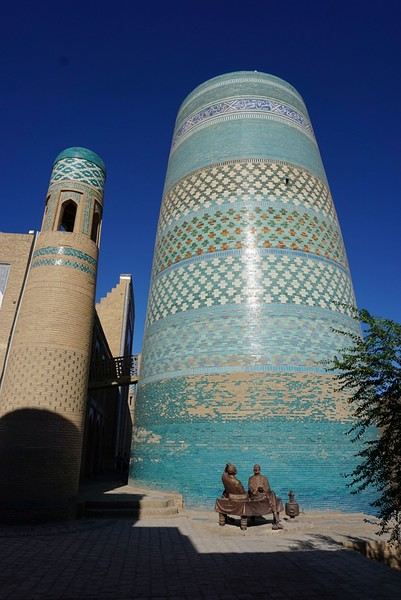
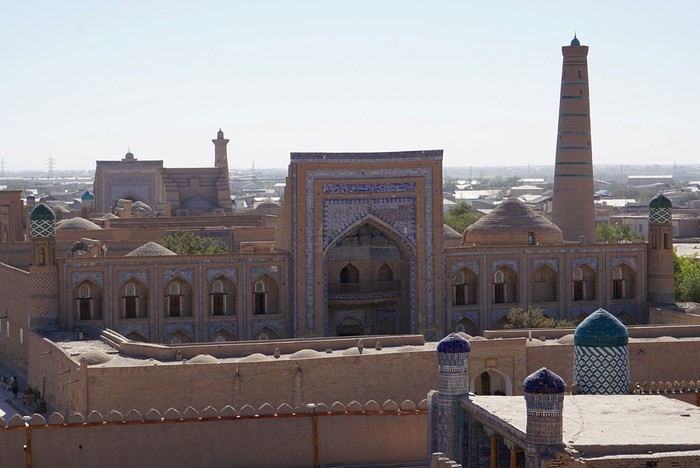
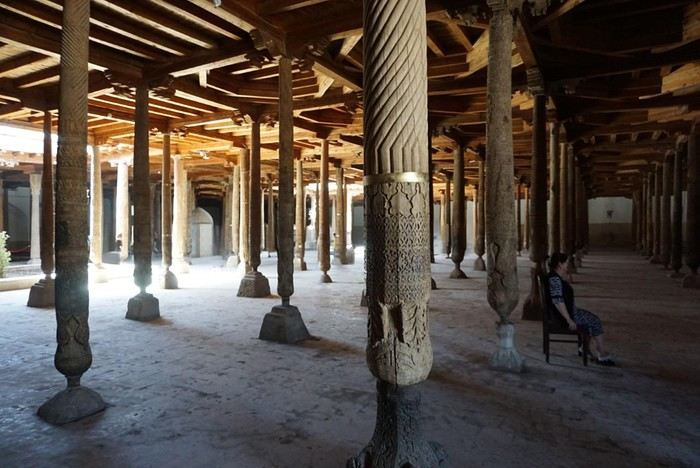
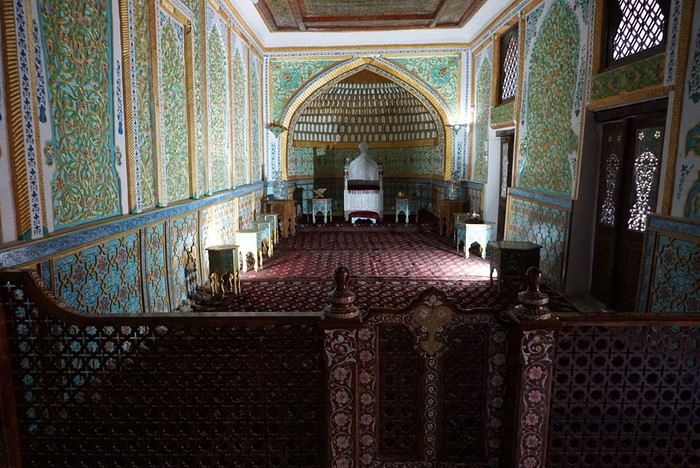
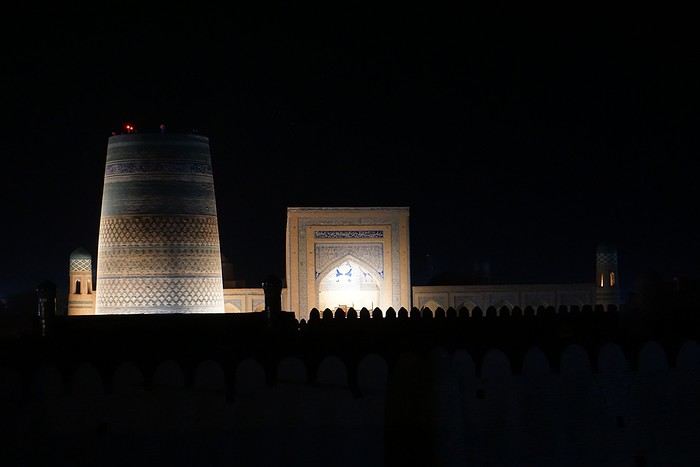
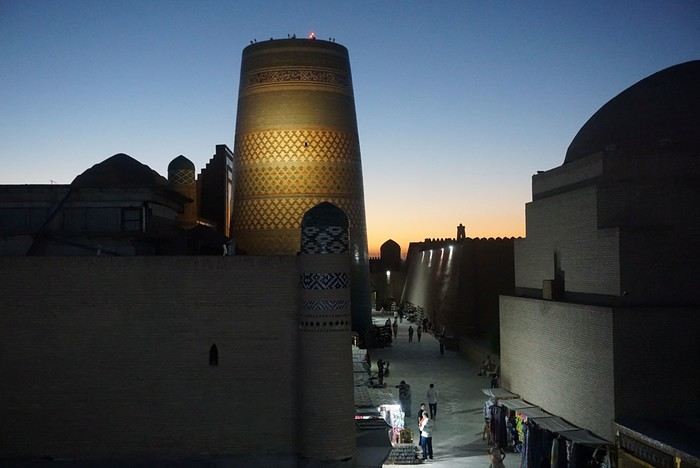
The guided tour was really interesting, and we discovered, among other things: the Muhammad Aminkhan madrasa and its unfinished minaret, Kalta Minor; the mausoleum of Sayyide Alaoudin; the Juma Mosque with its forest of 218 intricately carved and all-different pillars. It’s said to have served as a model for the one in Córdoba. We also visited the mausoleum of Pakhlavan Mahmud and the Islam Khodja madrasa. We climbed the city walls, which gave us a beautiful view of the city. We saw the small prison and learned how condemned prisoners were executed in Registan Square (Sand Square: sand was thrown on the square after executions to absorb the blood). The cruelty of the executions depended on the severity of the crime, but death was always the outcome: buried alive headfirst, impaled, stoned, beaten to death with a whip made of wide leather straps studded with nails and soaked in salt for a long time beforehand, or thrown from the tallest minaret. A special fate was reserved for unfaithful women: they were put in a sack filled with rabid cats and snakes, then beaten to death through the closed sack. All executions were public. We also, of course, visited the Tash Hauli Palace and its harem. In this palace, at the exit of the deliberation (and judgment) hall, there were two doors: one for the condemned, leading directly to prison, and one for the innocent, which opened to freedom. And if you were condemned, there was no half-measure—it was death.


In the courtyard of the deliberation hall, as well as in the throne room, there’s a kind of circular platform. In winter, this was where the Khan’s yurt was set up. It was simply too difficult to heat the palace halls, so the Khan held deliberations or received guests in his yurt. A little farther on, we entered the harem courtyard, completely isolated from the outside world. There, we saw the Khan’s chamber with a bed fit for Louis XIV at Versailles, one of the chambers of his four official wives, and one of the concubines’ chambers. There was a secret corridor between the Khan’s chamber and those of his four wives so that none of them would know with whom the Khan had chosen to spend the night. Throughout the palace, we could admire the magnificent blue ceramic decorations, as well as symbols of Zoroastrianism (the religion that preceded Islam). Fun fact about the four wives: since they could be repudiated at any moment and immediately expelled from the harem in whatever they were wearing at the time, each wife adorned herself with all her jewelry every morning. This could weigh up to 50 kg! Concubines could enter the harem very young (recruiters spotted them in villages or towns and could "buy" them from their parents). They learned to dance, sing, and make themselves beautiful, and when the harem’s matchmakers deemed them ready, they could be offered to the Khan for the night. Some, in their entire lives, would never "meet" the Khan.
Voyager ajoute à sa vie (proverbe berbère)
PH Phil31600 Regular ·
Step 4: Mysterious Khiva September 22 - A Free Day No guide today.

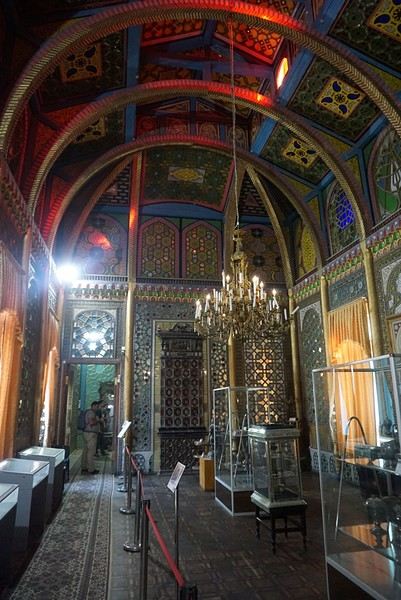
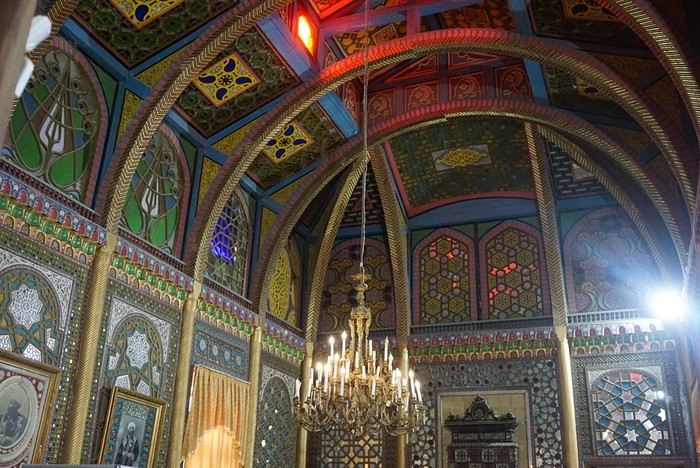
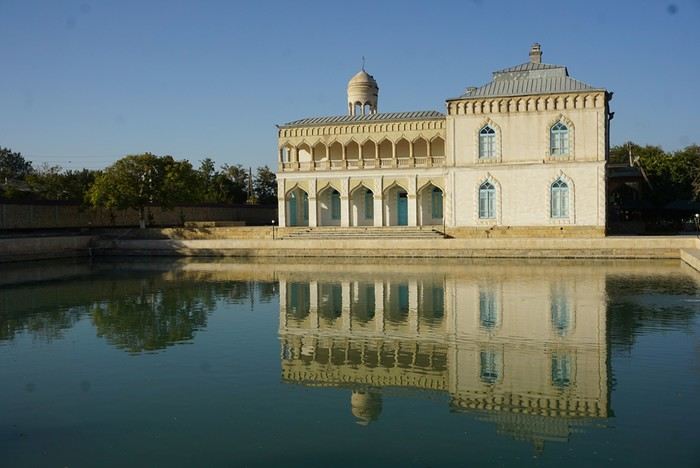
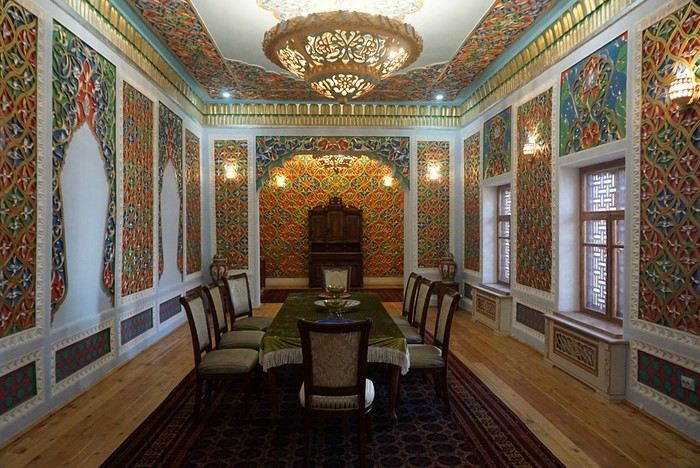
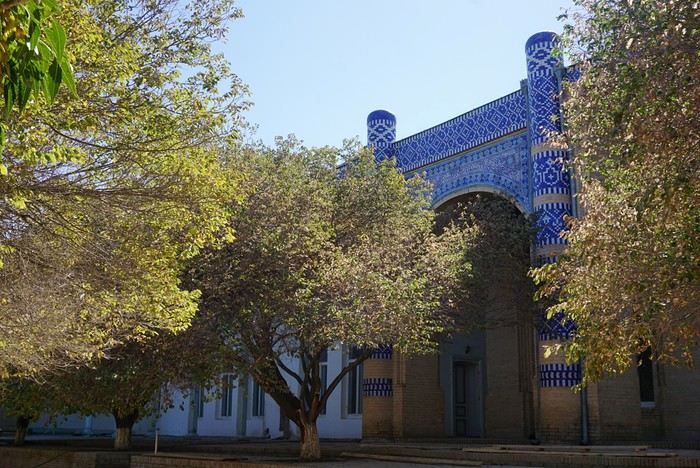
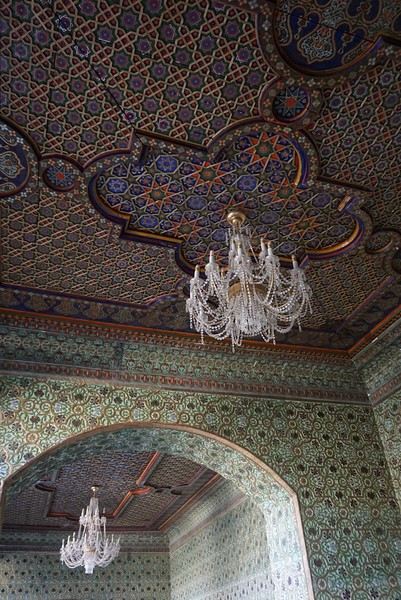
This morning, we set off to visit the Nourallah Bey Palace outside the city, built about ten years before the Russian Revolution by Khan Ferouz. The palace is a mix of Uzbek tradition, modernism, and luxury imported from Saint Petersburg. This visit isn’t a must-do, but it gives you a sense of the luxury surrounding the khan. Large, rather empty rooms, pretty tiled fireplaces, an octagonal hall with mirrors in every corner that creates a striking sense of grandeur—especially when you stand right in the middle.
The Khan was exiled by the Bolsheviks to forced labor camps in Siberia, where he died. After leaving the palace, I decided to walk to the summer palace (Kibla Tobazag), about 2 km from the old town. As I approached, I got a little worried because I didn’t see any activity—no tourists, no taxis, no buses, no vendors. We entered the grounds of a hotel that seemed empty. A sign in the gardens pointed to the palace, about a hundred meters away. I got closer and saw workers restoring the sidewalks. I also spotted a "main" entrance—a vine-lined path we’d passed earlier, thinking it was the entrance to a farm. In the end, we entered through the hotel’s access and exited through the vineyards.


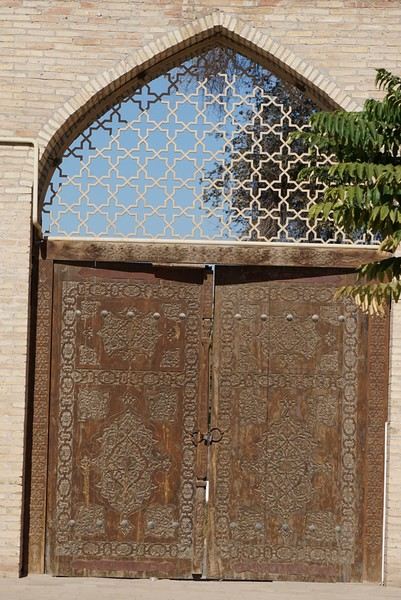
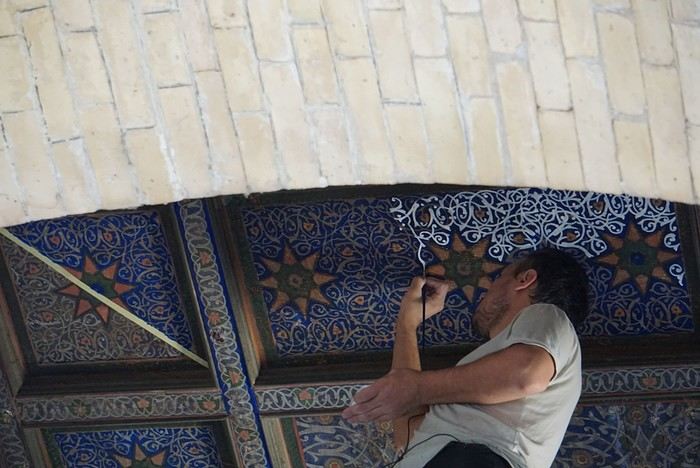
We then discovered that the palace was under restoration—workers were everywhere. We saw a painter high up on scaffolding, restoring the ceilings of the iwan near the palace entrance. We could enter the rooms (one had a floor with holes in places, but the chandeliers were in place, and the ceilings had beautiful paintings). In the courtyards, intricately carved doors were in place and open, while others leaned against the walls. We kept as quiet as possible to avoid disturbing anyone, and as a result, no one asked us anything. In the main courtyard, we shared the space with three sheep grazing on wild grass. The painter let me take a few photos of him and his meticulous work. It wasn’t until we were leaving that we ran into someone (judging by their clothes, we figured they weren’t a worker) who asked what we were doing there. We explained that we’d come to visit without knowing it was under restoration. No problem—we’d already finished our surprising visit and were on our way out anyway.


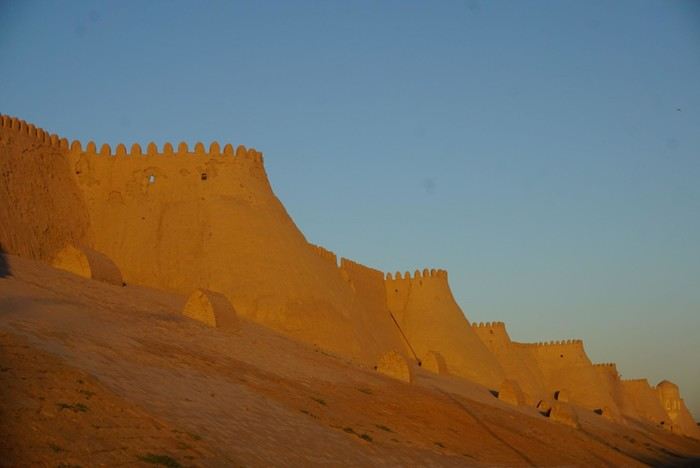
By this point, it was around 1 p.m., and it was hot. My wife had no desire to walk back, but there was no activity, no traffic, and therefore no taxis in sight. As we walked back up the small street leading to the palace park entrance, I spotted a man leaving his house, about to get into a minivan (a Chevrolet Damas de Luxe, the standard shared taxi in Uzbekistan). I quickly approached him and asked if he could take us to one of the gates of the old city, showing him the map. Without hesitation, he made it clear that before anything else, he wanted to invite us to eat. We were worried about imposing or taking advantage, so I explained that we just wanted to get back to the city while thanking him warmly and with a big smile. He quickly cleaned the back seats of his van and drove us to our destination. He burst out laughing at a bump in the road and dropped us off inside the old city. I took out my wallet to pay him for the ride, but he pushed my hand away and gave me a vigorous hug with a big smile, clearly happy to have helped us. Then he drove off, waving at us with a smile. Lunch, a cool break, and some rest in our room. In the late afternoon, I decided to walk around the outside of the city to see the walls at sunset and enjoy the beautiful late-day colors. Orange on ochre earth! Stunning! I was all alone! Magical!


In some places, graves are placed on the walls. These belong to city residents who died outside the walls. To prevent epidemics, families weren’t allowed to bury them inside, so they buried them as close as possible—on the walls. Back in the old city, I saw the streets empty of tourists, with only a few shopkeepers in front of their stores and children playing in the streets. Beautiful light too!


Our last evening in Khiva. We took the opportunity to take our final night photos and ended up admiring the city from the rooftop terrace of our hotel.
Voyager ajoute à sa vie (proverbe berbère)
PH Phil31600 Regular ·
Step 5: Holy Bukhara September 23 - From Khiva to Bukhara Back to September 22 and night photos of mysterious Khiva


This morning we meet up with Javlon again. A long drive, mostly on roads in poor or even very poor condition, at least until we enter the desert. We cross an agricultural region dominated by cotton and corn fields. The desert crossing is marked by the bridge over the Amu Darya. This single-lane bridge is shared by all means of transport: cars, buses, trucks, motorcycles (rare), and even trains. Traffic alternates. Mandatory stop. To let vehicles coming from the opposite direction pass, but also to let the train go by. Here, the rails run right down the middle of the road. After the bridge, we enter the desert. The road here is in pretty good shape. We stop to fill up on gas: as always, we have to get out of the car when entering the station. For safety reasons, all passengers must exit their vehicles. The driver parks next to the "gas pump" and an employee fills up the tank. Once the gas is paid for, the driver can get back in the vehicle and pick up passengers where he dropped them off. Leaving the desert, we encounter construction everywhere: highway extensions or bridges under construction. The road open to traffic is in very poor condition. Javlon tells us all this work has been going on for over two years! After about a 5.5-hour drive, we reach our destination, and Javlon parks in front of the "L’Oasis d’Hélène" hotel in Bukhara, where he can reunite with his wife, Lola, the hotel manager, and their son. We’re lucky to be welcomed by Hélène and her cousin Suzanne. Hélène was the first Frenchwoman to invest in hospitality in Uzbekistan. We take advantage of this warm welcome to get to know each other and discover that Hélène had lived in Toulouse (just 20 km from our place). What a small world!
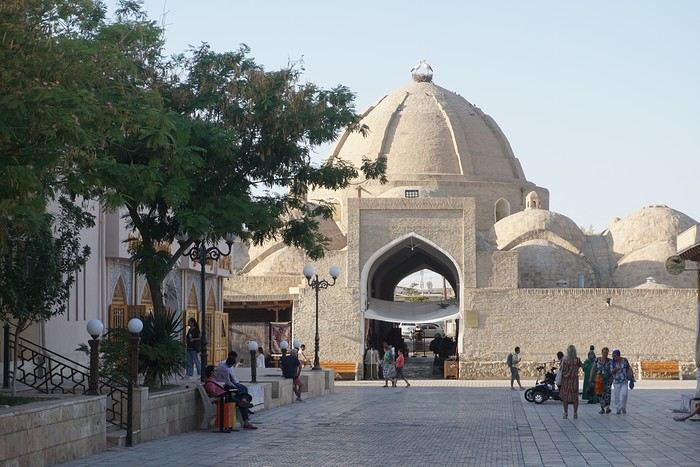
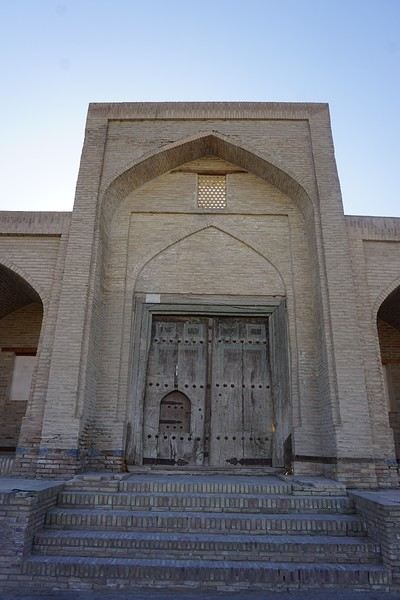
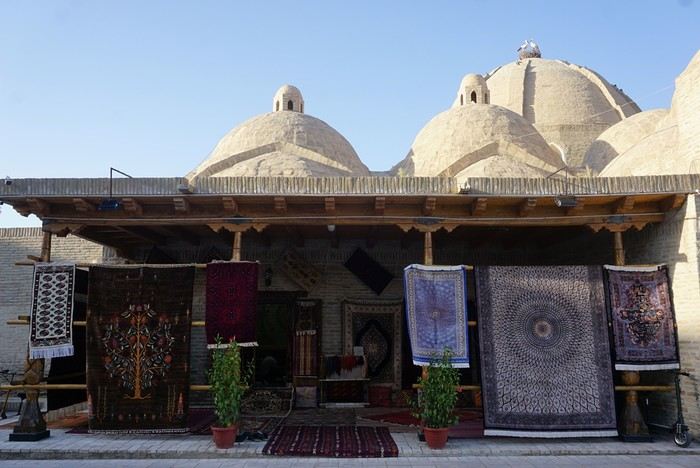
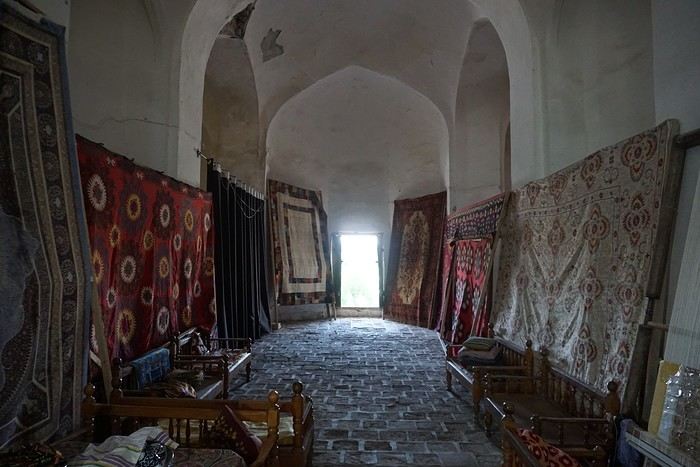
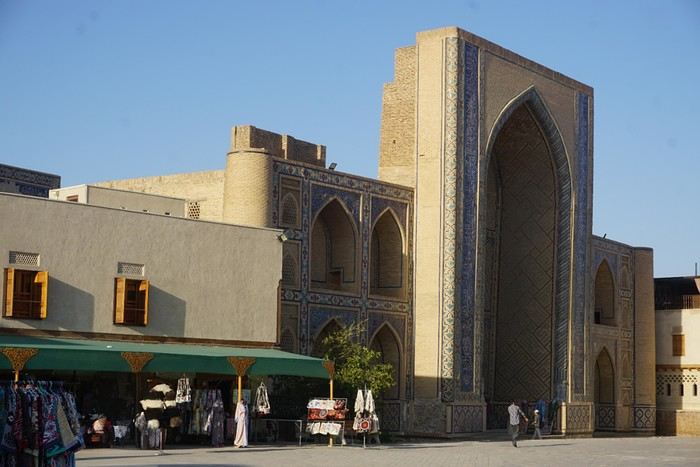
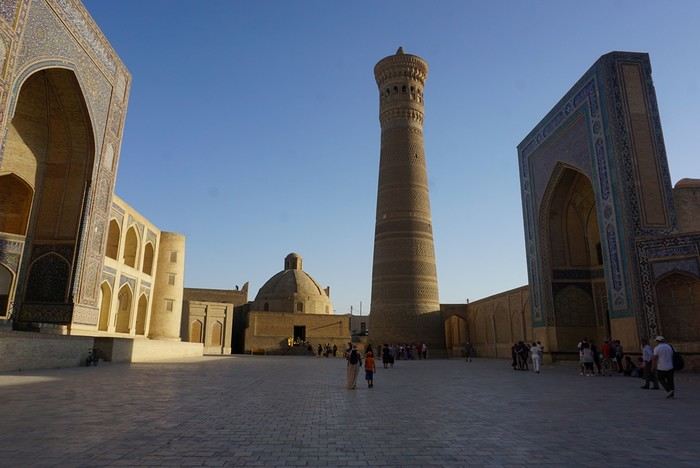
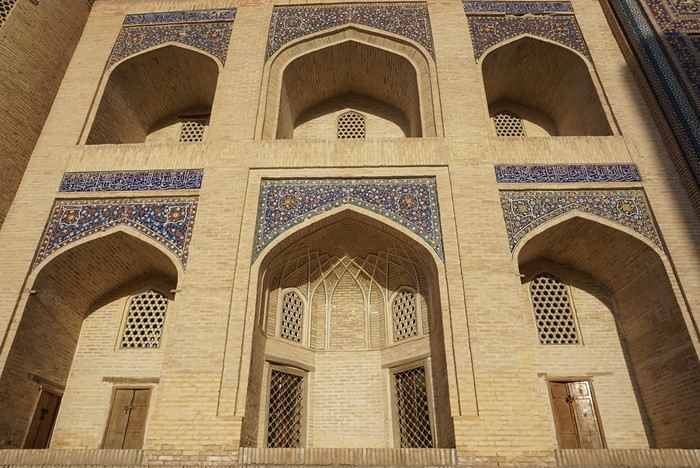
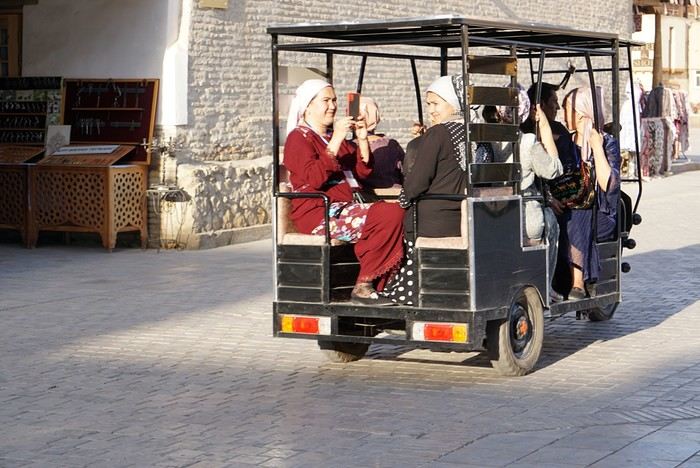


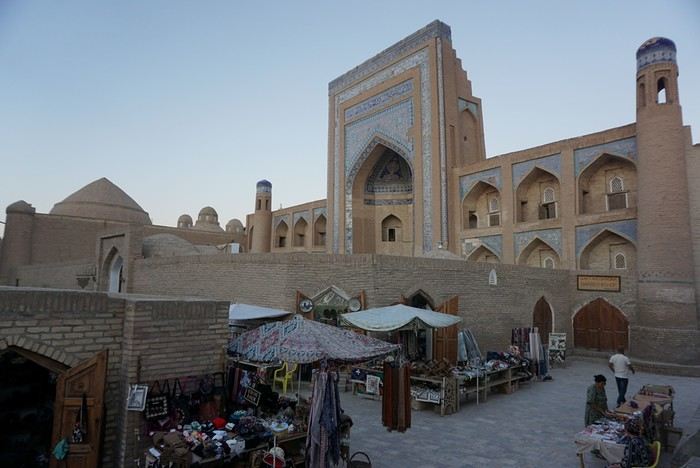
We get some tips (sightseeing and good local restaurant recommendations), leave Javlon to his family reunion, and head off for lunch despite the late hour at a small restaurant near the money-changers’ dome. First steps in the city, and we’re already charmed!


Voyager ajoute à sa vie (proverbe berbère)
PH Phil31600 Regular ·
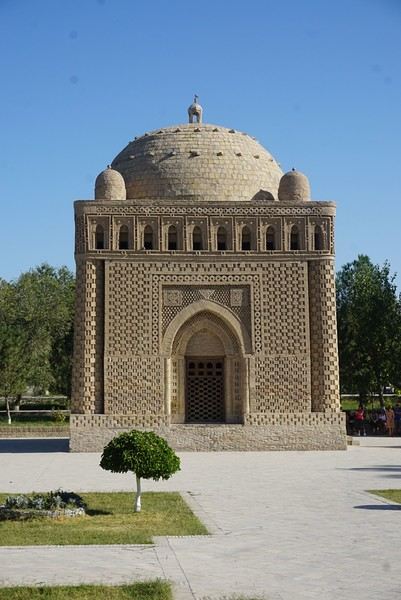
Step 5: Holy Bukhara September 24 - Bukhara with and without a guide This morning, we’ve got a guided tour of the main sites in the old city on the agenda. But we start the day with one of the best breakfasts ever! French toast, crepes, fresh homemade fruit juice, homemade jams (orange/pumpkin/carrot and rose jam: a delight!), homemade yogurt, seasonal fruits, several savory dishes, eggs... We can’t take any more! Bukhara was once called the "Dome of Islam" or the "Pillar of Islam." It was said to be the most secretive of the caravan cities and the most interesting city in the world! Knowing all this, we were really excited to discover the different sites in the old city. We start the day at the Ismail Samani Mausoleum, a magnificent brick cube. It’s the second oldest mausoleum in the Muslim world. We walk through Samani Park and then the market. We taste *alva*, an Uzbek sweet, a kind of nougat made with sesame, pistachio, and almonds that reminds us of sweetened condensed milk.
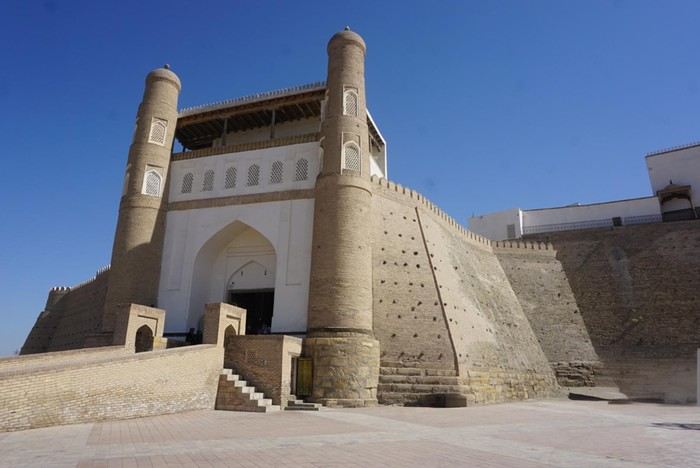
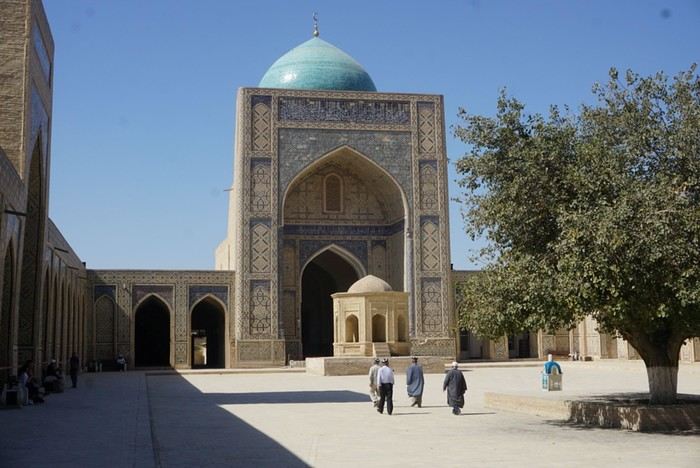
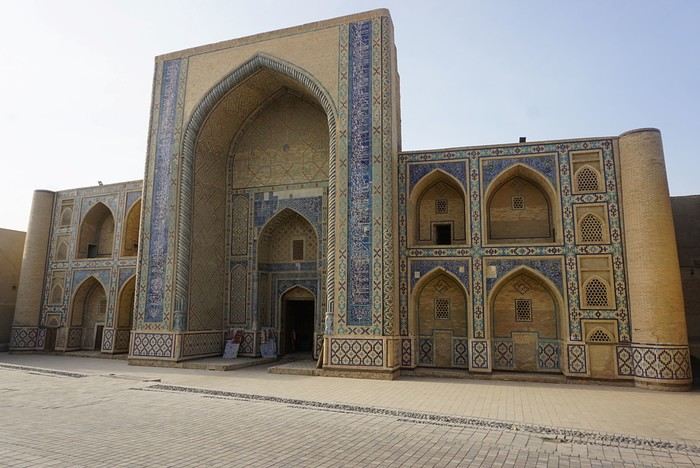
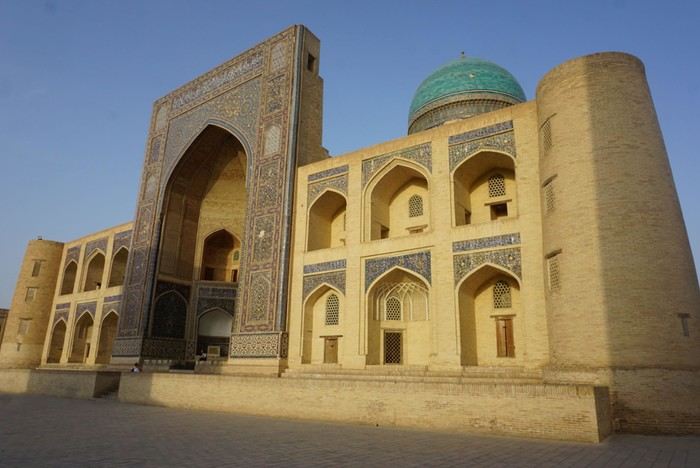
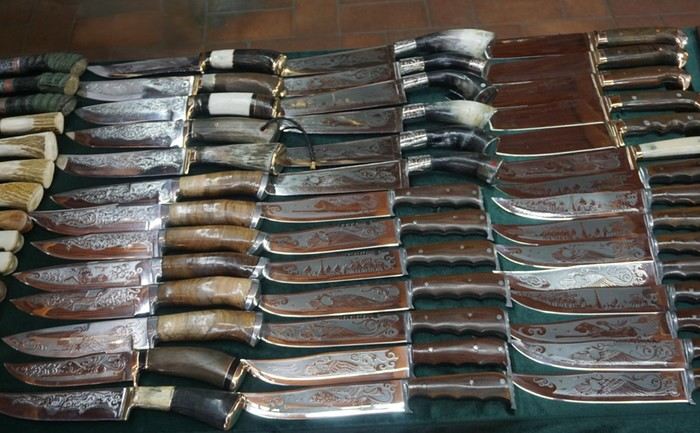
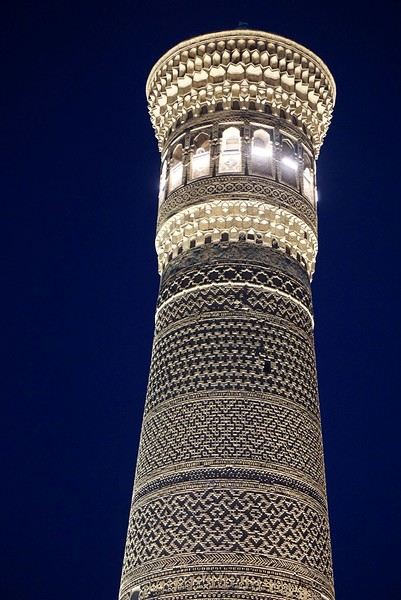
Next, we visit the Ark of Bukhara (Aka), the Emir’s residence, other madrasas and mosques around Registan Square, and the trading domes where artisans and merchants are set up. We discover the work of knife makers there. We also climb the iron tower (their Eiffel Tower) for a panoramic view of the city and its signposts (Paris, Rome, etc.) that make us look toward the horizon. The city is full of splendors. It’s impossible to list them all: Maghoki Attari Mosque, Ulugbek and Abdulazizkhan Madrasas, the Poi Kalon complex with its minaret from which condemned prisoners were thrown alive. Registan Square is very lively, and many people are working to transform it into a huge "dojo." Unfortunately, our young guide doesn’t know what’s being prepared. We’ll come back to see it at the end of the day!
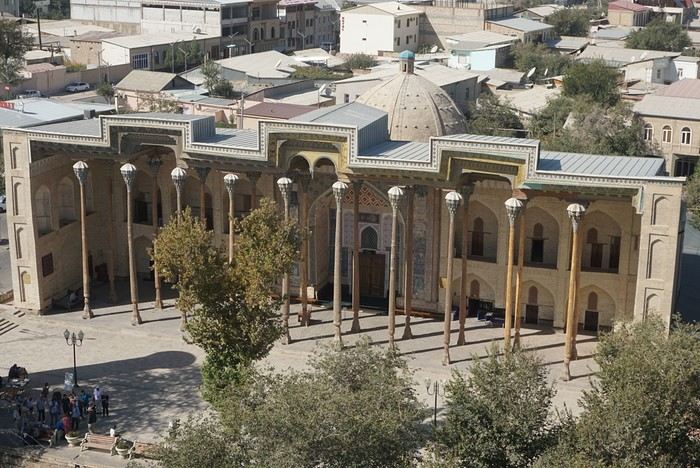
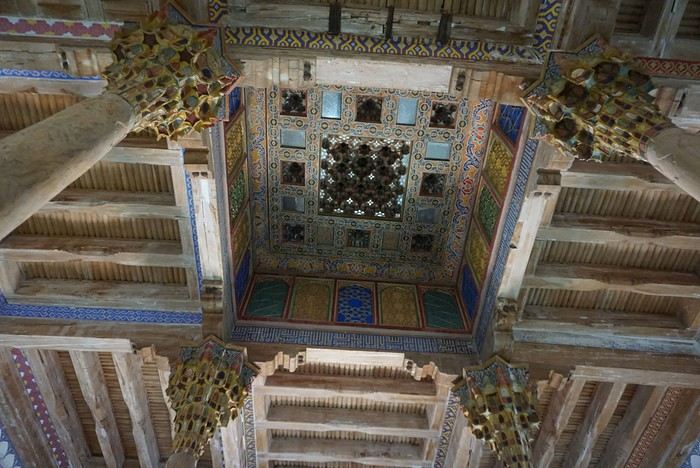
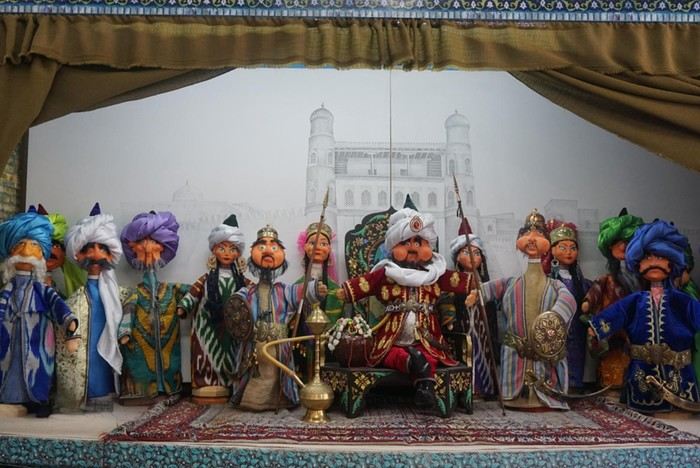
We then head toward the Lyab-i Hauz complex. Between the money-changers’ dome and the basin, we stop at Iskander Khakimov’s puppet shop and workshop. He explains the manufacturing process and gives us a little musical demonstration.

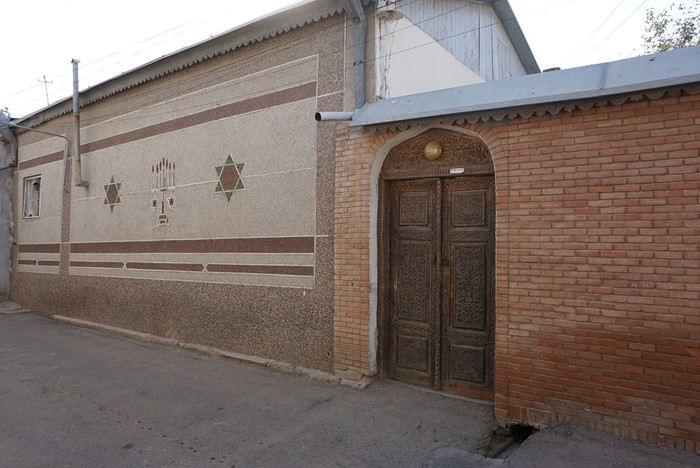
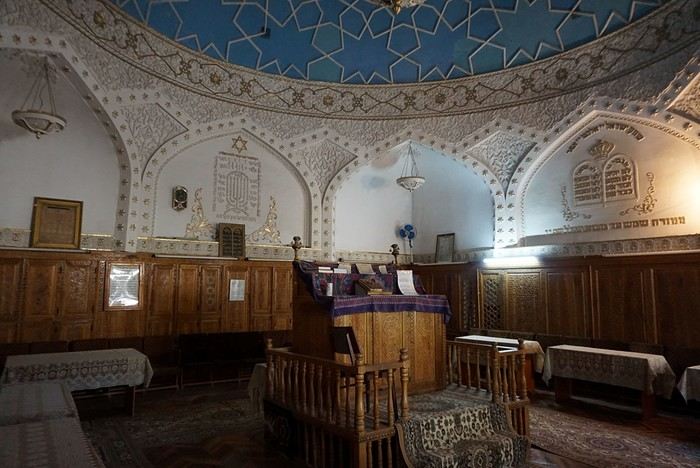
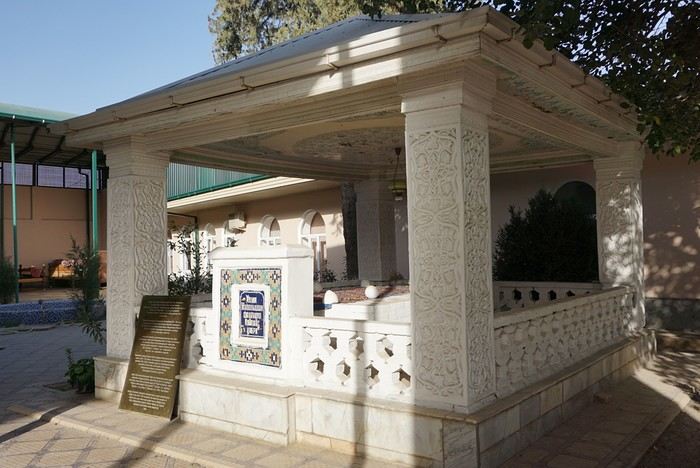
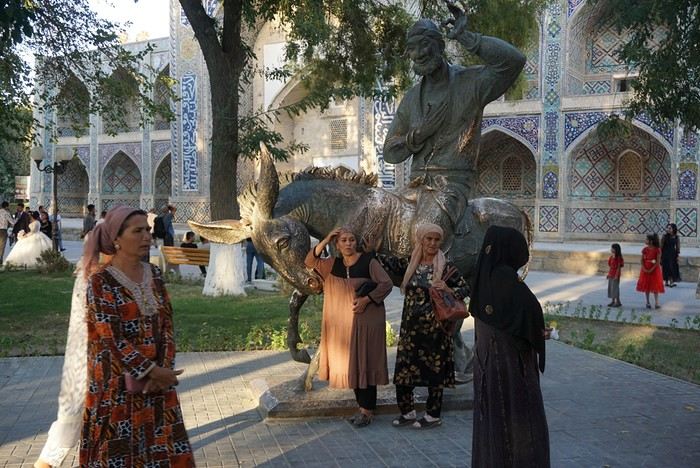
In the early afternoon, we say goodbye to our guide. After a short rest (and to let the outside temperature drop), we stroll through the Jewish quarter and wander its narrow streets. Here, no tourists—so much so that a woman comes out of her house to ask if we’re lost and, if needed, to point us in the right direction. At the corner of a street, we discover a fountain and a tomb topped with a wooden post from which what looks like horsehair is hanging. We learn that it’s a horse’s mane. Horsehair doesn’t rot, and its presence means a holy man is buried here (in the Sufi tradition). Further on, we’re drawn by the smell of fresh bread coming from a bakery at the intersection of several streets. We also find the old synagogue while heading back to the old city and its central basin. We decide to sit on a bench next to the statue of Nasreddin Khodja on his donkey, right in front of the Nadir Divanbeg Madrasa. Nasreddin Khodja was a dervish, both wise, cunning, and lazy. He traveled all over Asia. One day, he witnessed the Emir falling into the basin. The Emir, who couldn’t swim and was afraid of drowning, shouted that whoever saved him would receive half his fortune. Being very stingy, he quickly realized what he’d promised and started pushing away anyone who tried to help him reach the edge. Seeing this, the clever dervish took out a small copper coin and promised the Emir that if he got out of the basin, the coin would be his. With great effort, the Emir managed to climb out to get the coin. When he took it, Nasreddin Khodja reminded him of his promise to share his fortune, and the Emir had to comply. The dervish didn’t keep the fortune for himself but distributed it to the neediest people in Bukhara. Today, there’s a constant stream of people in front of his statue (you can still see the copper coin between his fingers), where Uzbeks come to pose and also pet the donkey’s ears. But in front of the madrasa, in the park and around the basin, there’s also a parade of newlyweds. We amused ourselves by commenting on what we saw until a man sitting next to us on the bench joined our conversation. In perfect French, he told us how much he enjoyed speaking French with us—he used to be a driver for a travel agency. He explained the weddings and their exorbitant cost. So much so that imams are calling on Uzbek families to be more moderate because they go deeply into debt to throw a beautiful party for the newlyweds and display beautiful clothes for the guests. To give us an idea, he said it’s common to invite 400, 500, or even more people to a wedding, and it costs $6,000 to $9,000! At nightfall, we went to see the sports competition on Registan Square. A lot of people and a passionate crowd! The entrance is controlled, but they let us through. So we ended up in the middle of the teams of fighters cheering on their teammates on the tatami mats.
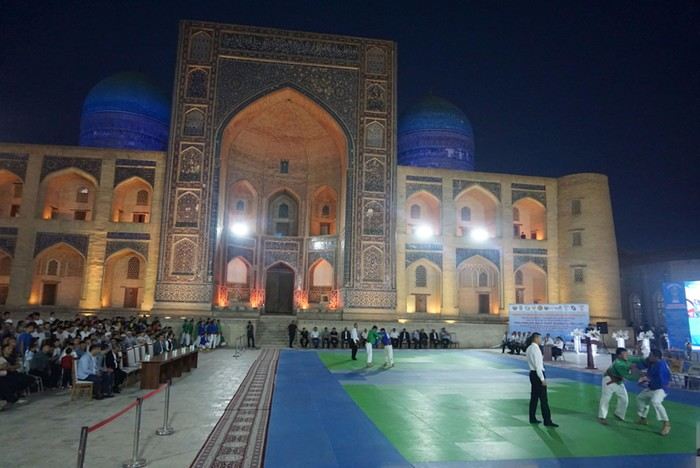
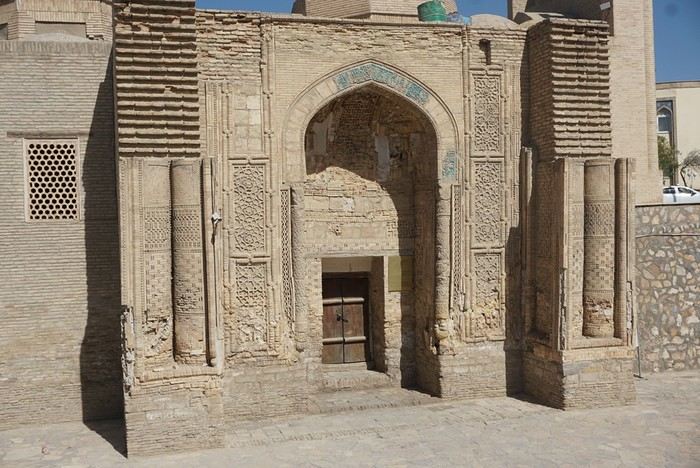
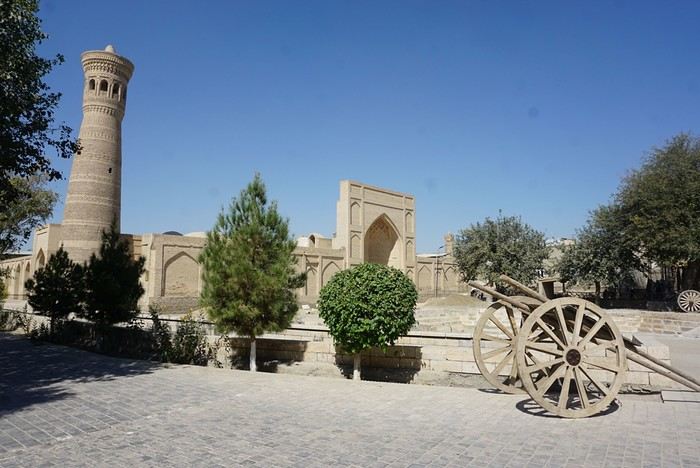
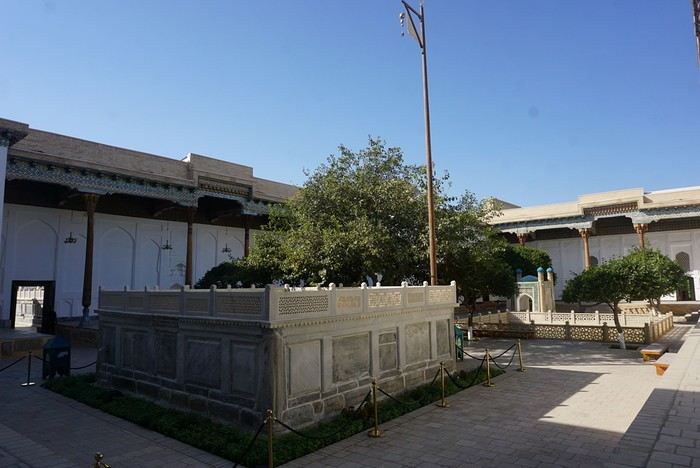
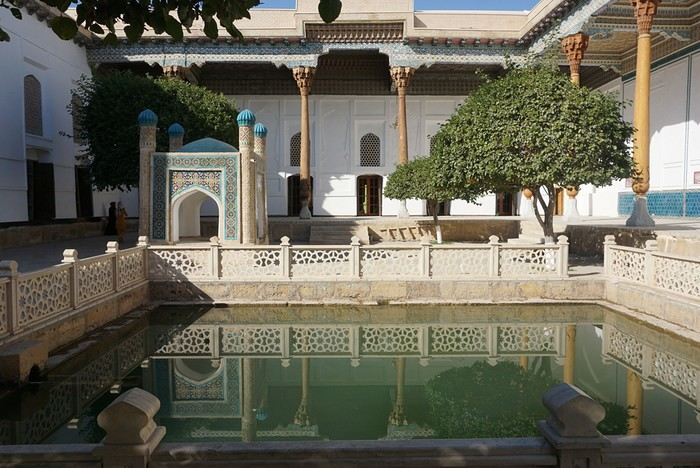
The next day, our guide told us he was there too and that we’d attended an Uzbek wrestling competition.
Voyager ajoute à sa vie (proverbe berbère)
PH Phil31600 Regular ·
Step 5: Holy Bukhara September 25 - Bukhara Beyond the Walls Lola’s breakfast is still as hearty and delicious as ever! This morning, guided by Javlon, we’re visiting the small Avicenna (Ibn Sina) museum, the father of modern medicine, in the village of Afshana. It’s an interesting visit but not a must-see. Back at the hotel, we take another stroll through the Jewish quarter and along the outer edge of the old city. I discover a small mausoleum and am invited inside. Here, no tourists—just Uzbeks coming to pray.


This afternoon, we’ll continue our visits with a guide to the outer sites. But first, we’re having lunch at one of the restaurants by the Samani Park basin. We start by heading to the village of Kasri Orifon, where we visit the Bakhaouddin Naqshbandiy complex, one of the most important pilgrimage sites for Muslims. Bahahouddin Naqshbandi was a master of the Naqshbandi tariqa, one of the four Sufi brotherhoods. This mausoleum, almost empty of tourists, is also called the 'Mecca of Central Asia.'


Next, we visit the Palace of the Moon and Stars, Sitorai-Mokhi-Khossa, the summer residence of Bukhara’s last emirs (early 20th century). The last emir managed to negotiate his departure with the Russian revolutionaries and left with all the gold he could carry. A long caravan formed toward Afghanistan, allowing him and his family to escape exile and forced labor (unlike the young Khan of Khiva). This afternoon, there aren’t many people at the palace. Our guide tells us we’re lucky—last time he was here in the morning, the visit was unbearable because of the crowds! Does that mean this visit is best saved for the afternoon?


Inside, the White Hall—a Bukharan version of the Hall of Mirrors—is absolutely stunning. The banquet hall had movable decorations, one for each season. Unfortunately, only autumn remains, the season when the Russian Revolution arrived here. The panels for the other three seasons disappeared, along with the know-how to change them. This room is magnificent. The tea salon, with its glass walls overlooking the gardens and now filled with precious vases, is also a true marvel. The garden’s trees are species the emir imported to impress his visitors. At the far end of the park, you’ll find the harem and a pool. The emir had a habit of watching his concubines bathe from a terrace in the harem. It’s said he’d toss an apple to the one he’d chosen for the night.


There’d be so many more anecdotes to share, but this travel journal would get way too long! So I’ll just invite you to either contact me or, even better, go see it all for yourself! In the late afternoon, we wrap up our walk at the Chor Minor necropolis. We’re really lucky to be here at this time—we’re the only visitors, and the colors at sunset are breathtaking! Direct descendants of the Prophet Muhammad are buried here. The place is so peaceful, with an atmosphere somewhere between mystery and romance.


A must-visit, in my opinion.
Voyager ajoute à sa vie (proverbe berbère)
GA Gaura Veteran ·
Wow, this travel journal is packed with anecdotes alongside the photos and explanations of the sites you visited. Uzbekistan is one of my best travel memories. There’s so much to see—the Uzbeks are incredibly welcoming, and the food is delicious. We did a private tour with a driver and a guide who spoke perfect French, arranged directly with a local agency, even though we usually try to manage on our own as much as possible. It feels like every traveler who’s been to Uzbekistan is thrilled with their trip.

For photographers, it’s a goldmine because Uzbeks are often happy to have their picture taken. You don’t just come back with photos of stunning buildings and their fascinating designs...

Looking forward to the rest of the trip!
gaura
PH Phil31600 Regular ·
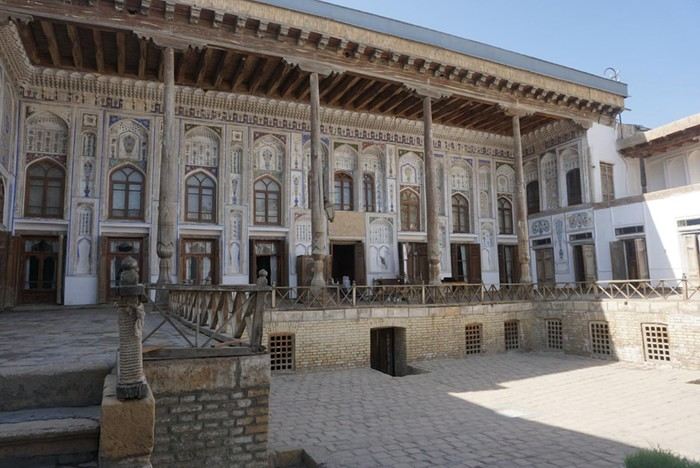
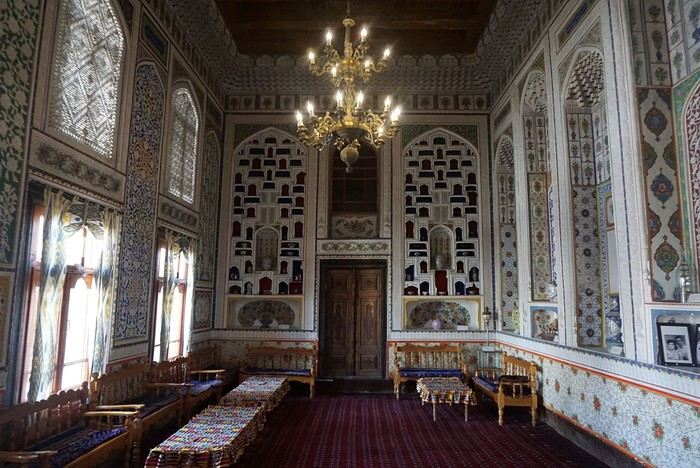
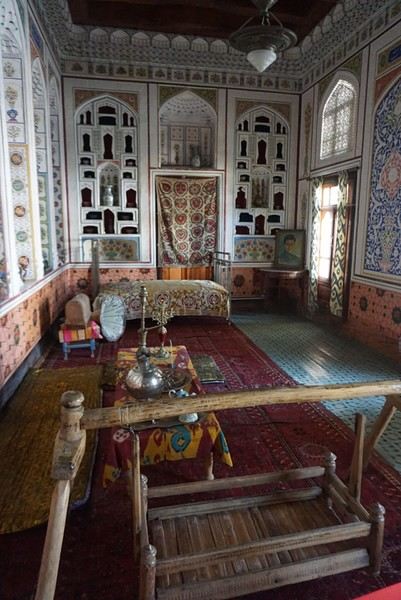
Step 5: Holy Bukhara September 26 - Bukhara, continued and concluded This morning, we linger over breakfast and take the chance to chat with Hélène and Suzanne. Today, I’ve planned to visit the house of Fayzullah Khodjaev, the son of a wealthy merchant and former president of the People’s Republic of Turkestan (19th century). Hélène shows us the way through the Jewish quarter’s alleyways and even decides to walk part of the way with us. ‘Maps Me, my friend,’ will handle the rest!


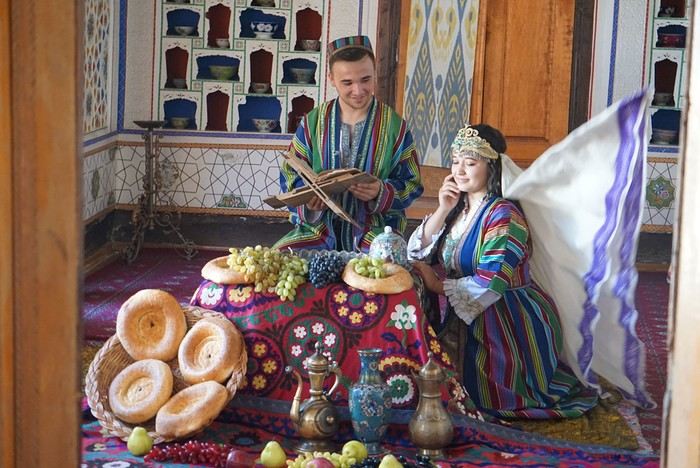
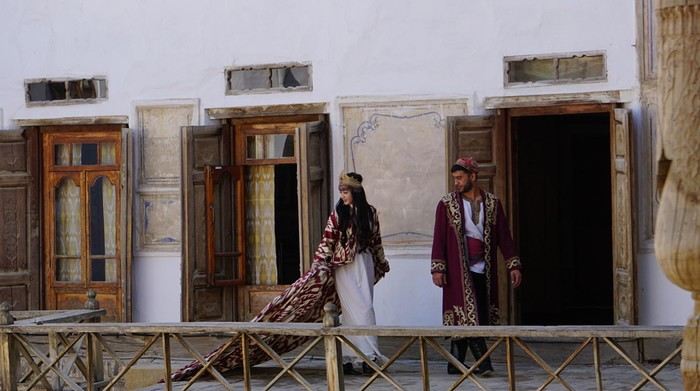
Once there, no tourists in sight! Just two young couples in the middle of a photo shoot in traditional outfits. The iwan is beautifully decorated. The murals are absolutely stunning! It’s a lovely visit made even nicer by the presence of these two couples, who pose and smile at us. Their photographers let us take all the photos we want (as long as we don’t get in their way or slow them down). We even exchange a few jokes, and one of them gives us some photography tips.


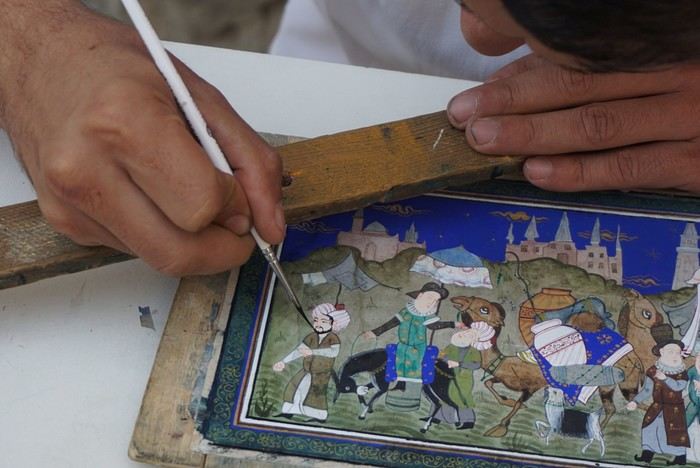
A great discovery a little off the beaten path in Bukhara but not actually that far (about a 20-minute walk from the Money Changers’ Dome). On our way back to the hotel, Javlon reminds us that he’s keeping his promise—tonight, we’re invited to taste his red rice plov. This afternoon, we’re meeting a young artist we met at the hotel who paints miniatures. Our meet-up is at the Kukeldash Madrasa, where he’s set up his ‘workshop.’ We find him at the entrance, and he immediately takes us to his workspace. He gives us a demonstration on a miniature he’s working on. He explains (in English) how he works, what comes from his imagination (most often, trees of life) and what’s the result of his research at the library (depictions of caravans on the Silk Road).


It’s our last day in Bukhara, so we take the opportunity to revisit the sites and shopping galleries in the late afternoon. Once again, the colors are gorgeous, and some streets seem to have suddenly emptied of tourists! Perfect!


Tonight at the hotel, it’s a bittersweet celebration: Hélène and Suzanne are flying back to France tomorrow morning. They’ve invited some friends, and we’re all sharing a meal together. It feels like we’ve known each other forever! A strange yet wonderful feeling that makes us want to come back and see them (Hélène and Suzanne) again in France! The evening is truly lovely, even if we can sometimes detect a hint of nostalgia and sadness in the eyes of our hosts, Lola, and their friends.
Voyager ajoute à sa vie (proverbe berbère)
PH Phil31600 Regular ·
Step 6: Asraf September 27 - On the way to Asraf Breakfast was still just as delicious! I think we could’ve easily stayed a few more days here—we were so comfortable! Javlon had a hard time leaving his family, so we didn’t hit the road until around 10:00 AM. On the way to Nurata, we stopped to visit an old cistern. Javlon took the chance to grab a coffee and buy an energy drink. Last night’s festivities seem to have left their mark (a whole group of guides and drivers had joined us, and the vodka was definitely flowing!).

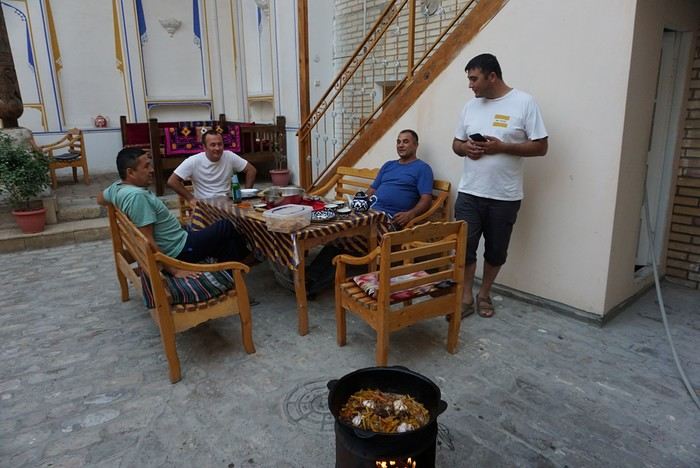
Javlon, his excellent plov with red rice in the works, and his friends
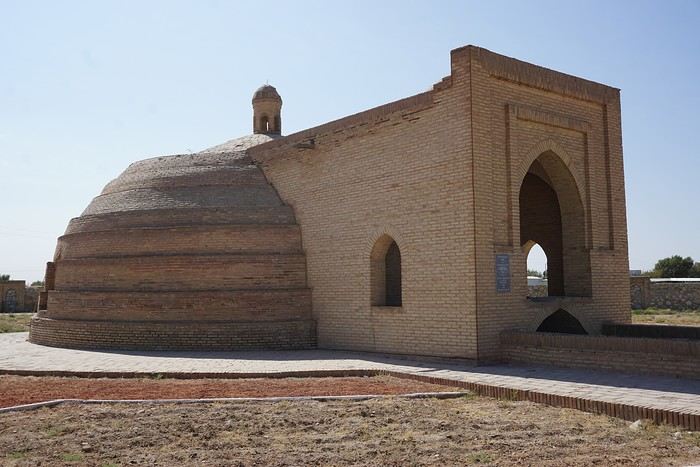
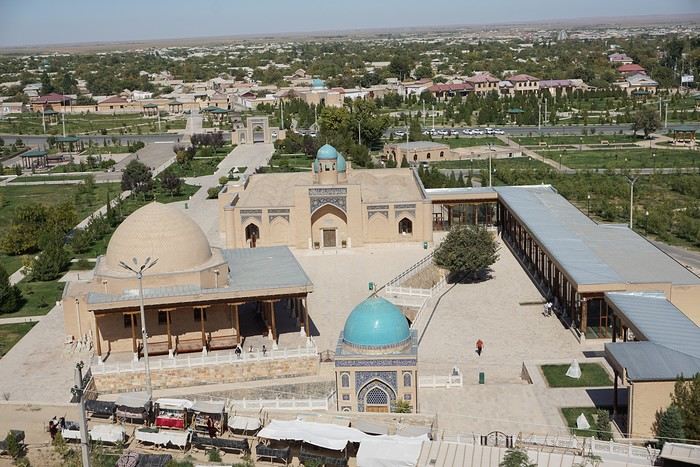


Our second stop was Nurata, where we wandered around the Chashma architectural complex, dominated by the ruins of a defensive fortress on a hill, attributed to Alexander the Great. The discovery of the spring is credited to Muhammad’s son-in-law, Hazrat Ali.


We had lunch in Nurata before heading to the Tajik village of Asraf. To get there, we crossed a rolling steppe on one side and a completely flat one on the other, with the shimmering blue reflections of Lake Aydarkul in the distance.


At the end of the road—and then the dirt track—we were warmly welcomed by the entire family at the guesthouse. I gave them my gift: pencils, pens, and, most importantly, several boxes of cookies bought from a bakery not far from our town, Martres-Tolosane. The gifts seemed to be a hit—I quickly saw kids running around with either a cookie or a pen in their hands.


We were offered a welcome tea with Uzbek cookies, candies, and dried white mulberries. We settled in and explored the place, wandering around the property with its cow and calf, sheep, chickens, and a dog. Tonight, we ate under the chestnut trees with a group of Austrians and a Quebec family on a round-the-world trip. It was a bit chilly, but the owner came by at the start of the meal to offer us a round of vodka. One glass, two glasses… that was enough for me! Toward the end of the meal, the Austrians’ guide stepped away for a few minutes and came back with a bottle of ‘Uzbek Cognac.’ With a laugh, he told us that in Uzbekistan, they call it Cognac, but for export, they label it Brandy… I didn’t dare try it—vodka was still coating my stomach! We had a fantastic evening, laughing a lot with everyone at our table!
Voyager ajoute à sa vie (proverbe berbère)
PH Phil31600 Regular ·
Step 6: Asraf 28 September – Walk and cooking class A hearty breakfast in one of the guesthouse’s rooms. Before heading out for a walk, I watch the preparation of homemade bread: making the flatbreads and the wood-fired oven, then seeing how these flatbreads are attached to the oven walls.


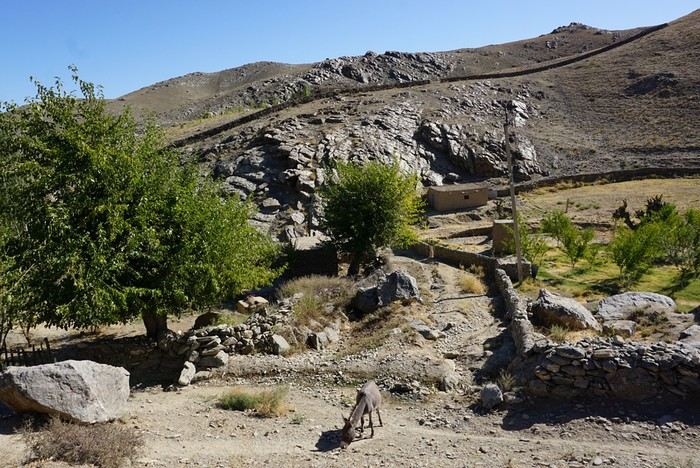
We then set off for a walk around the village with one of the family’s men. The village, home to about 26 families, is very spread out. We take around 2h30 to circle it.
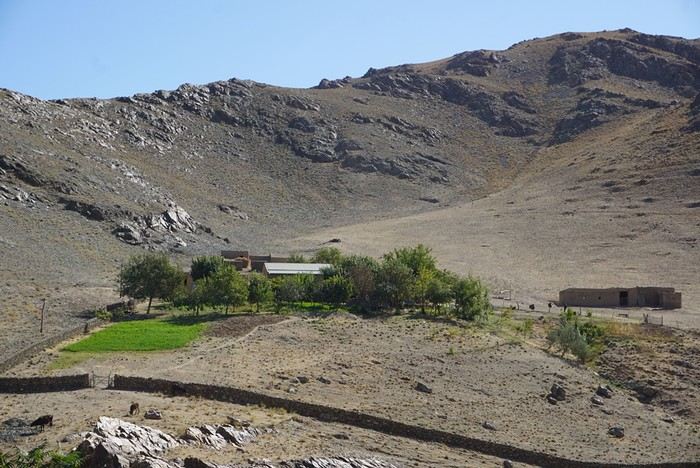
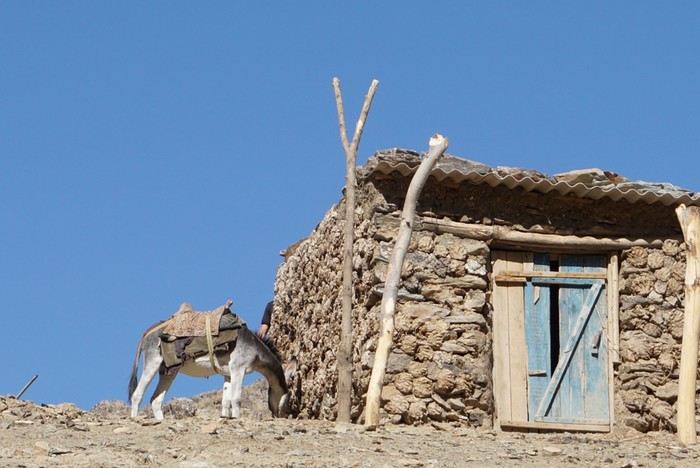
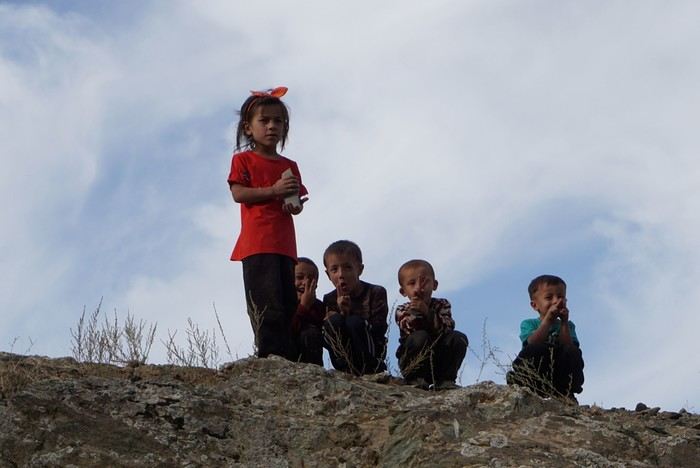
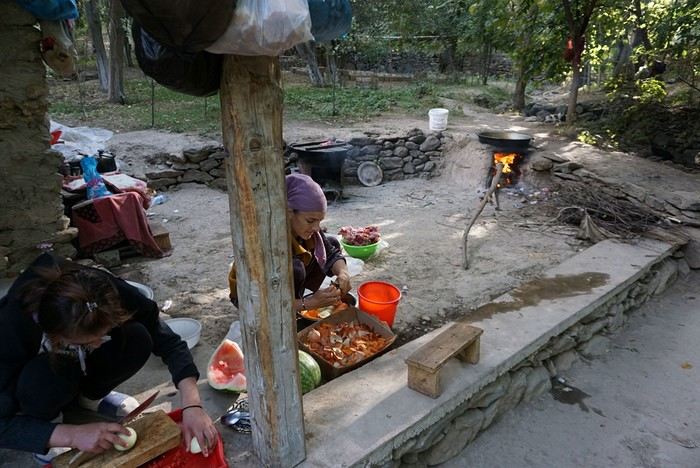
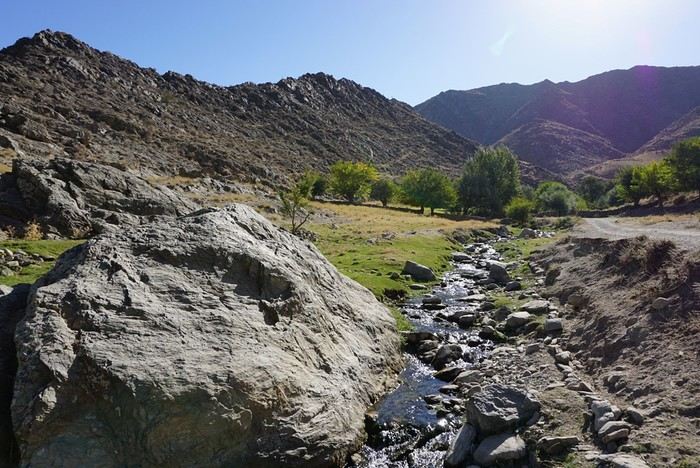
Back at the guesthouse, Javlon tells us they’re expecting a group of Swiss travelers and that he’ll help drive them here since their bus obviously can’t make it down the track. For lunch, we’re seated with Javlon at a small table away from the group. Two young English women and their guide have also arrived. I’m a bit disappointed because, even though the accommodation is “typical” and the owners are very kind, I still feel like I’m in the middle of a tourist attraction. I confide in Javlon, who doesn’t comment on my impression. We strike up a conversation with a woman from the Swiss group, whom we’ll run into several times over the next few days.


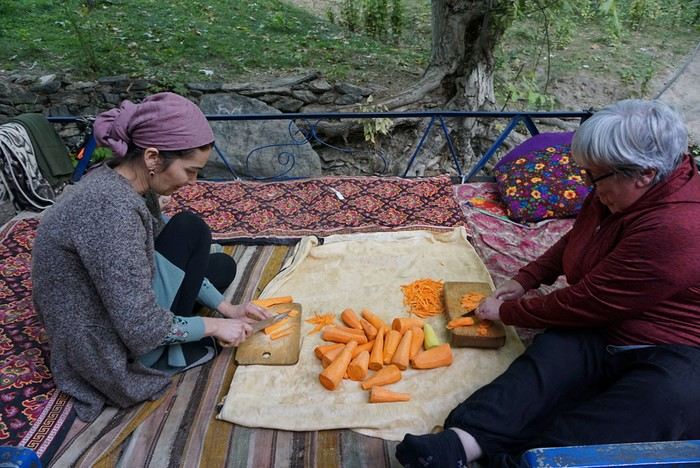
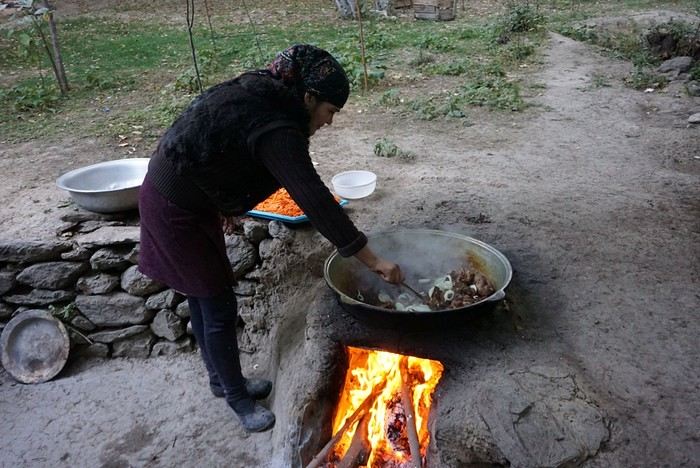
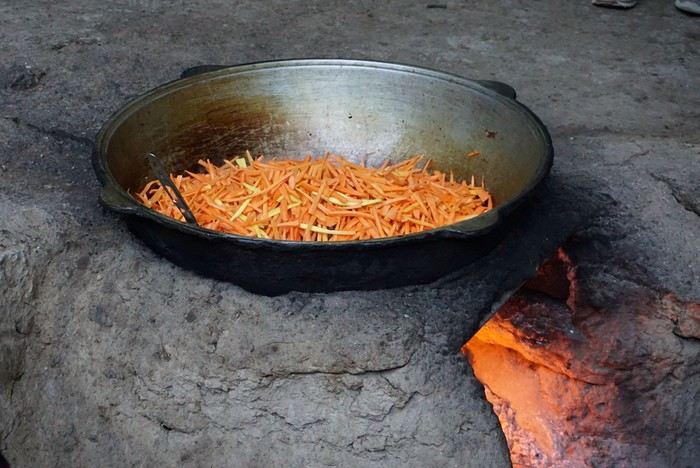
In the afternoon, I go for a walk alone in the mountains. Kids greet me as I pass: Hello! In some spots, I catch glimpses of the lake shimmering in the distance. Then, at the end of the valley, I meet up with the two English women, their guide, and the man who had accompanied us that morning. I join them, and we all head back to the guesthouse together. As soon as I arrive, the owner comes to get me and “recruits” me (and my wife) to help prepare the plov for tonight. So, we’re on carrot and onion chopping duty, rather uncomfortably perched on the tapchan. After a while, one of the English women joins us, and given how awkward our setup is, we laugh a lot and nickname our activity ‘Carrot yoga.’


I then watch the plov being prepared: in a large pot, pieces of beef cook in a bit of oil. Then, sliced onions are added, followed by carrots cut into sticks. While everything simmers, the rice is washed and soaked in salted water. It’s then added and mixed into the pot. Cooking the plov over a wood fire takes a total of 2h30 to 3 hours.


Javlon, an expert on this national dish, tells me with a hint of criticism that plov made with mutton should only use red rice (rice that’s only found in the Ferghana Valley). Here, the cooking seems too quick to him. Tonight, we eat indoors with the two English women, leaving the Swiss group outside. The plov turns out to be pretty good, and we congratulate ourselves—along with the English woman—on helping prepare it. After the meal, the owner comes to get us because tonight he’s organized a small Tajik show: traditional music and dances. Honestly, we’re not really into it. And when we see some Swiss women getting up to join the young Tajik dancers, we slip away and head back to our room.
Voyager ajoute à sa vie (proverbe berbère)
PH Phil31600 Regular ·
Thanks! I hope to finish publishing the full travel journal before the end of the week! And I totally agree with you about the hospitality in this country and how satisfied all travelers who’ve been lucky enough to go there are. We used to travel solo too (see my journal about our 2024 trip to Colombia that I just published). But I wanted to make an exception for Uzbekistan, and I’ve never regretted it. Finally, I’m planning to return to Central Asia in 2026.
Voyager ajoute à sa vie (proverbe berbère)
PH Phil31600 Regular ·
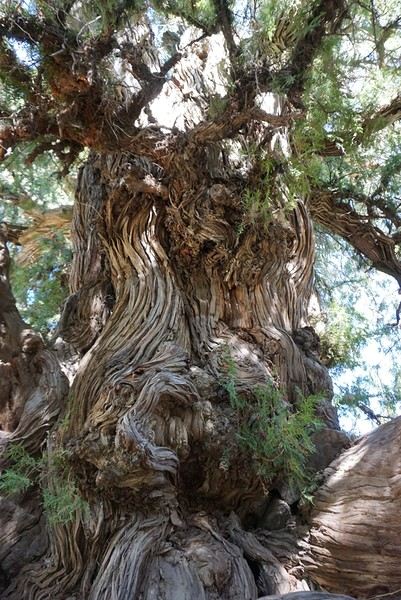
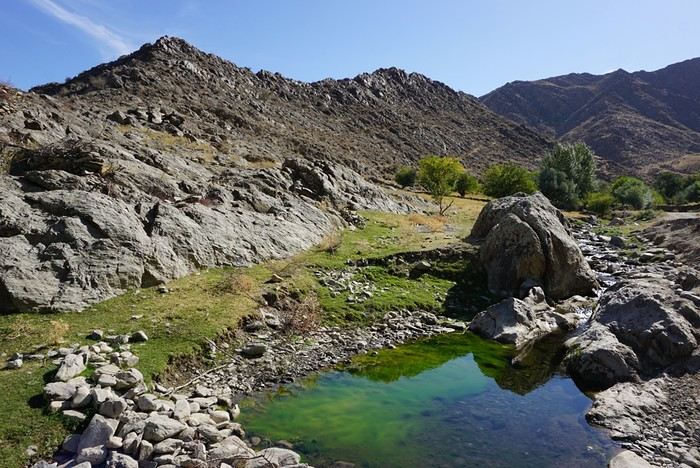
Step 7: Legendary Samarkand September 29 - From Asraf to Samarkand This morning, Javlon treated us to a wonderful surprise. At the end of the track connecting the village to the main road, instead of turning right toward Samarkand, we turned left. A few kilometers later, we took a small road that wound into the mountains and eventually turned into a rocky trail. At the end, Javlon told us we’d have to walk a little and that we’d see a pine tree. The walk along a stream was very pleasant. We passed a shepherd with his flock of sheep. After 20 to 30 minutes, we arrived in a small wood. At the back of this grove, we discovered a majestic tree—Javlon’s old pine! After checking with our photos, it turned out to be a juniper that the village elders estimate is about 1,000 years old.


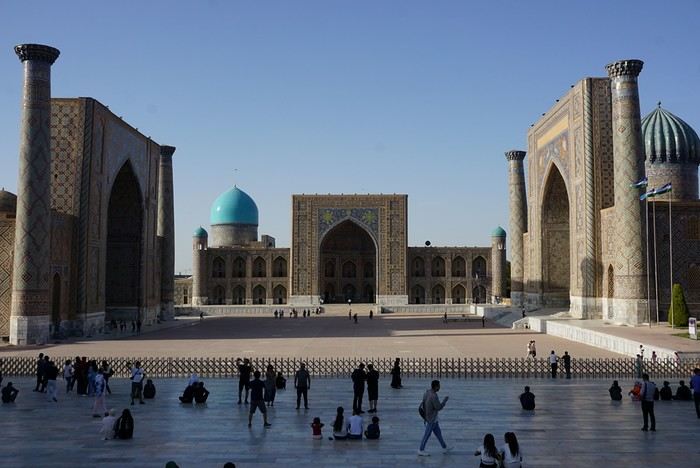
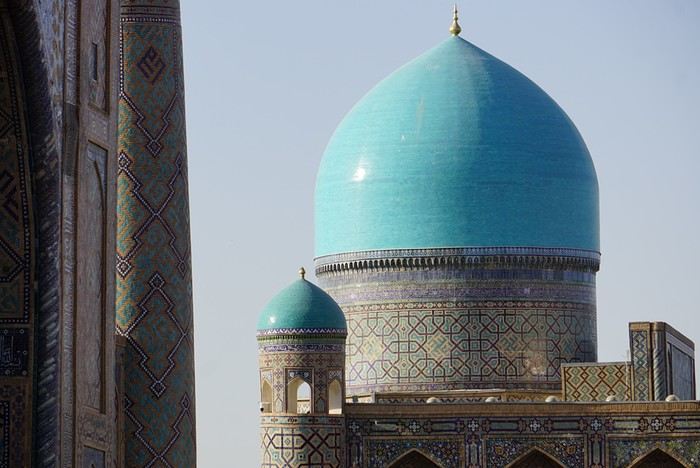
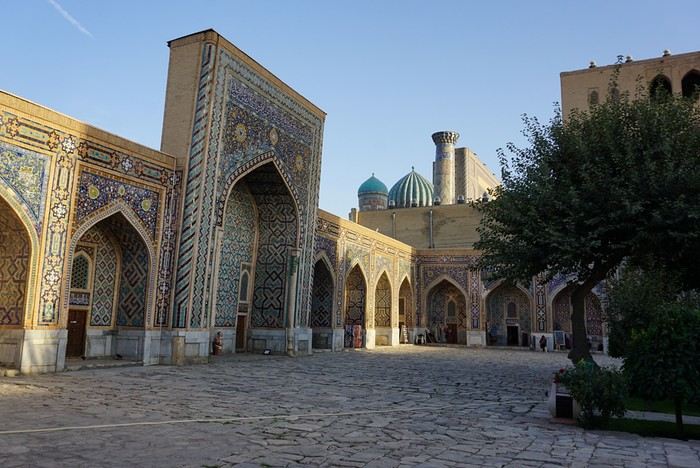
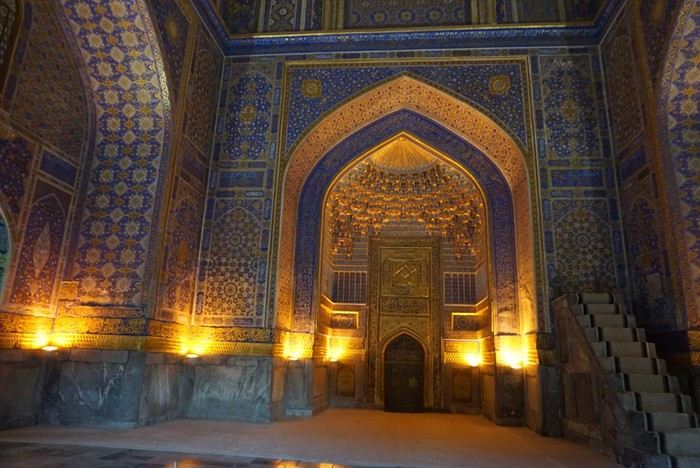
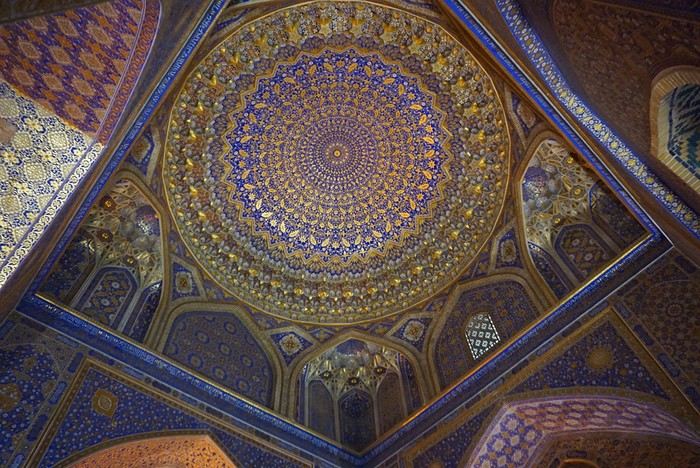
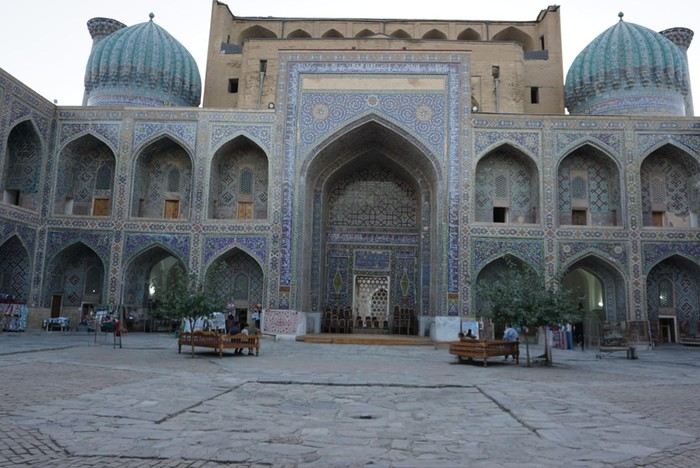
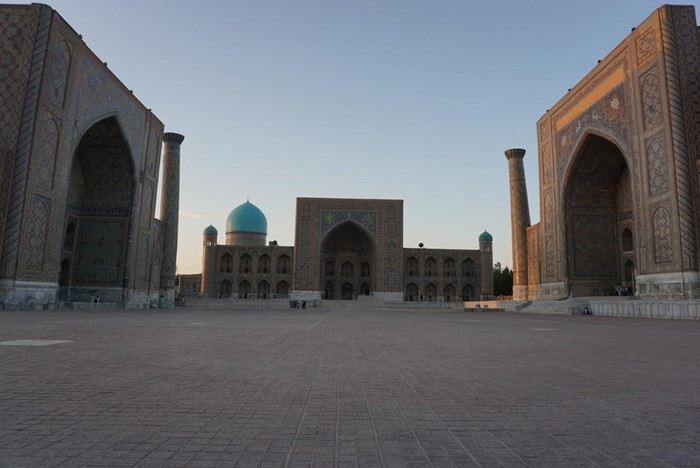
What a great surprise! Thanks, Javlon! We then continued on to Samarkand. Javlon dropped us off at our hotel (Jahongir), made sure we were settled in, and told us he had to leave—he was heading back to Bukhara. After he left, we had lunch at a small local restaurant near the hotel and couldn’t resist immediately visiting the madrasas and the mosque on Registan Square.


This place is stunning! The visual feast is total—my camera’s memory card is overheating! Oh well! Inside, we ran into the Swiss group again. The woman we’d chatted with in Asraf told us their 10-day organized tour was too rushed. She was envious when I mentioned we’d be spending 25 or 26 days here.


It’s impossible to describe what we’re seeing and feeling—the site is just that beautiful! The only downside is the vendors everywhere inside the madrasas. Fortunately, none are pushy or insistent. They offer their goods but don’t press if you decline (always with a smile!). We spent several hours there without realizing how much time had passed. By the time we left, it was already late afternoon!


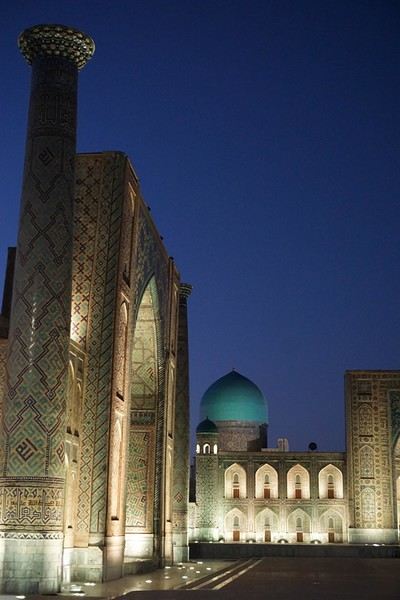
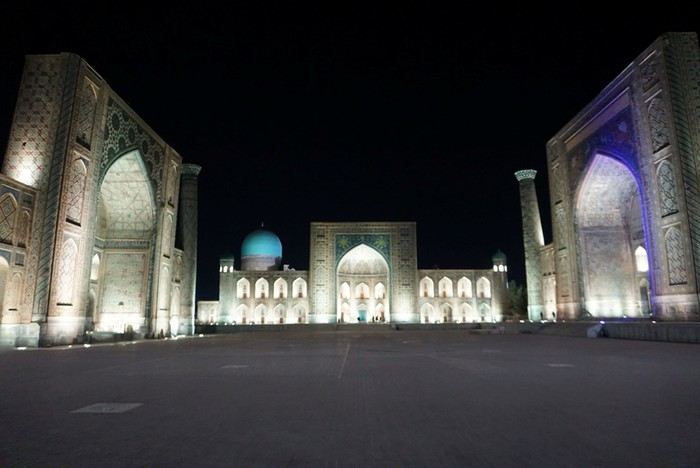
Back to the hotel (a maximum 10-minute walk away). It’s starting to get chilly in the evenings! We ate at another small local restaurant between the hotel and Registan Square. Each meal (lunch and dinner) at both places cost us no more than 5 € for two. Tonight, I decided to go back to Registan Square to take night photos. And honestly, you *have* to do it (before or after the tourist show), because the lighting makes the entire square and its domes look even more breathtaking.
Voyager ajoute à sa vie (proverbe berbère)
PH Phil31600 Regular ·
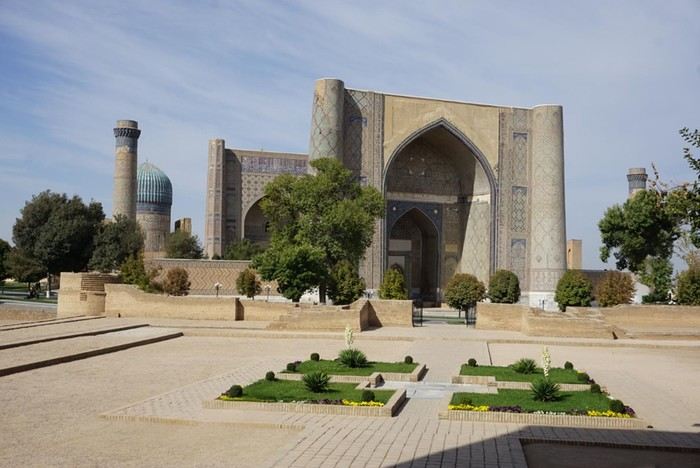
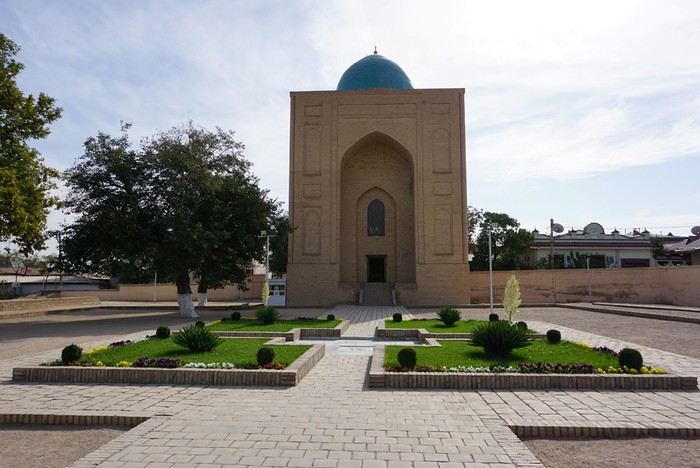
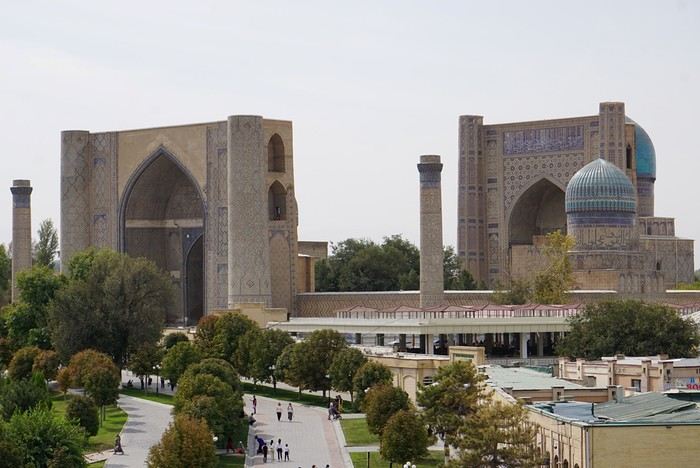
Step 7: Legendary Samarkand September 30 - Solo in Samarkand This morning, after an excellent and hearty breakfast, we head to the 14th/15th-century Bibi Khanum Mausoleum and Mosque.

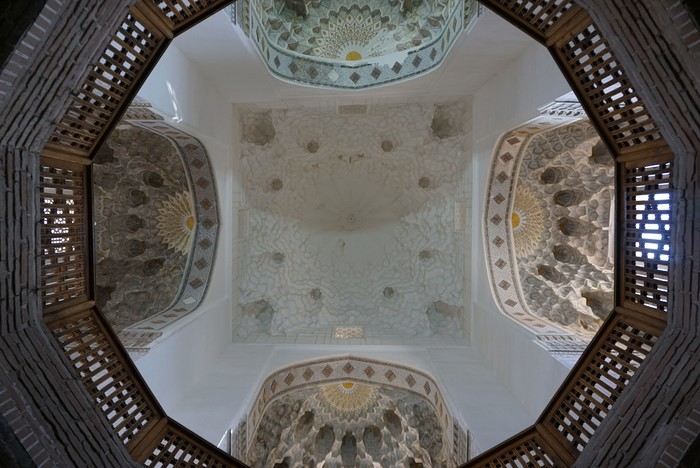
In front of the mosque, a young couple in traditional attire is having a photo shoot. Hey, we’ve seen this somewhere before! We savor each of these sites and visit them at "our own pace." The mausoleum is empty of visitors. I take advantage of this to snap some photos of its vault in a rather unacademic position.

We continue our stroll to the Samarkand market, just nearby. There, we run into some of the Swiss group members one last time—the lady comes over to chat and once again laments how short her trip was.
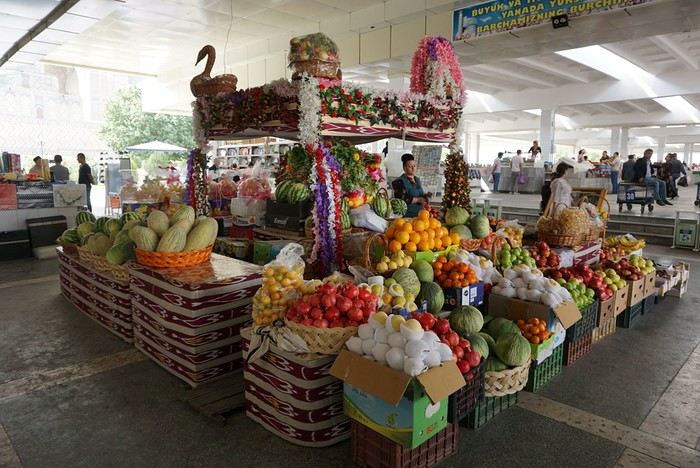
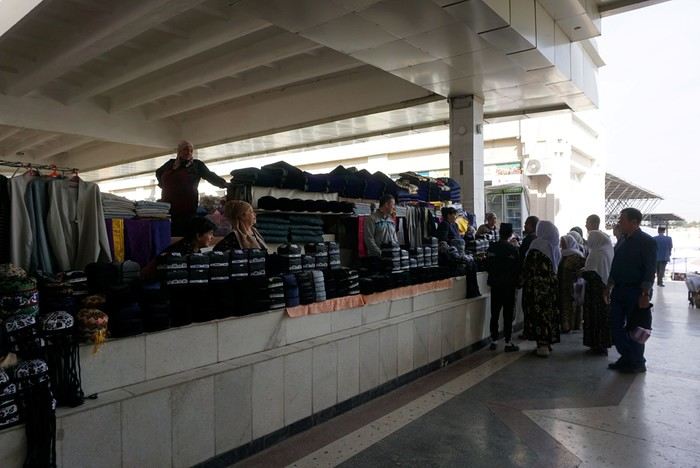
After a few purchases, we extend our walk to the mausoleum of the first Uzbek President. Beautiful view of the Bibi Khanum Mosque. On the way back, between the mosque and Registan Square, we stop at a lovely artisan space (an old caravanserai?) where we discover some great shops. In the early afternoon, we resume our visits and head toward the Gur Emir Mausoleum (or Tamerlane’s Mausoleum) via small alleys. Along the way, a young woman stops us—she wants to know where we’re from, our names, our jobs, our ages, etc. She tells us she’s an English teacher and is honored we took the time to answer her questions. Right after, she invites us to her home but understands we want to visit the mausoleum first. So, she points out her house door and suggests we stop by on our way back.
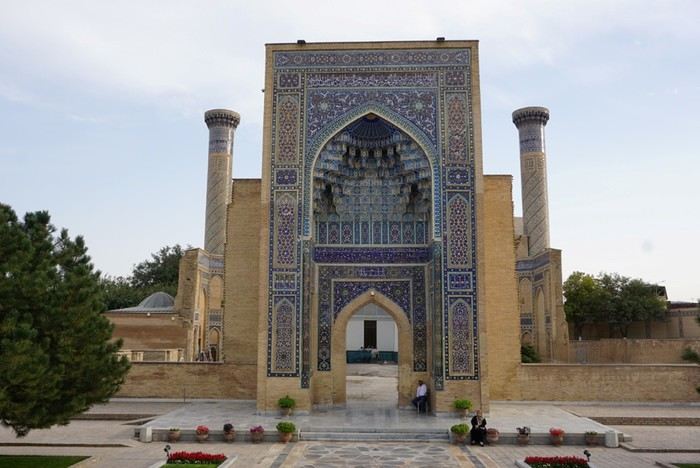
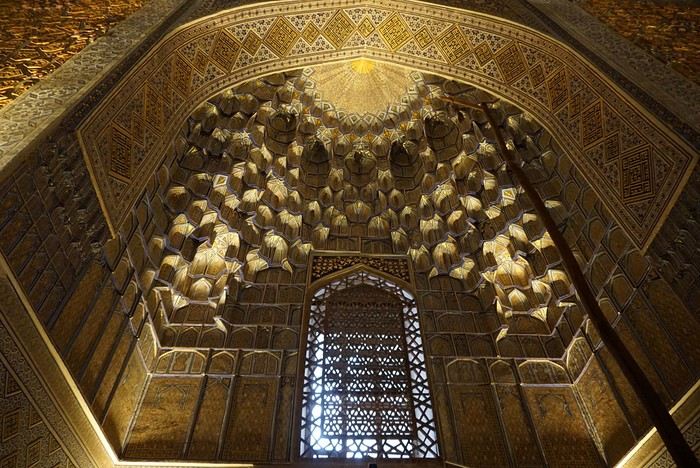
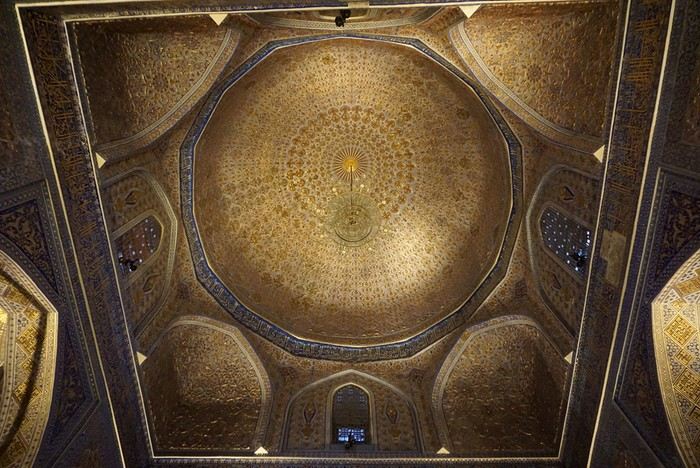
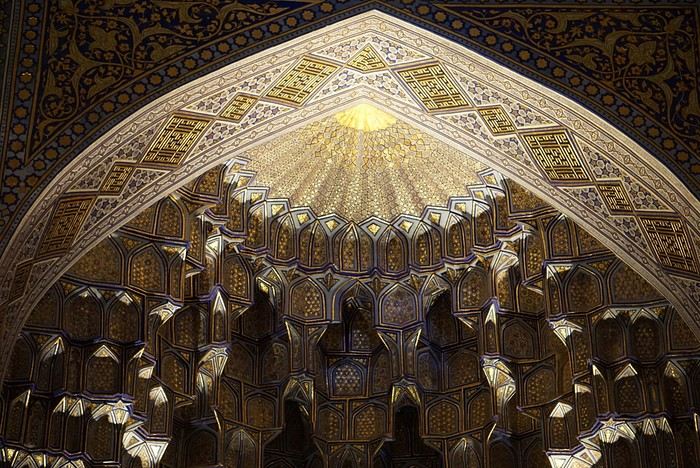
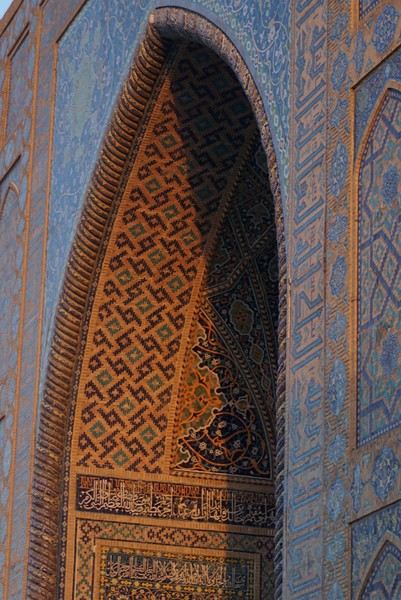
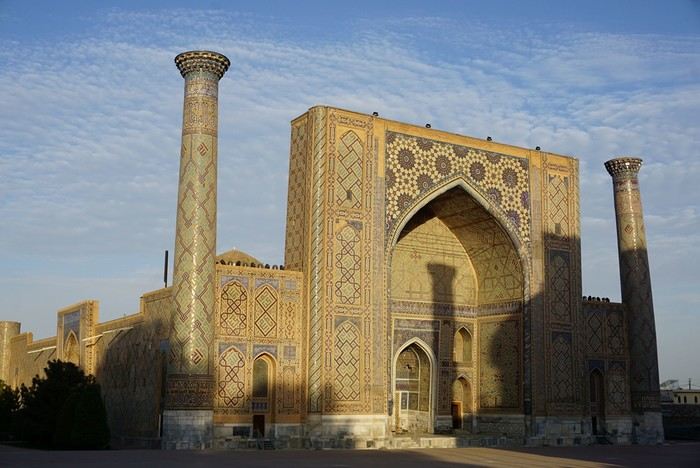
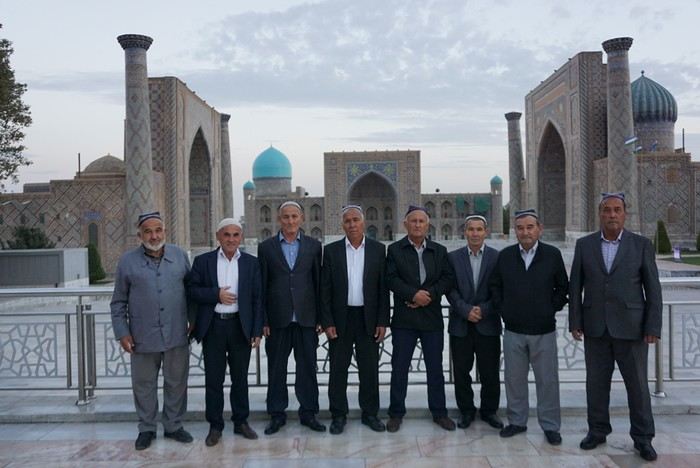
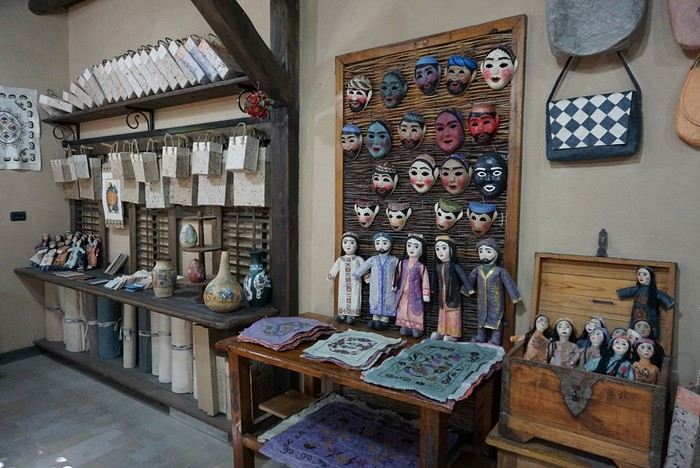
We visit this stunning mausoleum and then walk a bit further down a large avenue. At the intersection, we take a photo at the foot of the immense Tamerlane statue. Unfortunately, on the way back, we can’t find the young woman’s house door. Missed opportunity! 😕
Voyager ajoute à sa vie (proverbe berbère)
PH Phil31600 Regular ·
Step 7: Legendary Samarkand October 1st - Samarkand from dawn till dusk This morning, I decided to wake up really early to see Registan Square without any crowds. I arrive around 6:00 AM, and sure enough, I’m alone! Such a magical moment!


Little by little, I watch this part of the city wake up gently: joggers passing by the square, taking out their phones to snap a quick photo before moving on, city cleaning staff with brooms in hand... I leave the esplanade and start my walk around the outside of the madrasas (though I still sneak to the side of the square, inside, very discreetly to take a few photos). In the back of the park, I hear music. I get closer and discover a group of women of all ages doing aerobics to music. No photos. I watch discreetly and move away. Nearby, another group of women is singing. Further on, I come across an elderly man walking while doing stretching exercises and arm circles. Even further, I see people walking and chatting quietly.


After completing the full loop, I stop again on the esplanade overlooking the square. Still empty. A group of Uzbeks (all men) approaches and lines up in front of the square. One of them steps out to take a photo of his friends. I walk over and offer to take the photo for him so he can be in it. He happily accepts. I take the opportunity to ask if I can take a photo of them with my camera. Big smiles from the whole group! They immediately stand almost at attention. A great memory! Thanks, smiles, and everyone goes their own way!


I return to the hotel a little over 2 hours later, enchanted and even amazed by this morning walk. Nasrullo joins us for breakfast because today he’s the one who’ll show us his city. We start with the reconstructed artisan village and the silk paper factory. We learn about its manufacturing process using mulberry bark (hence the name "silk paper").


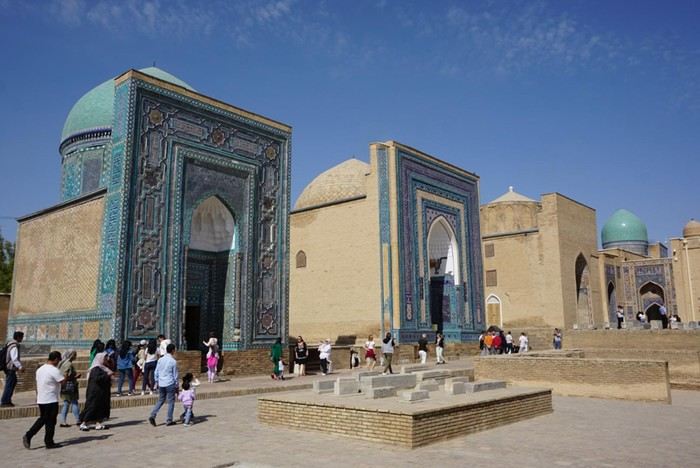
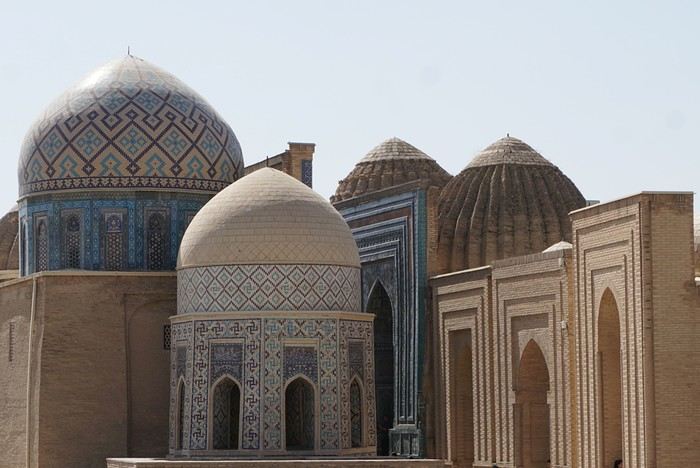
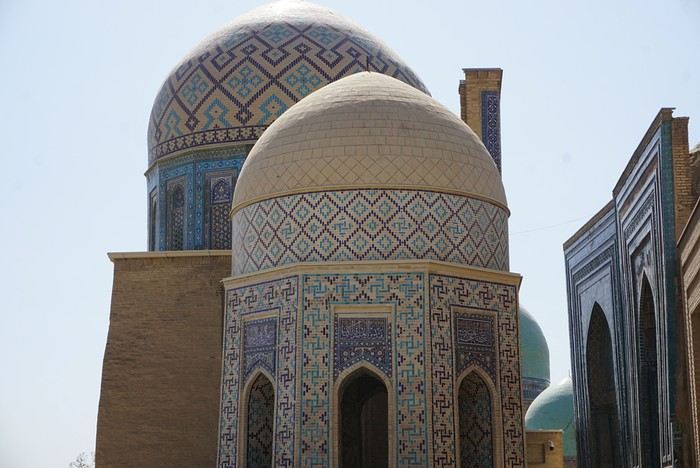
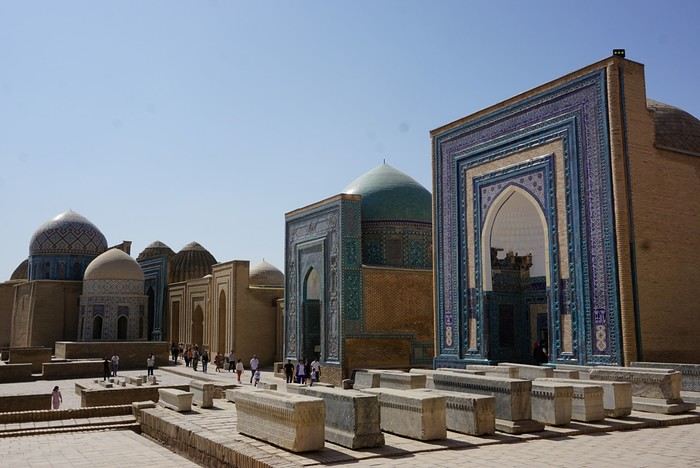
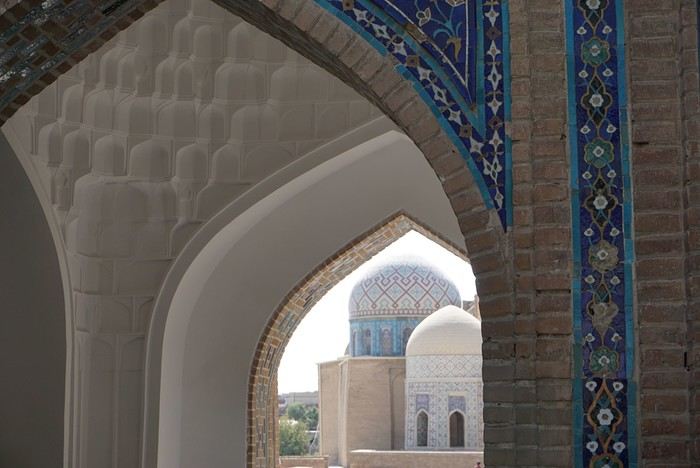
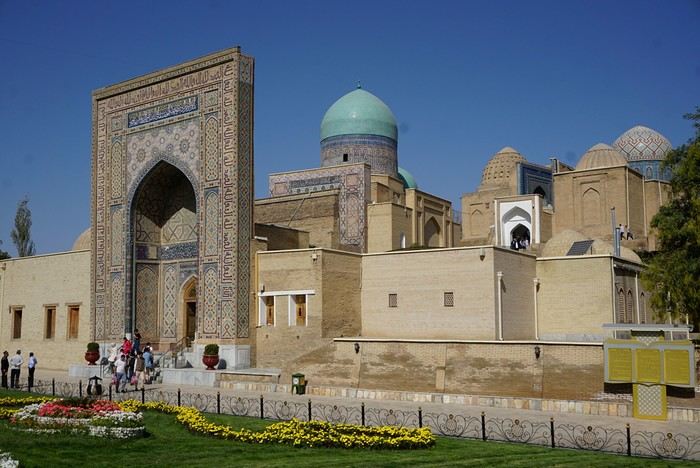
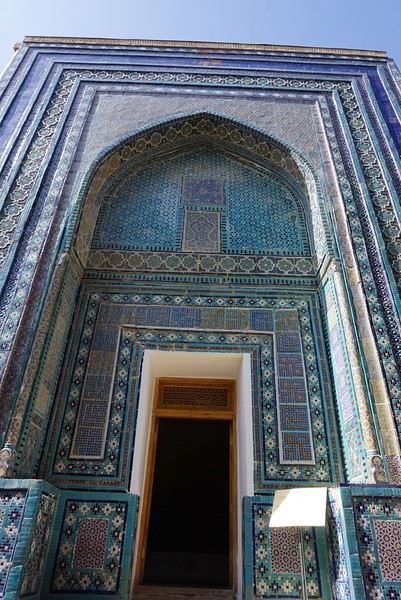
From the artisan village, we head (by car) to the stunning Shah-i-Zinda necropolis. Unlike almost all our visits so far on this trip, there are a lot of people here. But it’s so beautiful!


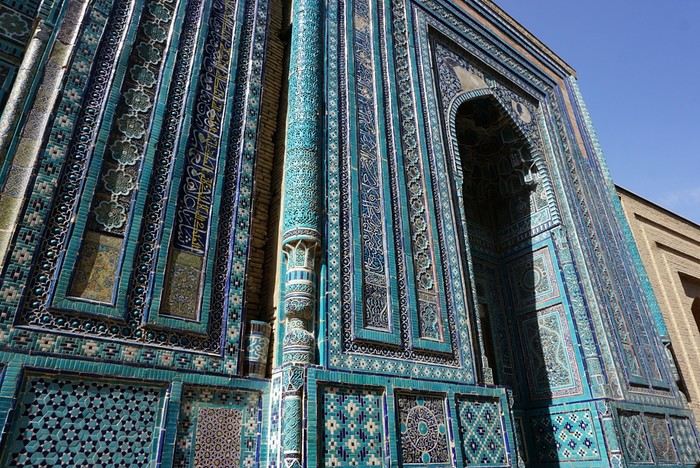
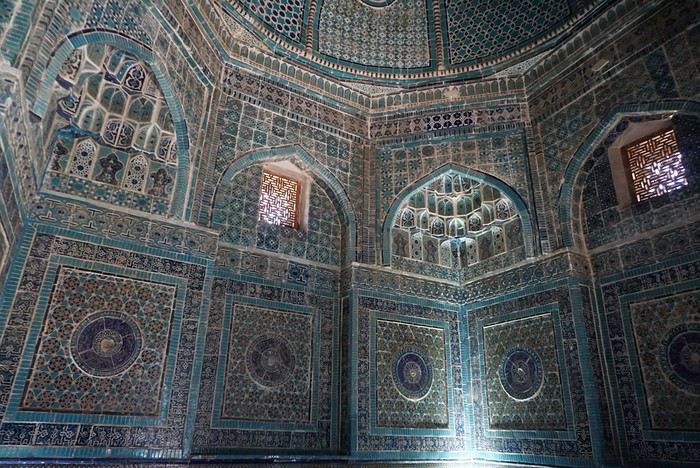
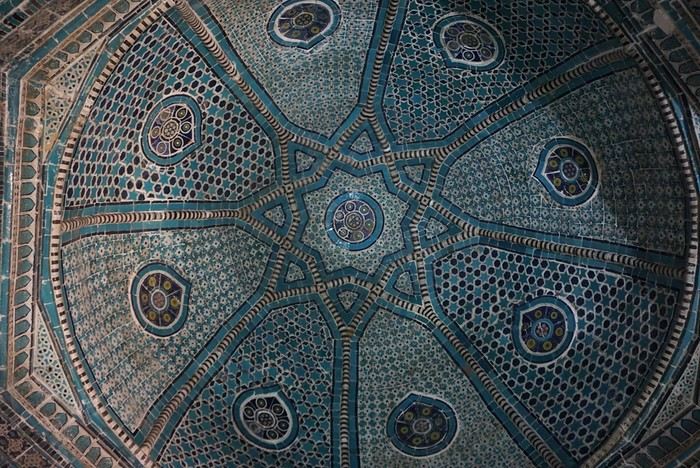
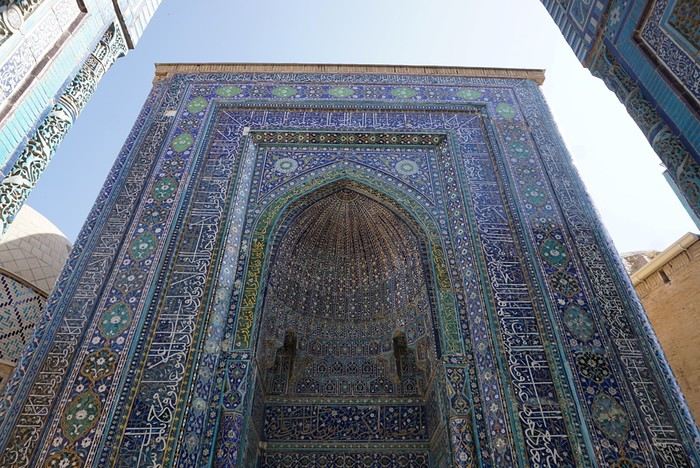
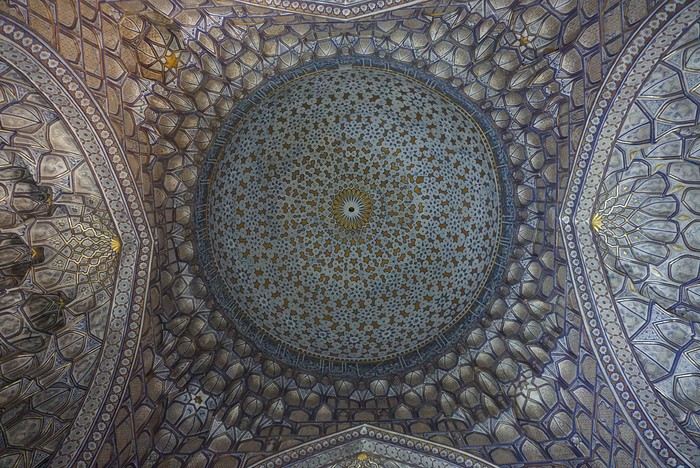
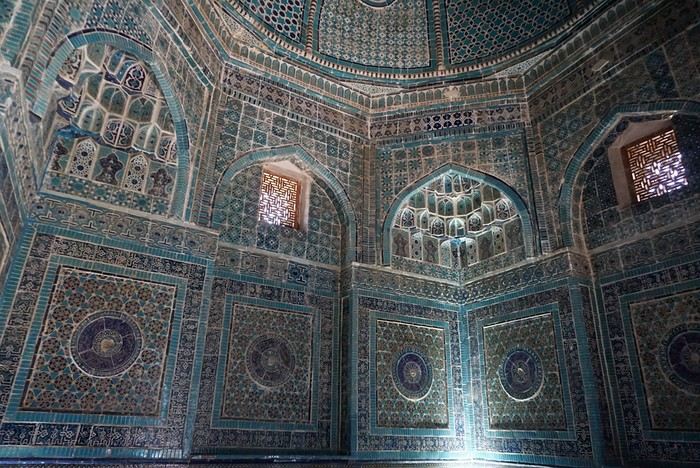
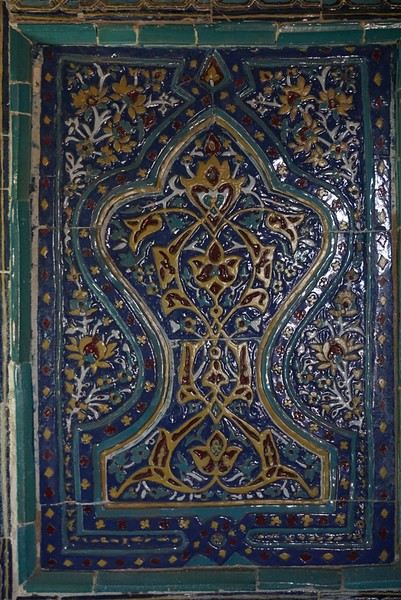
We take the "Stairway to Paradise." Pilgrims count its 40 steps as they climb. It’s a collection of mausoleums, each more beautiful than the last. The one for Shadi Mulk Aka, next to Emir Zade’s (the emir’s son), was built for Tamerlane’s niece, who was very dear to him. He had inscribed, *‘This is a tomb where a precious pearl was lost.’* It’s the oldest mausoleum in the complex, and its interior is one of the most beautiful we’ve seen: the original ceramics are stunning.


This visit is without a doubt one of the must-sees in Samarkand! I don’t know where to look (inside, outside) it’s all so breathtaking! And I’m seized by an uncontrollable (or almost) photo frenzy. Meanwhile, Nasrullo starts getting impatient because he has a surprise for us. He wants to take us to a restaurant in a Samarkand neighborhood famous among locals for its plov. The deadline to get there is 1:00 PM... We make it just in time! And their reputation is well-deserved: we feasted! Without a doubt, along with the one Javlon made in Bukhara, it’s one of the two best we had on this trip! Thanks to Nasrullo for introducing us to and inviting us to this amazing spot (I didn’t write it down, but if you’re interested, I can always ask him for it!).


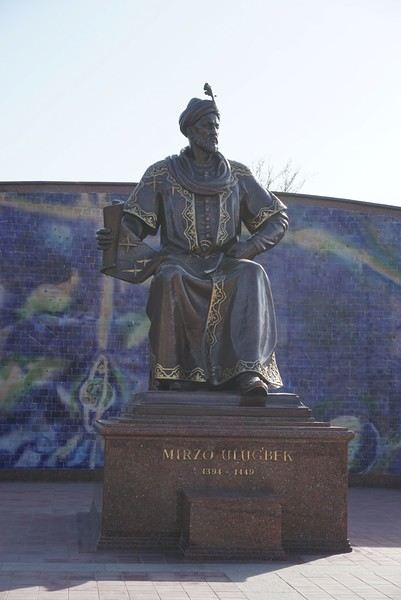
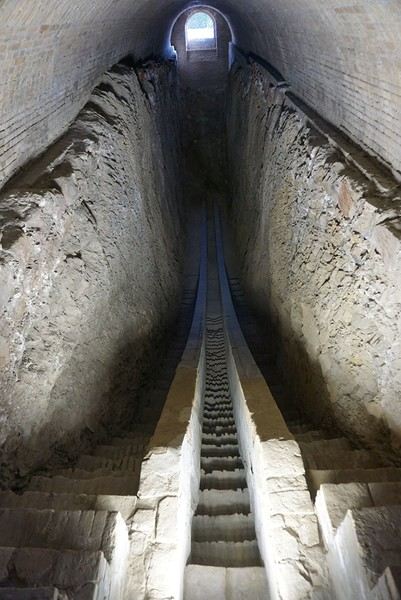
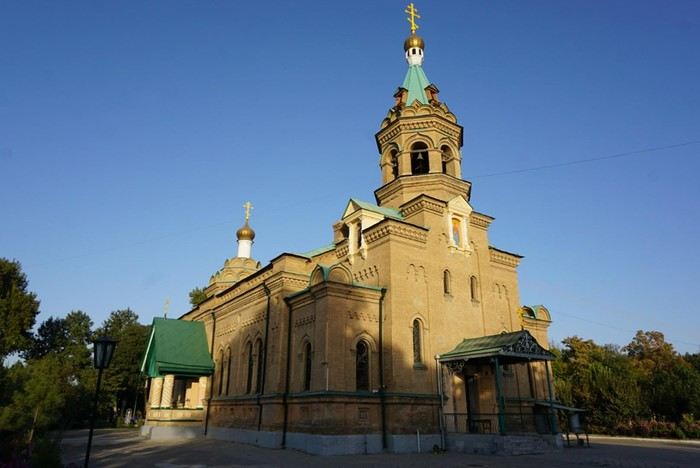
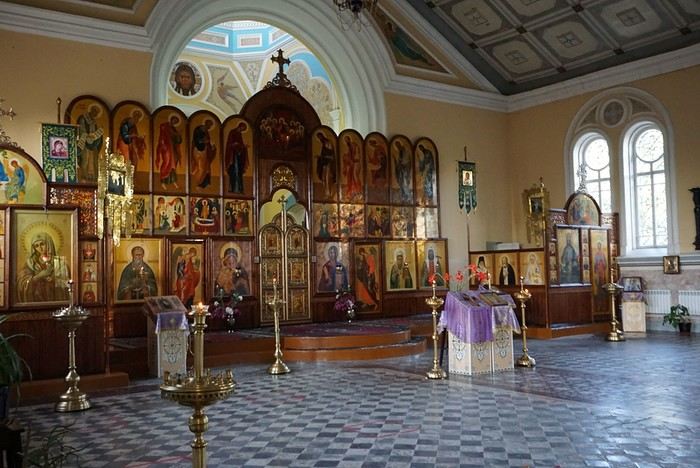
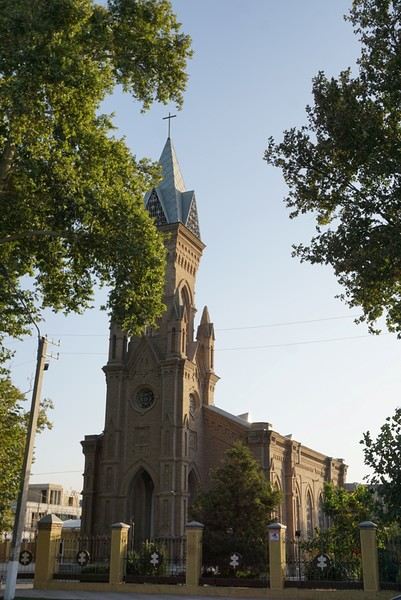
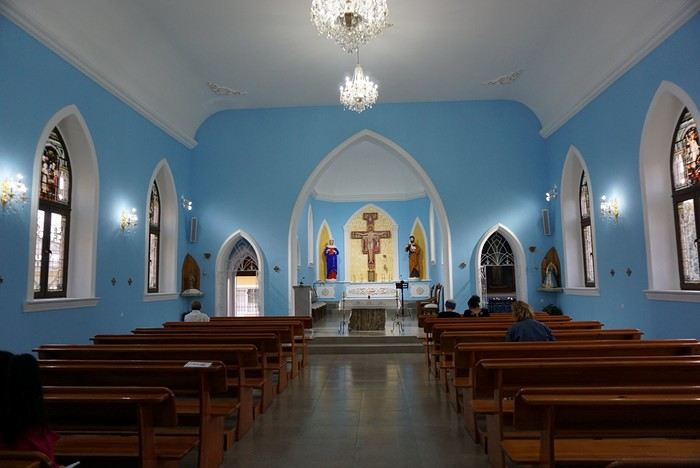
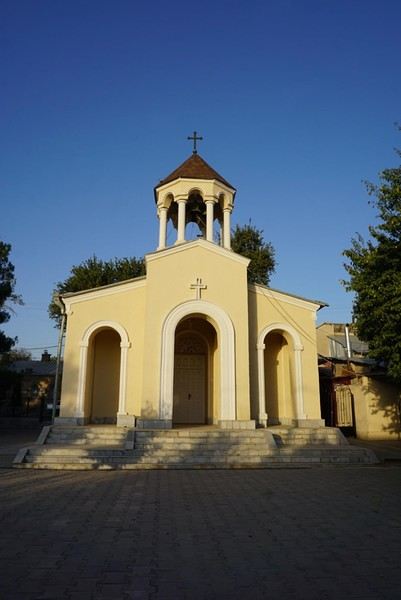
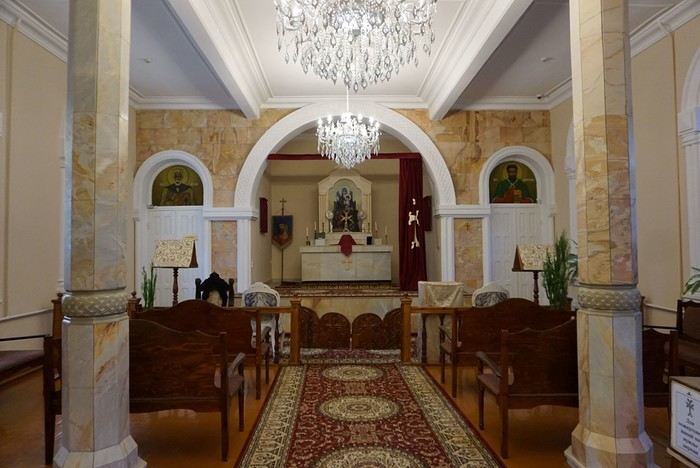
After this hearty and delicious lunch, we head to the Afrasiab Museum. Located on the hill above the Shah-i-Zinda necropolis, it’s best known for the 7th-century "Ambassadors’ Fresco." It depicts, on one wall, the Sogdian king Varkhuman receiving ambassadors from neighboring countries. On other walls, we see the monarch hunting and his wife on a boat. Another fresco illustrates the city of Samarkand celebrating Nowruz. After the visit, we drive down the hill to the Mausoleum of Daniel. Its uniqueness lies in the fact that this prophet is shared by the three monotheistic religions: Muslim, Christian, and Jewish. His tomb has become a pilgrimage site. Except it seems Daniel never actually came to Uzbekistan!... And like all holy sites, there’s a so-called sacred spring where pilgrims come, often with their families, to drink and/or fill bottles. We end our guided day at the Ulugh Beg Observatory Museum. This monarch was a great scholar, both a poet and mathematician. Passionate about astronomy, he built a huge observatory that housed the largest sextant in the world. He published an astronomical catalog that remained a reference until the early 20th century, so accurate were his discoveries (over a thousand stars) and measurements (error rate of less than 1°). Unfortunately, his son, manipulated by religious extremists, had him assassinated and destroyed the observatory, of which only an 11-meter underground arc of the sextant remains today. Back at our hotel in the mid-afternoon, I decide to explore the ‘Russian’ part of Samarkand. That’s how I find and visit, almost side by side, the Orthodox, Christian, and Armenian churches. I was able to go inside all three: services were being held in the first two, and the guardian of the third opened it just for me. So happy to have a visitor, he kept explaining things to me—though I understood nothing since he was speaking in Uzbek... Too bad! A little further on, I passed by the synagogue, which was closed. On my way back to the hotel, I walked along other avenues, crossed parks, and finally arrived, at nightfall, from the back of Registan Square. And once again, I couldn’t resist! Photos!

Note: Too many photos. Impossible to choose just 10 (site limit per post). So I’ll share two photo-only posts to complete the overview of this magnificent day.
Voyager ajoute à sa vie (proverbe berbère)
PH Phil31600 Regular ·
Step 7: Legendary Samarkand October 1st - Samarkand from dawn till dusk Photos from this magnificent day (1/3)

Shah-i-Zinda Necropolis.


Voyager ajoute à sa vie (proverbe berbère)
PH Phil31600 Regular ·
Step 7: Legendary Samarkand October 1st - Samarkand from dawn till dusk Photos from this magnificent day (2/3)

Ulugh Beg Observatory


Samarkand, the Russian side of town


Voyager ajoute à sa vie (proverbe berbère)
PH Phil31600 Regular ·
Step 7: Legendary Samarkand October 1st - Samarkand from dawn till dusk Photos from this magnificent day (3/3) Night return


Voyager ajoute à sa vie (proverbe berbère)
PH Phil31600 Regular ·
Step 7: Legendary Samarkand October 2nd - Off-the-beaten-path Samarkand (Part 1/2) Today, Nasrullo takes us to visit a few sites away from the tourist trails. We start with a mosque and a mausoleum that haven’t been restored yet. This gives us a better idea of the restoration work done on all the other sites. Just for that, along with his comments, this visit is really interesting.


Then we head to another very peaceful site: a basin, very old plane trees (250 to 300 years old), a small minaret, a mosque, a saint’s tomb, and an imam who prays at the request of people and/or families who come here to pay their respects.


Anecdote under the plane trees: we watch a crow holding a walnut in its beak. In mid-flight, it drops it onto the ground. The shell breaks on impact. The crow lands and comes to eat the contents. Nasrullo wonders about the presence of jujube trees, imported from Saudi Arabia, in all the Sufi holy places. Sure, the fruit has benefits, especially against cholesterol. But that’s certainly not the ‘real reason.’ Here’s one possible explanation, taken from verse 28 of Surah Al-Waqi’a No. 56, the jujube trees of paradise: According to Salim Ibn Amir: The companions of the Prophet (peace and blessings be upon him) used to say: Allah has indeed benefited us through the Bedouins and their questions. One day, a Bedouin came and said: O Messenger of Allah! Allah mentioned that there is a tree in paradise that can harm, and I didn’t think there was a tree in paradise that could harm its owner. The Prophet (peace and blessings be upon him) said: « Which tree is that? ». The Bedouin said: The jujube tree, it certainly has thorns that harm. The Prophet (peace and blessings be upon him) said: « Didn’t Allah say: ‘thornless jujube trees’? Allah removed its thorns and put a fruit in place of each thorn. So this tree has fruits, and each fruit splits into 72 different kinds of food, none of which resemble one another. » (Reported by Ibn Abi Dunya and authenticated by Sheikh Albani in Sahih Targhib No. 3742)

Right next door is a madrasa that’s been fully restored but is empty of both visitors and vendors. The artisans have indeed left this site, which is too far from the center of Samarkand to attract mass tourism and organized tour buses. So we take advantage of it! Just imagine! A completely restored madrasa all to ourselves! Our guide, the site guardian (entry is still paid, though!), my wife, and me… and a few pigeons!


After all these visits away from the center, we return to Registan Square, which we’ll explore today with Nasrullo. This way, we’ll benefit from his insightful comments and explanations about the two madrasas, the mosque, and the esplanade itself. Then Nasrullo leaves us. We stay on the site to enjoy one last time the interiors and views of the three buildings at the heart of the square.
Voyager ajoute à sa vie (proverbe berbère)
PH Phil31600 Regular ·
Step 7: Legendary Samarkand October 2nd - Off-the-beaten-path Samarkand (2/2)

In the early afternoon, I decide to take a stroll through the Jewish quarter. I pass through a small entrance located between Registan Square and the Bibi-Khanym Mosque. I’d spotted a few sites on Maps.Me in the area: small mosques, a mausoleum, a synagogue, and a madrasa.

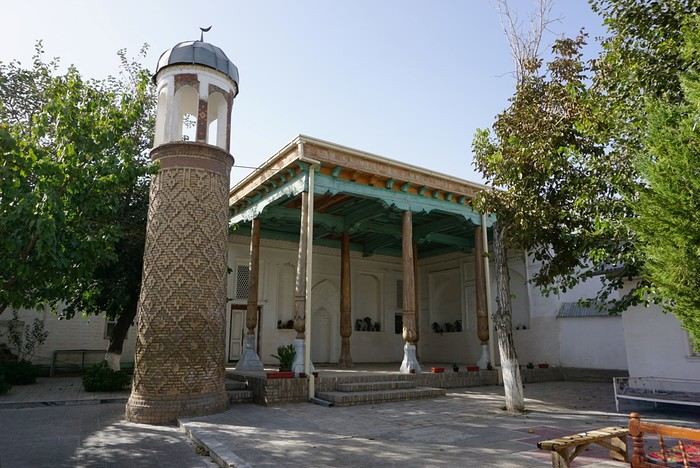
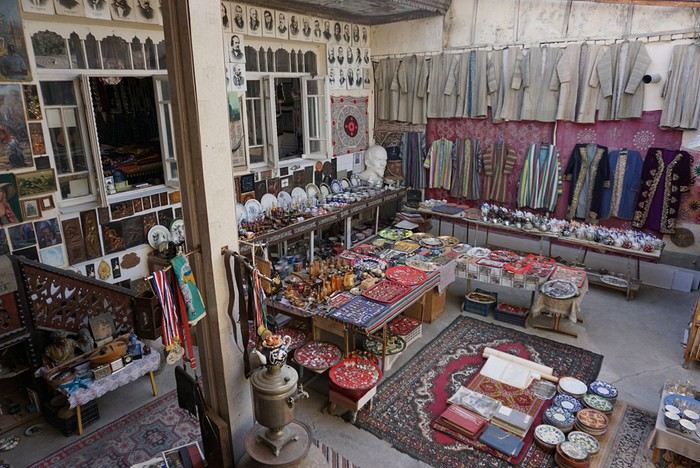
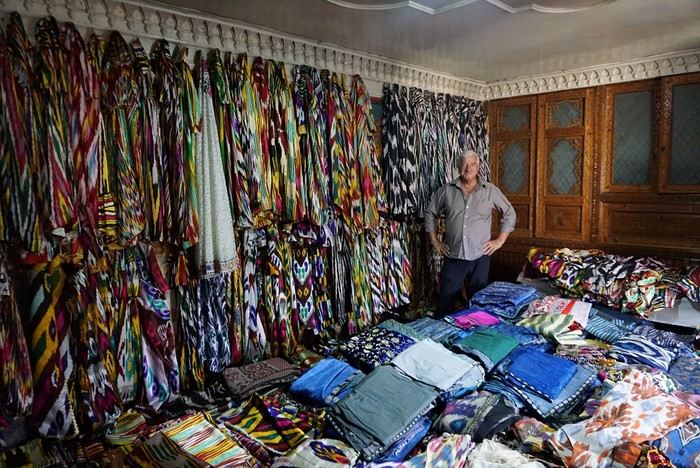
I start with the small Qurabay Aqsaqal Mosque, then move on to another equally tiny one (Mubarak Mosque). While I’m in its courtyard, the owner of the shop directly across (a second-hand and thrift store) comes out to invite me in. I accept once I’ve finished exploring the small courtyard. It’s a real Ali Baba’s cave! The owner is proud to show me his collections of teapots, cups, Russian military medals, plates, glasses, and other miscellaneous items. He then invites me into different rooms of this old house turned shop. In the first, there are second-hand hats, and in the second, fabrics and women’s tunics. I ask if I can take his photo among the fabrics. He agrees and poses proudly. Then, in the third and last room, I find men’s coats that I really like! I’ll have to come back here with my wife—I’m sure she’ll love this place!


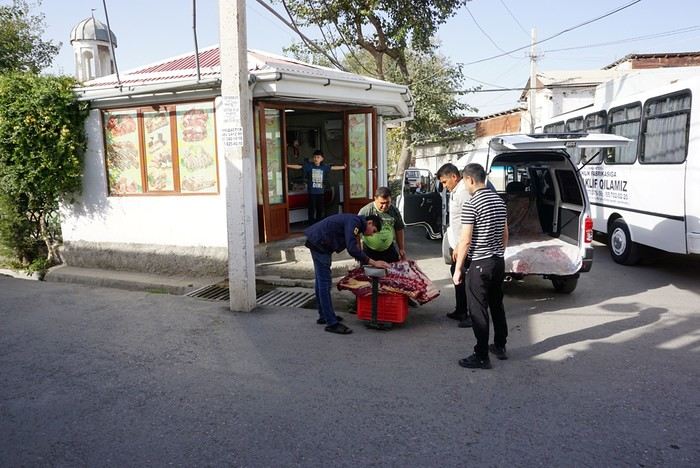
As I leave, I see a butcher in the street weighing a large piece of meat (half a sheep, a quarter of a cow?) before loading it into the back of a minivan. But where’s the refrigerated truck?
A little further on, I stop in front of the entrance to the synagogue. It’s closed. A woman passes by and sees me trying unsuccessfully to get in. She gently pushes me aside, starts shaking the door, and calls out to someone inside. After a few minutes, a man finally arrives. He seems delighted to have a visitor. We cross a small garden, climb a few steps, and find ourselves in a small corridor/porch with the synagogue’s entrance door at the end. On the wall of this ‘corridor,’ photos—probably of rabbis—are displayed. He comments on them, but of course, I don’t understand a word of what he’s saying. After fetching the key to the synagogue’s entrance, he opens it and immediately turns on the light. He continues his commentary inside. He invites me to take photos and opens cabinet/library doors to show me old books. As I’m about to leave, I realize I’m supposed to leave an offering. I pull out a 5,000 sum bill. He shows his dissatisfaction and makes it clear that 50,000 would be more appropriate. I comply, much to his satisfaction.


From the synagogue, I head to the small park and mausoleum of Imam Maturidi. I wanted to continue to another mosque where, in its courtyard, there’s the tomb of a scholar. But since it’s prayer time, I discreetly leave.


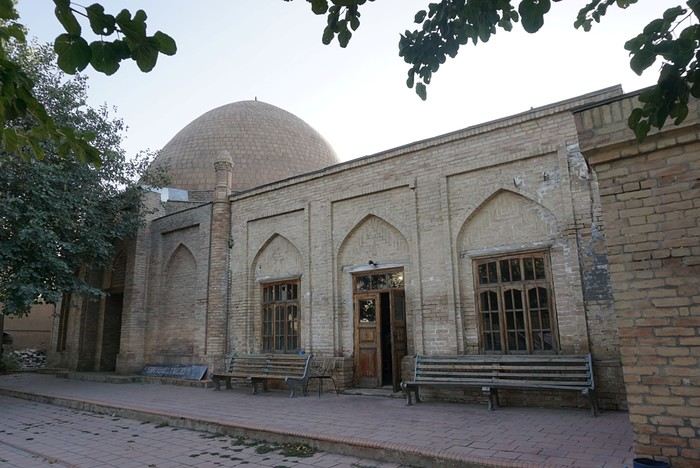
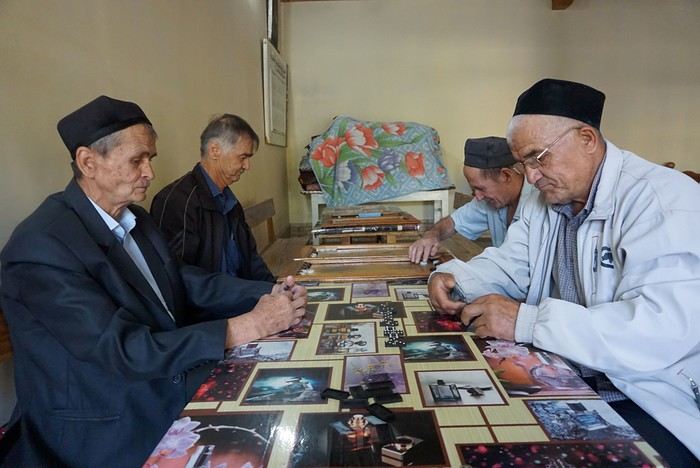
The last stop on this walk takes me to a small madrasa next to Panjakent Kso Street. In its courtyard, a group of young people are deep in conversation. One of them approaches me, explains that the others are Russians, and invites me into the building. Inside, I find four elderly men playing dominoes. I ask if I can sit at their table and watch them play a few rounds. As I’m leaving, one of them asks where I’m from. France? What does he say? Bingo! PSG! And he starts naming famous players! No problem here—I’ll definitely improve my knowledge of French football! Even more surprising, another player suddenly shouts ‘Charles Aznavour!’ and bursts out laughing.
This concludes my solo walk. Back at the hotel, I show the photos of the shop to my wife, who, unsurprisingly, asks if we can go there. And off we go! Unfortunately, once we arrive, we find the door closed. Oh well, we’ll come back another day! We return quietly via the pedestrian path between the Bibi-Khanym Mosque and Registan Square.
Voyager ajoute à sa vie (proverbe berbère)
PH Phil31600 Regular ·
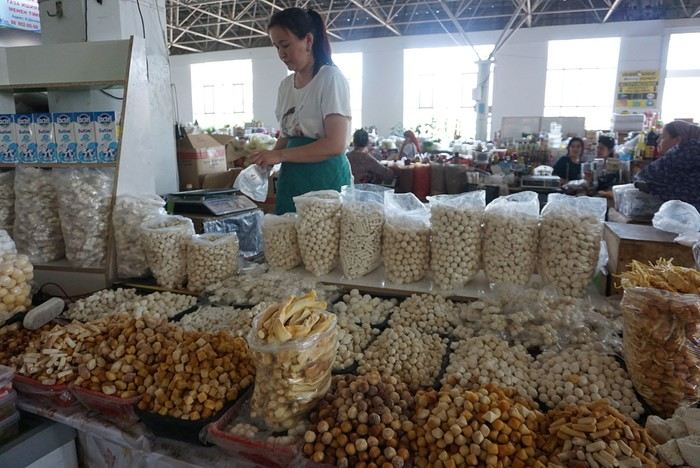
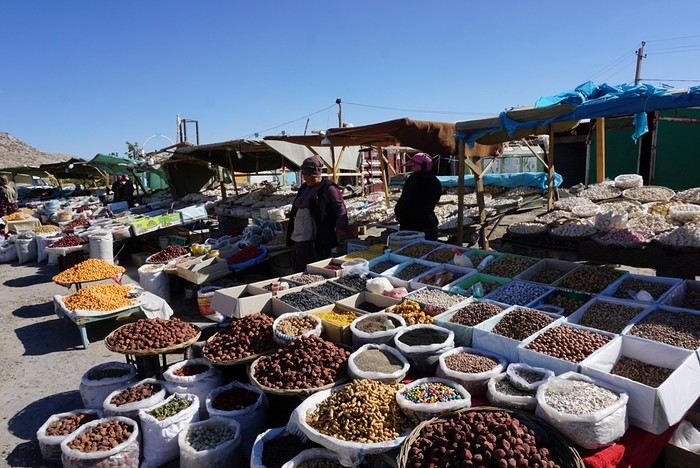
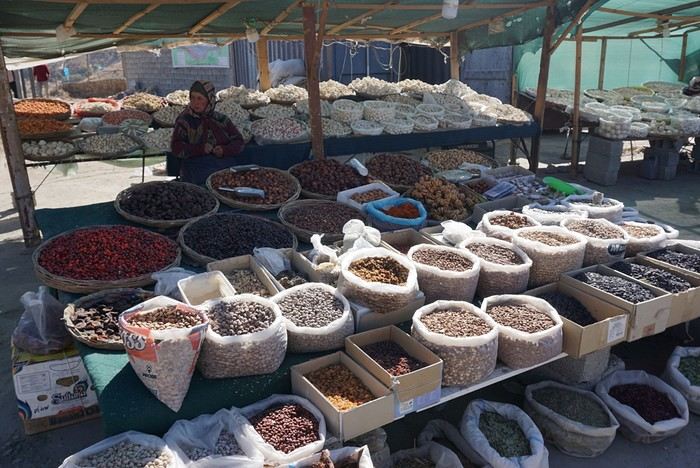
Step 8: Shahrisabz / Tersak October 3rd - A Countryside Vibe This morning, we leave our suitcases at the hotel (since we’ll be back in two days) and set off with our backpacks, packed with a few essentials. On the way to Shahrisabz, we stop at the top of a pass where there’s a small market. You’ll find lots of stalls selling *kuruts*—made from *suzima* (concentrated fermented milk)—usually shaped like little hardened balls, either plain (salted) or with herbs and chili. There’s also plenty of dried fruit, pears (it’s the season in the southern mountains), saffron, and various products the vendors claim are "medicine."


After this break, we continue to Shahrisabz, the birthplace of Tamerlane. Our visit starts at the remains of the palace entrance gate that Amir Temur built for his mother. As soon as we pass through these two ‘pillars,’ under a glass floor, we discover the ceramics that once covered the bottom of the palace pool (uncovered and restored by French archaeologists). After visiting a small mausoleum, we head toward the massive statue of Tamerlane. Then, on the way to the Kok Gumbaz Mosque, Nasrullo takes us to a painter’s shop so we can see a model and a painting reconstructing the palace as it once was—long before Russian revolutionaries decided to destroy it with cannons.

Tamerlane had this palace built for his mother. Construction took over 30 years, and he funded it with the spoils of 14 military campaigns and territorial conquests.


After visiting the mosque and the two madrasas in the architectural complex, we head off for lunch. Nasrullo has chosen a large restaurant where the owner seems honored by our visit. He seats us in a spacious room away from the other customers. The meal is hearty, and for dessert, he treats us to a delicious cake. At the end of the meal, it’s time to part ways. Nasrullo sets off to explore an isolated mountain village (he’d offered to take us along, but my wife wasn’t keen—especially since she wasn’t feeling well the day he suggested it). His goal is to eventually include it in his off-the-beaten-path travel offerings. As for us, we head to the village of Tersak as planned. We’ll spend two nights in this village. The guesthouse owner welcomes us warmly. He’s a local figure: a former village mayor, still a ‘general councilor’ and deputy. He also used to teach French in Tersak and the surrounding villages. And he’s still a farmer and livestock breeder. At 73, he’s the father of 11 children, has 30 (or 32?) grandchildren, and 5 or 6 great-grandchildren. He thanks me profusely for the gift we brought him (cookies from Martre Tolosane and some school supplies, just like we gave to Asraf). We’re served welcome tea with bunches of grapes.

We settle into our room, locate the bathroom block (two showers and two toilets at the far end of the garden), and then take a stroll through the village. Everyone we pass—young and old—greets us with a big ‘Bonjour!’ (in French, as written) and broad smiles. A man calls out to me from his car, stopped by the side of the road. He grabs his little girl from the back seat and holds her up to the window so I can take her photo. A little further on, another man stops us because he wants me to take a photo of him with my wife. Then he invites us to eat at his place. Impossible, since we’re expected back at the guesthouse. We politely decline, careful not to offend him.

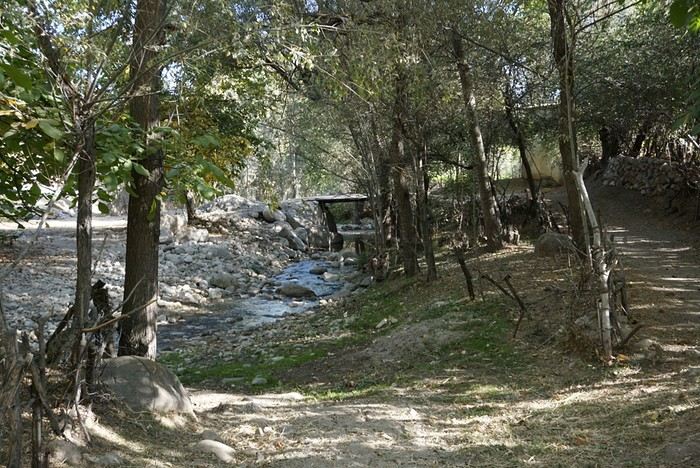
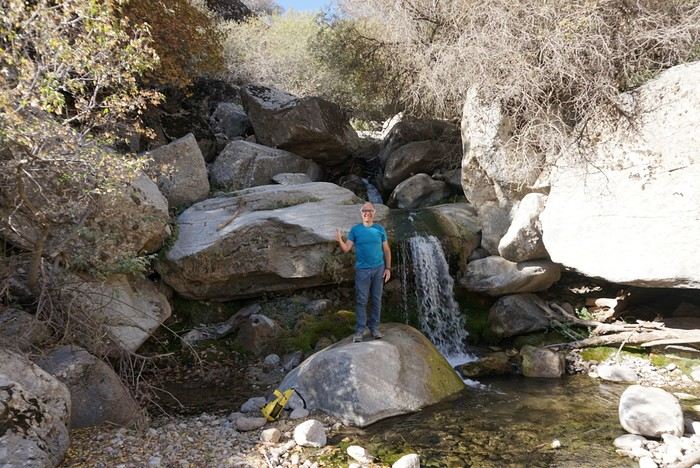
We return around 6:00 PM. It’s starting to get chilly. At 6:35 PM, the owner comes to fetch us. It’s mealtime. We’ll eat inside because it’s pitch black outside and barely 14°C (57°F). The meal starts with a round of vodka! One glass is enough! Despite our host’s insistence. The meal is hearty, and during it, he explains (in French!) that tomorrow his childhood friends are coming over. They meet once a month and take turns hosting. He says his friends will be thrilled to spend time with us. He also tells us that tomorrow morning, his grandson will take us to the ‘waterfall’ near the village. Dinner over, we quickly retreat under a thick blanket—it’s *freezing* here! October 4th After a nice hot shower (I’ll spare you—or almost—the details of the toilets without flushing, with a bucket and a pitcher acting as a flush—it somehow reminds me of a lumberjack village in Myanmar a few years back!), we have breakfast outside in the sun. Then we set off to explore the amazing waterfall about 5-6 km from the house. It’s a pretty nice walk where we follow and cross a stream several times on small wooden bridges (logs), and pass through little paths in the arid mountains. An easy hike that ends at a huge… waterfall of less than a meter!


When we return, the friends and their wives have arrived. The men are seated outside, the women inside. The owner’s wife and youngest daughter started preparing this feast early this morning. Everyone’s been at the table for about an hour, and we join them around 10:00 AM. Picture the *tapchan* (a traditional piece of furniture: a large bench where you sit barefoot, with a low table in the middle) covered in food: dried fruit, fresh fruit (bananas, apples, grapes, watermelon, melon), candy, cakes, tomato/cucumber salad, bread, meat-filled pastries and pumpkin-filled ones, plenty of tea, sodas, mineral water (still and sparkling). My wife is invited to join us, and everyone insists we try everything. Then the wives come to fetch her… and insist she eat a bit of everything (the same lavish spread at the women’s table as the men’s! Poor thing!). I can join in the conversation because the owner acts as our interpreter. His friends introduce themselves and ask me some ‘odd’ questions: What’s the religion in France? What’s mine? Are there Muslims in France? Oh, really? Why? In the Maghreb countries, what’s their religion? Oh, they’re Muslim?! After telling me their jobs (police officers, engineer, owner of a large store) and their age (they’re all 73), they ask more typical questions. Around 12:45 PM, the owner tells me that at 1:00 PM, they’ll go pray, but not to worry—lunch will be served while they’re gone. What? Lunch? But we’ve already been eating for two hours! I’m really not hungry! And what about my wife, who’s already had two servings! Our places are set at the breakfast table. The young girl of the house brings us starters (yes, *starters*!): grilled eggplant salad and tomato/cucumber salad. Then a bowl of soup (yes, *soup*!) with a plate of boiled beef and vegetables (potatoes, carrots). There’s no way we can eat it all! Just a taste! For dessert, we get pieces of watermelon and melon. Faced with our fullness, the young girl laughs, teases us a little, and says, "Uzbeks eat a lot!" That’s an understatement! After the meal, we waddle back to our room for a digestive nap. Then a walk around the village is a must—after all, dinner is at 6:30 PM! The grandson joins us. He shows us his school: his classroom, the music room, the English room (since they no longer learn French in the village!), the sports field, and the ‘pool’ (an empty concrete tank).

When we return, all the guests have left. Dinner is indoors again. It feels even colder than yesterday! The owner asks us about salaries in France and the cost of living. He tells us about his sons’ weddings: 400 guests for the first, 500 for the second, and up to 1,200 ("I had to—so many people know me!") for the last. He says he chose the wives for five of them. For the sixth, he’s not happy because his wife and son made the decision with the bride’s family while he was on vacation by the Black Sea… and they chose poorly, of course. It’s the only couple that isn’t doing ‘well’! His wife joins us and looks exhausted. The owner jokes that he’s tired from the day and has eaten too much, but we can’t really feel sorry for him. His wife, on the other hand… doesn’t complain. After a while, she leaves and quickly returns with the youngest grandson in her arms. He starts crying ‘baba, baba’ when he sees his grandfather. A sweet moment when she hands him to me, and I hold him briefly in my arms.
Voyager ajoute à sa vie (proverbe berbère)
PH Phil31600 Regular ·
Step 9: Urgut / Samarkand October 5th - Return to Samarkand This morning, our driver came to pick us up to head back to Samarkand. But first, we’re stopping in Urgut.


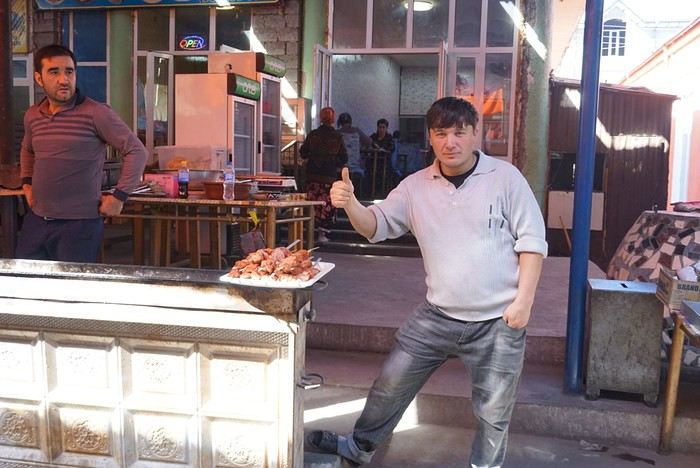
First stop: its huge market. So huge that we got lost among the stalls selling clothes, shoes, Uzbek hats, and... well, everything. We ran into Eric, the kebab vendor, who shouted from behind his grill, thumbs up, "PSG!" after asking where we were from, telling us his name, and asking us to take his photo.


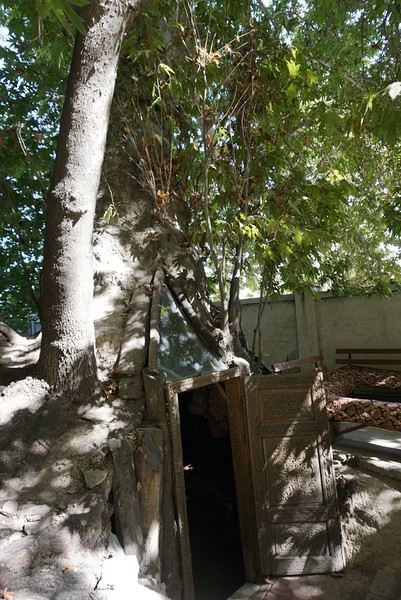
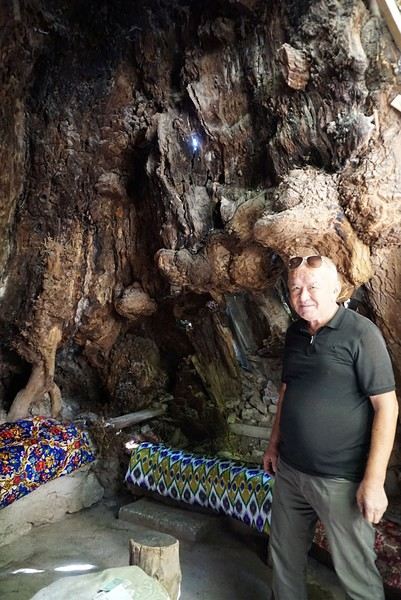
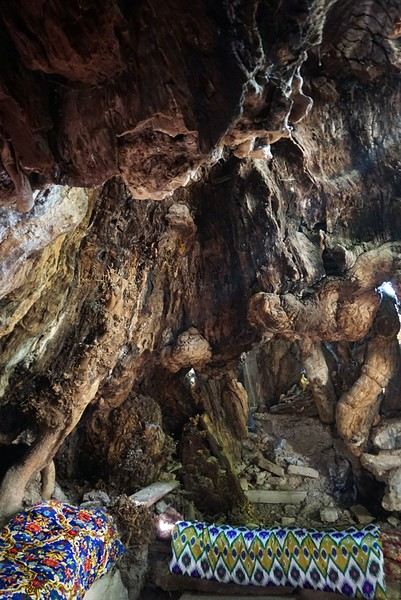
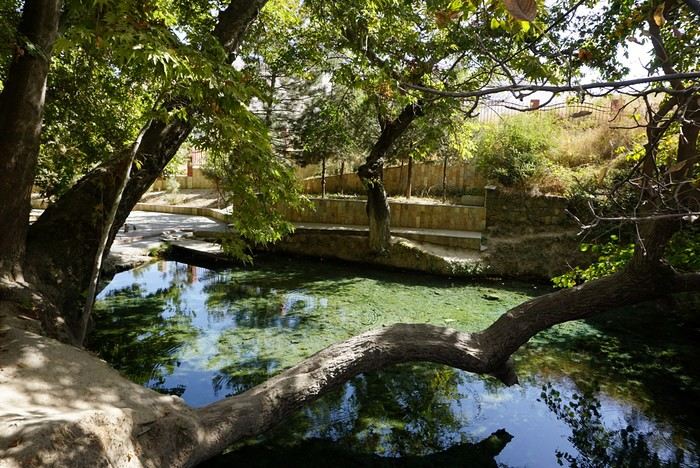
From the market, we headed into the town center and crossed through it. Second stop: Tchor Timor (Four Plane Trees). In this ancient garden, where sacred spring water flows, stand about fifty majestic plane trees, most of them 800 to 1,800 years old. Some have a circumference of over 16 meters! In one of them, near the entrance, time has formed a natural cave beneath its roots. At the back of the park, there’s a pool of crystal-clear water where sacred fish swim.


Our driver

This peaceful stroll under the canopy of these giant trees was a nice change from the bustle of the market and town center.

From there, we set off in search of the Gavsul A’Zam mausoleum, which our driver didn’t know. It was a little extra detour on our itinerary. He asked for directions several times, and we finally arrived at a site that really wasn’t a must-see. In fact, the pilgrims seemed quite surprised to see us there. Behind the mausoleum, we discovered a room in a building turned into a very surprising and unusual museum. Just see for yourselves! The exhibits were a real mix: stuffed animals, old tools and musical instruments, traditional clothing, pottery, ancient coins and banknotes, old photos, etc. And in one corner of the room, a stall selling plastic trinkets! On our way out, a group of women asked us to take their photo.

Then we headed back to Samarkand. Back at the hotel, we picked up our luggage and a room. In the mid-afternoon, we returned to the secondhand dealer/thrift shop, which was open today—much to my wife’s delight. I showed him the photo I’d taken of him two days earlier, which made him happy. After a purchase (a nice coat), we took one last little stroll through the market and a few artisan shops.
Voyager ajoute à sa vie (proverbe berbère)
PH Phil31600 Regular ·
Step 10: Samarkand / Tashkent / Istanbul October 6 - End of the trip Last morning in Samarkand before taking the train to Tashkent. Final stroll around Registan Square. Nasrullo joins us at the hotel around noon, and we head out for lunch together. He takes the opportunity to show us some photos of the mountain village he scouted. The surrounding peaks are already snow-covered. This spot could be offered to tourists looking to get off the beaten path. If you're interested, let me know, and I’ll put you in touch with him! Once settled in the small neighborhood restaurant, Javlon gives us the lovely surprise of joining us. We have a really pleasant time! But all good things must come to an end, and it’s time to head to the train station. Nasrullo and Javlon accompany us to the station, and we say goodbye at the entrance.


A little later, we board the local high-speed train. We’re really comfortable—no need to book first class; the second-class seats are perfect. Shortly after departure, a free onboard service is offered: tea or coffee, plus a packet with a cake and pastry. A little over two hours later, we arrive in Tashkent. The owner of the B&B where we stayed the first few days is waiting for us at the station exit. It’s arranged for us to rest at his place while he drives us to the airport around 11:30 PM. Dinner at a nearby restaurant specializing in pasta—way too filling! Our flight to Istanbul is slightly delayed, and we board around 2:45 AM. Our layover is scheduled for 6 hours. We take advantage of Turkish Airways’ long layover gift: a tour of Istanbul. Several programs are offered depending on the layover duration. We can only take the shortest one (a 3.5-hour walk from Galata Bridge to Dolmabahçe Palace). As a result, the layover didn’t feel as long as it could have!


Return flight to Paris, landing around 5:30 PM. End of the trip!


A huge thank you to Nasrullo and his team, who listened to me, were patient, gave advice, and adapted to my wishes (both during the planning and on the ground). All of this allowed us to return completely fulfilled from this wonderful trip!
Voyager ajoute à sa vie (proverbe berbère)
PO Posabjumax ·
Thanks Philippe for this amazing travel journal—I read it with so much interest since we’re also heading to Uzbekistan in April, but only for 10 days!

Pierre-Olivier (from Lavernose near Muret!)
PH Phil31600 Regular ·
Thanks, ‘neighbor’! You’re in for a treat! These 10 days are gonna fly by! Ph.
Voyager ajoute à sa vie (proverbe berbère)
SD SDVent ·
Thanks for your travel journal, which really helped us organize ours with Nasrullo Jumanov’s assistance. We’ve just returned from Uzbekistan, and it was flawless in terms of organizing our 24-day trip. From the preparation to our stay on-site, communication was easy, and Nasrullo’s responses to our questions were quick and precise. We highly recommend Turquoise Travel for their highly competent guides who speak excellent French, as well as for the transportation arrangements (trains, cars with drivers) and accommodations that met all our expectations. You can reach out to Nasrullo Jumanov with complete confidence. So many great memories and exceptional homestay experiences! We could’ve stayed a little longer...
PH Phil31600 Regular ·
Thanks, it’s always nice to know my travel journal was helpful. And I’m glad you were happy with Nasrullo’s services! I’m planning to return to Central Asia between August and September 2026, probably for 5 or 6 weeks—first sharing the trip with my daughter (3 weeks of more active travel) and then my wife will join me there (3 weeks of more cultural exploration). Of course, I’ve already started discussing the plans with Nasrullo, since the first part will need a bit more preparation. In the meantime, my wife and I have other projects this year and early 2026 that are quite different from Uzbekistan. More travel journals to come after my latest one on Colombia.
Voyager ajoute à sa vie (proverbe berbère)
DA Daffye ·
Your story really inspired us! We’re lucky enough to be heading there for 20 days—a country I’ve wanted to visit for so long. We got in touch with your guide, and he’s offering to be our only guide for the entire trip. Do you think that’s a good idea, or will we miss out on human connections and different perspectives on the country and its people?
le futur est ouvert
PH Phil31600 Regular ·
Hello, you made a great choice—Nasrullo is fantastic! No, you won’t be cut off from contacts and encounters at every stop, especially if you’ve planned some free time for exploration.

As for me, in mid-August, I’ll be heading to Kyrgyzstan for three weeks with my daughter. At the end of the trip (the last week), we’ll attend the World Nomad Games. After that, I’ll return to Uzbekistan alone for two weeks, where I’ll have the great pleasure of seeing Nasrullo again. I haven’t finalized the itinerary with him yet, but I still have time to work that out.

Before that, in a few days, my wife and I are off to Mexico. If you have any questions about your trip, don’t hesitate to reach out. You’re in for a wonderful journey! !
Voyager ajoute à sa vie (proverbe berbère)

Similar discussions

You might also like