Bonjour à tous,
J’ai décidé de vous faire partager mon périple en Asie et plus particulièrement en Chine mais aussi à Taiwan et au Japon. C’est un voyage que j’ai réalisé en 2001 d’une durée de 5 mois.
Tout d’abord je me présente, j’ai 36 ans et je travaille dans l’hôtellerie en réception, je suis également passionnée de cinéma mais depuis quelques années, j’ai envie de faire autre chose et cet “ autre chose “ c’est la réalisation de documentaire. Evidemment, on ne s’improvise pas du jour au lendemain réalisatrice, mais j’avais suivi un an auparavant un stage qui s’est avéré peu intéressant pour moi. Malgré un premier essai non fructueux en Amérique du sud avec une caméra non numérique, je ne me suis pas démontée.
Bref après avoir potassée des magazines et des bouquins sur le sujet, je me suis achetée une caméra vidéo et des accessoires notamment un micro et une bonnette (protection pour le micro ) très utiles pour les interviews. Je me suis entrainée chez moi 1 mois avant le départ.
Ce que j’aime dans les voyages, c’est de pouvoir rencontrer des gens et des modes de vie différents mais surtout de pouvoir vivre le quotidien de ces gens, c’est pour cette raison que je pars rarement ou jamais moins de 3 mois voire 6. Le summum du voyage pour moi c’est de pouvoir travailler dans le pays et pas forcément en tant que bénévole et c’est peut-être pour cela que je suis tombée par hasard dans l’hôtellerie qui était le moyen le plus facile pour travailler à l’étranger.
Il y a quelques années en 1997, je suis partie en Asie pour une durée indéterminée pour voyager et aussi faire du bénévolat. J’ai commencé par l’Inde, Le Népal, La Thailande, Le Myanmar, Le Laos, Hongkong, La Chine, Taiwan, Le Japon et retour par Les USA . Je me suis retrouvée à enseigner l’anglais au Japon puis à taiwan. Après presque 2 ans de voyage, je suis rentrée à paris avec l’intention de repartir pour parler de choses qui m’avaient titillées où intéressées durant ce voyage et notamment concernant La Chine et Taiwan.
J’avais envie de réaliser un documentaire sur les femmes de mon âge, célibataires mais en comparant la Chine et Taiwan. Car malgré leur différend, ces deux pays ont une une tradition commune. La plupart de mes étudiants à Taiwan étaient des femmes et en discutant avec elles, je me suis aperçue qu’elles étaient en même temps trés indépendantes mais aussi trés traditionnelles dans leur facon d’aborder les relations avec les hommes. Le mariage est trés idéalisé et en même temps elles sont trés diffiçiles . Elles ont des critères encore plus élevés que les miens et c’est peu dire.... Elles attendent le prince charmant et forcément elles se marient trés tard et j’avais aussi envie de voir le côté chinois.
Voilà donc comment l’histoire a commencé. Sans avoir vraiment travaillé sur l’écriture du scénario, je suis partie en me disant qu’une fois sur place, j’aurai plus de temps pour y revenir.
Pour ce voyage, j’avais décidé de refaire le chemin à l’envers de ce que j’avais fait en 1998.
Départ de HONGKONG, pour rejoindre la province du Yunnan, KUNMING, DALI, LIJIANG, ZHONDJIANG, la province du Sichuan, XIANCHENG, LITANG, KANDING, CHENGDU le tout en bus puis remonter vers la province du Gansu en bus ou en train LANZHOU puis direction le Xinjiang avec URUMQI, TURFAN, KASHGAR, de là, retour en sens inverse par YARKAND, HOTAN, le long du desert de TAKLAMATAN pour rejoindre GOLDMUD ou XINING puis LANZHOU et ensuite direction PEKIN, SHANGHAI puis GUILIN et YANGSHUO et de là, retour sur HONGKONG.
C’était à l’origine le trajet que je voulais suivre. Tout etait prêt pour le grand départ. A chaque fois que je pars je suis toujours excitée mais cette fois-ci j’étais aussi angoissée à l’idée de rater complèment et de me planter...
(à suivre...)
Avant-propos :
Pour ceux qui n’ont pas suivi sur voyageforum mon récit sur mon voyage au Gansu l’année dernière et ma préparation de voyage depuis 3 mois, je me présente rapidement ainsi que mon voyage : j’ai 61 ans, des difficultés dans les escaliers (arthrose aux genoux), je voyage en Chine pour la quatrième fois, seule cette année. Mais je ne parle toujours pas chinois sauf quelques mots. Grâce à un avancement j’ai mis un peu d’argent de côté pour financer ce voyage et j’ai obtenu un visa double entrée : deux fois trente jours, avec sortie à Hong Kong au bout des premiers 30 jours.
Je vais essayer de donner des renseignements pratiques tout au long de mon voyage (hôtels, transports, horaires, prix) mais il ne s’agira pas d’un voyage à prix minimum, je m’en excuse pour les VFistes routards. Quand je peux je prends en général des hôtels aux alentours de 300 yuans la chambre (entre 35 et 40 €), pas un lit en dortoir, sauf à HK malheureusement où les prix sont beaucoup plus élevés. Pour les transports aucun vol intérieur : train, bus et voiture louée ou taxi quand ça permet d’aller facilement dans des endroits peu accessibles autrement, là les dépassements de budget sont vites arrivés. J’aurais aimé ne pas dépasser 100 € par jour en moyenne, mais voyageant seule et avec les augmentations de prix en Chine ça va être difficile je crois.
J’ai déjà réservé sur internet (booking.com ou ctrip.com) une bonne partie de mes hébergements. J’ai préparé à l’avance les trajets en train à l’aide de cnvol.com mais ai découvert récemment que chinahighlights donne aussi la disponibilité de places(attention c’est vite complet sur certaines lignes en été) et j’ai réservé mes places à l’avance pour les trois premiers trajets à l’aide d’une agence australienne (adresse en MP ou adressez-vous à Jackfack qui me l’a communiquée, si j’ai des problèmes d’internet, ce qui est le cas en ce moment).
J’emmène pour la première fois un ordinateur dans ce voyage, car j’ai vraiment eu des difficultés à trouver des cafés internet l’année dernière en Chine et lors de notre voyage sur la route de la soie, une petite minorité de nos hôtels mettaient des ordinateurs à disposition de leurs clients. Quant aux imprimantes, il nous a fallu attendre le 40ème jour de notre voyage environ pour en trouver une en bon état de fonctionnement (pour imprimer les réservations d’hôtels). Mais je ne suis pas au top de la technique, notamment pour me connecter facilement à l’internet de chaque hôtel ou pour passer des photos de mon appareil photo au voyageforum.
Itinéraire prévu : Arrivée Pékin sur Air France mercredi après-midi 2 juillet 3 jours dans le Hebei : Chengde et la grande muraille à Jinshanling 3 jours à Pékin (ce sera ma 4ème viste), surtout pour compléter ma visite des musées 2 jours au Shanxi pour découvrir un site de montagne et de temples au sud de Pingyao : Mianshan 1 jour et demin à Luoyang (ville et grottes de Longmen) 3 jours à Zhangjiajie (Hunan) 3 jours et demi à Dehang et Fenghuang, autres sites du Hunan 6 jours environ dans le Guizhou entre Kaili et le village dong de Zhaoxing 5 jours au Guanxi pour revoir Ping’An et Xinping – fin du 1er visa de 30 jours 5 jours et demi à Hong Kong 1 jour et demi à Macao 1 jour à Kaiping et ses diaolous – début du 2ème visa de 30 jours 3 jours à Canton 3 jours en pays hakka autour de Yongding (Fujian) 2 jours dans l’île de Gulang Yu près de Xiamen (Fujian) 8 jours dans l’Anhui : montagnes jaunes, villages du Huizhou et Mont sacré du Jiuhua Shan 1-2 jours dans une ville d’eau, peut-être Wuzhen ou Tongli 3 jours à Shanghai, vol vers Madrid via Amsterdam (KLM) le 31 août.
Je voudrais d’abord remercier tous les VFistes qui m’ont aidée dans la préparation de mon voyage, les habituels du forum Chine et les autres, je ne vous oublie pas. Je vous citerai au fur et à mesure de mon voyage.
Quelques remarques aussi sur les bagages. J’admire les gens qui savent voyager léger, ce n’est pas vraiment dans mes cordes. J’ai réussi à limiter ma valise à 23 kilos et j’emporte un sac à dos (dimensions cabine avion) pour l’ordinateur, l’appareil photo et autres choses fragiles. J’ai aussi cette année un petit sac à dos quechua « air » 22 litres anti-transpiration pour mes randonnées en montagne et dans les villages et un sac à main en toile pour les villes pouvant contenir l’appareil photo, une bouteille et un guide. Pour les bouteilles j’ai 3 protecteurs avec ou sans courroie pour les garder au frais : l’eau ou le coca (achetés en ½ litres) restent frais 2 à 3 heures et il n’y a pas le problème de nettoyage des gourdes. Pour la lessive, cela fait longtemps que nous emportons un équipement constitué petit à petit, notamment au Vieux Campeur : un seau de plastique souple pliable, 2 tendeurs (pour servir de corde à linge), quelques pinces à linges et 3 ou 4 cintres gonflables. Quand nous rencontrons une possibilité de lavage au kilo nous en profitons bien sûr mais l’année dernière ça n’a été vrai qu’une fois, à Pingyao. En ce qui concerne le problème de nourriture, mon système digestif est nettement moins voyageur que moi et je ne supporte plus vraiment les nourritures trop grasses ou trop épicées. Donc cela fait plusieurs étés que je saute les repas de midi au restaurant : des fruits secs, un œuf emporté au petit déjeuner, etc… suffisent à tenir jusqu’au soir si on a pris un petit déjeuner décent. Or en Chine, ça dépend beaucoup des hôtels, mais rares sont ceux qui offrent un petit déjeuner à l’occidentale, ne serait-ce qu’un thé ou un café. Manger le matin des légumes frits ou des œufs trempés dans le piment, je n’y arrive pas. Mais les hôtels chinois ont toujours une bouilloire dans la chambre avec deux tasses et souvent un peu de thé vert. Avec des biscuits et des sachets de cappuccino ou de thé noir aromatisé (amenés de France ou trouvés sur place, mais pas si facilement) on peut se faire un bon petit déjeuner dans les hôtels où le petit déjeuner vous rebute. Oui je sais, certains VFistes vont fermer le fil dégoûtés d’un tel manque de curiosité culinaire et d’adaptation, mais pendant la journée mon but est d’effectuer mes visites dans de bonnes conditions et le soir, quand l’hôtel et des toilettes décentes sont à proximité je peux être plus ouverte au niveau gastronomique. Tout voyageur qui connaît assez bien la Chine sait qu’il faut limiter au strict minimum ses séjours dans les toilettes publiques, même si des progrès ont lieu petit à petit. Quelque chose qui pèse vite dans la valise, ce sont les produits pharmaceutiques et associés : crème solaire, anti-moustiques, anti-diarrhéiques, refroidissement, vos problèmes de santé chroniques, etc… Se faire comprendre dans une pharmacie chinoise n’est pas vraiment évident en général : l’année dernière pour une irritation dans la bouche, j’ai essayé de mimer un gargarisme dans plusieurs pharmacies, ma sœur a trouvé mon imitation très convaincante, mais on m’a proposé du dentifrice et rien d’autre. Nous sommes contentes depuis de nombreuses années d’un produit parapharmaceutique qu’on trouve dans les magasins de sport comme Décathlon ou le Vieux Campeur : ce sont les pastilles hydrostar au citron. Elles se glissent dans le sac à main et quand vous avez un coup de barre parce que la journée est torride, que vous avez trop transpiré ou que la pente est raide, vous en sucez une et ça vous redonne immédiatement un surplus d’énergie. J’en emporte en général une par jour environ. Ils ont aussi des pastilles à dissoudre dans l’eau, pas mal mais plus lourd, et le coca (que je ne bois pas dans l’année) fait ça aussi bien. Je crois que j’ai fait à peu près le tour, mais vous comprendrez que ma valise ne fait pas 10 kilos et qu’elle sera difficile à véhiculer dans les escaliers.
Je vais essayer de tenir ce carnet de voyage à jour mais ça risque d'être difficile si l'internet continue à ne bien fonctionner qu'à quatre heures du matin ...
Itinéraire prévu : Arrivée Pékin sur Air France mercredi après-midi 2 juillet 3 jours dans le Hebei : Chengde et la grande muraille à Jinshanling 3 jours à Pékin (ce sera ma 4ème viste), surtout pour compléter ma visite des musées 2 jours au Shanxi pour découvrir un site de montagne et de temples au sud de Pingyao : Mianshan 1 jour et demin à Luoyang (ville et grottes de Longmen) 3 jours à Zhangjiajie (Hunan) 3 jours et demi à Dehang et Fenghuang, autres sites du Hunan 6 jours environ dans le Guizhou entre Kaili et le village dong de Zhaoxing 5 jours au Guanxi pour revoir Ping’An et Xinping – fin du 1er visa de 30 jours 5 jours et demi à Hong Kong 1 jour et demi à Macao 1 jour à Kaiping et ses diaolous – début du 2ème visa de 30 jours 3 jours à Canton 3 jours en pays hakka autour de Yongding (Fujian) 2 jours dans l’île de Gulang Yu près de Xiamen (Fujian) 8 jours dans l’Anhui : montagnes jaunes, villages du Huizhou et Mont sacré du Jiuhua Shan 1-2 jours dans une ville d’eau, peut-être Wuzhen ou Tongli 3 jours à Shanghai, vol vers Madrid via Amsterdam (KLM) le 31 août.
Je voudrais d’abord remercier tous les VFistes qui m’ont aidée dans la préparation de mon voyage, les habituels du forum Chine et les autres, je ne vous oublie pas. Je vous citerai au fur et à mesure de mon voyage.
Quelques remarques aussi sur les bagages. J’admire les gens qui savent voyager léger, ce n’est pas vraiment dans mes cordes. J’ai réussi à limiter ma valise à 23 kilos et j’emporte un sac à dos (dimensions cabine avion) pour l’ordinateur, l’appareil photo et autres choses fragiles. J’ai aussi cette année un petit sac à dos quechua « air » 22 litres anti-transpiration pour mes randonnées en montagne et dans les villages et un sac à main en toile pour les villes pouvant contenir l’appareil photo, une bouteille et un guide. Pour les bouteilles j’ai 3 protecteurs avec ou sans courroie pour les garder au frais : l’eau ou le coca (achetés en ½ litres) restent frais 2 à 3 heures et il n’y a pas le problème de nettoyage des gourdes. Pour la lessive, cela fait longtemps que nous emportons un équipement constitué petit à petit, notamment au Vieux Campeur : un seau de plastique souple pliable, 2 tendeurs (pour servir de corde à linge), quelques pinces à linges et 3 ou 4 cintres gonflables. Quand nous rencontrons une possibilité de lavage au kilo nous en profitons bien sûr mais l’année dernière ça n’a été vrai qu’une fois, à Pingyao. En ce qui concerne le problème de nourriture, mon système digestif est nettement moins voyageur que moi et je ne supporte plus vraiment les nourritures trop grasses ou trop épicées. Donc cela fait plusieurs étés que je saute les repas de midi au restaurant : des fruits secs, un œuf emporté au petit déjeuner, etc… suffisent à tenir jusqu’au soir si on a pris un petit déjeuner décent. Or en Chine, ça dépend beaucoup des hôtels, mais rares sont ceux qui offrent un petit déjeuner à l’occidentale, ne serait-ce qu’un thé ou un café. Manger le matin des légumes frits ou des œufs trempés dans le piment, je n’y arrive pas. Mais les hôtels chinois ont toujours une bouilloire dans la chambre avec deux tasses et souvent un peu de thé vert. Avec des biscuits et des sachets de cappuccino ou de thé noir aromatisé (amenés de France ou trouvés sur place, mais pas si facilement) on peut se faire un bon petit déjeuner dans les hôtels où le petit déjeuner vous rebute. Oui je sais, certains VFistes vont fermer le fil dégoûtés d’un tel manque de curiosité culinaire et d’adaptation, mais pendant la journée mon but est d’effectuer mes visites dans de bonnes conditions et le soir, quand l’hôtel et des toilettes décentes sont à proximité je peux être plus ouverte au niveau gastronomique. Tout voyageur qui connaît assez bien la Chine sait qu’il faut limiter au strict minimum ses séjours dans les toilettes publiques, même si des progrès ont lieu petit à petit. Quelque chose qui pèse vite dans la valise, ce sont les produits pharmaceutiques et associés : crème solaire, anti-moustiques, anti-diarrhéiques, refroidissement, vos problèmes de santé chroniques, etc… Se faire comprendre dans une pharmacie chinoise n’est pas vraiment évident en général : l’année dernière pour une irritation dans la bouche, j’ai essayé de mimer un gargarisme dans plusieurs pharmacies, ma sœur a trouvé mon imitation très convaincante, mais on m’a proposé du dentifrice et rien d’autre. Nous sommes contentes depuis de nombreuses années d’un produit parapharmaceutique qu’on trouve dans les magasins de sport comme Décathlon ou le Vieux Campeur : ce sont les pastilles hydrostar au citron. Elles se glissent dans le sac à main et quand vous avez un coup de barre parce que la journée est torride, que vous avez trop transpiré ou que la pente est raide, vous en sucez une et ça vous redonne immédiatement un surplus d’énergie. J’en emporte en général une par jour environ. Ils ont aussi des pastilles à dissoudre dans l’eau, pas mal mais plus lourd, et le coca (que je ne bois pas dans l’année) fait ça aussi bien. Je crois que j’ai fait à peu près le tour, mais vous comprendrez que ma valise ne fait pas 10 kilos et qu’elle sera difficile à véhiculer dans les escaliers.
Je vais essayer de tenir ce carnet de voyage à jour mais ça risque d'être difficile si l'internet continue à ne bien fonctionner qu'à quatre heures du matin ...
From Beijing to Khiva: China, Kyrgyzstan, Tajikistan, Uzbekistan
Chronicle of anecdotes, highlights, and other adventures that marked this eight-week journey in 2018.
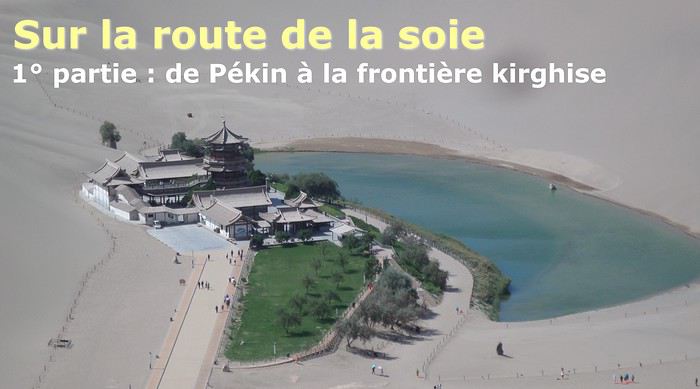
The Chinese Far West More than 30 years after my first trip to eastern China, I finally fulfilled an old dream: traveling solo from Beijing to the far west, discovering Xinjiang, the Uyghur people and the oppression they endure, the oases of Turpan and Kashgar, the Taklamakan Desert, the end of the Great Wall... The route was covered by train.
MENU PART 1: CHINA
1- Beijing (Jiankou) : the authentic Great Wall, without tourists 2- Cycling in Beijing, the best way to get around 3- Beijing : departure for the far west 4- Jiayuguan : getting by without English 5- Jiayuguan : scams and heritage 6- Dunhuang : abundance in the middle of the desert 7- Turpan : the Uyghurs under heavy surveillance 8- Kashgar : love at first sight for the old city 9- Kashgar : China’s recipe for controlling the populace 10- Tashkurgan : what on earth was I thinking going there! Kyrgyz border: a surreal epic Photo album from the 80s, contributions from other travelers (page 2)
1- JIANKOU Finding the authentic Great Wall, without tourists or a guide Friday, August 24, 2018 Thirty years later, I didn’t feel like revisiting the Great Wall at Badaling or any other overcrowded site. I chose to explore it at Jiankou, in its wildest, most authentic, and unrestored section, starting from a lost village deep in a valley—though it wasn’t *that* lost, since it had everything for communication.
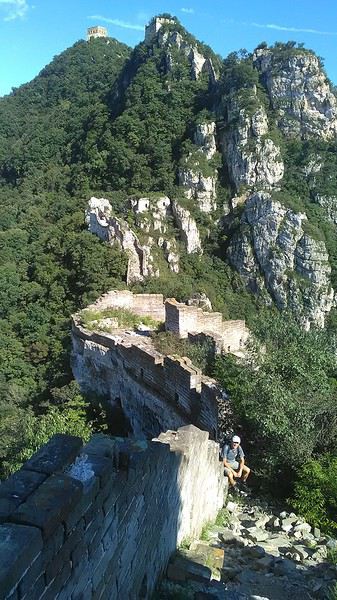
No need to pay for a taxi to get there—by timing it right, you can take the bus for just a few yuan. You have to get off at Xizhazi, the bus terminus. Be careful, there are only two buses a day in each direction. At the Xizhazi bus stop, I met a young couple who’d arrived with zero information about what to expect. We hiked the three of us toward the restored section of Mutianyu.
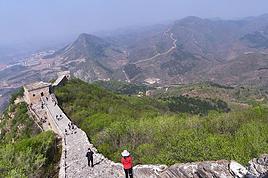
Still, be cautious With GPS and a topographic map (OpenTopoMap), you can set off without a problem or guide. The trail up to Jiankou is easy and well-marked. The trails down are too. But be careful—once you’re on the Wall, it’s real mountain hiking, with easy but dangerous climbing sections (over sheer drops). Not for amateurs or those afraid of heights! But what a reward. The Wall all to yourself, where it’s at its most daring. Truly mesmerizing.
More photos...
2- BEIJING The best way to get around the capital Sunday, August 26 The best way to explore the city is still by bike. Most are in a bike-share system, but you need to use an app—WeChat, the app that does everything, like monitoring your every move. No way I was installing that.
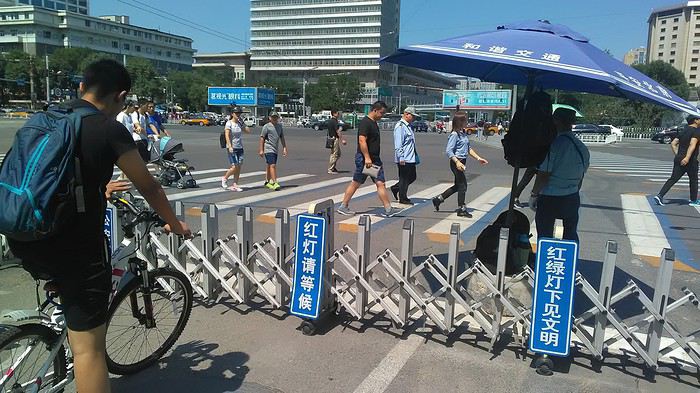
I found one at a rental shop near the hostel. The key is to quickly learn local traffic customs to minimize risks. Bike lanes are wide along the avenues.
But you still have to: - Watch out for anything parked on the bike paths—the most annoying are people napping or talking on the phone in their cars - Keep an eye on everything coming the wrong way—the list is long - The worst is right turns on red, which in Chinese traffic rules seem to have priority Once you get the hang of it, it’s fine. The city is huge but flat, so you can just wing it.
3- BEIJING By train to the far west Sunday, August 26 Beijing West Station is the size and operates like an airport. With your e-ticket from the agency, you first have to pick up your ticket at the special "English" counter, after passing through security. With your ticket in hand, you have to exit and enter through the boarding waiting area—not the platform—after a second security check.
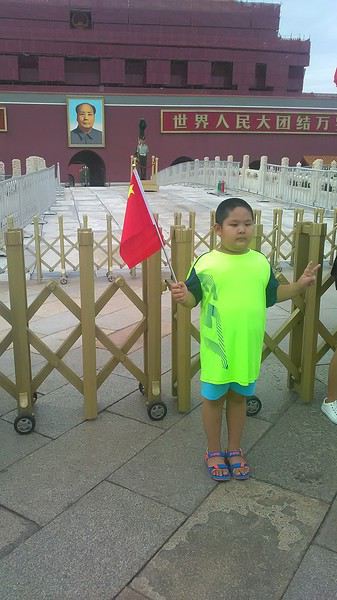 Then you find the right hall and wait for the sign to finally access the platform. In the end, it works pretty well given the incredible number of passengers to manage. Everywhere in Beijing, I saw that the Chinese have mastered crowd flow management.
Nice surprise: second-class carriages are clean, air-conditioned, and bright. Perfect, since I was in for 20 hours. One uniformed attendant per carriage, mobile meal service—luxury! Small downside: no luggage space. Hauling your suitcase up to the top bunk is quite a workout. I was in the middle, so it wasn’t too bad. The landscape, though, whether rural or urban, is pretty bleak. That should change once we leave the eastern plains.
Of course, I got my first police visit, with a thorough passport check and bag search. I was warned—going to the Chinese far west exposes you to this kind of hassle. But they were polite and respectful.
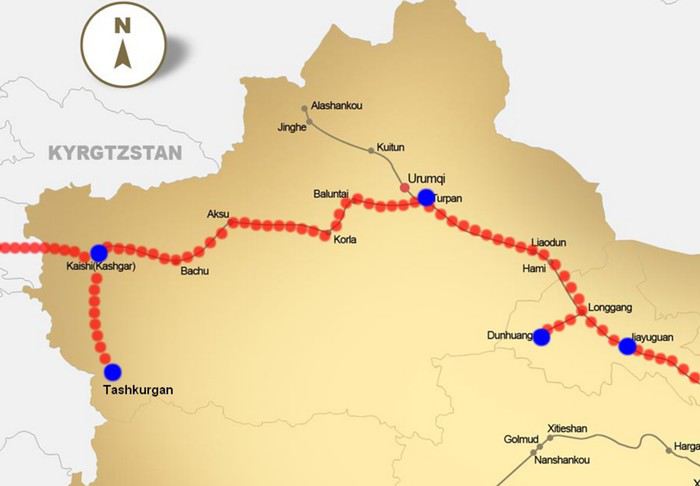 The Chinese Far West
4- JIAYUGUAN Getting by without English Monday, August 27 At the gates of two deserts (Gobi and Taklamakan) and at the foot of the Tibetan highlands, the Great Wall ends at Jiayuguan. Here, I found the deeper China I’d somewhat rediscovered during my bike ride, even if now everyone gets around on electric bikes and I’m no longer stared at like an alien.
Prices are nothing like Beijing: you can find a full meal for 2 €, and my bike cost 7 € for two days. Plus, few people speak English—neither the owner of the HI hostel where I stayed, nor the ticket sellers at the sites, let alone the servers at the small eateries where I ate. Everything is written in Chinese. So I had to use the little Chinese I know to communicate about essentials. It makes the locals laugh to see a European trying to speak their language, but it earns respect. With Google Translate’s help, I managed.
Rant: With their avenues blocked for construction for kilometers without warning, and new roads not yet on maps, I must’ve taken 15 km of detours. More photos...
5- JIAYUGUAN Scams and heritage Tuesday, August 28 The Great Wall doesn’t exactly end at the fort I visited yesterday but 10 km further, at the entrance to a river gorge at the foot of the mountains. All that’s left is a badly damaged tower (more like a mound of earth) and a section of clay wall, similar to the one I biked yesterday.
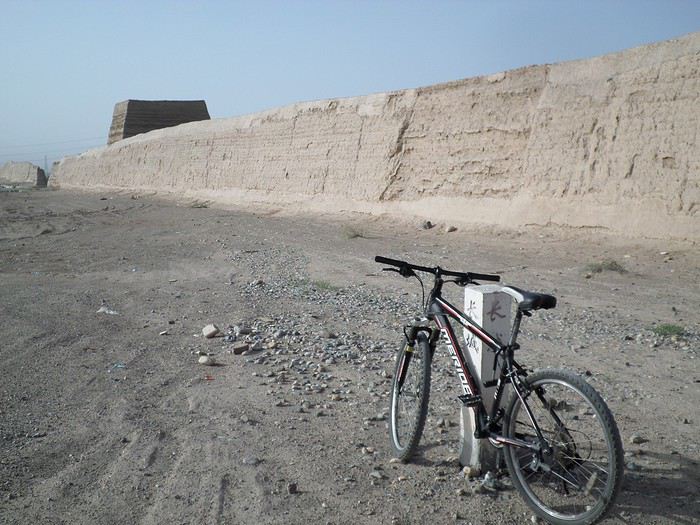
This morning, I hopped on my bike, determined to venture into the desert to see this highly symbolic site. First, you access it via a wide, brand-new road with not a soul in sight. Just before the site, I came across a grand welcome gate, very period-style, but it’s actually the inevitable toll booth.
Behind the gate, the road continues straight to the site, which you can see in the distance—at least 2 km away—the remains of the tower and wall. I had to leave my bike here. Fine. I went to the ticket counter and asked the price: 120 yuan! I couldn’t believe it—over 15 € for a simple mound of earth.
I showed my displeasure to the attendant, who couldn’t care less, and immediately turned back. 120 yuan—that’s the price for a new road, a fancy gate planted 2 km before the site just to force you to take a shuttle, and employees with nothing to do all day... Now I understand why I didn’t meet anyone!
Heritage China is a bit pricey Generally, sites are expensive for the country’s standard of living, but travelers are supposed to have money, so why hold back? I even gave up on the Forbidden City—reservations required days in advance (or on the black market at an impossible price). I prefer to keep the memory of my first visit, when entry must’ve cost a few dozen cents, and there were only a handful of visitors.
This morning, I took a taxi to see remarkable tombs of common people from the 3rd to 6th centuries. They’re small vaulted caves made of painted bricks, depicting scenes of daily life. Very pretty and moving. But even here, though the price was more reasonable, I was left wanting—only one of the 16 tombs is open to visitors, and it’s apparently not the most beautiful.
The authentic China—at least what’s left of it... Wandering the impersonal avenues of the city, you stumble upon a market. There, you still find traditional China—small shops with questionable hygiene, Go players, musicians, and even a dental prosthetist. The last refuge for those untouched by modernity. More photos...
6- DUNHUANG Abundance in the middle of the desert Wednesday, August 29 Well, I thought the landscape would be less bleak as I headed west. Nope. The only distraction in this expanse of dark, clayey sand is the forests of pylons and wind turbines, plus wild camels racing each other.
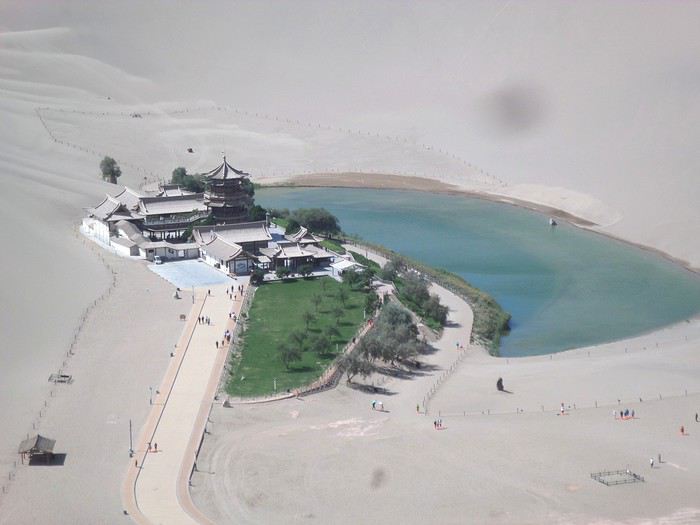 However, Dunhuang, the gateway to the Taklamakan, is by far the most pleasant Chinese city I know. There’s a real city center you can explore on foot. It’s hot but not unbearable, with a light, dry breeze. Much nicer than Beijing. The Han Chinese are still the majority, but the Muslim Uyghurs are more numerous, and the muezzin’s call to prayer echoes around the mosque.
The most surprising thing is the abundance and diversity of fruits and vegetables. You wonder how it all grows here. Well-irrigated, the desert sands are very fertile. Here, raisins have subtle, mysterious flavors, and the lamb really tastes like lamb.
Today, I visited the must-see Mingshashan, a dune complex next to which Pila is a molehill. The Basque Country, but covered in sand... More photos...
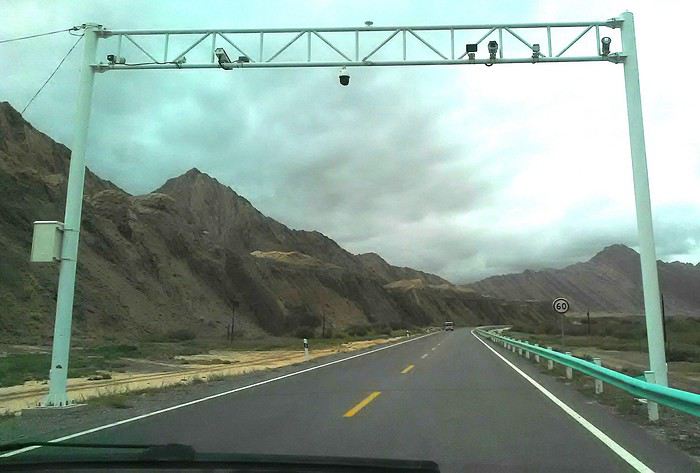
7- TURPAN The Uyghurs under heavy surveillance Friday, August 31 Surveillance cameras everywhere in the city, armed police stationed at intersections, in front of public buildings, at the entrance and inside tourist sites, police stations on every corner, patrols on foot or by car, khaki uniforms even for middle schoolers... here, the Han Chinese are in the minority, and you can feel it. Turpan feels like a city under siege.
To enter the youth hostel where I stayed, there’s even a security gate, and the receptionist (a Han, like everyone in tourism) wears a bulletproof vest! Reassuring. Still, you don’t feel particularly threatened here, especially as a European. The troublemakers are the Chinese, not the Uyghurs. Generally, China is a very safe country for visitors.
Smile, you’re on camera! I was biking on an avenue when the car in front of me got flashed for driving slowly. I quickly understood why when I got flashed too.
Here, the official time is Beijing time, but it gets dark two hours later. It’ll be even worse in Kashgar. Trickier to manage: everything is displayed in Chinese and Arabic. Nothing in English. Choosing a menu is a shot in the dark. Apart from a few young Chinese, no one here speaks English, and my Chinese doesn’t seem very understandable...
Mogao, the end of the road for the Han Yesterday, near Dunhuang, I went to Mogao, a complex of decorated caves with Buddha sculptures and paintings. Stunning, but so crowded! Luckily, here in Turpan, Chinese tourists barely venture out. So I visited a Silk Road ghost town with only a handful of other visitors and under a howling wind.
The modern Chinese city is swallowing up the old Uyghur neighborhoods—only a museum-like district remains in the center, and pockets of resistance on the outskirts are doomed to disappear soon. More photos...
8- KASHGAR A (relative) love at first sight for the old city Sunday, September 2 After three overnight trains, here I am in the far west of China, nearly 4,000 km from the capital. Despite the omnipresent police and an old city preserved UNESCO-style, Kashgar is my Chinese love at first sight.
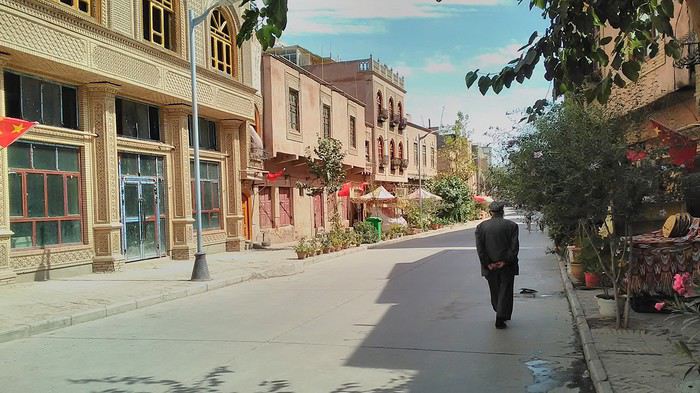
Finally, Chinese... well, sort of, because we’re in Uyghur territory here—a Turkic people with nothing culturally in common with the Han, the eastern Chinese. It started badly yesterday at Turfan station, where after three security gate passes, at least five passport checks, and a bag search, three adorable policewomen confiscated my antibacterial lotion because it had a flammable logo...
Then came the welcoming committee of armed cops at Kashgar station. Once all that was over, they left me alone—except you still have to go through security checks like everyone else to enter the old city, the bazaar, the livestock market... The further west you go, the more the siege mentality is evident. Luckily, the border isn’t far...
Despite the inevitable destruction-reconstruction, the city center has been well preserved. Thankfully, because it’s a very original style, a mix of local and colonial. I love it, even if it’s a bit too artificial, sanitized, and watered-down, and rather empty of residents. On the Silk Road, the city was famous for its great food. And it still is—rarely have I seen such richness and abundance of food! And not just scorpions or snakes. More photos...
9- KASHGAR China’s recipe for controlling the populace Saturday, September 1 Xinjiang, along with Tibet, is a "sensitive" area of rebellion in the eyes of Chinese authorities. As a result, the state has these regions and their populations under total control. Tourists also feel the consequences, even if they’re not at risk of re-education camps.
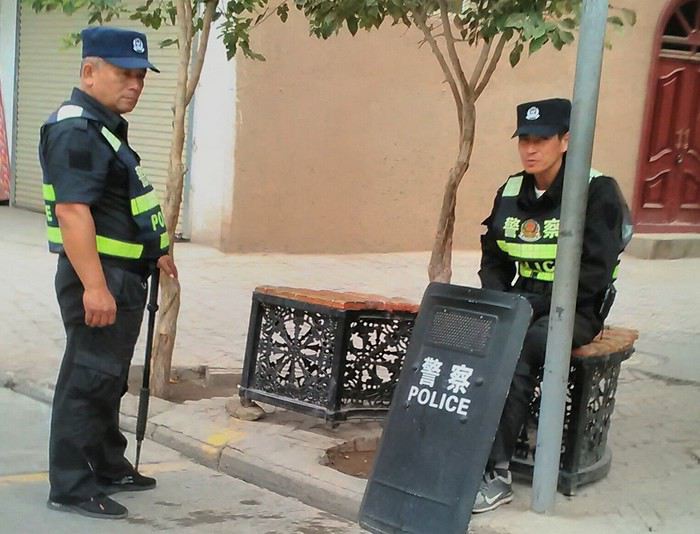 - Putting barbed wire and anti-ramming barriers around sensitive sites (schools, big hotels, government buildings...)
- Installing traffic surveillance gates with cameras and photo flashes (for all vehicles passing, including bikes) throughout the city and even in the countryside
- Posting uniformed guards with tasers, batons, or huge baseball bats every 100 meters
- Training the Han population (ethnic Chinese) in self-defense with sticks, preferably in the morning on the street. Men and women of all ages
- Starting school with the national anthem, doing military exercises, and receiving political indoctrination, all neatly lined up in the courtyard. (The dream school for any teacher)
- Placing a snitch in uniform (a pseudo-guard) in public gathering places, like youth hostels. Mine spends the day loafing around the courtyard
- Putting Chinese flags everywhere on the streets to remind everyone who’s in charge
- Installing security gates at every entrance to areas frequented by tourists (thanks for that) but not just there
- Never photographing cops, or else! I tried, but it’s not easy...
- Putting barbed wire and anti-ramming barriers around sensitive sites (schools, big hotels, government buildings...)
- Installing traffic surveillance gates with cameras and photo flashes (for all vehicles passing, including bikes) throughout the city and even in the countryside
- Posting uniformed guards with tasers, batons, or huge baseball bats every 100 meters
- Training the Han population (ethnic Chinese) in self-defense with sticks, preferably in the morning on the street. Men and women of all ages
- Starting school with the national anthem, doing military exercises, and receiving political indoctrination, all neatly lined up in the courtyard. (The dream school for any teacher)
- Placing a snitch in uniform (a pseudo-guard) in public gathering places, like youth hostels. Mine spends the day loafing around the courtyard
- Putting Chinese flags everywhere on the streets to remind everyone who’s in charge
- Installing security gates at every entrance to areas frequented by tourists (thanks for that) but not just there
- Never photographing cops, or else! I tried, but it’s not easy...
With all that, you can stroll around safely Not much crime! As for the amount the Chinese state spends to maintain such a system, it’s staggering! A third of the Han living in Xinjiang work in security. Today, I wandered freely around old Kashgar, which is quite large after all. More photos...
10- TASHKURGAN What on earth was I thinking going there! Wednesday, September 5 First, there’s the taxi—pretty crappy, with a driver who doesn’t speak a word of English and won’t stop smoking. Over six hours in that... shared with a completely out-of-it American.
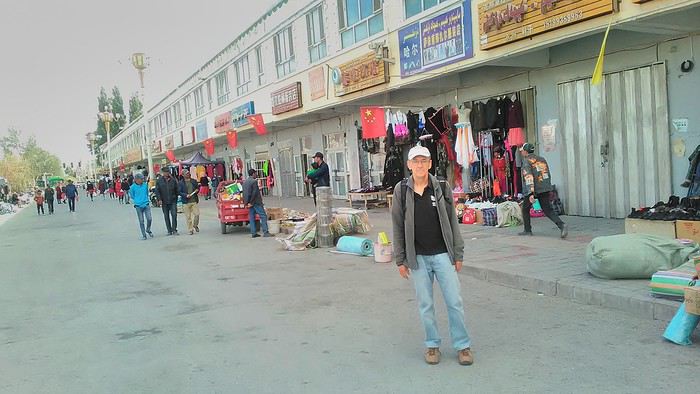
Then there are all the checkpoints along the way. I won’t go on—you know the drill by now.
After that, there’s Tashkurgan—a town with nothing to see, nothing to do. Deserted as soon as night falls. There’s this huge youth hostel and a few lost Chinese tapping away on their smartphones, chain-smoking. This lost American-European crowd, swapping tips on how to enter Pakistan or Tajikistan.
Luckily, there’s the Chinese Pamir Highway, lined with peaks over 7,000m. There’s the feeling of no longer being in China, with a population whose features are Middle Eastern. And these Tajik women with their stunning hairstyles and vibrant costumes. There’s the fact of having reached the westernmost Chinese city, far from crowds and tourist sites. A sort of end of the world. More photos...
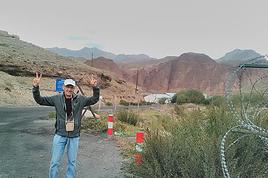
11- KYRGYZ BORDER A surreal epic Thursday, September 6 The road from Kashgar to the Kyrgyzstan border is a little over 200 km and passes through beautiful landscapes of colorful, desert-like mountains with acrobatic folds. That’s the bucolic part of the trip.
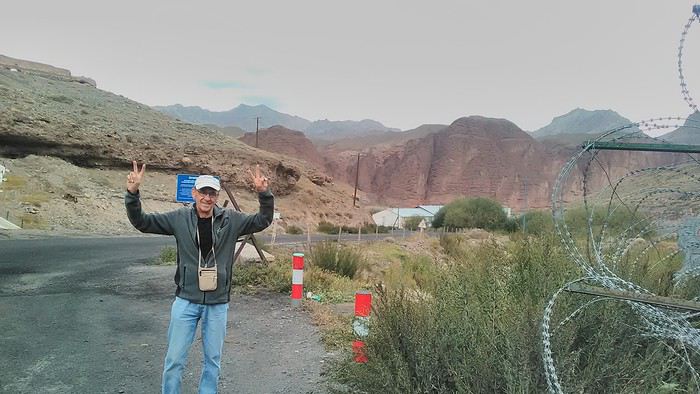 Yesterday, I managed to gather four people to rent a minibus to reach the border more easily: a Spaniard and an Argentine I’d already met in Turpan, and two New Zealanders who responded to the ad left at the hostel.
Absurdity and paranoia of Chinese authorities The highlight was crossing the town of Wuqia, 50 km past Kashgar. After tallying up with my fellow sufferers, we must’ve passed about ten checkpoints with: - Passport checks: 14 times, sometimes by two cops side by side - Bag checks: 4 times - Smartphone checks: 2 times, with deletion of "non-compliant" photos, and registration of your IMEI in the exit log!... Absurd and surreal at the same time, since my camera stayed in my bag, my apps are in French, and my photos have been online for ages...
With all that, we arrived just as the last checkpoint before the no man’s land marking the border between the two countries was on lunch break. And bam! Another 1.5-hour wait, alongside truckers who were much more used to this than we were.
What to think? The cops themselves aren’t fooled. They play the role they’re asked to, but sometimes you can coax a smile out of them—they realize how ridiculous the situation is.
What’s the point? That’s the big question my companions and I were tempted to answer with "to piss people off." To show you your place isn’t here, but with the other tourists, over there in the east, in Shanghai, Xi’an, or Guangzhou.
As for you, a traveler from a democratic country, you really experience this as aggression, humiliation, a violation of your private space. And yet, I’m respected, they speak to me properly. Today, I better understand what a Palestinian or a citizen of an occupied country might feel daily. A unique experience! Thanks, China.
And to top it off, the cherry on the cake! It’s still this glowing button you press to rate your passage after clearing the last obstacle before the exit stamp. I was so surprised it turned off before I could react. The Spaniard, with great humor and irony, had time to vote "excellent." In the end, he wasn’t wrong—you can hardly do better!
PS: I ditched my buddies at the border. They didn’t want to pay for a taxi to continue. So I took a direct taxi to Osh. The first 100 km are fabulous. I couldn’t take many photos, but I’ll be back on Monday to go to Tajikistan.
More photos...
The rest of the Silk Road, Part 2, in these travel journals: Kyrgyzstan, Tajikistan, Uzbekistan.
The Chinese Far West More than 30 years after my first trip to eastern China, I finally fulfilled an old dream: traveling solo from Beijing to the far west, discovering Xinjiang, the Uyghur people and the oppression they endure, the oases of Turpan and Kashgar, the Taklamakan Desert, the end of the Great Wall... The route was covered by train.
MENU PART 1: CHINA
1- Beijing (Jiankou) : the authentic Great Wall, without tourists 2- Cycling in Beijing, the best way to get around 3- Beijing : departure for the far west 4- Jiayuguan : getting by without English 5- Jiayuguan : scams and heritage 6- Dunhuang : abundance in the middle of the desert 7- Turpan : the Uyghurs under heavy surveillance 8- Kashgar : love at first sight for the old city 9- Kashgar : China’s recipe for controlling the populace 10- Tashkurgan : what on earth was I thinking going there! Kyrgyz border: a surreal epic Photo album from the 80s, contributions from other travelers (page 2)
1- JIANKOU Finding the authentic Great Wall, without tourists or a guide Friday, August 24, 2018 Thirty years later, I didn’t feel like revisiting the Great Wall at Badaling or any other overcrowded site. I chose to explore it at Jiankou, in its wildest, most authentic, and unrestored section, starting from a lost village deep in a valley—though it wasn’t *that* lost, since it had everything for communication.
No need to pay for a taxi to get there—by timing it right, you can take the bus for just a few yuan. You have to get off at Xizhazi, the bus terminus. Be careful, there are only two buses a day in each direction. At the Xizhazi bus stop, I met a young couple who’d arrived with zero information about what to expect. We hiked the three of us toward the restored section of Mutianyu.
Still, be cautious With GPS and a topographic map (OpenTopoMap), you can set off without a problem or guide. The trail up to Jiankou is easy and well-marked. The trails down are too. But be careful—once you’re on the Wall, it’s real mountain hiking, with easy but dangerous climbing sections (over sheer drops). Not for amateurs or those afraid of heights! But what a reward. The Wall all to yourself, where it’s at its most daring. Truly mesmerizing.
More photos...
2- BEIJING The best way to get around the capital Sunday, August 26 The best way to explore the city is still by bike. Most are in a bike-share system, but you need to use an app—WeChat, the app that does everything, like monitoring your every move. No way I was installing that.
I found one at a rental shop near the hostel. The key is to quickly learn local traffic customs to minimize risks. Bike lanes are wide along the avenues.
But you still have to: - Watch out for anything parked on the bike paths—the most annoying are people napping or talking on the phone in their cars - Keep an eye on everything coming the wrong way—the list is long - The worst is right turns on red, which in Chinese traffic rules seem to have priority Once you get the hang of it, it’s fine. The city is huge but flat, so you can just wing it.
3- BEIJING By train to the far west Sunday, August 26 Beijing West Station is the size and operates like an airport. With your e-ticket from the agency, you first have to pick up your ticket at the special "English" counter, after passing through security. With your ticket in hand, you have to exit and enter through the boarding waiting area—not the platform—after a second security check.
Then you find the right hall and wait for the sign to finally access the platform. In the end, it works pretty well given the incredible number of passengers to manage. Everywhere in Beijing, I saw that the Chinese have mastered crowd flow management.Nice surprise: second-class carriages are clean, air-conditioned, and bright. Perfect, since I was in for 20 hours. One uniformed attendant per carriage, mobile meal service—luxury! Small downside: no luggage space. Hauling your suitcase up to the top bunk is quite a workout. I was in the middle, so it wasn’t too bad. The landscape, though, whether rural or urban, is pretty bleak. That should change once we leave the eastern plains.
Of course, I got my first police visit, with a thorough passport check and bag search. I was warned—going to the Chinese far west exposes you to this kind of hassle. But they were polite and respectful.
The Chinese Far West4- JIAYUGUAN Getting by without English Monday, August 27 At the gates of two deserts (Gobi and Taklamakan) and at the foot of the Tibetan highlands, the Great Wall ends at Jiayuguan. Here, I found the deeper China I’d somewhat rediscovered during my bike ride, even if now everyone gets around on electric bikes and I’m no longer stared at like an alien.
Prices are nothing like Beijing: you can find a full meal for 2 €, and my bike cost 7 € for two days. Plus, few people speak English—neither the owner of the HI hostel where I stayed, nor the ticket sellers at the sites, let alone the servers at the small eateries where I ate. Everything is written in Chinese. So I had to use the little Chinese I know to communicate about essentials. It makes the locals laugh to see a European trying to speak their language, but it earns respect. With Google Translate’s help, I managed.
Rant: With their avenues blocked for construction for kilometers without warning, and new roads not yet on maps, I must’ve taken 15 km of detours. More photos...
5- JIAYUGUAN Scams and heritage Tuesday, August 28 The Great Wall doesn’t exactly end at the fort I visited yesterday but 10 km further, at the entrance to a river gorge at the foot of the mountains. All that’s left is a badly damaged tower (more like a mound of earth) and a section of clay wall, similar to the one I biked yesterday.
This morning, I hopped on my bike, determined to venture into the desert to see this highly symbolic site. First, you access it via a wide, brand-new road with not a soul in sight. Just before the site, I came across a grand welcome gate, very period-style, but it’s actually the inevitable toll booth.
Behind the gate, the road continues straight to the site, which you can see in the distance—at least 2 km away—the remains of the tower and wall. I had to leave my bike here. Fine. I went to the ticket counter and asked the price: 120 yuan! I couldn’t believe it—over 15 € for a simple mound of earth.
I showed my displeasure to the attendant, who couldn’t care less, and immediately turned back. 120 yuan—that’s the price for a new road, a fancy gate planted 2 km before the site just to force you to take a shuttle, and employees with nothing to do all day... Now I understand why I didn’t meet anyone!
Heritage China is a bit pricey Generally, sites are expensive for the country’s standard of living, but travelers are supposed to have money, so why hold back? I even gave up on the Forbidden City—reservations required days in advance (or on the black market at an impossible price). I prefer to keep the memory of my first visit, when entry must’ve cost a few dozen cents, and there were only a handful of visitors.
This morning, I took a taxi to see remarkable tombs of common people from the 3rd to 6th centuries. They’re small vaulted caves made of painted bricks, depicting scenes of daily life. Very pretty and moving. But even here, though the price was more reasonable, I was left wanting—only one of the 16 tombs is open to visitors, and it’s apparently not the most beautiful.
The authentic China—at least what’s left of it... Wandering the impersonal avenues of the city, you stumble upon a market. There, you still find traditional China—small shops with questionable hygiene, Go players, musicians, and even a dental prosthetist. The last refuge for those untouched by modernity. More photos...
6- DUNHUANG Abundance in the middle of the desert Wednesday, August 29 Well, I thought the landscape would be less bleak as I headed west. Nope. The only distraction in this expanse of dark, clayey sand is the forests of pylons and wind turbines, plus wild camels racing each other.
However, Dunhuang, the gateway to the Taklamakan, is by far the most pleasant Chinese city I know. There’s a real city center you can explore on foot. It’s hot but not unbearable, with a light, dry breeze. Much nicer than Beijing. The Han Chinese are still the majority, but the Muslim Uyghurs are more numerous, and the muezzin’s call to prayer echoes around the mosque.The most surprising thing is the abundance and diversity of fruits and vegetables. You wonder how it all grows here. Well-irrigated, the desert sands are very fertile. Here, raisins have subtle, mysterious flavors, and the lamb really tastes like lamb.
Today, I visited the must-see Mingshashan, a dune complex next to which Pila is a molehill. The Basque Country, but covered in sand... More photos...
7- TURPAN The Uyghurs under heavy surveillance Friday, August 31 Surveillance cameras everywhere in the city, armed police stationed at intersections, in front of public buildings, at the entrance and inside tourist sites, police stations on every corner, patrols on foot or by car, khaki uniforms even for middle schoolers... here, the Han Chinese are in the minority, and you can feel it. Turpan feels like a city under siege.
To enter the youth hostel where I stayed, there’s even a security gate, and the receptionist (a Han, like everyone in tourism) wears a bulletproof vest! Reassuring. Still, you don’t feel particularly threatened here, especially as a European. The troublemakers are the Chinese, not the Uyghurs. Generally, China is a very safe country for visitors.
Smile, you’re on camera! I was biking on an avenue when the car in front of me got flashed for driving slowly. I quickly understood why when I got flashed too.
Here, the official time is Beijing time, but it gets dark two hours later. It’ll be even worse in Kashgar. Trickier to manage: everything is displayed in Chinese and Arabic. Nothing in English. Choosing a menu is a shot in the dark. Apart from a few young Chinese, no one here speaks English, and my Chinese doesn’t seem very understandable...
Mogao, the end of the road for the Han Yesterday, near Dunhuang, I went to Mogao, a complex of decorated caves with Buddha sculptures and paintings. Stunning, but so crowded! Luckily, here in Turpan, Chinese tourists barely venture out. So I visited a Silk Road ghost town with only a handful of other visitors and under a howling wind.
The modern Chinese city is swallowing up the old Uyghur neighborhoods—only a museum-like district remains in the center, and pockets of resistance on the outskirts are doomed to disappear soon. More photos...
8- KASHGAR A (relative) love at first sight for the old city Sunday, September 2 After three overnight trains, here I am in the far west of China, nearly 4,000 km from the capital. Despite the omnipresent police and an old city preserved UNESCO-style, Kashgar is my Chinese love at first sight.
Finally, Chinese... well, sort of, because we’re in Uyghur territory here—a Turkic people with nothing culturally in common with the Han, the eastern Chinese. It started badly yesterday at Turfan station, where after three security gate passes, at least five passport checks, and a bag search, three adorable policewomen confiscated my antibacterial lotion because it had a flammable logo...
Then came the welcoming committee of armed cops at Kashgar station. Once all that was over, they left me alone—except you still have to go through security checks like everyone else to enter the old city, the bazaar, the livestock market... The further west you go, the more the siege mentality is evident. Luckily, the border isn’t far...
Despite the inevitable destruction-reconstruction, the city center has been well preserved. Thankfully, because it’s a very original style, a mix of local and colonial. I love it, even if it’s a bit too artificial, sanitized, and watered-down, and rather empty of residents. On the Silk Road, the city was famous for its great food. And it still is—rarely have I seen such richness and abundance of food! And not just scorpions or snakes. More photos...
9- KASHGAR China’s recipe for controlling the populace Saturday, September 1 Xinjiang, along with Tibet, is a "sensitive" area of rebellion in the eyes of Chinese authorities. As a result, the state has these regions and their populations under total control. Tourists also feel the consequences, even if they’re not at risk of re-education camps.
- Putting barbed wire and anti-ramming barriers around sensitive sites (schools, big hotels, government buildings...)
- Installing traffic surveillance gates with cameras and photo flashes (for all vehicles passing, including bikes) throughout the city and even in the countryside
- Posting uniformed guards with tasers, batons, or huge baseball bats every 100 meters
- Training the Han population (ethnic Chinese) in self-defense with sticks, preferably in the morning on the street. Men and women of all ages
- Starting school with the national anthem, doing military exercises, and receiving political indoctrination, all neatly lined up in the courtyard. (The dream school for any teacher)
- Placing a snitch in uniform (a pseudo-guard) in public gathering places, like youth hostels. Mine spends the day loafing around the courtyard
- Putting Chinese flags everywhere on the streets to remind everyone who’s in charge
- Installing security gates at every entrance to areas frequented by tourists (thanks for that) but not just there
- Never photographing cops, or else! I tried, but it’s not easy...With all that, you can stroll around safely Not much crime! As for the amount the Chinese state spends to maintain such a system, it’s staggering! A third of the Han living in Xinjiang work in security. Today, I wandered freely around old Kashgar, which is quite large after all. More photos...
10- TASHKURGAN What on earth was I thinking going there! Wednesday, September 5 First, there’s the taxi—pretty crappy, with a driver who doesn’t speak a word of English and won’t stop smoking. Over six hours in that... shared with a completely out-of-it American.
Then there are all the checkpoints along the way. I won’t go on—you know the drill by now.
After that, there’s Tashkurgan—a town with nothing to see, nothing to do. Deserted as soon as night falls. There’s this huge youth hostel and a few lost Chinese tapping away on their smartphones, chain-smoking. This lost American-European crowd, swapping tips on how to enter Pakistan or Tajikistan.
Luckily, there’s the Chinese Pamir Highway, lined with peaks over 7,000m. There’s the feeling of no longer being in China, with a population whose features are Middle Eastern. And these Tajik women with their stunning hairstyles and vibrant costumes. There’s the fact of having reached the westernmost Chinese city, far from crowds and tourist sites. A sort of end of the world. More photos...
11- KYRGYZ BORDER A surreal epic Thursday, September 6 The road from Kashgar to the Kyrgyzstan border is a little over 200 km and passes through beautiful landscapes of colorful, desert-like mountains with acrobatic folds. That’s the bucolic part of the trip.
Yesterday, I managed to gather four people to rent a minibus to reach the border more easily: a Spaniard and an Argentine I’d already met in Turpan, and two New Zealanders who responded to the ad left at the hostel.Absurdity and paranoia of Chinese authorities The highlight was crossing the town of Wuqia, 50 km past Kashgar. After tallying up with my fellow sufferers, we must’ve passed about ten checkpoints with: - Passport checks: 14 times, sometimes by two cops side by side - Bag checks: 4 times - Smartphone checks: 2 times, with deletion of "non-compliant" photos, and registration of your IMEI in the exit log!... Absurd and surreal at the same time, since my camera stayed in my bag, my apps are in French, and my photos have been online for ages...
With all that, we arrived just as the last checkpoint before the no man’s land marking the border between the two countries was on lunch break. And bam! Another 1.5-hour wait, alongside truckers who were much more used to this than we were.
What to think? The cops themselves aren’t fooled. They play the role they’re asked to, but sometimes you can coax a smile out of them—they realize how ridiculous the situation is.
What’s the point? That’s the big question my companions and I were tempted to answer with "to piss people off." To show you your place isn’t here, but with the other tourists, over there in the east, in Shanghai, Xi’an, or Guangzhou.
As for you, a traveler from a democratic country, you really experience this as aggression, humiliation, a violation of your private space. And yet, I’m respected, they speak to me properly. Today, I better understand what a Palestinian or a citizen of an occupied country might feel daily. A unique experience! Thanks, China.
And to top it off, the cherry on the cake! It’s still this glowing button you press to rate your passage after clearing the last obstacle before the exit stamp. I was so surprised it turned off before I could react. The Spaniard, with great humor and irony, had time to vote "excellent." In the end, he wasn’t wrong—you can hardly do better!
PS: I ditched my buddies at the border. They didn’t want to pay for a taxi to continue. So I took a direct taxi to Osh. The first 100 km are fabulous. I couldn’t take many photos, but I’ll be back on Monday to go to Tajikistan.
More photos...
The rest of the Silk Road, Part 2, in these travel journals: Kyrgyzstan, Tajikistan, Uzbekistan.
Deuxième séjour à Pékin en 2018, je discute à l'auberge avec une voyageuse :
"Pékin ! Ici on vit vraiment dans un autre monde."
"Peut-être, mais alors que dire du Pékin des années 80. Une autre planète !"
Ceux qui découvrent cette Chine du 21° siècle ne retrouveront guère que des fragments de celle que je vais raconter ici, comme j'ai pu le constater par moi-même. (Voir mes carnets sur la route de la soie.)
Ce sera donc un carnet "impressions de Chine", ce qui m'est resté de plus marquant. Les quelques photos jaunies que j'ai pu sauver sont scannées et de mauvaise qualité. Merci à Jacqueline et Jean-Pierre pour leur contribution photographique, entièrement d'époque elle aussi.
AU MENU
Préambule - le contexte politique et économique du pays Chapitre 1 - Un voyage qui s'annonce pas très romantique, c'était prévu... Chapitre 2 - Pékin : le trafic de monnaie. Illégal mais indispensable. Chapitre 3 - Pékin 1985-2018 : du Moyen-Age à la révolution technologique. Immersion comparative. Chapitre 4 - Pékin : un billet de train pour Xi'an ? Pas si simple que ça. Chapitre 5 - Le "qi feng shui". Le soigneur se fait soigner. Chapitre 6 - Xi'an : «mei yo», la réponse favorite des fonctionnaires. Chapitre 7 - Vol au-dessus de la jungle. Le coucou arrivera-t-il à bon port ? Chapitre 8 - Chongqing : le bal, ou la vie sexuelle des jeunes chinois. Chapitre 9 - Croisière pop sur le Yangtse. Chapitre 10 - L'hôtel à rats. C'est à Wuhan, comme par hasard. Chapitre 11 - Canton : à la recherche de xiao Wu. Chapitre 12 - Canton : un train sous haute surveillance. Chapitre 13 - Hong Kong : dur retour à la civilisation. Albums : les photos d'époque signées Jacqueline et Jean-Pierre. A partir de la page 5 Témoignages et photos d'époque. Merci aux différents contributeurs. A partir de la page 6. Ne manquez pas le Tibet et le Xinjiang !
PREAMBULE : le contexte politique et économique Comment voyager dans ce pays encore très fermé, obscur, énigmatique, dont en Europe on ne connaît guère la mentalité, les règles de fonctionnement, dont on ne perçoit à l'étranger que quelques images soigneusement filtrées par la censure. Comment se déplacer, se loger, se nourrir, sans moyen de communication, sans réservation d'hôtel ou de train, sans connaître la langue , sans aide, sans guide, sans assistance, sans carte bleue...
1984, date clé pour le voyageur Après trente années de communisme à marche forcée, de campagnes idéologiques calamiteuses pour les populations, de luttes intestines pour le pouvoir, le pays n'arrive pas à décoller économiquement. L'écart grandit avec les nations développées. Mais avec le rétablissement des relations diplomatiques avec les Etats Unis en 1979, le nouveau président, Deng Xiaoping, tient enfin sa revanche et entame sa longue marche vers le progrès. Les fossiles maoïstes de la "longue marche", des "cent fleurs", du "grand bond en avant", les criminels de la "grande révolution culturelle prolétarienne", représentés par la "bande des quatre", tous ceux qui l'avaient évincé du pouvoir et condamné à l'oubli au fin fond d'une province, le sont à leur tour.
Le "révisionniste", comme l'a appelé la veuve Mao, lance ses réformes de libéralisation et d'ouverture de l'économie : « Peu importe qu'un chat soit blanc ou noir, l'essentiel est qu'il attrape les souris ! » Parole du maître.
Parmi ces réformes : l'ouverture au tourisme. Jusqu'à présent, pour visiter le pays, il fallait obligatoirement, soit passer par un tour opérateur avec guide et circuit programmé, soit demander des autorisations de voyage pour un nombre limité de destinations. Très peu pour moi. Mais en 1984, monsieur Deng supprime le permis de circuler et ouvre quasiment tout le pays aux visiteurs. L'info provoque un déclic : - C'est l'occasion ou jamais. L'année prochaine, ce sera la Chine. Et en sac à dos! Et ce sera aussi notre voyage de noces...
Nous aurons le privilège d'être parmi les premiers voyageurs occidentaux à tenter l'aventure. Je pourrai enfin mettre en pratique ce que j'ai appris de chinois à la fac et réaliser un vieux rêve. A nous la Chine, à nous la découverte de ce pays mystérieux et fascinant. Quelle réalité se cache derrière ces images édulcorées de bonheur populaire que nous distillent les images officielles ? Comment vit-on réellement dans ce pays ? Quel accueil réserve-t-on aux impérialistes occidentaux ?

Wuhan, 1985 : slogans révolutionnaires pour mini gardes rouges
CHAPITRE 1 : un voyage qui s'annonce pas très romantique, c'était prévu... Eh oui, juste mariés, il y a peut-être plus glamour comme destination. Bon, Venise, on connaît déjà. Quoi de mieux qu'une telle aventure pour forger un couple ? Pendant toute l'année, je peaufine le projet : itinéraire, transports, hébergements... Les guides de voyage sur la Chine ne sont pas nombreux, il n'en existe d'ailleurs qu'un en français. Pour ce qui est de l'itinéraire, c'est à peu près établi, pour le reste, ce sera au coup par coup, improvisation et opportunités. L'aventure quoi. Juste qu'on dispose d'un mois entre l'atterrissage et le retour à Hong-Kong. Pour l'itinéraire, ce sera donc Pékin - Hong Kong, mais par où et comment ? C'est le grand mystère, même si certains incontournables sont au programme : la Grande Muraille, Xi'an et son armée en terre cuite, la croisière sur le Yang Tse Kiang...
Août 1985 : Hong Kong, premiers pas en extrême-orient Munis d'un joli visa sur notre passeport et d'un billet d'avion Hong Kong - Pékin acheté en agence en France, nous débarquons à Hong Kong pour y passer une nuit avant de repartir pour Pékin le lendemain, L'atterrissage au-dessus de la ville est spectaculaire, l'avion louvoie entre les immeubles pour plonger vers la piste au raz de l'océan, un véritable tour de manège à sensations. Pas trop le temps d'explorer la ville, mais le dépaysement est déjà total. Et pourtant, ce n'est rien à côté de ce qui nous attend...
Ca commence plutôt mal Aéroport de Hong Kong, le lendemain. Nos billets sont valables, pas de problème, seulement : - Désolé, mais vous n'avez pas confirmé votre vol, l'avion est complet. Il va falloir attendre deux ou trois jours... Eh oui, en 1985, il faut confirmer son vol la veille par téléphone. Dans l'excitation et l'émotion, nous avions complètement oublié la consigne. Zut alors, deux ou trois jours de perdus sur le projet, c'est beaucoup trop. - Attendez ici, peut-être il y aura des places si des voyageurs ne se présentent pas. Longue attente plutôt anxieuse, et quelques minutes avant le décollage, petit signe de l'employé : - C'est bon, il reste deux places, vous pouvez partir.
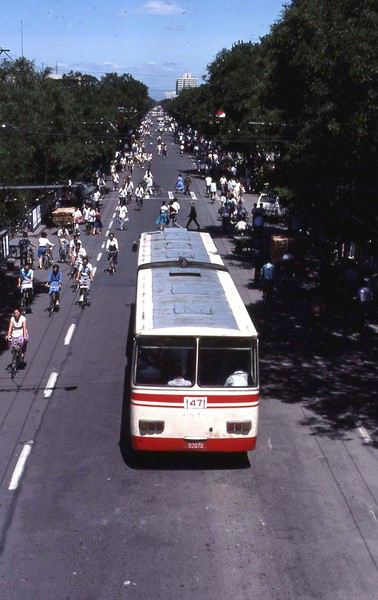
Pékin : avenue Xidan. Photo : Jacqueline et Jean-Pierre
Dès l'aéroport, j'ai senti le choc... Une simple piste en béton, pas d'avion en attente, un trafic aérien quasi nul, un bâtiment à la chinoise, usé et vieillot à souhait, des gardes en uniforme. L'aéroport est encore une base militaire, accessoirement civile pour quelques rares liaisons vers l'URSS et les pays d'Asie. Il n'y a rien dans ce qui fait office de hall d'accueil, une pièce de quelques dizaines de mètres carré tout au plus.
Contrôles minutieux, file d'attente, les militaires ne sont pas très souriants, et le comité d'accueil pas très... accueillant. On n'est pas là pour rigoler, surtout avec ces étrangers qui débarquent de Hong Kong, la zone capitaliste. Eh oui, Hong Kong chinois, ce sera dans une dizaine d'années. D'ici là...
Des billets de Monopoly ?! Un simple bureau dans un recoin fait office de banque. Vite, changer nos travelers chèques en dollars. Ben oui, la carte bleue, ça n'existe pas encore. Derrière son boulier, l'employé fait ses calculs à une vitesse incroyable et me rend le change. Surprise : j'ai une liasse de jolis billets tout neufs dans la main, mais ils n'ont rien à voir avec la monnaie locale. La preuve, il n'y a pas le portrait du grand timonier, mais des jolis dessins de monuments et paysages ! Ca ressemble davantage à des billets de Monopoly.
C'est quoi ce truc ?
Une bonne affaire, mais un gros risque En fait, c'est une monnaie spéciale réservée aux étrangers. Nous allons vite apprendre deux choses. - Un, cette monnaie n'est pas utilisée (et même interdite) par les chinois dans leur vie quotidienne. Elle est réservée aux étrangers et ils doivent payer avec. - Deux, elle est très recherchée par quelques autochtones, car c'est la seule monnaie ayant un équivalent dollar. A l'époque, le yuan chinois ne vaut absolument rien, il n'est pas convertible dans une autre monnaie. Pire que le kopeck. Du coup, notre monnaie "spécial étrangers" fait l'objet d'un trafic formellement interdit et sévèrement réprimé par les autorités.
Mais comment faire si tu veux voyager en dehors des circuits touristiques et des grands hôtels, juste prendre le bus par exemple ou manger dans une gargote. Ca, les autorités n'en ont cure. Un étranger, ça dort dans les hôtels de luxe, ça prend l'avion ou le train en première classe, ça mange dans les grands restaurants. Mieux encore, ça voyage en groupe avec un guide.
Pas d'autre solution, il faudra changer au black Dans la rue, avec les petits trafiquants locaux. Il y a même un cours « officiel » du change : un yuan de Monopoly contre trois yuans de monnaie populaire. A l'époque, un yuan, c'est à peu près un franc. Une sacrée bonne affaire ! Le tout, c'est de ne pas se faire pincer. Les rumeurs les plus folles courent sur les peines encourues pour les trafiquants, mais aussi pour les étrangers qui se font pincer. C'est d'ailleurs marqué sur certains documents. Si les peines de prison ferme ont de quoi dissuader le voyageur, il faudra quand même prendre le risque, pas le choix. Une des nombreuses absurdités du système.
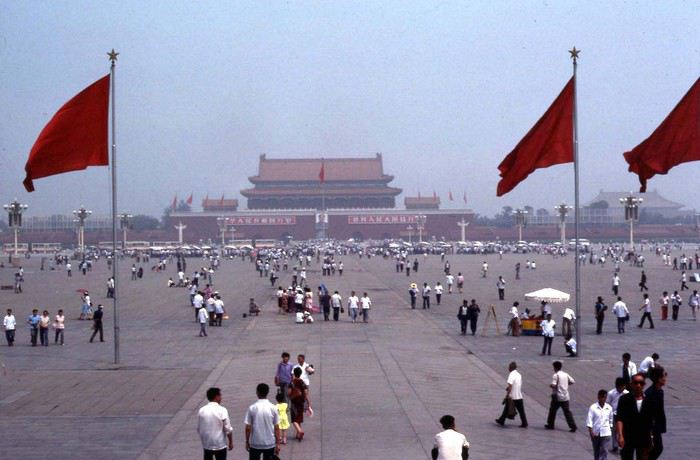
Pékin : place Tian An Men. Photo : Jacqueline et Jean-Pierre
Mise à l'épreuve 1 : trouver un hébergement... Sortie de l'aéroport, c'est l'après-midi. Quelques taxis attendent, réservés aux privilégiés du régime et aux étrangers. Mais nous ne savons même pas où nous allons, juste en ville, et on verra après. Donc ce sera le bus, celui-ci prend la monnaie de Monopoly. C'est notre premier transport en commun, direction le centre ville, à une vingtaine de kilomètres. Très bien, mais où aller, à qui demander un tuyau, un renseignement, une bonne adresse ?
L'aéroport étant en rase campagne, la route bordée d'arbres qui conduit à Pékin centre ressemble à une de nos départementales. De part et d'autres, c'est le défilé des paysans, le plus souvent à pied, tirant des charrettes à bras, quelques fois à bicyclette ou en tracteur. Pour nous occidentaux déjà rodés aux autoroutes, c'est un choc. Ici, pas de voiture individuelle : les véhicules à moteur, c'est juste des camions, quelques bus et de rares taxi, c'est tout .
La carte de Pékin n'indique rien d'autre que le nom des rues, impossible de savoir où se trouve tel service, hôtel, restaurant... Il faut se débrouiller. Les quelques éléments écrits et oraux de chinois que je possède, je vais vite devoir les mettre à l'épreuve. L'anglais ici, on connaît pas.
Juste à côté de nous est assise une jeune femme, bien de sa personne, sans doute un cadre du parti ou d'une grande entreprise. Elle semble plus amène que les autres voyageurs, plus disposée à rendre service. J'entame la conversation comme je peux. Après les échanges d'usage : - Nous sommes français, c'est notre premier voyage en Chine. Connaissez-vous un hôtel sur le trajet du bus qui nous accepterait ? Coup de chance, la femme nous en indique un non loin d'un arrêt, elle nous dira quand il faudra descendre.
Mise à l'épreuve 2 : et qui accepte les étrangers... L'hôtel n'est pas facile à trouver, tout se ressemble ici et rien ne permet de discerner au premier coup d'oeil la fonction d'un bâtiment. Ce n'est même pas écrit « hôtel » à l'entrée. Finalement nous poussons la porte de ce qui semble être ce que nous cherchons. Un étroit couloir sombre, un guichet, une sorte de réception, on dirait un peu un hôtel. Le type de l'accueil est très surpris de nous voir ici, mais oui, c'est bien un hôtel, sauf que : - C'est interdit aux étrangers, vous ne devez pas rester ici ! - Mais comment faire alors ? Le type décroche son téléphone, puis, au bout d'un moment : - Prenez le bus et descendez à cet arrêt, vous y trouverez un hôtel pour vous.
C'est ainsi que nous découvrons que nous ne pourrons pas loger comme on veut dans le pays. La plupart des hôtels sont interdits aux étrangers, il faut toujours aller à l'hôtel spécial « wai guo ren». Oui, mais ce n'est pas forcément indiqué. Quant à dormir chez l'habitant, ce n'est même pas la peine d'y songer, c'est interdit. De plus, quand on voit dans quoi vivent les gens en ville, le peu d'espace dont ils disposent, ça ne donne pas vraiment envie de se faire inviter.
Je ne me souviens plus comment nous avons fait pour trouver le bon bus et le bon arrêt, juste que ça n'a pas été facile du tout. La contrôleuse du bus a tiré une drôle de tronche quand je lui ai tendu le billet de Monoploy, mais elle n'avait pas le choix. Un mao le ticket, dix centimes de franc. Premier aperçu du coup de la vie : trois fois rien. Dans le bus, tous les regards sont fixés sur nous...
Pas de doute, il faut absolument trouver de la monnaie locale, et le plus vite possible. On ne va rien pouvoir faire avec cette monnaie de m... Et quand par hasard ils sont acceptés, on y perd sacrément au change, car ils nous rendent l'argent en monnaie locale. C'est une arnaque gouvernementale bien calculée !
Prochain épisode : le trafic de monnaie
Ce sera donc un carnet "impressions de Chine", ce qui m'est resté de plus marquant. Les quelques photos jaunies que j'ai pu sauver sont scannées et de mauvaise qualité. Merci à Jacqueline et Jean-Pierre pour leur contribution photographique, entièrement d'époque elle aussi.
AU MENU
Préambule - le contexte politique et économique du pays Chapitre 1 - Un voyage qui s'annonce pas très romantique, c'était prévu... Chapitre 2 - Pékin : le trafic de monnaie. Illégal mais indispensable. Chapitre 3 - Pékin 1985-2018 : du Moyen-Age à la révolution technologique. Immersion comparative. Chapitre 4 - Pékin : un billet de train pour Xi'an ? Pas si simple que ça. Chapitre 5 - Le "qi feng shui". Le soigneur se fait soigner. Chapitre 6 - Xi'an : «mei yo», la réponse favorite des fonctionnaires. Chapitre 7 - Vol au-dessus de la jungle. Le coucou arrivera-t-il à bon port ? Chapitre 8 - Chongqing : le bal, ou la vie sexuelle des jeunes chinois. Chapitre 9 - Croisière pop sur le Yangtse. Chapitre 10 - L'hôtel à rats. C'est à Wuhan, comme par hasard. Chapitre 11 - Canton : à la recherche de xiao Wu. Chapitre 12 - Canton : un train sous haute surveillance. Chapitre 13 - Hong Kong : dur retour à la civilisation. Albums : les photos d'époque signées Jacqueline et Jean-Pierre. A partir de la page 5 Témoignages et photos d'époque. Merci aux différents contributeurs. A partir de la page 6. Ne manquez pas le Tibet et le Xinjiang !
PREAMBULE : le contexte politique et économique Comment voyager dans ce pays encore très fermé, obscur, énigmatique, dont en Europe on ne connaît guère la mentalité, les règles de fonctionnement, dont on ne perçoit à l'étranger que quelques images soigneusement filtrées par la censure. Comment se déplacer, se loger, se nourrir, sans moyen de communication, sans réservation d'hôtel ou de train, sans connaître la langue , sans aide, sans guide, sans assistance, sans carte bleue...
1984, date clé pour le voyageur Après trente années de communisme à marche forcée, de campagnes idéologiques calamiteuses pour les populations, de luttes intestines pour le pouvoir, le pays n'arrive pas à décoller économiquement. L'écart grandit avec les nations développées. Mais avec le rétablissement des relations diplomatiques avec les Etats Unis en 1979, le nouveau président, Deng Xiaoping, tient enfin sa revanche et entame sa longue marche vers le progrès. Les fossiles maoïstes de la "longue marche", des "cent fleurs", du "grand bond en avant", les criminels de la "grande révolution culturelle prolétarienne", représentés par la "bande des quatre", tous ceux qui l'avaient évincé du pouvoir et condamné à l'oubli au fin fond d'une province, le sont à leur tour.
Le "révisionniste", comme l'a appelé la veuve Mao, lance ses réformes de libéralisation et d'ouverture de l'économie : « Peu importe qu'un chat soit blanc ou noir, l'essentiel est qu'il attrape les souris ! » Parole du maître.
Parmi ces réformes : l'ouverture au tourisme. Jusqu'à présent, pour visiter le pays, il fallait obligatoirement, soit passer par un tour opérateur avec guide et circuit programmé, soit demander des autorisations de voyage pour un nombre limité de destinations. Très peu pour moi. Mais en 1984, monsieur Deng supprime le permis de circuler et ouvre quasiment tout le pays aux visiteurs. L'info provoque un déclic : - C'est l'occasion ou jamais. L'année prochaine, ce sera la Chine. Et en sac à dos! Et ce sera aussi notre voyage de noces...
Nous aurons le privilège d'être parmi les premiers voyageurs occidentaux à tenter l'aventure. Je pourrai enfin mettre en pratique ce que j'ai appris de chinois à la fac et réaliser un vieux rêve. A nous la Chine, à nous la découverte de ce pays mystérieux et fascinant. Quelle réalité se cache derrière ces images édulcorées de bonheur populaire que nous distillent les images officielles ? Comment vit-on réellement dans ce pays ? Quel accueil réserve-t-on aux impérialistes occidentaux ?
Wuhan, 1985 : slogans révolutionnaires pour mini gardes rouges
CHAPITRE 1 : un voyage qui s'annonce pas très romantique, c'était prévu... Eh oui, juste mariés, il y a peut-être plus glamour comme destination. Bon, Venise, on connaît déjà. Quoi de mieux qu'une telle aventure pour forger un couple ? Pendant toute l'année, je peaufine le projet : itinéraire, transports, hébergements... Les guides de voyage sur la Chine ne sont pas nombreux, il n'en existe d'ailleurs qu'un en français. Pour ce qui est de l'itinéraire, c'est à peu près établi, pour le reste, ce sera au coup par coup, improvisation et opportunités. L'aventure quoi. Juste qu'on dispose d'un mois entre l'atterrissage et le retour à Hong-Kong. Pour l'itinéraire, ce sera donc Pékin - Hong Kong, mais par où et comment ? C'est le grand mystère, même si certains incontournables sont au programme : la Grande Muraille, Xi'an et son armée en terre cuite, la croisière sur le Yang Tse Kiang...
Août 1985 : Hong Kong, premiers pas en extrême-orient Munis d'un joli visa sur notre passeport et d'un billet d'avion Hong Kong - Pékin acheté en agence en France, nous débarquons à Hong Kong pour y passer une nuit avant de repartir pour Pékin le lendemain, L'atterrissage au-dessus de la ville est spectaculaire, l'avion louvoie entre les immeubles pour plonger vers la piste au raz de l'océan, un véritable tour de manège à sensations. Pas trop le temps d'explorer la ville, mais le dépaysement est déjà total. Et pourtant, ce n'est rien à côté de ce qui nous attend...
Ca commence plutôt mal Aéroport de Hong Kong, le lendemain. Nos billets sont valables, pas de problème, seulement : - Désolé, mais vous n'avez pas confirmé votre vol, l'avion est complet. Il va falloir attendre deux ou trois jours... Eh oui, en 1985, il faut confirmer son vol la veille par téléphone. Dans l'excitation et l'émotion, nous avions complètement oublié la consigne. Zut alors, deux ou trois jours de perdus sur le projet, c'est beaucoup trop. - Attendez ici, peut-être il y aura des places si des voyageurs ne se présentent pas. Longue attente plutôt anxieuse, et quelques minutes avant le décollage, petit signe de l'employé : - C'est bon, il reste deux places, vous pouvez partir.
Pékin : avenue Xidan. Photo : Jacqueline et Jean-Pierre
Dès l'aéroport, j'ai senti le choc... Une simple piste en béton, pas d'avion en attente, un trafic aérien quasi nul, un bâtiment à la chinoise, usé et vieillot à souhait, des gardes en uniforme. L'aéroport est encore une base militaire, accessoirement civile pour quelques rares liaisons vers l'URSS et les pays d'Asie. Il n'y a rien dans ce qui fait office de hall d'accueil, une pièce de quelques dizaines de mètres carré tout au plus.
Contrôles minutieux, file d'attente, les militaires ne sont pas très souriants, et le comité d'accueil pas très... accueillant. On n'est pas là pour rigoler, surtout avec ces étrangers qui débarquent de Hong Kong, la zone capitaliste. Eh oui, Hong Kong chinois, ce sera dans une dizaine d'années. D'ici là...
Des billets de Monopoly ?! Un simple bureau dans un recoin fait office de banque. Vite, changer nos travelers chèques en dollars. Ben oui, la carte bleue, ça n'existe pas encore. Derrière son boulier, l'employé fait ses calculs à une vitesse incroyable et me rend le change. Surprise : j'ai une liasse de jolis billets tout neufs dans la main, mais ils n'ont rien à voir avec la monnaie locale. La preuve, il n'y a pas le portrait du grand timonier, mais des jolis dessins de monuments et paysages ! Ca ressemble davantage à des billets de Monopoly.
C'est quoi ce truc ?
Une bonne affaire, mais un gros risque En fait, c'est une monnaie spéciale réservée aux étrangers. Nous allons vite apprendre deux choses. - Un, cette monnaie n'est pas utilisée (et même interdite) par les chinois dans leur vie quotidienne. Elle est réservée aux étrangers et ils doivent payer avec. - Deux, elle est très recherchée par quelques autochtones, car c'est la seule monnaie ayant un équivalent dollar. A l'époque, le yuan chinois ne vaut absolument rien, il n'est pas convertible dans une autre monnaie. Pire que le kopeck. Du coup, notre monnaie "spécial étrangers" fait l'objet d'un trafic formellement interdit et sévèrement réprimé par les autorités.
Mais comment faire si tu veux voyager en dehors des circuits touristiques et des grands hôtels, juste prendre le bus par exemple ou manger dans une gargote. Ca, les autorités n'en ont cure. Un étranger, ça dort dans les hôtels de luxe, ça prend l'avion ou le train en première classe, ça mange dans les grands restaurants. Mieux encore, ça voyage en groupe avec un guide.
Pas d'autre solution, il faudra changer au black Dans la rue, avec les petits trafiquants locaux. Il y a même un cours « officiel » du change : un yuan de Monopoly contre trois yuans de monnaie populaire. A l'époque, un yuan, c'est à peu près un franc. Une sacrée bonne affaire ! Le tout, c'est de ne pas se faire pincer. Les rumeurs les plus folles courent sur les peines encourues pour les trafiquants, mais aussi pour les étrangers qui se font pincer. C'est d'ailleurs marqué sur certains documents. Si les peines de prison ferme ont de quoi dissuader le voyageur, il faudra quand même prendre le risque, pas le choix. Une des nombreuses absurdités du système.
Pékin : place Tian An Men. Photo : Jacqueline et Jean-Pierre
Mise à l'épreuve 1 : trouver un hébergement... Sortie de l'aéroport, c'est l'après-midi. Quelques taxis attendent, réservés aux privilégiés du régime et aux étrangers. Mais nous ne savons même pas où nous allons, juste en ville, et on verra après. Donc ce sera le bus, celui-ci prend la monnaie de Monopoly. C'est notre premier transport en commun, direction le centre ville, à une vingtaine de kilomètres. Très bien, mais où aller, à qui demander un tuyau, un renseignement, une bonne adresse ?
L'aéroport étant en rase campagne, la route bordée d'arbres qui conduit à Pékin centre ressemble à une de nos départementales. De part et d'autres, c'est le défilé des paysans, le plus souvent à pied, tirant des charrettes à bras, quelques fois à bicyclette ou en tracteur. Pour nous occidentaux déjà rodés aux autoroutes, c'est un choc. Ici, pas de voiture individuelle : les véhicules à moteur, c'est juste des camions, quelques bus et de rares taxi, c'est tout .
La carte de Pékin n'indique rien d'autre que le nom des rues, impossible de savoir où se trouve tel service, hôtel, restaurant... Il faut se débrouiller. Les quelques éléments écrits et oraux de chinois que je possède, je vais vite devoir les mettre à l'épreuve. L'anglais ici, on connaît pas.
Juste à côté de nous est assise une jeune femme, bien de sa personne, sans doute un cadre du parti ou d'une grande entreprise. Elle semble plus amène que les autres voyageurs, plus disposée à rendre service. J'entame la conversation comme je peux. Après les échanges d'usage : - Nous sommes français, c'est notre premier voyage en Chine. Connaissez-vous un hôtel sur le trajet du bus qui nous accepterait ? Coup de chance, la femme nous en indique un non loin d'un arrêt, elle nous dira quand il faudra descendre.
Mise à l'épreuve 2 : et qui accepte les étrangers... L'hôtel n'est pas facile à trouver, tout se ressemble ici et rien ne permet de discerner au premier coup d'oeil la fonction d'un bâtiment. Ce n'est même pas écrit « hôtel » à l'entrée. Finalement nous poussons la porte de ce qui semble être ce que nous cherchons. Un étroit couloir sombre, un guichet, une sorte de réception, on dirait un peu un hôtel. Le type de l'accueil est très surpris de nous voir ici, mais oui, c'est bien un hôtel, sauf que : - C'est interdit aux étrangers, vous ne devez pas rester ici ! - Mais comment faire alors ? Le type décroche son téléphone, puis, au bout d'un moment : - Prenez le bus et descendez à cet arrêt, vous y trouverez un hôtel pour vous.
C'est ainsi que nous découvrons que nous ne pourrons pas loger comme on veut dans le pays. La plupart des hôtels sont interdits aux étrangers, il faut toujours aller à l'hôtel spécial « wai guo ren». Oui, mais ce n'est pas forcément indiqué. Quant à dormir chez l'habitant, ce n'est même pas la peine d'y songer, c'est interdit. De plus, quand on voit dans quoi vivent les gens en ville, le peu d'espace dont ils disposent, ça ne donne pas vraiment envie de se faire inviter.
Je ne me souviens plus comment nous avons fait pour trouver le bon bus et le bon arrêt, juste que ça n'a pas été facile du tout. La contrôleuse du bus a tiré une drôle de tronche quand je lui ai tendu le billet de Monoploy, mais elle n'avait pas le choix. Un mao le ticket, dix centimes de franc. Premier aperçu du coup de la vie : trois fois rien. Dans le bus, tous les regards sont fixés sur nous...
Pas de doute, il faut absolument trouver de la monnaie locale, et le plus vite possible. On ne va rien pouvoir faire avec cette monnaie de m... Et quand par hasard ils sont acceptés, on y perd sacrément au change, car ils nous rendent l'argent en monnaie locale. C'est une arnaque gouvernementale bien calculée !
Prochain épisode : le trafic de monnaie
Bonjour
Pendant mon voyage en chine, j envisage de prendre une fois un vol intérieur, mais je ne sais pas encore lequel.
Questions: qu'elles compagnies aériennes?
Vaut il mieux réserver les billets en Fance ou bien en Chine?
J'hésite entre un Chengdu/ Kunming ou un Kunming Guilin ( en France 122 euros un aller simple)
Il paraît que le trajet en train Chengdu/ Kunming est intéressant . Alors je ne sais pas lequel choisir
Est ce que acheter son billet en chine est moins cher?
Je me pose bien sur plein de questions . Je compte sur vous pour m'aider à y répondre
Merci a vous tous
on voudrait partir entre fin juin et mi juillet 2014 15 jours en chine. On adore les beaux paysage, les randos et decouvrir de nouveaux peuples. Est ce que le climat est bien a ce moment là. Quels sont les incontournables? Les compagnies d'avion? Quel est un bon prix pour le billet d'avion?
merci pour toutes vos infos
Bonjour à vous tous, je pars en Chine mi-juin et j'ai une ou deux questions qui me trottent dans la tête !
Mon itinéraire tout d'abord : j'arrive à Xi'an le 14 Juin au matin, je compte passer la journée sur place puis dormir à l'hotel pour partir dès le lendemain sur Pékin. Quelques jours pour visiter Pékin puis je compte me diriger sur Shanghai, puis enfin retourner sur Xi'an d'où part mon vol retour le 27 Juin (il faut donc que je soit revenu à Xi'an le 26).
Cela donnerait donc :
Arrivée à Xi'an le 14 --> Départ pour Pékin le 15 --> Départ pour Shanghai quelques jours après --> Départ pour Xi'an le 26 Juin.
Plusieurs interrogations : -Une journée complète est-elle suffisante pour visiter Xi'an? Ou dois-je y consacrer plus de temps? -Pour vous quel serait le nombre de jour optimal à Pékin? 3 Jours? 4 Jours? -Je compte faire Xi'an-Pékin en avion puis Shanghai-Xian en avion également pour ne pas perdre trop de temps. Est-il préférable de réserver mes billets d'avion dès maintenant ou de voir directement sur place? -J'ai dans l'idée de faire Pékin-Shanghai en train, j'ai vu que le train à grande vitesse mettait environs 5h pour faire le trajet. Cela est-il compliqué? Des conseils?
Je vous remercie d'avance pour vos réponses, et je suis ouvert à toutes remarques ou conseils qui pourraient m'être utile!
Plusieurs interrogations : -Une journée complète est-elle suffisante pour visiter Xi'an? Ou dois-je y consacrer plus de temps? -Pour vous quel serait le nombre de jour optimal à Pékin? 3 Jours? 4 Jours? -Je compte faire Xi'an-Pékin en avion puis Shanghai-Xian en avion également pour ne pas perdre trop de temps. Est-il préférable de réserver mes billets d'avion dès maintenant ou de voir directement sur place? -J'ai dans l'idée de faire Pékin-Shanghai en train, j'ai vu que le train à grande vitesse mettait environs 5h pour faire le trajet. Cela est-il compliqué? Des conseils?
Je vous remercie d'avance pour vos réponses, et je suis ouvert à toutes remarques ou conseils qui pourraient m'être utile!
Bonjour,
J'envisage de partir 3 semaines en septembre, en couple, en Chine.
Idéalement j'aimerais faire : le coin de Guilin, Xian et Pékin.
J'ai vu un vol multi : Paris-Guilian via Shangai (escale de 10h pour avoir un petit aperçu de la ville?) Pékin-Paris pour environ 750€ et deux vol internes : Guilin-Xian et Xian-Pékin à 150€ chacun environ. ça nous fait un budget avion d'environ 1050€ par personne donc.
Mes interrogations: 1) Combien de temps passer dans chaque coin ? je pensais une semaine à Guilin (pour faire Guilin -Longji-Ping'an-Yangshuo), une courte semaine à Xian compensée par une longue semaine à Pékin.
2) Quel budget prévoir ? compte tenu de la période (setpembre), que l'on reste essentiellement en ville, hors vol ? ( pas de grandes prétentions en terme de logement/nourriture, nous voulons juste un hotel correct, et nous pensons que la nourriture locale nous conviendra bien). Estimer pour 18 jours : le logement - le transport interne hors vols - la nourriture - les visites - les souvenirs - les imprévus
3) Des sites/livres particuliers où se renseigner ? Je pense acheter la panoplie routard/lonely planet et me constituer un dossier pour le départ pour ne pas partir trop chargée, toute documentation est la bienvenue
4) Toute expérience personnelle, mise en garde, conseil, avis, est la bienvenue.
J'ai vu un vol multi : Paris-Guilian via Shangai (escale de 10h pour avoir un petit aperçu de la ville?) Pékin-Paris pour environ 750€ et deux vol internes : Guilin-Xian et Xian-Pékin à 150€ chacun environ. ça nous fait un budget avion d'environ 1050€ par personne donc.
Mes interrogations: 1) Combien de temps passer dans chaque coin ? je pensais une semaine à Guilin (pour faire Guilin -Longji-Ping'an-Yangshuo), une courte semaine à Xian compensée par une longue semaine à Pékin.
2) Quel budget prévoir ? compte tenu de la période (setpembre), que l'on reste essentiellement en ville, hors vol ? ( pas de grandes prétentions en terme de logement/nourriture, nous voulons juste un hotel correct, et nous pensons que la nourriture locale nous conviendra bien). Estimer pour 18 jours : le logement - le transport interne hors vols - la nourriture - les visites - les souvenirs - les imprévus
3) Des sites/livres particuliers où se renseigner ? Je pense acheter la panoplie routard/lonely planet et me constituer un dossier pour le départ pour ne pas partir trop chargée, toute documentation est la bienvenue
4) Toute expérience personnelle, mise en garde, conseil, avis, est la bienvenue.
Bonsoir,
En fouillant un peu le net, j'ai vu qu'il était possible de réserver ses billets de train via ce site:
http://www.travelchinaguide.com/china-trains/index.htm
J'ai fait une simulation Chengdu-Kunming, et le site taxe des frais de réservation de l'ordre de 33% du prix du billet.
Réserver ses billets est il vraiment indispensable? En clair, trouve t-on des places facilement le jour-même? Que pensez vous de ce site?
Cordialement, Manu
J'ai fait une simulation Chengdu-Kunming, et le site taxe des frais de réservation de l'ordre de 33% du prix du billet.
Réserver ses billets est il vraiment indispensable? En clair, trouve t-on des places facilement le jour-même? Que pensez vous de ce site?
Cordialement, Manu
Hello forum,
Did any of you feel the same things we did in China?
We spent a good twenty days there in August. First, we traveled solo around Chengdu, then joined an organized tour for 12 days (Beijing, Pingyao, Xi'an, Guilin, Xingping, Yangshuo, Shanghai, Wuzhen) and extended our stay by 4 extra days to visit Zhangjiajie.
The landscapes were stunning, and we have unforgettable memories... but we were really disappointed by the following points:
- The food: way too spicy. Lacking in flavor, not much taste. I’m speaking "in general" because we did enjoy some good steamed dumplings, smoked pork, and other dumplings... But compared to Thailand, Cambodia, or India, Chinese cuisine didn’t impress us at all.
- The behavior of the Chinese: disrespectful, rushed, agitated. You constantly have to fight—people push, crowd, and overwhelm you... At the entrance to the Terracotta Army (and other sites), it’s a human tidal wave... and I mean that literally. We were carried by the crowd without even touching the ground. It was like a situation where you have one bowl of rice and 20,000 starving people diving for it...
You’re at a ticket counter, and they cut in front of you. You’re in line for boarding, suitcase ready to go on the conveyor belt, and someone shows up out of nowhere to put THEIR suitcase down... even though they have a flight ticket with THEIR seat number and won’t be leaving before you!!!! You’re getting on the bus, and someone shoves past you just so they don’t end up behind you.
It’s like these people only think about themselves. I didn’t see a single person let someone else go first or even ask—it’s as if politeness and respect are completely foreign to them.
It’s honestly exhausting and draining...
- Communication: In every other country we’ve visited, whether in Asia or Europe, we always manage—with English, a few words of Italian, French, or Spanish. In China, I’ll be blunt: if you don’t speak Chinese, you’re screwed. And yet, a pair of kids around ten or twelve years old asked us in English where we were from :)
- Understanding: Here’s the rule. Even if the person you’re talking to speaks a little English and says they understand you... make sure they *really* do, because 9 times out of 10, they don’t. Out of pride or just cluelessness, they’ll give you a big smile and nod, but in reality, they didn’t get what you were saying.
Several times with our group, in the evening at a restaurant, if we hadn’t been helped by someone at another table who spoke a little English, we’d still be there. The classic example: the waiter brings one menu (for 10 people at the table), and we’re all trying to explain that we need 4 or more menus. Five minutes later, he’s still staring at us with that same blank smile...
In 3* or 4* hotels, you go to the front desk for a hot water or AC issue. Three or four staff members just stand there beaming at you. You try to explain with photos or a translator, but in the end, you leave with the problem unresolved.
They don’t speak—they shout... on buses, in hotels...
We were also surprised to find that self-service laundromats were almost nonexistent. We got scammed once at a hotel with an astronomical bill!
As for flights, we flew Air China on the way there and Austrian Airlines on the way back—no comparison. Air China had zero service and food that was "baby food" quality. Austrian Airlines had multiple services, a decent meal, and smiling flight attendants.
I don’t know if any of you had the same experience in this country, but I’m definitely not eager to go back. Whereas if someone offered me India, Thailand, or Vietnam tomorrow, I’d be there in a heartbeat!!!
Did any of you feel the same things we did in China?
We spent a good twenty days there in August. First, we traveled solo around Chengdu, then joined an organized tour for 12 days (Beijing, Pingyao, Xi'an, Guilin, Xingping, Yangshuo, Shanghai, Wuzhen) and extended our stay by 4 extra days to visit Zhangjiajie.
The landscapes were stunning, and we have unforgettable memories... but we were really disappointed by the following points:
- The food: way too spicy. Lacking in flavor, not much taste. I’m speaking "in general" because we did enjoy some good steamed dumplings, smoked pork, and other dumplings... But compared to Thailand, Cambodia, or India, Chinese cuisine didn’t impress us at all.
- The behavior of the Chinese: disrespectful, rushed, agitated. You constantly have to fight—people push, crowd, and overwhelm you... At the entrance to the Terracotta Army (and other sites), it’s a human tidal wave... and I mean that literally. We were carried by the crowd without even touching the ground. It was like a situation where you have one bowl of rice and 20,000 starving people diving for it...
You’re at a ticket counter, and they cut in front of you. You’re in line for boarding, suitcase ready to go on the conveyor belt, and someone shows up out of nowhere to put THEIR suitcase down... even though they have a flight ticket with THEIR seat number and won’t be leaving before you!!!! You’re getting on the bus, and someone shoves past you just so they don’t end up behind you.
It’s like these people only think about themselves. I didn’t see a single person let someone else go first or even ask—it’s as if politeness and respect are completely foreign to them.
It’s honestly exhausting and draining...
- Communication: In every other country we’ve visited, whether in Asia or Europe, we always manage—with English, a few words of Italian, French, or Spanish. In China, I’ll be blunt: if you don’t speak Chinese, you’re screwed. And yet, a pair of kids around ten or twelve years old asked us in English where we were from :)
- Understanding: Here’s the rule. Even if the person you’re talking to speaks a little English and says they understand you... make sure they *really* do, because 9 times out of 10, they don’t. Out of pride or just cluelessness, they’ll give you a big smile and nod, but in reality, they didn’t get what you were saying.
Several times with our group, in the evening at a restaurant, if we hadn’t been helped by someone at another table who spoke a little English, we’d still be there. The classic example: the waiter brings one menu (for 10 people at the table), and we’re all trying to explain that we need 4 or more menus. Five minutes later, he’s still staring at us with that same blank smile...
In 3* or 4* hotels, you go to the front desk for a hot water or AC issue. Three or four staff members just stand there beaming at you. You try to explain with photos or a translator, but in the end, you leave with the problem unresolved.
They don’t speak—they shout... on buses, in hotels...
We were also surprised to find that self-service laundromats were almost nonexistent. We got scammed once at a hotel with an astronomical bill!
As for flights, we flew Air China on the way there and Austrian Airlines on the way back—no comparison. Air China had zero service and food that was "baby food" quality. Austrian Airlines had multiple services, a decent meal, and smiling flight attendants.
I don’t know if any of you had the same experience in this country, but I’m definitely not eager to go back. Whereas if someone offered me India, Thailand, or Vietnam tomorrow, I’d be there in a heartbeat!!!
Hi everyone,
This trip report covers a journey along the Silk Road in China (see detailed description below) undertaken in October 2025. The goal isn’t to recount the trip but to provide information that might help those who want to take a similar journey. Much of the information is valid for any trip to China.
Who we are: a retired couple, aged 63 and 65 (age gives discounts on entry to various sites and museums in China, which is why I won’t list prices here—I don’t know them, but you can easily find them online). We’re used to traveling independently. We speak English, which is the only foreign language spoken in China, though by very few people. I speak and read a little Chinese, which helped, but you can easily get by without it (without any English at all, I think it would be more difficult).
Period: We arrived just after "Golden Week," when all of China is on vacation, and after the summer, when schools are out, so we encountered very few tourists (99.99% of whom were Chinese). Our experience with booking visits in advance (which we didn’t need to do) isn’t representative for those who want to travel in the summer! The October-November period was perfect for our trip—it wasn’t too hot or too cold (one day of snow on the Tibetan Plateau), though it was only a few degrees on the Tibetan part, with altitudes between 2,000 and 3,000 meters. The trees were beautifully colored.
General remarks: Everyone we dealt with was very kind and perfectly honest. If you order a meal without really understanding what to do and the person modifies your order, trust them—the result is what you need. If a taxi driver signals that they’ll wait for you to finish your visit and pick you up afterward, trust them. It means there aren’t many taxis where you are, and it’ll be more convenient. For prices at street vendors, we always found the right ballpark, and sometimes they even added a little extra to please us. A taxi driver treated us to lunch, and an employee drove us back to the hotel after a visit because there were no taxis. If you struggle to buy a ticket online because there’s no counter, someone will come to help. People even spontaneously ask if everything’s okay and if you need anything.
Everywhere we went was very clean, including restrooms (trains, stations, hotels, museums, tourist sites) and streets. The old stereotypes about this no longer apply.
The trip can be challenging for those who have difficulty walking. The distances to cover on foot in stations, to access sites, and within the sites themselves can sometimes be really long.
We used the Lonely Planet guide in English (published at the end of August 2025) a little for preparation, but mostly relied on the internet.
Before leaving: No visa is needed for French citizens for stays under 30 days. You get a stamp on your passport upon arrival and departure, and the formalities themselves are very quick in both directions (excluding any potential queues). Just a photo and fingerprints upon arrival, and welcome to China’s facial recognition system.
Money: All your payments (see below) will go through your Visa card—there will be hundreds, including many payments of 20 cents to a few euros. So, you need an international option that allows unlimited card transactions. Since cash is rarely needed, the allowed number of ATM withdrawals can be low. We made 3 withdrawals totaling 800 € for a month and could have managed with just 2. The exchange rate charged on our Visa card was 12 € for 100 RMB (yuan).
Install the following apps on your smartphone before leaving (otherwise, you’ll only have access to the Chinese versions, if available): - Alipay, which is used to pay everywhere in China (details below). You need to link it to your credit card, then provide proof of identity by uploading a passport photo and completing a facial recognition session. Alipay gives access to Didi (China’s Uber), public transport (metro/bus), and can also translate phrases. - WeChat (Weixin in Chinese, pronounced *weishin*), which is also used for payments but also replaces WhatsApp. Unfortunately, to activate your account, you need someone who already has WeChat to sponsor you (preferably a Chinese person). We asked someone at our first accommodations to do this—no problem. By sharing your WeChat number with accommodations, they can send you messages that are automatically translated, and you can communicate with people thanks to the translation (translation to French is very poor; it’s much better in English, but unfortunately, WeChat detects your phone’s language). Alipay and WeChat are accepted almost everywhere, but some places only accept WeChat. - Amap, the international version of Baidu Maps, which replaces Google Maps (not at all up-to-date in China). The English names of hotels often have little to do with the Chinese names except for a phonetic resemblance. To find them on Amap, it’s best to copy the Chinese name found on your Trip reservation under "show address in Chinese." - A VPN. We had CyberGhost, which didn’t work, but according to other travelers, NordVPN and Windscribe do. Without a VPN, you can’t access Google services, on WhatsApp you can send and receive text but not photos, and you can’t send or receive emails on Gmail addresses. We managed without a VPN by using Firefox as a browser and Bing as a search engine. - Trip, for booking trains and accommodations, and buying some tickets. It’s the equivalent of Booking for accommodations, but Booking has very few listings in China, while Trip has hundreds in every city. Most hotels and trains are exchangeable and refundable until the day before, with no or minimal fees.
You don’t need contactless (NFC) payment on your phone. Either you scan a barcode and enter the amount to pay, or you display a barcode, and they scan it with a scanner, and the amount is deducted directly.
Upon arrival: - Buy a Chinese SIM card: 100 RMB for 300 GB of data and several hours of talk time (we didn’t use it). Set the Chinese number as a reference on Alipay, WeChat, and Amap. - Find someone to sponsor you on WeChat.
Transportation: - **Plane**: China Eastern, Paris-Canton then Canton-Urumqi on the way out, and Xian-Canton then Canton-Paris on the way back. International flights were smooth, but the schedules for the two domestic flights were changed. It was fine on the way out because we had some leeway, but on the way back, we were notified the morning of that our flight was canceled and replaced with one that didn’t allow for the connection. We called and changed to an earlier flight (I think we were lucky to find available seats). - **Train**: Most long distances were covered by high-speed trains (called D or G in China) at 240 or 300 km/h. Second class is perfect—just as comfortable and clean as our TGVs. The only advantage of first class is the wider seats for larger people, but the downside is that seats are often booked in advance and thus less available. You can book trains long in advance on Trip, but they only go on sale in China 15 days before departure, so that’s when you’ll know if you have a ticket. Initially, we booked first class, but there were no seats available on the day, so we ended up booking everything in second class, which was perfect. There’s no paper ticket—if you’ve bought one, you go to the station, show your passport, and enter. You do the same to access the platform 15 minutes before the train, and that’s it. Our train was canceled twice, but no problem—we went to the ticket counter, got a refund, and were offered a replacement. It didn’t delay us by more than an hour (maybe it would be harder in peak season). For prices, check Trip.com, but it’s significantly cheaper than in France. - **Bus**: We took the bus between Xining and Tongren, Tongren to Xiahe, and Hezuo to Lanzhou—about 3 hours each time for 200 km, 6 € per person, and departures were right on time. - **Taxi**: For trips between the station and hotel, or hotel and visits. If you take a Didi via the Alipay app, you activate your location, enter your destination, and it offers several taxis. You accept, and you get the car’s license plate and its real-time position on the map. When you get in, the driver often asks for the last four digits of your phone number to confirm. Otherwise, you go to the taxi stand outside the station. The price per kilometer is around 20 cents, so for a 30 km trip from the station to the hotel, you’ll pay about 6 €. We never tried to save more by taking local buses, but since the metro in Xian costs 25 cents per trip, it’s probably in the same ballpark. Amap provides public transport routes like Google Maps. - **Driver**: We hired a taxi/driver for the day several times for sightseeing. Prices ranged from 350 to 1,000 RMB (the most expensive was arranged through the Sofitel Xining concierge) for trips ranging from a few hours to a full day, sometimes covering over 300 km (see the detailed trip description).
Accommodations: All booked in advance on Trip, but several were changed during the trip. Off-season, there were no issues. We mostly stayed in upscale places, but in China, that means 50 to 60 € per night in the most central or convenient neighborhood. Note: Almost all hotels have a 5/5 rating on Trip, but it seems the Chinese avoid giving lower ratings to be polite. So, you have to read the comments to realize that in France, we might have given a 2 or 3!
Food: At the table, you’re served hot water or a hot infusion, presumably made with purified water. We never got sick from drinking it, but don’t drink tap water. Purified or mineral water is easy to find.
In restaurants, you can manage by pointing to the dish you want from another diner, on the wall where there are photos, or on the menu with pictures. The food in the region isn’t often spicy, and people usually ask or signal before adding the red spicy sauce, so you should be able to handle it if you don’t like chili at all.
The "fake old quarters" in several cities are great places to find all kinds of restaurants (see detailed trip below).
Like Google Maps, Amap can show you nearby restaurants.
Shopping: For dried fruits, buy them in Turfan—you won’t find the same variety and quality even in Xian. Generally, if you like something, buy it. If you wait, you might not find it outside the region where you are.
In Xian, there’s a "Tea City" where you can find all kinds of tea (from cheap to very expensive).
The trip in more detail: I won’t dwell on the beauty or interest of the sites here since that’s a matter of personal taste. However, I will do so for lesser-known places to give an idea to those who might be interested.
For many sites, there are shuttles (sometimes not included in the ticket price but costing around 1 €) that take you to the interesting spots. We always took them—it saves you from walking past countless shops or along uninteresting paths.
- **Urumqi**: We spent only one night there, arriving in the middle of the afternoon and leaving the next morning. We stayed at the Dana Hotel in the bazaar. Given the size of the city, it’s a good option because I don’t think there are many other interesting places. The bazaar is brand new and not at all "typical" (Turfan’s bazaar is infinitely more interesting), but the dining area is very nice.
- **Turfan**: Stayed at the New Dap Hostel, which was great. The neighborhood is nice, not far from the city, and easy to find food. The museum is closed until 2026 (Amap provides museum hours and closures). We took a day trip (for the two of us) with a driver to the Bezeklik Caves, Flaming Mountains, the abandoned city of Gaochang, the Tuyuk Village Museum, and the Emin Minaret for 500 RMB from 9 AM to 8 PM (arranged by the hostel). The landscape during the excursion was quite fabulous. We also visited the Karez Museum and the abandoned city of Jiaohe on our own the next day. At this time of year, the sun sets around 6 PM, and there’s often haze after 5 PM, so for Jiaohe, for example, which takes about 3 hours to visit, it’s best to be there by 1 or 2 PM at the latest.
The Dahua Market area is perfect for dried fruits (including the famous grapes), and you can eat there among locals in their traditional costumes. Next to it, there are buildings full of shops selling made-in-China items—it kept us busy for a good half-day, if not more.
- **Dunhuang**: Stayed in a guesthouse near the dunes—the city center isn’t far but seems quite artificial. Visited the dunes, with a ticket valid for 3 days. Lots of Chinese tourists—very typical and interesting from an ethnological perspective 😊. We got up early one morning to climb the highest dune, just beyond the one everyone goes to. It’s a bit long and tiring, but the view is worth it. Visited the Mogao Caves, buying the ticket on-site (no chance in season without booking in advance). We met two other French people and got a French-speaking guide (by pretending not to understand English). It was really worth it—a group of 4 instead of 20, and they took their time (2 hours) for the visit. We took a day trip to the Yulin Caves (2.5 hours by road and 160 km one way) with a driver for 350 RMB. We liked it a lot, but if the Mogao Caves are enough for you, it’s not very different.
- **Jiayuguan**: Stayed in a city-center hotel. Visited the Wei and Jin tombs (actually just one)—that’s where we were told the taxi should wait to take us back to the city. We went down into a crypt with lots of decorated bricks from the 3rd century. We really liked it, but it’s not as spectacular as the fort if you’re not a fan. Visited the Jiayuguan Fort and, with the same ticket, climbed a small section of the Great Wall 10 km away. Plan at least 3 good hours for all this—there’s plenty to see.
- **Zhangye**: Stayed at The Silk Road Travelers Hostel, rustic but very nice and organizes excursions. Visited the Danxia (colored mountains)—just as spectacular as the photos. You can easily spend 3 hours there, so plan to finish before sunset to avoid the haze (you can always stay longer for the sunset if the weather’s nice). The next day, visited the Mati Si Temple in the cliff. The 10,000 Buddha Caves are under renovation, but the setting and the main temple are well worth the visit (the paths through the cliff tunnels must be hellish in peak season). You can probably organize these two excursions yourself by asking any taxi driver. Also visited the Giant Buddha Temple in the city center—really worth it.
- **Xining**: Stayed in a city-center hotel. Visited the Tibetan Medicine Museum to see the world’s largest thangka (1 km long), made over 40 years by renowned artists. It’s absolutely magnificent, on par with the virtuosity (but over 1 km) of the thangkas painted by famous artists in Xiahe (see below). Hired a female taxi driver for the day to visit Kumbum Monastery (Ta’er Si in Chinese) and the Danxia area in Guide, 50 km beyond the monastery. It’s less spectacular than Zhangye’s Danxia, but we really liked it (including the journey’s landscape). The next day, visited the old Ming-era Qutan Monastery—no visitors, with beautiful murals (half under renovation). Accessible by train to Haidong or Ledu, then a taxi. Xining’s mosque is of no interest, but there’s a pedestrian street with food stalls nearby that’s very nice.
- **Tongren**: Stayed near the main monastery. Visited Longwu Monastery (several hours), with lots of nice shops along the street leading to it. Then visited Wutun Monastery, which is less lively but beautiful and close to thangka workshops. You can go in and watch the painters at work. For a thangka made by a renowned artist, count about a year of work for 1 m² and around 10,000 €.
- **Xiahe**: Stayed in a city-center hotel. Visited Labrang Monastery—very nice but not as much as Tongren’s because many halls were closed. I think it’s better to go in season and take an English-guided tour (but it’s still worth the trip, even off-season).
- **Langmusi**: Took a taxi, but you can also take a bus (though very early in the morning and longer). Particularly beautiful for us because we woke up to bright sunshine and 5 cm of snow everywhere. Visited the two temples (really nice) and did the classic hike in the gorges starting at the Fairy Cave. For those interested, we continued along the canyon path, and after the meadow where marmots are clearly visible in summer, we climbed toward a pass on the left at 3,800 meters. The view of Langmusi and, above all, the vast grasslands and distant mountains was fabulous (3 hours round trip from the temple). You could probably reach the 4,000-meter summit by continuing up the valley instead of turning left, but according to guides, it’s better to count 7 hours round trip (no technical difficulty). You can leave Langmusi by bus, but off-season, you first have to take a taxi to a stop outside the city and wait for the bus. We didn’t try and took a taxi to Hezuo instead.
Note on this region: A high-speed train is under construction from Xining to Langmusi and beyond (never seen such an impressive construction site!). When it’s operational (in one or two years, I think), access to the area will be revolutionized, and perhaps some of the charm will be lost.
- **Hezuo**: Stopped on the way from Langmusi to Lanzhou. Visited the Milarepa Pagoda, entirely destroyed during the Cultural Revolution and since rebuilt. We liked it since we were passing through, but it doesn’t necessarily justify a long detour.
- **Lanzhou**: Reached by one of the many buses from Hezuo. Stayed in the "fake old quarter," which is extremely pleasant, especially in the evening with restaurants, groups of Chinese women dancing to loud music, etc. Visited Bingling Si with a driver, 120 km away—the landscape and site are absolutely magnificent, with no one around at our time of year. Visited the Gansu Museum (where the famous Flying Horse is, but it’s a replica). We bought the ticket on entry, but in season, you probably need to book in advance.
- **Yinchuan**: Stayed in the city center. A city we discovered by chance in the Lonely Planet—worth it if you have time. On the way, we stopped for a few hours in Zhongwei, where there’s an incredible Taoist temple (I’ll let you be surprised). Visited the Western Xia tombs—we took the short option, which visits Tomb 3. We think the others are similar but less impressive. The surrounding landscape and site are quite spectacular. Visited the film sets (really fun if you like Chinese movies), the short but interesting Ningxia Museum, and finally the modern art museum. The architecture is avant-garde, and there are some beautiful works (we like it, but it’s far from the center—hire a driver who waits, or you might have to wait for an employee to offer a ride back).
- **Tianshui**: Stayed in the suburbs, but you should find a hotel near the "fake old quarter" between the Fu Xi Temples and the Taoist temple—it’s a very nice area, and the two temples (especially the Taoist one) are within walking distance. Visited the Maijishan Caves—the ticket includes the shuttle to get there. Took a taxi from Lanzhou for about 10 € in 45 minutes. We found these caves fabulous.
- **Xi’an**: Stayed 500 meters from the Bell Tower at Hantang Inn—very convenient. We’d been before, so we didn’t revisit the Terracotta Army. The calligraphy district is worth it, as is the Muslim Quarter, though it’s very touristy. The area indicated on the Lonely Planet’s walking tour near the old fruit and vegetable market isn’t very interesting. To buy tea, you can go to the Northwest International Tea City, with dozens of shops. We chose one at random, tasted, and bought various teas. There’s everything from cheap to extremely expensive, but you can find reasonable prices even in seemingly luxurious shops. Along the street north of this area, there are large stores with tons of Chinese goods selling dishes, wedding items, etc. We spent hours there. In the city center, there are only malls with more or less international brands.
- **Longmen Grottoes**: Visited as a round trip by high-speed train from Xian—1 hour 15 minutes to Longmen’s high-speed train station, and the site entrance is 15 minutes by taxi.
We didn’t go to Mount Hua Shan, but there’s a high-speed train station nearby, and there were people on the train who were clearly going there. So, you can probably do this excursion in a day from Xian as well.
Conclusion: We hope this report makes you want to go or helps you if you’re already planning to. If you have questions that you can’t find the answer to by searching properly online and we can answer, don’t hesitate.
This trip report covers a journey along the Silk Road in China (see detailed description below) undertaken in October 2025. The goal isn’t to recount the trip but to provide information that might help those who want to take a similar journey. Much of the information is valid for any trip to China.
Who we are: a retired couple, aged 63 and 65 (age gives discounts on entry to various sites and museums in China, which is why I won’t list prices here—I don’t know them, but you can easily find them online). We’re used to traveling independently. We speak English, which is the only foreign language spoken in China, though by very few people. I speak and read a little Chinese, which helped, but you can easily get by without it (without any English at all, I think it would be more difficult).
Period: We arrived just after "Golden Week," when all of China is on vacation, and after the summer, when schools are out, so we encountered very few tourists (99.99% of whom were Chinese). Our experience with booking visits in advance (which we didn’t need to do) isn’t representative for those who want to travel in the summer! The October-November period was perfect for our trip—it wasn’t too hot or too cold (one day of snow on the Tibetan Plateau), though it was only a few degrees on the Tibetan part, with altitudes between 2,000 and 3,000 meters. The trees were beautifully colored.
General remarks: Everyone we dealt with was very kind and perfectly honest. If you order a meal without really understanding what to do and the person modifies your order, trust them—the result is what you need. If a taxi driver signals that they’ll wait for you to finish your visit and pick you up afterward, trust them. It means there aren’t many taxis where you are, and it’ll be more convenient. For prices at street vendors, we always found the right ballpark, and sometimes they even added a little extra to please us. A taxi driver treated us to lunch, and an employee drove us back to the hotel after a visit because there were no taxis. If you struggle to buy a ticket online because there’s no counter, someone will come to help. People even spontaneously ask if everything’s okay and if you need anything.
Everywhere we went was very clean, including restrooms (trains, stations, hotels, museums, tourist sites) and streets. The old stereotypes about this no longer apply.
The trip can be challenging for those who have difficulty walking. The distances to cover on foot in stations, to access sites, and within the sites themselves can sometimes be really long.
We used the Lonely Planet guide in English (published at the end of August 2025) a little for preparation, but mostly relied on the internet.
Before leaving: No visa is needed for French citizens for stays under 30 days. You get a stamp on your passport upon arrival and departure, and the formalities themselves are very quick in both directions (excluding any potential queues). Just a photo and fingerprints upon arrival, and welcome to China’s facial recognition system.
Money: All your payments (see below) will go through your Visa card—there will be hundreds, including many payments of 20 cents to a few euros. So, you need an international option that allows unlimited card transactions. Since cash is rarely needed, the allowed number of ATM withdrawals can be low. We made 3 withdrawals totaling 800 € for a month and could have managed with just 2. The exchange rate charged on our Visa card was 12 € for 100 RMB (yuan).
Install the following apps on your smartphone before leaving (otherwise, you’ll only have access to the Chinese versions, if available): - Alipay, which is used to pay everywhere in China (details below). You need to link it to your credit card, then provide proof of identity by uploading a passport photo and completing a facial recognition session. Alipay gives access to Didi (China’s Uber), public transport (metro/bus), and can also translate phrases. - WeChat (Weixin in Chinese, pronounced *weishin*), which is also used for payments but also replaces WhatsApp. Unfortunately, to activate your account, you need someone who already has WeChat to sponsor you (preferably a Chinese person). We asked someone at our first accommodations to do this—no problem. By sharing your WeChat number with accommodations, they can send you messages that are automatically translated, and you can communicate with people thanks to the translation (translation to French is very poor; it’s much better in English, but unfortunately, WeChat detects your phone’s language). Alipay and WeChat are accepted almost everywhere, but some places only accept WeChat. - Amap, the international version of Baidu Maps, which replaces Google Maps (not at all up-to-date in China). The English names of hotels often have little to do with the Chinese names except for a phonetic resemblance. To find them on Amap, it’s best to copy the Chinese name found on your Trip reservation under "show address in Chinese." - A VPN. We had CyberGhost, which didn’t work, but according to other travelers, NordVPN and Windscribe do. Without a VPN, you can’t access Google services, on WhatsApp you can send and receive text but not photos, and you can’t send or receive emails on Gmail addresses. We managed without a VPN by using Firefox as a browser and Bing as a search engine. - Trip, for booking trains and accommodations, and buying some tickets. It’s the equivalent of Booking for accommodations, but Booking has very few listings in China, while Trip has hundreds in every city. Most hotels and trains are exchangeable and refundable until the day before, with no or minimal fees.
You don’t need contactless (NFC) payment on your phone. Either you scan a barcode and enter the amount to pay, or you display a barcode, and they scan it with a scanner, and the amount is deducted directly.
Upon arrival: - Buy a Chinese SIM card: 100 RMB for 300 GB of data and several hours of talk time (we didn’t use it). Set the Chinese number as a reference on Alipay, WeChat, and Amap. - Find someone to sponsor you on WeChat.
Transportation: - **Plane**: China Eastern, Paris-Canton then Canton-Urumqi on the way out, and Xian-Canton then Canton-Paris on the way back. International flights were smooth, but the schedules for the two domestic flights were changed. It was fine on the way out because we had some leeway, but on the way back, we were notified the morning of that our flight was canceled and replaced with one that didn’t allow for the connection. We called and changed to an earlier flight (I think we were lucky to find available seats). - **Train**: Most long distances were covered by high-speed trains (called D or G in China) at 240 or 300 km/h. Second class is perfect—just as comfortable and clean as our TGVs. The only advantage of first class is the wider seats for larger people, but the downside is that seats are often booked in advance and thus less available. You can book trains long in advance on Trip, but they only go on sale in China 15 days before departure, so that’s when you’ll know if you have a ticket. Initially, we booked first class, but there were no seats available on the day, so we ended up booking everything in second class, which was perfect. There’s no paper ticket—if you’ve bought one, you go to the station, show your passport, and enter. You do the same to access the platform 15 minutes before the train, and that’s it. Our train was canceled twice, but no problem—we went to the ticket counter, got a refund, and were offered a replacement. It didn’t delay us by more than an hour (maybe it would be harder in peak season). For prices, check Trip.com, but it’s significantly cheaper than in France. - **Bus**: We took the bus between Xining and Tongren, Tongren to Xiahe, and Hezuo to Lanzhou—about 3 hours each time for 200 km, 6 € per person, and departures were right on time. - **Taxi**: For trips between the station and hotel, or hotel and visits. If you take a Didi via the Alipay app, you activate your location, enter your destination, and it offers several taxis. You accept, and you get the car’s license plate and its real-time position on the map. When you get in, the driver often asks for the last four digits of your phone number to confirm. Otherwise, you go to the taxi stand outside the station. The price per kilometer is around 20 cents, so for a 30 km trip from the station to the hotel, you’ll pay about 6 €. We never tried to save more by taking local buses, but since the metro in Xian costs 25 cents per trip, it’s probably in the same ballpark. Amap provides public transport routes like Google Maps. - **Driver**: We hired a taxi/driver for the day several times for sightseeing. Prices ranged from 350 to 1,000 RMB (the most expensive was arranged through the Sofitel Xining concierge) for trips ranging from a few hours to a full day, sometimes covering over 300 km (see the detailed trip description).
Accommodations: All booked in advance on Trip, but several were changed during the trip. Off-season, there were no issues. We mostly stayed in upscale places, but in China, that means 50 to 60 € per night in the most central or convenient neighborhood. Note: Almost all hotels have a 5/5 rating on Trip, but it seems the Chinese avoid giving lower ratings to be polite. So, you have to read the comments to realize that in France, we might have given a 2 or 3!
Food: At the table, you’re served hot water or a hot infusion, presumably made with purified water. We never got sick from drinking it, but don’t drink tap water. Purified or mineral water is easy to find.
In restaurants, you can manage by pointing to the dish you want from another diner, on the wall where there are photos, or on the menu with pictures. The food in the region isn’t often spicy, and people usually ask or signal before adding the red spicy sauce, so you should be able to handle it if you don’t like chili at all.
The "fake old quarters" in several cities are great places to find all kinds of restaurants (see detailed trip below).
Like Google Maps, Amap can show you nearby restaurants.
Shopping: For dried fruits, buy them in Turfan—you won’t find the same variety and quality even in Xian. Generally, if you like something, buy it. If you wait, you might not find it outside the region where you are.
In Xian, there’s a "Tea City" where you can find all kinds of tea (from cheap to very expensive).
The trip in more detail: I won’t dwell on the beauty or interest of the sites here since that’s a matter of personal taste. However, I will do so for lesser-known places to give an idea to those who might be interested.
For many sites, there are shuttles (sometimes not included in the ticket price but costing around 1 €) that take you to the interesting spots. We always took them—it saves you from walking past countless shops or along uninteresting paths.
- **Urumqi**: We spent only one night there, arriving in the middle of the afternoon and leaving the next morning. We stayed at the Dana Hotel in the bazaar. Given the size of the city, it’s a good option because I don’t think there are many other interesting places. The bazaar is brand new and not at all "typical" (Turfan’s bazaar is infinitely more interesting), but the dining area is very nice.
- **Turfan**: Stayed at the New Dap Hostel, which was great. The neighborhood is nice, not far from the city, and easy to find food. The museum is closed until 2026 (Amap provides museum hours and closures). We took a day trip (for the two of us) with a driver to the Bezeklik Caves, Flaming Mountains, the abandoned city of Gaochang, the Tuyuk Village Museum, and the Emin Minaret for 500 RMB from 9 AM to 8 PM (arranged by the hostel). The landscape during the excursion was quite fabulous. We also visited the Karez Museum and the abandoned city of Jiaohe on our own the next day. At this time of year, the sun sets around 6 PM, and there’s often haze after 5 PM, so for Jiaohe, for example, which takes about 3 hours to visit, it’s best to be there by 1 or 2 PM at the latest.
The Dahua Market area is perfect for dried fruits (including the famous grapes), and you can eat there among locals in their traditional costumes. Next to it, there are buildings full of shops selling made-in-China items—it kept us busy for a good half-day, if not more.
- **Dunhuang**: Stayed in a guesthouse near the dunes—the city center isn’t far but seems quite artificial. Visited the dunes, with a ticket valid for 3 days. Lots of Chinese tourists—very typical and interesting from an ethnological perspective 😊. We got up early one morning to climb the highest dune, just beyond the one everyone goes to. It’s a bit long and tiring, but the view is worth it. Visited the Mogao Caves, buying the ticket on-site (no chance in season without booking in advance). We met two other French people and got a French-speaking guide (by pretending not to understand English). It was really worth it—a group of 4 instead of 20, and they took their time (2 hours) for the visit. We took a day trip to the Yulin Caves (2.5 hours by road and 160 km one way) with a driver for 350 RMB. We liked it a lot, but if the Mogao Caves are enough for you, it’s not very different.
- **Jiayuguan**: Stayed in a city-center hotel. Visited the Wei and Jin tombs (actually just one)—that’s where we were told the taxi should wait to take us back to the city. We went down into a crypt with lots of decorated bricks from the 3rd century. We really liked it, but it’s not as spectacular as the fort if you’re not a fan. Visited the Jiayuguan Fort and, with the same ticket, climbed a small section of the Great Wall 10 km away. Plan at least 3 good hours for all this—there’s plenty to see.
- **Zhangye**: Stayed at The Silk Road Travelers Hostel, rustic but very nice and organizes excursions. Visited the Danxia (colored mountains)—just as spectacular as the photos. You can easily spend 3 hours there, so plan to finish before sunset to avoid the haze (you can always stay longer for the sunset if the weather’s nice). The next day, visited the Mati Si Temple in the cliff. The 10,000 Buddha Caves are under renovation, but the setting and the main temple are well worth the visit (the paths through the cliff tunnels must be hellish in peak season). You can probably organize these two excursions yourself by asking any taxi driver. Also visited the Giant Buddha Temple in the city center—really worth it.
- **Xining**: Stayed in a city-center hotel. Visited the Tibetan Medicine Museum to see the world’s largest thangka (1 km long), made over 40 years by renowned artists. It’s absolutely magnificent, on par with the virtuosity (but over 1 km) of the thangkas painted by famous artists in Xiahe (see below). Hired a female taxi driver for the day to visit Kumbum Monastery (Ta’er Si in Chinese) and the Danxia area in Guide, 50 km beyond the monastery. It’s less spectacular than Zhangye’s Danxia, but we really liked it (including the journey’s landscape). The next day, visited the old Ming-era Qutan Monastery—no visitors, with beautiful murals (half under renovation). Accessible by train to Haidong or Ledu, then a taxi. Xining’s mosque is of no interest, but there’s a pedestrian street with food stalls nearby that’s very nice.
- **Tongren**: Stayed near the main monastery. Visited Longwu Monastery (several hours), with lots of nice shops along the street leading to it. Then visited Wutun Monastery, which is less lively but beautiful and close to thangka workshops. You can go in and watch the painters at work. For a thangka made by a renowned artist, count about a year of work for 1 m² and around 10,000 €.
- **Xiahe**: Stayed in a city-center hotel. Visited Labrang Monastery—very nice but not as much as Tongren’s because many halls were closed. I think it’s better to go in season and take an English-guided tour (but it’s still worth the trip, even off-season).
- **Langmusi**: Took a taxi, but you can also take a bus (though very early in the morning and longer). Particularly beautiful for us because we woke up to bright sunshine and 5 cm of snow everywhere. Visited the two temples (really nice) and did the classic hike in the gorges starting at the Fairy Cave. For those interested, we continued along the canyon path, and after the meadow where marmots are clearly visible in summer, we climbed toward a pass on the left at 3,800 meters. The view of Langmusi and, above all, the vast grasslands and distant mountains was fabulous (3 hours round trip from the temple). You could probably reach the 4,000-meter summit by continuing up the valley instead of turning left, but according to guides, it’s better to count 7 hours round trip (no technical difficulty). You can leave Langmusi by bus, but off-season, you first have to take a taxi to a stop outside the city and wait for the bus. We didn’t try and took a taxi to Hezuo instead.
Note on this region: A high-speed train is under construction from Xining to Langmusi and beyond (never seen such an impressive construction site!). When it’s operational (in one or two years, I think), access to the area will be revolutionized, and perhaps some of the charm will be lost.
- **Hezuo**: Stopped on the way from Langmusi to Lanzhou. Visited the Milarepa Pagoda, entirely destroyed during the Cultural Revolution and since rebuilt. We liked it since we were passing through, but it doesn’t necessarily justify a long detour.
- **Lanzhou**: Reached by one of the many buses from Hezuo. Stayed in the "fake old quarter," which is extremely pleasant, especially in the evening with restaurants, groups of Chinese women dancing to loud music, etc. Visited Bingling Si with a driver, 120 km away—the landscape and site are absolutely magnificent, with no one around at our time of year. Visited the Gansu Museum (where the famous Flying Horse is, but it’s a replica). We bought the ticket on entry, but in season, you probably need to book in advance.
- **Yinchuan**: Stayed in the city center. A city we discovered by chance in the Lonely Planet—worth it if you have time. On the way, we stopped for a few hours in Zhongwei, where there’s an incredible Taoist temple (I’ll let you be surprised). Visited the Western Xia tombs—we took the short option, which visits Tomb 3. We think the others are similar but less impressive. The surrounding landscape and site are quite spectacular. Visited the film sets (really fun if you like Chinese movies), the short but interesting Ningxia Museum, and finally the modern art museum. The architecture is avant-garde, and there are some beautiful works (we like it, but it’s far from the center—hire a driver who waits, or you might have to wait for an employee to offer a ride back).
- **Tianshui**: Stayed in the suburbs, but you should find a hotel near the "fake old quarter" between the Fu Xi Temples and the Taoist temple—it’s a very nice area, and the two temples (especially the Taoist one) are within walking distance. Visited the Maijishan Caves—the ticket includes the shuttle to get there. Took a taxi from Lanzhou for about 10 € in 45 minutes. We found these caves fabulous.
- **Xi’an**: Stayed 500 meters from the Bell Tower at Hantang Inn—very convenient. We’d been before, so we didn’t revisit the Terracotta Army. The calligraphy district is worth it, as is the Muslim Quarter, though it’s very touristy. The area indicated on the Lonely Planet’s walking tour near the old fruit and vegetable market isn’t very interesting. To buy tea, you can go to the Northwest International Tea City, with dozens of shops. We chose one at random, tasted, and bought various teas. There’s everything from cheap to extremely expensive, but you can find reasonable prices even in seemingly luxurious shops. Along the street north of this area, there are large stores with tons of Chinese goods selling dishes, wedding items, etc. We spent hours there. In the city center, there are only malls with more or less international brands.
- **Longmen Grottoes**: Visited as a round trip by high-speed train from Xian—1 hour 15 minutes to Longmen’s high-speed train station, and the site entrance is 15 minutes by taxi.
We didn’t go to Mount Hua Shan, but there’s a high-speed train station nearby, and there were people on the train who were clearly going there. So, you can probably do this excursion in a day from Xian as well.
Conclusion: We hope this report makes you want to go or helps you if you’re already planning to. If you have questions that you can’t find the answer to by searching properly online and we can answer, don’t hesitate.
Bonjour,
Le sujet a déjà été traité (comme j'ai pu le constater en faisant des recherches sur ce forum) mais je n'ai pas trouvé certaines réponses à mon problème. Mon voyage en Chine est un peu particulier et me pose des soucis au niveau de la constitution du dossier de demande de Visas. Je m'explique.
Je vais entrer en Chine par voie terrestre via Hong Kong et vais voyager de façon itinérante jusqu'au Vietnam. Ainsi, ces deux points me posent problème :
"Réservation billet d'avion aller et retour ou attestation de voyage détaillée précisant noms des passagers, n° de vol, compagnie aérienne et date du séjour pour la chine."
J'ai bien sur l'intention de quitter le territoire Chinois (par voie terrestre à nouveau, à la frontière Vietnamienne), puis de retourner en France. Cependant, mon billet d'avion retour étant un Bangkok/Paris, cela est-il suffisant pour prouver ma volonté de quitter leur territoire ou faut-il un billet d'avion ou de train au départ de la Chine ?
"réservation d'hôtel (mentionnant nom et adresse de l'hôtel même si cette réservation ne couvre qu'une petite partie de votre séjour: vous aurez 30 à 90 jours de séjour autorisé dans tous les cas et sur l'ensemble de la Chine même avec une réservation de un jour) ou certificat d'hébergement de l'invitant fait par lui même et signé (mentionnant nom, adresse et téléphone de l'invitant) avec copie du passeport de l'invitant et copie de son visa chinois ou carte d'identité si il s'agit d'un ressortissant chinois."
Je ne comptais rien réserver pour ce voyage et tout voir sur place. Cependant, il semble indispensable de réserver au moins une chambre d'hôtel. Si je réserve une seule chambre d'hôtel paumée au fin fond de la Chine, le moins cher que je trouve bien sur (avec pour seul but de remplir mon dossier), est-ce que ce sera perçu comme du foutage de gueule, ou bien les Chinois s'en tiennent aux formalités et appliquent à la lettre ce qu'il est demandé ? (il est bien écrit, après tout : "vous aurez 30 à 90 jours de séjour autorisé dans tous les cas et sur l'ensemble de la Chine même avec une réservation de un jour" )
Merci d'avance pour vos explications et bonne journée! 😉
Le sujet a déjà été traité (comme j'ai pu le constater en faisant des recherches sur ce forum) mais je n'ai pas trouvé certaines réponses à mon problème. Mon voyage en Chine est un peu particulier et me pose des soucis au niveau de la constitution du dossier de demande de Visas. Je m'explique.
Je vais entrer en Chine par voie terrestre via Hong Kong et vais voyager de façon itinérante jusqu'au Vietnam. Ainsi, ces deux points me posent problème :
"Réservation billet d'avion aller et retour ou attestation de voyage détaillée précisant noms des passagers, n° de vol, compagnie aérienne et date du séjour pour la chine."
J'ai bien sur l'intention de quitter le territoire Chinois (par voie terrestre à nouveau, à la frontière Vietnamienne), puis de retourner en France. Cependant, mon billet d'avion retour étant un Bangkok/Paris, cela est-il suffisant pour prouver ma volonté de quitter leur territoire ou faut-il un billet d'avion ou de train au départ de la Chine ?
"réservation d'hôtel (mentionnant nom et adresse de l'hôtel même si cette réservation ne couvre qu'une petite partie de votre séjour: vous aurez 30 à 90 jours de séjour autorisé dans tous les cas et sur l'ensemble de la Chine même avec une réservation de un jour) ou certificat d'hébergement de l'invitant fait par lui même et signé (mentionnant nom, adresse et téléphone de l'invitant) avec copie du passeport de l'invitant et copie de son visa chinois ou carte d'identité si il s'agit d'un ressortissant chinois."
Je ne comptais rien réserver pour ce voyage et tout voir sur place. Cependant, il semble indispensable de réserver au moins une chambre d'hôtel. Si je réserve une seule chambre d'hôtel paumée au fin fond de la Chine, le moins cher que je trouve bien sur (avec pour seul but de remplir mon dossier), est-ce que ce sera perçu comme du foutage de gueule, ou bien les Chinois s'en tiennent aux formalités et appliquent à la lettre ce qu'il est demandé ? (il est bien écrit, après tout : "vous aurez 30 à 90 jours de séjour autorisé dans tous les cas et sur l'ensemble de la Chine même avec une réservation de un jour" )
Merci d'avance pour vos explications et bonne journée! 😉
Bonjour à tous. Voilà maintenant quelques mois que je me penche sur un séjour en Chine. Je devais partir avec un ami, mais il semblerait que finalement, je parte seul.
J'ai lu en intégralité le Petit Futé et le Guide du Routard, j'ai passé des dizaines d'heures (voire des centaines...) sur le net à lire les périples d'autres personnes et à parcourir ce forum...et je pense avoir à peu près terminé mon parcours de 5 semaines.
Après beaucoup d'hésitation, j'aimerai vous le soumettre, afin d'avoir vos avis...
__
J1 Lundi 18 novembre Départ en avion
J2 Mardi 19 novembre Arrivée à Pékin. Repos ou balade dans les alentours (éventuellement Tour de la cloche et des tambours, temple de confucius et des lamas)
J3 Mercredi 20 novembre Pékin : Temple du ciel, visite des hutongs en vélo (puis complexe olympique ou autre)
J4 Jeudi 21 novembre Pékin : Cité interdite +colline du charbon + Tiananmen
J5 Vendredi 22 novembre Grande muraille (Mutianyu).
J6 Samedi 23 novembre Pékin Palais d'été (Départ à 18h55 pour Pingyao en train couchette)
J7 Dimanche 24 novembre Arrivée à 7h33 à Pingyao
J8 Lundi 25 novembre Pingyao. (Départ à 20h47 ou 21h38 pour X'ian en train couchette).
J9 Mardi 26 novembre Xi'an (ville et éventuellement alentours)
J10 Mercredi 27 novembre Xi'an - armée en terre cuite
J11 Jeudi 28 novembre Xi'an – Mont Huashan
J12 Vendredi 29 novembre Xi'an – Départ pour Guilin en avion
J13 Samedi 30 novembre Balade à Guilin (grotte de la flûte aux roseaux)
J14 Dimanche 1 décembre Yangshuo (balade à vélo aux alentours)
J15 Lundi 2 décembre Croisière sur la rivière Li
J16 Mardi 3 décembre Alentours de Yanghsuo et retour à Guilin
J17 Mercredi 4 décembre Trajet Guilin-Kunming (train à 15-17h)
J18 Jeudi 5 décembre Arrivée à Kunming vers 11h. Trajet Kunming-Dali. Repos.
J19 Vendredi 6 décembre Journée en bateau sur le lac Erhai (pêche au cormorans ?)
J20 Samedi 7 décembre Balade aux alentours de Dali.
J21 Dimanche 8 décembre Xizhou et Shaxi. Trajet pour Lijiang en soirée.
J22 Lundi 9 décembre Lijiang. Balade dans la vieille ville et étang du dragon noir.
J23 Mardi 10 décembre Trajet Lijiang-Qiaotou. Trek dans les gorges du saut du tigre.
J24 Mercredi 11 décembre Suite du trek. Nuit à Qiaotou (sauf si je trouve un bus pour Shangri-la après le trek)
J25 Jeudi 12 décembre Trajet Qiaotou-Shangri-la (2h). Shangri-la.
J26 Vendredi 13 décembre Shangri-la et alentours
J27 Samedi 14 décembre Shangri-la et alentours
J28 Dimanche 15 décembre Shangri-la et alentours
J29 Lundi 16 décembre Deqin et alentours
J30 Mardi 17 décembre Deqin et alentours
J31 Mercredi 18 décembre Deqin et alentours
J32 Jeudi 19 décembre Deqin et alentours
J33 Vendredi 20 décembre Deqin. Bus de nuit Deqin -> Kunming
J34 Samedi 21 décembre Arrivée à Kunming le matin. Eventuellement Xi Shan (montagne de l'ouest).
J35 Dimanche 22 décembre Forêt de pierre de Shilin (sauf si problème de transport, auquel cas ça saute).
J36 Lundi 23 décembre Kunming. Vol vers Paris
J37 Mardi 24 décembre Arrivée à Paris
__
Autres itinéraires envisagés :
A la base, je voulais passer à Chengde, mais j'ai l'impression que c'est redondant avec le Palais d'Eté de Pékin.
J'ai aussi voulu aller à Zhangjiajie et Fenghuan, mais j'ai le sentiment que ça fait faire beaucoup de trajet...
J'ai aussi envisagé de faire le vol Xi'an -> Hong-Kong et d'y passer 2-3 jours, dont un à Ocean Park tant pour les attractions que pour l'aquarium et le zoo, mais tout seul, je ne suis pas sûr d'en profiter autant, et la vie à Hong-Kong étant plus chère, cela me fera des économies.
J'ai tiré un trait sur Yuanyang, car je suis déjà allé à Sapa au Vietnam, et cela m'a l'air assez similaire.
Autres points :
J'ai tablé sur un budget moyen de 40€ par jour tout compris.
Un point qui me tient à coeur aussi, serait de faire du cheval du côté de Shangri-la ou Deqin. Savez-vous si c'est possible de participer à une excursion de 2-3 jours à cheval ? Un idée du budget ?
C'est mon premier voyage seul, j'ai déjà eu l'occasion de partir à deux au Vietnam et en Malaisie (dont une semaine seul), et j'ai fais quelques autres pays avec ma famille. J'ai 24 ans, et suis un homme, pour info. Du genre assez timide, cela me forcera à aller vers les gens...mais si vous avez des conseils à me donner, je suis preneur car j'avoue que j'ai un peu la trouille :)
Je me suis acheté un guide de conversation pour m'aider, je suis actuellement en train de le parcourir...
Je pars avec mon sac à dos, le plus léger possible (je me suis fait opérer de la colonne vertébrale l'an dernier, et je ne dois pas porter plus de 10kg :s). Je suis ouvert à dormir en auberge de jeunesse et hôtels pas chers. Je suis prêt à dormir dans des conditions pas terrible la plupart du temps, mais une nuit sur 3-4 dans un hôtel un chouya plus cher pour vraiment me reposer.
Merci d'avance pour tous vos avis et conseils ! Ce forum est une mine d'or !
J'ai lu en intégralité le Petit Futé et le Guide du Routard, j'ai passé des dizaines d'heures (voire des centaines...) sur le net à lire les périples d'autres personnes et à parcourir ce forum...et je pense avoir à peu près terminé mon parcours de 5 semaines.
Après beaucoup d'hésitation, j'aimerai vous le soumettre, afin d'avoir vos avis...
__
J1 Lundi 18 novembre Départ en avion
J2 Mardi 19 novembre Arrivée à Pékin. Repos ou balade dans les alentours (éventuellement Tour de la cloche et des tambours, temple de confucius et des lamas)
J3 Mercredi 20 novembre Pékin : Temple du ciel, visite des hutongs en vélo (puis complexe olympique ou autre)
J4 Jeudi 21 novembre Pékin : Cité interdite +colline du charbon + Tiananmen
J5 Vendredi 22 novembre Grande muraille (Mutianyu).
J6 Samedi 23 novembre Pékin Palais d'été (Départ à 18h55 pour Pingyao en train couchette)
J7 Dimanche 24 novembre Arrivée à 7h33 à Pingyao
J8 Lundi 25 novembre Pingyao. (Départ à 20h47 ou 21h38 pour X'ian en train couchette).
J9 Mardi 26 novembre Xi'an (ville et éventuellement alentours)
J10 Mercredi 27 novembre Xi'an - armée en terre cuite
J11 Jeudi 28 novembre Xi'an – Mont Huashan
J12 Vendredi 29 novembre Xi'an – Départ pour Guilin en avion
J13 Samedi 30 novembre Balade à Guilin (grotte de la flûte aux roseaux)
J14 Dimanche 1 décembre Yangshuo (balade à vélo aux alentours)
J15 Lundi 2 décembre Croisière sur la rivière Li
J16 Mardi 3 décembre Alentours de Yanghsuo et retour à Guilin
J17 Mercredi 4 décembre Trajet Guilin-Kunming (train à 15-17h)
J18 Jeudi 5 décembre Arrivée à Kunming vers 11h. Trajet Kunming-Dali. Repos.
J19 Vendredi 6 décembre Journée en bateau sur le lac Erhai (pêche au cormorans ?)
J20 Samedi 7 décembre Balade aux alentours de Dali.
J21 Dimanche 8 décembre Xizhou et Shaxi. Trajet pour Lijiang en soirée.
J22 Lundi 9 décembre Lijiang. Balade dans la vieille ville et étang du dragon noir.
J23 Mardi 10 décembre Trajet Lijiang-Qiaotou. Trek dans les gorges du saut du tigre.
J24 Mercredi 11 décembre Suite du trek. Nuit à Qiaotou (sauf si je trouve un bus pour Shangri-la après le trek)
J25 Jeudi 12 décembre Trajet Qiaotou-Shangri-la (2h). Shangri-la.
J26 Vendredi 13 décembre Shangri-la et alentours
J27 Samedi 14 décembre Shangri-la et alentours
J28 Dimanche 15 décembre Shangri-la et alentours
J29 Lundi 16 décembre Deqin et alentours
J30 Mardi 17 décembre Deqin et alentours
J31 Mercredi 18 décembre Deqin et alentours
J32 Jeudi 19 décembre Deqin et alentours
J33 Vendredi 20 décembre Deqin. Bus de nuit Deqin -> Kunming
J34 Samedi 21 décembre Arrivée à Kunming le matin. Eventuellement Xi Shan (montagne de l'ouest).
J35 Dimanche 22 décembre Forêt de pierre de Shilin (sauf si problème de transport, auquel cas ça saute).
J36 Lundi 23 décembre Kunming. Vol vers Paris
J37 Mardi 24 décembre Arrivée à Paris
__
Autres itinéraires envisagés :
A la base, je voulais passer à Chengde, mais j'ai l'impression que c'est redondant avec le Palais d'Eté de Pékin.
J'ai aussi voulu aller à Zhangjiajie et Fenghuan, mais j'ai le sentiment que ça fait faire beaucoup de trajet...
J'ai aussi envisagé de faire le vol Xi'an -> Hong-Kong et d'y passer 2-3 jours, dont un à Ocean Park tant pour les attractions que pour l'aquarium et le zoo, mais tout seul, je ne suis pas sûr d'en profiter autant, et la vie à Hong-Kong étant plus chère, cela me fera des économies.
J'ai tiré un trait sur Yuanyang, car je suis déjà allé à Sapa au Vietnam, et cela m'a l'air assez similaire.
Autres points :
J'ai tablé sur un budget moyen de 40€ par jour tout compris.
Un point qui me tient à coeur aussi, serait de faire du cheval du côté de Shangri-la ou Deqin. Savez-vous si c'est possible de participer à une excursion de 2-3 jours à cheval ? Un idée du budget ?
C'est mon premier voyage seul, j'ai déjà eu l'occasion de partir à deux au Vietnam et en Malaisie (dont une semaine seul), et j'ai fais quelques autres pays avec ma famille. J'ai 24 ans, et suis un homme, pour info. Du genre assez timide, cela me forcera à aller vers les gens...mais si vous avez des conseils à me donner, je suis preneur car j'avoue que j'ai un peu la trouille :)
Je me suis acheté un guide de conversation pour m'aider, je suis actuellement en train de le parcourir...
Je pars avec mon sac à dos, le plus léger possible (je me suis fait opérer de la colonne vertébrale l'an dernier, et je ne dois pas porter plus de 10kg :s). Je suis ouvert à dormir en auberge de jeunesse et hôtels pas chers. Je suis prêt à dormir dans des conditions pas terrible la plupart du temps, mais une nuit sur 3-4 dans un hôtel un chouya plus cher pour vraiment me reposer.
Merci d'avance pour tous vos avis et conseils ! Ce forum est une mine d'or !
Bonsoir a tous ...
Ici en France il est 00h15 ..., je suis à 19h heure de mon décollage et je vient enfin de finir mes bagages ....
19 kg pour le bagage en soute et 12 kg pour le bagage a main, et mois qui aime vayagé legé, ... bon en même temps je part pour 6 mois et j'enmène mon matos sportif (escrime et ouais sa pèse ...)😄😄😄
Je vient de finir une petite fête avec mes parents et un pote de toujours et je suis dans un état proche de l'apesentheur ..., mais sa fait du bien, sa permet de vidé la tête ...
Shanghai ma parrut si loin pendant tant de mois et elle me parait si proche tous d'un coup, trop proche ?, l'histoire et mes postes le diront ...
Bon ce poste est juste pour commencer un file qui je l'éspère me suivra pendant mes périgrinations des 6 prochains moi (et ouais je vais pas me passé de VF ...)
Sa commence demain avec la première (?) rencontre VF organisé dans un avion avec le membre Kelaer !!!, ouais tant cas faire, j'aime rien faire comme les autres ... !!! 😏😏
Merci a tous ceux qui mon encouragé et aider a préparer ce voyage, notament Francois, SylvieF, Walinette, Nawal, EspritZen, Fabricia, Simba, Parva, Sandrine, Juju, n Loopkin, Béné et Alan (et tous les autres ...)
Mon prochain post sera soit de roissy soit de Shanghai ... !!! c'est partie pour de nouvelles aventure, j'ai un mélanges de sentiment dans la tête c'est pourtant pas la première fois que je part, mais dans ces conditions si ..., il vont rien comprendre a ce que je vais leurs dires ces pauvres chinois ..., alors en plus quand je vais leurs expliquer qu'il me faut une connection internet par ce que je suis accro à VF ....
Pleins de gros bisous à tous ...
Philo
Ici en France il est 00h15 ..., je suis à 19h heure de mon décollage et je vient enfin de finir mes bagages ....
19 kg pour le bagage en soute et 12 kg pour le bagage a main, et mois qui aime vayagé legé, ... bon en même temps je part pour 6 mois et j'enmène mon matos sportif (escrime et ouais sa pèse ...)😄😄😄
Je vient de finir une petite fête avec mes parents et un pote de toujours et je suis dans un état proche de l'apesentheur ..., mais sa fait du bien, sa permet de vidé la tête ...
Shanghai ma parrut si loin pendant tant de mois et elle me parait si proche tous d'un coup, trop proche ?, l'histoire et mes postes le diront ...
Bon ce poste est juste pour commencer un file qui je l'éspère me suivra pendant mes périgrinations des 6 prochains moi (et ouais je vais pas me passé de VF ...)
Sa commence demain avec la première (?) rencontre VF organisé dans un avion avec le membre Kelaer !!!, ouais tant cas faire, j'aime rien faire comme les autres ... !!! 😏😏
Merci a tous ceux qui mon encouragé et aider a préparer ce voyage, notament Francois, SylvieF, Walinette, Nawal, EspritZen, Fabricia, Simba, Parva, Sandrine, Juju, n Loopkin, Béné et Alan (et tous les autres ...)
Mon prochain post sera soit de roissy soit de Shanghai ... !!! c'est partie pour de nouvelles aventure, j'ai un mélanges de sentiment dans la tête c'est pourtant pas la première fois que je part, mais dans ces conditions si ..., il vont rien comprendre a ce que je vais leurs dires ces pauvres chinois ..., alors en plus quand je vais leurs expliquer qu'il me faut une connection internet par ce que je suis accro à VF ....
Pleins de gros bisous à tous ...
Philo
pour partir en chine en juillet quelle compagnie prendre entre aeroflot swiss ou austrian?
Bonjour,
Quelle serait la meilleure compagnie pour aller de Nice à Shanghai, en tenant compte des paramètres : coût, confort, horaires, en classe Eco ? La compagnie la plus chère n'étant pas forcément la meilleure et la moins chère pas forcément la pire. Nous sommes deux vieux pas pressés, et nous ne recherchons pas vraiment un vol direct, car pour nous il est moins fatigant de faire un stop . Merci à qui pourra me répondre . Bonne journée.
Quelle serait la meilleure compagnie pour aller de Nice à Shanghai, en tenant compte des paramètres : coût, confort, horaires, en classe Eco ? La compagnie la plus chère n'étant pas forcément la meilleure et la moins chère pas forcément la pire. Nous sommes deux vieux pas pressés, et nous ne recherchons pas vraiment un vol direct, car pour nous il est moins fatigant de faire un stop . Merci à qui pourra me répondre . Bonne journée.
Bonjour,
Il y a déjà un excellent post qui traite déjà du mal des Montagnes …ne cherchez pas il est ici : http://voyageforum.com/v.f?post=972407#972407
Je cherche des témoignages sur le vol entre Chengdu - Lhassa . Pouvez vous décrire vos difficultés d’adaptation ( différence d’altitude ) ?? J’ai lu qu’il fallait plusieurs jours pour s'accommoder…Pour bien apprécier, pouvez vous nous retracer votre première journée, avez-vous réussi à effectuer une ou plusieurs visites ? ou étiez vous tellement fatigué que vous êtes resté au Bistrot du coin…😛 Merci
Je cherche des témoignages sur le vol entre Chengdu - Lhassa . Pouvez vous décrire vos difficultés d’adaptation ( différence d’altitude ) ?? J’ai lu qu’il fallait plusieurs jours pour s'accommoder…Pour bien apprécier, pouvez vous nous retracer votre première journée, avez-vous réussi à effectuer une ou plusieurs visites ? ou étiez vous tellement fatigué que vous êtes resté au Bistrot du coin…😛 Merci
Je pars pour Pékin dans un mois. Pour un billet le moins cher possible y a t-il une compagnie aérienne à privilégier ou au contraire à éviter ? Merci pour vos conseils
Bonjour
Je reviens sur le forum après quelques mois de "pause " .
J'ai réservé cette croisière pour fêter mon départ à la retraite .
En dehors des toutes dernières escales , Mascate , Abu Dhabi et Dubai , toutes les autres sont des grandes premières .
J'espère que certains membres du forum qui ont déjà fait ces escales pourront m'aider à les préparer .
Personne n'est inscrit sur le calendrier pour cette croisière mais cette discussion va peut être stimuler certains participants à se faire connaître .
Bien cordialement Claudine
 Bonjour à tous,
Je dois partir en chine (Pekin) le 7 mai 2012, au départ de Paris vers 13h30 (ou 13h50) et je n'arrive pas à trouver sur quel type d'appareil doit s'effectuer ce vol. Sur le site Air France il est indiqué B777 300ER mais est-ce le même type d'avion que celui qui assure la liaison Paris -La Havane?
Quelqu'un a t-il un plan cabine?
Merci d'avance pour vos reponses.
Salutations.
Patrick74
Bonjour à tous,
je pars dans 2 semaines en Chine. Je vais à Londres par air France et aussitot je re-décolle pour Shanghai avec Virgin Atlantic.
J'aurais aimé savoir si à CDG, ils peuvent transférer mes bagages directement d'un avion à l'autre sans avoir à les ré-enregistrer à Londres. Je n'ai pas beaucoup de temps à Londres, et il faut en plus que je change de terminal.
J'ai une autre question tout aussi importante, étant donné que je dois faire une correspondance entre le terminal 2 et 3 de l'aéroport d'Heathrow, est-ce que quelqu'un sait comment se rendre le plus rapidement possible au terminal 3, et combien de temps cela prend. J'ai lu sur le site de British Airways que l'on met environ 1h15 pour y aller sachant qu'en période de vacances il y a plus de monde.
Je stress un peu car faute de temps, ca serait vraiment très bête de rater l'avion!!!!!!!
Merci d'avance à ceux qui pourront répondre à ma question...
A bientot. Noëmie.
je pars dans 2 semaines en Chine. Je vais à Londres par air France et aussitot je re-décolle pour Shanghai avec Virgin Atlantic.
J'aurais aimé savoir si à CDG, ils peuvent transférer mes bagages directement d'un avion à l'autre sans avoir à les ré-enregistrer à Londres. Je n'ai pas beaucoup de temps à Londres, et il faut en plus que je change de terminal.
J'ai une autre question tout aussi importante, étant donné que je dois faire une correspondance entre le terminal 2 et 3 de l'aéroport d'Heathrow, est-ce que quelqu'un sait comment se rendre le plus rapidement possible au terminal 3, et combien de temps cela prend. J'ai lu sur le site de British Airways que l'on met environ 1h15 pour y aller sachant qu'en période de vacances il y a plus de monde.
Je stress un peu car faute de temps, ca serait vraiment très bête de rater l'avion!!!!!!!
Merci d'avance à ceux qui pourront répondre à ma question...
A bientot. Noëmie.
Bonjour à tous,
il est fort probable que nous nous rendions en Chine en voyage de noce. Nous souhaiterions savoir quelle compagnie aérienne est la meillerue rapport qualité/prix. Nous avons regardé sur le web. La compagnie des Emirats Arabes semble bien et pas trop cher ainsi que Aeroflot (compagnie russe). Qu'en pensez vous? proposeriez vous une autre compagnie aérienne?
Merci.
En septembre dernier Montréal, a obtenu son premier vol direct pour la Chine (Pékin) maintenant le maire de Montréal s'implique pour avoir d'autres liaisons directe enfin, bon s'est pas encore dans la poche mais on a droit d'espérer.
La Presse
La Presse
Bonjour,
Je pars en Chine 2 mois cet été, et j'ai quelques doutes concernant la validité du visa touriste: d'après ce que j'ai pu lire sur ce forum, il n'est pas toujours évident d'obtenir un visa touriste L de plus de 30 jours de validité; or, si j'entre en Chine le 29 juin et repars le 29 aout, les douanes vont elles me poser problème si elles voient que mon visa n'est que de 30 jours alors que mon billet de retour est 2 mois plus tard? Ou est ce possible de renouveler son visa touriste sur place facilement, et de l'expliquer aux douaniers? J'ai peur qu'ils me forcent à acheter un billet de retour correspondant a la date d'expiration de mon visa, avant de me laisser entrer dans le territoire ^^
J'ai déja cherché dans pas mal de discussions dans ce forum mais je n'ai pas trouvé la réponse précise à ma question, si vous pouviez m'éclairer ca me rassurerait :)
Merci !
Je pars en Chine 2 mois cet été, et j'ai quelques doutes concernant la validité du visa touriste: d'après ce que j'ai pu lire sur ce forum, il n'est pas toujours évident d'obtenir un visa touriste L de plus de 30 jours de validité; or, si j'entre en Chine le 29 juin et repars le 29 aout, les douanes vont elles me poser problème si elles voient que mon visa n'est que de 30 jours alors que mon billet de retour est 2 mois plus tard? Ou est ce possible de renouveler son visa touriste sur place facilement, et de l'expliquer aux douaniers? J'ai peur qu'ils me forcent à acheter un billet de retour correspondant a la date d'expiration de mon visa, avant de me laisser entrer dans le territoire ^^
J'ai déja cherché dans pas mal de discussions dans ce forum mais je n'ai pas trouvé la réponse précise à ma question, si vous pouviez m'éclairer ca me rassurerait :)
Merci !
bonjour,
je dois vite prendre mon billet pour Kunming pour Avril. Les vols pas chers sont avec China Eastern ou china Southern. J ai lu des commentaires plutot defavorables, qu en pensez vous ? Actuellement ?
Merci !
Bonjour,
On part à 2 motos depuis la France jusqu'en Inde en été 2014. Pour faire rapide à partir du Kirghiztan nous avons deux possibilités :
1 - Entrer en Chine (Kashgar) puis traverser tout le Tibet jusqu'à la fontière Népalaise ou 2 - Entrer en Chine à Kashgar puis passer au Pakistan pour emprunter la KKH qui nous amènera à Islamabad.
Nous hésitons sur l'itinéraire à emprunter pour les raisons suivantes :
Le prix : l'option 1 nous coute le triple (permis pour le tibet, 15 jours d'agence etc...) Le trajet : pour le Tibet, est-ce que ça ne va pas faire 2500km de route monotone dans des paysages plutot désolés sans grand interret pendant 15 jours ? La route Chine-Népal ne risque t-elle pas d'être difficile en fin de mousson (fin septembre/début octobre) Si option 2, la KKH ne serait-elle pas plus belle et intéressante ?
Si certains ont emprunté un de ces itinéraires, les infos m'intéressent !!! Merci
On part à 2 motos depuis la France jusqu'en Inde en été 2014. Pour faire rapide à partir du Kirghiztan nous avons deux possibilités :
1 - Entrer en Chine (Kashgar) puis traverser tout le Tibet jusqu'à la fontière Népalaise ou 2 - Entrer en Chine à Kashgar puis passer au Pakistan pour emprunter la KKH qui nous amènera à Islamabad.
Nous hésitons sur l'itinéraire à emprunter pour les raisons suivantes :
Le prix : l'option 1 nous coute le triple (permis pour le tibet, 15 jours d'agence etc...) Le trajet : pour le Tibet, est-ce que ça ne va pas faire 2500km de route monotone dans des paysages plutot désolés sans grand interret pendant 15 jours ? La route Chine-Népal ne risque t-elle pas d'être difficile en fin de mousson (fin septembre/début octobre) Si option 2, la KKH ne serait-elle pas plus belle et intéressante ?
Si certains ont emprunté un de ces itinéraires, les infos m'intéressent !!! Merci
BJR, je pars pour un voyage d'affaire, import export et je suis a la recherche d'info concernant la foire de canton (chine)en avril, tout renseignement et le bienvenue, que ce soit, le voyage, hotel, et si il y aurais une personne qui a importe de chine des produits en tant que professionnel, aimerez avoir toutes sortes d'infos, sur le fret, le cout, les demarches admnistratives, dedouanement, .
et aussi! sur ce qu'il ne faut surtout pas faire, pour eviter de faire des erreurs.merci pour toutes les reponses
nass😎😎😎
nass😎😎😎
Bonjour,
J'aurai voulu savoir si un vol direct existait entre Hong Kong et la petite île de Koh Samui en Thaïlande, et si il n'y en a pas ou se trouve l'aéroport le plus proche. (HKG-Cet aéroport)
Merci 🙂
Bonjour la compagnie,
J'aimerais avoir vos précieux conseil concernant un itinéraire Hongkong / Singapour
Voila, je dois me rendre en Australie, mais j'ai tjs été attiré par les pays asiatique. je pensais donc prendre un vol jusqu'a hong kong et voyager en transport en commun (ou autre) vers singapoure ou je reprendrai un avion pour l'australie.
mon but n'est pas absolument de voir les atractions touristiques "à ne pas manquer", mais plutot de vivre un road trip, et de decouvrir la culture asiatique.
Ne m'etant jammais rendu en asie :-p, j'aimerai avoir vos divers conseils, pour rendre ce voyage possible? Y a t-il des itineraires plus approprié? Combien de temps devrais-je planifier pour ce type de voyage?? budget? etc...
merci
J'aimerais avoir vos précieux conseil concernant un itinéraire Hongkong / Singapour
Voila, je dois me rendre en Australie, mais j'ai tjs été attiré par les pays asiatique. je pensais donc prendre un vol jusqu'a hong kong et voyager en transport en commun (ou autre) vers singapoure ou je reprendrai un avion pour l'australie.
mon but n'est pas absolument de voir les atractions touristiques "à ne pas manquer", mais plutot de vivre un road trip, et de decouvrir la culture asiatique.
Ne m'etant jammais rendu en asie :-p, j'aimerai avoir vos divers conseils, pour rendre ce voyage possible? Y a t-il des itineraires plus approprié? Combien de temps devrais-je planifier pour ce type de voyage?? budget? etc...
merci