bonjour,
nous prévoyons 3 à 4 jours d''escale à pékin en juillet 2013
( voyage Nouméa/ Pékin / Paris )
y a t il un service de taxis entre l'aéroport et le centre ville, et à quel prix.
notre hôtel se situe non loin de la cité interdite.
comment se déplacer à Pékin, nous ne parlons ni anglais ni mandarin.
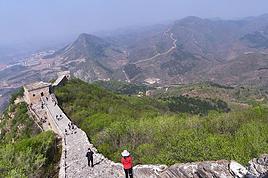
nous souhaitons nous rendre sur la grande muraille.
merci de nous renseigner
On trouve en Asie une grande quantité de peuples dont les origines et les liens de parenté ne sont souvent pas évidents. La confusion est d’autant plus grande qu’ils ont une variété de noms aux sonorités assez semblables à premier abord, et qu’un groupe donné se voit attribuer des noms différents suivant le pays où on le rencontre, la date à laquelle on en parle, l’auteur etc…. Meo, Miao, Yao, Hmong, Lao, Taï, Thaï, Qiang, Jurchen, Mandchous, Khitai etc…. la liste et longue ! Comment s’y retrouver ? D’où viennent-ils et comment sont-ils reliés les uns aux autres?
Je ne suis pas ethnologue, mais c’est un sujet qui m’a toujours intéressé. Au fil de mes lectures, je me suis rendu compte que pratiquement tous les peuples qui se trouvent maintenant en Asie du sud-est sont originaires de la Chine. La plupart des experts, par exemple, font remonter à Taiwan les langues austronésiennes, c.-à-d. malais, langues cham du sud du Vietnam, langues parlées dans le monde Malayo-Polynésien, qui s’étend de Madagascar jusqu’à Hawaï mais dont on trouve encore aujourd’hui quelques traces en Asie du sud-est. Comme référence, il suffit de citer l’excellent « Cambridge History of South-Est Asia », Vol. 1, Part One, « From early times to c. 1500 », 1999 ; page 112 (je traduis):
« Pendant l’étape linguistique proto-Austro-Tai (vers 4500 av. JC ?), il semblerait que des colonisateurs possédant une culture agraire franchirent le détroit de Formose pour atteindre Taiwan. Ils y établirent les langues initiales du groupe Austronésien. Leur population augmenta et se répandit à travers l’île, jusqu’à ce que, un millénaire plus tard peut-être (vers 3500 av. JC ?), leurs descendants linguistiques firent leurs premiers mouvements vers Luzon. » Etc……
Curieusement, je n’étais pas trop porté sur la Chine au départ, mais j’ai fini par me rendre à l’évidence : un minimum de connaissances sur la Chine est essentiel pour comprendre les populations de l’Asie du sud-est et même au-delà. Que s’est-il passé en Chine qui aurait poussé tous ces peuples à se déplacer vers le sud ?
Permettez-moi une plaisanterie ! On peut apporter une réponse simple et rapide à cette question : « Les Chinois sont des casse-pieds qui bousculent les gens autour d’eux. Les habitants non-Chinois de la Chine en ont eu marre, ont ramassé leurs cliques et leurs claques et se sont cassés ».
Il y a du vrai dans cette réponse, mais nous sommes entre gens un peu moins simplistes que ça, j’en suis sûr, et il doit y avoir plus à dire sur le sujet ! Je me propose de prendre autant de raccourcis que possible sur l’histoire de la Chine, pour en distiller ce qui m’intéresse ici, c.-à-d. les mouvements des peuples dans la sphère géographique chinoise. Ma référence principale (il faut bien commencer quelque part, comme je l’ai dit, ce n’est que récemment que « j’aborde la Chine ») est un livre publié en 2008: « China, A History » (« Chine, Une Histoire ») de John Keay. Ce journaliste britannique a dénoncé le « consensus international, pour ne pas dire la conspiration, de faire de l’histoire de la Chine un sujet aussi rébarbatif et incompréhensible que possible ». Je recommande vivement de le lire (je ne sais pas s’il a été traduit en français).
On me reprochera peut-être ma préférence à (souvent, sauf pour les termes déjà bien acceptés en français) ne pas utiliser les formes féminine ou plurielle pour les noms d’ethnies et de cultures de la Chine et de l’Asie en général. Ces formes n’existent ni en chinois ni dans d’autres langues locales. Je préfère donc dire « les Xia » plutôt que « les Xias ». Le comble, il me semble, est le terme « Laos », introduit il semblerait par des missionnaires Portugais, le « s » final en faisant un nom en portugais. Le problème, à mon avis, c’est que tout le monde prononce se « s » final, qui n’existe pas dans la langue Lao. Que ceux que ma petite manie dérange ajoutent les « s », les « e » et les « es » où ils veulent !
Alors allons-y! Premier chapitre:
Les débuts - Xia
La première dynastie chinoise reconnue, suivant la période des « cinq empereurs » mythiques, fut celle des Xia (2070-1600 av. JC ; chinois traditionnel: 華夏 ; chinois simplifié : 华夏; pinyin: Huáxià). On n’est pas absolument sûr que les Xia aient vraiment existé. La dynastie suivante, celle des Shang, est mieux corroborée. L’évidence archéologique ferait correspondre les Xia à un ensemble de cultures néolithiques et de l’âge du bronze du bassin inférieur du Fleuve Jaune (Huang He), c.-à-d. de la Plaine Centrale de la Chine du nord qui s’étend de la province de Shandong à la province du Shaanxi.
L’histoire de la Chine, presque toujours un produit « officiel » par des gens qui avaient un « agenda », a tendance à idéaliser et à simplifier. En fait, il ne semble pas que le nord de la Chine ait été contrôlé d’une façon uniforme et centralisée par les premières dynasties. Et les développements qui résultèrent en une « culture chinoise » se déroulèrent plutôt sur des territoires plus vastes que ceux des Xia, et auraient impliqué des peuples qui n’étaient probablement pas uniformes d’un point de vue ethnique. En fait, le concept d’ethnies bien séparées ne semble pas « tenir la route », une constatation qui n’est pas unique à l’Asie d’ailleurs. On devrait plutôt parler de culture et d’héritage linguistique. De la même façon, le mot «Han », désignant au départ une dynastie (202 av. JC – 189 après JC), en passa à être utilisé comme une étiquette ethnique et se trouve maintenant être la dénomination officielle de la majorité du peuple chinois, supposée être d’une seule et même ethnie.
Toujours est-il que les peuples de la Plaine Centrale, constituant le noyau des futurs Han, en fait les ancêtres de l'ethnie Han, se désignaient aux derniers siècles av. JC comme « Xia » pour se différencier des peuples « moins Chinois » considérés comme barbares, pour lesquels on usait de termes tels que « Di » ou « Rong ». Les Di ou Rong auraient été assimilés au fil de la très longue dynastie des Zhou (1050 – 256 av. JC). Cela résultait peut-être du sentiment d’avoir une identité privilégiée en tant qu’héritiers du royaume Xia, par des gens qui ont fini par se désigner comme « Xia ». Pour une première fois, avant l’usage du terme « Han », on avait abusé d’un terme désignant une culture pour désigner une population qui n’était pas ethniquement homogène.
Le terme « Xia » était encore utilisé pour désigner la culture « Chinoise », celle du nord, à l’époque ou les Qin (d’un «état » du nord qui correspondait plus ou moins au Shaanxi d’aujourd’hui) commencèrent à unifier le territoire chinois dans un sens moderne. En particulier, le roi Hui de la dynastie Qin conquit le Sichuan (le pays « des quatre rivières », connu jusque là sous les termes de Shu et Ba) au IV-ème siècle av. J-C (on cite la date de 316 av. JC). Le Sichuan tomba donc sous l’influence culturelle Xia, et fut intégré dans l’empire chinois.
Cette consolidation intégra d’autres territoires « non-Xia » : le reste du bassin du Yang Tse, une grande partie de la Chine du sud et la Mongolie Intérieure. L’apogée fut Huangdi, le premier empereur historique, rendu fameux entre autres par l’ armée de terre cuite de sa tombe (dont la chambre centrale n’a pas encore été excavée), et qui régna au III-ème siècle av. J-C. La dynastie Qin ne dura pas longtemps, mais donna la base à partir de laquelle l’empire suivant, celui des Han, se reforma à partir de la fin du III-ème siècle av. J-C.
Voilà donc ma première fournée. J’espère que cela intéressera quelques forumistes, et comme je l’ai dit, je ne suis pas un spécialiste du sujet, donc j’espère bien en apprendre plus de la part de ceux dont la lanterne est plus éclairée que la mienne !
Je ne suis pas ethnologue, mais c’est un sujet qui m’a toujours intéressé. Au fil de mes lectures, je me suis rendu compte que pratiquement tous les peuples qui se trouvent maintenant en Asie du sud-est sont originaires de la Chine. La plupart des experts, par exemple, font remonter à Taiwan les langues austronésiennes, c.-à-d. malais, langues cham du sud du Vietnam, langues parlées dans le monde Malayo-Polynésien, qui s’étend de Madagascar jusqu’à Hawaï mais dont on trouve encore aujourd’hui quelques traces en Asie du sud-est. Comme référence, il suffit de citer l’excellent « Cambridge History of South-Est Asia », Vol. 1, Part One, « From early times to c. 1500 », 1999 ; page 112 (je traduis):
« Pendant l’étape linguistique proto-Austro-Tai (vers 4500 av. JC ?), il semblerait que des colonisateurs possédant une culture agraire franchirent le détroit de Formose pour atteindre Taiwan. Ils y établirent les langues initiales du groupe Austronésien. Leur population augmenta et se répandit à travers l’île, jusqu’à ce que, un millénaire plus tard peut-être (vers 3500 av. JC ?), leurs descendants linguistiques firent leurs premiers mouvements vers Luzon. » Etc……
Curieusement, je n’étais pas trop porté sur la Chine au départ, mais j’ai fini par me rendre à l’évidence : un minimum de connaissances sur la Chine est essentiel pour comprendre les populations de l’Asie du sud-est et même au-delà. Que s’est-il passé en Chine qui aurait poussé tous ces peuples à se déplacer vers le sud ?
Permettez-moi une plaisanterie ! On peut apporter une réponse simple et rapide à cette question : « Les Chinois sont des casse-pieds qui bousculent les gens autour d’eux. Les habitants non-Chinois de la Chine en ont eu marre, ont ramassé leurs cliques et leurs claques et se sont cassés ».
Il y a du vrai dans cette réponse, mais nous sommes entre gens un peu moins simplistes que ça, j’en suis sûr, et il doit y avoir plus à dire sur le sujet ! Je me propose de prendre autant de raccourcis que possible sur l’histoire de la Chine, pour en distiller ce qui m’intéresse ici, c.-à-d. les mouvements des peuples dans la sphère géographique chinoise. Ma référence principale (il faut bien commencer quelque part, comme je l’ai dit, ce n’est que récemment que « j’aborde la Chine ») est un livre publié en 2008: « China, A History » (« Chine, Une Histoire ») de John Keay. Ce journaliste britannique a dénoncé le « consensus international, pour ne pas dire la conspiration, de faire de l’histoire de la Chine un sujet aussi rébarbatif et incompréhensible que possible ». Je recommande vivement de le lire (je ne sais pas s’il a été traduit en français).
On me reprochera peut-être ma préférence à (souvent, sauf pour les termes déjà bien acceptés en français) ne pas utiliser les formes féminine ou plurielle pour les noms d’ethnies et de cultures de la Chine et de l’Asie en général. Ces formes n’existent ni en chinois ni dans d’autres langues locales. Je préfère donc dire « les Xia » plutôt que « les Xias ». Le comble, il me semble, est le terme « Laos », introduit il semblerait par des missionnaires Portugais, le « s » final en faisant un nom en portugais. Le problème, à mon avis, c’est que tout le monde prononce se « s » final, qui n’existe pas dans la langue Lao. Que ceux que ma petite manie dérange ajoutent les « s », les « e » et les « es » où ils veulent !
Alors allons-y! Premier chapitre:
Les débuts - Xia
La première dynastie chinoise reconnue, suivant la période des « cinq empereurs » mythiques, fut celle des Xia (2070-1600 av. JC ; chinois traditionnel: 華夏 ; chinois simplifié : 华夏; pinyin: Huáxià). On n’est pas absolument sûr que les Xia aient vraiment existé. La dynastie suivante, celle des Shang, est mieux corroborée. L’évidence archéologique ferait correspondre les Xia à un ensemble de cultures néolithiques et de l’âge du bronze du bassin inférieur du Fleuve Jaune (Huang He), c.-à-d. de la Plaine Centrale de la Chine du nord qui s’étend de la province de Shandong à la province du Shaanxi.
L’histoire de la Chine, presque toujours un produit « officiel » par des gens qui avaient un « agenda », a tendance à idéaliser et à simplifier. En fait, il ne semble pas que le nord de la Chine ait été contrôlé d’une façon uniforme et centralisée par les premières dynasties. Et les développements qui résultèrent en une « culture chinoise » se déroulèrent plutôt sur des territoires plus vastes que ceux des Xia, et auraient impliqué des peuples qui n’étaient probablement pas uniformes d’un point de vue ethnique. En fait, le concept d’ethnies bien séparées ne semble pas « tenir la route », une constatation qui n’est pas unique à l’Asie d’ailleurs. On devrait plutôt parler de culture et d’héritage linguistique. De la même façon, le mot «Han », désignant au départ une dynastie (202 av. JC – 189 après JC), en passa à être utilisé comme une étiquette ethnique et se trouve maintenant être la dénomination officielle de la majorité du peuple chinois, supposée être d’une seule et même ethnie.
Toujours est-il que les peuples de la Plaine Centrale, constituant le noyau des futurs Han, en fait les ancêtres de l'ethnie Han, se désignaient aux derniers siècles av. JC comme « Xia » pour se différencier des peuples « moins Chinois » considérés comme barbares, pour lesquels on usait de termes tels que « Di » ou « Rong ». Les Di ou Rong auraient été assimilés au fil de la très longue dynastie des Zhou (1050 – 256 av. JC). Cela résultait peut-être du sentiment d’avoir une identité privilégiée en tant qu’héritiers du royaume Xia, par des gens qui ont fini par se désigner comme « Xia ». Pour une première fois, avant l’usage du terme « Han », on avait abusé d’un terme désignant une culture pour désigner une population qui n’était pas ethniquement homogène.
Le terme « Xia » était encore utilisé pour désigner la culture « Chinoise », celle du nord, à l’époque ou les Qin (d’un «état » du nord qui correspondait plus ou moins au Shaanxi d’aujourd’hui) commencèrent à unifier le territoire chinois dans un sens moderne. En particulier, le roi Hui de la dynastie Qin conquit le Sichuan (le pays « des quatre rivières », connu jusque là sous les termes de Shu et Ba) au IV-ème siècle av. J-C (on cite la date de 316 av. JC). Le Sichuan tomba donc sous l’influence culturelle Xia, et fut intégré dans l’empire chinois.
Cette consolidation intégra d’autres territoires « non-Xia » : le reste du bassin du Yang Tse, une grande partie de la Chine du sud et la Mongolie Intérieure. L’apogée fut Huangdi, le premier empereur historique, rendu fameux entre autres par l’ armée de terre cuite de sa tombe (dont la chambre centrale n’a pas encore été excavée), et qui régna au III-ème siècle av. J-C. La dynastie Qin ne dura pas longtemps, mais donna la base à partir de laquelle l’empire suivant, celui des Han, se reforma à partir de la fin du III-ème siècle av. J-C.
Voilà donc ma première fournée. J’espère que cela intéressera quelques forumistes, et comme je l’ai dit, je ne suis pas un spécialiste du sujet, donc j’espère bien en apprendre plus de la part de ceux dont la lanterne est plus éclairée que la mienne !
Bonjour,
Je cherche des infos sur les randonnées autour de Guilin, j'ai trouvé celle qui va de Dazhai à Tiantouzhai mais les avis sont différents d'un blog à un autre.
Qui aurait fait cette randonnée? Combien de temps ça prend ?
Est ce faisable en une journée avec 2 enfants (5-7 ans) pour :
Départ de Guilin en voiture pour parking de Dazhai Puis rando de Dazhai à Tiantouzhai. Retour à Dazhai puis voiture jusqu'à Guilin.
Est ce qu'on trouve facilement des taxis pour retourner sur Guilin?
Merci
Je cherche des infos sur les randonnées autour de Guilin, j'ai trouvé celle qui va de Dazhai à Tiantouzhai mais les avis sont différents d'un blog à un autre.
Qui aurait fait cette randonnée? Combien de temps ça prend ?
Est ce faisable en une journée avec 2 enfants (5-7 ans) pour :
Départ de Guilin en voiture pour parking de Dazhai Puis rando de Dazhai à Tiantouzhai. Retour à Dazhai puis voiture jusqu'à Guilin.
Est ce qu'on trouve facilement des taxis pour retourner sur Guilin?
Merci
Bonjour à tous,
J'ai entendu dire qu'il y avait un train direct d'Erlian à Ulan Bator (autre que le Transmongolien), mais impossible de le trouver sur internet. Je trouve facilement le train qui fait Ulan Bator - Erlian, qui coute environ 30$, mais pas son alter ego en provenance d'Erlian.
Je sais qu'il existe l'option jeep pour passer la frontière mais j'ai besoin d'un ticket prouvant ma sortie du territoire pour le Visa Chinois.
Est-ce que quelqu'un aurait le numéro du train Erlian - Ulan Bator ou des infos à son sujet ?
Merci pour vos réponses !
J'ai entendu dire qu'il y avait un train direct d'Erlian à Ulan Bator (autre que le Transmongolien), mais impossible de le trouver sur internet. Je trouve facilement le train qui fait Ulan Bator - Erlian, qui coute environ 30$, mais pas son alter ego en provenance d'Erlian.
Je sais qu'il existe l'option jeep pour passer la frontière mais j'ai besoin d'un ticket prouvant ma sortie du territoire pour le Visa Chinois.
Est-ce que quelqu'un aurait le numéro du train Erlian - Ulan Bator ou des infos à son sujet ?
Merci pour vos réponses !
Bonjour,
Je compte aller voir les terres rouges Dongchuan dans le Yunnan.
Quelqu'un a-t-il des adresses d'hôtels simples ou guest-houses à me conseiller.
Merci d'avance
Sylvie
Bonjour,
Nous souhaitons partir en Chine avec mon amie en juillet-aout pour 3-4 semaines et se promener en vélo.
Quelles sont à cette période les meilleures régions à faire?
On trouve facilement des vélos sur place ?
Merci
Nicolas
🙂
Festival de couleurs et de sons dans le Guizhou
Avant de vous raconter la suite de notre voyage, je voudrais vous situer l endroit d ou nous ecrivons : On nous demande souvent si l on trouve facilement internet en chine ..Tout d abord il faut preparer sa fiche avec
Ensuite pas de probleme, il y a toujours un jeune pour vous y emmener et la, vous rentrez dans une petite salle -comme aujourd hui a Kaili -ou il n y a que 100 postes ( tous pleins ) et a Kunming 3 fois plus !!!
Par contre sur place se repose le probleme de la langue pour se faire comprendre et dans notre petit cyber de Kaili, ils ont trouve la solution en installant le dico Chinois / Anglais, et ainsi on a pu se faire < entendre> et installer Skype ! Ainsi, grace a eux, nous avons discute avec nos enfants, ( en echange, il est vrai que nous n avions plus beaucoup de temps pour le blog )
Il etait temps de rejoindre le Guizhou, la neige ayant enfin fondu . Nous avions le choix entre 10 h de train (25 Euros en couchette molle ) ou 45 mn d avion ( 45 euros ) ...et cette fois ci pas probleme a l aeroport !!
Le Cits de Guiyang ( Zan Xie alias Arnaud ) nous a conseille pour notre parcours, , de decouvrir Zhenyuan, son vieux village et ses temples du dragon vert accroches sur une falaise . Site fabuleux et de plus nous etions tout seuls (avantage d etre hors saison ) . Par contre le soir, de nouveau une nuit de petards!! c etait la fete des lanternes (et de nos oreilles aussi !)
 mais avant tout nous allions dans cette region pour decouvrir le festival de lusheng (sorte de cornemuse chinoise, facile a transporter car l instrument peut mesurer de 20 cm a 6 metres )de la region de Kaili .

En premier : une journee de galere ( eh oui cela arrive de temps en temps ) ou nous avons attendu toute la journee les joueurs sans pouvoir se faire comprendre ..et pour terminer nous avons ete voir un musee ....qui lui aussi etait ferme !!!
Le lendemain la joie de voir les joueurs entoures des enfants du village en tenues de fete, (sous le regard attendri de leurs grands- parents qui s en occupent ) et des jeunes filles dans leurs plus belles parures
et surtout des combats de buffles (ou j ai ete tres surprise quand ils sont sortis du champ pour foncer vers nous et s engouffrer dans le village !!! )
Bon j arrete, nous partons a Zhouxi pour la suite du festival, mais avant nous allons comme cette petite fille avaler un bol de nouilles !!
Le Cits de Guiyang ( Zan Xie alias Arnaud ) nous a conseille pour notre parcours, , de decouvrir Zhenyuan, son vieux village et ses temples du dragon vert accroches sur une falaise . Site fabuleux et de plus nous etions tout seuls (avantage d etre hors saison ) . Par contre le soir, de nouveau une nuit de petards!! c etait la fete des lanternes (et de nos oreilles aussi !)
mais avant tout nous allions dans cette region pour decouvrir le festival de lusheng (sorte de cornemuse chinoise, facile a transporter car l instrument peut mesurer de 20 cm a 6 metres )de la region de Kaili .
En premier : une journee de galere ( eh oui cela arrive de temps en temps ) ou nous avons attendu toute la journee les joueurs sans pouvoir se faire comprendre ..et pour terminer nous avons ete voir un musee ....qui lui aussi etait ferme !!!
Le lendemain la joie de voir les joueurs entoures des enfants du village en tenues de fete, (sous le regard attendri de leurs grands- parents qui s en occupent ) et des jeunes filles dans leurs plus belles parures
et surtout des combats de buffles (ou j ai ete tres surprise quand ils sont sortis du champ pour foncer vers nous et s engouffrer dans le village !!! )
Bon j arrete, nous partons a Zhouxi pour la suite du festival, mais avant nous allons comme cette petite fille avaler un bol de nouilles !!
bonjour,
je cherche des rensignements sur les rando possibles sur l'épine dorsale du dragon au nord de guilin. On ne trouve pas beaucoup d'explications sur le lonely planet.
J'aimerai y passer 2 ou 3 jours, est-trop long, est-ce trop court, qu'il y a t"il à faire ? d'où part le trek ? ... faut'il un guide ? si oui on les trouve où ?
merci
je cherche des rensignements sur les rando possibles sur l'épine dorsale du dragon au nord de guilin. On ne trouve pas beaucoup d'explications sur le lonely planet.
J'aimerai y passer 2 ou 3 jours, est-trop long, est-ce trop court, qu'il y a t"il à faire ? d'où part le trek ? ... faut'il un guide ? si oui on les trouve où ?
merci
Quelqu'un aurait-il des recettes de cuisine sichuanaise, réalisables avec uniquement des ingrédients faciles à trouver partout en France ainsi que du poivre du Sichuan (ça, j'en ai ramené de Chine) ?
Merci d'avance
Merci d'avance
Hi everyone,
This trip report covers a journey along the Silk Road in China (see detailed description below) undertaken in October 2025. The goal isn’t to recount the trip but to provide information that might help those who want to take a similar journey. Much of the information is valid for any trip to China.
Who we are: a retired couple, aged 63 and 65 (age gives discounts on entry to various sites and museums in China, which is why I won’t list prices here—I don’t know them, but you can easily find them online). We’re used to traveling independently. We speak English, which is the only foreign language spoken in China, though by very few people. I speak and read a little Chinese, which helped, but you can easily get by without it (without any English at all, I think it would be more difficult).
Period: We arrived just after "Golden Week," when all of China is on vacation, and after the summer, when schools are out, so we encountered very few tourists (99.99% of whom were Chinese). Our experience with booking visits in advance (which we didn’t need to do) isn’t representative for those who want to travel in the summer! The October-November period was perfect for our trip—it wasn’t too hot or too cold (one day of snow on the Tibetan Plateau), though it was only a few degrees on the Tibetan part, with altitudes between 2,000 and 3,000 meters. The trees were beautifully colored.
General remarks: Everyone we dealt with was very kind and perfectly honest. If you order a meal without really understanding what to do and the person modifies your order, trust them—the result is what you need. If a taxi driver signals that they’ll wait for you to finish your visit and pick you up afterward, trust them. It means there aren’t many taxis where you are, and it’ll be more convenient. For prices at street vendors, we always found the right ballpark, and sometimes they even added a little extra to please us. A taxi driver treated us to lunch, and an employee drove us back to the hotel after a visit because there were no taxis. If you struggle to buy a ticket online because there’s no counter, someone will come to help. People even spontaneously ask if everything’s okay and if you need anything.
Everywhere we went was very clean, including restrooms (trains, stations, hotels, museums, tourist sites) and streets. The old stereotypes about this no longer apply.
The trip can be challenging for those who have difficulty walking. The distances to cover on foot in stations, to access sites, and within the sites themselves can sometimes be really long.
We used the Lonely Planet guide in English (published at the end of August 2025) a little for preparation, but mostly relied on the internet.
Before leaving: No visa is needed for French citizens for stays under 30 days. You get a stamp on your passport upon arrival and departure, and the formalities themselves are very quick in both directions (excluding any potential queues). Just a photo and fingerprints upon arrival, and welcome to China’s facial recognition system.
Money: All your payments (see below) will go through your Visa card—there will be hundreds, including many payments of 20 cents to a few euros. So, you need an international option that allows unlimited card transactions. Since cash is rarely needed, the allowed number of ATM withdrawals can be low. We made 3 withdrawals totaling 800 € for a month and could have managed with just 2. The exchange rate charged on our Visa card was 12 € for 100 RMB (yuan).
Install the following apps on your smartphone before leaving (otherwise, you’ll only have access to the Chinese versions, if available): - Alipay, which is used to pay everywhere in China (details below). You need to link it to your credit card, then provide proof of identity by uploading a passport photo and completing a facial recognition session. Alipay gives access to Didi (China’s Uber), public transport (metro/bus), and can also translate phrases. - WeChat (Weixin in Chinese, pronounced *weishin*), which is also used for payments but also replaces WhatsApp. Unfortunately, to activate your account, you need someone who already has WeChat to sponsor you (preferably a Chinese person). We asked someone at our first accommodations to do this—no problem. By sharing your WeChat number with accommodations, they can send you messages that are automatically translated, and you can communicate with people thanks to the translation (translation to French is very poor; it’s much better in English, but unfortunately, WeChat detects your phone’s language). Alipay and WeChat are accepted almost everywhere, but some places only accept WeChat. - Amap, the international version of Baidu Maps, which replaces Google Maps (not at all up-to-date in China). The English names of hotels often have little to do with the Chinese names except for a phonetic resemblance. To find them on Amap, it’s best to copy the Chinese name found on your Trip reservation under "show address in Chinese." - A VPN. We had CyberGhost, which didn’t work, but according to other travelers, NordVPN and Windscribe do. Without a VPN, you can’t access Google services, on WhatsApp you can send and receive text but not photos, and you can’t send or receive emails on Gmail addresses. We managed without a VPN by using Firefox as a browser and Bing as a search engine. - Trip, for booking trains and accommodations, and buying some tickets. It’s the equivalent of Booking for accommodations, but Booking has very few listings in China, while Trip has hundreds in every city. Most hotels and trains are exchangeable and refundable until the day before, with no or minimal fees.
You don’t need contactless (NFC) payment on your phone. Either you scan a barcode and enter the amount to pay, or you display a barcode, and they scan it with a scanner, and the amount is deducted directly.
Upon arrival: - Buy a Chinese SIM card: 100 RMB for 300 GB of data and several hours of talk time (we didn’t use it). Set the Chinese number as a reference on Alipay, WeChat, and Amap. - Find someone to sponsor you on WeChat.
Transportation: - **Plane**: China Eastern, Paris-Canton then Canton-Urumqi on the way out, and Xian-Canton then Canton-Paris on the way back. International flights were smooth, but the schedules for the two domestic flights were changed. It was fine on the way out because we had some leeway, but on the way back, we were notified the morning of that our flight was canceled and replaced with one that didn’t allow for the connection. We called and changed to an earlier flight (I think we were lucky to find available seats). - **Train**: Most long distances were covered by high-speed trains (called D or G in China) at 240 or 300 km/h. Second class is perfect—just as comfortable and clean as our TGVs. The only advantage of first class is the wider seats for larger people, but the downside is that seats are often booked in advance and thus less available. You can book trains long in advance on Trip, but they only go on sale in China 15 days before departure, so that’s when you’ll know if you have a ticket. Initially, we booked first class, but there were no seats available on the day, so we ended up booking everything in second class, which was perfect. There’s no paper ticket—if you’ve bought one, you go to the station, show your passport, and enter. You do the same to access the platform 15 minutes before the train, and that’s it. Our train was canceled twice, but no problem—we went to the ticket counter, got a refund, and were offered a replacement. It didn’t delay us by more than an hour (maybe it would be harder in peak season). For prices, check Trip.com, but it’s significantly cheaper than in France. - **Bus**: We took the bus between Xining and Tongren, Tongren to Xiahe, and Hezuo to Lanzhou—about 3 hours each time for 200 km, 6 € per person, and departures were right on time. - **Taxi**: For trips between the station and hotel, or hotel and visits. If you take a Didi via the Alipay app, you activate your location, enter your destination, and it offers several taxis. You accept, and you get the car’s license plate and its real-time position on the map. When you get in, the driver often asks for the last four digits of your phone number to confirm. Otherwise, you go to the taxi stand outside the station. The price per kilometer is around 20 cents, so for a 30 km trip from the station to the hotel, you’ll pay about 6 €. We never tried to save more by taking local buses, but since the metro in Xian costs 25 cents per trip, it’s probably in the same ballpark. Amap provides public transport routes like Google Maps. - **Driver**: We hired a taxi/driver for the day several times for sightseeing. Prices ranged from 350 to 1,000 RMB (the most expensive was arranged through the Sofitel Xining concierge) for trips ranging from a few hours to a full day, sometimes covering over 300 km (see the detailed trip description).
Accommodations: All booked in advance on Trip, but several were changed during the trip. Off-season, there were no issues. We mostly stayed in upscale places, but in China, that means 50 to 60 € per night in the most central or convenient neighborhood. Note: Almost all hotels have a 5/5 rating on Trip, but it seems the Chinese avoid giving lower ratings to be polite. So, you have to read the comments to realize that in France, we might have given a 2 or 3!
Food: At the table, you’re served hot water or a hot infusion, presumably made with purified water. We never got sick from drinking it, but don’t drink tap water. Purified or mineral water is easy to find.
In restaurants, you can manage by pointing to the dish you want from another diner, on the wall where there are photos, or on the menu with pictures. The food in the region isn’t often spicy, and people usually ask or signal before adding the red spicy sauce, so you should be able to handle it if you don’t like chili at all.
The "fake old quarters" in several cities are great places to find all kinds of restaurants (see detailed trip below).
Like Google Maps, Amap can show you nearby restaurants.
Shopping: For dried fruits, buy them in Turfan—you won’t find the same variety and quality even in Xian. Generally, if you like something, buy it. If you wait, you might not find it outside the region where you are.
In Xian, there’s a "Tea City" where you can find all kinds of tea (from cheap to very expensive).
The trip in more detail: I won’t dwell on the beauty or interest of the sites here since that’s a matter of personal taste. However, I will do so for lesser-known places to give an idea to those who might be interested.
For many sites, there are shuttles (sometimes not included in the ticket price but costing around 1 €) that take you to the interesting spots. We always took them—it saves you from walking past countless shops or along uninteresting paths.
- **Urumqi**: We spent only one night there, arriving in the middle of the afternoon and leaving the next morning. We stayed at the Dana Hotel in the bazaar. Given the size of the city, it’s a good option because I don’t think there are many other interesting places. The bazaar is brand new and not at all "typical" (Turfan’s bazaar is infinitely more interesting), but the dining area is very nice.
- **Turfan**: Stayed at the New Dap Hostel, which was great. The neighborhood is nice, not far from the city, and easy to find food. The museum is closed until 2026 (Amap provides museum hours and closures). We took a day trip (for the two of us) with a driver to the Bezeklik Caves, Flaming Mountains, the abandoned city of Gaochang, the Tuyuk Village Museum, and the Emin Minaret for 500 RMB from 9 AM to 8 PM (arranged by the hostel). The landscape during the excursion was quite fabulous. We also visited the Karez Museum and the abandoned city of Jiaohe on our own the next day. At this time of year, the sun sets around 6 PM, and there’s often haze after 5 PM, so for Jiaohe, for example, which takes about 3 hours to visit, it’s best to be there by 1 or 2 PM at the latest.
The Dahua Market area is perfect for dried fruits (including the famous grapes), and you can eat there among locals in their traditional costumes. Next to it, there are buildings full of shops selling made-in-China items—it kept us busy for a good half-day, if not more.
- **Dunhuang**: Stayed in a guesthouse near the dunes—the city center isn’t far but seems quite artificial. Visited the dunes, with a ticket valid for 3 days. Lots of Chinese tourists—very typical and interesting from an ethnological perspective 😊. We got up early one morning to climb the highest dune, just beyond the one everyone goes to. It’s a bit long and tiring, but the view is worth it. Visited the Mogao Caves, buying the ticket on-site (no chance in season without booking in advance). We met two other French people and got a French-speaking guide (by pretending not to understand English). It was really worth it—a group of 4 instead of 20, and they took their time (2 hours) for the visit. We took a day trip to the Yulin Caves (2.5 hours by road and 160 km one way) with a driver for 350 RMB. We liked it a lot, but if the Mogao Caves are enough for you, it’s not very different.
- **Jiayuguan**: Stayed in a city-center hotel. Visited the Wei and Jin tombs (actually just one)—that’s where we were told the taxi should wait to take us back to the city. We went down into a crypt with lots of decorated bricks from the 3rd century. We really liked it, but it’s not as spectacular as the fort if you’re not a fan. Visited the Jiayuguan Fort and, with the same ticket, climbed a small section of the Great Wall 10 km away. Plan at least 3 good hours for all this—there’s plenty to see.
- **Zhangye**: Stayed at The Silk Road Travelers Hostel, rustic but very nice and organizes excursions. Visited the Danxia (colored mountains)—just as spectacular as the photos. You can easily spend 3 hours there, so plan to finish before sunset to avoid the haze (you can always stay longer for the sunset if the weather’s nice). The next day, visited the Mati Si Temple in the cliff. The 10,000 Buddha Caves are under renovation, but the setting and the main temple are well worth the visit (the paths through the cliff tunnels must be hellish in peak season). You can probably organize these two excursions yourself by asking any taxi driver. Also visited the Giant Buddha Temple in the city center—really worth it.
- **Xining**: Stayed in a city-center hotel. Visited the Tibetan Medicine Museum to see the world’s largest thangka (1 km long), made over 40 years by renowned artists. It’s absolutely magnificent, on par with the virtuosity (but over 1 km) of the thangkas painted by famous artists in Xiahe (see below). Hired a female taxi driver for the day to visit Kumbum Monastery (Ta’er Si in Chinese) and the Danxia area in Guide, 50 km beyond the monastery. It’s less spectacular than Zhangye’s Danxia, but we really liked it (including the journey’s landscape). The next day, visited the old Ming-era Qutan Monastery—no visitors, with beautiful murals (half under renovation). Accessible by train to Haidong or Ledu, then a taxi. Xining’s mosque is of no interest, but there’s a pedestrian street with food stalls nearby that’s very nice.
- **Tongren**: Stayed near the main monastery. Visited Longwu Monastery (several hours), with lots of nice shops along the street leading to it. Then visited Wutun Monastery, which is less lively but beautiful and close to thangka workshops. You can go in and watch the painters at work. For a thangka made by a renowned artist, count about a year of work for 1 m² and around 10,000 €.
- **Xiahe**: Stayed in a city-center hotel. Visited Labrang Monastery—very nice but not as much as Tongren’s because many halls were closed. I think it’s better to go in season and take an English-guided tour (but it’s still worth the trip, even off-season).
- **Langmusi**: Took a taxi, but you can also take a bus (though very early in the morning and longer). Particularly beautiful for us because we woke up to bright sunshine and 5 cm of snow everywhere. Visited the two temples (really nice) and did the classic hike in the gorges starting at the Fairy Cave. For those interested, we continued along the canyon path, and after the meadow where marmots are clearly visible in summer, we climbed toward a pass on the left at 3,800 meters. The view of Langmusi and, above all, the vast grasslands and distant mountains was fabulous (3 hours round trip from the temple). You could probably reach the 4,000-meter summit by continuing up the valley instead of turning left, but according to guides, it’s better to count 7 hours round trip (no technical difficulty). You can leave Langmusi by bus, but off-season, you first have to take a taxi to a stop outside the city and wait for the bus. We didn’t try and took a taxi to Hezuo instead.
Note on this region: A high-speed train is under construction from Xining to Langmusi and beyond (never seen such an impressive construction site!). When it’s operational (in one or two years, I think), access to the area will be revolutionized, and perhaps some of the charm will be lost.
- **Hezuo**: Stopped on the way from Langmusi to Lanzhou. Visited the Milarepa Pagoda, entirely destroyed during the Cultural Revolution and since rebuilt. We liked it since we were passing through, but it doesn’t necessarily justify a long detour.
- **Lanzhou**: Reached by one of the many buses from Hezuo. Stayed in the "fake old quarter," which is extremely pleasant, especially in the evening with restaurants, groups of Chinese women dancing to loud music, etc. Visited Bingling Si with a driver, 120 km away—the landscape and site are absolutely magnificent, with no one around at our time of year. Visited the Gansu Museum (where the famous Flying Horse is, but it’s a replica). We bought the ticket on entry, but in season, you probably need to book in advance.
- **Yinchuan**: Stayed in the city center. A city we discovered by chance in the Lonely Planet—worth it if you have time. On the way, we stopped for a few hours in Zhongwei, where there’s an incredible Taoist temple (I’ll let you be surprised). Visited the Western Xia tombs—we took the short option, which visits Tomb 3. We think the others are similar but less impressive. The surrounding landscape and site are quite spectacular. Visited the film sets (really fun if you like Chinese movies), the short but interesting Ningxia Museum, and finally the modern art museum. The architecture is avant-garde, and there are some beautiful works (we like it, but it’s far from the center—hire a driver who waits, or you might have to wait for an employee to offer a ride back).
- **Tianshui**: Stayed in the suburbs, but you should find a hotel near the "fake old quarter" between the Fu Xi Temples and the Taoist temple—it’s a very nice area, and the two temples (especially the Taoist one) are within walking distance. Visited the Maijishan Caves—the ticket includes the shuttle to get there. Took a taxi from Lanzhou for about 10 € in 45 minutes. We found these caves fabulous.
- **Xi’an**: Stayed 500 meters from the Bell Tower at Hantang Inn—very convenient. We’d been before, so we didn’t revisit the Terracotta Army. The calligraphy district is worth it, as is the Muslim Quarter, though it’s very touristy. The area indicated on the Lonely Planet’s walking tour near the old fruit and vegetable market isn’t very interesting. To buy tea, you can go to the Northwest International Tea City, with dozens of shops. We chose one at random, tasted, and bought various teas. There’s everything from cheap to extremely expensive, but you can find reasonable prices even in seemingly luxurious shops. Along the street north of this area, there are large stores with tons of Chinese goods selling dishes, wedding items, etc. We spent hours there. In the city center, there are only malls with more or less international brands.
- **Longmen Grottoes**: Visited as a round trip by high-speed train from Xian—1 hour 15 minutes to Longmen’s high-speed train station, and the site entrance is 15 minutes by taxi.
We didn’t go to Mount Hua Shan, but there’s a high-speed train station nearby, and there were people on the train who were clearly going there. So, you can probably do this excursion in a day from Xian as well.
Conclusion: We hope this report makes you want to go or helps you if you’re already planning to. If you have questions that you can’t find the answer to by searching properly online and we can answer, don’t hesitate.
This trip report covers a journey along the Silk Road in China (see detailed description below) undertaken in October 2025. The goal isn’t to recount the trip but to provide information that might help those who want to take a similar journey. Much of the information is valid for any trip to China.
Who we are: a retired couple, aged 63 and 65 (age gives discounts on entry to various sites and museums in China, which is why I won’t list prices here—I don’t know them, but you can easily find them online). We’re used to traveling independently. We speak English, which is the only foreign language spoken in China, though by very few people. I speak and read a little Chinese, which helped, but you can easily get by without it (without any English at all, I think it would be more difficult).
Period: We arrived just after "Golden Week," when all of China is on vacation, and after the summer, when schools are out, so we encountered very few tourists (99.99% of whom were Chinese). Our experience with booking visits in advance (which we didn’t need to do) isn’t representative for those who want to travel in the summer! The October-November period was perfect for our trip—it wasn’t too hot or too cold (one day of snow on the Tibetan Plateau), though it was only a few degrees on the Tibetan part, with altitudes between 2,000 and 3,000 meters. The trees were beautifully colored.
General remarks: Everyone we dealt with was very kind and perfectly honest. If you order a meal without really understanding what to do and the person modifies your order, trust them—the result is what you need. If a taxi driver signals that they’ll wait for you to finish your visit and pick you up afterward, trust them. It means there aren’t many taxis where you are, and it’ll be more convenient. For prices at street vendors, we always found the right ballpark, and sometimes they even added a little extra to please us. A taxi driver treated us to lunch, and an employee drove us back to the hotel after a visit because there were no taxis. If you struggle to buy a ticket online because there’s no counter, someone will come to help. People even spontaneously ask if everything’s okay and if you need anything.
Everywhere we went was very clean, including restrooms (trains, stations, hotels, museums, tourist sites) and streets. The old stereotypes about this no longer apply.
The trip can be challenging for those who have difficulty walking. The distances to cover on foot in stations, to access sites, and within the sites themselves can sometimes be really long.
We used the Lonely Planet guide in English (published at the end of August 2025) a little for preparation, but mostly relied on the internet.
Before leaving: No visa is needed for French citizens for stays under 30 days. You get a stamp on your passport upon arrival and departure, and the formalities themselves are very quick in both directions (excluding any potential queues). Just a photo and fingerprints upon arrival, and welcome to China’s facial recognition system.
Money: All your payments (see below) will go through your Visa card—there will be hundreds, including many payments of 20 cents to a few euros. So, you need an international option that allows unlimited card transactions. Since cash is rarely needed, the allowed number of ATM withdrawals can be low. We made 3 withdrawals totaling 800 € for a month and could have managed with just 2. The exchange rate charged on our Visa card was 12 € for 100 RMB (yuan).
Install the following apps on your smartphone before leaving (otherwise, you’ll only have access to the Chinese versions, if available): - Alipay, which is used to pay everywhere in China (details below). You need to link it to your credit card, then provide proof of identity by uploading a passport photo and completing a facial recognition session. Alipay gives access to Didi (China’s Uber), public transport (metro/bus), and can also translate phrases. - WeChat (Weixin in Chinese, pronounced *weishin*), which is also used for payments but also replaces WhatsApp. Unfortunately, to activate your account, you need someone who already has WeChat to sponsor you (preferably a Chinese person). We asked someone at our first accommodations to do this—no problem. By sharing your WeChat number with accommodations, they can send you messages that are automatically translated, and you can communicate with people thanks to the translation (translation to French is very poor; it’s much better in English, but unfortunately, WeChat detects your phone’s language). Alipay and WeChat are accepted almost everywhere, but some places only accept WeChat. - Amap, the international version of Baidu Maps, which replaces Google Maps (not at all up-to-date in China). The English names of hotels often have little to do with the Chinese names except for a phonetic resemblance. To find them on Amap, it’s best to copy the Chinese name found on your Trip reservation under "show address in Chinese." - A VPN. We had CyberGhost, which didn’t work, but according to other travelers, NordVPN and Windscribe do. Without a VPN, you can’t access Google services, on WhatsApp you can send and receive text but not photos, and you can’t send or receive emails on Gmail addresses. We managed without a VPN by using Firefox as a browser and Bing as a search engine. - Trip, for booking trains and accommodations, and buying some tickets. It’s the equivalent of Booking for accommodations, but Booking has very few listings in China, while Trip has hundreds in every city. Most hotels and trains are exchangeable and refundable until the day before, with no or minimal fees.
You don’t need contactless (NFC) payment on your phone. Either you scan a barcode and enter the amount to pay, or you display a barcode, and they scan it with a scanner, and the amount is deducted directly.
Upon arrival: - Buy a Chinese SIM card: 100 RMB for 300 GB of data and several hours of talk time (we didn’t use it). Set the Chinese number as a reference on Alipay, WeChat, and Amap. - Find someone to sponsor you on WeChat.
Transportation: - **Plane**: China Eastern, Paris-Canton then Canton-Urumqi on the way out, and Xian-Canton then Canton-Paris on the way back. International flights were smooth, but the schedules for the two domestic flights were changed. It was fine on the way out because we had some leeway, but on the way back, we were notified the morning of that our flight was canceled and replaced with one that didn’t allow for the connection. We called and changed to an earlier flight (I think we were lucky to find available seats). - **Train**: Most long distances were covered by high-speed trains (called D or G in China) at 240 or 300 km/h. Second class is perfect—just as comfortable and clean as our TGVs. The only advantage of first class is the wider seats for larger people, but the downside is that seats are often booked in advance and thus less available. You can book trains long in advance on Trip, but they only go on sale in China 15 days before departure, so that’s when you’ll know if you have a ticket. Initially, we booked first class, but there were no seats available on the day, so we ended up booking everything in second class, which was perfect. There’s no paper ticket—if you’ve bought one, you go to the station, show your passport, and enter. You do the same to access the platform 15 minutes before the train, and that’s it. Our train was canceled twice, but no problem—we went to the ticket counter, got a refund, and were offered a replacement. It didn’t delay us by more than an hour (maybe it would be harder in peak season). For prices, check Trip.com, but it’s significantly cheaper than in France. - **Bus**: We took the bus between Xining and Tongren, Tongren to Xiahe, and Hezuo to Lanzhou—about 3 hours each time for 200 km, 6 € per person, and departures were right on time. - **Taxi**: For trips between the station and hotel, or hotel and visits. If you take a Didi via the Alipay app, you activate your location, enter your destination, and it offers several taxis. You accept, and you get the car’s license plate and its real-time position on the map. When you get in, the driver often asks for the last four digits of your phone number to confirm. Otherwise, you go to the taxi stand outside the station. The price per kilometer is around 20 cents, so for a 30 km trip from the station to the hotel, you’ll pay about 6 €. We never tried to save more by taking local buses, but since the metro in Xian costs 25 cents per trip, it’s probably in the same ballpark. Amap provides public transport routes like Google Maps. - **Driver**: We hired a taxi/driver for the day several times for sightseeing. Prices ranged from 350 to 1,000 RMB (the most expensive was arranged through the Sofitel Xining concierge) for trips ranging from a few hours to a full day, sometimes covering over 300 km (see the detailed trip description).
Accommodations: All booked in advance on Trip, but several were changed during the trip. Off-season, there were no issues. We mostly stayed in upscale places, but in China, that means 50 to 60 € per night in the most central or convenient neighborhood. Note: Almost all hotels have a 5/5 rating on Trip, but it seems the Chinese avoid giving lower ratings to be polite. So, you have to read the comments to realize that in France, we might have given a 2 or 3!
Food: At the table, you’re served hot water or a hot infusion, presumably made with purified water. We never got sick from drinking it, but don’t drink tap water. Purified or mineral water is easy to find.
In restaurants, you can manage by pointing to the dish you want from another diner, on the wall where there are photos, or on the menu with pictures. The food in the region isn’t often spicy, and people usually ask or signal before adding the red spicy sauce, so you should be able to handle it if you don’t like chili at all.
The "fake old quarters" in several cities are great places to find all kinds of restaurants (see detailed trip below).
Like Google Maps, Amap can show you nearby restaurants.
Shopping: For dried fruits, buy them in Turfan—you won’t find the same variety and quality even in Xian. Generally, if you like something, buy it. If you wait, you might not find it outside the region where you are.
In Xian, there’s a "Tea City" where you can find all kinds of tea (from cheap to very expensive).
The trip in more detail: I won’t dwell on the beauty or interest of the sites here since that’s a matter of personal taste. However, I will do so for lesser-known places to give an idea to those who might be interested.
For many sites, there are shuttles (sometimes not included in the ticket price but costing around 1 €) that take you to the interesting spots. We always took them—it saves you from walking past countless shops or along uninteresting paths.
- **Urumqi**: We spent only one night there, arriving in the middle of the afternoon and leaving the next morning. We stayed at the Dana Hotel in the bazaar. Given the size of the city, it’s a good option because I don’t think there are many other interesting places. The bazaar is brand new and not at all "typical" (Turfan’s bazaar is infinitely more interesting), but the dining area is very nice.
- **Turfan**: Stayed at the New Dap Hostel, which was great. The neighborhood is nice, not far from the city, and easy to find food. The museum is closed until 2026 (Amap provides museum hours and closures). We took a day trip (for the two of us) with a driver to the Bezeklik Caves, Flaming Mountains, the abandoned city of Gaochang, the Tuyuk Village Museum, and the Emin Minaret for 500 RMB from 9 AM to 8 PM (arranged by the hostel). The landscape during the excursion was quite fabulous. We also visited the Karez Museum and the abandoned city of Jiaohe on our own the next day. At this time of year, the sun sets around 6 PM, and there’s often haze after 5 PM, so for Jiaohe, for example, which takes about 3 hours to visit, it’s best to be there by 1 or 2 PM at the latest.
The Dahua Market area is perfect for dried fruits (including the famous grapes), and you can eat there among locals in their traditional costumes. Next to it, there are buildings full of shops selling made-in-China items—it kept us busy for a good half-day, if not more.
- **Dunhuang**: Stayed in a guesthouse near the dunes—the city center isn’t far but seems quite artificial. Visited the dunes, with a ticket valid for 3 days. Lots of Chinese tourists—very typical and interesting from an ethnological perspective 😊. We got up early one morning to climb the highest dune, just beyond the one everyone goes to. It’s a bit long and tiring, but the view is worth it. Visited the Mogao Caves, buying the ticket on-site (no chance in season without booking in advance). We met two other French people and got a French-speaking guide (by pretending not to understand English). It was really worth it—a group of 4 instead of 20, and they took their time (2 hours) for the visit. We took a day trip to the Yulin Caves (2.5 hours by road and 160 km one way) with a driver for 350 RMB. We liked it a lot, but if the Mogao Caves are enough for you, it’s not very different.
- **Jiayuguan**: Stayed in a city-center hotel. Visited the Wei and Jin tombs (actually just one)—that’s where we were told the taxi should wait to take us back to the city. We went down into a crypt with lots of decorated bricks from the 3rd century. We really liked it, but it’s not as spectacular as the fort if you’re not a fan. Visited the Jiayuguan Fort and, with the same ticket, climbed a small section of the Great Wall 10 km away. Plan at least 3 good hours for all this—there’s plenty to see.
- **Zhangye**: Stayed at The Silk Road Travelers Hostel, rustic but very nice and organizes excursions. Visited the Danxia (colored mountains)—just as spectacular as the photos. You can easily spend 3 hours there, so plan to finish before sunset to avoid the haze (you can always stay longer for the sunset if the weather’s nice). The next day, visited the Mati Si Temple in the cliff. The 10,000 Buddha Caves are under renovation, but the setting and the main temple are well worth the visit (the paths through the cliff tunnels must be hellish in peak season). You can probably organize these two excursions yourself by asking any taxi driver. Also visited the Giant Buddha Temple in the city center—really worth it.
- **Xining**: Stayed in a city-center hotel. Visited the Tibetan Medicine Museum to see the world’s largest thangka (1 km long), made over 40 years by renowned artists. It’s absolutely magnificent, on par with the virtuosity (but over 1 km) of the thangkas painted by famous artists in Xiahe (see below). Hired a female taxi driver for the day to visit Kumbum Monastery (Ta’er Si in Chinese) and the Danxia area in Guide, 50 km beyond the monastery. It’s less spectacular than Zhangye’s Danxia, but we really liked it (including the journey’s landscape). The next day, visited the old Ming-era Qutan Monastery—no visitors, with beautiful murals (half under renovation). Accessible by train to Haidong or Ledu, then a taxi. Xining’s mosque is of no interest, but there’s a pedestrian street with food stalls nearby that’s very nice.
- **Tongren**: Stayed near the main monastery. Visited Longwu Monastery (several hours), with lots of nice shops along the street leading to it. Then visited Wutun Monastery, which is less lively but beautiful and close to thangka workshops. You can go in and watch the painters at work. For a thangka made by a renowned artist, count about a year of work for 1 m² and around 10,000 €.
- **Xiahe**: Stayed in a city-center hotel. Visited Labrang Monastery—very nice but not as much as Tongren’s because many halls were closed. I think it’s better to go in season and take an English-guided tour (but it’s still worth the trip, even off-season).
- **Langmusi**: Took a taxi, but you can also take a bus (though very early in the morning and longer). Particularly beautiful for us because we woke up to bright sunshine and 5 cm of snow everywhere. Visited the two temples (really nice) and did the classic hike in the gorges starting at the Fairy Cave. For those interested, we continued along the canyon path, and after the meadow where marmots are clearly visible in summer, we climbed toward a pass on the left at 3,800 meters. The view of Langmusi and, above all, the vast grasslands and distant mountains was fabulous (3 hours round trip from the temple). You could probably reach the 4,000-meter summit by continuing up the valley instead of turning left, but according to guides, it’s better to count 7 hours round trip (no technical difficulty). You can leave Langmusi by bus, but off-season, you first have to take a taxi to a stop outside the city and wait for the bus. We didn’t try and took a taxi to Hezuo instead.
Note on this region: A high-speed train is under construction from Xining to Langmusi and beyond (never seen such an impressive construction site!). When it’s operational (in one or two years, I think), access to the area will be revolutionized, and perhaps some of the charm will be lost.
- **Hezuo**: Stopped on the way from Langmusi to Lanzhou. Visited the Milarepa Pagoda, entirely destroyed during the Cultural Revolution and since rebuilt. We liked it since we were passing through, but it doesn’t necessarily justify a long detour.
- **Lanzhou**: Reached by one of the many buses from Hezuo. Stayed in the "fake old quarter," which is extremely pleasant, especially in the evening with restaurants, groups of Chinese women dancing to loud music, etc. Visited Bingling Si with a driver, 120 km away—the landscape and site are absolutely magnificent, with no one around at our time of year. Visited the Gansu Museum (where the famous Flying Horse is, but it’s a replica). We bought the ticket on entry, but in season, you probably need to book in advance.
- **Yinchuan**: Stayed in the city center. A city we discovered by chance in the Lonely Planet—worth it if you have time. On the way, we stopped for a few hours in Zhongwei, where there’s an incredible Taoist temple (I’ll let you be surprised). Visited the Western Xia tombs—we took the short option, which visits Tomb 3. We think the others are similar but less impressive. The surrounding landscape and site are quite spectacular. Visited the film sets (really fun if you like Chinese movies), the short but interesting Ningxia Museum, and finally the modern art museum. The architecture is avant-garde, and there are some beautiful works (we like it, but it’s far from the center—hire a driver who waits, or you might have to wait for an employee to offer a ride back).
- **Tianshui**: Stayed in the suburbs, but you should find a hotel near the "fake old quarter" between the Fu Xi Temples and the Taoist temple—it’s a very nice area, and the two temples (especially the Taoist one) are within walking distance. Visited the Maijishan Caves—the ticket includes the shuttle to get there. Took a taxi from Lanzhou for about 10 € in 45 minutes. We found these caves fabulous.
- **Xi’an**: Stayed 500 meters from the Bell Tower at Hantang Inn—very convenient. We’d been before, so we didn’t revisit the Terracotta Army. The calligraphy district is worth it, as is the Muslim Quarter, though it’s very touristy. The area indicated on the Lonely Planet’s walking tour near the old fruit and vegetable market isn’t very interesting. To buy tea, you can go to the Northwest International Tea City, with dozens of shops. We chose one at random, tasted, and bought various teas. There’s everything from cheap to extremely expensive, but you can find reasonable prices even in seemingly luxurious shops. Along the street north of this area, there are large stores with tons of Chinese goods selling dishes, wedding items, etc. We spent hours there. In the city center, there are only malls with more or less international brands.
- **Longmen Grottoes**: Visited as a round trip by high-speed train from Xian—1 hour 15 minutes to Longmen’s high-speed train station, and the site entrance is 15 minutes by taxi.
We didn’t go to Mount Hua Shan, but there’s a high-speed train station nearby, and there were people on the train who were clearly going there. So, you can probably do this excursion in a day from Xian as well.
Conclusion: We hope this report makes you want to go or helps you if you’re already planning to. If you have questions that you can’t find the answer to by searching properly online and we can answer, don’t hesitate.
Ou dormir à Jianshui hormis chez la Famille Zhu, bien tentante mais hors de notre budget, et à Kunming.
Merci de vos retours
Dan
Salut à tous,
Il y a quelque temps, j'ai reçu un bon coup de main d'un cyclo grâce au forum en nous permettant de rentrer contact et de faire ainsi transiter des pneus neige entre Paris et Hanoi où nous nous trouvions. Nous prenions la direction du Sichuan Tibétain dont voici un bref résumé en vidéo en cliquant ici :
Et en photos c'est par ici...
Bonne journée à tout le monde !
Il y a quelque temps, j'ai reçu un bon coup de main d'un cyclo grâce au forum en nous permettant de rentrer contact et de faire ainsi transiter des pneus neige entre Paris et Hanoi où nous nous trouvions. Nous prenions la direction du Sichuan Tibétain dont voici un bref résumé en vidéo en cliquant ici :
Et en photos c'est par ici...
Bonne journée à tout le monde !
Bonjour, je vais vivre à Pékin à partir du 5 avril. Je voulais savoir comment était la vie la bas? et surtout la communauté gay, est il facile de rencontrer du monde? Merci d'avance
😉
bonjour, Juin est il une bonne periode pour aller a HK ? Quelqu un connait il le Salisbury YMCA hotel ? merci
Bonjour,
Je souhaiterai avoir des informations sur la chine du coté de pékin. Nous sommes 4( 2 adultes et 2 enfant ). Nous partirons fin juillet et début août !!!!! Je prends toutes informations ou conseil. Nous resté entre 2 et 3 semaines
MERCI 🙂
Je souhaiterai avoir des informations sur la chine du coté de pékin. Nous sommes 4( 2 adultes et 2 enfant ). Nous partirons fin juillet et début août !!!!! Je prends toutes informations ou conseil. Nous resté entre 2 et 3 semaines
MERCI 🙂
Une question pour les filles, où puis-je trouver de la belle lingerie en chine ?
J'ai vu dans la presse que certains grands noms Français organisent des défilés et ont une fabrication en Chine !
Il y a aussi un article qui cite des artisans français installés à Beijing, qui travaillent pour Dior mais qui vendent aussi sur place...
Sinon , je veux bien quelques adresses de magasins, on prendra deux où trois jours pour trainer les boutiques.
Nous revenons le 18 janvier, je vous dirais ce que j'ai vu là bas...
Merci à tous pour votre aide
Nicole
Bonjour tous le monde.
Voilà je compte allé a Shanghai depuis pékin mais j'aimerai savoir si je dois réservé en avance (sur ctrip par exemple) ou bien si je peux acheté une fois sur place?? Car je connais pas encore la date prévu juste que sa sera autour du 20juillet. Le truc c'est que je dois rejoindre des amis a pékin et eux même ne savent pas les dates, ils sont un peu trop cool du genre "on verra sur place t'inquiète." Pour être franc j'aime pas trop les trucs de dernière minute et les imprévus. Et j'aimerai bien rester au moins 5jours a Shanghai (donc partir avant le 22juillet au grand max avec ou sans eux). Je pourrai réservé en avance et tans pis pour eux mais l’idéal quand même c’est qu’on y va ensemble.
Quelqu'un saurait si on trouve facilement des billets d'avions (sur place) durant cette période?? J'ai peur qu'il n'y a plus de place si je réserve un peu au dernier moment.
En tous cas je vous remercie d'avance pour votre aide.
Voilà je compte allé a Shanghai depuis pékin mais j'aimerai savoir si je dois réservé en avance (sur ctrip par exemple) ou bien si je peux acheté une fois sur place?? Car je connais pas encore la date prévu juste que sa sera autour du 20juillet. Le truc c'est que je dois rejoindre des amis a pékin et eux même ne savent pas les dates, ils sont un peu trop cool du genre "on verra sur place t'inquiète." Pour être franc j'aime pas trop les trucs de dernière minute et les imprévus. Et j'aimerai bien rester au moins 5jours a Shanghai (donc partir avant le 22juillet au grand max avec ou sans eux). Je pourrai réservé en avance et tans pis pour eux mais l’idéal quand même c’est qu’on y va ensemble.
Quelqu'un saurait si on trouve facilement des billets d'avions (sur place) durant cette période?? J'ai peur qu'il n'y a plus de place si je réserve un peu au dernier moment.
En tous cas je vous remercie d'avance pour votre aide.
bonjour,
j'aimerai savoir comment est perçu le francais en chine, y parle t-on francais
et es ce qu'il y a des quartier francais ?
En allant au restaurant chinois, nous avons goûter du canard laqué. Et nous avions bien aimé.
J'aimerais savoir si qqn sait comment on cuisine cela?
Valérie
Valérie
Salut a tous!
Je me dirige actuellement vers le nord du Laos et vais me rapprocher de la frontiere chinoise. J ai tres envie de la franchir pour decouvrir le Yunnan. Mais mon temps est compte : 15 jours...Pensez vous que c est suffisant sans trop trop speeder?? J ai l intention de voler jusqu a Bangkok au retour pour prendre mon avion, quelles sont les compagnies interressantes?? Et pour quel prix?? Derniere question : connaissez vous un moyen d obtenir rapidemment un visa pour la Chine (moins que 4 jours) a Vientiane??
Merci a vous!
Je me dirige actuellement vers le nord du Laos et vais me rapprocher de la frontiere chinoise. J ai tres envie de la franchir pour decouvrir le Yunnan. Mais mon temps est compte : 15 jours...Pensez vous que c est suffisant sans trop trop speeder?? J ai l intention de voler jusqu a Bangkok au retour pour prendre mon avion, quelles sont les compagnies interressantes?? Et pour quel prix?? Derniere question : connaissez vous un moyen d obtenir rapidemment un visa pour la Chine (moins que 4 jours) a Vientiane??
Merci a vous!
bonjour a tous!
je pars bientot effectuer une traversée de la Chine à vélo . j'ai un visa de deux mois. J'ai vu sur le forum que c'était pas trop compliqué de le prolonger deux fois. Pouvez me dire avec plus de détail comment. Ces "bureaux de l'immigration" sont dans toutes les villes? C'est différent de la police? on les trouve facilement? Le prolongement coute aussi cher que le visa?
Merci à tous! Francois
Merci à tous! Francois
Salut à tous !
Je dois partir en Chine pour quatre semaine en septembre et me heurte à un petit problème : l'hébergement. Dans les hôtels les plus modestes, il faut compter un minimum de 150 francs, le camping est interdit à moins d'un permis difficile à obtenir, les auberges de jeunesses sont pratiquement inexistantes, quant aux résidences universitaires, elles sont réservées aux étudiants et parfois sur présentation de la carte. Comme je me vois mal débourser 150 F/ nuit pdt 4 semaines..... quelqu'un pourrait-il me donner quelques tuyaux pour dormir dans les villes suivantes :
Suzhou, Nanjing, Héfei, Wuhan, Yichang, Chongqing, Chengdu et dans la région du Yunnan ?
Merci d'avance !
Je dois partir en Chine pour quatre semaine en septembre et me heurte à un petit problème : l'hébergement. Dans les hôtels les plus modestes, il faut compter un minimum de 150 francs, le camping est interdit à moins d'un permis difficile à obtenir, les auberges de jeunesses sont pratiquement inexistantes, quant aux résidences universitaires, elles sont réservées aux étudiants et parfois sur présentation de la carte. Comme je me vois mal débourser 150 F/ nuit pdt 4 semaines..... quelqu'un pourrait-il me donner quelques tuyaux pour dormir dans les villes suivantes :
Suzhou, Nanjing, Héfei, Wuhan, Yichang, Chongqing, Chengdu et dans la région du Yunnan ?
Merci d'avance !
Bonjour a tous
Je cherche toutes infos sur cette villem je part y vivre 5 mois a partire de septembre.
J ai pleins de questions, combien coute une moto legere, ou aller ce balader dans la regionm genre petit trek, ou acheter son matos photo moins chere ...
Enfin voila quoim si vous avew des infos sur des site ou y a pas de touristes c est encore mieux ....
a +, Philo
Je cherche toutes infos sur cette villem je part y vivre 5 mois a partire de septembre.
J ai pleins de questions, combien coute une moto legere, ou aller ce balader dans la regionm genre petit trek, ou acheter son matos photo moins chere ...
Enfin voila quoim si vous avew des infos sur des site ou y a pas de touristes c est encore mieux ....
a +, Philo
Bonjour,
Je compte me rendre en Chine à Xi'an (en ayant mon visa Chinois une entrée), j'aimerai par la suite prendre le train pour Lhassa, avec tout ce que j'ai lu et si j'ai bien compris, il me faut un permis pour y aller et m'inscrire avec un tour opérateur pour pouvoir visiter cette région. Mes questions sont les suivantes : Comment je peux faire quand je suis à Xi'an pour pouvoir organiser cela, y a t il des agences sur place ou bien dois je m'y prendre à l'avance avec une agence localisée au Tibet. Après avoir visiter le Tibet, vu que j'ai un visa une entrée, puis je retourner en Chine ou bien me faut il un visa multi entrées. Avez vous des agences à me conseiller et des sites pour les billets de train. Merci d'avance.
Je compte me rendre en Chine à Xi'an (en ayant mon visa Chinois une entrée), j'aimerai par la suite prendre le train pour Lhassa, avec tout ce que j'ai lu et si j'ai bien compris, il me faut un permis pour y aller et m'inscrire avec un tour opérateur pour pouvoir visiter cette région. Mes questions sont les suivantes : Comment je peux faire quand je suis à Xi'an pour pouvoir organiser cela, y a t il des agences sur place ou bien dois je m'y prendre à l'avance avec une agence localisée au Tibet. Après avoir visiter le Tibet, vu que j'ai un visa une entrée, puis je retourner en Chine ou bien me faut il un visa multi entrées. Avez vous des agences à me conseiller et des sites pour les billets de train. Merci d'avance.
Morceaux de Chine, un bout de Sichuan et du Guizhou.
1. Guizhou
Préambule
Dans ce carnet je ne vais pas raconter jour par jour les évènements mais décrire lieu par lieu. Je dispose de 3 semaines. La période de voyage choisie étant mi-Novembre, parce que par expérience je trouve que c’est probablement l’une des meilleures période pour voyager dans l’hémisphère nord, en raison du temps globalement clement et du peu de tourisme en cette période. On voyage à 4, ce qui a pour avantage de réduire certains frais, tout en restant assez petit pour ne pas avoir à scinder le groupe. La Chine étant très vaste je préfère cibler une ou deux régions, les explorer, plutôt que de faire un long parcours. La Chine possèdent également une variété ethnique impressionnante, on ne peut pas embrasser tous ces aspects en 3 semaines, ni même en 2 mois je pense. La diversité culturelle est trop variée dans ces 5 coins.
2.Sichuan
3. Sichuan, un moine taoïste.
1. Guizhou
Préambule
Dans ce carnet je ne vais pas raconter jour par jour les évènements mais décrire lieu par lieu. Je dispose de 3 semaines. La période de voyage choisie étant mi-Novembre, parce que par expérience je trouve que c’est probablement l’une des meilleures période pour voyager dans l’hémisphère nord, en raison du temps globalement clement et du peu de tourisme en cette période. On voyage à 4, ce qui a pour avantage de réduire certains frais, tout en restant assez petit pour ne pas avoir à scinder le groupe. La Chine étant très vaste je préfère cibler une ou deux régions, les explorer, plutôt que de faire un long parcours. La Chine possèdent également une variété ethnique impressionnante, on ne peut pas embrasser tous ces aspects en 3 semaines, ni même en 2 mois je pense. La diversité culturelle est trop variée dans ces 5 coins.
2.Sichuan
3. Sichuan, un moine taoïste.
Bonjour,
Les discussions sur cette procédure ne sont pas actualisé alors je relance le sujet.
Je sais qu'il est possible d'obtenir le visa chinois 30 jours a bangkok ou a chiang mai en Thaïlande.
Il y a récemment un super post détaillant fraichement la procédure a bangkok :
http://voyageforum.com/forum/visa_chinois_bangkok_pas_visa_via_agence_D5855388/
Qu'en est-il de chiang mai?
Est-ce que la procédure dure aussi 4 jours?
Qu'elle est la liste des pieces demandés (la même qu'a bangkok)?
Est-il possible de faire cette demande pour après passer par la route entre Chiang Mai et Hanoi, rentrer par train en chine et sortir de la chine par train? (Ou est-ce qu'il demande les billets d'avion d'entrer et de sortie de la chine?)
Merci beaucoup!
Les discussions sur cette procédure ne sont pas actualisé alors je relance le sujet.
Je sais qu'il est possible d'obtenir le visa chinois 30 jours a bangkok ou a chiang mai en Thaïlande.
Il y a récemment un super post détaillant fraichement la procédure a bangkok :
http://voyageforum.com/forum/visa_chinois_bangkok_pas_visa_via_agence_D5855388/
Qu'en est-il de chiang mai?
Est-ce que la procédure dure aussi 4 jours?
Qu'elle est la liste des pieces demandés (la même qu'a bangkok)?
Est-il possible de faire cette demande pour après passer par la route entre Chiang Mai et Hanoi, rentrer par train en chine et sortir de la chine par train? (Ou est-ce qu'il demande les billets d'avion d'entrer et de sortie de la chine?)
Merci beaucoup!
Bonjour,
Nous partons en Chine dans un mois et demi et souhaitons nous rendre sur la Grande Muraille. Nous aimerions autant que faire se peut éviter les zones trop touristiques, j'ai fait quelques recherches sur certains forums spécialisés et il semblerait que la partie Xizhazi - Jiankou - Mutyaniu soit l'une des plus spectaculaires et conseillées.
Ces portions sont elles ouvertes public ? Pas de restauration en vue ou en cours ? Sur une journée, est-ce que Beijing - Xizhazi - Jiankou - Mutyaniu - Beijing est envisageable (J'ai cru comprendre que ces portions ne sont pas très éloignées de Beijing) ?
Merci !
Nous partons en Chine dans un mois et demi et souhaitons nous rendre sur la Grande Muraille. Nous aimerions autant que faire se peut éviter les zones trop touristiques, j'ai fait quelques recherches sur certains forums spécialisés et il semblerait que la partie Xizhazi - Jiankou - Mutyaniu soit l'une des plus spectaculaires et conseillées.
Ces portions sont elles ouvertes public ? Pas de restauration en vue ou en cours ? Sur une journée, est-ce que Beijing - Xizhazi - Jiankou - Mutyaniu - Beijing est envisageable (J'ai cru comprendre que ces portions ne sont pas très éloignées de Beijing) ?
Merci !
Bonjour,
J'hésite beaucoup entre la Chine ou le Vietnam comme 1er voyage en Asie. J'avais pensé faire les deux, mais nous n'avons que 5 semaines maximum. Je ne veux pas être dans le rush en n'ayant pas assez de temps pour visiter et relaxer et je pense que pour la Chine ce serait peut-être un peu juste. Nous partirons à la mi-décembre. Ce que je recherche: le dépaysement, de beaux paysages, voir la mer, goûter à une nouvelle cuisine, rencontrer des gens chaleureux (je suis allée en Nouvelle-Zélande et les gens étaient d'une gentillesse). Pour mon copain, c'est son premier voyage et je veux lui donner la piqure!
Merci beaucoup de m'éclairer un peu entre ces deux destinations!
J'hésite beaucoup entre la Chine ou le Vietnam comme 1er voyage en Asie. J'avais pensé faire les deux, mais nous n'avons que 5 semaines maximum. Je ne veux pas être dans le rush en n'ayant pas assez de temps pour visiter et relaxer et je pense que pour la Chine ce serait peut-être un peu juste. Nous partirons à la mi-décembre. Ce que je recherche: le dépaysement, de beaux paysages, voir la mer, goûter à une nouvelle cuisine, rencontrer des gens chaleureux (je suis allée en Nouvelle-Zélande et les gens étaient d'une gentillesse). Pour mon copain, c'est son premier voyage et je veux lui donner la piqure!
Merci beaucoup de m'éclairer un peu entre ces deux destinations!
En transit quelques jours à Hong Kong du 4 au 6 mars puis direction Bangkok, et nous souhaiterions avoir quelques infos sur divers points:
Faut il un visa pour un séjour de cette durée?
Est ce que cela vaut le coup de faire des achats à Hong Kong par rapport à Bangkok?
Ou avez vous d'autres suggestions au sujet des achats (appareil photo, camescope, telephone ...)?
Pourriez vous si vous le pouvez nous communiquer quelques prix?
Quelqu'un aurait il une adresse d'un hotel sympas et pas hors de prix?