BRAVO,
Exceptionnel ton carnet j'en pleure de rire 🙂 🙂
J'espère que votre voyage va durer longtemppps mais alors longtemmpppssss 😛
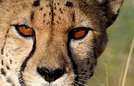


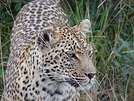
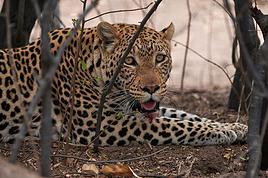
 "Si...je crois que c'est un léopard..."
"Un léo ! merde ! Iléou Iléou ?
"Iléla, mais je vois mal, recule un peu...non avance maintenant ...recule un poil...avance...oui...top ! C'est bon !"
"Iléou Iléou ?"
"Là, mais....c'est pas un léo en fait..."
"Ah..." ...déçu..."C'est quoi ?"
"Un hibou..."
"Pardon ? Mais comment peut-on confondre un léopard et un hibou ?!?"
"Ben...ils ont tous les deux les yeux jaunes..."
"Ha ! ça y'est je le vois !" Hurle Fanny "Moi aussi ! " confirme Camille.
"Pas moi..." je maugrée " déjà que hier, j'ai pas été foutu de voir VOTRE guépard , voilà que je peux même pas voir VOTRE hibou à la mord moi'l..."
"Rhooooo, t'énerve pas, tu vois la grosse branche là ?
"Oui"
"Tu la suis jusqu'à l'embranchement et tu descends, puis à droite" "oui" " puis à gauche " "oui" " puis tu remontes" "oui" "et bien c'est là : dans l'angle ! "
"Si...je crois que c'est un léopard..."
"Un léo ! merde ! Iléou Iléou ?
"Iléla, mais je vois mal, recule un peu...non avance maintenant ...recule un poil...avance...oui...top ! C'est bon !"
"Iléou Iléou ?"
"Là, mais....c'est pas un léo en fait..."
"Ah..." ...déçu..."C'est quoi ?"
"Un hibou..."
"Pardon ? Mais comment peut-on confondre un léopard et un hibou ?!?"
"Ben...ils ont tous les deux les yeux jaunes..."
"Ha ! ça y'est je le vois !" Hurle Fanny "Moi aussi ! " confirme Camille.
"Pas moi..." je maugrée " déjà que hier, j'ai pas été foutu de voir VOTRE guépard , voilà que je peux même pas voir VOTRE hibou à la mord moi'l..."
"Rhooooo, t'énerve pas, tu vois la grosse branche là ?
"Oui"
"Tu la suis jusqu'à l'embranchement et tu descends, puis à droite" "oui" " puis à gauche " "oui" " puis tu remontes" "oui" "et bien c'est là : dans l'angle ! " "Ah...oui...c'est nul..."
"Comment ça c'est nul ?"
"Ben il est nul ton hibou : on voit qu'un p'tit bout d'hibou et il est tout moche !"
"Ça, faut reconnaître qu'il est pas terrible..."
"Ouais, il est carrément quelconque..."
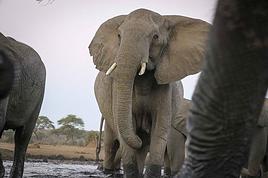
"Quelconque mon hibou ?!? Ben on m'y reprendra à vous débusquer des hiboux ! Va essayer de me trouver un bel hibou comme ça tiens ? Vous, vous êtes juste bons à trouver des éléphants ici ! MOI au moins, je fais dans l'O-Ri-Gi-NA-Li-TÉ !"
"Ça...faut reconnaître..."
"Ah...oui...c'est nul..."
"Comment ça c'est nul ?"
"Ben il est nul ton hibou : on voit qu'un p'tit bout d'hibou et il est tout moche !"
"Ça, faut reconnaître qu'il est pas terrible..."
"Ouais, il est carrément quelconque..."
"Quelconque mon hibou ?!? Ben on m'y reprendra à vous débusquer des hiboux ! Va essayer de me trouver un bel hibou comme ça tiens ? Vous, vous êtes juste bons à trouver des éléphants ici ! MOI au moins, je fais dans l'O-Ri-Gi-NA-Li-TÉ !"
"Ça...faut reconnaître..."

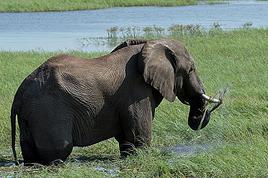
 Cet autre éléphant nous rappelle les bases de la composition photographique : points chauds , diagonale...
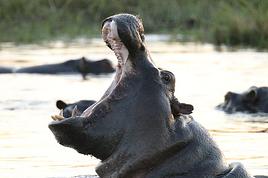
 Un hippopotame perplexe évalue le trajet
 " Bon...je sors à droite entre les 2 p'tits crocos, j'écrase la tronche de celui de gauche, je massacre la queue de celui de droite et je dégage pendant que les parents affolés s'en occupent, puis je file à gauche pour essayer de passer avant que la grosse éléphante ait bouché le passage...ça doit le faire...l'inconnue, c'est les Kobs...c'est con les kobs...surtout ces deux là on dirait, y'a qu'à regarder leurs coups de soleil ! Peuh !...bon, j'y vais !"
 Plus grosse que le dindon, mais plus petite que l'autruche, cet oiseau n'arrive décidément pas à trouver sa place en ce monde, il se cherche , il persiffle, il moque et se fourvoie... Tu devrais t'accepter telle que tu es la boutarde et tu mépriserais moins les gens, tu serais peut-être aimée , Qui sait ?
Mais elle n'écoute pas mes pensées la boutarde, elle méprise et elle passe : c'est tout...
Plus grosse que le dindon, mais plus petite que l'autruche, cet oiseau n'arrive décidément pas à trouver sa place en ce monde, il se cherche , il persiffle, il moque et se fourvoie... Tu devrais t'accepter telle que tu es la boutarde et tu mépriserais moins les gens, tu serais peut-être aimée , Qui sait ?
Mais elle n'écoute pas mes pensées la boutarde, elle méprise et elle passe : c'est tout... les girafes prises une à une sont des anges dont la grâce ne peut être ternie que par la position qu'elle prennent quand elles se désaltèrent en vous tournant le dos.
Quand elles sont en groupe, ce sont des harpies !
La boutarde, cette fois ci, en fera les frais, la savane est cruelle, sa loi est celle du plus fort, le nombre supplante les solitaires qui n'ont d'autre recours que de se replier en un mépris feint que l'on espère salvateur...
Mais les commères ne lâchent pas aussi facilement, elles harcèlent de leurs cancans la pauvre boutarde qui, certes , l'a un peu cherché, mais quand même...
Et quand on pense que maintenant il y a Facebook, Instagram...la pauvre...
Je suis pris de pitié pour cette grande boutarde...
"Bon, heu...t'as l'intention de dormir ici ou quoi ?"
"Hein ? Non, je contemplais cette scène d'une rare violence et me disais que la nature est belle , mais également fort cruelle..."
"Pardon ?"
"Non...rien..."
Nous saluons l'écureuil et le merle avant de sortir une dernière fois de Moremi.
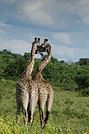
les girafes prises une à une sont des anges dont la grâce ne peut être ternie que par la position qu'elle prennent quand elles se désaltèrent en vous tournant le dos.
Quand elles sont en groupe, ce sont des harpies !
La boutarde, cette fois ci, en fera les frais, la savane est cruelle, sa loi est celle du plus fort, le nombre supplante les solitaires qui n'ont d'autre recours que de se replier en un mépris feint que l'on espère salvateur...
Mais les commères ne lâchent pas aussi facilement, elles harcèlent de leurs cancans la pauvre boutarde qui, certes , l'a un peu cherché, mais quand même...
Et quand on pense que maintenant il y a Facebook, Instagram...la pauvre...
Je suis pris de pitié pour cette grande boutarde...
"Bon, heu...t'as l'intention de dormir ici ou quoi ?"
"Hein ? Non, je contemplais cette scène d'une rare violence et me disais que la nature est belle , mais également fort cruelle..."
"Pardon ?"
"Non...rien..."
Nous saluons l'écureuil et le merle avant de sortir une dernière fois de Moremi.



 , nos courses faites, nous trouvons rapidement au fond du supermarché une espèce de snack où ils vendent des trucs à emporter, de la cuisine locale assez basique que nous mangerons sur le parking et qui s'avèrera délicieuse, à compter de ce jour, nous choisirons systématiquement ces endroits pour nous nourrir sur les trajets sans jamais être déçus par le rapport qualité prix imbattable.
 nous sommes au pays des éléphants et la DDE locale ne se prive pas de vous le faire savoir, les panneaux " attention éléphant" se succèdent, je pense qu'un panneau " attention éléphants" serait plus justifié avec plusieurs éléphants sur le dessin puisque nous les croiserons systématiquement en groupes de 3 à 5 le long de cette longue ligne droite qui pointe le nord.



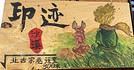



 (cette photo n'est pas de moi)
Hi everyone, I’m Patrick, 67 years old, a seasoned traveler (already 22 trips outside Europe).
In autumn 2025, I took my first 3-week trip to Japan, with stops in Tokyo, Kamakura, Matsumoto, Kamikochi, Takayama, Kanazawa, Kyoto, Nara, Osaka, Koyasan, Tokyo again, and Nikko.
I wanted to go back in May 2026 and explore some lesser-known places to complement my first trip.
Last year, there were four of us traveling together to discover Japan (a fairly classic itinerary). This time, I’ll be traveling solo for part of the trip and with a couple of French friends for the rest.
The weather was gorgeous in May, averaging around 25°C, with two very hot days in Kyoto and only two rainy days.
As usual, I organized everything myself, gathering plenty of information from various sites, including this one.
Transportation: An ICOCA card is essential. I got a 5-day Kansai-Hiroshima pass because I took the shinkansen between Hiroshima and Osaka three times, and it paid for itself quickly.
Accommodations: Mostly through Booking. No issues at all. Average cost was 46 € per night.
Meals: For breakfast, I alternated between buying food at a konbini to eat in my room or on the train and grabbing something at local cafés. For lunch and dinner, I tried to vary my meals as much as possible—lots of sashimi, sushi, and ramen. Okonomiyaki in Osaka and Hiroshima. Oysters in every form (raw, grilled, fried) in Onomichi and Hiroshima. A variety of seafood (shrimp, shellfish) in Hiroshima and Matsumoto. Fish whose names often escaped me, but notably mackerel and eel (unagi). Tempura and gyoza. Chicken skewers (yakitori) and one teppanyaki meal. One omakase meal (9 different dishes). In the end, not much meat aside from a few yakitori skewers. No splurges on super expensive wagyu or Kobe beef. Average dinner cost: 4,800 yen, drinks included.
The Itinerary: Day 1: Departure from Brussels Day 2: Arrival in Osaka Day 3: To Himeji, then Kurashiki Day 4: To Fukuyama, then Tomo no Ura, then Onomichi Day 5: Cycling the Shimanami Kaido Day 6: To Takahara, then Hiroshima Day 7: To Kyoto to attend the Aoi Matsuri parade Day 8: To Miyajima Day 9: Hiroshima, then Kyoto Day 10: Southern Kyoto Day 11: Northern Kyoto Day 12: Final day in Kyoto, then to Nagatsugawa Day 13: Start of the Nakasendo Trail (Magome to Tsumago) Day 14: Second day of the trail (Kiso Fukushima) Day 15: Third day of the trail (Narai), then Matsumoto Day 16: To Mt. Fuji (Kawaguchiko) Day 17: To Tokyo Day 18: Excursion to Enoshima and Kamakura Day 19: Flight home, with a 10-hour layover in Hong Kong Day 20: Arrival in Brussels
Transportation: An ICOCA card is essential. I got a 5-day Kansai-Hiroshima pass because I took the shinkansen between Hiroshima and Osaka three times, and it paid for itself quickly.
Accommodations: Mostly through Booking. No issues at all. Average cost was 46 € per night.
Meals: For breakfast, I alternated between buying food at a konbini to eat in my room or on the train and grabbing something at local cafés. For lunch and dinner, I tried to vary my meals as much as possible—lots of sashimi, sushi, and ramen. Okonomiyaki in Osaka and Hiroshima. Oysters in every form (raw, grilled, fried) in Onomichi and Hiroshima. A variety of seafood (shrimp, shellfish) in Hiroshima and Matsumoto. Fish whose names often escaped me, but notably mackerel and eel (unagi). Tempura and gyoza. Chicken skewers (yakitori) and one teppanyaki meal. One omakase meal (9 different dishes). In the end, not much meat aside from a few yakitori skewers. No splurges on super expensive wagyu or Kobe beef. Average dinner cost: 4,800 yen, drinks included.
The Itinerary: Day 1: Departure from Brussels Day 2: Arrival in Osaka Day 3: To Himeji, then Kurashiki Day 4: To Fukuyama, then Tomo no Ura, then Onomichi Day 5: Cycling the Shimanami Kaido Day 6: To Takahara, then Hiroshima Day 7: To Kyoto to attend the Aoi Matsuri parade Day 8: To Miyajima Day 9: Hiroshima, then Kyoto Day 10: Southern Kyoto Day 11: Northern Kyoto Day 12: Final day in Kyoto, then to Nagatsugawa Day 13: Start of the Nakasendo Trail (Magome to Tsumago) Day 14: Second day of the trail (Kiso Fukushima) Day 15: Third day of the trail (Narai), then Matsumoto Day 16: To Mt. Fuji (Kawaguchiko) Day 17: To Tokyo Day 18: Excursion to Enoshima and Kamakura Day 19: Flight home, with a 10-hour layover in Hong Kong Day 20: Arrival in Brussels
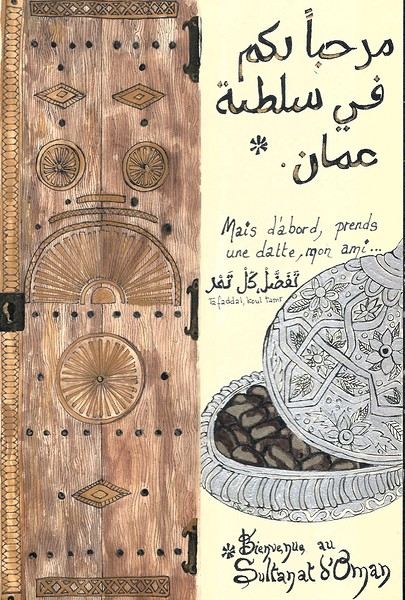 On the right, the "welcome marker"—those dates offered everywhere as a sign of hospitality. On the left, a tribute to those sublime doors worn by time, admired all over the old quarters, including the abandoned ones.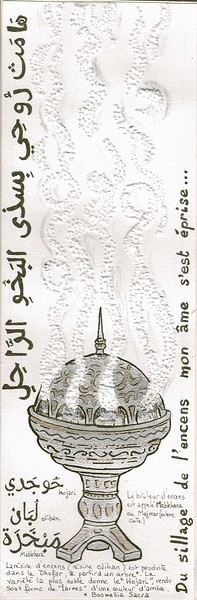
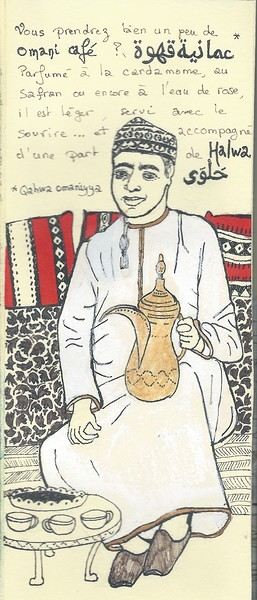 Hospitality will often lead you to accept a small coffee, an "Omani coffee," very light, subtly flavored with cardamom, maybe a bit of saffron, and occasionally some rose water.
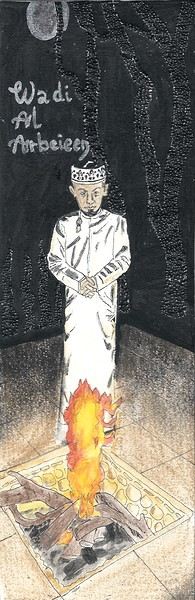
Here, I’ve depicted a man in the common everyday attire of Omanis: the dishdasha, mostly white (worn during the week and daytime, with colors more common in the evening or on Fridays and Saturdays). While you might see men dressed in Western clothes, they’re very few. The white dishdasha is truly the shared attire of all men. The dishdasha, which has no hood, is distinguished by a small tassel on the collar, the furakha, which is soaked in perfume. And believe me, Omanis go all out with it! "It smells like the tassel" is an expression that’s now part of our shared language, my husband and I.
Another must of men’s attire is the kuma, a small round head covering, usually white with brightly colored patterns. The keffiyeh is also worn (but without the cord called an agal in Arab countries), and it’s mostly worn by those with roots in the desert, from what I understood.
And what about the women, you might ask? Some are veiled, some in full black (but not the burka—more like the chador + abaya), due to the influence of Saudi Arabia and the United Arab Emirates, whereas the traditional outfit used to be a layering of very colorful dresses. Most of the women we saw wore neutral clothing, a plain veil over their hair, but with their faces uncovered. We also saw many saris and colorful veils—don’t forget that 40% of the population consists of Indian, Nepalese, and Bangladeshi immigrants, who work a lot in tourism, hospitality, restaurants, services, and construction.
Just to clarify, as a tourist, there’s no pressure to wear a veil, and never any disapproving looks. Of course, you’ll save the mini shorts, plunging necklines, and bare shoulders and midriffs for the hotel terrace, but I’d say that’s the same for men and women, and with the sun being strong, it’s better for your skin too.
Here’s the intro! In the next post, I’ll tell you about my itinerary, and we can dive in!
Hospitality will often lead you to accept a small coffee, an "Omani coffee," very light, subtly flavored with cardamom, maybe a bit of saffron, and occasionally some rose water.
Here, I’ve depicted a man in the common everyday attire of Omanis: the dishdasha, mostly white (worn during the week and daytime, with colors more common in the evening or on Fridays and Saturdays). While you might see men dressed in Western clothes, they’re very few. The white dishdasha is truly the shared attire of all men. The dishdasha, which has no hood, is distinguished by a small tassel on the collar, the furakha, which is soaked in perfume. And believe me, Omanis go all out with it! "It smells like the tassel" is an expression that’s now part of our shared language, my husband and I.
Another must of men’s attire is the kuma, a small round head covering, usually white with brightly colored patterns. The keffiyeh is also worn (but without the cord called an agal in Arab countries), and it’s mostly worn by those with roots in the desert, from what I understood.
And what about the women, you might ask? Some are veiled, some in full black (but not the burka—more like the chador + abaya), due to the influence of Saudi Arabia and the United Arab Emirates, whereas the traditional outfit used to be a layering of very colorful dresses. Most of the women we saw wore neutral clothing, a plain veil over their hair, but with their faces uncovered. We also saw many saris and colorful veils—don’t forget that 40% of the population consists of Indian, Nepalese, and Bangladeshi immigrants, who work a lot in tourism, hospitality, restaurants, services, and construction.
Just to clarify, as a tourist, there’s no pressure to wear a veil, and never any disapproving looks. Of course, you’ll save the mini shorts, plunging necklines, and bare shoulders and midriffs for the hotel terrace, but I’d say that’s the same for men and women, and with the sun being strong, it’s better for your skin too.
Here’s the intro! In the next post, I’ll tell you about my itinerary, and we can dive in!
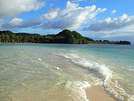
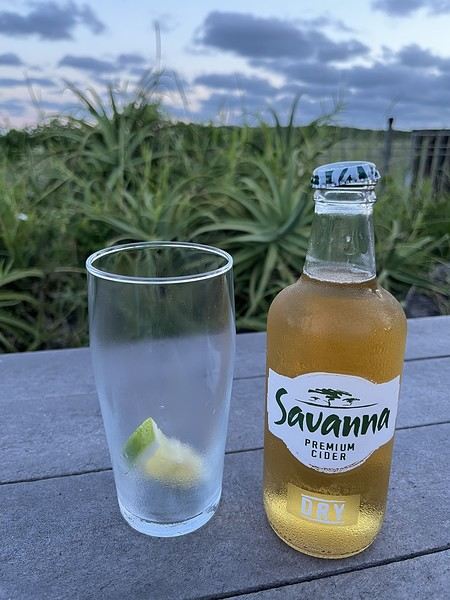

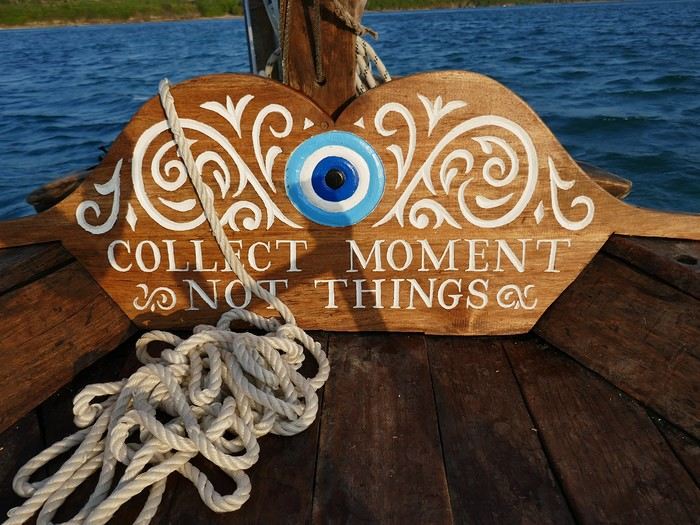
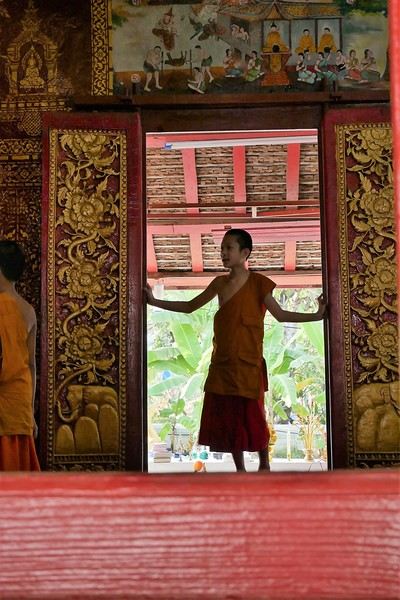 Come along, I'm taking you to this country where it's so nice to wander and slow down...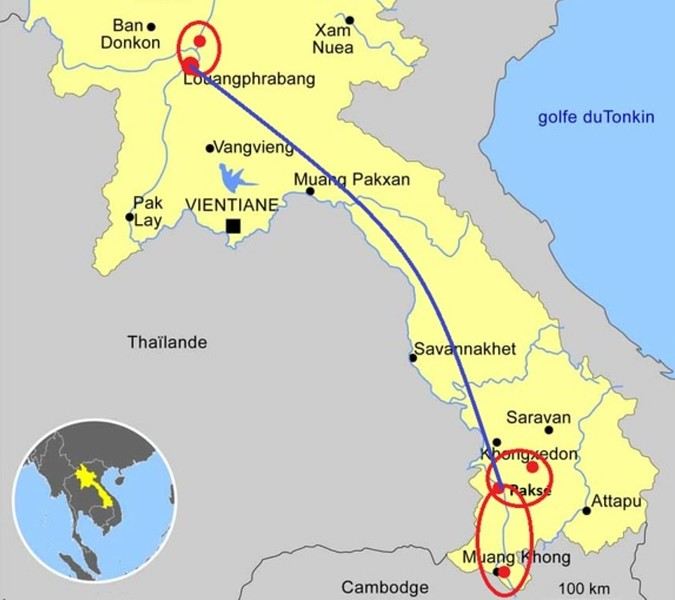
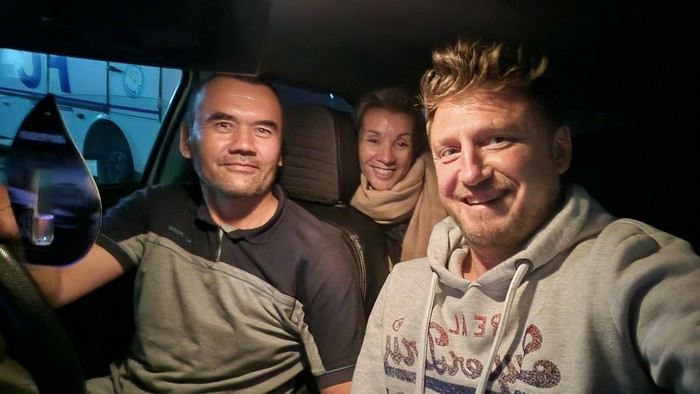
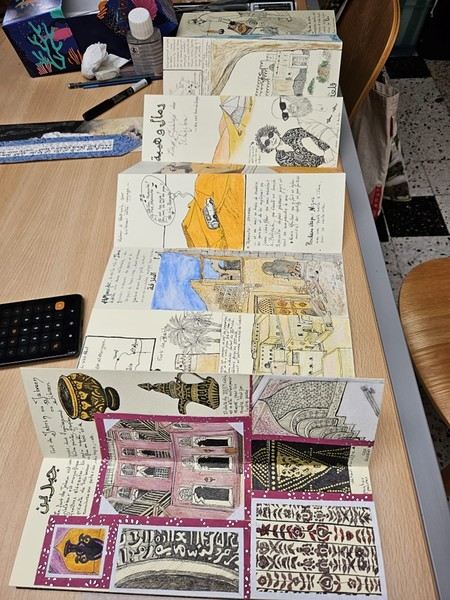
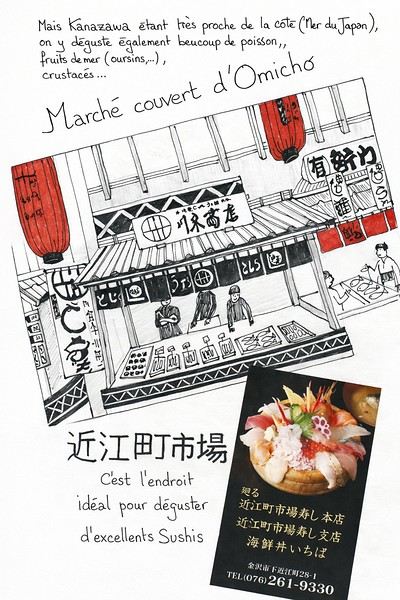
 I’m inviting you on a stroll through my drawings—a completely subjective, far from exhaustive, and totally personal take, since it’s based on my own sketches. I put this travel journal together after returning in late 2024, mostly using felt-tip pens and pencils, with a few collages thrown in. I worked from our personal photos.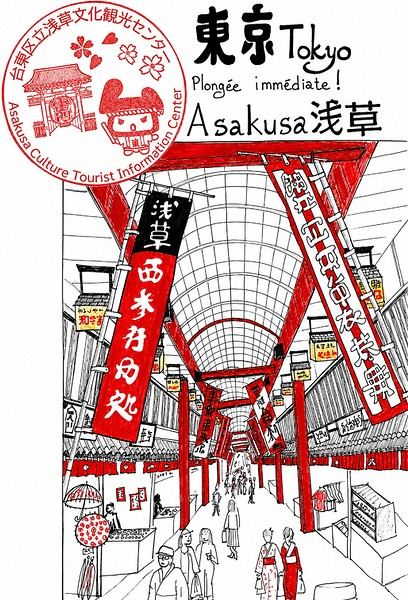
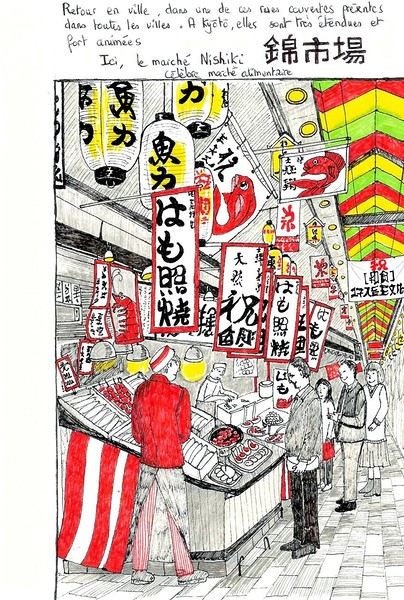
 And in Kyoto, Nishiki Market:
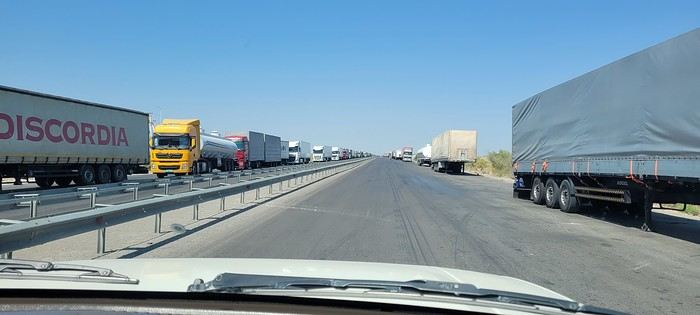
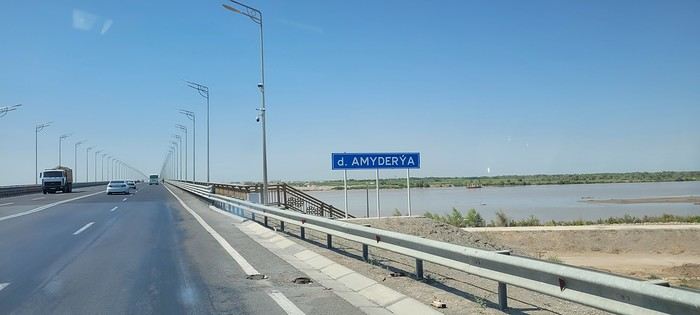
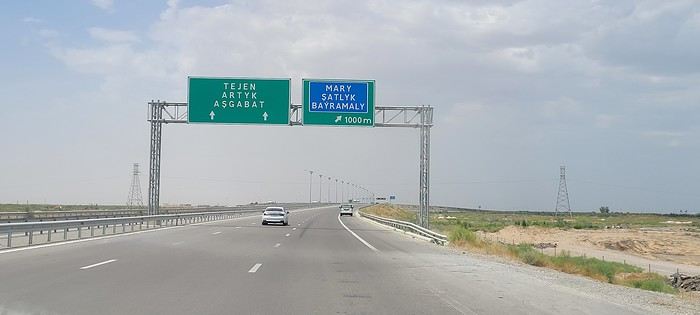
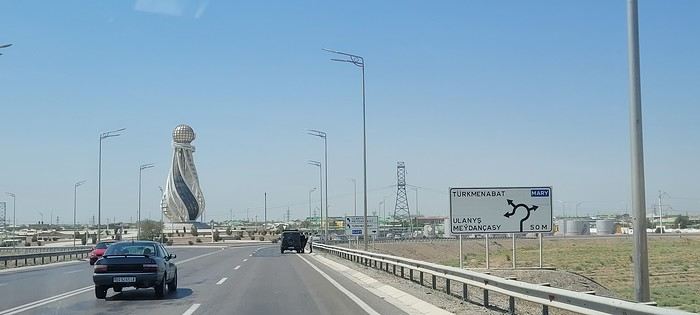
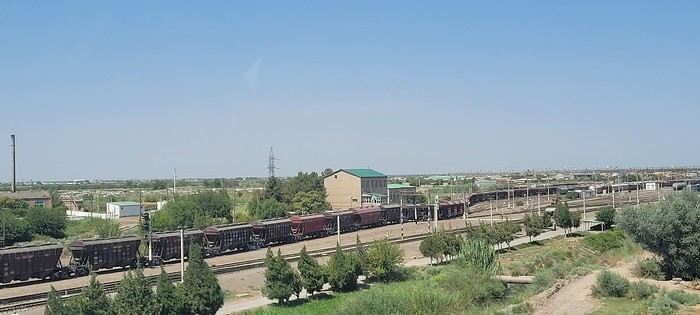
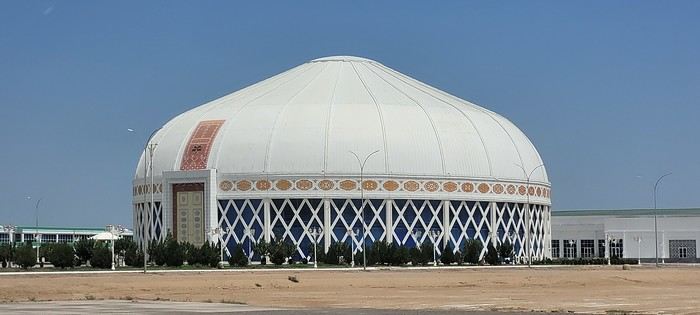
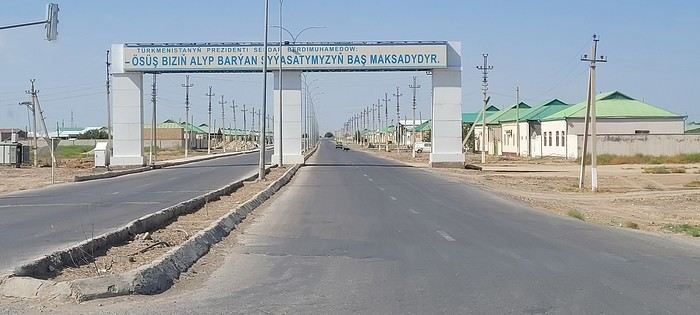
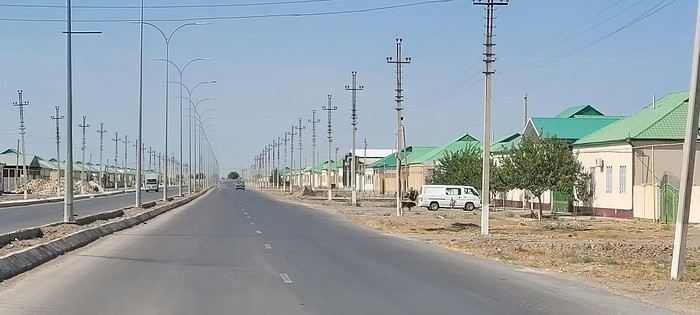 Roundabouts are particularly interesting because they feature emblems of Turkmen culture, like the dog, a carpet, the Ahal Teke horse, or Muslim symbols, even though the presence of Islamic artifacts is quite limited.


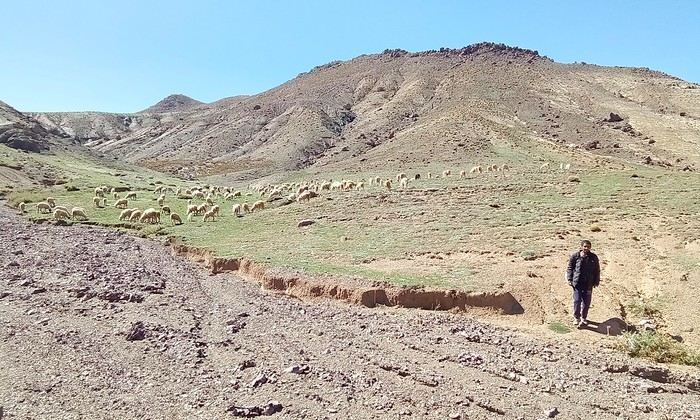
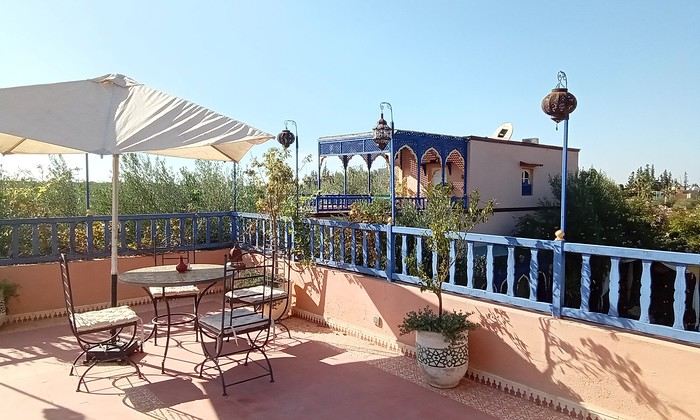
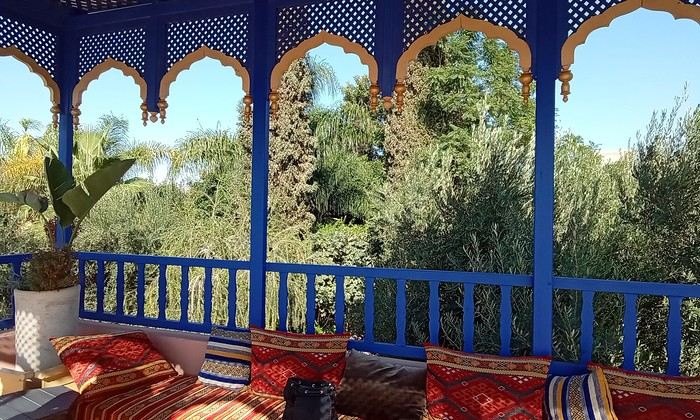 Last October, we landed in Marrakech to spend a few days with family exploring Morocco’s roads.
Transport: a rented Dacia.
Accommodations: small guesthouses.
Last October, we landed in Marrakech to spend a few days with family exploring Morocco’s roads.
Transport: a rented Dacia.
Accommodations: small guesthouses.
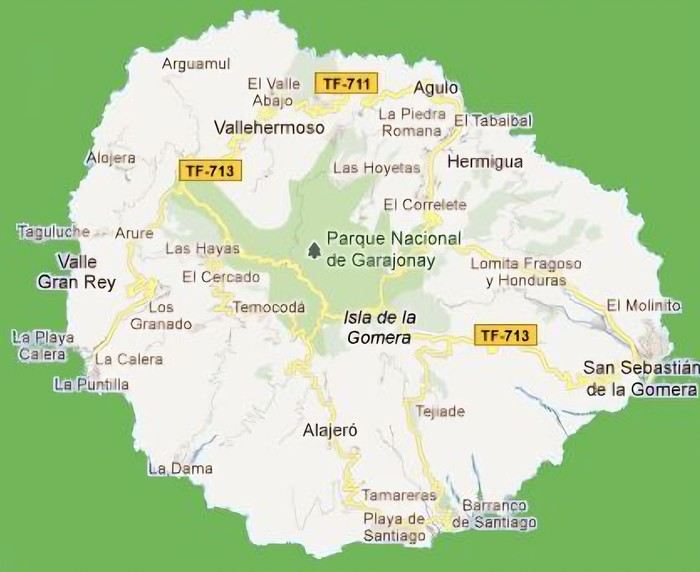 The large solidified magma massifs that shape the heart of the island have created a large depression more protected from the sun at its center, allowing the growth of a vast laurel forest, today grouped within the Garajonay National Park, La Gomera’s green lung, which has earned it the status of a World Biosphere Reserve. Its completely European appearance contrasts sharply with the rocky and tropical landscapes of the rest of the island. Thus, the climate varies greatly from one point to another on the island: in summer, you can quickly go from a dry and sunny valley at 35°C to a humid forest area at altitude at 18°C.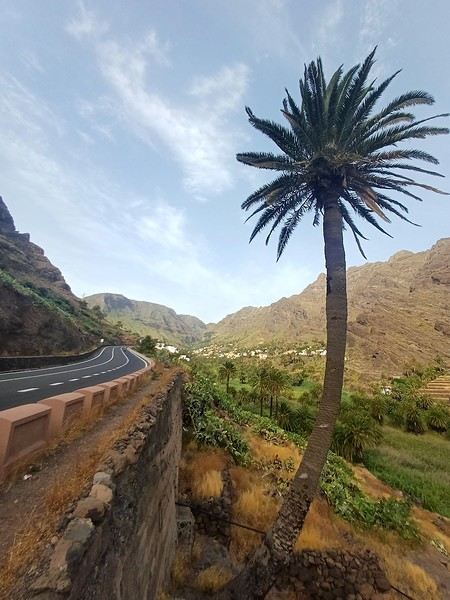
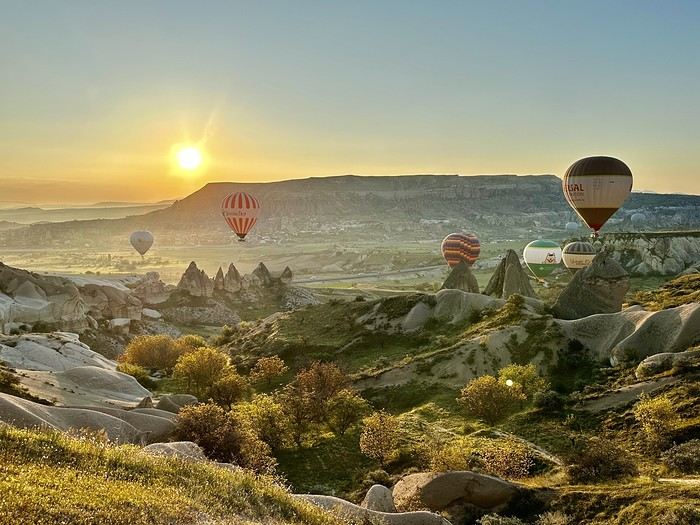 A little sneak peek?
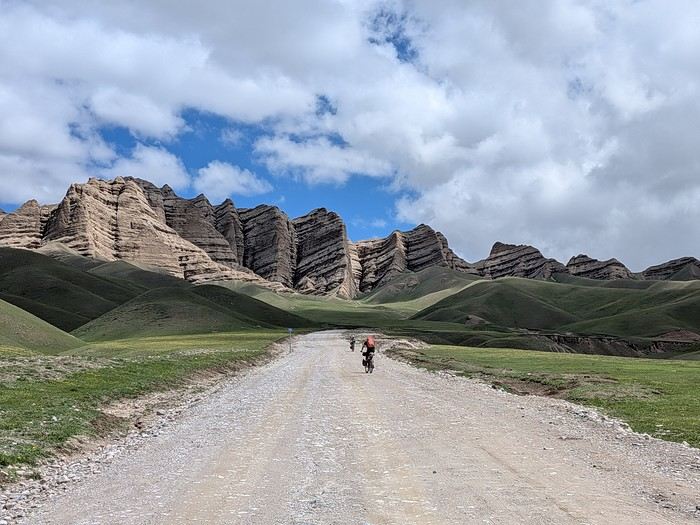
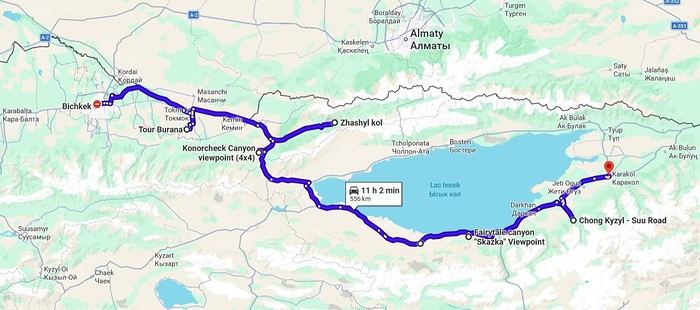
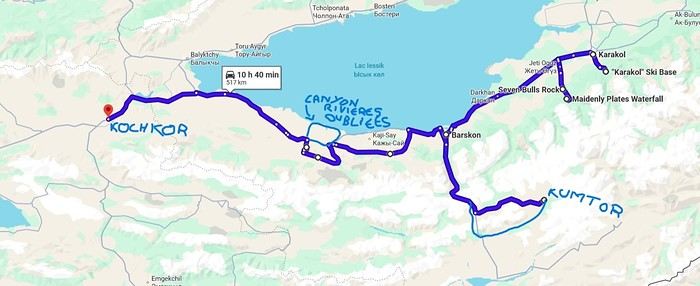
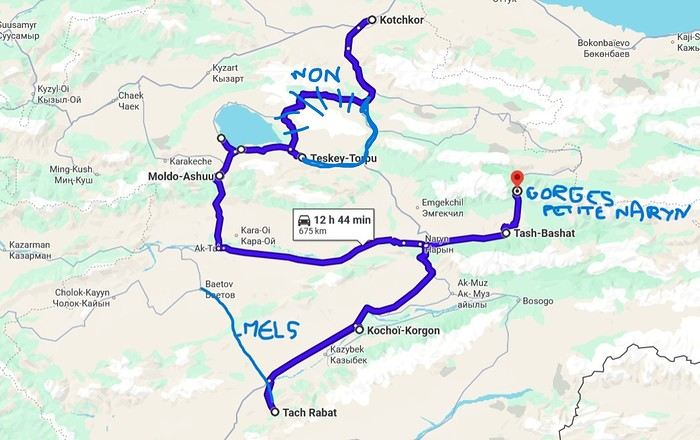
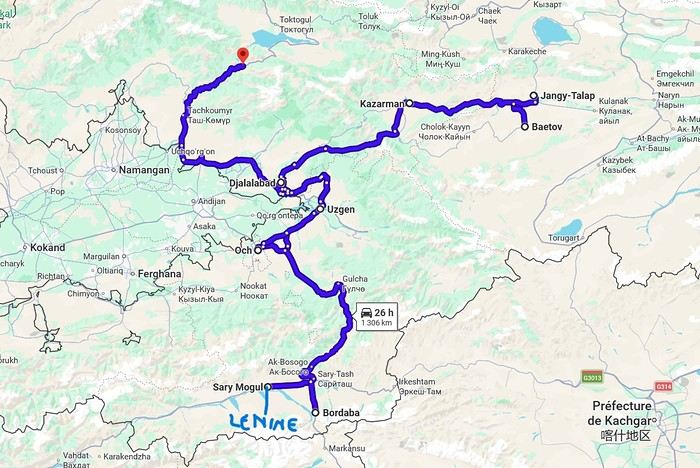
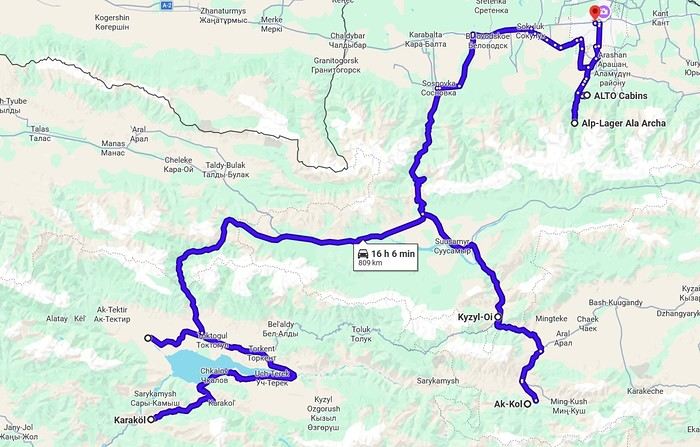

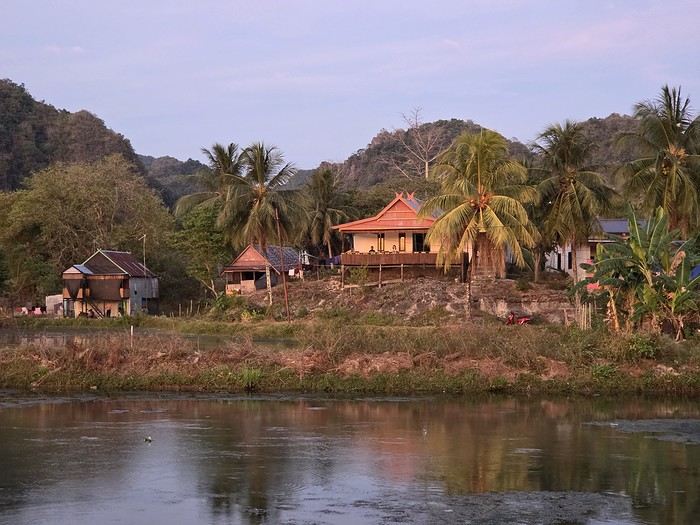
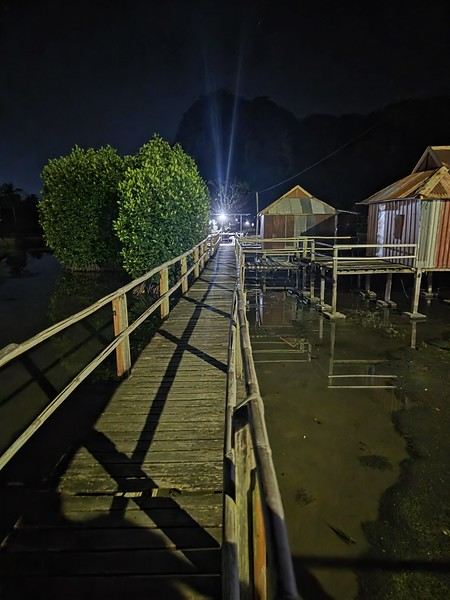
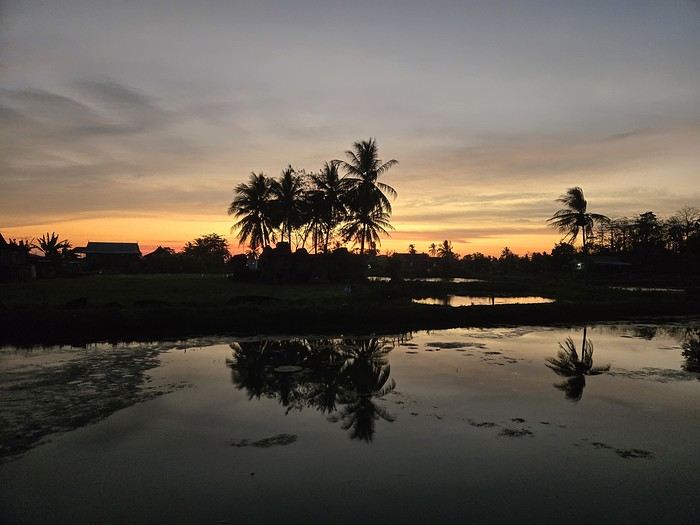
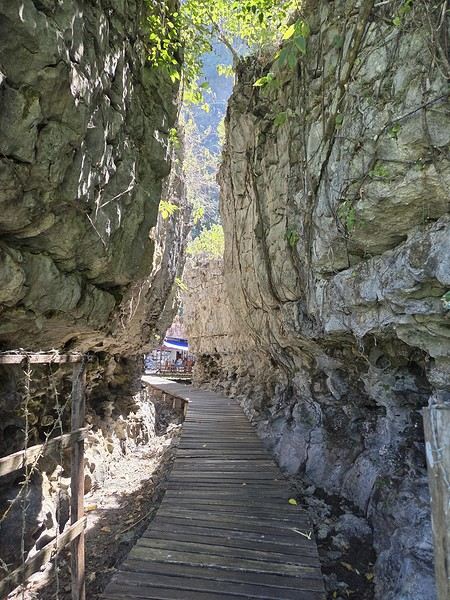
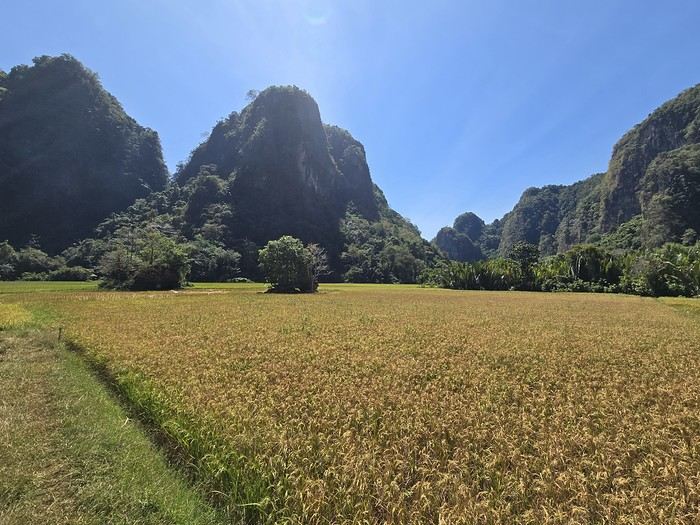
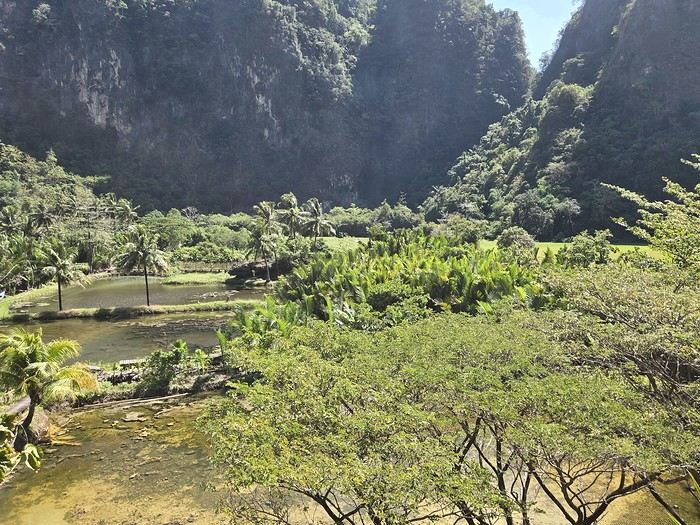
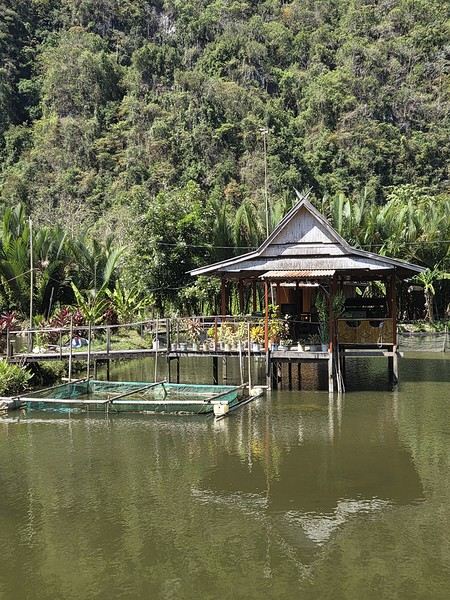
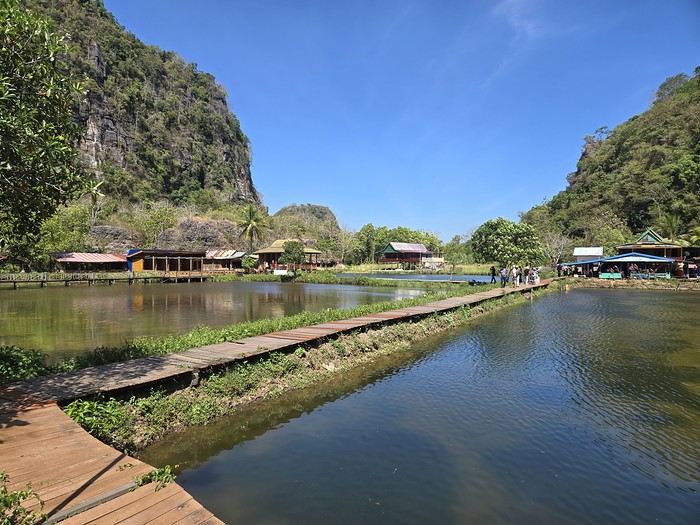
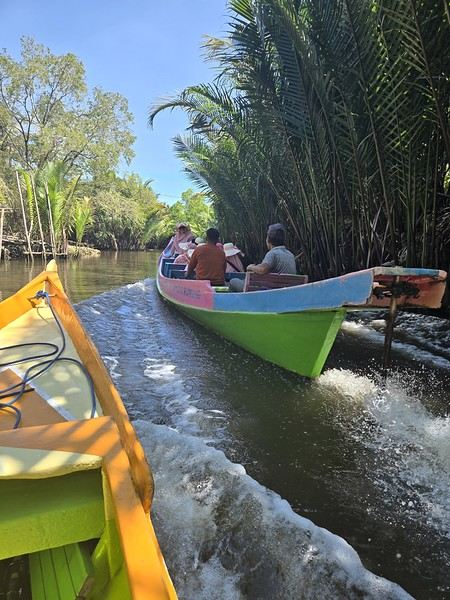 The karst site:
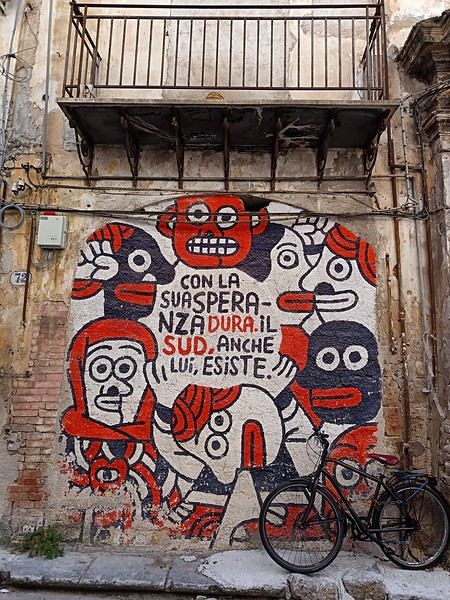 (In the heart of Albergheria, on a street every visitor walks down—lovely message from an unidentified artist)
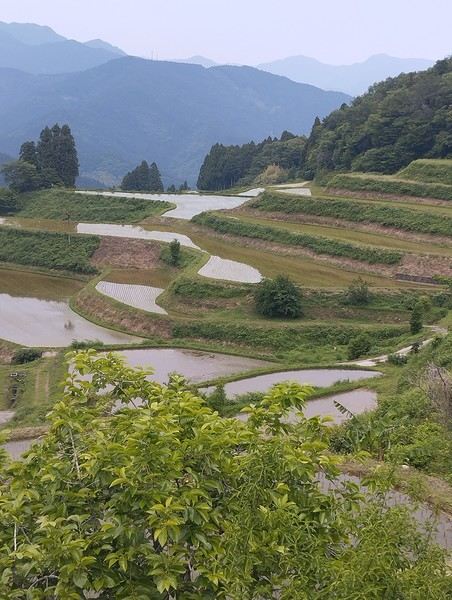
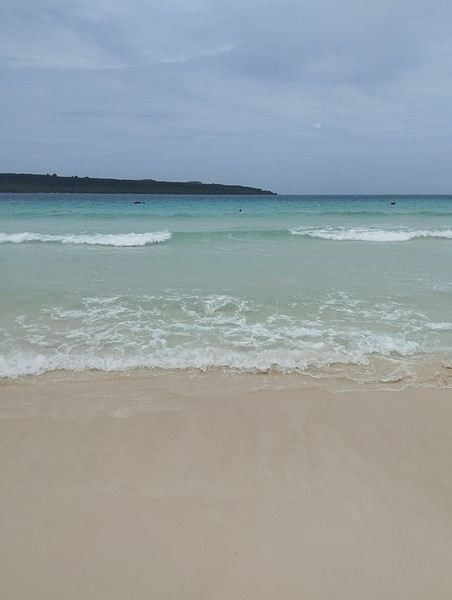


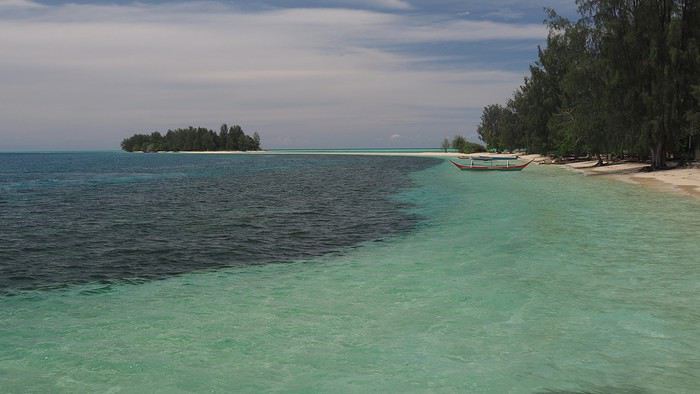
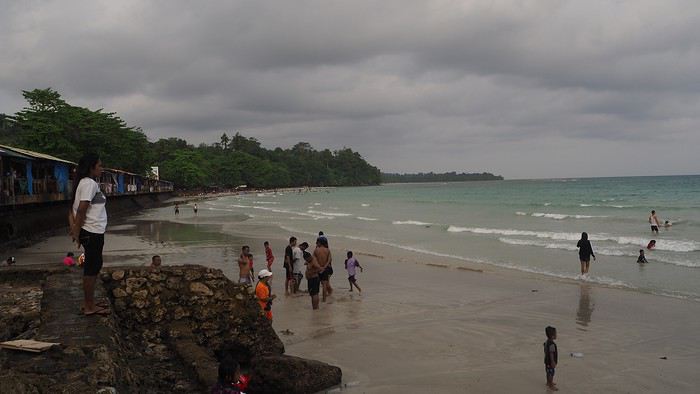
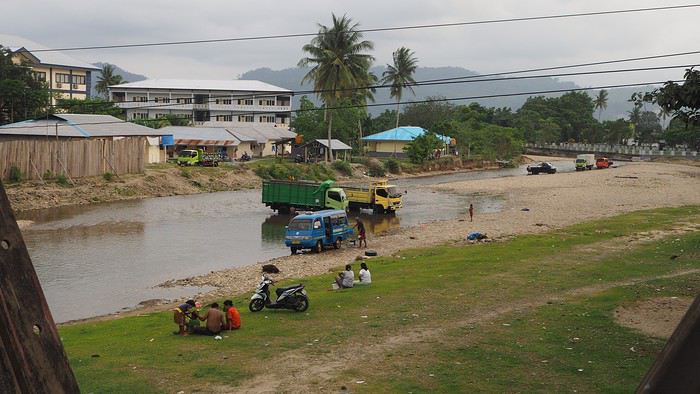
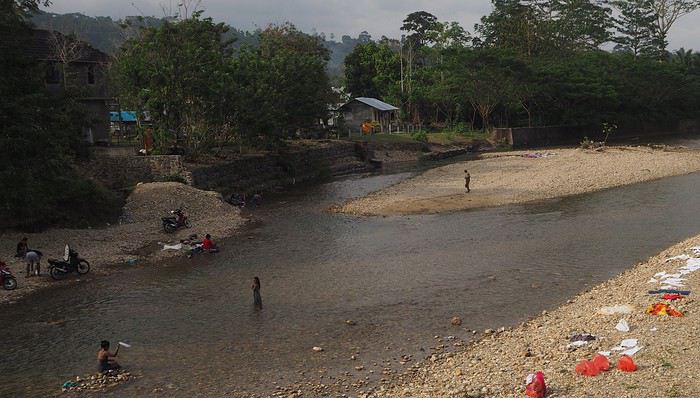 Laundry and trucks washed in the same stream.
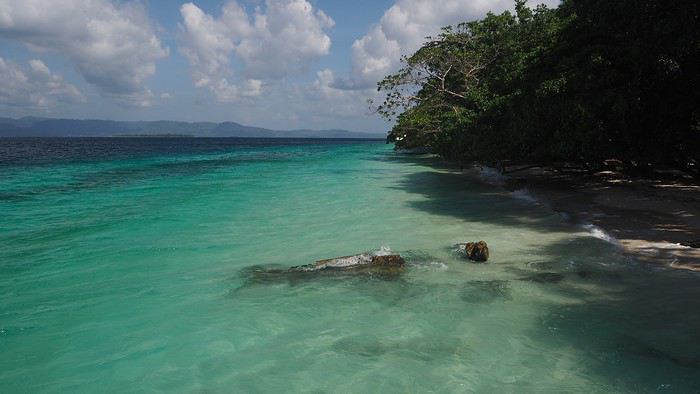
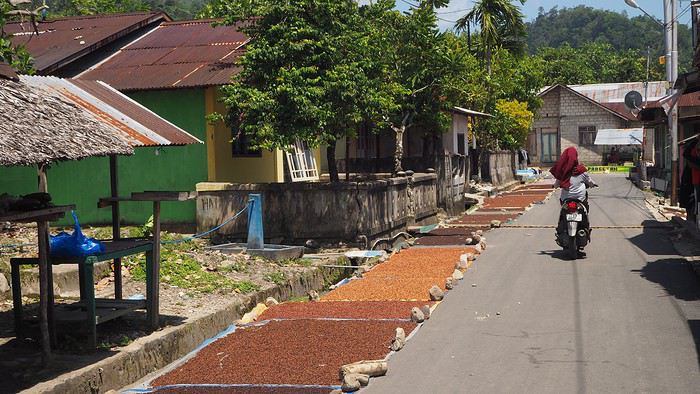
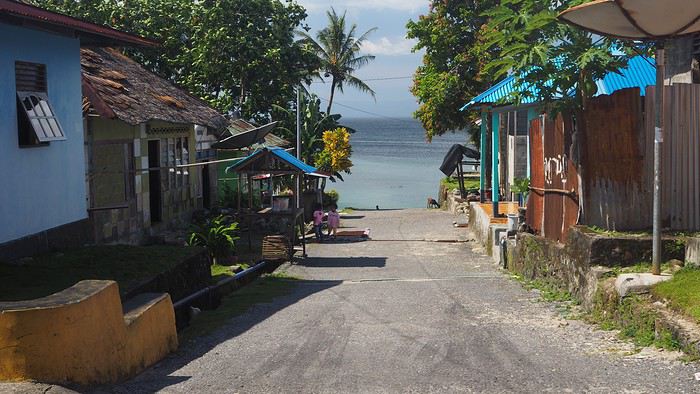
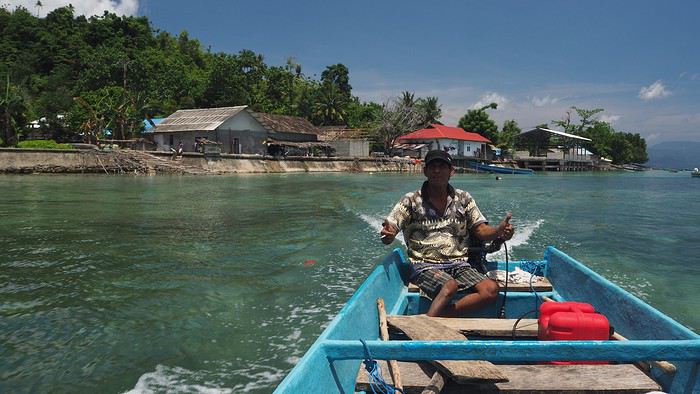
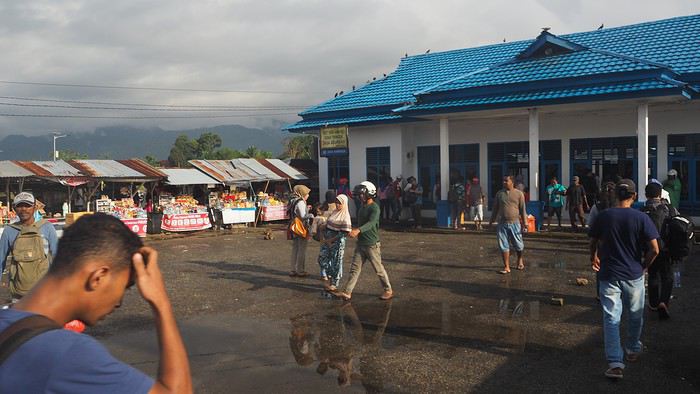
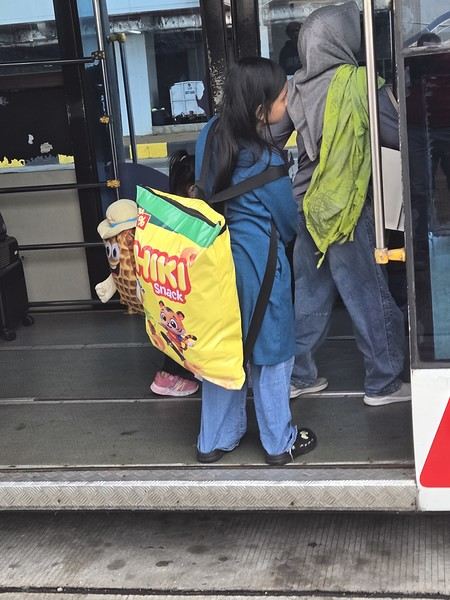
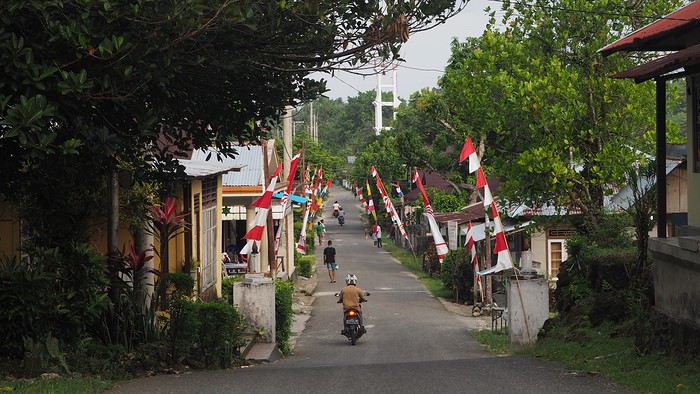
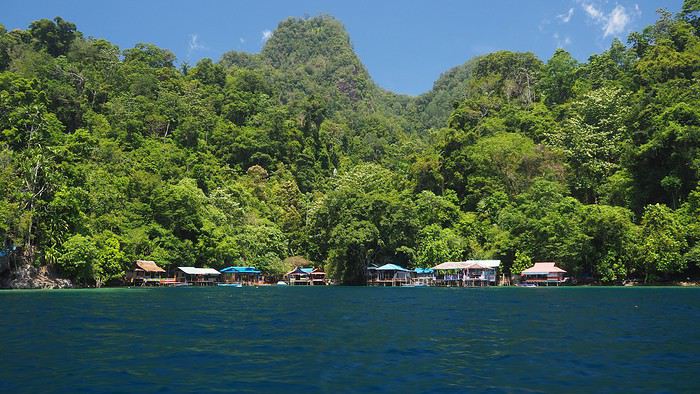 We’re greeted dozens of times with “Hello Mister”—a daily routine in the Moluccas. Every time we stop, we pose for photos to be saved on locals’ smartphones. They don’t see tourists often.