Malgré tout, j'aurais un peu de mal à recommander petita, à moins d'avoir des notions de mécanique et d'être capable de réparer une panne mineure.
Bah justement, ce n'est plus petita puisqu'il a vendu!!! D'où le problème!
Deux forumeurs vont partir avec biz, nous verrons ce qu'il en est.
J'espère qu'ils feront un compte rendu, ce serait sympa. En tout cas, j'ai noté le nom de l'entreprise de location.
Retourner en Bolivie fait partie de mes projets pour un futur lointain, et cette fois-ci, j'aimerais bien me promener de façon autonome.
Je note aussi qu'en avril il fait quand même froid, mais bon, quand on a connu l'hiver la-bas... ça doit aller!!!🤪


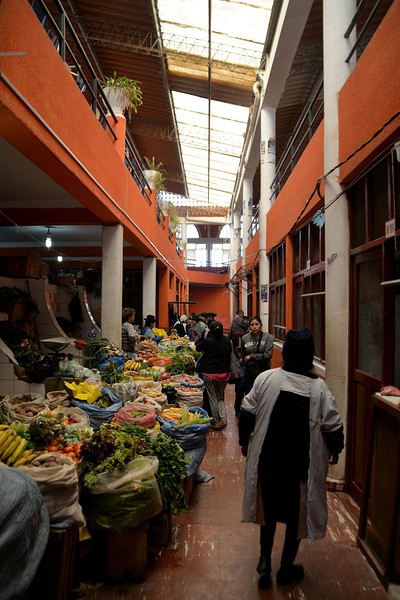
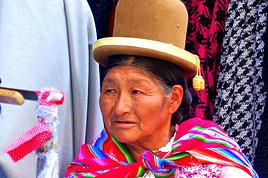
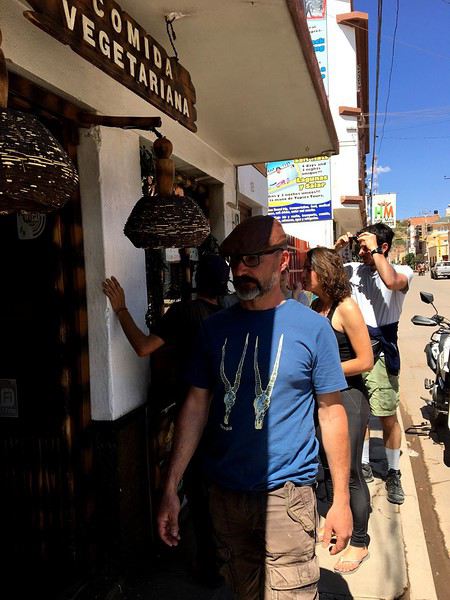 Le visage de cette autre femme descendue des hauts plateaux, les yeux bridés des peuples natifs américains, la peau tannée par le soleil d'altitude, cette bouche fine aux commissures inclinées vers le bas comme pour indiquer qu'on est pas là pour rigoler, le nez droit et aquilin des incas, le visage de cette femme pouvait être qualifié au prime abord d'inexpressif, pourtant, le visage de cette femme a trahi la surprise quand ce monsieur barbu à casquette et vraisemblablement pas du coin lui a demandé 20 BOITES DE SARDINES A L'HUILE ! Alors les yeux se sont un peu ouverts et la mâchoire du bas s'est effondrée laissant la bouche ouverte sur cette question qu'elle ne m'a jamais posée : "mais comment diable peut on aimer autant les sardines ?"
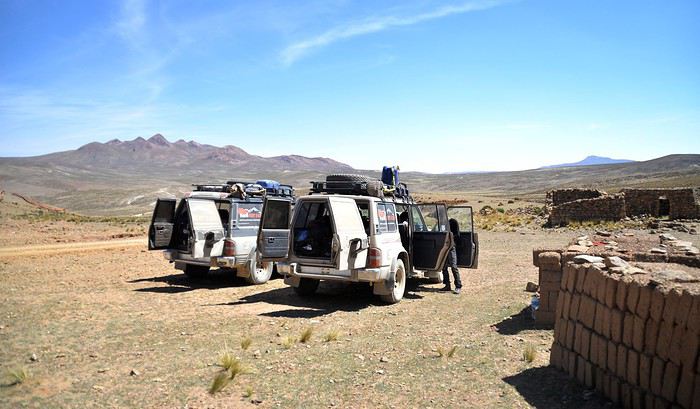
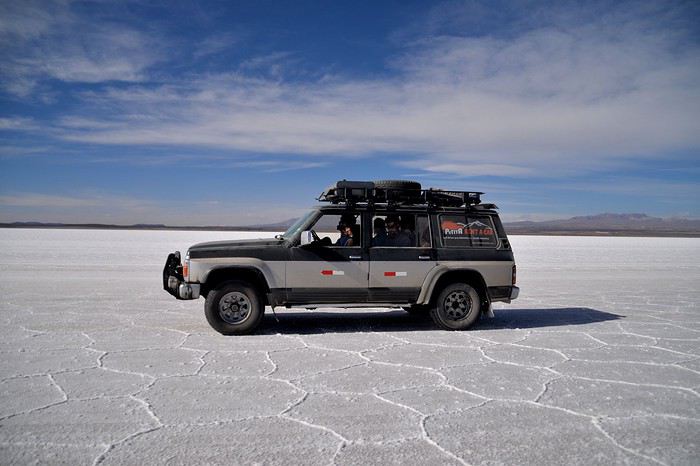
Les courses faites, nous les entassons dans une chambre climatisée puis nous filons faire le plein du second 4x4, le premier a été pris en charge comme promis par un mécano.
Les stations sont sur la route Villazon-Potosi qui passe par Tupiza, il n'y a quasiment personne à la pompe en cette fin de matinée, nous montrons nos documents officiels au pompiste afin qu'il fasse le plein du réservoir et du bidon de toit. Coup de chance, il nous restitue le document qu'il était sensé conserver, ça nous permettrait en cas de besoin de refaire le plein complet. Par contre, mauvaise nouvelle : le réservoir de toit fuit goutte à goutte par le robinet, nous taillerons un bouchon de pinard pour remédier à ce nouveau problème.
Le visage de cette autre femme descendue des hauts plateaux, les yeux bridés des peuples natifs américains, la peau tannée par le soleil d'altitude, cette bouche fine aux commissures inclinées vers le bas comme pour indiquer qu'on est pas là pour rigoler, le nez droit et aquilin des incas, le visage de cette femme pouvait être qualifié au prime abord d'inexpressif, pourtant, le visage de cette femme a trahi la surprise quand ce monsieur barbu à casquette et vraisemblablement pas du coin lui a demandé 20 BOITES DE SARDINES A L'HUILE ! Alors les yeux se sont un peu ouverts et la mâchoire du bas s'est effondrée laissant la bouche ouverte sur cette question qu'elle ne m'a jamais posée : "mais comment diable peut on aimer autant les sardines ?"
Les courses faites, nous les entassons dans une chambre climatisée puis nous filons faire le plein du second 4x4, le premier a été pris en charge comme promis par un mécano.
Les stations sont sur la route Villazon-Potosi qui passe par Tupiza, il n'y a quasiment personne à la pompe en cette fin de matinée, nous montrons nos documents officiels au pompiste afin qu'il fasse le plein du réservoir et du bidon de toit. Coup de chance, il nous restitue le document qu'il était sensé conserver, ça nous permettrait en cas de besoin de refaire le plein complet. Par contre, mauvaise nouvelle : le réservoir de toit fuit goutte à goutte par le robinet, nous taillerons un bouchon de pinard pour remédier à ce nouveau problème.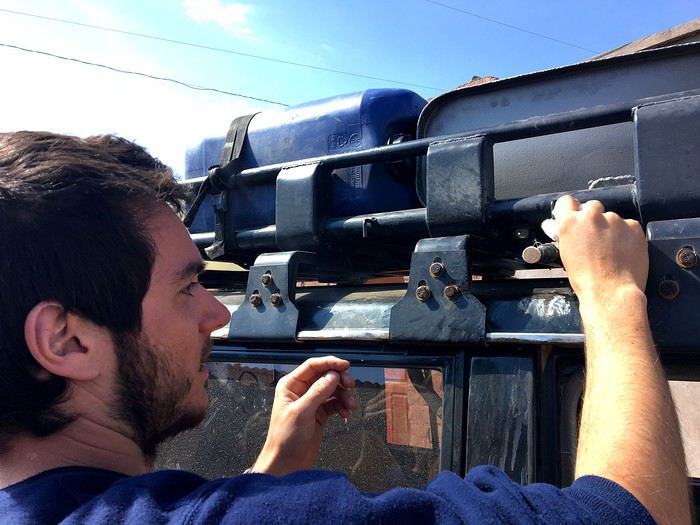

 Ici, on aime le Paris dakar, et on le fait savoir.
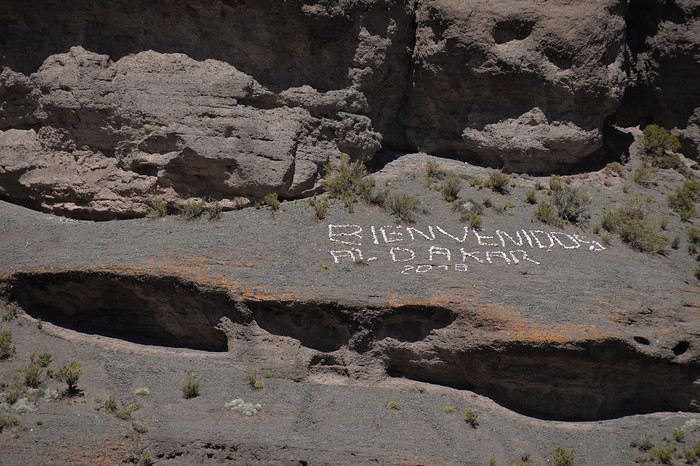 ( mais peut-être qu'il y en a qui n'aiment pas ?)
Une dame et 3 enfants nous fait signe, elle doit encore marcher 10 km jusqu'à son village et elle n'en peut plus, nous acceptons de l'y conduire, mais les enfants ont peur de nous et refusent d'être séparés de leur mère, il nous faut donc faire de la place dans un 4x4 pour que toute la famille y rentre.
Nous les débarquons au village Villuyo, nous avons nos ballons de foot et décidons d'en offrir un aux gamines...ne serait-ce que pour l'incongruité de la photo😛.
( mais peut-être qu'il y en a qui n'aiment pas ?)
Une dame et 3 enfants nous fait signe, elle doit encore marcher 10 km jusqu'à son village et elle n'en peut plus, nous acceptons de l'y conduire, mais les enfants ont peur de nous et refusent d'être séparés de leur mère, il nous faut donc faire de la place dans un 4x4 pour que toute la famille y rentre.
Nous les débarquons au village Villuyo, nous avons nos ballons de foot et décidons d'en offrir un aux gamines...ne serait-ce que pour l'incongruité de la photo😛.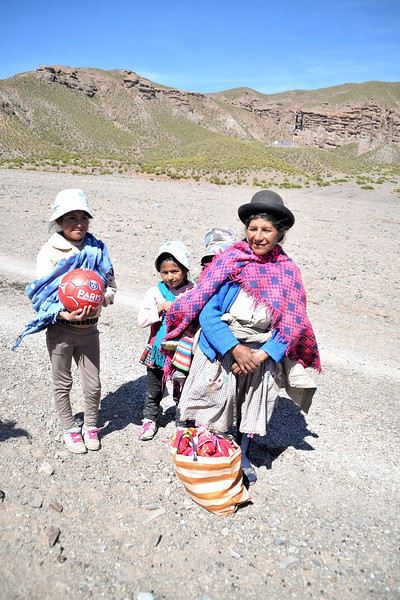
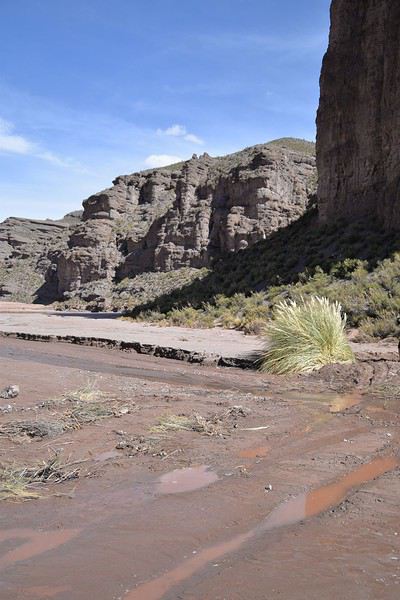
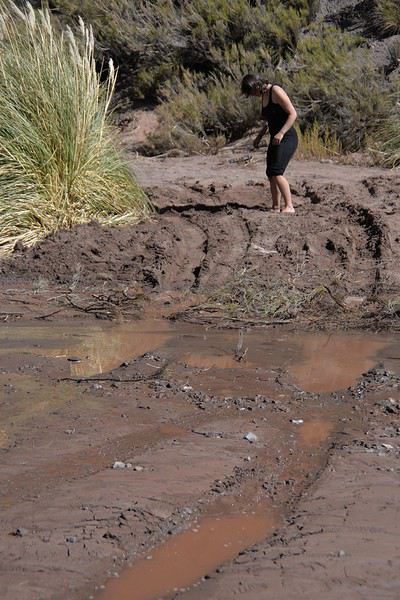
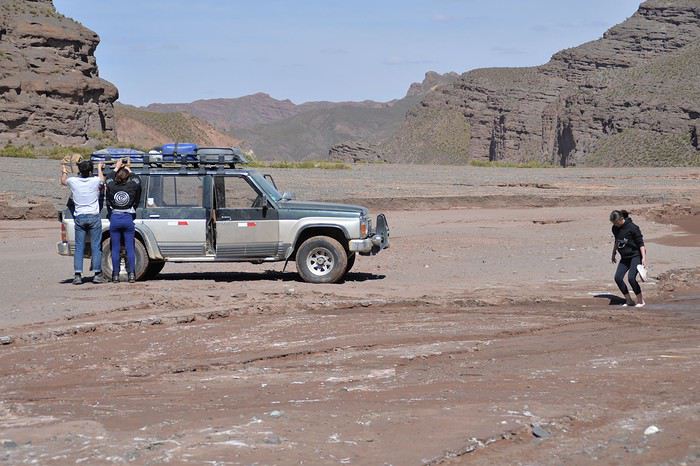
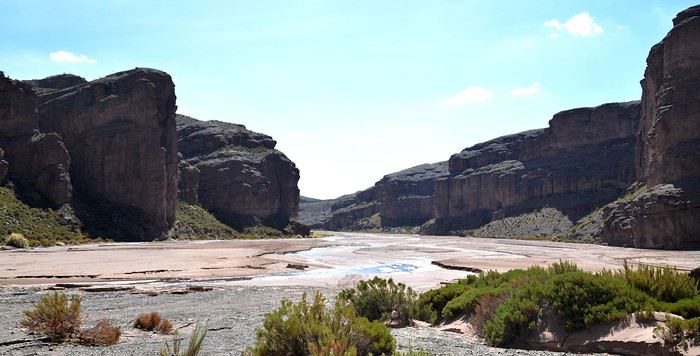
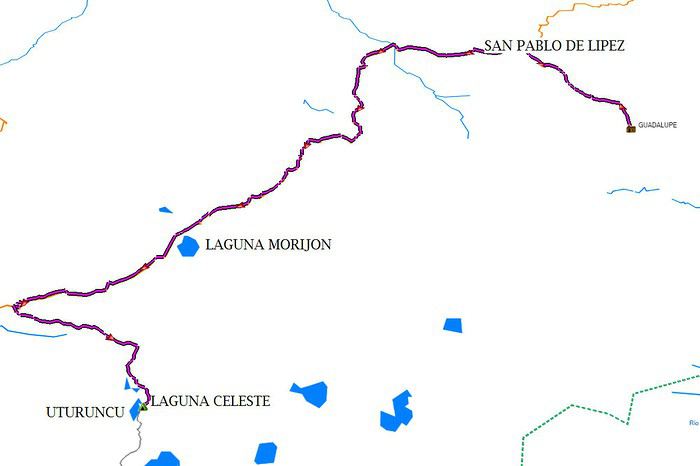
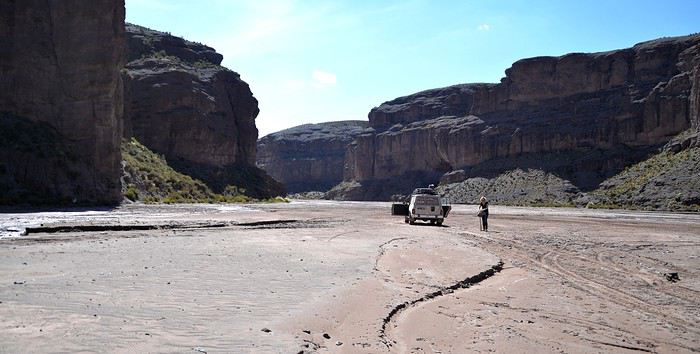 Nous suivons donc les traces avec un peu d'angoisse, mais comme on pouvait s'y attendre, elles finissent par rejoindre la piste un peu plus loin.
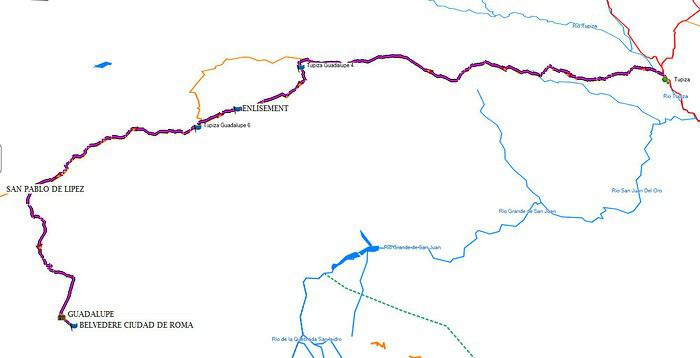
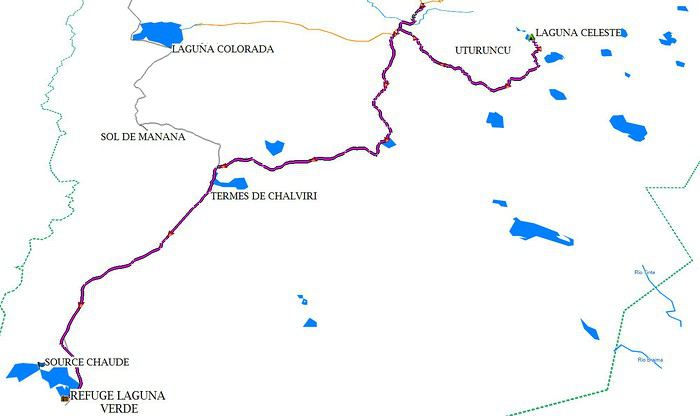
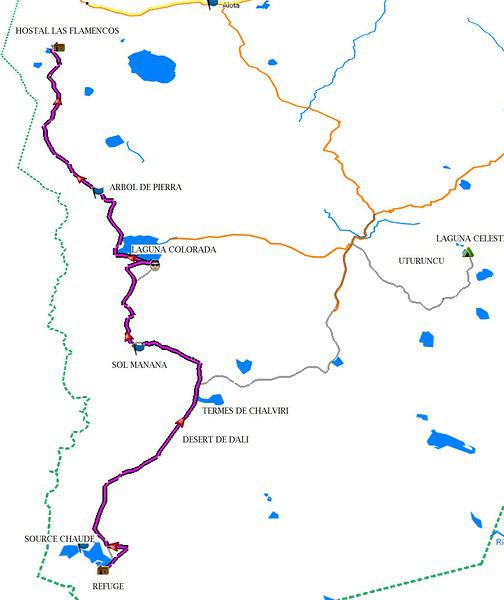
La trace reconstituée du détour :
Nous suivons donc les traces avec un peu d'angoisse, mais comme on pouvait s'y attendre, elles finissent par rejoindre la piste un peu plus loin.
La trace reconstituée du détour :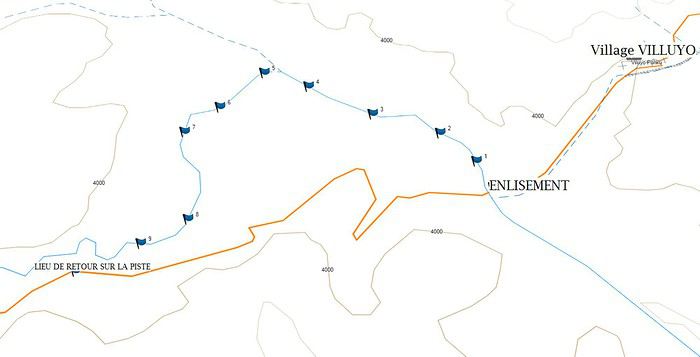
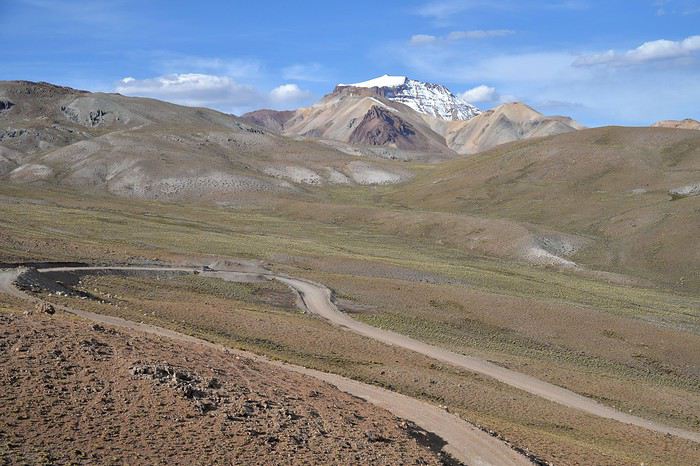
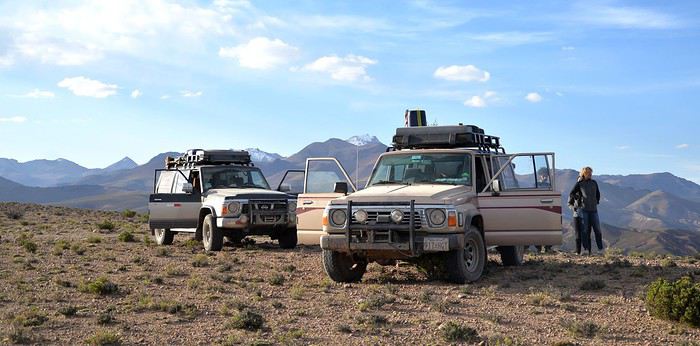
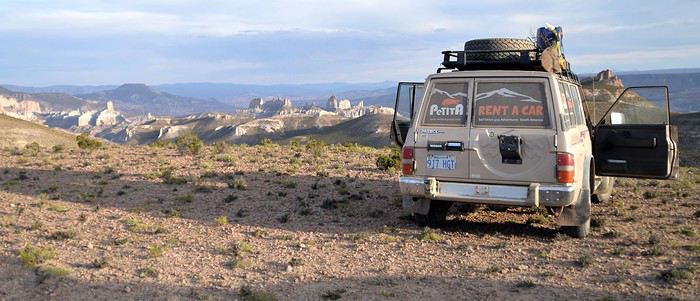
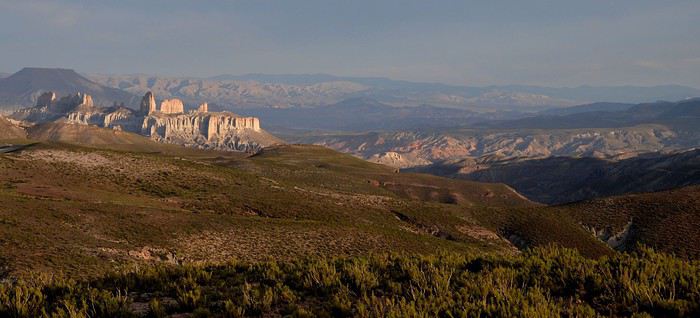
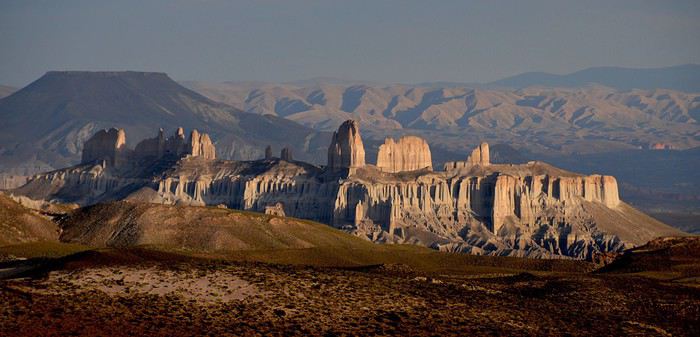
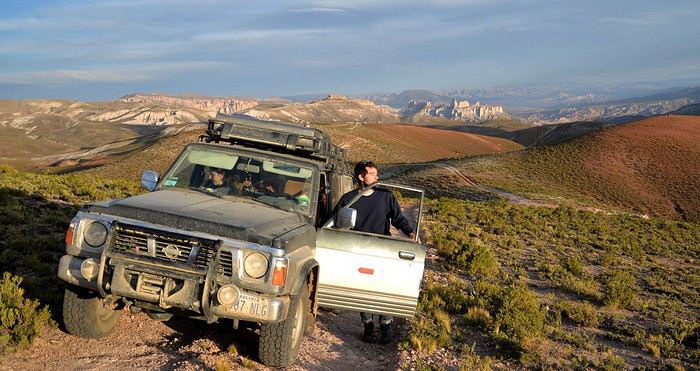

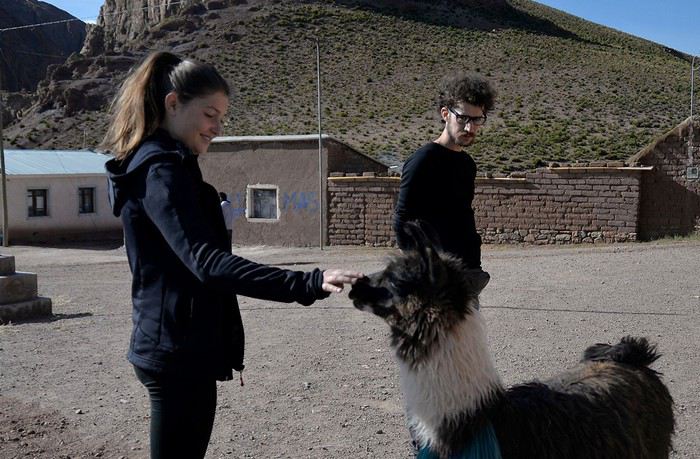
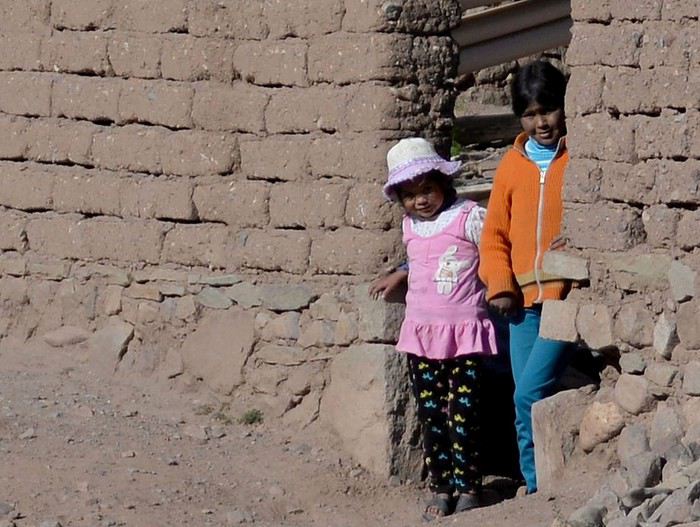
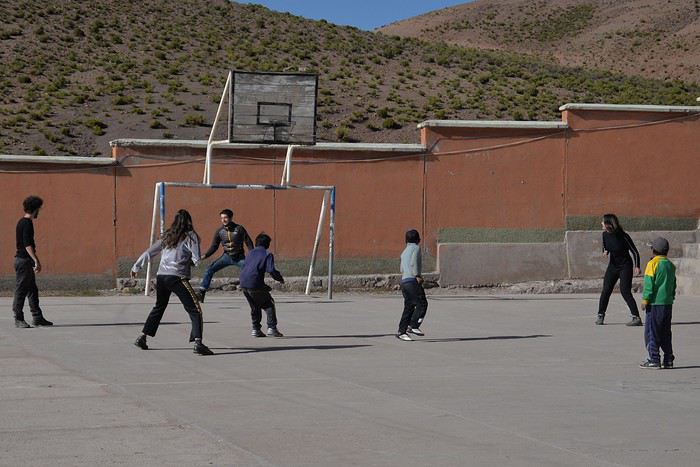
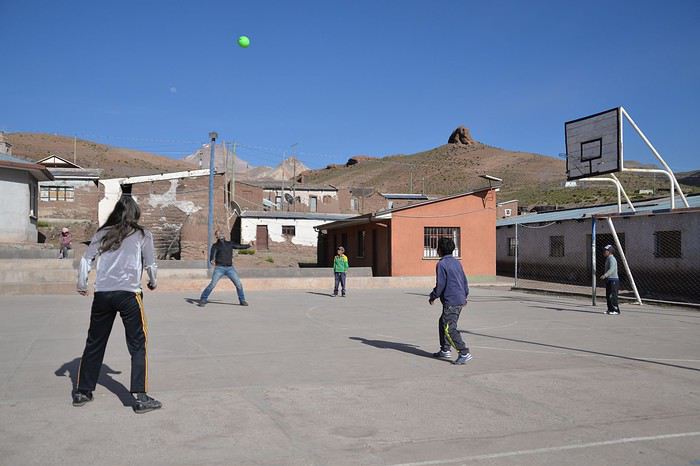
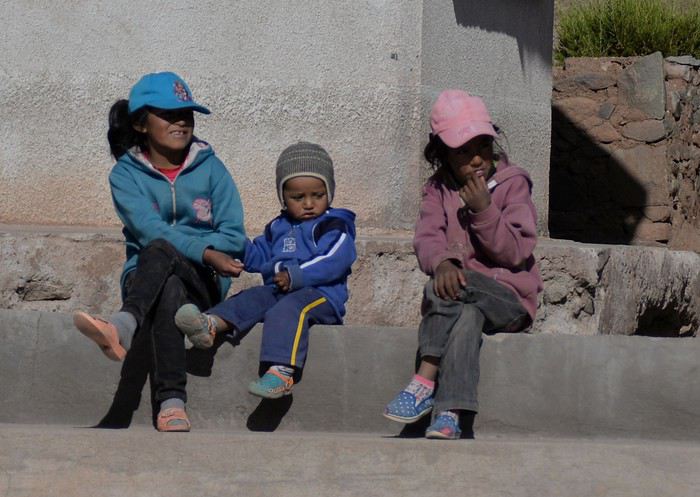
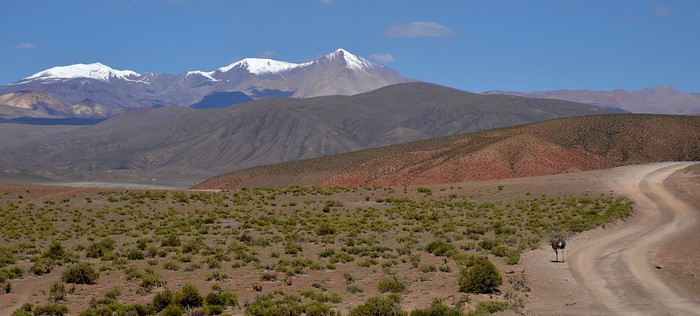
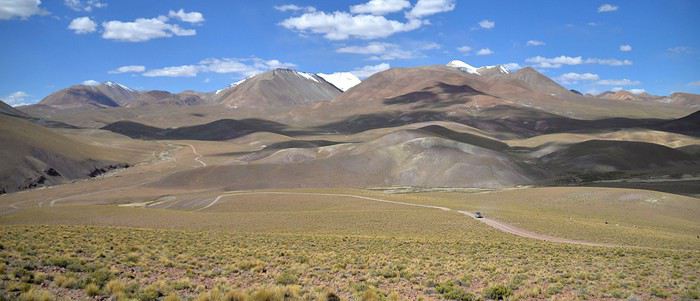
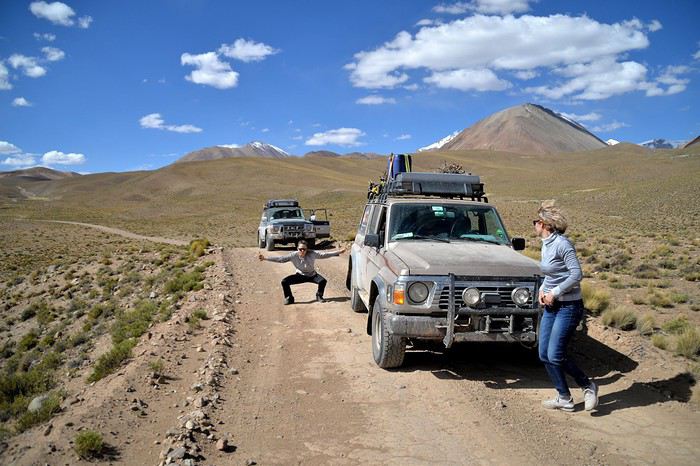
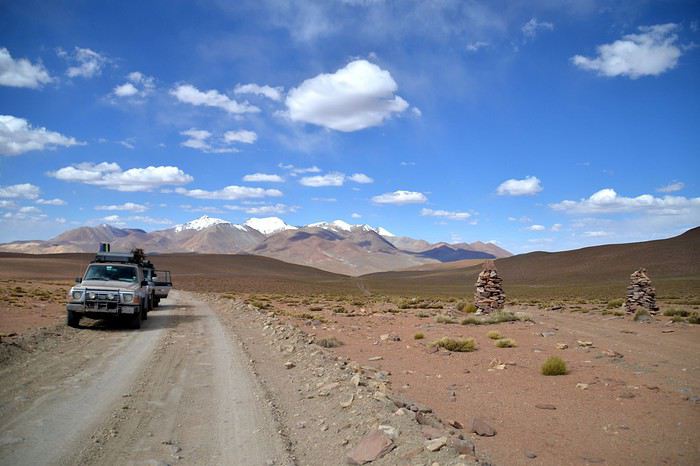
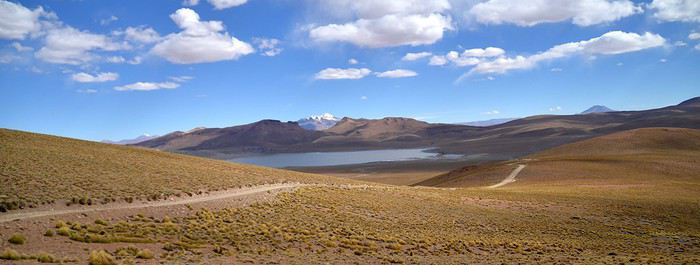
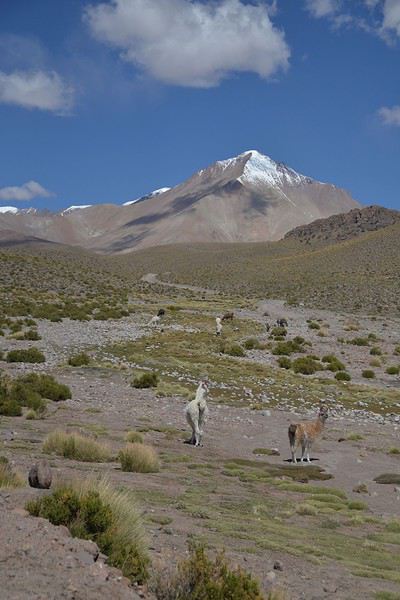
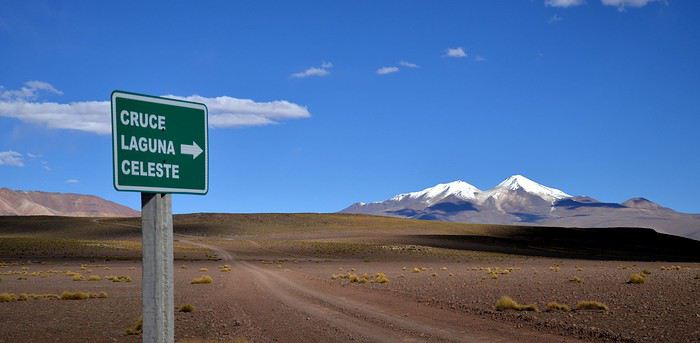
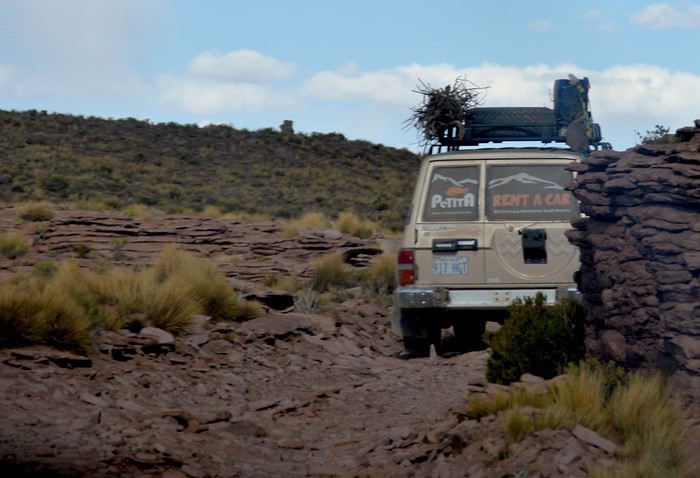
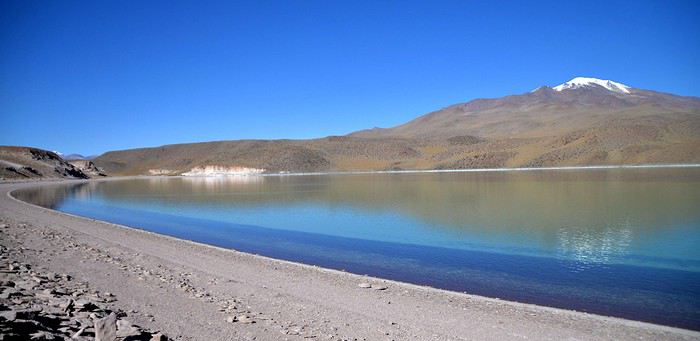
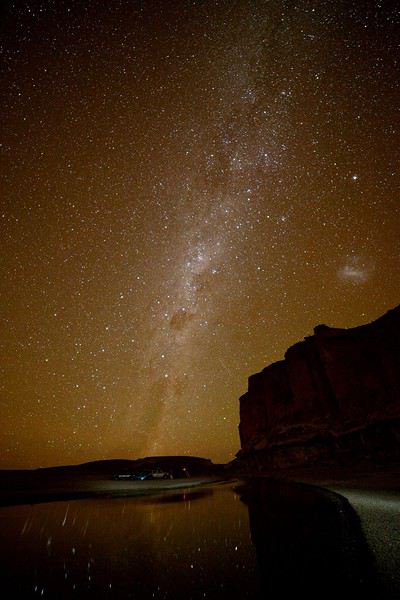
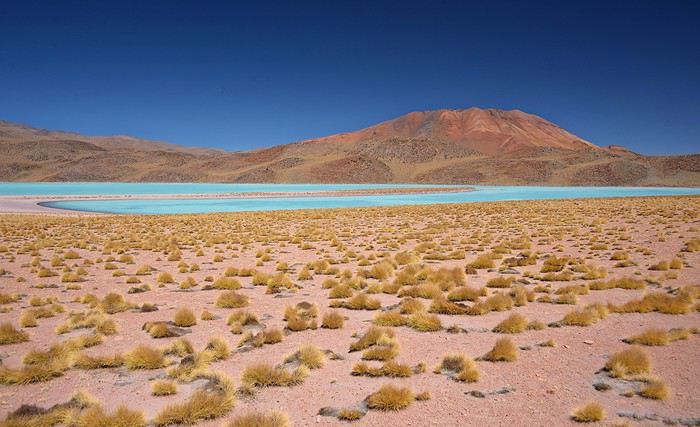
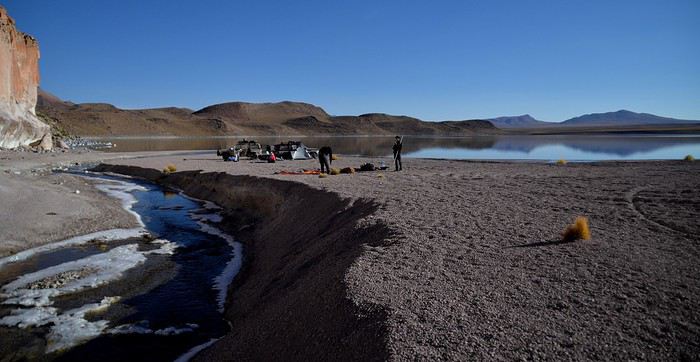
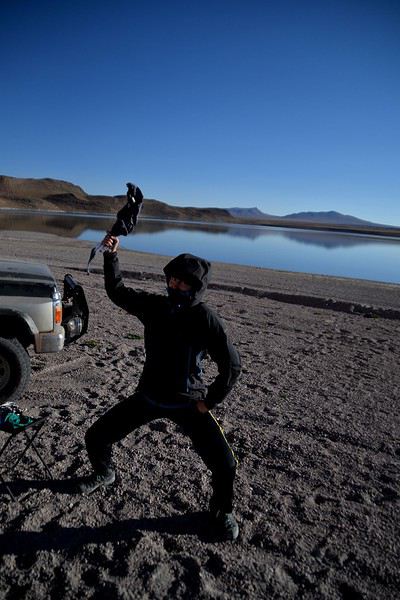
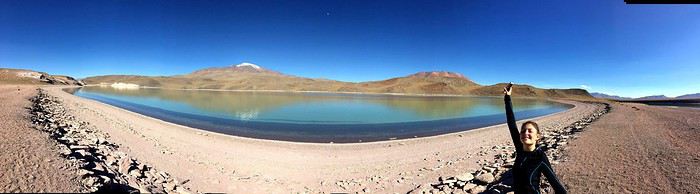
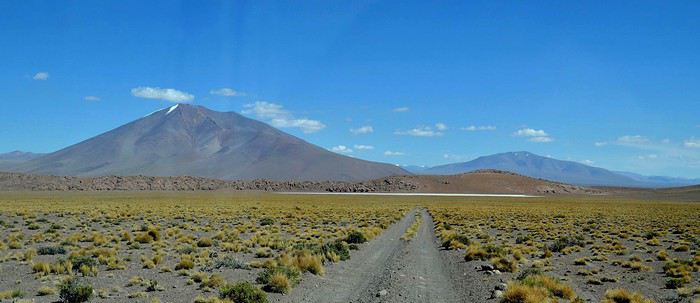
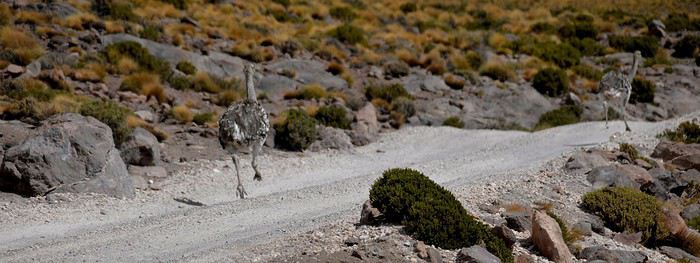
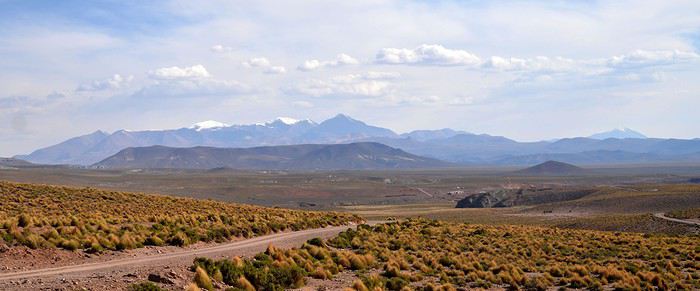
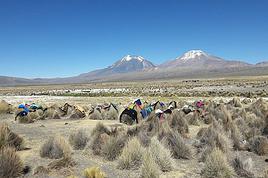
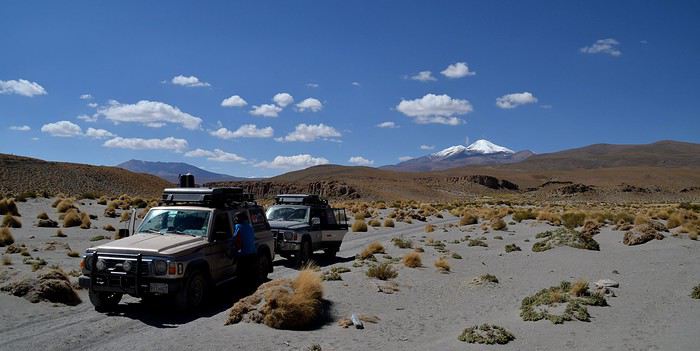 (l'Uturuncu côté face Ouest)
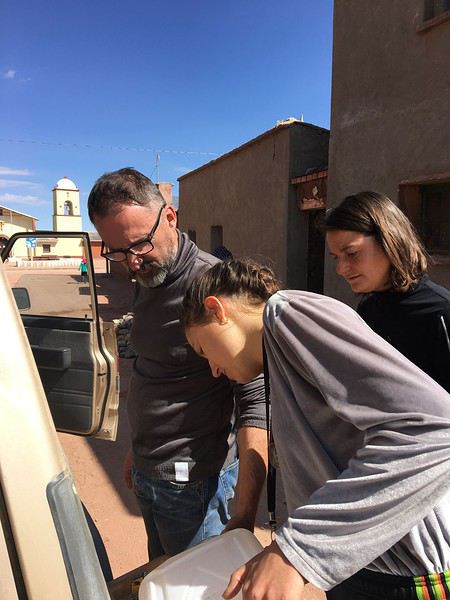
Nous arrivons à Quetena Chico et décidons de voir s'il n'y aurait pas un peu d'essence à glaner par ici, nous tombons sur un attroupement et une dame nous propose de l'essence, très chère pour la Bolivie à 8 bol / l ( moins de 1€ cependant) , nous sommes à l'endroit le plus éloigné de toute station. Nous décidons d'en prendre 20 litres par voiture, mais c'est de la gourmandise...
Pendant que nous vidons les bidons dans le réservoir, un gars vient nous dire qu'il faut payer l'entrée du parc, on lui dit que oui, on va payer et on en profite pour demander où se trouve le bureau. Il nous apprend que c'est 13 km plus au nord et que nous sommes entrés dans le parc illégalement.
Merde...désolé...un garde du parc en repos nous accompagne à l'estancia de sol manana, où il n'y a rien qu'une simple baraque pour remplir les formalités et régler l'entrée (150 bol / personne) et nous repartons plein sud, .
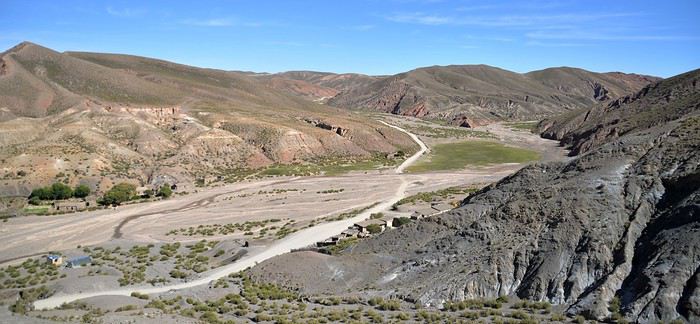
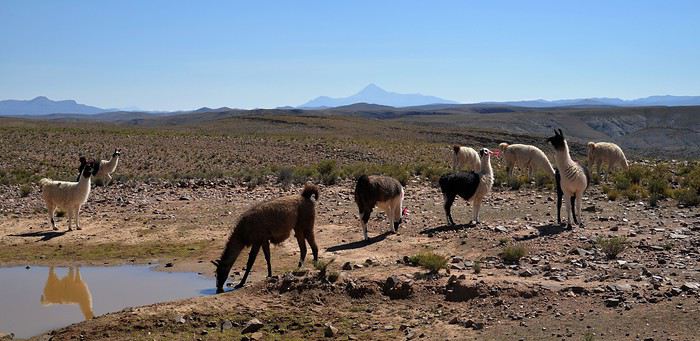
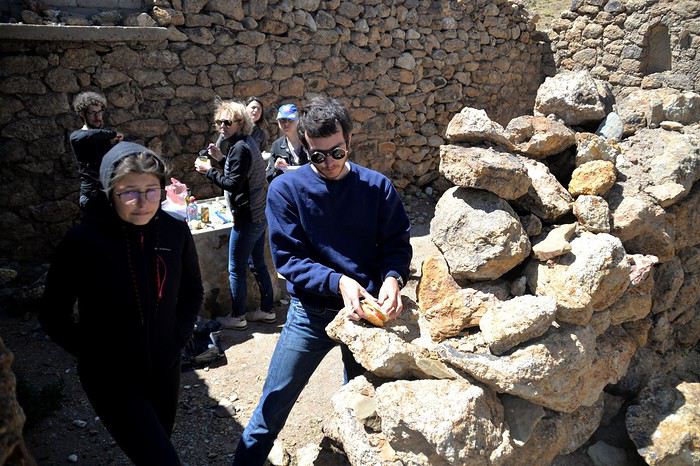
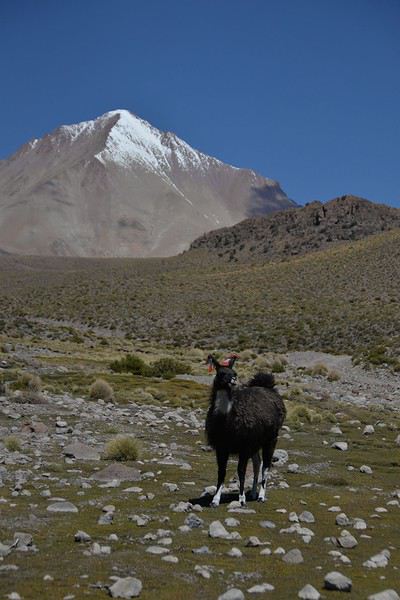
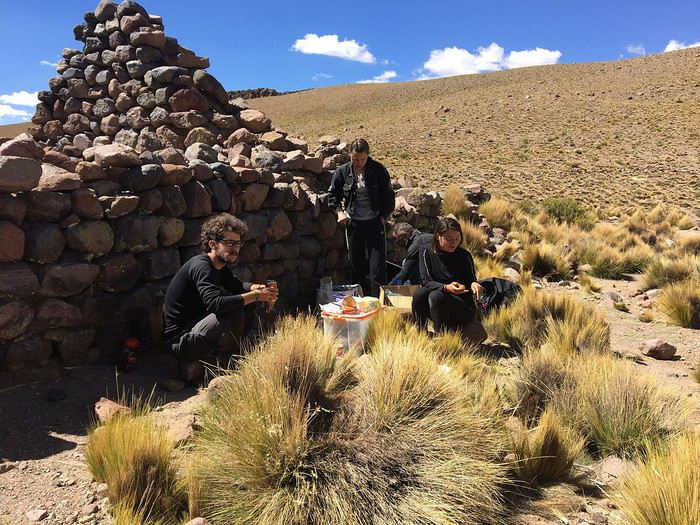
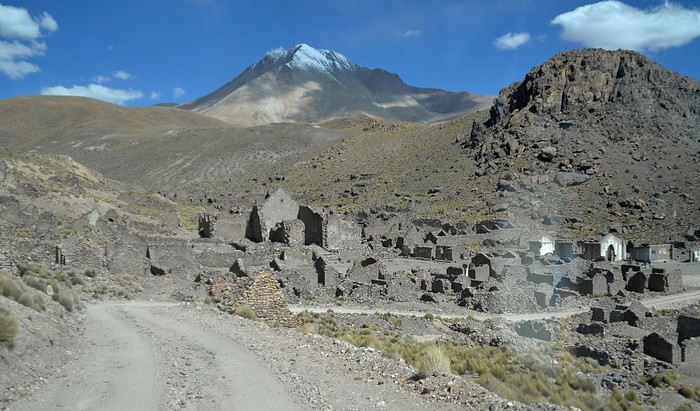
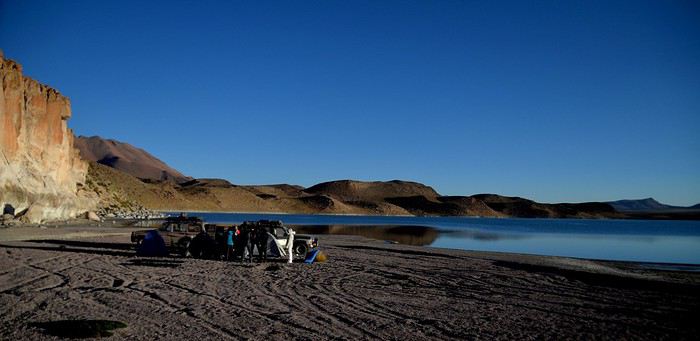
Le premier hameau en ruine nous servira d'abri pique nique sous le regard des lamas et la surveillance de notre ami Uturuncu.
(l'Uturuncu côté face Ouest)
Nous arrivons à Quetena Chico et décidons de voir s'il n'y aurait pas un peu d'essence à glaner par ici, nous tombons sur un attroupement et une dame nous propose de l'essence, très chère pour la Bolivie à 8 bol / l ( moins de 1€ cependant) , nous sommes à l'endroit le plus éloigné de toute station. Nous décidons d'en prendre 20 litres par voiture, mais c'est de la gourmandise...
Pendant que nous vidons les bidons dans le réservoir, un gars vient nous dire qu'il faut payer l'entrée du parc, on lui dit que oui, on va payer et on en profite pour demander où se trouve le bureau. Il nous apprend que c'est 13 km plus au nord et que nous sommes entrés dans le parc illégalement.
Merde...désolé...un garde du parc en repos nous accompagne à l'estancia de sol manana, où il n'y a rien qu'une simple baraque pour remplir les formalités et régler l'entrée (150 bol / personne) et nous repartons plein sud, .
Le premier hameau en ruine nous servira d'abri pique nique sous le regard des lamas et la surveillance de notre ami Uturuncu.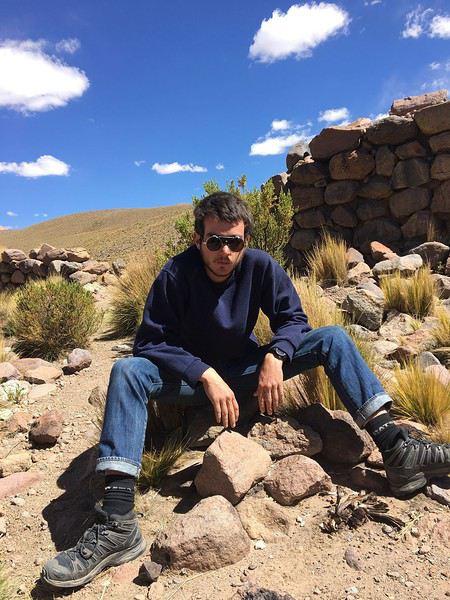
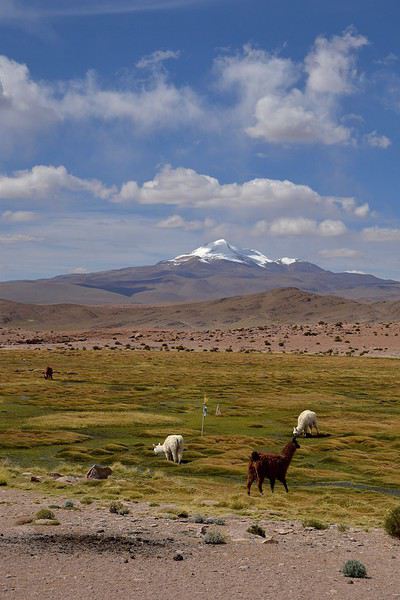
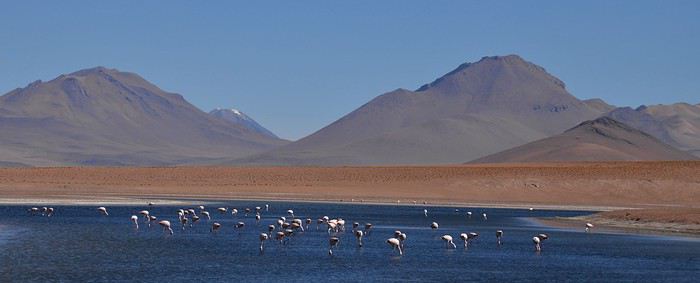
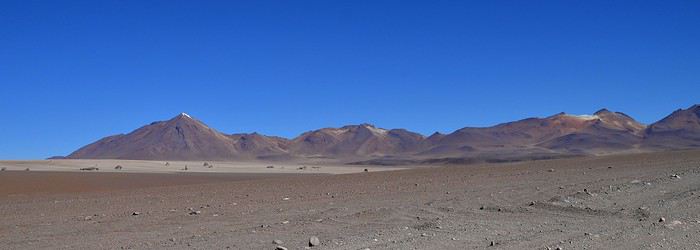
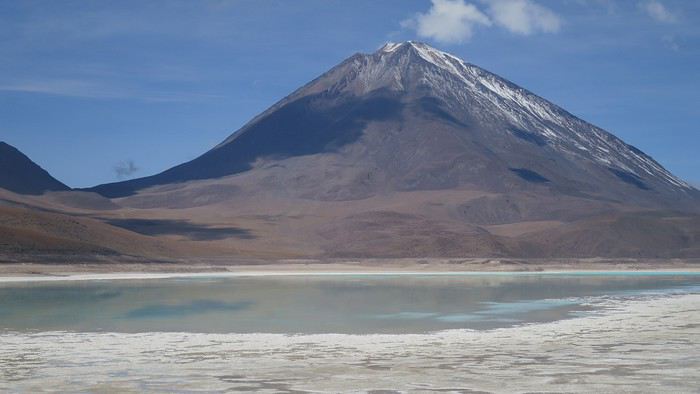
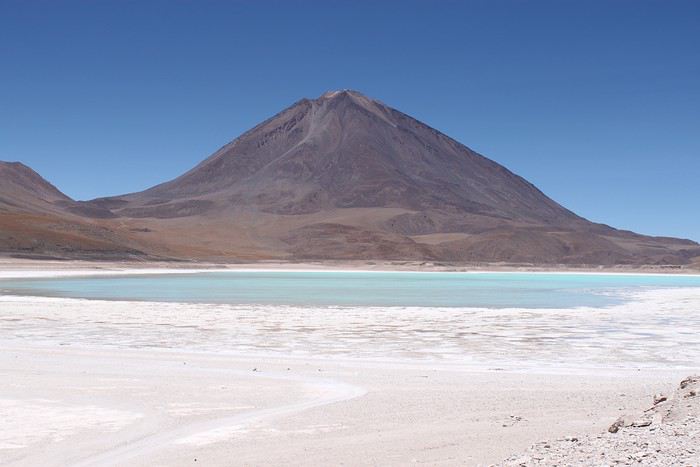
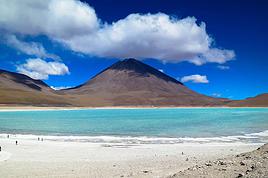
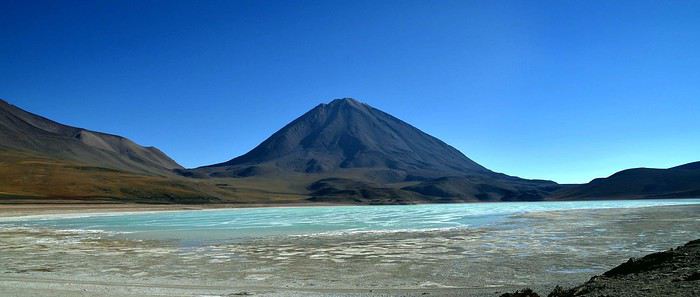 (le Licancabur face est)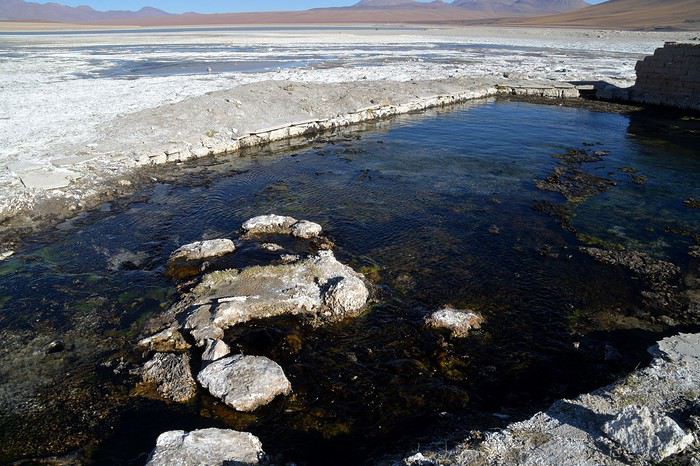
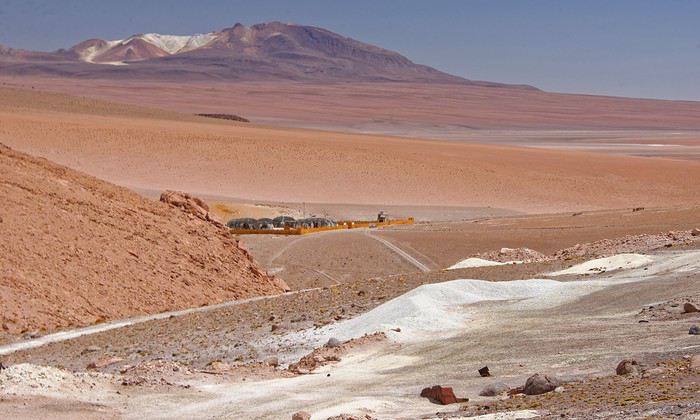
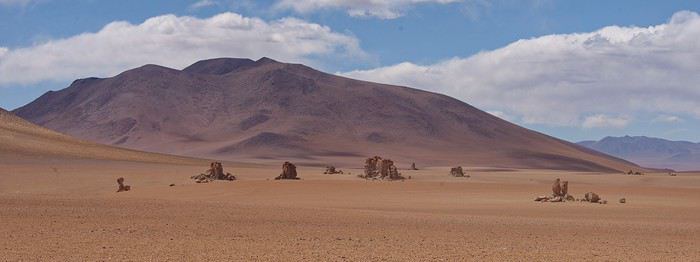
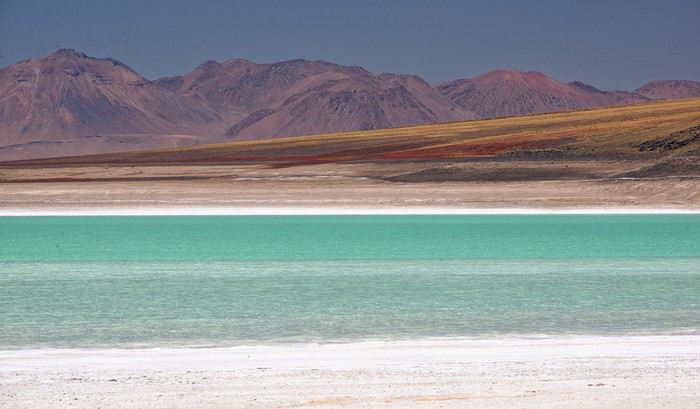
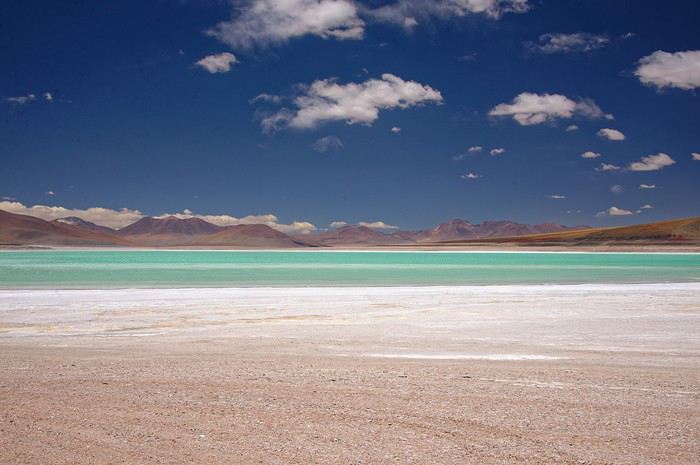
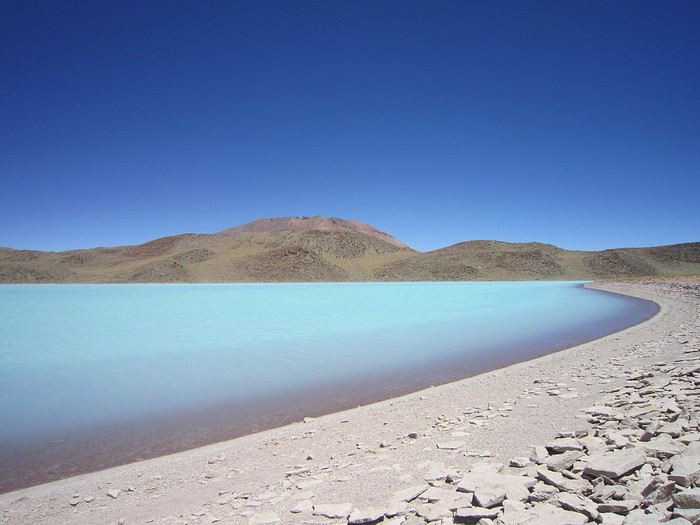
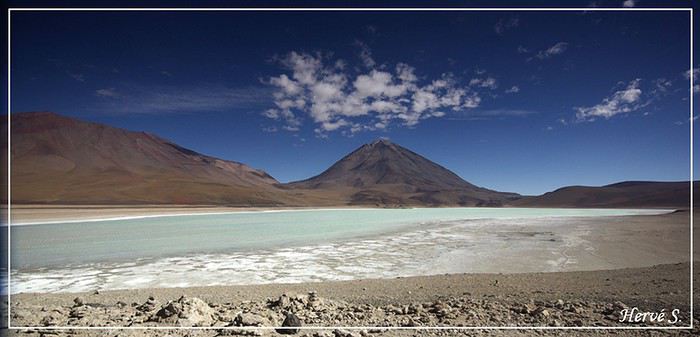
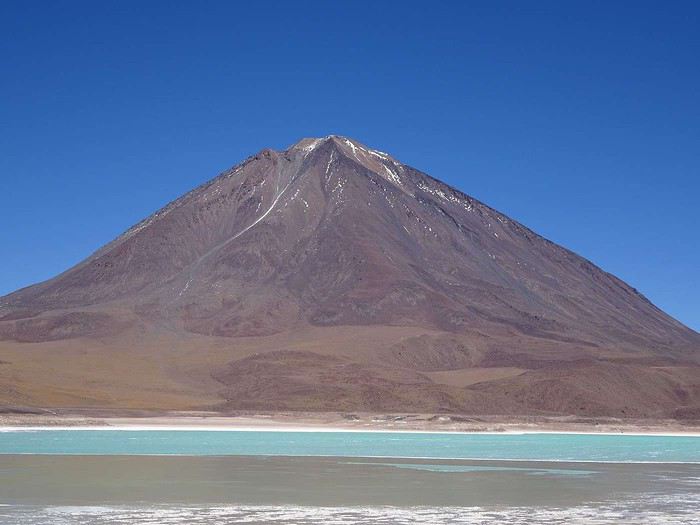
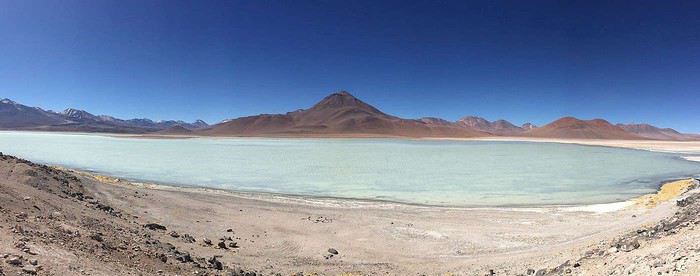
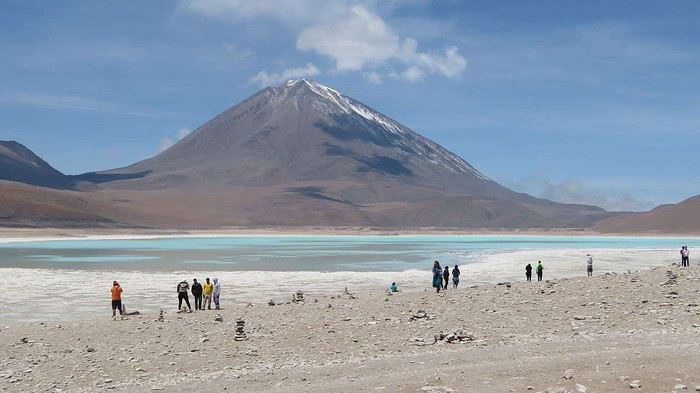
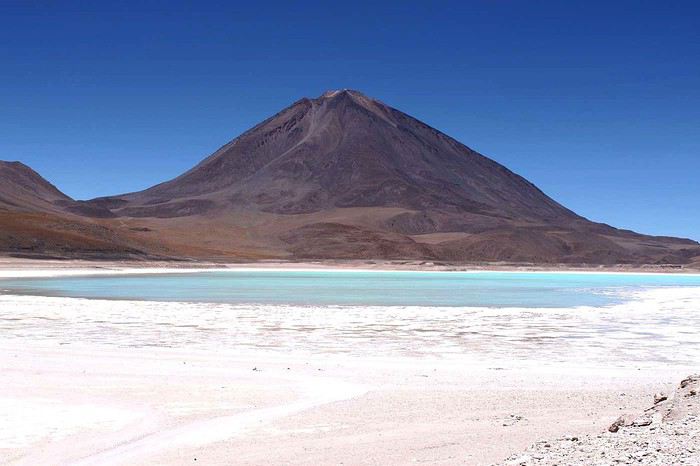
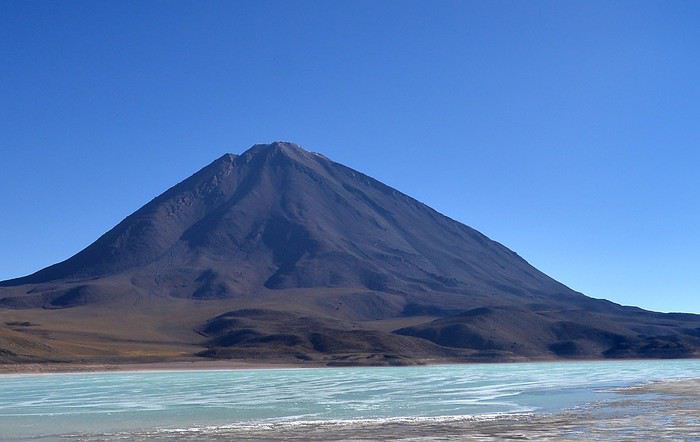
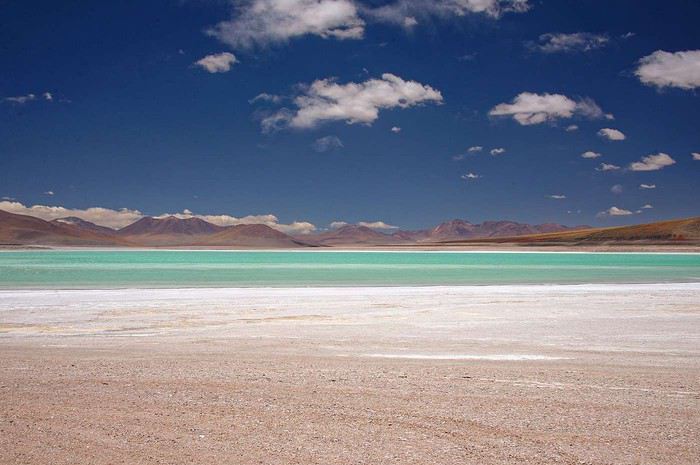
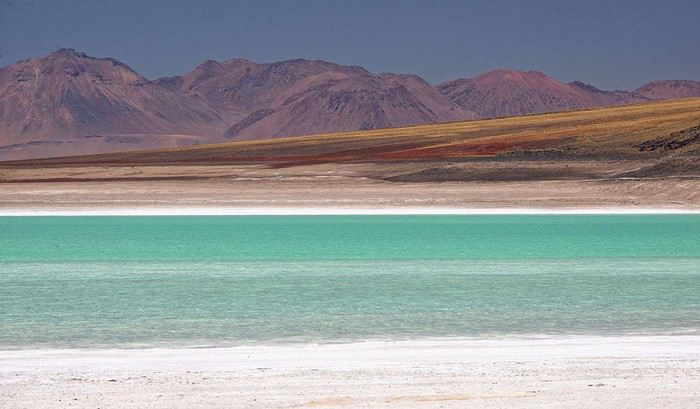
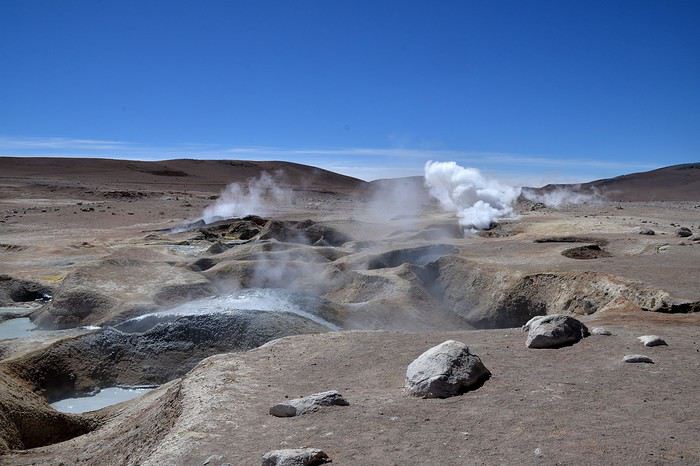
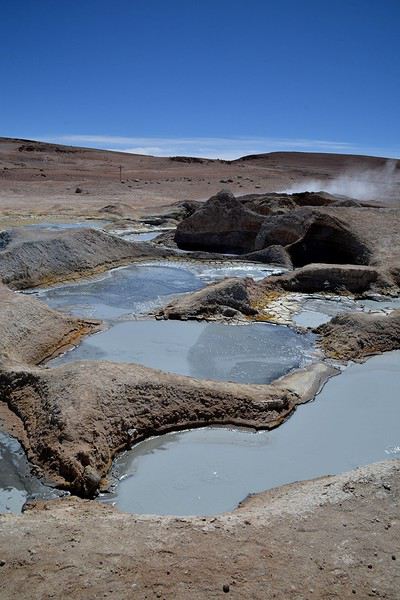
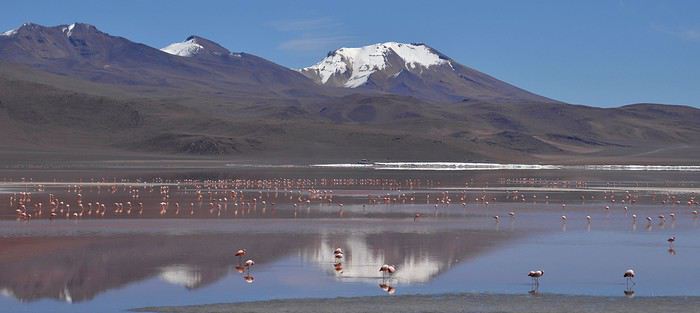
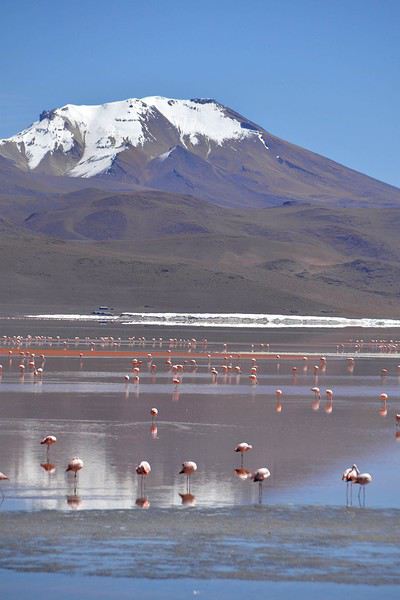
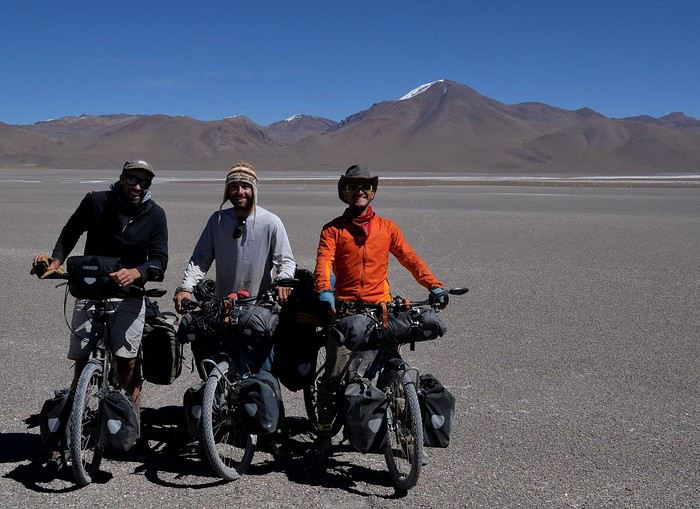
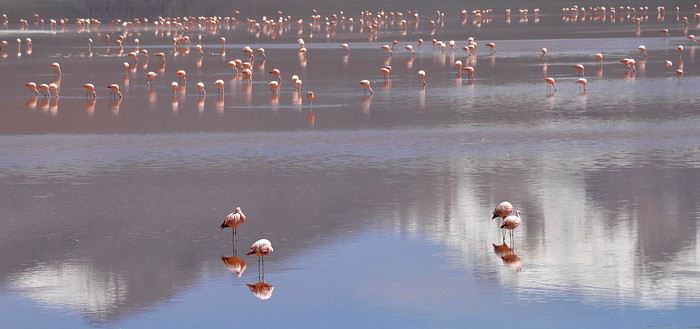
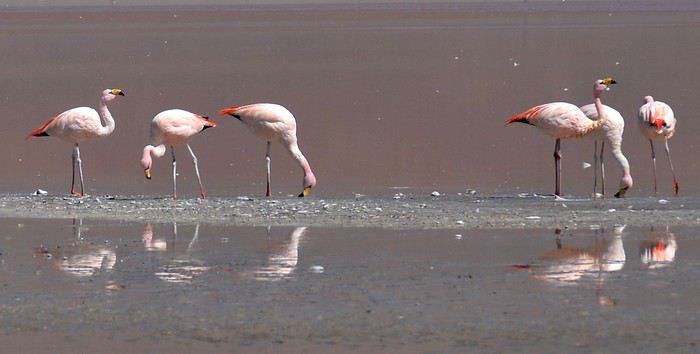
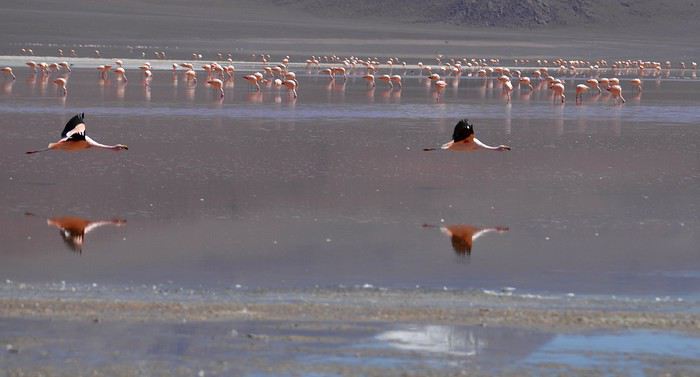
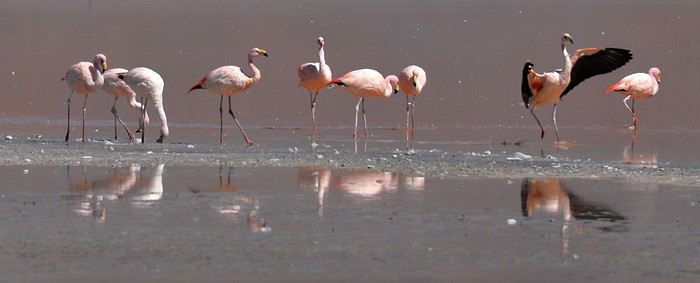
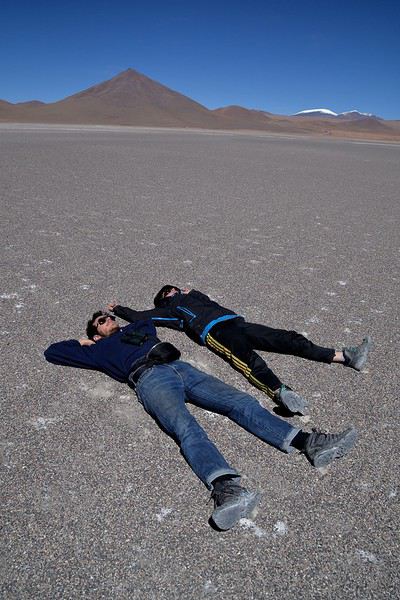
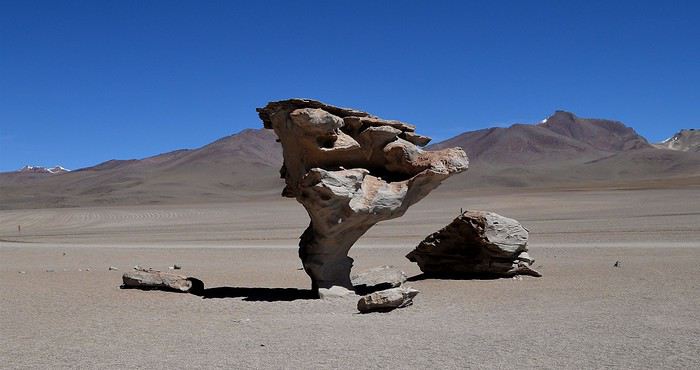
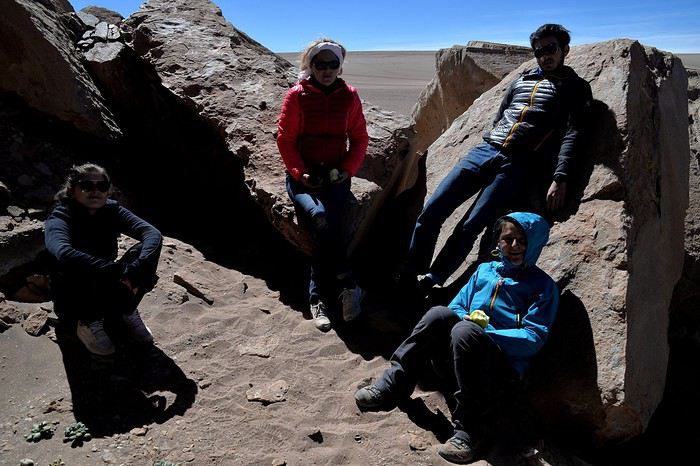
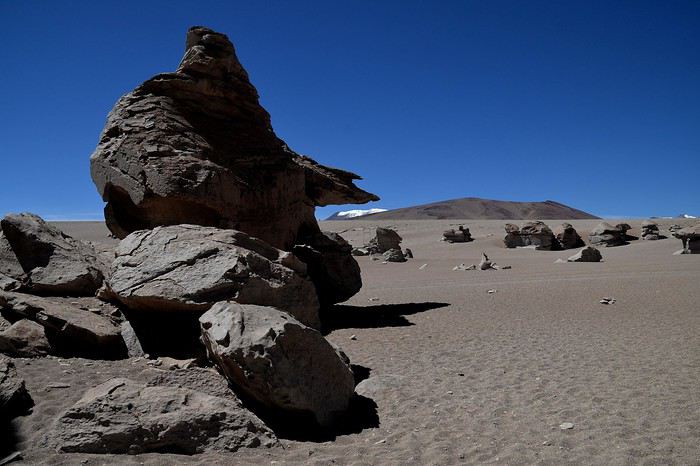
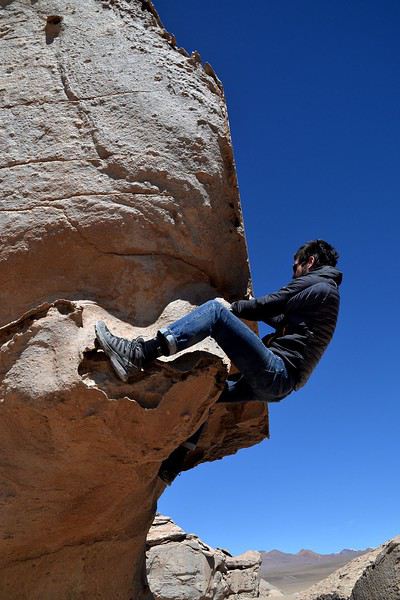
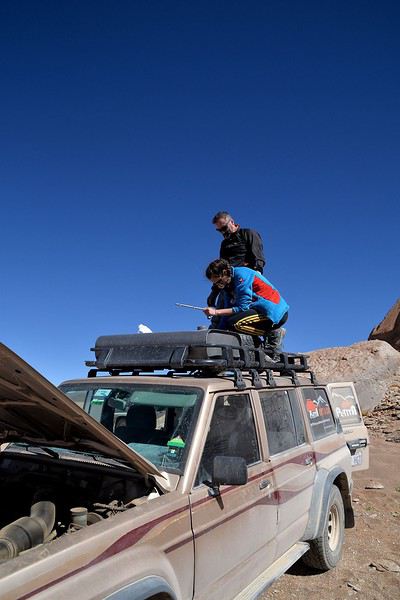
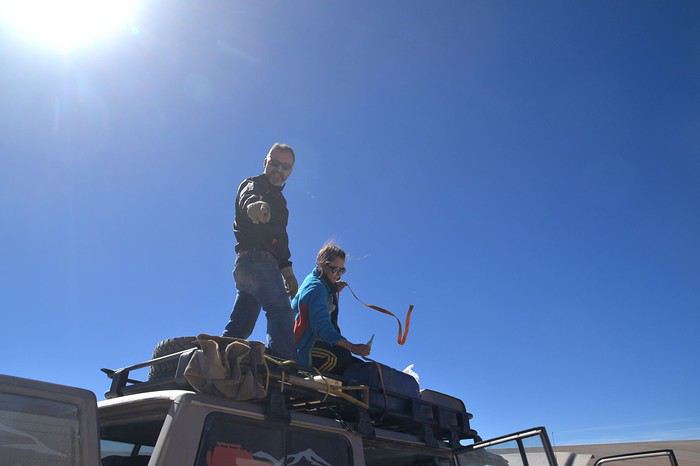
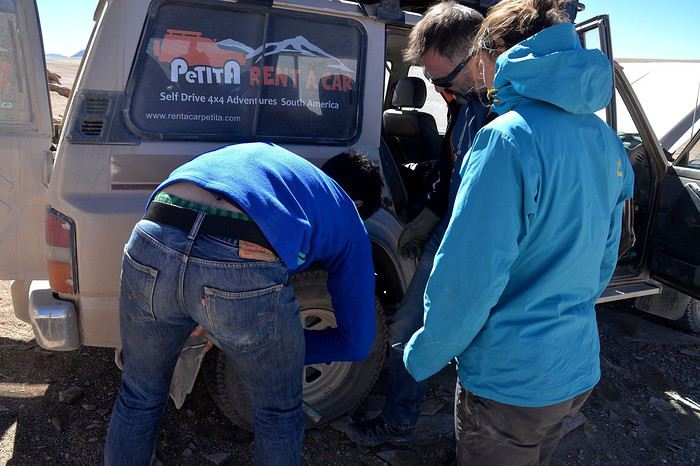
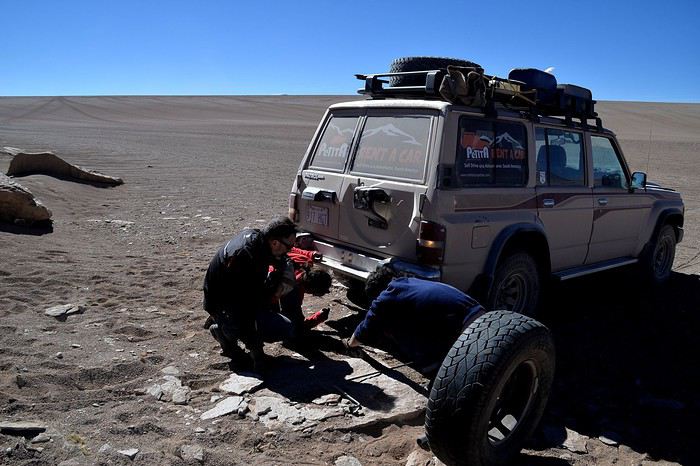
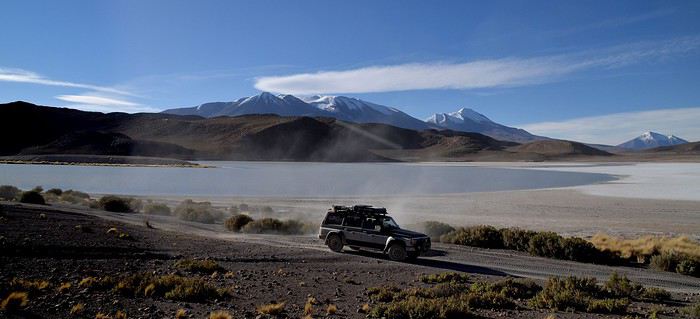
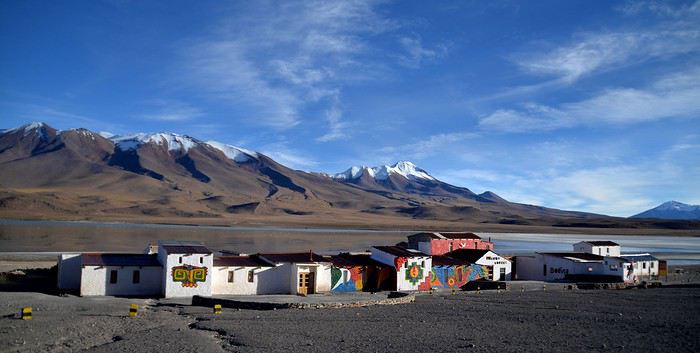
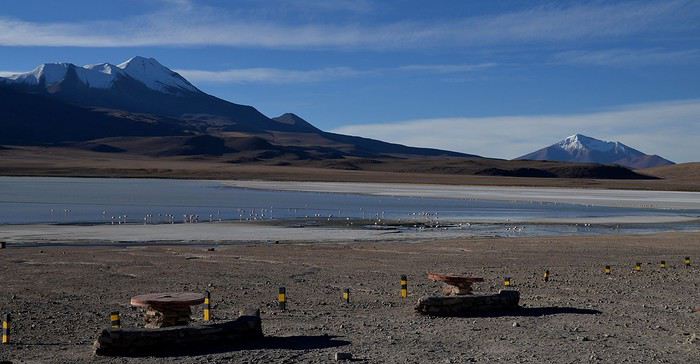
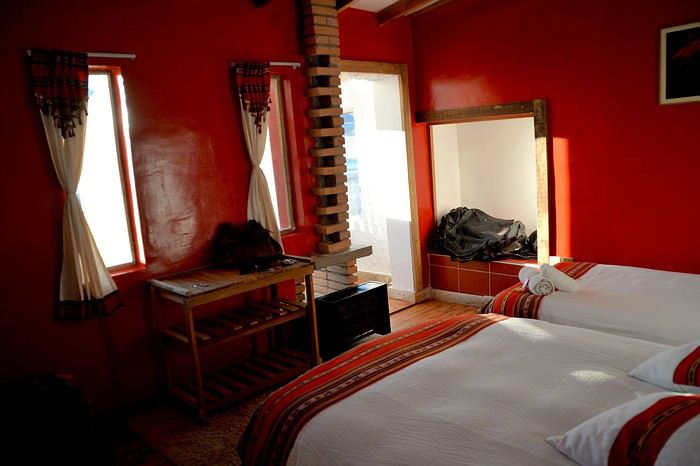
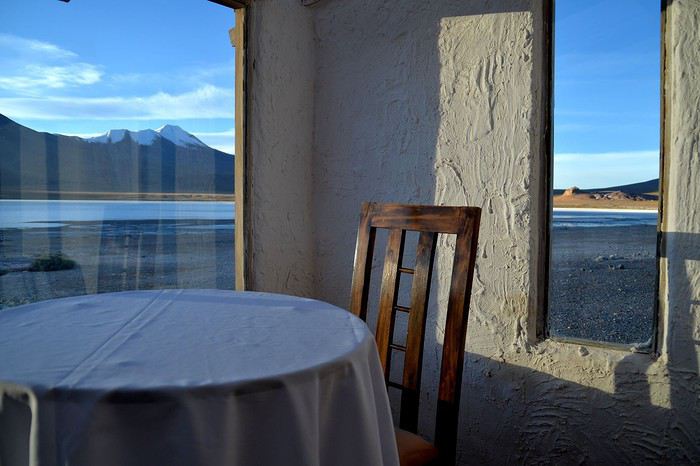
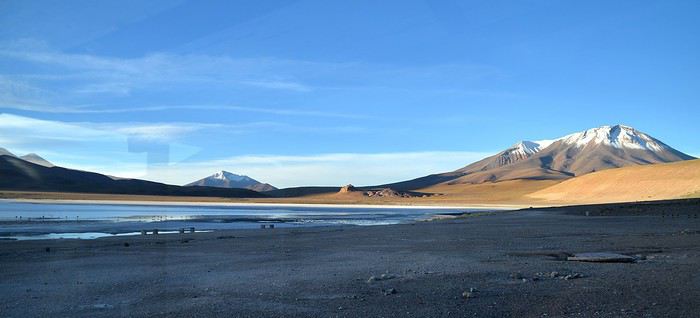
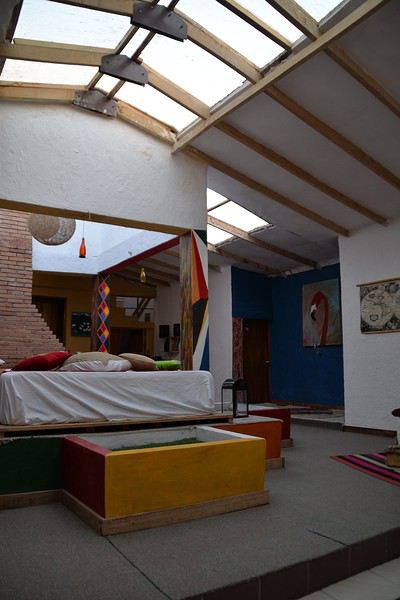
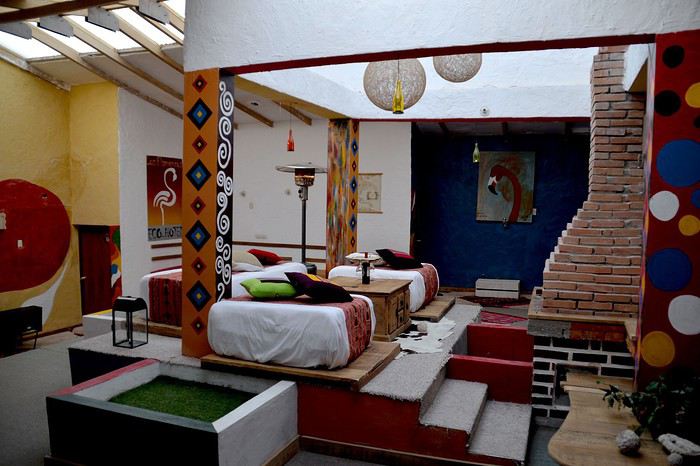
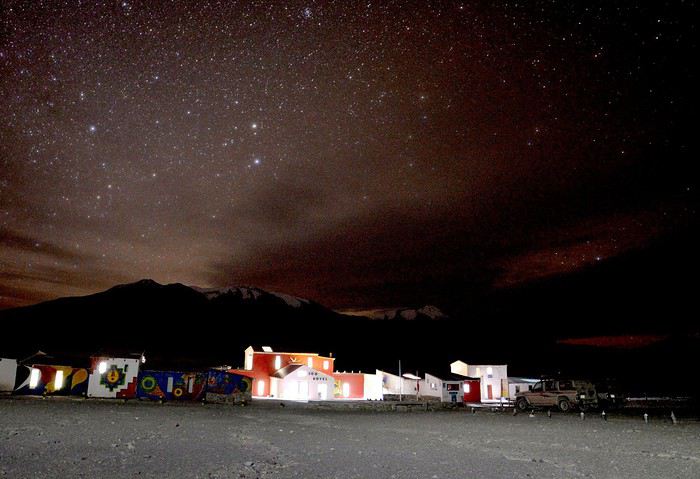
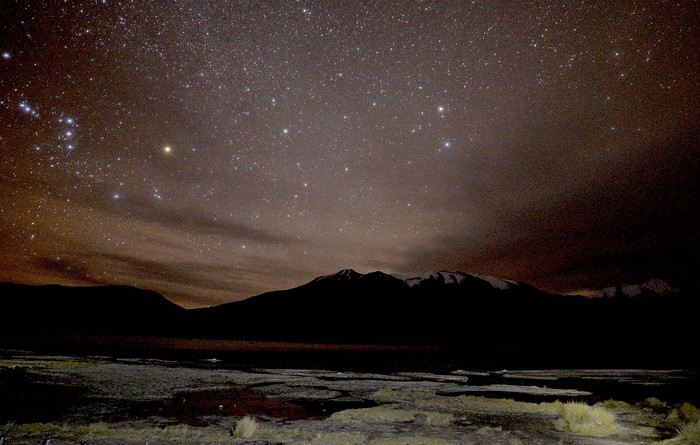
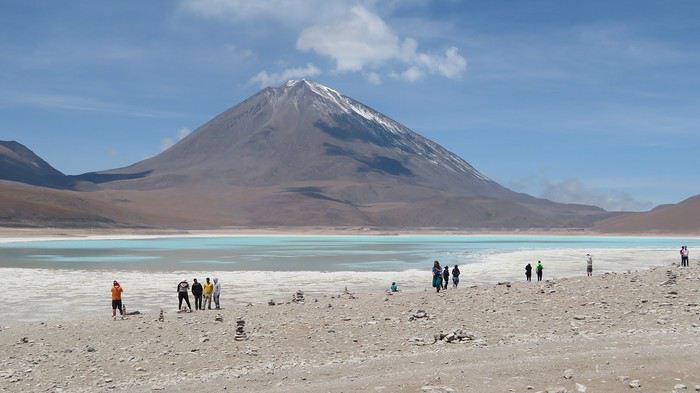
 Pour ce qui est du Los Flamencos, je ne critique pas. Simplement, en passant devant, cela n'avait pas l'air engageant. Tes commentaires et tes photos montrent qu'il ne faut pas se laisser impressionner par les apparences. Pour mon compte, j'avais dormi au Takya del Désertio, une trentaine de kms au sud du Los Flamencos.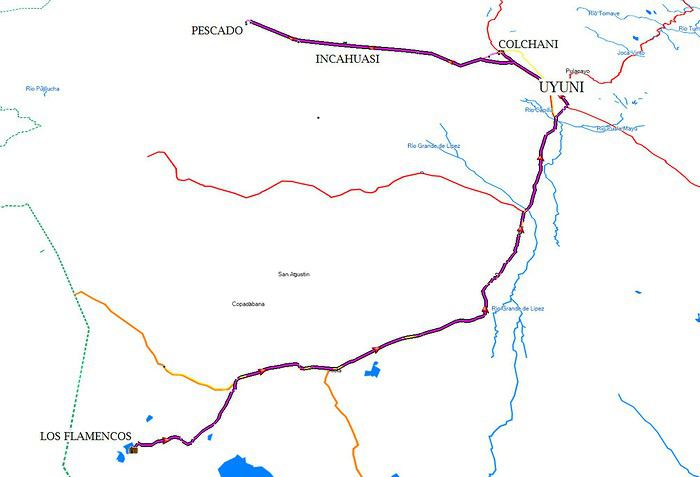
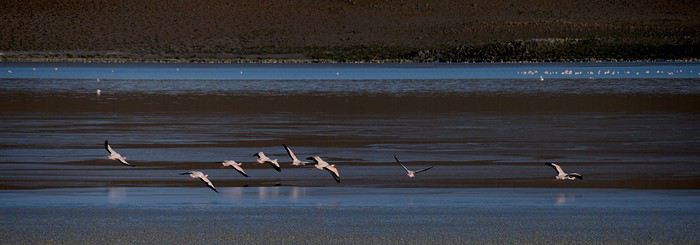
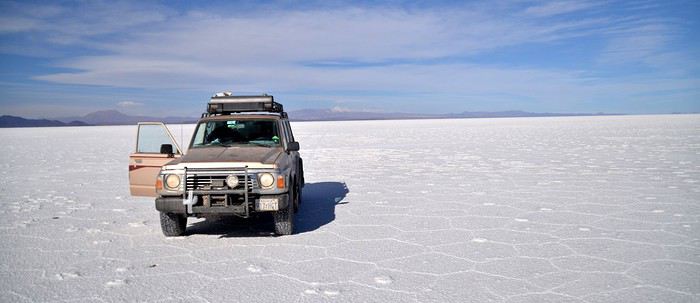
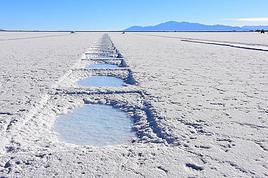
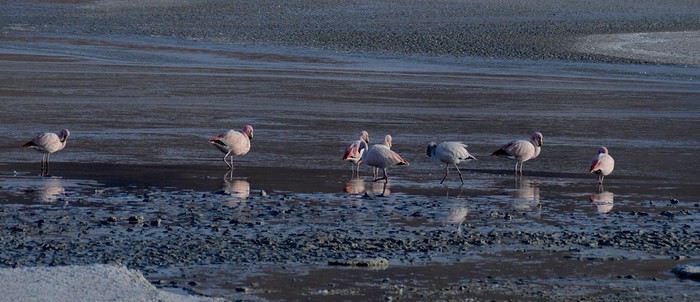 Nos plans ont changé, j'avais prévu d'entrer sur le salar par la rampe Colcha K et de ne pas passer par Uyuni, mais comme il faut aller payer...
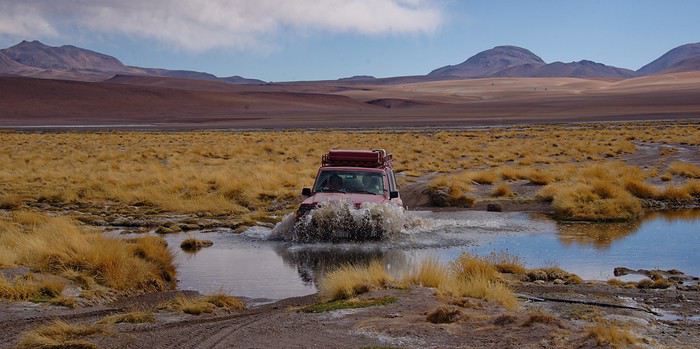
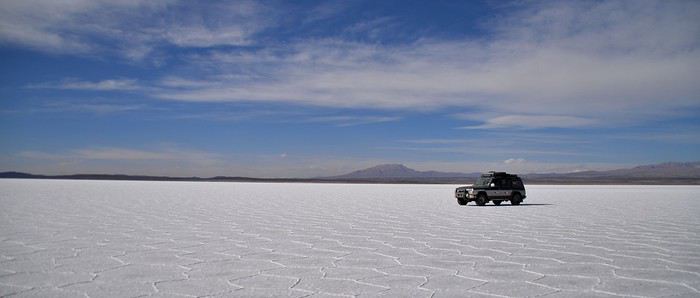
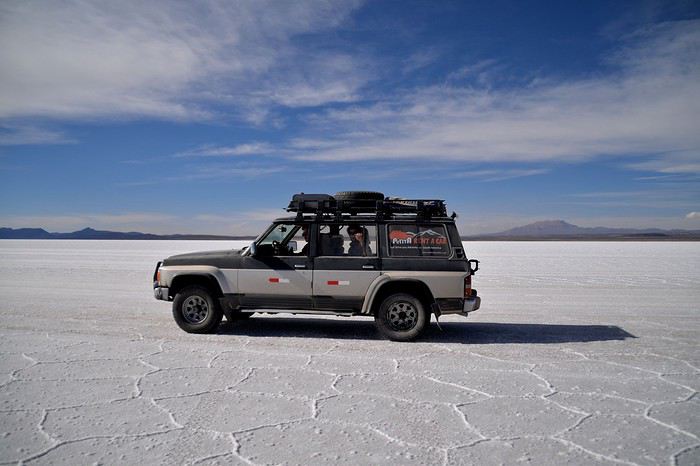
Le début de la piste est difficile, une piste très peu roulante mais sans grosse difficultés, comme celle de la veille, ça ne va pas très vite, il y a des rios à traverser, dont un qui fait bien 50 cm de profondeur.
Nos plans ont changé, j'avais prévu d'entrer sur le salar par la rampe Colcha K et de ne pas passer par Uyuni, mais comme il faut aller payer...
Le début de la piste est difficile, une piste très peu roulante mais sans grosse difficultés, comme celle de la veille, ça ne va pas très vite, il y a des rios à traverser, dont un qui fait bien 50 cm de profondeur.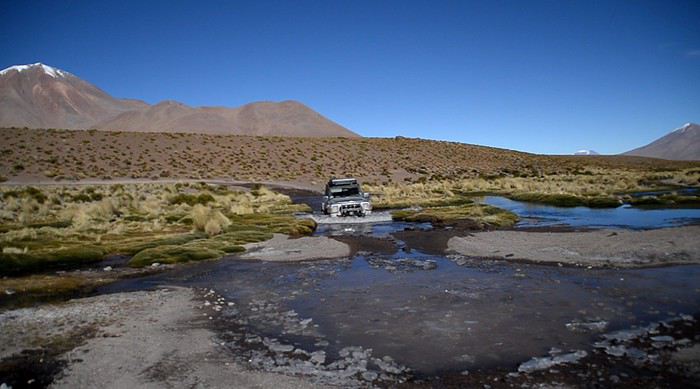 vimeo.com/217831282
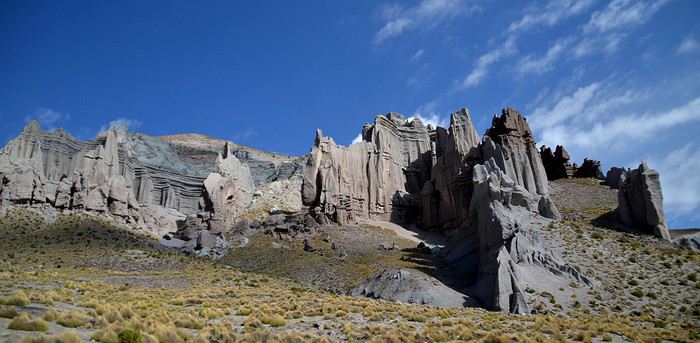
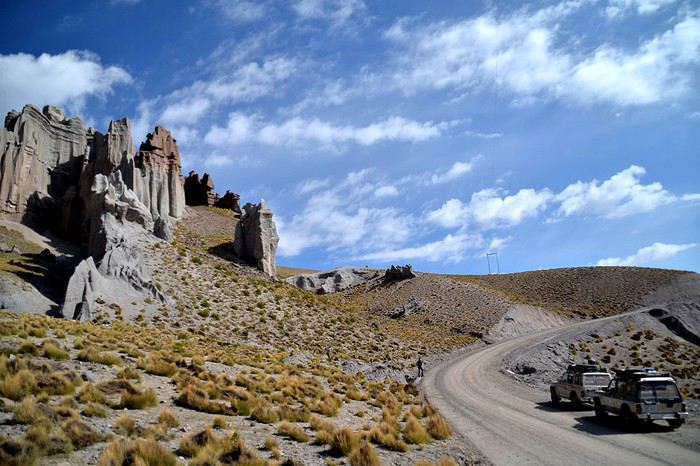
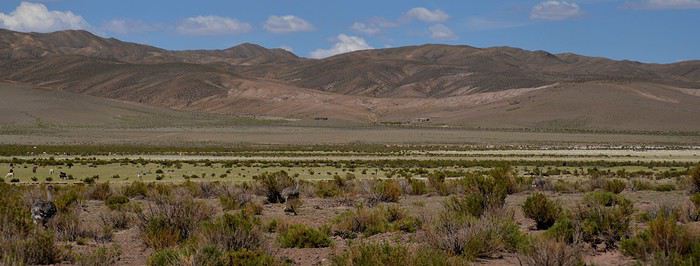
Nous traversons la jolie vallée des pierres où nous croisons pas mal de véhicules venant d'Uyuni,
vimeo.com/217831282
Nous traversons la jolie vallée des pierres où nous croisons pas mal de véhicules venant d'Uyuni,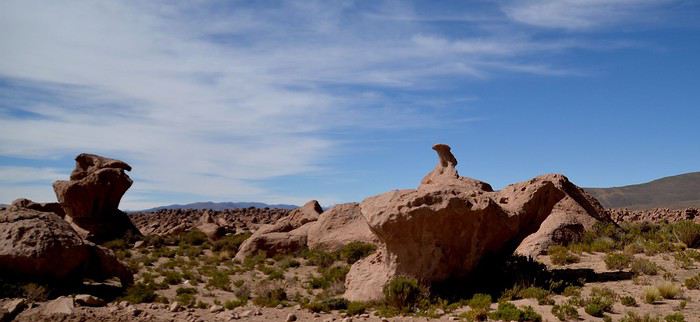

Hi everyone, we're back from a DIY USA road trip we organized from July 31, 2026, to August 26, 2026.
The destination: The Southwest USA, including Texas, Arizona, and New Mexico. Roughly 7,000 kilometers covered.
The car: A Chevrolet Equinox for two, rented through BSP Auto and Avis. Inside, we had 2 suitcases, a travel bag, two carry-on bags, a Walmart cooler, photo gear, and water bottles (a 40-pack).
The route: Dallas DFW, Fort Worth, Houston, Austin, San Antonio, Alpine, El Paso, Tucson, Sedona, Albuquerque, Amarillo, and back to Dallas to finish with a departure from DFW.
The travelers: Two seniors well advanced in years (73 and 75) but still active (nothing too physically demanding—to stay alive and fund our trips), fully independent physically, though a bit less so mentally. Big USA fans, a country where anything is possible. More walkers than hikers, preferring 3-star hotels over roadside motels, Italian restaurants over US food, frequent stops for photos, museums over nothing, naps over forced marches. Not too whiny, just enough to stay French in the land of the "great Satan," as they say. Not great with languages—street English (but handy), and my Spanish is non-existent except for: "Hola! Una cerveza por favor!" That’s about it. My wife understands everything but refuses to speak.
The cost of the road trip: Around 12,000 €, including AF flights, the car, gas, gifts, visits, and everything else. Well managed, since we’d budgeted 13,500 € initially.
The positive side: A delight, with those endless open roads. Museums to discover. The realization of the Hispanic presence and its important history in this part of America. Lovely locals. Tourists who were more or less friendly. A terrible Texan accent that was hard to understand. Gas stations that were like real stores, with prepared food, alcohol sold in Arizona and New Mexico, and employees who were always up for a laugh!
The negative side: The heat throughout the trip... 43°C in Dallas at the end. Impossible to walk the streets. Lots of homeless people in downtown Dallas. Hotel breakfasts that were always the same. You get used to it.
So, it was positive overall, but the concept is starting to wear us out. We might rethink the DIY road trip model for next time. If the man upstairs grants us more time.
Next up, we’ll wait for the first batch of sorted photos to go through the wringer.
See you soon.
The destination: The Southwest USA, including Texas, Arizona, and New Mexico. Roughly 7,000 kilometers covered.
The car: A Chevrolet Equinox for two, rented through BSP Auto and Avis. Inside, we had 2 suitcases, a travel bag, two carry-on bags, a Walmart cooler, photo gear, and water bottles (a 40-pack).
The route: Dallas DFW, Fort Worth, Houston, Austin, San Antonio, Alpine, El Paso, Tucson, Sedona, Albuquerque, Amarillo, and back to Dallas to finish with a departure from DFW.
The travelers: Two seniors well advanced in years (73 and 75) but still active (nothing too physically demanding—to stay alive and fund our trips), fully independent physically, though a bit less so mentally. Big USA fans, a country where anything is possible. More walkers than hikers, preferring 3-star hotels over roadside motels, Italian restaurants over US food, frequent stops for photos, museums over nothing, naps over forced marches. Not too whiny, just enough to stay French in the land of the "great Satan," as they say. Not great with languages—street English (but handy), and my Spanish is non-existent except for: "Hola! Una cerveza por favor!" That’s about it. My wife understands everything but refuses to speak.
The cost of the road trip: Around 12,000 €, including AF flights, the car, gas, gifts, visits, and everything else. Well managed, since we’d budgeted 13,500 € initially.
The positive side: A delight, with those endless open roads. Museums to discover. The realization of the Hispanic presence and its important history in this part of America. Lovely locals. Tourists who were more or less friendly. A terrible Texan accent that was hard to understand. Gas stations that were like real stores, with prepared food, alcohol sold in Arizona and New Mexico, and employees who were always up for a laugh!
The negative side: The heat throughout the trip... 43°C in Dallas at the end. Impossible to walk the streets. Lots of homeless people in downtown Dallas. Hotel breakfasts that were always the same. You get used to it.
So, it was positive overall, but the concept is starting to wear us out. We might rethink the DIY road trip model for next time. If the man upstairs grants us more time.
Next up, we’ll wait for the first batch of sorted photos to go through the wringer.
See you soon.


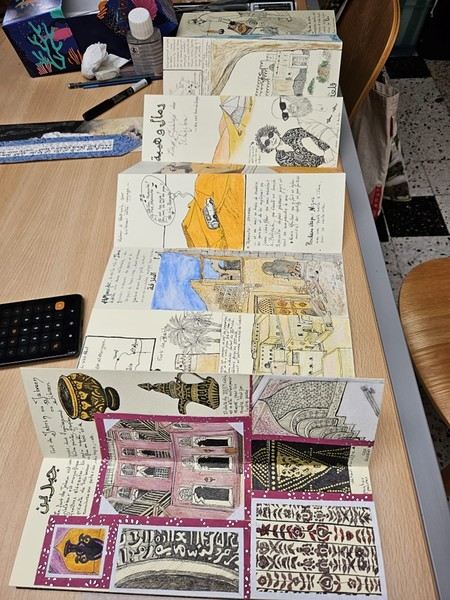
 On the right, the "welcome marker"—those dates offered everywhere as a sign of hospitality. On the left, a tribute to those stunning doors worn by time, admired all over the old quarters, including the abandoned ones.
 Hospitality will often lead you to accept a small coffee, an "Omani coffee," very light, subtly flavored with cardamom, maybe a touch of saffron, and occasionally rosewater.
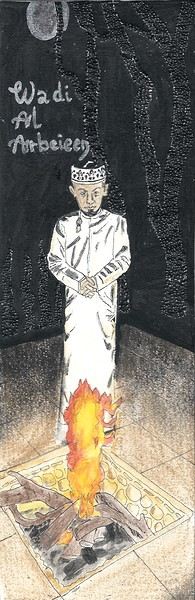
Here, I’ve depicted a man in the common everyday attire of Omanis: the dishdasha, mostly white (during the week and daytime; colors are more common in the evening or on Fridays and Saturdays). While you’ll see some men dressed in Western clothes, they’re very few. The white dishdasha is truly the shared attire of all men. The dishdasha, which has no hood, is distinguished by a small pom-pom attached to the collar, the furakha, which is soaked in perfume. And believe me, Omanis go overboard with it! "It smells like the pom-pom" is an expression that’s now part of our shared language, my husband and I.
Another must of men’s attire is the kuma, a small round head covering, usually white with brightly colored patterns. The keffiyeh is also worn (but without the cord called an agal in Arab countries), and it’s mostly worn by those with roots in the desert, from what I understood.
And what about the women, you might ask? Some are veiled, some in full black (but not a burka—more like a chador + abaya), due to the influence of Saudi Arabia and the United Arab Emirates, whereas the traditional outfit used to be a layering of very colorful dresses. Most of the women we saw wore neutral clothing, a plain veil over their hair, but with their faces uncovered. We also saw many saris and colorful veils—don’t forget that 40% of the population consists of Indian, Nepalese, and Bangladeshi immigrants, who work a lot in tourism, hospitality, restaurants, services, and construction.
Just to clarify, as a tourist, there’s no pressure to wear a veil, and never any disapproving looks. Of course, you’ll save the mini shorts, plunging necklines, bare shoulders, and midriffs for the hotel terrace—but I’d say that’s the same for men and women, and with the sun being strong, it’s better for your skin too.
Here’s the introduction! In the next post, I’ll tell you about my itinerary, and we can dive in!
Hospitality will often lead you to accept a small coffee, an "Omani coffee," very light, subtly flavored with cardamom, maybe a touch of saffron, and occasionally rosewater.
Here, I’ve depicted a man in the common everyday attire of Omanis: the dishdasha, mostly white (during the week and daytime; colors are more common in the evening or on Fridays and Saturdays). While you’ll see some men dressed in Western clothes, they’re very few. The white dishdasha is truly the shared attire of all men. The dishdasha, which has no hood, is distinguished by a small pom-pom attached to the collar, the furakha, which is soaked in perfume. And believe me, Omanis go overboard with it! "It smells like the pom-pom" is an expression that’s now part of our shared language, my husband and I.
Another must of men’s attire is the kuma, a small round head covering, usually white with brightly colored patterns. The keffiyeh is also worn (but without the cord called an agal in Arab countries), and it’s mostly worn by those with roots in the desert, from what I understood.
And what about the women, you might ask? Some are veiled, some in full black (but not a burka—more like a chador + abaya), due to the influence of Saudi Arabia and the United Arab Emirates, whereas the traditional outfit used to be a layering of very colorful dresses. Most of the women we saw wore neutral clothing, a plain veil over their hair, but with their faces uncovered. We also saw many saris and colorful veils—don’t forget that 40% of the population consists of Indian, Nepalese, and Bangladeshi immigrants, who work a lot in tourism, hospitality, restaurants, services, and construction.
Just to clarify, as a tourist, there’s no pressure to wear a veil, and never any disapproving looks. Of course, you’ll save the mini shorts, plunging necklines, bare shoulders, and midriffs for the hotel terrace—but I’d say that’s the same for men and women, and with the sun being strong, it’s better for your skin too.
Here’s the introduction! In the next post, I’ll tell you about my itinerary, and we can dive in!
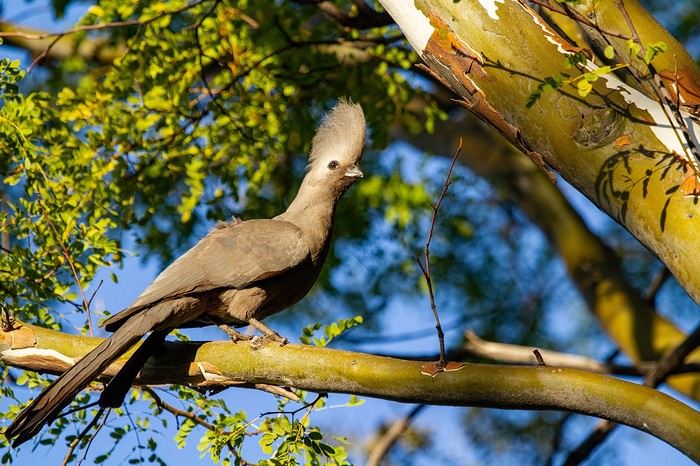
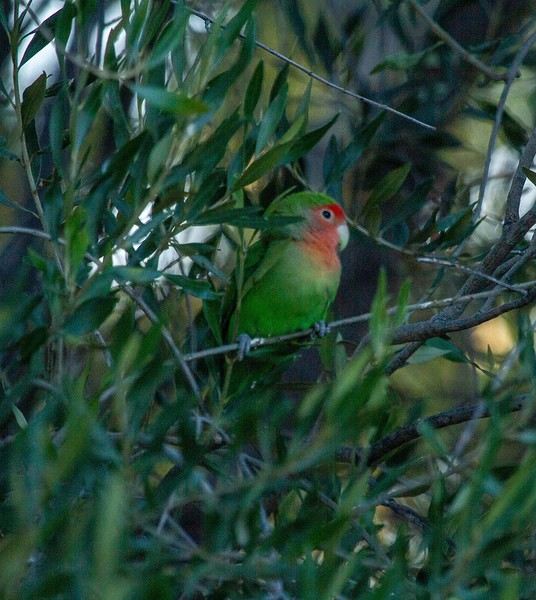
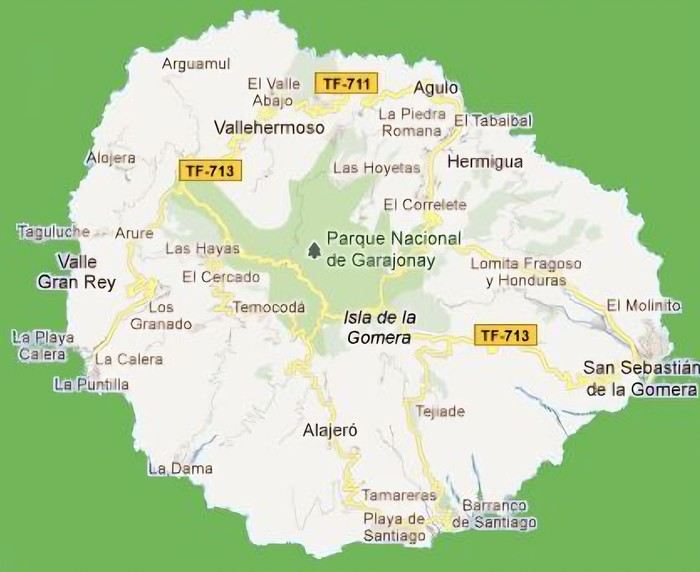 The large solidified magma massifs that shape the heart of the island have created a large depression more protected from the sun at its center, allowing the growth of a vast laurel forest, today grouped within the Garajonay National Park, La Gomera’s green lung, which has earned it the status of a World Biosphere Reserve. Its completely European appearance contrasts sharply with the rocky and tropical landscapes of the rest of the island. Thus, the climate varies greatly from one point to another on the island: in summer, you can quickly go from a dry and sunny valley at 35°C to a humid forest area at altitude at 18°C.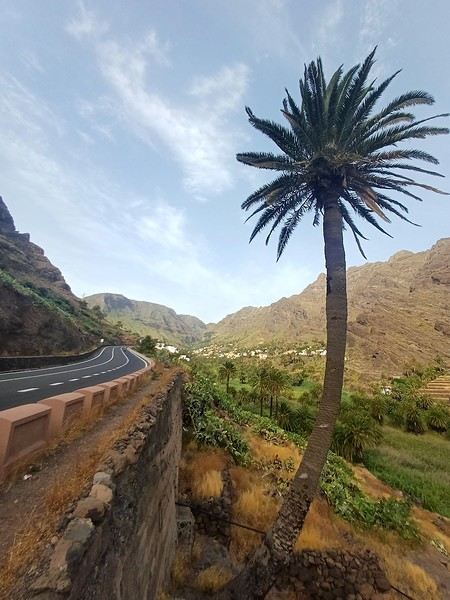
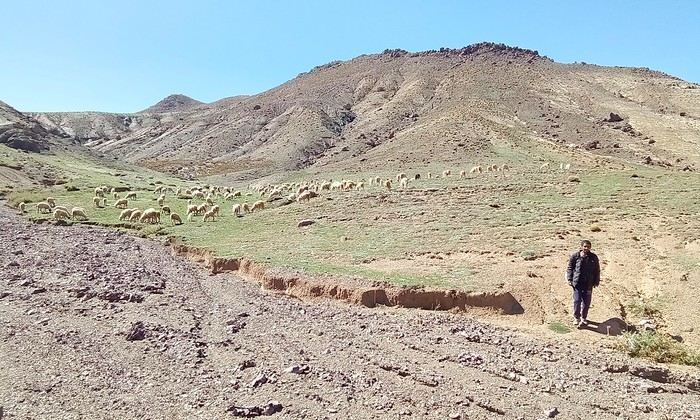
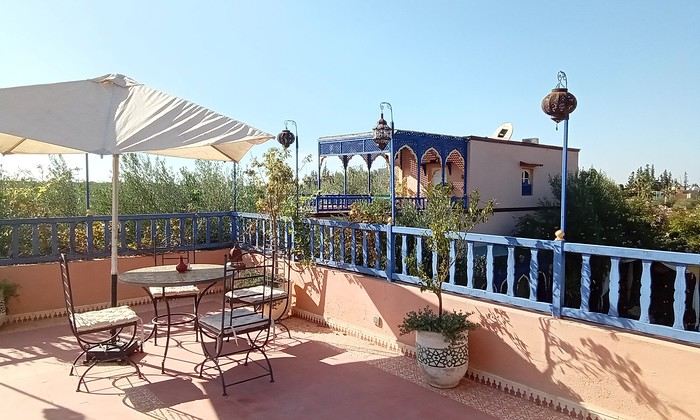
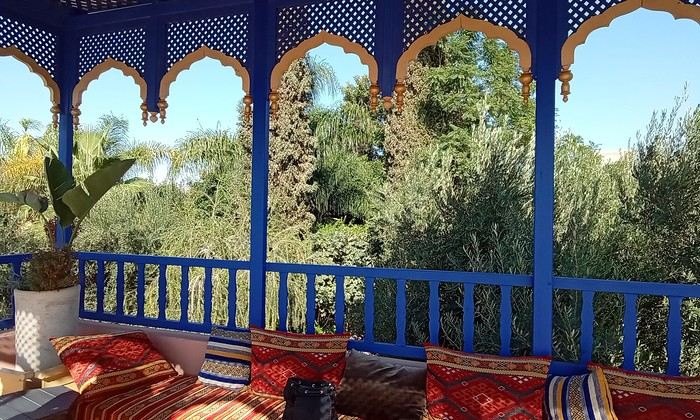 Last October, we landed in Marrakech to spend a few days with family exploring Morocco’s roads.
Transport: a rented Dacia.
Accommodations: small guesthouses.
Last October, we landed in Marrakech to spend a few days with family exploring Morocco’s roads.
Transport: a rented Dacia.
Accommodations: small guesthouses.

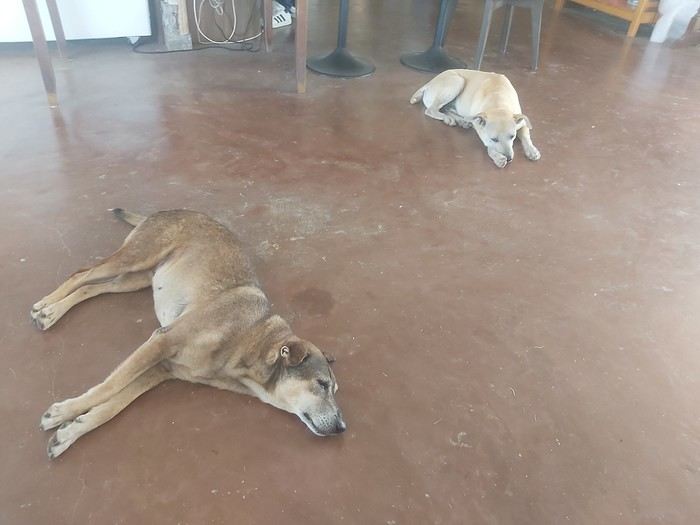
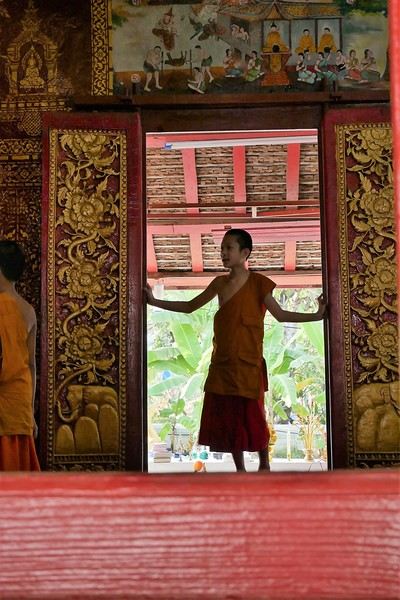 Come along, I'm taking you to this country where it's so nice to wander and slow down...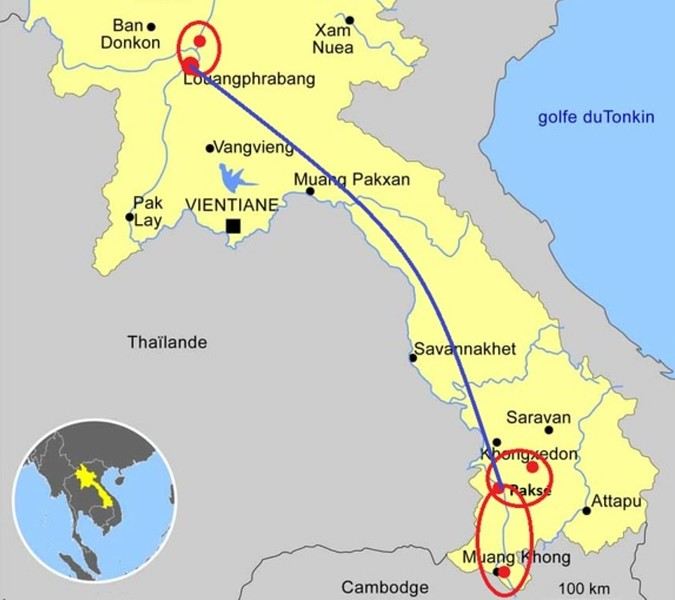
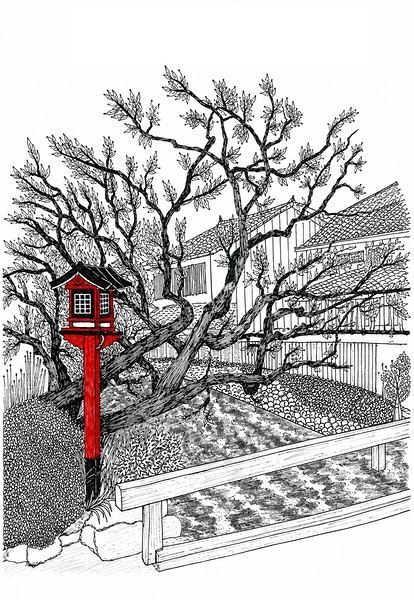 I’m inviting you on a stroll through my drawings—a completely subjective, far from exhaustive, and totally personal take, since it’s based on my own sketches. I put this travel journal together after returning in late 2024, mostly using felt-tip pens and pencils, with a few collages thrown in. I worked from our personal photos.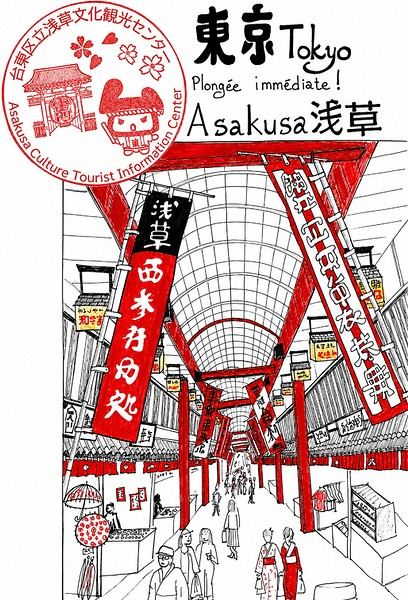
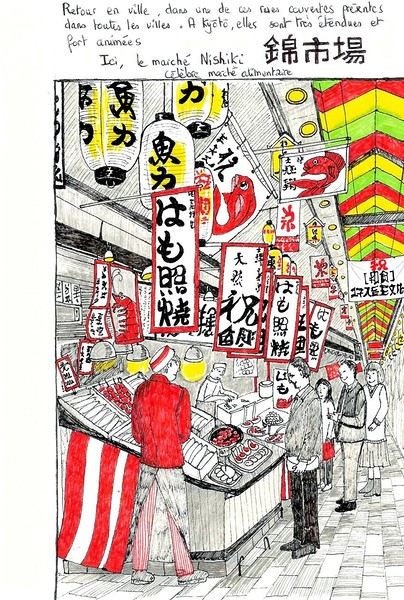
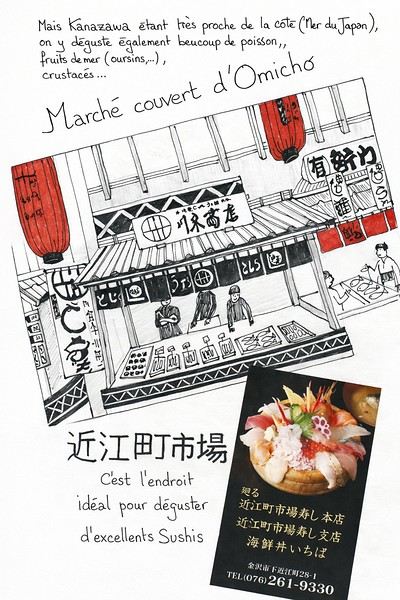 And in Kyoto, Nishiki Market:
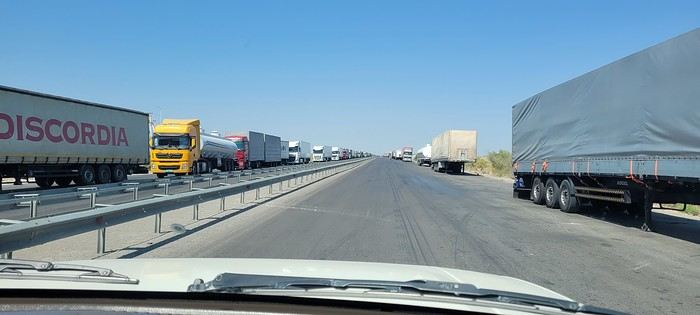
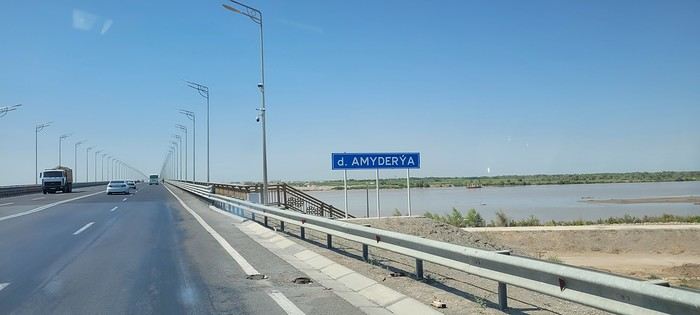
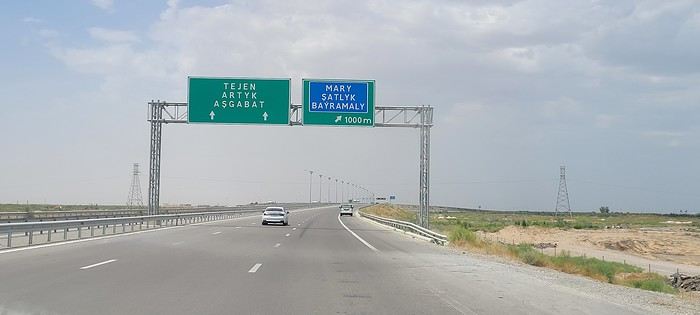
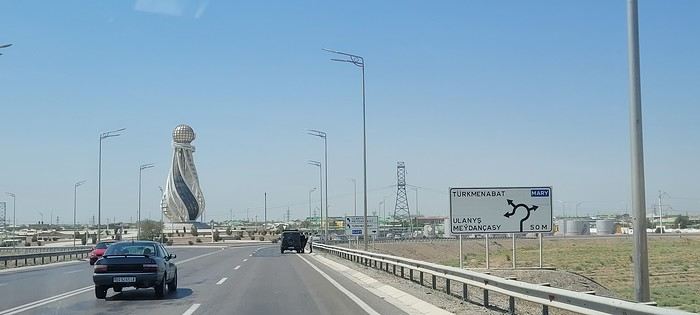
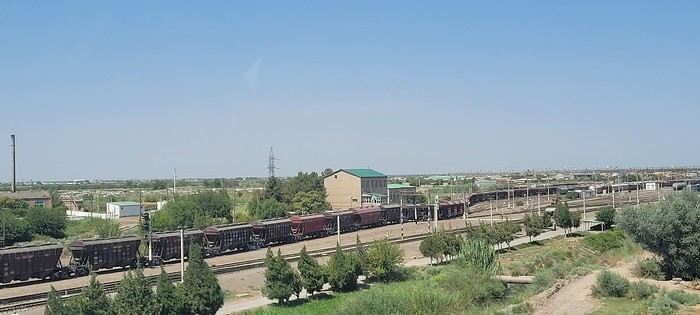
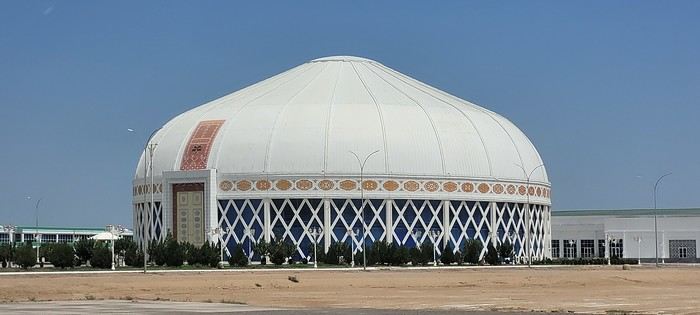
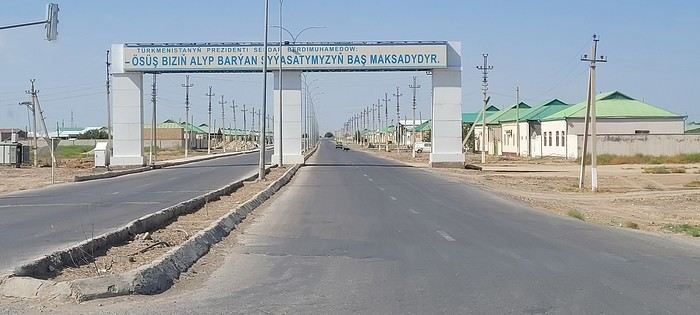
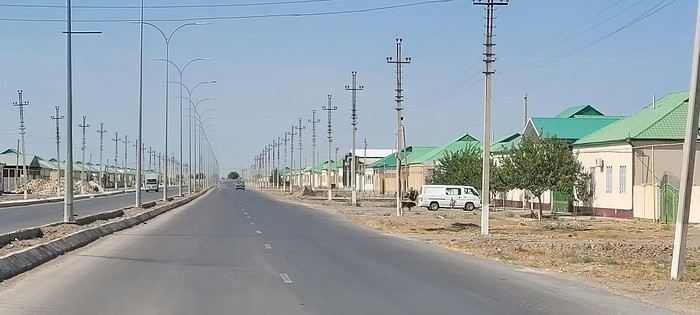 Roundabouts are particularly interesting because they feature emblems of Turkmen culture, like the dog, a carpet, the Ahal Teke horse, or Muslim symbols, even though the presence of Islamic artifacts is quite limited.
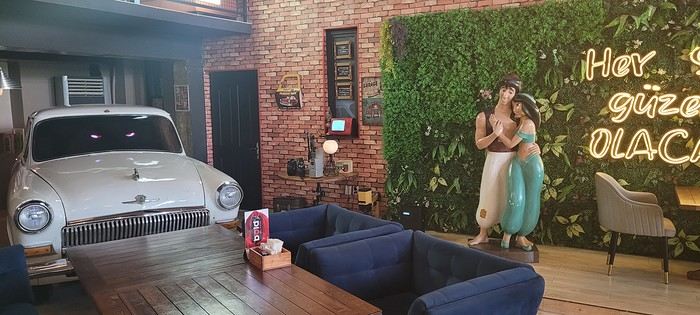

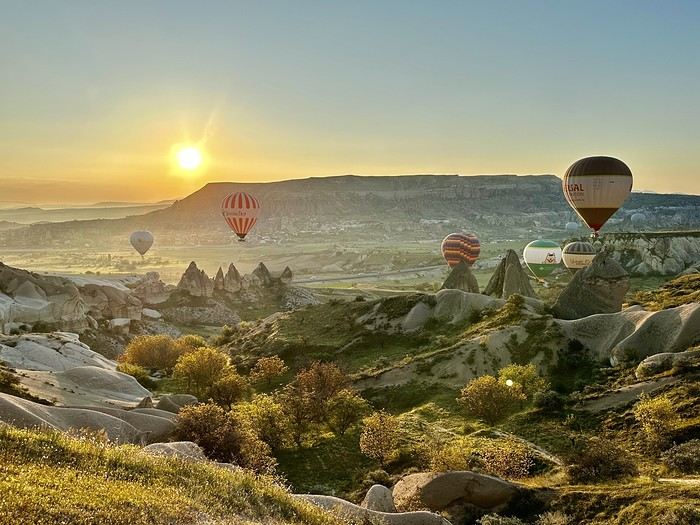 A little sneak peek?
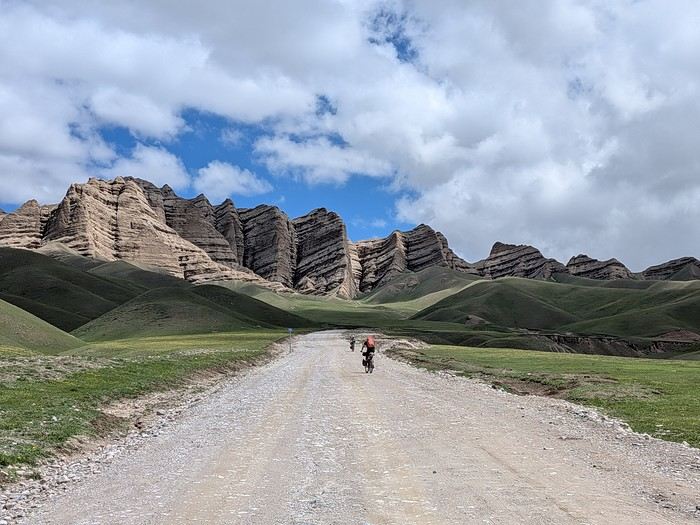
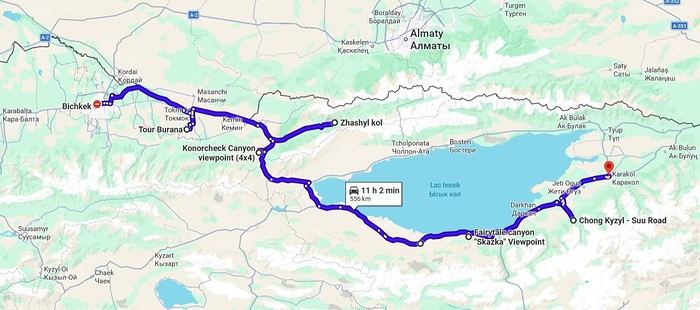
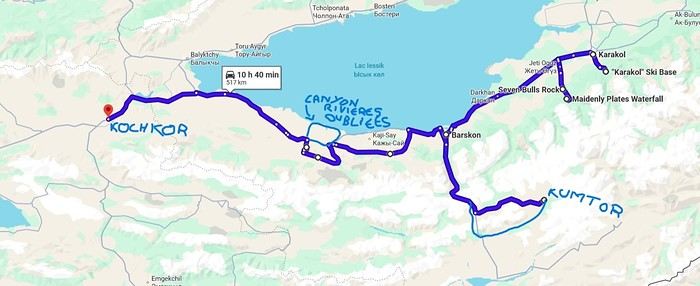
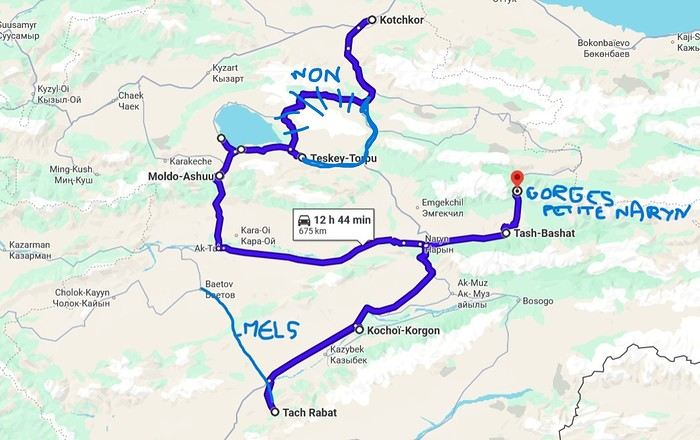

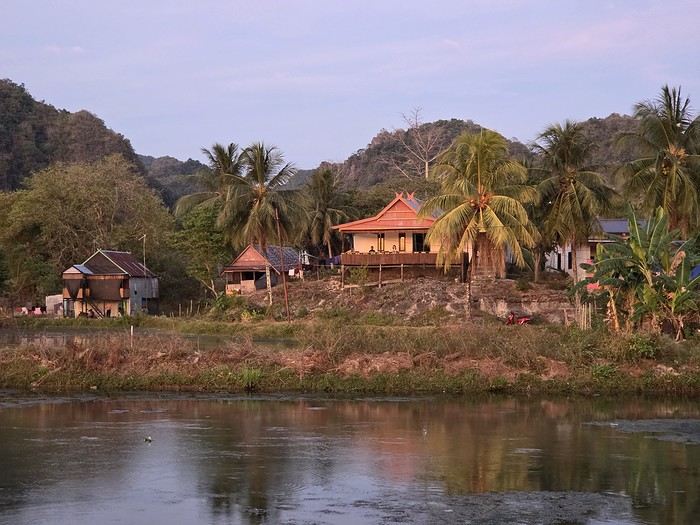
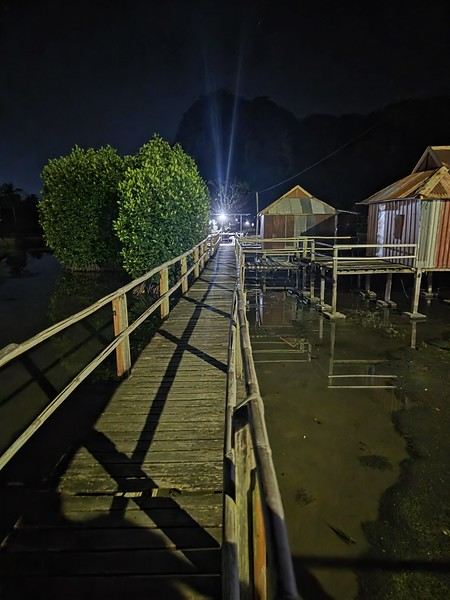
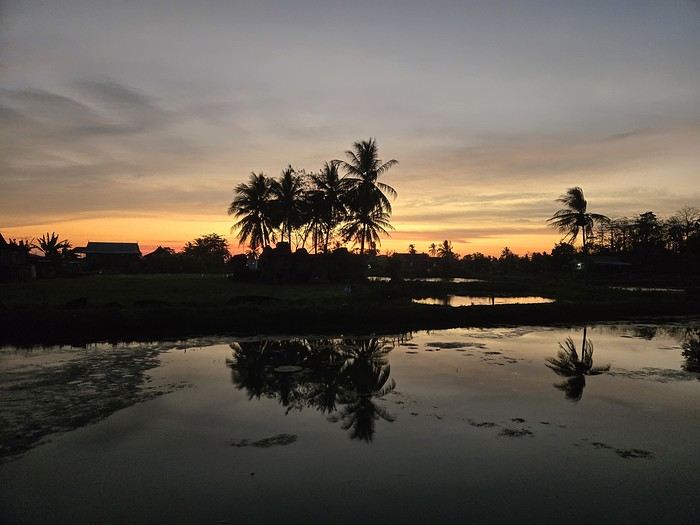
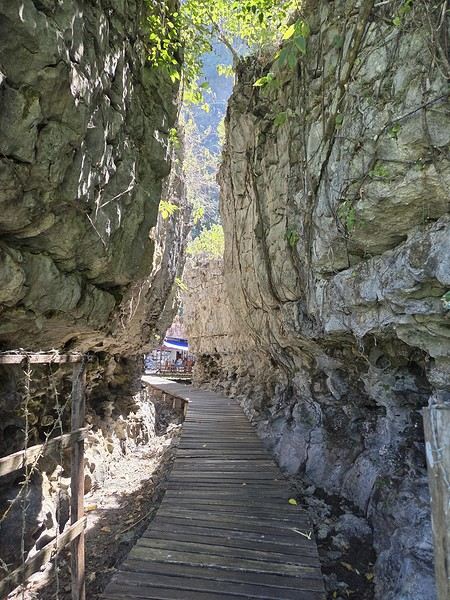
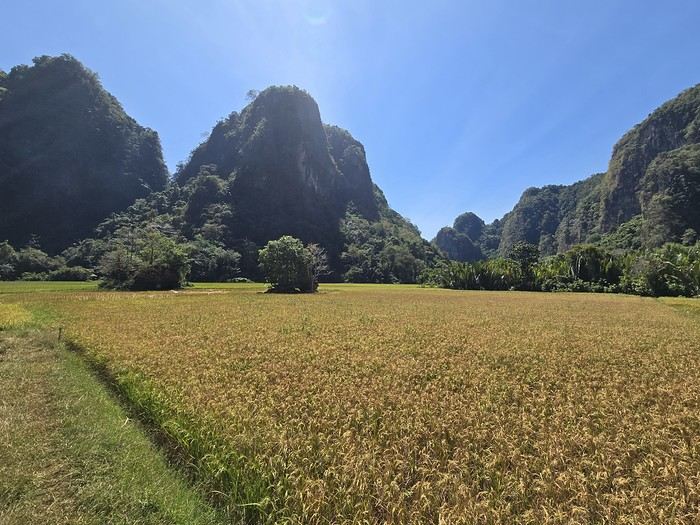
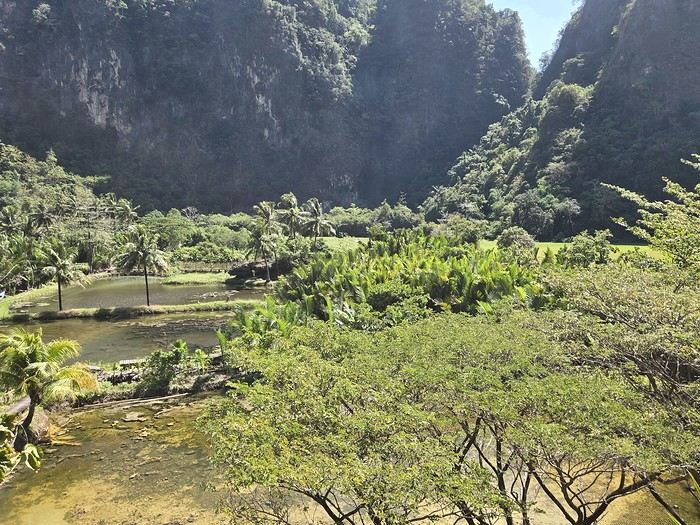
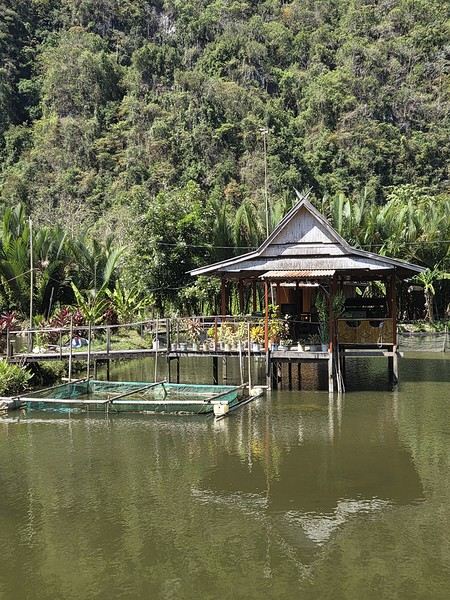
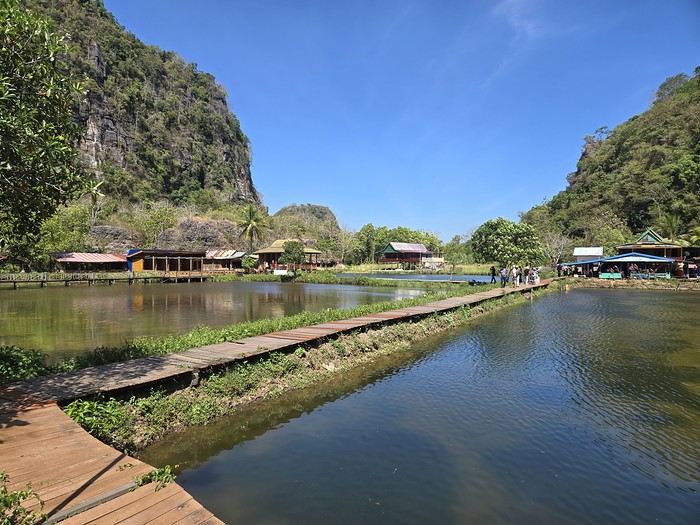
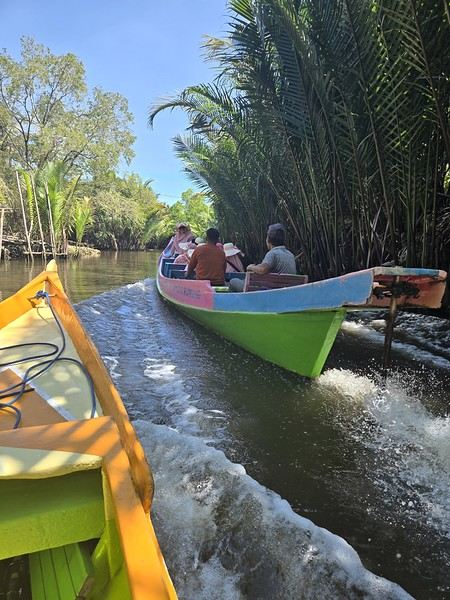 The karst site:
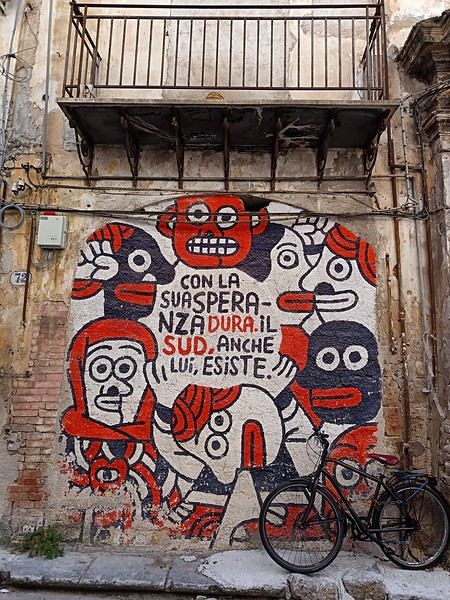 (In the heart of Albergheria, on a street every visitor walks down—lovely message from an unidentified artist)