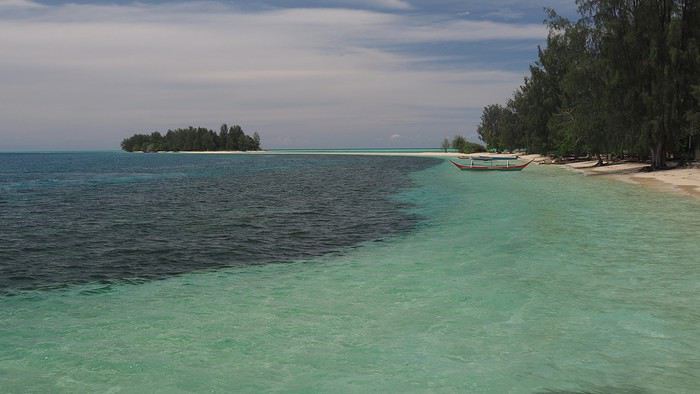
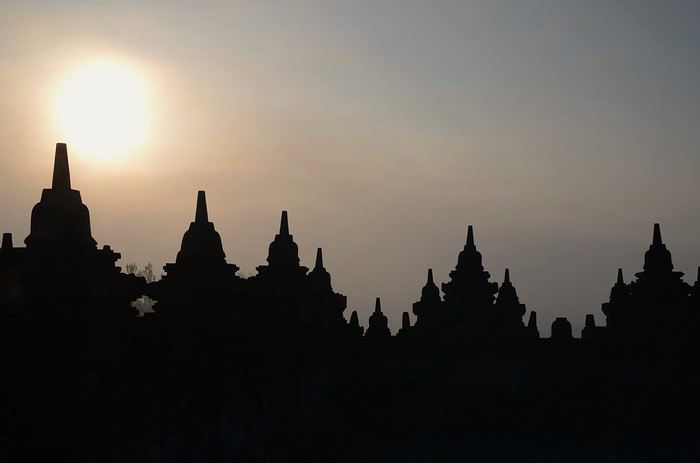
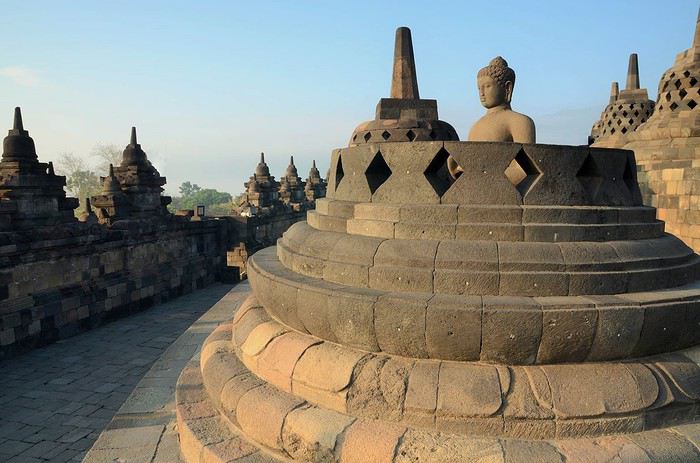
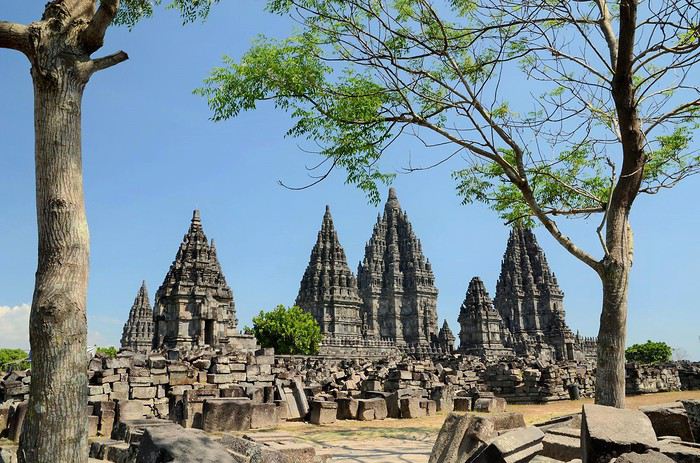
We’re planning a 4-month trip in spring 2027. We’re looking for a third destination that optimizes transport costs. Ideally, somewhere very different from the other two (Polynesia and Indonesia). Thanks
Popular discussions · Indonésie
Discussions ayant 10 participants ou plus et postées dans diverses rubriques du forum.
Showing 1–30 of 820 discussions.
Many threads here are in French, the community’s main language. English translations are added over time.
We’ve read it all about Bali: mass tourism, non-stop parties, ferry disasters, the kingdom of “Instagrammers,” pollution, “Bali belly”... But luckily, this island isn’t just about Kuta’s beaches and the Lempuyang Temple.
Sure, it’s not as exotic or off-the-beaten-path as other Indonesian islands (the Moluccas, Timor, Flores...), but we spent 3 weeks there and loved it!
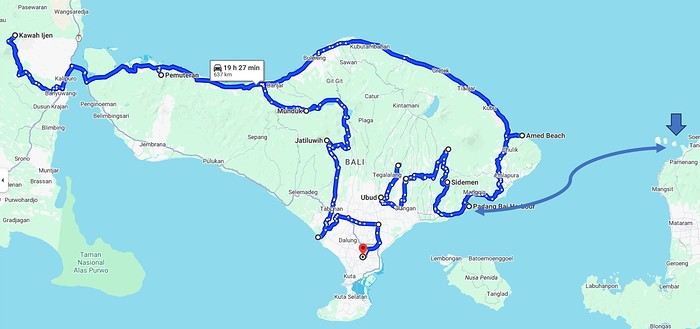
Our (planned) itinerary in 7 stops: - Ubud (4 nights) - Sidemen (2 nights) - Gili Meno (3 nights) - Amed (2 nights) - Pemuteran (4 nights) - Munduk (2 nights) - Jatiluwih (2 nights)

We booked our accommodations in advance, and for the rest (drivers, activities...), we took it day by day with help from the homestays (making sure to contact them a few days ahead via WhatsApp).
In the end, it’s an “easy” destination, very affordable, and one that’s managed to keep a certain authenticity.

Sure, it’s not as exotic or off-the-beaten-path as other Indonesian islands (the Moluccas, Timor, Flores...), but we spent 3 weeks there and loved it!
Our (planned) itinerary in 7 stops: - Ubud (4 nights) - Sidemen (2 nights) - Gili Meno (3 nights) - Amed (2 nights) - Pemuteran (4 nights) - Munduk (2 nights) - Jatiluwih (2 nights)

We booked our accommodations in advance, and for the rest (drivers, activities...), we took it day by day with help from the homestays (making sure to contact them a few days ahead via WhatsApp).
In the end, it’s an “easy” destination, very affordable, and one that’s managed to keep a certain authenticity.

Lombok, Indonesia: A Forgotten Paradise?
We’ve just returned from 3 weeks (yes, only that!) in Lombok, an island next to Bali, just a few miles away. Since I found very little information before leaving—except about the Gili Islands and organized Rinjani treks—I’ve tried to gather some details that might be useful for a Voyage Forum member looking to explore the area. Nothing exhaustive, but maybe a few great tips.
For those considering a Lonely Planet *Bali & Lombok* guide, be aware that the prices are wrong (expect a 30% increase, especially due to rising fuel costs), much of the info is outdated (the latest edition must be at least 2 or 3 years old), and the real good deals aren’t included. In short, don’t bother weighing down your bag (we already had 17kg of luggage for two—we’re getting soft!). A good map will be far more useful.
Climate: We went in late August to mid-September, so the weather was ideal in this region (best from June to September). It was pleasant, not too hot, with a light breeze keeping the Bintang cold in the evening—pure bliss!
Getting There: The cheapest way is to fly to Kuala Lumpur (Malaysia Airlines), then switch airports (getting to the LCC terminal costs 1.5 ringgit by bus) and take an AirAsia flight to Bali (booked in advance online). Once in Bali, to reach Lombok: either another flight—around 30 €—on a small propeller plane (probably a Dutch legacy); or by boat, but since you have to get to Padangbai in eastern Bali to catch the ferry, you “lose” (a very relative term when traveling) a lot of time (at least 6 hours total) to save a few euros. Since we were already mid-afternoon and didn’t want to spend a night in Bali, we opted for the “tuk-tuk with propellers” 😉. It was the first time I was weighed with my bag before boarding a plane! I know I’ve put on weight lately, but still…
After arriving in the late afternoon in Mataram, Lombok, we decided to find a bed nearby. Headed to Senggigi, Lombok’s main beach resort. We ended up at the first guesthouse, “Lina Cottages,” for 75,000 IDR a night. Exhausted, we headed straight to dreamland. I woke up around midnight, thinking I heard Massimo!??!! I hadn’t even had too much Bintang—was the jet lag giving me hallucinations ? No, I really did hear Massimo belting out a song! After a few seconds of “lost in translation,” I realized the Marina, Senggigi’s trendy bar, had—like every night—a live band playing, and these guys were covering that French classic (sic) you’ve probably heard at least once. Coming all this way just to hear “Massiiiimooooo, Massiiimmoooo, Massiiimmooomooooo…” blasting in your ears like you’re at a campsite in Juan-les-Pins—enough to depress anyone! Anyway, we left ASAP. Just enough time to check out Senggigi: its 4 or 5 bars, 10 restaurants, 3 or 4 luxury hotels—still far from Kuta Bali, but not really our scene anyway. We quickly realized there’s very little organized transport (except for a few Perama bus routes, almost all passing through Senggigi) in Lombok. To avoid spending our 3 weeks in bemos, we quickly opted to rent a car (too old for a two-person motorbike, though we’d done it in Bali… Turns out we made the right call—the roads in Lombok are way too rough for bikes). Senggigi is one of the few places on the island where you can rent a car and withdraw cash. After some tough negotiation, I got a Suzuki Katana for 120,000 IDR/day (instead of the usual 200,000 IDR). I was a bit frustrated—thought it was expensive. A local on vacation in Lombok (he’s lived in Australia for years) later told me he couldn’t even get that rate, saying prices had jumped with the fuel hike (from 2,500 IDR/liter two years ago to 5,000 IDR now).
Anyway, we left Massimo to his interplanetary success and headed south. I was curious to see if we could stay on a small island off Lombok’s southwest peninsula. After 60km and 1.5 hours, we arrived in Taun, where we found a “captain” willing to take us to Gili Nanggu. There seemed to be a guesthouse on the island. After some *very* tough negotiation, we got a round-trip price of 150,000 IDR for two days later (a guide taking tourists to the island for the day later told me he pays 185,000 IDR for the same trip). The island is barely a few hundred meters across, and the only guesthouse, “Gili Nanggu Cottages” (165,000 IDR/night), offered us a charming bungalow in traditional Lombok style. No negotiating possible—we were stuck on the island anyway! By mid-afternoon, the day-trippers (often from Senggigi) left. There were about ten of us staying overnight. The sand was white, the water crystal-clear with fish, and the sunsets stunning… but the coral was pretty damaged.
Next, we headed south to Kuta Lombok. The most direct route via Sepi was marked as “small” on the map… mmm… The Lonely Planet—this was the *only* time it was “useful” (sic)—had a special warning saying many readers had been robbed in the area. Wanting to clear this up for my Voyage Forum friends, we took the plunge! The road was *completely* wrecked—potholes everywhere, and if you ignore the rain-carved ravines, it was like a pothole per square meter! I was searching for tarmac to park my wheels! After 80km and 3 hours of bone-rattling driving, with stunning views of Lombok’s arid southern countryside and deserted turquoise bays, we arrived in Kuta Lombok. On the way, instead of robbers and thieves, we only met schoolchildren with big smiles shouting cheerful “hellloooo’s.” We didn’t see a single other car the whole trip.
Kuta is nothing like its Balinese namesake. It stretches just a few hundred meters along a beautiful round-sand bay (yes, round—it rolls under your feet). About ten deserted restaurants and just as many guesthouses (5% occupancy, I was told—we only saw about ten Westerners in 3 days). No guesthouses face the beach; they’re all on the other side of the road in an inner garden. A bit of a shame. Still, the bay is gorgeous, and a few fishing families live in very basic huts on the beach. We decided to check out the Novotel to get a feel for the area. The lush vegetation contrasted with the surrounding aridity, two pools… all that fresh water being used, plus the Accor flag, made me want to head back to the fishermen’s huts. Finally, we found a guesthouse on the beach at the eastern end of Kuta Bay, just before the Novotel: “Lombok Baru.” It’s the only one on the beach. The bungalow was spotless, right by the sea, for 105,000 IDR/night. The Chinese-Indonesian family running the place told me they’d only been open for 3 years and were growing slowly as they saved up. A new bungalow was under construction, and the “garden” was still a work in progress.
The Tanjung Aan bay, a few kilometers east of Kuta, is stunning—huge, white sand, and almost no one except a few persistent sarong sellers. The bay is definitely worth a visit (if not a sunburn). A toothless old man even tried to sell us a coconut, improvising a song (after my girlfriend started singing to ignore them 😉). With his three words of broken English, he sang: “Coconut mist’errrr… mister coconuttttee… If no coconut, no monyyyy… Coconut mister…” for at least 10 minutes! A rare moment, a beautiful encounter. The song stuck with us for the rest of the trip—even now, I hum it to avoid getting too depressed about being back home. One evening, a Balinese waiter who’d been living in Lombok for 7 years gave us lots of info about the area, the culture, and the people. He talked about the security issues in Kuta—yes, there are frequent thefts (money, cars, etc.). For him, it’s due to the lack of education among many locals, who don’t see beyond their immediate needs and risk scaring tourists away (which is why Kuta is so deserted). After a few days there, you do get the sense that you shouldn’t tempt fate by flashing money or jewelry amid such poverty in southern Lombok. But calling it a “dangerous area” is a stretch! That won’t stop me from going back, though!
Next, we headed east—northeast, actually. I was curious about the small islands on my map, and I hadn’t found *anyone* who’d been there to give me tips. So we drove to Labu Pandan (115km, 3 hours—I may have pushed the Katana a bit…). What looked like a small village was actually just a guesthouse and a few fishing boats on the beach. The “Pondok Gili Lampu” guesthouse also sold basic supplies to locals and had a simple restaurant with 5 or 6 basic bungalows (60,000 IDR/night) and a beautiful deserted black-sand beach. They offered snorkeling trips to Gili Lampu and camping there (organized by the guesthouse), but there were no facilities or water on the island. The strong wind made us decide to stay on the beach—poor visibility for snorkeling and sand in the sleeping bags didn’t sound appealing… The owner, Yanto, didn’t speak a word of English but was absolutely lovely. Another heartwarming encounter that did us so much good. Life was sweet, and we let ourselves drift to the rhythm of faraway relaxation.
Then we headed to Sembalun Lawang, the least crowded starting point for the Rinjani trek (most people start from Senaru). The southern route was fine—we crossed a 1,700m pass. The only person we met was an ice cream vendor on a motorbike overtaking us on the climb—he must’ve been in a hurry, which is ironic for an ice cream seller! After 65km and 1h15 of winding roads, we arrived in Sembalun Lawang and parked our trusty Katana at “Sembalun Nauli,” which had 4 standalone bungalows (90,000 IDR/night) in the middle of nowhere. There was nothing around—just the Rinjani looming ahead, our goal for the next 3 days. The guesthouse arranged our gear (sleeping bags, tent), hired two porters, and bought food. I got a price of 1,400,000 IDR for 2 people for 3 days. I think you could get it down to 1,000,000 or 1,200,000 if you did it yourself, but we hadn’t seen a single person in SL (not a restaurant in sight—even the Rinjani Trekking Center was closed, the guy was supposedly napping…). I didn’t feel like stressing over it. It was a far cry from the 170 USD/person quoted in Senggigi!
The 3-Day Rinjani Trek was a unique experience—not just for the scenery but also for the (relative) “sharing” with the porters: Mister Adi (who spoke a little English) and Mister An (who only spoke Sasak and Indonesian). On the first day, we went from Sembalun to base camp: 1,700m elevation gain under the sun, 6 solid hours of hiking (not counting breaks). My shared backpack, weighing around 10kg, felt heavy on the climb. We took breaks to drink, while our porters smoked!! I don’t know how they did it! The next day, we left at 2:30 AM to reach the summit (1,500m elevation gain) by 6 AM for sunrise. The last 300 meters were brutal—a 35/40° slope, straight up in sand and small stones. Those who say you move a meter forward and slide 50cm back haven’t seen the slope! It’s more like 20cm forward and sometimes 20cm back… tough stuff. But we made it to the summit (3,726m)—not everyone does. A word to the wise: you’d better be in good shape and, above all, have the right mindset! More beautiful than the sunrise was the moonrise—almost full and reddish—around 4 AM. It was stunning! As for vertigo, sure, you’re walking along a ridge, but even for someone like me who’s not a fan of heights, it was fine. Back at base camp, Mister An had made delicious banana pancakes—a local ritual, apparently, and a treat for us! Then we descended to Segara Anak Lake in the crater. It was steep, and with our legs like telephone poles, it wasn’t easy: “Adeng adeng, Mister An!!!” We enjoyed the hot springs (40°C!) and I even swam in the lake itself—the water must’ve been around 20°C, incredibly pure. I was alone facing Gunung Baru, the active volcanic cone: unforgettable! On the third day, we climbed back out of the crater, then descended 2,000m to Senaru, where ojek (motorcycle taxis) were waiting to take us back to Sembalun to retrieve our car, still parked at Sembalun Nauli. Then we drove to Senggigi (2 hours, flat out), where this time we stayed at Dharmarie (150,000 IDR instead of 300,000 IDR)—spotless room, nice bathroom, much quieter than Lina! We returned our Suzuki Katana 3 days late (I thought they’d have a heart attack—they’d been looking for us everywhere, even going to Kuta!). Anyway, I paid for 2 extra days out of the 3, and we headed to catch the Perama boat directly to Gili Air from Senggigi (70,000 IDR/person).
We chose Gili Air based on the posts I’d read on Voyage Forum (thanks 😉). Somehow, we ended up with a French friend at Hotel Gili Air (yes, I know—after our Rinjani adventure, we treated ourselves…) on the north side of the island, where we negotiated the room down to 225,000 IDR/night from the listed 38 USD. The included breakfast was huge, and the seawater pool was a nice touch (if not the hotel staff…). The island was pretty nice—white sand, pretty fish, turtles—but the coral was damaged in many places. Hammock, snorkeling, grilled fish, and Bintang—a simple pleasure
After 3 days, the travel bug bit us again. We wanted to reach Komodo by boat. Two agencies offered 4-day one-way trips to Flores: Perama (1,400,000 IDR/person for deck sleeping) and another (name forgotten) for 850,000 IDR. Couldn’t negotiate with Perama—the next departure was in 5 days (every 6 days, I think). We went with the other one. Everything seemed fine (the boat actually left from Labuhan Lombok, east of Lombok, which we reached by bus from Gili Air) until the agency told us there were only 2 flights a week from Labuan Bajo in Flores back to Bali, which would leave us stuck for 3 days in Flores and make us miss our return flight to Kuala Lumpur. To top it off, the agency lady said we were only 6 people signed up, and the boat wouldn’t leave with fewer than 8… so it fell through. We decided to end our trip with a few days in Bali to see how the island had changed since our last visit in 2003.
I won’t go on about Bali—it’s much better known than Lombok—but here are 3 great spots: - Ubud: So much construction since 2003! You’d think you were in a French city center with all the shops! “Nick’s Pension,” near the top of Monkey Forest—take a small alley to the left as you go up, all the way to the end. A green paradise in the middle of rice fields, quiet, just 50m from Monkey Forest. Nice pool. 300,000 IDR/night, negotiated down to 150,000 IDR. - Amed: “Wa Wa We We II” (120,000 IDR/night)—gorgeous infinity pool, charming bungalows, “relax” vibe. - Jimbaran: “Villa Puri Royan” (from 120,000 IDR)—like a hacienda on 3 levels with a pool in the middle. Right next to the beach warungs. *The* good deal in Jimbaran.
When you go from Lombok to Bali, you notice a clear difference. First, in terms of development. In Lombok, cars are rare outside Mataram/Senggigi. Development is far behind Bali—probably what Bali was like 20 years ago! I heard that construction on an international airport in Praya, central Lombok, started on August 1, 2006… Even if it takes 5 or 10 years to build, maybe it’s time to go. Then there’s the “people” factor—culture or religion plays a role. It’s true that it’s less easy than in Bali (which is so unique…), and relationships can be tougher, even tense at times. Maybe it’s just less accessible for “whirlwind travelers” like us. The car also saved us from many hassles (negotiating bemos, ferry arrivals, etc.). Still, we had some amazing encounters and never felt unsafe. I imagine other experiences could be different, especially if you’re easily intimidated.
I hope you’ll find some useful info in this post. When you visit this part of the world, try to get off the beaten path of the Gili Islands or Senggigi. Lombok and its people are well worth a detour.
Selamat Jalan
We’ve just returned from 3 weeks (yes, only that!) in Lombok, an island next to Bali, just a few miles away. Since I found very little information before leaving—except about the Gili Islands and organized Rinjani treks—I’ve tried to gather some details that might be useful for a Voyage Forum member looking to explore the area. Nothing exhaustive, but maybe a few great tips.
For those considering a Lonely Planet *Bali & Lombok* guide, be aware that the prices are wrong (expect a 30% increase, especially due to rising fuel costs), much of the info is outdated (the latest edition must be at least 2 or 3 years old), and the real good deals aren’t included. In short, don’t bother weighing down your bag (we already had 17kg of luggage for two—we’re getting soft!). A good map will be far more useful.
Climate: We went in late August to mid-September, so the weather was ideal in this region (best from June to September). It was pleasant, not too hot, with a light breeze keeping the Bintang cold in the evening—pure bliss!
Getting There: The cheapest way is to fly to Kuala Lumpur (Malaysia Airlines), then switch airports (getting to the LCC terminal costs 1.5 ringgit by bus) and take an AirAsia flight to Bali (booked in advance online). Once in Bali, to reach Lombok: either another flight—around 30 €—on a small propeller plane (probably a Dutch legacy); or by boat, but since you have to get to Padangbai in eastern Bali to catch the ferry, you “lose” (a very relative term when traveling) a lot of time (at least 6 hours total) to save a few euros. Since we were already mid-afternoon and didn’t want to spend a night in Bali, we opted for the “tuk-tuk with propellers” 😉. It was the first time I was weighed with my bag before boarding a plane! I know I’ve put on weight lately, but still…
After arriving in the late afternoon in Mataram, Lombok, we decided to find a bed nearby. Headed to Senggigi, Lombok’s main beach resort. We ended up at the first guesthouse, “Lina Cottages,” for 75,000 IDR a night. Exhausted, we headed straight to dreamland. I woke up around midnight, thinking I heard Massimo!??!! I hadn’t even had too much Bintang—was the jet lag giving me hallucinations ? No, I really did hear Massimo belting out a song! After a few seconds of “lost in translation,” I realized the Marina, Senggigi’s trendy bar, had—like every night—a live band playing, and these guys were covering that French classic (sic) you’ve probably heard at least once. Coming all this way just to hear “Massiiiimooooo, Massiiimmoooo, Massiiimmooomooooo…” blasting in your ears like you’re at a campsite in Juan-les-Pins—enough to depress anyone! Anyway, we left ASAP. Just enough time to check out Senggigi: its 4 or 5 bars, 10 restaurants, 3 or 4 luxury hotels—still far from Kuta Bali, but not really our scene anyway. We quickly realized there’s very little organized transport (except for a few Perama bus routes, almost all passing through Senggigi) in Lombok. To avoid spending our 3 weeks in bemos, we quickly opted to rent a car (too old for a two-person motorbike, though we’d done it in Bali… Turns out we made the right call—the roads in Lombok are way too rough for bikes). Senggigi is one of the few places on the island where you can rent a car and withdraw cash. After some tough negotiation, I got a Suzuki Katana for 120,000 IDR/day (instead of the usual 200,000 IDR). I was a bit frustrated—thought it was expensive. A local on vacation in Lombok (he’s lived in Australia for years) later told me he couldn’t even get that rate, saying prices had jumped with the fuel hike (from 2,500 IDR/liter two years ago to 5,000 IDR now).
Anyway, we left Massimo to his interplanetary success and headed south. I was curious to see if we could stay on a small island off Lombok’s southwest peninsula. After 60km and 1.5 hours, we arrived in Taun, where we found a “captain” willing to take us to Gili Nanggu. There seemed to be a guesthouse on the island. After some *very* tough negotiation, we got a round-trip price of 150,000 IDR for two days later (a guide taking tourists to the island for the day later told me he pays 185,000 IDR for the same trip). The island is barely a few hundred meters across, and the only guesthouse, “Gili Nanggu Cottages” (165,000 IDR/night), offered us a charming bungalow in traditional Lombok style. No negotiating possible—we were stuck on the island anyway! By mid-afternoon, the day-trippers (often from Senggigi) left. There were about ten of us staying overnight. The sand was white, the water crystal-clear with fish, and the sunsets stunning… but the coral was pretty damaged.
Next, we headed south to Kuta Lombok. The most direct route via Sepi was marked as “small” on the map… mmm… The Lonely Planet—this was the *only* time it was “useful” (sic)—had a special warning saying many readers had been robbed in the area. Wanting to clear this up for my Voyage Forum friends, we took the plunge! The road was *completely* wrecked—potholes everywhere, and if you ignore the rain-carved ravines, it was like a pothole per square meter! I was searching for tarmac to park my wheels! After 80km and 3 hours of bone-rattling driving, with stunning views of Lombok’s arid southern countryside and deserted turquoise bays, we arrived in Kuta Lombok. On the way, instead of robbers and thieves, we only met schoolchildren with big smiles shouting cheerful “hellloooo’s.” We didn’t see a single other car the whole trip.
Kuta is nothing like its Balinese namesake. It stretches just a few hundred meters along a beautiful round-sand bay (yes, round—it rolls under your feet). About ten deserted restaurants and just as many guesthouses (5% occupancy, I was told—we only saw about ten Westerners in 3 days). No guesthouses face the beach; they’re all on the other side of the road in an inner garden. A bit of a shame. Still, the bay is gorgeous, and a few fishing families live in very basic huts on the beach. We decided to check out the Novotel to get a feel for the area. The lush vegetation contrasted with the surrounding aridity, two pools… all that fresh water being used, plus the Accor flag, made me want to head back to the fishermen’s huts. Finally, we found a guesthouse on the beach at the eastern end of Kuta Bay, just before the Novotel: “Lombok Baru.” It’s the only one on the beach. The bungalow was spotless, right by the sea, for 105,000 IDR/night. The Chinese-Indonesian family running the place told me they’d only been open for 3 years and were growing slowly as they saved up. A new bungalow was under construction, and the “garden” was still a work in progress.
The Tanjung Aan bay, a few kilometers east of Kuta, is stunning—huge, white sand, and almost no one except a few persistent sarong sellers. The bay is definitely worth a visit (if not a sunburn). A toothless old man even tried to sell us a coconut, improvising a song (after my girlfriend started singing to ignore them 😉). With his three words of broken English, he sang: “Coconut mist’errrr… mister coconuttttee… If no coconut, no monyyyy… Coconut mister…” for at least 10 minutes! A rare moment, a beautiful encounter. The song stuck with us for the rest of the trip—even now, I hum it to avoid getting too depressed about being back home. One evening, a Balinese waiter who’d been living in Lombok for 7 years gave us lots of info about the area, the culture, and the people. He talked about the security issues in Kuta—yes, there are frequent thefts (money, cars, etc.). For him, it’s due to the lack of education among many locals, who don’t see beyond their immediate needs and risk scaring tourists away (which is why Kuta is so deserted). After a few days there, you do get the sense that you shouldn’t tempt fate by flashing money or jewelry amid such poverty in southern Lombok. But calling it a “dangerous area” is a stretch! That won’t stop me from going back, though!
Next, we headed east—northeast, actually. I was curious about the small islands on my map, and I hadn’t found *anyone* who’d been there to give me tips. So we drove to Labu Pandan (115km, 3 hours—I may have pushed the Katana a bit…). What looked like a small village was actually just a guesthouse and a few fishing boats on the beach. The “Pondok Gili Lampu” guesthouse also sold basic supplies to locals and had a simple restaurant with 5 or 6 basic bungalows (60,000 IDR/night) and a beautiful deserted black-sand beach. They offered snorkeling trips to Gili Lampu and camping there (organized by the guesthouse), but there were no facilities or water on the island. The strong wind made us decide to stay on the beach—poor visibility for snorkeling and sand in the sleeping bags didn’t sound appealing… The owner, Yanto, didn’t speak a word of English but was absolutely lovely. Another heartwarming encounter that did us so much good. Life was sweet, and we let ourselves drift to the rhythm of faraway relaxation.
Then we headed to Sembalun Lawang, the least crowded starting point for the Rinjani trek (most people start from Senaru). The southern route was fine—we crossed a 1,700m pass. The only person we met was an ice cream vendor on a motorbike overtaking us on the climb—he must’ve been in a hurry, which is ironic for an ice cream seller! After 65km and 1h15 of winding roads, we arrived in Sembalun Lawang and parked our trusty Katana at “Sembalun Nauli,” which had 4 standalone bungalows (90,000 IDR/night) in the middle of nowhere. There was nothing around—just the Rinjani looming ahead, our goal for the next 3 days. The guesthouse arranged our gear (sleeping bags, tent), hired two porters, and bought food. I got a price of 1,400,000 IDR for 2 people for 3 days. I think you could get it down to 1,000,000 or 1,200,000 if you did it yourself, but we hadn’t seen a single person in SL (not a restaurant in sight—even the Rinjani Trekking Center was closed, the guy was supposedly napping…). I didn’t feel like stressing over it. It was a far cry from the 170 USD/person quoted in Senggigi!
The 3-Day Rinjani Trek was a unique experience—not just for the scenery but also for the (relative) “sharing” with the porters: Mister Adi (who spoke a little English) and Mister An (who only spoke Sasak and Indonesian). On the first day, we went from Sembalun to base camp: 1,700m elevation gain under the sun, 6 solid hours of hiking (not counting breaks). My shared backpack, weighing around 10kg, felt heavy on the climb. We took breaks to drink, while our porters smoked!! I don’t know how they did it! The next day, we left at 2:30 AM to reach the summit (1,500m elevation gain) by 6 AM for sunrise. The last 300 meters were brutal—a 35/40° slope, straight up in sand and small stones. Those who say you move a meter forward and slide 50cm back haven’t seen the slope! It’s more like 20cm forward and sometimes 20cm back… tough stuff. But we made it to the summit (3,726m)—not everyone does. A word to the wise: you’d better be in good shape and, above all, have the right mindset! More beautiful than the sunrise was the moonrise—almost full and reddish—around 4 AM. It was stunning! As for vertigo, sure, you’re walking along a ridge, but even for someone like me who’s not a fan of heights, it was fine. Back at base camp, Mister An had made delicious banana pancakes—a local ritual, apparently, and a treat for us! Then we descended to Segara Anak Lake in the crater. It was steep, and with our legs like telephone poles, it wasn’t easy: “Adeng adeng, Mister An!!!” We enjoyed the hot springs (40°C!) and I even swam in the lake itself—the water must’ve been around 20°C, incredibly pure. I was alone facing Gunung Baru, the active volcanic cone: unforgettable! On the third day, we climbed back out of the crater, then descended 2,000m to Senaru, where ojek (motorcycle taxis) were waiting to take us back to Sembalun to retrieve our car, still parked at Sembalun Nauli. Then we drove to Senggigi (2 hours, flat out), where this time we stayed at Dharmarie (150,000 IDR instead of 300,000 IDR)—spotless room, nice bathroom, much quieter than Lina! We returned our Suzuki Katana 3 days late (I thought they’d have a heart attack—they’d been looking for us everywhere, even going to Kuta!). Anyway, I paid for 2 extra days out of the 3, and we headed to catch the Perama boat directly to Gili Air from Senggigi (70,000 IDR/person).
We chose Gili Air based on the posts I’d read on Voyage Forum (thanks 😉). Somehow, we ended up with a French friend at Hotel Gili Air (yes, I know—after our Rinjani adventure, we treated ourselves…) on the north side of the island, where we negotiated the room down to 225,000 IDR/night from the listed 38 USD. The included breakfast was huge, and the seawater pool was a nice touch (if not the hotel staff…). The island was pretty nice—white sand, pretty fish, turtles—but the coral was damaged in many places. Hammock, snorkeling, grilled fish, and Bintang—a simple pleasure
After 3 days, the travel bug bit us again. We wanted to reach Komodo by boat. Two agencies offered 4-day one-way trips to Flores: Perama (1,400,000 IDR/person for deck sleeping) and another (name forgotten) for 850,000 IDR. Couldn’t negotiate with Perama—the next departure was in 5 days (every 6 days, I think). We went with the other one. Everything seemed fine (the boat actually left from Labuhan Lombok, east of Lombok, which we reached by bus from Gili Air) until the agency told us there were only 2 flights a week from Labuan Bajo in Flores back to Bali, which would leave us stuck for 3 days in Flores and make us miss our return flight to Kuala Lumpur. To top it off, the agency lady said we were only 6 people signed up, and the boat wouldn’t leave with fewer than 8… so it fell through. We decided to end our trip with a few days in Bali to see how the island had changed since our last visit in 2003.
I won’t go on about Bali—it’s much better known than Lombok—but here are 3 great spots: - Ubud: So much construction since 2003! You’d think you were in a French city center with all the shops! “Nick’s Pension,” near the top of Monkey Forest—take a small alley to the left as you go up, all the way to the end. A green paradise in the middle of rice fields, quiet, just 50m from Monkey Forest. Nice pool. 300,000 IDR/night, negotiated down to 150,000 IDR. - Amed: “Wa Wa We We II” (120,000 IDR/night)—gorgeous infinity pool, charming bungalows, “relax” vibe. - Jimbaran: “Villa Puri Royan” (from 120,000 IDR)—like a hacienda on 3 levels with a pool in the middle. Right next to the beach warungs. *The* good deal in Jimbaran.
When you go from Lombok to Bali, you notice a clear difference. First, in terms of development. In Lombok, cars are rare outside Mataram/Senggigi. Development is far behind Bali—probably what Bali was like 20 years ago! I heard that construction on an international airport in Praya, central Lombok, started on August 1, 2006… Even if it takes 5 or 10 years to build, maybe it’s time to go. Then there’s the “people” factor—culture or religion plays a role. It’s true that it’s less easy than in Bali (which is so unique…), and relationships can be tougher, even tense at times. Maybe it’s just less accessible for “whirlwind travelers” like us. The car also saved us from many hassles (negotiating bemos, ferry arrivals, etc.). Still, we had some amazing encounters and never felt unsafe. I imagine other experiences could be different, especially if you’re easily intimidated.
I hope you’ll find some useful info in this post. When you visit this part of the world, try to get off the beaten path of the Gili Islands or Senggigi. Lombok and its people are well worth a detour.
Selamat Jalan
Hey there, community! Back this weekend, below is my travel journal from my adventure in Indonesia. Enjoy the read!!!
Day 1 - August 10, 2025 New life downloading for three weeks! And for that, Flo and I launched a public tender... A public tender? What’s that got to do with a travel journal???... Well, when you think about it, few destinations tick all the boxes for an August adventure: Meaning, finding a place that’s exotic in the middle of August, not too expensive, not too packed with tourists, warm but not *too* warm, with postcard-perfect landscapes, dreamy beaches, tasty cuisine with a hint of exoticism, friendly and welcoming locals, where you’re free to sleep under the stars among the mosquitos, take transport surrounded by chickens, and even eat from a pig trough if you feel like it—well, turns out it’s not that easy to find! I’d even say, given how thick the list of requirements is, there’s a big risk the tender could be declared unsuccessful for failing to meet just one criterion. Let’s just say the candidates better submit a rock-solid proposal!
After reviewing all the responses and presentations from the candidates, the obvious choice for us is... Indonesia! Except that trying to explore a country as vast as Indonesia and its 17,504 islands in less than five years is a bit like reading the summary of a Proust novel without taking the time to savor each of its 950 pages! Don’t worry, I won’t name them all here. Besides, do they even all have names? No! Only 7,870 have been named—their parents clearly ran out of ideas for the rest. Anyway, our society, which worships the "work more to earn more" mantra, unfortunately limits our adventure time. So we’ll only get to see a small part of Indonesia, and we’ll have to make a tough choice to head for the best of the best in this archipelago of over seventeen thousand islands. Each one has its own selling points: Sumatra, Sulawesi, Java, the Celebes, Bali, Borneo, Papua, Timor, the Moluccas... So many names that smell of adventure... Another tender, another list of requirements, another review of proposals... Drumroll... Splash splash... And the lucky winner is... Ta-da... Java, Bali’s big sister, where I’ve already been eight years ago... Java the programming language. The Java of Broadway. We’re gonna *do* the Java. Java the coffee. And yes, Java is also an island!
This island, four times smaller than France, is home to 136 million people, making it the most populated island in the world! Fun fact: Indonesia, with its 260 million inhabitants, is just shy of the podium for the world’s most populated countries, after the winning trio of India, China, and the United States. And it’s on this island of Java that you’ll find Jakarta, the (soon-to-be-former) capital and main airport of the country, where we’ll soon land after our nineteen-hour flight! Yep, nineteen hours! I mean, Indonesia in general—and Java in particular—is a *tad* farther than going on vacation to Grandma Yoyo’s! Not sure where it is? Easy. Grab a map. Plant your finger on the big island at the bottom right—aka Australia for those who struggle with geography—move it up two centimeters, and bam, welcome to Indonesia!

Nice transition, right? Because "Welcome to Indonesia" is exactly what the friendly flight attendant just said to me as we got off the plane! That’s it, our chakras are open, we’ve arrived at our (air)port. Time for rest, pool, cocktails, and a beach with our toes spread out... Wait, if you bought that, you clearly don’t know us yet! Since we still have energy to burn and need to adjust to the flight and time difference, we tackle the long administrative formalities to enter Indonesia, just to earn the right to hop in a 45-minute Grab taxi to the train station. The train station? What train station?... What do you usually do at a train station? Take a train, of course! Off we go for a three-hour train ride to Bandung, where we’ll officially start our adventure tomorrow after our first Indonesian night...
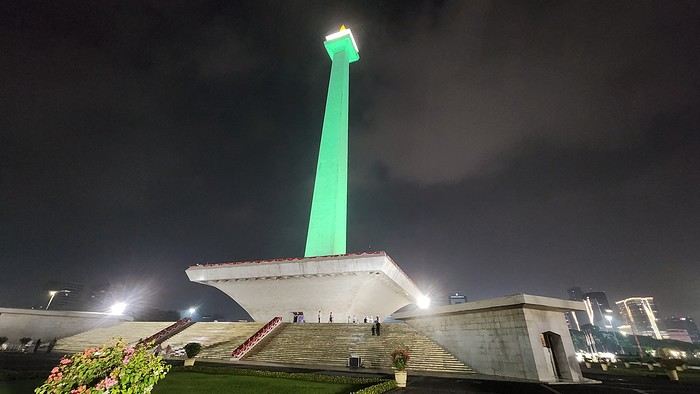
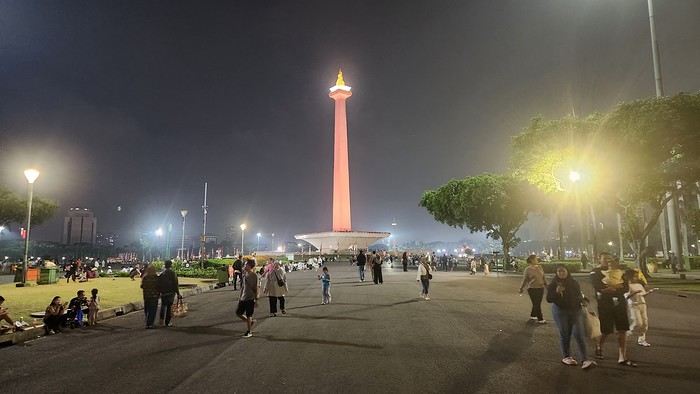
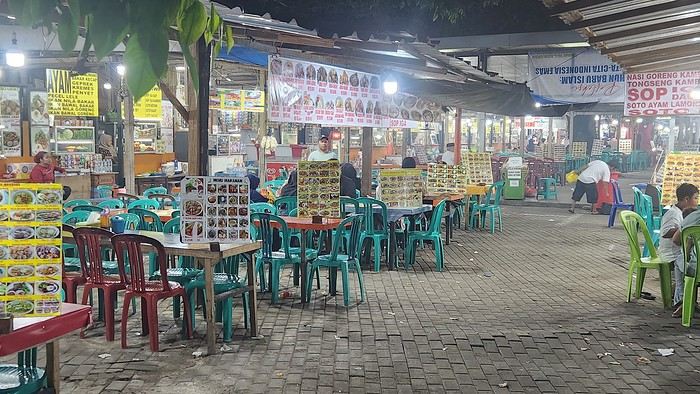
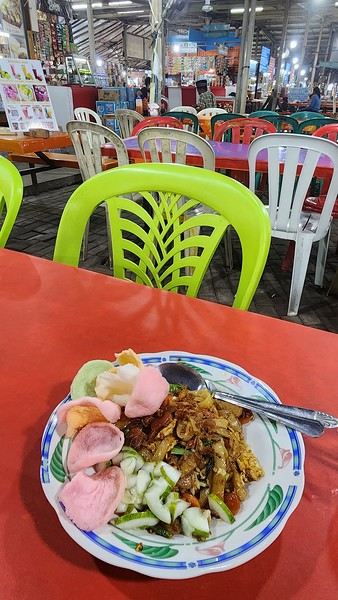
Unfortunately, we were a bit slow off the mark, which meant we missed the 6:25 PM train by two minutes. Oh well, we’ll have to wait until 11 PM. We take the opportunity to stretch our legs in Jakarta, soak up the atmosphere, and enjoy the delicious smells wafting from the *warungs*—those little typical street restaurants. A quick stop at the National Monument, a detour to a night market to devour our first *kwetiaw goreng* and *teh manis* for 60,000 rupiahs (that’s 3 € for two), and just like that, our penalty is lifted, and we’re allowed to hit the road again. Off to Bandung, where we arrive at 2 AM for... a *very* short night...


Day 1 - August 10, 2025 New life downloading for three weeks! And for that, Flo and I launched a public tender... A public tender? What’s that got to do with a travel journal???... Well, when you think about it, few destinations tick all the boxes for an August adventure: Meaning, finding a place that’s exotic in the middle of August, not too expensive, not too packed with tourists, warm but not *too* warm, with postcard-perfect landscapes, dreamy beaches, tasty cuisine with a hint of exoticism, friendly and welcoming locals, where you’re free to sleep under the stars among the mosquitos, take transport surrounded by chickens, and even eat from a pig trough if you feel like it—well, turns out it’s not that easy to find! I’d even say, given how thick the list of requirements is, there’s a big risk the tender could be declared unsuccessful for failing to meet just one criterion. Let’s just say the candidates better submit a rock-solid proposal!
After reviewing all the responses and presentations from the candidates, the obvious choice for us is... Indonesia! Except that trying to explore a country as vast as Indonesia and its 17,504 islands in less than five years is a bit like reading the summary of a Proust novel without taking the time to savor each of its 950 pages! Don’t worry, I won’t name them all here. Besides, do they even all have names? No! Only 7,870 have been named—their parents clearly ran out of ideas for the rest. Anyway, our society, which worships the "work more to earn more" mantra, unfortunately limits our adventure time. So we’ll only get to see a small part of Indonesia, and we’ll have to make a tough choice to head for the best of the best in this archipelago of over seventeen thousand islands. Each one has its own selling points: Sumatra, Sulawesi, Java, the Celebes, Bali, Borneo, Papua, Timor, the Moluccas... So many names that smell of adventure... Another tender, another list of requirements, another review of proposals... Drumroll... Splash splash... And the lucky winner is... Ta-da... Java, Bali’s big sister, where I’ve already been eight years ago... Java the programming language. The Java of Broadway. We’re gonna *do* the Java. Java the coffee. And yes, Java is also an island!
This island, four times smaller than France, is home to 136 million people, making it the most populated island in the world! Fun fact: Indonesia, with its 260 million inhabitants, is just shy of the podium for the world’s most populated countries, after the winning trio of India, China, and the United States. And it’s on this island of Java that you’ll find Jakarta, the (soon-to-be-former) capital and main airport of the country, where we’ll soon land after our nineteen-hour flight! Yep, nineteen hours! I mean, Indonesia in general—and Java in particular—is a *tad* farther than going on vacation to Grandma Yoyo’s! Not sure where it is? Easy. Grab a map. Plant your finger on the big island at the bottom right—aka Australia for those who struggle with geography—move it up two centimeters, and bam, welcome to Indonesia!

Nice transition, right? Because "Welcome to Indonesia" is exactly what the friendly flight attendant just said to me as we got off the plane! That’s it, our chakras are open, we’ve arrived at our (air)port. Time for rest, pool, cocktails, and a beach with our toes spread out... Wait, if you bought that, you clearly don’t know us yet! Since we still have energy to burn and need to adjust to the flight and time difference, we tackle the long administrative formalities to enter Indonesia, just to earn the right to hop in a 45-minute Grab taxi to the train station. The train station? What train station?... What do you usually do at a train station? Take a train, of course! Off we go for a three-hour train ride to Bandung, where we’ll officially start our adventure tomorrow after our first Indonesian night...
Unfortunately, we were a bit slow off the mark, which meant we missed the 6:25 PM train by two minutes. Oh well, we’ll have to wait until 11 PM. We take the opportunity to stretch our legs in Jakarta, soak up the atmosphere, and enjoy the delicious smells wafting from the *warungs*—those little typical street restaurants. A quick stop at the National Monument, a detour to a night market to devour our first *kwetiaw goreng* and *teh manis* for 60,000 rupiahs (that’s 3 € for two), and just like that, our penalty is lifted, and we’re allowed to hit the road again. Off to Bandung, where we arrive at 2 AM for... a *very* short night...


Hello,
My teenage daughter and I are heading to Sulawesi in July-August for 5 weeks. We don’t know Indonesia at all—this will be our first time. When we travel, we’re not used to booking accommodations in advance because we love improvising based on our mood and what comes up in the moment... For Sulawesi, though, from what I’ve read, I’m a little worried we might get stuck here and there, especially in more touristy spots, if we leave everything open... So, advice from those in the know—what do you think? Should we plan a bit ahead? Thanks a million for your feedback!
A'
My teenage daughter and I are heading to Sulawesi in July-August for 5 weeks. We don’t know Indonesia at all—this will be our first time. When we travel, we’re not used to booking accommodations in advance because we love improvising based on our mood and what comes up in the moment... For Sulawesi, though, from what I’ve read, I’m a little worried we might get stuck here and there, especially in more touristy spots, if we leave everything open... So, advice from those in the know—what do you think? Should we plan a bit ahead? Thanks a million for your feedback!
A'
Hi there, I’m planning to visit the Raja Ampat Islands next June. It’s pretty tricky to organize. What’s the best gateway to get there? Do you know of any places to stay if I don’t want to go diving? Which agencies can provide information? Thanks so much for your help!
Hi there,
I’m planning my first trip to Asia next summer with my partner and our daughter, who’ll be 3 and a half at the time, for 4 weeks (maybe 5).
I’ve heard that the timing is better for visiting Indonesia, but I’m hesitant because Thailand seems more accessible, and I’m worried that traveling to Indonesia during high season might be less enjoyable and a lot more expensive due to the number of tourists. We love cultural sites as much as natural ones, and we’re big foodies. We’re not necessarily looking for luxury and tend to take our time, travel by public transport, and look for accommodations with a good value for money—though we do occasionally splurge on a high-end restaurant.
I’m also wondering when and where to buy flight tickets and how comfortable the journey will be (especially for our daughter) if we fly with Thai Airways or Garuda.
Thanks in advance for sharing your thoughts and tips!
Damien
I’m planning my first trip to Asia next summer with my partner and our daughter, who’ll be 3 and a half at the time, for 4 weeks (maybe 5).
I’ve heard that the timing is better for visiting Indonesia, but I’m hesitant because Thailand seems more accessible, and I’m worried that traveling to Indonesia during high season might be less enjoyable and a lot more expensive due to the number of tourists. We love cultural sites as much as natural ones, and we’re big foodies. We’re not necessarily looking for luxury and tend to take our time, travel by public transport, and look for accommodations with a good value for money—though we do occasionally splurge on a high-end restaurant.
I’m also wondering when and where to buy flight tickets and how comfortable the journey will be (especially for our daughter) if we fly with Thai Airways or Garuda.
Thanks in advance for sharing your thoughts and tips!
Damien
Hello everyone!
This travel journal aims to help future travelers (well, I hope so!), since there’s so little information available about this remote archipelago. Big thanks to Lolodesiles and Ayis for answering my questions while I planned this trip!

Context This is our fourth trip to Indonesia as a couple—after Java-Bali in 2011, Flores-Komodo in 2013, and Sulawesi in 2016—each time for three weeks. It’s also our tenth trip to Southeast Asia overall.
We’re traveling like we have in previous years: with a rough itinerary that often changes based on who we meet, tips from other travelers, how tired we are, or what we’re feeling in the moment. In the Moluccas, it’ll change constantly, mostly depending on transportation.
Our only accommodation booking: the first few nights in Ambon when we arrive.
Planned route (to be refined on the spot): Ambon - Banda Islands - Lease Islands - Ternate - Tidore - Halmahera (between Sofifi and Tobelo) - Morotai and the neighboring unnamed archipelago.
Flights: Lyon-Paris-Singapore on Air France (428 € round-trip), with good meals, champagne, and wine (we like our little comforts when going on vacation 😏). Then Singapore-Jakarta-Ambon on Air Asia and Garuda. Return flight: Ternate-Jakarta-Singapore on Lion Air, with a 3-day stopover in Singapore before heading home.
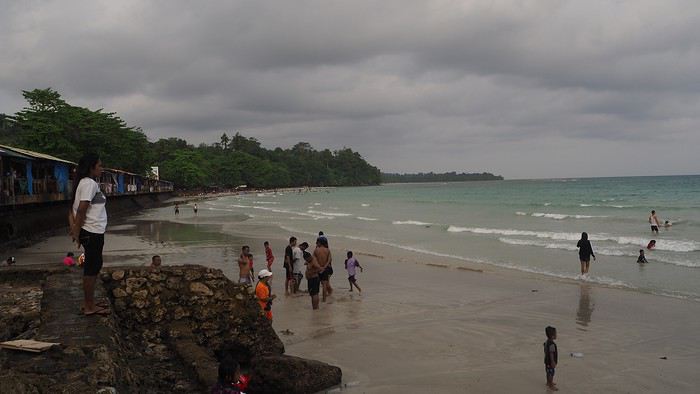
Episode 1: Ambon to Banda Our guesthouse, booked two days before departure, is 45 minutes from Ambon Airport, near Natsepa Beach (northeast of Leihitu). It’s a pretty average beach—quiet on weekdays but packed on Sundays (we saw the difference). It’s lined with warungs. This rainy day helps us readjust to the atmosphere of this country we love so much.
Our “Solim Guesthouse” is a lovely house with a living/dining room and garden, costing 15 € per night for two, including a hearty breakfast. Dinner is at Gaba Gaba, a great restaurant just a short walk away, right by the water, recommended by our host. Fun fact: it’s in the Lonely Planet, and it might be the only LP-listed spot in the Moluccas that actually matches the description (the others either don’t exist or have nothing to do with what’s advertised 😠).
For the next two days, the super-friendly owner lends us his scooter. We set off to explore the coastal villages in northern Leihitu (the western part of Ambon Island, which has a weird shape).
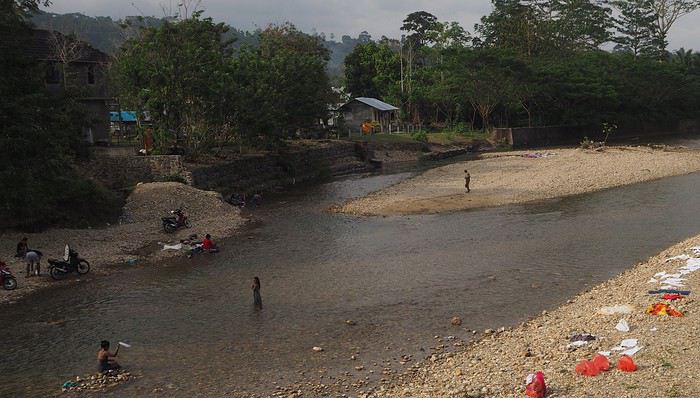
Laundry and trucks washed in the same stream.

Liang Beach, described as the island’s most beautiful, is almost gone (climate change or something else?), but the colors are magical.
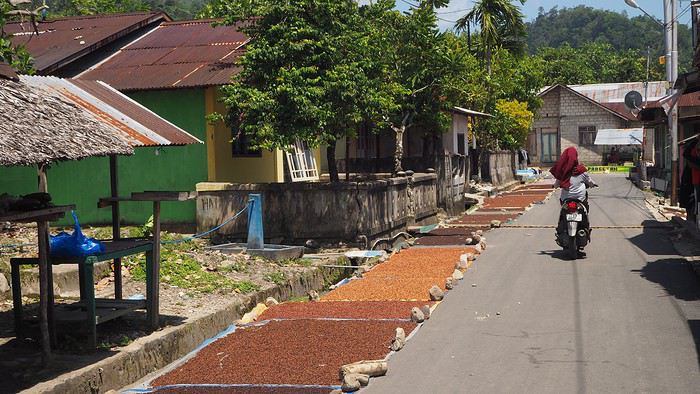
We continue 25 km toward a snorkeling spot our host recommended, taking a gorgeous, deserted little road through tiny villages in clove plantations (oh, those unforgettable scents!), stunning coves, and dense forest.

We’re greeted dozens of times with “Hello Mister”—a daily routine in the Moluccas. Every time we stop, we pose for photos to be saved on locals’ smartphones. They don’t see tourists often.

We ask for directions to the snorkeling spot (not easy—we only know basic Indonesian like *Selamat pagi*, *siang*, *sore*, and other polite phrases). Not many people know where it is (especially since we never know which village we’re in), but we eventually reach a small village that seems to be the right place. 🙂

We ask a local to take us there by boat (it’s not reachable by land).

The spot is at most 100 meters long, but the coral is in good condition (apparently not dynamited by fishermen, unlike in other parts of this beautiful country where fishing methods are destructive and nature pays the price 😠). The fish are plentiful and diverse. It’s a great start before heading to Banda. We’re happy to have the place to ourselves… though we don’t yet realize we won’t see a single tourist for the rest of the trip!
After two days of rest, we head to Tulehu Port in the morning, aiming for the Banda Islands. We know the journey is often tricky: the Pelni ferry runs twice a month but doesn’t match our dates, the 10-seat Suzi Air plane is always full (you can’t book—you have to show up on Mondays and Fridays), and it’s often canceled due to weather. So we opt for the Tuesday speedboat (which also gets canceled if there are waves or wind), with the next one on Saturday. We’re used to Indonesian ports—crowded, rusty boats, no English speakers—but we still feel lost. When I ask about the speedboat to Bandaneira, people gesture wildly, someone takes me to the “harbor office,” then tells me there’s no boat, others try to sell me tickets, and some just say, “No boat.”

Luckily, an English-speaking local approaches us and confirms the speedboat is broken. The next one will be Saturday *if* it’s fixed—otherwise, even later. 🤪 😠 We’re crushed. We came here for the Banda Islands… 🙁 We decide waiting five days for a maybe-boat isn’t an option, so we decide to head straight to North Moluccas, which was planned for later. We’re so disappointed we don’t even want to stay in the area. The Lease Islands don’t appeal to us despite what we’ve read, and Seram would deserve its own trip with its remote mountain tribes. Huge disappointment—we’d been dreaming of Banda for months, with its incredible drop-offs like Bunaken, its islands covered in nutmeg trees, etc. I’d read that Banda is in the world’s top 5, alongside Bunaken (amazing—we went in 2016), Komodo (incredible—we went in 2013), Sipadan, and another spot I’ve forgotten.
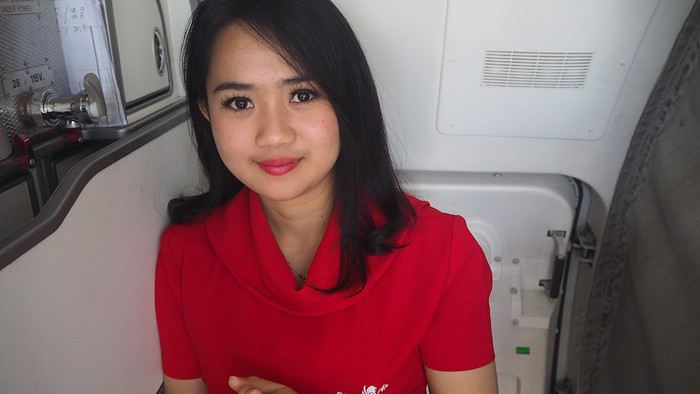
We take a taxi back to Ambon (45 minutes) to a travel agency to buy plane tickets to Ternate. There’s a daily ATR72 flight at noon—perfect timing. Ambon is the capital of South Moluccas (or Central, depending on who you ask!) with 300,000 people. The city doesn’t seem unpleasant, but we don’t stop. On the plane, there are only about ten passengers for 72 seats. The flight attendants are stunning, as always with Wings Air—clearly, they’re hired for their looks. 😊

Stopover in Bacan—a runway in the middle of coconut trees serving a tiny town—then we fly over countless volcanoes, the last one towering over Ternate.
Next episode coming soon: Ternate.
This travel journal aims to help future travelers (well, I hope so!), since there’s so little information available about this remote archipelago. Big thanks to Lolodesiles and Ayis for answering my questions while I planned this trip!

Context This is our fourth trip to Indonesia as a couple—after Java-Bali in 2011, Flores-Komodo in 2013, and Sulawesi in 2016—each time for three weeks. It’s also our tenth trip to Southeast Asia overall.
We’re traveling like we have in previous years: with a rough itinerary that often changes based on who we meet, tips from other travelers, how tired we are, or what we’re feeling in the moment. In the Moluccas, it’ll change constantly, mostly depending on transportation.
Our only accommodation booking: the first few nights in Ambon when we arrive.
Planned route (to be refined on the spot): Ambon - Banda Islands - Lease Islands - Ternate - Tidore - Halmahera (between Sofifi and Tobelo) - Morotai and the neighboring unnamed archipelago.
Flights: Lyon-Paris-Singapore on Air France (428 € round-trip), with good meals, champagne, and wine (we like our little comforts when going on vacation 😏). Then Singapore-Jakarta-Ambon on Air Asia and Garuda. Return flight: Ternate-Jakarta-Singapore on Lion Air, with a 3-day stopover in Singapore before heading home.
Episode 1: Ambon to Banda Our guesthouse, booked two days before departure, is 45 minutes from Ambon Airport, near Natsepa Beach (northeast of Leihitu). It’s a pretty average beach—quiet on weekdays but packed on Sundays (we saw the difference). It’s lined with warungs. This rainy day helps us readjust to the atmosphere of this country we love so much.

Our “Solim Guesthouse” is a lovely house with a living/dining room and garden, costing 15 € per night for two, including a hearty breakfast. Dinner is at Gaba Gaba, a great restaurant just a short walk away, right by the water, recommended by our host. Fun fact: it’s in the Lonely Planet, and it might be the only LP-listed spot in the Moluccas that actually matches the description (the others either don’t exist or have nothing to do with what’s advertised 😠).

For the next two days, the super-friendly owner lends us his scooter. We set off to explore the coastal villages in northern Leihitu (the western part of Ambon Island, which has a weird shape).
Laundry and trucks washed in the same stream.

Liang Beach, described as the island’s most beautiful, is almost gone (climate change or something else?), but the colors are magical.

We continue 25 km toward a snorkeling spot our host recommended, taking a gorgeous, deserted little road through tiny villages in clove plantations (oh, those unforgettable scents!), stunning coves, and dense forest.

We’re greeted dozens of times with “Hello Mister”—a daily routine in the Moluccas. Every time we stop, we pose for photos to be saved on locals’ smartphones. They don’t see tourists often.
We ask for directions to the snorkeling spot (not easy—we only know basic Indonesian like *Selamat pagi*, *siang*, *sore*, and other polite phrases). Not many people know where it is (especially since we never know which village we’re in), but we eventually reach a small village that seems to be the right place. 🙂

We ask a local to take us there by boat (it’s not reachable by land).

The spot is at most 100 meters long, but the coral is in good condition (apparently not dynamited by fishermen, unlike in other parts of this beautiful country where fishing methods are destructive and nature pays the price 😠). The fish are plentiful and diverse. It’s a great start before heading to Banda. We’re happy to have the place to ourselves… though we don’t yet realize we won’t see a single tourist for the rest of the trip!
After two days of rest, we head to Tulehu Port in the morning, aiming for the Banda Islands. We know the journey is often tricky: the Pelni ferry runs twice a month but doesn’t match our dates, the 10-seat Suzi Air plane is always full (you can’t book—you have to show up on Mondays and Fridays), and it’s often canceled due to weather. So we opt for the Tuesday speedboat (which also gets canceled if there are waves or wind), with the next one on Saturday. We’re used to Indonesian ports—crowded, rusty boats, no English speakers—but we still feel lost. When I ask about the speedboat to Bandaneira, people gesture wildly, someone takes me to the “harbor office,” then tells me there’s no boat, others try to sell me tickets, and some just say, “No boat.”

Luckily, an English-speaking local approaches us and confirms the speedboat is broken. The next one will be Saturday *if* it’s fixed—otherwise, even later. 🤪 😠 We’re crushed. We came here for the Banda Islands… 🙁 We decide waiting five days for a maybe-boat isn’t an option, so we decide to head straight to North Moluccas, which was planned for later. We’re so disappointed we don’t even want to stay in the area. The Lease Islands don’t appeal to us despite what we’ve read, and Seram would deserve its own trip with its remote mountain tribes. Huge disappointment—we’d been dreaming of Banda for months, with its incredible drop-offs like Bunaken, its islands covered in nutmeg trees, etc. I’d read that Banda is in the world’s top 5, alongside Bunaken (amazing—we went in 2016), Komodo (incredible—we went in 2013), Sipadan, and another spot I’ve forgotten.
We take a taxi back to Ambon (45 minutes) to a travel agency to buy plane tickets to Ternate. There’s a daily ATR72 flight at noon—perfect timing. Ambon is the capital of South Moluccas (or Central, depending on who you ask!) with 300,000 people. The city doesn’t seem unpleasant, but we don’t stop. On the plane, there are only about ten passengers for 72 seats. The flight attendants are stunning, as always with Wings Air—clearly, they’re hired for their looks. 😊

Stopover in Bacan—a runway in the middle of coconut trees serving a tiny town—then we fly over countless volcanoes, the last one towering over Ternate.
Next episode coming soon: Ternate.
Hi everyone,
After years of traveling, I finally settled down a few years ago in the Togean Islands, Indonesia (on the main island of Sulawesi).
For those planning to visit the Togeans via Wakai (arriving either by ferry from Gorontalo or speedboat from Ampana), watch out for a person who goes by the name Bagong, also known as Farid.
This gentleman is a teacher and supplements his income with tourism-related activities. He often hangs around Wakai port looking for tourists to sell things to (a charter boat transfer, a cabin on the ferry, etc.), using dishonest methods and lining his pockets.
More recently, he was hired by the authorities of Togean Islands National Park (TNKT) to sell entry tickets. And this is even worse: in the name of the National Park, he outright scams tourists, either by selling tickets at a higher price, asking them to pay again, or charging children who are supposed to enter for free.
Here’s what you need to know: 1. Entry fee for the National Park: 150,000 IDR (ONLY FOR ADULTS, aged 18 and up)
2. This entry fee is only payable once, even if the ticket states it’s a daily price. These tickets were printed a long time ago, before tourists even had to pay anything, and since then the payment system has changed. So it’s indeed 150,000 IDR per person, payable once regardless of how long you stay in the Togeans.
3. Where to pay (depends on your entry point to the Togeans):
Ampana: entry fee payable when departing from Ampana port Gorontalo: entry fee payable upon arrival at Wakai port Bumbulan (Marisa): entry fee payable upon arrival at Dolong port
If you’re asked to pay these fees anywhere else or when leaving the Togeans, it’s a scam—don’t pay.
4. You should receive one receipt per person in exchange for the 150,000 IDR. If not, know that the money won’t go to the National Park but into the ticket seller’s pocket. If someone offers to charge you less (e.g., 100,000 IDR), you won’t get a receipt, so the money still won’t go to the National Park. Please don’t accept these practices, even if you think it’s good for your wallet (seriously, a 50,000 IDR discount is only about 3 €). The National Park needs these funds to protect the Togean Islands’ ecosystem. By saving 3 €, you’re just lining the pockets of a dishonest guy.
Several resorts have already reported Bagong’s (or Farid’s) dishonest practices to the National Park. The authorities are still struggling to find a trustworthy person to sell tickets in Wakai (no scams have been reported in the other two ports so far). We all hope this person will be replaced soon.
5. Contribution for the Ministry of Tourism: Since early 2019, every tourist staying in the Togean Islands must, in addition to the National Park entry fee, pay a 50,000 IDR contribution (regardless of the length of stay). These fees are to be paid at the same time as the 150,000 IDR for the National Park.
6. Price for renting a cabin on the ferry Wakai - Gorontalo (and vice versa): 500,000 IDR. If someone offers you 600,000 IDR, it’s a scam, and those extra 100,000 IDR will go into the same dishonest guy’s pocket (or one of his accomplices). Note that the 500,000 IDR already includes the commission for the person acting as an intermediary to rent the cabin.
7. Going rates for charter boats from Wakai to the various resorts (approximate prices, just to give you an idea—it may vary slightly from one boat operator to another or from one resort to another):
Wakai - Kadidiri (Harmony Bay, Kadidiri Paradise, Black Marlin, Pondo Lestari): usually free if the transfer is arranged by the resort (if you have a confirmed booking and stay more than one night), otherwise between 100,000 and 150,000 IDR Wakai - Una Una (Sanctum, Pristine Paradise): I’ll get back to you with the info, but you can also check with these two resorts. Wakai - Katupat (Fadhila Cottages and Bolilanga): 400,000 IDR Wakai - Bomba (Polyalisa, Poki-Poki, Araya Dive Resort, Island Retreat): 400,000 IDR Wakai - Malenge (Malenge Indah, Bahia Tomini, Sera Beach, Sandy Bay, Lestari Cottages): 600,000 IDR Wakai - Waleakodi (Lia Beach, Pulotiga Resort): 900,000 IDR
There you go, fellow travelers—my little contribution to help you avoid what’s known here as the "Wakai mafia."
I’ve included some photos of Bagong/Farid (found on Facebook) so you can recognize him. Note that he sometimes wears glasses, sometimes not, sometimes has a mustache, sometimes not, and sometimes wears his teacher’s uniform to appear more official or legitimate. Heh, the habit doesn’t make the monk ;)
Other shady individuals in Wakai:
Lamin: sometimes sells ferry tickets to Gorontalo, but mostly acts as a taxi to resorts, with shady deals and unfair prices. Uni: a seemingly charming woman, but not always honest. She offers cabin rentals on the ferry and arranges charter boat transfers to resorts.
And while I’m at it, if you meet "Miss Harbor" at Ampana port, run away like the plague. She doesn’t handle National Park ticket sales but will try to sell you a car rental for Toraja, Tentena, Luwuk, or Manado, a cabin rental on the ferry to Gorontalo, or other things. Her real name is Ulfa, and she’s a real scammer (on top of being an alcoholic and a bit unhinged). I’ll try to post something about her later.
Don’t worry, there are also plenty of great people in the Togean Islands :P :P
If, despite everything, you fall victim to these scammers’ schemes, be sure to report it to the resort where you’re staying. And of course, leave a comment here so I can report it to the National Park and the Ministry of Tourism (communications are difficult in the Togeans, and some resort owners don’t have many opportunities to contact the authorities). Together, we can put an end to these dishonest practices and make the Togean Islands even more beautiful :)
Have a great summer, travel safely, and return with your heart filled with the beauty of our world!
After years of traveling, I finally settled down a few years ago in the Togean Islands, Indonesia (on the main island of Sulawesi).
For those planning to visit the Togeans via Wakai (arriving either by ferry from Gorontalo or speedboat from Ampana), watch out for a person who goes by the name Bagong, also known as Farid.
This gentleman is a teacher and supplements his income with tourism-related activities. He often hangs around Wakai port looking for tourists to sell things to (a charter boat transfer, a cabin on the ferry, etc.), using dishonest methods and lining his pockets.
More recently, he was hired by the authorities of Togean Islands National Park (TNKT) to sell entry tickets. And this is even worse: in the name of the National Park, he outright scams tourists, either by selling tickets at a higher price, asking them to pay again, or charging children who are supposed to enter for free.
Here’s what you need to know: 1. Entry fee for the National Park: 150,000 IDR (ONLY FOR ADULTS, aged 18 and up)
2. This entry fee is only payable once, even if the ticket states it’s a daily price. These tickets were printed a long time ago, before tourists even had to pay anything, and since then the payment system has changed. So it’s indeed 150,000 IDR per person, payable once regardless of how long you stay in the Togeans.
3. Where to pay (depends on your entry point to the Togeans):
Ampana: entry fee payable when departing from Ampana port Gorontalo: entry fee payable upon arrival at Wakai port Bumbulan (Marisa): entry fee payable upon arrival at Dolong port
If you’re asked to pay these fees anywhere else or when leaving the Togeans, it’s a scam—don’t pay.
4. You should receive one receipt per person in exchange for the 150,000 IDR. If not, know that the money won’t go to the National Park but into the ticket seller’s pocket. If someone offers to charge you less (e.g., 100,000 IDR), you won’t get a receipt, so the money still won’t go to the National Park. Please don’t accept these practices, even if you think it’s good for your wallet (seriously, a 50,000 IDR discount is only about 3 €). The National Park needs these funds to protect the Togean Islands’ ecosystem. By saving 3 €, you’re just lining the pockets of a dishonest guy.
Several resorts have already reported Bagong’s (or Farid’s) dishonest practices to the National Park. The authorities are still struggling to find a trustworthy person to sell tickets in Wakai (no scams have been reported in the other two ports so far). We all hope this person will be replaced soon.
5. Contribution for the Ministry of Tourism: Since early 2019, every tourist staying in the Togean Islands must, in addition to the National Park entry fee, pay a 50,000 IDR contribution (regardless of the length of stay). These fees are to be paid at the same time as the 150,000 IDR for the National Park.
6. Price for renting a cabin on the ferry Wakai - Gorontalo (and vice versa): 500,000 IDR. If someone offers you 600,000 IDR, it’s a scam, and those extra 100,000 IDR will go into the same dishonest guy’s pocket (or one of his accomplices). Note that the 500,000 IDR already includes the commission for the person acting as an intermediary to rent the cabin.
7. Going rates for charter boats from Wakai to the various resorts (approximate prices, just to give you an idea—it may vary slightly from one boat operator to another or from one resort to another):
Wakai - Kadidiri (Harmony Bay, Kadidiri Paradise, Black Marlin, Pondo Lestari): usually free if the transfer is arranged by the resort (if you have a confirmed booking and stay more than one night), otherwise between 100,000 and 150,000 IDR Wakai - Una Una (Sanctum, Pristine Paradise): I’ll get back to you with the info, but you can also check with these two resorts. Wakai - Katupat (Fadhila Cottages and Bolilanga): 400,000 IDR Wakai - Bomba (Polyalisa, Poki-Poki, Araya Dive Resort, Island Retreat): 400,000 IDR Wakai - Malenge (Malenge Indah, Bahia Tomini, Sera Beach, Sandy Bay, Lestari Cottages): 600,000 IDR Wakai - Waleakodi (Lia Beach, Pulotiga Resort): 900,000 IDR
There you go, fellow travelers—my little contribution to help you avoid what’s known here as the "Wakai mafia."
I’ve included some photos of Bagong/Farid (found on Facebook) so you can recognize him. Note that he sometimes wears glasses, sometimes not, sometimes has a mustache, sometimes not, and sometimes wears his teacher’s uniform to appear more official or legitimate. Heh, the habit doesn’t make the monk ;)
Other shady individuals in Wakai:
Lamin: sometimes sells ferry tickets to Gorontalo, but mostly acts as a taxi to resorts, with shady deals and unfair prices. Uni: a seemingly charming woman, but not always honest. She offers cabin rentals on the ferry and arranges charter boat transfers to resorts.
And while I’m at it, if you meet "Miss Harbor" at Ampana port, run away like the plague. She doesn’t handle National Park ticket sales but will try to sell you a car rental for Toraja, Tentena, Luwuk, or Manado, a cabin rental on the ferry to Gorontalo, or other things. Her real name is Ulfa, and she’s a real scammer (on top of being an alcoholic and a bit unhinged). I’ll try to post something about her later.
Don’t worry, there are also plenty of great people in the Togean Islands :P :P
If, despite everything, you fall victim to these scammers’ schemes, be sure to report it to the resort where you’re staying. And of course, leave a comment here so I can report it to the National Park and the Ministry of Tourism (communications are difficult in the Togeans, and some resort owners don’t have many opportunities to contact the authorities). Together, we can put an end to these dishonest practices and make the Togean Islands even more beautiful :)
Have a great summer, travel safely, and return with your heart filled with the beauty of our world!
Hi there!
We’re a group of 4 heading to Indonesia in April. We’d like to visit Sumba and could use some info on the island and the connections between Flores and Sumba—either by plane or ferry. Is it easy to find accommodations, and how’s the safety? Does anyone know a good guide?
Hi everyone,
Just sharing a bit about a place we loved in Sulawesi, in an area that’s almost unknown to Western tourists.
Afni and Ilak, a lovely Indonesian couple, built two bungalows on a beach on Banggai Island (the main island of the Banggai archipelago).
The Banggai Islands are an archipelago east of Sulawesi, off the coast of Luwuk. The main island is quite large, with a small town and several villages. From there, you can head to other smaller islands. There are diving spots, snorkeling, paradise-like beaches, Bajo villages, and more. However, there’s no dive center that I know of, no restaurants for Westerners. Very few people speak English—if anyone at all on the smaller islands.
There are still some tourist facilities, though. But since no information is available in English, it remains mostly a destination for local Indonesian tourism for now. That’s what makes it so charming.
When we went there, the bungalows were already built, but the place wasn’t officially open yet because some essential amenities (kitchen, bathroom) were missing. So we’d walk 20 minutes to the nearby village to shower and eat at our hosts’ house. Now it seems all the amenities are finished, and it’s officially open.
We spent about ten days there, on Banggai Island and Mbuang Mbuang Island.
Mbuang Mbuang has stunning lagoons, diving and snorkeling spots, and a hidden jellyfish lake (don’t believe those who say there are only 5 or 6 in the world—they’re forgetting to count this one!). It’s also a bit of an adventure, since: - No one speaks English in the village - There was no phone signal (so no Google Translate to help communicate) - No restaurants (not even a warung!) - Ferries don’t run every day
But the locals are incredibly kind and ready to help, so you never feel lost.
In short, it’s a destination to visit soon—it has all the makings of a new tourist hotspot.
You’ll need plenty of time, though, as the journeys are long, especially if you want to explore islands beyond Banggai. Like anywhere off the beaten path, don’t expect all the Western-style services.
To get there, the easiest way is to fly to Luwuk (there are flights from Makassar and Manado) and take an overnight ferry.
Here’s a little YouTube link about the place: https://www.youtube.com/watch?v=e9S2CubaneE
Benjamin
Just sharing a bit about a place we loved in Sulawesi, in an area that’s almost unknown to Western tourists.
Afni and Ilak, a lovely Indonesian couple, built two bungalows on a beach on Banggai Island (the main island of the Banggai archipelago).
The Banggai Islands are an archipelago east of Sulawesi, off the coast of Luwuk. The main island is quite large, with a small town and several villages. From there, you can head to other smaller islands. There are diving spots, snorkeling, paradise-like beaches, Bajo villages, and more. However, there’s no dive center that I know of, no restaurants for Westerners. Very few people speak English—if anyone at all on the smaller islands.
There are still some tourist facilities, though. But since no information is available in English, it remains mostly a destination for local Indonesian tourism for now. That’s what makes it so charming.
When we went there, the bungalows were already built, but the place wasn’t officially open yet because some essential amenities (kitchen, bathroom) were missing. So we’d walk 20 minutes to the nearby village to shower and eat at our hosts’ house. Now it seems all the amenities are finished, and it’s officially open.
We spent about ten days there, on Banggai Island and Mbuang Mbuang Island.
Mbuang Mbuang has stunning lagoons, diving and snorkeling spots, and a hidden jellyfish lake (don’t believe those who say there are only 5 or 6 in the world—they’re forgetting to count this one!). It’s also a bit of an adventure, since: - No one speaks English in the village - There was no phone signal (so no Google Translate to help communicate) - No restaurants (not even a warung!) - Ferries don’t run every day
But the locals are incredibly kind and ready to help, so you never feel lost.
In short, it’s a destination to visit soon—it has all the makings of a new tourist hotspot.
You’ll need plenty of time, though, as the journeys are long, especially if you want to explore islands beyond Banggai. Like anywhere off the beaten path, don’t expect all the Western-style services.
To get there, the easiest way is to fly to Luwuk (there are flights from Makassar and Manado) and take an overnight ferry.
Here’s a little YouTube link about the place: https://www.youtube.com/watch?v=e9S2CubaneE
Benjamin
Here’s the thing: ever since Sumatra, I’ve become picky.
I don’t want the grey-green of the North Sea anymore. I want turquoise, crystal-clear waters—so clear you can see the coral 10 meters down. You see it, right?
I don’t want those "equatorial greenhouses" you visit politely in well-maintained park alleys. I want wild, humid, buzzing jungle—hostile yet captivating at the same time.
I don’t want wheat that becomes flour that becomes bread that dips into soup. I want jade-green rice terraces rippling in the wind through distant valleys, where you can enjoy a nasi goreng.
I want more! I want coconut trees in sight, fine sand underfoot, smiles in the streets, and the world’s largest volcanic lake with a charming little island inside. Simple, really!
Here’s the 26-day itinerary across this island:
LAKE TOBA: 4 days It’s the story of a volcanic island at the bottom of a lake at the bottom of a volcano. The lake is Toba. The island is Samosir. Time here is for pausing. Time is for savoring lobsters, swimming in calm waters, enjoying the mild climate without the tourist crowds. And when time isn’t for pausing, it’s for wandering at a leisurely pace—walking, canoeing, or scootering. You’ll discover lush jungle landscapes, Batak villages (a Christian ethnic group) with surprising architecture, small inner lakes, and breathtaking views from the summit. Tuk Tuk, the main village on Samosir, offers plenty of charming restaurants and accommodations. But you can also venture into lost villages and find a peaceful haven with locals... and never want to leave. If you want to know more and see all the photos, it’s here: Lake Toba.
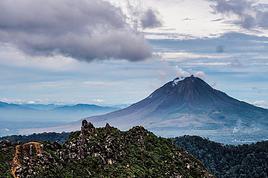
BERASTAGI: 2 days We’re in the heart of Sumatra’s volcanoes. Berastagi is the starting point for climbing the smoking, sulfurous mountains nearby. The town itself isn’t interesting, but you’ll find everything you need (markets, lodging, warungs, restaurants...). For the volcanoes, the most accessible is Gunung Sibayak. No guide needed—the hike only takes a few hours (depending on where you start). All accommodations provide clear directions. The summit is only 2,095 meters high. Oh, this volcano isn’t all that impressive. But it’s really nice to feel the earth’s warmth in this lunar, ochre-yellow landscape, through the hissing fumaroles escaping the rocks. The place is stunning on a clear day, or even better if you’re lucky enough to rise above the clouds. Across from it, you’ll see the splendid view of a more turbulent neighboring volcano: Mount Sinabung and its dramas.
The jungle KETAMBE: 4 days
This is the real jungle. Not the Hollywood studio kind or the city zoo version. No: the jungle. Teeming, dense, humid, and noisy. With the help of a specialized guide, we spotted plenty of insects and birds, long-tailed macaques, "Thomas leaf monkeys," and the much-anticipated orangutan... Ketambe is less touristy than Bukit Lawang. The animals are completely wild, not "semi-tame." This part of Gunung Leuser National Park is also harder to access, but the experience remains authentic even as tourism grows. In these times of deforestation advancing like a terrestrial cancer, experiencing the jungle is a unique, moving, essential moment: it’s "For the wild beauty of the last primary forests" (Le Monde, November 13, 2013). Leech socks and a small backpack: you’re ready for a multi-day trek? Off you go for muddy slopes, liters of sweat, hot rivers, endless green... and primates! Sleeping at least one night is a memorable adventure: the sounds of the jungle in total darkness deliver their dose of sensations, chills, and lifelong memories. If you want to know more and see all the photos, it’s here: the Ketambe jungle.
PULAU WEH: 5 days It’s all here: turquoise waters, fishing villages, thrilling scuba diving, lush jungle, coconut trees, warungs, and fresh fish on abandoned beaches with seashells and crustaceans. A small island north of Sumatra (50 minutes by ferry), Pulau Weh is slowly recovering from the 2004 tsunami. For now, the place isn’t overrun by tourists. But the infrastructure is more pleasant than in the rest of Sumatra. You’ll find some charming bungalows right on the water. Rent a scooter, and you can easily find yourself alone on a paradise-like cove for a romantic sunset. For the party scene, uh... it’s pretty quiet! People come here mainly for scuba diving with its colorful corals (though some have bleached) and lively marine life. Snorkeling also reveals beautiful sights. If you’re not here to swim, there’s always lazing on the beach in a hammock, sipping while gazing at the turquoise waves. That’s great too! If you want to know more and see all the photos, it’s here: Pulau Weh.
LAKE MANINJAU: 2 days The mist yawns slowly over the waters at dawn. When it finally lifts, you discover a blue treasure at the bottom of the old volcano’s caldera. In central-west Sumatra, Lake Maninjau is home to the Minang Kabau people. Less touristy than Lake Toba, it still offers equally beautiful landscapes. By scooter, a full day is enough to circle the lake (40 km) through villages, jungle, and rice terraces: it’s very pleasant, especially the southern part where traffic is light. You’ll find bungalows by the water, mainly near the village of Maninjau (yes, same name as the lake). From the crater’s heights, you can admire the whole of Maninjau (the lake!). To get there, you can navigate the 44 hairpin turns (!) by motorized vehicle from Maninjau (the village!) or tackle the path climbing from Bayur to Puncak Lawang, where the view is... top (yes, same name as the village).
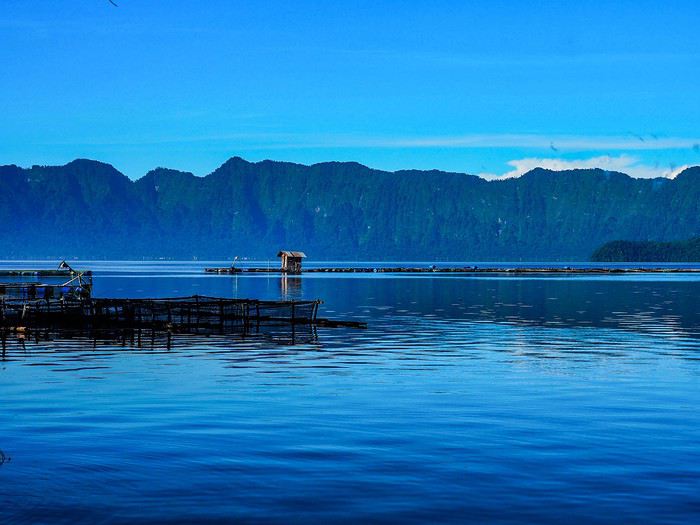
HARAU VALLEY: 3 days Magnificent rice terraces surrounded by towering cliffs and cascading waterfalls. That’s what awaits the adventurer—happy like Ulysses after a long journey to the fertile Harau Valley. It’s peaceful, off the beaten path, and rejuvenating. Few tourists here, and few accommodations. The well-known Abdi Homestay offers quiet bungalows, slightly set back from the main road, in a stunning setting. Again, renting a scooter is a great idea, but here, "happiness is in the fields"—well, the rice terraces. So, park your two wheels and venture along the paths crisscrossing the terraces, following small streams, brushing past villages lost in the valley. If you want to know more and see all the photos, it’s here: Harau Valley.
BEACHES SOUTH of PADANG: 4 days 20 km south of Padang lies Bungus Beach. But that’s not it yet... You’ll need to take a fisherman’s boat for 40 minutes south to land on a peninsula inaccessible by car. That’s the minimum to reach this little paradise, nestled between jungle and sea, far from Padang’s pollution and hustle. An Eden on an isolated beach, with nothing but small bungalows and possible excursions to the nearby islands. The only way to get around: by boat and on foot... Pure bliss, toes in the water. And on the blog "Un tour dans le sac", nothing is spared—especially not the description to make your mouth water (Indian Ocean water, that is): sublime turquoise waters, postcard-perfect coconut trees, lazing in your favorite hammock.
For the practical side, here’s some info:
Sumatra Travel: Itinerary Summary My thoughts Sumatra is a magnificent Indonesian island and still relatively untouched. Tourists mainly flock to Java and Bali. It’s especially suited for nature lovers who’ll appreciate its volcanoes, paradise islands, jungle, and rice terraces. Sumatra is huge: in 3 weeks, we only visited the northern half of the island... And even then, we barely scratched the surface of this stunning part of Sumatra. That said, this itinerary offers an exceptional variety of landscapes: beaches, volcanoes, rice terraces, jungle—the winning combo!
Overall, Sumatra is still lacking in infrastructure, and maybe that’s a good thing: it’s far from Bali’s rampant "hotel urbanization." That said, you’ll have to accept spartan comfort: Sumatra, as beautiful as it is, is only for backpackers, adventurers, and travelers who can do without cozy 3-star hotels. In short, Sumatra is earned, but the effort is well worth it, and the warm welcome from the locals will make you forget the minor travel inconveniences.
A disappointment? The food isn’t as good as Bali’s (check out our article on the subject (link)). The stop in Berastagi is nice but not essential, especially if you’ve already seen Java’s impressive volcanoes.
A favorite? There were so many! But if I had to choose, I’d pick the Ketambe jungle. It was my first experience in a natural environment I didn’t know: a primary forest and memories that’ll last!
Would I do the Sumatra trip again? I regret not going to the Mentawai Islands. This archipelago, off Sumatra’s west coast, has long remained isolated: some inhabitants still live traditionally. These "flower men" live in harmony with nature. Unfortunately, their way of life is threatened by modern influences, and their fragile, unique culture risks disappearing. I would’ve loved to spend time with this incredible ethnic group. But it takes time: a week seems necessary. I would’ve had to skip some stops in our itinerary—maybe the peninsula south of Bungus and Berastagi?
Budget: It’s really cheap, especially the food, which, let’s be honest, isn’t amazing. Backpackers who can settle for spartan comfort (small bungalows without AC or hot water) and local food in warungs can easily get by on 20 € per day for two people (food + lodging). The cost of flights from Europe to Sumatra remains high. For our part, we found great deals on Paris-Hong Kong tickets (350 € round trip). Then you just need to reach Medan by low-cost airline.
No mandatory tipping in restaurants or accommodations. However, it’s more common to tip guides or taxi drivers.
Like many places in Indonesia, everything is negotiable. If you’re new to this, it’s not easy at first... Especially when dealing with a population poorer than us, "rich Westerners." But bargaining is part of the local culture! And you’ll get used to it—it even becomes fun. Plus, you don’t want to be that tourist paying the "tourist price" they’ll likely quote first, right?
To negotiate, be firm, respect your counterpart, smile, stay polite... Clearly show it’s too expensive or that the deal is done (by shaking hands, for example). Typing the numbers on your phone helps communicate the price. Learning a few words in the local language ("It’s too expensive," "How much?") is appreciated! Okay, it’s a rough tip, but here’s a base: dividing the first price by 2 gets you close to a fair negotiation.
Currently, 15,000 Indonesian rupiahs are worth about 1 €.
Accommodation Infrastructure is underdeveloped in Sumatra. You’ll find fewer "charming lodgings" than in Bali. Still, there are some very pleasant places. If you read our Sumatra articles, we recommend Abdi Homestay in Harau Valley and Silimalumbo at Lake Toba. In Pulau Weh, the choice is wider, but we suggest trying the seafood pasta at Bixio Café!
Health We didn’t get sick in Sumatra. By following a few simple rules (avoiding tap water, not swimming in stagnant freshwater), you’ll avoid the main issues. Hygiene is improving anyway. Anti-malaria treatment is still recommended, but cases are rare.
Also, keep in mind that Sumatra has a hot, humid climate—adjust your behavior accordingly (stay hydrated, protect yourself from the sun, etc.).

Here’s the 26-day itinerary across this island:
LAKE TOBA: 4 days It’s the story of a volcanic island at the bottom of a lake at the bottom of a volcano. The lake is Toba. The island is Samosir. Time here is for pausing. Time is for savoring lobsters, swimming in calm waters, enjoying the mild climate without the tourist crowds. And when time isn’t for pausing, it’s for wandering at a leisurely pace—walking, canoeing, or scootering. You’ll discover lush jungle landscapes, Batak villages (a Christian ethnic group) with surprising architecture, small inner lakes, and breathtaking views from the summit. Tuk Tuk, the main village on Samosir, offers plenty of charming restaurants and accommodations. But you can also venture into lost villages and find a peaceful haven with locals... and never want to leave. If you want to know more and see all the photos, it’s here: Lake Toba.

BERASTAGI: 2 days We’re in the heart of Sumatra’s volcanoes. Berastagi is the starting point for climbing the smoking, sulfurous mountains nearby. The town itself isn’t interesting, but you’ll find everything you need (markets, lodging, warungs, restaurants...). For the volcanoes, the most accessible is Gunung Sibayak. No guide needed—the hike only takes a few hours (depending on where you start). All accommodations provide clear directions. The summit is only 2,095 meters high. Oh, this volcano isn’t all that impressive. But it’s really nice to feel the earth’s warmth in this lunar, ochre-yellow landscape, through the hissing fumaroles escaping the rocks. The place is stunning on a clear day, or even better if you’re lucky enough to rise above the clouds. Across from it, you’ll see the splendid view of a more turbulent neighboring volcano: Mount Sinabung and its dramas.

The jungle KETAMBE: 4 days
This is the real jungle. Not the Hollywood studio kind or the city zoo version. No: the jungle. Teeming, dense, humid, and noisy. With the help of a specialized guide, we spotted plenty of insects and birds, long-tailed macaques, "Thomas leaf monkeys," and the much-anticipated orangutan... Ketambe is less touristy than Bukit Lawang. The animals are completely wild, not "semi-tame." This part of Gunung Leuser National Park is also harder to access, but the experience remains authentic even as tourism grows. In these times of deforestation advancing like a terrestrial cancer, experiencing the jungle is a unique, moving, essential moment: it’s "For the wild beauty of the last primary forests" (Le Monde, November 13, 2013). Leech socks and a small backpack: you’re ready for a multi-day trek? Off you go for muddy slopes, liters of sweat, hot rivers, endless green... and primates! Sleeping at least one night is a memorable adventure: the sounds of the jungle in total darkness deliver their dose of sensations, chills, and lifelong memories. If you want to know more and see all the photos, it’s here: the Ketambe jungle.

PULAU WEH: 5 days It’s all here: turquoise waters, fishing villages, thrilling scuba diving, lush jungle, coconut trees, warungs, and fresh fish on abandoned beaches with seashells and crustaceans. A small island north of Sumatra (50 minutes by ferry), Pulau Weh is slowly recovering from the 2004 tsunami. For now, the place isn’t overrun by tourists. But the infrastructure is more pleasant than in the rest of Sumatra. You’ll find some charming bungalows right on the water. Rent a scooter, and you can easily find yourself alone on a paradise-like cove for a romantic sunset. For the party scene, uh... it’s pretty quiet! People come here mainly for scuba diving with its colorful corals (though some have bleached) and lively marine life. Snorkeling also reveals beautiful sights. If you’re not here to swim, there’s always lazing on the beach in a hammock, sipping while gazing at the turquoise waves. That’s great too! If you want to know more and see all the photos, it’s here: Pulau Weh.

LAKE MANINJAU: 2 days The mist yawns slowly over the waters at dawn. When it finally lifts, you discover a blue treasure at the bottom of the old volcano’s caldera. In central-west Sumatra, Lake Maninjau is home to the Minang Kabau people. Less touristy than Lake Toba, it still offers equally beautiful landscapes. By scooter, a full day is enough to circle the lake (40 km) through villages, jungle, and rice terraces: it’s very pleasant, especially the southern part where traffic is light. You’ll find bungalows by the water, mainly near the village of Maninjau (yes, same name as the lake). From the crater’s heights, you can admire the whole of Maninjau (the lake!). To get there, you can navigate the 44 hairpin turns (!) by motorized vehicle from Maninjau (the village!) or tackle the path climbing from Bayur to Puncak Lawang, where the view is... top (yes, same name as the village).

HARAU VALLEY: 3 days Magnificent rice terraces surrounded by towering cliffs and cascading waterfalls. That’s what awaits the adventurer—happy like Ulysses after a long journey to the fertile Harau Valley. It’s peaceful, off the beaten path, and rejuvenating. Few tourists here, and few accommodations. The well-known Abdi Homestay offers quiet bungalows, slightly set back from the main road, in a stunning setting. Again, renting a scooter is a great idea, but here, "happiness is in the fields"—well, the rice terraces. So, park your two wheels and venture along the paths crisscrossing the terraces, following small streams, brushing past villages lost in the valley. If you want to know more and see all the photos, it’s here: Harau Valley.

BEACHES SOUTH of PADANG: 4 days 20 km south of Padang lies Bungus Beach. But that’s not it yet... You’ll need to take a fisherman’s boat for 40 minutes south to land on a peninsula inaccessible by car. That’s the minimum to reach this little paradise, nestled between jungle and sea, far from Padang’s pollution and hustle. An Eden on an isolated beach, with nothing but small bungalows and possible excursions to the nearby islands. The only way to get around: by boat and on foot... Pure bliss, toes in the water. And on the blog "Un tour dans le sac", nothing is spared—especially not the description to make your mouth water (Indian Ocean water, that is): sublime turquoise waters, postcard-perfect coconut trees, lazing in your favorite hammock.

For the practical side, here’s some info:
Sumatra Travel: Itinerary Summary My thoughts Sumatra is a magnificent Indonesian island and still relatively untouched. Tourists mainly flock to Java and Bali. It’s especially suited for nature lovers who’ll appreciate its volcanoes, paradise islands, jungle, and rice terraces. Sumatra is huge: in 3 weeks, we only visited the northern half of the island... And even then, we barely scratched the surface of this stunning part of Sumatra. That said, this itinerary offers an exceptional variety of landscapes: beaches, volcanoes, rice terraces, jungle—the winning combo!
Overall, Sumatra is still lacking in infrastructure, and maybe that’s a good thing: it’s far from Bali’s rampant "hotel urbanization." That said, you’ll have to accept spartan comfort: Sumatra, as beautiful as it is, is only for backpackers, adventurers, and travelers who can do without cozy 3-star hotels. In short, Sumatra is earned, but the effort is well worth it, and the warm welcome from the locals will make you forget the minor travel inconveniences.
A disappointment? The food isn’t as good as Bali’s (check out our article on the subject (link)). The stop in Berastagi is nice but not essential, especially if you’ve already seen Java’s impressive volcanoes.
A favorite? There were so many! But if I had to choose, I’d pick the Ketambe jungle. It was my first experience in a natural environment I didn’t know: a primary forest and memories that’ll last!
Would I do the Sumatra trip again? I regret not going to the Mentawai Islands. This archipelago, off Sumatra’s west coast, has long remained isolated: some inhabitants still live traditionally. These "flower men" live in harmony with nature. Unfortunately, their way of life is threatened by modern influences, and their fragile, unique culture risks disappearing. I would’ve loved to spend time with this incredible ethnic group. But it takes time: a week seems necessary. I would’ve had to skip some stops in our itinerary—maybe the peninsula south of Bungus and Berastagi?
Budget: It’s really cheap, especially the food, which, let’s be honest, isn’t amazing. Backpackers who can settle for spartan comfort (small bungalows without AC or hot water) and local food in warungs can easily get by on 20 € per day for two people (food + lodging). The cost of flights from Europe to Sumatra remains high. For our part, we found great deals on Paris-Hong Kong tickets (350 € round trip). Then you just need to reach Medan by low-cost airline.
No mandatory tipping in restaurants or accommodations. However, it’s more common to tip guides or taxi drivers.
Like many places in Indonesia, everything is negotiable. If you’re new to this, it’s not easy at first... Especially when dealing with a population poorer than us, "rich Westerners." But bargaining is part of the local culture! And you’ll get used to it—it even becomes fun. Plus, you don’t want to be that tourist paying the "tourist price" they’ll likely quote first, right?
To negotiate, be firm, respect your counterpart, smile, stay polite... Clearly show it’s too expensive or that the deal is done (by shaking hands, for example). Typing the numbers on your phone helps communicate the price. Learning a few words in the local language ("It’s too expensive," "How much?") is appreciated! Okay, it’s a rough tip, but here’s a base: dividing the first price by 2 gets you close to a fair negotiation.
Currently, 15,000 Indonesian rupiahs are worth about 1 €.
Accommodation Infrastructure is underdeveloped in Sumatra. You’ll find fewer "charming lodgings" than in Bali. Still, there are some very pleasant places. If you read our Sumatra articles, we recommend Abdi Homestay in Harau Valley and Silimalumbo at Lake Toba. In Pulau Weh, the choice is wider, but we suggest trying the seafood pasta at Bixio Café!
Health We didn’t get sick in Sumatra. By following a few simple rules (avoiding tap water, not swimming in stagnant freshwater), you’ll avoid the main issues. Hygiene is improving anyway. Anti-malaria treatment is still recommended, but cases are rare.
Also, keep in mind that Sumatra has a hot, humid climate—adjust your behavior accordingly (stay hydrated, protect yourself from the sun, etc.).
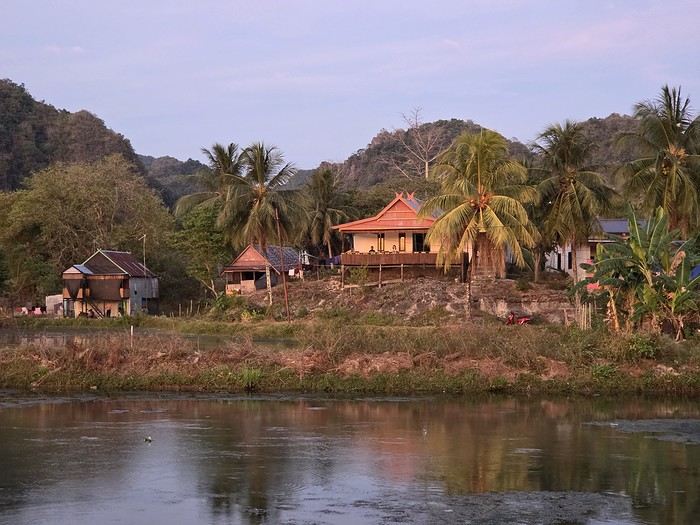
Hi there,
I’m a bit pressed for time... On one hand, the seller of the land I want to buy is in a hurry, but on the other, I’d have preferred to wait a bit. I’m worried about rushing things...
If any of you own land in Indonesia, could you share: an estimate of notary fees for a transaction under 10,000 € (using the classic local nominee structure), and what annual taxes I’d need to pay?
Also, if anyone knows a good notary in Lombok, I’d love the recommendation!
I’ve read quite a bit in English, but some info in French would be great!
Thanks for your help
I’m a bit pressed for time... On one hand, the seller of the land I want to buy is in a hurry, but on the other, I’d have preferred to wait a bit. I’m worried about rushing things...
If any of you own land in Indonesia, could you share: an estimate of notary fees for a transaction under 10,000 € (using the classic local nominee structure), and what annual taxes I’d need to pay?
Also, if anyone knows a good notary in Lombok, I’d love the recommendation!
I’ve read quite a bit in English, but some info in French would be great!
Thanks for your help
Un petit compte rendu sur l'ile de Siau où nous sommes allés fin aout. Ile facilement accessible de Manado par le ferry rapide 4 h ou bateau de nuit environ 7 h de trajet .
L'île de SIAU est magnifique, ici pas encore de tourisme , végétation incroyable, population acceillante. Pleins de choses à y voir, notamment le volcan karangetan, volcan en éruption lors de notre passage, volcan très actif, le voir la nuit est vraiment indescriptible.
L'ile possède des tarsiers que l'on peut voir dans leur élément naturel. Accompagné on a pu en voir plusieurs en passant dans la jungle.
Les sources d'eau chaude sont surprenantes.
La plage de mahoro est a voir , elle semble magnifique mais nous n'avons pas pu y aller car beaucoup de vagues lors de notre séjour.
Ile spécialisée dans les noix de muscade on en voit partout dans la végétation et a sécher sur le bord des routes.
Rien que pour le volcan cela vaut vraiment le coup d'y aller, un coup de coeur pour cette île qui pour le moment est loin des circuits touristiques habituels et pourtant tellement facile d'accès depuis Manado.
Voir la lave, entendre les explosions du volcan, voir les habitants le matin surveiller leur volcan vraiment une aventure exceptionnelle.
Nous avions un guide sur place, Dominik Derek (Tél watsapp : + 62 853 986 669 99 ) est indonésien très investi dans l'ile, une personne adorable très cultivé et parlant bien l'anglais. Il nous a permis de vraiment profiter facilement des trésors de Siau et a été à l'écoute tout le temps de notre séjour.
A ne pas louper si vous êtes dans le Nord...
L'île de SIAU est magnifique, ici pas encore de tourisme , végétation incroyable, population acceillante. Pleins de choses à y voir, notamment le volcan karangetan, volcan en éruption lors de notre passage, volcan très actif, le voir la nuit est vraiment indescriptible.
L'ile possède des tarsiers que l'on peut voir dans leur élément naturel. Accompagné on a pu en voir plusieurs en passant dans la jungle.
Les sources d'eau chaude sont surprenantes.
La plage de mahoro est a voir , elle semble magnifique mais nous n'avons pas pu y aller car beaucoup de vagues lors de notre séjour.
Ile spécialisée dans les noix de muscade on en voit partout dans la végétation et a sécher sur le bord des routes.
Rien que pour le volcan cela vaut vraiment le coup d'y aller, un coup de coeur pour cette île qui pour le moment est loin des circuits touristiques habituels et pourtant tellement facile d'accès depuis Manado.
Voir la lave, entendre les explosions du volcan, voir les habitants le matin surveiller leur volcan vraiment une aventure exceptionnelle.
Nous avions un guide sur place, Dominik Derek (Tél watsapp : + 62 853 986 669 99 ) est indonésien très investi dans l'ile, une personne adorable très cultivé et parlant bien l'anglais. Il nous a permis de vraiment profiter facilement des trésors de Siau et a été à l'écoute tout le temps de notre séjour.
A ne pas louper si vous êtes dans le Nord...
Bonjour , je viens vous annoncé que je suis rentrée il y a 2 semaines d'un voyage à Sumatra et Nouvelle Papouasie , Raja Ampat
Je suis partie du 25 octobre au 16 novembre 2018 avec deux copines .
Ce voyage à débuté par un trek de 3 jours et 2 nuits dans la jungle à Ketambe avec Johnny Jungle , ensuite nous sommes allées à Barastagi , au lac Toba et pour finir 7 jours à Raja Ampat
J'ai rédigé un compte rendu avec de chouettes adresses d'hôtels , prix des bus , bateaux , vols .......
J'ai fait pour un mieux comme je fais à chaque fois afin de partager avec vous mon voyage . Si vous êtes intéressé(e)s n'hésitez pas à m'écrire
Amicalement
FLORA
J'ai fait pour un mieux comme je fais à chaque fois afin de partager avec vous mon voyage . Si vous êtes intéressé(e)s n'hésitez pas à m'écrire
Amicalement
FLORA
Allez je me lance : après le carnet philippin , voici le carnet indonésien retraçant une semaine passée au sein du parc de Komodo .
J’espère qu’il pourra aider les futurs voyageurs et les aidera à patienter jusque là .
Pour les nouveaux venus, nous voyageons en famille avec nos enfants qui avaient 15 ans au moment du voyage , qui s’est déroulé pendant les vacances de la Toussaint 2017 (une semaine à Komodo et une semaine à Bali essentiellement dans la région d’Ubud pendant la fête de Galungan )
Ce voyage fut le premier pour nous en Asie (et vous avez pu constater qu’il ne fut pas le dernier). Il a été fait en autonomie sans passer par une agence mais tout a été programmé et booké en avance.
Aller à Komodo pour un premier séjour asiatique n’est pas forcément très commun mais je rêvais de rencontrer et si possible de nager/plonger avec des raies manta. Plus voir les fameux dragons, ça ne se refuse pas c'est unique ...
Cela fut un bon prétexte pour ma fille et moi , après un baptême réalisé au Mexique en 2013, de passer notre Openwater à Marseille en juillet 2017 en prévision . Les hommes ne nous ont pas suivies (hélas pour notre porte monnaie , vu qu'au final ils ont décidé de plonger à Komodo et sans certification cela revient le double/plongée ... )
Pourquoi une semaine à Komodo ? Pour prendre le temps d’apprécier à sa juste valeur ce parc réputé pour être une destination phare pour les amoureux de plongée et snorkeling et bien en profiter.
Après une nuit proche de Labuan Bajo ( qui se trouve sur l’ile de Florès et qui est le port de départ pour le parc de Komodo) , nous avons fait une croisière de 4 jours/3 nuits puis deux jours de plongée en dormant sur l’ile de Sebayur directement au sein du parc national.
A bientôt pour la suite !

J’espère qu’il pourra aider les futurs voyageurs et les aidera à patienter jusque là .
Pour les nouveaux venus, nous voyageons en famille avec nos enfants qui avaient 15 ans au moment du voyage , qui s’est déroulé pendant les vacances de la Toussaint 2017 (une semaine à Komodo et une semaine à Bali essentiellement dans la région d’Ubud pendant la fête de Galungan )
Ce voyage fut le premier pour nous en Asie (et vous avez pu constater qu’il ne fut pas le dernier). Il a été fait en autonomie sans passer par une agence mais tout a été programmé et booké en avance.
Aller à Komodo pour un premier séjour asiatique n’est pas forcément très commun mais je rêvais de rencontrer et si possible de nager/plonger avec des raies manta. Plus voir les fameux dragons, ça ne se refuse pas c'est unique ...
Cela fut un bon prétexte pour ma fille et moi , après un baptême réalisé au Mexique en 2013, de passer notre Openwater à Marseille en juillet 2017 en prévision . Les hommes ne nous ont pas suivies (hélas pour notre porte monnaie , vu qu'au final ils ont décidé de plonger à Komodo et sans certification cela revient le double/plongée ... )
Pourquoi une semaine à Komodo ? Pour prendre le temps d’apprécier à sa juste valeur ce parc réputé pour être une destination phare pour les amoureux de plongée et snorkeling et bien en profiter.
Après une nuit proche de Labuan Bajo ( qui se trouve sur l’ile de Florès et qui est le port de départ pour le parc de Komodo) , nous avons fait une croisière de 4 jours/3 nuits puis deux jours de plongée en dormant sur l’ile de Sebayur directement au sein du parc national.
A bientôt pour la suite !

Bonjour à tous, après de nombreuses recherches au sujet du "camping sauvage sur ile inhabité en Asie", je me retrouve a poser ma question sur ce forum car très peu d'informations ou même de retours d’expériences sont disponible sur internet.
J'ai pour projet de partir 3 semaines avec un groupe d'ami sur une Île inhabité au mois de SEPTEMBRE 2020. Idéalement vis à vis de la saison, l’Indonésie, la Malaisie, les philippines paraissent être les endroits idéaux (saison & nombre d'île confondu).
Si je devais résumer vulgairement notre projet, il s’agirait de nous faire déposer en bateau sur une île inhabité avec nos ressources (eau, nourriture, tente & équipement indispensable a la survie) pour 3 semaines d'aventure, puis a la fin de cette période, le bateau reviendrait nous chercher pour nous ramener à la civilisation. C'est un rêves d'enfance que nous souhaitons réaliser ensemble en étant totalement conscient de la difficulté de ce projet un peu fou. Nous ne sommes pas débutant dans le domaine & la galère est notre recherche commune hihi.
Nos questions sont les suivantes : Est-il possible de faire du camping sauvage sur ces îles inhabités ? La population/gouvernement est-elle/il contre ce type de voyageur ? Quels sont les législations ? ...
Bien évidement si vous avez des retours d’expérience dans d'autres pays ou autres, si vous connaissez des personnes qui pourraient potentiellement nous renseigner ou même des liens que j'aurais loupé a ce sujet, merci de me les renseigner. Ca serait une aide précieuse dans l'organisation de notre périple.
J’espère avoir été clair dans mes propos. Dans l’espoir d'avoir des réponses. Merci à tous
J'ai pour projet de partir 3 semaines avec un groupe d'ami sur une Île inhabité au mois de SEPTEMBRE 2020. Idéalement vis à vis de la saison, l’Indonésie, la Malaisie, les philippines paraissent être les endroits idéaux (saison & nombre d'île confondu).
Si je devais résumer vulgairement notre projet, il s’agirait de nous faire déposer en bateau sur une île inhabité avec nos ressources (eau, nourriture, tente & équipement indispensable a la survie) pour 3 semaines d'aventure, puis a la fin de cette période, le bateau reviendrait nous chercher pour nous ramener à la civilisation. C'est un rêves d'enfance que nous souhaitons réaliser ensemble en étant totalement conscient de la difficulté de ce projet un peu fou. Nous ne sommes pas débutant dans le domaine & la galère est notre recherche commune hihi.
Nos questions sont les suivantes : Est-il possible de faire du camping sauvage sur ces îles inhabités ? La population/gouvernement est-elle/il contre ce type de voyageur ? Quels sont les législations ? ...
Bien évidement si vous avez des retours d’expérience dans d'autres pays ou autres, si vous connaissez des personnes qui pourraient potentiellement nous renseigner ou même des liens que j'aurais loupé a ce sujet, merci de me les renseigner. Ca serait une aide précieuse dans l'organisation de notre périple.
J’espère avoir été clair dans mes propos. Dans l’espoir d'avoir des réponses. Merci à tous
bonjour à tous
retour d'expérience sur le site misterfly .
nous vous conseillons clairement d'éviter , pour vous épargner de gros soucis .
j'explique :
tout nos vols cette année sont reservés via cette plateforme qui présente soit disant des avantages . le bilan est catastrophique .
1. cde nº 2672828 pour A/R tokyo via air france annulée pour cause du covid ( pas de probleme la dessus ) .....bilan : plus de 4 mois aprés . aucun retour . ni remboursement ni avoir ..... ils nous baladent depuis
2. cde 1654093 . le ponpon . notre amie a son vol reotur thailande annulé . se débrouille elle meme pour rentrer en france . aucun retour de la part de misterfly . silence radio . aucun dédommagement . font la sourde oreille et oubli a chaque fois de vous répondre ....on se moque de qui ??????
3. cde nº 2039878 pour bali . information de la compagnie singapour airline annulant le vol . mais à nouveau silence radio de misterfly
bref ce sont clairement des guignols et nous déconseillons cette plateforme qui ne vous accompagnera en rien d'une part mais surtout se gardera de respecter les conditions minimales auquels le contrat qui vous lie , les engagent
voila ...vous connaissez notrehistoire la suite je suppose devant les tribunaux
retour d'expérience sur le site misterfly .
nous vous conseillons clairement d'éviter , pour vous épargner de gros soucis .
j'explique :
tout nos vols cette année sont reservés via cette plateforme qui présente soit disant des avantages . le bilan est catastrophique .
1. cde nº 2672828 pour A/R tokyo via air france annulée pour cause du covid ( pas de probleme la dessus ) .....bilan : plus de 4 mois aprés . aucun retour . ni remboursement ni avoir ..... ils nous baladent depuis
2. cde 1654093 . le ponpon . notre amie a son vol reotur thailande annulé . se débrouille elle meme pour rentrer en france . aucun retour de la part de misterfly . silence radio . aucun dédommagement . font la sourde oreille et oubli a chaque fois de vous répondre ....on se moque de qui ??????
3. cde nº 2039878 pour bali . information de la compagnie singapour airline annulant le vol . mais à nouveau silence radio de misterfly
bref ce sont clairement des guignols et nous déconseillons cette plateforme qui ne vous accompagnera en rien d'une part mais surtout se gardera de respecter les conditions minimales auquels le contrat qui vous lie , les engagent
voila ...vous connaissez notrehistoire la suite je suppose devant les tribunaux
Bonjour,
Une simple question qui risque d'être difficile de répondre, mais je la pose quand même.
Est ce que quelqu'un a voyager avec l'huile de CBD dans sa valise en Indonésie et passer le douane sans problème?
Merci Sylvia
Merci Sylvia
Bonjour à tous
J'ai des billets pour un voyage en Indonésie (Raja Ampat et Sulawesi) avec un départ début juillet et retour fin aout. Mes billets ont été pris au mois d'octobre 2019... Est ce que certains sont dans le même cas? J'ai des billets Lufthansa pour Jakarta et ensuite des vols intérieurs pour Sorong et un retour de Manado avec Batik. Normalement je prends un visa touriste 60 jours qui mets au moins 3 semaines à être fait. J 'ai bien compris que le vol doit être annulé si on veut espérer au moins un avoir (je veux bien partir en 2021...). Je n'arrive pas à avoir des infos sur l'Indonésie. Je viens de voir que la Thaïlande ré ouvre complétement son pays au tourisme. Je me demande ce qu'il en est pour l'Indo... Est ce que quelqu'un a des infos? Quid de mon visa à temps pour début juin (le 9 de mémoire)? Merci pour vos retours. Ça commence à prendre la tête cette histoire...
Bonjour à tous,
Après 2 séjours de 5 semaines chacun en Thaïlande, l'envie de retourner en Asie nous démange...
Nous avons pour projet de partir 3 mois en avril, mai et juin avec nos deux enfants qui auront 6 ans et 3 ans.
C'est encore un "projet" et nous bloquons vraiment sur l'itinéraire (qui me parait essentiel pour dessiner ce projet).
Pensez-vous que ce soit simple de faire Philippines > Malaisie > Indonésie ? (ordre le plus logique par rapport aux saisons)
Pensez-vous qu'une escale en nouvelle Calédonie ou Polynésie française au cours du voyage puisse être à envisager ?
Est-ce que l'ordre des pays vous parait le plus simple?
Merci de vos réponses !
Pensez-vous que ce soit simple de faire Philippines > Malaisie > Indonésie ? (ordre le plus logique par rapport aux saisons)
Pensez-vous qu'une escale en nouvelle Calédonie ou Polynésie française au cours du voyage puisse être à envisager ?
Est-ce que l'ordre des pays vous parait le plus simple?
Merci de vos réponses !
Bonjour,
Avec mon ami nous souhaitons partir 1 mois en Indonesie. Il va s’agir de notre première découverte dans ce pays, ainsi nous aimerions découvrir pas mal de choses, quitte à courir… sachant que cela ne sera sûrement pas notre dernière visite sur ces îles.
Voici ce qu'on aimerais bien faire :
J0 : Arrivée le matin à Medan + visite de la ville J1 – Départ pour Bukit Lawang J2 et J3 – Trek J4 – Route pour lac Toba J5 et J6 – Lac Toba J7 – Vol interne Silangit – Semarang J8 – Départ îles Karimunjawa J9 – îles Karimunjawa J10 – Route vers Magelang J11 – temples Borobudur et Prambanan J12 – Yogyakarta J13 – Route vers le Bromo (si c'est possible, sinon un autre volcan) J14 – Bromo + route vers Kawah Ijen J15 – Kawah Ijen + route Ubud J16 à J18 : Ubud J19 – Route vers Amed (+ Tirta Gangga) J20 – Amed J21 – Route vers îles Gili J22 – îles Gili J23 – Ferry vers Nusa Penida J24 – Nusa Penida J25 – Ferry vers Kuta J26 – Kuta J27 – Départ
Pouvez-vous nous dire si cela vous semble envisageable ? Surtout au niveau des transports, nous avons lus pas mal de discussion sur les difficultés des transports en Indonésie. Après, nous ne programmons pas les hôtels, transports en avance pour se laisser une marge de liberté dans notre parcours une fois sur place. Nous partons fin septembre - début octobre : pensez-vous que pour Bali cela ira malgré la saison des pluies ? Merci beaucoup à vous pour vos retours. Amélie
J0 : Arrivée le matin à Medan + visite de la ville J1 – Départ pour Bukit Lawang J2 et J3 – Trek J4 – Route pour lac Toba J5 et J6 – Lac Toba J7 – Vol interne Silangit – Semarang J8 – Départ îles Karimunjawa J9 – îles Karimunjawa J10 – Route vers Magelang J11 – temples Borobudur et Prambanan J12 – Yogyakarta J13 – Route vers le Bromo (si c'est possible, sinon un autre volcan) J14 – Bromo + route vers Kawah Ijen J15 – Kawah Ijen + route Ubud J16 à J18 : Ubud J19 – Route vers Amed (+ Tirta Gangga) J20 – Amed J21 – Route vers îles Gili J22 – îles Gili J23 – Ferry vers Nusa Penida J24 – Nusa Penida J25 – Ferry vers Kuta J26 – Kuta J27 – Départ
Pouvez-vous nous dire si cela vous semble envisageable ? Surtout au niveau des transports, nous avons lus pas mal de discussion sur les difficultés des transports en Indonésie. Après, nous ne programmons pas les hôtels, transports en avance pour se laisser une marge de liberté dans notre parcours une fois sur place. Nous partons fin septembre - début octobre : pensez-vous que pour Bali cela ira malgré la saison des pluies ? Merci beaucoup à vous pour vos retours. Amélie
Disons-le tout de suite, d'entrée de jeu, j'ai été conquise par ce beau pays ... quelle splendeur, quelle beauté, quelles merveilles, quelle diversité, quelles rencontres 🙂
- la splendeur de ses rizières : des rizières plates, des rizières en toile d'araignée, des rizières en terrasse, des rizières en eau, des rizières avec du riz fraîchement planté, des rizières avec les tiges bien hautes et vertes du riz proche de la récolte - la beauté de ses temples : des petits temples au détour d'une rue, des temples imposants, le temple de Borobudur, unique en son genre - les merveilles de ses fonds marins : petits et gros poissons monochromes et multicolores, étoiles de mer rouges, bleues, à gros points noirs, des coraux mous, des coraux durs, des raies mantas, des tortues - la diversité de ses plages : du sable blanc, du sable rose, du sable noir, des galets bleus - les rencontres animalières : des orangs outans, des varans, des chauve-souris, des singes Thomas Leaf, des babouins, les petits et gros poissons
et partout une constante : la gentillesse des Indonésiens que nous avons trouvés si accueillants, souriants, serviables et globalement désintéressés.

Bonjour à tous, bienvenue dans mon carnet sur cette si belle destination.
L'Indonésie, je l'avais initialement envisagée pour nos vacances en famille à la Toussaint 2018 mais pour différentes raisons (dont certaines bassement matérielles 😊), j'avais finalement choisi la Thaïlande qui fut une belle découverte. Ayant de la suite dans les idées et décidant de vaincre cette frustration 😛, je décidais donc de la reprogrammer pour cet été et estimais un budget grâce à l'aide précieuse de Lhorizon. Comme à son habitude, mon mari me donne carte blanche pour organiser. Objectif : contenter petits (deux garçons de 10 et 11 ans) et grands. Pour la première fois, nous décidons de partir un mois.
J'avais déjà collecté quelques informations au printemps 2018 grâce aux conseils des forumeurs et notamment de Lhorizon (décidément 😉), Kartoffel, OldPlatypus et Eiger. Vos carnets de voyage du forum m'ont également été très utiles, surtout pour la préparation de Bali, Java et Sumatra et j'ai ainsi dévoré les récits de Lhorizon, Marati, Muriel 18, Kate, Tokala, Max68 et Sambre01 et quelques autres (désolée si je ne vous nomme pas tous 😊).
L'Indonésie est un vaste archipel dont le choix des îles à visiter, si l'on ne tient pas à visiter Bali, n'est de prime abord pas évident. Certains lieux étaient à mon sens incontournables pour nos vacances : - Florès : énorme envie de découvrir cette île encore aux balbutiements du tourisme - Java : pour certains de ses volcans, le mont Bromo et le Kawah Ijen - Sumatra : pour les orangs outans
Bali était une étape qui nous permettait de rejoindre d'autres îles, par voie aérienne ou maritime. J'ai volontairement restreint la visite de cette belle île en raison de son fort développement touristique. J'ai par conséquent ciblé les endroits pas trop touristiques, même si je n'ai pas pu résister à certains endroits très courus.
Quelques détails logistiques en global avant d'entamer le récit de notre voyage : * billets d'avion : - pour les liaisons internes, j'ai fait des simulations sur de nombreuses combinaisons pour retenir les vols de Garuda et Air Asia qui alliaient un tarif pas trop onéreux et une durée de trajet pas trop longue et sans escales. Les vols internes ont été réservés en mars. - pour le trajet international, les prix des billets d'avion ont conditionné l'ordre de nos visites. Lors de mes réservations en novembre, il était financièrement plus intéressant de voyager à l'aller jusqu'à Bali et de repartir de Malaisie *logements : Habitués à voyager en couple en mode routard sans réservations d'hébergement, nous souhaitions des vacances un peu plus cadrées pour nos enfants, notamment sur les logements qui étaient tous réservés à l'avance. Soit en direct auprès des hébergements, soit sur Booking.com * billets de train Pour nos déplacements sur Java, ils ont été achetés en ligne au mois de juin via le site tiket (très simple d'utilisation) * croisière Komodo Trouvant les prix élevés pour une prestation à réserver depuis la France, je décidais d'attendre notre arrivée à Florès pour trouver un bateau qui nous permette de réaliser une croisière en quatre jours/trois nuits, avec idéalement seulement nous à bord.
J'espère que vous aurez plaisir à lire ce carnet et que ceux qui projettent de se rendre en Indonésie y trouveront des informations utiles 😎
Jour 0 - jeudi 11 juillet
Vol sur China Eastern prévu à 21h20 au départ de Roissy CDG. Nous arrivons au guichet d'embarquement vers 19h et sommes pris en charge immédiatement car il n'y a pas de file d'attente Le personnel reste ébahi devant la taille, et surtout le poids, de nos bagages : 3 sacs à dos en soute pour moins de 30 kg pour nous quatre. Quand on sait que chaque passager avait le droit à un bagage de 23 kg, moi je dis qu'on aurait mérité un surclassement 😇 Décollage ponctuel, hôtesses de l'air charmantes, le vol se déroule sans problème jusqu'à Shanghai.
Jour 1 - vendredi 12 juillet
Arrivée à Shanghai à 14h40, escale de 3h20. Initialement prévu à 18h, l'avion partira finalement avec 45 minutes de retard. Rien de particulier ; nous dormons tant bien que mal. Sauf quand certains se mettent à jacasser fort alors que manifestement, tout le monde dort, toutes les lumières étant éteintes 😠
Jour 3 - samedi 13 juillet
Magie des fuseaux horaires, partis le 11 juillet de France, nous atterrissons 22 heures après, dans la nuit du 12 au 13 juillet. Le retard au décollage n'a pas été résorbé en vol. Nous atterrissons donc à 1h15 du matin au lieu de 00h30 et devons attendre un temps certain (1h15 au bas mot) pour passer l'immigration. La récupération des bagages se fait heureusement rapidement. Le chauffeur réservé via notre hôtel nous attend comme convenu dans le hall de l'aéroport. L'avantage de cette heure tardive est qu'il n'y a pas d'embouteillages. Nous arrivons à l'hôtel peu après 3h00, ravis de pouvoir nous glisser dans des lits bien confortables non sans avoir oublié programmé nos réveils pour 10h15 afin de profiter du petit déjeuner de l'hôtel et découvrir quand même un peu Bali en journée.
Après quelques petites heures de sommeil réparateur, nous émergeons grâce au réveil et à la dépose de notre petit déjeuner sur notre terrasse. Pour cette (demi) nuit et la nuit suivante, nous logeons au Tropical Bali Hotel à Sanur, un hôtel dont la gérance est assurée par un couple de Français, Mathieu et Audrey, depuis plusieurs années. Le cadre est très agréable avec une belle végétation et une piscine. Nous profitons de ce début de matinée au calme avec ce qui sera le meilleur petit dej de toutes nos vacances.
Audrey nous brosse un plan des alentours et nous conseille d'acheter une carte SIM. Nous décidons de nous promener sur la promenade littorale jusqu'à remonter à la station balnéaire de Sanur et réservons via l'intermédiaire de l'hôtel un chauffeur qui nous retrouvera à un carrefour, facilement identifiable grâce à un fast-food avec un M jaune 🙂. Audrey nous prend en photo avec son téléphone afin d'envoyer ensuite notre bouille au chauffeur pour l'aider à nous reconnaître.
C'est parti pour une balade d'un peu plus d'une heure largement entrecoupée comme à notre habitude par de nombreux arrêts photos. Peu de touristes croisés lors de cette balade. Nous verrons surtout des Balinais qui vaquent à leurs occupations diverses et variées, des travaux, la pêche, confection d'offrandes.


Nous échangeons régulièrement des Hello et grands sourires.
Le photographe ...
photographié 🙂

Arrivée à Sanur, bien plus de monde. Nous apercevons les touristes embarquant sur les bateaux rapides en direction notamment de Nusa Lembogan et les Gili.

Nous photographions les bateaux à balancier typiques de cet endroit.

Nous quittons le front de mer pour nous diriger vers le point de rencontre prévu avec le chauffeur. Sur le chemin, nous en profitons pour faire des retraits d'espèces car nous n'avions pas réussi la veille à l'aéroport. Les distributeurs se trouvent dans des petits bâtiments climatisés réservés aux distributeurs. Les distributeurs délivrent soit des coupures de 50 000 roupies (auquel cas le montant maximal de retrait est de 2 500 000 roupies), soit des coupures de 100 000 roupies (retrait max de 3 000 000 roupies). Facilement repérables grâce aux étiquettes apposées sur les DAB. Plusieurs essais sont nécessaires car certains distributeurs nous rendent instantanément notre carte. Mon mari et moi réussissons finalement à opérer un retrait chacun. 15 krp = 1€ (environ)
Nous retrouvons notre chauffeur Komang (coordonnées en MP) et nous partons en direction du Pura Tanah Lot (pura = temple). Dans une petite boutique sur le trajet, nous achetons avec l'aide de notre chauffeur qui parle un anglais excellent une carte SIM de 8 Go pour 97 krp. En route, nous prendrons des photos insolites en Europe mais habituelles en Asie (peut-être pas au Japon, bien que je ne connaisse - pas encore - le pays 😉).


Moi qui apprécie peu les endroits bondés vais être servie au Pura Tanah Lot ! Mais je reste stoïque car je savais qu'il y aurait énormément de monde, l'endroit étant renommé. Une fois garés, il faut passer le long de nombreuses boutiques de souvenirs mais nous ne nous sommes pas sentis harcelés. Notre chauffeur nous indique qu'il nous attendra le temps nécessaire et nous conseille d'en profiter et de ne pas nous presser. Le surnom de Mont St Michel indonésien me semble adapté : le lieu est magnifique, le temple est situé dans la mer. Il y a effectivement beaucoup de monde. Ce temple est l'un des plus vénérés par les Balinais qui sont les seuls à pouvoir y pénétrer. Nous observons d'ailleurs plusieurs personnes et leurs offrandes.


Quelques photos de loin, de près. La marée monte mais nous verrons globalement le Tanah Lot à marée basse.


Le spectacle doit valoir le coup d'œil lorsque le temple est cerné par les flots à marée haute ! Nous assistons au coucher de soleil et décidons de dîner sur place histoire de laisser les voitures repartir un peu. Nasi goreng (riz sauté) pour notre fils cadet, mie goreng (nouilles sautées) pour notre fils aîné et ayam satay (brochettes de poulet servie avec une sauce aux cacahuètes) pour les parents. Le dîner fût bon. Celui des moustiques aussi semble-t-il, nous nous sommes fait dévorer pendant le repas 😠


Retour à l'hôtel, préparation de nos sacs car nous quittons déjà Bali le lendemain en direction de Florès.
- la splendeur de ses rizières : des rizières plates, des rizières en toile d'araignée, des rizières en terrasse, des rizières en eau, des rizières avec du riz fraîchement planté, des rizières avec les tiges bien hautes et vertes du riz proche de la récolte - la beauté de ses temples : des petits temples au détour d'une rue, des temples imposants, le temple de Borobudur, unique en son genre - les merveilles de ses fonds marins : petits et gros poissons monochromes et multicolores, étoiles de mer rouges, bleues, à gros points noirs, des coraux mous, des coraux durs, des raies mantas, des tortues - la diversité de ses plages : du sable blanc, du sable rose, du sable noir, des galets bleus - les rencontres animalières : des orangs outans, des varans, des chauve-souris, des singes Thomas Leaf, des babouins, les petits et gros poissons
et partout une constante : la gentillesse des Indonésiens que nous avons trouvés si accueillants, souriants, serviables et globalement désintéressés.

Bonjour à tous, bienvenue dans mon carnet sur cette si belle destination.
L'Indonésie, je l'avais initialement envisagée pour nos vacances en famille à la Toussaint 2018 mais pour différentes raisons (dont certaines bassement matérielles 😊), j'avais finalement choisi la Thaïlande qui fut une belle découverte. Ayant de la suite dans les idées et décidant de vaincre cette frustration 😛, je décidais donc de la reprogrammer pour cet été et estimais un budget grâce à l'aide précieuse de Lhorizon. Comme à son habitude, mon mari me donne carte blanche pour organiser. Objectif : contenter petits (deux garçons de 10 et 11 ans) et grands. Pour la première fois, nous décidons de partir un mois.
J'avais déjà collecté quelques informations au printemps 2018 grâce aux conseils des forumeurs et notamment de Lhorizon (décidément 😉), Kartoffel, OldPlatypus et Eiger. Vos carnets de voyage du forum m'ont également été très utiles, surtout pour la préparation de Bali, Java et Sumatra et j'ai ainsi dévoré les récits de Lhorizon, Marati, Muriel 18, Kate, Tokala, Max68 et Sambre01 et quelques autres (désolée si je ne vous nomme pas tous 😊).
L'Indonésie est un vaste archipel dont le choix des îles à visiter, si l'on ne tient pas à visiter Bali, n'est de prime abord pas évident. Certains lieux étaient à mon sens incontournables pour nos vacances : - Florès : énorme envie de découvrir cette île encore aux balbutiements du tourisme - Java : pour certains de ses volcans, le mont Bromo et le Kawah Ijen - Sumatra : pour les orangs outans
Bali était une étape qui nous permettait de rejoindre d'autres îles, par voie aérienne ou maritime. J'ai volontairement restreint la visite de cette belle île en raison de son fort développement touristique. J'ai par conséquent ciblé les endroits pas trop touristiques, même si je n'ai pas pu résister à certains endroits très courus.
Quelques détails logistiques en global avant d'entamer le récit de notre voyage : * billets d'avion : - pour les liaisons internes, j'ai fait des simulations sur de nombreuses combinaisons pour retenir les vols de Garuda et Air Asia qui alliaient un tarif pas trop onéreux et une durée de trajet pas trop longue et sans escales. Les vols internes ont été réservés en mars. - pour le trajet international, les prix des billets d'avion ont conditionné l'ordre de nos visites. Lors de mes réservations en novembre, il était financièrement plus intéressant de voyager à l'aller jusqu'à Bali et de repartir de Malaisie *logements : Habitués à voyager en couple en mode routard sans réservations d'hébergement, nous souhaitions des vacances un peu plus cadrées pour nos enfants, notamment sur les logements qui étaient tous réservés à l'avance. Soit en direct auprès des hébergements, soit sur Booking.com * billets de train Pour nos déplacements sur Java, ils ont été achetés en ligne au mois de juin via le site tiket (très simple d'utilisation) * croisière Komodo Trouvant les prix élevés pour une prestation à réserver depuis la France, je décidais d'attendre notre arrivée à Florès pour trouver un bateau qui nous permette de réaliser une croisière en quatre jours/trois nuits, avec idéalement seulement nous à bord.
J'espère que vous aurez plaisir à lire ce carnet et que ceux qui projettent de se rendre en Indonésie y trouveront des informations utiles 😎
Jour 0 - jeudi 11 juillet
Vol sur China Eastern prévu à 21h20 au départ de Roissy CDG. Nous arrivons au guichet d'embarquement vers 19h et sommes pris en charge immédiatement car il n'y a pas de file d'attente Le personnel reste ébahi devant la taille, et surtout le poids, de nos bagages : 3 sacs à dos en soute pour moins de 30 kg pour nous quatre. Quand on sait que chaque passager avait le droit à un bagage de 23 kg, moi je dis qu'on aurait mérité un surclassement 😇 Décollage ponctuel, hôtesses de l'air charmantes, le vol se déroule sans problème jusqu'à Shanghai.
Jour 1 - vendredi 12 juillet
Arrivée à Shanghai à 14h40, escale de 3h20. Initialement prévu à 18h, l'avion partira finalement avec 45 minutes de retard. Rien de particulier ; nous dormons tant bien que mal. Sauf quand certains se mettent à jacasser fort alors que manifestement, tout le monde dort, toutes les lumières étant éteintes 😠
Jour 3 - samedi 13 juillet
Magie des fuseaux horaires, partis le 11 juillet de France, nous atterrissons 22 heures après, dans la nuit du 12 au 13 juillet. Le retard au décollage n'a pas été résorbé en vol. Nous atterrissons donc à 1h15 du matin au lieu de 00h30 et devons attendre un temps certain (1h15 au bas mot) pour passer l'immigration. La récupération des bagages se fait heureusement rapidement. Le chauffeur réservé via notre hôtel nous attend comme convenu dans le hall de l'aéroport. L'avantage de cette heure tardive est qu'il n'y a pas d'embouteillages. Nous arrivons à l'hôtel peu après 3h00, ravis de pouvoir nous glisser dans des lits bien confortables non sans avoir oublié programmé nos réveils pour 10h15 afin de profiter du petit déjeuner de l'hôtel et découvrir quand même un peu Bali en journée.
Après quelques petites heures de sommeil réparateur, nous émergeons grâce au réveil et à la dépose de notre petit déjeuner sur notre terrasse. Pour cette (demi) nuit et la nuit suivante, nous logeons au Tropical Bali Hotel à Sanur, un hôtel dont la gérance est assurée par un couple de Français, Mathieu et Audrey, depuis plusieurs années. Le cadre est très agréable avec une belle végétation et une piscine. Nous profitons de ce début de matinée au calme avec ce qui sera le meilleur petit dej de toutes nos vacances.
Audrey nous brosse un plan des alentours et nous conseille d'acheter une carte SIM. Nous décidons de nous promener sur la promenade littorale jusqu'à remonter à la station balnéaire de Sanur et réservons via l'intermédiaire de l'hôtel un chauffeur qui nous retrouvera à un carrefour, facilement identifiable grâce à un fast-food avec un M jaune 🙂. Audrey nous prend en photo avec son téléphone afin d'envoyer ensuite notre bouille au chauffeur pour l'aider à nous reconnaître.
C'est parti pour une balade d'un peu plus d'une heure largement entrecoupée comme à notre habitude par de nombreux arrêts photos. Peu de touristes croisés lors de cette balade. Nous verrons surtout des Balinais qui vaquent à leurs occupations diverses et variées, des travaux, la pêche, confection d'offrandes.


Nous échangeons régulièrement des Hello et grands sourires.
Le photographe ...

photographié 🙂

Arrivée à Sanur, bien plus de monde. Nous apercevons les touristes embarquant sur les bateaux rapides en direction notamment de Nusa Lembogan et les Gili.

Nous photographions les bateaux à balancier typiques de cet endroit.

Nous quittons le front de mer pour nous diriger vers le point de rencontre prévu avec le chauffeur. Sur le chemin, nous en profitons pour faire des retraits d'espèces car nous n'avions pas réussi la veille à l'aéroport. Les distributeurs se trouvent dans des petits bâtiments climatisés réservés aux distributeurs. Les distributeurs délivrent soit des coupures de 50 000 roupies (auquel cas le montant maximal de retrait est de 2 500 000 roupies), soit des coupures de 100 000 roupies (retrait max de 3 000 000 roupies). Facilement repérables grâce aux étiquettes apposées sur les DAB. Plusieurs essais sont nécessaires car certains distributeurs nous rendent instantanément notre carte. Mon mari et moi réussissons finalement à opérer un retrait chacun. 15 krp = 1€ (environ)
Nous retrouvons notre chauffeur Komang (coordonnées en MP) et nous partons en direction du Pura Tanah Lot (pura = temple). Dans une petite boutique sur le trajet, nous achetons avec l'aide de notre chauffeur qui parle un anglais excellent une carte SIM de 8 Go pour 97 krp. En route, nous prendrons des photos insolites en Europe mais habituelles en Asie (peut-être pas au Japon, bien que je ne connaisse - pas encore - le pays 😉).


Moi qui apprécie peu les endroits bondés vais être servie au Pura Tanah Lot ! Mais je reste stoïque car je savais qu'il y aurait énormément de monde, l'endroit étant renommé. Une fois garés, il faut passer le long de nombreuses boutiques de souvenirs mais nous ne nous sommes pas sentis harcelés. Notre chauffeur nous indique qu'il nous attendra le temps nécessaire et nous conseille d'en profiter et de ne pas nous presser. Le surnom de Mont St Michel indonésien me semble adapté : le lieu est magnifique, le temple est situé dans la mer. Il y a effectivement beaucoup de monde. Ce temple est l'un des plus vénérés par les Balinais qui sont les seuls à pouvoir y pénétrer. Nous observons d'ailleurs plusieurs personnes et leurs offrandes.


Quelques photos de loin, de près. La marée monte mais nous verrons globalement le Tanah Lot à marée basse.


Le spectacle doit valoir le coup d'œil lorsque le temple est cerné par les flots à marée haute ! Nous assistons au coucher de soleil et décidons de dîner sur place histoire de laisser les voitures repartir un peu. Nasi goreng (riz sauté) pour notre fils cadet, mie goreng (nouilles sautées) pour notre fils aîné et ayam satay (brochettes de poulet servie avec une sauce aux cacahuètes) pour les parents. Le dîner fût bon. Celui des moustiques aussi semble-t-il, nous nous sommes fait dévorer pendant le repas 😠


Retour à l'hôtel, préparation de nos sacs car nous quittons déjà Bali le lendemain en direction de Florès.
Bonjour, je suis en overstay depuis un an en indonesie, Bali..Pas le choix !Quelqu’un aurait il une idée pour pouvoir sortir du territoire ?je dois rentrer pour des problèmes de santé et bien sûr je ne peux pas payer l’amende pour overstay! Merci d’avance
Bonjour à tous,
J’ai envie de partager avec vous cette magnifique région que j’ai découverte en Indonésie, sur l’île de Sulawesi, la région de Luwuk Banggai dans l’est de la Sulawesi Centrale. C’est une région à découvrir, encore peu touchée par le tourisme et pourtant splendide, avec un accueil chaleureux et attentionné des indonésiens.
J’ai découvert Luwuk et sa région par hasard en 2019 car c’était la région dont était originaire la famille avec laquelle je vivais à Makassar à l’époque.
La richesse de ce lieu est impressionnante : des chutes d’eau à la couleur turquoise, des randonnées en forêts, de la pêche en pirogue de nuit au ciel étoilé, de la plongée dans des fonds marins intouchés, des minorités ethniques de rendez-vous en terre inconnue, bref, tout y est.
Bonne lecture !
Partie I : Région de Luwuk
Episode 1 : Dormir chez l’habitant dans le village de Tangkiang
La ville de Luwuk est souvent une option choisie par les voyageurs pour aller rapidement vers les iles Toggians. La ville est accessible par avion de Makassar, Menado et Palu et permet de rejoindre Ampana en 4h de voiture, point de départ pour les iles Toggians.
Mais Luwuk et sa région valent le temps que l’on s’y arrête ! Ma première étape fut le village de Tangkiang, à 40mn en moto de Luwuk.
Tangkiang est un village traditionnel de pêcheurs et de cultivateurs, au bord de la mer, hors des sentiers battus. Les villageois sont très accueillants et étaient ravis d’avoir un bule (dit « boulet » pour dire « touriste » 😉 ) découvrant leur quotidien.

L’entrée du village, entre rivière et mer
Le bord de mer

Le foot et le volley-ball
Je dormais chez l’habitant, l’occasion de partager la vie d’une famille. J’avais une chambre confortable et ils étaient aux petits soins pour me préparer de délicieux plats. Mes plats préférés restant le poisson frais et le tempé, à base de soja - Un délice !

Le tempé, du tofu, beignets de crevettes et kangkung (ou liseron d’eau)
J’allais aussi me baigner dans la rivière du village bien rafraichissante au moment le plus chaud de la journée.

A l’eau !
La douche dans la rivière 😎
J’ai découvert la pêche au fil. Ils utilisent des pirogues et des « rompong », des plates-formes en bambou au milieu de la mer pour attirer les poissons. Je suis allée pêcher le poulpe de nuit, en utilisant des petites lumières que l’on mettait dans l’eau pour attirer les poulpes. Fantastique.
La pêche au fil
Je me suis également baladée dans les collines avoisinantes, qui donnent une très belle vue sur la mer. J’ai adoré récolter le piment, très relaxant, au milieu de la montagne, au calme. J’ai également appris à faire de l’huile de noix de coco avec la coopérative agricole du village.

Vue des hauteurs de Tangkiang

L’escalade du cocotier
La préparation de l’huile de noix de coco
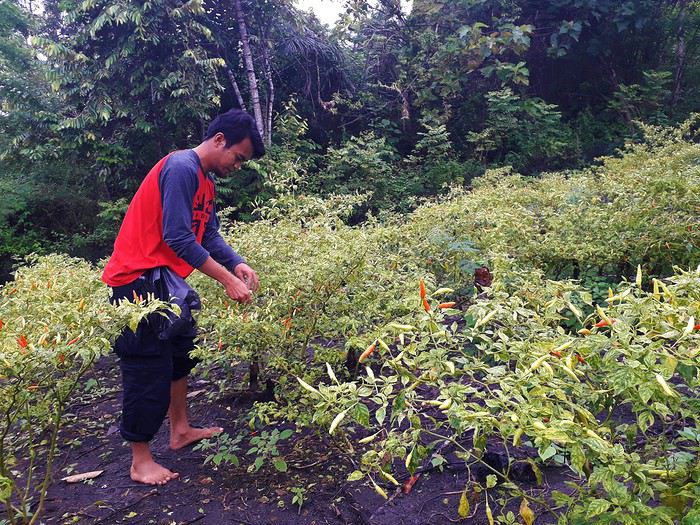
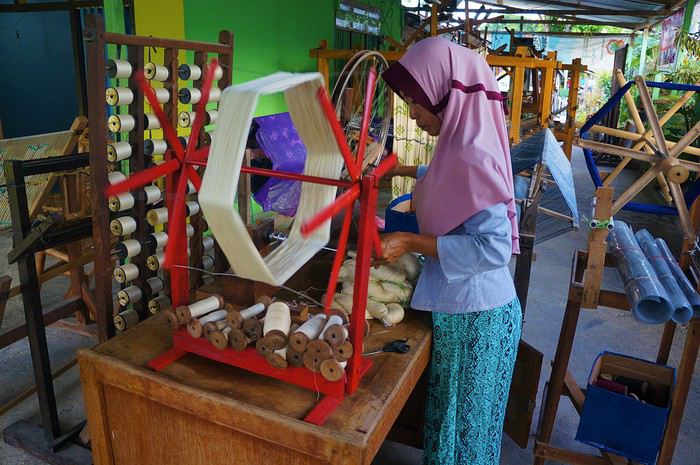
La récolte du piment
Entre Luwuk et Tangkiang, il y a d’autres villages, dont celui de Nambo, où une tisseuse locale vend de très beaux tissus avec l’emblème local, l’oiseau maléo.
La tisseuse du village de Nambo
INFOS PRATIQUES
Pour accéder à Tangkiang, le plus simple est qu’on vienne vous chercher en moto ou en voiture en fonction de vos besoins à Luwuk.
Kahar, qui est le responsable de la coopérative de noix de coco et de piment et qui se débrouille en anglais, pourra vous accueillir et organiser votre séjour au village. Il m’a donné son accord pour partager ses coordonnées et serait ravi d’aider des « bule » à visiter la région. Son mail est donc abd.kahar024@gmail.com et son numéro Whats App est le +62 853-9424-8801.

Voici Kahar

Une des maisons dont les habitants sont prêts à accueillir les touristes
Il faut savoir que les indonésiens de cette région ne sont pas habitués aux touristes. Ils n’osent pas toujours parler d’argent. Personnellement, j’ai décidé de leur donner 150 000 RP par nuit incluant la nourriture.
La suite au prochain épisode 🙂
J’ai envie de partager avec vous cette magnifique région que j’ai découverte en Indonésie, sur l’île de Sulawesi, la région de Luwuk Banggai dans l’est de la Sulawesi Centrale. C’est une région à découvrir, encore peu touchée par le tourisme et pourtant splendide, avec un accueil chaleureux et attentionné des indonésiens.
J’ai découvert Luwuk et sa région par hasard en 2019 car c’était la région dont était originaire la famille avec laquelle je vivais à Makassar à l’époque.
La richesse de ce lieu est impressionnante : des chutes d’eau à la couleur turquoise, des randonnées en forêts, de la pêche en pirogue de nuit au ciel étoilé, de la plongée dans des fonds marins intouchés, des minorités ethniques de rendez-vous en terre inconnue, bref, tout y est.
Bonne lecture !
Partie I : Région de Luwuk
Episode 1 : Dormir chez l’habitant dans le village de Tangkiang
La ville de Luwuk est souvent une option choisie par les voyageurs pour aller rapidement vers les iles Toggians. La ville est accessible par avion de Makassar, Menado et Palu et permet de rejoindre Ampana en 4h de voiture, point de départ pour les iles Toggians.
Mais Luwuk et sa région valent le temps que l’on s’y arrête ! Ma première étape fut le village de Tangkiang, à 40mn en moto de Luwuk.
Tangkiang est un village traditionnel de pêcheurs et de cultivateurs, au bord de la mer, hors des sentiers battus. Les villageois sont très accueillants et étaient ravis d’avoir un bule (dit « boulet » pour dire « touriste » 😉 ) découvrant leur quotidien.

L’entrée du village, entre rivière et mer
Le bord de mer
Le foot et le volley-ball
Je dormais chez l’habitant, l’occasion de partager la vie d’une famille. J’avais une chambre confortable et ils étaient aux petits soins pour me préparer de délicieux plats. Mes plats préférés restant le poisson frais et le tempé, à base de soja - Un délice !

Le tempé, du tofu, beignets de crevettes et kangkung (ou liseron d’eau)
J’allais aussi me baigner dans la rivière du village bien rafraichissante au moment le plus chaud de la journée.

A l’eau !
La douche dans la rivière 😎J’ai découvert la pêche au fil. Ils utilisent des pirogues et des « rompong », des plates-formes en bambou au milieu de la mer pour attirer les poissons. Je suis allée pêcher le poulpe de nuit, en utilisant des petites lumières que l’on mettait dans l’eau pour attirer les poulpes. Fantastique.
La pêche au filJe me suis également baladée dans les collines avoisinantes, qui donnent une très belle vue sur la mer. J’ai adoré récolter le piment, très relaxant, au milieu de la montagne, au calme. J’ai également appris à faire de l’huile de noix de coco avec la coopérative agricole du village.

Vue des hauteurs de Tangkiang

L’escalade du cocotier
La préparation de l’huile de noix de coco
La récolte du piment
Entre Luwuk et Tangkiang, il y a d’autres villages, dont celui de Nambo, où une tisseuse locale vend de très beaux tissus avec l’emblème local, l’oiseau maléo.
La tisseuse du village de NamboINFOS PRATIQUES
Pour accéder à Tangkiang, le plus simple est qu’on vienne vous chercher en moto ou en voiture en fonction de vos besoins à Luwuk.
Kahar, qui est le responsable de la coopérative de noix de coco et de piment et qui se débrouille en anglais, pourra vous accueillir et organiser votre séjour au village. Il m’a donné son accord pour partager ses coordonnées et serait ravi d’aider des « bule » à visiter la région. Son mail est donc abd.kahar024@gmail.com et son numéro Whats App est le +62 853-9424-8801.

Voici Kahar

Une des maisons dont les habitants sont prêts à accueillir les touristes
Il faut savoir que les indonésiens de cette région ne sont pas habitués aux touristes. Ils n’osent pas toujours parler d’argent. Personnellement, j’ai décidé de leur donner 150 000 RP par nuit incluant la nourriture.
La suite au prochain épisode 🙂
Bonjour
Nous sommes une famille de 5 et projetons de partir à Florès l'été prochain.
Nous recherchons un guide / chauffeur fiable (pourquoi pas francophone !) pour faire ce voyage avec nous
Merci d'avance !
Bonjour,
Nous voyageons avec 2 enfants qui auront l'été prochain (juillet-août 2020) 2 ans 1/2 et 4 ans 1/2, je m'interroge sur la possibilité d'un voyage en Indonésie. Ceux-ci sont habitués aux voyages et aux sacs porteurs. Je souhaite éviter Java et Bali - nous avons peur du monde, nous sommes du style ermites et apprécions surtout la nature et les beaux paysages, aimons randonner même si nous avons dû ralentir le rythme depuis que 2 écureuils nous suivent. Nous aimerions éviter les longs déplacements d'autant que possible, même si je suis conscient qu'il y en aura un peu.
Mes questions, sur 3 ou 4 semaines de voyage, est-il possible d'envisager à un rythme doux (siestes obligent) un séjour sur Lombok - Gili (mon idée de départ) ou sur Sumatra (plus je lis des choses sur Sumatra, plus ça me tente) ou d'autres îles comme Florès - Komodo (peut-être moins pratique) ? Niveau santé il ne me semble pas y avoir de très gros risques sanitaires mais qu'est-il faisable en cas de problème de santé des enfants ?
Merci à tous les connaisseurs pour leur avis éclairé.
Fab
Nous voyageons avec 2 enfants qui auront l'été prochain (juillet-août 2020) 2 ans 1/2 et 4 ans 1/2, je m'interroge sur la possibilité d'un voyage en Indonésie. Ceux-ci sont habitués aux voyages et aux sacs porteurs. Je souhaite éviter Java et Bali - nous avons peur du monde, nous sommes du style ermites et apprécions surtout la nature et les beaux paysages, aimons randonner même si nous avons dû ralentir le rythme depuis que 2 écureuils nous suivent. Nous aimerions éviter les longs déplacements d'autant que possible, même si je suis conscient qu'il y en aura un peu.
Mes questions, sur 3 ou 4 semaines de voyage, est-il possible d'envisager à un rythme doux (siestes obligent) un séjour sur Lombok - Gili (mon idée de départ) ou sur Sumatra (plus je lis des choses sur Sumatra, plus ça me tente) ou d'autres îles comme Florès - Komodo (peut-être moins pratique) ? Niveau santé il ne me semble pas y avoir de très gros risques sanitaires mais qu'est-il faisable en cas de problème de santé des enfants ?
Merci à tous les connaisseurs pour leur avis éclairé.
Fab
Bonjour à tous, je vous publie ici le carnet de mon voyage à Bornéo. Il y a beaucoup de photos que je publierai au fur et à mesure, j'espère que cela vous plaira, vous donnera envie de découvrir ce coin d'Asie du Sud Est ou de préparer votre itinéraire.

A l'occasion de la semaine de vacances du 1er Octobre on prend la destination de la province de Sabah, dans la partie la plus septentrionale de l’île de Bornéo en Malaisie. Bornéo… Un endroit exotique qui dans mon imagination semble être ce genre de destination « last frontier » un endroit mystérieux, si lointain et inaccessible et qui a toujours fait rêver le voyageur que je suis.
Bornéo est un grand territoire, c’est la troisième grande île du monde et elle se trouve au niveau de l’équateur ce qui fait qu’elle recèle de nombreux trésors naturels. Elle est composée administrativement en 4, la plus grande partie au Sud appartenant à l’Indonésie et le Nord est divisée entre le sultanat de Brunei, indépendant depuis le retrait des colons anglais et riche d’hydrocarbures, enfin deux provinces de la Fédération de Malaisie, le Sarawak et le Sabah. Le Sabah est une petite province de l’île, je compte donc me focaliser sur cette zone, ce qui est pour moi un grand avantage, car on n’a pas besoin de parcourir de grandes distances pour découvrir les différentes facettes de la région, l'avion se révèle très pratique.
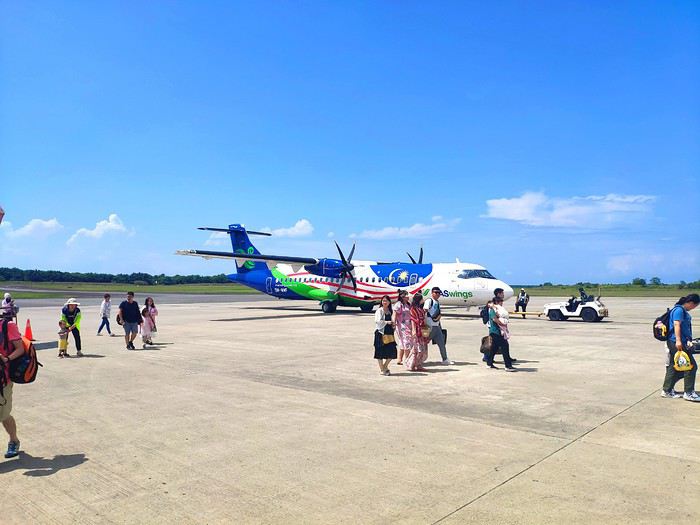
Bornéo du fait de sa dimension et sa position est réputée pour abriter une faune et une flore très diversifiée et même unique. C’est une destination sûre mise à part la partie la plus orientale qui se trouve en zone rouge pour l’activité passée des pirates d’origine philippins et d’obédience islamiste mais qui semble aujourd’hui maitrisée par l’armée malaisienne qui a renforcé sa présence autour de l’archipel de Semporna et la mise en place de checkpoints. Le niveau de développement général du Sabah est moyen, mais le réseau routier est en bon état, les aéroports efficaces. L’île est à l’abri de la plupart des catastrophes naturelles que subit fréquemment l’Asie du Sud Est, que ce soit les typhons (d’où son slogan the island below the wind), les éruptions volcaniques ou tremblements de terre du cercle de feu du pacifique, la présence limitée de la malaria.
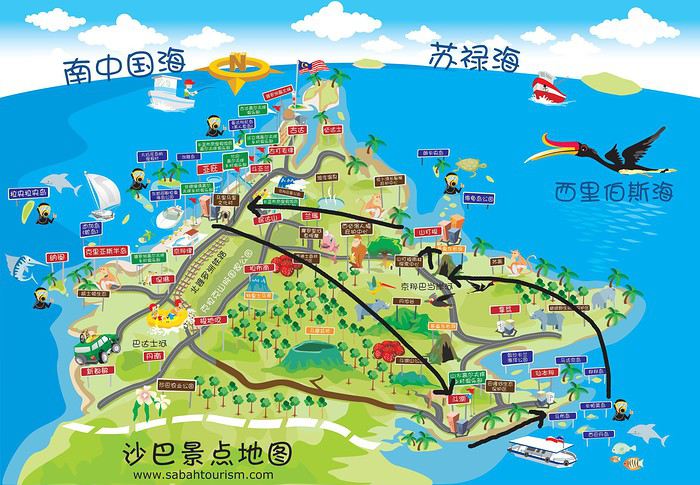
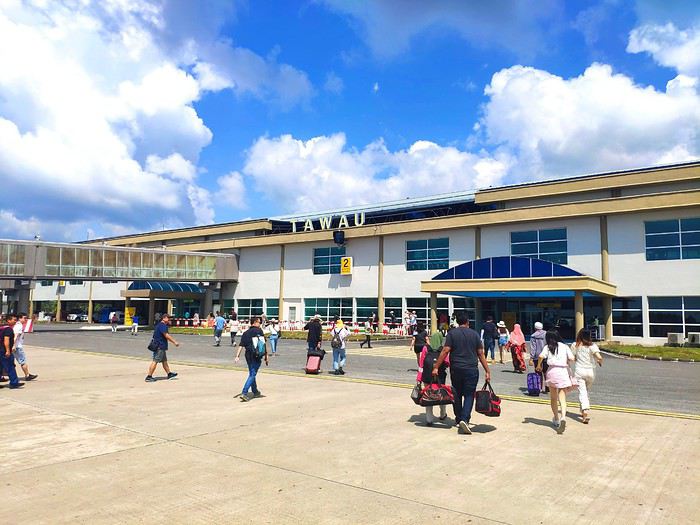
Finalement assez accessible depuis la Chine grâce à Airasia qui opère des liaisons directes depuis plusieurs villes de second rang en Chine dont Hangzhou vers Kota Kinabalu, je prépare donc ce voyage orienté "Nature" en se concentrant par choix sur une petite partie de l'île au Nord Est dans l'Etat du Sabah, entre Tawau et Sandakan, là où se trouve un concentré des plus beaux parcs de la partie Malaisienne de Bornéo : les récifs de l'archipel de Semporna, la faune sauvage du fleuve Kinabatangan, et les sanctuaires de protection des animaux endémiques et symboliques de Borneo. Pour la fin du séjour, je retourne à Kota Kinabalu pour en apprécier la vie urbaine et les îles au large.
********************
Départ en soirée de Hangzhou à destination de Kota Kinabalu sur l'île de Bornéo, à environ 4 heures d'avion. J’arrive au milieu de la nuit dans la moiteur de Kota Kinabalu et je dois attendre pour le prochain vol en début de matinée pour Tawau. Je décide de partir à la recherche d'un hôtel dans les environs pour passer ces quelques heures et essayer de glaner quelques heures de sommeil. La recherche ne fut pas exempte de péripéties, je me suis retrouvé en bord de route 3h du matin à la recherche de la réception d'un hôtel qui était en fait fermé, avant de finalement échouer à l'hôtel Chaya, juste au Nord de l'aéroport qui avait encore une chambre mais au prix fort, tant pis il est trop tard pour entrer dans une négociation dure avec la réception. Aujourd'hui est un jour de transit seulement, après une très courte nuit de sommeil, je retourne prendre le deuxième avion Airsia à destination Tawau. Le vol est très court, sans avoir le temps d’enfiler le plateau repas on est déjà en train d'amorcer la descente au-dessus des champs de palmiers.
On prend ensuite un minibus vers Semporna, environ 2 heures, là où nous faisons déjà le check-in pour notre séjour plongée auprès de Scuba Junkie sur Mabul Island. Le bateau partant en début d'après-midi, on a le temps de faire un tour dans la sinistre ville de Semporna, de faire quelques courses complémentaires et de prendre un repas indien. Cette ville est parmi les plus moches que je n'ai jamais vus de ma vie, avec une odeur terrible dans les rues et une désorganisation incroyable. On n'est pas mécontent d'embarquer pour un endroit bien plus agréable, au milieu de la Mer des Célèbes, Mabul Island. Il faudra environ une heure pour faire la traversée. On remarque de nombreuses maisons sur piloti plantées sur le corail à proximité des îles. Mabul en approche.

On arrive à Scuba Junkie sur Mabul Island, l'île en elle-même a tout de paradisiaque, sable fin et eau transparente qui laisse apparaitre la beauté des coraux et la densité de faune sous-marine. Quel contraste avec Semporna.
La Jetty de Scuba Junkie

Le resort de Scuba Junkie est très bien entretenu.
Ce n'est pas seulement une île resot car il y a un village juste à côté de la jetée avec de petites maisons de bric et broc et beaucoup d'animation.
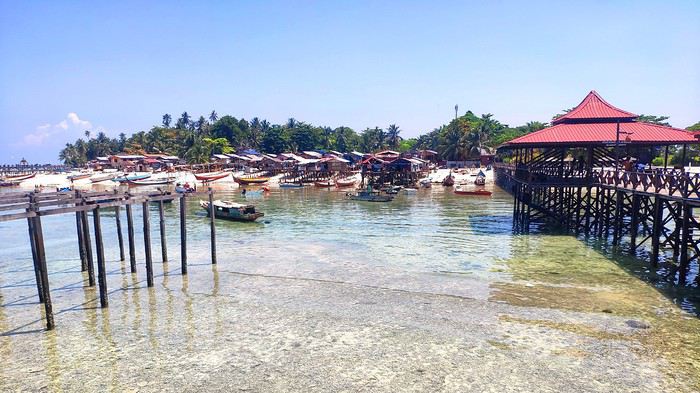
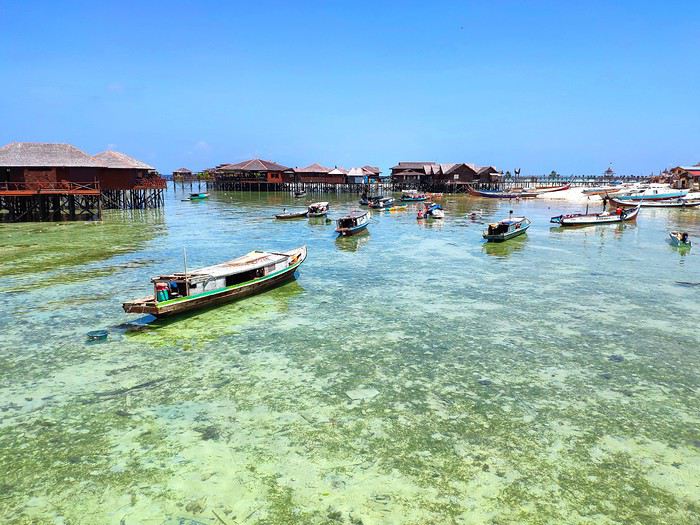
Le resort de scuba junkie est exclusivement dédié à la plongée, avec un rythme intensif quotidien fait très exactement de plongée, repos, plongée, repas, plongée, repos, diner, et on recommence pareil le lendemain. Le resort est très bien tenu et exceptionnellement bien géré, même si on a parfois l'impression que ce côté très rigide jure dans ce paradis tropical asiatique où l'on a parfois envie de baisser le rythme. Néanmoins, leur réel effort dans la protection est vraiment notable, ils sont aussi très actifs pour protéger les tortues marines avec une couveuse pour les oeufs de tortues qu'ils relachent après éclosion, un spectacle magnifique pour lequel ils appellent les enfants du village et rappellent l'importance du respect des animaux.
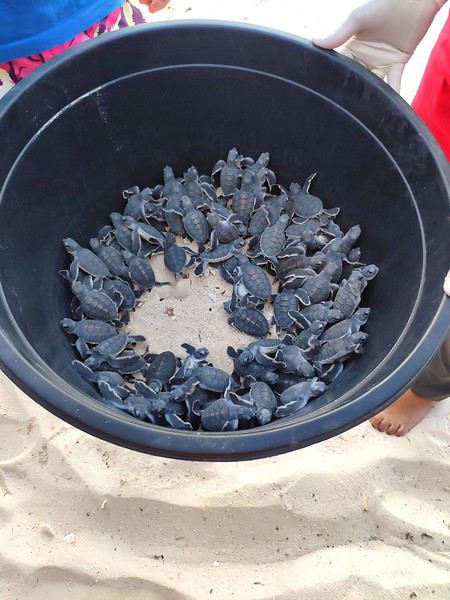
D'ailleurs il y a tellement de tortues marines autour de Mabul, qu'une fois j'en repère une depuis la Jetty en rentrant d'une plongée.
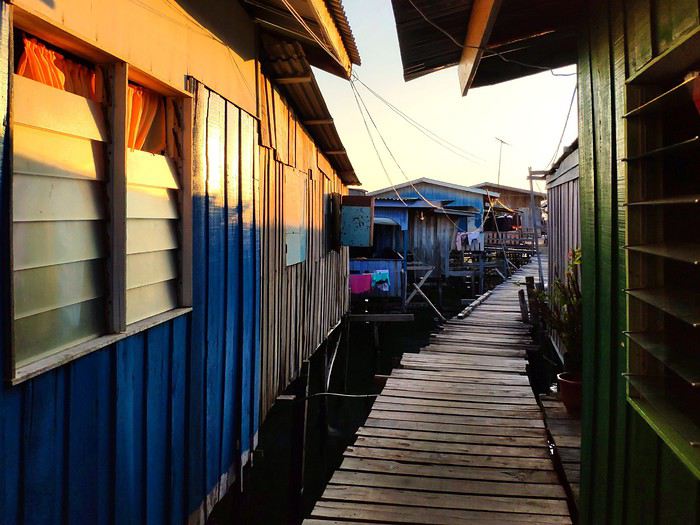
En fin de journée, on prend le temps de se promener autour de l'île dans le village où réside la population de Mabul, les ruelles sont très vivantes avec beaucoup d'enfants, des jeunes qui jouent au basket, des filles qui dansent, les coqs qui hurlent, le muezzin qui appelle à la prière.
Une partie du village est construit sur la mer, donc certaines rues sont en fait des passerelles branlantes en bois au-dessus de l’eau pour rejoindre les maisons les plus éloignés du rivage.
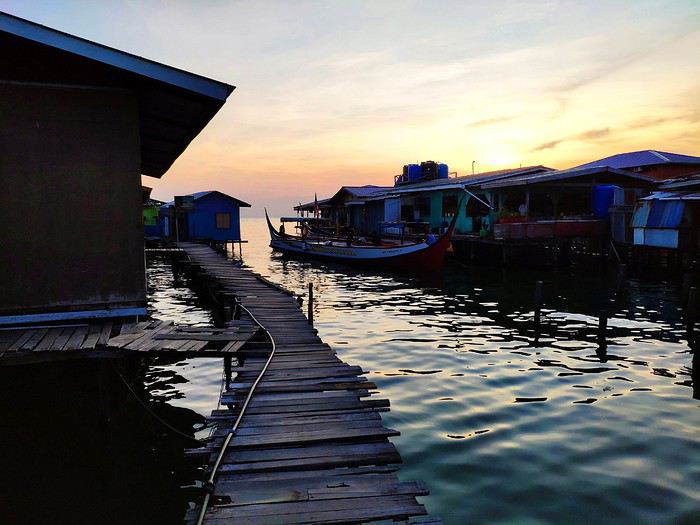
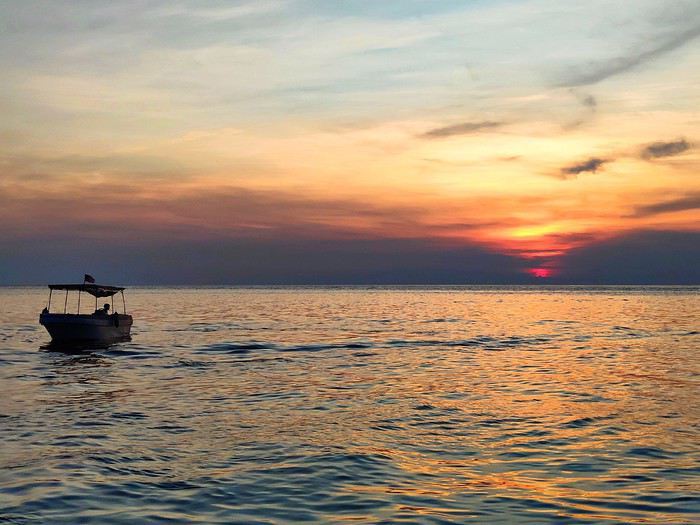
C'est de ce côté que l'on peut apprécier les plus beaux couchers de soleil sur la Mer des Célèbes.
A suivre...

A l'occasion de la semaine de vacances du 1er Octobre on prend la destination de la province de Sabah, dans la partie la plus septentrionale de l’île de Bornéo en Malaisie. Bornéo… Un endroit exotique qui dans mon imagination semble être ce genre de destination « last frontier » un endroit mystérieux, si lointain et inaccessible et qui a toujours fait rêver le voyageur que je suis.
Bornéo est un grand territoire, c’est la troisième grande île du monde et elle se trouve au niveau de l’équateur ce qui fait qu’elle recèle de nombreux trésors naturels. Elle est composée administrativement en 4, la plus grande partie au Sud appartenant à l’Indonésie et le Nord est divisée entre le sultanat de Brunei, indépendant depuis le retrait des colons anglais et riche d’hydrocarbures, enfin deux provinces de la Fédération de Malaisie, le Sarawak et le Sabah. Le Sabah est une petite province de l’île, je compte donc me focaliser sur cette zone, ce qui est pour moi un grand avantage, car on n’a pas besoin de parcourir de grandes distances pour découvrir les différentes facettes de la région, l'avion se révèle très pratique.
Bornéo du fait de sa dimension et sa position est réputée pour abriter une faune et une flore très diversifiée et même unique. C’est une destination sûre mise à part la partie la plus orientale qui se trouve en zone rouge pour l’activité passée des pirates d’origine philippins et d’obédience islamiste mais qui semble aujourd’hui maitrisée par l’armée malaisienne qui a renforcé sa présence autour de l’archipel de Semporna et la mise en place de checkpoints. Le niveau de développement général du Sabah est moyen, mais le réseau routier est en bon état, les aéroports efficaces. L’île est à l’abri de la plupart des catastrophes naturelles que subit fréquemment l’Asie du Sud Est, que ce soit les typhons (d’où son slogan the island below the wind), les éruptions volcaniques ou tremblements de terre du cercle de feu du pacifique, la présence limitée de la malaria.Finalement assez accessible depuis la Chine grâce à Airasia qui opère des liaisons directes depuis plusieurs villes de second rang en Chine dont Hangzhou vers Kota Kinabalu, je prépare donc ce voyage orienté "Nature" en se concentrant par choix sur une petite partie de l'île au Nord Est dans l'Etat du Sabah, entre Tawau et Sandakan, là où se trouve un concentré des plus beaux parcs de la partie Malaisienne de Bornéo : les récifs de l'archipel de Semporna, la faune sauvage du fleuve Kinabatangan, et les sanctuaires de protection des animaux endémiques et symboliques de Borneo. Pour la fin du séjour, je retourne à Kota Kinabalu pour en apprécier la vie urbaine et les îles au large.

********************
Départ en soirée de Hangzhou à destination de Kota Kinabalu sur l'île de Bornéo, à environ 4 heures d'avion. J’arrive au milieu de la nuit dans la moiteur de Kota Kinabalu et je dois attendre pour le prochain vol en début de matinée pour Tawau. Je décide de partir à la recherche d'un hôtel dans les environs pour passer ces quelques heures et essayer de glaner quelques heures de sommeil. La recherche ne fut pas exempte de péripéties, je me suis retrouvé en bord de route 3h du matin à la recherche de la réception d'un hôtel qui était en fait fermé, avant de finalement échouer à l'hôtel Chaya, juste au Nord de l'aéroport qui avait encore une chambre mais au prix fort, tant pis il est trop tard pour entrer dans une négociation dure avec la réception. Aujourd'hui est un jour de transit seulement, après une très courte nuit de sommeil, je retourne prendre le deuxième avion Airsia à destination Tawau. Le vol est très court, sans avoir le temps d’enfiler le plateau repas on est déjà en train d'amorcer la descente au-dessus des champs de palmiers.

On prend ensuite un minibus vers Semporna, environ 2 heures, là où nous faisons déjà le check-in pour notre séjour plongée auprès de Scuba Junkie sur Mabul Island. Le bateau partant en début d'après-midi, on a le temps de faire un tour dans la sinistre ville de Semporna, de faire quelques courses complémentaires et de prendre un repas indien. Cette ville est parmi les plus moches que je n'ai jamais vus de ma vie, avec une odeur terrible dans les rues et une désorganisation incroyable. On n'est pas mécontent d'embarquer pour un endroit bien plus agréable, au milieu de la Mer des Célèbes, Mabul Island. Il faudra environ une heure pour faire la traversée. On remarque de nombreuses maisons sur piloti plantées sur le corail à proximité des îles. Mabul en approche.


On arrive à Scuba Junkie sur Mabul Island, l'île en elle-même a tout de paradisiaque, sable fin et eau transparente qui laisse apparaitre la beauté des coraux et la densité de faune sous-marine. Quel contraste avec Semporna.

La Jetty de Scuba Junkie
Le resort de Scuba Junkie est très bien entretenu.
Ce n'est pas seulement une île resot car il y a un village juste à côté de la jetée avec de petites maisons de bric et broc et beaucoup d'animation.

Le resort de scuba junkie est exclusivement dédié à la plongée, avec un rythme intensif quotidien fait très exactement de plongée, repos, plongée, repas, plongée, repos, diner, et on recommence pareil le lendemain. Le resort est très bien tenu et exceptionnellement bien géré, même si on a parfois l'impression que ce côté très rigide jure dans ce paradis tropical asiatique où l'on a parfois envie de baisser le rythme. Néanmoins, leur réel effort dans la protection est vraiment notable, ils sont aussi très actifs pour protéger les tortues marines avec une couveuse pour les oeufs de tortues qu'ils relachent après éclosion, un spectacle magnifique pour lequel ils appellent les enfants du village et rappellent l'importance du respect des animaux.
D'ailleurs il y a tellement de tortues marines autour de Mabul, qu'une fois j'en repère une depuis la Jetty en rentrant d'une plongée.

En fin de journée, on prend le temps de se promener autour de l'île dans le village où réside la population de Mabul, les ruelles sont très vivantes avec beaucoup d'enfants, des jeunes qui jouent au basket, des filles qui dansent, les coqs qui hurlent, le muezzin qui appelle à la prière.
Une partie du village est construit sur la mer, donc certaines rues sont en fait des passerelles branlantes en bois au-dessus de l’eau pour rejoindre les maisons les plus éloignés du rivage.
C'est de ce côté que l'on peut apprécier les plus beaux couchers de soleil sur la Mer des Célèbes.
A suivre...Bonjour à tous,
D'habitude, je sévis plutôt dans la rubrique "Indonésie" de VF, où il y a beaucoup d'interrogations. Mais aujourd'hui, pour changer, je vais essayer de synthétiser dans ce carnet de voyage toutes les infos que je donne habituellement.
En général, la première question qu'on se pose avant de partir là-bas, c'est lesquelles des 17.000 îles et îlots du pays faut-il choisir ? Pour une première découverte de l'Indonésie, et après avoir longuement pensé nous rendre sur Sulawesi, nous avons finalement tranché en choisissant Java puis Flores, et un peu Bali pour terminer.
Pourquoi ce choix ? J'ai pris trois guides et j'ai épluché les forums, puis j'ai fait une liste des plus beaux sites indonésiens selon ces différentes sources : l'île où ces merveilles sont les plus "concentrées" est Java, qui se trouve également être la moins chère pour les billets d'avion (nous sommes 4 quand même : Marie ma femme, et nos fils Victor 10 ans et Arthur 8 ans).
Quant à Flores, notre but en y allant est double. D'une part, sortir des sentiers battus : elle s'y prête bien car elle est plus reculée. En effet, les touristes se contentent généralement de faire le triptyque Java-Bali-Lombok mais poussent rarement plus loin. D'autre part, Flores est bordée à l'ouest par le Parc marin de Komodo, réputé sublime.
Enfin, nous prévoyons deux jours de battement en fin de séjour, histoire de ne pas rater notre avion pour la France en cas d'imprévu, au départ de Denpasar : ce sera l'occasion de jeter un œil sur Bali, réputée mais sur-fréquentée paraît-il en juillet.

En résumé, notre programme (qui variera finalement une fois sur place à cause des impondérables) est donc le suivant :
Java : temples et volcans (8 jours) Parc marin de Komodo : croisière d'île en île, dragons, villages de pêcheurs etc. (3 jours) Flores : la moitié ouest de l'île puis le volcan Kelimutu et les villages du peuple Lio (5 jours) L'îlot de Kanawa dans le parc de Komodo (8 jours) Bali (2 jours)
A ce programme s'ajoutent un jour par-ci un jour par-là, en guise de transitions et de trajets, pour un total d'à peu près un mois.
LES TEMPLES : BOROBUDUR ET PRAMBANAN
Sitôt sortis de l'aéroport de Yogya (prononcer Djodja), les chauffeurs de taxis, officiels ou pas, nous tombent dessus. Nous en choisissons un qui a l'air sympa et contrairement à bien des pays, les autres n'insistent pas.
Il nous emmène à Borobudur où nous avons réservé deux chambres longtemps à l'avance dans le fameux Manohara Hotel : situé dans l'enceinte du temple de Borobudur, il permet à un nombre limité de privilégiés, à savoir tous ses clients, d'y accéder avant le lever du jour, alors que le gros des visiteurs doit attendre l'ouverture du site à 9 heures pour y entrer.
Il est minuit et après une trentaine d'heures passées dans les avions et les aéroports, sans compter la fatigue due au décalage horaire, nous allons enfin pouvoir dormir un peu. Mais quatre heures seulement, car le réveil est prévu très tôt afin de ne pas rater le spectacle du lever de soleil sur le temple.
BOROBUDUR LE BOUDDHISTE

C'est donc à l'état de zombies et avec nos frontales que, après la sonnerie de ce fichu réveil, nous prenons le chemin du temple depuis l'hôtel. Nous en montons les marches abruptes et arrivons à son sommet. Il y a un peu de monde mais pas trop. Petit à petit, le soleil va se lever et nous laisser un souvenir impérissable.

L'édifice, qui est le plus grand temple bouddhiste de la planète, est cerné par des volcans majestueux et domine palmiers et rizières. A ses pieds, on aperçoit la végétation exotique nappée de brume. Deux impressionnants volcans terminent ce paysage, et c'est exactement entre eux deux que le soleil va se lever.

Les sculptures du temple se dessinent d'abord en ombres chinoises avant de prendre une teinte orangée sous les premiers rayons du soleil.

Mais ce qui nous surprend le plus, c'est l'ambiance quasi- mystique qui règne là-haut. Le paysage est en effet sublimé par le calme ambiant, car contrairement à bien d'autres sites touristiques, ici chacun respecte scrupuleusement ce lieu sacré, et chuchote donc. Quelques bouddhistes chantent sereinement, ce qui achève de rendre le moment inoubliable.

A bientôt onze et neuf ans, Victor et Arthur sont éblouis par le spectacle auquel ils viennent d'assister. Toutefois, leur estomac ne leur fait pas oublier que nous nous sommes levés très tôt sans manger. Aussi, taraudés par la faim, ils demandent à rentrer à l'hôtel pour le petit déjeuner.
PRAMBANAN L'HINDOUISTE

Tout comme Borobudur non loin duquel il est situé, le temple de Prambanan est classé par l'UNESCO au patrimoine de l'humanité. Ce temple hindouiste, merveille de l'art javanais du IXe siècle, nous impressionne par la délicatesse de ses nombreuses sculptures.

Le site est assez vaste et nous prenons le temps de le visiter malgré la forte chaleur qui nous accable.
La lumière dure de la mi-journée ne le rend pas aussi féérique que Borobudur, que nous avons eu la chance de pouvoir visiter dès les premiers rayons du soleil.

De plus, l'heure de notre visite n'étant pas aussi indue que celle à laquelle nous avons découvert Borobudur, il y a du coup nettement plus de monde.
Mais le site reste agréable car ce n'est pas non plus la grande foule. Nous passons le reste de l'après-midi à déambuler tranquillement au milieu des vestiges de ce superbe temple.

Au final, Prambanan est impressionnant. Mais le lever du soleil sur Borobudur et la nature qui l'entoure est tellement beau que si c'était à refaire, nous visiterions Prambanan en premier et Borobudur en second, le lendemain au lever du soleil.

La veille, le courant était bien passé avec le chauffeur que nous avions rencontré à l'aéroport de Yogya et qui nous avait emmenés à Borobudur. Avant de le quitter, nous lui avions donc proposé de poursuivre la route ensemble quand nous aurions terminé la visite de Borobudur, ce qu'il avait accepté.
C'est donc lui qui vient de nous faire découvrir Prambanan, et qui va nous emmener jusqu'à la ville de Solo. Nous aimons bien voyager de cette manière, conduits en voiture par un local. Ça nous permet de faire les trajets tout en discutant : le chauffeur nous explique plein de choses intéressantes sur son pays, que cela concerne l'aspect touristique (les sites visités etc.) ou l'aspect pratique (la vie quotidienne avec sa famille...).
Le reste du temps, nous prenons généralement les moyens de transports locaux : trains, bus, tuks-tuks etc, grâce auxquels nous nous sentons en immersion dans le pays.

La route entre Yogya et Solo est très fréquentée, par des voitures et des deux-roues qui conduisent évidemment n'importe comment. A plusieurs reprises tout au long du trajet, nous devons d'ailleurs calmer les ardeurs de notre ami javanais au volant car il conduit lui aussi à l'indonésienne. Or, nous avons prévu d'arriver entiers à Solo ! Ce qui sera finalement le cas à la fin de la journée.
Une fois n'est pas coutume, nous allons dormir non pas dans un hôtel local mais à l'hôtel Ibis de Solo, histoire de se reposer enfin un peu après l'interminable voyage depuis la France, le décalage horaire et la longue journée de découvertes que nous venons de vivre. En plus, Victor et Arthur vont pouvoir se délasser un peu dans la petite piscine de l'hôtel. On dormira à la roots une autre fois...
Le lendemain, après une bonne nuit de récupération, nous prenons le train pour Malang. Le voyage dure six heures que nous mettons à profit à la fois pour découvrir les paysages et nous reposer.
La bonne surprise, c'est que le train n'est pas bondé. La mauvaise, c'est qu'en revenant des toilettes situées à quelques mètres seulement de nous, Victor nous informe que la porte du train à côté de laquelle il vient juste de passer est grande ouverte ! Nous vérifions et en effet, n'importe qui pourrait tomber là, alors que le train roule vite.

Juste avant d'arriver, les hauts-parleurs crachent un message que nous croyons vaguement comprendre : il y aurait plusieurs gares à Malang, mais nous ne savons pas à laquelle nous sommes censés descendre. C'est ennuyeux car nous avons rendez-vous à la gare avec un chauffeur qui nous a été conseillé par une amie depuis la France, nous ne voulons donc pas le rater. Nous demandons de l'aide aux autres passagers, qui nous expliquent avec un sourire permanent que notre gare, c'est la deuxième. Nous les remercions chaleureusement car nous avions prévu de descendre à la première !
Une fois arrivés, nous rencontrons notre nouveau chauffeur, Slamet. Lui aussi est incroyablement souriant, comme tous les locaux que nous avons rencontrés depuis hier. Cette délicieuse particularité indonésienne se vérifiera sans exception pendant un mois, jusqu'à la fin de notre séjour.
Voilà pour les temples de Java. Si vous avez eu le courage de tout lire jusque-là, alors bravo et merci ! Les volcans javanais, puis Flores et Komodo vont suivre rapidement, ainsi que toutes les infos pratiques pour ceux que ça pourrait intéresser...
Vidéo (2 mn) : volcans, temples, petits villages de pêcheurs, îles paradisiaques : l'Indonésie dans toute sa splendeur en vidéo (2 mn) ...
D'habitude, je sévis plutôt dans la rubrique "Indonésie" de VF, où il y a beaucoup d'interrogations. Mais aujourd'hui, pour changer, je vais essayer de synthétiser dans ce carnet de voyage toutes les infos que je donne habituellement.
En général, la première question qu'on se pose avant de partir là-bas, c'est lesquelles des 17.000 îles et îlots du pays faut-il choisir ? Pour une première découverte de l'Indonésie, et après avoir longuement pensé nous rendre sur Sulawesi, nous avons finalement tranché en choisissant Java puis Flores, et un peu Bali pour terminer.
Pourquoi ce choix ? J'ai pris trois guides et j'ai épluché les forums, puis j'ai fait une liste des plus beaux sites indonésiens selon ces différentes sources : l'île où ces merveilles sont les plus "concentrées" est Java, qui se trouve également être la moins chère pour les billets d'avion (nous sommes 4 quand même : Marie ma femme, et nos fils Victor 10 ans et Arthur 8 ans).
Quant à Flores, notre but en y allant est double. D'une part, sortir des sentiers battus : elle s'y prête bien car elle est plus reculée. En effet, les touristes se contentent généralement de faire le triptyque Java-Bali-Lombok mais poussent rarement plus loin. D'autre part, Flores est bordée à l'ouest par le Parc marin de Komodo, réputé sublime.
Enfin, nous prévoyons deux jours de battement en fin de séjour, histoire de ne pas rater notre avion pour la France en cas d'imprévu, au départ de Denpasar : ce sera l'occasion de jeter un œil sur Bali, réputée mais sur-fréquentée paraît-il en juillet.

En résumé, notre programme (qui variera finalement une fois sur place à cause des impondérables) est donc le suivant :
Java : temples et volcans (8 jours) Parc marin de Komodo : croisière d'île en île, dragons, villages de pêcheurs etc. (3 jours) Flores : la moitié ouest de l'île puis le volcan Kelimutu et les villages du peuple Lio (5 jours) L'îlot de Kanawa dans le parc de Komodo (8 jours) Bali (2 jours)
A ce programme s'ajoutent un jour par-ci un jour par-là, en guise de transitions et de trajets, pour un total d'à peu près un mois.
LES TEMPLES : BOROBUDUR ET PRAMBANAN
Sitôt sortis de l'aéroport de Yogya (prononcer Djodja), les chauffeurs de taxis, officiels ou pas, nous tombent dessus. Nous en choisissons un qui a l'air sympa et contrairement à bien des pays, les autres n'insistent pas.
Il nous emmène à Borobudur où nous avons réservé deux chambres longtemps à l'avance dans le fameux Manohara Hotel : situé dans l'enceinte du temple de Borobudur, il permet à un nombre limité de privilégiés, à savoir tous ses clients, d'y accéder avant le lever du jour, alors que le gros des visiteurs doit attendre l'ouverture du site à 9 heures pour y entrer.
Il est minuit et après une trentaine d'heures passées dans les avions et les aéroports, sans compter la fatigue due au décalage horaire, nous allons enfin pouvoir dormir un peu. Mais quatre heures seulement, car le réveil est prévu très tôt afin de ne pas rater le spectacle du lever de soleil sur le temple.
BOROBUDUR LE BOUDDHISTE

C'est donc à l'état de zombies et avec nos frontales que, après la sonnerie de ce fichu réveil, nous prenons le chemin du temple depuis l'hôtel. Nous en montons les marches abruptes et arrivons à son sommet. Il y a un peu de monde mais pas trop. Petit à petit, le soleil va se lever et nous laisser un souvenir impérissable.

L'édifice, qui est le plus grand temple bouddhiste de la planète, est cerné par des volcans majestueux et domine palmiers et rizières. A ses pieds, on aperçoit la végétation exotique nappée de brume. Deux impressionnants volcans terminent ce paysage, et c'est exactement entre eux deux que le soleil va se lever.

Les sculptures du temple se dessinent d'abord en ombres chinoises avant de prendre une teinte orangée sous les premiers rayons du soleil.

Mais ce qui nous surprend le plus, c'est l'ambiance quasi- mystique qui règne là-haut. Le paysage est en effet sublimé par le calme ambiant, car contrairement à bien d'autres sites touristiques, ici chacun respecte scrupuleusement ce lieu sacré, et chuchote donc. Quelques bouddhistes chantent sereinement, ce qui achève de rendre le moment inoubliable.

A bientôt onze et neuf ans, Victor et Arthur sont éblouis par le spectacle auquel ils viennent d'assister. Toutefois, leur estomac ne leur fait pas oublier que nous nous sommes levés très tôt sans manger. Aussi, taraudés par la faim, ils demandent à rentrer à l'hôtel pour le petit déjeuner.

PRAMBANAN L'HINDOUISTE

Tout comme Borobudur non loin duquel il est situé, le temple de Prambanan est classé par l'UNESCO au patrimoine de l'humanité. Ce temple hindouiste, merveille de l'art javanais du IXe siècle, nous impressionne par la délicatesse de ses nombreuses sculptures.

Le site est assez vaste et nous prenons le temps de le visiter malgré la forte chaleur qui nous accable.
La lumière dure de la mi-journée ne le rend pas aussi féérique que Borobudur, que nous avons eu la chance de pouvoir visiter dès les premiers rayons du soleil.

De plus, l'heure de notre visite n'étant pas aussi indue que celle à laquelle nous avons découvert Borobudur, il y a du coup nettement plus de monde.
Mais le site reste agréable car ce n'est pas non plus la grande foule. Nous passons le reste de l'après-midi à déambuler tranquillement au milieu des vestiges de ce superbe temple.

Au final, Prambanan est impressionnant. Mais le lever du soleil sur Borobudur et la nature qui l'entoure est tellement beau que si c'était à refaire, nous visiterions Prambanan en premier et Borobudur en second, le lendemain au lever du soleil.

La veille, le courant était bien passé avec le chauffeur que nous avions rencontré à l'aéroport de Yogya et qui nous avait emmenés à Borobudur. Avant de le quitter, nous lui avions donc proposé de poursuivre la route ensemble quand nous aurions terminé la visite de Borobudur, ce qu'il avait accepté.
C'est donc lui qui vient de nous faire découvrir Prambanan, et qui va nous emmener jusqu'à la ville de Solo. Nous aimons bien voyager de cette manière, conduits en voiture par un local. Ça nous permet de faire les trajets tout en discutant : le chauffeur nous explique plein de choses intéressantes sur son pays, que cela concerne l'aspect touristique (les sites visités etc.) ou l'aspect pratique (la vie quotidienne avec sa famille...).
Le reste du temps, nous prenons généralement les moyens de transports locaux : trains, bus, tuks-tuks etc, grâce auxquels nous nous sentons en immersion dans le pays.

La route entre Yogya et Solo est très fréquentée, par des voitures et des deux-roues qui conduisent évidemment n'importe comment. A plusieurs reprises tout au long du trajet, nous devons d'ailleurs calmer les ardeurs de notre ami javanais au volant car il conduit lui aussi à l'indonésienne. Or, nous avons prévu d'arriver entiers à Solo ! Ce qui sera finalement le cas à la fin de la journée.
Une fois n'est pas coutume, nous allons dormir non pas dans un hôtel local mais à l'hôtel Ibis de Solo, histoire de se reposer enfin un peu après l'interminable voyage depuis la France, le décalage horaire et la longue journée de découvertes que nous venons de vivre. En plus, Victor et Arthur vont pouvoir se délasser un peu dans la petite piscine de l'hôtel. On dormira à la roots une autre fois...
Le lendemain, après une bonne nuit de récupération, nous prenons le train pour Malang. Le voyage dure six heures que nous mettons à profit à la fois pour découvrir les paysages et nous reposer.
La bonne surprise, c'est que le train n'est pas bondé. La mauvaise, c'est qu'en revenant des toilettes situées à quelques mètres seulement de nous, Victor nous informe que la porte du train à côté de laquelle il vient juste de passer est grande ouverte ! Nous vérifions et en effet, n'importe qui pourrait tomber là, alors que le train roule vite.

Juste avant d'arriver, les hauts-parleurs crachent un message que nous croyons vaguement comprendre : il y aurait plusieurs gares à Malang, mais nous ne savons pas à laquelle nous sommes censés descendre. C'est ennuyeux car nous avons rendez-vous à la gare avec un chauffeur qui nous a été conseillé par une amie depuis la France, nous ne voulons donc pas le rater. Nous demandons de l'aide aux autres passagers, qui nous expliquent avec un sourire permanent que notre gare, c'est la deuxième. Nous les remercions chaleureusement car nous avions prévu de descendre à la première !
Une fois arrivés, nous rencontrons notre nouveau chauffeur, Slamet. Lui aussi est incroyablement souriant, comme tous les locaux que nous avons rencontrés depuis hier. Cette délicieuse particularité indonésienne se vérifiera sans exception pendant un mois, jusqu'à la fin de notre séjour.
Voilà pour les temples de Java. Si vous avez eu le courage de tout lire jusque-là, alors bravo et merci ! Les volcans javanais, puis Flores et Komodo vont suivre rapidement, ainsi que toutes les infos pratiques pour ceux que ça pourrait intéresser...
Vidéo (2 mn) : volcans, temples, petits villages de pêcheurs, îles paradisiaques : l'Indonésie dans toute sa splendeur en vidéo (2 mn) ...
Bonjour à tous,
De retour de Florès je me tiens à votre disposition pour d'éventuels renseignements sur cette île magnifique et sur notre chauffeur guide francophone Alexi Adrianto.
Nous sommes restés 10 jours sur Florès fin novembre 2016 avec un départ de voyage depuis Maumère, puis Moni, Riung, Bajawa, Ruteng, Dengue, Wae Rébo, puis Labuan Bajo, et Rinca.
Nous avions choisi notre guide sur les conseils d'un membre du site et je dois dire que le résultat a dépassé toutes nos espérances.
Alexy parle très correctement le français, et sa connaissance parfaite de son île, fait qu'il a pu nous expliquer toutes les subtilités , et les us et coutumes locales.
De plus il présente l'avantage d’être à la fois guide et chauffeur et il conduit son propre véhicule. Ce détail est important car il prend grand soin de sa voiture et donc de votre dos sur des routes de Florès qui n'ont parfois de "routes" que le nom.
Florès est une île ou l'on reste pas mal en voiture est il est important que son guide soit de bonne compagnie ce fut le cas avec Alexy , il est prévenant, poli, généreux, cultivé, ponctuel, il sait se faire discret et ce qui ne gâte rien non dénué d'humour. De plus c'est un fou de musique (ne pas oublier de lui demander de prendre sa guitare) et sa "discographie"dans son véhicule tant française, qu'internationale est super agréable ( à ne pas négliger quand on passe 5 heures/jour à rouler ). C'est un artiste et pour nous ce fut le guide Parfait . Bien sur je suis à votre disposition pour vous donner d'autres renseignements sur notre périple et sur Alexy.