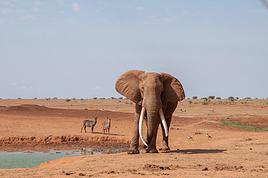

Happiness Settles in the Heart of the Maasai Mara
FR

Translated into English.

BL Blesl Veteran ·
Gorgeous travel journal, beautifully illustrated, really! 😊
MA Max68 Globetrotter ·
Hi Bernard,

qu'il bloquait sa température de couleur sur 5600 Kelvin

Wow, that’s high! Personally, I lock mine at 5,000 K. 😮 I find it’s better for color accuracy and consistency to lock in a set temperature—it saves time in post-processing.
MA Max68 Globetrotter ·
It's so beautifuuul, I really love your post... and the photos of your wife 😎

That's it, I'm itching to go back to Africa again... thanks and well done 🙂
PY Pygmalion19 Veteran ·
Hi Max68, Bernard, Eric, Yolande, and all the others stuck at home,

This journal is truly amazing—both the text and images are spot-on. It really stirs up emotions and a few regrets. It also makes me want to dive back into the bush. I love the adventurous side of this trip. Honestly, we missed that in the parks of western Kenya.

The big cats are well represented. And that cheetah on its mound, with that backdrop—pure class! Always a thrill to see the leos, the lions too, well, when they’re eating neatly.

On my smartphone, the color rendering of Yolande’s images looks different. The yellows are less overwhelming, making the overall result more balanced. I can’t explain it, but it works well.

Canon cameras have a native look that almost makes me want to switch. I don’t know if Nikon DSLRs can compete. But I think the yellows are really something special. Maybe they give more natural tones—though it depends on the model and settings... no hitting!

Yolande and Eric, the union break is over... Looking forward to the next chapter of your African adventures🙂.
JE Jety34 Veteran ·
Hi Bernard,

So, about the croc—if I remember correctly, the speed I mentioned was at 1/640th, not 1/125th. As for the color temperature, I don’t recall Michel locking it at 5600K; I think he suggested AWB instead. Not entirely sure, though. Thanks for all the info! You guys are real treasure troves of knowledge, Blesl.... Yes! Cheers, Yolande
MA Max68 Globetrotter ·
The native rendering on those Canon bodies almost makes me want to switch. I don’t know if Nikon DSLRs can match that.

Yeah, the native renderings aren’t the same. Nikon’s native images are way more neutral—I personally prefer that; it’s simpler for post-processing, and I like softer images. But if you don’t want to tweak your photos at all, Canon might be the better choice.

Personally, I’ve only been to Southern Africa, but Kenya really makes you want to go.

For me, the biggest highlight of Yolande and Michel’s trip was the mobile camps—being alone in the middle of the bush is an unbeatable feeling. We experienced that in Moremi, in the Okavango Delta 😛
JE Jety34 Veteran ·
Thanks Jean François

So glad you enjoyed our travel journal and it makes you want to return to Africa—we’re total enthusiasts ourselves, though it’s a shame the sounds and smells can’t come along too!

Thanks a million for your kind words.

Maybe if there’s interest, I’ll attach a slideshow recap of the trip at the end.

Have a great evening! Best, Yolande
MA Max68 Globetrotter ·
Oh yes, for the slideshow 😛

And you're right, sounds and smells are important elements. 🙂 Especially the nights with all the animal "noises"—absolutely amazing 😎

If I tell you that one night in Chitake, Mana Pools (meaning the next human is at least 50 km away), we had a group of 4 lions passing by the foot of our tent, growling—it must resonate with you 😉.

Hearing their footsteps and their breathing...
JE Jety34 Veteran ·
Oh yes, but on the roof of the car is usually quieter. Mana Pools is in Zimbabwe. From there, we set off in a canoe with a guide and three other canoes. In the evening, we slept under mosquito nets on a light frame, by the Zambezi River—amazing! One early morning, a leopard passed between our individual nets to reach the river. You just hold your breath and stay still. But what an experience—100 km like that from Mana Pools to the Mozambique border. So many memories! Have a good evening, Yolande
MA Max68 Globetrotter ·
Canoeing with a guide ... Zambezi, amazing—one morning very early, a leopard passed between our individual mosquito nets to reach the river. We held our breath and didn’t move. But what an experience—100 km like that from Mana Pools to the Mozambique border.

Too awesome, too beautiful 😛 😎 🙂
JE Jety34 Veteran ·
Good evening Jean-François, Bernard, Eric, Régis, and other seasoned confined travelers,

This discussion is getting seriously complicated for me—I was still stuck on *The Red and the Black*, which I always placed in Franche-Comté, but *the Red and the Yellow* in Africa? What on earth is that? I’m completely lost, even though I’ve expanded my Latin since high school (that was ages ago) with words like *Acynonix jubatus*, *Torgos tracheliotos*, *Crocuta crocuta*, *Ceratotherium simum*, and more. I won’t even get into RGB, color temperature, the sometimes heavy weight of photos, native rendering, or RAW demosaicing... I’d rather leave that to the experts in bird plumage colors, even if I’ve noticed you sometimes have to be pretty nitpicky in that field.

You’ll see in the next message one of the three or four photos I’m claiming, taken with a tiny Canon—exceptionally black (not all of them are red). I’m preparing for the worst!

Best regards, Jacky.
PY Pygmalion19 Veteran ·
Good evening, everyone!

From there, we set off in a canoe with a guide and three other canoes. In the evening, we slept under mosquito nets on a light frame by the Zambezi River. It was amazing—one early morning, a leopard passed between our individual mosquito nets to reach the river. You just hold your breath and stay still. But what an experience—100 km like that, from Mana Pools to the Mozambique border.

Oh, I can just imagine it—no noise, breathing in stealth mode... It reminds me of Ihaha in Botswana. We were camping near the Chobe River (4x4 + tent on the roof). In the middle of the night, a young elephant was devoured on the riverbank by lions. We heard its cries, the roars of the predators, and the bones of the animal giving way under the pressure of their jaws. A little later, once the feast was over, the pride settled at the foot of our vehicle, roaring even louder (the car was shaking). They stayed there, right at the foot of the vehicle, "singing" for a good hour before heading back into the bush. The next day, we cautiously approached the animal’s remains. The lions had eaten it alive from the inside out. Of course, no death by strangulation here...
GI Girardinpho Veteran ·
Hi,

Like Jean François, I find that Nikon offers more neutral colors, but it really depends on a lot of things like the camera settings, the camera itself, and also the screen settings where you're viewing this travel journal.
BL Blesl Veteran ·
Hello Nathalie,

I don’t think we can say that one sensor brand—Sony, Canon, or any other—is more neutral than another. Sure, we often hear that Canon favors skin tones and Nikon has a cooler rendering.

But neutrality doesn’t exist.

The same Canon RAW file developed with all sliders at zero in Camera Raw (Lightroom and Photoshop), DPP (Canon’s proprietary demosaicing software), and Capture One will show visible differences in rendering on a calibrated screen. The same goes for a RAW file from a Sony sensor (or any other brand).

Then, even without going as far as color blindness, our internal RGB demosaicing—our retina/brain combo—isn’t absolutely identical. Our perception of colors can vary from one person to another.

Finally, our optical system can play a role, with its lens, the crystalline lens that “yellows” vision with age (or intense UV exposure, etc.). I had cataract surgery on my left eye, and the right one, which was supposed to follow, wasn’t operated on right away for reasons you can guess. When I close one eye, I feel like I have a different color temperature in each.

That won’t stop a careful safari photographer from calibrating their white balance with a gray card, obviously placed where the main subject is—lion, elephant, leopard, or crocodile... Don’t know why, but there are fewer and fewer careful safari photographers these days...

Best to all, and kisses to the rest,

BL

PS: Jacky, Red is Canon, Yellow is Nikon—the two rival brands (it’s just folklore, really...). And we’re all eager to admire your *magnum opus*...
GI Girardinpho Veteran ·
That’s what I meant, but simpler!
RJ Rjulie95 Globetrotter ·
Since everyone wants to get their white balance right, I invite you to read this article
PY Pygmalion19 Veteran ·
Hi Bernard,

Heh, heh, heh! The oh-so-crucial role of the subject in photography. Many of us still think—or rather, perceive—that Nikon and Canon cameras have different native color renditions. It’s hard to say what the lens/sensor system actually senses at this level, but here on this forum, we living, breathing folks collectively and cordially agree that it’s not just a rumor. What we’re comparing is different. It doesn’t come down to our eyes but rather how the lens/sensor system processes and renders the information. So, subjectivity might actually lie with our machines, which aren’t as neutral as we’d like to think... oh!

This lockdown really does make you daydream... to be or not to be😉.
PY Pygmalion19 Veteran ·
Hi Régis,

Would the charter get our camera bodies to agree? Great article, and thanks!

JE Jety34 Veteran ·
Hello everyone.

Second-to-last day.

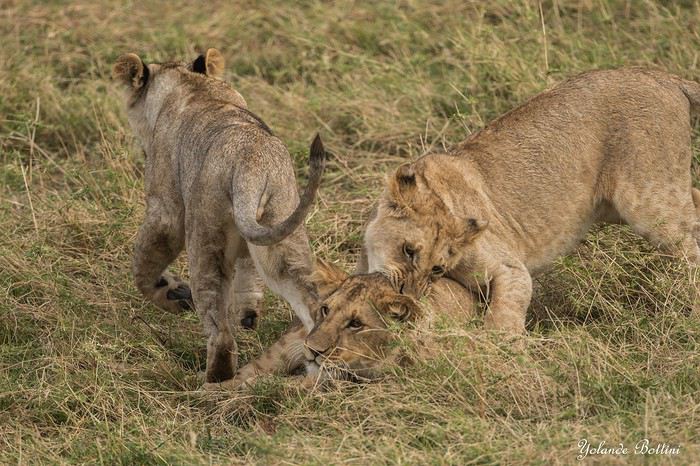
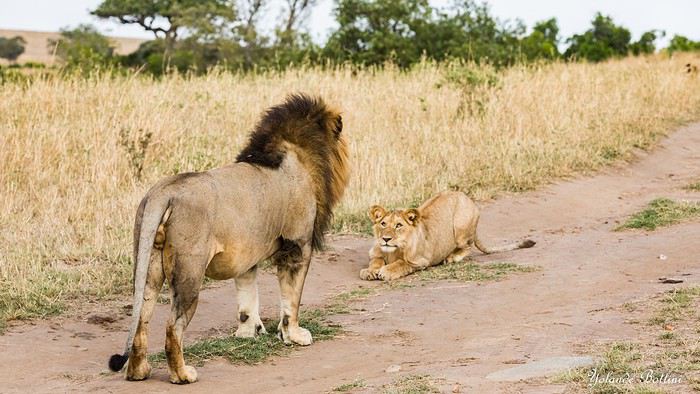
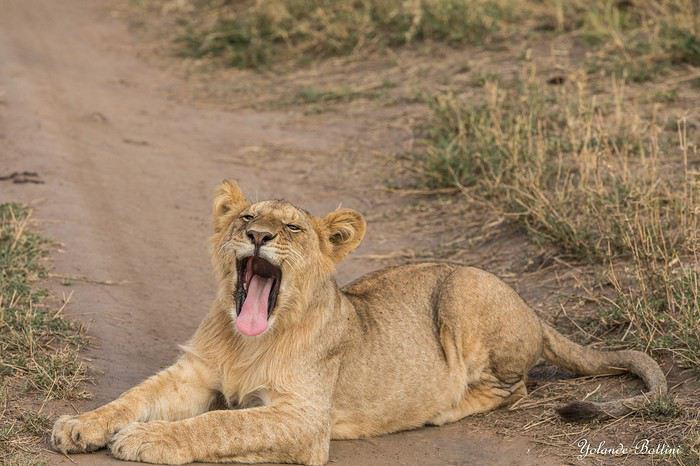
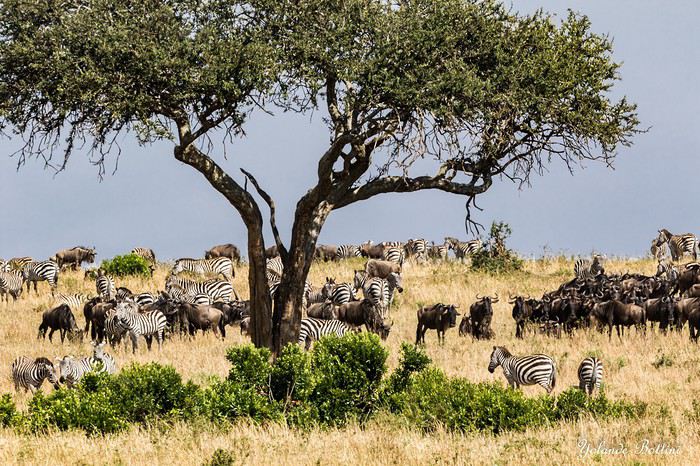
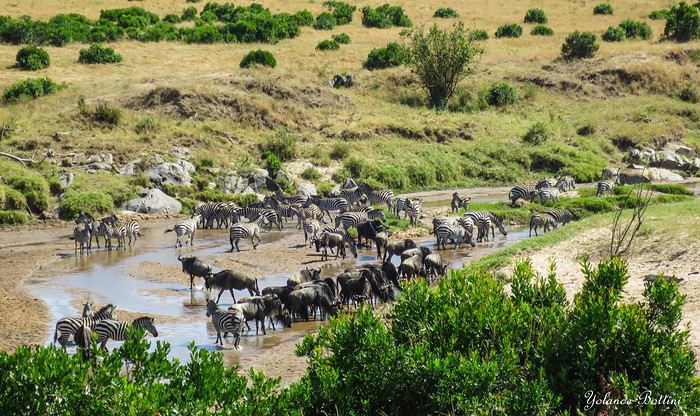
After an early night, we wake up feeling refreshed, despite the continuous roars of lions prowling nearby. We pack up a little after 6:00 AM, just as the first rays of the sun color the sky to the east—it’s the time when hyenas return to their dens after a night of wandering. We come across a massive herd of buffalo; there must be five or six hundred of them grazing peacefully, likely having already paid their dues to the predators that haven’t stopped howling. A strange rumbling fills the savanna: these bovines are all grumpy! A little further upstream near Sand River Camp, a large lion family, their muzzles stained with blood, rests after a long hunt. Between the cubs and their parents, there are sixteen of them, which seems to be a common number in the reserve. Several crossings exist in this area, but there isn’t enough depth for crocodiles—unfortunately for the herbivores, the carnivores have taken over, as other lions lie in wait. A Tanzanian clan points out Motoron, who knows them all: a couple and four cubs squabbling over a bone they’re struggling to grab. All around us and beyond the nearby border, the gently rolling plain teems with herds—tens of thousands of them, still as reluctant as ever to cross the obstacle.

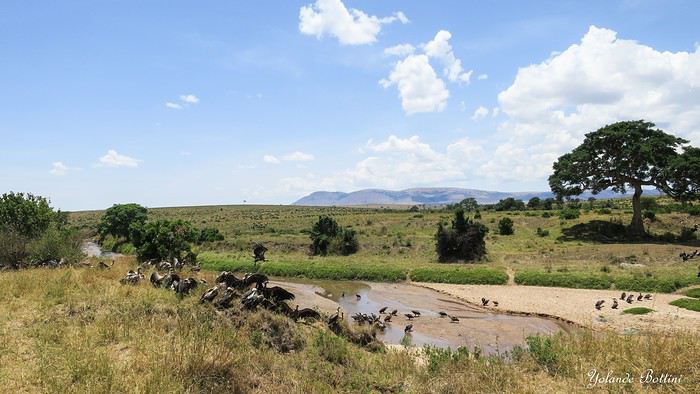
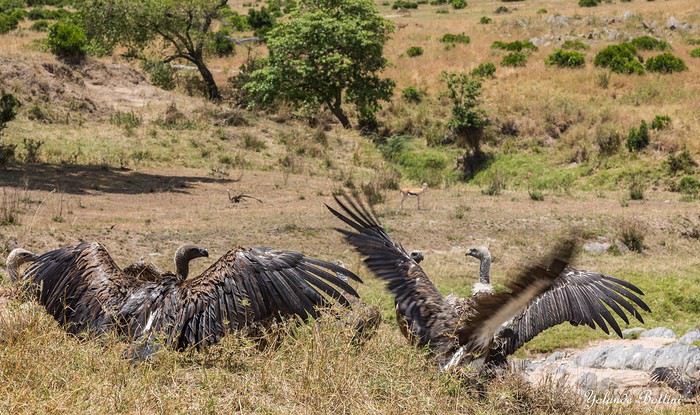
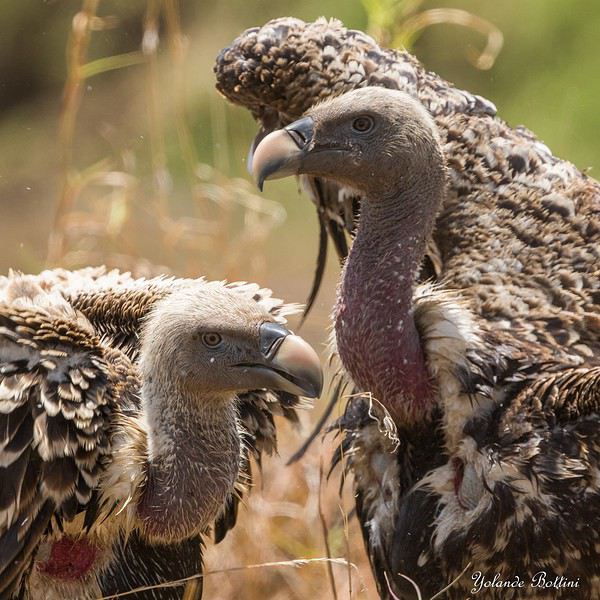
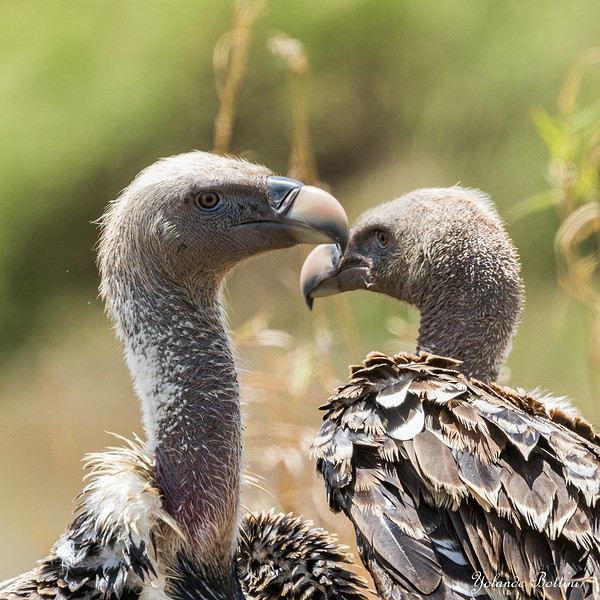
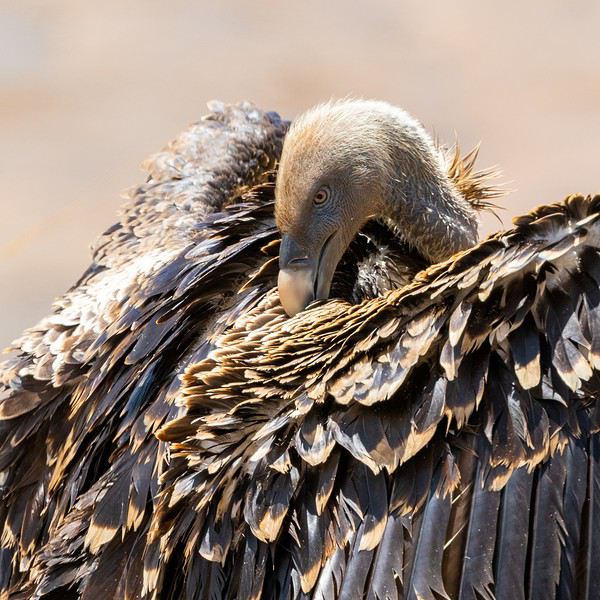
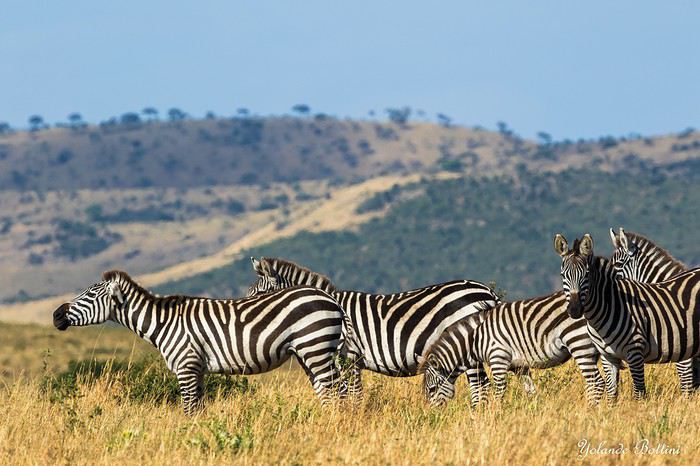
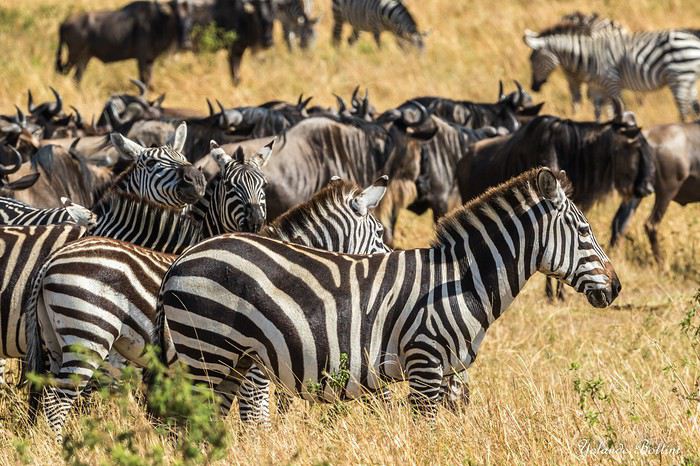
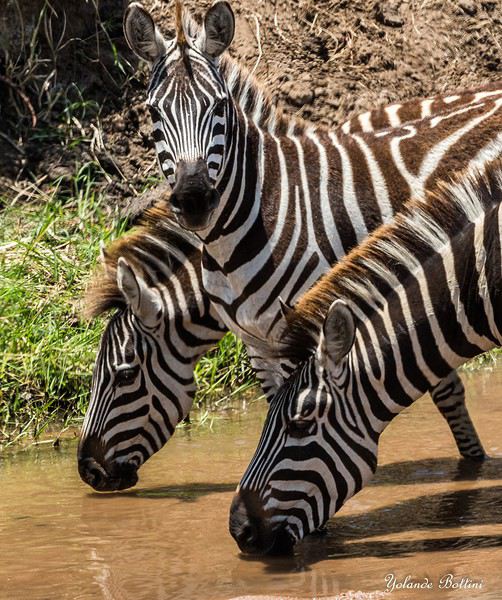
At 8:40 AM, we take shelter in the shade of a large fig tree for the usual coffee or tea, joined by numerous wildebeest and zebras that come nearby to drink from the clear waters of the Sand River. Michel, perhaps needing some solitude, entrusts us to Mikaël and leaves for some unknown reason with his assistant. The water, source of life, attracts wildlife—animals are everywhere, in small groups or vast herds on both riverbanks. Besides the usual species I won’t mention, we spot warthogs and two reedbucks, also called redunca. The two males keep their distance from other species; these are the first we’ve been lucky enough to see. Lions also dominate the territory—we spot three prides in barely forty-five minutes and a magnificent lone male. Olive baboons scattered across the grassland sit on their haunches, foraging in the grass. Their posture and expressions remind me of geladas from the Ethiopian Highlands, their mostly herbivorous cousins. The bushes in the area have attracted birds—though not as many as in some parks of Southern Africa or even Ethiopia—but we spot swallows, bulbuls, barbets, thrushes, doves, green pigeons, rollers, and a lone secretary bird amid a hundred African vultures. These great gliders have landed on the path, the ford, and the steep riverbank, indifferent to our presence. No "kill" in sight; they’re here to preen, bathe their rear ends and beaks in the water, or soak up some warmth.


Come on, buddy!

No, you shall not pass!


African vultures,


very photogenic, in my opinion.


To be continued...
JE Jety34 Veteran ·
Back to it


With the sun at its zenith, it’s snack time, so we head to our ficus tree where the table is set for a lunch heartier than on other days. Michel isn’t feeling great—on top of smoking like a chimney, which gives him a raspy voice, he’s still fighting off an old bout of malaria and prefers to lie down while we head to the river for a foot soak. The buffaloes are still there, along with two reedbucks, much shyer than the cattle. The famous “crossings” are supposedly imminent, as Motoron got word. But no, still nothing—though the herds are massed on either side of the water, making you wonder about the point of their migration. A small clue, though: the crocodiles are concentrated on the opposite bank, and the hippos have ceded the area to them. We only spot one hippo running through the bush, its mouth twisted—it seems both anxious and irritable. It’ll pass right under the nose of the Land Rover following us at a distance. We’ll cross paths with plenty more herbivores: giraffes, elephants (the first we’ve seen today), buffaloes, a lion family near Serena Lodge, three jackals, a pair of ostriches with their chicks, and on the way back, a stunning serval that pops out of a bush just a few steps away. Our stop draws several cars—practically the first we’ve seen all day. While the passengers jostle to photograph the big spotted cat, Motoron chats with the drivers, all of whom he knows, and relays their remark: “Who’s that guy alone with you who isn’t taking any photos?” It’s true, it’s pretty rare, but I can proudly say that travel and contemplation existed long before Niepce and Daguerre were born.

Gathering to head to the river.


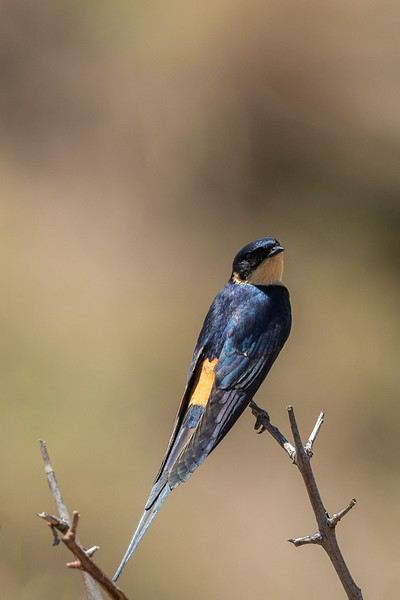
Red-bellied swallow?

To be continued...

Similar discussions

You might also like