


Uzbek notes
FR

Translated into English.

DO Dolma Globetrotter ·
What a beautiful and original idea—to reveal the soul and subtleties of this country through the portraits of the women and men you meet along your journey...
MA Martine8365 ·
Thanks for all these details! Can you tell me what the temperatures are like these days? We’ll be there in 3 weeks. Have a great end to your trip and well done!
UN UnaMilanese Veteran ·
Hi Martine, I got back last weekend. I’m not an expert on Uzbek weather, but what I can tell you is that M. mentioned that from late March onward, the weather is usually nice and the cold disappears. Also, as soon as the sun comes out, temperatures rise quickly. Last Saturday in Tashkent, our puffy jackets felt heavy as soon as we stepped into the sun. Thanks for the comment and, most of all, have a great trip! Catherine
UN UnaMilanese Veteran ·
Hi Dolma, You know, talking a bit about their lives and listening to what subtly emerged from their comments about what we were seeing was the real value of having guides. Especially since Uzbek literature in French or Italian is non-existent, unlike Iran (random example ), where you can get a small sense of what the country is like today and some of its different facets. Without our guides, contemporary Uzbekistan would have remained completely opaque—thanks to them, we got a few glimpses. Catherine
MA Martine8365 ·
Your comments are such a treat—so natural and spontaneous. It’s a nice change. Hope you’re getting back into the swing of things. Thanks again!
UN UnaMilanese Veteran ·
Tourism—the affliction we all practice. In Italy, Uzbekistan is the trendy destination, heavily featured in travel agency brochures and popping up in everyone’s plans. Aware of this, we chose to brave the freezing steppes rather than the selfie hordes. Good call? Oh yes! Aside from A and me, the streets and heritage sites were home to four Spaniards rocking kolpaks in Khiva, long local quilted coats in Bukhara, and Western fashion in Samarkand; a Franco-Italian couple with a teen; and two Japanese friends. Only a group of about thirty Italians temporarily cluttered the blue vistas of Shah-i-Zinda. As for hotels—leaving aside the Uzbekistan Hotel in Tashkent, which clearly isn’t a “charming” spot for Western tourists—the max occupancy we saw was two rooms (one of them ours) in Bukhara. Everywhere else, we were the only guests.
Yet there *was* tourism—Russian, for one, and especially... Uzbek, no doubt, and likely Central Asian in general. Shops were open, offering more or less local crafts, and women tried on embroidered pomegranate jackets, jewelry, and long, colorful tunics, striking poses in front of historic monuments. Men preferred to immortalize themselves with a monumental kolpak on their heads and a saber in hand.

Beyond these local sightseers (maybe the same people at different times), pilgrimage sites drew crowds seeking blessings from some major saint.


VO Voyajou Globetrotter ·
Some pointillist notes, pleasing to the eye.

a king-size bed with a queen-size duvet

Depending on whether you're hot or cold...
UN UnaMilanese Veteran ·
UA’s flight has been descending forever through the mist. Just before the landing gear softly touches down on the tarmac, a gray, white, brown landscape appears—dull, flat, pale in the rare light of this early morning. The driver is waiting for us at the exit, shirt sleeves rolled up and a light, *so* light leather jacket, not even lined. Urgench to Khiva? Forty minutes. A perfectly straight road cutting through the bare brown plain, here and there a few hedges of gray tree trunks and branches, or low, spacious square houses with four-sloped roofs, all rigorously aligned. Groups of bundled-up women, shovels and spades in hand, also rigorously aligned, dig into the ochre earth along the roadside or at the edge of what will become fields come spring. A strange cultivated desert, fertile land blessed by the canals of the Amu Darya, at the expense of what was once the Aral Sea. The buildings grow denser as we approach Khiva, gondolas parked in front of a shopping center that recreates Venice—seeded here long ago by Marco Polo. The walls come into view down the street, round, bulging walls, plump and golden, wrapping around the old city of Itchan Kala. The taxi bumps over the cobblestones. Bags dropped, Khiva is ours. ... ... ... Khiva? Or Rocamadour? Or San Gimignano? Or Monemvasia? Something like that, just with the backdrop swapped for minarets for that exotic touch. Dozens and dozens of tourist-product stalls clutter the streets, at least twenty for every rare visitor who, at this time of year, treads carefully over the icy, slippery streets. Everywhere, recent sculptures of smiling Uzbeks—some sipping tea fresh from the samovar, others dancing to the tambourine (was it really a tambourine?), still others riding a donkey in front of a camel caravan, or raising their trunk(ette) to the sky—adorn the squares and crossroads of the citadel. They’re recreating the Khiva of old, its legend. A sudden sadness at so much pointless knickknackery, at so few passersby to be tempted, to give it any meaning. A freezing wander.

And then a smile, at the sight of so many weddings. An admiring smile for these grooms in shirtsleeves and light jackets, for these brides in Chantilly lace dresses with their thin shawls draped over their shoulders; beneath the bleak sky, warmth concentrates in the hands they hold.

UN UnaMilanese Veteran ·
The Milanese tourist can be mistaken. The lack of sleep between jet lag and early morning flights, too few hours of dreams at the start of the trip, the frantic rush. The sudden shock of full-blown freezing winter. Ichan Kala in Khiva is *very, very, very, very* touristy but has its own unique craftsmanship. Those adorable little colorful wool slippers the knitters were so eager to sell us will never tread on an Italian parquet floor, because they only exist here. Gone in Bukhara, gone in Samarkand.

Bukhara... A construction site drowned in dust. The streets are torn up, the sound of tools shaping the lastre (what *is* the French word for lastre?) stone fills the air. The city, bustling and hurried, is getting ready for mid and high season. Everything must be smooth, harmonious, ready to satisfy the expected visitors. To conform to their dream. Bukhara is bigger, more spread out, more truly lived-in. And then, it's Friday. The muezzin calls to prayer. The mosques are closed to visitors. Men, in clusters, in groups, alone, head to the place of worship we'll have to wait until evening to visit. To sit in the courtyard and watch the clouds drift by, captivated by the muezzin's chant that returns—only to be disappointed it's recorded. There's no breath on a tape, no flaw, no soul. A stroll from inverted pyramid basin to inverted pyramid basin. Metal pipes for future water jets. The industrious, suspended time of anticipation. Wandering through Soviet trinkets. And the silk pomegranates.

UN UnaMilanese Veteran ·
Bukhara the medium-sized and Samarkand the grand—city sizes grow progressively. The integration of historical monuments into later eras does too. While Khiva is like an open-air museum with a dense concentration of ancient buildings and nothing else, in Samarkand, these monuments are now woven into a modern, bustling city full of students, varied and useful shops, heavy traffic, and you have to cross entire neighborhoods to get from one to another.

The historical monuments... We're on the second page of this travel journal, and I still haven't said anything about them. They resemble each other from one city to the next, from one era to another—a continuity.

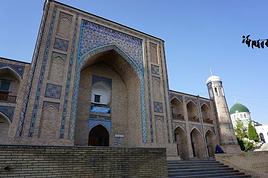
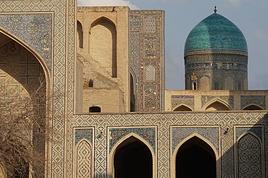
First, there’s silence. A silence in the face of the perfect architectural balance of the structures. Rectangles, broken arches where shadows nestle, domes that catch the light. A stability, a harmony of proportions that breathes peace into the contemplative mind.

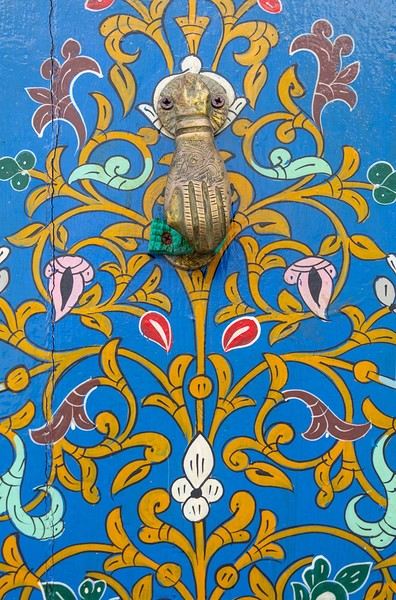
Then, joy. Joy at the endless profusion of decorative details, an inexhaustible fantasy of patterns in earth and brick, ceramic, wood, painted papier-mâché, and embroidered fabrics adorning palace interiors.

Thick networks of curves, interlacing, scrollwork, arabesques, chalices, urceoli, bracts, and petals—a geometric explosion of vegetation. Arabic or Kufic script. Cyan, azure, celestial, cobalt, turquoise, cerulean, indigo, night, peacock, ultramarine, teal, Tiffany, sapphire, royal, Persian. Golds, wheat, mimosa, amber, topaz. Greens. Delicate or deep, light or impenetrable, piercing or soft—enchanting polychromy. Sumptuous, refined splendor.
UN UnaMilanese Veteran ·


UN UnaMilanese Veteran ·


UN UnaMilanese Veteran ·
Magnificent sumptuousness, splendid refinement, dazzling luxury. Intoxicating brilliance. Eventually, a visual hangover.

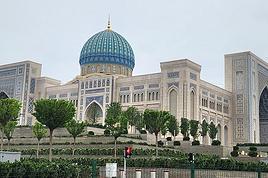
Long live the Soviet architecture of Tashkent! It’s just as monumental, but here, straight lines, sharp angles, and no ambiguity rule—raw concrete. Gray. A change of pace, and restful.


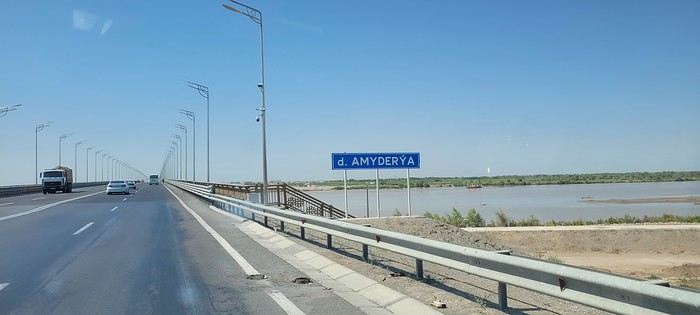
Anything else? Yes, remember those dazzling smiles opening to reveal 32 gold teeth. In February, the Amu Darya looks like the Po or the Loire—a laid-back river cluttered with reed islands. And then there are the rice paddies in the desert. Don’t forget the espaliered vineyards around Samarkand, either. Or the young Uzbek woman in a cream silk pajama with pink flowers, crossing the narrow corridor of the coal-heated train to fetch water from the samovar built into the carriage wall. Nor the proud Tomaris sending Darius, the great Darius with his muscular thighs, packing in a clumsy, *plukitshtumeur*-filled ballet at Tashkent’s grand Navoi Theatre. And also, remember never to adopt a peacock as a pet—the 1,400 birds of that species, matching the khans’ munificence, waddling around the palace ** made a cosmic racket, worse than turkeys.

Finally, hold this dear: Marco Polo converses with Kublai Khan in Calvino’s *Invisible Cities*, which was in my luggage. At the end of the journey, the book concludes like this: "And Polo said: - The inferno of the living is not something yet to come; if there is one, it is what is already here, the inferno we inhabit every day, that we create by being together. There are two ways not to suffer it. The first is easy for most: accept the inferno and become such a part of it you no longer see it. The second is risky and demands constant vigilance and learning: seek and recognize who and what, in the midst of the inferno, is not inferno, and give it space to endure."

Thanks for reading. Safe travels—whether in Uzbekistan or elsewhere! 🙂

Catherine
DO Dolma Globetrotter ·
What a strange country visited and recounted And what a sumptuous travel journal shared

I feel like shouting it from the rooftops, but I love how Marguerite Duras said, "to write is to scream without noise," so instead of 15 lines, here are 2...
TU Tulipe57 ·
Thank you for this beautiful story. Your writing is elegant and a joy to read. You’ve really confirmed our choice for Uzbekistan. Two friends and I are heading there at the end of August for 15 days of discovery with Turquoise Travel, but we booked our accommodations through Booking. We hope to have as wonderful an experience as yours and bring back just as beautiful photos.
UN UnaMilanese Veteran ·
Hi Patricia. Thanks for sharing this and have a great trip! You’ll have to tell us all about it 😉 Catherine
PA Pagaljavab Globetrotter ·
I discovered this travel journal after the war. A few days ago, the tone of the first post piqued my curiosity, and today I finally found the time to read through it.

All I know of Uzbekistan is a two-week layover in Tashkent before heading to New Delhi, and this fragmented memoir has reignited my desire to truly explore the country.

I can’t resist recommending you read the short story *(https://en.wikipedia.org/wiki/Nocturne_of_Bukhara)* by the late Mexican writer Sergio Pitol. It tells the story of two Mexican students trying to convince an Italian artist to travel to Uzbekistan to rid themselves of her burdensome presence—all woven between fantastical narrative, Orientalist illusions, and philosophical musings.

Similar discussions

You might also like