From Ol Pejeta to Tsavo West (Kenya)
FR

Translated into English.

Original post
PY
Hello everyone,

Here’s the story of our two-week trip—13 nights, actually—in the national parks of northern and southeastern Kenya, which we took last September at the end of summer. My wife and I planned this trip with a French agency (Bel Africa, Paris), which worked with a local operator in Nairobi (Nadhy Travels & Tours). The latter provided a driver-guide and vouchers, but no aperitif🙁! Our all-inclusive package included animal safaris exclusively in a customized 4x4 vehicle (with a pop-up roof) and accommodations in high-quality lodges that we selected ourselves. It’s great for comfort, but not so much for the wallet. The cost was obviously astronomical for the services provided. But that’s just my usual take on lodging in East and Southern Africa! Our itinerary was a loop starting and ending in Nairobi, passing through Ol Pejeta, Buffalo Springs-Samburu, Meru NP, Amboseli, and Tsavo West.

Trip breakdown:

Day 1 to 3: Ol Pejeta Day 3 to 7: Buffalo Springs Day 7 to 8: Meru NP-Nairobi Day 9 to 11: Nairobi-Amboseli Day 11 to 14: Tsavo West

Photo gear we brought:

- 1 bridge camera - 2 DSLR bodies - 2 telephoto lenses: 70-200mm f/2.8 and 200-500mm f/5.6 - 2 pairs of 10x42 binoculars

What motivated this trip? We wanted to recharge and were looking for a certain tranquility that would be ideal for wildlife observation and photography—our hobbies. That immediately ruled out the parks in the southwest, which are too crowded. Plus, those would have likely been a repeat of what we experienced in Tanzania a few years earlier (see my travel journal "The Great Migration"). Buffalo Springs particularly appealed to us because of the unique animal species it’s home to. It was really their existence that drove our choices. We wanted to see animals we’d never seen before in their natural habitats.

So, on a beautiful late-summer evening, we took off from Paris-CDG for Nairobi. The overnight flight was uneventful, and we landed early in the morning at Jomo Kenyatta International Airport (NBO). But our driver-guide wasn’t waiting for us. Judging by the number of signs being held up, we must have been the only travelers in that situation. Good grief, why wasn’t he there like all the others?
MU Muriel18 Globetrotter ·
Hi Eric

because of the unique wildlife it holds.

What a tease!

Good grief, why wasn’t this man there like his colleagues?

So much suspense!

Anyway, quick! The next part! 😉😎 Muriel
SY Sylvie56 Veteran ·
Awesome, Eric! A new travel journal in an area I particularly love 🙂

No guide on arrival—brings back memories... We’ve been through that twice. The first time, we were a bit stressed: waiting for about 30 minutes. Other guides came to reassure us. One even had Felix’s mobile number—he’d been stuck in traffic and couldn’t find a spot in the airport parking lot... The second time, *hakuna matata*, we waited calmly.
PY Pygmalion19 Veteran ·
Hi everyone,

Wow, what a great group following this travel journal! I’m thrilled to take you all along in my splendid Japanese car—and so much more. Don’t laugh just yet; you’ll see how right I am later...

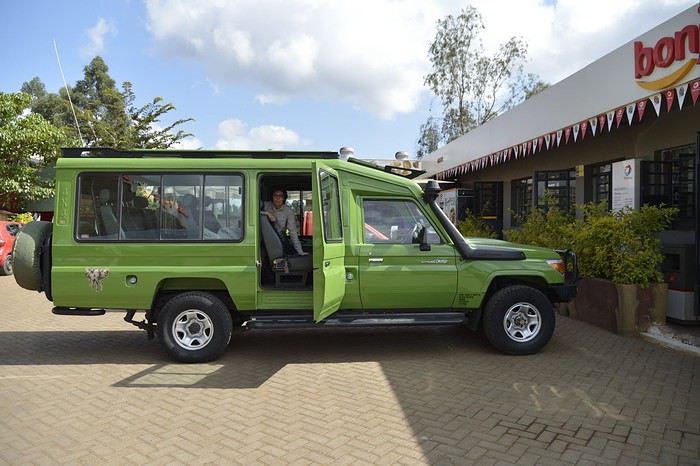
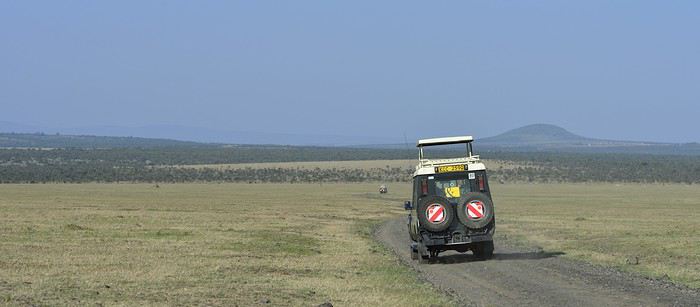
Okay, where was I? Ah yes, here we are, stranded on the tarmac of Jomo Kenyatta International Airport... Intense moments of abandonment, fleeting existential angst—until what do we see coming our way, dressed in a sharp safari outfit and bathed in the soft but dusty morning light? Our beloved guide! Emotional and collective relief all around. But our joy was short-lived because our faithful knight arrived without his steed. Turns out our Kenyan from Mombasa had parked the vehicle a good half-hour’s walk from the airport due to traffic jams (true), weather issues (also true, and there was a lot of dust in the air), and parking restrictions where it *should* have been allowed for security reasons... Karibu Kenya! Off he went at a brisk pace, leaving us to twiddle our thumbs with our luggage. An hour later, he returned... in a stunning vehicle so sleek it’ll be nearly invisible in the wildlife parks. Let me show you:

SY Sylvie56 Veteran ·
Wow, amazing Land Cruiser if there’s just two of you plus the guide—you’ve got plenty of space! Does it look brand new?
PY Pygmalion19 Veteran ·
Ah! Isn't our steed gorgeous, making all the savanna and bush zebras green with envy... I can still hear them snickering as we pass!

A quick detour to exchange some money to weigh ourselves down with a few Kenyan shillings. Then John (that's his nickname in this travel journal—his real name is Daoud or David in French), our chivalrous and beloved guide, loads our suitcases while we grab our gear bags near our seats, ready to roll. In position, his hat firmly planted on his black, wavy hair (for the ladies, of course🙂), hands on the wheel, eyes squinting, our very own John Wayne of the bush sets things straight: "You are my children, I will take care of you!" Shock and awe—nice, but we're actually a bit older (just a little) and definitely not in the same position. Oh John, our chivalrous and beloved guide, not only are you late, but you're also a bit confused😎!

First stop at Ol Pejeta, just over 200 km from the airport. We leave the traffic jams behind and take the A2, a paved and decent road. Still, watch out for herds of goats, the dust kicked up by trucks, and the crowds gathering on the sides of this busy route. Everywhere, there's constant movement—fruit and vegetable stalls, shops made of brick or wood... Also, be careful of the countless small Chinese motorbikes used as cheap taxis—they're absolutely everywhere.

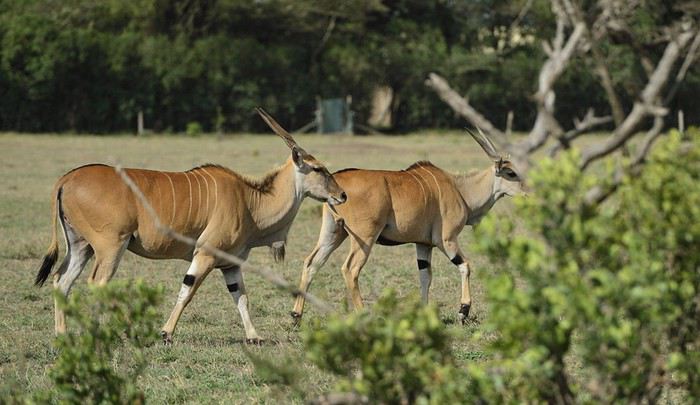
John speaks our language... a little. Well, we'll manage with his vocabulary since we don't speak English, but he does. He kindly answers our questions while keeping an eye on the road. The landscapes roll by without much interest, to be honest. After two stops—one for our needs and another to buy corn to fill my bean bag—we hit the road again until Nanyuki. There, we turn onto a dirt and gravel path and follow it to the monumental gate of Ol Pejeta Park. John takes care of the entry formalities. A few turns of the wheel later, we spot our first critters: Cape elands or Common elands, or *Tragelaphus oryx* for the purists🙂.

PY Pygmalion19 Veteran ·
Hi Sylvie,

It’s brand new and super sleek. With this, we’re sure we won’t stand out in the parks! 😉
RJ Rjulie95 Globetrotter ·
I don't know why, but I'm not feeling this 4x4 😛
PY Pygmalion19 Veteran ·
Good evening Sylvie,

No guide on arrival—this brings back memories... We’ve been through this twice. The first time, we were a bit stressed: about a 30-minute wait. Other guides came to reassure us. One even had Felix’s mobile number—he’d been stuck in traffic and couldn’t find a parking spot at the airport.

Of course, the delay makes sense, it’s understandable, and it’s probably forgivable in hindsight. But given how much we spent on this trip, it’s frustrating🙁. We expected a bit more punctuality, especially after spending the night on a plane. Turns out John got caught in Nairobi’s endless traffic jams, and despite all his experience, he couldn’t do any better than arrive late!
PY Pygmalion19 Veteran ·
Hi Nathalie,

During this trip, I paid special attention to the condition of the roads, especially to see if they’re doable for a self-drive. And I really thought of your Tanzania expedition!
PY Pygmalion19 Veteran ·
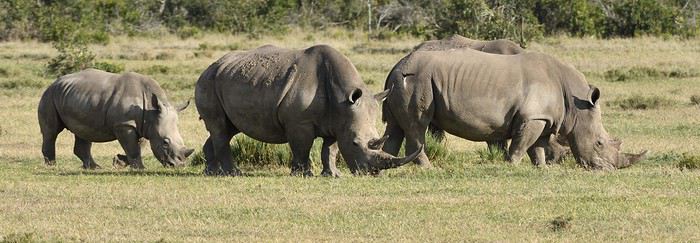
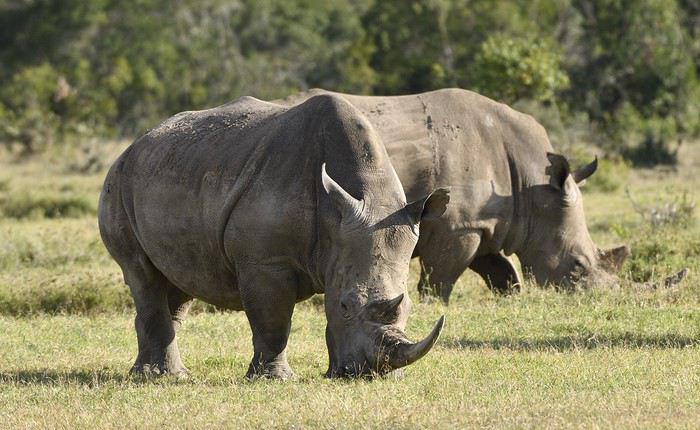
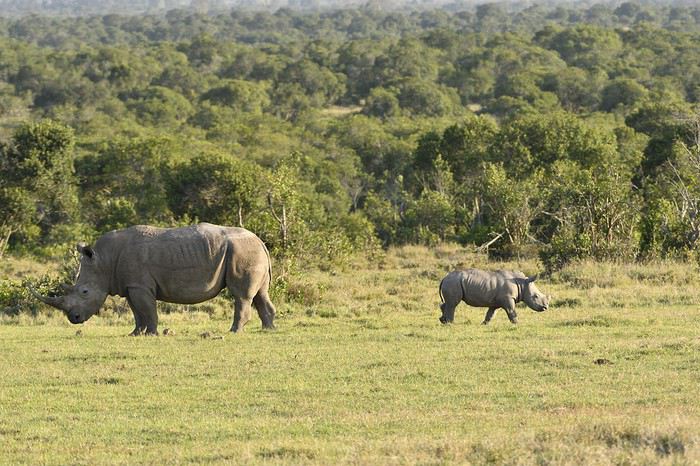
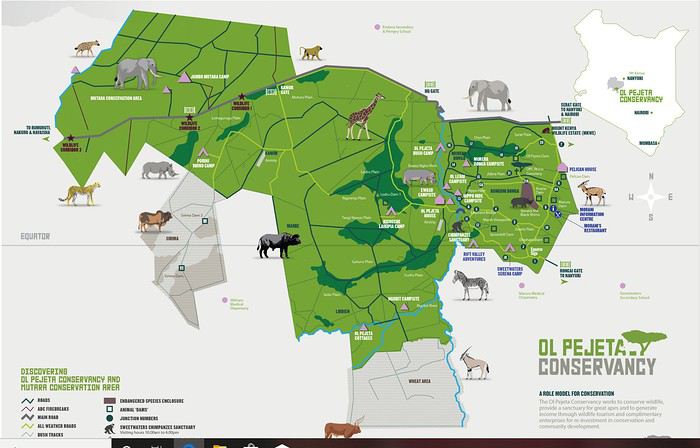
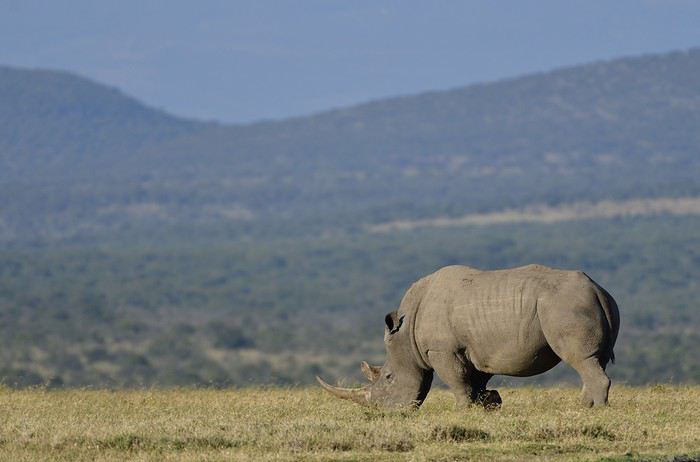
So here we are at Ol Pejeta Conservancy, a private enclosed property located on the equator, spanning about 380 km² dedicated to tourism, protection, and conservation of African wildlife, particularly black and white rhinos like the ones below. That said, they’re far from all confined. Most share the grazing land with other herbivores.


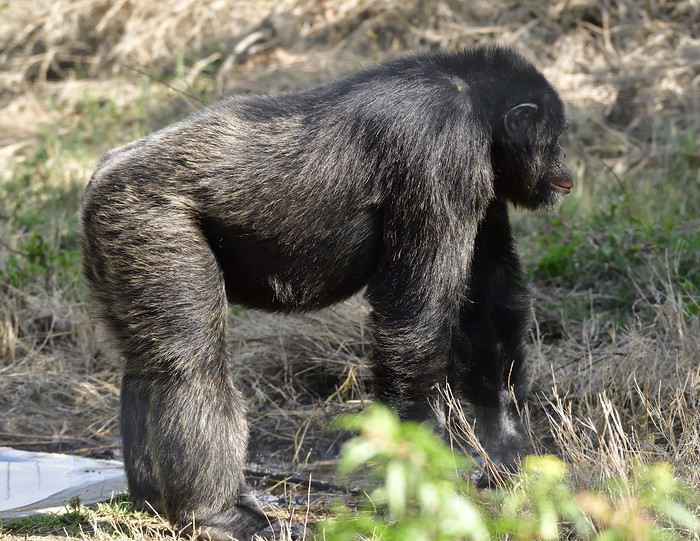
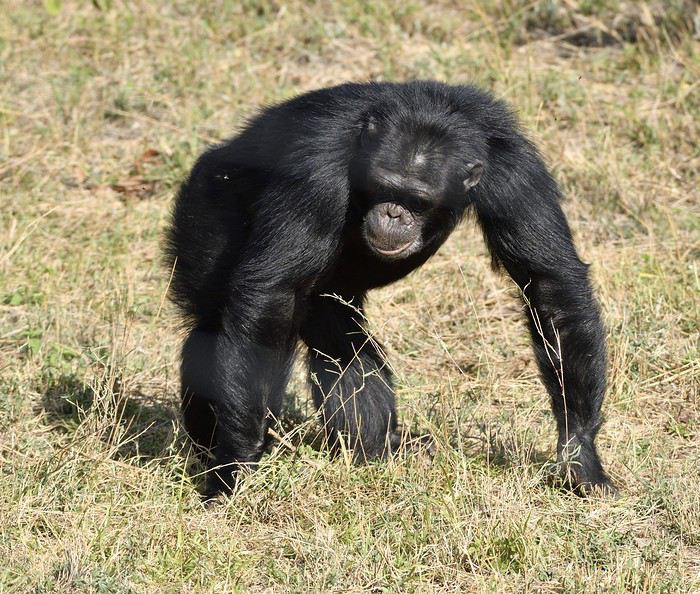
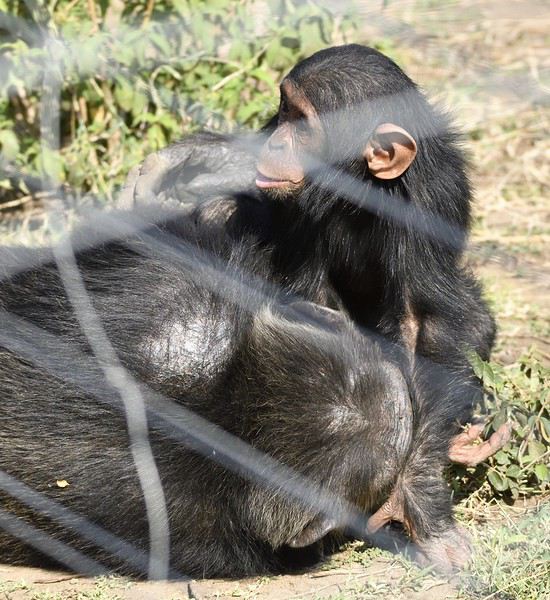
Chimpanzees or Pan troglodyte, belonging to the hominid family—let’s just say it. Who’s the wilder one, huh? They’re also the focus of a lot of attention and come from countries bordering Kenya:


For their safety and care, they won’t be released and will stay here for the rest of their lives in this vast enclosure. There are several groups here, and some are even reproducing:

PY Pygmalion19 Veteran ·
Even though some species are enclosed, Ol Pejeta isn’t a zoo by any means. Wild animals interact with each other here just as they do in other African parks. Predators and prey coexist. Lions, cheetahs, leopards, jackals, hyenas, and eagles actively hunt the abundant potential prey in this territory.

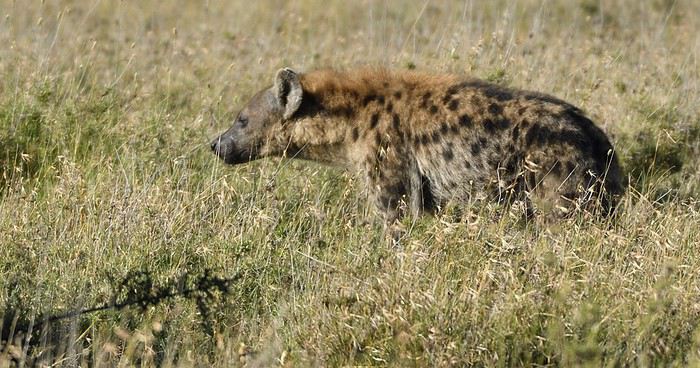
Here’s a spotted hyena on the prowl (Crocuta crocuta):

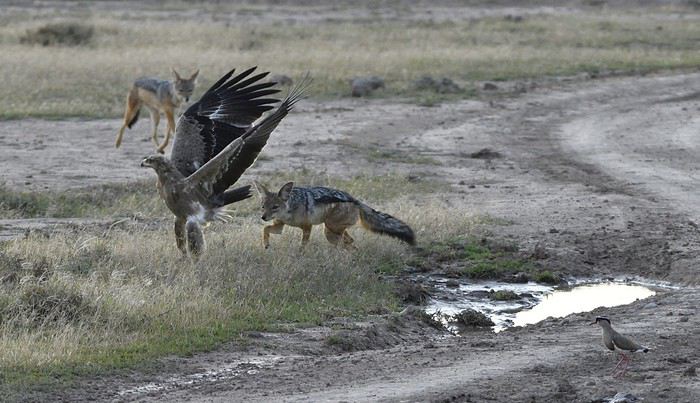
And here, an interaction between a black-backed jackal (Canis mesomelas) and a tawny eagle (Aquila rapax)—or Twany eagle, I assume. The photo’s a bit dark, but the scene takes place at dusk. On safari, neither travelers nor the guide-driver gets to decide exactly when or where something like this might happen.


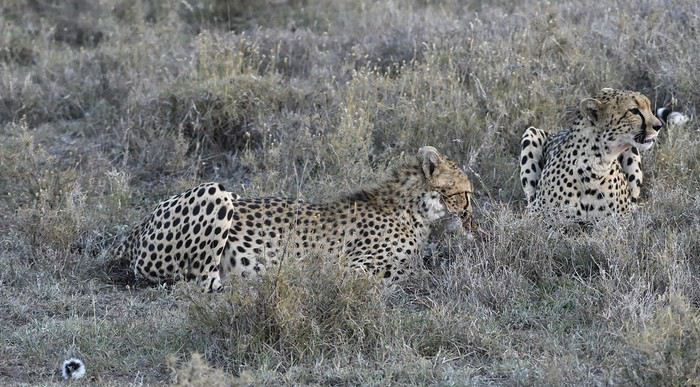
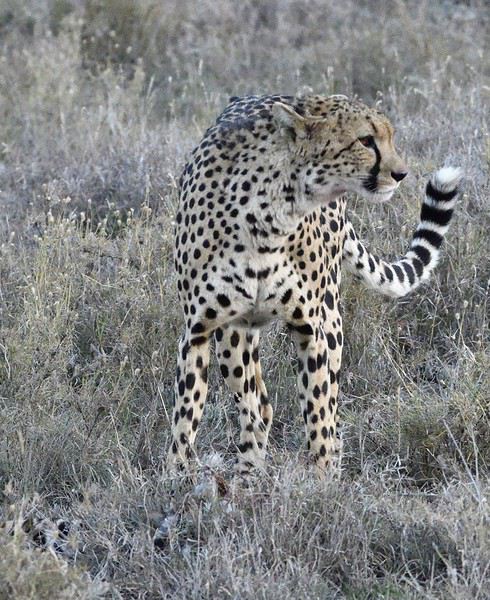
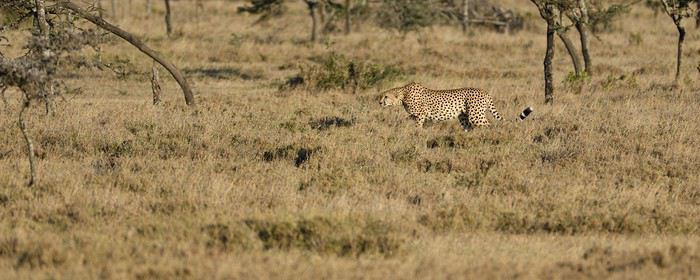
And of course, these cheetahs—or Acinonyx jubatus, aka "cheetah" for those of us in the know—we’re proud to show you. Thanks to the savanna radio!


And why not twice?


During our stay at Ol Pejeta, we only caught a glimpse of a lioness surrounded by 4x4s. No leopards or African wild dogs—they don’t live here. Leopards are tough to spot, but lions are easier, except for our guide. I know, I’m doing some John-bashing…
PY Pygmalion19 Veteran ·
On the prey side:

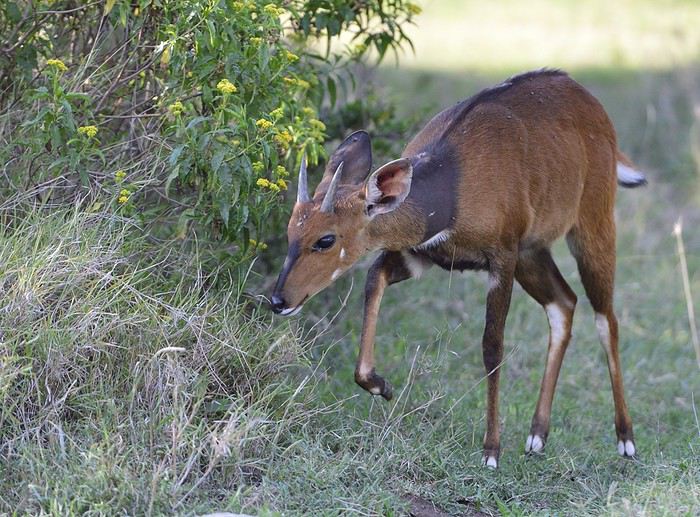
I think it’s a bushbuck or Tragelaphus scriptus "tagada tsoin tsoin!"
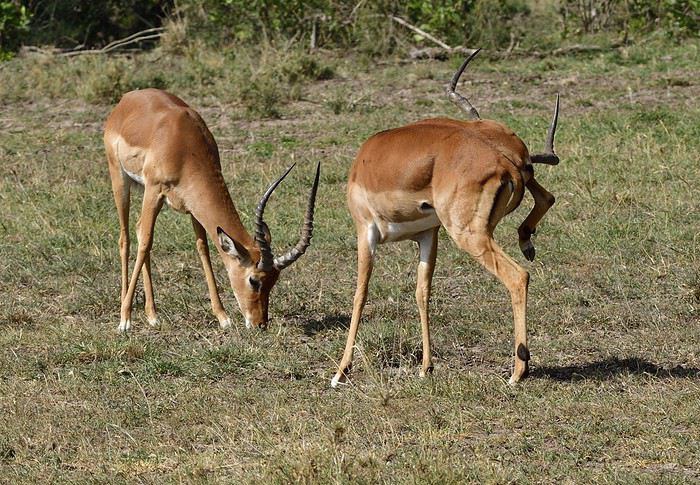
Impalas or Aepyceros melampus
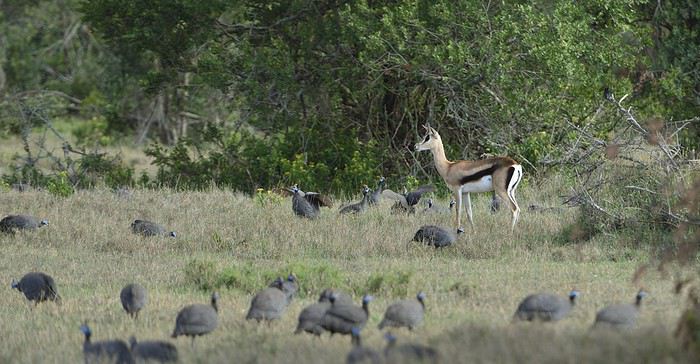
Thomson’s gazelle or Gazella thomsonii—is that its first name? And they get bigger and heavier but just as beautiful:
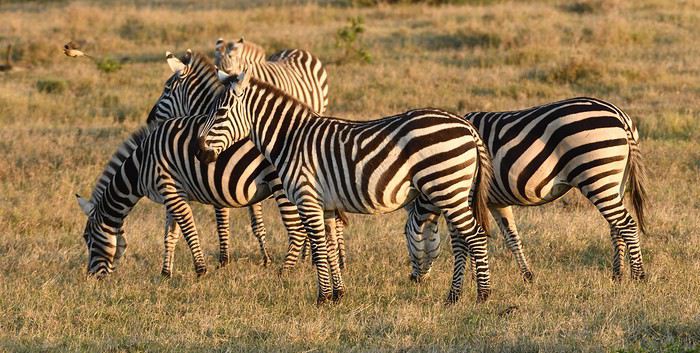
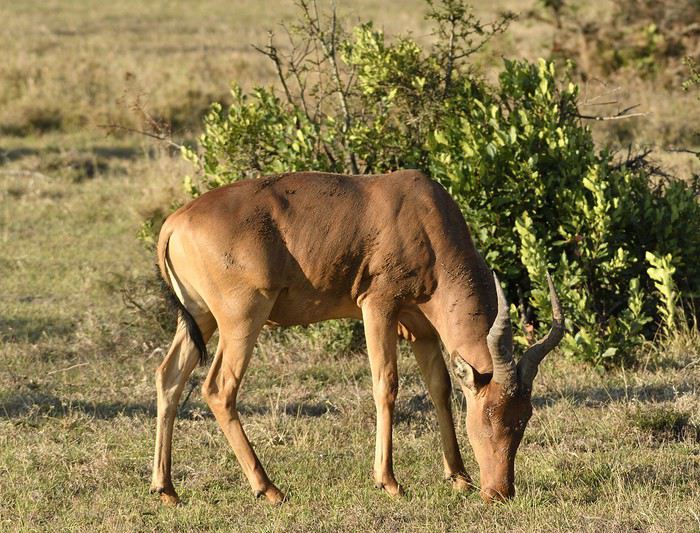
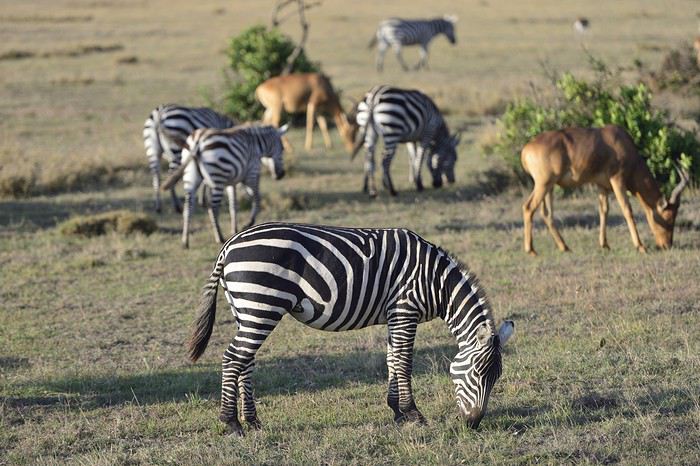
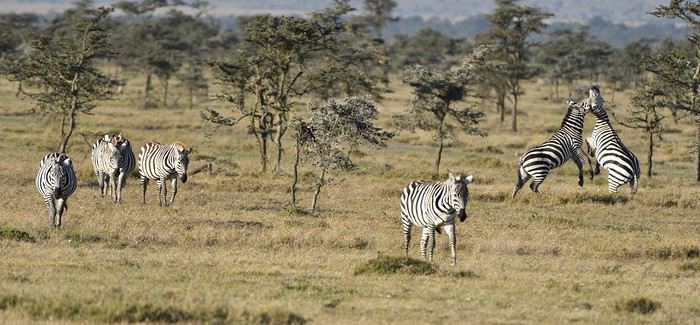
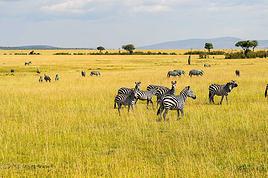
Plains zebras or Equus quagga/burchelli, also called Burchell’s zebras. Note that the plains zebras in Southern Africa don’t have the same stripes as those in East Africa.


Lichtenstein’s hartebeest or hartebeest (nothing to do with Austria) grazing, but I’m not sure about the ID. Could it be a Damaliscus hunteri instead?


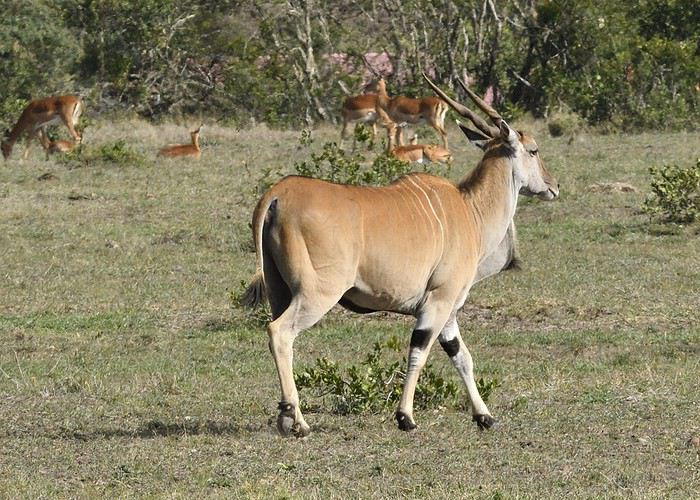
The Cape eland, which needs no introduction.


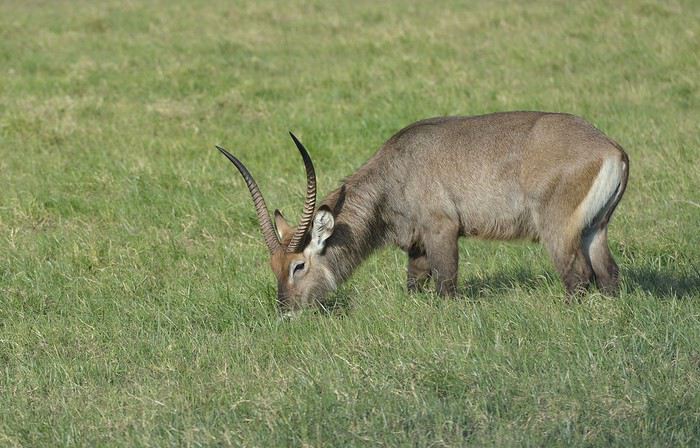
Defassa waterbuck grazing... Kobus ellipsiprymnus pabularis In other words, a waterbuck.

Didn’t see any Grant’s gazelles, crocodiles, or wildebeest (out of stock—everything’s headed to the Serengeti 😎), but maybe next time. Didn’t spot any springboks either—there aren’t any in East Africa 😉. Of course, the smaller and medium-sized critters live near bigger, heavier (but just as beautiful) ones. But more on that tomorrow!
PY Pygmalion19 Veteran ·
Hello everyone reading this—I know there are lots of you! 😎 We’re just a few days away from the holiday break. Today, I’m sharing the biggest animals we spotted at Ol Pejeta. So, off we go for more wildlife adventures:


Here’s the biggest, strongest, and most impressive animal in this region. It’s fitted with a GPS—maybe to keep an eye on it if things get messy, or perhaps for scientific purposes. Who knows!


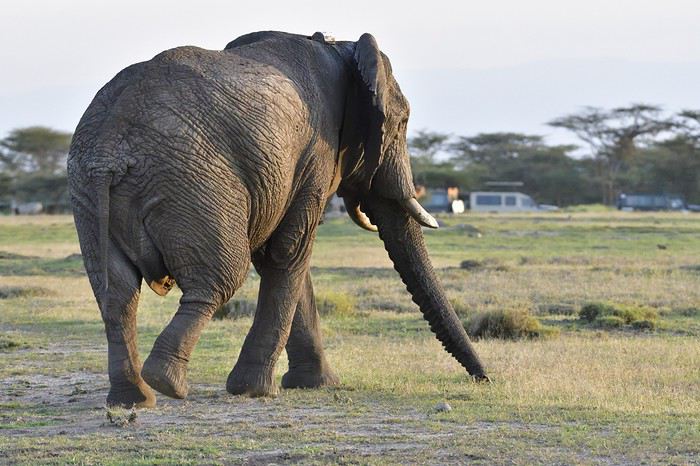
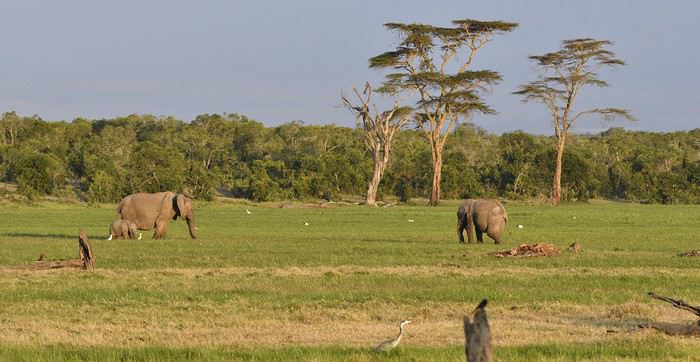
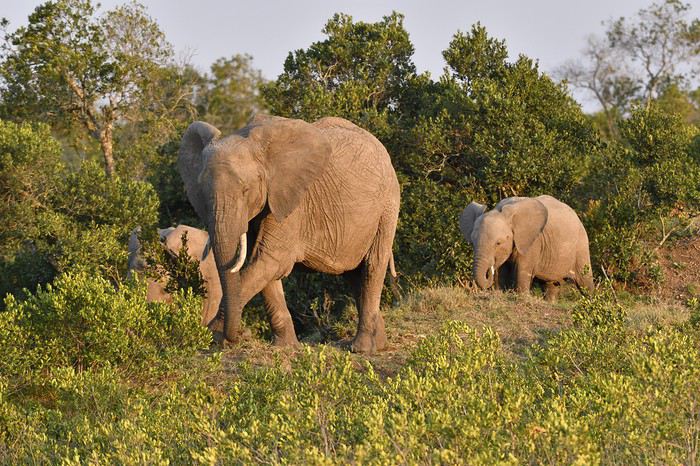
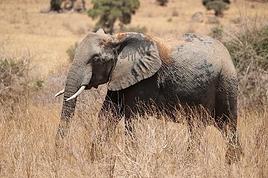
African elephant or African savanna elephant, aka Loxodonta africana—obviously, right? Gorgeous! At Ol Pejeta (or Old Pejetus, from a mix of Latin, Austro-Hungarian, Finnish, and Anglo-Saxon—just don’t confuse it with "old fart" 😉). No huge herds of elephants here, just scattered families across the property:

Here:


And there🙂:


Among the "Big," we’ll mention again the… Ceratotherium simum, or white rhino with its broad lips.


And the:


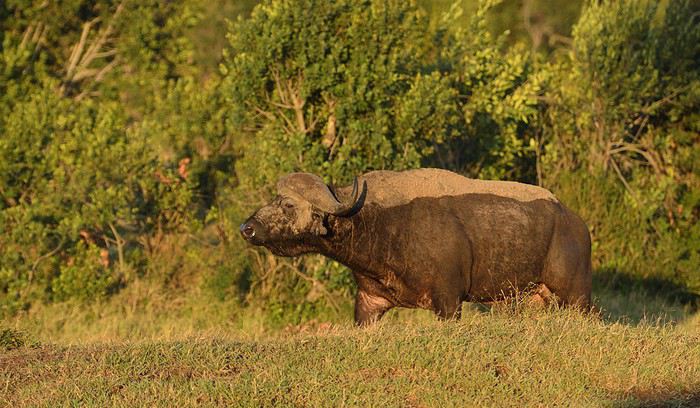
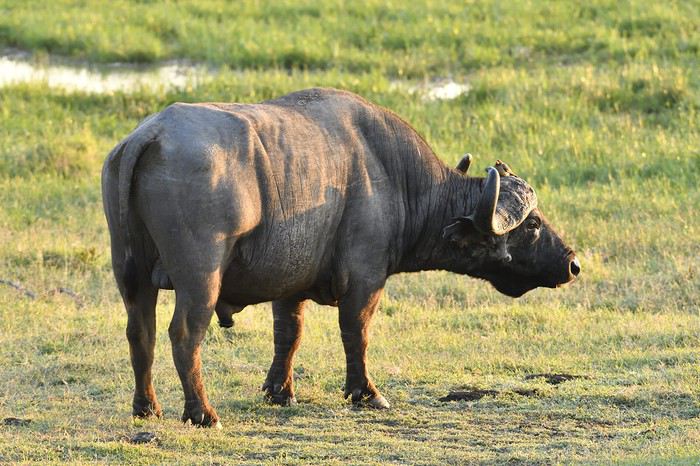
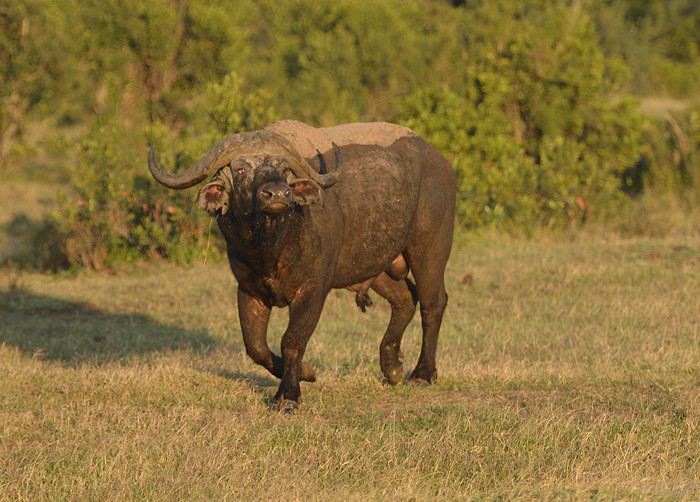
No, I meant the Syncerus caffer, or African buffalo. A bovid by nature, constantly ruminating and always wild.


And another buffalo, but at dawn:


I was also thinking of this one:


John didn’t understand our fascination with this animal. Where we saw strength, fear, and courage, he only saw a bovid fit for the slaughterhouse. Beyond the mix-up, he’d clearly never taken the time or effort to observe this magnificent creature in its natural context. When he saw a buffalo under attack by lions, he only rejoiced in its suffering and the predators’ fury. For him, a successful safari is one reduced to spotting felines—lions and leopards in particular. Unintentionally, he reinforces the stereotype that limits how people see Africa’s parks. But luckily, he has other qualities that made this safari bearable for us😛.

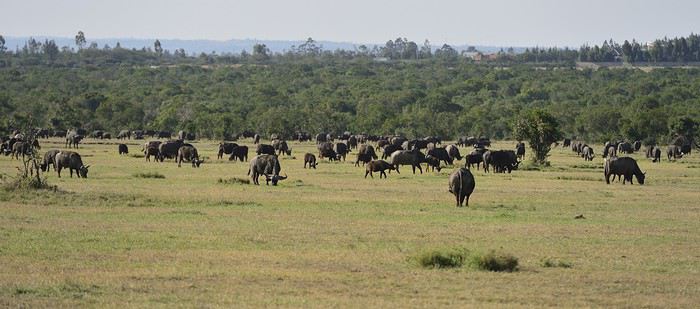
Buffaloes are plentiful here. Often, they come in large numbers to graze:


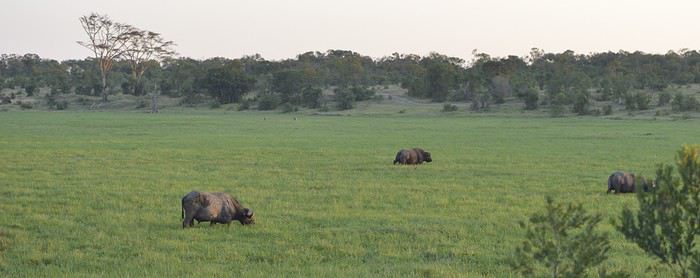
Or they isolate themselves in the park’s wet areas:


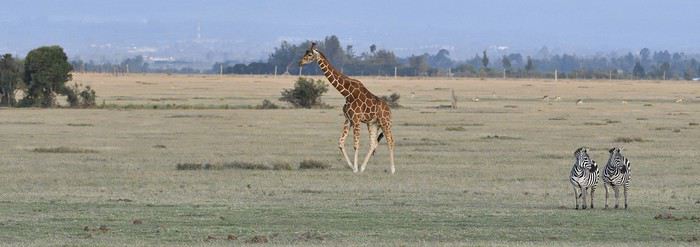
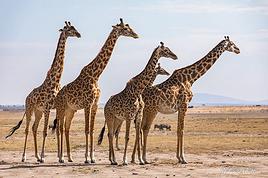
Finally, we’d be remiss if we didn’t mention the beautiful, graceful reticulated giraffe:


We’ll see them again tomorrow if you’d like!

This inventory might feel a bit like a catalog. We own that, but all these images are first and foremost beautiful wildlife encounters! We loved this little park despite a few hiccups. We’ll come back to this stop to include the birds and the ecosystem. Until then, dream of wild, wild Africa…
MU Muriel18 Globetrotter ·
John didn’t understand our interest in that animal.

Well... I don’t really get it either 🤪. It still looks a lot like the bovines back home, doesn’t it? Okay, maybe a bit more imposing (though some bulls...). But gazelles, giraffes, hyenas (no need to fixate on the brown ones like some people 😉), etc.—those are way more exotic 😏😇. Muriel
MA Max68 Globetrotter ·
Hey Eric,

Darn, even later than the guide... now I’ve got to chase after the car—luckily, it’s easy to spot! 😉

I paid special attention to the road conditions, especially to see if they’re doable for a self-drive

... and it’s not just Nathalie who’s interested! 😉

Thanks for sharing your trip with us! 😎
PY Pygmalion19 Veteran ·
Good evening Muriel,

Bah....me neither, I don’t really get it 🤪. Still, they look a lot like our local bovines, don’t they? Okay, maybe a bit more imposing (though some bulls...). Whereas gazelles, giraffes, hyenas (no need to fixate on the brown ones like some people 😉) etc., etc....those are way more exotic 😏😇. Muriel

Buffalo = countryside cows🙁 ... Now that’s a pretty provocative equation. But sure, I admit there are similarities, but also differences that make me happy. To each their own tastes and colors, I guess.

Now, a little taste of the African plains:
PY Pygmalion19 Veteran ·
Good evening Jean-François,

Welcome to our limousine. The road and access paths to Ol Pejeta Conservancy aren’t difficult during the dry season, especially for someone with your off-road skills. The same goes for the trails inside the parks. With a 4x4 like a Toyota Hilux, you shouldn’t have any issues. Just watch out for wild animals, potholes, and rocks. Most importantly, make sure you have a detailed map to avoid getting lost and enough fuel.
PY Pygmalion19 Veteran ·
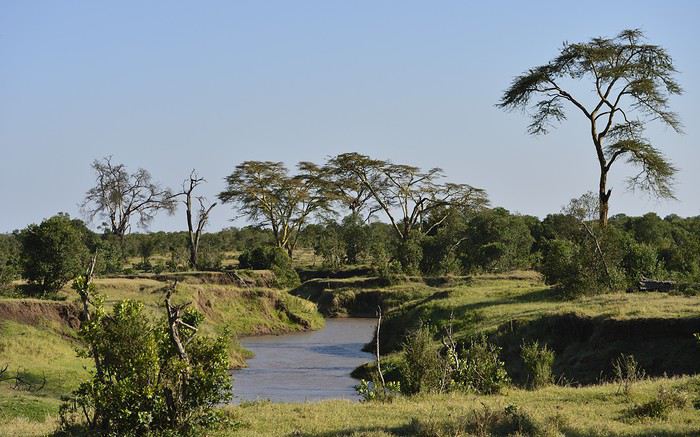
We continue our visit to this small park with this plan. Right away, we notice that the area is crossed by the Ewaso River, a vital artery for all the species that live here.


Ewaso is a beautiful river with tree-lined banks, deeply carved by the rains.


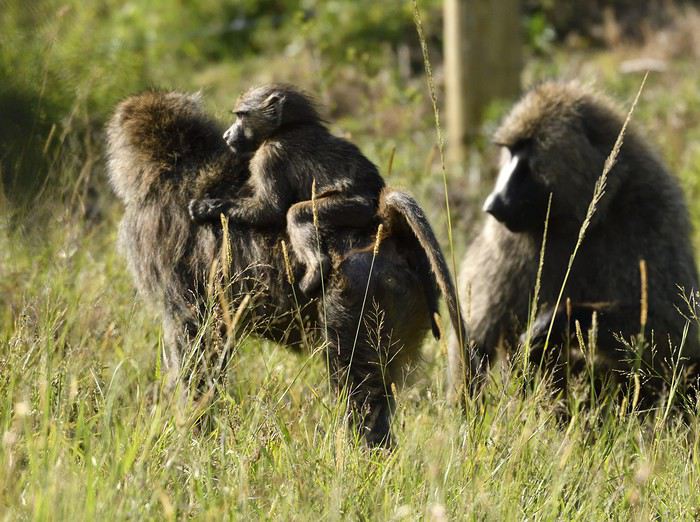
Campsites are located along its banks, but not just that: baboons in English, babouins in French, and Papio cynocephalus in scientific terms.


Our accommodation, whether hard-sided or canvas, is a little further down on the northern edge of the park.


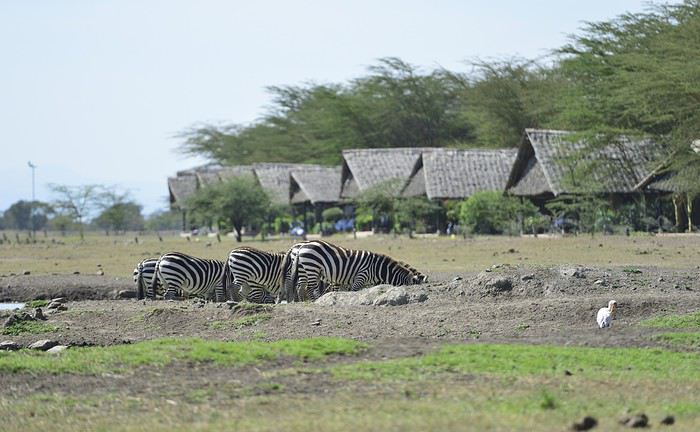
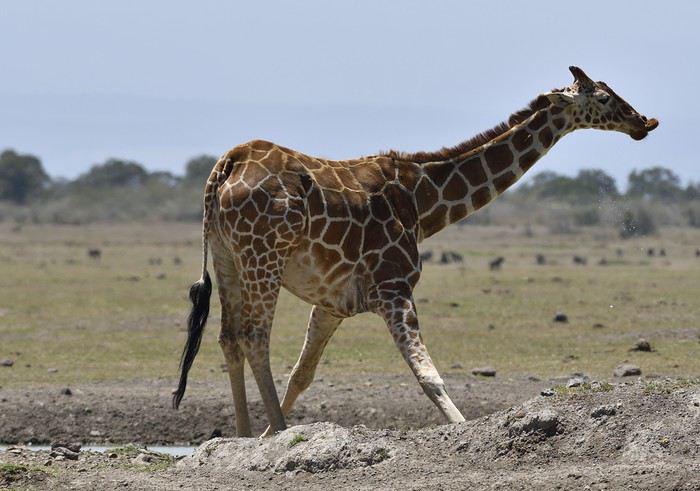
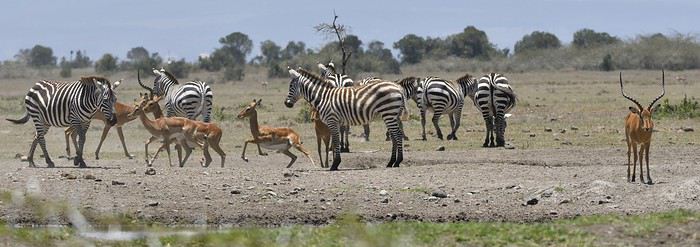
Like other units, our tent—super cozy—overlooked a waterhole (or watering spot? ;) ), a fantastic viewpoint for watching our critters quench their thirst and capturing interesting wildlife scenes. This spot alone is a game-changer, and we lost track of the hours spent there dedicated to observation:


reticulated giraffe drinking


A moment of panic?

Anyway, those were precious moments behind us, unfortunately. But there are still plenty more to share with you.
PY Pygmalion19 Veteran ·
Ol Pejeta has a 200m elevation gain between the entrance (the bottom) and the top, where the grasslands stretch all the way to the forest that seems to go on forever, probably reaching the Aberdares:

Wildlife is less abundant there, but you can still have some great sightings:
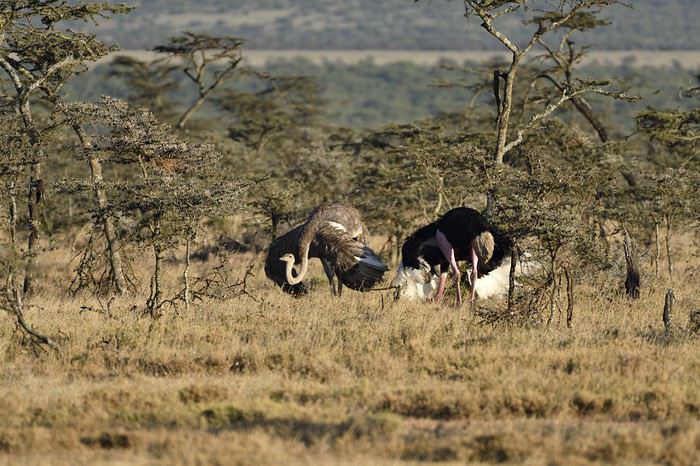


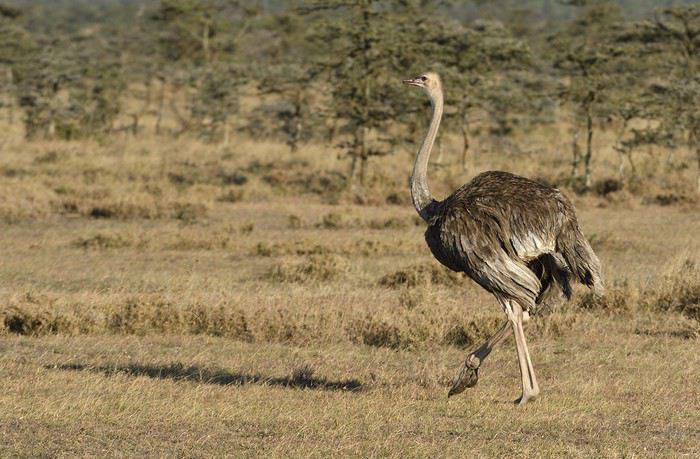
Struthio camelus or African ostriches courting


Cheetah on the prowl


Is that its prey or not!


A line of zebras heading to their nighttime spot, looking a bit scattered

Similar discussions

You might also like