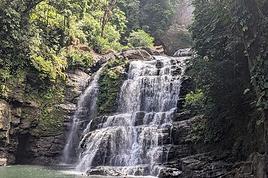
So, to start the year off right (Happy New Year!),
This is where we can discuss January’s theme.
With 20,000 km of French coastline (there’s a catch ;)), our beautiful country should be well represented!
Dig out those hard drives!
Bruno
340 similar discussions in English
We bought round-trip tickets from Mulhouse/Basel to Maun (Botswana) in January 2023 through Option Way.
Turkish Airlines issued the entire round-trip tickets. The flight plan was:
31 August 2023: TK 926 from Basel/Mulhouse to Istanbul and TK38 from Istanbul to Johannesburg 1 September 2023: Airlink (4Z)300 from Johannesburg to Maun. 11 September 2023: Airlink (4Z)301 from Maun to Johannesburg and TK43 from Johannesburg to Istanbul 12 September 2023: TK1923 from Istanbul to Basel/Mulhouse.
On 1 September, on the outbound trip, Turkish Airlines flight TK38 from Istanbul to Johannesburg arrived 1 hour and 30 minutes late due to airport congestion. As a result, we missed our connection with Airlink flight (4Z) 300 from Johannesburg to Botswana (even though the initial layover time was sufficient for the connection). Upon arrival at Johannesburg Airport, a Turkish Airlines agent greeted us, booked us a room near the airport, and rebooked us on the same flight for the following day, 2 September. On 2 September, after numerous difficulties checking in at the Airlink counter in Johannesburg, we finally reached our final destination with a 24-hour delay. We lost our first day of vacation in Botswana, including the activities that were planned for that day. On 11 September, during our return trip and almost certainly due to the rescheduling of the outbound flight, the Airlink check-in counter in Maun did not recognize our tickets issued by Turkish Airlines. After many searches and phone calls, we had to buy new tickets for the Maun/Johannesburg flight 4Z301. This cost us 9,306 Botswana pula (643 €). Upon arrival in Johannesburg, the Turkish Airlines check-in counter again had trouble identifying us for flight TK43 from Johannesburg to Istanbul. It’s clear that the root of our check-in problems stemmed from the renumbering of our tickets when the Turkish Airlines representative rebooked us on the Airlink (4Z)300 flight for 2 September. During this process, all subsequent flight tickets must have been canceled. Since our return, I’ve requested the following from Turkish Airlines: · Compensation under the European Regulation EC 261/2004 of 11 February 2004 for flight delays, amounting to 600 € per passenger. We meet all the conditions: departure from a Franco/Swiss airport, arrival at the final destination more than 4 hours late, and a distance greater than 3,500 kilometers. Turkish Airlines has not provided evidence that they did everything possible to avoid this delay. · Reimbursement for the Airlink Maun/Johannesburg tickets on 11 September, which we had to pay again to Airlink even though we had already paid for them through our agent, Option Way. Turkish Airlines refuses compensation on the grounds that they complied with all regulations. Turkish Airlines and Airlink are passing the buck when it comes to reimbursing the tickets we paid for twice. For Turkish Airlines, claims can only be made through their website, and each time a different agent responds. I’ve contacted our insurance, legal protection, the travel ombudsman... without success. Currently, the case is with a lawyer working for "Air Indemnité," but I have little hope. Obviously, I won’t be flying with Turkish Airlines again—they seem to have a habit of not respecting schedules or customer satisfaction. A good lesson for planning very long layovers.
Great to see VF back in action! However, is it normal that we can’t upload more than 10 photos per post? If so, that’s a real shame!
Looks like I’m the first to post a review, but I’m sure others will follow to keep this forum—our forum—alive. Once again, a BIG thank you for bringing it back!
I got home yesterday but still can’t sleep, so I’d rather share this amazing cruise I just took on the Royal Princess.
Last year, I did almost the same itinerary on the Ovation OTS (Royal Caribbean), and it was mixed at best—let’s just say it was disappointing.
The itinerary: - Los Angeles - 5 days at sea - Honolulu - Hilo (replaced by Kona) - 5 days at sea - Papeete - Papeete - Moorea - 3 days at sea - Pago Pago (Samoa Islands) = canceled - 1 day at sea - International Date Line crossing - 1 day at sea - Tauranga - Tauranga - Auckland
I booked this cruise over a year in advance through the Logitravel agency. I chose a Balcony Category D cabin because the Cat B cabins on this ship class don’t have a sofa. I like having a couch in the cabin so I don’t have to sit directly on the bed when I come in.
My last cruise with Princess was years ago, and after last year’s disappointment with Royal Caribbean (Ovation OTS), I decided to give Princess another try. Not only did I love the itinerary, but the cruise was longer, and there was a new port for me—Pago Pago—which unfortunately got canceled.
Honestly, I can tell you I didn’t regret my choice for a second—this cruise will stay with me forever. Everything, or almost everything, was PERFECT!
After Oceania, I’d rank Princess in second place, and I think their service is a notch above Celebrity. You’ll see why as you read this review.
From what I remember, Catherine Isa and others have already tried this ship class and loved it.
Here we go! Day 1: Departure from Roissy to Los Angeles on an Air France flight.
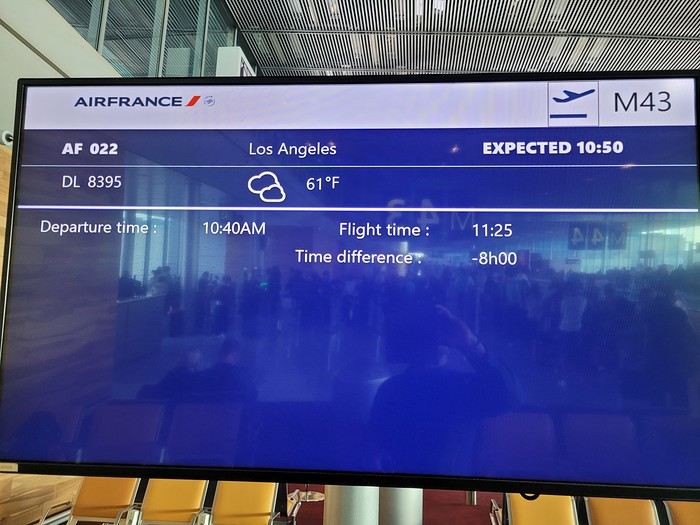
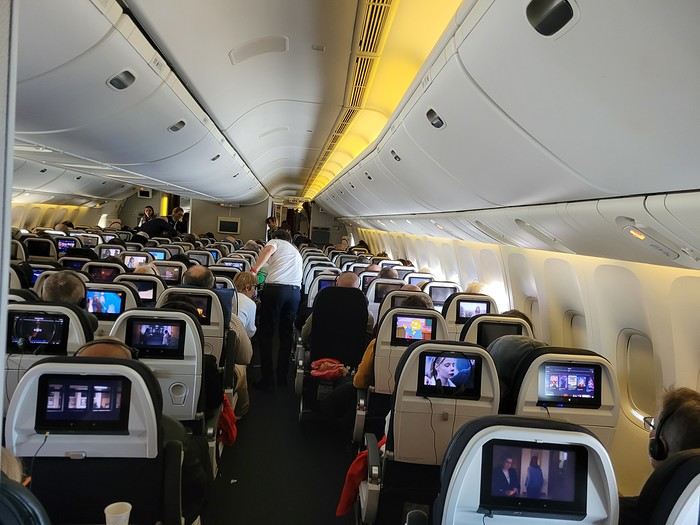
Last year, I flew Air Tahiti Nui (ATN) for the same route, and I can tell you it was WAY better than AF in terms of comfort and service. Unfortunately, ATN now flies very few routes to Los Angeles, preferring to transit through Seattle to get to Papeete. So, I had to go with AF. Back in 2018, I did a Paris/Papeete flight with AF and was a bit disappointed with the 24-hour journey. Anyway!
During this flight, we had one meal and a snack before landing in LA. Drinks were available throughout the flight. We arrived on time in LA.
Before taking off from Roissy, I downloaded the MPC (Mobile Passport Control) app—a mobile app for travelers with an ESTA to save time at customs (only for those returning to the U.S. at least a second time). It lets eligible travelers skip the long lines at customs when arriving in the U.S. After filling out a form and answering a few questions about your trip in advance, you get a ticket that lets you access a special line with shorter wait times. Unfortunately, I didn’t get the ticket, so I had to wait in the regular line. Thirty minutes later, I got the ticket, but it was too late—I was already in the visitor line. It took us 1.5 hours to get through immigration.
Since I’m traveling again in January next year, I’ll try MPC again to see if it works.
After leaving the airport, I took a taxi to my hotel on Hollywood Blvd, but the driver tried to scam me to make more money. Last year, the same ride cost $50, but this time, he took a long detour to run up the meter. When I saw it hit $80, I told him that last year the same trip cost $50, and we weren’t even there yet. He said, “You’re going to a hotel on Hollywood Blvd, and you’re quibbling over a few dollars?” I told him I wouldn’t pay that much because I saw he took a longer route (via Google Maps), and if needed, I’d call the police. Then he said, “Let’s work something out.” I told him I’d pay $50, just like last year—not a cent more. When we arrived, he said, “Give me $60, and we’ll call it even.” So, I gave him $60. If I hadn’t said anything, he would’ve charged me over $100. Oh well!
Our hotel (Lowes Hotel) is on Hollywood Blvd. It’s a really nice hotel with a rooftop pool. That said, it’s not worth 330 € per night plus 30 € per person for breakfast. But since we’re on Hollywood Blvd, everything’s overpriced.
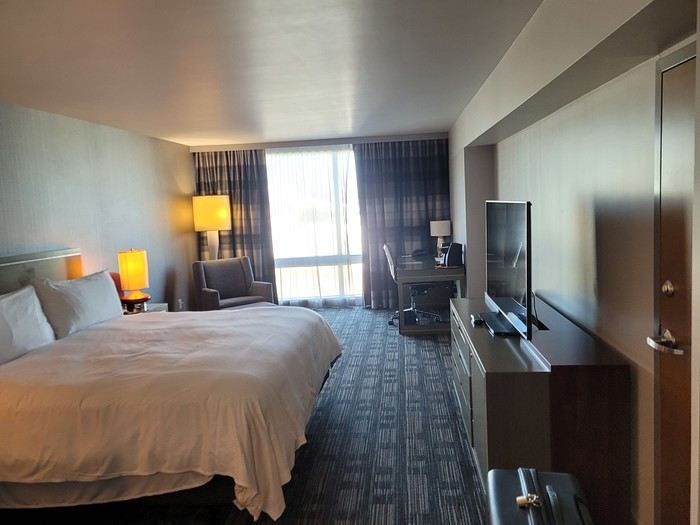
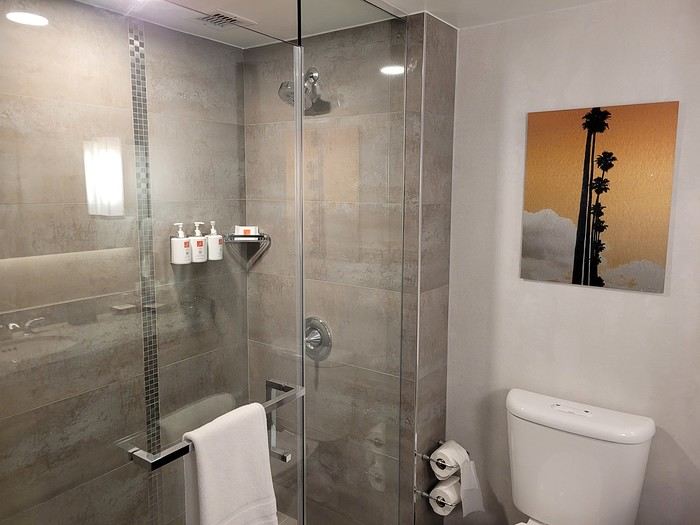
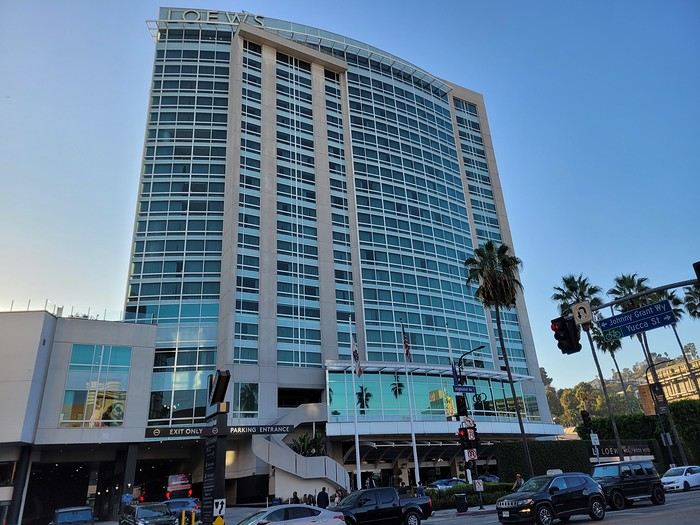
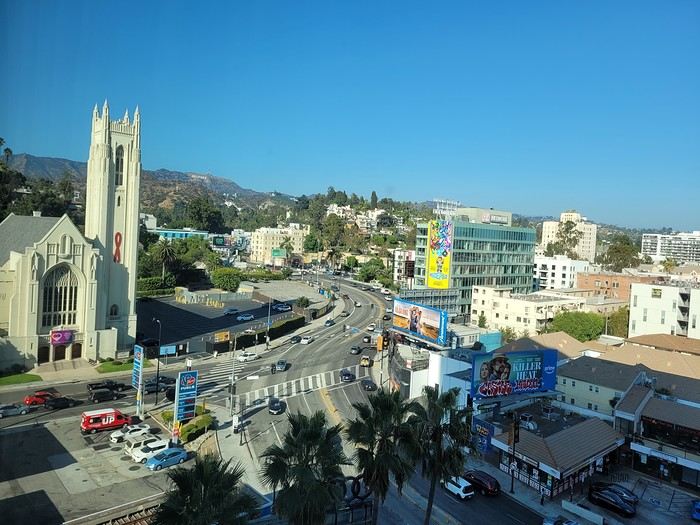
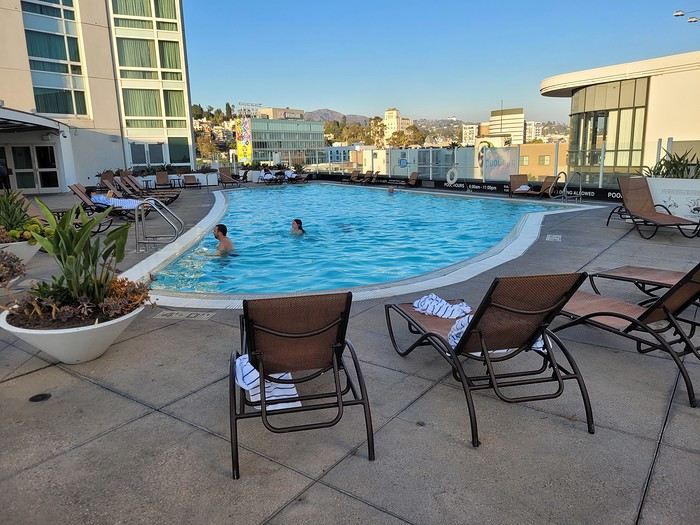
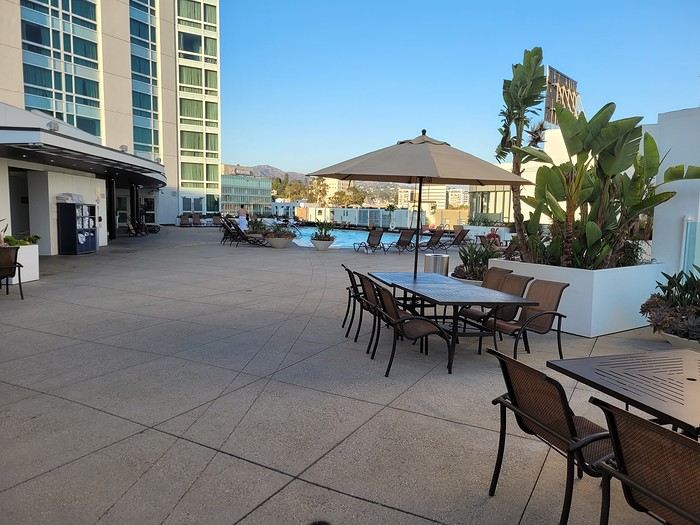
We checked into our room with a view of the Hollywood Sign (as requested). We dropped off our things, then relaxed by the pool with a drink before taking a stroll down Hollywood Blvd.

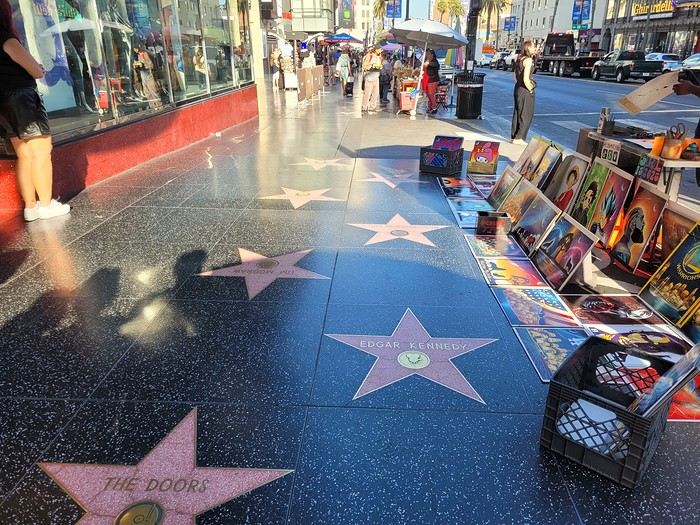
That evening, we went to dinner at the Roosevelt Hotel, just 100 meters from our hotel—a legendary Hollywood hotel where Marilyn Monroe used to stay regularly. In fact, her suite still bears her name. Honestly, the hotel is really old, and I didn’t think much of it—or the dinner. We headed back to our hotel for a good night’s sleep because tomorrow we had a tour booked to see the stars’ houses and Beverly Hills.
To be continued: Beverly Hills/Hollywood tour and embarkation.
Looks like I’m the first to post a review, but I’m sure others will follow to keep this forum—our forum—alive. Once again, a BIG thank you for bringing it back!
I got home yesterday but still can’t sleep, so I’d rather share this amazing cruise I just took on the Royal Princess.
Last year, I did almost the same itinerary on the Ovation OTS (Royal Caribbean), and it was mixed at best—let’s just say it was disappointing.
The itinerary: - Los Angeles - 5 days at sea - Honolulu - Hilo (replaced by Kona) - 5 days at sea - Papeete - Papeete - Moorea - 3 days at sea - Pago Pago (Samoa Islands) = canceled - 1 day at sea - International Date Line crossing - 1 day at sea - Tauranga - Tauranga - Auckland
I booked this cruise over a year in advance through the Logitravel agency. I chose a Balcony Category D cabin because the Cat B cabins on this ship class don’t have a sofa. I like having a couch in the cabin so I don’t have to sit directly on the bed when I come in.
My last cruise with Princess was years ago, and after last year’s disappointment with Royal Caribbean (Ovation OTS), I decided to give Princess another try. Not only did I love the itinerary, but the cruise was longer, and there was a new port for me—Pago Pago—which unfortunately got canceled.
Honestly, I can tell you I didn’t regret my choice for a second—this cruise will stay with me forever. Everything, or almost everything, was PERFECT!
After Oceania, I’d rank Princess in second place, and I think their service is a notch above Celebrity. You’ll see why as you read this review.
From what I remember, Catherine Isa and others have already tried this ship class and loved it.
Here we go! Day 1: Departure from Roissy to Los Angeles on an Air France flight.
Last year, I flew Air Tahiti Nui (ATN) for the same route, and I can tell you it was WAY better than AF in terms of comfort and service. Unfortunately, ATN now flies very few routes to Los Angeles, preferring to transit through Seattle to get to Papeete. So, I had to go with AF. Back in 2018, I did a Paris/Papeete flight with AF and was a bit disappointed with the 24-hour journey. Anyway!
During this flight, we had one meal and a snack before landing in LA. Drinks were available throughout the flight. We arrived on time in LA.
Before taking off from Roissy, I downloaded the MPC (Mobile Passport Control) app—a mobile app for travelers with an ESTA to save time at customs (only for those returning to the U.S. at least a second time). It lets eligible travelers skip the long lines at customs when arriving in the U.S. After filling out a form and answering a few questions about your trip in advance, you get a ticket that lets you access a special line with shorter wait times. Unfortunately, I didn’t get the ticket, so I had to wait in the regular line. Thirty minutes later, I got the ticket, but it was too late—I was already in the visitor line. It took us 1.5 hours to get through immigration.
Since I’m traveling again in January next year, I’ll try MPC again to see if it works.
After leaving the airport, I took a taxi to my hotel on Hollywood Blvd, but the driver tried to scam me to make more money. Last year, the same ride cost $50, but this time, he took a long detour to run up the meter. When I saw it hit $80, I told him that last year the same trip cost $50, and we weren’t even there yet. He said, “You’re going to a hotel on Hollywood Blvd, and you’re quibbling over a few dollars?” I told him I wouldn’t pay that much because I saw he took a longer route (via Google Maps), and if needed, I’d call the police. Then he said, “Let’s work something out.” I told him I’d pay $50, just like last year—not a cent more. When we arrived, he said, “Give me $60, and we’ll call it even.” So, I gave him $60. If I hadn’t said anything, he would’ve charged me over $100. Oh well!
Our hotel (Lowes Hotel) is on Hollywood Blvd. It’s a really nice hotel with a rooftop pool. That said, it’s not worth 330 € per night plus 30 € per person for breakfast. But since we’re on Hollywood Blvd, everything’s overpriced.
We checked into our room with a view of the Hollywood Sign (as requested). We dropped off our things, then relaxed by the pool with a drink before taking a stroll down Hollywood Blvd.
That evening, we went to dinner at the Roosevelt Hotel, just 100 meters from our hotel—a legendary Hollywood hotel where Marilyn Monroe used to stay regularly. In fact, her suite still bears her name. Honestly, the hotel is really old, and I didn’t think much of it—or the dinner. We headed back to our hotel for a good night’s sleep because tomorrow we had a tour booked to see the stars’ houses and Beverly Hills.
To be continued: Beverly Hills/Hollywood tour and embarkation.
Hello everyone,
I imagine many of you have been captivated by the Masai Mara park and/or your safari experience with Tony Crocetta/Melting Pot Safari. Still, I’d like to share my perspective. First, I’m an avid traveler, especially in love with Africa, which my partner and I have explored a bit (Zambia, South Africa, Botswana, Kenya, Zimbabwe, Namibia...). That said, I want to express my deep disappointment with both the Masai Mara and Tony Crocetta’s camp, Melting Pot Safari, where we stayed last year.
First, about the park: it’s stunning, no doubt. But what a highly touristy place! I can’t find the words to describe the horror of being among 30 4x4 vehicles lined up in front of a lioness hunt, let alone encircling her right after her kill while her prey is still alive in her jaws... no respect for wildlife. The same goes for surrounding a young leopard playing with its small prey, a moment when I counted over 50 vehicles, most with their engines running... sickening. I turned away, both my gaze and my camera. What a disaster to see this natural wonder of Africa turned into a tourist hotspot.
Yes, I loved this place on Earth, but no, I won’t "promote" it anywhere or to anyone.
Next, I also wanted to share my dissatisfaction with Tony Crocetta’s famous camp, Melting Pot Safari: where to begin? We booked a private vehicle for four with two friends, and I have no complaints about the vehicle itself (though it obviously came at a cost). The windows and the vehicle weren’t very photo-friendly, but let’s move on. The trip between the sisters’ guesthouse (which was fine) and the camp went smoothly, except we arrived a bit too late. Result: "We’ll leave for the safari an hour later today because the driver has to respect his rest hours." Perfect—with park formalities, we only spent about an hour in the park that evening. The safari got off to a great start... During our 12-day stay, we saw some amazing things. Tony wasn’t at the camp—I don’t know what the atmosphere is like when he’s there, but it was rather cold during our trip. Sylvie, his wife, barely looked at us, never asking how our day, night, or game drive went (I think she spoke to us once during the stay, plus the day we arrived, of course). We felt invisible... (if I were mean, I’d say the money had already been deposited into Melting Pot’s bank account.) The evening meals, if I may say so, were a joke: not enough dessert (aside from fruit, but the few elaborate desserts—like 10 for 18 guests) for everyone, barely enough meat or sides. If you were unlucky like us and ended up with a group of 15 people who decided to skip the starter, you’d better hurry to get your main course, or there might not be any left—and no refills... We always ate our fill, but sometimes we had to serve ourselves in advance. Finally, I want to correct something about the quality of the meals: seriously, this buffet was really mediocre and far from the culinary standards I’d read about in my pre-trip research (see their Facebook page). Anyway, let’s move past the food—after all, the avocados were sublime, and we’re not there primarily to eat.
About the tent: the river views were beautiful, and the beds were very comfortable. No running water, individual showers outside the tent, and dry toilets—but it’s Africa, so we weren’t shocked. However, I’m disappointed that for this "modest" price, I wasn’t warned there’d be no soap (and no, I don’t travel with my own soap—and for the price, a little bar in the tent wouldn’t be a luxury). But let’s move on—the hippo views were fantastic. Oh, and to preserve the Masai Mara’s water (which makes sense) and for hygiene reasons, underwear isn’t washed by the camp staff—fair enough. But then what’s that little sign next to the bed? Oh right, for a hefty sum, underwear suddenly becomes "washable"...
Finally, my biggest gripe is about the essential part: the game drives. In France, they sell you a dream with a "photo safari" (what’s the difference, really? A room with a few more electrical outlets?). They promise guides especially suited for photography (not a given, sorry) and vehicles that can get close to animals and go off-road... but here’s the catch: the guides are bound by park laws and hounded by rangers looking to fine rule-breakers. Result: as soon as a white ranger vehicle is spotted, we have to abandon our spot for a wild chase through the grass. Fun once... The next day, we learned that another group’s guide got caught and had to pay $100 for breaking the rules—a sum he casually asked the travelers in his vehicle to cover... because of course, Melting Pot lures tourists with dreams, the poor rangers try to get close, all while breaking park laws... and they break those laws for Crocetta’s company, which, of course, won’t dip into its profits to pay the fines. Basically, it’s "keep the clients happy, but don’t get fined—or the fines are on you or you’ll have to ask the clients directly." Nice boss! Anyway, there were long discussions about this last year, especially among the guests in the fined vehicle. My partner and I found these practices unacceptable, and we were deeply disappointed by this attitude.
I know many people adore this park and/or this company—maybe you were luckier... or maybe you’re less demanding than we are when it comes to respecting rules, nature, and clients. But after traveling through much of southern Africa, I can tell you we personally came back frustrated from this experience and aren’t eager to return... You’ve been warned.
Hi,
We crossed the Pyrenees by e-bike last July, from Bayonne to Perpignan, taking small roads as close to the border as possible (25 mountain passes in 10 days). It was an absolute delight, and we can share tips with anyone interested in this experience.
Hello everyone,
I’m not really a regular contributor to VoyageForum, but every time Kate and I travel, she encourages me to write a travel journal and publish it. And I must admit, it’s a very enjoyable intellectual exercise, though not always easy. As a VF contributor whose journals I’ve read once said, this retrospective work not only helps preserve memories but also provides a fruitful moment of introspection by bringing back emotions and feelings.
Kate and I spent a week in Istanbul. For her, who had already visited, it was a return; for me, it was a discovery.
As we’ve now made a habit of, I write the texts, and she posts her photos. We hope this illustrated story, crafted together, will revive beautiful sensations for those who know the city and inspire others to discover it. Here we go!
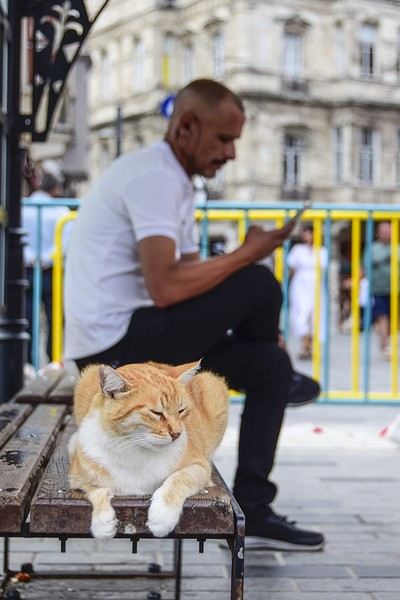
I’m not really a regular contributor to VoyageForum, but every time Kate and I travel, she encourages me to write a travel journal and publish it. And I must admit, it’s a very enjoyable intellectual exercise, though not always easy. As a VF contributor whose journals I’ve read once said, this retrospective work not only helps preserve memories but also provides a fruitful moment of introspection by bringing back emotions and feelings.
Kate and I spent a week in Istanbul. For her, who had already visited, it was a return; for me, it was a discovery.
As we’ve now made a habit of, I write the texts, and she posts her photos. We hope this illustrated story, crafted together, will revive beautiful sensations for those who know the city and inspire others to discover it. Here we go!
Hello everyone,
I’ve wanted to take this Norway cruise for a very long time. The first time I booked it was in July 2020 with Azamara. Unfortunately, it was canceled, as everyone remembers. When I tried to book it again, the prices (already a bit high with Azamara) had simply doubled. So, since then, I’ve been keeping an eye out every year for any opportunities...
The last time we sailed with Princess was eleven years ago, and things didn’t go very well. I came back pretty unhappy with their service and quite disappointed. Despite the $600 they gave me as credit for a future cruise, I’d never set foot on one of their ships again.
But this time, the opportunity arose—a fantastic itinerary with lots of stops, a reasonable price for 16 nights (I’ll share the details in the conclusion), and a ship that’s not too big, so to speak, with only 3,000 passengers. I’m not expecting much from the cruise line this time and am boarding the ship with low expectations beyond the itinerary.
Princess has introduced an app to download before the cruise. It’s essential because online check-in is no longer available, and the agency doesn’t send a travel journal. Everything is done through the app. After completing the check-in on the app, we only know that we’ll need to pick up our key, the Medallion, at embarkation by following the blue line in the terminal and presenting our passport.

Up until our departure, the weather forecast for the coming week in Norway is disastrous—rain, rain, and more rain. It was pretty much the same two years ago before our Iceland cruise, and in the end, the weather turned out fine.
If you’re ready to embark on the Emerald Princess to discover this beautiful cruise and the stunning landscapes of Norway, let’s go!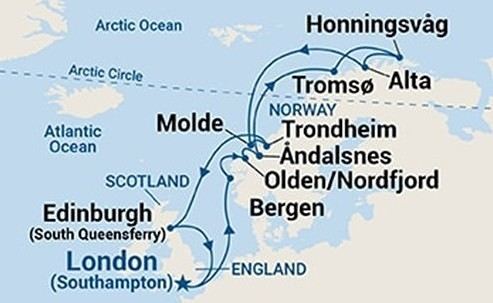
Southampton - Sea day - Bergen - Olden - Åndalsnes - Sea day - Tromsø - Honningsvåg (North Cape) - Alta - Sea day - Molde - Trondheim - Two sea days - Edinburgh - Sea day - Southampton
I’ve wanted to take this Norway cruise for a very long time. The first time I booked it was in July 2020 with Azamara. Unfortunately, it was canceled, as everyone remembers. When I tried to book it again, the prices (already a bit high with Azamara) had simply doubled. So, since then, I’ve been keeping an eye out every year for any opportunities...
The last time we sailed with Princess was eleven years ago, and things didn’t go very well. I came back pretty unhappy with their service and quite disappointed. Despite the $600 they gave me as credit for a future cruise, I’d never set foot on one of their ships again.
But this time, the opportunity arose—a fantastic itinerary with lots of stops, a reasonable price for 16 nights (I’ll share the details in the conclusion), and a ship that’s not too big, so to speak, with only 3,000 passengers. I’m not expecting much from the cruise line this time and am boarding the ship with low expectations beyond the itinerary.
Princess has introduced an app to download before the cruise. It’s essential because online check-in is no longer available, and the agency doesn’t send a travel journal. Everything is done through the app. After completing the check-in on the app, we only know that we’ll need to pick up our key, the Medallion, at embarkation by following the blue line in the terminal and presenting our passport.
Up until our departure, the weather forecast for the coming week in Norway is disastrous—rain, rain, and more rain. It was pretty much the same two years ago before our Iceland cruise, and in the end, the weather turned out fine.
If you’re ready to embark on the Emerald Princess to discover this beautiful cruise and the stunning landscapes of Norway, let’s go!
Southampton - Sea day - Bergen - Olden - Åndalsnes - Sea day - Tromsø - Honningsvåg (North Cape) - Alta - Sea day - Molde - Trondheim - Two sea days - Edinburgh - Sea day - Southampton
And nowhere else...😉
Hi there!
As mentioned in a previous post, we're heading to Morocco in April for 9 days instead of the originally planned 7.
Here's the itinerary I've mapped out to ideally have a complete trip, but I think it might be too ambitious. What do you think? Here's the itinerary (click)
For those who can't open the link: Marrakech (the afternoon of our arrival + 1 day, we’ve already been there without the kids, the goal is not to stay too long) – night Aït Ben Haddou Ouarzazate Skoura – night Oasis de Fint Dadès Gorges Tinghir – night Merzouga – night Zagora – night M’hamid – ideally a night in the desert Agdz Marrakech – night (itinerary via Telouet)
What do you think of this plan? Will it feel too rushed, or is it manageable? Since we don’t know the places, it’s hard to tell if we’ll want to stop everywhere along the way or if there’s enough time to spend at each spot. I’ve included some night-stop assumptions (1 or 2 nights).
We’d love to hear your thoughts! We’re traveling with my wife, a 13-year-old teen, and a 10-year-old. We’ll have our own rental car.
Thanks! !
Hi there,
We’re heading to Puglia from July 30 to August 31, 2020. I’ve booked a rental with a pool in Locorontondo.
But the more I read guides and forums, the more I regret booking the flight to Bari. I can still cancel the other reservations, but I’d face penalties for the flight.
It’s packed, avoid August at all costs—traffic jams, stifling heat, price hikes… I’m really having second thoughts. Our goal isn’t necessarily to hit the beach. I’m thinking we’ll get up early to go where we want and head back during the hottest part of the day.
Is it *that* bad? Thanks for sharing your experiences.
After my trip to Oregon in 2018 (see Travel Journal "Oregon and Only Oregon"), I vaguely intended to return to the West (the western USA, of course—the west of France is where I almost live) someday, later... with no specific date or plan.
November 2018, I stumbled upon a promotion for round-trip flights from Paris to San Francisco. Well, I *stumbled*—they must’ve collected some "data" on me to make sure this deal crossed my path. And it worked! My ESTA was still valid, and two days later, it was decided: May 13, 2019 (departure from Paris) to June 15, 2019 (return to Paris).
The travel style? Just like last year: low-budget trip, rental car, and accommodation only in campgrounds, with no reservations to stay as free as possible.
Exceptions? 3 nights in a youth hostel upon arrival in downtown San Francisco, and 1 night on the way back (right before flying) in Montara, near Pacifica—a spot that seemed well-located for driving back to the airport in the middle of the night.
Now, to sketch out the rough itinerary. Here’s what it looked like after the trip:
Westernmost point: Montara Lighthouse on the coast, 30 km south of San Francisco (California); Easternmost point: Zion National Park (Utah). Northernmost point: Reno (Nevada). Southernmost point: Spring Mountain Ranch State Park in Blue Diamond, near Las Vegas (Nevada).
Another view:
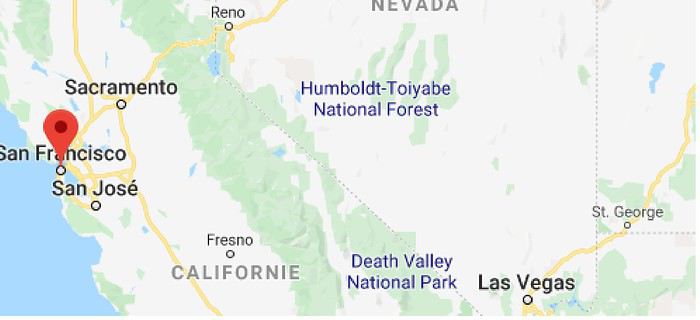
I’ll be spending 33 days in this little area! I’m a slow traveler.
Meanwhile, I realized that in some places I wanted to visit (Las Vegas and National Parks), it was better to book ahead. So, I added to my reservations: - 2 nights in a hostel in Las Vegas - 6 nights of camping in the national parks (2 at Zion NP, 2 at Yosemite NP, 2 at Sequoia-Kings Canyon NP). Between all these dated stops, it’s a choose-your-own-adventure from the ideas I found.
I’m also a slow writer—slow writer, slow traveler—so it’ll take me a while to wrap this up. I’ll start tomorrow.
November 2018, I stumbled upon a promotion for round-trip flights from Paris to San Francisco. Well, I *stumbled*—they must’ve collected some "data" on me to make sure this deal crossed my path. And it worked! My ESTA was still valid, and two days later, it was decided: May 13, 2019 (departure from Paris) to June 15, 2019 (return to Paris).
The travel style? Just like last year: low-budget trip, rental car, and accommodation only in campgrounds, with no reservations to stay as free as possible.
Exceptions? 3 nights in a youth hostel upon arrival in downtown San Francisco, and 1 night on the way back (right before flying) in Montara, near Pacifica—a spot that seemed well-located for driving back to the airport in the middle of the night.
Now, to sketch out the rough itinerary. Here’s what it looked like after the trip:
Westernmost point: Montara Lighthouse on the coast, 30 km south of San Francisco (California); Easternmost point: Zion National Park (Utah). Northernmost point: Reno (Nevada). Southernmost point: Spring Mountain Ranch State Park in Blue Diamond, near Las Vegas (Nevada).
Another view:
I’ll be spending 33 days in this little area! I’m a slow traveler.
Meanwhile, I realized that in some places I wanted to visit (Las Vegas and National Parks), it was better to book ahead. So, I added to my reservations: - 2 nights in a hostel in Las Vegas - 6 nights of camping in the national parks (2 at Zion NP, 2 at Yosemite NP, 2 at Sequoia-Kings Canyon NP). Between all these dated stops, it’s a choose-your-own-adventure from the ideas I found.
I’m also a slow writer—slow writer, slow traveler—so it’ll take me a while to wrap this up. I’ll start tomorrow.
Here’s the thing: ever since Sumatra, I’ve become picky.
I don’t want the grey-green of the North Sea anymore. I want turquoise, crystal-clear waters—so clear you can see the coral 10 meters down. You see it, right?
I don’t want those "equatorial greenhouses" you visit politely in well-maintained park alleys. I want wild, humid, buzzing jungle—hostile yet captivating at the same time.
I don’t want wheat that becomes flour that becomes bread that dips into soup. I want jade-green rice terraces rippling in the wind through distant valleys, where you can enjoy a nasi goreng.
I want more! I want coconut trees in sight, fine sand underfoot, smiles in the streets, and the world’s largest volcanic lake with a charming little island inside. Simple, really!
Here’s the 26-day itinerary across this island:
LAKE TOBA: 4 days It’s the story of a volcanic island at the bottom of a lake at the bottom of a volcano. The lake is Toba. The island is Samosir. Time here is for pausing. Time is for savoring lobsters, swimming in calm waters, enjoying the mild climate without the tourist crowds. And when time isn’t for pausing, it’s for wandering at a leisurely pace—walking, canoeing, or scootering. You’ll discover lush jungle landscapes, Batak villages (a Christian ethnic group) with surprising architecture, small inner lakes, and breathtaking views from the summit. Tuk Tuk, the main village on Samosir, offers plenty of charming restaurants and accommodations. But you can also venture into lost villages and find a peaceful haven with locals... and never want to leave. If you want to know more and see all the photos, it’s here: Lake Toba.
BERASTAGI: 2 days We’re in the heart of Sumatra’s volcanoes. Berastagi is the starting point for climbing the smoking, sulfurous mountains nearby. The town itself isn’t interesting, but you’ll find everything you need (markets, lodging, warungs, restaurants...). For the volcanoes, the most accessible is Gunung Sibayak. No guide needed—the hike only takes a few hours (depending on where you start). All accommodations provide clear directions. The summit is only 2,095 meters high. Oh, this volcano isn’t all that impressive. But it’s really nice to feel the earth’s warmth in this lunar, ochre-yellow landscape, through the hissing fumaroles escaping the rocks. The place is stunning on a clear day, or even better if you’re lucky enough to rise above the clouds. Across from it, you’ll see the splendid view of a more turbulent neighboring volcano: Mount Sinabung and its dramas.
The jungle KETAMBE: 4 days
This is the real jungle. Not the Hollywood studio kind or the city zoo version. No: the jungle. Teeming, dense, humid, and noisy. With the help of a specialized guide, we spotted plenty of insects and birds, long-tailed macaques, "Thomas leaf monkeys," and the much-anticipated orangutan... Ketambe is less touristy than Bukit Lawang. The animals are completely wild, not "semi-tame." This part of Gunung Leuser National Park is also harder to access, but the experience remains authentic even as tourism grows. In these times of deforestation advancing like a terrestrial cancer, experiencing the jungle is a unique, moving, essential moment: it’s "For the wild beauty of the last primary forests" (Le Monde, November 13, 2013). Leech socks and a small backpack: you’re ready for a multi-day trek? Off you go for muddy slopes, liters of sweat, hot rivers, endless green... and primates! Sleeping at least one night is a memorable adventure: the sounds of the jungle in total darkness deliver their dose of sensations, chills, and lifelong memories. If you want to know more and see all the photos, it’s here: the Ketambe jungle.
PULAU WEH: 5 days It’s all here: turquoise waters, fishing villages, thrilling scuba diving, lush jungle, coconut trees, warungs, and fresh fish on abandoned beaches with seashells and crustaceans. A small island north of Sumatra (50 minutes by ferry), Pulau Weh is slowly recovering from the 2004 tsunami. For now, the place isn’t overrun by tourists. But the infrastructure is more pleasant than in the rest of Sumatra. You’ll find some charming bungalows right on the water. Rent a scooter, and you can easily find yourself alone on a paradise-like cove for a romantic sunset. For the party scene, uh... it’s pretty quiet! People come here mainly for scuba diving with its colorful corals (though some have bleached) and lively marine life. Snorkeling also reveals beautiful sights. If you’re not here to swim, there’s always lazing on the beach in a hammock, sipping while gazing at the turquoise waves. That’s great too! If you want to know more and see all the photos, it’s here: Pulau Weh.
LAKE MANINJAU: 2 days The mist yawns slowly over the waters at dawn. When it finally lifts, you discover a blue treasure at the bottom of the old volcano’s caldera. In central-west Sumatra, Lake Maninjau is home to the Minang Kabau people. Less touristy than Lake Toba, it still offers equally beautiful landscapes. By scooter, a full day is enough to circle the lake (40 km) through villages, jungle, and rice terraces: it’s very pleasant, especially the southern part where traffic is light. You’ll find bungalows by the water, mainly near the village of Maninjau (yes, same name as the lake). From the crater’s heights, you can admire the whole of Maninjau (the lake!). To get there, you can navigate the 44 hairpin turns (!) by motorized vehicle from Maninjau (the village!) or tackle the path climbing from Bayur to Puncak Lawang, where the view is... top (yes, same name as the village).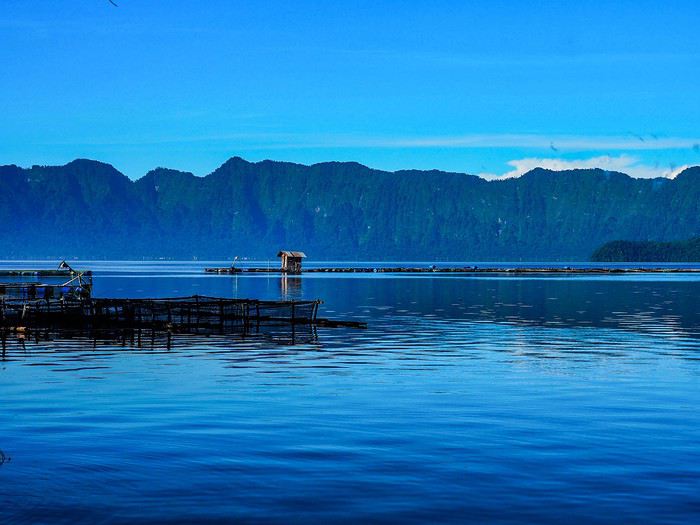
HARAU VALLEY: 3 days Magnificent rice terraces surrounded by towering cliffs and cascading waterfalls. That’s what awaits the adventurer—happy like Ulysses after a long journey to the fertile Harau Valley. It’s peaceful, off the beaten path, and rejuvenating. Few tourists here, and few accommodations. The well-known Abdi Homestay offers quiet bungalows, slightly set back from the main road, in a stunning setting. Again, renting a scooter is a great idea, but here, "happiness is in the fields"—well, the rice terraces. So, park your two wheels and venture along the paths crisscrossing the terraces, following small streams, brushing past villages lost in the valley. If you want to know more and see all the photos, it’s here: Harau Valley.
BEACHES SOUTH of PADANG: 4 days 20 km south of Padang lies Bungus Beach. But that’s not it yet... You’ll need to take a fisherman’s boat for 40 minutes south to land on a peninsula inaccessible by car. That’s the minimum to reach this little paradise, nestled between jungle and sea, far from Padang’s pollution and hustle. An Eden on an isolated beach, with nothing but small bungalows and possible excursions to the nearby islands. The only way to get around: by boat and on foot... Pure bliss, toes in the water. And on the blog "Un tour dans le sac", nothing is spared—especially not the description to make your mouth water (Indian Ocean water, that is): sublime turquoise waters, postcard-perfect coconut trees, lazing in your favorite hammock.
For the practical side, here’s some info:
Sumatra Travel: Itinerary Summary My thoughts Sumatra is a magnificent Indonesian island and still relatively untouched. Tourists mainly flock to Java and Bali. It’s especially suited for nature lovers who’ll appreciate its volcanoes, paradise islands, jungle, and rice terraces. Sumatra is huge: in 3 weeks, we only visited the northern half of the island... And even then, we barely scratched the surface of this stunning part of Sumatra. That said, this itinerary offers an exceptional variety of landscapes: beaches, volcanoes, rice terraces, jungle—the winning combo!
Overall, Sumatra is still lacking in infrastructure, and maybe that’s a good thing: it’s far from Bali’s rampant "hotel urbanization." That said, you’ll have to accept spartan comfort: Sumatra, as beautiful as it is, is only for backpackers, adventurers, and travelers who can do without cozy 3-star hotels. In short, Sumatra is earned, but the effort is well worth it, and the warm welcome from the locals will make you forget the minor travel inconveniences.
A disappointment? The food isn’t as good as Bali’s (check out our article on the subject (link)). The stop in Berastagi is nice but not essential, especially if you’ve already seen Java’s impressive volcanoes.
A favorite? There were so many! But if I had to choose, I’d pick the Ketambe jungle. It was my first experience in a natural environment I didn’t know: a primary forest and memories that’ll last!
Would I do the Sumatra trip again? I regret not going to the Mentawai Islands. This archipelago, off Sumatra’s west coast, has long remained isolated: some inhabitants still live traditionally. These "flower men" live in harmony with nature. Unfortunately, their way of life is threatened by modern influences, and their fragile, unique culture risks disappearing. I would’ve loved to spend time with this incredible ethnic group. But it takes time: a week seems necessary. I would’ve had to skip some stops in our itinerary—maybe the peninsula south of Bungus and Berastagi?
Budget: It’s really cheap, especially the food, which, let’s be honest, isn’t amazing. Backpackers who can settle for spartan comfort (small bungalows without AC or hot water) and local food in warungs can easily get by on 20 € per day for two people (food + lodging). The cost of flights from Europe to Sumatra remains high. For our part, we found great deals on Paris-Hong Kong tickets (350 € round trip). Then you just need to reach Medan by low-cost airline.
No mandatory tipping in restaurants or accommodations. However, it’s more common to tip guides or taxi drivers.
Like many places in Indonesia, everything is negotiable. If you’re new to this, it’s not easy at first... Especially when dealing with a population poorer than us, "rich Westerners." But bargaining is part of the local culture! And you’ll get used to it—it even becomes fun. Plus, you don’t want to be that tourist paying the "tourist price" they’ll likely quote first, right?
To negotiate, be firm, respect your counterpart, smile, stay polite... Clearly show it’s too expensive or that the deal is done (by shaking hands, for example). Typing the numbers on your phone helps communicate the price. Learning a few words in the local language ("It’s too expensive," "How much?") is appreciated! Okay, it’s a rough tip, but here’s a base: dividing the first price by 2 gets you close to a fair negotiation.
Currently, 15,000 Indonesian rupiahs are worth about 1 €.
Accommodation Infrastructure is underdeveloped in Sumatra. You’ll find fewer "charming lodgings" than in Bali. Still, there are some very pleasant places. If you read our Sumatra articles, we recommend Abdi Homestay in Harau Valley and Silimalumbo at Lake Toba. In Pulau Weh, the choice is wider, but we suggest trying the seafood pasta at Bixio Café!
Health We didn’t get sick in Sumatra. By following a few simple rules (avoiding tap water, not swimming in stagnant freshwater), you’ll avoid the main issues. Hygiene is improving anyway. Anti-malaria treatment is still recommended, but cases are rare.
Also, keep in mind that Sumatra has a hot, humid climate—adjust your behavior accordingly (stay hydrated, protect yourself from the sun, etc.).
Here’s the 26-day itinerary across this island:
LAKE TOBA: 4 days It’s the story of a volcanic island at the bottom of a lake at the bottom of a volcano. The lake is Toba. The island is Samosir. Time here is for pausing. Time is for savoring lobsters, swimming in calm waters, enjoying the mild climate without the tourist crowds. And when time isn’t for pausing, it’s for wandering at a leisurely pace—walking, canoeing, or scootering. You’ll discover lush jungle landscapes, Batak villages (a Christian ethnic group) with surprising architecture, small inner lakes, and breathtaking views from the summit. Tuk Tuk, the main village on Samosir, offers plenty of charming restaurants and accommodations. But you can also venture into lost villages and find a peaceful haven with locals... and never want to leave. If you want to know more and see all the photos, it’s here: Lake Toba.
BERASTAGI: 2 days We’re in the heart of Sumatra’s volcanoes. Berastagi is the starting point for climbing the smoking, sulfurous mountains nearby. The town itself isn’t interesting, but you’ll find everything you need (markets, lodging, warungs, restaurants...). For the volcanoes, the most accessible is Gunung Sibayak. No guide needed—the hike only takes a few hours (depending on where you start). All accommodations provide clear directions. The summit is only 2,095 meters high. Oh, this volcano isn’t all that impressive. But it’s really nice to feel the earth’s warmth in this lunar, ochre-yellow landscape, through the hissing fumaroles escaping the rocks. The place is stunning on a clear day, or even better if you’re lucky enough to rise above the clouds. Across from it, you’ll see the splendid view of a more turbulent neighboring volcano: Mount Sinabung and its dramas.
The jungle KETAMBE: 4 days
This is the real jungle. Not the Hollywood studio kind or the city zoo version. No: the jungle. Teeming, dense, humid, and noisy. With the help of a specialized guide, we spotted plenty of insects and birds, long-tailed macaques, "Thomas leaf monkeys," and the much-anticipated orangutan... Ketambe is less touristy than Bukit Lawang. The animals are completely wild, not "semi-tame." This part of Gunung Leuser National Park is also harder to access, but the experience remains authentic even as tourism grows. In these times of deforestation advancing like a terrestrial cancer, experiencing the jungle is a unique, moving, essential moment: it’s "For the wild beauty of the last primary forests" (Le Monde, November 13, 2013). Leech socks and a small backpack: you’re ready for a multi-day trek? Off you go for muddy slopes, liters of sweat, hot rivers, endless green... and primates! Sleeping at least one night is a memorable adventure: the sounds of the jungle in total darkness deliver their dose of sensations, chills, and lifelong memories. If you want to know more and see all the photos, it’s here: the Ketambe jungle.
PULAU WEH: 5 days It’s all here: turquoise waters, fishing villages, thrilling scuba diving, lush jungle, coconut trees, warungs, and fresh fish on abandoned beaches with seashells and crustaceans. A small island north of Sumatra (50 minutes by ferry), Pulau Weh is slowly recovering from the 2004 tsunami. For now, the place isn’t overrun by tourists. But the infrastructure is more pleasant than in the rest of Sumatra. You’ll find some charming bungalows right on the water. Rent a scooter, and you can easily find yourself alone on a paradise-like cove for a romantic sunset. For the party scene, uh... it’s pretty quiet! People come here mainly for scuba diving with its colorful corals (though some have bleached) and lively marine life. Snorkeling also reveals beautiful sights. If you’re not here to swim, there’s always lazing on the beach in a hammock, sipping while gazing at the turquoise waves. That’s great too! If you want to know more and see all the photos, it’s here: Pulau Weh.
LAKE MANINJAU: 2 days The mist yawns slowly over the waters at dawn. When it finally lifts, you discover a blue treasure at the bottom of the old volcano’s caldera. In central-west Sumatra, Lake Maninjau is home to the Minang Kabau people. Less touristy than Lake Toba, it still offers equally beautiful landscapes. By scooter, a full day is enough to circle the lake (40 km) through villages, jungle, and rice terraces: it’s very pleasant, especially the southern part where traffic is light. You’ll find bungalows by the water, mainly near the village of Maninjau (yes, same name as the lake). From the crater’s heights, you can admire the whole of Maninjau (the lake!). To get there, you can navigate the 44 hairpin turns (!) by motorized vehicle from Maninjau (the village!) or tackle the path climbing from Bayur to Puncak Lawang, where the view is... top (yes, same name as the village).
HARAU VALLEY: 3 days Magnificent rice terraces surrounded by towering cliffs and cascading waterfalls. That’s what awaits the adventurer—happy like Ulysses after a long journey to the fertile Harau Valley. It’s peaceful, off the beaten path, and rejuvenating. Few tourists here, and few accommodations. The well-known Abdi Homestay offers quiet bungalows, slightly set back from the main road, in a stunning setting. Again, renting a scooter is a great idea, but here, "happiness is in the fields"—well, the rice terraces. So, park your two wheels and venture along the paths crisscrossing the terraces, following small streams, brushing past villages lost in the valley. If you want to know more and see all the photos, it’s here: Harau Valley.
BEACHES SOUTH of PADANG: 4 days 20 km south of Padang lies Bungus Beach. But that’s not it yet... You’ll need to take a fisherman’s boat for 40 minutes south to land on a peninsula inaccessible by car. That’s the minimum to reach this little paradise, nestled between jungle and sea, far from Padang’s pollution and hustle. An Eden on an isolated beach, with nothing but small bungalows and possible excursions to the nearby islands. The only way to get around: by boat and on foot... Pure bliss, toes in the water. And on the blog "Un tour dans le sac", nothing is spared—especially not the description to make your mouth water (Indian Ocean water, that is): sublime turquoise waters, postcard-perfect coconut trees, lazing in your favorite hammock.
For the practical side, here’s some info:
Sumatra Travel: Itinerary Summary My thoughts Sumatra is a magnificent Indonesian island and still relatively untouched. Tourists mainly flock to Java and Bali. It’s especially suited for nature lovers who’ll appreciate its volcanoes, paradise islands, jungle, and rice terraces. Sumatra is huge: in 3 weeks, we only visited the northern half of the island... And even then, we barely scratched the surface of this stunning part of Sumatra. That said, this itinerary offers an exceptional variety of landscapes: beaches, volcanoes, rice terraces, jungle—the winning combo!
Overall, Sumatra is still lacking in infrastructure, and maybe that’s a good thing: it’s far from Bali’s rampant "hotel urbanization." That said, you’ll have to accept spartan comfort: Sumatra, as beautiful as it is, is only for backpackers, adventurers, and travelers who can do without cozy 3-star hotels. In short, Sumatra is earned, but the effort is well worth it, and the warm welcome from the locals will make you forget the minor travel inconveniences.
A disappointment? The food isn’t as good as Bali’s (check out our article on the subject (link)). The stop in Berastagi is nice but not essential, especially if you’ve already seen Java’s impressive volcanoes.
A favorite? There were so many! But if I had to choose, I’d pick the Ketambe jungle. It was my first experience in a natural environment I didn’t know: a primary forest and memories that’ll last!
Would I do the Sumatra trip again? I regret not going to the Mentawai Islands. This archipelago, off Sumatra’s west coast, has long remained isolated: some inhabitants still live traditionally. These "flower men" live in harmony with nature. Unfortunately, their way of life is threatened by modern influences, and their fragile, unique culture risks disappearing. I would’ve loved to spend time with this incredible ethnic group. But it takes time: a week seems necessary. I would’ve had to skip some stops in our itinerary—maybe the peninsula south of Bungus and Berastagi?
Budget: It’s really cheap, especially the food, which, let’s be honest, isn’t amazing. Backpackers who can settle for spartan comfort (small bungalows without AC or hot water) and local food in warungs can easily get by on 20 € per day for two people (food + lodging). The cost of flights from Europe to Sumatra remains high. For our part, we found great deals on Paris-Hong Kong tickets (350 € round trip). Then you just need to reach Medan by low-cost airline.
No mandatory tipping in restaurants or accommodations. However, it’s more common to tip guides or taxi drivers.
Like many places in Indonesia, everything is negotiable. If you’re new to this, it’s not easy at first... Especially when dealing with a population poorer than us, "rich Westerners." But bargaining is part of the local culture! And you’ll get used to it—it even becomes fun. Plus, you don’t want to be that tourist paying the "tourist price" they’ll likely quote first, right?
To negotiate, be firm, respect your counterpart, smile, stay polite... Clearly show it’s too expensive or that the deal is done (by shaking hands, for example). Typing the numbers on your phone helps communicate the price. Learning a few words in the local language ("It’s too expensive," "How much?") is appreciated! Okay, it’s a rough tip, but here’s a base: dividing the first price by 2 gets you close to a fair negotiation.
Currently, 15,000 Indonesian rupiahs are worth about 1 €.
Accommodation Infrastructure is underdeveloped in Sumatra. You’ll find fewer "charming lodgings" than in Bali. Still, there are some very pleasant places. If you read our Sumatra articles, we recommend Abdi Homestay in Harau Valley and Silimalumbo at Lake Toba. In Pulau Weh, the choice is wider, but we suggest trying the seafood pasta at Bixio Café!
Health We didn’t get sick in Sumatra. By following a few simple rules (avoiding tap water, not swimming in stagnant freshwater), you’ll avoid the main issues. Hygiene is improving anyway. Anti-malaria treatment is still recommended, but cases are rare.
Also, keep in mind that Sumatra has a hot, humid climate—adjust your behavior accordingly (stay hydrated, protect yourself from the sun, etc.).
Hello forum,
Did any of you feel the same things we did in China?
We spent a good twenty days there in August. First, we traveled solo around Chengdu, then joined an organized tour for 12 days (Beijing, Pingyao, Xi'an, Guilin, Xingping, Yangshuo, Shanghai, Wuzhen) and extended our stay by 4 extra days to visit Zhangjiajie.
The landscapes were stunning, and we have unforgettable memories... but we were really disappointed by the following points:
- The food: way too spicy. Lacking in flavor, not much taste. I’m speaking "in general" because we did enjoy some good steamed dumplings, smoked pork, and other dumplings... But compared to Thailand, Cambodia, or India, Chinese cuisine didn’t impress us at all.
- The behavior of the Chinese: disrespectful, rushed, agitated. You constantly have to fight—people push, crowd, and overwhelm you... At the entrance to the Terracotta Army (and other sites), it’s a human tidal wave... and I mean that literally. We were carried by the crowd without even touching the ground. It was like a situation where you have one bowl of rice and 20,000 starving people diving for it...
You’re at a ticket counter, and they cut in front of you. You’re in line for boarding, suitcase ready to go on the conveyor belt, and someone shows up out of nowhere to put THEIR suitcase down... even though they have a flight ticket with THEIR seat number and won’t be leaving before you!!!! You’re getting on the bus, and someone shoves past you just so they don’t end up behind you.
It’s like these people only think about themselves. I didn’t see a single person let someone else go first or even ask—it’s as if politeness and respect are completely foreign to them.
It’s honestly exhausting and draining...
- Communication: In every other country we’ve visited, whether in Asia or Europe, we always manage—with English, a few words of Italian, French, or Spanish. In China, I’ll be blunt: if you don’t speak Chinese, you’re screwed. And yet, a pair of kids around ten or twelve years old asked us in English where we were from :)
- Understanding: Here’s the rule. Even if the person you’re talking to speaks a little English and says they understand you... make sure they *really* do, because 9 times out of 10, they don’t. Out of pride or just cluelessness, they’ll give you a big smile and nod, but in reality, they didn’t get what you were saying.
Several times with our group, in the evening at a restaurant, if we hadn’t been helped by someone at another table who spoke a little English, we’d still be there. The classic example: the waiter brings one menu (for 10 people at the table), and we’re all trying to explain that we need 4 or more menus. Five minutes later, he’s still staring at us with that same blank smile...
In 3* or 4* hotels, you go to the front desk for a hot water or AC issue. Three or four staff members just stand there beaming at you. You try to explain with photos or a translator, but in the end, you leave with the problem unresolved.
They don’t speak—they shout... on buses, in hotels...
We were also surprised to find that self-service laundromats were almost nonexistent. We got scammed once at a hotel with an astronomical bill!
As for flights, we flew Air China on the way there and Austrian Airlines on the way back—no comparison. Air China had zero service and food that was "baby food" quality. Austrian Airlines had multiple services, a decent meal, and smiling flight attendants.
I don’t know if any of you had the same experience in this country, but I’m definitely not eager to go back. Whereas if someone offered me India, Thailand, or Vietnam tomorrow, I’d be there in a heartbeat!!!
Hi everyone,
we’re a couple in our thirties and we’ve decided to visit northwest Vietnam with AmicaTravel for their "meet-up in Lolo Land" circuit. I’m currently looking at the itinerary with the Lonely Planet and reading the many posts on this site, especially Lansay’s, which are really inspiring. Here are the stages of the circuit:
Day 1: Hanoi – arrival
Day 2: Hanoi visit
Day 3: Hanoi – Thac Ba
Day 4: Thac Ba – Luc Yen – Ha Giang
Day 5: Ha Giang – Dong Van
Day 6: Dong Van – Meo Vac – Bao Lac
Day 7: Bao Lac – Ba Be Lake
Day 8: Ba Be visit
Day 9: Ba Be – Cao Bang
Day 10: Cao Bang – Ban Gioc – Cao Bang
Day 11: Cao Bang – Lang Son
Day 12: Lang Son – Halong Bay
Day 13: Halong Bay – Hanoi
Day 14: Hanoi – departure
Otherwise, the period would be from April 21, 2012, to May 5, 2012, but this could vary by a day or two if it’s worth it. I haven’t made the reservation yet because I’m trying to find out if all the stages of the circuit are interesting (thanks to this forum). We’d like to stay with locals as much as possible and maybe spend an extra day in one region to avoid just "passing through"—settle in a bit. We’d also like to do some trekking, and I read in Lansay’s posts that Bac Ha would be a good option for that (this stage isn’t included in the initial circuit), unless other stages of the circuit are just as good for trekking.
Finally, regarding the last stage in Halong Bay, what’s the best way to explore it? It seems very crowded (and I don’t know if the junk boat included in the circuit is designed for a small group or very large groups, which we’d prefer to avoid if possible). I read a post here that I can’t find anymore about a couple who did a stage with a small stay on an island or something like that—it sounded paradise-like.
Generally, we’d like to avoid running into too many tourists (yes, I know it’s a bit paradoxical), but it’s mainly to encourage encounters with locals and maybe with a small group of travelers. If others want to do this circuit, why not... but we’re hoping to travel in a very small group (maximum 6 people).
Otherwise, for the flight, I was thinking of booking with Vietnam Airlines—is that a good choice? Thanks in advance for your great tips.
It all started last December, after another price alert from Gilou for United/Lufthansa flights at 250 € from Paris to San Francisco. Meanwhile, I was planning to spend a week alone with our three kids (Maxime, 14, Rachel, 12, and Timéo, 8) somewhere in France for the February break.
But this time, Gilou really outdid himself—way too tempting! 😮 His great tip worked for both the February and Easter breaks. I know April is the ideal month, especially if you love hiking! But for family reasons, only February would work for us.
Isn’t February a month to avoid for the Southwest? To keep our summer trip budget intact, I was thinking of camping as much as possible. After checking weather sites for temperature histories in key spots (Furnace Creek, Saint George, Page, Sedona), nighttime temps over the past two years ranged from +5 to -2°C. So, it seemed doable...
I started discussing (aka negotiating, even begging) with my better half. The kids caught on fast that there was a chance we’d go, and they were thrilled! She finally gave her consent to make the kids happy 😎. I quickly checked that our ESTAs were still valid, and 48 hours later, I had the tickets in hand 😎😎. But five days later, Laetitia changed her mind—her "Yes" turned back into a "No." No way were we going without her to her favorite country!!
Damn it 🤪! I had to tell her I’d already bought the four tickets (without bringing it up again, of course—a "Yes" is a "Yes," right?). And since the tickets were non-refundable, there was no going back... Apparently, with women, some "Yeses" mean *really* yes, but others mean, "I said yes in principle, but I wasn’t actually on board—and I never thought you’d have the nerve to buy the tickets without telling me!!" I had no idea 🤪!
Us guys? We’re way more straightforward—binary, even monetary... Yes means yes! And no can mean yes too 😏!! Anyway, in a lovely family atmosphere, I opened a thread to start planning and thanked Trois14 and Bluemesa for their help. On Trois14’s advice, I booked 5 nights in motels around St. George-Page at super tempting rates—around $35-40 a night...
On that note, Christmas cost me an arm and a leg... Gotta try to make up for it 😛!
Here’s the theoretical itinerary:
Death Valley (2 days) Valley of Fire The White Dome (hike up and down via Squirrel Canyon) 4 nights in the Kanab-Page area Sedona (2 days) Route 66 Alabama Hills / Trona Pinnacles Drive back to SFO via Highway 1
That’s the plan, at least...
In reality, it turned into a whole different story. I learned that in February, you’ve got to be flexible—*very* flexible sometimes—to dodge the weather. Halfway through, a cold snap made our second week (planned 100% camping) impossible, completely upending the itinerary.
So, a huge thanks to PapJ59, Noyellebis, and especially Caribou44 and Simonic. 🙂 A thousand thanks for your quick responses, availability, and sound advice, which let us have an original and unforgettable second week—Organ Pipe Cactus NM, Yuma, Salvation Mountain, Anza Borrego SP, a palm grove in Joshua Tree, then back to SFO!! Without you, we’d have been miserable on the spot, but instead... 😇
A big shout-out to Thibaut and his famous blog (rightfully praised on VF—it’s one of the few that details Organ Pipe), to travel journal writers for inspiration in general, and to those who helped me prep or during the trip (journals by Pong, Hiacinthe, Zitounet, and Laetitia).
Now, for the story...
Hi there, 🙂
I’m thinking of taking a trip to these two countries in 2026 (late spring to early summer).
I’d arrive in Almaty and leave from Bishkek, and I’d be driving myself.
I plan to spend 1 week in Kazakhstan and 2 in Kyrgyzstan. The itinerary isn’t set yet.
My preliminary questions are about formalities, hassle levels, and the car.
From what I understand, no visa is needed, the passport must be valid for 6 months after entry, and there’s no longer a requirement to register with the authorities at each stop. In short, once you’re in, no administrative headaches.
Except for permits needed to drive in certain regions?
---/---
About crossing between the two countries:
- On foot - In a rental car
Quick? Easy?
---/---
Are both countries safe? (Meaning you don’t have to stay on guard all the time.) Are the cops corrupt? (A little, a lot, passionately, not at all?)
---/---
Is it better to rent a car for both countries or rent a vehicle in each country?
A 4x4 or something else?
Is accommodation plentiful enough that I can skip a rooftop tent, or is it better to rent a 4x4 with one?
I’ll definitely have more questions later...😉
Thanks for your answers !
Hello, we’re a couple over 70 and will be spending about six weeks in Réunion next January/February, staying first in Saint-Leu and then in Saint-Pierre, each time in independent accommodations. We’ll have a car and enjoy hiking, though nothing too strenuous. Otherwise, we live quietly—cooking our own meals and exploring at a relaxed pace. Our goal is simply to escape the harshest part of the European winter in good conditions. Can anyone share some great tips, easy hikes, must-see spots, or surprising activities? In return, we’d be happy to share insights about Valais in Switzerland—a sunny but chilly winter destination! Best, Bernard.
Hey there, it's me again—back with my usual travel journal share for our loved ones, from our 15-day trip in October 2019.
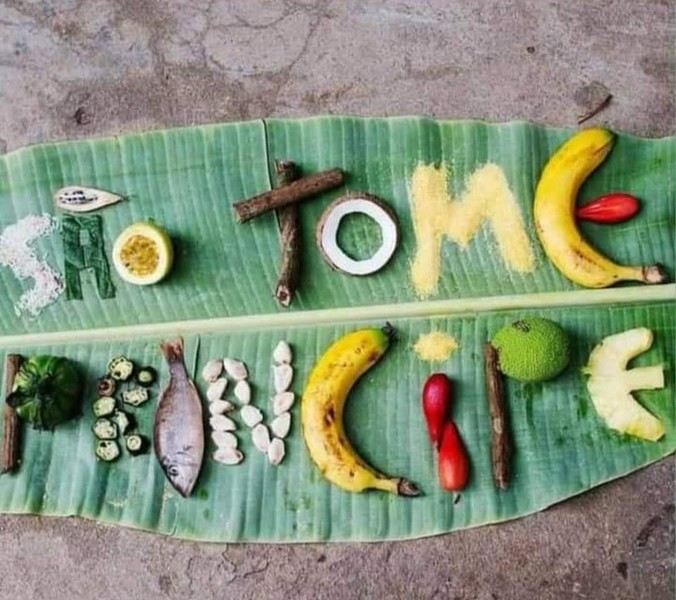
"Ah, here it is at last—that sweet scent of elsewhere so dear to Cricri and Lulu’s noses, that mix of apprehension and desire when facing the unknown.
We’re really diving into the unknown this time, taking you to the island of SAO TOMÉ... also known as the island: *‘Wait, what did you say?’* 😄. Because apparently, no one’s heard of Sao Tomé—except our Portuguese friends.
It’s an archipelago of three islands smack in the middle of the world, right on the equator, off the coast of Gabon.
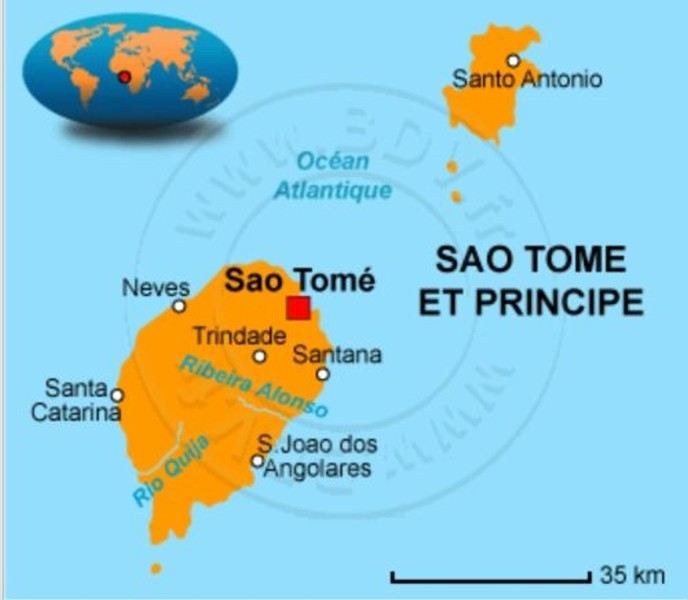
No, these aren’t the sun-soaked, Polynesian lagoon islands. Here, *‘it rains, it pours...’* pretty much all the time, it seems.
There’s not much to *‘see’* in the traditional tourist sense—EXCEPT for stunning landscapes, lush vegetation, a few beaches with golden or black sand, colonial buildings still in their original state, a single main road, and plenty of *‘tracks’* that are more or less drivable. All this surrounded by an African population that speaks Portuguese and is known for its warm welcome.
Well, that should be enough for our happiness—and hopefully yours too! 😊
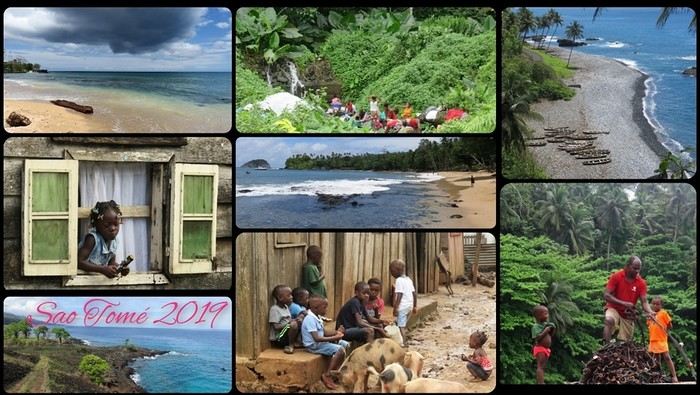
Ready for landing?
"Ah, here it is at last—that sweet scent of elsewhere so dear to Cricri and Lulu’s noses, that mix of apprehension and desire when facing the unknown.
We’re really diving into the unknown this time, taking you to the island of SAO TOMÉ... also known as the island: *‘Wait, what did you say?’* 😄. Because apparently, no one’s heard of Sao Tomé—except our Portuguese friends.
It’s an archipelago of three islands smack in the middle of the world, right on the equator, off the coast of Gabon.
No, these aren’t the sun-soaked, Polynesian lagoon islands. Here, *‘it rains, it pours...’* pretty much all the time, it seems.
There’s not much to *‘see’* in the traditional tourist sense—EXCEPT for stunning landscapes, lush vegetation, a few beaches with golden or black sand, colonial buildings still in their original state, a single main road, and plenty of *‘tracks’* that are more or less drivable. All this surrounded by an African population that speaks Portuguese and is known for its warm welcome.
Well, that should be enough for our happiness—and hopefully yours too! 😊
Ready for landing?
Okay, it wasn’t a total disaster either. Actually, I hesitated before starting this travel journal: is it even worth writing about a holiday that won’t leave an unforgettable memory?
In the end, I went for it (there aren’t many recent travel journals about this destination).
So, read on... or don’t .
Every time we’ve been to the Canary Islands, it’s been by default (basically: where can we go in winter or early spring when we only have a week—so not too far, not too much jet lag, but with decent weather?).
This time, we had two weeks, but the winter plan kept changing: first Thailand (dropped for personal reasons), then Martinique (dropped because of work leave dates that weren’t up to me), and finally, the Canary Islands.
We’ve already been to Tenerife (which we really liked) and Lanzarote (which we liked a little less). This year, two options: Gran Canaria or one of the smaller islands west of Tenerife (La Palma, or even La Gomera or El Hierro). We chose Gran Canaria... not sure it was the right call! Whose fault is it? Storm Thérèse’s! Yes, Storm Thérèse followed us on arrival, and its effects lasted quite a while. We had to adapt, cancel visits, change activities...
But even without Thérèse...
Saturday 21/03 Departure from Orly at 6:10 AM with Transavia. The plane took off on time and landed a little early, tossed around by strong winds before touching down. It had just rained, but it was (almost) no longer raining.
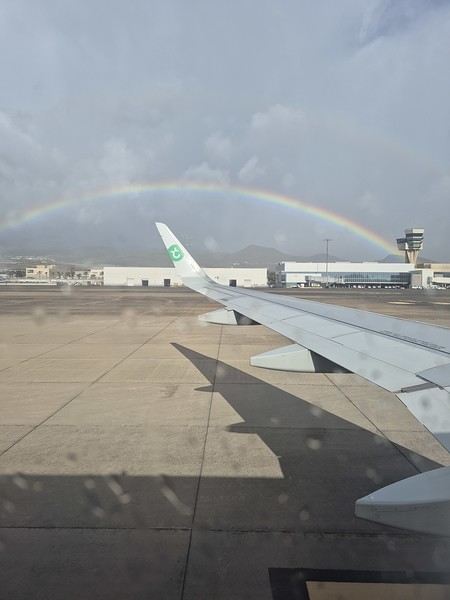
We quickly picked up our luggage and then the car at the Cicar counter. We got a Seat Arona instead of the Corsa we’d booked. Well, while the driving position didn’t feel great at first (I got used to it), the engine’s smoothness and power were much appreciated on the island’s winding and sometimes steep roads.
It was only 10 AM, and we couldn’t theoretically check into our accommodation until 3 PM (the owner promised to message me if it was ready earlier). So, we headed to the (big) *Jardín Botánico Viera y Clavijo*, where we planned to spend a few hours. We found a huge parking lot... empty. The passenger in the car in front of us (yes, we weren’t the only ones at the closed gate—there was a car in front and one behind) went to ask for info: it was closed due to the storm 😕. So, we calmly headed toward Puerto de las Nieves, on the northwest coast of the island.
The plan: go to a restaurant, visit the village, and do some shopping while waiting for early afternoon. As soon as we got out of the car, it started raining... we took shelter under the awning of a shop, waiting for it to pass. But the rain turned into a downpour, and within minutes, awning or not, Gore-Tex or not, we were soaked!
Since we were already wet, we might as well go to the restaurant—they weren’t far! But here’s the thing: contrary to what Google Maps said, they all opened at 1 PM, not noon! Back to the car, wading through 5 cm of water because all the village streets were flooded . The rain let up, we did some shopping, went to eat, and I got a message from the owner saying the accommodation was ready 🙂.
So, off we went to La Suerte, a few kilometers north of Agaete. The downside of the place, especially with luggage, is that you have to climb several flights of stairs via an outdoor staircase (after parking more or less far away on a steep street) to get there 😛). Of course, on the way from the car to the apartment, it started pouring again—the bags got soaked! Enough rain for today! We settled in quietly, and by late afternoon, we could (finally!) go admire the view from the terrace.
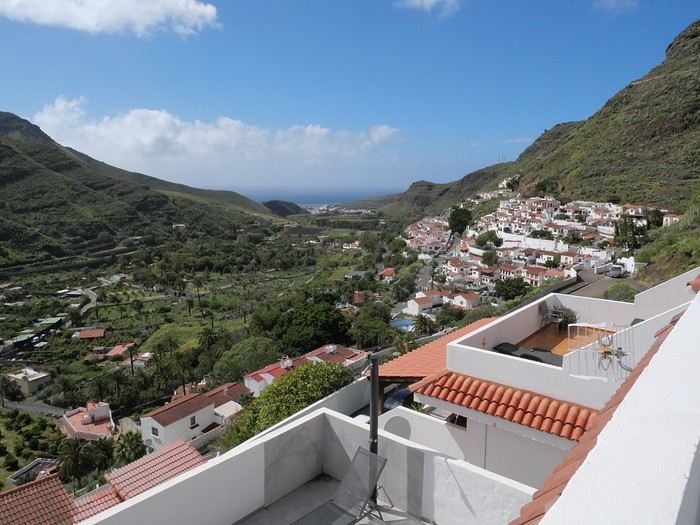
Every time we’ve been to the Canary Islands, it’s been by default (basically: where can we go in winter or early spring when we only have a week—so not too far, not too much jet lag, but with decent weather?).
This time, we had two weeks, but the winter plan kept changing: first Thailand (dropped for personal reasons), then Martinique (dropped because of work leave dates that weren’t up to me), and finally, the Canary Islands.
We’ve already been to Tenerife (which we really liked) and Lanzarote (which we liked a little less). This year, two options: Gran Canaria or one of the smaller islands west of Tenerife (La Palma, or even La Gomera or El Hierro). We chose Gran Canaria... not sure it was the right call! Whose fault is it? Storm Thérèse’s! Yes, Storm Thérèse followed us on arrival, and its effects lasted quite a while. We had to adapt, cancel visits, change activities...
But even without Thérèse...
Saturday 21/03 Departure from Orly at 6:10 AM with Transavia. The plane took off on time and landed a little early, tossed around by strong winds before touching down. It had just rained, but it was (almost) no longer raining.
We quickly picked up our luggage and then the car at the Cicar counter. We got a Seat Arona instead of the Corsa we’d booked. Well, while the driving position didn’t feel great at first (I got used to it), the engine’s smoothness and power were much appreciated on the island’s winding and sometimes steep roads.
It was only 10 AM, and we couldn’t theoretically check into our accommodation until 3 PM (the owner promised to message me if it was ready earlier). So, we headed to the (big) *Jardín Botánico Viera y Clavijo*, where we planned to spend a few hours. We found a huge parking lot... empty. The passenger in the car in front of us (yes, we weren’t the only ones at the closed gate—there was a car in front and one behind) went to ask for info: it was closed due to the storm 😕. So, we calmly headed toward Puerto de las Nieves, on the northwest coast of the island.
The plan: go to a restaurant, visit the village, and do some shopping while waiting for early afternoon. As soon as we got out of the car, it started raining... we took shelter under the awning of a shop, waiting for it to pass. But the rain turned into a downpour, and within minutes, awning or not, Gore-Tex or not, we were soaked!
Since we were already wet, we might as well go to the restaurant—they weren’t far! But here’s the thing: contrary to what Google Maps said, they all opened at 1 PM, not noon! Back to the car, wading through 5 cm of water because all the village streets were flooded . The rain let up, we did some shopping, went to eat, and I got a message from the owner saying the accommodation was ready 🙂.
So, off we went to La Suerte, a few kilometers north of Agaete. The downside of the place, especially with luggage, is that you have to climb several flights of stairs via an outdoor staircase (after parking more or less far away on a steep street) to get there 😛). Of course, on the way from the car to the apartment, it started pouring again—the bags got soaked! Enough rain for today! We settled in quietly, and by late afternoon, we could (finally!) go admire the view from the terrace.
Hi there,
In January 2026, I’m planning a motorbike trip through northern Vietnam for 3–4 weeks.
Must-dos: Hanoi, RC4, Dien Bien Phu, and of course the must-see landscapes.
I’m looking for any great tips, ideas… and maybe even a riding partner.
Cheers
In January 2026, I’m planning a motorbike trip through northern Vietnam for 3–4 weeks.
Must-dos: Hanoi, RC4, Dien Bien Phu, and of course the must-see landscapes.
I’m looking for any great tips, ideas… and maybe even a riding partner.
Cheers
Slovenia was the originally planned destination for summer 2022, as a complement to a road trip through Croatia and Montenegro. Plans changed on a whim in February of that year. Our Balkans road trip would ultimately be limited to Slovenia and take place over 10 days during the Easter school holidays. Flight tickets and car rental were booked right away; all that was left was to finalize our itinerary, already sketched out, and the accommodation reservations.
I decided to add Plitvice Lakes in Croatia to our program. I really wanted to discover them, and for my husband, it was a chance to revisit them several years after a trip to Yugoslavia when he was a teenager.
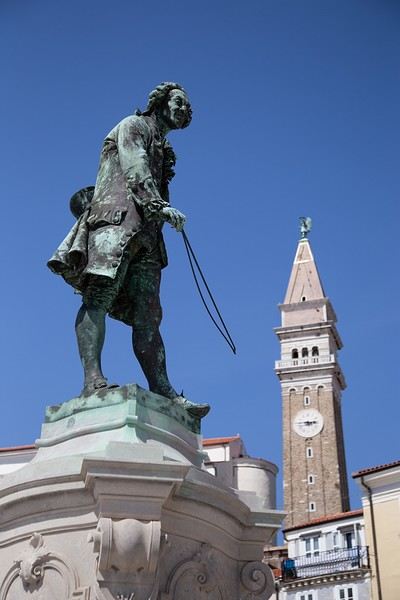
I’m happy to contribute to the reopening of our forum by posting this travel journal (originally posted in 2022 on another forum, the text has been partially revised and photos added). As usual, a few photos to start with—maybe they’ll inspire you to join in!

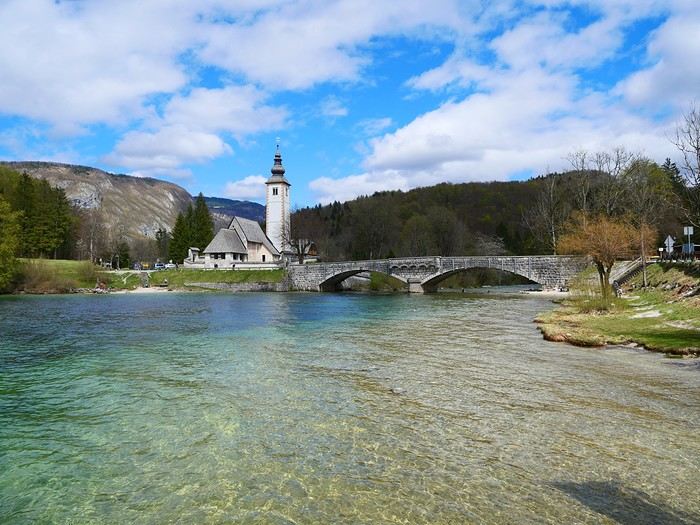
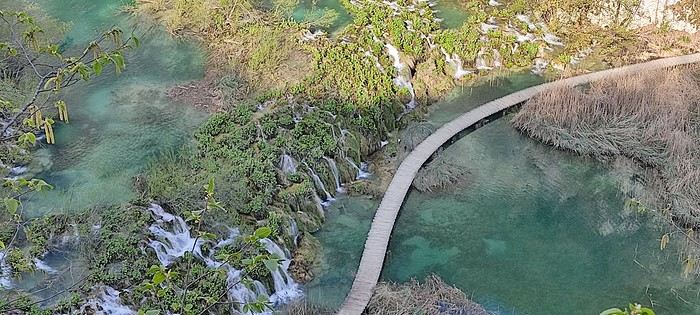

I decided to add Plitvice Lakes in Croatia to our program. I really wanted to discover them, and for my husband, it was a chance to revisit them several years after a trip to Yugoslavia when he was a teenager.
I’m happy to contribute to the reopening of our forum by posting this travel journal (originally posted in 2022 on another forum, the text has been partially revised and photos added). As usual, a few photos to start with—maybe they’ll inspire you to join in!
Hi everyone,
This trip report covers a journey along the Silk Road in China (see detailed description below) undertaken in October 2025. The goal isn’t to recount the trip but to provide information that might help those who want to take a similar journey. Much of the information is valid for any trip to China.
Who we are: a retired couple, aged 63 and 65 (age gives discounts on entry to various sites and museums in China, which is why I won’t list prices here—I don’t know them, but you can easily find them online). We’re used to traveling independently. We speak English, which is the only foreign language spoken in China, though by very few people. I speak and read a little Chinese, which helped, but you can easily get by without it (without any English at all, I think it would be more difficult).
Period: We arrived just after "Golden Week," when all of China is on vacation, and after the summer, when schools are out, so we encountered very few tourists (99.99% of whom were Chinese). Our experience with booking visits in advance (which we didn’t need to do) isn’t representative for those who want to travel in the summer! The October-November period was perfect for our trip—it wasn’t too hot or too cold (one day of snow on the Tibetan Plateau), though it was only a few degrees on the Tibetan part, with altitudes between 2,000 and 3,000 meters. The trees were beautifully colored.
General remarks: Everyone we dealt with was very kind and perfectly honest. If you order a meal without really understanding what to do and the person modifies your order, trust them—the result is what you need. If a taxi driver signals that they’ll wait for you to finish your visit and pick you up afterward, trust them. It means there aren’t many taxis where you are, and it’ll be more convenient. For prices at street vendors, we always found the right ballpark, and sometimes they even added a little extra to please us. A taxi driver treated us to lunch, and an employee drove us back to the hotel after a visit because there were no taxis. If you struggle to buy a ticket online because there’s no counter, someone will come to help. People even spontaneously ask if everything’s okay and if you need anything.
Everywhere we went was very clean, including restrooms (trains, stations, hotels, museums, tourist sites) and streets. The old stereotypes about this no longer apply.
The trip can be challenging for those who have difficulty walking. The distances to cover on foot in stations, to access sites, and within the sites themselves can sometimes be really long.
We used the Lonely Planet guide in English (published at the end of August 2025) a little for preparation, but mostly relied on the internet.
Before leaving: No visa is needed for French citizens for stays under 30 days. You get a stamp on your passport upon arrival and departure, and the formalities themselves are very quick in both directions (excluding any potential queues). Just a photo and fingerprints upon arrival, and welcome to China’s facial recognition system.
Money: All your payments (see below) will go through your Visa card—there will be hundreds, including many payments of 20 cents to a few euros. So, you need an international option that allows unlimited card transactions. Since cash is rarely needed, the allowed number of ATM withdrawals can be low. We made 3 withdrawals totaling 800 € for a month and could have managed with just 2. The exchange rate charged on our Visa card was 12 € for 100 RMB (yuan).
Install the following apps on your smartphone before leaving (otherwise, you’ll only have access to the Chinese versions, if available): - Alipay, which is used to pay everywhere in China (details below). You need to link it to your credit card, then provide proof of identity by uploading a passport photo and completing a facial recognition session. Alipay gives access to Didi (China’s Uber), public transport (metro/bus), and can also translate phrases. - WeChat (Weixin in Chinese, pronounced *weishin*), which is also used for payments but also replaces WhatsApp. Unfortunately, to activate your account, you need someone who already has WeChat to sponsor you (preferably a Chinese person). We asked someone at our first accommodations to do this—no problem. By sharing your WeChat number with accommodations, they can send you messages that are automatically translated, and you can communicate with people thanks to the translation (translation to French is very poor; it’s much better in English, but unfortunately, WeChat detects your phone’s language). Alipay and WeChat are accepted almost everywhere, but some places only accept WeChat. - Amap, the international version of Baidu Maps, which replaces Google Maps (not at all up-to-date in China). The English names of hotels often have little to do with the Chinese names except for a phonetic resemblance. To find them on Amap, it’s best to copy the Chinese name found on your Trip reservation under "show address in Chinese." - A VPN. We had CyberGhost, which didn’t work, but according to other travelers, NordVPN and Windscribe do. Without a VPN, you can’t access Google services, on WhatsApp you can send and receive text but not photos, and you can’t send or receive emails on Gmail addresses. We managed without a VPN by using Firefox as a browser and Bing as a search engine. - Trip, for booking trains and accommodations, and buying some tickets. It’s the equivalent of Booking for accommodations, but Booking has very few listings in China, while Trip has hundreds in every city. Most hotels and trains are exchangeable and refundable until the day before, with no or minimal fees.
You don’t need contactless (NFC) payment on your phone. Either you scan a barcode and enter the amount to pay, or you display a barcode, and they scan it with a scanner, and the amount is deducted directly.
Upon arrival: - Buy a Chinese SIM card: 100 RMB for 300 GB of data and several hours of talk time (we didn’t use it). Set the Chinese number as a reference on Alipay, WeChat, and Amap. - Find someone to sponsor you on WeChat.
Transportation: - **Plane**: China Eastern, Paris-Canton then Canton-Urumqi on the way out, and Xian-Canton then Canton-Paris on the way back. International flights were smooth, but the schedules for the two domestic flights were changed. It was fine on the way out because we had some leeway, but on the way back, we were notified the morning of that our flight was canceled and replaced with one that didn’t allow for the connection. We called and changed to an earlier flight (I think we were lucky to find available seats). - **Train**: Most long distances were covered by high-speed trains (called D or G in China) at 240 or 300 km/h. Second class is perfect—just as comfortable and clean as our TGVs. The only advantage of first class is the wider seats for larger people, but the downside is that seats are often booked in advance and thus less available. You can book trains long in advance on Trip, but they only go on sale in China 15 days before departure, so that’s when you’ll know if you have a ticket. Initially, we booked first class, but there were no seats available on the day, so we ended up booking everything in second class, which was perfect. There’s no paper ticket—if you’ve bought one, you go to the station, show your passport, and enter. You do the same to access the platform 15 minutes before the train, and that’s it. Our train was canceled twice, but no problem—we went to the ticket counter, got a refund, and were offered a replacement. It didn’t delay us by more than an hour (maybe it would be harder in peak season). For prices, check Trip.com, but it’s significantly cheaper than in France. - **Bus**: We took the bus between Xining and Tongren, Tongren to Xiahe, and Hezuo to Lanzhou—about 3 hours each time for 200 km, 6 € per person, and departures were right on time. - **Taxi**: For trips between the station and hotel, or hotel and visits. If you take a Didi via the Alipay app, you activate your location, enter your destination, and it offers several taxis. You accept, and you get the car’s license plate and its real-time position on the map. When you get in, the driver often asks for the last four digits of your phone number to confirm. Otherwise, you go to the taxi stand outside the station. The price per kilometer is around 20 cents, so for a 30 km trip from the station to the hotel, you’ll pay about 6 €. We never tried to save more by taking local buses, but since the metro in Xian costs 25 cents per trip, it’s probably in the same ballpark. Amap provides public transport routes like Google Maps. - **Driver**: We hired a taxi/driver for the day several times for sightseeing. Prices ranged from 350 to 1,000 RMB (the most expensive was arranged through the Sofitel Xining concierge) for trips ranging from a few hours to a full day, sometimes covering over 300 km (see the detailed trip description).
Accommodations: All booked in advance on Trip, but several were changed during the trip. Off-season, there were no issues. We mostly stayed in upscale places, but in China, that means 50 to 60 € per night in the most central or convenient neighborhood. Note: Almost all hotels have a 5/5 rating on Trip, but it seems the Chinese avoid giving lower ratings to be polite. So, you have to read the comments to realize that in France, we might have given a 2 or 3!
Food: At the table, you’re served hot water or a hot infusion, presumably made with purified water. We never got sick from drinking it, but don’t drink tap water. Purified or mineral water is easy to find.
In restaurants, you can manage by pointing to the dish you want from another diner, on the wall where there are photos, or on the menu with pictures. The food in the region isn’t often spicy, and people usually ask or signal before adding the red spicy sauce, so you should be able to handle it if you don’t like chili at all.
The "fake old quarters" in several cities are great places to find all kinds of restaurants (see detailed trip below).
Like Google Maps, Amap can show you nearby restaurants.
Shopping: For dried fruits, buy them in Turfan—you won’t find the same variety and quality even in Xian. Generally, if you like something, buy it. If you wait, you might not find it outside the region where you are.
In Xian, there’s a "Tea City" where you can find all kinds of tea (from cheap to very expensive).
The trip in more detail: I won’t dwell on the beauty or interest of the sites here since that’s a matter of personal taste. However, I will do so for lesser-known places to give an idea to those who might be interested.
For many sites, there are shuttles (sometimes not included in the ticket price but costing around 1 €) that take you to the interesting spots. We always took them—it saves you from walking past countless shops or along uninteresting paths.
- **Urumqi**: We spent only one night there, arriving in the middle of the afternoon and leaving the next morning. We stayed at the Dana Hotel in the bazaar. Given the size of the city, it’s a good option because I don’t think there are many other interesting places. The bazaar is brand new and not at all "typical" (Turfan’s bazaar is infinitely more interesting), but the dining area is very nice.
- **Turfan**: Stayed at the New Dap Hostel, which was great. The neighborhood is nice, not far from the city, and easy to find food. The museum is closed until 2026 (Amap provides museum hours and closures). We took a day trip (for the two of us) with a driver to the Bezeklik Caves, Flaming Mountains, the abandoned city of Gaochang, the Tuyuk Village Museum, and the Emin Minaret for 500 RMB from 9 AM to 8 PM (arranged by the hostel). The landscape during the excursion was quite fabulous. We also visited the Karez Museum and the abandoned city of Jiaohe on our own the next day. At this time of year, the sun sets around 6 PM, and there’s often haze after 5 PM, so for Jiaohe, for example, which takes about 3 hours to visit, it’s best to be there by 1 or 2 PM at the latest.
The Dahua Market area is perfect for dried fruits (including the famous grapes), and you can eat there among locals in their traditional costumes. Next to it, there are buildings full of shops selling made-in-China items—it kept us busy for a good half-day, if not more.
- **Dunhuang**: Stayed in a guesthouse near the dunes—the city center isn’t far but seems quite artificial. Visited the dunes, with a ticket valid for 3 days. Lots of Chinese tourists—very typical and interesting from an ethnological perspective 😊. We got up early one morning to climb the highest dune, just beyond the one everyone goes to. It’s a bit long and tiring, but the view is worth it. Visited the Mogao Caves, buying the ticket on-site (no chance in season without booking in advance). We met two other French people and got a French-speaking guide (by pretending not to understand English). It was really worth it—a group of 4 instead of 20, and they took their time (2 hours) for the visit. We took a day trip to the Yulin Caves (2.5 hours by road and 160 km one way) with a driver for 350 RMB. We liked it a lot, but if the Mogao Caves are enough for you, it’s not very different.
- **Jiayuguan**: Stayed in a city-center hotel. Visited the Wei and Jin tombs (actually just one)—that’s where we were told the taxi should wait to take us back to the city. We went down into a crypt with lots of decorated bricks from the 3rd century. We really liked it, but it’s not as spectacular as the fort if you’re not a fan. Visited the Jiayuguan Fort and, with the same ticket, climbed a small section of the Great Wall 10 km away. Plan at least 3 good hours for all this—there’s plenty to see.
- **Zhangye**: Stayed at The Silk Road Travelers Hostel, rustic but very nice and organizes excursions. Visited the Danxia (colored mountains)—just as spectacular as the photos. You can easily spend 3 hours there, so plan to finish before sunset to avoid the haze (you can always stay longer for the sunset if the weather’s nice). The next day, visited the Mati Si Temple in the cliff. The 10,000 Buddha Caves are under renovation, but the setting and the main temple are well worth the visit (the paths through the cliff tunnels must be hellish in peak season). You can probably organize these two excursions yourself by asking any taxi driver. Also visited the Giant Buddha Temple in the city center—really worth it.
- **Xining**: Stayed in a city-center hotel. Visited the Tibetan Medicine Museum to see the world’s largest thangka (1 km long), made over 40 years by renowned artists. It’s absolutely magnificent, on par with the virtuosity (but over 1 km) of the thangkas painted by famous artists in Xiahe (see below). Hired a female taxi driver for the day to visit Kumbum Monastery (Ta’er Si in Chinese) and the Danxia area in Guide, 50 km beyond the monastery. It’s less spectacular than Zhangye’s Danxia, but we really liked it (including the journey’s landscape). The next day, visited the old Ming-era Qutan Monastery—no visitors, with beautiful murals (half under renovation). Accessible by train to Haidong or Ledu, then a taxi. Xining’s mosque is of no interest, but there’s a pedestrian street with food stalls nearby that’s very nice.
- **Tongren**: Stayed near the main monastery. Visited Longwu Monastery (several hours), with lots of nice shops along the street leading to it. Then visited Wutun Monastery, which is less lively but beautiful and close to thangka workshops. You can go in and watch the painters at work. For a thangka made by a renowned artist, count about a year of work for 1 m² and around 10,000 €.
- **Xiahe**: Stayed in a city-center hotel. Visited Labrang Monastery—very nice but not as much as Tongren’s because many halls were closed. I think it’s better to go in season and take an English-guided tour (but it’s still worth the trip, even off-season).
- **Langmusi**: Took a taxi, but you can also take a bus (though very early in the morning and longer). Particularly beautiful for us because we woke up to bright sunshine and 5 cm of snow everywhere. Visited the two temples (really nice) and did the classic hike in the gorges starting at the Fairy Cave. For those interested, we continued along the canyon path, and after the meadow where marmots are clearly visible in summer, we climbed toward a pass on the left at 3,800 meters. The view of Langmusi and, above all, the vast grasslands and distant mountains was fabulous (3 hours round trip from the temple). You could probably reach the 4,000-meter summit by continuing up the valley instead of turning left, but according to guides, it’s better to count 7 hours round trip (no technical difficulty). You can leave Langmusi by bus, but off-season, you first have to take a taxi to a stop outside the city and wait for the bus. We didn’t try and took a taxi to Hezuo instead.
Note on this region: A high-speed train is under construction from Xining to Langmusi and beyond (never seen such an impressive construction site!). When it’s operational (in one or two years, I think), access to the area will be revolutionized, and perhaps some of the charm will be lost.
- **Hezuo**: Stopped on the way from Langmusi to Lanzhou. Visited the Milarepa Pagoda, entirely destroyed during the Cultural Revolution and since rebuilt. We liked it since we were passing through, but it doesn’t necessarily justify a long detour.
- **Lanzhou**: Reached by one of the many buses from Hezuo. Stayed in the "fake old quarter," which is extremely pleasant, especially in the evening with restaurants, groups of Chinese women dancing to loud music, etc. Visited Bingling Si with a driver, 120 km away—the landscape and site are absolutely magnificent, with no one around at our time of year. Visited the Gansu Museum (where the famous Flying Horse is, but it’s a replica). We bought the ticket on entry, but in season, you probably need to book in advance.
- **Yinchuan**: Stayed in the city center. A city we discovered by chance in the Lonely Planet—worth it if you have time. On the way, we stopped for a few hours in Zhongwei, where there’s an incredible Taoist temple (I’ll let you be surprised). Visited the Western Xia tombs—we took the short option, which visits Tomb 3. We think the others are similar but less impressive. The surrounding landscape and site are quite spectacular. Visited the film sets (really fun if you like Chinese movies), the short but interesting Ningxia Museum, and finally the modern art museum. The architecture is avant-garde, and there are some beautiful works (we like it, but it’s far from the center—hire a driver who waits, or you might have to wait for an employee to offer a ride back).
- **Tianshui**: Stayed in the suburbs, but you should find a hotel near the "fake old quarter" between the Fu Xi Temples and the Taoist temple—it’s a very nice area, and the two temples (especially the Taoist one) are within walking distance. Visited the Maijishan Caves—the ticket includes the shuttle to get there. Took a taxi from Lanzhou for about 10 € in 45 minutes. We found these caves fabulous.
- **Xi’an**: Stayed 500 meters from the Bell Tower at Hantang Inn—very convenient. We’d been before, so we didn’t revisit the Terracotta Army. The calligraphy district is worth it, as is the Muslim Quarter, though it’s very touristy. The area indicated on the Lonely Planet’s walking tour near the old fruit and vegetable market isn’t very interesting. To buy tea, you can go to the Northwest International Tea City, with dozens of shops. We chose one at random, tasted, and bought various teas. There’s everything from cheap to extremely expensive, but you can find reasonable prices even in seemingly luxurious shops. Along the street north of this area, there are large stores with tons of Chinese goods selling dishes, wedding items, etc. We spent hours there. In the city center, there are only malls with more or less international brands.
- **Longmen Grottoes**: Visited as a round trip by high-speed train from Xian—1 hour 15 minutes to Longmen’s high-speed train station, and the site entrance is 15 minutes by taxi.
We didn’t go to Mount Hua Shan, but there’s a high-speed train station nearby, and there were people on the train who were clearly going there. So, you can probably do this excursion in a day from Xian as well.
Conclusion: We hope this report makes you want to go or helps you if you’re already planning to. If you have questions that you can’t find the answer to by searching properly online and we can answer, don’t hesitate.
My husband and I are planning a 10-day trip to Northern Vietnam in November, traveling independently (no agency organizing everything) and using local buses. We’d like to spend at least 3 days in each place (including Meo Vac). We’re wondering if it’s possible to find local guides for day hikes, and if so, in which towns/villages (Meo Vac plus one or two other spots to explore the surrounding area).
Thanks!
Hello,
A few months ago, I posted a message in the Southern Africa section about a family trip in July/August. In the end, since I had too much trouble deciding on the destination and procrastinated too much with the planning 😎, I changed my mind and we’re going for a completely different trip—to Madagascar, a country we already know a bit since we’ve traveled there several times for 4 to 6 months each time, though our last visit was back in 2012!
The tickets are booked: 19 days on the ground (excluding arrival and departure days in Tana), spanning July and August.
We’re not looking to rack up landscapes (and kilometers). The kids really want to see lots of animals, while we mostly want to show them what daily life is like in Malagasy villages. So ideally, we’d like a trip split into two parts: - For 8/10 days, a hiking portion. The idea isn’t to do a tough trek in very remote areas but rather to walk from one village to another. Let’s say 3-4 hours a day. And when we arrive in each village, we’d have time to explore a bit, chat with the locals, let our kids play with the village children, etc. Stay with locals when possible. Move to a new village every day or every 2-3 days. - A few days visiting 1 or 2 national parks (with lemurs if possible to keep everyone happy!) - With the inevitable travel days, we’ll quickly hit 19 days.
Does this kind of trip sound doable (and fun) to you? Do you know of any villages that would fit our hiking plans?
I don’t have a preferred region yet, except that very dry landscapes appeal to me less. My real love from past trips was the highlands and their bright green rice paddies against red earth, but I’m a bit worried about the cold at this time of year.
After my initial research (thanks to this forum), I get the impression that the Ambalavao/Ambohimahamasina area might meet our criteria. I saw there are "accueil paysan" (farm stays) in that area, which could match what we’re looking for and would let us visit Andringitra National Park and Ranomafana on the way there or back.
But I’m open to all your more original ideas!
For logistical questions (transport, guides, accommodations, etc.), I’ll tackle those later—it’ll depend on the area we choose.
Thanks in advance for your suggestions
Hi everyone,
I’ve got a big project in northern Vietnam—discovering the most beautiful rice terraces before the harvest...
I’m planning to leave around September 15th until October 15th, then spend 15 days exploring the two bays, Lan Ha and Ha Long. In total, 45 days without a visa...
I’m traveling solo and very independent.
But is it possible to do this kind of trip using local trains and buses?
My plan is to leave Hanoi for Nghia Lo (2 days), then Mu Cang Chai (4 days), Sapa (4 days), Bac Ha (2 days), Ha Giang... Hoang Su Phi, then do the Meo Vac loop, Dong Van, etc., to see those stunning karst peaks before heading back to Hanoi.
In my research, I haven’t found any buses or vans going from Hanoi to Nghia Lo, even though it’s super popular for its rice terrace landscapes....
I don’t want a daily driver, but I’m thinking I could use moto-taxis to get around locally once I’m there....
What do you think?
These rice terraces are a dream for me, along with the markets and all the different ethnic groups, not to mention those spectacular rocky peaks...
Is the itinerary too ambitious? I’ve got time on my side.
Do you have any solutions? I’ve browsed the forum a lot, but the discussions are 5 or 6 years old, and I think things have changed since then.
Thanks for your help planning this adventure!
Hey everyone who survived that killer rum that was supposed to take us all out...
I took a trip to Russia in August 2024—16 unforgettable days. Entered via KARSAVA, Ostrov, then Saint Petersburg, Moscow, Voronezh, Ostrov on the Don, and exited at VLADIKAVKAZ through Georgia, Turkey, etc... I’d love to know if anyone’s done the reverse route—entering via Vladikavkaz from Georgia by personal vehicle, car, or motorcycle—and how long the wait was to cross the border. At the Karsava crossing in Latvia last August, it took between 2 and 3 days. The holdup is on the Russian side due to lack of staff and equipment since the formalities are so complicated...
I’m looking for a smoother crossing point for 2025. Thanks for any tips!
Hello, how are you all?
To be honest, this isn't really a "deep" topic—just a quick note to say I'm really happy VoyageForum is finally back up. I hope everyone who contributed to this site is still around, still traveling, and in good health. For my part, travel didn’t really stop despite the COVID crisis.
Looking forward to sharing photos, travel stories, and discussions with all of you again.
Jacques
And I’ll share a photo right away—taken last year in the Vichada region of Colombia, where I’m heading back in 2 weeks.
Welcome back to VF!
Welcome back to VF!
Hi everyone!
After years of hoping, waiting, planning, then changing, saving, and searching for the best possible route... we're FINALLY off this summer for a 5-week road trip in the West.
I had planned a trip to Colorado in 2021 but canceled due to COVID, so with time passing and my eldest’s high school graduation approaching fast, I figured it was now or never!
Anyway, the itinerary has been modified and extended to please everyone (I’m no longer the only one making decisions!!)
Here’s our final route: Day 1 - 7/12/2026 - Brussels / Los Angeles Day 2 - 7/13/2026 - Los Angeles Day 3 - 7/14/2026 - Los Angeles Day 4 - 7/15/2026 - Los Angeles Day 5 - 7/16/2026 - Los Angeles Day 6 - 7/17/2026 - Los Angeles / Kingman Day 7 - 7/18/2026 - Kingman / Grand Canyon Day 8 - 7/19/2026 - Grand Canyon / Page Day 9 - 7/20/2026 - Page Day 10 - 7/21/2026 - Page / Monument Valley Day 11 - 7/22/2026 - Monument Valley / Durango Day 12 - 7/23/2026 - Durango Day 13 - 7/24/2026 - Durango Day 14 - 7/25/2026 - Durango Day 15 - 7/26/2026 - Durango / Glenwood Springs Day 16 - 7/27/2026 - Glenwood Springs Day 17 - 7/28/2026 - Glenwood Springs / Moab Day 18 - 7/29/2026 - Moab Day 19 - 7/30/2026 - Moab Day 20 - 7/31/2026 - Moab Day 21 - 8/1/2026 - Moab Day 22 - 8/2/2026 - Moab / Vernal Day 23 - 8/3/2026 - Vernal / Grand Teton Day 24 - 8/4/2026 - Grand Teton Day 25 - 8/5/2026 - Grand Teton / Cody Day 26 - 8/6/2026 - Cody / Yellowstone Day 27 - 8/7/2026 - Yellowstone Day 28 - 8/8/2026 - Yellowstone Day 29 - 8/9/2026 - Yellowstone Day 30 - 8/10/2026 - Yellowstone / Salt Lake City Day 31 - 8/11/2026 - Salt Lake City / Bryce Canyon Day 32 - 8/12/2026 - Bryce Canyon / Zion Day 33 - 8/13/2026 - Zion Day 34 - 8/14/2026 - Zion Day 35 - 8/15/2026 - Zion / Las Vegas Day 36 - 8/16/2026 - Las Vegas Day 37 - 8/17/2026 - Las Vegas / Los Angeles Day 38 - 8/18/2026 - Los Angeles Day 39 - 8/19/2026 - Los Angeles / Brussels Day 40 - 8/20/2026 - Brussels / Home
We’ll be alternating between house swaps, motels, and campgrounds. I’ve booked all the accommodations (except the campground at Bryce since sunset bookings open only 14 days in advance) and the first activities, as well as the most touristy ones.
I’m currently putting together my day-by-day roadbook and having some trouble planning certain days, like in LA or Las Vegas. Choosing hikes isn’t easy either—it’s tough to decide!
We’re really excited but could definitely use your help with choices and optimizations!!
Hello! 🙂
January 2026 Here we go again for new adventures and the pleasure of sharing them with you here! First of all, I’d like to thank everyone who helped me with the preparations, even with some last-minute improvisations just days before departure. Thanks to Montagnard74, Jojoone1, Songsam, Attila, Dennis2, NadegerFERM, and the authors whose travel journals about Laos inspired me (Montagnard74, Muriel18, Mavietongs...).
In this story, written by Richard and illustrated by me, we’ll tell you about the journey of four friends: Catherine, Richard, Nathalie, and Bruno. A reinvented but overall successful trip, filled with discoveries and surprises, the scents of spices and frangipani flowers, (too) spicy food, sunsets, and... one big mess.
January 2026 Here we go again for new adventures and the pleasure of sharing them with you here! First of all, I’d like to thank everyone who helped me with the preparations, even with some last-minute improvisations just days before departure. Thanks to Montagnard74, Jojoone1, Songsam, Attila, Dennis2, NadegerFERM, and the authors whose travel journals about Laos inspired me (Montagnard74, Muriel18, Mavietongs...).
In this story, written by Richard and illustrated by me, we’ll tell you about the journey of four friends: Catherine, Richard, Nathalie, and Bruno. A reinvented but overall successful trip, filled with discoveries and surprises, the scents of spices and frangipani flowers, (too) spicy food, sunsets, and... one big mess.
Now that the curtain has fallen on the past year, it’s time to see what’s happening around here.
It seems pretty quiet, but I’ll read more in detail later.
First, I need to tell you all an anecdote.
My eldest little girl, in her third year of law school, was really scared she wouldn’t pass the year. I told her: “Trust yourself, you’ve worked so hard, and worst case, if you fail, you’ll just redo the year.” “But I don’t think I’ll make it—they changed the rules, and if I mess up even one unit, I have to start all over.” I knew her grades weren’t exactly stellar, and with what I was about to say, I wasn’t taking much of a risk. “Here’s the deal, sweetheart: if you pass, I promise I’ll take you to India, just the two of us.” I have to admit, India is a country I’ve talked about so much to all my grandchildren that in their minds, it’s become a magical, mythical place (hmm).
July had barely begun when my phone rang, her name flashing on the screen. “Mamido, I did it!” My promise came rushing back—oh no, oh no, oh no! “Congratulations, sweetheart!” A little shyly, she said: “Is the India trip still on?”
And me, replying: “Of course it is!”
And that’s that—a promise is a promise, or you risk losing that precious trust that keeps hearts warm and at peace.
We’re leaving in February. Only 8 days—yikes, the carbon footprint! But we can’t miss her tutorials, or she’ll be kicked out. Personally, that works just fine for me.
Going to India has become a challenge for me. It’s far, it’s exhausting, I sweat, I hate mosquitoes, the spices bother my mouth when I used to love them. There’s noise all the time—at night, the dogs bark nonstop, and we almost get run over. I’ll get lost in the streets because my sense of direction has vanished. I don’t like rice anymore. All that chaos and those cultural differences that once enchanted me now just overwhelm me. But I promised.
The upside—and it’s a big one—Raman, the same driver I’ve had forever, will be at the airport with a sign with our names. We’ll stop at the same little shop for chai (or tea, plain and simple) with that aroma that intoxicates me, halfway through the trip.
It’ll be a tiny trip—staying with friends, I’ll show her a few places I love: Chidambaram, Mamallapuram, and the clinic where I worked. Then we’ll head back. My little girl will go home to her parents.
As for me, I’ll leave right away for our Scottish island with Homme for our chilly winter.
How can you love a country so much you want to live there, then suddenly reject it, no longer able to appreciate what once made it special? That’s the mystery of love, I guess.