Bonjour!
Je souhaite me rendre aux Marquises depuis papeete, mais en bateau. Par contre je ne veux pas voyager sur l'aranui.
J'ai lu plusieurs choses sur le Taporo (actuellement Taporo 9 ??) sur lequel je préfererais voyager, mais j'ai demandé a la compagnie qui s'en occupe,
qui m'a dit qu'elle ne prenait pas de passager!!
Je cherche donc un autre bateau-cargo qui ravitaille les marquises susceptible de prendre des passagers.
ps: le but de mon voyage n'est pas touristique mais aventure, uniquement aux marquises, donc je voudrais trouver un moyen atypique et non touristique (et pas cher!!) pour m'y rendre.
Je suis également preneuse de toute information relative aux marquises (temps en mars-avril? aller d'île en île en bateau?)
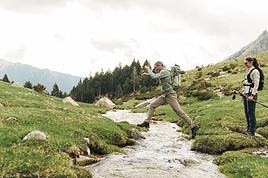
et plus particulièrement sur les treks de plusieurs jours à faire sur place (j'aimerais traverser les îles en passant de village en village à pied).
Merci!
Itinéraire : San Diego (Californie), Hilo (Big island, Hawaï), Lahaina (Maui, Hawaï), Honolulu (Oahu, Hawaï), Fanning Island (Kiribati), Bora Bora (Polynésie Française), Raiatea (Polynésie Française), Papeete (Polynésie Française), Moorea (Polynésie Française), Fakarava (Tuamotu, Polynésie Française), Nuku Hiva (Marquises, Polynésie Française), San Diego (Californie).

Bonjour à tous,
C'est avec un peu de retard que je commence ce CR mais depuis notre retour le 2 novembre, nous avons déménagé...Je pense que vous comprendrez.
Je suis très heureuse de partager avec vous cette si lointaine et si belle destination. Nous partons pour 30 jours de croisière, 10 jours d'escales et 20 jours de mer. La proportion des jours de mer est trop forte à mon goût, mais les distances sont si grandes dans cette zone, et les heures d'avion nous n'aimons pas trop non plus, alors les jours de mer nous ont paru être une bonne alternative.
Nous partons avec des amis et des amis de ces amis, nous sommes au total un groupe de 11 personnes et nous avons organisé le planning des excursions avant le départ. Nous n'avons aucune excursion prévue avec le bateau.
Nous sommes partis le 1er octobre, j'avais vérifié au préalable dans le guide du routard que la saison était propice à cette destination. Notre embarquement est le 3 octobre mais nous préférons avoir une marge de temps, pour récupérer nos bagages en cas de perte, et nous aimons avoir le temps de visiter les villes où nous embarquons. Bien nous en a pris...
Notre vol au départ de Marseille était : Munich - Chicago - San Diego. Nous l'avons retenu auprès d'Expédia pour récupérer un "geste commercial" (2 fois 200€)obtenu sur notre vol du mois d'octobre de l'année dernière Pékin-Marseille. Voir le CR.
Tout commence bien à partir de Munich ! L'avion décolle avec 1h30 de retard, comme notre escale à Chicago est très courte, 1h45, nous manquons la correspondance. Ce n'est pas de chance, pour une fois que les formalités de douanes étaient très rapides, il nous a fallu moins de 2 minutes pour le passage de la police.
La compagnie assume le retard et nous loge pour la nuit dans un hôtel à Chicago. J'ai une petite pensée pour la chambre que nous avions retenue à San Diego dans un hôtel nettement mieux qu'ici....
Bonjour à tous,
C'est avec un peu de retard que je commence ce CR mais depuis notre retour le 2 novembre, nous avons déménagé...Je pense que vous comprendrez.
Je suis très heureuse de partager avec vous cette si lointaine et si belle destination. Nous partons pour 30 jours de croisière, 10 jours d'escales et 20 jours de mer. La proportion des jours de mer est trop forte à mon goût, mais les distances sont si grandes dans cette zone, et les heures d'avion nous n'aimons pas trop non plus, alors les jours de mer nous ont paru être une bonne alternative.
Nous partons avec des amis et des amis de ces amis, nous sommes au total un groupe de 11 personnes et nous avons organisé le planning des excursions avant le départ. Nous n'avons aucune excursion prévue avec le bateau.
Nous sommes partis le 1er octobre, j'avais vérifié au préalable dans le guide du routard que la saison était propice à cette destination. Notre embarquement est le 3 octobre mais nous préférons avoir une marge de temps, pour récupérer nos bagages en cas de perte, et nous aimons avoir le temps de visiter les villes où nous embarquons. Bien nous en a pris...
Notre vol au départ de Marseille était : Munich - Chicago - San Diego. Nous l'avons retenu auprès d'Expédia pour récupérer un "geste commercial" (2 fois 200€)obtenu sur notre vol du mois d'octobre de l'année dernière Pékin-Marseille. Voir le CR.
Tout commence bien à partir de Munich ! L'avion décolle avec 1h30 de retard, comme notre escale à Chicago est très courte, 1h45, nous manquons la correspondance. Ce n'est pas de chance, pour une fois que les formalités de douanes étaient très rapides, il nous a fallu moins de 2 minutes pour le passage de la police.
La compagnie assume le retard et nous loge pour la nuit dans un hôtel à Chicago. J'ai une petite pensée pour la chambre que nous avions retenue à San Diego dans un hôtel nettement mieux qu'ici....
Bonjour,
Mon mari et moi partirons en novembre 2015 en Polynésie pour notre voyage de noces. Nous souhaiterions avoir votre avis sur cet itinéraire pour allier les Iles Sociétés et les Tuamotu:
- arrivée à Tahiti - Moorea (3 nuits) => possible en ferry depuis Tahiti? - Bora + Maupiti ou Huahine (2 nuits) => pass inter-île - Fakarava nord (3 nuits)=> pass inter-île - Fakarava Sud (3 nuits) => pass inter-île - Rangiroa (2 ou 3 nuits) => pass inter-île - Tahiti (2 ou 3 nuits pour passer à Teahupoo) => pass inter-île
On sait que c'est un peu court 2 semaines (mais pas le choix), mais pensez-vous que c'est équilibré en terme d'itinéraire "voyage de noces", d'activités snorkeling, balades, farniente etc. (pour info nous ne sommes pas plongeurs).
Merci à tous!!
Mon mari et moi partirons en novembre 2015 en Polynésie pour notre voyage de noces. Nous souhaiterions avoir votre avis sur cet itinéraire pour allier les Iles Sociétés et les Tuamotu:
- arrivée à Tahiti - Moorea (3 nuits) => possible en ferry depuis Tahiti? - Bora + Maupiti ou Huahine (2 nuits) => pass inter-île - Fakarava nord (3 nuits)=> pass inter-île - Fakarava Sud (3 nuits) => pass inter-île - Rangiroa (2 ou 3 nuits) => pass inter-île - Tahiti (2 ou 3 nuits pour passer à Teahupoo) => pass inter-île
On sait que c'est un peu court 2 semaines (mais pas le choix), mais pensez-vous que c'est équilibré en terme d'itinéraire "voyage de noces", d'activités snorkeling, balades, farniente etc. (pour info nous ne sommes pas plongeurs).
Merci à tous!!
Bonjour,
Si vous souhaitez faire une croisière sur le PG, faites votre réservation directement chez Ponant (nouveau propriétaire ) plutôt que dans une agence de voyage et vous ferez de belles économies. Exemple pour une croisière aux Marquises en cabine avec fenêtre : 2000 € de différence par personne, avec le prix proposé par une agence parisienne.
Bonne année.
Bonjour tout le monde
Je viens partager avec vous le magnifique voyage que nous avons fait en Polynésie Française du 3 au 23 Novembre 2019
Depuis de très nombreuses années nous avions envie d’aller en Polynésie Française, mais le nombre d’heures de voyage pour y arriver ainsi que le décalage horaire nous rebutait un peu, voir beaucoup. L’an passé nous avons fait 18 heures de voyage ça c’est très bien passé, alors pourquoi pas aller en Polynésie.
Des personnes rencontrées au cours de nos différents voyages, nous parlaient d’une croisière qu’ils avaient faite aux Iles Marquises sur un cargo mixte L’Aranui et qu’ils en étaient revenus enchantés. Une croisière sur ce bateau nous tentait bien. Régulièrement on reparlait de ce voyage, donc courant 2018 je ressors donc les guides, me renseigne sur le trajet du bateau, sa durée, etc.. Nous aimerions aussi passer 4 nuits et 3 jours pleins à Papeete pour nous remettre du voyage, du décallage horaire, visiter l’île tranquillement, ensuite nous ferions la croisière aux Iles Marquises et finirions par 2 nuits et une journée complète à Huahine. Yapuka à articuler tout ça.
Début Octobre 2018 je me renseigne auprès de Voyageurs du Monde pour avoir un devis. nous pensions faire ce voyage en Septembre 2019 mais il n’y avait plus de place dans la catégorie de cabine que je voulais, ce sera donc pour début Novembre 2019. Bon nous allons casser la tirelire, mais c’est maintenant où jamais.
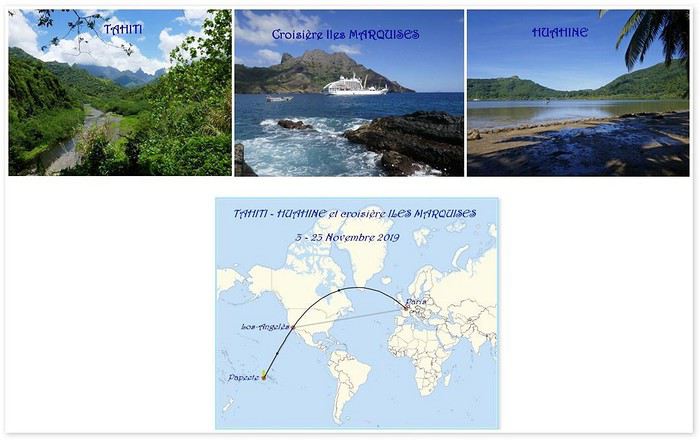 Voilà notre trajet
Paris – Papeete (Tahiti) Iles de la Société Papeete Vallée de la Papenoo Tour de l’ile Embarquement sur l’Aranui Fakarava Iles des Tuamotu En mer Hiva Oa – Tahuata Iles Marquises Fatu Hiva (Omoa-Hananave) Hiva Oa – (Tahuata (plage) Ua Huka (Vaipaee – Hokatu) Nuku-Hiva Ua Pou En mer Rangiroa Iles Tuamotu Bora-Bora Iles de la Société Papeete – Huahine Huahine Huhaine – Papeete Papeete - Paris
Pour plus de photos c'est ici.
à suivre
Je viens partager avec vous le magnifique voyage que nous avons fait en Polynésie Française du 3 au 23 Novembre 2019
Depuis de très nombreuses années nous avions envie d’aller en Polynésie Française, mais le nombre d’heures de voyage pour y arriver ainsi que le décalage horaire nous rebutait un peu, voir beaucoup. L’an passé nous avons fait 18 heures de voyage ça c’est très bien passé, alors pourquoi pas aller en Polynésie.
Des personnes rencontrées au cours de nos différents voyages, nous parlaient d’une croisière qu’ils avaient faite aux Iles Marquises sur un cargo mixte L’Aranui et qu’ils en étaient revenus enchantés. Une croisière sur ce bateau nous tentait bien. Régulièrement on reparlait de ce voyage, donc courant 2018 je ressors donc les guides, me renseigne sur le trajet du bateau, sa durée, etc.. Nous aimerions aussi passer 4 nuits et 3 jours pleins à Papeete pour nous remettre du voyage, du décallage horaire, visiter l’île tranquillement, ensuite nous ferions la croisière aux Iles Marquises et finirions par 2 nuits et une journée complète à Huahine. Yapuka à articuler tout ça.
Début Octobre 2018 je me renseigne auprès de Voyageurs du Monde pour avoir un devis. nous pensions faire ce voyage en Septembre 2019 mais il n’y avait plus de place dans la catégorie de cabine que je voulais, ce sera donc pour début Novembre 2019. Bon nous allons casser la tirelire, mais c’est maintenant où jamais.
Voilà notre trajetParis – Papeete (Tahiti) Iles de la Société Papeete Vallée de la Papenoo Tour de l’ile Embarquement sur l’Aranui Fakarava Iles des Tuamotu En mer Hiva Oa – Tahuata Iles Marquises Fatu Hiva (Omoa-Hananave) Hiva Oa – (Tahuata (plage) Ua Huka (Vaipaee – Hokatu) Nuku-Hiva Ua Pou En mer Rangiroa Iles Tuamotu Bora-Bora Iles de la Société Papeete – Huahine Huahine Huhaine – Papeete Papeete - Paris
Pour plus de photos c'est ici.
à suivre
Avez vous participé à une croisière en polynesie ?
Sur quel bateau? Avez vous été satisfait. Quels sont les lieux à voir absolument.
Au contraire que faut il éviter?
bonjour , nous avons reservé notre voyage sur l ARANUI pour l automne 2014 . pour la plongée en apnée , qu avons à apporter dans nos baggages ? Aussi , que recommandez vous comme chaussures pour les débarquements mouillés .
merci 😉
Bonjour!
En avril 2015 (je sais, j'ai de l'avance 😉) je fais une croisière avec Royal Caribbean et nous allons entre autre faire escale à Bora Bora, Moorea et Papeete. Je ne compte pas prendre d'excursions avec le croisiériste (souvent trop chez pour ce que c'est). J'aimerais savoir s'il est mieux de louer une voiture sur ces iles ou s'il y a moyen de se déplacer par un transport quelconque. De plus, j'aimerais avoir des idées de ce qu'il est possible de faire sur ces iles.
Merci!
En avril 2015 (je sais, j'ai de l'avance 😉) je fais une croisière avec Royal Caribbean et nous allons entre autre faire escale à Bora Bora, Moorea et Papeete. Je ne compte pas prendre d'excursions avec le croisiériste (souvent trop chez pour ce que c'est). J'aimerais savoir s'il est mieux de louer une voiture sur ces iles ou s'il y a moyen de se déplacer par un transport quelconque. De plus, j'aimerais avoir des idées de ce qu'il est possible de faire sur ces iles.
Merci!
Bonjour,
Je fais une croisière sur l'ARANUI, vers LES MARQUISES, pendant 14 jours, au mois de Janvier 2014, quelqu'un pourrait me dire, son impression et les conseils à suivre au sujet de ce voyage.
Merci d'avance.
José
J'aurais voulu savoir si ça vaut la peine de réserver des excursions sur le bateau ou c'est facile et moins cher sur place quand on arrive à chaque île?
J'ai déjà fait une croisière dans les Caraïbes et je n'avait rien réservé en avance, mais les Caraïbes et la Polynésie, c'est pas la même chose....
Bonjour,
Comme convenu je vais vous faire un petit résumé de ma croisière « Etoiles du Pacifique » avec Oceania Marina du 19 mars au 06 avril 2018.
PS: Je tiens à remercier Catherine (notre experte en compte rendu) qui m'a donné pas mal de conseils et tuyaux pour les différentes excursions et grâce à elle j'ai pu faire des sorties inoubliables et pas très coûteuses.
Tout d’abord avant de commencer je tiens à vous dire que j’avais arrêté de faire des comptes rendus pour des raisons que certains connaissent (retours désobligeants, des critiques non fondées…) Mais plusieurs personnes m’ont demandé de faire un petit résumé sur cette croisière que tout le monde en parle et qui sort du lot.
Si vous rechercher le luxe, le calme, la sérénité, un service exemplaire, de bonnes prestations… cette compagnie est faite pour vous. En revanche, si vous rechercher la foule, des animations… rebrousser chemin et choisissez une autre compagnie car Oceania est vraiment à l’opposé de tout ça.
C’est ma deuxième croisière avec cette compagnie et j’ai quand même pu constater quelques changements ou petite baisse de prestations mais dans l’ensemble cela reste quand même raisonnable. Je vous expliquerai tout cela en détail au fil de l’eau.
Allez c'est parti !
Nous sommes partis 4 jours avant la croisière pour pouvoir profiter de Papeete et ses alentours. Donc le jeudi 15 mars nous avons pris le vol Paris / Los Angeles / Papeete. Dans l’ensemble nous avons fait un bon vol avec Air France mais je préfère de loin les compagnies du golf car plus de plce pour les jambes et le service est meilleur.
Arrivée à Papeete (à 6h du mat) l’accueil est toujours chaleureux et on est tout de suite dans l’ambiance des vacances. Moins d’une ½ heure j’étais dans la navette pour aller à l’hôtel. A la base j’avais réservé 2 hôtels (avec annulations bien sûr) è le premier en centre-ville (Sarah nuit) et le deuxième un peu excentré du centre (Intercontinental). Il faut savoir qu’il y a tres peu d’Hotels au centre de Papeete (de mémoire il y en en que 3) è Tahiti nui, Sarah nuit et tiaré et tous les bons et beaux hôtels sont vraiment excentrés. Au dernier moment, nous avons annulé l’intercontinental pour prendre Sarah au centre-ville. Je regrette ce choix car cet hôtel est certes au centre mais n’est vraiment pas terrible. Nous sommes resté 2 nuits dans cet hotel et 1 nuit dans un autre hotel à Moorea.
A demain pour la suite de notre première visite à Papeete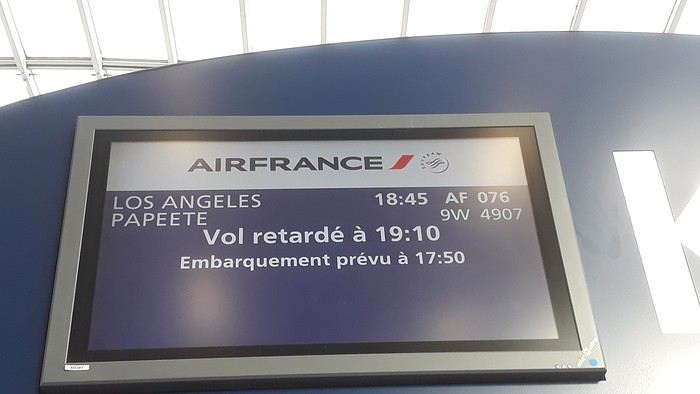 Comme d'hab le vol est retardé
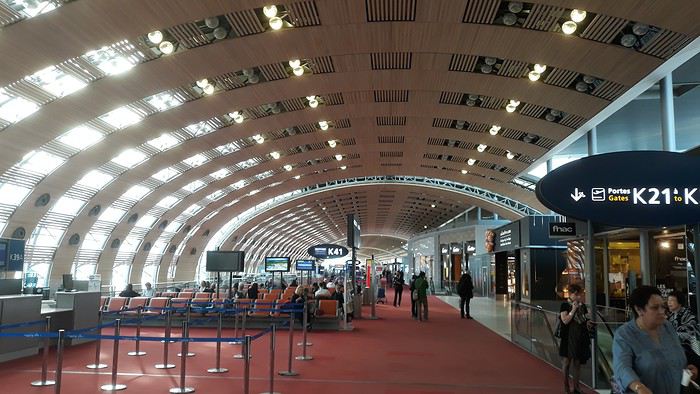 Astroport CDG
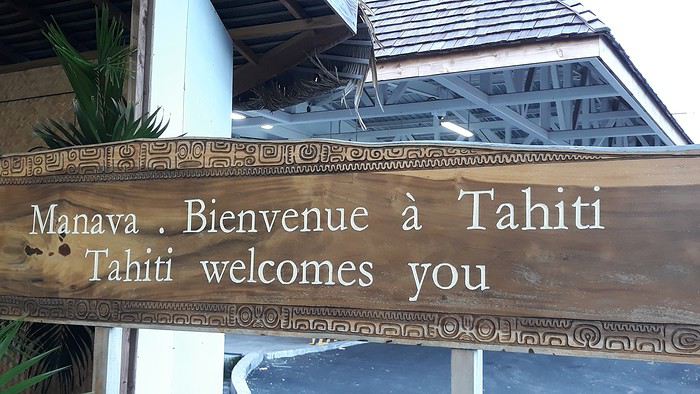 Arrivée à Papeete
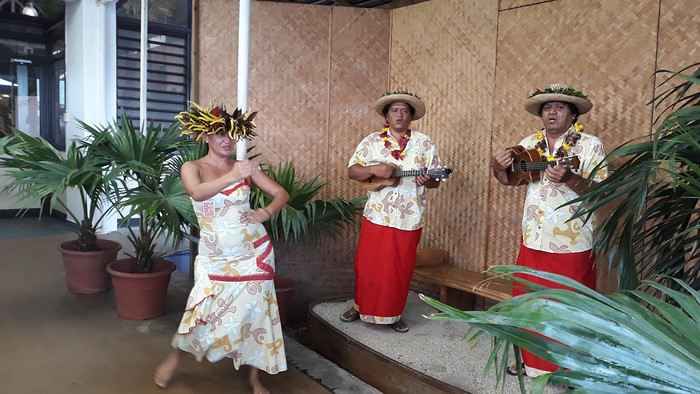
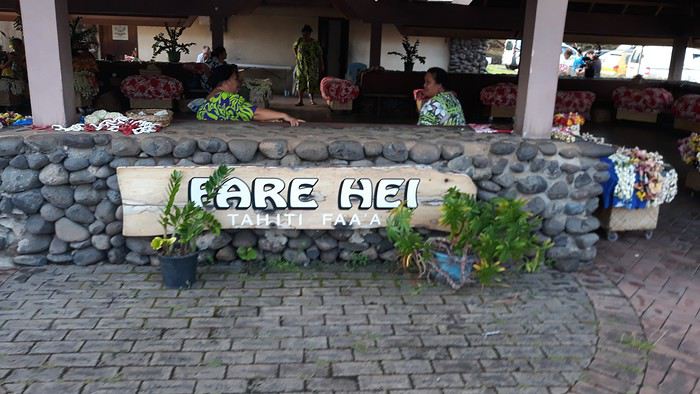
Comme convenu je vais vous faire un petit résumé de ma croisière « Etoiles du Pacifique » avec Oceania Marina du 19 mars au 06 avril 2018.
PS: Je tiens à remercier Catherine (notre experte en compte rendu) qui m'a donné pas mal de conseils et tuyaux pour les différentes excursions et grâce à elle j'ai pu faire des sorties inoubliables et pas très coûteuses.
Tout d’abord avant de commencer je tiens à vous dire que j’avais arrêté de faire des comptes rendus pour des raisons que certains connaissent (retours désobligeants, des critiques non fondées…) Mais plusieurs personnes m’ont demandé de faire un petit résumé sur cette croisière que tout le monde en parle et qui sort du lot.
Si vous rechercher le luxe, le calme, la sérénité, un service exemplaire, de bonnes prestations… cette compagnie est faite pour vous. En revanche, si vous rechercher la foule, des animations… rebrousser chemin et choisissez une autre compagnie car Oceania est vraiment à l’opposé de tout ça.
C’est ma deuxième croisière avec cette compagnie et j’ai quand même pu constater quelques changements ou petite baisse de prestations mais dans l’ensemble cela reste quand même raisonnable. Je vous expliquerai tout cela en détail au fil de l’eau.
Allez c'est parti !
Nous sommes partis 4 jours avant la croisière pour pouvoir profiter de Papeete et ses alentours. Donc le jeudi 15 mars nous avons pris le vol Paris / Los Angeles / Papeete. Dans l’ensemble nous avons fait un bon vol avec Air France mais je préfère de loin les compagnies du golf car plus de plce pour les jambes et le service est meilleur.
Arrivée à Papeete (à 6h du mat) l’accueil est toujours chaleureux et on est tout de suite dans l’ambiance des vacances. Moins d’une ½ heure j’étais dans la navette pour aller à l’hôtel. A la base j’avais réservé 2 hôtels (avec annulations bien sûr) è le premier en centre-ville (Sarah nuit) et le deuxième un peu excentré du centre (Intercontinental). Il faut savoir qu’il y a tres peu d’Hotels au centre de Papeete (de mémoire il y en en que 3) è Tahiti nui, Sarah nuit et tiaré et tous les bons et beaux hôtels sont vraiment excentrés. Au dernier moment, nous avons annulé l’intercontinental pour prendre Sarah au centre-ville. Je regrette ce choix car cet hôtel est certes au centre mais n’est vraiment pas terrible. Nous sommes resté 2 nuits dans cet hotel et 1 nuit dans un autre hotel à Moorea.
A demain pour la suite de notre première visite à Papeete
Comme d'hab le vol est retardé
Astroport CDG
Arrivée à PapeeteA consulter mon blog personnel sur le déroulement d'une croisière à bord du bateau Aranui 3, entre Papeete et les Îles Marquises avec escales aux îles Tuamotu, en Novembre et Décembre 2014, ainsi que le séjour à Moorea et Bora Bora.
Généralités sur la préparation du voyage, ici : http://nmjjm.blogspot.fr/2014/11/polynesie.html
ou le début réel de la croisière, là : http://nmjjm.blogspot.fr/2014/11/polynesie.html avec de nombreuses photos.
Bonne lecture à tous.
Généralités sur la préparation du voyage, ici : http://nmjjm.blogspot.fr/2014/11/polynesie.html
ou le début réel de la croisière, là : http://nmjjm.blogspot.fr/2014/11/polynesie.html avec de nombreuses photos.
Bonne lecture à tous.
Je pars le 1er avril 2014 sur le Golden Princess à Hawaii et la Polynésie Française, y aura-t-il des francophones et pourrais-je trouver un correspondant parlant Français à l'accueil. Le tooday et le menu en Français sont-ils distribués ? Merci pour vos réponses
ia orana,
Je sais pas, vous... Mais nous, une croisière commence immanquablement par de l'avion... C'est sûr, habiter sur une ile paradisiaque présente des gros avantages, mais question croisières... De nombreuses compagnies font escales en Polynésie, mais il n'y en a peu qui font partir leurs voyages à partir de Papeete... Donc, avion ! Juste 8 petites heures dans un bel avion bleu entre Papeete et Los Angeles pour commencer ! et hop ! On saute dans un autre d'Alaska air pour se retrouver en fin d'après-midi, un peu fatigués, dans le centre ville de Vancouver, Colombie Britannique, Canada. Demain sera un autre jour...

Je sais pas, vous... Mais nous, une croisière commence immanquablement par de l'avion... C'est sûr, habiter sur une ile paradisiaque présente des gros avantages, mais question croisières... De nombreuses compagnies font escales en Polynésie, mais il n'y en a peu qui font partir leurs voyages à partir de Papeete... Donc, avion ! Juste 8 petites heures dans un bel avion bleu entre Papeete et Los Angeles pour commencer ! et hop ! On saute dans un autre d'Alaska air pour se retrouver en fin d'après-midi, un peu fatigués, dans le centre ville de Vancouver, Colombie Britannique, Canada. Demain sera un autre jour...
Bonjour,
Nous aimerions faire la croisière sur l'aranui mais quelques questions nous démangent: quelle est la tranche d'âge des passagers? Le cargo a-t-il gardé sa simplicité ou bien est-ce devenu "la croisière s'amuse"? La cuisine est-elle régionale?
Merci pour ceux qui pourront me répondre.
Nous aimerions faire la croisière sur l'aranui mais quelques questions nous démangent: quelle est la tranche d'âge des passagers? Le cargo a-t-il gardé sa simplicité ou bien est-ce devenu "la croisière s'amuse"? La cuisine est-elle régionale?
Merci pour ceux qui pourront me répondre.
Bonjour,
J'hésite entre les deux destinations. Quelle est votre préférence pour la destination (peu importe la compagnie de croisière)?
Merci,
J'hésite entre les deux destinations. Quelle est votre préférence pour la destination (peu importe la compagnie de croisière)?
Merci,
Bonjour à tous les croisièristes,
J'ai besoin de toute votre aide et vos avis car je désire préparer une croisière au côtes de l'australie ou bien dans le pacifique (tahiti...). Qui a déjà voyagé dans ces contrées, et avec quelle compagnie?Ya-t-il des bons plans pour un grand voyage? Peut-on se débrouiller en Australie par ses propres moyens comme nous le faisons aux etats-unis ou bien me conseillez-vous le voyage accompagné? Merci pour toutes vos suggestions
J'ai besoin de toute votre aide et vos avis car je désire préparer une croisière au côtes de l'australie ou bien dans le pacifique (tahiti...). Qui a déjà voyagé dans ces contrées, et avec quelle compagnie?Ya-t-il des bons plans pour un grand voyage? Peut-on se débrouiller en Australie par ses propres moyens comme nous le faisons aux etats-unis ou bien me conseillez-vous le voyage accompagné? Merci pour toutes vos suggestions
Bonjour a tous,
J'ai réservé la croisière pour les Marquises à bord de l'Aranui 5 du 14 au 26 septembre 2019 (eh oui , c'est tellement prisé qu'il faut s'y prendre à l'avance!). Je n'aurais jamais pris autre croisière, over bondé: les buildings sur l'eau... , c'est sûr et plus que sûr.
ET d'ailleurs l'Aranui dans sa version 5 m'inquiète un peu...mais je n'ai eu que de bons echos! Alors allons y, car je ne suis pas non plus en plan voileuse et arret dans les criques choisies , hélas, car au delà du rêve, il faut savoir ce que voileux veut dire, et je le sais très bien.
Bref , j'en viens à mon propos: y aurait il quelqu'un qui voudrait m'accompagner pour resa d'une cabine deux single à ces dates?
Et je précise: il faut se rencontrer avant pour voir si entente...et ronfleur(euse) non, c'est un problème de cohabitation impossible pour moi!
Actuellement je suis sur le dortoir, qui a l'air très bien au demeurant mais j'aimerais plus "intime" ce qui ne veut pas dire plus que , on est 2 au lieu de 8.
Potassez bien et rêvez...car c'est vrai ça fait rêver ce périple!
Potassez bien et rêvez...car c'est vrai ça fait rêver ce périple!
Bonjour
Membre de Voyage Forum depuis Novembre 2010 , j'ai énormément utilisé les conseils
de membres très actifs faisant profiter de leur expérience pour organiser surtout les
escales des croisières que nous avons effectué .
De retour de Polynésie , je vais donner à ceux qui seraient tentés par cette destination
notre ressenti sur cette croisière effectuée du 17 au 29 Janvier .
Plusieurs raisons ( décalage horaire de 11 heures , durée du vol , montant de la facture ) nous avaient jusqu'à présent rebuté . Et puis , la réception à l'automne dernier du message d'une agence faisant l'objet de commentaires souvent peu élogieux nous a amené à nous intéresser au Paul Gauguin . Nous avons donc consulté divers sites Internet et nous sommes aperçu que tous proposaient des tarifs identiques . Dans ces conditions , nous avons choisi d'effectuer notre réservation avec VOYAGE DE LEGENDE , représentant pour la France de Paul Gauguin Cruises . Tout au long du processus de réservation , Clémence , notre interlocutrice exclusive, a su répondre avec justesse et précision à nos diverses questions .
LE BATEAU : Construit en 1997 à St Nazaire et conçu spécialement pour naviguer dans les eaux peu profondes de beaucoup de lagons polynésiens , il mesure ( seulement ) 157 mètres et compte 166 cabines ( dont 70 % avec balcon ) soit une capacité de 332 passagers , servis par 216 membres d'équipage . Trois restaurants sont à la disposition des croisiéristes : - L'Etoile , ouvert seulement le soir . - La Véranda , ouvert pour le petit déjeuner et le déjeuner du midi ainsi que le soir , mais sur réservation seulement . - Le Grill ( au pont 8 ) avec des caractéristiques identiques à celles de La Véranda .
On peut aussi prendre un petit déjeuner continental ( de très bonne heure ) à La Palette, lieu faisant office de bar et de discothèque tout à l'arrière du bateau au pont 8 .
L'ITINERAIRE Le plus souvent , la croisière dure une semaine et se limite aux iles de La Société . Environ un fois tous les 2 mois , cet itinéraire est allongé jusqu'aux Iles Cook . Autre possibilité , le Paul Gauguin monte vers Les Marquises avant de revenir vers les iles de la Société , croisière de 2 semaines . Dernière option , celle que nous avons choisi : l'itinéraire de base avec une escapade vers 2 iles de l'archipel des Tuamotu : Rangiroa et Fakarava pour une durée de 11jours.
Avant de passer au récit de la croisière , il est temps de penser aux crêpes , Chandeleur oblige !
A plus
Jean-Pierre
Plusieurs raisons ( décalage horaire de 11 heures , durée du vol , montant de la facture ) nous avaient jusqu'à présent rebuté . Et puis , la réception à l'automne dernier du message d'une agence faisant l'objet de commentaires souvent peu élogieux nous a amené à nous intéresser au Paul Gauguin . Nous avons donc consulté divers sites Internet et nous sommes aperçu que tous proposaient des tarifs identiques . Dans ces conditions , nous avons choisi d'effectuer notre réservation avec VOYAGE DE LEGENDE , représentant pour la France de Paul Gauguin Cruises . Tout au long du processus de réservation , Clémence , notre interlocutrice exclusive, a su répondre avec justesse et précision à nos diverses questions .
LE BATEAU : Construit en 1997 à St Nazaire et conçu spécialement pour naviguer dans les eaux peu profondes de beaucoup de lagons polynésiens , il mesure ( seulement ) 157 mètres et compte 166 cabines ( dont 70 % avec balcon ) soit une capacité de 332 passagers , servis par 216 membres d'équipage . Trois restaurants sont à la disposition des croisiéristes : - L'Etoile , ouvert seulement le soir . - La Véranda , ouvert pour le petit déjeuner et le déjeuner du midi ainsi que le soir , mais sur réservation seulement . - Le Grill ( au pont 8 ) avec des caractéristiques identiques à celles de La Véranda .
On peut aussi prendre un petit déjeuner continental ( de très bonne heure ) à La Palette, lieu faisant office de bar et de discothèque tout à l'arrière du bateau au pont 8 .
L'ITINERAIRE Le plus souvent , la croisière dure une semaine et se limite aux iles de La Société . Environ un fois tous les 2 mois , cet itinéraire est allongé jusqu'aux Iles Cook . Autre possibilité , le Paul Gauguin monte vers Les Marquises avant de revenir vers les iles de la Société , croisière de 2 semaines . Dernière option , celle que nous avons choisi : l'itinéraire de base avec une escapade vers 2 iles de l'archipel des Tuamotu : Rangiroa et Fakarava pour une durée de 11jours.
Avant de passer au récit de la croisière , il est temps de penser aux crêpes , Chandeleur oblige !
A plus
Jean-Pierre
Bonjour,
Mes parents viennent nous rendre visite à Tahiti en octobre prochain; ils en profitent pour faire une croisière avec des amis qui les accompagnent. Ils ont réservé 2 cabines sur l'Aranui auprès de QCNS Cruise il y a quelques temps, en versant des arrhes. Il y a quelques semaines, coup de téléphone de cette agence: "Il n'y a plus de place sur l'Aranui. Il en reste sur le Gauguin. Si vous ne voulez pas faire la croisière sur le Gauguin, vous perdez vos arrhes. Il me faut la réponse immédiatement." Les amis de mes parents qui ont reçu cet appel et qui ont pris en charge les réservations pour ce voyage, ont bêtement accepté!! A leur décharge, ils ont déjà leurs billets pour Tahiti et ont eu peur de ne plus trouver de place sur une autre croisière.. J'aurais pu leur réserver moi-même cette croisière directement sur place mais leurs amis ont insisté pour passer par cette agence avec qui ils ont voyagé une fois..
Bref, apparemment, cette société n'est pas un modèle d'honnêteté d'après ce que je viens de voir sur le forum (trop tard, malheureusement..). La colère passée, je tente de voir comment arranger les choses.
Ma question: y-a-t-il des choses auxquelles nous devons faire attention afin qu'ils ne soient pas embêtés une fois ici? (je n'ai jamais fait de croisière et n'y connais rien).
Merci de votre aide..
Mes parents viennent nous rendre visite à Tahiti en octobre prochain; ils en profitent pour faire une croisière avec des amis qui les accompagnent. Ils ont réservé 2 cabines sur l'Aranui auprès de QCNS Cruise il y a quelques temps, en versant des arrhes. Il y a quelques semaines, coup de téléphone de cette agence: "Il n'y a plus de place sur l'Aranui. Il en reste sur le Gauguin. Si vous ne voulez pas faire la croisière sur le Gauguin, vous perdez vos arrhes. Il me faut la réponse immédiatement." Les amis de mes parents qui ont reçu cet appel et qui ont pris en charge les réservations pour ce voyage, ont bêtement accepté!! A leur décharge, ils ont déjà leurs billets pour Tahiti et ont eu peur de ne plus trouver de place sur une autre croisière.. J'aurais pu leur réserver moi-même cette croisière directement sur place mais leurs amis ont insisté pour passer par cette agence avec qui ils ont voyagé une fois..
Bref, apparemment, cette société n'est pas un modèle d'honnêteté d'après ce que je viens de voir sur le forum (trop tard, malheureusement..). La colère passée, je tente de voir comment arranger les choses.
Ma question: y-a-t-il des choses auxquelles nous devons faire attention afin qu'ils ne soient pas embêtés une fois ici? (je n'ai jamais fait de croisière et n'y connais rien).
Merci de votre aide..
Great to see VF back in action! However, is it normal that we can’t upload more than 10 photos per post? If so, that’s a real shame!
Looks like I’m the first to post a review, but I’m sure others will follow to keep this forum—our forum—alive. Once again, a BIG thank you for bringing it back!
I got home yesterday but still can’t sleep, so I’d rather share this amazing cruise I just took on the Royal Princess.
Last year, I did almost the same itinerary on the Ovation OTS (Royal Caribbean), and it was mixed at best—let’s just say it was disappointing.
The itinerary: - Los Angeles - 5 days at sea - Honolulu - Hilo (replaced by Kona) - 5 days at sea - Papeete - Papeete - Moorea - 3 days at sea - Pago Pago (Samoa Islands) = canceled - 1 day at sea - International Date Line crossing - 1 day at sea - Tauranga - Tauranga - Auckland
I booked this cruise over a year in advance through the Logitravel agency. I chose a Balcony Category D cabin because the Cat B cabins on this ship class don’t have a sofa. I like having a couch in the cabin so I don’t have to sit directly on the bed when I come in.
My last cruise with Princess was years ago, and after last year’s disappointment with Royal Caribbean (Ovation OTS), I decided to give Princess another try. Not only did I love the itinerary, but the cruise was longer, and there was a new port for me—Pago Pago—which unfortunately got canceled.
Honestly, I can tell you I didn’t regret my choice for a second—this cruise will stay with me forever. Everything, or almost everything, was PERFECT!
After Oceania, I’d rank Princess in second place, and I think their service is a notch above Celebrity. You’ll see why as you read this review.
From what I remember, Catherine Isa and others have already tried this ship class and loved it.
Here we go! Day 1: Departure from Roissy to Los Angeles on an Air France flight.
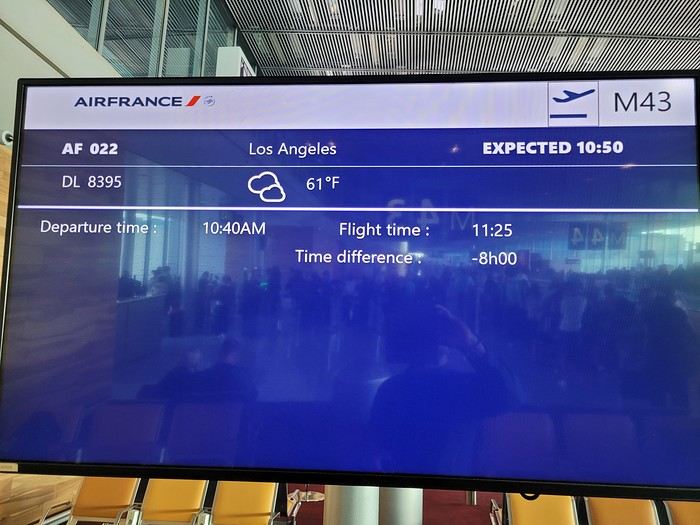
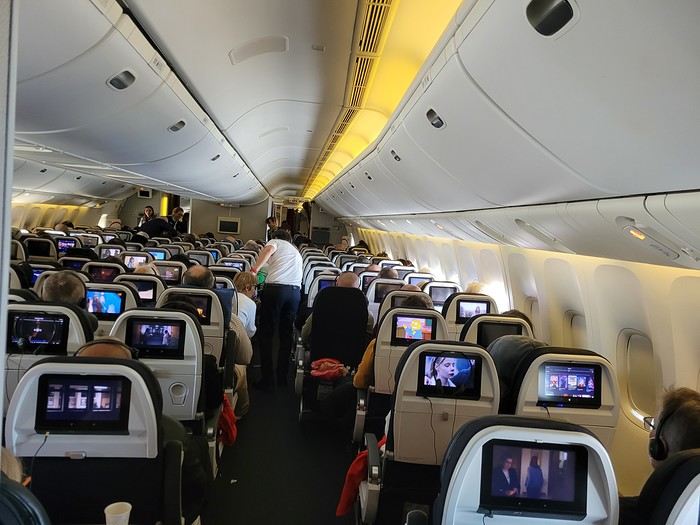
Last year, I flew Air Tahiti Nui (ATN) for the same route, and I can tell you it was WAY better than AF in terms of comfort and service. Unfortunately, ATN now flies very few routes to Los Angeles, preferring to transit through Seattle to get to Papeete. So, I had to go with AF. Back in 2018, I did a Paris/Papeete flight with AF and was a bit disappointed with the 24-hour journey. Anyway!
During this flight, we had one meal and a snack before landing in LA. Drinks were available throughout the flight. We arrived on time in LA.
Before taking off from Roissy, I downloaded the MPC (Mobile Passport Control) app—a mobile app for travelers with an ESTA to save time at customs (only for those returning to the U.S. at least a second time). It lets eligible travelers skip the long lines at customs when arriving in the U.S. After filling out a form and answering a few questions about your trip in advance, you get a ticket that lets you access a special line with shorter wait times. Unfortunately, I didn’t get the ticket, so I had to wait in the regular line. Thirty minutes later, I got the ticket, but it was too late—I was already in the visitor line. It took us 1.5 hours to get through immigration.
Since I’m traveling again in January next year, I’ll try MPC again to see if it works.
After leaving the airport, I took a taxi to my hotel on Hollywood Blvd, but the driver tried to scam me to make more money. Last year, the same ride cost $50, but this time, he took a long detour to run up the meter. When I saw it hit $80, I told him that last year the same trip cost $50, and we weren’t even there yet. He said, “You’re going to a hotel on Hollywood Blvd, and you’re quibbling over a few dollars?” I told him I wouldn’t pay that much because I saw he took a longer route (via Google Maps), and if needed, I’d call the police. Then he said, “Let’s work something out.” I told him I’d pay $50, just like last year—not a cent more. When we arrived, he said, “Give me $60, and we’ll call it even.” So, I gave him $60. If I hadn’t said anything, he would’ve charged me over $100. Oh well!
Our hotel (Lowes Hotel) is on Hollywood Blvd. It’s a really nice hotel with a rooftop pool. That said, it’s not worth 330 € per night plus 30 € per person for breakfast. But since we’re on Hollywood Blvd, everything’s overpriced.
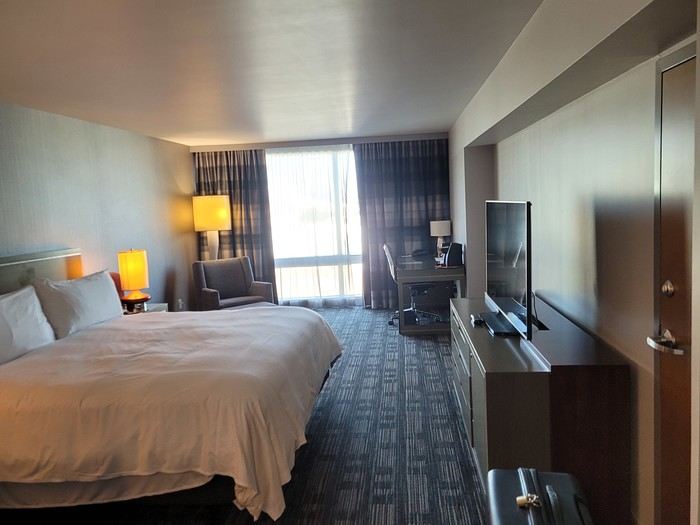
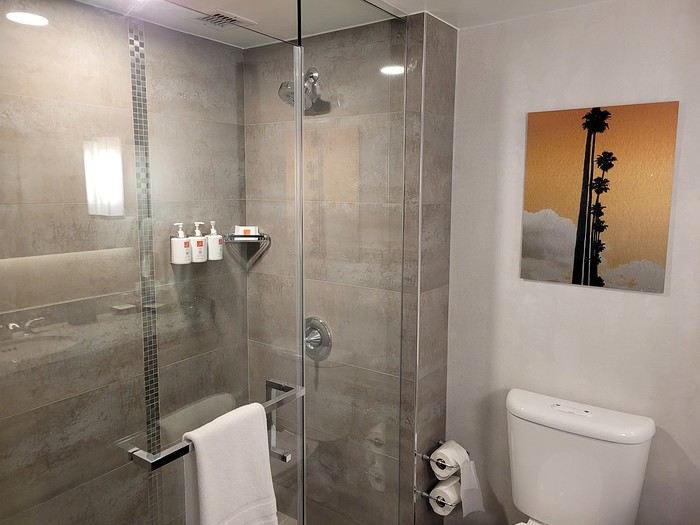
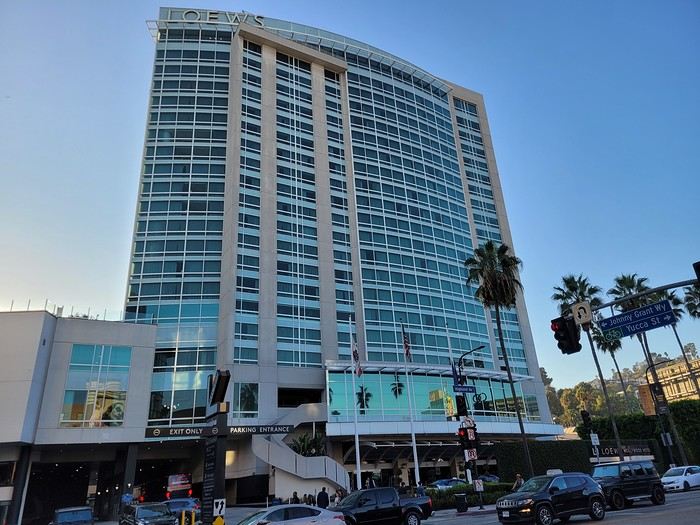
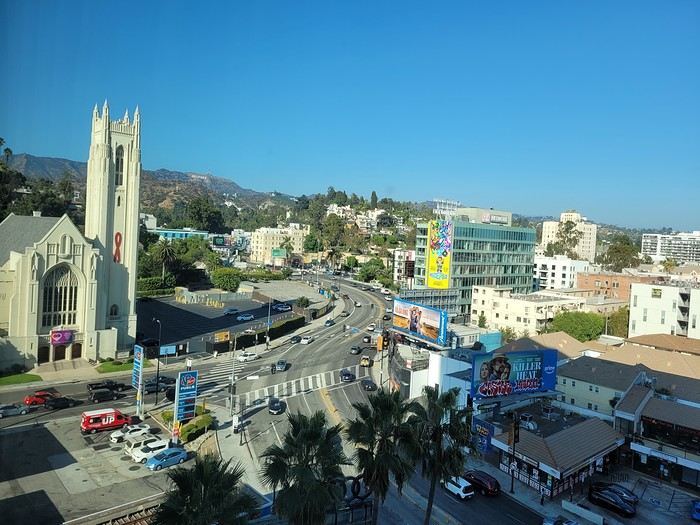
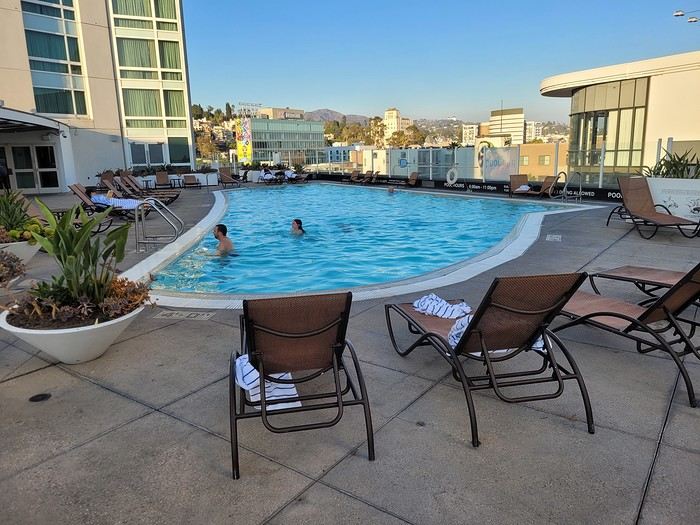
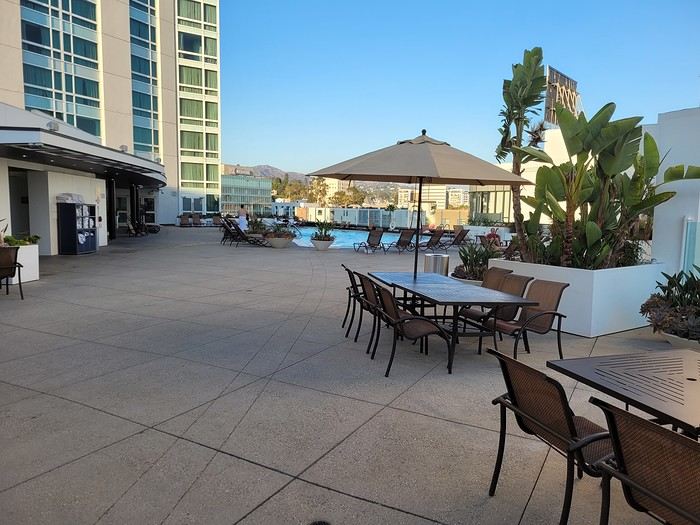
We checked into our room with a view of the Hollywood Sign (as requested). We dropped off our things, then relaxed by the pool with a drink before taking a stroll down Hollywood Blvd.

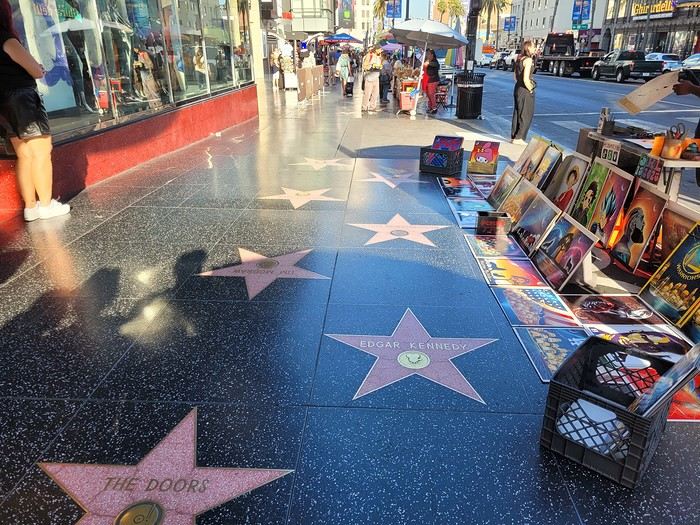
That evening, we went to dinner at the Roosevelt Hotel, just 100 meters from our hotel—a legendary Hollywood hotel where Marilyn Monroe used to stay regularly. In fact, her suite still bears her name. Honestly, the hotel is really old, and I didn’t think much of it—or the dinner. We headed back to our hotel for a good night’s sleep because tomorrow we had a tour booked to see the stars’ houses and Beverly Hills.
To be continued: Beverly Hills/Hollywood tour and embarkation.
Looks like I’m the first to post a review, but I’m sure others will follow to keep this forum—our forum—alive. Once again, a BIG thank you for bringing it back!
I got home yesterday but still can’t sleep, so I’d rather share this amazing cruise I just took on the Royal Princess.
Last year, I did almost the same itinerary on the Ovation OTS (Royal Caribbean), and it was mixed at best—let’s just say it was disappointing.
The itinerary: - Los Angeles - 5 days at sea - Honolulu - Hilo (replaced by Kona) - 5 days at sea - Papeete - Papeete - Moorea - 3 days at sea - Pago Pago (Samoa Islands) = canceled - 1 day at sea - International Date Line crossing - 1 day at sea - Tauranga - Tauranga - Auckland
I booked this cruise over a year in advance through the Logitravel agency. I chose a Balcony Category D cabin because the Cat B cabins on this ship class don’t have a sofa. I like having a couch in the cabin so I don’t have to sit directly on the bed when I come in.
My last cruise with Princess was years ago, and after last year’s disappointment with Royal Caribbean (Ovation OTS), I decided to give Princess another try. Not only did I love the itinerary, but the cruise was longer, and there was a new port for me—Pago Pago—which unfortunately got canceled.
Honestly, I can tell you I didn’t regret my choice for a second—this cruise will stay with me forever. Everything, or almost everything, was PERFECT!
After Oceania, I’d rank Princess in second place, and I think their service is a notch above Celebrity. You’ll see why as you read this review.
From what I remember, Catherine Isa and others have already tried this ship class and loved it.
Here we go! Day 1: Departure from Roissy to Los Angeles on an Air France flight.
Last year, I flew Air Tahiti Nui (ATN) for the same route, and I can tell you it was WAY better than AF in terms of comfort and service. Unfortunately, ATN now flies very few routes to Los Angeles, preferring to transit through Seattle to get to Papeete. So, I had to go with AF. Back in 2018, I did a Paris/Papeete flight with AF and was a bit disappointed with the 24-hour journey. Anyway!
During this flight, we had one meal and a snack before landing in LA. Drinks were available throughout the flight. We arrived on time in LA.
Before taking off from Roissy, I downloaded the MPC (Mobile Passport Control) app—a mobile app for travelers with an ESTA to save time at customs (only for those returning to the U.S. at least a second time). It lets eligible travelers skip the long lines at customs when arriving in the U.S. After filling out a form and answering a few questions about your trip in advance, you get a ticket that lets you access a special line with shorter wait times. Unfortunately, I didn’t get the ticket, so I had to wait in the regular line. Thirty minutes later, I got the ticket, but it was too late—I was already in the visitor line. It took us 1.5 hours to get through immigration.
Since I’m traveling again in January next year, I’ll try MPC again to see if it works.
After leaving the airport, I took a taxi to my hotel on Hollywood Blvd, but the driver tried to scam me to make more money. Last year, the same ride cost $50, but this time, he took a long detour to run up the meter. When I saw it hit $80, I told him that last year the same trip cost $50, and we weren’t even there yet. He said, “You’re going to a hotel on Hollywood Blvd, and you’re quibbling over a few dollars?” I told him I wouldn’t pay that much because I saw he took a longer route (via Google Maps), and if needed, I’d call the police. Then he said, “Let’s work something out.” I told him I’d pay $50, just like last year—not a cent more. When we arrived, he said, “Give me $60, and we’ll call it even.” So, I gave him $60. If I hadn’t said anything, he would’ve charged me over $100. Oh well!
Our hotel (Lowes Hotel) is on Hollywood Blvd. It’s a really nice hotel with a rooftop pool. That said, it’s not worth 330 € per night plus 30 € per person for breakfast. But since we’re on Hollywood Blvd, everything’s overpriced.
We checked into our room with a view of the Hollywood Sign (as requested). We dropped off our things, then relaxed by the pool with a drink before taking a stroll down Hollywood Blvd.
That evening, we went to dinner at the Roosevelt Hotel, just 100 meters from our hotel—a legendary Hollywood hotel where Marilyn Monroe used to stay regularly. In fact, her suite still bears her name. Honestly, the hotel is really old, and I didn’t think much of it—or the dinner. We headed back to our hotel for a good night’s sleep because tomorrow we had a tour booked to see the stars’ houses and Beverly Hills.
To be continued: Beverly Hills/Hollywood tour and embarkation.
Visiting the islands of the South Pacific is a dream we’re trying to make come true, so we’re doing our research to make sure we don’t miss out.
We’ve been dreaming of visiting French Polynesia for a long time, but now that we might finally be able to go, we’re torn between a cruise or a traditional stay.
Our plan is to visit Tahiti, Moorea, Bora Bora, Huahine... and we’re also considering the Tuamotu Islands.
For us, the priority is to explore the islands properly, not so much to enjoy life on a boat—we do cruises closer to home for that. But sailing through those lagoons must be an extraordinary experience too.
I’m reaching out to get your help in weighing the pros and cons of each option.
I’d love to hear from travelers who’ve done this trip.
How many nights would you recommend staying on each island?
And so on...
Thanks in advance for your input!
We’ve been dreaming of visiting French Polynesia for a long time, but now that we might finally be able to go, we’re torn between a cruise or a traditional stay.
Our plan is to visit Tahiti, Moorea, Bora Bora, Huahine... and we’re also considering the Tuamotu Islands.
For us, the priority is to explore the islands properly, not so much to enjoy life on a boat—we do cruises closer to home for that. But sailing through those lagoons must be an extraordinary experience too.
I’m reaching out to get your help in weighing the pros and cons of each option.
I’d love to hear from travelers who’ve done this trip.
How many nights would you recommend staying on each island?
And so on...
Thanks in advance for your input!
Bonjour ,
Après une croisière , nous passerons 4 nuits à Tahiti . Je suis preneuse de conseils pour loger et découvrir l'île . Nous aimons le snorkeling mais il y a certainement bien plus à faire . Je pense qu'il faut louer une voiture et prendre un logement au bord de mer .
J'attends vos retours .
Cordialement
Bonjour,
Je viens d'annuler une croisière aux Marquises mais j'ai très envie de retourner en PF quand la situation sera meilleure et surtout que l'on n'aura pas besoin de porter un masque pendant 24 heures de suite pour le voyage, en espérant que cela arrive un jour .... Peut-être Novembre 2021, on peut toujours rêver.
Cette croisière passait aussi dans des îles que nous avions déjà visitées donc changement de cap, nous allons voir seulement les îles qui nous intéressent et voyager en avion.
J'ai l'habitude d'organiser nos voyages mais j'avoue que là avec le casse tête des vols d'Air Tahiti, je n'ai pas envie de le faire moi-même donc j'ai contacté une agence de Papeete qui a bonne réputation et m'a proposé un programme conforme à ce que je lui ai demandé mais que je souhaite modifier.
Programme proposé : Tahiti : 2 nuits Raivavae 3 nuits Tahiti : 1 nuit Hiva Oa : 4 nuits Nuku Hiva 3 nuits Tahiti : 1 nuit Rangiroa 3 nuits Fakarava 4 nuits Tahiti 2 nuits
Programme souhaité: Tahiti : 1 nuit Raivavae 3 nuits Tahiti : 1 nuit Hiva Oa : 3 nuits Nuku Hiva 3 nuits UaPou 2 nuits Tahiti : 1 nuit Tikehau 3 nuits Fakarava 4 nuits Tahiti 1 nuit J'aimerais avoir l'avis de personnes qui connaissent ces îles quant à mes changements d'une part et d'autre part à Fakarava quel est le mieux entre le Pearl lodge et la pension Viaiama. Mon mari est plongeur et moi je fais du snorkeling donc les Tuamotu sont incontournables mais j'ai peur que Rangiroa soit un peu trop fréquentée donc Tikehau me semble plus adaptée à ce que nous aimons. Je vous remercie d'avance pour vos suggestions. Cordialement. Edith
Programme proposé : Tahiti : 2 nuits Raivavae 3 nuits Tahiti : 1 nuit Hiva Oa : 4 nuits Nuku Hiva 3 nuits Tahiti : 1 nuit Rangiroa 3 nuits Fakarava 4 nuits Tahiti 2 nuits
Programme souhaité: Tahiti : 1 nuit Raivavae 3 nuits Tahiti : 1 nuit Hiva Oa : 3 nuits Nuku Hiva 3 nuits UaPou 2 nuits Tahiti : 1 nuit Tikehau 3 nuits Fakarava 4 nuits Tahiti 1 nuit J'aimerais avoir l'avis de personnes qui connaissent ces îles quant à mes changements d'une part et d'autre part à Fakarava quel est le mieux entre le Pearl lodge et la pension Viaiama. Mon mari est plongeur et moi je fais du snorkeling donc les Tuamotu sont incontournables mais j'ai peur que Rangiroa soit un peu trop fréquentée donc Tikehau me semble plus adaptée à ce que nous aimons. Je vous remercie d'avance pour vos suggestions. Cordialement. Edith
This trip is a more budget-friendly—and shorter—alternative to the 14-day Aranui 5 cruise, which includes a few days at sea and a detour to Bora Bora in the Leeward Islands on the way back. The advantage of the cruise is that it lets you see and visit (though far too quickly) the two islands of Tahuata and Fatu Hiva, which don’t have airports. By plane, you’ll only be able to land on 4 of the 6 islands. However, Tahuata is accessible from Hiva Oa via a day trip (or two-day trip) shuttle. Plan for two extra days in your total time dedicated to the Marquesas Islands (called *Fenua Enata* in Marquesan language).
Our itinerary is perfect for those who aren’t excited by cruises and prefer to get closer to the local communities. This 9-day trip cost us around 2500 € all-inclusive. For a 14-day cruise on the Aranui, expect to pay 2300 € per person for a basic cabin for four, or 3800 € per person for a superior double cabin.
Air Tahiti offers a 4-island Marquesas Pass (Nuku Hiva, Ua Pou, Ua Huka, and Hiva Oa) for 86,000 XPF (about 700 €). The journey is made on an ATR 72 from Tahiti to Nuku Hiva or Hiva Oa, and on a 19-seat Twin Otter between the islands (often only 13 or 15 seats are available due to cargo, so book well in advance). We’re traveling as a couple. We booked our family-run guesthouse stays at the Tourism Fair in early February, where you can meet the owners and make your choice. Stays are almost always half-board or breakfast-only. Transfers are usually included, but you can always book a car or taxi.
**NUKU HIVA**
**A LITTLE GEOGRAPHY** Nuku Hiva (NH) is located about 1,500 km from Tahiti, in the north of French Polynesia. At 387 km², it’s the second-largest island in French Polynesia after Tahiti. It was formed by incredible volcanic phenomena and cataclysms between 1 and 6 million years ago, which lifted the island thousands of meters above the sea. Even after millennia of slow erosion, collapses, and settling, NH remains the most majestic of the Marquesas, with its sheer cliffs, deep valleys featuring immense waterfalls, and black walls that were once the inner walls of enormous volcanoes.
**A LITTLE HISTORY** The first contact between NH’s inhabitants and Europeans was in 1595 with Spanish navigators who only stayed briefly. It wasn’t until the late 18th century that Europeans arrived in greater numbers on NH (and the other Marquesas Islands), disrupting a very fragile social and cultural balance. It’s believed that nearly 100,000 people lived on Nuku Hiva at that time—a population decimated over the decades by epidemics, diseases brought by Europeans, and alcohol used for barter. The disastrous result: by the 1930s, only 2,500 people remained, having largely lost their identity and living in poverty. Today, the island has about 2,600 inhabitants spread across several villages, with Taiohae as the main one.
**NUKU HIVA IN LITERATURE**
1 / One of the famous writers who visited NH and stayed there was Herman Melville, who arrived in July 1842, the author of *Moby Dick*. The island had just come under French protectorate. Seduced by the enchanting *vahinés* and dazzled by his paradisiacal vision of the place, Melville deserted his ship. He ended up a prisoner of a local tribe, the Taipi, in Taipivai, where he stayed for a month and a half until an Australian ship captain secured his release in exchange for a musket and a roll of cotton fabric! Melville wrote a novel about this tumultuous episode in his life, considered a classic of travel literature. The book, *Typee: A Peep at Polynesian Life*, published in 1846 in the United States, was a huge success.
2 / Another famous Scottish writer, Robert Louis Stevenson, arrived in NH aboard a yacht that anchored in Anaho Bay, the island’s most beautiful, in July 1888. Stevenson was already known for two magnificent novels that marked their era: *Treasure Island* and *Dr. Jekyll & Mr. Hyde*. Stevenson, too, was captivated by the island’s natural beauty, though he also noted the devastating decline in identity, socio-cultural life, and physical health of a population ravaged by disease and alcohol. His account of his stay, *In the South Seas: An Account of Experiences and Observations in the Marquesas, Paumotus, and Gilbert Islands During Two Cruises on the Yacht Casco (1888) and the Schooner Equator (1889)*, was published in 1896 in New York, four years after his death in Apia, Western Samoa, where he had settled. It was also published in London in 1900.
3 / In August 1903, Victor Segalen, a French naval doctor, ethnologist, and archaeologist, landed in NH from the ship *La Durance*, sent to Polynesia to recover the possessions of the painter Paul Gauguin, who had died in April of that year. He, too, was enthralled by the Marquesas but lamented the loss of identity, dignity, and pride of the Māori, alienated by a Christianization that destroyed their culture and customs, denied their gods, and erased their past. He wrote about his experience, doubts, and fears in *Les Immémoriaux*.
4 / In December 1907, Jack London arrived in NH aboard the sailboat *Stark*, following in the footsteps of his illustrious predecessor, Herman Melville. London was in poor physical condition, exhausted from his relentless travels that had taken him from the Klondike in Canada to Japan, Australia, and London in Europe. He was appalled and shocked by Nuku Hiva’s degraded health situation: where Melville had encountered over 2,000 vigorous and healthy Marquesan warriors, London found only 12 suffering from various diseases—the rest had been wiped out by tuberculosis! His approach remained humanistic, and he maintained a sharp geopolitical awareness of these traditional Polynesian cultures, weakened by the inexorable advance of modernity in the early 20th century. He continued his journey to the Tuamotu Islands and Tahiti, publishing *Martin Eden*, the moving account of his initiatory voyage in the South Pacific, in 1911.
5 / Finally, Alain Gerbault, a writer, linguist, ethnologist, and tireless traveler, arrived in the Marquesas via the Panama Canal in December 1933. He was completely exhausted after an endless crossing on a small sailboat, the *Firecrest*. Enthralled by his stay in the Marquesas, he continued to the Tuamotu Islands in 1934, then Tahiti in 1935. Gerbault fought for the preservation of traditions, as well as the songs and dances banned by the Churches and the French Administration (these bans lasted over 50 years, mind you...!!!). Bora Bora remained his favorite island. A staunch Pétainist during World War II, he was forced to flee Bora Bora for Samoa, then Tonga, and finally Timor, a half-Portuguese island and thus neutral during the war. His travel accounts, *In Pursuit of the Sun: Logbook from New York to Tahiti* and *A Paradise Is Dying*, were published in the late 1940s. He died in Timor in 1941, and his ashes were repatriated to Bora Bora.
Back to our trip and stay.
**Day 1: April 27**
Departure from Papeete at 6:30 AM—we had to wake up two hours earlier and reach the airport in the dark. Takeoff at dawn, good weather en route, flight duration: 4 hours.
Arrival around 10:30 AM in Nuku Hiva, the first stop of this trip. We booked two nights in half-board at Pension Koku’u, transfers included. Maybe not such a great idea, those included transfers, especially on this unique island where the airport is located on *Terre Déserte*, on the other side of the mountain, opposite and about 45 km from the main village of Taiohae. They’re charged at a steep price. Expect 6,000 XPF round-trip by taxi, but 15,000 XPF charged by guesthouses or hotels. The difference is notable. It wasn’t the best idea, but we can’t go back. Even for residents like us who know how to travel in Polynesia, the Air Tahiti employee who sold me the Pass couldn’t give any useful advice about the stay itself—probably because he’d never been to the Marquesas. It’s really annoying! In short, the good idea to remember is renting a car (like a Suzuki) to be free to manage your time and stop at leisure. The road signage is a bit basic, but you’ll manage just fine. Our host Alvane waits for us—without a sign (sic!)—and after searching for each other for 5 minutes, we’re off on a journey of over an hour (with photo stops) in a Land Rover with smooth tires (luckily, it’s not raining!). The recently paved and marked mountain road is impeccable. No time to catch our breath at the guesthouse; we leave immediately (not a great idea after waking up at dawn plus 4 hours on a plane) for a half-day hike that was also included in the prepaid stay. A sandwich was provided (really pathetic for the physical effort required), we have water, and we fill a few bottles at the spring near the ceremonial site of Taipivai, our first stop. Then the hike begins in the Hanaheu Valley, descending toward Anaho Bay and its namesake beach. A magnificent and wild spot, a few sailboats anchored, we swim—the water is really warm, over 30°C at the shore. That warm is rare and not necessarily pleasant. We then have to climb a very steep slope; this hike is actually quite tough. The air is still, humid, and stifling under the foliage, there’s a bit of mud, and tiny ants (which don’t bite, I’ll have you know), locally called *fofolles*, running over shoes, ankles, and calves. Not very pleasant...! On top of that, there are mosquitoes to protect against! In hindsight, it seems wise to bring energy bars from Papeete if you plan to hike on the afternoon of your arrival day. We weren’t careful... Result: a moment of weakness for me and a hyperventilation attack climbing back up from Anaho Bay!!! We return to the guesthouse at night. There we find Claudine and her four children—Marquesan-style atmosphere, friendly and casual. We share family life. Very simple room with a bathroom, no mosquitoes, we can sleep with the window open, but the night will be noisy, as is often the case in Polynesia. Roosters are everywhere and don’t sleep, dogs bark or whine. So we end up waking up early... like everyone else.
**Day 2: April 28**
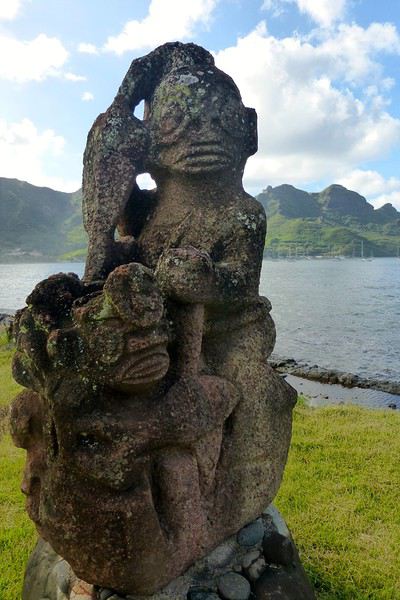
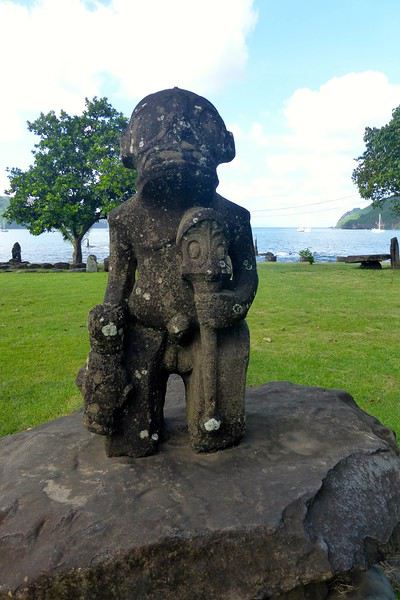
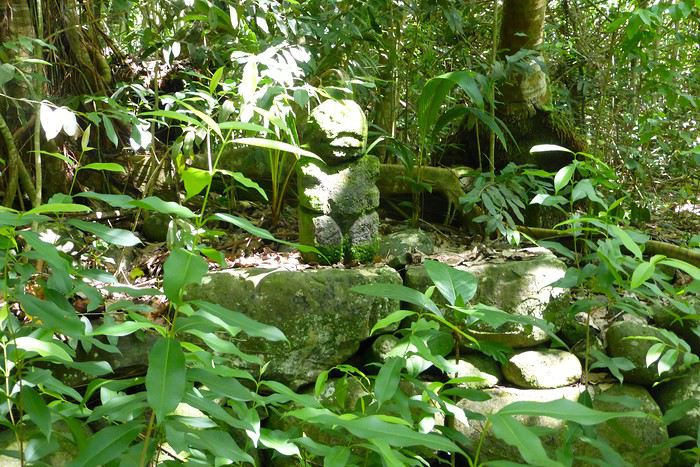
We booked a full-day excursion with Thierry: it starts with a 45-minute boat ride to reach Hakatea Beach, hidden in a small secret bay like many along Nuku Hiva’s coasts. From there, the hike lasts all day—11 km round-trip on flat but also rugged terrain (ancient paved and elevated paths over 1,000 years old)—and river crossings. Bring the right shoes (like plastic Crocs with high socks—not very stylish but practical). We cross the former village of Hakaui, walk along the foundations of dwellings, and there are still weathered tikis in the lush vegetation. The ultimate goal of this hike is to reach the tall Vaipo waterfall. The place is magical, with openings in the vegetation and immense trees allowing photos of the treetops and caves where funeral canoes containing the bones of chiefs or great warriors were once placed. We return the same way to the beach and take another boat ride to reach Taihoae’s port. Back at the guesthouse after a glimpse of Taihoae’s waterfront.
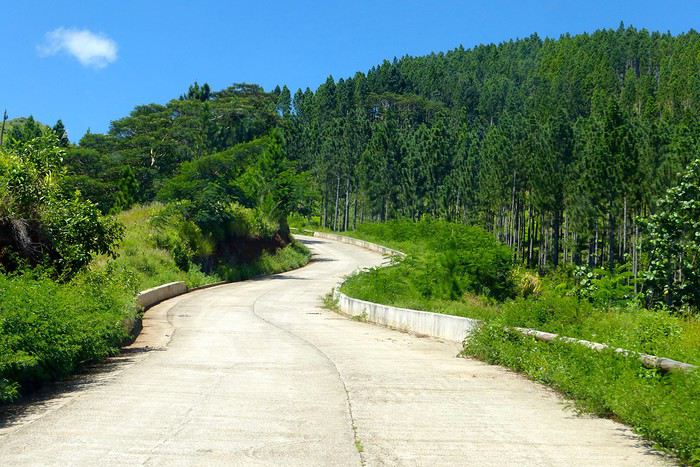
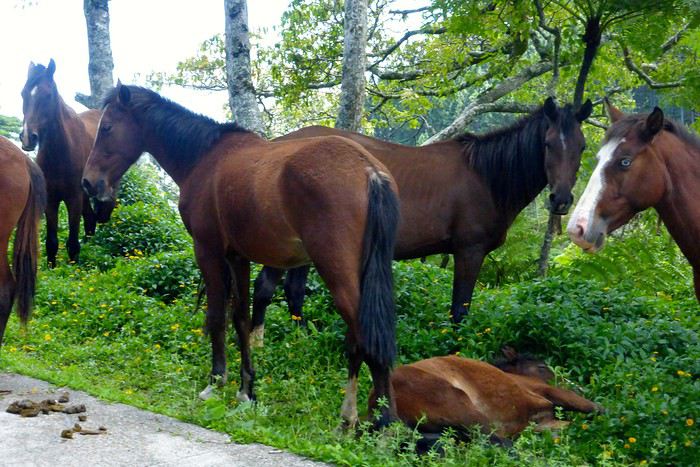
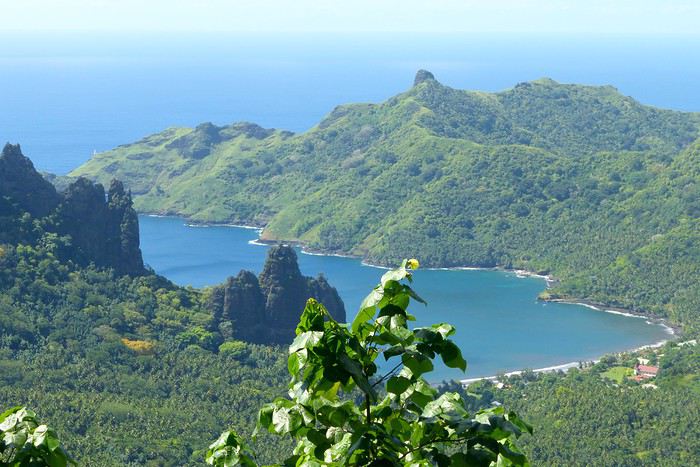
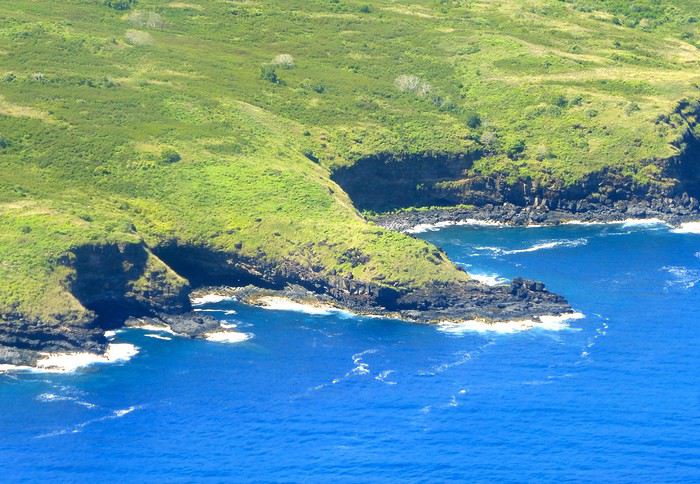
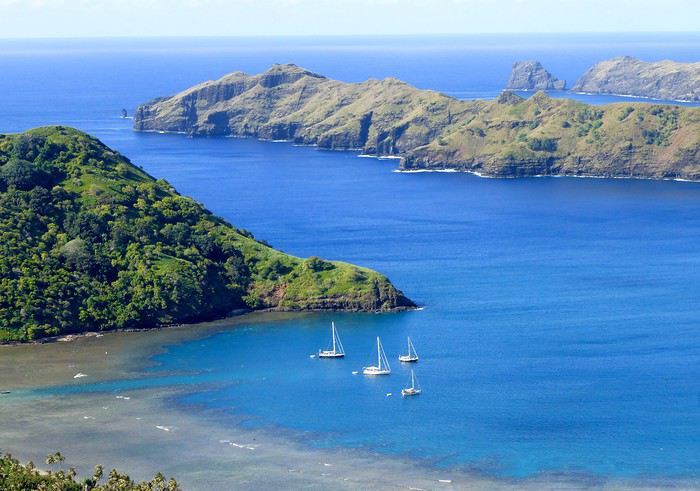
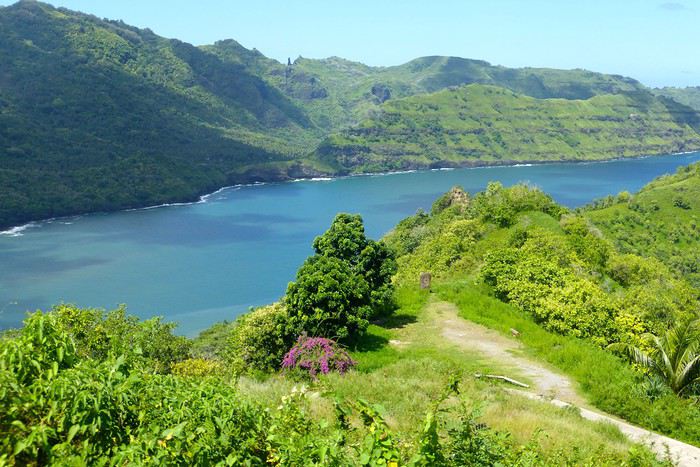
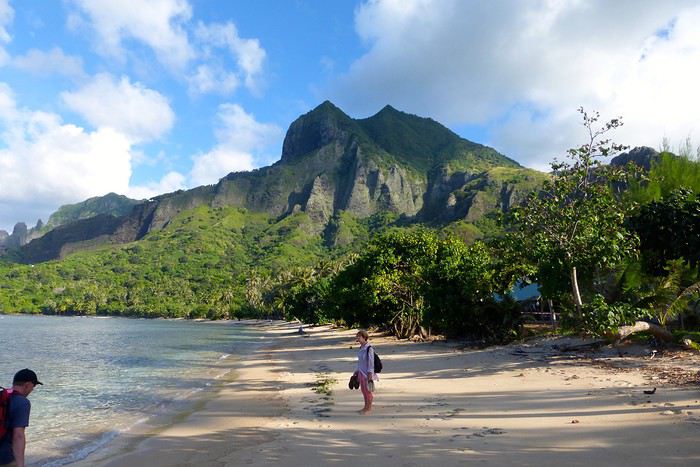
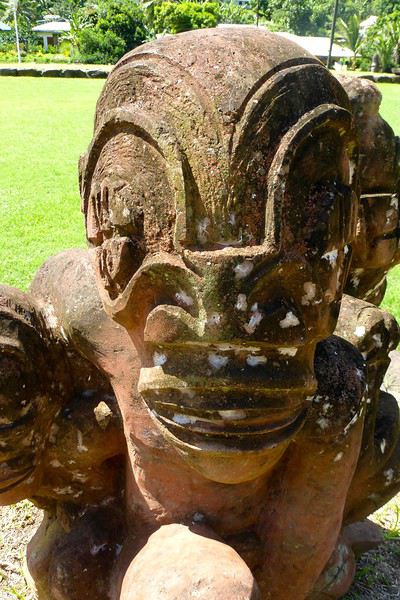
**UA POU**
**Day 3: April 29**
Back to the airport in the late morning for the second flight of the trip to Ua Pou. 20-minute crossing in a Twin Otter (18 seats but only 13 occupied due to cargo between the islands). Beautiful weather, blue sea, nice photos to take upon departure from NH and arrival in UP. We’re greeted by Jérôme, a former military man turned tourism professional, who runs Pension Pukue’e with his wife Elisa, a native of UP. We’re in for two exceptional days. The guesthouse is comfortable, Jérôme and Elisa are very professional and pleasant. Jérôme is also a professional hiker, and Elisa is an excellent cook. We leave quickly for a half-day excursion to Hohoi, after a stop at the archaeological, cultural, and religious site of Maui’a, the Tavaka tribe’s territory. Jérôme is there to explain how Marquesan society functioned at the time and the events that took place on a site still largely buried under vegetation. Then we visit a flower-stone sculptor he knows—the only place in the Marquesas where you’ll find these stones. They’re collected in the river flowing into the sea at Hohoi, sometimes on the beach itself. Back to the guesthouse.
**Day 4: April 30**
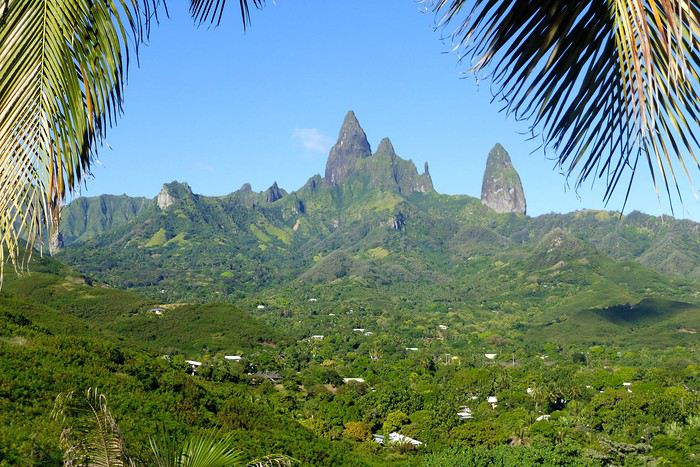
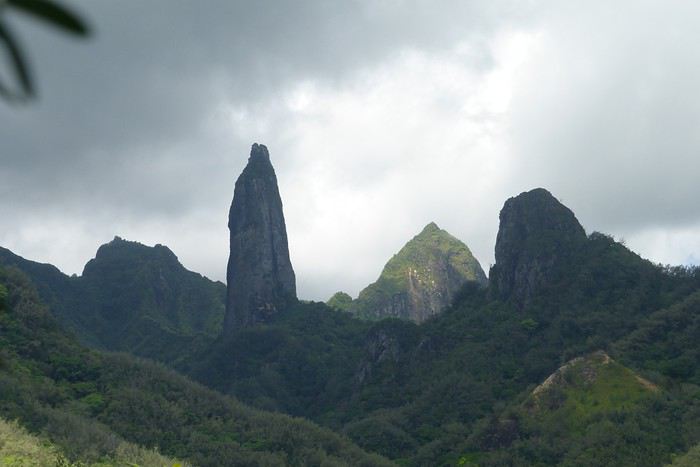
A nature hike in the mountains—moderately difficult—toward the Vaiea waterfall is on our program for a good 4 hours. It’s hot, there are mosquitoes, and the dip in the pool under the waterfall (24°C water) is a rare pleasure. Lunch at a friend of Jérôme’s, a former chef for French minister François Fillon, who prepares delicious food. Elisa picks us up by car to return to the guesthouse. Ua Pou is a beautiful and elegant island with its sharp peaks and wild nature. Our favorite, thanks to Jérôme and his wife.
**UA HUKA**
**Day 4: May 1**
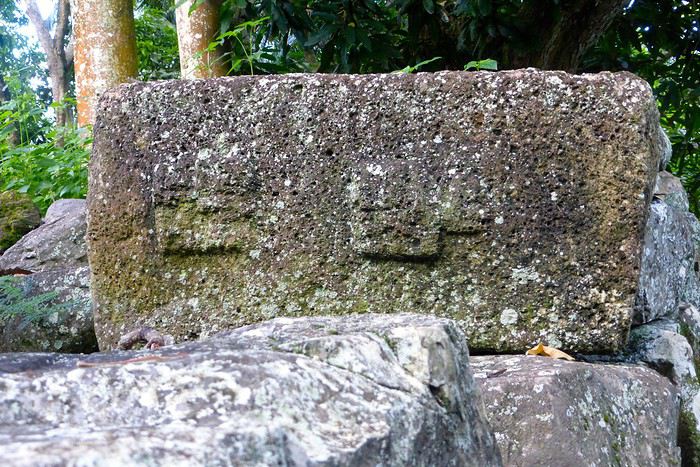
Departure for Ua Huka, the smallest inhabited island in the northern group of the Marquesas, located about 1,300 km northeast of Tahiti. Landing is at the oldest airfield in the Marquesas, built in 1972, between the villages of Vaipaee and Hane. Ua Huka has about 680 inhabitants, according to the last census, spread across 3 villages (since the 1870s): Vaipaee, Hane, and Hokatu. The island peaks at Mount Hitikau at only 884 meters. Its origin: a Hawaiian-type shield volcano that—over a few million years—collapsed to become a caldera (or elliptical depression) in which two small volcanoes appeared, the craters of Tahoatikiau and Teepoepo, now part of the Vaikivi Park. The island is rugged and wild, lower than the others, so less cloud-covered and drier. The bays are jagged, the coastline in ochre tones above the intense blue of the sea, and the beaches are constantly disturbed by the powerful surf. The village of Hokatu is only a few kilometers away (just 14 km of road on the island), but Maurice, our host, drives slowly, and it takes time to go up and down. The road is entirely paved or concreted, which isn’t the case on Ua Pou, for example. The guesthouse is disappointing, perched above the village and thus isolated. Beautiful view of the famous Hane motu and the sparkling sea under the bright sun. Apart from that, there are mosquitoes and cockroaches, the bungalow isn’t clean. Meals are taken with Maurice and Delphine in the village—fine dining isn’t on the menu! Ouch!!! We didn’t luck out...
**Day 5: May 2**
Early in the morning, after breakfast, Delphine takes us to the craft center, which turns out to be a letdown—the items for sale are, in my opinion, crude and poorly carved. Nothing like what’s offered at the Marquesas Fair, held twice a year in Papeete, where you can admire and buy small wonders: wood carvings, flower stone, and coral. Delphine is disappointed we’re not interested, and it shows... She’s a bit sulky! These are items meant for Aranui cruise passengers who land on Ua Huka once every two weeks... Solo travelers like us don’t seem to interest her much. The rest of the day—spent with Maurice—is dedicated to visiting cultural centers and small museums, like the Sea Museum in Hane with its ancient canoes, the municipal archaeological museum on the Te Tumu site above the airfield, the petroglyph house near Hokatu Beach, and finally the Papuakeikaraa arboretum, which gathers endemic plants from all over Polynesia and an impressive citrus collection. No excursion planned to Vaikivi Park, toward the previously mentioned craters that recall the island’s volcanic past. Also missing are the viewpoints, the unique endemic vegetation, and especially the petroglyphs. Too bad... at that price!!! Still, in the evening, we go fishing—with sandwiches and drinks in coolers—with other villagers from the dock at the end of the paved road. It’s cool, windy, no mosquitoes, lots of fish caught, and a great atmosphere. Plus, magnificently starry skies.
Ua Huka is one of the rare islands not invaded by the black rat, which has preserved its birdlife, particularly the ultramarine lorikeet (or *pihiti* in Marquesan), which feeds almost exclusively on flower nectar (banana, coconut, hibiscus, mango, guava trees). A dog imported from New Zealand has been specially trained to detect rats: it inspects cargo unloaded from boats and the docks.
I recommend spending two full days on the island—one for visiting the various museums, the other for hiking in the island’s center park, where the archaeological sites are in their raw state: foundations of agricultural terrace walls, gathering places (or *tohua*), dwelling pavements (or *paepae*), sacred sites (or *me’ae* in Marquesan, *marae* in Tahitian) with their tikis and petroglyphs.
To finish, a bit of info on the island’s name, tied to Marquesan oral culture: according to the legend of the creation of the six Marquesas Islands, Ua Huka is the one that puts the finishing touch on the construction of the god Oatea’s house, each island having a defined architectural function. Ua Huka represents the hole (*ua*) where the god deposits what’s left (*huka* in Marquesan) of the unused materials during construction.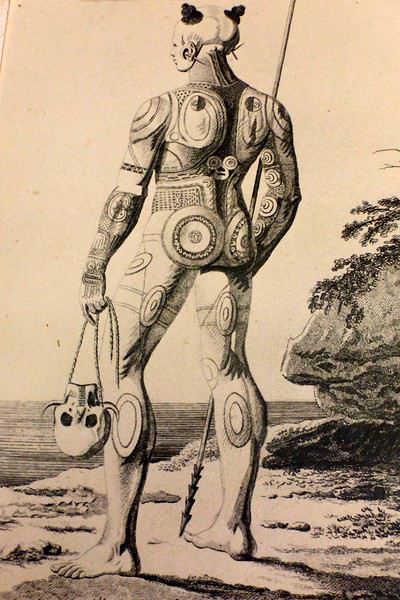
**HIVA OA**
**Day 6: May 3**
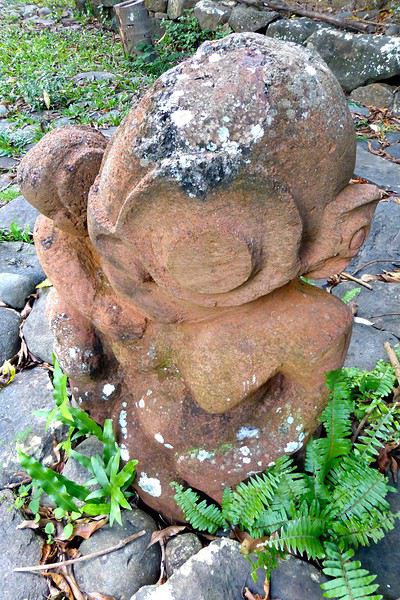
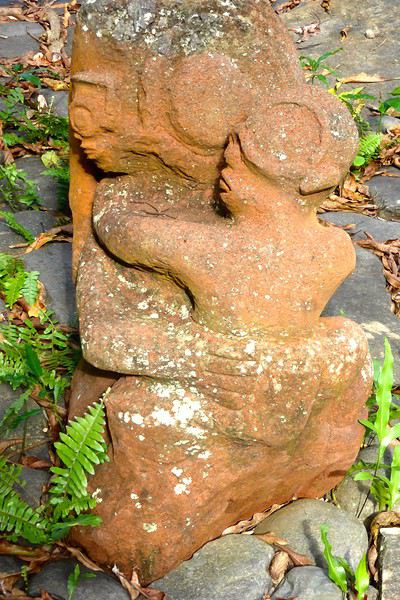
Departure in the late morning for Hiva Oa. Maurice—who had other things to do—dropped us off at the airfield 3 hours early... so this stop is a bit of a flop, even if we decided to stay positive! Hiva Oa is the third-largest island in French Polynesia after Tahiti and Nuku Hiva, and before Raiatea in the Leeward Islands. The island is beautiful, lush, verdant, and jagged. The mountains soar into the sky, the sea views are grand, the light is sublime—we’re lucky. Beautiful weather. Tania from Pension Kanahau waits for us at the airport. We’re in for two wonderful days with her. Tania is welcoming, smiling, and dynamic. What a pleasure to be with her, at her place—she cooks divinely and serves the best tuna in the world (the Big Eye reserved for the Japanese) and croquettes made with lobster, shrimp, and crab with breadfruit cubes, for example. Comfortable bungalow, no mosquitoes at night, we can sleep with the window open. It’s fantastic! After settling in, Tania takes us to town in Atuona, a pleasant and well-laid-out little village. We start with lunch—a delicious raw fish in coconut milk—then continue with the must-see attractions: the Catholic cemetery where Paul Gauguin and Jacques Brel’s graves are, overlooking the town; the abandoned Protestant cemetery, reclaimed by the bush, with impressive Marquesan warrior tombs made of huge coral slabs and adorned with a tiki head (harder to find, as no one goes there... ask for directions!); the craft center; the Gauguin Museum (and the Jacques Brel Museum); and the waterfront. While we stroll peacefully, Tania organizes an excursion for the next day, May 4, a full day with Pifa O’Connor, a 36-year-old who knows his island inside out, is passionate about local history, and with whom we’ll hit it off.
**Day 7: May 4**
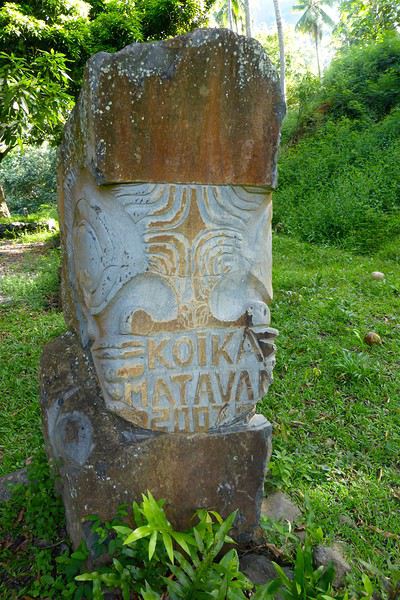
Pifa arrives at 8 AM sharp at the guesthouse, and we immediately buy sandwiches and water at a small supermarket in Atuona. First, we make a brief stop by the roadside at an unmarked spot, from which we descend a small path through dense vegetation leading to the famous smiling tiki—the only one of its kind in the Marquesas and Polynesia. The place is improbable, the tiki isn’t huge, but it’s beautiful and impressive. Then we’re off on the road that, dizzyingly, runs along and overlooks the island’s northern coast, at the edge of the ancient volcano. Few vehicles pass, the road—now a rocky track—is full of potholes, and we proceed slowly. (Note that this road has been fully paved since 2018.) The panoramas are majestic, with every shade of green against the blue sea. We stop again at the top of a cliff adorned with a huge stone, the *sacrifice stone*, from which young virgin girls were once thrown into the sea to appease angry gods. Another pause for lunch this time, at a small restaurant near the exceptional archaeological site of Puamau. We’ll experience the highlights of this trip during this excursion with our guide, Pifa, who spares no explanations. We discover, on a vast esplanade, the ceremonial complexes of Ta’a Oa and Meae Te I’Ipona, the latter featuring superb tikis, particularly the reclining tiki—or *Maki Taua Pepe*—representing Motherhood, a woman giving birth in a squatting position, as was often the case in many civilizations. Also notable is the *Takaii*, the largest tiki recorded in Polynesia to date. There’s also a huge stone with a now-blunt edge, on which the circumcision of chiefs’ and notables’ pre-adolescent sons was performed. A tough ordeal! But that’s not all! It seems there are more on the mountainside rising steeply behind the archaeological site—overturned tikis, platforms, and, apparently, a giant tiki at the top, which must have fallen but was visible from afar on the sea 30 or 40 years ago, according to the island’s elders. This meeting, worship, and living place—it was actually a small town—is immense. Thousands of people once lived in this part of the island. The site—a religious, social, and cultural sanctuary—would be the size of the largest Mayan sites in Yucatán, but the few concerned owners—two or three families who own the mountainside—don’t want to hear about intensive clearing or tree cutting for now. UNESCO rightly asks for some compliance efforts to grant special treatment to Hiva Oa in particular and the Marquesas in general. We’re not there yet, unfortunately, due to insurmountable local rigidities! This kind of attitude is quite typical in Polynesia: people are afraid to uncover *marae* buried under vegetation—they’re taboo and sometimes said to emit negative and deadly waves, so it’s better not to disturb or anger the ancient spirits or gods who might take revenge. The old religion is never far away in Polynesia, despite the successes of the missionaries.
We return to the guesthouse in the late afternoon. Last night in the Marquesas with Tania, who prepares a fine and delicious meal. Note that dinner costs 2,500 XPF per person.
**Day 8: May 5**
We take the plane as planned, via Nuku Hiva (short stopover). Arrival on time in Papeete.
May this travel journal inspire many of you to visit the Marquesas one day. It’s far, it’s expensive, it’s the trip of a lifetime—it’s unforgettable and unmissable.
Our itinerary is perfect for those who aren’t excited by cruises and prefer to get closer to the local communities. This 9-day trip cost us around 2500 € all-inclusive. For a 14-day cruise on the Aranui, expect to pay 2300 € per person for a basic cabin for four, or 3800 € per person for a superior double cabin.
Air Tahiti offers a 4-island Marquesas Pass (Nuku Hiva, Ua Pou, Ua Huka, and Hiva Oa) for 86,000 XPF (about 700 €). The journey is made on an ATR 72 from Tahiti to Nuku Hiva or Hiva Oa, and on a 19-seat Twin Otter between the islands (often only 13 or 15 seats are available due to cargo, so book well in advance). We’re traveling as a couple. We booked our family-run guesthouse stays at the Tourism Fair in early February, where you can meet the owners and make your choice. Stays are almost always half-board or breakfast-only. Transfers are usually included, but you can always book a car or taxi.
**NUKU HIVA**
**A LITTLE GEOGRAPHY** Nuku Hiva (NH) is located about 1,500 km from Tahiti, in the north of French Polynesia. At 387 km², it’s the second-largest island in French Polynesia after Tahiti. It was formed by incredible volcanic phenomena and cataclysms between 1 and 6 million years ago, which lifted the island thousands of meters above the sea. Even after millennia of slow erosion, collapses, and settling, NH remains the most majestic of the Marquesas, with its sheer cliffs, deep valleys featuring immense waterfalls, and black walls that were once the inner walls of enormous volcanoes.
**A LITTLE HISTORY** The first contact between NH’s inhabitants and Europeans was in 1595 with Spanish navigators who only stayed briefly. It wasn’t until the late 18th century that Europeans arrived in greater numbers on NH (and the other Marquesas Islands), disrupting a very fragile social and cultural balance. It’s believed that nearly 100,000 people lived on Nuku Hiva at that time—a population decimated over the decades by epidemics, diseases brought by Europeans, and alcohol used for barter. The disastrous result: by the 1930s, only 2,500 people remained, having largely lost their identity and living in poverty. Today, the island has about 2,600 inhabitants spread across several villages, with Taiohae as the main one.
**NUKU HIVA IN LITERATURE**
1 / One of the famous writers who visited NH and stayed there was Herman Melville, who arrived in July 1842, the author of *Moby Dick*. The island had just come under French protectorate. Seduced by the enchanting *vahinés* and dazzled by his paradisiacal vision of the place, Melville deserted his ship. He ended up a prisoner of a local tribe, the Taipi, in Taipivai, where he stayed for a month and a half until an Australian ship captain secured his release in exchange for a musket and a roll of cotton fabric! Melville wrote a novel about this tumultuous episode in his life, considered a classic of travel literature. The book, *Typee: A Peep at Polynesian Life*, published in 1846 in the United States, was a huge success.
2 / Another famous Scottish writer, Robert Louis Stevenson, arrived in NH aboard a yacht that anchored in Anaho Bay, the island’s most beautiful, in July 1888. Stevenson was already known for two magnificent novels that marked their era: *Treasure Island* and *Dr. Jekyll & Mr. Hyde*. Stevenson, too, was captivated by the island’s natural beauty, though he also noted the devastating decline in identity, socio-cultural life, and physical health of a population ravaged by disease and alcohol. His account of his stay, *In the South Seas: An Account of Experiences and Observations in the Marquesas, Paumotus, and Gilbert Islands During Two Cruises on the Yacht Casco (1888) and the Schooner Equator (1889)*, was published in 1896 in New York, four years after his death in Apia, Western Samoa, where he had settled. It was also published in London in 1900.
3 / In August 1903, Victor Segalen, a French naval doctor, ethnologist, and archaeologist, landed in NH from the ship *La Durance*, sent to Polynesia to recover the possessions of the painter Paul Gauguin, who had died in April of that year. He, too, was enthralled by the Marquesas but lamented the loss of identity, dignity, and pride of the Māori, alienated by a Christianization that destroyed their culture and customs, denied their gods, and erased their past. He wrote about his experience, doubts, and fears in *Les Immémoriaux*.
4 / In December 1907, Jack London arrived in NH aboard the sailboat *Stark*, following in the footsteps of his illustrious predecessor, Herman Melville. London was in poor physical condition, exhausted from his relentless travels that had taken him from the Klondike in Canada to Japan, Australia, and London in Europe. He was appalled and shocked by Nuku Hiva’s degraded health situation: where Melville had encountered over 2,000 vigorous and healthy Marquesan warriors, London found only 12 suffering from various diseases—the rest had been wiped out by tuberculosis! His approach remained humanistic, and he maintained a sharp geopolitical awareness of these traditional Polynesian cultures, weakened by the inexorable advance of modernity in the early 20th century. He continued his journey to the Tuamotu Islands and Tahiti, publishing *Martin Eden*, the moving account of his initiatory voyage in the South Pacific, in 1911.
5 / Finally, Alain Gerbault, a writer, linguist, ethnologist, and tireless traveler, arrived in the Marquesas via the Panama Canal in December 1933. He was completely exhausted after an endless crossing on a small sailboat, the *Firecrest*. Enthralled by his stay in the Marquesas, he continued to the Tuamotu Islands in 1934, then Tahiti in 1935. Gerbault fought for the preservation of traditions, as well as the songs and dances banned by the Churches and the French Administration (these bans lasted over 50 years, mind you...!!!). Bora Bora remained his favorite island. A staunch Pétainist during World War II, he was forced to flee Bora Bora for Samoa, then Tonga, and finally Timor, a half-Portuguese island and thus neutral during the war. His travel accounts, *In Pursuit of the Sun: Logbook from New York to Tahiti* and *A Paradise Is Dying*, were published in the late 1940s. He died in Timor in 1941, and his ashes were repatriated to Bora Bora.
Back to our trip and stay.
**Day 1: April 27**
Departure from Papeete at 6:30 AM—we had to wake up two hours earlier and reach the airport in the dark. Takeoff at dawn, good weather en route, flight duration: 4 hours.
Arrival around 10:30 AM in Nuku Hiva, the first stop of this trip. We booked two nights in half-board at Pension Koku’u, transfers included. Maybe not such a great idea, those included transfers, especially on this unique island where the airport is located on *Terre Déserte*, on the other side of the mountain, opposite and about 45 km from the main village of Taiohae. They’re charged at a steep price. Expect 6,000 XPF round-trip by taxi, but 15,000 XPF charged by guesthouses or hotels. The difference is notable. It wasn’t the best idea, but we can’t go back. Even for residents like us who know how to travel in Polynesia, the Air Tahiti employee who sold me the Pass couldn’t give any useful advice about the stay itself—probably because he’d never been to the Marquesas. It’s really annoying! In short, the good idea to remember is renting a car (like a Suzuki) to be free to manage your time and stop at leisure. The road signage is a bit basic, but you’ll manage just fine. Our host Alvane waits for us—without a sign (sic!)—and after searching for each other for 5 minutes, we’re off on a journey of over an hour (with photo stops) in a Land Rover with smooth tires (luckily, it’s not raining!). The recently paved and marked mountain road is impeccable. No time to catch our breath at the guesthouse; we leave immediately (not a great idea after waking up at dawn plus 4 hours on a plane) for a half-day hike that was also included in the prepaid stay. A sandwich was provided (really pathetic for the physical effort required), we have water, and we fill a few bottles at the spring near the ceremonial site of Taipivai, our first stop. Then the hike begins in the Hanaheu Valley, descending toward Anaho Bay and its namesake beach. A magnificent and wild spot, a few sailboats anchored, we swim—the water is really warm, over 30°C at the shore. That warm is rare and not necessarily pleasant. We then have to climb a very steep slope; this hike is actually quite tough. The air is still, humid, and stifling under the foliage, there’s a bit of mud, and tiny ants (which don’t bite, I’ll have you know), locally called *fofolles*, running over shoes, ankles, and calves. Not very pleasant...! On top of that, there are mosquitoes to protect against! In hindsight, it seems wise to bring energy bars from Papeete if you plan to hike on the afternoon of your arrival day. We weren’t careful... Result: a moment of weakness for me and a hyperventilation attack climbing back up from Anaho Bay!!! We return to the guesthouse at night. There we find Claudine and her four children—Marquesan-style atmosphere, friendly and casual. We share family life. Very simple room with a bathroom, no mosquitoes, we can sleep with the window open, but the night will be noisy, as is often the case in Polynesia. Roosters are everywhere and don’t sleep, dogs bark or whine. So we end up waking up early... like everyone else.
**Day 2: April 28**
We booked a full-day excursion with Thierry: it starts with a 45-minute boat ride to reach Hakatea Beach, hidden in a small secret bay like many along Nuku Hiva’s coasts. From there, the hike lasts all day—11 km round-trip on flat but also rugged terrain (ancient paved and elevated paths over 1,000 years old)—and river crossings. Bring the right shoes (like plastic Crocs with high socks—not very stylish but practical). We cross the former village of Hakaui, walk along the foundations of dwellings, and there are still weathered tikis in the lush vegetation. The ultimate goal of this hike is to reach the tall Vaipo waterfall. The place is magical, with openings in the vegetation and immense trees allowing photos of the treetops and caves where funeral canoes containing the bones of chiefs or great warriors were once placed. We return the same way to the beach and take another boat ride to reach Taihoae’s port. Back at the guesthouse after a glimpse of Taihoae’s waterfront.
**UA POU**
**Day 3: April 29**
Back to the airport in the late morning for the second flight of the trip to Ua Pou. 20-minute crossing in a Twin Otter (18 seats but only 13 occupied due to cargo between the islands). Beautiful weather, blue sea, nice photos to take upon departure from NH and arrival in UP. We’re greeted by Jérôme, a former military man turned tourism professional, who runs Pension Pukue’e with his wife Elisa, a native of UP. We’re in for two exceptional days. The guesthouse is comfortable, Jérôme and Elisa are very professional and pleasant. Jérôme is also a professional hiker, and Elisa is an excellent cook. We leave quickly for a half-day excursion to Hohoi, after a stop at the archaeological, cultural, and religious site of Maui’a, the Tavaka tribe’s territory. Jérôme is there to explain how Marquesan society functioned at the time and the events that took place on a site still largely buried under vegetation. Then we visit a flower-stone sculptor he knows—the only place in the Marquesas where you’ll find these stones. They’re collected in the river flowing into the sea at Hohoi, sometimes on the beach itself. Back to the guesthouse.
**Day 4: April 30**
A nature hike in the mountains—moderately difficult—toward the Vaiea waterfall is on our program for a good 4 hours. It’s hot, there are mosquitoes, and the dip in the pool under the waterfall (24°C water) is a rare pleasure. Lunch at a friend of Jérôme’s, a former chef for French minister François Fillon, who prepares delicious food. Elisa picks us up by car to return to the guesthouse. Ua Pou is a beautiful and elegant island with its sharp peaks and wild nature. Our favorite, thanks to Jérôme and his wife.
**UA HUKA**
**Day 4: May 1**
Departure for Ua Huka, the smallest inhabited island in the northern group of the Marquesas, located about 1,300 km northeast of Tahiti. Landing is at the oldest airfield in the Marquesas, built in 1972, between the villages of Vaipaee and Hane. Ua Huka has about 680 inhabitants, according to the last census, spread across 3 villages (since the 1870s): Vaipaee, Hane, and Hokatu. The island peaks at Mount Hitikau at only 884 meters. Its origin: a Hawaiian-type shield volcano that—over a few million years—collapsed to become a caldera (or elliptical depression) in which two small volcanoes appeared, the craters of Tahoatikiau and Teepoepo, now part of the Vaikivi Park. The island is rugged and wild, lower than the others, so less cloud-covered and drier. The bays are jagged, the coastline in ochre tones above the intense blue of the sea, and the beaches are constantly disturbed by the powerful surf. The village of Hokatu is only a few kilometers away (just 14 km of road on the island), but Maurice, our host, drives slowly, and it takes time to go up and down. The road is entirely paved or concreted, which isn’t the case on Ua Pou, for example. The guesthouse is disappointing, perched above the village and thus isolated. Beautiful view of the famous Hane motu and the sparkling sea under the bright sun. Apart from that, there are mosquitoes and cockroaches, the bungalow isn’t clean. Meals are taken with Maurice and Delphine in the village—fine dining isn’t on the menu! Ouch!!! We didn’t luck out...
**Day 5: May 2**
Early in the morning, after breakfast, Delphine takes us to the craft center, which turns out to be a letdown—the items for sale are, in my opinion, crude and poorly carved. Nothing like what’s offered at the Marquesas Fair, held twice a year in Papeete, where you can admire and buy small wonders: wood carvings, flower stone, and coral. Delphine is disappointed we’re not interested, and it shows... She’s a bit sulky! These are items meant for Aranui cruise passengers who land on Ua Huka once every two weeks... Solo travelers like us don’t seem to interest her much. The rest of the day—spent with Maurice—is dedicated to visiting cultural centers and small museums, like the Sea Museum in Hane with its ancient canoes, the municipal archaeological museum on the Te Tumu site above the airfield, the petroglyph house near Hokatu Beach, and finally the Papuakeikaraa arboretum, which gathers endemic plants from all over Polynesia and an impressive citrus collection. No excursion planned to Vaikivi Park, toward the previously mentioned craters that recall the island’s volcanic past. Also missing are the viewpoints, the unique endemic vegetation, and especially the petroglyphs. Too bad... at that price!!! Still, in the evening, we go fishing—with sandwiches and drinks in coolers—with other villagers from the dock at the end of the paved road. It’s cool, windy, no mosquitoes, lots of fish caught, and a great atmosphere. Plus, magnificently starry skies.
Ua Huka is one of the rare islands not invaded by the black rat, which has preserved its birdlife, particularly the ultramarine lorikeet (or *pihiti* in Marquesan), which feeds almost exclusively on flower nectar (banana, coconut, hibiscus, mango, guava trees). A dog imported from New Zealand has been specially trained to detect rats: it inspects cargo unloaded from boats and the docks.
I recommend spending two full days on the island—one for visiting the various museums, the other for hiking in the island’s center park, where the archaeological sites are in their raw state: foundations of agricultural terrace walls, gathering places (or *tohua*), dwelling pavements (or *paepae*), sacred sites (or *me’ae* in Marquesan, *marae* in Tahitian) with their tikis and petroglyphs.
To finish, a bit of info on the island’s name, tied to Marquesan oral culture: according to the legend of the creation of the six Marquesas Islands, Ua Huka is the one that puts the finishing touch on the construction of the god Oatea’s house, each island having a defined architectural function. Ua Huka represents the hole (*ua*) where the god deposits what’s left (*huka* in Marquesan) of the unused materials during construction.
**HIVA OA**
**Day 6: May 3**
Departure in the late morning for Hiva Oa. Maurice—who had other things to do—dropped us off at the airfield 3 hours early... so this stop is a bit of a flop, even if we decided to stay positive! Hiva Oa is the third-largest island in French Polynesia after Tahiti and Nuku Hiva, and before Raiatea in the Leeward Islands. The island is beautiful, lush, verdant, and jagged. The mountains soar into the sky, the sea views are grand, the light is sublime—we’re lucky. Beautiful weather. Tania from Pension Kanahau waits for us at the airport. We’re in for two wonderful days with her. Tania is welcoming, smiling, and dynamic. What a pleasure to be with her, at her place—she cooks divinely and serves the best tuna in the world (the Big Eye reserved for the Japanese) and croquettes made with lobster, shrimp, and crab with breadfruit cubes, for example. Comfortable bungalow, no mosquitoes at night, we can sleep with the window open. It’s fantastic! After settling in, Tania takes us to town in Atuona, a pleasant and well-laid-out little village. We start with lunch—a delicious raw fish in coconut milk—then continue with the must-see attractions: the Catholic cemetery where Paul Gauguin and Jacques Brel’s graves are, overlooking the town; the abandoned Protestant cemetery, reclaimed by the bush, with impressive Marquesan warrior tombs made of huge coral slabs and adorned with a tiki head (harder to find, as no one goes there... ask for directions!); the craft center; the Gauguin Museum (and the Jacques Brel Museum); and the waterfront. While we stroll peacefully, Tania organizes an excursion for the next day, May 4, a full day with Pifa O’Connor, a 36-year-old who knows his island inside out, is passionate about local history, and with whom we’ll hit it off.
**Day 7: May 4**
Pifa arrives at 8 AM sharp at the guesthouse, and we immediately buy sandwiches and water at a small supermarket in Atuona. First, we make a brief stop by the roadside at an unmarked spot, from which we descend a small path through dense vegetation leading to the famous smiling tiki—the only one of its kind in the Marquesas and Polynesia. The place is improbable, the tiki isn’t huge, but it’s beautiful and impressive. Then we’re off on the road that, dizzyingly, runs along and overlooks the island’s northern coast, at the edge of the ancient volcano. Few vehicles pass, the road—now a rocky track—is full of potholes, and we proceed slowly. (Note that this road has been fully paved since 2018.) The panoramas are majestic, with every shade of green against the blue sea. We stop again at the top of a cliff adorned with a huge stone, the *sacrifice stone*, from which young virgin girls were once thrown into the sea to appease angry gods. Another pause for lunch this time, at a small restaurant near the exceptional archaeological site of Puamau. We’ll experience the highlights of this trip during this excursion with our guide, Pifa, who spares no explanations. We discover, on a vast esplanade, the ceremonial complexes of Ta’a Oa and Meae Te I’Ipona, the latter featuring superb tikis, particularly the reclining tiki—or *Maki Taua Pepe*—representing Motherhood, a woman giving birth in a squatting position, as was often the case in many civilizations. Also notable is the *Takaii*, the largest tiki recorded in Polynesia to date. There’s also a huge stone with a now-blunt edge, on which the circumcision of chiefs’ and notables’ pre-adolescent sons was performed. A tough ordeal! But that’s not all! It seems there are more on the mountainside rising steeply behind the archaeological site—overturned tikis, platforms, and, apparently, a giant tiki at the top, which must have fallen but was visible from afar on the sea 30 or 40 years ago, according to the island’s elders. This meeting, worship, and living place—it was actually a small town—is immense. Thousands of people once lived in this part of the island. The site—a religious, social, and cultural sanctuary—would be the size of the largest Mayan sites in Yucatán, but the few concerned owners—two or three families who own the mountainside—don’t want to hear about intensive clearing or tree cutting for now. UNESCO rightly asks for some compliance efforts to grant special treatment to Hiva Oa in particular and the Marquesas in general. We’re not there yet, unfortunately, due to insurmountable local rigidities! This kind of attitude is quite typical in Polynesia: people are afraid to uncover *marae* buried under vegetation—they’re taboo and sometimes said to emit negative and deadly waves, so it’s better not to disturb or anger the ancient spirits or gods who might take revenge. The old religion is never far away in Polynesia, despite the successes of the missionaries.
We return to the guesthouse in the late afternoon. Last night in the Marquesas with Tania, who prepares a fine and delicious meal. Note that dinner costs 2,500 XPF per person.
**Day 8: May 5**
We take the plane as planned, via Nuku Hiva (short stopover). Arrival on time in Papeete.
May this travel journal inspire many of you to visit the Marquesas one day. It’s far, it’s expensive, it’s the trip of a lifetime—it’s unforgettable and unmissable.
Bonjour à tous
Nous avons décidé ma femme et moi, disons plutôt que j'ai décidé, de partir en Août 2017 en Polynésie.
Ecrit de cette manière, on se dit "Super" il va faire un super voyage.
Oui, j'en suis sur mais j'ai un soucis. Ma femme adore la culture, les rencontres, les sites culturels, moi aussi, MAIS je suis plongeur (N3) et c'est ma passion (Je suis même président d'un Club en Région Parisienne alors vous situez mon niveau, pas de plongée 😉 mais de passion) et ma femme n'aime pas la plongée, et cela l'arrange elle n'a pas le droit.
Et c'est là que j'ai besoin de votre aide. J'ai lu avec beaucoup d'intérêt ce qui est écrit sur ce site notamment, et j'en arrive à avoir fait ce circuit :
MOOREA : 3 nuits HUANINE : 3 nuits RAIATA : 3 nuits BORA BORA : 2 nuits (Pour nos 26 ans de mariage) RANGIROA : 3 nuits FAKARAWA : 4 nuits TAHITI : 3 nuits
Cet itinéraire vous semble t il équilibré pour que chacun puisse y trouver son compte. Que devrais-je ajouter ou supprimer ?
Je remercie par avance pour vos conseils.
Yann
Nous avons décidé ma femme et moi, disons plutôt que j'ai décidé, de partir en Août 2017 en Polynésie.
Ecrit de cette manière, on se dit "Super" il va faire un super voyage.
Oui, j'en suis sur mais j'ai un soucis. Ma femme adore la culture, les rencontres, les sites culturels, moi aussi, MAIS je suis plongeur (N3) et c'est ma passion (Je suis même président d'un Club en Région Parisienne alors vous situez mon niveau, pas de plongée 😉 mais de passion) et ma femme n'aime pas la plongée, et cela l'arrange elle n'a pas le droit.
Et c'est là que j'ai besoin de votre aide. J'ai lu avec beaucoup d'intérêt ce qui est écrit sur ce site notamment, et j'en arrive à avoir fait ce circuit :
MOOREA : 3 nuits HUANINE : 3 nuits RAIATA : 3 nuits BORA BORA : 2 nuits (Pour nos 26 ans de mariage) RANGIROA : 3 nuits FAKARAWA : 4 nuits TAHITI : 3 nuits
Cet itinéraire vous semble t il équilibré pour que chacun puisse y trouver son compte. Que devrais-je ajouter ou supprimer ?
Je remercie par avance pour vos conseils.
Yann
Svp quelqu'un peut-il me donner des références ou suggestions pour me loger dans une bonne pension en bord du lagon (dans un bungalow privé) à:
Rangiora Fakarava Tikehau
Sincère merci à l'avance de prendre le temps de me répondre.
Rangiora Fakarava Tikehau
Sincère merci à l'avance de prendre le temps de me répondre.
Quelqu'un peut-il me conseiller pour choisir entre ces 2 hôtels à Bora Bora (j'y serai du 30 mars au 7 avril, donc 7 nuités)
1) l'hôtel Matira ou 2) Village Temanuata
Je suis vraiment indécise.
Merci beaucoup à l'avance!
1) l'hôtel Matira ou 2) Village Temanuata
Je suis vraiment indécise.
Merci beaucoup à l'avance!
Bonjour
Qui a séjourné récemment dans les pensions suivantes à Raiatea :
- Manava - Tepua - Opeha - Villa Temehani
Vos commentaires SVP.
Merci
Qui a séjourné récemment dans les pensions suivantes à Raiatea :
- Manava - Tepua - Opeha - Villa Temehani
Vos commentaires SVP.
Merci