Results for "Argentine+hébergement"
About 17,677 results.
More options
Many results are in French, the community’s main language. English translations are added over time.
Search results
Traversée de l'Amérique centrale
coucoux,
je pars pour l'amérique centrale début mars pour une durée indéterminée (petite idée 4 ou 6 mois) permettant de vivre le yucatan, le belize, le guatemala, l'honduras, le nicaragua et le panama. Je commence tout doucement à vagabonder sur les autres discussions en prenant des notes, mais je me permet d'ouvrir une discussion supplémentaire pour demander (à nouveau et comme tant d'autres) les petits trucs que vous pourriez me donner: par où vaut-il mieux commencer et continuer, une compagnie d'avion moins chère ou en promo, et les petits coins, ou bien les gens un peu plus isolés qui feront "un voyage autrement". Je suis aussi plongeuse, alors si vous avez un petit site, ou un moniteur qui travaille pas trop à la chaîne... je suis preneuse de tout renseignement!!! 🙂
Merki beaucoup
Maman solo avec sa fille au Vietnam et en Thailande
Bonjour,
J'aimerais visiter le Viêtnam et la Thailande avec ma fille de 5 ans au mois d'avril prochain. Question valeurs et mentalité, est-ce des pays ouvert au type de famille non-conventionnelle. Question sécurité, avez-vous des conseils pour nous.
Un gros merci !😏😏
Caroline et Naomie
J'aimerais visiter le Viêtnam et la Thailande avec ma fille de 5 ans au mois d'avril prochain. Question valeurs et mentalité, est-ce des pays ouvert au type de famille non-conventionnelle. Question sécurité, avez-vous des conseils pour nous.
Un gros merci !😏😏
Caroline et Naomie
Racket culturel en Inde
juste un mot sur la politique de l'Inde concernant le droit d'entree dans les musees ;
depuis environ 4 ans, il faut savoir que les "etrangers" sont tenus de payer parfois jusqu'a 50 fois plus cher que les locaux pour le billet d'entree dans certains musees (la grande majorite)...
quand un indien obtiendra un billet pour 2 ou 5 roupies, on vous demandera selon les sites de 50 a 300 roupies(comme au musee du Prince de Galles a Mumbay) voire plus de 900 roupies pour penetrer le Taj-Mahal...
vous devrez de plus essuyer l'attitude goguenarde de certains guichetiers tres conscients de l'enormitee des sommes qui nous sont demandees, voire la rudesse des gardiens qui n'hesitent pas a vous arreter pour vous controller....
savoir aussi que les appareils photos et cameras, cette fois ci la loi est la meme pour tous, sont habituellement taxes, voire interdit d'entree dans certains cas(mais vous ne pouvez pas les garder sur vous, des vestiaires payants(...) vous attendent).
C'EST UN VERITABLE RACKET D'ETAT qui s'appuit sur une logique xenophobe; quand a l'argent ainsi recolte, son devenir reste completement flou...il est notoire qu'une partie importante de la recette du Taj-Mahal disparait dans la nebuleuse du systeme du back-shish et de la corruption sans que cela profite a l'entretien du batiment, dans un etat de degradation certain encore accentue par les restauration malhabiles et bon-marche. Des monuments et oeuvres d'arts, souvent dans des conditions pitoyables qui serrent le coeur...
un etudiant en histoire de l'art ou toute personne qui s'interesse a l'art et la museographie doit donc s'attendre a debourser entre 20 et 100(rare) francs plusieurs fois par jours (monuments et musees...) de plus, nombres de musees appliquent cette loi trop heureux de l'opportunite d'un back-shish juteux, sans pour autant offrir aux visiteurs un avoir culturel a la hauteur du prix demande.
le prix d'une entree au musee du Louvre et au Musee "prince de galles" de Mumbay est a peu pres la meme....pourtant a l'interieur, la difference est grande ! le musee de Mumbay possede dans les quelques salles obscures qui le constituent, des collections de qualite tres inegale...
nous sommes victime d'une loi raciste, profondement arbitraire et injuste :
C'EST INACEPTABLE ...REFUSEZ D'ENTRER DANS LES MUSEES ET SITES HISTORIQUES INDIENS QUI PARTICIPENT A CE RACKET !( et avant, faites savoir au guichet la raison de votre refus) salut voyageurs,
C'EST UN VERITABLE RACKET D'ETAT qui s'appuit sur une logique xenophobe; quand a l'argent ainsi recolte, son devenir reste completement flou...il est notoire qu'une partie importante de la recette du Taj-Mahal disparait dans la nebuleuse du systeme du back-shish et de la corruption sans que cela profite a l'entretien du batiment, dans un etat de degradation certain encore accentue par les restauration malhabiles et bon-marche. Des monuments et oeuvres d'arts, souvent dans des conditions pitoyables qui serrent le coeur...
un etudiant en histoire de l'art ou toute personne qui s'interesse a l'art et la museographie doit donc s'attendre a debourser entre 20 et 100(rare) francs plusieurs fois par jours (monuments et musees...) de plus, nombres de musees appliquent cette loi trop heureux de l'opportunite d'un back-shish juteux, sans pour autant offrir aux visiteurs un avoir culturel a la hauteur du prix demande.
le prix d'une entree au musee du Louvre et au Musee "prince de galles" de Mumbay est a peu pres la meme....pourtant a l'interieur, la difference est grande ! le musee de Mumbay possede dans les quelques salles obscures qui le constituent, des collections de qualite tres inegale...
nous sommes victime d'une loi raciste, profondement arbitraire et injuste :
C'EST INACEPTABLE ...REFUSEZ D'ENTRER DANS LES MUSEES ET SITES HISTORIQUES INDIENS QUI PARTICIPENT A CE RACKET !( et avant, faites savoir au guichet la raison de votre refus) salut voyageurs,
Parc du Pantanal et Parc de la Chapada Diamantina (Brésil)
🙂Bonjour à tous,
Je prepare actuellement un voyage au Brésil en Juillet.😇
Quelqun'un pourrait il me donner des infos sur le parc du Pantanal et le parc de la Chapada diamantina😎. Je recherche également un endroit sympa où dormir à Rio ( type pas cher et sympa !!! )🤪.
Je recherche également le témoignage de personnes qui auraient déjà routardé au Brésil .
Merci pour vos témoignage et vos meileurs souvenirs du Bresil.
Je prepare actuellement un voyage au Brésil en Juillet.😇
Quelqun'un pourrait il me donner des infos sur le parc du Pantanal et le parc de la Chapada diamantina😎. Je recherche également un endroit sympa où dormir à Rio ( type pas cher et sympa !!! )🤪.
Je recherche également le témoignage de personnes qui auraient déjà routardé au Brésil .
Merci pour vos témoignage et vos meileurs souvenirs du Bresil.
Etapes sur Moscou-Pékin
Je souhaite partir l'été prochain en Russie, et plus particulièrement à St-Pétersbourg puis Moscou. Tout conseil de logement dans ce 2 villes sera le bienvenu.
Après cela nous projettons de prendre le Transsibérien et de faire étape sur le lac Baïkal. Faut-il absolument un guide pour explorer la nature autour de ce fabuleux lac ? Faites-nous part de vos expériences.
Ensuite route vers Ulan-Bator (toujours en train) d'où nous souhaiterions aller dans la steppe à cheval (1 à 2 semaines).
Enfin, direction Pékin pour visiter un peu la Chine et repartir vers Paris. Quel est le meilleur moyen pour traverser la frontière Mongolie-Chine et quelles sont les sites à voir absolument sur la route vers Pékin.
N'hésitez vraiment pas à nous donner plein de conseils....
Merci !!!!!!!
Après cela nous projettons de prendre le Transsibérien et de faire étape sur le lac Baïkal. Faut-il absolument un guide pour explorer la nature autour de ce fabuleux lac ? Faites-nous part de vos expériences.
Ensuite route vers Ulan-Bator (toujours en train) d'où nous souhaiterions aller dans la steppe à cheval (1 à 2 semaines).
Enfin, direction Pékin pour visiter un peu la Chine et repartir vers Paris. Quel est le meilleur moyen pour traverser la frontière Mongolie-Chine et quelles sont les sites à voir absolument sur la route vers Pékin.
N'hésitez vraiment pas à nous donner plein de conseils....
Merci !!!!!!!
Feedback on my Chile travel itinerary
Hi everyone!
I’m planning the trip of my dreams for next November—Chile! I’d love to get your thoughts on my potential itinerary. I know it’s a big investment in terms of both time and money, so every bit of feedback, suggestion, or info helps immensely. Thank you in advance!!
1-Flight to Santiago
2-Explore Santiago
3-Explore Santiago
4-Bus from STG to Valpo (2h) + visit Valparaíso + night in Viña
5-Visit Valparaíso + bus back to STG (2h)
6-Flight to Calama + bus to San Pedro + explore and acclimate in San Pedro + car rental in the afternoon (+Chaxa?)
7-(Very early) Valle del Arcoíris + Laguna Cejar + Valle de la Luna
8-Laguna Miñiques & Miscanti + Salar de Talar + Laguna Tuyajto
9-Geysers El Tatio early in the morning + Cañón de Guatín + return car
10-Excursion to Salar de Uyuni
11-Excursion to Salar de Uyuni
12-Excursion to Salar de Uyuni
13-Excursion to Salar de Uyuni + return to San Pedro for the night
14-Bus to Calama + flight Calama-La Serena + explore La Serena
15-Excursion to Reserva Pingüino + bonus time (sunset at Playa Tongoy or elsewhere...)
16-Rent a car in Pisco Elqui & Vicuña + Observatory
17-Return car in La Serena + flight Santiago & Puerto Montt (4h)
18-Rent a 4x2 car + drive to Temuco (4h)
19-Reserva Nacional Malalcahuello + hike + night in Temuco
20-Parque Nacional Conguillío then drive and night in Pucón
21-Villarrica Volcano
22-Parque Huerquehue
23-Activities on-site
24-Drive to Valdivia + explore and night there
25-Drive to Puerto Varas (via Frutillar, etc.) + activities on-site
26-Salto Las Cascadas + Parque Nacional Vicente Pérez Rosales (Salto del Petrohué) + Canoeing/Rafting?
27-Drive to Parque Alerce Andino (round trip 3h) + hike Sendero Sargazo?
28-Drive to Castro + explore Chiloé and night in Castro
29-Explore Chiloé
30-Explore Chiloé + return to Puerto Varas
31-Drive to Cochamó (1h30) + drive to Hornopirén (2h30)
32-Ferry to Caleta Gonzalo + drive to Chaitén (1h20)
33-Parque Nacional Pumalín, night in Chaitén
34-Drive to Puyuhuapi + Sendero Ventisquero Yelcho?
35-Ventisquero Colgante + drive to Coyhaique
36-Drive to Villa Cerro Castillo
37-Hike Cerro Castillo
38-Drive to Puerto Río Tranquilo
39-Excursion to Glaciar Exploradores
40-Mármol Cathedral + lake activities
41-Drive to Cochrane
42-Parque Patagonia
43-Drive to Chile Chico
44-Ferry Chile Chico-Ibañez + drive to Coyhaique + drop off car
45-Flight to Punta Arenas (1h30) + explore the city
46-Rent a car + drive to Puerto Natales
47-Drive to Torres del Paine in the morning + hike to the base of the towers (return to Puerto Natales for the night)
48-Torres del Paine hike 2 (return to Puerto Natales for the night)
49-Torres del Paine hike 3 (return to Puerto Natales for the night)
50-Drive to Punta Arenas
51-Flight Punta Arenas-Santiago + flight Santiago-Buenos Aires (2h)
52-Explore Buenos Aires
53-Explore Buenos Aires
54-Explore Buenos Aires
55-Flight back to France
I’m planning the trip of my dreams for next November—Chile! I’d love to get your thoughts on my potential itinerary. I know it’s a big investment in terms of both time and money, so every bit of feedback, suggestion, or info helps immensely. Thank you in advance!!
1-Flight to Santiago
2-Explore Santiago
3-Explore Santiago
4-Bus from STG to Valpo (2h) + visit Valparaíso + night in Viña
5-Visit Valparaíso + bus back to STG (2h)
6-Flight to Calama + bus to San Pedro + explore and acclimate in San Pedro + car rental in the afternoon (+Chaxa?)
7-(Very early) Valle del Arcoíris + Laguna Cejar + Valle de la Luna
8-Laguna Miñiques & Miscanti + Salar de Talar + Laguna Tuyajto
9-Geysers El Tatio early in the morning + Cañón de Guatín + return car
10-Excursion to Salar de Uyuni
11-Excursion to Salar de Uyuni
12-Excursion to Salar de Uyuni
13-Excursion to Salar de Uyuni + return to San Pedro for the night
14-Bus to Calama + flight Calama-La Serena + explore La Serena
15-Excursion to Reserva Pingüino + bonus time (sunset at Playa Tongoy or elsewhere...)
16-Rent a car in Pisco Elqui & Vicuña + Observatory
17-Return car in La Serena + flight Santiago & Puerto Montt (4h)
18-Rent a 4x2 car + drive to Temuco (4h)
19-Reserva Nacional Malalcahuello + hike + night in Temuco
20-Parque Nacional Conguillío then drive and night in Pucón
21-Villarrica Volcano
22-Parque Huerquehue
23-Activities on-site
24-Drive to Valdivia + explore and night there
25-Drive to Puerto Varas (via Frutillar, etc.) + activities on-site
26-Salto Las Cascadas + Parque Nacional Vicente Pérez Rosales (Salto del Petrohué) + Canoeing/Rafting?
27-Drive to Parque Alerce Andino (round trip 3h) + hike Sendero Sargazo?
28-Drive to Castro + explore Chiloé and night in Castro
29-Explore Chiloé
30-Explore Chiloé + return to Puerto Varas
31-Drive to Cochamó (1h30) + drive to Hornopirén (2h30)
32-Ferry to Caleta Gonzalo + drive to Chaitén (1h20)
33-Parque Nacional Pumalín, night in Chaitén
34-Drive to Puyuhuapi + Sendero Ventisquero Yelcho?
35-Ventisquero Colgante + drive to Coyhaique
36-Drive to Villa Cerro Castillo
37-Hike Cerro Castillo
38-Drive to Puerto Río Tranquilo
39-Excursion to Glaciar Exploradores
40-Mármol Cathedral + lake activities
41-Drive to Cochrane
42-Parque Patagonia
43-Drive to Chile Chico
44-Ferry Chile Chico-Ibañez + drive to Coyhaique + drop off car
45-Flight to Punta Arenas (1h30) + explore the city
46-Rent a car + drive to Puerto Natales
47-Drive to Torres del Paine in the morning + hike to the base of the towers (return to Puerto Natales for the night)
48-Torres del Paine hike 2 (return to Puerto Natales for the night)
49-Torres del Paine hike 3 (return to Puerto Natales for the night)
50-Drive to Punta Arenas
51-Flight Punta Arenas-Santiago + flight Santiago-Buenos Aires (2h)
52-Explore Buenos Aires
53-Explore Buenos Aires
54-Explore Buenos Aires
55-Flight back to France
Some trips are born twice - Peru April - May 2025
Some trips are born twice.
Ours was supposed to happen in 2020. Everything was ready: the itinerary, the flight tickets, hotel reservations and Machu Picchu, the rental car, dreams of high altitudes and wide-open spaces. And then the world stopped.
Like so many other plans, our trip to Peru was put on hold. Disappointment was followed by a more concrete reality: paperwork, endless back-and-forth, and battles to recover some of the costs we’d already paid.
The years went by. Life moved on, with its shifting priorities and unexpected twists. Rescheduling this trip wasn’t possible until 2025.
The itinerary stayed mostly true to what we’d imagined five years earlier. One major difference, though—in 2020, we’d planned to rent a car and explore the roads completely independently. Most importantly, we hadn’t included the three-day Ausangate trek, due to lack of time.
For 2025, our plans evolved. 4x4 rental prices had skyrocketed, and when we looked at our schedule more closely, we realized quite a few days didn’t actually need a vehicle. So we made a different choice and opted for private drivers instead. A decision we never regretted. Always punctual, thoughtful, and available... they were so much more than just drivers.
All our reservations were made in January, except for the trek, which we booked in February.
Finding reliable drivers on our own was tough, so we asked Laurent from Tout Pérou to handle it for us. Going through Tout Pérou also gave us a discount on the train ride to Aguas Calientes, so Laurent booked those tickets too. He also bought our Machu Picchu entrance tickets at the same price we would’ve paid on the official website. When comparing domestic flight prices, we found it was cheaper to book from Peru, so Laurent took care of those as well.
This time, nothing was going to stop us. Peru was waiting. And we were ready. 🙂
Ours was supposed to happen in 2020. Everything was ready: the itinerary, the flight tickets, hotel reservations and Machu Picchu, the rental car, dreams of high altitudes and wide-open spaces. And then the world stopped.
Like so many other plans, our trip to Peru was put on hold. Disappointment was followed by a more concrete reality: paperwork, endless back-and-forth, and battles to recover some of the costs we’d already paid.
The years went by. Life moved on, with its shifting priorities and unexpected twists. Rescheduling this trip wasn’t possible until 2025.
The itinerary stayed mostly true to what we’d imagined five years earlier. One major difference, though—in 2020, we’d planned to rent a car and explore the roads completely independently. Most importantly, we hadn’t included the three-day Ausangate trek, due to lack of time.
For 2025, our plans evolved. 4x4 rental prices had skyrocketed, and when we looked at our schedule more closely, we realized quite a few days didn’t actually need a vehicle. So we made a different choice and opted for private drivers instead. A decision we never regretted. Always punctual, thoughtful, and available... they were so much more than just drivers.
All our reservations were made in January, except for the trek, which we booked in February.
Finding reliable drivers on our own was tough, so we asked Laurent from Tout Pérou to handle it for us. Going through Tout Pérou also gave us a discount on the train ride to Aguas Calientes, so Laurent booked those tickets too. He also bought our Machu Picchu entrance tickets at the same price we would’ve paid on the official website. When comparing domestic flight prices, we found it was cheaper to book from Peru, so Laurent took care of those as well.
This time, nothing was going to stop us. Peru was waiting. And we were ready. 🙂
My first trip to Iceland, over 50 years ago.
My first trip to Iceland, in 1974.
Yes, you might be surprised: my first trip to Iceland dates back to July 1974. It’s been a little over 50 years since I first set foot on Icelandic soil. I was 23 years old. At the time, I was a geography student. I had just earned my bachelor’s degree and was finishing my master’s (what we’d now call a "master’s 2") in physical geography, with two specialties: glaciology and volcanology. In both fields, professors showed us slides of Iceland—glaciers and volcanoes—and in tutorials, we worked on maps and documents related to the physical geography of Iceland. So there you have it: ice and fire, in Icelandic « ís og eldur », I learned that year that it was Iceland’s national motto, and that’s what drew me there for my first big trip.
Iceland in 1974 was very different from today. It wasn’t a common destination. There were practically no tourists or tourist infrastructure. Some sites now famous and overcrowded were only accessible after hours of hiking on rough, unmarked trails. GPS didn’t exist, but I had managed to get local 1:100,000 maps that were pretty well done. I took my time to circle the entire island, camping in the wild. Most of my meager budget went toward the flight ticket and renting a Volkswagen "Beetle."
There were no paved roads in the country except in central Reykjavík and the main street of Akureyri. What’s now called Route 1 was everywhere dirt and gravel, pretty bumpy in places. According to my maps, this road didn’t allow for a full loop around Iceland: a section of about a hundred kilometers was missing on the south coast. But when I arrived in that area, I learned at a gas station that the last missing section had just been completed, finally allowing a full loop without backtracking. It was the section crossing the vast Skeiðarársandur, southwest of Vatnajökull. The new road was just a bulldozer track through this black ash desert. We crossed the multiple channels of the sandur on long single-lane wooden bridges. On these long pilings, the road was made of roughly nailed thick planks that made an awful racket when the car drove over them.
A nasty surprise: the cost of living. The difference with France seemed huge—everything was two to three times more expensive than back home. Prices were way beyond my tiny budget, and I wondered how I’d manage to get by.
The Icelanders back then were very different from today. From the start, I felt like a real outsider, ostracized, even outright rejected. Several times, when I asked for permission to pitch my small tent near a farm, the door would slam shut as soon as I asked (in English). Without a word… *Bam!*
So I struggled to feed myself, lacking money. I mostly bought loaves of sliced bread and corn flakes (unknown in France at the time), which I ate with cold, sugary milk. It was the cheapest and most filling thing I could find.
In Reykjavík, my only luxury was daring to enter a snack bar. There, I’d treat myself to a coffee or tea, having quickly learned that after paying for a cup once, you could go back to the counter and have it refilled as much as you wanted. I dreaded being asked if I wanted something to eat because I couldn’t afford it. Luckily, no one asked. So, alone in my corner, I’d pull out my loaf of sliced bread from my backpack and make sandwiches with the contents of the two plastic bottles on every table—one red, one yellow: ketchup and sweet mustard. I avoided the sideways glances from other customers. I’d eat my sandwiches and leave, both full and warmed up.
One time, near Selfoss, I saw a truck stop by the road and pick up two large aluminum cans left at the end of a farm track. A little further down the road, two more similar cans. I realized these cans were there to be collected by… well, I didn’t know who. No one in sight for miles. So, I’ll admit it: I stopped and opened one of those large cans, which contained a dairy product—a kind of very dense, compact white cheese (I later learned it was skyr). I scooped a nice layer from the top, smoothed the surface with my spoon, and carefully closed the can again. Yes, I know it wasn’t right, but that was over fifty years ago, and I can admit it now since the statute of limitations has surely passed, right? Another time, I boiled a piece of dried fish, hard as wood, for a long time on my camping stove—fish I’d taken from huge outdoor drying racks by the side of the road. On the road heading north from Reykjavík, the Akranes underwater tunnel didn’t exist yet. To get to Borgarnes and Snæfellsnes, you had to go around Hvalfjörður. Following the shore of this long fjord, I stumbled upon a whaling station in full operation. Intrigued by the plumes of steam and the sounds of machinery from the road, I stopped, and surprisingly, no one stopped me from entering the vast platform where workers were butchering a large whale. I’ll never forget the acrid smell of those huge piles of meat and bones, fat and guts, the screams of saws and winches, the steam from the boilers… A monstrous, hallucinatory sight that would shape a major interest for the rest of my life: whales.
At the end of my journey, I spent three days in the Westman Islands. The famous eruption of the Eldfell volcano had happened just months earlier, in 1973, and was barely over. Visiting Heimaey was one of the goals of my trip to Iceland, given my volcanology studies. Part of the fishing port was filled in by lava flows, and the entrance channel was reduced to just a few meters wide. Most of the village was covered by a layer of black, hot ash eight to ten meters thick. I walked on the roofs of houses—every now and then, a chimney or skylight would stick out. In the rain, this hot ash released intense steam; you couldn’t see twenty meters ahead. It felt like being in a giant outdoor sauna. The entire population had been evacuated during the eruption, but some residents were starting to return. Bulldozers and excavators were gradually clearing this gigantic mass of ash, street by street, layer by layer, avoiding demolishing the buried houses. A constant stream of trucks dumped these millions of tons of ash into the sea from a cliff. To finish clearing the houses, it was done with shovels and wheelbarrows, and this task was left to the homeowners. One day, I had the chance to lend a hand (or rather, a shovel) to a couple finishing clearing their house. They offered to let me pitch my tent near their place, on a thick layer of warm ash (I’d never experienced such comfort through my sleeping mat), and I’ll never forget that they gave me a big bowl of delicious soup they’d just made. The best meal I had during that trip. The next day, climbing the volcano, which was still smoking and spewing furiously, I nearly suffocated from sulfur dioxide and almost melted the soles of my shoes. So it was during this initiatory trip, 50 years ago, that my addiction to Iceland was born. The following year in Paris, by sheer chance—and perhaps helped by the magic of my amazing Kodachrome slides—I met a young woman who would become my wife. Very quickly, she became as hooked as I was on "the island of the world’s creation" (as I called it back then), and later, it was often her who’d say, "So… how about going back to Iceland this year?" We went back many times, in every season, summer and winter, and in every region of the country. And every time, when the plane starts its descent toward Keflavík Airport, we look at each other like kids invited to a birthday party, discovering the cake buffet… "Here we are… we’re back!"
Our travel conditions changed a lot afterward. With a better budget but still traveling independently, renting well-equipped 4x4s that let us go almost anywhere, at our own pace, including the highlands of the country’s interior. But always taking our time, dedicating each trip to fully exploring one region rather than rushing through kilometers. And leaving time for beautiful hikes or simply doing nothing—sitting at a viewpoint and just watching, observing the wild nature, in contemplative mode… Always staying with locals in the countryside, preferably on real farms with animals, thanks to an association of farmers offering accommodations. We speak fluent English and have learned a few common Icelandic phrases and expressions over time. With a bit of experience, we developed our little techniques for starting interesting conversations with Icelanders… who, thankfully, are no longer as distant as they were in 1974! We even made friends there.
We particularly loved the rugged, wild Iceland—not necessarily the desolate highlands of the interior, but rather the isolated regions where a few very old families still cling to their land and roots. With a soft spot for the Snæfellsnes Peninsula and especially the Westfjords, the "Vestfirðir," as the Icelanders call them. But we also love the Northeast, and even the far Northeast, so remote and where almost no one goes. Over time, we’ve done a lot of reading. We’ve learned a great deal about Iceland—its painful history, its tormented geography, its economy, its incredible medieval literature (the Sagas), and some quirks of its culture. And we greatly appreciate its contemporary authors, whose books fill several shelves in our library.
In 2008, on a return trip to Iceland, we went to the Westman Islands, to Heimaey. I hadn’t been back since my first trip in 1974, right after the Eldfell eruption. It was a pilgrimage for me, so many years later! An emotional moment seeing the huge frozen lava flow again. On the trails now set up to explore this vast chaos, people have put up signs indicating the names of the streets buried under the lava and the nature of the crushed buildings fifteen meters below. Plaques mark the locations of public buildings—here was the school, down there was the hospital… The part of the town that was under ash has been cleared, but not entirely—two streets were left partially buried, probably to show tourists. The volcano is still hot at the top. We climbed it, but this time I didn’t melt my soles.
We often talk about Iceland. We still call it "the island of the world’s creation" and tell our traveler friends how much this country fascinated and enchanted us. Those who’ve never been find it a bit odd, but everyone who’s been there understands.
You may have noticed I’m talking about it in the past tense… Indeed, I’ll admit that for several years now, we haven’t been back to Iceland, and I don’t think we’ll return. What we see on social media and in the news puts us off a bit. Mass tourism has arrived, and many developments have been made—not always for the best. Now, with two and a half million visitors a year, Iceland welcomes nearly six times its population. Tourism has become a key source of income for Icelanders. Good for them, maybe, but we don’t like it at all. We’re a bit wild, perhaps. And besides… the world is vast… We loved Iceland passionately, but we’ve always been inveterate travelers in general. So over the past fifty years, we’ve certainly explored all of Iceland’s regions, but also in the North Atlantic—the beautiful Norway, the stunning Lofoten Islands, the Shetland archipelago, the rugged and grand Faroe Islands, and then further north in the Arctic—the icy Greenland, Svalbard at the edge of the world, and even the Sjuøyane, the last islands before the North Pole, with small groups of enthusiasts and scientists on expedition ships. And many other regions of the world, but always with a taste for slightly offbeat places, both in terms of landscapes and nature and ways of life. Central Asia, the Azores, Peru, Bolivia, the Andes, Chile, Argentina, the vast Patagonia, Tierra del Fuego… and other little secret gems we won’t reveal. Not even on Voyage Forum.
But everywhere—yes, I mean everywhere—wherever you are, wherever you go, there’s always a moment when you think of Iceland…
Chris 51 - November 2025.
Yes, you might be surprised: my first trip to Iceland dates back to July 1974. It’s been a little over 50 years since I first set foot on Icelandic soil. I was 23 years old. At the time, I was a geography student. I had just earned my bachelor’s degree and was finishing my master’s (what we’d now call a "master’s 2") in physical geography, with two specialties: glaciology and volcanology. In both fields, professors showed us slides of Iceland—glaciers and volcanoes—and in tutorials, we worked on maps and documents related to the physical geography of Iceland. So there you have it: ice and fire, in Icelandic « ís og eldur », I learned that year that it was Iceland’s national motto, and that’s what drew me there for my first big trip.
Iceland in 1974 was very different from today. It wasn’t a common destination. There were practically no tourists or tourist infrastructure. Some sites now famous and overcrowded were only accessible after hours of hiking on rough, unmarked trails. GPS didn’t exist, but I had managed to get local 1:100,000 maps that were pretty well done. I took my time to circle the entire island, camping in the wild. Most of my meager budget went toward the flight ticket and renting a Volkswagen "Beetle."
There were no paved roads in the country except in central Reykjavík and the main street of Akureyri. What’s now called Route 1 was everywhere dirt and gravel, pretty bumpy in places. According to my maps, this road didn’t allow for a full loop around Iceland: a section of about a hundred kilometers was missing on the south coast. But when I arrived in that area, I learned at a gas station that the last missing section had just been completed, finally allowing a full loop without backtracking. It was the section crossing the vast Skeiðarársandur, southwest of Vatnajökull. The new road was just a bulldozer track through this black ash desert. We crossed the multiple channels of the sandur on long single-lane wooden bridges. On these long pilings, the road was made of roughly nailed thick planks that made an awful racket when the car drove over them.
A nasty surprise: the cost of living. The difference with France seemed huge—everything was two to three times more expensive than back home. Prices were way beyond my tiny budget, and I wondered how I’d manage to get by.
The Icelanders back then were very different from today. From the start, I felt like a real outsider, ostracized, even outright rejected. Several times, when I asked for permission to pitch my small tent near a farm, the door would slam shut as soon as I asked (in English). Without a word… *Bam!*
So I struggled to feed myself, lacking money. I mostly bought loaves of sliced bread and corn flakes (unknown in France at the time), which I ate with cold, sugary milk. It was the cheapest and most filling thing I could find.
In Reykjavík, my only luxury was daring to enter a snack bar. There, I’d treat myself to a coffee or tea, having quickly learned that after paying for a cup once, you could go back to the counter and have it refilled as much as you wanted. I dreaded being asked if I wanted something to eat because I couldn’t afford it. Luckily, no one asked. So, alone in my corner, I’d pull out my loaf of sliced bread from my backpack and make sandwiches with the contents of the two plastic bottles on every table—one red, one yellow: ketchup and sweet mustard. I avoided the sideways glances from other customers. I’d eat my sandwiches and leave, both full and warmed up.
One time, near Selfoss, I saw a truck stop by the road and pick up two large aluminum cans left at the end of a farm track. A little further down the road, two more similar cans. I realized these cans were there to be collected by… well, I didn’t know who. No one in sight for miles. So, I’ll admit it: I stopped and opened one of those large cans, which contained a dairy product—a kind of very dense, compact white cheese (I later learned it was skyr). I scooped a nice layer from the top, smoothed the surface with my spoon, and carefully closed the can again. Yes, I know it wasn’t right, but that was over fifty years ago, and I can admit it now since the statute of limitations has surely passed, right? Another time, I boiled a piece of dried fish, hard as wood, for a long time on my camping stove—fish I’d taken from huge outdoor drying racks by the side of the road. On the road heading north from Reykjavík, the Akranes underwater tunnel didn’t exist yet. To get to Borgarnes and Snæfellsnes, you had to go around Hvalfjörður. Following the shore of this long fjord, I stumbled upon a whaling station in full operation. Intrigued by the plumes of steam and the sounds of machinery from the road, I stopped, and surprisingly, no one stopped me from entering the vast platform where workers were butchering a large whale. I’ll never forget the acrid smell of those huge piles of meat and bones, fat and guts, the screams of saws and winches, the steam from the boilers… A monstrous, hallucinatory sight that would shape a major interest for the rest of my life: whales.
At the end of my journey, I spent three days in the Westman Islands. The famous eruption of the Eldfell volcano had happened just months earlier, in 1973, and was barely over. Visiting Heimaey was one of the goals of my trip to Iceland, given my volcanology studies. Part of the fishing port was filled in by lava flows, and the entrance channel was reduced to just a few meters wide. Most of the village was covered by a layer of black, hot ash eight to ten meters thick. I walked on the roofs of houses—every now and then, a chimney or skylight would stick out. In the rain, this hot ash released intense steam; you couldn’t see twenty meters ahead. It felt like being in a giant outdoor sauna. The entire population had been evacuated during the eruption, but some residents were starting to return. Bulldozers and excavators were gradually clearing this gigantic mass of ash, street by street, layer by layer, avoiding demolishing the buried houses. A constant stream of trucks dumped these millions of tons of ash into the sea from a cliff. To finish clearing the houses, it was done with shovels and wheelbarrows, and this task was left to the homeowners. One day, I had the chance to lend a hand (or rather, a shovel) to a couple finishing clearing their house. They offered to let me pitch my tent near their place, on a thick layer of warm ash (I’d never experienced such comfort through my sleeping mat), and I’ll never forget that they gave me a big bowl of delicious soup they’d just made. The best meal I had during that trip. The next day, climbing the volcano, which was still smoking and spewing furiously, I nearly suffocated from sulfur dioxide and almost melted the soles of my shoes. So it was during this initiatory trip, 50 years ago, that my addiction to Iceland was born. The following year in Paris, by sheer chance—and perhaps helped by the magic of my amazing Kodachrome slides—I met a young woman who would become my wife. Very quickly, she became as hooked as I was on "the island of the world’s creation" (as I called it back then), and later, it was often her who’d say, "So… how about going back to Iceland this year?" We went back many times, in every season, summer and winter, and in every region of the country. And every time, when the plane starts its descent toward Keflavík Airport, we look at each other like kids invited to a birthday party, discovering the cake buffet… "Here we are… we’re back!"
Our travel conditions changed a lot afterward. With a better budget but still traveling independently, renting well-equipped 4x4s that let us go almost anywhere, at our own pace, including the highlands of the country’s interior. But always taking our time, dedicating each trip to fully exploring one region rather than rushing through kilometers. And leaving time for beautiful hikes or simply doing nothing—sitting at a viewpoint and just watching, observing the wild nature, in contemplative mode… Always staying with locals in the countryside, preferably on real farms with animals, thanks to an association of farmers offering accommodations. We speak fluent English and have learned a few common Icelandic phrases and expressions over time. With a bit of experience, we developed our little techniques for starting interesting conversations with Icelanders… who, thankfully, are no longer as distant as they were in 1974! We even made friends there.
We particularly loved the rugged, wild Iceland—not necessarily the desolate highlands of the interior, but rather the isolated regions where a few very old families still cling to their land and roots. With a soft spot for the Snæfellsnes Peninsula and especially the Westfjords, the "Vestfirðir," as the Icelanders call them. But we also love the Northeast, and even the far Northeast, so remote and where almost no one goes. Over time, we’ve done a lot of reading. We’ve learned a great deal about Iceland—its painful history, its tormented geography, its economy, its incredible medieval literature (the Sagas), and some quirks of its culture. And we greatly appreciate its contemporary authors, whose books fill several shelves in our library.
In 2008, on a return trip to Iceland, we went to the Westman Islands, to Heimaey. I hadn’t been back since my first trip in 1974, right after the Eldfell eruption. It was a pilgrimage for me, so many years later! An emotional moment seeing the huge frozen lava flow again. On the trails now set up to explore this vast chaos, people have put up signs indicating the names of the streets buried under the lava and the nature of the crushed buildings fifteen meters below. Plaques mark the locations of public buildings—here was the school, down there was the hospital… The part of the town that was under ash has been cleared, but not entirely—two streets were left partially buried, probably to show tourists. The volcano is still hot at the top. We climbed it, but this time I didn’t melt my soles.
We often talk about Iceland. We still call it "the island of the world’s creation" and tell our traveler friends how much this country fascinated and enchanted us. Those who’ve never been find it a bit odd, but everyone who’s been there understands.
You may have noticed I’m talking about it in the past tense… Indeed, I’ll admit that for several years now, we haven’t been back to Iceland, and I don’t think we’ll return. What we see on social media and in the news puts us off a bit. Mass tourism has arrived, and many developments have been made—not always for the best. Now, with two and a half million visitors a year, Iceland welcomes nearly six times its population. Tourism has become a key source of income for Icelanders. Good for them, maybe, but we don’t like it at all. We’re a bit wild, perhaps. And besides… the world is vast… We loved Iceland passionately, but we’ve always been inveterate travelers in general. So over the past fifty years, we’ve certainly explored all of Iceland’s regions, but also in the North Atlantic—the beautiful Norway, the stunning Lofoten Islands, the Shetland archipelago, the rugged and grand Faroe Islands, and then further north in the Arctic—the icy Greenland, Svalbard at the edge of the world, and even the Sjuøyane, the last islands before the North Pole, with small groups of enthusiasts and scientists on expedition ships. And many other regions of the world, but always with a taste for slightly offbeat places, both in terms of landscapes and nature and ways of life. Central Asia, the Azores, Peru, Bolivia, the Andes, Chile, Argentina, the vast Patagonia, Tierra del Fuego… and other little secret gems we won’t reveal. Not even on Voyage Forum.
But everywhere—yes, I mean everywhere—wherever you are, wherever you go, there’s always a moment when you think of Iceland…
Chris 51 - November 2025.
Faut-il organiser le tour de France en 2020?
c'est un peu en dehors de notre mouvement, mais la question peut se poser
https://www.cyclismactu.net/news-tour-de-france-une-epidemiologiste-tire-la-sonnette-d-alarme-90384.html
Et vous qu'en pensez vous ?
Uganda: 20 days discovering authenticity
Preamble:
For summer 2019, the idea was to return to Africa. We had already been to Namibia in 2017 (+ a few days in Botswana and the end of the trip at Victoria Falls), which we loved, and a trip to Asia in 2018 (Borneo, Perhentian, and Singapore), a nature-focused trip but a bit disappointing due to environmental destruction. The desire to return to Africa was very strong. We wanted a change of scenery, nature, discoveries, to step out of our little comfort zone (a bit, anyway!) and experience travel differently. In short, we dreamed of authenticity, and we weren’t disappointed.
We traveled as a family of four with our daughters, aged 19 and 17. When the urge for Africa hit, Uganda quickly stood out, especially for the chance to see rare animals, particularly the famous mountain gorillas. When I looked into the budget, I was quickly disheartened. It’s really expensive. Too expensive… Then, after reading a few trip reports on "VoyageForum" (thanks Muriel J!), I decided to ask a local agency for a quote. The first contact was very friendly and responsive, and the initial offer for two weeks fit our budget :). A few images gathered from the internet (especially Sipi Falls) finally convinced us all. I asked for an adapted offer with a few more sites to extend the trip to three weeks and cover a fairly complete visit to the country (which, of course, increased the budget! To stay within an acceptable range, we prioritized activities over accommodations and regularly chose the cheapest options, with 2-3 nice lodges in between). It’s booked! We were in October 2018, and the first thing to do was reserve permits to see the gorillas and chimpanzees. Then, the agency took care of all the bookings except for the international flights, which we booked with Ethiopian Airlines. A few months of waiting to look forward to… and a little worry too! Two events didn’t reassure us: the kidnapping of an American tourist by four men at the DRC border and the Ebola outbreak in Congo, with confirmed cases in Uganda by mid-June…
Here we are in July, and departure is approaching. The suitcases are packed (warm clothes, long, short, dark, light, practical, sun, rain, hiking/trekking shoes, flip-flops—clothes for every situation! Don’t forget: headlamp (essential!), binoculars, cameras), and we’re ready.
One day before departure, our agency Mpolampola, through its manager Paul, informs us that he won’t be the one taking care of us during the trip but another guide named Moses. He has a big problem with a vehicle and can’t do otherwise. For us, as long as everything is okay, no worries, especially since I had read glowing reviews about Moses, who turned out to be a very pleasant guide, cautious (most important) on the road, clear about all the activities, and an expert on birds, his specialty. We briefly met Paul in the middle of the trip, who is also very friendly. In short, we 100% recommend this agency. Flights to Entebbe went smoothly; we arrived around 10:30 AM, filled out health forms (Ebola information signs everywhere), visas, baggage claim, and met Moses, who took us directly to the vehicle. It was in pretty good condition with huge tires (we’d understand why later!), but it had quite a few miles (400,000 on the odometer!). Just missing a seatbelt… Okay, it’s Africa!
Now, here’s our day-by-day itinerary, which I’ll summarize briefly with ratings for each activity: ****TOPISSIME (Amazing) ***Very good **Good *Meh
Day 1) Departure from the airport at 11:45 AM for some currency exchange. Stop along the way at the equator for a meal and souvenir photo! Arrival at Lake Mburo Park *** around 5:00 PM. Even before entering the park, we saw lots of antelopes, zebras, elks, etc.—it’s magnificent. On the way, we had already encountered many goats and cows, and we were impressed by their enormous horns. We enjoyed a nice game drive until about 7:00 PM, when we reached our lodge, one of the nicest of the trip, Eagle’s Nest ****, with a magnificent view, a tent with a nice bathroom/shower, and a very good meal.
Day 2) Departure at 7:00 AM for a game drive; we encountered many animals again, especially antelopes, zebras, and birds. There are no giraffes, lions, or cheetahs in this park. We didn’t get lucky enough to see a leopard… :-) Then, we continued to Lake Bunyonyi ***, where the road and views are very beautiful, but we were shocked to see locals (mostly women and children) breaking stones by hand on the mountainside in very precarious safety conditions. There are regularly dramatic accidents because, over time, entire sections detach and cause landslides. These stones are then used for road construction… Another world… This was the only place we saw this. Lake Bunyonyi is a nice stop (but less exotic in our opinion since we have many lakes back home too!). We took a boat to our accommodation, Byoona Amagara ***, which has a lot of charm. We stayed in huts called "geodomes," completely open to nature, so it was very cool at night. To reach the toilets located below, you had to be brave! The meal consisted of lake shrimp—good but a bit bland.
Day 3) After a good breakfast, departure at 9:00 AM to visit three islands. We took several nice walks with beautiful views of the lake and islands. A local meal was served on the last island. At 1:00 PM, we met Moses for the rest of the program and headed to Ruhija in Bwindi Forest****. The landscapes are breathtaking. After two hours of driving and many photo stops, we arrived at our accommodation near the trekking starting point, Ruhija Gorilla Friends Resort **. We stayed in a room instead of the initially planned tents, which was just as well because there was a lot of wind during the night. We still had time for an activity and decided to meet the Bwata pygmies despite the bad reviews in the guide… The first part of the visit was quite nice, with a visit to a school where the children gave us a very joyful welcome. We had a great time listening to them sing and dance! Then we met the Bwata pygmies who live on the edge of the forest. When Bwindi Forest was declared a national park, they had to leave their habitat because their activities weren’t compatible with nature and wildlife protection. We left on a somewhat sad note… The visit ended with a local doctor explaining different medicinal plants, and we watched the making of local beer from sorghum. Good meal. We had butterflies in our stomachs—tomorrow was a big day! I admit I was a bit stressed, not entirely confident in my physical abilities…
Day 4) After a short night due to excitement, breakfast, and departure at 7:30 AM. First, it started calmly with singing and dancing. Then, a 15-minute briefing and group assignments. No one asked if we had any physical problems or anything (when booking, I had inquired a bit, and they told me groups were assigned based on physical abilities). We were assigned to the Mukiza group. At first, I was pretty happy—it was a fairly large group with babies :). The ranger explained that for now, they didn’t know where the gorillas were… the trackers couldn’t find them… Oh… (that’s not a good sign!!!) We set off at a good pace, first on a reasonably sloped path. We were accompanied by a family of four Italians and five porters (four for us!). After an hour, the ranger stopped us and informed us they still couldn’t find them—they had fought with another group the day before and scattered throughout the forest, so they were very far away, and we needed to move faster… Hmm… we picked up the pace (we weren’t going slowly before!!!) and walked for another good hour—down, up, down again, up again, we kept going, but always more or less on paths. Then another stop. A 10-minute break waiting for news. The news wasn’t very precise, it seemed! The ranger decided to cut through the forest—machetes were used to clear the path. We descended unimaginable slopes, then climbed back up. Our stick kept getting stuck; luckily, our porter helped us, held our hands, and the terrain was vertical! An hour later, another stop: we heard gorilla cries (yay!!!). False hope—we waited again for news from the trackers, who informed our ranger that it was a non-habituated family, so we couldn’t see them. Cold shower—we had to go all the way back up and return to the starting point to maybe see another group. But time was running out… We arrived around 1:30 PM; all the other groups had already left long ago. Our guide was worried because we still had a long drive ahead. We quickly ate a banana, and off we went for another trek (I was exhausted!). Luckily, this group was close—about 45 minutes of steep descent (I was already thinking about the climb back and considering being adopted by a gorilla ). The forest was sublime, with magnificent tree ferns—the place was truly splendid. Finally, we were there. The porters stayed behind, we grabbed our cameras, and followed the ranger. The progress wasn’t easy, but suddenly, a female was in front of us, curled up in a little ball, eating—so cute. The emotion overwhelmed us. But she moved away—it’s hard to observe them; they move constantly, and the terrain is very steep and uneven. We saw a female descending from a tree with a baby on her back—too adorable. Then, here was the silverback, enormous, incredible, yet so calm and peaceful. He ate quietly and gave us a nice demonstration of nostril exploration! We could observe them for a good hour, but photographing them wasn’t easy because they kept moving, and we could barely stand! Toward the end, a large male (black back) suddenly stood up and decided to pass right where I was! I ended up in the bushes, and the male passed in front of me just a few centimeters away (he stepped on one of my daughters’ feet!) followed by the whole family. Just an exceptional moment. It was time to leave; we had to climb back up. I dreaded it because, I admit, I was exhausted. We finished the hike after 4:00 PM, exhausted but happy. The ranger gave us diplomas, and we didn’t linger because we still had a long drive—we needed to reach Ishasha before nightfall. Our guide was a bit stressed. If we were to do it again, we’d spend an extra night in Bwindi. However, it seems finishing so late is exceptional—it never happens, according to our guide! The road between Bwindi and Ishasha is sublime, with extraordinary landscapes, and despite the late hour, we regularly asked our guide to stop for photos. We arrived at Enjojo *** Lodge around 6:00 PM. The huts are located quite far from the reception and the bathrooms, a bit far from the huts, but otherwise, it was very nice.
Day 5) Departure at 8:00 AM after a good breakfast with the hope of seeing tree-climbing lions (no luck!). Overall, there weren’t many animals, and we arrived around 12:45 PM at our next stop, Parkview Safari Lodge ****, with a magnificent view, a beautiful family bungalow, and a good meal. We enjoyed a short relaxation by the lovely pool. At 4:00 PM, we left to see Kyambura Gorge *** and hike there. Unfortunately, this activity is no longer available, so we walked around the area—it was very beautiful. Back at the hotel, a little rest after the previous day wasn’t a bad idea! Reading, swimming, meals, and dances made the end of the day enjoyable.
Day 6) Departure at 6:30 AM—one of our daughters was sick (stomachache, cold sweats…). Safari in Queen Elizabeth ** (Kaseny Plains)—a bit disappointing. Stop by the salt lake with a nice view. A small market, but we weren’t thrilled by the crafts (overall, apart from some beautiful baskets/plates, there wasn’t much, and the wooden objects were, in our opinion, much less pretty than in Namibia). Then we took the crater road (27 km long) **** with magnificent landscapes. However, you absolutely must close the windows because it’s infested with tsetse flies. At noon, we arrived at Mweya, where we stayed in basic rooms, but the restaurant was well-placed with a beautiful view of the Kazinga Channel. At 2:00 PM, we enjoyed a magnificent cruise **** on the channel. Elephants, antelopes, crocodiles, hippos (including adorable babies), buffaloes, all kinds of birds. Wow!!! Two hours of pure bliss. Quiet end of the day playing cards with a view of the channel and elephants.
Day 7) Departure at 6:00 AM—still sick, we weren’t sure if it was due to the preventive treatment (Malarone) or something else… Another game drive in Queen Elizabeth (Kaseny Plains) and breakfast by the salt lake. Overall, we were a bit disappointed by this park. Then we took the road to Crater Lakes***, again with very beautiful landscapes. A hike of about an hour and a half allowed us to discover these beautiful crater lakes (the water mainly comes from the Rwenzoris). We crossed pretty villages and had nice encounters. End of the day at Tinka’s Home ****, with a family. We loved this place—very welcoming, where we took a cooking class with our hosts. A really great time. After the meal, we enjoyed African stories and dances. Really awesome.
Day 8) Departure at 7:30 AM for another highly anticipated discovery—the chimpanzees in Kibale Forest ****. We went to the meeting point and were split into groups of six, each with a guide. We saw three different groups, and for the last group, we followed a chimpanzee (slightly more comfortable running in the forest than we were!) that led us to the group. Their cries are very impressive, and we could observe them well, even though they were often high up in the trees. We were lucky enough to see two on the ground, very close to us. It was magnificent. End of the encounter and return to the starting point—it was noon. We went back to Tinka’s Home for the meal (delicious!). At 2:00 PM, we hiked in Bigodi Swamp ***, a marsh surrounded by beautiful vegetation, especially huge papyrus, and inhabited by many birds and monkeys. We saw, among others, black-and-white colobus monkeys, red colobus monkeys, and vervet monkeys. We also visited a basket-weaving workshop where we bought two beautiful baskets. Then a short stop in Fort Portal, where we stayed for two nights at Ruwenzori View Guesthouse ***, a nice place with a family room and very good communal meals.
Day 9) Departure at 8:00 AM for a hike in the Rwenzori****—it was a bit chaotic today. First, we had to exchange shillings because we wouldn’t have another chance in the following days. At the bank, employees went to get the bills by motorcycle from other buildings—it was quite surreal! And it took time! Then there was a misunderstanding between the organizer and me… I really wanted to see the region where chameleons are found in the Rwenzori—this region is south of the mountain range, and we were in the north! Anyway, the program included an ascent in the northern part with a positive elevation gain of over 1,500 meters… Talking to the guide scheduled for this hike (Noah), we explained that we really wanted to discover the vegetation and these famous chameleons, not necessarily achieve a physical feat… (we’d had enough!). The decision was made to go south, which meant quite a bit of driving. The hike was really enjoyable, with magnificent vegetation by the river. We saw three of the four chameleon species present, including the famous three-horned chameleon. The region is superb. We ended with a drink at Ruboni Camp, which has a magnificent view of the region (ideally, we should have stayed there). Two hours of driving to finish, and a good meal :).
Day 10) Departure at 8:00 AM—we had a long drive to Ziwa Rhino Ranch****. We passed through Hoima, had lunch in Masindi, and arrived in time for the rhino tracking walk. We could approach them closely on foot—it was impressive. We saw eight. Since we were staying on-site in the guesthouse **, we received precise safety instructions for moving between the rooms and the restaurant. And we quickly understood why!
Day 11) Departure at 6:00 AM for breakfast—surprise, in front of our room, several large rhinos were sleeping (we had also heard a lot of animal noises during the night—rhinos but also what seemed to be predators). So we had to take a detour to reach the restaurant! Second surprise—next to the restaurant, just three meters away at most, two mothers and their baby were also sleeping! Memorable! Then we had an appointment for the shoebill trek and canoe ride **** (package with the previous day’s walk). So there we were, in our boots, splashing through 30 cm of water in search of the shoebill (I really wanted to see one :))! It was really fun, and luck was on our side—a shoebill had just landed in the distance! We approached as best we could and observed it from afar. What a strange bird! There are very few left, and Uganda is one of the countries where the chances of seeing one are quite good. The tour continued with a canoe cruise where we saw a herd of cows (the famous ones with enormous horns) being swum as a dowry to the father of the future bride! A funny spectacle. This stop wasn’t the most anticipated, but we all thought it was really worth the detour. Road to Murchison Falls Park, and arrival around noon at Red Chili Rest Camp **, where we stayed for two nights (family banda). Good meal. Then a cruise to Murchison Falls*** where we disembarked and continued on foot. It was pretty. Back to Red Chili.
Day 12) This morning, early departure for a cruise in search of the shoebill*** (booked in case we didn’t see one at Ziwa). The landscapes were pretty, but there weren’t many birds in the end. We spotted the chosen one from afar after the first 10 minutes—so the suspense didn’t last long :-) It was a nice activity but quite long—5 hours. In the afternoon, safari in Murchison Park****—this park is sublime, the landscapes fabulous. Really one of our favorite parts of the trip. Lots of animals and even a leopard spotted with binoculars because it was far away! Night at Red Chili.
Day 13) Departure for the first morning ferry—it was drizzling, the sky was threatening at first, so the landscape was spectacular! Beautiful contrasts. In the middle of the morning, we were lucky to observe a whole group of lions, first from afar, then with a little patience, the whole group approached until they passed beside and in front of our vehicle. What emotion and excitement! We could then observe large groups of giraffes. They were magnificent. The morning was incredible. Then we headed to our lodge, Fort Murchison ****, and on the way, we saw a whole group of elephants—the view was magnificent. We had a very good meal and enjoyed the pool a bit. We also met Paul, the organizer of our trip. Very nice :). In the late afternoon, off for a short safari in the park. We slept in very well-equipped tents.
Day 14) Today, we had a long drive to Kidepo Park. It was raining, which didn’t help our guide—according to him, the tracks near Kidepo turn to mud with rain and become difficult to navigate. We saw, among other things, a bus in a bad situation in the ditch. Some sections were really tricky, and we were glad to have a driver. The end of the trip—the landscape was spectacular and original, and we saw some traditional villages. We arrived at Kidepo quite late. Short safari in the park before reaching the accommodation. We booked two simple bandas in the park camp**. It was clean but didn’t hold up well in the rain . The restaurant was very nice, though.
Day 15) The day was dedicated to discovering Kidepo Park **** where the landscapes were again superb. First encounter with a lioness resting on a rock. We saw other lions later and observed them for a long time. There were almost no other tourists in the park. Our daughter wasn’t feeling well, and by the time we arrived at the lodge, she had a temperature of 39.5°C (103.1°F)… A nap was necessary. In the late afternoon, we returned to the spot where we had seen the lions that morning, and they were still there—they weren’t happy because rain was threatening! It was a great photo opportunity. Then came the downpour, and our driver urged us to return quickly because the tracks were becoming impassable. Indeed, a jeep was in the ditch… The return was eventful, and several times we slid without being able to do anything… Wow, what a day!
Day 16) No safari this morning because of impassable tracks—the road to Kotido*** was longer than expected as we had to take a detour. The landscapes along the way were surprising. We finally arrived around 1:00 PM at the accommodation and left at 3:00 PM to visit the largest manyatta in East Africa with two translators. It was incredible—a very beautiful experience. The manyatta is immense and has 28,000 inhabitants. Night at Karamojaarts guesthouse*—very average meal.
Day 17) Departure for Moroto****—on the way, we saw many bird species. Moroto doesn’t look like other Ugandan cities. Life there seems very pleasant. We arrived at Kara-Tunga and had a bite to eat. At 4:00 PM, we left to visit a Karamojong village. We enjoyed beautiful dances and watched communal games—it was fun and so authentic. Then we headed to a kraal (where shepherds and herds are) to set up our camp. Moses had to get used to the idea of sleeping in the tribe in a tent! It was incredible to find ourselves in this universe. The place was beautiful, and we had a great time with the Karamojong. Some had never seen white people… had never been in a car… Their culture is incredible. During the evening, around the fire, to our guide’s dismay (a bird enthusiast), they grilled hornbills! On our side, we ate a meal prepared by Kara-Tunga for our sensitive stomachs! Night in a tent.
Day 18) Dawn wake-up in the fog—the atmosphere was quite strange. Our daughter was attacked by a cow—fortunately, more fear than harm, but she ended up with a lot of thorns in her buttocks and thighs ! Then we left for the Mount Elgon region, specifically Sipi Falls****. Lacam Lodge****, perched on the edge of the cliff with a direct view of one of the falls, was just magnificent. The view and landscapes were fabulous. Big favorite. We had dinner and then went for a hike to visit the three falls in the region, partly in the rain. The landscapes were breathtaking! Sunset at Lacam Lodge with the sun setting over the waterfall. We couldn’t get enough and stayed to admire until nightfall!
Day 19) Visit to coffee plantations*** where we were given all the useful explanations to understand the culture and the incredible work required for this product, which is ultimately not very glorified. The visit was very interesting, and we drank very good coffee with the owners. Last photos at Lacam Lodge, and then departure for Jinja, where we arrived in the middle of the afternoon. We took a small cruise to see the source of the Nile*. Very touristy and not at all to our taste… Then a meal at Jinja Base Camp** where we enjoyed guacamole. Our guide Moses left us because another group was waiting for him!
Day 20) Road to Kampala***, the market, the Gaddafi Mosque. Short but interesting visit. Last meal in Entebbe by Lake Victoria, where we almost felt like we were by the sea. Transfer to the airport and return to Switzerland…
Epilogue: All four of us were enchanted by this trip, which will undoubtedly remain one of the most beautiful we’ve ever taken. Talking about it gives me chills and brings tears to my eyes. It was simply a magnificent experience. However, I wouldn’t recommend this trip to everyone because you often have to overlook small inconveniences like toilets (the worst of my life) and certain comfort details that, for us, remain details but could be important to others.
Our favorites: - The gorilla trek - The cruise on Kazinga Channel - The Fort Portal region - The Rwenzori Mountains - The chimpanzee trek - Murchison Falls - Kidepo - Spending time with the Karamojong tribe - The Sipi Falls region - The accommodations: Eagle’s Nest, Byonna Amagara, Parkview Lodge, Tinka’s Home, Rwenzori Guesthouse, Fort Murchison, Night in the kraal, and Lacam Lodge
What we liked less: - Queen Elizabeth Park - Jinja - The accommodations: Ziwa Rhino Ranch, Karamojaarts Guesthouse
I’ll try to post some photos later. If you have any questions about a future trip, I’d be happy to answer them.
For summer 2019, the idea was to return to Africa. We had already been to Namibia in 2017 (+ a few days in Botswana and the end of the trip at Victoria Falls), which we loved, and a trip to Asia in 2018 (Borneo, Perhentian, and Singapore), a nature-focused trip but a bit disappointing due to environmental destruction. The desire to return to Africa was very strong. We wanted a change of scenery, nature, discoveries, to step out of our little comfort zone (a bit, anyway!) and experience travel differently. In short, we dreamed of authenticity, and we weren’t disappointed.
We traveled as a family of four with our daughters, aged 19 and 17. When the urge for Africa hit, Uganda quickly stood out, especially for the chance to see rare animals, particularly the famous mountain gorillas. When I looked into the budget, I was quickly disheartened. It’s really expensive. Too expensive… Then, after reading a few trip reports on "VoyageForum" (thanks Muriel J!), I decided to ask a local agency for a quote. The first contact was very friendly and responsive, and the initial offer for two weeks fit our budget :). A few images gathered from the internet (especially Sipi Falls) finally convinced us all. I asked for an adapted offer with a few more sites to extend the trip to three weeks and cover a fairly complete visit to the country (which, of course, increased the budget! To stay within an acceptable range, we prioritized activities over accommodations and regularly chose the cheapest options, with 2-3 nice lodges in between). It’s booked! We were in October 2018, and the first thing to do was reserve permits to see the gorillas and chimpanzees. Then, the agency took care of all the bookings except for the international flights, which we booked with Ethiopian Airlines. A few months of waiting to look forward to… and a little worry too! Two events didn’t reassure us: the kidnapping of an American tourist by four men at the DRC border and the Ebola outbreak in Congo, with confirmed cases in Uganda by mid-June…
Here we are in July, and departure is approaching. The suitcases are packed (warm clothes, long, short, dark, light, practical, sun, rain, hiking/trekking shoes, flip-flops—clothes for every situation! Don’t forget: headlamp (essential!), binoculars, cameras), and we’re ready.
One day before departure, our agency Mpolampola, through its manager Paul, informs us that he won’t be the one taking care of us during the trip but another guide named Moses. He has a big problem with a vehicle and can’t do otherwise. For us, as long as everything is okay, no worries, especially since I had read glowing reviews about Moses, who turned out to be a very pleasant guide, cautious (most important) on the road, clear about all the activities, and an expert on birds, his specialty. We briefly met Paul in the middle of the trip, who is also very friendly. In short, we 100% recommend this agency. Flights to Entebbe went smoothly; we arrived around 10:30 AM, filled out health forms (Ebola information signs everywhere), visas, baggage claim, and met Moses, who took us directly to the vehicle. It was in pretty good condition with huge tires (we’d understand why later!), but it had quite a few miles (400,000 on the odometer!). Just missing a seatbelt… Okay, it’s Africa!
Now, here’s our day-by-day itinerary, which I’ll summarize briefly with ratings for each activity: ****TOPISSIME (Amazing) ***Very good **Good *Meh
Day 1) Departure from the airport at 11:45 AM for some currency exchange. Stop along the way at the equator for a meal and souvenir photo! Arrival at Lake Mburo Park *** around 5:00 PM. Even before entering the park, we saw lots of antelopes, zebras, elks, etc.—it’s magnificent. On the way, we had already encountered many goats and cows, and we were impressed by their enormous horns. We enjoyed a nice game drive until about 7:00 PM, when we reached our lodge, one of the nicest of the trip, Eagle’s Nest ****, with a magnificent view, a tent with a nice bathroom/shower, and a very good meal.
Day 2) Departure at 7:00 AM for a game drive; we encountered many animals again, especially antelopes, zebras, and birds. There are no giraffes, lions, or cheetahs in this park. We didn’t get lucky enough to see a leopard… :-) Then, we continued to Lake Bunyonyi ***, where the road and views are very beautiful, but we were shocked to see locals (mostly women and children) breaking stones by hand on the mountainside in very precarious safety conditions. There are regularly dramatic accidents because, over time, entire sections detach and cause landslides. These stones are then used for road construction… Another world… This was the only place we saw this. Lake Bunyonyi is a nice stop (but less exotic in our opinion since we have many lakes back home too!). We took a boat to our accommodation, Byoona Amagara ***, which has a lot of charm. We stayed in huts called "geodomes," completely open to nature, so it was very cool at night. To reach the toilets located below, you had to be brave! The meal consisted of lake shrimp—good but a bit bland.
Day 3) After a good breakfast, departure at 9:00 AM to visit three islands. We took several nice walks with beautiful views of the lake and islands. A local meal was served on the last island. At 1:00 PM, we met Moses for the rest of the program and headed to Ruhija in Bwindi Forest****. The landscapes are breathtaking. After two hours of driving and many photo stops, we arrived at our accommodation near the trekking starting point, Ruhija Gorilla Friends Resort **. We stayed in a room instead of the initially planned tents, which was just as well because there was a lot of wind during the night. We still had time for an activity and decided to meet the Bwata pygmies despite the bad reviews in the guide… The first part of the visit was quite nice, with a visit to a school where the children gave us a very joyful welcome. We had a great time listening to them sing and dance! Then we met the Bwata pygmies who live on the edge of the forest. When Bwindi Forest was declared a national park, they had to leave their habitat because their activities weren’t compatible with nature and wildlife protection. We left on a somewhat sad note… The visit ended with a local doctor explaining different medicinal plants, and we watched the making of local beer from sorghum. Good meal. We had butterflies in our stomachs—tomorrow was a big day! I admit I was a bit stressed, not entirely confident in my physical abilities…
Day 4) After a short night due to excitement, breakfast, and departure at 7:30 AM. First, it started calmly with singing and dancing. Then, a 15-minute briefing and group assignments. No one asked if we had any physical problems or anything (when booking, I had inquired a bit, and they told me groups were assigned based on physical abilities). We were assigned to the Mukiza group. At first, I was pretty happy—it was a fairly large group with babies :). The ranger explained that for now, they didn’t know where the gorillas were… the trackers couldn’t find them… Oh… (that’s not a good sign!!!) We set off at a good pace, first on a reasonably sloped path. We were accompanied by a family of four Italians and five porters (four for us!). After an hour, the ranger stopped us and informed us they still couldn’t find them—they had fought with another group the day before and scattered throughout the forest, so they were very far away, and we needed to move faster… Hmm… we picked up the pace (we weren’t going slowly before!!!) and walked for another good hour—down, up, down again, up again, we kept going, but always more or less on paths. Then another stop. A 10-minute break waiting for news. The news wasn’t very precise, it seemed! The ranger decided to cut through the forest—machetes were used to clear the path. We descended unimaginable slopes, then climbed back up. Our stick kept getting stuck; luckily, our porter helped us, held our hands, and the terrain was vertical! An hour later, another stop: we heard gorilla cries (yay!!!). False hope—we waited again for news from the trackers, who informed our ranger that it was a non-habituated family, so we couldn’t see them. Cold shower—we had to go all the way back up and return to the starting point to maybe see another group. But time was running out… We arrived around 1:30 PM; all the other groups had already left long ago. Our guide was worried because we still had a long drive ahead. We quickly ate a banana, and off we went for another trek (I was exhausted!). Luckily, this group was close—about 45 minutes of steep descent (I was already thinking about the climb back and considering being adopted by a gorilla ). The forest was sublime, with magnificent tree ferns—the place was truly splendid. Finally, we were there. The porters stayed behind, we grabbed our cameras, and followed the ranger. The progress wasn’t easy, but suddenly, a female was in front of us, curled up in a little ball, eating—so cute. The emotion overwhelmed us. But she moved away—it’s hard to observe them; they move constantly, and the terrain is very steep and uneven. We saw a female descending from a tree with a baby on her back—too adorable. Then, here was the silverback, enormous, incredible, yet so calm and peaceful. He ate quietly and gave us a nice demonstration of nostril exploration! We could observe them for a good hour, but photographing them wasn’t easy because they kept moving, and we could barely stand! Toward the end, a large male (black back) suddenly stood up and decided to pass right where I was! I ended up in the bushes, and the male passed in front of me just a few centimeters away (he stepped on one of my daughters’ feet!) followed by the whole family. Just an exceptional moment. It was time to leave; we had to climb back up. I dreaded it because, I admit, I was exhausted. We finished the hike after 4:00 PM, exhausted but happy. The ranger gave us diplomas, and we didn’t linger because we still had a long drive—we needed to reach Ishasha before nightfall. Our guide was a bit stressed. If we were to do it again, we’d spend an extra night in Bwindi. However, it seems finishing so late is exceptional—it never happens, according to our guide! The road between Bwindi and Ishasha is sublime, with extraordinary landscapes, and despite the late hour, we regularly asked our guide to stop for photos. We arrived at Enjojo *** Lodge around 6:00 PM. The huts are located quite far from the reception and the bathrooms, a bit far from the huts, but otherwise, it was very nice.
Day 5) Departure at 8:00 AM after a good breakfast with the hope of seeing tree-climbing lions (no luck!). Overall, there weren’t many animals, and we arrived around 12:45 PM at our next stop, Parkview Safari Lodge ****, with a magnificent view, a beautiful family bungalow, and a good meal. We enjoyed a short relaxation by the lovely pool. At 4:00 PM, we left to see Kyambura Gorge *** and hike there. Unfortunately, this activity is no longer available, so we walked around the area—it was very beautiful. Back at the hotel, a little rest after the previous day wasn’t a bad idea! Reading, swimming, meals, and dances made the end of the day enjoyable.
Day 6) Departure at 6:30 AM—one of our daughters was sick (stomachache, cold sweats…). Safari in Queen Elizabeth ** (Kaseny Plains)—a bit disappointing. Stop by the salt lake with a nice view. A small market, but we weren’t thrilled by the crafts (overall, apart from some beautiful baskets/plates, there wasn’t much, and the wooden objects were, in our opinion, much less pretty than in Namibia). Then we took the crater road (27 km long) **** with magnificent landscapes. However, you absolutely must close the windows because it’s infested with tsetse flies. At noon, we arrived at Mweya, where we stayed in basic rooms, but the restaurant was well-placed with a beautiful view of the Kazinga Channel. At 2:00 PM, we enjoyed a magnificent cruise **** on the channel. Elephants, antelopes, crocodiles, hippos (including adorable babies), buffaloes, all kinds of birds. Wow!!! Two hours of pure bliss. Quiet end of the day playing cards with a view of the channel and elephants.
Day 7) Departure at 6:00 AM—still sick, we weren’t sure if it was due to the preventive treatment (Malarone) or something else… Another game drive in Queen Elizabeth (Kaseny Plains) and breakfast by the salt lake. Overall, we were a bit disappointed by this park. Then we took the road to Crater Lakes***, again with very beautiful landscapes. A hike of about an hour and a half allowed us to discover these beautiful crater lakes (the water mainly comes from the Rwenzoris). We crossed pretty villages and had nice encounters. End of the day at Tinka’s Home ****, with a family. We loved this place—very welcoming, where we took a cooking class with our hosts. A really great time. After the meal, we enjoyed African stories and dances. Really awesome.
Day 8) Departure at 7:30 AM for another highly anticipated discovery—the chimpanzees in Kibale Forest ****. We went to the meeting point and were split into groups of six, each with a guide. We saw three different groups, and for the last group, we followed a chimpanzee (slightly more comfortable running in the forest than we were!) that led us to the group. Their cries are very impressive, and we could observe them well, even though they were often high up in the trees. We were lucky enough to see two on the ground, very close to us. It was magnificent. End of the encounter and return to the starting point—it was noon. We went back to Tinka’s Home for the meal (delicious!). At 2:00 PM, we hiked in Bigodi Swamp ***, a marsh surrounded by beautiful vegetation, especially huge papyrus, and inhabited by many birds and monkeys. We saw, among others, black-and-white colobus monkeys, red colobus monkeys, and vervet monkeys. We also visited a basket-weaving workshop where we bought two beautiful baskets. Then a short stop in Fort Portal, where we stayed for two nights at Ruwenzori View Guesthouse ***, a nice place with a family room and very good communal meals.
Day 9) Departure at 8:00 AM for a hike in the Rwenzori****—it was a bit chaotic today. First, we had to exchange shillings because we wouldn’t have another chance in the following days. At the bank, employees went to get the bills by motorcycle from other buildings—it was quite surreal! And it took time! Then there was a misunderstanding between the organizer and me… I really wanted to see the region where chameleons are found in the Rwenzori—this region is south of the mountain range, and we were in the north! Anyway, the program included an ascent in the northern part with a positive elevation gain of over 1,500 meters… Talking to the guide scheduled for this hike (Noah), we explained that we really wanted to discover the vegetation and these famous chameleons, not necessarily achieve a physical feat… (we’d had enough!). The decision was made to go south, which meant quite a bit of driving. The hike was really enjoyable, with magnificent vegetation by the river. We saw three of the four chameleon species present, including the famous three-horned chameleon. The region is superb. We ended with a drink at Ruboni Camp, which has a magnificent view of the region (ideally, we should have stayed there). Two hours of driving to finish, and a good meal :).
Day 10) Departure at 8:00 AM—we had a long drive to Ziwa Rhino Ranch****. We passed through Hoima, had lunch in Masindi, and arrived in time for the rhino tracking walk. We could approach them closely on foot—it was impressive. We saw eight. Since we were staying on-site in the guesthouse **, we received precise safety instructions for moving between the rooms and the restaurant. And we quickly understood why!
Day 11) Departure at 6:00 AM for breakfast—surprise, in front of our room, several large rhinos were sleeping (we had also heard a lot of animal noises during the night—rhinos but also what seemed to be predators). So we had to take a detour to reach the restaurant! Second surprise—next to the restaurant, just three meters away at most, two mothers and their baby were also sleeping! Memorable! Then we had an appointment for the shoebill trek and canoe ride **** (package with the previous day’s walk). So there we were, in our boots, splashing through 30 cm of water in search of the shoebill (I really wanted to see one :))! It was really fun, and luck was on our side—a shoebill had just landed in the distance! We approached as best we could and observed it from afar. What a strange bird! There are very few left, and Uganda is one of the countries where the chances of seeing one are quite good. The tour continued with a canoe cruise where we saw a herd of cows (the famous ones with enormous horns) being swum as a dowry to the father of the future bride! A funny spectacle. This stop wasn’t the most anticipated, but we all thought it was really worth the detour. Road to Murchison Falls Park, and arrival around noon at Red Chili Rest Camp **, where we stayed for two nights (family banda). Good meal. Then a cruise to Murchison Falls*** where we disembarked and continued on foot. It was pretty. Back to Red Chili.
Day 12) This morning, early departure for a cruise in search of the shoebill*** (booked in case we didn’t see one at Ziwa). The landscapes were pretty, but there weren’t many birds in the end. We spotted the chosen one from afar after the first 10 minutes—so the suspense didn’t last long :-) It was a nice activity but quite long—5 hours. In the afternoon, safari in Murchison Park****—this park is sublime, the landscapes fabulous. Really one of our favorite parts of the trip. Lots of animals and even a leopard spotted with binoculars because it was far away! Night at Red Chili.
Day 13) Departure for the first morning ferry—it was drizzling, the sky was threatening at first, so the landscape was spectacular! Beautiful contrasts. In the middle of the morning, we were lucky to observe a whole group of lions, first from afar, then with a little patience, the whole group approached until they passed beside and in front of our vehicle. What emotion and excitement! We could then observe large groups of giraffes. They were magnificent. The morning was incredible. Then we headed to our lodge, Fort Murchison ****, and on the way, we saw a whole group of elephants—the view was magnificent. We had a very good meal and enjoyed the pool a bit. We also met Paul, the organizer of our trip. Very nice :). In the late afternoon, off for a short safari in the park. We slept in very well-equipped tents.
Day 14) Today, we had a long drive to Kidepo Park. It was raining, which didn’t help our guide—according to him, the tracks near Kidepo turn to mud with rain and become difficult to navigate. We saw, among other things, a bus in a bad situation in the ditch. Some sections were really tricky, and we were glad to have a driver. The end of the trip—the landscape was spectacular and original, and we saw some traditional villages. We arrived at Kidepo quite late. Short safari in the park before reaching the accommodation. We booked two simple bandas in the park camp**. It was clean but didn’t hold up well in the rain . The restaurant was very nice, though.
Day 15) The day was dedicated to discovering Kidepo Park **** where the landscapes were again superb. First encounter with a lioness resting on a rock. We saw other lions later and observed them for a long time. There were almost no other tourists in the park. Our daughter wasn’t feeling well, and by the time we arrived at the lodge, she had a temperature of 39.5°C (103.1°F)… A nap was necessary. In the late afternoon, we returned to the spot where we had seen the lions that morning, and they were still there—they weren’t happy because rain was threatening! It was a great photo opportunity. Then came the downpour, and our driver urged us to return quickly because the tracks were becoming impassable. Indeed, a jeep was in the ditch… The return was eventful, and several times we slid without being able to do anything… Wow, what a day!
Day 16) No safari this morning because of impassable tracks—the road to Kotido*** was longer than expected as we had to take a detour. The landscapes along the way were surprising. We finally arrived around 1:00 PM at the accommodation and left at 3:00 PM to visit the largest manyatta in East Africa with two translators. It was incredible—a very beautiful experience. The manyatta is immense and has 28,000 inhabitants. Night at Karamojaarts guesthouse*—very average meal.
Day 17) Departure for Moroto****—on the way, we saw many bird species. Moroto doesn’t look like other Ugandan cities. Life there seems very pleasant. We arrived at Kara-Tunga and had a bite to eat. At 4:00 PM, we left to visit a Karamojong village. We enjoyed beautiful dances and watched communal games—it was fun and so authentic. Then we headed to a kraal (where shepherds and herds are) to set up our camp. Moses had to get used to the idea of sleeping in the tribe in a tent! It was incredible to find ourselves in this universe. The place was beautiful, and we had a great time with the Karamojong. Some had never seen white people… had never been in a car… Their culture is incredible. During the evening, around the fire, to our guide’s dismay (a bird enthusiast), they grilled hornbills! On our side, we ate a meal prepared by Kara-Tunga for our sensitive stomachs! Night in a tent.
Day 18) Dawn wake-up in the fog—the atmosphere was quite strange. Our daughter was attacked by a cow—fortunately, more fear than harm, but she ended up with a lot of thorns in her buttocks and thighs ! Then we left for the Mount Elgon region, specifically Sipi Falls****. Lacam Lodge****, perched on the edge of the cliff with a direct view of one of the falls, was just magnificent. The view and landscapes were fabulous. Big favorite. We had dinner and then went for a hike to visit the three falls in the region, partly in the rain. The landscapes were breathtaking! Sunset at Lacam Lodge with the sun setting over the waterfall. We couldn’t get enough and stayed to admire until nightfall!
Day 19) Visit to coffee plantations*** where we were given all the useful explanations to understand the culture and the incredible work required for this product, which is ultimately not very glorified. The visit was very interesting, and we drank very good coffee with the owners. Last photos at Lacam Lodge, and then departure for Jinja, where we arrived in the middle of the afternoon. We took a small cruise to see the source of the Nile*. Very touristy and not at all to our taste… Then a meal at Jinja Base Camp** where we enjoyed guacamole. Our guide Moses left us because another group was waiting for him!
Day 20) Road to Kampala***, the market, the Gaddafi Mosque. Short but interesting visit. Last meal in Entebbe by Lake Victoria, where we almost felt like we were by the sea. Transfer to the airport and return to Switzerland…
Epilogue: All four of us were enchanted by this trip, which will undoubtedly remain one of the most beautiful we’ve ever taken. Talking about it gives me chills and brings tears to my eyes. It was simply a magnificent experience. However, I wouldn’t recommend this trip to everyone because you often have to overlook small inconveniences like toilets (the worst of my life) and certain comfort details that, for us, remain details but could be important to others.
Our favorites: - The gorilla trek - The cruise on Kazinga Channel - The Fort Portal region - The Rwenzori Mountains - The chimpanzee trek - Murchison Falls - Kidepo - Spending time with the Karamojong tribe - The Sipi Falls region - The accommodations: Eagle’s Nest, Byonna Amagara, Parkview Lodge, Tinka’s Home, Rwenzori Guesthouse, Fort Murchison, Night in the kraal, and Lacam Lodge
What we liked less: - Queen Elizabeth Park - Jinja - The accommodations: Ziwa Rhino Ranch, Karamojaarts Guesthouse
I’ll try to post some photos later. If you have any questions about a future trip, I’d be happy to answer them.
Et maintenant quel pays où l'on ne risque plus rien à voyager?
Je me demande quel part de risque suis-je prêt a prendre pour ma famille a vouloir leur faire découvrir le joli coté des cartes postales de voyages idylliques quand la violence et les risques sont chaque jour plus grands partout. Le plaisir des voyages est désormais entaché ou que l'on aille par des violences aveugles.
La boucle Agadir - Icht - Ouarzazate - Marrakech en février
Bonjour,
Voici un premier carnet de voyage de mon dernier séjour en fin février et tout début mars . J'ai l'habitude de voyager seul dans le sud Maroc au moins une fois par an . Je me déplace en Dacia Sandero Stepway, voiture tout à fait adaptée au Maroc et qui permet de faire des pistes pas trop dure . Je suis arrivé à Rabat et j'ai découvert une nature magnifique et bucolique, comme ici au bord de la Nationale 1, sur la commune de Cherrat ( 25 kms au sud de Rabat ) .
Ma première étape me mène à Agadir via l'autoroute : rien de palpitant . J'ai juste le temps d'aller faire une balade sur la corniche . Je traverse donc la vallée des oiseaux en rejoignant mon hôtel . Toujours de belles bêtes , un peu à l'étroit malgré tout .
Le lendemain, je prends la route pour Icht, via Tiznit et Bouizarkane . J'ai prévu de poser ma valise pour 3 nuits à Borj Biramane, que je connaît déjà . J'évite donc l' Anti-Atlas que je contourne car je l'ai fait en octobre de l'an dernier . Sur la route, les paysages deviennent de plus en plus beau et j'apprécie la vue dans la montée du col de Tizi Mighert, après Tiznit . On sent que le grand sud approche .
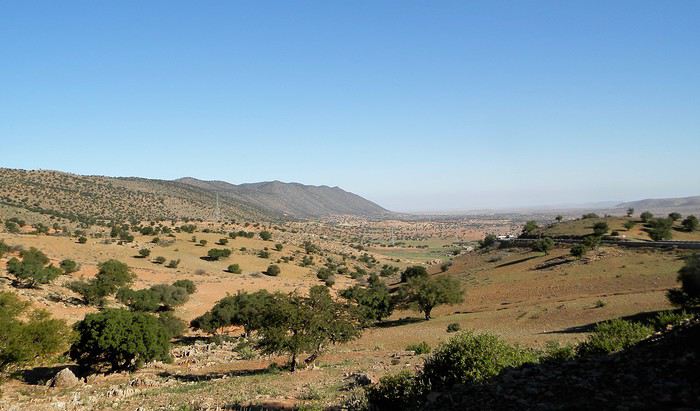
Après Bouizarkane , je rejoint Ifrane de l'Anti-Atlas, et de là, je bifurque vers Timoulay et Amtoudi . Puis je rejoint la route principale . Avant Ifrane , un village très dégradé attire mon attention .
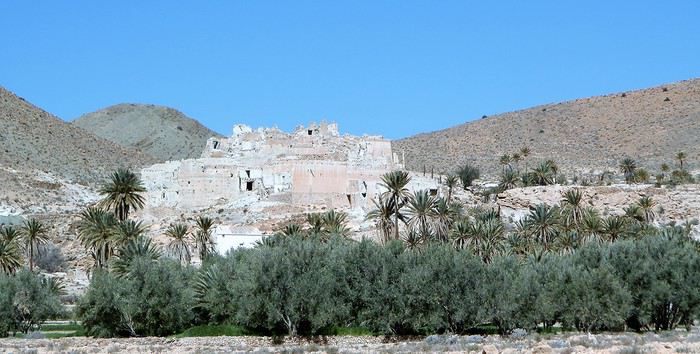
Je ne m'arrête pas à Amtoudi que j'ai fait en octobre . Mais pour le plaisir, une photo de ce bel endroit
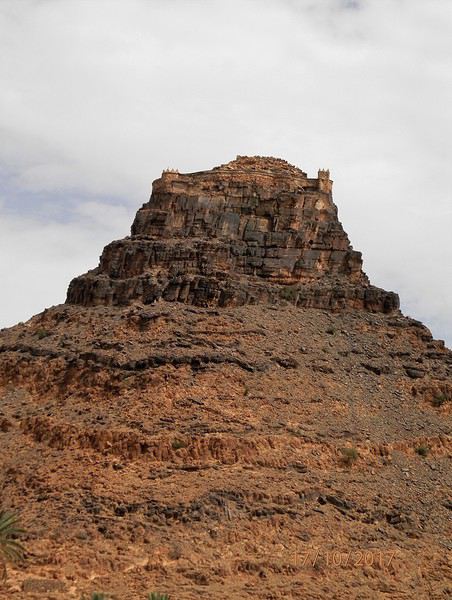
Etant passionné d'archéologie préhistorique, je m'arrête souvent dès qu'un endroit me semble favorable . Je trouve régulièrement des sites et des objets , sans vraiment savoir quelle est la part du hasard dans mes trouvailles . Ici, lors d'un arrêt , un caillou attire mon attention et miracle, sur l'arrière se trouve une magnifique gravure pariétale représentant ce qui pourrait être des gazelles dorcas
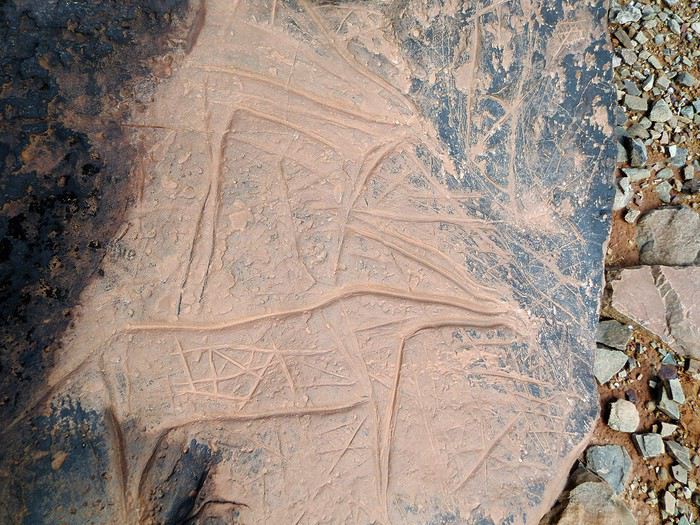
J'ai le temps d'aller faire un tour dans la haute vallée de l'Oued Tamanart . Je photographie ( de loin ) les incroyables ruines de la cité historique de Aguerd ( route 107 vers Tafraout ) . L'apparition de ce " Machu Pichu " marocain, presque totalement inconnu , m'impressionne toujours ( regardez bien , sur le plateau, il y a une ville )
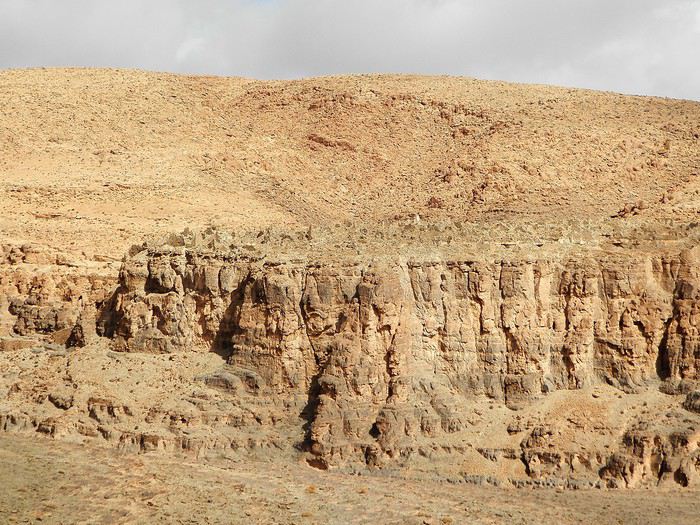
Je descend par une piste dans un oasis de la vallée et découvre ce magnifique village berbère, accroché à flan de colline .
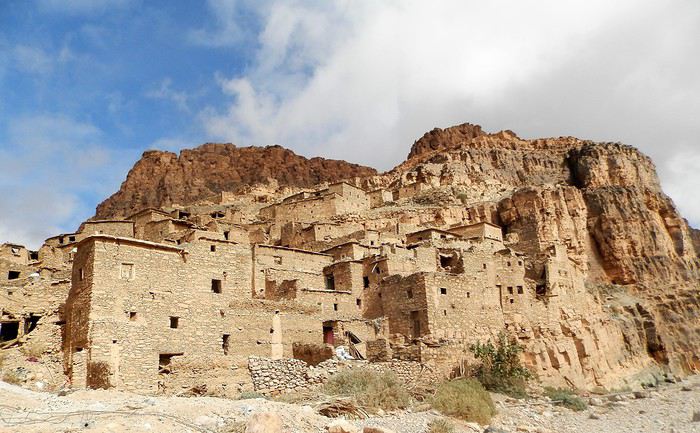
A l'approche de l'oasis d'Icht, le soleil est déjà bas et le Jebel Bani en devient luisant . Le paysage est prenant .
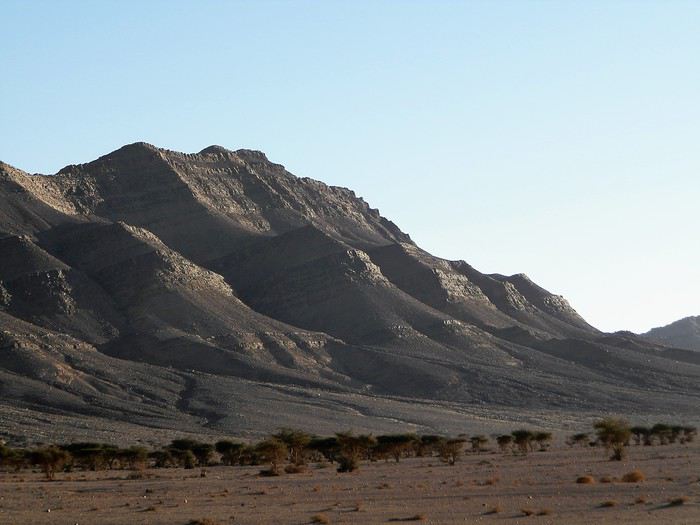
Voyageant seul, je teste la tente de Borj Biramane . C'est bon marché ( 160 dirhams ), et on utilise les toilettes et douches du camping . Juste un peu frais le soir, mais très sympa . En journée, çà monte déjà à 22/24 degrés environ .
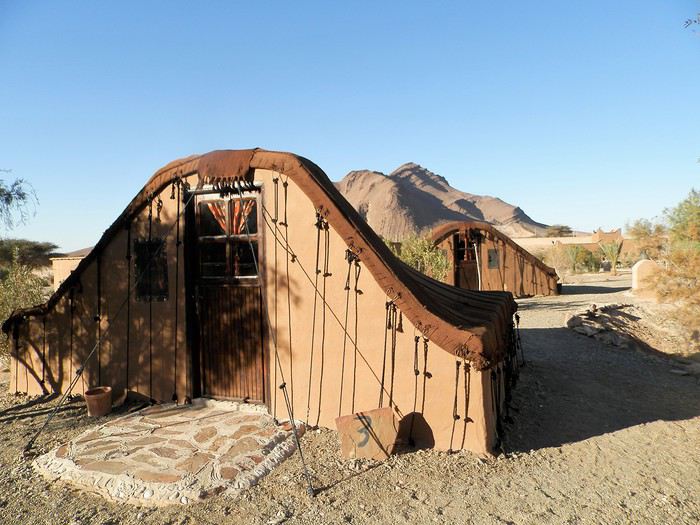
Je vais donc me balader dans le secteur dès le lendemain, tôt le matin . Les paysages sont grandioses . Je m'engage sur une piste qui longe la montagne sur la face nord pendant 8 kms environ . Ici, le lit de l'oued Tamanar , juste avant le " Foum" ( cluse en français , je crois ) qui permet de traverser le Jebel vers Foum el Hisn .
J'aime beaucoup les paysages de savane qu'on rencontre dans la région . Parfois, on s'attend à voir des girafes ou des éléphants ....
Une autre vue du Jebel Bani, montagne méconnue du Maroc, qui fait frontière avec les zones pré-saharienne sur près de 400 kms . Souvent étroit ( parfois à peine 2 kms de large ), son altitude va de 1000 à 1400 m environ . C'est une magnifique réserve géologique qui regorge de sites préhistoriques .
Une demi-journée de marche dans le lit de l'oued Icht, au départ de l'auberge, d'abord jusqu'au village d'Icht, puis en remontant dans l'autre sens , offre des paysages magnifiques . Curieusement, il y a de l'eau dans cet endroit où il n'a pas plu depuis 3 ans . Cà grouille de vie, batraciens, oiseaux ...
Dans le lit de l'Oued Icht , un jeu de lumière dans l'après-midi .
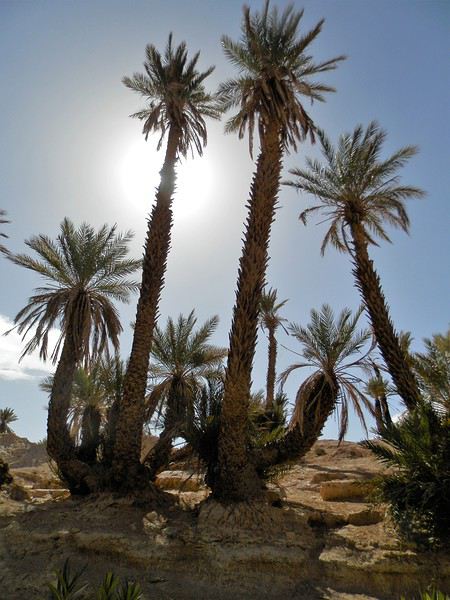
Et une autre pour le plaisir
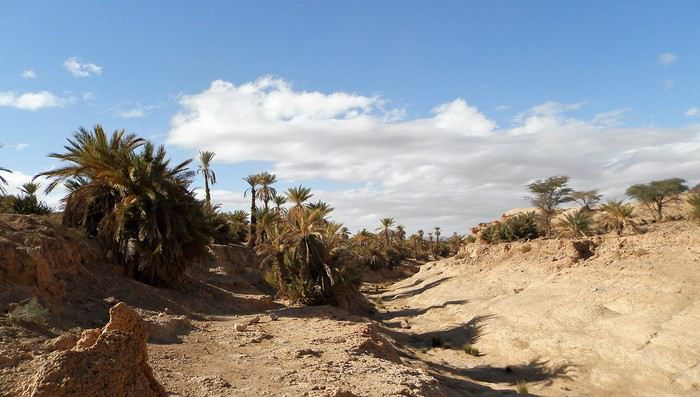
Mon étape suivante me mène jusqu'à Foum Zguid . Que de la belle route goudronnée . Je m' arrête souvent tant les paysages sur ce trajet sont beaux . Premier arrêt à Akka où je cherche un Agadir mentionné sur ma carte . Je ne suis pas déçu tant ce que j'entrevois est impressionnant . Il s'agit d'Agadir Ouzrou, qui fait l'objet d'un programme de restauration . Je ne visiterai pas ce qui est en fait une ville fortifiée, faute de temps : Il faut en laisser un peu pour un futur séjour .
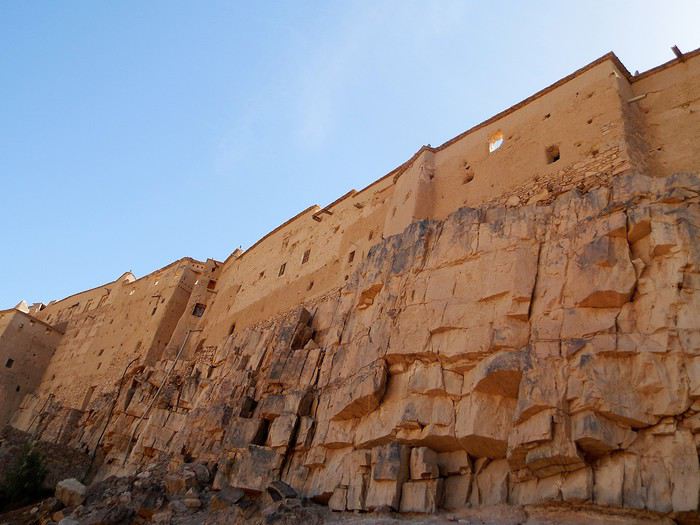
A Akka, je quitte la N12 pour prendre la route via Imitek pour rejoindre Tata . Je connais cette route et ne veux pas manquer ses extraordinaires paysages minéraux .
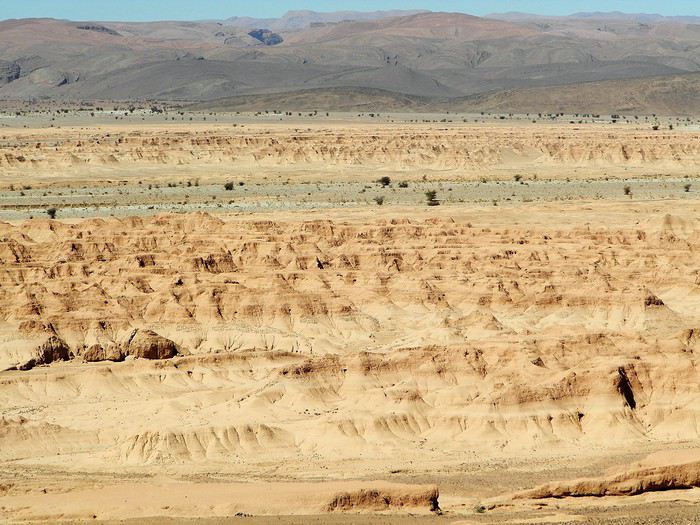
et à l'approche de Tata
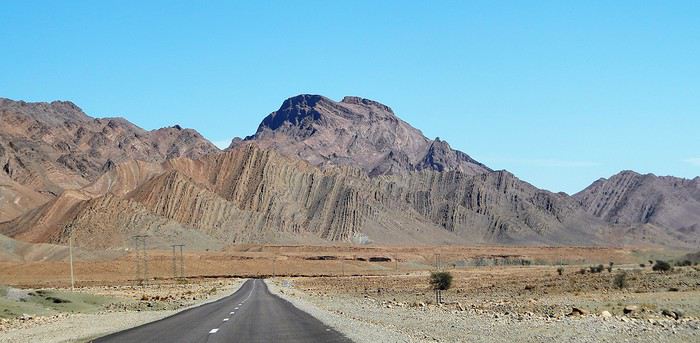
L'oasis de Tata est tout proche . La suite bientôt .......
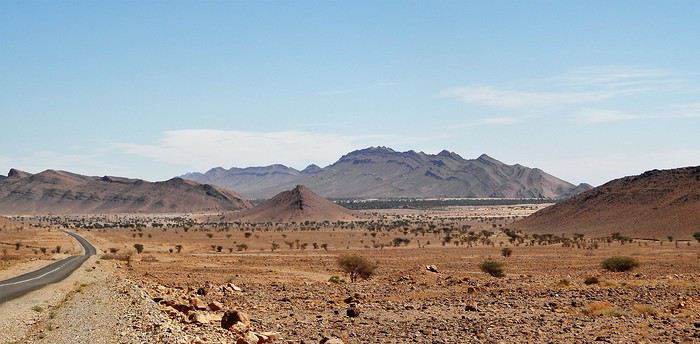
Voici un premier carnet de voyage de mon dernier séjour en fin février et tout début mars . J'ai l'habitude de voyager seul dans le sud Maroc au moins une fois par an . Je me déplace en Dacia Sandero Stepway, voiture tout à fait adaptée au Maroc et qui permet de faire des pistes pas trop dure . Je suis arrivé à Rabat et j'ai découvert une nature magnifique et bucolique, comme ici au bord de la Nationale 1, sur la commune de Cherrat ( 25 kms au sud de Rabat ) .
Ma première étape me mène à Agadir via l'autoroute : rien de palpitant . J'ai juste le temps d'aller faire une balade sur la corniche . Je traverse donc la vallée des oiseaux en rejoignant mon hôtel . Toujours de belles bêtes , un peu à l'étroit malgré tout .
Le lendemain, je prends la route pour Icht, via Tiznit et Bouizarkane . J'ai prévu de poser ma valise pour 3 nuits à Borj Biramane, que je connaît déjà . J'évite donc l' Anti-Atlas que je contourne car je l'ai fait en octobre de l'an dernier . Sur la route, les paysages deviennent de plus en plus beau et j'apprécie la vue dans la montée du col de Tizi Mighert, après Tiznit . On sent que le grand sud approche .
Après Bouizarkane , je rejoint Ifrane de l'Anti-Atlas, et de là, je bifurque vers Timoulay et Amtoudi . Puis je rejoint la route principale . Avant Ifrane , un village très dégradé attire mon attention .
Je ne m'arrête pas à Amtoudi que j'ai fait en octobre . Mais pour le plaisir, une photo de ce bel endroit
Etant passionné d'archéologie préhistorique, je m'arrête souvent dès qu'un endroit me semble favorable . Je trouve régulièrement des sites et des objets , sans vraiment savoir quelle est la part du hasard dans mes trouvailles . Ici, lors d'un arrêt , un caillou attire mon attention et miracle, sur l'arrière se trouve une magnifique gravure pariétale représentant ce qui pourrait être des gazelles dorcas
J'ai le temps d'aller faire un tour dans la haute vallée de l'Oued Tamanart . Je photographie ( de loin ) les incroyables ruines de la cité historique de Aguerd ( route 107 vers Tafraout ) . L'apparition de ce " Machu Pichu " marocain, presque totalement inconnu , m'impressionne toujours ( regardez bien , sur le plateau, il y a une ville )
Je descend par une piste dans un oasis de la vallée et découvre ce magnifique village berbère, accroché à flan de colline .
A l'approche de l'oasis d'Icht, le soleil est déjà bas et le Jebel Bani en devient luisant . Le paysage est prenant .
Voyageant seul, je teste la tente de Borj Biramane . C'est bon marché ( 160 dirhams ), et on utilise les toilettes et douches du camping . Juste un peu frais le soir, mais très sympa . En journée, çà monte déjà à 22/24 degrés environ .
Je vais donc me balader dans le secteur dès le lendemain, tôt le matin . Les paysages sont grandioses . Je m'engage sur une piste qui longe la montagne sur la face nord pendant 8 kms environ . Ici, le lit de l'oued Tamanar , juste avant le " Foum" ( cluse en français , je crois ) qui permet de traverser le Jebel vers Foum el Hisn .
J'aime beaucoup les paysages de savane qu'on rencontre dans la région . Parfois, on s'attend à voir des girafes ou des éléphants ....
Une autre vue du Jebel Bani, montagne méconnue du Maroc, qui fait frontière avec les zones pré-saharienne sur près de 400 kms . Souvent étroit ( parfois à peine 2 kms de large ), son altitude va de 1000 à 1400 m environ . C'est une magnifique réserve géologique qui regorge de sites préhistoriques .
Une demi-journée de marche dans le lit de l'oued Icht, au départ de l'auberge, d'abord jusqu'au village d'Icht, puis en remontant dans l'autre sens , offre des paysages magnifiques . Curieusement, il y a de l'eau dans cet endroit où il n'a pas plu depuis 3 ans . Cà grouille de vie, batraciens, oiseaux ...
Dans le lit de l'Oued Icht , un jeu de lumière dans l'après-midi .
Et une autre pour le plaisir
Mon étape suivante me mène jusqu'à Foum Zguid . Que de la belle route goudronnée . Je m' arrête souvent tant les paysages sur ce trajet sont beaux . Premier arrêt à Akka où je cherche un Agadir mentionné sur ma carte . Je ne suis pas déçu tant ce que j'entrevois est impressionnant . Il s'agit d'Agadir Ouzrou, qui fait l'objet d'un programme de restauration . Je ne visiterai pas ce qui est en fait une ville fortifiée, faute de temps : Il faut en laisser un peu pour un futur séjour .
A Akka, je quitte la N12 pour prendre la route via Imitek pour rejoindre Tata . Je connais cette route et ne veux pas manquer ses extraordinaires paysages minéraux .
et à l'approche de Tata
L'oasis de Tata est tout proche . La suite bientôt .......
Major safety risks in Peru?
Hi everyone,
Since the safety reports on Peru are sometimes a bit outdated, I got curious and checked the Ministry of Foreign Affairs website for travel advice.
It’s honestly pretty worrying!!
Here’s the link: https://www.diplomatie.gouv.fr/fr/conseils-aux-voyageurs/conseils-par-pays/perou/
Among other things, they don’t just mention fake taxis that rob you or express kidnappings (especially in Arequipa), but also drugs that can be slipped into your drink if left unattended, "with the risk of scopolamine being added."
They’ve marked the Cuzco region as a red zone (formally avoid!!) and central Lima as an orange zone, "to avoid after dark."
What do those who’ve been there recently think?
Among other things, they don’t just mention fake taxis that rob you or express kidnappings (especially in Arequipa), but also drugs that can be slipped into your drink if left unattended, "with the risk of scopolamine being added."
They’ve marked the Cuzco region as a red zone (formally avoid!!) and central Lima as an orange zone, "to avoid after dark."
What do those who’ve been there recently think?
Tu vas encore aux États-Unis, t'en as pas marre?
Que répondez vous à vos proches quand ils vous posent cette question qu'on a tous dû avoir...
" Tu vas encore aux Etats Unis, t'en as pas marre ?" 😄
Lachez vous !
Suite à mon expérience d'avoir visité Paris
bonjour suite a mon experience d'avoir visité Paris , la température n'est pas des plus important, tellement de super musée, d'église a voir, de temple, par contre ne vous fier pas a avoir les bonne information pour le RER ou le métro a prendre des Parisiens, il n'ont pas de fierté et vous donne le 3/4 du temps la mauvaise information...donc pour le contact ont oublie mieux vaux sont ordi ...les resto pret des lieux touristique sont des arnaques, dispendieux et meme pas bon !!! un hot dog 8 euro !!!! un grill cheese la bas un croque monsieur 5 euro!!! meme pas bon, un resto a 30 euro le repas le poulet mal cuit , dur , jamais vue ca de ma vie !!! donc les Parisiens n'ont aucun respect des touriste et sont sans fierté, jamais vue ca dans aucun pays J'ai beaucoup voyagé, (caire-istanbul, jerusalem, tokyo, hong kong, bangkok, katmandhou, dehli, singapour, ho chi min, pekin, phom phen, ventiane, colombo, ragon, ottawa) donc ammené votre lunch , mais Paris c, est super a visité
Pourquoi je ne serai jamais une "tourdumondiste"
Coucou les voyageurs
Alors ces derniers temps, plusieurs voyageurs au long cours sont venus ici nous expliquer combien ils étaient mal compris par « le commun des mortels », combien ils n'étaient pas chanceux mais volontaires, combien on les fatiguait avec nos questions basiques et bassement matérielles.…
Alors j'ai eu envie de prendre un peu le contre pied en tant que "petite voyageuse bi annuelle" 😉
Et oui parce que du coup quand je les croise au bout du monde les Tourdumondistes, les Tourd'Asieistes, les Toursd'Ameriquesudistes » (parce qu'ils sont partout maintenant et qu'on les rencontre à chaque fois) ben je me sens parfois un peu écrasée de leur sentiment de supériorité quand ils me disent qu'ils voyagent durant 2 ans et que je leur réponds que moi ...je suis là pour 2 semaines !!
Du coup, en 2017, la surprise n'est plus là quand on croise la « famille Ricoréee autour du monde » mais bien quand on trouve des « confrères » qui repartent au TAF la semaine suivante « aaaah vous aussi!! »😛.
Alors je vais les étonner et c'est là où je voulais en venir, mais on peut aussi adorer les voyages et pour autant ne pas les envier, ni rêver d'être à leur place. Oui la sédentarité peut aussi être un choix tout à fait éclairé et non subi.
Donc surtout ne nous plaignez pas, nous les petites gens à la si petite vie (c'est quand même comme ça qu'on se perçoit dans leur regard des fois non ??) parce qu'on peut tout à fait adorer découvrir le monde... et adorer sa vie en France (si si je vous jure) :
Parce que c'est ici que se trouve les gens que j'aime et que je n'envisage pas de les quitter au long cours,
Parce que c'est ici que j'ai mon travail qui donne du sens à ma vie et dans lequel je me sens très utile aux autres,
Parce que c'est ici que règne un vent festif où on prend plaisir à se retrouver autour d'un verre entre amis et en musique,
Parce que c'est ici que j'ai ma maison, mon jardin, mes poules, mes moutons et mes 2 chats 😉 !!
Et parce que non, j'ai pas envie de refaire mon sac ttes les semaines et de ne ressembler à rien pendant des mois (parce que je sais pas vous mais moi quand je pars c'est 0 bijoux, 0 maquillage et 0 brushing!),
que non j'ai pas envie de croiser plein de monde superficiellement mais de ne jamais nouer de relations « profondes » parce qu'il faut partir ailleurs,
parce que non j'ai pas envie de passer mon temps à compter mes sous et calculer si je peux me payer une bière ou si je dois attendre la semaine prochaine eu égard au budget prévisionnel (vu et revu à plusieurs reprises),
Parce que je n'ai aucune envie de chercher des partenaires, ou des sponsorts pour financer mon « rêve de liberté » et de me retrouver au final avec l'impression de créer une entreprise où je vais devoir rendre des comptes,
Parce que non je n'ai pas envie de voir 40 pays avant 50 ans et que je veux garder plein de rêve, d'envie et de curiosité pour mes 30 prochaines années,
Et parce que « au secours le retour » quand on n'a plus de boulot, ni de logement et qu'on a pris l'habitude de faire ce qu'on veut à l'heure qu'on veut (et je parle même pas des gamins qui doivent retourner poser leurs fesses sur les bancs de l'école !!).
Bref, vous l'aurez compris, ma conclusion elle est très simple : vive la vie qu'on s'est choisie 😎 !!
Et de grosses bises à mes voyageurs au long cours préférés; pour leur humilité, leur humour et leur humeur (tjs trés bonne l'humeur 😉 ) j'ai nommé : les Pfyffer, Denis007 et les Grossacs (bon y en a plein d’autres mais je peux pas passer ma vie à regarder tout ça sur le net non plus!!)
Adishatz les amis (et j'ose...merci de noter que, comme d’hab dans mes posts la bonne humeur est ici obligatoire 😄)
Alors ces derniers temps, plusieurs voyageurs au long cours sont venus ici nous expliquer combien ils étaient mal compris par « le commun des mortels », combien ils n'étaient pas chanceux mais volontaires, combien on les fatiguait avec nos questions basiques et bassement matérielles.…
Alors j'ai eu envie de prendre un peu le contre pied en tant que "petite voyageuse bi annuelle" 😉
Et oui parce que du coup quand je les croise au bout du monde les Tourdumondistes, les Tourd'Asieistes, les Toursd'Ameriquesudistes » (parce qu'ils sont partout maintenant et qu'on les rencontre à chaque fois) ben je me sens parfois un peu écrasée de leur sentiment de supériorité quand ils me disent qu'ils voyagent durant 2 ans et que je leur réponds que moi ...je suis là pour 2 semaines !!
Du coup, en 2017, la surprise n'est plus là quand on croise la « famille Ricoréee autour du monde » mais bien quand on trouve des « confrères » qui repartent au TAF la semaine suivante « aaaah vous aussi!! »😛.
Alors je vais les étonner et c'est là où je voulais en venir, mais on peut aussi adorer les voyages et pour autant ne pas les envier, ni rêver d'être à leur place. Oui la sédentarité peut aussi être un choix tout à fait éclairé et non subi.
Donc surtout ne nous plaignez pas, nous les petites gens à la si petite vie (c'est quand même comme ça qu'on se perçoit dans leur regard des fois non ??) parce qu'on peut tout à fait adorer découvrir le monde... et adorer sa vie en France (si si je vous jure) :
Parce que c'est ici que se trouve les gens que j'aime et que je n'envisage pas de les quitter au long cours,
Parce que c'est ici que j'ai mon travail qui donne du sens à ma vie et dans lequel je me sens très utile aux autres,
Parce que c'est ici que règne un vent festif où on prend plaisir à se retrouver autour d'un verre entre amis et en musique,
Parce que c'est ici que j'ai ma maison, mon jardin, mes poules, mes moutons et mes 2 chats 😉 !!
Et parce que non, j'ai pas envie de refaire mon sac ttes les semaines et de ne ressembler à rien pendant des mois (parce que je sais pas vous mais moi quand je pars c'est 0 bijoux, 0 maquillage et 0 brushing!),
que non j'ai pas envie de croiser plein de monde superficiellement mais de ne jamais nouer de relations « profondes » parce qu'il faut partir ailleurs,
parce que non j'ai pas envie de passer mon temps à compter mes sous et calculer si je peux me payer une bière ou si je dois attendre la semaine prochaine eu égard au budget prévisionnel (vu et revu à plusieurs reprises),
Parce que je n'ai aucune envie de chercher des partenaires, ou des sponsorts pour financer mon « rêve de liberté » et de me retrouver au final avec l'impression de créer une entreprise où je vais devoir rendre des comptes,
Parce que non je n'ai pas envie de voir 40 pays avant 50 ans et que je veux garder plein de rêve, d'envie et de curiosité pour mes 30 prochaines années,
Et parce que « au secours le retour » quand on n'a plus de boulot, ni de logement et qu'on a pris l'habitude de faire ce qu'on veut à l'heure qu'on veut (et je parle même pas des gamins qui doivent retourner poser leurs fesses sur les bancs de l'école !!).
Bref, vous l'aurez compris, ma conclusion elle est très simple : vive la vie qu'on s'est choisie 😎 !!
Et de grosses bises à mes voyageurs au long cours préférés; pour leur humilité, leur humour et leur humeur (tjs trés bonne l'humeur 😉 ) j'ai nommé : les Pfyffer, Denis007 et les Grossacs (bon y en a plein d’autres mais je peux pas passer ma vie à regarder tout ça sur le net non plus!!)
Adishatz les amis (et j'ose...merci de noter que, comme d’hab dans mes posts la bonne humeur est ici obligatoire 😄)
Itinéraire sud Chili avec enfants: Patagonie / île Chiloé
Bonsoir,
Nous partons 15j au Chili avec nos enfants (8 et 9 ans) début février, restons 5j aux alentours de Santiago – Valparaiso et souhaitons faire une un circuit de 10 jours dans le sud chiliens.
Nous avions prévu de visiter le désert d’Atacama au départ avec une petite viré dans le sud Lipez, Salar d’Uyuni mais il semblerait que cela n’est pas la meilleur saison dont nous nous réorientons en dernière minute vers le sud. Alors j’aurais besoin de vos conseils pour déterminer un itinéraire sympa à visiter avec les enfants.
Nos options :
Rester les 10 jours au sud aux alentours de Punta Arenas / Torres del Paine
les manchots a Seno Otway ou Ile Magdalena (ou Porvenir et parque Pinguineria sur Terre de Feu)
balades en Torres del Paine a pieds – idée de balades faciles (ni le W ni le O) avec les enfants ?
en excursion /voiture de location / ferry pour découvrir les lieux a ne pas manquer dans de parc : lacs Pehoé et Grey, Salto Grande, chute de la rivière Paine entre le lac Nordenskjöld Pehoé, lagune Amarga, j’ai lu que la Grotte du Mylodon peut etre sympa pour les enfants..
croisières dans les fjords Fjord Ultima Esperanza vers des glaciers Serrano et Balmaceda
excursion pour El Calafate (en bus depuis puerto natales , cela parait longue mais le glacier du Perito Moreno parait exceptionnel ) Avez-vous expériences et adresses pour les agences qui organisent des excursions d’une ou 2 journées sur place ? Un guide francophone ?
Ne faire que 4-6 jours en Patagonie sud et remonter pour les 4-5 jours restant vers l’ile Chiloé Puerto Mont ? Est-ce que Puerto Varas / le parc de Puyehue / Lac Llanquihue méritent le détour il vaut mieux se concentrer sur l’ile Chiloé ? Connaissez-vous un guide francophone sur Chiloé / une excursion à conseiller ?
Tout commentaire est le bienvenu !
Rester les 10 jours au sud aux alentours de Punta Arenas / Torres del Paine
les manchots a Seno Otway ou Ile Magdalena (ou Porvenir et parque Pinguineria sur Terre de Feu)
balades en Torres del Paine a pieds – idée de balades faciles (ni le W ni le O) avec les enfants ?
en excursion /voiture de location / ferry pour découvrir les lieux a ne pas manquer dans de parc : lacs Pehoé et Grey, Salto Grande, chute de la rivière Paine entre le lac Nordenskjöld Pehoé, lagune Amarga, j’ai lu que la Grotte du Mylodon peut etre sympa pour les enfants..
croisières dans les fjords Fjord Ultima Esperanza vers des glaciers Serrano et Balmaceda
excursion pour El Calafate (en bus depuis puerto natales , cela parait longue mais le glacier du Perito Moreno parait exceptionnel ) Avez-vous expériences et adresses pour les agences qui organisent des excursions d’une ou 2 journées sur place ? Un guide francophone ?
Ne faire que 4-6 jours en Patagonie sud et remonter pour les 4-5 jours restant vers l’ile Chiloé Puerto Mont ? Est-ce que Puerto Varas / le parc de Puyehue / Lac Llanquihue méritent le détour il vaut mieux se concentrer sur l’ile Chiloé ? Connaissez-vous un guide francophone sur Chiloé / une excursion à conseiller ?
Tout commentaire est le bienvenu !
12 jours fin octobre - début novembre dans les Alpes
Salut,
Je suis attirée par les paysages enneigés et montagneux, et aussi par les couleurs de l'automne. Nous ne sommes pas des randonneurs, donc Ok pour des balades de 4 à 5 h mais pas plus et de toute façon, cela va sans dire que nous ne sommes pas alpinistes et que nous ne savons pas skier!!!!!!!😉 Cette discussion sera aussi l'occasion de centraliser tous les renseignements trouvés ailleurs.
Ayant été incité par Michant à visiter les alpes, et ayant eu d'autres infos de Gaura, je me suis décidée à aller faire un tour dans les alpes, pas forcément à la meilleure période direz-vous, mais bon, y aller à une mauvaise période c'est mieux que de ne pas y aller du tout, non?
Voici des lieux et des activités que j'ai trouvés en lisant des posts
-Le cirque du fer à cheval à sixt fer à cheval (est-ce que 3 nuits à sixt sont suffisantes?) - Chamonix (vol en hélicoptère au dessus du mont blanc, aiguille du midi, mer de glace, téléphérique au Brévent, la randonnée au lac blanc est incontournable d'après le membre VF Daming) J'ai cru comprendre que 4 nuits suffisent. - il me reste 3 nuits à placer??
Comme nous viendrons de Martinique, nous arriverons à Orly. 1 possibilité pour aller la-bas, a retenu mon attention, après avoir dormi la première nuit en banlieue parisienne:
Prendre le train direction Genève à partir de gare de Lyon (est-ce la seule possibilité sur Paris?) et à Genève, louer une voiture pour visiter la région précitée + Genève en prime avec 2 nuits sur place (le soir de notre arrivée et la veille de notre départ) !!!!😉
Après 8h d'avion la veille, nous n'avons pas envie de reprendre un avion, le lendemain de notre arrivée....
Maintenant, dans quelles localités vaut-il mieux dormir? A sixt fer à cheval j'imagine? Pour Chamonix, est-ce que les Houches conviennent? Est-ce nécessaire de dormir à Argentière? Je n'ai pas encore exploré les coins à visiter à Genève.....j'ai trouvé ce post
Voilà pour le moment...
Merci d'avance pour vos réponses.
Je suis attirée par les paysages enneigés et montagneux, et aussi par les couleurs de l'automne. Nous ne sommes pas des randonneurs, donc Ok pour des balades de 4 à 5 h mais pas plus et de toute façon, cela va sans dire que nous ne sommes pas alpinistes et que nous ne savons pas skier!!!!!!!😉 Cette discussion sera aussi l'occasion de centraliser tous les renseignements trouvés ailleurs.
Ayant été incité par Michant à visiter les alpes, et ayant eu d'autres infos de Gaura, je me suis décidée à aller faire un tour dans les alpes, pas forcément à la meilleure période direz-vous, mais bon, y aller à une mauvaise période c'est mieux que de ne pas y aller du tout, non?
Voici des lieux et des activités que j'ai trouvés en lisant des posts
-Le cirque du fer à cheval à sixt fer à cheval (est-ce que 3 nuits à sixt sont suffisantes?) - Chamonix (vol en hélicoptère au dessus du mont blanc, aiguille du midi, mer de glace, téléphérique au Brévent, la randonnée au lac blanc est incontournable d'après le membre VF Daming) J'ai cru comprendre que 4 nuits suffisent. - il me reste 3 nuits à placer??
Comme nous viendrons de Martinique, nous arriverons à Orly. 1 possibilité pour aller la-bas, a retenu mon attention, après avoir dormi la première nuit en banlieue parisienne:
Prendre le train direction Genève à partir de gare de Lyon (est-ce la seule possibilité sur Paris?) et à Genève, louer une voiture pour visiter la région précitée + Genève en prime avec 2 nuits sur place (le soir de notre arrivée et la veille de notre départ) !!!!😉
Après 8h d'avion la veille, nous n'avons pas envie de reprendre un avion, le lendemain de notre arrivée....
Maintenant, dans quelles localités vaut-il mieux dormir? A sixt fer à cheval j'imagine? Pour Chamonix, est-ce que les Houches conviennent? Est-ce nécessaire de dormir à Argentière? Je n'ai pas encore exploré les coins à visiter à Genève.....j'ai trouvé ce post
Voilà pour le moment...
Merci d'avance pour vos réponses.
Retour du Québec automne 2015
Voyage au Québec du 29/09 au 20 /10 2015

jour 1et 2 : France Montréal Trois Rivières
Bonjour Voilà déjà deux bons mois que nous sommes rentrés du Québec, en voici un résumé: Nous avons choisi un vol direct province Montréal avec Air Transat! C'est en effet moins fatiguant: 6h de vol, un repas complet et un petit plus avant l'arrivée; Vol impeccable mais prévoir une polaire et ses écouteurs (c'est en plus)! Départ à l'heure ,6h de vol les vents sont avec nous nous gagnerons du temps mais que nous perdrons à l'arrivée (attendre une place et traverser tout l'aéroport dans un espèce de bus qui monte et descend style Star WArs En plus beaucoup d'avions en même temps mais les européens son appelés à part et finalement ça va vite! Récupérations des bagages rapides. On se dirige vers le guichet ou des distributeurs nous permettent en glissant un billet de 20$C d'avoir 2 cartes pour voyager 24h à Montréal; Nous nous dépêchons de rejoindre la navette ouf nous sommes les derniers c'est complet! Le ciel est gris; il fait très lourd et peu de temps après il tombe des cordes! Des travaux partout sur la route, mais on arrive assez vite à notre arrêt(demandé au chauffeur) Nous avons choisi le Best Western Europa pour sa proximité avec le loueur de voiture. Nous y arrivons un peu mouillé il pleut toujours pas de photos ce jour. Un ami viendra nous rejoindre pour nous apporter des documents un TOMTOM et surtout très utile un atlas routier; On arrivera à tenir jusqu'à 22h avant de se coucher afin de ne pas nous réveiller trop tôt. Nous serons quand même réveillés vers 2h du matin mais nous nous rendormirons.
A 7h nous descendons prendre le petit déjeuner chez Cora qui donne directement dans l'hôtel: très pratique il pleuvote et nous découvrirons notre premier petit déjeuner super complet thé à volonté grand bol de fruits à 2, bol de gruau tartines, confitures pour l'un et assiette œufs jambon pain etc. pour l'autre Nous sommes dés 8h au loueur de voiture(louée de France) et quelques signatures plus tard et quelques embardées, nous voici en route pour la 138 (chemin Du Roy) On nous a bien expliqué par où passer et sous le pont Jacques Cartier à gauche sauf que je crois que c'est un rond point et donc j'assure qu'il faut contourner il n'y a pas de ronds points au canada (peut-être 3 sur les 3400kms) et nous voilà embarqué le long des quais des camions partout... nous ne sommes pas pressé on suit le St Laurent il ne pleut plus et ce sera un long moment plus tard que nous apercevrons un panneau chemin du Roy! Nous longeons jusqu'à Trois Rivières, contents de profiter du paysage de découvrir les belles maisons, sans clôtures, les parcs les berges Du St Laurent, les petits villages avec leurs églises!


A trois Rivières on s'arrête prendre un Fish And Ships puis on se dirige par l'autoroute vers la base d'hydravion; Nous avons retenu à Hydravion aventure grâce à plusieurs reportages donnés sur ce forum. Tom Tom est là pour nous aider mais il refuse que l'on prenne la piste finalement on trouvera quelqu'un pour nous indiquer la route: il manque un panneau à la sortie de l'autoroute, et nous serons à l'heure de justesse; Ce fut une heure de découverte de l'immensité canadienne, de ses forêts pas encore très colorées de ses monts de ses lacs une très belle expérience!


Nous repartons jusqu'à Shawinigam où nous irons voir le parc de la cité électrique (musée); Nous rentons sur Trois Rivières par une petite route vallonnée très agréable. La basilique nous interpelle par son immensité, notre motel repéré est complet, mais on nous en indique un autre, petites courses au dépanneur et nous voilà au Motel Ce sera petit pique nique dans la chambre et coucher de bonne heure(décalage oblige) !
jour 1et 2 : France Montréal Trois Rivières
Bonjour Voilà déjà deux bons mois que nous sommes rentrés du Québec, en voici un résumé: Nous avons choisi un vol direct province Montréal avec Air Transat! C'est en effet moins fatiguant: 6h de vol, un repas complet et un petit plus avant l'arrivée; Vol impeccable mais prévoir une polaire et ses écouteurs (c'est en plus)! Départ à l'heure ,6h de vol les vents sont avec nous nous gagnerons du temps mais que nous perdrons à l'arrivée (attendre une place et traverser tout l'aéroport dans un espèce de bus qui monte et descend style Star WArs En plus beaucoup d'avions en même temps mais les européens son appelés à part et finalement ça va vite! Récupérations des bagages rapides. On se dirige vers le guichet ou des distributeurs nous permettent en glissant un billet de 20$C d'avoir 2 cartes pour voyager 24h à Montréal; Nous nous dépêchons de rejoindre la navette ouf nous sommes les derniers c'est complet! Le ciel est gris; il fait très lourd et peu de temps après il tombe des cordes! Des travaux partout sur la route, mais on arrive assez vite à notre arrêt(demandé au chauffeur) Nous avons choisi le Best Western Europa pour sa proximité avec le loueur de voiture. Nous y arrivons un peu mouillé il pleut toujours pas de photos ce jour. Un ami viendra nous rejoindre pour nous apporter des documents un TOMTOM et surtout très utile un atlas routier; On arrivera à tenir jusqu'à 22h avant de se coucher afin de ne pas nous réveiller trop tôt. Nous serons quand même réveillés vers 2h du matin mais nous nous rendormirons.
A 7h nous descendons prendre le petit déjeuner chez Cora qui donne directement dans l'hôtel: très pratique il pleuvote et nous découvrirons notre premier petit déjeuner super complet thé à volonté grand bol de fruits à 2, bol de gruau tartines, confitures pour l'un et assiette œufs jambon pain etc. pour l'autre Nous sommes dés 8h au loueur de voiture(louée de France) et quelques signatures plus tard et quelques embardées, nous voici en route pour la 138 (chemin Du Roy) On nous a bien expliqué par où passer et sous le pont Jacques Cartier à gauche sauf que je crois que c'est un rond point et donc j'assure qu'il faut contourner il n'y a pas de ronds points au canada (peut-être 3 sur les 3400kms) et nous voilà embarqué le long des quais des camions partout... nous ne sommes pas pressé on suit le St Laurent il ne pleut plus et ce sera un long moment plus tard que nous apercevrons un panneau chemin du Roy! Nous longeons jusqu'à Trois Rivières, contents de profiter du paysage de découvrir les belles maisons, sans clôtures, les parcs les berges Du St Laurent, les petits villages avec leurs églises!
A trois Rivières on s'arrête prendre un Fish And Ships puis on se dirige par l'autoroute vers la base d'hydravion; Nous avons retenu à Hydravion aventure grâce à plusieurs reportages donnés sur ce forum. Tom Tom est là pour nous aider mais il refuse que l'on prenne la piste finalement on trouvera quelqu'un pour nous indiquer la route: il manque un panneau à la sortie de l'autoroute, et nous serons à l'heure de justesse; Ce fut une heure de découverte de l'immensité canadienne, de ses forêts pas encore très colorées de ses monts de ses lacs une très belle expérience!
Nous repartons jusqu'à Shawinigam où nous irons voir le parc de la cité électrique (musée); Nous rentons sur Trois Rivières par une petite route vallonnée très agréable. La basilique nous interpelle par son immensité, notre motel repéré est complet, mais on nous en indique un autre, petites courses au dépanneur et nous voilà au Motel Ce sera petit pique nique dans la chambre et coucher de bonne heure(décalage oblige) !
Où aller avec 3 enfants (Amérique Centrale / du Sud)?
Bonjour,
Je viens vous demander qq conseils...
Nous sommes une famille qui voyageons chaque année avec nos 3 enfants au mois d'avril et nous nous interrogeons pour 2016. Nos enfants auront alors 9, 6 et 3 ans.
Nous avons fait un tour du monde il y a 8 ans avec notre 1ere fille mais pas en Amérique du Sud. Depuis, nous avons surtout privilégié L'Asie que j'adore. Mais là, nous sommes tentés par le Guatemala, la Colombie, le Venezuela ou bien le Brésil (nordest).
En qq mots, nous aimons qd il y a aussi bien de beaux paysages, des pauses baignades, du culturel et si possible des contacts avec les locaux...
Plutôt petit budget même si parfois, nous apprécions le "petit luxe" du style avec belle piscine dans un jardin etc.
>> Vers quelle destination devrions-nous nous tourner selon vous ?
Je suis preneuse de tous conseils et suggestions bien sûr !
Par avance un grand merci,
Aline