Results for "Kirghizistan+hébergement"
About 2,699 results.
More options
Many results are in French, the community’s main language. English translations are added over time.
Search results
What to do in Uzbekistan beyond the 3 museum cities?
Hi everyone, happy to be back on VF!
I’ll be in Uzbekistan this coming April and will of course visit the three classics—Samarkand, Bukhara, and Khiva. However, I’d also love to get out of these cities to explore the Uzbek countryside and experience its nature. Mountains, steppes, etc. Ideally, with some great hikes passing through villages. Any spots you’d recommend? Thanks in advance
La Route de la soie par étapes
Bonjour,
Nous (65 et 69) venons de passer au cours des 5 dernières années un total de 24 mois en Afrique Australe, Centre et Est, sur le mode: deux à six mois de voyage, deux à six mois de retour par avion à la maison, etc..
Pendant chacun de nos retours en Europe, le véhicule (LR 110) est resté sur place à nous attendre (facile dans la plupart des pays de la zone grâce au Carnet de Passage en Douane).
Maintenant, nous envisageons un Paris / Pékin / Vladivostok / Paris sur le même mode (aller par le Sud et retour par le Nord ou l' inverse), le tout étalé sur six portions ou plus en deux ou trois ans.
Nous avons beaucoup de mal à trouver des informations fiables sur les pays concernés (jusqu' en Turquie / Iran, c' est plutôt simple - mais cher avec le CPD), ensuite c' est un peu le noir.
Quelqu' un d' entre vous sait il:
- Si les pays traversés délivrent des Permis d' Importation Temporaires pour les véhicules ou acceptent les carnets ATA, pour quel prix et pour quelle durée.
- Est il possible de laisser le véhicule sur place quelques mois pendant un retour en France par avion (Hôtel, garage, entrepôt sous douane.
A défaut de savoir, quelqu' un sait-il où on peut trouver les infos (hors les ambassades, ça je sais faire tout seul, mais je n' ai pas envie d' y passer le reste de mes jours).
Merci d' avance de vos infos.
Eric
Nous (65 et 69) venons de passer au cours des 5 dernières années un total de 24 mois en Afrique Australe, Centre et Est, sur le mode: deux à six mois de voyage, deux à six mois de retour par avion à la maison, etc..
Pendant chacun de nos retours en Europe, le véhicule (LR 110) est resté sur place à nous attendre (facile dans la plupart des pays de la zone grâce au Carnet de Passage en Douane).
Maintenant, nous envisageons un Paris / Pékin / Vladivostok / Paris sur le même mode (aller par le Sud et retour par le Nord ou l' inverse), le tout étalé sur six portions ou plus en deux ou trois ans.
Nous avons beaucoup de mal à trouver des informations fiables sur les pays concernés (jusqu' en Turquie / Iran, c' est plutôt simple - mais cher avec le CPD), ensuite c' est un peu le noir.
Quelqu' un d' entre vous sait il:
- Si les pays traversés délivrent des Permis d' Importation Temporaires pour les véhicules ou acceptent les carnets ATA, pour quel prix et pour quelle durée.
- Est il possible de laisser le véhicule sur place quelques mois pendant un retour en France par avion (Hôtel, garage, entrepôt sous douane.
A défaut de savoir, quelqu' un sait-il où on peut trouver les infos (hors les ambassades, ça je sais faire tout seul, mais je n' ai pas envie d' y passer le reste de mes jours).
Merci d' avance de vos infos.
Eric
Boucle en transports collectifs Pamir, Wakhan et la vallée du Bartang
bonjour a vous
j'ai en projet et avec moyens locaux de transports collectifs et en prenant mon temps, (halte dans les villages) un circuit qui partant de doshanbe irait a khorog (via halte a kalaikum), puis les différents villages ente ishkashim et langar ensuite c'est moins clair, mais l, objectif serait de retourner a doshanbe part une autre route cad la vallée de bartang jusqu'à khorog Quelles pourraient en être les étapes et surtout trouve t'on des véhicules pour le retour? Il semble que ce soit complique? Idée de prix si nécessaire véhicule prive obligatoire et durée du trajet si en une seule fois? Par circuler dans le Pamir il parait que le dimanche on ne trouve pas de véhicules? quels sont les jours de conges au Tadjikistan? Ce n'est pas comme en iran?
Enfin comment on fait a partir des villages pour aller aux sources chaudes, aux différentes forteresses??
Merci beaucoup de vos contributions
j'ai en projet et avec moyens locaux de transports collectifs et en prenant mon temps, (halte dans les villages) un circuit qui partant de doshanbe irait a khorog (via halte a kalaikum), puis les différents villages ente ishkashim et langar ensuite c'est moins clair, mais l, objectif serait de retourner a doshanbe part une autre route cad la vallée de bartang jusqu'à khorog Quelles pourraient en être les étapes et surtout trouve t'on des véhicules pour le retour? Il semble que ce soit complique? Idée de prix si nécessaire véhicule prive obligatoire et durée du trajet si en une seule fois? Par circuler dans le Pamir il parait que le dimanche on ne trouve pas de véhicules? quels sont les jours de conges au Tadjikistan? Ce n'est pas comme en iran?
Enfin comment on fait a partir des villages pour aller aux sources chaudes, aux différentes forteresses??
Merci beaucoup de vos contributions
Traversée du Zanskar et ravitaillement
Bonjour,
Nous pensons, mon époux et moi faire la partie Darcha vers Lamayuru seuls en portant nos sacs, cette année à partir du 20 juillet. Nous avons une tente. Pouvez-vous m'indiquer si nous trouverons à acheter de la nourriture tous les jours, et sinon les étapes où il n'y en a pas?
La route est-elle génante, et peut-on l'éviter? Savez-vous s'il y a des problèmes pour traverser des rivières (ponts détruits...).
merci beaucoup,
Mireille.
Quand partir pour la Chine et faisabilité
Bonjour amis cyclo-voyageurs,
j'ai pour projet (moi aussi? enfin!) de partir en vélo, en solo sur les routes de la soie (printemps 2016 ?) via l'EV6 jusqu'à Constancia, la Turquie, l'Iran, le Turkmenistan, l'Ouzbbékistan, le Tadjikistan, le Kirghiztan pour arriver en Chine à Kashgar. Je compte pour cela demander une année sabbatique à mon employeur.
Donc voilà comment je vois les choses pour l'instant. Je partirai de Bâle en avril et je me suis fixé une moyenne de 50km/jour, je roulerai certainement plus (surtout sur le plat😛) mais c'est une moyenne incluant les jours de repos et autres: soit 1500km/mois. Cela me ferai arriver donc à Istanbul début juin.
C'est là que vous intervenez: j'aimerai svp votre avis sur la faisabilité de la chose, pour ceux qui connaissent ces pays pour les avoir sillonner avec leurs montures, notamment au niveau des saisons et du climat. La chaleur est-elle supportable en Turquie en juin/juillet ? en aout en Iran et plus loin ? L'Asie centrale se fait-elle en automne ? Jusqu'à quand les routes du Pamir et la M41 sont-elles praticables et les conditions météo pas trop mauvaises ? Jusqu'à quand peut-on espérer rejoindre Kashgar sans avoir à (trop) pédaler sous la neige (je pensais arriver en octobre) ?
Pour la suite du voyage je ne sais pas trop encore. J'aurai bien aimé poursuivre jusqu'à Lhassa via la G219, mais je pense que cela est interdit aux voyageurs en solo, de plus ça sera l'hiver! Y a-t-il des personnes qui ont circulé sur cette route récemment ?
Si ça ne passe pas, je prendrais peut-être par le Nord (possible en hiver en vélo ?? je doute fortement) donc ça sera peut-être train jusqu'à Kunming pour finir mon périple par l'Asie du Sud-Est en parcourant le Vietnam, le Laos ou le Cambodge ...ou les 3 ! à voir.
Voilà, quand pensez-vous ?? Y a-t-il un calendrier plus approprié ? Tout commentaire est le bienvenue car ça pédale dur dans ma tête lol
D'avance merci à tous.
j'ai pour projet (moi aussi? enfin!) de partir en vélo, en solo sur les routes de la soie (printemps 2016 ?) via l'EV6 jusqu'à Constancia, la Turquie, l'Iran, le Turkmenistan, l'Ouzbbékistan, le Tadjikistan, le Kirghiztan pour arriver en Chine à Kashgar. Je compte pour cela demander une année sabbatique à mon employeur.
Donc voilà comment je vois les choses pour l'instant. Je partirai de Bâle en avril et je me suis fixé une moyenne de 50km/jour, je roulerai certainement plus (surtout sur le plat😛) mais c'est une moyenne incluant les jours de repos et autres: soit 1500km/mois. Cela me ferai arriver donc à Istanbul début juin.
C'est là que vous intervenez: j'aimerai svp votre avis sur la faisabilité de la chose, pour ceux qui connaissent ces pays pour les avoir sillonner avec leurs montures, notamment au niveau des saisons et du climat. La chaleur est-elle supportable en Turquie en juin/juillet ? en aout en Iran et plus loin ? L'Asie centrale se fait-elle en automne ? Jusqu'à quand les routes du Pamir et la M41 sont-elles praticables et les conditions météo pas trop mauvaises ? Jusqu'à quand peut-on espérer rejoindre Kashgar sans avoir à (trop) pédaler sous la neige (je pensais arriver en octobre) ?
Pour la suite du voyage je ne sais pas trop encore. J'aurai bien aimé poursuivre jusqu'à Lhassa via la G219, mais je pense que cela est interdit aux voyageurs en solo, de plus ça sera l'hiver! Y a-t-il des personnes qui ont circulé sur cette route récemment ?
Si ça ne passe pas, je prendrais peut-être par le Nord (possible en hiver en vélo ?? je doute fortement) donc ça sera peut-être train jusqu'à Kunming pour finir mon périple par l'Asie du Sud-Est en parcourant le Vietnam, le Laos ou le Cambodge ...ou les 3 ! à voir.
Voilà, quand pensez-vous ?? Y a-t-il un calendrier plus approprié ? Tout commentaire est le bienvenue car ça pédale dur dans ma tête lol
D'avance merci à tous.
Cape Verde island duo: which to choose based on my criteria?
Hi there,
I’ve been looking for a destination for a 2-week trip early next spring, and Cape Verde has been growing on me. (The flight isn’t too long, the temperatures are more than pleasant, and it’s an unknown country for me.)
The thing is, Cape Verde is pretty complicated when it comes to inter-island transfers, and I don’t want to spend my time in airports or on ferries—especially since those transfers aren’t exactly known for their reliability...
So, I’d like to limit internal flights to just 2, meaning the island I arrive on plus one other.
I’ve ruled out the all-inclusive islands: Sal and Boa Vista.
I’m torn between combining Santo Antão + São Vicente or Fogo + Santiago.
The goal of the trip is to see beautiful landscapes, go on day hikes (nothing multi-day), swim a little—though I prefer quiet spots—and enjoy 1 or 2 days in a city, but not much more than that!
In your opinion, which option would be the best, and why?
Thanks! :)
I’ve been looking for a destination for a 2-week trip early next spring, and Cape Verde has been growing on me. (The flight isn’t too long, the temperatures are more than pleasant, and it’s an unknown country for me.)
The thing is, Cape Verde is pretty complicated when it comes to inter-island transfers, and I don’t want to spend my time in airports or on ferries—especially since those transfers aren’t exactly known for their reliability...
So, I’d like to limit internal flights to just 2, meaning the island I arrive on plus one other.
I’ve ruled out the all-inclusive islands: Sal and Boa Vista.
I’m torn between combining Santo Antão + São Vicente or Fogo + Santiago.
The goal of the trip is to see beautiful landscapes, go on day hikes (nothing multi-day), swim a little—though I prefer quiet spots—and enjoy 1 or 2 days in a city, but not much more than that!
In your opinion, which option would be the best, and why?
Thanks! :)
Storm in the Canary Islands
15 days across Gran Canaria, El Hierro, and a dash of Tenerife under the storm Thérèse!
The planned itinerary will be slightly disrupted...
(The version without discussions is here)
The planned itinerary will be slightly disrupted...
(The version without discussions is here)
Trip to Thailand and Laos
Hello! 🙂
January 2026 Here we go again for new adventures and the pleasure of sharing them with you here! First of all, I’d like to thank everyone who helped me with the preparations, even with some last-minute improvisations just days before departure. Thanks to Montagnard74, Jojoone1, Songsam, Attila, Dennis2, NadegerFERM, and the authors whose travel journals about Laos inspired me (Montagnard74, Muriel18, Mavietongs...).
In this story, written by Richard and illustrated by me, we’ll tell you about the journey of four friends: Catherine, Richard, Nathalie, and Bruno. A reinvented but overall successful trip, filled with discoveries and surprises, the scents of spices and frangipani flowers, (too) spicy food, sunsets, and... one big mess.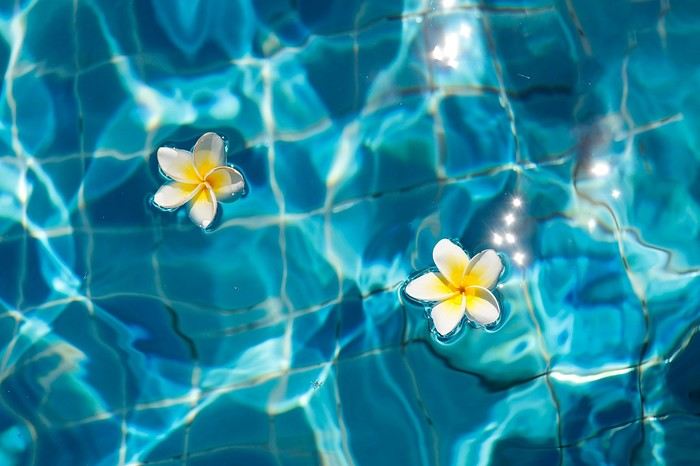
January 2026 Here we go again for new adventures and the pleasure of sharing them with you here! First of all, I’d like to thank everyone who helped me with the preparations, even with some last-minute improvisations just days before departure. Thanks to Montagnard74, Jojoone1, Songsam, Attila, Dennis2, NadegerFERM, and the authors whose travel journals about Laos inspired me (Montagnard74, Muriel18, Mavietongs...).
In this story, written by Richard and illustrated by me, we’ll tell you about the journey of four friends: Catherine, Richard, Nathalie, and Bruno. A reinvented but overall successful trip, filled with discoveries and surprises, the scents of spices and frangipani flowers, (too) spicy food, sunsets, and... one big mess.
A Turquoise Dream Come True in Uzbekistan - 2022
We took this trip from September 12 to October 7, 2022. I didn’t post this travel journal earlier in Voyage Forum because the site wasn’t back up yet (and also because I was short on time).
Then, at the end of 2024, I made a promise to a friend: to publish my travel journal on VF. So here it is!
 We took off from Paris in the late afternoon on September 12 and arrived in Tashkent around 7:15 AM on the 13th.
This trip was the result of long contemplation and preparation (it was originally planned for the year of the lockdown (2020) and was prepared with the help and advice of Nasrullo Jumanov from Turquoise Travel.
Stages and Itinerary
Stage 1: Tashkent - September 13 and 14
Stage 2: Ferghana Valley – September 15 to 17
Stage 3: Nukus and Moynaq - September 18 and 19
Stage 4: Mysterious Khiva - September 20 to 22
Stage 5: Holy Bukhara - September 23 to 26
Stage 6: Asraf - September 27 and 28
Stage 7: Mythical Samarkand - September 29 to October 2
Stage 8: Tersak (via Shakhrisabz and Urgut) – October 3 and 4
Stage 9: Samarkand – October 5 and 6
Stage 10: Tashkent/Istanbul/Paris – October 6 and 7
Stage 1: Tashkent
September 13
At the airport exit, we were greeted by the owner of our B&B (B&B Gulnara).
Today was all about recovery and our first steps in the capital. Our first currency exchange made us feel like sudden millionaires.
Our first stroll down the avenue leading to Chorsu Market introduced us to the fact that 80 to 90% of the cars here are white Chevrolets.
A walk under the arcades facing Chorsu: hardware stores, cabinetmakers, lute makers (one of them gave me a little concert/demo of a few string instruments).
We took off from Paris in the late afternoon on September 12 and arrived in Tashkent around 7:15 AM on the 13th.
This trip was the result of long contemplation and preparation (it was originally planned for the year of the lockdown (2020) and was prepared with the help and advice of Nasrullo Jumanov from Turquoise Travel.
Stages and Itinerary
Stage 1: Tashkent - September 13 and 14
Stage 2: Ferghana Valley – September 15 to 17
Stage 3: Nukus and Moynaq - September 18 and 19
Stage 4: Mysterious Khiva - September 20 to 22
Stage 5: Holy Bukhara - September 23 to 26
Stage 6: Asraf - September 27 and 28
Stage 7: Mythical Samarkand - September 29 to October 2
Stage 8: Tersak (via Shakhrisabz and Urgut) – October 3 and 4
Stage 9: Samarkand – October 5 and 6
Stage 10: Tashkent/Istanbul/Paris – October 6 and 7
Stage 1: Tashkent
September 13
At the airport exit, we were greeted by the owner of our B&B (B&B Gulnara).
Today was all about recovery and our first steps in the capital. Our first currency exchange made us feel like sudden millionaires.
Our first stroll down the avenue leading to Chorsu Market introduced us to the fact that 80 to 90% of the cars here are white Chevrolets.
A walk under the arcades facing Chorsu: hardware stores, cabinetmakers, lute makers (one of them gave me a little concert/demo of a few string instruments).
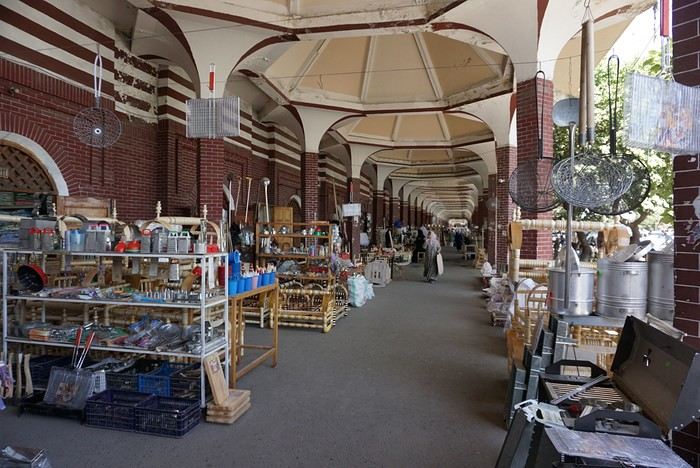
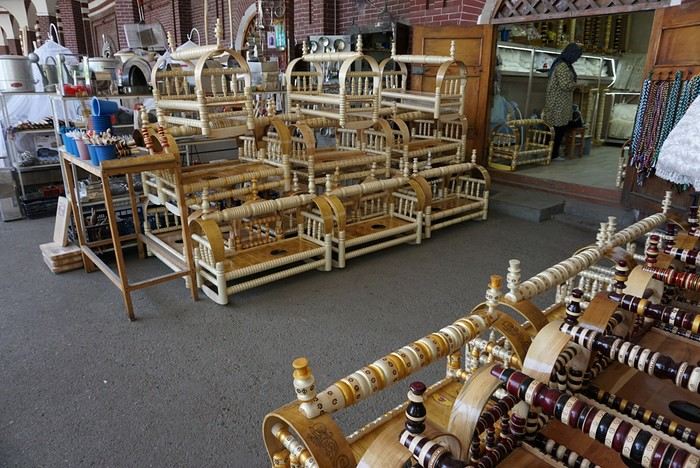
As we entered the market, many vendors called out to us, including this florist who asked where we were from: ‘France? Ah! Macron! PSG!’ He then recited a list of players from the Parisian team as well as past (Platini, Zidane, etc.) and current (Giroud, Griezmann, Mbappé, etc.) French national team players. Since we’re more into rugby (we live near Toulouse), he knew more players than I did!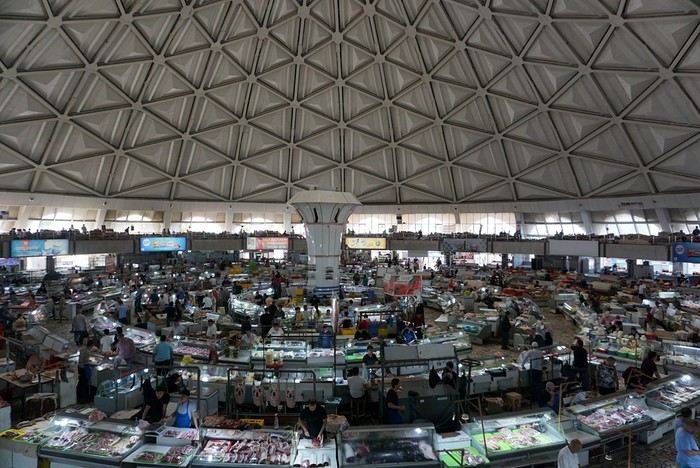
The market sprawls outside around the large circular, multi-story hall. We bought some grapes and bottles of freshly squeezed pomegranate juice for just a few sums. This evening, we had a meet-up with Nasrullo. The reunion was very warm: we’d been exchanging messages for over two years, and I’d been ‘torturing’ him with changes to our itinerary and trip duration. We were finally eager to meet, and honestly, I wasn’t disappointed—in fact, it was the opposite. Nasrullo was very attentive throughout our trip and always made sure, even from a distance (and most often from a distance!), that everything went smoothly. His goal was for us to leave delighted with our trip and, why not, indirectly become ambassadors for this destination. September 14 Breakfast with Nasrullo, then we set off with him by taxi to explore some of the capital’s sites.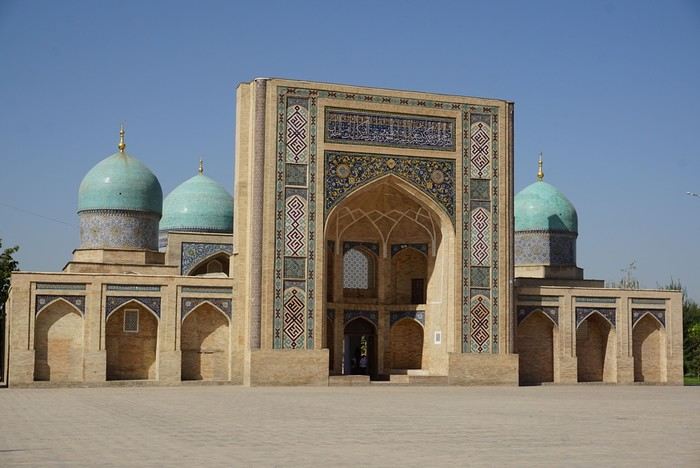
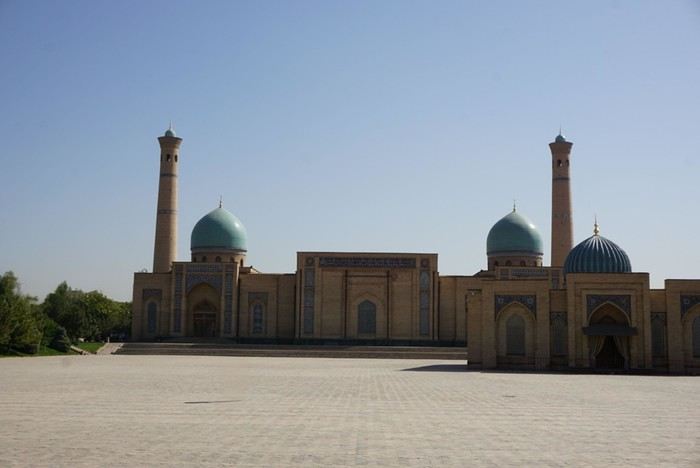
We started by visiting the Khazrati Imam complex, which includes the mausoleum of Kaffal Shashi, the Barak Khan and Muyi Muborak madrasas, and the great Khazrati Imam Mosque with its immense prayer hall.
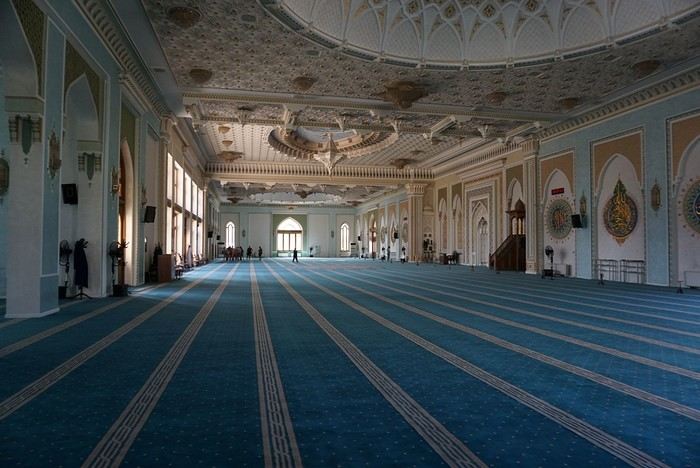
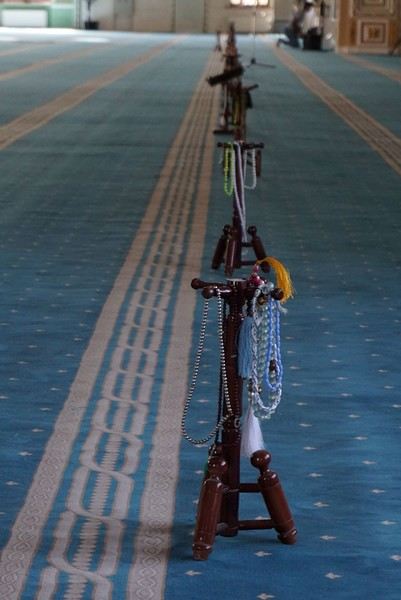
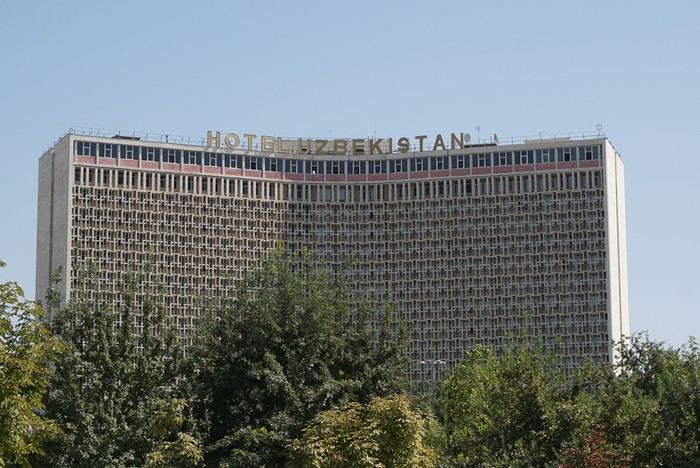
In the Muyi Muborak madrasa, now a museum, you can see the oldest Quran in the world. It was written by three religious scholars, including the secretary of the Prophet Muhammad, on large ‘pages’ made of antelope skin. Next, we explored Soviet-era Tashkent, discovering its parks, canals, and squares: Independence Square with its storks and phoenixes, Amir Temur Square with its large statue and, in the background, the massive Soviet-era hotel that has become one of Tashkent’s iconic buildings. Nasrullo took us through Broadway Boulevard and along what he calls ‘Tashkent’s Montmartre’… Well, it’s far, very far from Montmartre (in every sense of the word!). Then we took the metro to Chorsu station. Rush hour is pretty much the same everywhere in the metro… When we arrived at Chorsu, it was time to say goodbye. Nasrullo had to head back to Samarkand. Before leaving, he recommended some chaikhanas at the end of the galleries facing the market. We ate there for just a few euros (2 or 3 € for two people). After eating, we headed back to our room to cool off (our B&B is about a 10-minute walk away).
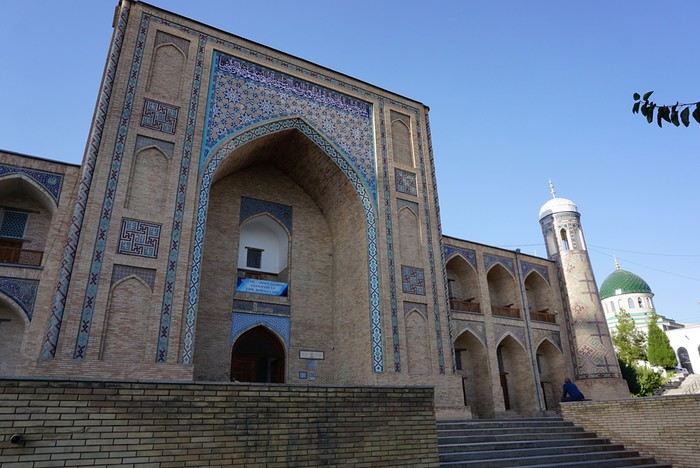
Around 4 PM, we set off to visit the Kokeldash Madrasa, which is still active. On the way, we stopped to watch some bread vendors and take a few photos. We were hesitating about buying some for our evening picnic when a young woman approached us. In perfect English, she asked: ‘Are you looking for something? Do you want to buy bread? Which one? How much?’ She then spoke to one of the vendors and negotiated the price. ‘Do you want one?’ And she took two. She paid directly. I took out my wallet to reimburse her, but she refused. It’s on the house! Then the vendor asked where we were from. And off we went again: Macron, PSG, football players… We’ll have to get used to it. The young woman smiled at the questions and comments, barely gave us time to thank her, and left as quickly as she had approached us.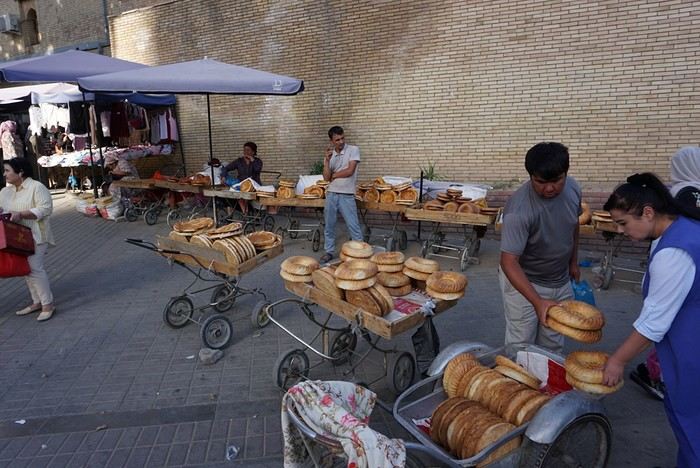
We continued our walk. Visited the madrasa. Then we crossed the boulevard to see the Tashkent Circus. I would’ve loved to go in and visit, but the ticket seller wouldn’t hear of it. We carried on around what should’ve been a park with old-fashioned rides and attractions. All we found was a construction site. Oh well! Back at our hotel, a message from Nasrullo was waiting for us. He had managed to change our train ticket for the next day. Instead of taking the 6:00 AM train, we’d take the 8:00 AM one. And instead of second class, we’d be in first class! Great! This evening, we had a picnic at one of the breakfast tables in the B&B courtyard. Under a shelter, the owner and his family were celebrating a birthday. The owner started by offering us some tea. Then they brought us some fruit (watermelon and melon). Finally, after the song, candles, and cake cutting, they brought us two generous slices of that beautiful birthday cake. Delicious!
We took off from Paris in the late afternoon on September 12 and arrived in Tashkent around 7:15 AM on the 13th.
This trip was the result of long contemplation and preparation (it was originally planned for the year of the lockdown (2020) and was prepared with the help and advice of Nasrullo Jumanov from Turquoise Travel.
Stages and Itinerary
Stage 1: Tashkent - September 13 and 14
Stage 2: Ferghana Valley – September 15 to 17
Stage 3: Nukus and Moynaq - September 18 and 19
Stage 4: Mysterious Khiva - September 20 to 22
Stage 5: Holy Bukhara - September 23 to 26
Stage 6: Asraf - September 27 and 28
Stage 7: Mythical Samarkand - September 29 to October 2
Stage 8: Tersak (via Shakhrisabz and Urgut) – October 3 and 4
Stage 9: Samarkand – October 5 and 6
Stage 10: Tashkent/Istanbul/Paris – October 6 and 7
Stage 1: Tashkent
September 13
At the airport exit, we were greeted by the owner of our B&B (B&B Gulnara).
Today was all about recovery and our first steps in the capital. Our first currency exchange made us feel like sudden millionaires.
Our first stroll down the avenue leading to Chorsu Market introduced us to the fact that 80 to 90% of the cars here are white Chevrolets.
A walk under the arcades facing Chorsu: hardware stores, cabinetmakers, lute makers (one of them gave me a little concert/demo of a few string instruments).As we entered the market, many vendors called out to us, including this florist who asked where we were from: ‘France? Ah! Macron! PSG!’ He then recited a list of players from the Parisian team as well as past (Platini, Zidane, etc.) and current (Giroud, Griezmann, Mbappé, etc.) French national team players. Since we’re more into rugby (we live near Toulouse), he knew more players than I did!
The market sprawls outside around the large circular, multi-story hall. We bought some grapes and bottles of freshly squeezed pomegranate juice for just a few sums. This evening, we had a meet-up with Nasrullo. The reunion was very warm: we’d been exchanging messages for over two years, and I’d been ‘torturing’ him with changes to our itinerary and trip duration. We were finally eager to meet, and honestly, I wasn’t disappointed—in fact, it was the opposite. Nasrullo was very attentive throughout our trip and always made sure, even from a distance (and most often from a distance!), that everything went smoothly. His goal was for us to leave delighted with our trip and, why not, indirectly become ambassadors for this destination. September 14 Breakfast with Nasrullo, then we set off with him by taxi to explore some of the capital’s sites.
We started by visiting the Khazrati Imam complex, which includes the mausoleum of Kaffal Shashi, the Barak Khan and Muyi Muborak madrasas, and the great Khazrati Imam Mosque with its immense prayer hall.
In the Muyi Muborak madrasa, now a museum, you can see the oldest Quran in the world. It was written by three religious scholars, including the secretary of the Prophet Muhammad, on large ‘pages’ made of antelope skin. Next, we explored Soviet-era Tashkent, discovering its parks, canals, and squares: Independence Square with its storks and phoenixes, Amir Temur Square with its large statue and, in the background, the massive Soviet-era hotel that has become one of Tashkent’s iconic buildings. Nasrullo took us through Broadway Boulevard and along what he calls ‘Tashkent’s Montmartre’… Well, it’s far, very far from Montmartre (in every sense of the word!). Then we took the metro to Chorsu station. Rush hour is pretty much the same everywhere in the metro… When we arrived at Chorsu, it was time to say goodbye. Nasrullo had to head back to Samarkand. Before leaving, he recommended some chaikhanas at the end of the galleries facing the market. We ate there for just a few euros (2 or 3 € for two people). After eating, we headed back to our room to cool off (our B&B is about a 10-minute walk away).
Around 4 PM, we set off to visit the Kokeldash Madrasa, which is still active. On the way, we stopped to watch some bread vendors and take a few photos. We were hesitating about buying some for our evening picnic when a young woman approached us. In perfect English, she asked: ‘Are you looking for something? Do you want to buy bread? Which one? How much?’ She then spoke to one of the vendors and negotiated the price. ‘Do you want one?’ And she took two. She paid directly. I took out my wallet to reimburse her, but she refused. It’s on the house! Then the vendor asked where we were from. And off we went again: Macron, PSG, football players… We’ll have to get used to it. The young woman smiled at the questions and comments, barely gave us time to thank her, and left as quickly as she had approached us.
We continued our walk. Visited the madrasa. Then we crossed the boulevard to see the Tashkent Circus. I would’ve loved to go in and visit, but the ticket seller wouldn’t hear of it. We carried on around what should’ve been a park with old-fashioned rides and attractions. All we found was a construction site. Oh well! Back at our hotel, a message from Nasrullo was waiting for us. He had managed to change our train ticket for the next day. Instead of taking the 6:00 AM train, we’d take the 8:00 AM one. And instead of second class, we’d be in first class! Great! This evening, we had a picnic at one of the breakfast tables in the B&B courtyard. Under a shelter, the owner and his family were celebrating a birthday. The owner started by offering us some tea. Then they brought us some fruit (watermelon and melon). Finally, after the song, candles, and cake cutting, they brought us two generous slices of that beautiful birthday cake. Delicious!
Nord de l'Ethiopie: entre émerveillement et déception...
Nous voici fraichement rentrés d’un voyage de 15 jours en Ethiopie. J’avais lu des carnets avant de partir(ceux de Max et de Michant en particulier, d’autres également et tous agrémentés de belles photos), je vais donc en rédiger un qui ne sera sans doute pas très original, mais vous y trouverez mes impressions , quelques détails d’ordre plus pratique et bien sûr des photos.
Cela faisait un moment que j’avais envie de découvrir ce pays. Nous n’avons pas une grande connaissance de l’Afrique ayant surtout voyagé en Asie et sur le continent Américain. Mais nous nous sommes quand même rendus au Kenya, en Tanzanie, en Namibie et au Zimbabwe. C’est important de le préciser car nous avons souvent comparé notre ressenti en Ethiopie par rapport à ce qu’on avait vécu dans ces autres pays d’Afrique. J’ai personnellement trouvé le voyage en Ethiopie plus difficile. On dit souvent que l’Inde ne peut laisser indifférent. On aime ou on déteste. C’est un peu la même chose au sujet de l’Ethiopie. On en revient pas indemne. Pour ma part, il y a eu des moments où j’ai adoré ce voyage et d’autres où j’avais du mal à supporter certaines choses.
Avant de partir, je pensais que les impressions négatives des uns et des autres étaient exagérées. Je les ai trouvé justifiées par la suite même si nous sommes tous d’accord au final pour dire que le voyage vaut largement le détour. Les paysages sont souvent magnifiques et le patrimoine culturel est bien présent.
Nous sommes passés par une agence locale de Lalibela qui s’est occupée de nous réserver un 4X4 avec chauffeur. Sinon, nous nous sommes « débrouillés » sur place. L’agence nous avait aussi réservé un circuit de 2 jours/1 nuit dans le Danakyl et un trek d’une journée au dessus de Lalibela. Nous n’avons pas rencontré beaucoup de voyageurs ayant choisi cette option. Beaucoup étaient en groupe et se déplaçaient donc avec le minibus de l’agence. Les voyageurs en individuel suivaient un programme qu’ils avaient totalement réservé auprès d’une agence et avaient un guide durant toute la durée de leur séjour. A la réflexion, cela peut être une bonne option quand on ne veut pas se prendre la tête avec les négociations sans fin concernant les guides sur place, les scouts etc…Au moins, cela évite d’avoir conscience de l’énormité des sommes demandées parfois pour visiter une église ou autre… J’y reviendrai ...
In the Land of Mountain Gorillas: The Story of an "Epic" Trip
Passionate about travel, animals (furry, feathered, scaly), and my partner’s love for photography, it was in 2014, after encountering orangutans in Gunung Leuser National Park in Sumatra, that I felt the urge to see other great apes in their natural habitat and in the wild. For my 40th birthday, I dreamed of only one thing... seeing gorillas. I still had four years to wait and four years to save up.
At the time, I had only heard of the Virunga Mountains, particularly the part in Rwanda. To be honest, Uganda had never really struck me as a destination I’d ever set foot in, and the DRC, for security reasons, didn’t particularly appeal to me.
But then, one day, I heard that Rwanda was going to increase the price of gorilla permits to USD 1,500 per person. Ouch... that seemed way overpriced, especially since we were going as a couple and I really wanted to see them twice. $6,000 for two days... Okay, it’s for my 40th birthday, but still...
At the end of 2017, I started looking more closely into our trip planned for December 2018. A stroke of luck in my schedule meant my former English teacher sent me a link to an article she’d written for her travel agency about her encounter with gorillas in Uganda. Hmm, Uganda? It was the first time I’d read about the country. Why not?
I scoured various forums in French and English and re-discovered voyageforum.com. And most importantly, I came across Ticapi’s travel journal, which I devoured in one evening, and a few months later, Muriel18’s, whose release I eagerly awaited. Wow!!! Not only can you see gorillas in Uganda, but also chimpanzees and the shoebill, not to mention the savannah and the chance to go on more classic safaris.
All that’s left is to convince my better half that Uganda is a safe country...
Usually, and now more than ever, we prefer independent travel and self-drive trips in particular. But given the proximity to the DRC border, the potentially impassable roads after rain, and rental cars that aren’t always in the best condition, we hired a guide for two weeks in December 2018. The months passed, and the excitement grew.
Three weeks before departure, I fell ill after a work trip to Asia. Darn! This time, I didn’t waste any time—I quickly saw a doctor and got rid of that virus. That was the plan! Flu or malaria? (I’d been to the Amazon six months earlier.) The doctor didn’t know; the cough only appeared a few days later. We did blood tests two days in a row to rule out malaria. So it was the flu or... pneumonia :-( ...?
The X-rays spoke for themselves—it was pneumonia, and it was already quite advanced. No big deal, I still had two weeks to recover! I religiously took my antibiotics, downed loads of vitamin C, but nothing worked—the antibiotics didn’t seem to be doing anything. I was coughing so hard I thought my lungs would come up, I was short of breath, exhausted. I’d dreamed of this trip for so long... it seemed unthinkable not to go. Five days before departure, my doctor hospitalized me—the pneumonia had worsened, and my blood oxygen levels were dangerously low. I was in tears but still in denial about what was happening to me. Besides, I’d still taken my anti-malarial, because I was determined to leave.
I spent the first day in the emergency room on oxygen 24/7. The germ causing my pneumonia was unknown to the infectious disease and pulmonary specialists. They tried a combination of antibiotics. No big deal, in four days, I’d be leaving. I harassed the doctor, who must have thought I was crazy, to find out when I could be discharged—"because, you see, doctor, I have a flight to Uganda on Saturday." On Thursday, the doctor was firm: I’d still be hospitalized on Saturday... deep down, I knew it but didn’t want to admit it. My partner handled canceling the flights, contacted our travel insurance (thankfully we had some), and I wrote to our guide (who, in the meantime, had become our tour operator) who could hardly believe it. And neither could I! We told ourselves it was just postponed and that we’d take this long-awaited trip at the end of 2019!
March 2019, the tour operator reached out to us: "Didn’t you say you wanted to go to Uganda this year? You’d better hurry and book the gorilla permits before they run out."
Oh yes, we wanted to see the gorillas. But we hesitated about rebooking. I still hoped to do this trip as a self-drive. The thing is, this year, we managed to take three weeks off, and we also wanted to spend a week in Rwanda. My partner still didn’t feel comfortable driving there. Yet, he’s driven all over the world. I respected his feelings, especially since he’s the only one who drives.
Anyway, we went back and forth but neither of us really said what we were thinking: "What if we used someone else to organize our trip?" In the end, we went with him again, made a first deposit for four gorilla permits (two days each) (not the best idea we’ve ever had), and looked into adding Rwanda to our itinerary. We’d have a guide/driver for the whole trip with mid-range accommodations.
After several back-and-forths, the itinerary was supposed to look something like this. To be honest, I got fed up after a while.
Day 1: Arrival in Kigali in the evening Day 2: Transfer from Kigali to Akagera NP Day 3: Safari in Akagera NP Day 4: Akagera NP and night in Nyagatare Day 5: Transfer from Nyagatare to Nyungwe Forest Day 6: Nyungwe Day 7: Nyungwe Day 8: Transfer from Nyungwe to Lake Kivu, Rubavu/Gisenyi Day 9: Transfer from Rubavu/Gisenyi to Kisoro/Uganda via the Cyanika border Day 10: Gorilla tracking in Mgahinga NP Day 11: Golden Monkey tracking in Mgahinga NP, night at Lake Mutanda Day 12: Gorilla tracking in Bwindi, Ruhija (later changed to Rushaga) Day 13: Queen Elizabeth NP, Ishasha sector in the morning and Kazinga Channel in the afternoon Day 14: No clear answer on activities for that day. After three attempts, I gave up. I shouldn’t have... Day 15: Chimpanzee tracking in Kyambura Gorge, night at Lake Nkuruba Day 16: Lake Nkuruba, morning activities around the lake and Bigodi Swamps in the afternoon Day 17: Transfer from Lake Nkuruba to Murchison Falls Day 18: Murchison Falls Day 19: Murchison Falls Day 20: Transfer from Murchison Falls via Ziwa Rhino Sanctuary, night in Entebbe Day 21: Entebbe – Mabamba Swamps Day 22: Mabamba Swamps in the morning, Botanical Garden in Entebbe in the afternoon, and transfer to the airport for the overnight return flight.
In April, he asked us for a substantial deposit for the accommodations and some park activities, as one of his colleagues was doing the same tour in May and it would be good if he could secure the already-made reservations by paying the bill.
A week before departure, just like in 2018, we paid the remaining balance of the agreed amount. Three days later, since I hadn’t heard from him (the TO is based in Germany), I sent him a message to confirm he’d received the payment.
My partner joked, "And that’s when he tells us he closed the account we sent the money to." I forced a laugh... and even more so when the TO asked me which account I’d sent the balance to... "Uh, the same one as before." And then he told me he’d closed that account and maybe should’ve mentioned it earlier... uh, you think?! And of course, he needed the money sent again quickly. "Well, buddy, you’ll have to wait until I get it back!!!
It was already late, and my bank had been closed for hours. The next morning, first thing, I called my bank and explained the situation.
"Unfortunately, we can’t do anything for you; you’ll have to wait for the money to be returned." "But how long will that take?" "A few days or weeks, depending on the banks, and you should expect transfer fees."
Brilliant! :-(
After nearly 10 years of traveling almost exclusively without traditional travel agencies, had we just been scammed? I went back to the forums to reread posts about this TO from other travelers. They were all positive; no one mentioned a scam.
The next day, I searched online for the contact details of his bank in Germany. I wrote to the generic email address in English, explaining that I’d made a transfer without knowing that this gentleman had closed his bank account. The employee replied in impeccable English that the bank only responded to emails written in German. Grrr! I used a well-known translator since my German is, let’s say, rusty, and resent my email in German. The same agent replied in German that unfortunately, they couldn’t do anything for me—that if the account had been closed, an automatic rule would return the money to the sender... period, end of story!
Well, our money is lost somewhere in the "cloud," or so we hope! Wait and see!
No news from our TO, and we didn’t reach out either—we were too annoyed by the whole situation.
At the time, I had only heard of the Virunga Mountains, particularly the part in Rwanda. To be honest, Uganda had never really struck me as a destination I’d ever set foot in, and the DRC, for security reasons, didn’t particularly appeal to me.
But then, one day, I heard that Rwanda was going to increase the price of gorilla permits to USD 1,500 per person. Ouch... that seemed way overpriced, especially since we were going as a couple and I really wanted to see them twice. $6,000 for two days... Okay, it’s for my 40th birthday, but still...
At the end of 2017, I started looking more closely into our trip planned for December 2018. A stroke of luck in my schedule meant my former English teacher sent me a link to an article she’d written for her travel agency about her encounter with gorillas in Uganda. Hmm, Uganda? It was the first time I’d read about the country. Why not?
I scoured various forums in French and English and re-discovered voyageforum.com. And most importantly, I came across Ticapi’s travel journal, which I devoured in one evening, and a few months later, Muriel18’s, whose release I eagerly awaited. Wow!!! Not only can you see gorillas in Uganda, but also chimpanzees and the shoebill, not to mention the savannah and the chance to go on more classic safaris.
All that’s left is to convince my better half that Uganda is a safe country...
Usually, and now more than ever, we prefer independent travel and self-drive trips in particular. But given the proximity to the DRC border, the potentially impassable roads after rain, and rental cars that aren’t always in the best condition, we hired a guide for two weeks in December 2018. The months passed, and the excitement grew.
Three weeks before departure, I fell ill after a work trip to Asia. Darn! This time, I didn’t waste any time—I quickly saw a doctor and got rid of that virus. That was the plan! Flu or malaria? (I’d been to the Amazon six months earlier.) The doctor didn’t know; the cough only appeared a few days later. We did blood tests two days in a row to rule out malaria. So it was the flu or... pneumonia :-( ...?
The X-rays spoke for themselves—it was pneumonia, and it was already quite advanced. No big deal, I still had two weeks to recover! I religiously took my antibiotics, downed loads of vitamin C, but nothing worked—the antibiotics didn’t seem to be doing anything. I was coughing so hard I thought my lungs would come up, I was short of breath, exhausted. I’d dreamed of this trip for so long... it seemed unthinkable not to go. Five days before departure, my doctor hospitalized me—the pneumonia had worsened, and my blood oxygen levels were dangerously low. I was in tears but still in denial about what was happening to me. Besides, I’d still taken my anti-malarial, because I was determined to leave.
I spent the first day in the emergency room on oxygen 24/7. The germ causing my pneumonia was unknown to the infectious disease and pulmonary specialists. They tried a combination of antibiotics. No big deal, in four days, I’d be leaving. I harassed the doctor, who must have thought I was crazy, to find out when I could be discharged—"because, you see, doctor, I have a flight to Uganda on Saturday." On Thursday, the doctor was firm: I’d still be hospitalized on Saturday... deep down, I knew it but didn’t want to admit it. My partner handled canceling the flights, contacted our travel insurance (thankfully we had some), and I wrote to our guide (who, in the meantime, had become our tour operator) who could hardly believe it. And neither could I! We told ourselves it was just postponed and that we’d take this long-awaited trip at the end of 2019!
March 2019, the tour operator reached out to us: "Didn’t you say you wanted to go to Uganda this year? You’d better hurry and book the gorilla permits before they run out."
Oh yes, we wanted to see the gorillas. But we hesitated about rebooking. I still hoped to do this trip as a self-drive. The thing is, this year, we managed to take three weeks off, and we also wanted to spend a week in Rwanda. My partner still didn’t feel comfortable driving there. Yet, he’s driven all over the world. I respected his feelings, especially since he’s the only one who drives.
Anyway, we went back and forth but neither of us really said what we were thinking: "What if we used someone else to organize our trip?" In the end, we went with him again, made a first deposit for four gorilla permits (two days each) (not the best idea we’ve ever had), and looked into adding Rwanda to our itinerary. We’d have a guide/driver for the whole trip with mid-range accommodations.
After several back-and-forths, the itinerary was supposed to look something like this. To be honest, I got fed up after a while.
Day 1: Arrival in Kigali in the evening Day 2: Transfer from Kigali to Akagera NP Day 3: Safari in Akagera NP Day 4: Akagera NP and night in Nyagatare Day 5: Transfer from Nyagatare to Nyungwe Forest Day 6: Nyungwe Day 7: Nyungwe Day 8: Transfer from Nyungwe to Lake Kivu, Rubavu/Gisenyi Day 9: Transfer from Rubavu/Gisenyi to Kisoro/Uganda via the Cyanika border Day 10: Gorilla tracking in Mgahinga NP Day 11: Golden Monkey tracking in Mgahinga NP, night at Lake Mutanda Day 12: Gorilla tracking in Bwindi, Ruhija (later changed to Rushaga) Day 13: Queen Elizabeth NP, Ishasha sector in the morning and Kazinga Channel in the afternoon Day 14: No clear answer on activities for that day. After three attempts, I gave up. I shouldn’t have... Day 15: Chimpanzee tracking in Kyambura Gorge, night at Lake Nkuruba Day 16: Lake Nkuruba, morning activities around the lake and Bigodi Swamps in the afternoon Day 17: Transfer from Lake Nkuruba to Murchison Falls Day 18: Murchison Falls Day 19: Murchison Falls Day 20: Transfer from Murchison Falls via Ziwa Rhino Sanctuary, night in Entebbe Day 21: Entebbe – Mabamba Swamps Day 22: Mabamba Swamps in the morning, Botanical Garden in Entebbe in the afternoon, and transfer to the airport for the overnight return flight.
In April, he asked us for a substantial deposit for the accommodations and some park activities, as one of his colleagues was doing the same tour in May and it would be good if he could secure the already-made reservations by paying the bill.
A week before departure, just like in 2018, we paid the remaining balance of the agreed amount. Three days later, since I hadn’t heard from him (the TO is based in Germany), I sent him a message to confirm he’d received the payment.
My partner joked, "And that’s when he tells us he closed the account we sent the money to." I forced a laugh... and even more so when the TO asked me which account I’d sent the balance to... "Uh, the same one as before." And then he told me he’d closed that account and maybe should’ve mentioned it earlier... uh, you think?! And of course, he needed the money sent again quickly. "Well, buddy, you’ll have to wait until I get it back!!!
It was already late, and my bank had been closed for hours. The next morning, first thing, I called my bank and explained the situation.
"Unfortunately, we can’t do anything for you; you’ll have to wait for the money to be returned." "But how long will that take?" "A few days or weeks, depending on the banks, and you should expect transfer fees."
Brilliant! :-(
After nearly 10 years of traveling almost exclusively without traditional travel agencies, had we just been scammed? I went back to the forums to reread posts about this TO from other travelers. They were all positive; no one mentioned a scam.
The next day, I searched online for the contact details of his bank in Germany. I wrote to the generic email address in English, explaining that I’d made a transfer without knowing that this gentleman had closed his bank account. The employee replied in impeccable English that the bank only responded to emails written in German. Grrr! I used a well-known translator since my German is, let’s say, rusty, and resent my email in German. The same agent replied in German that unfortunately, they couldn’t do anything for me—that if the account had been closed, an automatic rule would return the money to the sender... period, end of story!
Well, our money is lost somewhere in the "cloud," or so we hope! Wait and see!
No news from our TO, and we didn’t reach out either—we were too annoyed by the whole situation.
Retour d'un voyage sur la Route de la soie Tachkent - Khiva à vélo
Je rentre d'un voyage à vélo en Ouzbékistan le long de la partie de la Route de la Soie entre Tachkent (où je suis arrivé par avion) et Khiva (que j'ai quitté par train de nuit pour retourner à Tachkent prendre l'avion de retour). Ci-dessous un résumé qui pourrait servir à ceux qui envisagent de faire le même trajet.
1. Aspects généraux : - A l'arrivée, j'avais organisé avec un taxi suffisamment grand pour charger le vélo dans son carton (10$ depuis l'aéroport) avec l'hôtel Art. L'hôtel m'a aussi permis de laisser le carton pendant ma randonnée, pour le retrouver à l'arrivée. L'hôtel est en fait un groupe d'hôtels, comprenant entre autres un hostel (chambres communes, 12 US$/nuit) et des hôtels plus classiques (dont l'hôtel Art, Rakatboshi Street, que j'ai utilisé, 27 US$/nuit). J'ai fait les réservations par Whattsap au +998 90 167 8337. - J'ai pu changer des dollars contre des sums dans un petit guichet situé à l'arrivée-bagages. Le guichet était ouvert à 5h du matin. - Il n'y a aucun formulaire de déclaration de devises à remplir. Comme citoyen suisse, je n'ai pas eu besoin de visa. J'ai passé la douane en une minute avec mon carton, en passant du côté vert "Nothing to declare". Tout cela est assez inattendu, il y a d'habitude beaucoup plus de complications à l'arrivée dans les pays de l'ex-URSS. - Il ne faut prendre que des dollars US : cette monnaie représente la seconde monnaie du pays. L'euro est quasiment inconnu en dehors des banques. Beaucoup de services peuvent se payer indifféremment en dollars ou en sums; il n'y a pas de marché parallèle (le taux officiel s'étant aligné sur le taux du marché noir il y a quelques années; en septembre - octobre 2019 le taux était environ de 9'400 sums pour un dollar US). -Les hôtels sont censés délivrer un coupon attestant de votre séjour dans leur établissement ("Registration slip"), la police des frontières étant censée vérifier qu'on a dormi chaque soir dans un hôtel (sous peine de complications au moment de quitter le pays). J'ai donc benoîtement collectionné ces coupons pour les montrer à la sortie du territoire. Le policier qui a tamponné mon passeport n'y a pas jeté le moindre coup d’œil, et a même haussé les épaules quand je lui ai montré les coupons. - Je n'ai pas pris de tente, mais seulement un sac de couchage. Le seul endroit où la tente aurait été très utile aura été pendant les 300 kms de la traversée du désert du Kyzylkum, entre Gazni et Tortkol. J'ai dormi à Gazni dans une tchaikhana, la première à droite dans la direction de Tortkol. J'ai vu le lendemain, quand j'ai quitté cette tchaikhana, une enseigne indiquant "Hostel" environ 300 m plus loin, toujours sur la droite. Je n'ai pas vérifié si l'hostel fonctionnait réellement. J'ai dormi dans une seconde tchaikhana le lendemain (d'autres établissements ne m'ont pas permis d'utiliser leur installation pour sortir mon sac de couchage). - Le voyage m'a coûté en moyenne 30 dollars par jour (incluant hôtels, repas, entrées dans les sites touristiques, train de nuit Khiva-Tachkent), en comprenant des arrêts de 3-4 jours à Tachkent, Samarcande, Boukhara et Khiva. - J'ai acheté une carte SIM locale chez Ucell à Tachkent (métro Abdulla Qodirii, coordonnées GPS : 41°19'01''N, 69°16'56.02''E), avec 8GB de données pour 105'000 sums (environ 16 $US). La couverture réseau (accès à Internet a été bonne à moyenne pendant tout le trajet.
2. Le trajet en vélo : - Le trajet Tachkent - Khiva (1'100 km) a été bouclé en 9 étapes. - On peut circuler à vélo sur toutes les routes. Celles reliant les principales villes sont comparables à ce qu'on appelle des "quatre-voies" en France. Ces routes ont un revêtement allant de très mauvais à moyen-bas, sauf les 200 kms de route qui traverse le désert du Kyzylkum, qui sont un véritable billard. - Les routes sont surchargées, et les Ouzbeks conduisent de façon dangereuse (y compris pour eux-mêmes : personne ne porte la ceinture de sécurité dans les véhicules). De plus, à part dans les villages, aucun Ouzbek ne va à vélo, ce qui fait que les conducteurs fonctionnent comme si les cyclistes étaient transparents. Un rétroviseur sur le vélo est essentiel. Il y n'y a pratiquement pas d'itinéraires secondaires, les routes alternatives ne sont pas entretenues et sont habituellement en très mauvais état. Il faut noter plusieurs villages dans la même province peuvent porter le même nom, ce qui peut compliquer la navigation GPS (c'est vrai autour de Tachkent, et je ne me suis rendu compte que je me dirigeais sur le mauvais village pour sortir de la ville qu'après une quinzaine de kms). - Il fait chaud à très chaud pendant la seconde moitié de septembre. La température descend au-dessous de 30°C pendant la journée au cours de la première semaine d'octobre. On trouve à boire sans problème le long des routes; il faut cependant noter que les tchaikhanas indiqués par Open Street Map lors de la traversée du Kyzylkum sont souvent désaffectées ou abandonnées. Les nuits peuvent être fraîches à partir de début octobre. Pas de pluie pendant mon trajet; le vent peut être d'intensité moyenne, sa direction est variable (j'ai eu un vent de 3/4 face pendant la traversée du Kyzylkum). - On trouve généralement des hôtels de confort moyen à bas dans les villes. Il n'y a en général pas de problèmes de restauration : les tchaikhanas servent habituellement un excellent lagman (soupe aux nouilles); les plovs sont proposés moins souvent. Les samosas (comca en caractères cyrilliques) sont proposés partout; c'est ce que les Ouzbeks souvent prennent au petit-déjeuner. - Les trains prennent les vélos sans problèmes (en tout cas le train de nuit Khiva-Tachkent).
En résumé : - Le trajet en lui-même en vélo n'est pas intéressant. Ce millier de kilomètres est très plat et très monotone (même la montée vers Samarcande, qui est à 800 m d’altitude), et rendu compliqué par la conduite automobile agressive. - Les villes principales le long de la Route de la Soie sont très belles, au moins leur partie ancienne. Les petites villes ou villages traversés en chemin n'offre à-peu-près aucun intérêt. - Je ne me suis jamais senti en insécurité en Ouzbékistan (sauf sur le vélo et dans le trafic automobile local).
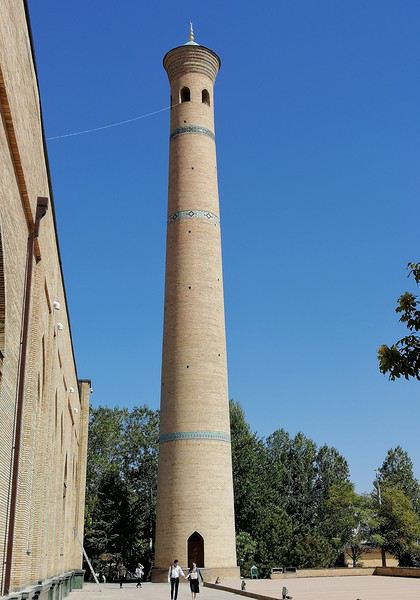
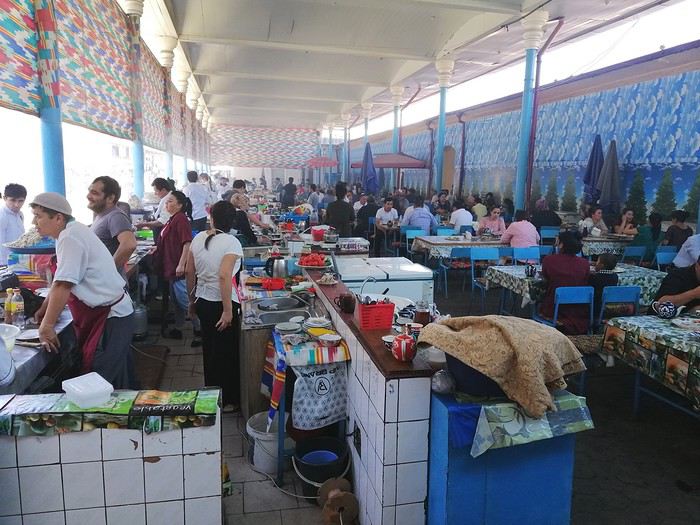
1. Aspects généraux : - A l'arrivée, j'avais organisé avec un taxi suffisamment grand pour charger le vélo dans son carton (10$ depuis l'aéroport) avec l'hôtel Art. L'hôtel m'a aussi permis de laisser le carton pendant ma randonnée, pour le retrouver à l'arrivée. L'hôtel est en fait un groupe d'hôtels, comprenant entre autres un hostel (chambres communes, 12 US$/nuit) et des hôtels plus classiques (dont l'hôtel Art, Rakatboshi Street, que j'ai utilisé, 27 US$/nuit). J'ai fait les réservations par Whattsap au +998 90 167 8337. - J'ai pu changer des dollars contre des sums dans un petit guichet situé à l'arrivée-bagages. Le guichet était ouvert à 5h du matin. - Il n'y a aucun formulaire de déclaration de devises à remplir. Comme citoyen suisse, je n'ai pas eu besoin de visa. J'ai passé la douane en une minute avec mon carton, en passant du côté vert "Nothing to declare". Tout cela est assez inattendu, il y a d'habitude beaucoup plus de complications à l'arrivée dans les pays de l'ex-URSS. - Il ne faut prendre que des dollars US : cette monnaie représente la seconde monnaie du pays. L'euro est quasiment inconnu en dehors des banques. Beaucoup de services peuvent se payer indifféremment en dollars ou en sums; il n'y a pas de marché parallèle (le taux officiel s'étant aligné sur le taux du marché noir il y a quelques années; en septembre - octobre 2019 le taux était environ de 9'400 sums pour un dollar US). -Les hôtels sont censés délivrer un coupon attestant de votre séjour dans leur établissement ("Registration slip"), la police des frontières étant censée vérifier qu'on a dormi chaque soir dans un hôtel (sous peine de complications au moment de quitter le pays). J'ai donc benoîtement collectionné ces coupons pour les montrer à la sortie du territoire. Le policier qui a tamponné mon passeport n'y a pas jeté le moindre coup d’œil, et a même haussé les épaules quand je lui ai montré les coupons. - Je n'ai pas pris de tente, mais seulement un sac de couchage. Le seul endroit où la tente aurait été très utile aura été pendant les 300 kms de la traversée du désert du Kyzylkum, entre Gazni et Tortkol. J'ai dormi à Gazni dans une tchaikhana, la première à droite dans la direction de Tortkol. J'ai vu le lendemain, quand j'ai quitté cette tchaikhana, une enseigne indiquant "Hostel" environ 300 m plus loin, toujours sur la droite. Je n'ai pas vérifié si l'hostel fonctionnait réellement. J'ai dormi dans une seconde tchaikhana le lendemain (d'autres établissements ne m'ont pas permis d'utiliser leur installation pour sortir mon sac de couchage). - Le voyage m'a coûté en moyenne 30 dollars par jour (incluant hôtels, repas, entrées dans les sites touristiques, train de nuit Khiva-Tachkent), en comprenant des arrêts de 3-4 jours à Tachkent, Samarcande, Boukhara et Khiva. - J'ai acheté une carte SIM locale chez Ucell à Tachkent (métro Abdulla Qodirii, coordonnées GPS : 41°19'01''N, 69°16'56.02''E), avec 8GB de données pour 105'000 sums (environ 16 $US). La couverture réseau (accès à Internet a été bonne à moyenne pendant tout le trajet.
2. Le trajet en vélo : - Le trajet Tachkent - Khiva (1'100 km) a été bouclé en 9 étapes. - On peut circuler à vélo sur toutes les routes. Celles reliant les principales villes sont comparables à ce qu'on appelle des "quatre-voies" en France. Ces routes ont un revêtement allant de très mauvais à moyen-bas, sauf les 200 kms de route qui traverse le désert du Kyzylkum, qui sont un véritable billard. - Les routes sont surchargées, et les Ouzbeks conduisent de façon dangereuse (y compris pour eux-mêmes : personne ne porte la ceinture de sécurité dans les véhicules). De plus, à part dans les villages, aucun Ouzbek ne va à vélo, ce qui fait que les conducteurs fonctionnent comme si les cyclistes étaient transparents. Un rétroviseur sur le vélo est essentiel. Il y n'y a pratiquement pas d'itinéraires secondaires, les routes alternatives ne sont pas entretenues et sont habituellement en très mauvais état. Il faut noter plusieurs villages dans la même province peuvent porter le même nom, ce qui peut compliquer la navigation GPS (c'est vrai autour de Tachkent, et je ne me suis rendu compte que je me dirigeais sur le mauvais village pour sortir de la ville qu'après une quinzaine de kms). - Il fait chaud à très chaud pendant la seconde moitié de septembre. La température descend au-dessous de 30°C pendant la journée au cours de la première semaine d'octobre. On trouve à boire sans problème le long des routes; il faut cependant noter que les tchaikhanas indiqués par Open Street Map lors de la traversée du Kyzylkum sont souvent désaffectées ou abandonnées. Les nuits peuvent être fraîches à partir de début octobre. Pas de pluie pendant mon trajet; le vent peut être d'intensité moyenne, sa direction est variable (j'ai eu un vent de 3/4 face pendant la traversée du Kyzylkum). - On trouve généralement des hôtels de confort moyen à bas dans les villes. Il n'y a en général pas de problèmes de restauration : les tchaikhanas servent habituellement un excellent lagman (soupe aux nouilles); les plovs sont proposés moins souvent. Les samosas (comca en caractères cyrilliques) sont proposés partout; c'est ce que les Ouzbeks souvent prennent au petit-déjeuner. - Les trains prennent les vélos sans problèmes (en tout cas le train de nuit Khiva-Tachkent).
En résumé : - Le trajet en lui-même en vélo n'est pas intéressant. Ce millier de kilomètres est très plat et très monotone (même la montée vers Samarcande, qui est à 800 m d’altitude), et rendu compliqué par la conduite automobile agressive. - Les villes principales le long de la Route de la Soie sont très belles, au moins leur partie ancienne. Les petites villes ou villages traversés en chemin n'offre à-peu-près aucun intérêt. - Je ne me suis jamais senti en insécurité en Ouzbékistan (sauf sur le vélo et dans le trafic automobile local).
Le Masai Mara dans toute sa splendeur
Pour une fois je délaisse le self drive Sud Africain pour un safari photo organisé dans le Masai Mara.
Ça faisait quelque temps que j'échangeais via email avec Tony Crocetta pour pouvoir partir dans son camp que l'on m'avait chaudement recommandé, mais la vitesse de remplissage et les impératifs du boulot et des vacances avec ma fille font qu'à chaque fois je reportais à l'année suivante le départ.
Un voyage se libérant en janvier 2019, pour juillet de la même année. Ma fille ayant décidé de faire un voyage linguistique, tous les signaux étaient au vert pour enfin découvrir le Masai Mara.
La prise en charge du safari commence à la descente de l'aéroport, direction Roussel Housse. Guest housse tenue par des sœurs. C'est très courant en Afrique de l'est. Le confort est correct et la nourriture est bonne voire très bonne.
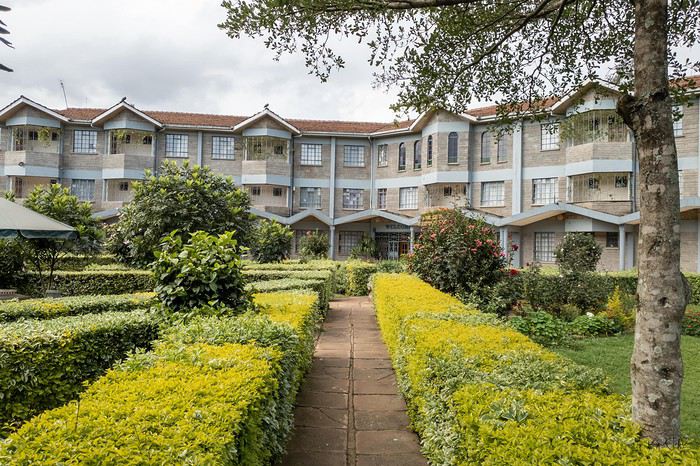
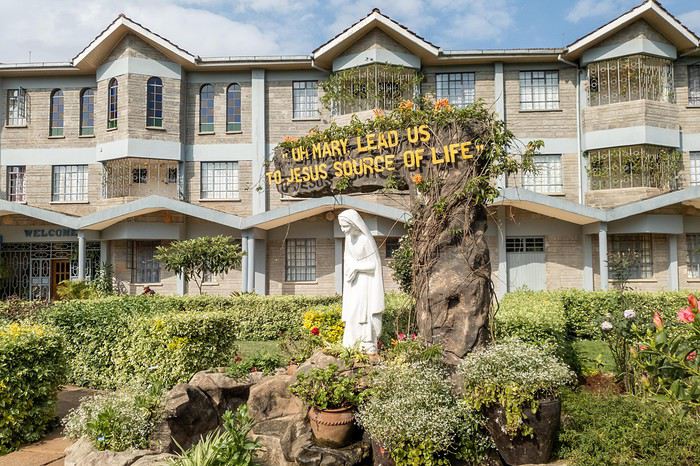
Le lendemain départ de bonne heure pour le Masai Mara, les derniers 90 km se font sur une piste défoncée et vous mettent directement dans l'ambiance.
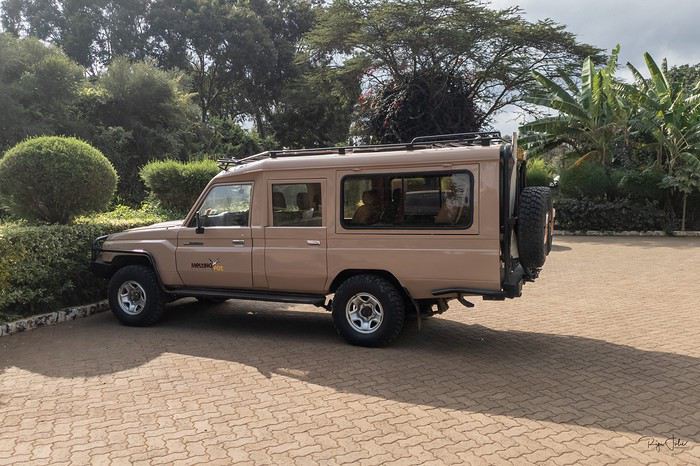
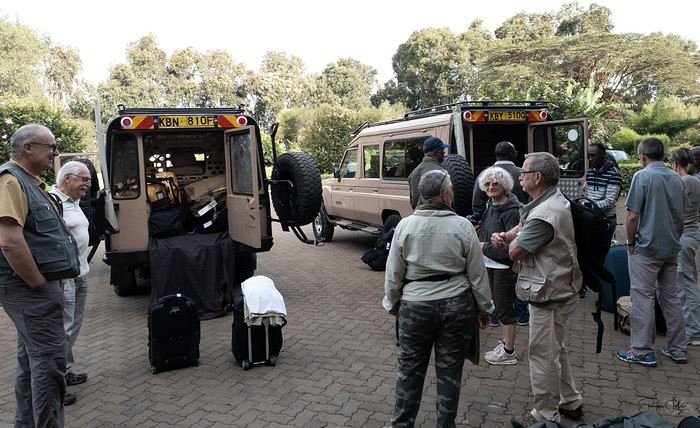
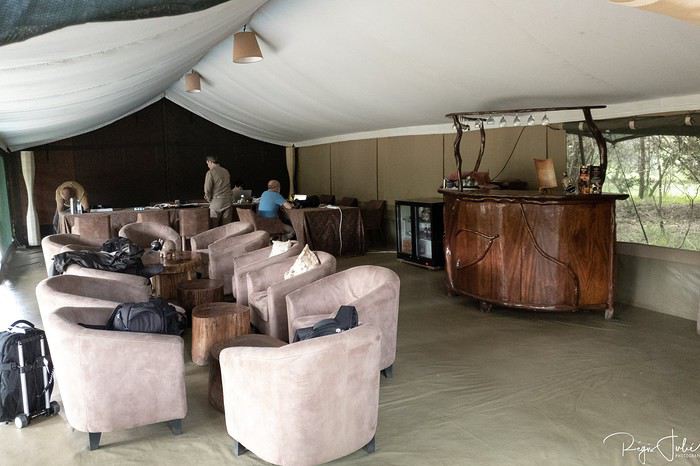
Le camp est idéalement situé au bord de la rivière Mara, avec les hippos pour bercer nos nuits.
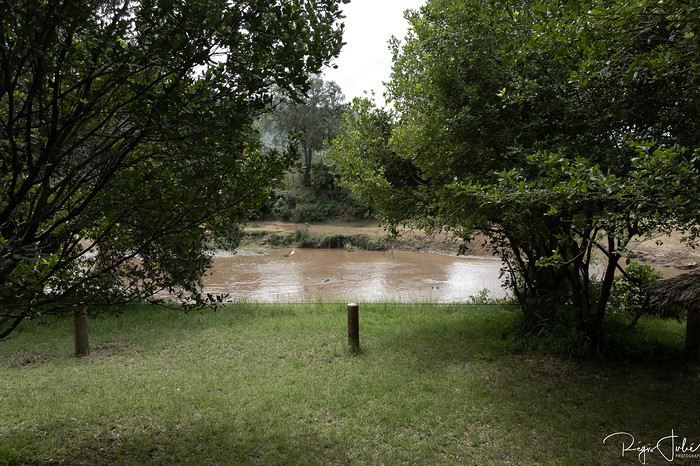
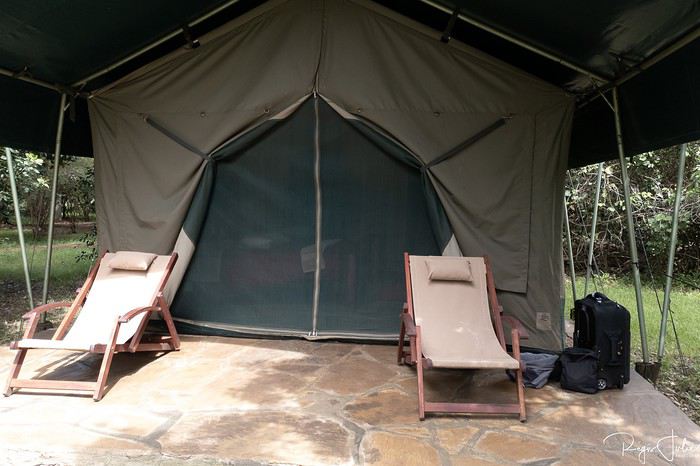
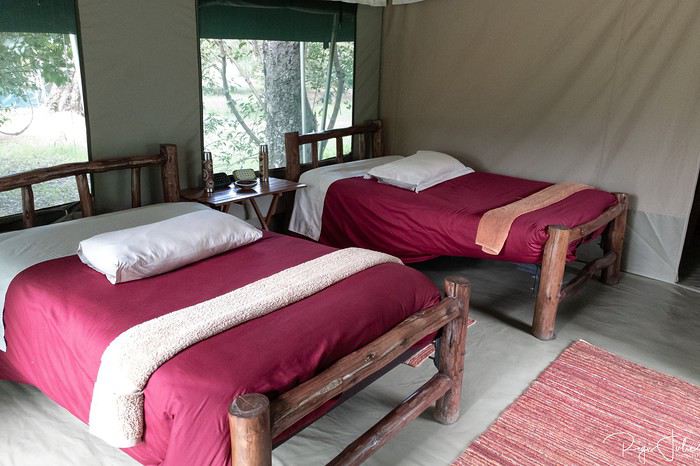
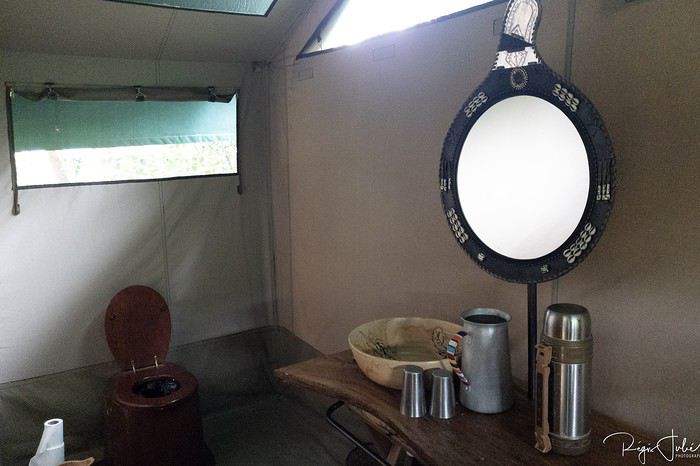
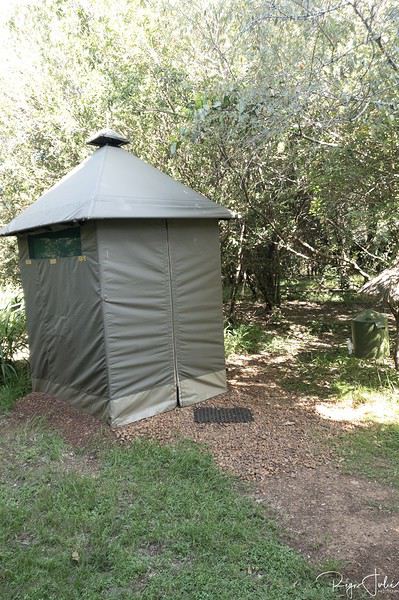
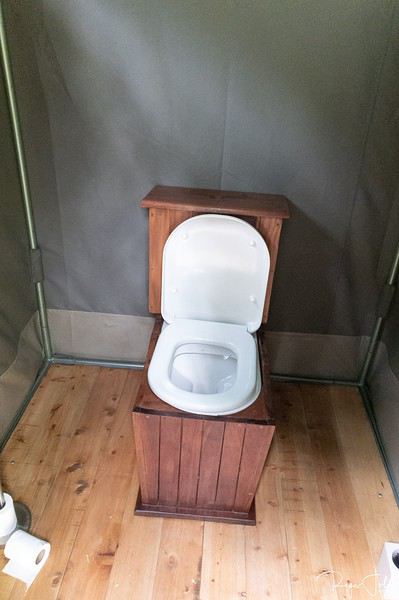
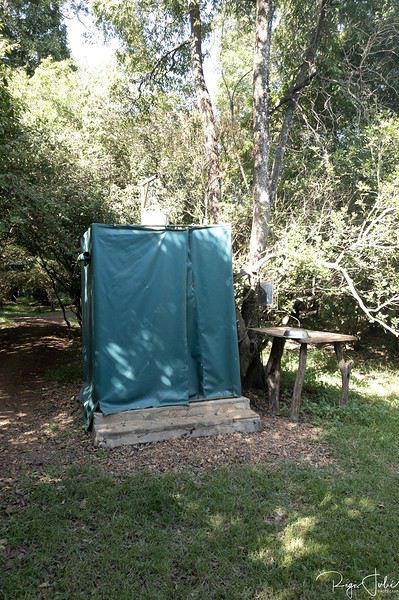
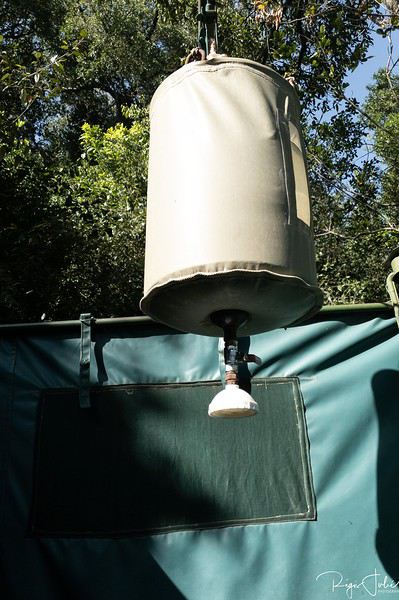
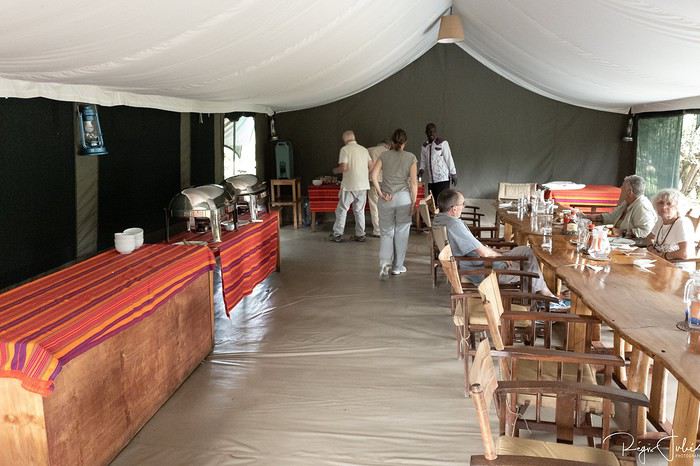
Les repas sont pris autour d'une même table et seront très bon.
Ça faisait quelque temps que j'échangeais via email avec Tony Crocetta pour pouvoir partir dans son camp que l'on m'avait chaudement recommandé, mais la vitesse de remplissage et les impératifs du boulot et des vacances avec ma fille font qu'à chaque fois je reportais à l'année suivante le départ.
Un voyage se libérant en janvier 2019, pour juillet de la même année. Ma fille ayant décidé de faire un voyage linguistique, tous les signaux étaient au vert pour enfin découvrir le Masai Mara.
La prise en charge du safari commence à la descente de l'aéroport, direction Roussel Housse. Guest housse tenue par des sœurs. C'est très courant en Afrique de l'est. Le confort est correct et la nourriture est bonne voire très bonne.
Le lendemain départ de bonne heure pour le Masai Mara, les derniers 90 km se font sur une piste défoncée et vous mettent directement dans l'ambiance.
Le camp est idéalement situé au bord de la rivière Mara, avec les hippos pour bercer nos nuits.
Les repas sont pris autour d'une même table et seront très bon.
Où aller en Asie pour un premier voyage avec ma copine?
Bonjour à tous,
Moi et ma copine on veut aller en Asie cet été en sac à dos, mais on hésite encore sur la destination. On aura un budget de 2000 euros chacun et on voulait prendre un aller-retour pour une ville et ensuite se balader autour. On a été qu'en Europe, aux USA et au Maroc jusqu'à présent, et ma copine a un peu peur de cetaines destinations. Par exemple, elle a entendu que l'Inde c'était chaud pour les filles, la Chine y aurait trop de monde et de pollution, et les Chinois ça la tente pas (c'est des exemples). Moi je pensais peut-être à la Thailande, avec un peu de randonnée et de la plage. On partirait en août. Un mois, vous pensez que ça irait? C'est intéressant et facile pour une fille ? Peut-être le Népal? Le Japon, je crois que c'est trop cher. Mais l'Asie du sud-est c'est pas un peu trop chaud? On est plutôt randos, petites villes traditionnelles et plage un peu. Je sais ça fait beaucoup d'infos, mais si vous avez des idées, ça nous arrangerait.
Seb
Moi et ma copine on veut aller en Asie cet été en sac à dos, mais on hésite encore sur la destination. On aura un budget de 2000 euros chacun et on voulait prendre un aller-retour pour une ville et ensuite se balader autour. On a été qu'en Europe, aux USA et au Maroc jusqu'à présent, et ma copine a un peu peur de cetaines destinations. Par exemple, elle a entendu que l'Inde c'était chaud pour les filles, la Chine y aurait trop de monde et de pollution, et les Chinois ça la tente pas (c'est des exemples). Moi je pensais peut-être à la Thailande, avec un peu de randonnée et de la plage. On partirait en août. Un mois, vous pensez que ça irait? C'est intéressant et facile pour une fille ? Peut-être le Népal? Le Japon, je crois que c'est trop cher. Mais l'Asie du sud-est c'est pas un peu trop chaud? On est plutôt randos, petites villes traditionnelles et plage un peu. Je sais ça fait beaucoup d'infos, mais si vous avez des idées, ça nous arrangerait.
Seb
Xinjiang?
Bonjour à tous
J'hésite furieusement sur ma destination pour cet été, et le Xinjiang est revenu à la surface, notamment suite à un livre magnifique que je viens de terminer (La croisière jaune, je vous le conseille). Mais voilà, je sais que la situation y est un peu particulière. Du coup, y aurait-il quelques personnes qui sont allées sur place récemment (disons depuis 2/3 ans) et qui pourraient me faire un petit état des lieux ?
Mon idée, non encore creusée véritablement, serait de faire une boucle à partir d'Urumqi autour du Taklamakan. Je précise que je connais bien la Chine et un peu le Xinjiang (mais ça remonte). Mais si c'est pour être refoulé de ville en ville ou contrôlé tous les 100 mètres...
Merci d'avance !
J'hésite furieusement sur ma destination pour cet été, et le Xinjiang est revenu à la surface, notamment suite à un livre magnifique que je viens de terminer (La croisière jaune, je vous le conseille). Mais voilà, je sais que la situation y est un peu particulière. Du coup, y aurait-il quelques personnes qui sont allées sur place récemment (disons depuis 2/3 ans) et qui pourraient me faire un petit état des lieux ?
Mon idée, non encore creusée véritablement, serait de faire une boucle à partir d'Urumqi autour du Taklamakan. Je précise que je connais bien la Chine et un peu le Xinjiang (mais ça remonte). Mais si c'est pour être refoulé de ville en ville ou contrôlé tous les 100 mètres...
Merci d'avance !
A Magnificent Loop in the Southern Rainbow Nation
Hello everyone,
It’s been a little over a year and a half since we first set foot in South Africa, and ever since, we’ve been dreaming of returning to explore Southern Africa.
First of all, a big thank you to all the forum members—there are so many on this VoyageForum section, some of whom are unconditional and indispensable experts on the destination—for the amazing travel journals that only make you want one thing: to go and discover these stunning lands. The first journal I read was Bruno’s (Montagnard74), and I was completely captivated by the face in the colors of the rainbow nation.
Now it’s my turn to add my small contribution by recounting our two-week trip during the Christmas period in South Africa.
Even though Attila strongly advised against visiting South Africa during the South African summer holidays, we still gave it a try since my husband doesn’t have the option to choose his vacation dates.
So we went during the peak tourist season, with all its drawbacks: difficulties finding accommodations, crowds at certain sites... But on the bright side, it’s the beautiful season in South Africa while it’s gray and cold back home.
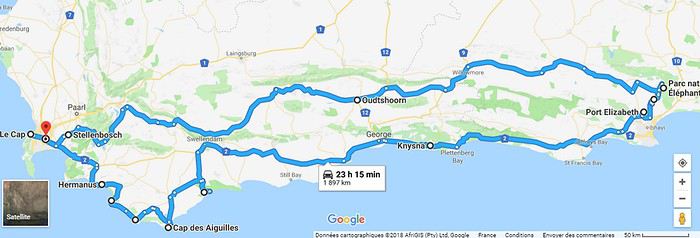
For this trip, we wanted to explore Cape Town and its surroundings, which are already packed with things to see. As a result, we didn’t have time to head north without rushing too much. So we planned the following itinerary, staying in the south:
J1: Lyon/Dubai J2: Dubai/Cape Town J3: Table Mountain – Cape Town J4: Botanic Garden - Robben Island J5: Cape Peninsula J6: Cape Agulhas - Gansbaai J7: De Hoop - Swellendam J8: Garden Route - Knysna J9: Garden Route - Addo NP J10: Addo NP J11: Oudtshoorn J12: Little Karoo J13: Wine Route - Cape Town/Dubai J14: Dubai/Lyon
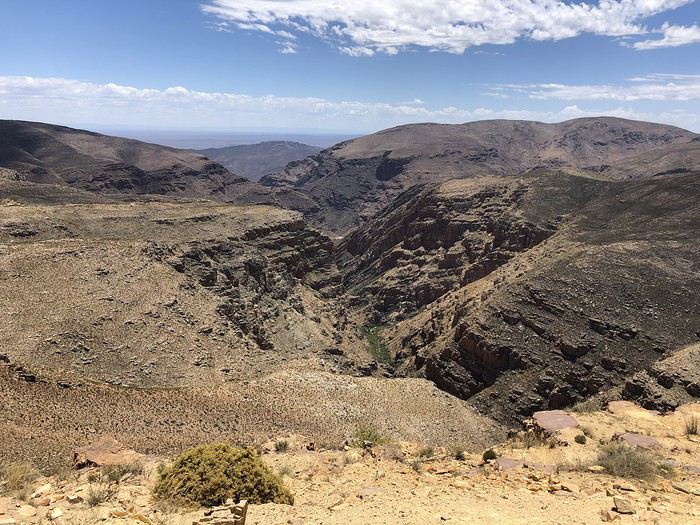
To give you a taste of what we experienced on the South African roads, here’s a little preview of the wildlife and flora we encountered, as well as the beaches and mountains we glimpsed.
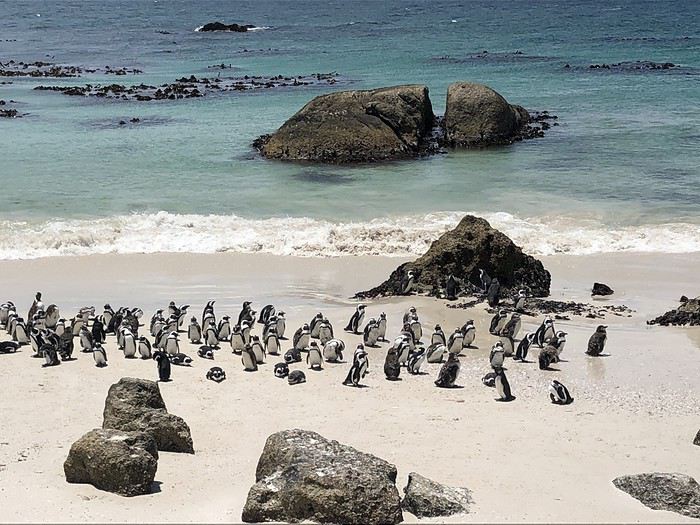
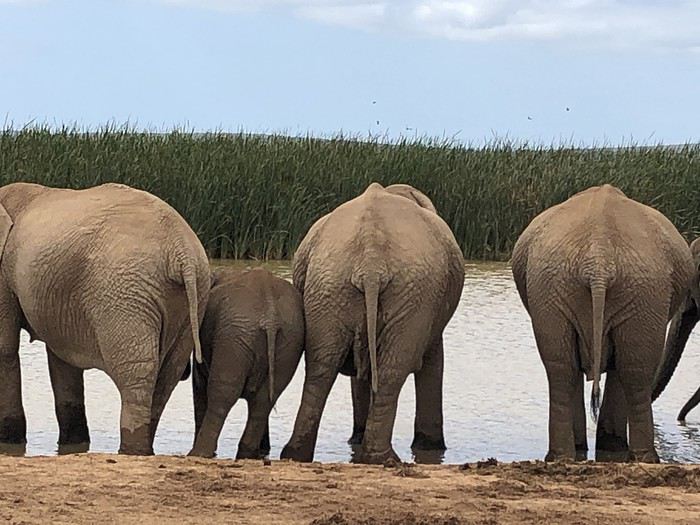
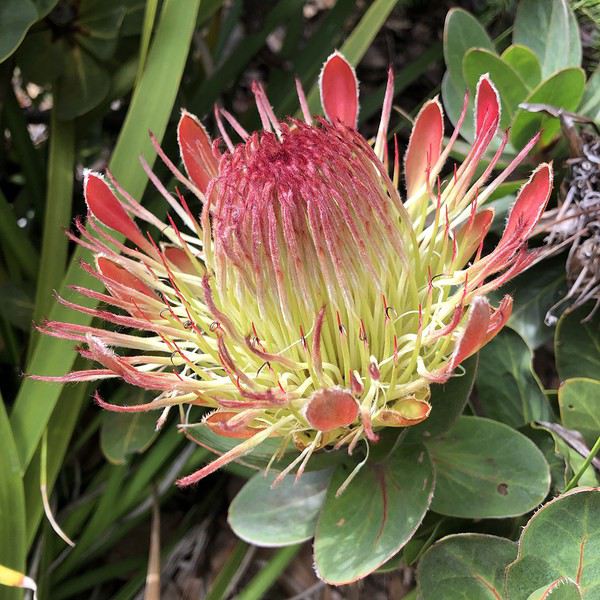
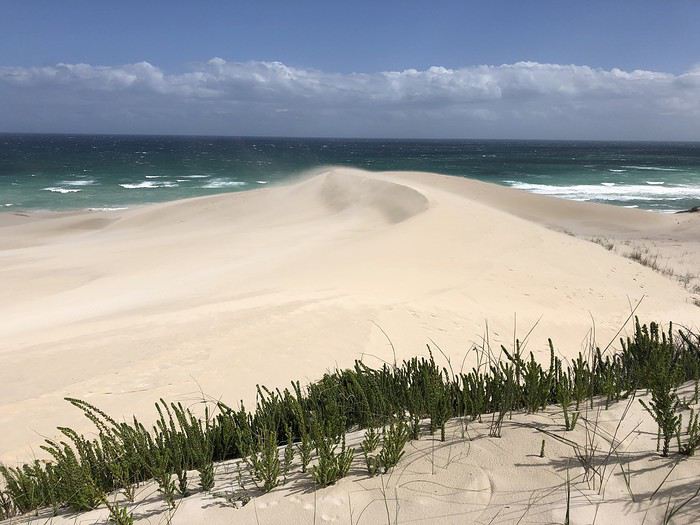
The rest here
First of all, a big thank you to all the forum members—there are so many on this VoyageForum section, some of whom are unconditional and indispensable experts on the destination—for the amazing travel journals that only make you want one thing: to go and discover these stunning lands. The first journal I read was Bruno’s (Montagnard74), and I was completely captivated by the face in the colors of the rainbow nation.
Now it’s my turn to add my small contribution by recounting our two-week trip during the Christmas period in South Africa.
Even though Attila strongly advised against visiting South Africa during the South African summer holidays, we still gave it a try since my husband doesn’t have the option to choose his vacation dates.
So we went during the peak tourist season, with all its drawbacks: difficulties finding accommodations, crowds at certain sites... But on the bright side, it’s the beautiful season in South Africa while it’s gray and cold back home.
For this trip, we wanted to explore Cape Town and its surroundings, which are already packed with things to see. As a result, we didn’t have time to head north without rushing too much. So we planned the following itinerary, staying in the south:
J1: Lyon/Dubai J2: Dubai/Cape Town J3: Table Mountain – Cape Town J4: Botanic Garden - Robben Island J5: Cape Peninsula J6: Cape Agulhas - Gansbaai J7: De Hoop - Swellendam J8: Garden Route - Knysna J9: Garden Route - Addo NP J10: Addo NP J11: Oudtshoorn J12: Little Karoo J13: Wine Route - Cape Town/Dubai J14: Dubai/Lyon
To give you a taste of what we experienced on the South African roads, here’s a little preview of the wildlife and flora we encountered, as well as the beaches and mountains we glimpsed.
The rest here
L'Algérie d'est en ouest
Bonjour à tous,
J’ai choisi de me lancer dans mon premier carnet de voyage (donc excusez moi s’il n’est pas à la hauteur !) sur mon voyage en Algérie, de l’Est jusqu’à l’Ouest, de Constantine à Tlemcen en seulement 10 jours. Je tiens à ce carnet car l’Algérie est une destination méconnue qui intéresse peu de monde, surtout en comparaison à ses voisins tunisiens et marocains, et quand elle intéresse c’est souvent pour le Sahara. Les villes du nord aussi valent le coup d’œil.
De la manière qu'on s'autorise des "escapades" de quelques jours dans les capitales d'Europe, les villes du nord de l'Algérie aussi peuvent constituer des destinations idéales pour un week-end prolongé. Les vols à partir de France sont nombreux, peu chers hors saison (la meilleure période), les visas faciles à obtenir (et le seront de plus en plus), les francophones nombreux et le coût de la vie sur place dérisoire.
Certes, rien n'est fait pour le touriste. Vous ne trouverez pas de brochures touristiques, pas de panneaux indicatifs, pas de panneaux bruns pour vous indiquez les sites à ne pas rater mais les algériens compensent largement ce manque. Pas de panneau d'affichage dans l'aéroport ? Il y aura toujours quelqu'un, dans mon cas un policier, pour venir vous chercher quand votre embarquement commence. Pas de guide dans un musée ? C'est l'agent d'accueil qui vous suivra pour tout vous expliquer. Pas de sandwich dans le taxi collectif ? C'est les autres passagers qui vous en trouverons un. C'est ça l'Algérie, un peuple accueillant, spontané et toujours près à apporter son aide.
J'espère que mon carnet sera à la hauteur de ce que ce pays m'a offert et qu'il vous donnera envie de la découvrir pour un Week-end ou plus !
J’ai choisi de me lancer dans mon premier carnet de voyage (donc excusez moi s’il n’est pas à la hauteur !) sur mon voyage en Algérie, de l’Est jusqu’à l’Ouest, de Constantine à Tlemcen en seulement 10 jours. Je tiens à ce carnet car l’Algérie est une destination méconnue qui intéresse peu de monde, surtout en comparaison à ses voisins tunisiens et marocains, et quand elle intéresse c’est souvent pour le Sahara. Les villes du nord aussi valent le coup d’œil.
De la manière qu'on s'autorise des "escapades" de quelques jours dans les capitales d'Europe, les villes du nord de l'Algérie aussi peuvent constituer des destinations idéales pour un week-end prolongé. Les vols à partir de France sont nombreux, peu chers hors saison (la meilleure période), les visas faciles à obtenir (et le seront de plus en plus), les francophones nombreux et le coût de la vie sur place dérisoire.
Certes, rien n'est fait pour le touriste. Vous ne trouverez pas de brochures touristiques, pas de panneaux indicatifs, pas de panneaux bruns pour vous indiquez les sites à ne pas rater mais les algériens compensent largement ce manque. Pas de panneau d'affichage dans l'aéroport ? Il y aura toujours quelqu'un, dans mon cas un policier, pour venir vous chercher quand votre embarquement commence. Pas de guide dans un musée ? C'est l'agent d'accueil qui vous suivra pour tout vous expliquer. Pas de sandwich dans le taxi collectif ? C'est les autres passagers qui vous en trouverons un. C'est ça l'Algérie, un peuple accueillant, spontané et toujours près à apporter son aide.
J'espère que mon carnet sera à la hauteur de ce que ce pays m'a offert et qu'il vous donnera envie de la découvrir pour un Week-end ou plus !
Slow tourisme / slow voyage
Bonjour,
je suis à la recherche de personnes qui aiment voyager lentement, qui ont l'habitude de pratiquer ce qu'on pourrait qualifier de Slow-Tourisme.
Je suis en train de mettre en place un réseau autour de cette thématique au niveau européen et cherche des personnes qui voudraient donner leur avis sur une future plateforme internet et des cours en ligne gratuits (MOOC) qui visent a sensibiliser le grand public et les professionnels du secteur touristique.
Merci d'avance à tout.e.s à qui ce sujet pourrait parler :)
Mathieu
je suis à la recherche de personnes qui aiment voyager lentement, qui ont l'habitude de pratiquer ce qu'on pourrait qualifier de Slow-Tourisme.
Je suis en train de mettre en place un réseau autour de cette thématique au niveau européen et cherche des personnes qui voudraient donner leur avis sur une future plateforme internet et des cours en ligne gratuits (MOOC) qui visent a sensibiliser le grand public et les professionnels du secteur touristique.
Merci d'avance à tout.e.s à qui ce sujet pourrait parler :)
Mathieu
No, I Won’t Be Going Back to China
Hello forum,
Did any of you feel the same things we did in China?
We spent a good twenty days there in August. First, we traveled solo around Chengdu, then joined an organized tour for 12 days (Beijing, Pingyao, Xi'an, Guilin, Xingping, Yangshuo, Shanghai, Wuzhen) and extended our stay by 4 extra days to visit Zhangjiajie.
The landscapes were stunning, and we have unforgettable memories... but we were really disappointed by the following points:
- The food: way too spicy. Lacking in flavor, not much taste. I’m speaking "in general" because we did enjoy some good steamed dumplings, smoked pork, and other dumplings... But compared to Thailand, Cambodia, or India, Chinese cuisine didn’t impress us at all.
- The behavior of the Chinese: disrespectful, rushed, agitated. You constantly have to fight—people push, crowd, and overwhelm you... At the entrance to the Terracotta Army (and other sites), it’s a human tidal wave... and I mean that literally. We were carried by the crowd without even touching the ground. It was like a situation where you have one bowl of rice and 20,000 starving people diving for it...
You’re at a ticket counter, and they cut in front of you. You’re in line for boarding, suitcase ready to go on the conveyor belt, and someone shows up out of nowhere to put THEIR suitcase down... even though they have a flight ticket with THEIR seat number and won’t be leaving before you!!!! You’re getting on the bus, and someone shoves past you just so they don’t end up behind you.
It’s like these people only think about themselves. I didn’t see a single person let someone else go first or even ask—it’s as if politeness and respect are completely foreign to them.
It’s honestly exhausting and draining...
- Communication: In every other country we’ve visited, whether in Asia or Europe, we always manage—with English, a few words of Italian, French, or Spanish. In China, I’ll be blunt: if you don’t speak Chinese, you’re screwed. And yet, a pair of kids around ten or twelve years old asked us in English where we were from :)
- Understanding: Here’s the rule. Even if the person you’re talking to speaks a little English and says they understand you... make sure they *really* do, because 9 times out of 10, they don’t. Out of pride or just cluelessness, they’ll give you a big smile and nod, but in reality, they didn’t get what you were saying.
Several times with our group, in the evening at a restaurant, if we hadn’t been helped by someone at another table who spoke a little English, we’d still be there. The classic example: the waiter brings one menu (for 10 people at the table), and we’re all trying to explain that we need 4 or more menus. Five minutes later, he’s still staring at us with that same blank smile...
In 3* or 4* hotels, you go to the front desk for a hot water or AC issue. Three or four staff members just stand there beaming at you. You try to explain with photos or a translator, but in the end, you leave with the problem unresolved.
They don’t speak—they shout... on buses, in hotels...
We were also surprised to find that self-service laundromats were almost nonexistent. We got scammed once at a hotel with an astronomical bill!
As for flights, we flew Air China on the way there and Austrian Airlines on the way back—no comparison. Air China had zero service and food that was "baby food" quality. Austrian Airlines had multiple services, a decent meal, and smiling flight attendants.
I don’t know if any of you had the same experience in this country, but I’m definitely not eager to go back. Whereas if someone offered me India, Thailand, or Vietnam tomorrow, I’d be there in a heartbeat!!!
Did any of you feel the same things we did in China?
We spent a good twenty days there in August. First, we traveled solo around Chengdu, then joined an organized tour for 12 days (Beijing, Pingyao, Xi'an, Guilin, Xingping, Yangshuo, Shanghai, Wuzhen) and extended our stay by 4 extra days to visit Zhangjiajie.
The landscapes were stunning, and we have unforgettable memories... but we were really disappointed by the following points:
- The food: way too spicy. Lacking in flavor, not much taste. I’m speaking "in general" because we did enjoy some good steamed dumplings, smoked pork, and other dumplings... But compared to Thailand, Cambodia, or India, Chinese cuisine didn’t impress us at all.
- The behavior of the Chinese: disrespectful, rushed, agitated. You constantly have to fight—people push, crowd, and overwhelm you... At the entrance to the Terracotta Army (and other sites), it’s a human tidal wave... and I mean that literally. We were carried by the crowd without even touching the ground. It was like a situation where you have one bowl of rice and 20,000 starving people diving for it...
You’re at a ticket counter, and they cut in front of you. You’re in line for boarding, suitcase ready to go on the conveyor belt, and someone shows up out of nowhere to put THEIR suitcase down... even though they have a flight ticket with THEIR seat number and won’t be leaving before you!!!! You’re getting on the bus, and someone shoves past you just so they don’t end up behind you.
It’s like these people only think about themselves. I didn’t see a single person let someone else go first or even ask—it’s as if politeness and respect are completely foreign to them.
It’s honestly exhausting and draining...
- Communication: In every other country we’ve visited, whether in Asia or Europe, we always manage—with English, a few words of Italian, French, or Spanish. In China, I’ll be blunt: if you don’t speak Chinese, you’re screwed. And yet, a pair of kids around ten or twelve years old asked us in English where we were from :)
- Understanding: Here’s the rule. Even if the person you’re talking to speaks a little English and says they understand you... make sure they *really* do, because 9 times out of 10, they don’t. Out of pride or just cluelessness, they’ll give you a big smile and nod, but in reality, they didn’t get what you were saying.
Several times with our group, in the evening at a restaurant, if we hadn’t been helped by someone at another table who spoke a little English, we’d still be there. The classic example: the waiter brings one menu (for 10 people at the table), and we’re all trying to explain that we need 4 or more menus. Five minutes later, he’s still staring at us with that same blank smile...
In 3* or 4* hotels, you go to the front desk for a hot water or AC issue. Three or four staff members just stand there beaming at you. You try to explain with photos or a translator, but in the end, you leave with the problem unresolved.
They don’t speak—they shout... on buses, in hotels...
We were also surprised to find that self-service laundromats were almost nonexistent. We got scammed once at a hotel with an astronomical bill!
As for flights, we flew Air China on the way there and Austrian Airlines on the way back—no comparison. Air China had zero service and food that was "baby food" quality. Austrian Airlines had multiple services, a decent meal, and smiling flight attendants.
I don’t know if any of you had the same experience in this country, but I’m definitely not eager to go back. Whereas if someone offered me India, Thailand, or Vietnam tomorrow, I’d be there in a heartbeat!!!
Rapport investissement / besoin / plaisir/ rêve pour l'achat d'un vélo
Voilà quelques temps que je peux lire ici et là des avis quand à l'achat de tel ou tel vélo.
Il en est de même pour les différents loisirs que je pratique.
Il en ressort une tendance générale: Les conseils portent tous sur un ou deux modèles de "référence", accessoirement avec des prix plutôt élevés. (Je ne parle pas du poids soulevé ici même dans un autre sujet)
J'ai donc envie d'ouvrir un petit débat que je souhaite respectueux et qui permette de sortir des sentiers battus autant que possible.
En effet, puisque c'est le vélo qui nous anime ici, le conseil revient souvent sur les TXXX (voire majoritairement le T400) quelque soit l'usage de la personne. si on part en tour du monde ou dans des contrées moyennement carrossées, je comprends que l'on veuille être tranquille avec le matériel et qu'on y mette un certain budget.
En revanche, si c'est pour faire quelques milliers de kilomètres en France ou en Europe sur route ou chemin carrossables gravillonnés, je me pose sincèrement la question, et je doute qu'un vélo moyennement équipé à 4/500 € ne convienne pas, voire, un ancien VTT révisé et entretenu comme beaucoup le font.
Comment faisaient nos anciens, ou moins anciens avec des vélo des années 50 à 70? Le rêve était là, les joies aussi, et avec ce qu'on avait sous la main.
Certains "osent" remettre en question la société de consommation, et les modes qui nous poussent à cette course à l'armement, d'autre préfèrent se rassurer en y croyant, tous tentent de se faire plaisir, alors pour vous, le rêve et la réalités à coût raisonné/raisonnable ont-ils encore une place dans notre société?
J'ai donc envie d'ouvrir un petit débat que je souhaite respectueux et qui permette de sortir des sentiers battus autant que possible.
En effet, puisque c'est le vélo qui nous anime ici, le conseil revient souvent sur les TXXX (voire majoritairement le T400) quelque soit l'usage de la personne. si on part en tour du monde ou dans des contrées moyennement carrossées, je comprends que l'on veuille être tranquille avec le matériel et qu'on y mette un certain budget.
En revanche, si c'est pour faire quelques milliers de kilomètres en France ou en Europe sur route ou chemin carrossables gravillonnés, je me pose sincèrement la question, et je doute qu'un vélo moyennement équipé à 4/500 € ne convienne pas, voire, un ancien VTT révisé et entretenu comme beaucoup le font.
Comment faisaient nos anciens, ou moins anciens avec des vélo des années 50 à 70? Le rêve était là, les joies aussi, et avec ce qu'on avait sous la main.
Certains "osent" remettre en question la société de consommation, et les modes qui nous poussent à cette course à l'armement, d'autre préfèrent se rassurer en y croyant, tous tentent de se faire plaisir, alors pour vous, le rêve et la réalités à coût raisonné/raisonnable ont-ils encore une place dans notre société?