Results for "Hawaï+itinéraire"
About 2,698 results.
More options
Many results are in French, the community’s main language. English translations are added over time.
Search results
Quand donner un pourboire et combien lors d'un voyage aux États-Unis?
Bonjour,
J'ai parfois un peu de mal a savoir qd doner un pourboire et combien.
Y aurait-il moyen de completer la liste : restaurant : oui 15% ? taxi : oui 15% ? (ai donne que 10% la derniere fois et la femme a fait la gueule mais bon elle etait sympa comme une porte de prison et son taxi etait pas gd luxe et 51$ pour +/- 20 miles de ligne droite sans traffic je trouvais cela exagere) shuttle : pareil que taxi ? restaurant qd on prend a emporter : ? chambre d'hotel qd on quitte apres qq jours : laisser un pourboire ds la chambre, cb? valet parking : a chaque fois qu'on recupere ou confie sa voiture? (ai rien donne la derniere fois car pas d'autre parking dispo et 22$/jour je trouve ca deja assez) qd on prend tes bagages a l'entree de l'hotel pour les monter? apparemengt c interdit ds les gdes surfaces qd qqun vient t'aider a faire tes sacs dans un cafe qd tu prends 1, 2, 3.. consomation? oui 15%?
sinon dans ts les restos des USA, qd on prend un soft drink, c refill a volonte (mm au mac do, subway?) ? en californie, on te refill sans que tu demandes svt mais ici a Hawai, c loin d'etre le cas...
merci pour vos precisions, ca m'evitera (et surement a d'autres) de commettre des impaires.
J'ai parfois un peu de mal a savoir qd doner un pourboire et combien.
Y aurait-il moyen de completer la liste : restaurant : oui 15% ? taxi : oui 15% ? (ai donne que 10% la derniere fois et la femme a fait la gueule mais bon elle etait sympa comme une porte de prison et son taxi etait pas gd luxe et 51$ pour +/- 20 miles de ligne droite sans traffic je trouvais cela exagere) shuttle : pareil que taxi ? restaurant qd on prend a emporter : ? chambre d'hotel qd on quitte apres qq jours : laisser un pourboire ds la chambre, cb? valet parking : a chaque fois qu'on recupere ou confie sa voiture? (ai rien donne la derniere fois car pas d'autre parking dispo et 22$/jour je trouve ca deja assez) qd on prend tes bagages a l'entree de l'hotel pour les monter? apparemengt c interdit ds les gdes surfaces qd qqun vient t'aider a faire tes sacs dans un cafe qd tu prends 1, 2, 3.. consomation? oui 15%?
sinon dans ts les restos des USA, qd on prend un soft drink, c refill a volonte (mm au mac do, subway?) ? en californie, on te refill sans que tu demandes svt mais ici a Hawai, c loin d'etre le cas...
merci pour vos precisions, ca m'evitera (et surement a d'autres) de commettre des impaires.
Où voyager à vélo de novembre à février?
bonsoir, dans quel continent ou quels pays peut-on voyager dans de bonnes conditions météo d'octobre à février?
merci pour vos conseils; je pensais à l'Amérique du sud !!
Billet d'avion à bas prix Montréal-Japon
Je veux voyager au Japon, je consulte donc ce forum, et me rends compte que les discussions concernant les vols pas cher pour le Japon sont tenues par des Français, Suisses, Belges... Moi je vais partir de Montréal... alors y a-t-il des gens du Québec qui ont voyagé ou prépare un voyage au Japon et sauraient me guider dans la recherche du billet d'avion ?
Je me rends compte, avec mes recherches sur des moteurs sur Internet, que certaines périodes de l'année sont moins chères (novembre et mi-janvier = 1122$ pour 2-3 semaines). Faut-il prendre son billet le plus d'avance possible ou bien un certain délai avant la date de départ offre de meilleurs prix ? Y a-t-il des temps où les compagnies offrent des rabais ? Existe-t-il des agences "spécialisées" qui offrent des bas prix ?
En espérant trouver quelques québécois sur ce forum hehe
Je me rends compte, avec mes recherches sur des moteurs sur Internet, que certaines périodes de l'année sont moins chères (novembre et mi-janvier = 1122$ pour 2-3 semaines). Faut-il prendre son billet le plus d'avance possible ou bien un certain délai avant la date de départ offre de meilleurs prix ? Y a-t-il des temps où les compagnies offrent des rabais ? Existe-t-il des agences "spécialisées" qui offrent des bas prix ?
En espérant trouver quelques québécois sur ce forum hehe
Vols internes aux États-Unis?
bonjour a tous,
avec 3 amis nous comptons nous rendre a Miami en Mai, notre sejour durera entre 2 et 4 semaines. sur place nous allons louer un appartement et nous aimerions savoir si les vols internes coutent chers, si il ya plusieurs vols par jours mais surtout avoir une idee sur la fiabilité des compagnies aeriennes internes.
merci a tous pour votre aide.
avec 3 amis nous comptons nous rendre a Miami en Mai, notre sejour durera entre 2 et 4 semaines. sur place nous allons louer un appartement et nous aimerions savoir si les vols internes coutent chers, si il ya plusieurs vols par jours mais surtout avoir une idee sur la fiabilité des compagnies aeriennes internes.
merci a tous pour votre aide.
Croisière sur le Carnival Freedom du 5 au 17 août 2007 au départ de Rome
Bonjour,
Nous sommes un couple français (Marseille) et nous serions heureux de rencontrer d'autres francophones à bord du Carnival Freedom. Bon après midi et merci ! 😉
Nous sommes un couple français (Marseille) et nous serions heureux de rencontrer d'autres francophones à bord du Carnival Freedom. Bon après midi et merci ! 😉
Tour du monde sans fin?
Ici, dans tous les posts que j'ai pu lire, j'ai toujours vus des voyageurs qui prévoyaient de faire le tour du monde, ou de faire un voyage quelque part, pensaient toujours à leur arrivée, à leur temps de trajet. Or, depuis tous les voyages que j'ai fait, je ne me suis jamais donné de limite, de date d'arrivée, ou du moins, pas réellement.
J'ai le désir d'aller en Chine en vélo dans deux ans. Mais je ne prévois rien après. Ce que j'aimerai, c'est pouvoir vivre en voyageant. Je n'ai pas encore pu lire de post ici là-dessus, et c'est pour cette raison que je comme une discussion sur ce sujet là. Chacun prévoit également un budget, pour le temps qu'il a prévu du voyage. Ce à quoi j'aspire, c'est à pouvoir travailler par-ci, par-là, vivre un certain temps à certains endroits, plus ils sont reculés, mieux cela me plairait. Et puis, je verrai le temps qu'il me faut pour pouvoir arriver à destination, mais dans un voyage, ce n'est pas l'arrivée qui est importante, c'est le cheminement.
J'aimerai connaitre votre avis là dessus. Je n'ai que 20 ans, je suis disons très jeune pour cela, mais j'ai effectué plusieurs voyages, consultables sur mon blog ( http://tito1998.skyblog.com ) ou bien sur d'autres poste sur ce forum que j'ai posté.
J'attends vos conseils et de vos critiques
Voyagement Votre
Tito1998
J'ai le désir d'aller en Chine en vélo dans deux ans. Mais je ne prévois rien après. Ce que j'aimerai, c'est pouvoir vivre en voyageant. Je n'ai pas encore pu lire de post ici là-dessus, et c'est pour cette raison que je comme une discussion sur ce sujet là. Chacun prévoit également un budget, pour le temps qu'il a prévu du voyage. Ce à quoi j'aspire, c'est à pouvoir travailler par-ci, par-là, vivre un certain temps à certains endroits, plus ils sont reculés, mieux cela me plairait. Et puis, je verrai le temps qu'il me faut pour pouvoir arriver à destination, mais dans un voyage, ce n'est pas l'arrivée qui est importante, c'est le cheminement.
J'aimerai connaitre votre avis là dessus. Je n'ai que 20 ans, je suis disons très jeune pour cela, mais j'ai effectué plusieurs voyages, consultables sur mon blog ( http://tito1998.skyblog.com ) ou bien sur d'autres poste sur ce forum que j'ai posté.
J'attends vos conseils et de vos critiques
Voyagement Votre
Tito1998
Quelle plage choisir au Vietnam?
Bonjour !
Le sujet des plages vietnamiennes a été maintes fois abordé, donc désolée pour ce doublon, mais j'aimerais de nouveau avoir votre avis : si vous deviez choisir une seule plage au Vietnam, laquelle serait-ce ? pourquoi ?
Je prévois d'aller un mois au Vietnam prochainement (départ le 16 août) et j'aimerais passer quelques jours à la plage. Seulement je ne parviens pas à me décider car les commentaires sur les différentes plages, quoique subjectifs, sont tous aussi enthousiastes les uns que les autres. Si vous avez également des bons plans en ce qui concerne les hébergements, n'hésitez pas !
Alors, à vos claviers svp ! Merci pour vos contributions.
Le sujet des plages vietnamiennes a été maintes fois abordé, donc désolée pour ce doublon, mais j'aimerais de nouveau avoir votre avis : si vous deviez choisir une seule plage au Vietnam, laquelle serait-ce ? pourquoi ?
Je prévois d'aller un mois au Vietnam prochainement (départ le 16 août) et j'aimerais passer quelques jours à la plage. Seulement je ne parviens pas à me décider car les commentaires sur les différentes plages, quoique subjectifs, sont tous aussi enthousiastes les uns que les autres. Si vous avez également des bons plans en ce qui concerne les hébergements, n'hésitez pas !
Alors, à vos claviers svp ! Merci pour vos contributions.
Documentaire sur le Vietnam lundi 3 avril sur Voyage
Ce soir Lundi 03 Avril à 21 H 45 sur la chaine Voyage, un documentaire sur le VietNam, un avant gout pour votre voyage
Le Vietnam : Du delta du Mékong à la ville impériale de HuéLundi 03 Avril 2006 RÉSUMÉDURÉE : 52 MinutesDepuis les paysages tropicaux du delta du Mékong jusqu’aux montagnes des hauts plateaux du centre, en passant par les villes qui ont marqué son histoire, ce film trace un profil géographique et historique du Vietnam.
Ville en perpétuelle évolution, Saigon tire ses richesses des terres fertiles du delta du Mékong. Mais c’est aussi une ville marquée par la guerre, comme en témoignent les derniers vestiges de cette époque. Plus loin, sur les hauts plateaux du centre, se dresse l’ancienne ville coloniale française de Dalat, tandis que Pan Thiet, un village de pêcheurs s’est reconverti en station balnéaire. A Hué, la vieille ville impériale exerce toujours la fascination avec son palais partiellement sauvé par l’Unesco, ses temples et ses tombes impériales. Au sud, la ville Da Nang, ancien lieu de débarquement des bataillons américains, est devenue une ville touristique cotée. Les temps changent. Le Vietnam relève la tête et évolue comme nous le démontre ce documentaire...
Le Vietnam : Du delta du Mékong à la ville impériale de HuéLundi 03 Avril 2006 RÉSUMÉDURÉE : 52 MinutesDepuis les paysages tropicaux du delta du Mékong jusqu’aux montagnes des hauts plateaux du centre, en passant par les villes qui ont marqué son histoire, ce film trace un profil géographique et historique du Vietnam.
Ville en perpétuelle évolution, Saigon tire ses richesses des terres fertiles du delta du Mékong. Mais c’est aussi une ville marquée par la guerre, comme en témoignent les derniers vestiges de cette époque. Plus loin, sur les hauts plateaux du centre, se dresse l’ancienne ville coloniale française de Dalat, tandis que Pan Thiet, un village de pêcheurs s’est reconverti en station balnéaire. A Hué, la vieille ville impériale exerce toujours la fascination avec son palais partiellement sauvé par l’Unesco, ses temples et ses tombes impériales. Au sud, la ville Da Nang, ancien lieu de débarquement des bataillons américains, est devenue une ville touristique cotée. Les temps changent. Le Vietnam relève la tête et évolue comme nous le démontre ce documentaire...
Comment traverser les océans?
Bonjour,
Alors voila, je suis parti de France il y a 5 mois, je suis arrivé a Hong Kong par les terres. J aimerais continuer mon périple sans prendre d avion et me diriger vers l Australie, puis la Nouvelle Calédonie, les îles de Paques, et l Amérique du sud, et l Afrique et l Europe. C’est juste une idée mais sans doute difficile a réaliser. D’autant plus que mes économies fondent... mais voila je me renseigne... La je pense partir pour la Thaïlande puis la Malaisie puis l Indonésie puis l Australie, je pense pourvoir trouver des bateaux facilement mais ensuite... Pour se rendre en nouvelle Calédonie… traverser les océans ?!
J aimerais donc avoir tous les renseignement possible, les tuyaux, les bons plans pour traverser les mers et océan. Voilier (mais pas d expérience), cargo, bateau de croisières avec travail a bord…brefs, des bons plan pour traverser et sans dépenser trop d argent. Merci d avance
Adrien
Alors voila, je suis parti de France il y a 5 mois, je suis arrivé a Hong Kong par les terres. J aimerais continuer mon périple sans prendre d avion et me diriger vers l Australie, puis la Nouvelle Calédonie, les îles de Paques, et l Amérique du sud, et l Afrique et l Europe. C’est juste une idée mais sans doute difficile a réaliser. D’autant plus que mes économies fondent... mais voila je me renseigne... La je pense partir pour la Thaïlande puis la Malaisie puis l Indonésie puis l Australie, je pense pourvoir trouver des bateaux facilement mais ensuite... Pour se rendre en nouvelle Calédonie… traverser les océans ?!
J aimerais donc avoir tous les renseignement possible, les tuyaux, les bons plans pour traverser les mers et océan. Voilier (mais pas d expérience), cargo, bateau de croisières avec travail a bord…brefs, des bons plan pour traverser et sans dépenser trop d argent. Merci d avance
Adrien
Le grand Canyon en individuel?
Bonjour à tous ! Quelqu'un peut-il nous dire q'il a déjà été voir le Grand Canyon par ses propres moyens ? Est-ce réalisable ? Je pense que l'aéroport de base serait Phoenix ? Merci pour tous les conseils que vous pourriez nous donner. Nous comptons y faire un peu de VTT.
Où aller pour quelques jours au bord de mer au Cambodge?
Bonsoir je pars début février au Cambodge découvrir le site d'Angkor Wat et me poser quelques jours au bord de la mer . Connaitriez vous un bon plan sympa mais pas trop touristicos merci.On me parle de Sihanouk ville mais ça ma l'air un peu grillé ou bien?
Commentaires sur les croisières Princess Cruises?
Bonjour,
Pour ceux qui en ont, nous aimerions lire vos commentaires sur Princess Cruises ...(n'importe quoi les concernant)
Merci.
Pour ceux qui en ont, nous aimerions lire vos commentaires sur Princess Cruises ...(n'importe quoi les concernant)
Merci.
From Southern Shikoku, between land and sea, to the blue waters of Miyakojima and finally the Tokyo metropolis
From Southern Shikoku, between land and sea, to the blue waters of Miyakojima and finally Tokyo’s megacity
Hi everyone,
I have to admit, I really hesitated before deciding to write this travel journal... Writing one takes a lot of time and energy, and since this is my 4th trip, I wondered if it would even interest anyone other than myself (both for the discovery and the writing). But after a few people asked, "Are you going to write a journal?" and especially after rediscovering the joy of reading other travelers’ journals about Japan or elsewhere on this forum, I’ve decided to share my 4th installment in the Land of the Rising Sun here.
The itinerary: 27 full days, from late May to late June 2025, right in the middle of the rainy season, including:
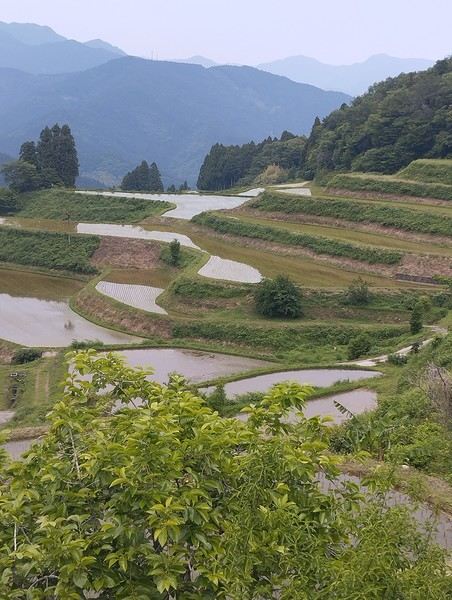
-->13 days in Shikoku, from Kochi (Kochi Prefecture) to Matsuyama (Ehime Prefecture)
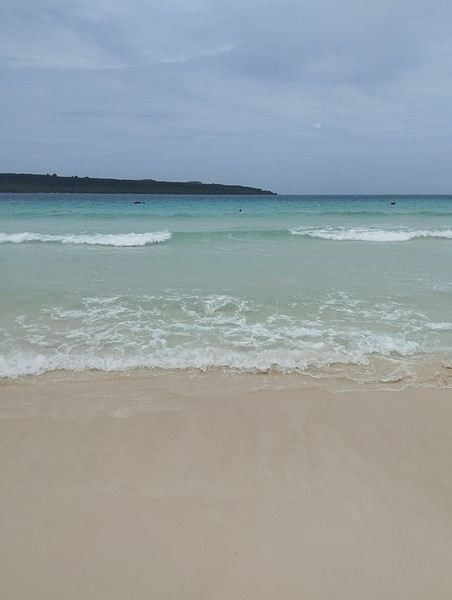
-->7 days in Miyakojima (Okinawa Prefecture)
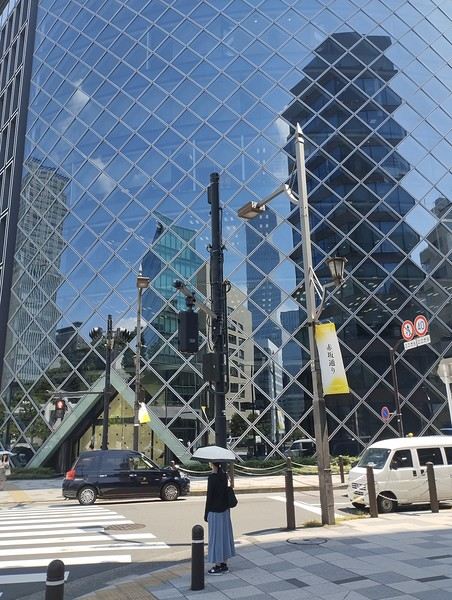
-->7 days in Tokyo
The trip was decided on fairly last-minute again this year.
Since I regularly check flight prices to track fluctuations for this destination even without concrete plans, stumbling upon a slightly cheaper direct flight (900 €) than what I’d seen in previous months (around 1,200–1,400 € on average) for a Paris-Tokyo route with Japanese airline ANA was too tempting to resist the urge to return to this enchanting country. After much hesitation between exploring the San’in region (Matsue, Tottori, Yamaguchi) and Southern Shikoku, the decision was made—I took the plunge! The ticket is booked: Paris to Kochi with a layover in Tokyo, all with ANA, the airline I’d been dreaming of... for 1,120 € per person. Okay, it’s not cheap, but it’s better than in 2023.
Departure in 2 weeks! Now I just have to get everything ready!
Intense prep work over these next 2 weeks to:
finalize a more precise itinerary and reach an agreement—yep, because even though we both love Japan, our preferences differ slightly, and we have to choose between exploring new places or revisiting beloved spots... decide how much time to spend in each area without rushing while still exploring research places that might interest us and watch videos about Japan book accommodations: yes, it’s possible to do this on the spot, but last year, we realized that last-minute options were pretty expensive, so we’re booking ahead—though we’ll keep a few options open in case better deals pop up later reserve rental cars order yen check the weather regularly and wonder if choosing the *tsuyu* (rainy season) was really a good idea—are we going to be drenched the whole time???
"What hard work," you might say! Going to Japan for a month—what a tough life! Despite this being my 4th trip, the excitement is just as intense as the first time.
The only small downside is that when we booked the flight, there weren’t many seats left, so we’re only sitting together on the international return flight. Plus, on the way there, we have middle seats. Another lingering question: what French-language films will be available? According to the internet, the selection seems limited. Oh well, these are just minor details—it’s already time to fly! PS: I’ll be posting slowly and irregularly... so for those interested, be patient, and maybe set an alert...
Hi everyone,
I have to admit, I really hesitated before deciding to write this travel journal... Writing one takes a lot of time and energy, and since this is my 4th trip, I wondered if it would even interest anyone other than myself (both for the discovery and the writing). But after a few people asked, "Are you going to write a journal?" and especially after rediscovering the joy of reading other travelers’ journals about Japan or elsewhere on this forum, I’ve decided to share my 4th installment in the Land of the Rising Sun here.
The itinerary: 27 full days, from late May to late June 2025, right in the middle of the rainy season, including:
-->13 days in Shikoku, from Kochi (Kochi Prefecture) to Matsuyama (Ehime Prefecture)
-->7 days in Miyakojima (Okinawa Prefecture)
-->7 days in Tokyo
The trip was decided on fairly last-minute again this year.
Since I regularly check flight prices to track fluctuations for this destination even without concrete plans, stumbling upon a slightly cheaper direct flight (900 €) than what I’d seen in previous months (around 1,200–1,400 € on average) for a Paris-Tokyo route with Japanese airline ANA was too tempting to resist the urge to return to this enchanting country. After much hesitation between exploring the San’in region (Matsue, Tottori, Yamaguchi) and Southern Shikoku, the decision was made—I took the plunge! The ticket is booked: Paris to Kochi with a layover in Tokyo, all with ANA, the airline I’d been dreaming of... for 1,120 € per person. Okay, it’s not cheap, but it’s better than in 2023.
Departure in 2 weeks! Now I just have to get everything ready!
Intense prep work over these next 2 weeks to:
finalize a more precise itinerary and reach an agreement—yep, because even though we both love Japan, our preferences differ slightly, and we have to choose between exploring new places or revisiting beloved spots... decide how much time to spend in each area without rushing while still exploring research places that might interest us and watch videos about Japan book accommodations: yes, it’s possible to do this on the spot, but last year, we realized that last-minute options were pretty expensive, so we’re booking ahead—though we’ll keep a few options open in case better deals pop up later reserve rental cars order yen check the weather regularly and wonder if choosing the *tsuyu* (rainy season) was really a good idea—are we going to be drenched the whole time???
"What hard work," you might say! Going to Japan for a month—what a tough life! Despite this being my 4th trip, the excitement is just as intense as the first time.
The only small downside is that when we booked the flight, there weren’t many seats left, so we’re only sitting together on the international return flight. Plus, on the way there, we have middle seats. Another lingering question: what French-language films will be available? According to the internet, the selection seems limited. Oh well, these are just minor details—it’s already time to fly! PS: I’ll be posting slowly and irregularly... so for those interested, be patient, and maybe set an alert...
On part en vadrouille dans les Balkans!
Et bien le confinement a de beaux jours devant lui ! Chose promise, chose due (publier une journée de vadrouille par jour de confinement) ! Après le carnet sur un voyage aux Etats-Unis (voyageforum.com/...-americain-d9943984/), après le carnet sur une vadrouille en Jordanie (https://voyageforum.com/discussion/on-part-en-vadrouille-en-jordanie-d9991360/), voici maintenant un carnet dans les balkans, voyage réalisé il y a maintenant quelques années :
Et on garde les bonnes habitudes, publication d'une journée par jour, à chaque fois à 17h30 ! Bonne lecture et n'hésite pas à laisser un commentaire, une question, une remarque, ...
Franck
Et on garde les bonnes habitudes, publication d'une journée par jour, à chaque fois à 17h30 ! Bonne lecture et n'hésite pas à laisser un commentaire, une question, une remarque, ...
Franck
Adventures of a Bygone Era: The Philippines in 1984
After several discussions on VF about travel journals from the Philippines, I decided to write this curiosity: a trip report from a journey made in 1984, when traveling to the Philippines was still an adventure.
A curiosity because writing a travel journal about a trip 35 years later isn’t common, but also (mostly?) because exploring the Philippines at that time had little in common with traveling there today.
Obviously, I’ve forgotten a number of facts, most of the details, but with the help of a few notes from that time and a stack of slides (yes, there was life before digital 😊), many memories came back and added to the highlights I’d never forgotten. The scanned slides aren’t always great quality, but there are still quite a few to brighten up this chatter. Back then, we didn’t snap photos like we do now—film was too expensive—so I don’t have pictures of every place we visited... too bad, comparing some of those spots to how they look today would’ve been interesting.
Why "Adventures"? Why call it "Adventures" in the Philippines in 1984, a word so often used for a simple exotic trip? - Because the lack of information (no *Guide du Routard*, no *Lonely Planet*, no *Michelin Guide*, nothing, and obviously no internet) gave this trip what’s at the heart of adventure: the unknown. - Because the political situation made the stay sometimes dangerous. - Because transportation conditions were always epic, often perilous. - Because the question of where we’d spend the night came up almost every evening. - And for... quite a few other reasons.
That said, we weren’t exactly explorers!
Why the Philippines? First of all, why go to the Philippines in 1984—a country not exactly set up for tourism and about which we knew very little? How could we get an idea of the beauty of the Philippines and its points of interest when we had no guides or photos?
The idea came to us from Thailand a year earlier, during our first long-haul trip. After touring the north of the country, we met a Frenchman living in Phuket, where there were only a few tourists in Patong, with just a few small hotels and guesthouses. Kata and Karon had no buildings or roads, Rawai only had three palm-thatched bungalows, including ours, and the other islands were unknown to tourists. There was plenty to discover, and we wanted to return to this beautiful country... but the Frenchman made us dream about the Philippines—a country to explore, with wild landscapes.
Long evenings of discussion over multiple Sprite-Mekong cocktails (what memories of those headaches!) finally convinced us we had to go to the Philippines.
Episode 0: Before Departure The decision was made: we’d go to the Philippines in May 1984. Our friends and family were surprised when we announced we were going on vacation to the Philippines (a bit like saying today we were going paddleboarding in the Kerguelen Islands 🤪).
These days, preparing for each of our trips takes long evenings of research, planning, and noting down good addresses... etc. But for the Philippines in 1984, preparation was quick: we had very little information about the country, we were leaving almost at random, and the discovery would only be more exciting.
We still had a few bits of info gathered here and there: the rice terraces in northern Luzon, volcanoes, Negros where we were supposed to visit an acquaintance, Cebu and its marine life (we ended up going elsewhere), and absolutely avoid Mindanao, which was practically at war with the regime. That was about it, but it was already a great itinerary.
Nothing was organized in advance; we’d see day by day. We had no idea about travel times or even the existence of transportation options. The main (and sometimes only) way to connect two islands was by overloaded, rusty ferry. Only the big cities had airports.
Let’s Go: Episode 1: Paris to Manila My travel journals always start after arriving at the airport—the Europe-to-“Other Continent” trip isn’t interesting—but the flight to the Philippines was already an adventure, so I’ll make an exception.
This was the era when only a few Asian airlines were on par with Western ones: Thai, Singapore Airlines, and Philippine Airlines. They had beautiful, brand-new planes, and to attract customers (almost exclusively “businessmen”) from the usual airlines (Air France, Lufthansa, British Airways), there was opulence on board: unlimited champagne, all sorts of cocktails... Compared to today’s long-haul flights, there was still one small difference: no personal screens, just one screen at the front of the cabin with one mandatory movie. And I don’t know why, but we only got James Bond films, both ways... that must’ve been the trend at the time.
The tourism boom to Southeast Asia hadn’t started yet, and the “Asian Tigers” weren’t a thing, so there weren’t many business trips. That meant long-haul flights made stops everywhere to fill the planes. Our Philippine Airlines Boeing 747 left London, picked us up in Paris, then stopped in Frankfurt to take on a few Germans. I don’t know why we then made a stop in Dubai—a totally exotic place at the time. There was nothing to do there... things have changed a lot since. It was a small town lost in the desert. The airport was tiny, with just one or two buildings and a supermarket. During the stopover, everyone had to get off the plane and walk to the supermarket. Photo and electronic equipment were dirt cheap—I guess that was the only reason for the stop. Maybe it was their first commercial move. Emirates didn’t exist yet, as I checked online, but anyway, the idea that such a remote place could have its own airline was unthinkable.
Online, I found this photo of Dubai Airport in 1980. Anyone who’s transited through today’s massive airport with its rows of A380s will appreciate it: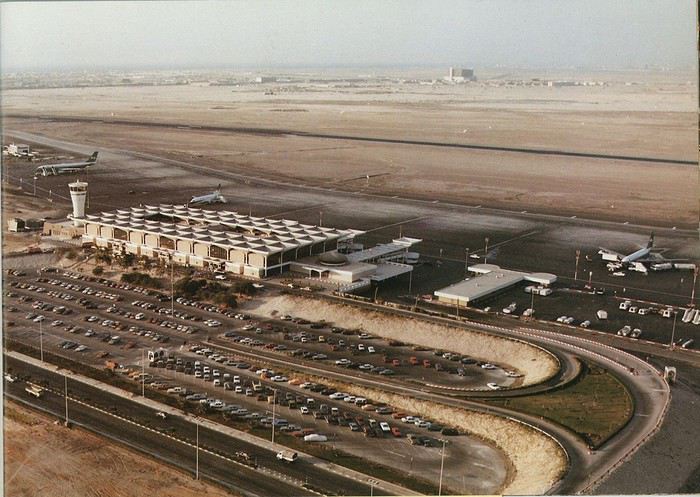
Next stop: New Delhi to drop off some Europeans and pick up a few Indians, and finally, the terminus: Manila. I don’t remember how long the trip took with its five stops—an unimaginable journey today. Despite all those stops to fill the plane, there was still enough space to stretch out on the four center seats of the 747, something that never happens these days despite all the flights in every direction.
So here we are, finally at Manila Airport around midnight.
Episode 1: Manila and Baguio To start, a quick note on the political and economic situation in the Philippines in 1984, which had consequences for us as tourists, as we’d soon realize upon arrival.
After several centuries of Spanish colonization, the Philippines became American at the start of the 20th century, then independent. In 1966, Marcos took power, and little by little, his regime sank into corruption and mismanagement, becoming a dictatorship with martial law, all for the benefit of his family and friends, who enriched themselves endlessly. The peak was the assassination of opposition leader Benigno Aquino in August 1983, which triggered harshly repressed protests. So we arrived a few months later in a very poor country, with omnipresent corruption and an extremely tense political situation, as we’d soon see for ourselves. Major protests took place in the main cities during our trip—I’ll come back to that. Two years later, Marcos fled to Hawaii after being forced out of power following rigged elections. This historical context explains a lot of the situations we found ourselves in over the following weeks.
Arriving in the middle of the night isn’t very cheerful. Manila was already a huge city with many slums, where you could find a few business hotels like the Hilton or Intercontinental—way out of our budget—and plenty of run-down hotels. Luckily, two Indians we’d chatted with on the plane offered to take us to their usual hotel. They came to Manila twice a year for business. We accepted their offer, relieved not to have to look for a place to stay in the middle of the night, figuring the address must be good since they came back every time... we were wrong 🙁
We left the airport and immediately got a taste of the local vibe when we got into the taxi: the police asked for our passports. We thought: what’s more normal than police in a dictatorship?
But that wasn’t it at all. Our two Indian friends explained that the police were noting our names along with the taxi number and time. Crime in Manila was so bad that the taxi driver would be held responsible if anything happened to us... welcome to the Philippines 😎 😎
Historically, the Philippines was a very violent country, where everything was settled with guns or machetes. Previous governments had banned carrying weapons, but Marcos later allowed the free sale and carrying of guns, and disputes were settled with pistols again (or worse, as we’d discover later). Since he’d released most of the criminals from prison to form a paramilitary militia at his service (I’ll talk about our encounter with these “heroes” later), it was pretty dangerous to go into many parts of Manila, where these “tonton macoutes” ruled.
We arrived at our hotel without incident... and then things started badly. The room was infested with big cockroaches—exactly what I hate most in those kinds of countries. No way to find another hotel at that hour. After the long flight, the urge to take a shower was so strong that we squeezed into the bathroom as best we could. After that, I don’t remember—I guess we must’ve fallen asleep exhausted under the sheets in the heat... air conditioning wasn’t widespread yet.
The next day, we just wanted to leave that dump as soon as possible. So we decided to head north right away, stopping in Baguio, and we’d visit Manila a bit on the way back.
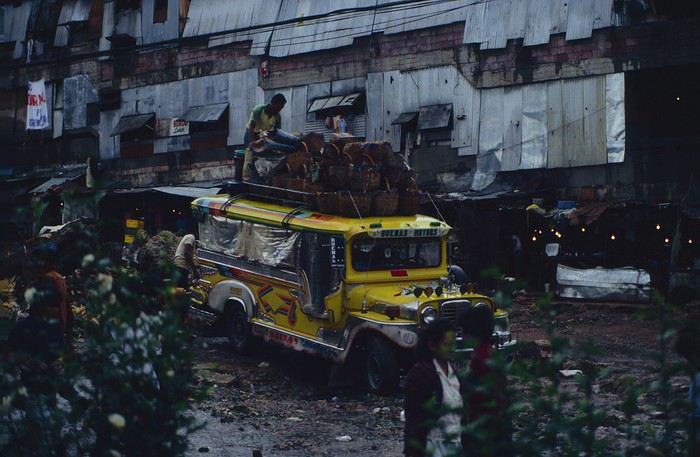
When we stepped outside, we discovered a pretty run-down neighborhood with potholed streets. But we also discovered the jeepneys. They were everywhere, flooding the streets.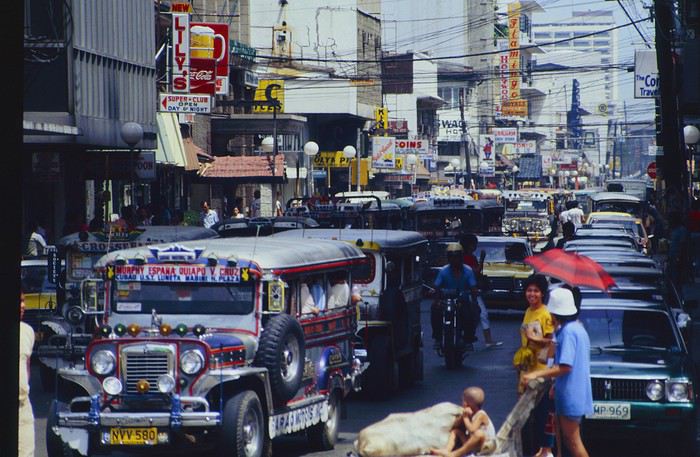
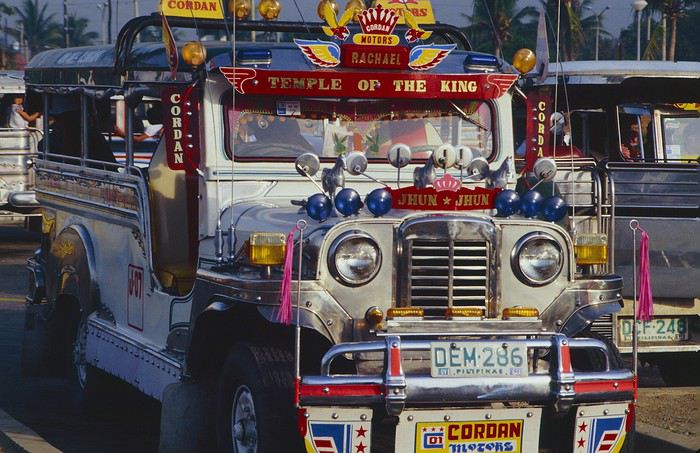
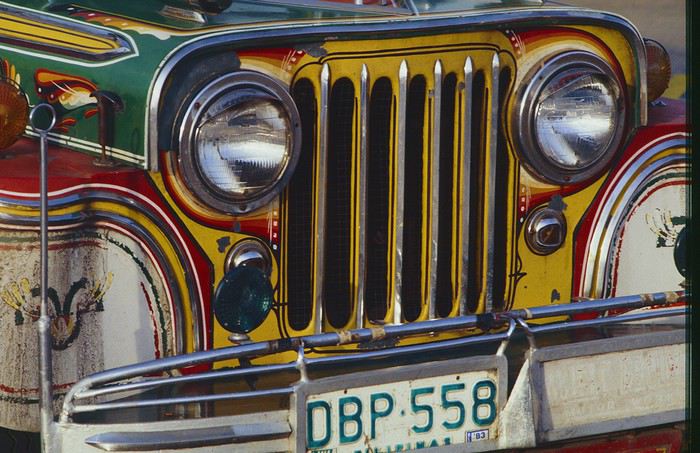
They had crazy sound systems, each one blasting louder than the last. The interiors were kitschy but fun. There weren’t many private cars—almost all transportation was by jeepney, with buses reserved for intercity trips.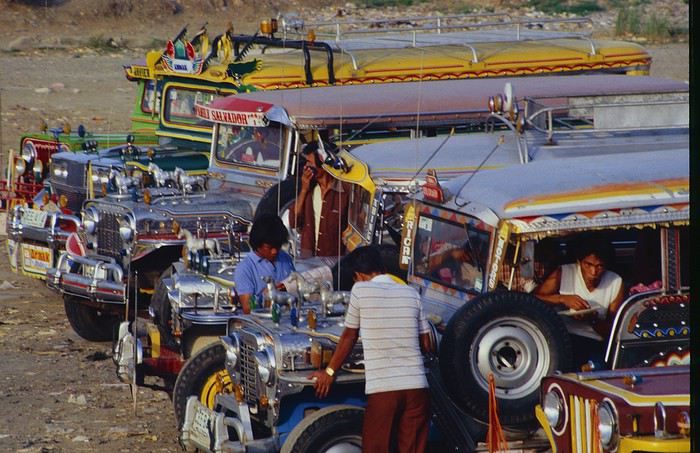
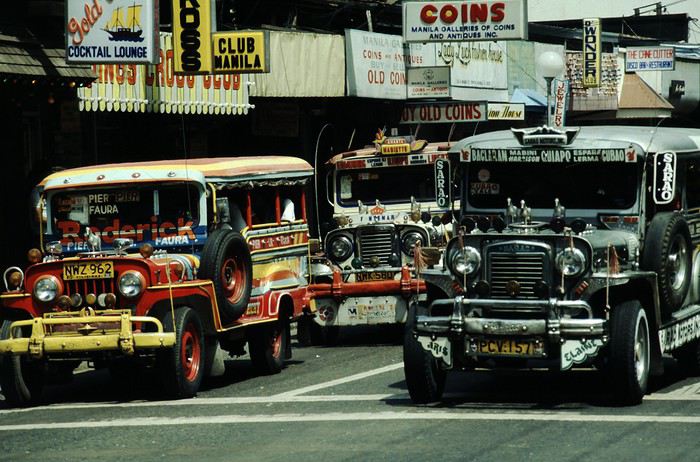
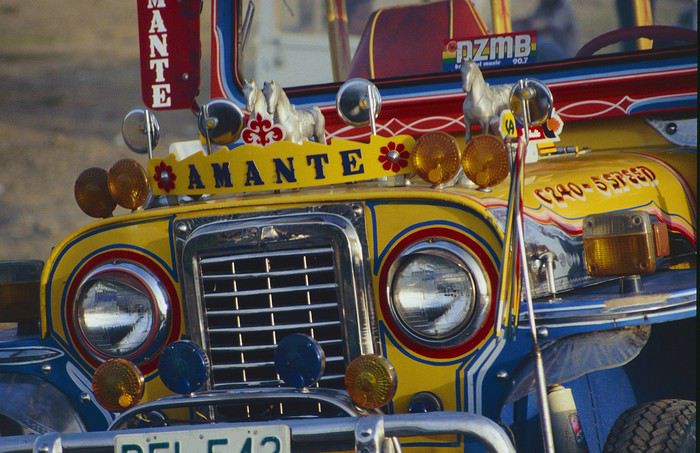
Before heading to the bus terminal for the north, somewhere on the outskirts of the city, we needed to exchange some money. I don’t remember how we ended up in a policeman’s jeep who offered his services: - Exchange money on the black market at a better rate than the banks. - Take us wherever we wanted, in this case, the bus terminal.
We accepted both offers (we’d still checked the official exchange rate from dollars to pesos). So we found ourselves in his jeep. After exchanging money, we left in his vehicle and stopped for gas. Without turning off the engine, he calmly smoked a cigarette while filling up. Since we were in a jeep with no doors or roof, we were ready to jump out if things went south, our travel bag in hand.
But we weren’t done with surprises yet. Once we left the small streets, we ended up in a neighborhood with wide avenues and not much traffic, which didn’t justify his incredible behavior. At every intersection, he made the sign of the cross, closed his eyes, and crossed without looking. I was more stunned than terrified! It wasn’t until we got out of the car later that I told Anne-Marie what had happened. I’d seen everything because the cop had put me in the front seat. Luckily, A-Marie hadn’t noticed anything from the back. Crossing Manila by trusting God rather than the rules of the road was ultimately effective. We were lucky—the trip was off to a good start. 🙂 🙂
We then passed through a neighborhood where slums stretched on for a while, and we left our policeman—friendly but a bit crazy—with relief.
A few hours by bus later, here we are in Baguio, cool in the mountains. My memories of Baguio are pretty fuzzy. I remember a small town. After some research while writing this journal, I found that the population was 120,000 in 1980. Given the population density in each home, that confirms my memory of a smallish town. Outside the “official” district with the president’s summer residence and government buildings, there were two or three paved streets with nice houses. The rest was very dirty and very poor, with lots of slums and dirt roads.
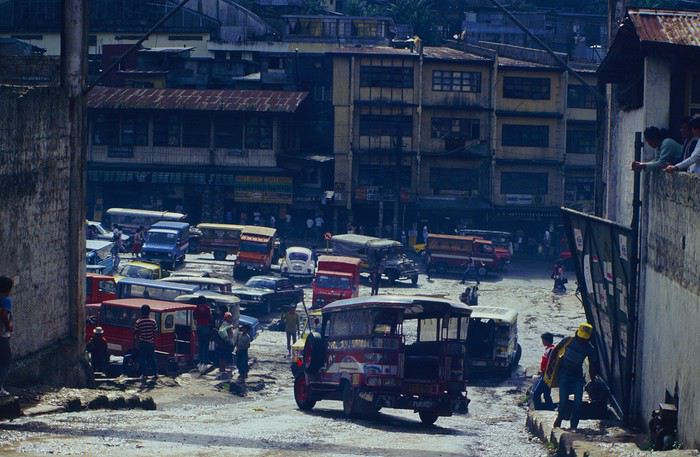
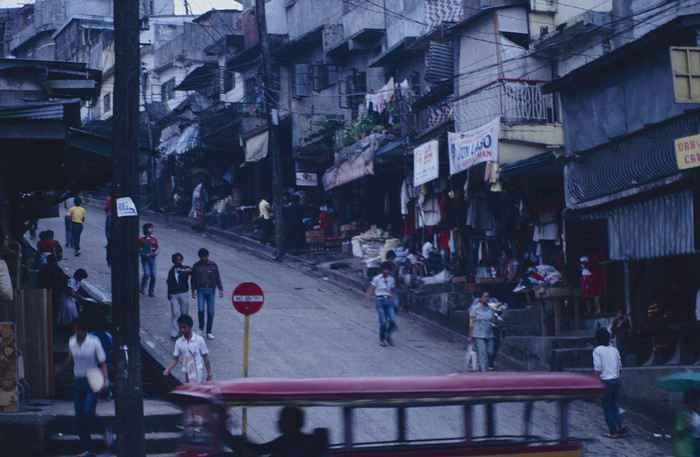
People we met on the street invited us to stay with them. These days, we wouldn’t just show up at strangers’ houses, which we should’ve done in Baguio—it would’ve saved us from an unimaginable and dangerous situation... which I won’t say anything about... !😊
The simple wooden house was on stilts at the edge of a hill with a view of the mountains. Since it was the start of the rainy season in a city that gets a lot of rain, we saw a lot of water. Our outings in town happened between downpours.
View from our lodging: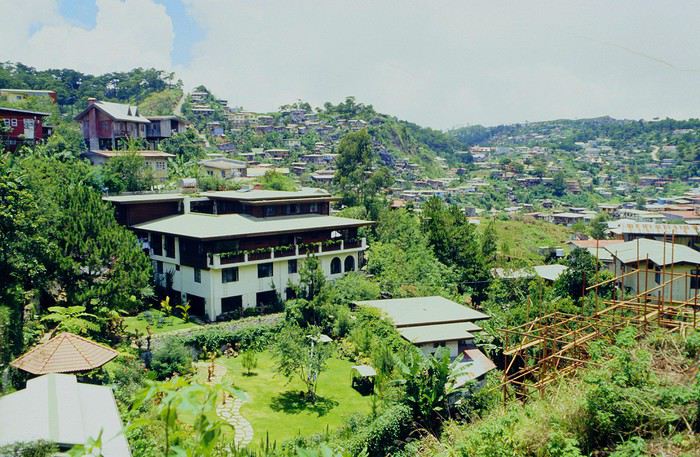
Episode 2: Baguio to Bontoc Aside from the situation briefly mentioned above, it was on the next leg to Bontoc that the adventure really began: an endless and dangerous road, a bus from another era, breathtaking landscapes, and surprising people.
We didn’t know the distance or how long it would take to get to Bontoc. When we arrived after about ten hours, we learned that Baguio to Bontoc was 140 km.
We got on a bus with wooden seats and settled in, two to a seat meant for two. As the bus filled up, passengers squeezed in three or four per seat, with chickens and baskets full of all sorts of things in the aisle. A little embarrassed, we didn’t know if we should squeeze in three on our seat. The seats were super tight (luckily, Filipinos are small), and I didn’t know where to put my legs given my height. I don’t remember if we stayed alone on our bench or if we ended up sharing with others.
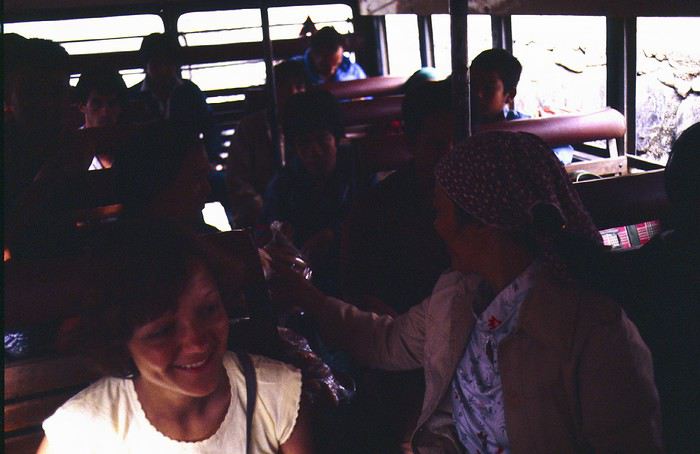
The “road” was a dirt track (or rather, a mud track) with endless turns. We held on as best we could to our slippery wooden seats—it was shaking in every direction. The woman behind us was carsick and throwing up... gross... but what were we doing there? Then we plunged into the Sierra Madre... just the name is dreamy!
Rice terraces started to appear: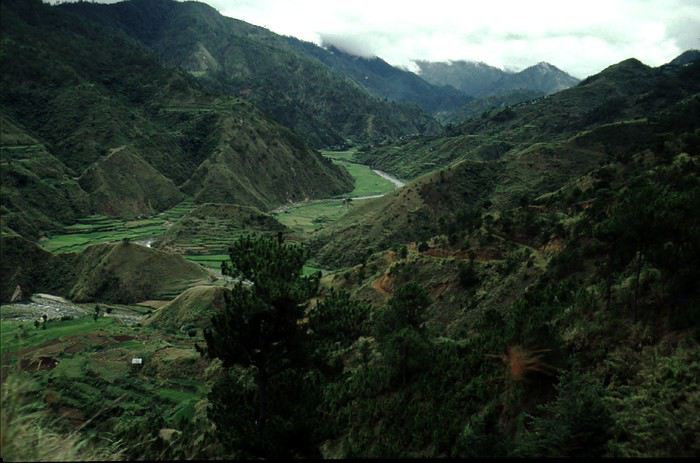
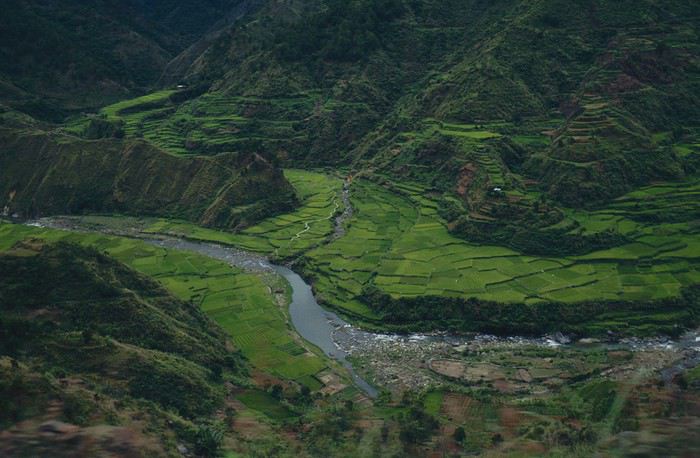
they took up more and more space along cliffs where we weren’t always reassured,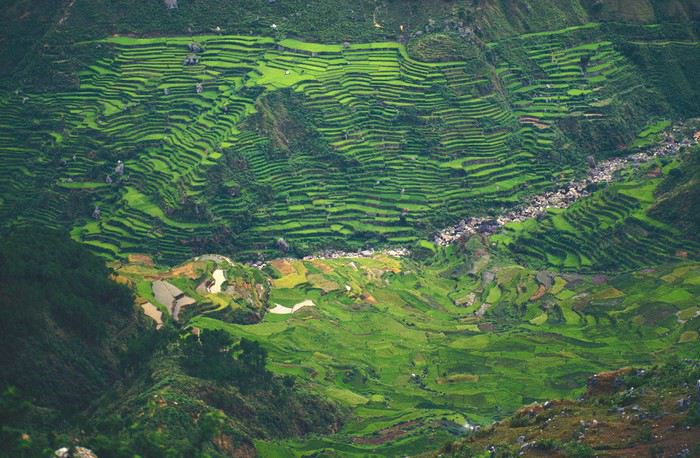
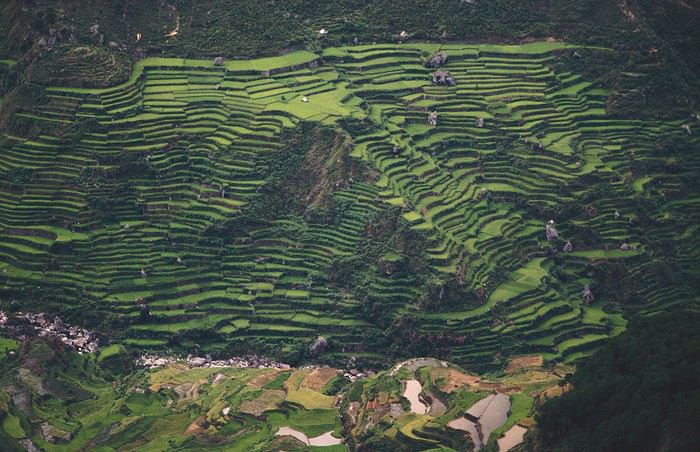
with lots of waterfalls (all that water had to go somewhere).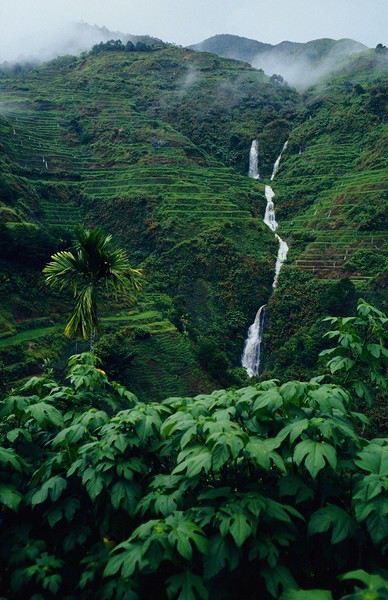
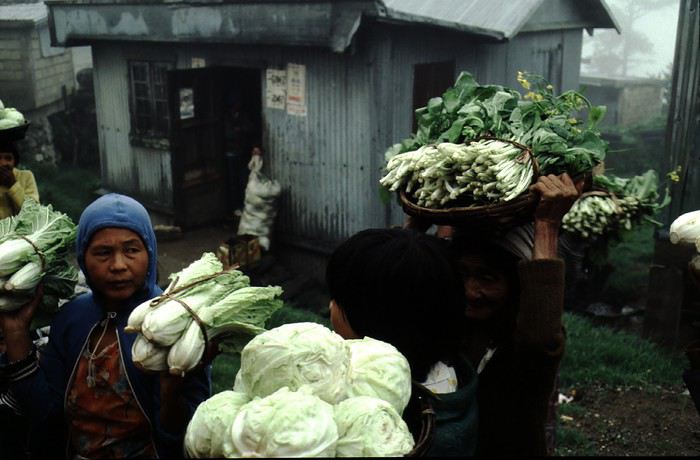
A few miserable villages stretched along the track, most often just a few houses balancing between the road and the drop. The bus stopped in every village—people got on or off and settled inside or on the roof. Street vendors offered their products to the bus passengers—a common sight in Asia, even today.
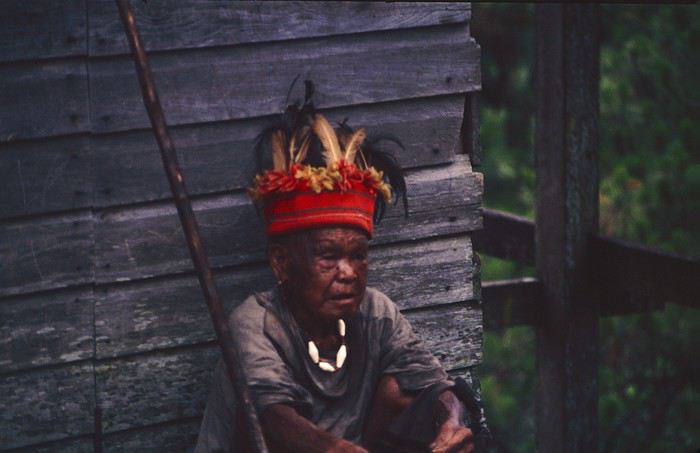
We were in another world—villagers were in loincloths, others had spears. The atmosphere was strange... but all good, we wanted exoticism, and we got it: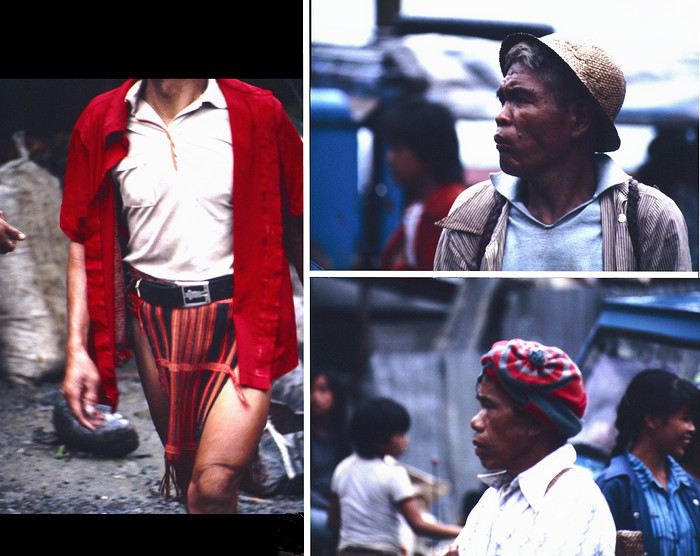
This so-called traditional outfit was everyday wear—it wasn’t for tourists since there weren’t any.
A curiosity because writing a travel journal about a trip 35 years later isn’t common, but also (mostly?) because exploring the Philippines at that time had little in common with traveling there today.
Obviously, I’ve forgotten a number of facts, most of the details, but with the help of a few notes from that time and a stack of slides (yes, there was life before digital 😊), many memories came back and added to the highlights I’d never forgotten. The scanned slides aren’t always great quality, but there are still quite a few to brighten up this chatter. Back then, we didn’t snap photos like we do now—film was too expensive—so I don’t have pictures of every place we visited... too bad, comparing some of those spots to how they look today would’ve been interesting.
Why "Adventures"? Why call it "Adventures" in the Philippines in 1984, a word so often used for a simple exotic trip? - Because the lack of information (no *Guide du Routard*, no *Lonely Planet*, no *Michelin Guide*, nothing, and obviously no internet) gave this trip what’s at the heart of adventure: the unknown. - Because the political situation made the stay sometimes dangerous. - Because transportation conditions were always epic, often perilous. - Because the question of where we’d spend the night came up almost every evening. - And for... quite a few other reasons.
That said, we weren’t exactly explorers!
Why the Philippines? First of all, why go to the Philippines in 1984—a country not exactly set up for tourism and about which we knew very little? How could we get an idea of the beauty of the Philippines and its points of interest when we had no guides or photos?
The idea came to us from Thailand a year earlier, during our first long-haul trip. After touring the north of the country, we met a Frenchman living in Phuket, where there were only a few tourists in Patong, with just a few small hotels and guesthouses. Kata and Karon had no buildings or roads, Rawai only had three palm-thatched bungalows, including ours, and the other islands were unknown to tourists. There was plenty to discover, and we wanted to return to this beautiful country... but the Frenchman made us dream about the Philippines—a country to explore, with wild landscapes.
Long evenings of discussion over multiple Sprite-Mekong cocktails (what memories of those headaches!) finally convinced us we had to go to the Philippines.
Episode 0: Before Departure The decision was made: we’d go to the Philippines in May 1984. Our friends and family were surprised when we announced we were going on vacation to the Philippines (a bit like saying today we were going paddleboarding in the Kerguelen Islands 🤪).
These days, preparing for each of our trips takes long evenings of research, planning, and noting down good addresses... etc. But for the Philippines in 1984, preparation was quick: we had very little information about the country, we were leaving almost at random, and the discovery would only be more exciting.
We still had a few bits of info gathered here and there: the rice terraces in northern Luzon, volcanoes, Negros where we were supposed to visit an acquaintance, Cebu and its marine life (we ended up going elsewhere), and absolutely avoid Mindanao, which was practically at war with the regime. That was about it, but it was already a great itinerary.
Nothing was organized in advance; we’d see day by day. We had no idea about travel times or even the existence of transportation options. The main (and sometimes only) way to connect two islands was by overloaded, rusty ferry. Only the big cities had airports.
Let’s Go: Episode 1: Paris to Manila My travel journals always start after arriving at the airport—the Europe-to-“Other Continent” trip isn’t interesting—but the flight to the Philippines was already an adventure, so I’ll make an exception.
This was the era when only a few Asian airlines were on par with Western ones: Thai, Singapore Airlines, and Philippine Airlines. They had beautiful, brand-new planes, and to attract customers (almost exclusively “businessmen”) from the usual airlines (Air France, Lufthansa, British Airways), there was opulence on board: unlimited champagne, all sorts of cocktails... Compared to today’s long-haul flights, there was still one small difference: no personal screens, just one screen at the front of the cabin with one mandatory movie. And I don’t know why, but we only got James Bond films, both ways... that must’ve been the trend at the time.
The tourism boom to Southeast Asia hadn’t started yet, and the “Asian Tigers” weren’t a thing, so there weren’t many business trips. That meant long-haul flights made stops everywhere to fill the planes. Our Philippine Airlines Boeing 747 left London, picked us up in Paris, then stopped in Frankfurt to take on a few Germans. I don’t know why we then made a stop in Dubai—a totally exotic place at the time. There was nothing to do there... things have changed a lot since. It was a small town lost in the desert. The airport was tiny, with just one or two buildings and a supermarket. During the stopover, everyone had to get off the plane and walk to the supermarket. Photo and electronic equipment were dirt cheap—I guess that was the only reason for the stop. Maybe it was their first commercial move. Emirates didn’t exist yet, as I checked online, but anyway, the idea that such a remote place could have its own airline was unthinkable.
Online, I found this photo of Dubai Airport in 1980. Anyone who’s transited through today’s massive airport with its rows of A380s will appreciate it:
Next stop: New Delhi to drop off some Europeans and pick up a few Indians, and finally, the terminus: Manila. I don’t remember how long the trip took with its five stops—an unimaginable journey today. Despite all those stops to fill the plane, there was still enough space to stretch out on the four center seats of the 747, something that never happens these days despite all the flights in every direction.
So here we are, finally at Manila Airport around midnight.
Episode 1: Manila and Baguio To start, a quick note on the political and economic situation in the Philippines in 1984, which had consequences for us as tourists, as we’d soon realize upon arrival.
After several centuries of Spanish colonization, the Philippines became American at the start of the 20th century, then independent. In 1966, Marcos took power, and little by little, his regime sank into corruption and mismanagement, becoming a dictatorship with martial law, all for the benefit of his family and friends, who enriched themselves endlessly. The peak was the assassination of opposition leader Benigno Aquino in August 1983, which triggered harshly repressed protests. So we arrived a few months later in a very poor country, with omnipresent corruption and an extremely tense political situation, as we’d soon see for ourselves. Major protests took place in the main cities during our trip—I’ll come back to that. Two years later, Marcos fled to Hawaii after being forced out of power following rigged elections. This historical context explains a lot of the situations we found ourselves in over the following weeks.
Arriving in the middle of the night isn’t very cheerful. Manila was already a huge city with many slums, where you could find a few business hotels like the Hilton or Intercontinental—way out of our budget—and plenty of run-down hotels. Luckily, two Indians we’d chatted with on the plane offered to take us to their usual hotel. They came to Manila twice a year for business. We accepted their offer, relieved not to have to look for a place to stay in the middle of the night, figuring the address must be good since they came back every time... we were wrong 🙁
We left the airport and immediately got a taste of the local vibe when we got into the taxi: the police asked for our passports. We thought: what’s more normal than police in a dictatorship?
But that wasn’t it at all. Our two Indian friends explained that the police were noting our names along with the taxi number and time. Crime in Manila was so bad that the taxi driver would be held responsible if anything happened to us... welcome to the Philippines 😎 😎
Historically, the Philippines was a very violent country, where everything was settled with guns or machetes. Previous governments had banned carrying weapons, but Marcos later allowed the free sale and carrying of guns, and disputes were settled with pistols again (or worse, as we’d discover later). Since he’d released most of the criminals from prison to form a paramilitary militia at his service (I’ll talk about our encounter with these “heroes” later), it was pretty dangerous to go into many parts of Manila, where these “tonton macoutes” ruled.
We arrived at our hotel without incident... and then things started badly. The room was infested with big cockroaches—exactly what I hate most in those kinds of countries. No way to find another hotel at that hour. After the long flight, the urge to take a shower was so strong that we squeezed into the bathroom as best we could. After that, I don’t remember—I guess we must’ve fallen asleep exhausted under the sheets in the heat... air conditioning wasn’t widespread yet.
The next day, we just wanted to leave that dump as soon as possible. So we decided to head north right away, stopping in Baguio, and we’d visit Manila a bit on the way back.
When we stepped outside, we discovered a pretty run-down neighborhood with potholed streets. But we also discovered the jeepneys. They were everywhere, flooding the streets.
They had crazy sound systems, each one blasting louder than the last. The interiors were kitschy but fun. There weren’t many private cars—almost all transportation was by jeepney, with buses reserved for intercity trips.
Before heading to the bus terminal for the north, somewhere on the outskirts of the city, we needed to exchange some money. I don’t remember how we ended up in a policeman’s jeep who offered his services: - Exchange money on the black market at a better rate than the banks. - Take us wherever we wanted, in this case, the bus terminal.
We accepted both offers (we’d still checked the official exchange rate from dollars to pesos). So we found ourselves in his jeep. After exchanging money, we left in his vehicle and stopped for gas. Without turning off the engine, he calmly smoked a cigarette while filling up. Since we were in a jeep with no doors or roof, we were ready to jump out if things went south, our travel bag in hand.
But we weren’t done with surprises yet. Once we left the small streets, we ended up in a neighborhood with wide avenues and not much traffic, which didn’t justify his incredible behavior. At every intersection, he made the sign of the cross, closed his eyes, and crossed without looking. I was more stunned than terrified! It wasn’t until we got out of the car later that I told Anne-Marie what had happened. I’d seen everything because the cop had put me in the front seat. Luckily, A-Marie hadn’t noticed anything from the back. Crossing Manila by trusting God rather than the rules of the road was ultimately effective. We were lucky—the trip was off to a good start. 🙂 🙂
We then passed through a neighborhood where slums stretched on for a while, and we left our policeman—friendly but a bit crazy—with relief.
A few hours by bus later, here we are in Baguio, cool in the mountains. My memories of Baguio are pretty fuzzy. I remember a small town. After some research while writing this journal, I found that the population was 120,000 in 1980. Given the population density in each home, that confirms my memory of a smallish town. Outside the “official” district with the president’s summer residence and government buildings, there were two or three paved streets with nice houses. The rest was very dirty and very poor, with lots of slums and dirt roads.
People we met on the street invited us to stay with them. These days, we wouldn’t just show up at strangers’ houses, which we should’ve done in Baguio—it would’ve saved us from an unimaginable and dangerous situation... which I won’t say anything about... !😊
The simple wooden house was on stilts at the edge of a hill with a view of the mountains. Since it was the start of the rainy season in a city that gets a lot of rain, we saw a lot of water. Our outings in town happened between downpours.
View from our lodging:
Episode 2: Baguio to Bontoc Aside from the situation briefly mentioned above, it was on the next leg to Bontoc that the adventure really began: an endless and dangerous road, a bus from another era, breathtaking landscapes, and surprising people.
We didn’t know the distance or how long it would take to get to Bontoc. When we arrived after about ten hours, we learned that Baguio to Bontoc was 140 km.
We got on a bus with wooden seats and settled in, two to a seat meant for two. As the bus filled up, passengers squeezed in three or four per seat, with chickens and baskets full of all sorts of things in the aisle. A little embarrassed, we didn’t know if we should squeeze in three on our seat. The seats were super tight (luckily, Filipinos are small), and I didn’t know where to put my legs given my height. I don’t remember if we stayed alone on our bench or if we ended up sharing with others.
The “road” was a dirt track (or rather, a mud track) with endless turns. We held on as best we could to our slippery wooden seats—it was shaking in every direction. The woman behind us was carsick and throwing up... gross... but what were we doing there? Then we plunged into the Sierra Madre... just the name is dreamy!
Rice terraces started to appear:
they took up more and more space along cliffs where we weren’t always reassured,
with lots of waterfalls (all that water had to go somewhere).
A few miserable villages stretched along the track, most often just a few houses balancing between the road and the drop. The bus stopped in every village—people got on or off and settled inside or on the roof. Street vendors offered their products to the bus passengers—a common sight in Asia, even today.
We were in another world—villagers were in loincloths, others had spears. The atmosphere was strange... but all good, we wanted exoticism, and we got it:
This so-called traditional outfit was everyday wear—it wasn’t for tourists since there weren’t any.
Les mythes touristiques
Les Mythes Touristiques
Dans un carnet que je suis en train d'écrire sur un voyage récent au Mexique, nous sommes arrivés à une petite discussion sur les fameux groupes de musiciens Mexicains, les mariachis. Il existe un mythe selon lequel « mariachi » serait une déformation du mot Français « mariage », et que cela viendrait des fêtes tenues par les Français lors de leurs quelques années d’occupation du Mexique, dans les années 1860 et quelques. Je cite l’un des intervenants sur mon poste Mexicain :
« Les français organisaient de grandes fêtes aux mariages et avaient l'habitude d'inviter des musiciens…. Mariachi serait une déformation du mot mariage ..? »
Ce mythe a été réfuté car il a été prouvé que le terme « mariachi » était d’usage longtemps avant la peu glorieuse « Intervention » de la France au Mexique (c’était sous Napoléon III).
Plusieurs mythes semblables circulent. Certains semblent être propagés à l’intention des touristes, pour leur donner l’illusion de « mieux comprendre le pays », pour donner une profondeur supplémentaire à leurs voyages, pour alimenter leurs conversations avec les amis quand ils sont de retour. Car tout cela gonfle l’égo et donne envie de faire d’autres voyages, ça alimente le tourisme. D’où revenus, tiens donc, pour qui ?
Mais d’autres mythes existent qui ne sont peut-être pas créés à but lucratif.
Vous connaissez sans aucun doute de tels mythes et je vous propose de les partager. Et de donner les raisons pour lesquelles ces mythes existent.
Dans un carnet que je suis en train d'écrire sur un voyage récent au Mexique, nous sommes arrivés à une petite discussion sur les fameux groupes de musiciens Mexicains, les mariachis. Il existe un mythe selon lequel « mariachi » serait une déformation du mot Français « mariage », et que cela viendrait des fêtes tenues par les Français lors de leurs quelques années d’occupation du Mexique, dans les années 1860 et quelques. Je cite l’un des intervenants sur mon poste Mexicain :
« Les français organisaient de grandes fêtes aux mariages et avaient l'habitude d'inviter des musiciens…. Mariachi serait une déformation du mot mariage ..? »
Ce mythe a été réfuté car il a été prouvé que le terme « mariachi » était d’usage longtemps avant la peu glorieuse « Intervention » de la France au Mexique (c’était sous Napoléon III).
Plusieurs mythes semblables circulent. Certains semblent être propagés à l’intention des touristes, pour leur donner l’illusion de « mieux comprendre le pays », pour donner une profondeur supplémentaire à leurs voyages, pour alimenter leurs conversations avec les amis quand ils sont de retour. Car tout cela gonfle l’égo et donne envie de faire d’autres voyages, ça alimente le tourisme. D’où revenus, tiens donc, pour qui ?
Mais d’autres mythes existent qui ne sont peut-être pas créés à but lucratif.
Vous connaissez sans aucun doute de tels mythes et je vous propose de les partager. Et de donner les raisons pour lesquelles ces mythes existent.
Vegas - Death Valley - Mammoth Lakes - Yosemite
Hello
Nous partons dans un road trip de 3 semaines en famille samedi prochain.
j'aimerais vos conseils sur une partie du road trip et notamment les incontournables à voir.
Apres avoir fait LA-et grand canyon nous irons a vegas.
Départ vegas nous partons en direction de
J1: death valley où nous dormons à stovepipe
j'ai noté a faire ce jour la : badwater/ devils golf course/ artist palette/ dantes view /zebriskie/mesquite.
J2 stovepipe - mammoth lake où nous dormons.
Nous avons comme idée de voir bodie, est ce envisageable de passer par sequoia national park ?
j3: mammoth lake - mariposa où nous dormons (départ le lendemain matin pour SF)
Nous allons prendre la tioga road voila les points identifiés pour le parcours:
lac ellery/lac tenaya/ bridalveil fall/tunnel view/taft point/glacier point/maroposa grove
Mes questions:
que faire sur la journée entre stovepipe et mammoth lake ? que faire sur la journée de traversé du yosemite ?
faut il faire un partie du yosemite sur le J2 où nous avons du temps ? quitte a retourner sur nos pas pour dormir a mammoth lake. Un passage par le sequoia park est il envisageable en J2 ?
Merci de votre aide 🙂
PS: les hotels sont deja reservés donc nous ne pouvons pas changer les étapes :)
Nous partons dans un road trip de 3 semaines en famille samedi prochain.
j'aimerais vos conseils sur une partie du road trip et notamment les incontournables à voir.
Apres avoir fait LA-et grand canyon nous irons a vegas.
Départ vegas nous partons en direction de
J1: death valley où nous dormons à stovepipe
j'ai noté a faire ce jour la : badwater/ devils golf course/ artist palette/ dantes view /zebriskie/mesquite.
J2 stovepipe - mammoth lake où nous dormons.
Nous avons comme idée de voir bodie, est ce envisageable de passer par sequoia national park ?
j3: mammoth lake - mariposa où nous dormons (départ le lendemain matin pour SF)
Nous allons prendre la tioga road voila les points identifiés pour le parcours:
lac ellery/lac tenaya/ bridalveil fall/tunnel view/taft point/glacier point/maroposa grove
Mes questions:
que faire sur la journée entre stovepipe et mammoth lake ? que faire sur la journée de traversé du yosemite ?
faut il faire un partie du yosemite sur le J2 où nous avons du temps ? quitte a retourner sur nos pas pour dormir a mammoth lake. Un passage par le sequoia park est il envisageable en J2 ?
Merci de votre aide 🙂
PS: les hotels sont deja reservés donc nous ne pouvons pas changer les étapes :)
Ordre des îles et conseils pour 12 jours sur place en Polynésie-Française
bonjour, nous partons à 2 dans 2 mois en polynesie et découvrons que c est une destination qui laisse peu de place à l improvisation sur place ;-) il faut donc tout réserver et nous sommes un peu perdus...
nous aimons randonner, l authenticité et bien sur voir les magnifiques fonds marins donc je pensais à faire maupiti
huahine et tahaa puis moorea.
mais nous n avons que 12 jours sur place... est ce un bon choix, un bon ordre ? merci !!
mais nous n avons que 12 jours sur place... est ce un bon choix, un bon ordre ? merci !!
9 jours sur la côte est des USA, entre New York, Boston & Washington DC
Bonjour,
Ceci est le compte-rendu d'un voyage qui a eu lieu entre la fin mai et le début du mois de juin 2018. A la base, je comptais fêter mon anniversaire à Dubaï puis le prix des vols directs Paris/New-York m'a convaincu d'y retourner une 3ème fois 😉 Mes dates étaient assez flexibles pour trouver des billets abordables. Par contre, j'ai choisi d'ajouter 2 étapes à ce séjour, l'une à Boston et l'autre à Washington, sur un court laps de temps. Je voulais voir si ces 2 villes valaient le coup de revenir y passer plus de temps. Personnellement, je compte revenir à Boston et DC au moins pour 15 jours supplémentaires 🙂
Transport
Concernant les transports entre chaque ville, nous avons utilisé le bus, comme en 2016 quand nous avons voyagé pendant 1 mois à travers les USA et le Canada. Et pour le billet d'avion, le prix est bas car mes dates étaient flexibles et nous avons pris un billet avec bagage cabine uniquement (bagage de 10 kg + sac à main). J'avoue, j'ai eu un mal fou à ramener tous mes achats... et pourtant j'ai squatté une partie de la valise du voyageur n°2 ;) Pour une idée des tarifs :
•Vol A/R Paris/JFK : 370€ avec Air France •Billet de bus NY/Boston : 14€ avec Greyhound •Billet de bus Boston/Washington : 22€ avec Greyhound •Billet de bus Washington/NY : 20€ avec Greyhound
Hébergement
Pour les hôtels, j'ai réservé les chambres 1 mois et demi avant le départ sur booking et selon mes critères (proximité avec les stations de métro, emplacement dans la ville, possibilité de rejoindre l'aéroport/gare routière en métro, accueil 24/24...). Je recommande d'ailleurs tous les hôtels ou nous sommes allés pendant ce voyage, à savoir :
•New York : DoubleTree de FiDi (39ème étage) •Boston : DoubleTree Bayside (3ème étage) •Washington : Red Lion (2ème étage) •New York : Courtyard de Central Park (28ème étage)
Pour un aperçu des 4 hôtels où nous avons séjourné, ainsi que tous les conseils et tarifs concernant les transports en commun à New York, Boston et Washington (métro, tramway aérien, ferries, taxi, air train, gare routière...), rendez-vous ici.
Calendrier & itinéraire
Jour 1 : Rennes/Paris/New York Jour 2 : New York Jour 3 : New York Jour 4 : New York/Boston Jour 5 : Boston Jour 6 : Boston/Washington DC Jour 7 : Washington DC Jour 8 : Washington DC Jour 9 : Washington DC/New York Jour 10 : New York Jour 11 : New York/Paris/Rennes
La première journée étant consacrée au transport, elle n'a eu que peu d'importance. Ce n'est pas mon premier séjour à New York, en 2011 j'avais passé 1 mois à arpenter tous les boroughs, en 2016 je n'y avais passé que 3 jours en famille. Cette année j'ai décidé de me concentrer uniquement sur Manhattan.
Jour 2 :
Pour débuter ce séjour, nous avons commencé par la redécouverte du quartier de FiDi (Financial District) puisque notre hôtel était en plein quartier de la bourse. En remontant sur Broadway, nous avons croisé Charging Bull, le taureau de Wall Street, créé par l’artistes Arturo Di Modica.
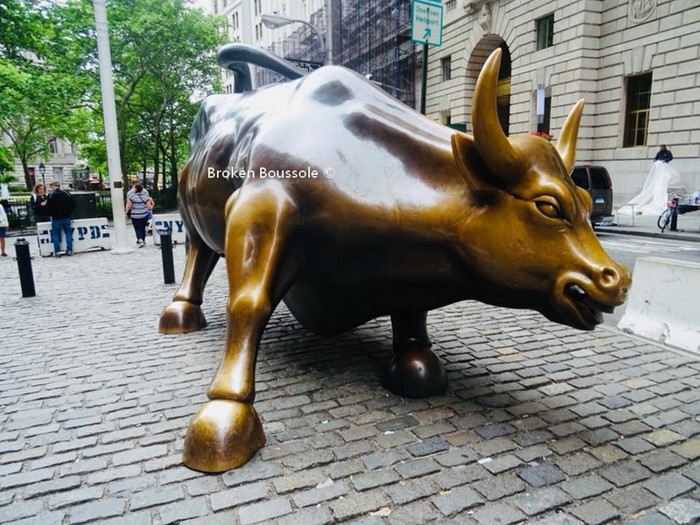 Charging Bull - Broken Boussole ©
Dans ce quartier, impossible de ne pas s’arrêter pour admirer l’église épiscopale de Trinity Church. L’édifice néogothique est entouré de buildings. On peut entrer gratuitement dans le cimetière où repose des personnalités comme Alexander Hamilton ou encore l’inventeur du bateau à vapeur, Robert Fulton.
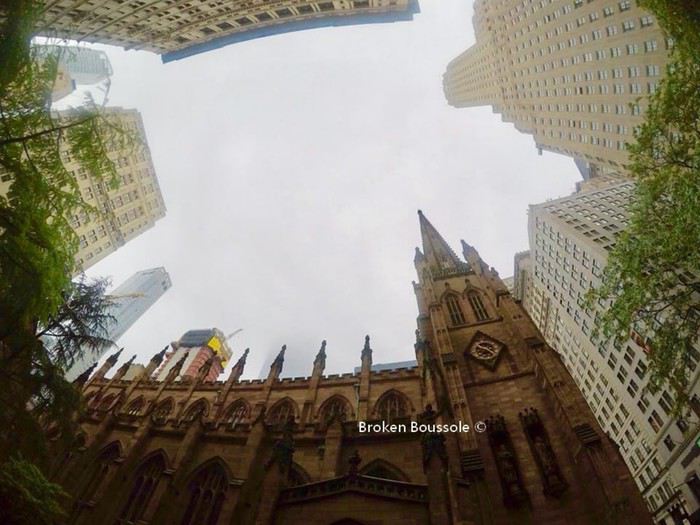 Trinity Church - Broken Boussole ©
Le clocher de Trinity Church se dresse fièrement face à Wall Street. Ici, vous pourrez admirer George Washington devant le Federal Hall (entrée gratuite) & la bourse de New York qui est actuellement en rénovation.
Nous avons par la suite, choisi de remonter à pied vers Uptown en longeant l’East River pour rejoindre Fulton St. Cette petite ruelle pavée avec ses maisons de briques vous conduira jusqu’au mémorial du Titanic.
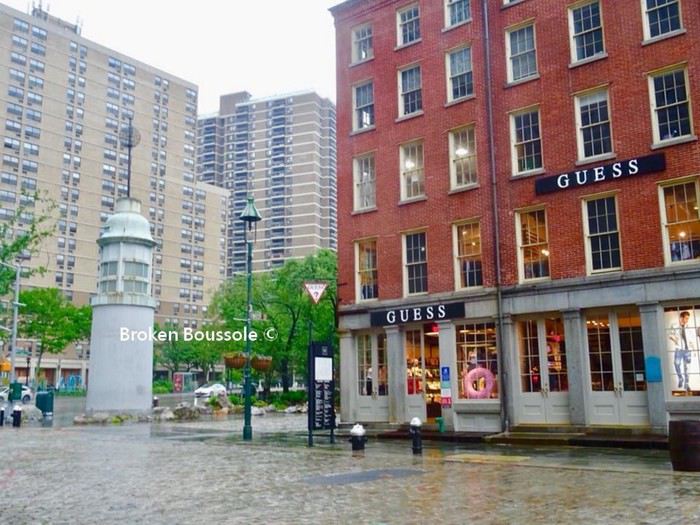 Le phare (Mémorial du Titanic) - Broken Boussole ©
En poursuivant votre chemin sur Fulton St vers l’Ouest, vous arriverez près du mémorial du 11 septembre. Bien sûr, impossible de manquer la tour One World Trade Center. Il est d’ailleurs possible d’y monter pour rejoindre la plateforme d’observation One World Observatory.
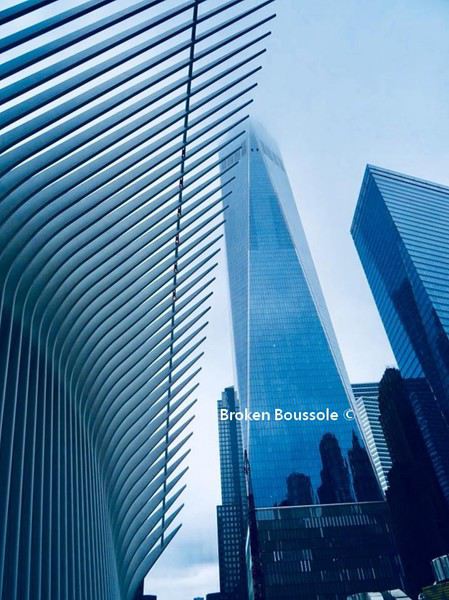 One WTC - Broken Boussole ©
La station World Trade Center est toujours aussi impressionnante. Ce bijou architectural est signé Santiago Calatrava. N’hésitez pas à entrer dans la gare pour rejoindre une des plateformes permettant d’immortaliser les lignes du bâtiment.
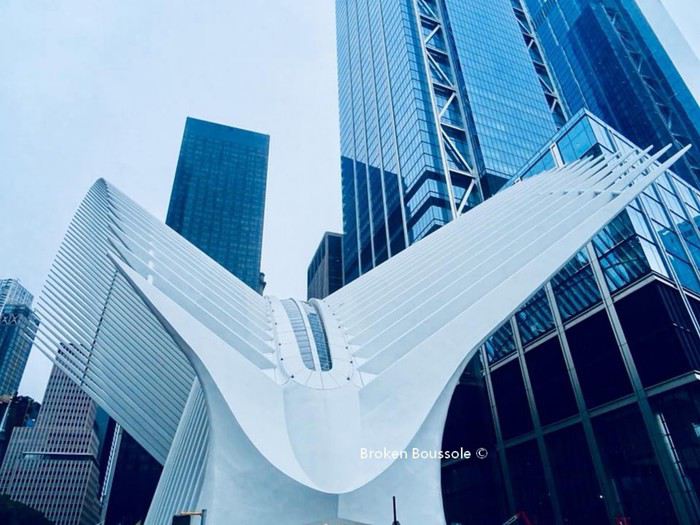 La station WTC - Broken Boussole ©
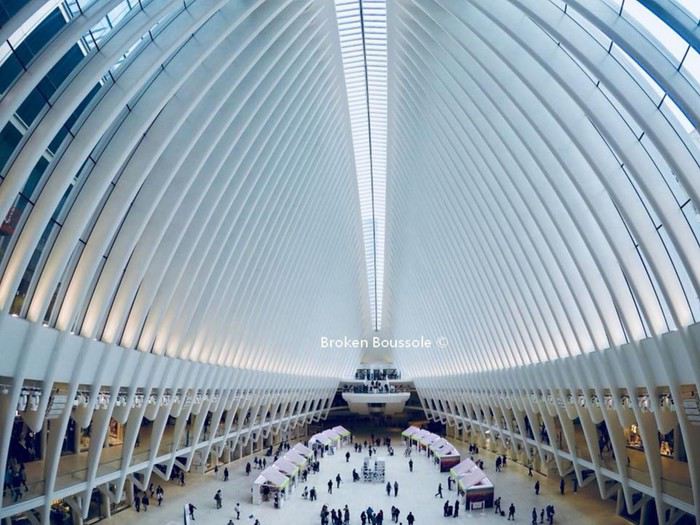 A l'intérieur de la station - Broken Boussole ©
Plus de 400 chênes blancs entourent les 2 bassins de 4000m² où sont gravés les noms des 2983 victimes de l’attentat du 11 septembre. Les roses ou les drapeaux placés dans les noms gravés, sont là pour « fêter » des anniversaires ou des jours symboliques comme le Memorial Day.
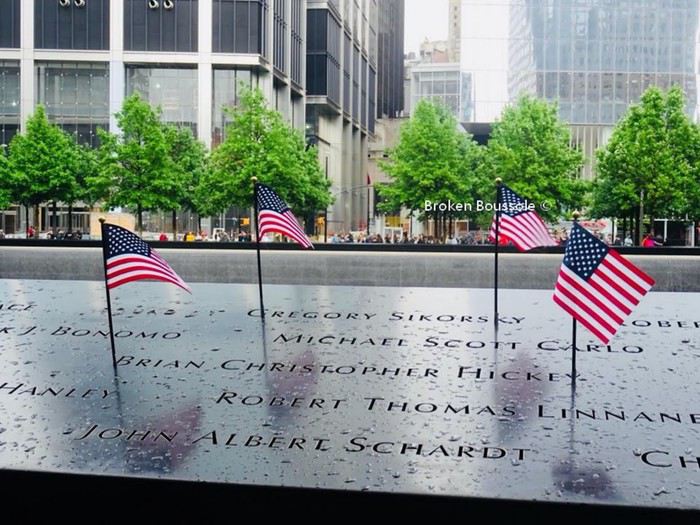 Au bord d'un des bassins - Broken Boussole ©
Par la suite, nous avons rejoint le Brooklyn Bridge, afin de le traverser à pied. Une fois à Brooklyn, profitez en pour visiter le quartier de Dumbo ou marcher le long de la promenade de Brooklyn Heights.
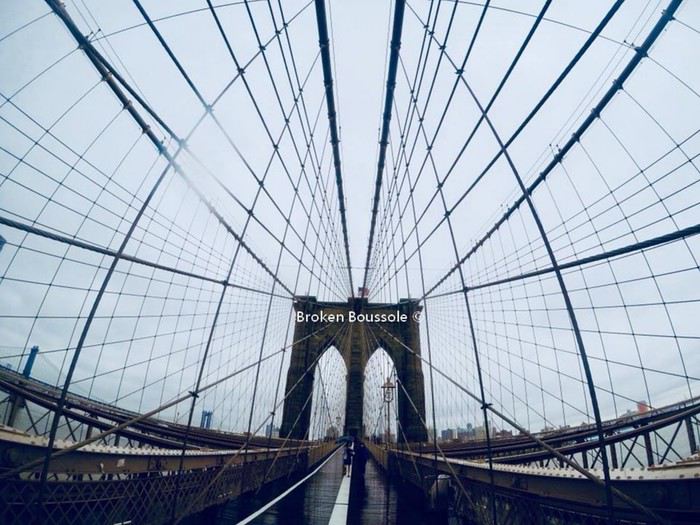 Sur le Brooklyn Bridge - Broken Boussole ©
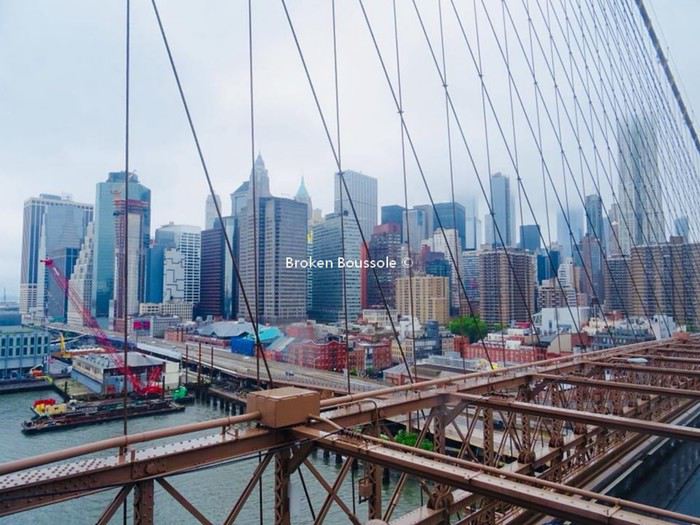 Vue sur FiDi depuis le pont - Broken Boussole ©
Nous avons repris notre route via le métro, direction Manhattan pour rejoindre le quartier de TriBeCa, Au détour de certains croisements, vous pouvez tomber sur des pépites comme la caserne de pompiers qui apparaît dans le film Ghostbusters 🙂
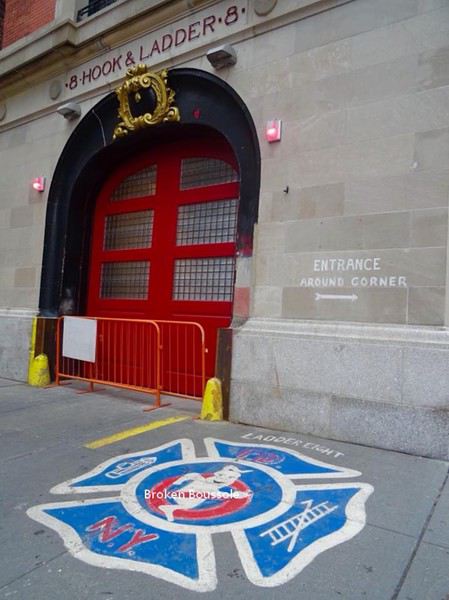 La caserne des Ghostbusters - Broken Boussole ©
En remontant au nord de TriBeCa, on arrive à Greenwich Village. Pour moi, ce quartier est tout aussi agréable que son voisin du sud. si je suis venue ici ce jour-là, c’était pour découvrir en vrai, la maison de Carrie Bradshaw et aller acheter des cupcakes chez Magnolia Bakery. Si vous ne connaissez pas la série Sex and the City, ça ne vous parlera probablement pas 😉
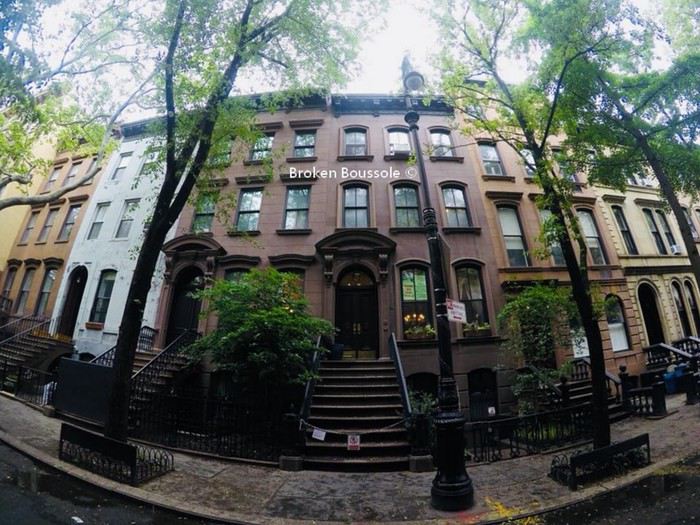 La maison de Carrie Bradshaw - Broken Boussole ©
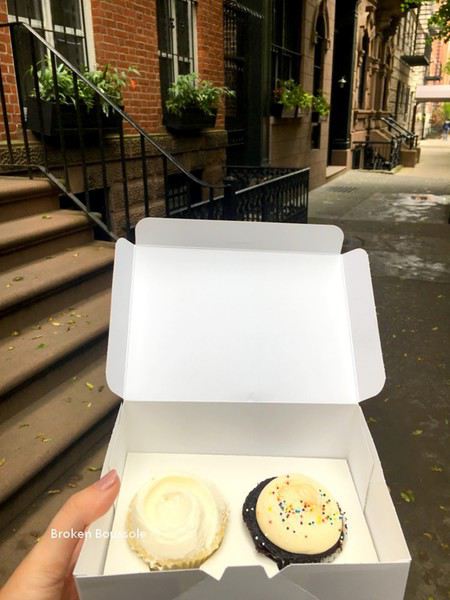 Des cupcakes de chez Magnolia Bakery - Broken Boussole ©
Pour poursuivre, rien de tel qu’une promenade en hauteur sur la High Line qui traverse le quartier de Greenwich & Chelsea, avant de partir flâner dans le Chelsea Market qui, ce jour-là, était tout aussi bondé que la High Line.
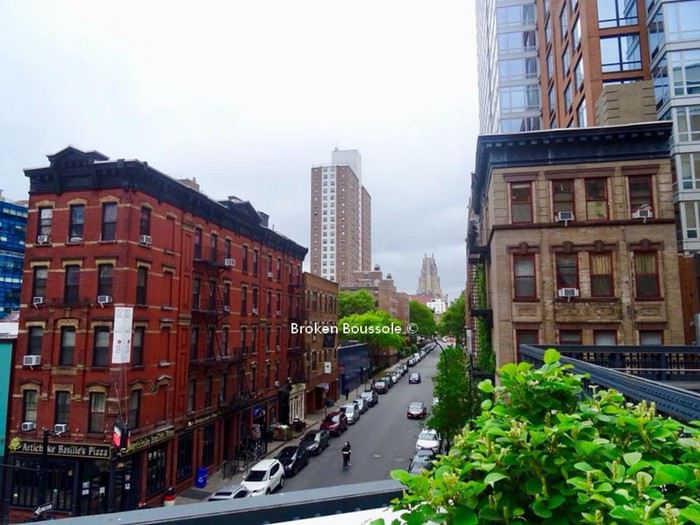 Depuis la High Line - Broken Boussole ©
Pour clôturer cette première journée, nous avons rejoint Little Italy, qui finira un jour par être totalement grignotée par Chinatown ;) Pour être sûr de vous trouver dans le côté italien du quartier, prenez Mulberry Street.
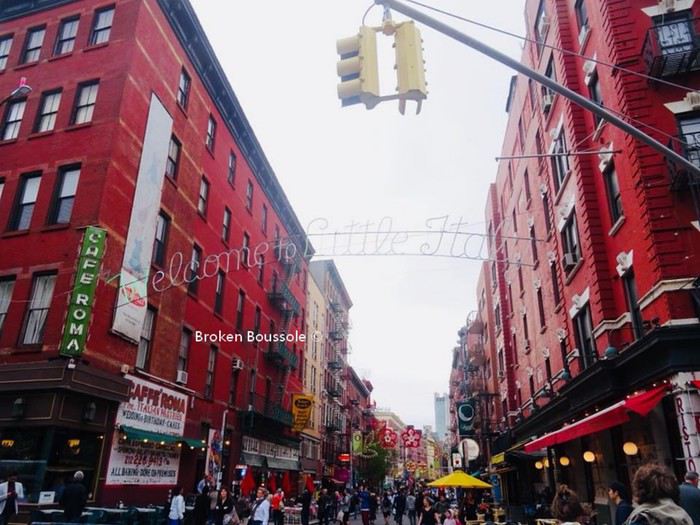 Little Italy - Broken Boussole ©
Jour 3 :
Ce jour-là, était férié pour cause de Memorial Day. Cependant presque tous les lieux touristiques étaient ouverts. Une cérémonie a eu lieu dans le parc de Riverside et plusieurs parades ont eu lieu à Brooklyn et dans le Queens. Après avoir assisté à une partie de la cérémonie de Riverside, nous avons rejoint Central Park, pour longer le réservoir, admirer les musées (Guggenheim et MET) et les statues de Balto, Alice et d'Andersen.
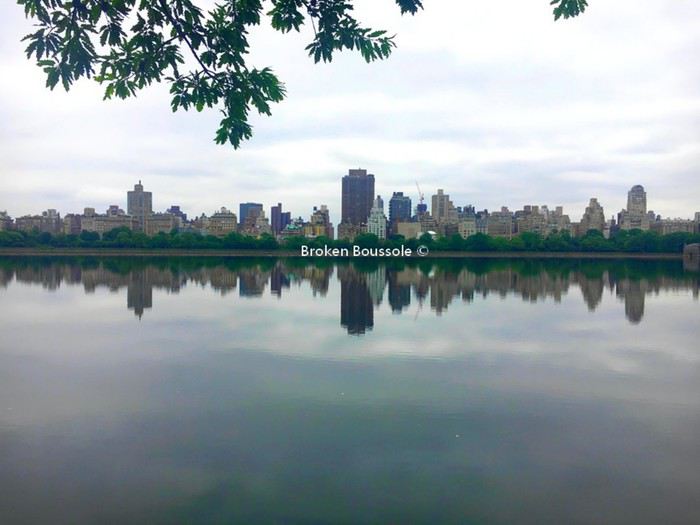 Le réservoir de Central Park - Broken Boussole ©
Nous avons profité d'un banc libre près de l'Observatory Water pour faire une pause, avant de partir vers le tram de Roosevelt.
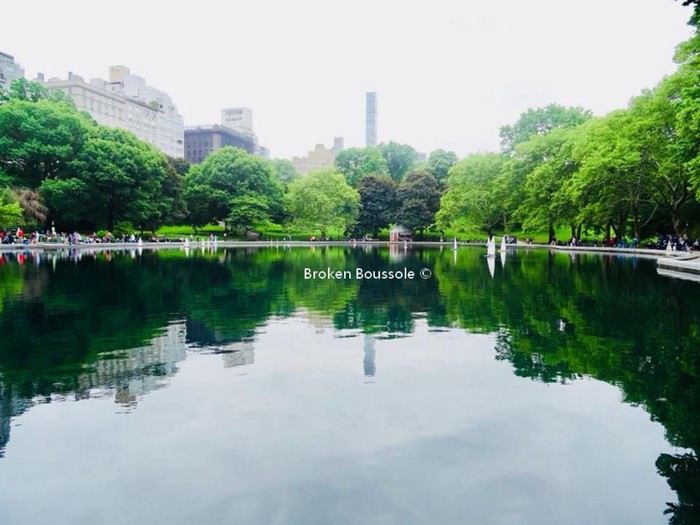 Pause près de l'Observatory Water - Broken Boussole ©
Après 35 minutes d'attente, j'ai eu la chance d'avoir un bras et une partie de la tête à coté d'une baie vitrée ;)
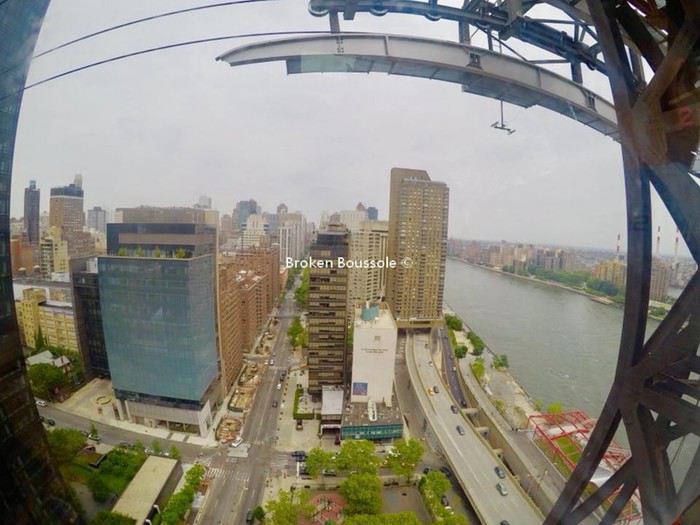 Depuis le Tram de RI - Broken Boussole ©
Nous avons donc rejoint Roosevelt Island par les airs, avant de prendre le ferry d'Astoria pour rejoindre Wall Street et passer quelques heures dans l'énorme mall "Century 21" de Cortlandt St, mon magasin préféré au monde (rien que ça) pour le shopping ;) Pour les adresses gourmandes et les adresses shopping à New York, cliquez ici!
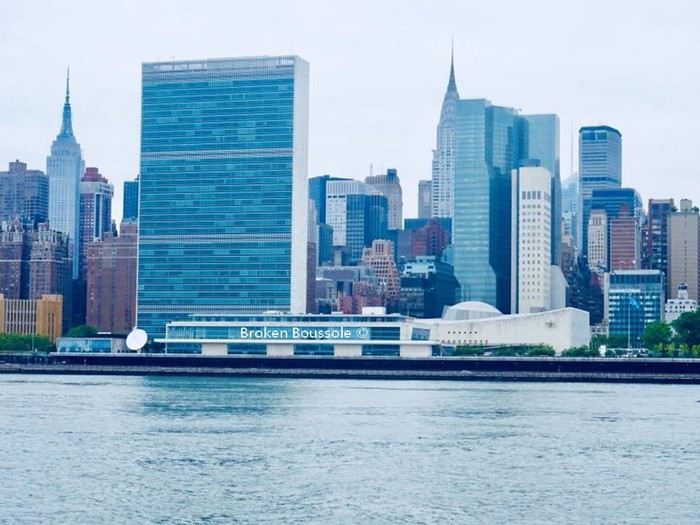 Depuis le Ferry - Broken Boussole ©
Pour clôturer cette journée, nous avons arpenté la 5ème avenue à ma demande... ;) avant d'admirer une nouvelle fois le hall du Grand Central Terminal et de rejoindre notre chambre d'hôtel au 39ème étage. La vue sur la tour One World Trade Center était imprenable !
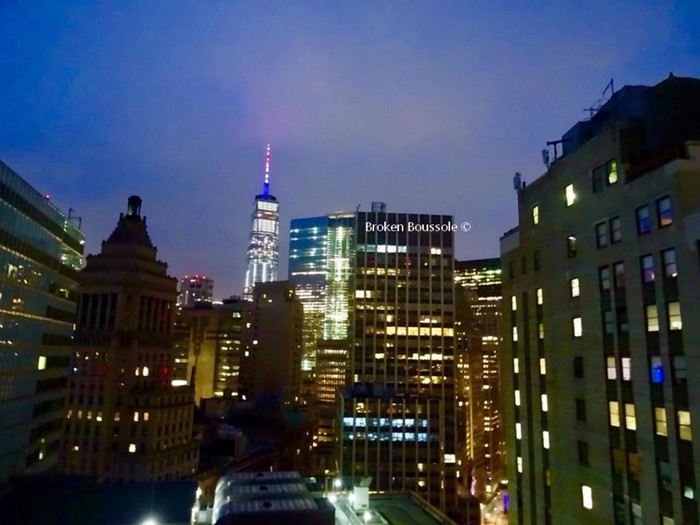 La vue depuis la chambre d'hôtel - Broken Boussole ©
La suite du séjour se passera à Boston :)
Ceci est le compte-rendu d'un voyage qui a eu lieu entre la fin mai et le début du mois de juin 2018. A la base, je comptais fêter mon anniversaire à Dubaï puis le prix des vols directs Paris/New-York m'a convaincu d'y retourner une 3ème fois 😉 Mes dates étaient assez flexibles pour trouver des billets abordables. Par contre, j'ai choisi d'ajouter 2 étapes à ce séjour, l'une à Boston et l'autre à Washington, sur un court laps de temps. Je voulais voir si ces 2 villes valaient le coup de revenir y passer plus de temps. Personnellement, je compte revenir à Boston et DC au moins pour 15 jours supplémentaires 🙂
Transport
Concernant les transports entre chaque ville, nous avons utilisé le bus, comme en 2016 quand nous avons voyagé pendant 1 mois à travers les USA et le Canada. Et pour le billet d'avion, le prix est bas car mes dates étaient flexibles et nous avons pris un billet avec bagage cabine uniquement (bagage de 10 kg + sac à main). J'avoue, j'ai eu un mal fou à ramener tous mes achats... et pourtant j'ai squatté une partie de la valise du voyageur n°2 ;) Pour une idée des tarifs :
•Vol A/R Paris/JFK : 370€ avec Air France •Billet de bus NY/Boston : 14€ avec Greyhound •Billet de bus Boston/Washington : 22€ avec Greyhound •Billet de bus Washington/NY : 20€ avec Greyhound
Hébergement
Pour les hôtels, j'ai réservé les chambres 1 mois et demi avant le départ sur booking et selon mes critères (proximité avec les stations de métro, emplacement dans la ville, possibilité de rejoindre l'aéroport/gare routière en métro, accueil 24/24...). Je recommande d'ailleurs tous les hôtels ou nous sommes allés pendant ce voyage, à savoir :
•New York : DoubleTree de FiDi (39ème étage) •Boston : DoubleTree Bayside (3ème étage) •Washington : Red Lion (2ème étage) •New York : Courtyard de Central Park (28ème étage)
Pour un aperçu des 4 hôtels où nous avons séjourné, ainsi que tous les conseils et tarifs concernant les transports en commun à New York, Boston et Washington (métro, tramway aérien, ferries, taxi, air train, gare routière...), rendez-vous ici.
Calendrier & itinéraire
Jour 1 : Rennes/Paris/New York Jour 2 : New York Jour 3 : New York Jour 4 : New York/Boston Jour 5 : Boston Jour 6 : Boston/Washington DC Jour 7 : Washington DC Jour 8 : Washington DC Jour 9 : Washington DC/New York Jour 10 : New York Jour 11 : New York/Paris/Rennes
La première journée étant consacrée au transport, elle n'a eu que peu d'importance. Ce n'est pas mon premier séjour à New York, en 2011 j'avais passé 1 mois à arpenter tous les boroughs, en 2016 je n'y avais passé que 3 jours en famille. Cette année j'ai décidé de me concentrer uniquement sur Manhattan.
Jour 2 :
Pour débuter ce séjour, nous avons commencé par la redécouverte du quartier de FiDi (Financial District) puisque notre hôtel était en plein quartier de la bourse. En remontant sur Broadway, nous avons croisé Charging Bull, le taureau de Wall Street, créé par l’artistes Arturo Di Modica.
Charging Bull - Broken Boussole ©Dans ce quartier, impossible de ne pas s’arrêter pour admirer l’église épiscopale de Trinity Church. L’édifice néogothique est entouré de buildings. On peut entrer gratuitement dans le cimetière où repose des personnalités comme Alexander Hamilton ou encore l’inventeur du bateau à vapeur, Robert Fulton.
Trinity Church - Broken Boussole ©Le clocher de Trinity Church se dresse fièrement face à Wall Street. Ici, vous pourrez admirer George Washington devant le Federal Hall (entrée gratuite) & la bourse de New York qui est actuellement en rénovation.
Nous avons par la suite, choisi de remonter à pied vers Uptown en longeant l’East River pour rejoindre Fulton St. Cette petite ruelle pavée avec ses maisons de briques vous conduira jusqu’au mémorial du Titanic.
Le phare (Mémorial du Titanic) - Broken Boussole ©En poursuivant votre chemin sur Fulton St vers l’Ouest, vous arriverez près du mémorial du 11 septembre. Bien sûr, impossible de manquer la tour One World Trade Center. Il est d’ailleurs possible d’y monter pour rejoindre la plateforme d’observation One World Observatory.
One WTC - Broken Boussole ©La station World Trade Center est toujours aussi impressionnante. Ce bijou architectural est signé Santiago Calatrava. N’hésitez pas à entrer dans la gare pour rejoindre une des plateformes permettant d’immortaliser les lignes du bâtiment.
La station WTC - Broken Boussole ©
A l'intérieur de la station - Broken Boussole ©Plus de 400 chênes blancs entourent les 2 bassins de 4000m² où sont gravés les noms des 2983 victimes de l’attentat du 11 septembre. Les roses ou les drapeaux placés dans les noms gravés, sont là pour « fêter » des anniversaires ou des jours symboliques comme le Memorial Day.
Au bord d'un des bassins - Broken Boussole ©Par la suite, nous avons rejoint le Brooklyn Bridge, afin de le traverser à pied. Une fois à Brooklyn, profitez en pour visiter le quartier de Dumbo ou marcher le long de la promenade de Brooklyn Heights.
Sur le Brooklyn Bridge - Broken Boussole ©
Vue sur FiDi depuis le pont - Broken Boussole ©Nous avons repris notre route via le métro, direction Manhattan pour rejoindre le quartier de TriBeCa, Au détour de certains croisements, vous pouvez tomber sur des pépites comme la caserne de pompiers qui apparaît dans le film Ghostbusters 🙂
La caserne des Ghostbusters - Broken Boussole ©En remontant au nord de TriBeCa, on arrive à Greenwich Village. Pour moi, ce quartier est tout aussi agréable que son voisin du sud. si je suis venue ici ce jour-là, c’était pour découvrir en vrai, la maison de Carrie Bradshaw et aller acheter des cupcakes chez Magnolia Bakery. Si vous ne connaissez pas la série Sex and the City, ça ne vous parlera probablement pas 😉
La maison de Carrie Bradshaw - Broken Boussole ©
Des cupcakes de chez Magnolia Bakery - Broken Boussole ©Pour poursuivre, rien de tel qu’une promenade en hauteur sur la High Line qui traverse le quartier de Greenwich & Chelsea, avant de partir flâner dans le Chelsea Market qui, ce jour-là, était tout aussi bondé que la High Line.
Depuis la High Line - Broken Boussole ©Pour clôturer cette première journée, nous avons rejoint Little Italy, qui finira un jour par être totalement grignotée par Chinatown ;) Pour être sûr de vous trouver dans le côté italien du quartier, prenez Mulberry Street.
Little Italy - Broken Boussole ©Jour 3 :
Ce jour-là, était férié pour cause de Memorial Day. Cependant presque tous les lieux touristiques étaient ouverts. Une cérémonie a eu lieu dans le parc de Riverside et plusieurs parades ont eu lieu à Brooklyn et dans le Queens. Après avoir assisté à une partie de la cérémonie de Riverside, nous avons rejoint Central Park, pour longer le réservoir, admirer les musées (Guggenheim et MET) et les statues de Balto, Alice et d'Andersen.
Le réservoir de Central Park - Broken Boussole ©Nous avons profité d'un banc libre près de l'Observatory Water pour faire une pause, avant de partir vers le tram de Roosevelt.
Pause près de l'Observatory Water - Broken Boussole ©Après 35 minutes d'attente, j'ai eu la chance d'avoir un bras et une partie de la tête à coté d'une baie vitrée ;)
Depuis le Tram de RI - Broken Boussole ©Nous avons donc rejoint Roosevelt Island par les airs, avant de prendre le ferry d'Astoria pour rejoindre Wall Street et passer quelques heures dans l'énorme mall "Century 21" de Cortlandt St, mon magasin préféré au monde (rien que ça) pour le shopping ;) Pour les adresses gourmandes et les adresses shopping à New York, cliquez ici!
Depuis le Ferry - Broken Boussole ©Pour clôturer cette journée, nous avons arpenté la 5ème avenue à ma demande... ;) avant d'admirer une nouvelle fois le hall du Grand Central Terminal et de rejoindre notre chambre d'hôtel au 39ème étage. La vue sur la tour One World Trade Center était imprenable !
La vue depuis la chambre d'hôtel - Broken Boussole ©La suite du séjour se passera à Boston :)
Calendrier des départs en croisière des membres VF 2020
Bonsoir à tous,
Après les tours du monde MSC ou COSTA, les catalogues commencent à sortir pour le début 2020, il est donc temps d'ouvrir ce calendrier!
Mise à jour N°0 –CALENDRIER DES DEPARTS EN CROISIERE VF 2020
Vous pouvez signalez votre croisière sur ce post ou en MP bien sûr en respectant au possible le format du calendrier lors de votre inscription (date–pseudo (nationalité) / compagnie + nom du bateau / nombre de jours / secteur de la croisière (départ de la croisière).
Merci par avance, cela facilite grandement le travail!
Nombre total croisières VF 2020 : 0
JANVIER
FÉVRIER
MARS
AVRIL
MAI
JUIN
JUILLET
AOÛT
SEPTEMBRE
OCTOBRE
NOVEMBRE
DECEMBRE
Après les tours du monde MSC ou COSTA, les catalogues commencent à sortir pour le début 2020, il est donc temps d'ouvrir ce calendrier!
Mise à jour N°0 –CALENDRIER DES DEPARTS EN CROISIERE VF 2020
Vous pouvez signalez votre croisière sur ce post ou en MP bien sûr en respectant au possible le format du calendrier lors de votre inscription (date–pseudo (nationalité) / compagnie + nom du bateau / nombre de jours / secteur de la croisière (départ de la croisière).
Merci par avance, cela facilite grandement le travail!
Nombre total croisières VF 2020 : 0
JANVIER
FÉVRIER
MARS
AVRIL
MAI
JUIN
JUILLET
AOÛT
SEPTEMBRE
OCTOBRE
NOVEMBRE
DECEMBRE