Results for "Bretagne+événement"
About 15,220 results.
More options
Many results are in French, the community’s main language. English translations are added over time.
Search results
Les must à voir en Europe
Salut à tous amis bourlingueurs,
Après avoir foulé la terre de bien des pays d'Europe, je constate que... ... et bien qu'en fait je ne connais rien de l'Europe et de ses curiosités naturelles et culturelles.
Donc avant de découvrir l'autre côté du globe (mais oui vous savez celui où ils ont la tête en bas 😄), je désirerai découvrir les beautés naturelles de part chez nous...
J'écris ce post dans l'espoir que chacun amène sa petite touche personnelle afin que l'on consititue une liste (non exhaustive évidemment).
Endroits célèbres, connus ou coins perdus; tous vos meilleurs plans seront les bienvenus 😉
Bon je commence donc par... ...par la région dans laquelle j'habite tiens: Proposée cette année même au patrimoine de l'Unesco, le Lavaux en Suisse (Canton de Vaud sur les rives du Lac Léman) est un splendide vignoble en terrasses surplombant le lac. Il offre une vue prenante sur les préalpes et l'embouchure du Rhône. Le meilleur moment pour y venir est évidemment mi-septembre - octobre au moment des vendanges. Des dizaines de vignerons font un incessant va et vient au volant de leurs camionnettes transportant les fameuses caisses jaunes contenant les précieuses grappes. Inutile de préciser que le va et vient des cueilleurs portant des kilos sur le dos et remontant la pente et tout aussi incessant... La plupart d'entre eux sont près à vous accueillir dans leur cave pour suivre les différentes étapes et vous inviter à une dégustation. Vraiment le Lavaux est une très belle région!!
A vous maintenant, faites moi découvrir vos coups de coeur.
Après avoir foulé la terre de bien des pays d'Europe, je constate que... ... et bien qu'en fait je ne connais rien de l'Europe et de ses curiosités naturelles et culturelles.
Donc avant de découvrir l'autre côté du globe (mais oui vous savez celui où ils ont la tête en bas 😄), je désirerai découvrir les beautés naturelles de part chez nous...
J'écris ce post dans l'espoir que chacun amène sa petite touche personnelle afin que l'on consititue une liste (non exhaustive évidemment).
Endroits célèbres, connus ou coins perdus; tous vos meilleurs plans seront les bienvenus 😉
Bon je commence donc par... ...par la région dans laquelle j'habite tiens: Proposée cette année même au patrimoine de l'Unesco, le Lavaux en Suisse (Canton de Vaud sur les rives du Lac Léman) est un splendide vignoble en terrasses surplombant le lac. Il offre une vue prenante sur les préalpes et l'embouchure du Rhône. Le meilleur moment pour y venir est évidemment mi-septembre - octobre au moment des vendanges. Des dizaines de vignerons font un incessant va et vient au volant de leurs camionnettes transportant les fameuses caisses jaunes contenant les précieuses grappes. Inutile de préciser que le va et vient des cueilleurs portant des kilos sur le dos et remontant la pente et tout aussi incessant... La plupart d'entre eux sont près à vous accueillir dans leur cave pour suivre les différentes étapes et vous inviter à une dégustation. Vraiment le Lavaux est une très belle région!!
A vous maintenant, faites moi découvrir vos coups de coeur.
Liste des compagnies aériennes à risque
Bonjour je vous transmets un article publié par le journal VSD du 06 au 12 juillet 2005 relatif à la "blacklist" des compagnies aériennes, en aucun cas pour polémiquer, uniquement pour porter à votre connaissance cette liste 😉
ooo0ooo
"Cette liste noire a été réalisée selon plusieurs critères non exclusifs. Nous avons fait figurer les compagnies interdites pr le Direction générale de l'aviation civile (DGAC) et celles interdites par les aviations civiles britannique et suisse connues pour être intransigeantes. Puis nous avons fait appel à un expert international en investigations aériennes, Serge Roche, qui a mis à notre disposition sa base de données compilant tous les accidents ou incidents d'avions, mortels ou non (crash, sortie de piste, etc...) depuis 1952. VSD s'est concentré sur l'analyse des années 1995-2005.
1 AEROFLOT. RUSSIE 2 AIR ALGERIE. ALGERIE 3 AIR KORYO. COREE DU NORD (interdite en France) 4 AEROMEXICO. MEXIQUE 5 AIR MEMPHIS. EGYPTE 6 AIR MAURITANIA. MAURITANIE (interdite en Grande-Bretagne) 7 AIR UNIVERSAL. SIERRA LEONE (interdite en Grande-Bretagne) 8 ALBANIAN AIRLINES. ALBANIE (interdite en Grande-Bretagne) 9 CAMEROON AIRLINES. CAMEROUN (interdite en Grande-Bretagne) 10 CENTRAL AIR EXPRESS. REPUBLIQUE DEMOCRATIQUE DU CONGO (interdite en Grande-Bretagne) 11 CHINA AIRLINES. TAIWAN 12 CHINA SOUTHERN AIRLINES. CHINE 13 CHINA NORTHERN AIRLINES. CHINE 14 CONTINENTAL WINGS COMORES AIRLINES. COMORES (interdite en France) 15 CUBANA DE AVIACION. CUBA 16 CROSSAIR. SUISSE 17 DNIPROVIA. UKRAINE (interdite en Suisse) 18 EGYPTAIR. EGYPTE 19 GHANA AIRWAYS. GHANA 20 GIRJET. ESPAGNE (interdite en Suisse) 21 GULF AIR. BAHREIN 22 HEMUS AIR. BULGARIE (interdite en Suisse) 23 IRAN AIR. IRAN 24 LION AIR. INDONESIE 25 PAKISTAN AIRLINES. PAKISTAN 26 PREMIUM AIR SHUTTLE. NIGERIA (interdite en Suisse) 27 SAUDI ARABIAN AIRLINES. ARABIE SAOUDITE 28 SUDAN AIRWAYS. SOUDAN 29 SIBIR AIRLINES. RUSSIE 30 SRILANKAN. SRI LANKA 31 TAJKISTAN AIRLINES. TADJIKISTAN (interdite en Grande-Bretagne) 32 TAM. BRESIL 33 TAME. EQUATEUR 34 TURKISH AIRLINES. TURQUIE 35 VARIG. BRESIL 36 VIETNAM AIRLINES. VIETNAM
Sans grosse surprise, cette liste pointe les trois grandes zones du monde où il est plus dangereux de voler : l'Afrique, l'Asie et les républiques de l'ex-URSS. Si beaucoup de compagnies mentionnées sont inconnues du grand public ou volent dans des zones peu fréquentées par le touriste lambda (Sierra Leone, Tadjikistan), quelques grandes compagniesd'aviation nationale y figurent également. Certaines comme Varig, la compagnie brésiliennes, ou Turkish airlines, sont concernées sur leurs vols intérieurs, parfois moins sécurisés. Ainsi que le reconnait Marc Foucault, directeur de cabinet de l'ex-ministre des transports Gilles de Robien, qui fut l'initiateur du futur "label bleu" pour les compagnies aériennes, "c'est sur les petites distances, les bouts de ligne ou correspondances pour une petite ville d'un grand pays que se rencontrent souvent les gros problème". Parce que les avions sont vieux (Boeing 707, 727, Ilyushin II, Douglas DC-3, Fokker F-70...) et tournent beaucoup, que le personnel formé pour leur maintenance est de plus en plus rare et que le coût des formations est élevé, etc. "Certaines petites compagnies étrangères utilisent ainsi des Caravelle abandonnées par Air Inter en 1982 ! explose Serge Roche. Et les DC-3 datent des années cinquante. Mais même les grande compagnies ne sont pas exemptes de pépins, comme le montre cette blacklist, et le nombre de morts n'est pas forcément le critère en matière de sécurité". En ligne de mire par exemple : Aeroflot, qui, si elle n'a eu qu'un seul crash fatal en dix ans, connaît pratiquement un accident par an. " ooo0ooo
Voilà bon voyage à tous et toutes...
"Cette liste noire a été réalisée selon plusieurs critères non exclusifs. Nous avons fait figurer les compagnies interdites pr le Direction générale de l'aviation civile (DGAC) et celles interdites par les aviations civiles britannique et suisse connues pour être intransigeantes. Puis nous avons fait appel à un expert international en investigations aériennes, Serge Roche, qui a mis à notre disposition sa base de données compilant tous les accidents ou incidents d'avions, mortels ou non (crash, sortie de piste, etc...) depuis 1952. VSD s'est concentré sur l'analyse des années 1995-2005.
1 AEROFLOT. RUSSIE 2 AIR ALGERIE. ALGERIE 3 AIR KORYO. COREE DU NORD (interdite en France) 4 AEROMEXICO. MEXIQUE 5 AIR MEMPHIS. EGYPTE 6 AIR MAURITANIA. MAURITANIE (interdite en Grande-Bretagne) 7 AIR UNIVERSAL. SIERRA LEONE (interdite en Grande-Bretagne) 8 ALBANIAN AIRLINES. ALBANIE (interdite en Grande-Bretagne) 9 CAMEROON AIRLINES. CAMEROUN (interdite en Grande-Bretagne) 10 CENTRAL AIR EXPRESS. REPUBLIQUE DEMOCRATIQUE DU CONGO (interdite en Grande-Bretagne) 11 CHINA AIRLINES. TAIWAN 12 CHINA SOUTHERN AIRLINES. CHINE 13 CHINA NORTHERN AIRLINES. CHINE 14 CONTINENTAL WINGS COMORES AIRLINES. COMORES (interdite en France) 15 CUBANA DE AVIACION. CUBA 16 CROSSAIR. SUISSE 17 DNIPROVIA. UKRAINE (interdite en Suisse) 18 EGYPTAIR. EGYPTE 19 GHANA AIRWAYS. GHANA 20 GIRJET. ESPAGNE (interdite en Suisse) 21 GULF AIR. BAHREIN 22 HEMUS AIR. BULGARIE (interdite en Suisse) 23 IRAN AIR. IRAN 24 LION AIR. INDONESIE 25 PAKISTAN AIRLINES. PAKISTAN 26 PREMIUM AIR SHUTTLE. NIGERIA (interdite en Suisse) 27 SAUDI ARABIAN AIRLINES. ARABIE SAOUDITE 28 SUDAN AIRWAYS. SOUDAN 29 SIBIR AIRLINES. RUSSIE 30 SRILANKAN. SRI LANKA 31 TAJKISTAN AIRLINES. TADJIKISTAN (interdite en Grande-Bretagne) 32 TAM. BRESIL 33 TAME. EQUATEUR 34 TURKISH AIRLINES. TURQUIE 35 VARIG. BRESIL 36 VIETNAM AIRLINES. VIETNAM
Sans grosse surprise, cette liste pointe les trois grandes zones du monde où il est plus dangereux de voler : l'Afrique, l'Asie et les républiques de l'ex-URSS. Si beaucoup de compagnies mentionnées sont inconnues du grand public ou volent dans des zones peu fréquentées par le touriste lambda (Sierra Leone, Tadjikistan), quelques grandes compagniesd'aviation nationale y figurent également. Certaines comme Varig, la compagnie brésiliennes, ou Turkish airlines, sont concernées sur leurs vols intérieurs, parfois moins sécurisés. Ainsi que le reconnait Marc Foucault, directeur de cabinet de l'ex-ministre des transports Gilles de Robien, qui fut l'initiateur du futur "label bleu" pour les compagnies aériennes, "c'est sur les petites distances, les bouts de ligne ou correspondances pour une petite ville d'un grand pays que se rencontrent souvent les gros problème". Parce que les avions sont vieux (Boeing 707, 727, Ilyushin II, Douglas DC-3, Fokker F-70...) et tournent beaucoup, que le personnel formé pour leur maintenance est de plus en plus rare et que le coût des formations est élevé, etc. "Certaines petites compagnies étrangères utilisent ainsi des Caravelle abandonnées par Air Inter en 1982 ! explose Serge Roche. Et les DC-3 datent des années cinquante. Mais même les grande compagnies ne sont pas exemptes de pépins, comme le montre cette blacklist, et le nombre de morts n'est pas forcément le critère en matière de sécurité". En ligne de mire par exemple : Aeroflot, qui, si elle n'a eu qu'un seul crash fatal en dix ans, connaît pratiquement un accident par an. " ooo0ooo
Voilà bon voyage à tous et toutes...
recherche bénévole pour association (inde-tibet)
Bonjour,
Je suis présidente d'une petite association d'étudiants lyonnais, Enfants en Exil, qui vient juste d'être créée et qui a pour but l'aide des enfants tibétains en exil. Pour récolter des fonds, nous avons pour projet l'organisation de concerts, d'une soirée à thématique tibétaine... Nous rendons aussi cet été en Inde du nord pour apporter les fonds récoltés à l'association avec laquelle on est en contact. Pour concrétiser tous ces projets, nous faisons donc appel à des bénévoles lyonnais qui puissent nous aider pour l'organisation des évènements et la réalisation d'un site...
A bientôt!
Je suis présidente d'une petite association d'étudiants lyonnais, Enfants en Exil, qui vient juste d'être créée et qui a pour but l'aide des enfants tibétains en exil. Pour récolter des fonds, nous avons pour projet l'organisation de concerts, d'une soirée à thématique tibétaine... Nous rendons aussi cet été en Inde du nord pour apporter les fonds récoltés à l'association avec laquelle on est en contact. Pour concrétiser tous ces projets, nous faisons donc appel à des bénévoles lyonnais qui puissent nous aider pour l'organisation des évènements et la réalisation d'un site...
A bientôt!
Herge et la bolivie en crise
Herge realise de magnifiques exposés sur la bolivie en crise avec fotos choc a l´apuis! Mais Hargé est en Argentine les lousticks, hergé prends donc ce qu´on lui donne dans son bec sur le net ou ailleurs. Mefis toi l´ami des infos qui circulent sur le net !!! Je traverse en ce moment (depuis plus d´un mois) la Bolivie, certe il y a bien des problemes (et j´y suis attentif). Mais je peux AFFIRMER BIEN HAUT QUE LA BOLIVIE ET NOTAMMENT SES VILLES SONT BIEN BIEN BIEN LOIN DE NE PLUS ETRE APPROVISONNEES ET QUE LES TRANSPORTS, MALGRES QUELQUES ENCOMBREMENTS, SONT TOUT A FAIT UTILISABLE!!!
S´il te plait herge ne dramatise pas les choses, il y a des problemes en ce moment en bolivie (certains diront que c´est reguliers) et je peux t´assurer que les boliviens (qui adorent parler politique) n´en font pas tout un plat comme tu peux le faire sur ce tchat depuis 15 jours mon ami!!!
Une autre chose, je trouve tes fotos chocs particulierment deplacées notamamt celles sur cochabamba, ca donne une image totaleñemt biaisée de la realité de la situation. Ne va pas faire croire aux petits francais qui sont en bretagne ou a lyon que la bolivie s´enflamme alors que ce n´est qu´une milliemme crise !!!
Desolé pour ce mail salé mon pote mais tu me les brises depuis 15 jours avec tes mails alarmistes!
Tchousss
S´il te plait herge ne dramatise pas les choses, il y a des problemes en ce moment en bolivie (certains diront que c´est reguliers) et je peux t´assurer que les boliviens (qui adorent parler politique) n´en font pas tout un plat comme tu peux le faire sur ce tchat depuis 15 jours mon ami!!!
Une autre chose, je trouve tes fotos chocs particulierment deplacées notamamt celles sur cochabamba, ca donne une image totaleñemt biaisée de la realité de la situation. Ne va pas faire croire aux petits francais qui sont en bretagne ou a lyon que la bolivie s´enflamme alors que ce n´est qu´une milliemme crise !!!
Desolé pour ce mail salé mon pote mais tu me les brises depuis 15 jours avec tes mails alarmistes!
Tchousss
Chantier au Sri Lanka
Bonjour, je fait appel aujourd'hui aux personnes désirant aider les population sinistrés d'un petit village situé dans le sud du Sri Lanka. En effet nous reBonjour, je fait appel aujourd'hui aux personnes désirant aider les population sinistrés d'un petit village situé dans le sud du Sri Lanka. En effet nous recherchons des personnes pour partir sur place et qui nous aideraient à reconstruire ce village. Plus nombreux nous serons et mieux ce sera.
Nous sommes en négociation actuellement avec quelques compagnies aériennes pour que celles-ci nous fassent des remises importantes sur des billets aller-retour pour encourager le maximum de gens à partir.
Si vous êtes interessés et que ce projet vous motive, vous pouvez me contacter en me laissant un message.
Bien à vous.cherchons des personnes pour partir sur place et qui nous aideraient à reconstruire ce village. Plus nombreux nous serons et mieux ce sera.
Bien à vous.
Julien et Delphine
ps: vous pouvez nous contacter par mail à julienanto@numericable.fr
Bien à vous.
Julien et Delphine
ps: vous pouvez nous contacter par mail à julienanto@numericable.fr
Que signifie ton pseudo?
En me balladant sur le site le coeur ouvert à l'inconnu, je découvre des pseudos magnifiques.
Pour certains j'en comprends la portée et le sens. POur d'autres pas du tout?
Peut être pourriez expliquer ici"le comment du pourquoi " du choix de votre pseudo. Une manière de dévoiler sous un jour nouveau....
Pour moi, c'est Ukrainski, avec ma singature Cyril, l'Ukrainski
3 raisons ont motivé ce choix: 1/ le manque d'imagination 2/ l'intérêt particulier que je porte à l'Ukraine 3/ un certain amusement à parodier l'ukrainien dans sa façon de composer les noms...
"N'y voyez pas un désir pervers "de moquerie"* mais le délire de l'artiste " - les bronzés * ajout personnel...
Au final, les gens comprennent directment qui je suis...
Pour certains j'en comprends la portée et le sens. POur d'autres pas du tout?
Peut être pourriez expliquer ici"le comment du pourquoi " du choix de votre pseudo. Une manière de dévoiler sous un jour nouveau....
Pour moi, c'est Ukrainski, avec ma singature Cyril, l'Ukrainski
3 raisons ont motivé ce choix: 1/ le manque d'imagination 2/ l'intérêt particulier que je porte à l'Ukraine 3/ un certain amusement à parodier l'ukrainien dans sa façon de composer les noms...
"N'y voyez pas un désir pervers "de moquerie"* mais le délire de l'artiste " - les bronzés * ajout personnel...
Au final, les gens comprennent directment qui je suis...
Hiérarchie, identité et agressivité
Je reprend, habilement hors de leur contexte, des phrases qui me donnent à réfléchir
J'y ai trouvé mon role de femme et ma verticalité d'etre humain
Verticalité, le terme est parfait.
L'être humain a besoin de se trouver une place dans un groupe, ainsi il acquiert une identité. L'individu finit par chérir l'ordre qui lui donne une place précise avec des droits et devoirs particuliers à son rang*. Il espère, lui-même, au travers de sa progéniture ou par la transmigration gravir les échelons de la hiérarchie. Il peut aussi tourner son regard vers le bas : même parmi les hors-castes il y a sous-castes.
* Vais-je me faire étriper par les féminites ? Il est souvent reproché aux femmes battues (il en existe en Inde aussi, l'une a eu le courage de me le dire, son homme boit, et il en a beaucoup) de ne pas couper les ponts et d'éventuellement retourner vers ou accueillir à nouveau son tortionnaire. Comment le lui reprocher si une structure ne lui est pas offerte ou n'est pas assez accueillante ? La liberté, la notion que chacun en a s'il en a une précise, est difficile à acquérir, surtout quand on est seul(e).
Ce n'est pas pour rien que naturellement les immigrés se retrouvent entre eux et créent des communautés dans ou hors la ville. Ainsi la peur du rejet des autres s'atténue et l'individu peut se trouver une place.
Le pouvoir a compris tout celà qui en joue avec ruse. Il sait aussi que plus la hiérarchie est structurée plus l'individu sans place est dangereux car récupérable par d'autres pouvoirs. Les crises économiques dans tous les pays du monde ont toujours créé des factions, nous avons eu notre lot en France, les SA de Hitler savaient où recruter, le Shiv Sena (où êtes-vous Shiva-Ji ? Ne regardez pas surtout celà !) de Bal Thackeray à Mumbai a pris le contrôle de la ville ainsi. Avec les mêmes méthodes dans tout pays, des points dans chaque quartier pour accueillir les laissés pour compte et les embrigader.
L'homme est un loup pour l'homme... surtout s'il a faim...
c'est que le peuple indiens semble denué d'agressivité justement. et ceci partout dans le monde.
Le rejet de l'autre existe partout. Présenter un look différent** des locaux n'est pas sans danger. Ainsi un ami japonais égaré dans la campagne de l'US profond entrant dans un bar... ainsi cet étranger noir de peau (peut-être français pur et dur, mais qu'importe !) voulant demander sa route dans un petit café de la campagne du Loiret... ainsi, en 1995, cet ami si gentil de 19 ans orignaire du Kenya qui, par le sang indien qui coulait dans ses veines, offrait un look, indien certes mais bien peu kéralais, se faisant bousculer le soir sur les chemins sombre à Kovalam, qui avait peur de sortir non accompagné.
Froid dans le dos.
* * Que serait notre 18ème sans toutes ces différences ?
Un peu de vécu ?
Seul la nuit, un piège vous est tendu, quatre hommes arrivent brusquement. Vous savez qu'il faut vous protéger (essayez de sentir ces situations, ça peut servir). Vous vous mettez en boule par terre. Vous recevez les coups de pieds les bras bien autour de votre tête. Il faut rester lucide. Une acalmie, courons hors du village ! Sautons les barbelés, cachons-nous derrière ce buisson ! Les voitures commencent à tourner les phares éclairant la campagne. Les chiens aboient au loin. Mon dieu, pourvu qu'ils ne possèdent pas un chien ! Ouf, le silence. Trois jours sans pouvoir sourire ni parler. J'avais 20 ans, les cheveux longs. C'était en Bretagne. J'aime la Bretagne.
En Inde, pendant les périodes d'élections je prend les rues calmes; quand les voitures tournent pour parler des derniers évènements (Ayodhya) je rentre discrètement. J'aime l'Inde.
Cette naïveté que l'on perd ici en occident. " le rêve occidentale n'est qu'un leurre".
Non, il ne faut pas être naïf, il faut seulement l'être au bon moment et savoir alors en profiter à plein. Et là, j'aime les boliviens, les bretons, les indiens...
J'y ai trouvé mon role de femme et ma verticalité d'etre humain
Verticalité, le terme est parfait.
L'être humain a besoin de se trouver une place dans un groupe, ainsi il acquiert une identité. L'individu finit par chérir l'ordre qui lui donne une place précise avec des droits et devoirs particuliers à son rang*. Il espère, lui-même, au travers de sa progéniture ou par la transmigration gravir les échelons de la hiérarchie. Il peut aussi tourner son regard vers le bas : même parmi les hors-castes il y a sous-castes.
* Vais-je me faire étriper par les féminites ? Il est souvent reproché aux femmes battues (il en existe en Inde aussi, l'une a eu le courage de me le dire, son homme boit, et il en a beaucoup) de ne pas couper les ponts et d'éventuellement retourner vers ou accueillir à nouveau son tortionnaire. Comment le lui reprocher si une structure ne lui est pas offerte ou n'est pas assez accueillante ? La liberté, la notion que chacun en a s'il en a une précise, est difficile à acquérir, surtout quand on est seul(e).
Ce n'est pas pour rien que naturellement les immigrés se retrouvent entre eux et créent des communautés dans ou hors la ville. Ainsi la peur du rejet des autres s'atténue et l'individu peut se trouver une place.
Le pouvoir a compris tout celà qui en joue avec ruse. Il sait aussi que plus la hiérarchie est structurée plus l'individu sans place est dangereux car récupérable par d'autres pouvoirs. Les crises économiques dans tous les pays du monde ont toujours créé des factions, nous avons eu notre lot en France, les SA de Hitler savaient où recruter, le Shiv Sena (où êtes-vous Shiva-Ji ? Ne regardez pas surtout celà !) de Bal Thackeray à Mumbai a pris le contrôle de la ville ainsi. Avec les mêmes méthodes dans tout pays, des points dans chaque quartier pour accueillir les laissés pour compte et les embrigader.
L'homme est un loup pour l'homme... surtout s'il a faim...
c'est que le peuple indiens semble denué d'agressivité justement. et ceci partout dans le monde.
Le rejet de l'autre existe partout. Présenter un look différent** des locaux n'est pas sans danger. Ainsi un ami japonais égaré dans la campagne de l'US profond entrant dans un bar... ainsi cet étranger noir de peau (peut-être français pur et dur, mais qu'importe !) voulant demander sa route dans un petit café de la campagne du Loiret... ainsi, en 1995, cet ami si gentil de 19 ans orignaire du Kenya qui, par le sang indien qui coulait dans ses veines, offrait un look, indien certes mais bien peu kéralais, se faisant bousculer le soir sur les chemins sombre à Kovalam, qui avait peur de sortir non accompagné.
Froid dans le dos.
* * Que serait notre 18ème sans toutes ces différences ?
Un peu de vécu ?
Seul la nuit, un piège vous est tendu, quatre hommes arrivent brusquement. Vous savez qu'il faut vous protéger (essayez de sentir ces situations, ça peut servir). Vous vous mettez en boule par terre. Vous recevez les coups de pieds les bras bien autour de votre tête. Il faut rester lucide. Une acalmie, courons hors du village ! Sautons les barbelés, cachons-nous derrière ce buisson ! Les voitures commencent à tourner les phares éclairant la campagne. Les chiens aboient au loin. Mon dieu, pourvu qu'ils ne possèdent pas un chien ! Ouf, le silence. Trois jours sans pouvoir sourire ni parler. J'avais 20 ans, les cheveux longs. C'était en Bretagne. J'aime la Bretagne.
En Inde, pendant les périodes d'élections je prend les rues calmes; quand les voitures tournent pour parler des derniers évènements (Ayodhya) je rentre discrètement. J'aime l'Inde.
Cette naïveté que l'on perd ici en occident. " le rêve occidentale n'est qu'un leurre".
Non, il ne faut pas être naïf, il faut seulement l'être au bon moment et savoir alors en profiter à plein. Et là, j'aime les boliviens, les bretons, les indiens...
Dernières nouvelles de République Dominicaine (février 2004)
🙂Bonjour, je rentre ce -jour. Suis à votre disposition pour les questions d'actualités. Par ex, j'ai vécu la grande huelga de la semaine dernière et ses morts malheureusement!
Le taux de change s'est effondré. USD: 0, 50 pesos, Euros, 0, 56 pesos.
Je retourne fin avril pour régler des détails administratifs.
Je peut vous donner des astuces comme: comment aller de Bayahibe à Santo Domingo pour moins de 150 Pesos ( 3 Euros) alors que le même voyage est proposé pour 30 USD par les grands hôtels!
Le taux de change s'est effondré. USD: 0, 50 pesos, Euros, 0, 56 pesos.
Je retourne fin avril pour régler des détails administratifs.
Je peut vous donner des astuces comme: comment aller de Bayahibe à Santo Domingo pour moins de 150 Pesos ( 3 Euros) alors que le même voyage est proposé pour 30 USD par les grands hôtels!
Africa: A Heartfelt Love for a Continent
“When the Whites came to Africa, we had the land and they had the Bible. They taught us to pray with our eyes closed: when we opened them, the Whites had the land and we had the Bible.” Jomo Kenyatta (p.7)
The Maggi cube, an unchallenged hegemony, and so much more
“The hopeless continent,” headlined The Economist, a British magazine, in July 2000 about Africa. Eleven years later, the same magazine headlined “Africa rising” instead. Images of Africa in the prosperous North constantly oscillate between apocalyptic scenarios and enthusiastic projections. A key issue with such images lies in the generalization they entail. If you look at the continent, considerable contrasts emerge depending on space and time. It’s no surprise that a region of the world encompassing such diverse ecological zones, maintaining such varied ties with other continents, comprising nearly fifty nation-states in sub-Saharan Africa alone, and characterized by a great diversity of languages, belief systems, and historical paths, doesn’t share a single destiny.
And yet, for many people outside Africa, as well as for many Africans, the continent constitutes a single entity, defined by criteria such as skin color, a colonial past, poverty, and the art of survival. Until now, these perspectives were generally accompanied by the idea that Africa had to—or should have—followed a single path together, sometimes called development, sometimes modernization, sometimes liberation, then a market economy. None of these paths delivered on their promises.
The two writers Alain Mabanckou and Abdourahman Waberi—one from Congo, the other raised in Djibouti, both long settled in France and now professors at renowned North American universities (Los Angeles, Washington)—have had enough of pessimistic scenarios: “We are aware that Africa is in the world and the world is in Africa. The same goes for all other continents, as our destinies are inextricably linked for better or worse. We refuse to see Africa as a reservoir of misfortunes or a continent cursed by atavistic misfortune and characterized by ethnic conflicts. [...] It’s this passionate flame we wanted to capture in a book [...] a kind of stroll through African cultures, without any demands, each letter of the alphabet leading us to a notion, a practice, a concept, a moment in history, literature, painting, politics, economics, cuisine, etc.” (p.10-11). Africa, they write, is on the verge of “imposing a signature, a style, a way of being in the world and in relation to the rest of the world.” (p.11) To put words to the continent’s diversity and dynamism, the two authors created a “rambling ABC,” a kind of portrait—or more precisely, a mythography—that lets you see and feel the pulse of a vast continent whose cultural power is unfolding before our eyes. Once marginalized or even mocked, the voice and importance of the Continent in global affairs are now undeniable” (p.11), containing over a hundred entries, mostly concise, written in a relaxed and casual style. The optimistic, even exuberant tone is set from the brief introduction. The duo of authors wants to “sing a love song to the cultures of our continent, to its inhabitants past and present, to its exceptional resources and its spectacular globalization despite a certain pollution that still clouds our skies due to the unmatched duration of dictatorships in some of our regions.” (p.12) In doing so, they don’t want to be too distracted by today’s Afewerki-Biya-Bongo-Déby & Co. ...
Of course, you’ll find tributes to great precursors like Frantz Fanon (“[...] it was a love story and admiration that wasn’t dimmed by the four decades separating his birth from ours. Let’s add that we were born while the native of Fort-de-France had left the world’s stage four years earlier, in the prime of life” p.141), Mongo Beti (“You must read and reread Mongo Beti, a genius who used his fame to support often just causes in Africa, like defending oppressed groups. His place is already in History. His oppressors, like the dictators Ahmadou Ahidjo and Paul Biya, can’t compete in the same category” p.64), the Malian Amadou Hampâté Bâ
(“Posterity remembers him mainly as an tireless defender of African cultures. His plea for the collection and preservation of traditional African knowledge remains a major event for all men and women of good will. One day in 1960, at the UNESCO podium, the native of Bandiagara sounded the alarm: ‘[...] Since we’ve admitted that the humanity of each people is the heritage of all humanity, if African traditions aren’t collected in time and written down, they’ll one day be missing from the universal archives of humanity.’” p.51),
Kwame Nkrumah, “one of the founders of Pan-Africanism, father of Ghana’s independence” (p.239), as well as the historian Cheikh Anta Diop, the writer, poet, and politician Aimé Césaire, and the economist and thinker Samir Amin, but also very warm tributes to certain contemporary African intellectuals like Souleymane Bachir Diagne and Achille Mbembe
(“A few years ago, in dominant economic circles, a rumor often resurfaced, usually disguised as a cold and scientifically proven analysis: Africa is useless. It’s a burden for the rest of the human community. With its 2% share in world trade, it would disappear from stock market radars without anyone noticing. So? Maybe it’ll be pulled up by other continents. Wanting to surpass itself is a crazy bet for Africans, they concluded. Arrogant or clueless, President Nicolas Sarkozy declared before an audience of students and teachers at Cheikh Anta Diop University in Dakar: ‘The African man hasn’t entered history enough [...] He only knows the eternal repetition of time marked by the endless repetition of the same gestures and words.’ That was in 2007. For decades, armed only with reason, an intellectual often steps up to debunk prejudices, lazy readings, and dishonest frameworks used as false fronts by those who, like Nicolas Sarkozy or former journalist Stephen Smith, out of ignorance, contempt, or condescension, distort African reality. This intellectual is none other than the historian and political scientist Achille Mbembe. This heir of Frantz Fanon, Amílcar Cabral, Jean-Marc Ela, and Fabien Eboussi-Boulaga was born in 1957 in Cameroon, in the Bassa region. Marked early by the upheavals of a fratricidal war, Achille Mbembe became the guardian of the memory of martyrs. After brilliant studies in Paris, he went on to teach at the best American universities, but the call of the Continent was stronger than anything else. In Dakar, he once directed CODESRIA (Council for the Development of Social Science Research in Africa) before joining the University of the Witwatersrand in Johannesburg, South Africa. Even though the author of *Critique of Black Reason* (Éditions La Découverte, 2015) spends a few months at Duke University in North Carolina, his observation post remains South Africa. From Johannesburg, Achille Mbembe scrutinizes Africa and the whole world. A lucid observer with an elegant and generous pen, Achille Mbembe knows how to blend big and small history: ‘I was born one day in July, as the month was drawing to a close. It was 1957, in that part of Africa recently named ‘Cameroon,’ a memory of the wonder that seized Portuguese sailors in the 15th century when, sailing up the river near Douala, they couldn’t help but note the presence of a multitude of crustaceans, and named it *Rio dos Camarões*, meaning ‘River of Shrimp.’ I grew up in the shadow of this nameless land, since, in a way, the name it bears is only the product of someone else’s astonishment: a lexical mistake, if you will.’ From this mistake or wound, he made leaven, a springboard to compose a rich work, recognized worldwide. To denounce barriers and barbarians too. But that’s not enough. Among his peers in circles of thought and action, Achille Mbembe passionately and consistently defends human dignity and the beauty of the world. In doing so, he fulfills the mission Frantz Fanon entrusted to him.” (p.227-229),
as well as entries dedicated to lesser-known artists and intellectuals, like the French journalist and activist Rokhaya Diallo, daughter of Senegalese and Gambian parents, or the Ethiopian filmmaker Haile Gerima, who has long lived in the United States. Other names from politics, sports, music, art, and literature: Kofi Annan, p.36; Barack Obama, p.243; Thomas Sankara, p.277; Ousmane Sow, p.285; Yambo Ouologuem, p.250; Léopold Sédar Senghor, p.282; Muhammad Ali, p.30; Nuruddin Farah, p.146; Salif Keita, p.203; Ahmadou Kourouma, p.206; Ngũgĩ wa Thiong’o, p.236; Winnie Mandela, p.224; Kylian Mbappé, p.226 ...
The authors, who resolutely commit to a “mythography” (p.11) of Africa, also pay special attention to local social movements, cultural events, and aspects of daily life. *Y’en a marre*, “which also meant ‘we’re fed up with sitting on our hands’” (p.320-321), emerged about a decade ago in Senegal as a citizen movement of peaceful resistance and symbolizes, the authors emphasize, the fact that African youth are increasingly fed up “with the political circus deployed in Africa since independence, as our parents would say, ‘since the White man left’...” (p.321). A full entry is dedicated to the Maggi bouillon cube, which has flooded African markets for about forty years and enjoys immense popularity (“It’s everywhere in Africa, from Dakar to Djibouti, and from Tangier to Cape Town. It’s in every pot, every stew. Little hands put it in every sauce, every local or adapted dish. An unchallenged hegemony! You’ll find it in diasporas too. The culinary strolls in Paris, in the [...] neighborhood” p.90). Critics blame it not only for impoverishing the aromatic diversity of local dishes but also for being harmful to health. And yet, “he poorest Africans, those who eat only once a day, a few spoonfuls of white beans and a ball of *foufou*, for example, are the most fervent users of the magic cube.” (p.92-93)
For *fonio*, “the new trendy cereal. [...] From the millet family, fonio is probably the oldest cereal cultivated in West Africa, and mainly in its sub-Saharan part, for millennia. [...] Easy to grow, water-efficient, fonio grows everywhere except on clay soils. Long neglected because it was considered the poor man’s crop, fonio is now a source of pride for the farmers who cultivate it and cherish it like the apple of their eye” (p.156-157), the authors immediately offer a detailed recipe, letting the reader know that “e can’t resist sharing this fonio with chicken recipe from Mali with you:
Ingredients: 1 chicken 3 large ripe red tomatoes 4 tbsp tomato paste 4 large onions 1 garlic clove 1/2 cup oil 2 Maggi cubes or salt 2 large carrots 1 turnip 1 large cabbage 2 large potatoes 1 celery stalk 1 packet pre-cooked fonio 4 okra (or okra powder) salt, pepper
Preparation: 1. Prepare the sauce: wash and cut the chicken. Peel the onions, garlic, and vegetables. 2. In a pot, fry the chicken pieces. 3. Dice the onions, tomatoes, carrots, and turnip very small and add them to the pot. 4. Add the tomato paste, salt, and pepper. 5. Simmer for 15 min, then add 2 L of water and the cooked chicken pieces. 6. Simmer for 30 min, then add the crushed garlic and celery, plus the cabbage cut into 4 and the potatoes cut in half. 7. Prepare the fonio: cover it with warm water, let it rest for 15 min, and cook it over low heat. 8. In a small pot, boil the okra and crush them. 9. Mix the crushed okra with the cooked fonio, then salt. Serve hot.” (p.158-159)
The comedy *Black Mic Mac*, released in French theaters in 1986 and addressing France’s increasingly restrictive immigration policy at the time, also gets an entry, as do *Tintin in the Congo*, the popular comic, and *Jip’s Café* (“[...] a little Africa in the heart of Paris, with passersby stopping to admire the ‘ambianceurs’ on the dance floor or attend the cultural events offered by the place” (p.194), an African establishment in Paris that Alain Mabanckou already immortalized in one of his novels.
The duo of authors also tackles thorny subjects like jihadism (p.119), the Rwandan genocide (p.272), the CFA franc (p.82), and dictatorship (p.110). While the two strike the right tone here, many entries leave a slightly bitter taste. Two examples: why doesn’t the text on Barack Obama mention the great disappointment of many people in Africa, who expected more from the African policy of the first U.S. president with African roots than just occasional warm words? Why do the comments on Winnie Mandela gloss over the fact that she was a highly controversial icon of the anti-apartheid movement due to her involvement in kidnappings, acts of torture, and murders of alleged apartheid collaborators? Instead, there’s a compassion that brings tears to the eyes: “She was often reduced to a secondary role, the wife of a great man” or “When victory came, she didn’t taste its fruits. Divorced, isolated. She would never be a ‘first lady’ in an evening gown, posing before a bed of chrysanthemums. They’d keep her far from the circles of power” (p.224-225). At this point, I would’ve liked the authors to take a slightly more critical stance...
That said, these “weaknesses” (if you can call them that) shouldn’t overshadow the book as a whole. It remains an informative, sometimes very entertaining, and often even original work in its own way.
Book information (the original French and the German translation):
Alain Mabanckou/Abdourahman Waberi. Dictionnaire enjoué des cultures africaines. Fayard, 2019. Alain Mabanckou/Abdourahman Waberi. Der Puls Afrikas. Eine Liebeserklärung von A bis Z. Reclam, 2022.
Hery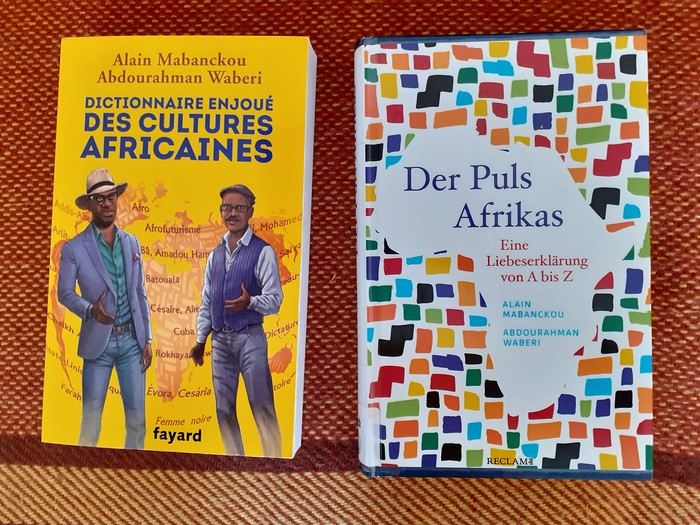
The Maggi cube, an unchallenged hegemony, and so much more
“The hopeless continent,” headlined The Economist, a British magazine, in July 2000 about Africa. Eleven years later, the same magazine headlined “Africa rising” instead. Images of Africa in the prosperous North constantly oscillate between apocalyptic scenarios and enthusiastic projections. A key issue with such images lies in the generalization they entail. If you look at the continent, considerable contrasts emerge depending on space and time. It’s no surprise that a region of the world encompassing such diverse ecological zones, maintaining such varied ties with other continents, comprising nearly fifty nation-states in sub-Saharan Africa alone, and characterized by a great diversity of languages, belief systems, and historical paths, doesn’t share a single destiny.
And yet, for many people outside Africa, as well as for many Africans, the continent constitutes a single entity, defined by criteria such as skin color, a colonial past, poverty, and the art of survival. Until now, these perspectives were generally accompanied by the idea that Africa had to—or should have—followed a single path together, sometimes called development, sometimes modernization, sometimes liberation, then a market economy. None of these paths delivered on their promises.
The two writers Alain Mabanckou and Abdourahman Waberi—one from Congo, the other raised in Djibouti, both long settled in France and now professors at renowned North American universities (Los Angeles, Washington)—have had enough of pessimistic scenarios: “We are aware that Africa is in the world and the world is in Africa. The same goes for all other continents, as our destinies are inextricably linked for better or worse. We refuse to see Africa as a reservoir of misfortunes or a continent cursed by atavistic misfortune and characterized by ethnic conflicts. [...] It’s this passionate flame we wanted to capture in a book [...] a kind of stroll through African cultures, without any demands, each letter of the alphabet leading us to a notion, a practice, a concept, a moment in history, literature, painting, politics, economics, cuisine, etc.” (p.10-11). Africa, they write, is on the verge of “imposing a signature, a style, a way of being in the world and in relation to the rest of the world.” (p.11) To put words to the continent’s diversity and dynamism, the two authors created a “rambling ABC,” a kind of portrait—or more precisely, a mythography—that lets you see and feel the pulse of a vast continent whose cultural power is unfolding before our eyes. Once marginalized or even mocked, the voice and importance of the Continent in global affairs are now undeniable” (p.11), containing over a hundred entries, mostly concise, written in a relaxed and casual style. The optimistic, even exuberant tone is set from the brief introduction. The duo of authors wants to “sing a love song to the cultures of our continent, to its inhabitants past and present, to its exceptional resources and its spectacular globalization despite a certain pollution that still clouds our skies due to the unmatched duration of dictatorships in some of our regions.” (p.12) In doing so, they don’t want to be too distracted by today’s Afewerki-Biya-Bongo-Déby & Co. ...
Of course, you’ll find tributes to great precursors like Frantz Fanon (“[...] it was a love story and admiration that wasn’t dimmed by the four decades separating his birth from ours. Let’s add that we were born while the native of Fort-de-France had left the world’s stage four years earlier, in the prime of life” p.141), Mongo Beti (“You must read and reread Mongo Beti, a genius who used his fame to support often just causes in Africa, like defending oppressed groups. His place is already in History. His oppressors, like the dictators Ahmadou Ahidjo and Paul Biya, can’t compete in the same category” p.64), the Malian Amadou Hampâté Bâ
(“Posterity remembers him mainly as an tireless defender of African cultures. His plea for the collection and preservation of traditional African knowledge remains a major event for all men and women of good will. One day in 1960, at the UNESCO podium, the native of Bandiagara sounded the alarm: ‘[...] Since we’ve admitted that the humanity of each people is the heritage of all humanity, if African traditions aren’t collected in time and written down, they’ll one day be missing from the universal archives of humanity.’” p.51),
Kwame Nkrumah, “one of the founders of Pan-Africanism, father of Ghana’s independence” (p.239), as well as the historian Cheikh Anta Diop, the writer, poet, and politician Aimé Césaire, and the economist and thinker Samir Amin, but also very warm tributes to certain contemporary African intellectuals like Souleymane Bachir Diagne and Achille Mbembe
(“A few years ago, in dominant economic circles, a rumor often resurfaced, usually disguised as a cold and scientifically proven analysis: Africa is useless. It’s a burden for the rest of the human community. With its 2% share in world trade, it would disappear from stock market radars without anyone noticing. So? Maybe it’ll be pulled up by other continents. Wanting to surpass itself is a crazy bet for Africans, they concluded. Arrogant or clueless, President Nicolas Sarkozy declared before an audience of students and teachers at Cheikh Anta Diop University in Dakar: ‘The African man hasn’t entered history enough [...] He only knows the eternal repetition of time marked by the endless repetition of the same gestures and words.’ That was in 2007. For decades, armed only with reason, an intellectual often steps up to debunk prejudices, lazy readings, and dishonest frameworks used as false fronts by those who, like Nicolas Sarkozy or former journalist Stephen Smith, out of ignorance, contempt, or condescension, distort African reality. This intellectual is none other than the historian and political scientist Achille Mbembe. This heir of Frantz Fanon, Amílcar Cabral, Jean-Marc Ela, and Fabien Eboussi-Boulaga was born in 1957 in Cameroon, in the Bassa region. Marked early by the upheavals of a fratricidal war, Achille Mbembe became the guardian of the memory of martyrs. After brilliant studies in Paris, he went on to teach at the best American universities, but the call of the Continent was stronger than anything else. In Dakar, he once directed CODESRIA (Council for the Development of Social Science Research in Africa) before joining the University of the Witwatersrand in Johannesburg, South Africa. Even though the author of *Critique of Black Reason* (Éditions La Découverte, 2015) spends a few months at Duke University in North Carolina, his observation post remains South Africa. From Johannesburg, Achille Mbembe scrutinizes Africa and the whole world. A lucid observer with an elegant and generous pen, Achille Mbembe knows how to blend big and small history: ‘I was born one day in July, as the month was drawing to a close. It was 1957, in that part of Africa recently named ‘Cameroon,’ a memory of the wonder that seized Portuguese sailors in the 15th century when, sailing up the river near Douala, they couldn’t help but note the presence of a multitude of crustaceans, and named it *Rio dos Camarões*, meaning ‘River of Shrimp.’ I grew up in the shadow of this nameless land, since, in a way, the name it bears is only the product of someone else’s astonishment: a lexical mistake, if you will.’ From this mistake or wound, he made leaven, a springboard to compose a rich work, recognized worldwide. To denounce barriers and barbarians too. But that’s not enough. Among his peers in circles of thought and action, Achille Mbembe passionately and consistently defends human dignity and the beauty of the world. In doing so, he fulfills the mission Frantz Fanon entrusted to him.” (p.227-229),
as well as entries dedicated to lesser-known artists and intellectuals, like the French journalist and activist Rokhaya Diallo, daughter of Senegalese and Gambian parents, or the Ethiopian filmmaker Haile Gerima, who has long lived in the United States. Other names from politics, sports, music, art, and literature: Kofi Annan, p.36; Barack Obama, p.243; Thomas Sankara, p.277; Ousmane Sow, p.285; Yambo Ouologuem, p.250; Léopold Sédar Senghor, p.282; Muhammad Ali, p.30; Nuruddin Farah, p.146; Salif Keita, p.203; Ahmadou Kourouma, p.206; Ngũgĩ wa Thiong’o, p.236; Winnie Mandela, p.224; Kylian Mbappé, p.226 ...
The authors, who resolutely commit to a “mythography” (p.11) of Africa, also pay special attention to local social movements, cultural events, and aspects of daily life. *Y’en a marre*, “which also meant ‘we’re fed up with sitting on our hands’” (p.320-321), emerged about a decade ago in Senegal as a citizen movement of peaceful resistance and symbolizes, the authors emphasize, the fact that African youth are increasingly fed up “with the political circus deployed in Africa since independence, as our parents would say, ‘since the White man left’...” (p.321). A full entry is dedicated to the Maggi bouillon cube, which has flooded African markets for about forty years and enjoys immense popularity (“It’s everywhere in Africa, from Dakar to Djibouti, and from Tangier to Cape Town. It’s in every pot, every stew. Little hands put it in every sauce, every local or adapted dish. An unchallenged hegemony! You’ll find it in diasporas too. The culinary strolls in Paris, in the [...] neighborhood” p.90). Critics blame it not only for impoverishing the aromatic diversity of local dishes but also for being harmful to health. And yet, “he poorest Africans, those who eat only once a day, a few spoonfuls of white beans and a ball of *foufou*, for example, are the most fervent users of the magic cube.” (p.92-93)
For *fonio*, “the new trendy cereal. [...] From the millet family, fonio is probably the oldest cereal cultivated in West Africa, and mainly in its sub-Saharan part, for millennia. [...] Easy to grow, water-efficient, fonio grows everywhere except on clay soils. Long neglected because it was considered the poor man’s crop, fonio is now a source of pride for the farmers who cultivate it and cherish it like the apple of their eye” (p.156-157), the authors immediately offer a detailed recipe, letting the reader know that “e can’t resist sharing this fonio with chicken recipe from Mali with you:
Ingredients: 1 chicken 3 large ripe red tomatoes 4 tbsp tomato paste 4 large onions 1 garlic clove 1/2 cup oil 2 Maggi cubes or salt 2 large carrots 1 turnip 1 large cabbage 2 large potatoes 1 celery stalk 1 packet pre-cooked fonio 4 okra (or okra powder) salt, pepper
Preparation: 1. Prepare the sauce: wash and cut the chicken. Peel the onions, garlic, and vegetables. 2. In a pot, fry the chicken pieces. 3. Dice the onions, tomatoes, carrots, and turnip very small and add them to the pot. 4. Add the tomato paste, salt, and pepper. 5. Simmer for 15 min, then add 2 L of water and the cooked chicken pieces. 6. Simmer for 30 min, then add the crushed garlic and celery, plus the cabbage cut into 4 and the potatoes cut in half. 7. Prepare the fonio: cover it with warm water, let it rest for 15 min, and cook it over low heat. 8. In a small pot, boil the okra and crush them. 9. Mix the crushed okra with the cooked fonio, then salt. Serve hot.” (p.158-159)
The comedy *Black Mic Mac*, released in French theaters in 1986 and addressing France’s increasingly restrictive immigration policy at the time, also gets an entry, as do *Tintin in the Congo*, the popular comic, and *Jip’s Café* (“[...] a little Africa in the heart of Paris, with passersby stopping to admire the ‘ambianceurs’ on the dance floor or attend the cultural events offered by the place” (p.194), an African establishment in Paris that Alain Mabanckou already immortalized in one of his novels.
The duo of authors also tackles thorny subjects like jihadism (p.119), the Rwandan genocide (p.272), the CFA franc (p.82), and dictatorship (p.110). While the two strike the right tone here, many entries leave a slightly bitter taste. Two examples: why doesn’t the text on Barack Obama mention the great disappointment of many people in Africa, who expected more from the African policy of the first U.S. president with African roots than just occasional warm words? Why do the comments on Winnie Mandela gloss over the fact that she was a highly controversial icon of the anti-apartheid movement due to her involvement in kidnappings, acts of torture, and murders of alleged apartheid collaborators? Instead, there’s a compassion that brings tears to the eyes: “She was often reduced to a secondary role, the wife of a great man” or “When victory came, she didn’t taste its fruits. Divorced, isolated. She would never be a ‘first lady’ in an evening gown, posing before a bed of chrysanthemums. They’d keep her far from the circles of power” (p.224-225). At this point, I would’ve liked the authors to take a slightly more critical stance...
That said, these “weaknesses” (if you can call them that) shouldn’t overshadow the book as a whole. It remains an informative, sometimes very entertaining, and often even original work in its own way.
Book information (the original French and the German translation):
Alain Mabanckou/Abdourahman Waberi. Dictionnaire enjoué des cultures africaines. Fayard, 2019. Alain Mabanckou/Abdourahman Waberi. Der Puls Afrikas. Eine Liebeserklärung von A bis Z. Reclam, 2022.
Hery
Trip to Israel / Holy Land in 2022
For once, given the destination, the author can’t set aside their religious beliefs, which inevitably shape this kind of journey.
The Trip
Early in the morning at Orly Airport, in the departure lounge for Tel Aviv, a group of about forty young men arrives, all looking identical! The same neatly trimmed beards, the same identical haircuts, the same outfits with a touch of whimsy… The effect of seeing these forty “clones” is striking and raises questions! Why such perfect uniformity among this group of guys? Do they belong to the same family, sports club, cultural association, or religious group? A mystery! At the same time, the waiting area fills up with men who are more expected, given our destination: they wear large felt hats and dress in black suits with white shirts—Hassidim? The ones I’ve glimpsed fleetingly in Paris or New York, who have always been a mystery to me. More discreet-looking women accompany them.
I’m already in Israel without even setting foot there! Plus, I witness the preparations for an improvised show.
The “clones” start a flash mob at seven in the morning in a Paris airport departure lounge! Some pull out musical instruments, others begin singing and dancing. A music with strange, unfamiliar sounds enchants the waiting passengers.
The flight crew finally arrives, cutting through the flash mob, bringing us back to the reality of the moment: waiting to take off soon for this so troubling and mysterious Middle East. We go through passport control, presenting our faces to the scanners that operate the exit gate. The group of “identical” young men gets held up by the system: logically, a scanner let the first one through but blocked the second because of his perfect resemblance to the first. To the machine, the same person shouldn’t be able to cross the border twice? But eventually, the whole group makes it through the glass doors, leaving the Republic behind. My simplistic explanation is left looking ridiculous.
At every new destination, I ask myself countless questions, revealing a certain anxiety tied to the unknown: fear of attacks (one just happened at a bus station in Jerusalem), possible police pressure, unexpected events. Israel isn’t known for being a relaxing destination. In reality, if I did face a serious difficulty in this country, it wasn’t one I had anticipated—and it wasn’t particularly tied to Israel!
I take my seat by the window, which is already occupied by a little girl. Her father, a Hassidic man, politely asks if I’d be willing to give up my seat for his daughter. I tell him I’d be happy to make her happy. Seeing me masked, he asks if I’d like him and his daughter to wear masks too. In response, I take off my mask so as not to impose any constraints on them and wish them a good flight.
It was the first time I’d approached and spoken to a Hassidic man. He didn’t speak the way I might have expected after watching *Rabbi Jacob* with Louis de Funès; he spoke perfectly without an accent, just like you and me! Beware of stereotypes! Throughout the flight, I sneak glances at my strange neighbor: he prayed silently without stopping for a minute. His daughter, as good as gold, never interrupted him. He used several religious accessories during his three-hour continuous prayer: a kippa, a prayer shawl, and a rosary?… I left that plane deeply impressed, me, who has a very distant relationship with my Creator and only prays now and then.
The Trip
Early in the morning at Orly Airport, in the departure lounge for Tel Aviv, a group of about forty young men arrives, all looking identical! The same neatly trimmed beards, the same identical haircuts, the same outfits with a touch of whimsy… The effect of seeing these forty “clones” is striking and raises questions! Why such perfect uniformity among this group of guys? Do they belong to the same family, sports club, cultural association, or religious group? A mystery! At the same time, the waiting area fills up with men who are more expected, given our destination: they wear large felt hats and dress in black suits with white shirts—Hassidim? The ones I’ve glimpsed fleetingly in Paris or New York, who have always been a mystery to me. More discreet-looking women accompany them.
I’m already in Israel without even setting foot there! Plus, I witness the preparations for an improvised show.
The “clones” start a flash mob at seven in the morning in a Paris airport departure lounge! Some pull out musical instruments, others begin singing and dancing. A music with strange, unfamiliar sounds enchants the waiting passengers.
The flight crew finally arrives, cutting through the flash mob, bringing us back to the reality of the moment: waiting to take off soon for this so troubling and mysterious Middle East. We go through passport control, presenting our faces to the scanners that operate the exit gate. The group of “identical” young men gets held up by the system: logically, a scanner let the first one through but blocked the second because of his perfect resemblance to the first. To the machine, the same person shouldn’t be able to cross the border twice? But eventually, the whole group makes it through the glass doors, leaving the Republic behind. My simplistic explanation is left looking ridiculous.
At every new destination, I ask myself countless questions, revealing a certain anxiety tied to the unknown: fear of attacks (one just happened at a bus station in Jerusalem), possible police pressure, unexpected events. Israel isn’t known for being a relaxing destination. In reality, if I did face a serious difficulty in this country, it wasn’t one I had anticipated—and it wasn’t particularly tied to Israel!
I take my seat by the window, which is already occupied by a little girl. Her father, a Hassidic man, politely asks if I’d be willing to give up my seat for his daughter. I tell him I’d be happy to make her happy. Seeing me masked, he asks if I’d like him and his daughter to wear masks too. In response, I take off my mask so as not to impose any constraints on them and wish them a good flight.
It was the first time I’d approached and spoken to a Hassidic man. He didn’t speak the way I might have expected after watching *Rabbi Jacob* with Louis de Funès; he spoke perfectly without an accent, just like you and me! Beware of stereotypes! Throughout the flight, I sneak glances at my strange neighbor: he prayed silently without stopping for a minute. His daughter, as good as gold, never interrupted him. He used several religious accessories during his three-hour continuous prayer: a kippa, a prayer shawl, and a rosary?… I left that plane deeply impressed, me, who has a very distant relationship with my Creator and only prays now and then.
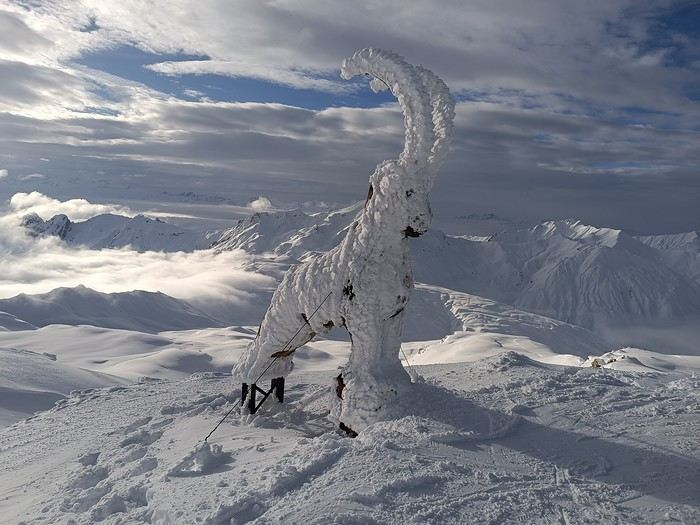
White as snow: February 2025 friendly photo contest
I could just as easily have written white as marble, white as salt, white as coconut milk...
This month’s theme is white in every way imaginable.
Not just a little touch in the top right corner of the photo!
Nor a white square on a white background...
Also, black and white won’t be allowed.
For the rest, I’ll let the voters be the sole judges of whether the theme is respected!
I’m now borrowing Ragamuffin’s wording for the rules:
Every VF member can submit up to 3 photos, until Sunday, February 23 at 11:59 PM, Clermont-Ferrand time.
Each photo must be posted in a separate message, with its number (1, 2, or 3).
Don’t forget to add a little explanation (comment, location, etc.).
Voting:
Every VF member can vote for the 3 photos they think are the best, based on their own criteria and the theme.
Voting will take place from Monday, February 24 to Friday, February 28 at 2:00 PM, Clermont-Ferrand time.
The chosen photos should be listed in order of preference: - 1st photo: 3 points - 2nd: 2 points - 3rd: 1 point
The winner is the author of the photo with the most points.
Results will be published on February 28 in the late afternoon. In case of a tie, the number of first-place votes will decide. The winner will have the honor of organizing March’s contest.
Photos that have already been nominated (1st, 2nd, or 3rd) in another contest are not eligible to participate in this one.
The off-topic contest discussion is happening here
This month’s theme is white in every way imaginable.
Not just a little touch in the top right corner of the photo!
Nor a white square on a white background...
Also, black and white won’t be allowed.
For the rest, I’ll let the voters be the sole judges of whether the theme is respected!
I’m now borrowing Ragamuffin’s wording for the rules:
Every VF member can submit up to 3 photos, until Sunday, February 23 at 11:59 PM, Clermont-Ferrand time.
Each photo must be posted in a separate message, with its number (1, 2, or 3).
Don’t forget to add a little explanation (comment, location, etc.).
Voting:
Every VF member can vote for the 3 photos they think are the best, based on their own criteria and the theme.
Voting will take place from Monday, February 24 to Friday, February 28 at 2:00 PM, Clermont-Ferrand time.
The chosen photos should be listed in order of preference: - 1st photo: 3 points - 2nd: 2 points - 3rd: 1 point
The winner is the author of the photo with the most points.
Results will be published on February 28 in the late afternoon. In case of a tie, the number of first-place votes will decide. The winner will have the honor of organizing March’s contest.
Photos that have already been nominated (1st, 2nd, or 3rd) in another contest are not eligible to participate in this one.
The off-topic contest discussion is happening here
Bike trip: from Carcans Maubuisson to Plaisir (Yvelines)
Monday, August 21, 2023 - Rochefort - Marans
No journal for the first two days. Day 1 - CARCANS-ROYAN Day 2 - ROYAN - ROCHEFORT Tonight I'm in MARANS in the "dry marsh" according to the campsite manager—it’s the first time I’ve heard of a "dry marsh"?!
Photos from the first two days
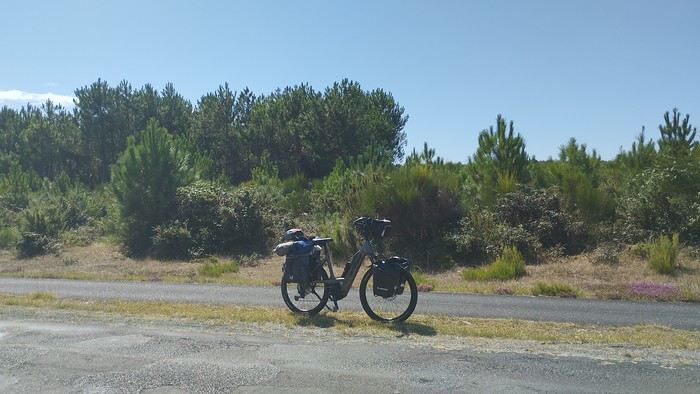 My gear
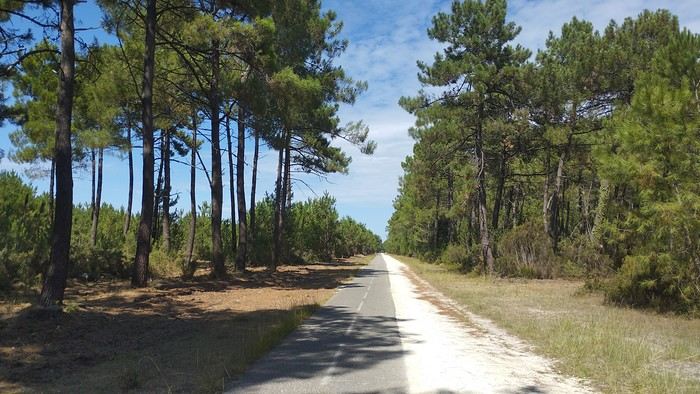
The Landes region—nothing extraordinary, but the calm and serenity are nice.

Le Verdon
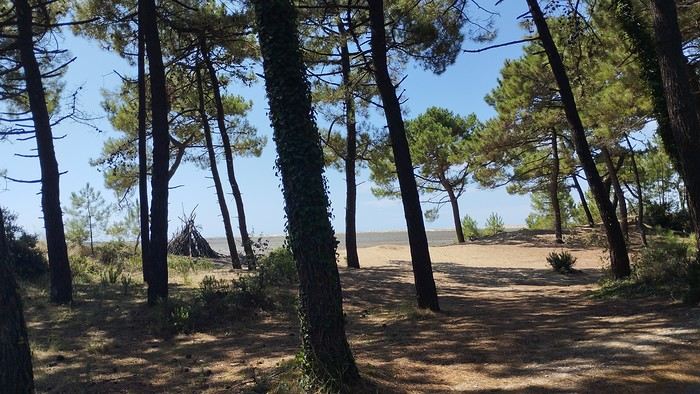
The wild coast
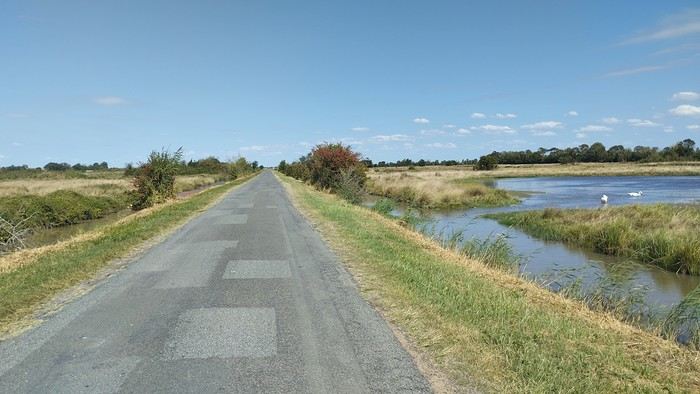
This marsh isn’t dry, though.
Today is the third day of my trip, and I’m writing to you from a campsite in Marans. I’ve set out to bike from Carcans Maubuisson back to Plaisir. Why Carcans? Because we spent a week there as a family—a great week that lets everyone reconnect for a long stretch. Also, on Saturday, we all headed home—some by car, and me by bike. This journey is about 850 km via bike paths and small cycling roads. It’s not a sporting feat, just a nice long ride for fun. As the old Chinese sage says, "The destination doesn’t matter—it’s the journey that counts." But he also told me, "Traveling is great, but what’s the point if you don’t share it?" You see, this old sage has told me a lot of things—he often keeps me company when I’m biking. Of course, he doesn’t pedal, but we travel in harmony. Sure, he can be a bit annoying sometimes, but we still get along. All this to say I’ve created a group to share my story. I’d be happy to share this experience with you—it’s an adventure for me. On Saturday, I wasn’t sure I’d even leave because I’d been dealing with sciatica for days. Luckily, Juliette, a friend of the old Chinese sage, recommended a lifesaving remedy: Alternately stretching your legs with an elastic band under your foot. Obviously, a jam jar rubber band won’t cut it.
From Marans - The mosquitoes are attacking; time to head back to shelter.
The first two legs took me to Royan and then Rochefort. The Sèvre Niortaise flows nearby, and I followed a canal from La Rochelle. You could say the area is as dry as the marsh, judging by the state of the crops.
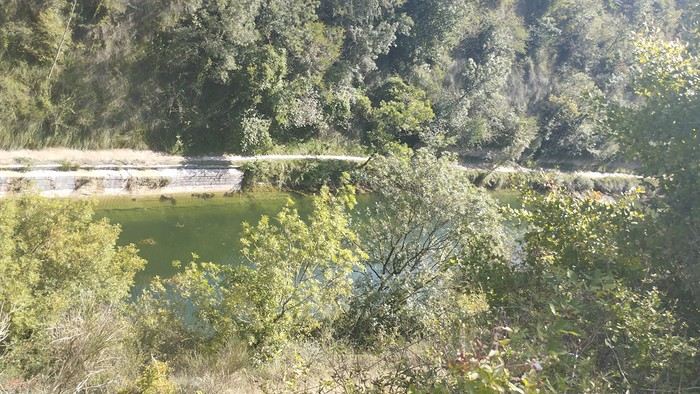
As I mentioned, it’s the third day, and if Jesus rose again on this day, for me it was more like the crucifixion. The scorching heat—only bearable when you’re moving—combined with rough trail conditions, and the old Chinese sage says, "Terrible roads, slow speed, and watch your limbs." I set out to do 60 km but ended up doing 80, and the last 20 were tough. I kept checking the GPS to see how much farther until the campsite. Today: Rochefort to Marans, sticking to the coast until La Rochelle, then no notable towns after that—just a constant canal. But since the sky isn’t too low, it hasn’t gotten lost. I’ve still got plenty of anecdotes to share, but it’s pitch black out, and the mosquitoes are still around. This morning, I counted ten in my tent, all full of my blood. Yesterday, at the end of the leg to Rochefort, I was really looking forward to crossing the Charente using the transporter bridge, but a sneaky GPS conspiracy led me far from it. I ended up crossing the Charente on a completely ordinary bridge, watching the transporter bridge in the distance with disappointment.
End of the first episode. Until tomorrow, if you’d like!
No journal for the first two days. Day 1 - CARCANS-ROYAN Day 2 - ROYAN - ROCHEFORT Tonight I'm in MARANS in the "dry marsh" according to the campsite manager—it’s the first time I’ve heard of a "dry marsh"?!
Photos from the first two days
My gearThe Landes region—nothing extraordinary, but the calm and serenity are nice.
Le Verdon
The wild coast
This marsh isn’t dry, though.
Today is the third day of my trip, and I’m writing to you from a campsite in Marans. I’ve set out to bike from Carcans Maubuisson back to Plaisir. Why Carcans? Because we spent a week there as a family—a great week that lets everyone reconnect for a long stretch. Also, on Saturday, we all headed home—some by car, and me by bike. This journey is about 850 km via bike paths and small cycling roads. It’s not a sporting feat, just a nice long ride for fun. As the old Chinese sage says, "The destination doesn’t matter—it’s the journey that counts." But he also told me, "Traveling is great, but what’s the point if you don’t share it?" You see, this old sage has told me a lot of things—he often keeps me company when I’m biking. Of course, he doesn’t pedal, but we travel in harmony. Sure, he can be a bit annoying sometimes, but we still get along. All this to say I’ve created a group to share my story. I’d be happy to share this experience with you—it’s an adventure for me. On Saturday, I wasn’t sure I’d even leave because I’d been dealing with sciatica for days. Luckily, Juliette, a friend of the old Chinese sage, recommended a lifesaving remedy: Alternately stretching your legs with an elastic band under your foot. Obviously, a jam jar rubber band won’t cut it.
From Marans - The mosquitoes are attacking; time to head back to shelter.
The first two legs took me to Royan and then Rochefort. The Sèvre Niortaise flows nearby, and I followed a canal from La Rochelle. You could say the area is as dry as the marsh, judging by the state of the crops.
As I mentioned, it’s the third day, and if Jesus rose again on this day, for me it was more like the crucifixion. The scorching heat—only bearable when you’re moving—combined with rough trail conditions, and the old Chinese sage says, "Terrible roads, slow speed, and watch your limbs." I set out to do 60 km but ended up doing 80, and the last 20 were tough. I kept checking the GPS to see how much farther until the campsite. Today: Rochefort to Marans, sticking to the coast until La Rochelle, then no notable towns after that—just a constant canal. But since the sky isn’t too low, it hasn’t gotten lost. I’ve still got plenty of anecdotes to share, but it’s pitch black out, and the mosquitoes are still around. This morning, I counted ten in my tent, all full of my blood. Yesterday, at the end of the leg to Rochefort, I was really looking forward to crossing the Charente using the transporter bridge, but a sneaky GPS conspiracy led me far from it. I ended up crossing the Charente on a completely ordinary bridge, watching the transporter bridge in the distance with disappointment.
End of the first episode. Until tomorrow, if you’d like!
Discussion du concours photo de mai 2020: "Défilés et Cortèges"
Suivant la formule consacrée :
Pour discuter, partager, c'est ici ! Pour participer et poser vos photos le concours est là.
Pour discuter, partager, c'est ici ! Pour participer et poser vos photos le concours est là.
Discussion du concours photo du mois d'avril 2020: "En famille"
Pour discuter, partager, c'est ici !
Le concours est là 🙂
Les Américains n'aiment pas le foot
Lyon envahi par les supporters hollandais. Anglais. Suédois et américains.
Je discute voyage avec une famille de l' Oregon quand le fiston ado arrive portant un maillot du PSG..
What à Bad surprise !!!!;
Et on se etonne qu ils aient élu Trump!!!!
Et on se etonne qu ils aient élu Trump!!!!
Régulation des flux touristiques
Bonjour à tous,
Au cœur de cet été bien chaud, du moins chez moi, une réflexion suite à une information:
L’île de Pâques est amenée depuis quelques jours à restreindre certaines durées de séjour sur son territoire. Antérieurement, Venise essaye de prendre des mesures concernant les bateaux de croisière, mais aussi les visiteurs venus par d'autres moyens.
Il y a beaucoup d’endroits de par le monde ou les afflux de touristes amènent les autorités à ce genre de décision. Sans compter les aménagements engendrés par le nombre, type pointe du raz ou Horseshoebend aux Etats Unis. Et j'en passe certainement beaucoup...
D'un côté, préserver la nature ou le patrimoine architectural, de l'autre accepter le nombre pour que vivent ceux qui " en vivent " ?
Je m'interroge, les choses sont elles inéluctables dans un sens comme dans l'autre ?
Certainement le plus difficile, trouver le juste équilibre.
Bonne journée à tous
Au cœur de cet été bien chaud, du moins chez moi, une réflexion suite à une information:
L’île de Pâques est amenée depuis quelques jours à restreindre certaines durées de séjour sur son territoire. Antérieurement, Venise essaye de prendre des mesures concernant les bateaux de croisière, mais aussi les visiteurs venus par d'autres moyens.
Il y a beaucoup d’endroits de par le monde ou les afflux de touristes amènent les autorités à ce genre de décision. Sans compter les aménagements engendrés par le nombre, type pointe du raz ou Horseshoebend aux Etats Unis. Et j'en passe certainement beaucoup...
D'un côté, préserver la nature ou le patrimoine architectural, de l'autre accepter le nombre pour que vivent ceux qui " en vivent " ?
Je m'interroge, les choses sont elles inéluctables dans un sens comme dans l'autre ?
Certainement le plus difficile, trouver le juste équilibre.
Bonne journée à tous
Votre avis sur la France
La France (j'allais dire notre pays , c'était oublier que le site VF est canadien, enfin c'est pas loin concernant les francophones, il s'agit de nos cousins😎), donc voilà ma réflexion: que vous ayez beaucoup voyagé ou pas, loin ou pas, à vélo, avec sac à dos (certains diraient bagpacker), en solo, en bivouac sauvage, en fréquentant les hôtels deux ou quatre étoiles, avec agence ou autrement, vous situez la France à quel niveau en matière d’intérêt touristique ou de voyage, car selon son point de vue j'ai constaté que l'on peut faire la différence entre touriste et voyageur?
Je vous livre en matière de préambule mon sentiment, la France c'est le top du top et de plus en France il y a un paradis sur Terre (certains diront que c'est un pays indépendant) la Corse. Je précise je ne suis pas corse, mais lyonnais qui ne jure que par les Vosges.
Au plaisir de vous lire Luc
Tour du monde MSC 2019
Bonjour,
C'est décidé!
Nous venons de nous inscrire pour ce 1er tour du monde avec MSC, sur le Magnifica, au départ de Marseille, le 6 janvier 2019, dont le parcours nous a particulierement séduit...
Un grand enthousiasme, mais aussi un peu d'inquiétude tout de même, car partir 119 jours en croisiere, loin de ses bases, cela est inhabituel.
J - 777....
J'ouvre cette discussion, pour tous les futurs TDMistes qui seront du voyage, pour qu'ils puissent s'y retrouver et échanger avis et conseils et préparer ensemble, ce qui sera, j'espère, une magnifique aventure...
Jean-Marie
PS : cela pourra aussi être l'occasion pour les "anciens" de nous faire part de leurs expériences et nous faire profiter de leurs conseils avisés.
Inside South Africa
Inside South Africa
The Burst Hose. The passenger is so impatient to arrive that the coachman whips a horse that barely tolerates the mistreatment. I can tell she’s gearing up for a kick, and suddenly, at full gallop, she stops responding. If I press the spur, she cuts out but accepts a half-pressed pedal. She pulled this stunt last year, right in the middle of the Kalahari Desert, and I can guess the trick: she blew a hose! An hour at a slow trot brings us to a Ford garage. A workshop manager, as sullen as he is efficient, has the necessary parts removed to reach the hose, then announces he doesn’t have the spare part and will need a week to get it. I suggest taking advantage of the access to make a temporary repair on the tear, but he refuses, arguing the pressure is so high that the patch would give way immediately—"It’s not a Testarossa, after all!" After reassembly, he refuses to charge us anything and advises us to head to the next town, 200 kilometers away—off we go for another four hours. Semi-trailers overtake us without mercy; I’m reminded of *Duel*. At the Land Rover dealership, we learn the part will take two working days to arrive, and it’s Thursday. I decide to have the hose delivered to the house without wheels—I’ll change it myself. Five hours later, climbing the pass in first gear, we reach the object of her desires. * Hide and Seek In Brittany, my neighbor is a taciturn, touchy fisherman. He’s anchored his old boat in the middle of the estuary that separates two departments and uses it as a storage space. It’s a jumble of nets, buoys, and traps. The old wooden vessel is falling apart, and the hull’s paint is nothing but a distant memory—so much so that the Maritime Affairs Directorate of his department orders him to remove it or repaint it. Asterix also runs a restaurant on the harbor, where he treats customers to his catch. One Sunday afternoon, we see him loading cooks, servers, and dishwashers armed with rollers, brushes, and paint cans into dinghies. Off they go for two hours of slapdash painting and laughter. Once the starboard side is done, everyone returns to prepare for the evening service. The port side will wait until the Maritime Affairs Directorate from the other department reacts. This story came back to me when I got home: the side visible from the road had been repainted, but the other side was left as is. * The Blonde, the Red, the White, and the Black Many workers are paid at the end of each week, but alcohol sales for takeaway are banned on Saturdays and Sundays. So, on Friday nights, the bars are packed, and liquor stores never empty—of people who are already full. Their limited means reduce them to cheap, harsh wines or bland beers. Yet, they still end up wasted.
* Seven In mainland France, you can easily raise seven sheep per hectare. In the Great Karoo, it takes seven hectares of sparse but tasty vegetation to feed just one sheep. Not to mention the energy spent moving around. Add to that the fact that a French sheep produces about one and a half lambs per year, while here, between droughts and jackals, it’s closer to 0.7, and you’ll understand why, with a 7,000-hectare farm—the local basic unit—a South African farmer’s income barely exceeds that of a farm a hundred times smaller in Brittany. This weekend, the annual agricultural show is taking place at the fairgrounds. Some come from far away, so a procession of pickups, trailers, and trucks loaded with sheep makes its way up the main street: we’re definitely in the Karoo. I expected a competition of lean, wiry ascetics, able to pass on traits useful to the environment, but I suspect these bodybuilder show animals don’t just graze on the bush and are doped with alfalfa. Besides, I caught a dealer red-handed with a bag of pellets. * They’re Not Dolls Ken is a professional hunting guide, working independently. When it’s not hunting season, he goes fishing for clients, mainly in the United States. He says Trump’s election—whom he slightly resembles, though younger—would be good for his business, but he doesn’t like Trump, nor, it seems, his clients much. He wanted to be a farmer, but in the post-apartheid context, taking over a farm was a gamble. His wife, who’s more beautiful than Barbie and Melania, silently agrees. * Neighbors That’s the problem with women: their *it girl* side. Within a year of her moving in, we got two new neighbors. One on the other side of the track, the other half an hour away (here, that’s *next door*). One only travels at the controls of his black helicopter, the other aboard his private Boeing 737. The first is a very wealthy farmer from the northeast of the country who’s expanding into the Karoo. He just bought two non-contiguous farms of 6,000 hectares each. I still don’t know what the owner of the farm in between is thinking. The newcomer plans to create a wildlife reserve for breeding purposes; our future neighbors will be giraffes, rhinos, and antelopes, including rare species like the Sable. They say he’s a man in a hurry, determined: when the municipality dragged its feet on his request to refurbish the public track that serves as our border, he just went ahead and did it himself. It was a historic farm, crossed by paths leading to other farms, home to a pond full of birds where water from the mountain ends up after the villagers have taken their share. That’s where the golf course I was about to become the 29th member of was located. Now, it’s all closed off, fenced, and lined with monumental gates. The Wild West in the Western Cape. Is it because his name ends in ‘-ski’ that rumors link him to Slavic mafias and advise against crossing him? The same rumors say he’s involved in the uranium market—well, there’s uranium in the Karoo’s subsoil. The second neighbor is a Saudi prince who just bought a modestly sized farm—3,500 hectares—but don’t think he’s a minor prince. He paid four and a half times the market price to get it! The farm had been in the same family for two centuries, and the owners refused to even consider selling. The prince’s agent—money, in this case, black gold—kept coming back every week despite repeated refusals, finally saying his client wanted this farm at any price. A price they were asked to set. And that’s how you sell your ancestors’ graves. There are plenty of huge farms for sale here, but the prince was looking for a property where he wouldn’t see any roads, tracks, or other houses or farms. He’ll come a few days a year to hunt. However, he’s annoyed: the runway at the nearest airport, two hours away, isn’t long enough for his private jet, so he’ll have to land in Cape Town, like me, and endure nearly two hours by helicopter. That’s how it goes in South Africa. I’d be curious to know what Julius Malema, leader of the EFF (Economic Freedom Fighters), who advocates the Zimbabwean model of land redistribution, thinks about it.
* Biko The autobiography of a journalist and politician of European descent, South African, is published this week. In 1977, this rookie got her editor’s permission to investigate the death in detention of black leader Steve Biko. The apartheid regime’s political police claimed he had died from a hunger strike. The bold young woman discovered that the medical examiners reported a slightly overweight corpse, and later, it was revealed that Biko had died from abuse, if not torture. Under pressure after publishing her investigation, Helen Zille, disillusioned, gave up journalism and turned to politics. She is one of the white South Africans who fought against apartheid, and it’s reassuring that some people have a conscience that transcends class or race. *
You Have the Watches... …we have the time. Anyone who’s worked with Africans knows this response they occasionally throw at us. Willem, the inconsistent gardener, couldn’t stand the observation: running around the place at top speed, even with a pitchfork over his shoulder, wasn’t getting the job done. So Jan replaced him. We share the same first name—no doubt we’ll accomplish great things. He’s known to be reliable, meaning he shows up for work, and he only speaks Afrikaans. We communicate like at the circus: thumbs up, thumbs down. Jan has the build of a bushman but the bone structure and features of a mixed-race person—multiple mixes. He’s a sprite, always moving, sometimes without purpose or destination (the journey is the path). I lose sight of him—it’s not exactly a virgin forest—and he reappears elsewhere, busy. Jan doesn’t understand wasted water—he must think the same of us trying to cultivate the desert. He’s a gardener like I’m a violinist, virtuosos of playback. After a very light lunch, he lies down on the ground in the shadow of the stables and falls asleep. If his arrival time in the morning is variable, it’s never before the agreed hour, but his departure time is unchanging: it’s 3 PM, no matter what. No point trying to fool him; he can count and shows me the fancy watch eating up his thin wrist. * Colours Veldrift, Oyster Catcher, Lobster Red, Namib, Dune, Lion's Den, Kalahari, Bush Fire, Karoo Dawn, Cape Fynbos, Safari Trail, African Pan, Bushveld Plains, African Queen, Karoo Drift. A bestiary? A herbarium? No, the colors offered by the country’s top paint manufacturer. All the shades of the continent from an armchair. * Pets She loves three mastiffs, a meter tall at the withers. Is it for their beauty? Their breed? Their deterrent power, because knowing these beasts exist, no one would dare enter her property without an invitation? A bit of all that, probably. She won’t say. She loves pets but likes other people’s less, especially the poor ones. So, she actively participates in the campaign to sterilize dogs and cats in the neighboring township. Just think, the poor things can’t afford to feed or care for them, meaning they can’t ensure them a decent life. She and others justify the pets section of the local mini-supermarket. Whether your pet is a puppy, adult, or mature, whether it likes fish or prefers beef (no one thought of a dog-based reference from the township?), you’ll find your happiness. While you order, many locals will only have access to the parking lot to beg. * Democracy in Africa
What would Tocqueville say about Democracy in America this fall? After the father, we had the son; after the husband, and by default, we might get the wife. No one else, really? Let’s not talk about France and its current vaudeville. A Ivorian academic believes African peoples aren’t ready for "Western-style" democracy (caricatured as a free T-shirt buying a vote). Does he know the same is true elsewhere, where many voters vote not for a vision, a project, or convictions, but to protect their own interests? Here in South Africa, national elections were held recently, confirming the ANC’s decline in favor of the Democratic Alliance (DA). Historically (since the end of apartheid) seen as the party of whites (who make up less than 10% of the population), it has managed to rally those disillusioned by the clientelism, incompetence, and corruption of Mandela’s unworthy heirs. The DA now governs five of the country’s six largest cities. In the neighboring township, long after the vote ended, ANC and DA T-shirt wearers cross paths courteously. Today, it’s different. The DA’s national leader is holding a rally in a vacant lot. A few hundred people are there, including a good third of children, three-quarters of them ragged. Not an ANC T-shirt in sight amid the smoke of braais and deafening music. Fewer than ten pale faces: the journalist I’m driving, a local official, and activists. A small convoy of limousines arrives—just four, fewer than any of President Zuma’s offspring’s private stables. The crowd stirs, flags wave, and ululations ring out. Mmusi Maimane is a light-skinned mixed-race man, towering over the assembly, which he gently parts, joining in the dances and posing for selfies. He’ll give his speech, half in English, half in Afrikaans, perched on a truck platform—the meeting’s cost must be bearable for taxpayers. A mediocre populist orator, no doubt, but skilled. Two hours later, in the evening, another gathering. This time in a historic town property. A hundred and fifty people, casual chic, all white except for three mixed-race individuals... and the DA President. A Rotary Club vibe: everyone the town has in terms of farmers, shopkeepers, and entrepreneurs has paid their dues to honor Mmusi Maimane’s visit. His admirers see him as a new Mandela or compare him to Obama; his opponents think he’s being manipulated, and his detractors call him a traitor. He’s under forty, intelligent, and his wife is white. The chance he’ll become President of South Africa isn’t zero. * Posh Port Out, Starboard Home. Sonja, who walks the desert at dawn, calls one of her acquaintances posh, meaning snobbish. She’s got a sharp tongue. Wealthy English people (not the ones sent to Australia as convicts one-way) traveling to India would book their cabin on the port side on the way out and starboard on the way back. That way, they had a view of the coast throughout the journey instead of the ocean’s emptiness—whatever Kersauzon says. I didn’t know that by choosing my seat on the plane, depending on the route and time, so the sun lights up the landscape instead of blinding me, I was being posh. * Cosmopolitan Wine Tasting A pale lookalike of Jacob Zuma, a painter teaching his art in Europe; an Antwerp writer in South Africa; a desert gardener with a surfer look; an Irishwoman teaching yoga in the Karoo; an Afrikaner passionate about world history; another, our host, up to his neck in wine; and two French observers—observed observers. Conversations flow, then bottles, just before some hosts leave. Recurring corruption scandals involving President Zuma and his inner circle. A Chenin Blanc. Napoleon, who could have changed the course of South African history. An unwooded Chardonnay. The snake, a puff adder, one found in her garden. A Sauvignon Blanc. The kudu hit by a car at the village exit, which didn’t survive. A Pinotage. The bloody Anglo-Boer War. A Shiraz named Down to Earth. * Little Patagonia A story of pressure or depression, temperature differentials, or perhaps an age-old war between the elements—almost every day at the end of the afternoon, as if tucking in, the wind rushes down the mountain and gives a free haircut. When it falls, you don’t know where, and you hope it hurt itself and won’t get back up. I’m going to build a mast on the house, hoist the sails, trim them, and sail across the desert—it will remember the sea. *
 Meeting in the township.

Since a cover is needed (in black and white)...
The Burst Hose. The passenger is so impatient to arrive that the coachman whips a horse that barely tolerates the mistreatment. I can tell she’s gearing up for a kick, and suddenly, at full gallop, she stops responding. If I press the spur, she cuts out but accepts a half-pressed pedal. She pulled this stunt last year, right in the middle of the Kalahari Desert, and I can guess the trick: she blew a hose! An hour at a slow trot brings us to a Ford garage. A workshop manager, as sullen as he is efficient, has the necessary parts removed to reach the hose, then announces he doesn’t have the spare part and will need a week to get it. I suggest taking advantage of the access to make a temporary repair on the tear, but he refuses, arguing the pressure is so high that the patch would give way immediately—"It’s not a Testarossa, after all!" After reassembly, he refuses to charge us anything and advises us to head to the next town, 200 kilometers away—off we go for another four hours. Semi-trailers overtake us without mercy; I’m reminded of *Duel*. At the Land Rover dealership, we learn the part will take two working days to arrive, and it’s Thursday. I decide to have the hose delivered to the house without wheels—I’ll change it myself. Five hours later, climbing the pass in first gear, we reach the object of her desires. * Hide and Seek In Brittany, my neighbor is a taciturn, touchy fisherman. He’s anchored his old boat in the middle of the estuary that separates two departments and uses it as a storage space. It’s a jumble of nets, buoys, and traps. The old wooden vessel is falling apart, and the hull’s paint is nothing but a distant memory—so much so that the Maritime Affairs Directorate of his department orders him to remove it or repaint it. Asterix also runs a restaurant on the harbor, where he treats customers to his catch. One Sunday afternoon, we see him loading cooks, servers, and dishwashers armed with rollers, brushes, and paint cans into dinghies. Off they go for two hours of slapdash painting and laughter. Once the starboard side is done, everyone returns to prepare for the evening service. The port side will wait until the Maritime Affairs Directorate from the other department reacts. This story came back to me when I got home: the side visible from the road had been repainted, but the other side was left as is. * The Blonde, the Red, the White, and the Black Many workers are paid at the end of each week, but alcohol sales for takeaway are banned on Saturdays and Sundays. So, on Friday nights, the bars are packed, and liquor stores never empty—of people who are already full. Their limited means reduce them to cheap, harsh wines or bland beers. Yet, they still end up wasted.
* Seven In mainland France, you can easily raise seven sheep per hectare. In the Great Karoo, it takes seven hectares of sparse but tasty vegetation to feed just one sheep. Not to mention the energy spent moving around. Add to that the fact that a French sheep produces about one and a half lambs per year, while here, between droughts and jackals, it’s closer to 0.7, and you’ll understand why, with a 7,000-hectare farm—the local basic unit—a South African farmer’s income barely exceeds that of a farm a hundred times smaller in Brittany. This weekend, the annual agricultural show is taking place at the fairgrounds. Some come from far away, so a procession of pickups, trailers, and trucks loaded with sheep makes its way up the main street: we’re definitely in the Karoo. I expected a competition of lean, wiry ascetics, able to pass on traits useful to the environment, but I suspect these bodybuilder show animals don’t just graze on the bush and are doped with alfalfa. Besides, I caught a dealer red-handed with a bag of pellets. * They’re Not Dolls Ken is a professional hunting guide, working independently. When it’s not hunting season, he goes fishing for clients, mainly in the United States. He says Trump’s election—whom he slightly resembles, though younger—would be good for his business, but he doesn’t like Trump, nor, it seems, his clients much. He wanted to be a farmer, but in the post-apartheid context, taking over a farm was a gamble. His wife, who’s more beautiful than Barbie and Melania, silently agrees. * Neighbors That’s the problem with women: their *it girl* side. Within a year of her moving in, we got two new neighbors. One on the other side of the track, the other half an hour away (here, that’s *next door*). One only travels at the controls of his black helicopter, the other aboard his private Boeing 737. The first is a very wealthy farmer from the northeast of the country who’s expanding into the Karoo. He just bought two non-contiguous farms of 6,000 hectares each. I still don’t know what the owner of the farm in between is thinking. The newcomer plans to create a wildlife reserve for breeding purposes; our future neighbors will be giraffes, rhinos, and antelopes, including rare species like the Sable. They say he’s a man in a hurry, determined: when the municipality dragged its feet on his request to refurbish the public track that serves as our border, he just went ahead and did it himself. It was a historic farm, crossed by paths leading to other farms, home to a pond full of birds where water from the mountain ends up after the villagers have taken their share. That’s where the golf course I was about to become the 29th member of was located. Now, it’s all closed off, fenced, and lined with monumental gates. The Wild West in the Western Cape. Is it because his name ends in ‘-ski’ that rumors link him to Slavic mafias and advise against crossing him? The same rumors say he’s involved in the uranium market—well, there’s uranium in the Karoo’s subsoil. The second neighbor is a Saudi prince who just bought a modestly sized farm—3,500 hectares—but don’t think he’s a minor prince. He paid four and a half times the market price to get it! The farm had been in the same family for two centuries, and the owners refused to even consider selling. The prince’s agent—money, in this case, black gold—kept coming back every week despite repeated refusals, finally saying his client wanted this farm at any price. A price they were asked to set. And that’s how you sell your ancestors’ graves. There are plenty of huge farms for sale here, but the prince was looking for a property where he wouldn’t see any roads, tracks, or other houses or farms. He’ll come a few days a year to hunt. However, he’s annoyed: the runway at the nearest airport, two hours away, isn’t long enough for his private jet, so he’ll have to land in Cape Town, like me, and endure nearly two hours by helicopter. That’s how it goes in South Africa. I’d be curious to know what Julius Malema, leader of the EFF (Economic Freedom Fighters), who advocates the Zimbabwean model of land redistribution, thinks about it.
* Biko The autobiography of a journalist and politician of European descent, South African, is published this week. In 1977, this rookie got her editor’s permission to investigate the death in detention of black leader Steve Biko. The apartheid regime’s political police claimed he had died from a hunger strike. The bold young woman discovered that the medical examiners reported a slightly overweight corpse, and later, it was revealed that Biko had died from abuse, if not torture. Under pressure after publishing her investigation, Helen Zille, disillusioned, gave up journalism and turned to politics. She is one of the white South Africans who fought against apartheid, and it’s reassuring that some people have a conscience that transcends class or race. *
You Have the Watches... …we have the time. Anyone who’s worked with Africans knows this response they occasionally throw at us. Willem, the inconsistent gardener, couldn’t stand the observation: running around the place at top speed, even with a pitchfork over his shoulder, wasn’t getting the job done. So Jan replaced him. We share the same first name—no doubt we’ll accomplish great things. He’s known to be reliable, meaning he shows up for work, and he only speaks Afrikaans. We communicate like at the circus: thumbs up, thumbs down. Jan has the build of a bushman but the bone structure and features of a mixed-race person—multiple mixes. He’s a sprite, always moving, sometimes without purpose or destination (the journey is the path). I lose sight of him—it’s not exactly a virgin forest—and he reappears elsewhere, busy. Jan doesn’t understand wasted water—he must think the same of us trying to cultivate the desert. He’s a gardener like I’m a violinist, virtuosos of playback. After a very light lunch, he lies down on the ground in the shadow of the stables and falls asleep. If his arrival time in the morning is variable, it’s never before the agreed hour, but his departure time is unchanging: it’s 3 PM, no matter what. No point trying to fool him; he can count and shows me the fancy watch eating up his thin wrist. * Colours Veldrift, Oyster Catcher, Lobster Red, Namib, Dune, Lion's Den, Kalahari, Bush Fire, Karoo Dawn, Cape Fynbos, Safari Trail, African Pan, Bushveld Plains, African Queen, Karoo Drift. A bestiary? A herbarium? No, the colors offered by the country’s top paint manufacturer. All the shades of the continent from an armchair. * Pets She loves three mastiffs, a meter tall at the withers. Is it for their beauty? Their breed? Their deterrent power, because knowing these beasts exist, no one would dare enter her property without an invitation? A bit of all that, probably. She won’t say. She loves pets but likes other people’s less, especially the poor ones. So, she actively participates in the campaign to sterilize dogs and cats in the neighboring township. Just think, the poor things can’t afford to feed or care for them, meaning they can’t ensure them a decent life. She and others justify the pets section of the local mini-supermarket. Whether your pet is a puppy, adult, or mature, whether it likes fish or prefers beef (no one thought of a dog-based reference from the township?), you’ll find your happiness. While you order, many locals will only have access to the parking lot to beg. * Democracy in Africa
What would Tocqueville say about Democracy in America this fall? After the father, we had the son; after the husband, and by default, we might get the wife. No one else, really? Let’s not talk about France and its current vaudeville. A Ivorian academic believes African peoples aren’t ready for "Western-style" democracy (caricatured as a free T-shirt buying a vote). Does he know the same is true elsewhere, where many voters vote not for a vision, a project, or convictions, but to protect their own interests? Here in South Africa, national elections were held recently, confirming the ANC’s decline in favor of the Democratic Alliance (DA). Historically (since the end of apartheid) seen as the party of whites (who make up less than 10% of the population), it has managed to rally those disillusioned by the clientelism, incompetence, and corruption of Mandela’s unworthy heirs. The DA now governs five of the country’s six largest cities. In the neighboring township, long after the vote ended, ANC and DA T-shirt wearers cross paths courteously. Today, it’s different. The DA’s national leader is holding a rally in a vacant lot. A few hundred people are there, including a good third of children, three-quarters of them ragged. Not an ANC T-shirt in sight amid the smoke of braais and deafening music. Fewer than ten pale faces: the journalist I’m driving, a local official, and activists. A small convoy of limousines arrives—just four, fewer than any of President Zuma’s offspring’s private stables. The crowd stirs, flags wave, and ululations ring out. Mmusi Maimane is a light-skinned mixed-race man, towering over the assembly, which he gently parts, joining in the dances and posing for selfies. He’ll give his speech, half in English, half in Afrikaans, perched on a truck platform—the meeting’s cost must be bearable for taxpayers. A mediocre populist orator, no doubt, but skilled. Two hours later, in the evening, another gathering. This time in a historic town property. A hundred and fifty people, casual chic, all white except for three mixed-race individuals... and the DA President. A Rotary Club vibe: everyone the town has in terms of farmers, shopkeepers, and entrepreneurs has paid their dues to honor Mmusi Maimane’s visit. His admirers see him as a new Mandela or compare him to Obama; his opponents think he’s being manipulated, and his detractors call him a traitor. He’s under forty, intelligent, and his wife is white. The chance he’ll become President of South Africa isn’t zero. * Posh Port Out, Starboard Home. Sonja, who walks the desert at dawn, calls one of her acquaintances posh, meaning snobbish. She’s got a sharp tongue. Wealthy English people (not the ones sent to Australia as convicts one-way) traveling to India would book their cabin on the port side on the way out and starboard on the way back. That way, they had a view of the coast throughout the journey instead of the ocean’s emptiness—whatever Kersauzon says. I didn’t know that by choosing my seat on the plane, depending on the route and time, so the sun lights up the landscape instead of blinding me, I was being posh. * Cosmopolitan Wine Tasting A pale lookalike of Jacob Zuma, a painter teaching his art in Europe; an Antwerp writer in South Africa; a desert gardener with a surfer look; an Irishwoman teaching yoga in the Karoo; an Afrikaner passionate about world history; another, our host, up to his neck in wine; and two French observers—observed observers. Conversations flow, then bottles, just before some hosts leave. Recurring corruption scandals involving President Zuma and his inner circle. A Chenin Blanc. Napoleon, who could have changed the course of South African history. An unwooded Chardonnay. The snake, a puff adder, one found in her garden. A Sauvignon Blanc. The kudu hit by a car at the village exit, which didn’t survive. A Pinotage. The bloody Anglo-Boer War. A Shiraz named Down to Earth. * Little Patagonia A story of pressure or depression, temperature differentials, or perhaps an age-old war between the elements—almost every day at the end of the afternoon, as if tucking in, the wind rushes down the mountain and gives a free haircut. When it falls, you don’t know where, and you hope it hurt itself and won’t get back up. I’m going to build a mast on the house, hoist the sails, trim them, and sail across the desert—it will remember the sea. *
Meeting in the township.Since a cover is needed (in black and white)...
Mada, ça craint!
Source "Clicanoo"
http://www.clicanoo.re/535479-madagascar-deux-jeunes-francais-retrouves-morts-sur-une-plage.html
Deux jeunes Français travaillant comme bénévoles pour une association à Madagascar ont été tués et leurs corps ont été retrouvés dimanche sur une plage de l’île touristique de Sainte-Marie (nord-est), ont annoncé les autorités malgaches et françaises. *
une fois de plus , 2 jeunes sont sont fait tuer lâchement a Madagascar.
Deux jeunes Français travaillant comme bénévoles pour une association à Madagascar ont été tués et leurs corps ont été retrouvés dimanche sur une plage de l’île touristique de Sainte-Marie (nord-est), ont annoncé les autorités malgaches et françaises. *
une fois de plus , 2 jeunes sont sont fait tuer lâchement a Madagascar.