Results for "Tibet"
About 7,871 results.
More options
Many results are in French, the community’s main language. English translations are added over time.
Search results
Transsibérien: étapes en Mongolie et Chine
Salut tout le monde!
Je suis nouvelle sur ce forum que j'ai découvert suite à des recherches que j'ai effectuées pour un voyage que je veux entreprendre l'année prochaine. Je souhaite visiter les pays de l'Europe l'est puis prendre le transsibérien à Moscou, pour finalement "atterrir" en Chine où je compte faire une plus longue escale. Évidemment rien n'est planifié, mais je compte planifier au minimum, la durée du voyage étant indéterminée et la liberté totale. Par contre je n'ai absolument aucune connaissance de ces pays, je ne sais pas du tout si c'est facile de sortir des sentiers battus, si c'est dangereux, etc... Je voyage seule et en général avec le strict minimum, tente et kit camping dans le back pack, et également un minimum de ressources monétaires ;-) Ce qui me branche c l'Aventure!!! La destination finale de mon voyage à travers le Far East sera la Nouvelle-Zélande, alors si vous vous y connaissez aussi en mode de vie néozélandais, super!!
Alors appel à tous: si vous avez des tuyaux, que vous avez déjà tenté ce type d'aventure, écrivez moi!
teo 😏
Je suis nouvelle sur ce forum que j'ai découvert suite à des recherches que j'ai effectuées pour un voyage que je veux entreprendre l'année prochaine. Je souhaite visiter les pays de l'Europe l'est puis prendre le transsibérien à Moscou, pour finalement "atterrir" en Chine où je compte faire une plus longue escale. Évidemment rien n'est planifié, mais je compte planifier au minimum, la durée du voyage étant indéterminée et la liberté totale. Par contre je n'ai absolument aucune connaissance de ces pays, je ne sais pas du tout si c'est facile de sortir des sentiers battus, si c'est dangereux, etc... Je voyage seule et en général avec le strict minimum, tente et kit camping dans le back pack, et également un minimum de ressources monétaires ;-) Ce qui me branche c l'Aventure!!! La destination finale de mon voyage à travers le Far East sera la Nouvelle-Zélande, alors si vous vous y connaissez aussi en mode de vie néozélandais, super!!
Alors appel à tous: si vous avez des tuyaux, que vous avez déjà tenté ce type d'aventure, écrivez moi!
teo 😏
Trek au Népal version "hard"
Salut a tous
J'ai vraiment une grosse envie de rando au Népal (projet 2004) mais je cherche un plan à forte dominante sportive(du genre "j'en chie mais c'est bon et en plus c'est beau ".
Physiquement très entrainé (Course de montagne et Trail de + de 10h avec 2000 + ou 3000+) par contre pas d'expérience de la "très" haute altitude (+de 4000). Envie de + de 6000 mais est-ce raisonnable sans pratique de l'escalade?
Quels plans pouvez vous me suggérer ?
Merci de vos réponses
Conseils - un aller-simple pour l'Inde
bonjour je recherche une personne qui pourrait etre en mesure de me conseillé de m'éclairé.
Je demeure au Québec (Canada) et j'ai 20 ans . Après plusieurs l'ecture et méditation qui mont éclairé j'ai décidé de tout abandonner ici pour aller en inde. Je laisse ma vie matérielle qui ne me rend plus heureuse pour pouvoir grandir, pour m éveillé, me connaitre. Je sais que le pas va être difficile a faire et je me dois de le faire seule(de toute facon je ne connais personnes maintenant qui soit pret a tout abandonner pour vivre)Je veux prendre seulement un aller simple et me laisser guider par le tout ensuite rendu la bas je croirais pas enmener beaucoup d'argent car je n'en ai pas beaucoup de toute facon.
une bonne personne peurt-elle m'éclairé sur les démarche a suivres qui m'éviterais des ennuis. le matériel nécessaire, le lieu qui me serait préférable car je recherche des maitre ou de grandes ames de bons coeur avec qui je veux partager et puis grandir.
Merci d'avance
Je demeure au Québec (Canada) et j'ai 20 ans . Après plusieurs l'ecture et méditation qui mont éclairé j'ai décidé de tout abandonner ici pour aller en inde. Je laisse ma vie matérielle qui ne me rend plus heureuse pour pouvoir grandir, pour m éveillé, me connaitre. Je sais que le pas va être difficile a faire et je me dois de le faire seule(de toute facon je ne connais personnes maintenant qui soit pret a tout abandonner pour vivre)Je veux prendre seulement un aller simple et me laisser guider par le tout ensuite rendu la bas je croirais pas enmener beaucoup d'argent car je n'en ai pas beaucoup de toute facon.
une bonne personne peurt-elle m'éclairé sur les démarche a suivres qui m'éviterais des ennuis. le matériel nécessaire, le lieu qui me serait préférable car je recherche des maitre ou de grandes ames de bons coeur avec qui je veux partager et puis grandir.
Merci d'avance
Livres à ne pas lire quand on est déjà mordu
Bonjour
je propose ce nouveau sujet de discussion.
Parlez des livres que vous avez lu, qui traitent du voyage, et qui donnent encore plus envie de partir.
Je sais, c'est pas bien de faire ça, c'est malsain, parce qu'on a tous suffisamment envie de se barrer, mais c'est plus fort que nous, n'est-ce pas?
J'ouvre, avec l'Usage du Monde de Nicolas Bouvier.
Entre 1951 et 1953, Nicolas Bouvier est parti avec un ami peintre (Thierry Vernet) en fiat facile à réparer qui tombe tout le temps en panne à travers l'Europe Balkanique, puis la Turquie, le Kurdistan, l'Iran, l'Afganistan. Il raconte ses souvenirs et ses analyses d'une manière simple et très émouvante. Les rencontres et les moments insolites donnent particulièrement envie de vivre des instants similaires, même s'ils ont quand même pas mal galéré. Mais la galère est un véhicule comme un autre...
Donc voilà, pour ceux qui n'aiment pas voyager, lisez ce bouquin, les autres, surtout, abstenez vous, sinon, vous serez irrémédiablement perdus, korzéam.
Seule au Laos
🙂Bonjour à toutes,
Je pars au Laos du 20 juillet au 15 août 03 et je serai ravie d'avoir des conseils de routarde solitaires et également de se retrouver sur place pour celles qui projetent de partir là-bas.
Merci beaucoup pour vos réponses.
A bientôt
Ciao
Gaëlle
Je pars au Laos du 20 juillet au 15 août 03 et je serai ravie d'avoir des conseils de routarde solitaires et également de se retrouver sur place pour celles qui projetent de partir là-bas.
Merci beaucoup pour vos réponses.
A bientôt
Ciao
Gaëlle
Torture de milliers d'ours en Chine
🙁Prenez quelques minutes SVP pour lire ce message de la plus grande importance.
Des ours sont sous torture dans 247 « fermes » mises en place par le gouvernement chinois depuis 20 ans pour extraire 7 000 litres de leur bile par an. La bile d’ours est utilisée dans des remèdes, du vin, des shampooings et des aphrodisiaques. Pourtant, il existe des produits de substitution. Plus de 100 000 litres de bile de synthèse sont commercialisés chaque année.
Une preuve de la grande détresse des ours dans ces fermes est le comportement des mères ourses qui vont jusqu’à tuer leurs bébés dès la naissance. Cette mortalité n’empêche pas les fermiers de continuer leur commerce ignoble avec des oursons capturés dans la nature.
😕Les braconniers profitent de l’absence de la mère, partie en quête de nourriture, pour enlever les oursons âgés de quelques jours. Parfois la mère est tuée et un grand nombre de bébés meurent de ce traumatisme
Les survivants sont parqués dans un enclos pour les habituer à leur futur enfermement dans une cage étroite. Puis, à l’âge de 3 ans, ils subissent une opération qui les mutile à vie. Les fermiers implantent un cathéter dans la vésicule biliaire pour drainer leur bile. Ce tube reste en permanence, et laisse une plaie à vif qui s’infecte et n’est jamais soignée. Quatre ours sur cinq meurent pendant ou après l’opération d’implantation.
🙁Les ours qui survivent sont transférés dans des cages si petites qu’ils ne peuvent ni bouger, ni même se coucher. Pour exprimer leur angoisse et leur souffrance, ils n’ont pas d’autres choix que de se cogner la tête contre les barreaux et de se mordre les pattes jusqu’au sang. Ces gestes de grande détresse entraînent de graves infections.Comprimés dans les cages, parfois jusqu’à l’écrasement de leurs organes, les ours subissent deux fois par jour la torture de l’extraction. Elle est effectuée pendant qu’ils sont nourris et abreuvés, pour stimuler la bile. Les ours gémissent, hurlent et se tordent de douleur, en se tenant l’estomac.
Pour voyager intelligement et ne pas etre le complice d'une torture immonde, prenez quelques minutes pour visiter ce site :
http://www.onevoice-ear.org/
Merci beaucoup. Mon seul but est de vous informer.
David😐
Des ours sont sous torture dans 247 « fermes » mises en place par le gouvernement chinois depuis 20 ans pour extraire 7 000 litres de leur bile par an. La bile d’ours est utilisée dans des remèdes, du vin, des shampooings et des aphrodisiaques. Pourtant, il existe des produits de substitution. Plus de 100 000 litres de bile de synthèse sont commercialisés chaque année.
Une preuve de la grande détresse des ours dans ces fermes est le comportement des mères ourses qui vont jusqu’à tuer leurs bébés dès la naissance. Cette mortalité n’empêche pas les fermiers de continuer leur commerce ignoble avec des oursons capturés dans la nature.
😕Les braconniers profitent de l’absence de la mère, partie en quête de nourriture, pour enlever les oursons âgés de quelques jours. Parfois la mère est tuée et un grand nombre de bébés meurent de ce traumatisme
Les survivants sont parqués dans un enclos pour les habituer à leur futur enfermement dans une cage étroite. Puis, à l’âge de 3 ans, ils subissent une opération qui les mutile à vie. Les fermiers implantent un cathéter dans la vésicule biliaire pour drainer leur bile. Ce tube reste en permanence, et laisse une plaie à vif qui s’infecte et n’est jamais soignée.
Quatre ours sur cinq meurent pendant ou après l’opération d’implantation.🙁Les ours qui survivent sont transférés dans des cages si petites qu’ils ne peuvent ni bouger, ni même se coucher. Pour exprimer leur angoisse et leur souffrance, ils n’ont pas d’autres choix que de se cogner la tête contre les barreaux et de se mordre les pattes jusqu’au sang. Ces gestes de grande détresse entraînent de graves infections.
Comprimés dans les cages, parfois jusqu’à l’écrasement de leurs organes, les ours subissent deux fois par jour la torture de l’extraction. Elle est effectuée pendant qu’ils sont nourris et abreuvés, pour stimuler la bile. Les ours gémissent, hurlent et se tordent de douleur, en se tenant l’estomac.Pour voyager intelligement et ne pas etre le complice d'une torture immonde, prenez quelques minutes pour visiter ce site :
http://www.onevoice-ear.org/
Merci beaucoup. Mon seul but est de vous informer.
David😐
Apprendre le chinois en Chine
Bonjour tout le monde,
l'année prochaine (c'est bientôt), j'aimerai aller en Chine pour trois mois (juillet-sept).
J'aimerai y aller pour apprendre le chinois à l'université soit à Nanjing soit à Chengdu.
Quelqu'un pourrait-il me faire part de son expérience dans un de ces coins?
Quelqu'un a déjà eu contact avec educhine.com pour partir ?
J'ai déja essayé de contacter l'université de Nanjing sans succès...
Merci à tous a +😉
Quelqu'un pourrait-il me faire part de son expérience dans un de ces coins?
Quelqu'un a déjà eu contact avec educhine.com pour partir ?
J'ai déja essayé de contacter l'université de Nanjing sans succès...
Merci à tous a +😉
Budget, transport, itinéraire en Chine
je pars le 13/12/2002 pour 4 semaines en chine avec mon Ami et cherche des infos pour un voyage qui pars de Pékin via Xian puis le Yanzi et qui se termine dans le Yunan pour un départ de Hong Kong le 13/01/2003 via Paris
Est-ce que quelqu'un a déjà fait un tel périple à cette saison ? Quel temps allons nous trouver? Que mettre dans la valise?
Est-il facile de voyager en train à travers le pays, car c'est ce que nous comptons faire ? Quel budget devons nous prévoir sur place ?
Bon j'arrête mes questions et attend de vous lire avec impatience
Danimac
Est-ce que quelqu'un a déjà fait un tel périple à cette saison ? Quel temps allons nous trouver? Que mettre dans la valise?
Est-il facile de voyager en train à travers le pays, car c'est ce que nous comptons faire ? Quel budget devons nous prévoir sur place ?
Bon j'arrête mes questions et attend de vous lire avec impatience
Danimac
Suggestion d'itinéraires en Thaïlande et au Laos?
J'ai l'intention de partir 3 mois en thailande et au laos, de fevrier à avril, quel itinéraire me conseilleriez vous?J'aimerais éviter les pièges touristiques mais j'ai bien envie de passer 15 jours sur une ile thailandaise a la fin de mon periple, j'ai lu que ko chang n'a pas encore été défigurée par le tourisme, est-ce exact?Sinon, quelle ile me conseilleriez vous?
Bad Experience in Dali
Hi,
July 2026: I’m writing to you from Dali.
First, I got scammed on Booking—AI-retouched photos. No tourists at this hotel (Yishanju Designer Hotel), and the reality was horrible: dirty, with a disgusting breakfast. It’s better to use Trip.com here.
Next, the old town was an infernal cacophony, packed with tourists who shoved past without a care. Some vendors harassed you to buy things. All the stalls sold the same cheap plastic junk or other uninteresting stuff. The beautiful scenery was ruined by vendors lining 100% of the alleys. Impossible to walk, crushing heat, nothing good to eat except fresh fruit. Horrible experience.
Day 2: We went to Cangshan Mountain by cable car—the ride was short and nothing spectacular. We were at 2,600 m.
My plan was to see Erhai Lake. Unfortunately, I followed the advice of an AI chatbot: take the boat at Langkan Dock. The Didi dropped us off in the nearest area, which was full of charming little alleys but packed with Chinese tourists. The three-wheeled yellow cabs zoomed through the narrow streets, forcing you to hug the walls, on top of the scooters and other pedestrians to deal with. Crossing the neighborhood was hellish and suffocating. Once out, we hit the "corniche," which was also packed with Chinese tourists. The lake’s edge was all pebbles, and everyone was standing around taking photos. I was with my 5-year-old son. I would’ve liked to sit down and let him play with stones by the water, but it was clear we didn’t belong. They were even shoving each other for a shot! There were no boats in sight. In short, we’d had enough, and there was nothing interesting there either.
On the way back, we had to cross that maze again under the scorching sun. My son was braver than me—I even had a little dizzy spell from all the chaos. Add to that Dali’s altitude (2,200 m), so altitude insomnia, fatigue, and vulnerability during the day...
The restaurants weren’t inviting—the staff served sticky rice in a little bucket. The dishes were wrapped, and you had to figure it out yourself. After that, they ignored you completely, even if you were the only tourist.
On the 3rd day, it was time to leave for Shaxi. I hope to see beautiful villages. But honestly, I’m exhausted by this atmosphere where everything is complicated, communication is never smooth, noise is everywhere, and the behavior of some Chinese people is abusive...
Silver lining: not a drop of rain in 4 days and blue skies.
I couldn’t visit the villages in southern Yunnan because of rain and storms there... But I was expecting to see a few more tourists.
I couldn’t visit the villages in southern Yunnan because of rain and storms there... But I was expecting to see a few more tourists.
Questions about travel times and airline for Nepal circuit with Capitales Tours
Hello,
I’m interested in the 10-day/8-night "Discover Nepal" tour offered by Capitales Tours, among others. For Day 4, it lists Kathmandu-Mugling-Pokhara as 200 km and 8/9 hours of travel. Is this duration due to the road conditions? I assume the stop in Mugling for lunch is included in the travel time.
For Pokhara-Chitwan, only the distance is mentioned: 160 km. Should I expect a long bus ride there as well?
The proposed flights would be with AIR-INDIA via DELHI. We had issues with AIR-INDIA before—they denied us boarding for Paris even though we arrived at the airport more than 3 hours early. There was no specific counter for PARIS; the counters were for all destinations, and we waited in line for over 2.5 hours only to be told "too late"... Thanks for your advice: Mum49 Is it still like this?
I’m interested in the 10-day/8-night "Discover Nepal" tour offered by Capitales Tours, among others. For Day 4, it lists Kathmandu-Mugling-Pokhara as 200 km and 8/9 hours of travel. Is this duration due to the road conditions? I assume the stop in Mugling for lunch is included in the travel time.
For Pokhara-Chitwan, only the distance is mentioned: 160 km. Should I expect a long bus ride there as well?
The proposed flights would be with AIR-INDIA via DELHI. We had issues with AIR-INDIA before—they denied us boarding for Paris even though we arrived at the airport more than 3 hours early. There was no specific counter for PARIS; the counters were for all destinations, and we waited in line for over 2.5 hours only to be told "too late"... Thanks for your advice: Mum49 Is it still like this?
Trip Report: Silk Road Journey in China
Hi everyone,
This trip report covers a journey along the Silk Road in China (see detailed description below) undertaken in October 2025. The goal isn’t to recount the trip but to provide information that might help those who want to take a similar journey. Much of the information is valid for any trip to China.
Who we are: a retired couple, aged 63 and 65 (age gives discounts on entry to various sites and museums in China, which is why I won’t list prices here—I don’t know them, but you can easily find them online). We’re used to traveling independently. We speak English, which is the only foreign language spoken in China, though by very few people. I speak and read a little Chinese, which helped, but you can easily get by without it (without any English at all, I think it would be more difficult).
Period: We arrived just after "Golden Week," when all of China is on vacation, and after the summer, when schools are out, so we encountered very few tourists (99.99% of whom were Chinese). Our experience with booking visits in advance (which we didn’t need to do) isn’t representative for those who want to travel in the summer! The October-November period was perfect for our trip—it wasn’t too hot or too cold (one day of snow on the Tibetan Plateau), though it was only a few degrees on the Tibetan part, with altitudes between 2,000 and 3,000 meters. The trees were beautifully colored.
General remarks: Everyone we dealt with was very kind and perfectly honest. If you order a meal without really understanding what to do and the person modifies your order, trust them—the result is what you need. If a taxi driver signals that they’ll wait for you to finish your visit and pick you up afterward, trust them. It means there aren’t many taxis where you are, and it’ll be more convenient. For prices at street vendors, we always found the right ballpark, and sometimes they even added a little extra to please us. A taxi driver treated us to lunch, and an employee drove us back to the hotel after a visit because there were no taxis. If you struggle to buy a ticket online because there’s no counter, someone will come to help. People even spontaneously ask if everything’s okay and if you need anything.
Everywhere we went was very clean, including restrooms (trains, stations, hotels, museums, tourist sites) and streets. The old stereotypes about this no longer apply.
The trip can be challenging for those who have difficulty walking. The distances to cover on foot in stations, to access sites, and within the sites themselves can sometimes be really long.
We used the Lonely Planet guide in English (published at the end of August 2025) a little for preparation, but mostly relied on the internet.
Before leaving: No visa is needed for French citizens for stays under 30 days. You get a stamp on your passport upon arrival and departure, and the formalities themselves are very quick in both directions (excluding any potential queues). Just a photo and fingerprints upon arrival, and welcome to China’s facial recognition system.
Money: All your payments (see below) will go through your Visa card—there will be hundreds, including many payments of 20 cents to a few euros. So, you need an international option that allows unlimited card transactions. Since cash is rarely needed, the allowed number of ATM withdrawals can be low. We made 3 withdrawals totaling 800 € for a month and could have managed with just 2. The exchange rate charged on our Visa card was 12 € for 100 RMB (yuan).
Install the following apps on your smartphone before leaving (otherwise, you’ll only have access to the Chinese versions, if available): - Alipay, which is used to pay everywhere in China (details below). You need to link it to your credit card, then provide proof of identity by uploading a passport photo and completing a facial recognition session. Alipay gives access to Didi (China’s Uber), public transport (metro/bus), and can also translate phrases. - WeChat (Weixin in Chinese, pronounced *weishin*), which is also used for payments but also replaces WhatsApp. Unfortunately, to activate your account, you need someone who already has WeChat to sponsor you (preferably a Chinese person). We asked someone at our first accommodations to do this—no problem. By sharing your WeChat number with accommodations, they can send you messages that are automatically translated, and you can communicate with people thanks to the translation (translation to French is very poor; it’s much better in English, but unfortunately, WeChat detects your phone’s language). Alipay and WeChat are accepted almost everywhere, but some places only accept WeChat. - Amap, the international version of Baidu Maps, which replaces Google Maps (not at all up-to-date in China). The English names of hotels often have little to do with the Chinese names except for a phonetic resemblance. To find them on Amap, it’s best to copy the Chinese name found on your Trip reservation under "show address in Chinese." - A VPN. We had CyberGhost, which didn’t work, but according to other travelers, NordVPN and Windscribe do. Without a VPN, you can’t access Google services, on WhatsApp you can send and receive text but not photos, and you can’t send or receive emails on Gmail addresses. We managed without a VPN by using Firefox as a browser and Bing as a search engine. - Trip, for booking trains and accommodations, and buying some tickets. It’s the equivalent of Booking for accommodations, but Booking has very few listings in China, while Trip has hundreds in every city. Most hotels and trains are exchangeable and refundable until the day before, with no or minimal fees.
You don’t need contactless (NFC) payment on your phone. Either you scan a barcode and enter the amount to pay, or you display a barcode, and they scan it with a scanner, and the amount is deducted directly.
Upon arrival: - Buy a Chinese SIM card: 100 RMB for 300 GB of data and several hours of talk time (we didn’t use it). Set the Chinese number as a reference on Alipay, WeChat, and Amap. - Find someone to sponsor you on WeChat.
Transportation: - **Plane**: China Eastern, Paris-Canton then Canton-Urumqi on the way out, and Xian-Canton then Canton-Paris on the way back. International flights were smooth, but the schedules for the two domestic flights were changed. It was fine on the way out because we had some leeway, but on the way back, we were notified the morning of that our flight was canceled and replaced with one that didn’t allow for the connection. We called and changed to an earlier flight (I think we were lucky to find available seats). - **Train**: Most long distances were covered by high-speed trains (called D or G in China) at 240 or 300 km/h. Second class is perfect—just as comfortable and clean as our TGVs. The only advantage of first class is the wider seats for larger people, but the downside is that seats are often booked in advance and thus less available. You can book trains long in advance on Trip, but they only go on sale in China 15 days before departure, so that’s when you’ll know if you have a ticket. Initially, we booked first class, but there were no seats available on the day, so we ended up booking everything in second class, which was perfect. There’s no paper ticket—if you’ve bought one, you go to the station, show your passport, and enter. You do the same to access the platform 15 minutes before the train, and that’s it. Our train was canceled twice, but no problem—we went to the ticket counter, got a refund, and were offered a replacement. It didn’t delay us by more than an hour (maybe it would be harder in peak season). For prices, check Trip.com, but it’s significantly cheaper than in France. - **Bus**: We took the bus between Xining and Tongren, Tongren to Xiahe, and Hezuo to Lanzhou—about 3 hours each time for 200 km, 6 € per person, and departures were right on time. - **Taxi**: For trips between the station and hotel, or hotel and visits. If you take a Didi via the Alipay app, you activate your location, enter your destination, and it offers several taxis. You accept, and you get the car’s license plate and its real-time position on the map. When you get in, the driver often asks for the last four digits of your phone number to confirm. Otherwise, you go to the taxi stand outside the station. The price per kilometer is around 20 cents, so for a 30 km trip from the station to the hotel, you’ll pay about 6 €. We never tried to save more by taking local buses, but since the metro in Xian costs 25 cents per trip, it’s probably in the same ballpark. Amap provides public transport routes like Google Maps. - **Driver**: We hired a taxi/driver for the day several times for sightseeing. Prices ranged from 350 to 1,000 RMB (the most expensive was arranged through the Sofitel Xining concierge) for trips ranging from a few hours to a full day, sometimes covering over 300 km (see the detailed trip description).
Accommodations: All booked in advance on Trip, but several were changed during the trip. Off-season, there were no issues. We mostly stayed in upscale places, but in China, that means 50 to 60 € per night in the most central or convenient neighborhood. Note: Almost all hotels have a 5/5 rating on Trip, but it seems the Chinese avoid giving lower ratings to be polite. So, you have to read the comments to realize that in France, we might have given a 2 or 3!
Food: At the table, you’re served hot water or a hot infusion, presumably made with purified water. We never got sick from drinking it, but don’t drink tap water. Purified or mineral water is easy to find.
In restaurants, you can manage by pointing to the dish you want from another diner, on the wall where there are photos, or on the menu with pictures. The food in the region isn’t often spicy, and people usually ask or signal before adding the red spicy sauce, so you should be able to handle it if you don’t like chili at all.
The "fake old quarters" in several cities are great places to find all kinds of restaurants (see detailed trip below).
Like Google Maps, Amap can show you nearby restaurants.
Shopping: For dried fruits, buy them in Turfan—you won’t find the same variety and quality even in Xian. Generally, if you like something, buy it. If you wait, you might not find it outside the region where you are.
In Xian, there’s a "Tea City" where you can find all kinds of tea (from cheap to very expensive).
The trip in more detail: I won’t dwell on the beauty or interest of the sites here since that’s a matter of personal taste. However, I will do so for lesser-known places to give an idea to those who might be interested.
For many sites, there are shuttles (sometimes not included in the ticket price but costing around 1 €) that take you to the interesting spots. We always took them—it saves you from walking past countless shops or along uninteresting paths.
- **Urumqi**: We spent only one night there, arriving in the middle of the afternoon and leaving the next morning. We stayed at the Dana Hotel in the bazaar. Given the size of the city, it’s a good option because I don’t think there are many other interesting places. The bazaar is brand new and not at all "typical" (Turfan’s bazaar is infinitely more interesting), but the dining area is very nice.
- **Turfan**: Stayed at the New Dap Hostel, which was great. The neighborhood is nice, not far from the city, and easy to find food. The museum is closed until 2026 (Amap provides museum hours and closures). We took a day trip (for the two of us) with a driver to the Bezeklik Caves, Flaming Mountains, the abandoned city of Gaochang, the Tuyuk Village Museum, and the Emin Minaret for 500 RMB from 9 AM to 8 PM (arranged by the hostel). The landscape during the excursion was quite fabulous. We also visited the Karez Museum and the abandoned city of Jiaohe on our own the next day. At this time of year, the sun sets around 6 PM, and there’s often haze after 5 PM, so for Jiaohe, for example, which takes about 3 hours to visit, it’s best to be there by 1 or 2 PM at the latest.
The Dahua Market area is perfect for dried fruits (including the famous grapes), and you can eat there among locals in their traditional costumes. Next to it, there are buildings full of shops selling made-in-China items—it kept us busy for a good half-day, if not more.
- **Dunhuang**: Stayed in a guesthouse near the dunes—the city center isn’t far but seems quite artificial. Visited the dunes, with a ticket valid for 3 days. Lots of Chinese tourists—very typical and interesting from an ethnological perspective 😊. We got up early one morning to climb the highest dune, just beyond the one everyone goes to. It’s a bit long and tiring, but the view is worth it. Visited the Mogao Caves, buying the ticket on-site (no chance in season without booking in advance). We met two other French people and got a French-speaking guide (by pretending not to understand English). It was really worth it—a group of 4 instead of 20, and they took their time (2 hours) for the visit. We took a day trip to the Yulin Caves (2.5 hours by road and 160 km one way) with a driver for 350 RMB. We liked it a lot, but if the Mogao Caves are enough for you, it’s not very different.
- **Jiayuguan**: Stayed in a city-center hotel. Visited the Wei and Jin tombs (actually just one)—that’s where we were told the taxi should wait to take us back to the city. We went down into a crypt with lots of decorated bricks from the 3rd century. We really liked it, but it’s not as spectacular as the fort if you’re not a fan. Visited the Jiayuguan Fort and, with the same ticket, climbed a small section of the Great Wall 10 km away. Plan at least 3 good hours for all this—there’s plenty to see.
- **Zhangye**: Stayed at The Silk Road Travelers Hostel, rustic but very nice and organizes excursions. Visited the Danxia (colored mountains)—just as spectacular as the photos. You can easily spend 3 hours there, so plan to finish before sunset to avoid the haze (you can always stay longer for the sunset if the weather’s nice). The next day, visited the Mati Si Temple in the cliff. The 10,000 Buddha Caves are under renovation, but the setting and the main temple are well worth the visit (the paths through the cliff tunnels must be hellish in peak season). You can probably organize these two excursions yourself by asking any taxi driver. Also visited the Giant Buddha Temple in the city center—really worth it.
- **Xining**: Stayed in a city-center hotel. Visited the Tibetan Medicine Museum to see the world’s largest thangka (1 km long), made over 40 years by renowned artists. It’s absolutely magnificent, on par with the virtuosity (but over 1 km) of the thangkas painted by famous artists in Xiahe (see below). Hired a female taxi driver for the day to visit Kumbum Monastery (Ta’er Si in Chinese) and the Danxia area in Guide, 50 km beyond the monastery. It’s less spectacular than Zhangye’s Danxia, but we really liked it (including the journey’s landscape). The next day, visited the old Ming-era Qutan Monastery—no visitors, with beautiful murals (half under renovation). Accessible by train to Haidong or Ledu, then a taxi. Xining’s mosque is of no interest, but there’s a pedestrian street with food stalls nearby that’s very nice.
- **Tongren**: Stayed near the main monastery. Visited Longwu Monastery (several hours), with lots of nice shops along the street leading to it. Then visited Wutun Monastery, which is less lively but beautiful and close to thangka workshops. You can go in and watch the painters at work. For a thangka made by a renowned artist, count about a year of work for 1 m² and around 10,000 €.
- **Xiahe**: Stayed in a city-center hotel. Visited Labrang Monastery—very nice but not as much as Tongren’s because many halls were closed. I think it’s better to go in season and take an English-guided tour (but it’s still worth the trip, even off-season).
- **Langmusi**: Took a taxi, but you can also take a bus (though very early in the morning and longer). Particularly beautiful for us because we woke up to bright sunshine and 5 cm of snow everywhere. Visited the two temples (really nice) and did the classic hike in the gorges starting at the Fairy Cave. For those interested, we continued along the canyon path, and after the meadow where marmots are clearly visible in summer, we climbed toward a pass on the left at 3,800 meters. The view of Langmusi and, above all, the vast grasslands and distant mountains was fabulous (3 hours round trip from the temple). You could probably reach the 4,000-meter summit by continuing up the valley instead of turning left, but according to guides, it’s better to count 7 hours round trip (no technical difficulty). You can leave Langmusi by bus, but off-season, you first have to take a taxi to a stop outside the city and wait for the bus. We didn’t try and took a taxi to Hezuo instead.
Note on this region: A high-speed train is under construction from Xining to Langmusi and beyond (never seen such an impressive construction site!). When it’s operational (in one or two years, I think), access to the area will be revolutionized, and perhaps some of the charm will be lost.
- **Hezuo**: Stopped on the way from Langmusi to Lanzhou. Visited the Milarepa Pagoda, entirely destroyed during the Cultural Revolution and since rebuilt. We liked it since we were passing through, but it doesn’t necessarily justify a long detour.
- **Lanzhou**: Reached by one of the many buses from Hezuo. Stayed in the "fake old quarter," which is extremely pleasant, especially in the evening with restaurants, groups of Chinese women dancing to loud music, etc. Visited Bingling Si with a driver, 120 km away—the landscape and site are absolutely magnificent, with no one around at our time of year. Visited the Gansu Museum (where the famous Flying Horse is, but it’s a replica). We bought the ticket on entry, but in season, you probably need to book in advance.
- **Yinchuan**: Stayed in the city center. A city we discovered by chance in the Lonely Planet—worth it if you have time. On the way, we stopped for a few hours in Zhongwei, where there’s an incredible Taoist temple (I’ll let you be surprised). Visited the Western Xia tombs—we took the short option, which visits Tomb 3. We think the others are similar but less impressive. The surrounding landscape and site are quite spectacular. Visited the film sets (really fun if you like Chinese movies), the short but interesting Ningxia Museum, and finally the modern art museum. The architecture is avant-garde, and there are some beautiful works (we like it, but it’s far from the center—hire a driver who waits, or you might have to wait for an employee to offer a ride back).
- **Tianshui**: Stayed in the suburbs, but you should find a hotel near the "fake old quarter" between the Fu Xi Temples and the Taoist temple—it’s a very nice area, and the two temples (especially the Taoist one) are within walking distance. Visited the Maijishan Caves—the ticket includes the shuttle to get there. Took a taxi from Lanzhou for about 10 € in 45 minutes. We found these caves fabulous.
- **Xi’an**: Stayed 500 meters from the Bell Tower at Hantang Inn—very convenient. We’d been before, so we didn’t revisit the Terracotta Army. The calligraphy district is worth it, as is the Muslim Quarter, though it’s very touristy. The area indicated on the Lonely Planet’s walking tour near the old fruit and vegetable market isn’t very interesting. To buy tea, you can go to the Northwest International Tea City, with dozens of shops. We chose one at random, tasted, and bought various teas. There’s everything from cheap to extremely expensive, but you can find reasonable prices even in seemingly luxurious shops. Along the street north of this area, there are large stores with tons of Chinese goods selling dishes, wedding items, etc. We spent hours there. In the city center, there are only malls with more or less international brands.
- **Longmen Grottoes**: Visited as a round trip by high-speed train from Xian—1 hour 15 minutes to Longmen’s high-speed train station, and the site entrance is 15 minutes by taxi.
We didn’t go to Mount Hua Shan, but there’s a high-speed train station nearby, and there were people on the train who were clearly going there. So, you can probably do this excursion in a day from Xian as well.
Conclusion: We hope this report makes you want to go or helps you if you’re already planning to. If you have questions that you can’t find the answer to by searching properly online and we can answer, don’t hesitate.
This trip report covers a journey along the Silk Road in China (see detailed description below) undertaken in October 2025. The goal isn’t to recount the trip but to provide information that might help those who want to take a similar journey. Much of the information is valid for any trip to China.
Who we are: a retired couple, aged 63 and 65 (age gives discounts on entry to various sites and museums in China, which is why I won’t list prices here—I don’t know them, but you can easily find them online). We’re used to traveling independently. We speak English, which is the only foreign language spoken in China, though by very few people. I speak and read a little Chinese, which helped, but you can easily get by without it (without any English at all, I think it would be more difficult).
Period: We arrived just after "Golden Week," when all of China is on vacation, and after the summer, when schools are out, so we encountered very few tourists (99.99% of whom were Chinese). Our experience with booking visits in advance (which we didn’t need to do) isn’t representative for those who want to travel in the summer! The October-November period was perfect for our trip—it wasn’t too hot or too cold (one day of snow on the Tibetan Plateau), though it was only a few degrees on the Tibetan part, with altitudes between 2,000 and 3,000 meters. The trees were beautifully colored.
General remarks: Everyone we dealt with was very kind and perfectly honest. If you order a meal without really understanding what to do and the person modifies your order, trust them—the result is what you need. If a taxi driver signals that they’ll wait for you to finish your visit and pick you up afterward, trust them. It means there aren’t many taxis where you are, and it’ll be more convenient. For prices at street vendors, we always found the right ballpark, and sometimes they even added a little extra to please us. A taxi driver treated us to lunch, and an employee drove us back to the hotel after a visit because there were no taxis. If you struggle to buy a ticket online because there’s no counter, someone will come to help. People even spontaneously ask if everything’s okay and if you need anything.
Everywhere we went was very clean, including restrooms (trains, stations, hotels, museums, tourist sites) and streets. The old stereotypes about this no longer apply.
The trip can be challenging for those who have difficulty walking. The distances to cover on foot in stations, to access sites, and within the sites themselves can sometimes be really long.
We used the Lonely Planet guide in English (published at the end of August 2025) a little for preparation, but mostly relied on the internet.
Before leaving: No visa is needed for French citizens for stays under 30 days. You get a stamp on your passport upon arrival and departure, and the formalities themselves are very quick in both directions (excluding any potential queues). Just a photo and fingerprints upon arrival, and welcome to China’s facial recognition system.
Money: All your payments (see below) will go through your Visa card—there will be hundreds, including many payments of 20 cents to a few euros. So, you need an international option that allows unlimited card transactions. Since cash is rarely needed, the allowed number of ATM withdrawals can be low. We made 3 withdrawals totaling 800 € for a month and could have managed with just 2. The exchange rate charged on our Visa card was 12 € for 100 RMB (yuan).
Install the following apps on your smartphone before leaving (otherwise, you’ll only have access to the Chinese versions, if available): - Alipay, which is used to pay everywhere in China (details below). You need to link it to your credit card, then provide proof of identity by uploading a passport photo and completing a facial recognition session. Alipay gives access to Didi (China’s Uber), public transport (metro/bus), and can also translate phrases. - WeChat (Weixin in Chinese, pronounced *weishin*), which is also used for payments but also replaces WhatsApp. Unfortunately, to activate your account, you need someone who already has WeChat to sponsor you (preferably a Chinese person). We asked someone at our first accommodations to do this—no problem. By sharing your WeChat number with accommodations, they can send you messages that are automatically translated, and you can communicate with people thanks to the translation (translation to French is very poor; it’s much better in English, but unfortunately, WeChat detects your phone’s language). Alipay and WeChat are accepted almost everywhere, but some places only accept WeChat. - Amap, the international version of Baidu Maps, which replaces Google Maps (not at all up-to-date in China). The English names of hotels often have little to do with the Chinese names except for a phonetic resemblance. To find them on Amap, it’s best to copy the Chinese name found on your Trip reservation under "show address in Chinese." - A VPN. We had CyberGhost, which didn’t work, but according to other travelers, NordVPN and Windscribe do. Without a VPN, you can’t access Google services, on WhatsApp you can send and receive text but not photos, and you can’t send or receive emails on Gmail addresses. We managed without a VPN by using Firefox as a browser and Bing as a search engine. - Trip, for booking trains and accommodations, and buying some tickets. It’s the equivalent of Booking for accommodations, but Booking has very few listings in China, while Trip has hundreds in every city. Most hotels and trains are exchangeable and refundable until the day before, with no or minimal fees.
You don’t need contactless (NFC) payment on your phone. Either you scan a barcode and enter the amount to pay, or you display a barcode, and they scan it with a scanner, and the amount is deducted directly.
Upon arrival: - Buy a Chinese SIM card: 100 RMB for 300 GB of data and several hours of talk time (we didn’t use it). Set the Chinese number as a reference on Alipay, WeChat, and Amap. - Find someone to sponsor you on WeChat.
Transportation: - **Plane**: China Eastern, Paris-Canton then Canton-Urumqi on the way out, and Xian-Canton then Canton-Paris on the way back. International flights were smooth, but the schedules for the two domestic flights were changed. It was fine on the way out because we had some leeway, but on the way back, we were notified the morning of that our flight was canceled and replaced with one that didn’t allow for the connection. We called and changed to an earlier flight (I think we were lucky to find available seats). - **Train**: Most long distances were covered by high-speed trains (called D or G in China) at 240 or 300 km/h. Second class is perfect—just as comfortable and clean as our TGVs. The only advantage of first class is the wider seats for larger people, but the downside is that seats are often booked in advance and thus less available. You can book trains long in advance on Trip, but they only go on sale in China 15 days before departure, so that’s when you’ll know if you have a ticket. Initially, we booked first class, but there were no seats available on the day, so we ended up booking everything in second class, which was perfect. There’s no paper ticket—if you’ve bought one, you go to the station, show your passport, and enter. You do the same to access the platform 15 minutes before the train, and that’s it. Our train was canceled twice, but no problem—we went to the ticket counter, got a refund, and were offered a replacement. It didn’t delay us by more than an hour (maybe it would be harder in peak season). For prices, check Trip.com, but it’s significantly cheaper than in France. - **Bus**: We took the bus between Xining and Tongren, Tongren to Xiahe, and Hezuo to Lanzhou—about 3 hours each time for 200 km, 6 € per person, and departures were right on time. - **Taxi**: For trips between the station and hotel, or hotel and visits. If you take a Didi via the Alipay app, you activate your location, enter your destination, and it offers several taxis. You accept, and you get the car’s license plate and its real-time position on the map. When you get in, the driver often asks for the last four digits of your phone number to confirm. Otherwise, you go to the taxi stand outside the station. The price per kilometer is around 20 cents, so for a 30 km trip from the station to the hotel, you’ll pay about 6 €. We never tried to save more by taking local buses, but since the metro in Xian costs 25 cents per trip, it’s probably in the same ballpark. Amap provides public transport routes like Google Maps. - **Driver**: We hired a taxi/driver for the day several times for sightseeing. Prices ranged from 350 to 1,000 RMB (the most expensive was arranged through the Sofitel Xining concierge) for trips ranging from a few hours to a full day, sometimes covering over 300 km (see the detailed trip description).
Accommodations: All booked in advance on Trip, but several were changed during the trip. Off-season, there were no issues. We mostly stayed in upscale places, but in China, that means 50 to 60 € per night in the most central or convenient neighborhood. Note: Almost all hotels have a 5/5 rating on Trip, but it seems the Chinese avoid giving lower ratings to be polite. So, you have to read the comments to realize that in France, we might have given a 2 or 3!
Food: At the table, you’re served hot water or a hot infusion, presumably made with purified water. We never got sick from drinking it, but don’t drink tap water. Purified or mineral water is easy to find.
In restaurants, you can manage by pointing to the dish you want from another diner, on the wall where there are photos, or on the menu with pictures. The food in the region isn’t often spicy, and people usually ask or signal before adding the red spicy sauce, so you should be able to handle it if you don’t like chili at all.
The "fake old quarters" in several cities are great places to find all kinds of restaurants (see detailed trip below).
Like Google Maps, Amap can show you nearby restaurants.
Shopping: For dried fruits, buy them in Turfan—you won’t find the same variety and quality even in Xian. Generally, if you like something, buy it. If you wait, you might not find it outside the region where you are.
In Xian, there’s a "Tea City" where you can find all kinds of tea (from cheap to very expensive).
The trip in more detail: I won’t dwell on the beauty or interest of the sites here since that’s a matter of personal taste. However, I will do so for lesser-known places to give an idea to those who might be interested.
For many sites, there are shuttles (sometimes not included in the ticket price but costing around 1 €) that take you to the interesting spots. We always took them—it saves you from walking past countless shops or along uninteresting paths.
- **Urumqi**: We spent only one night there, arriving in the middle of the afternoon and leaving the next morning. We stayed at the Dana Hotel in the bazaar. Given the size of the city, it’s a good option because I don’t think there are many other interesting places. The bazaar is brand new and not at all "typical" (Turfan’s bazaar is infinitely more interesting), but the dining area is very nice.
- **Turfan**: Stayed at the New Dap Hostel, which was great. The neighborhood is nice, not far from the city, and easy to find food. The museum is closed until 2026 (Amap provides museum hours and closures). We took a day trip (for the two of us) with a driver to the Bezeklik Caves, Flaming Mountains, the abandoned city of Gaochang, the Tuyuk Village Museum, and the Emin Minaret for 500 RMB from 9 AM to 8 PM (arranged by the hostel). The landscape during the excursion was quite fabulous. We also visited the Karez Museum and the abandoned city of Jiaohe on our own the next day. At this time of year, the sun sets around 6 PM, and there’s often haze after 5 PM, so for Jiaohe, for example, which takes about 3 hours to visit, it’s best to be there by 1 or 2 PM at the latest.
The Dahua Market area is perfect for dried fruits (including the famous grapes), and you can eat there among locals in their traditional costumes. Next to it, there are buildings full of shops selling made-in-China items—it kept us busy for a good half-day, if not more.
- **Dunhuang**: Stayed in a guesthouse near the dunes—the city center isn’t far but seems quite artificial. Visited the dunes, with a ticket valid for 3 days. Lots of Chinese tourists—very typical and interesting from an ethnological perspective 😊. We got up early one morning to climb the highest dune, just beyond the one everyone goes to. It’s a bit long and tiring, but the view is worth it. Visited the Mogao Caves, buying the ticket on-site (no chance in season without booking in advance). We met two other French people and got a French-speaking guide (by pretending not to understand English). It was really worth it—a group of 4 instead of 20, and they took their time (2 hours) for the visit. We took a day trip to the Yulin Caves (2.5 hours by road and 160 km one way) with a driver for 350 RMB. We liked it a lot, but if the Mogao Caves are enough for you, it’s not very different.
- **Jiayuguan**: Stayed in a city-center hotel. Visited the Wei and Jin tombs (actually just one)—that’s where we were told the taxi should wait to take us back to the city. We went down into a crypt with lots of decorated bricks from the 3rd century. We really liked it, but it’s not as spectacular as the fort if you’re not a fan. Visited the Jiayuguan Fort and, with the same ticket, climbed a small section of the Great Wall 10 km away. Plan at least 3 good hours for all this—there’s plenty to see.
- **Zhangye**: Stayed at The Silk Road Travelers Hostel, rustic but very nice and organizes excursions. Visited the Danxia (colored mountains)—just as spectacular as the photos. You can easily spend 3 hours there, so plan to finish before sunset to avoid the haze (you can always stay longer for the sunset if the weather’s nice). The next day, visited the Mati Si Temple in the cliff. The 10,000 Buddha Caves are under renovation, but the setting and the main temple are well worth the visit (the paths through the cliff tunnels must be hellish in peak season). You can probably organize these two excursions yourself by asking any taxi driver. Also visited the Giant Buddha Temple in the city center—really worth it.
- **Xining**: Stayed in a city-center hotel. Visited the Tibetan Medicine Museum to see the world’s largest thangka (1 km long), made over 40 years by renowned artists. It’s absolutely magnificent, on par with the virtuosity (but over 1 km) of the thangkas painted by famous artists in Xiahe (see below). Hired a female taxi driver for the day to visit Kumbum Monastery (Ta’er Si in Chinese) and the Danxia area in Guide, 50 km beyond the monastery. It’s less spectacular than Zhangye’s Danxia, but we really liked it (including the journey’s landscape). The next day, visited the old Ming-era Qutan Monastery—no visitors, with beautiful murals (half under renovation). Accessible by train to Haidong or Ledu, then a taxi. Xining’s mosque is of no interest, but there’s a pedestrian street with food stalls nearby that’s very nice.
- **Tongren**: Stayed near the main monastery. Visited Longwu Monastery (several hours), with lots of nice shops along the street leading to it. Then visited Wutun Monastery, which is less lively but beautiful and close to thangka workshops. You can go in and watch the painters at work. For a thangka made by a renowned artist, count about a year of work for 1 m² and around 10,000 €.
- **Xiahe**: Stayed in a city-center hotel. Visited Labrang Monastery—very nice but not as much as Tongren’s because many halls were closed. I think it’s better to go in season and take an English-guided tour (but it’s still worth the trip, even off-season).
- **Langmusi**: Took a taxi, but you can also take a bus (though very early in the morning and longer). Particularly beautiful for us because we woke up to bright sunshine and 5 cm of snow everywhere. Visited the two temples (really nice) and did the classic hike in the gorges starting at the Fairy Cave. For those interested, we continued along the canyon path, and after the meadow where marmots are clearly visible in summer, we climbed toward a pass on the left at 3,800 meters. The view of Langmusi and, above all, the vast grasslands and distant mountains was fabulous (3 hours round trip from the temple). You could probably reach the 4,000-meter summit by continuing up the valley instead of turning left, but according to guides, it’s better to count 7 hours round trip (no technical difficulty). You can leave Langmusi by bus, but off-season, you first have to take a taxi to a stop outside the city and wait for the bus. We didn’t try and took a taxi to Hezuo instead.
Note on this region: A high-speed train is under construction from Xining to Langmusi and beyond (never seen such an impressive construction site!). When it’s operational (in one or two years, I think), access to the area will be revolutionized, and perhaps some of the charm will be lost.
- **Hezuo**: Stopped on the way from Langmusi to Lanzhou. Visited the Milarepa Pagoda, entirely destroyed during the Cultural Revolution and since rebuilt. We liked it since we were passing through, but it doesn’t necessarily justify a long detour.
- **Lanzhou**: Reached by one of the many buses from Hezuo. Stayed in the "fake old quarter," which is extremely pleasant, especially in the evening with restaurants, groups of Chinese women dancing to loud music, etc. Visited Bingling Si with a driver, 120 km away—the landscape and site are absolutely magnificent, with no one around at our time of year. Visited the Gansu Museum (where the famous Flying Horse is, but it’s a replica). We bought the ticket on entry, but in season, you probably need to book in advance.
- **Yinchuan**: Stayed in the city center. A city we discovered by chance in the Lonely Planet—worth it if you have time. On the way, we stopped for a few hours in Zhongwei, where there’s an incredible Taoist temple (I’ll let you be surprised). Visited the Western Xia tombs—we took the short option, which visits Tomb 3. We think the others are similar but less impressive. The surrounding landscape and site are quite spectacular. Visited the film sets (really fun if you like Chinese movies), the short but interesting Ningxia Museum, and finally the modern art museum. The architecture is avant-garde, and there are some beautiful works (we like it, but it’s far from the center—hire a driver who waits, or you might have to wait for an employee to offer a ride back).
- **Tianshui**: Stayed in the suburbs, but you should find a hotel near the "fake old quarter" between the Fu Xi Temples and the Taoist temple—it’s a very nice area, and the two temples (especially the Taoist one) are within walking distance. Visited the Maijishan Caves—the ticket includes the shuttle to get there. Took a taxi from Lanzhou for about 10 € in 45 minutes. We found these caves fabulous.
- **Xi’an**: Stayed 500 meters from the Bell Tower at Hantang Inn—very convenient. We’d been before, so we didn’t revisit the Terracotta Army. The calligraphy district is worth it, as is the Muslim Quarter, though it’s very touristy. The area indicated on the Lonely Planet’s walking tour near the old fruit and vegetable market isn’t very interesting. To buy tea, you can go to the Northwest International Tea City, with dozens of shops. We chose one at random, tasted, and bought various teas. There’s everything from cheap to extremely expensive, but you can find reasonable prices even in seemingly luxurious shops. Along the street north of this area, there are large stores with tons of Chinese goods selling dishes, wedding items, etc. We spent hours there. In the city center, there are only malls with more or less international brands.
- **Longmen Grottoes**: Visited as a round trip by high-speed train from Xian—1 hour 15 minutes to Longmen’s high-speed train station, and the site entrance is 15 minutes by taxi.
We didn’t go to Mount Hua Shan, but there’s a high-speed train station nearby, and there were people on the train who were clearly going there. So, you can probably do this excursion in a day from Xian as well.
Conclusion: We hope this report makes you want to go or helps you if you’re already planning to. If you have questions that you can’t find the answer to by searching properly online and we can answer, don’t hesitate.
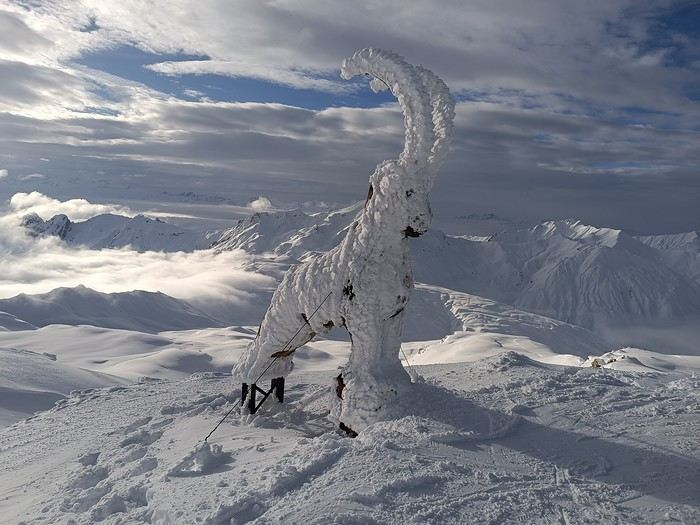
White as snow: February 2025 friendly photo contest
I could just as easily have written white as marble, white as salt, white as coconut milk...
This month’s theme is white in every way imaginable.
Not just a little touch in the top right corner of the photo!
Nor a white square on a white background...
Also, black and white won’t be allowed.
For the rest, I’ll let the voters be the sole judges of whether the theme is respected!
I’m now borrowing Ragamuffin’s wording for the rules:
Every VF member can submit up to 3 photos, until Sunday, February 23 at 11:59 PM, Clermont-Ferrand time.
Each photo must be posted in a separate message, with its number (1, 2, or 3).
Don’t forget to add a little explanation (comment, location, etc.).
Voting:
Every VF member can vote for the 3 photos they think are the best, based on their own criteria and the theme.
Voting will take place from Monday, February 24 to Friday, February 28 at 2:00 PM, Clermont-Ferrand time.
The chosen photos should be listed in order of preference: - 1st photo: 3 points - 2nd: 2 points - 3rd: 1 point
The winner is the author of the photo with the most points.
Results will be published on February 28 in the late afternoon. In case of a tie, the number of first-place votes will decide. The winner will have the honor of organizing March’s contest.
Photos that have already been nominated (1st, 2nd, or 3rd) in another contest are not eligible to participate in this one.
The off-topic contest discussion is happening here
This month’s theme is white in every way imaginable.
Not just a little touch in the top right corner of the photo!
Nor a white square on a white background...
Also, black and white won’t be allowed.
For the rest, I’ll let the voters be the sole judges of whether the theme is respected!
I’m now borrowing Ragamuffin’s wording for the rules:
Every VF member can submit up to 3 photos, until Sunday, February 23 at 11:59 PM, Clermont-Ferrand time.
Each photo must be posted in a separate message, with its number (1, 2, or 3).
Don’t forget to add a little explanation (comment, location, etc.).
Voting:
Every VF member can vote for the 3 photos they think are the best, based on their own criteria and the theme.
Voting will take place from Monday, February 24 to Friday, February 28 at 2:00 PM, Clermont-Ferrand time.
The chosen photos should be listed in order of preference: - 1st photo: 3 points - 2nd: 2 points - 3rd: 1 point
The winner is the author of the photo with the most points.
Results will be published on February 28 in the late afternoon. In case of a tie, the number of first-place votes will decide. The winner will have the honor of organizing March’s contest.
Photos that have already been nominated (1st, 2nd, or 3rd) in another contest are not eligible to participate in this one.
The off-topic contest discussion is happening here
Easy trek in Nepal for two older gentlemen
Hello,
A few years ago, I visited Nepal. I have wonderful memories of it. My friend (77) and I (73) would like to go back. We’re still in good shape! But let’s not exaggerate either. So, we’re looking for a relaxed trek in the mid-mountains, in touch with the local people, passing near monasteries, and with beautiful views of the peaks. And no agencies!
Can you give us some tips?
Thanks a million
Circuit au Népal en avril pour 18 jours sur place sans trek
Bonjour,
je devais partir en Chine avec mon fils de 22 ans du 1er au 20 avril mais, évidemment, nous nous préparons à annuler (d'autant que c'était dans les régions juste au nord du Hubei). Du coup, nous cherchons à pivoter parce qu'on les attend depuis un moment ces vacances... Nous sommes bien tentés par le Népal. J'ai commencé à regarder les vols, ça semble jouable avec Air India à peu près sur les mêmes dates.
Un gros mois pour tout réorganiser, pas peur...
Sur les formalités, le routard signale qu'on peut télécharger un truc en ligne mais qu'il faut régler à l'arrivée en dollars, le MAE signale qu'on peut aussi passer au consulat. C'est pas très clair de comprendre quelle est la solution la plus facile... Votre avis ?
Concernant le contenu, on est plutôt tournés ambiance, culture, etc. On était au Yunnan l'an dernier et les hautes terres autour de Shangri-Là nous ont bien plût. Nous allons au Sichuan cet été (si...) et nous allons aller aussi sur les contreforts de l'Himalaya. On a fait des marches (20 km) à 3.000m et c'était agréable mais on ne se sent pas à faire une marche de plusieurs jours.
Sur le circuit, si on suppose qu'on arrive le 2 et qu'on repart le 19, ça doit pouvoir faire deux sous-circuits : Un circuit Katmandou-Bandipur Pokhara - Lumbini - Chitwan un circuit dans la vallée de Katmandou (qui semble déjà très riche)
Et, visiblement, coup de bol, on aura l'occasion de vivre le nouvel an ?
Qu'en pensez-vous ?
Un gros mois pour tout réorganiser, pas peur...
Sur les formalités, le routard signale qu'on peut télécharger un truc en ligne mais qu'il faut régler à l'arrivée en dollars, le MAE signale qu'on peut aussi passer au consulat. C'est pas très clair de comprendre quelle est la solution la plus facile... Votre avis ?
Concernant le contenu, on est plutôt tournés ambiance, culture, etc. On était au Yunnan l'an dernier et les hautes terres autour de Shangri-Là nous ont bien plût. Nous allons au Sichuan cet été (si...) et nous allons aller aussi sur les contreforts de l'Himalaya. On a fait des marches (20 km) à 3.000m et c'était agréable mais on ne se sent pas à faire une marche de plusieurs jours.
Sur le circuit, si on suppose qu'on arrive le 2 et qu'on repart le 19, ça doit pouvoir faire deux sous-circuits : Un circuit Katmandou-Bandipur Pokhara - Lumbini - Chitwan un circuit dans la vallée de Katmandou (qui semble déjà très riche)
Et, visiblement, coup de bol, on aura l'occasion de vivre le nouvel an ?
Qu'en pensez-vous ?
Voyage au Népal, région du Mustang et randonnée à cheval
Bonjour à tous,
Ma femme et moi partons au Népal pendant 18 jours en mars et aimerions savoir si vous aviez quelques conseils à nous donner! :-) (choses pratiques à savoir, immanquables à voir, à visiter, ...)
Egalement nous souhaiterons aller dans le Mustang. Cela semble compliqué de s'y rendre... Auriez-vous des conseils à nous donner? Idéalement nous aimerions faire une rando à cheval, si vous avez des plans nous sommes preneurs!
Merci beaucoup d'avance pour vos conseils!!!
Arthur
Ma femme et moi partons au Népal pendant 18 jours en mars et aimerions savoir si vous aviez quelques conseils à nous donner! :-) (choses pratiques à savoir, immanquables à voir, à visiter, ...)
Egalement nous souhaiterons aller dans le Mustang. Cela semble compliqué de s'y rendre... Auriez-vous des conseils à nous donner? Idéalement nous aimerions faire une rando à cheval, si vous avez des plans nous sommes preneurs!
Merci beaucoup d'avance pour vos conseils!!!
Arthur
Recherche de treks alternatifs au Népal
Amis randonneurs, bonjour.
Même si je ne suis pas bavard sur ce forum, j'y picore régulièrement quelques informations intéressantes car j'aime bourlinguer un peu partout.
Ma question s'avère être finalement précise, internet et les quelques bouquins ne m'ont pas vraiment aidé. Je m'en remets donc à vous ! Nous cherchons un trek avec quelques contraintes, techniques et financières.
Nous sommes au coeur d'un long voyage et arriverons au Nepal debut Mars.
Nous nous heurtons sur le choix d'un trek pour mi mars, respectant au mieux le cahier des charges suivant :
- Environ 10/13 jours (comprenant éventuellement 1 ou 2j de repos) - Fréquentation plutôt basse (pas les autouroutes de l'Anapurna) - Altitude relativement élevée, dont passage de cols de +/- 5000m mais pas tellement plus car sans équipement crampon-piolet. - Pas de budget, donc sans guide ni avion, ni permis trop onereux (comme le Mustang 😢) - Pas en autonomie, donc Tea Stall ou auberges tout du long pour y dormir et se restaurer. - Niveau de difficulté "moyen ou moyen+". 6h de marche environ par jour. Ma chère et tendre, bien que vaillante, n'a jamais fait de haute montagne, mais plutôt des randos classiques. Je precise que nous nous adapterons respectueusement à son rythme pour lui eviter toute pression.
J'exclue ainsi les:
Lantang - Helambu: déjà fait, même s'il collait bien aux exigences ci dessus Everest camp de base: billet d'avion hors budget pour nous. Anapurna: l'autoroute que je cherche à fuir, malgré sa beauté. J'ai lu quelques chemins alternatifs mais je reste très dubitatif. Mustang: permis trop onéreux 😥 Mansalu: il semblait convenir parfaitement mais aux dernières nouvelles un guide y est obligatoire, ce que malheureusement nous ne pouvons nous permettre. Poon Hill: trop court et pas assez exigeant Kanchenjunga: trop exigeant (!) et guides obligatoires. Gokyo: me tentait bien mais avion obligatoire car region de l'Everest.
Quelle alternative me proposeriez vous ?
Il est également possible d'enchaîner 2 treks consécutifs (comme pour le Langtang Helambu).Il y a bien le Mardi Himal + ABC mais j'ai peur de l'afflux de monde sur cette 2eme partie. Je me creuse la tête depuis déjà un bout de temps...
Vous remerciant chaleureusement pour votre aide.
Même si je ne suis pas bavard sur ce forum, j'y picore régulièrement quelques informations intéressantes car j'aime bourlinguer un peu partout.
Ma question s'avère être finalement précise, internet et les quelques bouquins ne m'ont pas vraiment aidé. Je m'en remets donc à vous ! Nous cherchons un trek avec quelques contraintes, techniques et financières.
Nous sommes au coeur d'un long voyage et arriverons au Nepal debut Mars.
Nous nous heurtons sur le choix d'un trek pour mi mars, respectant au mieux le cahier des charges suivant :
- Environ 10/13 jours (comprenant éventuellement 1 ou 2j de repos) - Fréquentation plutôt basse (pas les autouroutes de l'Anapurna) - Altitude relativement élevée, dont passage de cols de +/- 5000m mais pas tellement plus car sans équipement crampon-piolet. - Pas de budget, donc sans guide ni avion, ni permis trop onereux (comme le Mustang 😢) - Pas en autonomie, donc Tea Stall ou auberges tout du long pour y dormir et se restaurer. - Niveau de difficulté "moyen ou moyen+". 6h de marche environ par jour. Ma chère et tendre, bien que vaillante, n'a jamais fait de haute montagne, mais plutôt des randos classiques. Je precise que nous nous adapterons respectueusement à son rythme pour lui eviter toute pression.
J'exclue ainsi les:
Lantang - Helambu: déjà fait, même s'il collait bien aux exigences ci dessus Everest camp de base: billet d'avion hors budget pour nous. Anapurna: l'autoroute que je cherche à fuir, malgré sa beauté. J'ai lu quelques chemins alternatifs mais je reste très dubitatif. Mustang: permis trop onéreux 😥 Mansalu: il semblait convenir parfaitement mais aux dernières nouvelles un guide y est obligatoire, ce que malheureusement nous ne pouvons nous permettre. Poon Hill: trop court et pas assez exigeant Kanchenjunga: trop exigeant (!) et guides obligatoires. Gokyo: me tentait bien mais avion obligatoire car region de l'Everest.
Quelle alternative me proposeriez vous ?
Il est également possible d'enchaîner 2 treks consécutifs (comme pour le Langtang Helambu).Il y a bien le Mardi Himal + ABC mais j'ai peur de l'afflux de monde sur cette 2eme partie. Je me creuse la tête depuis déjà un bout de temps...
Vous remerciant chaleureusement pour votre aide.
Trek Gokyo - Camp de base de l'Everest
Bonjour,
Quelques questions pratiques !
1 - Existe t-il des bus Kathmandu - Salleri ou Kathmandu - Phaplu ? Si oui à quelles fréquences et au départ de quelle gare de bus ? Temps de trajet ? Tarifs ?
2 - Chola pass fin décembre avec micro-spike envisageable ou non ? Idem pour Renjo La ?
3 - Est-il possible de louer un très bon duvet (- 20 ° C ) et un sac à dos de qualité à Kathmandu ? Quel magasin ?
4 - Quel budget envisager au dessus de Namche ( lodge + repas / jour ) ? Mon dernier treck dans ce coin date de 2016, j'imagine que les prix ont augmenté !
5 - Le Tourist Service Center de KTM qui délivre la Tim's card est il ouvert le dimanche ?
Merci d'avance pour vos précisions.
Ed
Quelques questions pratiques !
1 - Existe t-il des bus Kathmandu - Salleri ou Kathmandu - Phaplu ? Si oui à quelles fréquences et au départ de quelle gare de bus ? Temps de trajet ? Tarifs ?
2 - Chola pass fin décembre avec micro-spike envisageable ou non ? Idem pour Renjo La ?
3 - Est-il possible de louer un très bon duvet (- 20 ° C ) et un sac à dos de qualité à Kathmandu ? Quel magasin ?
4 - Quel budget envisager au dessus de Namche ( lodge + repas / jour ) ? Mon dernier treck dans ce coin date de 2016, j'imagine que les prix ont augmenté !
5 - Le Tourist Service Center de KTM qui délivre la Tim's card est il ouvert le dimanche ?
Merci d'avance pour vos précisions.
Ed
Acompte pour trek au Népal avec l'agence Napoléon trekking
Bonjour,
Je suis en train de m'engager pour un trek avec l'agence Napoléon trekking. Cette agence me demande un acompte, ce que je comprends parfaitement, mais ne me fournir qu'un code bancaire pour effectuer le virement, ce qui me ferait des frais bancaires exorbitants. Bien que cette agence soit réputée, je m'étonne que tous les clients précédents aient accepté ainsi d'enrichir les banques...
Certain trekkeurs sont-ils parti avec cette agence? Comment avez vous fait pour payer l'acompte?
Merci par avance pour vos informations.
Choix de 3 semaines en Chine: Yunnan ou ailleurs
Bonjour à tous, premier voyage en Chine en Septembre pour 20 j. Nous arriverons à Pékin avec retour Pekin. Je connais bien l'Asie du Sud Est que j'adore, ayant déjà visité le laos, cambodge, Myanmar et l'été dernier le Vietnam Nord.
A ce jour je me questionne sur un itinéraire de 3 semaines entre : -Pékin + Muraille de Chine et Yunan ou bien Pekin-Muraille-XIAN-PARC NATIONAL De ZHANGJIAJIE+ GUilin et Yang Shuo.
pOUR VOTRE information, nous n'aimons pas trop les mégalopoles et sommes plus intéressés par les endroits "cool" et ruraux.
Pouvez vous me venir en aide ?
En attendant vos réponses.
Cordialement
A ce jour je me questionne sur un itinéraire de 3 semaines entre : -Pékin + Muraille de Chine et Yunan ou bien Pekin-Muraille-XIAN-PARC NATIONAL De ZHANGJIAJIE+ GUilin et Yang Shuo.
pOUR VOTRE information, nous n'aimons pas trop les mégalopoles et sommes plus intéressés par les endroits "cool" et ruraux.
Pouvez vous me venir en aide ?
En attendant vos réponses.
Cordialement