Results for "Japon+souvenir+artisanat"
About 14,148 results.
More options
Many results are in French, the community’s main language. English translations are added over time.
Search results
Concours photo de mai 2020: "Défilés et Cortèges"
Salut à tou(te)s.
Gagnant du concours d'avril 2020 il m'échoit de vous proposer celui de mai 2020 :
En ce mois de mai propice aux défilés, surtout le 1er en temps normal (sans pandémie donc sans distanciation physique), je vous propose le sujet du concours de photo du mois « Défilés et Cortèges » avec les précautions suivantes :
Ce sera celui de participants au défilé en nombre, en extérieur, pour une cause explicite dans l'image proposée (pancarte ou slogan, costumes, décor...). Ce ne sera donc ni la déambulation d'une foule, même bigarrée, ni une file d'attente, mais un cortège de rue qu'il soit religieux, militaire, funéraire, festif, revendicatif, exprimant joie ou peine, colère ou détermination. La foule qui peut l'accompagner ne sera pas l'objet central de la photo mais son complément (prouvant son audience). Voir l'introduction de l'article Défilé sur Wikipédia : On l'aura compris : pas de défilé d'animaux, de chars, ni de roches fracturées : des gens qui se réunissent pour une cause explicite, affichant leurs costumes, leurs uniformes.
Exemples : Cortège du Palio de Sienne (août 2012) :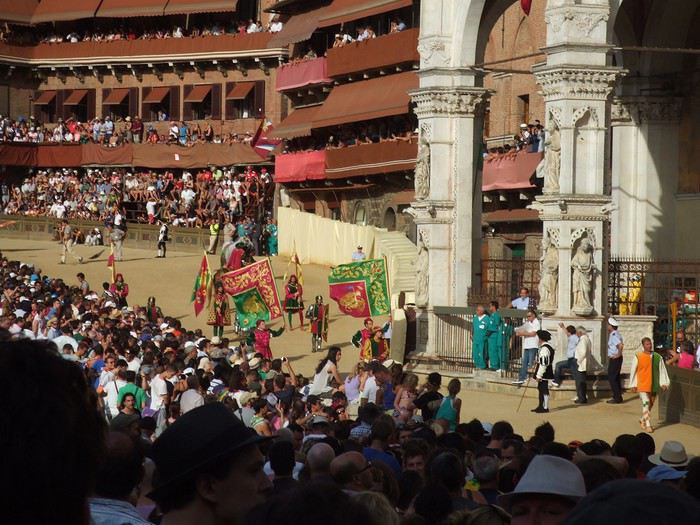
Fête des vignerons 2019 à Vevey, bout de fanfare :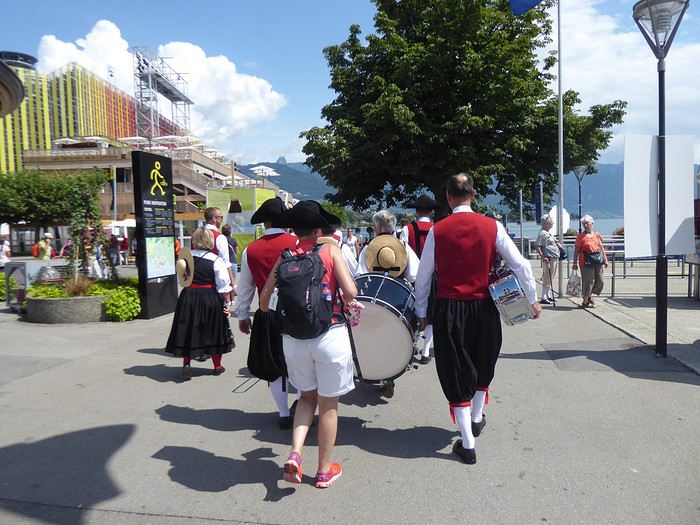
Fête des saintes patronnes de Santa Fiora (Toscane - juillet 2009). Toutes obédiences des autorités municipales à la fin de la procession :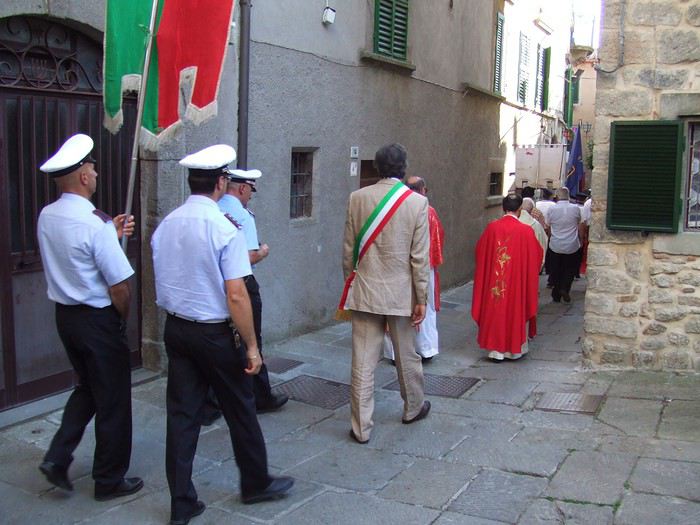
Participation Chaque participant(e) peut proposer jusqu'à 3 photos, et ce jusqu'au vendredi 22/05 à 20h00, heure de Paris. Chaque photo sera présentée dans un seul message, en indiquant son numéro (1, 2 ou 3). Pensez à ajouter une petite explication, commentaire, localisation, date de prise de vue.
Vote Chaque membre VF peut voter pour les 3 photos qu'il ou elle juge les meilleures selon ses propres critères et en tenant compte du thème.
Les votes se feront du samedi 23/05 au vendredi 29/05 à 20h00, heure de Paris. Les photos choisies seront citées dans l'ordre de préférence : - la 1re photo : 3 points - la 2e : 2 points - la 3e : 1 point
Un seul et unique vote pour 3 photos est accepté par membre.
Conclusion Le vainqueur est l'auteur de la photo ayant reçu le plus de points. Les résultats seront publiés le 30/05. En cas d'égalité, le nombre de premières places prévaudra. Le vainqueur aura l'honneur d'organiser le concours du mois de juin.
Le diaporama est là. La discussion est là
À vous de jouer !
En ce mois de mai propice aux défilés, surtout le 1er en temps normal (sans pandémie donc sans distanciation physique), je vous propose le sujet du concours de photo du mois « Défilés et Cortèges » avec les précautions suivantes :
Ce sera celui de participants au défilé en nombre, en extérieur, pour une cause explicite dans l'image proposée (pancarte ou slogan, costumes, décor...). Ce ne sera donc ni la déambulation d'une foule, même bigarrée, ni une file d'attente, mais un cortège de rue qu'il soit religieux, militaire, funéraire, festif, revendicatif, exprimant joie ou peine, colère ou détermination. La foule qui peut l'accompagner ne sera pas l'objet central de la photo mais son complément (prouvant son audience). Voir l'introduction de l'article Défilé sur Wikipédia : On l'aura compris : pas de défilé d'animaux, de chars, ni de roches fracturées : des gens qui se réunissent pour une cause explicite, affichant leurs costumes, leurs uniformes.
Exemples : Cortège du Palio de Sienne (août 2012) :
Fête des vignerons 2019 à Vevey, bout de fanfare :
Fête des saintes patronnes de Santa Fiora (Toscane - juillet 2009). Toutes obédiences des autorités municipales à la fin de la procession :
Participation Chaque participant(e) peut proposer jusqu'à 3 photos, et ce jusqu'au vendredi 22/05 à 20h00, heure de Paris. Chaque photo sera présentée dans un seul message, en indiquant son numéro (1, 2 ou 3). Pensez à ajouter une petite explication, commentaire, localisation, date de prise de vue.
Vote Chaque membre VF peut voter pour les 3 photos qu'il ou elle juge les meilleures selon ses propres critères et en tenant compte du thème.
Les votes se feront du samedi 23/05 au vendredi 29/05 à 20h00, heure de Paris. Les photos choisies seront citées dans l'ordre de préférence : - la 1re photo : 3 points - la 2e : 2 points - la 3e : 1 point
Un seul et unique vote pour 3 photos est accepté par membre.
Conclusion Le vainqueur est l'auteur de la photo ayant reçu le plus de points. Les résultats seront publiés le 30/05. En cas d'égalité, le nombre de premières places prévaudra. Le vainqueur aura l'honneur d'organiser le concours du mois de juin.
Le diaporama est là. La discussion est là
À vous de jouer !
Mais où donc est ce truc là? (5)
Bonjour
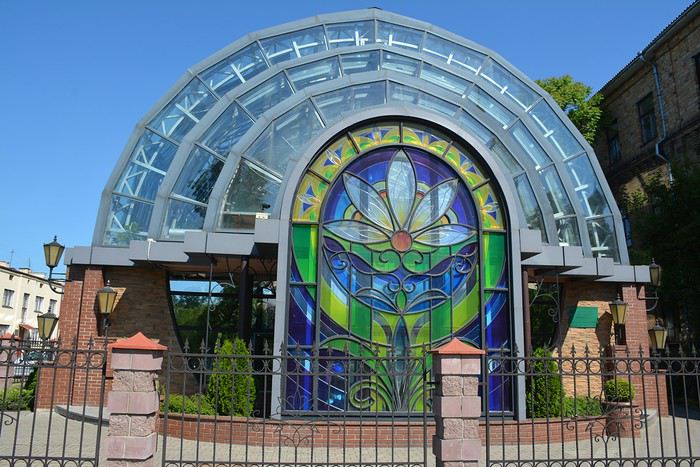
Où se trouve cette serre ?
En premier chercher le pays et ensuite la ville
Françoise
Costa prolonge l'annulation de ses croisières
Bonjour à tous,
Costa vient d'annoncer la prolongation de l'arrêt de ses croisières jusqu'au minimum 2 juin 20. Voici le détail et les dates de départ confirmés à ce jour :
BATEAUX CROISIÈRES ANNULÉES CROISIÈRES CONFIRMÉES Costa Smeralda Toutes les croisières jusqu’au 5/6 6/6 depuis Savona Costa Diadema Toutes les croisières jusqu’au 2/6 7/6 depuis Savona Costa Pacifica Toutes les croisières jusqu’au 4/6 5/6 depuis Genoa Costa Fascinosa Toutes les croisières jusqu’au 30/5 5/6 depuis Warnemunde Costa Favolosa Toutes les croisières jusqu’au 26/5 5/6 depuis Kiel Costa Magica Toutes les croisières jusqu’au 30/5 6/6 depuis Stockholm Costa Fortuna Toutes les croisières jusqu’au 8/6 9/6 depuis Ijmuiden Costa Luminosa Toutes les croisières jusqu’au 1/6 7/6 depuis Venice Costa Victoria Toutes les croisières jusqu’au 31/5 2/6 depuis Savona Costa Mediterranea Toutes les croisières jusqu’au 30/5 6/6 depuis Bari Costa Deliziosa Toutes les croisières jusqu’au 5/6 6/6 depuis Venice
Costa vient d'annoncer la prolongation de l'arrêt de ses croisières jusqu'au minimum 2 juin 20. Voici le détail et les dates de départ confirmés à ce jour :
BATEAUX CROISIÈRES ANNULÉES CROISIÈRES CONFIRMÉES Costa Smeralda Toutes les croisières jusqu’au 5/6 6/6 depuis Savona Costa Diadema Toutes les croisières jusqu’au 2/6 7/6 depuis Savona Costa Pacifica Toutes les croisières jusqu’au 4/6 5/6 depuis Genoa Costa Fascinosa Toutes les croisières jusqu’au 30/5 5/6 depuis Warnemunde Costa Favolosa Toutes les croisières jusqu’au 26/5 5/6 depuis Kiel Costa Magica Toutes les croisières jusqu’au 30/5 6/6 depuis Stockholm Costa Fortuna Toutes les croisières jusqu’au 8/6 9/6 depuis Ijmuiden Costa Luminosa Toutes les croisières jusqu’au 1/6 7/6 depuis Venice Costa Victoria Toutes les croisières jusqu’au 31/5 2/6 depuis Savona Costa Mediterranea Toutes les croisières jusqu’au 30/5 6/6 depuis Bari Costa Deliziosa Toutes les croisières jusqu’au 5/6 6/6 depuis Venice
Vils rébus et rébus de villes, saison 2
Bon, avant de vous proposer une nouvelle série d'énigmes, vous trouverez ci-dessous un rappel de tous les épisodes précédents., qui vous permettra de vous entraîner, si besoin, évidemment, il y avait. Les solutions se trouvent au fil des messages.
https://voyageforum.com/v.f?post=6770753;a=6770753 https://voyageforum.com/v.f?post=7089406;a=7089406 https://voyageforum.com/v.f?post=7233679;a=7233679 https://voyageforum.com/v.f?post=5903551;a=5903551 (il manque des images) https://voyageforum.com/v.f?post=5906497;a=5906497 https://voyageforum.com/v.f?post=5911990;a=5911990 https://voyageforum.com/v.f?post=6631536;a=6631536
Je ne pensais pas en avoir fait tant que ça, mais bon, les faits sont là. Je reviens pour la nouvelle série inédite.
https://voyageforum.com/v.f?post=6770753;a=6770753 https://voyageforum.com/v.f?post=7089406;a=7089406 https://voyageforum.com/v.f?post=7233679;a=7233679 https://voyageforum.com/v.f?post=5903551;a=5903551 (il manque des images) https://voyageforum.com/v.f?post=5906497;a=5906497 https://voyageforum.com/v.f?post=5911990;a=5911990 https://voyageforum.com/v.f?post=6631536;a=6631536
Je ne pensais pas en avoir fait tant que ça, mais bon, les faits sont là. Je reviens pour la nouvelle série inédite.
Adventures of a Bygone Era: The Philippines in 1984
After several discussions on VF about travel journals from the Philippines, I decided to write this curiosity: a trip report from a journey made in 1984, when traveling to the Philippines was still an adventure.
A curiosity because writing a travel journal about a trip 35 years later isn’t common, but also (mostly?) because exploring the Philippines at that time had little in common with traveling there today.
Obviously, I’ve forgotten a number of facts, most of the details, but with the help of a few notes from that time and a stack of slides (yes, there was life before digital 😊), many memories came back and added to the highlights I’d never forgotten. The scanned slides aren’t always great quality, but there are still quite a few to brighten up this chatter. Back then, we didn’t snap photos like we do now—film was too expensive—so I don’t have pictures of every place we visited... too bad, comparing some of those spots to how they look today would’ve been interesting.
Why "Adventures"? Why call it "Adventures" in the Philippines in 1984, a word so often used for a simple exotic trip? - Because the lack of information (no *Guide du Routard*, no *Lonely Planet*, no *Michelin Guide*, nothing, and obviously no internet) gave this trip what’s at the heart of adventure: the unknown. - Because the political situation made the stay sometimes dangerous. - Because transportation conditions were always epic, often perilous. - Because the question of where we’d spend the night came up almost every evening. - And for... quite a few other reasons.
That said, we weren’t exactly explorers!
Why the Philippines? First of all, why go to the Philippines in 1984—a country not exactly set up for tourism and about which we knew very little? How could we get an idea of the beauty of the Philippines and its points of interest when we had no guides or photos?
The idea came to us from Thailand a year earlier, during our first long-haul trip. After touring the north of the country, we met a Frenchman living in Phuket, where there were only a few tourists in Patong, with just a few small hotels and guesthouses. Kata and Karon had no buildings or roads, Rawai only had three palm-thatched bungalows, including ours, and the other islands were unknown to tourists. There was plenty to discover, and we wanted to return to this beautiful country... but the Frenchman made us dream about the Philippines—a country to explore, with wild landscapes.
Long evenings of discussion over multiple Sprite-Mekong cocktails (what memories of those headaches!) finally convinced us we had to go to the Philippines.
Episode 0: Before Departure The decision was made: we’d go to the Philippines in May 1984. Our friends and family were surprised when we announced we were going on vacation to the Philippines (a bit like saying today we were going paddleboarding in the Kerguelen Islands 🤪).
These days, preparing for each of our trips takes long evenings of research, planning, and noting down good addresses... etc. But for the Philippines in 1984, preparation was quick: we had very little information about the country, we were leaving almost at random, and the discovery would only be more exciting.
We still had a few bits of info gathered here and there: the rice terraces in northern Luzon, volcanoes, Negros where we were supposed to visit an acquaintance, Cebu and its marine life (we ended up going elsewhere), and absolutely avoid Mindanao, which was practically at war with the regime. That was about it, but it was already a great itinerary.
Nothing was organized in advance; we’d see day by day. We had no idea about travel times or even the existence of transportation options. The main (and sometimes only) way to connect two islands was by overloaded, rusty ferry. Only the big cities had airports.
Let’s Go: Episode 1: Paris to Manila My travel journals always start after arriving at the airport—the Europe-to-“Other Continent” trip isn’t interesting—but the flight to the Philippines was already an adventure, so I’ll make an exception.
This was the era when only a few Asian airlines were on par with Western ones: Thai, Singapore Airlines, and Philippine Airlines. They had beautiful, brand-new planes, and to attract customers (almost exclusively “businessmen”) from the usual airlines (Air France, Lufthansa, British Airways), there was opulence on board: unlimited champagne, all sorts of cocktails... Compared to today’s long-haul flights, there was still one small difference: no personal screens, just one screen at the front of the cabin with one mandatory movie. And I don’t know why, but we only got James Bond films, both ways... that must’ve been the trend at the time.
The tourism boom to Southeast Asia hadn’t started yet, and the “Asian Tigers” weren’t a thing, so there weren’t many business trips. That meant long-haul flights made stops everywhere to fill the planes. Our Philippine Airlines Boeing 747 left London, picked us up in Paris, then stopped in Frankfurt to take on a few Germans. I don’t know why we then made a stop in Dubai—a totally exotic place at the time. There was nothing to do there... things have changed a lot since. It was a small town lost in the desert. The airport was tiny, with just one or two buildings and a supermarket. During the stopover, everyone had to get off the plane and walk to the supermarket. Photo and electronic equipment were dirt cheap—I guess that was the only reason for the stop. Maybe it was their first commercial move. Emirates didn’t exist yet, as I checked online, but anyway, the idea that such a remote place could have its own airline was unthinkable.
Online, I found this photo of Dubai Airport in 1980. Anyone who’s transited through today’s massive airport with its rows of A380s will appreciate it: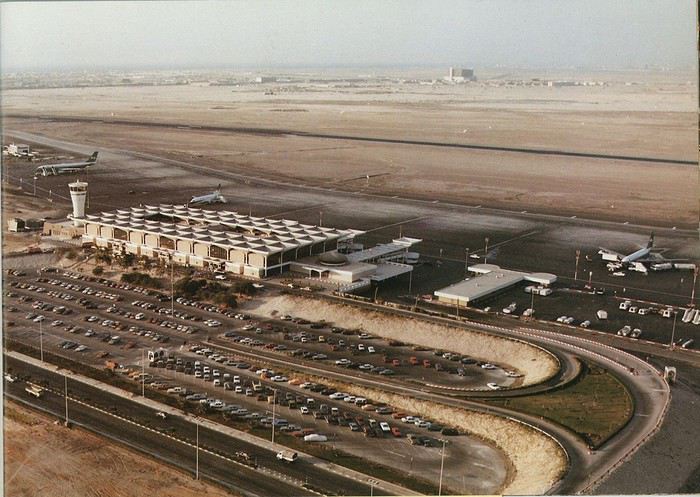
Next stop: New Delhi to drop off some Europeans and pick up a few Indians, and finally, the terminus: Manila. I don’t remember how long the trip took with its five stops—an unimaginable journey today. Despite all those stops to fill the plane, there was still enough space to stretch out on the four center seats of the 747, something that never happens these days despite all the flights in every direction.
So here we are, finally at Manila Airport around midnight.
Episode 1: Manila and Baguio To start, a quick note on the political and economic situation in the Philippines in 1984, which had consequences for us as tourists, as we’d soon realize upon arrival.
After several centuries of Spanish colonization, the Philippines became American at the start of the 20th century, then independent. In 1966, Marcos took power, and little by little, his regime sank into corruption and mismanagement, becoming a dictatorship with martial law, all for the benefit of his family and friends, who enriched themselves endlessly. The peak was the assassination of opposition leader Benigno Aquino in August 1983, which triggered harshly repressed protests. So we arrived a few months later in a very poor country, with omnipresent corruption and an extremely tense political situation, as we’d soon see for ourselves. Major protests took place in the main cities during our trip—I’ll come back to that. Two years later, Marcos fled to Hawaii after being forced out of power following rigged elections. This historical context explains a lot of the situations we found ourselves in over the following weeks.
Arriving in the middle of the night isn’t very cheerful. Manila was already a huge city with many slums, where you could find a few business hotels like the Hilton or Intercontinental—way out of our budget—and plenty of run-down hotels. Luckily, two Indians we’d chatted with on the plane offered to take us to their usual hotel. They came to Manila twice a year for business. We accepted their offer, relieved not to have to look for a place to stay in the middle of the night, figuring the address must be good since they came back every time... we were wrong 🙁
We left the airport and immediately got a taste of the local vibe when we got into the taxi: the police asked for our passports. We thought: what’s more normal than police in a dictatorship?
But that wasn’t it at all. Our two Indian friends explained that the police were noting our names along with the taxi number and time. Crime in Manila was so bad that the taxi driver would be held responsible if anything happened to us... welcome to the Philippines 😎 😎
Historically, the Philippines was a very violent country, where everything was settled with guns or machetes. Previous governments had banned carrying weapons, but Marcos later allowed the free sale and carrying of guns, and disputes were settled with pistols again (or worse, as we’d discover later). Since he’d released most of the criminals from prison to form a paramilitary militia at his service (I’ll talk about our encounter with these “heroes” later), it was pretty dangerous to go into many parts of Manila, where these “tonton macoutes” ruled.
We arrived at our hotel without incident... and then things started badly. The room was infested with big cockroaches—exactly what I hate most in those kinds of countries. No way to find another hotel at that hour. After the long flight, the urge to take a shower was so strong that we squeezed into the bathroom as best we could. After that, I don’t remember—I guess we must’ve fallen asleep exhausted under the sheets in the heat... air conditioning wasn’t widespread yet.
The next day, we just wanted to leave that dump as soon as possible. So we decided to head north right away, stopping in Baguio, and we’d visit Manila a bit on the way back.
When we stepped outside, we discovered a pretty run-down neighborhood with potholed streets. But we also discovered the jeepneys. They were everywhere, flooding the streets.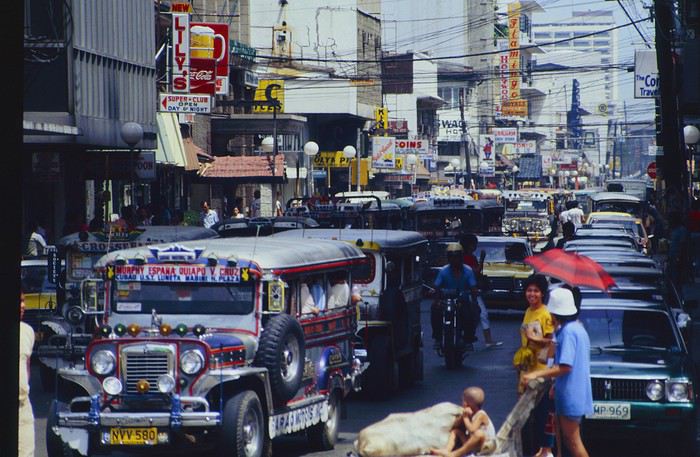
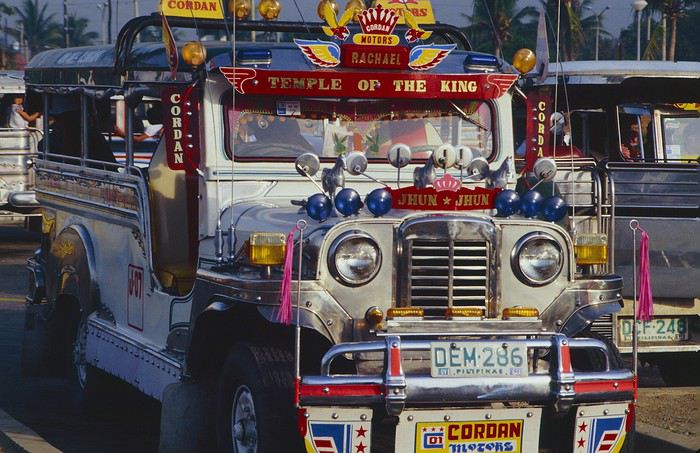
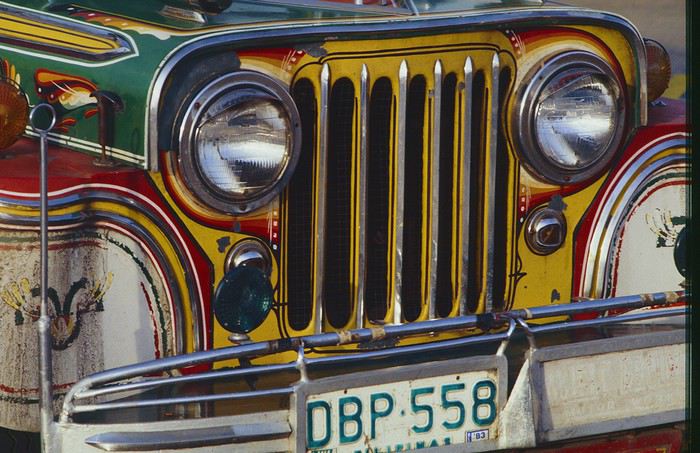
They had crazy sound systems, each one blasting louder than the last. The interiors were kitschy but fun. There weren’t many private cars—almost all transportation was by jeepney, with buses reserved for intercity trips.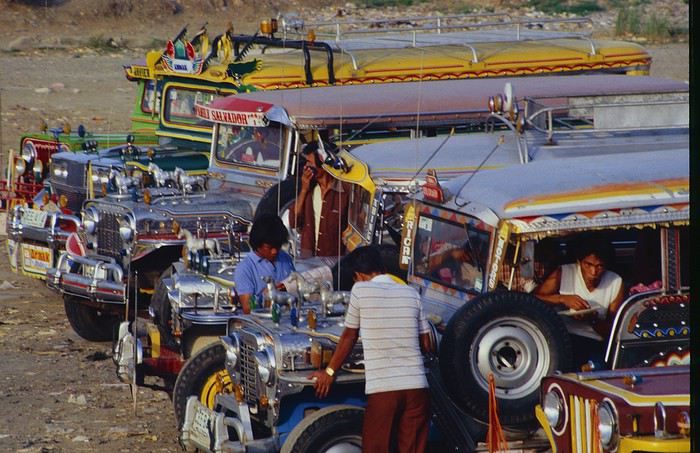
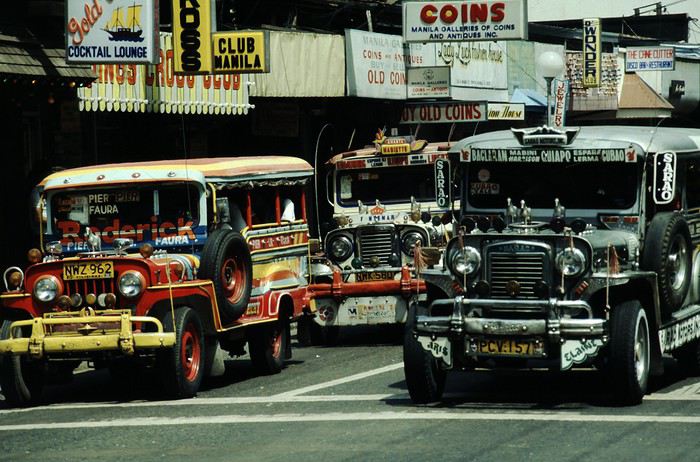
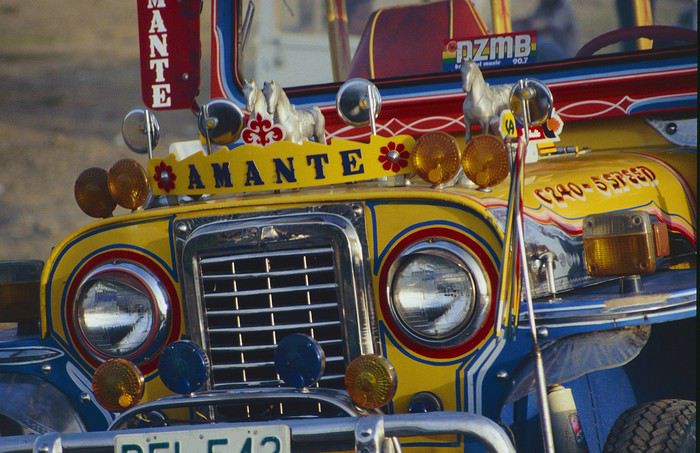
Before heading to the bus terminal for the north, somewhere on the outskirts of the city, we needed to exchange some money. I don’t remember how we ended up in a policeman’s jeep who offered his services: - Exchange money on the black market at a better rate than the banks. - Take us wherever we wanted, in this case, the bus terminal.
We accepted both offers (we’d still checked the official exchange rate from dollars to pesos). So we found ourselves in his jeep. After exchanging money, we left in his vehicle and stopped for gas. Without turning off the engine, he calmly smoked a cigarette while filling up. Since we were in a jeep with no doors or roof, we were ready to jump out if things went south, our travel bag in hand.
But we weren’t done with surprises yet. Once we left the small streets, we ended up in a neighborhood with wide avenues and not much traffic, which didn’t justify his incredible behavior. At every intersection, he made the sign of the cross, closed his eyes, and crossed without looking. I was more stunned than terrified! It wasn’t until we got out of the car later that I told Anne-Marie what had happened. I’d seen everything because the cop had put me in the front seat. Luckily, A-Marie hadn’t noticed anything from the back. Crossing Manila by trusting God rather than the rules of the road was ultimately effective. We were lucky—the trip was off to a good start. 🙂 🙂
We then passed through a neighborhood where slums stretched on for a while, and we left our policeman—friendly but a bit crazy—with relief.
A few hours by bus later, here we are in Baguio, cool in the mountains. My memories of Baguio are pretty fuzzy. I remember a small town. After some research while writing this journal, I found that the population was 120,000 in 1980. Given the population density in each home, that confirms my memory of a smallish town. Outside the “official” district with the president’s summer residence and government buildings, there were two or three paved streets with nice houses. The rest was very dirty and very poor, with lots of slums and dirt roads.
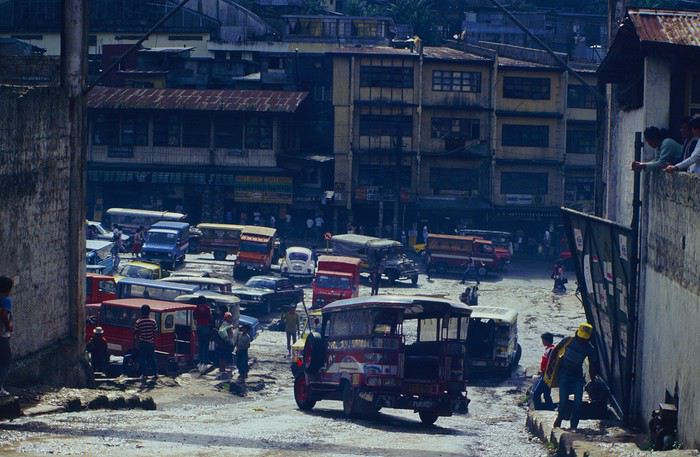
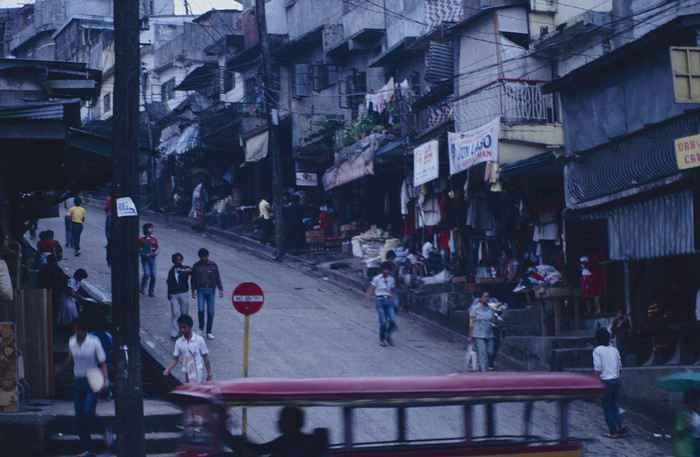
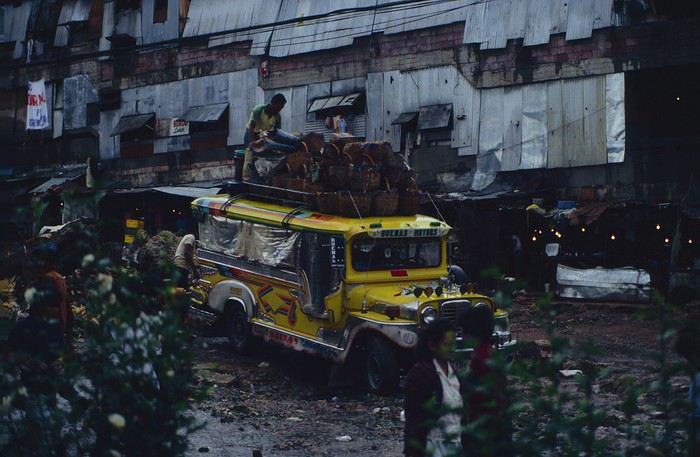
People we met on the street invited us to stay with them. These days, we wouldn’t just show up at strangers’ houses, which we should’ve done in Baguio—it would’ve saved us from an unimaginable and dangerous situation... which I won’t say anything about... !😊
The simple wooden house was on stilts at the edge of a hill with a view of the mountains. Since it was the start of the rainy season in a city that gets a lot of rain, we saw a lot of water. Our outings in town happened between downpours.
View from our lodging: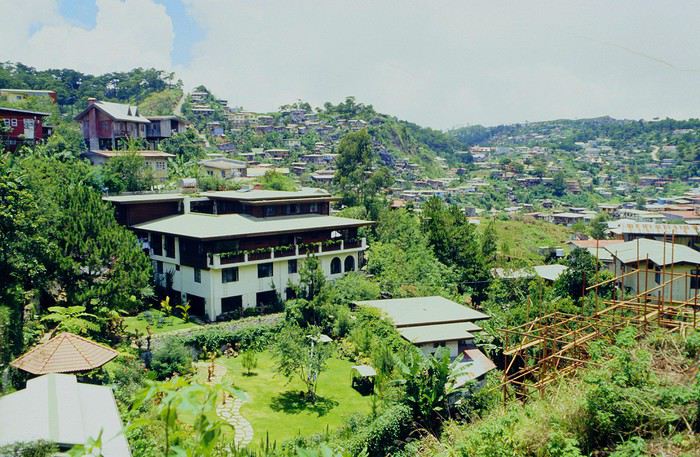
Episode 2: Baguio to Bontoc Aside from the situation briefly mentioned above, it was on the next leg to Bontoc that the adventure really began: an endless and dangerous road, a bus from another era, breathtaking landscapes, and surprising people.
We didn’t know the distance or how long it would take to get to Bontoc. When we arrived after about ten hours, we learned that Baguio to Bontoc was 140 km.
We got on a bus with wooden seats and settled in, two to a seat meant for two. As the bus filled up, passengers squeezed in three or four per seat, with chickens and baskets full of all sorts of things in the aisle. A little embarrassed, we didn’t know if we should squeeze in three on our seat. The seats were super tight (luckily, Filipinos are small), and I didn’t know where to put my legs given my height. I don’t remember if we stayed alone on our bench or if we ended up sharing with others.
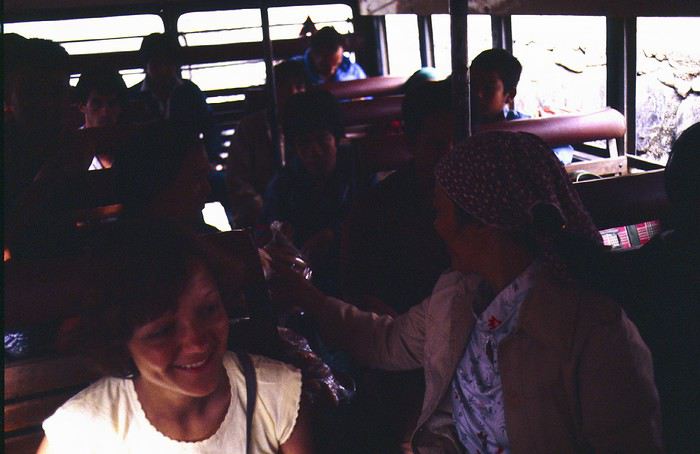
The “road” was a dirt track (or rather, a mud track) with endless turns. We held on as best we could to our slippery wooden seats—it was shaking in every direction. The woman behind us was carsick and throwing up... gross... but what were we doing there? Then we plunged into the Sierra Madre... just the name is dreamy!
Rice terraces started to appear: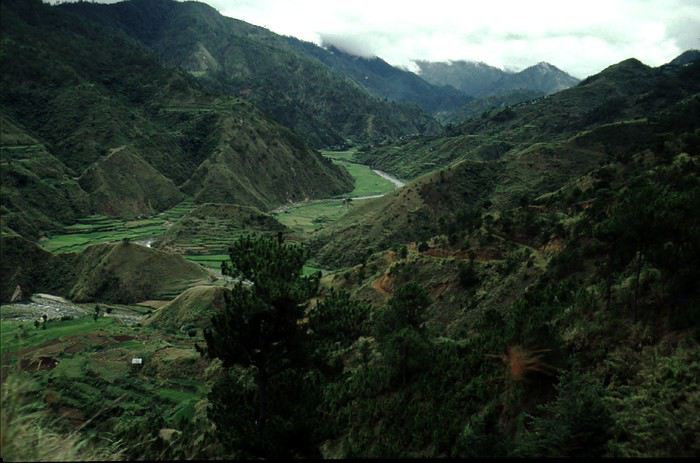
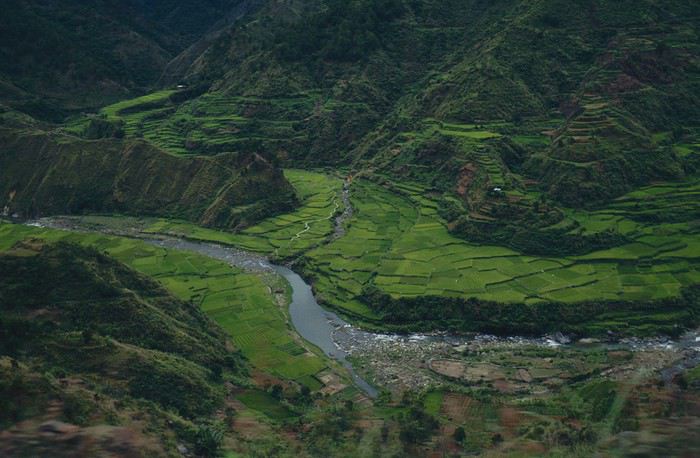
they took up more and more space along cliffs where we weren’t always reassured,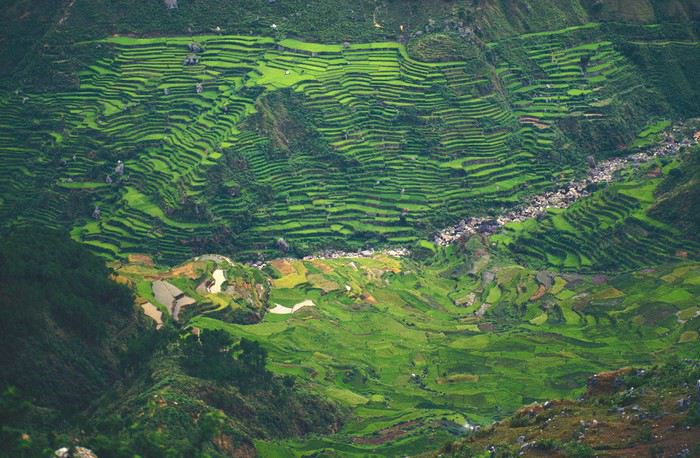
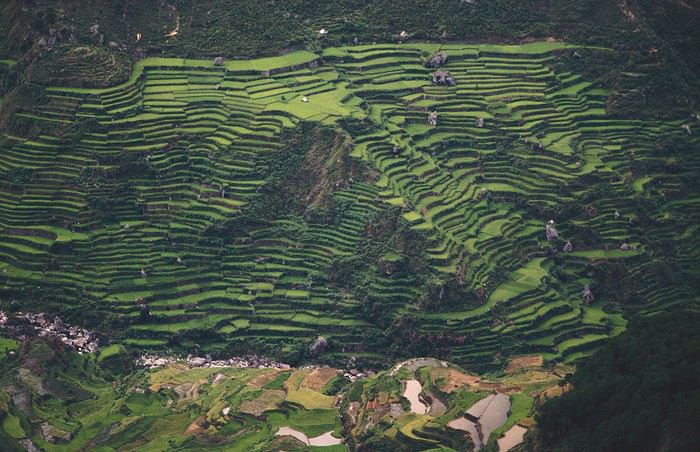
with lots of waterfalls (all that water had to go somewhere).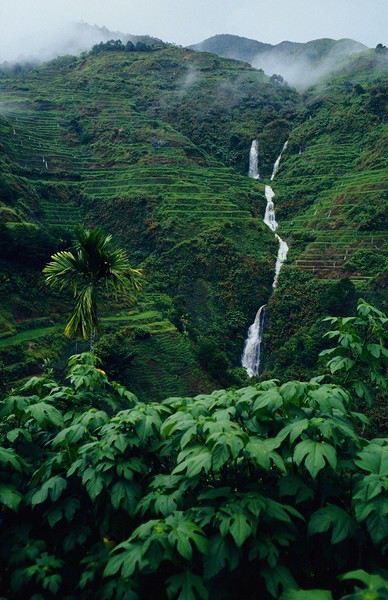
A few miserable villages stretched along the track, most often just a few houses balancing between the road and the drop. The bus stopped in every village—people got on or off and settled inside or on the roof. Street vendors offered their products to the bus passengers—a common sight in Asia, even today.
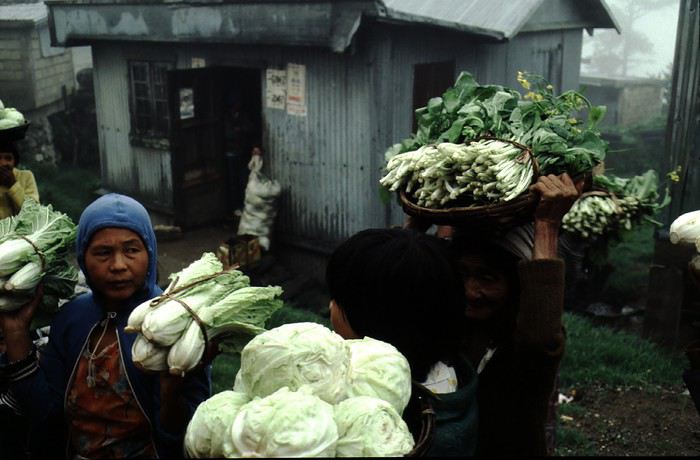
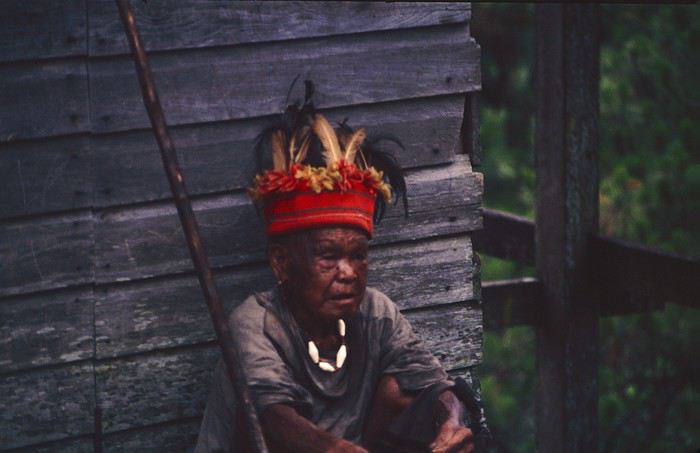
We were in another world—villagers were in loincloths, others had spears. The atmosphere was strange... but all good, we wanted exoticism, and we got it: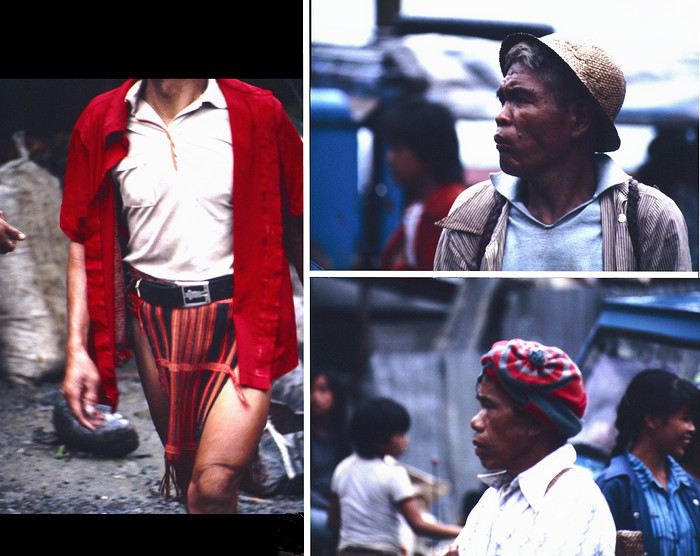
This so-called traditional outfit was everyday wear—it wasn’t for tourists since there weren’t any.
A curiosity because writing a travel journal about a trip 35 years later isn’t common, but also (mostly?) because exploring the Philippines at that time had little in common with traveling there today.
Obviously, I’ve forgotten a number of facts, most of the details, but with the help of a few notes from that time and a stack of slides (yes, there was life before digital 😊), many memories came back and added to the highlights I’d never forgotten. The scanned slides aren’t always great quality, but there are still quite a few to brighten up this chatter. Back then, we didn’t snap photos like we do now—film was too expensive—so I don’t have pictures of every place we visited... too bad, comparing some of those spots to how they look today would’ve been interesting.
Why "Adventures"? Why call it "Adventures" in the Philippines in 1984, a word so often used for a simple exotic trip? - Because the lack of information (no *Guide du Routard*, no *Lonely Planet*, no *Michelin Guide*, nothing, and obviously no internet) gave this trip what’s at the heart of adventure: the unknown. - Because the political situation made the stay sometimes dangerous. - Because transportation conditions were always epic, often perilous. - Because the question of where we’d spend the night came up almost every evening. - And for... quite a few other reasons.
That said, we weren’t exactly explorers!
Why the Philippines? First of all, why go to the Philippines in 1984—a country not exactly set up for tourism and about which we knew very little? How could we get an idea of the beauty of the Philippines and its points of interest when we had no guides or photos?
The idea came to us from Thailand a year earlier, during our first long-haul trip. After touring the north of the country, we met a Frenchman living in Phuket, where there were only a few tourists in Patong, with just a few small hotels and guesthouses. Kata and Karon had no buildings or roads, Rawai only had three palm-thatched bungalows, including ours, and the other islands were unknown to tourists. There was plenty to discover, and we wanted to return to this beautiful country... but the Frenchman made us dream about the Philippines—a country to explore, with wild landscapes.
Long evenings of discussion over multiple Sprite-Mekong cocktails (what memories of those headaches!) finally convinced us we had to go to the Philippines.
Episode 0: Before Departure The decision was made: we’d go to the Philippines in May 1984. Our friends and family were surprised when we announced we were going on vacation to the Philippines (a bit like saying today we were going paddleboarding in the Kerguelen Islands 🤪).
These days, preparing for each of our trips takes long evenings of research, planning, and noting down good addresses... etc. But for the Philippines in 1984, preparation was quick: we had very little information about the country, we were leaving almost at random, and the discovery would only be more exciting.
We still had a few bits of info gathered here and there: the rice terraces in northern Luzon, volcanoes, Negros where we were supposed to visit an acquaintance, Cebu and its marine life (we ended up going elsewhere), and absolutely avoid Mindanao, which was practically at war with the regime. That was about it, but it was already a great itinerary.
Nothing was organized in advance; we’d see day by day. We had no idea about travel times or even the existence of transportation options. The main (and sometimes only) way to connect two islands was by overloaded, rusty ferry. Only the big cities had airports.
Let’s Go: Episode 1: Paris to Manila My travel journals always start after arriving at the airport—the Europe-to-“Other Continent” trip isn’t interesting—but the flight to the Philippines was already an adventure, so I’ll make an exception.
This was the era when only a few Asian airlines were on par with Western ones: Thai, Singapore Airlines, and Philippine Airlines. They had beautiful, brand-new planes, and to attract customers (almost exclusively “businessmen”) from the usual airlines (Air France, Lufthansa, British Airways), there was opulence on board: unlimited champagne, all sorts of cocktails... Compared to today’s long-haul flights, there was still one small difference: no personal screens, just one screen at the front of the cabin with one mandatory movie. And I don’t know why, but we only got James Bond films, both ways... that must’ve been the trend at the time.
The tourism boom to Southeast Asia hadn’t started yet, and the “Asian Tigers” weren’t a thing, so there weren’t many business trips. That meant long-haul flights made stops everywhere to fill the planes. Our Philippine Airlines Boeing 747 left London, picked us up in Paris, then stopped in Frankfurt to take on a few Germans. I don’t know why we then made a stop in Dubai—a totally exotic place at the time. There was nothing to do there... things have changed a lot since. It was a small town lost in the desert. The airport was tiny, with just one or two buildings and a supermarket. During the stopover, everyone had to get off the plane and walk to the supermarket. Photo and electronic equipment were dirt cheap—I guess that was the only reason for the stop. Maybe it was their first commercial move. Emirates didn’t exist yet, as I checked online, but anyway, the idea that such a remote place could have its own airline was unthinkable.
Online, I found this photo of Dubai Airport in 1980. Anyone who’s transited through today’s massive airport with its rows of A380s will appreciate it:
Next stop: New Delhi to drop off some Europeans and pick up a few Indians, and finally, the terminus: Manila. I don’t remember how long the trip took with its five stops—an unimaginable journey today. Despite all those stops to fill the plane, there was still enough space to stretch out on the four center seats of the 747, something that never happens these days despite all the flights in every direction.
So here we are, finally at Manila Airport around midnight.
Episode 1: Manila and Baguio To start, a quick note on the political and economic situation in the Philippines in 1984, which had consequences for us as tourists, as we’d soon realize upon arrival.
After several centuries of Spanish colonization, the Philippines became American at the start of the 20th century, then independent. In 1966, Marcos took power, and little by little, his regime sank into corruption and mismanagement, becoming a dictatorship with martial law, all for the benefit of his family and friends, who enriched themselves endlessly. The peak was the assassination of opposition leader Benigno Aquino in August 1983, which triggered harshly repressed protests. So we arrived a few months later in a very poor country, with omnipresent corruption and an extremely tense political situation, as we’d soon see for ourselves. Major protests took place in the main cities during our trip—I’ll come back to that. Two years later, Marcos fled to Hawaii after being forced out of power following rigged elections. This historical context explains a lot of the situations we found ourselves in over the following weeks.
Arriving in the middle of the night isn’t very cheerful. Manila was already a huge city with many slums, where you could find a few business hotels like the Hilton or Intercontinental—way out of our budget—and plenty of run-down hotels. Luckily, two Indians we’d chatted with on the plane offered to take us to their usual hotel. They came to Manila twice a year for business. We accepted their offer, relieved not to have to look for a place to stay in the middle of the night, figuring the address must be good since they came back every time... we were wrong 🙁
We left the airport and immediately got a taste of the local vibe when we got into the taxi: the police asked for our passports. We thought: what’s more normal than police in a dictatorship?
But that wasn’t it at all. Our two Indian friends explained that the police were noting our names along with the taxi number and time. Crime in Manila was so bad that the taxi driver would be held responsible if anything happened to us... welcome to the Philippines 😎 😎
Historically, the Philippines was a very violent country, where everything was settled with guns or machetes. Previous governments had banned carrying weapons, but Marcos later allowed the free sale and carrying of guns, and disputes were settled with pistols again (or worse, as we’d discover later). Since he’d released most of the criminals from prison to form a paramilitary militia at his service (I’ll talk about our encounter with these “heroes” later), it was pretty dangerous to go into many parts of Manila, where these “tonton macoutes” ruled.
We arrived at our hotel without incident... and then things started badly. The room was infested with big cockroaches—exactly what I hate most in those kinds of countries. No way to find another hotel at that hour. After the long flight, the urge to take a shower was so strong that we squeezed into the bathroom as best we could. After that, I don’t remember—I guess we must’ve fallen asleep exhausted under the sheets in the heat... air conditioning wasn’t widespread yet.
The next day, we just wanted to leave that dump as soon as possible. So we decided to head north right away, stopping in Baguio, and we’d visit Manila a bit on the way back.
When we stepped outside, we discovered a pretty run-down neighborhood with potholed streets. But we also discovered the jeepneys. They were everywhere, flooding the streets.
They had crazy sound systems, each one blasting louder than the last. The interiors were kitschy but fun. There weren’t many private cars—almost all transportation was by jeepney, with buses reserved for intercity trips.
Before heading to the bus terminal for the north, somewhere on the outskirts of the city, we needed to exchange some money. I don’t remember how we ended up in a policeman’s jeep who offered his services: - Exchange money on the black market at a better rate than the banks. - Take us wherever we wanted, in this case, the bus terminal.
We accepted both offers (we’d still checked the official exchange rate from dollars to pesos). So we found ourselves in his jeep. After exchanging money, we left in his vehicle and stopped for gas. Without turning off the engine, he calmly smoked a cigarette while filling up. Since we were in a jeep with no doors or roof, we were ready to jump out if things went south, our travel bag in hand.
But we weren’t done with surprises yet. Once we left the small streets, we ended up in a neighborhood with wide avenues and not much traffic, which didn’t justify his incredible behavior. At every intersection, he made the sign of the cross, closed his eyes, and crossed without looking. I was more stunned than terrified! It wasn’t until we got out of the car later that I told Anne-Marie what had happened. I’d seen everything because the cop had put me in the front seat. Luckily, A-Marie hadn’t noticed anything from the back. Crossing Manila by trusting God rather than the rules of the road was ultimately effective. We were lucky—the trip was off to a good start. 🙂 🙂
We then passed through a neighborhood where slums stretched on for a while, and we left our policeman—friendly but a bit crazy—with relief.
A few hours by bus later, here we are in Baguio, cool in the mountains. My memories of Baguio are pretty fuzzy. I remember a small town. After some research while writing this journal, I found that the population was 120,000 in 1980. Given the population density in each home, that confirms my memory of a smallish town. Outside the “official” district with the president’s summer residence and government buildings, there were two or three paved streets with nice houses. The rest was very dirty and very poor, with lots of slums and dirt roads.
People we met on the street invited us to stay with them. These days, we wouldn’t just show up at strangers’ houses, which we should’ve done in Baguio—it would’ve saved us from an unimaginable and dangerous situation... which I won’t say anything about... !😊
The simple wooden house was on stilts at the edge of a hill with a view of the mountains. Since it was the start of the rainy season in a city that gets a lot of rain, we saw a lot of water. Our outings in town happened between downpours.
View from our lodging:
Episode 2: Baguio to Bontoc Aside from the situation briefly mentioned above, it was on the next leg to Bontoc that the adventure really began: an endless and dangerous road, a bus from another era, breathtaking landscapes, and surprising people.
We didn’t know the distance or how long it would take to get to Bontoc. When we arrived after about ten hours, we learned that Baguio to Bontoc was 140 km.
We got on a bus with wooden seats and settled in, two to a seat meant for two. As the bus filled up, passengers squeezed in three or four per seat, with chickens and baskets full of all sorts of things in the aisle. A little embarrassed, we didn’t know if we should squeeze in three on our seat. The seats were super tight (luckily, Filipinos are small), and I didn’t know where to put my legs given my height. I don’t remember if we stayed alone on our bench or if we ended up sharing with others.
The “road” was a dirt track (or rather, a mud track) with endless turns. We held on as best we could to our slippery wooden seats—it was shaking in every direction. The woman behind us was carsick and throwing up... gross... but what were we doing there? Then we plunged into the Sierra Madre... just the name is dreamy!
Rice terraces started to appear:
they took up more and more space along cliffs where we weren’t always reassured,
with lots of waterfalls (all that water had to go somewhere).
A few miserable villages stretched along the track, most often just a few houses balancing between the road and the drop. The bus stopped in every village—people got on or off and settled inside or on the roof. Street vendors offered their products to the bus passengers—a common sight in Asia, even today.
We were in another world—villagers were in loincloths, others had spears. The atmosphere was strange... but all good, we wanted exoticism, and we got it:
This so-called traditional outfit was everyday wear—it wasn’t for tourists since there weren’t any.
Fermeture des frontières Schengen jusqu'au 31 août 2020?
Bjr
Les dirigeants des pays de l’espace Schengen sont en concertations afin de fermer les frontières Schengen jusqu’à la rentrée de septembre afin des voyageurs ou autres hors ces frontières ne viennent contaminés cette espace une fois le confinement terminé. Ce qui veut dire plus de vols hors ces états juqu'a cette date. On en saura plus dans les jours qui viennent peut être lundi soir lors de l'intervention à 2Oh du président Macron. A suivre.
Les dirigeants des pays de l’espace Schengen sont en concertations afin de fermer les frontières Schengen jusqu’à la rentrée de septembre afin des voyageurs ou autres hors ces frontières ne viennent contaminés cette espace une fois le confinement terminé. Ce qui veut dire plus de vols hors ces états juqu'a cette date. On en saura plus dans les jours qui viennent peut être lundi soir lors de l'intervention à 2Oh du président Macron. A suivre.
Off to explore Jordan!
Well, since the lockdown is dragging on, I’m starting a new travel journal following the one I finished publishing yesterday:
https://voyageforum.com/discussion/voyage-pays-perles-voyage-dans-ouest-americain-d9943984/
This time, after the U.S., we’re heading to the Middle East—Jordan!
And we’re keeping up the good habits: one day’s entry published every day at 5:30 PM! Happy reading, and feel free to leave a comment, question, or remark...
Franck
Franck
Pourquoi se priver de voyage?
En ces temps de confinement, contrairement à d'autres, j'ai pris la décision de partir en voyage demain pour 15 jours.
Voici mon circuit:
- 3 jours dans le couloir pour commencer
- 3 jours dans la chambre
- 2 jours dans la salle de bain
- 1 jour dans les WC
- 2 jours dans la cuisine
- 4 jours dans le salon pour terminer en beauté
Ça va être un dépaysement total garanti ! 😉
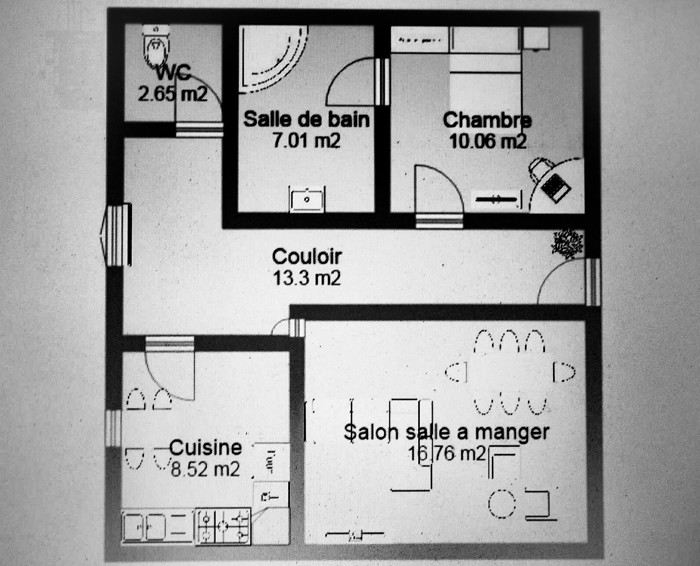
Faut bien plaisanter un peu, sinon on va devenir fou à rester enfermer chez-soi.
Faut bien plaisanter un peu, sinon on va devenir fou à rester enfermer chez-soi.
La Corée nous a enchantés
Depuis le temps que je dis que je dois faire ce carnet de voyage !! Le temps passe.
Allez, un peu de courage que diable!
Nous sommes partis à 6 entre le 31 juillet et le 24 août 2019.
Pourquoi diantre la Corée du sud ? J'ai un mari nageur qui fait les championnats du monde de natation master et .. comme vous l'aurez deviné, ils avaient lieu en Corée et plus précisément à Gwangju. Nous sommes donc partis à deux couples (deux maris nageurs) et avec un de nos enfants chacun.
Nous avons fait un grand circuit circulaire de Séoul à Séoul. Nous avions loué une voiture depuis la France.
Pour cela, et sur les conseils de la fille d'une amie qui vit là-bas, nous sommes passés par le site lotte rentacar. Je n'étais pas très emballée car il faut laisser les coordonnées de son passeport mais franchement, la location s'est merveilleusement bien passée et nous avons même eu une belle surprise au moment de prendre la voiture ainsi qu'à la fin. J'y reviendrai.
Nous avons également réservé un pocket wifi que nous avons pu retirer à notre arrivée à l'aéroport de Séoul.
Côté logement, nous avons un peu tout testé : l'auberge de jeunesse (possibilité d'avoir des chambres privées avec salles de bain très propres et dans lesquelles nous avons eu les lits les plus confortables du séjour), les hanoks très classes ou plus modestes (et on sent bien la différence d'épaisseur de futon ! Dos sensibles s'abstenir) et un hôtel plus international.
Pour ce qui en est des repas, nous y sommes souvent allés au pif et nous n'avons jamais eu de mauvaise surprise. Ah, une chose à retenir : s'il y a du rouge dans le plat c'est que ça pique ! Je reviendrai sur les repas au fur et à mesure de mon récit.
On trouve de l'eau partout dans les temples. L'eau est parfaitement potable. Et c'est très agréable en été quand il fait très chaud.
Les paiements : les CB internationales fonctionnent la plupart du temps. Sinon, possibilité de retirer de l'argent dans les distributeurs ou au guichet de certaines grandes banques. Nous n'avons pas eu de souci.
Le temps : chaud chaud chaud. La pluie ? Pas tant que ça au final mais nous avons peut-être eu de la chance. Par contre, quand il pleut, il pleut bien !
L'avantage, c'est que comme il fait chaud on sèche vite.
Allez c'est parti. Samedi 31 juillet
Après un voyage d'un peu plus de 10h au départ de Roissy, nous sommes arrivés à l'aéroport international de Séoul. Rien de particulier pour le passage de la douane. Ensuite, il faut avouer que nous avons un peu galéré pour trouver dans l'aéroport le lieu pour retirer notre pocket wifi puis la voiture de location. Mais nous y sommes arrivés dnas un temps assez raisonnable. Nous avions réservé une Kia Carnival. Elle est vendue pour 9 personnes mais franchement, les 3 dernières doivent être des enfants ! Nous avons eu peur un instant que les bagages ne rentrent pas alors nous avons un peu joué au tangram😛 ... Première bonne surprise du voyage, le prix que nous avons payé était bien inférieur à celui qui m'avait été indiqué sur le devis en ligne ! En partant de l'aéroport nous avons eu droit à une magnifique pluie battante
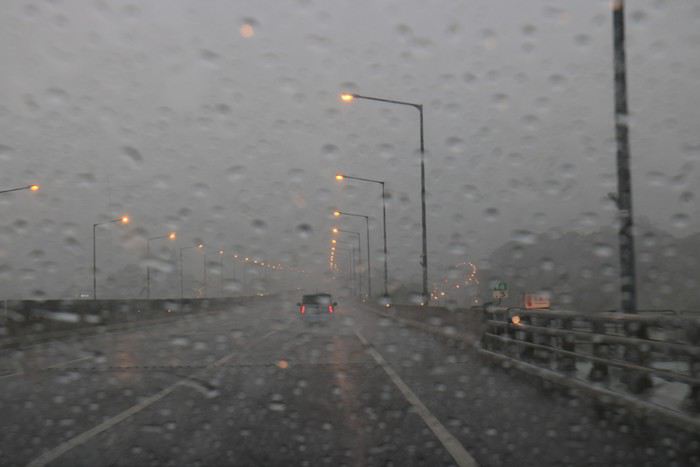 Et à une suite interminable de bouchons ...
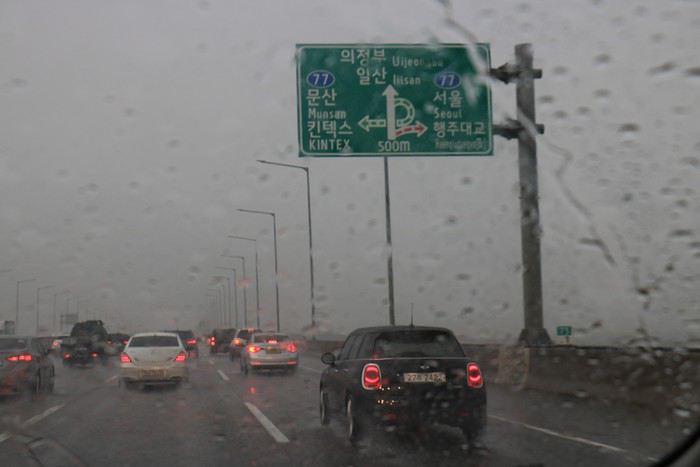 Contrairement à ce que l'on pourrait croire, nous ne sommes pas arrivés en fin de journée mais bien au petit matin. Et là sur la route il devait être autour de 10h du matin....
Notre premier logement se trouvait à Sokcho.
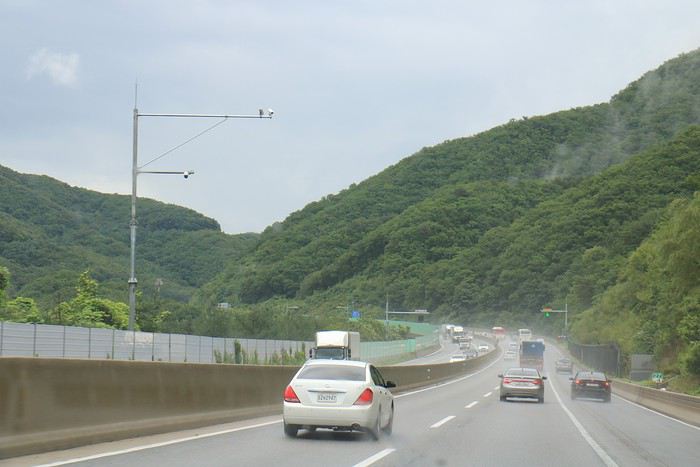
Entre le GPS de la voiture programmé en anglais par l'agence de location avant de nous confier la voiture et l'application NAVER sur le téléphone (pas de google maps en Corée du Sud), nous avons trouvé le bon chemin pour nous rendre à Chuncheon. Le but était d'y arriver pour manger à midi. Heureusement pour nous, la pluie a cessé en cours de route, les bouchons ont disparu et le paysage est devenu plus vert.
Contrairement à ce que l'on pourrait croire, nous ne sommes pas arrivés en fin de journée mais bien au petit matin. Et là sur la route il devait être autour de 10h du matin....
Notre premier logement se trouvait à Sokcho.
Entre le GPS de la voiture programmé en anglais par l'agence de location avant de nous confier la voiture et l'application NAVER sur le téléphone (pas de google maps en Corée du Sud), nous avons trouvé le bon chemin pour nous rendre à Chuncheon. Le but était d'y arriver pour manger à midi. Heureusement pour nous, la pluie a cessé en cours de route, les bouchons ont disparu et le paysage est devenu plus vert.
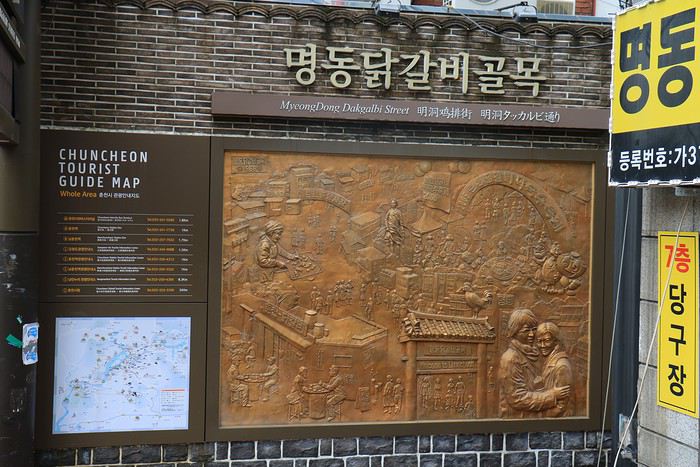
Pourquoi nous arrêter à Chunchéon ? Nous avions repéré une rue où on sert une spécialité de poulet pimenté : le dagkgalbi. Impossible de rater la rue
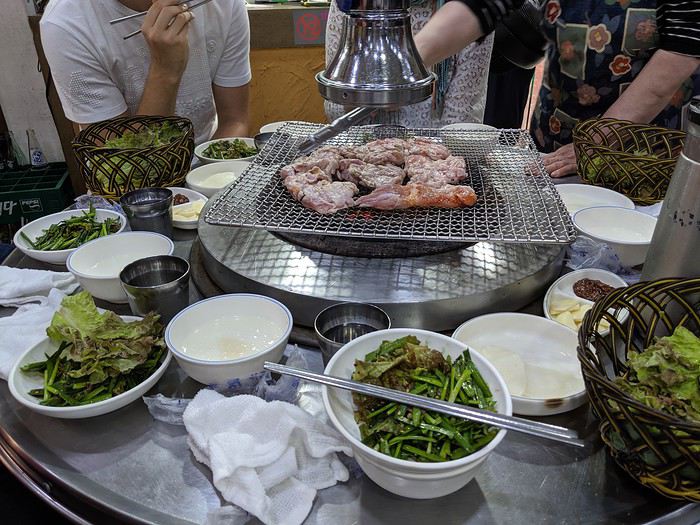
Le poulet est servi au barbecue avec des légumes. Nous avons pu choisir 3 assaisonnements différents de poulet. Un seul était trèèèèès épicé. Les restaurateurs se sont montrés adorables pour nous expliquer comment manger tout ça.
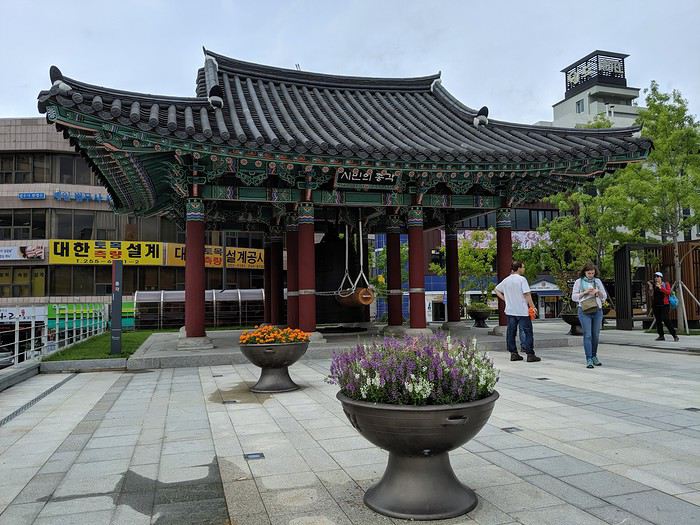
 Nous avons voulu faire un petit tour dans la ville, mais nous n'avons trouvé qu'un petit temple.
 Nous avons repris la route pour Sokcho, mais très vite nous avons du nous arrêter car nous avons été rattrapés par le décalage horaire. Gros coup de barre général. Nous nous sommes arrêtés en pleine campagne pour dormir une bonne heure.
Nous sommes arrivés en fin d'après-midi à Sokcho. Le temps de vider la voiture, nous installer dans nos chambres, nous ne sommes partis dîner que vers 19h. Ouille errreur car à cette heure là beaucoup de restaurants ferment.
Nous en avons dégoté un petit qui servait des plats de nouilles. Parfait nous sommes nous dit !
Sauf que les nouilles sont servies froides, et même très froides car on trouve dans le bol des morceaux de glace.
Nous avons repris la route pour Sokcho, mais très vite nous avons du nous arrêter car nous avons été rattrapés par le décalage horaire. Gros coup de barre général. Nous nous sommes arrêtés en pleine campagne pour dormir une bonne heure.
Nous sommes arrivés en fin d'après-midi à Sokcho. Le temps de vider la voiture, nous installer dans nos chambres, nous ne sommes partis dîner que vers 19h. Ouille errreur car à cette heure là beaucoup de restaurants ferment.
Nous en avons dégoté un petit qui servait des plats de nouilles. Parfait nous sommes nous dit !
Sauf que les nouilles sont servies froides, et même très froides car on trouve dans le bol des morceaux de glace.
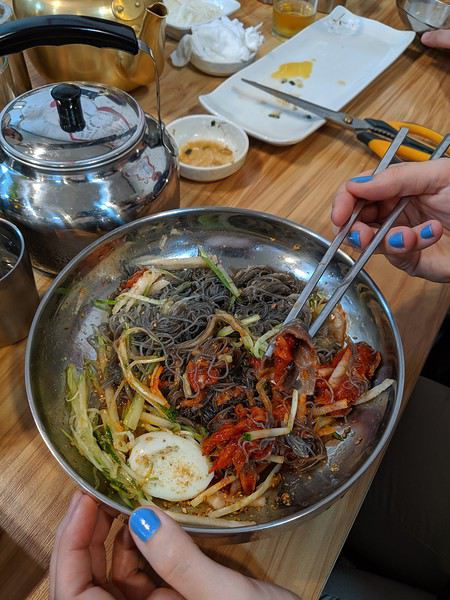
Il a fallu rajouter du sucre, du viandox froid (ça en avait le goût en tous cas😛), du lait de riz (pas facile de déterminer exactement ce que c'était) et un peu de vinaigre. Alors le rouge ça pique, le truc blanc c'est un demi oeuf dur, le gris ce sont des pates et le reste de la pomme effilée et ??? On va dire que ce n'était pas mauvais mais très spicy ouille ouille ouille. On m'appelait lèvres de feu à la fin du repas !!!! 20h passées, il fait nuit noire. Nous avons quand même voulu marcher un peu dans les rues vers le port. Beaucoup de néons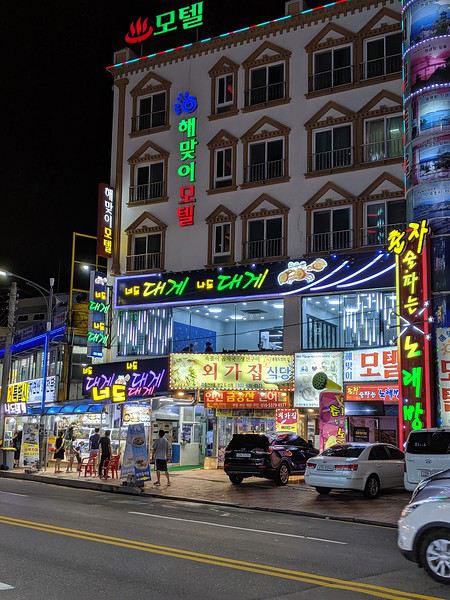 Et de jolis petits temples
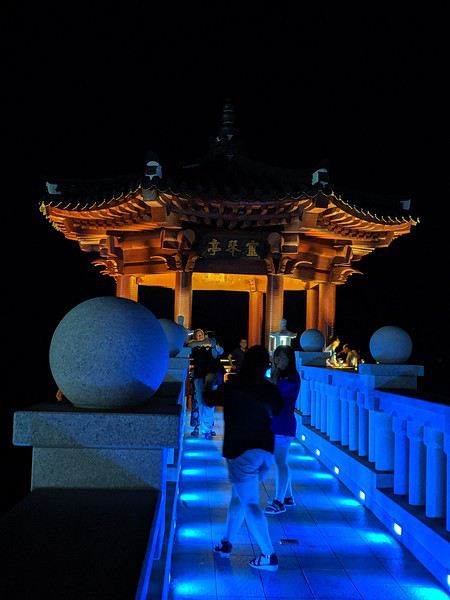
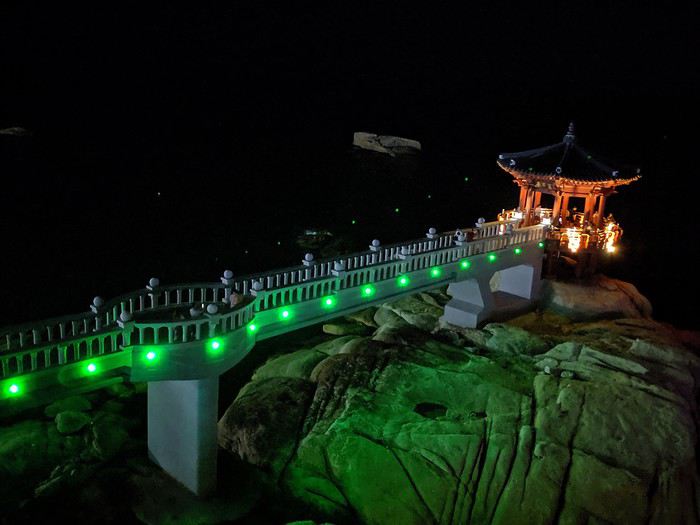 Ce soir là nous n'avons pas eu de mal à nous endormir ...
Allez c'est parti. Samedi 31 juillet
Après un voyage d'un peu plus de 10h au départ de Roissy, nous sommes arrivés à l'aéroport international de Séoul. Rien de particulier pour le passage de la douane. Ensuite, il faut avouer que nous avons un peu galéré pour trouver dans l'aéroport le lieu pour retirer notre pocket wifi puis la voiture de location. Mais nous y sommes arrivés dnas un temps assez raisonnable. Nous avions réservé une Kia Carnival. Elle est vendue pour 9 personnes mais franchement, les 3 dernières doivent être des enfants ! Nous avons eu peur un instant que les bagages ne rentrent pas alors nous avons un peu joué au tangram😛 ... Première bonne surprise du voyage, le prix que nous avons payé était bien inférieur à celui qui m'avait été indiqué sur le devis en ligne ! En partant de l'aéroport nous avons eu droit à une magnifique pluie battante
Et à une suite interminable de bouchons ...
Contrairement à ce que l'on pourrait croire, nous ne sommes pas arrivés en fin de journée mais bien au petit matin. Et là sur la route il devait être autour de 10h du matin....
Notre premier logement se trouvait à Sokcho.
Entre le GPS de la voiture programmé en anglais par l'agence de location avant de nous confier la voiture et l'application NAVER sur le téléphone (pas de google maps en Corée du Sud), nous avons trouvé le bon chemin pour nous rendre à Chuncheon. Le but était d'y arriver pour manger à midi. Heureusement pour nous, la pluie a cessé en cours de route, les bouchons ont disparu et le paysage est devenu plus vert.Pourquoi nous arrêter à Chunchéon ? Nous avions repéré une rue où on sert une spécialité de poulet pimenté : le dagkgalbi. Impossible de rater la rue
Le poulet est servi au barbecue avec des légumes. Nous avons pu choisir 3 assaisonnements différents de poulet. Un seul était trèèèèès épicé. Les restaurateurs se sont montrés adorables pour nous expliquer comment manger tout ça.
Nous avons voulu faire un petit tour dans la ville, mais nous n'avons trouvé qu'un petit temple.
Nous avons repris la route pour Sokcho, mais très vite nous avons du nous arrêter car nous avons été rattrapés par le décalage horaire. Gros coup de barre général. Nous nous sommes arrêtés en pleine campagne pour dormir une bonne heure.
Nous sommes arrivés en fin d'après-midi à Sokcho. Le temps de vider la voiture, nous installer dans nos chambres, nous ne sommes partis dîner que vers 19h. Ouille errreur car à cette heure là beaucoup de restaurants ferment.
Nous en avons dégoté un petit qui servait des plats de nouilles. Parfait nous sommes nous dit !
Sauf que les nouilles sont servies froides, et même très froides car on trouve dans le bol des morceaux de glace.Il a fallu rajouter du sucre, du viandox froid (ça en avait le goût en tous cas😛), du lait de riz (pas facile de déterminer exactement ce que c'était) et un peu de vinaigre. Alors le rouge ça pique, le truc blanc c'est un demi oeuf dur, le gris ce sont des pates et le reste de la pomme effilée et ??? On va dire que ce n'était pas mauvais mais très spicy ouille ouille ouille. On m'appelait lèvres de feu à la fin du repas !!!! 20h passées, il fait nuit noire. Nous avons quand même voulu marcher un peu dans les rues vers le port. Beaucoup de néons
Et de jolis petits temples
Ce soir là nous n'avons pas eu de mal à nous endormir ...Bolivia: Exploring the South Lipez by Self-Drive
Hi everyone,
The idea of traveling to Bolivia came to me after seeing Jean-François (Max68)’s photos on his website. I thought we *had* to see those stunning landscapes with the colorful lagoons for ourselves. But a self-drive trip didn’t seem doable at first. A few years ago, everyone advised against going to the South Lipez with just one car.
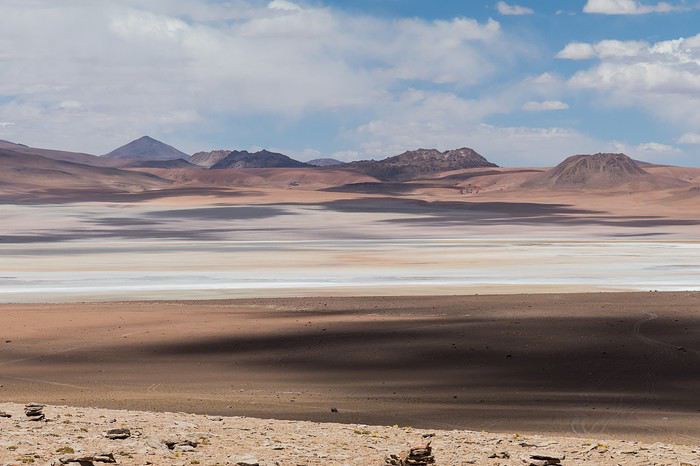 Laguna Kara
It was only after reading Laurent (Lolobe) and Pascal (Pepe874)’s travel journals—who explored the South Lipez solo with a car from Biz Rent a Car—that I thought we might be able to do the same. Meanwhile, we’d already contacted a local agency to organize a trip with a driver and guide. But the idea of a self-drive adventure really appealed to us. With encouragement and tips from Thierry (Tbernay) and Jean-François (Max68), we decided to plan our own self-drive trip. I’d like to thank them for their advice—it was *super* helpful. And a big thanks to all the other forum members for the info shared during our prep!
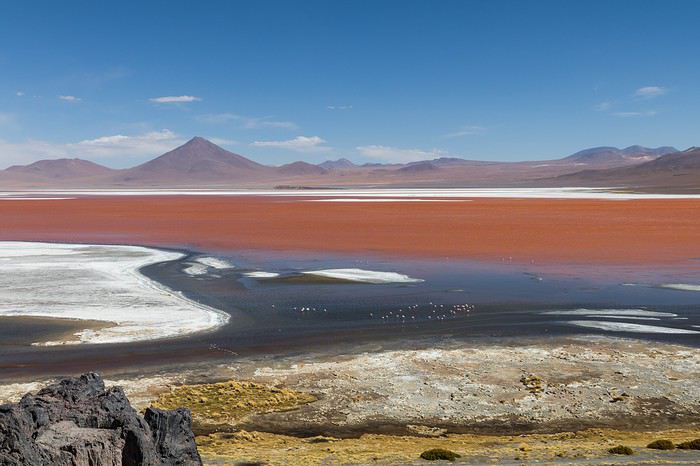 Laguna Colorada
Planning this trip happened during a tough time for our family. My mother-in-law’s illness and passing, plus a few health issues of my own, made us doubt the trip multiple times and nearly scrap the whole thing.
We booked our international flights in February with Swiss. They offered the best balance of travel time and price from Switzerland. Swiss operates Zurich–São Paulo with their own fleet, and São Paulo–Santa Cruz with GOL. In June, GOL canceled the Saturday flight and rebooked us on Sunday. Spending over 24 hours in that huge Brazilian city didn’t work for us at all, so we asked Swiss to put us on the next Zurich–São Paulo flight. Too bad—we lost a day in Bolivia and had to skip the Tarabucco market on Sunday.
Right after, we also booked the car in February. After contacting Imbex and Biz, we went with Biz. Not speaking Spanish, we were relieved to communicate with Alejandra in French. The contact was great—she answered all our questions patiently. Sometimes it took a few days to get a reply, but we could also reach her on WhatsApp. After our trip, we can *only* recommend Biz for rentals in Bolivia. The cars are well-prepped for the South Lipez tracks. The agency is reliable, and the vehicles are new and well-maintained.
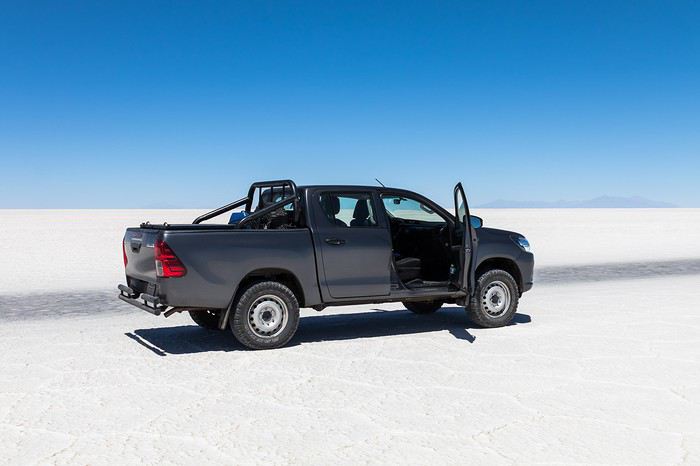 “Our” car, a Toyota Hilux
While planning, we realized the presidential elections would happen while we were in Bolivia. The risk of *bloqueos* (roadblocks and protests) was very real. But in Bolivia, *bloqueos* seem common—you always have to account for that kind of hassle. In late August/early September, Uyuni and the Salar region were blocked for days, leading to food, fuel, and cash shortages. Worried about a blockade in Uyuni and missing the Salar, we decided to visit it first *just in case*.
On election day, the whole country shut down. Planes were grounded, buses and taxis couldn’t circulate, and private cars were banned. There were a few exceptions—ambulances, police, or certain professions—but as tourists, we couldn’t get permission to drive. We asked the embassy, and Biz even requested a permit from the electoral office. So we had to plan to be somewhere with things to do *without* the car.
We decided not to book any accommodations in advance—a first for us. Usually, we plan our stops and reserve lodges, hotels, or campgrounds well ahead. This time, only the room in Sucre was booked, so we’d have a base when we arrived.
In July, Alex (Delhenry) reached out to propose joining part of the trip. He didn’t realize we were leaving in October. Still, we got fresh updates when he returned from the South Lipez. Thanks, Alex—your tips, especially about the Guadalupe–Tupiza stretch, were *super* useful.
In September, we connected with Jean-Louis (Avx) and Anne (Xeta), who were also heading to Bolivia in October, one and two weeks after us. We had dinner with Jean-Louis and his friend after our South Lipez trip and stayed in touch with Anne. It was great to chat with them! Unfortunately, Anne and her husband had a much rockier trip—they got hit hard by post-election issues.
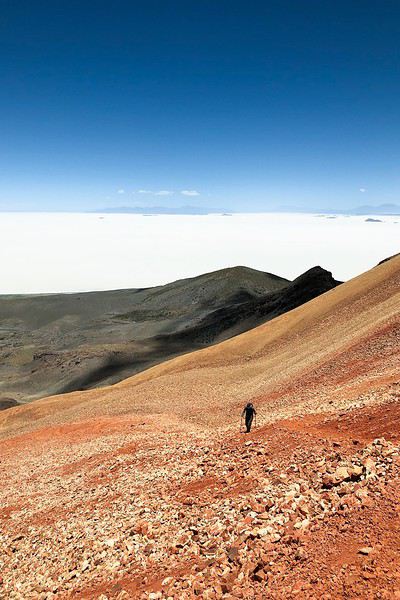 Climbing Volcán Tunupa
Our itinerary wasn’t set in stone—we decided to wing it on the spot. Two weeks before departure, I reconnected with Alejandra at Biz to move the car rental up by a day. With the elections, we wanted to leave Sucre ASAP and focus on the South Lipez. Outside Uyuni and Tupiza, the risk of blockades was zero. We also planned a two-night buffer in Sucre before our flights, just in case. It might sound overcautious, but in hindsight, we made the right call. If we’d left Sucre a day later, we wouldn’t have made it to Potosí—it was completely blocked. On the way back, we *just* dodged blockades in Potosí and elsewhere. Sometimes, you’ve gotta trust your gut.
Here’s our route—only the first two nights in Sucre were booked ahead:
D1 Departure from Switzerland
D2 Sucre (La Selenita)
D3 Sucre (La Selenita)
D4 Colchani (Hotel de Sal Luna Salada)
D5 Jirira (Auberge Doña Lupe)
D6 On the Salar (in the car)
D7 A few kilometers from Estancia Catal (in the car)
D8 Laguna Hedionda (Hotel Los Flamencos)
D9 Laguna Colorada (Lodge by the lagoon)
D10 Middle of nowhere, en route Laguna Verde–Mina Horsu–Quetena Chico (in the car)
D11 Quetena Chico (Lamphaya Lodge Andino)
D12 Quetena Chico (Lamphaya Lodge Andino)
D13 Guadalupe (Guest room at Celia’s)
D14 Along the Rio Grande (in the car)
D15 Tupiza (Hotel Mitru)
D16 Tupiza (Hotel Mitru)
D17 Sucre (La Selenita)
D18 Sucre (La Selenita)
D19 Santa Cruz (Hotel Sun)
D20 Departure from Santa Cruz
D21 Arrival in Switzerland
As you can see, we spent 13 nights in the South Lipez. Initially, we’d planned for nine, but Jean-François (Max68) suggested staying longer. Great advice—we didn’t regret it one bit. We could’ve even added 2–3 more days without getting bored.
Self-driving in the South Lipez takes some prep and a good GPS. We kept it simple and used maps.me to navigate. It’s a solid app—just save your waypoints ahead of time. For some stretches, I used Google Earth to visualize the tracks and sites. If you stick to the tour operator routes, you *almost* can’t get lost. But we often veered off the beaten path and took different routes. Some days, we didn’t see another car. So in case of a breakdown, it’s key to have water and food for several days. In some spots, there’s *zero* signal—your phone won’t work. Another must: it gets *cold* in the South Lipez, and a good sleeping bag is essential. We brought down sleeping bags rated for -10°C and didn’t regret it during our car nights.
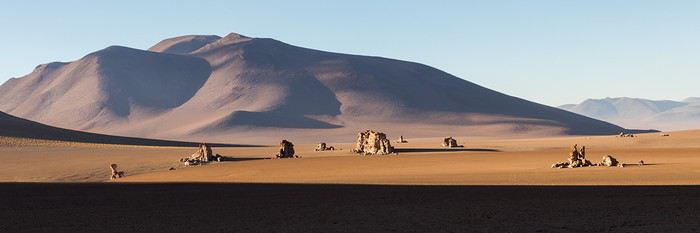 The Dalí Desert
Some tracks are *super* rocky—flat tires are a real risk. On those stretches, maps.me’s estimated travel time was way off. Some sections barely let us go over 15 km/h.
Lots of forum members recommend doing the South Lipez “loop” from Tupiza to Uyuni—ending with the Salar—to avoid Uyuni’s crowds. That might work for organized tours, but for self-drive, the direction *doesn’t* matter. I’ll say this: the few vehicles we saw mostly came from Tupiza and Chile, not Uyuni. So if starting from Uyuni works better for you, go for it! Ending in Tupiza means heading toward warmer weather. For our planned stops and climbs, starting in Uyuni helped with acclimatization. Spending a few nights between 3,600–3,800 m before going over 4,000 m is a smart move.
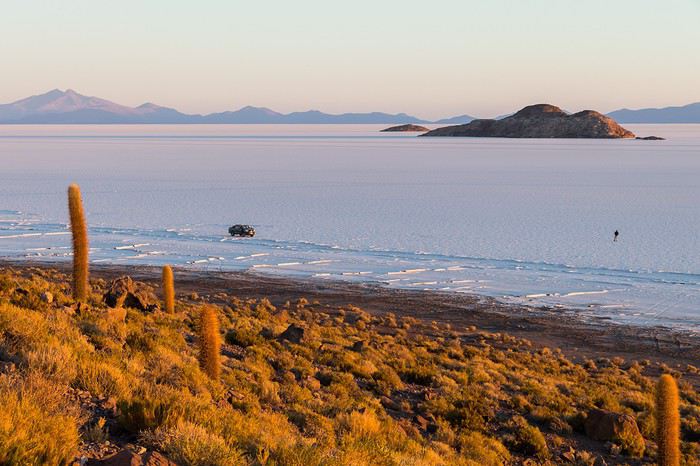 Uyuni Salt Flats in the morning
Overall, we barely saw anyone—except at Laguna Hedionda and Chalviri. There were several tour groups at Hotel Los Flamencos (Laguna Hedionda), but we didn’t cross paths during the day. Hardly anyone on the Salar, on the roads, or at the lodges in the evenings. The *only* place that shocked us was Chalviri. We’d planned to stay there, but it was fully booked—and we counted *forty* tour jeeps on-site. This was around noon! At the Polques hot springs (Chalviri), it was *packed*—we quickly nixed the idea of a dip. Plus, the vibe wasn’t great: soaking right by the road with lodges and restaurants in the background? Meh. Still, lots of tourists love it, so it’s up to you.
For the photos, I kept the colors and mood we saw. The lagoons’ hues are often stunning, but some online photos are *way* over-edited and oversaturated. The South Lipez’s landscapes are breathtaking—no need for excessive retouching.
If you don’t want to read all the details, the start of the travel journal is here: https://voyageforum.com/v.f?post=9888761;a=9888761
The idea of traveling to Bolivia came to me after seeing Jean-François (Max68)’s photos on his website. I thought we *had* to see those stunning landscapes with the colorful lagoons for ourselves. But a self-drive trip didn’t seem doable at first. A few years ago, everyone advised against going to the South Lipez with just one car.
Laguna KaraIt was only after reading Laurent (Lolobe) and Pascal (Pepe874)’s travel journals—who explored the South Lipez solo with a car from Biz Rent a Car—that I thought we might be able to do the same. Meanwhile, we’d already contacted a local agency to organize a trip with a driver and guide. But the idea of a self-drive adventure really appealed to us. With encouragement and tips from Thierry (Tbernay) and Jean-François (Max68), we decided to plan our own self-drive trip. I’d like to thank them for their advice—it was *super* helpful. And a big thanks to all the other forum members for the info shared during our prep!
Laguna ColoradaPlanning this trip happened during a tough time for our family. My mother-in-law’s illness and passing, plus a few health issues of my own, made us doubt the trip multiple times and nearly scrap the whole thing.
We booked our international flights in February with Swiss. They offered the best balance of travel time and price from Switzerland. Swiss operates Zurich–São Paulo with their own fleet, and São Paulo–Santa Cruz with GOL. In June, GOL canceled the Saturday flight and rebooked us on Sunday. Spending over 24 hours in that huge Brazilian city didn’t work for us at all, so we asked Swiss to put us on the next Zurich–São Paulo flight. Too bad—we lost a day in Bolivia and had to skip the Tarabucco market on Sunday.
Right after, we also booked the car in February. After contacting Imbex and Biz, we went with Biz. Not speaking Spanish, we were relieved to communicate with Alejandra in French. The contact was great—she answered all our questions patiently. Sometimes it took a few days to get a reply, but we could also reach her on WhatsApp. After our trip, we can *only* recommend Biz for rentals in Bolivia. The cars are well-prepped for the South Lipez tracks. The agency is reliable, and the vehicles are new and well-maintained.
“Our” car, a Toyota HiluxWhile planning, we realized the presidential elections would happen while we were in Bolivia. The risk of *bloqueos* (roadblocks and protests) was very real. But in Bolivia, *bloqueos* seem common—you always have to account for that kind of hassle. In late August/early September, Uyuni and the Salar region were blocked for days, leading to food, fuel, and cash shortages. Worried about a blockade in Uyuni and missing the Salar, we decided to visit it first *just in case*.
On election day, the whole country shut down. Planes were grounded, buses and taxis couldn’t circulate, and private cars were banned. There were a few exceptions—ambulances, police, or certain professions—but as tourists, we couldn’t get permission to drive. We asked the embassy, and Biz even requested a permit from the electoral office. So we had to plan to be somewhere with things to do *without* the car.
We decided not to book any accommodations in advance—a first for us. Usually, we plan our stops and reserve lodges, hotels, or campgrounds well ahead. This time, only the room in Sucre was booked, so we’d have a base when we arrived.
In July, Alex (Delhenry) reached out to propose joining part of the trip. He didn’t realize we were leaving in October. Still, we got fresh updates when he returned from the South Lipez. Thanks, Alex—your tips, especially about the Guadalupe–Tupiza stretch, were *super* useful.
In September, we connected with Jean-Louis (Avx) and Anne (Xeta), who were also heading to Bolivia in October, one and two weeks after us. We had dinner with Jean-Louis and his friend after our South Lipez trip and stayed in touch with Anne. It was great to chat with them! Unfortunately, Anne and her husband had a much rockier trip—they got hit hard by post-election issues.
Climbing Volcán TunupaOur itinerary wasn’t set in stone—we decided to wing it on the spot. Two weeks before departure, I reconnected with Alejandra at Biz to move the car rental up by a day. With the elections, we wanted to leave Sucre ASAP and focus on the South Lipez. Outside Uyuni and Tupiza, the risk of blockades was zero. We also planned a two-night buffer in Sucre before our flights, just in case. It might sound overcautious, but in hindsight, we made the right call. If we’d left Sucre a day later, we wouldn’t have made it to Potosí—it was completely blocked. On the way back, we *just* dodged blockades in Potosí and elsewhere. Sometimes, you’ve gotta trust your gut.
Here’s our route—only the first two nights in Sucre were booked ahead:
D1 Departure from Switzerland
D2 Sucre (La Selenita)
D3 Sucre (La Selenita)
D4 Colchani (Hotel de Sal Luna Salada)
D5 Jirira (Auberge Doña Lupe)
D6 On the Salar (in the car)
D7 A few kilometers from Estancia Catal (in the car)
D8 Laguna Hedionda (Hotel Los Flamencos)
D9 Laguna Colorada (Lodge by the lagoon)
D10 Middle of nowhere, en route Laguna Verde–Mina Horsu–Quetena Chico (in the car)
D11 Quetena Chico (Lamphaya Lodge Andino)
D12 Quetena Chico (Lamphaya Lodge Andino)
D13 Guadalupe (Guest room at Celia’s)
D14 Along the Rio Grande (in the car)
D15 Tupiza (Hotel Mitru)
D16 Tupiza (Hotel Mitru)
D17 Sucre (La Selenita)
D18 Sucre (La Selenita)
D19 Santa Cruz (Hotel Sun)
D20 Departure from Santa Cruz
D21 Arrival in Switzerland
As you can see, we spent 13 nights in the South Lipez. Initially, we’d planned for nine, but Jean-François (Max68) suggested staying longer. Great advice—we didn’t regret it one bit. We could’ve even added 2–3 more days without getting bored.
Self-driving in the South Lipez takes some prep and a good GPS. We kept it simple and used maps.me to navigate. It’s a solid app—just save your waypoints ahead of time. For some stretches, I used Google Earth to visualize the tracks and sites. If you stick to the tour operator routes, you *almost* can’t get lost. But we often veered off the beaten path and took different routes. Some days, we didn’t see another car. So in case of a breakdown, it’s key to have water and food for several days. In some spots, there’s *zero* signal—your phone won’t work. Another must: it gets *cold* in the South Lipez, and a good sleeping bag is essential. We brought down sleeping bags rated for -10°C and didn’t regret it during our car nights.
The Dalí DesertSome tracks are *super* rocky—flat tires are a real risk. On those stretches, maps.me’s estimated travel time was way off. Some sections barely let us go over 15 km/h.
Lots of forum members recommend doing the South Lipez “loop” from Tupiza to Uyuni—ending with the Salar—to avoid Uyuni’s crowds. That might work for organized tours, but for self-drive, the direction *doesn’t* matter. I’ll say this: the few vehicles we saw mostly came from Tupiza and Chile, not Uyuni. So if starting from Uyuni works better for you, go for it! Ending in Tupiza means heading toward warmer weather. For our planned stops and climbs, starting in Uyuni helped with acclimatization. Spending a few nights between 3,600–3,800 m before going over 4,000 m is a smart move.
Uyuni Salt Flats in the morningOverall, we barely saw anyone—except at Laguna Hedionda and Chalviri. There were several tour groups at Hotel Los Flamencos (Laguna Hedionda), but we didn’t cross paths during the day. Hardly anyone on the Salar, on the roads, or at the lodges in the evenings. The *only* place that shocked us was Chalviri. We’d planned to stay there, but it was fully booked—and we counted *forty* tour jeeps on-site. This was around noon! At the Polques hot springs (Chalviri), it was *packed*—we quickly nixed the idea of a dip. Plus, the vibe wasn’t great: soaking right by the road with lodges and restaurants in the background? Meh. Still, lots of tourists love it, so it’s up to you.
For the photos, I kept the colors and mood we saw. The lagoons’ hues are often stunning, but some online photos are *way* over-edited and oversaturated. The South Lipez’s landscapes are breathtaking—no need for excessive retouching.
If you don’t want to read all the details, the start of the travel journal is here: https://voyageforum.com/v.f?post=9888761;a=9888761
Photo: votre best of 2019
Bonjour à tous 🙂
2019 s'achève et il est grand temps de lancer cette nouvelle discussion pour partager le meilleur de l'année.
Sur le modèle des années passées, les principes à suivre sont les suivants : - 10 photos par membre, qui devront être numérotées, et postées dans un ou plusieurs messages, - ces photos doivent avoir été prises en voyage en 2019 - edit: sur suggestion de Kate, parmi votre sélection, une poignée pourra avoir été prise hors voyage - ce n'est pas un concours, il n'y aura pas de vote à clé - c'est en revanche l'opportunité d'échanger nos impressions sur les clichés (soyez prêts à recevoir des critiques positives... ou négatives, mais toujours constructives !)
En espérant vous voir nombreux sur la discussion, et y trouver la même qualité que les années passées !
Alors, qui se lance en premier ? 😉
Pour les nostalgiques, pour ceux qui en veulent toujours plus, voici les liens vers les best of des années passées (du moins, ceux que j'ai trouvés: qu'est-il advenu de 2016 et 2017 ?) : - 2012 - 2013 - 2014 - 2015 - 2018
Joyeuses fêtes à tous !
2019 s'achève et il est grand temps de lancer cette nouvelle discussion pour partager le meilleur de l'année.
Sur le modèle des années passées, les principes à suivre sont les suivants : - 10 photos par membre, qui devront être numérotées, et postées dans un ou plusieurs messages, - ces photos doivent avoir été prises en voyage en 2019 - edit: sur suggestion de Kate, parmi votre sélection, une poignée pourra avoir été prise hors voyage - ce n'est pas un concours, il n'y aura pas de vote à clé - c'est en revanche l'opportunité d'échanger nos impressions sur les clichés (soyez prêts à recevoir des critiques positives... ou négatives, mais toujours constructives !)
En espérant vous voir nombreux sur la discussion, et y trouver la même qualité que les années passées !
Alors, qui se lance en premier ? 😉
Pour les nostalgiques, pour ceux qui en veulent toujours plus, voici les liens vers les best of des années passées (du moins, ceux que j'ai trouvés: qu'est-il advenu de 2016 et 2017 ?) : - 2012 - 2013 - 2014 - 2015 - 2018
Joyeuses fêtes à tous !
From Ol Pejeta to Tsavo West (Kenya)
Hello everyone,
Here’s the story of our two-week trip—13 nights, actually—in the national parks of northern and southeastern Kenya, which we took last September at the end of summer. My wife and I planned this trip with a French agency (Bel Africa, Paris), which worked with a local operator in Nairobi (Nadhy Travels & Tours). The latter provided a driver-guide and vouchers, but no aperitif🙁! Our all-inclusive package included animal safaris exclusively in a customized 4x4 vehicle (with a pop-up roof) and accommodations in high-quality lodges that we selected ourselves. It’s great for comfort, but not so much for the wallet. The cost was obviously astronomical for the services provided. But that’s just my usual take on lodging in East and Southern Africa! Our itinerary was a loop starting and ending in Nairobi, passing through Ol Pejeta, Buffalo Springs-Samburu, Meru NP, Amboseli, and Tsavo West.
Trip breakdown:
Day 1 to 3: Ol Pejeta Day 3 to 7: Buffalo Springs Day 7 to 8: Meru NP-Nairobi Day 9 to 11: Nairobi-Amboseli Day 11 to 14: Tsavo West
Photo gear we brought:
- 1 bridge camera - 2 DSLR bodies - 2 telephoto lenses: 70-200mm f/2.8 and 200-500mm f/5.6 - 2 pairs of 10x42 binoculars
What motivated this trip? We wanted to recharge and were looking for a certain tranquility that would be ideal for wildlife observation and photography—our hobbies. That immediately ruled out the parks in the southwest, which are too crowded. Plus, those would have likely been a repeat of what we experienced in Tanzania a few years earlier (see my travel journal "The Great Migration"). Buffalo Springs particularly appealed to us because of the unique animal species it’s home to. It was really their existence that drove our choices. We wanted to see animals we’d never seen before in their natural habitats.
So, on a beautiful late-summer evening, we took off from Paris-CDG for Nairobi. The overnight flight was uneventful, and we landed early in the morning at Jomo Kenyatta International Airport (NBO). But our driver-guide wasn’t waiting for us. Judging by the number of signs being held up, we must have been the only travelers in that situation. Good grief, why wasn’t he there like all the others?
Here’s the story of our two-week trip—13 nights, actually—in the national parks of northern and southeastern Kenya, which we took last September at the end of summer. My wife and I planned this trip with a French agency (Bel Africa, Paris), which worked with a local operator in Nairobi (Nadhy Travels & Tours). The latter provided a driver-guide and vouchers, but no aperitif🙁! Our all-inclusive package included animal safaris exclusively in a customized 4x4 vehicle (with a pop-up roof) and accommodations in high-quality lodges that we selected ourselves. It’s great for comfort, but not so much for the wallet. The cost was obviously astronomical for the services provided. But that’s just my usual take on lodging in East and Southern Africa! Our itinerary was a loop starting and ending in Nairobi, passing through Ol Pejeta, Buffalo Springs-Samburu, Meru NP, Amboseli, and Tsavo West.
Trip breakdown:
Day 1 to 3: Ol Pejeta Day 3 to 7: Buffalo Springs Day 7 to 8: Meru NP-Nairobi Day 9 to 11: Nairobi-Amboseli Day 11 to 14: Tsavo West
Photo gear we brought:
- 1 bridge camera - 2 DSLR bodies - 2 telephoto lenses: 70-200mm f/2.8 and 200-500mm f/5.6 - 2 pairs of 10x42 binoculars
What motivated this trip? We wanted to recharge and were looking for a certain tranquility that would be ideal for wildlife observation and photography—our hobbies. That immediately ruled out the parks in the southwest, which are too crowded. Plus, those would have likely been a repeat of what we experienced in Tanzania a few years earlier (see my travel journal "The Great Migration"). Buffalo Springs particularly appealed to us because of the unique animal species it’s home to. It was really their existence that drove our choices. We wanted to see animals we’d never seen before in their natural habitats.
So, on a beautiful late-summer evening, we took off from Paris-CDG for Nairobi. The overnight flight was uneventful, and we landed early in the morning at Jomo Kenyatta International Airport (NBO). But our driver-guide wasn’t waiting for us. Judging by the number of signs being held up, we must have been the only travelers in that situation. Good grief, why wasn’t he there like all the others?
"Tu te crois libre parce que tu pars, et tu emportes tes pantoufles."
Ah oui, je crois que c’est juste, ne serait-ce pour assurer les besoins vitaux, respirer, dormir, boire, manger, éliminer et, très vite s’établissent les petits rituels qui s’empilent au fil des jours…
J’ai trouvé ma liste de petits gestes quotidiens et j’crois que beaucoup ont les mêmes, il y en a tant des petits gestes rituels en voyage.
Un p’tit florilège pas prise de tête ! :
- Entrer dans la chambre ou le lieu réservé dans la journée ou arriver par hasard et se dire : « tidiou, c’est super beau » ou « tidiou, c’est crade et vachement précaire, heureusement qu’on y reste qu’une nuit » - Vérifier le niveau de carburant, soit le soir avant l’étape, soit le matin avant de démarrer la journée. - Laver sa petite culotte et parfois la remettre encore humide (beurq !)
- Etaler sa serviette qui pue sur un dossier de chaise (rebeurq !)
- Chercher en vain cette petite paire de ciseaux, ce bout d’ongle qui accroche fait vraiment mal - Trouver la p’tite épicerie pour acheter ce qui s’apparentera à un pique-nique et qui doit tenir dans la sacoche de réservoir.
- Refaire le sac en défroissant du plat de la main l’unique change qu’on mettra demain. - Appuyer très fort sur le flacon de shampooing pour en attraper les dernières gouttes, heureusement il reste le bloc de savon multi-usage ( wow les beaux cheveux !)
- Faire sécher les fringues mouillées sur tout support existant - Ne pas trouver le code-wifi et se sentir exaspérée - Planter la tente et tordre les sardines dans les cailloux - Trouver un p’tit coin sympa et discret pour déféquer et n’avoir rien pour s’essuyer si ce n’est des herbes coupantes. - Chercher ses moufles et comme d’habitude n’en trouver qu’une - Etre sure d’avoir mis le passeport là, exactement là dans cette poche de blouson et défaire tout le barda pour enfin le retrouver dans la poche zippée du pantalon - Démarrer la journée avec un mal de dos fracassant et n’avoir plus aucun antalgique - Taper la destination envisagée dans le gps le matin - Photographier chaque énorme gâteau que je vois (envoyer la photo à la bonne date, avec un mot pour chaque enfant et petit-enfant et ami dont c’est l’anniversaire). Tous les pays ont leurs pâtisseries.
- Remonter les jambes du pantalon, tenir entre les dents le blouson encombrant et, en équilibre précaire et instable trouver sa position sur des toilettes à la turc où l’odeur d’ammoniaque soulève le coeur . - Regarder dans le porte-monnaie si on a assez de pépètes pour deux, trois jours - Lire le soir, enfin couchée, les trucs sympas qu’on peut voir dans le coin, s’enthousiasmer et se dire le lendemain : « on va plus loin, rien à fiche de ce musée ou de ce château ou de ce resto ou de cette randonnée facile » - Bien crevée, bien gelée, sous la pluie se dire « qu’est-ce que je fous ici » - Se dire qu’on a un bol incroyable de voir de tels paysages.
Et se sentir les rois du monde chaque jour parce qu’on réussit à dépasser les difficultés, parce que la journée a été exceptionnelle, parce qu’on se sent profondément heureux d’être ensemble et de vivre l’aventure dont on avait tant rêvé.
P'têtre que vous aussi z'avez des gestes quotidiens en voyage, en vacances ?
Un p’tit florilège pas prise de tête ! :
- Entrer dans la chambre ou le lieu réservé dans la journée ou arriver par hasard et se dire : « tidiou, c’est super beau » ou « tidiou, c’est crade et vachement précaire, heureusement qu’on y reste qu’une nuit » - Vérifier le niveau de carburant, soit le soir avant l’étape, soit le matin avant de démarrer la journée. - Laver sa petite culotte et parfois la remettre encore humide (beurq !)
- Etaler sa serviette qui pue sur un dossier de chaise (rebeurq !)
- Chercher en vain cette petite paire de ciseaux, ce bout d’ongle qui accroche fait vraiment mal - Trouver la p’tite épicerie pour acheter ce qui s’apparentera à un pique-nique et qui doit tenir dans la sacoche de réservoir.
- Refaire le sac en défroissant du plat de la main l’unique change qu’on mettra demain. - Appuyer très fort sur le flacon de shampooing pour en attraper les dernières gouttes, heureusement il reste le bloc de savon multi-usage ( wow les beaux cheveux !)
- Faire sécher les fringues mouillées sur tout support existant - Ne pas trouver le code-wifi et se sentir exaspérée - Planter la tente et tordre les sardines dans les cailloux - Trouver un p’tit coin sympa et discret pour déféquer et n’avoir rien pour s’essuyer si ce n’est des herbes coupantes. - Chercher ses moufles et comme d’habitude n’en trouver qu’une - Etre sure d’avoir mis le passeport là, exactement là dans cette poche de blouson et défaire tout le barda pour enfin le retrouver dans la poche zippée du pantalon - Démarrer la journée avec un mal de dos fracassant et n’avoir plus aucun antalgique - Taper la destination envisagée dans le gps le matin - Photographier chaque énorme gâteau que je vois (envoyer la photo à la bonne date, avec un mot pour chaque enfant et petit-enfant et ami dont c’est l’anniversaire). Tous les pays ont leurs pâtisseries.
- Remonter les jambes du pantalon, tenir entre les dents le blouson encombrant et, en équilibre précaire et instable trouver sa position sur des toilettes à la turc où l’odeur d’ammoniaque soulève le coeur . - Regarder dans le porte-monnaie si on a assez de pépètes pour deux, trois jours - Lire le soir, enfin couchée, les trucs sympas qu’on peut voir dans le coin, s’enthousiasmer et se dire le lendemain : « on va plus loin, rien à fiche de ce musée ou de ce château ou de ce resto ou de cette randonnée facile » - Bien crevée, bien gelée, sous la pluie se dire « qu’est-ce que je fous ici » - Se dire qu’on a un bol incroyable de voir de tels paysages.
Et se sentir les rois du monde chaque jour parce qu’on réussit à dépasser les difficultés, parce que la journée a été exceptionnelle, parce qu’on se sent profondément heureux d’être ensemble et de vivre l’aventure dont on avait tant rêvé.
P'têtre que vous aussi z'avez des gestes quotidiens en voyage, en vacances ?
Concours photo du mois de novembre 2019: "Les édifices religieux dans le monde"
Ouverture du 112 ème Grand Concours Photos International de Voyage Forum.
" Les édifices religieux dans le monde"
Ce mois-ci je vous propose de nous faire partager à travers vos photos:
L'édifice d'églises (Cathédrale, Basilique...), Synagogues, Mosquées, Temples divers (Bouddhisme, Hindouisme..) que vous avez découvert lors de vos voyages....je compte sur vous pour nous surprendre et nous faire découvrir des édifices de toutes les religions connues et méconnues. (La liste des religions ci-dessus n'est pas exhaustive)
Les photos peuvent être une vue extérieure intégrale ou partielle de l'édifice.
Des détails architecturaux externes ou internes à l'édifice sont acceptés.
Les éventuels personnages religieux ou civils seront acceptés mais l'édifice doit être l'attrait principal de la photo.
Les gros plans d'objets religieux ne seront pas acceptés.
Le/la participant(e) doit être l'auteur de la photo...MDR 😛
Seules les photos dans le diaporama officiel sont validées pour être votées.
Toutes les photos déjà postées ultérieurement à une autre occasion seront invalidées.😕
Pour participer : Dépôt des photos jusqu’au vendredi 22 novembre 22h. Vous pouvez poster jusqu’à 3 photos, numérotées et postées dans des messages différents, accompagnées d’un petit descriptif (lieu, anecdote...)
Pour voter : du samedi 23 novembre au vendredi 29 novembre 23h 59. Merci d’indiquer le numéro de la photo, le pseudo et le nombre de points attribués. Photo n°1 = 3 pts Photo n°2 = 2 pts Photo n°3 = 1 pt Tous les membres de VF peuvent voter (même ceux qui n’ont pas déposé de photos). En cas d’égalité de points pour la première position, la photo gagnante sera celle ayant obtenu le plus grand nombre de 1ères places, puis de secondes places ! L’heureux(se) gagnant(e) devra organiser le concours photo du mois de Décembre.
Des exemples: Notre Dame de Paris
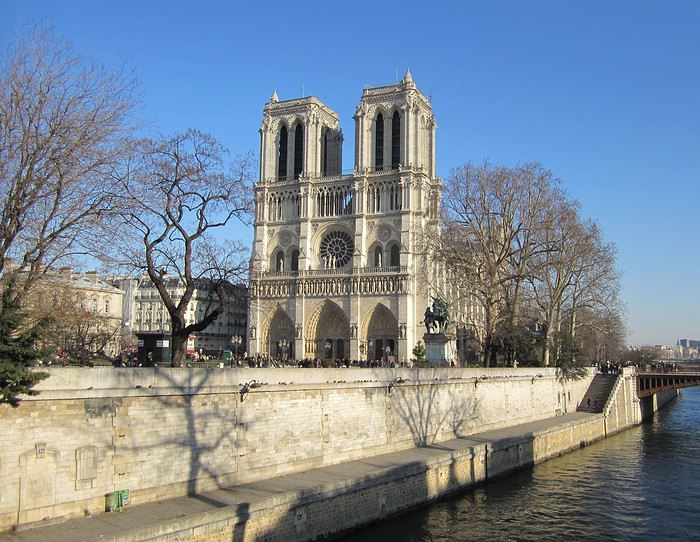
Détails Notre Dame de Paris
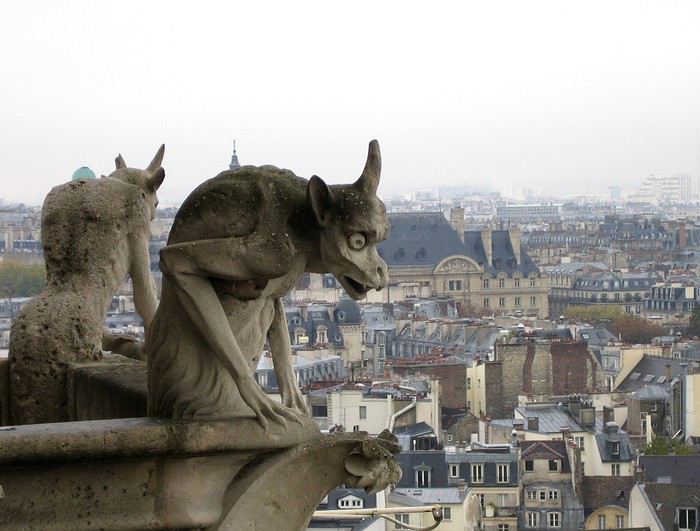 Détails d'un Temple au Yunnan Chine
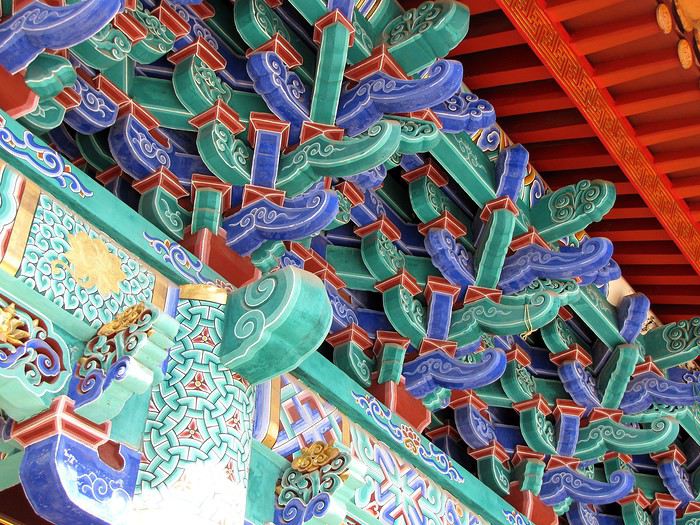
Vue partielle extérieure Temple au Yunnan Chine
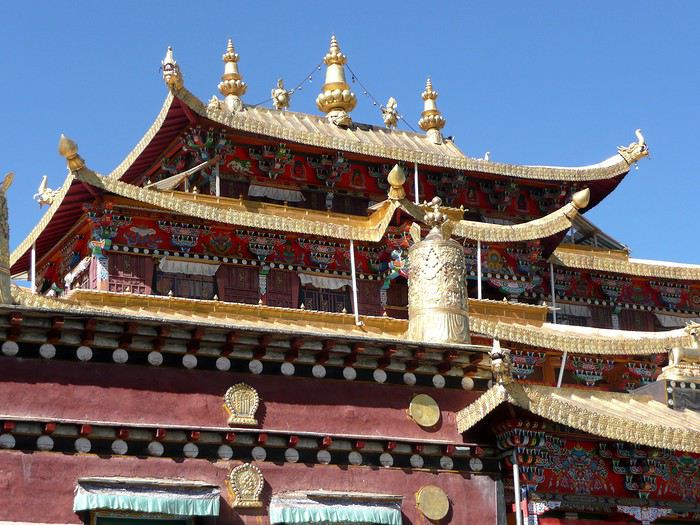 La grande mosquée de Paris
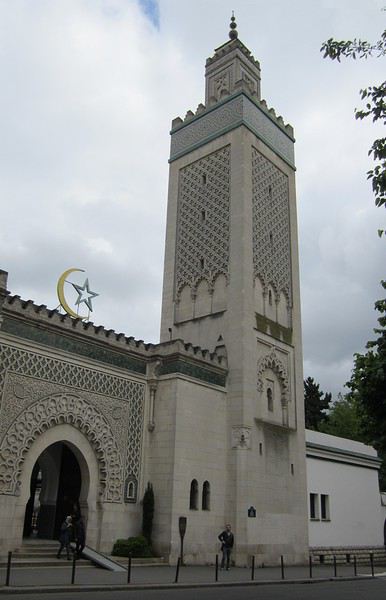 Le diaporama :
s.joomeo.com/5dbddd92688f3
JULIE
PS: on discute ici sur le concours de Novembre:😮
voyageforum.com/v.f?post=9805819;live=1;
Le diaporama :
s.joomeo.com/5dbddd92688f3
JULIE
PS: on discute ici sur le concours de Novembre:😮
voyageforum.com/v.f?post=9805819;live=1;
Pour participer : Dépôt des photos jusqu’au vendredi 22 novembre 22h. Vous pouvez poster jusqu’à 3 photos, numérotées et postées dans des messages différents, accompagnées d’un petit descriptif (lieu, anecdote...)
Pour voter : du samedi 23 novembre au vendredi 29 novembre 23h 59. Merci d’indiquer le numéro de la photo, le pseudo et le nombre de points attribués. Photo n°1 = 3 pts Photo n°2 = 2 pts Photo n°3 = 1 pt Tous les membres de VF peuvent voter (même ceux qui n’ont pas déposé de photos). En cas d’égalité de points pour la première position, la photo gagnante sera celle ayant obtenu le plus grand nombre de 1ères places, puis de secondes places ! L’heureux(se) gagnant(e) devra organiser le concours photo du mois de Décembre.
Des exemples: Notre Dame de Paris
Détails Notre Dame de Paris
Détails d'un Temple au Yunnan ChineVue partielle extérieure Temple au Yunnan Chine
La grande mosquée de Paris
Le diaporama :
s.joomeo.com/5dbddd92688f3
JULIE
PS: on discute ici sur le concours de Novembre:😮
voyageforum.com/v.f?post=9805819;live=1;Istanbul, Men and Cats
Sunday, October 20, 2019
Glancing at the Bosphorus through the bay window of my room, I absentmindedly scatter my things while quietly settling in. Then I turn around, looking for my passport, my cash, my camera battery, eager to join the buzz of the street below. But for the past few minutes, I’ve felt a presence—something moved on the balcony. Suddenly, I spot a black-and-white furball half-hidden behind a pot, nearby. I approach to introduce myself: "Here, kitty, kitty..." I don’t know how to say "kitty" in Turkish, but the rather rude furball hisses in my face, and its ridiculous little tail doubles in size. Okay. Not friendly. I grab what’s within reach—a cream capsule—and offer it as a peace offering. It lunges at me, swipes the object away with a quick paw, and scratches me in the process.
I’m in Istanbul *
* For the title of my travel journal, I was inspired by the lovely film: "Kedi, Cats and Men" by Ceyda Torum
Glancing at the Bosphorus through the bay window of my room, I absentmindedly scatter my things while quietly settling in. Then I turn around, looking for my passport, my cash, my camera battery, eager to join the buzz of the street below. But for the past few minutes, I’ve felt a presence—something moved on the balcony. Suddenly, I spot a black-and-white furball half-hidden behind a pot, nearby. I approach to introduce myself: "Here, kitty, kitty..." I don’t know how to say "kitty" in Turkish, but the rather rude furball hisses in my face, and its ridiculous little tail doubles in size. Okay. Not friendly. I grab what’s within reach—a cream capsule—and offer it as a peace offering. It lunges at me, swipes the object away with a quick paw, and scratches me in the process.
I’m in Istanbul *
* For the title of my travel journal, I was inspired by the lovely film: "Kedi, Cats and Men" by Ceyda Torum
Here and there... my walks in the land of pralines, couques, and gosettes..
Hello,
It often happens that we're asked what to visit in Belgium. And the answers usually point to Bruges, Ghent, Antwerp, and Brussels—and rightly so, as these cities are well worth visiting ;). However, Belgium, though small, isn’t just limited to these four cities.
I live in one of them (Brussels), enjoy spending time in the other three, but I’d like to highlight some lesser-known spots that could add to the trip for those who want to see a bit more or something different. Between trips, I like exploring one or two corners of the country where I live.
Hence the idea for a travel journal of walks.
Most of the places I’ll talk about can be visited as a day trip from Brussels, whether by public transport or car.
In chronological order of the topics covered:
- The Gileppe Dam (Liège province) - message 2, page 1 - The Domaine de La Hulpe (Walloon Brabant) - message 3, page 1 - Mechelen (Antwerp province) - message 4, page 1 - The coast - message 5, page 1 - The Westhoek, from De Panne - message 6, page 1 - The Zwin, from Knokke - message 7, page 1 - Lier (between Mechelen and Antwerp) - message 8, page 1 - Mons (Hainaut) - message 9, page 1 - The Florenville region - message 12, page 1 - The East Cantons - message 13, page 1 - Dinant - message 18, page 1 - The Japanese garden in Hasselt - message 24, page 2 - Leuven - message 29, page 2 - Louvain-la-Neuve - message 32, page 2 - Ostend - message 42 (page 3) and message 166 (page 9) - The floralies of Groot-Bijgaarden - message 43, page 3 - Halle Forest - message 44, page 3 - Pralines - message 54, page 3 - Charleroi - message 68, page 4 - Namur - message 92, page 5 - Le Bois du Cazier (Marcinelle) - message 95, page 5 - Couques and gosettes - message 96, page 5 - Liège - message 99, page 5 - Tournai - message 115, page 6 - Oudenaarde - message 121, page 7 - Meise Botanical Garden - message 124, page 7 - Tongeren - message 125, page 7 - Beersel Castle (Flemish Brabant) - message 126, page 7 - Brussels in lockdown (messages 150 and 154, page 8) - Notre-Dame à la Rose Hospital in Lessines (messages 161 and 162, page 9) - Westende (message 167, page 9) I’ll keep updating this list as the journal progresses...
It often happens that we're asked what to visit in Belgium. And the answers usually point to Bruges, Ghent, Antwerp, and Brussels—and rightly so, as these cities are well worth visiting ;). However, Belgium, though small, isn’t just limited to these four cities.
I live in one of them (Brussels), enjoy spending time in the other three, but I’d like to highlight some lesser-known spots that could add to the trip for those who want to see a bit more or something different. Between trips, I like exploring one or two corners of the country where I live.
Hence the idea for a travel journal of walks.
Most of the places I’ll talk about can be visited as a day trip from Brussels, whether by public transport or car.
In chronological order of the topics covered:
- The Gileppe Dam (Liège province) - message 2, page 1 - The Domaine de La Hulpe (Walloon Brabant) - message 3, page 1 - Mechelen (Antwerp province) - message 4, page 1 - The coast - message 5, page 1 - The Westhoek, from De Panne - message 6, page 1 - The Zwin, from Knokke - message 7, page 1 - Lier (between Mechelen and Antwerp) - message 8, page 1 - Mons (Hainaut) - message 9, page 1 - The Florenville region - message 12, page 1 - The East Cantons - message 13, page 1 - Dinant - message 18, page 1 - The Japanese garden in Hasselt - message 24, page 2 - Leuven - message 29, page 2 - Louvain-la-Neuve - message 32, page 2 - Ostend - message 42 (page 3) and message 166 (page 9) - The floralies of Groot-Bijgaarden - message 43, page 3 - Halle Forest - message 44, page 3 - Pralines - message 54, page 3 - Charleroi - message 68, page 4 - Namur - message 92, page 5 - Le Bois du Cazier (Marcinelle) - message 95, page 5 - Couques and gosettes - message 96, page 5 - Liège - message 99, page 5 - Tournai - message 115, page 6 - Oudenaarde - message 121, page 7 - Meise Botanical Garden - message 124, page 7 - Tongeren - message 125, page 7 - Beersel Castle (Flemish Brabant) - message 126, page 7 - Brussels in lockdown (messages 150 and 154, page 8) - Notre-Dame à la Rose Hospital in Lessines (messages 161 and 162, page 9) - Westende (message 167, page 9) I’ll keep updating this list as the journal progresses...
L'improvisation en voyage, de plus en plus difficile
Avec la multiplication des Expedia/Booking/Agoda etc., la prolifération des téléphones cellulaires et l'explosion du nombre de touristes, je trouve qu'il devient de plus en plus difficile de voyager sans avoir à tout, tout, tout planifier des mois à l'avance.
Quand je partais en voyage, J'avais l'habitude de réserver quelques nuits au lieu d'arrivée pour me remettre du décalage puis y aller au pif par la suite. Mais depuis quelques années, c'est devenu plus compliqué. Une réceptionniste d'hôtel m'a même déjà dit de réserver par Booking pour la nuit même!
Je me demande si nous ne sommes pas en train de perdre notre sens de l'improvisation, le plaisir de découvrir des lieux sans savoir à quoi nous attendre. Est-ce encore possible de partir en voyage sans avoir tout prévu?
Quand je partais en voyage, J'avais l'habitude de réserver quelques nuits au lieu d'arrivée pour me remettre du décalage puis y aller au pif par la suite. Mais depuis quelques années, c'est devenu plus compliqué. Une réceptionniste d'hôtel m'a même déjà dit de réserver par Booking pour la nuit même!
Je me demande si nous ne sommes pas en train de perdre notre sens de l'improvisation, le plaisir de découvrir des lieux sans savoir à quoi nous attendre. Est-ce encore possible de partir en voyage sans avoir tout prévu?
Un train de nuit Vienne-Bruxelles dès janvier 2020
La société de chemins de fer autrichienne ÖBB prévoit de mettre en service un train de nuit entre Bruxelles et Vienne dès le mois de janvier.
'ÖBB a posté samedi sur Twitter une photo de l'Atomium, sans donner davantage de détails sur la fréquence, l'itinéraire précis et les tarifs de cette nouvelle ligne.
https://www.lalibre.be/economie/entreprises-startup/un-train-de-nuit-entre-bruxelles-et-vienne-des-janvier-5d998c0dd8ad5841fc4f1075
La concurrence sera rude : Lauda Air propose un Vienne-Charleroi en1h50 de vol (de jour) à partir de 9,99 €.
La concurrence sera rude : Lauda Air propose un Vienne-Charleroi en1h50 de vol (de jour) à partir de 9,99 €.
Investissements locatifs en Thaïlande
bonjour,
quelqu' un à t' il des retours sur les investissements locatifs avec soit disant 8% par an + garantie de rachat
réalité ou arnaque ?
MERCI
Concours photos du mois de septembre 2019: "Et si tu m'emmenais en randonnée"
Hello les voyageurs, voyageuses,
Voici (enfin 😊) ouvert le 110e concours photo. J'ai essayé de trouver un thème qui n'avait pas encore été proposé. J'espère avoir réussi 😉
La randonnée est un moyen que j'apprécie particulièrement pour découvrir un endroit. Et je n'ai pas trop le temps de partir en balade ce mois-ci. Alors ce serait top si vous pouviez m'emmener à travers vos photos en randonnée.
Je n'aime pas trop donner des directives. Donc lâchez-vous, laissez aller votre imagination, partagez des photos qui pour vous évoque la randonnée et faites-nous voyager 😎 Petite définition de la randonnée : activité de plein air qui s'effectue à pied, à vélo, à cheval, à ski, .... en suivant un itinéraire, balisé ou non, seul ou en groupe. C'est à la fois un sport et un loisir de découverte et de contemplation.
Une photo qui pour moi évoque la randonnée, prise il y a près de 20 ans, dans les Alpes du Sud, à Peyresq PS: ne pas faire attention à la qualité, j'ai du traficoter la taille pour avoir les 2000 pixels imposés par VF 😕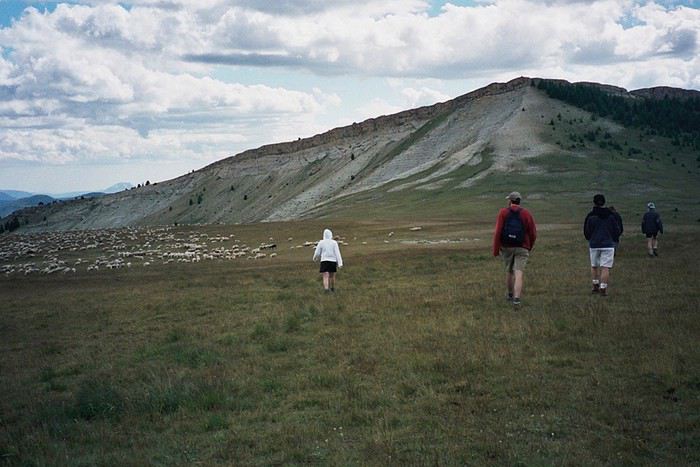
Pour participer : Dépôt des photos jusqu’au mercredi 25 septembre à 23h59 Vous pouvez poster jusqu’à 3 photos, numérotées et postées dans des messages différents. Prenez le temps d'y ajoutez un petit texte qui explique l'histoire de la photo, où elle a été prise, pourquoi elle vous évoque la randonnée, ..... Et si possible, évitez de publier des photos qui vous auriez déjà postées lors d'un des 109 concours précédents.
Pour voter : du jeudi 26 septembre 0h47 au lundi 30 septembre 17h23 Merci d’indiquer le numéro de la photo, le pseudo et le nombre de points attribués. Photo n°1 = 3 pts Photo n°2 = 2 pts Photo n°3 = 1 pt
Tous les membres de VF peuvent voter (même ceux qui n’ont pas déposé de photos). En cas d’égalité de points pour la première position, la photo gagnante sera celle ayant obtenu le plus grand nombre de 1ères places, puis de secondes places ! L’heureux gagnant pourra organiser le concours photo du mois de Septembre.
Ce topic n'est que pour poster des photos participantes au concours! Pour les discussions et les photos hors concours, c'est là : <>
Le diaporama, si une bonne âme pouvait soit le faire pour moi , soit m'expliquer comment on fait. Merci 🙂 Je promets au volontaire de voter pour ses photos (écrit avec doigts croisés dans le dos 😇)
A vos claviers!
Voici (enfin 😊) ouvert le 110e concours photo. J'ai essayé de trouver un thème qui n'avait pas encore été proposé. J'espère avoir réussi 😉
La randonnée est un moyen que j'apprécie particulièrement pour découvrir un endroit. Et je n'ai pas trop le temps de partir en balade ce mois-ci. Alors ce serait top si vous pouviez m'emmener à travers vos photos en randonnée.
Je n'aime pas trop donner des directives. Donc lâchez-vous, laissez aller votre imagination, partagez des photos qui pour vous évoque la randonnée et faites-nous voyager 😎 Petite définition de la randonnée : activité de plein air qui s'effectue à pied, à vélo, à cheval, à ski, .... en suivant un itinéraire, balisé ou non, seul ou en groupe. C'est à la fois un sport et un loisir de découverte et de contemplation.
Une photo qui pour moi évoque la randonnée, prise il y a près de 20 ans, dans les Alpes du Sud, à Peyresq PS: ne pas faire attention à la qualité, j'ai du traficoter la taille pour avoir les 2000 pixels imposés par VF 😕
Pour participer : Dépôt des photos jusqu’au mercredi 25 septembre à 23h59 Vous pouvez poster jusqu’à 3 photos, numérotées et postées dans des messages différents. Prenez le temps d'y ajoutez un petit texte qui explique l'histoire de la photo, où elle a été prise, pourquoi elle vous évoque la randonnée, ..... Et si possible, évitez de publier des photos qui vous auriez déjà postées lors d'un des 109 concours précédents.
Pour voter : du jeudi 26 septembre 0h47 au lundi 30 septembre 17h23 Merci d’indiquer le numéro de la photo, le pseudo et le nombre de points attribués. Photo n°1 = 3 pts Photo n°2 = 2 pts Photo n°3 = 1 pt
Tous les membres de VF peuvent voter (même ceux qui n’ont pas déposé de photos). En cas d’égalité de points pour la première position, la photo gagnante sera celle ayant obtenu le plus grand nombre de 1ères places, puis de secondes places ! L’heureux gagnant pourra organiser le concours photo du mois de Septembre.
Ce topic n'est que pour poster des photos participantes au concours! Pour les discussions et les photos hors concours, c'est là : <>
Le diaporama, si une bonne âme pouvait soit le faire pour moi , soit m'expliquer comment on fait. Merci 🙂 Je promets au volontaire de voter pour ses photos (écrit avec doigts croisés dans le dos 😇)
A vos claviers!