Results for "Téhéran+et+métro+|+5+>+159"
2063 results found.
Obtention du visa pakistanais en Turquie? English translation pending
Nous sommes aujourd'hui a Erzurum, pour recuperer le visa pour l'Iran.
Mais celui pour le Pakistan ns inquiete plus. J' ai bien note la possibilite de Zahedan.
Avez vous d'autres tuyaux?
Bureau de change en Iran? English translation pending
salut à tous
J'ai une petite question sur l'Iran... Comment faire pour l'argent sans trop de problème... Y a-t-il un truc à par les cartes de crédit ou les chèques de voyage interdits... bureau de change ailleurs que dans la capital... Facile ou pas...
Merci!
Altaus
J'ai une petite question sur l'Iran... Comment faire pour l'argent sans trop de problème... Y a-t-il un truc à par les cartes de crédit ou les chèques de voyage interdits... bureau de change ailleurs que dans la capital... Facile ou pas...
Merci!
Altaus
La petite va-nu-pieds, I – La route des Indes 1977 English translation pending
En fait de route des Indes, ce n’est que l’arrivée… Mes carnets m’ont été subtilisé lors d’un déménagement. Quelques lettres sont la seule trace écrite de mes premiers voyages au long cours. J'avais saisie cette trace sur ordinateur il y a longtemps, dans l’idée d’en faire quelque chose un jour… …un jour… et les jours passent… et le jour arrive…
Mi-septembre 1977, je prenais "La route des Indes", traversant en autobus Turquie, Afghanistan, Pakistan, avec Cola qui avait alors 3 ans et demi. Internet, ou l’idée même d’Internet, n’existait pas encore… passé des âges et des moments… Le courrier mettait une dizaine de jours à arriver, écrit sur des aérogrammes. On m'avait conseillé d'éviter les timbres collés sur une enveloppe car, disait-on ("on" ?), les indiens les décollent pour les revendre et… le message n’arrive jamais. Je ne sais ce qu'il en est, j'ai suivi le conseil. La date estampillant les aérogrammes est lisible. Une enveloppe aurait pu se perdre…
Mi-septembre 1977, je prenais "La route des Indes", traversant en autobus Turquie, Afghanistan, Pakistan, avec Cola qui avait alors 3 ans et demi. Internet, ou l’idée même d’Internet, n’existait pas encore… passé des âges et des moments… Le courrier mettait une dizaine de jours à arriver, écrit sur des aérogrammes. On m'avait conseillé d'éviter les timbres collés sur une enveloppe car, disait-on ("on" ?), les indiens les décollent pour les revendre et… le message n’arrive jamais. Je ne sais ce qu'il en est, j'ai suivi le conseil. La date estampillant les aérogrammes est lisible. Une enveloppe aurait pu se perdre…
Obtention d'un visa de plus de 30 jours pour l'Iran? English translation pending
Bonjour,
Peut-on demander à Key2persia son n° d'invitation 6 mois avant le départ, ou y a t-il une période de validité?
Quel est le meilleur moyen pour obtenir un visa de plus de 30 jours? (j'ai entendu qu'il était possible d'obtenir des visas de 60 jours).
Quel est la période de validité du visa, une fois qu'il est délivré?
Merci d'avance!
Lololeyeti...😉
Peut-on demander à Key2persia son n° d'invitation 6 mois avant le départ, ou y a t-il une période de validité?
Quel est le meilleur moyen pour obtenir un visa de plus de 30 jours? (j'ai entendu qu'il était possible d'obtenir des visas de 60 jours).
Quel est la période de validité du visa, une fois qu'il est délivré?
Merci d'avance!
Lololeyeti...😉
Rentrer en Chine avec son propre véhicule? English translation pending
Bonjour,
Est ce que quelqu'un parmi vous l'a déjà fait ?, il semblerait que ce soit très difficile, voire impossible, où alors réalisable seulement moyennant le paiement d'une "taxe" journalière très conséquente.
Merci d'avance pour vos infos Christophe
Est ce que quelqu'un parmi vous l'a déjà fait ?, il semblerait que ce soit très difficile, voire impossible, où alors réalisable seulement moyennant le paiement d'une "taxe" journalière très conséquente.
Merci d'avance pour vos infos Christophe
Route de la Soie 2005 en VW Passat English translation pending
Salut à tous, je part le 1er janvier 2005 avec un vieux break VW Passat diesel pour arriver au Kyrgysistan vers le mois de mai. Question budget, le diesel est-il moin cher que l'essence dans ces pays?
Merci pour toutes infos concernant cette route.
1er janvier 2005 : Suisse - Italie - Grèce - Turquie - Iran - Turkmenistan - Ouzbéquistan - Kyrgysistan (En voiture). Puis Chine (Kashgar) - Pakistan (Karakorum) - Inde (Laddak - Cachemir) - Chine - Tajékistan (à pied, bus, taxi ect...). - Ascenssion du Pic Lénine (7000m) en août - (Retrouvaille avec ma vielle Passat au Kyrgysistan) Ferroutage jusqu'a Moscou Puis, Estonie - Letonie - Lituanie - Pologne - Allemagne et Suisse (octobre 2005).
LeK
Merci pour toutes infos concernant cette route.
1er janvier 2005 : Suisse - Italie - Grèce - Turquie - Iran - Turkmenistan - Ouzbéquistan - Kyrgysistan (En voiture). Puis Chine (Kashgar) - Pakistan (Karakorum) - Inde (Laddak - Cachemir) - Chine - Tajékistan (à pied, bus, taxi ect...). - Ascenssion du Pic Lénine (7000m) en août - (Retrouvaille avec ma vielle Passat au Kyrgysistan) Ferroutage jusqu'a Moscou Puis, Estonie - Letonie - Lituanie - Pologne - Allemagne et Suisse (octobre 2005).
LeK
Hitchhiking in the 70s-80s
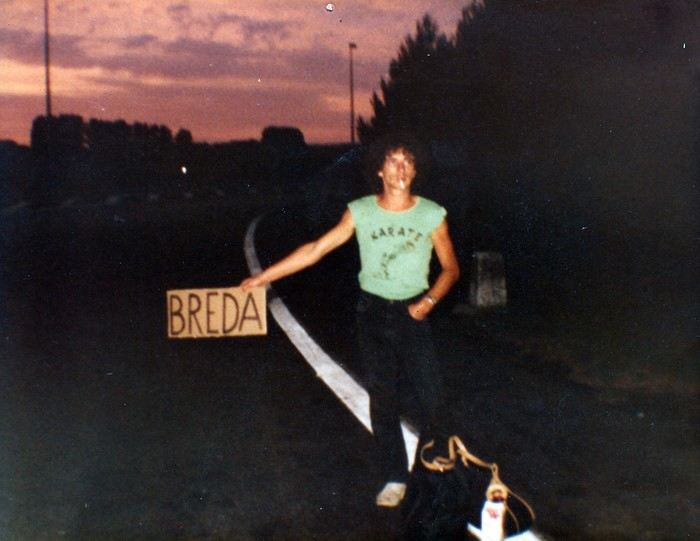
“Hey, your Marker... - My Marker? - The one you used to make hitchhiking signs.”
The marker in question is sitting proudly on the kitchen table. Marielle found it at the bottom of a moving box.
I’ve been meaning to tell the long story of my love affair with hitchhiking for years. Here we go.
To be honest, I’m not quite sure when it started. My earliest memory goes back to a fair with a bike race in my maternal grandparents’ village. I was with my cousin, my little sister, and three girl cousins. There were six of us, ages ranging from six or seven to thirteen or fourteen. Our parents stayed at the fair, and we’d had enough. So we decided to walk home. Only it was four kilometers away. So we hitchhiked. A guy driving an old car picked us all up and dropped us off at the farm. He probably found it amusing to see us thumbing a ride by the side of the road, but maybe it also worried him a bit. With everything you read in the papers...
Around fifteen or sixteen, I started hitchhiking regularly, alone or with a friend, to go to the nearby town. But it was especially when I started boarding school in Orléans that it became more regular. The first year, I’d leave Monday morning and come back Saturday noon by bus. It was an old, uncomfortable bus where we froze in winter. To make matters worse, I often got motion sickness if, as was too often the case, I ended up sitting in the back. In the spring, a high school friend suggested I hitchhike back. It meant a slight detour, but the advantage was taking only national roads.
So that’s how, from the end of tenth grade to twelfth grade, I’d thumb a ride every Saturday on the Pont de Bourgogne. Drivers were used to seeing young people hitchhiking, and it worked pretty well. Our biggest fear? Soldiers! At that time, military service was still mandatory, and on weekends, it wasn’t rare to see them competing with us. They’d keep their uniforms on to go home. That gave people confidence—with everything you read in the papers—and they’d rarely wait more than five minutes. We, with our long hair, were definitely less popular. From time to time, three big red-faced guys in a van coming back from a construction site would flip us off, yelling things like “go get a haircut, you bums!” Those were the good old days.
We still had a good laugh, though. Patrice, the friend I’d hitchhike back from school with on Saturdays, is a musician—I’d later discover he’s an excellent composer. A die-hard Beatles fan, he knows their repertoire by heart and spends his time singing at the top of his lungs while we thumb a ride. One Saturday late morning, we’d been waiting for a while at the exit of Châteauneuf-sur-Loire when a little lady came up to him and asked if he could please sing a little quieter: a baby was sleeping in the house. He put on the most sorry face: “Oh, sorry ma’am, we didn’t realize.” No sooner had the lady gone back inside than he started again. Luckily, a car stopped just then, sparing me the embarrassment of seeing the lady come back out.
Saturday was also the day when the cigarette pack was dangerously low. So before leaving, we’d go buy some “Parisiennes,” the “P4s” as we called them back then. They were slightly thinner cigarettes with a mix of tobacco scraps. Sometimes they tasted like light tobacco, sometimes like dark. Not great, but by the end of the week, our pocket money was gone. They were sold in small packs of four, hence the name P4. We’d only pay 20 centimes. On Saturdays, it was rare for the two of us to manage to scrape together 1.50 F to buy a whole pack of Gauloises...
The last twenty kilometers, I’d usually do alone, Patrice having reached his destination. From time to time, luck would smile on me: an acquaintance would just happen to pass by and stop. One January Saturday, at the exit of Gien, I ran into another guy from Argenton whom I knew a little. That day, the weather was nice, but the temperature was well below zero. It was around noon, and it was the off-peak hour. We were shivering, stamping our feet by the side of the road, when a Citroën “Tube” arrived: it was his father’s boss’s, a mason. They were both sitting in the front, but since they were obese, they had us climb onto the open back. Even though we huddled against the cab to shelter from the wind, the twenty kilometers felt very long, especially since we were only going sixty kilometers an hour. Our hands and cheeks were blue when we finally arrived.
The year I took my baccalaureate, a friend with a 2CV would take me Monday mornings with one or two others we’d pick up in nearby villages. We’d share the gas costs, but it was still cheaper than the bus. And in winter, the bus was my nightmare. You had to get up at five to catch it at six. Not enough sleep, and outside it was freezing or raining—or both. The 2CV was luxury. Plus, Philippe would pick me up at home. On the other hand, since I didn’t have class Saturday mornings—well, I did, but we only had PE the first two hours and nothing after—I’d skip class and slip out right after breakfast to thumb a ride at the Pont de Bourgogne.
Those three high school years were formative in this optional subject that was hitchhiking. Little by little, I learned the rules of the game. First, you shouldn’t walk along the road while thumbing. Cars go too fast and can’t stop easily. Accepting a ride that’s too short is also a no-go. The guy who offers to take you a little way but drops you off at some vague crossroads in the middle of nowhere? No thanks. You need to get dropped off in a town. If it’s a fairly big city, you often have to cross it from one end to the other, but it’s better. At the exit, you have to choose your spot well. Actually, you have to put yourself in the driver’s shoes: they need to see you early enough, not be going too fast, and be able to stop easily without risking an accident. So when leaving a city, it’s better not to go too far. It’s wiser to find a spot where cars go slowly and can stop easily. And preferably near a café. The café is for when you still have a few coins for a coffee and need to warm up. From time to time, you’d run into someone nice who’d make a detour to drop you off at a better spot to start again. Finally, if possible, avoid hitchhiking on Sundays. Cars are packed with whole families who, most of the time, aren’t going far. And then there’s the little worry of those people who rarely leave home: with everything you read in the papers...
During those high school years, it was only short trips, rarely exceeding a hundred kilometers. Later, I aimed bigger, and things were a bit different. In 1973-74, I crossed part of France for the first time on two or three occasions, coming back from the German border or returning to Bordeaux, where we lived briefly. Since there weren’t many highways back then, we took national roads. It was during these trips that I realized it was better to leave in the evening. As I said earlier, Sunday is to be avoided, but on weekdays, there’s another problem: if you leave in the morning, you only make short hops. First, it often takes longer to get going because drivers are people going to work nearby. Which brings us back to those who drop you off in a bad spot, far from everything. There, you have to know how to refuse. You thank the driver for stopping—oh, if only everyone could be like you—while explaining why you’d rather stay put. People don’t take offense, by the way. Those who pick up hitchhikers often hitchhiked themselves when they were in the military or before they had a car. In the late afternoon, you’d often run into salespeople or truckers, in other words, people who drive a lot. At that time, salespeople no longer had appointments and were more relaxed. They wanted to talk about something other than the merits of their products. On the radio, it was time for *Les Grosses Têtes*. You’d also quite often run into small business owners, professionals, or even hippies. The conversations were pleasant and often enriching. A little later in the evening, truckers would take over. They’d already driven a few hundred kilometers, and the depot or customs was still far away. So they’d gladly take a hitchhiker to stay awake at the wheel and chat. The radio with Max Ménier’s show *Les routiers sont sympas*, you’d eventually get tired of it. So a hitchhiker was a change. Others, who’d hit the road at midnight to be at their destination by morning, were nice and offered to let you lie down on the bunk while they drove. When you’d been hitchhiking since six in the evening, freezing in the wind between two vehicles, you weren’t unhappy to take a little nap.
Speaking of Max Ménier, he’d often make announcements for hitchhikers. One evening, I called him. It was getting late, and I still had quite a way to go. No luck: the show had ended for good the day before!
In short, it’s better not to rush, sleep in, and leave after lunch, or better yet, in the late afternoon. Obviously, I’m talking about when you have several hundred kilometers to cover. That’s when you have to play it pro.
First thing, especially at night, but it also applies in the middle of summer when the light is blinding: dress to be seen from far away. I’ll admit I have an advantage over most other hitchhikers: I’m small and don’t scare people. To balance that out, racist drivers often take me for an Arab and are less likely to pick me up, but overall, the balance tips in my favor. Back to the need to be seen: at night, I wear light-colored clothes. In headlights, you can see me from far away.
Second thing: travel light. Forget the big backpack with a frame. Drivers don’t always have room in the trunk or on the back seat, especially if it’s rained and the ground is wet. Plus, it forces them to get out of the car. If they’re nice enough to pick up a hitchhiker, you shouldn’t ask for too much either.
Third thing: bring a cardboard sign and a big marker—like the ones in the photo at the start of this post—to write the name of your destination. In the early 80s, I ran a tourist house in the Cher, but I lived in the Netherlands. In the off-season, it was only open on weekends. On Fridays, I’d leave Holland and return on Mondays. 1200 km round trip. On the way there, in Paris, I’d stand at Porte de la Chapelle. At that spot, the road is very wide, and drivers could stop easily. Obviously, on the sign, I didn’t write Eindhoven, which not everyone knows, and even less Amsterdam because of its seedy reputation. In that case, you’d expect to see a police car stop and two officers in kepis ask for your papers. So as a first destination, I’d write Compiègne. We were well out of Paris, and since it wasn’t too far, a trucker or salesperson was less reluctant to stop. Once past Compiègne, I’d take out my Lille sign. Once in Belgium, it wasn’t really necessary to use a sign anymore, since everyone was going in the same direction. Usually, the guy who picked me up at Porte de la Chapelle would say he wasn’t going far but could take me a little way. Before that, I’d still ask if there was a gas station on the highway where he could drop me off before exiting. While talking, the guy would realize he wasn’t dealing with a dangerous criminal. He’d pretend to check his watch, think for a moment, then say that actually, he was going to Belgium and could take me to the border or a little beyond. To leave Paris on the way back, I’d take the train to Melun, where it was easier to hitchhike than at Porte d’Italie.
Over all those years, I think I was pretty lucky. Or maybe philosophical enough not to imagine a car would stop after a few minutes. An hour’s wait was average. Sure, I sometimes waited three, four, or five hours. Most often at odd hours and in terrible weather. When it doesn’t work, it doesn’t work. But there’s always a moment when things pick up. Sure, when you’re soaked in freezing rain in the early morning after a sleepless night, you’re less philosophical than when I’m writing these lines comfortably at my computer, but it still holds true.
Earlier, I mentioned clothing and the importance of being well-rested before leaving. When you’ve eaten well and just gotten out of the shower, shaved, you’re in a better mood. And somehow, drivers sense it. Or at least, that’s the impression I’ve always had. It’s better to look in shape than disgusted at standing there, half-heartedly thumbing a ride. In short, when I’d start to get fed up with waiting, I’d go into the first café I saw for a coffee. Coming back out, I’d be refreshed, and most of the time, a car would stop within minutes. I’ve often said that when I stood by the side of the road thumbing a ride, I felt a bit like a gambler in front of a slot machine. It was a matter of giving luck a chance. And well, it worked out pretty well.
Then, there are countries where hitchhiking works really well and others where it’s harder. In the 70s-80s, it worked best in Germany and England. In the late afternoon, it wasn’t rare to be invited for tea. Well, that was in England. Tea meant being offered room and board. In Germany, they’d offer you coffee. Once there, they’d first show you the guest room and point out the bathroom before sitting you down in front of a big plate of cold cuts. In the evening, they’d go out in town, and the next morning, they’d usually drop you off at a good spot for hitchhiking. On the other hand, in Mediterranean and Scandinavian countries, you’d better be patient. In Spain or Italy, it’s better to take the train, which was dirt cheap back then. However, if you’re a couple traveling light, it’s already easier in most countries.
In 1982, I went on a trip around Turkey with my girlfriend. We only had two small bags, which was plenty. It was November-December, and we wore our warm, bulky clothes. Leaving Eindhoven at nine in the morning, we arrived in Graz, near the Yugoslav border, at eleven at night. 1300 km in a day! In just four or five vehicles. One to the German border, about fifty kilometers from Eindhoven, the second to Hagen in the Ruhr, the third to Salzburg, and the last to Graz at the Yugoslav border. Record broken. During the night crossing of Yugoslavia, we ran into a trucker close to retirement who lent us the truck’s bunk. So we arrived fresh and rested near Skopje the next morning. We continued to Thessaloniki in northern Greece before taking the train to Istanbul. In Turkey, we traveled a good part of the country by hitchhiking too. With truckers in old, overloaded, slow trucks that climbed hills at fifteen kilometers an hour, but also in cars where five or six people were already crammed in. And every time, we were invited for tea. Once, we were even picked up by a big shot in his Mercedes with a chauffeur. Until then, the average speed was around fifty kilometers an hour. There, we were going two hundred. On a national road, not a nice European highway.
I’ve also hitchhiked in Nepal, from Lumbini, Buddha’s birthplace, to a village on the way to Pokhara. It must have been midday. No bus until the next day. I gave it a try. A small truck overloaded with rice sacks, with two or three young people already perched on top, stopped. I rode on the roof of the cab. At fifty kilometers an hour when it was going well, with a breathtaking view. Coming back from India, I also crossed part of Iran by hitchhiking, from Tehran to the Turkish border. I did this trip with an Austrian I met at the hotel who, like me, had to watch his pennies. We gave it a shot. There was almost no traffic, but to our great surprise, the first car that passed in the area would always stop. They’d just ask for a modest contribution for gas, and it cost next to nothing.
Sometimes, you get scared too. After leaving Turkey in early December 82, we spent about two weeks in the southern Peloponnese harvesting olives. A few days before Christmas, we hitchhiked back to Holland. A girl picked us up in her little Fiat 500. We were driving on a mountain road, and that morning there was a bit of black ice. After crossing a pass, we saw the old Ford Taunus ahead of us at fifty meters start to skid. The driver let out a “heeee!” while grabbing my knees. I reflexively grabbed the wheel. Finally, the Taunus got back on track. And we didn’t swerve. But those few seconds felt very long.
In January 77, while I’d been living in Germany for a few months, I decided to spend a few days in Italy. By hitchhiking, of course. I left in the early afternoon, and by ten at night, I wasn’t far from Frankfurt. I saw a big Mercedes stop. The four or five young people crammed inside were listening to Schlager at full volume. Beer cans littered the floor. They didn’t have a precise destination, and as long as they were going south, that was fine with me. They’d finished their military service that very day and had clearly already celebrated their discharge. The driver was going 160, zigzagging dangerously from one side of the highway to the other. I should have realized he wasn’t entirely sober either. Luckily, there was almost no traffic. Finally, I managed to get dropped off at a gas station just before Frankfurt, relieved. I hope their trip didn’t end tragically.
Another time, coming back from Holland with my wife, we were picked up early in the morning near Senlis by two guys from Lille. They were going to work near Tours and could drop us off at Porte d’Italie. Apparently, they were coworkers but barely knew each other. The driver offered us a beer—at six in the morning, sure!—before opening another can for himself. He was clearly having trouble staying in the right lane. We politely declined, the passenger too. Everyone was tense. Luckily, it was rush hour on the ring road, and we were going slowly. When we got out of the car, the passenger said goodbye with the look of a guy being offered the condemned man’s rum and cigarette.
Finally, there are the annoying remarks from drivers who are either gay when you’re alone or turned on by the sight of your girlfriend when you’re a couple. In those cases, I’d get in the back so the guy wouldn’t feel too confident. And if the conversation got a little too suggestive, we’d deflect until we got dropped off.
And luckily, there are the times, not so rare after all, when you run into really nice people who invite you to eat and sleep at their place and drive you to a good spot the next morning. In Germany and England, that was common. And then there are the big strokes of luck, like during our trip to Turkey when we crossed most of Germany in one car, or that other time when some Germans drove me from the exit of Geneva all the way to the Costa Brava.
Going back to “with everything you read in the papers” and its variant “with everything you see on TV”—and now on the internet—it’s always left me perplexed. Personally, I’ve never heard of hitchhikers assaulting drivers, even if it may have happened. On the other hand, what was most common were hitchhikers being assaulted, especially girls. Anyway, even armed, it seems a bit stupid to assault the driver—wouldn’t that risk causing an accident?
Finally, since that time, I’ve occasionally wanted to hitchhike somewhere far away in France. Most often, too busy with work, it never happened, but the nostalgia hasn’t completely disappeared.
* * *
Other Hitchhikers
And then one day, I... settled down to become a driver myself. Ten years had passed, and you saw fewer and fewer hitchhikers. Or maybe I saw fewer because I had a regular job and wasn’t traveling the same way. And then I understood a few things.
Several times, I was tempted to pick up a hitchhiker, but they didn’t meet the required conditions. They were walking along the road instead of staying at the exit of the previous town. Hard to stop without risking an accident. Or the guy looked really scruffy. Or he was sulking, if not both. Then you think of that famous “with everything you read in the papers.” Not that I was scared, but unfortunately, the few hitchhikers I did pick up later were rarely interesting.
A few years ago, we picked up a young guy at the exit of a small town in Sologne. Not an easy spot for hitchhiking. Bad luck, he was a pretentious little jerk. He was barely 20 or 25 and talked like a bitter old man. He was a waiter in a restaurant. According to him, it was lucky he was there, otherwise the boss would have closed up shop long ago. You’d think he had thirty or forty years of professional experience behind him. As we approached Blois, he started ranting about Arabs, blaming them for all evils. And he laid it on thick. That morning, we were going to a teenager’s funeral who had just committed suicide, so he really got on our nerves, Mr. Know-It-All. Out of anger, I dropped him off next to a shopping center a few kilometers from downtown. Not nice, but it felt good.
Some time ago, we were driving around the Limousin on a Sunday to try out the used Twingo we’d just bought. We picked up a guy in his forties. A German who spoke French well. He started talking about the environment. He was a green Khmer. He got worked up all by himself with his pseudo-eco rant and, after a few kilometers, was almost yelling at us. As we were about to leave the main road for a small one, I dropped him off at a crossroads in the middle of nowhere. Normally, I would have made a little detour to take him to a better spot, but this time, I didn’t feel like doing the... eco-warrior a favor.
On the other hand, I’ve still done my good deed a few times. One June morning, coming back from Orléans, I saw a man in his sixties hitchhiking. The poor guy had had a rough time. He was from Montpellier and was coming back from Caen, where he’d been promised a job. Once there, they bluntly told him the position was already taken, and he had to go back. Except he didn’t have enough money left for the train. He’d spent the night hitchhiking without success. I could only take him as far as Lamotte-Beuvron, where I dropped him off near the fire station. Apparently, there was some vague shelter there or something, but it only opened a few hours later. In the meantime, he settled on the grass in a corner to sleep a little. While he was doing that, I quickly went to the train station to check the price of a ticket to Montpellier. It was within my means. Since he was sound asleep, I slipped the train ticket and 100 francs into his pocket. I couldn’t imagine him continuing to hitchhike all the way to Montpellier. And I bet he didn’t even have a piece of cardboard and a marker!
When we go to Brazil, we usually rent a small car. One day, we were coming back from Paracuru to Fortaleza when we saw a whole family hitchhiking. Two adults and two or three small children. Here near the equator, the sun sets very quickly, and it would soon be night. There was little traffic, and trucks wouldn’t stop because there was no room in the cab. As for the rich people driving big 4x4s, they wouldn’t stoop to picking up the lower classes. The only hope for this kind of family was usually a farmer or artisan who’d let them ride in the back of his pickup. Obviously, they were a bit surprised to see us. Everyone crammed in as best they could in the back of our little car. When we dropped them off, we got a whole string of “Deus lhes abençõe”—God bless you.
Still in Brazil, we were on the road from Barreirinhas to São Luís do Maranhão. About 150 km of deserted road with an isolated mud house here and there. A young woman flagged us down. She was very pregnant and had to get to the clinic twenty or thirty kilometers away to give birth. Someone was supposed to drive her, but the first signs of labor started earlier than expected, and the driver was unavailable. Even driving fast, we weren’t feeling great: it would be just our luck if she gave birth in the car!
Today, we’re in the age of smartphones and carpooling apps. Safety. With everything you see on TV... Three or four years ago, we signed up on a platform. Our first, and only, “client” was a little jerk who didn’t say a word the whole trip. No hello, no goodbye, and certainly no thank you. The next day, we found his Ray-Bans in the car. We didn’t run after him to give them back. Ha!
Tarifs billets d’avion Paris - Bangkok English translation pending
Pour un futur voyage en Thaïlande en août 2018 prochain avec une dizaine de personnes, J’aimerais savoir a quelle moment opportun je dois commencer a regarder les tarifs A/R pour un Paris - Bangkok , afin de trouver la meilleure offre pour cette saison estivale très prisé des touristes occidentaux.
De préférence avec des transites de 3 a 4h.
Merci de vos suggestions avisées.
Bien a vous très cordialement!
Yannouche.
Air France: préavis de grève du SPAF (syndicat des pilotes) autour du 10 juin English translation pending
PARIS, 1er juin (Reuters) - Le Syndicat des pilotes d'Air France (Spaf), qui représente environ un quart des pilotes de la compagnie aérienne, déposera jeudi un préavis de grève de deux à quatre jours pour la fin de la semaine prochaine, a déclaré mercredi à Reuters son président Grégoire Aplincourt.
Le Spaf souhaite coordonner son mouvement avec le Syndicat national des pilotes de ligne (SNPL), majoritaire au sein d'Air France, pour protester contre de nouvelles mesures mises en place à partir de ce mercredi qui baisseront les rémunérations des pilotes, a-t-il ajouté.
Le SNPL, dont une majorité des adhérents ont voté en faveur d'une grève de six jours ou plus au cours d'un référendum, n'était pas disponible pour un commentaire dans l'immédiat. La filiale d'Air France-KLM n'était pas immédiatement joignable.
Une grève à la fin de la semaine prochaine coïnciderait avec le coup d'envoi de l'Euro 2016 de football en France, le 10 juin, au moment où des mouvements se multiplient contre le projet de loi Travail. (Cyril Altmeyer, édité par Dominique Rodriguez)
fr.reuters.com/...uroRpt/idFRP6N17U007
Le Spaf souhaite coordonner son mouvement avec le Syndicat national des pilotes de ligne (SNPL), majoritaire au sein d'Air France, pour protester contre de nouvelles mesures mises en place à partir de ce mercredi qui baisseront les rémunérations des pilotes, a-t-il ajouté.
Le SNPL, dont une majorité des adhérents ont voté en faveur d'une grève de six jours ou plus au cours d'un référendum, n'était pas disponible pour un commentaire dans l'immédiat. La filiale d'Air France-KLM n'était pas immédiatement joignable.
Une grève à la fin de la semaine prochaine coïnciderait avec le coup d'envoi de l'Euro 2016 de football en France, le 10 juin, au moment où des mouvements se multiplient contre le projet de loi Travail. (Cyril Altmeyer, édité par Dominique Rodriguez)
fr.reuters.com/...uroRpt/idFRP6N17U007
Guide francophone en Iran English translation pending
Nous allons 15 jours en Iran au mois d'août 2016 Quelqu un connaîtrait il un guide sur place qui pourrait nous accompagner dans nos déplacements
Nous souhaiterions aussi loger chez l habitant
Merci pour toutes vos infos
En novembre: 3 (ou 2) semaines au Sri Lanka plus une semaine au nord de l'Inde English translation pending
Bonjour à tous!
Nous comptons partir 3 semaines en novembre en couple. Nous ne savons pas quel serait le mieux entre 3 semaines au Sri Lanka ou bien 2 semaines au Sri Lanka + 1 semaine pour faire le Nord de l'Inde (Agra, News Delhi, Jaipur)? Qu'est ce que vous nous conseillez? Ce qui nous attire le plus quand nous voyageons, ce sont les paysages magnifiques et l'accueil de la population. Je vous remercie d'avance de vos conseils.
Nous comptons partir 3 semaines en novembre en couple. Nous ne savons pas quel serait le mieux entre 3 semaines au Sri Lanka ou bien 2 semaines au Sri Lanka + 1 semaine pour faire le Nord de l'Inde (Agra, News Delhi, Jaipur)? Qu'est ce que vous nous conseillez? Ce qui nous attire le plus quand nous voyageons, ce sont les paysages magnifiques et l'accueil de la population. Je vous remercie d'avance de vos conseils.
Visa pour l'Iran sans prise d'empreintes English translation pending
bon, ben apparemment, y a du nouveau pour les visas iraniens.
Ce Vendredi 15/2/2014, je suis passée au consulat d'Iran à Paris, avec mon passeport (français), le formulaire (à télécharger sur le site officiel de l'Ambassade d'Iran en France) , une attestation d'assurance, 2 photos, une enveloppe pré-affranchie en recommandé Chronoposte pour le retour du passeport, et une copie du courriel de l'agence iranienne (Iran Traveling Center à Shiraz, mais il y en a d'autres, citées dans divers fils de discussion de ce forum) qui s'est occupée de mon numéro d'autorisation. Je suis arrivée au consulat vers 10h, j'ai fait 2 h de queue , mais queue bien organisée, avec assez de places assises pour tout le monde.
Quand est venu mon tour, j'ai déposé mes papiers, la nana en tenue réglementaire les a examinés, a vérifié que l'autorisation était validée par son ministère. Et quand j'ai tendu la main pour la prise d'empreintes, ô surprise, elle m'a dit poliment : "Ce n'est pas nécessaire", et voyant mon air ahuri, a ajouté "Avec votre numéro d'autorisation, je n'en ai pas besoin".
Heureusement que j'avais profité de cette navette au consulat pour rendre visite à ma cousine, sinon j'aurais moyennement apprécié de faire ce trajet pour rien, vu que j'en ai eu pour 3 fois plus cher en billet de TGV qu'en frais d'agence iranienne... Mais bon, c'est plutôt une bonne nouvelle !
Je n'ai pas encore le visa, mais je ne vois pas de raison qu'il n'arrive pas d'ici environ une semaine dans l'enveloppe prévue à cet effet.
Ce Vendredi 15/2/2014, je suis passée au consulat d'Iran à Paris, avec mon passeport (français), le formulaire (à télécharger sur le site officiel de l'Ambassade d'Iran en France) , une attestation d'assurance, 2 photos, une enveloppe pré-affranchie en recommandé Chronoposte pour le retour du passeport, et une copie du courriel de l'agence iranienne (Iran Traveling Center à Shiraz, mais il y en a d'autres, citées dans divers fils de discussion de ce forum) qui s'est occupée de mon numéro d'autorisation. Je suis arrivée au consulat vers 10h, j'ai fait 2 h de queue , mais queue bien organisée, avec assez de places assises pour tout le monde.
Quand est venu mon tour, j'ai déposé mes papiers, la nana en tenue réglementaire les a examinés, a vérifié que l'autorisation était validée par son ministère. Et quand j'ai tendu la main pour la prise d'empreintes, ô surprise, elle m'a dit poliment : "Ce n'est pas nécessaire", et voyant mon air ahuri, a ajouté "Avec votre numéro d'autorisation, je n'en ai pas besoin".
Heureusement que j'avais profité de cette navette au consulat pour rendre visite à ma cousine, sinon j'aurais moyennement apprécié de faire ce trajet pour rien, vu que j'en ai eu pour 3 fois plus cher en billet de TGV qu'en frais d'agence iranienne... Mais bon, c'est plutôt une bonne nouvelle !
Je n'ai pas encore le visa, mais je ne vois pas de raison qu'il n'arrive pas d'ici environ une semaine dans l'enveloppe prévue à cet effet.
Concours Photos VF Septembre 2013: "Les Taxis du monde": Espace de discussion... English translation pending
Pour toutes les discussions à propos de ce Concours photos de septembre 2013 ayant pour thème les Taxis du monde ... c'est ici.
Ps : Pour participer au Concours, les photos sont à poster uniquement en suivant ce lien : http://voyageforum.com/discussion/concours-photos-vf-septembre-2013-taxis-monde-d6151595/
Ps : Pour participer au Concours, les photos sont à poster uniquement en suivant ce lien : http://voyageforum.com/discussion/concours-photos-vf-septembre-2013-taxis-monde-d6151595/
Grosse déception! Visa français pour deux petites filles togolaises English translation pending
Bonjour à tous !
J'ai demandé quelques renseignents sur ce forum, il y a quelques mois, pour une demande de visa pour deux petites filles togolaises, (ce sont les filles d'amis togolais, c'est comme notre famille), pour qu'elles viennent passer 1 mois de vacances dans notre "beau pays : la France".
Quelle n'a pas été notre déception, quand tout d'abord nous n'avons pas pu demander deux visas, mais un seul par manque de moyen financier, donc nous sommes heureux tout de même, une seule fille viendra, nous ferons une autre demande l'année prochaine pour que sa soeur puisse venir elle-aussi.
Nous avons dû tout d'abord, affronter tous les méandres de l'administration, avec les passeports, les documents à envoyer sur place, lettres d'invitation de motivation, assurance, attestation d'accueil, documents prouvant notre hébergement et salaires.
Bref, tout cela pour nous annoncer : VISA REFUSE : les informations communiquées pour justifier l'objet et les conditions du séjour ne sont pas fiables et votre volonté de quitter le territoire des états membres avant l'expiration du visa n'a pas pu être établie.
Vraiment, c'est honteux, c'est inhumain, j'espère que la dame qui mis sa signature au fond de ce papier est satisfaite, j'espère qu'elle est heureuse d'avoir privé une petite fille de 7 ans de la joie d'avoir pu passer 1 mois de vacances dans notre pays, tous nos amis, notre famille l'attendait, nous avions tous prévu tant de chose pour elle !!!!
Voilà, c'est la vie, c'est ainsi, nous recommencerons l'année prochaine, dans un an, si tout va bien...
Merci de m'avoir lue, je prends tous les conseils et renseignements, pour que la prochaine fois soit la bonne.
Nat.
J'ai demandé quelques renseignents sur ce forum, il y a quelques mois, pour une demande de visa pour deux petites filles togolaises, (ce sont les filles d'amis togolais, c'est comme notre famille), pour qu'elles viennent passer 1 mois de vacances dans notre "beau pays : la France".
Quelle n'a pas été notre déception, quand tout d'abord nous n'avons pas pu demander deux visas, mais un seul par manque de moyen financier, donc nous sommes heureux tout de même, une seule fille viendra, nous ferons une autre demande l'année prochaine pour que sa soeur puisse venir elle-aussi.
Nous avons dû tout d'abord, affronter tous les méandres de l'administration, avec les passeports, les documents à envoyer sur place, lettres d'invitation de motivation, assurance, attestation d'accueil, documents prouvant notre hébergement et salaires.
Bref, tout cela pour nous annoncer : VISA REFUSE : les informations communiquées pour justifier l'objet et les conditions du séjour ne sont pas fiables et votre volonté de quitter le territoire des états membres avant l'expiration du visa n'a pas pu être établie.
Vraiment, c'est honteux, c'est inhumain, j'espère que la dame qui mis sa signature au fond de ce papier est satisfaite, j'espère qu'elle est heureuse d'avoir privé une petite fille de 7 ans de la joie d'avoir pu passer 1 mois de vacances dans notre pays, tous nos amis, notre famille l'attendait, nous avions tous prévu tant de chose pour elle !!!!
Voilà, c'est la vie, c'est ainsi, nous recommencerons l'année prochaine, dans un an, si tout va bien...
Merci de m'avoir lue, je prends tous les conseils et renseignements, pour que la prochaine fois soit la bonne.
Nat.
Visa iranien à Trabzon (Turquie) English translation pending
Bonjour a tous,
comme je sais que ca peut interesser des gens, voici des nouvelles fraiches du bon plan de Trabzon pour le visa iranien.
En se pointant au consulat a l'ouverture (9h-12h 14h-16h30 du lundi au vendredi) avec deux photos d'identité (il y a un photographe dans la rue, moins de 5 euros), en une heure le formulaire est rempli, on vient recuperer le passeport a 16h et c'est gagné. Pas de questions piege ou autre, 75 euros pour les français.
Bonne route, n'hesitez pas si vous avez des questions!
Robin
Itinéraire en Ouzbekistan, Tadjikistan, Kirghizistan English translation pending
Aux experts des stans,
Je souhaite suivre l'itinéraire suivant en septembre prochain : Tachkent - Och - Mourgab - Langar - Ichkatchim - Khorog - Dusanbé - Boukhara - Samarcande - Tachkent. Ca fait autour de 2800km !!
C'est les contours du parcours mais il y aura plus d'arrets. Maintenant la question critique, combien de temps vous alloueriez pour ce parcours ? Je voyage seul et n'ai pas l'intention le louer un véhicule avec chauffeur à moins d'être complètement coincé (il semblerait que le morceau Och - Mourgab soit le plus difficile pour trouver un moyen de transport). L'idée est de faire ça en 4 semaines. Je ne veux pas voyager à un rythme effréné en passant mon temps assis dans des bus et j'ai l'impression que 4 semaines c'est vraiment juste (mais pas évident de pouvoir partir plus longtemps :-()
En Ouzbékistan, je veux juste visiter Boukhara et Samarcande et le minimum de temps à Tachkent donc je comptais 8 jours. Au Kirghizstan, très peu aussi. Donc la plupart du temps serait pour le Tadjikistan. Je sais que le Kirghizstan vaut le détour mais j'y retournerai une autre fois. Le but de ce voyage est le Tadjikistan et le Pamir donc le Kirgizstan est dans la boucle uniquement parce-que depuis Karakul, pas trop d'autre option pour retourner à Tachkent. Je ferais tous mes visas d'avance pour ne pas perdre de temps sur place.
L'autre solution serait de court-circuiter l'Ouzbekistan et d'aller directement de Dushanbé à Tachkent à la fin. Votre avis pour ceux qui connaissent ? C'est jouable en 4 semaines ou je devrais vraiment tout faire pour en ajouter une 5eme ?
Merci ...
Je souhaite suivre l'itinéraire suivant en septembre prochain : Tachkent - Och - Mourgab - Langar - Ichkatchim - Khorog - Dusanbé - Boukhara - Samarcande - Tachkent. Ca fait autour de 2800km !!
C'est les contours du parcours mais il y aura plus d'arrets. Maintenant la question critique, combien de temps vous alloueriez pour ce parcours ? Je voyage seul et n'ai pas l'intention le louer un véhicule avec chauffeur à moins d'être complètement coincé (il semblerait que le morceau Och - Mourgab soit le plus difficile pour trouver un moyen de transport). L'idée est de faire ça en 4 semaines. Je ne veux pas voyager à un rythme effréné en passant mon temps assis dans des bus et j'ai l'impression que 4 semaines c'est vraiment juste (mais pas évident de pouvoir partir plus longtemps :-()
En Ouzbékistan, je veux juste visiter Boukhara et Samarcande et le minimum de temps à Tachkent donc je comptais 8 jours. Au Kirghizstan, très peu aussi. Donc la plupart du temps serait pour le Tadjikistan. Je sais que le Kirghizstan vaut le détour mais j'y retournerai une autre fois. Le but de ce voyage est le Tadjikistan et le Pamir donc le Kirgizstan est dans la boucle uniquement parce-que depuis Karakul, pas trop d'autre option pour retourner à Tachkent. Je ferais tous mes visas d'avance pour ne pas perdre de temps sur place.
L'autre solution serait de court-circuiter l'Ouzbekistan et d'aller directement de Dushanbé à Tachkent à la fin. Votre avis pour ceux qui connaissent ? C'est jouable en 4 semaines ou je devrais vraiment tout faire pour en ajouter une 5eme ?
Merci ...
Escapade sur le plateau du Golan en bus depuis Jérusalem? English translation pending
Bonjour à tous,
Nous partons 8 jours a Jérusalem, 1ere semaine d'aout, mais sans voiture.
J'ai vu que Massada etait tres facilement accessible en bus (apparemment il faut y dormir pour faire l'ascension au lever du jour) en revanche, qu'en est il de Golan? connaissez vous des bus? Pensez vous qu'il faille y passer la nuit ou une journée peut elle suffire? Que faut il ne pas manquer une fois sur le plateau du Golan?
On m'a également parlé de Akko et eilat? qu en pensez vous pour 8 jours, sans voiture?
Merci!!!
J'ai vu que Massada etait tres facilement accessible en bus (apparemment il faut y dormir pour faire l'ascension au lever du jour) en revanche, qu'en est il de Golan? connaissez vous des bus? Pensez vous qu'il faille y passer la nuit ou une journée peut elle suffire? Que faut il ne pas manquer une fois sur le plateau du Golan?
On m'a également parlé de Akko et eilat? qu en pensez vous pour 8 jours, sans voiture?
Merci!!!
Cyclotourisme en Algérie: comment obtenir le visa? English translation pending
Bonjour,
Je projette de faire un tour de la méditerranée à vélo à partir de mi-septembre. Je compte rejoindre l'Algérie en prenant le bateau à Almeria ou Alicante pour El Ghazaouet ou Oran.
Pour le visa, le consulat me demande une réservation d’hôtel confirmée. Je peux leur en présenter une pour la 1ère nuit, dans la ville où j'arriverai, mais pas pour les autres nuits étant donné que je serai constamment en déplacement, et ferai du camping.
Donc ma question est : le consulat va t-il accepté ma demande si je présente un justificatif uniquement pour la première nuît ? Sinon, comment faire, comment "maquiller" mon histoire ?
D'autre part, savez vous ce qu'en est-il du camping sauvage en Algérie ?
Merci d'avance!
Je projette de faire un tour de la méditerranée à vélo à partir de mi-septembre. Je compte rejoindre l'Algérie en prenant le bateau à Almeria ou Alicante pour El Ghazaouet ou Oran.
Pour le visa, le consulat me demande une réservation d’hôtel confirmée. Je peux leur en présenter une pour la 1ère nuit, dans la ville où j'arriverai, mais pas pour les autres nuits étant donné que je serai constamment en déplacement, et ferai du camping.
Donc ma question est : le consulat va t-il accepté ma demande si je présente un justificatif uniquement pour la première nuît ? Sinon, comment faire, comment "maquiller" mon histoire ?
D'autre part, savez vous ce qu'en est-il du camping sauvage en Algérie ?
Merci d'avance!
Enlèvement au Pakistan English translation pending
Un jeune couple voyageant en bus VW a été enlevé au Pakistan. Aucune autre info disponible pour l'instant.
Info complète sur http://www.tsr.ch/info/suisse/3246569-le-couple-sequestre-pourrait-avoir-ete-deplace.html
Visa d'un mois pour l'Iran, quand on habite en province française? English translation pending
Bonjour à tous,
Les différents récits de voyage que je lis sur ce forum concernant l'Iran me donnent envie de retourner au Moyen Orient pour découvrir ce pays.
J'ai lu que désormais il était obligatoire d'aller à l'ambassade à Paris pour se faire prendre ses empreintes digitales (ce que je ne peux pas faire, habitant à l'autre bout de la France !). Est-il possible d'obtenir un visa en arrivant à l'aéroport, un visa non pas de 15 jours mais d'un mois ? Dans le cas contraire, je ne vois pas quelle pourrait être la solution ! 😕
Merci d'avance à tous
Maï
Arrivée en Israël avec des tampons iraniens/syriens sur le passeport? English translation pending
Bonjour,
Je compte partir visiter Israël d'ici quelques semaines ! J'ai hâte d'y être .. ;) J'ai en tête que l'arrivée à Tel Aviv est un minimum sécurisé ..
Voici mon petit problème : J'ai pas mal de tampons iraniens sur mon passeport car j'ai travaillé là bas ... Est-ce que cela peut poser des problèmes à l'aéroport ?
J'ai une solution de rechange avec mon 2ème passeport mais celui là a des tampons syriens/libanais ...
C'est pas de bol ... Si vous avez des infos là dessus ... !
Merci beaucoup par avance! Aldric
Je compte partir visiter Israël d'ici quelques semaines ! J'ai hâte d'y être .. ;) J'ai en tête que l'arrivée à Tel Aviv est un minimum sécurisé ..
Voici mon petit problème : J'ai pas mal de tampons iraniens sur mon passeport car j'ai travaillé là bas ... Est-ce que cela peut poser des problèmes à l'aéroport ?
J'ai une solution de rechange avec mon 2ème passeport mais celui là a des tampons syriens/libanais ...
C'est pas de bol ... Si vous avez des infos là dessus ... !
Merci beaucoup par avance! Aldric
La femme indienne en Inde English translation pending
Bonjour !
Je suis de retour d'un voyage en Inde, au Maharashtra. Magnifique !!!
Mais, je veux souligner un point : J'ai constaté l'absence "étrange" de la femme indienne... Dans la rue, j'ai vu beaucoup plus d'hommes que de femmes !!! Dans les services pour les commerces, pour les restaurants ou pour les hôtels, la femme était absente ! Je me demandais : "Mais où est-elle, et que fait-elle ??? Et, tout cela me rendait perplexe...
Mon dernier périple en Inde datait de 2004, au Gujarat. Je n'ai pas constaté d'amélioration.
Je suis, quand même, tombé par hasard sur une manifestation de femmes dans la ville de Pune. Peut-être pour contester leur condition de vie ? En tous cas, c'était multicolore, superbe, et c'est apparu comme un "flash" dans ce monde indien. J'ai remarqué aussi une chose inquiétante : Un grand nombre de femmes musulmanes portant le voile intégral !!! Il y a 6 ans, c'était quasiment inexistant.
Je suis de retour d'un voyage en Inde, au Maharashtra. Magnifique !!!
Mais, je veux souligner un point : J'ai constaté l'absence "étrange" de la femme indienne... Dans la rue, j'ai vu beaucoup plus d'hommes que de femmes !!! Dans les services pour les commerces, pour les restaurants ou pour les hôtels, la femme était absente ! Je me demandais : "Mais où est-elle, et que fait-elle ??? Et, tout cela me rendait perplexe...
Mon dernier périple en Inde datait de 2004, au Gujarat. Je n'ai pas constaté d'amélioration.
Je suis, quand même, tombé par hasard sur une manifestation de femmes dans la ville de Pune. Peut-être pour contester leur condition de vie ? En tous cas, c'était multicolore, superbe, et c'est apparu comme un "flash" dans ce monde indien. J'ai remarqué aussi une chose inquiétante : Un grand nombre de femmes musulmanes portant le voile intégral !!! Il y a 6 ans, c'était quasiment inexistant.
Encore un opposant pacifiste mort en prison à Cuba English translation pending
Cuba : la mort d'Orlando Zapata, gréviste de la faim
Par Michel Faure | Journaliste | 24/02/2010 | 21H11

 Le seul crime qu'avait commis Orlando Zapata Tamayo, mort mardi 23 février à La Havane des suites de sa grève de la faim à l'âge de 42 ans, était d'être en désaccord avec le régime cubain.
Il n'avait tué personne, ni volé, ni agressé quiconque. Il était simplement un opposant à Fidel Castro, et le disait, comme cela aurait été son droit le plus élémentaire dans n'importe quelle démocratie. Mais les dictatures sont justement nommées des régimes totalitaires pour ne laisser aucun espace à la liberté, aucun champ à la divergence d'opinions.
Le désaccord est une trahison, et demander la démocratie à Cuba est donc un crime. Comme la paranoïa est aussi au programme, ce crime, tellement odieux, ne peut-être qu'une perversion inspirée de l'étranger, et le dissident est bien évidemment, aux yeux du pouvoir cubain, un agent au service de la CIA et des Etats-Unis. Pris dans la grande rafle des dissidents d'avril 2003
Pour toutes ces extravagantes raisons, Orlando Zapata avait été pris dans la grande rafle des dissidents cubains d'avril 2003. Soixante-quinze personnes, dont plusieurs journalistes indépendants, avaient été arrêtées et jugées à des peines parfois sévères.
Celle de Zapata fut relativement légère, tout en restant totalement injuste : trois ans de prison. Zapata, cependant, fut un « mauvais » prisonnier, ce qui lui valu une nouvelle condamnation à vingt-cinq ans supplémentaires de prison. Zapata, qui avait été désigné « prisonnier de conscience » par Amnesty International, avait entamé une grève de la faim voici 85 jours.
Sa mère, il y a une semaine, avait alerté l'opinion de la gravité de l'état de santé de son fils, et le quotidien Miami Herald avait publié la nouvelle. Le prisonnier, d'abord transporté dans une clinique de la région de Camaguey, avait été hospitalisé il y a quelques jours à la Havane où il est mort.
Selon la BBC, le dernier dissident cubain à mourir d'une grève de la faim en prison fut un étudiant et poète, Pedro Luis Boitel, en 1972. La blogueuse cubaine Yoani Sanchez, sur Twitter, appelle à un deuil national.
Photo : registre de condoléances ouvert à La Havane après la mort d'Orlando Zapata Tamayo (Enrique De La Osa/Reuters)
Le seul crime qu'avait commis Orlando Zapata Tamayo, mort mardi 23 février à La Havane des suites de sa grève de la faim à l'âge de 42 ans, était d'être en désaccord avec le régime cubain.
Il n'avait tué personne, ni volé, ni agressé quiconque. Il était simplement un opposant à Fidel Castro, et le disait, comme cela aurait été son droit le plus élémentaire dans n'importe quelle démocratie. Mais les dictatures sont justement nommées des régimes totalitaires pour ne laisser aucun espace à la liberté, aucun champ à la divergence d'opinions.
Le désaccord est une trahison, et demander la démocratie à Cuba est donc un crime. Comme la paranoïa est aussi au programme, ce crime, tellement odieux, ne peut-être qu'une perversion inspirée de l'étranger, et le dissident est bien évidemment, aux yeux du pouvoir cubain, un agent au service de la CIA et des Etats-Unis. Pris dans la grande rafle des dissidents d'avril 2003
Pour toutes ces extravagantes raisons, Orlando Zapata avait été pris dans la grande rafle des dissidents cubains d'avril 2003. Soixante-quinze personnes, dont plusieurs journalistes indépendants, avaient été arrêtées et jugées à des peines parfois sévères.
Celle de Zapata fut relativement légère, tout en restant totalement injuste : trois ans de prison. Zapata, cependant, fut un « mauvais » prisonnier, ce qui lui valu une nouvelle condamnation à vingt-cinq ans supplémentaires de prison. Zapata, qui avait été désigné « prisonnier de conscience » par Amnesty International, avait entamé une grève de la faim voici 85 jours.
Sa mère, il y a une semaine, avait alerté l'opinion de la gravité de l'état de santé de son fils, et le quotidien Miami Herald avait publié la nouvelle. Le prisonnier, d'abord transporté dans une clinique de la région de Camaguey, avait été hospitalisé il y a quelques jours à la Havane où il est mort.
Selon la BBC, le dernier dissident cubain à mourir d'une grève de la faim en prison fut un étudiant et poète, Pedro Luis Boitel, en 1972. La blogueuse cubaine Yoani Sanchez, sur Twitter, appelle à un deuil national.
Photo : registre de condoléances ouvert à La Havane après la mort d'Orlando Zapata Tamayo (Enrique De La Osa/Reuters)
C'est toujours aussi stupéfiant de mépris pour les droits de l'homme mais ça continue de plus belle malgré le pseudo assouplissement régulièrement invoqué sur VF par le "fanclub" de Cuba................
Viva la libertad!.............................y.............................Vivan las vacaciones en Cuba!
Par Michel Faure | Journaliste | 24/02/2010 | 21H11
Le seul crime qu'avait commis Orlando Zapata Tamayo, mort mardi 23 février à La Havane des suites de sa grève de la faim à l'âge de 42 ans, était d'être en désaccord avec le régime cubain.
Il n'avait tué personne, ni volé, ni agressé quiconque. Il était simplement un opposant à Fidel Castro, et le disait, comme cela aurait été son droit le plus élémentaire dans n'importe quelle démocratie. Mais les dictatures sont justement nommées des régimes totalitaires pour ne laisser aucun espace à la liberté, aucun champ à la divergence d'opinions.
Le désaccord est une trahison, et demander la démocratie à Cuba est donc un crime. Comme la paranoïa est aussi au programme, ce crime, tellement odieux, ne peut-être qu'une perversion inspirée de l'étranger, et le dissident est bien évidemment, aux yeux du pouvoir cubain, un agent au service de la CIA et des Etats-Unis. Pris dans la grande rafle des dissidents d'avril 2003
Pour toutes ces extravagantes raisons, Orlando Zapata avait été pris dans la grande rafle des dissidents cubains d'avril 2003. Soixante-quinze personnes, dont plusieurs journalistes indépendants, avaient été arrêtées et jugées à des peines parfois sévères.
Celle de Zapata fut relativement légère, tout en restant totalement injuste : trois ans de prison. Zapata, cependant, fut un « mauvais » prisonnier, ce qui lui valu une nouvelle condamnation à vingt-cinq ans supplémentaires de prison. Zapata, qui avait été désigné « prisonnier de conscience » par Amnesty International, avait entamé une grève de la faim voici 85 jours.
Sa mère, il y a une semaine, avait alerté l'opinion de la gravité de l'état de santé de son fils, et le quotidien Miami Herald avait publié la nouvelle. Le prisonnier, d'abord transporté dans une clinique de la région de Camaguey, avait été hospitalisé il y a quelques jours à la Havane où il est mort.
Selon la BBC, le dernier dissident cubain à mourir d'une grève de la faim en prison fut un étudiant et poète, Pedro Luis Boitel, en 1972. La blogueuse cubaine Yoani Sanchez, sur Twitter, appelle à un deuil national.
Photo : registre de condoléances ouvert à La Havane après la mort d'Orlando Zapata Tamayo (Enrique De La Osa/Reuters)C'est toujours aussi stupéfiant de mépris pour les droits de l'homme mais ça continue de plus belle malgré le pseudo assouplissement régulièrement invoqué sur VF par le "fanclub" de Cuba................
Viva la libertad!.............................y.............................Vivan las vacaciones en Cuba!
Vol le moins cher possible pour la Thaïlande? English translation pending
j 'ai trouver un vols a 521 euro de paris esque quelq'un peut faire mieux pour mars ou avril je peut partir des villes d'europe pour gagner sur le prix du vol merci de votre aide a bientot
Thaïlande: qui sont les farangs? English translation pending
j'ai entendu parlé que les farangs étaient mal vus
qui sont t-il ?
Visa de transit au poste frontière pour le Turkménistan? English translation pending
Bonjour,
On m'a assure que l'on pouvait obtenir un visa de transit en se presentant directement a un poste frontiere turkmene avec un visa pour le pays suivant.
Je n'ai lu partout que la longue course aux visas via les ambassades,
quelqu'un aurait-il experimente cette facon la d'obtenir un visa de transit turkmene?
Ce serait genial car c'est un sacre gain de temps... Les prix seraient-ils les memes?
Merci ! Ol
Je n'ai lu partout que la longue course aux visas via les ambassades,
quelqu'un aurait-il experimente cette facon la d'obtenir un visa de transit turkmene?
Ce serait genial car c'est un sacre gain de temps... Les prix seraient-ils les memes?
Merci ! Ol
Tour du monde à moto départ juillet 2010 English translation pending
Bonjour à tous,
Québecois un peu fêlé mais libre,
je me prépare à partir faire le tour de la planète à moto. Ma monture ressemblera à ça:
 Je dis bien ressembler parce que j'ai emprunté cette image sur un site (merci), que la mienne est une 2010 blanche toute neuve qu'il me reste encore à l'habiller.
Je partirai en juillet 2010 du nord de l'Europe(Pays-Bas ou Bruxelle) pour descendre lentement vers le sud et traverser en Afrique du Nord au début 2011.
Je suis à la recherche de tout ce qui vous passe par la tête incluant du logement abordable ( j'aurai bien un petit minimum de camping), des lieux à ne pas manquer, des gens sympathiques à rencontrer, bref l'aventure !
Pour l'instant je me concentre sur la partie Européenne du parcours, mais il viendra vite le moment où je serai en Afrique, au Moyen-Orient, en Asie... alors n'hésitez pas à m'envoyer ce qui vous vient à l'esprit et au plaisirs de vous croiser sur ma route.
Je dis bien ressembler parce que j'ai emprunté cette image sur un site (merci), que la mienne est une 2010 blanche toute neuve qu'il me reste encore à l'habiller.
Je partirai en juillet 2010 du nord de l'Europe(Pays-Bas ou Bruxelle) pour descendre lentement vers le sud et traverser en Afrique du Nord au début 2011.
Je suis à la recherche de tout ce qui vous passe par la tête incluant du logement abordable ( j'aurai bien un petit minimum de camping), des lieux à ne pas manquer, des gens sympathiques à rencontrer, bref l'aventure !
Pour l'instant je me concentre sur la partie Européenne du parcours, mais il viendra vite le moment où je serai en Afrique, au Moyen-Orient, en Asie... alors n'hésitez pas à m'envoyer ce qui vous vient à l'esprit et au plaisirs de vous croiser sur ma route.

Je dis bien ressembler parce que j'ai emprunté cette image sur un site (merci), que la mienne est une 2010 blanche toute neuve qu'il me reste encore à l'habiller.
Je partirai en juillet 2010 du nord de l'Europe(Pays-Bas ou Bruxelle) pour descendre lentement vers le sud et traverser en Afrique du Nord au début 2011.
Je suis à la recherche de tout ce qui vous passe par la tête incluant du logement abordable ( j'aurai bien un petit minimum de camping), des lieux à ne pas manquer, des gens sympathiques à rencontrer, bref l'aventure !
Pour l'instant je me concentre sur la partie Européenne du parcours, mais il viendra vite le moment où je serai en Afrique, au Moyen-Orient, en Asie... alors n'hésitez pas à m'envoyer ce qui vous vient à l'esprit et au plaisirs de vous croiser sur ma route.France-Moscou en train: informations récentes? English translation pending
Bonjour,
Je recherche des informations recentes sur comment aller de la France (disons de paris pour simplifier) en train jusqu'a Moscou, le debut de notre tour du monde partant en janvier 2010. Le sujet a ete aborde sur ce forum mais seulement de vieilles info, donc j'aimerais savoir si des voyageurs ont des retours d'experience a ce sujet!
Ou trouver les meilleurs prix pour gagner Moscou en train? Voyages Sncf, DB, ...? Quelle gamme de prix? (sur voyages-sncf je trouve environ 320€) Cela vaut-il le coup d'eviter la Bielorussie et son Visa de transfert onereux pour passer pas la lituanie et la lettonie? Vaut-il mieux acheter les billets separement? (en france un paris Berlin, en allemagne un Berlin Varsovie, en Pologne le billet jusqu'en Russie...)
Je precise que le debat ici n'est pas sur la solution la moins chere pour aller a Moscou (sans doute l'avion), nous souhaitons ne pas prendre l'avion jusqu'a Singapour.
Merci encore a la communaute des voyageurs de VF qui nous aide beaucoup dans notre preparation de TDM :-) bons voyages a tous! Ariane
Ou trouver les meilleurs prix pour gagner Moscou en train? Voyages Sncf, DB, ...? Quelle gamme de prix? (sur voyages-sncf je trouve environ 320€) Cela vaut-il le coup d'eviter la Bielorussie et son Visa de transfert onereux pour passer pas la lituanie et la lettonie? Vaut-il mieux acheter les billets separement? (en france un paris Berlin, en allemagne un Berlin Varsovie, en Pologne le billet jusqu'en Russie...)
Je precise que le debat ici n'est pas sur la solution la moins chere pour aller a Moscou (sans doute l'avion), nous souhaitons ne pas prendre l'avion jusqu'a Singapour.
Merci encore a la communaute des voyageurs de VF qui nous aide beaucoup dans notre preparation de TDM :-) bons voyages a tous! Ariane
Formalités douanières pour rentrer en Égypte avec sa voiture personnelle? English translation pending
Qui peut me donner des inforamations recentes sur les formalités douanieres pour rentrer en Egypte avec sa voiture personnelle? Je pense pouvoir y arriver par le Port Said en provenance de Limassol à Chypre.
Remerciements
Train pour Istanbul à partir de l'Est de la Turquie English translation pending
Bonjour,
Quelqu'un connait-il les horaires, prix, temps de trajet pr le train Güney Ekspress à partir de Diyarbakir à destination d'Istanbul?
A partir de quelle ville de l'est (Mardin, Urfa, Gaziantep) est-il le plus facile pr rejoindre Istanbul?
Existe-il des bus directs de l'Est de la Turquie pr Istanbul?
Merci d'avance
Quelqu'un connait-il les horaires, prix, temps de trajet pr le train Güney Ekspress à partir de Diyarbakir à destination d'Istanbul?
A partir de quelle ville de l'est (Mardin, Urfa, Gaziantep) est-il le plus facile pr rejoindre Istanbul?
Existe-il des bus directs de l'Est de la Turquie pr Istanbul?
Merci d'avance