Results for "Lac+Majeur+|+9"
63305 results found.
Grand Erg Occidental de Laghouat à Timmimoun English translation pending
Je souhaiterai traverser le Grand Erg Occidental, de Laghouat à Timmimoun, à pied ou en méharée, dans un sens ou dans l'autre.
Qui connait un guide ou une agence locale qui pourrait m'aider ?
Merci à vous.
Merci à vous.
Voyageurs solitaires English translation pending
Je suis toujours étonné en voyage lorsque je croise un (une) voyageur solitaire à l'autre bout du monde.
Quelles sont ses motivations?
est-ce les circonstances du moment qui l'ont amené à partir seule? un choix délibéré? une thérapie? Comment font-ils pour ne pas avoir envie de partager les émotions d'un voyage?
j'chui curieux de comprendre?
Merci
est-ce les circonstances du moment qui l'ont amené à partir seule? un choix délibéré? une thérapie? Comment font-ils pour ne pas avoir envie de partager les émotions d'un voyage?
j'chui curieux de comprendre?
Merci
Conseils pour Dakar au Sénégal English translation pending
bonjour .
je pars au senegal en fevrier a dakar
quels sont les conseils pour cette destination ( medicaments, nourriture, etc )
cordalement
je pars au senegal en fevrier a dakar
quels sont les conseils pour cette destination ( medicaments, nourriture, etc )
cordalement
Région de l'Isan en Thaïlande English translation pending
plusieurs questions Pour se rendre dans cette région en bus au départ de Bangkok, faut-il bien partir de la northern bus terminal? Et y-a-t-il des bus fréquemment? Celui-ci se trouve-t-il loin de l'aéroport international? Ayant visité les temples d'Angkor il ya quelques années, je me demande s'il y a des sites de temples aussi beaux dans cette région (sachant que l'appréciation peu variée d'une personne à l'autre) et si on n'a que quelques jours quels sont ceux qui sont les plus intéressants?
Pour aller voir les temples au sud de PRakhon Chai, arrive-t-on à se loger facilement sur place ou vaut-il mieux rester à Buri ram ou à Surin?
beaucoup de questions et déjà merci à ceux qui me répondront
Itinéraire pour deux semaines dans le Nord de Madagascar English translation pending
Bonjour a tous,
on part dans une semaine a mada et on a finalement opte pour le nord.
Mais on hesite encore sur l itineraire : on y est 2 semaines et on aimerait voir : le parc national de l'ankaranfantsika la montagne d ambre la reserve speciale de l ankara
et terminer par une semaine tranquille sur les iles environnantes de nosy be.
On avait choisi de faire tana/diego suarez en avion et de silloner dans les environs en descendant tranquillement sur nosy be mais cela nous fait passer à coté du parc national de l'ankaranfantsika
voici donc mes questions : est-ce envisageable de tout faire et dans quel sens ( tana/majunga/ankarantsinka/diegoenvirons/nosy be ?) si c est trop court ou trop compliqué, que faut il faire absolument (l ankara et l ankaranfantsika sont ils répétitifs et peut on en supprimer un dans notre parcours ?) j ai lu dans un guide que majunga n'avait pas bcp d interet, qu en pensez-vous ?
je vous remercie de m aider car meme en ayant founier sur le net j ai du mal a me faire un itineraire et un avis sur les points a voir absolument.
Qu'est-ce que le tourisme "alternatif", "durable"? English translation pending
Bonjour,
Voilà un post qui recoupe un peu des choses déjà dites donc j'annonce d'emblée la couleur sans me cacher : je veux du sérieux ! 😎
J'écris une thèse sur le développement (à mes yeux excessif) du concept de tourisme alternatif, durable, éthique, solidaire, intégré. Différents termes qui renvoient à différentes acceptions généralement pas très clairement déterminées, et que je rassemblerai sous le vocable "tourisme responsable".
J'écarte le côté environnement et ne retient que les aspects socio-culturels et économiques sur les populations d'accueil (groupe majoritaire comme minorités ethniques).
QUE PENSEZ VOUS DE TOUT CE MOUVEMENT ????? La question qui sous-tend ma recherche c'est : est-ce que tout ca c'est pas purement pipeau et marketing ?
J'en appelle donc à vous si vous avez : des expériences vécues de projets touristiques pas cons des expériences décevantes d'agences dites alternatives et en fait bidons des idées générales (qui doit etre responsable au fond ? et d'ailleurs qu'est ce qu'etre responsable ?) ou des idées pragmatiques (projets concrets, petites améliorations quotidiennes) des considérations sur la place du voyageur (qui souvent rejette sur l'agence la responsabilité d'agir de facon correcte)
mais tout conseil, expérience ou théorie est bienvenu !!! 😇
Merci et vous pouvez vous lacher, pas de soucis. Cette discussion sera peut etre collée telle quelle en annexe si l'échange est intéressant !!
Pablo
Voilà un post qui recoupe un peu des choses déjà dites donc j'annonce d'emblée la couleur sans me cacher : je veux du sérieux ! 😎
J'écris une thèse sur le développement (à mes yeux excessif) du concept de tourisme alternatif, durable, éthique, solidaire, intégré. Différents termes qui renvoient à différentes acceptions généralement pas très clairement déterminées, et que je rassemblerai sous le vocable "tourisme responsable".
J'écarte le côté environnement et ne retient que les aspects socio-culturels et économiques sur les populations d'accueil (groupe majoritaire comme minorités ethniques).
QUE PENSEZ VOUS DE TOUT CE MOUVEMENT ????? La question qui sous-tend ma recherche c'est : est-ce que tout ca c'est pas purement pipeau et marketing ?
J'en appelle donc à vous si vous avez : des expériences vécues de projets touristiques pas cons des expériences décevantes d'agences dites alternatives et en fait bidons des idées générales (qui doit etre responsable au fond ? et d'ailleurs qu'est ce qu'etre responsable ?) ou des idées pragmatiques (projets concrets, petites améliorations quotidiennes) des considérations sur la place du voyageur (qui souvent rejette sur l'agence la responsabilité d'agir de facon correcte)
mais tout conseil, expérience ou théorie est bienvenu !!! 😇
Merci et vous pouvez vous lacher, pas de soucis. Cette discussion sera peut etre collée telle quelle en annexe si l'échange est intéressant !!
Pablo
Alerte au Tsunami inquiétante! English translation pending
Je n'ai pas encore de confirmation mais on pouvait lire ce matin dans le journal "the nation" ....
http://www.nationmultimedia.com/breakingnews/read.php?newsid=20002519
En gros....(avec mon pauvre Anglais - désolé par avance !)
Le centre de prévention des catastrophes vient de publier un communiqué en demandant aux Thais d'être à l'écoute des secousses du coté de la mer d'Andaman et aux alentours de Ranong !
Le centre a publié une annonce sur les chaines de télévision indiquant que 31 secousses (échelle 4.0 à 5.3 sur l'échelle de Richter ) se sont produits à quelques 400 kilomètres à l'O de Ranong. Il a indiqué que les secousses étaient irrégulieres ect ....... Pur finir, que ces pouvaient mener à une formation d'un nouveau volcan sous-marin qui entrenerait alors un nouveau Tsunamis si le volcan éclatait.....
Bon, je ne sais pas vraiment si le niveau d'alerte est aussi inquiétant qu'il y parait mais je pense qu'il est pas idiot d'en parler sur le forum...prevention valant mieux que .....!😉
Si vous avez d'autres nouvelles ....
En gros....(avec mon pauvre Anglais - désolé par avance !)
Le centre de prévention des catastrophes vient de publier un communiqué en demandant aux Thais d'être à l'écoute des secousses du coté de la mer d'Andaman et aux alentours de Ranong !
Le centre a publié une annonce sur les chaines de télévision indiquant que 31 secousses (échelle 4.0 à 5.3 sur l'échelle de Richter ) se sont produits à quelques 400 kilomètres à l'O de Ranong. Il a indiqué que les secousses étaient irrégulieres ect ....... Pur finir, que ces pouvaient mener à une formation d'un nouveau volcan sous-marin qui entrenerait alors un nouveau Tsunamis si le volcan éclatait.....
Bon, je ne sais pas vraiment si le niveau d'alerte est aussi inquiétant qu'il y parait mais je pense qu'il est pas idiot d'en parler sur le forum...prevention valant mieux que .....!😉
Si vous avez d'autres nouvelles ....
Recherche membre Allegro du Vacation Club English translation pending
recherche français faisant partie du Club de vacances ALLEGRO Vacation Club
Itinéraire fin décembre sur la côte ouest des Etats-Unis English translation pending
Bonjour,
Je pars le 15 décembre aux Etats-Unis, pouvez-vous me donnez votre avis sur mon itinéraire et surtout me dire si il y a un risque que certaines routes prés des parc nationaux soient fermées ou difficiles? Nous avons une voiture de location modèle Compact donc pas forcément adaptée à la route de montagne, je dois absolument commencé mon voyage à Las Vegas et le terminé à Lake Tahoe où je vais rendre visite à des amis.
Jour 1: Las Vegas Jour 2: Las Vegas Jour 3: Zion - Bryce Canyon Jour 4: Grand canyon Jour 5: Joshua Natl. Park - Palms Spring Jour 6: LA Jour 7: LA Jour 8: Santa Barbara - Monterey Jour 9: Santa Cruz- San Francisco Jour 10: San Francisco Jour 11: San Francisco Jour 12: Lake Tahoe Jour 13:Lake Tahoe - Reno
Merci pour vos commentaires aussi si vous avez des ptis motels sympa à conseiller nù'hésitez pas
Cindy
Je pars le 15 décembre aux Etats-Unis, pouvez-vous me donnez votre avis sur mon itinéraire et surtout me dire si il y a un risque que certaines routes prés des parc nationaux soient fermées ou difficiles? Nous avons une voiture de location modèle Compact donc pas forcément adaptée à la route de montagne, je dois absolument commencé mon voyage à Las Vegas et le terminé à Lake Tahoe où je vais rendre visite à des amis.
Jour 1: Las Vegas Jour 2: Las Vegas Jour 3: Zion - Bryce Canyon Jour 4: Grand canyon Jour 5: Joshua Natl. Park - Palms Spring Jour 6: LA Jour 7: LA Jour 8: Santa Barbara - Monterey Jour 9: Santa Cruz- San Francisco Jour 10: San Francisco Jour 11: San Francisco Jour 12: Lake Tahoe Jour 13:Lake Tahoe - Reno
Merci pour vos commentaires aussi si vous avez des ptis motels sympa à conseiller nù'hésitez pas
Cindy
Air France ou Air Mauritius English translation pending
Bonjour, je prépare actuellement notre voyage de noces à l'île Maurice et il se trouve que j'hésite entre les 2 compagnies aériennes AF et AM.
Il n'y a quasiment pas de différences de prix, alors je ne sais pas quoi choisir...
Il se trouve que j'ai pu lire sur un autre poste que Air Mauritius était plus confortable, avec télé dans chaque siège, au contraire de Air France..
Vous qui avez été à L'ïle Maurice, pouvez vous m'aidez dans mon choix ??
Merci d'avance Meg 🙂
Merci d'avance Meg 🙂
Itinéraire pour la France English translation pending
Allo
J'aimerais avoir l'itinéraire (idéal) pour voir les plus belles choses,
en France. On arrive à Paris et on repart de Paris, total de 20
jours.
Merci de partager vos expérience
RAYN
J'aimerais avoir l'itinéraire (idéal) pour voir les plus belles choses,
en France. On arrive à Paris et on repart de Paris, total de 20
jours.
Merci de partager vos expérience
RAYN
Meilleure période pour le Pérou? English translation pending
Je voudrai avoir votre avis concernant la meilleure periode pour un voyage de 3 semaines au Perou, et niveau temps (qu'il ne pleuve pas et ne fasse pas trop froid en altitude) et niveau touristes (qu'il n'y ai pas trop de monde !!), sachant qu'on fera et la cote et cuzco et la foret amazonienne.
Merci par avance !
Merci par avance !
Terre de la Teranga (Sénégal 10.04) English translation pending
Je réalise ce carnet de manière un peu différente de ceux que j’ai posté précédemment. Je ne suis restée qu’une semaine (bien trop court j’avoue) mais il y a tant de choses à dire que je le scinderais par journée, au risque de me et de vous étourdir avec un texte continu. Je le ponctuerais de photos également …L’apprentissage du numérique ayant ravivé nos (à JP et moi) ardeurs pour cette autre passion qui est la photo.
Depuis mon enfance jusqu’à ce jour j’ai eu la chance de vivre en Afrique centrale, de flâner dans les plaines herbeuses de l’Afrique de l’Est, d’effleurer l’Afrique Australe avec la péninsule africaine (South Africa) avant de plonger mon regard sur la terre Ocre de l’Afrique de l’Ouest …
Mon « Out of Africa à moi » se décline donc de manière transversale et le Sénégal est bien la terre de la Teranga (l’accueil en Wolof)
Je ne reprendrais pas ici les péripéties « made in Sénégal Airways » 😉 …Le départ chaotique et le retour épique sont déjà plus qu’illustrés dans le Forum sur les Compagnies aériennes …
L’essentiel pour moi était de partir …et rien que poser mes pieds sur le tarmac de Dakar à suffit à effacer ces longues heures d’attente …
Acte 1,
Une première paupière s’ouvre après 4 heures de sommeil …il est 8h00 du mat (heure locale, 2 h de moins qu’en Europe), je sens déjà le soleil percer au travers de la moustiquaire, j’entends le chant des oiseaux … j’ouvre la seconde, pressée de sortir du bungalow, ne fut ce que pour palper de plus près le bleu du ciel, sentir ce 1er contact qui se caractérise par une chaleur oppressante … la multiplicité des couleurs revêt les plus beaux atours des fleurs exotiques (hibiscus, bougainvilliers …), quelques agames grimpent sur le mur, j’entends le fracassement des vagues de l’océan Atlantique …
Salamaleikum … Aleikum Salam, j’y suis ! 😊
Cette journée se déclinera sous les signes du farniente (c’est que le voyage de la veille fut plus long qu’un Cape Town-Paris, alors que le Sénégal n’est qu’à 5h30 de vol de la France ) et de la découverte des premiers alentours …
Au dehors, première rencontre avec une villageoise de Saly : Jacqueline. Les gens ici sont d’une gentillesse incroyable, se saluer est tout naturel (Mon Dieu qu’on est bien loin de l’Europe et du pincement aux lèvres 🤪 de ceux qui ont peur de louper leur métro dans la course au temps. Nous autre occidentaux avons une montre dans le ventre, mais ici le temps n’a pas de prise … Et c’est pour cela que je l’aime tant ce continent de latérite), bras dessus, bras dessous elle m’entraîne à l’entrée du village, sort de ses vieux sachets, son artisanat local qu’elle étale à grands coups de rire à même le sol 😏 Elle déplie son boubou et on prend place pour la première tractation de la bonne vieille technique du marchandage ….J’ai, un peu perdu la main (moi qui connaît pourtant ces petits rouages) .Je me retrouve donc rapidement avec une multitude de bracelets et colliers en mains (aux couleurs du pays (vert, jaune, rouge) ou arborant le Kori (coquillage, première monnaie du Sénégal et super Gri-gri), sans pouvoir m’en défaire. De bonne grâce et toujours avec le sourire, je lui prends plus de choses que ce dont j’ai réellement besoin mais finalement qu’importe, puisque cela servira à une bonne cause : l’achat du riz pour le repas familial de ce soir. C’est qu’une majeure partie de la population Sénégalaise est musulmane et que le Ramadan a débuté le 15 de ce mois.
Deuxième et fabuleuse rencontre : Andala 😊😊 (originaire de Dakar, il vit actuellement à Saly). Grand et d’une élégance rare … Cet homme deviendra notre ami tant il est plaisant d’être en sa compagnie. Il dégage une telle simplicité et générosité.
Absorber ses paroles c’est comme boire un bon jus de Bissap (boisson à base de fleurs d’hibiscus).😛 Humble et bien aux fait des réalités du terrain, c’est lui qui le premier nous fera découvrir son pays sous un regard différent (il nous parlera des conditions sanitaires (il est le représentant local de l’Association humanitaire ANTA (qui porte le nom de sa fille), de la vie du village, des travers de la station trop touristique de Saly Portugal …).
Comme bien des habitants de la petite côte, il vit principalement du tourisme (sacré guide local et vente d’artisanat).
Il nous entraîne au cœur du village, la nuit est tombée et chaussée de mes éternelles tongs, je sens la terre ocre (qui a pris toute la chaleur du soleil de la journée), pénétrer entre mes orteils … Je n’y vois pas grand chose, le village est à peine éclairé mais cette sensation physique du contact avec le sol m’apaise.
Andala s’arrête près d’un Baobab (véritable symbole du Sénégal) et nous explique qu’avant la construction du dispensaire, les femmes accouchaient entre les énormes racines de ce géant, un pagne recouvrant le corps pour permettre un minimum d’intimité, le ventre couvert de beurre de Karité pour atténuer les douleurs afin de mettre au monde une petite frimousse couleur ébène.
Après avoir déambulé dans les diverses ruelles du village, on s’assied sur "le banc du bonheur" (comme ils l’appellent ici) au cœur de sa petite boutique. Au dessus de la porte moult Gri-gri (quoiqu’il en porte autant sur lui 😉 : aux doigts, au cou, au bras, à la ceinture … Véritable empreintes locales pour se protéger des mauvais sorts et pour rencontrer la chance et l’amour). C’est que les Marabouts (appelés aussi Serigne) sont légion au Sénégal. Il ne s’agit pas ici, comme vous vous en doutez du grand oiseau des marais d’Afrique, mais de ces hommes que les villageois consultent régulièrement pour se protéger des influences maléfiques ! A ne pas confondre avec les « Mara – bout – de ficelle » 😛, pseudo sorciers et petits escros !
Pour ma part, je suis parée, j’ai un Kori autour du cou !🙂
On rencontre, plein de gens qui voyant « de nouveaux toubabs » (les tout blancs !) arrivent en masse pour faire connaissance. Bien que nous ne soyons pas français, la France est un sujet régulièrement évoqué lors des discussions (histoire oblige). "Quand la France à un rhume, c’est le Sénégal qui tousse !" nous dit un homme … A méditer !
L’artisanat d’Andala est magnifique et je craque complètement pour les 7 masques de la semaine (hé Phil ! Y aura même des croquis si si !!! 😄), il nous en explique les significations qui caractérisent bien la vie, comme elle se déroule au cœur de ses villages. Les masques Passeports sont superbes aussi (mais la bourse n’est pas extensible 😐).Ils permettaient jadis de passer d’un pays à l’autre (Gambie, Sénégal, Mali etc …). De l’achat que l’on fera, une partie de la somme sera reversée directement dans la caisse de la communauté du village et servira à la scolarité des enfants et à l’équipement du dispensaire (bel exemple de solidarité !).
Le retour se fera par l’autre bord du village qui donne sur la plage, les pirogues des pêcheurs sont là, elles dorment paisiblement sous les lueurs de la pleine lune.
Un bon repas pour terminer cette première journée et surtout la découverte du Groupe musical de Xalaat (la pensée en Wolof – voir le post dans le Forum Musique du Monde)
Aaahhhh la reprise de Dibi Dibi Rek d’ Ismaël Lô quel régal …😊😊😊 Je peux refermer mes paupières et rêver déjà à demain ...
Depuis mon enfance jusqu’à ce jour j’ai eu la chance de vivre en Afrique centrale, de flâner dans les plaines herbeuses de l’Afrique de l’Est, d’effleurer l’Afrique Australe avec la péninsule africaine (South Africa) avant de plonger mon regard sur la terre Ocre de l’Afrique de l’Ouest …
Mon « Out of Africa à moi » se décline donc de manière transversale et le Sénégal est bien la terre de la Teranga (l’accueil en Wolof)
Je ne reprendrais pas ici les péripéties « made in Sénégal Airways » 😉 …Le départ chaotique et le retour épique sont déjà plus qu’illustrés dans le Forum sur les Compagnies aériennes …
L’essentiel pour moi était de partir …et rien que poser mes pieds sur le tarmac de Dakar à suffit à effacer ces longues heures d’attente …
Acte 1,
Une première paupière s’ouvre après 4 heures de sommeil …il est 8h00 du mat (heure locale, 2 h de moins qu’en Europe), je sens déjà le soleil percer au travers de la moustiquaire, j’entends le chant des oiseaux … j’ouvre la seconde, pressée de sortir du bungalow, ne fut ce que pour palper de plus près le bleu du ciel, sentir ce 1er contact qui se caractérise par une chaleur oppressante … la multiplicité des couleurs revêt les plus beaux atours des fleurs exotiques (hibiscus, bougainvilliers …), quelques agames grimpent sur le mur, j’entends le fracassement des vagues de l’océan Atlantique …
Salamaleikum … Aleikum Salam, j’y suis ! 😊
Cette journée se déclinera sous les signes du farniente (c’est que le voyage de la veille fut plus long qu’un Cape Town-Paris, alors que le Sénégal n’est qu’à 5h30 de vol de la France ) et de la découverte des premiers alentours …
Au dehors, première rencontre avec une villageoise de Saly : Jacqueline. Les gens ici sont d’une gentillesse incroyable, se saluer est tout naturel (Mon Dieu qu’on est bien loin de l’Europe et du pincement aux lèvres 🤪 de ceux qui ont peur de louper leur métro dans la course au temps. Nous autre occidentaux avons une montre dans le ventre, mais ici le temps n’a pas de prise … Et c’est pour cela que je l’aime tant ce continent de latérite), bras dessus, bras dessous elle m’entraîne à l’entrée du village, sort de ses vieux sachets, son artisanat local qu’elle étale à grands coups de rire à même le sol 😏 Elle déplie son boubou et on prend place pour la première tractation de la bonne vieille technique du marchandage ….J’ai, un peu perdu la main (moi qui connaît pourtant ces petits rouages) .Je me retrouve donc rapidement avec une multitude de bracelets et colliers en mains (aux couleurs du pays (vert, jaune, rouge) ou arborant le Kori (coquillage, première monnaie du Sénégal et super Gri-gri), sans pouvoir m’en défaire. De bonne grâce et toujours avec le sourire, je lui prends plus de choses que ce dont j’ai réellement besoin mais finalement qu’importe, puisque cela servira à une bonne cause : l’achat du riz pour le repas familial de ce soir. C’est qu’une majeure partie de la population Sénégalaise est musulmane et que le Ramadan a débuté le 15 de ce mois.
Deuxième et fabuleuse rencontre : Andala 😊😊 (originaire de Dakar, il vit actuellement à Saly). Grand et d’une élégance rare … Cet homme deviendra notre ami tant il est plaisant d’être en sa compagnie. Il dégage une telle simplicité et générosité.
Absorber ses paroles c’est comme boire un bon jus de Bissap (boisson à base de fleurs d’hibiscus).😛 Humble et bien aux fait des réalités du terrain, c’est lui qui le premier nous fera découvrir son pays sous un regard différent (il nous parlera des conditions sanitaires (il est le représentant local de l’Association humanitaire ANTA (qui porte le nom de sa fille), de la vie du village, des travers de la station trop touristique de Saly Portugal …).
Comme bien des habitants de la petite côte, il vit principalement du tourisme (sacré guide local et vente d’artisanat).
Il nous entraîne au cœur du village, la nuit est tombée et chaussée de mes éternelles tongs, je sens la terre ocre (qui a pris toute la chaleur du soleil de la journée), pénétrer entre mes orteils … Je n’y vois pas grand chose, le village est à peine éclairé mais cette sensation physique du contact avec le sol m’apaise.
Andala s’arrête près d’un Baobab (véritable symbole du Sénégal) et nous explique qu’avant la construction du dispensaire, les femmes accouchaient entre les énormes racines de ce géant, un pagne recouvrant le corps pour permettre un minimum d’intimité, le ventre couvert de beurre de Karité pour atténuer les douleurs afin de mettre au monde une petite frimousse couleur ébène.
Après avoir déambulé dans les diverses ruelles du village, on s’assied sur "le banc du bonheur" (comme ils l’appellent ici) au cœur de sa petite boutique. Au dessus de la porte moult Gri-gri (quoiqu’il en porte autant sur lui 😉 : aux doigts, au cou, au bras, à la ceinture … Véritable empreintes locales pour se protéger des mauvais sorts et pour rencontrer la chance et l’amour). C’est que les Marabouts (appelés aussi Serigne) sont légion au Sénégal. Il ne s’agit pas ici, comme vous vous en doutez du grand oiseau des marais d’Afrique, mais de ces hommes que les villageois consultent régulièrement pour se protéger des influences maléfiques ! A ne pas confondre avec les « Mara – bout – de ficelle » 😛, pseudo sorciers et petits escros !
Pour ma part, je suis parée, j’ai un Kori autour du cou !🙂
On rencontre, plein de gens qui voyant « de nouveaux toubabs » (les tout blancs !) arrivent en masse pour faire connaissance. Bien que nous ne soyons pas français, la France est un sujet régulièrement évoqué lors des discussions (histoire oblige). "Quand la France à un rhume, c’est le Sénégal qui tousse !" nous dit un homme … A méditer !
L’artisanat d’Andala est magnifique et je craque complètement pour les 7 masques de la semaine (hé Phil ! Y aura même des croquis si si !!! 😄), il nous en explique les significations qui caractérisent bien la vie, comme elle se déroule au cœur de ses villages. Les masques Passeports sont superbes aussi (mais la bourse n’est pas extensible 😐).Ils permettaient jadis de passer d’un pays à l’autre (Gambie, Sénégal, Mali etc …). De l’achat que l’on fera, une partie de la somme sera reversée directement dans la caisse de la communauté du village et servira à la scolarité des enfants et à l’équipement du dispensaire (bel exemple de solidarité !).
Le retour se fera par l’autre bord du village qui donne sur la plage, les pirogues des pêcheurs sont là, elles dorment paisiblement sous les lueurs de la pleine lune.
Un bon repas pour terminer cette première journée et surtout la découverte du Groupe musical de Xalaat (la pensée en Wolof – voir le post dans le Forum Musique du Monde)
Aaahhhh la reprise de Dibi Dibi Rek d’ Ismaël Lô quel régal …😊😊😊 Je peux refermer mes paupières et rêver déjà à demain ...
Au pays du Soleil levant English translation pending
Konichiwa a tous les lecteurs ! 😏
Je viens de passer 30 mn a debuter mon recit et j ai fait une mauvaise manip ! 🏴☠️ j ai tout perdu ou presque, alors vous allez avoir quelque chose de + ou - condense et je modifirai + tard !
Voici donc mon recit sur le Japon : voyage sur 3 semaines.
dimanche 8 aout : Arrivee avec 1h30 de retard et avec 7 heures de decallage. Neanmoins, tout se passe superbement bien a tokyo. J ai du mal quand meme a me faire a la chaleur humide ambiante. La ville est immense, ici bien sur c, moi l etrangere. surtout que des touristes europeens, il y en a mais pas des masses comme j aurai pu m y attendre.
Lundi 09 : J ai visite mon premier temple a Asakusa au nord de Tokyo ou j y ai rencontre une francaise qui, comme moi, voyage seule. Nous avons fait ensemble une croisiere et visite un magnifique jardin ainsi que le Quartier de Ginza. Ginza, c est la ou ya tous les grands magasins de luxe et la France y est bien representee !
Le metro les premiers temps : tres galere, un peu complique et tous les jap ne parlent pas anglais mais ca y est je tient le bon bout
Il fait chaud comme chez nous mais surtout c l humidite qui tue, t es oblige de prendre 2 douches par jour tellement tu degoulines. A cote de ca ils te mettent la clim a fond dans les magasins et les restau, c des malades .
Mardi 10 : Je visite le palais imperial, enfin je devrais dire le jardin car le palais on on y a pas acces + Tokyo tower + Roppongi hills, d ou on a une vue magnifique de Tokyo sur 360 egres et du 52eme etage !
Satomi ma copine que j ai connu en suede ya 2 ans, elle, travaille toute la journee et on se rejoint le soir pour manger japonais et boire un verre, d ailleurs hier on s est torche au sake avec un de ses amis japonais et un cannois qui est une de mes connaissances et qui vit la depuis 2 ans.
mercredi 11 : je prends le train pour Nikko, ville historique. cest au nord ouest de tokyo. il faut 2 heures de train pour y acceder.
De la, on peut visiter toute une serie de temples, mais on peut aussi en prenant un bus pendant 40mn acceder a un immense lac, le Lac shizuki + a une superbe et magnifique cascade comme je les aime.
il se trouve que j ai sympathise avec une famille de taiwan et ils m ont conseille d aller plutot plus haut vers le lac et ensuite de redescendre visiter les temples. Ils m ont meme proposer leur compagnie, c donc avec joie que j ai acceptee et je les ai suivi. ils ont ete super sympa et apres la visite du temple le plus connu, le Toshogu Shrine, nous sommes alles dans un Onsen.
Onsen = bains publics, d un cote les hommes de l autre cote les femmes et tout le monde tout nu ! Tu prends d abord ta douche puis tu va dans un grand bain d eau hyper chaude = hot spring, ou tu t assoids, puis tu peux aller au jaccuzzi ou sauna ou dans un bain d eau chaude a l exterieur, l acces est libre dans les bains et tout ca pour 4 euros ! Apres, on a la peau douce et on se sent vraiment bien !
Jeudi 12 : je quitte Tokyo pour aller chez Trish, une copine autralienne, mariee a un japonais, mais avant je m arrete dans une autre ville historique qu est Kamakura pour visiter 3 temples dont un boudhique qui possede une immense statue de bouddah qui mesure 11m50.
Le soir, j arrive a la gare de shizuoka (180 km au sud ouest de Tokyo) vers 20h15 et trisha vient me chercher avec sa famille et 3 amis (2 japonais dont un qui vit a milan et une turque). ca promet d etre sympa...😄
Aie Aie Aie, Je suis hyper en retard dans mon recit mais vous en saurez plus plus tard, quand j aurai plus de temps pour ecrire
sayonara
Je viens de passer 30 mn a debuter mon recit et j ai fait une mauvaise manip ! 🏴☠️ j ai tout perdu ou presque, alors vous allez avoir quelque chose de + ou - condense et je modifirai + tard !
Voici donc mon recit sur le Japon : voyage sur 3 semaines.
dimanche 8 aout : Arrivee avec 1h30 de retard et avec 7 heures de decallage. Neanmoins, tout se passe superbement bien a tokyo. J ai du mal quand meme a me faire a la chaleur humide ambiante. La ville est immense, ici bien sur c, moi l etrangere. surtout que des touristes europeens, il y en a mais pas des masses comme j aurai pu m y attendre.
Lundi 09 : J ai visite mon premier temple a Asakusa au nord de Tokyo ou j y ai rencontre une francaise qui, comme moi, voyage seule. Nous avons fait ensemble une croisiere et visite un magnifique jardin ainsi que le Quartier de Ginza. Ginza, c est la ou ya tous les grands magasins de luxe et la France y est bien representee !
Le metro les premiers temps : tres galere, un peu complique et tous les jap ne parlent pas anglais mais ca y est je tient le bon bout
Il fait chaud comme chez nous mais surtout c l humidite qui tue, t es oblige de prendre 2 douches par jour tellement tu degoulines. A cote de ca ils te mettent la clim a fond dans les magasins et les restau, c des malades .
Mardi 10 : Je visite le palais imperial, enfin je devrais dire le jardin car le palais on on y a pas acces + Tokyo tower + Roppongi hills, d ou on a une vue magnifique de Tokyo sur 360 egres et du 52eme etage !
Satomi ma copine que j ai connu en suede ya 2 ans, elle, travaille toute la journee et on se rejoint le soir pour manger japonais et boire un verre, d ailleurs hier on s est torche au sake avec un de ses amis japonais et un cannois qui est une de mes connaissances et qui vit la depuis 2 ans.
mercredi 11 : je prends le train pour Nikko, ville historique. cest au nord ouest de tokyo. il faut 2 heures de train pour y acceder.
De la, on peut visiter toute une serie de temples, mais on peut aussi en prenant un bus pendant 40mn acceder a un immense lac, le Lac shizuki + a une superbe et magnifique cascade comme je les aime.
il se trouve que j ai sympathise avec une famille de taiwan et ils m ont conseille d aller plutot plus haut vers le lac et ensuite de redescendre visiter les temples. Ils m ont meme proposer leur compagnie, c donc avec joie que j ai acceptee et je les ai suivi. ils ont ete super sympa et apres la visite du temple le plus connu, le Toshogu Shrine, nous sommes alles dans un Onsen.
Onsen = bains publics, d un cote les hommes de l autre cote les femmes et tout le monde tout nu ! Tu prends d abord ta douche puis tu va dans un grand bain d eau hyper chaude = hot spring, ou tu t assoids, puis tu peux aller au jaccuzzi ou sauna ou dans un bain d eau chaude a l exterieur, l acces est libre dans les bains et tout ca pour 4 euros ! Apres, on a la peau douce et on se sent vraiment bien !
Jeudi 12 : je quitte Tokyo pour aller chez Trish, une copine autralienne, mariee a un japonais, mais avant je m arrete dans une autre ville historique qu est Kamakura pour visiter 3 temples dont un boudhique qui possede une immense statue de bouddah qui mesure 11m50.
Le soir, j arrive a la gare de shizuoka (180 km au sud ouest de Tokyo) vers 20h15 et trisha vient me chercher avec sa famille et 3 amis (2 japonais dont un qui vit a milan et une turque). ca promet d etre sympa...😄
Aie Aie Aie, Je suis hyper en retard dans mon recit mais vous en saurez plus plus tard, quand j aurai plus de temps pour ecrire
sayonara
Conseils pour Thaïlande en octobre English translation pending
Bonjour tout le monde !!!
Je suis toute nouvelle ici, je me suis inscrite pour vous demander votre aide ! Je prévois de partir avec un ami en Thaïlande, au mois d'octobre. Nous partirions avec juste nos sacs à dos et nos billets d'avion ! Nous ne connaissons pas dutout la Thaïlande, et espérons que vous pourrez nous aider à faire le meilleur voyage possible ! Je cherche des conseils, des bons plans (transport, hébergement, etc.), des lieux à voir absolument, etc. Bref, tout ce que vous pourrez me dire pourra m'aider !
Je compte sur vous ! Merci d'avance !
Je suis toute nouvelle ici, je me suis inscrite pour vous demander votre aide ! Je prévois de partir avec un ami en Thaïlande, au mois d'octobre. Nous partirions avec juste nos sacs à dos et nos billets d'avion ! Nous ne connaissons pas dutout la Thaïlande, et espérons que vous pourrez nous aider à faire le meilleur voyage possible ! Je cherche des conseils, des bons plans (transport, hébergement, etc.), des lieux à voir absolument, etc. Bref, tout ce que vous pourrez me dire pourra m'aider !
Je compte sur vous ! Merci d'avance !
Inde, un autre voyage English translation pending
En novembre 2002 je suis retourné en Inde après une longue absence (dernier voyage en 1987) et entre deux voyages en Afrique Australe.
Tout d'abord un vol Air India CDG-Delhi-Mumbay. Déjà un peu de l'Inde durant ce vol, deux comédies musicales made-in Bollywood et un repas indien.
Arrivés vers 09H00 et la première pub indienne que nous voyons, ma compagne et moi, martelle : Join us for kill them ! C'est une pub pour s'engager dans l'armée de l'air indienne avec une photo d'un avion de chasse indien mitraillant un objectif civil au Pakistan. Bonjour l'Inde 🤪.
Un taxi prépayé nous amène près de la porte d'orient, en route nous doublons et croisons des milliers de rickshow claxonnant à tout va.
nous avons 4 heures avant de prendre le train direction le Gujurat. Et surtout nous devons récupérer nos billets de train à la reception d'un hôtel. J'ai, avant de partir, un ami qui me les a acheté et en principe ils doivent m'attendre dans une enveloppe à mon nom. Nous commençons donc par aller récupérer ces billets. Une charmante hôtesse d'accueil me tend effectivement une enveloppe à mon nom avec nos billets dedans. Nous laissons nos sacs à dos en consigne dans cet hôtel et partons nous balader.
Dehors c'est grouillant de monde en pleine activité. Premier choc pour ma compagne, une petite fille toute maigrelette s'accroche pendant 20 mn à son bras. la chaleur est au rendez-vous. Nous décidons d'aller manger un bout dans un petit restau dans le coin. C'est l'heure du repas et de nombreux indiens sont attablés. Nous commandons un plat de lentilles avec des patates, des tomates et du yahourt. C'est délicieux et nous finissons par un "chy-tea".
Tout d'abord un vol Air India CDG-Delhi-Mumbay. Déjà un peu de l'Inde durant ce vol, deux comédies musicales made-in Bollywood et un repas indien.
Arrivés vers 09H00 et la première pub indienne que nous voyons, ma compagne et moi, martelle : Join us for kill them ! C'est une pub pour s'engager dans l'armée de l'air indienne avec une photo d'un avion de chasse indien mitraillant un objectif civil au Pakistan. Bonjour l'Inde 🤪.
Un taxi prépayé nous amène près de la porte d'orient, en route nous doublons et croisons des milliers de rickshow claxonnant à tout va.
nous avons 4 heures avant de prendre le train direction le Gujurat. Et surtout nous devons récupérer nos billets de train à la reception d'un hôtel. J'ai, avant de partir, un ami qui me les a acheté et en principe ils doivent m'attendre dans une enveloppe à mon nom. Nous commençons donc par aller récupérer ces billets. Une charmante hôtesse d'accueil me tend effectivement une enveloppe à mon nom avec nos billets dedans. Nous laissons nos sacs à dos en consigne dans cet hôtel et partons nous balader.
Dehors c'est grouillant de monde en pleine activité. Premier choc pour ma compagne, une petite fille toute maigrelette s'accroche pendant 20 mn à son bras. la chaleur est au rendez-vous. Nous décidons d'aller manger un bout dans un petit restau dans le coin. C'est l'heure du repas et de nombreux indiens sont attablés. Nous commandons un plat de lentilles avec des patates, des tomates et du yahourt. C'est délicieux et nous finissons par un "chy-tea".
Semuc Champey au Guatemala English translation pending
Bonjour,
Retournant au Guatemala sous peu, je voudrais savoir si le site de Semuc Champey (que je n'ai pu voir la première fois), vaut définitivement le détour, c'est a dire faire la "vuelta" par Coban etc....ou peut on se contenter de le zapper...je demande cela car j'y passe peu de temps (pour faire découvrir le pays à une amie de passage dans le coin...) avant d'aller au Panama...
Merci.
Retournant au Guatemala sous peu, je voudrais savoir si le site de Semuc Champey (que je n'ai pu voir la première fois), vaut définitivement le détour, c'est a dire faire la "vuelta" par Coban etc....ou peut on se contenter de le zapper...je demande cela car j'y passe peu de temps (pour faire découvrir le pays à une amie de passage dans le coin...) avant d'aller au Panama...
Merci.
Devises, transports, logement au Cambodge English translation pending
bonjour à tous
j'espère aller au cambodge cet été (juillet-août) et ne connais pas encore ce pays.
je suis à la recherche de tout info (vol, hébergement, lieux, etc) pour mettre en place ce voyage de 3 semaines environ.
qq questions pratiques: les euros sont-ils utilisés couramment tout comme au vietnam? la demande de visa en france est-elle longue? les déplacements sur place sont-ils aisés?
merci de vos lumières!
à bientôt
agnès
j'espère aller au cambodge cet été (juillet-août) et ne connais pas encore ce pays.
je suis à la recherche de tout info (vol, hébergement, lieux, etc) pour mettre en place ce voyage de 3 semaines environ.
qq questions pratiques: les euros sont-ils utilisés couramment tout comme au vietnam? la demande de visa en france est-elle longue? les déplacements sur place sont-ils aisés?
merci de vos lumières!
à bientôt
agnès
Où aller en Indonésie? English translation pending
Bonjour,
Je pars 7 semaines en Indonésie cet été.
J'avais prévu un grand tour : Sumatra (entre 15 et 20 jours), Bornéo (rapidement), Sulawesi et les petites îles entre Sulawesi et Lombok (10 jours), Lombok (5 jours), Bali (pas sûr) et Java (10 jours). Tout ça en bateau, train, bus, camionette, vélo, etc
Auriez-vous des infos sur les conditions de voyage, notamment entre les îles (pas envie de me faire attaquer par un bateau pirate !)?
Eventuellement, si vous avez de bons plans Guest House, ça m'intéresse aussi.
Merci d'avance
Shaiia
Je pars 7 semaines en Indonésie cet été.
J'avais prévu un grand tour : Sumatra (entre 15 et 20 jours), Bornéo (rapidement), Sulawesi et les petites îles entre Sulawesi et Lombok (10 jours), Lombok (5 jours), Bali (pas sûr) et Java (10 jours). Tout ça en bateau, train, bus, camionette, vélo, etc
Auriez-vous des infos sur les conditions de voyage, notamment entre les îles (pas envie de me faire attaquer par un bateau pirate !)?
Eventuellement, si vous avez de bons plans Guest House, ça m'intéresse aussi.
Merci d'avance
Shaiia
Préparer un long périple en Amérique du Sud English translation pending
bjr et bonne annee a tous et a toutes! je prevois de partir seul fin 2004 debut 2005 pr une duree de 9 a 12 mois, en amerique du sud et centrale. ce sera ma premiere experience en la matiere, j ai attendu 44a pour enfin me decider. j aimerais savoir si les (on dit) concernant certain de ces pays sont a prendre au serieux ou trop exagere:enlevement, meurtre, disparition, etc etc. d autres part quel guides selon vos propes experience sont les plus fiables concernant tte adresses resto et hotels et autres a bon marche.pensez vous qu il soit preferable de planifier a l avance tt ce que je veus voir ou le faire une fois sur place . pour l equipement que me conseille vous de prendre qui selon votre experience soit primordial;bref comme vous l avez compris je serais ravi d avoir les conseils en tout genre de personnes ayant deja fait ce genre de periple de longue dure.
merci d avance a vous et au plaisir!
jacques
merci d avance a vous et au plaisir!
jacques
Off on a winter adventure in the American West!
Day 1 – February 14
We all have two lives. And the second one kicks off the day you realize you only have one, with the determination to spend the time you have left on what truly adds sparkle to your life, Kevin! I like to elegantly introduce a trip with a philosophical quote. First, it gives you the illusion that I’m some kind of deep thinker, and second, it lets me fill up the first few lines of my blank page when I don’t know how to tell you I’m diving back into what really lights up my life: another adventure beyond the horizon! And nearly every other year, like a toxic relationship, my horizon tends to take shape in Uncle Sam’s backyard. And this, despite his cousin Donald calling the shots. Speaking of which, it was partly that impulsive guy who pushed us to be just as impulsive and snag our four flight tickets at a ridiculously low price—a direct result of foreign tourism taking a hit from BetaMax’s repeated antics... Four tickets? Who are the other lucky ones? In this case, our lucky ones are actually lucky ladies: My Flo, always up for exploring the world with me on foot, camelback, or scooter, is obviously in on the fun. The other two seats went to our daughters, Sasha and Luna, both thrilled to be part of this new American adventure...
But what’s the American West like in February?... A gamble. Let’s call it Russian roulette since we’re not landing during peak weather season. That’s why we encouraged our transportation and accommodation to get cozy and produce a little camper van, so we can stay ultra-flexible in the face of any weather tantrums. We’ll be roaming in Kara the van with the motto "Follow the sun!" Bad weather? We bolt. Snow? We speed up. Sunny? We act like it was the plan all along and soak it up.
"Okay, but why keep coming back to the same corner of the globe? After ten American adventures, you must be tired of seeing the same things, right?" But I’m not crazy, you know!... The American West is like making love to your gorgeous wife over and over, always enjoying it just as much. And contrary to what you might think, the American West isn’t just the Grand Canyon, Monument Valley, Las Vegas, and Bryce Canyon. Proof is, after ten trips to the U.S., my retinas are still untouched by three-quarters of the places I scribbled on a napkin for this adventure... Oh, and add to that my wife, who I’ve easily converted to my religion, and boom... relapse is even easier! Because yes, we’ve landed in Los Angeles after a sunny flight over Greenland, still under Danish flag for now. And we’re already heading east through the XXL traffic of L.A.’s eight-lane highways, eager to dive into our first discoveries. But first, night is taking over the sky, and second, we’ve been officially awake for 24 hours, so I suggest wrapping up this intro. I’ll tell you more tomorrow morning. Sound good?

We all have two lives. And the second one kicks off the day you realize you only have one, with the determination to spend the time you have left on what truly adds sparkle to your life, Kevin! I like to elegantly introduce a trip with a philosophical quote. First, it gives you the illusion that I’m some kind of deep thinker, and second, it lets me fill up the first few lines of my blank page when I don’t know how to tell you I’m diving back into what really lights up my life: another adventure beyond the horizon! And nearly every other year, like a toxic relationship, my horizon tends to take shape in Uncle Sam’s backyard. And this, despite his cousin Donald calling the shots. Speaking of which, it was partly that impulsive guy who pushed us to be just as impulsive and snag our four flight tickets at a ridiculously low price—a direct result of foreign tourism taking a hit from BetaMax’s repeated antics... Four tickets? Who are the other lucky ones? In this case, our lucky ones are actually lucky ladies: My Flo, always up for exploring the world with me on foot, camelback, or scooter, is obviously in on the fun. The other two seats went to our daughters, Sasha and Luna, both thrilled to be part of this new American adventure...
But what’s the American West like in February?... A gamble. Let’s call it Russian roulette since we’re not landing during peak weather season. That’s why we encouraged our transportation and accommodation to get cozy and produce a little camper van, so we can stay ultra-flexible in the face of any weather tantrums. We’ll be roaming in Kara the van with the motto "Follow the sun!" Bad weather? We bolt. Snow? We speed up. Sunny? We act like it was the plan all along and soak it up.
"Okay, but why keep coming back to the same corner of the globe? After ten American adventures, you must be tired of seeing the same things, right?" But I’m not crazy, you know!... The American West is like making love to your gorgeous wife over and over, always enjoying it just as much. And contrary to what you might think, the American West isn’t just the Grand Canyon, Monument Valley, Las Vegas, and Bryce Canyon. Proof is, after ten trips to the U.S., my retinas are still untouched by three-quarters of the places I scribbled on a napkin for this adventure... Oh, and add to that my wife, who I’ve easily converted to my religion, and boom... relapse is even easier! Because yes, we’ve landed in Los Angeles after a sunny flight over Greenland, still under Danish flag for now. And we’re already heading east through the XXL traffic of L.A.’s eight-lane highways, eager to dive into our first discoveries. But first, night is taking over the sky, and second, we’ve been officially awake for 24 hours, so I suggest wrapping up this intro. I’ll tell you more tomorrow morning. Sound good?
Tanzania: Discovering Ruaha and Nyerere (formerly Selous)
Hello,
We got back from Tanzania a month ago, on March 5th. I’ve started this trip report at the link the moderator asked me to use:
https://voyageforum.com/forum/decouverte-ruaha-nyerere-ex-selous-en-fevrier-mars-2026-d11466010/
You’ll find a video of our trip on my YouTube channel there.
Now I’ll tell you about our 10-night trip in Tanzania, with 8 nights spent in two parks we didn’t know. Tanzania isn’t new to us—it was even our first African safari destination back in 2012. https://www.youtube.com/@lolodetoul54 Since then, we’ve visited several East and Southern African countries: Kenya, South Africa, Namibia, Botswana, some of them multiple times. We usually travel in September during the dry season. We tried March 2024 for nine nights in the Okavango and loved it, except everything was dry, which wasn’t normal for the rainy season.
So for this second March trip during the wet season, we really got what we asked for… rain. But before that, we had to fight just to get to Tanzania.
Saturday, February 21, 2026:
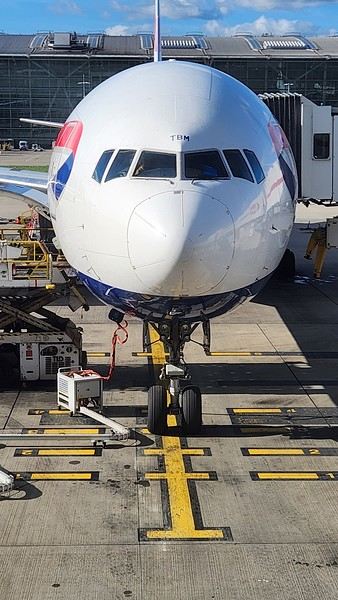
It’s D-Day—the departure. What a hassle to organize flights to and within Tanzania! I’ll tell you all about it in another post: https://voyageforum.com/forum/toutes-compagnies-aeriennes-tanzaniennes-interdites-d10758360/ On top of that, Rwandair canceled our outbound flight a month before departure. They offered to reschedule us 3-4 days later—ridiculous for a 10-night trip we’d already booked. We had to cancel our tickets and buy new ones with Kenya Airways. We’re still waiting for our refund from Rwandair!!!!!!! So on Saturday, February 1st, our bags were packed. We headed to the Lorraine TGV station, about 30 km from home.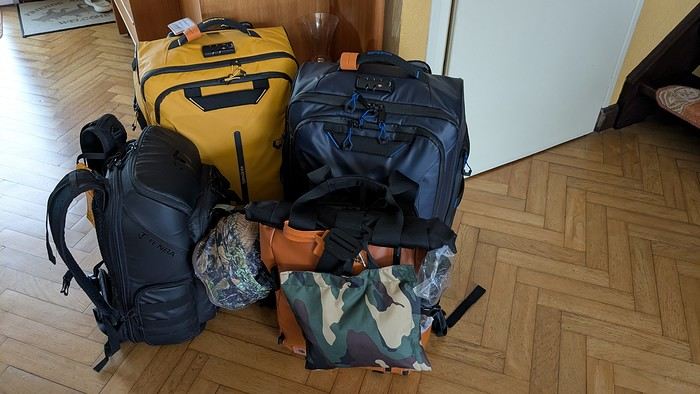 Direct train to Roissy—just 1h15. Quick and efficient.
All that was left was to wait for our overnight flight. We took off on time, just before 11 PM. Smooth flight, nothing unusual. Arrived in Nairobi around 9 AM. A few hours’ wait, then a flight to Dar es Salaam, landing at our first destination around 12:45 PM.
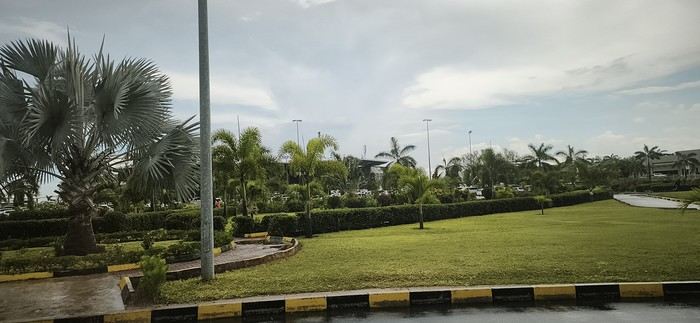
Our local contact, Anne from Asanterra agency, picked us up at the airport. It was hot and humid—it was raining.
Direct train to Roissy—just 1h15. Quick and efficient.
All that was left was to wait for our overnight flight. We took off on time, just before 11 PM. Smooth flight, nothing unusual. Arrived in Nairobi around 9 AM. A few hours’ wait, then a flight to Dar es Salaam, landing at our first destination around 12:45 PM.
Our local contact, Anne from Asanterra agency, picked us up at the airport. It was hot and humid—it was raining.
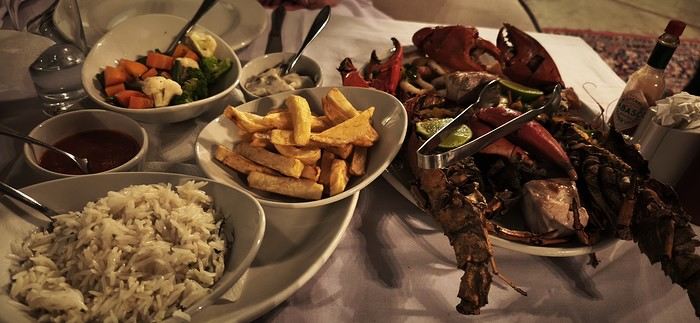
Our first night was at the Alexander Hotel. That evening, we treated ourselves to fish and shellfish at the hotel restaurant:
Sunday, February 22, 2026:
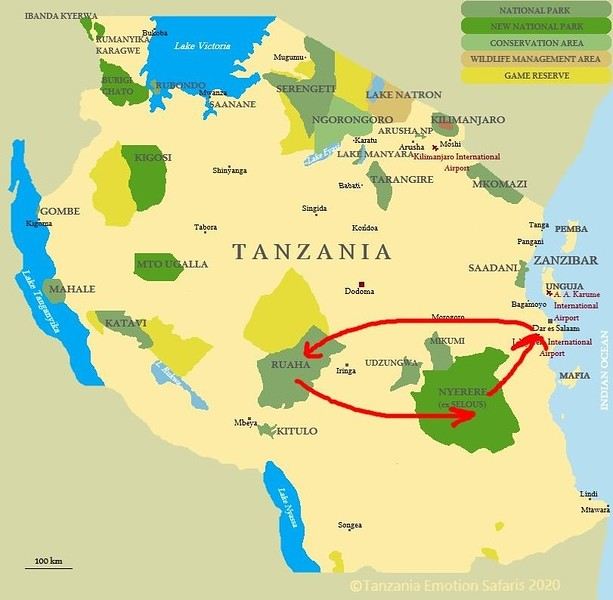
A driver picked us up at dawn to take us to the domestic airport so we could finally head to our first destination: Ruaha National Park. We flew with Auric.air for a 2-hour flight with two stops (Nyerere and Zkima airstrips).
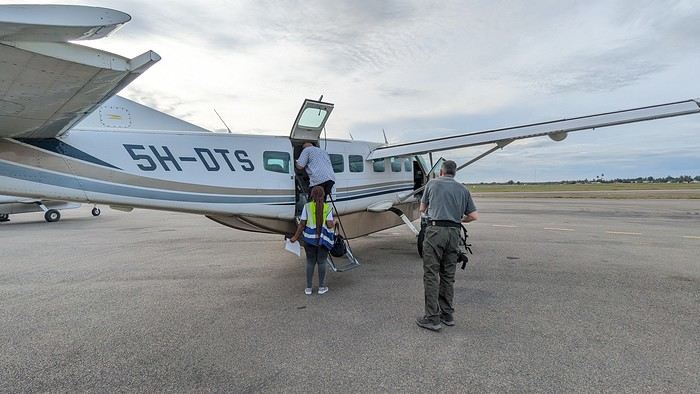
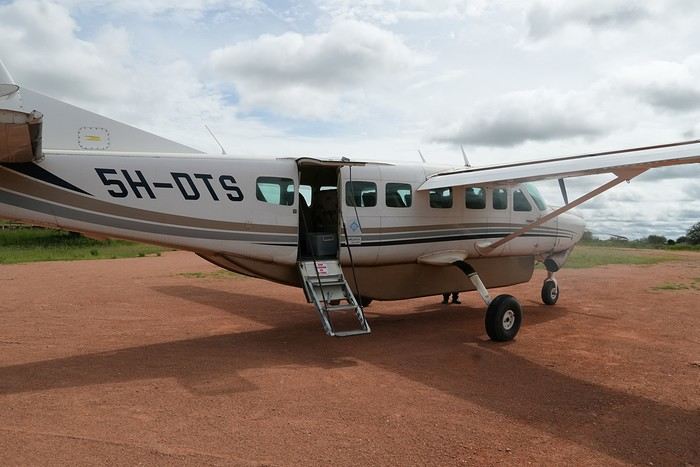
I’m always amazed at how easily these Cessnas take off and land on dirt runways—especially when they’re wet:
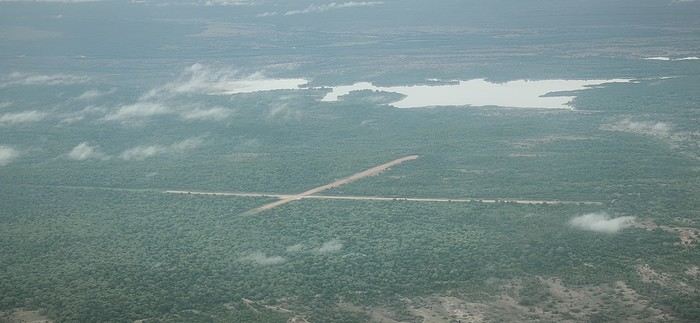
Aerial view of Zkima airstrip, where we’d landed just minutes earlier:
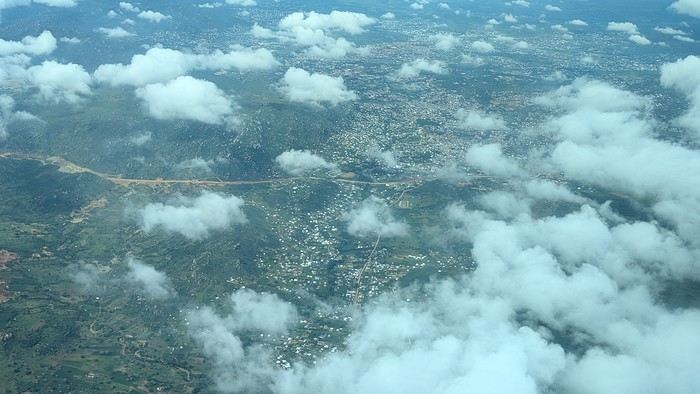
Flyover of Iringa, a "big" city in the country near Ruaha National Park:
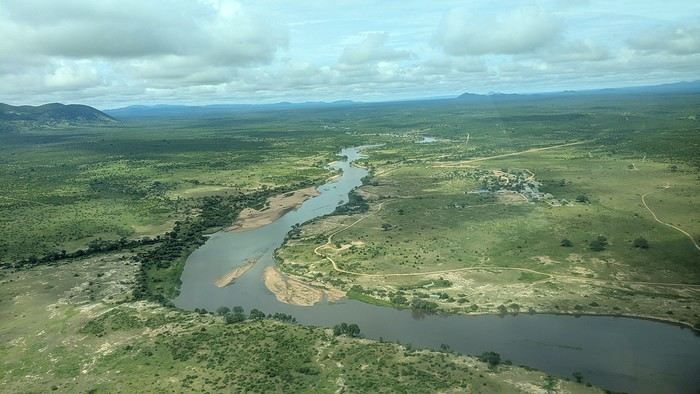
We’re getting close. The plane descends and flies over the Ruaha River, which gave the park its name:
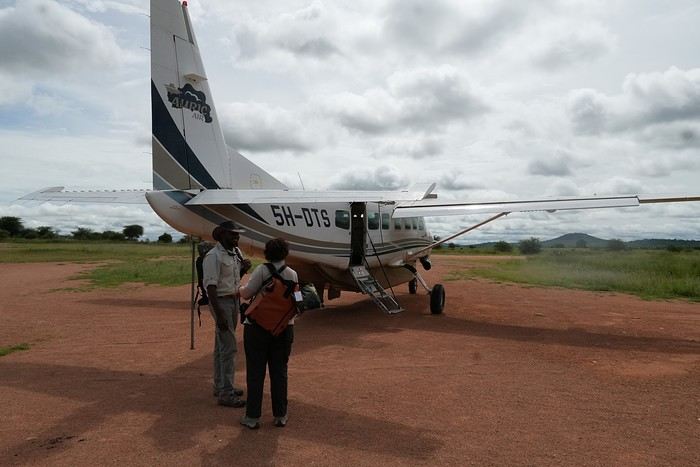
We land for the third and final time that day, reaching our destination: Msembe airstrip, the gateway to Ruaha.
We got back from Tanzania a month ago, on March 5th. I’ve started this trip report at the link the moderator asked me to use:
https://voyageforum.com/forum/decouverte-ruaha-nyerere-ex-selous-en-fevrier-mars-2026-d11466010/
You’ll find a video of our trip on my YouTube channel there.
Now I’ll tell you about our 10-night trip in Tanzania, with 8 nights spent in two parks we didn’t know. Tanzania isn’t new to us—it was even our first African safari destination back in 2012. https://www.youtube.com/@lolodetoul54 Since then, we’ve visited several East and Southern African countries: Kenya, South Africa, Namibia, Botswana, some of them multiple times. We usually travel in September during the dry season. We tried March 2024 for nine nights in the Okavango and loved it, except everything was dry, which wasn’t normal for the rainy season.
So for this second March trip during the wet season, we really got what we asked for… rain. But before that, we had to fight just to get to Tanzania.
Saturday, February 21, 2026:
It’s D-Day—the departure. What a hassle to organize flights to and within Tanzania! I’ll tell you all about it in another post: https://voyageforum.com/forum/toutes-compagnies-aeriennes-tanzaniennes-interdites-d10758360/ On top of that, Rwandair canceled our outbound flight a month before departure. They offered to reschedule us 3-4 days later—ridiculous for a 10-night trip we’d already booked. We had to cancel our tickets and buy new ones with Kenya Airways. We’re still waiting for our refund from Rwandair!!!!!!! So on Saturday, February 1st, our bags were packed. We headed to the Lorraine TGV station, about 30 km from home.
Direct train to Roissy—just 1h15. Quick and efficient.
All that was left was to wait for our overnight flight. We took off on time, just before 11 PM. Smooth flight, nothing unusual. Arrived in Nairobi around 9 AM. A few hours’ wait, then a flight to Dar es Salaam, landing at our first destination around 12:45 PM.
Our local contact, Anne from Asanterra agency, picked us up at the airport. It was hot and humid—it was raining.Our first night was at the Alexander Hotel. That evening, we treated ourselves to fish and shellfish at the hotel restaurant:
Sunday, February 22, 2026:
A driver picked us up at dawn to take us to the domestic airport so we could finally head to our first destination: Ruaha National Park. We flew with Auric.air for a 2-hour flight with two stops (Nyerere and Zkima airstrips).
I’m always amazed at how easily these Cessnas take off and land on dirt runways—especially when they’re wet:
Aerial view of Zkima airstrip, where we’d landed just minutes earlier:
Flyover of Iringa, a "big" city in the country near Ruaha National Park:
We’re getting close. The plane descends and flies over the Ruaha River, which gave the park its name:
We land for the third and final time that day, reaching our destination: Msembe airstrip, the gateway to Ruaha.
From Mexico to the Wonderful Chiapas
This one-month trip, from January 18 to February 17, 2026, allowed us to visit Mexico City and travel through the states of Puebla, Oaxaca, and Chiapas. We mainly used buses (ADO company) for medium and long distances and colectivos or taxis (or Uber) for shorter trips. Before leaving, I had contacted several people on the ground: Harry, a Vendéan settled in Oaxaca offering, among other things, discoveries of artisan villages or the Monte Albán site, and Oscar in Comitán de Domínguez. I’ll come back to our meeting with Oscar, who runs a local agency (CVL Travel Turismo Alternativo & Corre la voz) and owns a very pleasant hostel, a real highlight of our trip. Our journey took place in 8 stages on a loop starting from Mexico City. The connections between each were made by day or night buses depending on the trip duration. I had booked our seats in advance, either directly on the ADO company’s website or through booking platforms depending on the rates offered. Note that by planning ahead, I was able to benefit from very interesting "Early Booking" rates. There are several comfort classes. For all our trips, I had booked seats in Primera class buses, except for two in GL (Grand Luxe) class. The rates are very reasonable, and the buses turned out to be comfortable or even very comfortable (only the basic seat recline might surprise you).
Our itinerary and number of days per stage: Stage 1 – Mexico City: 4 days Stage 2 – Puebla: 2 days Stage 3 – Oaxaca: 4 days Stage 4 – San Agustinillo: 4 days Stage 5 – San Cristóbal de las Casas: 3 days Stage 6 – Comitán de Domínguez: 6 days Stage 7 – Palenque: 4 days Stage 8 – Mexico City: 2 days If I were to do it again, I’d remove one day from Palenque and add it either to Puebla or San Cristóbal to visit nearby sites or villages, or to San Agustinillo to enjoy one more day by the Pacific Ocean.
Stage 1: Mexico City (2,200 m / 9.2 million inhabitants) We arrived in the Mexican capital around 10:00 PM. The simplified customs process was very quick. After exchanging some money at the airport, we took a taxi to our youth hostel. We got around the capital on foot, of course, but also by metro. Signs are very rare, and we took the train in the wrong direction several times. After a few mistakes, we systematically asked on the platform if we were going the right way. The metro is very affordable. You need to get a rechargeable card (the Tarjeta de Movilidad Integrada) and top it up as needed. This card (less than 1 €) isn’t personal, so there’s no need to get one per person.
Mexico City: Day 1.
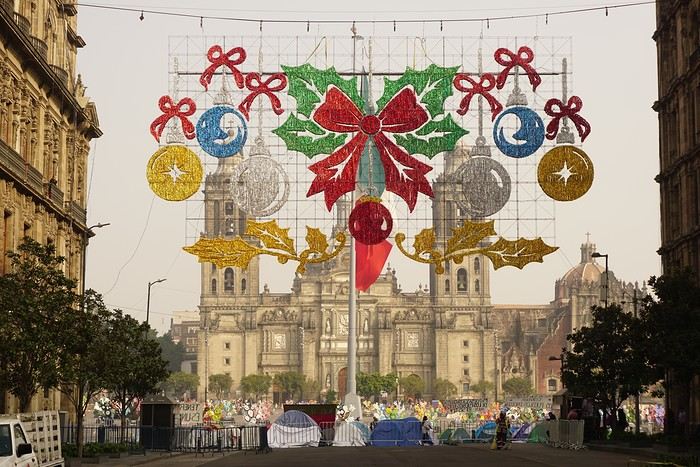
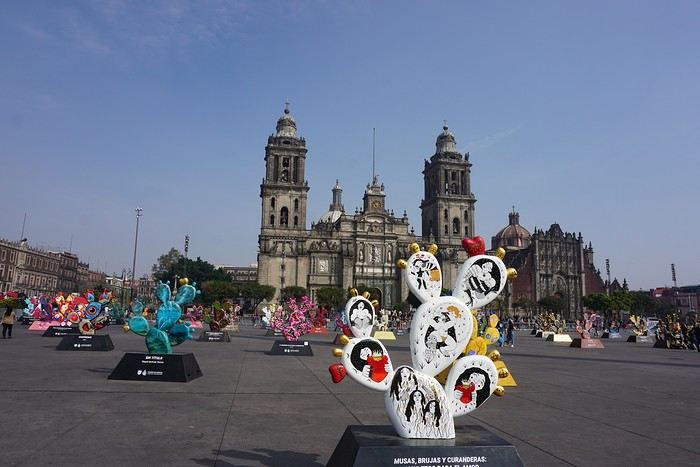
Visits and walks of the day (note: many museums are closed on Mondays): The Zócalo or Constitution Square: it’s one of the most beautiful, largest (195m x 240m), and oldest squares in the world. This is where Cortés decided to build the center of the new Spanish city on the site of the former Tenochtitlan market. Stones from the pyramids were used to pave the esplanade and build the surrounding colonial churches and buildings. During our visit, the huge square was covered with (resin) cacti, the theme of the temporary exhibition at the time. Indeed, temporary events or exhibitions take place here throughout the year. It’s also the endpoint for many protest marches.
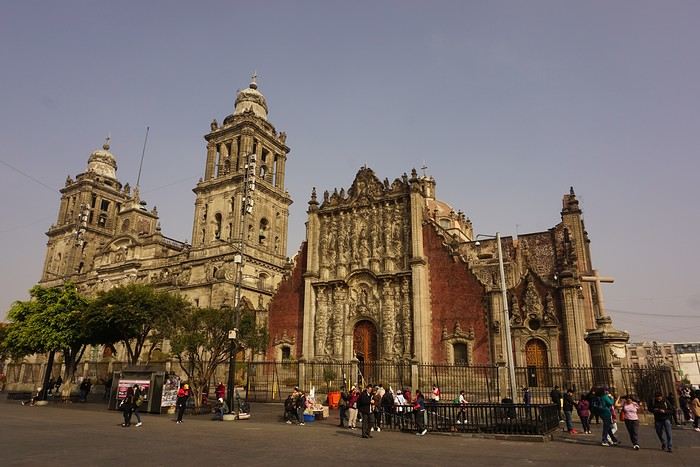
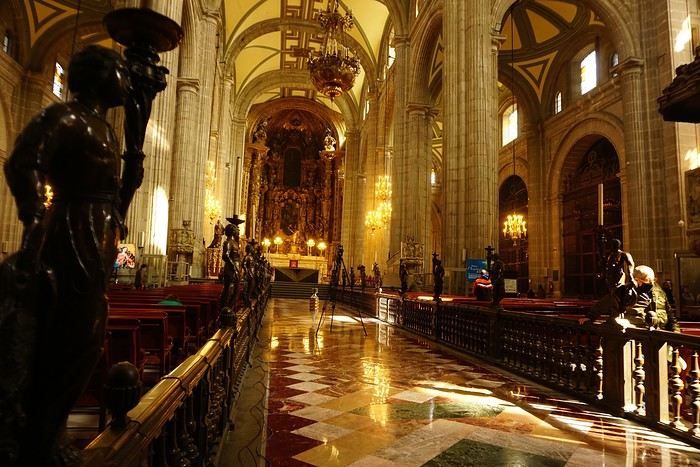


The cathedral: it’s sinking by one centimeter per year despite massive stabilization work (the collapse of many Mexican buildings—30 cm/year—is due to groundwater pumping). It was built starting in 1571 and completed in... 1813. The modest remains of the Templo Mayor (exterior view): they have high symbolic value, as this monument was the most important in the Mexica Empire.
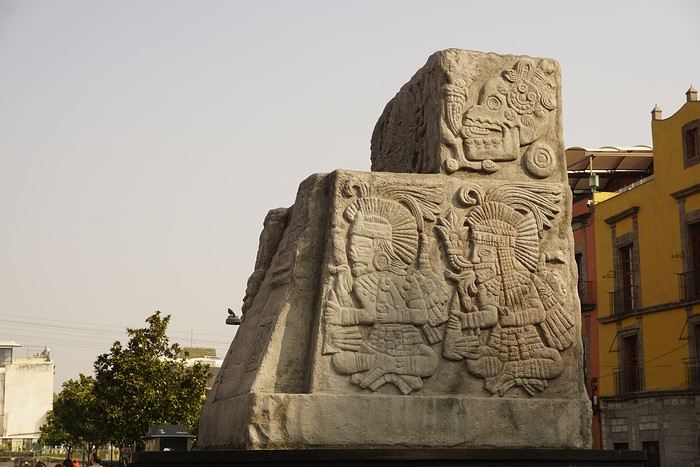 We then walked through the streets of the historic center to the Santísima Church, unfortunately closed for renovation work.
Next, we took the metro to visit one of Mexico’s most important pilgrimage sites: the Insigne y Nacional Basílicas de Santa María de Guadalupe, as well as the Capilla del Cerrito on the hill.
The first, dating from the colonial era, is really leaning a lot.
We then walked through the streets of the historic center to the Santísima Church, unfortunately closed for renovation work.
Next, we took the metro to visit one of Mexico’s most important pilgrimage sites: the Insigne y Nacional Basílicas de Santa María de Guadalupe, as well as the Capilla del Cerrito on the hill.
The first, dating from the colonial era, is really leaning a lot.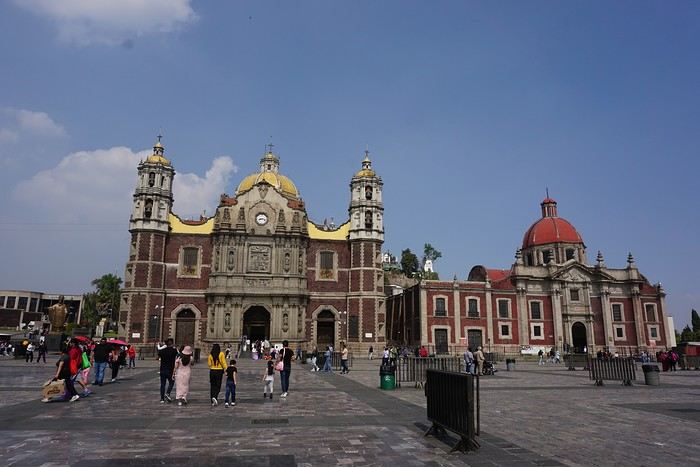
The second, shaped like a rotunda, is very impressive from the inside.
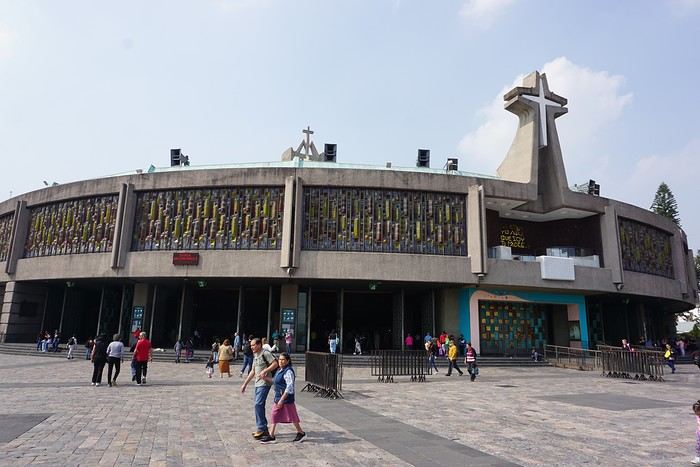
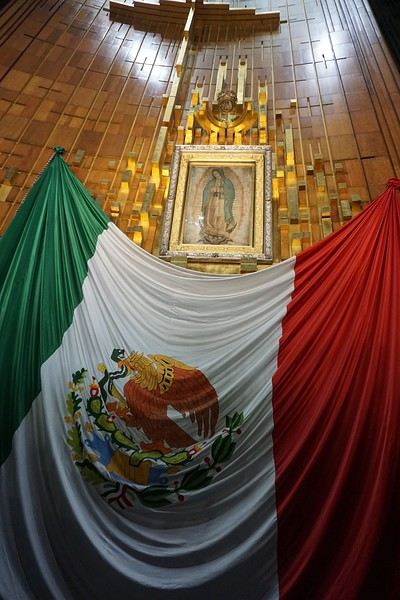
In the basement, there’s a sacred tunic where, in 1531, an image of the Virgin Mary is said to have appeared. A real mystery for scientists, the garment has never deteriorated since that date. Slow-moving conveyor belts allow pilgrims to admire it, preventing crowds from gathering in front of the image for hours. Well thought out!
 From the top of the Capilla del Cerrito, you get beautiful views of huge Mexico City.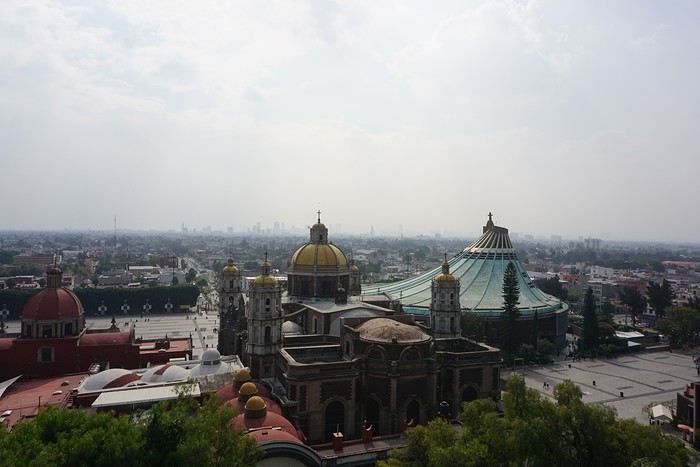
The Foam of Days
Now that the curtain has fallen on the past year, it’s time to see what’s happening around here.
It seems pretty quiet, but I’ll read more in detail later.
First, I need to tell you all an anecdote.
My eldest little girl, in her third year of law school, was really scared she wouldn’t pass the year. I told her: “Trust yourself, you’ve worked so hard, and worst case, if you fail, you’ll just redo the year.” “But I don’t think I’ll make it—they changed the rules, and if I mess up even one unit, I have to start all over.” I knew her grades weren’t exactly stellar, and with what I was about to say, I wasn’t taking much of a risk. “Here’s the deal, sweetheart: if you pass, I promise I’ll take you to India, just the two of us.” I have to admit, India is a country I’ve talked about so much to all my grandchildren that in their minds, it’s become a magical, mythical place (hmm).
July had barely begun when my phone rang, her name flashing on the screen. “Mamido, I did it!” My promise came rushing back—oh no, oh no, oh no! “Congratulations, sweetheart!” A little shyly, she said: “Is the India trip still on?”
And me, replying: “Of course it is!”
And that’s that—a promise is a promise, or you risk losing that precious trust that keeps hearts warm and at peace.
We’re leaving in February. Only 8 days—yikes, the carbon footprint! But we can’t miss her tutorials, or she’ll be kicked out. Personally, that works just fine for me.
Going to India has become a challenge for me. It’s far, it’s exhausting, I sweat, I hate mosquitoes, the spices bother my mouth when I used to love them. There’s noise all the time—at night, the dogs bark nonstop, and we almost get run over. I’ll get lost in the streets because my sense of direction has vanished. I don’t like rice anymore. All that chaos and those cultural differences that once enchanted me now just overwhelm me. But I promised.
The upside—and it’s a big one—Raman, the same driver I’ve had forever, will be at the airport with a sign with our names. We’ll stop at the same little shop for chai (or tea, plain and simple) with that aroma that intoxicates me, halfway through the trip.
It’ll be a tiny trip—staying with friends, I’ll show her a few places I love: Chidambaram, Mamallapuram, and the clinic where I worked. Then we’ll head back. My little girl will go home to her parents.
As for me, I’ll leave right away for our Scottish island with Homme for our chilly winter.
How can you love a country so much you want to live there, then suddenly reject it, no longer able to appreciate what once made it special? That’s the mystery of love, I guess.
First, I need to tell you all an anecdote.
My eldest little girl, in her third year of law school, was really scared she wouldn’t pass the year. I told her: “Trust yourself, you’ve worked so hard, and worst case, if you fail, you’ll just redo the year.” “But I don’t think I’ll make it—they changed the rules, and if I mess up even one unit, I have to start all over.” I knew her grades weren’t exactly stellar, and with what I was about to say, I wasn’t taking much of a risk. “Here’s the deal, sweetheart: if you pass, I promise I’ll take you to India, just the two of us.” I have to admit, India is a country I’ve talked about so much to all my grandchildren that in their minds, it’s become a magical, mythical place (hmm).
July had barely begun when my phone rang, her name flashing on the screen. “Mamido, I did it!” My promise came rushing back—oh no, oh no, oh no! “Congratulations, sweetheart!” A little shyly, she said: “Is the India trip still on?”
And me, replying: “Of course it is!”
And that’s that—a promise is a promise, or you risk losing that precious trust that keeps hearts warm and at peace.
We’re leaving in February. Only 8 days—yikes, the carbon footprint! But we can’t miss her tutorials, or she’ll be kicked out. Personally, that works just fine for me.
Going to India has become a challenge for me. It’s far, it’s exhausting, I sweat, I hate mosquitoes, the spices bother my mouth when I used to love them. There’s noise all the time—at night, the dogs bark nonstop, and we almost get run over. I’ll get lost in the streets because my sense of direction has vanished. I don’t like rice anymore. All that chaos and those cultural differences that once enchanted me now just overwhelm me. But I promised.
The upside—and it’s a big one—Raman, the same driver I’ve had forever, will be at the airport with a sign with our names. We’ll stop at the same little shop for chai (or tea, plain and simple) with that aroma that intoxicates me, halfway through the trip.
It’ll be a tiny trip—staying with friends, I’ll show her a few places I love: Chidambaram, Mamallapuram, and the clinic where I worked. Then we’ll head back. My little girl will go home to her parents.
As for me, I’ll leave right away for our Scottish island with Homme for our chilly winter.
How can you love a country so much you want to live there, then suddenly reject it, no longer able to appreciate what once made it special? That’s the mystery of love, I guess.
Trip to Morocco in September-October 2025, in our camper van
Hi everyone,
We’re just back from a month-long trip to Morocco in our camper van.
After crossing France (we left from the Nantes area) and Spain, we arrived in Algeciras where we bought our boat tickets to Tangier. When we got to Tangier, as we were going through customs, you can imagine our surprise when the customs officer took our road map of Morocco and pointed out the label "Western Sahara" (just like in the forum’s destination section, by the way!).
He wanted it to say "Moroccan Sahara" instead!!! But there was nothing we could do—it was an old map... He wouldn’t listen, and after long discussions with the other (younger) customs officers, he finally gave it back and let us through... Unbelievable! Later, we heard that other travelers had their maps confiscated outright.
So, hide it well if you want to keep yours!!!
Anyway, we skirted around Tangier’s suburbs—pretty grim—and finally arrived in Asilah.
Following the coast and the long promenade along the beach, we reached the campsite. It was a bit crowded, not much shade, but it wasn’t far from the medina or the beach, and it wasn’t expensive. There’s some life here: Moroccan families seem to live on-site, in tents or basic bungalows. A woman was cooking tagine on a brazier—we were right in the atmosphere! The night was quiet, and we slept well. We set off on foot, walking along the seafront to the medina... We’d already been here in 2009. It was less touristy back then! Still, at this early hour, the little streets inside were very quiet. The walls had been freshly whitewashed, and there were even more murals than before. Around 11:30 AM, we strolled along the ramparts by the sea. There was a nice breeze! And a lot more people around. We enjoyed a milkshake on the terrace of a café overlooking the beach that stretches out at the foot of the medina. Some young guys were having fun diving off the rocks—and even off the top of the wall!
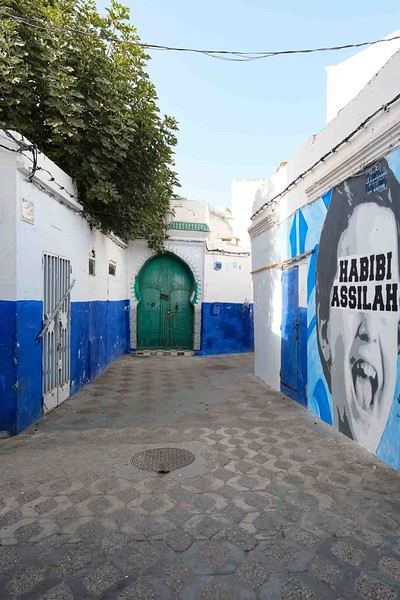
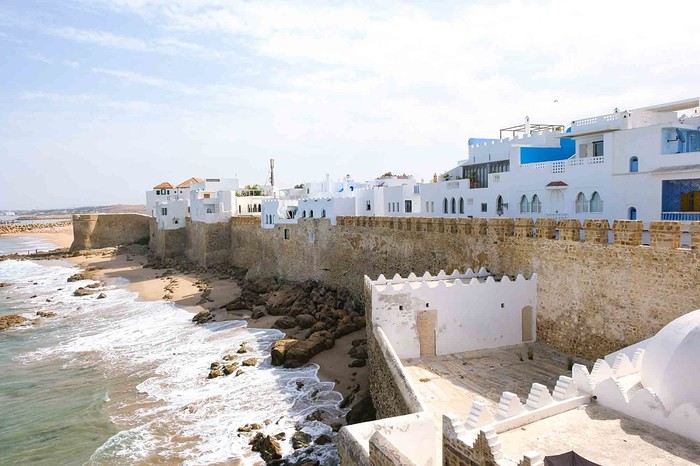
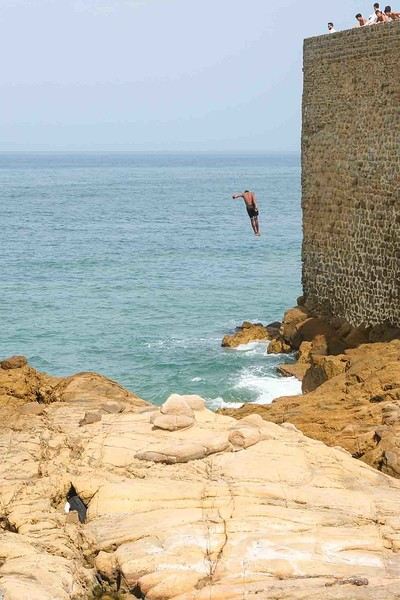
Anyway, we skirted around Tangier’s suburbs—pretty grim—and finally arrived in Asilah.
Following the coast and the long promenade along the beach, we reached the campsite. It was a bit crowded, not much shade, but it wasn’t far from the medina or the beach, and it wasn’t expensive. There’s some life here: Moroccan families seem to live on-site, in tents or basic bungalows. A woman was cooking tagine on a brazier—we were right in the atmosphere! The night was quiet, and we slept well. We set off on foot, walking along the seafront to the medina... We’d already been here in 2009. It was less touristy back then! Still, at this early hour, the little streets inside were very quiet. The walls had been freshly whitewashed, and there were even more murals than before. Around 11:30 AM, we strolled along the ramparts by the sea. There was a nice breeze! And a lot more people around. We enjoyed a milkshake on the terrace of a café overlooking the beach that stretches out at the foot of the medina. Some young guys were having fun diving off the rocks—and even off the top of the wall!
Berlin impressions (live)
Hi there,
I arrived in Berlin last night. In another discussion, I shared how much of a "nightmare" the flights from Nice were.
I’ll be posting some impressions here—what I liked and what I didn’t like as much.
This is my first time in Berlin. I’m staying for two weeks. For now, I’m alone, but I’ll be joined by someone in a few days.
Just to clarify, I won’t be posting any photos because my camera gave up the ghost the day before I left. It refused to read memory cards, and I don’t have a smartphone—just a tablet that I leave at the hotel.
Speaking of photos, a few years ago, at the Ducasse d’Ath in Belgium, I met a retired teacher who wasn’t taking any pictures of the festival. I asked her, "You’re not taking any photos?" She told me that during a trip to Nicaragua, she’d photographed howler monkeys and only noticed when looking at the pictures later that the males had huge testicles—something she hadn’t realized in person. She said, "Since then, I don’t bother with photos anymore!" I’ve thought about that often and wonder if I should do the same and stop taking pictures. Still, I’ll probably get a smartphone since it’s hard to go without one these days.
I arrived in Berlin last night. In another discussion, I shared how much of a "nightmare" the flights from Nice were.
I’ll be posting some impressions here—what I liked and what I didn’t like as much.
This is my first time in Berlin. I’m staying for two weeks. For now, I’m alone, but I’ll be joined by someone in a few days.
Just to clarify, I won’t be posting any photos because my camera gave up the ghost the day before I left. It refused to read memory cards, and I don’t have a smartphone—just a tablet that I leave at the hotel.
Speaking of photos, a few years ago, at the Ducasse d’Ath in Belgium, I met a retired teacher who wasn’t taking any pictures of the festival. I asked her, "You’re not taking any photos?" She told me that during a trip to Nicaragua, she’d photographed howler monkeys and only noticed when looking at the pictures later that the males had huge testicles—something she hadn’t realized in person. She said, "Since then, I don’t bother with photos anymore!" I’ve thought about that often and wonder if I should do the same and stop taking pictures. Still, I’ll probably get a smartphone since it’s hard to go without one these days.
What to see and do on a trip through the Northeast and Sukhothai?
Hello,
After a successful first trip in 2025, with the help of forum members, we’d love to return to this amazing cultural melting pot in 2026 for three weeks (2 adults, 2 kids aged 13 and 16).
We’d like to explore new places in the Northeast: fly into Khon Kaen and explore the region—Loei, Nong Khai, perhaps? A detour to the center to visit Sukhothai would be a great addition.
I’ll admit, planning this itinerary is a bit trickier for me since I’m less familiar with these areas and what they have to offer. The distances also seem longer than our previous transfers (BKK-Kanchanaburi-Kaeng Krachan-Sam Roi Yot...).
Do you have any suggestions or hidden gems to explore in the Northeast and Central regions that keep travel time between stops reasonable (3-4 hours)?
Thanks for your input!
After a successful first trip in 2025, with the help of forum members, we’d love to return to this amazing cultural melting pot in 2026 for three weeks (2 adults, 2 kids aged 13 and 16).
We’d like to explore new places in the Northeast: fly into Khon Kaen and explore the region—Loei, Nong Khai, perhaps? A detour to the center to visit Sukhothai would be a great addition.
I’ll admit, planning this itinerary is a bit trickier for me since I’m less familiar with these areas and what they have to offer. The distances also seem longer than our previous transfers (BKK-Kanchanaburi-Kaeng Krachan-Sam Roi Yot...).
Do you have any suggestions or hidden gems to explore in the Northeast and Central regions that keep travel time between stops reasonable (3-4 hours)?
Thanks for your input!
"Tropical Odyssey" CFC Renaissance – November 1st to 22nd, 2025
We’ve just returned from a cruise that my wife and I will remember—unfortunately, not in a good way.
There’s so much to say that I’ll proceed chapter by chapter.
Pre-Cruise
On January 24th, 2025, I booked through a supposedly attentive cruise agent the repositioning cruise of the CFC Renaissance to the French West Indies, initially departing from Le Havre, then from Dunkirk, on November 1st, 2025.
The return flight was included in the price of this trip.
From January, right after booking, this adventure got off to a bad start.
Used to major cruise lines, I asked my agent to reserve a table for 4 at the "Vatel" restaurant for the second seating, and to link this reservation to the cabin of friends traveling with us. First brush-off: "Ask the maître d’ at the restaurant entrance on the first night."
"To govern is to foresee, and to foresee nothing is to head for disaster," as Émile de Girardin said.
Following this maxim, in February, I started looking for transportation to Le Havre, which was initially the departure port. Then, I asked the travel agent which airport the return flight would land at. I knew flights from Pointe-à-Pitre to Paris served both main Parisian airports. Here, I found myself like a ping-pong ball between the cruise agent and CFC: The cruise agent said, "Ask CFC," and CFC replied, "No, your agent is your intermediary—ask them." It went back and forth like that. Impossible to pre-book the flight that would take us back to our final destination. During the summer, we learned that the departure port was no longer Le Havre but Dunkirk. We canceled our transfers to Le Havre but, of course, lost the cost of the reservations. Meanwhile, we purchased our "Beverage" package—we chose the "Fraîcheur" option, which included all non-alcoholic cocktails, canned sodas, fruit juices, bottled water, and regular coffees. This detail is important for the rest of the story. Every month, I followed up to find out the return airport. Nothing until October 28th (3 days before departure), when CFC finally informed me it was Orly, along with the flight number and time. Of course, on top of booking at full price, I had to arrange my final transfer home. Since I had very little time before the return flight, I had to book an Uber in a rush for the Orly/CDG transfer. Right after, we were told that our first stop in Lisbon—the most anticipated for many cruisers—had been canceled due to a strike at the port of Lisbon and replaced with Vigo, Spain. A completely unremarkable stop—nothing outstanding. As you can see, the prelude was already problematic, yet we’re far from reaching the peak of our disappointments. .......... to be continued soon.
"To govern is to foresee, and to foresee nothing is to head for disaster," as Émile de Girardin said.
Following this maxim, in February, I started looking for transportation to Le Havre, which was initially the departure port. Then, I asked the travel agent which airport the return flight would land at. I knew flights from Pointe-à-Pitre to Paris served both main Parisian airports. Here, I found myself like a ping-pong ball between the cruise agent and CFC: The cruise agent said, "Ask CFC," and CFC replied, "No, your agent is your intermediary—ask them." It went back and forth like that. Impossible to pre-book the flight that would take us back to our final destination. During the summer, we learned that the departure port was no longer Le Havre but Dunkirk. We canceled our transfers to Le Havre but, of course, lost the cost of the reservations. Meanwhile, we purchased our "Beverage" package—we chose the "Fraîcheur" option, which included all non-alcoholic cocktails, canned sodas, fruit juices, bottled water, and regular coffees. This detail is important for the rest of the story. Every month, I followed up to find out the return airport. Nothing until October 28th (3 days before departure), when CFC finally informed me it was Orly, along with the flight number and time. Of course, on top of booking at full price, I had to arrange my final transfer home. Since I had very little time before the return flight, I had to book an Uber in a rush for the Orly/CDG transfer. Right after, we were told that our first stop in Lisbon—the most anticipated for many cruisers—had been canceled due to a strike at the port of Lisbon and replaced with Vigo, Spain. A completely unremarkable stop—nothing outstanding. As you can see, the prelude was already problematic, yet we’re far from reaching the peak of our disappointments. .......... to be continued soon.
Spitsbergen – A Night with the Walruses on Lågøya
Spitsbergen, 80° North latitude. A lost archipelago on the edge of the world, northeast of Greenland, the last lands before the pole. I’m aboard the *Grigoriy Mikheev*, a Russian ship from the Murmansk Polar Research Institute. Russian flag, Russian crew. Chartered by OceanWide Expeditions.
Last night, we were stuck in drifting pack ice in the long Hinlopen Strait. This incident led to an unforgettable barbecue and party on the ship’s foredeck, but we had to abandon our plan to head south and circle Spitsbergen. This summer, there’s too much ice in the strait, and it’s too thick. At dawn, the tide turned, allowing us to break free and head north again. The ship is now moving slowly through sea ice density that satellite maps estimate at around five-tenths. Our progress is punctuated by dull thuds: the ship’s bow constantly shoves and fractures enormous ice floes.
At breakfast, Tarik, our expedition leader, informs us that our program will be significantly altered. Since we can’t cross the strait, we’ll turn back and head north. To kick off our Plan B, Tarik plans a landing tonight on the small island of Låg (Lågøya), at 80°10' North. Last summer, he saw a large walrus colony there and hopes we’ll find them again. The weather is perfect—glorious sunshine—and walruses are truly addicted to sunbathing on the beaches.
We’ve now exited the strait and are sailing far from the coast. In case the walrus colony is there, we don’t want the ship’s approach to scare them into the water before we even see them. So, we scan the shore methodically with binoculars. We pass several bays, round a cape, and examine several shorelines littered with driftwood, but no walruses in sight. Several times, clusters of large rounded rocks trigger false alarms… but no, they’re just rocks…
Suddenly, Tarik spots them through his binoculars! On an isolated peninsula, our expedition leader’s highly trained eye has picked out, among those brown masses, the shape and white color of the enormous tusks of what he calls "the heavyweights of the Arctic!" Now, fifteen or twenty pairs of binoculars are pointed in the indicated direction… Sure enough, I see them now! They’re there, huge, sprawled in the sun on the beach. Without Tarik’s sharp eye, we might have missed them. They’re so tightly packed together that they really look like a mass of brown rocks. Only the white, saber-shaped tusks and the occasional furtive movements hint that they’re animals.
It’s 11 PM, and on the deck of the *Grigoriy Mikheev*, as you can imagine, excitement has ramped up several notches. Several of us have already rushed to our cabins to gear up, pulling on boots and life jackets in anticipation of a landing that promises to be absolutely amazing. Tarik reins in our enthusiasm a bit: Okay, so we were lucky to find them, but now we need to think about how to approach them. Not that they’re dangerous—at least not on land… Their enormous bulk and their pseudo-feet (flippers) only allow for very limited mobility. But when they feel threatened, their first instinct is to head for the water, where their perfect ease keeps them safe. So, the challenge will be not to scare them off, to avoid them bolting into the water in the first few seconds! That’s exactly what would happen if we arrived by Zodiac right in front of them.
So, Tarik decides we’ll make a wide detour to land on the other side of the peninsula where they are. From there, we’ll leave the Zodiacs on the beach and cross the peninsula on foot, about a kilometer and a half. That way, we’ll approach the herd from behind. This approach will also keep us downwind of them. There you go—with a few precautions, they shouldn’t hear us coming or catch our scent.
Everyone is geared up now and practically bursting with impatience… While the Zodiacs are being lowered into the water, Tarik and Delphine recap the approach rules: absolute silence, communication only by signs, no dragging feet on the rocks, watch your step, and strict coordination with slow movements.
Here we go… we’re off now! Spray flying from the Zodiac’s bow, icy air whipping our faces, gloves gripping the side ropes, freezing splashes, pure emotion… Ahh, I love this! We describe a wide curve offshore to round the peninsula. Ahead of us, the magnificent landscape of this intensely blue sea unfolds, with the hills of Lågøya and, in the distance, the ice-covered mountains of Nordaustlandet under the sun. It’s midnight now. In July, at 80 degrees North, the sun is just like midday.
This navigation takes us far from the walruses, on the other side of the cape. Easy landing on a shoreline of large pebbles covered in giant seaweed brought in by the currents. They look like long strips of plastic—sometimes translucent, sometimes white, beige, or orange. In places, there are huge tangled layers of it. Our boots sink into this material, which gives off a strong iodine smell. Unfortunately, there’s also some plastic waste—fishing floats and net debris. Seeing this here is crazy… A little farther on, in a cove, tides and storms have piled up numerous tree trunks from Siberia.
We begin crossing the peninsula on foot, staying close together. We’re walking on a nearly deserted polar tundra. We’re only ten degrees of latitude from the North Pole here. The violent winds and extreme temperatures that dominate this island for nine months of the year allow only a few rare plants to grow, close to the ground, between the rocks. In places, rocks are covered with large patches of black lichen.
Gérard, rifle slung over his shoulder, constantly scans the terrain. Tarik and Delphine are also very vigilant. We know no one ever lands here, and although this environment isn’t ideal for bears, you never know—better to be cautious. The terrain is mostly flat, but whenever a small rise blocks our view, Gérard moves ahead and only signals us to proceed when he’s sure there’s no "big man in fur" (tradition dictates we don’t name the polar bear).
After a few hundred meters, we find an enormous whale vertebra. Judging by the state of the bone, it’s likely a relic from the whaling era that ravaged this area in the 17th century and all over northern Spitsbergen. A little farther on, the remains of a grave catch our attention. The only human trace on this remote island, this burial is surely very old, also likely dating from the whalers’ time. But this whaler’s final resting place didn’t shelter him for long—there’s not much left, just a piece of skull and a few broken bones. Due to the permafrost, the body could only be buried a few dozen centimeters deep, between some planks held in place by large stones. This makeshift grave was probably ravaged by a bear shortly after the burial. Several stone blocks are overturned, the planks are broken open. We only linger for a minute to pay our respects to this whaler, whose poor remains now merge with the mineral landscape.
A slight rise bulges in the center of the peninsula, and here we are at the highest point. If our orientation is correct, we’re heading straight for the walrus colony. A moment of emotion… my heart’s pounding. Yes, they’re there, about three hundred meters ahead of us! They haven’t moved since we spotted them from the *Grigoriy Mikheev*’s deck. They’re sprawled in a heap, packed tightly together in the sun, on the shingle beach. The light breeze blowing in our faces confirms we’re on the right track—not to be sniffed out from afar by the big beasts.
By signs, Tarik tells us we’ll approach slowly, in stages, moving about thirty meters at a time, making as little noise as possible with our boots, then freezing completely for a minute or two, crouching down to let them forget us. This strategy proves excellent. We’re now less than a hundred meters away, and it doesn’t seem like our presence is perceived as a threat by the "heavyweights of the Arctic." At this distance, let’s not kid ourselves: we’re certainly spotted, but our way of approaching must seem reassuring—or at least manageable—since they’re only a few meters from the water and know they could dash into it in seconds if they felt the need.
We now advance in shorter stages—twenty meters at a time, then just ten, crouching, then freezing like statues, our breathing nearly held from emotion and concentration. We’re now thirty meters from the mastodons. Our presence must be starting to stress them because they’re moving more. While still sprawled against each other, some suddenly rear up on their flipper-feet, grunting and snorting like monstrous pigs. Their head shakes make their two enormous ivory sabers sway. They jab them into the fat of their neighbors, who in turn stir and emit irritated snorts.
At Tarik’s signal, we move a few more meters, "on velvet paws"… We’re right there now. I hold my breath, throat tight… Intense emotion, a fantastic spectacle—these enormous Arctic animals sprawled in the sun, with the magnificent backdrop of snow-covered mountains across the sound. I think to myself: *I’m here… this can’t be real!* It’s nearly 2 AM now, the air is crystal clear, and the Arctic sun bathes this scene in what might be the most beautiful light I’ve ever seen. We’re about fifteen meters away now. Tarik signals that we won’t go any closer. The walruses are still lying down, but occasionally, our close presence and the clicking of cameras trigger bouts of agitation that ripple through the herd, causing some jostling. They’re so tightly packed and tangled that it’s a bit hard to count them. In the end, we tally sixteen, plus one "little one," half-crushed in the general mass.
Seen from here, they’re truly impressive! The "sumo wrestlers of the Arctic!" According to Tarik, they must weigh about a ton—slightly more for the males than the females—and the "little one" must already be around 200 kg. When the weather’s nice like today, they love sprawling on the beaches to soak up the sun.
Walruses are marvels of Arctic adaptation. They can modify their blood circulation depending on thermal conditions. They withstand extreme cold by directing most of their circulation to vital organs (heart, lungs) and minimizing peripheral blood flow (skin and limbs) to prevent heat loss. Conversely, when they sunbathe, they direct most of their blood flow to the skin, turning themselves into true solar collectors.
At this latitude, there’s practically no difference in sunlight between day and night. Noon or midnight, the sun’s angle barely changes. Walruses make the most of these fair-weather phases by sprawling in the sun 23 hours out of 24… Enough to make siesta lovers dream, right? Twenty-three hours of lounging… and the twenty-fourth for eating!
And when we say "eating," what a feast! The proverb *"Who sleeps dines"* is fully justified here: when a walrus decides to feed, it gulps down between 50 and 60 kg of shellfish in an hour! Its food consists of large bivalve mollusks, which it tears from the seabed with its tusks and sucks up nonstop! A 50 kg meal certainly justifies a 23-hour nap for digestion, right? And speaking of digestion—it’s what the "big guys" in front of us are doing right now! You might wonder how we know this… Well, I’ll tell you: if you were here, downwind (or should I say *down the winds!*) of these marine giants, you’d have no doubt! Pfft… what flatulence! I can confirm that today’s scent is called *"Morsanus, from the North"* (*"Because I’m worth it!"*). Mmm, yeah… Tarik, you had a great idea putting us upwind… at least *they* can’t smell us, but we sure can!
But… heepp! Delphine discreetly signals to get our attention—she’s just spotted something: in the smooth water of the bay, a small V-shaped ripple runs along the beach, then turns toward the shore… So the colony wasn’t complete on the beach… Here’s an 800 kg bather stepping ashore now, right before our astonished eyes! She lifts her head and stays like that for a long moment, her enormous tusks half out of the water. She looks exhausted, resting a bit before coming out. Or more likely, she’s hesitating to climb onto the beach because she’s seen us… The shapeless head stays still for a moment, then violently snorts like a clogged drain! A misshapen head where you can’t make out anything that usually makes a head! No eyes, no ears, no mouth… A sort of monstrous cabbage! But the temptation to join the warmth of the "sunbathers" is too strong! Here’s our pachyderm bather climbing the few meters of the shore and sprawling right in the middle of her companions, who greet her with jostling, grunts, and tusk jabs! Then everything settles back into order—800 kg of fat and flesh added to the fifteen or so tons of local biomass. Welcome to the club!
It seems the walruses have gotten a bit used to us now. They’re moving and grunting much less. I realize it wasn’t obvious to approach them like this without scaring them into the water… It’s thanks to Tarik and Delphine’s advice that we managed it. It’s also, let’s be honest, because we’re all passionate here, and there’s been total discipline and cohesion from the start of this approach.
It’s past 2 AM now—time to head back… We’ll leave them to their wild world, to their life at the beginning of the world. We’re happy to have disturbed them as little as possible and not to have disrupted their nap too much. We leave stealthily, first backing up a few meters, then turning around and crossing the peninsula again, walking slowly, avoiding making noise with our boots as long as we’re still close.
We find the Zodiacs on the shoreline with the giant kelp. The sea is like a lake—easy boarding. We make another wide loop to round the cape, passing offshore. The sharp cold stings my cheeks and ears again—I put my hat back on. The cold—I hadn’t thought about it at all during our encounter with the walruses. In the Zodiac, with the engine noise, no one speaks. The faces and smiles are those of men and women who’ve just crossed an inner frontier—the one that separates dream from reality. But tonight, that frontier was porous, and the dream entered reality.
We return to the *Grigoriy Mikheev*, waiting at anchor. It’s past 3 AM, but I don’t feel any fatigue. A few minutes later, I’m in my bunk, rocked by a gentle swell and the hum of the engines. In the soft warmth of the blanket, a strange sleep overtakes me… A sleep filled with luminous, icy landscapes, with large beasts bearing saber-like tusks. Large beasts that sleep, snore, snort, grunt, and jostle in their sleep… in *my* sleep. An unforgettable memory. It was July 2004, in Spitsbergen.
Chris51.
Last night, we were stuck in drifting pack ice in the long Hinlopen Strait. This incident led to an unforgettable barbecue and party on the ship’s foredeck, but we had to abandon our plan to head south and circle Spitsbergen. This summer, there’s too much ice in the strait, and it’s too thick. At dawn, the tide turned, allowing us to break free and head north again. The ship is now moving slowly through sea ice density that satellite maps estimate at around five-tenths. Our progress is punctuated by dull thuds: the ship’s bow constantly shoves and fractures enormous ice floes.
At breakfast, Tarik, our expedition leader, informs us that our program will be significantly altered. Since we can’t cross the strait, we’ll turn back and head north. To kick off our Plan B, Tarik plans a landing tonight on the small island of Låg (Lågøya), at 80°10' North. Last summer, he saw a large walrus colony there and hopes we’ll find them again. The weather is perfect—glorious sunshine—and walruses are truly addicted to sunbathing on the beaches.
We’ve now exited the strait and are sailing far from the coast. In case the walrus colony is there, we don’t want the ship’s approach to scare them into the water before we even see them. So, we scan the shore methodically with binoculars. We pass several bays, round a cape, and examine several shorelines littered with driftwood, but no walruses in sight. Several times, clusters of large rounded rocks trigger false alarms… but no, they’re just rocks…
Suddenly, Tarik spots them through his binoculars! On an isolated peninsula, our expedition leader’s highly trained eye has picked out, among those brown masses, the shape and white color of the enormous tusks of what he calls "the heavyweights of the Arctic!" Now, fifteen or twenty pairs of binoculars are pointed in the indicated direction… Sure enough, I see them now! They’re there, huge, sprawled in the sun on the beach. Without Tarik’s sharp eye, we might have missed them. They’re so tightly packed together that they really look like a mass of brown rocks. Only the white, saber-shaped tusks and the occasional furtive movements hint that they’re animals.
It’s 11 PM, and on the deck of the *Grigoriy Mikheev*, as you can imagine, excitement has ramped up several notches. Several of us have already rushed to our cabins to gear up, pulling on boots and life jackets in anticipation of a landing that promises to be absolutely amazing. Tarik reins in our enthusiasm a bit: Okay, so we were lucky to find them, but now we need to think about how to approach them. Not that they’re dangerous—at least not on land… Their enormous bulk and their pseudo-feet (flippers) only allow for very limited mobility. But when they feel threatened, their first instinct is to head for the water, where their perfect ease keeps them safe. So, the challenge will be not to scare them off, to avoid them bolting into the water in the first few seconds! That’s exactly what would happen if we arrived by Zodiac right in front of them.
So, Tarik decides we’ll make a wide detour to land on the other side of the peninsula where they are. From there, we’ll leave the Zodiacs on the beach and cross the peninsula on foot, about a kilometer and a half. That way, we’ll approach the herd from behind. This approach will also keep us downwind of them. There you go—with a few precautions, they shouldn’t hear us coming or catch our scent.
Everyone is geared up now and practically bursting with impatience… While the Zodiacs are being lowered into the water, Tarik and Delphine recap the approach rules: absolute silence, communication only by signs, no dragging feet on the rocks, watch your step, and strict coordination with slow movements.
Here we go… we’re off now! Spray flying from the Zodiac’s bow, icy air whipping our faces, gloves gripping the side ropes, freezing splashes, pure emotion… Ahh, I love this! We describe a wide curve offshore to round the peninsula. Ahead of us, the magnificent landscape of this intensely blue sea unfolds, with the hills of Lågøya and, in the distance, the ice-covered mountains of Nordaustlandet under the sun. It’s midnight now. In July, at 80 degrees North, the sun is just like midday.
This navigation takes us far from the walruses, on the other side of the cape. Easy landing on a shoreline of large pebbles covered in giant seaweed brought in by the currents. They look like long strips of plastic—sometimes translucent, sometimes white, beige, or orange. In places, there are huge tangled layers of it. Our boots sink into this material, which gives off a strong iodine smell. Unfortunately, there’s also some plastic waste—fishing floats and net debris. Seeing this here is crazy… A little farther on, in a cove, tides and storms have piled up numerous tree trunks from Siberia.
We begin crossing the peninsula on foot, staying close together. We’re walking on a nearly deserted polar tundra. We’re only ten degrees of latitude from the North Pole here. The violent winds and extreme temperatures that dominate this island for nine months of the year allow only a few rare plants to grow, close to the ground, between the rocks. In places, rocks are covered with large patches of black lichen.
Gérard, rifle slung over his shoulder, constantly scans the terrain. Tarik and Delphine are also very vigilant. We know no one ever lands here, and although this environment isn’t ideal for bears, you never know—better to be cautious. The terrain is mostly flat, but whenever a small rise blocks our view, Gérard moves ahead and only signals us to proceed when he’s sure there’s no "big man in fur" (tradition dictates we don’t name the polar bear).
After a few hundred meters, we find an enormous whale vertebra. Judging by the state of the bone, it’s likely a relic from the whaling era that ravaged this area in the 17th century and all over northern Spitsbergen. A little farther on, the remains of a grave catch our attention. The only human trace on this remote island, this burial is surely very old, also likely dating from the whalers’ time. But this whaler’s final resting place didn’t shelter him for long—there’s not much left, just a piece of skull and a few broken bones. Due to the permafrost, the body could only be buried a few dozen centimeters deep, between some planks held in place by large stones. This makeshift grave was probably ravaged by a bear shortly after the burial. Several stone blocks are overturned, the planks are broken open. We only linger for a minute to pay our respects to this whaler, whose poor remains now merge with the mineral landscape.
A slight rise bulges in the center of the peninsula, and here we are at the highest point. If our orientation is correct, we’re heading straight for the walrus colony. A moment of emotion… my heart’s pounding. Yes, they’re there, about three hundred meters ahead of us! They haven’t moved since we spotted them from the *Grigoriy Mikheev*’s deck. They’re sprawled in a heap, packed tightly together in the sun, on the shingle beach. The light breeze blowing in our faces confirms we’re on the right track—not to be sniffed out from afar by the big beasts.
By signs, Tarik tells us we’ll approach slowly, in stages, moving about thirty meters at a time, making as little noise as possible with our boots, then freezing completely for a minute or two, crouching down to let them forget us. This strategy proves excellent. We’re now less than a hundred meters away, and it doesn’t seem like our presence is perceived as a threat by the "heavyweights of the Arctic." At this distance, let’s not kid ourselves: we’re certainly spotted, but our way of approaching must seem reassuring—or at least manageable—since they’re only a few meters from the water and know they could dash into it in seconds if they felt the need.
We now advance in shorter stages—twenty meters at a time, then just ten, crouching, then freezing like statues, our breathing nearly held from emotion and concentration. We’re now thirty meters from the mastodons. Our presence must be starting to stress them because they’re moving more. While still sprawled against each other, some suddenly rear up on their flipper-feet, grunting and snorting like monstrous pigs. Their head shakes make their two enormous ivory sabers sway. They jab them into the fat of their neighbors, who in turn stir and emit irritated snorts.
At Tarik’s signal, we move a few more meters, "on velvet paws"… We’re right there now. I hold my breath, throat tight… Intense emotion, a fantastic spectacle—these enormous Arctic animals sprawled in the sun, with the magnificent backdrop of snow-covered mountains across the sound. I think to myself: *I’m here… this can’t be real!* It’s nearly 2 AM now, the air is crystal clear, and the Arctic sun bathes this scene in what might be the most beautiful light I’ve ever seen. We’re about fifteen meters away now. Tarik signals that we won’t go any closer. The walruses are still lying down, but occasionally, our close presence and the clicking of cameras trigger bouts of agitation that ripple through the herd, causing some jostling. They’re so tightly packed and tangled that it’s a bit hard to count them. In the end, we tally sixteen, plus one "little one," half-crushed in the general mass.
Seen from here, they’re truly impressive! The "sumo wrestlers of the Arctic!" According to Tarik, they must weigh about a ton—slightly more for the males than the females—and the "little one" must already be around 200 kg. When the weather’s nice like today, they love sprawling on the beaches to soak up the sun.
Walruses are marvels of Arctic adaptation. They can modify their blood circulation depending on thermal conditions. They withstand extreme cold by directing most of their circulation to vital organs (heart, lungs) and minimizing peripheral blood flow (skin and limbs) to prevent heat loss. Conversely, when they sunbathe, they direct most of their blood flow to the skin, turning themselves into true solar collectors.
At this latitude, there’s practically no difference in sunlight between day and night. Noon or midnight, the sun’s angle barely changes. Walruses make the most of these fair-weather phases by sprawling in the sun 23 hours out of 24… Enough to make siesta lovers dream, right? Twenty-three hours of lounging… and the twenty-fourth for eating!
And when we say "eating," what a feast! The proverb *"Who sleeps dines"* is fully justified here: when a walrus decides to feed, it gulps down between 50 and 60 kg of shellfish in an hour! Its food consists of large bivalve mollusks, which it tears from the seabed with its tusks and sucks up nonstop! A 50 kg meal certainly justifies a 23-hour nap for digestion, right? And speaking of digestion—it’s what the "big guys" in front of us are doing right now! You might wonder how we know this… Well, I’ll tell you: if you were here, downwind (or should I say *down the winds!*) of these marine giants, you’d have no doubt! Pfft… what flatulence! I can confirm that today’s scent is called *"Morsanus, from the North"* (*"Because I’m worth it!"*). Mmm, yeah… Tarik, you had a great idea putting us upwind… at least *they* can’t smell us, but we sure can!
But… heepp! Delphine discreetly signals to get our attention—she’s just spotted something: in the smooth water of the bay, a small V-shaped ripple runs along the beach, then turns toward the shore… So the colony wasn’t complete on the beach… Here’s an 800 kg bather stepping ashore now, right before our astonished eyes! She lifts her head and stays like that for a long moment, her enormous tusks half out of the water. She looks exhausted, resting a bit before coming out. Or more likely, she’s hesitating to climb onto the beach because she’s seen us… The shapeless head stays still for a moment, then violently snorts like a clogged drain! A misshapen head where you can’t make out anything that usually makes a head! No eyes, no ears, no mouth… A sort of monstrous cabbage! But the temptation to join the warmth of the "sunbathers" is too strong! Here’s our pachyderm bather climbing the few meters of the shore and sprawling right in the middle of her companions, who greet her with jostling, grunts, and tusk jabs! Then everything settles back into order—800 kg of fat and flesh added to the fifteen or so tons of local biomass. Welcome to the club!
It seems the walruses have gotten a bit used to us now. They’re moving and grunting much less. I realize it wasn’t obvious to approach them like this without scaring them into the water… It’s thanks to Tarik and Delphine’s advice that we managed it. It’s also, let’s be honest, because we’re all passionate here, and there’s been total discipline and cohesion from the start of this approach.
It’s past 2 AM now—time to head back… We’ll leave them to their wild world, to their life at the beginning of the world. We’re happy to have disturbed them as little as possible and not to have disrupted their nap too much. We leave stealthily, first backing up a few meters, then turning around and crossing the peninsula again, walking slowly, avoiding making noise with our boots as long as we’re still close.
We find the Zodiacs on the shoreline with the giant kelp. The sea is like a lake—easy boarding. We make another wide loop to round the cape, passing offshore. The sharp cold stings my cheeks and ears again—I put my hat back on. The cold—I hadn’t thought about it at all during our encounter with the walruses. In the Zodiac, with the engine noise, no one speaks. The faces and smiles are those of men and women who’ve just crossed an inner frontier—the one that separates dream from reality. But tonight, that frontier was porous, and the dream entered reality.
We return to the *Grigoriy Mikheev*, waiting at anchor. It’s past 3 AM, but I don’t feel any fatigue. A few minutes later, I’m in my bunk, rocked by a gentle swell and the hum of the engines. In the soft warmth of the blanket, a strange sleep overtakes me… A sleep filled with luminous, icy landscapes, with large beasts bearing saber-like tusks. Large beasts that sleep, snore, snort, grunt, and jostle in their sleep… in *my* sleep. An unforgettable memory. It was July 2004, in Spitsbergen.
Chris51.
Road Trip USA 2023 - Part 2
HIGHWAY 1
Highway 1 runs along the Pacific coast of California from Leggett in the north to Dana Point in the south. It's the longest state route in California, stretching 1,050 km.
It's famous for its breathtaking ocean views. That’s actually why it’s become such a popular route for road trips, with tons of attractions and points of interest all along the way.
After crossing the U.S. interior on our way out (see Road Trip USA 2023 - Part 1), we’re starting our return trip along this route from Leggett.
Videos are embedded throughout the summary. Please click on the image to start the video. To jump to a specific post, here are the appropriate links:
CALIFORNIA:
Scenic Overlooks on Route 1 Between Leggett and Fort Bragg The Pudding Creek Trestle Bridge in Fort Bragg Glass Beach - Fort Bragg Jenner Lookout Point - Highway 1 Goat Rock Beach - Sonoma Coast State Park - Jenner Point Reyes National Seashore - White House Pool Trail Point Reyes National Seashore - Limantour Beach Point Reyes National Seashore - Point Reyes Shipwreck Point Reyes National Seashore - Kehoe Beach Trail Point Reyes National Seashore - McClures Beach Trail Point Reyes National Seashore - Cypress Tree Tunnel Point Reyes National Seashore - Point Reyes Beach North Point Reyes National Seashore - Elephant Seals on Drakes Beach Point Reyes National Seashore - Point Reyes Beach South Point Reyes National Seashore – Elephant Seals Overlooks Point Reyes National Seashore - Chimney Rock Trail Point Reyes National Seashore - Point Reyes Lighthouse Trail Point Reyes National Seashore – Tule Elk Observation Point Bonita Lighthouse Trail - Sausalito Hawk Hill - Sausalito Battery Spencer Trail - Sausalito Rodeo Beach - Sausalito Point Cavallo - Golden Gate View - Sausalito Exploring Downtown Sausalito Visiting Sausalito’s Houseboats Crossing the Golden Gate Bridge - San Francisco Golden Gate Bridge Viewpoints - San Francisco Cruise to Alcatraz Island - San Francisco Visiting Alcatraz Island - San Francisco Civic Center - Downtown San Francisco Market Street & Yerba Buena Gardens - Downtown San Francisco Union Square & Financial District - Downtown San Francisco Fisherman's Wharf, Pier 39 & Embarcadero - San Francisco Sea Lion Observation - Pier 39 - San Francisco Lombard Street & Cable Car - Russian Hill - San Francisco Macondray Lane Historic District - Russian Hill - San Francisco Grace Cathedral & Huntington Park - Nob Hill - San Francisco Telegraph Hill - San Francisco Chinatown - San Francisco Alamo Square & Painted Ladies - Western Addition - San Francisco Palace of Fine Arts - Marina District - San Francisco Presidio of San Francisco California Coastal Trail - Lincoln Park - San Francisco California Palace of the Legion of Honor - Lincoln Park - San Francisco Sutro Baths - Lincoln Park - San Francisco Queen Wilhelmina Garden - Golden Gate Park - San Francisco Bison Paddock - Golden Gate Park - San Francisco Portals of the Past - Golden Gate Park - San Francisco Strawberry Hill - Golden Gate Park – San Francisco Prayerbook Cross & Robin Williams Meadow - Golden Gate Park - San Francisco Hidden Garden Steps & 16th Avenue Tiled Steps - San Francisco Grandview Park - San Francisco Hike - Twin Peaks Three Summits - San Francisco Longboarding Down Twin Peaks Blvd in San Francisco Haight-Ashbury - San Francisco Corona Heights Park - San Francisco Mission Dolores - San Francisco Mural Frescoes (Part 1) - Mission District - San Francisco Mural Frescoes (Part 2) - Mission District - San Francisco Devil's Slide Bunker - Pacifica Mavericks Beach - Half Moon Bay Martins Beach - Half Moon Bay Pigeon Point Lighthouse State Historic Park - Pescadero What to See in Santa Cruz Visiting Capitola What to See in Monterey Carmel-by-the-Sea Lovers Point Park - Pacific Grove Castle Rock, Hurricane Point & Little Sur River Viewpoints Pfeiffer Falls Trail Julia Pfeiffer Burns State Park Vista Point & McWay Falls Highway 1 - Big Sur Viewpoints Salmon Creek Falls San Carpoforo Creek Trail Elephant Seal Vista Point - San Simeon San Simeon Pier Moonstone Beach Boardwalk Shipwreck - Estero Bluffs State Park Surfing Competition in Morro Bay Port San Luis Pier - San Luis Obispo Pismo Beach Monarch Butterfly Grove - Pismo State Beach Nojoqui Falls Park - Solvang Arroyo Hondo Vista Point Solvang, a Charming Danish Town in California Chumash Painted Cave - Santa Barbara Goleta San Marcos Rd & Cachuma Lake Vista Points - Santa Barbara Old Santa Barbara Mission Walking Tour of Santa Barbara’s Historic Downtown West Beach - Santa Barbara What to See in Ventura Paradise Falls - Wildwood Regional Park - Thousand Oaks Sandy Dune & El Matador State Beach - Malibu Point Dume Nature Reserve - Malibu Malibu Pier Road Trip in the Malibu Mountains Los Liones Trail - Santa Monica Santa Monica Pier Rodeo Drive - Beverly Hills Greystone Mansion - Beverly Hills Hollywood Walk of Fame - Los Angeles Griffith Observatory - Los Angeles Hollywood Forever Cemetery - Los Angeles What to See in Venice Beach Venice Beach Skatepark ShoreLine Aquatic Park - Long Beach Alamitos Beach - Long Beach Naples Island - Long Beach Crescent Bay Point Park & Helser Park Kiosk - Laguna Beach Shell Beach at Twin Points - Laguna Beach Prairie Dogs at Agra Vista Point Top Gun House & Oceanside Pier Annie's Canyon Trail - Solana Beach (Via North Rios Trailhead Loop) Old Town San Diego La Jolla Coastal Trail - San Diego Balboa Park - San Diego Pacific Beach - San Diego Mission Beach - San Diego Ocean Beach Tide Pools - San Diego Sunset Cliffs Natural Park - San Diego Tuna Harbor Park - San Diego Seaport Village & Embarcadero Marina Park - San Diego Gaslamp Quarter - Downtown San Diego Coronado Island - San Diego Dead Dolly Lane - Alpine Galleta Meadows Metal Sculptures - Borrego Springs What to See in Palm Springs Robolights - Palm Springs Andreas Canyon Trail - Indian Canyons - Palm Springs Palm Canyon Trail - Indian Canyons - Palm Springs West Fork Falls Trail - Indian Canyons - Palm Springs Tahquitz Canyon Loop Trail - Indian Canyons - Palm Springs Desert Christ Park - Yucca Valley Pioneertown Salvation Mountain - Niland Slab City - Niland
Highway 1 runs along the Pacific coast of California from Leggett in the north to Dana Point in the south. It's the longest state route in California, stretching 1,050 km.
It's famous for its breathtaking ocean views. That’s actually why it’s become such a popular route for road trips, with tons of attractions and points of interest all along the way.
After crossing the U.S. interior on our way out (see Road Trip USA 2023 - Part 1), we’re starting our return trip along this route from Leggett.
Videos are embedded throughout the summary. Please click on the image to start the video. To jump to a specific post, here are the appropriate links:
CALIFORNIA:
Scenic Overlooks on Route 1 Between Leggett and Fort Bragg The Pudding Creek Trestle Bridge in Fort Bragg Glass Beach - Fort Bragg Jenner Lookout Point - Highway 1 Goat Rock Beach - Sonoma Coast State Park - Jenner Point Reyes National Seashore - White House Pool Trail Point Reyes National Seashore - Limantour Beach Point Reyes National Seashore - Point Reyes Shipwreck Point Reyes National Seashore - Kehoe Beach Trail Point Reyes National Seashore - McClures Beach Trail Point Reyes National Seashore - Cypress Tree Tunnel Point Reyes National Seashore - Point Reyes Beach North Point Reyes National Seashore - Elephant Seals on Drakes Beach Point Reyes National Seashore - Point Reyes Beach South Point Reyes National Seashore – Elephant Seals Overlooks Point Reyes National Seashore - Chimney Rock Trail Point Reyes National Seashore - Point Reyes Lighthouse Trail Point Reyes National Seashore – Tule Elk Observation Point Bonita Lighthouse Trail - Sausalito Hawk Hill - Sausalito Battery Spencer Trail - Sausalito Rodeo Beach - Sausalito Point Cavallo - Golden Gate View - Sausalito Exploring Downtown Sausalito Visiting Sausalito’s Houseboats Crossing the Golden Gate Bridge - San Francisco Golden Gate Bridge Viewpoints - San Francisco Cruise to Alcatraz Island - San Francisco Visiting Alcatraz Island - San Francisco Civic Center - Downtown San Francisco Market Street & Yerba Buena Gardens - Downtown San Francisco Union Square & Financial District - Downtown San Francisco Fisherman's Wharf, Pier 39 & Embarcadero - San Francisco Sea Lion Observation - Pier 39 - San Francisco Lombard Street & Cable Car - Russian Hill - San Francisco Macondray Lane Historic District - Russian Hill - San Francisco Grace Cathedral & Huntington Park - Nob Hill - San Francisco Telegraph Hill - San Francisco Chinatown - San Francisco Alamo Square & Painted Ladies - Western Addition - San Francisco Palace of Fine Arts - Marina District - San Francisco Presidio of San Francisco California Coastal Trail - Lincoln Park - San Francisco California Palace of the Legion of Honor - Lincoln Park - San Francisco Sutro Baths - Lincoln Park - San Francisco Queen Wilhelmina Garden - Golden Gate Park - San Francisco Bison Paddock - Golden Gate Park - San Francisco Portals of the Past - Golden Gate Park - San Francisco Strawberry Hill - Golden Gate Park – San Francisco Prayerbook Cross & Robin Williams Meadow - Golden Gate Park - San Francisco Hidden Garden Steps & 16th Avenue Tiled Steps - San Francisco Grandview Park - San Francisco Hike - Twin Peaks Three Summits - San Francisco Longboarding Down Twin Peaks Blvd in San Francisco Haight-Ashbury - San Francisco Corona Heights Park - San Francisco Mission Dolores - San Francisco Mural Frescoes (Part 1) - Mission District - San Francisco Mural Frescoes (Part 2) - Mission District - San Francisco Devil's Slide Bunker - Pacifica Mavericks Beach - Half Moon Bay Martins Beach - Half Moon Bay Pigeon Point Lighthouse State Historic Park - Pescadero What to See in Santa Cruz Visiting Capitola What to See in Monterey Carmel-by-the-Sea Lovers Point Park - Pacific Grove Castle Rock, Hurricane Point & Little Sur River Viewpoints Pfeiffer Falls Trail Julia Pfeiffer Burns State Park Vista Point & McWay Falls Highway 1 - Big Sur Viewpoints Salmon Creek Falls San Carpoforo Creek Trail Elephant Seal Vista Point - San Simeon San Simeon Pier Moonstone Beach Boardwalk Shipwreck - Estero Bluffs State Park Surfing Competition in Morro Bay Port San Luis Pier - San Luis Obispo Pismo Beach Monarch Butterfly Grove - Pismo State Beach Nojoqui Falls Park - Solvang Arroyo Hondo Vista Point Solvang, a Charming Danish Town in California Chumash Painted Cave - Santa Barbara Goleta San Marcos Rd & Cachuma Lake Vista Points - Santa Barbara Old Santa Barbara Mission Walking Tour of Santa Barbara’s Historic Downtown West Beach - Santa Barbara What to See in Ventura Paradise Falls - Wildwood Regional Park - Thousand Oaks Sandy Dune & El Matador State Beach - Malibu Point Dume Nature Reserve - Malibu Malibu Pier Road Trip in the Malibu Mountains Los Liones Trail - Santa Monica Santa Monica Pier Rodeo Drive - Beverly Hills Greystone Mansion - Beverly Hills Hollywood Walk of Fame - Los Angeles Griffith Observatory - Los Angeles Hollywood Forever Cemetery - Los Angeles What to See in Venice Beach Venice Beach Skatepark ShoreLine Aquatic Park - Long Beach Alamitos Beach - Long Beach Naples Island - Long Beach Crescent Bay Point Park & Helser Park Kiosk - Laguna Beach Shell Beach at Twin Points - Laguna Beach Prairie Dogs at Agra Vista Point Top Gun House & Oceanside Pier Annie's Canyon Trail - Solana Beach (Via North Rios Trailhead Loop) Old Town San Diego La Jolla Coastal Trail - San Diego Balboa Park - San Diego Pacific Beach - San Diego Mission Beach - San Diego Ocean Beach Tide Pools - San Diego Sunset Cliffs Natural Park - San Diego Tuna Harbor Park - San Diego Seaport Village & Embarcadero Marina Park - San Diego Gaslamp Quarter - Downtown San Diego Coronado Island - San Diego Dead Dolly Lane - Alpine Galleta Meadows Metal Sculptures - Borrego Springs What to See in Palm Springs Robolights - Palm Springs Andreas Canyon Trail - Indian Canyons - Palm Springs Palm Canyon Trail - Indian Canyons - Palm Springs West Fork Falls Trail - Indian Canyons - Palm Springs Tahquitz Canyon Loop Trail - Indian Canyons - Palm Springs Desert Christ Park - Yucca Valley Pioneertown Salvation Mountain - Niland Slab City - Niland