Hi there,
We’re planning a trip to China from May 5th to June 3rd, 2025.
We’re traveling independently using local transport—this will be our third trip to China since the 15-day visa exemption and our first since the 30-day visa exemption in 2025.
We’ve drafted an itinerary and would love to hear your thoughts on the destinations and the length of our stops. We’re also looking for hotel recommendations.
Day 1:
Montpellier to Beijing with Air France,
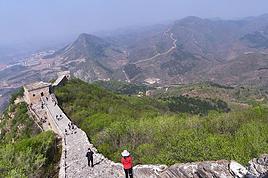
Beijing – 6 days, including a trip to the Great Wall at Badaling,
Beijing to Datong,
Datong – 2 days,
Datong to Pingyao,
Pingyao – 2 days,
Pingyao to Xi’an,
Xi’an – 3 days,
Xi’an to Chengdu,
Chengdu – 2 days,
Chengdu to Chongqing,
Chongqing – 2 days,
Chongqing to Changsha,
Changsha to Zhangjiajie – 2 days,
Changsha to Shanghai,
Shanghai – 2 days (we’ve already been to Shanghai in May 2024).
Shanghai to Montpellier.
Thanks for your feedback and tips!
Alod
Hi there,
I’d love to get some feedback on our 30-day / 29-night itinerary in China. We’ll be there in September as a family with two kids (6 and 10 years old). Do you think I should cut a few nights between Wulingyuan (Avatar Mountain) and Yangshuo? I’ve planned 15 nights total there. We’ll be on a round-the-world trip starting May 2026 and will need to do schoolwork with the kids. Hoping to fit it in during train rides!! Ever since I started planning this China itinerary, I’ve been discovering completely mind-blowing places I’d never heard of before—30 days feels way too short for China!!!
Here’s our itinerary:
Beijing - 4 nights Forbidden City Great Wall of China Temple of Heaven
Xi’an - 3 nights Terracotta Army Muslim Quarter & Great Mosque
Chengdu - 3 nights Zoo - Research Base of Giant Panda Breeding Wenshu Yuan Temple
Wulingyuan (Avatar Mountain) - 3 nights "Avatar Mountains"
Zhangjiajie - 2 nights Tianmen Mountain
Furong Town - 2 nights
Fenghuang - 2 nights
Guilin - 2 nights Chuanshan Park Guilin Yaoshan Scenic Attraction Reed Flute Cave
Yangshuo - 4 nights Biking along the Yulong River Moon Hill Ruyi Peak Xianggong Hill
Shanghai - 4 nights Shanghai Disneyland Yu Garden / Yuyuan Garden Yuyuan Bazaar
Thanks! Cédric
I’d love to get some feedback on our 30-day / 29-night itinerary in China. We’ll be there in September as a family with two kids (6 and 10 years old). Do you think I should cut a few nights between Wulingyuan (Avatar Mountain) and Yangshuo? I’ve planned 15 nights total there. We’ll be on a round-the-world trip starting May 2026 and will need to do schoolwork with the kids. Hoping to fit it in during train rides!! Ever since I started planning this China itinerary, I’ve been discovering completely mind-blowing places I’d never heard of before—30 days feels way too short for China!!!
Here’s our itinerary:
Beijing - 4 nights Forbidden City Great Wall of China Temple of Heaven
Xi’an - 3 nights Terracotta Army Muslim Quarter & Great Mosque
Chengdu - 3 nights Zoo - Research Base of Giant Panda Breeding Wenshu Yuan Temple
Wulingyuan (Avatar Mountain) - 3 nights "Avatar Mountains"
Zhangjiajie - 2 nights Tianmen Mountain
Furong Town - 2 nights
Fenghuang - 2 nights
Guilin - 2 nights Chuanshan Park Guilin Yaoshan Scenic Attraction Reed Flute Cave
Yangshuo - 4 nights Biking along the Yulong River Moon Hill Ruyi Peak Xianggong Hill
Shanghai - 4 nights Shanghai Disneyland Yu Garden / Yuyuan Garden Yuyuan Bazaar
Thanks! Cédric
We’ve just returned from a 30-day trip to China, 20 years after our last visit to this vast country.
What a transformation! So many new highways, high-speed trains, clean public restrooms, very comfortable and affordable hotels, and queues before boarding public transport… Has China really changed this much?
Language Technology has helped overcome—on a very small scale, of course—the language barrier thanks to translation apps on our phones. Unfortunately, very few Chinese people speak English, even in international hotels, which we find baffling, even frustrating, but that’s just how it is, and it’s up to us to adapt. It’s a shame, too, because no one makes an effort to communicate any other way than through their phone, which wasn’t the case when we were there 20 years ago. In restaurants, hotels, and some shops, they’ll show you a voice translation—usually in English—on a phone, and all you have to do is respond.
Payments We never withdrew cash in China. It’s possible to do so, but we never looked for an ATM. On the other hand, we tried to exchange 100 € as soon as we arrived in Xi’an, and it was a real ordeal. We had to do it at a specific bank, The Bank of China, and the administrative process took… an hour! So, no cash. Like everyone else, we used Alipay, one of the most popular online payment systems, and it’s super easy to use. WeChat also works well but is a bit more complicated to set up. It’s so convenient and used absolutely everywhere, even for purchases of 5 yuan, which is roughly the equivalent of about 55 euro cents. 10 yuan equals 1.22 €.
Phone As for the internet, I had installed a VPN before leaving—Let’s VPN—but it was completely useless since we had subscribed to an international plan with our carrier before the trip, which gave us 35 GB of data. No need to ask hotels for Wi-Fi; we only used roaming. It worked perfectly, no matter where we were. So, no VPN or SIM card for us.
TWO ESSENTIAL TOOLS FOR TRAVELING: your passport and your phone Traveling to China is much simpler than you might think. And let’s add that the Chinese, despite the language barrier, are very open and always ready to help.
The itinerary After carefully planning our route and considering the length of our stay (I had initially thought about applying for a visa longer than 30 days to stay for 6 weeks in China), we decided to take advantage of the recent option to stay for 30 days. Of course, we had to make some choices. I booked a one-way ticket from Paris to Xi’an and a return from Kunming to Paris once the itinerary was set: 9 days in northern Gansu 4 days in Hunan, specifically the well-known Zhangjiajie 15 days in Yunnan
Organization, transport, hotels This wasn’t a "backpacker" trip, as the hotels we booked were generally comfortable. I had arranged a car with a driver for the Yunnan portion through the Ciel Yunnan agency. Excellent choice—it allowed us to optimize our route. For the Gansu and Hunan portions, after much deliberation, we decided against hiring a driver. All our travel was by train and taxi. Taxis are available near train stations, airports, and some hotels in big cities. We also used "Didi," the Chinese equivalent of Uber. The app is available through Alipay. Getting around China by train is extremely easy. You just need to book your tickets on a travel site. I used trip.com and travelchina. Since we weren’t traveling during peak season, it was easy to get the tickets we wanted. You can buy train tickets up to 15 days before departure. You can book earlier, but there’s no guarantee you’ll get the time you want, especially during tourist seasons (usually the first week of October or May). Once at the station, you only need to show your passport, and you’ll need it again when leaving the station. Taxis are easy to find and not expensive. For day trips, we usually went through the hotel. Like everyone else, I had checked the prices of online tour agencies beforehand, and they were all overpriced. It’s better to wait until the last minute or, if possible, contact the hotel and ask them. I did this twice. We took domestic flights three times: Xi’an to Dunhuang Lanzhou to Changsha Changsha to Lijiang It’s best to buy flights shortly before departure, as prices are quite low then. There’s no point in booking months in advance. Often, flights only appear 2 months before departure. All hotel reservations were made on trip.com, except for three booked on Booking. Almost all exceeded our expectations in terms of comfort. Rooms were usually spacious, and new technology even makes its way into the rooms with "smart" toilets and automatic curtains… All for a very reasonable price.
The "attractions" That’s the term used on travel sites like trip.com for visits and activities, and it fits perfectly! Don’t expect to move freely around a natural tourist site. Cars aren’t allowed. The process is more or less the same everywhere: you arrive at the visitor center, pay the entrance fee, then, with your ticket or passport (always keep them on you!), you board a bus that takes you to the various viewpoints. The duration of the "tour" is usually indicated. It might seem confusing or even unnatural, but no one can avoid it unless you go to very remote, non-touristy places. Generally, the further west you go, the less this type of visit exists. The upside is that these places are better preserved since access is only by electric shuttle. On the downside, you sometimes have to deal with noisy tourist groups, their guides’ loudspeakers, and their non-stop chatter. But if you move a little further away, you’ll often find yourself alone.
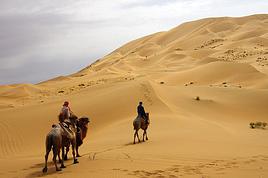
Highlights of this trip:🙂 A 2-day escape to the Badan Jaran Desert—absolutely stunning. The colorful mountains near Zhangye. The Buddhist caves in Gansu. The breathtaking Hani and Yi rice terraces in Yuanyang. The architecture of the old towns, even if they sometimes feel a bit overdone. The warm welcome from the locals.
A little disappointed by: Zhangjiajie, despite its beauty. It was way too crowded, even though we were there in the off-season. And that’s nothing compared to the Stone Forest near Kunming… I also struggled with the food after a while. 😕
A few photos to come…
Language Technology has helped overcome—on a very small scale, of course—the language barrier thanks to translation apps on our phones. Unfortunately, very few Chinese people speak English, even in international hotels, which we find baffling, even frustrating, but that’s just how it is, and it’s up to us to adapt. It’s a shame, too, because no one makes an effort to communicate any other way than through their phone, which wasn’t the case when we were there 20 years ago. In restaurants, hotels, and some shops, they’ll show you a voice translation—usually in English—on a phone, and all you have to do is respond.
Payments We never withdrew cash in China. It’s possible to do so, but we never looked for an ATM. On the other hand, we tried to exchange 100 € as soon as we arrived in Xi’an, and it was a real ordeal. We had to do it at a specific bank, The Bank of China, and the administrative process took… an hour! So, no cash. Like everyone else, we used Alipay, one of the most popular online payment systems, and it’s super easy to use. WeChat also works well but is a bit more complicated to set up. It’s so convenient and used absolutely everywhere, even for purchases of 5 yuan, which is roughly the equivalent of about 55 euro cents. 10 yuan equals 1.22 €.
Phone As for the internet, I had installed a VPN before leaving—Let’s VPN—but it was completely useless since we had subscribed to an international plan with our carrier before the trip, which gave us 35 GB of data. No need to ask hotels for Wi-Fi; we only used roaming. It worked perfectly, no matter where we were. So, no VPN or SIM card for us.
TWO ESSENTIAL TOOLS FOR TRAVELING: your passport and your phone Traveling to China is much simpler than you might think. And let’s add that the Chinese, despite the language barrier, are very open and always ready to help.
The itinerary After carefully planning our route and considering the length of our stay (I had initially thought about applying for a visa longer than 30 days to stay for 6 weeks in China), we decided to take advantage of the recent option to stay for 30 days. Of course, we had to make some choices. I booked a one-way ticket from Paris to Xi’an and a return from Kunming to Paris once the itinerary was set: 9 days in northern Gansu 4 days in Hunan, specifically the well-known Zhangjiajie 15 days in Yunnan
Organization, transport, hotels This wasn’t a "backpacker" trip, as the hotels we booked were generally comfortable. I had arranged a car with a driver for the Yunnan portion through the Ciel Yunnan agency. Excellent choice—it allowed us to optimize our route. For the Gansu and Hunan portions, after much deliberation, we decided against hiring a driver. All our travel was by train and taxi. Taxis are available near train stations, airports, and some hotels in big cities. We also used "Didi," the Chinese equivalent of Uber. The app is available through Alipay. Getting around China by train is extremely easy. You just need to book your tickets on a travel site. I used trip.com and travelchina. Since we weren’t traveling during peak season, it was easy to get the tickets we wanted. You can buy train tickets up to 15 days before departure. You can book earlier, but there’s no guarantee you’ll get the time you want, especially during tourist seasons (usually the first week of October or May). Once at the station, you only need to show your passport, and you’ll need it again when leaving the station. Taxis are easy to find and not expensive. For day trips, we usually went through the hotel. Like everyone else, I had checked the prices of online tour agencies beforehand, and they were all overpriced. It’s better to wait until the last minute or, if possible, contact the hotel and ask them. I did this twice. We took domestic flights three times: Xi’an to Dunhuang Lanzhou to Changsha Changsha to Lijiang It’s best to buy flights shortly before departure, as prices are quite low then. There’s no point in booking months in advance. Often, flights only appear 2 months before departure. All hotel reservations were made on trip.com, except for three booked on Booking. Almost all exceeded our expectations in terms of comfort. Rooms were usually spacious, and new technology even makes its way into the rooms with "smart" toilets and automatic curtains… All for a very reasonable price.
The "attractions" That’s the term used on travel sites like trip.com for visits and activities, and it fits perfectly! Don’t expect to move freely around a natural tourist site. Cars aren’t allowed. The process is more or less the same everywhere: you arrive at the visitor center, pay the entrance fee, then, with your ticket or passport (always keep them on you!), you board a bus that takes you to the various viewpoints. The duration of the "tour" is usually indicated. It might seem confusing or even unnatural, but no one can avoid it unless you go to very remote, non-touristy places. Generally, the further west you go, the less this type of visit exists. The upside is that these places are better preserved since access is only by electric shuttle. On the downside, you sometimes have to deal with noisy tourist groups, their guides’ loudspeakers, and their non-stop chatter. But if you move a little further away, you’ll often find yourself alone.
Highlights of this trip:🙂 A 2-day escape to the Badan Jaran Desert—absolutely stunning. The colorful mountains near Zhangye. The Buddhist caves in Gansu. The breathtaking Hani and Yi rice terraces in Yuanyang. The architecture of the old towns, even if they sometimes feel a bit overdone. The warm welcome from the locals.
A little disappointed by: Zhangjiajie, despite its beauty. It was way too crowded, even though we were there in the off-season. And that’s nothing compared to the Stone Forest near Kunming… I also struggled with the food after a while. 😕
A few photos to come…
Hi there,
We’re thinking of spending 3 weeks in Asia this fall to visit some of the major capitals on this vast continent. We’d like to get a (very rough) sense of just how fast Asia is moving compared to what we see in the West (we’re from Quebec). For now, our very preliminary list includes Tokyo, Hong Kong, and Singapore. There are obviously plenty of other options—Seoul, Shanghai, etc.
What do you think? Thanks in advance!
We’re thinking of spending 3 weeks in Asia this fall to visit some of the major capitals on this vast continent. We’d like to get a (very rough) sense of just how fast Asia is moving compared to what we see in the West (we’re from Quebec). For now, our very preliminary list includes Tokyo, Hong Kong, and Singapore. There are obviously plenty of other options—Seoul, Shanghai, etc.
What do you think? Thanks in advance!
bonjour à tous,
quelqu'un pourrait-il m'informer du prix approximatif du voyage pour un chinois désirant venir faire un séjour touristique en europe : je parle du prix du vol et du visa .
Est-ce comparable avec le notre ( prix d'avion assez bas en le prenant 2 à 3 mois en avance) et prix du visa exorbitant si on habite loin d'un visa center.
Merci à tous
I'm 69 years old and heading to China, where most tourist sites are free or discounted for me. However, trip.com either refuses to let me book because the sites are free or doesn’t apply the discount. Does WeChat apply this discount if I book through them? How can I just reserve without paying and pay on-site? Is that possible?
How do I upload my passport to WeChat?
Thanks for your tips. Elisabeth
How do I upload my passport to WeChat?
Thanks for your tips. Elisabeth
Hi,
I’m planning a trip to China.
My question might sound silly, but I’m still wondering:
If I book a flight Paris–Hong Kong–Paris, will I be able to enter China (for example, go to Shenzhen, Guangzhou, then head north) without any issues? And return?
Because Hong Kong seems a bit separate, maybe with a land border to cross?
Thanks for your insights.
If I book a flight Paris–Hong Kong–Paris, will I be able to enter China (for example, go to Shenzhen, Guangzhou, then head north) without any issues? And return?
Because Hong Kong seems a bit separate, maybe with a land border to cross?
Thanks for your insights.
Hello everyone,
Like Cedric13600, I’ve booked a flight ticket for 30 days / 29 nights in September 2026, from Beijing to Shanghai. We’re a couple in our sixties who love independent road trips.
I’d like to draw inspiration from the following private itinerary suggested by a travel agency:
Day 1: Arrival in Beijing Day 2 to 4: Beijing Day 5: Datong Day 6 & 7: Pingyao Day 8 to 10: Xi'an Day 11: Luoyang Day 12: Dengfeng flight Day 13 & 14: Chongqing flight Day 15 & 16: Lijiang Day 17: Dali Day 18: Kunming Day 19: Jianshui Day 20 & 21: Yuanyang Day 22: Travel via Guilin Day 23 & 24: Yangshuo Day 25: Guilin Day 26 & 27: Zhangjiajie flight Day 28 & 29: Shanghai Day 30: Departure from Shanghai
But to do this itinerary independently: 1. This schedule seems very ambitious to me—what do you think? 2. If it’s too packed, what would you remove as a priority? Thanks so much in advance for your help.
Day 1: Arrival in Beijing Day 2 to 4: Beijing Day 5: Datong Day 6 & 7: Pingyao Day 8 to 10: Xi'an Day 11: Luoyang Day 12: Dengfeng flight Day 13 & 14: Chongqing flight Day 15 & 16: Lijiang Day 17: Dali Day 18: Kunming Day 19: Jianshui Day 20 & 21: Yuanyang Day 22: Travel via Guilin Day 23 & 24: Yangshuo Day 25: Guilin Day 26 & 27: Zhangjiajie flight Day 28 & 29: Shanghai Day 30: Departure from Shanghai
But to do this itinerary independently: 1. This schedule seems very ambitious to me—what do you think? 2. If it’s too packed, what would you remove as a priority? Thanks so much in advance for your help.
Hello everyone,
I’m planning a 5-week trip between Yunnan and Sichuan from mid-October to the end of November 2026: Arriving in Kunming, I’ll do a loop in the far south of Yunnan via Thonghai, Jhiansu, Zhemi, Yuanyang, Nafa, Jinping, Mengzi, and Shilin (visiting markets, villages, and hiking), then head to northern Yunnan/southern Sichuan on the same theme (passing through Kunming again) via Dongchuan, Huize, Qiaojia, Puge, Xichang, Lanba, Butuo, Huolie, Dimo, Riha, Niuniuba, Meigu, Mabian, and Leshan, before arriving in Chengdu (where I’ll take my return flight to Paris). This would be a trip with a strong ethnic/rural focus. Since I’ve never traveled in China, I’d love to hear your thoughts on doing this solo. Are there public transport options in the region? What tips do you have for traveling through this area as smoothly and enjoyably as possible? I’ve done quite a bit of backpacking in the mountains of northern Vietnam and really enjoyed using local motorbike drivers. Is something like that available in this region (through local tourist agencies or hotels)?
What should I be cautious about? Are local tourist agencies (or hotels) offering tours and guides reliable? If you know of any specialized sites sharing tips or experiences, or names of local agencies, hotels, etc., please don’t hesitate to share them! :)
In short, all your advice (on any topic that comes to mind!) is very welcome. Thanks so much!
I’m planning a 5-week trip between Yunnan and Sichuan from mid-October to the end of November 2026: Arriving in Kunming, I’ll do a loop in the far south of Yunnan via Thonghai, Jhiansu, Zhemi, Yuanyang, Nafa, Jinping, Mengzi, and Shilin (visiting markets, villages, and hiking), then head to northern Yunnan/southern Sichuan on the same theme (passing through Kunming again) via Dongchuan, Huize, Qiaojia, Puge, Xichang, Lanba, Butuo, Huolie, Dimo, Riha, Niuniuba, Meigu, Mabian, and Leshan, before arriving in Chengdu (where I’ll take my return flight to Paris). This would be a trip with a strong ethnic/rural focus. Since I’ve never traveled in China, I’d love to hear your thoughts on doing this solo. Are there public transport options in the region? What tips do you have for traveling through this area as smoothly and enjoyably as possible? I’ve done quite a bit of backpacking in the mountains of northern Vietnam and really enjoyed using local motorbike drivers. Is something like that available in this region (through local tourist agencies or hotels)?
What should I be cautious about? Are local tourist agencies (or hotels) offering tours and guides reliable? If you know of any specialized sites sharing tips or experiences, or names of local agencies, hotels, etc., please don’t hesitate to share them! :)
In short, all your advice (on any topic that comes to mind!) is very welcome. Thanks so much!
bonjour,
je me permet de soumettre ce message suite à l'annulation du voyage en Chine que je devais effectuer début février dans le nord de la chine (GLA GLA) à l'invitation d'une jeune chinoise ( non je ne fais pas du tourisme sexuel , mais c'est plus facile de parler avec les jeunes chinoises qui pratiquent l'anglais et sont moins timides que les garçons ).
Je partais avec lufthansa qui a annulé tous cs vols donc ils devraient me rembourser.
Par contre, il y a d'autres frais ( parking aéroport et visas en particulier).
Petite info pour les futurs partant pour la Chine habitant dans le sud.
Cela devait être mon 3iéme séjour en chine, et c'était ma 3 iéme demande de visa.
Les 2 première fois j'étais passsé par une agence de Paris bien connu ( pas trop de problèmes).
Et cette fois -ci , à cause de la prise d'empreintes, je me suis rendu au centre de Marseille ( 1 journée pour moi qui habite dans les Cévennes). J'avais prévu les mêmes demandes qu'à Paris.
Et bien NON.
Pour les nuits d'hotel , il ne suffisait pas de 2 nuits ( alors que mon séjour était plus court ).
L'employé ( que j'aurais fusillé si je l'avais pu) m'a dit que je n'avais pas assez de nuits.
Heureusement que c'était le 24 décembre, qu'il n'y avait personne et un ordinateur qui m'a permis de prendre des nuits à beijing pour tout le séjour alors que je ne comptais même pas y passer une nuit , allant dans le nord de la chine à l'invitation d'une chinoise ( oui je sais, mais la lettre d'invitation c'est encore plus compliqué et comme je n'avais pas encore les billets de trains de nuit , j'avais peur que ç a marche pas).
Et attention aussi à la photo d'identité qui doit avoir moins de 3 ou 6 mois.
Donc quelqu'un sait-il comment se faire rembourser ( si possible) les frais annexes comme le frais de parking et le visa ( 200euros avev le service postal) .Avec l'assurance de la carte bancaire?
Je répond par avance.
je considère aussi que cela fait partie des risques du voyage ( c'est pour cela que je ne prend jamais les options annulations en général) mais parfois il y des cas de forces majeures qui te semblent vraiment injustes.
Et je ne parlerais pas de ce qui arrive au peuple chinois qui n'a rien demandé.
PS : amitié à mon guide vers Shandiping qui se reconnaitra. J'ai des nouvelles très fraiches : tout va bien pour l'instant là bas.
Bonjour
je pars en australie au mois de novembre, mon vol a pour escales à pékin
arrivés à pékin à 12h30 terminal 3 départ de pékin à 00h40 terminal 3
Est ce que la grande muraille de chine est possible ? et quel est le trajet le plus rapide ?
Merci d'avance ! 🙂
je pars en australie au mois de novembre, mon vol a pour escales à pékin
arrivés à pékin à 12h30 terminal 3 départ de pékin à 00h40 terminal 3
Est ce que la grande muraille de chine est possible ? et quel est le trajet le plus rapide ?
Merci d'avance ! 🙂
Bonjour à tous,
Nous visiterons le Yunnan pendant presque 3 semaines en juillet 2020 avec nos 2 enfants (qui auront alors 3 et 7 ans).
Nous avons l'habitude de voyager en indépendant sans nécessairement réserver nos transports et hébergements à l'avance, afin de garder plus de flexibité dans le voyage (rester plus longtemps à un endroit si cela nous plait vraiment ou pour attendre un jour de beau temps, ou au contraire partir plus vite si finalement le lieu ne nous plait pas tant que ca !). L'année dernière en Thailande, nous réservions nos hotels sur Booking/Agoda quelques jours avant de changer de ville, voire la veille et n'avons eu aucun problème. Je lis partout qu'au mois de juillet, le Yunnan est pris d'assaut par les touristes (chinois essentiellement). J'imagine donc qu'il est plus prudent de réserver à l'avance ses billets de train et ses chambres d'hôtel mais est-ce vraiment indispensable ? Si oui, combien de temps à l'avance faut-il s'y prendre ?
Si certains d'entre-vous ont déjà tenté l'experience à cette saison, je suis preneuse de vos infos ! Avec les enfants, on devient plus soucieux et on a pas envie de se retrouver dans des plans galères ou qui nous fassent exploser le budget ;-)
Merci par avance Céline
Nous visiterons le Yunnan pendant presque 3 semaines en juillet 2020 avec nos 2 enfants (qui auront alors 3 et 7 ans).
Nous avons l'habitude de voyager en indépendant sans nécessairement réserver nos transports et hébergements à l'avance, afin de garder plus de flexibité dans le voyage (rester plus longtemps à un endroit si cela nous plait vraiment ou pour attendre un jour de beau temps, ou au contraire partir plus vite si finalement le lieu ne nous plait pas tant que ca !). L'année dernière en Thailande, nous réservions nos hotels sur Booking/Agoda quelques jours avant de changer de ville, voire la veille et n'avons eu aucun problème. Je lis partout qu'au mois de juillet, le Yunnan est pris d'assaut par les touristes (chinois essentiellement). J'imagine donc qu'il est plus prudent de réserver à l'avance ses billets de train et ses chambres d'hôtel mais est-ce vraiment indispensable ? Si oui, combien de temps à l'avance faut-il s'y prendre ?
Si certains d'entre-vous ont déjà tenté l'experience à cette saison, je suis preneuse de vos infos ! Avec les enfants, on devient plus soucieux et on a pas envie de se retrouver dans des plans galères ou qui nous fassent exploser le budget ;-)
Merci par avance Céline
Bonsoir,
J'ai quelques questions :
- Pensez vous qu'en une semaine on peut tout visiter ? - Ou dormir à Hong Kong ? Dans quels quartier ? - Janvier c'est la bon mois pour visiter la ville ?
Bonne soirée
J'ai quelques questions :
- Pensez vous qu'en une semaine on peut tout visiter ? - Ou dormir à Hong Kong ? Dans quels quartier ? - Janvier c'est la bon mois pour visiter la ville ?
Bonne soirée
Bonjour,
Pour notre 3e séjour en Chine, j'aimerais visiter le sud, où je ne suis jamais allée .... Je pensais combiner une semaine dans la région des rizières de Longsheng (et Yanghsuo ?) et deux semaines dans la région de Kunming.
Je n'ai pas d'autre choix que de partir pendant les mois de juillet et août et je me demandais si un mois était préférable à l'autre ?? ou bien est-ce à peu près la même chose ?
Autre question : je lis beaucoup de choses qui me refroidissent un peu sur Dali et Lijiang, qui semblent extrêmement touristiques. Est-ce qu'il est possible de visiter cette région en étant un peu à l'écart de la foule, avez-vous des conseils à donner ? Je précise que je ne parle pas un mot de mandarin ...
Merci d'avance pour les suggestions.
Pour notre 3e séjour en Chine, j'aimerais visiter le sud, où je ne suis jamais allée .... Je pensais combiner une semaine dans la région des rizières de Longsheng (et Yanghsuo ?) et deux semaines dans la région de Kunming.
Je n'ai pas d'autre choix que de partir pendant les mois de juillet et août et je me demandais si un mois était préférable à l'autre ?? ou bien est-ce à peu près la même chose ?
Autre question : je lis beaucoup de choses qui me refroidissent un peu sur Dali et Lijiang, qui semblent extrêmement touristiques. Est-ce qu'il est possible de visiter cette région en étant un peu à l'écart de la foule, avez-vous des conseils à donner ? Je précise que je ne parle pas un mot de mandarin ...
Merci d'avance pour les suggestions.
Hi there!
I’m heading to Hanoi next week and we’ve got a 16-hour layover in Shanghai. Is it worth leaving the airport? We’re Belgian, so no visa required.
Thanks! !
I’m heading to Hanoi next week and we’ve got a 16-hour layover in Shanghai. Is it worth leaving the airport? We’re Belgian, so no visa required.
Thanks! !
Hi there,
A quick recap of our 19-day trip to China – classic itinerary, half-family: dad and 13-year-old son, August 2025.
Arrived in Shanghai, the idea was to explore the city in the evening to help with jet lag. Day 1: Maglev (50 CNY), then metro to the hotel, night cruise on the Huangpu River, admiring the skyline. Day 2: Yuyuan Garden (meh), Lujiazui district, sunset from the top of Jinmao Tower, stroll along the Bund, admiring the skyline. Day 3: Chaos at the Shanghai Museum – should’ve booked in advance. Backup plan: Longhua Temple (nice), Tianzi Fang district (great). Day 4: Aquarium (okay), Pearl Tower, Fake Market (top), then flight to Guilin. Taxi from Guilin to Yangshuo (400 CNY arranged by the hotel). Verdict: Maybe one day too many. Late mornings (jet lag) kept us from visiting the water town. Day 5: Yangshuo – scooter ride (40 CNY) along the Yulong River. Day 6: Early Didi (30 min) to the top of Xiang Gong Shan (ideally for sunrise). Then a walk through the countryside to the Li River, crossing by boat (10 CNY) to Xingping. You can shorten the walk by flagging down a mini-shuttle that shuttles Chinese tourists in the opposite direction. Explored Xingping, scooter ride, 20 CNY viewpoint, sunset from Laozhai Hill, back to Yangshuo. Day 7: Scooter ride to spots we missed on Day 5. Verdict: It’s stunning. Might be worth staying in Guilin the first night and booking a cruise to Yangshuo the next day on the Li River. Day 8: Bus (4/5h, 100 CNY) to Longji/Dazhai. Hotel in Tianzhouzai – I think it’s better to stay in Ping’an, it’s more typical. Dazhai is generally overdeveloped. Day 9: Full-day hike from Dazhai to Ping’an, then bus back to Dazhai. Super nice walk, only crossed paths with 4 people. Day 10: Walk around the top of Dazhai, but the trails are poorly maintained – no loop possible. Verdict: Gorgeous, probably one day too many, but the area is very rainy, so it’s good to have a buffer. Day 11: Private taxi (4/5h, 200 €) to Fenghuang. Explored the town in the evening – really nice. Day 12: Short visit to Fenghuang during the day, then train to Zhangjiajie and Wulingyuan. Hotel pool. Day 13: Early start: Zhangjiajie Park via Wulingyuan entrance, Route A (starting with the cable car). Fabulous. If I did it again, I’d take Route B to get early access to the section near the giant elevator. Day 14: Early start: Zhangjiajie Park via the south entrance – superb. Day 15: Wulingyuan Grand Canyon, glass bridge – nice but not essential. Day 16: Tianmen Mountain in the afternoon. You can leave your luggage at the entrance. Routes A and B sell out quickly. Note that Route C no longer uses buses to the top – there’s a brand-new cable car instead, which I think is actually better than A and B. Really nice, worth doing. Evening flight to Beijing. Verdict: The canyon could be done the same morning as Tianmen Mountain, or even skipped. Day 17: Visited the Forbidden City (book a week in advance!), missed the entry slot for Tiananmen Square (book in advance!) due to security checks. Visited the Lama Temple. Stayed in a hutong. Day 18: Great Wall at Mutianyu. Private taxi (100 € round trip – probably overpaid) to arrive before 7 AM. Then back to Beijing, Temple of Heaven, and finally the modest skyline from the mall at Guomao metro station. Day 19: Fake markets (pointless – they’re stripped of their usual goods compared to Shanghai’s), Summer Palace, then Wangfujing Street. Headed to the airport. Verdict: 3 days is too short for Beijing.
Overall impressions: Highlights: Incredible places (cities and landscapes), often vast and fascinating, a total change of scenery. Very easy and smooth to travel despite the clear language barrier. Excellent food, very affordable, very few scams. Lowlights: Intense heat and humidity in August, *way* too many tourists (99.9% Chinese), a real circus that makes the trip exhausting. Walking is tiring in the long run (even though we’re very active) because it’s all on stone paths and stairs. To avoid crowds, you’d need to wake up early every day – tough with kids, especially with jet lag.
Logistics: - Buses and private taxis arranged last-minute through hotels. - Didi is widely available everywhere, plentiful, and cheap. - Flights and trains booked on Trip.com a month in advance (fills up fast). - Hotels on Booking and Trip.com. Only the one in Yangshuo was booked well in advance – hotel capacity is huge everywhere. - Apps: Didi, Alipay, WeChat, Maps.me, Google Translate. Free 35 GB data plan, SIM card from the airport.
A quick recap of our 19-day trip to China – classic itinerary, half-family: dad and 13-year-old son, August 2025.
Arrived in Shanghai, the idea was to explore the city in the evening to help with jet lag. Day 1: Maglev (50 CNY), then metro to the hotel, night cruise on the Huangpu River, admiring the skyline. Day 2: Yuyuan Garden (meh), Lujiazui district, sunset from the top of Jinmao Tower, stroll along the Bund, admiring the skyline. Day 3: Chaos at the Shanghai Museum – should’ve booked in advance. Backup plan: Longhua Temple (nice), Tianzi Fang district (great). Day 4: Aquarium (okay), Pearl Tower, Fake Market (top), then flight to Guilin. Taxi from Guilin to Yangshuo (400 CNY arranged by the hotel). Verdict: Maybe one day too many. Late mornings (jet lag) kept us from visiting the water town. Day 5: Yangshuo – scooter ride (40 CNY) along the Yulong River. Day 6: Early Didi (30 min) to the top of Xiang Gong Shan (ideally for sunrise). Then a walk through the countryside to the Li River, crossing by boat (10 CNY) to Xingping. You can shorten the walk by flagging down a mini-shuttle that shuttles Chinese tourists in the opposite direction. Explored Xingping, scooter ride, 20 CNY viewpoint, sunset from Laozhai Hill, back to Yangshuo. Day 7: Scooter ride to spots we missed on Day 5. Verdict: It’s stunning. Might be worth staying in Guilin the first night and booking a cruise to Yangshuo the next day on the Li River. Day 8: Bus (4/5h, 100 CNY) to Longji/Dazhai. Hotel in Tianzhouzai – I think it’s better to stay in Ping’an, it’s more typical. Dazhai is generally overdeveloped. Day 9: Full-day hike from Dazhai to Ping’an, then bus back to Dazhai. Super nice walk, only crossed paths with 4 people. Day 10: Walk around the top of Dazhai, but the trails are poorly maintained – no loop possible. Verdict: Gorgeous, probably one day too many, but the area is very rainy, so it’s good to have a buffer. Day 11: Private taxi (4/5h, 200 €) to Fenghuang. Explored the town in the evening – really nice. Day 12: Short visit to Fenghuang during the day, then train to Zhangjiajie and Wulingyuan. Hotel pool. Day 13: Early start: Zhangjiajie Park via Wulingyuan entrance, Route A (starting with the cable car). Fabulous. If I did it again, I’d take Route B to get early access to the section near the giant elevator. Day 14: Early start: Zhangjiajie Park via the south entrance – superb. Day 15: Wulingyuan Grand Canyon, glass bridge – nice but not essential. Day 16: Tianmen Mountain in the afternoon. You can leave your luggage at the entrance. Routes A and B sell out quickly. Note that Route C no longer uses buses to the top – there’s a brand-new cable car instead, which I think is actually better than A and B. Really nice, worth doing. Evening flight to Beijing. Verdict: The canyon could be done the same morning as Tianmen Mountain, or even skipped. Day 17: Visited the Forbidden City (book a week in advance!), missed the entry slot for Tiananmen Square (book in advance!) due to security checks. Visited the Lama Temple. Stayed in a hutong. Day 18: Great Wall at Mutianyu. Private taxi (100 € round trip – probably overpaid) to arrive before 7 AM. Then back to Beijing, Temple of Heaven, and finally the modest skyline from the mall at Guomao metro station. Day 19: Fake markets (pointless – they’re stripped of their usual goods compared to Shanghai’s), Summer Palace, then Wangfujing Street. Headed to the airport. Verdict: 3 days is too short for Beijing.
Overall impressions: Highlights: Incredible places (cities and landscapes), often vast and fascinating, a total change of scenery. Very easy and smooth to travel despite the clear language barrier. Excellent food, very affordable, very few scams. Lowlights: Intense heat and humidity in August, *way* too many tourists (99.9% Chinese), a real circus that makes the trip exhausting. Walking is tiring in the long run (even though we’re very active) because it’s all on stone paths and stairs. To avoid crowds, you’d need to wake up early every day – tough with kids, especially with jet lag.
Logistics: - Buses and private taxis arranged last-minute through hotels. - Didi is widely available everywhere, plentiful, and cheap. - Flights and trains booked on Trip.com a month in advance (fills up fast). - Hotels on Booking and Trip.com. Only the one in Yangshuo was booked well in advance – hotel capacity is huge everywhere. - Apps: Didi, Alipay, WeChat, Maps.me, Google Translate. Free 35 GB data plan, SIM card from the airport.
Hi everyone,
We're currently planning our itinerary for this summer (late July - August) in China. Our travel style is more backpacker-oriented—we're used to traveling in Latin America, booking things just 3 days in advance. Could you share your thoughts on this route?
We’re particularly wondering about: - Yangshuo (which seems very touristy) → Xingping instead? The park Bajiaozhai? - How to get around and find accommodation in the small Miao and Dong villages? - Should we book trains and hotels in advance for late July and early August?
Thanks so much!
28-Jul Monday Kunming: Bamboo Temple Dian Chi Lake Kunming 29-Jul Tuesday Visit the city center Lake bike tour Dali Dali 30-Jul Wednesday Three Pagodas / Cangshan Mountain Dali Dali 31-Jul Thursday Transport to Shaxi - visit 1 - Dali Old Town Coach Station (大理古城客运站) 2 - Arrive Jianchuan Coach Station 3 - Local green or yellow minibuses to Shaxi Dali → Jianchuan → Shaxi Shaxi 01-Aug Friday Quick visit Shaxi → Lijiang Shaxi Shaxi 02-Aug Saturday Quick visit Shaxi → Lijiang Shaxi Lijiang 03-Aug Sunday Tiger Leaping Gorge trek 04-Aug Monday Tiger Leaping Gorge Qiatou Lijiang / Dali 05-Aug Tuesday Dali → Kunming → Kaili Full-day transport Kaili 06-Aug Wednesday Langde Miao Village - Xijiang Miao Village Kaili 07-Aug Thursday Visit village Kaili 08-Aug Friday Visit village Zhaoxing 09-Aug Saturday AM: Train to Guilin - PM: Elephant Trunk Hill / night barbecue Zhaoxing → Guilin (1h) Guilin 10-Aug Sunday Bajiaozhai (Park / hike) Ziyuan 11-Aug Monday Bajiaozhai (Park / hike) Ziyuan 12-Aug Tuesday Yangshuo Yangshuo 13-Aug Wednesday Yangshuo Yangshuo 14-Aug Thursday Yangshuo Yangshuo 15-Aug Friday Guilin → HK (3.5h) Guilin → HK (3.5h) 16-Aug Saturday Hong Kong
We're currently planning our itinerary for this summer (late July - August) in China. Our travel style is more backpacker-oriented—we're used to traveling in Latin America, booking things just 3 days in advance. Could you share your thoughts on this route?
We’re particularly wondering about: - Yangshuo (which seems very touristy) → Xingping instead? The park Bajiaozhai? - How to get around and find accommodation in the small Miao and Dong villages? - Should we book trains and hotels in advance for late July and early August?
Thanks so much!
28-Jul Monday Kunming: Bamboo Temple Dian Chi Lake Kunming 29-Jul Tuesday Visit the city center Lake bike tour Dali Dali 30-Jul Wednesday Three Pagodas / Cangshan Mountain Dali Dali 31-Jul Thursday Transport to Shaxi - visit 1 - Dali Old Town Coach Station (大理古城客运站) 2 - Arrive Jianchuan Coach Station 3 - Local green or yellow minibuses to Shaxi Dali → Jianchuan → Shaxi Shaxi 01-Aug Friday Quick visit Shaxi → Lijiang Shaxi Shaxi 02-Aug Saturday Quick visit Shaxi → Lijiang Shaxi Lijiang 03-Aug Sunday Tiger Leaping Gorge trek 04-Aug Monday Tiger Leaping Gorge Qiatou Lijiang / Dali 05-Aug Tuesday Dali → Kunming → Kaili Full-day transport Kaili 06-Aug Wednesday Langde Miao Village - Xijiang Miao Village Kaili 07-Aug Thursday Visit village Kaili 08-Aug Friday Visit village Zhaoxing 09-Aug Saturday AM: Train to Guilin - PM: Elephant Trunk Hill / night barbecue Zhaoxing → Guilin (1h) Guilin 10-Aug Sunday Bajiaozhai (Park / hike) Ziyuan 11-Aug Monday Bajiaozhai (Park / hike) Ziyuan 12-Aug Tuesday Yangshuo Yangshuo 13-Aug Wednesday Yangshuo Yangshuo 14-Aug Thursday Yangshuo Yangshuo 15-Aug Friday Guilin → HK (3.5h) Guilin → HK (3.5h) 16-Aug Saturday Hong Kong
Hi everyone,
This trip report covers a journey along the Silk Road in China (see detailed description below) undertaken in October 2025. The goal isn’t to recount the trip but to provide information that might help those who want to take a similar journey. Much of the information is valid for any trip to China.
Who we are: a retired couple, aged 63 and 65 (age gives discounts on entry to various sites and museums in China, which is why I won’t list prices here—I don’t know them, but you can easily find them online). We’re used to traveling independently. We speak English, which is the only foreign language spoken in China, though by very few people. I speak and read a little Chinese, which helped, but you can easily get by without it (without any English at all, I think it would be more difficult).
Period: We arrived just after "Golden Week," when all of China is on vacation, and after the summer, when schools are out, so we encountered very few tourists (99.99% of whom were Chinese). Our experience with booking visits in advance (which we didn’t need to do) isn’t representative for those who want to travel in the summer! The October-November period was perfect for our trip—it wasn’t too hot or too cold (one day of snow on the Tibetan Plateau), though it was only a few degrees on the Tibetan part, with altitudes between 2,000 and 3,000 meters. The trees were beautifully colored.
General remarks: Everyone we dealt with was very kind and perfectly honest. If you order a meal without really understanding what to do and the person modifies your order, trust them—the result is what you need. If a taxi driver signals that they’ll wait for you to finish your visit and pick you up afterward, trust them. It means there aren’t many taxis where you are, and it’ll be more convenient. For prices at street vendors, we always found the right ballpark, and sometimes they even added a little extra to please us. A taxi driver treated us to lunch, and an employee drove us back to the hotel after a visit because there were no taxis. If you struggle to buy a ticket online because there’s no counter, someone will come to help. People even spontaneously ask if everything’s okay and if you need anything.
Everywhere we went was very clean, including restrooms (trains, stations, hotels, museums, tourist sites) and streets. The old stereotypes about this no longer apply.
The trip can be challenging for those who have difficulty walking. The distances to cover on foot in stations, to access sites, and within the sites themselves can sometimes be really long.
We used the Lonely Planet guide in English (published at the end of August 2025) a little for preparation, but mostly relied on the internet.
Before leaving: No visa is needed for French citizens for stays under 30 days. You get a stamp on your passport upon arrival and departure, and the formalities themselves are very quick in both directions (excluding any potential queues). Just a photo and fingerprints upon arrival, and welcome to China’s facial recognition system.
Money: All your payments (see below) will go through your Visa card—there will be hundreds, including many payments of 20 cents to a few euros. So, you need an international option that allows unlimited card transactions. Since cash is rarely needed, the allowed number of ATM withdrawals can be low. We made 3 withdrawals totaling 800 € for a month and could have managed with just 2. The exchange rate charged on our Visa card was 12 € for 100 RMB (yuan).
Install the following apps on your smartphone before leaving (otherwise, you’ll only have access to the Chinese versions, if available): - Alipay, which is used to pay everywhere in China (details below). You need to link it to your credit card, then provide proof of identity by uploading a passport photo and completing a facial recognition session. Alipay gives access to Didi (China’s Uber), public transport (metro/bus), and can also translate phrases. - WeChat (Weixin in Chinese, pronounced *weishin*), which is also used for payments but also replaces WhatsApp. Unfortunately, to activate your account, you need someone who already has WeChat to sponsor you (preferably a Chinese person). We asked someone at our first accommodations to do this—no problem. By sharing your WeChat number with accommodations, they can send you messages that are automatically translated, and you can communicate with people thanks to the translation (translation to French is very poor; it’s much better in English, but unfortunately, WeChat detects your phone’s language). Alipay and WeChat are accepted almost everywhere, but some places only accept WeChat. - Amap, the international version of Baidu Maps, which replaces Google Maps (not at all up-to-date in China). The English names of hotels often have little to do with the Chinese names except for a phonetic resemblance. To find them on Amap, it’s best to copy the Chinese name found on your Trip reservation under "show address in Chinese." - A VPN. We had CyberGhost, which didn’t work, but according to other travelers, NordVPN and Windscribe do. Without a VPN, you can’t access Google services, on WhatsApp you can send and receive text but not photos, and you can’t send or receive emails on Gmail addresses. We managed without a VPN by using Firefox as a browser and Bing as a search engine. - Trip, for booking trains and accommodations, and buying some tickets. It’s the equivalent of Booking for accommodations, but Booking has very few listings in China, while Trip has hundreds in every city. Most hotels and trains are exchangeable and refundable until the day before, with no or minimal fees.
You don’t need contactless (NFC) payment on your phone. Either you scan a barcode and enter the amount to pay, or you display a barcode, and they scan it with a scanner, and the amount is deducted directly.
Upon arrival: - Buy a Chinese SIM card: 100 RMB for 300 GB of data and several hours of talk time (we didn’t use it). Set the Chinese number as a reference on Alipay, WeChat, and Amap. - Find someone to sponsor you on WeChat.
Transportation: - **Plane**: China Eastern, Paris-Canton then Canton-Urumqi on the way out, and Xian-Canton then Canton-Paris on the way back. International flights were smooth, but the schedules for the two domestic flights were changed. It was fine on the way out because we had some leeway, but on the way back, we were notified the morning of that our flight was canceled and replaced with one that didn’t allow for the connection. We called and changed to an earlier flight (I think we were lucky to find available seats). - **Train**: Most long distances were covered by high-speed trains (called D or G in China) at 240 or 300 km/h. Second class is perfect—just as comfortable and clean as our TGVs. The only advantage of first class is the wider seats for larger people, but the downside is that seats are often booked in advance and thus less available. You can book trains long in advance on Trip, but they only go on sale in China 15 days before departure, so that’s when you’ll know if you have a ticket. Initially, we booked first class, but there were no seats available on the day, so we ended up booking everything in second class, which was perfect. There’s no paper ticket—if you’ve bought one, you go to the station, show your passport, and enter. You do the same to access the platform 15 minutes before the train, and that’s it. Our train was canceled twice, but no problem—we went to the ticket counter, got a refund, and were offered a replacement. It didn’t delay us by more than an hour (maybe it would be harder in peak season). For prices, check Trip.com, but it’s significantly cheaper than in France. - **Bus**: We took the bus between Xining and Tongren, Tongren to Xiahe, and Hezuo to Lanzhou—about 3 hours each time for 200 km, 6 € per person, and departures were right on time. - **Taxi**: For trips between the station and hotel, or hotel and visits. If you take a Didi via the Alipay app, you activate your location, enter your destination, and it offers several taxis. You accept, and you get the car’s license plate and its real-time position on the map. When you get in, the driver often asks for the last four digits of your phone number to confirm. Otherwise, you go to the taxi stand outside the station. The price per kilometer is around 20 cents, so for a 30 km trip from the station to the hotel, you’ll pay about 6 €. We never tried to save more by taking local buses, but since the metro in Xian costs 25 cents per trip, it’s probably in the same ballpark. Amap provides public transport routes like Google Maps. - **Driver**: We hired a taxi/driver for the day several times for sightseeing. Prices ranged from 350 to 1,000 RMB (the most expensive was arranged through the Sofitel Xining concierge) for trips ranging from a few hours to a full day, sometimes covering over 300 km (see the detailed trip description).
Accommodations: All booked in advance on Trip, but several were changed during the trip. Off-season, there were no issues. We mostly stayed in upscale places, but in China, that means 50 to 60 € per night in the most central or convenient neighborhood. Note: Almost all hotels have a 5/5 rating on Trip, but it seems the Chinese avoid giving lower ratings to be polite. So, you have to read the comments to realize that in France, we might have given a 2 or 3!
Food: At the table, you’re served hot water or a hot infusion, presumably made with purified water. We never got sick from drinking it, but don’t drink tap water. Purified or mineral water is easy to find.
In restaurants, you can manage by pointing to the dish you want from another diner, on the wall where there are photos, or on the menu with pictures. The food in the region isn’t often spicy, and people usually ask or signal before adding the red spicy sauce, so you should be able to handle it if you don’t like chili at all.
The "fake old quarters" in several cities are great places to find all kinds of restaurants (see detailed trip below).
Like Google Maps, Amap can show you nearby restaurants.
Shopping: For dried fruits, buy them in Turfan—you won’t find the same variety and quality even in Xian. Generally, if you like something, buy it. If you wait, you might not find it outside the region where you are.
In Xian, there’s a "Tea City" where you can find all kinds of tea (from cheap to very expensive).
The trip in more detail: I won’t dwell on the beauty or interest of the sites here since that’s a matter of personal taste. However, I will do so for lesser-known places to give an idea to those who might be interested.
For many sites, there are shuttles (sometimes not included in the ticket price but costing around 1 €) that take you to the interesting spots. We always took them—it saves you from walking past countless shops or along uninteresting paths.
- **Urumqi**: We spent only one night there, arriving in the middle of the afternoon and leaving the next morning. We stayed at the Dana Hotel in the bazaar. Given the size of the city, it’s a good option because I don’t think there are many other interesting places. The bazaar is brand new and not at all "typical" (Turfan’s bazaar is infinitely more interesting), but the dining area is very nice.
- **Turfan**: Stayed at the New Dap Hostel, which was great. The neighborhood is nice, not far from the city, and easy to find food. The museum is closed until 2026 (Amap provides museum hours and closures). We took a day trip (for the two of us) with a driver to the Bezeklik Caves, Flaming Mountains, the abandoned city of Gaochang, the Tuyuk Village Museum, and the Emin Minaret for 500 RMB from 9 AM to 8 PM (arranged by the hostel). The landscape during the excursion was quite fabulous. We also visited the Karez Museum and the abandoned city of Jiaohe on our own the next day. At this time of year, the sun sets around 6 PM, and there’s often haze after 5 PM, so for Jiaohe, for example, which takes about 3 hours to visit, it’s best to be there by 1 or 2 PM at the latest.
The Dahua Market area is perfect for dried fruits (including the famous grapes), and you can eat there among locals in their traditional costumes. Next to it, there are buildings full of shops selling made-in-China items—it kept us busy for a good half-day, if not more.
- **Dunhuang**: Stayed in a guesthouse near the dunes—the city center isn’t far but seems quite artificial. Visited the dunes, with a ticket valid for 3 days. Lots of Chinese tourists—very typical and interesting from an ethnological perspective 😊. We got up early one morning to climb the highest dune, just beyond the one everyone goes to. It’s a bit long and tiring, but the view is worth it. Visited the Mogao Caves, buying the ticket on-site (no chance in season without booking in advance). We met two other French people and got a French-speaking guide (by pretending not to understand English). It was really worth it—a group of 4 instead of 20, and they took their time (2 hours) for the visit. We took a day trip to the Yulin Caves (2.5 hours by road and 160 km one way) with a driver for 350 RMB. We liked it a lot, but if the Mogao Caves are enough for you, it’s not very different.
- **Jiayuguan**: Stayed in a city-center hotel. Visited the Wei and Jin tombs (actually just one)—that’s where we were told the taxi should wait to take us back to the city. We went down into a crypt with lots of decorated bricks from the 3rd century. We really liked it, but it’s not as spectacular as the fort if you’re not a fan. Visited the Jiayuguan Fort and, with the same ticket, climbed a small section of the Great Wall 10 km away. Plan at least 3 good hours for all this—there’s plenty to see.
- **Zhangye**: Stayed at The Silk Road Travelers Hostel, rustic but very nice and organizes excursions. Visited the Danxia (colored mountains)—just as spectacular as the photos. You can easily spend 3 hours there, so plan to finish before sunset to avoid the haze (you can always stay longer for the sunset if the weather’s nice). The next day, visited the Mati Si Temple in the cliff. The 10,000 Buddha Caves are under renovation, but the setting and the main temple are well worth the visit (the paths through the cliff tunnels must be hellish in peak season). You can probably organize these two excursions yourself by asking any taxi driver. Also visited the Giant Buddha Temple in the city center—really worth it.
- **Xining**: Stayed in a city-center hotel. Visited the Tibetan Medicine Museum to see the world’s largest thangka (1 km long), made over 40 years by renowned artists. It’s absolutely magnificent, on par with the virtuosity (but over 1 km) of the thangkas painted by famous artists in Xiahe (see below). Hired a female taxi driver for the day to visit Kumbum Monastery (Ta’er Si in Chinese) and the Danxia area in Guide, 50 km beyond the monastery. It’s less spectacular than Zhangye’s Danxia, but we really liked it (including the journey’s landscape). The next day, visited the old Ming-era Qutan Monastery—no visitors, with beautiful murals (half under renovation). Accessible by train to Haidong or Ledu, then a taxi. Xining’s mosque is of no interest, but there’s a pedestrian street with food stalls nearby that’s very nice.
- **Tongren**: Stayed near the main monastery. Visited Longwu Monastery (several hours), with lots of nice shops along the street leading to it. Then visited Wutun Monastery, which is less lively but beautiful and close to thangka workshops. You can go in and watch the painters at work. For a thangka made by a renowned artist, count about a year of work for 1 m² and around 10,000 €.
- **Xiahe**: Stayed in a city-center hotel. Visited Labrang Monastery—very nice but not as much as Tongren’s because many halls were closed. I think it’s better to go in season and take an English-guided tour (but it’s still worth the trip, even off-season).
- **Langmusi**: Took a taxi, but you can also take a bus (though very early in the morning and longer). Particularly beautiful for us because we woke up to bright sunshine and 5 cm of snow everywhere. Visited the two temples (really nice) and did the classic hike in the gorges starting at the Fairy Cave. For those interested, we continued along the canyon path, and after the meadow where marmots are clearly visible in summer, we climbed toward a pass on the left at 3,800 meters. The view of Langmusi and, above all, the vast grasslands and distant mountains was fabulous (3 hours round trip from the temple). You could probably reach the 4,000-meter summit by continuing up the valley instead of turning left, but according to guides, it’s better to count 7 hours round trip (no technical difficulty). You can leave Langmusi by bus, but off-season, you first have to take a taxi to a stop outside the city and wait for the bus. We didn’t try and took a taxi to Hezuo instead.
Note on this region: A high-speed train is under construction from Xining to Langmusi and beyond (never seen such an impressive construction site!). When it’s operational (in one or two years, I think), access to the area will be revolutionized, and perhaps some of the charm will be lost.
- **Hezuo**: Stopped on the way from Langmusi to Lanzhou. Visited the Milarepa Pagoda, entirely destroyed during the Cultural Revolution and since rebuilt. We liked it since we were passing through, but it doesn’t necessarily justify a long detour.
- **Lanzhou**: Reached by one of the many buses from Hezuo. Stayed in the "fake old quarter," which is extremely pleasant, especially in the evening with restaurants, groups of Chinese women dancing to loud music, etc. Visited Bingling Si with a driver, 120 km away—the landscape and site are absolutely magnificent, with no one around at our time of year. Visited the Gansu Museum (where the famous Flying Horse is, but it’s a replica). We bought the ticket on entry, but in season, you probably need to book in advance.
- **Yinchuan**: Stayed in the city center. A city we discovered by chance in the Lonely Planet—worth it if you have time. On the way, we stopped for a few hours in Zhongwei, where there’s an incredible Taoist temple (I’ll let you be surprised). Visited the Western Xia tombs—we took the short option, which visits Tomb 3. We think the others are similar but less impressive. The surrounding landscape and site are quite spectacular. Visited the film sets (really fun if you like Chinese movies), the short but interesting Ningxia Museum, and finally the modern art museum. The architecture is avant-garde, and there are some beautiful works (we like it, but it’s far from the center—hire a driver who waits, or you might have to wait for an employee to offer a ride back).
- **Tianshui**: Stayed in the suburbs, but you should find a hotel near the "fake old quarter" between the Fu Xi Temples and the Taoist temple—it’s a very nice area, and the two temples (especially the Taoist one) are within walking distance. Visited the Maijishan Caves—the ticket includes the shuttle to get there. Took a taxi from Lanzhou for about 10 € in 45 minutes. We found these caves fabulous.
- **Xi’an**: Stayed 500 meters from the Bell Tower at Hantang Inn—very convenient. We’d been before, so we didn’t revisit the Terracotta Army. The calligraphy district is worth it, as is the Muslim Quarter, though it’s very touristy. The area indicated on the Lonely Planet’s walking tour near the old fruit and vegetable market isn’t very interesting. To buy tea, you can go to the Northwest International Tea City, with dozens of shops. We chose one at random, tasted, and bought various teas. There’s everything from cheap to extremely expensive, but you can find reasonable prices even in seemingly luxurious shops. Along the street north of this area, there are large stores with tons of Chinese goods selling dishes, wedding items, etc. We spent hours there. In the city center, there are only malls with more or less international brands.
- **Longmen Grottoes**: Visited as a round trip by high-speed train from Xian—1 hour 15 minutes to Longmen’s high-speed train station, and the site entrance is 15 minutes by taxi.
We didn’t go to Mount Hua Shan, but there’s a high-speed train station nearby, and there were people on the train who were clearly going there. So, you can probably do this excursion in a day from Xian as well.
Conclusion: We hope this report makes you want to go or helps you if you’re already planning to. If you have questions that you can’t find the answer to by searching properly online and we can answer, don’t hesitate.
This trip report covers a journey along the Silk Road in China (see detailed description below) undertaken in October 2025. The goal isn’t to recount the trip but to provide information that might help those who want to take a similar journey. Much of the information is valid for any trip to China.
Who we are: a retired couple, aged 63 and 65 (age gives discounts on entry to various sites and museums in China, which is why I won’t list prices here—I don’t know them, but you can easily find them online). We’re used to traveling independently. We speak English, which is the only foreign language spoken in China, though by very few people. I speak and read a little Chinese, which helped, but you can easily get by without it (without any English at all, I think it would be more difficult).
Period: We arrived just after "Golden Week," when all of China is on vacation, and after the summer, when schools are out, so we encountered very few tourists (99.99% of whom were Chinese). Our experience with booking visits in advance (which we didn’t need to do) isn’t representative for those who want to travel in the summer! The October-November period was perfect for our trip—it wasn’t too hot or too cold (one day of snow on the Tibetan Plateau), though it was only a few degrees on the Tibetan part, with altitudes between 2,000 and 3,000 meters. The trees were beautifully colored.
General remarks: Everyone we dealt with was very kind and perfectly honest. If you order a meal without really understanding what to do and the person modifies your order, trust them—the result is what you need. If a taxi driver signals that they’ll wait for you to finish your visit and pick you up afterward, trust them. It means there aren’t many taxis where you are, and it’ll be more convenient. For prices at street vendors, we always found the right ballpark, and sometimes they even added a little extra to please us. A taxi driver treated us to lunch, and an employee drove us back to the hotel after a visit because there were no taxis. If you struggle to buy a ticket online because there’s no counter, someone will come to help. People even spontaneously ask if everything’s okay and if you need anything.
Everywhere we went was very clean, including restrooms (trains, stations, hotels, museums, tourist sites) and streets. The old stereotypes about this no longer apply.
The trip can be challenging for those who have difficulty walking. The distances to cover on foot in stations, to access sites, and within the sites themselves can sometimes be really long.
We used the Lonely Planet guide in English (published at the end of August 2025) a little for preparation, but mostly relied on the internet.
Before leaving: No visa is needed for French citizens for stays under 30 days. You get a stamp on your passport upon arrival and departure, and the formalities themselves are very quick in both directions (excluding any potential queues). Just a photo and fingerprints upon arrival, and welcome to China’s facial recognition system.
Money: All your payments (see below) will go through your Visa card—there will be hundreds, including many payments of 20 cents to a few euros. So, you need an international option that allows unlimited card transactions. Since cash is rarely needed, the allowed number of ATM withdrawals can be low. We made 3 withdrawals totaling 800 € for a month and could have managed with just 2. The exchange rate charged on our Visa card was 12 € for 100 RMB (yuan).
Install the following apps on your smartphone before leaving (otherwise, you’ll only have access to the Chinese versions, if available): - Alipay, which is used to pay everywhere in China (details below). You need to link it to your credit card, then provide proof of identity by uploading a passport photo and completing a facial recognition session. Alipay gives access to Didi (China’s Uber), public transport (metro/bus), and can also translate phrases. - WeChat (Weixin in Chinese, pronounced *weishin*), which is also used for payments but also replaces WhatsApp. Unfortunately, to activate your account, you need someone who already has WeChat to sponsor you (preferably a Chinese person). We asked someone at our first accommodations to do this—no problem. By sharing your WeChat number with accommodations, they can send you messages that are automatically translated, and you can communicate with people thanks to the translation (translation to French is very poor; it’s much better in English, but unfortunately, WeChat detects your phone’s language). Alipay and WeChat are accepted almost everywhere, but some places only accept WeChat. - Amap, the international version of Baidu Maps, which replaces Google Maps (not at all up-to-date in China). The English names of hotels often have little to do with the Chinese names except for a phonetic resemblance. To find them on Amap, it’s best to copy the Chinese name found on your Trip reservation under "show address in Chinese." - A VPN. We had CyberGhost, which didn’t work, but according to other travelers, NordVPN and Windscribe do. Without a VPN, you can’t access Google services, on WhatsApp you can send and receive text but not photos, and you can’t send or receive emails on Gmail addresses. We managed without a VPN by using Firefox as a browser and Bing as a search engine. - Trip, for booking trains and accommodations, and buying some tickets. It’s the equivalent of Booking for accommodations, but Booking has very few listings in China, while Trip has hundreds in every city. Most hotels and trains are exchangeable and refundable until the day before, with no or minimal fees.
You don’t need contactless (NFC) payment on your phone. Either you scan a barcode and enter the amount to pay, or you display a barcode, and they scan it with a scanner, and the amount is deducted directly.
Upon arrival: - Buy a Chinese SIM card: 100 RMB for 300 GB of data and several hours of talk time (we didn’t use it). Set the Chinese number as a reference on Alipay, WeChat, and Amap. - Find someone to sponsor you on WeChat.
Transportation: - **Plane**: China Eastern, Paris-Canton then Canton-Urumqi on the way out, and Xian-Canton then Canton-Paris on the way back. International flights were smooth, but the schedules for the two domestic flights were changed. It was fine on the way out because we had some leeway, but on the way back, we were notified the morning of that our flight was canceled and replaced with one that didn’t allow for the connection. We called and changed to an earlier flight (I think we were lucky to find available seats). - **Train**: Most long distances were covered by high-speed trains (called D or G in China) at 240 or 300 km/h. Second class is perfect—just as comfortable and clean as our TGVs. The only advantage of first class is the wider seats for larger people, but the downside is that seats are often booked in advance and thus less available. You can book trains long in advance on Trip, but they only go on sale in China 15 days before departure, so that’s when you’ll know if you have a ticket. Initially, we booked first class, but there were no seats available on the day, so we ended up booking everything in second class, which was perfect. There’s no paper ticket—if you’ve bought one, you go to the station, show your passport, and enter. You do the same to access the platform 15 minutes before the train, and that’s it. Our train was canceled twice, but no problem—we went to the ticket counter, got a refund, and were offered a replacement. It didn’t delay us by more than an hour (maybe it would be harder in peak season). For prices, check Trip.com, but it’s significantly cheaper than in France. - **Bus**: We took the bus between Xining and Tongren, Tongren to Xiahe, and Hezuo to Lanzhou—about 3 hours each time for 200 km, 6 € per person, and departures were right on time. - **Taxi**: For trips between the station and hotel, or hotel and visits. If you take a Didi via the Alipay app, you activate your location, enter your destination, and it offers several taxis. You accept, and you get the car’s license plate and its real-time position on the map. When you get in, the driver often asks for the last four digits of your phone number to confirm. Otherwise, you go to the taxi stand outside the station. The price per kilometer is around 20 cents, so for a 30 km trip from the station to the hotel, you’ll pay about 6 €. We never tried to save more by taking local buses, but since the metro in Xian costs 25 cents per trip, it’s probably in the same ballpark. Amap provides public transport routes like Google Maps. - **Driver**: We hired a taxi/driver for the day several times for sightseeing. Prices ranged from 350 to 1,000 RMB (the most expensive was arranged through the Sofitel Xining concierge) for trips ranging from a few hours to a full day, sometimes covering over 300 km (see the detailed trip description).
Accommodations: All booked in advance on Trip, but several were changed during the trip. Off-season, there were no issues. We mostly stayed in upscale places, but in China, that means 50 to 60 € per night in the most central or convenient neighborhood. Note: Almost all hotels have a 5/5 rating on Trip, but it seems the Chinese avoid giving lower ratings to be polite. So, you have to read the comments to realize that in France, we might have given a 2 or 3!
Food: At the table, you’re served hot water or a hot infusion, presumably made with purified water. We never got sick from drinking it, but don’t drink tap water. Purified or mineral water is easy to find.
In restaurants, you can manage by pointing to the dish you want from another diner, on the wall where there are photos, or on the menu with pictures. The food in the region isn’t often spicy, and people usually ask or signal before adding the red spicy sauce, so you should be able to handle it if you don’t like chili at all.
The "fake old quarters" in several cities are great places to find all kinds of restaurants (see detailed trip below).
Like Google Maps, Amap can show you nearby restaurants.
Shopping: For dried fruits, buy them in Turfan—you won’t find the same variety and quality even in Xian. Generally, if you like something, buy it. If you wait, you might not find it outside the region where you are.
In Xian, there’s a "Tea City" where you can find all kinds of tea (from cheap to very expensive).
The trip in more detail: I won’t dwell on the beauty or interest of the sites here since that’s a matter of personal taste. However, I will do so for lesser-known places to give an idea to those who might be interested.
For many sites, there are shuttles (sometimes not included in the ticket price but costing around 1 €) that take you to the interesting spots. We always took them—it saves you from walking past countless shops or along uninteresting paths.
- **Urumqi**: We spent only one night there, arriving in the middle of the afternoon and leaving the next morning. We stayed at the Dana Hotel in the bazaar. Given the size of the city, it’s a good option because I don’t think there are many other interesting places. The bazaar is brand new and not at all "typical" (Turfan’s bazaar is infinitely more interesting), but the dining area is very nice.
- **Turfan**: Stayed at the New Dap Hostel, which was great. The neighborhood is nice, not far from the city, and easy to find food. The museum is closed until 2026 (Amap provides museum hours and closures). We took a day trip (for the two of us) with a driver to the Bezeklik Caves, Flaming Mountains, the abandoned city of Gaochang, the Tuyuk Village Museum, and the Emin Minaret for 500 RMB from 9 AM to 8 PM (arranged by the hostel). The landscape during the excursion was quite fabulous. We also visited the Karez Museum and the abandoned city of Jiaohe on our own the next day. At this time of year, the sun sets around 6 PM, and there’s often haze after 5 PM, so for Jiaohe, for example, which takes about 3 hours to visit, it’s best to be there by 1 or 2 PM at the latest.
The Dahua Market area is perfect for dried fruits (including the famous grapes), and you can eat there among locals in their traditional costumes. Next to it, there are buildings full of shops selling made-in-China items—it kept us busy for a good half-day, if not more.
- **Dunhuang**: Stayed in a guesthouse near the dunes—the city center isn’t far but seems quite artificial. Visited the dunes, with a ticket valid for 3 days. Lots of Chinese tourists—very typical and interesting from an ethnological perspective 😊. We got up early one morning to climb the highest dune, just beyond the one everyone goes to. It’s a bit long and tiring, but the view is worth it. Visited the Mogao Caves, buying the ticket on-site (no chance in season without booking in advance). We met two other French people and got a French-speaking guide (by pretending not to understand English). It was really worth it—a group of 4 instead of 20, and they took their time (2 hours) for the visit. We took a day trip to the Yulin Caves (2.5 hours by road and 160 km one way) with a driver for 350 RMB. We liked it a lot, but if the Mogao Caves are enough for you, it’s not very different.
- **Jiayuguan**: Stayed in a city-center hotel. Visited the Wei and Jin tombs (actually just one)—that’s where we were told the taxi should wait to take us back to the city. We went down into a crypt with lots of decorated bricks from the 3rd century. We really liked it, but it’s not as spectacular as the fort if you’re not a fan. Visited the Jiayuguan Fort and, with the same ticket, climbed a small section of the Great Wall 10 km away. Plan at least 3 good hours for all this—there’s plenty to see.
- **Zhangye**: Stayed at The Silk Road Travelers Hostel, rustic but very nice and organizes excursions. Visited the Danxia (colored mountains)—just as spectacular as the photos. You can easily spend 3 hours there, so plan to finish before sunset to avoid the haze (you can always stay longer for the sunset if the weather’s nice). The next day, visited the Mati Si Temple in the cliff. The 10,000 Buddha Caves are under renovation, but the setting and the main temple are well worth the visit (the paths through the cliff tunnels must be hellish in peak season). You can probably organize these two excursions yourself by asking any taxi driver. Also visited the Giant Buddha Temple in the city center—really worth it.
- **Xining**: Stayed in a city-center hotel. Visited the Tibetan Medicine Museum to see the world’s largest thangka (1 km long), made over 40 years by renowned artists. It’s absolutely magnificent, on par with the virtuosity (but over 1 km) of the thangkas painted by famous artists in Xiahe (see below). Hired a female taxi driver for the day to visit Kumbum Monastery (Ta’er Si in Chinese) and the Danxia area in Guide, 50 km beyond the monastery. It’s less spectacular than Zhangye’s Danxia, but we really liked it (including the journey’s landscape). The next day, visited the old Ming-era Qutan Monastery—no visitors, with beautiful murals (half under renovation). Accessible by train to Haidong or Ledu, then a taxi. Xining’s mosque is of no interest, but there’s a pedestrian street with food stalls nearby that’s very nice.
- **Tongren**: Stayed near the main monastery. Visited Longwu Monastery (several hours), with lots of nice shops along the street leading to it. Then visited Wutun Monastery, which is less lively but beautiful and close to thangka workshops. You can go in and watch the painters at work. For a thangka made by a renowned artist, count about a year of work for 1 m² and around 10,000 €.
- **Xiahe**: Stayed in a city-center hotel. Visited Labrang Monastery—very nice but not as much as Tongren’s because many halls were closed. I think it’s better to go in season and take an English-guided tour (but it’s still worth the trip, even off-season).
- **Langmusi**: Took a taxi, but you can also take a bus (though very early in the morning and longer). Particularly beautiful for us because we woke up to bright sunshine and 5 cm of snow everywhere. Visited the two temples (really nice) and did the classic hike in the gorges starting at the Fairy Cave. For those interested, we continued along the canyon path, and after the meadow where marmots are clearly visible in summer, we climbed toward a pass on the left at 3,800 meters. The view of Langmusi and, above all, the vast grasslands and distant mountains was fabulous (3 hours round trip from the temple). You could probably reach the 4,000-meter summit by continuing up the valley instead of turning left, but according to guides, it’s better to count 7 hours round trip (no technical difficulty). You can leave Langmusi by bus, but off-season, you first have to take a taxi to a stop outside the city and wait for the bus. We didn’t try and took a taxi to Hezuo instead.
Note on this region: A high-speed train is under construction from Xining to Langmusi and beyond (never seen such an impressive construction site!). When it’s operational (in one or two years, I think), access to the area will be revolutionized, and perhaps some of the charm will be lost.
- **Hezuo**: Stopped on the way from Langmusi to Lanzhou. Visited the Milarepa Pagoda, entirely destroyed during the Cultural Revolution and since rebuilt. We liked it since we were passing through, but it doesn’t necessarily justify a long detour.
- **Lanzhou**: Reached by one of the many buses from Hezuo. Stayed in the "fake old quarter," which is extremely pleasant, especially in the evening with restaurants, groups of Chinese women dancing to loud music, etc. Visited Bingling Si with a driver, 120 km away—the landscape and site are absolutely magnificent, with no one around at our time of year. Visited the Gansu Museum (where the famous Flying Horse is, but it’s a replica). We bought the ticket on entry, but in season, you probably need to book in advance.
- **Yinchuan**: Stayed in the city center. A city we discovered by chance in the Lonely Planet—worth it if you have time. On the way, we stopped for a few hours in Zhongwei, where there’s an incredible Taoist temple (I’ll let you be surprised). Visited the Western Xia tombs—we took the short option, which visits Tomb 3. We think the others are similar but less impressive. The surrounding landscape and site are quite spectacular. Visited the film sets (really fun if you like Chinese movies), the short but interesting Ningxia Museum, and finally the modern art museum. The architecture is avant-garde, and there are some beautiful works (we like it, but it’s far from the center—hire a driver who waits, or you might have to wait for an employee to offer a ride back).
- **Tianshui**: Stayed in the suburbs, but you should find a hotel near the "fake old quarter" between the Fu Xi Temples and the Taoist temple—it’s a very nice area, and the two temples (especially the Taoist one) are within walking distance. Visited the Maijishan Caves—the ticket includes the shuttle to get there. Took a taxi from Lanzhou for about 10 € in 45 minutes. We found these caves fabulous.
- **Xi’an**: Stayed 500 meters from the Bell Tower at Hantang Inn—very convenient. We’d been before, so we didn’t revisit the Terracotta Army. The calligraphy district is worth it, as is the Muslim Quarter, though it’s very touristy. The area indicated on the Lonely Planet’s walking tour near the old fruit and vegetable market isn’t very interesting. To buy tea, you can go to the Northwest International Tea City, with dozens of shops. We chose one at random, tasted, and bought various teas. There’s everything from cheap to extremely expensive, but you can find reasonable prices even in seemingly luxurious shops. Along the street north of this area, there are large stores with tons of Chinese goods selling dishes, wedding items, etc. We spent hours there. In the city center, there are only malls with more or less international brands.
- **Longmen Grottoes**: Visited as a round trip by high-speed train from Xian—1 hour 15 minutes to Longmen’s high-speed train station, and the site entrance is 15 minutes by taxi.
We didn’t go to Mount Hua Shan, but there’s a high-speed train station nearby, and there were people on the train who were clearly going there. So, you can probably do this excursion in a day from Xian as well.
Conclusion: We hope this report makes you want to go or helps you if you’re already planning to. If you have questions that you can’t find the answer to by searching properly online and we can answer, don’t hesitate.
Bonjour
Nous voyageons à Hong kong du 10 au 17 septembre: 5 jours Hong Kong, 2 jours Macao
et nous souhaitons connaitre l’appréciation de voyageurs sur place en ce moment, notamment sur les quartiers en tension.
Merci également de nous informer sur vos impressions relatives aux événements en cours
Cordialement
Jean-François
We’re a retired French couple.
We’ve just spent 4 weeks in China:
- 1. Exploring Yunnan in a group (12 people); a journey that took us from the Vietnamese border in the south to the edges of Tibet in the north.
- 2. A private trip to Guizhou with just a driver.
We’re absolutely delighted with what we discovered: a modern country with excellent infrastructure (especially the low level of urban pollution thanks to the high number of electric vehicles, the absence of diesel, and no noisy motorbikes in these two less industrialized provinces), friendly Chinese people who were always ready to help us when we had difficulties or questions, and a rich natural and cultural heritage.
The language barrier remains the biggest challenge, despite instant translation tools.
For both trips, we booked through the agency CIELCHINE, which we highly recommend.
The value for money is unbeatable.
The services were luxurious, especially for us since we usually travel alone on a tight budget for accommodation and food.
The agency’s staff were perfectly competent and, what’s more, warm and welcoming.
For Yunnan, our guide SEBASTIEN, who was experienced and knowledgeable, won everyone over.
In Guizhou, our driver HUANG was professionally flawless and guided us through villages he knows well. Friendly and full of humor, he’d spontaneously talk to people he met, which made us be treated with much more kindness and allowed us to exchange a few basic words.
As you can see, I haven’t ticked anything negative—not because I’m hiding anything or have any ulterior motive, but because I’m completely satisfied and the experience even exceeded all my expectations.
We just spent three weeks in Yunnan.
I’ve started writing up a travel journal about the trip.
Bonjour
Nous partons en Chine 3 semaines, en août prochain.
C'est notre 2ème voyage, nous avions déjà parcouru en 2012 (au pas de course il est vrai) les grandes attractions de ce pays BEJING - DATONG - PINGYAO - XIAN - LUOYANG - ZHENGZHOU SUZHOU - SHANGHAI - GUILIN - LONGSHENG - YANGSHUO CANTON - HONGKONG
Nous sommes 4 (avec 2 grands ados) nous avons parcouru pas mal de pays (une quarantaine), par nos propres moyens à chaque fois.
Mais là, on sèche un peu.....que faire ?
Seuls impératifs AR depuis Beijing, du temps à ZHANGJIAJIE pour le reste, je sollicite humblement le forum et ses initiés.
Nous partons en Chine 3 semaines, en août prochain.
C'est notre 2ème voyage, nous avions déjà parcouru en 2012 (au pas de course il est vrai) les grandes attractions de ce pays BEJING - DATONG - PINGYAO - XIAN - LUOYANG - ZHENGZHOU SUZHOU - SHANGHAI - GUILIN - LONGSHENG - YANGSHUO CANTON - HONGKONG
Nous sommes 4 (avec 2 grands ados) nous avons parcouru pas mal de pays (une quarantaine), par nos propres moyens à chaque fois.
Mais là, on sèche un peu.....que faire ?
Seuls impératifs AR depuis Beijing, du temps à ZHANGJIAJIE pour le reste, je sollicite humblement le forum et ses initiés.
Hi there!
I’ll be in Hong Kong from December 31 to January 3, 2027.
Any recommendations for things to see or do?
I’ll be staying in the Kowloon district.
I’d love to visit Lantau Island—what’s the best way to get there? And would you recommend buying a skip-the-line ticket for the cable car? Also, is there an entry fee for the Big Buddha?
I’ll be in Hong Kong from December 31 to January 3, 2027.
Any recommendations for things to see or do?
I’ll be staying in the Kowloon district.
I’d love to visit Lantau Island—what’s the best way to get there? And would you recommend buying a skip-the-line ticket for the cable car? Also, is there an entry fee for the Big Buddha?
Hello,
Je me rends à Pekin pour 3 jours en novembre et je cherche un guide pour me faire découvrir la ville pendant une journée. Auriez-vous des contacts ?
J'ai peur qu'en une journée j'ai du mal à faire La Grande Muraille et la Cité Interdite : qu'en pensez-vous ?
Merci
Je me rends à Pekin pour 3 jours en novembre et je cherche un guide pour me faire découvrir la ville pendant une journée. Auriez-vous des contacts ?
J'ai peur qu'en une journée j'ai du mal à faire La Grande Muraille et la Cité Interdite : qu'en pensez-vous ?
Merci
Bonjour,
Nous serons à Pekin du 30 juillet au 3 août. Je voudrais organiser à l'avance nos visites et Je me demandais si le 1er août (jour ferié en chine, selon wikipedia : Fondation de l'Armée Populaire de Libération, ) aurait une incidence sur les sites genre cité interdité , muraille de chine, Palais d'été au niveau du nombre des visiteurs, fermeture des sites ?
Merci.
Nous serons à Pekin du 30 juillet au 3 août. Je voudrais organiser à l'avance nos visites et Je me demandais si le 1er août (jour ferié en chine, selon wikipedia : Fondation de l'Armée Populaire de Libération, ) aurait une incidence sur les sites genre cité interdité , muraille de chine, Palais d'été au niveau du nombre des visiteurs, fermeture des sites ?
Merci.
Bonjour à tous !
Nous partons en famille, mon mari, ma fille de 7 ans et moi-même, 3 semaines en Chine, en juillet prochain.
Nous avons prévu de rester sur Pékin les 5 premiers jours. Ensuite, nous prenons un avion jusqu'à Shenzhen. Nous pensons rester une nuit sur Macao. Nous reprenons l'avion de Shengdu le dernier jour de notre voyage pour nous ramener sur Pékin puis sur Nice. En consacrant environ 5 jours pour le Sichuan.
Là où j'ai besoin de votre aide c'est pour la partie entre Macao et le Sichuan. Nous allons prendre les transports en commun pour remonter. Cependant, nous hésitons en Lijiang qui est quand même assez excentré ou l'île Haïnan (pour faire un peu de farniente). Nous aimerions également passer par Yangshuo et Guilin.
Auriez-vous des conseils ou des suggestions pour choisir entre ces deux étapes ? Ou d'autres idées pour remonter de Macao à Shengdu en 15 jours.
Merci beaucoup pour toute l'aide que vous pourrez nous apporter !!!
Marion
Nous partons en famille, mon mari, ma fille de 7 ans et moi-même, 3 semaines en Chine, en juillet prochain.
Nous avons prévu de rester sur Pékin les 5 premiers jours. Ensuite, nous prenons un avion jusqu'à Shenzhen. Nous pensons rester une nuit sur Macao. Nous reprenons l'avion de Shengdu le dernier jour de notre voyage pour nous ramener sur Pékin puis sur Nice. En consacrant environ 5 jours pour le Sichuan.
Là où j'ai besoin de votre aide c'est pour la partie entre Macao et le Sichuan. Nous allons prendre les transports en commun pour remonter. Cependant, nous hésitons en Lijiang qui est quand même assez excentré ou l'île Haïnan (pour faire un peu de farniente). Nous aimerions également passer par Yangshuo et Guilin.
Auriez-vous des conseils ou des suggestions pour choisir entre ces deux étapes ? Ou d'autres idées pour remonter de Macao à Shengdu en 15 jours.
Merci beaucoup pour toute l'aide que vous pourrez nous apporter !!!
Marion
Bonjour, j'aurais besoin d'un avis sur un itinéraire pour un voyage en Chine l'été prochain.
J 1/2/3 Pékin J 4 Pékin + train de nuit vers Datong J 5 Datong dans la journée puis train de nuit vers Pingyao J 6 Pingyao J 7 Pingyao + train vers X'ian J 8 X'ian + train de nuit vers Shangai J 9 / 10 / 11 Shangai / Suzhou
Bon, je sais le rythme est soutenu mais est-ce faisable ? Notamment faire dans la journée les grottes près de Datong et les temples suspendus (en voiture avec chauffeur) et repartir le soir ? Merci de vos conseils, ils seront les bienvenus...
J 1/2/3 Pékin J 4 Pékin + train de nuit vers Datong J 5 Datong dans la journée puis train de nuit vers Pingyao J 6 Pingyao J 7 Pingyao + train vers X'ian J 8 X'ian + train de nuit vers Shangai J 9 / 10 / 11 Shangai / Suzhou
Bon, je sais le rythme est soutenu mais est-ce faisable ? Notamment faire dans la journée les grottes près de Datong et les temples suspendus (en voiture avec chauffeur) et repartir le soir ? Merci de vos conseils, ils seront les bienvenus...
hi, does anyone have suggestions or contacts for a private local driver without going through a big travel agency for a multi-day trip in Yunnan?
thanks for any info
thanks for any info
Hi there,
I’m planning a route through China from Hong Kong to Chengdu.
Here’s the draft:
Hong Kong + Macau (4 nights) Shenzhen (1 night) Guangzhou (2 nights) Yangshuo (3 nights) Sanjiang (1 night) Longji Rice Terraces (1 night) Guilin then head north (1 night) Zhangjiajie (3 nights) Chongqing (1 night) Chengdu (2 nights)
I’d love your thoughts. Can I cut nights from some spots and add them elsewhere?
Quick note—I’ve got a lot of travel experience and I’m pretty fast and efficient (early riser, etc.). So I usually pack in more than the average traveler...
Thanks for your help!
I’m planning a route through China from Hong Kong to Chengdu.
Here’s the draft:
Hong Kong + Macau (4 nights) Shenzhen (1 night) Guangzhou (2 nights) Yangshuo (3 nights) Sanjiang (1 night) Longji Rice Terraces (1 night) Guilin then head north (1 night) Zhangjiajie (3 nights) Chongqing (1 night) Chengdu (2 nights)
I’d love your thoughts. Can I cut nights from some spots and add them elsewhere?
Quick note—I’ve got a lot of travel experience and I’m pretty fast and efficient (early riser, etc.). So I usually pack in more than the average traveler...
Thanks for your help!
Bonjour
Je m inquiète pas trop mais quand meme
Nous partons mi avril pour Tokyo mais notre vol avec Air China nous fait faire un stop a Pékin de 3 h
J ai peur qu on ne nous laisse pas descendre a Tokyo et me demande si le mieux n est pas de faire des démarches maintenant ?
Merci