Bonjour,
Nous partons en couple 3 semaines pour une boucle au départ de Tashkent qui devrait nous permettre de découvrir les richesses de l'Ouzbekistan et du Kirghizstan. C'est une grande première pour nous, nous n'avons jamais visité l'Asie Centrale !
Notre itinéraire devrait être le suivant :
1 jour :Tashkent
2 jours : Ourgentch-Khiva
3 jours : Boukhara
2 jours : Samarcande
1 jour : Tashkent
1 jour : Vallée du Fergana
1 jour : Och
1 jour : Bichkek
3 jours :Lac Issyk Kul
2 jours : Bichkek
1 jour : Tashkent
Temps en rab pour les transits et les coups de coeur : 4 jours
Si la 1er partir du voyage, de Tashkent à Samarcande, ne nous inquiète pas trop, nous sommes vraiment preneurs de conseils pour la vallée du Fergana et le lac Issyk Kul.
Vallée du Fergana : est-ce une région sûre ? Le passage de la frontière au niveau de Och se fait-il facilement.
Lac Issyk Kul : avez vous des conseils pour que nous profitions au mieux de cette partie du voyage ? Nous pensions dormir une 1ere nuit à Cholpon Ata puis passer 2 nuits à Karakol. Avez-vous de bonnes adresses ? Nous avons été un peu refroidis par les messages parlant de racket dans la région... Qu'en est-il ?
1000 fois merci pour votre aide et nous espérons pouvoir partager des bons plans avec vous au retour !
Cdmnt,
Lebroch
Bonjour,
nous envisageons de faire Kashgar-Osh-Fergana-Tashkent l'été prochain, et nous sommes une famille de 4 (grands enfants de 17 et 14 ans).
Des amis m'ont fait peur en me disant le pire sur la sécurité dans la vallée de la Fergana. Qu'en est-il reéllement ?
Que pensez-vous du trajet ci-dessus ? Des risques particuliers sérieux ?
merci d'avance, Agnes
merci d'avance, Agnes
Bonjour,
Nous partons en kirghizistan et Ouzbekistan durant le mois de septembre, Nous avons déja nos billets d'avions pour l'aller (Lyon-Bishkek) et le retour (Tashkent- Lyon).
Nous avons essayé ce WE de réserver le billet entre bishkek (Kirg) et Ourgench (Ouz) avec Ouzbekistan airwais sur plusieurs sites go-voyage, expedia, sncf voyage... avec carte bleu Visa.
Mais impossible de finaliser la réservation, on a appellé les services techniques de ces différentes agences, les explications étaient toutes différentes ("carte bleu non valide voir votre banquier", "Ouzbekistan airwais n'accepte pas les cartes bleues visa..")
Comment-faire? Es-ce que quelqu'un a déjà réserver ce vol via internet? Nous aimerions avoir nos billets avant d'être sur place.
Merci pour vos réponses.
Nous partons en kirghizistan et Ouzbekistan durant le mois de septembre, Nous avons déja nos billets d'avions pour l'aller (Lyon-Bishkek) et le retour (Tashkent- Lyon).
Nous avons essayé ce WE de réserver le billet entre bishkek (Kirg) et Ourgench (Ouz) avec Ouzbekistan airwais sur plusieurs sites go-voyage, expedia, sncf voyage... avec carte bleu Visa.
Mais impossible de finaliser la réservation, on a appellé les services techniques de ces différentes agences, les explications étaient toutes différentes ("carte bleu non valide voir votre banquier", "Ouzbekistan airwais n'accepte pas les cartes bleues visa..")
Comment-faire? Es-ce que quelqu'un a déjà réserver ce vol via internet? Nous aimerions avoir nos billets avant d'être sur place.
Merci pour vos réponses.
Bonjour!
Par curiosité (et pour cause de parents paranos trouvant des excuses bidons à base de préjugés!) sauriez vous à quand remonte le dernier attentat, prise d'otage, ou gros événement dangereux pour un voyageur en Ouzbékistan (sans aller évidemment dans les zones frontalières sensibles etc...)? Ou sauriez vous où je pourrais trouver ce genre d'infos? J'arrive pas à trouver 🙁...
De plus j'aurais aimé avoir l'avis de voyageurs déja partis là-bas sur le potentiel danger d'être une femme occidentale là-bas, par rapport à l'influence musulmane et autre... parce que des parents qui trouvent comme prétexte pour empêcher un voyage le fait que ce soit un pays "musulman" je trouve ça trop insuportable (peur de la différence et de l'inconnu?...pfff)!! Qu'en est-il vraiment? y-a-t-il des problèmes liés à ça et qui seraient à craindre?
Merci beaucoup 🙂 si vous pouvez m'éclairer!! A bientôt Axance
Merci beaucoup 🙂 si vous pouvez m'éclairer!! A bientôt Axance
Bonjour,
Problème récurrent : est-ce que qq'un sait comment se procurer des cartes un peu précises pour randonner en Uz? Vous-êtes vous déjà servi du serveur http://mapy.mk.cvut.cz/index_e.html? Si oui, lesquelles couvrent l'Uz? Les avez-vous déjà imprimées? Idem pour le Kg.
Question subsidiaire : est-ce que qq'un pourrait me rencarder sur l'obtention du visa Kirghize à Tashkent : (seul endroit où l'obtenir en Uz, non? Pas possible aux frontières terrestres?) : délai, documents nécessaires, difficultés éventuelles? Gardent-ils le passeports pendant ce délai?
Merci d'avance de votre aide, Gaël
Question subsidiaire : est-ce que qq'un pourrait me rencarder sur l'obtention du visa Kirghize à Tashkent : (seul endroit où l'obtenir en Uz, non? Pas possible aux frontières terrestres?) : délai, documents nécessaires, difficultés éventuelles? Gardent-ils le passeports pendant ce délai?
Merci d'avance de votre aide, Gaël
Salut
Je pars avec mon amie an Asie Centrale cet été, du 9 juillet au 19 aout, soit en gros 6 semaines. On a nox visas (ambassades à Paris et Bruxelles super rapides d’ailleurs… chapeau). On espère avoir assez de temps pour découvrir le patrimoine en Ouzbekistan, la nature au Kirghizstan et les populations dans les 2 pays !
Je parcours les forums français et anglais depuis plusieurs mois à la recherche d’infos fraîches et de bons tuyaux…
J’ai planifié un programme plus ou moins élastique.
En Ouzbekistan, c’est plutôt speed, car on voudrait avoir du temps pour des treks au Kirghizstan. Le voici :
OUZBEKISTAN :
J1 – Samedi 09/07 : Arrivée à Tashkent
J2 – Dimanche 10/07 : Tashkent (bazar…)
Bus de nuit Tashkent - Noukous
J3 – Lundi 11/07 : bus bus bus, arrivée dans l’après midi à Noukous
J4 – Mardi 12/07 : musée Savitsky puis bus Noukous – Ourgentch – Khiva
J5 – Mercredi 13/07 : Khiva
J6 – Jeudi 14/07 : forteresses de Kharezm
> Une loc. de taxi pour la journée, faut compter 30 – 40 $ (possible pour 4 ou 5 personnes ?)
J7 – Vendredi 15/07 : bus Khiva - ( Ourgentch) – Boukhara
J8 – Samedi 16/07 : Boukhara
J9 – Dimanche 17/07 : Boukhara
J10 – Lundi 18/07 : Palais de l’émir et Chor Bakr
J11 – Mardi 19/07 : Bus Boukhara – Chakrisabz (6h00 ?) puis visite Chak.
J12 – Mercredi 20/07 : Bus Chakrisabz – Samarcande (90 kms)
J13 – Jeudi 21/07 : Samarcande
J14 – Vendredi 22/07 : Samarcande
J15 – Samedi 23/07 : Transport Samarcande – Tashkent (4 - 5h 00) puis Tashkent – Ferghana (Margilan)
J16 – Dimanche 24/07 : bazar de Margilan (soit disant sympa le dimanche ??)
Sinon, y a peut être moyen de faire Samarcande – Tashkent – Andijan – Osh en une journée ?? (Ouais, je rêve peut être…).
Car, j’ai lu que le bazar du dimanche de Osh était vraiment bien !
Or, on adore les marchés. Est-ce que celui de Margilan est moins bien que celui de Osh, ou pas ??
J17 – Lundi 25/07 : Margilan – Andijan – Osh (passage frontière)
KIRGHIZSTAN
J18 – Mardi 26/07 : transport Osh – Jalal Abad – Arslanbob
J19 – Mercredi 27/07 : Arslanbob
J20 – Jeudi 28/07 : trek (3 ou 4 jours) aux lacs sacrés de Kol Kupan et Kol Mazar
J21 – Vendredi 29/07 : trek
J22 – Samedi 30/07 : trek
J23 – Dimanche 31/07 : trek ou « battement »
Ø Quelqu’un a déjà fait ce trek ? Il est sympa ??
Ø Y en a des autres dans le coin de Arslanbob à faire ?
J24 – Lundi 01/08 : transport Arslanbob – Bazar Korgon – Tachkomur
J25 – Mardi 02/08 : transport vers Toktogul
J26 – Mercredi 03/08 : transport Toktogul – Suusamyr
Les distances entre Arslanbob et Suusamyr sont importantes ? On peut faire le trajet en combien de temps environ ? J’ai mis 3 jours, je ne sais pas si c’est trop ou pas (selon les guides, c’est suffisant)
J27 – Jeudi 04/08 : transport Suusamyr – Kyzyl-Oï – Chayek (ou Jumgal)
J28 – Vendredi 05/08 : « battement »
J29 – Samedi 06/08 : trek à cheval à partir de Kyzart vers le lac Song-Kol (2 ou 3 jours)
J30 – Dimanche 07/08
J31 – Lundi 08/08 : arrivée à Song-Kol
On aimerait si possible revenir vers Kochkor à cheval en passant par :
- le col d’Ak Tach
- la vallée de Tolok
- la chaîne Kara Katta
- Chekildek
Apparemment, il faut compter 3 jours pour ce trajet (vu dans LP Asie Centrale)…
Quelqu’un a deja fait ce trek ou connaît le coin ?
J32 – Mardi 09/08 : trek à cheval vers Kochkor
J33 – Mercredi 10/08 :
J34 – Jeudi 11/08 : arrivée à Chekildek
J35 – Vendredi 12/08 : Kochkor (ou fin du trek ?) ou « battement »
J36 – Samedi 13/08 : Kochkor, marché aux bestiaux
J37 – Dimanche 14/08 : ??
J38 – Lundi 15/08 : ??
J39 – Mardi 16/08 : ??
J40 – Mercredi 17/08 : ??
J41 – Jeudi 18/08 : transport Kochkor – Bishkek
J42 – Vendredi 19/08 : avion de retour.
On ne prévoit rien pendant 4 jours pour prévoir les problèmes éventuels et retards…
Au pire, on les passera dans les transports à galérer…
Au mieux, on fera des balades autour de Kochkor, voir un autre petit trek à pied…
Ou on rentrera plus tôt vers Bichkek et on fera des balades dans les alentours.
J’avais vu un trek à partir de Isakeev vers les jailoos de Tes Tor ou près du lac (nom ?) et une rando vers le lac Kol Tor, de quelques heures à chaque fois. En gros, 2 ou 3 jours…
Quelqu’un connait ??
Voilà…
Certains vont dire que c’est super planifié. Oui et non !
Oui, car on aime pas bouquiner les guides sur place pour décider où aller (on préfère profiter du pays au maximum).
Non, car au gré des rencontres, ça change une fois dur deux J
Qu’en pensez-vous ?
A-t-on oublié des incontournables ? Prévu trop de temps à tel ou tel endroit ? Pas assez…
Avez-vous des super trek à proposer ?
Etc…
Merci d’avance pour vos conseils. N’hésitez pas à critiquer ;-)
Je pars avec mon amie an Asie Centrale cet été, du 9 juillet au 19 aout, soit en gros 6 semaines. On a nox visas (ambassades à Paris et Bruxelles super rapides d’ailleurs… chapeau). On espère avoir assez de temps pour découvrir le patrimoine en Ouzbekistan, la nature au Kirghizstan et les populations dans les 2 pays !
Je parcours les forums français et anglais depuis plusieurs mois à la recherche d’infos fraîches et de bons tuyaux…
J’ai planifié un programme plus ou moins élastique.
En Ouzbekistan, c’est plutôt speed, car on voudrait avoir du temps pour des treks au Kirghizstan. Le voici :
OUZBEKISTAN :
J1 – Samedi 09/07 : Arrivée à Tashkent
J2 – Dimanche 10/07 : Tashkent (bazar…)
Bus de nuit Tashkent - Noukous
J3 – Lundi 11/07 : bus bus bus, arrivée dans l’après midi à Noukous
J4 – Mardi 12/07 : musée Savitsky puis bus Noukous – Ourgentch – Khiva
J5 – Mercredi 13/07 : Khiva
J6 – Jeudi 14/07 : forteresses de Kharezm
> Une loc. de taxi pour la journée, faut compter 30 – 40 $ (possible pour 4 ou 5 personnes ?)
J7 – Vendredi 15/07 : bus Khiva - ( Ourgentch) – Boukhara
J8 – Samedi 16/07 : Boukhara
J9 – Dimanche 17/07 : Boukhara
J10 – Lundi 18/07 : Palais de l’émir et Chor Bakr
J11 – Mardi 19/07 : Bus Boukhara – Chakrisabz (6h00 ?) puis visite Chak.
J12 – Mercredi 20/07 : Bus Chakrisabz – Samarcande (90 kms)
J13 – Jeudi 21/07 : Samarcande
J14 – Vendredi 22/07 : Samarcande
J15 – Samedi 23/07 : Transport Samarcande – Tashkent (4 - 5h 00) puis Tashkent – Ferghana (Margilan)
J16 – Dimanche 24/07 : bazar de Margilan (soit disant sympa le dimanche ??)
Sinon, y a peut être moyen de faire Samarcande – Tashkent – Andijan – Osh en une journée ?? (Ouais, je rêve peut être…).
Car, j’ai lu que le bazar du dimanche de Osh était vraiment bien !
Or, on adore les marchés. Est-ce que celui de Margilan est moins bien que celui de Osh, ou pas ??
J17 – Lundi 25/07 : Margilan – Andijan – Osh (passage frontière)
KIRGHIZSTAN
J18 – Mardi 26/07 : transport Osh – Jalal Abad – Arslanbob
J19 – Mercredi 27/07 : Arslanbob
J20 – Jeudi 28/07 : trek (3 ou 4 jours) aux lacs sacrés de Kol Kupan et Kol Mazar
J21 – Vendredi 29/07 : trek
J22 – Samedi 30/07 : trek
J23 – Dimanche 31/07 : trek ou « battement »
Ø Quelqu’un a déjà fait ce trek ? Il est sympa ??
Ø Y en a des autres dans le coin de Arslanbob à faire ?
J24 – Lundi 01/08 : transport Arslanbob – Bazar Korgon – Tachkomur
J25 – Mardi 02/08 : transport vers Toktogul
J26 – Mercredi 03/08 : transport Toktogul – Suusamyr
Les distances entre Arslanbob et Suusamyr sont importantes ? On peut faire le trajet en combien de temps environ ? J’ai mis 3 jours, je ne sais pas si c’est trop ou pas (selon les guides, c’est suffisant)
J27 – Jeudi 04/08 : transport Suusamyr – Kyzyl-Oï – Chayek (ou Jumgal)
J28 – Vendredi 05/08 : « battement »
J29 – Samedi 06/08 : trek à cheval à partir de Kyzart vers le lac Song-Kol (2 ou 3 jours)
J30 – Dimanche 07/08
J31 – Lundi 08/08 : arrivée à Song-Kol
On aimerait si possible revenir vers Kochkor à cheval en passant par :
- le col d’Ak Tach
- la vallée de Tolok
- la chaîne Kara Katta
- Chekildek
Apparemment, il faut compter 3 jours pour ce trajet (vu dans LP Asie Centrale)…
Quelqu’un a deja fait ce trek ou connaît le coin ?
J32 – Mardi 09/08 : trek à cheval vers Kochkor
J33 – Mercredi 10/08 :
J34 – Jeudi 11/08 : arrivée à Chekildek
J35 – Vendredi 12/08 : Kochkor (ou fin du trek ?) ou « battement »
J36 – Samedi 13/08 : Kochkor, marché aux bestiaux
J37 – Dimanche 14/08 : ??
J38 – Lundi 15/08 : ??
J39 – Mardi 16/08 : ??
J40 – Mercredi 17/08 : ??
J41 – Jeudi 18/08 : transport Kochkor – Bishkek
J42 – Vendredi 19/08 : avion de retour.
On ne prévoit rien pendant 4 jours pour prévoir les problèmes éventuels et retards…
Au pire, on les passera dans les transports à galérer…
Au mieux, on fera des balades autour de Kochkor, voir un autre petit trek à pied…
Ou on rentrera plus tôt vers Bichkek et on fera des balades dans les alentours.
J’avais vu un trek à partir de Isakeev vers les jailoos de Tes Tor ou près du lac (nom ?) et une rando vers le lac Kol Tor, de quelques heures à chaque fois. En gros, 2 ou 3 jours…
Quelqu’un connait ??
Voilà…
Certains vont dire que c’est super planifié. Oui et non !
Oui, car on aime pas bouquiner les guides sur place pour décider où aller (on préfère profiter du pays au maximum).
Non, car au gré des rencontres, ça change une fois dur deux J
Qu’en pensez-vous ?
A-t-on oublié des incontournables ? Prévu trop de temps à tel ou tel endroit ? Pas assez…
Avez-vous des super trek à proposer ?
Etc…
Merci d’avance pour vos conseils. N’hésitez pas à critiquer ;-)
From Beijing to Khiva: China, Kyrgyzstan, Tajikistan, Uzbekistan
Chronicle of anecdotes, highlights, and other adventures that marked this eight-week journey in 2018.
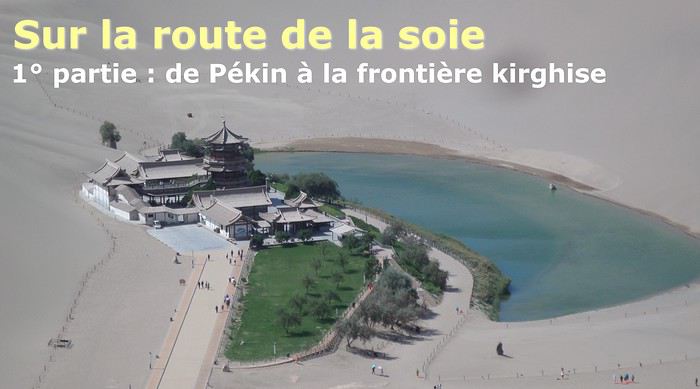
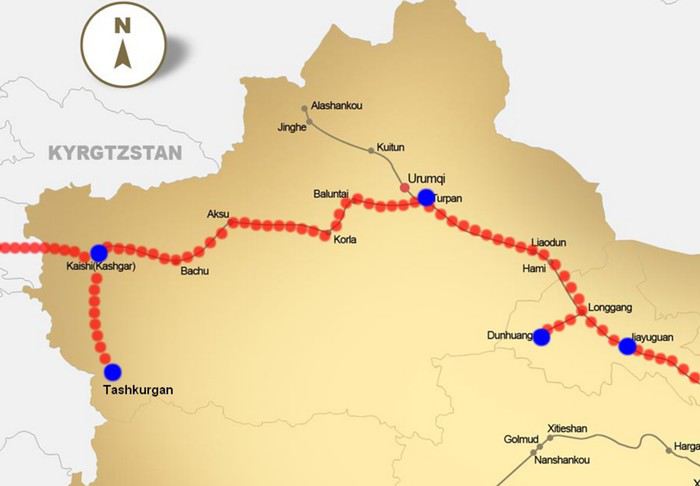
The Chinese Far West More than 30 years after my first trip to eastern China, I finally fulfilled an old dream: traveling solo from Beijing to the far west, discovering Xinjiang, the Uyghur people and the oppression they endure, the oases of Turpan and Kashgar, the Taklamakan Desert, the end of the Great Wall... The route was covered by train.
MENU PART 1: CHINA
1- Beijing (Jiankou) : the authentic Great Wall, without tourists 2- Cycling in Beijing, the best way to get around 3- Beijing : departure for the far west 4- Jiayuguan : getting by without English 5- Jiayuguan : scams and heritage 6- Dunhuang : abundance in the middle of the desert 7- Turpan : the Uyghurs under heavy surveillance 8- Kashgar : love at first sight for the old city 9- Kashgar : China’s recipe for controlling the populace 10- Tashkurgan : what on earth was I thinking going there! Kyrgyz border: a surreal epic Photo album from the 80s, contributions from other travelers (page 2)
1- JIANKOU Finding the authentic Great Wall, without tourists or a guide Friday, August 24, 2018 Thirty years later, I didn’t feel like revisiting the Great Wall at Badaling or any other overcrowded site. I chose to explore it at Jiankou, in its wildest, most authentic, and unrestored section, starting from a lost village deep in a valley—though it wasn’t *that* lost, since it had everything for communication.
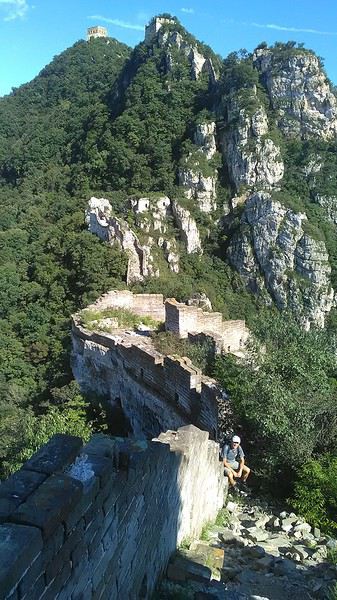
No need to pay for a taxi to get there—by timing it right, you can take the bus for just a few yuan. You have to get off at Xizhazi, the bus terminus. Be careful, there are only two buses a day in each direction. At the Xizhazi bus stop, I met a young couple who’d arrived with zero information about what to expect. We hiked the three of us toward the restored section of Mutianyu.
Still, be cautious With GPS and a topographic map (OpenTopoMap), you can set off without a problem or guide. The trail up to Jiankou is easy and well-marked. The trails down are too. But be careful—once you’re on the Wall, it’s real mountain hiking, with easy but dangerous climbing sections (over sheer drops). Not for amateurs or those afraid of heights! But what a reward. The Wall all to yourself, where it’s at its most daring. Truly mesmerizing.
More photos...
2- BEIJING The best way to get around the capital Sunday, August 26 The best way to explore the city is still by bike. Most are in a bike-share system, but you need to use an app—WeChat, the app that does everything, like monitoring your every move. No way I was installing that.
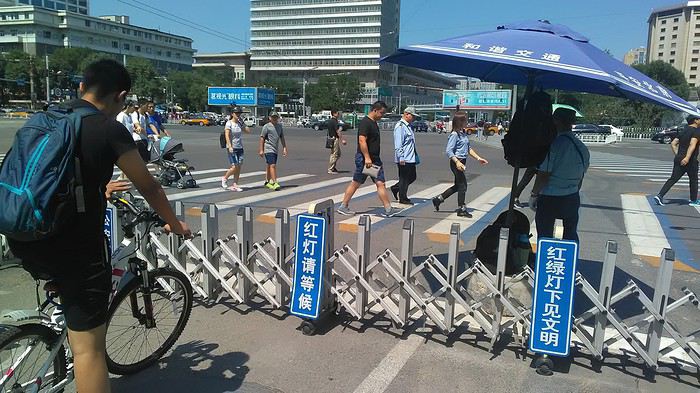
I found one at a rental shop near the hostel. The key is to quickly learn local traffic customs to minimize risks. Bike lanes are wide along the avenues.
But you still have to: - Watch out for anything parked on the bike paths—the most annoying are people napping or talking on the phone in their cars - Keep an eye on everything coming the wrong way—the list is long - The worst is right turns on red, which in Chinese traffic rules seem to have priority Once you get the hang of it, it’s fine. The city is huge but flat, so you can just wing it.
3- BEIJING By train to the far west Sunday, August 26 Beijing West Station is the size and operates like an airport. With your e-ticket from the agency, you first have to pick up your ticket at the special "English" counter, after passing through security. With your ticket in hand, you have to exit and enter through the boarding waiting area—not the platform—after a second security check.
 Then you find the right hall and wait for the sign to finally access the platform. In the end, it works pretty well given the incredible number of passengers to manage. Everywhere in Beijing, I saw that the Chinese have mastered crowd flow management.
Nice surprise: second-class carriages are clean, air-conditioned, and bright. Perfect, since I was in for 20 hours. One uniformed attendant per carriage, mobile meal service—luxury! Small downside: no luggage space. Hauling your suitcase up to the top bunk is quite a workout. I was in the middle, so it wasn’t too bad. The landscape, though, whether rural or urban, is pretty bleak. That should change once we leave the eastern plains.
Of course, I got my first police visit, with a thorough passport check and bag search. I was warned—going to the Chinese far west exposes you to this kind of hassle. But they were polite and respectful.
 The Chinese Far West
4- JIAYUGUAN Getting by without English Monday, August 27 At the gates of two deserts (Gobi and Taklamakan) and at the foot of the Tibetan highlands, the Great Wall ends at Jiayuguan. Here, I found the deeper China I’d somewhat rediscovered during my bike ride, even if now everyone gets around on electric bikes and I’m no longer stared at like an alien.
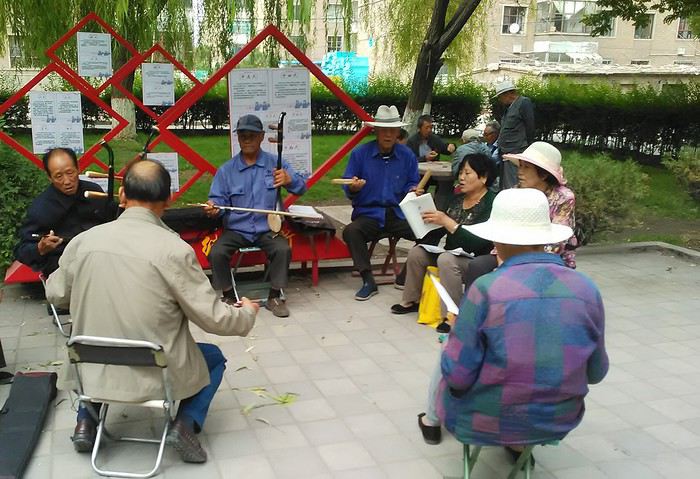
Prices are nothing like Beijing: you can find a full meal for 2 €, and my bike cost 7 € for two days. Plus, few people speak English—neither the owner of the HI hostel where I stayed, nor the ticket sellers at the sites, let alone the servers at the small eateries where I ate. Everything is written in Chinese. So I had to use the little Chinese I know to communicate about essentials. It makes the locals laugh to see a European trying to speak their language, but it earns respect. With Google Translate’s help, I managed.
Rant: With their avenues blocked for construction for kilometers without warning, and new roads not yet on maps, I must’ve taken 15 km of detours. More photos...
5- JIAYUGUAN Scams and heritage Tuesday, August 28 The Great Wall doesn’t exactly end at the fort I visited yesterday but 10 km further, at the entrance to a river gorge at the foot of the mountains. All that’s left is a badly damaged tower (more like a mound of earth) and a section of clay wall, similar to the one I biked yesterday.
This morning, I hopped on my bike, determined to venture into the desert to see this highly symbolic site. First, you access it via a wide, brand-new road with not a soul in sight. Just before the site, I came across a grand welcome gate, very period-style, but it’s actually the inevitable toll booth.
Behind the gate, the road continues straight to the site, which you can see in the distance—at least 2 km away—the remains of the tower and wall. I had to leave my bike here. Fine. I went to the ticket counter and asked the price: 120 yuan! I couldn’t believe it—over 15 € for a simple mound of earth.
I showed my displeasure to the attendant, who couldn’t care less, and immediately turned back. 120 yuan—that’s the price for a new road, a fancy gate planted 2 km before the site just to force you to take a shuttle, and employees with nothing to do all day... Now I understand why I didn’t meet anyone!
Heritage China is a bit pricey Generally, sites are expensive for the country’s standard of living, but travelers are supposed to have money, so why hold back? I even gave up on the Forbidden City—reservations required days in advance (or on the black market at an impossible price). I prefer to keep the memory of my first visit, when entry must’ve cost a few dozen cents, and there were only a handful of visitors.
This morning, I took a taxi to see remarkable tombs of common people from the 3rd to 6th centuries. They’re small vaulted caves made of painted bricks, depicting scenes of daily life. Very pretty and moving. But even here, though the price was more reasonable, I was left wanting—only one of the 16 tombs is open to visitors, and it’s apparently not the most beautiful.
The authentic China—at least what’s left of it... Wandering the impersonal avenues of the city, you stumble upon a market. There, you still find traditional China—small shops with questionable hygiene, Go players, musicians, and even a dental prosthetist. The last refuge for those untouched by modernity. More photos...
6- DUNHUANG Abundance in the middle of the desert Wednesday, August 29 Well, I thought the landscape would be less bleak as I headed west. Nope. The only distraction in this expanse of dark, clayey sand is the forests of pylons and wind turbines, plus wild camels racing each other.
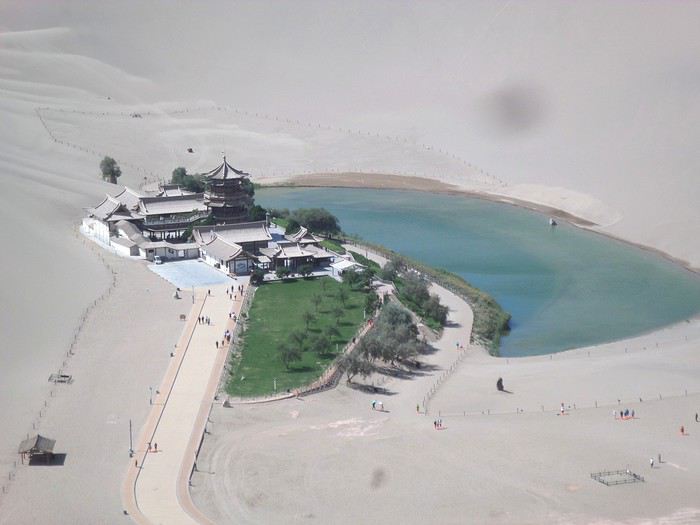 However, Dunhuang, the gateway to the Taklamakan, is by far the most pleasant Chinese city I know. There’s a real city center you can explore on foot. It’s hot but not unbearable, with a light, dry breeze. Much nicer than Beijing. The Han Chinese are still the majority, but the Muslim Uyghurs are more numerous, and the muezzin’s call to prayer echoes around the mosque.
The most surprising thing is the abundance and diversity of fruits and vegetables. You wonder how it all grows here. Well-irrigated, the desert sands are very fertile. Here, raisins have subtle, mysterious flavors, and the lamb really tastes like lamb.
Today, I visited the must-see Mingshashan, a dune complex next to which Pila is a molehill. The Basque Country, but covered in sand... More photos...
7- TURPAN The Uyghurs under heavy surveillance Friday, August 31 Surveillance cameras everywhere in the city, armed police stationed at intersections, in front of public buildings, at the entrance and inside tourist sites, police stations on every corner, patrols on foot or by car, khaki uniforms even for middle schoolers... here, the Han Chinese are in the minority, and you can feel it. Turpan feels like a city under siege.
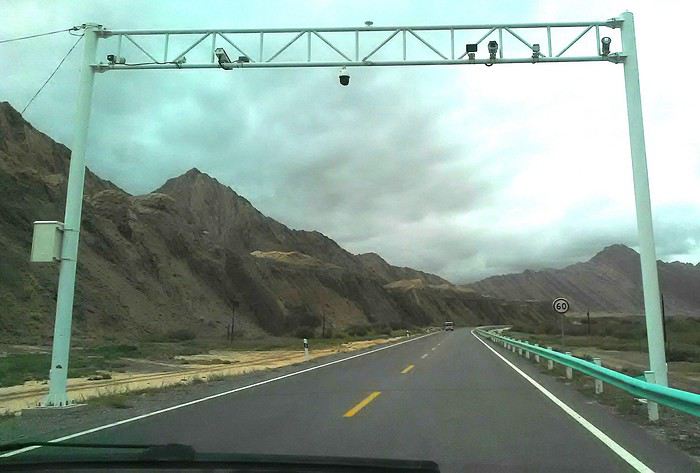
To enter the youth hostel where I stayed, there’s even a security gate, and the receptionist (a Han, like everyone in tourism) wears a bulletproof vest! Reassuring. Still, you don’t feel particularly threatened here, especially as a European. The troublemakers are the Chinese, not the Uyghurs. Generally, China is a very safe country for visitors.
Smile, you’re on camera! I was biking on an avenue when the car in front of me got flashed for driving slowly. I quickly understood why when I got flashed too.
Here, the official time is Beijing time, but it gets dark two hours later. It’ll be even worse in Kashgar. Trickier to manage: everything is displayed in Chinese and Arabic. Nothing in English. Choosing a menu is a shot in the dark. Apart from a few young Chinese, no one here speaks English, and my Chinese doesn’t seem very understandable...
Mogao, the end of the road for the Han Yesterday, near Dunhuang, I went to Mogao, a complex of decorated caves with Buddha sculptures and paintings. Stunning, but so crowded! Luckily, here in Turpan, Chinese tourists barely venture out. So I visited a Silk Road ghost town with only a handful of other visitors and under a howling wind.
The modern Chinese city is swallowing up the old Uyghur neighborhoods—only a museum-like district remains in the center, and pockets of resistance on the outskirts are doomed to disappear soon. More photos...
8- KASHGAR A (relative) love at first sight for the old city Sunday, September 2 After three overnight trains, here I am in the far west of China, nearly 4,000 km from the capital. Despite the omnipresent police and an old city preserved UNESCO-style, Kashgar is my Chinese love at first sight.
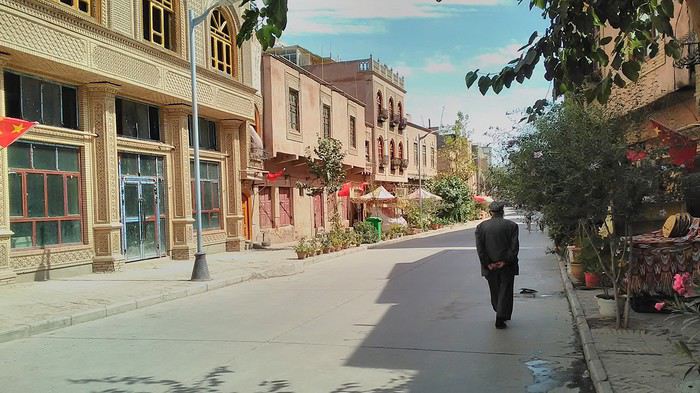
Finally, Chinese... well, sort of, because we’re in Uyghur territory here—a Turkic people with nothing culturally in common with the Han, the eastern Chinese. It started badly yesterday at Turfan station, where after three security gate passes, at least five passport checks, and a bag search, three adorable policewomen confiscated my antibacterial lotion because it had a flammable logo...
Then came the welcoming committee of armed cops at Kashgar station. Once all that was over, they left me alone—except you still have to go through security checks like everyone else to enter the old city, the bazaar, the livestock market... The further west you go, the more the siege mentality is evident. Luckily, the border isn’t far...
Despite the inevitable destruction-reconstruction, the city center has been well preserved. Thankfully, because it’s a very original style, a mix of local and colonial. I love it, even if it’s a bit too artificial, sanitized, and watered-down, and rather empty of residents. On the Silk Road, the city was famous for its great food. And it still is—rarely have I seen such richness and abundance of food! And not just scorpions or snakes. More photos...
9- KASHGAR China’s recipe for controlling the populace Saturday, September 1 Xinjiang, along with Tibet, is a "sensitive" area of rebellion in the eyes of Chinese authorities. As a result, the state has these regions and their populations under total control. Tourists also feel the consequences, even if they’re not at risk of re-education camps.
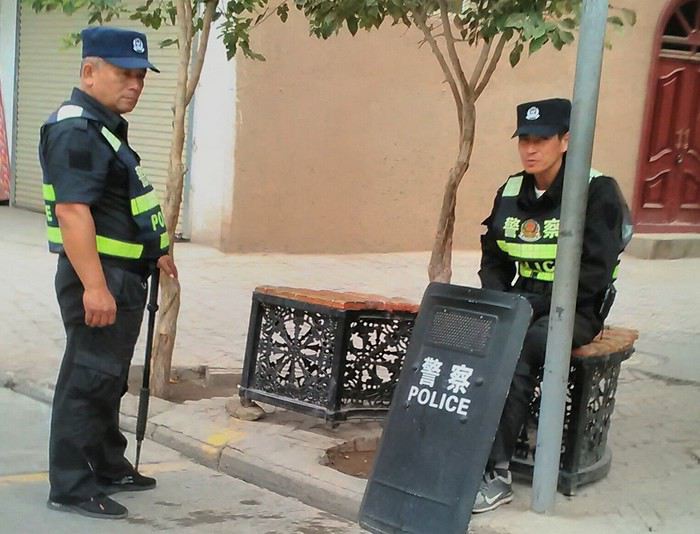 - Putting barbed wire and anti-ramming barriers around sensitive sites (schools, big hotels, government buildings...)
- Installing traffic surveillance gates with cameras and photo flashes (for all vehicles passing, including bikes) throughout the city and even in the countryside
- Posting uniformed guards with tasers, batons, or huge baseball bats every 100 meters
- Training the Han population (ethnic Chinese) in self-defense with sticks, preferably in the morning on the street. Men and women of all ages
- Starting school with the national anthem, doing military exercises, and receiving political indoctrination, all neatly lined up in the courtyard. (The dream school for any teacher)
- Placing a snitch in uniform (a pseudo-guard) in public gathering places, like youth hostels. Mine spends the day loafing around the courtyard
- Putting Chinese flags everywhere on the streets to remind everyone who’s in charge
- Installing security gates at every entrance to areas frequented by tourists (thanks for that) but not just there
- Never photographing cops, or else! I tried, but it’s not easy...
- Putting barbed wire and anti-ramming barriers around sensitive sites (schools, big hotels, government buildings...)
- Installing traffic surveillance gates with cameras and photo flashes (for all vehicles passing, including bikes) throughout the city and even in the countryside
- Posting uniformed guards with tasers, batons, or huge baseball bats every 100 meters
- Training the Han population (ethnic Chinese) in self-defense with sticks, preferably in the morning on the street. Men and women of all ages
- Starting school with the national anthem, doing military exercises, and receiving political indoctrination, all neatly lined up in the courtyard. (The dream school for any teacher)
- Placing a snitch in uniform (a pseudo-guard) in public gathering places, like youth hostels. Mine spends the day loafing around the courtyard
- Putting Chinese flags everywhere on the streets to remind everyone who’s in charge
- Installing security gates at every entrance to areas frequented by tourists (thanks for that) but not just there
- Never photographing cops, or else! I tried, but it’s not easy...
With all that, you can stroll around safely Not much crime! As for the amount the Chinese state spends to maintain such a system, it’s staggering! A third of the Han living in Xinjiang work in security. Today, I wandered freely around old Kashgar, which is quite large after all. More photos...
10- TASHKURGAN What on earth was I thinking going there! Wednesday, September 5 First, there’s the taxi—pretty crappy, with a driver who doesn’t speak a word of English and won’t stop smoking. Over six hours in that... shared with a completely out-of-it American.
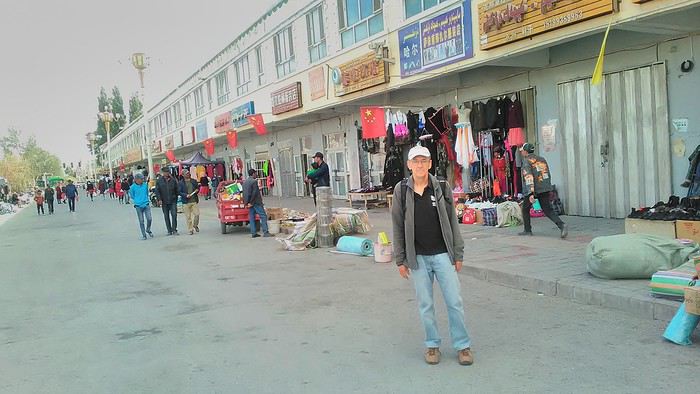
Then there are all the checkpoints along the way. I won’t go on—you know the drill by now.
After that, there’s Tashkurgan—a town with nothing to see, nothing to do. Deserted as soon as night falls. There’s this huge youth hostel and a few lost Chinese tapping away on their smartphones, chain-smoking. This lost American-European crowd, swapping tips on how to enter Pakistan or Tajikistan.
Luckily, there’s the Chinese Pamir Highway, lined with peaks over 7,000m. There’s the feeling of no longer being in China, with a population whose features are Middle Eastern. And these Tajik women with their stunning hairstyles and vibrant costumes. There’s the fact of having reached the westernmost Chinese city, far from crowds and tourist sites. A sort of end of the world. More photos...
11- KYRGYZ BORDER A surreal epic Thursday, September 6 The road from Kashgar to the Kyrgyzstan border is a little over 200 km and passes through beautiful landscapes of colorful, desert-like mountains with acrobatic folds. That’s the bucolic part of the trip.
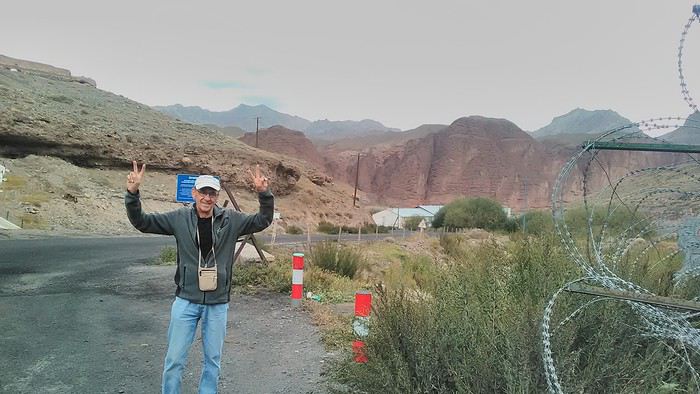 Yesterday, I managed to gather four people to rent a minibus to reach the border more easily: a Spaniard and an Argentine I’d already met in Turpan, and two New Zealanders who responded to the ad left at the hostel.
Absurdity and paranoia of Chinese authorities The highlight was crossing the town of Wuqia, 50 km past Kashgar. After tallying up with my fellow sufferers, we must’ve passed about ten checkpoints with: - Passport checks: 14 times, sometimes by two cops side by side - Bag checks: 4 times - Smartphone checks: 2 times, with deletion of "non-compliant" photos, and registration of your IMEI in the exit log!... Absurd and surreal at the same time, since my camera stayed in my bag, my apps are in French, and my photos have been online for ages...
With all that, we arrived just as the last checkpoint before the no man’s land marking the border between the two countries was on lunch break. And bam! Another 1.5-hour wait, alongside truckers who were much more used to this than we were.
What to think? The cops themselves aren’t fooled. They play the role they’re asked to, but sometimes you can coax a smile out of them—they realize how ridiculous the situation is.
What’s the point? That’s the big question my companions and I were tempted to answer with "to piss people off." To show you your place isn’t here, but with the other tourists, over there in the east, in Shanghai, Xi’an, or Guangzhou.
As for you, a traveler from a democratic country, you really experience this as aggression, humiliation, a violation of your private space. And yet, I’m respected, they speak to me properly. Today, I better understand what a Palestinian or a citizen of an occupied country might feel daily. A unique experience! Thanks, China.
And to top it off, the cherry on the cake! It’s still this glowing button you press to rate your passage after clearing the last obstacle before the exit stamp. I was so surprised it turned off before I could react. The Spaniard, with great humor and irony, had time to vote "excellent." In the end, he wasn’t wrong—you can hardly do better!
PS: I ditched my buddies at the border. They didn’t want to pay for a taxi to continue. So I took a direct taxi to Osh. The first 100 km are fabulous. I couldn’t take many photos, but I’ll be back on Monday to go to Tajikistan.
More photos...
The rest of the Silk Road, Part 2, in these travel journals: Kyrgyzstan, Tajikistan, Uzbekistan.
The Chinese Far West More than 30 years after my first trip to eastern China, I finally fulfilled an old dream: traveling solo from Beijing to the far west, discovering Xinjiang, the Uyghur people and the oppression they endure, the oases of Turpan and Kashgar, the Taklamakan Desert, the end of the Great Wall... The route was covered by train.
MENU PART 1: CHINA
1- Beijing (Jiankou) : the authentic Great Wall, without tourists 2- Cycling in Beijing, the best way to get around 3- Beijing : departure for the far west 4- Jiayuguan : getting by without English 5- Jiayuguan : scams and heritage 6- Dunhuang : abundance in the middle of the desert 7- Turpan : the Uyghurs under heavy surveillance 8- Kashgar : love at first sight for the old city 9- Kashgar : China’s recipe for controlling the populace 10- Tashkurgan : what on earth was I thinking going there! Kyrgyz border: a surreal epic Photo album from the 80s, contributions from other travelers (page 2)
1- JIANKOU Finding the authentic Great Wall, without tourists or a guide Friday, August 24, 2018 Thirty years later, I didn’t feel like revisiting the Great Wall at Badaling or any other overcrowded site. I chose to explore it at Jiankou, in its wildest, most authentic, and unrestored section, starting from a lost village deep in a valley—though it wasn’t *that* lost, since it had everything for communication.
No need to pay for a taxi to get there—by timing it right, you can take the bus for just a few yuan. You have to get off at Xizhazi, the bus terminus. Be careful, there are only two buses a day in each direction. At the Xizhazi bus stop, I met a young couple who’d arrived with zero information about what to expect. We hiked the three of us toward the restored section of Mutianyu.
Still, be cautious With GPS and a topographic map (OpenTopoMap), you can set off without a problem or guide. The trail up to Jiankou is easy and well-marked. The trails down are too. But be careful—once you’re on the Wall, it’s real mountain hiking, with easy but dangerous climbing sections (over sheer drops). Not for amateurs or those afraid of heights! But what a reward. The Wall all to yourself, where it’s at its most daring. Truly mesmerizing.
More photos...
2- BEIJING The best way to get around the capital Sunday, August 26 The best way to explore the city is still by bike. Most are in a bike-share system, but you need to use an app—WeChat, the app that does everything, like monitoring your every move. No way I was installing that.
I found one at a rental shop near the hostel. The key is to quickly learn local traffic customs to minimize risks. Bike lanes are wide along the avenues.
But you still have to: - Watch out for anything parked on the bike paths—the most annoying are people napping or talking on the phone in their cars - Keep an eye on everything coming the wrong way—the list is long - The worst is right turns on red, which in Chinese traffic rules seem to have priority Once you get the hang of it, it’s fine. The city is huge but flat, so you can just wing it.
3- BEIJING By train to the far west Sunday, August 26 Beijing West Station is the size and operates like an airport. With your e-ticket from the agency, you first have to pick up your ticket at the special "English" counter, after passing through security. With your ticket in hand, you have to exit and enter through the boarding waiting area—not the platform—after a second security check.
Then you find the right hall and wait for the sign to finally access the platform. In the end, it works pretty well given the incredible number of passengers to manage. Everywhere in Beijing, I saw that the Chinese have mastered crowd flow management.Nice surprise: second-class carriages are clean, air-conditioned, and bright. Perfect, since I was in for 20 hours. One uniformed attendant per carriage, mobile meal service—luxury! Small downside: no luggage space. Hauling your suitcase up to the top bunk is quite a workout. I was in the middle, so it wasn’t too bad. The landscape, though, whether rural or urban, is pretty bleak. That should change once we leave the eastern plains.
Of course, I got my first police visit, with a thorough passport check and bag search. I was warned—going to the Chinese far west exposes you to this kind of hassle. But they were polite and respectful.
The Chinese Far West4- JIAYUGUAN Getting by without English Monday, August 27 At the gates of two deserts (Gobi and Taklamakan) and at the foot of the Tibetan highlands, the Great Wall ends at Jiayuguan. Here, I found the deeper China I’d somewhat rediscovered during my bike ride, even if now everyone gets around on electric bikes and I’m no longer stared at like an alien.
Prices are nothing like Beijing: you can find a full meal for 2 €, and my bike cost 7 € for two days. Plus, few people speak English—neither the owner of the HI hostel where I stayed, nor the ticket sellers at the sites, let alone the servers at the small eateries where I ate. Everything is written in Chinese. So I had to use the little Chinese I know to communicate about essentials. It makes the locals laugh to see a European trying to speak their language, but it earns respect. With Google Translate’s help, I managed.
Rant: With their avenues blocked for construction for kilometers without warning, and new roads not yet on maps, I must’ve taken 15 km of detours. More photos...
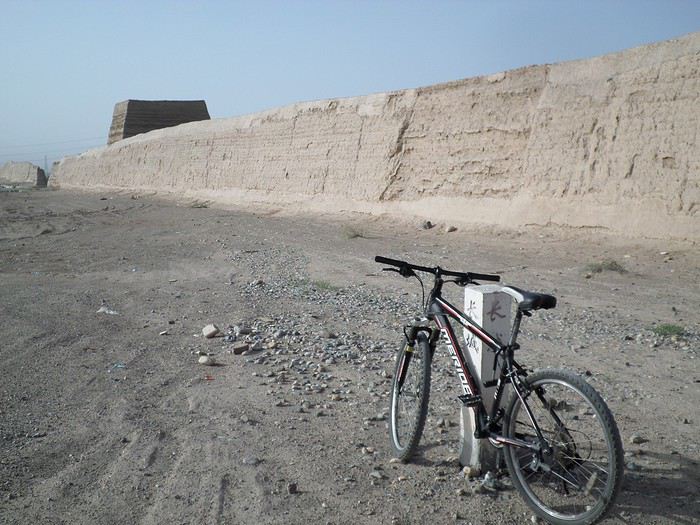
5- JIAYUGUAN Scams and heritage Tuesday, August 28 The Great Wall doesn’t exactly end at the fort I visited yesterday but 10 km further, at the entrance to a river gorge at the foot of the mountains. All that’s left is a badly damaged tower (more like a mound of earth) and a section of clay wall, similar to the one I biked yesterday.
This morning, I hopped on my bike, determined to venture into the desert to see this highly symbolic site. First, you access it via a wide, brand-new road with not a soul in sight. Just before the site, I came across a grand welcome gate, very period-style, but it’s actually the inevitable toll booth.
Behind the gate, the road continues straight to the site, which you can see in the distance—at least 2 km away—the remains of the tower and wall. I had to leave my bike here. Fine. I went to the ticket counter and asked the price: 120 yuan! I couldn’t believe it—over 15 € for a simple mound of earth.
I showed my displeasure to the attendant, who couldn’t care less, and immediately turned back. 120 yuan—that’s the price for a new road, a fancy gate planted 2 km before the site just to force you to take a shuttle, and employees with nothing to do all day... Now I understand why I didn’t meet anyone!
Heritage China is a bit pricey Generally, sites are expensive for the country’s standard of living, but travelers are supposed to have money, so why hold back? I even gave up on the Forbidden City—reservations required days in advance (or on the black market at an impossible price). I prefer to keep the memory of my first visit, when entry must’ve cost a few dozen cents, and there were only a handful of visitors.
This morning, I took a taxi to see remarkable tombs of common people from the 3rd to 6th centuries. They’re small vaulted caves made of painted bricks, depicting scenes of daily life. Very pretty and moving. But even here, though the price was more reasonable, I was left wanting—only one of the 16 tombs is open to visitors, and it’s apparently not the most beautiful.
The authentic China—at least what’s left of it... Wandering the impersonal avenues of the city, you stumble upon a market. There, you still find traditional China—small shops with questionable hygiene, Go players, musicians, and even a dental prosthetist. The last refuge for those untouched by modernity. More photos...
6- DUNHUANG Abundance in the middle of the desert Wednesday, August 29 Well, I thought the landscape would be less bleak as I headed west. Nope. The only distraction in this expanse of dark, clayey sand is the forests of pylons and wind turbines, plus wild camels racing each other.
However, Dunhuang, the gateway to the Taklamakan, is by far the most pleasant Chinese city I know. There’s a real city center you can explore on foot. It’s hot but not unbearable, with a light, dry breeze. Much nicer than Beijing. The Han Chinese are still the majority, but the Muslim Uyghurs are more numerous, and the muezzin’s call to prayer echoes around the mosque.The most surprising thing is the abundance and diversity of fruits and vegetables. You wonder how it all grows here. Well-irrigated, the desert sands are very fertile. Here, raisins have subtle, mysterious flavors, and the lamb really tastes like lamb.
Today, I visited the must-see Mingshashan, a dune complex next to which Pila is a molehill. The Basque Country, but covered in sand... More photos...
7- TURPAN The Uyghurs under heavy surveillance Friday, August 31 Surveillance cameras everywhere in the city, armed police stationed at intersections, in front of public buildings, at the entrance and inside tourist sites, police stations on every corner, patrols on foot or by car, khaki uniforms even for middle schoolers... here, the Han Chinese are in the minority, and you can feel it. Turpan feels like a city under siege.
To enter the youth hostel where I stayed, there’s even a security gate, and the receptionist (a Han, like everyone in tourism) wears a bulletproof vest! Reassuring. Still, you don’t feel particularly threatened here, especially as a European. The troublemakers are the Chinese, not the Uyghurs. Generally, China is a very safe country for visitors.
Smile, you’re on camera! I was biking on an avenue when the car in front of me got flashed for driving slowly. I quickly understood why when I got flashed too.
Here, the official time is Beijing time, but it gets dark two hours later. It’ll be even worse in Kashgar. Trickier to manage: everything is displayed in Chinese and Arabic. Nothing in English. Choosing a menu is a shot in the dark. Apart from a few young Chinese, no one here speaks English, and my Chinese doesn’t seem very understandable...
Mogao, the end of the road for the Han Yesterday, near Dunhuang, I went to Mogao, a complex of decorated caves with Buddha sculptures and paintings. Stunning, but so crowded! Luckily, here in Turpan, Chinese tourists barely venture out. So I visited a Silk Road ghost town with only a handful of other visitors and under a howling wind.
The modern Chinese city is swallowing up the old Uyghur neighborhoods—only a museum-like district remains in the center, and pockets of resistance on the outskirts are doomed to disappear soon. More photos...
8- KASHGAR A (relative) love at first sight for the old city Sunday, September 2 After three overnight trains, here I am in the far west of China, nearly 4,000 km from the capital. Despite the omnipresent police and an old city preserved UNESCO-style, Kashgar is my Chinese love at first sight.
Finally, Chinese... well, sort of, because we’re in Uyghur territory here—a Turkic people with nothing culturally in common with the Han, the eastern Chinese. It started badly yesterday at Turfan station, where after three security gate passes, at least five passport checks, and a bag search, three adorable policewomen confiscated my antibacterial lotion because it had a flammable logo...
Then came the welcoming committee of armed cops at Kashgar station. Once all that was over, they left me alone—except you still have to go through security checks like everyone else to enter the old city, the bazaar, the livestock market... The further west you go, the more the siege mentality is evident. Luckily, the border isn’t far...
Despite the inevitable destruction-reconstruction, the city center has been well preserved. Thankfully, because it’s a very original style, a mix of local and colonial. I love it, even if it’s a bit too artificial, sanitized, and watered-down, and rather empty of residents. On the Silk Road, the city was famous for its great food. And it still is—rarely have I seen such richness and abundance of food! And not just scorpions or snakes. More photos...
9- KASHGAR China’s recipe for controlling the populace Saturday, September 1 Xinjiang, along with Tibet, is a "sensitive" area of rebellion in the eyes of Chinese authorities. As a result, the state has these regions and their populations under total control. Tourists also feel the consequences, even if they’re not at risk of re-education camps.
- Putting barbed wire and anti-ramming barriers around sensitive sites (schools, big hotels, government buildings...)
- Installing traffic surveillance gates with cameras and photo flashes (for all vehicles passing, including bikes) throughout the city and even in the countryside
- Posting uniformed guards with tasers, batons, or huge baseball bats every 100 meters
- Training the Han population (ethnic Chinese) in self-defense with sticks, preferably in the morning on the street. Men and women of all ages
- Starting school with the national anthem, doing military exercises, and receiving political indoctrination, all neatly lined up in the courtyard. (The dream school for any teacher)
- Placing a snitch in uniform (a pseudo-guard) in public gathering places, like youth hostels. Mine spends the day loafing around the courtyard
- Putting Chinese flags everywhere on the streets to remind everyone who’s in charge
- Installing security gates at every entrance to areas frequented by tourists (thanks for that) but not just there
- Never photographing cops, or else! I tried, but it’s not easy...With all that, you can stroll around safely Not much crime! As for the amount the Chinese state spends to maintain such a system, it’s staggering! A third of the Han living in Xinjiang work in security. Today, I wandered freely around old Kashgar, which is quite large after all. More photos...
10- TASHKURGAN What on earth was I thinking going there! Wednesday, September 5 First, there’s the taxi—pretty crappy, with a driver who doesn’t speak a word of English and won’t stop smoking. Over six hours in that... shared with a completely out-of-it American.
Then there are all the checkpoints along the way. I won’t go on—you know the drill by now.
After that, there’s Tashkurgan—a town with nothing to see, nothing to do. Deserted as soon as night falls. There’s this huge youth hostel and a few lost Chinese tapping away on their smartphones, chain-smoking. This lost American-European crowd, swapping tips on how to enter Pakistan or Tajikistan.
Luckily, there’s the Chinese Pamir Highway, lined with peaks over 7,000m. There’s the feeling of no longer being in China, with a population whose features are Middle Eastern. And these Tajik women with their stunning hairstyles and vibrant costumes. There’s the fact of having reached the westernmost Chinese city, far from crowds and tourist sites. A sort of end of the world. More photos...
11- KYRGYZ BORDER A surreal epic Thursday, September 6 The road from Kashgar to the Kyrgyzstan border is a little over 200 km and passes through beautiful landscapes of colorful, desert-like mountains with acrobatic folds. That’s the bucolic part of the trip.
Yesterday, I managed to gather four people to rent a minibus to reach the border more easily: a Spaniard and an Argentine I’d already met in Turpan, and two New Zealanders who responded to the ad left at the hostel.Absurdity and paranoia of Chinese authorities The highlight was crossing the town of Wuqia, 50 km past Kashgar. After tallying up with my fellow sufferers, we must’ve passed about ten checkpoints with: - Passport checks: 14 times, sometimes by two cops side by side - Bag checks: 4 times - Smartphone checks: 2 times, with deletion of "non-compliant" photos, and registration of your IMEI in the exit log!... Absurd and surreal at the same time, since my camera stayed in my bag, my apps are in French, and my photos have been online for ages...
With all that, we arrived just as the last checkpoint before the no man’s land marking the border between the two countries was on lunch break. And bam! Another 1.5-hour wait, alongside truckers who were much more used to this than we were.
What to think? The cops themselves aren’t fooled. They play the role they’re asked to, but sometimes you can coax a smile out of them—they realize how ridiculous the situation is.
What’s the point? That’s the big question my companions and I were tempted to answer with "to piss people off." To show you your place isn’t here, but with the other tourists, over there in the east, in Shanghai, Xi’an, or Guangzhou.
As for you, a traveler from a democratic country, you really experience this as aggression, humiliation, a violation of your private space. And yet, I’m respected, they speak to me properly. Today, I better understand what a Palestinian or a citizen of an occupied country might feel daily. A unique experience! Thanks, China.
And to top it off, the cherry on the cake! It’s still this glowing button you press to rate your passage after clearing the last obstacle before the exit stamp. I was so surprised it turned off before I could react. The Spaniard, with great humor and irony, had time to vote "excellent." In the end, he wasn’t wrong—you can hardly do better!
PS: I ditched my buddies at the border. They didn’t want to pay for a taxi to continue. So I took a direct taxi to Osh. The first 100 km are fabulous. I couldn’t take many photos, but I’ll be back on Monday to go to Tajikistan.
More photos...
The rest of the Silk Road, Part 2, in these travel journals: Kyrgyzstan, Tajikistan, Uzbekistan.
Salut,
Je vois qu'il y a une bonne ambiance sur ce forum, alors, si vous avez besoin de conseils sur l'Ouzbékistan et surtout sur ma ville natale de Tachkent, n'hésitez pas!
j ai pris un billet pour tashkent y a quatre mois malheureusement j ai vu ce qui s est passé a andjian. J avoue avoir quelque doutes quand a mon voyage? Est ce que je peux y aller? sinon que puis je faire? Merci beaucoup
Nous devons partir tres prochainement (5 aout) mon épouse et moi en voyage en Ouzbekistan (visite Boukhara, Samarcande) et Tadjikistan (trek dans les monts Fanskye). Qu'en est-il de la sécurité générale dans ces deux pays ? Apres les incidents dans la Ferghana, maintenant les vagues d'attentats (London, Turquie, Egypte, ...), la question des réfugiés Ouzbeks et des bases américaines, l'Asie Centrale a souvent dernierement l'honneur de faire parler d'elle à la Radio. Bien sur les journalistes appuyent sur les cotés dramatiques mais qu'en est-il réellement ? Y a-t-il vraiment plus de risques a voyager dans cette région maintenant qu'avant ? Quelles sont aujourd'hui les comportements et réactions vis à vis des touristes seuls ou en groupe ?
Il me tarde de partir mais mon épouse est plus hésitante ...
merci d'avance pour vos réponses ...
Robert
Bonjour !
Nous prévoyons trois semaines en aout au Kirghizistan et Ouzbekistan.
Que conseillez vous pour faire le trajet Naryn / Samarcande ?
Nous serons en fin de trek et aimerions aller visiter Samarcande et Boukhara avant de rentrer à Paris.
Merci :)
Bonjour,
les guides touristiques sur l'Ouzbekistan disent que le principal risque concerne les extorsions parfois un peu brutales de la part de la Police ouzbek, en particulier dans le métro.
Est-ce toujours vrai ?
Merci !
Merci !
Je voudrais avoir des avis sur la conduite à adopter pour une jeune femme seule en ouzbekistan, d'autant plus que je suis blonde ce qui attire en général le regard dans ces pays 😉. Y a-t-il des tenues à éviter, des conduites à ne pas tenir.... Je ne voudrais pas choquer.
J'attends vos avis.
merci d'avance
J'attends vos avis.
merci d'avance
j'ai bien lu vos différents messages, je m'inquiète un peu du racket possible ?? est-il possible d'aller dans les B&B avec un visa touristique ou bien faut-il un visa de voyage privé ? est-il possible de passer au KIRGHISTAN? en individuel ?
Bonjour.
Je me demandais ce que l'on devait faire de ses papiers (passeport, billets d'avions, etc) et éventuellement de l'argent pendant la journée. Dans certains pays, on conseille de les garder sur soi car les hôtels ou guest-houses ne sont pas très sûrs, et dans d'autres pays, on conseille de ne pas trop se balader avec (surtout le soir) et de les laisser dans la valise fermée. Qu'en pensez-vous ? Quelle est votre expérience ?
Merci.
revenue il y a qq jours d'ouzbekistan, en vrac des infos : les médias locaux n'ont rien laissé filtrer au sujet des bombes à Taskent devant les ambassades ; et la ville a gardé son aspect habituel .. Des français se sont fait controler dans le métro et à l'occasion fait dérober du fric. Les hoteliers précisent bien qu'on ne doit montrer que son passeport et l'enregistrement, pas l'argent ; difficile peut-être de refuser à un flic ! nous on n'a pas pris le métro ! pour 500 soums on se déplace partout en taxi.
au sujet des enregistrement d'hotel, on a tout gardé précieusement et on ne nous a rien demandé à la sortie du territoire ! JUSTE la déclaration de devises, faut garder précieusement celle tamponnée à l'entrée er en remplir une autre à la sortie, en tenant compte des changes effectués, of course !
Les euros se changent sans problème, mais vu qu'il faut une brouette pour emporter les billets ouzbeks (1 usd = 1000 soums), avoir des petites coupures en dollars permet de payer les hotels, les taxis longues distances etc.
attention, même la banque peut arnaquer : des liasses de soums prises à la banque et entourées d'une bandelette de controle, ne contenaient que 98 billets et pas 100 ! petite fraude de 1000 soums, mais répétée, ça complète un salaire !
la vie locale n'est pas chère; on se nourrit pour pas cher dans les tchaichanas ; bon d'accord ce n'est pas varié et le schachlik on finit par en avoir marre, mais le reste est bien gras, on trouve dans les marchés de quoi compléter en fruits. En général dans les BB le petit déj est copieux (et compris dans le prix de la chambre).
Le gros poste budget, c'est l'hotel ; on a surtout fait des BB, autour de 10 usd la nuit par personne. A Andijan, l'hotel du même nom est en réfection et a un chambre utilisable très correcte pour 15 usd la nuit à 2 ; à Namangan, l'hotel Orzu est un caractéristique du viel hotel soviétique, surtout au niveau de la plomberie ! pour 10 usd la nuit à 2 ; mais l'accueil est fort sympathique.
A CHAKHRIZABZ, on peut loger chez l'habitant en demandant aux femmes qui vendent des souvenirs dans la cour de la mosquée, et la réceptioniste de l'hotel chakrizabz, consciente du prix prohibitif de l'hotel (40 usd !!!) propose une chambre chez elle ....
A FERGHANA, une 2éme Sonia BB, 80 rue BABOUR, et à KOKAND, une adresse super, Saima Jololona 31 rue turkestan
la ferghana ? aucun problème de déplacement, d'accueil ; c'est très tranquille, pas grand chose à voir ni à faire ... humer l'air du temps ouzbek, si possible avec un peu de russe pour les contacts, car peu de gens parlent anglais.
les fleuves : l'amou diara à la hauteur du pont de BEROUNI, coule tranquille, avec des bancs de sable, et ses eaux atteignent le bord des barges qui forment le pont. le syr daria lui aussi a des bancs de sable.
l'a fait chaud, un reget, ne pas être passer au KIRGUISISTAN, on peut obtenir le visa à Taskent en 48 h en payant le double du prix ..
BON VOYAGE à ceux qui partent !
au sujet des enregistrement d'hotel, on a tout gardé précieusement et on ne nous a rien demandé à la sortie du territoire ! JUSTE la déclaration de devises, faut garder précieusement celle tamponnée à l'entrée er en remplir une autre à la sortie, en tenant compte des changes effectués, of course !
Les euros se changent sans problème, mais vu qu'il faut une brouette pour emporter les billets ouzbeks (1 usd = 1000 soums), avoir des petites coupures en dollars permet de payer les hotels, les taxis longues distances etc.
attention, même la banque peut arnaquer : des liasses de soums prises à la banque et entourées d'une bandelette de controle, ne contenaient que 98 billets et pas 100 ! petite fraude de 1000 soums, mais répétée, ça complète un salaire !
la vie locale n'est pas chère; on se nourrit pour pas cher dans les tchaichanas ; bon d'accord ce n'est pas varié et le schachlik on finit par en avoir marre, mais le reste est bien gras, on trouve dans les marchés de quoi compléter en fruits. En général dans les BB le petit déj est copieux (et compris dans le prix de la chambre).
Le gros poste budget, c'est l'hotel ; on a surtout fait des BB, autour de 10 usd la nuit par personne. A Andijan, l'hotel du même nom est en réfection et a un chambre utilisable très correcte pour 15 usd la nuit à 2 ; à Namangan, l'hotel Orzu est un caractéristique du viel hotel soviétique, surtout au niveau de la plomberie ! pour 10 usd la nuit à 2 ; mais l'accueil est fort sympathique.
A CHAKHRIZABZ, on peut loger chez l'habitant en demandant aux femmes qui vendent des souvenirs dans la cour de la mosquée, et la réceptioniste de l'hotel chakrizabz, consciente du prix prohibitif de l'hotel (40 usd !!!) propose une chambre chez elle ....
A FERGHANA, une 2éme Sonia BB, 80 rue BABOUR, et à KOKAND, une adresse super, Saima Jololona 31 rue turkestan
la ferghana ? aucun problème de déplacement, d'accueil ; c'est très tranquille, pas grand chose à voir ni à faire ... humer l'air du temps ouzbek, si possible avec un peu de russe pour les contacts, car peu de gens parlent anglais.
les fleuves : l'amou diara à la hauteur du pont de BEROUNI, coule tranquille, avec des bancs de sable, et ses eaux atteignent le bord des barges qui forment le pont. le syr daria lui aussi a des bancs de sable.
l'a fait chaud, un reget, ne pas être passer au KIRGUISISTAN, on peut obtenir le visa à Taskent en 48 h en payant le double du prix ..
BON VOYAGE à ceux qui partent !
Bonjour,
j'envisage d'aller vivre pour quelques années en Ouzbekistan en famille (2 filles de 9 et 11 ans).
Je suis enseignant.
J'apprécierai d'avoir des infos sur le mode de vie sur place.
Est-il facile de se loger ? pour quelle somme ? dans quelles conditions ?
Y-a-t-il des problèmes d'insécurité ? (sur le site de l'ambassade, on est plutot apeuré...)
Quelles sont les activités, quels sont les voyages que l'on peut faire dans et aux alentours de l'Ouzbekistan ?
Bref, merci de tout récit, information.
Quelles sont les activités, quels sont les voyages que l'on peut faire dans et aux alentours de l'Ouzbekistan ?
Bref, merci de tout récit, information.
Salut
Je pars seul cet été en Asie Centrale et mon entourage s'inquiète un peu du fait que ces pays sont de + en + activement prospectés par Daech. (cf dernier attentat à Istanbul)
Je voudrais avoir des retours sur ce sujet de gens qui y sont allés récemment ou qui s'y trouvent.
Merci
Je prévois un voyage en Ouzbekistan à l'été 2016 avec mes deux enfants de 7 et 9 ans. Quelqu'un a-t-il déjà entendu parler du Mouvement islamique de l'Ouzbekistan ? Doit-on considérer qu'il est risqué ou dangereux de se rendre là-bas ? En particulier avec des enfants.
Merci
Bonjour,
Je serai au Kirghizistan en août et j'aimerais passer la frontière à Osh pour aller en Ouzbékistan (vallée de Fergana). Plusieurs contacts m'ont déconseillé ce parcours, d'autres me disent qu'il n'y a aucun problème, d'autres me disent que la situation sécuritaire évolue de jours en jours et qu'il faut rester informé...
Quel est votre point de vue à ce sujet? Est ce si compliqué de tenter d'entrer en Ouzbékistan via Osh?
Merci d'avance pour vos réponses
Je serai au Kirghizistan en août et j'aimerais passer la frontière à Osh pour aller en Ouzbékistan (vallée de Fergana). Plusieurs contacts m'ont déconseillé ce parcours, d'autres me disent qu'il n'y a aucun problème, d'autres me disent que la situation sécuritaire évolue de jours en jours et qu'il faut rester informé...
Quel est votre point de vue à ce sujet? Est ce si compliqué de tenter d'entrer en Ouzbékistan via Osh?
Merci d'avance pour vos réponses