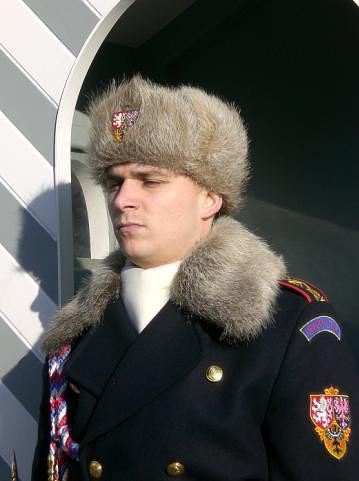
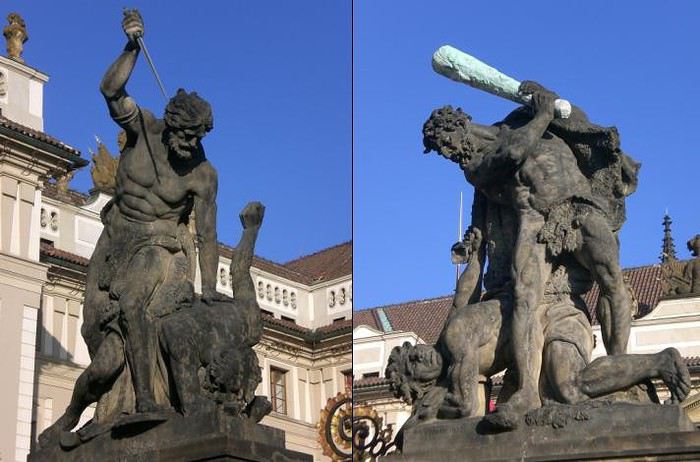
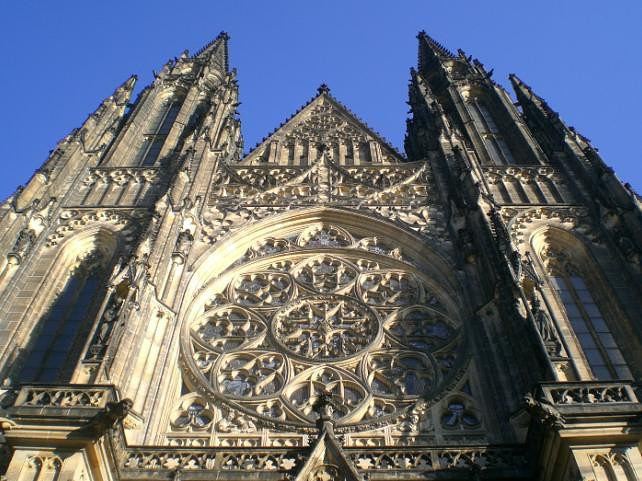
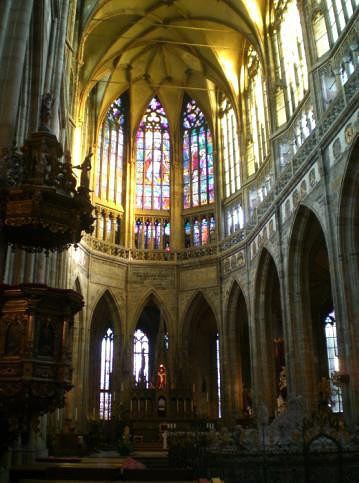
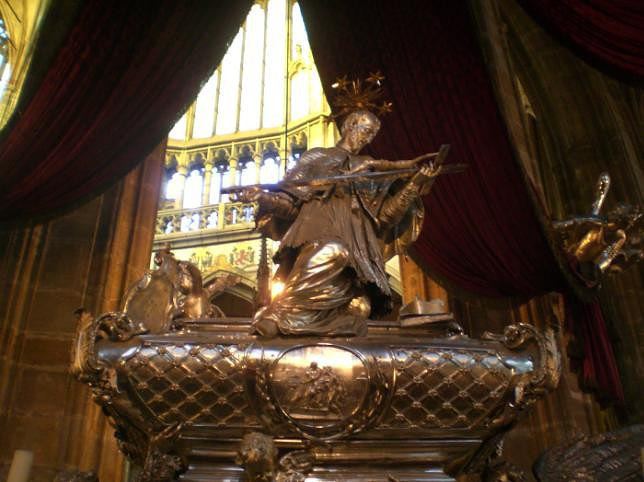
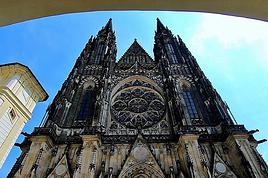
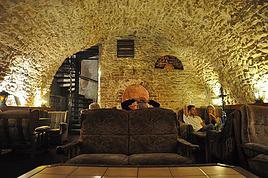
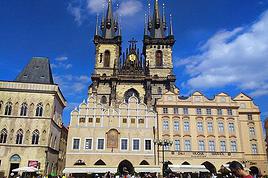
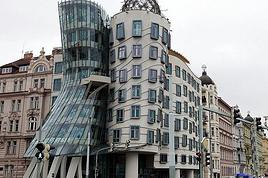
Mercredi 26 décembre : Prémisses glaciales Gare St Charles, 9 heures pétantes. Notre train pour Lyon est prévu dans une bonne demi-heure. Nous en profitons pour explorer la gare marseillaise « relookée » par plusieurs mois de travaux. De nombreuses vitrines on fait leur apparition le long des quais. Sur le parking des cars, un Eurolines en partance pour Barcelone embarque ses passagers. Anne et moi nous regardons et pensons la même chose. Et si nous prenions la direction de la douce Catalogne au lieu de Prague où le froid nous attend. Pure utopie, retour à la réalité. Nous patientons quelques minutes dans la salle d’attente. Le train ne tarde pas à s’afficher. Nous gagnons le quai, notre voiture et nos places. Avec un peu de retard, le TGV prévu à 9h39 s’élance vers la capitale des Gaules. Marseille est à peine quittée que les voyageurs susceptibles de prendre une correspondance à Lyon sont invités à se manifester. Ce n’est pas bon signe. Après avoir stagné un petit quart d’heure dans l’allée centrale, je réussis à m’avancer jusqu’à l’agent de la SNCF pour m’entendre dire que l’heure et demi de battement à Lyon devrait être suffisante pour attraper le train pour Strasbourg. Nous apprendrons par la suite que le retard, causé apparemment par une dégradation de la voie ferrée, aurait obligé le train à modifier son cheminement. Ou comment la flambée du cours des métaux peut vous gâcher vos vacances… Il est quasiment 12h30, le train arrive à Part-Dieu. Effet du retard ou affluence des vacances scolaires, la gare est bondée et accéder au quai n’est pas une mince affaire. Nous qui comptions profiter de nos 90 minutes de délai pour nous restaurer, il ne nous en reste tout juste 20 pour trouver notre train et repartir. Tans pis pour nos estomacs, nous ferons avec le peu que nous avons apporté. 11h49, le train ne démarre pas comme prévu. Il partira 15 minutes plus tard, plein comme un œuf. Le voyage se passera bien pour nous, un peu moins pour d’autres, contraints de rester debout ou inconfortablement assis dans le couloir du Corail… Nous verrons passer le contrôleur une bonne quinzaine de fois devant nous, mais jamais nos billets ne nous seront réclamés. Pas folle la guêpe. Tout au long du trajet, nous serons informés de l’évolution du retard du train (je sais, un euphémisme…). Le parcours est jalonné de féeriques paysages enneigés. Des arrêts imprévus (ou inattendus) dans des patelins francs-comtois répondant aux doux noms de Poligny ou Baume-les-Dames… Nous atteindrons l’Alsace à 18h30. L’autocar pour Prague étant prévu pour 21h, nous avons largement le temps de casser la croûte et de faire un tour des environs. A Strasbourg, nous piétinons la neige pour la première fois. Nous sommes accueillis par un froid glacial, avant-goût de ce que seront les températures durant le séjour. Un Mc Do pointe le bout de son nez une centaine de mètres devant nous. Nos repas depuis ce matin se sont limités à des biscuits et de l’eau. Anne n’a pas trop faim, mais elle me suit volontiers dans le fast food. Un semblant de repas avalé, une pause pipi et quelques brefs coups de fils pour rassurer la famille, nous voilà repartis. Jusqu’à 20h, bagages traînants, nous écumons le centre-ville : illuminations, typiques façades alsaciennes, Place Kléber, Cathédrale, etc... Puis nous découvrons le tramway local qui nous conduit au sud de la ville, non loin du Stade de la Meinau. Mais l’épaisse brume ne nous permet pas de distinguer l’enceinte du RC Strasbourg. Le point de rendez-vous n’est plus bien loin. Dans la froide nuit patientent déjà de nombreuses personnes. Diverses langues se font entendre. Il semble y avoir deux catégories de voyageurs. Ceux qui rentrent en République Tchèque, voire plus loin vers l’Europe de l’Est. Et les fous, dont nous faisons partie, qui se rendent en touristes à Prague en plein cœur de l’hiver. Mes orteils déjà congelés m’obligent à faire les cents pas. Nous sommes informés que notre navette aura du retard. Normal, c’est le jour ! 21h15, arrive un autocar, celui qui va… en Pologne ! Un quart d’heure plus tard, c’est le nôtre qui apparaît. Evidement, nous ne sommes pas les premiers à bord. Le plein de voyageurs a été fait à Paris, Nancy et Metz. Je prends place là où il en reste tandis que ma chère Anne négocie deux sièges auprès d’un passager. L’horloge digitale affiche 22h00, l’Eurolines débute sa longue traversée nocturne à travers l’Allemagne… ***** Jeudi 27 décembre : Dobry den Praha ! Le voyage se passe sans encombres. Nous tentons de trouver un semblant de position idéale qui nous conduira dans les bras de Morphée, mais ce n’est guère facile. Nous parvenons à fermer l’œil de temps à autres, mais pas de quoi faire une bonne nuit de sommeil. Nous sommes surpris des rares pauses que s’octroie le chauffeur sur les autoroutes allemandes. Au milieu de la nuit, on nous demande de préparer nos papiers d’identité que nous présenterons finalement à personne. C’est ça l’Europe à la fin 2007. L’autocar se vide de quelques passagers à Plzen, ultime étape avant Prague. Il est environ 6h30 en ce jeudi matin quand les premiers panneaux indiquant la capitale de la Bohème défilent sur la route. Le chauffeur n’a pas l’air d’être un habitué des lieux, il a du mal à trouver la gare routière. A Florenc, nous récupérons nos effets en soute et tentons de trouver le métro le plus proche. L’anglais nous aide un peu, mais c’est loin d’être la panacée. La station dénichée, encore nous faut-il acheter nos « pass » pour les déplacements en transports en commun. Dans les couloirs du métro, je me renseigne auprès de la guichetière, mais elle ne les vend pas. Et je ne percute pas un mot de ce qu’elle me baragouine. Nous cherchons alors ce qu’elle semble vouloir nous indiquer. Il y a bien des machines automatiques mais elles ne semblent pas délivrer les tickets en question. Après avoir tourné en rond un petit quart d’heure, ma patience montre ses premières limites. Je me décide à demander de l’aide auprès d’une marchande de journaux et là, ô miracle ! Elle parle un peu anglais et surtout, c’est elle qui délivre les précieux sésames. Nous déboursons les 580 Kc convenues et, aussi soulagés que nos portefeuilles, nous attrapons la première rame. Le métro pragois ne compte que 3 lignes, mais associé au vaste réseau de tramway qui dessert la ville, il est assez aisé de se déplacer dans la capitale. Nous empruntons la ligne jaune, puis la verte jusqu’au terminus de Devijcka, où le bus numéro 107 fait le trajet jusqu’à l’arrêt Zemedelska Univerzita. C’est à Suchdol, la proche banlieue, que nous logerons pour la semaine. L’adresse que nous avons n’est guère précise, et le système de numérotation des rues nous perturbe quelque peu. Aussi, c’est avec difficulté que nous débusquons notre auberge. Il s’agit en fait d’une cité dortoir perdue au milieu d’un campus universitaire (d’où le nom de l’arrêt de bus). C’est dans l’une de ces chambres d’étudiant que nous entrons : deux lits, deux bureaux, deux chaises, une plaque électrique, un frigo, une penderie et une salle de bain avec douche. Le grand luxe quoi ! La découverte d’un logement est souvent source d’appréhension, sur ce coup-là nous sommes satisfaits. A peine installés, un type bizarre, une casquette brodée « Deutschland » vissée sur la tête, se présente à nous. Il vient récupérer la solde des nuitées… en allemand ! Et évidement, il n’accepte que du liquide, en couronnes tchèques ou en euros. Nous qui comptions régler par carte bancaire, on est piégés. Heureusement, Anne a eu la bonne idée de retirer des espèces à Strasbourg, argent que nous refilons au type contre un reçu. Une bonne douche chaude plus tard, nous quittons notre chambre, emmitouflés comme deux Inuits. Dehors règne le froid et un déprimant ciel blanc. Bus puis métro, nous sortons à Staromestska. En ce premier jour sur place, rien de spécialement prévu. Nous improvisons donc une balade qui débute par Saint-Nicolas, sur la Place Franz Kafka. Nous arrivons sur Staré Mesto (alias la « Vieille Ville ») où nous attend un marché de Noël. Plusieurs monuments sont ici regroupés : Notre-Dame-de-Tyn, le mémorial à Jan Hus et la Tour de l’Hôtel de Ville. C’est vers cette dernière que notre attention se porte. Je fais quelques clichés de la Tour de l’Horloge, de la façade de l’office du tourisme, et d’une demeure originale dite « Maison à la minute » où vécu Kafka. Il est bientôt midi. Numériques et caméscopes rivés sur le fameux cadran, une marée humaine guette les douze coups. Toutes les heures en effet, les douze apôtres paradent au son de la cloche. L’accès à la tour, pour ceux qui le chercheraient encore, se fait depuis l’office du tourisme. Compter 60 Kc par personne pour accéder au sommet, via un escalier ou, pour les plus paresseux (ou les plus fatigués, au choix) par un ascenseur. A 70 mètres du sol, l’horizon brumeux se garde bien de nous offrir un panorama inoubliable, mais nous dominons tout de même Staré Mesto. Saint-Nicolas et Tyn posent devant l’objectif. Il est environ 13h, il commence à faire faim. Pour ne pas perdre trop de temps, deux hot-dogs achetés sur place feront l’affaire. Via la rue Celetna, nous continuons jusqu’à la Tour Poudrière, que l’on se contente de contempler car fermée en cette période de l’année. La Maison Municipale qui la jouxte nous attire par son bel aspect extérieur. Nous n’en explorons que le hall et le sous-sol, par simple curiosité. Un coup de métro et nous voici sur les bords de la Vltava. Nous longeons la rivière en direction du Pont Charles. Les photos auraient sans doute été plus belles en d’autres saisons, mais les couleurs hivernales qui tapissent le paysage rendent un résultat bien triste. Nous empruntons le Pont Charles, mais le cœur n’y est pas. Le froid et la fatigue du voyage commencent à entamer notre moral. Mais nous sommes ici pour plusieurs jours d’une escapade que j’attends de faire depuis longtemps. Le dernier cliché de la journée se fera vers 15h, c’est vous dire le peu de motivation que j’avais à déambuler ce jour-là. D’ailleurs, nous n’avons pas fait long feu dans le centre-ville. Métro, bus, quelques courses pour la soirée et nous avons rejoint notre chambre. Ce qu’il nous faut avant tout, c’est du repos. Demain est un autre jour… ***** Vendredi 28 décembre : A la découverte de la Prague juive Autant vous dire que nous n’avons eu aucun mal à trouver le sommeil. Cette première vraie nuit a été bénéfique. Il nous fallait bien ça pour attaquer de pied ferme le programme de la journée. Préparation et transports en commun, il est pratiquement déjà 11h quand nous arrivons dans le centre. Quand on sait qu’en décembre le soleil commence à disparaître à 16h30 (encore faut-il qu’il y en ait…), nos journées sont finalement assez courtes. Le Musée Juif occupe le quartier de Josefov et regroupe quatre synagogues, le Vieux Cimetière Juif et la Salle des Cérémonies. Coût du pass, 300 Kc par tête, majoré de 30 Kc pour avoir le droit de photographier le cimetière. Vous avez dit business ? Le circuit débute par la synagogue Maïselova, du nom de son fondateur qui fut maire de la cité juive à la fin du 16ème siècle. L’intérieur renferme quelques ravissantes pièces d’orfèvrerie, mais l’architecture ne m’inspire pas des masses. Pinkasova, assez sobre également, fait office de mémorial des juifs tchèques et moraves. Sur les murs sont inscrits les noms de plus de 77.000 victimes de la Shoah. A noter également une émouvante exposition de dessins d’enfants du camp de concentration de Terezin. Nous arrivons alors au Vieux Cimetière, la plus ancienne nécropole juive du monde. L’enchevêtrement désordonné des pierres tombales, fleuries de petits messages pour certaines, fait toute l’originalité de ce lieu. Les arbres dénudés et les amas de feuilles jonchant le sol de cette forêt de stèles feront de bons clichés noir et blanc. Rabbi Löw, figure emblématique de la Prague juive, repose ici parmi les quelques 12.000 sépultures recensées. La Salle des Cérémonies est accolée au cimetière. Y sont présentés divers objets de culte, mais le principal intérêt que j’y trouve, c’est la vue plongeante sur le cimetière. Dans la synagogue de Klausova, nous trouvons des reliques sous vitrine. Depuis le premier étage, consacré aux traditions et coutumes juives, je mets mon numérique à contribution avec la complicité d’Anne. En sortant, nous passons devant l’horloge déroutante de l’hôtel de ville juif, avec ses caractères en hébreu et ses aiguilles tournant à contresens. Juste à côté se trouve la synagogue Vieille-Nouvelle qui ne fait pas partie de notre circuit. 14h30 déjà. Nous stoppons quelques minutes devant la statue étêtée en hommage à Kafka avant de prendre place dans le resto « Kolkovna », conseillé par notre guide vert. Calés par un poulet et un goulasch, nous marchons jusqu’à la synagogue espagnole. A mon humble avis, la plus resplendissante de toutes. Malgré une étroite surveillance de la gardienne du temple, je ne manque pas de capturer quelques images de cette merveille d’inspiration orientale couleur cuivre et or qui se montre à nous. Il est presque 16h30 lorsque nous sortons, et la froide nuit se pose doucement sur Prague. Nous prenons la direction du Couvent Sainte-Agnès, au nord de Josefov. Personnellement, une visite qui ne restera pas dans les annales. Je m’attendais à découvrir un cloître, et voici que je me retrouve à déambuler au milieu d’œuvres pieuses. Et quand on connaît ma passion pour les musées… Nous prenons le métro pour Staré Mesto, Anne ayant une envie folle de savourer un trdlnik, une petite douceur qu’elle a découvert la veille et dont elle est tombée amoureuse. Devant la baraque en bois où les pilons dorent sur le grill, je ne me fais pas prier pour accompagner Anne dans cette petite aventure gustative. Je profite du bel éclairage pour faire quelques photos nocturnes de Tyn et des environs avant que nous partions faire quelques courses. Albert. C’est le nom pas très couleur locale de ce qui paraît être une chaîne de supermarchés tchèques. Nous y trouvons de quoi faire quelques emplettes pour la soirée et pour le petit déj du lendemain. Le sac à dos bien rempli, nous retournons sur les rives de la Vltava pour quelques shoots « by night ». Dans l’une des nombreuses boutiques de Karlova (rue Charles), nous accomplissons le rituel qui consiste en l’achat d’un bouquin illustré sur la ville. Il est 20h30, nous rentrons, toujours pétris de froid, mais la lourde fatigue du voyage est évacuée et surtout, le moral est en hausse. De bonne augure pour la suite… ***** Samedi 29 décembre : Sur la voie impériale Comme la veille, c’est aux environs de 11h que nous arrivons en ville. La journée sera consacrée à la découverte du Château de Prague. Par rapport à la Vieille Ville et à Josefov, nous sommes sur l’autre rive de la Vltava, plus précisément dans le quartier de Mala Strana (traduisez le « Petit Côté »). Ici, à quelques mètres du Pont Charles se dresse l’Eglise Saint-Nicolas (celle de Mala Strana, pas de la Staré Mesto, vous me suivez ?). Elle est bien plus imposante et plus richement ornée que son homonyme visité le premier jour. C’est un monumental édifice de style baroque, dont la voûte de la nef révèle une captivante fresque en trompe-l’œil. Quelques instants plus tard, j’emboîte les pas de ma chère et tendre dans l’escalier qui nous hisse au sommet du clocher de Saint-Nicolas. La vue ici est imprenable. Sous un ciel bleu qui ose enfin se montrer, nous faisons le tour du belvédère et reconnaissons Notre-Dame de Lorette, le Pont Charles, les flèches gothiques de Tyn, et la Tour de Zizkov à l’horizon. Le surnom de « ville aux cent tours » n’est pas du tout usurpé. Aussitôt les marches dévalées, nous poursuivons en direction du château. La première cour est gardée par des statues de Maures et accessoirement par des gardes qui, impassibles devant leurs guérites, posent sans le sourire devant un parterre de touristes paparazzi. Dans la seconde cour, nous achetons nos tickets pour visiter l’ensemble de l’enceinte royale. Un porche permet l’accès à la troisième cour, celle où le visiteur peut être surpris par la Cathédrale Saint-Guy qui s’élève promptement vers le ciel. La file d’attente pour y pénétrer est plus impressionnante qu’il n’y paraît. A l’intérieur se trouve le tombeau en argent de Saint Jean Népomucène, prêtre et catholique martyr. L’histoire, ou la légende, raconte que la Reine Jeanne, épouse de Venceslas IV, s’était confiée à lui. Refusant de trahir au roi ces confessions, il fut torturé et assassiné… Sur son côté droit, la cathédrale offre une vue différente mais non moins majestueuse. Les photographes en herbe ne s’y trompent pas, ils pointent leurs objectifs vers ce bijou d’architecture. Nous arrivons dans l’Ancien Palais Royal, pas spécialement esthétique. Néanmoins, la vue sur la ville qu’offre l’une des immenses fenêtres de la salle Vladislas attire mon attention. Une pause repas, entendez par là un minuscule hot-dog quasi-froid avalé sur le pouce, et nous repartons de plus belle. Saint-Guy est derrière nous, c’est maintenant à Saint-Georges de nous accueillir. Une jolie façade rouge, mais rien de bien spectaculaire à se mettre dans les mirettes. Le cloître jouxtant la basilique est quant à lui en cours de restauration. Un peu de marche, et nous voici à Zlata Ulicka (la Ruelle d’Or pour les francophiles). Ici s’alignent de petites maisons, occupées pour la plupart par des artistes ou des boutiques de souvenirs. Dans l’une d’entre elle, au premier étage, nous découvrons un immense couloir, écrin d’une riche collection d’armures, de heaumes et d’armes médiévales. Au bout de l’artère se trouve l’entrée de la Tour Daliborka, une ancienne prison qui ne fait pas partie du circuit du château. Hélas, il est presque 16h et l’accès nous est refusé. Rien de grave, nous reviendrons demain. Sur la terrasse garnie de touristes, Anne patiente pour s’offrir un trdlnik et un verre de vin chaud bien mérités. Les lumières de la ville commencent à apparaître, et la nuit s’annonce tandis que l’on se mêle au flux des gens qui désertent les abords du château. Le programme de la journée ainsi bouclé, nous décidons de partir à la recherche d’un restaurant pour la soirée de la St Sylvestre. En préparant cette escapade pragoise, j’avais lancé un post sur VF afin de récolter quelques bonnes adresses. Mais finalement, en accord avec Anne, nous n’avons rien réservé à l’avance et couru le risque d’attendre d’être sur place. Mais il est vrai qu’au vu du déferlement touristique en cette période de l’année, trouver un resto sympa à deux jours seulement du réveillon, et ce pour un prix raisonnable, semble juste relever de la pure inconscience. Et pourtant… Comme nous baladons dans Mala Strana en décortiquant les cartes des restos, nous tombons sur l’ardoise du « Certovka » affichant un menu spécial réveillon à moins de 1.000 Kc. Vivement intéressés par le tarif, c’est par un étroit escalier que nous accédons à une petite terrasse bordée par la Vltava. Elle offre une vue magnifique sur le Pont Charles. Nous poussons la porte du restaurant pour en savoir davantage. La salle est petite et le nombre de tables assez restreint. Pour l’équivalent d’environ 40 € par personne, on nous propose un menu complet et la possibilité d’être aux premières loges pour assister au feu d’artifice aux douze coups de minuit ! Alors deux solutions : soit c’est une arnaque et nous sommes les rois des pigeons, soit nous avons un coup de chance monumental ! Après quelques hésitations, nous finissons par réserver. Qui vivra verra ! Nous récupérons les bons contre 1980 Kc et, mi-contents mi-méfiants, nous quittons l’établissement. Voilà une bonne chose de faite, tout du moins c’est ce que nous espérons. Via le Pont Charles, que nous empruntons de nuit pour la première fois, Anne et moi nous rendons à pied jusqu’à la Vieille Ville. La plupart de nos repas jusqu’ici se sont résumés en sandwichs et grignotage, ce soir nous dînerons au resto. Justement, nous en avions repéré un, « U Radnice », à deux pas de la Tour de l’Horloge. Spécialités italiennes au menu, ce sera parfait. L’accueil n’est pas à la hauteur du plat de spaghettis bolognaise que je m’envoie. Anne quant à elle se régale d’un délicieux risotto. Avant de rentrer, nous prenons le métro jusqu’au Théâtre National, planté au sud-est de la Vieille Ville, en bordure de la rivière, pour les dernières images de la journée. Métro puis bus, rituel immuable vers la Cité U. Immuable l’est tout autant le froid glacial qui nous accompagne fidèlement du matin au soir. On ne s’habituera jamais, on fera juste avec pour profiter au mieux de cette ville merveilleuse. ***** Dimanche 30 décembre : Suivez le guide… vert Les deux principaux circuits ainsi réalisés, il nous reste cependant encore pas mal de monuments et de sites à découvrir. Via Karlova, nous rejoignons le Klementinum. Il s’agit d’un ancien collège fondé par les Jésuites et qui se compose de plusieurs bâtiments. Bien que les photos y soient évidemment interdites, nous prenons part à la visite organisée. Elle débute par la chapelle où des concerts sont donnés régulièrement. Je me place stratégiquement en queue de peloton pour pouvoir shooter dès que possible. Anne reste ébahie devant l’immense bibliothèque baroque qui nous est ouverte. Des milliers d’ouvrages et de manuscrits, un superbe plafond en trompe-l’œil et quelques globes terrestres habitent cette pièce somptueuse. Je parviens tant bien que mal à faire quelques images, certes un peu sombres. L’ascension de la tour astronomique est agrémentée de complexes instruments de mesure d’époque, dont la guide elle-même semble ne pas pouvoir nous en expliquer l’utilisation. Nous découvrons bientôt la vue depuis le sommet, toujours aussi splendide ! Les clochers de Staré Mesto, le Château couché sur l’horizon, et le Pont Charles qui se fait tant désirer. Nous ne tardons pas à le rejoindre pour une visite détaillée. Nous quittons Karlova et arrivons sur la Place Krizovnické où campe la statue de l’empereur Charles IV, qui donna son nom au plus célèbre pont de la ville. Anne, plongée dans le Michelin, se charge de la lecture pendant que j’immortalise ce qui nous entoure. La Tour du Pont de la Vieille Ville, l’un des fleurons gothiques de la capitale, abrite une expo qui retrace l’historique de l’œuvre qui enjambe la Vltava. Au bout des 138 marches, la vue est admirable et l’on assiste au fourmillement perpétuel des touristes d’une rive à l’autre de la rivière. Quelques artistes proposent aquarelles et caricatures, tandis qu’un groupe de musiciens dotés d’instruments insolites tente de ramasser quelques piécettes. En nous aventurant sur le pont, Anne et moi avons bien du mal à fendre la foule, et il est préférable de rester dans le sens de la marche pour éviter toute bousculade. Parmi la trentaine de statues qui ornent le pont figure celle de Jean Népomucène. Une plaque de bronze, représentant la fameuse scène où il fut jeté dans la Vltava en 1393, provoque un attroupement. Une superstition raconte en effet qu’il faut la toucher pour voir son vœu le plus cher prendre forme ! Il n’en faut pas plus à n’importe quel touriste pour s’exécuter et poser sa main sur l’objet, inévitablement poli par des milliers de caresses quotidiennes. Le bon demi-kilomètre parcouru, nous prenons place dans le Mc Do tout proche pour remplir nos panses. Puis nous entamons l’itinéraire proposé par le guide vert, tracé que je n’ai trouvé guère passionnant, hormis sur quelques points. Kampa, par exemple, une presqu’île traversée par un bras de la Vltava dit « ruisseau du Diable ». Le mur de Lennon : une sculpture en bronze du célèbre Beatles a été incrustée dans la pierre, mais les tags n’ont pas tardé à fleurir et à recouvrir l’intégralité du mur. L’ambassade de France lui fait face. Et enfin, Notre-Dame de la Victoire, église qui abrite l’Enfant Jésus de Prague. Il s’agit d’une statuette de cire qui selon les croyances, accomplirait des miracles tels que la guérison de maladies mortelles. Elle est habillée de différentes couleurs selon les périodes de fêtes et a reçu en témoignage de gratitude des robes venues des quatre coins de la planète. Au terme de cette virée, nous partons sans tarder vers le château, car Daliborka nous attend. Enfin « nous attend », façon de parler, car une fois de plus nous arrivons trop tard, et pour la seconde fois en deux jours, on se retrouve le bec dans l’eau. Dépités, nous revenons sur nos pas jusqu’au métro le plus proche. Nous faisons quelques emplettes, en particulier une demi-douzaine de bouteilles de bière tchèque à ramener à la famille. Avec le recul, ce n’était pas l’idée du siècle, car le transport de ces fragiles cadeaux s’est avéré plus handicapant qu’autre chose. 17h, la nuit est tombée, et le métro nous aide pour la tournée de quelques monuments. A commencer par l’étonnante Maison Dansante, aussi connue sous le nom de « Ginger et Fred ». Vient ensuite le duo Tour Poudrière - Maison Municipale qui se révèle un très bon modèle illuminé dans l’obscurité pragoise. En soirée, un pique-nique improvisé dans notre chambre fera office de dîner. Anne ne fait pas long feu, alors que je m’attarde un peu sur les notes de la journée. Demain sera une nouvelle journée de découverte avec, souhaitons-le, un réveillon digne de ce nom. ***** Lundi 31 décembre : Adieu 2007… et vive 2008 !
Avant de rallier Devijcka, nous prenons note des horaires du bus 502 qui doit nous ramener à Suchdol tard dans la soirée. En cette fraîche matinée, c’est d’abord vers le quartier de Letna que nous partons, car je souhaite faire des photos de l’AXA Arena, le stade du Sparta Prague, le plus titré des clubs tchèques. Au niveau des guichets, une grille est ouverte, on s’aventure prudemment. Un vigile vient à nous, et dans un anglais basique, nous lui demandons s’il est possible de faire une petite visite de l’enceinte. Je reste surpris qu’il accepte de nous escorter jusqu’aux tribunes les plus proches. Difficile de s’enthousiasmer devant ce petit stade de 20.000 places quand on a visité le Camp Nou de Barcelone ou le Bernabeu à Madrid. Je capture tout de même quelques images et, ravi de ce passage éclair, je remercie le gardien pour son bon vouloir. Comme dirait Anne, quelquefois, il m’en faut peu.
Un tramway et un métro plus tard, c’est à Zizkov que nous débarquons. C’est ici que l’insolite tour de télévision s’élance dans le ciel de Prague pour venir flirter avec les nuages. Des bébés géants rampent sur cette structure futuriste. Une œuvre originale en contraste total avec son environnement. Au pied de celle-ci, je multiplie les photos avant que l’ascenseur ne nous catapulte dans la salle panoramique. Curieusement, la vue n’y est pas extraordinaire. Bien que toute la ville soit étalée devant nous, on a du mal à distinguer le cœur historique de Prague. Je préférais largement le spectacle offert par le Klementinum ou Saint-Nicolas.
Nous squattons un fast food près de Staré Mesto, puis nous laissons une fois de plus le Michelin nous guider. Un peu de lèche-vitrines dans l’aguicheuse Karlova avant de rejoindre Mala Strana, où nous respectons à la lettre le circuit dicté par Bibendum. Le Palais Wallenstein se présente à nous. Le policier qui garde l’entrée nous autorise à pénétrer, et il est même possible de visiter le sénat de la République Tchèque qui siège ici. Oui, mais cela n’est possible…. que les week-ends ! Décidément, la chance n’est pas toujours de notre côté. Dans l’une des ruelles, nous passons devant un buste de Churchill, mais l’inscription en tchèque qui l’accompagne ne nous permet pas de savoir quelle est la raison de sa présence ici. Et pour la dernière fois, nous partons à l’assaut de la prison du château. Et là, devinez quoi ? Pour y accéder, on nous demande de passer par la Ruelle d’Or, mais nos tickets ne sont évidemment plus valables. Nous ne verrons donc jamais Daliborka. Vraiment, quand le destin s’acharne…
Il n’est que 17h, nous orientons tranquillement notre marche vers le centre-ville, puis attrapons le premier tramway pour un aléatoire tour d’une petite heure. Puis le métro nous dépose tout près de la Place Venceslas. La statue équestre de ce dernier, entourée des Saints de Bohème, veille sur cette large avenue. Je lui tire le portrait avec pour décor le majestueux Musée National. Nous arpentons l’immense artère dans les deux sens avant de retrouver Mala Strana où une sympathique soirée se prépare.
Il est 20h tapantes lorsque le Certovka nous accueille. Sur notre table, masques, chapeaux et langues de belle-mère nous sont destinés. S’ensuit une mémorable tranche de fou rire avec les accessoires en question, accentuée par les effets secondaires de la vodka servie en apéritif (non, inutile d’insister, je ne mettrai aucune de ces images sur le forum !). Sur le déroulement de la soirée, absolument rien à redire. Le repas sera des plus copieux et nos hôtes très serviables malgré la barrière de la langue. Dans la salle, c’est un échantillon d’Europe. Près de la fenêtre se font entendre des Italiens, à la table d’à côté ça parle anglais, et derrière Anne, on hésite entre du russe et une autre langue slave.
Il est bientôt minuit. A l’extérieur, des pétards et des fusées explosent depuis plusieurs heures déjà. Le serveur apporte à chacun une petite bouteille de champagne. Blousons sur le dos, nous patientons sur la terrasse sans trop tarder. Le Pont Charles est noir de monde. Le numérique en main, je me prépare à filmer. Quelques secondes avant l’heure fatidique, une sirène retentit sous les acclamations de la foule. Une colonne blanche surgit brusquement des eaux de la Vltava, illuminant la nuit pragoise dans un vacarme étourdissant. Le show peut commencer. Pendant près d’un quart d’heure, nous avons droit à un spectacle pyrotechnique de toute beauté. Le son et lumière s’achève sous les applaudissements d’un public conquis. Les yeux encore pleins d’étincelles, nous trouvons deux assiettes de lentilles sur notre table. Nous n’avons vraiment plus faim, mais nous avalons tout de même quelques cuillères. « It’s for money, it’s for money ! » nous encourage le serveur amusé.
Mais nous ne devons pas prendre racine, au risque de voir le bus de nuit nous échapper. Nous remercions chaleureusement tout le personnel pour ce réveillon plus que réussi et quittons Certovka. Par la ligne verte du métro nous rallions Dejvicka. Le 502 est prévu aux alentours de 1h10. Dans le froid, le temps s’égraine lentement mais sûrement. 1h20, 1h30, 1h40… Toujours aucune trace du 502. Une situation qui me rappelle un peu les bus marseillais, que l’on attend sans savoir s’ils passeront… Les gens qui patientent avec nous s’éclipsent les uns après les autres. Dans nos têtes, ça commence sérieusement à cogiter. Et s’il n’y avait pas de 502 en ce jour férié ? Au loin, un 107 semble nous filer sous le nez, peut-être le tout dernier. Un autocar portant le numéro 604 s’arrête plus haut dans notre rue, je m’en vais tenter de récolter quelques infos. Le chauffeur ne parle que le tchèque, mais l’une des passagères capte mon piètre anglais mais surtout, mon problème. Ce bus fait un parcours similaire au 502, mais bifurque à Roztocka, bien avant Suchdol. Vu les maigres options qui s’offrent à nous, Anne et moi n’hésitons pas longtemps. Il nous avance pas mal, mais lorsqu’il nous lâche, deux à trois kilomètres de marche sont encore devant nous. On ne va pas se plaindre, car sans le bus, c’est en marchant que l’on se serait tapé la totalité du trajet. Nous arpentons le bord de la route depuis quelques minutes quand la chance daigne revenir vers nous. Un 107 sortit de nulle part vient stopper quasiment à notre hauteur. Un passager a eu la lumineuse idée de demander l’arrêt. Nous déclenchons un sprint de folie pour attraper le précieux véhicule, et c’est le souffle coupé que nous nous écroulons sur les sièges. Il est 2h30 passé quand nous retrouvons nos chambres. Heureux, soulagés et fatigués. Voilà en quelques mots l’état dans lequel nous sommes en cette fin de journée… enfin, début de matinée plutôt !
* **** Mardi 1er janvier : Les festivités continuent
De cette courte nuit, c’est avant tout du réveil dont je me souviendrai. Un « Oh putainggg, il neige ! » signé Anne a eu raison de mon sommeil. D’épais flocons dansent dans le ciel, mais il en faut bien plus pour espérer voir Prague s’habiller d’un épais manteau blanc. Ce ne sera pas pour cette fois-ci. Nos pas ne fouleront la fine couche de poudreuse que sur le passage bitumé menant de l’hôtel à l’arrêt de bus.
La journée d’hier a été un peu fatigante, aujourd’hui on va la prendre un peu plus cool. Pour l’énième fois, nous débutons la journée par la Vieille Ville, plus précisément par Karlova. Nous avons maintes fois emprunté cette artère animée de la ville, mais rarement nous avons pris le temps d’admirer ce qu’elle renfermait. Façades décorées, enseignes ou détails particuliers, le guide vert nous aide à élucider quelques-uns des mystères de cette rue. Puis nous retrouvons Tyn, que j’ai évoqué plusieurs fois déjà. Mais cette fois-ci, nous entrons dans l’église. Photos interdites, cela va sans dire. Il me faudra faire preuve de ruse pour échapper au cerbère qui filtre l’entrée des trop nombreux touristes en mendiant assidûment quelques couronnes. Des clichés en catimini des reliques et du bel orgue illustreront notre passage.
Nous déjeunons dans le KFC tout proche. Anne puise ensuite dans son bouquin quelques infos sur les bâtisses qui bordent Staromestske Namesti (Place de la Vieille Ville si vous préférez). On se fait tirer le portrait devant Tyn au moment même où la Tour de l’Horloge sonne les treize coups. J’entraîne Anne dans l’hôtel qui fait face à l’horloge (non ce n’est pas du tout ce que vous croyez !). Au premier étage, je profite de la vue sur la Tour pour mettre quelques images supplémentaires dans mon escarcelle. L’excursion se poursuivra dans les ruelles pragoises jusqu’au Théâtre des Etats, rendu célèbre grâce à Mozart qui y donna la première de Don Giovanni en 1787. Une statue et une plaque sont là pour rappeler l’évènement. La promenade touche à sa fin dans la nuit tombante alors que nous arrivons à la Rotonde Sainte-Croix.
Un tramway nous arrête sur la Place Venceslas où nous tuons le temps jusqu’à 18h. Depuis les marches du Musée National, je me délecte de quelques clichés. En repartant vers la station de métro, c’est tout à fait par hasard que nous découvrons le mémorial dédié à Jan Palach, cet étudiant tchécoslovaque qui, le 16 janvier 1969, s’immola par le feu pour protester contre l’invasion communiste.
Ce premier jour de l’année est doublement fêté dans le pays. Le Jour de l’An est évidemment célébré, mais également la date anniversaire du Jour de l’Indépendance de l’Etat Tchèque, proclamé le 1er janvier 1993. C’est sans doute pour cette raison qu’un nouveau feu d’artifice est tiré dans la capitale tchèque. Aux dires de l’office du tourisme consulté quelques jours auparavant, nous avons cru comprendre que c’est depuis Letna que se ferait le spectacle. Tout droit sortis de la station de Malostranska, nous rejoignons la foule déjà bien dense qui a pris d’assaut le Pont Manès et ses alentours. Impossible de progresser davantage, d’autant que les premières gerbes fleurissent déjà au-dessus de nos têtes. Nous restons donc là, immobiles, à savourer le défilé de couleurs, une nouvelle fois de belle facture.
Nous décidons de nous offrir un resto pour le dîner puisque le budget repas nous le permet. Pas franchement motivés pour partir en quête d’une table, c’est au « U Radnice » que l’on se pointe pour la seconde fois en quelques jours. L’impression laissée par notre premier passage ne tarde pas à se confirmer. Le sourire ne fait définitivement pas partie du pack, mais on y mange bien et à un prix raisonnable. On s’en contentera. Suchdol ne nous attendra pas longtemps ce soir-là. Il nous faut boucler les valises. Demain, Prague nous dévoilera ses charmes pour la dernière fois…
* **** Mercredi 2 janvier : Là-haut sur la colline Nos bagages sont restés à Suchdol afin que nous puissions profiter au maximum de ces dernières heures en République Tchèque. Il aura fallu attendre le dernier jour pour pulvériser un record. Il n’est pas encore 9h30 à nos montres que nous sommes déjà dans Mala Strana à attendre le tramway ! Nous quittons la ville ce soir, et si nous voulons boucler notre programme, il ne faut pas trop traîner. Nous prenons place à bord du numéro 23 sensé nous déposer au pied de la colline de Petrin. Mais au fur et à mesure du trajet, nous sentons qu’il y a un souci. Nous stoppons net à Poholerec en ayant le sentiment que nous sommes partis dans la mauvaise direction ! Je me renseigne auprès d’un type qui vient vers nous. Il nous confirme notre erreur, au moment même où un autre 23 arrive en sens inverse. Il est pour nous. Le type nous suit dans le tram et nous accoste en français. Au fil du dialogue, nous apprenons qu’il est citoyen belge et qu’il vit ici. Concernant Prague, Il nous explique que ses habitants désertent progressivement le centre-ville, assaillit par le phénomène touristique qui ne cesse de croître. De ce que nous avons pu voir ces derniers jours, nous le croyons sans peine. Il nous indique le bon arrêt et le quittons avec des « merci » bien francophones. Le funiculaire d’Ujezd est en vue. Nos pass nous dispensent de l’achat de tickets. La cabine grimpe lentement au milieu des arbres morts, et on devine aisément le Château et Saint-Nicolas en contrebas. Dès l’arrivée au sommet, nous cherchons le Stade de Strahov. Renseignements pris auprès des locaux, un petit quart d’heure de marche est nécessaire pour y accéder. Cette construction perdue sur les hauteurs de la ville est remarquable par son immensité. Huit terrains d’une surface totale de 63.500 m² et des gradins d’une capacité de 360.000 spectateurs font de cette enceinte le plus grand stade du monde. Jetez un œil sur les photos satellites de Google Maps, c’est impressionnant ! Bref, toujours est-il que l’accès est interdit au public, mais nous feignons l’ignorance. Je fais quelques clichés de la colossale arène de béton, avant que l’un des gardiens nous repère et nous indique la sortie. Nous revenons vers le funiculaire et continuons jusqu’au belvédère de Petrin, dont la ressemblance avec une célèbre tour parisienne est indéniable. Et pour cause, elle en est inspirée. Inspiré, j’aurai dû l’être tout autant en préparant le voyage, car nous trouvons porte close. Une lecture plus attentive des horaires précisés par le Michelin n’aurait pas été négligeable. Je me confondrais presque en excuses auprès de ma chère Anne. Après tout, c’est moi qui suis chargé de la logistique, et sur ce coup-là, je l’ai joué un peu relax. Mea culpa ! La descente par l’autre versant de la colline nous entraîne vers l’Abbaye de Strahov. Il est midi lorsque nous y parvenons, et on nous ferme quasiment la porte au nez. On se rabat sur Notre-Dame de l’Assomption, église qui nous est partiellement ouverte. Nous profitons d’une heure de battement pour trouver refuge dans un café tout proche. Frigorifiés, un repas chaud est le bienvenu. Nous partons alors à la découverte de Strahov, dont seule la bibliothèque baroque est ouverte au public. Cette dernière comprend la Salle de Philosophie et la Salle de Théologie, trésors que nous ne pouvons admirer que depuis l’entrée. Deux gardiennes sont postées dans le couloir, scrutant les moindres faits et gestes des visiteurs. Anne et moi usons de tous les stratagèmes pour échapper à cette surveillance étriquée et nous accaparer quelques images. Notre-Dame de Lorette, quelques mètres plus bas, n’attend que nous. Au milieu de son cloître trône la Santa Casa, réplique de la maison de la Vierge à Nazareth. Autre particularité de ce sanctuaire, les cloches du carillon qui toutes les heures entonnent un air populaire tchèque. De Poholerec, où nous étions le matin même, c’est encore et toujours avec le tram 23 que nous arrivons à Hradcany, le quartier du château. Pour la toute dernière fois, le guide vert nous prend en charge pour l’itinéraire qui suit. Il débute sur la Place du Hradschin sur laquelle se dresse la colonne de la Peste. Sur notre gauche, les murs en pointes de diamants du Palais Schwarzenberg créent une illusion parfaite. Dans la rue de Novy Svet que nous ne tardons pas à découvrir, nous sommes amusés de constater que les rares visiteurs croisés ont tous un Michelin entre les mains. A croire que ce calme petit coin de Prague n’est connu que de Bibendum. Nous retrouvons Lorette au moment précis où les 16h carillonnent à nos oreilles. C’est de nuit et en métro que nous effectuons nos ultimes visites, à savoir la gare ferroviaire et l’Opéra d’Etat. C’est dans la rue Nerudova, au cœur de Mala Strana, que nous dénichons un restaurant pour le dîner. Nous y allons tôt car il nous faut encore récupérer nos effets à l’hôtel avant de rejoindre Florenc. Le repas terminé, nous prenons soin de dépenser les couronnes restantes dans les proches boutiques de souvenirs. Un rapide aller-retour à Suchdol et, chargés de nos bagages, nous nous présentons à la gare routière. Réservations en main, on s’attend naïvement à trouver notre navette pour quitter Prague. Mais tout ne se passe pas comme prévu. Devant l’autocar, le chauffeur nous invite à patienter dans la file d’attente qui serpente devant le guichet d’Eurolines. Nous devons en fait échanger nos documents contre un bon d’accès à l’autocar. Ou comment faire compliqué quand on peut faire simple. Ils ont sûrement leurs raisons… Bref, toujours est-il que le départ est prévu à 22h, soit dans une quinzaine de minutes, et que le guichetier ne semble pas très pressé. Derrière nous, la présence de français victimes du même contretemps nous rassure un peu. L’autocar nous attendra quoi qu’il en soit, mais l’énervement causé par cette mésaventure est encore en moi quand nous montons dans le véhicule. Evidement, il est déjà bondé, et je peste contre quelques personnes isolées qui s’accaparent deux places. Anne reste sereine et nous dégotte deux sièges. Avec une demi-heure de retard, l’Eurolines laisse Florenc dans son sillage. Prague ne sera bientôt plus qu’un assortiment de souvenirs avec son lot d’anecdotes, de rencontres et d’images qui viendront illustrer cette escapade au cœur de la Bohème…
Marseille, ma ville
Rio de Janeiro 2008 & 2011
Cyclades 2016
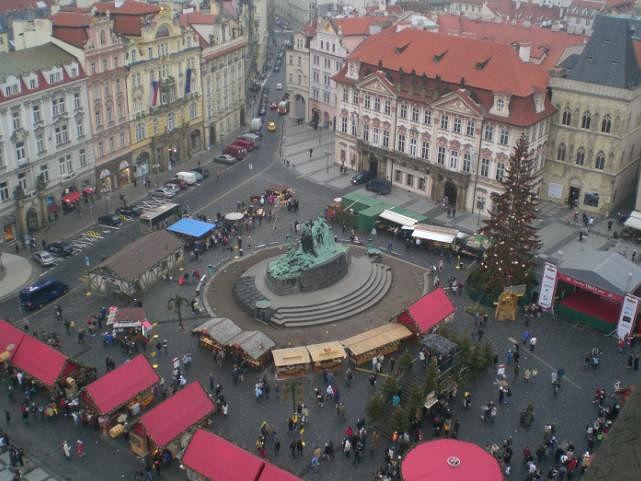
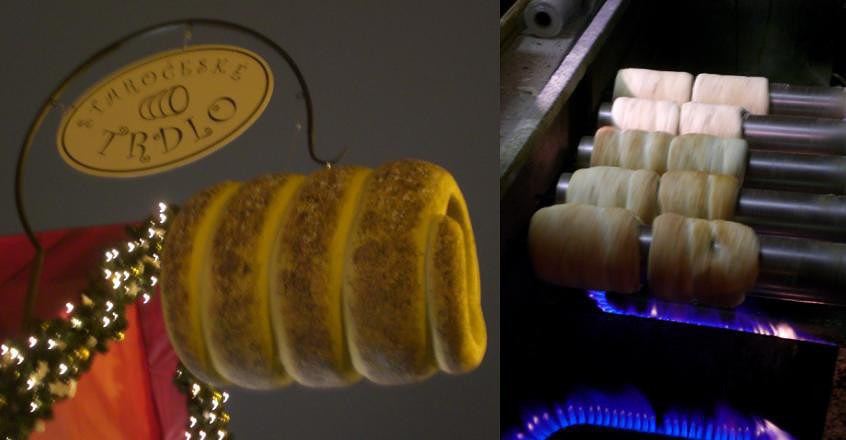
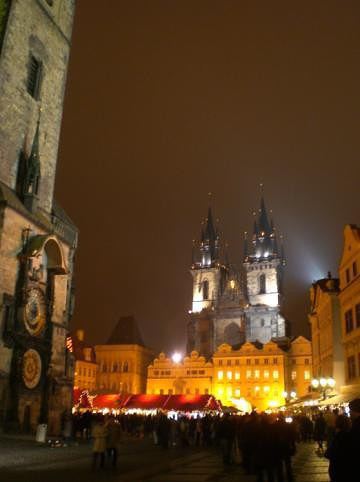
Voici les tous premiers clichés !!!!!!!!! 😉 1) Staré Mesto, Place de la Vieille Ville 2) Un délicieux trdlnik, ça vous tente ? 😛 3) Staré Mesto, Tour de l'Horloge et Tyn "by night" A suivre... 🙂🙂🙂
Marseille, ma ville
Rio de Janeiro 2008 & 2011
Cyclades 2016
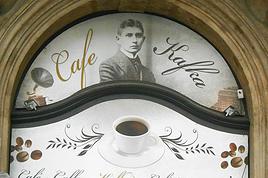
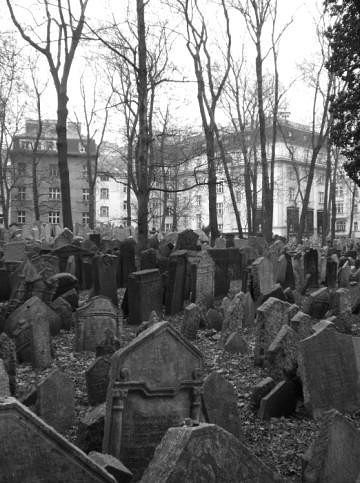
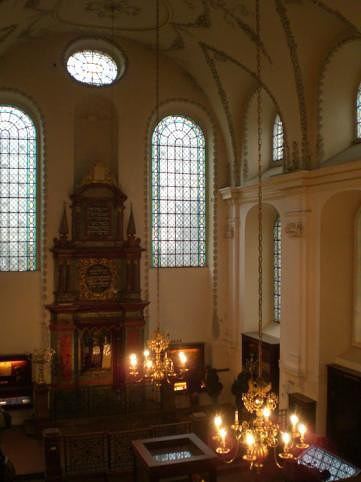
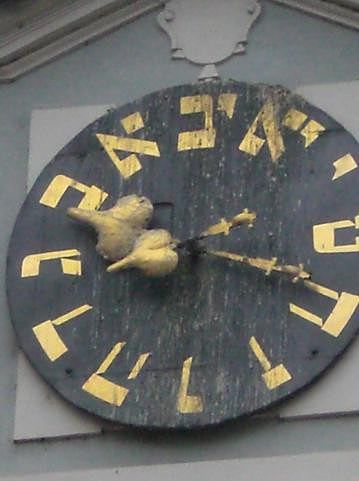
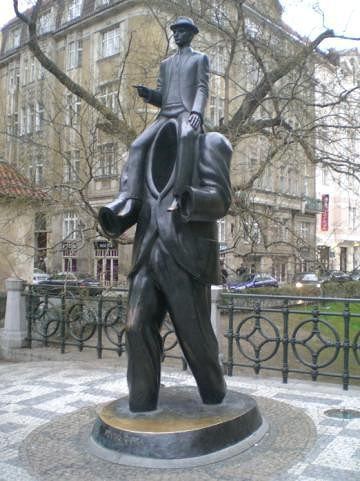
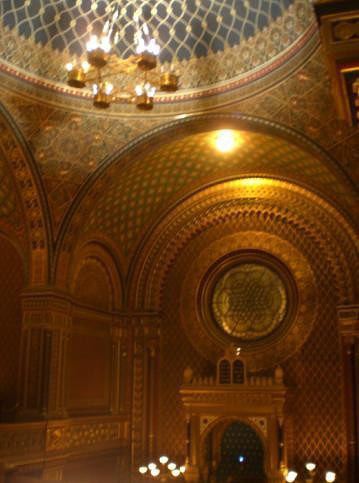
Voici la suite des photos !!!!!!!!! 😉 1) Le Vieux Cimetière Juif 2) La synagogue Klausova 3) Horloge de l'hôtel de ville juif, qui semble défier le temps... 4) Monument en hommage à Kafka 5) La synagogue espagnole, un bijou !!! A suivre... 🙂🙂🙂
Marseille, ma ville
Rio de Janeiro 2008 & 2011
Cyclades 2016
Et bien, à vrai dire, je n'en ai strictement aucune idée. Le 31 au soir, après avoir quitté le resto, on est rentrés directement à l'hôtel. Je crois que le plus gros de la fête doit se faire sur la Place Venceslas. Par contre ce qui est sûr, c'est que lors du feu d'artifice il y avait pas mal de monde dans les rues et le Pont Charles était blindé !!!
Stef
Marseille, ma ville
Rio de Janeiro 2008 & 2011
Cyclades 2016
J'espère que tu va bien, ça fait un moment que je t'avais pas vu sur VF.
Je vois que tu a actualisé ton avatar à l'heure barcelonaise. Ils l'ont pas encore terminé cette Sagrada ? 😛
Si tu veux des infos sur Prague, c'est le moment où jamais, j'ai de la doc en pagaille et des souvenirs encore frais en tête. En mai, tu va trouver le beau temps et une ville magnifique, veinarde !!! 😎 Si tu q des questions n'hésite pas !!!
A très bientôt !!!!!
Stef
Marseille, ma ville
Rio de Janeiro 2008 & 2011
Cyclades 2016
Sans indiscrétion, quel a été ton budget pour ce séjour ???? hors transport (comme toi on prendrait Eurolines). On aimerait partir quelques jours à Prague en décembre, mais on se demande si cela ne va pas revenir trop cher !!! (notamment le logement)
Bon, alors j'ai ressorti les archives pour répondre à ta question 😛
Calcul fait des trains Marseille-Lyon-Strasbourg, Eurolines Strasbourg-Prague, hébergement Prague, pass métro/bus Prague, visites Prague, repas, Eurolines Prague-Paris et enfin TGV Paris-Marseille
= 1032 € soit 516 € par personne.
Stef
Marseille, ma ville
Rio de Janeiro 2008 & 2011
Cyclades 2016
Et grosso modo juste pour le logement à peu près combien ??? On serait la-bas comme vous après Noël !!! Tu as réservé comment et à quelle période de l'année ???
Au niveau du logement, cela nous a coûté pour 224 € pour 6 nuits. On a fait la réservation vers la mi-octobre sur le site internet suivant : http://www.hostelsclub.com/index-fr.html
Stef
Marseille, ma ville
Rio de Janeiro 2008 & 2011
Cyclades 2016
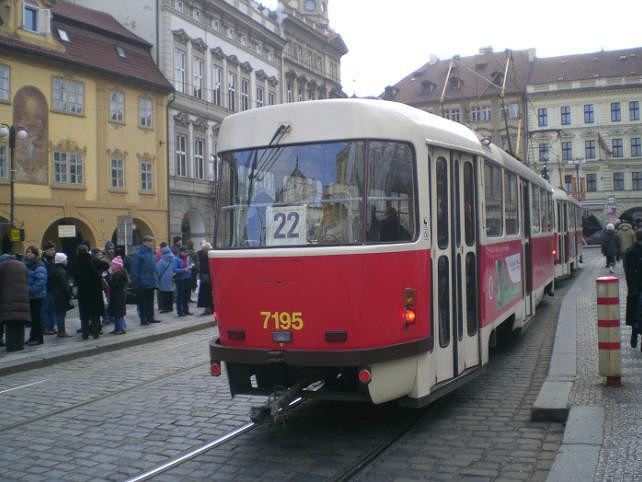
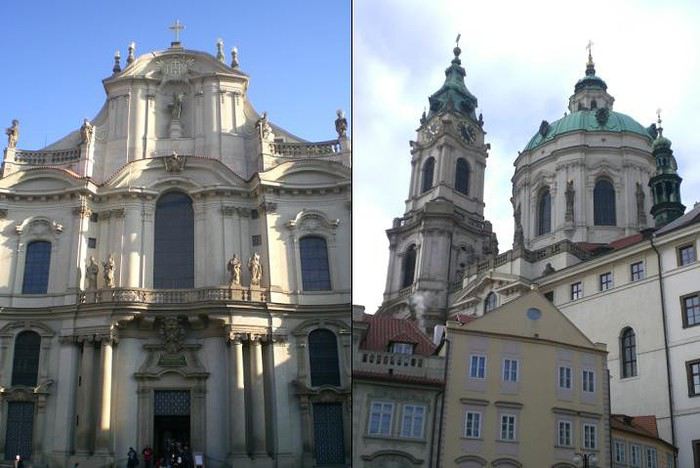
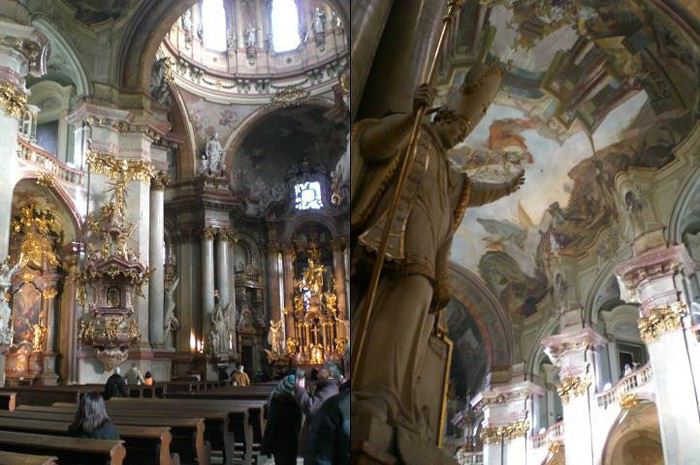
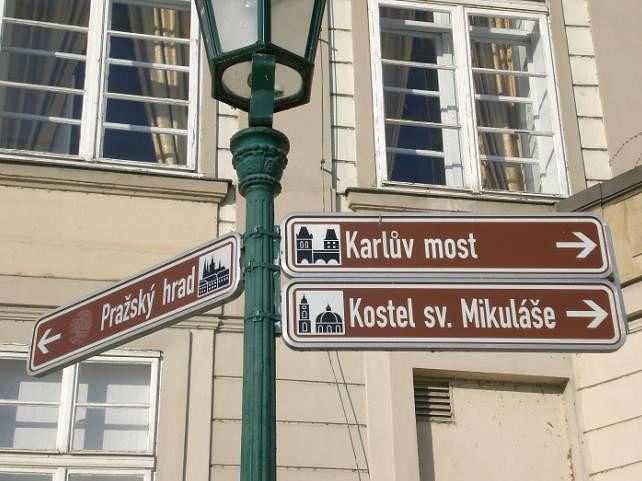
De nouveaux clichés !!!!!!!!! 😉 1) Tram pragois 2) Saint-Nicolas de Mala Strana, vue extérieure... 3) ...et intérieure !!! 4) Tous les chemins mènent à Prague !!! 😛 5) Garde souriant du Château de Prague 😕 6) Statues de Maures à l'entrée du Château 7) Cathédrale Saint-Guy, vue extérieure... 8) ... et intérieure 9) Tombeau en argent de Saint-Jean Népomucène A suivre... 🙂🙂🙂
Marseille, ma ville
Rio de Janeiro 2008 & 2011
Cyclades 2016
Heureux de lire que ce séjour s'est bien passé. 😉
J'ajouterais un détail : la maison de Kafka, c'est au 22 de la ruelle d'or (la maison de sa soeur, en fait).
Pour ceux qui passeront après, la ruelle d'or est scandaleusement payante maintenant, alors que ce n'était pas le cas il y a quelques années, mais elle redevient gratuite en fin d'après-midi (17h, 17h30 ?) et permet donc l'accès à la tour Dalibor.
je n'avais jamais poussé la curiosité au point de te lire & il est vrai que ton style est très agréable, on dirait qu'on y était !
Qu'as-tu prévu pour le nouvel an 2008-09 ?
A bientôt
Sabrina (tjs ds le nord 😕)
Le voyage est une espèce de porte par où l'on sort de la réalité comme pour pénétrer dans une réalité inexplorée qui semble un rêve...
Guy de Maupassant
Et bien pour le moment, rien de prévu et je ne suis pas certain de faire quelque chose de spécial, peut-être un truc à la dernière minute. Et puis en attendant, il y aura Rio et le Brésil le mois prochain !!!
Et toi, quels voyages en projet ???
Stef
Marseille, ma ville
Rio de Janeiro 2008 & 2011
Cyclades 2016
ce coup ci c'est moi qui m'inspire de ton carnet pour aller à Prague en mars,
merci d'avoir fait un récit détaillé, le programme est fait !
ça me fait rire de te voir fan des stades de foot (j'en parle pas à mon homme, ça pourrait lui donner des idées !) enfin, chacun son truc !
et finalement alors, cette fin d'année ?
bises, mamina
La liberté, c'est un cadeau qu'on se fait à soi-même - (L.Gauthier)
Bah ben cette année, on a fait la St Syl à la maison au chaud, on avait rien prévu. De toute façon, l'Europe de l'Est le 31 décembre, c'est terminé. Prague c'était joli, mais à refaire, ce sera plutôt au printemps ou en été ! Et puis, on rentrait tout juste du Brésil, alors les finances... 🤪
Stef
Marseille, ma ville
Rio de Janeiro 2008 & 2011
Cyclades 2016
Carnets de voyage › République Tchèque · 20 replies
Voici le récit d'une escapade que j'ai faite durant 3 jours complets avec ma femme Marie à Prague, fin mai 2019. Ci-dessus: la "ville aux cent clochers" porte…
Carnets de voyage › République Tchèque / Italie · 1 reply
-Jour 1: trajet jusqu'à Haguenau, au nord de Strasbourg -Jour 2: traversée de l'Allemagne, entrée en Rep Tchèque et petite halte à Pilsen, la ville de la bière…
Carnets de voyage › République Tchèque · 7 replies
Nous atterîmes à Prague en cette fin d'après midi nuageuse non sans avoir vécu certaines émotions dans ce qui était pour nous, un baptême de l' air. Nous…
March 2nd — Departure by bus from Latour at 6:50 AM. The journey isn’t direct: we pass through Elne then Corneilla. In Perpignan, I switch to a BlablaBus heading to Barcelona’s northern bus station. Before reaching Le Perthus, French police stop us to check IDs. Several people aren’t in order, but after about fifteen minutes, we’re on our way again. We’re checked again at La Jonquera: this time, the wait lasts almost forty-five minutes while police identify those in violation and wait for a vehicle to pick them up. The driver then tries to make up for lost time; we finally arrive at our destination half an hour late.
I quickly head to the Arc de Triomphe metro station, located 200 meters away: you have to cross the bridge along the bus parking lot, then walk through a large garden; the station is on the right before the garden entrance. The trip to the airport isn’t direct: I have to change at Tomasso and take the line to the airport, where I arrive at 1 PM.
At the Emirates counter, I learn my flight was just canceled due to the war in Iran; they offer me another flight for the next day. I have to wait at the airport until 7 PM before being taken to a hotel; the next morning, I’ll take a flight to Vienna (with an 8-hour layover), then an Air India flight to Delhi, and finally a flight to Kolkata. I agree: I don’t know Vienna, so it’ll be an unexpected discovery.
At 7 PM, a small group is taken to the hotel, 35 minutes from the airport, where we’re served a light dinner upon arrival.
March 3rd — A taxi picks me up at 6:30 AM; the flight to Vienna takes off at 9:30 AM and arrives at noon. I’m free until 7 PM; the metro is direct to the city center. The weather is pleasant and not too cold, luckily, since my clothes are light.
When I exit the metro, I spot the St. Stephen’s Cathedral tower in the distance and approach it: the roof, made of glazed tiles, is remarkable.
Entry is free, and the interior, a mix of Gothic and Baroque styles in the center, is stunning.
Not far from there is St. Anne’s Church
, also Baroque, adorned with beautiful frescoes
—a music concert adds an enchanting atmosphere to the visit.
I continue my walk at random through the pedestrian streets lined with magnificent buildings: I’m charmed by the city.
Before heading back to the airport, I stop at a lovely tea salon. My flight will eventually leave with a delay.
Wednesday, March 4th — Delhi and a little luggage scare
We arrive in Delhi shortly after noon. Immigration is quick, and good news: my bag was checked through from Barcelona to Kolkata. I head to the connecting terminal and arrive half an hour before boarding: the flight goes smoothly. Upon arrival, the luggage comes out quickly… except mine. After filing a report, I’m told my bag is in Delhi—I have to retrieve it before taking another flight. I didn’t know (or had forgotten): with the delays, I wouldn’t have had time to pick it up and make the connection.
I take a taxi to the Ichamati Hotel. The welcome is warm, and the room is clean but very small. Without my bag, I feel a bit lost—I have nothing to change into.
Tonight, I’m dining with Raja and his friends at a beautiful restaurant, an old colonial house turned into a hotel.
We’re happy to see each other and have a comforting evening together.
This trip had been on my mind for about fifteen years.
But the discomfort of overnight stays, the difficulty of communication, and the prices of the few car rentals kept making me postpone the project.
And then, everything fell into place—I told myself, now’s the time!
Preparations took longer than usual; the destination is still far from mainstream.
A bit of Kazakhstan?
Not in the end.
The south or not?
Yes, in the end.
Pre-book or play it by ear?
Only two stops were a leap into the unknown.
To help me find the ideal route, I made great use of this forum (thanks to everyone for patiently answering my questions!), pored over travel journals and blogs (Christian, Jeff), zoomed in on Google Maps and Yandex, and bought the guide published by OunTravela on this destination (the guide has been updated since).
---/---
You’ve got your passport, international driver’s license, bank cards, and euros?
Off we go to Lyon—just one night left before our early morning flight.
Tomorrow night, we’ll be sleeping in Bishkek!
(‘Beefsteak’ for my partner’s mischievous nephews...)
After my summer 2022 left me with a sense of unfinished business, here I am back in Swedish Lapland for summer 2024, ready to attempt the Sarek crossing again—and this time, to tackle part of the Kungsleden too.
After much hesitation, my companion Jean Marie and I decided to start with the Kungsleden, which, from what we’ve read, is stunning but very busy (and boy, is it!). We’ll finish with the wilder option: Sarek! This park is called Europe’s last wild space—I think it’s incredibly inspiring!!
The downside of this choice is that there are no resupply options in Sarek, and the Kungsleden isn’t really set up for long-distance trekking either. That means we’ll have to carry a lot of food for the first part of the trip, with Sarek in mind.
But hey, we’re motivated!
Our plan is to start in Abisko (classic) and head to Vakkotavare (also classic, but with some variations to avoid the official route and the crowds). Then we’ll continue the Kungsleden from Saltoluokta, and before Aktse, we’ll set off on an east-to-west crossing of Sarek (weather-dependent, since aside from the Skarja hut in the center of the park, there’s no shelter if conditions turn bad).
At least we’ll be on the right side of the park to climb Skierfe and enjoy the jaw-dropping view of Rappaladen if we have to abandon the Sarek crossing.
This adds up to 17 days of trekking, including 1 rest day and 1 buffer day for weather delays.
So if you’re interested, I invite you to follow our overstuffed backpacks!
08/03 - Abisko – 5km before Abiskojaure
Some info (guides we used for prep, SFT map, sending food to Saltoluokta)
08/04 – 5km before Abiskojaure – on the east shore of Lake Alisjavri
08/05 – East shore of Lake Alisjavri – just before Tjaktja
08/06 – Just before Tjaktja – above the Salka hut via Nallo
08/07 - Salka – just past Singi + side trip to Djalson Lake
08/08 - Singi – Teusajaure
08/09 - Teusajaure - Vakkotavare (end of the first section of the Kungsleden)
08/10 – rest day in Saltoluokta + round trip to the Sámi village of Pietjaure
08/11 – Saltoluokta – Sitojaure
08/12 - Sitojaure - Skierfe – Sarek or no Sarek?
08/13 – Skierfe – somewhere above Rapadalen
08/14 – Somewhere above Rapadalen – above the Skarki hut
08/15 – Above the Skarki hut - Skarja
08/16 – Camping at Skarja
08/17 – Ruohtesvagge
08/18 – Ruohtesvagge - Padjelantaleden
08/19 – Padjelantaleden - Ritsem – End of the trek
08/20–24 – End of the trip (Luleå - Stockholm)
And of course, the recap!
This travel journal summarizes a trip I took in March to Argentine and Chilean Patagonia. It starts in El Calafate and ends in Ushuaia. During my planning, I considered looking into the Australis cruise from Punta Arenas to Ushuaia, as well as the W trek in Torres del Paine National Park. In both cases, I was put off by the prices. Instead of the cruise, I found two interesting wildlife excursions from Punta Arenas: whale watching in the Strait of Magellan and observing king penguins in Tierra del Fuego. The journey to Ushuaia was by bus. For Torres del Paine, things were a bit confusing, so I reached out to two agencies. In the end, I went with a rental car option, overnight stays on-site, and day hikes. I shared my full itinerary with the agency and ended up being taken care of by a local Argentine agency and a Chilean one.
So, here we go...
I'm starting my first travel journal since VF reopened!
This will mostly be to share my impressions and some photos, with a few days' delay, but I'm starting this journal while I'm still here.
First, I'd like to thank those who helped me prepare for this trip.
I was able to organize this stay in one of the most expensive countries in the world thanks to the home-exchange principle. Not necessarily a direct swap, but through a points system, which is more practical for choosing where you want to go without it having to be a reciprocal exchange.
For this trip, there will already be two different accommodations. We'll see how it goes after that.
The first place is near Yverdon-les-Bains, close to Lake Neuchâtel.
So, we're going to explore this area!
We arrived under capricious weather that won’t leave us for the next few days!
We had dinner at a pizzeria recommended by *Le Routard* in Yverdon, then took a little nighttime stroll through the town center before heading inland to settle into our accommodation.
We discovered a very large, quiet house—and especially the cat that stayed behind! Funny for a couple of mice! He’ll be sleeping with us 😹
If you're looking for great tips and offbeat spots, if you love exploring uncharted parts of a country, if the exotic is your adrenaline, then move along!
Our 15 days in early May in this part of Turkey (a country I first discovered during a city trip to Istanbul in 2017) will only tread well-worn paths and revisit popular routes. Simply because I kept hoping until the very end that our flight to Jordan wouldn’t be canceled. Events in the Gulf proved me wrong, so we left with:
Zero preparation.
Not a single hotel booked (well, except the first one), no visits planned, just a flight ticket bought three weeks earlier. No guidebook, no app—just the desire to explore southern Turkey and Cappadocia, whose images and the chance to stretch our legs had caught my eye.
Oh, wait—I did bring along a new guide: Gemini! Yes, my friends, generative AI was my chief advisor throughout the trip for sites to visit, accommodations, routes, and even restaurants! An experiment I wanted to try to form my own opinion on using this new technology. And what better way to test it than a Turkish getaway?
The verdict? You’ll have to wait for the trip recap to find out!
The main idea of the trip is also relaxation.
So, the plan is Antalya for a few days, the Turkish Riviera for a few more, Cappadocia as the highlight, and a return via Antalya to wrap up the trip. And it was all planned by AI!
So, if you're ready, fasten your seatbelts—cabin crew, doors to automatic and cross check—boarding for Turkey now!
From Southern Shikoku, between land and sea, to the blue waters of Miyakojima and finally Tokyo’s megacity
Hi everyone,
I have to admit, I really hesitated before deciding to write this travel journal... Writing one takes a lot of time and energy, and since this is my 4th trip, I wondered if it would even interest anyone other than myself (both for the discovery and the writing). But after a few people asked, "Are you going to write a journal?" and especially after rediscovering the joy of reading other travelers’ journals about Japan or elsewhere on this forum, I’ve decided to share my 4th installment in the Land of the Rising Sun here.
The itinerary:
27 full days, from late May to late June 2025, right in the middle of the rainy season, including:
-->13 days in Shikoku, from Kochi (Kochi Prefecture) to Matsuyama (Ehime Prefecture)
-->7 days in Miyakojima (Okinawa Prefecture)
-->7 days in Tokyo
The trip was decided on fairly last-minute again this year.
Since I regularly check flight prices to track fluctuations for this destination even without concrete plans, stumbling upon a slightly cheaper direct flight (900 €) than what I’d seen in previous months (around 1,200–1,400 € on average) for a Paris-Tokyo route with Japanese airline ANA was too tempting to resist the urge to return to this enchanting country. After much hesitation between exploring the San’in region (Matsue, Tottori, Yamaguchi) and Southern Shikoku, the decision was made—I took the plunge! The ticket is booked: Paris to Kochi with a layover in Tokyo, all with ANA, the airline I’d been dreaming of... for 1,120 € per person. Okay, it’s not cheap, but it’s better than in 2023.
Departure in 2 weeks! Now I just have to get everything ready!
Intense prep work over these next 2 weeks to:
finalize a more precise itinerary and reach an agreement—yep, because even though we both love Japan, our preferences differ slightly, and we have to choose between exploring new places or revisiting beloved spots...
decide how much time to spend in each area without rushing while still exploring
research places that might interest us and watch videos about Japan
book accommodations: yes, it’s possible to do this on the spot, but last year, we realized that last-minute options were pretty expensive, so we’re booking ahead—though we’ll keep a few options open in case better deals pop up later
reserve rental cars
order yen
check the weather regularly and wonder if choosing the *tsuyu* (rainy season) was really a good idea—are we going to be drenched the whole time???
"What hard work," you might say! Going to Japan for a month—what a tough life!
Despite this being my 4th trip, the excitement is just as intense as the first time.
The only small downside is that when we booked the flight, there weren’t many seats left, so we’re only sitting together on the international return flight. Plus, on the way there, we have middle seats.
Another lingering question: what French-language films will be available? According to the internet, the selection seems limited.
Oh well, these are just minor details—it’s already time to fly!
PS: I’ll be posting slowly and irregularly... so for those interested, be patient, and maybe set an alert...
Kattegat isn’t just the name of the village in the TV series *Vikings*—it’s also the stretch of water separating Denmark from Sweden... the sea, basically! And further north, you’ve got Norway and its fjords!
Originally, I’d planned to just do a loop around Kattegat, with the *Under* restaurant in Lindesnes as our anniversary treat... but along the way, we thought, why not "push" a little further north, keeping an eye on the budget since we’d chosen to travel by car in June 2025 through Scandinavia.
Why by car when most travelers opt for a camper van, while others prefer the comfort of cruises?
Well, because we don’t own a camper van, renting one is pricey, and then you’ve got to add fuel costs (those things guzzle gas!), ferry fees, and other "tolls." All things considered, we went for mostly rentals—especially since there were four of us at the start of the trip.
We spent the first week in Denmark with our daughter and son-in-law. Then they flew back to Belgium, and we continued our adventure as a couple.
For accommodation, we mainly booked Airbnb apartments, which helped keep costs down and, most importantly, let us prepare our own meals (diet, diet!).
In this travel journal, you’ll discover (or rediscover, for those who followed my older ones) our unbridled love for theme parks, museums, unique experiences, and—especially in Denmark—Legos!
Unfortunately, we didn’t do any hikes this year because the unpredictable weather had made the trails slippery, and since I’d already taken three tumbles during the trip, I didn’t want to risk another!
In the end, we traveled for 32 days, covered 6,200 km, and most importantly, discovered the charming country of Denmark, marveled at Norway’s breathtaking fjords—all without suffering the heatwave that hit France and Belgium that June!
If you’ve got any questions, don’t hesitate to ask!
June 2024.
While hiking with my brother on the GR 36 Tour du Morvan, I catch sight now and then of strange rectangular markers fixed to tree trunks. Against a bright orange background, a deep black Greek tau topped with a white dove. My first encounter with the Assisi Way.
The Way of St. Francis: a pilgrimage route linking Vézelay in Burgundy to Assisi in Italy, covering nearly 1,800 km.
It felt like an obvious next step—I immediately knew I’d take it on, attempt the adventure solo.
In the months that followed, I talked about my project to everyone—family, friends, my partner. An avalanche of comments, more or less the same but varying depending on each person’s character and life experiences. But deep down, it all boiled down to one legitimate question: why?
And the answers?
Hesitant, awkward, partial, even confused. I quickly realized they weren’t so easy to find. It was as if my project seemed more like a whim, a kind of intimate caprice, rather than a well-thought-out plan.
Of course, I knew the reasons that pushed me to leave—you always have to give some. Loved ones need to understand to feel reassured, and that’s understandable.
But I fear that when I list them, they’ll sound like the same old checklist anyone embarking on this kind of journey might give.
Of all the reasons I could mention, I’ll highlight just one here: the call of the road, the solo adventure that brings a powerful sense of freedom.
A bit like Monsieur Seguin’s goat, who from her comfortable pen gazes longingly at the unconstrained horizon of the mountain.
But if I’m being honest, I think I didn’t really know what I was looking for—or, more importantly, what I’d find. Deep down, when I reflect on it, one word keeps coming up that explains nothing and everything at once: desire.
Now well past sixty, I know that when I ask myself who I am or where I’m going, two things bring me fully back to myself: hiking and writing.
And my intention was also to anchor this adventure through words, day by day. Writing down my feelings, emotions, discoveries, and reflections each evening. The famous travel journal that grounds the daily experience in reality.
When I discovered the app "Polarstep," which was initially just meant to keep my loved ones updated and reassured, inform them of my progress, and maintain a connection, I found an opportunity to do it a little differently than usual.
No retrospective notes polished up after returning, but spontaneous writing—recounting everything that crossed my mind during the day and publishing it immediately. A journey lived in real time.
This text is the exact transcription of my daily writings. Rereading them, I didn’t change a thing—just corrected a few mistakes and tweaked some awkward phrasing here and there. Short texts, fitting the format imposed by this kind of app. Writing as if addressing others.
Now, all that was left was to walk.
April 18, 2026 – Vézelay.
This travel journal is therefore intended solely for my photos, to present a consistent style.
All the shots were taken with a simple Samsung Galaxy smartphone and with whatever was at hand.
All stays combined, I’ve spent the equivalent of a year at most in Thailand, and I’m no great expert.
However, after many trips, lots of reading on VoyageForum and other sites, and conversations with many locals as well as expats, my view of the country is becoming clearer, though it’s constantly evolving. You never stop discovering and learning.
I guess I wanted to deliver a puzzle, mainly for those who want to get an idea of the country here and for those who feel nostalgic about it.
I don’t know if this minimalist sharing will interest anyone, but it’ll do me good to put it together. After so many months without traveling and then these other long months with VF closed, there’s plenty of material available.
There’ll be a mix of places, periods, and subjects, but it might well be intentional.
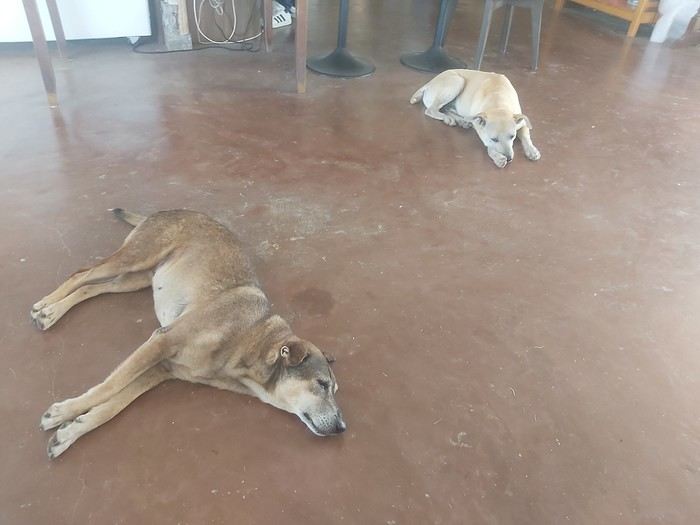
I suspect many Thais have dogs because they make excellent guardians for the home. Nothing better to deter burglars or to signal the presence of a snake. You’ll often see Thais tapping the top of their dog’s head, but don’t be fooled: it’s a sign of affection from them. Judging by the dogs’ reactions, they’re used to it.
Thailand is one of the countries on the planet where rabies is still present, so keep that in mind. It’s not just bites that can be dangerous, so don’t let just any dog lick you. Especially on a wound, of course.
Even though dogs often fear humans—this dangerous and unpredictable predator—we still need to stay cautious.
Be careful when walking into alleys because the dog will defend its master’s big yard. Be careful at night, and be careful when they’re in packs.
It sometimes crosses our minds that Thailand isn’t all that made for walking around, and dogs are one of the reasons.
That said, it’s not uncommon to see them chasing bikes or scooters. Cars, though? Much rarer—they’re too big.
It seems Thais prefer to give their dogs freedom by not locking them behind gates. Though sometimes the gate is closed, the little side door is wide open. Oh, and sometimes there’s no gate in front of the property, or it’s been full of holes for years.
You’ll often see dogs sleeping on the roadside, sometimes right on the road. When you approach, they move aside nonchalantly—or not at all. It’s less funny when they suddenly appear from thick vegetation, reminding visitors not to drive too fast. As a result, you’ll notice that dogs with injuries or missing legs aren’t that rare.
Since they believe in reincarnation and respect for all forms of life, they don’t chase dog packs away too much, and they don’t sterilize them enough. When you see a small pack roaming freely in the countryside, you think twice about running into them at the edge of a field.
A darker side of this is that euthanasia isn’t often practiced. Twice, we saw dogs at death’s door in temples, enduring terrible suffering with no one to help. The image (and the smell) of one of them, agonizing and exuding the stench of death, still comes back to me sometimes.
Some of you may have seen the YouTube vlog of a French woman living in Phuket who was given a little pig by her Thai friends. The animal, well-fed, quickly became a happy and enormous beast with its own garden. Yet it didn’t take long for it to fall seriously ill and become incurable. In her video, the French woman described how difficult it was to find a vet willing to perform euthanasia.
You’ll often see bowls by the side of the road. Thais leave food and water there for stray cats and dogs. Overall, they have a big heart for animals.
If you ever pop into a shopping mall, you might see people pushing their small dogs in strollers. It’s not just for fun—these strollers are provided for customers to put their pets in, otherwise you can’t bring them inside. It looks a bit odd when you expect to see a baby.
Here’s our account of our trip to Malaysia from September 11th to 27th.
I hope our tips can help others as much as this forum has helped us!
Day 0:
Departure from Nantes with a transfer in Amsterdam via KLM (720 €).
Day 1:
We arrive at KLIA1 in the early afternoon.
First challenge: figuring out where to pick up our luggage. Turns out the answer is right under our noses—we need to take the airport’s internal metro!
Once we’ve got our bags, we withdraw some cash from a Maybank ATM right there.
Next up: SIM card! Just outside the arrivals hall, several kiosks offer them. We go for a Celcom 5 GB card (70 RM).
Then it’s taxi time to get to KL, in the Bukit Bintang area—about 85 RM in a slightly old taxi with weak air conditioning.
We check into our Airbnb apartment, which is clean, more spacious than a hotel room, and—best of all—has a charming balcony with a gorgeous nighttime view!
We end up hanging out on that balcony, reviewing our plans for the next day. After dark, we take the monorail just a short walk away to enjoy our first evening on a rooftop at the 34th floor: Hélipad (Raja Chulan station—you have to enter the Menara Tower at the base of the station) with a panoramic view of the city and its iconic towers.
Finally, we head to Jalan Alor to grab a bite in this super busy street.
Big sleep ahead! 😴
After a pretty disastrous weather-wise trip to Gran Canaria, we’re hoping this time the sun will shine in Puglia.
It’s not a sure thing, though—the weather’s been awful all over Europe in early May.
For those who’d like to (re)read the story without the digressions, it’s here.
Saturday, May 16:
This time we’re flying out of Charleroi (Brussels South): the ticket prices, flight times, and proximity all worked for us.
The airport (Ryanair) was recently renovated... but it’s still not very well organized. There are hardly any seats in the boarding areas, and... the restrooms cost money!!!
The flight goes smoothly, though, and we land in Bari a little late.
We quickly pick up our rental car, a very local-looking Pandina (even more so than the Fiat 500 in this region), and hit the Italian roads... and their unique driving quirks (like the fact that the countless road signs along the streets and in towns are purely decorative 😏, and that Italian cars don’t have turn signals 😮... except for rental cars).
About an hour later, we arrive at our first accommodation, right in the middle of the countryside near Monopoli.
The owner isn’t there, but they’ve left us a ton of info via messages and even turned on the space heater, which is a nice touch.
We explore the property:
And the next morning before breakfast, its immediate surroundings:
Sunday, May 17:
After our "seaside" experience in Gran Canaria last weekend (packed with people and locals), we decide to start inland.
After a hearty breakfast,
we head toward Alberobello, a super touristy village famous for its trulli—those stone houses with conical roofs.
We easily find a free parking spot on a street near the Aia Piccola district, where some trulli are still lived in year-round.
We almost immediately come across the Trullo Sovrano (the only two-story one), which you can visit (but we skip it—it’s opening time, and there’s already a line).
From there, we head down toward the Basilica of Cosma e Damiano... but we don’t go in because there’s a mass.
Now we’re on the main Piazza del Popolo, which connects the two districts of Alberobello: Rione Aia Piccola and Rione Monti, the more touristy one.
Come along, I'm taking you to this country where it's so nice to wander and slow down...
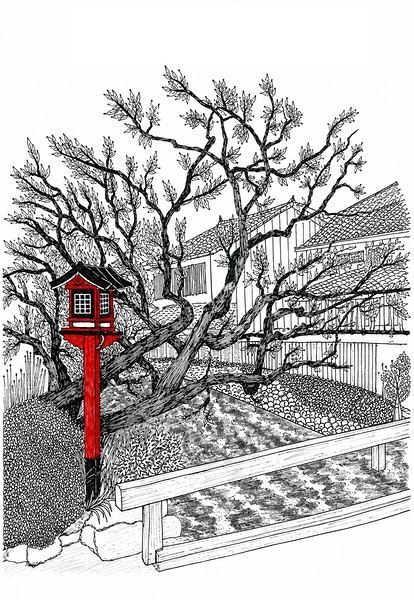
This trip was in 2023, but when I wanted to write my travel journal, VF was still closed to contributions...
So, now that I've just finished my Japan travel journal here, I figured it was high time to honor this destination we came back from so enchanted.
Disclaimer 1: This is a written travel journal. There’ll be text! Too much, for some!
Disclaimer 2: This is an illustrated travel journal. There’ll be photos! Too many, for some!
I have to say, every time I try to discipline myself, to keep it shorter, to include fewer photos... I end up adding more. It feels like my dear Aunt Nicole, who exhausted us with her slide-show evenings in the 70s/80s, decided to take her revenge. The upside for you, readers, is that you can slip away anytime without offending Aunt Nicole. I won’t even notice!
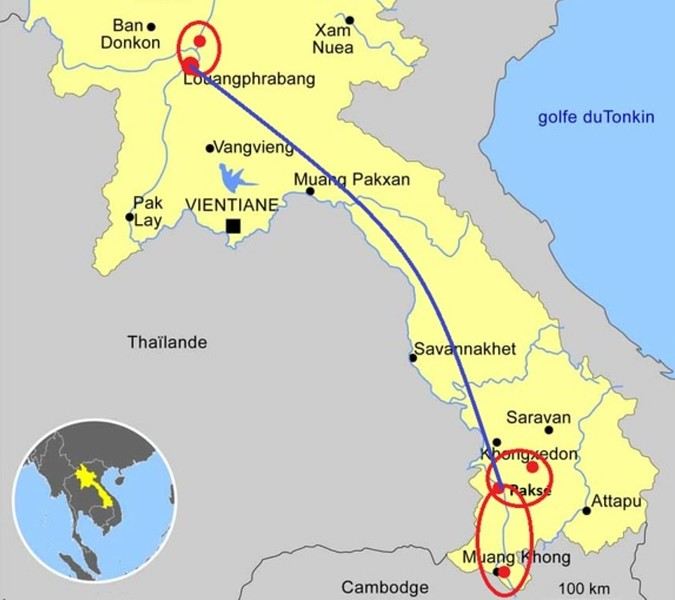
Anyway, since I love maps, here’s one to give you an idea of where I’m taking you. As you can see, we only saw a tiny part of Laos (the areas circled in red); we only had 3 weeks for ourselves (my husband’s newly retired, I still work), and we prefer taking our time over rushing around like crazy.
In broad strokes, it was very classic:
First, we “settled in” at Luang Prabang (8 days), because we wanted and needed to.
From there, we took three days to venture a little further north—not far in kilometers, but as we know, distances aren’t just about km!
Then we flew south to Paksé, letting ourselves drift down to the 4,000 Islands while stopping by the pre-Angkorian archaeological sites.
We wrapped up with the Bolaven Plateau.
A few practical notes: We arrived via Bangkok, then took a Bangkok-Luang Prabang flight, having picked up our luggage in Bangkok to check it in for Luang Prabang. No issues—the Bangkok airport, which many of you know, is very well organized.
We got our visas on arrival in Luang Prabang. Quick, but to be fair, we were on a “small” plane, and the big flights had arrived earlier, so we weren’t too crowded in line!
At the end of our trip, we didn’t fly out of Paksé but from the nearby airport in Thailand, Ubon Ratchathani (a 2.5-hour drive from Paksé), then Bangkok and Paris.
You’ll notice we skipped Vientiane to stay longer in Luang Prabang. That said, there’s now a high-speed train between Vientiane and Luang Prabang—good to know—and soon the (Chinese) train will go all the way to Bangkok and even Kuala Lumpur!
With that intro out of the way, let’s dive into the heart of the matter.
To be continued: Slowing down the pace... in Luang Prabang
Here’s a little story about my first trip to Japan with my partner.
We went for our first visit from October 29 to November 13, 2024.
I had planned this entire trip back in November 2020, but given the health situation at the time, I had to cancel...
Here’s the classic route we took:
We booked everything ourselves and got a regional pass for the area from Kyoto to Hiroshima.
The hotels were reserved 3 months in advance on Book... and Agod... (1030 € for 2 people for 13 nights = 80 €/night).
For the flight, we chose a Qatar Airways flight with a layover to break up the long journey (950 € per person).
We also got a pass on the same site (Japan-Experience) to take the train connecting Narita Airport to Shibuya Station (the N'EX Narita Express).
Since the airport is 75 km from central Tokyo, we opted for this mode of transport, even though there are cheaper alternatives.
After reading various posts on VoyageForum, I understood how important it was to have a Welcome Suica card to pay for public transport (subway, tram, bus, boat throughout the country), and we were able to buy one at Narita Airport.
It turned out to be super useful!
After a long but smooth journey, we found ourselves at Narita Airport in the evening.
Even though we had a pass for the Narita Express, we had to go to a counter to make a reservation for the train (mandatory).
Then, once we arrived at Shibuya Station, we took the subway for 2 stops and finally reached our hotel, exhausted (Hotel Asia Center of Japan – 270 € for 3 nights with breakfast included).
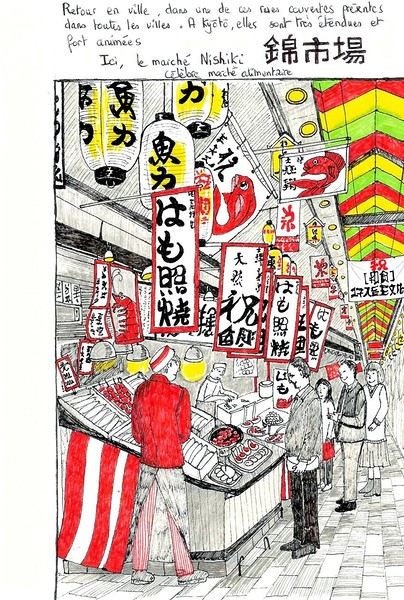
I’m inviting you on a stroll through my drawings—a completely subjective, far from exhaustive, and totally personal take, since it’s based on my own sketches. I put this travel journal together after returning in late 2024, mostly using felt-tip pens and pencils, with a few collages thrown in. I worked from our personal photos.
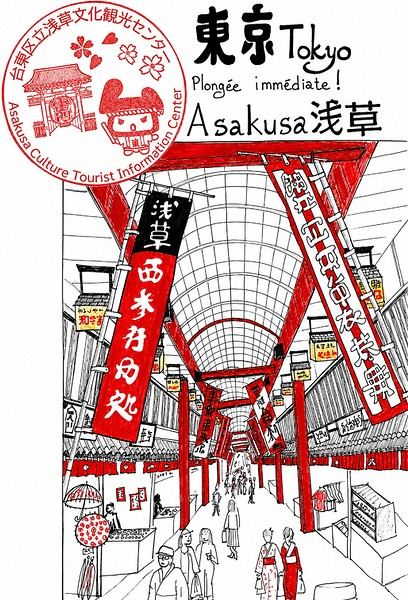
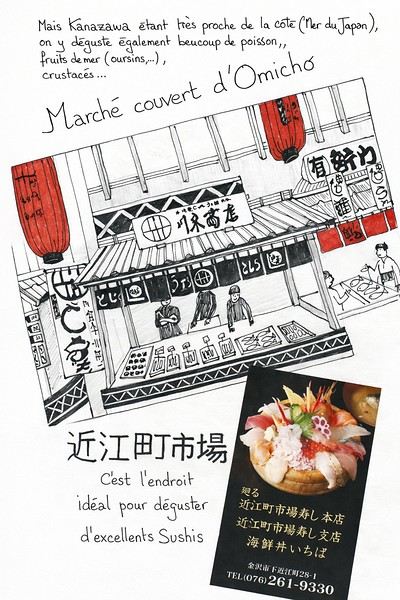
Let’s start with the shotengai...
Our first "wow" moment came as we stepped out of the subway in Asakusa, the Tokyo neighborhood where we’d booked our hotel for our first five nights. Exhausted after our long flight, we finally arrived and took an exit that led straight into a shotengai—one of those covered shopping streets that pop up in city centers and flourished between the 1950s and 1980s.
It was an instant aesthetic shock, like a close encounter of the third kind between the modern city, a typical Asian market with its street stalls, the vintage vibe of the arcade, the sheer abundance of goods, and the bustling crowd—a mix of tourists, pilgrims (thanks to nearby Senso-ji Temple), and locals (it’s a very working-class area).
In the end, it set the tone for a feeling we’d experience throughout the trip. Wherever we went, shotengai turned out to be fantastic spots for finding little restaurants, shops, or even fresh produce. Some are like real mazes, like in Kyoto, where we spent ages trying to relocate a restaurant we’d loved ;-)
In Kanazawa, the Omicho Market:
And in Kyoto, Nishiki Market:
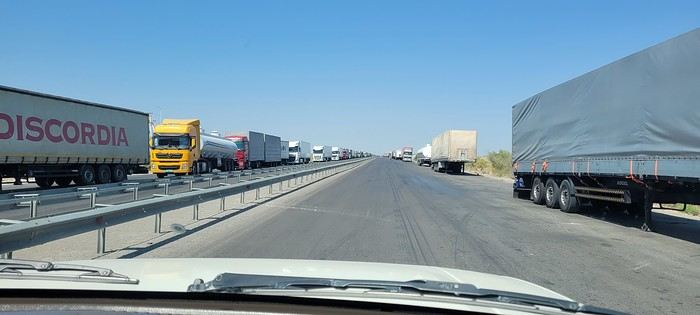
With my girlfriend Christelle, we’ve chosen South Africa for our first trip to Southern Africa, focusing on safaris—after a long debate with a Cape Town/Kruger combo.
But that would’ve meant cutting out St Lucia, which would’ve been harder to fit into another trip.
And St Lucia—thanks to Michel and all those travel journals—we really wanted to go there.
So our 11-night itinerary ended up like this, mostly shaped by school holidays:
- 3 nights in St Lucia
- 1 night in Hluhluwe
- 1 night at Mkhaya Game Reserve (Eswatini)
- 1 night at Hlane Royal National Park (Eswatini)
- 3 nights in Kruger (Berg en Dal / Satara / Tamboti)
- 1 night at Shindzela Tented Camp in the Timbavati private reserve
- 1 final night in Kruger at Lower Sabie
All of this in the off-season and rainy season, just a month after catastrophic floods that killed over 150 people and seriously damaged Kruger’s infrastructure.
I’ll jump straight to St Lucia and skip the loooong journey to get there (with a layover in Frankfurt, landing in Johannesburg, a domestic flight to Durban, and the rest by rental SUV—First Car Rental, perfect, no complaints).
To motivate readers—especially some familiar faces here—I’ll drop in a first photo.
We went to Albania in August 2025.
Our itinerary included adventure (sporty activities, site visits), naps on the beach interspersed with swims, incredible natural sites, and a bit of culture.
I booked all our accommodations on Booking.com. Note: almost all places ask to be paid in cash!! You can obviously withdraw from banks, but the fees are pretty high. Luckily, we had plenty of cash, and the country is very safe. You can pay in euros most of the time, which avoids exchange fees.
We started in Tirana. I’d read a really interesting post about Albania’s bunkers (link in my profile). We chose to visit Bunk’Art with a guide from the agency that wrote the post. It was fascinating—not only to better understand the country’s history but also because her grandfather was repressed by the regime, and she shared her family’s experience with us.
Bunkers are everywhere! In Tirana, Bunk’Art is the most interesting and largest. You’ll see the dictator Enver Hoxha’s office, where he would’ve taken refuge in case of an attack on the country. Bring a sweater—it’s really cold in the underground tunnels and their huge corridors.
You can visit other bunkers around the country, in Tirana and elsewhere. Almost all are just abandoned.
The cable car up Mount Dajti is right next to Bunk’Art. The view is stunning—you realize Tirana is so close to the mountains and the sea... But otherwise, it’s not that exciting for older teens (17 and 19) and their parents.
We picked up a rental car in Tirana—it’d be ours for the next three weeks. We used Goalbania’s agency to avoid any hassles. First, there aren’t many cars available in Albania in summer. Second, French credit cards can be a nightmare abroad. So we preferred to sort that out in advance.
After Tirana, we headed to Permet. Just a heads-up: the roads are in great condition except in the mountains. And Albanian drivers aren’t stressful to deal with. Though you might suddenly encounter a herd of goats crossing the road—haha—but if you’re not going too fast, it’s fine.
In Permet, I’d been dreaming of rafting on the Vjosa, one of Europe’s last wild rivers. And we did it with a local agency! It’s beautiful, accessible to everyone, not too physical but still a bit lively—just how we like it. You can even jump into the river in some spots.
In Permet, we also hiked through a canyon and visited a lovely little church.
And we took a workshop to make their local culinary pride: gliko. It’s a jam with whole fruits inside. We’d seen it on Goalbania’s site, and it was really fun. We were with a family where the secret to making gliko has been passed down for generations...
Next, we headed to Gjirokastër. A city we loved: its old traditional houses (Skendulli and Zekate), its grand castle, the Ali Pasha Bridge. Along the way, we stopped for artisanal ice cream at a little shop run by a grandmother who’s been making it herself for ages.
One afternoon, my husband *had* to go to the coast in the south, to Ksamil (he’d read it was better than Sarandë). Verdict: we didn’t like it. Parking is a nightmare, the beaches are super noisy and crowded. The sea is packed with jet skis, boats, pedalos, and ropes. Avoid it.
On the other hand, we really liked Himarë, where we went next. We stayed at a campsite where we rented tents with mattresses and sheets inside. Right by the sea, on a low cliff (about 2 meters high). You can hear the waves at night... Magical!! To swim, you either jump straight into the sea (almost from the tent) or climb down a ladder, which you’ll need to climb back up to get out.
I was a little worried the campsite wouldn’t be very comfortable, so afterward, I’d booked a small place in Gjilek. Turns out, the place was really tiny (one room for four, no kitchen) and pretty expensive (over 100 € a night). We’d drive to the beach or restaurants—it’s on a steep slope, so not very accessible. Parking near the sea is tricky. But the (private) beaches were nice—we’d rent an umbrella not too close to the music and spend the day there. We also went to a wilder beach, harder to reach, via a long path. Behind the beach, there’s an amazing canyon where we’d sometimes climb using ropes (already in place, no need to bring your own) over big boulders rolled around by the stream, which must swell a lot in spring.
So, the sea in Albania: it’s nice if you like swimming and relaxing, but it’s not the most interesting part of the country. There are so many other amazing things to see and discover—so many stunning sites! Maybe an agency could’ve helped us find more practical accommodations and avoid Ksamil and its surroundings.
We left the coast to head to the beautiful city of Berat and its "thousand windows." We explored the city, its fortress, and its icon museum.
Then we discovered the Osum Canyon—it’s incredible. The view from the top is breathtaking. And at the bottom, it’s magical. There’s little water in summer, so rafting isn’t an option. We weren’t tempted by the big-tube descent offered by an agency—it looked fun, but the group had 40 people. We preferred hiking on our own as a family of four. We scouted the area on Google Maps... and found where to descend. We walked in the water, then it rose to our waists, then our shoulders... We weren’t moving fast. And how to get back up?? Eventually, we followed a group with a guide—the path was hard to find.
After that unforgettable hike, we visited the Bogovë Waterfalls. It’s pretty, and we swam, but the water was *really* cold.
We passed through Tirana again and then headed to Shkodër. We explored a bit—its charming little streets, the Rozafa Fortress. There’s a tiny museum where you can see *huge* Ottoman stone cannonballs. And they tell you the (charming) story of the young woman who was walled alive in the castle’s foundations to ensure its strength...
Shkodër is mostly a stopover to head into the mountains and discover Theth. Our goal: hiking in the Valbona Valley, from Valbona to Theth. We organized the trip ourselves, without an agency, but it took some time to figure everything out. So I’ll save you the trouble—haha. Book your tickets on the Komanilakeferry website. The ticket includes:
🙂 minibus transfer from downtown Shkodër to Koman
🙂 ferry ticket from Koman to Fierze. This ferry ride is *gorgeous*—between mountain slopes covered in pine trees, and sometimes a little house with a few fields...
🙂 minibus ticket from Fierze to Valbona. Now you’re in the mountains! The minibus drops you off near your accommodation—pick one as close as possible to the start of the hike (if that’s your goal!). The ones at the far end of the village add up to 1.5 hours of walking. Our choice: Guesthouse Dioni. The host is really lovely, it’s in the woods, and it’s basic but great.
After a day of hiking, we arrived in Theth. What beautiful mountains! Then we explored Theth and the surrounding area. It’s pretty busy, but you can still enjoy the Blue Eye of Theth and its swim. It’s *so* cold! But so beautiful!
🙂 minibus ticket from Theth back to Shkodër.
After a night in Shkodër, we drove to Kepi i Rodonit. A guidebook (I forget which one) raved about its beauty. And it *is* beautiful!
But the view is ruined by plastic bottles and other trash in the bushes, along the paths, and of course on the beaches. The only peaceful spot: the private beach at Kepi i Rodonit, which is cleaned. You can rent an umbrella and have lunch there. That’s where we spent our last few days—very relaxing.
In short... Albania turned out to be perfect for us and our teens!
I’m diving into a recap of our loop—pretty classic, really—Denver-Yellowstone-Denver this past summer, from July 24 to August 17. Given the sheer number of trip reports already out there (or in the works), and since I don’t have the writing chops or the photography skills of many of you, I’ll keep it practical—well, I’ll try, at least—to share our take on some of the less-visited parks and spots.
First off, a huge thank you to everyone whose trip reports, blogs, websites, comments, and more helped us put together this itinerary. Looking back, it could’ve been even better optimized: a few disappointments when we missed out on some great discoveries, often because we were short on time. Plenty of reasons to come back to the area!
We’re traveling with our four (almost) teens—18, 16, 14, and nearly 12 years old. To keep the trip enjoyable for everyone, we had to make compromises on both sides: cutting a visit short to spend more time swimming, waking up at dawn, and so on. But logistics also played a big role—things like laundry, grocery shopping, and keeping luggage organized could’ve quickly become time-consuming without a little planning.
And honestly, I think we visited every Walmart along the way! Blame it on the lack of fridges in some accommodations and, more importantly, the *very* limited space in the car, which made it impossible to bring a proper cooler. I’ll come back to the car saga later.
For accommodations, this year we alternated between basic cabins in KOA campgrounds and Yellowstone (when staying more than one night in the same place) and hotels. Always with a pool (except in Yellowstone, of course), which let the kids burn off energy—because they always have reserves, even after packed days!—and, let’s be honest, gave us a chance to relax. No Wi-Fi issues either; we all had plans with 25 GB of data (a big thanks to Gilles for the amazing deal at 0.99 €). It worked perfectly, even for texts and calls between phones—no extra charges.
Now, onto our route: as I mentioned, a classic Denver-Yellowstone-Denver loop. To avoid rushing through the parks or spending all our time on the road, we prioritized staying as close to them as possible, with at least two nights in each place. And I’ve got to say, it’s really nice to settle in, even if it’s just for two nights. It also helped us deal with the weather, which wasn’t always great during this trip. The trade-off? With vacation time being limited, some driving days ended up being long. We knew that going in, but since we kept a relaxed pace with no time constraints (don’t ask me for timings—I don’t keep track of the clock on vacation, except in the morning to get everyone up before noon!), we sometimes ended up with marathon days.
With that said, I’ll dive into the trip itself in the next post.
We all have two lives. And the second one kicks off the day you realize you only have one, with the determination to spend the time you have left on what truly adds sparkle to your life, Kevin! I like to elegantly introduce a trip with a philosophical quote. First, it gives you the illusion that I’m some kind of deep thinker, and second, it lets me fill up the first few lines of my blank page when I don’t know how to tell you I’m diving back into what really lights up my life: another adventure beyond the horizon! And nearly every other year, like a toxic relationship, my horizon tends to take shape in Uncle Sam’s backyard. And this, despite his cousin Donald calling the shots. Speaking of which, it was partly that impulsive guy who pushed us to be just as impulsive and snag our four flight tickets at a ridiculously low price—a direct result of foreign tourism taking a hit from BetaMax’s repeated antics... Four tickets? Who are the other lucky ones? In this case, our lucky ones are actually lucky ladies: My Flo, always up for exploring the world with me on foot, camelback, or scooter, is obviously in on the fun. The other two seats went to our daughters, Sasha and Luna, both thrilled to be part of this new American adventure...
But what’s the American West like in February?... A gamble. Let’s call it Russian roulette since we’re not landing during peak weather season. That’s why we encouraged our transportation and accommodation to get cozy and produce a little camper van, so we can stay ultra-flexible in the face of any weather tantrums. We’ll be roaming in Kara the van with the motto "Follow the sun!" Bad weather? We bolt. Snow? We speed up. Sunny? We act like it was the plan all along and soak it up.
"Okay, but why keep coming back to the same corner of the globe? After ten American adventures, you must be tired of seeing the same things, right?" But I’m not crazy, you know!... The American West is like making love to your gorgeous wife over and over, always enjoying it just as much. And contrary to what you might think, the American West isn’t just the Grand Canyon, Monument Valley, Las Vegas, and Bryce Canyon. Proof is, after ten trips to the U.S., my retinas are still untouched by three-quarters of the places I scribbled on a napkin for this adventure... Oh, and add to that my wife, who I’ve easily converted to my religion, and boom... relapse is even easier! Because yes, we’ve landed in Los Angeles after a sunny flight over Greenland, still under Danish flag for now. And we’re already heading east through the XXL traffic of L.A.’s eight-lane highways, eager to dive into our first discoveries. But first, night is taking over the sky, and second, we’ve been officially awake for 24 hours, so I suggest wrapping up this intro. I’ll tell you more tomorrow morning. Sound good?
And we still haven’t seen everything!
Before setting off for new horizons at the end of this year, it’s time for me to share my trip to Cape Verde this summer 2025.
I particularly love these spontaneous trips, and our stay in Cape Verde is one of those because it was only at the beginning of April that we decided on this getaway, which had been catching our eye for a while, given our love for the mountains.
As always—well, when it’s open—I turned to VF, and I want to immediately thank Marie, aka ptitortue, who helped me a lot in planning this trip through her travel journals and our exchanges!
Because Cape Verde is both small and vast! We decided not to rush from one airport to another, to enjoy the places and the people, but also to relax, since the work backlog from being stuck in May (see my previous travel journal 😅) had to be caught up on in June.
So, 4 islands will be our winners from 06/28 to 07/19:
Santiago first for logistical reasons, as round-trip flights from the capital Praia were the cheapest (650 €/person from Lyon via Lisbon with TAP, still!)
São Vicente, because it’s the gateway to the next one but ultimately more than that...
Santo Antão, pretty much the main goal of the trip since Marie (and the photos) had really sold it to me.
And finally, Sal Island, for some rest—a non-negotiable condition for my other half—and we’ll see that I should’ve listened to Marie...
That said, what a chatterbox I am—buckle up, flight attendants at the doors, off we go on new beautiful escapes! (Thanks to Sophie for the easy loan)
Last note for my eager fan club 😏: yes, there will be alcohol—how could there not be in the land of grogue!
Hello,
Since I enjoy not only the countryside but also everything related to rail travel, I’m starting this photo thread dedicated to trains in Thailand (I’d guess most of us have taken one at some point...).
Feel free to post your pictures here as long as they fit the theme: rolling stock**, stations**, platforms, tracks (even without a train on them), technical equipment, engineering structures (bridges, viaducts), etc.—all in Thailand.
For each photo, I’ll (or you can) note the station or line where it was taken.
Comments and questions are welcome.
As I’ve mentioned elsewhere, I inherited my love of travel from my parents and some of my grandparents. A strong passion, but one that was unfortunately limited by our family’s modest resources. Back then, living in northern Alsace, a simple trip to the southern part of the region—with the Wine Route as our destination—felt like an extraordinary journey to a land of plenty for the little boy I was in the late 60s and early 70s.
Everything seemed so huge when you were still just a kid.
Back then, I was overwhelmed by countless sensations—I was already highly sensitive, with a keen mind and a nose and taste buds that were developing like a pro’s. Which, as I’d later realize, wasn’t always an advantage.
Those magical days always began with a gentle late-spring or midsummer morning. The interior of the white Peugeot 404, license plate 210 LZ 67, had already soaked up the sun before the engine purred to life, and the cabin gave off a scent I could still recognize today—a fragrance I found so pleasant. Back then, I had no idea it was just the smell of warm plastic from the car’s interior.
Yes, the scents of the 404 on sunny days became my madeleine de Proust...
What’s more, the whole family was unusually cheerful because those moments of relaxation and leisure were rare. Everyone worked, and no one had an easy job or was well paid. Without the *Trente Glorieuses*, these experiences might never have happened.
Once we crossed the canton’s borders, I felt like I was light-years away from my everyday surroundings, and every kilometer plunged me deeper into *terra incognita*. It was thrilling. Far from my so-called "medium-sized" town, wheat fields, cornfields, and cabbage patches stretched out, punctuated by tall poles connected by long wires and topped with vegetation—like giant clotheslines without laundry, where magical beanstalks might grow to touch the sky. Back then, I was still far from tasting their product, which was simply beer. At the time, there was still a significant local hop production. Fun fact: it wasn’t until 2002 that Anglo-Saxon scientists proved hops and cannabis belong to the same biological family.
After the fields, the landscape took another step up as it rolled past the little boy’s eyes, often glued to the windows. First came modest hills, then a succession of rolling slopes that soon formed an unbroken chain. Their 700 meters in altitude felt like Himalayan peaks to me—impressive, inert giants, a whole new world. Gazing at them, an intense emotion welled up somewhere between my stomach and lungs, nearly taking my breath away. What mysteries, what treasures did these heights hold?
And then there were the cherries on top—the crowning touch that made the scene even more magical: proud, majestic castles perched on the summits like impassive sentinels. Monuments from the past, yet firmly rooted in the present on their rocky spurs.
The little boy’s eyes sparkled—he’d been given a castle for Christmas, complete with battlements, towers, a drawbridge, and fully armed knights. He’d watched and lived *Ivanhoe* on the only French TV channel that existed back then.
Only once did my paternal grandfather join us on one of these trips. A tall, intelligent man with a face that could shift from stern to mischievous, clearly full of humor and charisma. Sadly, his relationship with alcohol had taken a toll on his life and, by extension, those of his loved ones. He had a strong personality—if his boss crossed the line, he wouldn’t hesitate to punch him, which meant he went through a lot of different jobs. Back then, you could quit one job and easily find another. It was quite something to see him in his final stages, hallucinating pink elephants and even drinking perfume when he had nothing else left. The last time I saw him, he’d slipped away from the doctors and nurses while hospitalized in pretty bad shape—at least, I assume his liver was the issue. We were sitting down for a family lunch when the door burst open, and there he stood in his pajamas, eyes twinkling with mischief, clearly pleased with the dramatic entrance. That theatrical moment didn’t spare us from burying him a few months later at the age of 71. One day, my mother told me the family doctor had quietly remarked that it was a shame—with his robust constitution, he could’ve lived to be a hundred. Yes, the family doctor—this was the man who’d come treat you any day, at almost any hour, just for a phone call. It really existed, it’s not a myth!
That day, his wife—my paternal grandmother—was also along for the ride. Everyone agreed that Jeannette was a good woman. She worked as a waitress at *Le Tigre*, the biggest brasserie in town, right in the center. Most customers preferred to be served by her, including local dignitaries and even the mayor. As a kid, I didn’t find her very fun, open, or warm—she seemed a bit stern. Back then, women in their fifties already had the face and build of grandmothers. Same went for men, don’t get me wrong. I had no idea about the struggles she faced because of her husband. I didn’t know that 30 years earlier, she’d had to flee Alsace while pregnant, under threat from Nazi fighter-bombers. I didn’t know she’d had several miscarriages, and that my father—her only surviving child, born prematurely in March 1940 at the other end of France—weighed less than a kilo at birth and was so tiny he could fit in a shoebox. Hard to imagine he’d grow into a strapping man nearly 1.80 meters tall, tipping the scales at 100 kilos.
When you come back from summer camp in early August and ask why she didn’t pick you up with your parents, and they gently tell you she’s "in heaven," you don’t realize she passed away at 54 after suffering greatly from stomach cancer that had spread.
Back to that family outing, that enchanted parenthesis. I even remembered where we’d had lunch when I passed through Dambach-la-Ville decades later. One of those charming, flower-filled towns Alsace produces in abundance—and preserves so well. This one sits high on a hill, and I was a bit stunned on the parking lot because the view stretched far, revealing the Alsace plain below—its fields, villages, hills, and forests. The world seemed so vast and enticing that day, even though I was only glimpsing a tiny fraction of it.
The region was already very touristy, but I wouldn’t notice the downsides until much later. That Sunday noon, I discovered a large restaurant filled with diners. I can still see the enormous piece of meat they served me, decorated with a little wooden skewer topped with a flag. I kept that one for a long time. Those were the golden days of rich, flowing, thick sauces—so flavorful—and the era of the world’s best fries, made on the spot with the best potatoes. To top it off, I was *exceptionally* allowed a small bottle of apple juice, Orangina, or—even better if possible—Sinalco. Yes, Sinalco—like Orangina, but better. A brand that must’ve disappeared in the 70s, but why, and what a shame! Since then, Orangina’s little bubbles have taken the brand to the other side of the planet—it’s now Japanese.
Year after year, I’d eagerly await that ecstatic moment when the most beautiful castle in Alsace, the Haut-Koenigsbourg, appeared in my field of vision. The perfect model, the archetype that blended into the landscape at the height of a child’s dreams.
The trip home always felt like a reality check—less jarring than an alarm clock, but more diffuse and melancholic. From then on, there was only one wish: *When do we leave again?*
Hi there,
Here’s a recap of a trek through the Balkans covering three countries: Albania, Montenegro, and Kosovo. I was with a friend, and we didn’t do the full route (only one day in Kosovo).
It was a wonderful trek through snow-capped mountains and vast flower-filled meadows, meeting incredibly welcoming people.
At the end of the travel journal, I’ll share what I loved and what I liked less.
Day 1: Flight from Paris-Beauvais to Tirana with Wizz Air.
Since Albania isn’t part of Europe when it comes to phone service (at least not yet! :-)), we had to buy a physical SIM card—otherwise, the bill would’ve been sky-high if we’d used our French plan! We got one from Vodafone AL at the airport. You can buy online before leaving with a virtual SIM (e-SIM) for compatible phones, so you don’t have to swap cards. But given the uncertainty about choosing a plan online, we preferred buying one directly at Tirana Airport. Cost: 31 € for 100 GB. That’s way too much—100 GB is overkill. For 40 GB, it’s 27 €, and the plan lasts 21 days. The price difference isn’t huge, and it was cheaper than online. This plan covers all the countries along the Balkan range.
Money tip: All guesthouses and accommodations accept euros. The local currency in Albania is the LEK. In Montenegro, it’s the euro. Bank fees for withdrawing money from an ATM in Albania are pretty steep: 8 € for a withdrawal of 600–700 LEK (about 200 €)! So it’s better to withdraw cash (euros) in France. Oh, and we booked all our accommodations before leaving, but payment is always in cash. Budget around 400–500 € for 9 days of trekking.
Then, a transfer the same day to Shköder, about a 2-hour bus ride. Cost: 10 € per person. Tickets bought directly on the bus. We spent the night in Shköder at a very clean guesthouse, Open Doors B&B. It had a small balcony overlooking the city.
I really liked Shköder, especially its pedestrian street lined with restaurants and lit up at night. It’s a great place to stroll and eat. The food isn’t expensive—two big salads and two beers: 14 € :-) . Fruit prices are also very reasonable: 3 € for a kilo of cherries, compared to 9–10 € in France.
Religions coexist peacefully in these countries—Catholics and Muslims. From our balcony, my friend heard the call to prayer for the first time, coming from one of the city’s mosques.
Day 2: Bus ride to Theth, about 1,100 meters in elevation gain, the starting point for our hike the next day.
The trip took 2 hours and 40 minutes with a break in the middle. The bus was affordable, but taxis also make the trip—though they’re very expensive.
We slept in the heights of Theth at a new guesthouse, "Mountain Vista Shkafi," with an amazing view.
The family was adorable. The husband is a handyman and built almost everything himself. Their baby is named "Sky"—such a cute name, right? :-) Throughout the trek, I found the guesthouses very clean, and the hosts think of everything—no need to bring soap or shampoo; they provide it.
Lunch in Theth at a traditional restaurant on the main road. We tried "Tave Dheu," an Albanian dish with beef, cabbage (very common), and cottage cheese. Delicious but not quite filling enough. For dessert, a honey cake that was perfectly moist—such a treat! Desserts like this are rare; sometimes they serve watermelon instead.
We took a small private bus for 5 € to the "Blue Eye" parking lot, then walked for about 45 minutes to reach a stunning natural site—a kind of lagoon with incredibly blue water. The bravest can swim, but the water’s freezing!
That evening, we dined at "La Montagne Blanche"—excellent! A delightful mix of grilled meats with potatoes and grilled peppers. Some watermelon slices (which I’m not a fan of) and the famous Raki, a brandy served in Turkey and the Balkans! It was my first time drinking brandy "bottoms up." 😉
I’d like to share my family trip to Colombia with kids aged 8. After spending hours browsing the forum and only having two weeks there, we decided to focus on two regions: the Coffee Zone for one week and the Caribbean coast for another. We traveled from August 8 to 23.
Day 1 – First stop: Bogotá
We arrived in Bogotá in the evening on an Air France flight—nothing to complain about, decent service, comfortable, and on time. However, the first night was a miss. We’d booked a hotel near the airport (Abitel Prime) for convenience, but the soundproofing was almost nonexistent; we heard planes as if we were on the runway. Luckily, exhaustion helped us sleep well anyway.
Day 2 – Off to the Coffee Zone and Salento
The next morning, we headed to the airport for a domestic flight to Pereira with LATAM. No issues: punctual and efficient, and in 30 minutes, we landed in Pereira. The landing already set a different mood: lush valleys, endless plantations, and humid air.
We picked up our rental car from Localiza. Unfortunately, the experience wasn’t smooth—the paperwork took forever, and the wait tested our patience. Finally free, we hit the road to Salento, one of Quindío’s gems.
We arrived in the late afternoon and discovered a colorful village bustling with artisan shops and cafés. Our first stroll helped us soak in the atmosphere before dinner at Bambú restaurant—a great surprise with careful cooking and local flavors. We spent the night at Casa Serafín, a charming little hotel, nicely decorated and well-located… but unfortunately very noisy.
Day 3 – The magic of Cocora Valley
This was one of the trip’s highlights. We set off early for Cocora Valley, famous for its giant wax palms, Colombia’s emblem. We chose the 12 km loop recommended by the *Routard*. The landscapes were spectacular: towering palms, rivers, suspension bridges. It felt like walking through a postcard. The weather was perfect.
That evening, we dined at Barnabé restaurant—pleasant setting, decent food, but the bill was a bit steep for what it was. Back to Casa Serafín.
Day 4 – Coffee and panoramic views
The plan was a visit to Finca El Ocaso. For 1.5 hours, we followed a passionate guide who explained the entire coffee process, from harvest to cup. Very educational, accessible for both kids and adults, all in a stunning setting. The tour was in English for us, and we translated for our kids, who aren’t bilingual yet.
In the afternoon, we climbed to Salento’s viewpoint. The valley view was superb. That evening, we ate at Veggie Garden, a simple and pleasant spot that was a nice change from the heavier meals of previous days.
Day 5 – Horseback ride to Santa Rita Waterfall
We booked a horseback ride with Cocora Magic. It was a real success: calm horses, a beautiful trail, mountain and meadow landscapes, and finally the refreshing and wild Santa Rita Waterfall. Without a doubt, one of the best moments of our time in the region. We even got a bonus ride up a 300-meter hill.
We then headed to Filandia, less known than Salento but just as charming. We spent the late afternoon enjoying the pool at MuchoSur Filandia. The hotel is beautiful, in an idyllic setting. However, we also had soundproofing issues and could hear our neighbors.
Day 6 – Rainy detour through Filandia and Manizales
Rain caught up with us in the early morning: torrents of water made it impossible to go out. We stayed at the hotel, reading quietly. By noon, the rain let up: a quick walk in Filandia, a quick lunch, then off to Manizales. We chose to stay at El Otoño hot springs. Great choice: as soon as we arrived, we plunged into the hot pools, perfect after hours on the road.
Day 7 – Hiking and hot springs
In the morning, we hiked the Camino de Super Coco (found somewhat randomly on Google). A pleasant trail with mountain views and a peaceful atmosphere. The afternoon was spent in the hotel’s thermal pools, with a short marked hike down to the river. Dinner on-site at the hot springs’ restaurant. A simple but very relaxing day.
Day 8 – Rain, jacuzzi, and games
We continued to Finca Los Alpes. The rain greeted us again, but this time it turned into an asset: nothing like a steaming jacuzzi with a view of the misty mountains. The kids enjoyed the facilities too: mini-golf, ping-pong, billiards. Dinner and night at the hotel, cozy vibes.
Day 9 – Off to the Caribbean coast
Back to the airport to return the car (still a bit long). Flight to Cartagena with Avianca: punctual and comfortable. Upon arrival, we picked up another car and headed straight to the Hyatt Regency, a modern hotel with a pool. That evening, we dined at the hotel—practical after a travel day.
Day 10 – Colonial Cartagena
We set off to explore Cartagena’s old town. It was enchanting: colorful facades, flowered balconies, colonial charm—just magical. However, the heat was stifling and very humid. Afternoon relaxation by the pool. Dinner at Gestlani, a good restaurant in town.
Day 11 – Road to Barú
A hearty breakfast, then one last swim in the pool before heading to Barú. We checked into Las Islas Hotel. The setting was enchanting: wooden cabins nestled in the vegetation, a private beach, turquoise sea, impeccable service. Dinner at the hotel’s restaurant.
Day 12 – Beach and relaxation
A full beach day in Barú. Warm water, white sand, coconut trees, peace and quiet. A real postcard scene with iguanas and birds.
Day 13 – On to Santa Marta
Another morning at the beach before hitting the road to Santa Marta. The drive was a bit long (6 hours), especially with traffic jams in Barranquilla. It was the longest car ride of the trip. We spent the night at Villa María Tayrona, a beautiful place near the park.
Day 14 – Tayrona Park
We left early for Tayrona Park. We entered through **El Zaino**, parked the car, and set off on a hike to La Piscina (about 2 hours). We stopped along the way at Playa Arenilla, a stunning little beach, to rest. Lunch on-site, a swim, then back by 4 PM. The hike was a bit tiring, but the nature was spectacular: dense jungle, the sound of waves, and even a monkey encounter along the way. Evening and dinner at the hotel.
Day 15 – Last swim and return flight to Bogotá
Our last morning was split between the pool and the beach (the hotel has direct access via a 7-minute trail through vegetation and flowers)—hard to leave this paradise. We drove to Santa Marta’s airport to return the car, then flew back to Bogotá. We spent the night at Casa Dann Carlton, a comfortable hotel. We simply ordered room service, arriving too late to go out.
Day 16 – Bogotá and the end of the trip
Our last day in Colombia. After a good breakfast, we explored La Candelaria. Its cobbled streets and colorful houses were worth the visit. We visited the Botero Museum (free) and the Gold Museum, both fascinating. Back to the airport for our 11:55 PM Air France flight.
That’s a wrap on a varied trip—lush mountains, colorful villages, dream beaches, and tropical jungle.
The pace was pretty relaxed, well-suited for our kids. They absolutely loved the trip to Colombia.
Driving in Colombia was very easy, and we didn’t regret renting a car at all—it gave us more freedom to get around.
If I were to do it again, here’s what I’d change:
- I’d spend less time in the Coffee Zone to stay a bit longer on the Caribbean coast, which was more relaxing for the kids. Or I’d head to Medellín, but I didn’t think the city was very kid-friendly.
- Bogotá is a city that deserves a day’s visit, but it’s not a must-see. Maybe I’d have taken the KLM flight from Cartagena to Amsterdam instead.
Since I didn’t have time to write a proper travel journal, I thought I’d share a few photos of Bologna—a really lovely city I discovered in 2017 while stopping on my way to Tuscany.
Around Piazza Maggiore, which was packed with a stage and chairs for a show, stands the Basilica of San Petronio, massive and Gothic in style, with an unfinished façade (a common sight in Italy).
Another building near the square:
But Bologna’s real charm lies in its porticoes, which were added to the UNESCO World Heritage list in 2021: 62 km of arcades running along buildings, letting you walk sheltered from the sun or rain. Back in 1288, the city required houses to include private arcades for public use. In the city center, you can stroll under 32 km of porticoes in all sorts of styles—some plain, some ornate—with a strong presence of red tones.
Okay, it wasn’t a total disaster either. Actually, I hesitated before starting this travel journal: is it even worth writing about a holiday that won’t leave an unforgettable memory?
In the end, I went for it (there aren’t many recent travel journals about this destination).
So, read on... or don’t .
Every time we’ve been to the Canary Islands, it’s been by default (basically: where can we go in winter or early spring when we only have a week—so not too far, not too much jet lag, but with decent weather?).
This time, we had two weeks, but the winter plan kept changing: first Thailand (dropped for personal reasons), then Martinique (dropped because of work leave dates that weren’t up to me), and finally, the Canary Islands.
We’ve already been to Tenerife (which we really liked) and Lanzarote (which we liked a little less).
This year, two options: Gran Canaria or one of the smaller islands west of Tenerife (La Palma, or even La Gomera or El Hierro).
We chose Gran Canaria... not sure it was the right call!
Whose fault is it?
Storm Thérèse’s!
Yes, Storm Thérèse followed us on arrival, and its effects lasted quite a while. We had to adapt, cancel visits, change activities...
But even without Thérèse...
Saturday 21/03
Departure from Orly at 6:10 AM with Transavia.
The plane took off on time and landed a little early, tossed around by strong winds before touching down.
It had just rained, but it was (almost) no longer raining.
We quickly picked up our luggage and then the car at the Cicar counter.
We got a Seat Arona instead of the Corsa we’d booked. Well, while the driving position didn’t feel great at first (I got used to it), the engine’s smoothness and power were much appreciated on the island’s winding and sometimes steep roads.
It was only 10 AM, and we couldn’t theoretically check into our accommodation until 3 PM (the owner promised to message me if it was ready earlier).
So, we headed to the (big) *Jardín Botánico Viera y Clavijo*, where we planned to spend a few hours.
We found a huge parking lot... empty.
The passenger in the car in front of us (yes, we weren’t the only ones at the closed gate—there was a car in front and one behind) went to ask for info: it was closed due to the storm 😕.
So, we calmly headed toward Puerto de las Nieves, on the northwest coast of the island.
The plan: go to a restaurant, visit the village, and do some shopping while waiting for early afternoon.
As soon as we got out of the car, it started raining... we took shelter under the awning of a shop, waiting for it to pass. But the rain turned into a downpour, and within minutes, awning or not, Gore-Tex or not, we were soaked!
Since we were already wet, we might as well go to the restaurant—they weren’t far! But here’s the thing: contrary to what Google Maps said, they all opened at 1 PM, not noon!
Back to the car, wading through 5 cm of water because all the village streets were flooded .
The rain let up, we did some shopping, went to eat, and I got a message from the owner saying the accommodation was ready 🙂.
So, off we went to La Suerte, a few kilometers north of Agaete.
The downside of the place, especially with luggage, is that you have to climb several flights of stairs via an outdoor staircase (after parking more or less far away on a steep street) to get there 😛).
Of course, on the way from the car to the apartment, it started pouring again—the bags got soaked!
Enough rain for today! We settled in quietly, and by late afternoon, we could (finally!) go admire the view from the terrace.
Trip Planning
My partner and I are heading to the Canary Islands for a week at the end of September, specifically to Lanzarote. We chose this island over the more crowded ones for its volcanic landscape and the variety of hikes it offers.
I booked everything through Expedia: our hotel stay, car rental, and Ryanair flight tickets departing from Marseille. It was the only way to get a direct flight. To make getting around easier during our stay, I picked a hotel located in the center of the island from the wide selection available. It’s part of the Barceló chain, specifically the "Barceló Teguise Beach Adults Only" in Teguise Beach, which turned out to be an excellent choice.
The Trip
Sunday, September 21 - Monday, September 22
Departure
It’s 2:15 PM, and we’re at the Avignon TGV station. Danielle picked us up earlier due to the weather—thunderstorms and heavy rain all the way to the station. The TGV was on time, and it only took 30 minutes to reach Marseille Saint-Charles. The shuttle to the airport is quick and convenient, right behind the station.
The bus leaves for the airport in the middle of the storm, with flooded roads and cars stuck in some spots.
We get soaked making our way to the terminal. Two hours to wait before the flight. The plane finally takes off at midnight, but just before landing, the pilot announces that the destination airport is closed, and we’re being diverted to Tenerife. Ryanair will re-route us as soon as possible.
We end up waiting 2 hours, and Ryanair kindly gives us a 4 € voucher.
We re-board around 5:15 AM and take off at 6:00 AM. About 45 minutes to reach Lanzarote. After collecting our luggage, we head to the car rental desk. The counter in the terminal is closed, and we’re directed to parking lot P4—it takes us a while to find it.
I’m a bit worried about the rental company’s reaction since the car was supposed to be picked up 7 hours earlier, but it’s not a problem. A woman next to us is furious because she’s in the same situation, and her rental was canceled. Anne-Marie translates for her, but nothing changes.
We pick up a brand-new Toyota Aigo and head to the hotel.
After checking in, we cross the garden, walking alongside the large pool to reach our room.
A lovely first-floor room with a jacuzzi and a sea view.
It’s early, so we head to breakfast—a generously stocked and varied buffet with everything you could want.
Afterward, we drive to Cueva de los Verdes, but it’s packed with people and a long wait. We decide to come back another day.
Next, we visit Mirador Del Rio. This rocky viewpoint at the edge of the island has breathtaking cliffs plunging 500 meters into the ocean. The view is stunning and impressive.
A panoramic bar lets you cool off while enjoying the scenery.
We return to the hotel for a short walk around the neighborhood and enjoy the beautiful pool with its pleasant water temperature. Relaxing by the pool, sun loungers, and all.
In the evening, a very varied buffet at the restaurant. Then early to bed to recover from the sleepless night before.
Tuesday, September 23
After a restful night, we enjoy another varied and hearty breakfast. The terrace seating is very pleasant. We take an inland road leading to Timanfaya National Park.
The road near the park runs alongside vineyards where the vines are surrounded by lava stone walls to protect them from the prevailing winds.
Our first stop is at the visitor center, where the island’s volcanic activity is well-documented. Next, we stop at an area where you can take a short camel ride—two seats are installed on either side of the camel’s hump. This little ride offers a great view of the volcanic landscape from a higher vantage point. A fair price of 11 € per seat for a 20-minute ride.
We then head to the park entrance via the road leading to the parking lot, where only authorized buses can take the winding route inside the park.
It’s crowded, and we wait about 45 minutes with several stops before reaching the parking lot.
We board the bus, and the route offers beautiful views of this volcanic area and its many craters. The journey is very interesting, with several stops for photos.
At the parking lot, a guide shows us how the heat from the rocks beneath the surface can ignite dry vegetation. Water poured into holes in the ground immediately creates geysers and jets of steam.
The building next to the parking lot has a restaurant where meat is cooked using the heat from a well dug into the volcanic rock.
On our way back, we drive to Playa Blanca, a seaside town with a small sandy beach.
Back at the hotel in the late afternoon for dinner.
Wednesday, September 24
We wake up early and have a quick breakfast—few people are around at this hour. Two days ago, we booked a 10:00 AM visit to Los Verdes, lava tunnels created by eruptions and lava flows from the La Corona volcano, which extended all the way to the coast.
When the lava came into contact with the air, it solidified on the surface while continuing to flow underneath. The lava tunnels stretch for 8 kilometers to the volcano, but we only walk one kilometer.
The inside of the tunnel is impressive, with narrow passages and larger chambers.
You can see traces left by the flowing liquid lava—varied colors and twisted shapes.
At the end of the path, a large chamber has been turned into a concert hall with perfect acoustics.
Next, we visit Jameo Del Agua.
This is a continuation of the lava tunnel, developed by Manrique.
There are beautifully designed bar and restaurant areas, as well as an underground lake where you can see small blind white crabs—a protected species in this very pure water.
Higher up, there’s a lovely space with a central pool that could double as a swimming area, surrounded by beautifully designed white pathways that contrast with the blue water.
Further on, you reach a large space inside the lava tunnel, set up as a performance hall with perfect acoustics.
Stairs let you view this beautiful space from above. A gap in the lava landscape reveals the ocean on the horizon.
We head back toward the village of Yé, at the foot of the La Corona volcano.
A 160-meter walk from the church, a path crosses vineyard plots and then climbs to the top of the volcano’s crater in about 30 minutes. It’s the island’s highest volcano.
When you reach the edge of the crater, you see how deep it is, with steep slopes inside forming a large circular opening. The place is breathtaking and awe-inspiring.
We drive back to the hotel via a road that climbs quickly, offering a beautiful view of the island’s northern part.
Thursday, September 25
After another enjoyable and varied breakfast, we head to the center of the island toward the volcano park and stop at a roadside parking lot where a path leads to the Montana Cuervo volcano.
This is a crater that opened on one side. During an eruption, an explosion created a breach in the crater.
Huge blocks of rock were thrown dozens of meters away. The path goes through the breach and descends into the crater, allowing you to walk around it. It’s impressive, and you really feel small and fragile in this environment.
The crater walls, with their different colors, highlight the rock formations. The crater is surrounded by a sea of lava with sharp, jagged rocks.
You can walk around the outside of the crater, but it’s not very interesting. We then head to the west coast, stopping at a spot with a small green lake next to a beautiful black sand beach.
Next, we stop at Salinas de Janubio, a lovely viewpoint overlooking the salt marshes with different water colors. A small shop sells various local products.
We then head to the famous Papagayo beach.
The road ends at a booth where they charge 3 € to continue.
From here, the land is private, and you have to pay to drive down a 3-kilometer rocky dirt road.
Quite a few cars are driving along it, kicking up clouds of dust. The car gets a dusty makeover.
We arrive at a large parking area, with several paths leading to different small beaches.
We go to Papagayo, a small blonde sand beach surrounded by red rocks.
The beach slopes gently into the water, which is a pleasant temperature. The setting is charming and peaceful.
We stay for a while before heading back to the hotel.
Friday, September 26
We start with a visit to the César Manrique Foundation in Tahiche. This was originally one of his homes. The modern construction spans several levels and is integrated into the lava flow, using the gaps to create living spaces. Large windows make the rooms bright and open to the scenery. The place is pleasant, with flower-filled gardens outside. It’s well worth a visit.
Next, we drive to Las Grietas, where a path leads to a narrow crack in the volcanic rock, forming a tight passage where only one person can walk at a time.
The passage isn’t very long, but progress is slow due to the endless selfies being taken here.
We then stop at Casa Del Camposino, a renovated farm that houses several artisan shops.
We taste a local wine recommended by a charming woman and buy two bottles of Lanzarote red wine on her advice.
Now, we head to Tamara beach, a beautiful and wide beach at the foot of high cliffs. There are always great waves here, making it a surfer’s paradise.
On the way back to the hotel, we stop at the cactus garden, César Manrique’s final creation. Designed with a great sense of aesthetics around an old windmill, it features 4,500 varieties of cacti in various shapes, all in a beautiful setting.
We return to the hotel in the late afternoon for the evening.
Saturday, September 27
After another hearty breakfast, we head north to Haria. We stumble upon another of César Manrique’s homes, where he lived for a long time. This house is more traditional than the previous one but still has large, modern, and very pleasant rooms. At the back of the garden is his large studio, where he created his works.
Next, we visit the craft market—this was our original plan. Various stalls offer local items, and it’s very crowded. No room at the café terraces to sit down.
We then return to Famara beach for a long stay. There are always great waves here, much to the surfers’ delight. The water temperature is pleasant, and we enjoy it.
On the way back to the hotel, we stop at a gas station to refill the car, which has been very fuel-efficient. Gas is also much cheaper here than in France—1.16 € per liter of SP95.
We also wash the car, which was very dusty after the long dirt road to Papagayo beach.
At the hotel, we enjoy a farewell cocktail before dinner.
Sunday, September 28
We spend the morning by the hotel pool before checking out at noon. For lunch, we go to a restaurant called "Dona Lola," near the hotel, with a terrace offering a view of the coast. We order tuna carpaccio, which is delicious.
We then head to the airport, just 15 minutes away.
We return the rental car and go to the airport.
A long line to check in our luggage.
The return flight is on time.
A shuttle bus takes us to Saint-Charles station.
We then head to our overnight rental. The boulevard slopes down, making it easier with the suitcases.
The rental is between the old port and the train station.
Once there, we pick up the keys and make one last effort to carry the luggage up to the third floor.
The studio is nice, clean, and simply equipped—perfect for one night.
I’m a newbie to this forum, passionate about wildlife, the landscapes of East Africa, and Tanzania in particular.
This June 2024 trip/safari is our 7th visit to Tanzania and our 5th in the south, which has drawn us more than the north ever since we discovered it in 2015.
In 2024, the entrance fees for the reserves and services have gone up again since our last visit.
I chose to return first to Mikumi Reserve, which was the very first one we visited in the south. Then, we’ll head to Selous (J. Nyerere N. P.) as usual.
Initially, we wanted to spend 2/3 days on Mafia Island at the end of the trip, but it made the total cost too high, so we gave up...
We usually go to Ruaha and Selous, but I wanted to mix it up a bit—also to save some money...
As for the timing, June is a new experience for us. I thought it might be interesting to come just after the lodges reopen... hoping for some great wildlife encounters??
The trip starts in Marseille with our first flight on Ethiopian Airlines to Addis Ababa, then continues to Dar es Salaam, where we’ll finally set foot on Tanzanian soil again.
In Addis... "our" A-350.
.....
After arriving in Dar, we spent one night at a hotel near the airport. The next morning, we headed to the domestic flights terminal, which hasn’t changed in years.
By mid-morning, we boarded a Cessna 208B Caravan with Safari Air Link, heading to the Kikoboga bush airstrip in Mikumi, which we reached 45 minutes later.
Fun fact: the pilot was the same one as on our return flight two years ago.
Welcome on board:
Of course, a driver/guide team from our chosen lodge was waiting for us upon arrival:
I was surprised to see so many aircraft parked there... even twin-engine Embraer Brasilias??
As a fan of vintage planes, I loved it...
On the other hand, the light was incredibly harsh.....!!
Our guides only speak English. We knew that in advance. In the south, it’s very rare to find someone who speaks French. This’ll force us to dig into our high school English memories... from 60 years ago... at least.
It’s noon, and we head toward the lodge.
Near the airstrip, next to the Mikumi rangers’ base, there are quite a few herbivores. They find a bit more peace here—the big cats don’t venture this way...
Our first encounter was a group of Masai giraffes.
Rarer (for us), a savanna monitor lizard basking in the sun right in the middle of the track...??
A large gathering of impalas (mostly males) along with a few blue wildebeest:
Also unusual: a African crowned hornbill taking a dust bath in the middle of the track...!!
When it comes to identifying mammals or birds, I don’t know everything... so I might make mistakes. Please forgive me.
I’m counting on my friend Blesl’s active participation... 😉