Hi there, we’ve been traveling by bike for a year now on the beautiful roads of our amazing planet. We’re currently in Vietnam. After a little 4-month loop through Southeast Asia, we’ll head to Japan and then on to China (which we already crossed in October and November).
Here’s our question: have any of you, or do you know if it’s possible to bike the few thousand kilometers between Beijing and Ulaanbaatar? Is the route allowed by Chinese authorities, who are so welcoming?!
Thanks for your replies!
Elise and Brice
Our site: http://petitshommesdumonde.free.fr
Bicycle travel
Section for those who enjoy traveling by bike. Bicycle touring, tips, suggestions, equipment, etc.
Showing 1–30 of 185 discussions in English.
Hi everyone,
I’m planning to leave Nice for Toulouse around 10/15 and I’m looking for tips / great deals regarding: - The route: I was thinking of taking Nice - Grasse - Draguignan - Salernes - Cadarache - Cavaillon - Arles, then the Camargue, Sète, and the Canal du Midi to Toulouse. The idea is to avoid high-traffic roads and too many steep climbs. Are there any spots to avoid or must-see stops? Since it’s been a while since I’ve been on the road, I was thinking that sleeping indoors might be preferable. If you have any budget-friendly accommodation suggestions along part of the route, don’t hesitate!
Thanks in advance, and if you’re in the area around that time, we could ride together... Ciao.
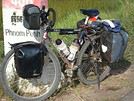
I just took a trip in Tunisia from Tozeur to Douz, skirting Chott el Jerid to the south. I’m back with the urge to keep going further south via the 4x4 tracks to connect Douz to Ksar Ghilane. Has anyone driven this route recently or explored southern Tunisia?
Thanks for your tips!
fix
Hi there, I’m planning a cross-Canada bike trip, and I’ve got a question that might seem silly, but could someone tell me how to pack a bike (in a box, with a fragile sticker... I don’t know) for a flight? Thanks in advance!
Hi there,
Here’s our plan: traveling to CHIANG MAI from BANGKOK, passing through AYUTTHAYA and SUKHOTHAI, all by tandem bike with a trailer and a child.
What do you think of this route (distance, scenery, elevation, challenges, etc.)?
Any great tips for lodging or other advice are welcome.
Thanks in advance.
Who are you? Where are you from? Where are you going?
Like last year at this time, a post about bike travel ideas.
How many of us are preparing a trip planned for this year? Probably a lot.
What’s yours—the one you’ve been dying to do for so long, maybe too long? For us, it’s a modest PARIS-MARATHON by bike, followed by MARATHON-ATHENS on foot in June 2010. And you?
May the passion keep growing before, during, and after! Happy planning and safe travels to everyone.
Hello,
Departure is getting closer (September 4th), and the itinerary is now more or less set.
In two and a half months, I plan to cover:
TRUJILLO-HUARAZ - CERRO DE PASCO - HUANCAYO - AYACUCHO - CUSCO - LA PAZ Bus: LA PAZ - PUTRE Then: PUTRE - COLCHANE - UYUNI - SAN PEDRO DE ATACAMA
If I'm a bit short on time, which part of the route would you skip? Northern Chile or between Cerro de Pasco and Cusco?
If, on the other hand, I’m ahead of schedule, I might consider going from San Pedro to Salta.
That’s it—thanks for your wise advice!
Vincent

Hello,
We’re planning to set off at the end of September with our beloved tandem to cycle along the southern coast of Portugal (the Algarve) and the west coast up to Lisbon. One little detail is worrying me a bit: WHAT ABOUT THE WIND? Let’s just say we’re on the Atlantic coast, and there’s nothing worse for a cycle tourist than wind. Basically, we’d just like to avoid a nightmare of battling the wind in Portugal. If you’ve already done this route or know a bit about the wind conditions in the area (strength, direction, etc.), it’d be great to get some more info on that. Also, I’ve read quite a few forums about trains. How’s the rail network between the south and west of Portugal? No issues with taking bikes on board? Thanks in advance for any info you can share! We’re heading into the unknown since we don’t know the region at all, so if you have any useful tips for cycle tourists, please send them our way!!!
Mic
Hi there,
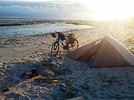
I’m planning to cycle part of Morocco during the first three weeks of December. I’ll be traveling self-sufficiently, with a tent and all the gear.
Since I don’t know Morocco at all, I’m reaching out to get some help planning a nice route. For now, I’m thinking of going from Tangier to Agadir, but that’s not set in stone, and I’m especially unsure about which way to go. I’ve heard about the N1, but I’m not afraid of unpaved roads and would really prefer to avoid cars!
I’m mostly looking for wild spots and beautiful landscapes. I can handle some elevation gain, but I’m not sure about snow cover and temperatures. I’m okay with running into a little snow (not too much, though...) and camping in temperatures as low as -2°C.
Do you have any routes or waypoints to recommend? My goal isn’t to cross the country as fast as possible, so I’m open to detours. I’d also love to take a few days off the bike to cross a bit of desert by camel or do a mountain excursion... preferably toward the end so I can be more relaxed with timing. So if you have any specific suggestions like that, don’t hesitate to share!
I saw that the guide *Sur les pistes du Maroc* by Gandini is often recommended, but there are 7 volumes available on Amazon! That’s a bit overwhelming.
Thanks for reading this far! :)
Hi there,
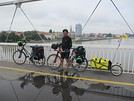
Last summer, I cycled through the Lot and Célé Valleys. There were two couples of us, in "camping mode," with hybrid bikes (except for one road bike with tires that weren’t hybrid at all (!) plus a Bob trailer). We completed the route in the first half of July in just under 15 days (allowing time to explore along the way). The odometer totaled 550 km. We started in Aiguillon on the Lot River and finished in Saint-Geniez-d’Olt. It was an absolute delight. First off, a big thank you to everyone who helped us plan this trip by sharing tips, favorite spots, and practical guides—there were many, and some will recognize themselves (a Jakez from Brittany, a local postman, etc.). A major project seemed to have been launched, but since 2011, not much has materialized beyond Cahors (a signposted cycle route). Don’t let that stop you—it’s totally worth it! In return for the great tips we received, I’m happy to help anyone considering the same route with details on the itinerary, stages, road conditions and traffic, campsites, highlights, and more. Best regards,
Pierre from Lorient

My partner wants to change her touring bike because it’s not quite the right size for her.
We don’t want touring bikes that are too heavy.
Travel shouldn’t mean hardship—it’s not a punishment.
I’ve had just one bike myself: a Specialized mountain bike for ages, with plastic mudguards, and I’ve ridden through 14 countries with it, plus our weekend trips. It’s super sturdy.
My wife would like a mountain bike that’s lightweight but tough enough to add a rack, with a rigid front fork, 26 inches, smooth-rolling, not too expensive, and that’s about it.
Anyone have good feedback or recommendations on a brand?
Thanks

Hi there,
A year ago, I posted looking for a cycling route for a trip in Sicily with my partner and our two kids (3 and 4 years old) in a trailer—something calm, with nature and a bit of culture. I didn’t get many replies, so I’m sharing our itinerary, which we really enjoyed. We cycled from the southeast (Syracuse) to the northwest (Palermo).
**Note:** We had no issues on the road—drivers were very courteous, the welcome was exceptional (lots of invitations to eat and/or stay overnight), and there were very few people on the roads, even the big ones, since we were there from September 23 to October 7.
**Weather:** Apparently, the summer of 2014 had been awful (only 25°C...). We, on the other hand, had 3 days at 44°C—it was *brutal*, including one day at 35°C at 1,000m altitude in the center of the island on October 1st...
**Accommodation:** 15 days of wild camping, with just one really nice apartment after 7 days in Piazza Armerina. Wild camping was tough—rocky, dusty, hard to pitch tent stakes. Our tent got pierced by thorns (even the groundsheet) from one side to the other. We washed up at village fountains, and—let’s be honest—less often than we’d have liked. The kids’ clothes, which spent a lot of time on the ground, were pretty grimy since laundry was rare. Only one official campsite (otherwise, they’re all on the beaches): Da Vinci Camping, in the middle of lemon groves near the southeast (Rosolini). It’s well-known on social media for being very "roots."
**Water:** A real challenge—*very* tough. Off-season, many homes are abandoned, and on some days, we passed through few villages. Result: we always carried our max water (9L) and sometimes had to add extra bottles to last 2 days, covering the day’s ride, wild camping, and the next morning—that’s 15L on the bikes. So be careful with this!
**Itinerary**
We arrived by train in Messina from southern Italy (yes, the train goes onto the ferry—worth seeing!), then took the train to Syracuse. We decided the northeast coast was too dangerous to cycle, so we visited Syracuse and then picked the SP roads (the smallest ones, more or less following the coast) toward Noto. We were supposed to head southeast to Pachino, but since our ferry from Palermo was booked 15 days later, we cut the route short and headed toward Rosolini instead. Nothing exceptional until Modica, crossing the Ispica fault. Modica is a really pretty town to see. Then Ragusa’s old town via the SS 115—a quiet but very scenic road. The town is stunning, but getting through the modern part (Ragusa Alta) means 300–400m of elevation gain... Caltagirone: a lovely town (famous for ceramics), but the center is uphill. We took a bigger road, but there was hardly anyone around. Left via Mirabella, then visited Piazza Armerina and the Villa Romana. Took the SP 15 to Barrafranca, Pietraperzia, then Caltanissetta via the SP96 (choose carefully—there’s a bigger road nearby).
Then Serradifalco, Mussomeli (castle), San Giovanni Gemini—a series of hilltop villages with valleys in between. We climbed and descended 500m+ repeatedly. Santo Stefano Quisquina, Prizzi (passing at 1,000m altitude—really nice, no one around). Corleone (great road, some climbing, but it’s awesome); Ficuzza, Santa Cristina Gela, Altofonte, and Palermo (no traffic issues).
**Reminder:** This was off-season—no one on the roads. We found the route through Caltanissetta, Mussomeli, etc., *spectacular* and sometimes breathtaking. Sicily is a rugged place for rugged people (especially wild camping). We’d heard the center of Sicily was overrated (not at all...). After 4 months of traveling without always listening to others’ opinions, we confirm: central Sicily is amazing—rugged, dramatic, and perfect for what we were looking for (though we didn’t swim).
**Elevation:** People kept saying Sicily was a nightmare for climbing. We’ve done much tougher routes in the Black Forest or Slovenia. The tricky part in central Sicily is the constant ups and downs—you climb 300–600m in one go, then descend right after. We used "Ride with GPS" to test different routes and avoid unnecessary descents (or minimize them). With a few extra kilometers, we saved about 2,000m of elevation gain overall, especially around Caltanissetta, the Modica-Ragusa link, arriving in Modica, and leaving Ragusa.
Hope this helps someone...

It's all in the title—I'm 70, and I've been traveling by bike (tent and camp stove) for five years now. Statistically, how many more years do I have left to plan my destinations and see (almost) everything?
Question is half realistic, half humorous.
To keep it simple: how old are you, fellow senior cyclists still on the road? And what are your biggest challenges?
Personally, I'm in good physical shape, though my cruising speed has dropped from 3–4 km/h over the past five years.
But arthritis (hip) is starting to make it tricky to swing my leg over the frame.
First of all... happy New Year! Wishing you great roads in 2017!
I’ve been traveling for a few years now with a high-quality mountain bike, but it’s equipped with hydraulic disc brakes. I live (pedal) with the constant worry of a breakdown (leak, air bubble, heat causing the fluid to...). My bike mechanic tells me it’s impossible to switch them out for V-brakes.
What do you all think? Am I taking a big risk continuing (alone) with these brakes? Thanks in advance for your great tips!
Hi,
We crossed the Pyrenees by e-bike last July, from Bayonne to Perpignan, taking small roads as close to the border as possible (25 mountain passes in 10 days). It was an absolute delight, and we can share tips with anyone interested in this experience.
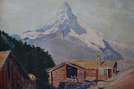
😎Fellow traveling cyclists or not, all of you who love travel, the pleasure of physical effort, nature, beautiful machines, people with true passions they seek to fulfill, and who also enjoy reading great literature about all this—the *200* magazine is for you just as it is for me. I should mention I have no financial or other interest in this (in an era where we accuse our politicians of all sorts of vile interests, I prefer to take precautions). I’ve been subscribed since the beginning, and every three months, I get my 130 pages of dreams (the magazine just went from 110 to 130 pages).
It covers everything from the trans-America route to the TCR (Trans Continental Race) from Belgium to a small town in Turkey, with mind-blowing averages—4,000 km and 80,000 m of elevation gain in 8 days and 15 hours for the winner. Let that sink in, and all of it without assistance—accepting a patch could penalize you. There’s also a story about crossing Iran, encountering one of the world’s most welcoming populations, following in the footsteps of Nicolas Bouvier, as well as retirees leisurely traversing France. The common thread in all these stories? Beautiful writing. Take, for example, a stunning article: *"Passengers of the Cold: From Edinburgh to Thurso, at the very north of Scotland, 550 km of moors, coasts, and icy wind. In Thurso, the road ends at a quay, facing the Orkney Islands. We wanted a November trip, off-season. We wanted to surprise winter. Just before the snow."* A sublime piece on the experience of facing adversity and the chance encounters along the road and in the elements.
Before I embarked on my own bike trips, I dreamed a lot about them—from the Atacama to the Gobi, along the Mekong, and not forgetting France. And now, these 130 pages every quarter keep those dreamy vibes alive through stories written in the most beautiful prose.
I’ll stop here because it might sound like I’m advertising, but if you don’t know *200*, I invite you to discover it. It’ll give you wings for the most incredible challenges or simply reinforce your desire for slow rides with your eyes open to others and nature.
A little news to wrap up: Axel Carion and a friend just broke the record for crossing South America from Colombia to Ushuaia in 59 days. On its own, that doesn’t mean much, but I can’t help it—it makes me dream. You should see how he talks about it, the flashes of that wild nature he’s stored away: a snowstorm at Paso Jama and the surreal sight of the suddenly snow-covered Licancabur!
Luc PS: The magazine is called *200* because a day’s ride starts at 200 km—well, I’ve never done a ride like that since my longest was 167 km (with 18 kg of luggage, mind you), but why not one day? The magazine will explain how to tackle your first 200, and then the question in conclusion: when will you do your first 300?😏
Hi there,
We're a family of 4: dad, mom, a 14-year-old teen, and a 5-year-old girl (who still rides a bike with training wheels). We'd love to go on a bike vacation but have no idea where to begin.
We'd like to start with a weekend trip to test the waters, but we're completely lost when it comes to equipment.
What kind of bikes do we need? How should we equip them? Are there any shops or websites specializing in bike touring?..
Thanks for your tips!
Have a great evening
Hi everyone,
In early April, I’m redoing the Vélo Francette (La Rochelle to Ouistreham), and then I’d like to cycle along the Cotentin Peninsula (which I don’t know at all), follow the coast up to Cherbourg, and then head back down to at least Saint-Malo. I’d love to know if it’s pleasant for cycling—are the roads nice? Not too windy? What are the must-see spots? Any great campsites? All your tips and advice are more than welcome, and I thank you in advance.
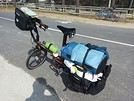
I'm looking for Shimano spare parts for the Nexus 8 SG-C6001-8R:
- Y73E98020 CJ-8S20 Cassette Joint Unit for Belt Drive System - Y73E98030 CJ-8S20 Cassette Joint for Belt Drive System
I’ve searched a lot but haven’t found them. If you know a site that sells these parts, thanks in advance!
My favorite site for Shimano parts, http://bicikli.de, unfortunately doesn’t have them in stock.
Excellent bike path almost entirely off-road, with a really scenic route. We joined it in Bad Tölz after coming from Strasbourg and left it 100 km before Venice to stay in the mountains and connect with the end of the Via Claudia, which is probably on next year’s program. The trail is often on packed gravel, but even though some short sections aren’t great, our 32C tires were enough—though wider would’ve been better. Mostly wild camping, often by a lake or river. The signage is top-notch. The only downside is the noise from cars in some valleys—out of sight but not out of earshot.
Sites that explain it better than I can: https://italy-cycling-guide.info/ An English site—check the INTERNATIONAL CYCLE ROUTES section.
It’s almost *too* detailed—a 1:200,000 map is plenty.
And here’s a photo to inspire you!
Sites that explain it better than I can: https://italy-cycling-guide.info/ An English site—check the INTERNATIONAL CYCLE ROUTES section.
It’s almost *too* detailed—a 1:200,000 map is plenty.
And here’s a photo to inspire you!
hi everyone,
I’m planning a little bike trip to the Meuse starting from Saint-Raphaël in early September, and I’d love to know if any of you have already done the ViaRhôna from south to north starting in Beaucaire?
I’ve already done the climb twice:
Vinon-sur-Verdon → Oraison → Les Mées → Volonne → Noyer-sur-Jabron → Séderon → Sainte-Jalle, etc.
This time, I’d like to avoid the elevation gain and ride more relaxed, but the mistral worries me.
Anyone have any experience or tips to share?
olivier
Hey everyone, travelers! Here’s a little post to share our bike trip this summer. We did the Via Rhôna from Geneva all the way to the Mediterranean Sea. It was a truly amazing adventure—no hitches, lots of independent greenways, and we felt like we had the Rhône all to ourselves as our guide for 700 km over 7 days. That averages out to 100 km a day. We thought we’d do less, but the Via Rhôna is flat and not too tiring, which let us push to around 100 km each day!
Here’s the full video of our route: www.youtube.com/watch?v=x_cpBro6Df8
We’re not seasoned cyclists—we just love biking, and this trip was our first big bike touring adventure. As for our bikes (see photo), we had road bikes, sturdy ones with fairly large wheels and rear racks for our gear.
Speaking of gear, here’s what we brought: just the essentials for 7 days of biking and camping—1 tent for 2, two sleeping bags, a few clothes (not too many), 1 book each, toiletries, phone chargers, a basic bike repair kit... and maybe 2 or 3 things I’m forgetting. The idea is to travel light so you’re carrying as little as possible!
We camped every night. Along the Rhône, it’s pretty easy to find campgrounds, and they’re cheap too! Each morning, we’d decide on our destination for the evening (usually based on available campgrounds) and call during the day to book. We always managed to get a spot right away (except when we reached the Mediterranean coast, but we should’ve seen that coming 😛).
For expenses, we slept at campgrounds (between 15 and 25 € per site for 2) and either picnicked or ate at restaurants. Other than that, there weren’t really any other costs besides a few small souvenirs here and there. In total, we spent about 500 € for two over 7 days (so 35 € per person per day). I think it’s possible to spend even less—we decided not to restrict ourselves when it came to restaurants and campground prices.
For us, the most beautiful part was between Geneva and Lyon! The Rhône is still a bit wild there, as are its banks. Not too many roads, highways, trains, or factories around—just nature and peace. You gradually leave the Alps behind and head further south. It was truly stunning. We also loved the "Rhône Valley" after Lyon. The succession of dozens of suspension bridges and little villages, each more charming than the last, really enchanted us.
The trickiest part was leaving Lyon... The Via Rhôna disappears for a long stretch, forcing you to alternate between roads, traffic, danger, and pollution. We had to wait until Givors, further south, to finally get back to the quiet bike path and the Rhône showing us the way. Also, after Lyon, the Rhône becomes a bit more industrial—you pass by dams, factories, and power plants more often. But it’s really just a small detail, the exception that proves the rule of this magnificent Via Rhôna.
The Via Rhôna is a fantastic way to see how water from the mountains of Lake Geneva flows, travels, and winds its way for hundreds of kilometers to reach the sea. With this trip, you get closer to the Rhône—it becomes your accomplice, your guide. Plus, you cross a beautiful part of France, with its charm and little villages. It’s the France we love, and it’s great to explore your own country like a tourist.
That’s it for our little travel journal. I didn’t go into too much detail about our days since everyone will follow the same route, and everyone can go at their own pace :) But I’m happy to answer any questions (logistics, technical stuff, routes, etc.)—I’d be glad to help!
Here’s the video of our route again—I also composed the music, so I hope you’ll like it: www.youtube.com/watch?v=x_cpBro6Df8
Happy travels,
Flo
Hi there,
We're planning to ride the EuroVelo 6 by tandem this summer for two weeks (16 days).
We're torn between two routes: Passau-Budapest or Vienna-Belgrade. A third option could also be to go from Prague to Vienna and then continue to Budapest.
Which route would you recommend? Is the EuroVelo really crowded in the summer?
Thanks so much,
Camille
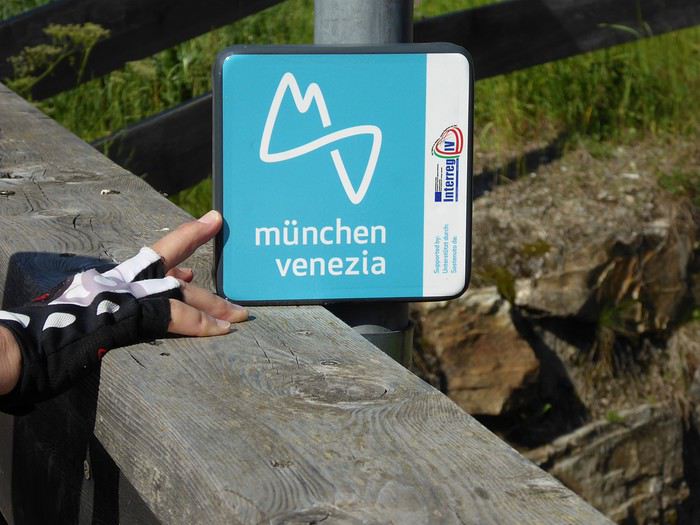 Logo to follow
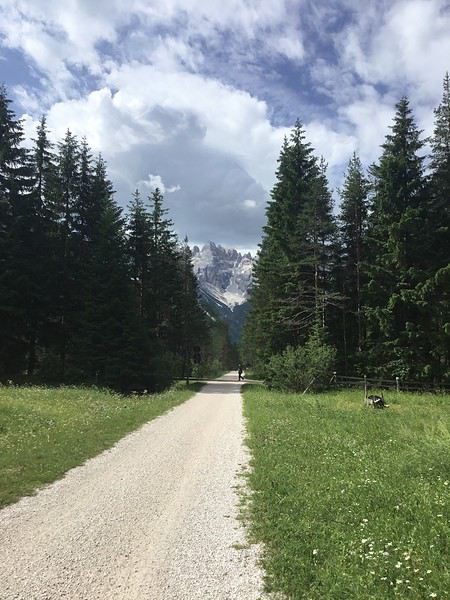 on the way to the Dolomites
We’re back from our 6-day bike trip between Innsbruck and Venice from June 30 to July 6, 2019, on the well-marked Munich-Venice route.
Our overall impressions: the route is really beautiful, especially for us during the first three stages: Gries am Brenner (AT) to Mühlbach or Rio di Pusteria (IT) – towns with dual names – Rio di Pusteria to Toblach or Dobbiaco – a town we really loved – and Dobbiaco to Pieve di Cadore.
The passage through the Dolomites on a path that’s half paved, half white gravel road is absolutely stunning, even if it’s quite a climb.😊
We chose accommodations in hostels, and luckily so, since there weren’t many campsites along the way. There were a few cyclists, but not too many. We had great weather, even very hot on the last stage from Treviso to Mestre. The arrival in Mestre isn’t very well signposted – several directions overlap and don’t lead you straight to Mestre. Once you find the right route, though, it’s pretty easy. We had a paper guide and GPS, which helped a lot. If you need info on the route, we can chat about it! Happy travels
Hi,
It's all in the title... I'm looking for tips on how to transport spices. In other words, I'm looking for small containers to carry them in.
I read on a blog that you could use Tic Tac boxes... but honestly, I don’t want to buy Tic Tacs just for that. I checked at D4 but didn’t find any suitable containers. If you know any handy tips or practical containers, I’d love to hear them! :D
Thanks
I read on a blog that you could use Tic Tac boxes... but honestly, I don’t want to buy Tic Tacs just for that. I checked at D4 but didn’t find any suitable containers. If you know any handy tips or practical containers, I’d love to hear them! :D
Thanks

Hi there,
I’m planning a bike trip from Panama to Mexico and I’m looking for info on where to find gas canisters in Central America.
I have a stove that works with Primus bottles (or other brands except Campingaz).
I also have an alcohol stove, and I’d prefer that option if denatured alcohol or even 90% alcohol is easy to find.
Thanks in advance for your help!
Jean Marie
Hi there,
We’d like to take our bikes to Sicily in early April for Easter, then cycle back home via Puglia to the Lyon area.
Has anyone got any tips?
1: How to get there? Train or ferry?
2: Camping or other options in big cities? Is it true that campsites are really expensive?
3: Recommended route
We’re open to all suggestions.
Thanks, and happy holidays!
Hello,
This is still just a plan: My wife and I are considering a bike trip in Denmark.
The timeframe would be July 2020, for a solid three weeks. We’d prefer to do a loop to avoid seeing the same landscapes and cities. We also camp.
We have our own well-equipped bikes and a single-wheel "Bob" trailer.
We’ll likely start and finish in Copenhagen, covering 40 to 60 km per day while leaving time to explore the cities and regions.
Through word of mouth, we know Denmark is another cycling country, so we won’t have any trouble finding bike paths.
However, when it comes to documents, we’re a bit lost. Since we don’t know the country at all, we’re not sure what’s most interesting to see and travel through.
We have the double-sided *Dänemark* map at 1:150,000 from Freytag & Berndt. It shows bike routes and campgrounds (which is great!), but it’s not very practical for biking.
Our experience in the Netherlands with "road" maps that quickly fell apart in the rain showed us the limits of those documents...
Are there more practical resources? Like a bike guide similar to what we have in France or for European bike routes?
Is there a system for identifying bike route numbers like in Holland?
And of course, we’d love any practical tips—cost of living, campground prices, hospitality (which I’m sure is excellent), weather quirks, coastal areas, wind (memories of the Netherlands!!!), and, of course, your personal favorites...
Thanks in advance to all contributors;
Pierre and Dominique from Lorient
Some people have questions about choosing a touring bike, so those who are equipped can post a photo here and describe their ride—its strengths and, of course, its flaws.
I’ll go first!
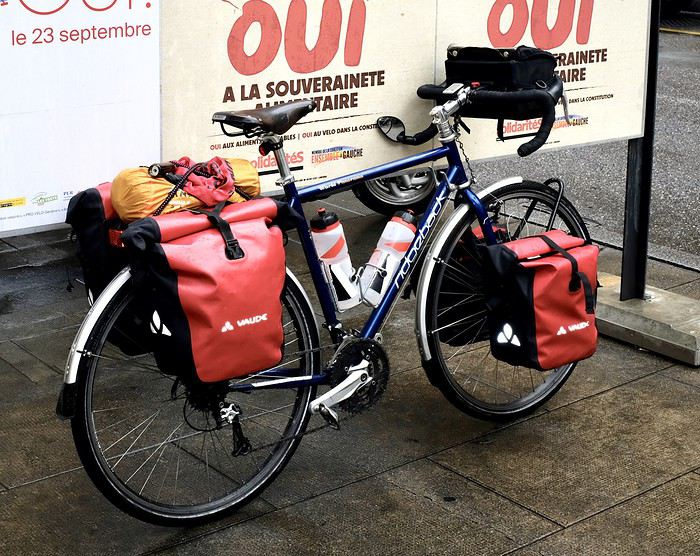
Here’s the beast: a Ridgeback Panorama model, around 10 years old, bought second-hand from a cyclist who’d picked the wrong size. Steel frame in Reynolds 725 (it’s written on it, but I doubt the whole set is that series). Gear ranges from XT for the rear derailleur to some cheaper parts. Three chainrings and sturdy but heavy wheels. Here with 35mm tires—plenty for gravel paths and the occasional rougher trail (as long as you don’t ride like a sausage!).
What I’ve modified: - Upgraded from 9 to 10 speeds when I changed the cassette - Installed two Tubus racks—the rear replaced the original aluminum one (which got bent) - Moved the shifters to the frame instead of the brake/shift combos, which were getting in the way of my handlebar bag - Swapped the saddle for a Brooks B17 (the original one didn’t suit me at all) Over time, some wear-and-tear parts have been replaced.
It’s comfy and sturdy but heavy (almost 14kg). Downsides? It’s a bit sluggish when you stand up to pedal—the chainring rubs against the front derailleur cage (the bottom bracket lacks rigidity). Definitely not a climber’s bike! The cantilever brakes are a tad weak—you get used to them, but you’ve gotta anticipate.
We’ve had some great rides together, but it’ll soon be on the market since I’m replacing it with a custom Cattin. I won’t sell it for much—it’ll make someone happy...
I’ll go first!
Here’s the beast: a Ridgeback Panorama model, around 10 years old, bought second-hand from a cyclist who’d picked the wrong size. Steel frame in Reynolds 725 (it’s written on it, but I doubt the whole set is that series). Gear ranges from XT for the rear derailleur to some cheaper parts. Three chainrings and sturdy but heavy wheels. Here with 35mm tires—plenty for gravel paths and the occasional rougher trail (as long as you don’t ride like a sausage!).
What I’ve modified: - Upgraded from 9 to 10 speeds when I changed the cassette - Installed two Tubus racks—the rear replaced the original aluminum one (which got bent) - Moved the shifters to the frame instead of the brake/shift combos, which were getting in the way of my handlebar bag - Swapped the saddle for a Brooks B17 (the original one didn’t suit me at all) Over time, some wear-and-tear parts have been replaced.
It’s comfy and sturdy but heavy (almost 14kg). Downsides? It’s a bit sluggish when you stand up to pedal—the chainring rubs against the front derailleur cage (the bottom bracket lacks rigidity). Definitely not a climber’s bike! The cantilever brakes are a tad weak—you get used to them, but you’ve gotta anticipate.
We’ve had some great rides together, but it’ll soon be on the market since I’m replacing it with a custom Cattin. I won’t sell it for much—it’ll make someone happy...
This message is for folks who’ve been to Cayo Jutias in the past year, especially this past winter. I’d love to hear about the road conditions on the way there. Are the last few kilometers to the beach still in terrible shape, full of potholes?
Same question about the road through La Sabana toward Santa Lucia—was it still in rough condition?
How’s the road to Minas de Matahambre and Pons?
And what about the route from Santa Lucia to Mantua and then Sandino?
Thanks in advance.
Same question about the road through La Sabana toward Santa Lucia—was it still in rough condition?
How’s the road to Minas de Matahambre and Pons?
And what about the route from Santa Lucia to Mantua and then Sandino?
Thanks in advance.
Recommended for you
 A Few Days in Turkmenistan from Uzbekistan
 Slovak travel journal
 14 Days in Japan – September-October 2026
 Trek in Norway: Jotunheimen and Dovrefjell, you’ll adapt to the rain...
 CARIBBEAN: The island of SAINT-MARTIN, a different perspective
 Northern Morocco, the kingdom of kif?
 Summer 2026 - 3 weeks in the Azores
 The Pearl of Africa - July-August 2026