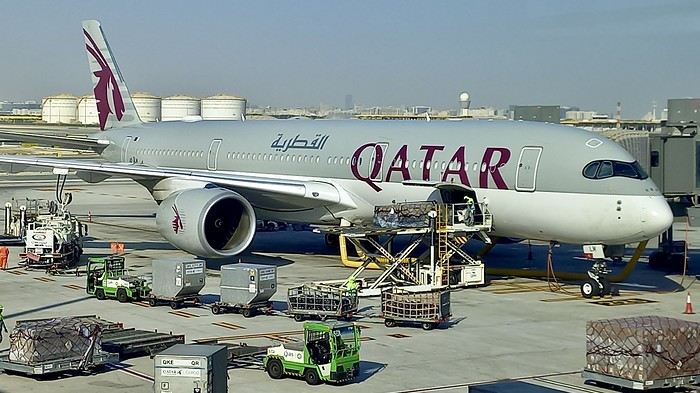
Si le vol retour est plein, la compagnie débarque un passager pour l'INAD ? Ou celui-ci attent en zone d'attente pour personnes en instance jusqu'à se que la compagnie lui trouve une place ? Derrnière question, si le passager a un billet retour l'escale lui retarifera le billet si il n'y a plus de place dans la classe tarifaire initialement réservée ?
L'INAD repart en priorité.
Pas de retarification à ma connaissance; il part, l'escale lui prélève son billet, point.
Halte à la désinformation.
Les conseilleurs ne sont pas les payeurs.
Je me prépare à partir en Argentine la semaine prochaine pour un échange universitaire de sept mois, et j'ai donc mon billet de retour plus de trois mois après le départ, sans visa longue durée. Quelqu'un d'Air France m'a dit que même avec un justificatif de sortie du territoire sous 90 jours (ferry pour l'Uruguay par exemple), je ne pourrai monter dans l'avion si je n'ai pas de visa.
Pourtant, la discussion initiale laisse entendre le contraire.
Est-ce sur qu'avec un justificatif de continuation je puisse prendre mon avion Air France? Dois-je présenter juste un aller ou l'aller retour pour ce justificatif?
Je n'ai pas lu les 15 pages de discussion mais les visas pour etudier se font sur place en Argentine, donc ça me parait dificile de pouvoir presenter un visa a l'embarquement.
Pour un justificatif tu as sans doute eu une carte d'invitation de l'universtité en Argentine disant que tu viens 7 mois sur place pour etudier.
Aprés je ne sais pas comment fonctionne Air France.
T'es pê pas obligé de dire à l'embarquement à Paris que tu vas rester 7 mois et que tu n'as pas de visa...
Tu peut très bien leur dire que tu vas voyager en Amérique du Sud et que tu as prévu de rejoindre un ami. Puis vous allez changer de pays et donc pas besoin de visa...
J'ai enfin mon billet prime et je vais voyager sur AF pour Buenos Aires en 777, savez vous me dire si les sieges ce sont les anciens ou les nouveaux, et le…
Une passagère argentine mécontente de son vol fait arrêter un équipage Air France à Buenos Aires...Le pire n'est pas la dinguerie de la passagère mais le fait…
Nous devons réserver un vol Paris Buenos Aires et toutes les suggestions seront les bienvenues. Nous avions envisagé de choisir Air France et la classe Premium…
Souvent j'effectue mes vols transatlantiques avec l'aller et le retour sur la même compagnie. Comme de plus je ne vole pas tous les jours cela rend parfois les…
Bonjour
Nous avions prévu un voyage en sicile en aout et , dû fait de l'eruption volcanique de l ETNA, mon vol a été annulé.La compagmie me rembourse le vol aller mais tout les frais non consommés : logement booking, voiture de location, et vol retour ne le sont pas ..Ma SUPER carte gold ne fonctionne pas dans ce cas précis ! :( .Si quelqu'un a été dans ce cas, peut il me dire si il a pu avoir un recours et si oui, par quel biais ?
Merci d'avance
Back in February, I booked a flight with Air France-KLM from Lyon to San Diego with a layover in Amsterdam (flights operated by KLM). The flight is scheduled for late August.
My Lyon→Amsterdam flight was canceled by KLM in June, and a replacement flight the evening before was booked for me. So, I’ll end up spending the night at Amsterdam Airport to catch my flight to San Diego the next morning.
Since the cancellation happened more than 14 days before departure, I know I’m not entitled to financial compensation (EU Regulation 261/2004). But am I entitled to reimbursement for a hotel night in Amsterdam?
Hi,
Air Cairo offers good prices on domestic flights and schedules that work for us, but is this airline reliable?
Thanks in advance for your feedback.
Hi,
I booked an Etihad ticket on their website for Dusseldorf-Abu Dhabi. In the first name field, I entered all my first names (something I never do and I regret it, but the site was confusing). Everything is spelled correctly, but the problem is that I just received my new passport and only my first two first names and the first letter of the third appear—there’s no trace of the last one.
I called Etihad, and of course, they tried to charge me $100 USD to remove that last first name. But I’m hesitant because usually, I only put my first first name and not the others, and I’ve never had an issue... So I’m wondering if having that extra first name, which isn’t on my passport, could get me denied at check-in.
Thanks for your feedback!
Hi everyone,
Next January, I’m heading to India.
My outbound flight is with Emirates from Paris to Dubai, then another Emirates flight from Dubai to Calcutta.
Could anyone tell me how the connection works? I’ve heard there’s a dedicated Emirates zone, but how does it actually work in practice—I’ve got a 2-hour layover.
Thanks so much!
Take care.
I’d like to fly to Malta from Lyon.
I’ve read a lot of negative reviews about KM MALTA, especially regarding baggage fees at the airport.
Of course, I don’t want to book through third parties (like SkyScanner, Opodo…).
AIR FRANCE offers tickets to MALTA in partnership, if I understood correctly.
On AIR FRANCE, the tickets include everything (checked baggage, cabin bag, small personal item, seat), whereas with KM MALTA, everything is extra and the final price is almost double!
In this case, is AIR FRANCE considered the same as sites like Opodo or others?
Given the price difference, I’m hesitant…
Have any of you booked with AIR FRANCE for this destination? How did it go?
Thanks,
HERVE
Hi everyone, I’ve unfortunately only just noticed that I booked two flight tickets, but I made a mistake on the second first name. Basically, my computer auto-filled and typed my first name twice, so both tickets are in my first name. Only the last names—mine and my friend’s—are correct.
TAP Portugal refuses to make the change because they consider it a change of passenger, even though it’s clearly a typo (plus, my last name isn’t common).
I’m leaving in 5 days, and buying a new ticket would cost 3 times the original price. Has anyone been in this situation before? I’d like to try negotiating at the airport, but it’s a gamble… Thanks in advance for any advice!
Since it came into force, Regulation 261/2004 of the European Parliament and Council, which defines air passenger rights, has faced fierce resistance from airlines, backed by IATA (the association representing almost all passenger airlines).
Beyond the airlines' often abusive—and even frequently bad-faith—resistance to passenger rights, IATA has been lobbying EU institutions for years, with the Council paying close attention for a long time.
As a result, the Council and the Commission have been proposing revisions to Regulation 261/2004 for years that are particularly unfavorable to passengers. The latest attempt nearly eliminated the right to compensation for delays of 3 hours or more upon arrival at the final destination.
However, since this is a regulation of both the European Parliament AND the Council, the two bodies had to agree.
But the European Parliament has always stood firm, consistently responding that passenger rights must be preserved.
After 11 years of struggle, it seems likely that we’re finally nearing the end of the match between the European Commission, the Council (the 27 heads of state or government), and the European Parliament.
Indeed, the Commission and the European Parliament have agreed on a text that will be debated again on Monday, July 6, 2026, with a vote scheduled for July 7, 2026. It’s very likely that this text, which would come into force in a year, will be adopted.
The main changes would be as follows:
- Families with children will no longer be forced to pay to sit together on planes;
- A flight will be considered canceled (not just delayed) if it departs more than one hour late;
- Right to compensation for arrival at the final destination if the delay exceeds 3 hours (no longer "3 hours OR more"). The arrival time will be when the plane, having reached its parking spot, engages its parking brakes (no longer when the aircraft door opens);
- Airlines can no longer refuse boarding or charge extra on the return flight for a passenger who didn’t take the outbound flight;
- If a flight is canceled, the airline must, at the same time as informing passengers of the event, offer the choice between a refund and re-routing, and inform them of their rights to assistance and, if applicable, compensation;
- The airline must, without undue delay, inform passengers of the reason;
- In the case of a connecting flight, if the connection is missed and the delay at the final destination entitles the passenger to compensation, the responsible airline will be liable. This is very different from the current situation, where, under the KLM ruling, any airline operating a segment of the flight is liable for compensation. This promises more disputes that the Court of Justice of the European Union will have to resolve if two separate airlines operating segments of a connecting flight are both responsible for the delay. See this case for an example: https://retardimportantavion.wordpress.com/2026/04/18/swiss-international-air-lines-la-mauvaise-foi/
Moreover, this case demonstrates in advance another potential dispute: It could be argued that it wasn’t a missed connection since the flight was canceled before the first leg even departed.
- Within 96 hours of a flight that could entitle passengers to compensation, the airline must contact them to inform them of their rights and explain the next steps.
- Passengers must claim their right to compensation within 9 months. This is very different from the current situation, as Regulation 261/2004 sets no time limit. Currently, national law applies—in France, the limit is 5 years. The airline must respond within 30 days. If the airline refuses compensation on the grounds of "extraordinary circumstances," it must specify which type of case it refers to from the list in the annex of the new regulation. If the case isn’t on the list, the airline must explain what the event was, why it qualifies as extraordinary circumstances with "clear, substantial, and concise" explanations, and why it’s directly linked to the reason given. It must also declare what "reasonable measures" were taken to mitigate the issue. This is, of course, a huge change in the regulation, with the clear goal of preventing airlines from declaring just anything as "extraordinary circumstances" to avoid compensation.
- If, within 3 hours of a last-minute canceled or delayed flight, the airline hasn’t offered re-routing under comparable transport conditions and as soon as possible—whether on one of its own flights or another airline’s—the passenger will have the right to arrange their own re-routing and demand a refund for the new ticket, up to 400% of the original ticket price. This is a significant improvement that would have likely prevented the case described here: https://retardimportantavion.wordpress.com/2024/01/12/reacheminement-catastrophique-droit-indemnisation-meme-circonstances-extraordinaires-2/
- If a flight is canceled due to "extraordinary circumstances," the airline will only be required to offer up to 3 nights in a hotel. This is a major change, as there’s currently no limit. Expect disputes if the extraordinary circumstances end while the passenger hasn’t been re-routed.
- The price of a flight, as first displayed, must obligatorily include a cabin bag. This doesn’t prevent the airline from offering a price reduction if the passenger waives the cabin bag. This will put an end to abnormal practices, such as (just one example) Condor charging extra for a cabin bag on long-haul flights like Frankfurt (Germany)–Puerto Plata (Dominican Republic)–Santo Domingo (Dominican Republic)–Frankfurt.
- Free correction of a passenger’s name if requested 48 hours before departure. Note: This can’t be used to replace one passenger with another—just to correct a typo, e.g., Dupont instead of Dpont.
- Airlines’ websites and apps must include information on how to file a claim.
It’s clear that, despite a few details, these changes are very positive for upholding passenger rights. It remains to be seen whether this text will be definitively adopted on July 7, 2026, as is very likely, and, more importantly, whether IATA will encourage airlines to loyally respect these new rules or persist in their old habits.
I’m planning a trip to Georgia this summer and I’ve been comparing some airlines. I’m not particularly set on flying with Pegasus (though it’s convenient with direct flights from Lyon to Tbilisi), but right off the bat, Pegasus states this:
As of January 1, 2026, all foreign nationals traveling to Georgia for tourism purposes will be required to present valid travel health insurance. Guests who fail to provide the relevant health insurance will not be accepted on our flights to Georgia.
Sincerely,
Pegasus Airlines
In other words, if you don’t show proof of travel health insurance, you’ll be denied boarding.
Personally, my credit card insurance has always been enough for me, and I’d rather not take out extra coverage...
Have any of you run into this issue before? If not, what do you think? Why is Pegasus asking for this proof? Other airlines don’t mention it at all.
I bought my flight ticket with my first (usual) first name, which appears first on my passport. However, I have two first names on my passport, and of course, it’s mentioned in the machine-readable zone at the bottom.
I booked with Turkish Airlines (through an online agency) for a trip to South Korea.
I wanted to know if it would be a problem that I only used my first first name on the ticket, while my passport has two. I had requested through the agency to add the second first name, but the airline refused because it doesn’t meet their general conditions. (They must have seen that the last name and first name were the same, and only the second first name was added.)
So, my ticket has my last name and first first name correctly spelled, and when I check in online, I’ll enter the passport details correctly.
I’ll have a layover in Istanbul on the flight.
Thanks in advance for your replies.
Have a great day.
Hi there,
I traveled in June 2025 with Nouvelair Destinations to Hammamet.
I had one checked bag and one carry-on sized 40x24x30, which I usually take on low-cost flights, and I didn’t have any issues. But I just read on a website that Nouvel Air only accepts carry-ons of 40x20x15. I’m flying back to Djerba in June—what do you think? Especially since that size is impossible to find??????? Thanks
Hi, it's my first time taking a plane and I chose EasyJet for a Geneva -> Barcelona flight.
I booked my ticket.
I received my booking reference by email, but I don’t see the actual ticket (barcode or QR code?).
Then I checked in to get the boarding pass with the flight details, QR code, etc. But does this boarding pass act as the ticket?
Because I’ve seen several times online that the flight ticket and the boarding pass aren’t the same thing.
We're leaving for Albania on June 18th. When I validated the flight tickets with Wizz Air on Booking, I only put my son's first name but forgot to include his other three first names on the ticket.
On the passport: SURNAME: Dupont, FIRST NAMES: toto titi tutu tata
On the flight ticket: SURNAME: Dupont, FIRST NAME: toto
I can't seem to reach anyone at Wizz Air to get an answer.
Booking and Wizz Air's chat say I need to modify it, but ChatGPT says it should be fine.
I wanted to know if he can fly like this or if I need to change his ticket?
(It costs 140 €, I know I shouldn't have made a mistake🙁)
Basically, all airlines have been blacklisted because they don’t meet European safety standards. They’re banned from flying in Europe but continue operating in Tanzania.
The main issue is that travel agencies’ civil liability no longer applies to blacklisted airlines.
So we can’t allow clients to fly with these carriers.
Of course, there’s huge pressure from European agencies, which are forced to disrupt their plans or even cancel trips because of this.
Personally, I’ve got a trip planned for February 2026 to the southern parks in Tanzania, so I’ll be keeping an eye on how this develops.
Do any of you have updates?
Thanks!
Right now, with the war raging in Iran and affecting all the neighboring countries of the Persian Gulf, many airports are completely closed to all traffic.
Several airlines like Qatar Airways, Emirates, and others have almost completely halted their operations.
Whether in the Middle East or Africa, many travelers are stranded—maybe for a long time... A heartfelt thought for them and the struggles this will cause.
Four months ago, I was in Kenya with a flight booked through Qatar Airways... I can’t even imagine how I’d react if I were stuck there now. ??
Wishing all these travelers courage, patience, and success in making it back home.
Hello, some (potentially) good news for Brazil lovers—GOL airline is launching a route to Europe from Rio, starting in September for Lisbon, then Paris at a later date that hasn’t been announced yet.
They’ll be using their new A330-900 neo.
No prices have been announced so far, but hopefully we’ll find direct flights from GIG at a more interesting fare than AF or Latam…
I’m really surprised because in TUI’s new tour packages, the airlines they’re using are of low quality. Before, they used to prioritize major airlines, but now it’s small airlines from small countries—companies with terrible ratings and borderline safety concerns. I even just noticed this note for a Tanzania trip: "We inform you that the domestic flight segment in Tanzania included in your trip is operated by an airline listed on the European Union’s list of air carriers subject to an operating ban within the European Union. This ban only applies to European Union airspace, meaning this airline is not permitted to take off, land, or fly over European airspace. However, this airline is authorized to operate in Tanzania."
This means they’re using airlines on the blacklist!! It’s pretty worrying for safety. What do you all think?
We’re planning a cruise to the UAE/QATAR/OMAN starting from DUBAI, with flights departing from Paris CDG.
Which airlines would you recommend for round-trip flights, with or without a layover?
We need assistance for check-in and boarding/disembarking (my husband is a mobility-impaired traveler who uses a cane and/or a walker).
We’ve done a cruise return from Dubai to Paris CDG before in 2016, with a layover in Istanbul, but we booked the transfer and return flight with COSTA.
For our current plan, it would be with Celestyal, which doesn’t offer round-trip flights from Paris to Dubai.
Should we book very far in advance, or is a few months before departure enough (4/6 months)?
We’re thinking of arriving the day before the ship departs, so we’d need to stay overnight in Dubai—either on the way there or for the return flight, depending on the flight schedules. Could you recommend a hotel not too far from the airport, and how to get to the port from the airport?
Thanks so much for your advice. Have a great Sunday! Mum49
Hi,
It's all in the title—this means nothing's getting through, so no more oil.
In Europe, kerosene reserves are still good, but by the end of April, flights will have to be reduced.
European airports fear running out of kerosene if the Strait of Hormuz isn’t reopened within three weeks
I’m reaching out to ask for your help with a bit of a problem:
I booked a flight to Berlin from Orly for April 15th—it’s coming up fast. But I just made an annoying discovery: my passport expired two weeks ago.
From what I understand, in principle, I can still travel within the Schengen Zone with an expired passport as long as it’s been less than five years. However, EasyJet’s website explicitly requires a valid ID (and just to add to the fun, my national ID card has been expired for a while now).
So, I’d love to know: how strict are EasyJet’s ID checks? Do they enforce validity rules strictly and refuse boarding if the ID isn’t valid? Or is it more of a luck-of-the-draw situation?
Basically, should I just write off this trip now, or should I still try my luck—maybe with a little tearful plea? Has anyone here had a similar experience? I can’t be the only one, right!
I booked a flight with RyanAir for next month, with the priority+ option and two cabin bags. So I can take a 10 kg bag with dimensions 55x40x20 in the cabin (plus another smaller one).
The problem is that the smallest suitcase I have (which is supposed to be designed specifically for cabin size standards, according to the manual) has the following dimensions: 55x37x21, so it's just 1 cm over (wheels included) on one of the measurements.
I wasn’t too worried at first, but I’ve read dozens of stories about people’s misadventures and the hassles they’ve had with RyanAir.
Since I don’t want my suitcase to end up in the hold (that would waste time picking it up when I’m already arriving late and need to get to the city center), nor do I want to pay an extra fee (apparently 50 €) for the outbound and return flights for just 1 centimeter—especially since I paid for the "priority+" option and I’m not exactly rolling in money—I’d love some advice.
Have any of you been in the same situation? I’ve read that with this airline, they check bags in templates (testing them in different positions) and are completely uncompromising. I tried contacting customer service, who, as luck would have it, "don’t handle this kind of request," and a rep I spoke to wasn’t much help.
I know it’s a low-cost airline, and I don’t expect luxury or even kindness, but come on—just 1 cm on a short flight with the + option... I’m a bit overwhelmed by everything I’ve read...
Just to clarify, since I’m going for 8 days, I can’t just take one bag for my stuff. I’ve done that for shorter trips before, and it was a hassle—I even had to buy an extra bag for the return trip... Luckily, the inspector was nice about it!
Thanks so much!
I’m a newbie when it comes to air travel :) Hope I posted this in the right section!
When I run searches on Skyscanner, I see that only Lufthansa has flights to Seoul with just one stop. Air France doesn’t show up, even though I thought the French airline served Seoul?
I can’t even log into the Air France website—it keeps glitching.
Hi there,
I’d like to return to Uzbekistan next April for 10 days with my husband to visit our son who lives there. We went last July and I bought the flight tickets (direct flight from Paris on Uzbekistan Airways) about 2 months in advance at very reasonable prices. I’ve been checking for late April for a few weeks now, and the tickets are much more expensive and keep rising. I can’t figure out if the prices are going up because it’s still a bit too early to buy and they’ll likely drop if the planes aren’t full, or if it’s because the period is actually in high demand. For reference, last year I bought my son’s ticket on May 30th for a departure on June 3rd—just 3 days later—at a very low price that didn’t budge at all.
Just in case, does anyone know the pricing trends for this airline and can advise me? Should I wait or not?
Thanks, and feel free to ask if you need any tips about the country!
My wife bought a flight ticket (Lucky Air) under her Thai maiden name and was issued a Chinese visa on her new Thai passport but with her French married name (due to administrative requirements). She was denied boarding by the airline in Bangkok for the flight to Kunming—resulting in the loss of our round-trip flight tickets, including mine since we were traveling together—despite presenting both passports at the airline counter at the same time.
Hi there.
I’m planning a trip to Chile, and the fares from the Colombian airline Avianca are really appealing.
Way cheaper than Air France, for example.
That said, the reviews I’ve seen online aren’t great.
What do you think of this airline?
Have any of you taken long-haul flights with Avianca?
Thanks in advance for your replies.
Eric
This might be a silly question, but I’m traveling to Japan from CDG and returning via Osaka with EVA Air, and I have a pretty bulky aluminum knee brace.
It’s this model:
https://enovis-medtech.eu/fr_FR/OA-FullForce-74358.html
Has anyone had any experience with airport security checks or flying with one of these?
I can't seem to find flights between the Cape Verde islands on the airline's website. No matter the date or route, I always get the same response: "no flights on this date."
See the photo.
Would anyone have an explanation? Surely not all flights are fully booked in July?
Hi there,
I have a question...
Has anyone managed to get a refund from Oman Air?
After a delayed flight, we missed our connecting flight to get home!!
At midnight, the flight attendant booked us on a flight to Nice via Munich, even though we were in Munich and wanted to get back to Nice... Too tired from the trip, we didn’t notice the mistake!!
The next day, of course, the booking wasn’t valid!!
We had to pay again for the flight back to Nice...
I’m really struggling!! I think they’re giving me the runaround!!
I’ve sent several emails, tried Messenger and WhatsApp, but the only responses I get are: "We need to investigate!! We’ll get back to you in 15 days!!"
It’s been over a month!!
I just sent a registered letter (LRAR) to their office at Paris Charles de Gaulle, which is still open!!
Hi!
Sri Lanka has announced it could run out of fuel in the coming weeks if the Strait of Hormuz remains blocked. The government has implemented a mandatory four-day workweek to save oil, and there are long lines at gas stations due to fears of an early shortage.
In Vietnam, the government has warned all airlines that flights will need to be reduced due to a lack of kerosene. The country imports two-thirds of its jet fuel from China and Thailand, but both countries have now banned exports out of fear of domestic shortages.
The state is asking airlines to plan ahead and park aircraft to drastically reduce operations, starting with domestic flights and then international ones. International carriers will also need to cut back on their rotations.
This will begin in the coming days. 🙁